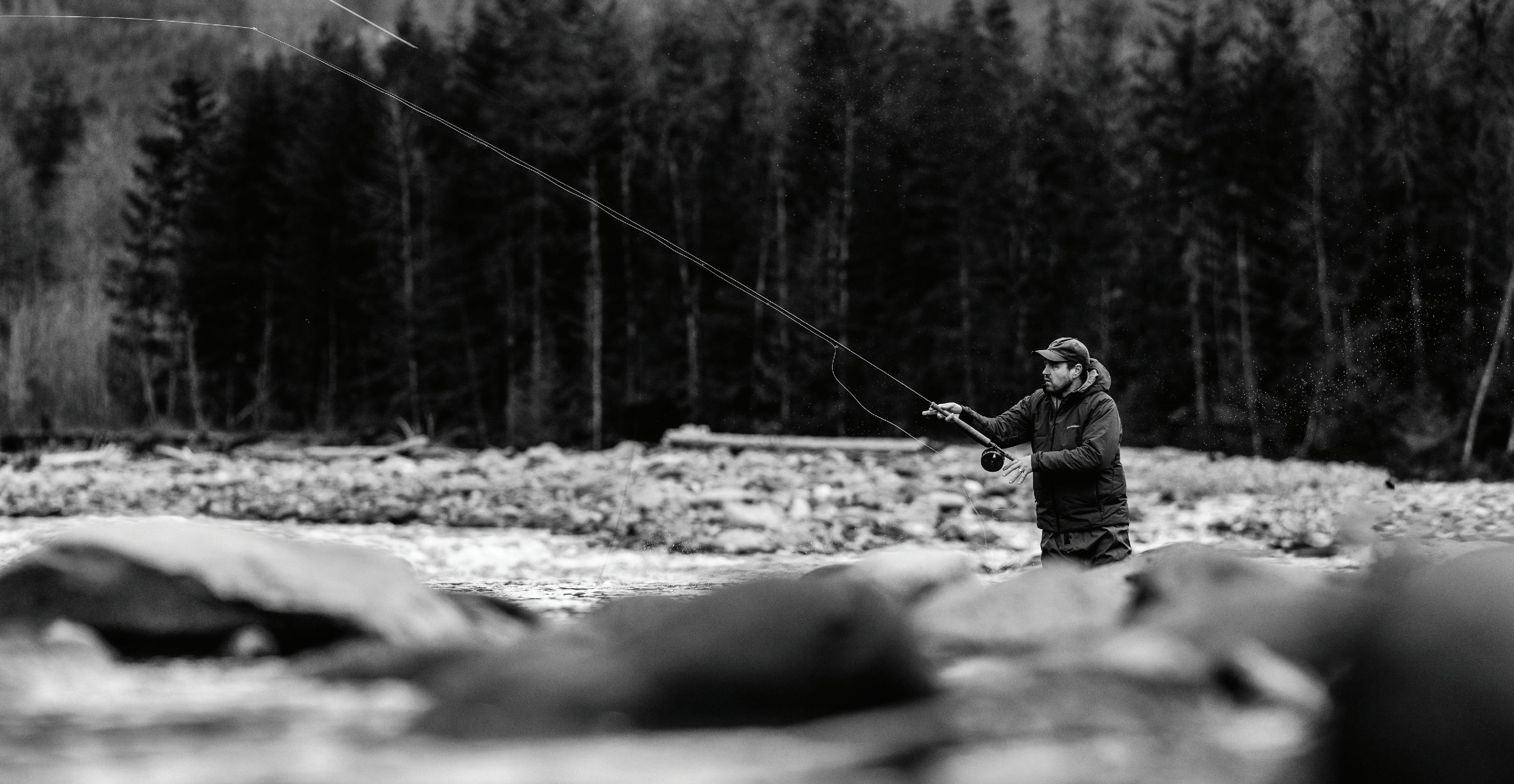
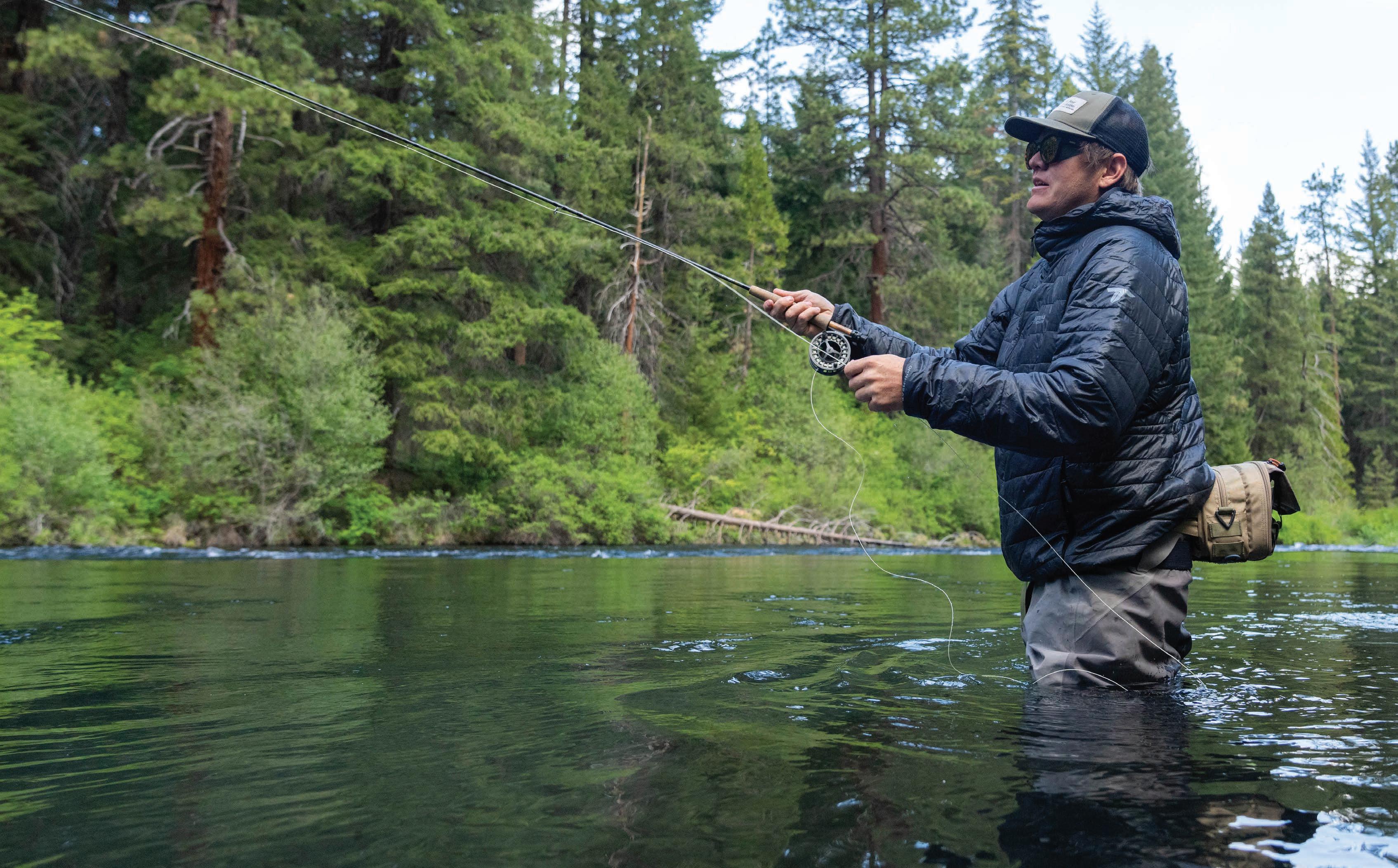
FEATURED PRODUCT: TURBULENCE INSULATED HOODIE
FEATURED PRODUCT: TURBULENCE INSULATED HOODIE
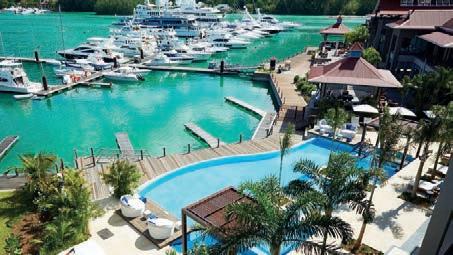

Eden Bleu Hotel
Just 5 minutes from the International and domestic airport!
So, we’ve just returned from Cosmoledo and are now back behind our desks. It’s winter outside - freezing cold and dark. But the memories from our recent adventure - catching some epic fish and sharing countless laughs with new and old friends - will stay with us for a long time and, hopefully, carry us through the long winter months.
To get through the inertia of everyday life, you can always look back or look ahead. And while December may not be the best - or most convenient - time to go fishing, it is perfect for reflection and planning. It’s a great moment to start mappingouttheseasonahead,andwehopethisneweditionofIn the Loop Magazine provides plenty of inspiration.
In this issue, we’re proud to feature contributions from Matt Harris, David Lambroughton, Emily Rodger, Rasmus Ovesen, Herle Hamon, Gordon P. Henriksen, Håkan Karsnäser, Rob Hammer, and Morten Valeur.
Enjoy the read, have a wonderful Christmas—and tight lines in 2026!


BrownTrout&Fry-FeedingFrenzies
MyTimeattheMayanPermitTournament
Single-handed Streamer Fishing by Rasmus Ovesen
Filling the Gaps in Trout Territory
Crooked&Acklins–TheForgottenAtoll
Regenerative Fly Fishing Tourism in Practice
And much much more...



of this magazine may be reproduced without the written consent of the publisher.
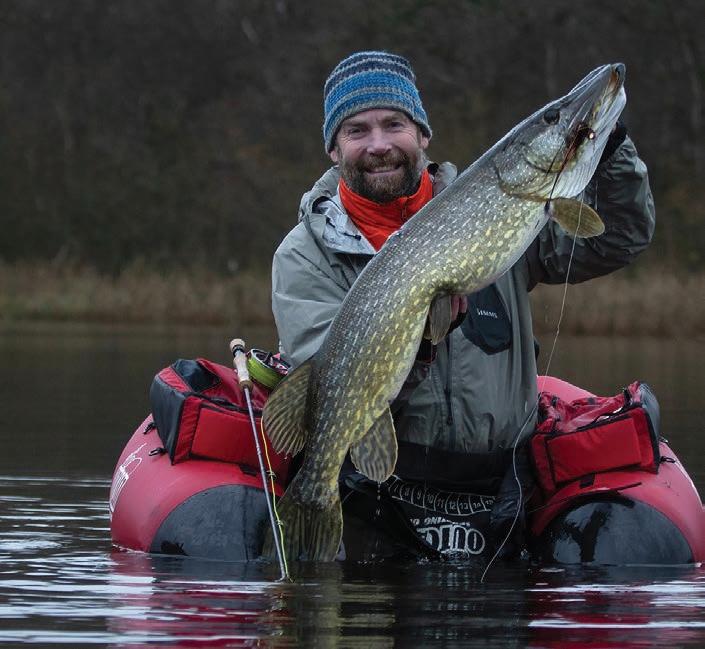
RASMUS OVESEN
Oslo-resident, Rasmus Ovesen, was handed his first fly rod at the tender age of eight, and he has been a borderline fluff chucking fanatic ever since. Rasmus has written articles for some of the world’s most renowned fishing magazines, and his travels take him to re mote areas across the globe in search for fish that will test and challenge his skills to the maximum. He has seen his fair share of ex posed backing in the tropics, but his heart truly belongs to the soulful realm of trout and salmon fishing.
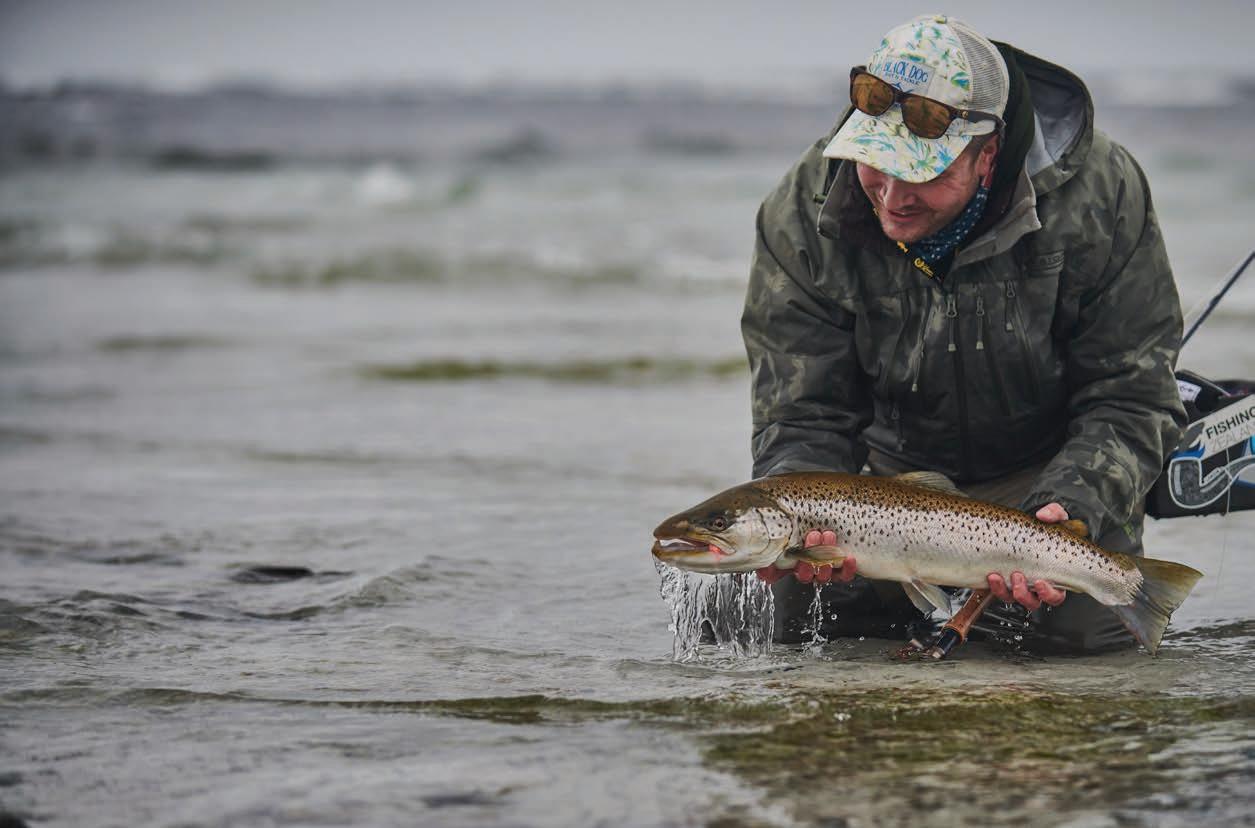
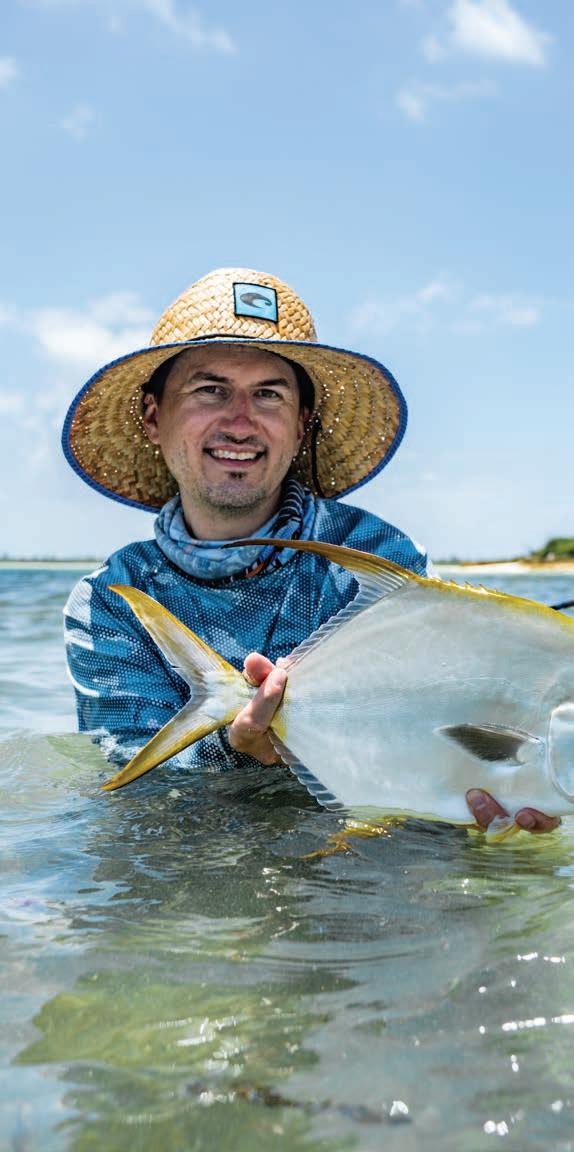
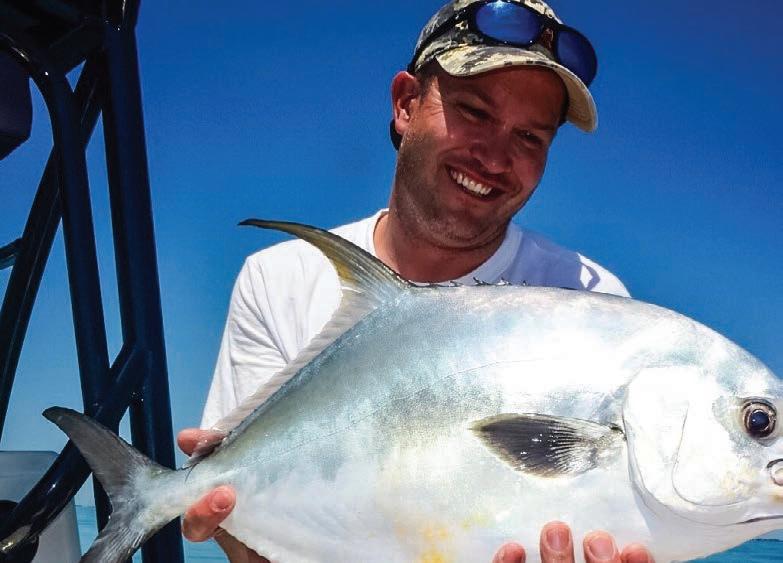
Danish fly fisherman and photo journalist, Martin Ejler Olsen, has years of experience fishing for the many and varied fresh- and saltwater species in the Danish rivers, lakes, and fjords. He has landed some truly massive sea trout on the fly, and he has a certain gift for hooking up with the biggest fish in the schools. Martin is also a keen tropical fly fisherman. His expeditions abroad has seen him battle bonefish, permit, barracuda, tarpon, GT and sailfish – and being a gifted photographer, these trips have resulted in some great footage.
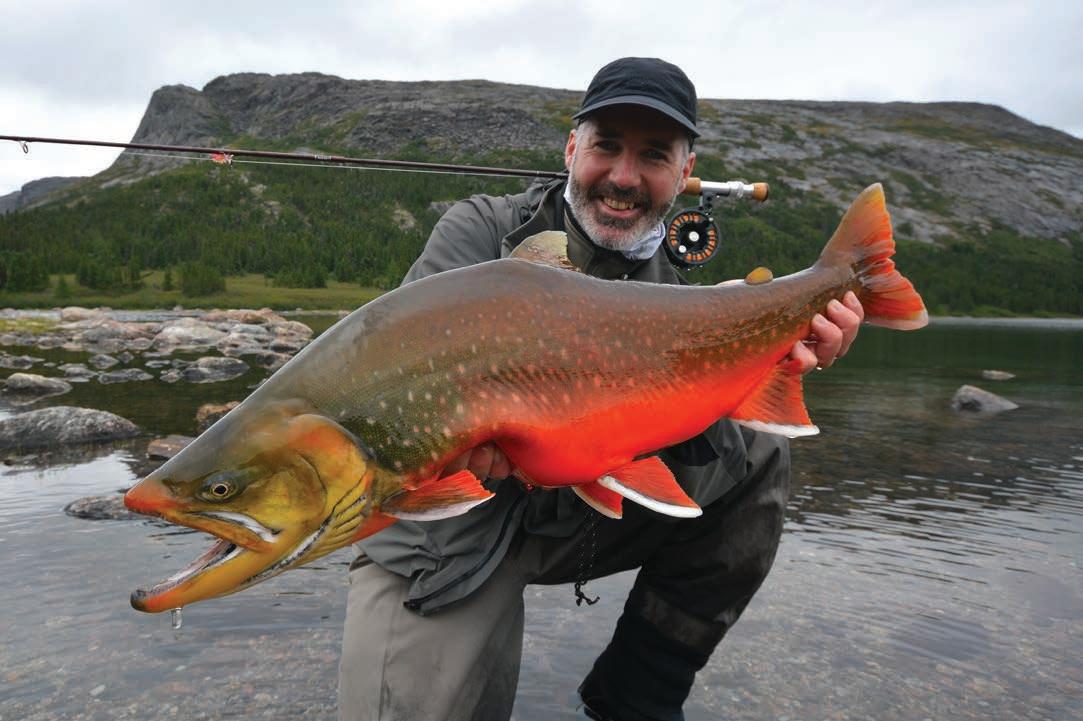
Morten Valeur is one of the great Danes in fly fishing – an inspiration to many aspiring young fly fishermen, a great fly tyer, photographer and fisherman. Morten has pro duced several articles, books, and films about fly fishing, and for the last 25 years, he has worked in the fly fishing industry; running his own fly tying distribution company and –recently, starting up the very successful fly hook company, Ahrex Hooks, which he has catapulted onto the global scene in record time. For more info:
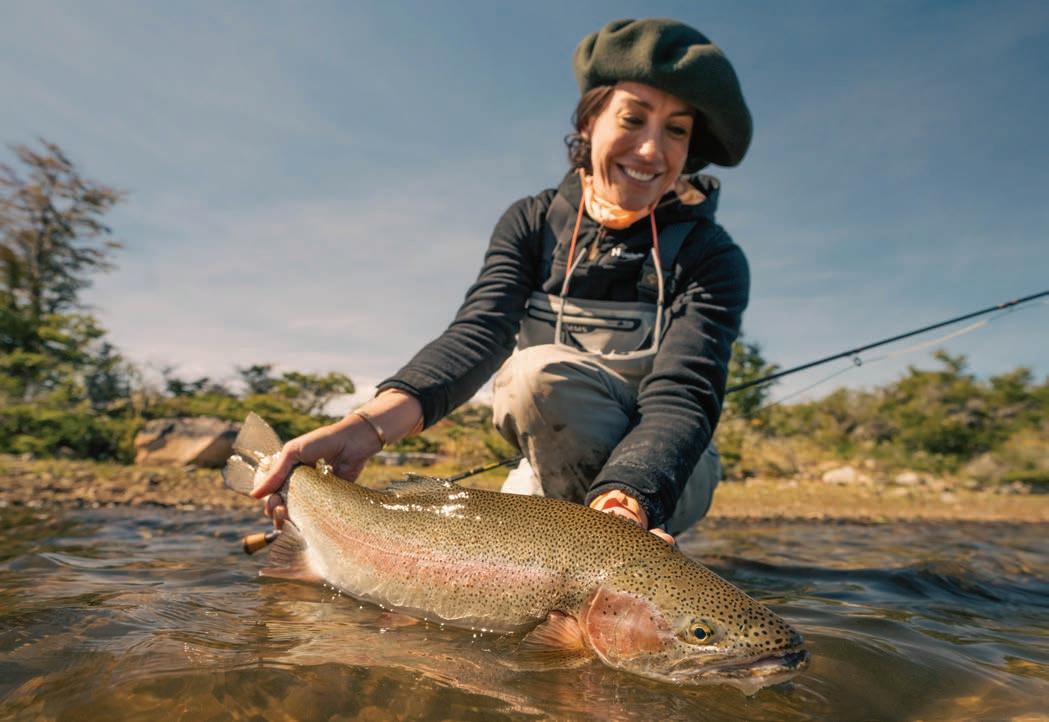
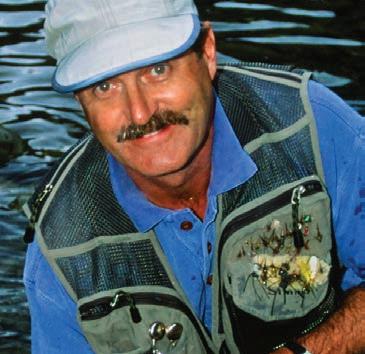
David Lambroughton splits his year between British Columbia and New Zealand and lots of stops in between as he gathers his photos for his annual Fly Fishing Dreams Calendar. His calendar comes full of info on the people, places, passion and fly patterns of our sport and is sold all over the world.
Do you have any great fly fishing photos, videos, or stories that you would like to share with our readers? If so, please don’t hesitate to get in touch with us. We are always looking for quality material for In the Loop Magazine, and we look forward to reviewing your material.
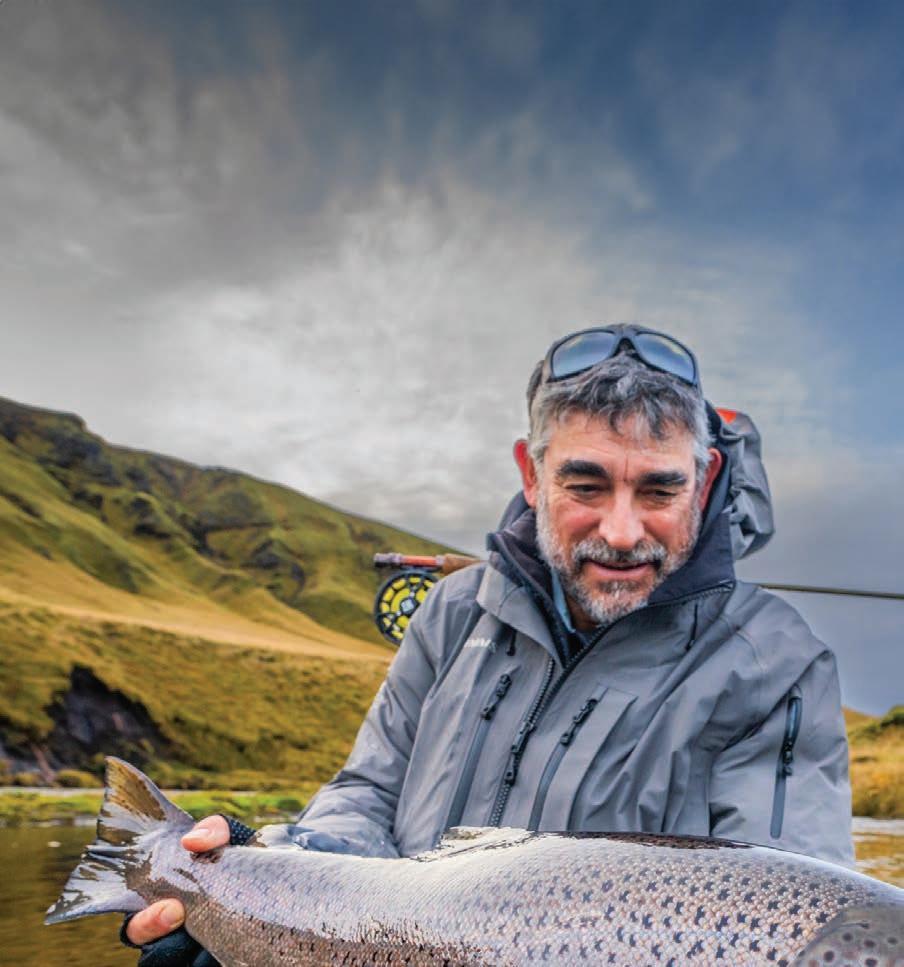
Gordon P. Henriksen is proba bly the most well-known fish erman in Denmark. He hosts a Danish fishing radio show and he is a tv-host on various pro grams on national Danish tel evision, National Geographic Channel, and Youtube. He is into most kinds of fishing, but he especially loves sight fishing and fly fishing in both Danish and foreign (warmer) waters. You can follow Gordon on Instagram: @Gordon_p._henriksen
w www.alphonsefishingco.com
t +248 422 9700 [GMT+04:00]
m +27 60 980 7316 [GMT+04:00 WhatsApp]
e reservations@alphonsefishingco.com

Alphonse Island | Astove Atoll | Cosmoledo Atoll | Farquhar Atoll
Amirante Islands | Providence Atoll | Platte Island
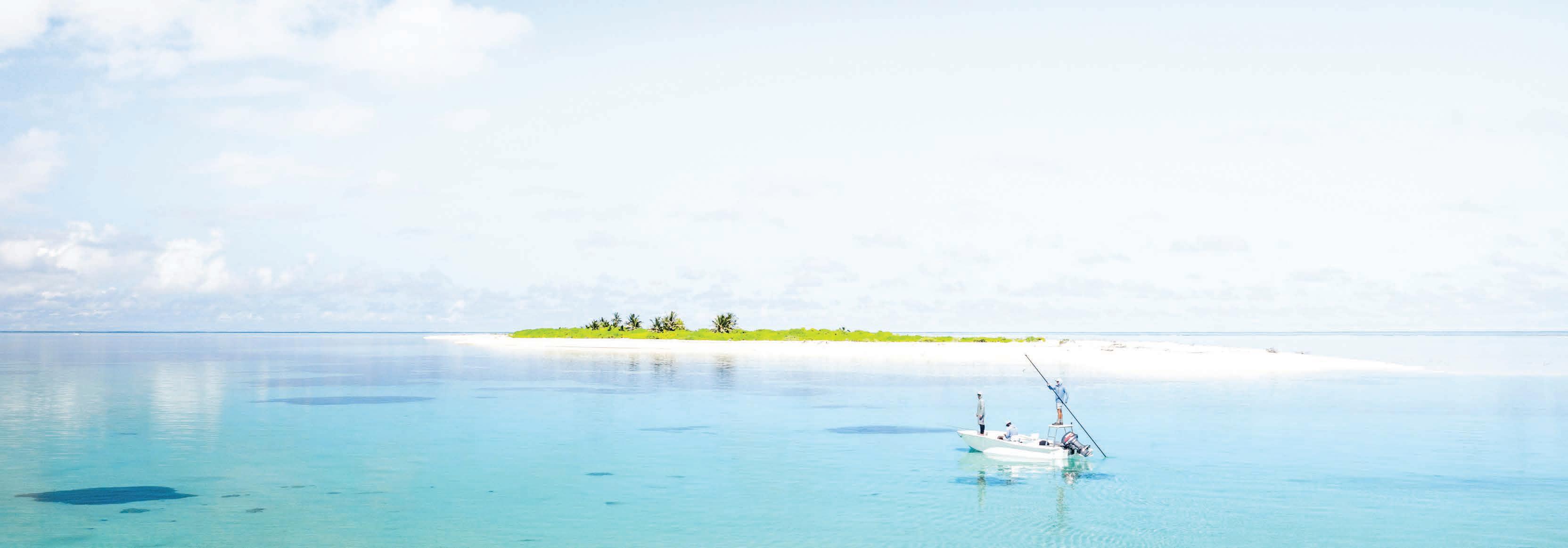
Experience the world’s best fly fishing with Blue Safari Fly Fishing, a specialised Seychelles based operator that has spent decades pioneering the fly fishing at these remote Outer Atolls. Our trips are designed to make all your fly fishing dreams come true by providing the best guides, skiffs, lodging and atolls with abundant waters full of trophy fish.
We’ve had the privilige of traveling to some of the world’s premiere fly fishing destinations. Now, it’s your turn! Browse Destinations










By MATT HARRIS
With additional images by PASI VISAKIVI
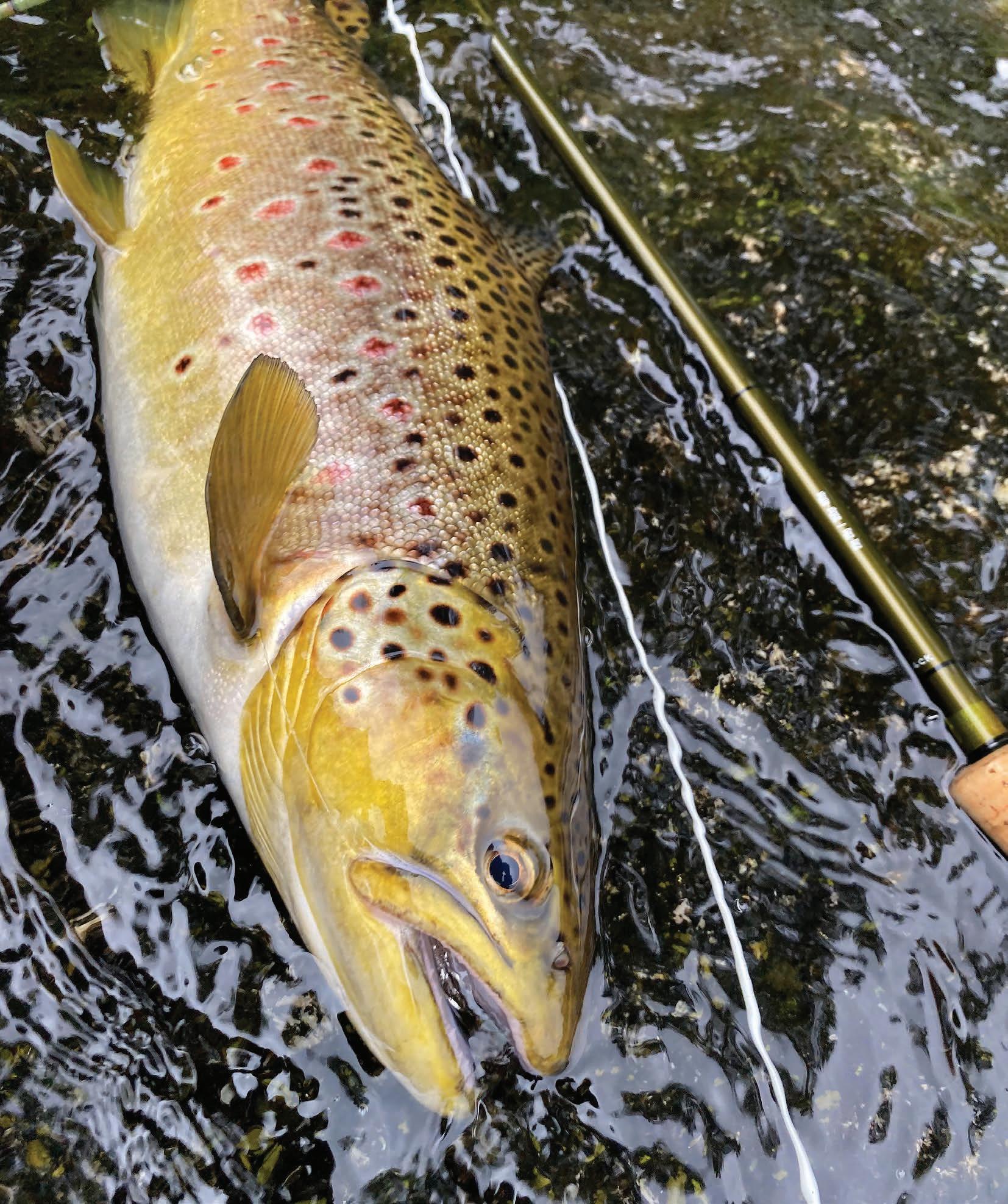
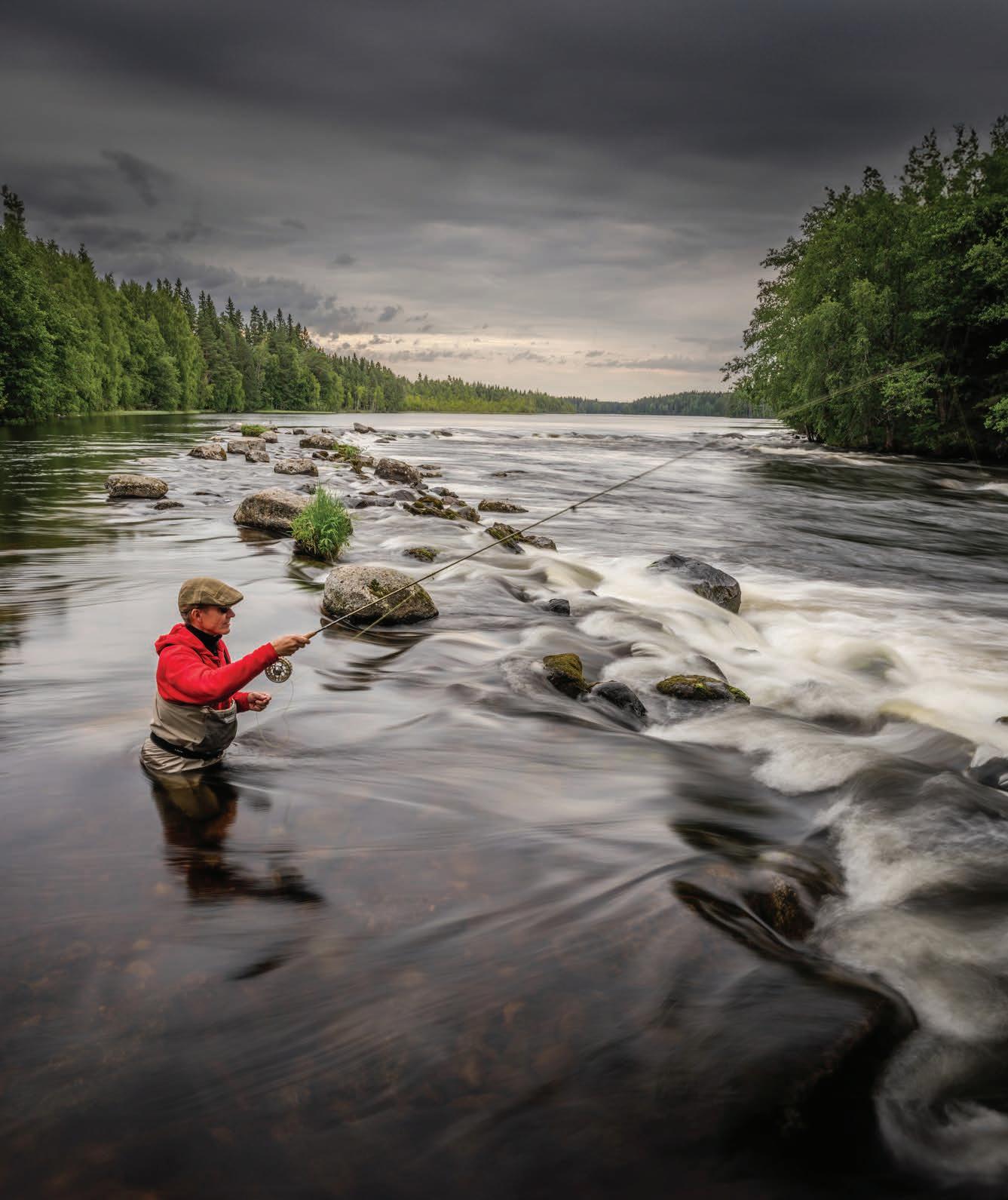
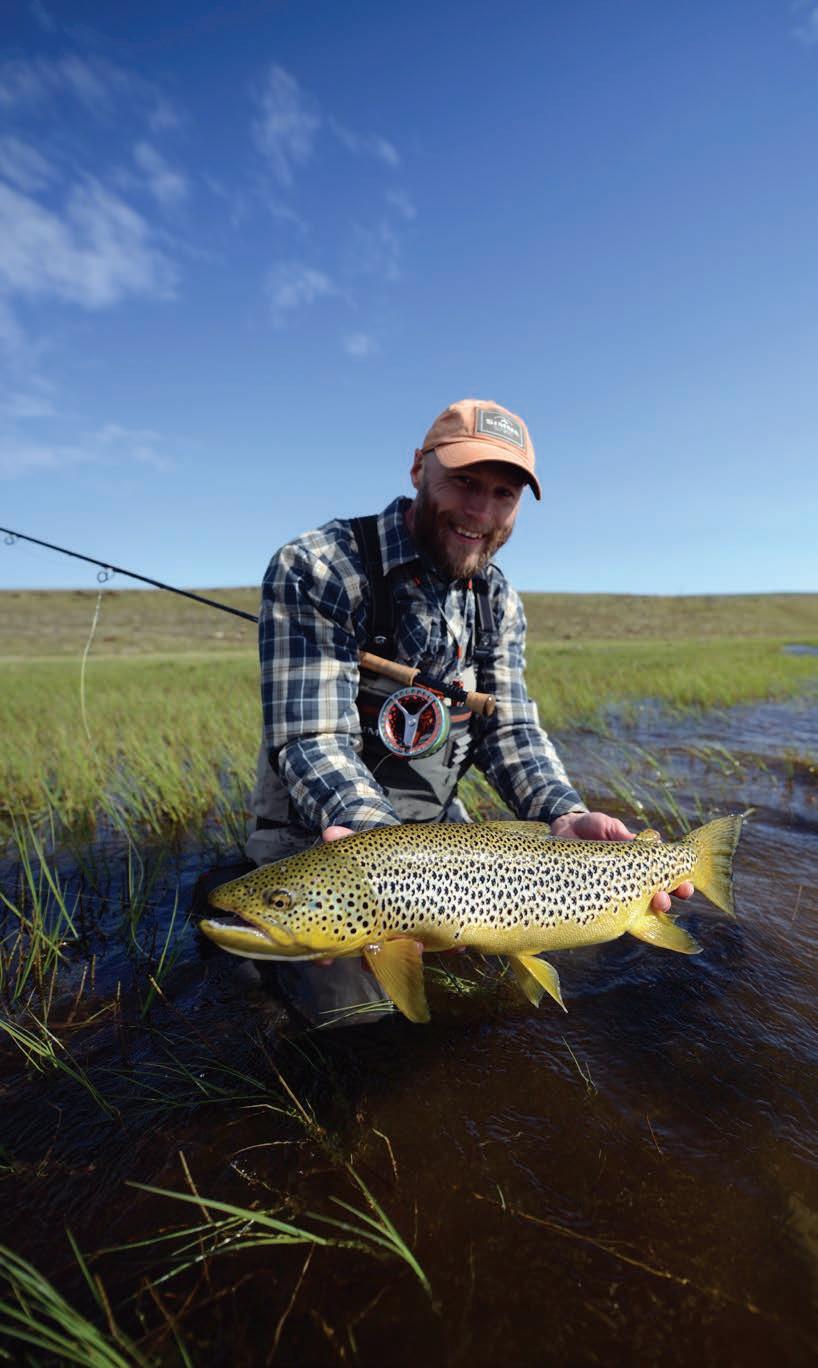
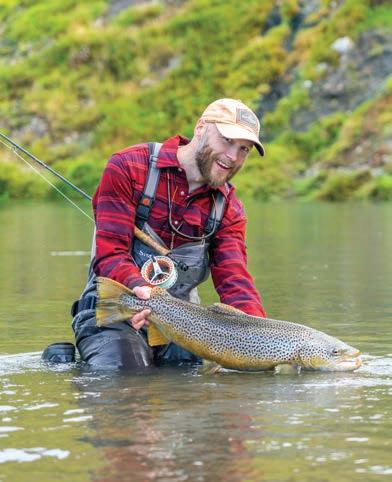
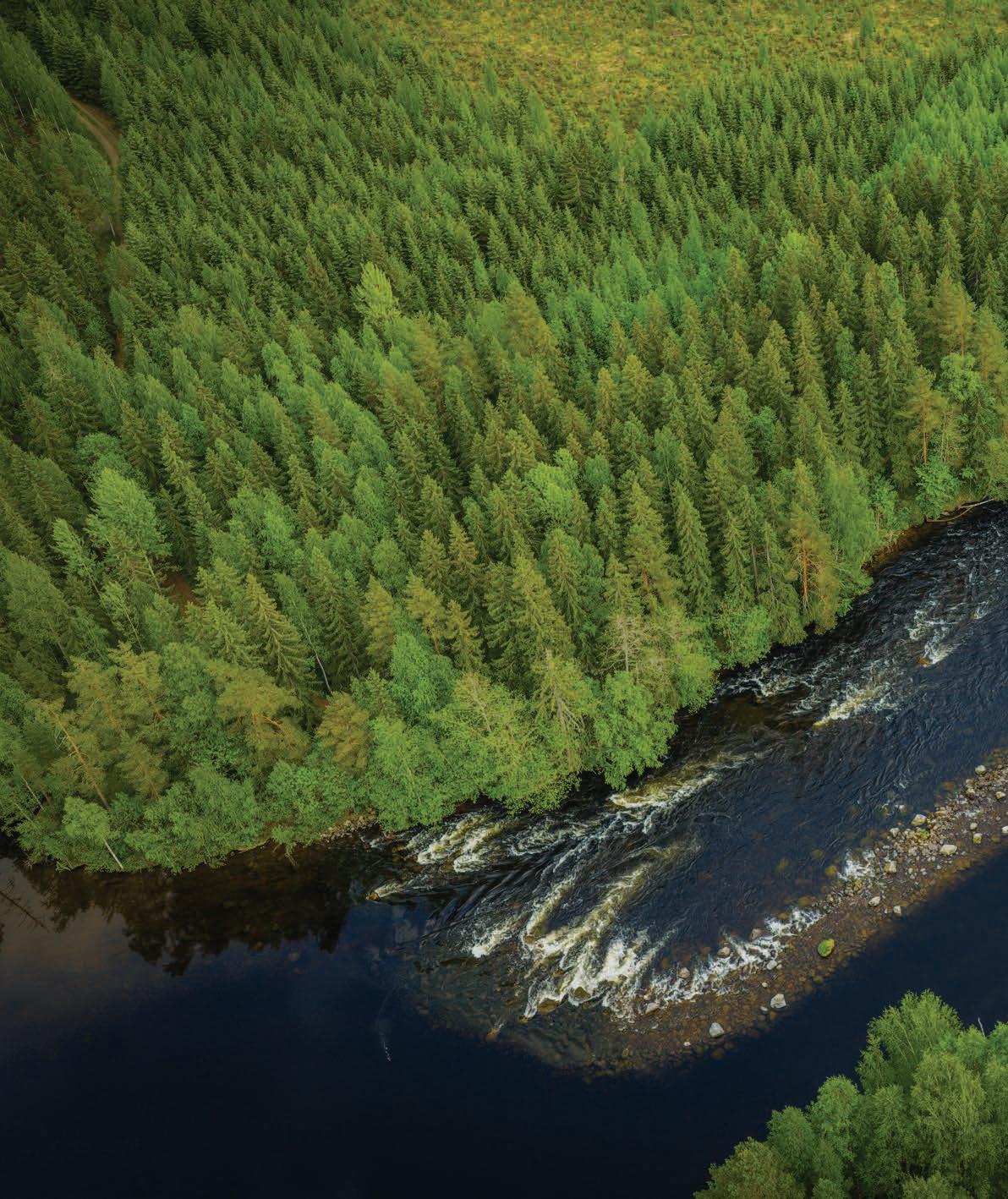
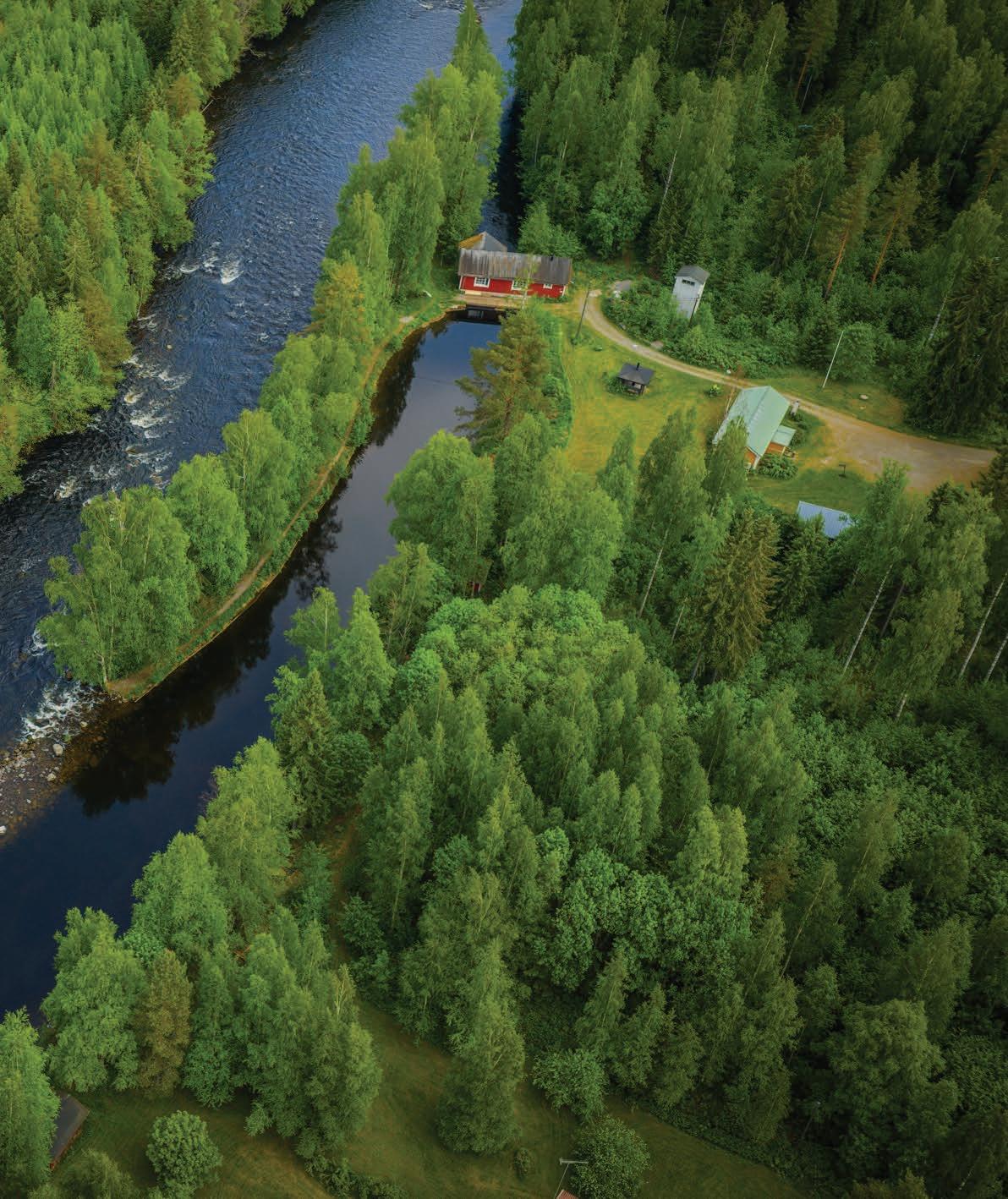
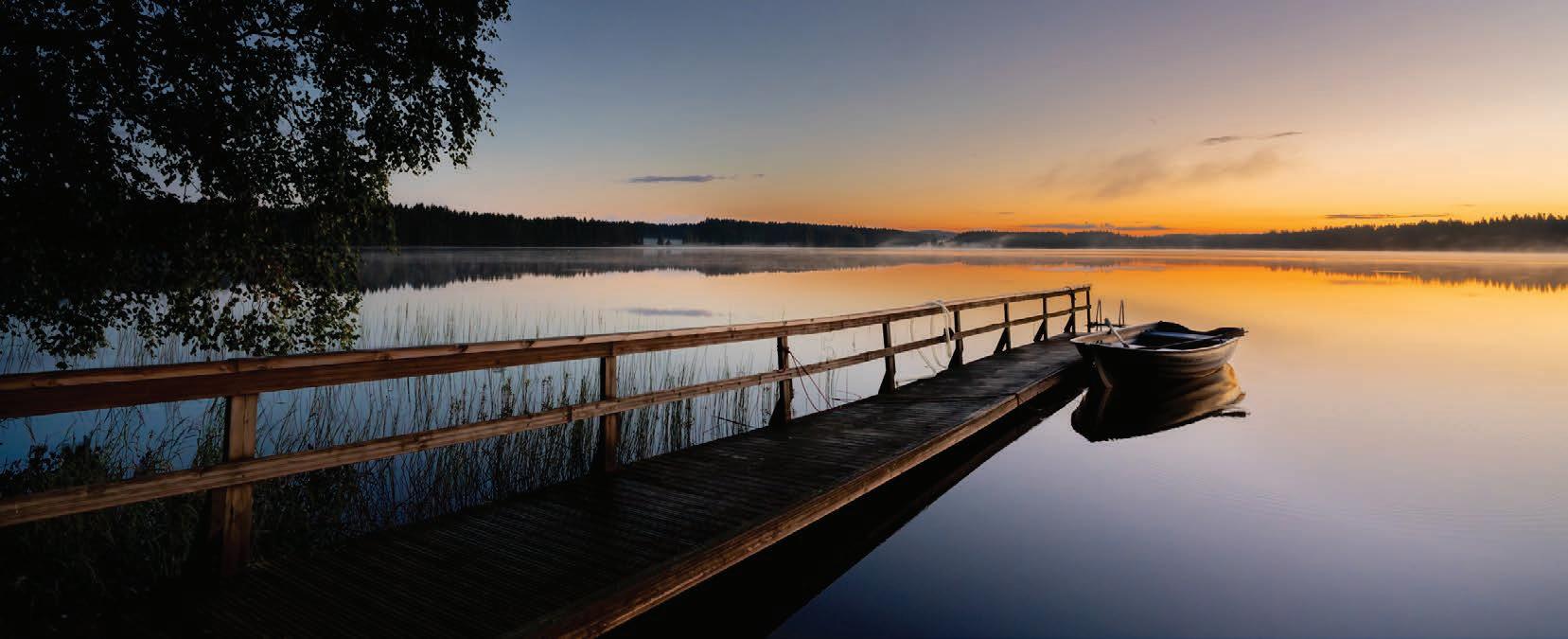
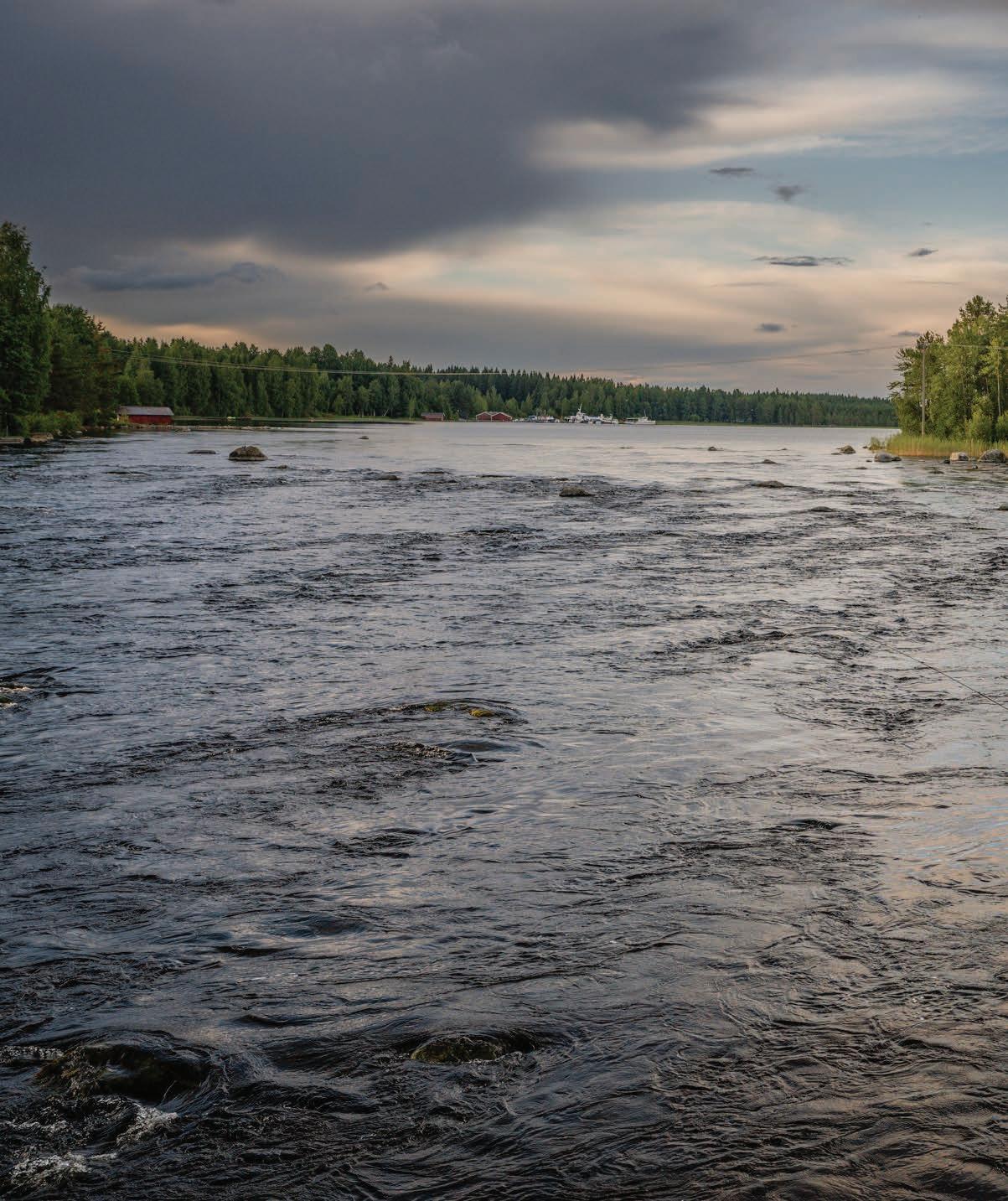
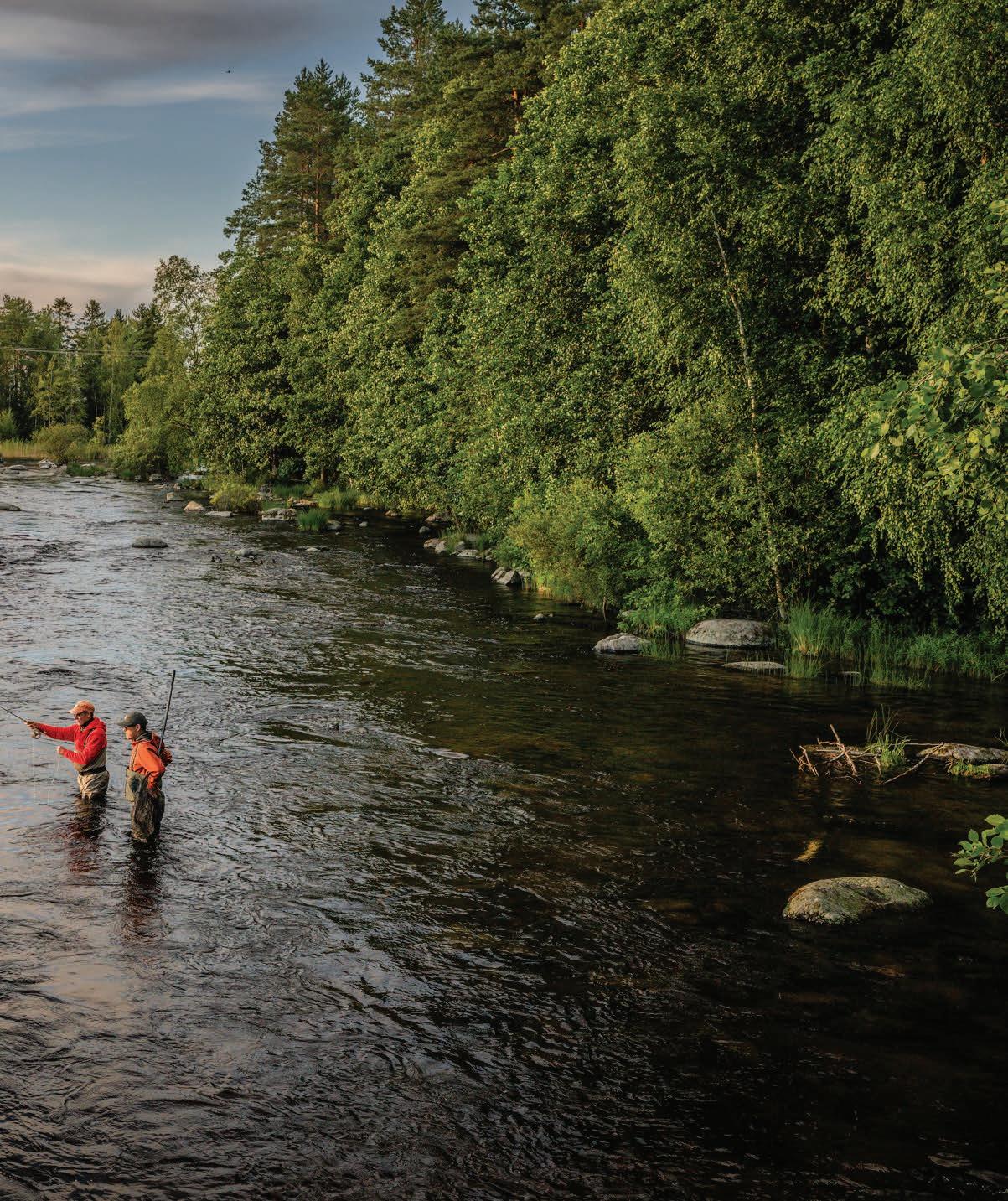
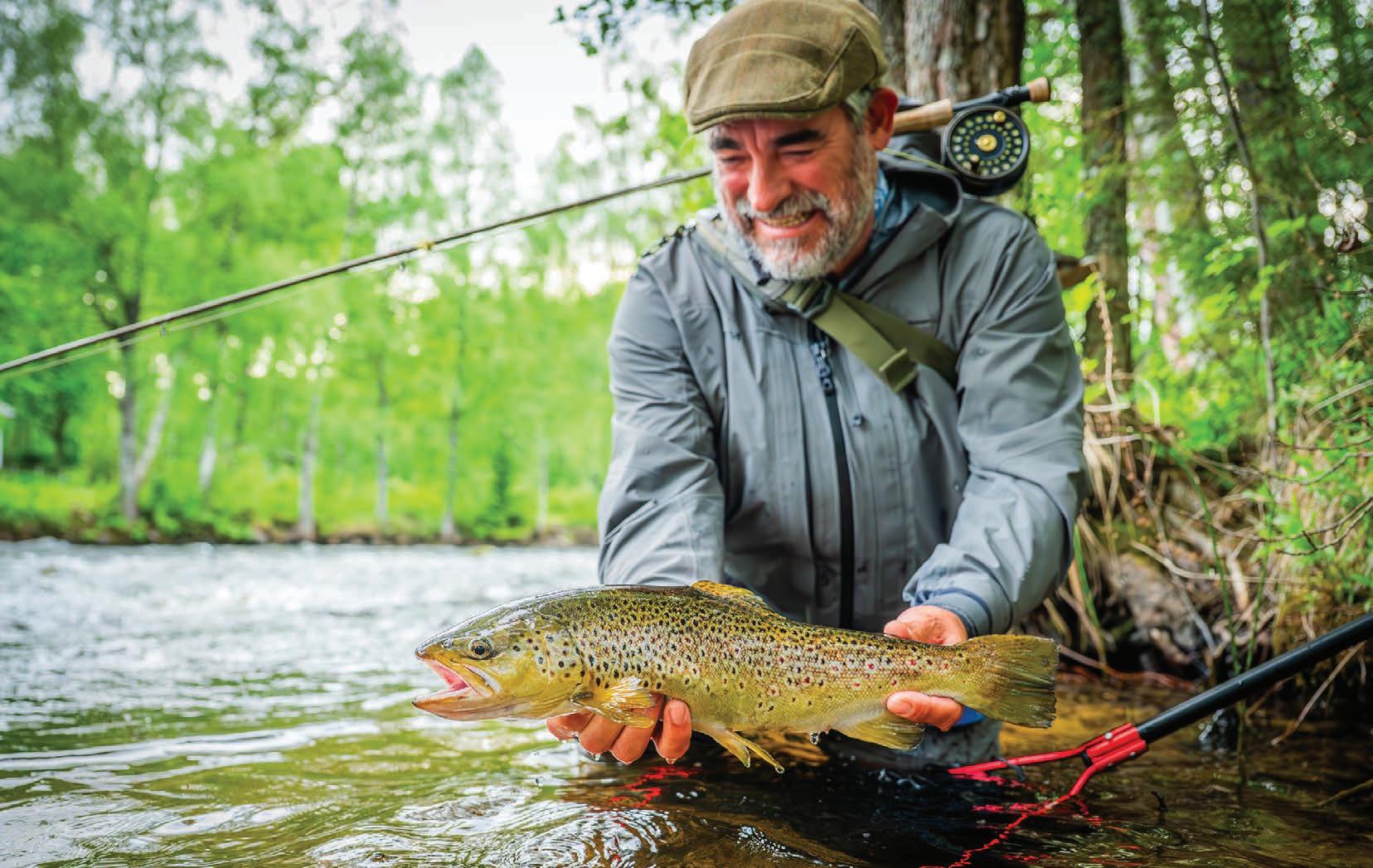
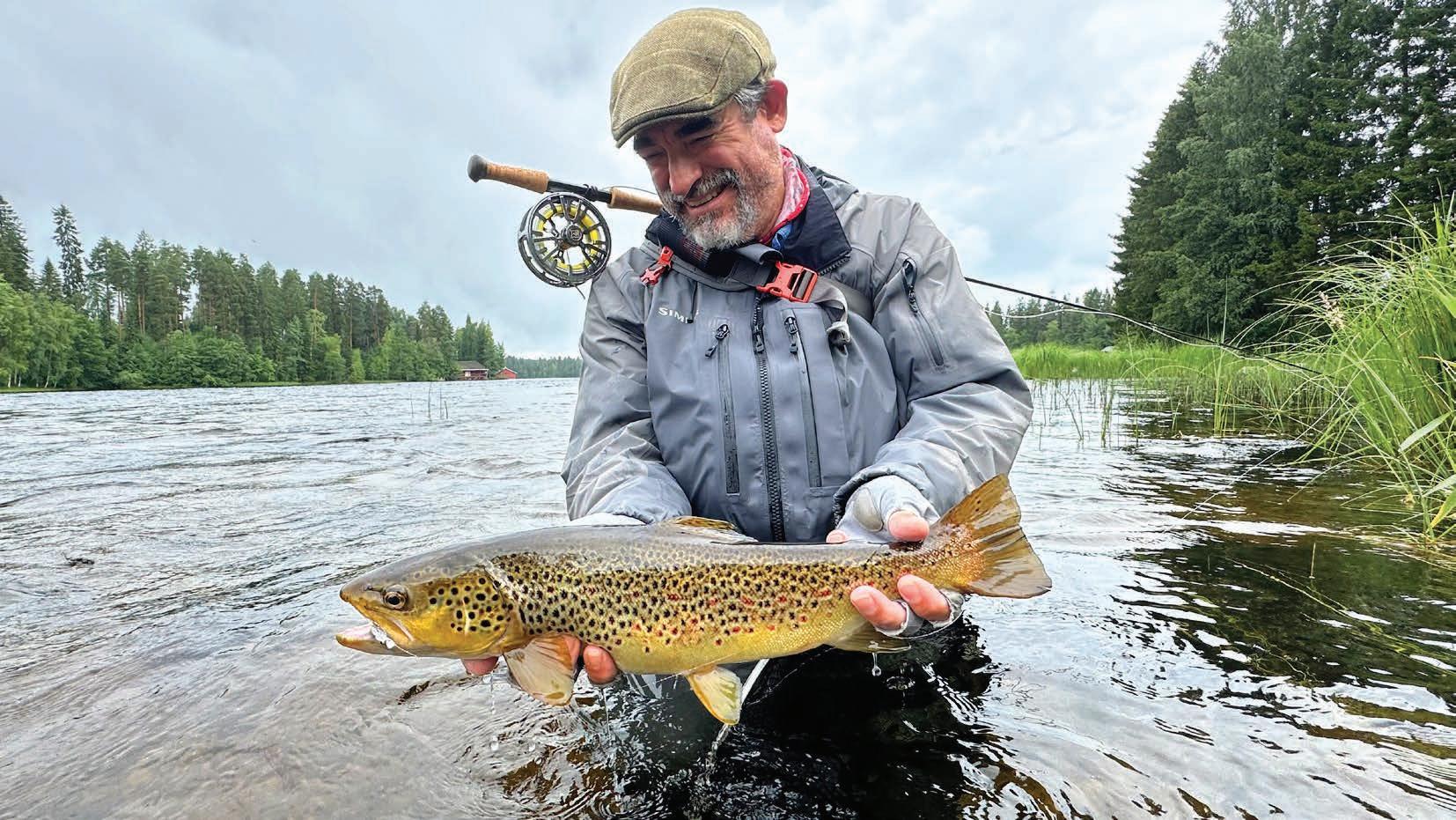
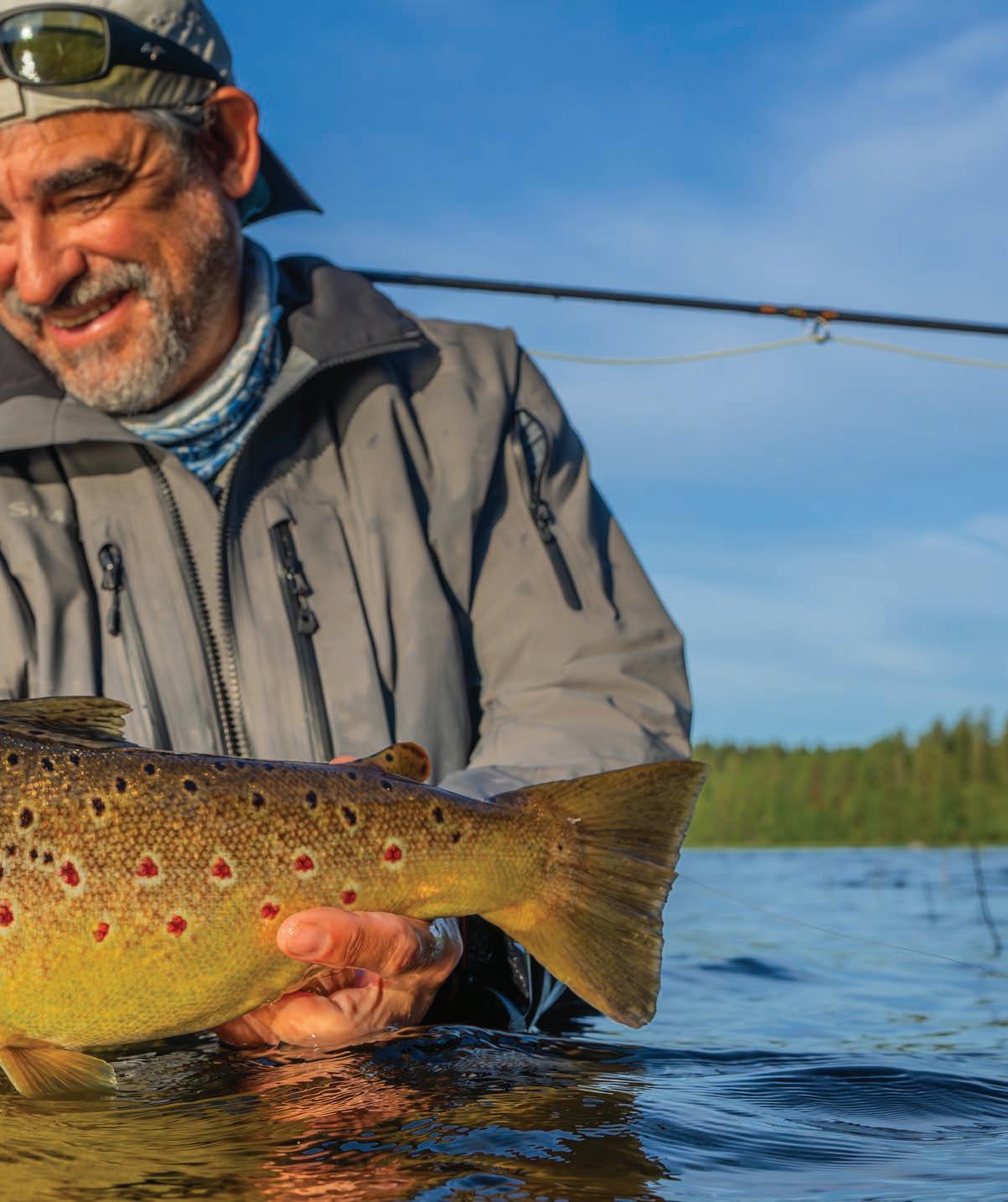
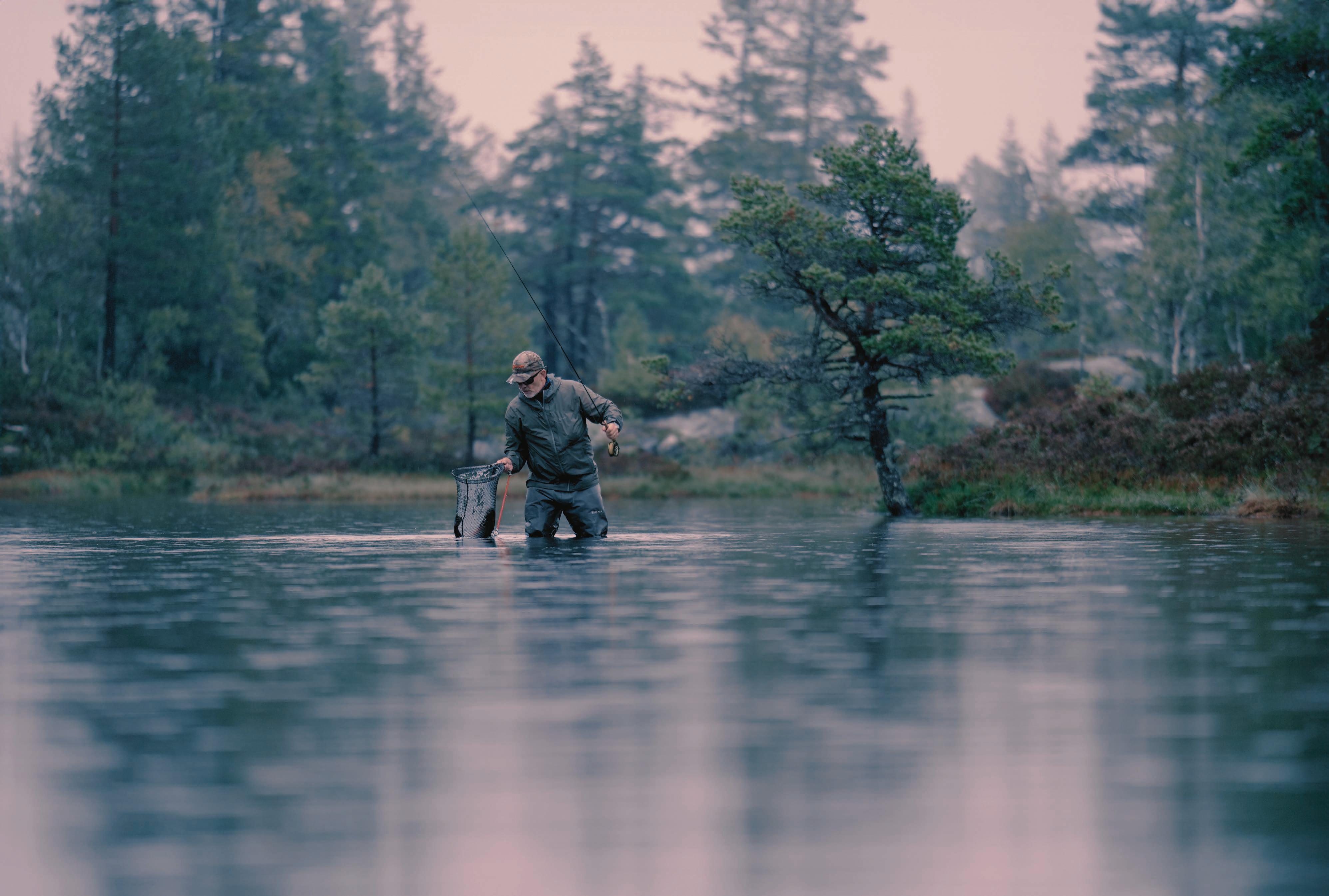
In early June when winter’s icy grip starts to loosen its hold and the lakes of central Finland start to wake from their slumbers, something special happens. When the water temperature reaches around 6 degrees, big shoals of small roach migrate from the lakes into the fast, powerful rapids that connect them, and the big brown trout desert the lakes to follow them.
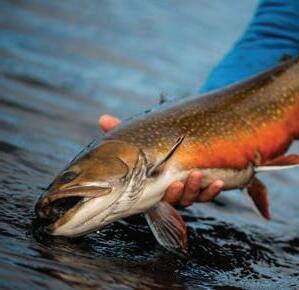
As the water warms further, other baitfish species including perch and various whitefish follow the roach, and when the water temperature hits 12 degrees, the huge shoals of bleak join the party. This is the trigger for the trout to go absolutely nuts. With their metabolism now fully ‘warmed up’, and the rapids full of all kinds of highly nutritious baitfish, they go into a wild feeding frenzy, crashing into the huge schools and sending baitfish exploding into the air with a violence that would make a tuna blush. For the avid trout angler, now is the time to catch a trophy…
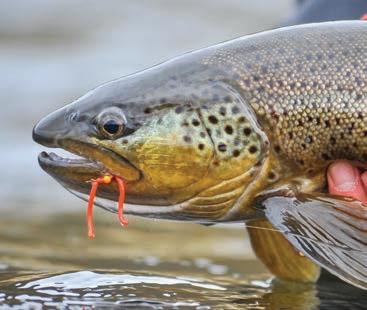
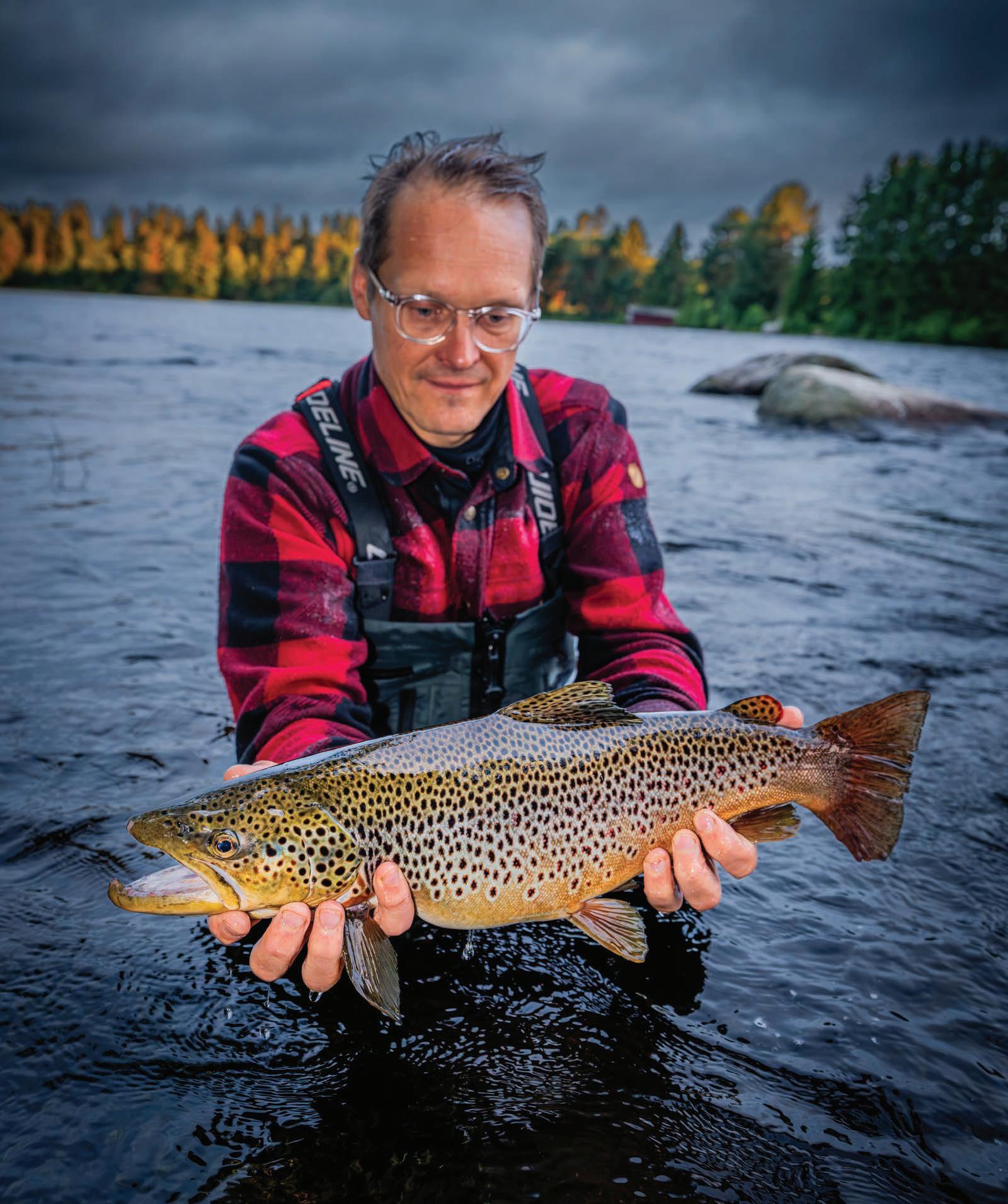
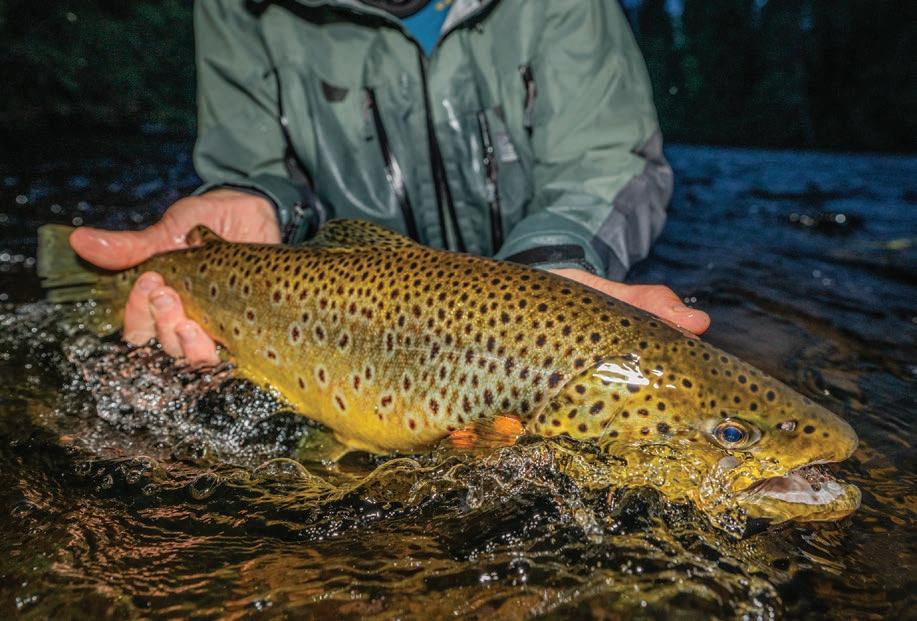
The big browns are famished after the long Northern winter, and they set about the baitfish with voracious abandon. These big, wily, old hunters are never easy to fool, but in this state of depraved bloodlust, they become uncharacteristically vulnerable.
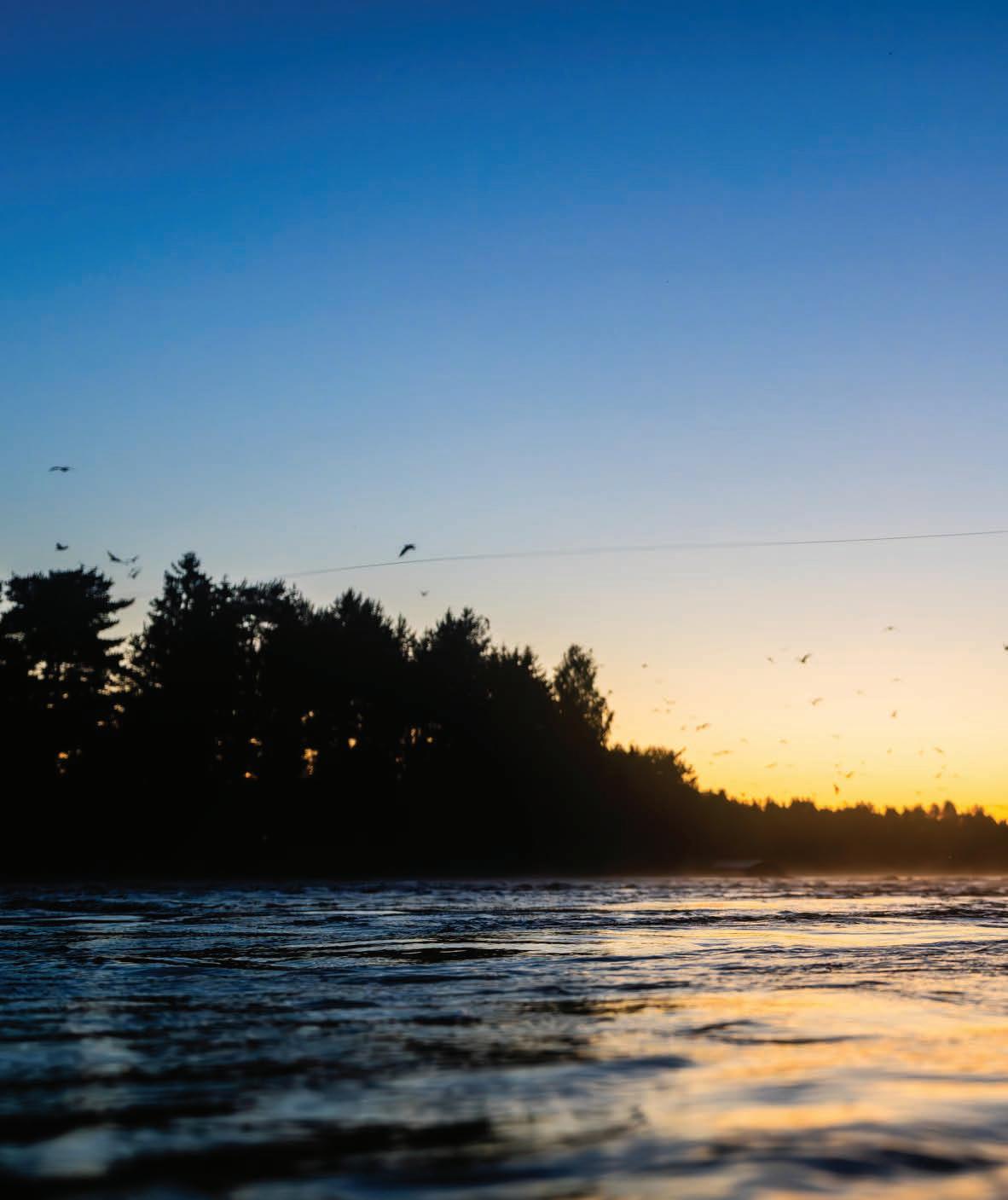
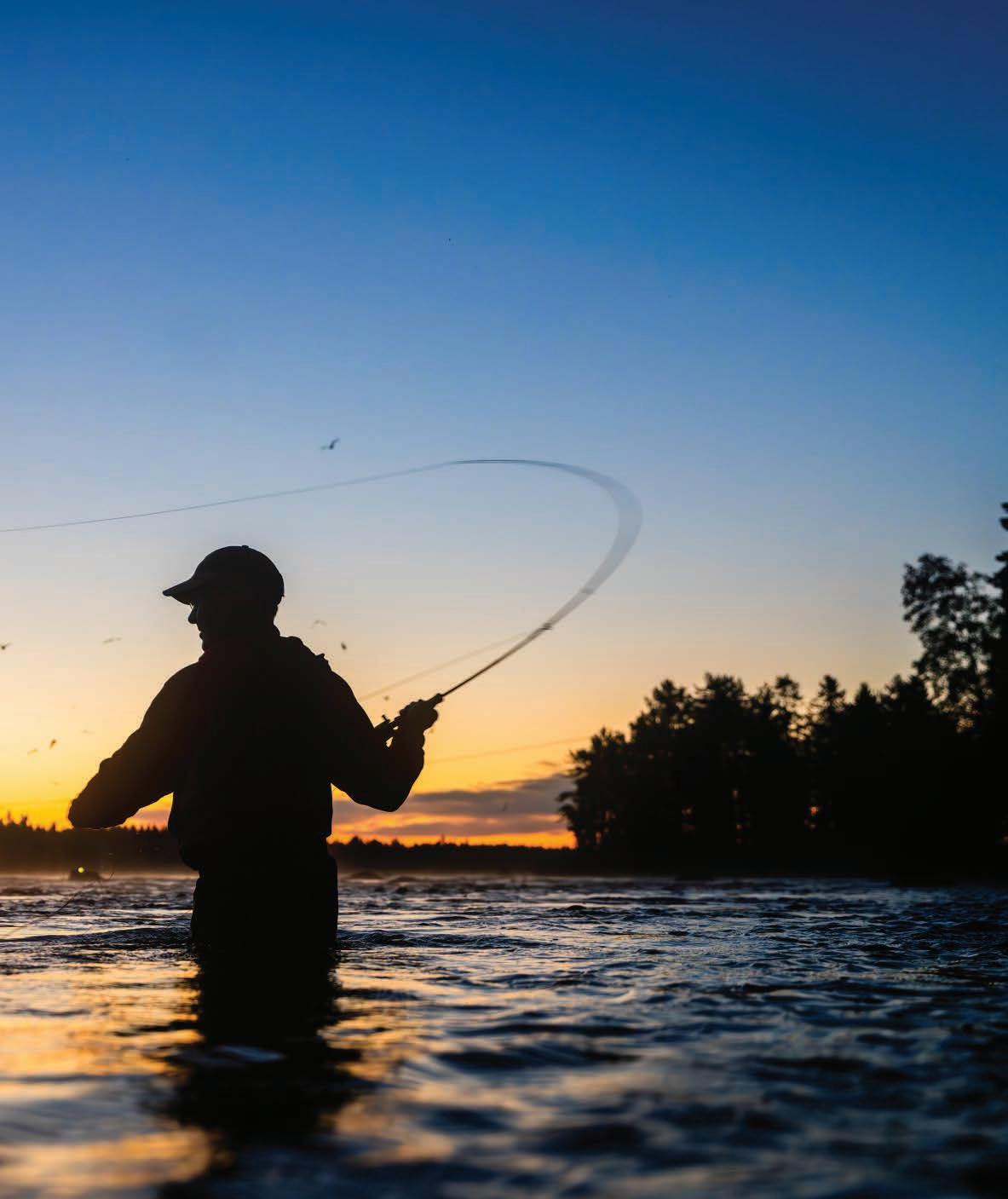
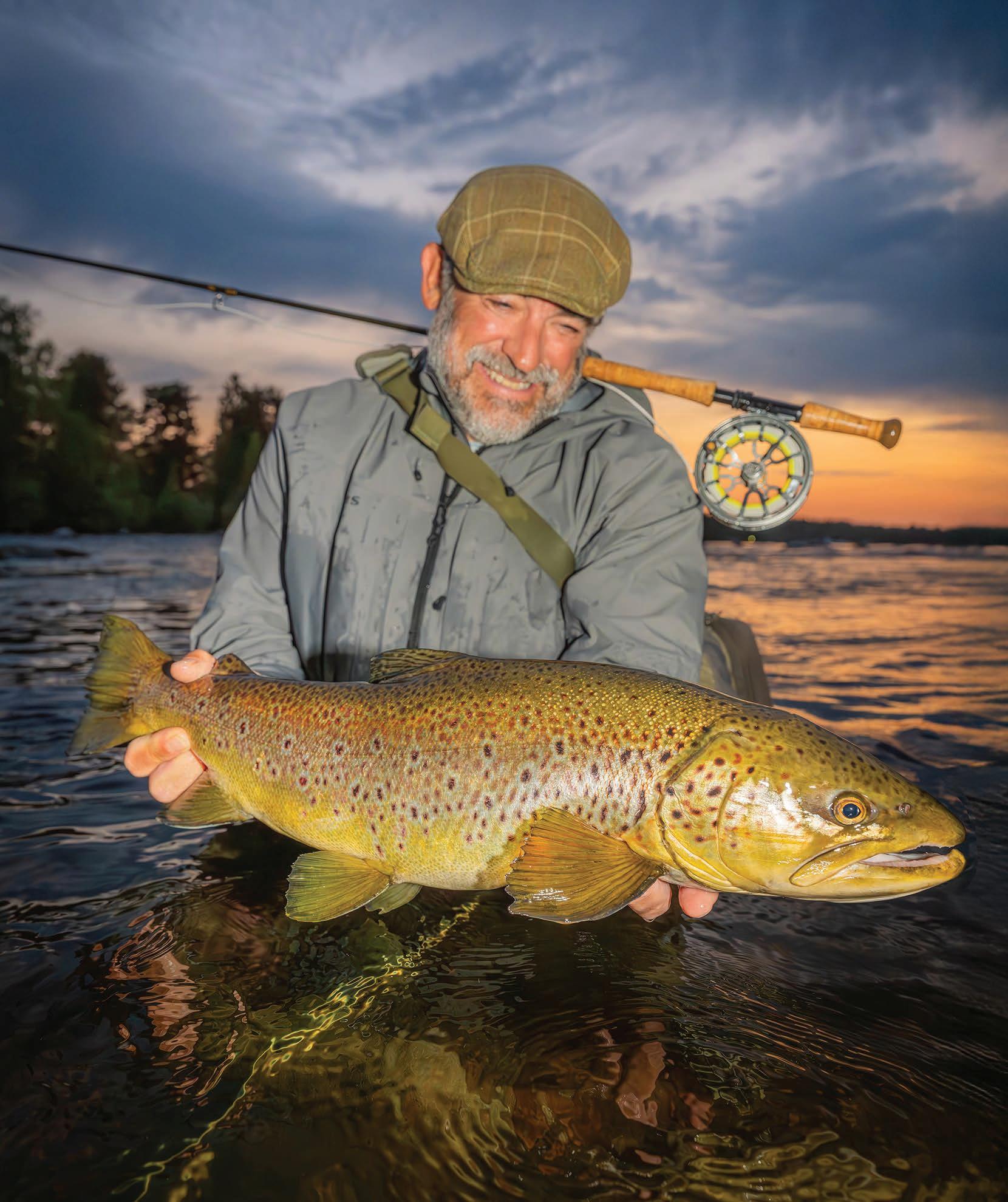
The lakeland of Central Finland is not quite in the Arctic Circle but it is a long way North. As the summer solstice approaches, it becomes possible to fish throughout the night. This is often the best time to target these big fish. Once the sun drops low into the west and only occasionally comes flickering through the birch forest, the fish become exceptionally active. Don’t rush in…take your time and watch the water.
Usually, the patient angler should be rewarded soon enough by the sight of large numbers of sparkling silver roach and bleak bursting into the warm night air as their tormentors terrorize them from below. Dead and dying fish are everywhere and watching the big trout mop them up with casual indolence is utterly extraordinary.
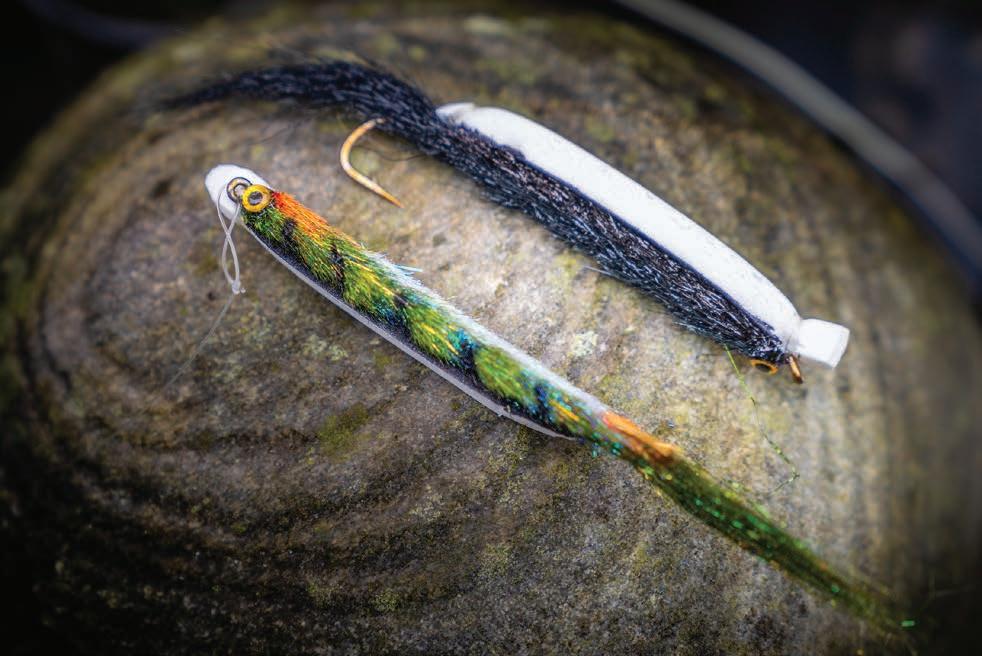
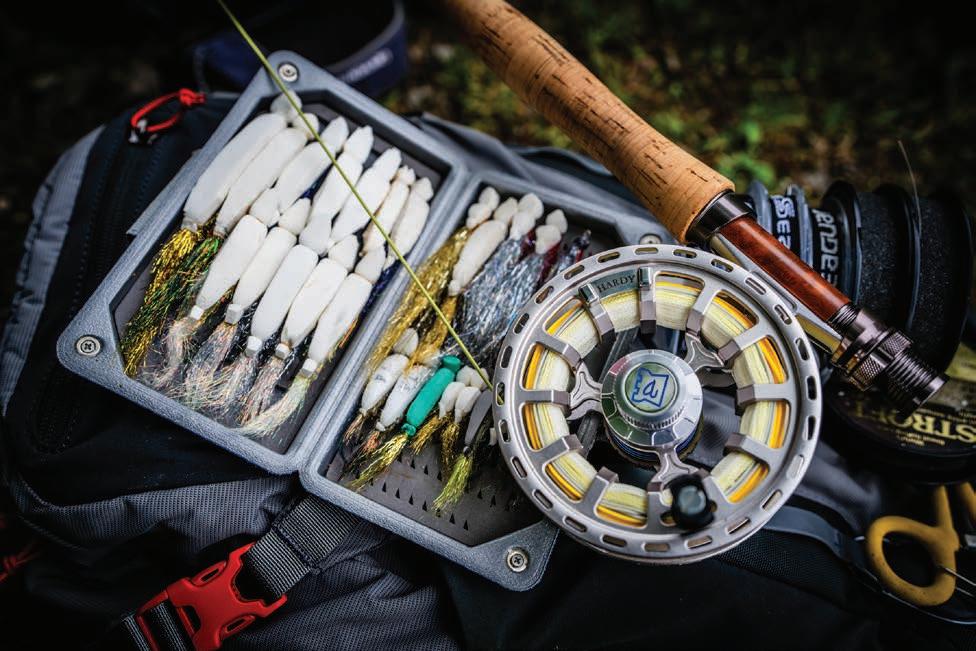
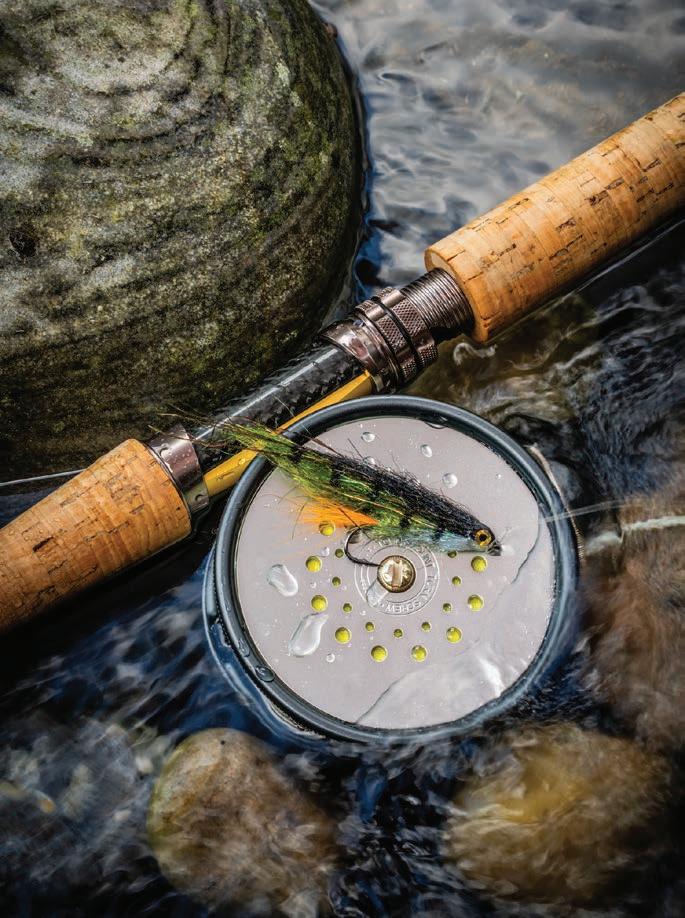
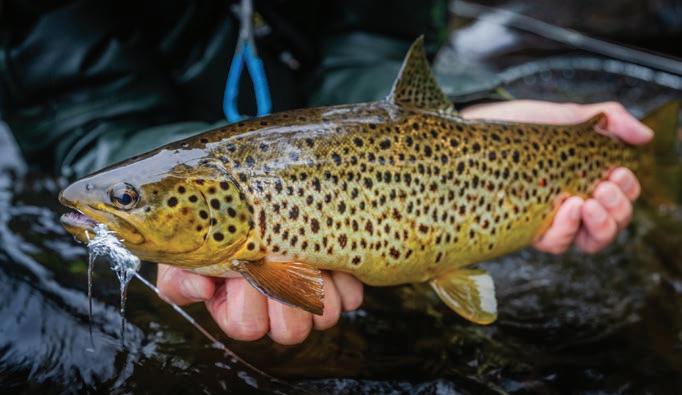
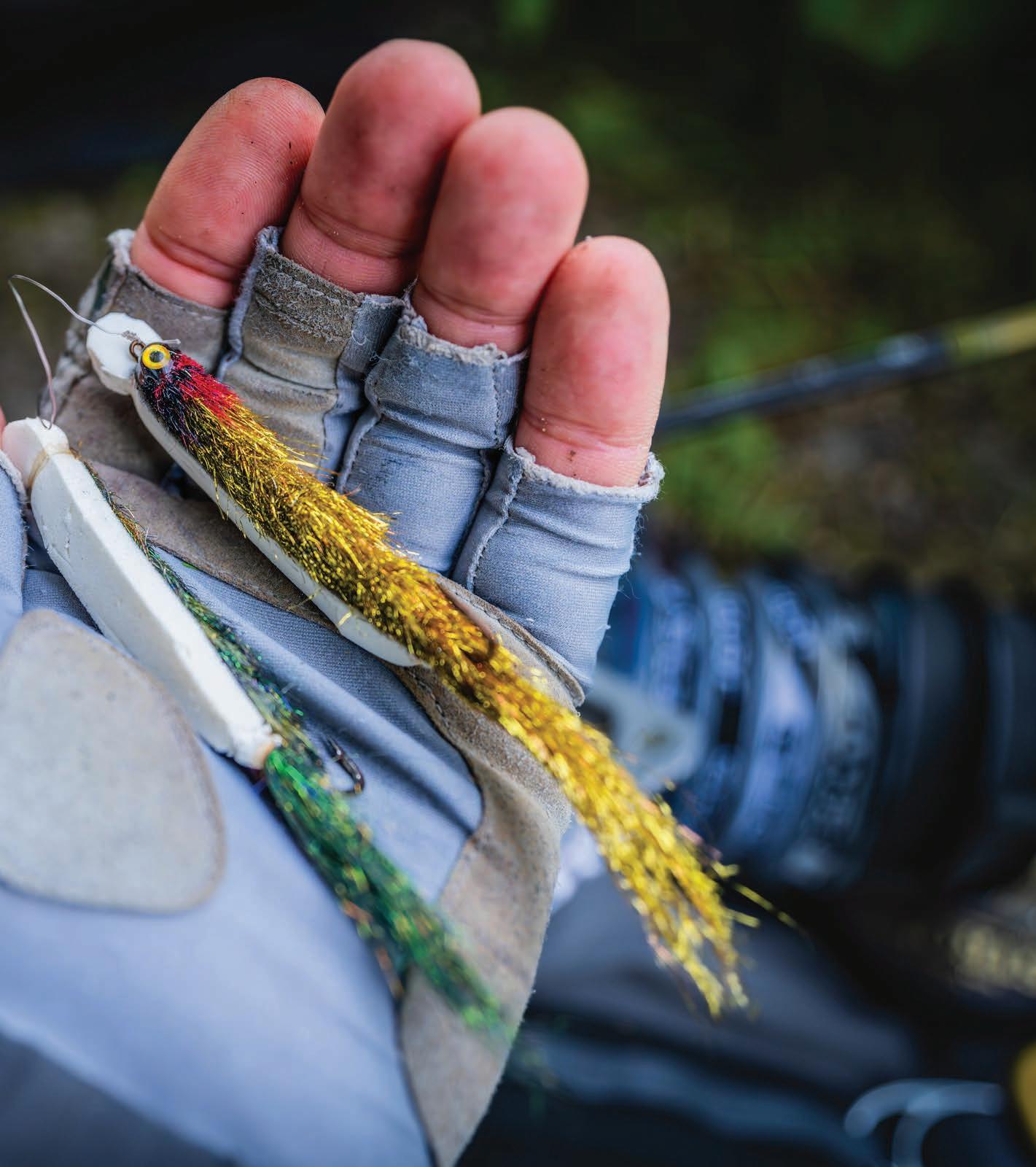
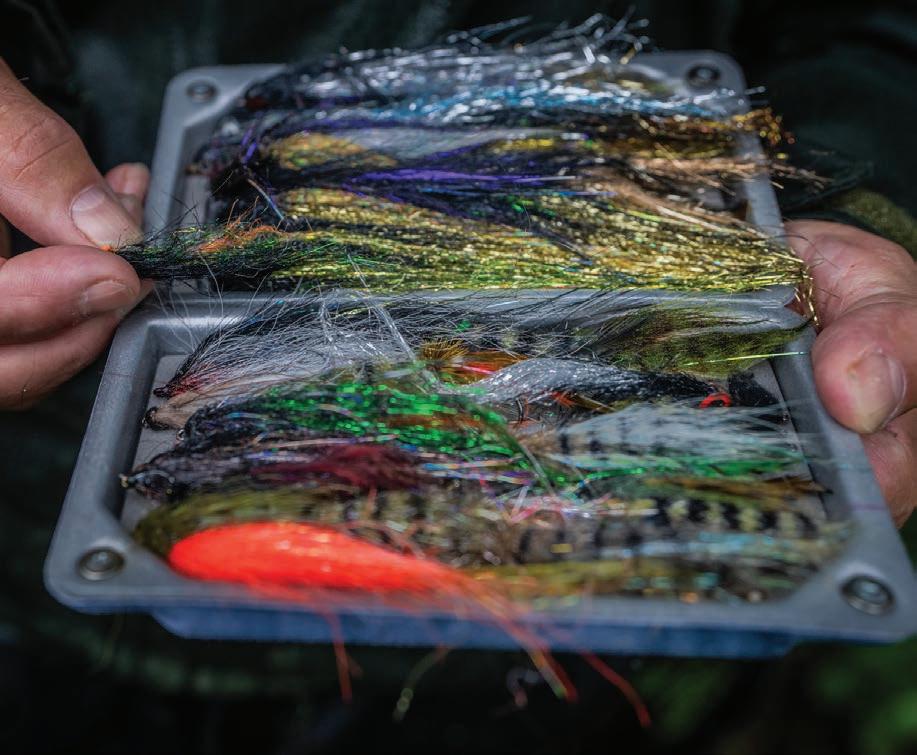
The Finns have pioneered an enormous surface pattern known as the Surfilauta or Surfboard. This is a huge floating fry imitation that can be anything from 2 to 6 inches long. While it can and does work in the conventional manner, skated and popped across the surface while swinging the pattern downstream and across, the deadliest way to fish this pattern is actually to fish it dead drift in the fashion of a classic dry fly presentation.
While most local anglers like to fish the pattern on an ultra-longshank hook, I found this technique led to too many fish being lost due to the leverage of that ultra-long shank. Instead, I chose to tie the same patterns on a plastic tube and paired the tube with a short shank ultra-strong carp hook. This pattern served me well and allowed me to hook - and land - a succession of beautiful fish.
A heart-stopping experience
It is truly exhilarating fishing. The sight of your big surface pattern bouncing down the churning white water and then being devoured in a split-second, as a big broad-shouldered trout crashes up through the brawling currents to nail it, is a heart-stopping experience.
“Once hooked these big, brawny fish fight powerfully”
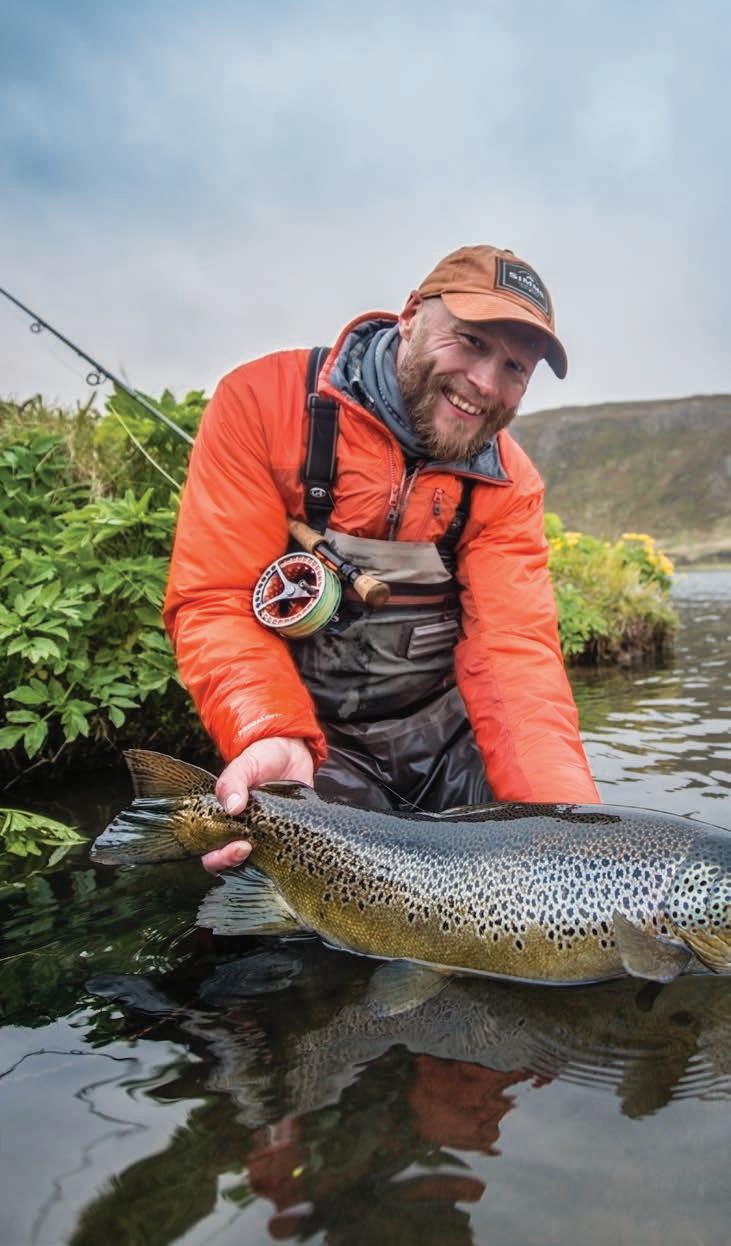
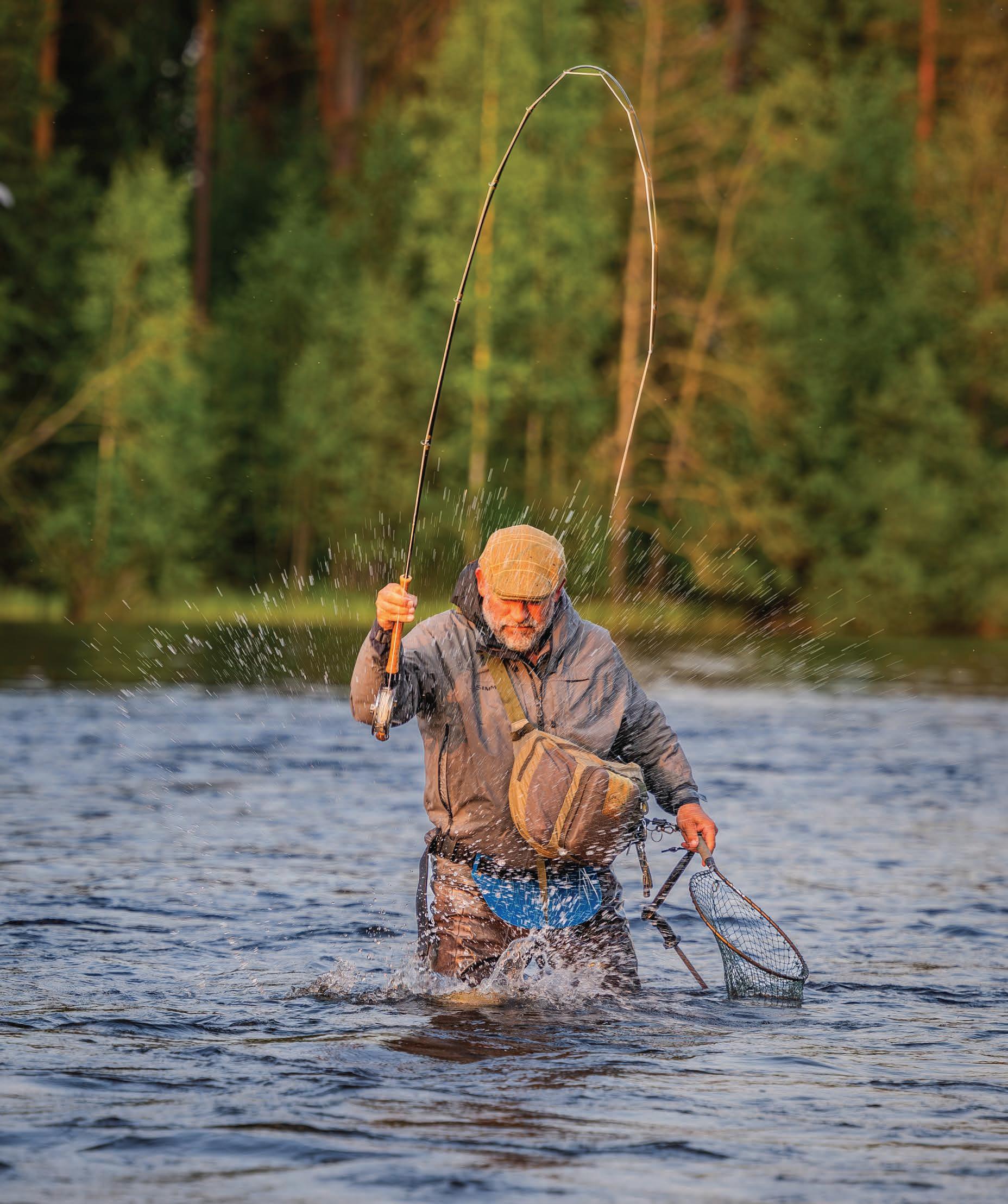
Once hooked these big, brawny fish fight powerfully in the heavy water. My friend Jani Himako runs the fishing here, and he knows these waters well. He recommends that you use nothing less than 0.40 mm tippet for this style of fishing. This may seem heavy but there are double-figure brown trout here. Once you have seen one of these hefty brutes cartwheeling in the white waters of the rapids, you’ll really appreciate the stout tippet, believe me… If you move a fish that refuses to come back, consider switching to a different surfboard pattern and if the fish still resists, tie on a large stream-
er pattern like the beautiful fry imitations tied by master tyer, Ville Ritvanen. Stripping them fast downstream can also often bring results.
A bit of variation
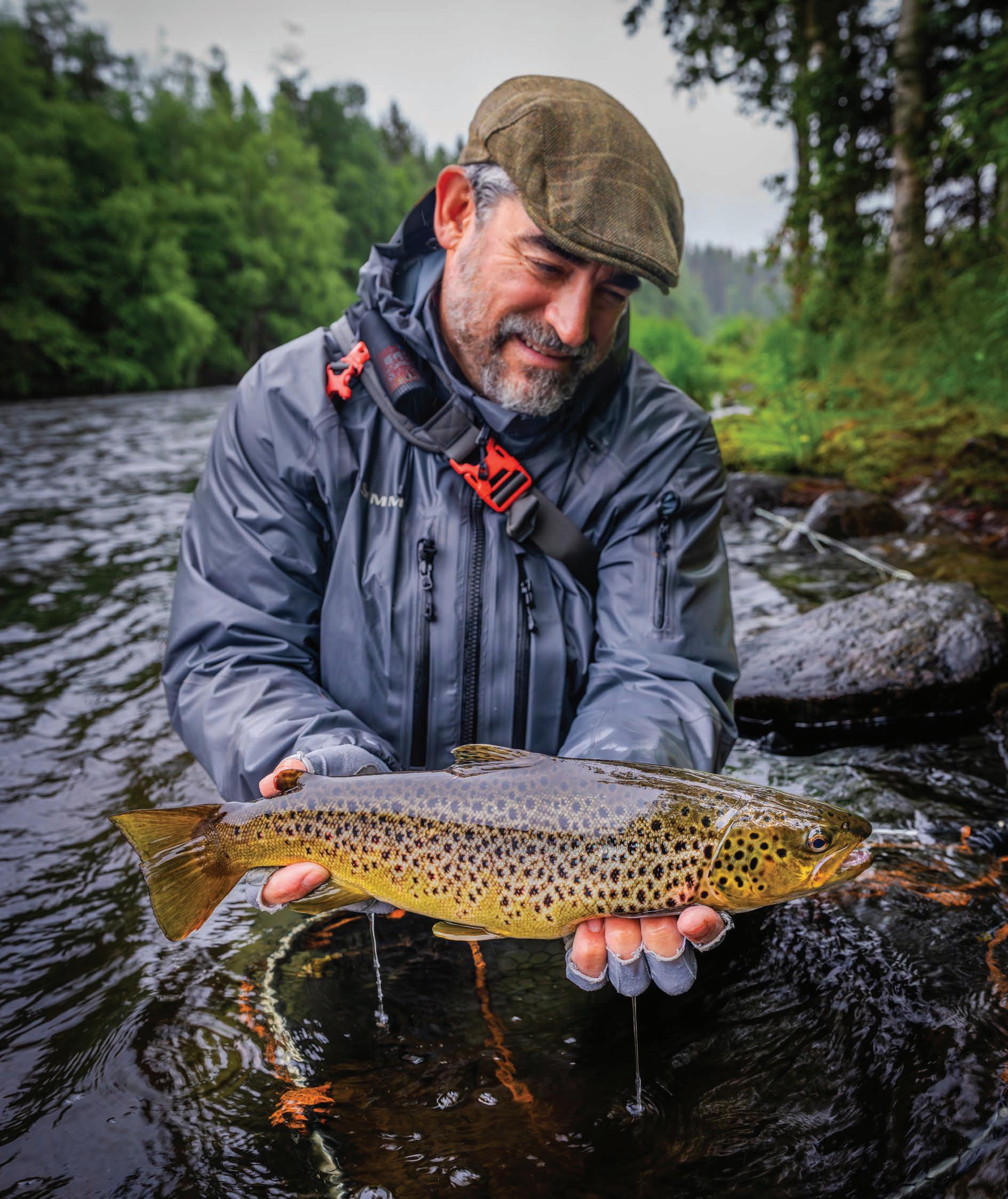
I also did well using various UK fry patterns, including variations on my own “Minky Gurgler” pattern. I also used a pattern introduced to me by my good friend, Llewelyn Claven, on the banks of Jurassic Lake in Argentina, the balanced leech. On a hunch, I tied one in the classic humungous livery and used it to catch a particularly handsome specimen that had resisted a number of other patterns.
I caught it by dead-drifting the streamer nymph-style into a small pocket where the fish had repeatedly shown to various other flies while steadfastly refusing to take any of them. This capture was particularly satisfying, as it showed that experimenting with fry patterns the fish haven’t been exposed to can really reap dividends.The fishing is technical and satisfyingly demanding. It really helps to think ‘outside’ the box here about how and what to present to these magnificent fish.
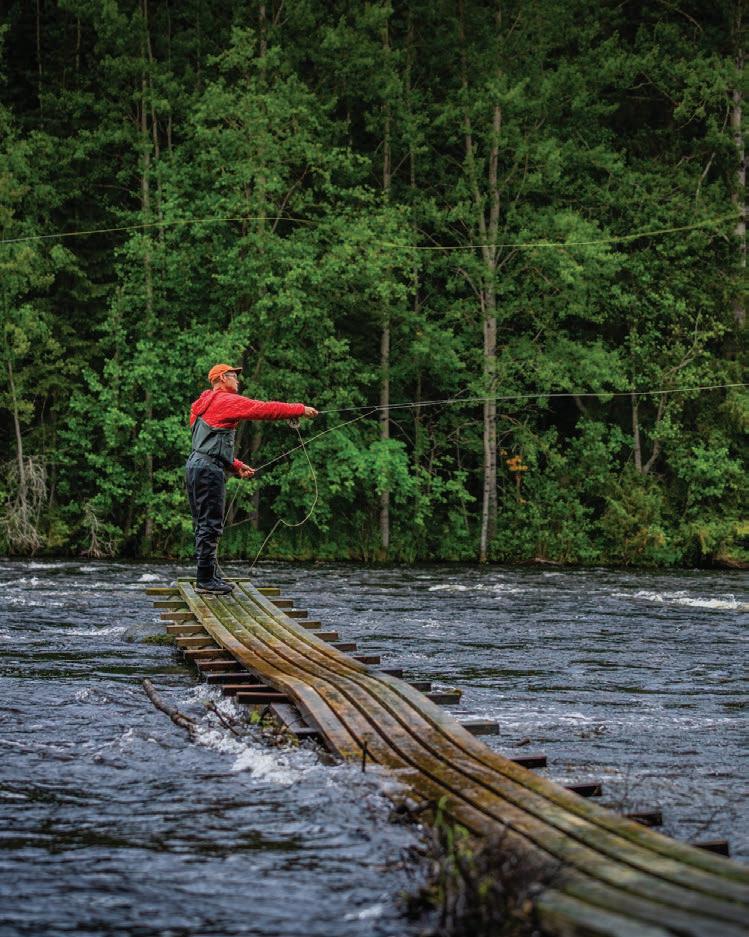
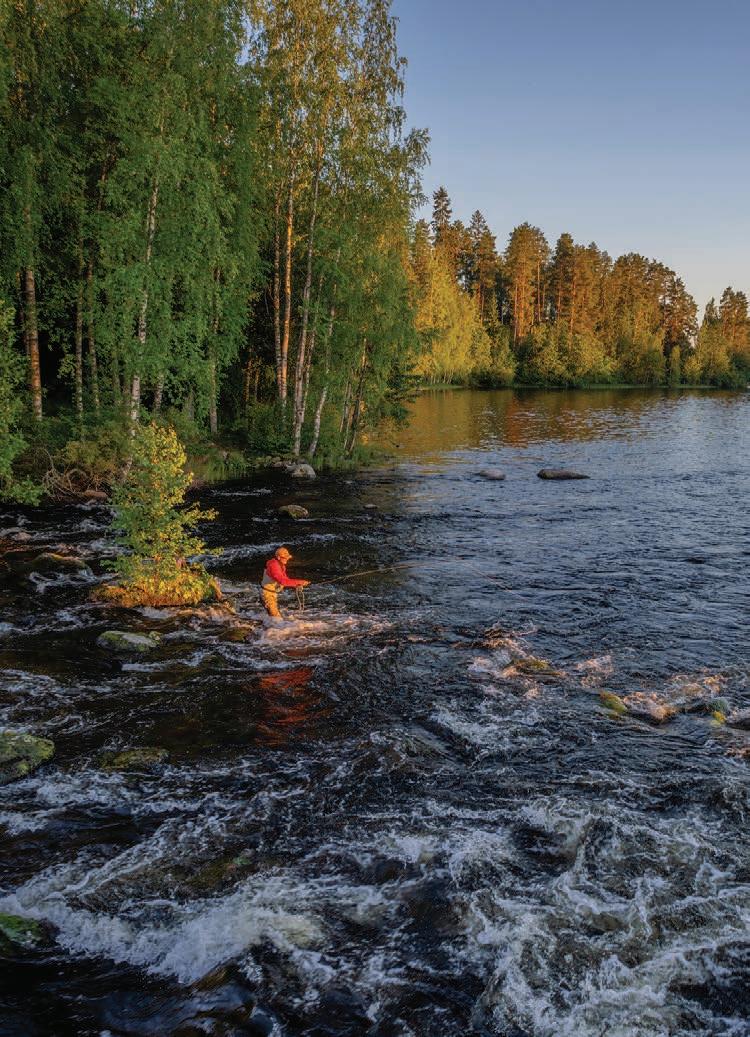
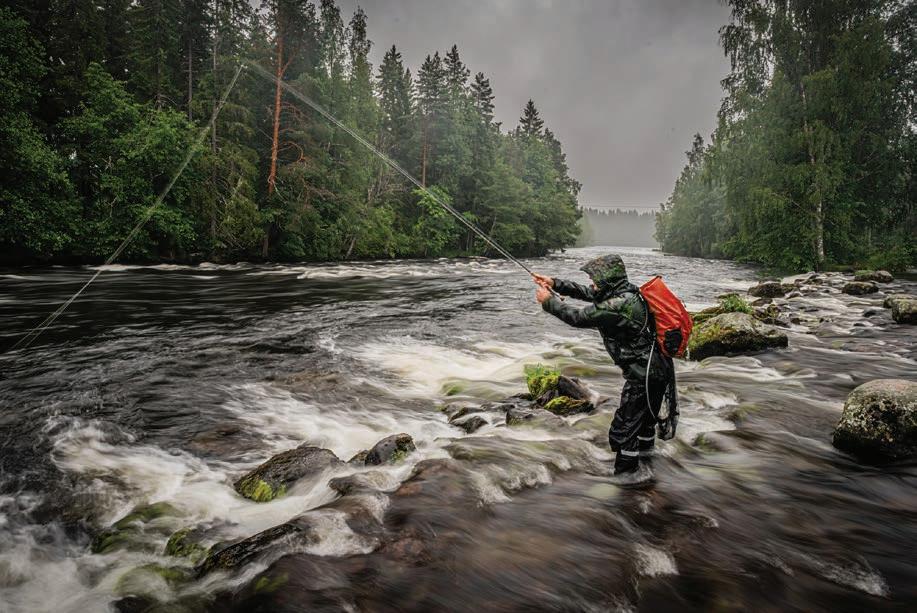
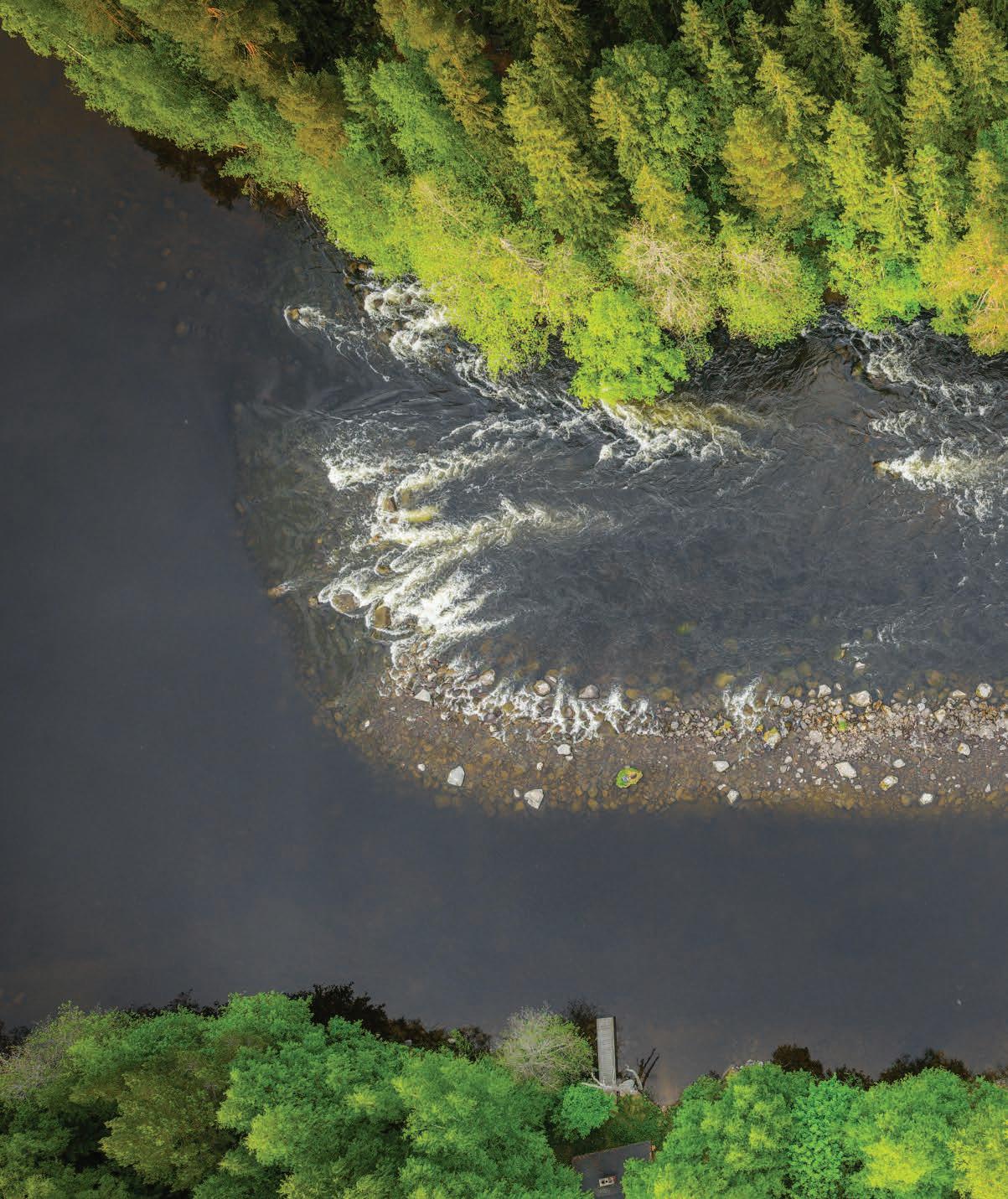
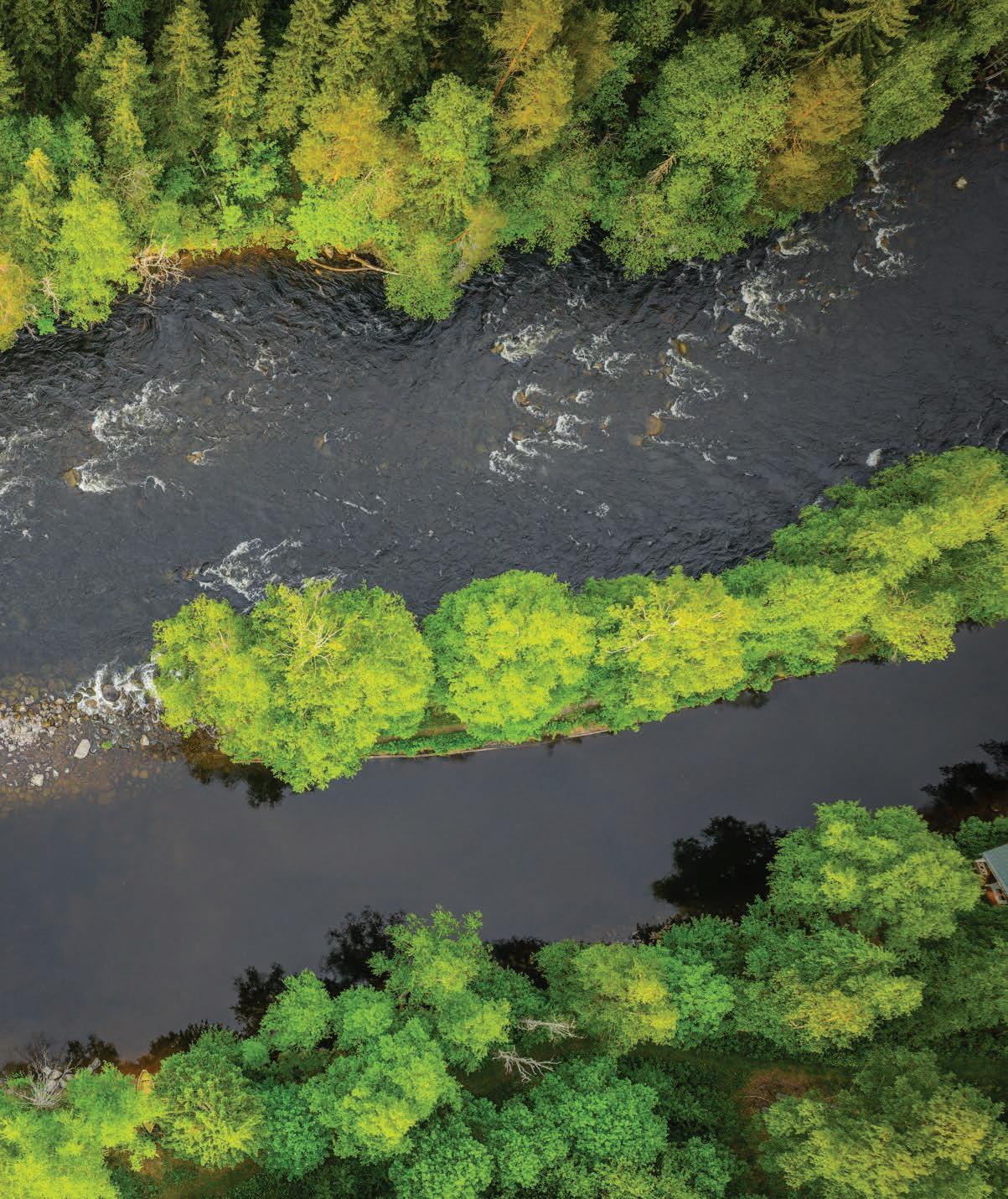
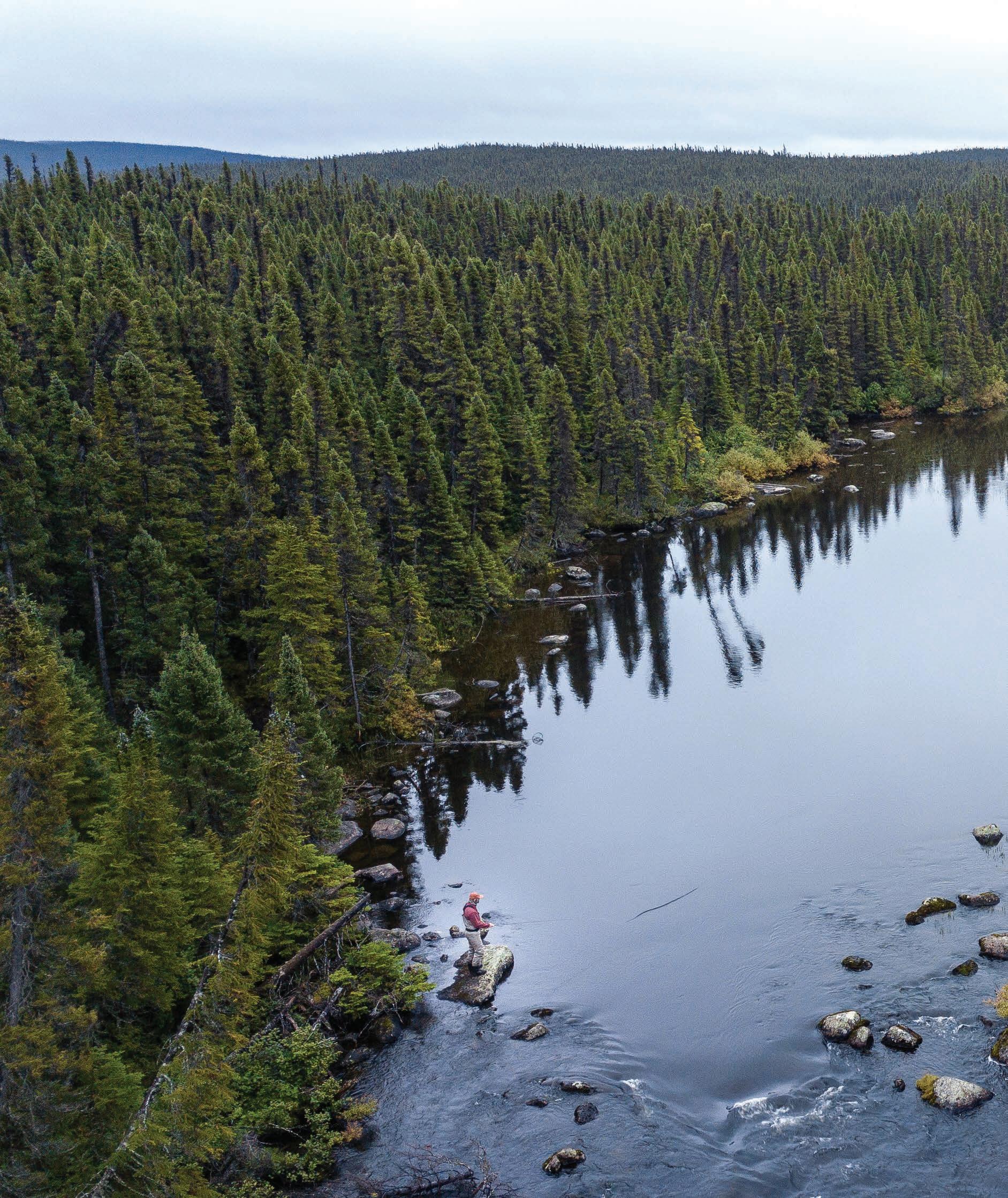
The rivers scythe through thick birch forest, and in all but the lowest water, it is tricky to wade far out into the powerful current. In some spots, there are elegant, long wooden platforms that allow you to get well out into the river, but these spots are few and far between, and I believe that the fish may well start to avoid them due to the concentrated pressure that they effectively create.
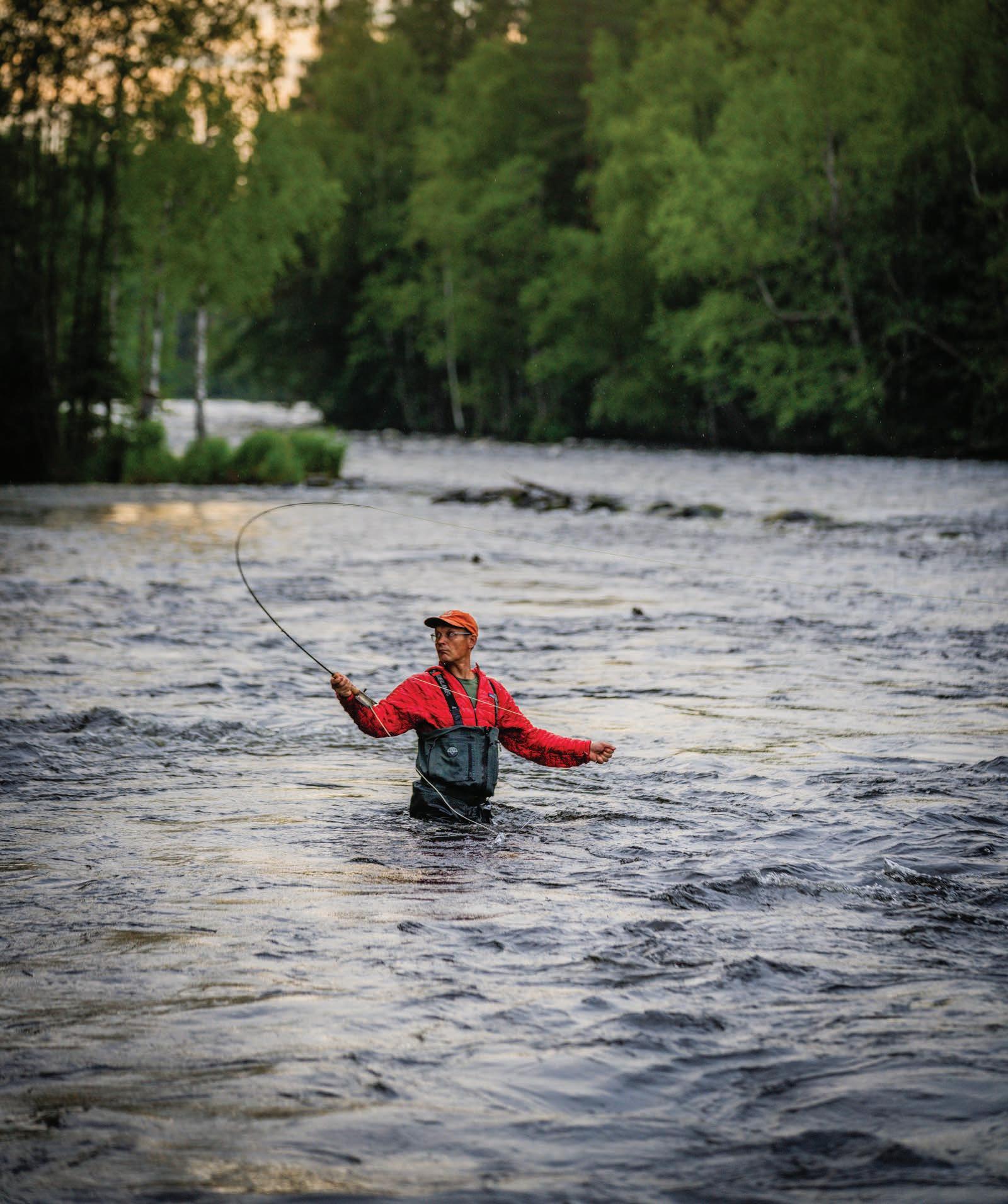
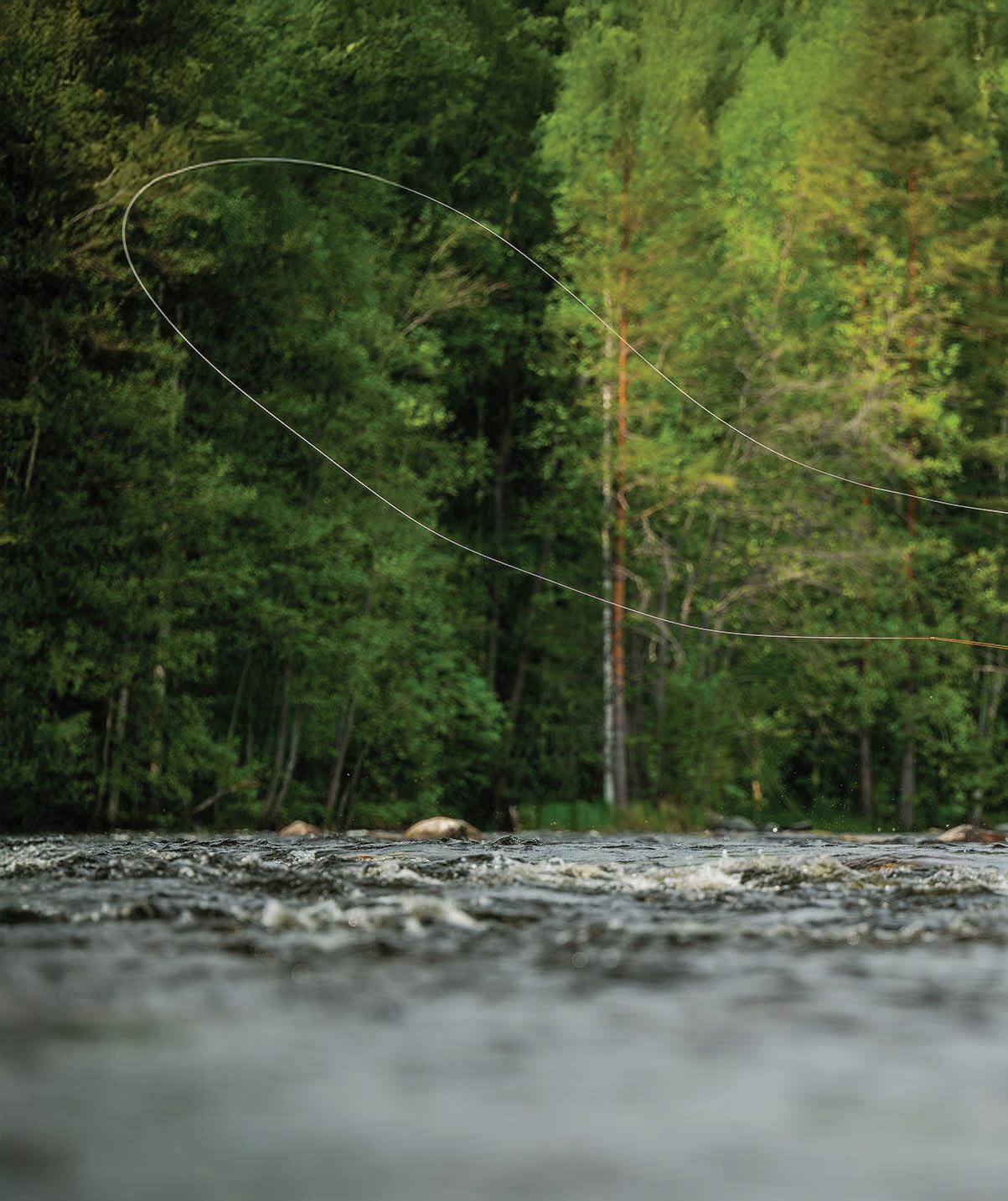
In most other spots, with trees directly behind you, overhead casting is often impossible. While my friends Jari and Jani flicked expert roll casts into the maelstrom, I was able to cover far more water by spey-casting with an 11’ Hardy Aydon 7-weight Switch rod, teamed up with a RIO ‘Fluffchucker’ integrated one piece Skagit line designed specifically for Switch rods. This set up really bossed the big surface flies and meant that I could access a lot of spots that weren’t regularly covered by other anglers.
ease the fly around boulders and micro-currents. It was an extremely efficient way to fish the rivers, and I was rewarded with some handsome fish. The trick with this set-up was to really use it as a true Switch rod - i.e. start casting short using a one-handed presentation, and then, only after thoroughly covering the closer spots, start to involve your other hand as you progressively start to cover more distant waters.
The waters closest to you are often highly productive, so it is really important not to overlook them in a rush to start making big double-handed ‘hero’ casts, thereby ‘lining’ the fish close to you and, almost certainly, spooking them.
The extra length also allowed me to mend the line effectively and
I should say that Jani and Jari both caught plenty of handsome fish by concentrating on the water closest to them and fishing it comprehensively with their single-handed rods, so a Switch rod is by no means a necessity, but I certainly feel that it is a useful weapon in tackling these waters.
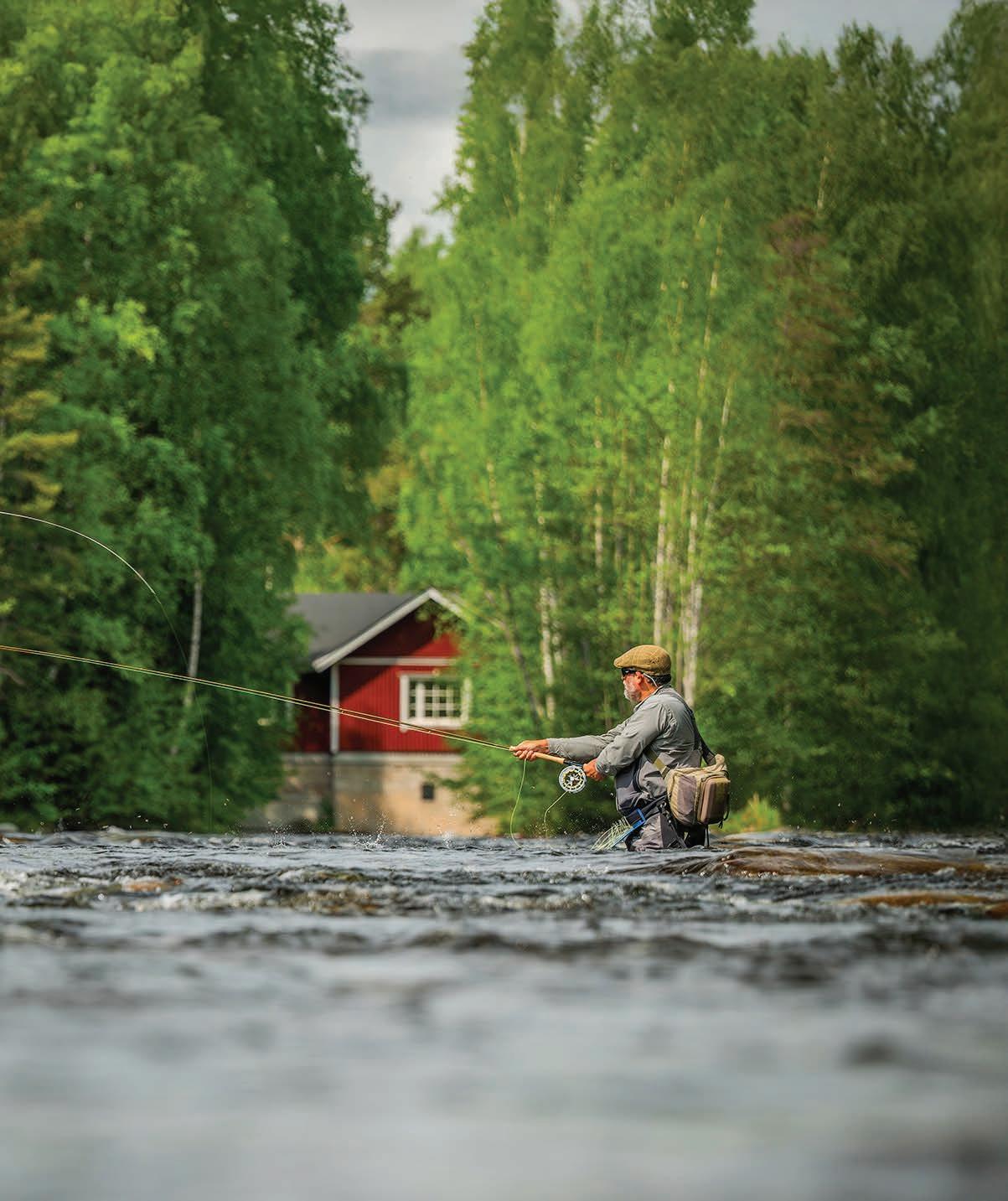
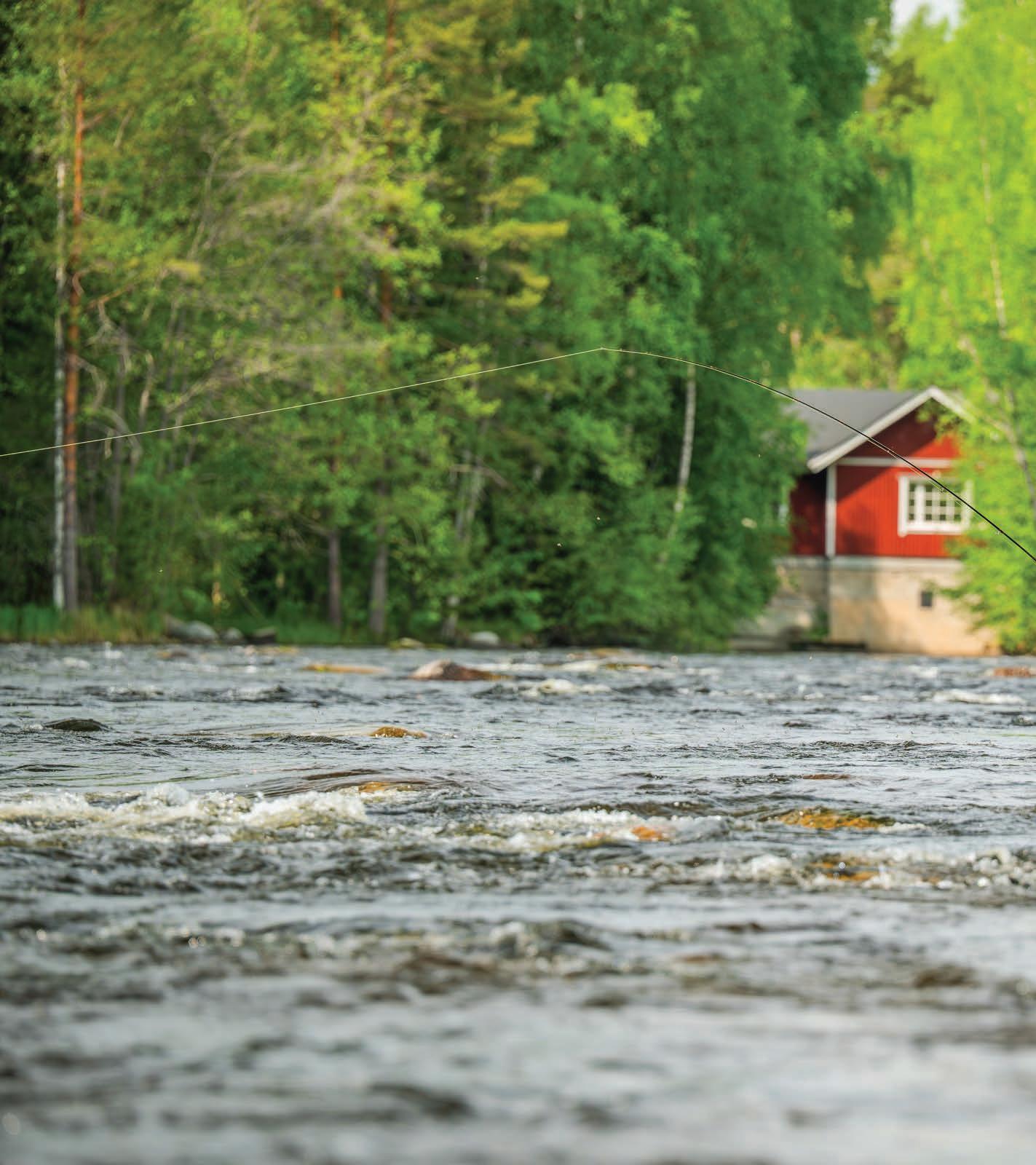
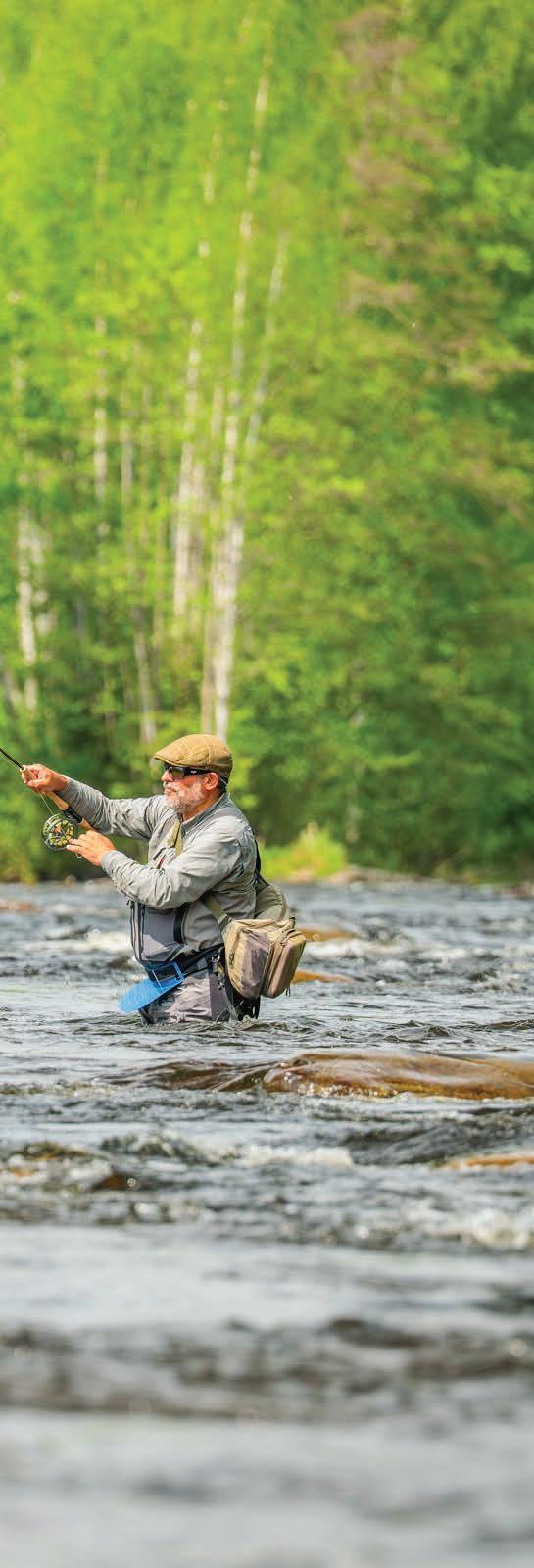
I caught some splendid fish, but did I catch a double-figure brown? Well, on the last morning, with a long drive back to Helsinki ahead of me and my great friend and fishing partner, Jari Arfman, I was in the process of breaking down my rod after an exhilarating morning session when our host Jani arrived and insisted he show us one last spot.
I was about to protest that we would be cutting it fine to make my flight when Jani said with a grin: “This spot has some real monsters”. I capitulated of course, and very soon, Jani was rowing us into a big brawling rapid in a drift boat he keeps at the spot. Having broken down my single hander, I improvised, making single-handed casts with my switch rod to cover the innumerable pockets that stretched across the broad rapid. The water was particularly heavy and having learnt where the big predatory trout liked to hold, I hurriedly tied on the big Surfboard pattern that Jani pressed into my hand and pitched it into the tumbling waters. “This looks great” I said, “why didn’t you bring us here sooner?” I chided Jani. The words were barely out of my mouth when a huge fish - certainly more than ten pounds - came rocketing up through the water to t-bone my surfboard fly.
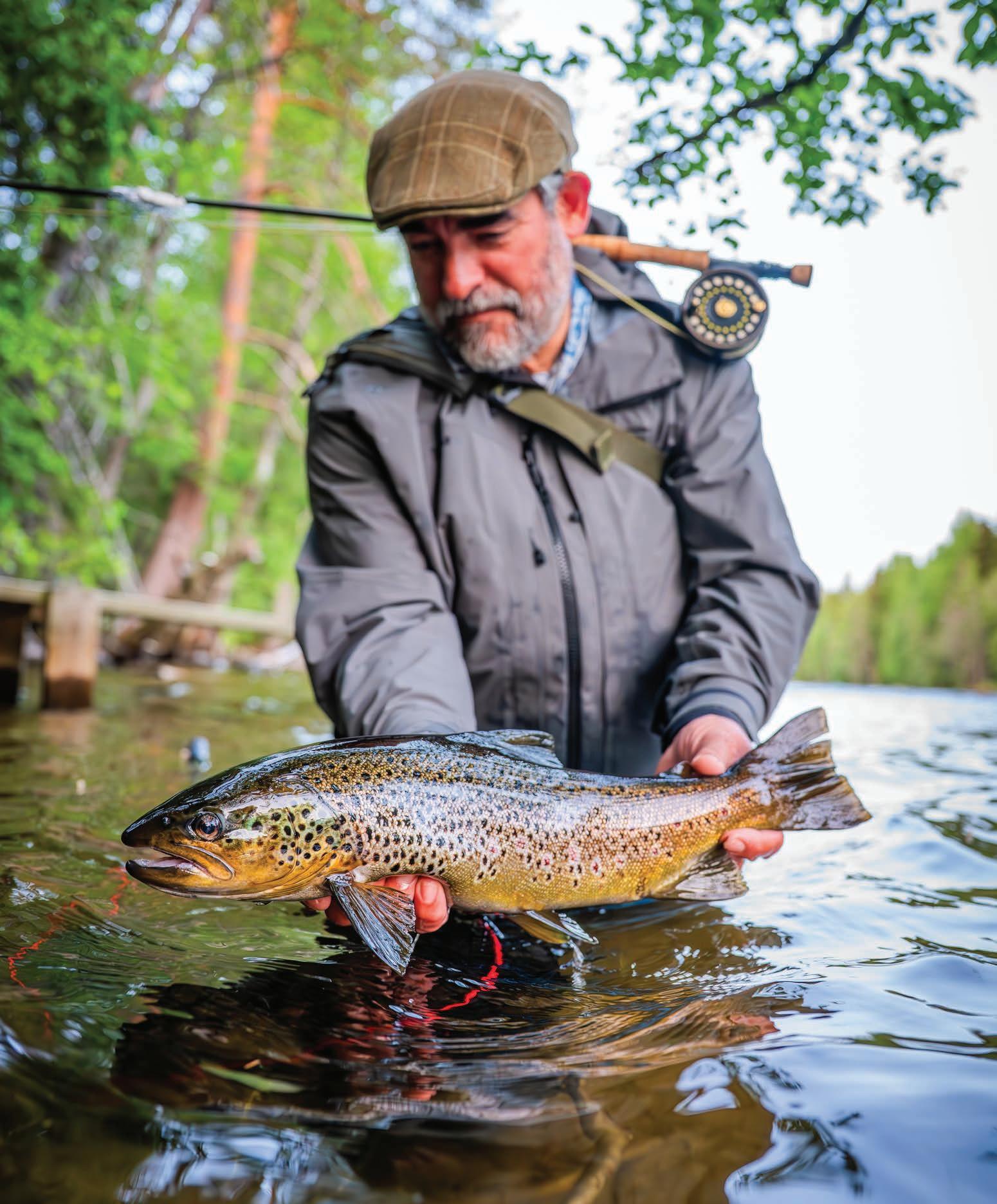
The fish thrashed straight into the air, and the fly was clearly visible, clamped squarely across the jaws of the huge trout. The fish shot down into the depths, and I bent the rod hard into him, and tried to draw him out of his lie. There was another violent head shake, and then the fly came flying back towards me, the fish very much NOT attached. I groaned.
“The fish thrashed straight into the air”
In truth, I’m not sure the hook was ever actually IN the fish. When I saw the fly clamped in its jaws, I think the hook point was actually outside the mouth of the fish, but I guess I’ll never know. The loss rekindled the good-natured but passionate debate I’d been having with Jani about long shank hooks. In fairness, Jani was soon claiming the higher ground after I lost ANOTHER big fish very shortly afterwards having tied on one of my own tube patterns. Pride comes before a fall, as always.
There is no doubt that you will lose some of these big fish when using these big patterns, irrespective of whether you fish long shank hooks or tubes. The fish won’t always take the fly accurately as it flies past them on the erratic boiling currents, and they often miss the fly altogether. Using smaller patterns is certainly a viable tactic, but the biggest fish do seem to be drawn to the biggest, 6-inch versions of the Surfilauta.
I know I will be thinking about these conundrums all through the long winter as I tie my own versions of the Surfilauta and contemplate my return to Troutland. I really cannot wait - Finland in mid-summer is a truly beguiling place, the pristine landscape jeweled with berries, wildflowers and chanterelle mushrooms. The land has an almost enchanted feel to it. In truth, while I enjoyed some of the most exciting brown trout fishing that I have ever experienced, I think I was there a little late to see the absolute best of “Troutland”’s incredible fry-feeding frenzies.
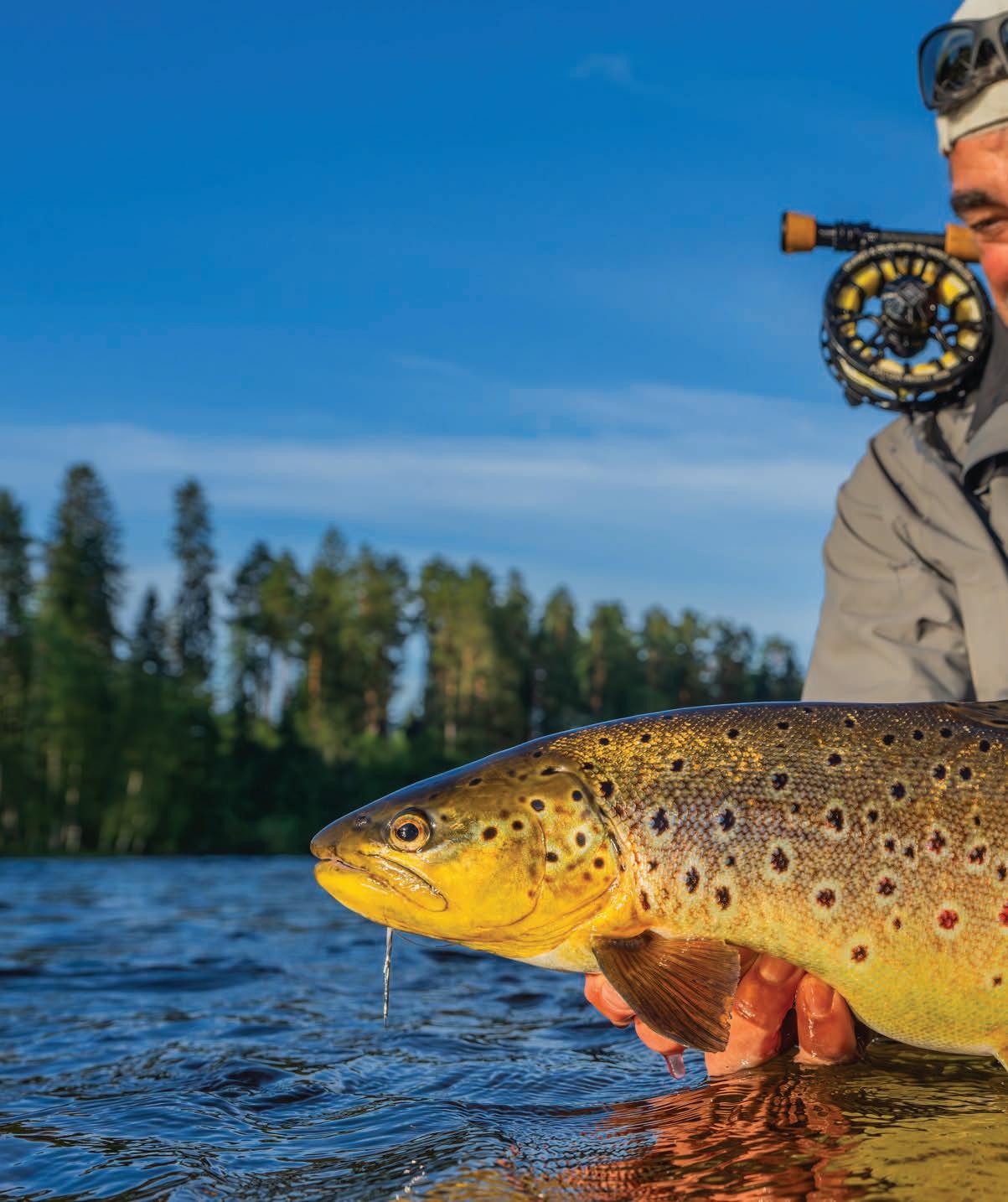
Other engagements had meant that I was unable to attend when Jani suggested, in mid-June, and by the time I arrived in early July, I think that the fish had gorged themselves silly on the baitfish and were also getting wise to angler’s flies.
The fish are also starting to turn their attention to the blizzard-like caddis hatches, and while this can make for some unforgettable dry fly fishing, the lighter tippet required can mean that the very biggest trophies become much harder to land in the ultra-heavy water. I am really keen to see the fry feeders at the height of their feeding frenzies. If there is a more exciting way to catch big brown trout, I have yet to see it.
Anthropologists say that the people of Finland are the happiest folk on earth. I’m starting to understand why…
Contact Matt is returning to Finland in 2026 in midJune and has booked Kellankoski Lodge for this time. If you are interested in joining Matt, contact him at mattharris@mattharris.com
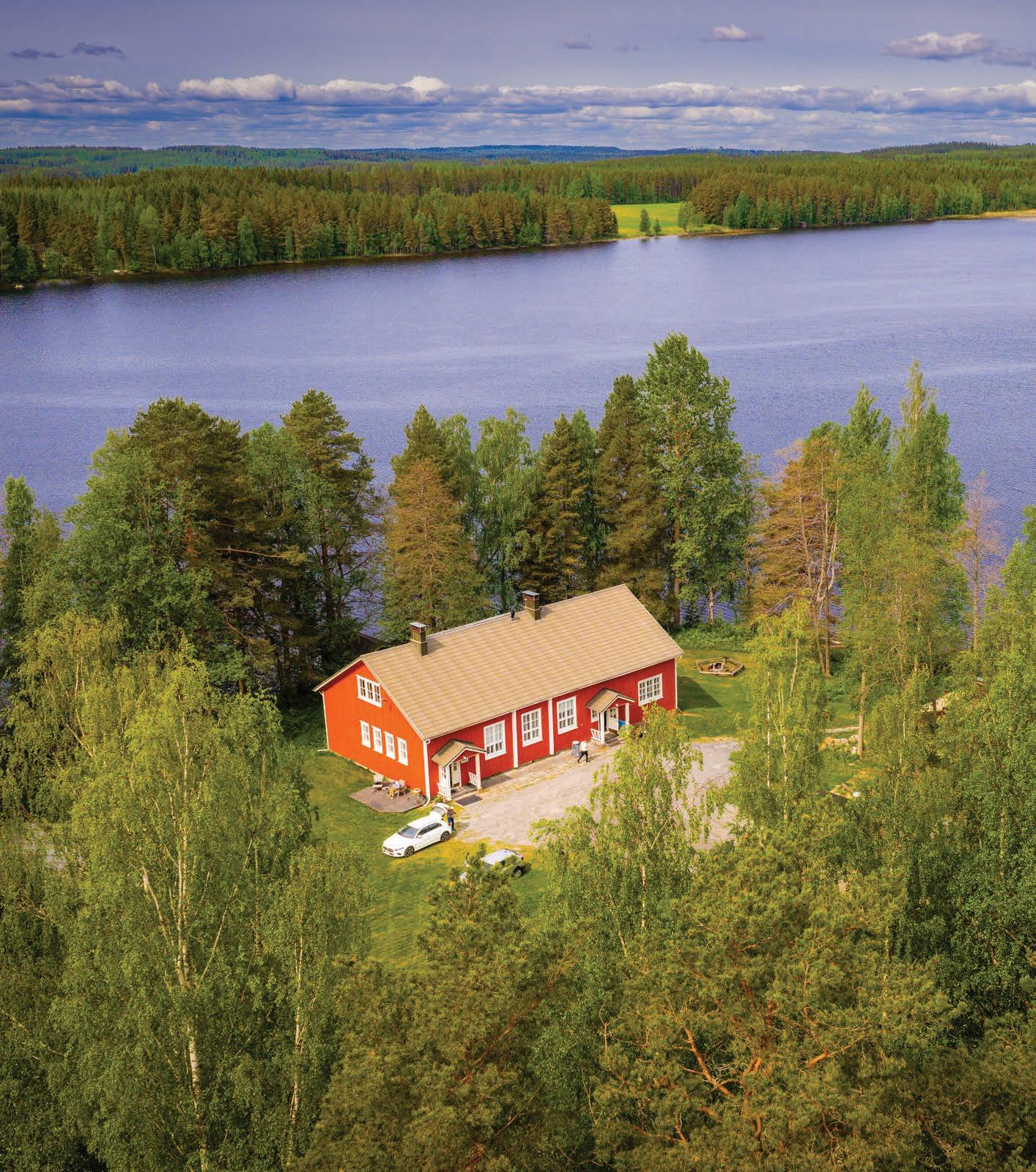
You can read all about the fishing and the beautiful accommodation on the shores of Lake Liesvesi at www.kellankoski.fi/troutland
F ROM OCEAN TO RIVER, FROM CITY TO WILD − WE’VE BOTH MADE IT HOME.
E very journey leaves its mark — on flanks of chrome, on worn in wading boots — on souls. But when you finally reach a place that feels like home, all the miles fall away and everything that matters comes into focus. You get one life. Fish It Well.
By EMILY RODGER
by CARTER BLACKWELL
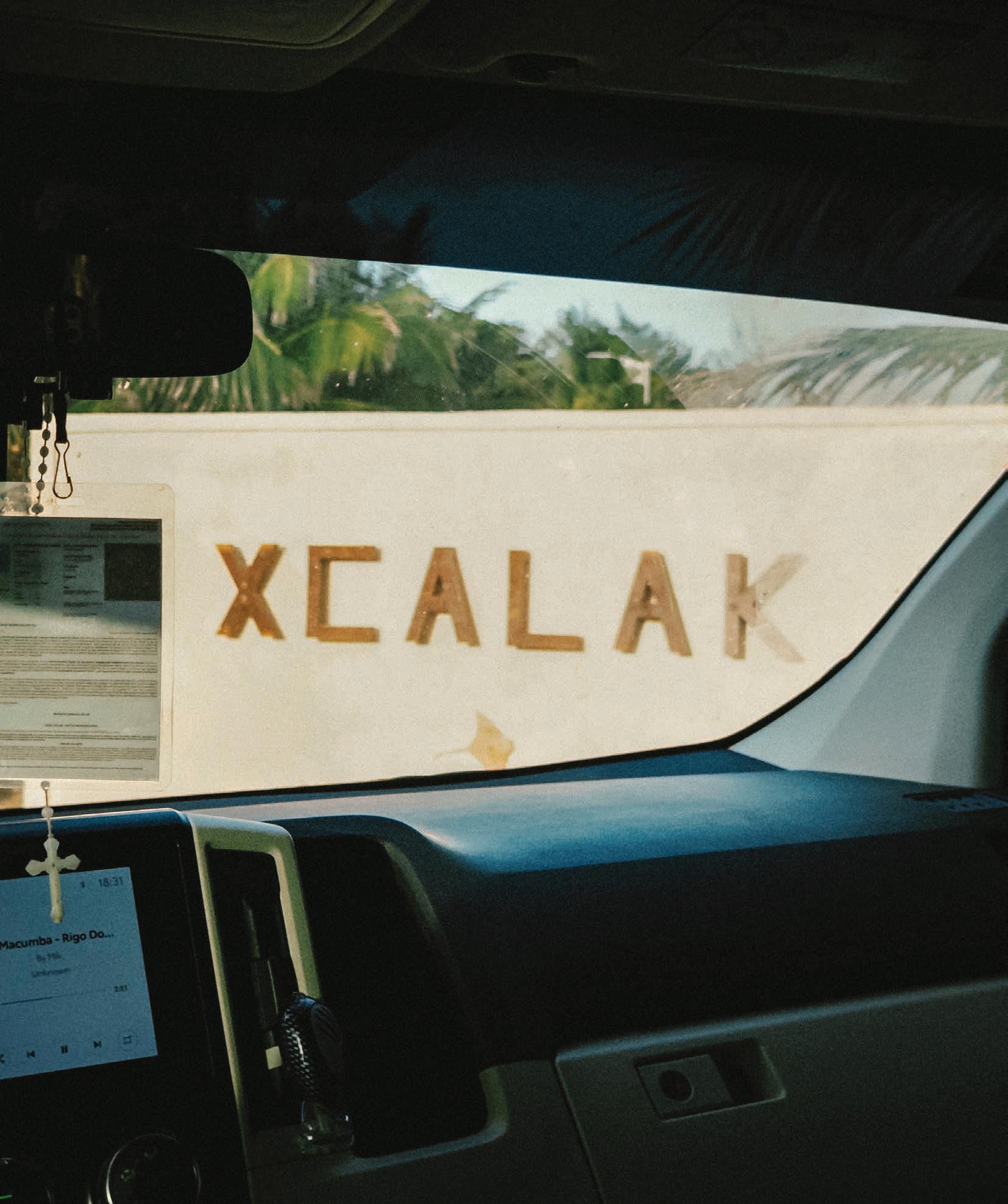
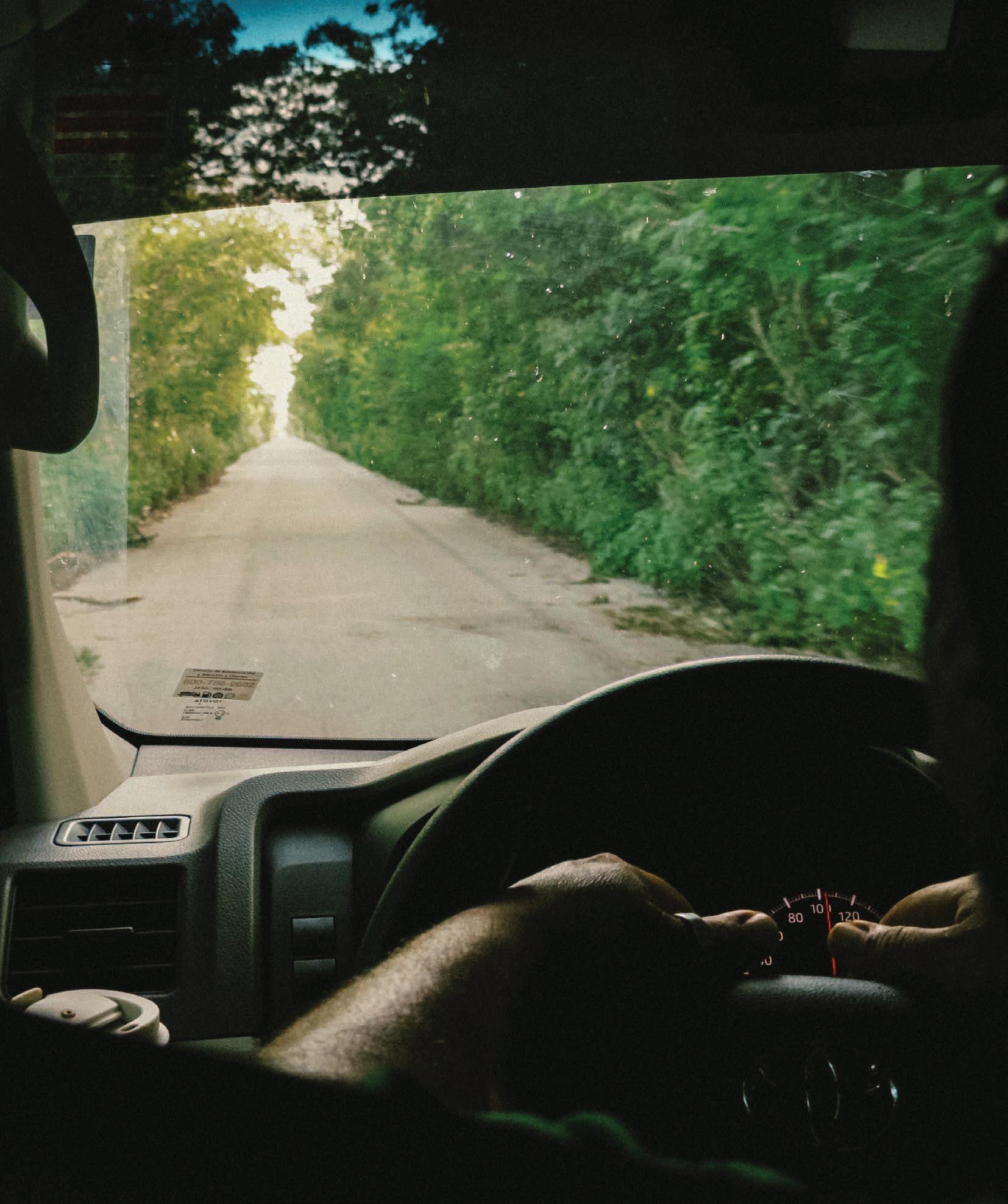
Saying yes - especially when the timing isn’t perfect, when the logistics don’t quite line up - is often where the most memorable adventures begin. Sometimes, it’s about trusting that quiet pull inside, the one you feel but can’t ignore. That’s exactly how I found myself in Xcalak, Mexico, for the Mayan Permit Tournament at XFlats Lodge - a tournament I hadn’t even heard of a week earlier.
“From the moment the invite came to him, he’d known I was the person he wanted as his partner”
I had been in Mexico just the week before. Seven days before the tournament, I was flying home to Canada when Jorge, the owner of Blacksmith Lodge, reached out with a last-minute invitation. Jorge and I had only recently met on the water, our boats crossing paths in passing. We stopped to say hello, shared a brief conversation, and that was it
- until this. When the tournament spot opened up for him, he trusted his instinct and called me. He told me that, from the moment the invite came to him, he’d known I was the person he wanted as his partner. It was an incredible honor to be asked. His belief in me, based solely on a gut feeling, was the spark that set the whole adventure in motion.
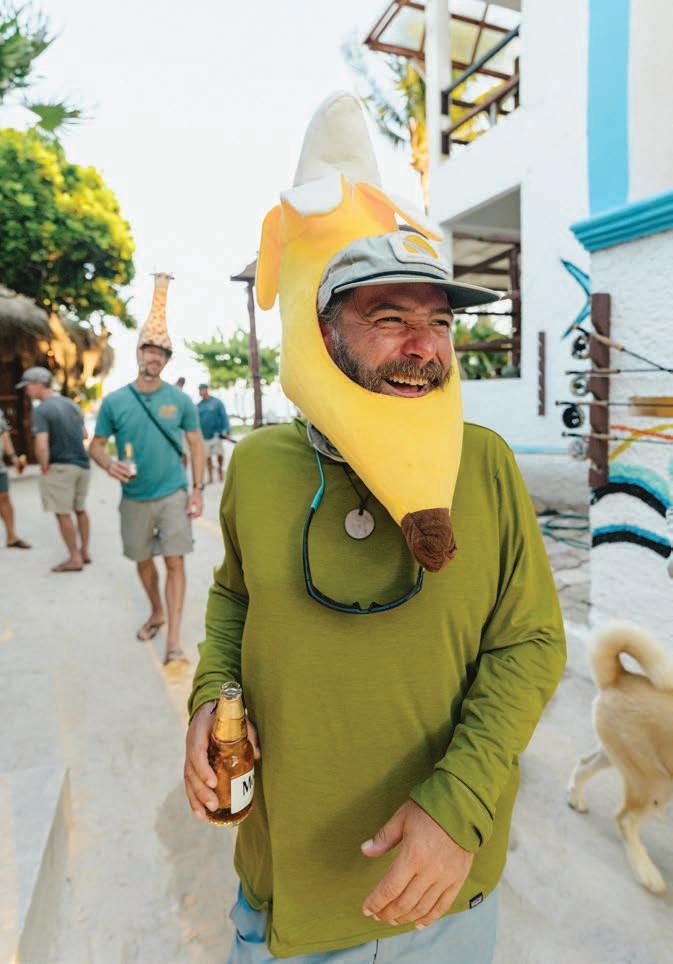
When Jorge and I arrived at the lodge, we quickly dropped off our bags, rigged up our rods, and headed out for a couple of hours of fishing - without even having the chance to say hello to anyone. When we got back, the first man we chatted with was Danny, the brother of lodge owner Jesse Colton. Danny’s warm smile and gentle demeanor immediately set the tone for what the week would hold. It was the kind of welcome that makes you feel less like a guest and more like you’ve stepped into something you’re already part of - a feeling that would carry through every handshake, every conversation, and every shared laugh and margarita in the days ahead.
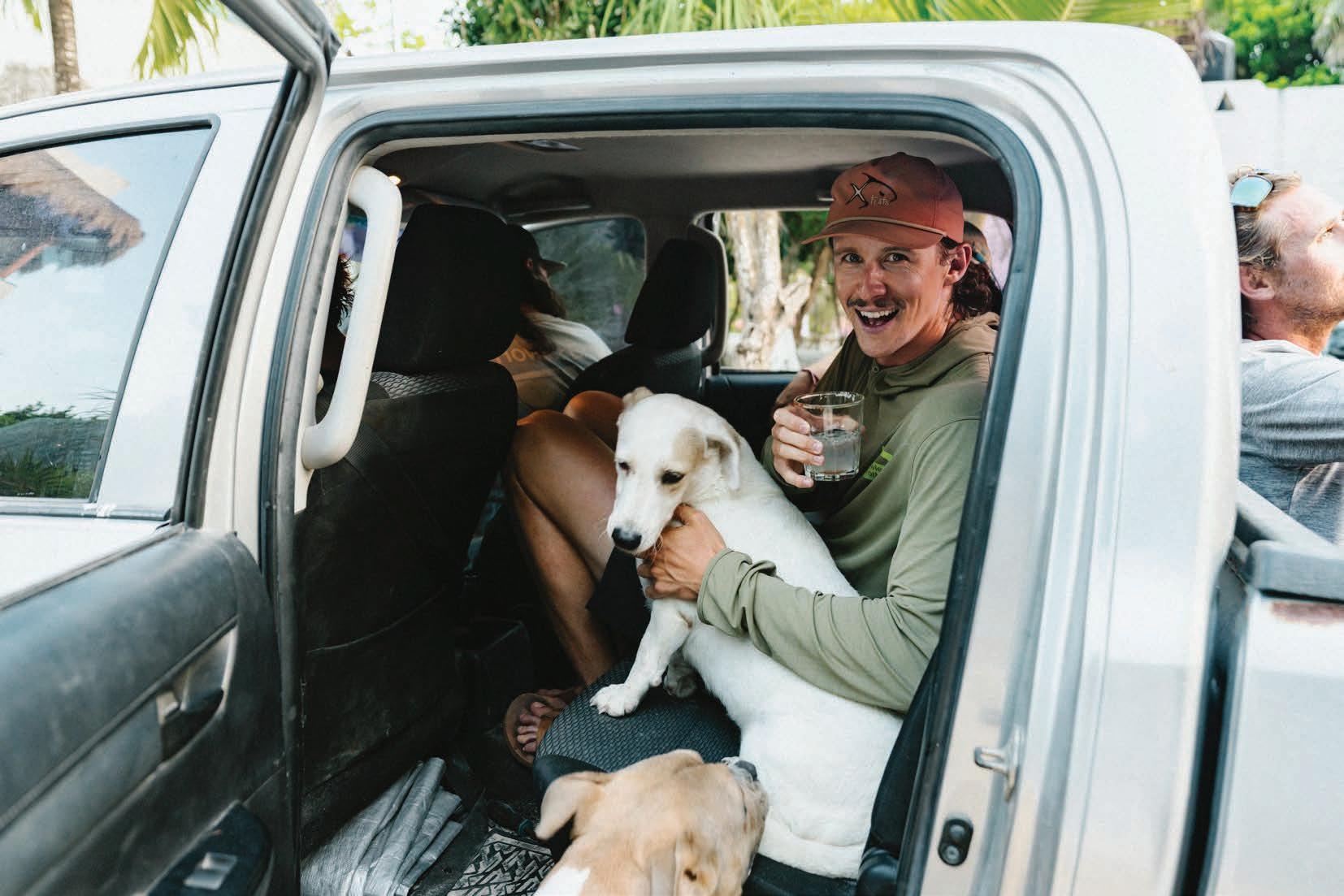
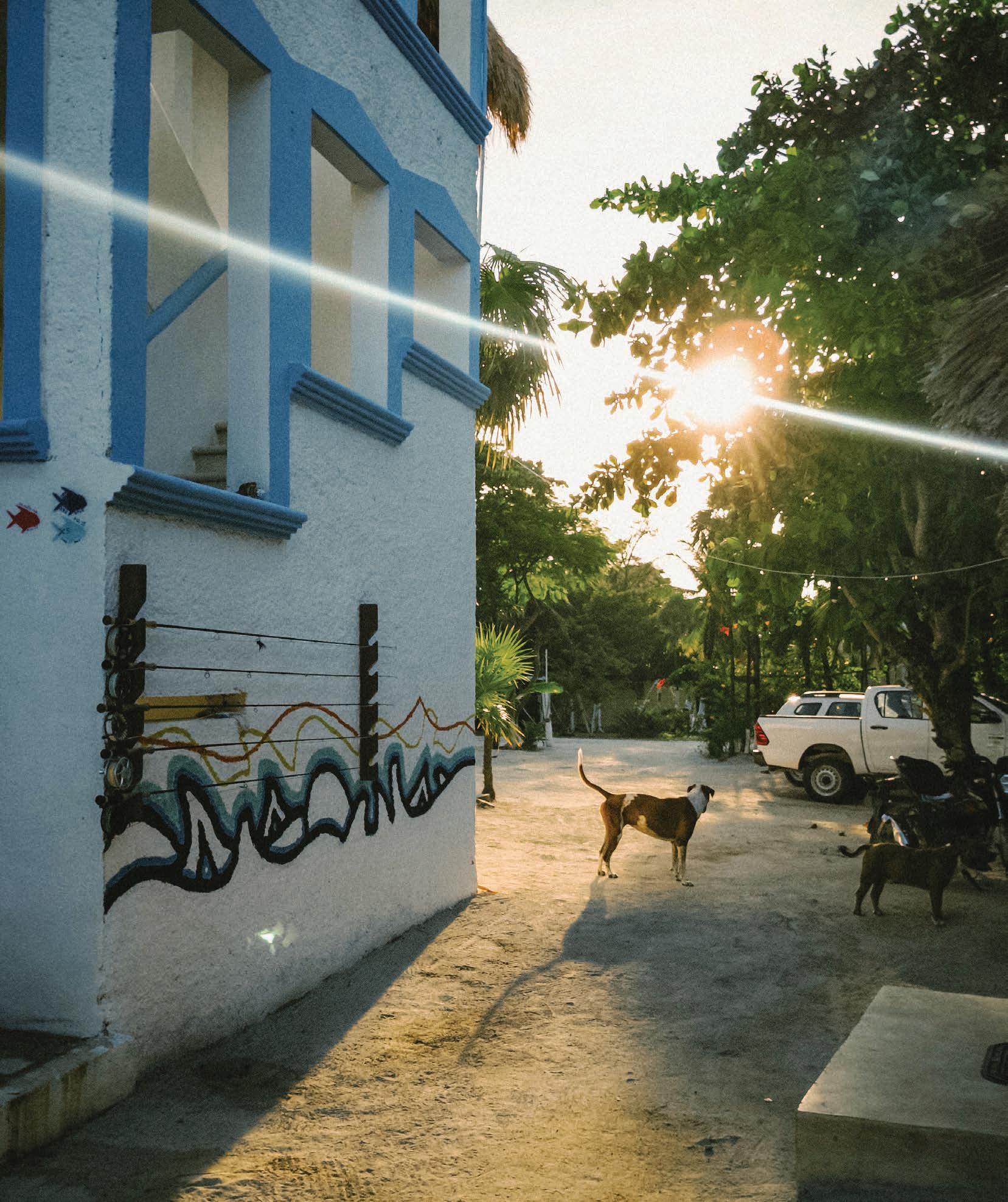
Jesse Colton and XFlats Lodge
Colorado-born and trout-obsessed in his beginnings, Jesse embarked on a venture when he bought a modest B&B called Tierra Maya in southern Mexico. He envisioned something more - transforming it into XFlats Lodge, a fly-fishing oasis grounded in genuineness, conservation, and community.
“The lodge gives you access to cast at permit, bonefish, tarpon, snook, and more”
As I listened to Jesse and others share the journey that brought him here, I felt an immediate respect for the man. It’s one thing to dream, but it’s another to act - to take the leap, commit fully, and put in the years of work to see a vision through. Hearing how he’d done exactly that left an impression on me. It spoke to the
conviction, resilience, and intention it takes to build something that lasts - not just in business, but in community and connection.
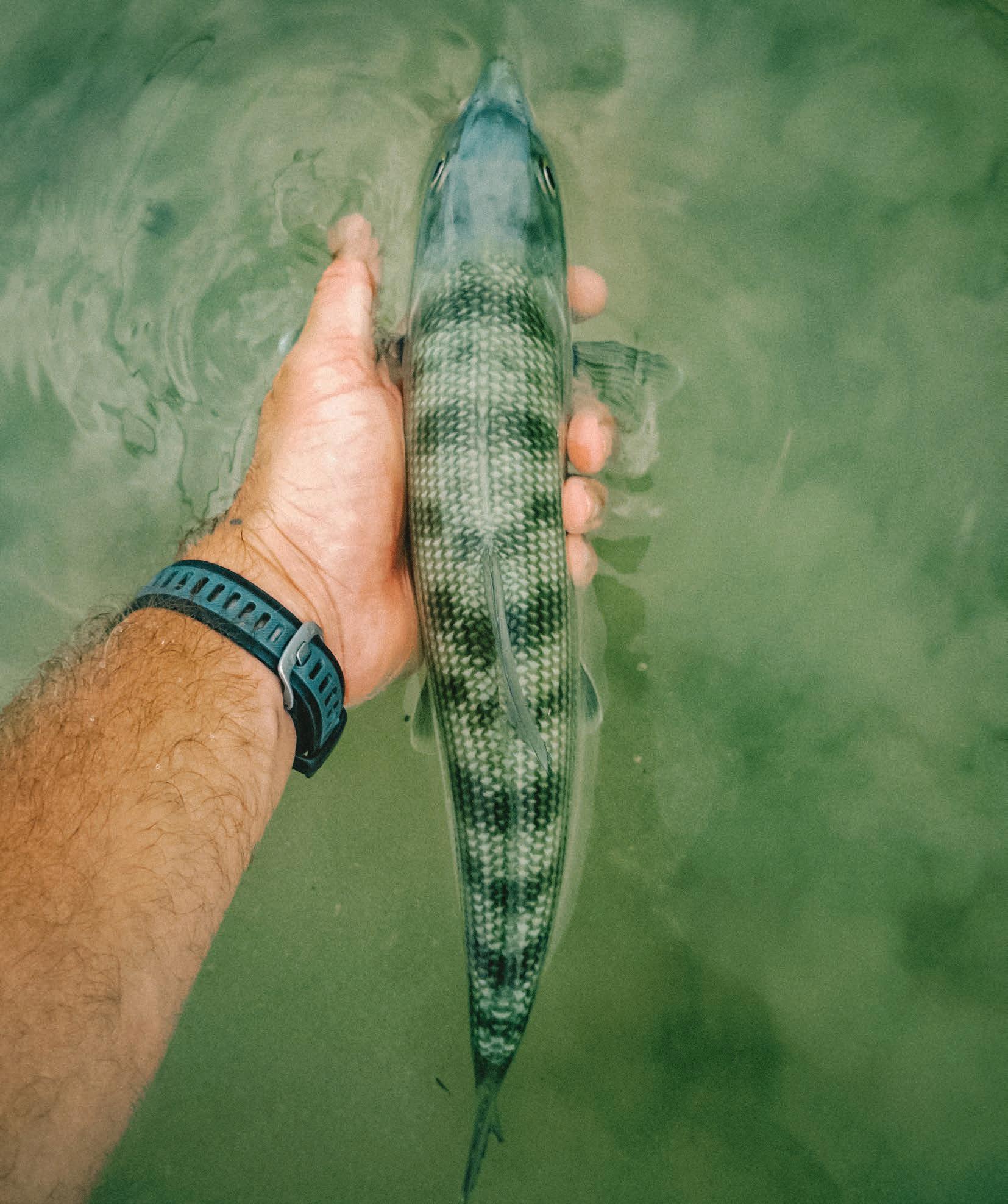
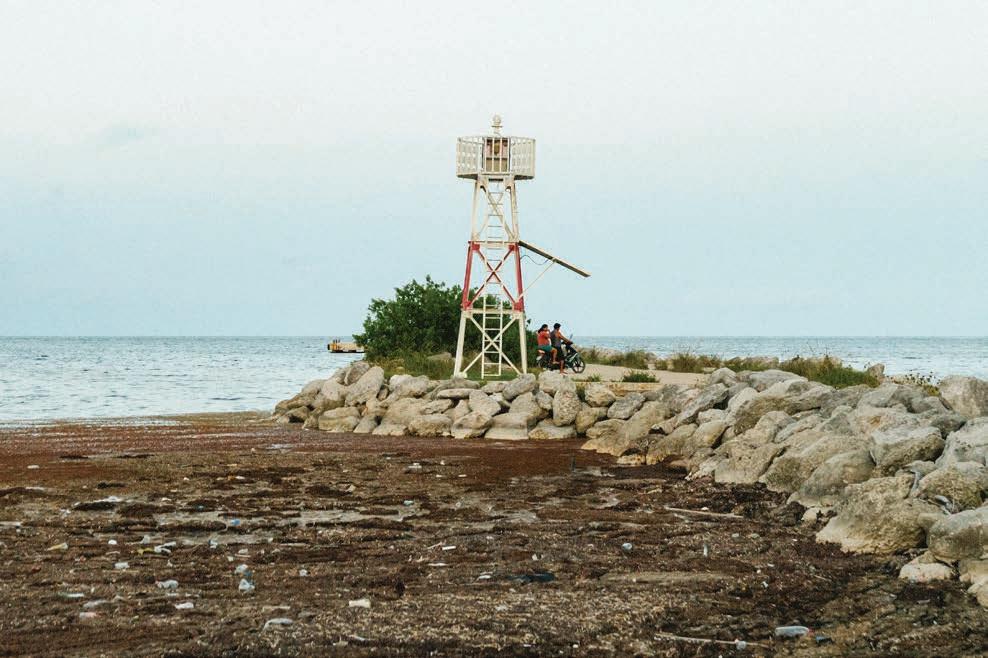
XFlats sits outside the tiny fishing village of Xcalak - a place with just about 400 residents - not the tourist-laden Mayan Riviera, but the real Yucatan coast. From its perch on a Yucatan beach mere yards from the second-largest barrier reef, the lodge gives you access to cast at permit, bonefish, tarpon, snook, and more, all while embracing the area’s calm spirit and culture.
This tournament is not merely about chasing permit - though that’s reason enough to come. It’s built on a deeper foundation: supporting the local economy, honoring beloved community members, and bringing anglers into the authenticity of Xcalak’s coastal culture. The tournament pays tribute to legendary local guide Alejandro “Sandflea” Vega Cruz, who embodies the heart and soul of the flats.
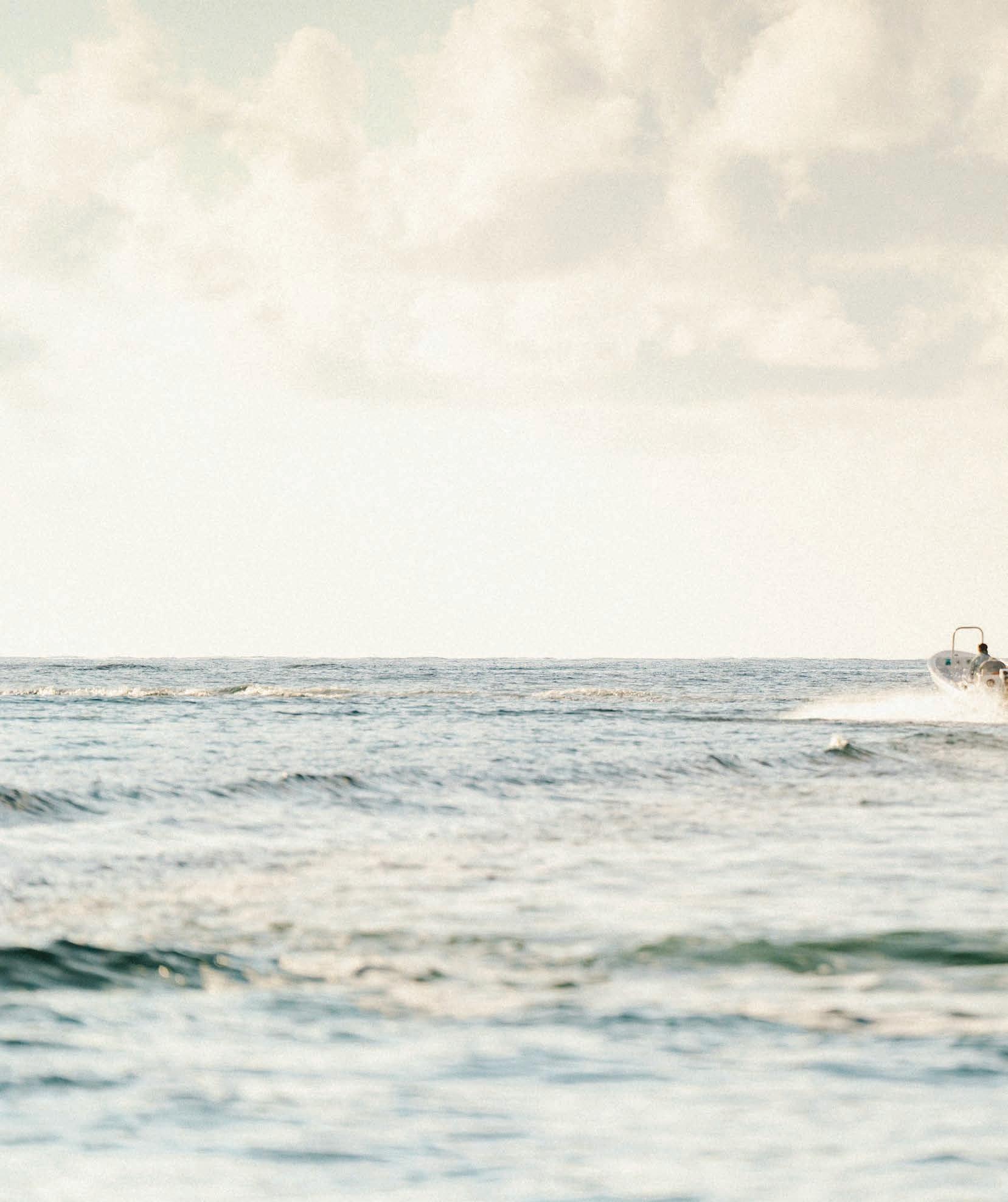
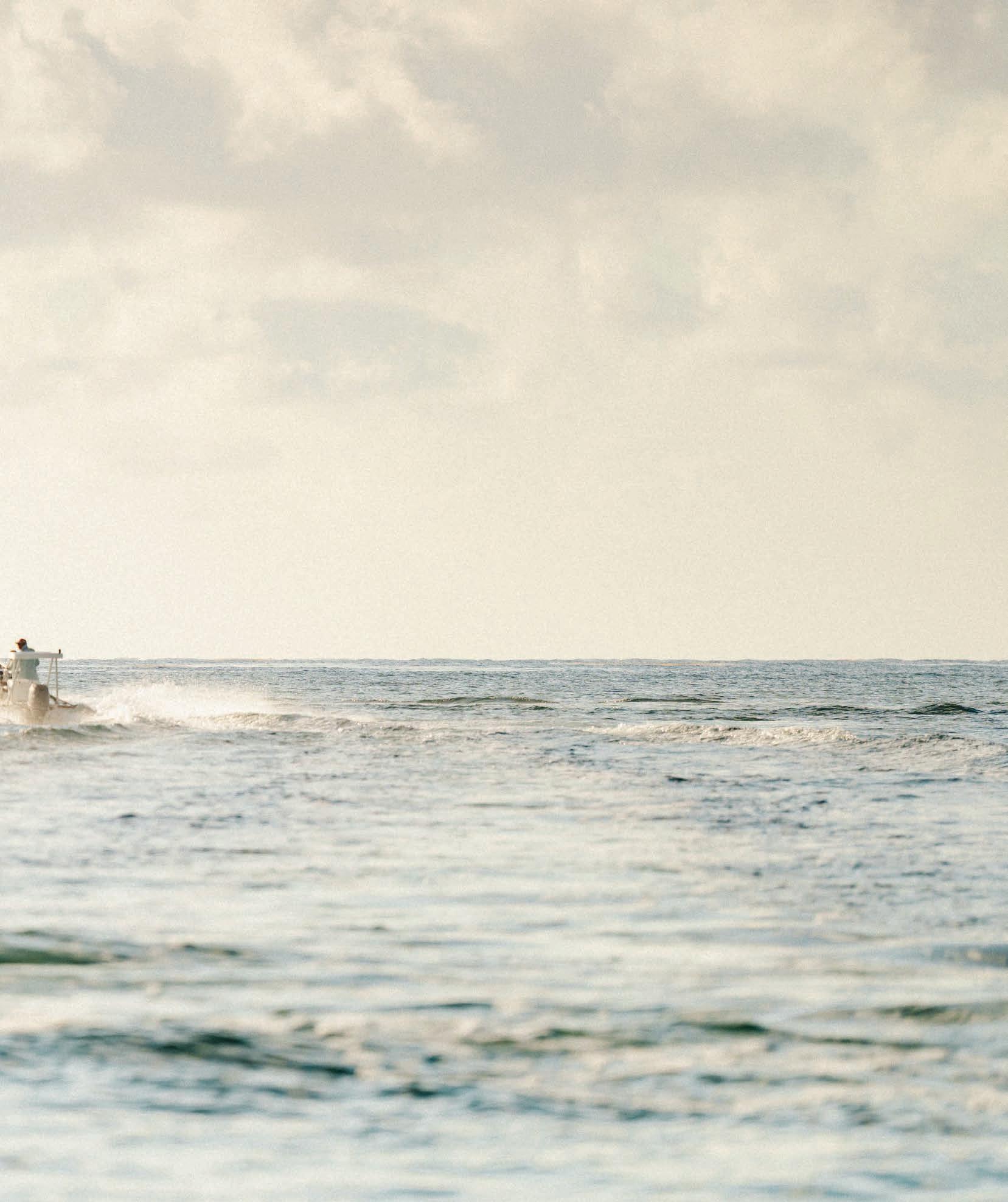
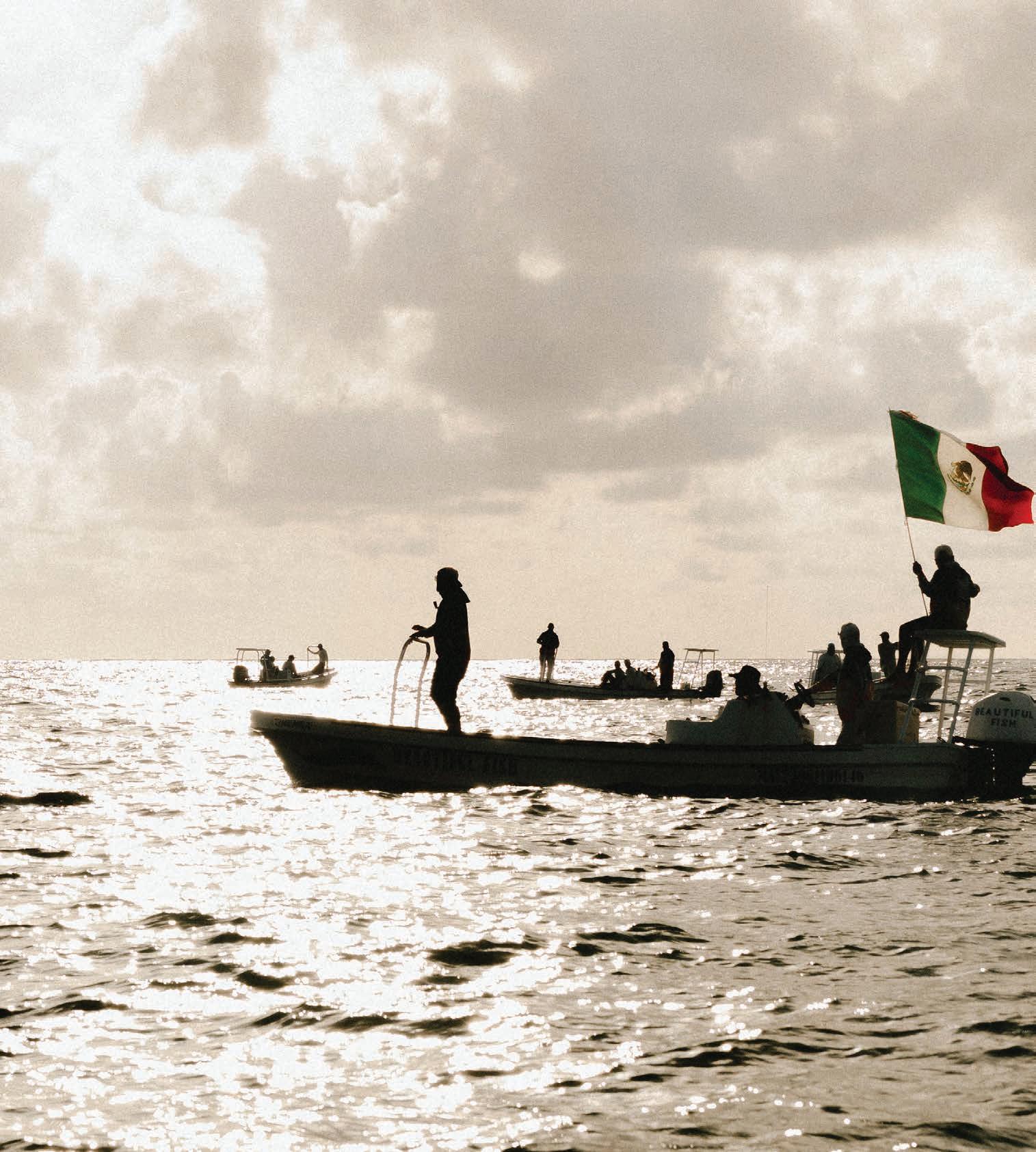
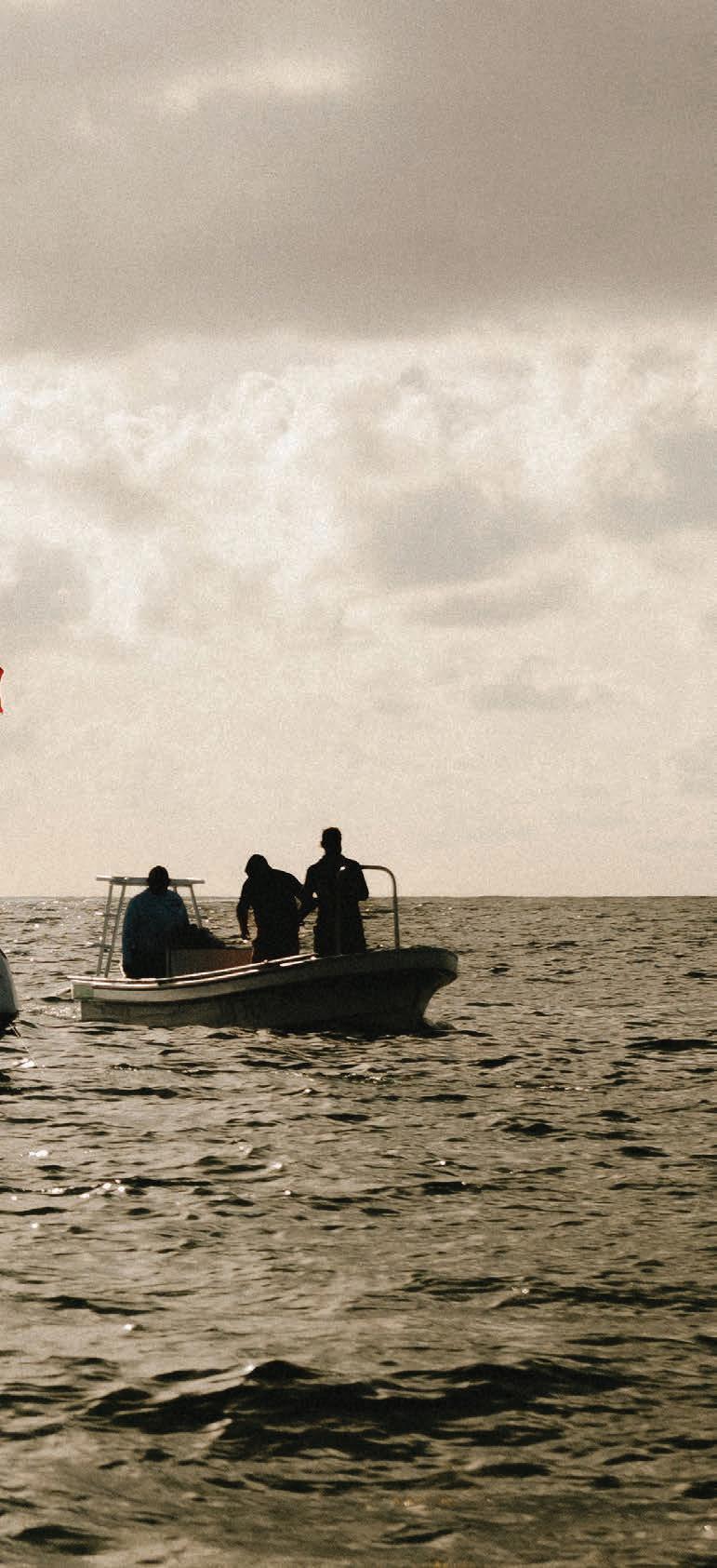
But the real heartbeat of the tournament is XFlats Lodge and Jesse’s vision. He didn’t create it solely to bring anglers together - he built it to forge a meaningful connection between the sport, the place, and to support the local people. It’s a model for how fishing can be a force for good, supporting small coastal towns along the Yucatan and fostering stewardship for the flats that sustain them.
Putting on an event like this is an enormous undertaking. Boats, guides, meals, lodging, schedules, sponsors, prizes, media coverage -it’s endless. And yet, Jesse handled it all with the kind of composure that only comes from years of hard-earned experience and the kind of leadership that people trust.
It speaks volumes about a person when so many people will travel across countries and continents to stand in support of their vision.
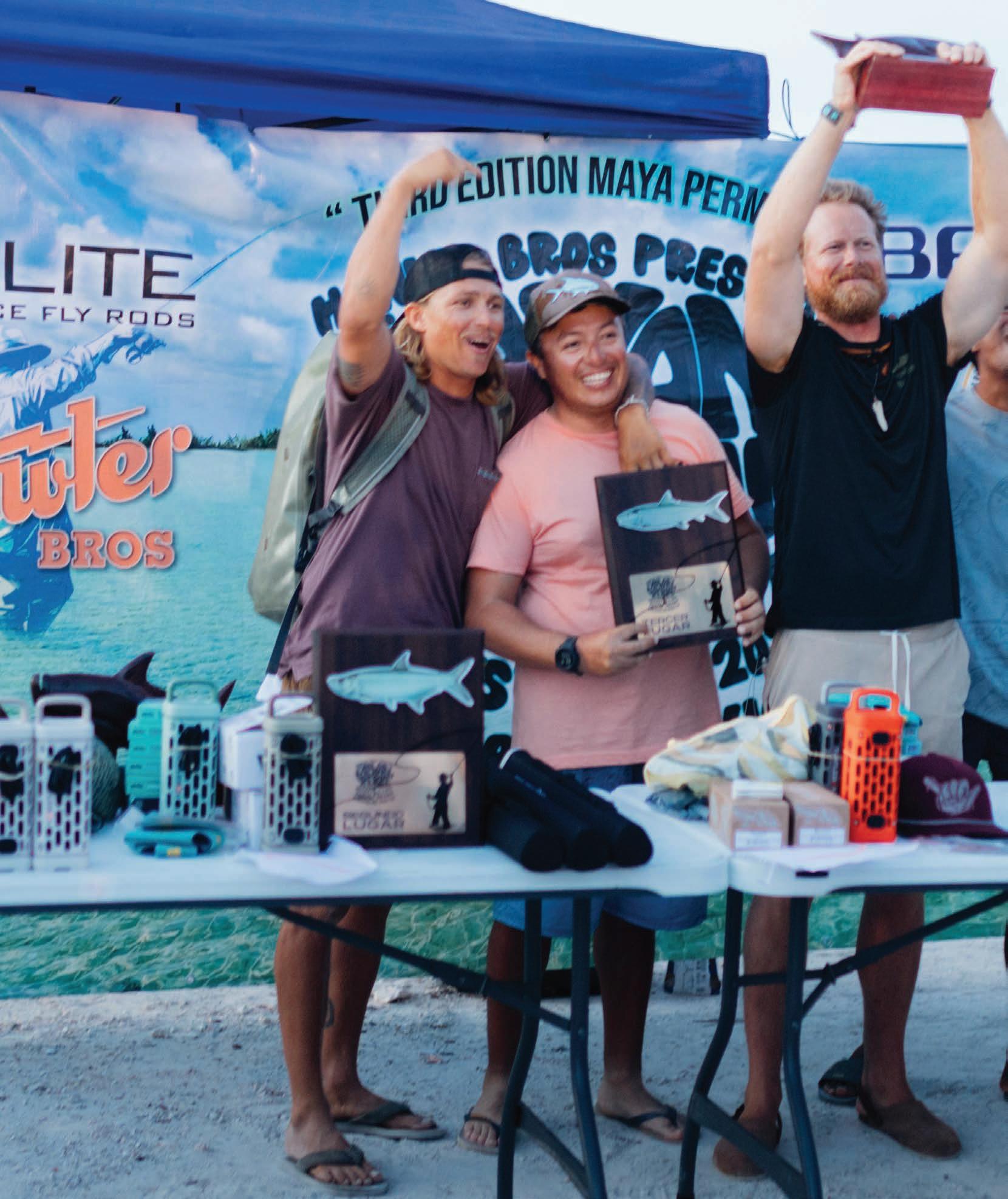
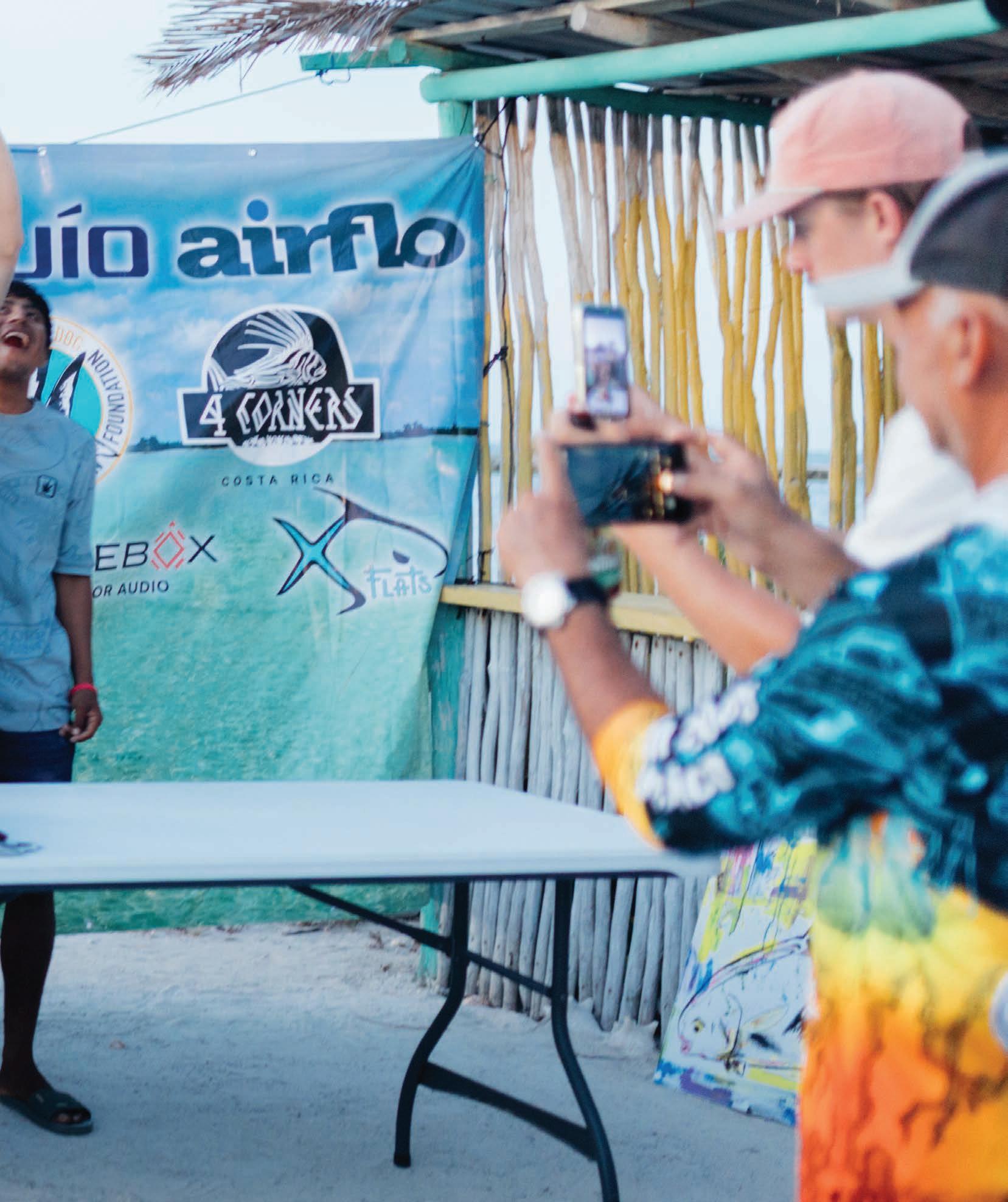
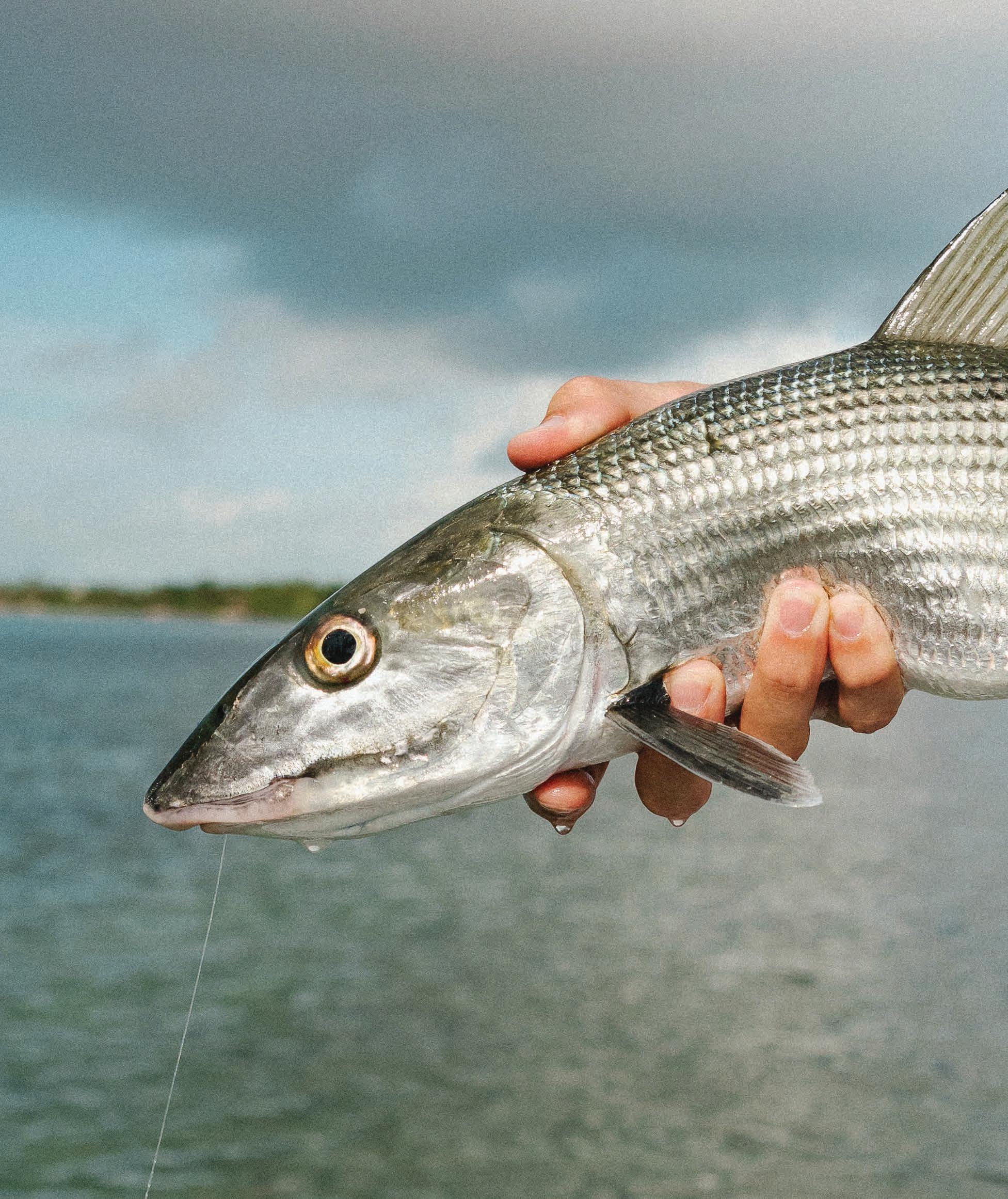
It’s not just about the fishing; it’s about who you are when no one’s watching. Jesse’s reputation - built on integrity, consistency, and genuine care - was the unspoken reason this tournament felt like more than an event. It felt like a family gathering.
As anglers, we spend so much effort trying to entice a fish to take our fly. Yet often, we need to do the sameto be intrigued enough to say “yes” to new experiences, to let the current carry us beyond expectations.
What stood out most to me during the tournament was just how many people were there - not just for the fishing, but for Jesse. Yes, the tournament itself was a draw, but I believe what truly brought so many together was the respect he’s earned. Running a lodge is no small task. The logistics alone - managing guides, hosting guests from around the world, ensuring every detail is cared for - require immense effort. Add to that the planning and execution of a major tournament, and
you begin to understand the level of dedication involved.
The turnout spoke volumes. Guides, anglers, sponsors, lodge owners, and industry friends all came, not because they had to, but because they wanted to. That kind of support doesn’t just happen - it’s built over years of showing up with consistency, integrity, and care.
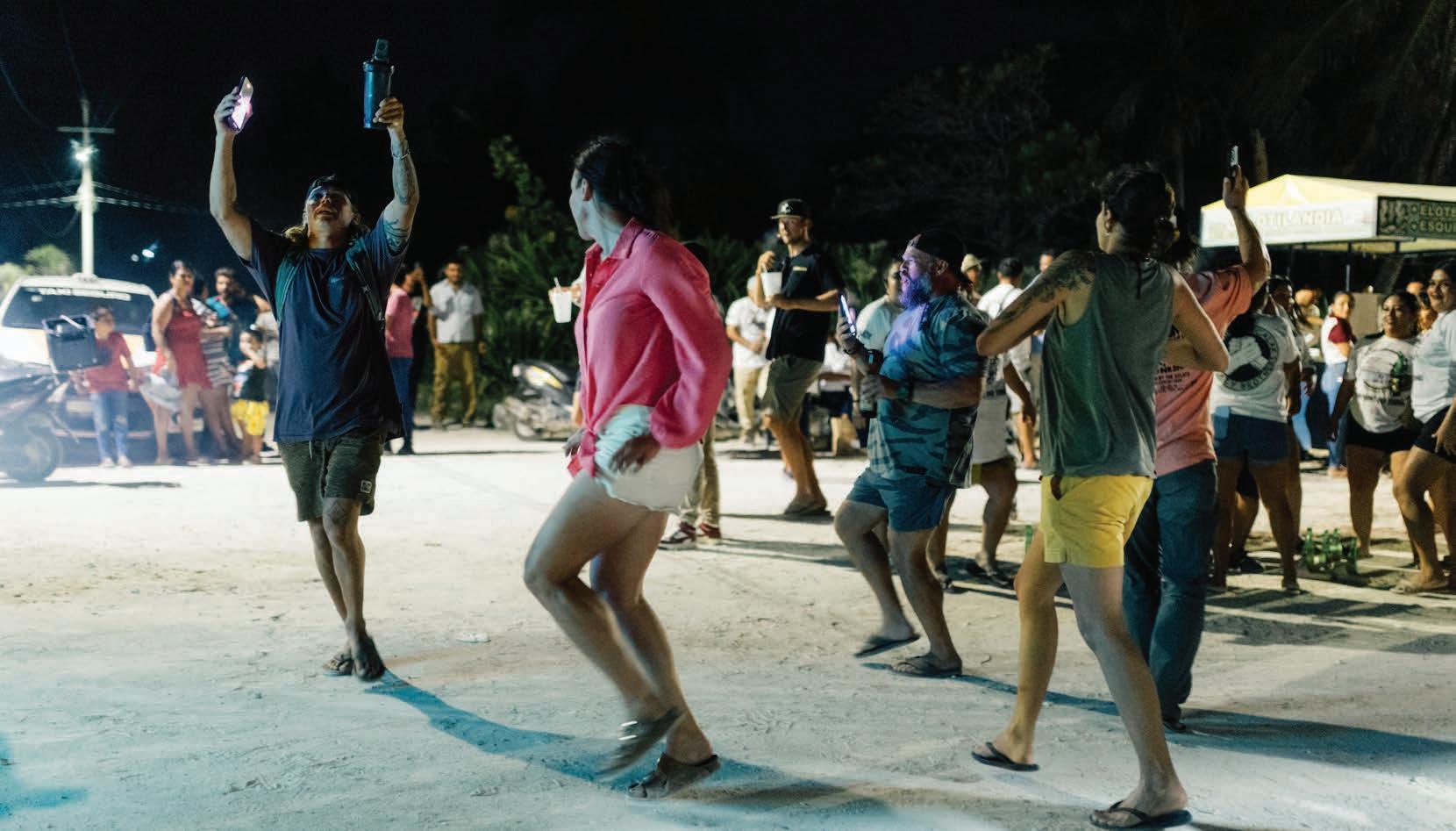
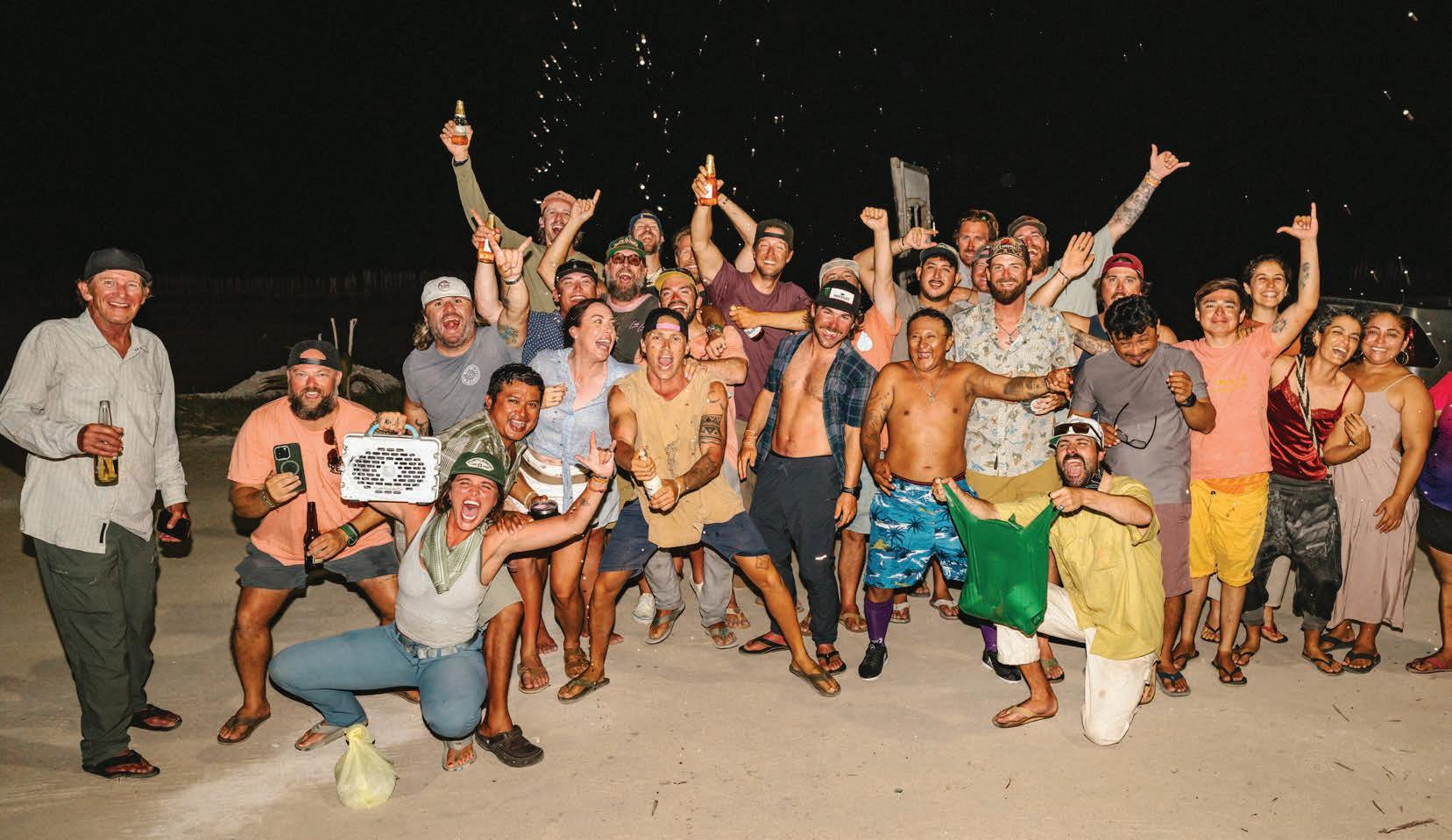
On the last night, the entire community came together for a celebration. Guides, their families, children, friends - everyone gathered in perfect unity. Music played, tacos sizzled on the grill, and the full moon shone brightly overhead.
There’s something powerful about a full moon - the way it lights up everything beneath it, the way it creates a sense of completeness. As I looked around, it wasn’t just about seeing it all - it was about feeling it. Feeling what it means to have an entire community connected by place, by purpose, by joy.
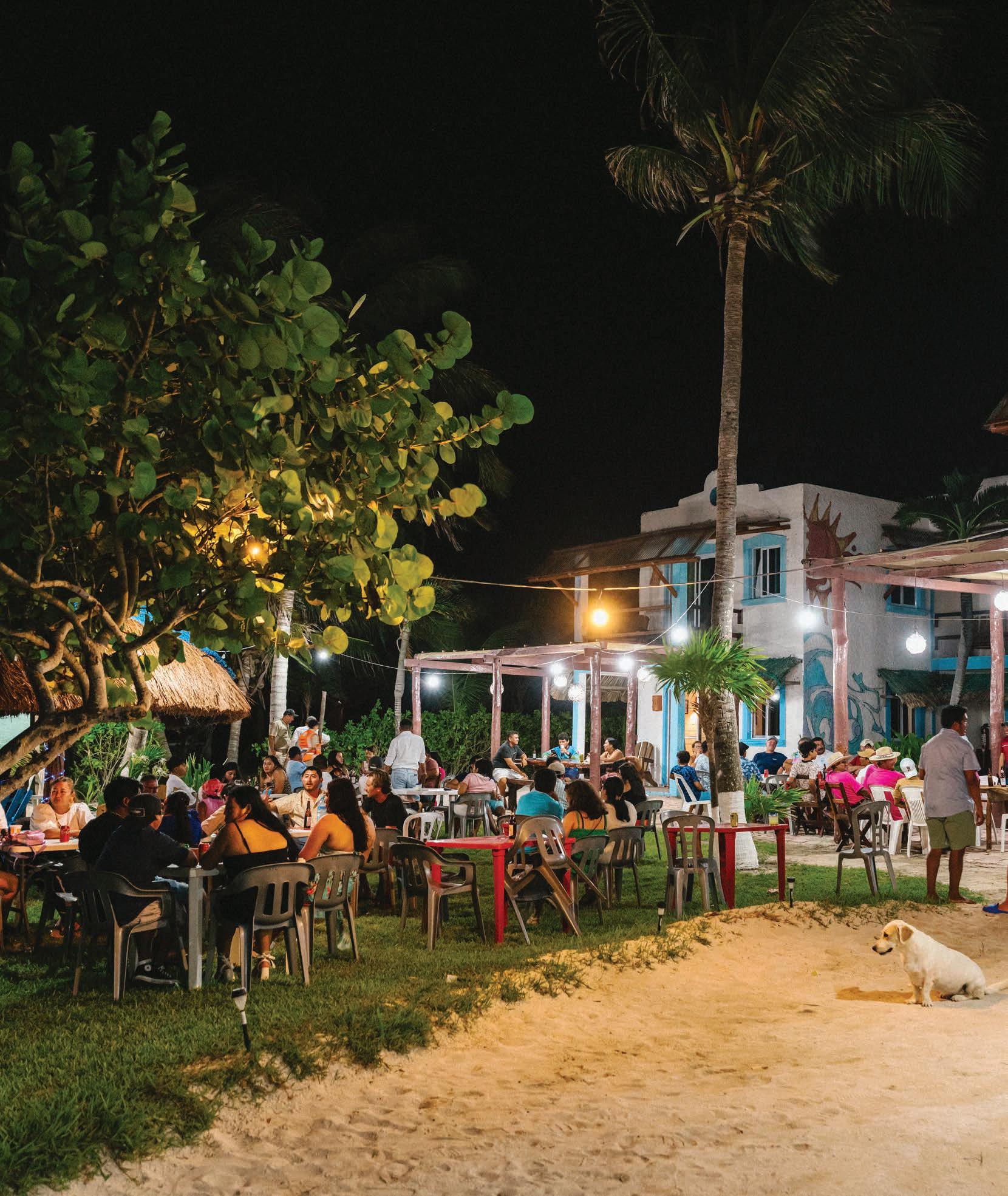
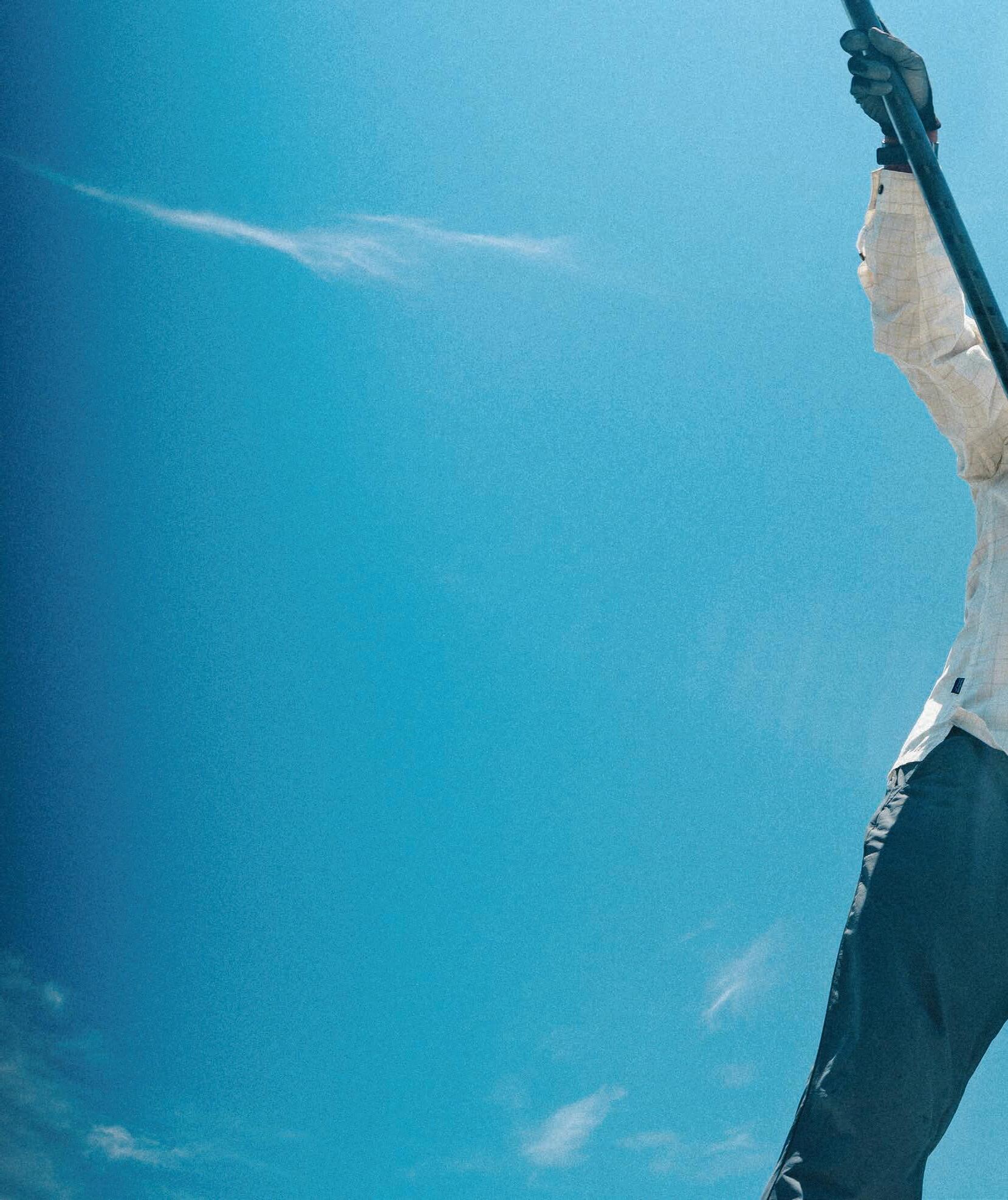
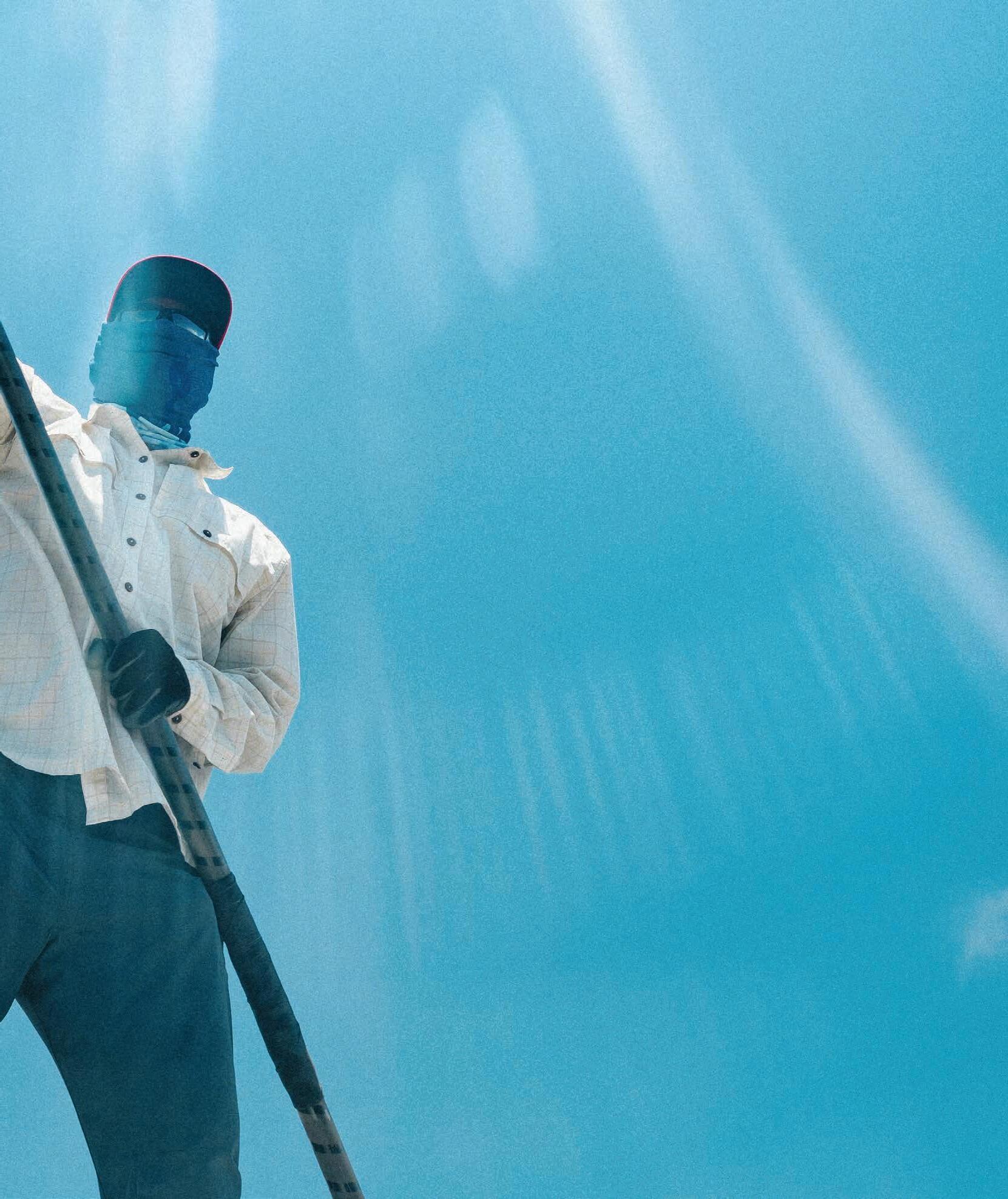
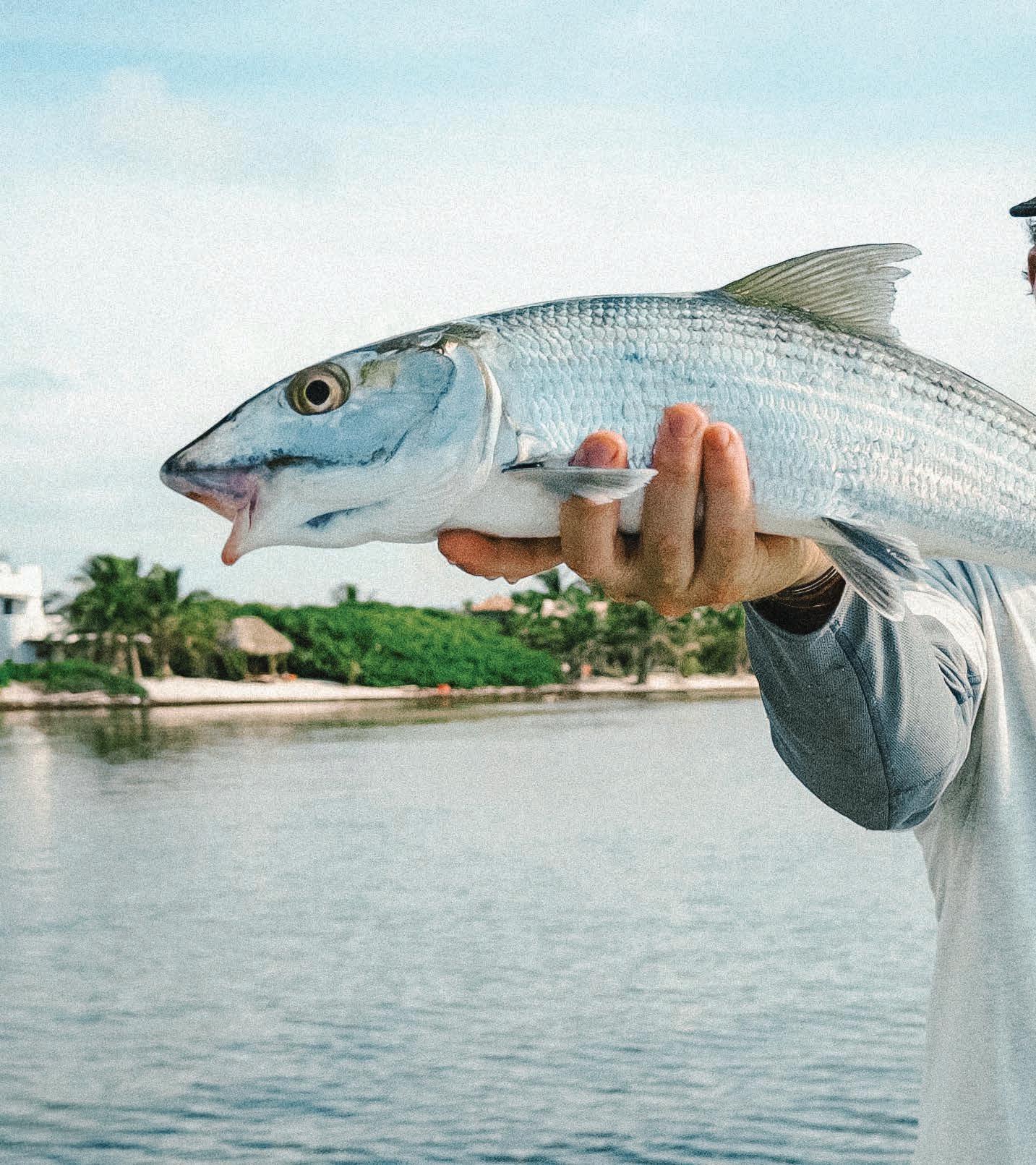
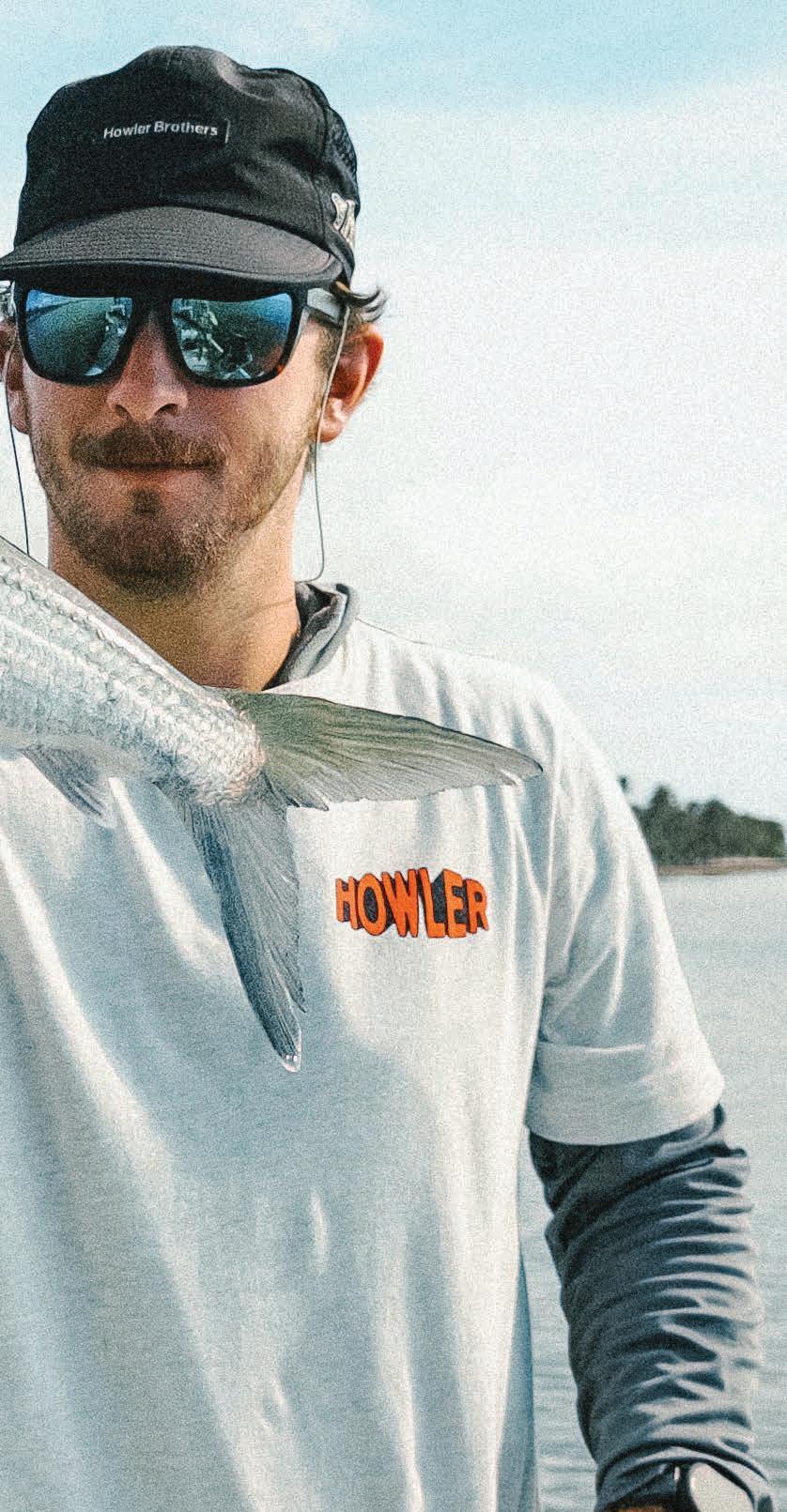
As an angler, it’s an honor to travel to places like this and be welcomed into someone’s world. That night, under that bright moon, I felt it fully.
And then Jesse’s leadership came into focus one final time. At one point, he called out to the crowd: “Hey guys, let’s go dance hard for one last song before we leave!”
Without hesitation, every single person got up and danced. It was a simple moment, but a telling one - a reflection of the kind of person who doesn’t just bring people together, but invites them to fully enjoy the moment.
It was pure joy. Unfiltered. Unselfconscious. In fishing, we talk about catch and release - but how often do we release ourselves from the grip of what others might think? That night, we did. We danced. We laughed. And we let go.
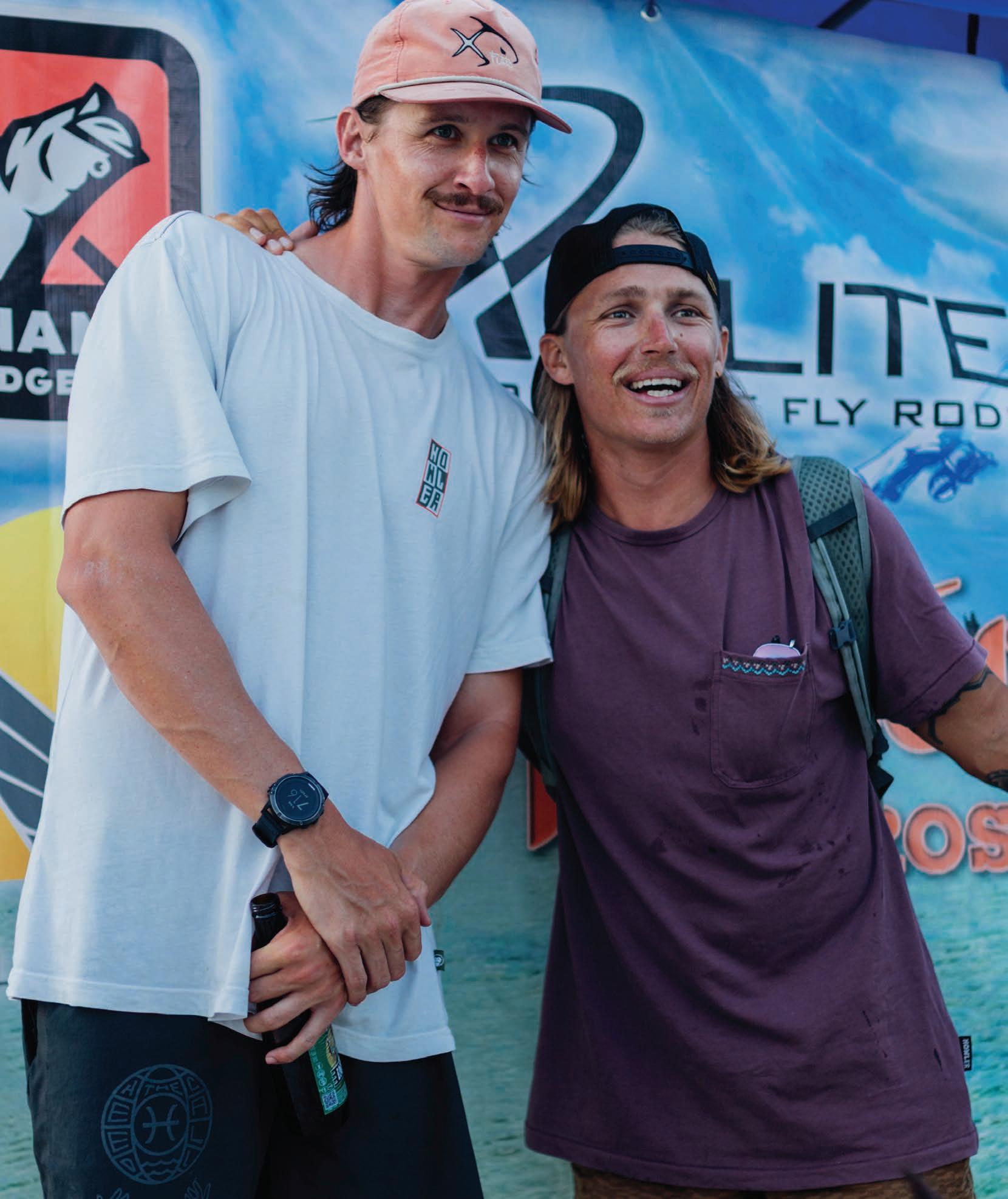
What stayed with me most wasn’t a fish at all - it was watching an entire community, both local and from across the fly-fishing world, come together because of one man’s vision. Jesse’s relationships, built over years of showing up with integrity, created an impact strong enough to draw in guides, anglers, sponsors, lodge owners, and friends from far and wide.
“In fishing, we talk about the joy of the catch, but here, the catch was everyone”
That final night’s dance was the clearest reflection of Jesse’s gift for connection. In fishing, we talk about the joy of the catch, but here, the catch was everyone - caught in that same moment, that same freedom to dance and just let go.
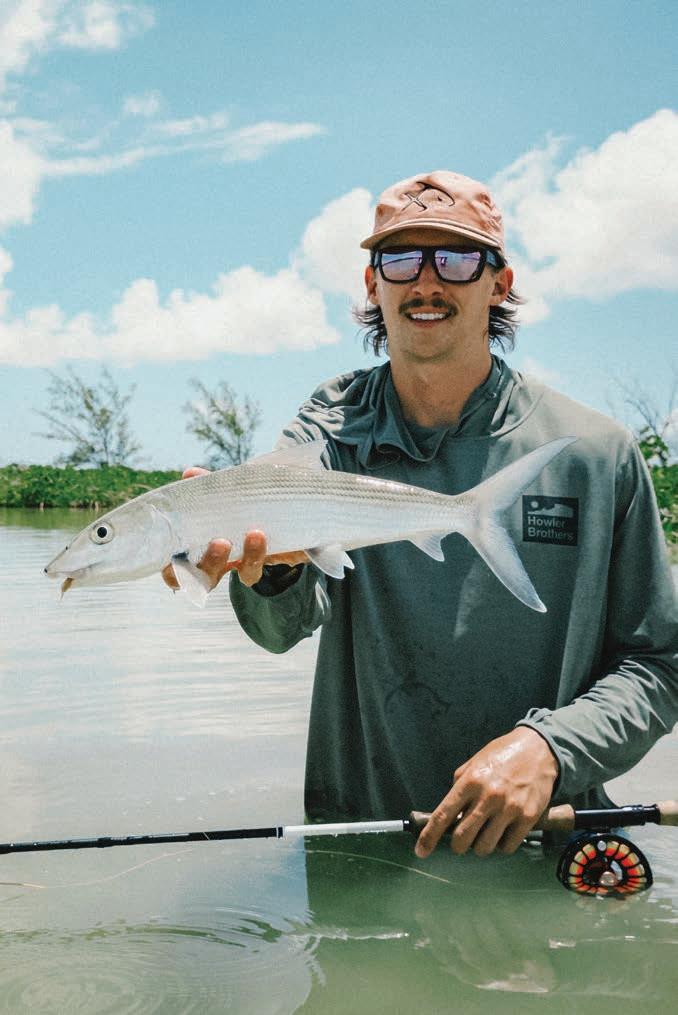
And maybe that’s the most beautiful thing about fly fishing: sometimes the best thing we land is a feelingthe same feeling of welcome I had from the moment I arrived, carrying through to the very end. It brought me back to how the whole trip began - not knowing how it would work out, but trusting that pull to say yes anyway. That same trust carried me through the week and into that final night, when not just one person, but an entire crowd, followed that feeling.
Together, we found ourselves in the middle of something bigger - free to let go, fully present, and part of a moment only possible because we all said yes.
In the end, it struck me that what we hope for on the flats is what life often asks of us, too. We want the permit to commit to our fly - to take that leap of trust.
Maybe we need to do the same: say yes to the pull, and let it take us somewhere unforgettable.
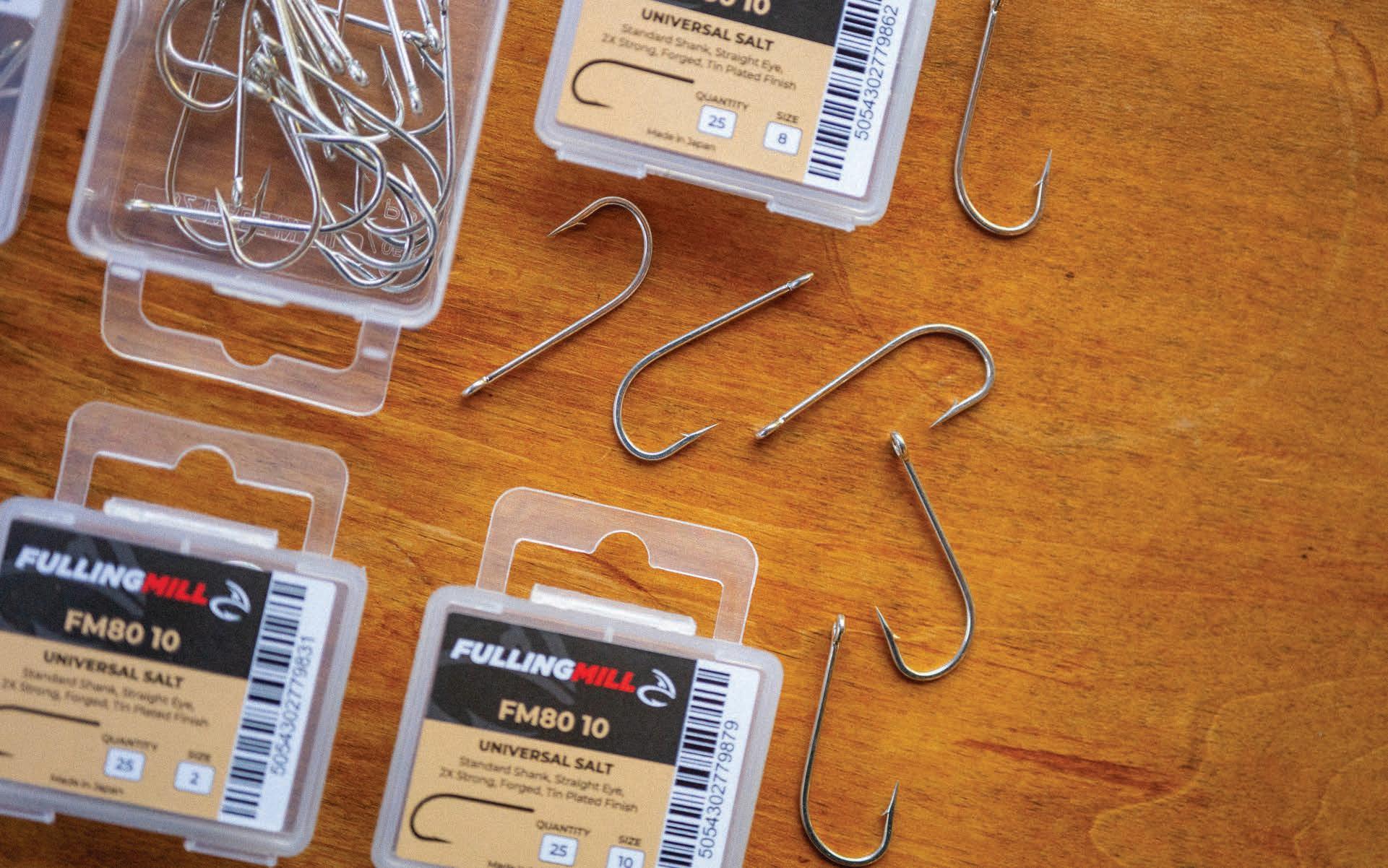
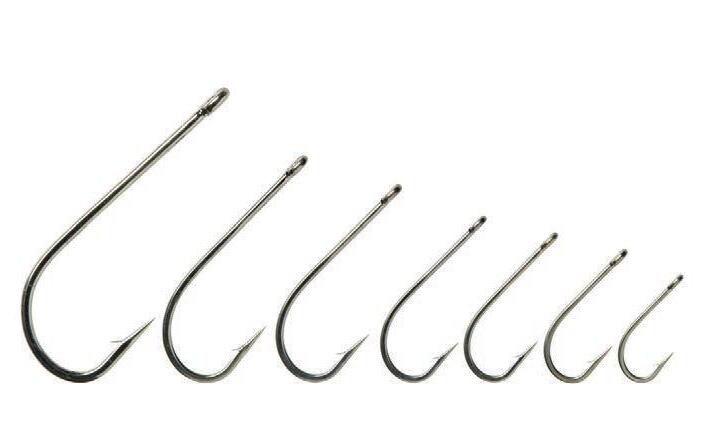
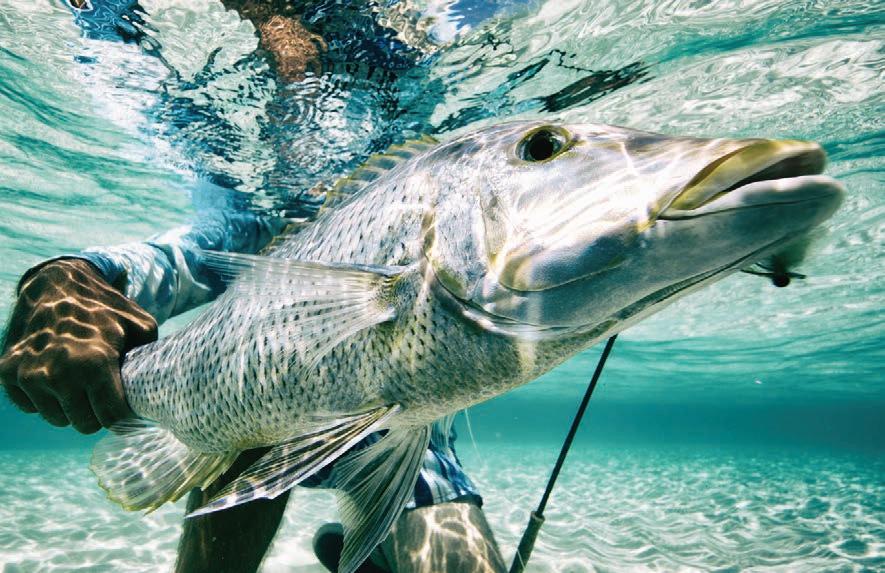
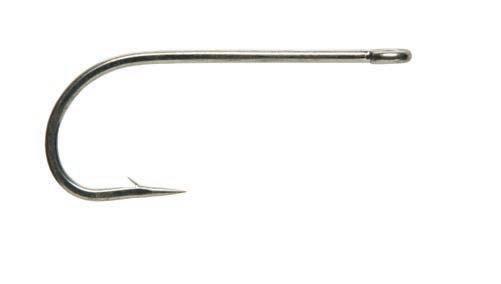
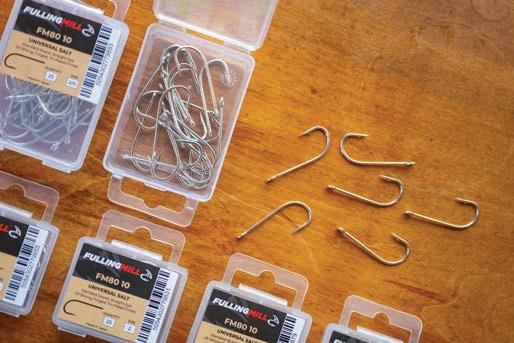
Introducing the newest hook to the Fulling Mill range: the Universal Salt Hook. This is a multi-purpose saltwater fly hook, which is designed and manufactured to the highest possible standards of sharpness and strength. It’s suitable for a wide range of patterns from small bonefish flies to large baitfish streamers.
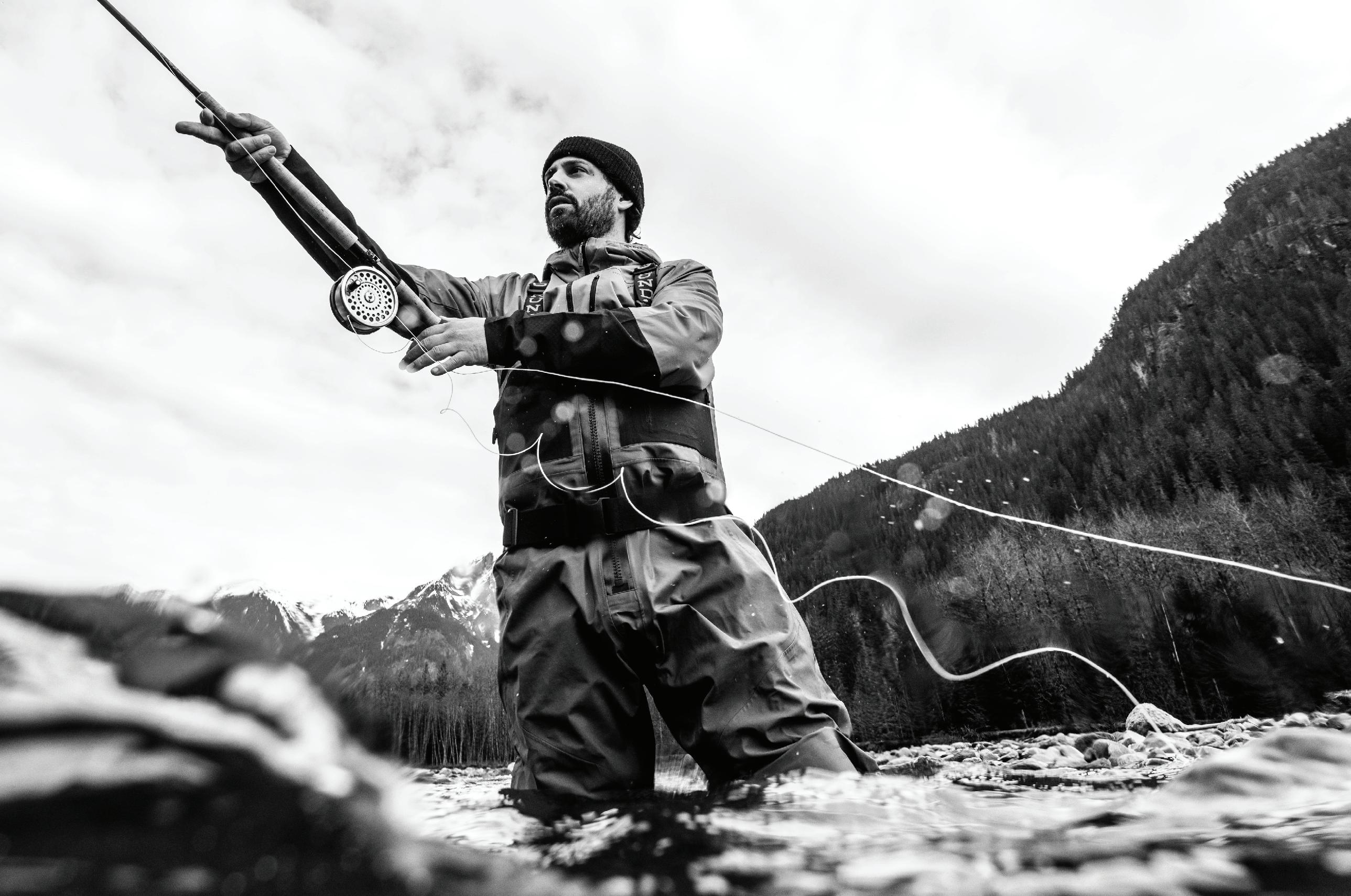
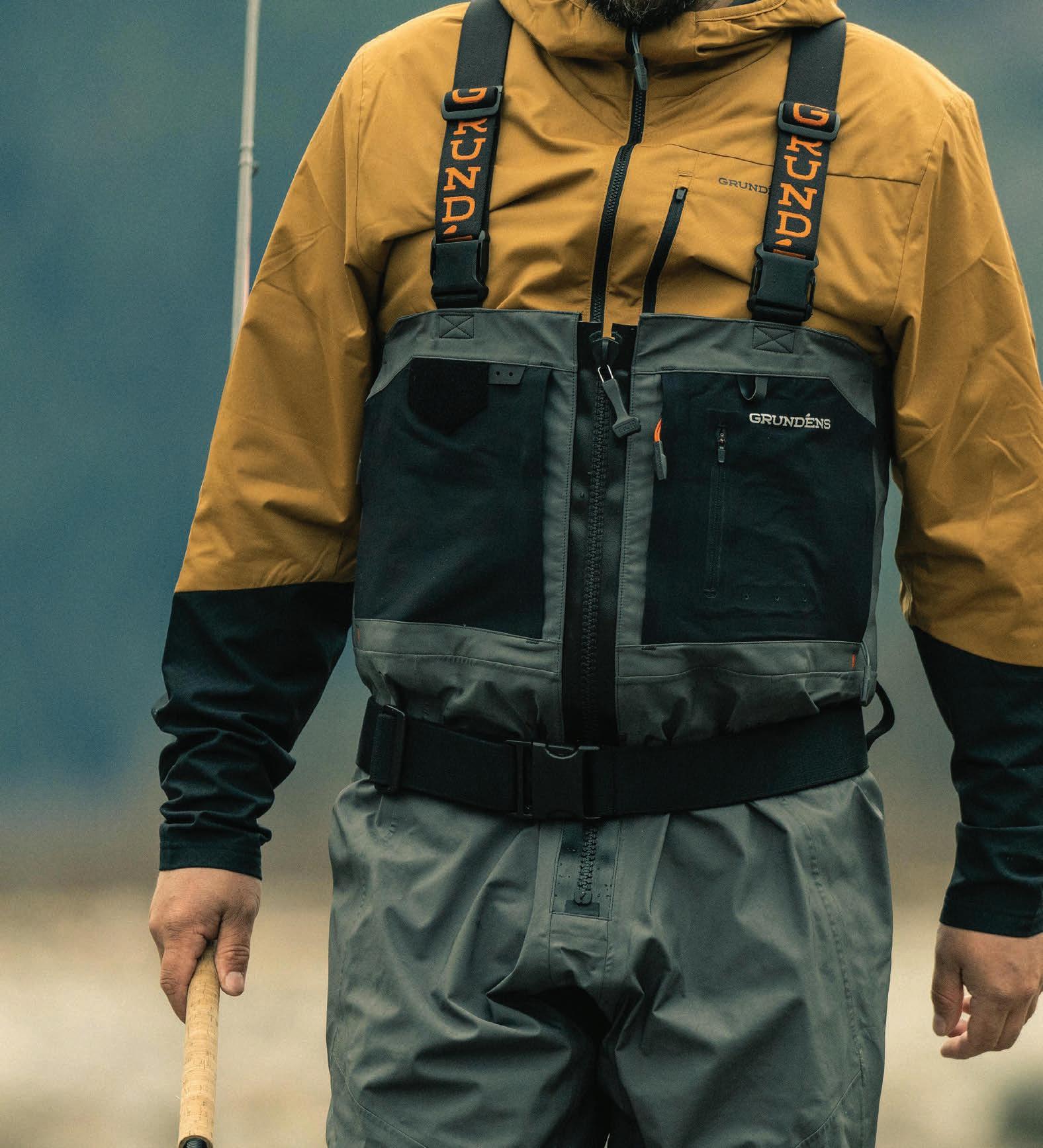
Designed for mobility and built to take a beating, it redefines what serious anglers should expect from their gear.”
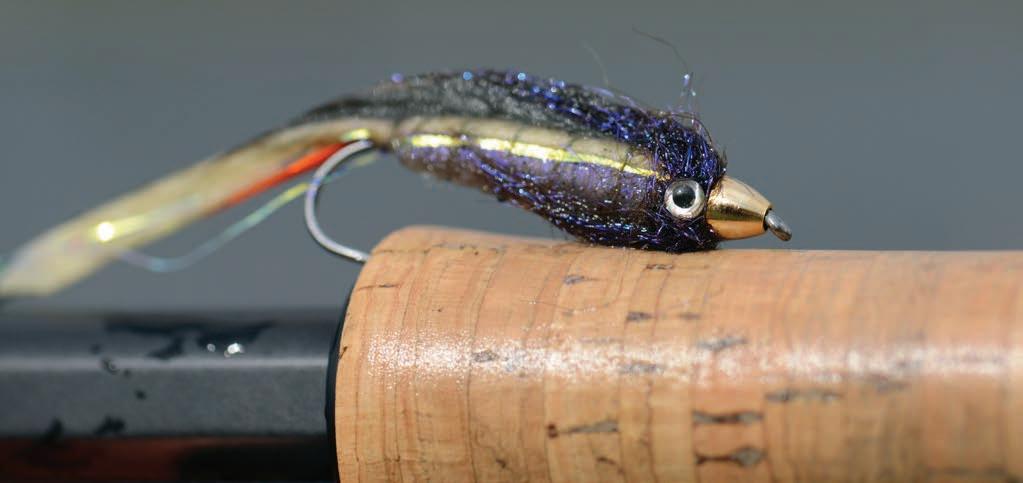
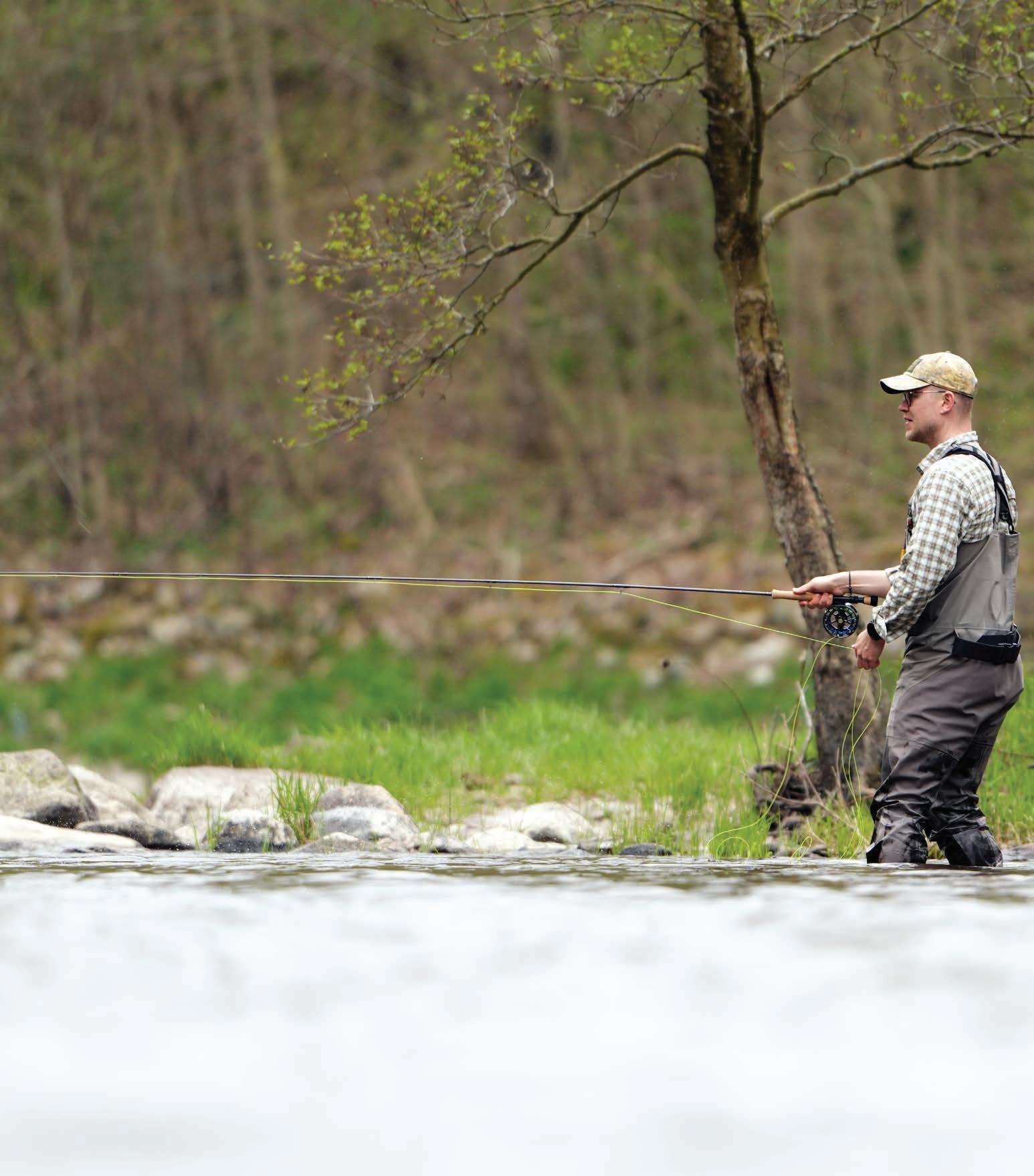
Fly fishing with streamers is among the most effective methods when it comes to hooking up with big trout. In the following, Rasmus Ovesen offers tips and recommendations for succeeding with this exciting and versatile method.
By RASMUS OVESEN
by RASMUS OVESEN and MARTIN EJLER OLSEN
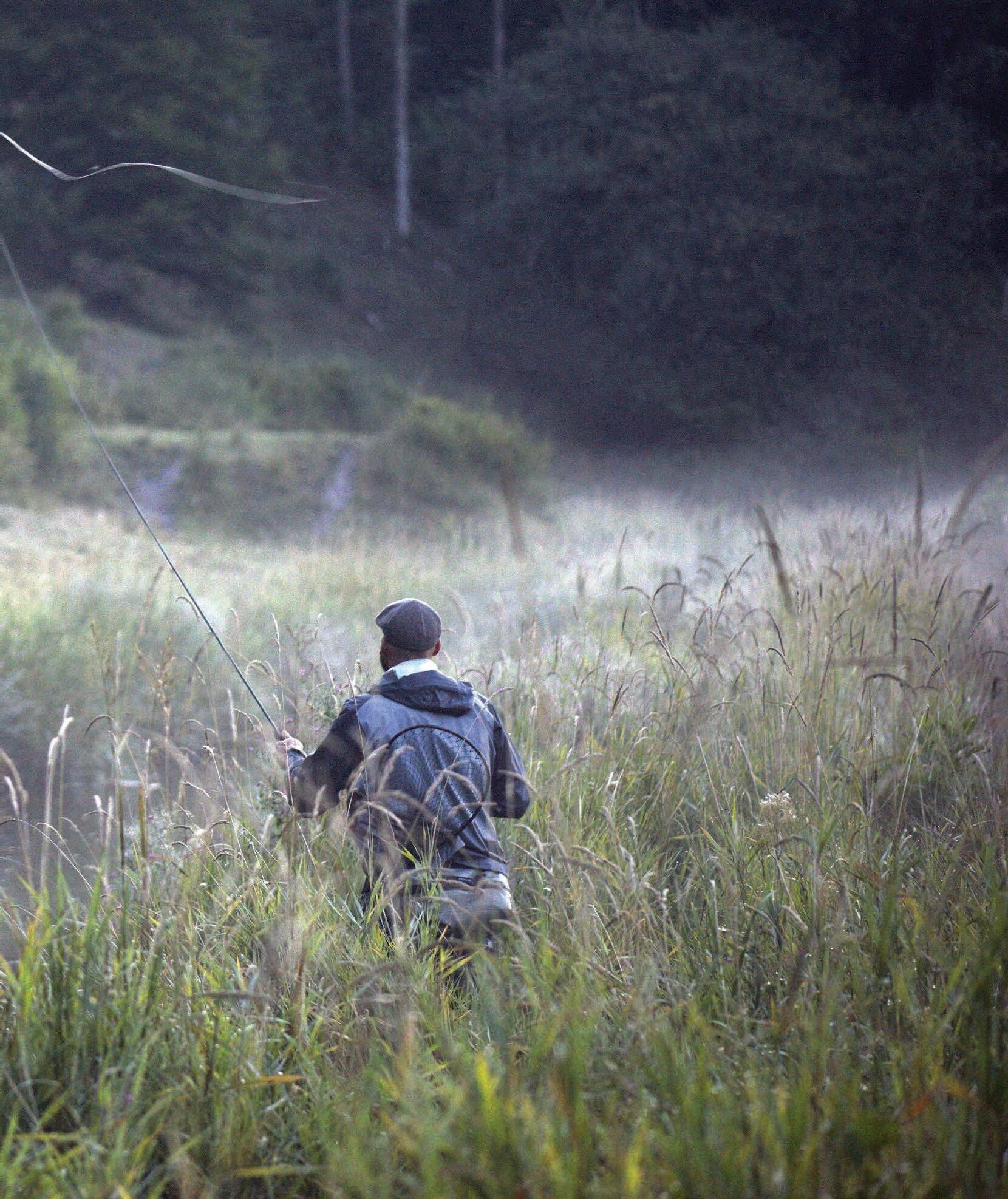
YOU’VE FISHED HERE A NUMBER OF TIMES BEFORE – with dry flies and small nymphs, with your determined gaze drifting ceaselessly across the water trying to catch a glimpse of a foraging trout. You’ve caught the odd kilo+ fish here, but you’re pretty sure there are bigger ones around – and this early morning you’ve materialized on the banks of a deep stretch of the river equipped with a much heavier outfit than usual and a meaty looking fly at the end of your leader. The plan, of course, is to see if of the BIG ones are at home today.
After a few tentative blind casts, where you adjust both your casting stroke and cadence according to the unfamiliar weight of the gear, everything comes together and the big fly shoots across the water. It lands blindly somewhere out there and makes a temporary crater in the lead-grey water, which has calmed to a mirror underneath the dawning sky. You let the fly sink for a bit, allowing it to reach just the right depth, and you immediately feel the weight of the fly as you start your retrieve.
The first flickering sunlight now floods over the hill tops on the opposite side of the river and weaves seamlessly into the ghostlike mist that dances shapelessly across the timid water. Soon after, shadows come crawling sedately along the glistening damp meadow floor.
It’s as if something in the undisturbed wilderness around you takes a deep breath, and you’re somehow lost in the reverie - slipping into a trancelike state not unlike that of the night, when – suddenly - you’re violently brought back to consciousness. A dramatic tug, which almost pulls the fly line out of your hand, flexes the rod straight into the handle and a series of vehement pulls give way to a powerful downstream surge.
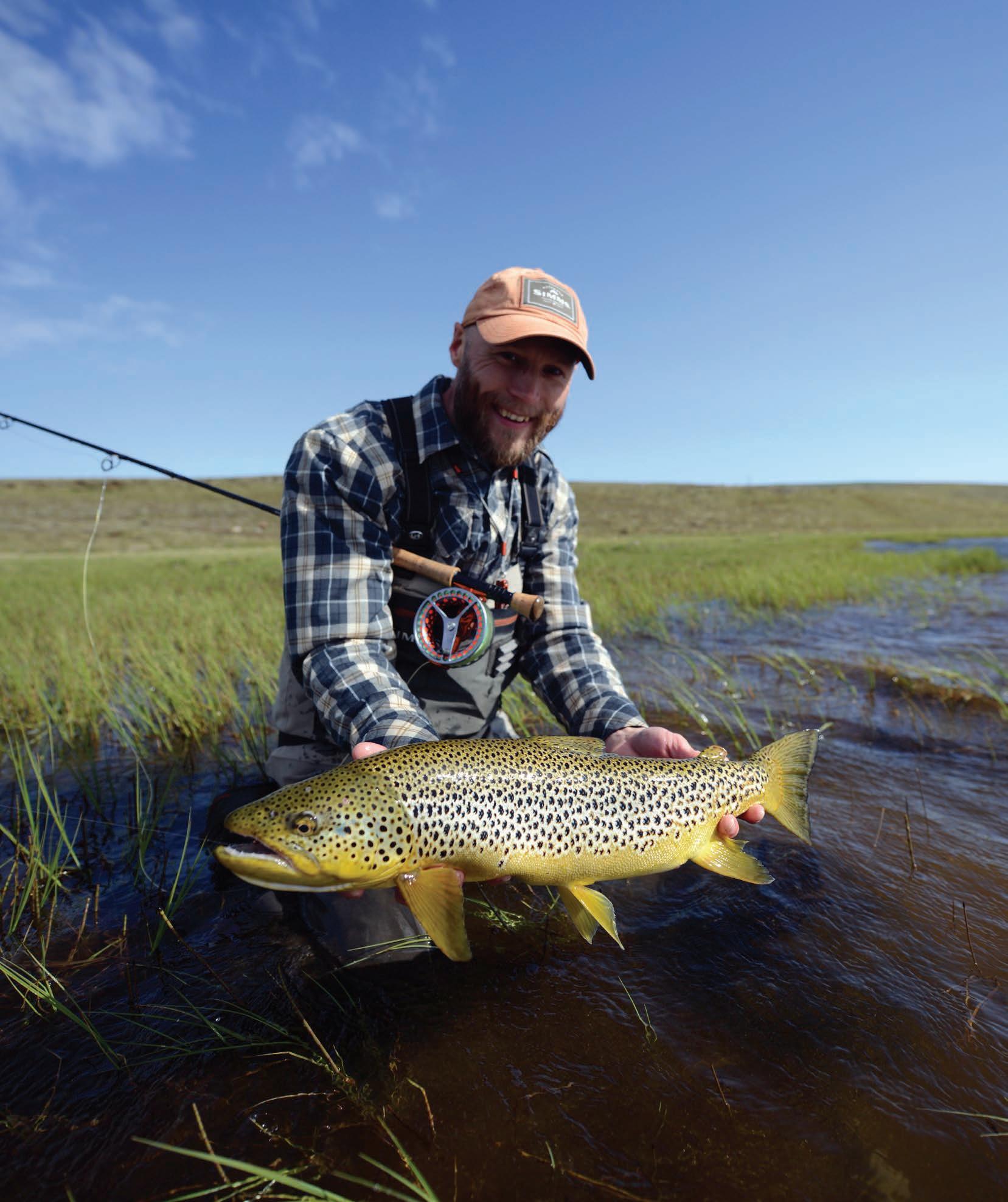
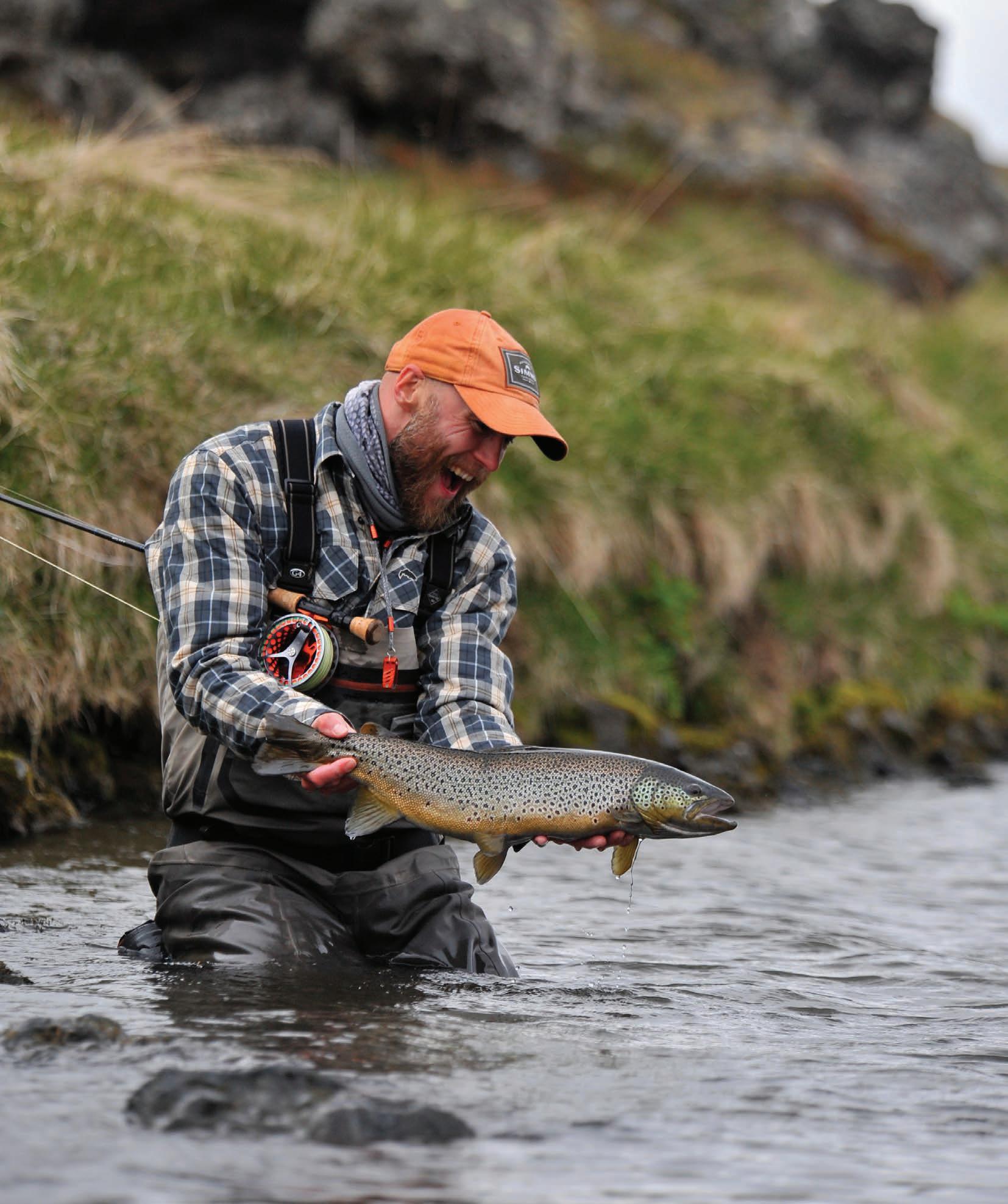
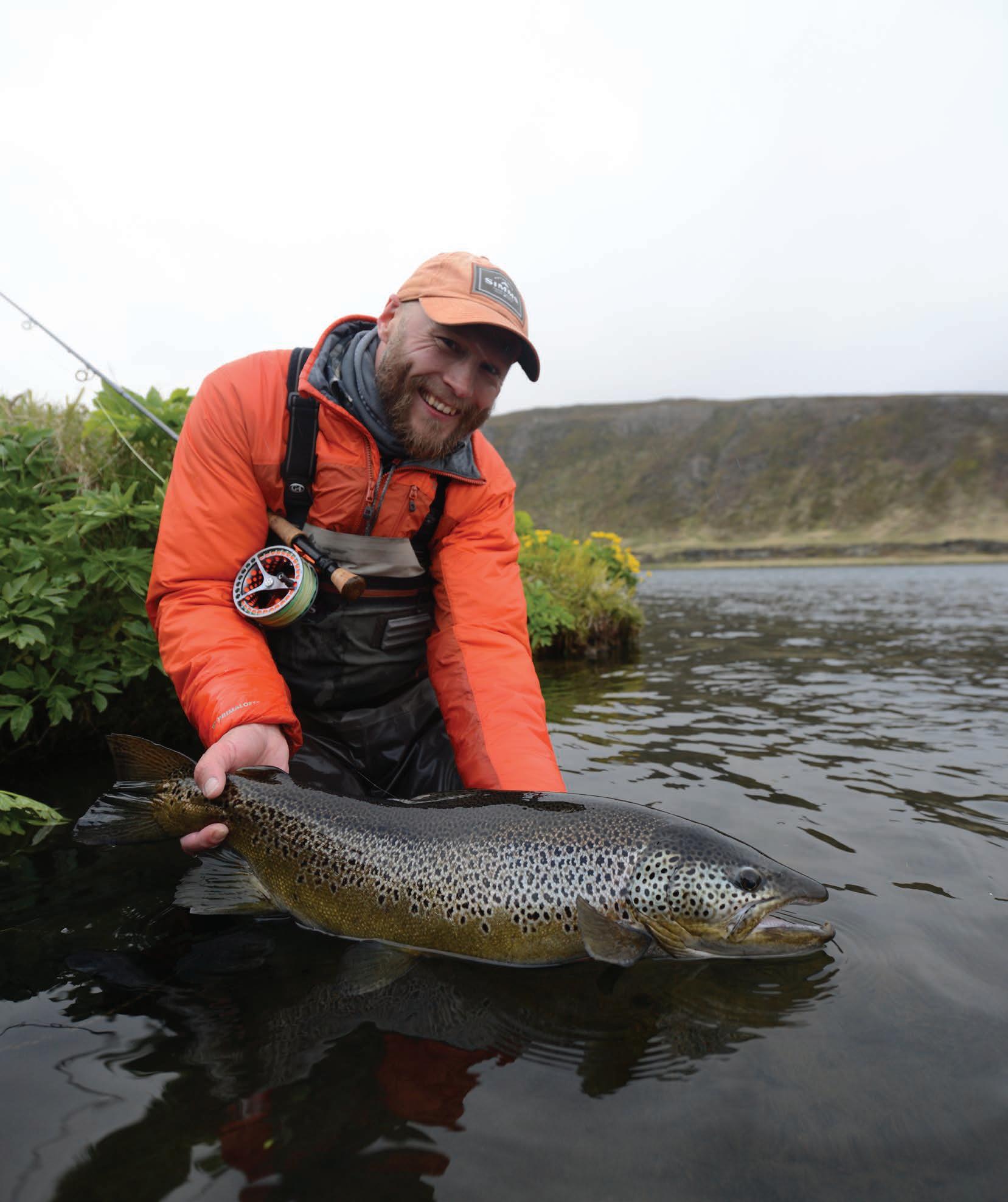
You set off in hot pursuit, applying a bit of side pressure, and after a tumultuous stint of tug-o-war you bring the fish in. It’s of a completely different caliber than anything you’ve ever previously caught in the river; broad-shouldered, heavy, muscular and with an almost grotesquely big set of toothy jaws.
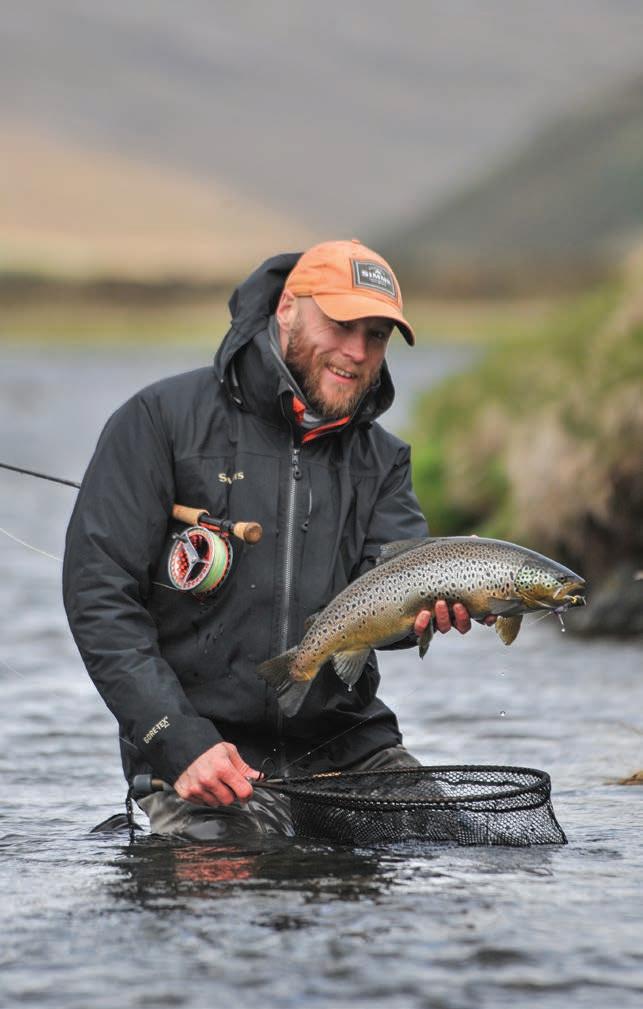
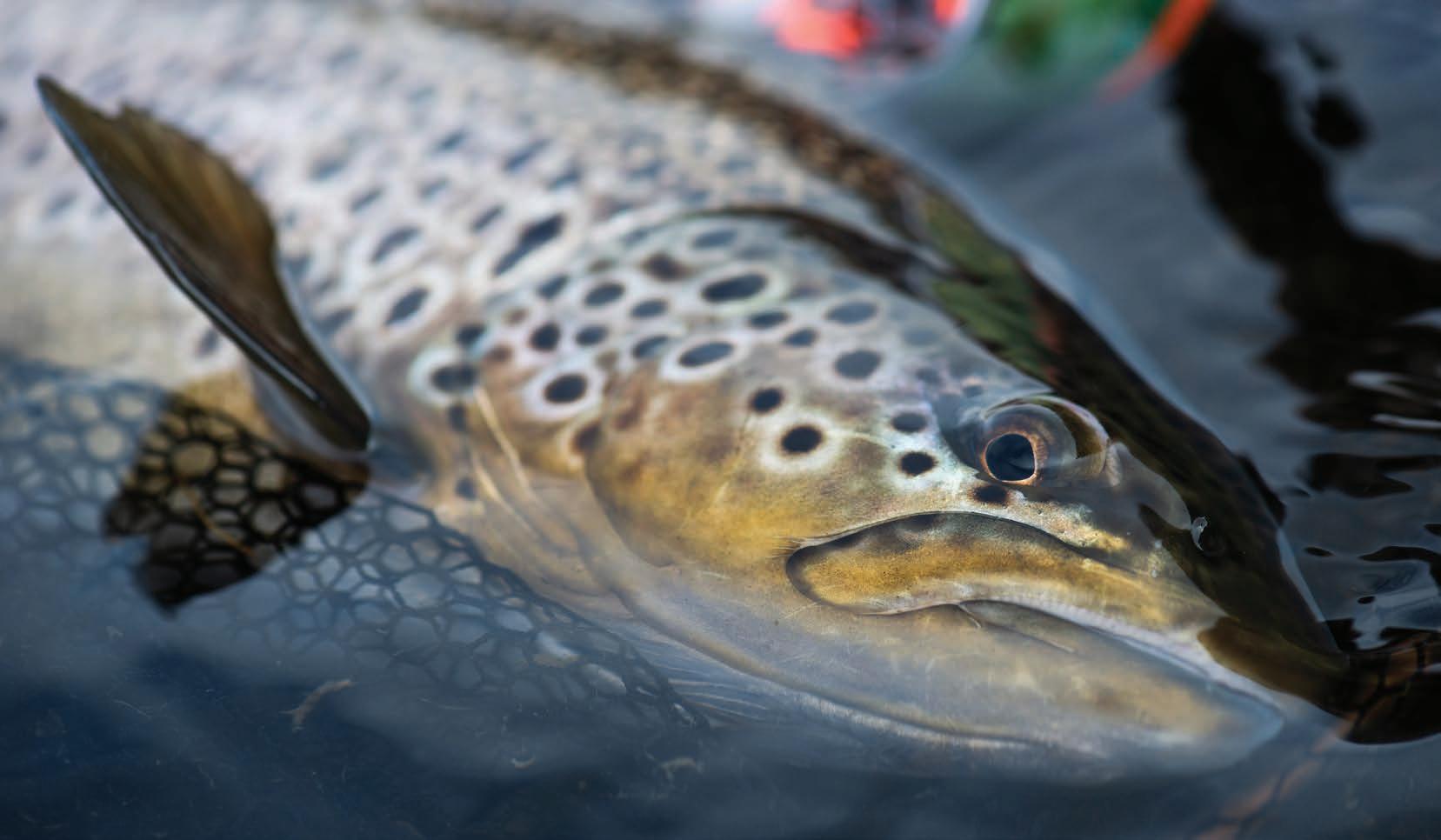
As it slides across the frame of your landing net, you concurrently slide into a state of light chock. The fish is close to four kilos! You retrieve the streamer, which suddenly doesn’t seem all that big anymore, admire the pristine fish for a few seconds and release it back into the water. Shortly after, as you walk along the riverbank back to your car, you’re reminded of the brutal power of the fish as it wrestled free of your hands and took off with fin strokes so forceful that they sent cascades of water into your face. You can’t help but wonder if it was a coincidence or not. One thing is sure, however: This wasn’t the last time you visited the river armed with heavy equipment and a fly box full of sizeable streamers.
THE WORD ”STREAMER” is a common American denominator for flies that imitate prey fish – and prey fish, oftentimes, is the key to understanding why some rivers and lakes produce big trout. If prey fish such as roach, stickleback, freshwater sculpin, common bleak or common minnow are present in good
amounts, the trout will start to key in on them. And, once they do, a radical growth phase will be catalysed – one that will ultimately produce fish of the kind of proportions that lots of fly fishermen dream about. Obviously, big trout can be caught on small imitations of crustaceans and other water insects, but there’s something rather irreversible about the shift from insect food to fish meat. This is the kind of diet that creates and sustains big trout and, as a result, you’ll need meaty flies to really tempt the biggest fish in the pool.
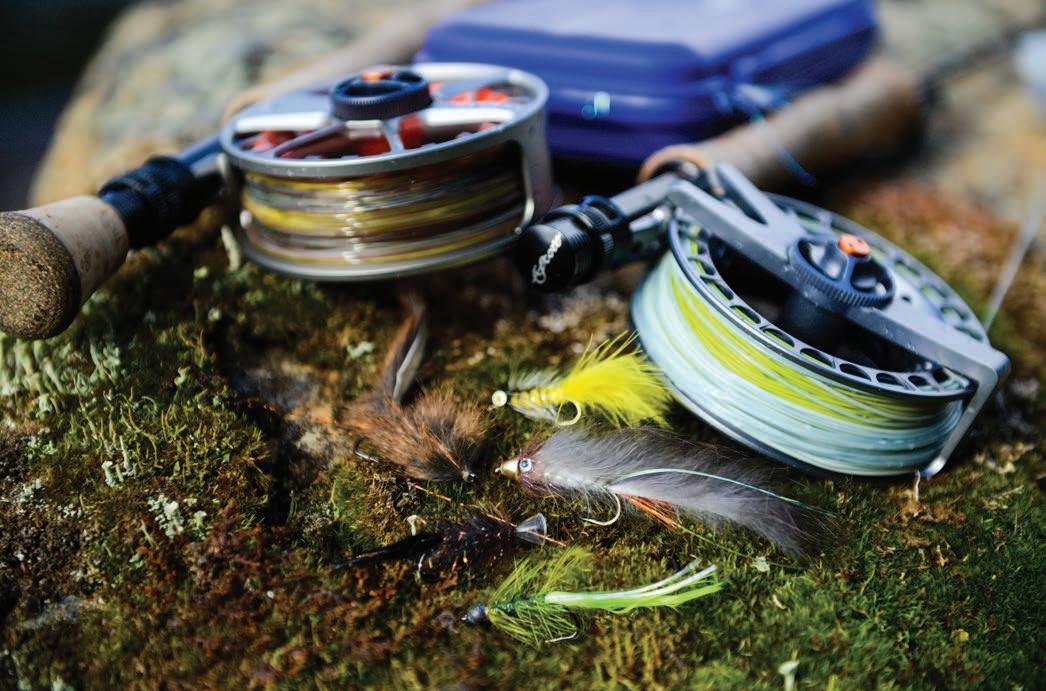
Streamer fishing covers lots of different scenarios and techniques but, in all its simplicity, it’s about targeting big predatory trout with meaty flies. Whether chasing these fish in rivers or lakes, it all boils down to presenting your fly in a life-like way, at close range, when the conditions are right, and the fish are actively feeding (or to simply provoke them into striking). In order to do so, however, you’ll need the right equipment – and it differs from traditional trout gear in a number of ways.
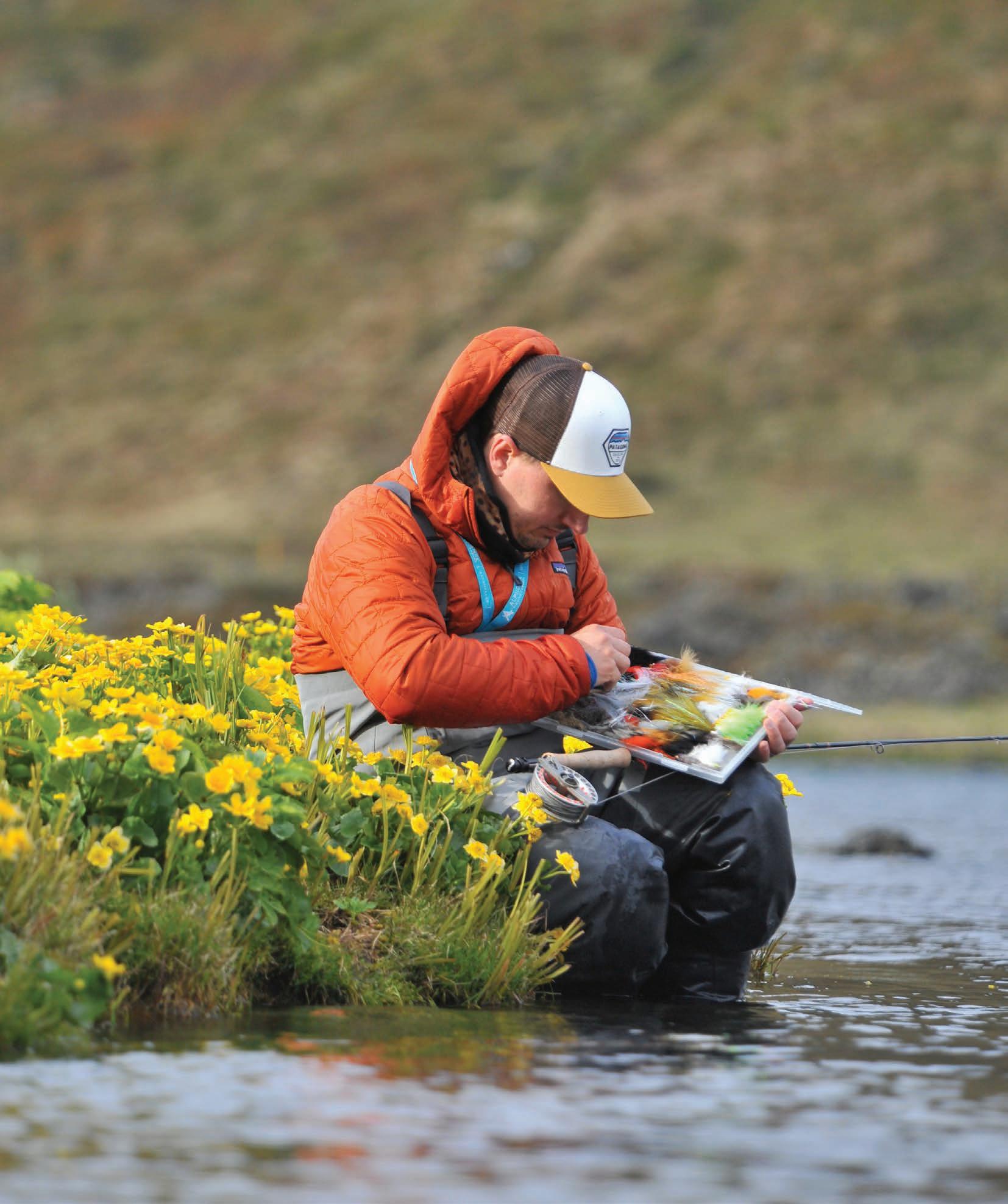
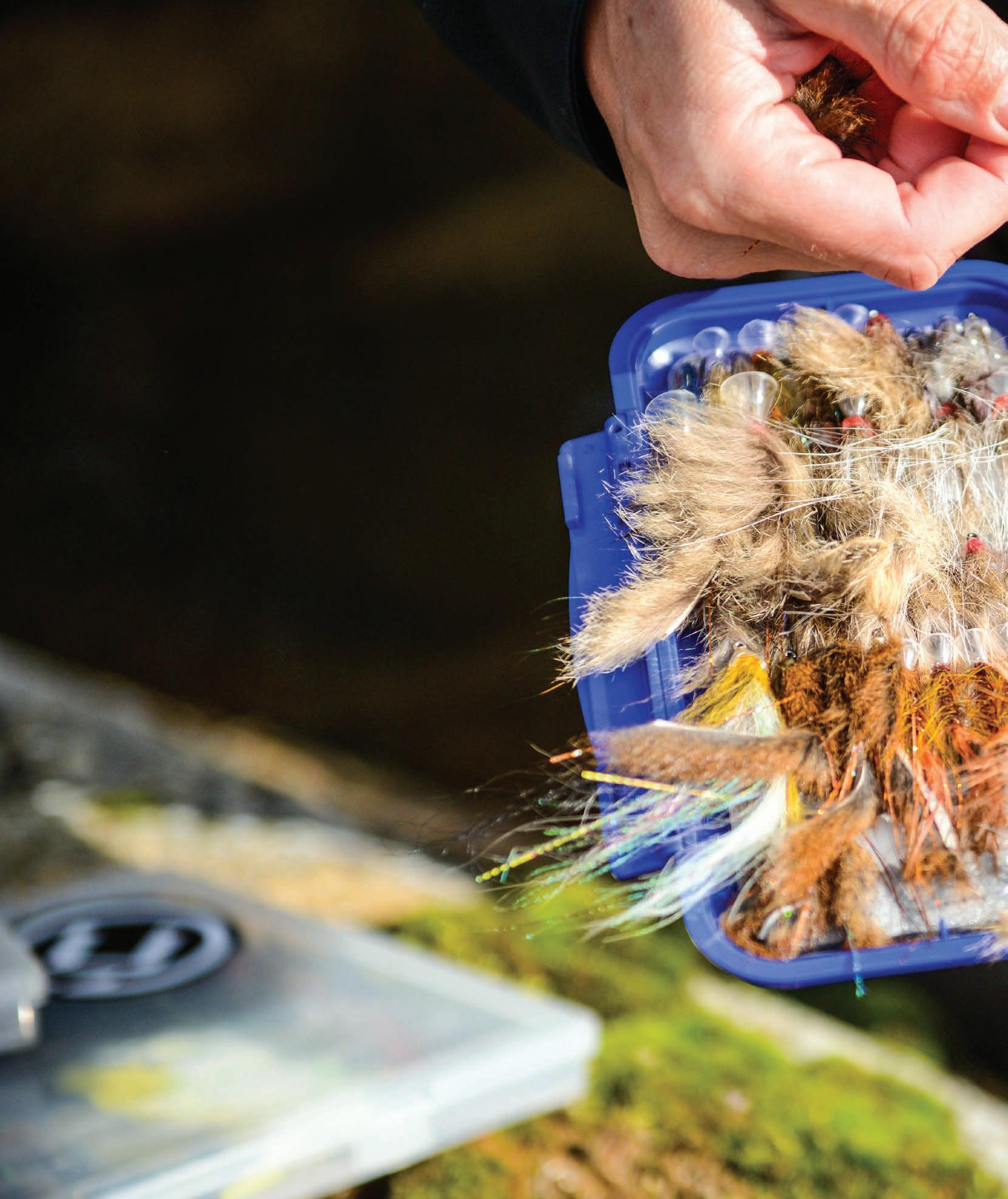
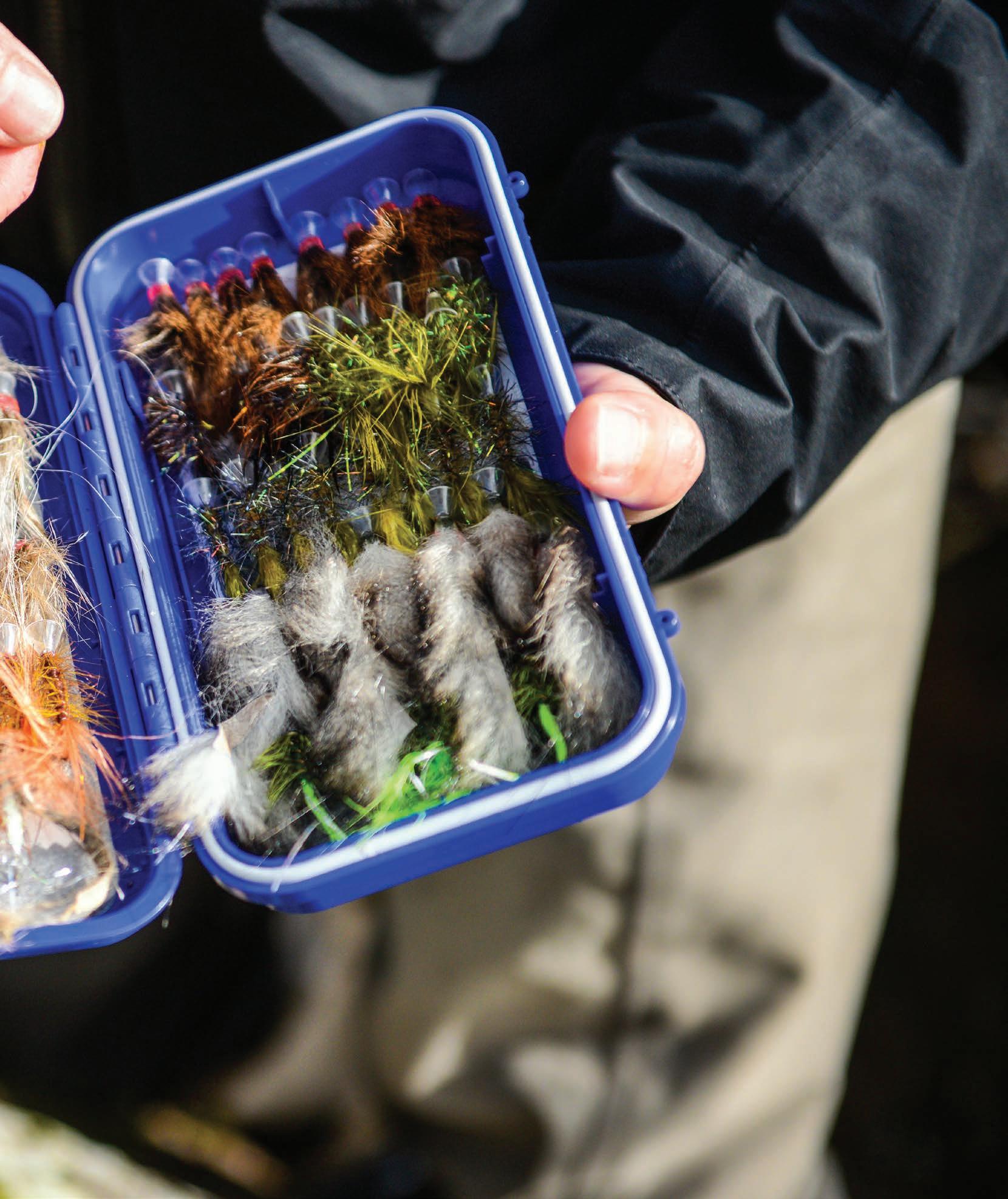
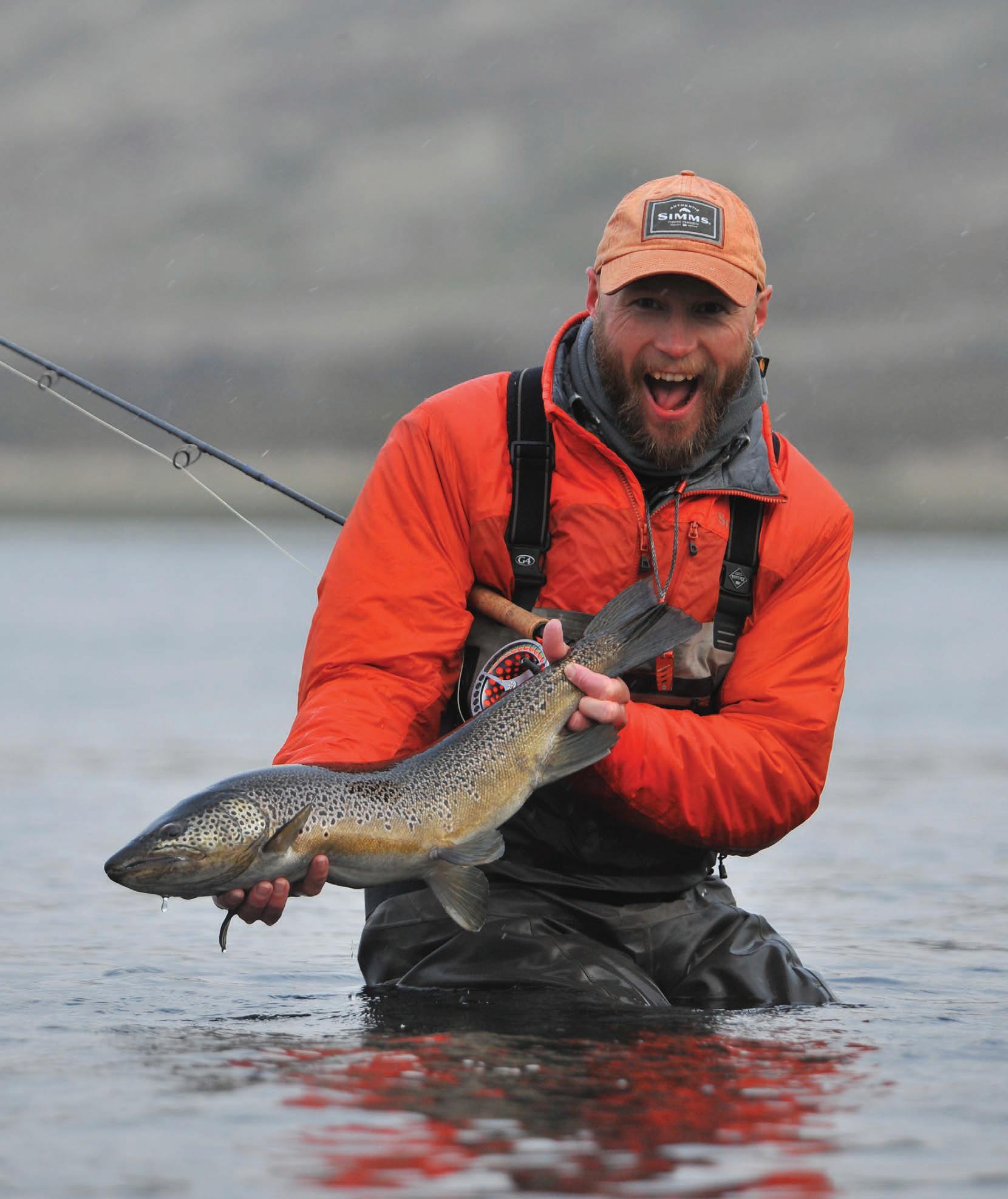
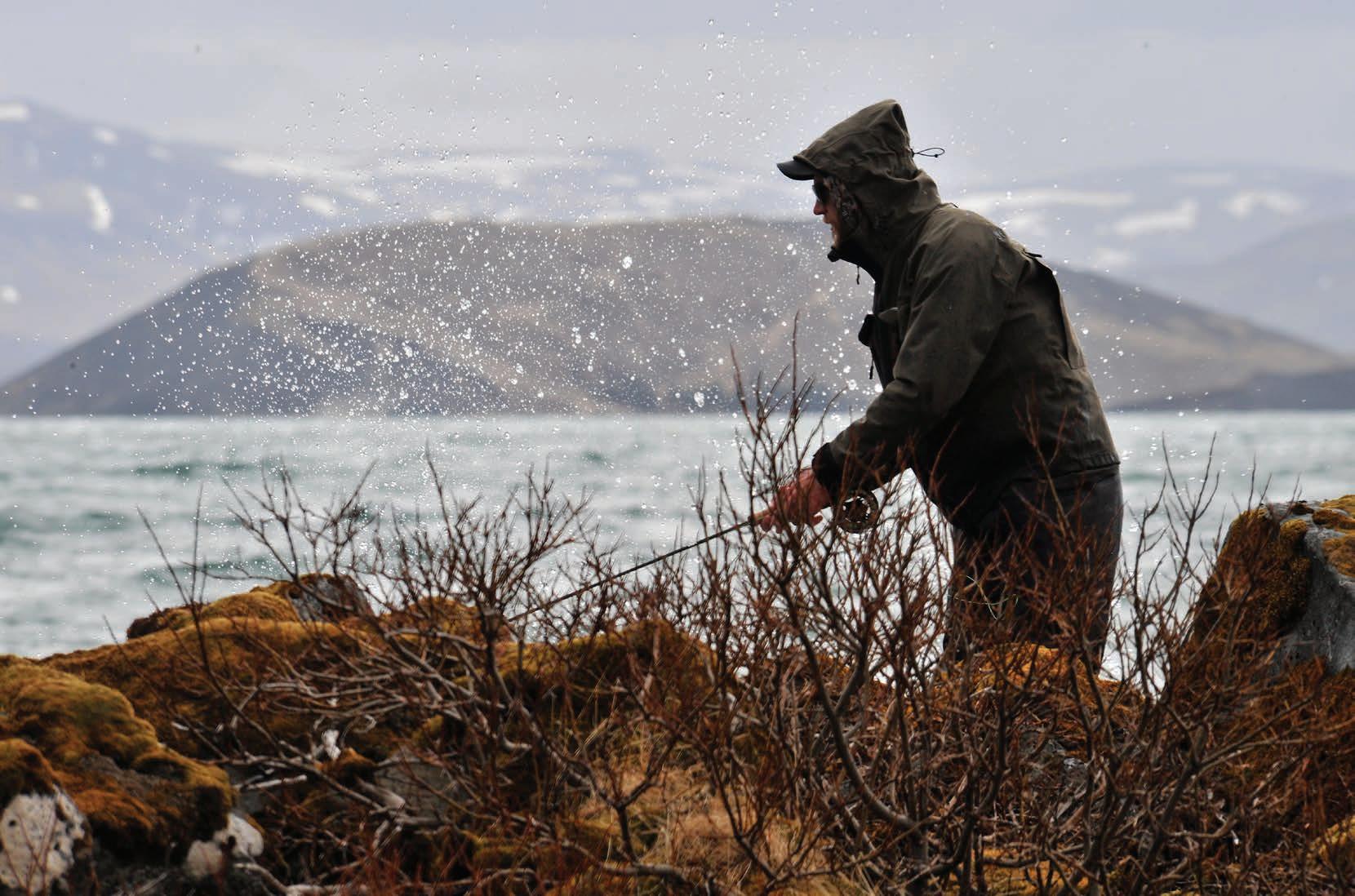
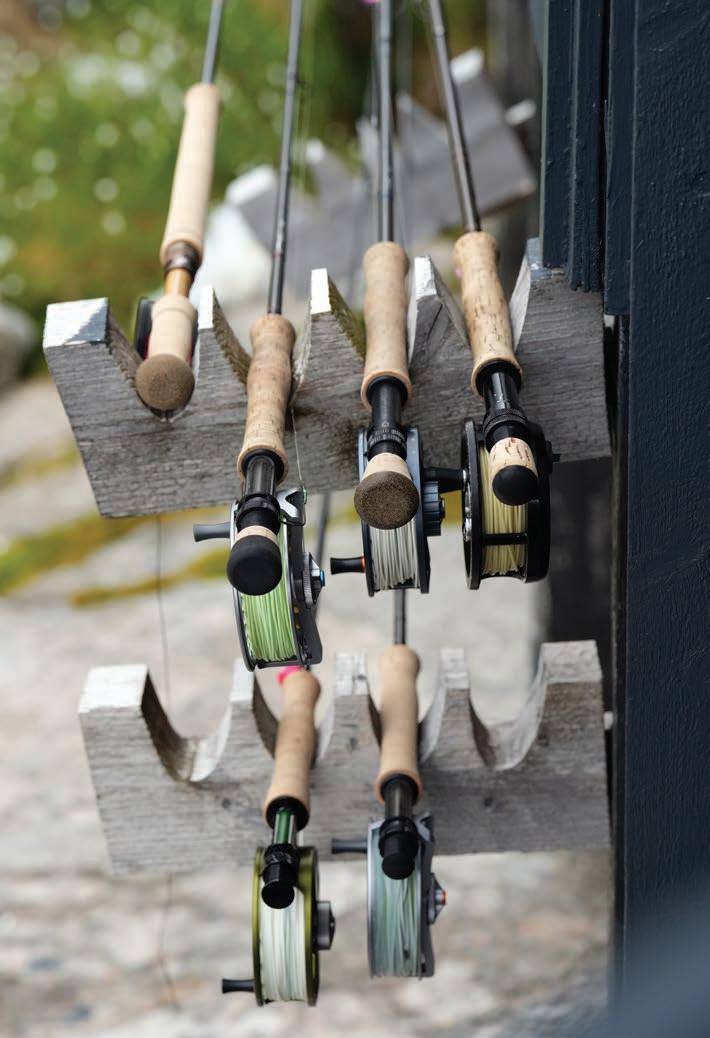
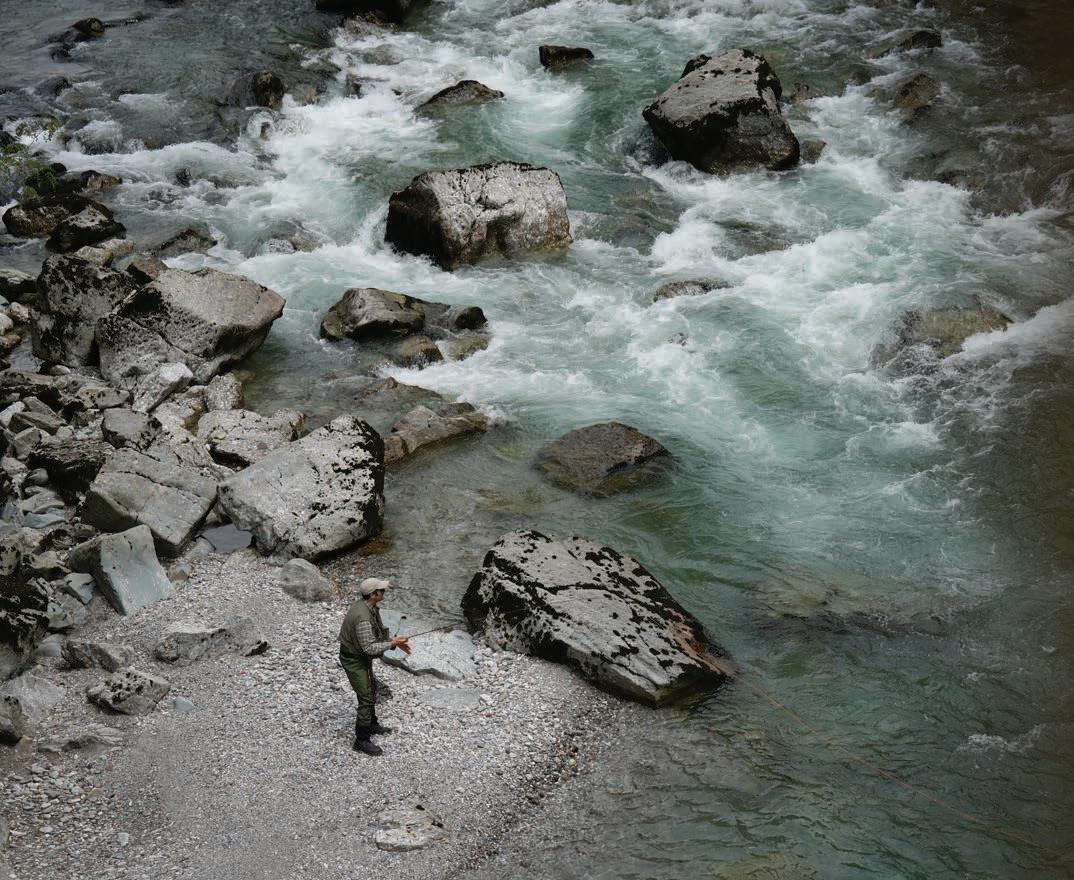
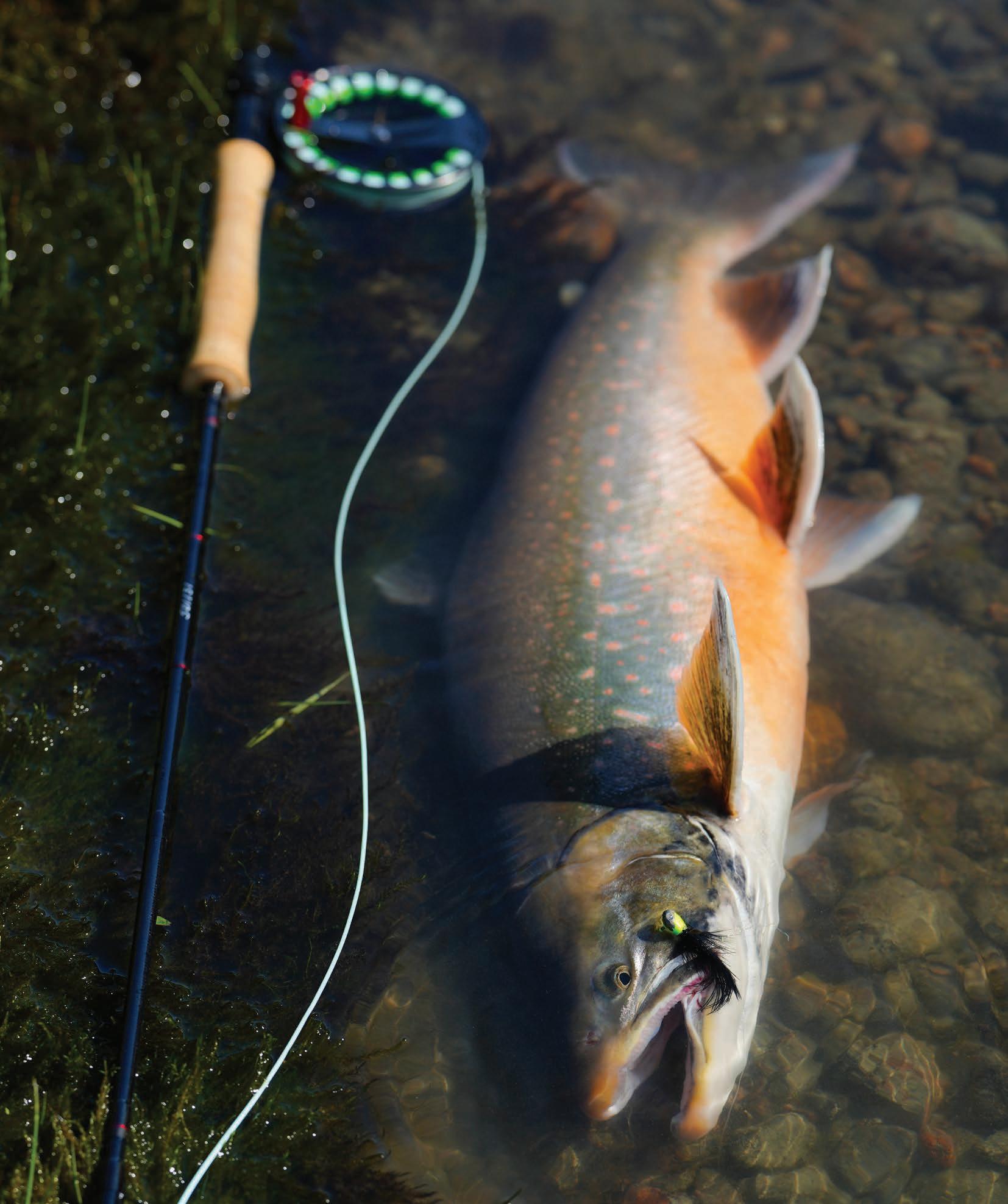
WHEN STREAMER FISHING, is relatively heavy. It should be carefully adjusted to the size and weight of the flies used and – not least – to the size of the fish targeted. The bigger the flies and the bigger the fish, the heavier equipment you’ll need.
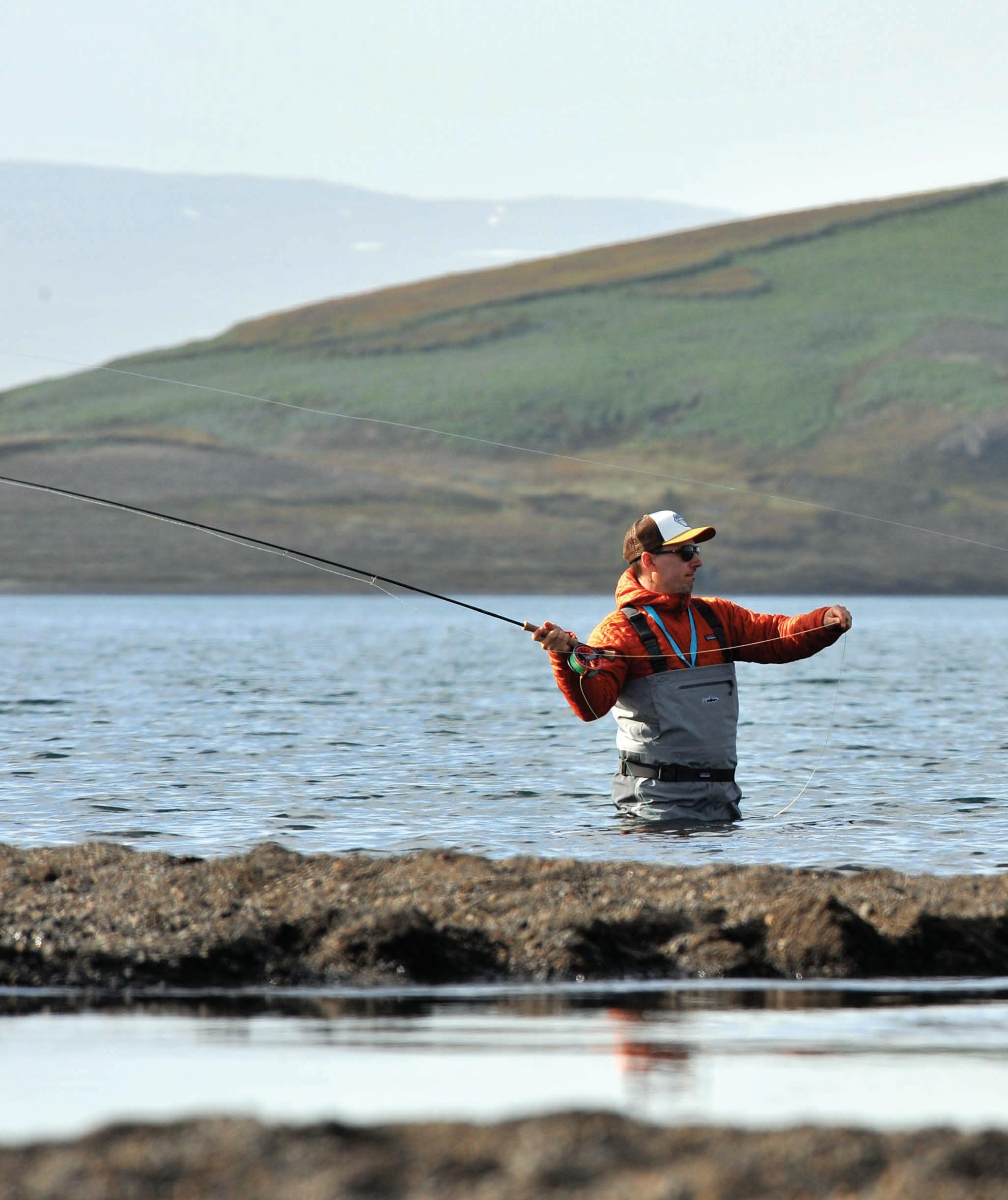
When fishing rivers (and bigger lakes), a 9,6’ fly rod ranging in weight from #6 – 8 is what you’ll need. The fly rod action is down to personal preference, but most people will benefit from fly rods that have relatively deep flex profiles; progressive and powerful rods that can be loaded deep into the blank when needed, while at the same recovering quickly when loaded, thus generating high line speeds. This is particularly important, when fishing with big streamers that are the opposite of aero-dynamic.
Equally important as the fly rods are the fly lines. They should be able to load the fly rod deeply, turn around big flies in the air, and – at the same time – cast effectively at a distance. There are several WF-fly lines in the market that are perfectly
suited for this job, and a lot of them have been designed specifically for handling big flies – for instance Scientific Anglers BFT (Big Fly Taper) or Mastery Titan. The common denominator for these lines is their relatively short and compact front tapers, measuring somewhere between 9 and 10,5 meters and weighing between 12 and 20 grams depending on their classification. As a rule of thumb, you should opt for one of these specialty lines in a weight class that matches your fly rod’s AFTM classification, but in certain instances – for instance if you’re fishing crammed spots with little room for blind-casting or when using really wind-resistant flies, you might consider opting for an “over-classified” line (for instance a WF7 line for a 9,6’ 6-weight rod). Whether you should choose a floating-, intermediate-, or sinking line is something we’ll return to in a bit, once we get to fly presentation.
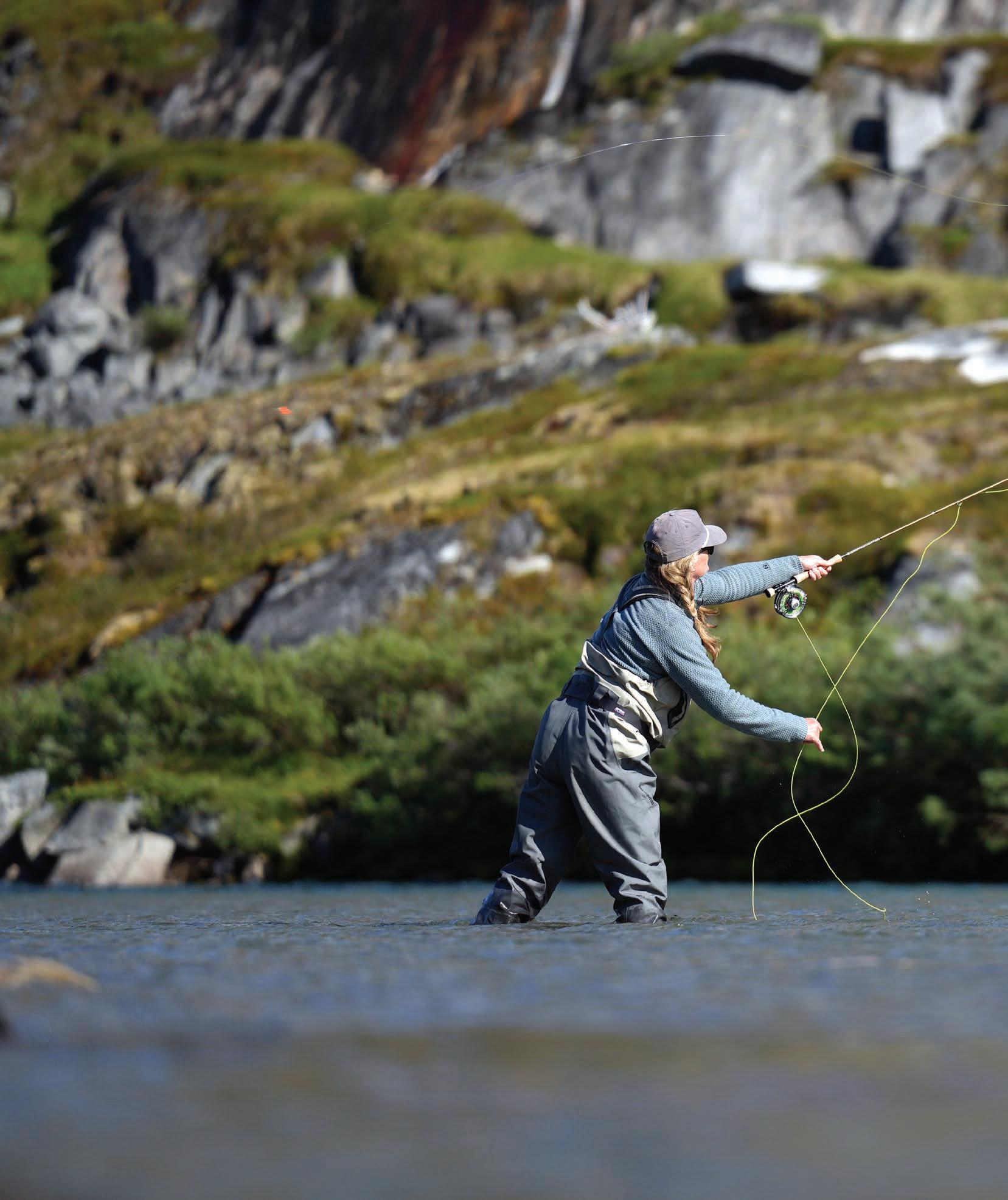
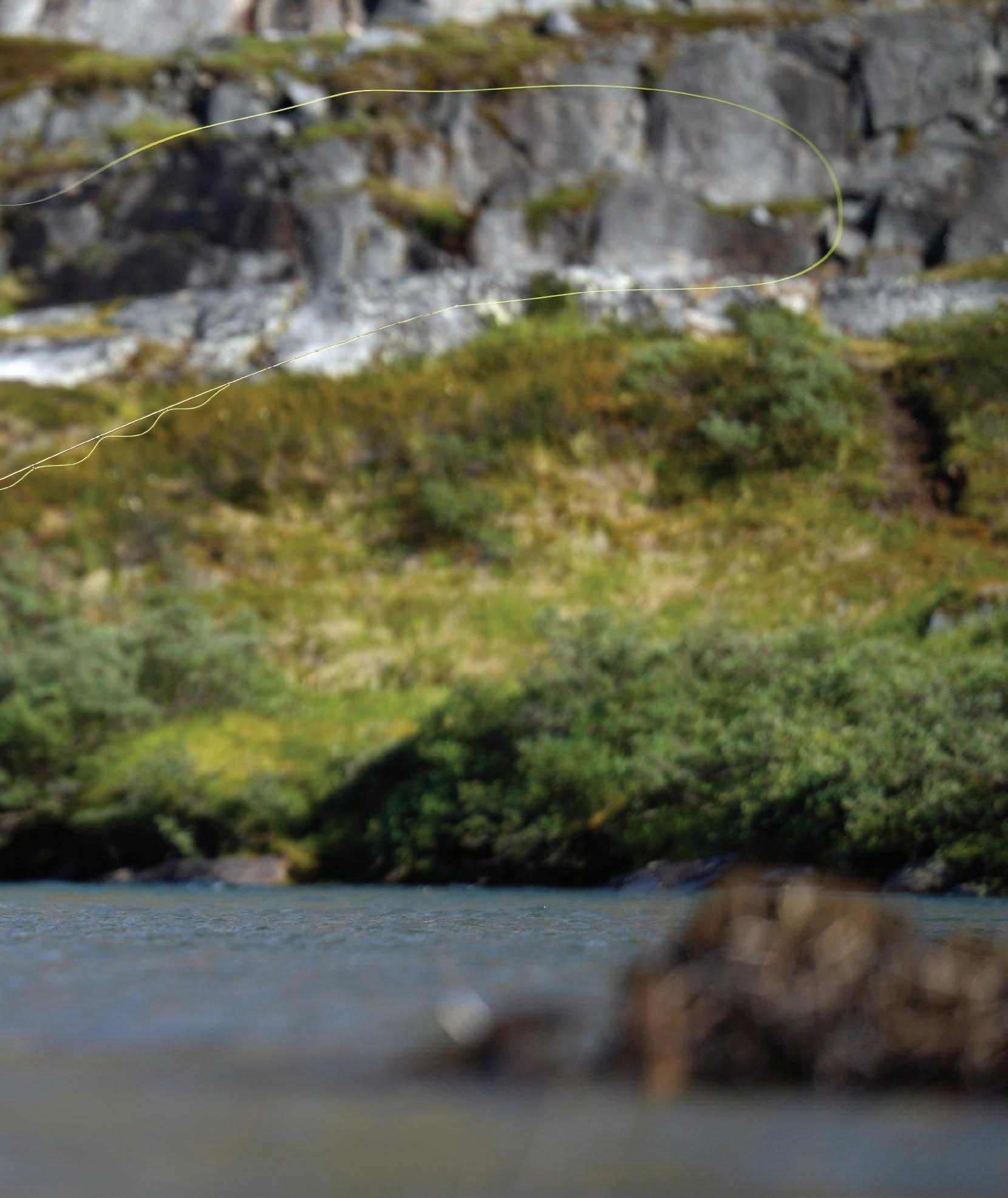
If you’re fishing rivers with lots of vegetation along the banks, deep water, overhanging trees and limited potential for overhand casting, you should, instead, consider getting your hands on one of the many specialty fly lines designed for anchored water-born casts – for instance the Spey Lite Integrated Skagit lines. In combination with 10’+ fly rods, they make it possible to fish effectively in places where overhand casting possibilities are limited.
THE LEADERS play a pivotal role. They should be carefully adapted so the flies don’t turn over too soon or too late. As a ground rule, the leaders should be somewhere between 3 and 4.5 meters in length and tapered into a tippet section of 0,26 –0,32mm depending on the conditions and how far you’re casting. The further you’re casting, the longer the leader should be. But more importantly; the bigger the flies you’re using, the shorter and thicker the leader should be – and vice versa.
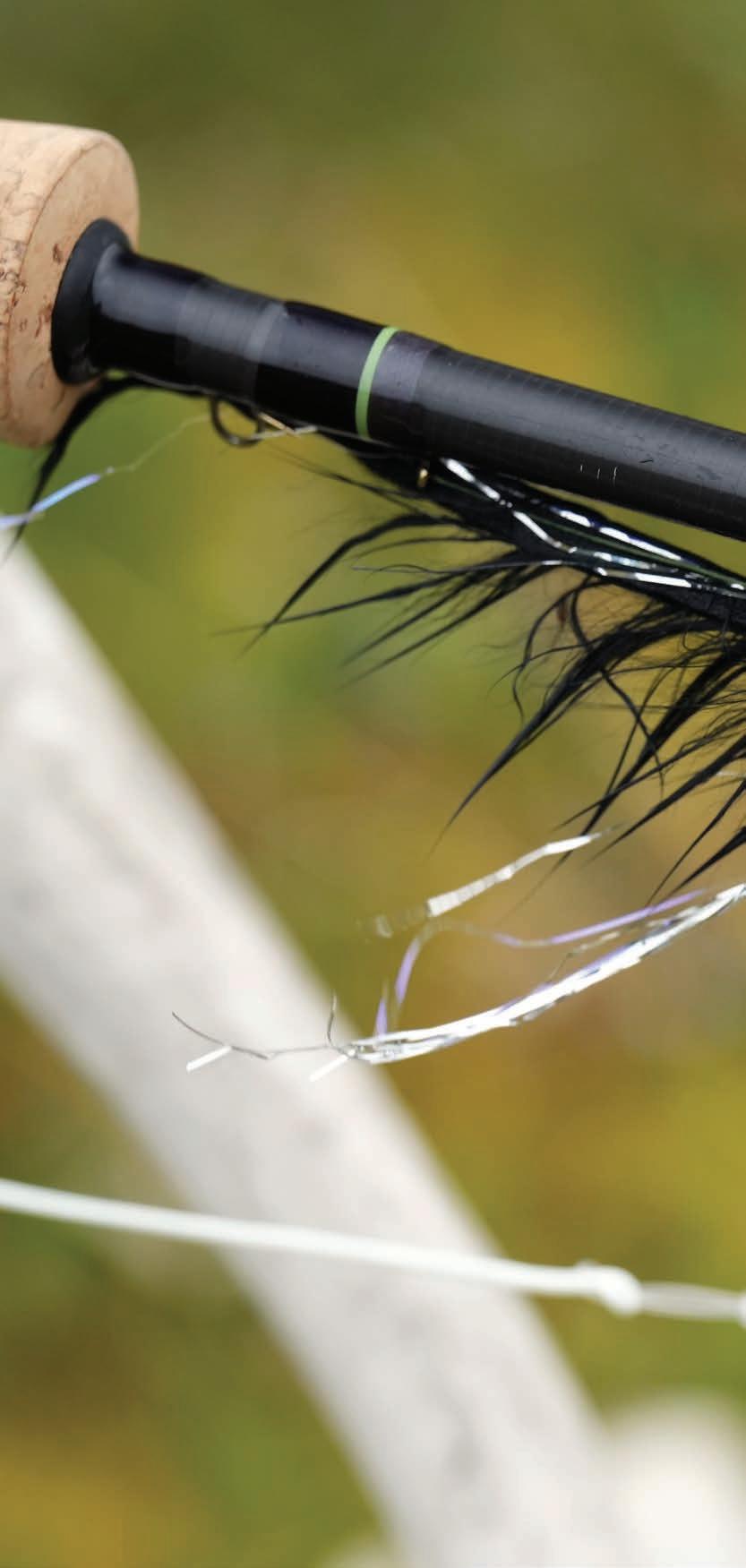
Long leaders provide the most subtle presentation of the fly; something that is oftentimes key when fishing clear water. So, consider starting out with a 4,5 to 5-meter-long leader. If you experience difficulties casting efficiently or stretching the leader, simply shorten it to meet your demands, by 25-30cm increments, and try another couple of casts. Once you’ve found the right length, you’ll notice that casting will be a lot more harmonious and energy efficient.
In clear water, fluorocarbon leaders are particularly useful due to their low visibility. However, if you’re fishing in places with big rocks, jagged boulders or sunken trees, nylon is a more durable and abrasion-resistant alternative. It’s also worth keeping in mind that nylon and fluorocarbon have different sink rates. Fluorocarbon is stiffer and sinks faster than nylon. When fishing turbid or stained water, you can use thicker leaders – and you should. It will help you land the fish faster with minimal risk of leader breakage, and it will minimize the stress the fish experiences before being unhooked and released.
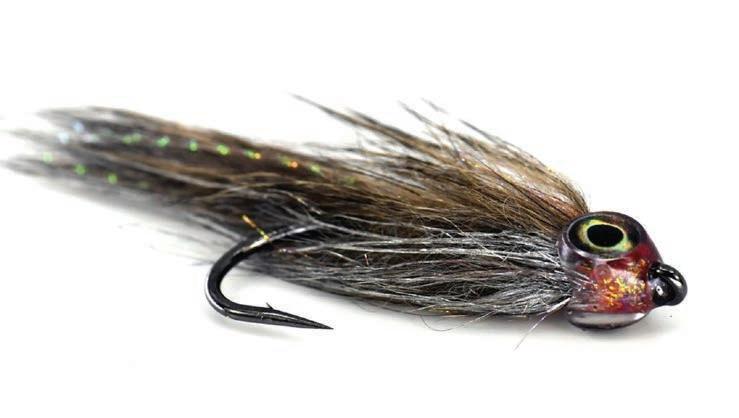
THE STREAMER FLIES comprise a chapter of their own. They typically fall in two categories: Imitative flies and provocative flies. The latter are designed to agitate fish that aren’t actively feeding into striking while the former are designed to imitate the most abundant prey fish; both in appearance and movement.
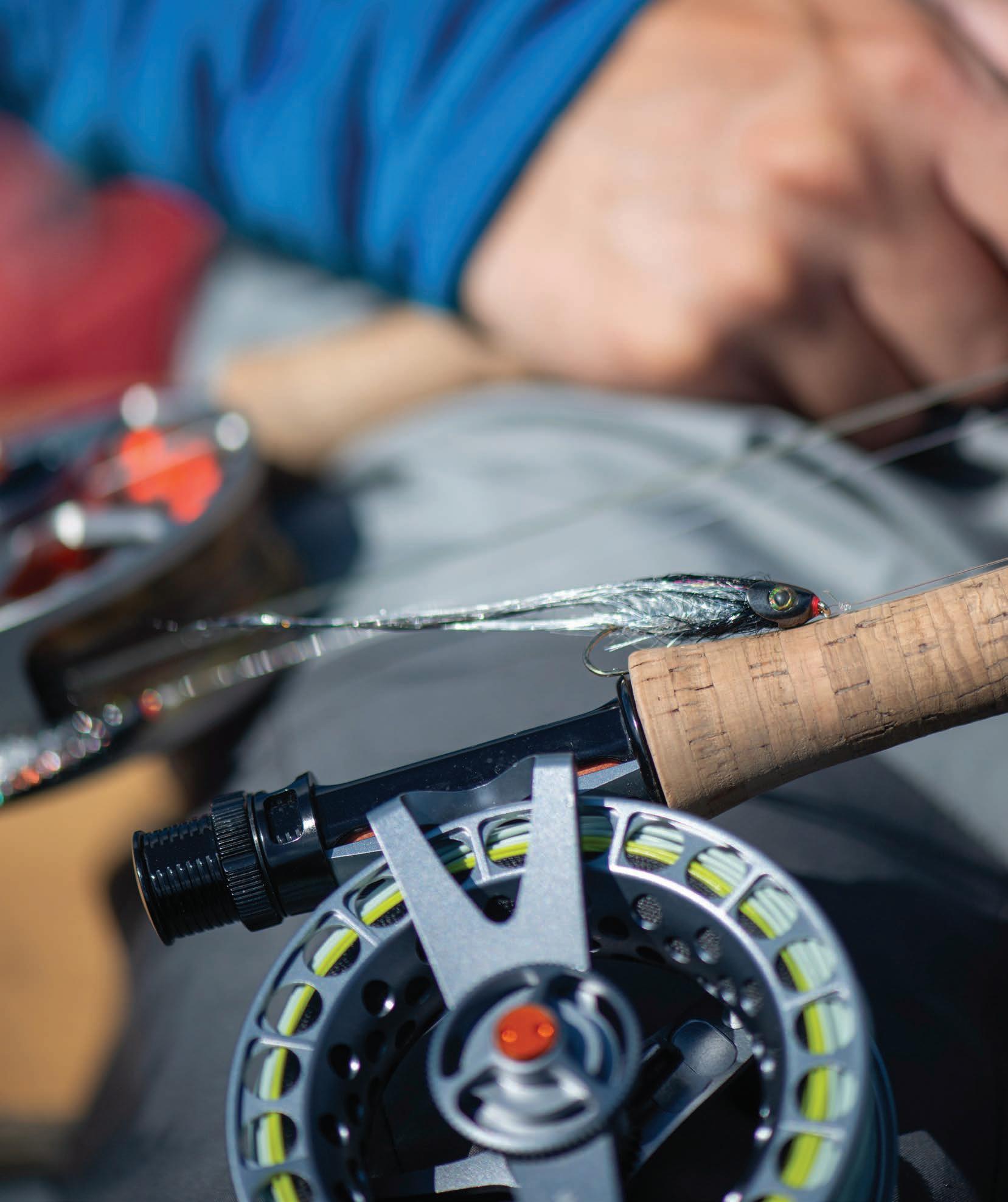
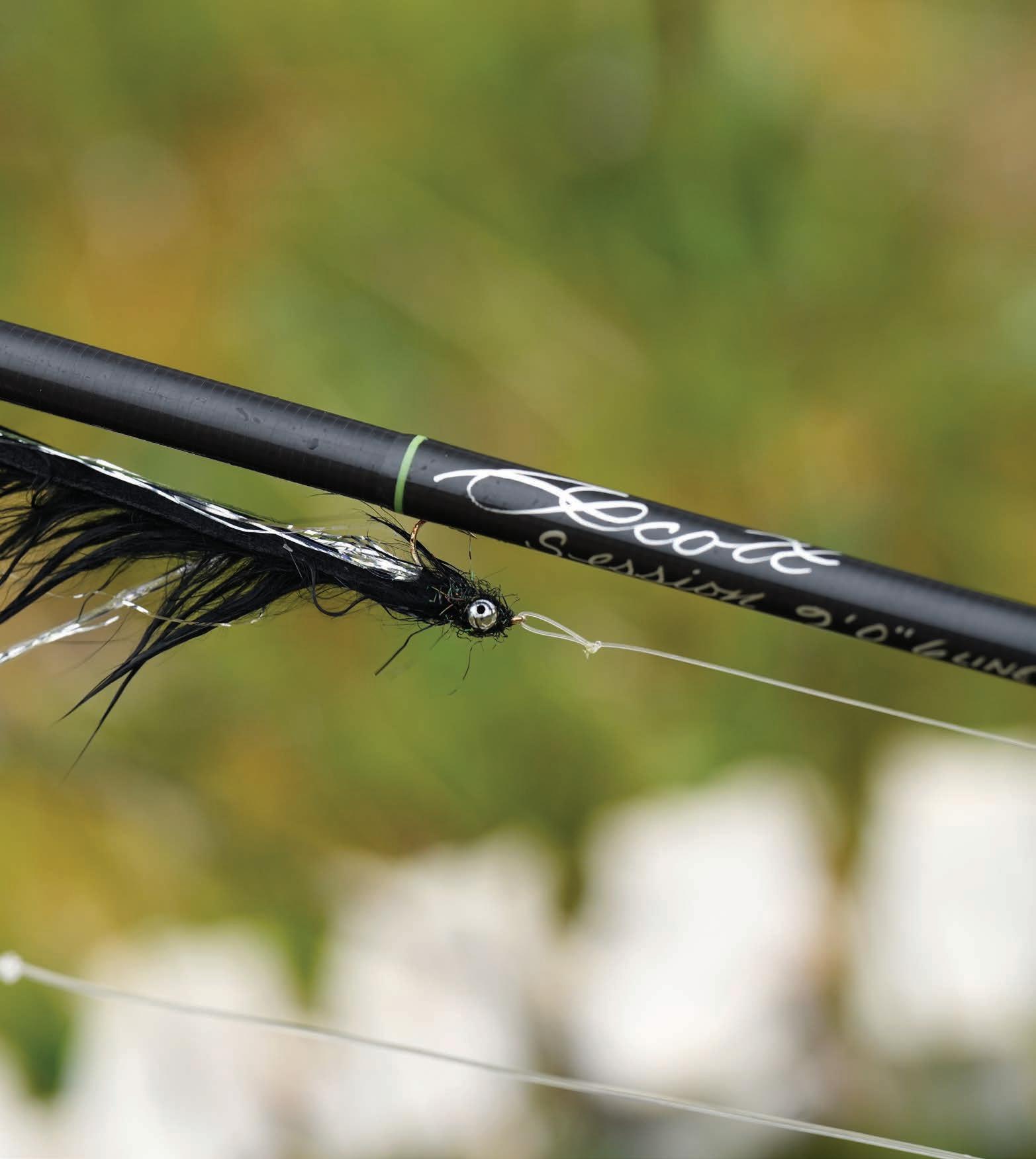
The movement of the fly, as we will get back to, has a lot to do with how it is retrieved, but the materials play a key role too. In relatively still water, flies that incorporate lively materials such as, for instance, marabou, spey hackles or rabbit strips - materials that make the fly slither and pulsate - are especially effective. So-called articulated streamers tied on multiple “shanks”, such as for instance the Game Changer Fly, will do the same alluring trick. Otherwise, Magic Heads are highly recommended. They are small funnel-shaped discs in clear plastic that can be mounted on the fly thus providing it with an enticing S-curve movement pattern even with the slowest of retrieves.
For more info: www.petitjean.com/ online/en/120-magic-head
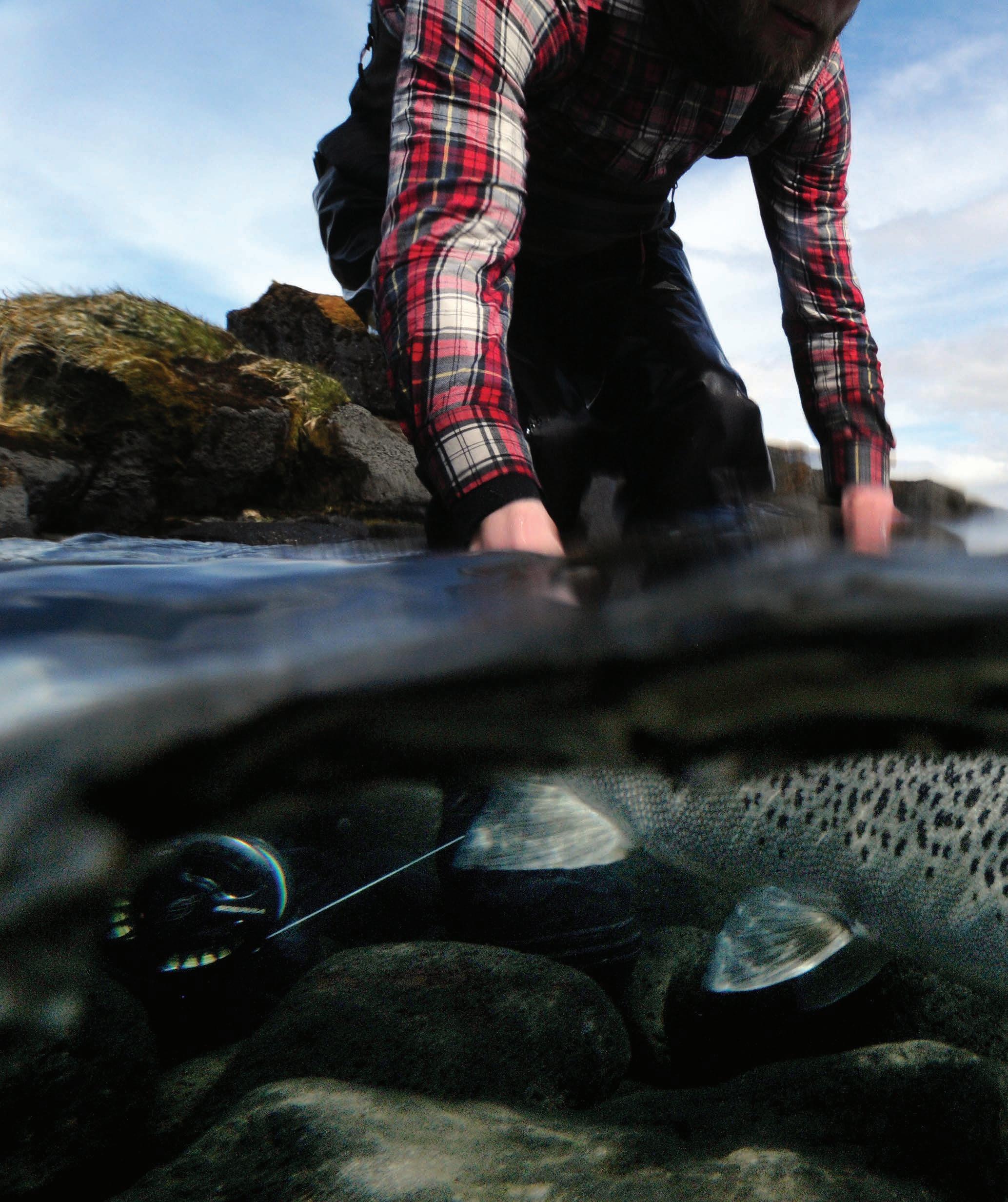
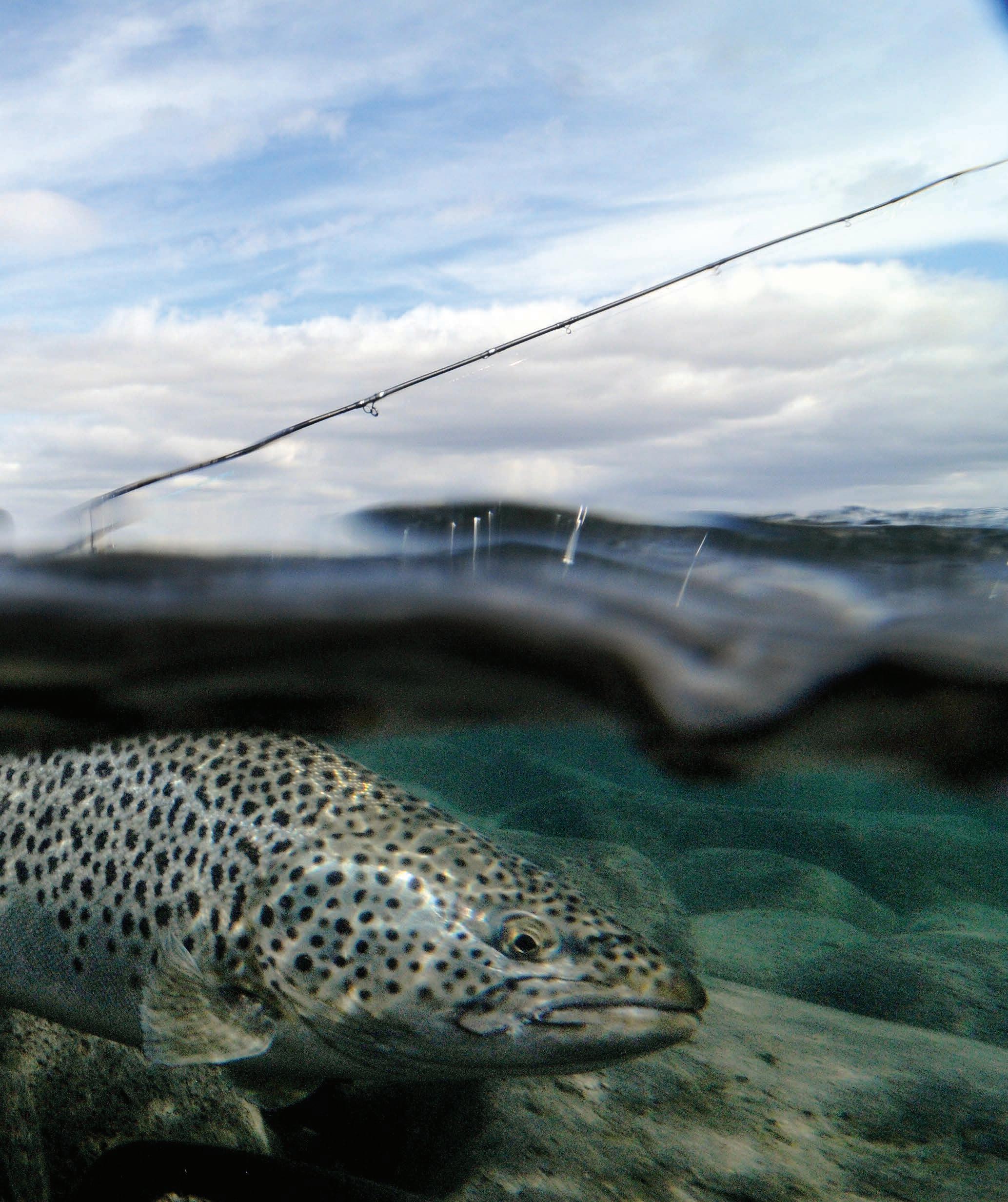
In rivers with moderate to fast currents, it makes more sense to tie the flies with stiffer materials such as lightly crinkly synthetics, bucktail or even temple dog. When fished at an angle, the current will provide the flies with pulsating movement. In really fast currents, however, the most important thing is that the materials don’t collapse and that they have a good silhouette despite the water pressure.
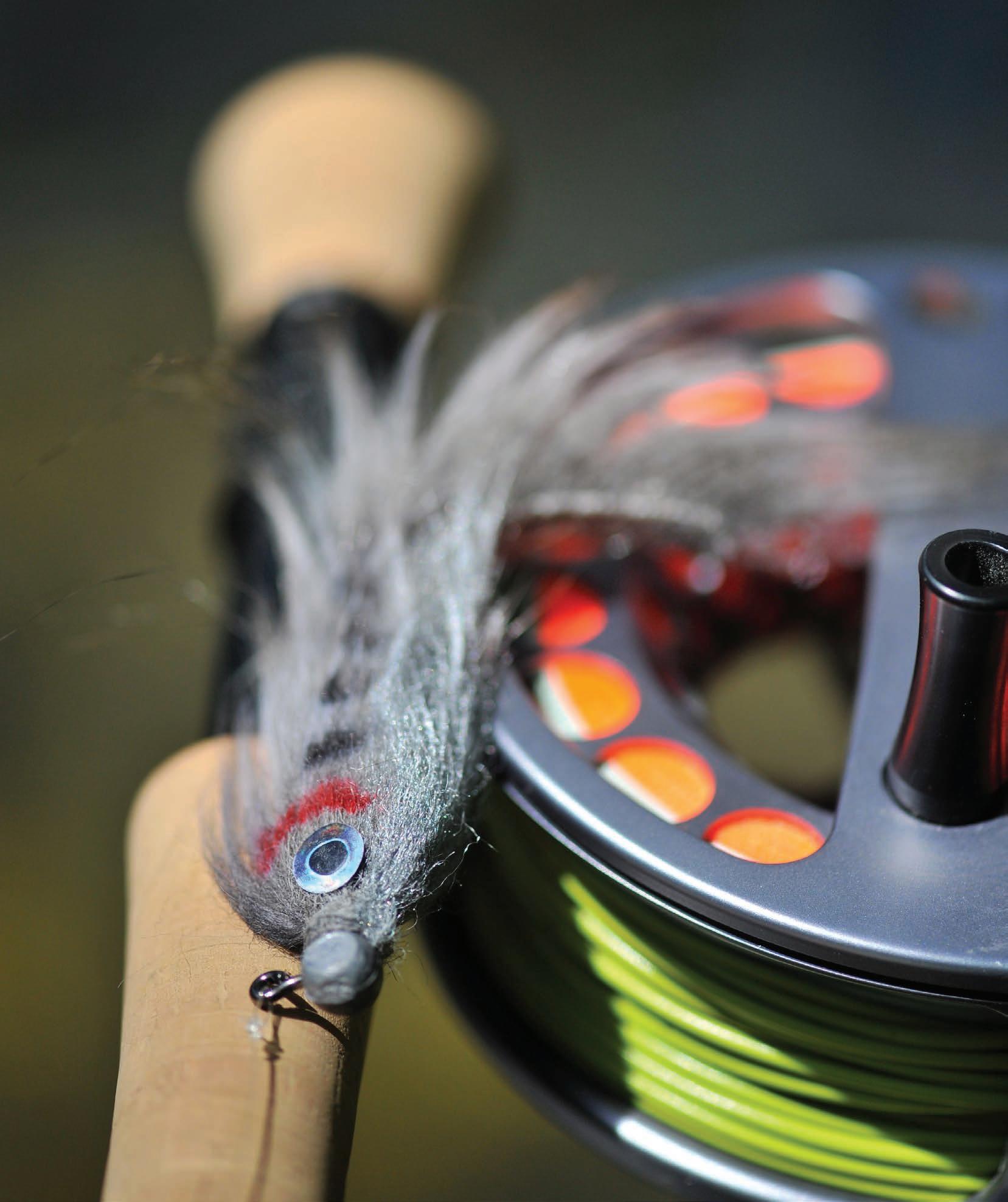
While provocation flies are usually tied in eye-catching colours such as pink, chartreuse, yellow and red – and preferably using a bit of flash fibres, imitation flies are more subtle and blend in more naturally. The realism of the latter seem to determine how effectively they fish, while the former can’t seem to be outrageous enough; preferably incorporating fluorescent- or ultraviolet materials, glass rattles, propellers or action discs that make a bit of extra noise in the water thus demanding attention. Regarding the size of the flies, they can hardly be big enough. A 50-centimeter brown trout, for instance, is easily capable of hunting down and swallowing prey items of 10 – 15 centimetres in length, so don’t be afraid to bring out “the big guns”.
Whether the flies should be weighted or not, depends on how deep – or how fast, you’ll be fishing. And this, again, depends on what kind of line you’ll be using. We’ll get back to this shortly.
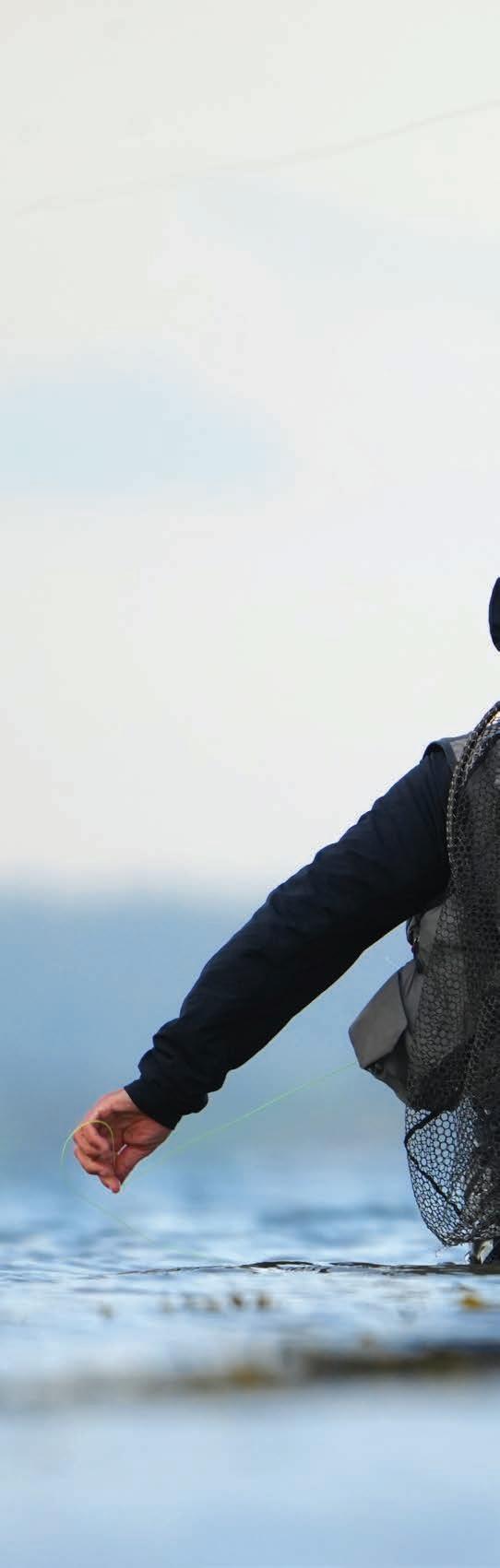
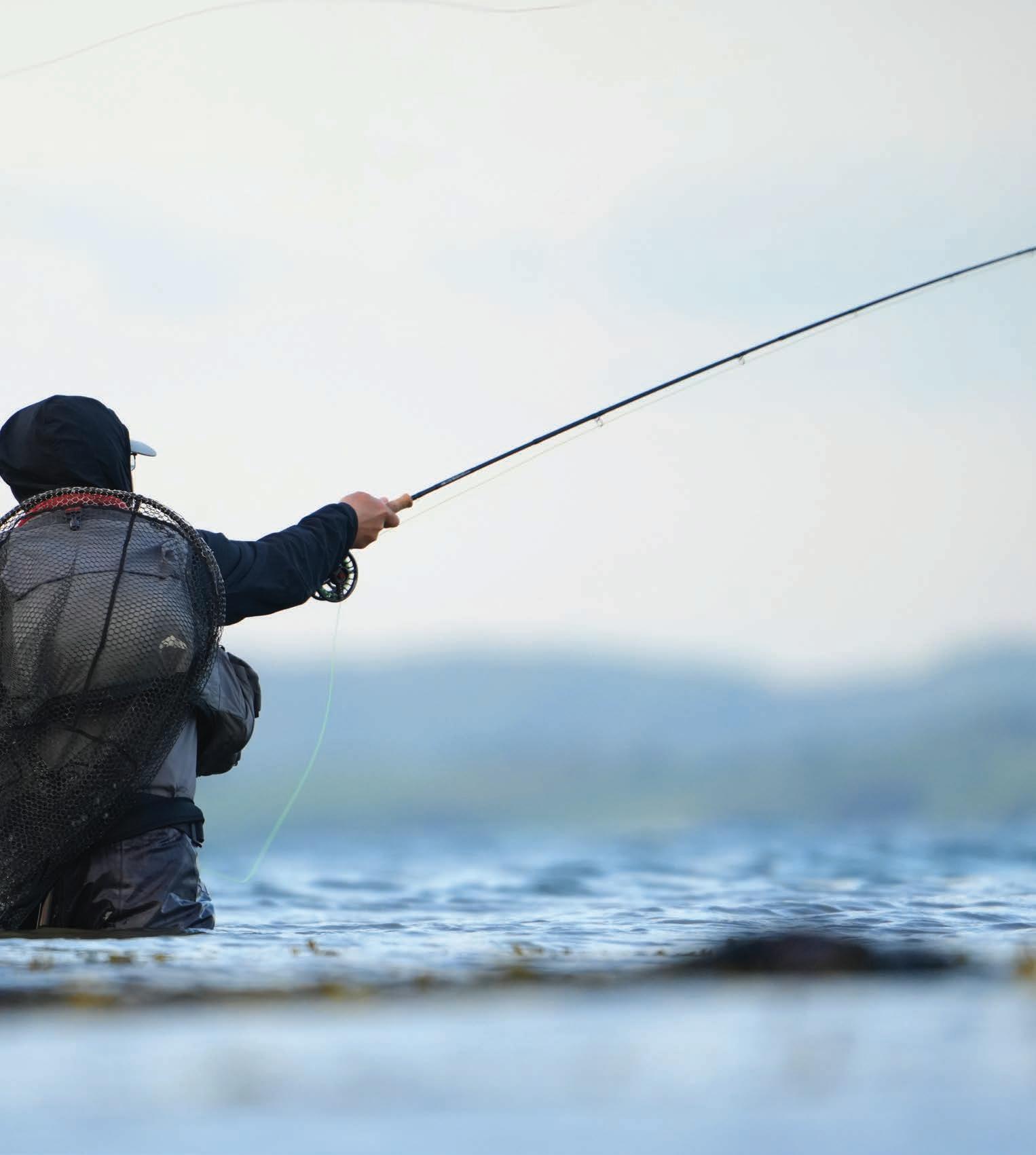
FLY PRESENTATION can be crucial when it comes to inducing the take. When it comes to provocation flies, you’ll want to fish them at close range and, preferably, with abrupt and unpredictable strips that annoy and irritate the trout. Here, an intermediate- or sinking line and a rather short leader is a good solution – and the casts should be sent off at a 45 to 30-degree angle so the flies don’t swing too fast cross current. The same setup is also good for imitation flies during spring and fall, when the water temperatures are somewhere between 8 and 13 degrees. During these periods, the fish have ideal hunting conditions and they’re both prompt and fast, and so should your retrieve be. Use weighted streamers and retrieve them with long, fast retrieves to imitate a fleeting baitfish. This is something that will really catch the trout’s eye and get its attention.
The faster you’re stripping, the less time the fish will have for deliberation. But when stripping fast, it’s important to fish in close proximity to the fish. So, unless you’re sight-fishing -or fishing shallow water, use sink-3 to sink-5 lines in combination with durable leaders that can handle the
sudden and violent resulting strikes. Using a sinking line, cast a bit upstream at a 60 to 90-degree angle – or even directly upstream, when fishing really deep parts of water, and don’t be afraid to place the rod in your armpit and use both hands for a super-fast retrieve. Obvious holding spots can be fished with a handful of supplementary casts at different angles and speeds to really cover the water – and to make sure you’re down deep, but otherwise it’s all about being on the move and covering as much holding water as possible.
When fishing in cold water – below 6 degrees, the trout aren’t as resolute or fast as otherwise. Here, you’ll have to apply your “water reading” skills and key in on the spots where fish are most likely to hold and use light, pulsating flies (perhaps mounted with a Magic Head) fished at a sedate pace on long leaders. Doing so, it’s especially important to know your flies: How they react when retrieved and how they respond to varying currents and water pressures. Long, even retrieves followed by short pauses and twitches usually work well when the water is cold, and the fish are lethargic.
Remember, though, to keep good contact with your fly at all times and mend the line upstream to prevent the speed of the fly from accelerating too much. In winter rivers with moderate currents cast cross current at a 90-degree angle and let the current do most of the work while always keeping the line taught. In really slow-flowing rivers be a bit more proactive.
When the fish are clinging to the bottom, you might also consider using a floating line in combination with heavily weighted streamers or socalled jig flies, which are tied on traditional jig hooks. They’re not necessarily meant for overhead casting, but they can be fished at close-range with short casts, lots of line mending and a highly held rod tip. They’re particularly good for fishing pocket water and spots in close proximity to structure: For instance, holes behind big rocks, boulders or white-water necks – no matter the time of year.
At the end of long leaders, these flies can be cast or chucked upstream like nymphs and dropped into holding spots while adding a few twitches and jerks here and there. This technique
has been developed and perfected in the Baltic Region and its well suited for deep and/or fast water and for fishing lee spots. And just as with nymph fishing, you’ll need to strike promptly whenever there’s even the slightest “bump” or tug on the line.
TIMING is an important factor, when fishing with streamers. Streamer fishing can be effective all year round, but it is particularly so during early spring when the rivers flood and subsequently drop. If you hit the river during these floods, especially when the water starts dropping and gradually become clearer again you just might run into some very hectic fishing. During spring, the fish are busy regaining whatever body mass they’ve lost during spawning and a long, cold winter, and – as a result, they throw themselves greedily at anything that looks edible.
During the heat of the summer, the fish are mainly active during dusk and dawn – and at night. Night fishing, in particular, with floating lines and big flies fished just below –or even on the surface, can prove very effective.
So-called wake flies, which settle just below the surface and make a visible wake when retrieved can be particularly effective. When targeting fish during daytime, the game is completely different, however. Here, sinking lines or jig-style fishing in deep pocket water is typically what’s required to hook up.
The winter months provide occasional periods with temperature rises and mild weather, when the fishing can be good. But, generally, summer and fall is when you stand the best chances of hooking into a trophy. During fall, the big fish are on the move, and they’re aggressive, territorial and opportunistically busy putting on a bit of additional weight ahead of the spawning and a long winter. Especially on days with rain and rough weather with low light conditions, the fish can be active – and if you concentrate on the wee hours of the day, you’ll stand a good chance of getting bent.
Good luck!
The biggest trout are found where the food is most abundant and where the best hiding spots are found – preferably in combination. In lakes, the biggest fish are found along the edges and drop offs, near inlets or along wind-exposed banks – especially if exposed to headwinds. They move around quite a bit, traversing great areas, but they are rarely far away from the where baitfish such as roach, dart and minnow congregate. And once you’ve located the baitfish (typically where big patches of weeds are relieved by great depth curves), you’ll eventually run into big trout.
Except for the fall months, the fish are far more stationary in the rivers. And particularly the biggest trout like to stay in spots where there’s good cover and lee from the current. They favour spots in deep water, and they like to lurk behind big rocks or boulders, underneath undercut banks, below white-water and in deep channels –spots that are frustratingly difficult to fish effectively. But rest assured: They come out of their hiding at dusk and dawn or when the water swells. They need to hunt actively from time to time – in open water, so never give up. It’s just a matter of timing.

In order to make sure that your streamers fish as effectively as possible, it’s recommended to use an open loop knot, such as, for instance, the Rapala-knot. It provides the fly with the utmost mobility and pulsating liveliness, something that is of great importance when fishing during winter or when fishing slow-flowing or still water. First, tie an open (not tightened) overhand knot on your tippet. Afterwards, thread the end of the tippet through the hook eye and pull the overhand knot in close to the eye. Now, twist the end of the tippet around the leader 2-3 times and thread it through the open overhand knot. Wet the knot, tighten and trim the excess. You now have a neat little open loop knot that is also very strong.
As previously mentioned, you shouldn’t compromise the size of your flies when chasing trout. Big flies lure big trout into striking, but they don’t necessarily hook very well. Consider tying your XL-streamers on tubes mounted with a single treble hook (or – even better - a release rig), or tie them traditionally but with a stinger hook: A single hook mounted behind the fly on a piece of titanium wire. A stinger hook will dramatically increase your landing rate and just might ensure that, once it finally strikes, that pivotal trophy trout sticks and is brought to hand.
For tips on how to tie your own release rigs, please refer to: www.bursell.dk
http://bursell.dk/artikler/saltwater/fly-rigs-2-bursell.pdf http://bursell.dk/artikler/saltwater/releasefly.pdf
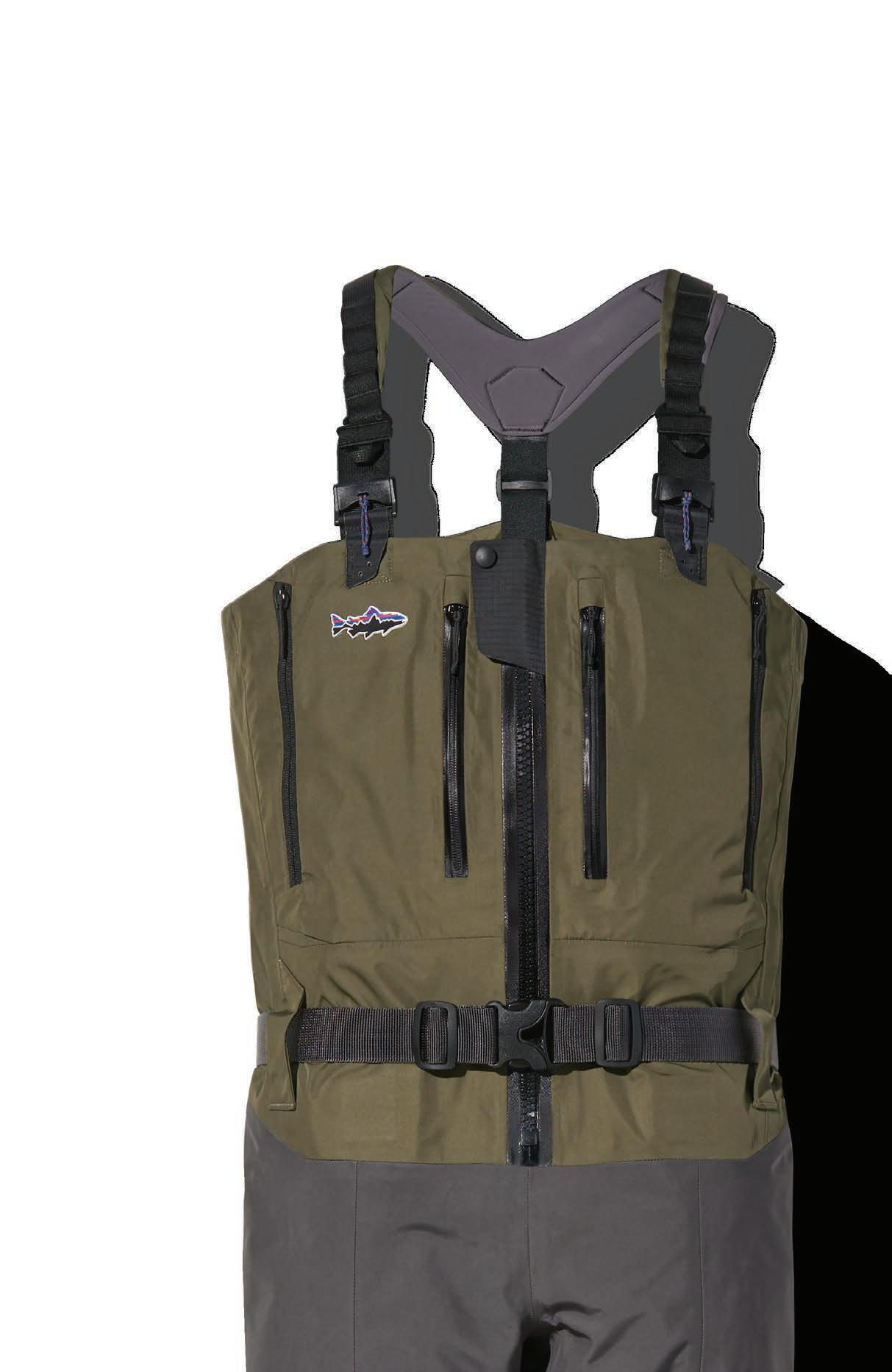
Engineered for the most extreme conditions, the new Swiftcurrent® Expeditions deliver unmatched durability, features and comfort. Advanced materials and innovative patterning reduce bulk, minimize seam stress and enhance maneuverability. They move effortlessly in and out of the water, efficiently carry gear and can easily transition from chest-high to waist-high. Plus, their durable water repellent finish is made without intentionally added PFAS.
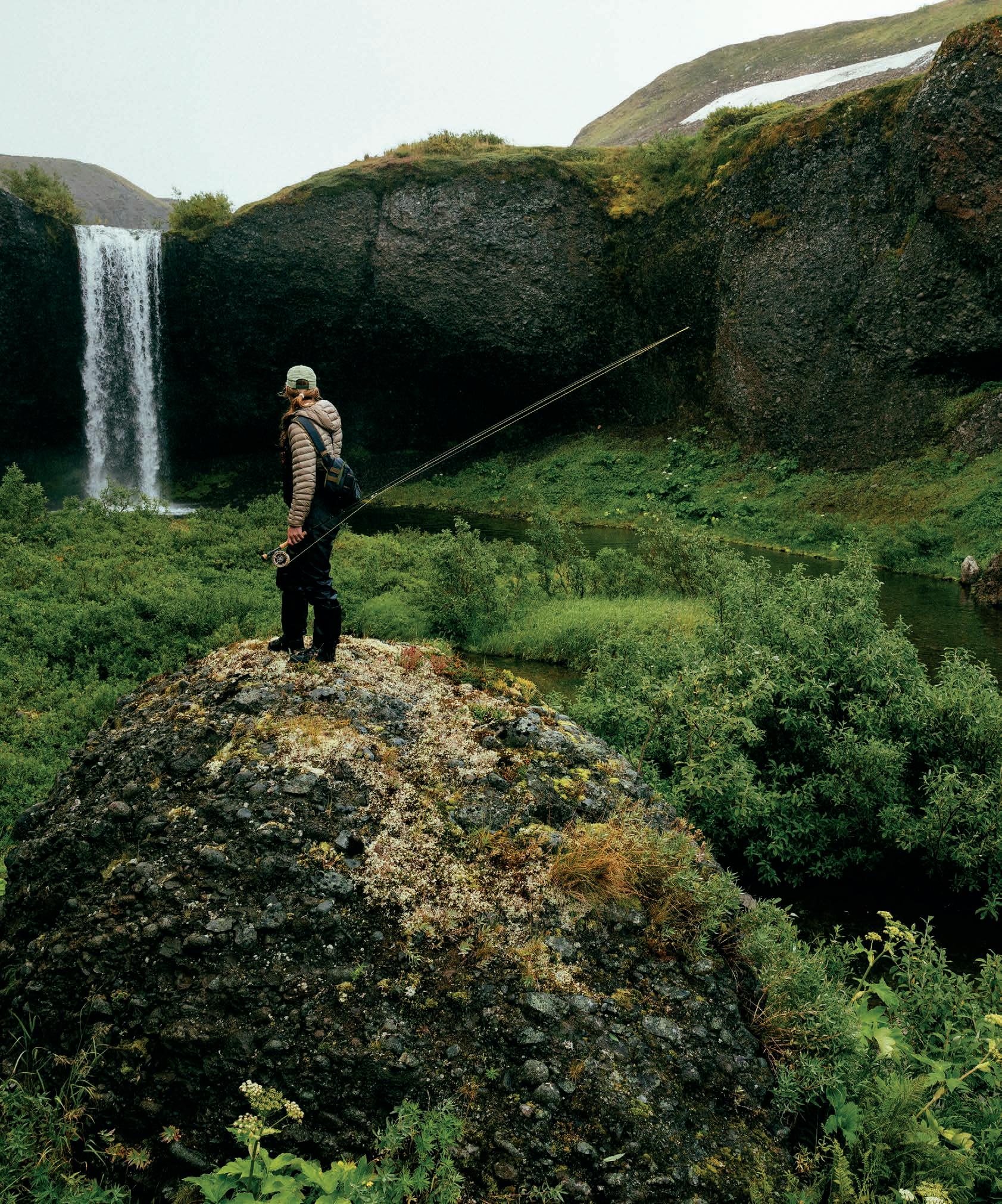
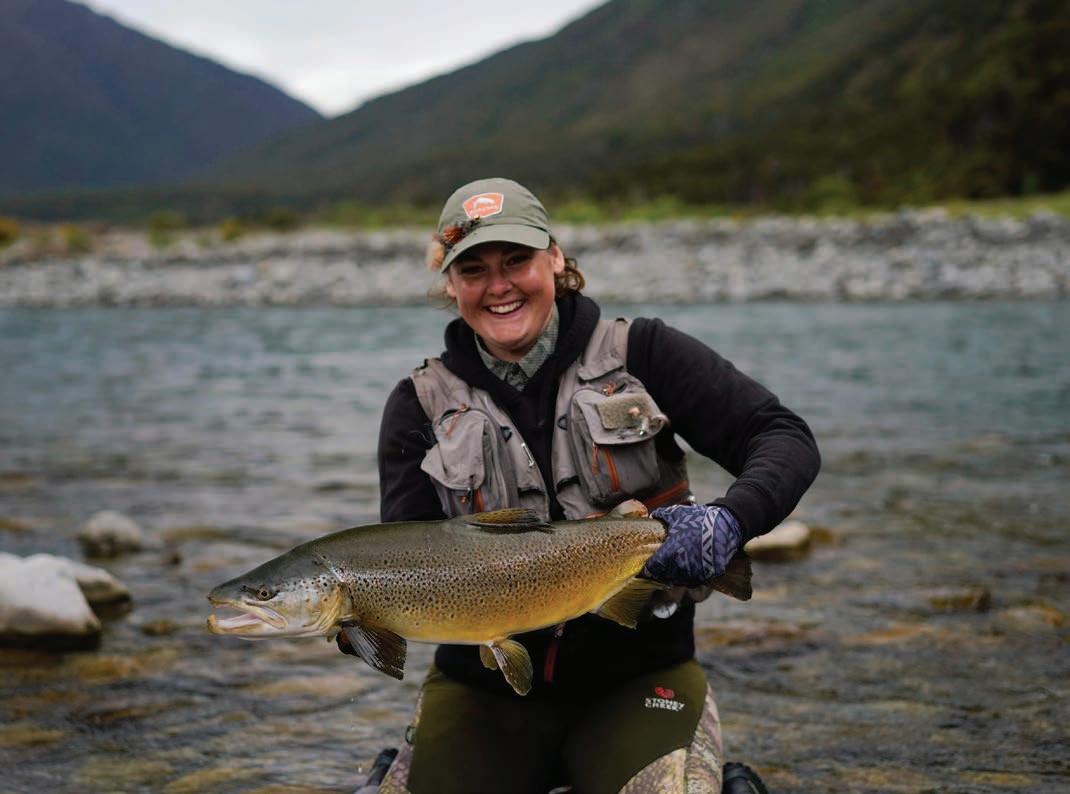
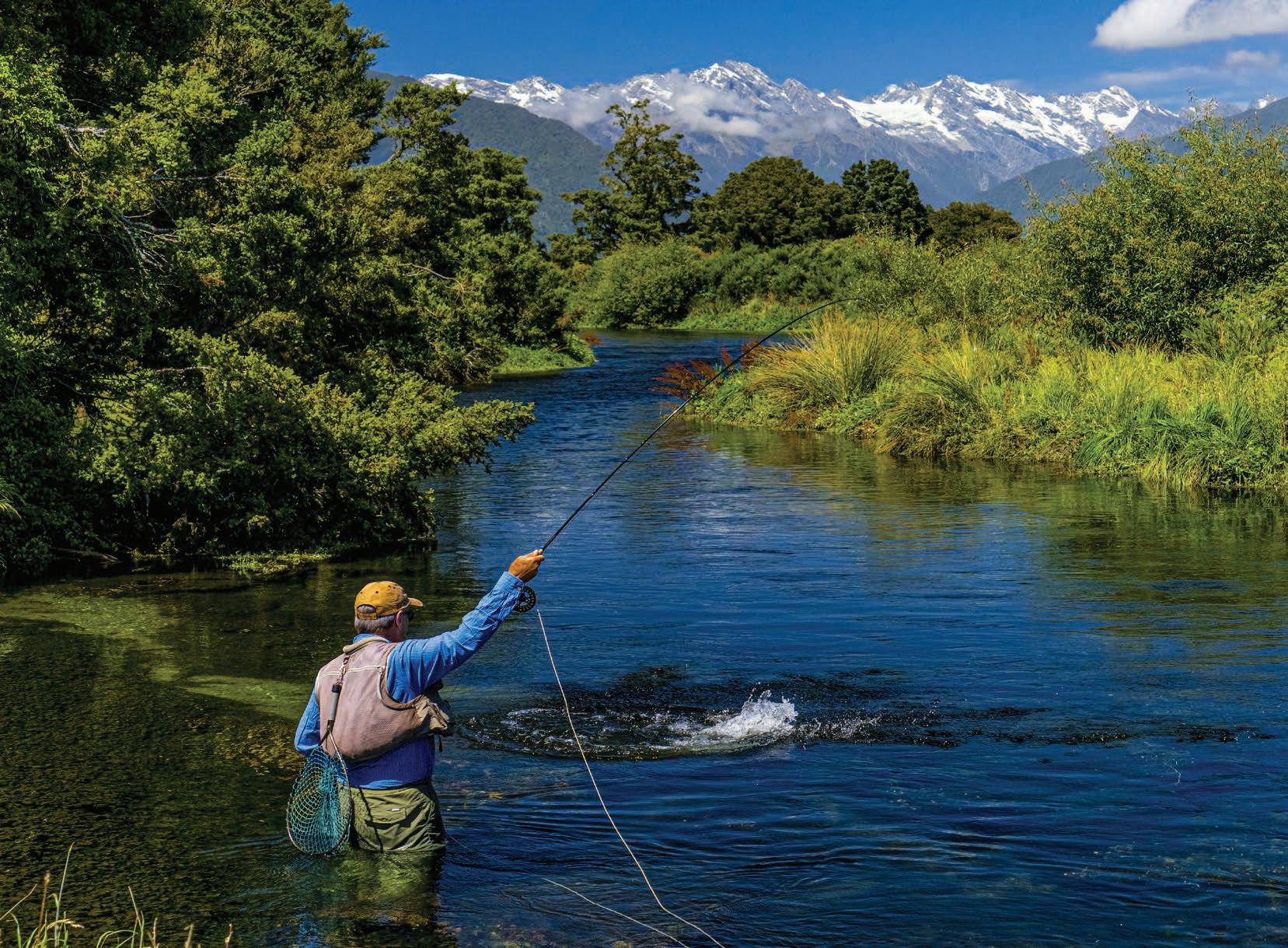
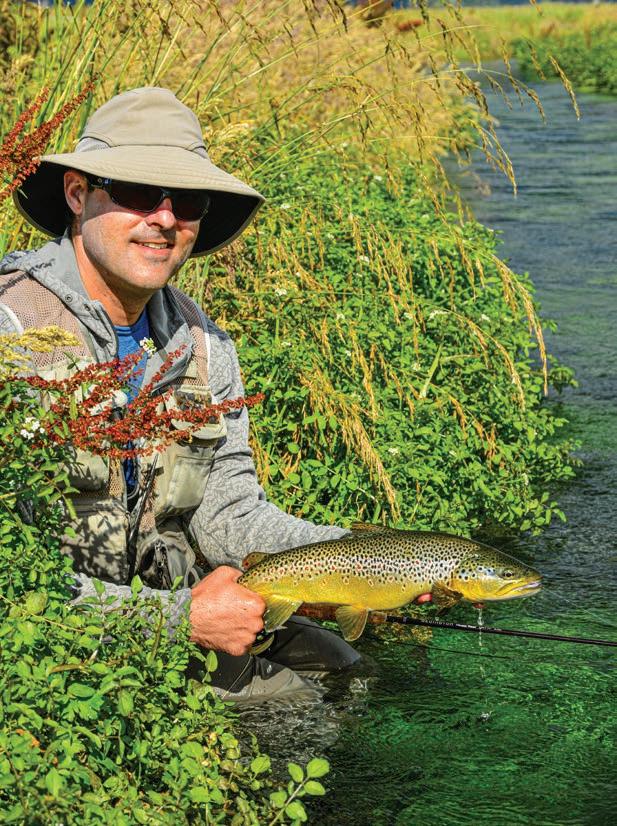
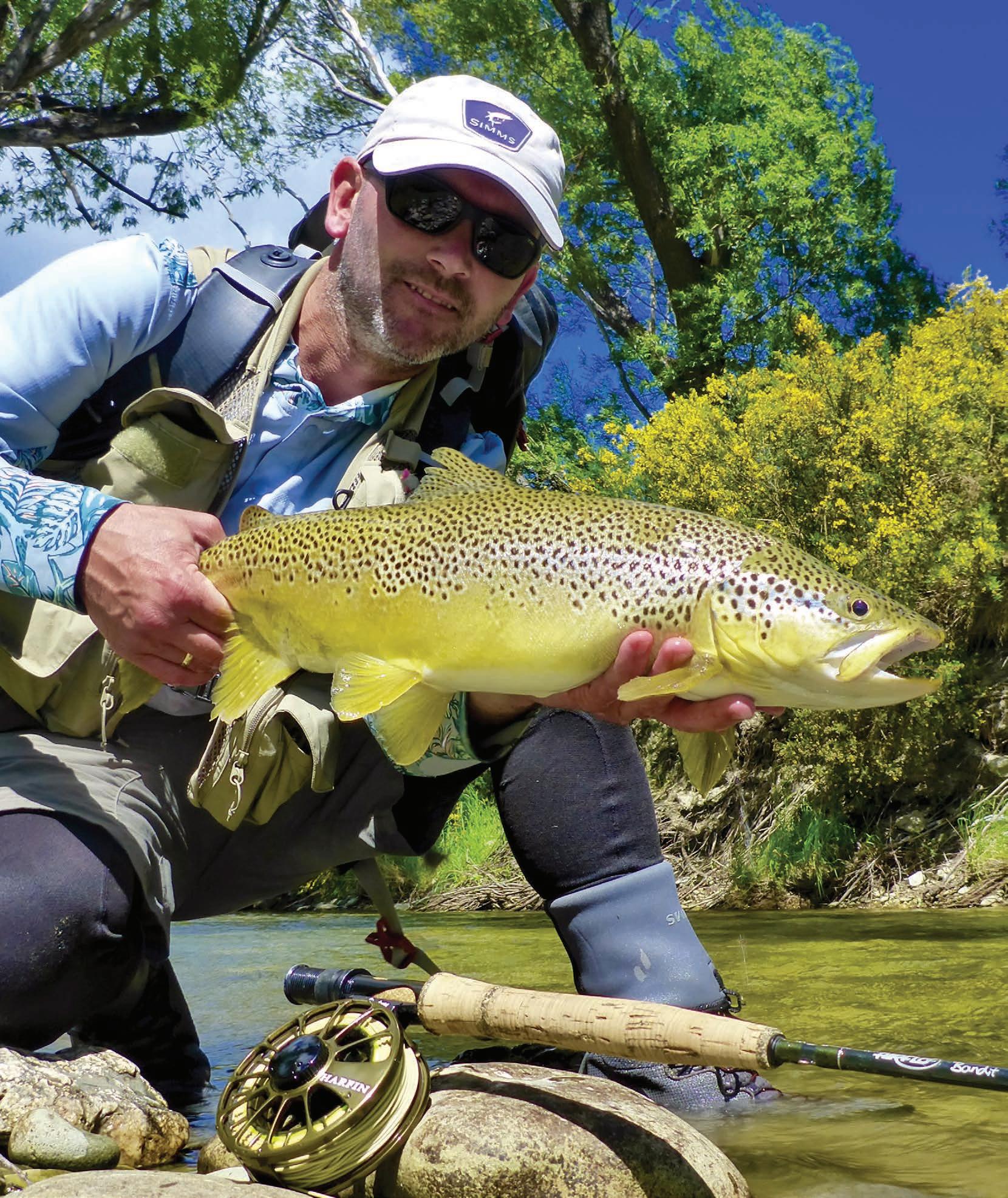
For first-time visitors, New Zealand can be daunting - it certainly was for me on my first trip in 1980. You want to see as much as possible, which is great for scouting future adventures, but it also means endless packing and unpacking, a lot more driving, and a lot less fishing. Choosing a few places to base yourself for several days - or longer - is a smart compromise. And as I’ve already mentioned, hiring a guide for a couple of days at the start of your trip can really get you off on the right foot. But let me help speed up your learning curve with the nuts and bolts of it all.
By DAVID LAMBROUGHTON

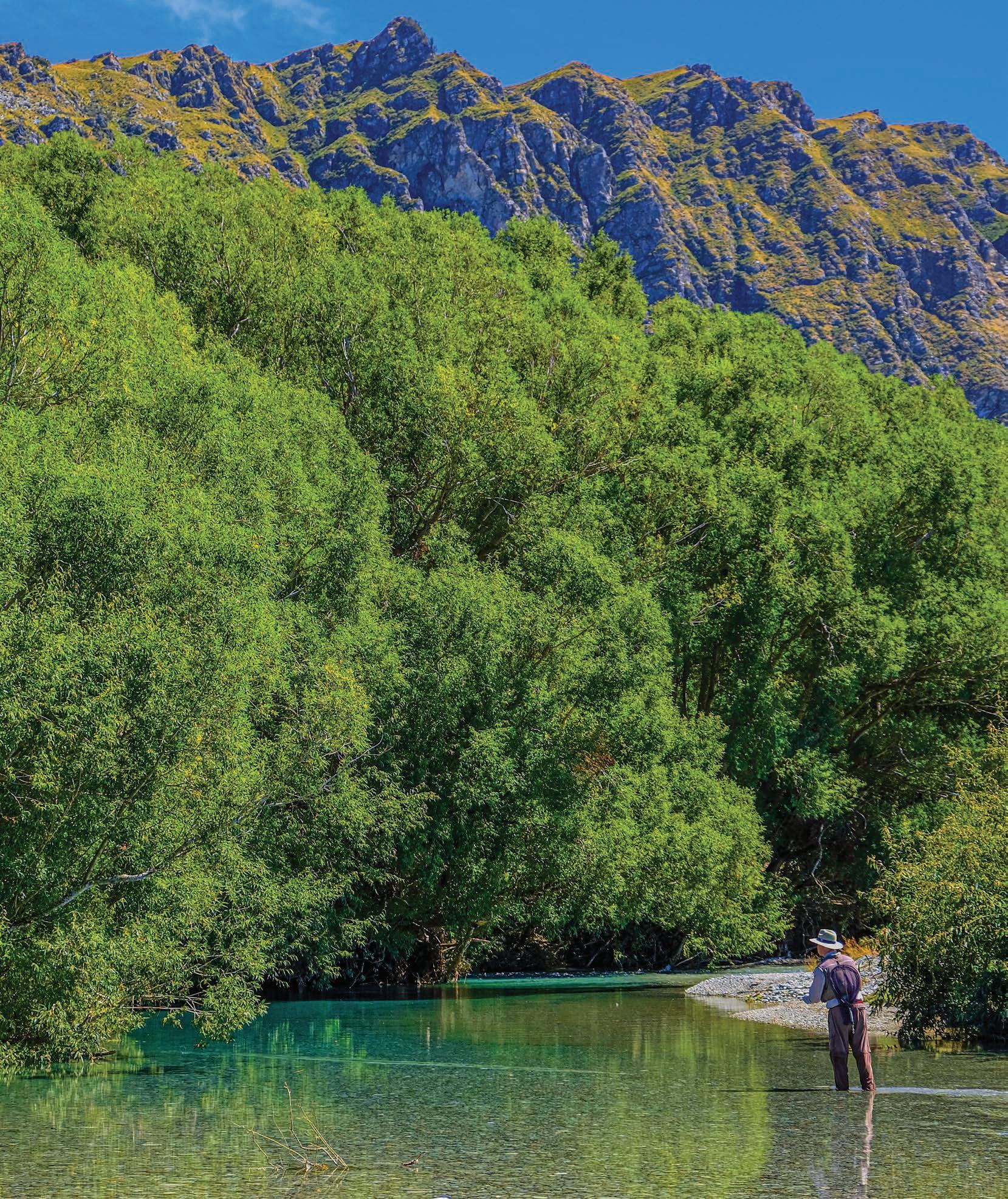
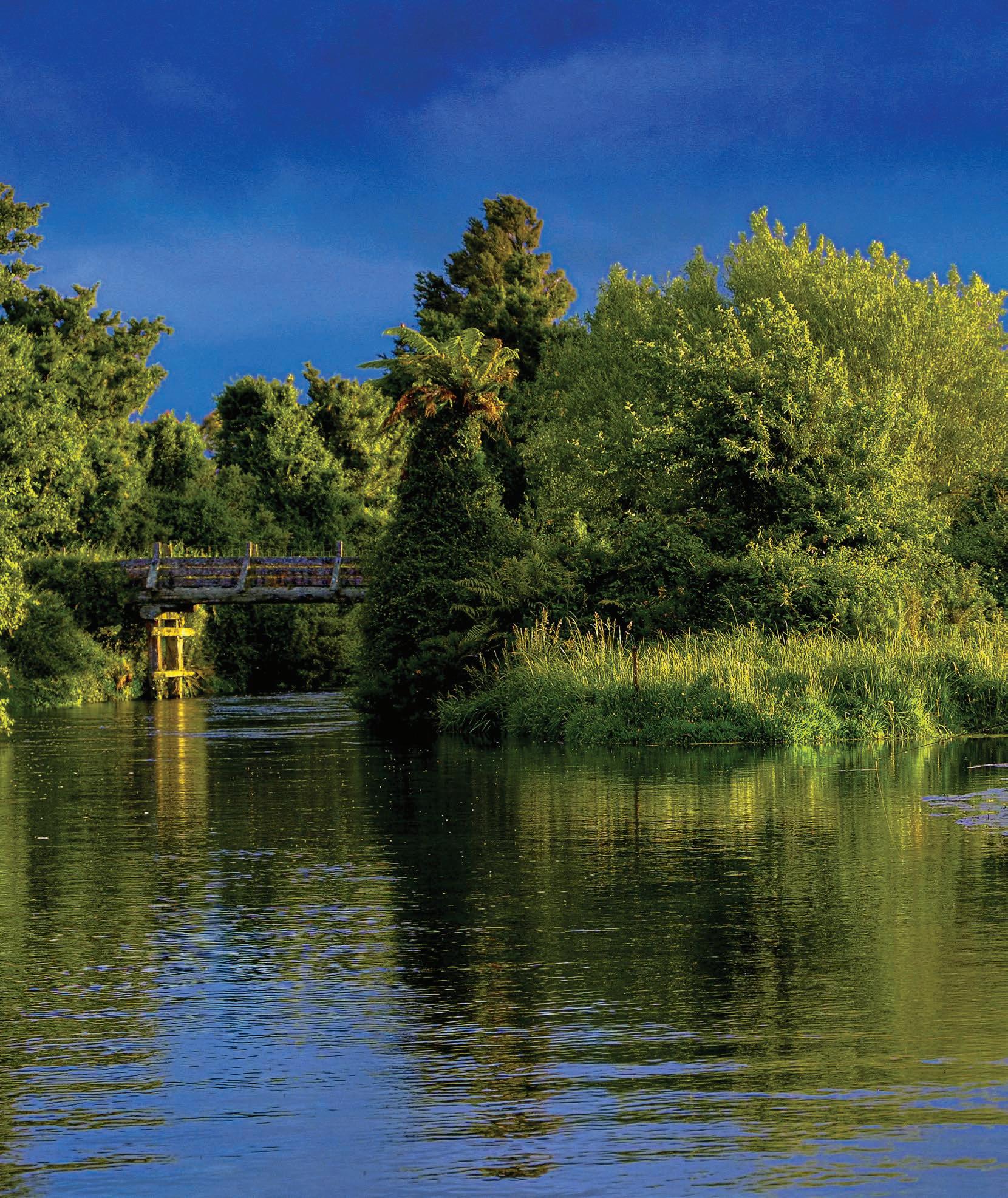
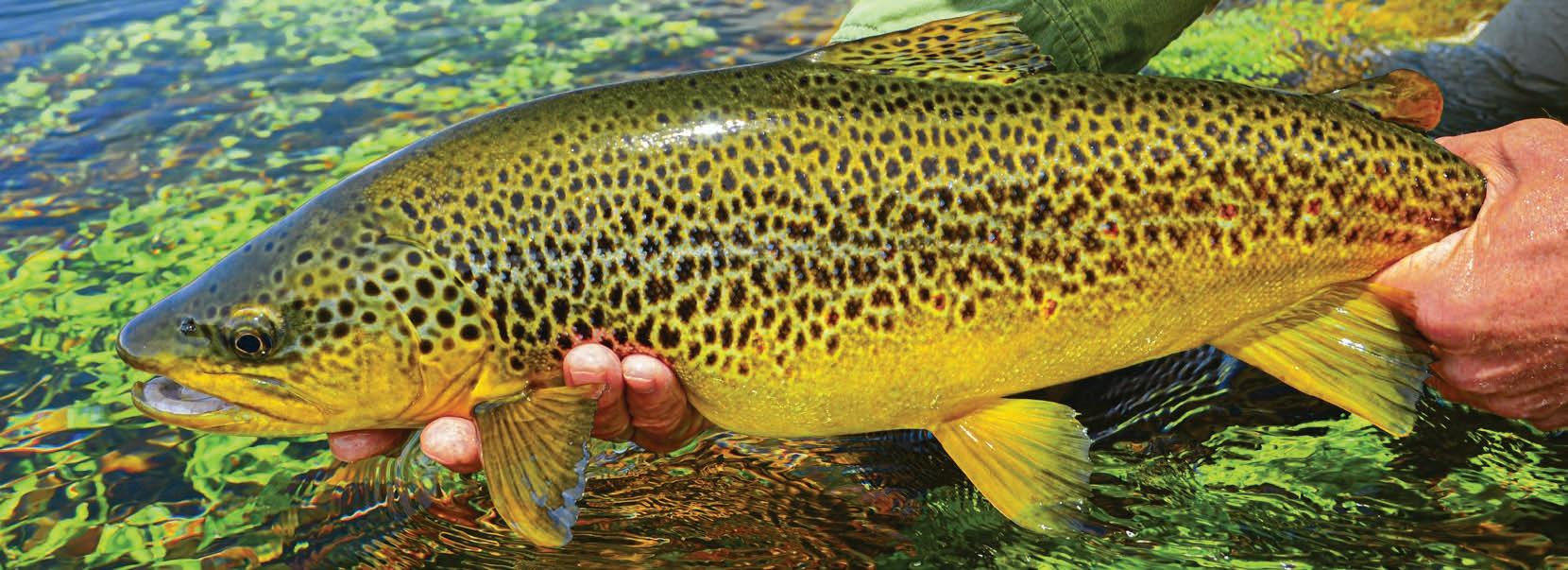
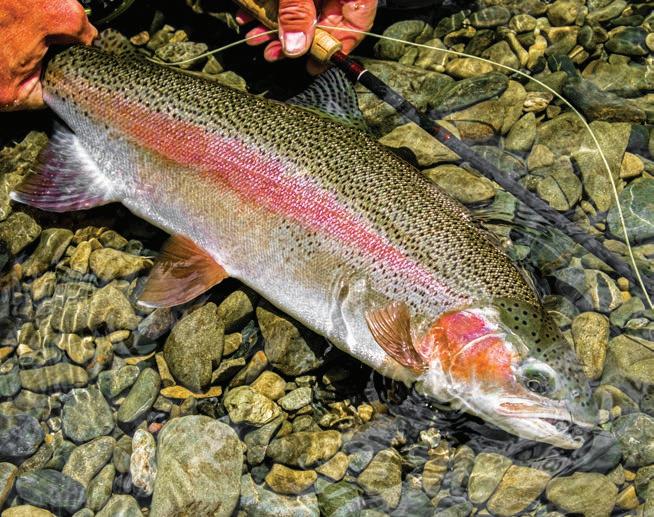
The smaller North Island holds 76% of the population and has about onethird less land mass than the South Island. Its trout population is roughly 90% rainbows and 10% browns - the opposite of the South Island. With rainbows preferring more broken water, you can get away with slightly sloppier casting, bigger flies, heavier tippets, and blind-casting the heads of pools. The water can still be won derfully beautiful, with overhanging tree ferns and lush, tropical-feeling settings - I’ve always loved it.
For a solid base, the historic fishing town of Turangi, at the south end of Lake Taupo, sits at the epicentre of it all and helps cut down on driving.
The North Island also enjoys a longer season, and the Tongariro runs begin in April, while it’s already getting a bit chilly down south.
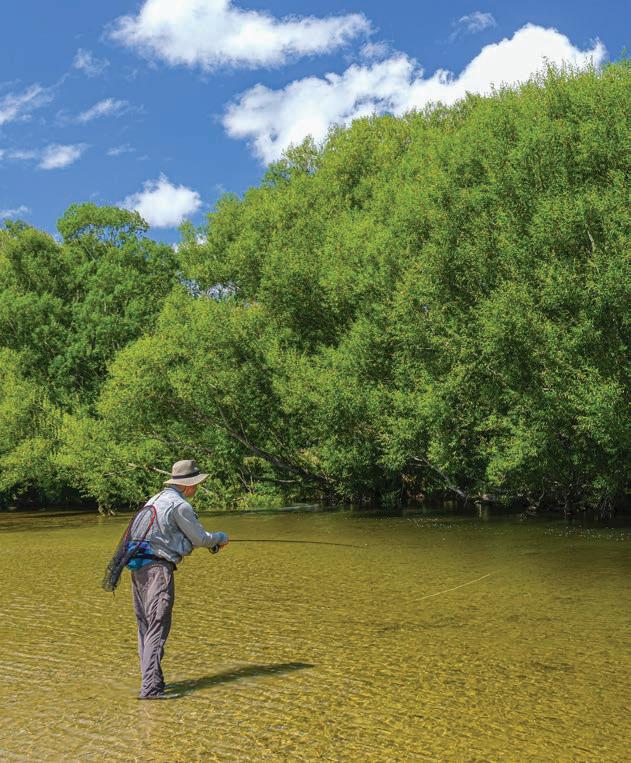
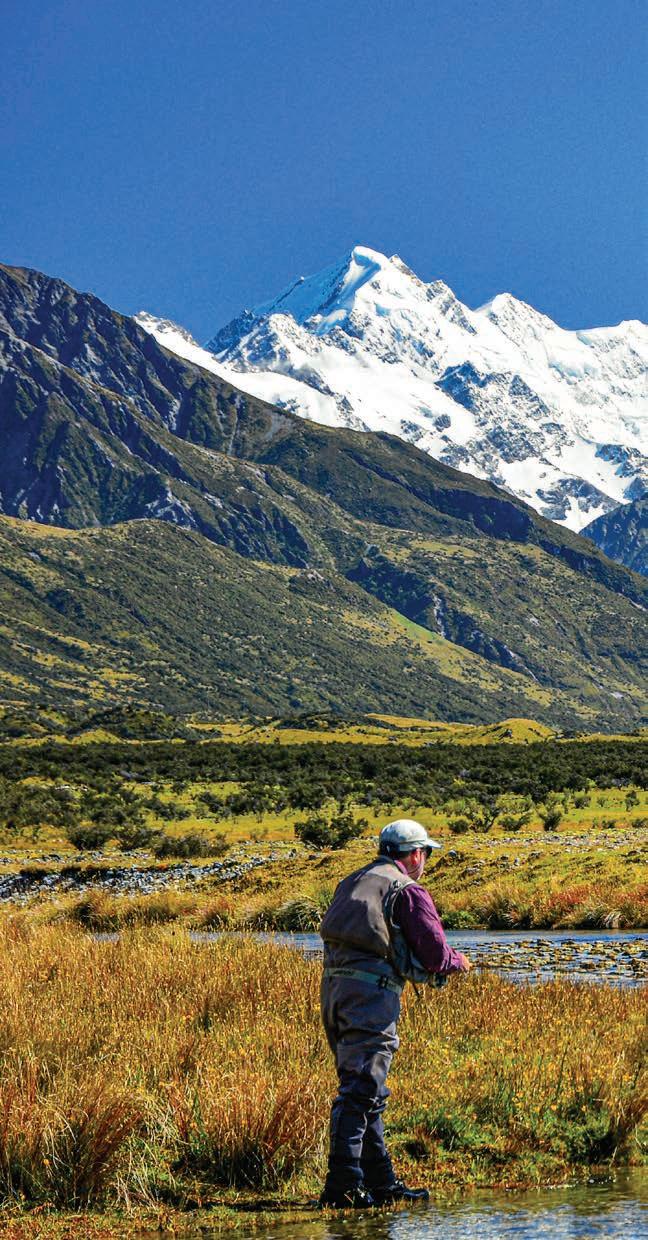
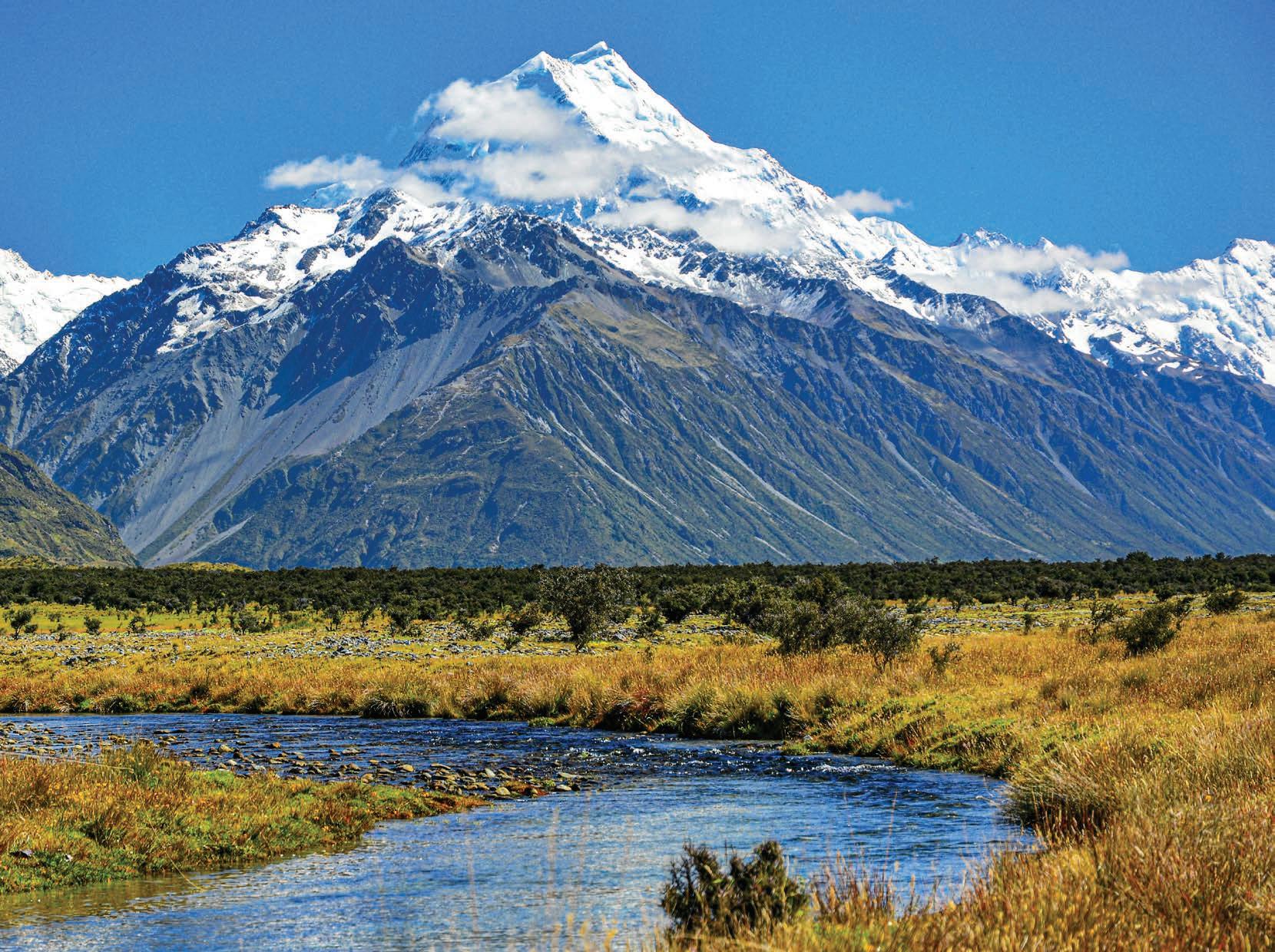
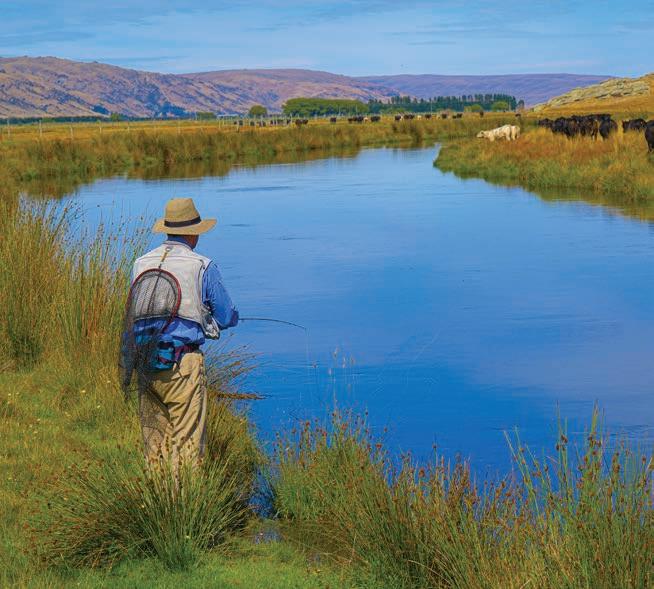
Moving to the South Island - where practically every river you cross is a trout river - you enter the land of sight fishing, and that’s why it’s so popular with visiting anglers. It’s ad-

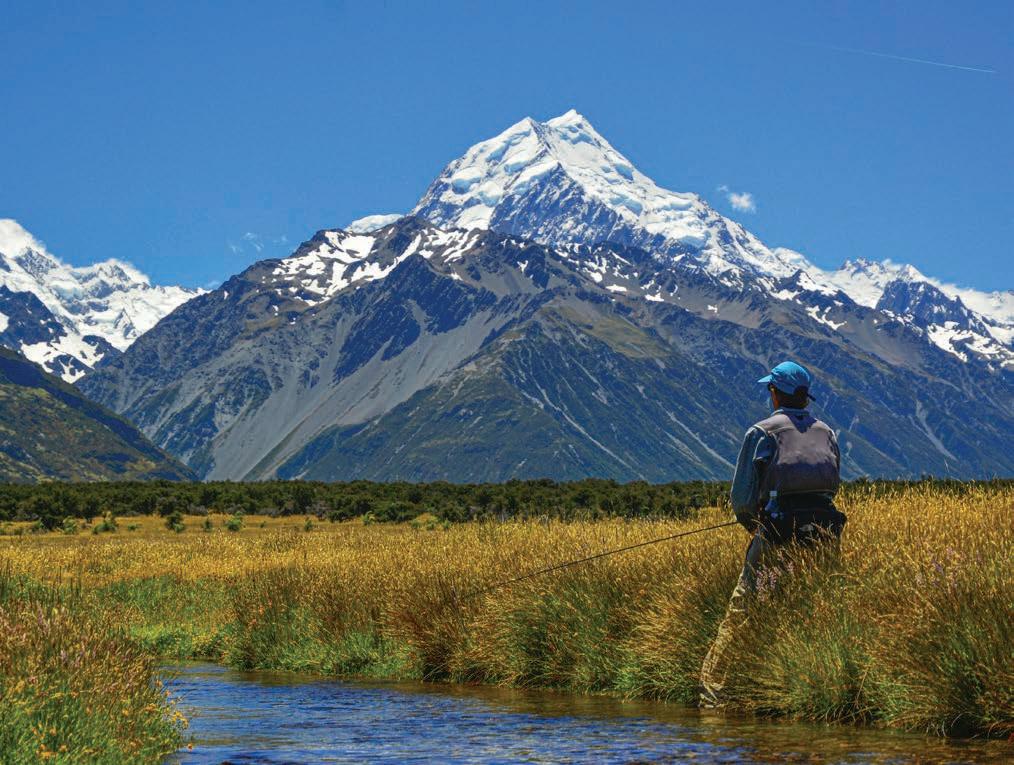
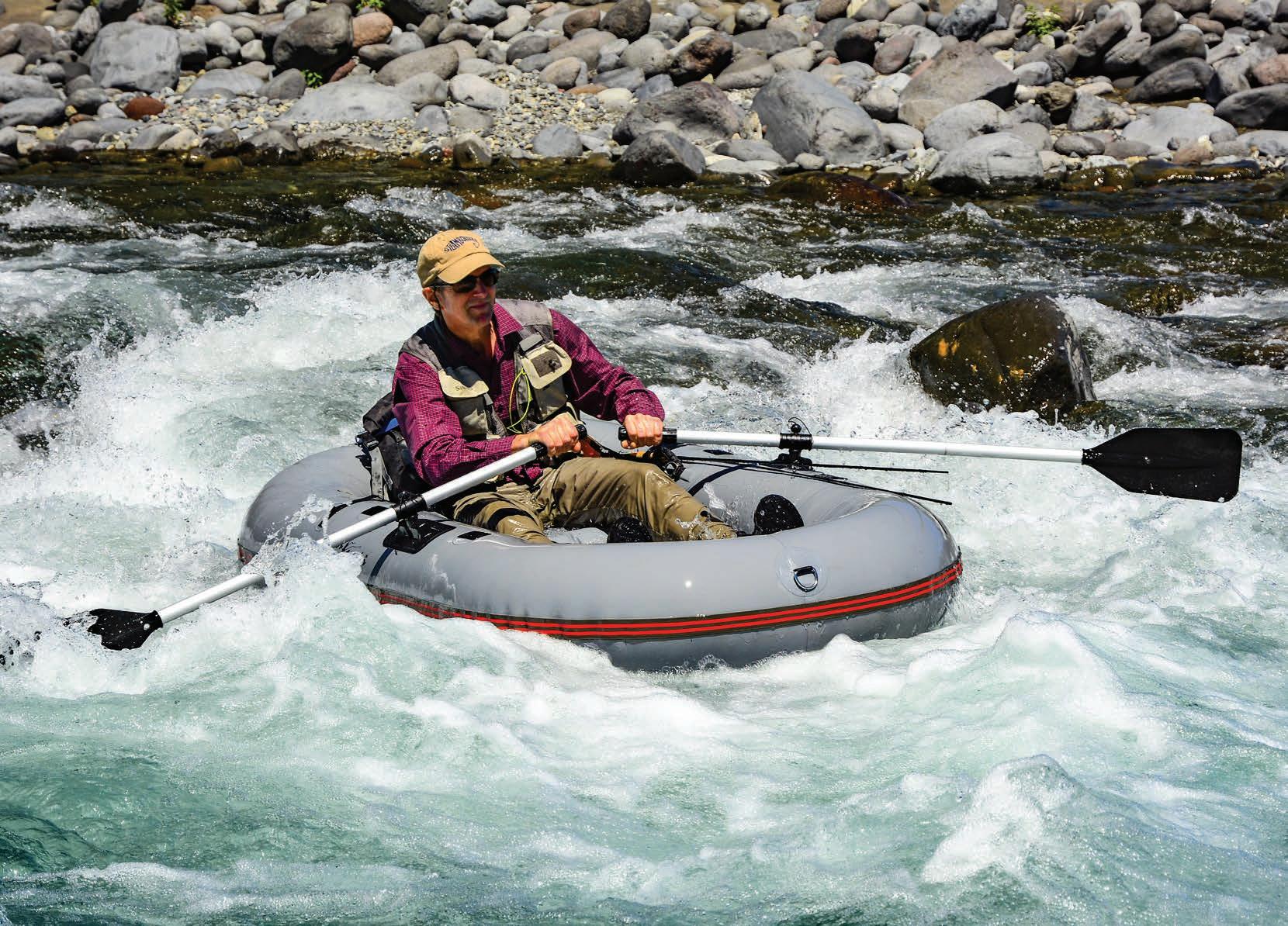
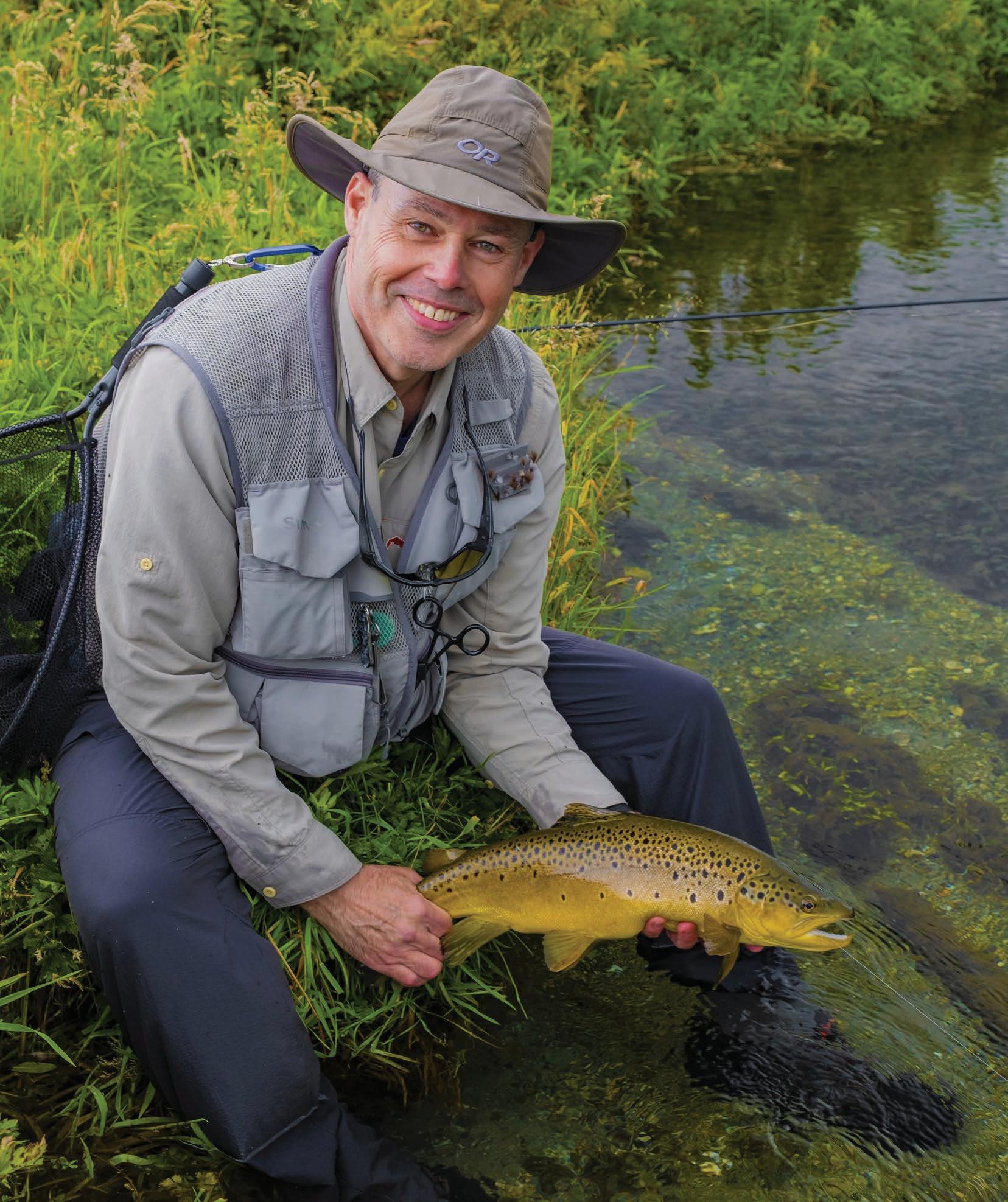
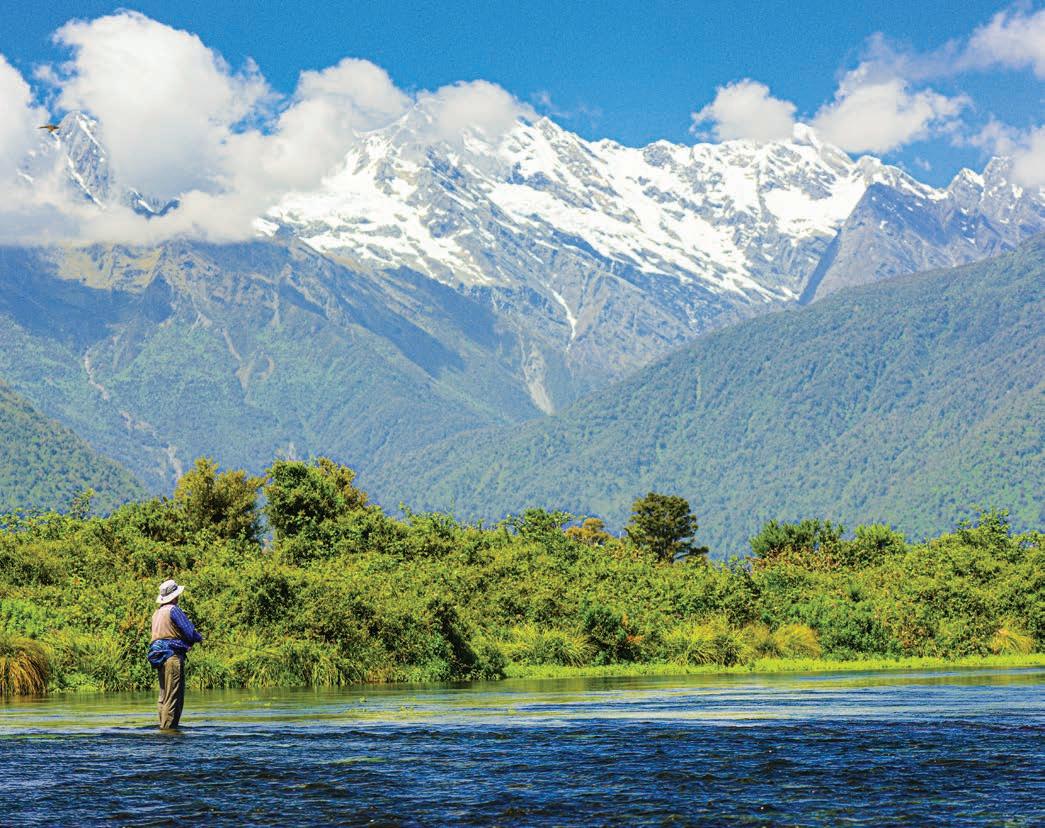
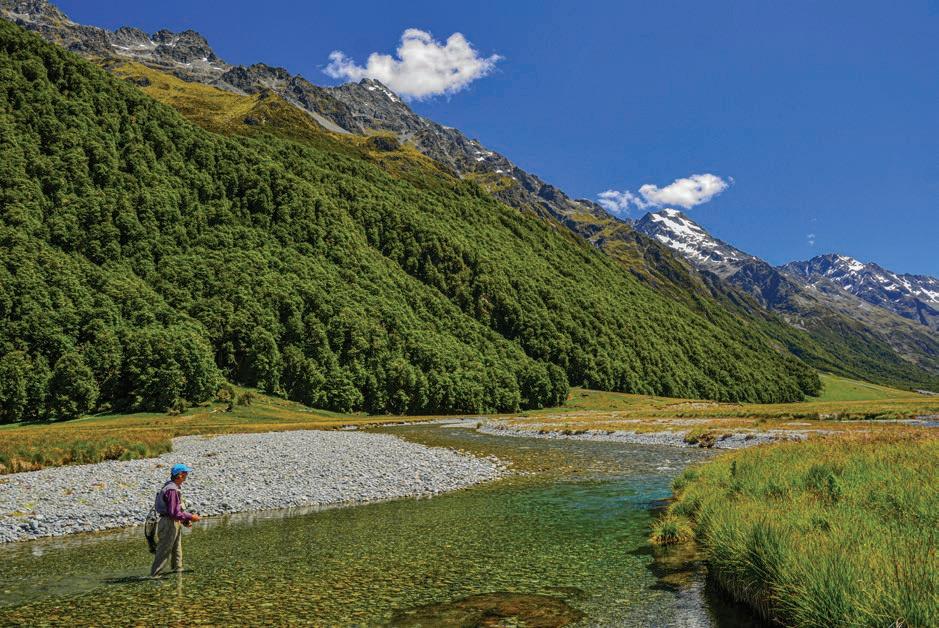
“You enter the land of sight-fishing, and that’s why it’s so popular

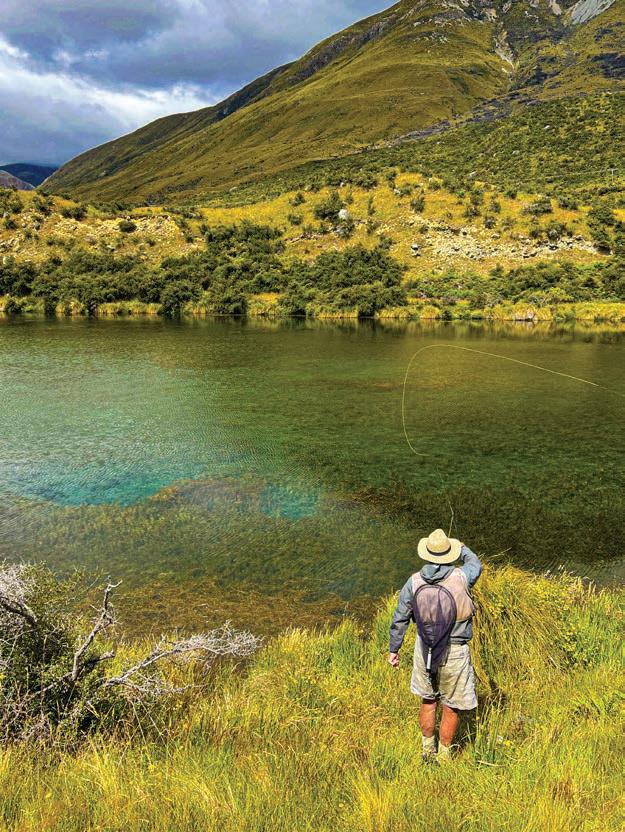
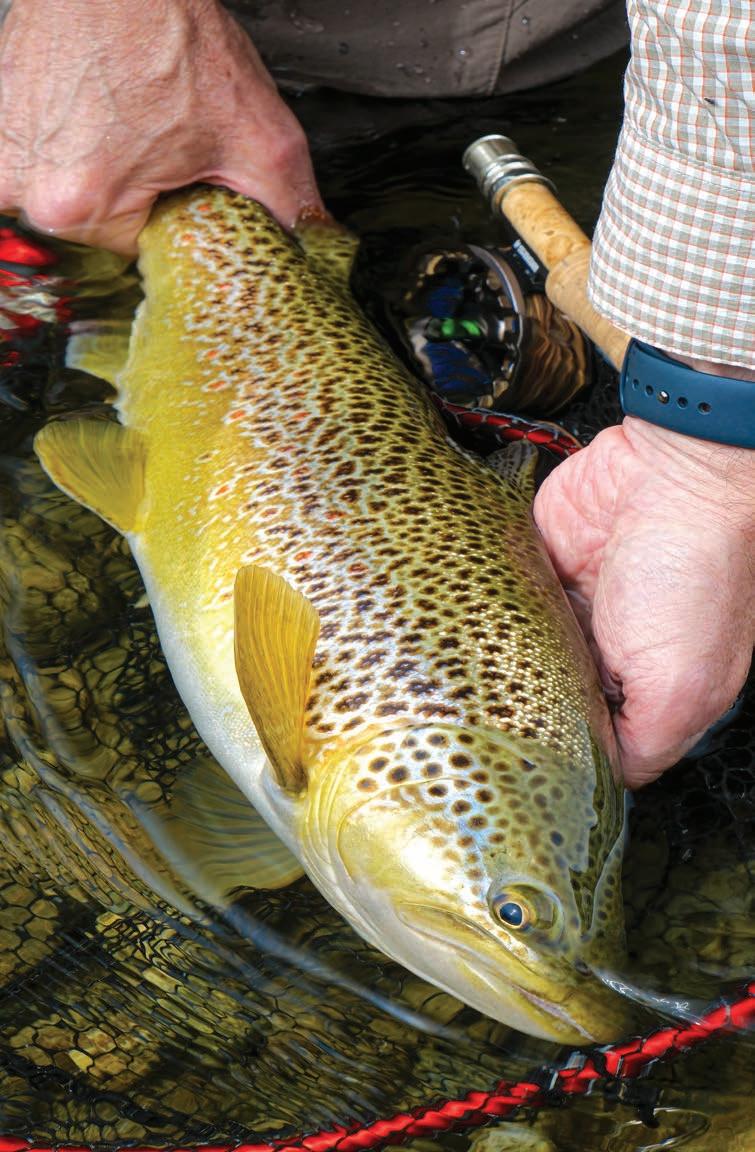
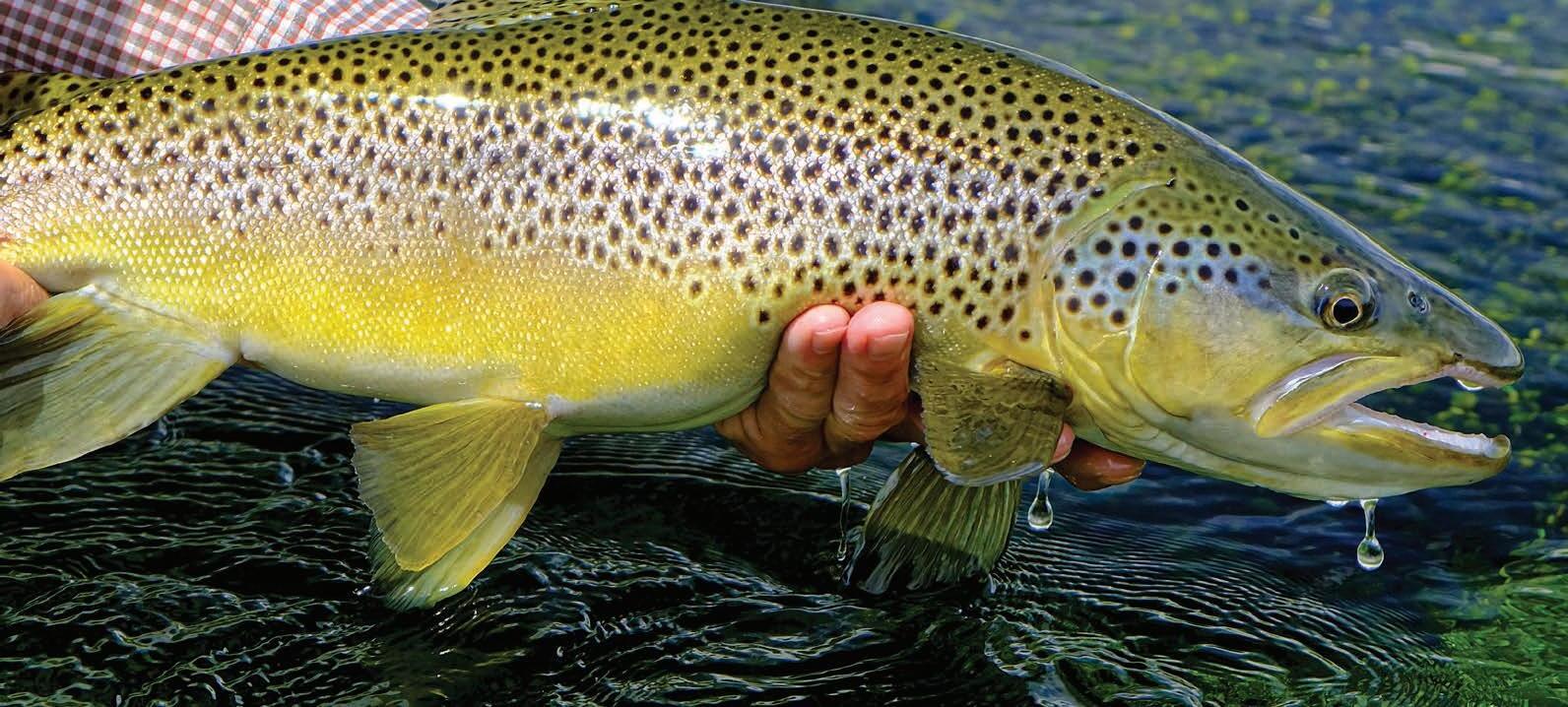
“You learn just how well browns can see and hear”
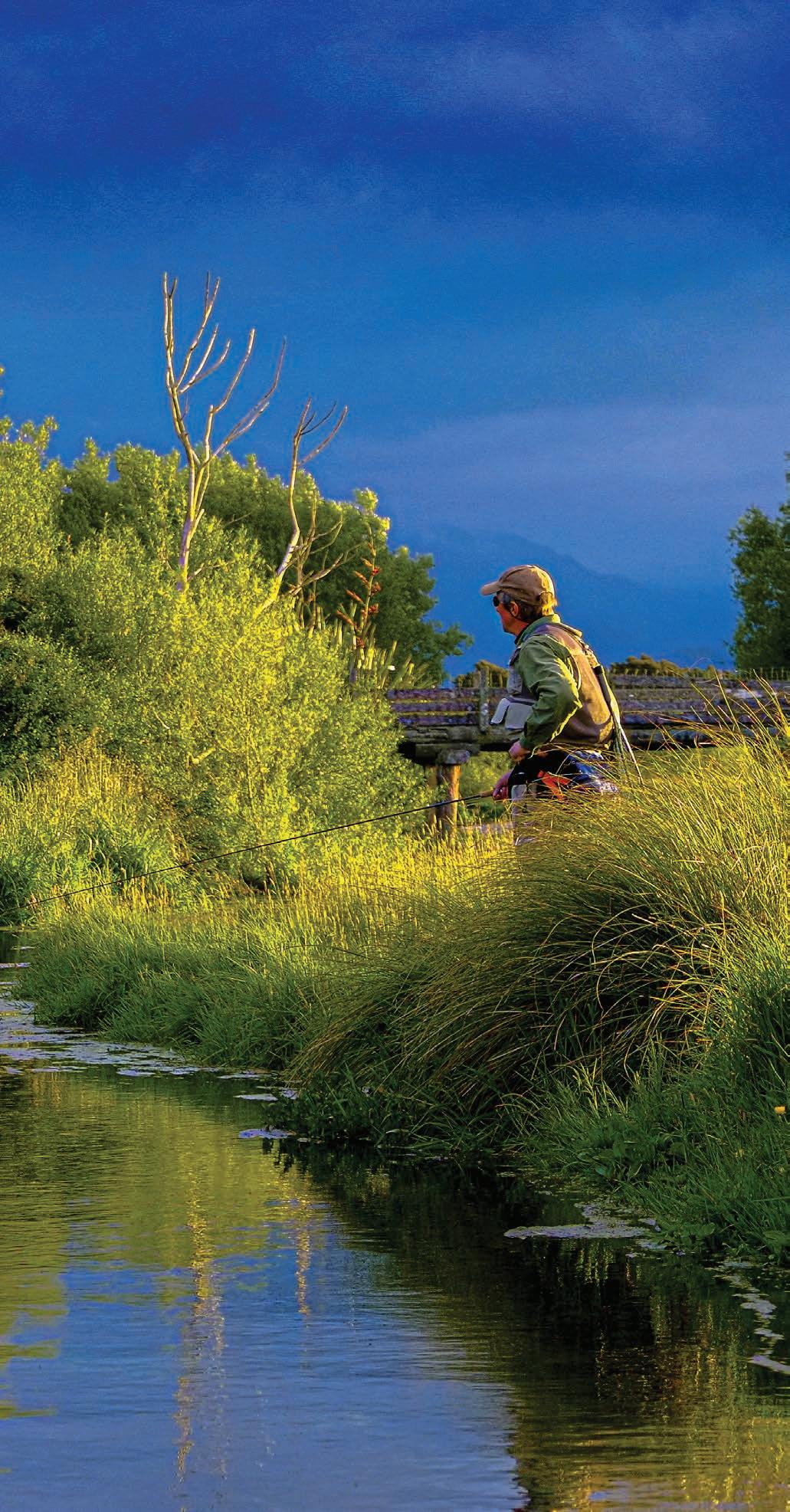
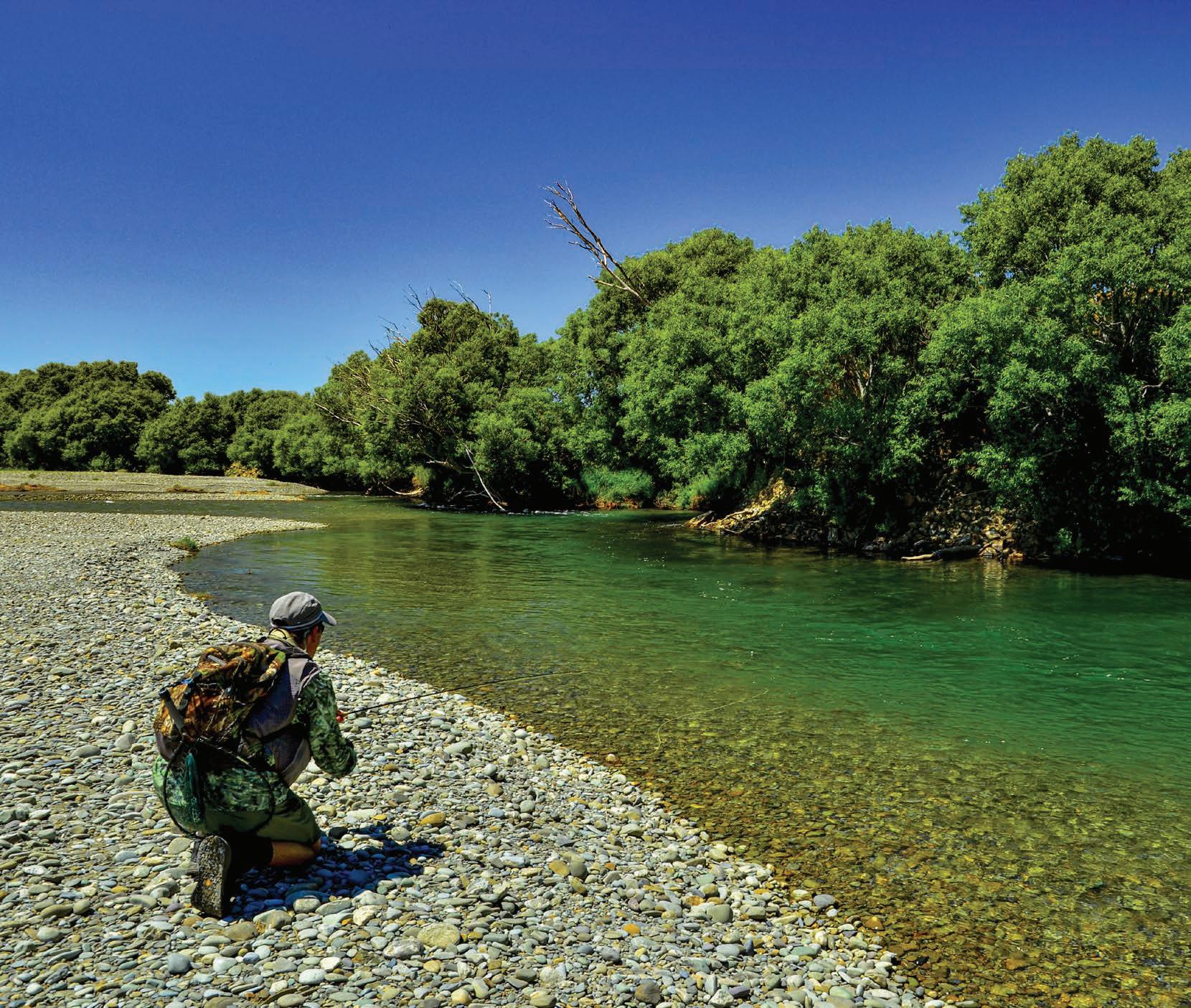
On the South Island, you become more of a hunter. You cross streams in the riffles to mask the sound of your boots on the rocks - another reason few anglers wear studded boots, and the rivers really aren’t that slippery.
You walk the gravel banks like a butterfly with sore feet and avoid breaking the skyline on high banks. You learn just how well browns can see and hear in the slower, smoother water they favour, and you don’t cast until you’ve spotted a fish. Blind-casting only pushes nervous fish upstream to have a little “fin chat” with the rest. Everyone tightens up or slides into deeper water. Game over for you - time to move on.
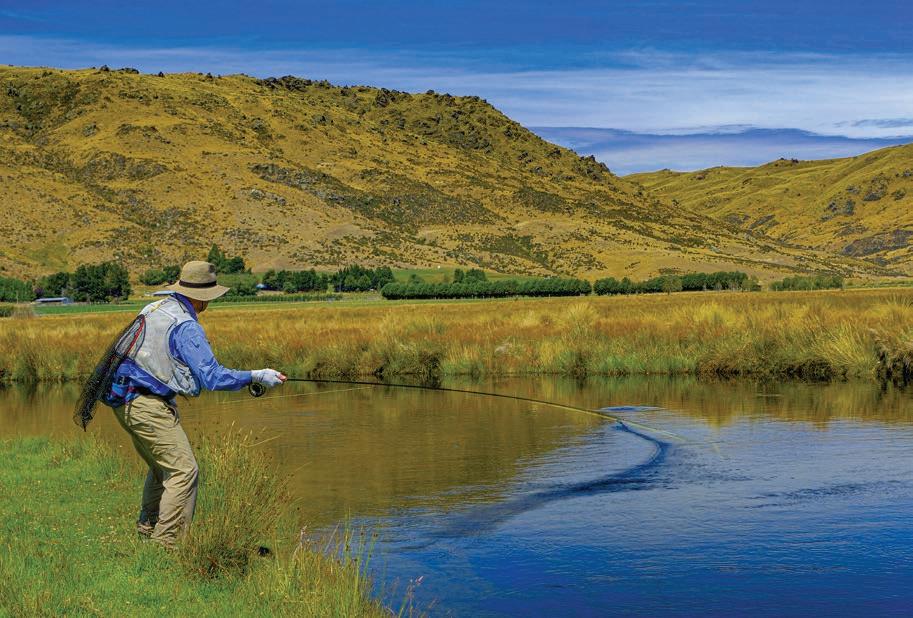
So now you’ve found a happy fish - a “Swinger” - in the next pool. Its feeding movements are fluid and relaxed. You carefully move into position, but you don’t fire the “perfect” cast just yet. Too short and you’ll startle him; too long and he’ll see your line or the thick part of your leader. So start with a quiet cast 15 feet away on your side to judge the distance.
If I’m standing behind you watching, I’ll be saying things like: “Add three feet. A little more. Now move it over.” Each cast goes tight to the reel for measurement. With a few casts, you’ve got the distance dialled in.
The best dry-fly cast is usually three or four feet ahead of the fish and three or four feet to your side. You’ll hook more fish by getting them to move to your fly and turn back toward their lane.
After a few days with the same rod and a 12–13 ft leader, you’ll speed up this process dramatically. But if there’s a good hatch and fish are feeding near the surface, they won’t move far, and you’ll need to drop the fly closer. When that’s the case, I’ll throw an extra false cast away from the fish just to shake the water out - spray you often can’t see from behind the rod.

A side-strike tightens the system instantly, even with current curves. And if you do strike too hard, the curves buffer the shock.
“I watch the fish - not the indicator”
Ideally, you still want the fly slightly on your side; sometimes a fish hits the tippet on the take and you think he missed or refused. And any time a fish comes up, inspects a drag-free fly, and refuses - change flies. Otherwise, they’ll start hearing Lassie barking and tighten up.
Now let me talk tippets - or more precisely, tippet squiggle, which is deadly on smooth water. That’s why on big wide rivers like the Henry’s Fork, Missouri, or the lower Mataura, the most productive presentation is across and downstream. The squiggle is still there, but when the fly enters the fish’s window fly first, it’s far less noticeable.
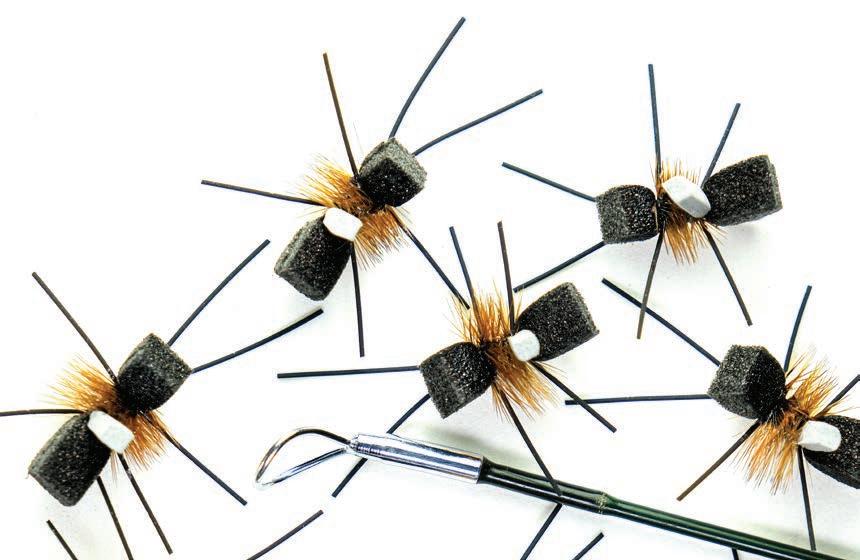
A good example is fishing the spring ponds or old cutoff horseshoe tarns - common in the South Island and perfect when rivers are out or your legs need a break. When I place a little foam terrestrial ahead of a fish coming toward me, getting a take isn’t hard. But when the fish is going away from me or moving across, it’s nearly pointless - unless there’s a slight ripple - because of the tippet squiggle.
I’ve spoken with both Simon Gawesworth and Gareth Jones at Airflo about it, and there’s simply no way to make light tippets sink. I’m not about to smear on something whose label reads “avoid contact with skin.” I’ve tried tippet mud and streambank silt - neither lasts long.
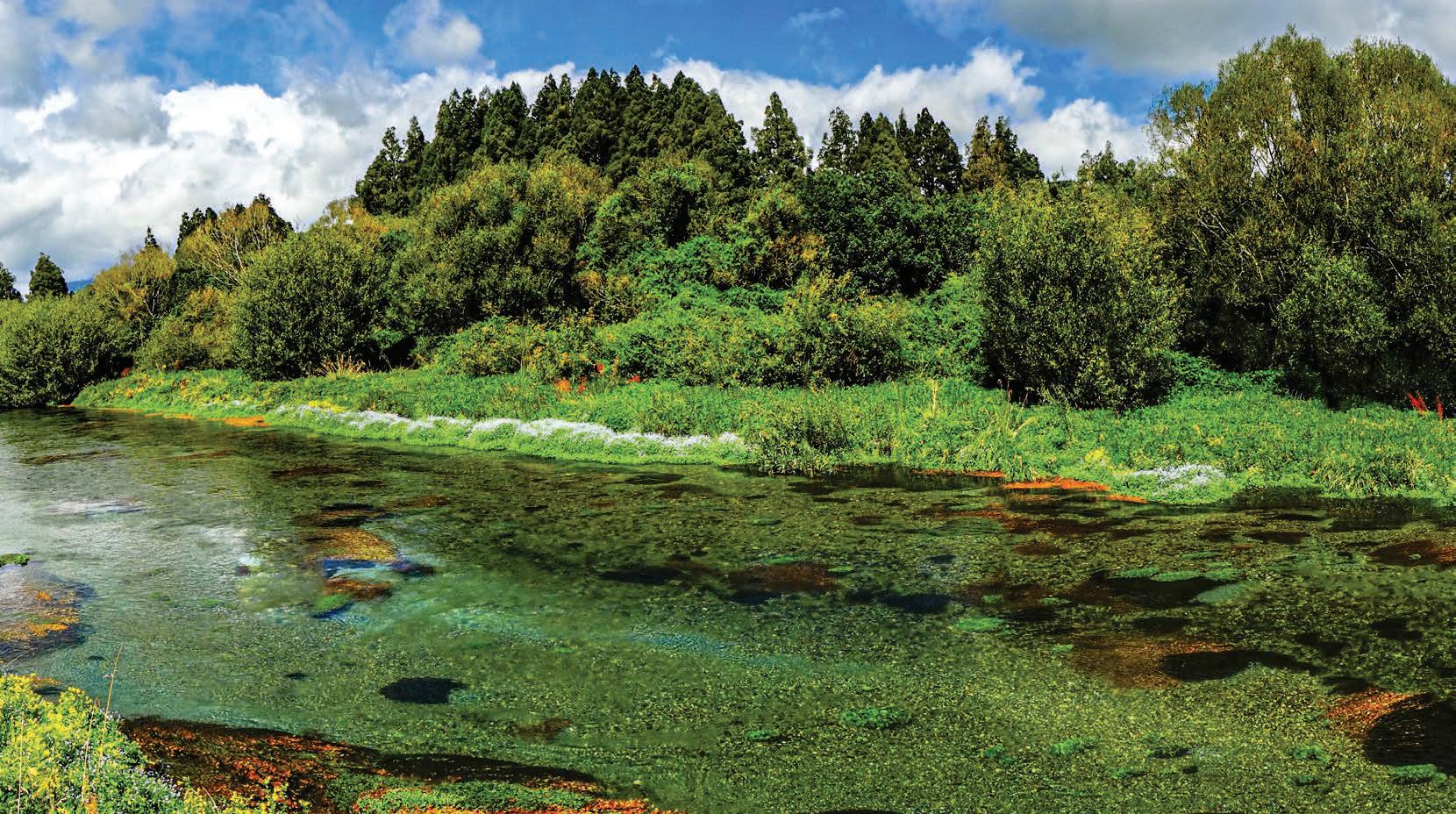
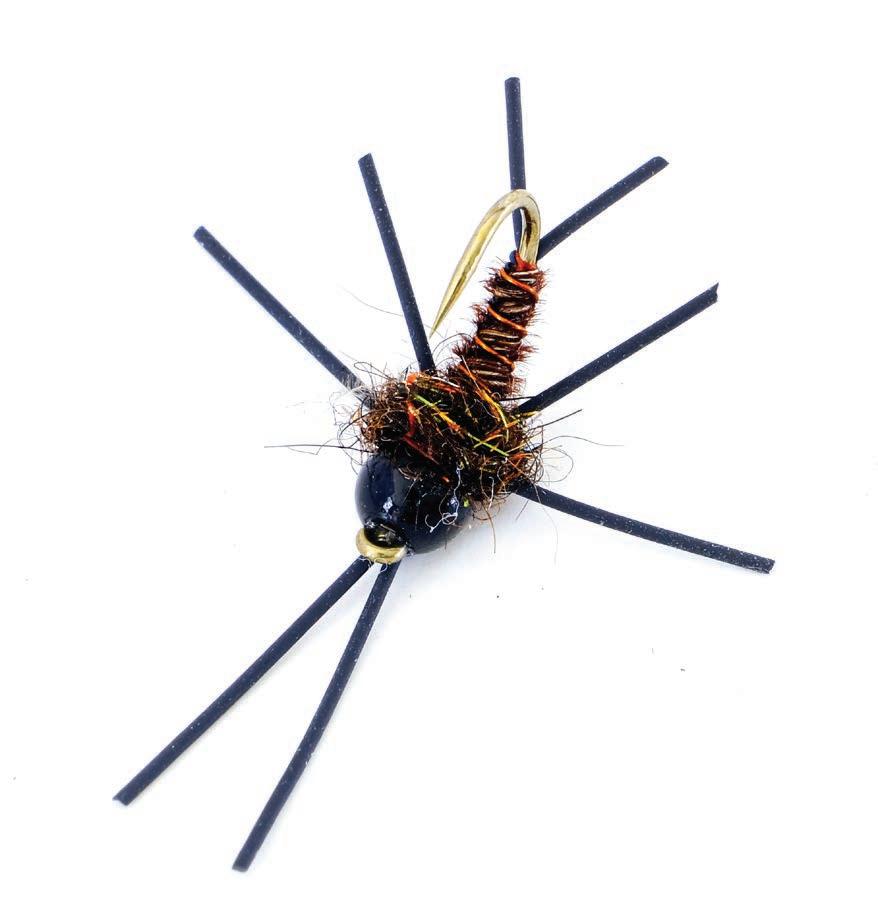
Using a small unweighted nymph is one way to kill the tippet on smooth water. On spring creeks, I tie a simple unweighted pheasant tail with a black glass bead. It lands almost as softly as a dry and sinks a few inches. For an indicator, I like a piece of that white net-foam used to wrap Asian pears or liquor bottles. I’ll tie it on with a simple double loop and trim it to BB-size. It’s just there to let you know when the fly is entering the “chomp zone.” I then watch the fish - not the indicator - because unweighted
nymphs move more naturally and don’t track like heavier ones. When the fish takes, the tippet slices through the foam, and you’ll never see it again. If you want to remove it, a small tug and it explodes off - gone.
For larger weighted flies, use a bigger chunk farther up your leader and trim it round so it doesn’t helicopter and twist your leader. The white foam works beautifully - easy to see and looks like just another bubble. It’s perfect when you’re fishing alone and want to switch quickly between dries and nymphs.
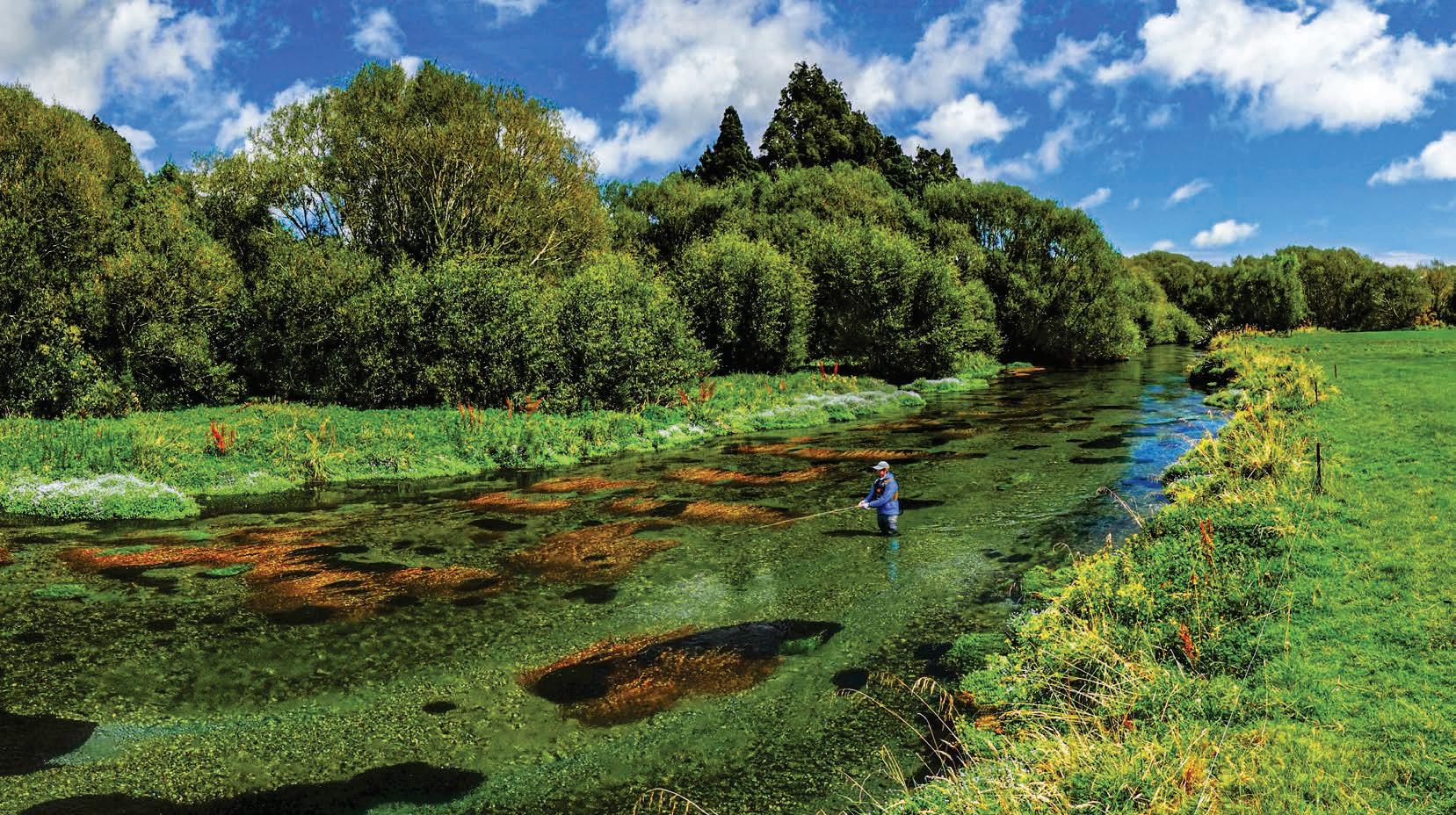
When I’m fishing with a buddy, we use two rods: one rigged with dries and one with nymphs. My all-day indicator is simply a size 12–14 dry-fly hook wrapped completely in palmered hackle - just a harmless fluff on the surface - with the tippet tied to the bend. We switch rods depending on what the fish wants. The usual hotpink and lime-green indicators common in North America are a definite no-no on my favourite waters.
Now that we’re working on our sneakiness, let me touch on fly-line colour…
Forty years ago, when I didn’t know my arse from a hole in the ground about New Zealand fishing, I booked a guided day with the godfather of modern NZ guiding, Tony Entwistle. When we set up beside the river, he glanced at my Hardy Princess reel, which was loaded with a peach-coloured Cortland 333 line, and said, “I wish I’d seen your line last night - I could have fixed it.”
What he meant was that he could’ve easily dyed the first 10–12 feet of my line dark brown.
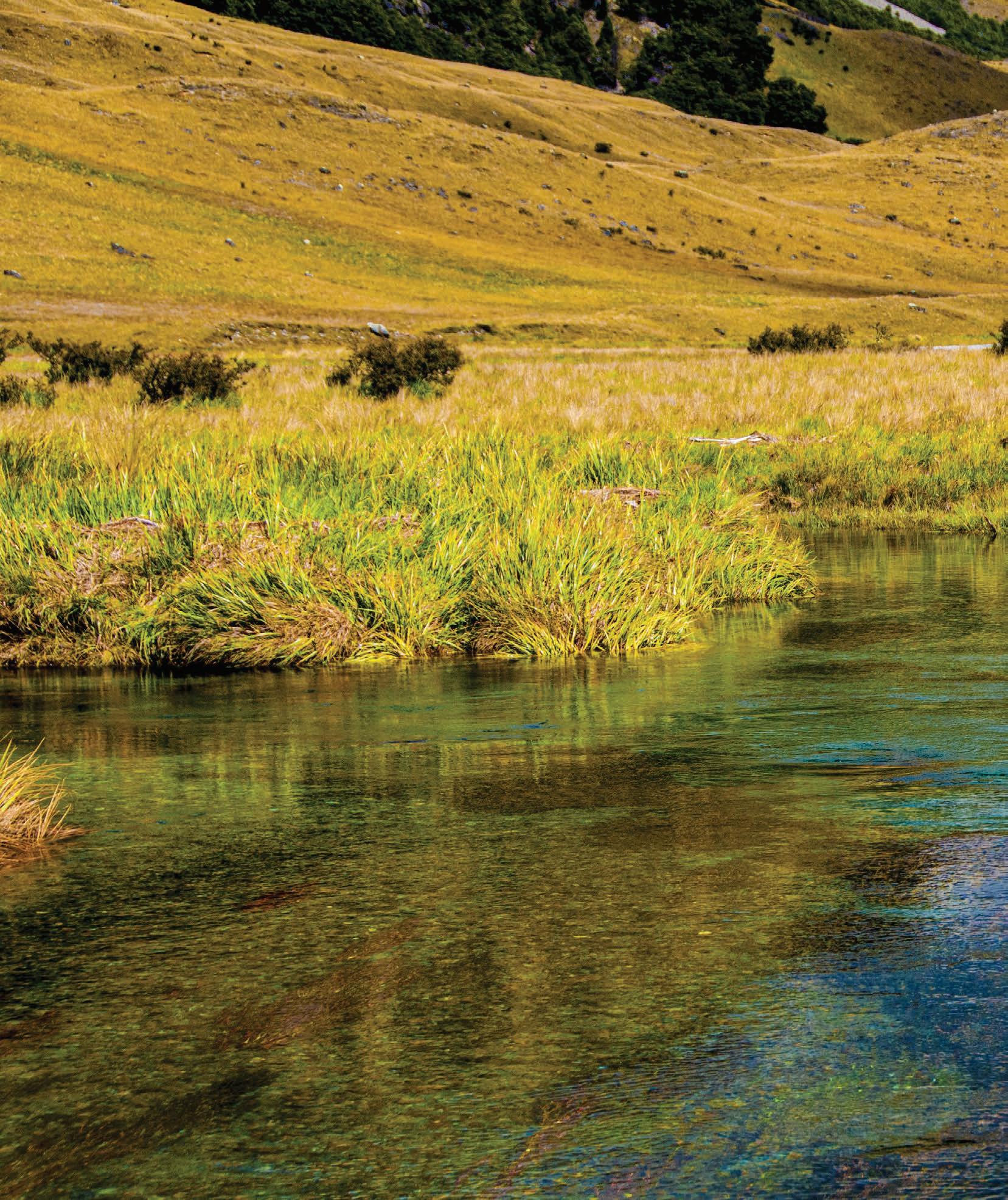
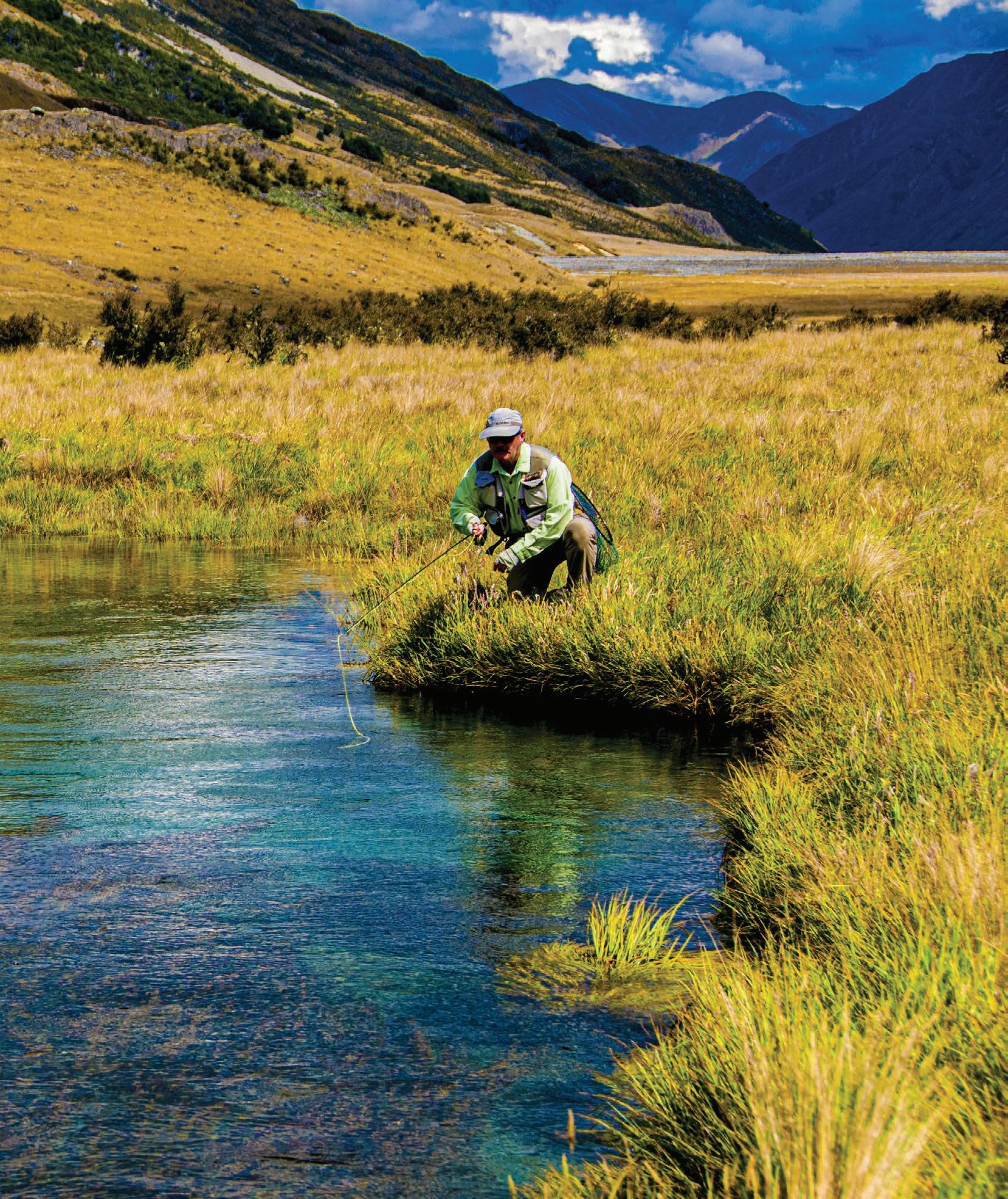
That simple idea is one of the reasons so many line manufacturers now produce their tapers in more earthy colours - olive being the classic compromise between visibility and stealth. But even olive has limits. Countless times over the years, especially on the superclear spring ponds, I’ve watched how fish react.
Picture this: I’m laying the trap to intercept a slow-cruising feeder when another fish suddenly appears, much closer to the bank. I freeze, hoping not to spook it. But when it reaches the undyed section of my line, it stops dead. It refuses to go underneath, then quietly slides back into deeper water. Game over. The same thing happens on rivers, and it can happen with the fish you never even saw until it’s too late. In pools, fish will often drop into the tailout and then work their way back up in a sort of circular beat. And if you’re fishing weighted nymphs, making long drifts in broken water, you’re often casting past deeper fish to get your fly down to
their level. So for years I’ve dyed the first 10–12 feet of my floating lines, and it’s remarkable how the tip simply disappears on the water. That’s also why you shouldn’t dye more than 12 feet - otherwise you lose visual control for mending.
But here’s the new challenge: modern line coatings can be almost impossible to dye. So now we simply use a black felt-tip marker on the front section. It fades, so you have to touch it up every month or so - but it works.
In most rivers around the world, a trout’s sense of smell isn’t much of an issue. With all the runoff from human activity - and all the angling pressure - if smell alone shut down feeding, the fish would starve. But in New Zealand’s pristine waters, especially in remote spring creeks, smell absolutely matters.
Here’s a typical example. I’m on one of my favourite West Coast spring creeks. Just upstream, a farmer comes rumbling through the ford in his greasy old tractor.

“Low profile. Soft

“ A slow, soft strike sets a small hook far better in a
The water clouds up and the fish go down - but only for a minute. It clears quickly and they’re feeding again. Later, a herd of dairy cows crosses; half of them defecate in the stream. Again, the fish drop for a couple of minutes, then resume feeding. But when a fishing buddy - wetwading, and I’ll get to that - crosses upstream, the fish go down for one to two hours, sometimes the rest of the day. An extreme example: I’m standing on a sheep bridge with my camera ready. Thirty yards upstream, a big brown is sipping occasionally, and my buddy is trying to catch it. Eventually he gives up, walks upstream, and at about 50 yards decides to take a leak. I yell, “Pee in the stream!” which he does.
I kept my eyes glued to the fish. Twenty-five seconds later, that concentrated plume hit him and he absolutely lost his mind - thrashing in a starburst pattern before rocketing downstream at warp speed. You’ve never seen a fish move that fast when it’s not attached to anything.
You see the same thing on the small summer-run steelhead rivers on Vancouver Island. All of this is another reason to fish upstream - unless you’re swinging flies on some huge, fast river.
I really dislike wearing waders in New Zealand. The water isn’t cold, you walk a lot, and from December to mid-March I rarely wear waders at all. On hot summer days, you’re more comfortable in the water than out of it. Early and late in the season, we sometimes go “flaps up” - instead of folding wading socks over the boot tops, we just pull them up to just below the knee.
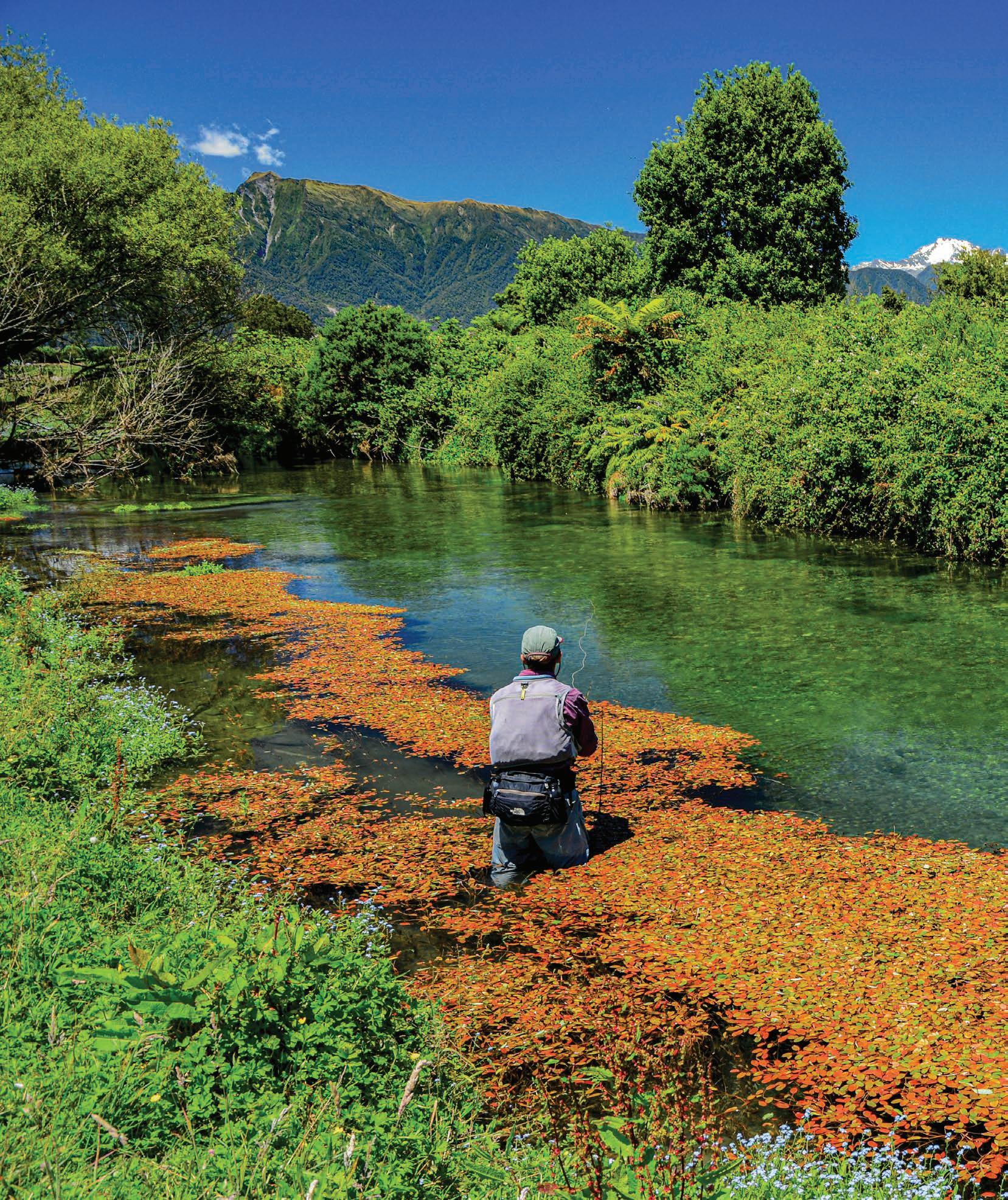
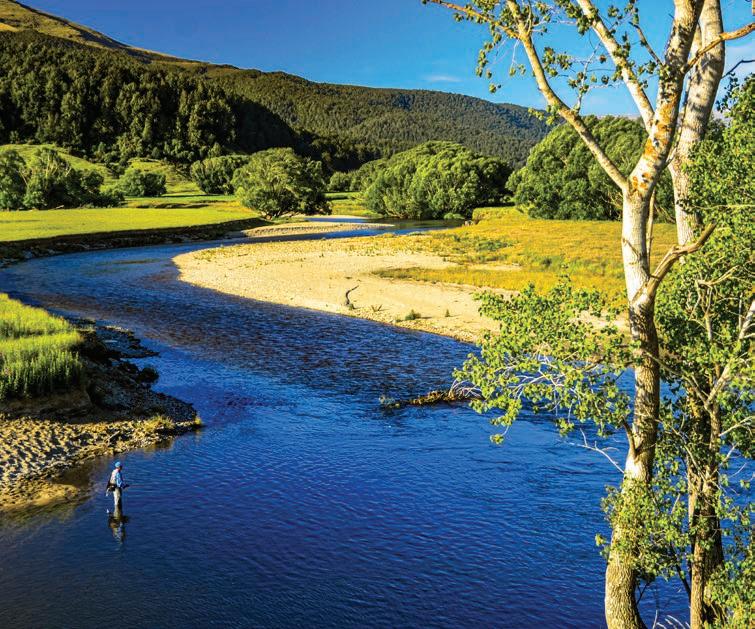
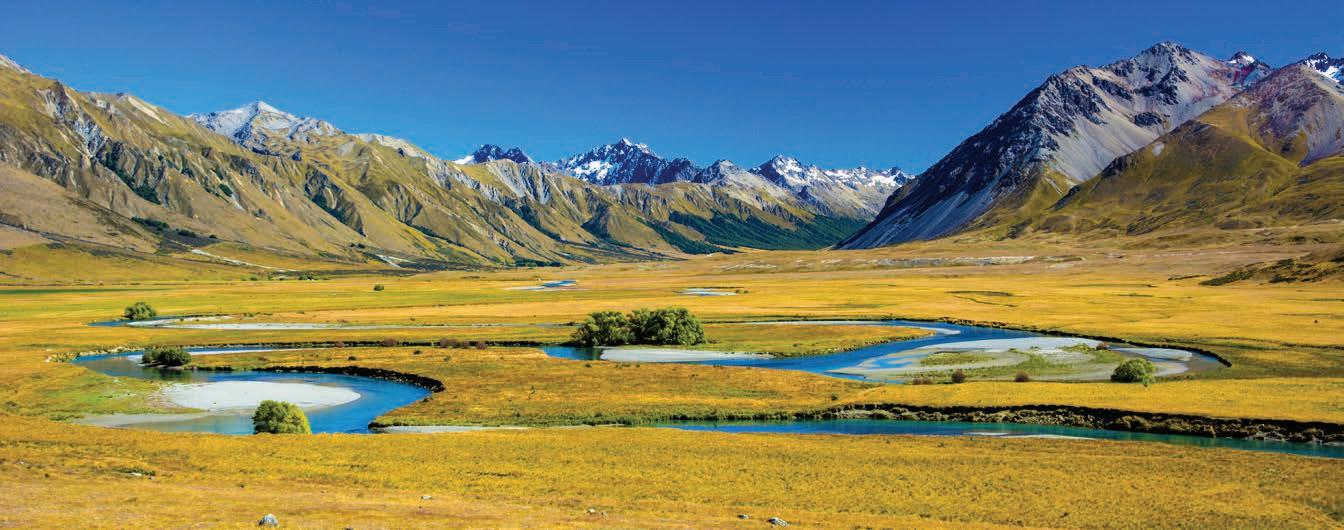
For footwear, I prefer lightweight boots, though almost all wading boots lack decent arch support. Quality aftermarket arch supports make a huge difference in comfort and help fine-tune the fit; if you do need to wear waders, you can remove the inserts for a bit more room.
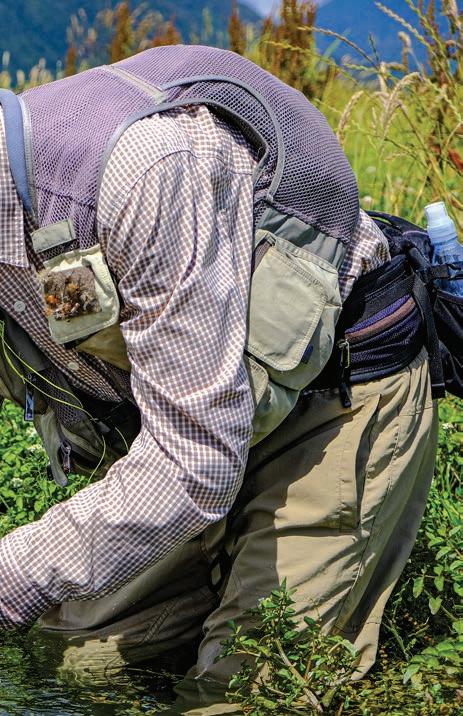
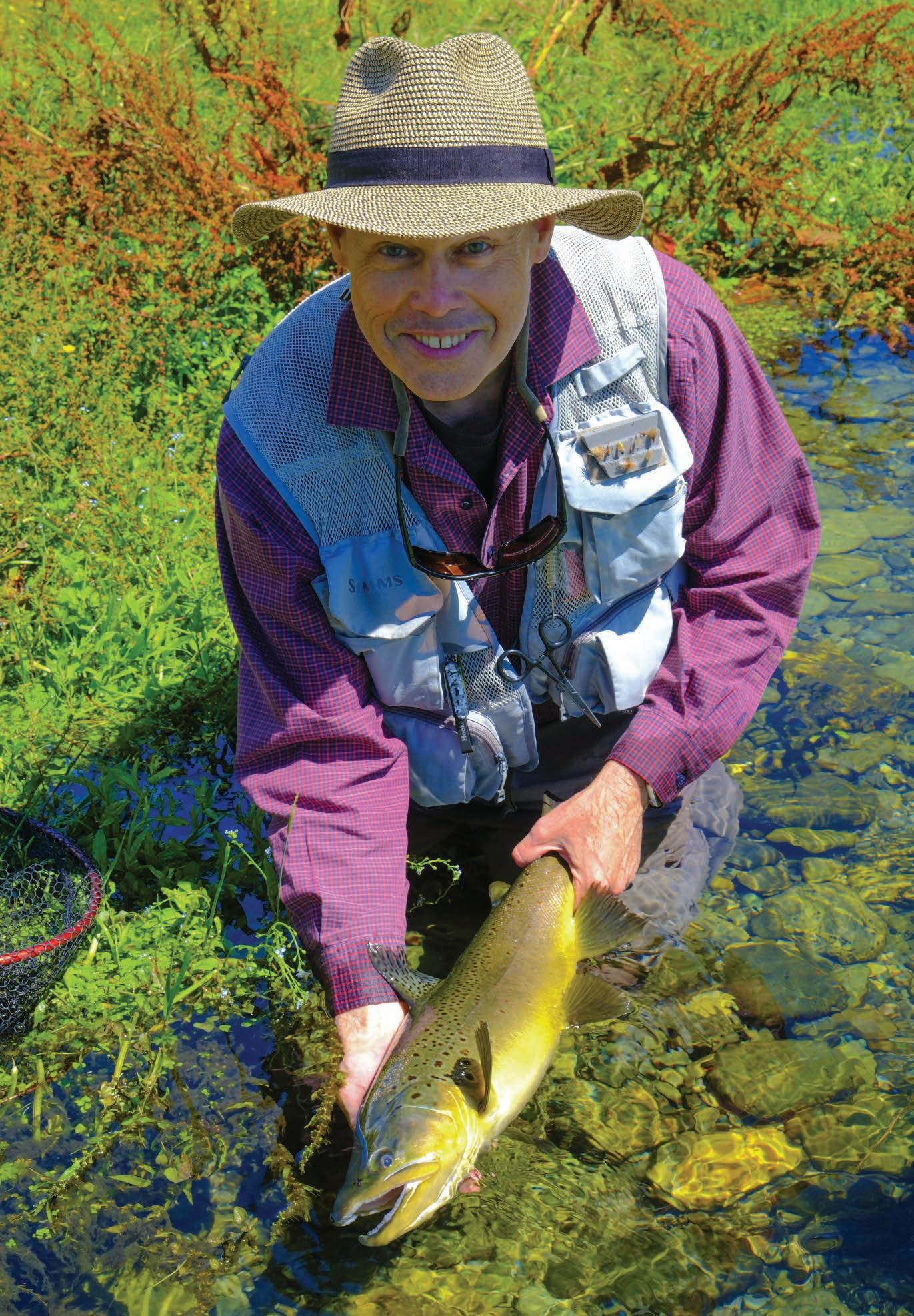
As for clothing: long-sleeve, earthtoned shirts and thin nylon wading pants (without those useless linesnagging cargo pockets) are ideal and dry incredibly fast. At the end of the day, slip out of your boots, put on sandals or normal shoes, and you’re ready for dinner. I wear shorts all summer, and unless you’re in West Coast beech forest or the top of the South Island - prime sandfly habitat - biting insects aren’t much of a concern.
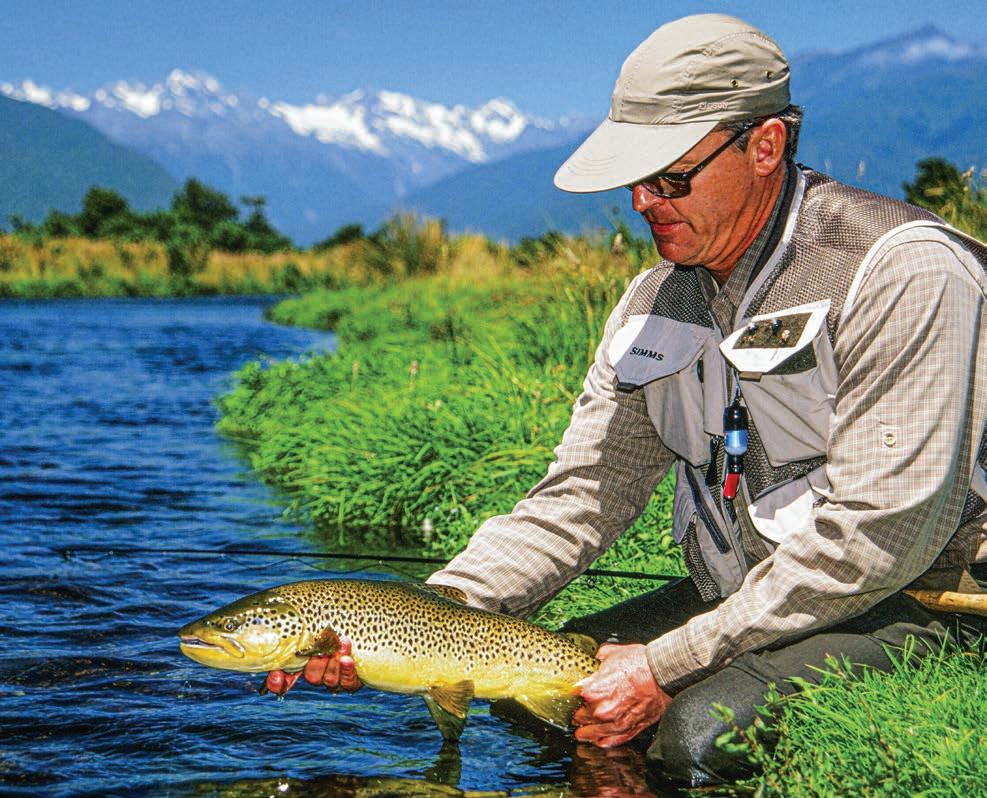
This happens thousands of times every season. A big fish rises to the dry fly, and in the excitement, the angler strikes too soon - accustomed to smaller fish that spit a fly instantly. Large NZ trout don’t. The old tradition of silently mouthing “God Save the Queen” before
lifting is surprisingly accurate. A slow, soft strike sets a small hook far better in a large mouth.
But there’s more. Nearly everyone strikes incorrectly, and probably has their entire life - myself included. About 30 years ago, while nymphing with an indicator, I discovered that a side-strike gave me a far better hookup rate than the traditional lift. It didn’t take long before I was using the side-strike with dries as well.
Think about it: with a vertical lift, much of your motion is spent simply removing slack and curves from the current before anything goes tight - exactly the way you’d break a string. But a side-strike tightens the system instantly, even with current curves.
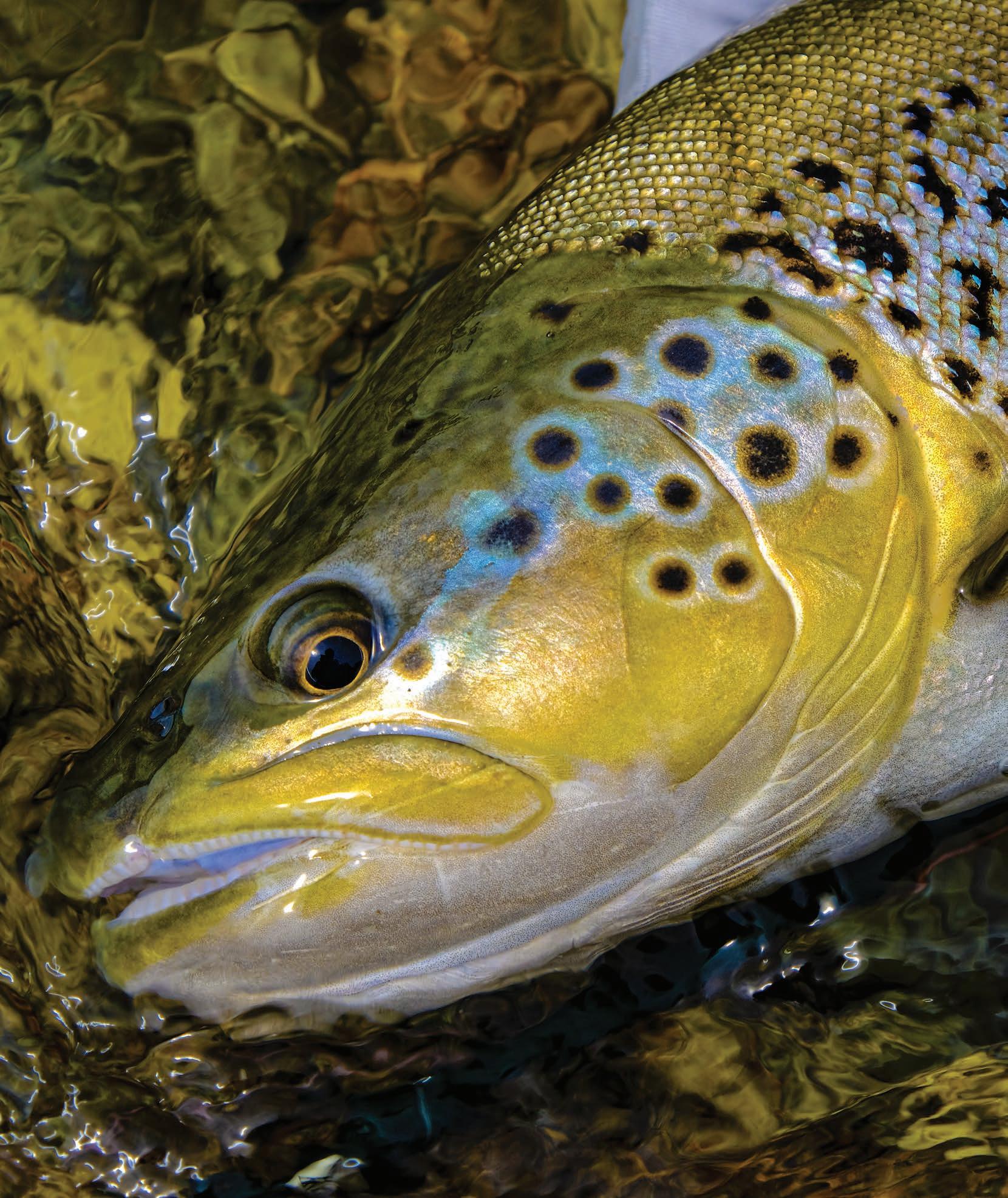
And if you do strike too hard, the curves buffer the shock, resulting in a quicker yet softer connection. In New Zealand, you still delay slightly on a dry-fly take, but with a nymph under an indicator, you don’t hesitate - the indicator already adds a small “tape delay.” Try it with a drifting dry or indicator and you’ll notice the difference immediately. And always strike away from your body, never across it, whether fishing upstream or down, left bank or right.
After you’ve blown a few early chances - especially right after arrivingyou’ll finally have a big fish on. Now what? Unless you’re on a huge open river, that fish is heading straight for its bolt-hole: an undercut bank, willows, a logjam, something nasty. Your first priority is to never let the fish hit full acceleration. If you can hold it on that first run, odds are you’ll land it. Trying to “get it on the reel” immediately is a mistake. Instead, quickly strip in your loose line and control tension between your finger and the cork. Once the fish is
past the danger zone and starting to tire, then wind the line onto the reel and fight from there.
New Zealand etiquette
And finally, an important one - etiquette. In New Zealand, leaving a message on your dashboard is standard, even if the knuckle-dragging Australians struggle with it. I use a laminated letter-sized sheet. One side reads:
“Two Anglers Fishing Upstream.” The other: “Two Anglers Fishing Downstream to Car.”
I park facing upstream traffic so it’s easy to read. This simple courtesy lets everyone fish all day without climbing over each other. If you see a car already parked on a river, drive a few miles upstream to give them room. Fishing behind someone dramatically reduces your chances.
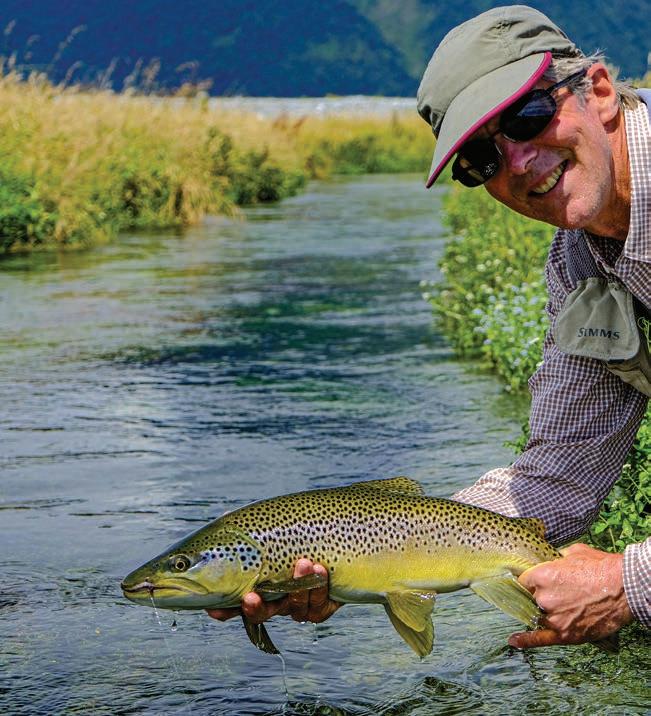
So have fun out there. New Zealand has been my favourite fishing destination for more than 40 years. In today’s crazy world, there’s no better place to experience genuine kindness - and to renew your faith in humanity.
For over 80 years, we have been at the forefront of innovation. Sharpened by experience. Pushing the boundaries of material science to make our lines stronger and more durable. Then testing in the most demanding environments with the world’s best anglers. Those who demand the best choose Scientific Anglers.

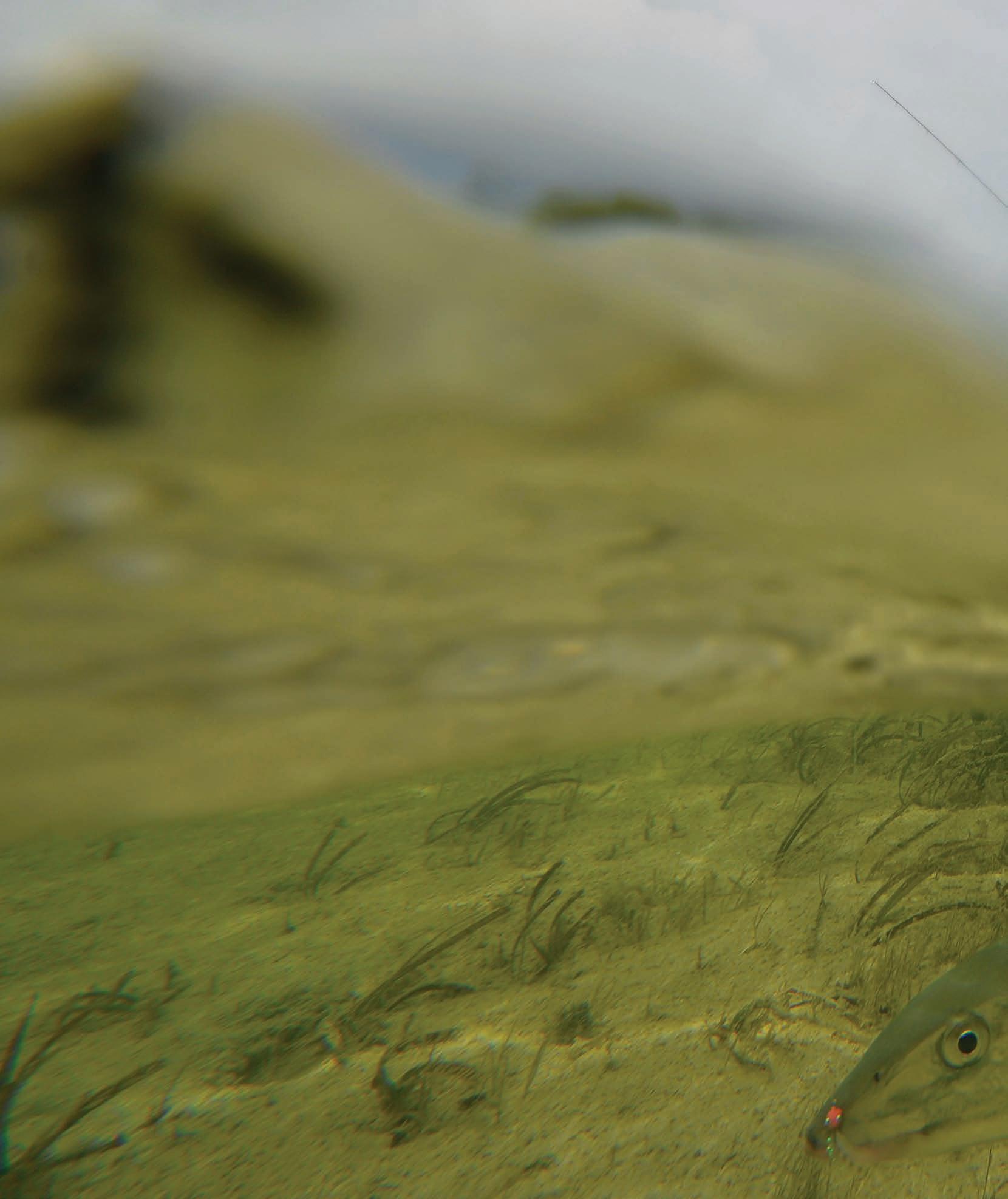
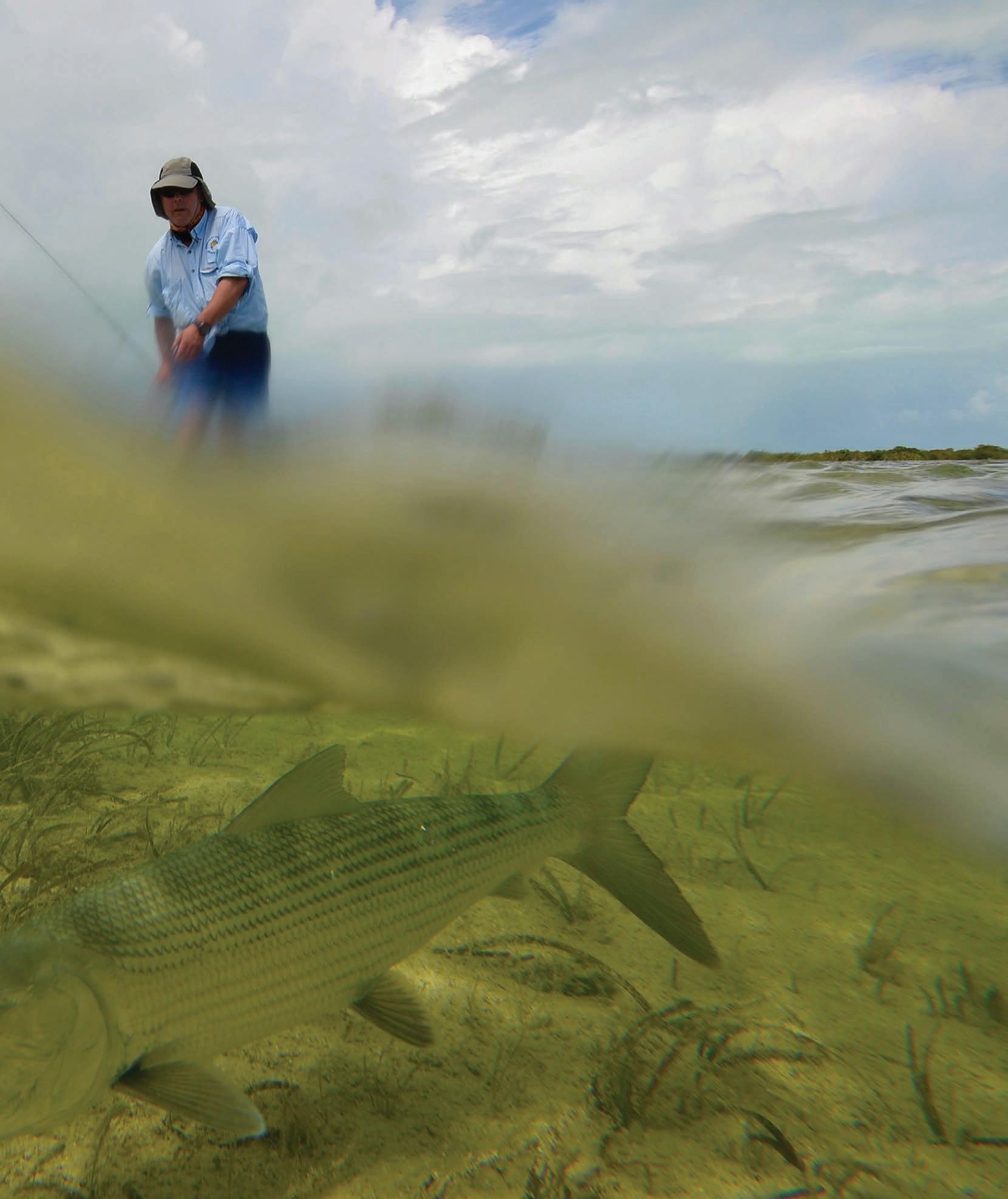
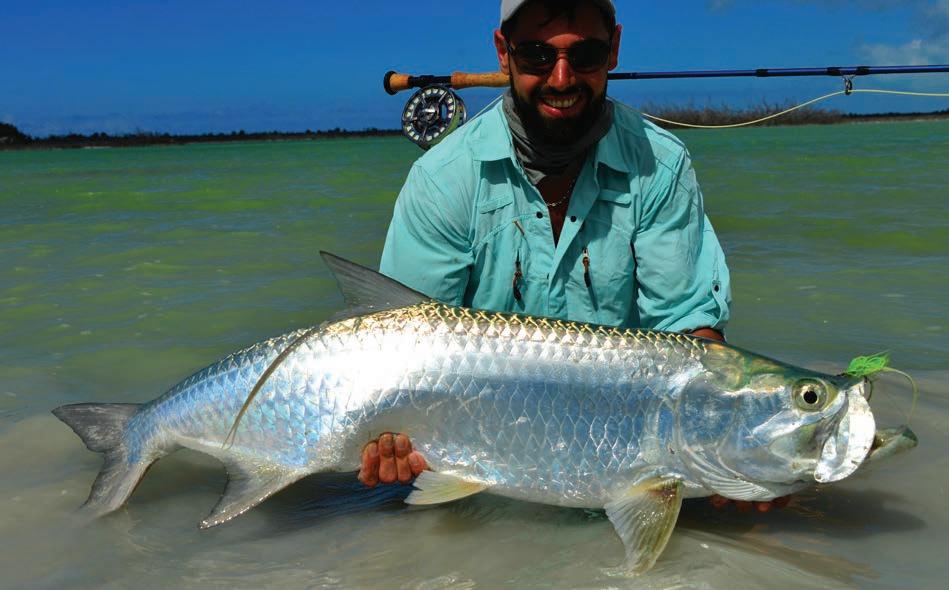
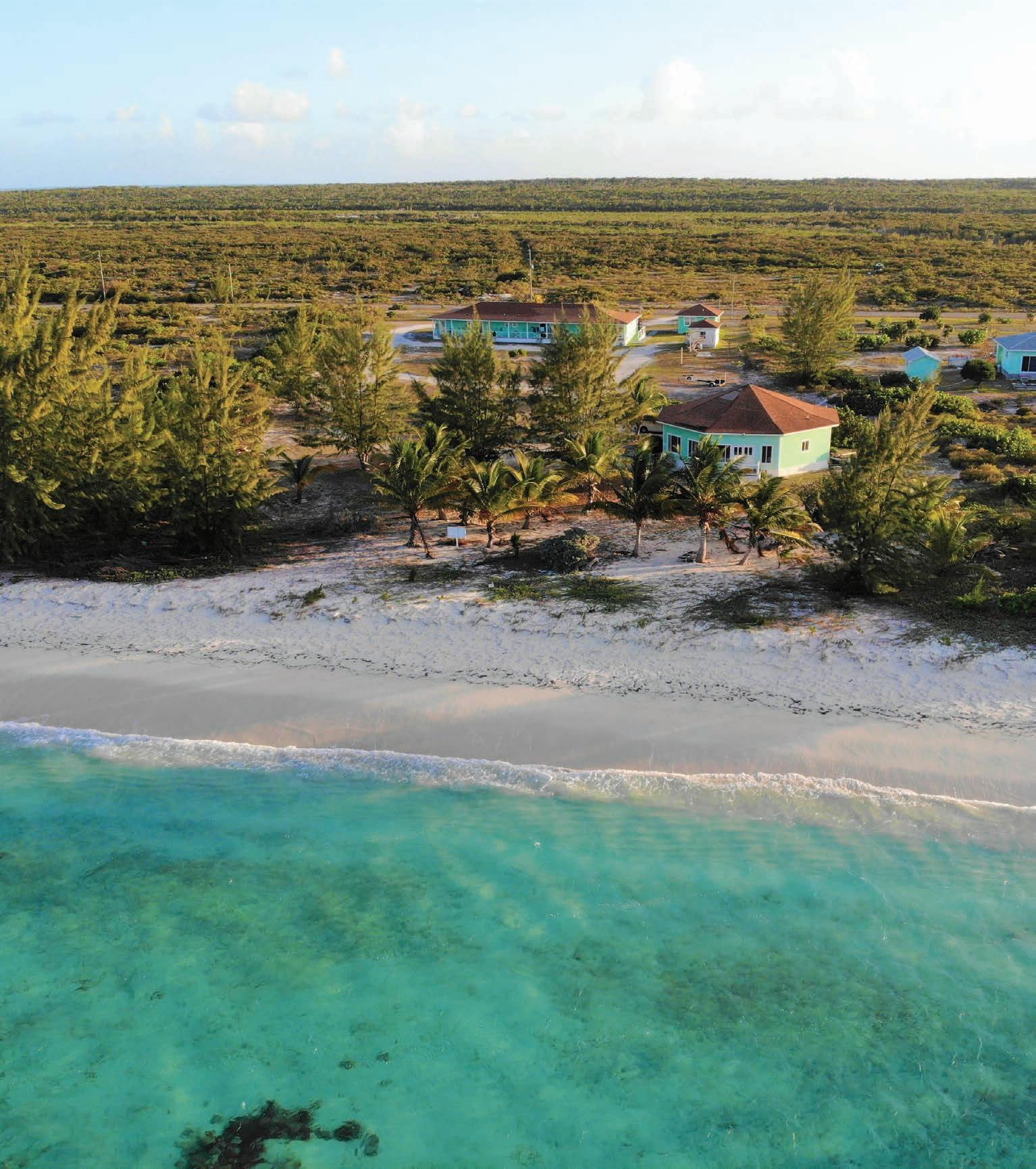
Over the years, I’ve had the good fortune to cast flies across the length of the Bahamian archipelago - from the flats of Grand Bahama and Abaco to the wild backcountry of Andros and the remote beaches of Long Island. But more than a decade ago, one place captured my heart like no other: The vast southern atoll formed by Crooked Island and Acklins. Tucked away far from the tourist trail, this isolated corner of the Bahamas has drawn me back time and again - and each return only deepens my appreciation for its raw, untouched beauty.
By HERLE HAMON
Crooked doesn’t come easy. There are just two flights a week from Nassau, a handful of vehicles on the island, one small grocery store, and fewer than 200 residents. It feels like stepping back in time - and that’s part of its magic.
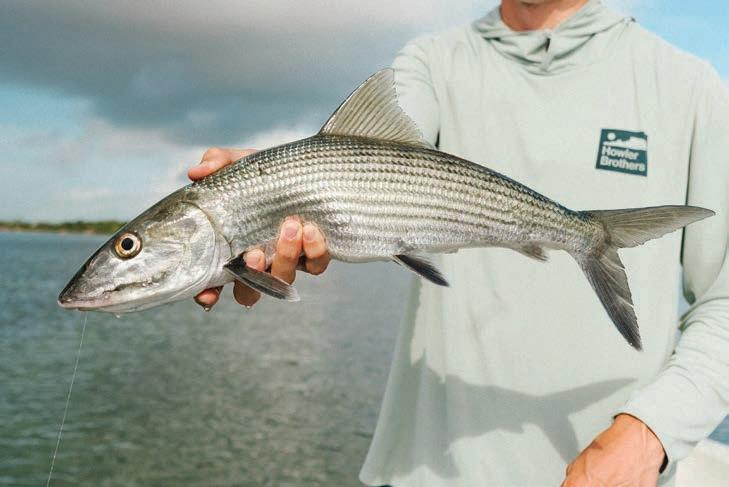
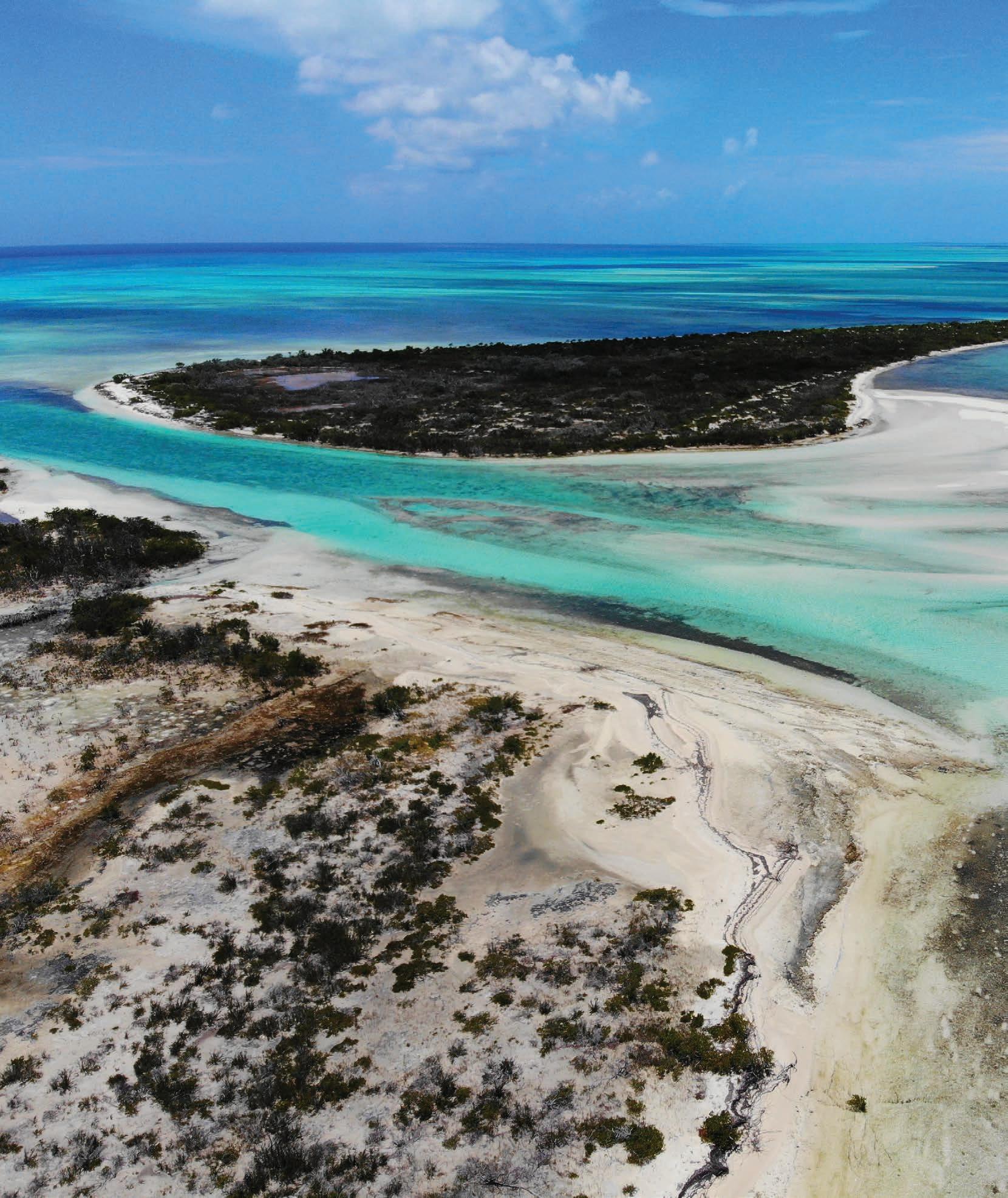
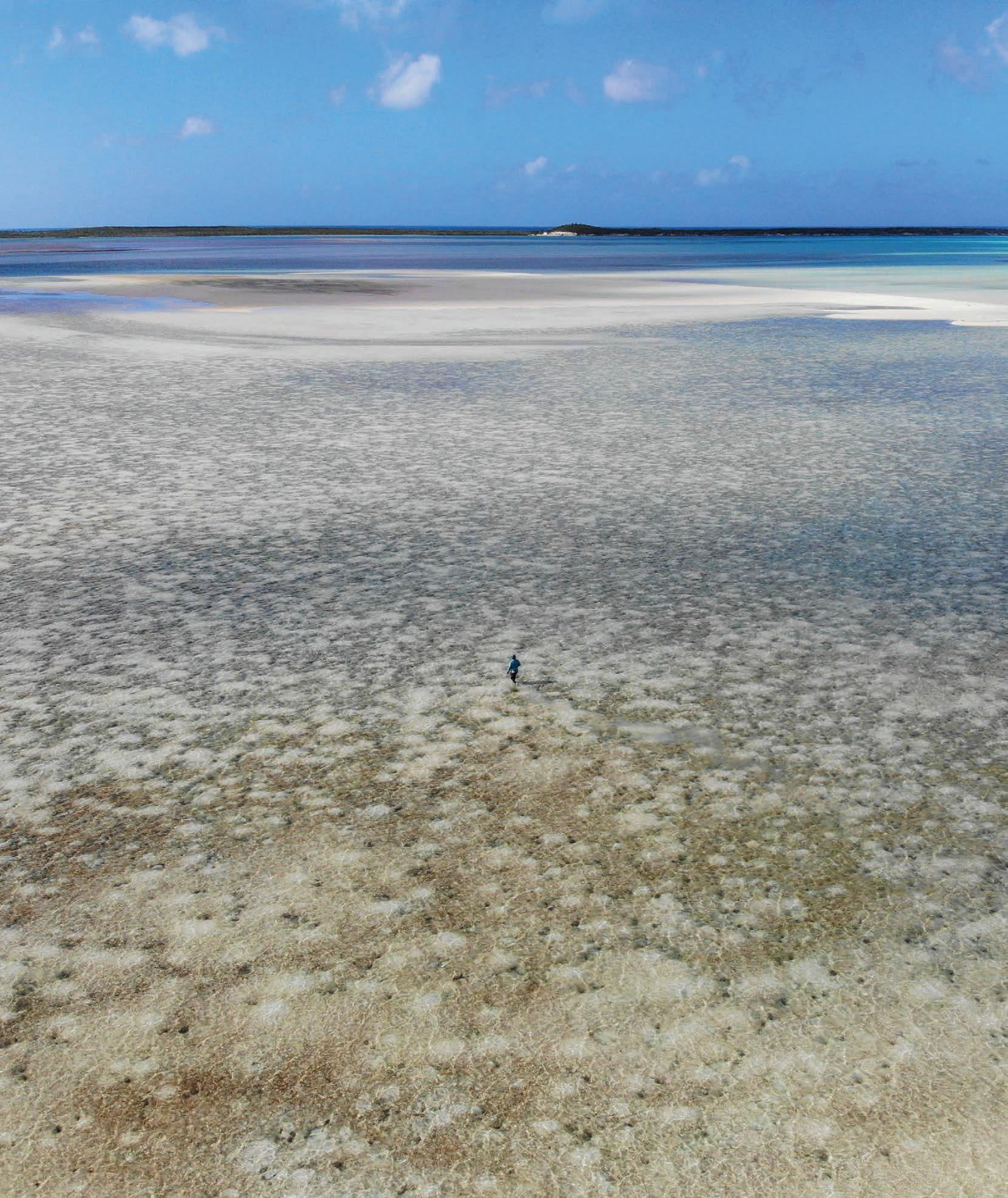
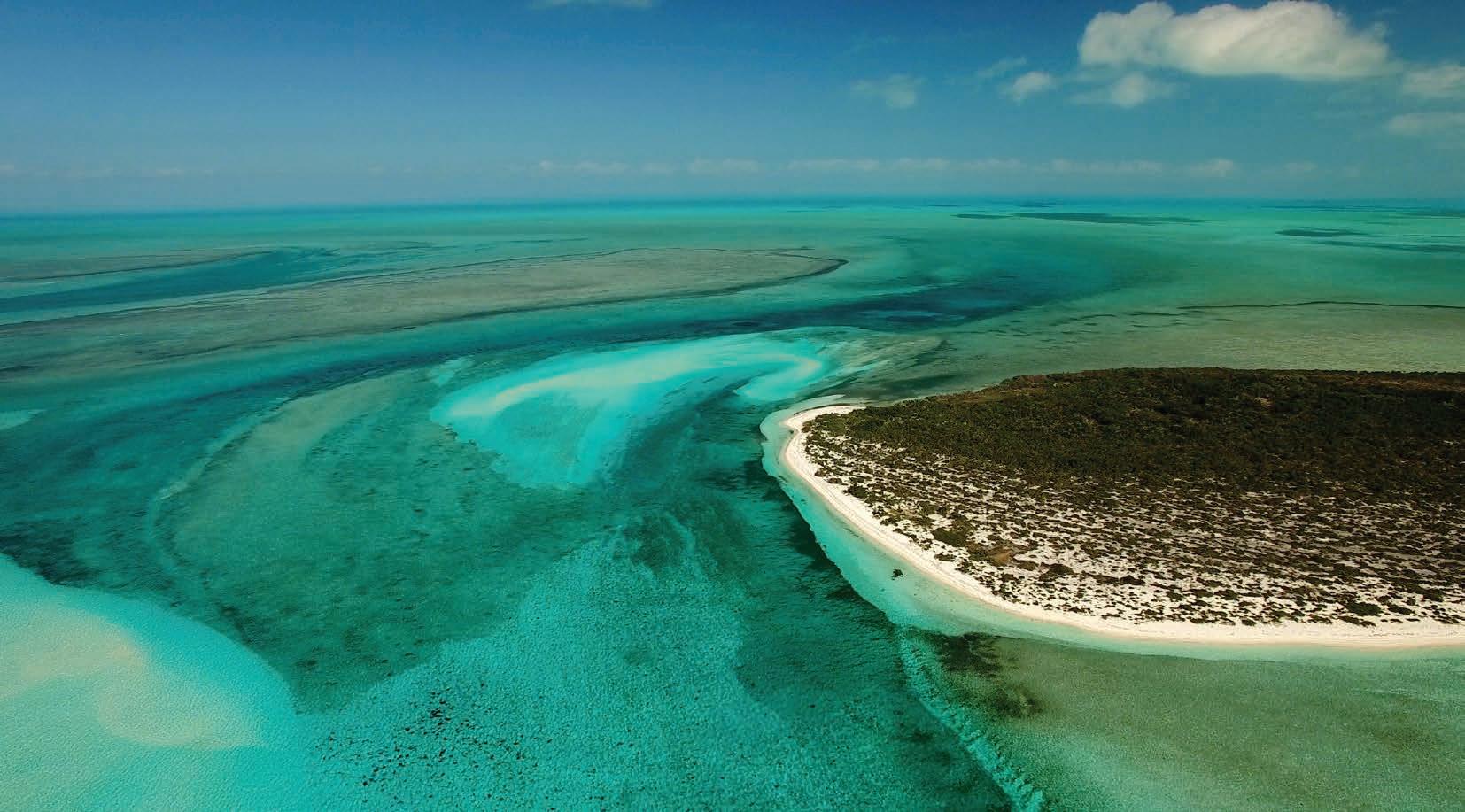
What Crooked and Acklins lack in amenities, they more than make up for in wild, pristine flats. This enormous atoll stretches roughly 140 miles around, sheltering a sprawling inner lagoon teeming with life. Bonefish are plentiful, the pressure is practically non-existent, and the water? - As clear and endless as any fly angler could hope for. If you’re looking for solitude, unspoilt nature, and the chance to explore flats where it feels like no one has cast before - you might just find your own version of paradise on this forgotten atoll.
Bonefish Heaven – Exploring the Flats of Crooked & Acklins
As your plane descends over Crooked and Acklins, you’re greeted by a jaw-dropping mosaic: square miles of white sand and coral-studded
flats, bordered by a reef-fringed coastline where the water glows with a clarity that rivals anywhere else on Earth. It’s a bonefish’s dream habitat - and a fly angler’s, too.
But to truly appreciate this place, you need to love solitude, raw nature, and the pace of island life. There’s only one road, a scattering of brightly painted houses, and locals who live slow and smile often. And beyond that? Flats. Endless, untouched flats stretching in every direction - a tropical angler’s Eden.
That said, a word to the wise: Don’t come here expecting to walk out of your rental and wade into worldclass fishing. While a handful of roadside lagoons hold bonefish, the vast majority of the atoll’s fishable water is only accessible by boat. I’ve met more than one disappointed DIY angler who showed up with high hopes and no skiff, only to realize they were limited to a few overfished flats.
Yes, this is the Bahamas - the bonefish capital of the world - and yes, you can catch fish from shore.
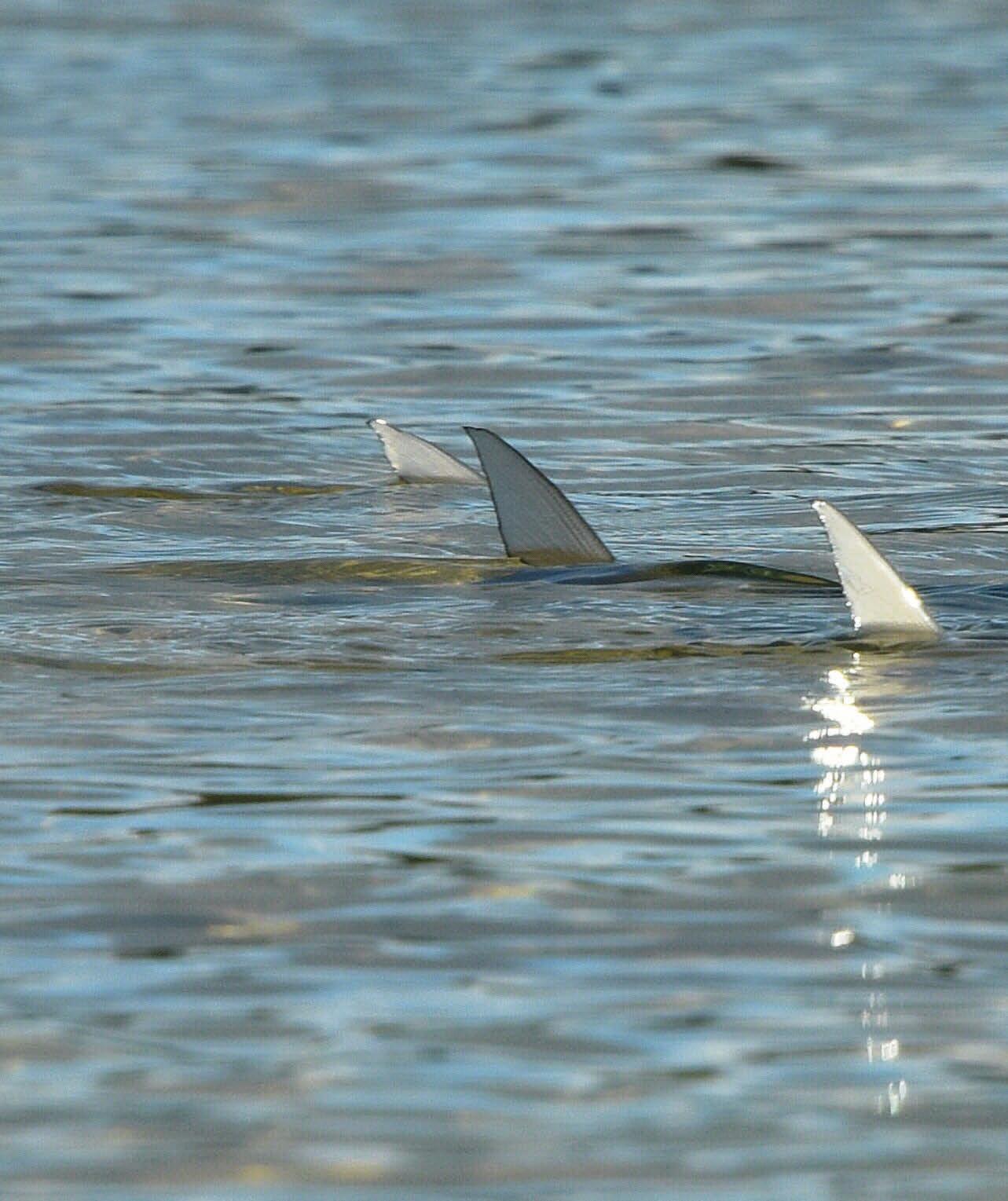
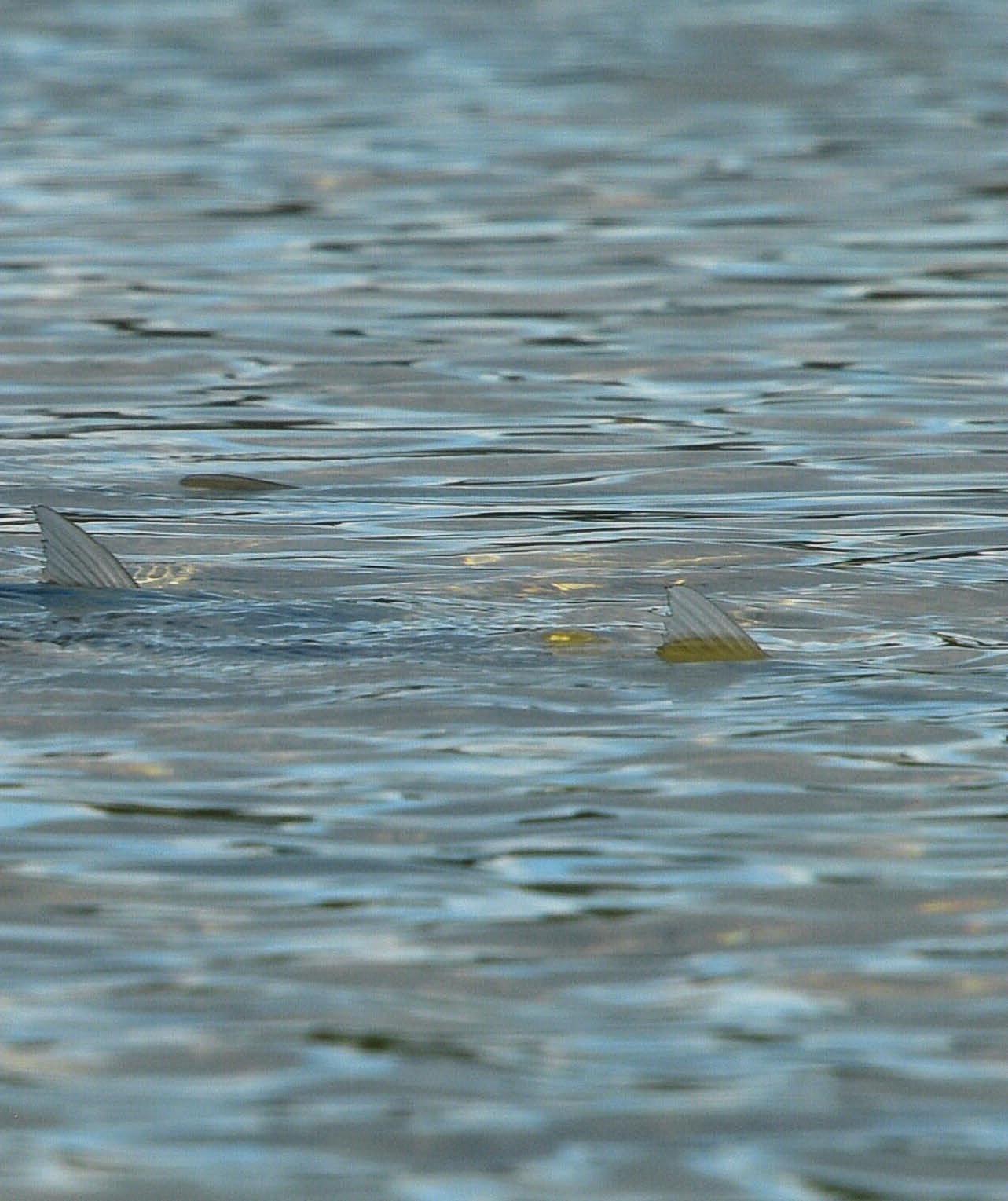
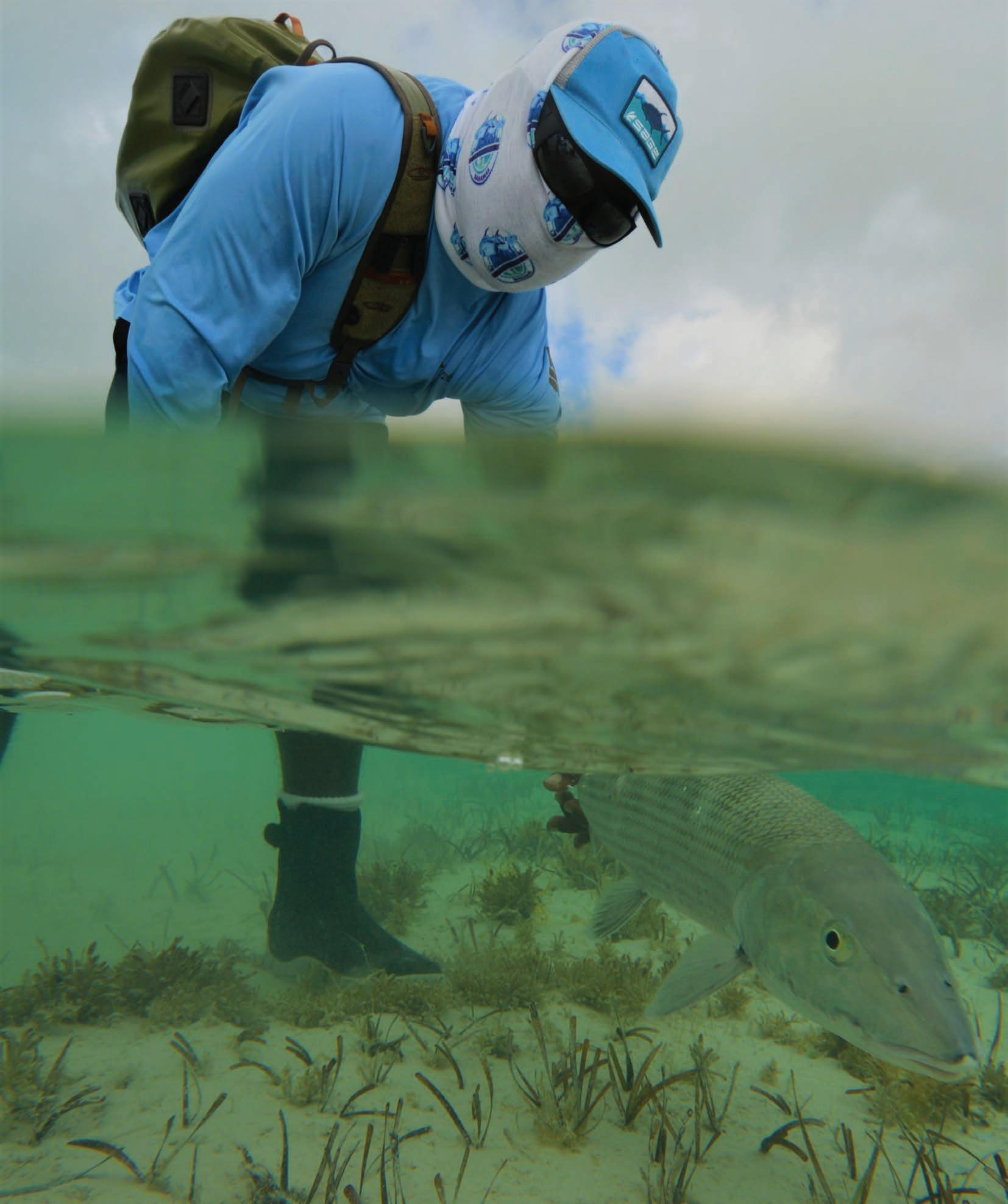
But if you want to unlock the true potential of this place, you need a flats skiff and a good guide.
“You’re a cast away from some of the most productive bonefish flats in the Caribbean”
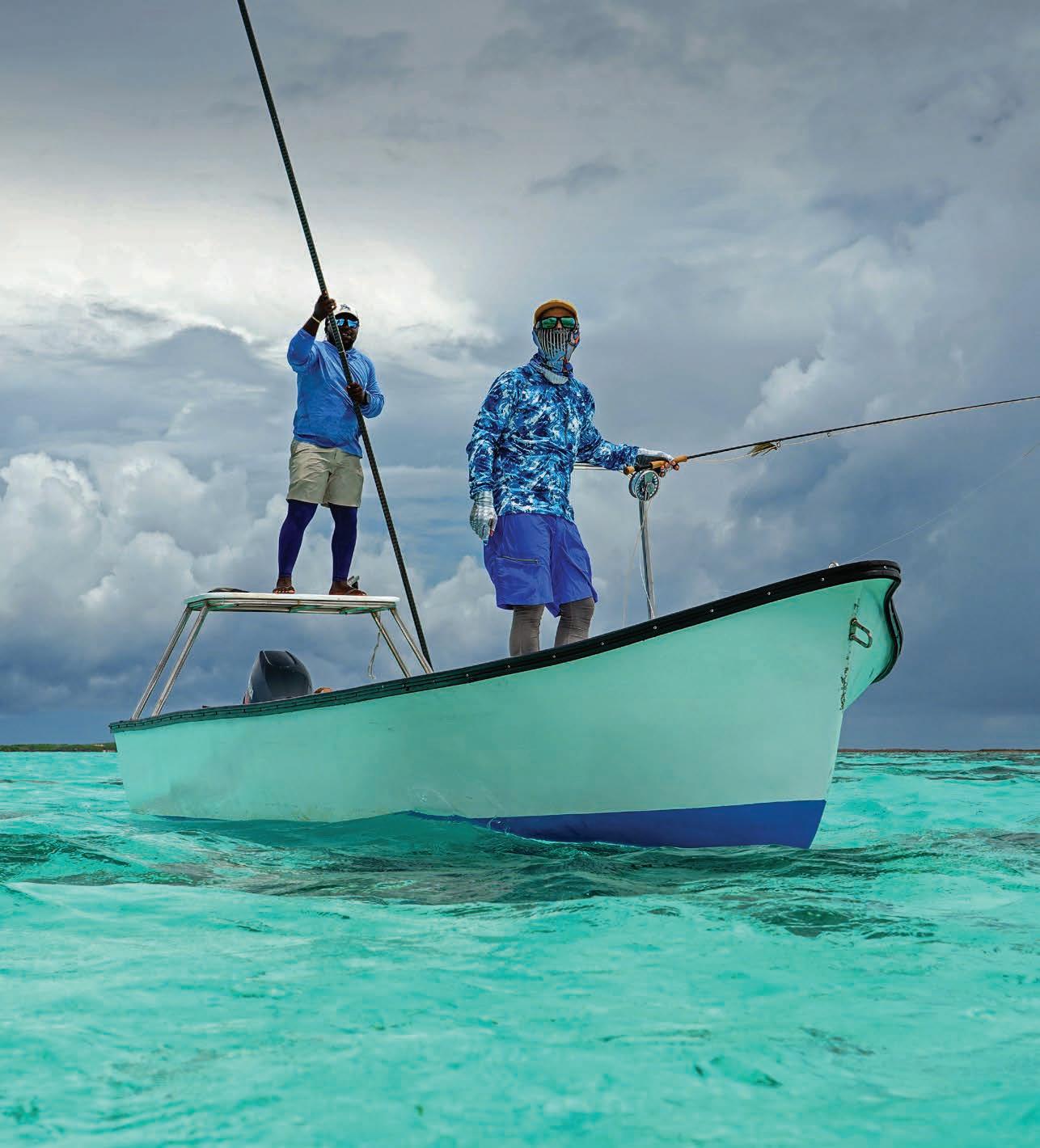
That’s where the Crooked & Acklins Lodge comes in. Perfectly situated to access the best waters on both islands, the lodge operates boats from two strategic locations: One dock inside the vast Turtle Sound lagoon on Crooked Island, and another near the channel that separates Crooked from Acklins. From either launch point, you’re a cast away from some of the most productive bonefish flats in the Caribbean.
This is bonefish heavenpure and simple
On my most recent trip, I decided to push further. I packed a few barebones tents and convinced a handful of adventurous buddies to join
me for a true off-grid exploration. We left behind the comfort of the lodge and headed into the wildest corners of the atoll, eager to explore the less-travelled zones that had been calling to me for years. In past trips, I’d only scratched the surface of these remote, uninhabited islands scattered around the edge of the atoll. They lie well beyond the daily reach of the lodge’s skiffs, and I’d only had fleeting encounters with their potential. But those brief glimpses were enough to stir something in me - a sense that this place held far more than I had seen. And I wasn’t wrong.
Thanks to a bit of creative packing - and an extra checked bag - we arrived equipped with four “luxury” tents, ready to set up a rough-andready base camp on a remote coral cay, inhabited only by ospreys and curious rock iguanas. With help from the lodge and a few trusted guide friends, I had arranged - remotely, of course - a multi-day bivouac in one of the most inaccessible corners of the atoll.
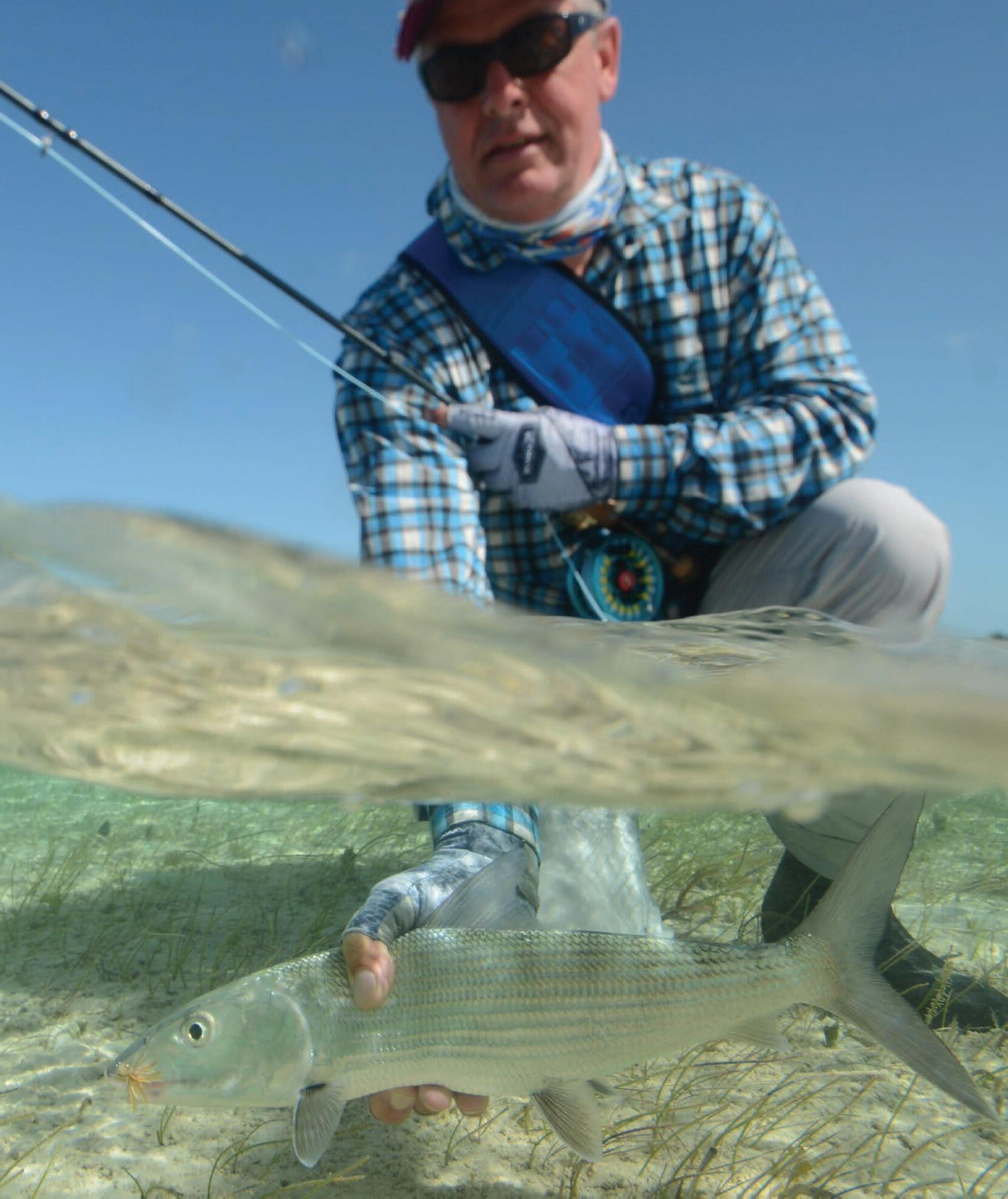
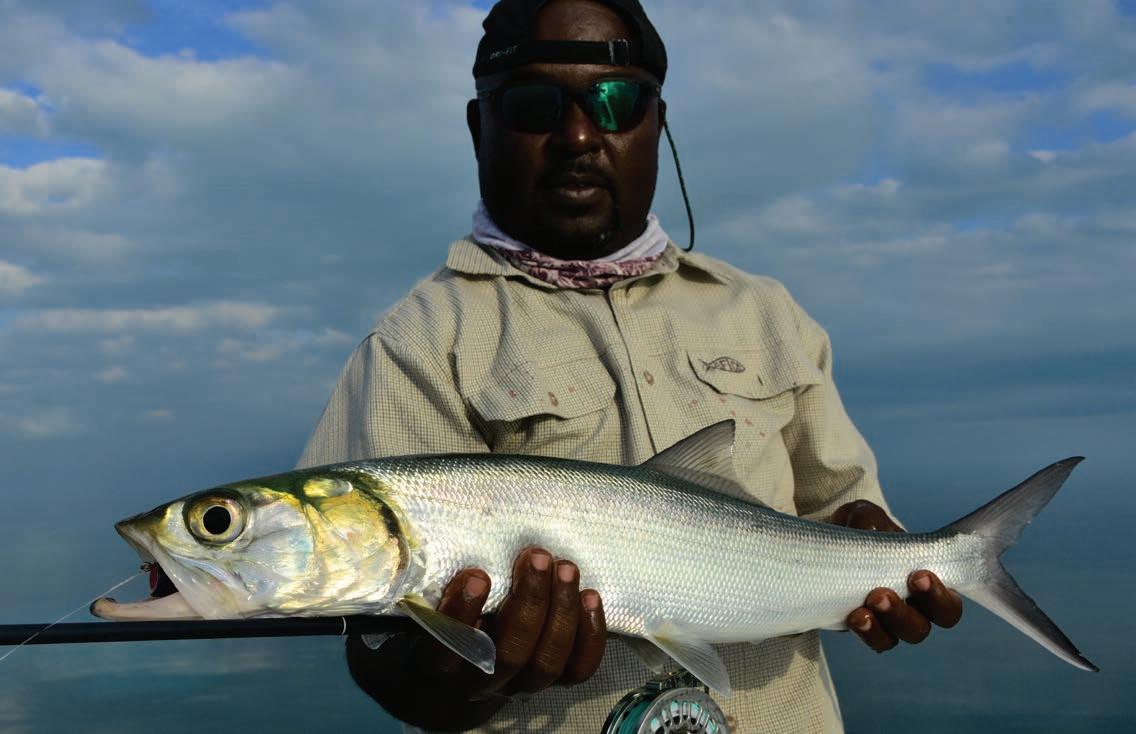
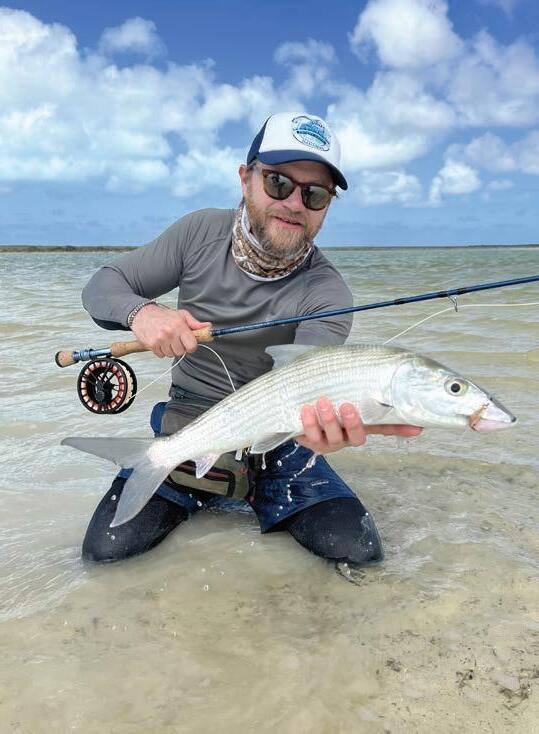
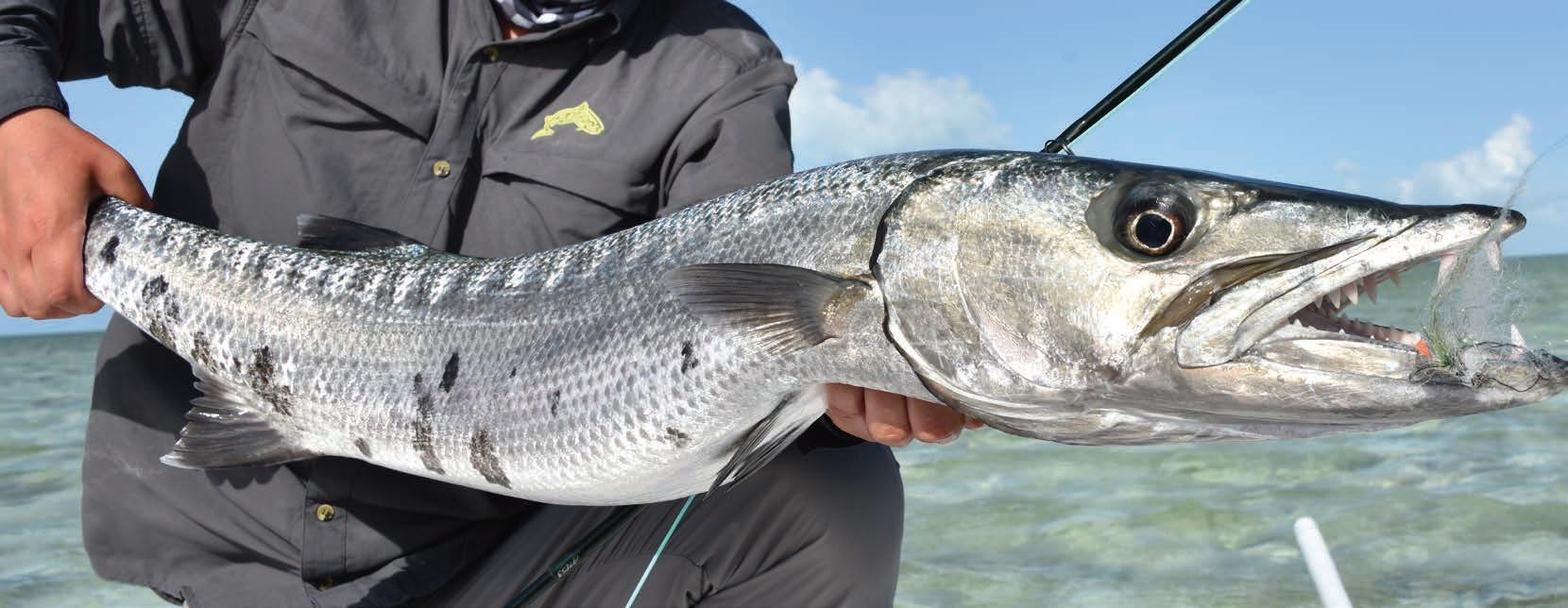
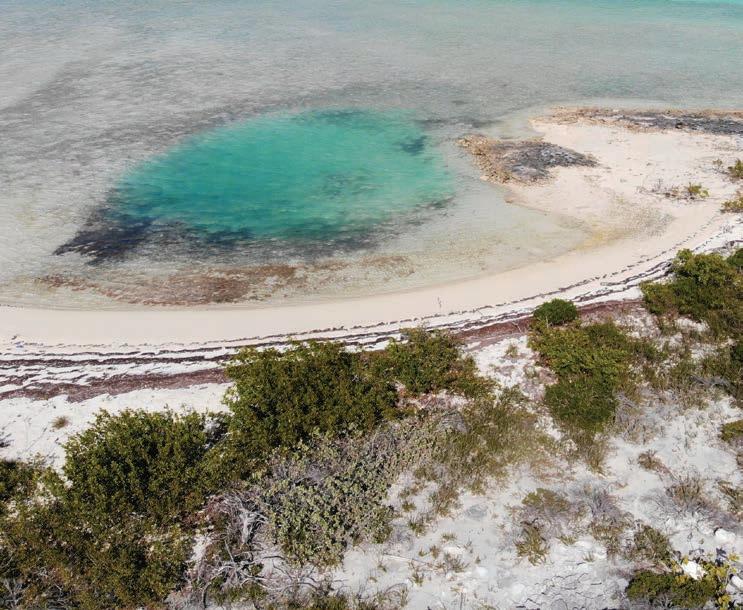
Coolers were filled to the brim with ice, food, and most importantly, enough drinking water to last us through the coming days. This was the real deal: Off-grid, self-reliant, and wildly exciting. The archipelago we targeted is made up of eight small, scattered islands spread across nearly 20 kilometres of reef-fringed flats and channels. We set up camp on the second cay from the north, nestled behind a curve of sand that offered shelter from the prevailing wind. Tents went up fast, coolers were tucked into the shade of scrubby vegetation, and the adventure began. And we quickly discovered… we weren’t alone.
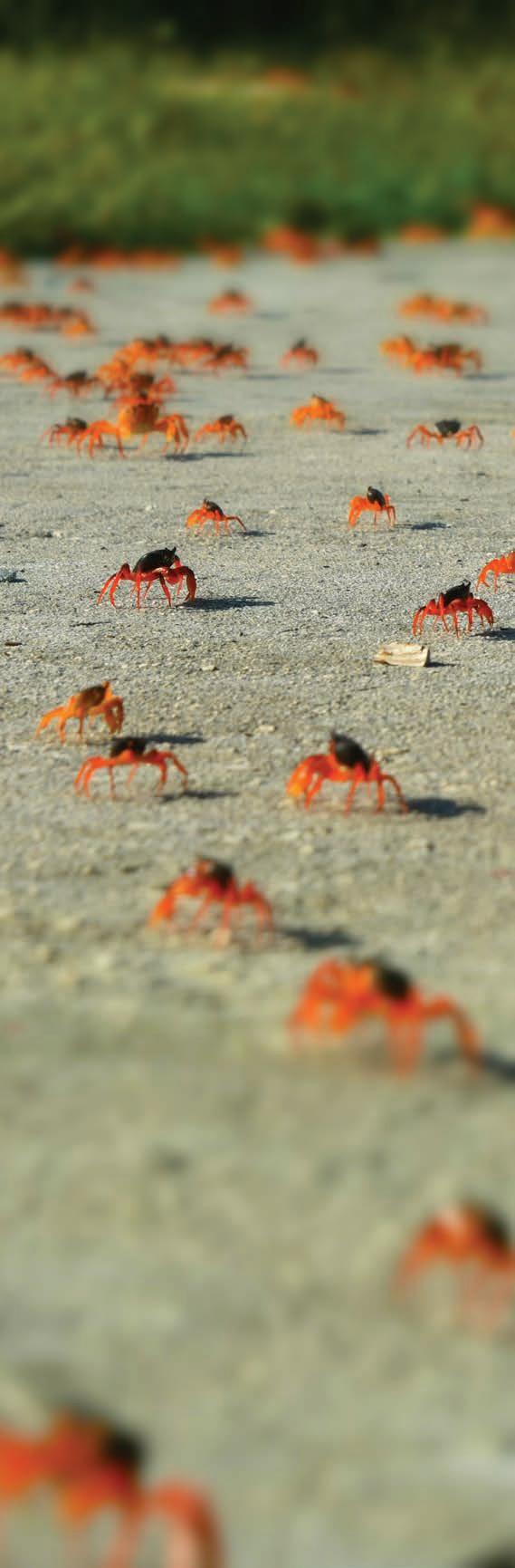
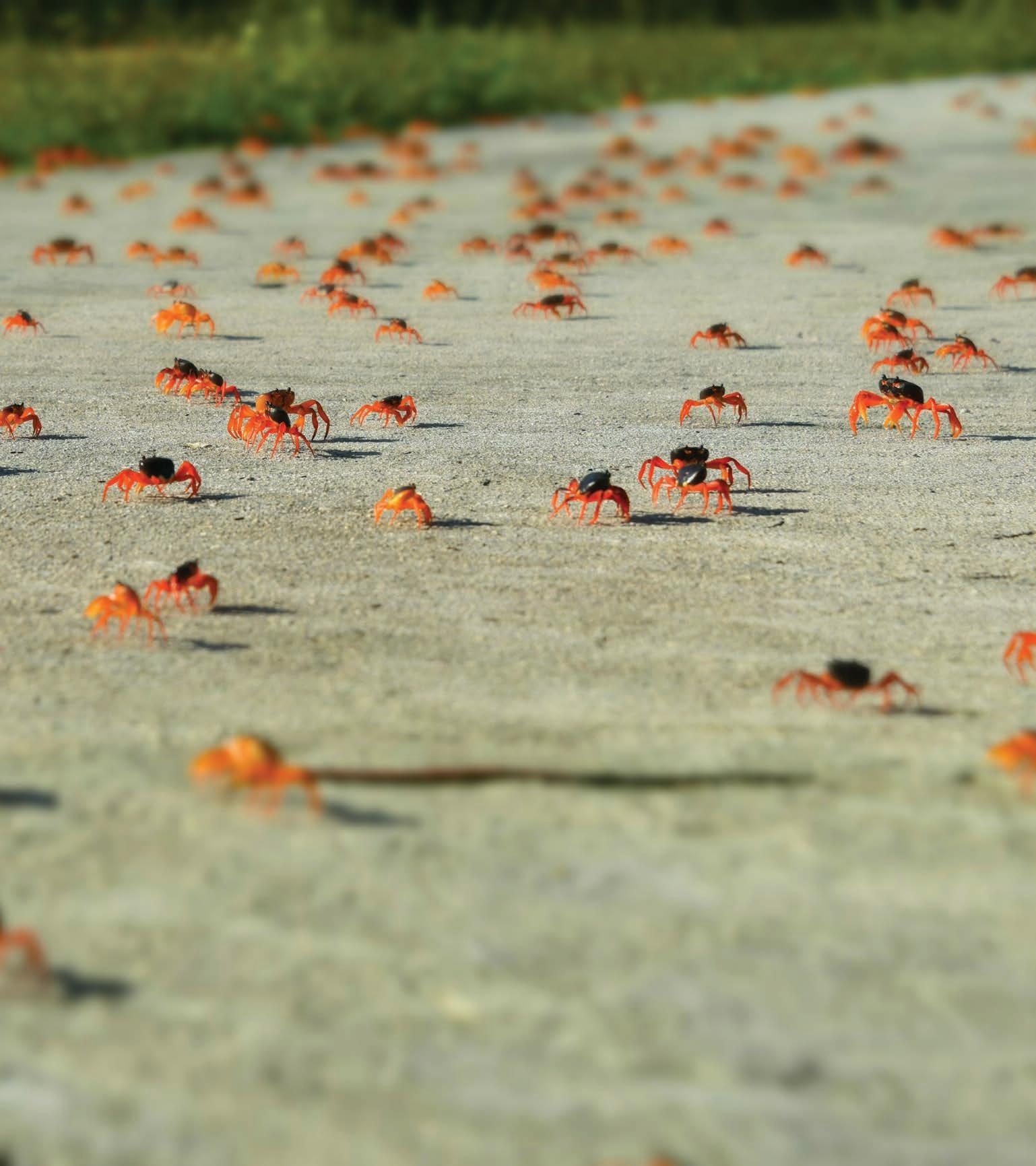
From the brush emerged a whole committee of iguanas, waddling over with practiced ease in search of handouts. Between the lizards, hermit crabs, and curious shorebirds, it became clear we’d have to guard our food like a permit guards its shadow. Nothing could be left unattended - not even for a minute.
Out beyond the beach, the deep channels cutting through the reef were like underwater highways. With the incoming tide, they brought life into the lagoon - predators, forage fish, and just maybe, the fish of a lifetime. As the tide pushed in hard, we loaded into our two flats skiffs and split up to explore the surrounding flats.
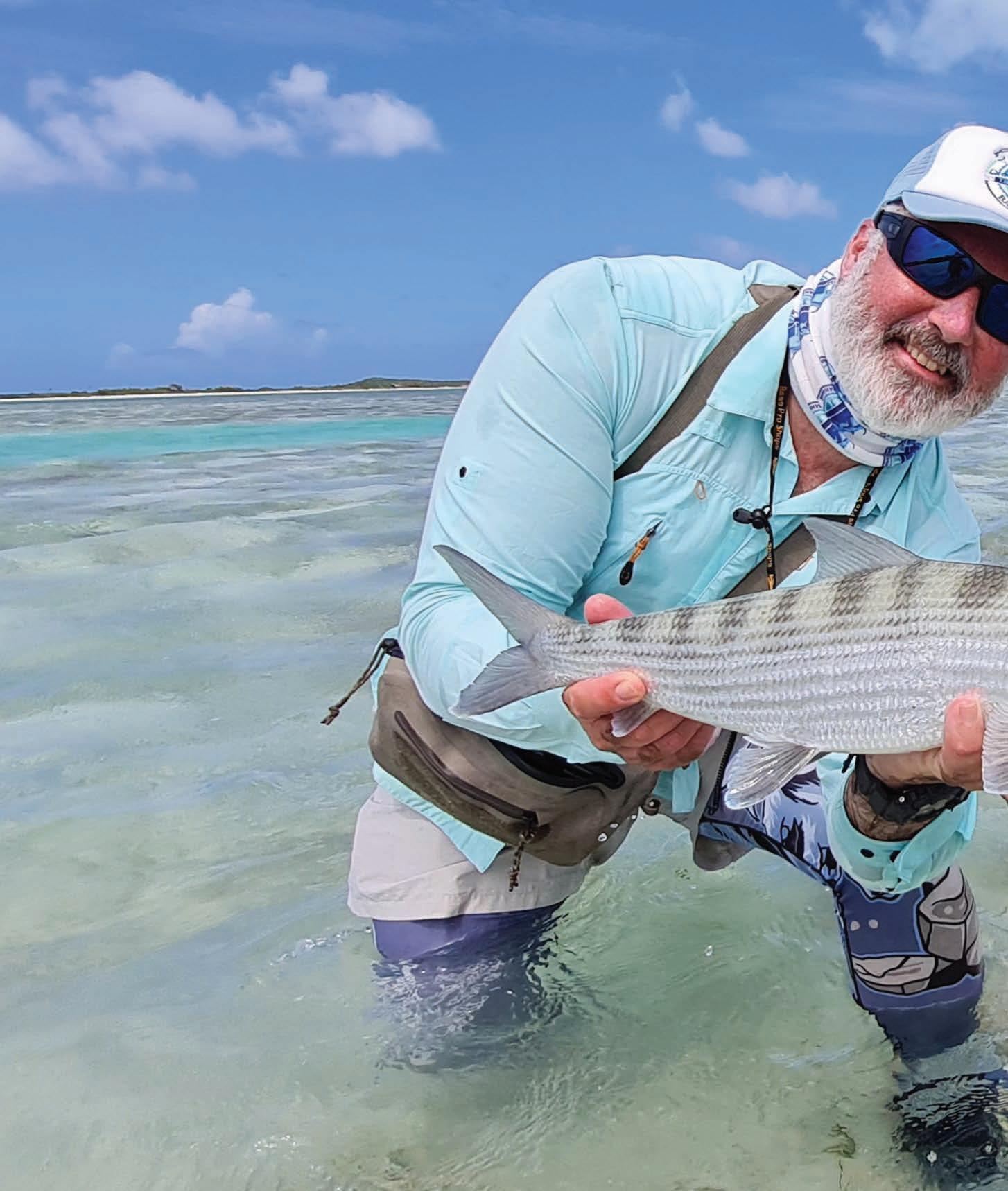
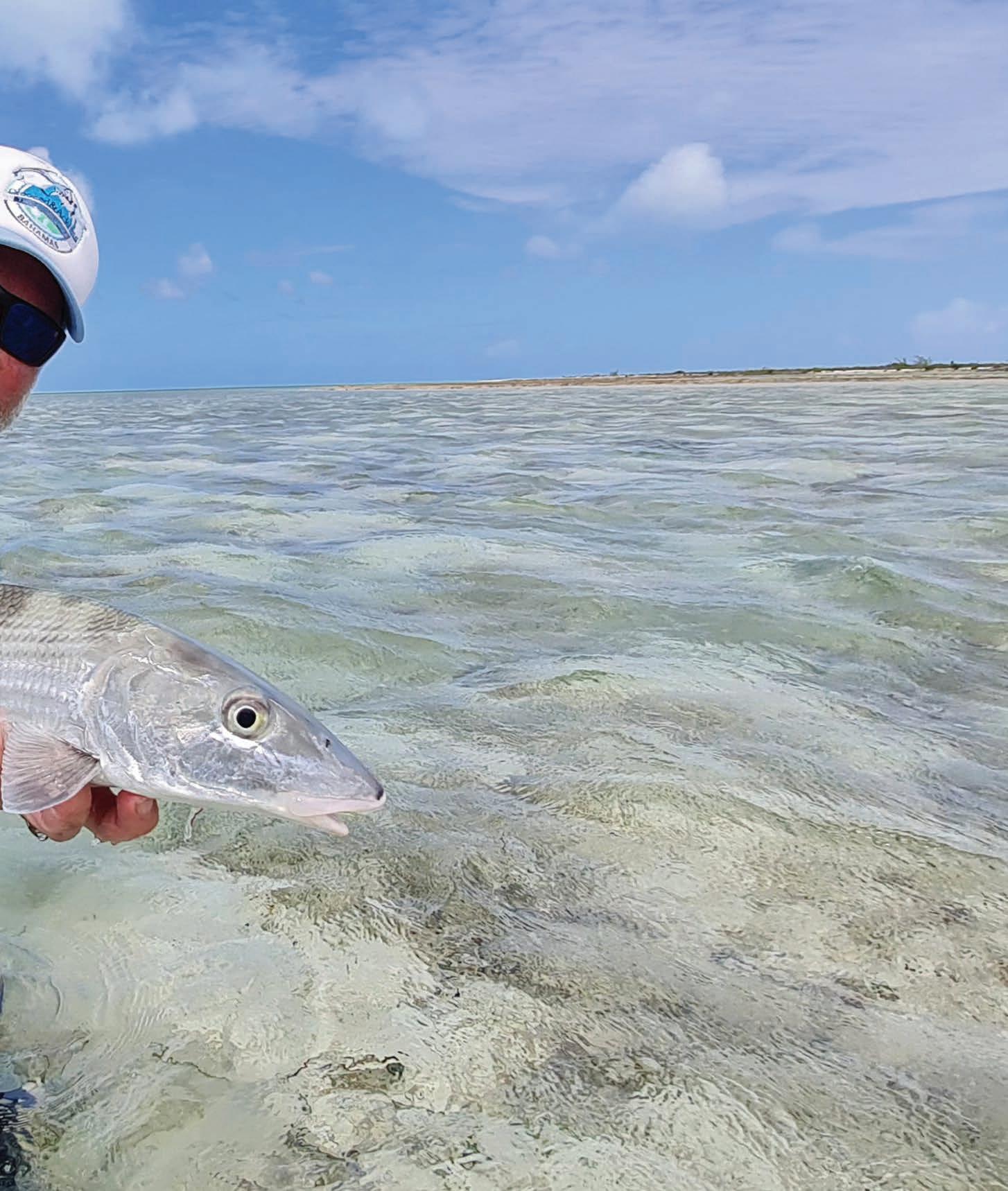
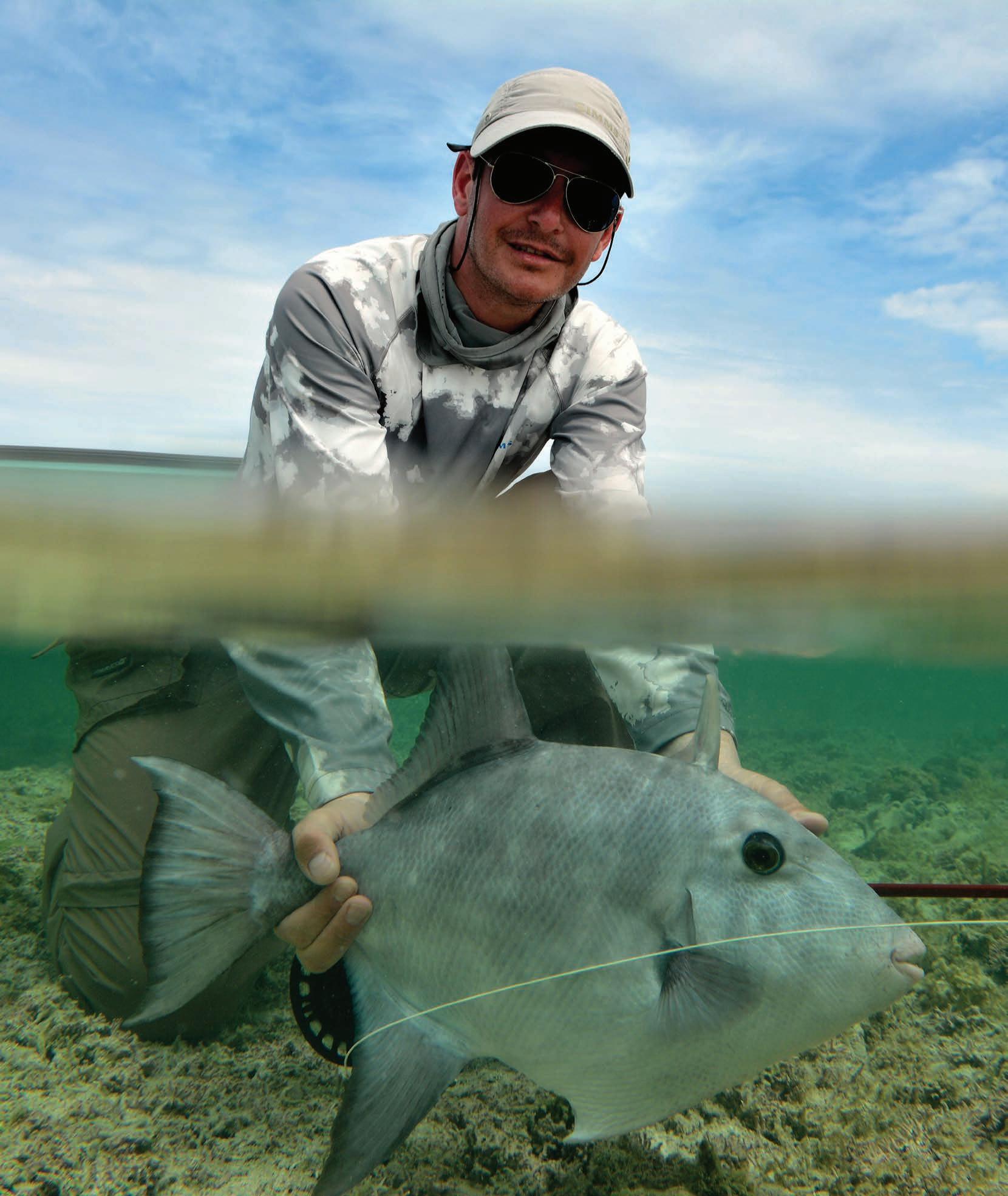
Triggerfish Paradise
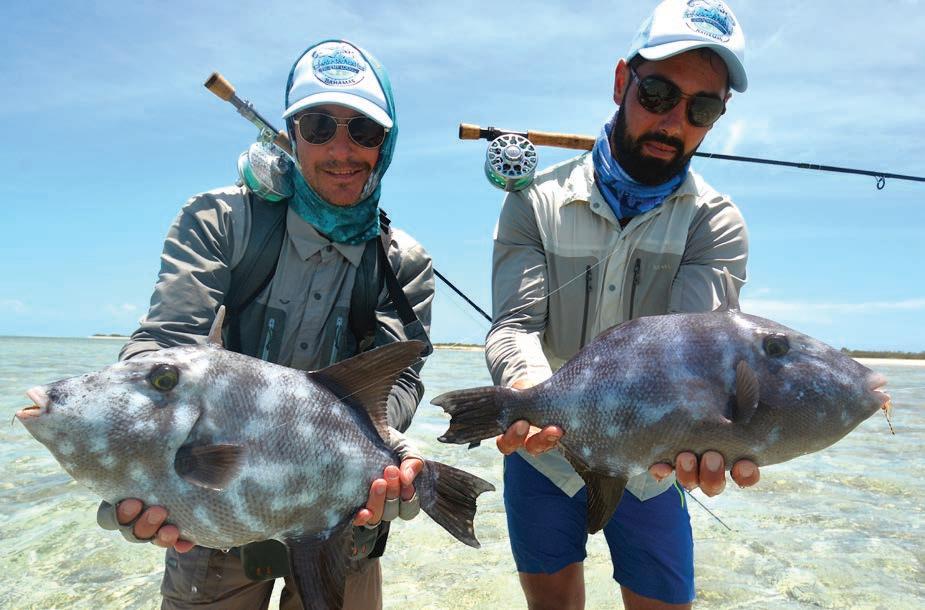
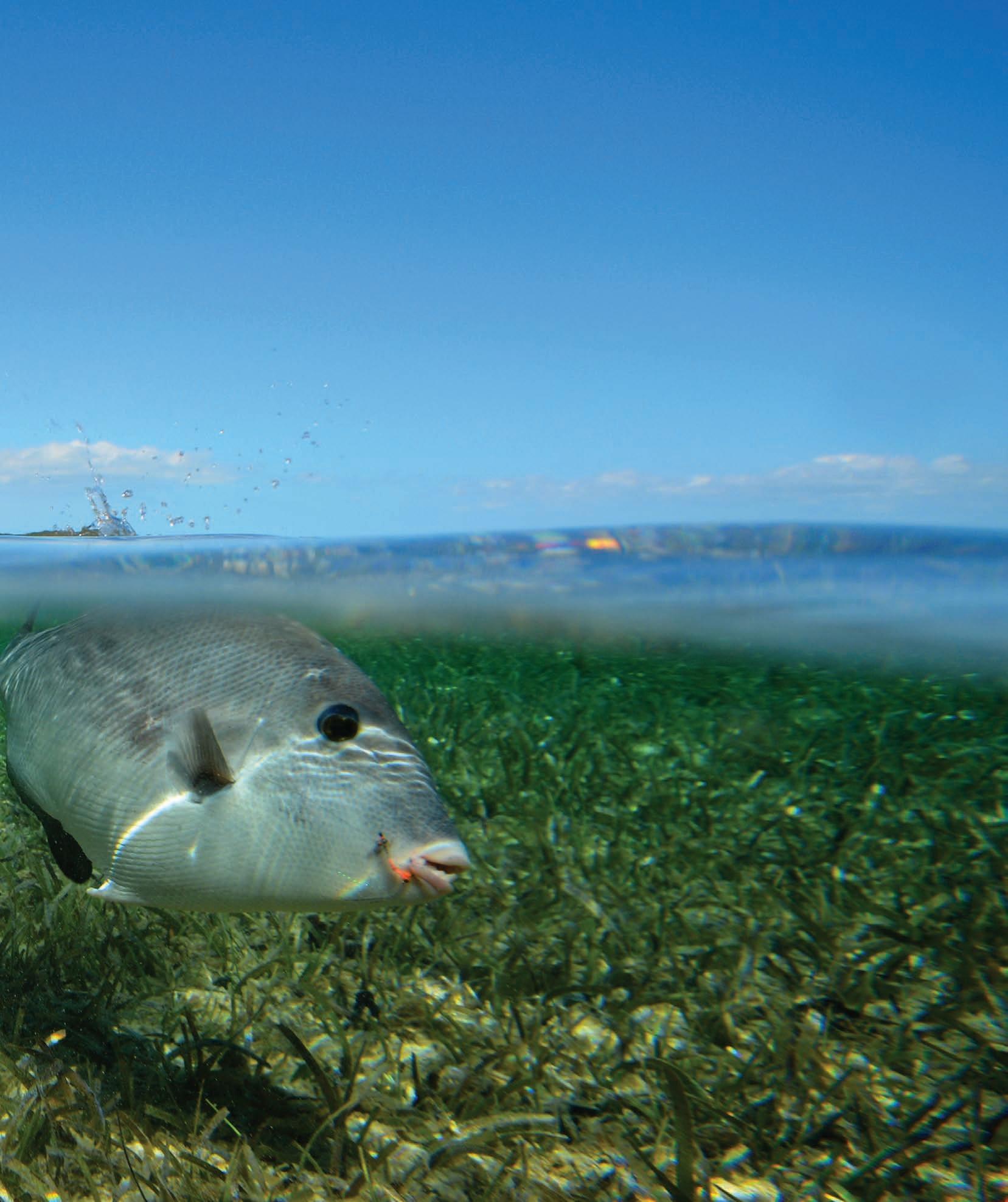
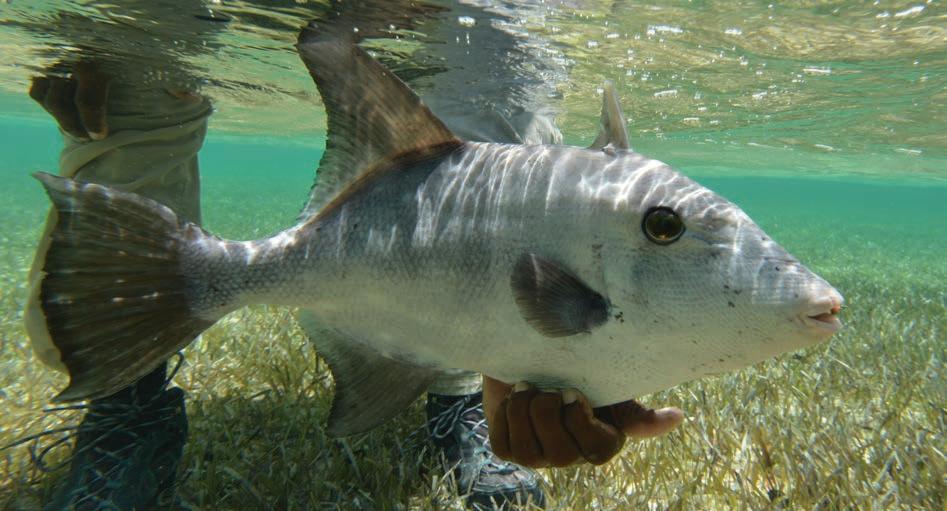
I paired up with Julien and headed around the back of the island. We hadn’t poled more than a few minutes before the tails appeared - not bonefish, but something rarer, and in surprising numbers. Triggerfish. Lots of them. I’d never seen so many in one zone - not in the Caribbean, anyway. Maybe twenty tails waved above the surface in near-perfect unison, as if choreographed. We eased in, dropped our shrimp patterns ahead of the leading fish, and watched them charge with that unmistakable triggerfish twitch.
The first double came quick. Then another. And another. By the time the tide had risen enough to scatter the school, I’d landed nine solid fish - by far the best trigger session I’ve had anywhere in the Caribbean.
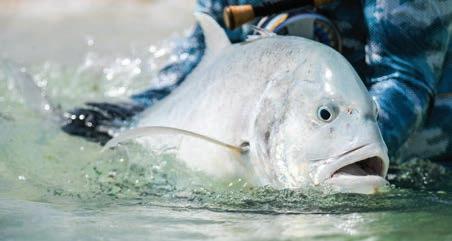
These were Ocean Triggerfish, a species native to the Atlantic, with a chameleon-like ability to shift color depending on the substrate - from ghostly pale to charcoal black, and every steel-blue hue in between. Like their Indian and Pacific cousins, they prowl the shallows in search of crus-
taceans, digging with their strong teeth and rooting out prey from coral and sand alike.
“You
let them come to the fly, wait for that slight tilt as they key in, then strip set with just enough pressure to sink steel”
They’re an underrated target on the fly. Sight-fishing in skinny water, slow and deliberate eats, and surprisingly technical presentations - these fish demand finesse. You let them come to the fly, wait for that slight tilt as they key in, then strip set with just enough pressure to sink steel.
They don’t run like a bonefish or bulldog like a jack, but a big trigger will test your knots, your patience, and your temper. And they love nothing more than breaking you off on the nearest coral head. But man… when it all comes together, there’s nothing quite like them.
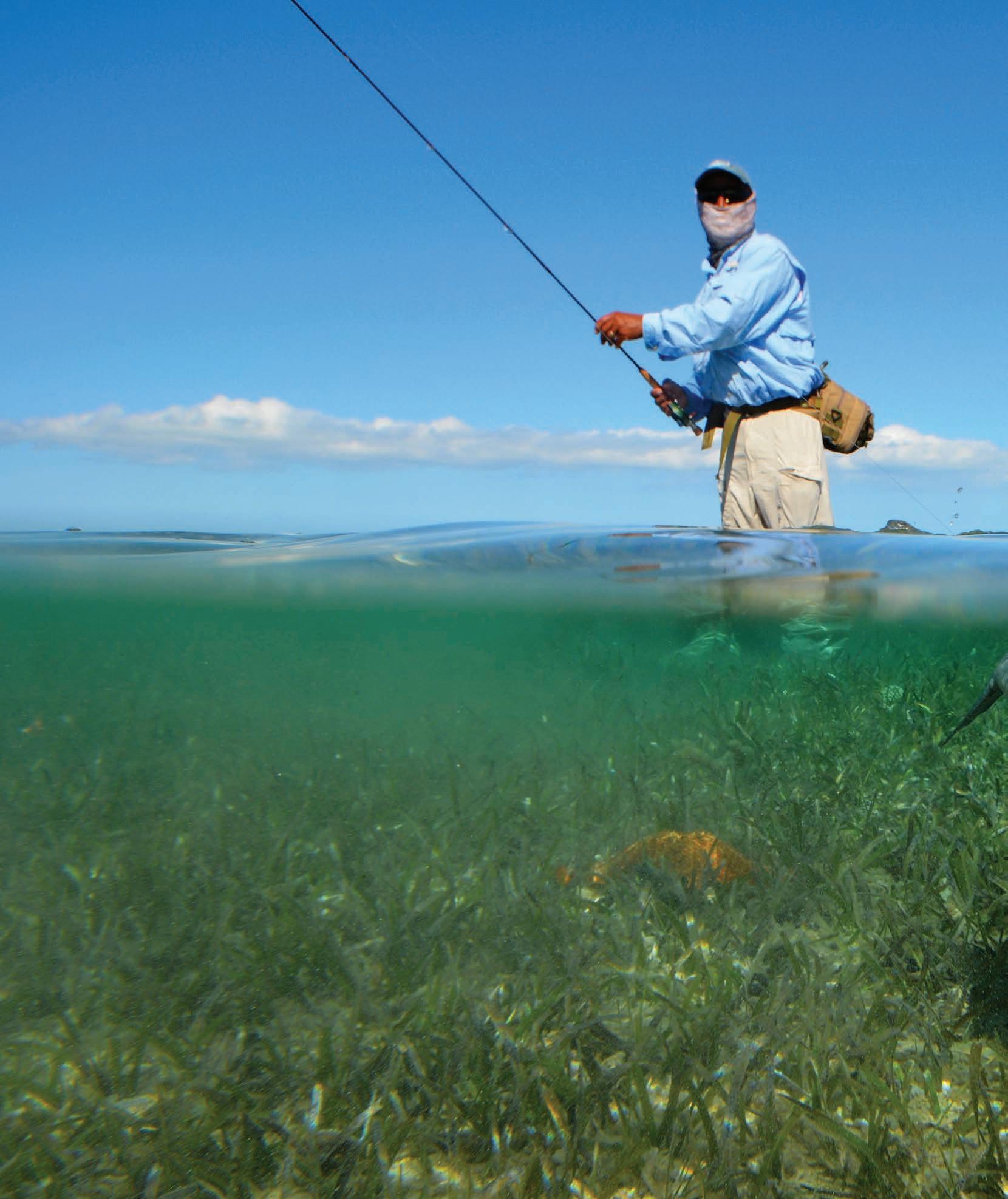
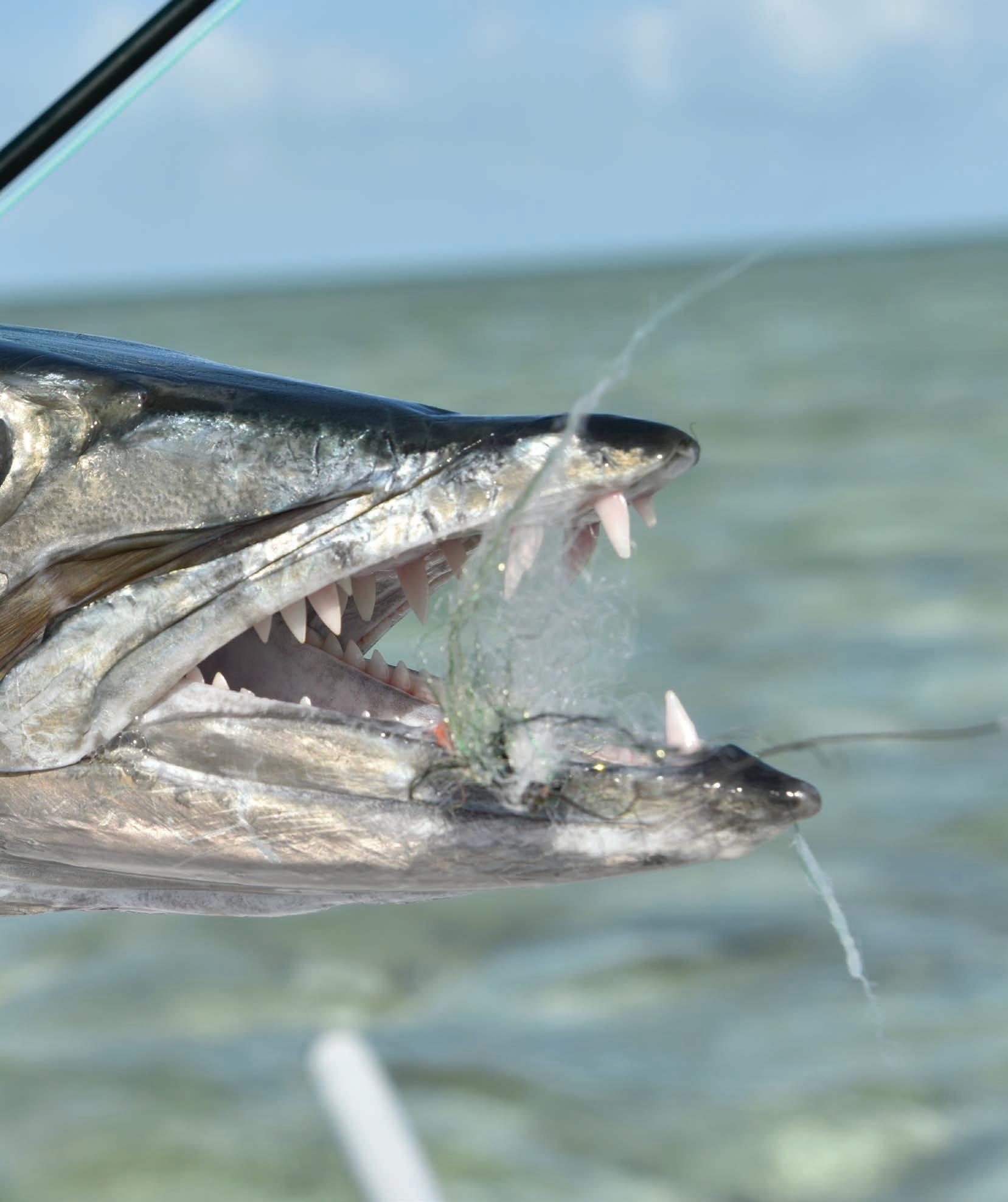
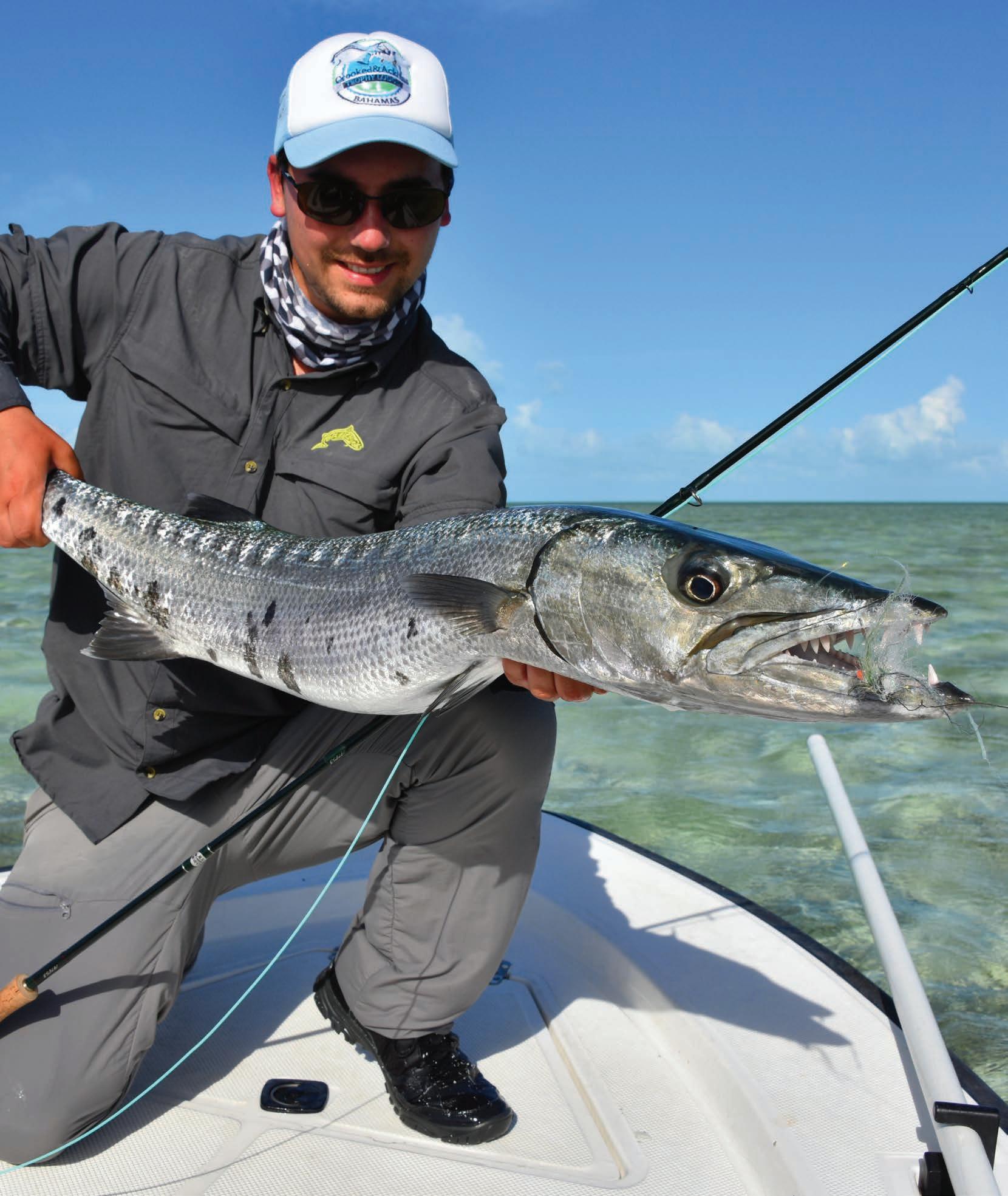
As we made our way back toward the island, I peeled off toward the windward side, where a wide channel swept in close to shore. I was walking along the beach when I spotted it: A dark shadow moving just above the bottom, cutting slowly across the sand. No doubt about it. A big barracuda was on the hunt.
I quickly swapped flies, tying on a white-and-chartreuse 4/0 streamer, rigged on a wire bite tippet. The fish was holding steady, almost statuesque. I knew from experience not to cast too close - get too tight, and you’ll spook them every time.
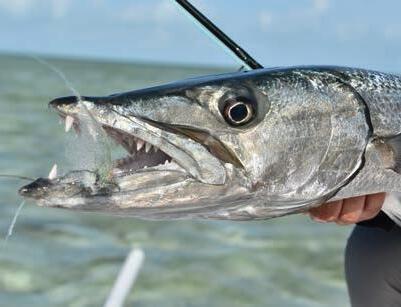
I sent the fly out about 20 meters, right into the heart of the channel. Let it sink. Then strip - fast, erratic, no rhythm. I kept my eyes locked on the fish… but I never even saw the take. That barracuda hit like a freight train. The line ripped through the water as the fish exploded into a series of aerial cartwheels - some well over a meter out of the water. That first run rivals anything a tarpon can dish out. But unlike tarpon, bar-
racuda are sprinters. After the initial chaos, they tire quickly.
I worked the fish back toward the beach, landing it on the white sand before releasing it with care. It bolted for deeper water just in time - because circling nearby, maybe 8 feet long and closing in fast, was a shark. Out here, sharks show up like clockwork the moment something struggles. Their ability to detect vulnerability is uncanny - and yes, there are plenty of them around. I gave the area a few minutes to settle before making some blind casts into the channel. First cast - smash. Whatever it was ripped the line from my hand and came off just as quickly.
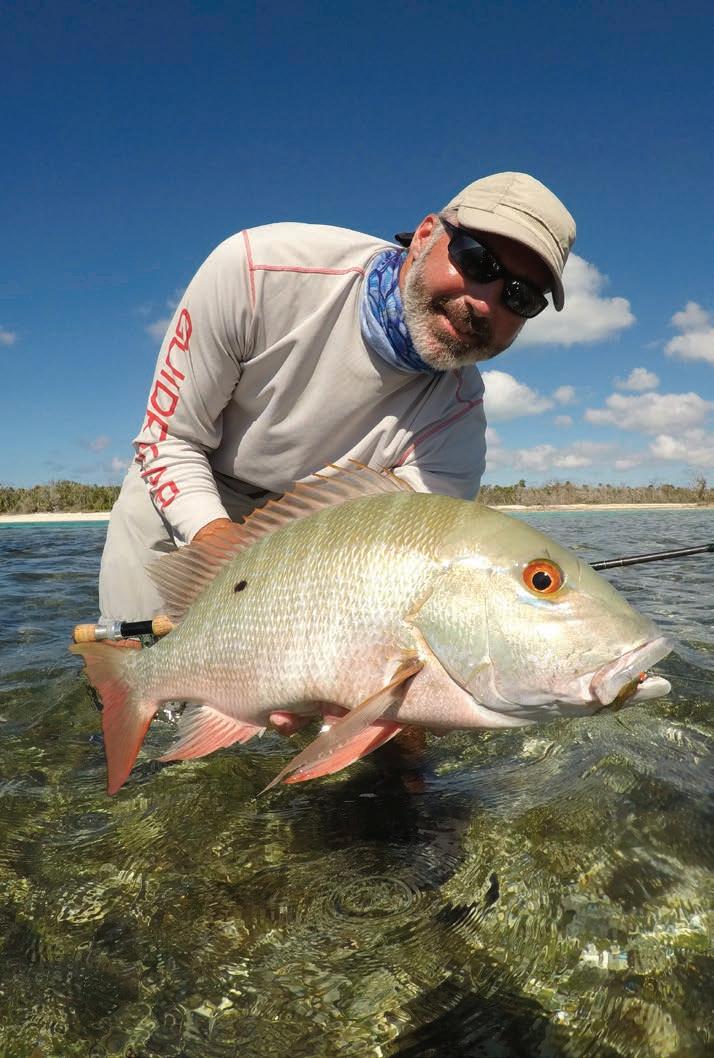
Second cast. Another violent hit, but this time I held firm. The fish ran hard, then arced into the shallows with three others in tow. It was a solid mutton snapper, followed by a small pack of companions - and a triggerfish for good measure. Romain joined me just as the group surged in, and he dropped a shrimp pattern right in front of the trigger. Immediate eat.
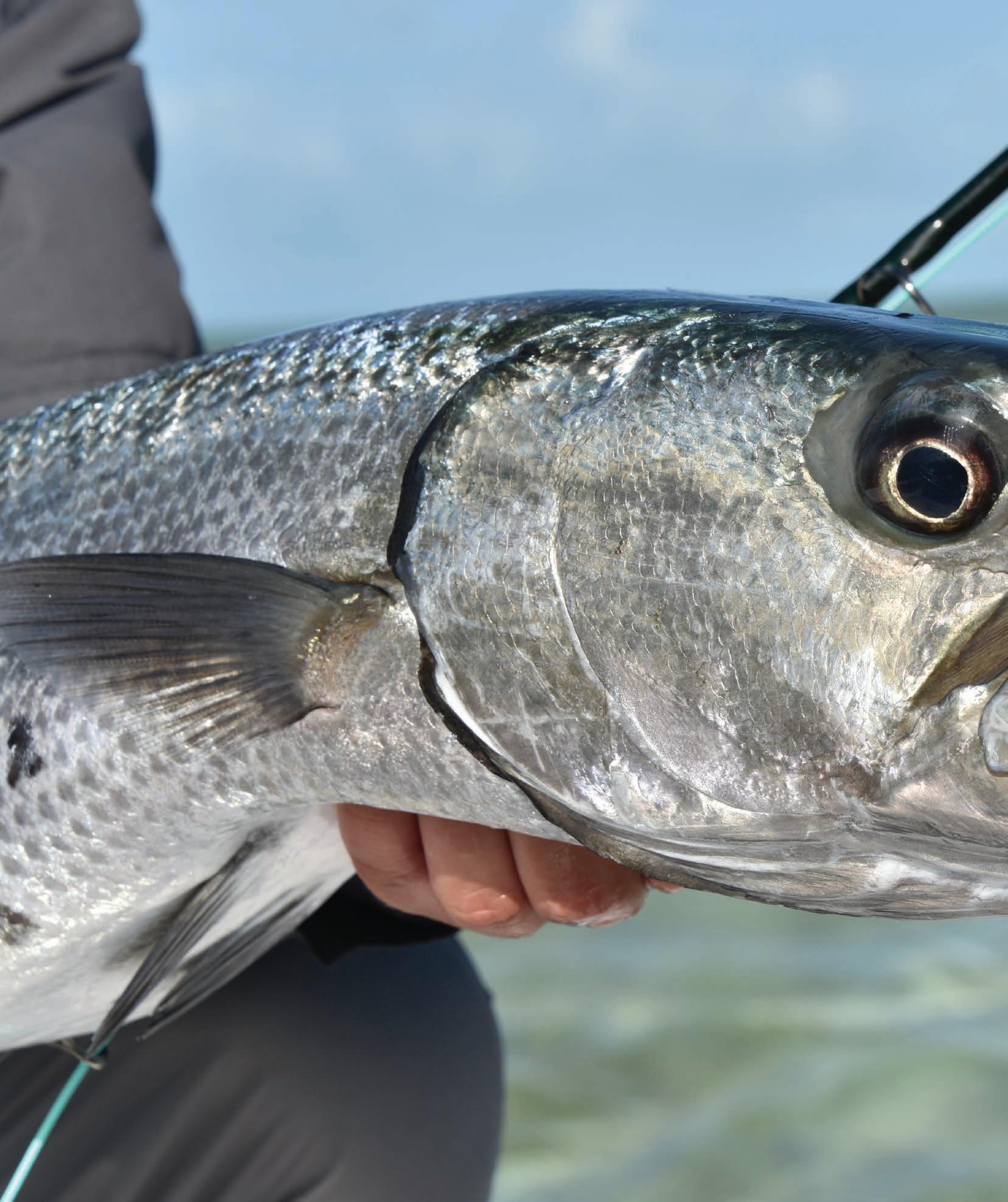
I managed a quick shot of the moment with Kenny, one of our guides and longtime friends, who was fishing alongside Romain. Between them, they’d already seen and landed plenty of triggerfish, just like the rest of the crew.
Strangely, though… not a single bonefish sighting that day.
On our way back to the island camp, we made a quick stop on a lone coral head - a bommie rising from the depths, surrounded by shimmering flats. And right there, circling lazily near the surface, we counted at least fifteen barracudas, almost motionless in the crystal-clear water.
Julien, who had never caught a barracuda on the fly before, lined up a cast. He wouldn’t be disappointed. His streamer got smashed – violently - by a big cuda that appeared out of nowhere like a torpedo. The take was pure chaos. What followed was an aerial display that left us all yelling. The fish spent as much time airborne as it did in the water.
Julien brought his first fly-caught barracuda to hand - well over a meter long. An absolute bruiser.
We stuck around and landed a few more, though none matched the size or fury of that first fish. Back at camp, we gathered around to trade stories from our first full day exploring the remote outer cays. Everyone was buzzing, but still - no one had seen a single bonefish. Strange, considering how textbook-perfect the flats looked. Alive with life, but not a bone in sight.
That evening, we parked ourselves on the cooler lids to catch the sunset, soaking in the colours and the solitude. But we didn’t linger - mosquitoes here are no joke - and soon retreated to our tents for the night.
At first light, we loaded the boats and headed farther south. The landscape opened up into a raw and untouched chain of islands. Massive osprey nests perched high in the trees - these birds have found paradise here, thriving in a rich and undisturbed ecosystem.
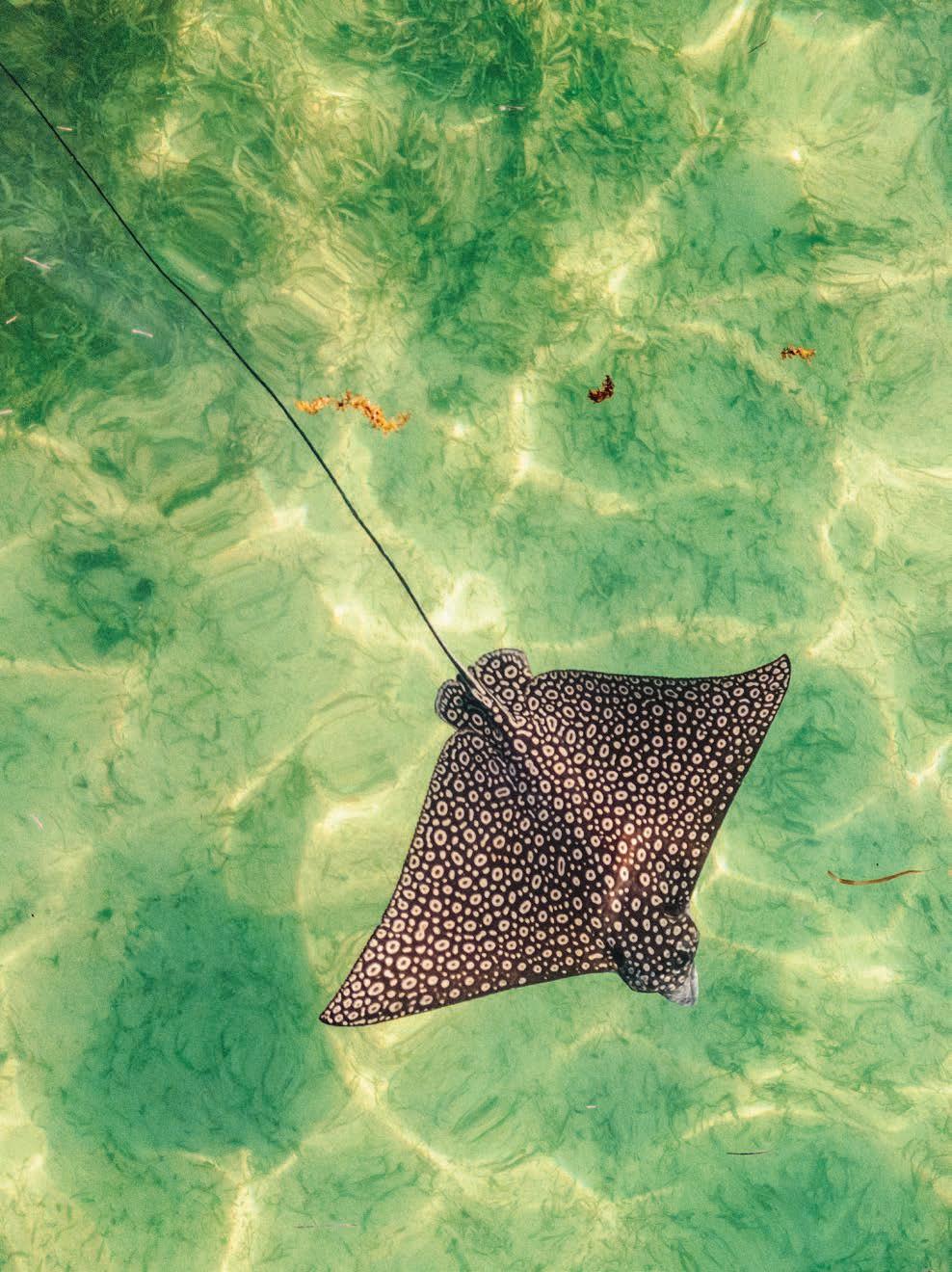
Once again, we filled the day with action - more triggerfish, plenty of snapper, and aggressive barracudas smashing anything flashy. We even saw massive stingrays cruising the sandy bottoms, often shadowed by packs of triggers and the occasional jack. It felt like we were drifting through a giant saltwater aquarium.
As the tide filled in, we decided to head back into the inner lagoon. The wind had completely died. The entire atoll was glass - mirror calm, a surreal kind of silence. Then we spotted something strange - nervous water, way out in the middle, in three meters of depth.
We eased the boat closer and... I couldn’t believe my eyes. A school of at least fifty permit - slowly moving, just under the surface, ghosting past the bow.
I grabbed the 10-weight rigged with a crab fly and dropped a cast well ahead of the school. Stripped once. Twice. A few fish peeled off, tracked the fly… but no take. Same on the next two casts. Classic permit behaviour.
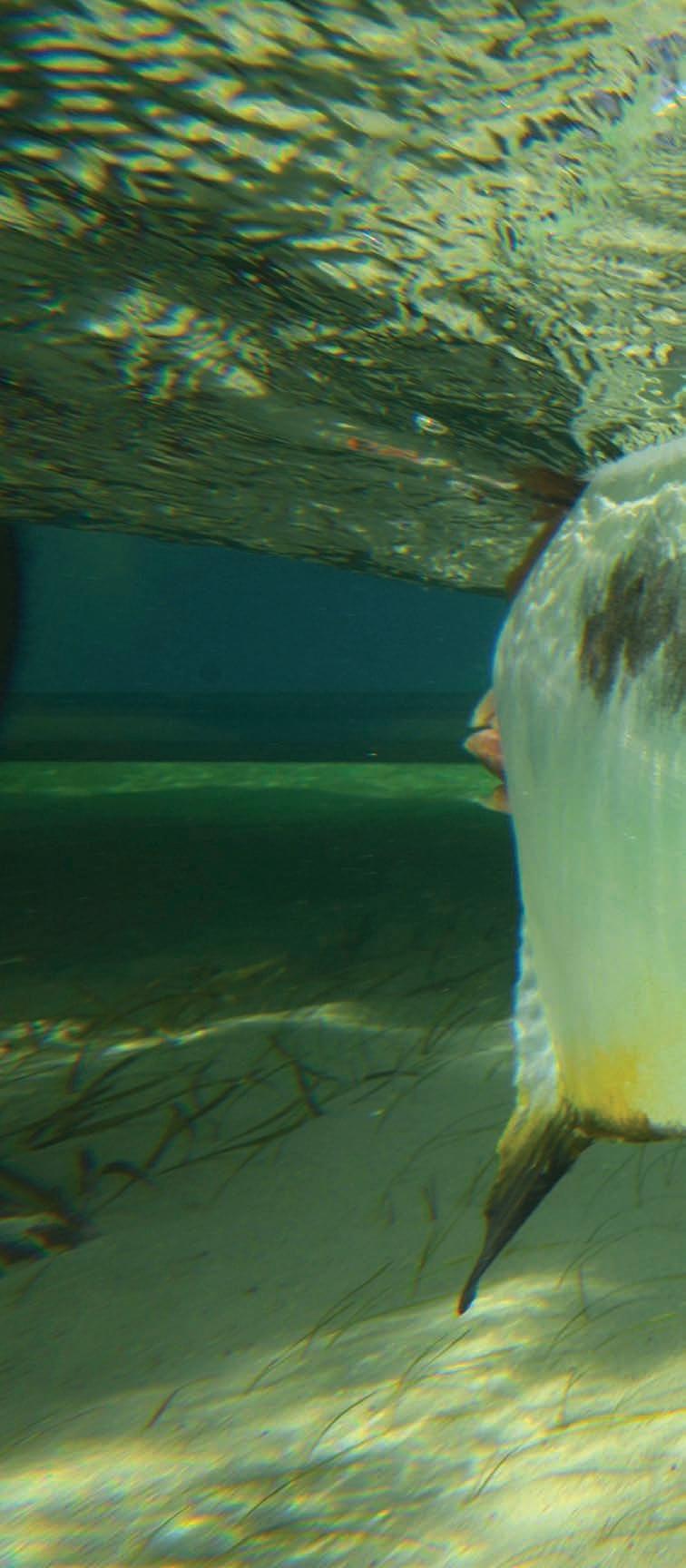
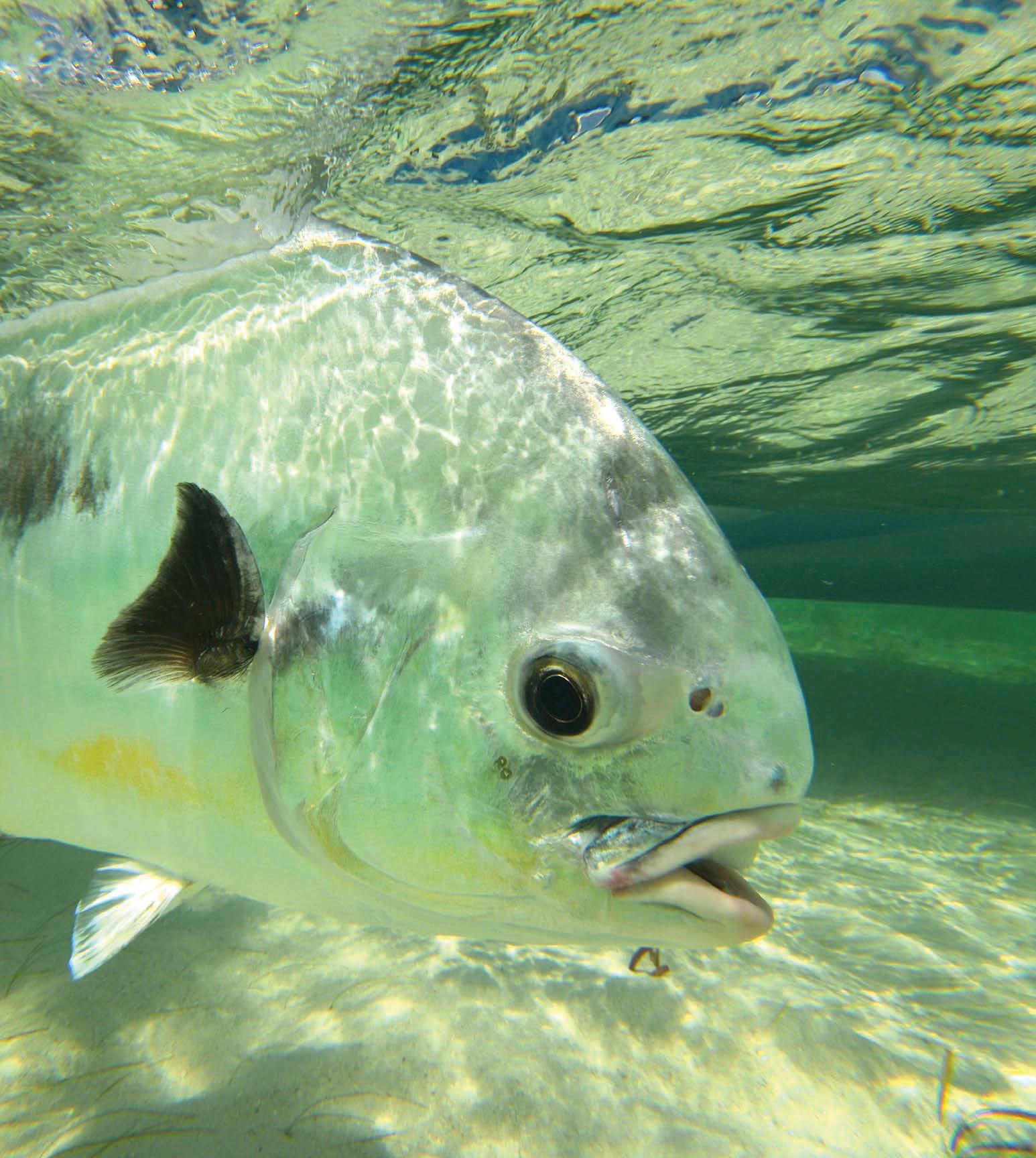
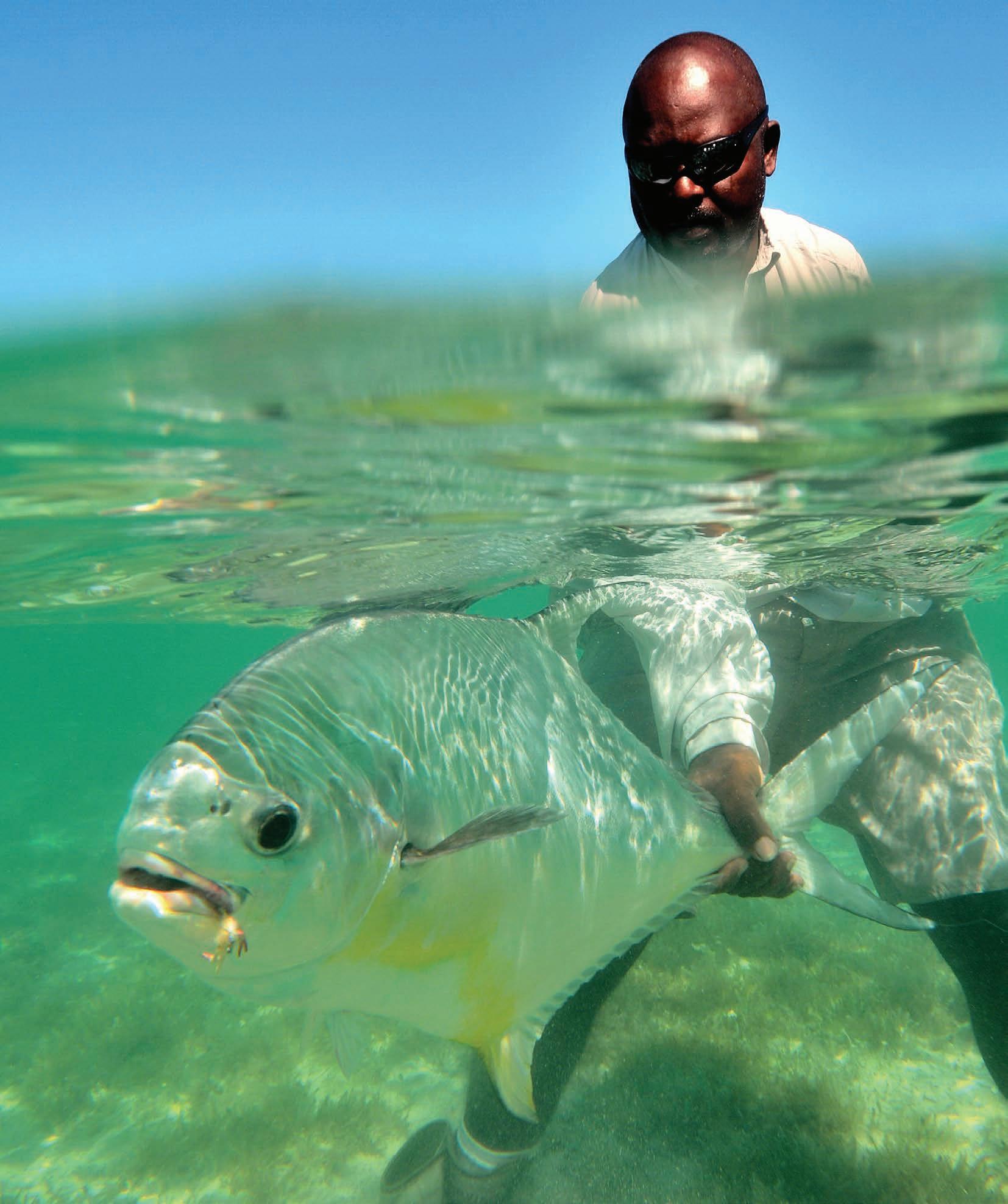
Time to switch it up. I let the fly sink, completely still, just holding tension on the line. Then - tap. Barely a tick. I strip-set hard just in case, and the rod bowed deep. Fish on!
In that depth, the fight was very different from permit taken in skinny water. The fish stayed with the school at first, then peeled off and circled deep under the hull - like a jack. Not a giant, but a permit is a permit. It earned every inch of backing it took.
“Hundreds of bonefish.
All gathered in one massive school, flashing and shifting like liquid mercury”
We ended the session with blitzing bonito, packs of yellow jacks, snappers, even a few tarpon-like ladyfish. The lagoon, under those glassy conditions, felt otherworldly - teeming, pristine, unreal. That night, we camped again under the stars, bel-
ly full of memories, minds spinning with images of the day.
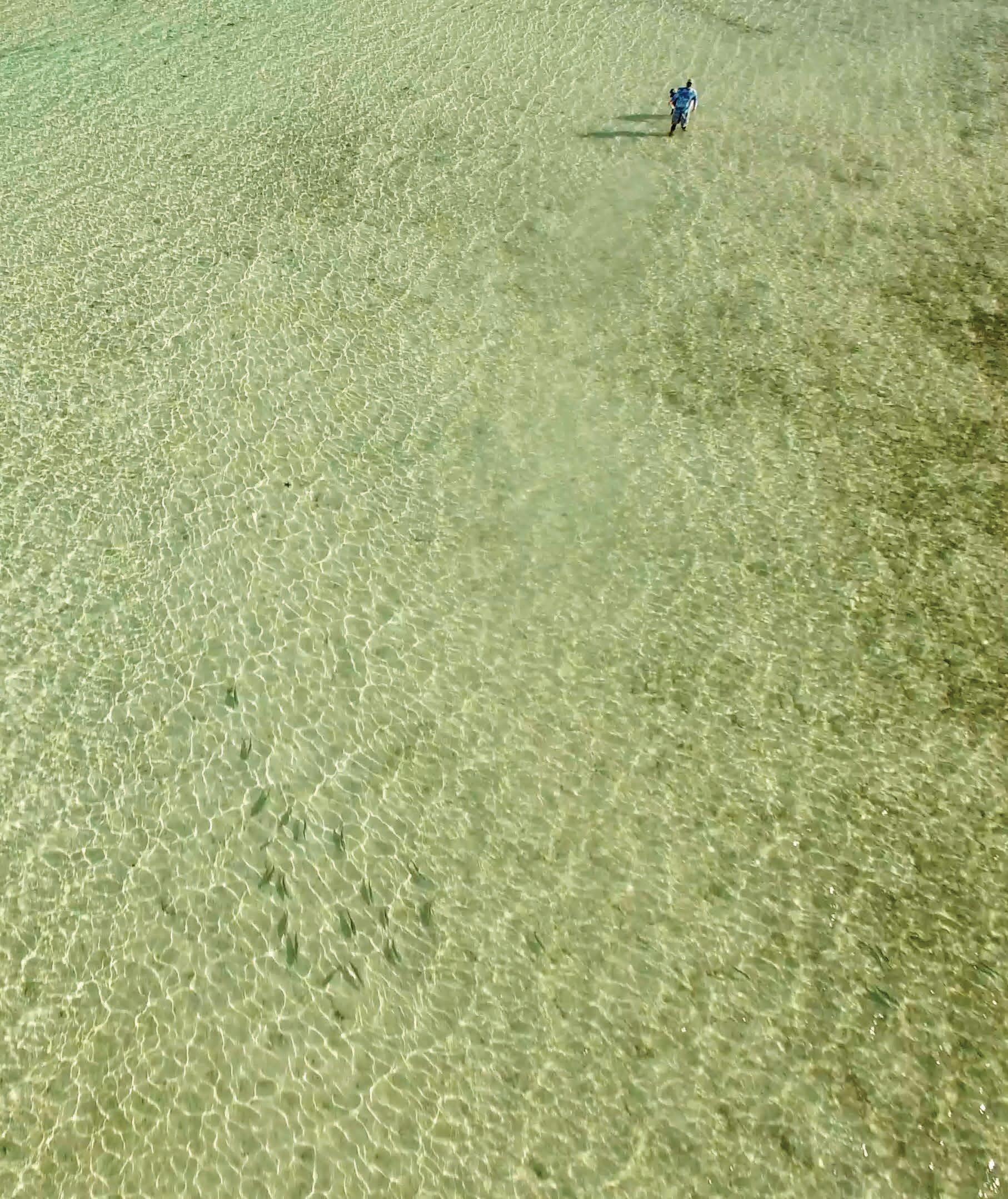
We land on a new island - quiet, wild, and seemingly untouched. Word is, there’s a saltwater lagoon tucked inland, so we head straight for the narrow channel that drains and fills it with the tides. We don’t even make it inside before we spot the first bonefish gliding along the edges, feeding confidently in the moving water.
We hook a few right away and then wade deeper into the heart of the island. There’s just six inches of water here - no place for sharks or other big predators. As the tide continues to drop, the lagoon slowly empties out, pushing us across to the opposite flat. And that’s when it happens…
Hundreds of bonefish. All gathered in one massive school, flashing and shifting like liquid mercury. Surrounding them are several barracudas and reef sharks, cruising, watching, waiting. It’s a raw, unscripted moment - the circle of life in real time. Hunt or be hunted.
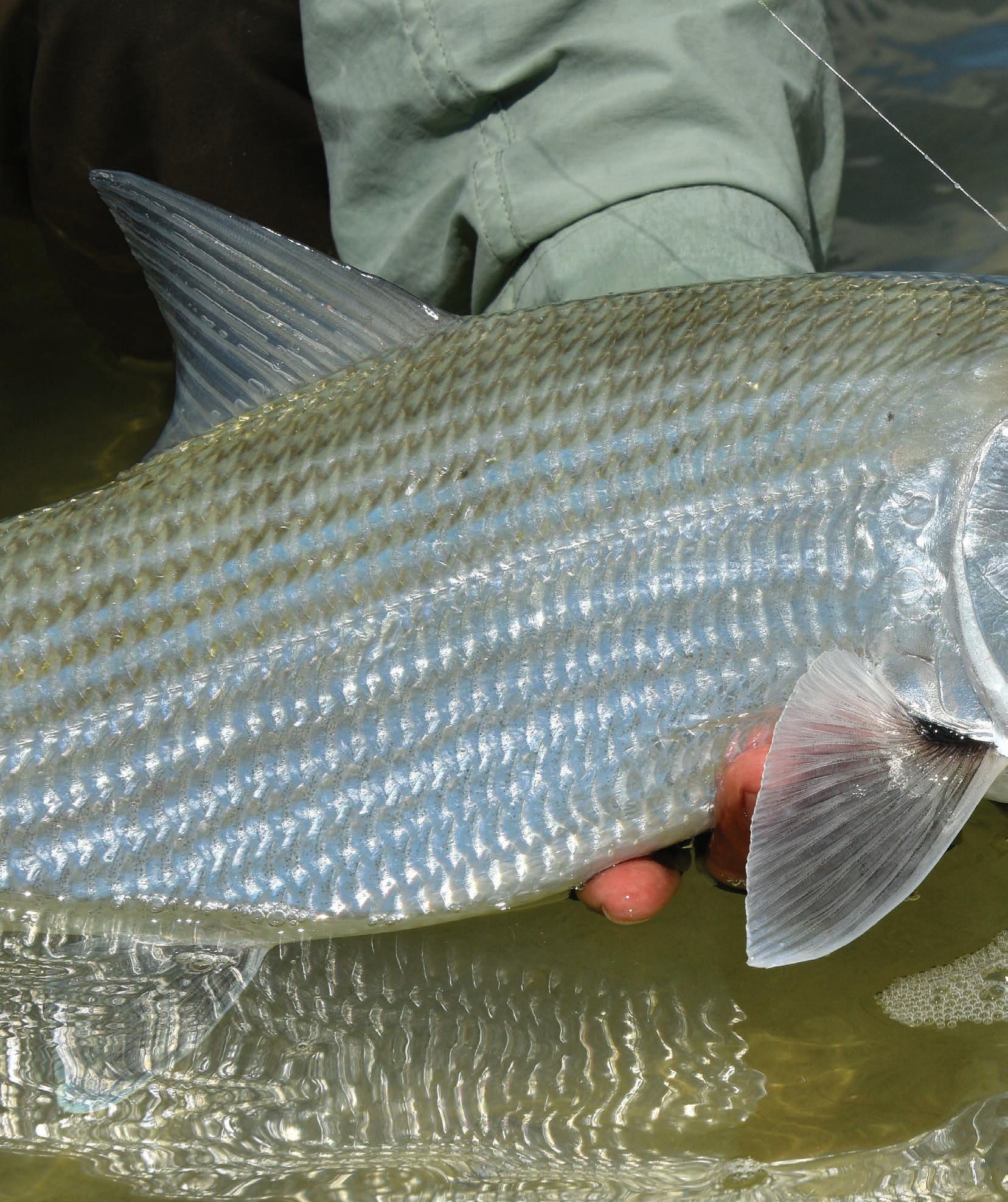
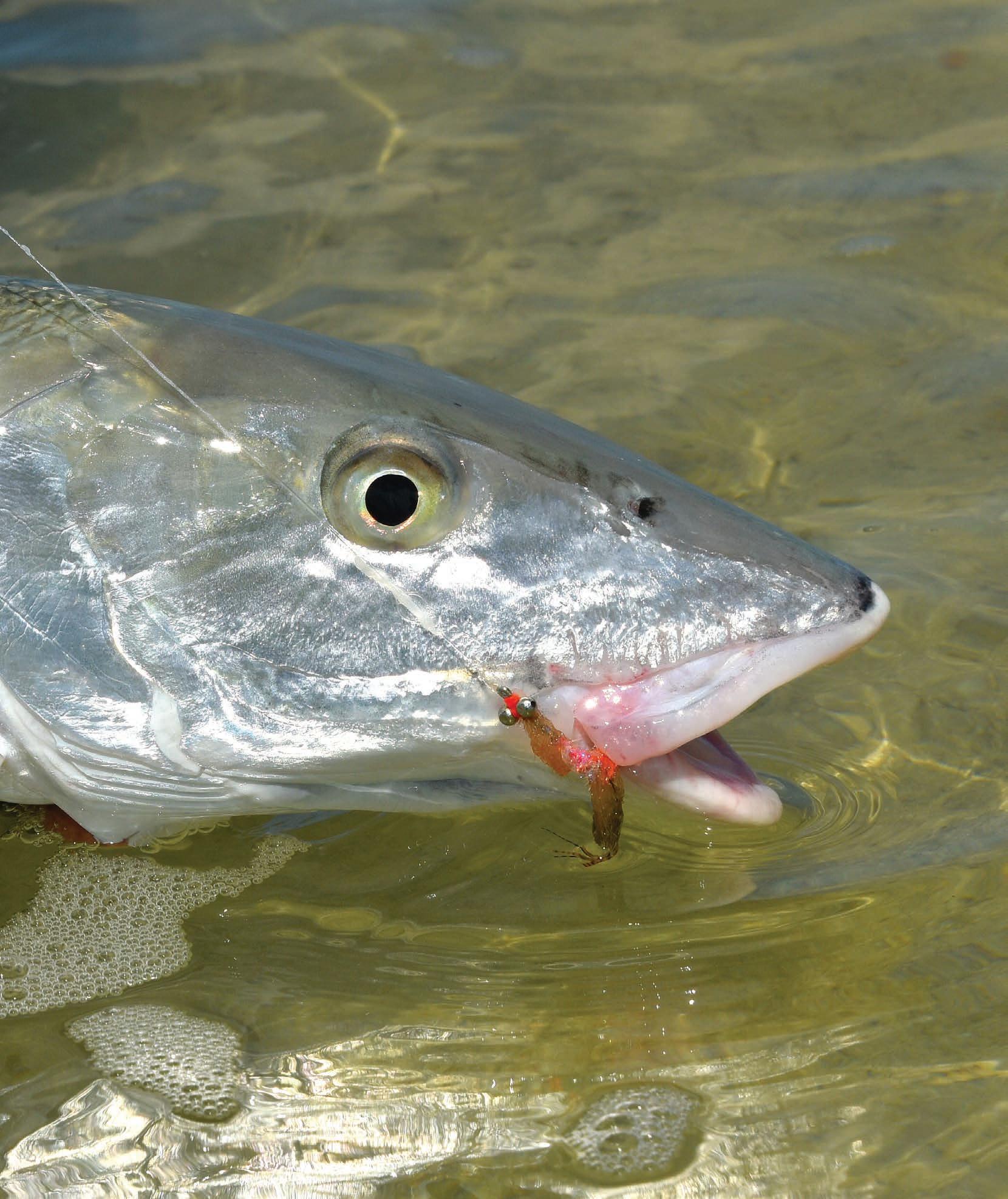
We cast briefly but quickly call it off. Every hooked fish becomes a target, and we’re not here to feed the sharks. Safety in numbers is their only defence, and it’s clear that with each falling tide, a few don’t make it. Still, we’re glad to have finally found them. I figure the other flats we’d fished earlier were just too exposed - too risky for the bones to settle in.
We push north, toward the tip of Long Caye. The landscape shifts again - alternating between open beaches and dense mangrove, both living and ghost-white. I’m walking with Christophe when we spot a small school of baby tarpon, finning calmly in barely a foot of water - moving just like bonefish do.
My first cast is spot on, and a silver missile explodes in the shallows. A few minutes later, Christophe hooks one too, and it launches straight into the air right in front of him - classic baby tarpon chaos.
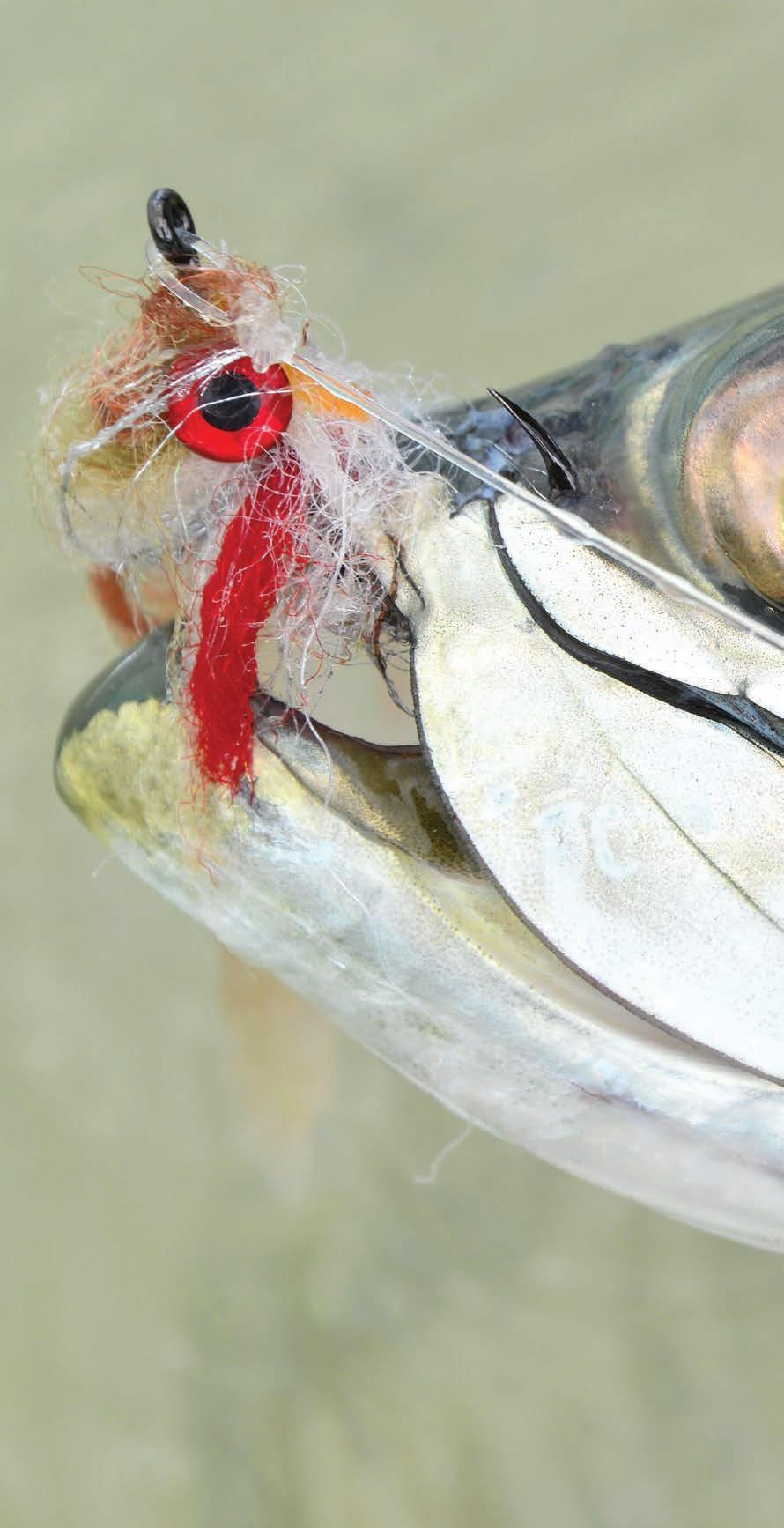
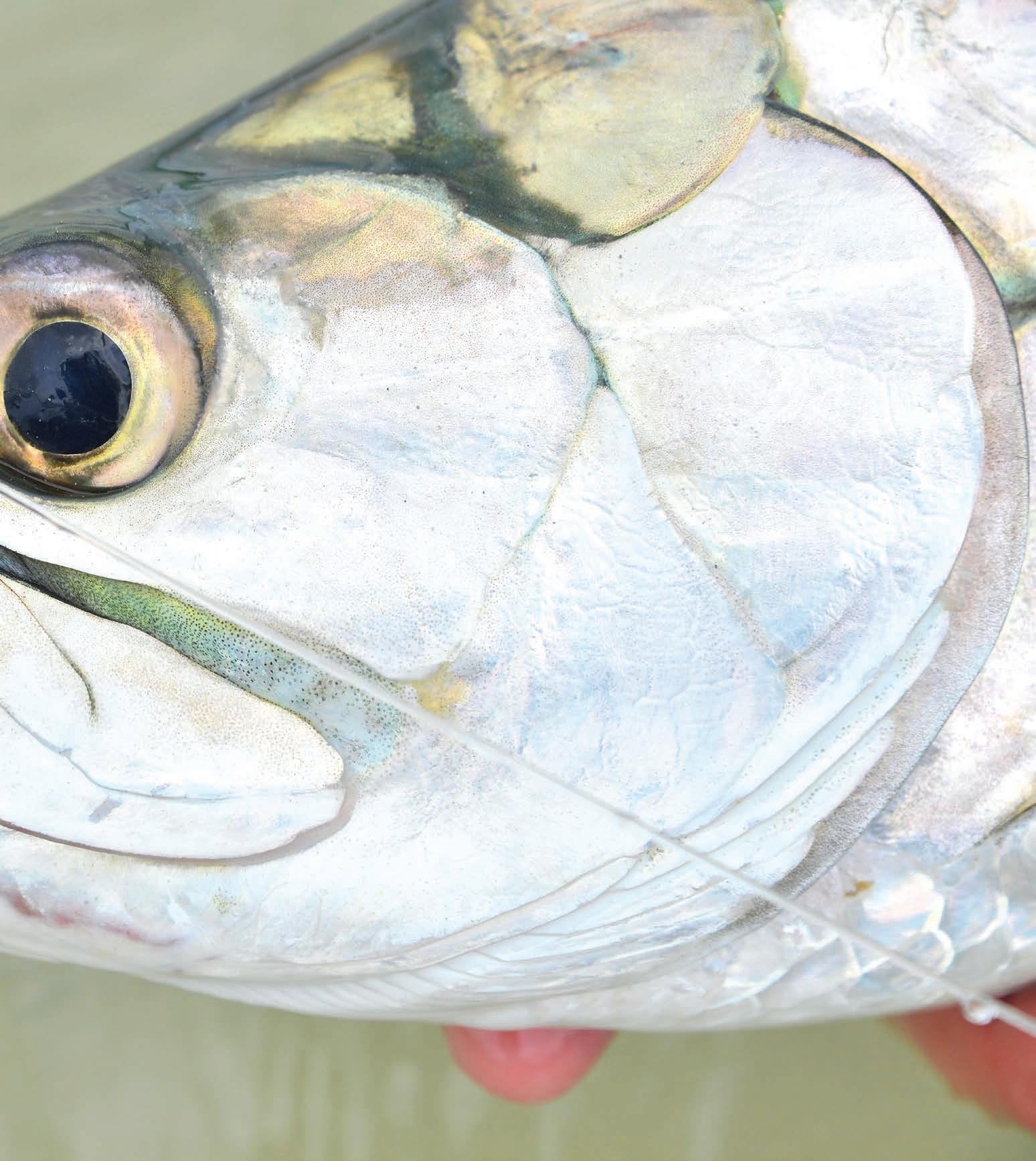
Further along, we find big bonefish, cruising in twos and threes over sandy bottom patched with turtle grass. Some easily go ten pounds or more. The kind of fish that leaves your hands shaking a bit after the release. And then I feel it - a flicker of possibility. Bonefish? Check. Tarpon? Check. Could this be the day for a Grand Slam?
We spend our last hours chasing permit. Each of us gets a legit shot. Each of us is humbled. Classic permit behaviour - all drama, no closure.
That night, back at the lodge, the little things feel luxurious: A hot shower, a cold drink with ice, and some freshly fried conch fritters. But what we really bring home is something less tangible - images that won’t leave us anytime soon. This atoll, wild and remote, still has plenty of secrets left to tell. And if all goes well, I’ll be back in January - with my guides, my gear, and a head full of hope. Stay tuned…
Information and how-to-book:
2h Flyfishing (Europe): www.2hflyfishing.com/destinations/bahamas
The Fly Shop (US): www.theflyshop.com/travel/saltwater/crooked-acklins.html



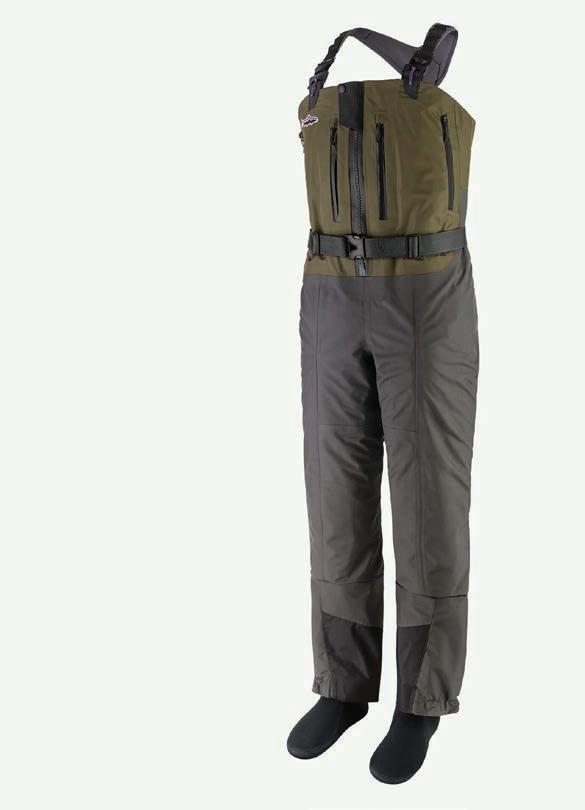
Patagonia: WOMEN’S SWIFTCURRENT® EXPEDITION
ZIP-FRONT WADERS
These waders feel purpose-built for women who spend long days on the water. The women-specific fit allows natural movement when navigating rocks or crouching to tie on flies. The rugged 4-layer H2No® fabric stays reliably dry, while the front zip makes on-and-off and riverbank breaks simple. Thoughtful touches — warm hand pockets, a secure internal waterproof pocket, and removable knee pads — add real comfort during demanding sessions. Durable, practical, and confidence-boosting, they suit serious women anglers who fish hard. More at www.eu.patagonia.com
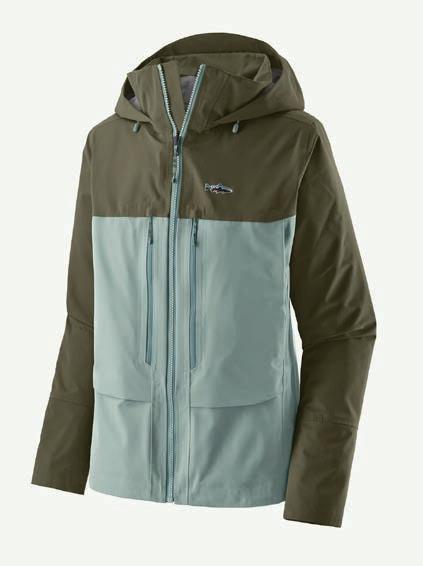
Patagonia: WOMEN’S SWIFTCURRENT® WADING JACKET
This jacket is a top-tier shell for women anglers. Its 4-layer H2No® recycled-nylon fabric is fully waterproof and breathable, ideal for unpredictable river conditions. Two low-profile chest pockets perfectly hold fly boxes, while high handwarmer pockets stay accessible during deep wading. Watertight, adjustable cuffs and a vented, adjustable hood give reliable protection without snagging your line. The elastic drawcord hem ensures a close, drag-free fit. At about 590 g, it’s rugged but still easy to layer over mid-layers — a smart, ethical choice for serious fly-fishing trips. More at www.eu.patagonia.com
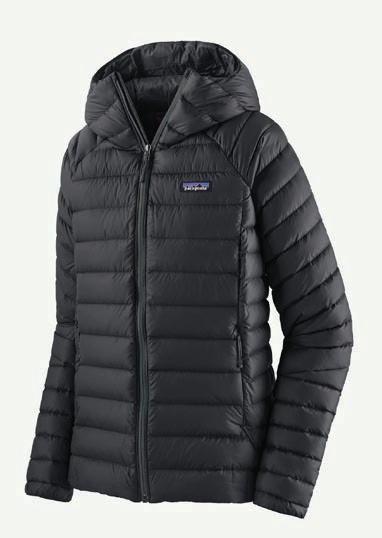
Patagonia: WOMEN’S DOWN SWEATER™ HOODY
The Patagonia Women’s Down Sweater Insulated Hoody is a go-to insulating layer for women fly-fishers tackling brisk mornings or cool-weather trips. Featherlight yet warm, the 800-fill down traps heat without bulk, and the packable design fits easily into a vest or boat bag. The recycled ripstop nylon shell resists light wind and spray while allowing freedom of movement for casting. Its slim fit and hood help retain core warmth, but since it’s not waterproof, pairing it with a rain shell is smart. For chilly, calm days on the water, it’s ideal. More at www.eu.patagonia.com
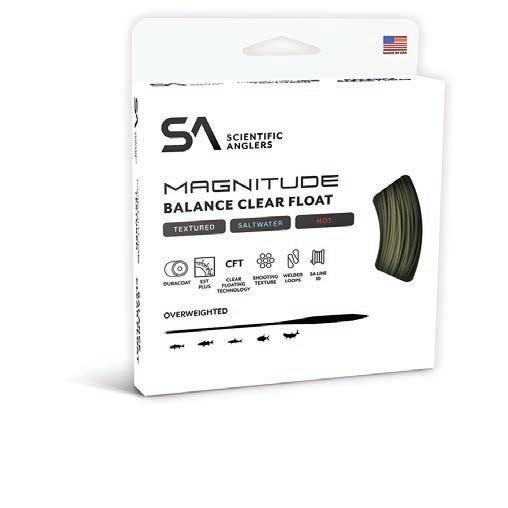
Magnitude lines are ushering in a new era in saltwater fly line technology, headaches with clear lines are a thing of the past. SA’s new line range is loaded with revolutionary new technologies making it the most durable and slickest clear floating fly line offering on the market. The new Balance lines are overweight lines, which enable you to load your fly rod at close range and reduce your reaction time. They come in sizes 7 – 12 as either full clear or clear tip lines. For more info, please visit www.scientificanglers.com
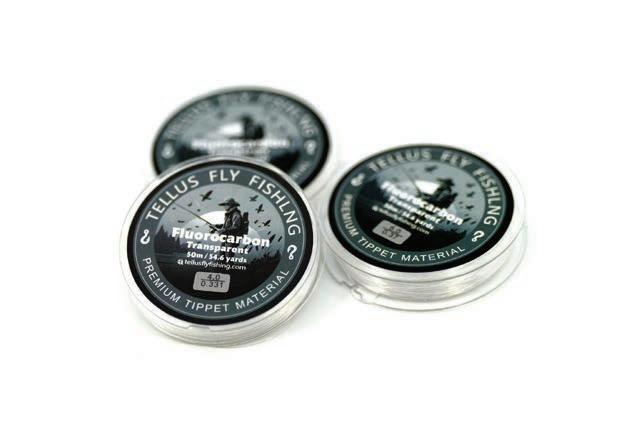
Tellus Fly Fishing is a Swedish start-up that have just launched a great new range of tippet materials. We’ve tested their nylon and fluorocarbon throughout the summer months – especially for sea-run brown trout in the Danish rivers and fjords – and have found them to supple, durable, lowstretch, and with great knot strength. Allin-all we’ve been very impressed with the whole range, and encourage all fly anglers out there to check them out. For more info: www.tellusflyfishing.com
The Universal Salt Hook is a premium, multi-purpose saltwater fly hook crafted in collaboration with one of the world’s foremost authorities on saltwater hook design. Built to the highest standards of sharpness, strength, and durability, it’s the perfect choice for everything from delicate bonefish and crab patterns to clousers, baitfish imitations, and beyond. Featuring a tough, corrosion-resistant tin-plated finish, this hook is 2X strong, forged for reliability, and designed with astraight eye for flawless presentation. For more info, please refer to www.fullingmill.co.uk
The Smith Venture sunglasses provide much-needed eye protection in alpine environments or when fishing in blazing winds on cold winter days – for species like seatrout and danube salmon. They feature removable side shields that protect against light reflecting off snow, rock and ice. ChromaPop™, lens technology offers a terrain-boosting view of every wind drift and crevasse. Autolock hinges make for easy on and off when one of your hands is occupied. And then there are the iconic round frames that look just as good on the water as relaxing post adventure. For more info, please visit www.smithoptics.com
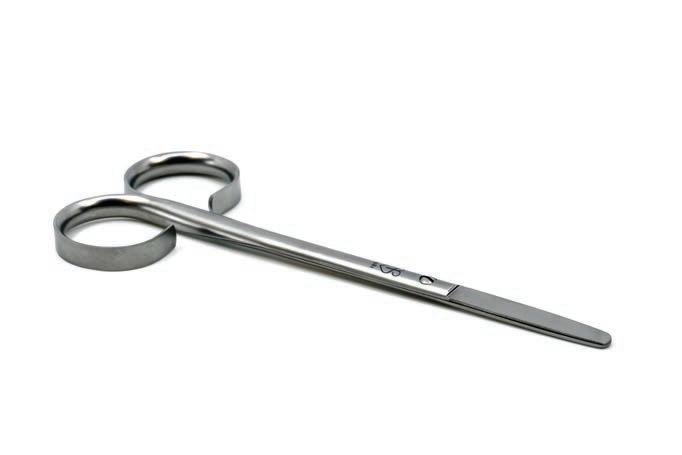
These 15 cm long, large-sized scissors feature rounded tips and the SuperCut solution that incorporates a unique serrated blade combined with a razor-type blade. Perfect for easily cutting synthetic fibres, PE foam, threads, and reindeer hairs. Their proper size and unique blade type, combined with the finest, precise finishing, make them a reliable instrument for the discerning fly tyer. For more info, please visit: https://renomed.eu/en
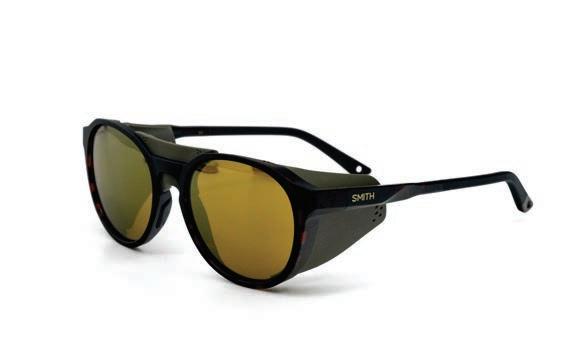
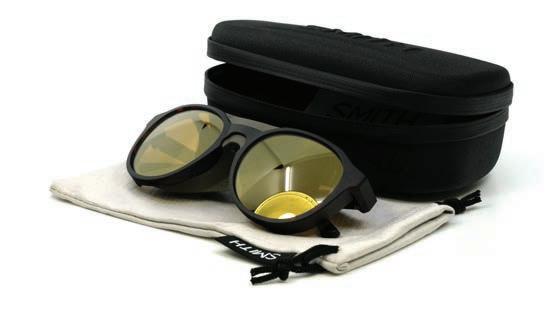
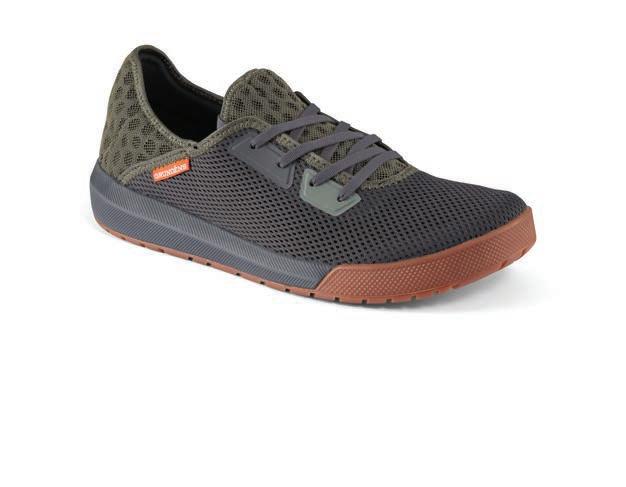
Everyday styling pairs with a waterfriendly build and high-rebound midsole comfort to give new personality to fish-friendly footwear from Grundéns. Featuring quick-drying, lightweight, and breathable mesh upper to reduce drying time, perforated stretch-neoprene lining, and durable non-marking gum rubber outsole, it’s the perfect water-friendly shoe for all-day comfort and all-purpose traction, from boat to airport. Interested in more info? Check out www.grundens.com
From the warm, genial perspective of David Lambroughton - international fly-fishing expert, writer, and photographer - comes an eye-catching array of lush photos of the people, the places, and the passion from the world of fly-fishing. Accompanied by delightful anecdotes and comforting words of wisdom, this calendar is the perfect gift for both fly-fishing hobbyists and pros alike. Find it on Amazon or request one at your local tackle dealer.
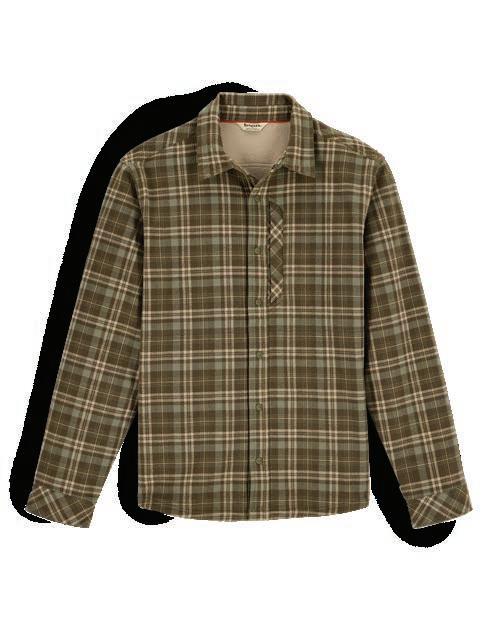
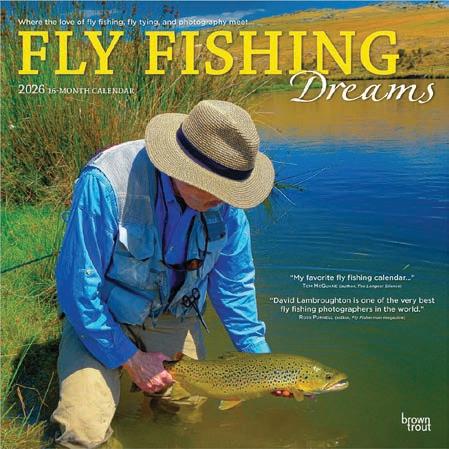
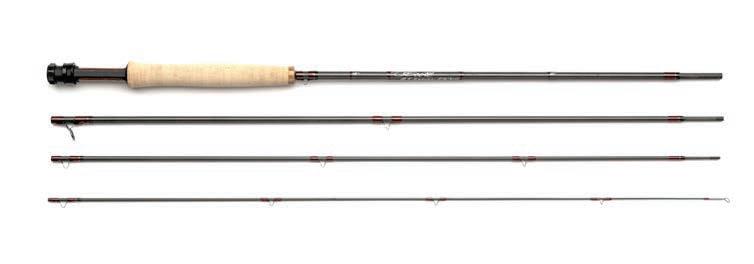
The best thing about the Simms Coldweather Flannel? It’s always getting better. This updated icon –the Coldweather Shacket - keeps you on the water longer with a toasty, smooth-wearing bonded fleece backer and a smart pocket array for securely stashing everything you need to stay a step ahead. Constructed with a fleece backer for extra warmth, this traditional button-up collared shirt is an instant classic. For more info, please refer to the European dealer – www.flyfisheurope.com/simms/
No other rods match the legacy and longevity of the Scott G Series-rods that are filled with firsts, fished the world over, and passed down through generations. Now, Scott unveils the all-new iteration of this iconic rod series: the Scott GT. The new GT rods are lighter and sportier than their predecessors yet still possess smooth progressive actions, tremendous feedback, and incredible tippet protection that have kept dedicated anglers fishing the previous three generations of these rods for almost 50 years. For more info, please refer to the European dealer, Flyfish Europe www.flyfisheurope.com/scott
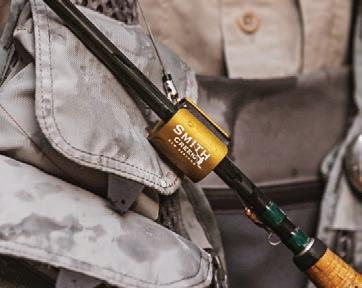
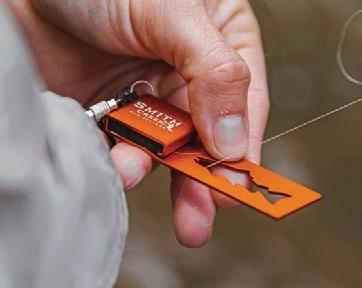
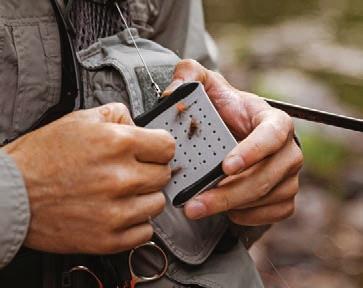
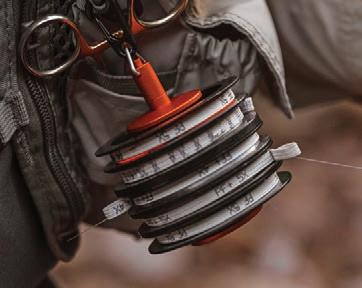
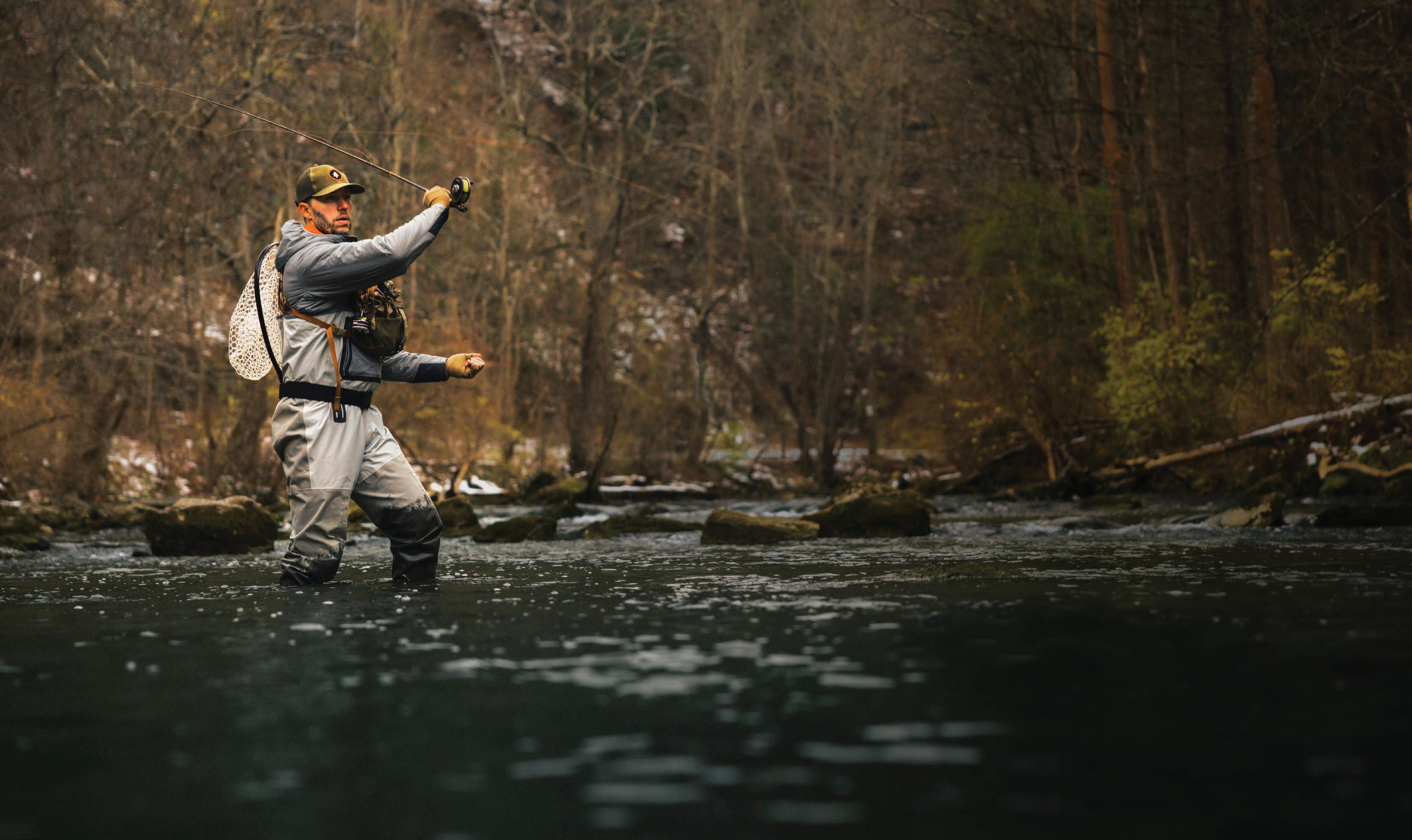
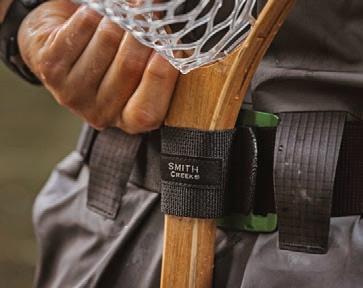
Rob Hammer didn’t set out to become a fly fisherman - or one of the sport’s most compelling visual storytellers. What began as a casual camping trip with a camera in hand evolved into a full-blown obsession with remote rivers, wild trout, and the meditative pull of moving water. In this candid interview for In the Loop Magazine, Hammer reflects on how fly fishing reshaped his creative path, why solitude in the American West fuels his craft, and what keeps him chasing new waters with equal passion for the rod and the lens.
By THE EDITORIAL STAFF
Photos by ROB HAMMER, www.robhammerphotography.com
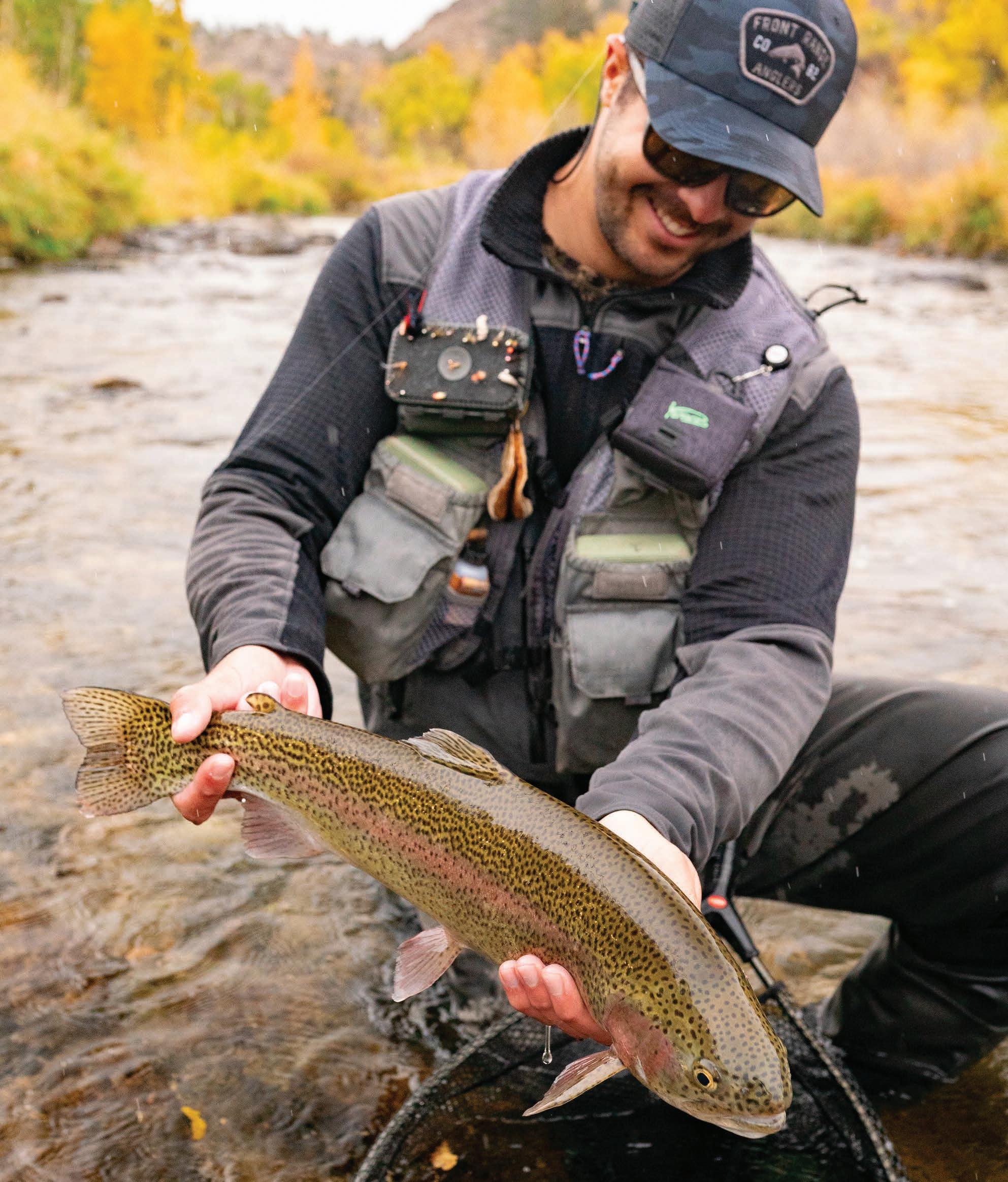

How did you get into fly fishing and why?
Sort of by accident, I guess. A while back my friend Jordan Valente and I were going camping outside of Steamboat, Colorado. One morning on that trip he said he was going to fly fish for a few hours. I had never done it before and didn’t even know he was into it at that point, but I figured what the hell, it could be something new and fun to photograph. I was hooked from that point on, just from making pictures. Something about the meditative nature of the sport and the environments it takes you to was instantly addictive. From there it was a while until I actually allowed myself to put down the camera occasionally in exchange for a rod, but once I did, the addiction went through the roof.
What is it about fly fishing that fascinates and motivates you?
John Geirach and Thomas McGuane are masters at describing this topic, but I’m happy to give you a much more feeble explanation. For starters,
it’s a never-ending pursuit. You can do it your entire life and still have days, or weeks, where the river kicks your ass. Just when you think you’ve got it licked, it all goes to shit. Then there are the rivers themselves. I’m lucky to live in the American West, a part of the planet that fascinates me more than any other and happens to be filled with the most beautiful rivers on earth. It’s never taken for granted that these fishing meccas are places that people travel to from all over the world. In Colorado alone, you’d never be able to fish all the rivers and streams in a lifetime. Each one, special in its own way, and completely different from one day to the next.
The way I like to fish, whenever possible, is far, far away from people. Which usually means some pretty aggressive hikes into a canyon or a section of backcountry that most people aren’t willing to put the effort into reaching. There are some stretches of river here in Colorado with massive fish that you can cast to while still looking at the cooler full of beer on your tailgate, but that’s battle fishing - elbow to elbow up and down the banks.
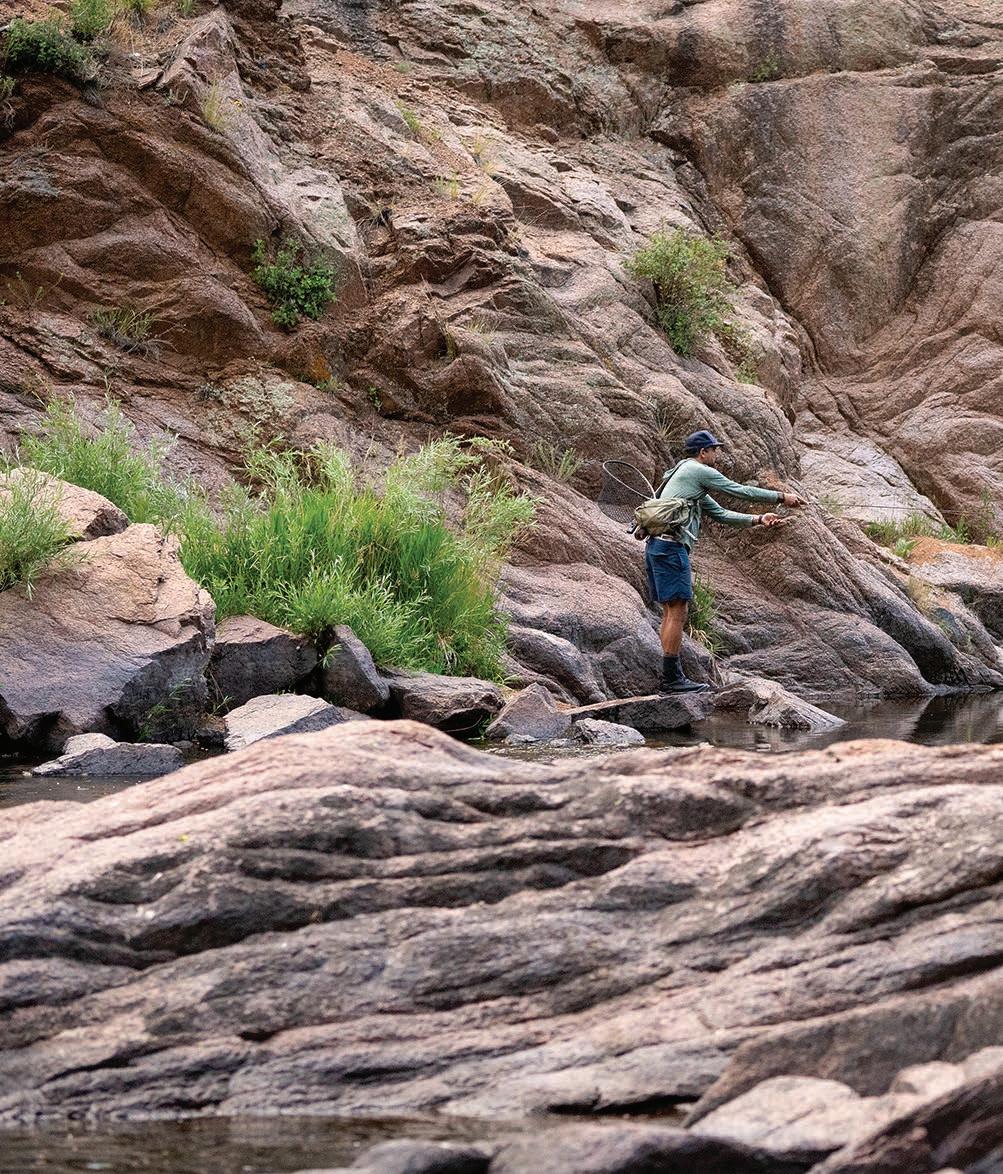
In my opinion, there’s nothing better than being completely secluded in nature with good friends, or even by myself. No cell phone signal or any signs of civilization.
As far as motivation, there’s always a want to be a better fly fisherman, but it’s mostly about being on the river. Catching big fish is great, but I care a hell of a lot more about exploring new wild places than I do about ever showing a “grip n’ grin” photo. It’s all about the experiences and the people you’re able to have them with.
You live in Denver, what is your favourite species to target there and why?
Browns. They are such a beautiful but aggressive fish. Seeing how varied their markings and colours are from river to river and season to season is always a thrill. Trout in general are my favourite species. People always talk about fishing for the Grand Slam on salt, and I get it, but to me there is nothing cooler than trout.
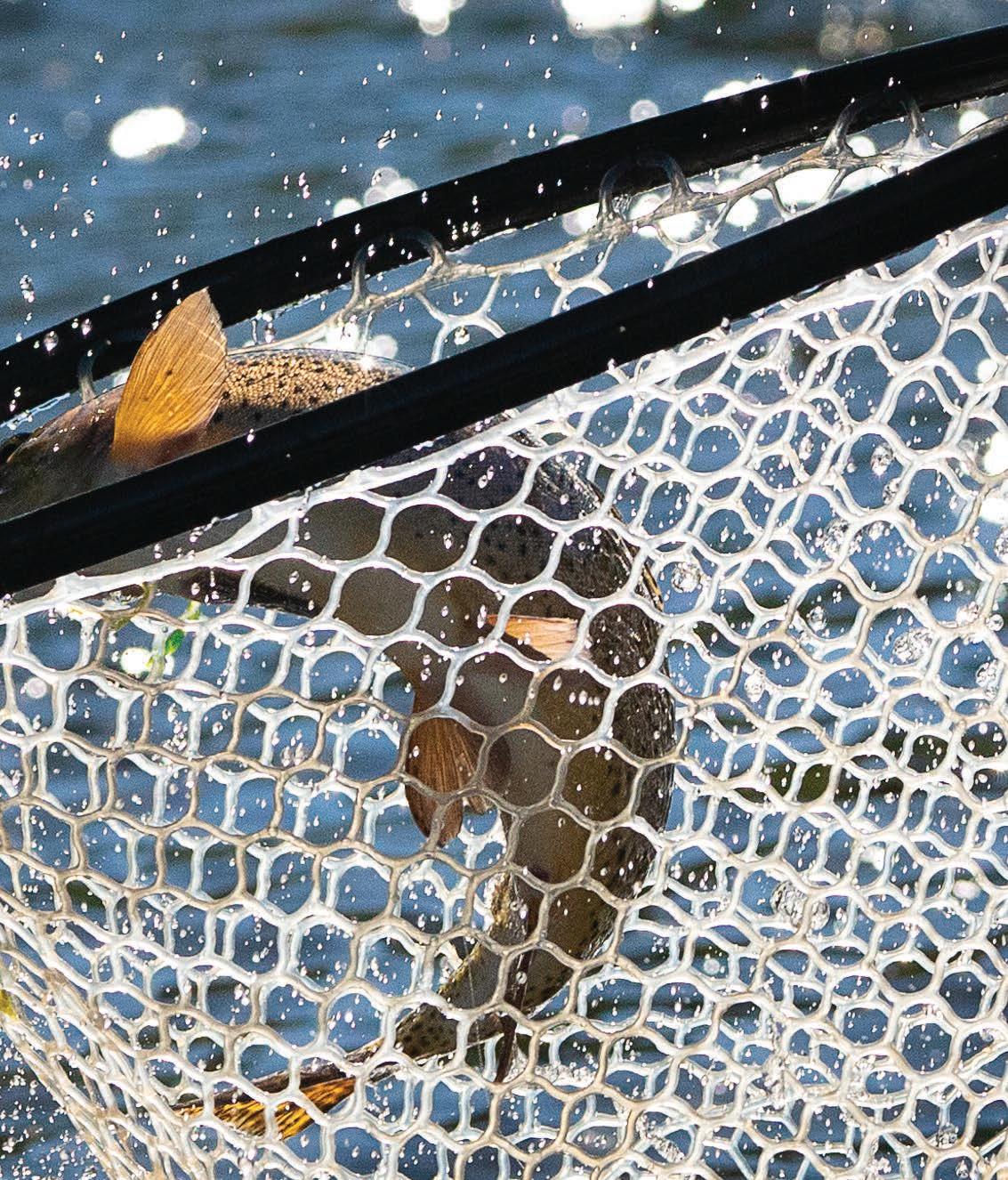
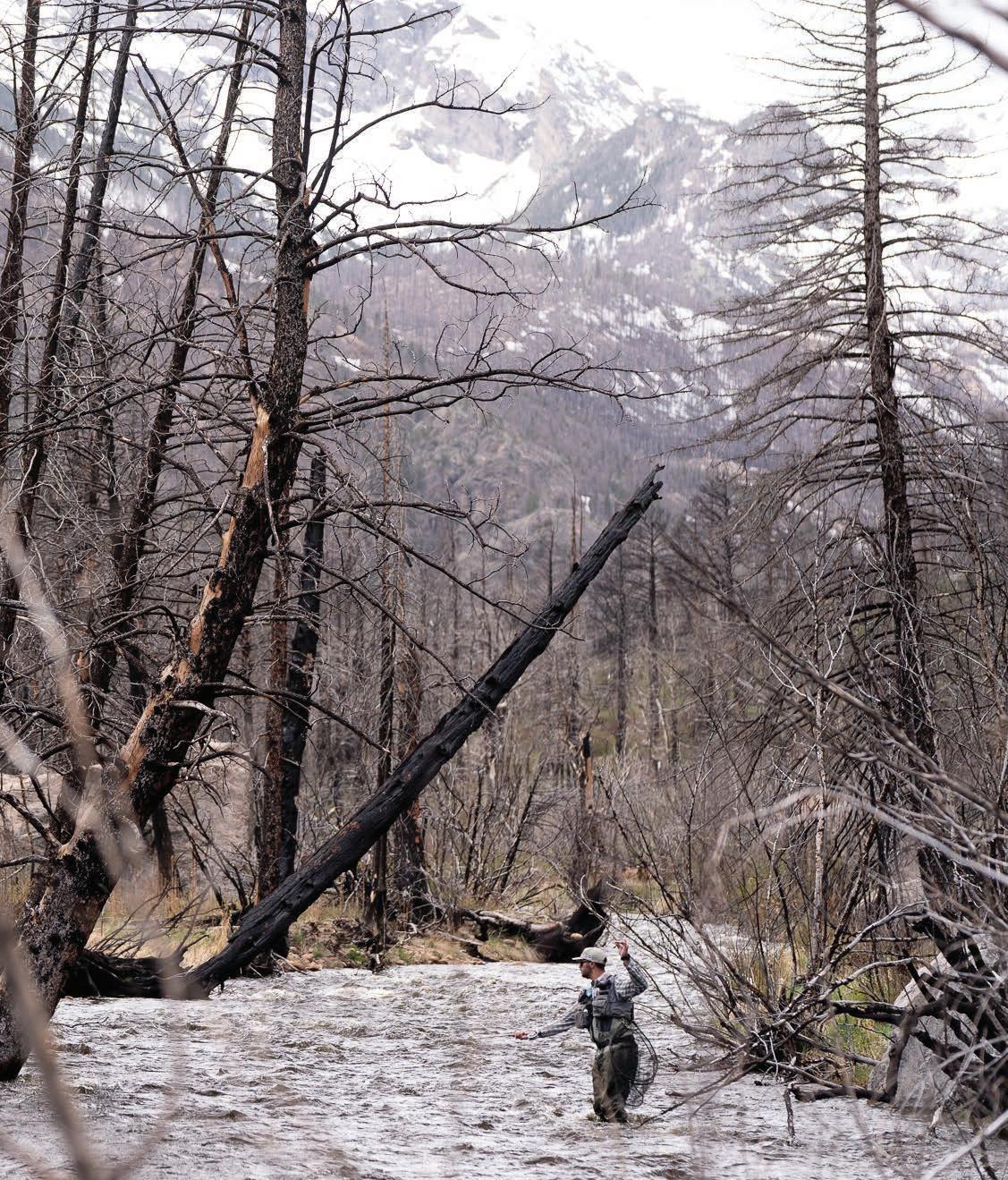
How did you get into photography?
It was probably influenced by family. My grandfather made a living as a photographer for a time, and my old man was a serious hobbyist. At some point I was gifted a camera as a kid and loved it. That love turned into a hobby and stuck. All through college and the long slew of shitty jobs afterward, the only thing I loved doing was photography. So, I decided to push ahead and have been chasing it ever since. Even though it’s how I make a living, I still consider it a hobby as well. I’m obsessed with it.
Whenever there are long stretches of being consumed with the business side of things, I find myself miserable from not making pictures, even if nobody will ever see them. The act of photographing is so fun and cathartic. And much like fly fishing, it’s a lifelong pursuit. I’ve heard legendary masters of photography say that if they can make 1 great photograph in an entire year, then that’s a win.
How does being a photographer influence how you fly fish?
It goes both ways. They influence each other. Fly fishing teaches you so much, especially the need to slow down and think. Nothing good happens with a fly rod when you’re rushing or flustered. That lesson alone can have positive effects on every aspect of your life. And just being on the water in remote places gives you so much time to think with a clear head. It taught me what I do and don’t want from my career as a photographer. In the beginning I was doing a lot of big campaigns with famous athletes because I thought that was the way you built a career and made lots of money. A few years into it though, I realized the money wasn’t worth dealing with the politics and the lack of creativity involved with most shoots. It soon became obvious that my photography needed to directly align with my passions as a person.
So, now I’ll gladly take smaller paychecks if I can shoot something I love like fly fishing. And that shows in the work for any photographer.
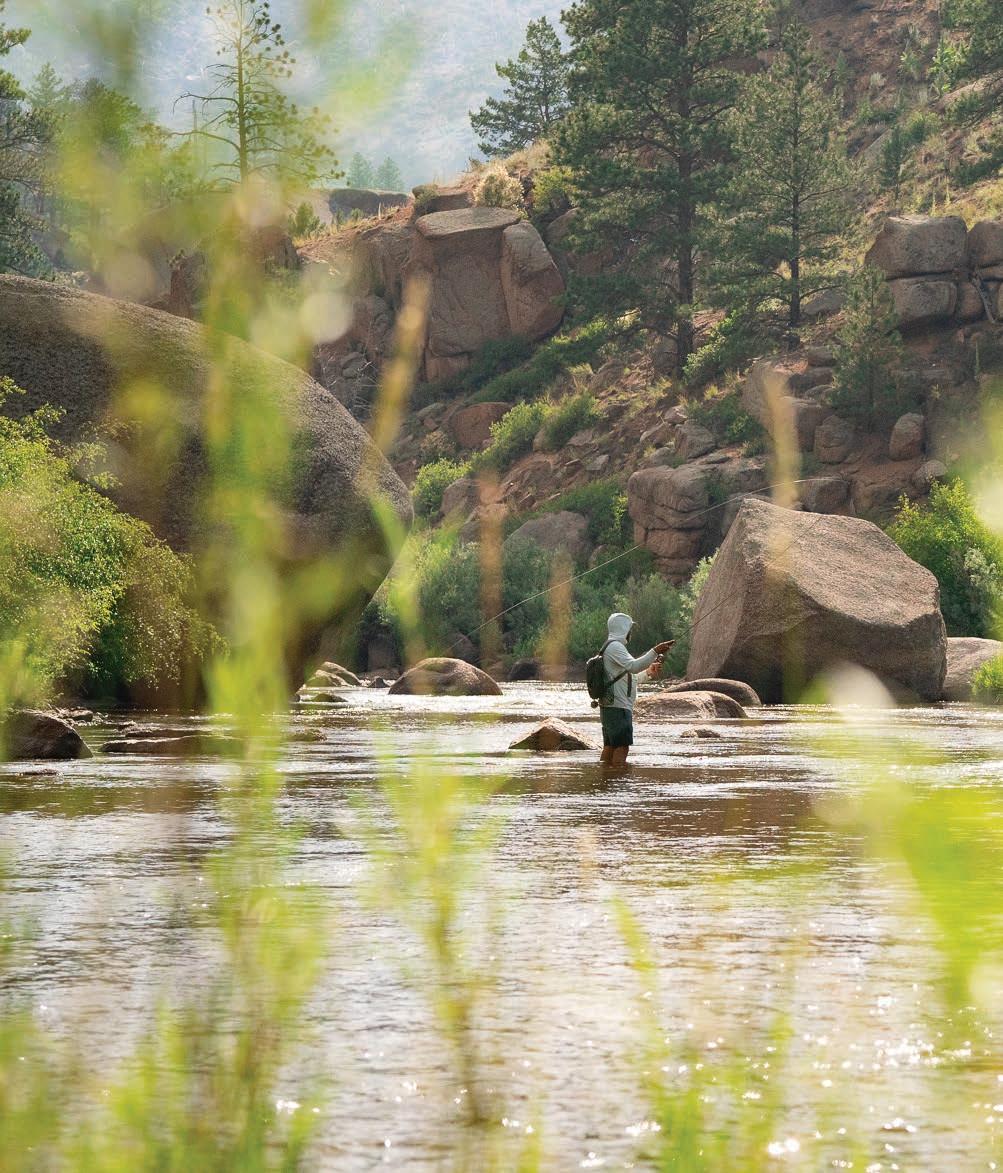
The viewer knows when the photographer doesn’t give a shit and they’re just in it for the payday.
Is there anything particular about fly fishing that engages you as a photographer?
I’ve struggled with this question for a long time because it seems like there are endless facets to fly fishing that are engaging. For one, fly fishing is the opposite of what I thought it was as a kid.
My idea of fly fishing was a way to kill time for guys that hated their wives. And there probably is a lot of that, but the layers of fly fishing are endless, and you get in return what you’re willing to put in. Just approaching a river with a rod in hand gets my blood up so much that I need to actively calm myself down. So maybe there is the desire to visually share the experience of fly fishing with other people?
It’s easy to make mediocre fly fishing images, but to come away with shots that really work takes time, patience, thought, and a lot of moving around.
Being on the river with good people, though, is probably the biggest reward. They are the most relaxing and revitalizing places on earth, in my opinion, especially when you put the time into being in remote sections. It’s humbling to pause in the middle of a backcountry river to take in the 360-degree view and realize there isn’t another human for miles and miles. Those experiences can’t be found anywhere else.
If I hit the lottery tomorrow, I’d still wake up every morning with the itch to photograph fly fishing and to explore new rivers.
What has been the most rewarding trip or experience you’ve had as a fly fishing photographer?
Shooting fly fishing always seems like a really fun puzzle that’s also extremely difficult to put together.
Couldn’t say. Again, it’s about the place but also the people you’re lucky to be there with.
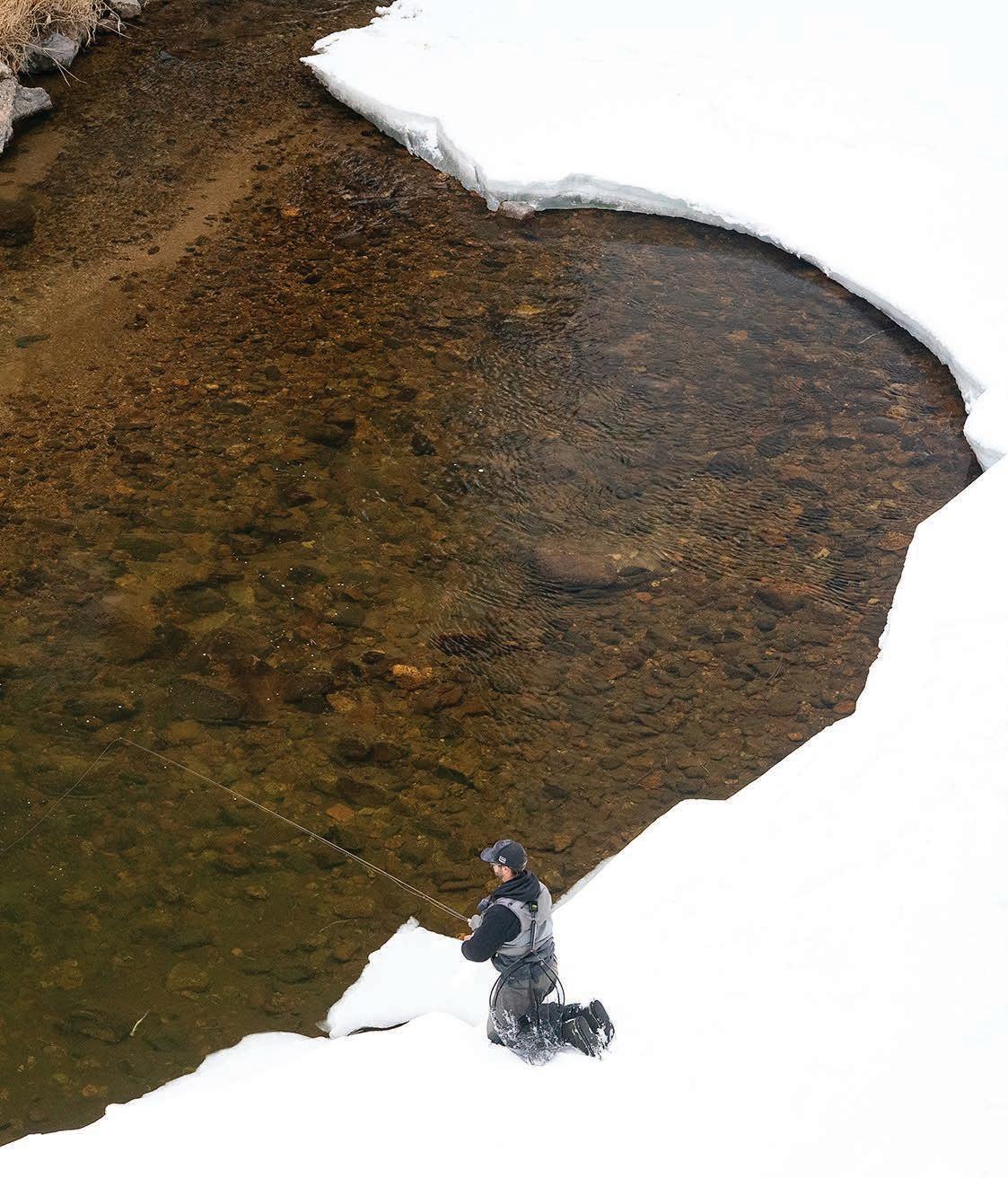
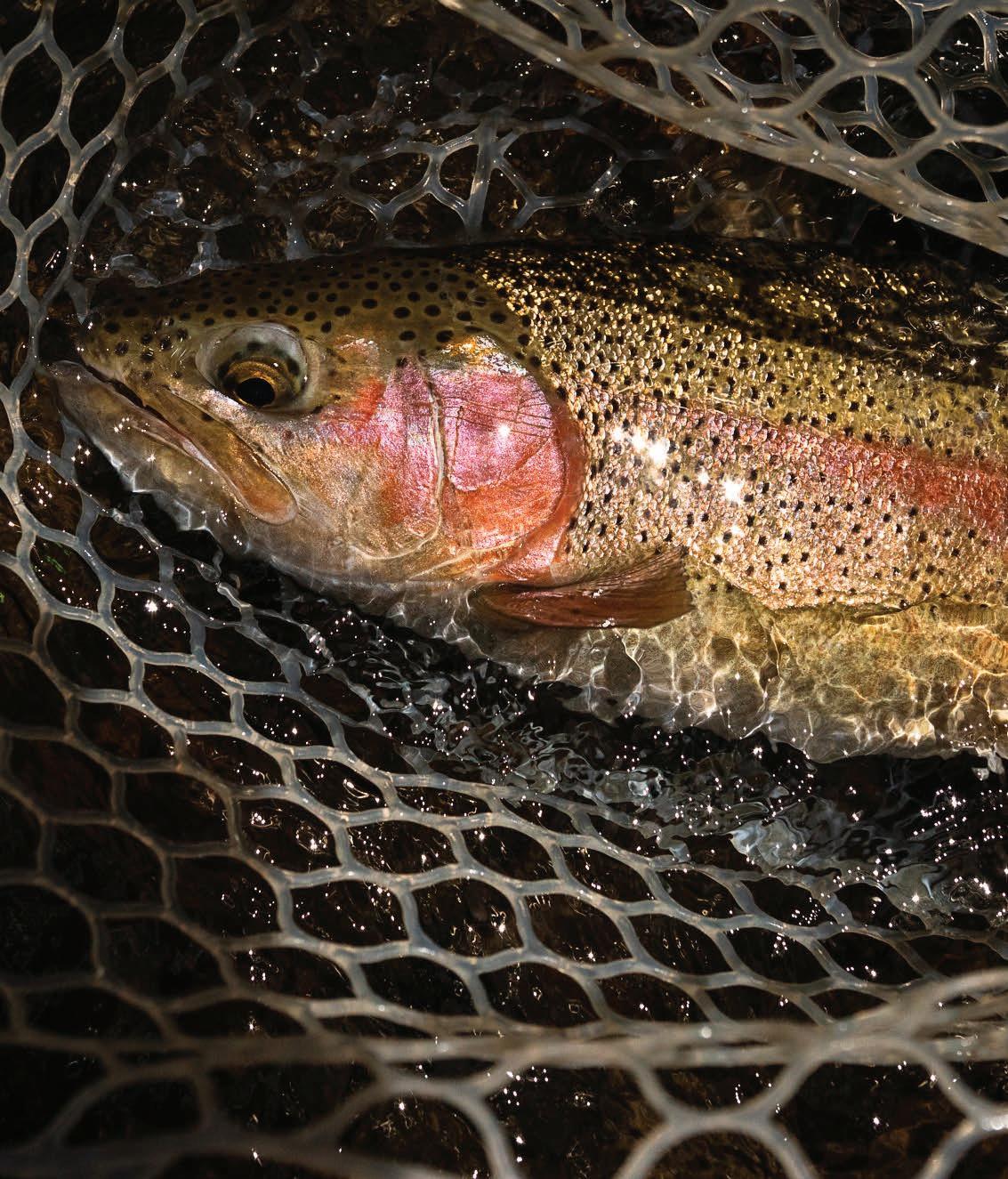
There have been unforgettable trips in Alaska catching massive trout and silver salmon 20 yards from grizzly bears that were just as rewarding as a solo fishing trips in the Eastern Sierra catching 10inch rainbows on a 3wt because the environment was so magical.
Last summer my buddy and I were party fishing a small stream in Telluride before a friend’s wedding. It wasn’t more than 20 feet wide, and we were hooking up at the same time from each side, just having a blast. Never made a single image that day.
Then there is winter. Being on a river with a fresh blanket of snow is hard to beat, even though you know the chances of anyone catching a fish are slim to none. It’s impossible to nail one down. As you get older you realize that it gets harder and harder to have everyone on every trip. So those rare instances when all your buddies come together on a special stretch of water is something to cherish.
Any tips to fellow fly fishermen who would like to elevate their photography skills?
Elevating your fly fishing photography is no different than elevating any other type of photography. You’ve got to go out there and screw up, over and over and over again. Just keep putting in the reps like you do with a rod. Some days you’ll leave the river with a hog of a fish, and others you’ll leave with fuckall. Tomorrow is a new day. Studying helps though. Everyone learns differently, but there’s nothing better than learning from the masters. So go pick up some photography books and study the images. Figure out what works and what doesn’t and why. After a shoot, study your own images, and figure out why the failures are failures. Then take that knowledge out onto the river. Slow down.
Are there any drawbacks to being a photographer when on a fly fishing trip?
Absolutely. There are days when I feel like a legitimate drug addict and the only fix is to catch a fish. I’m so happy being out there making images, but also secretly hiding behind the camera hoping that one of the guys will say “hey, you wanna cast a few?”
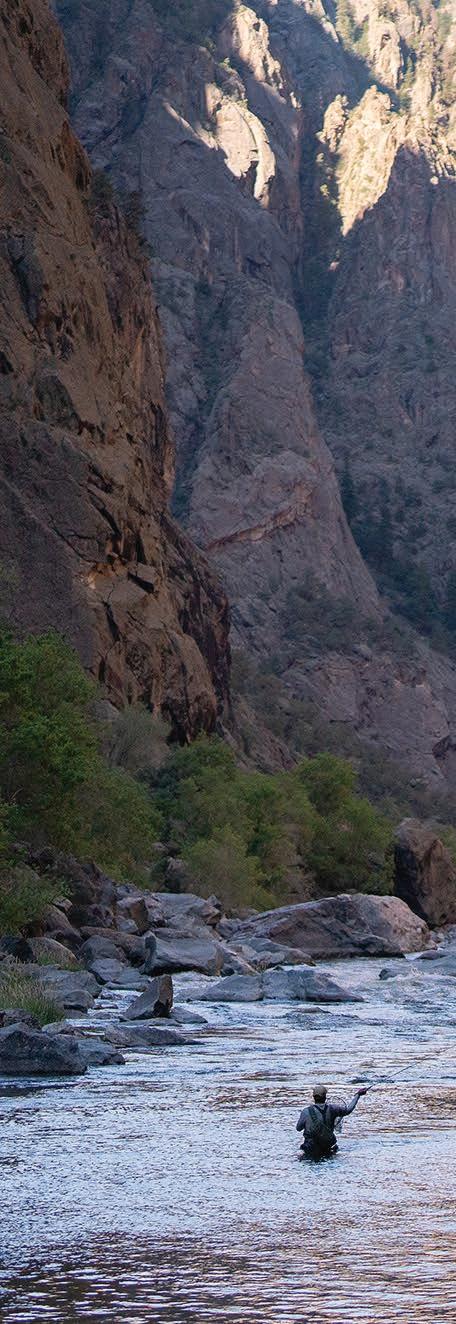
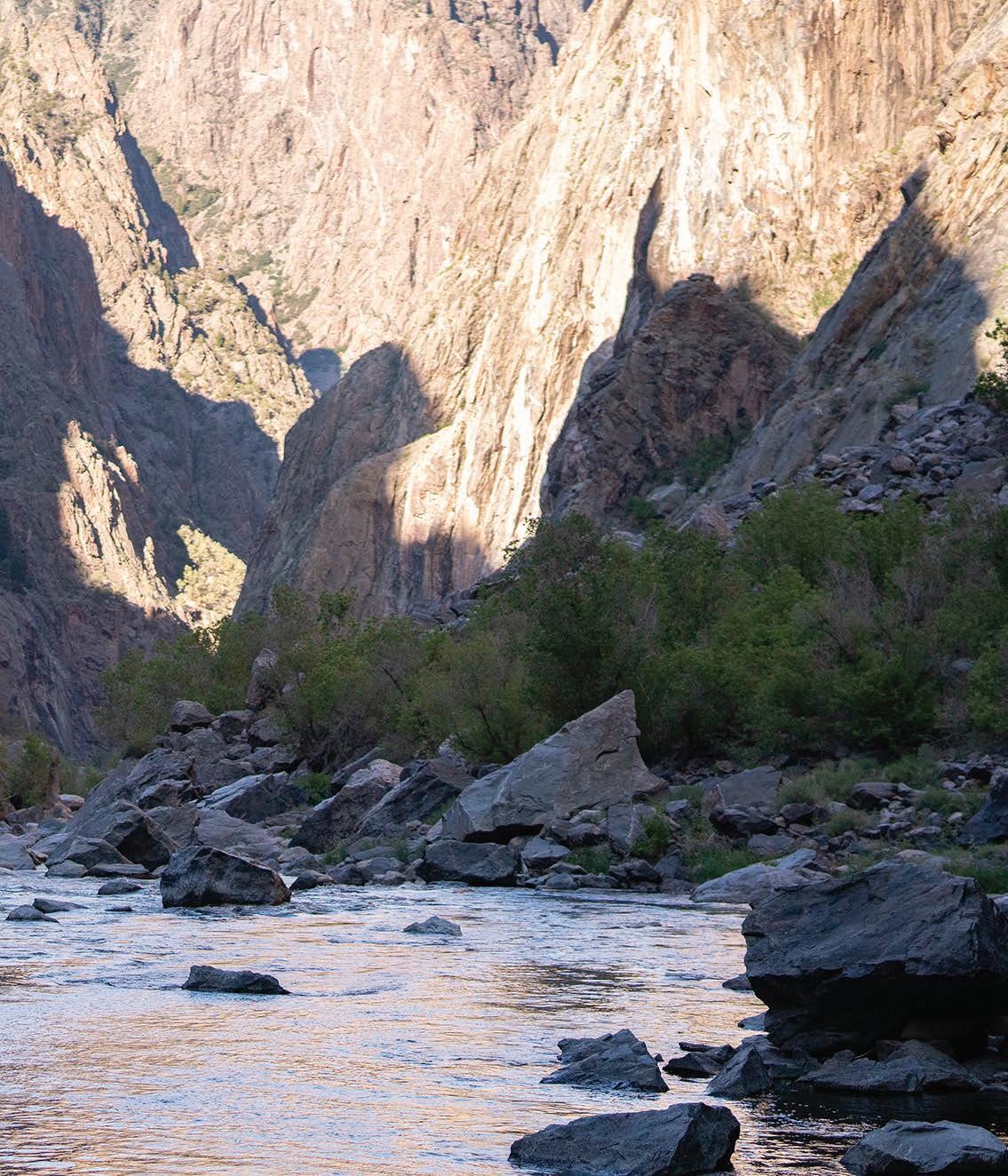
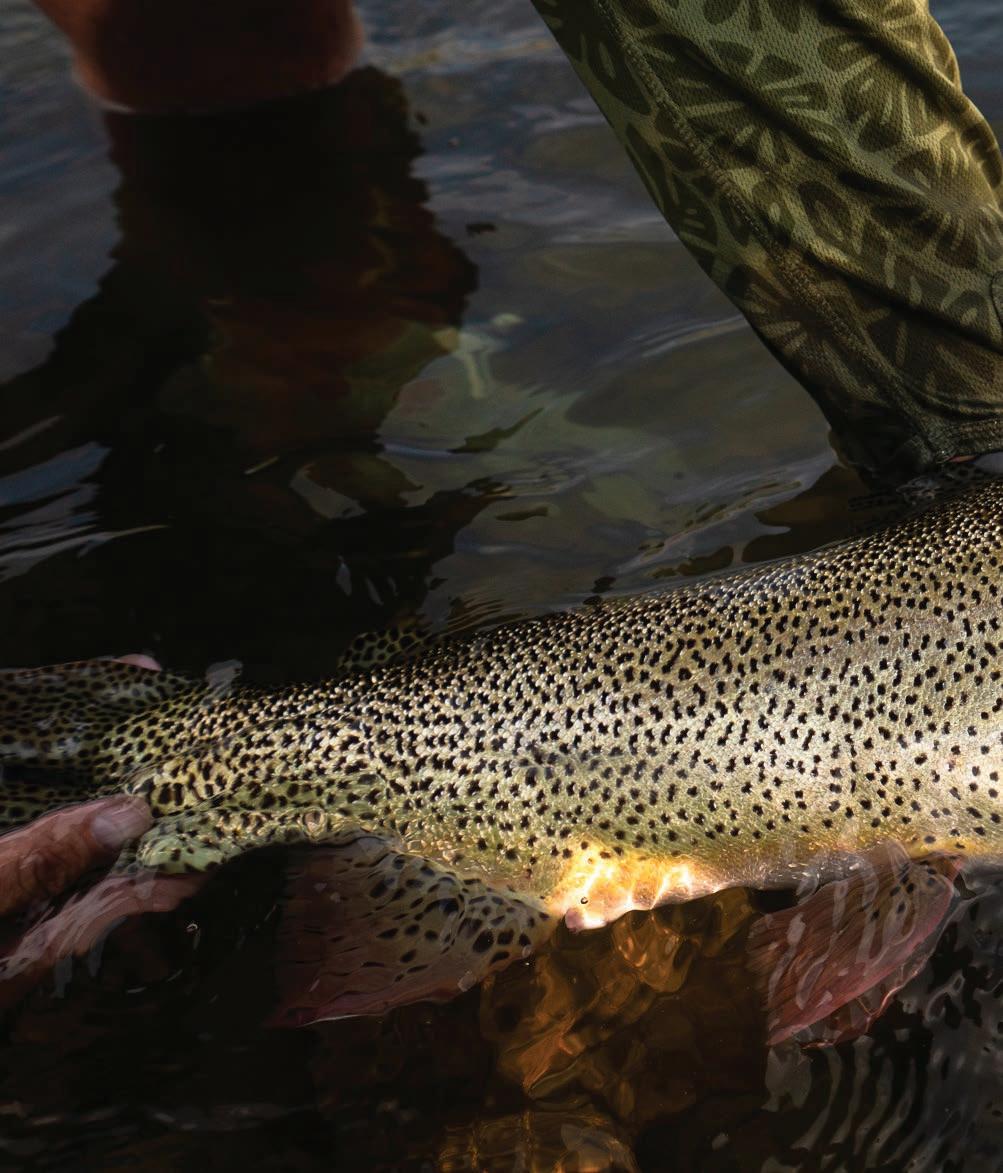
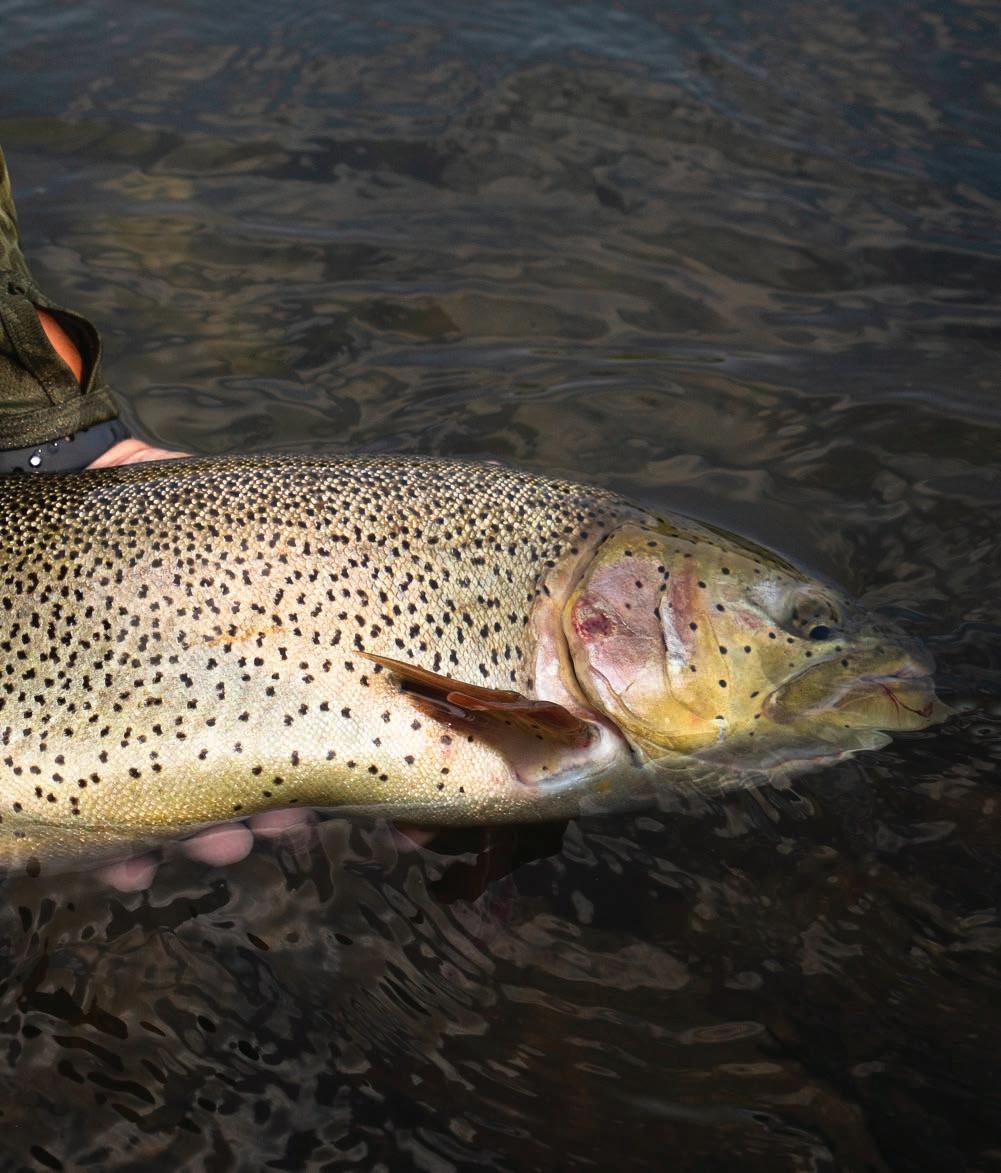
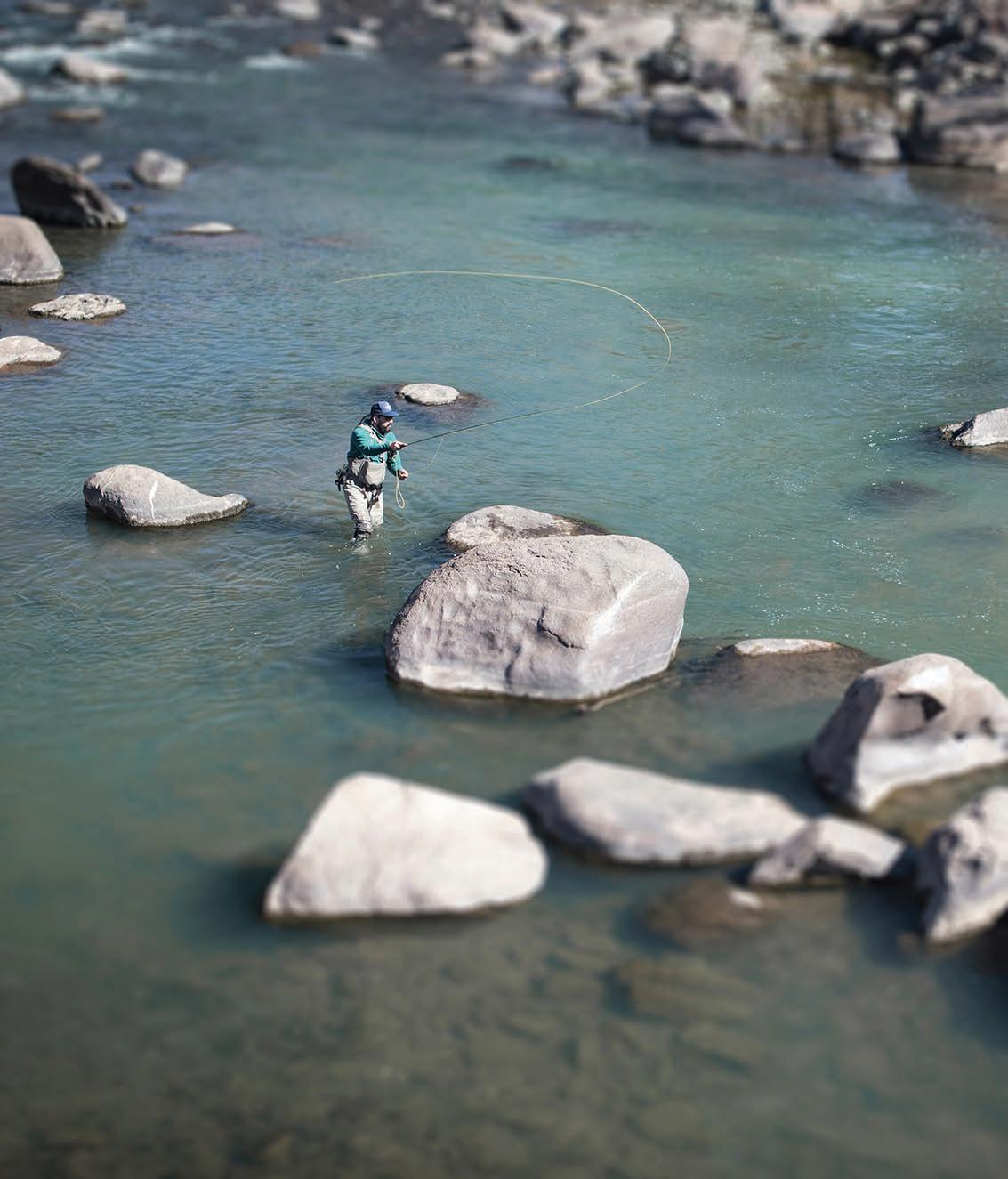

It never fails that the instant I put down the camera and pick up a rod, a beautiful shot lines up. So, sometimes it has to be an internal conversation beforehand that there will be no fishing that day, only shooting.
What are your respective future goals as a fly fisherman and as a photographer?
There’s an insatiable desire to keep exploring new rivers with good friends, passionate fly fisherman that later become friends, and brands that share my same values. Beyond that, though, it’s important to me to connect with organizations that are focused on river health and conservation. It’s easy to take these wild places for granted without ever thinking about the harm humans are doing to them. A few weeks back I did a clean-up with “Protect Our Rivers” on a section of the South Platte that goes through Denver, and it was mind-blowing to see how much trash the crew pulled out in an hour and a half. Really makes you think!
I also believe that everyone would benefit from spending time on a river with a fly rod in their hand. Especially those people that live their whole lives in a city. It would completely change the way they think about life and the planet. So, I’d consider it a great win if my images would motivate others to get out there.
If you’d like to know more about Rob’s work – and buy prints, here’s where to go:
www.robhammerphotography.com/fly-fishing-photographer www.robhammerphotography.com/fly-fishing-prints
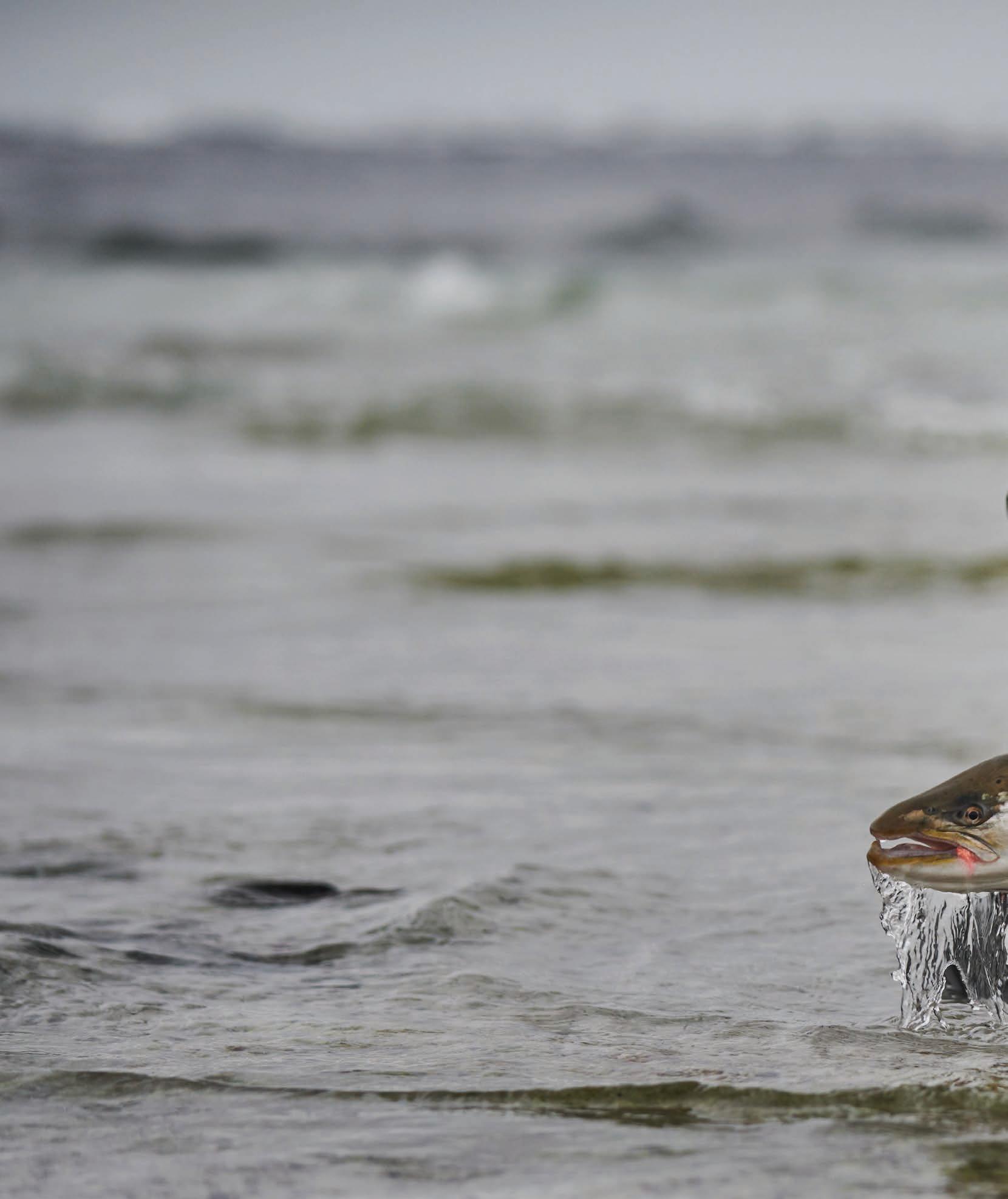
By GORDON P. HENRIKSEN
by GORDON P. HENRIKSEN, FREDERIK LORENTZEN, NIELS VESTERGAARD, and KRISTJAN LØK
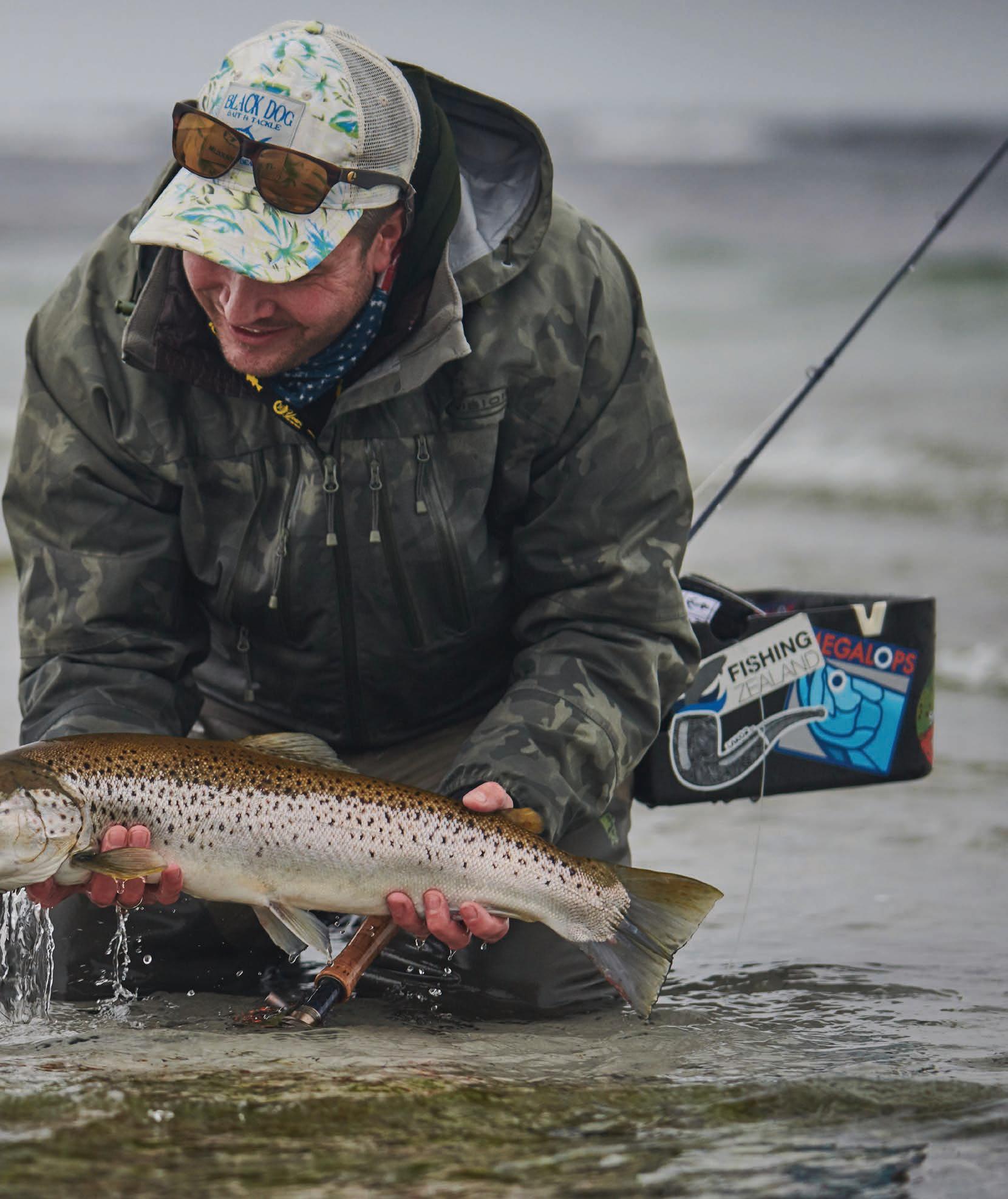
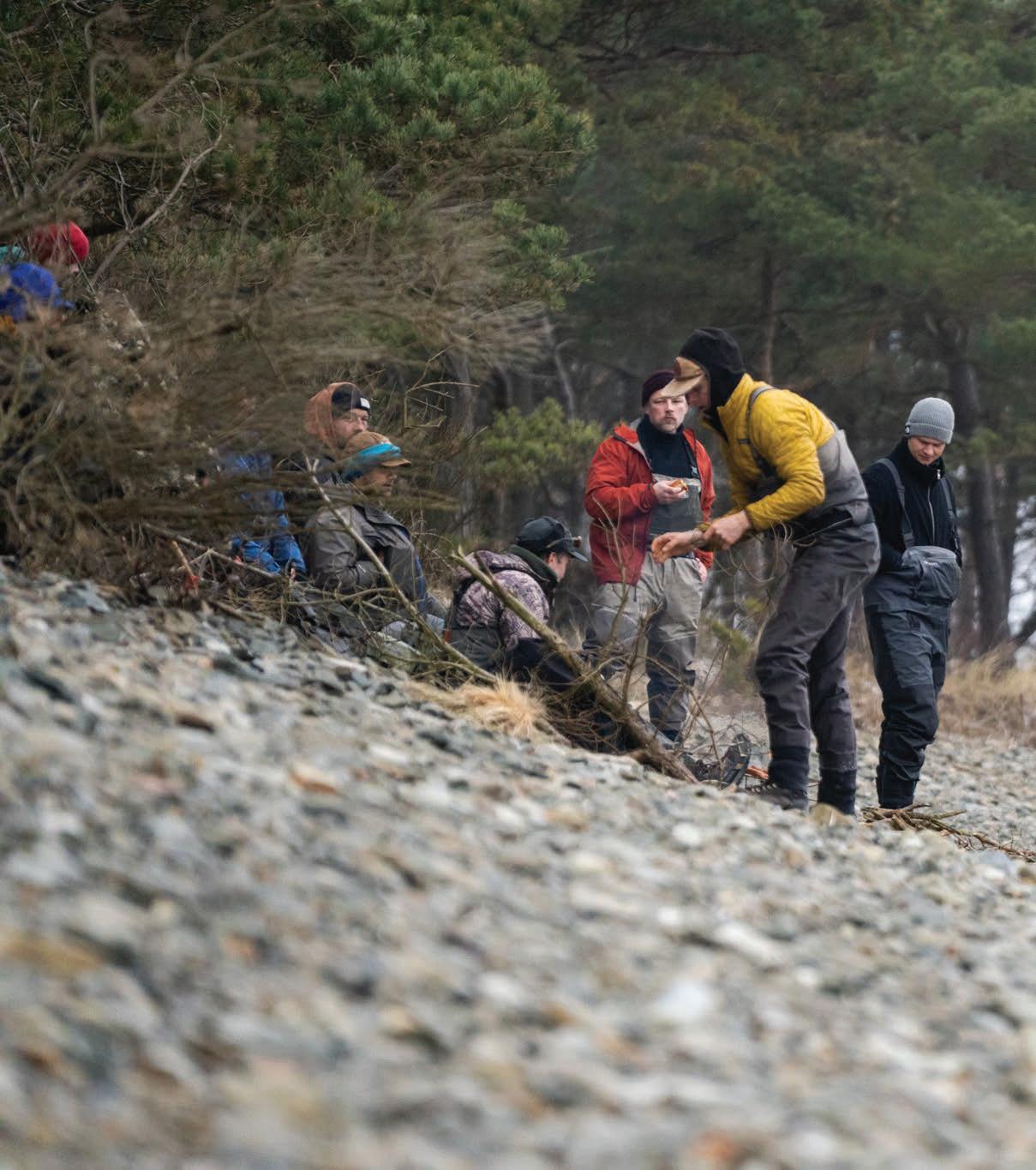
The world of fly fishing has long been celebrated for its connection to nature, a passion that demands patience, precision, and a deep respect for the environment. However, as the impact of human activity on aquatic ecosystems continues to grow, it has become clear that simply enjoying nature isn’t enough. Fly fishers are beginning to see their role in conservation not as passive observers, but as active participants in restoring and preserving the rivers they cherish. This is where regenerative tourism comes in, and this movement is vibrantly represented at the annual BornholmSession, a fly-fishing festival on Denmark’s picturesque Bornholm Island.
BornholmSession, a gathering of passionate fly fishers, has become a great example of a form of regenerative tourism, combining sport with restoration. BornholmSession has grown into a unique celebration of the communities created by fly fishing. One of the things that make this festival stand out from other fishing events, however, is its commitment to making a positive impact on the local environment.
While participants enjoy fishing along the island’s pristine coasts, they also work side by side with local volunteers from “Vandpleje Bornholm” to restore habitats and ensure the rivers’ health. This year, a new movie was made by photographer Mats Schroeter and one of the organizers, Gordon P. Henriksen.
“This synergy between conservation and recreation is changing the way we think about tourism”
The movie tells the story of why we are motived to do river restoration as part of a fishing trip. We see Bornholm’s beautiful coast, some nice fly fishing and most of all happy fly fishermen putting in a day’s hard work – and enjoying some cormorant pizza and cold local beers to celebrate the effort. This synergy between conservation and recreation is changing the way we think about tourism - and how tourism can give back to the environment.
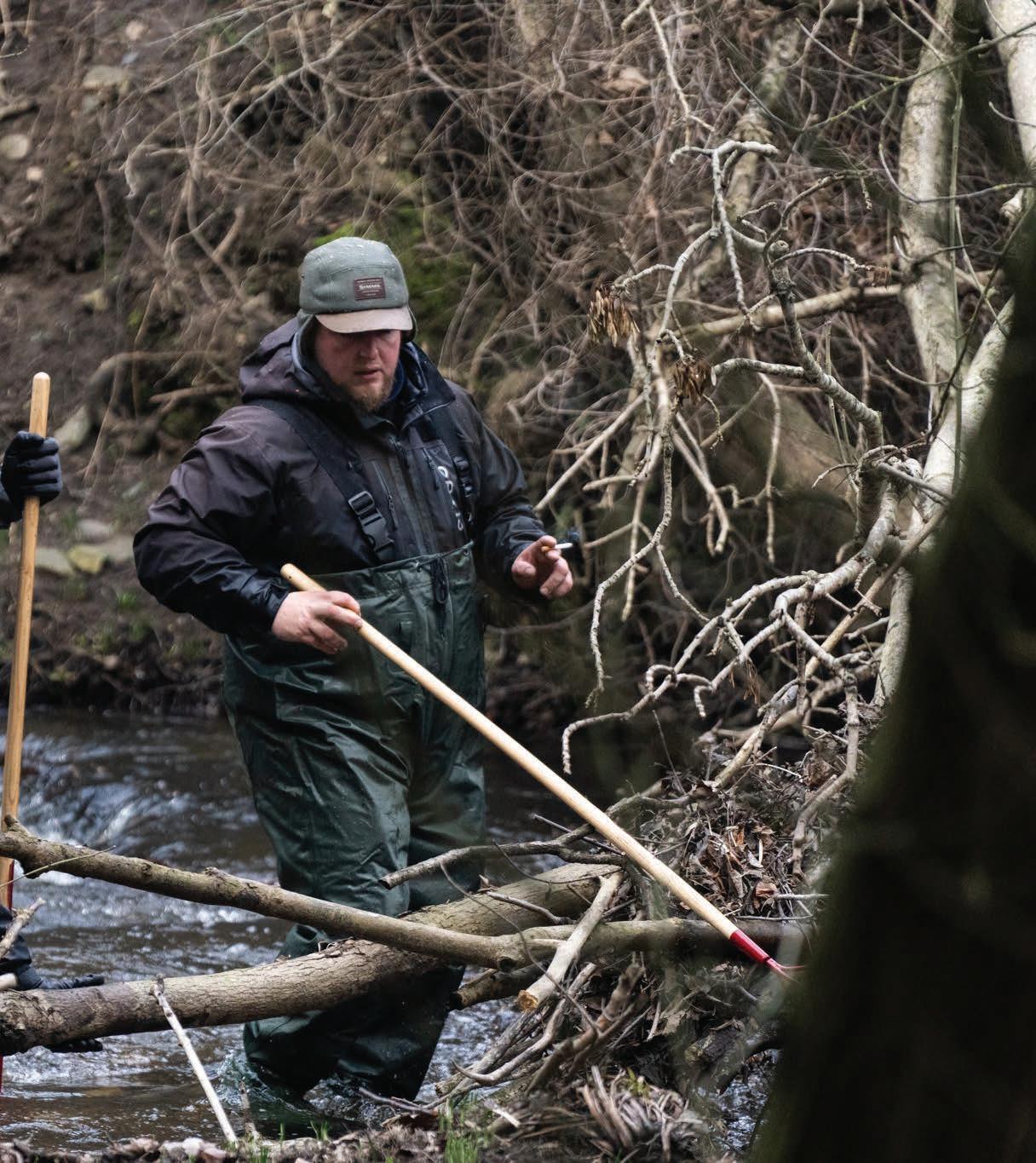
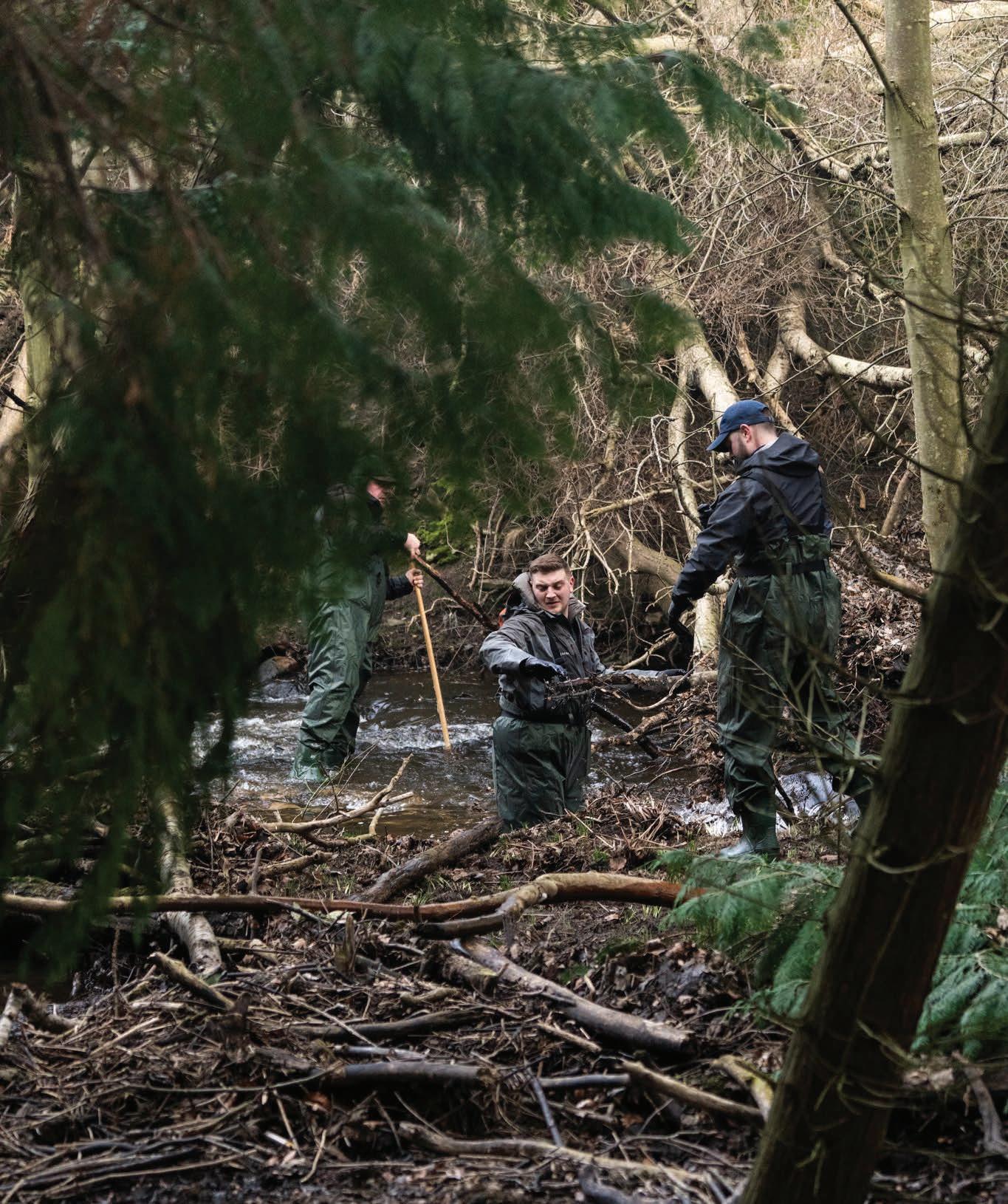
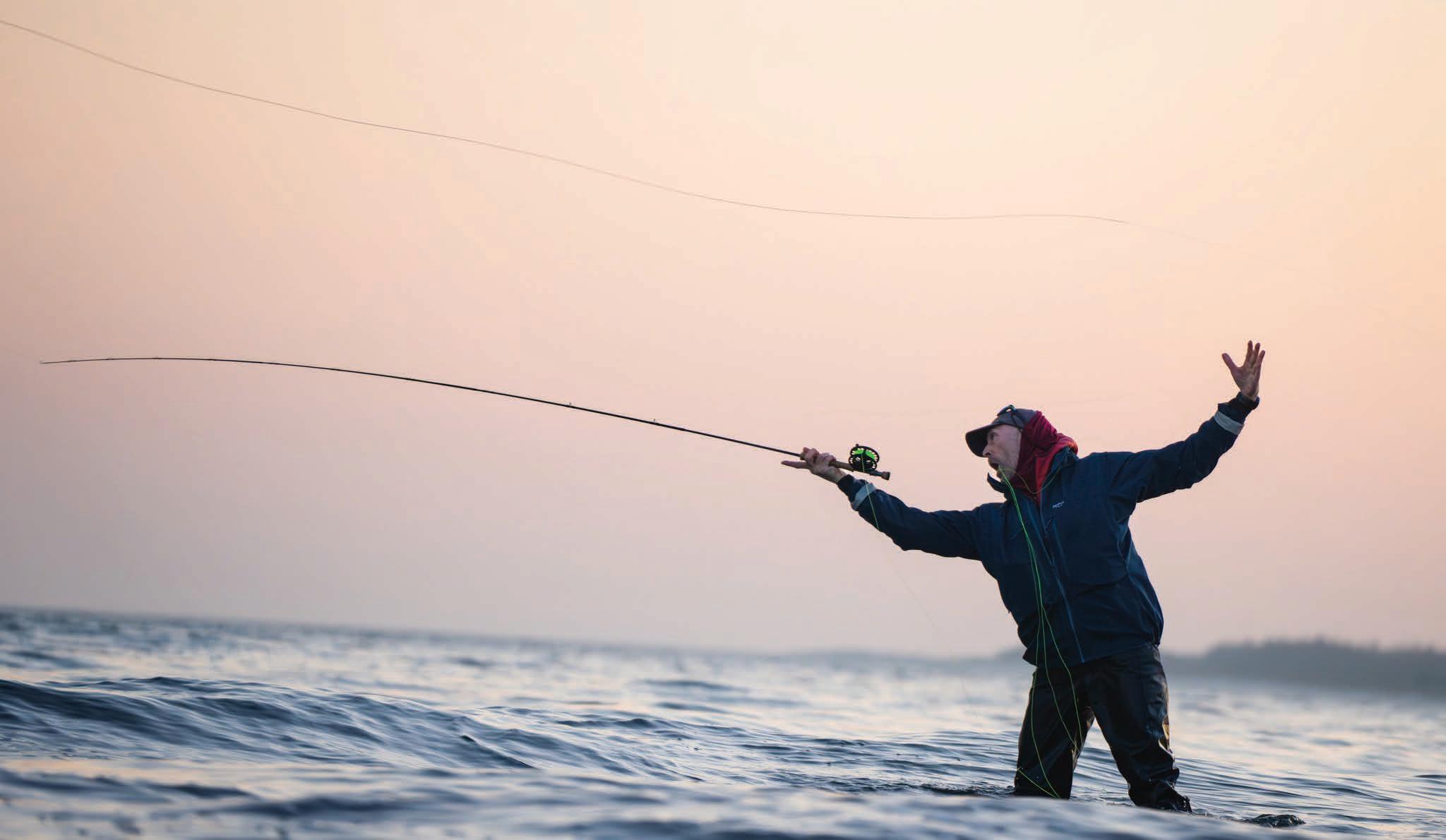

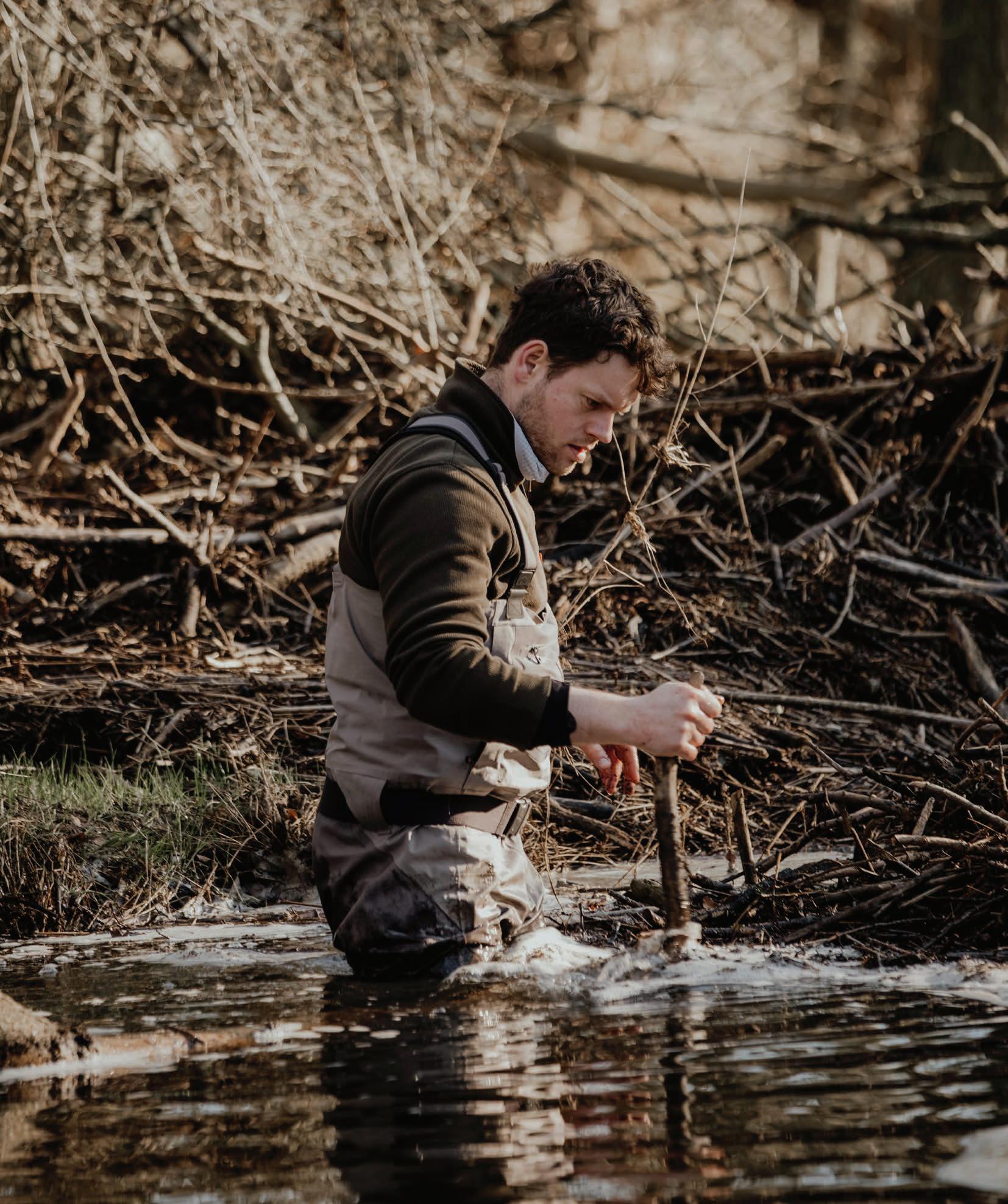
Regenerative tourism is a concept that seeks to leave a destination better than it was found. Unlike traditional forms of tourism, which can often be accused of exploiting natural resources, regenerative tourism focuses on improving the environment as well as supporting local communities and ecosystems.
“One key project is the restoration of spawning habitats for trout”
At BornholmSession, this philosophy is put into practice by engaging anglers directly in conservation projects.
The specific restoration projects associated with BornholmSession focus on improving conditions for wild brown trout populations, that thrive in Bornholm’s rivers but have been under threat due to pollution,
habitat degradation, and overfishing. Through collaboration with local environmental organizations participants at the festival take part in a variety of activities that supports the recovery of these populations. One key project is the restoration of spawning habitats for trout. As the island’s rivers have become more polluted and heavily affected by human activity, many of the natural spawning grounds have been lost.
Volunteers have helped rebuild these areas by installing gravel beds and ensuring that the water flow is optimal for fish spawning. Similarly, work is done on cleaning up the riverbeds, removing obstructions, and planting native plants to improve water quality and provide shade that helps regulate the temperature of the streams.
To spread awareness about these impactful efforts, the BornholmSession organizers have produced a short powerful documentary, which showcases the festival’s conservation initiatives.
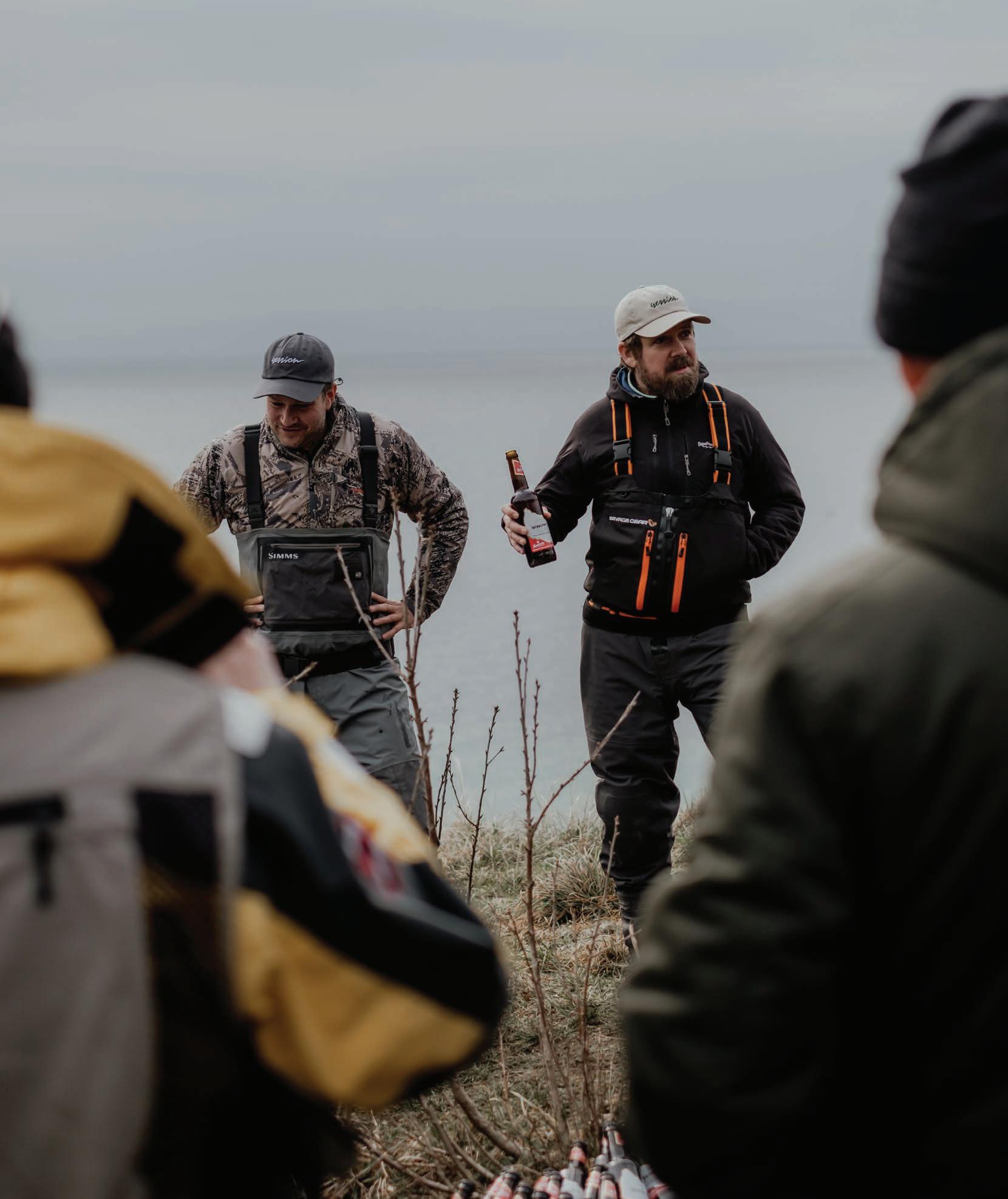
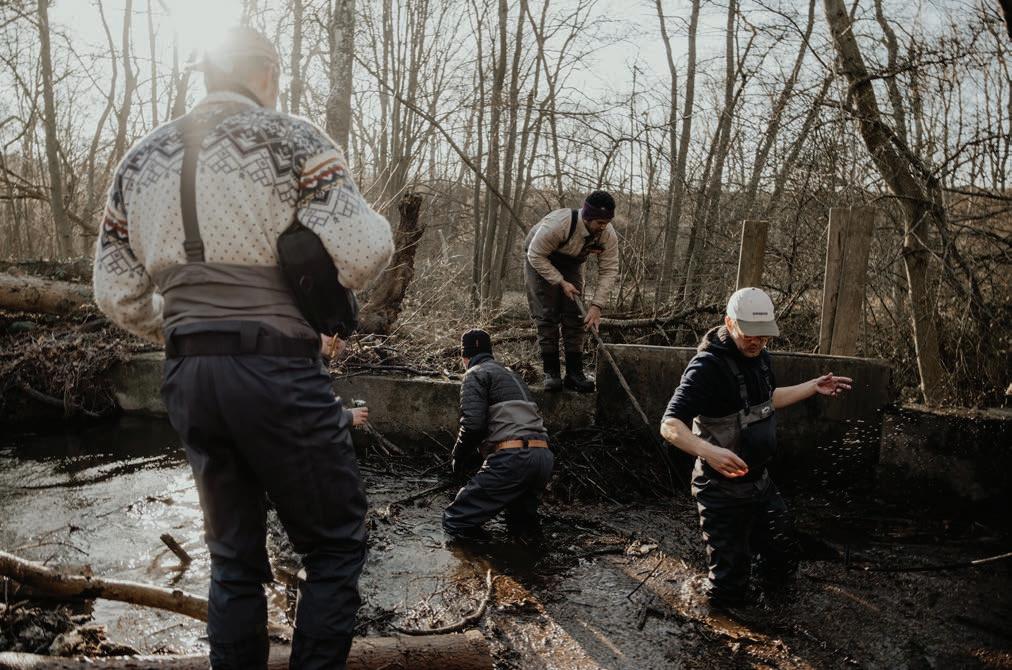
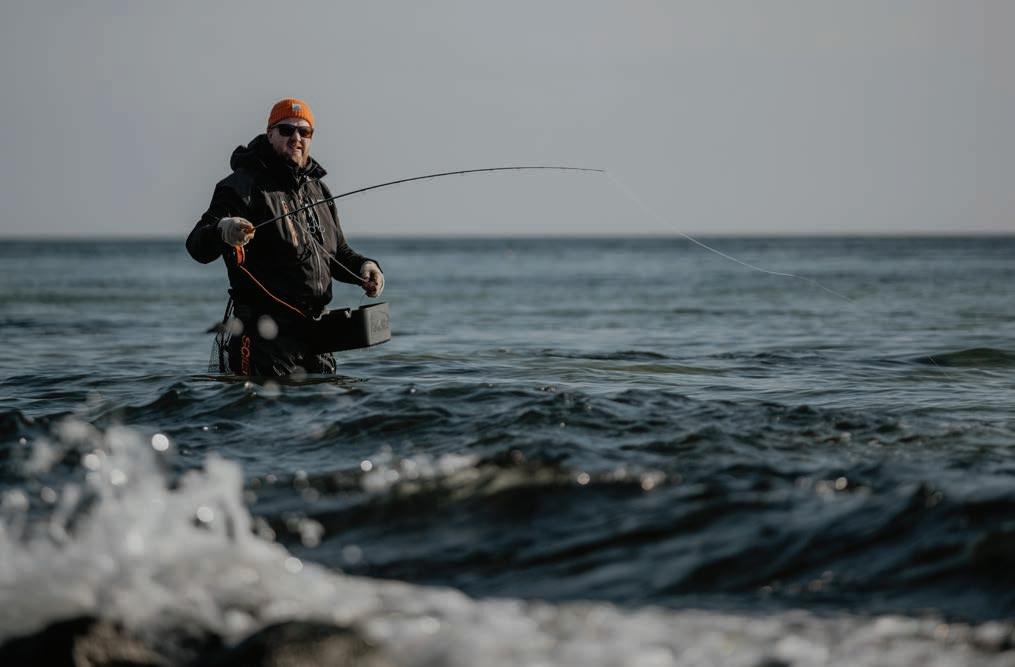
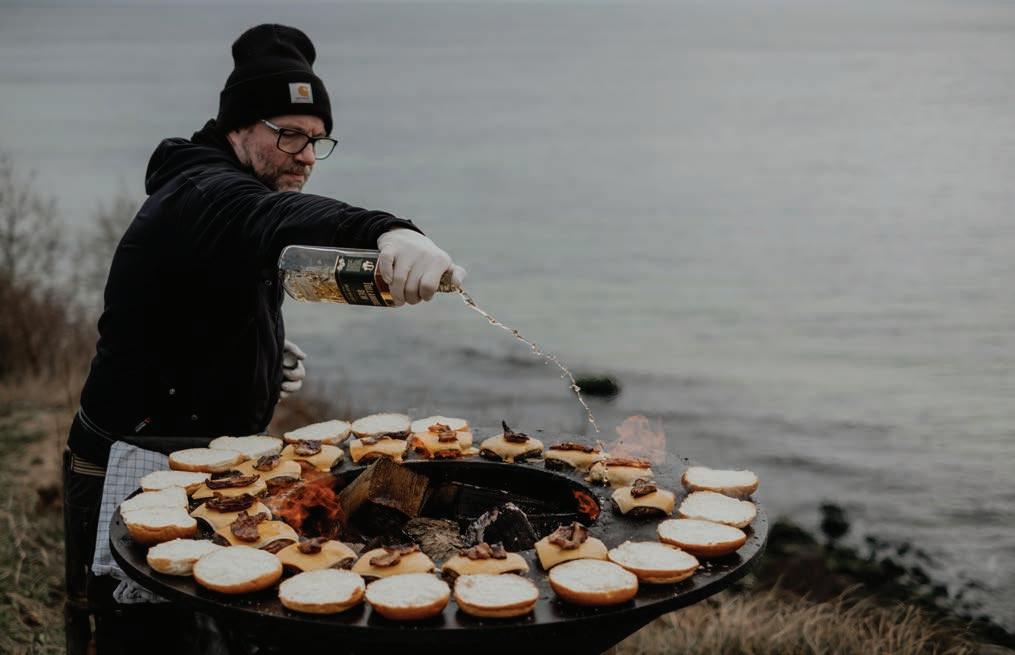
The film not only captures the beauty of the island and the passion of its anglers but also tells the stories of how fly fishers are helping to restore the fish populations that are central to their sport.
This film serves as both a testament to the success of the BornholmSession and as an invitation for other communities and festivals to adopt similar regenerative tourism practices. It also highlights the powerful connection between people, nature, and the future of the rivers they love to fish in.
Is regenerative tourism at BornholmSession setting a new standard for how we approach fly fishing and the ecosystems that sustain it. By blending sport with conservation, the festival is showing that anglers don’t just take from the destinations; they give back to them, ensuring that future generations will be able to enjoy the same beauty and bounty.
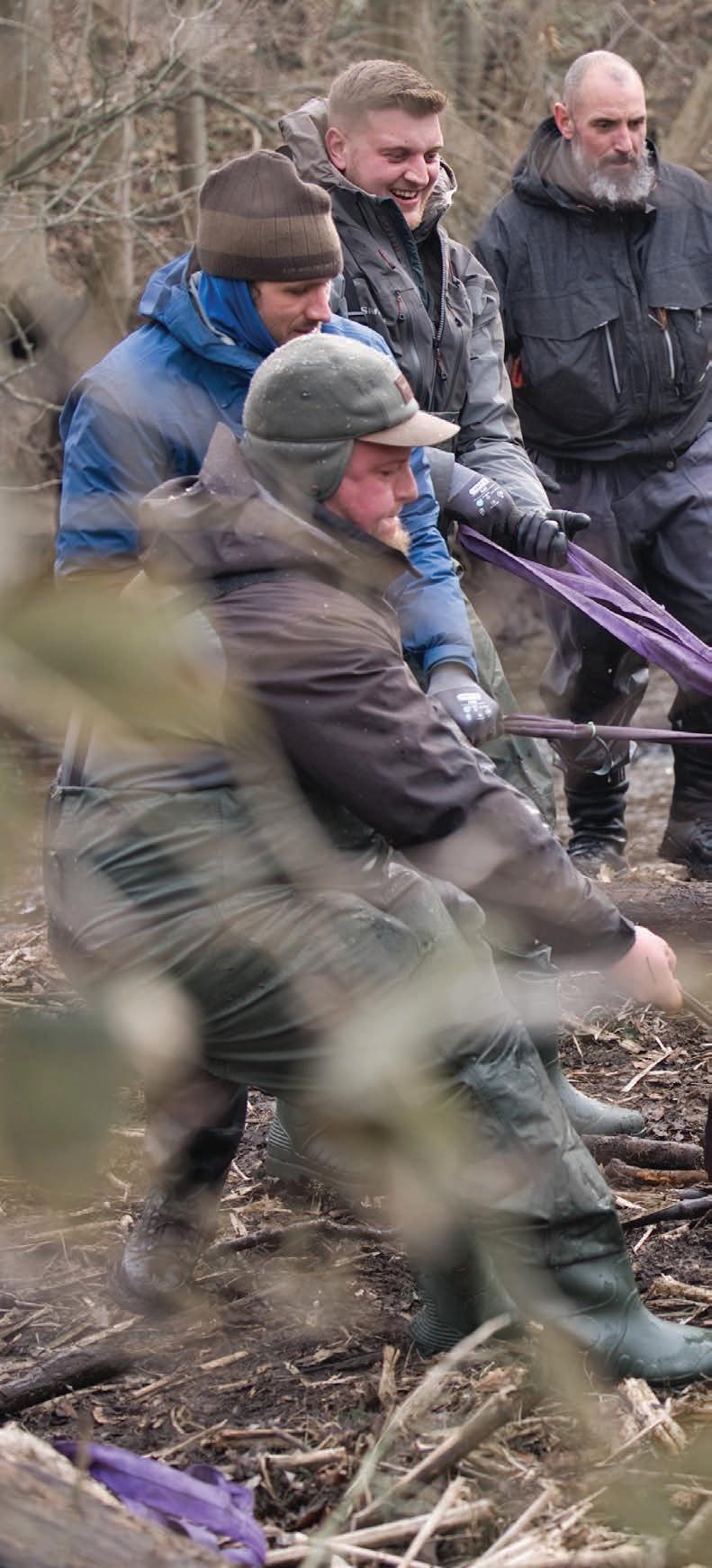
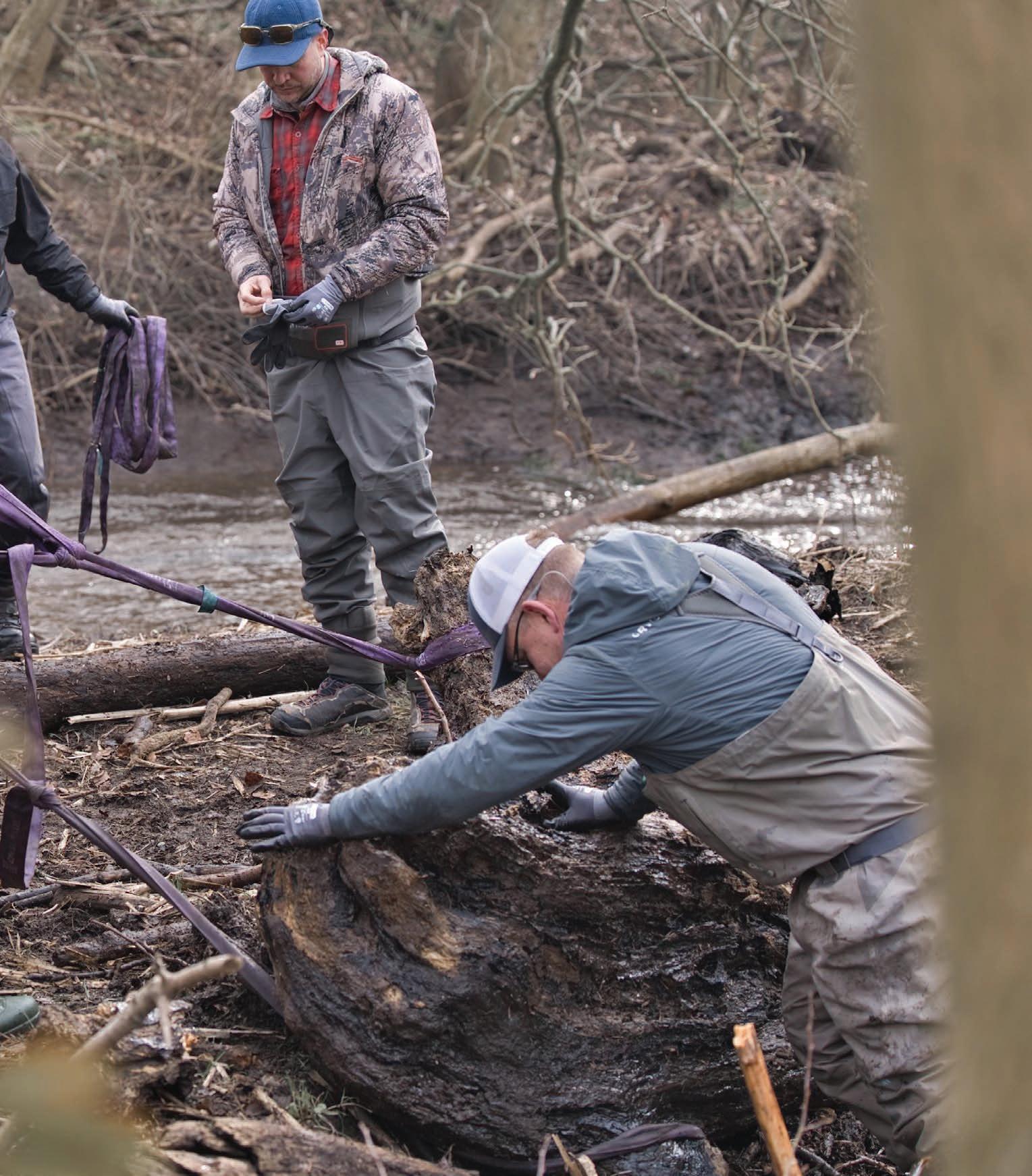
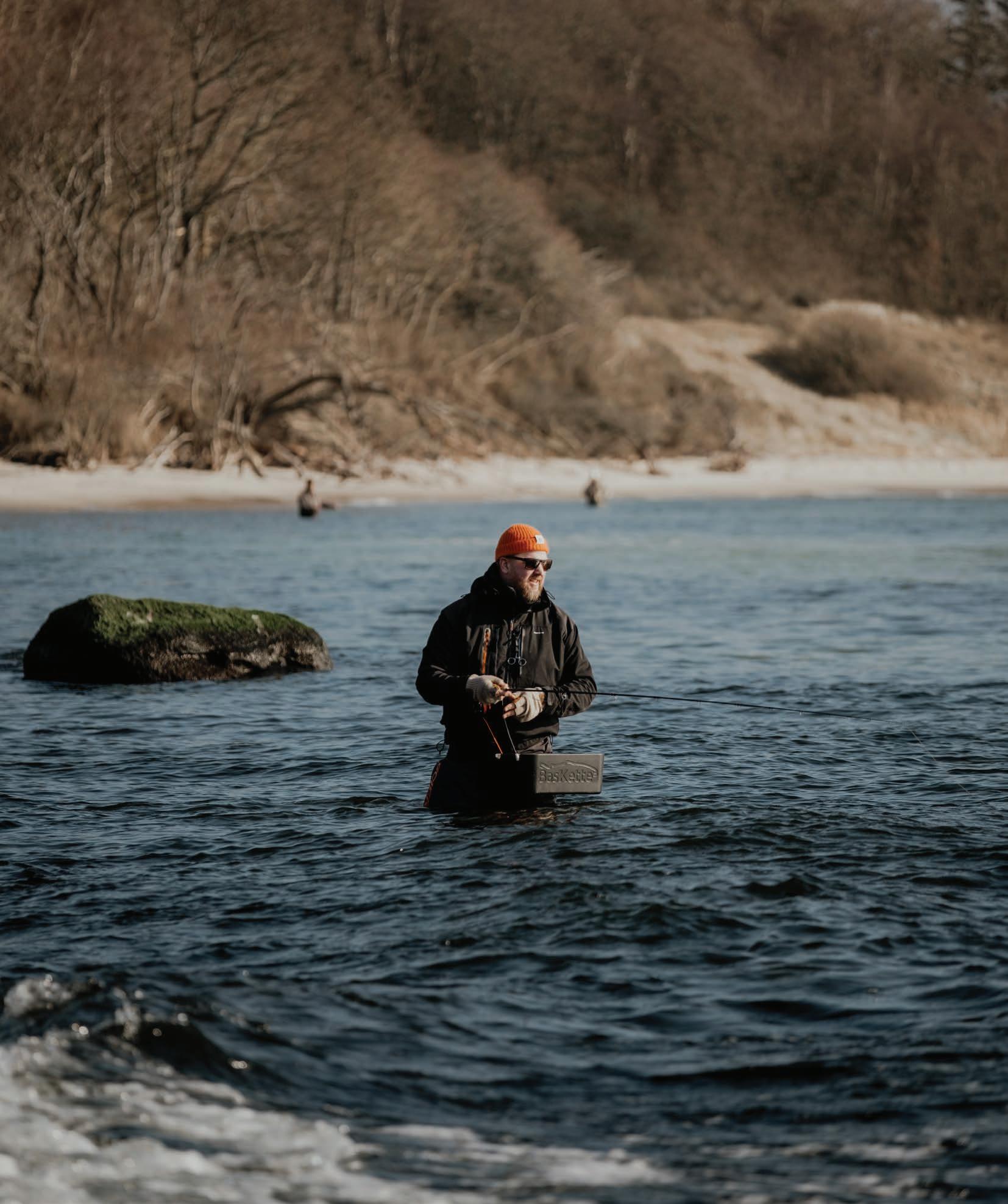
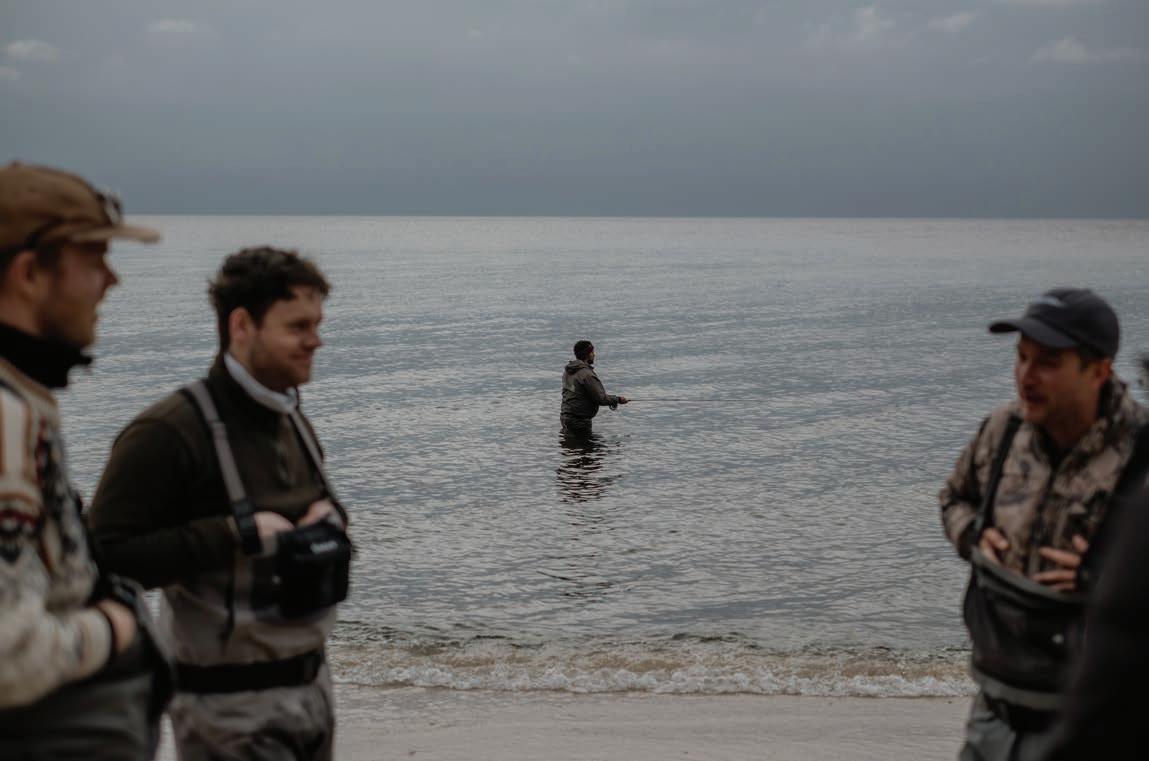
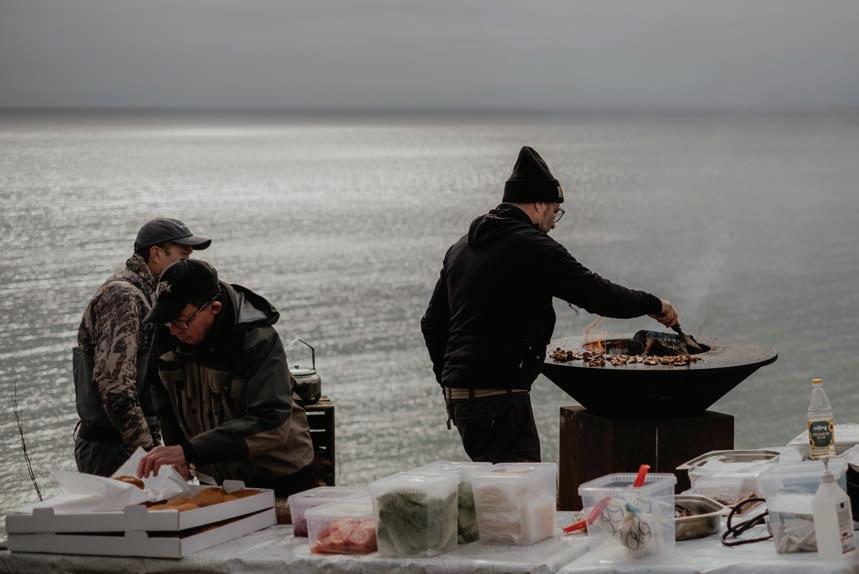
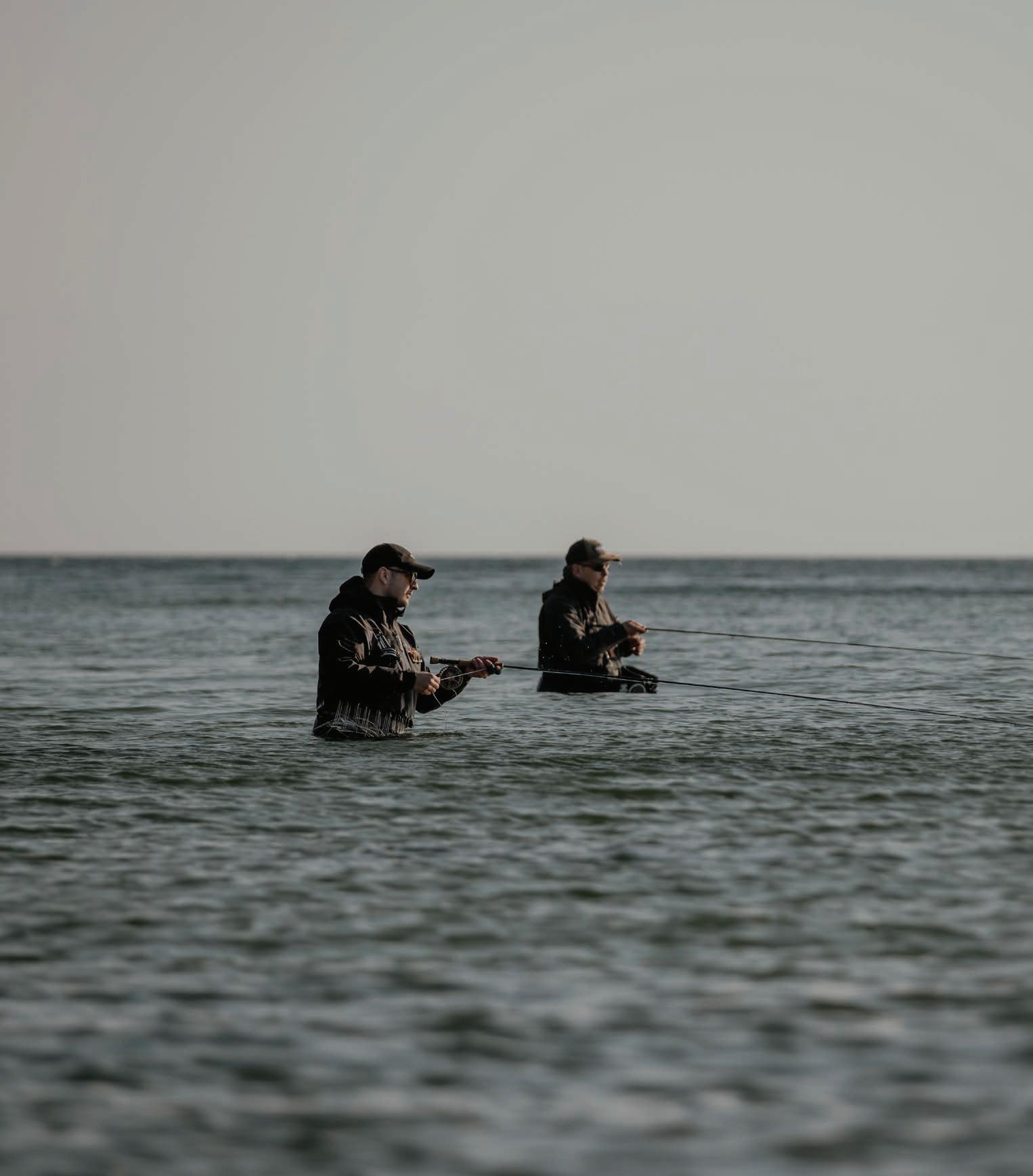
Fact File: Fly Fishing for seatrout on
Bornholm can be a challenge – but one with great rewards. There is real potential to catch massive, silver-bright sea trout here, but it requires effort - often along wind-exposed coastlines that can be demanding and risky to wade. Fish can, of course, be caught on more sheltered stretches, but it is usually on spots with onshore winds that the truly large fish are landed.
Along Bornholm’s southwest-facing shores you’ll find a number of coastal areas with relatively shallow water, where you can wade and cast beyond drop-offs, bars, reefs, and kelp beds. These areas can offer good fly fishing during the spring months. In general, however, the key is to locate coastal spots close to deep water and seek out rough, stirred-up conditions - because it is most often in colored, turbulent water that the fish move in to feed.
For the coastal fly angler on Bornholm, it is important to have the right gear for casting and fishing in heavy surf and strong windsalong stretches that are not always easy to wade. For covering water along bars and in large bays, waders are essential. Neoprene waders with felt soles and studs are recommended, as they provide secure footing on everything from wet rocks to bladderwrack and rolling stones.
“Bornholm’s sea trout often move in schools of varying size, and locating them is key”
As for fly gear, it must support mobile, searching-style fishing. Bornholm’s sea trout often move in schools of varying size, and locating them is key. To make covering water more efficient, a shooting-head setup is highly recommended.
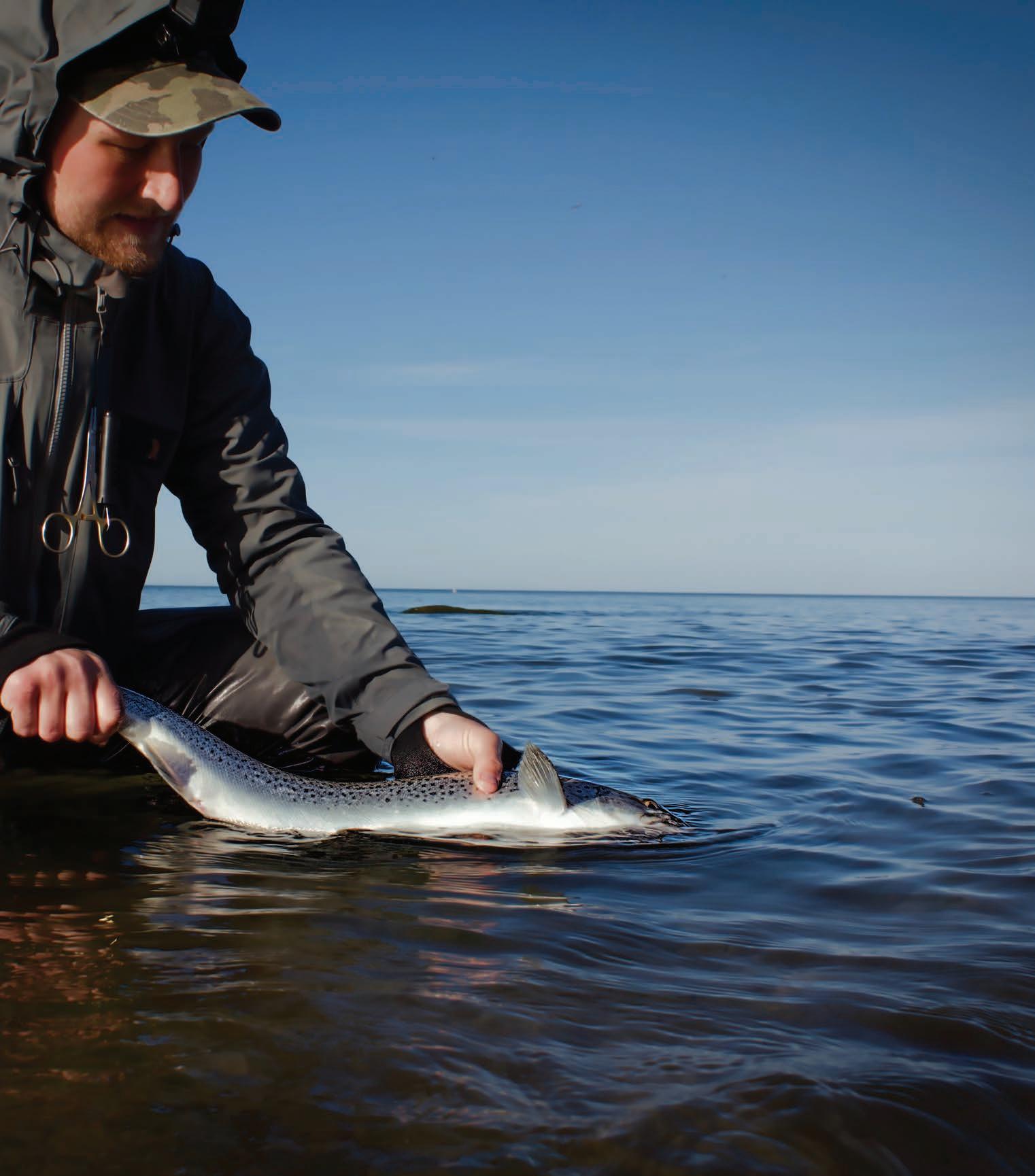
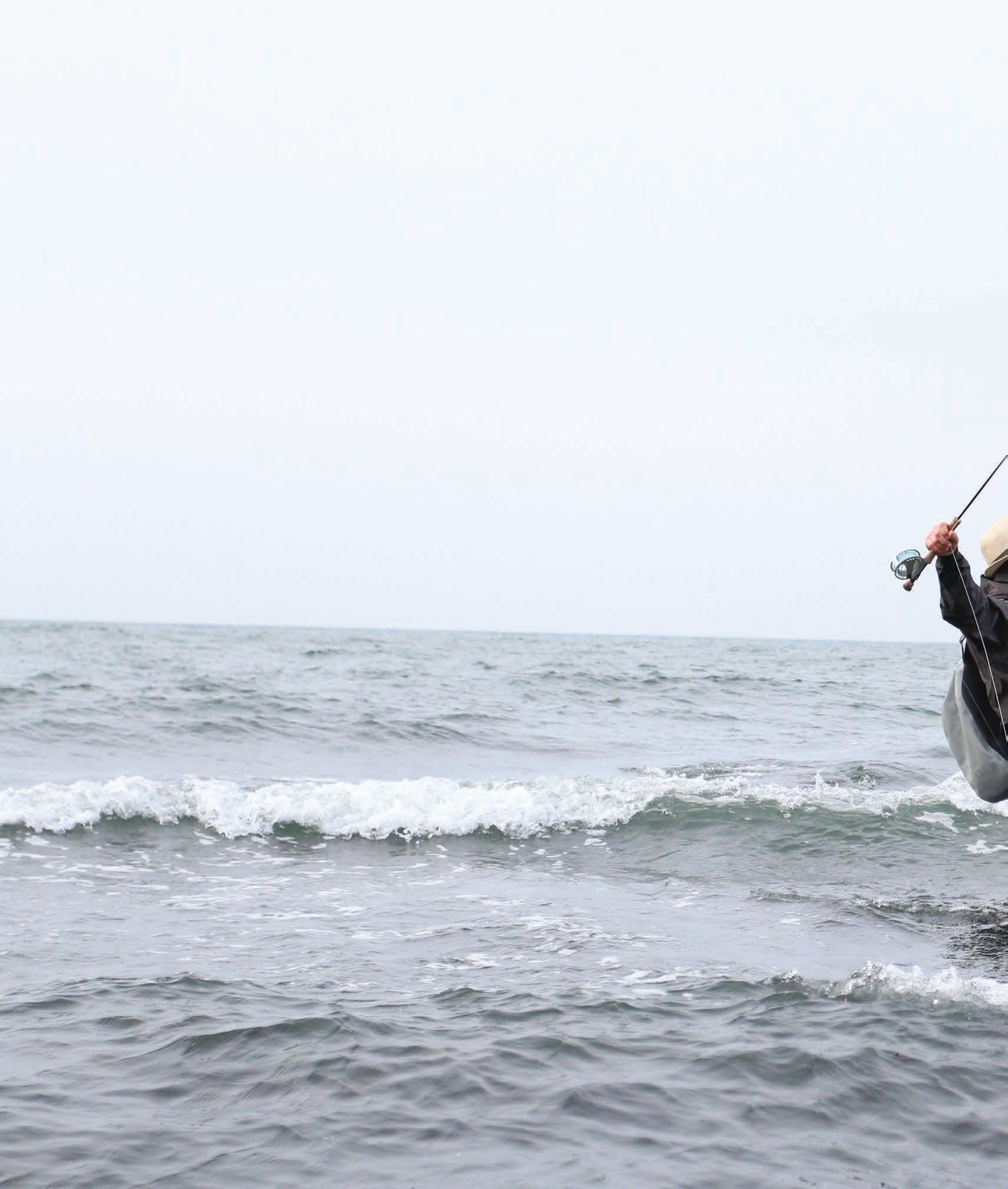
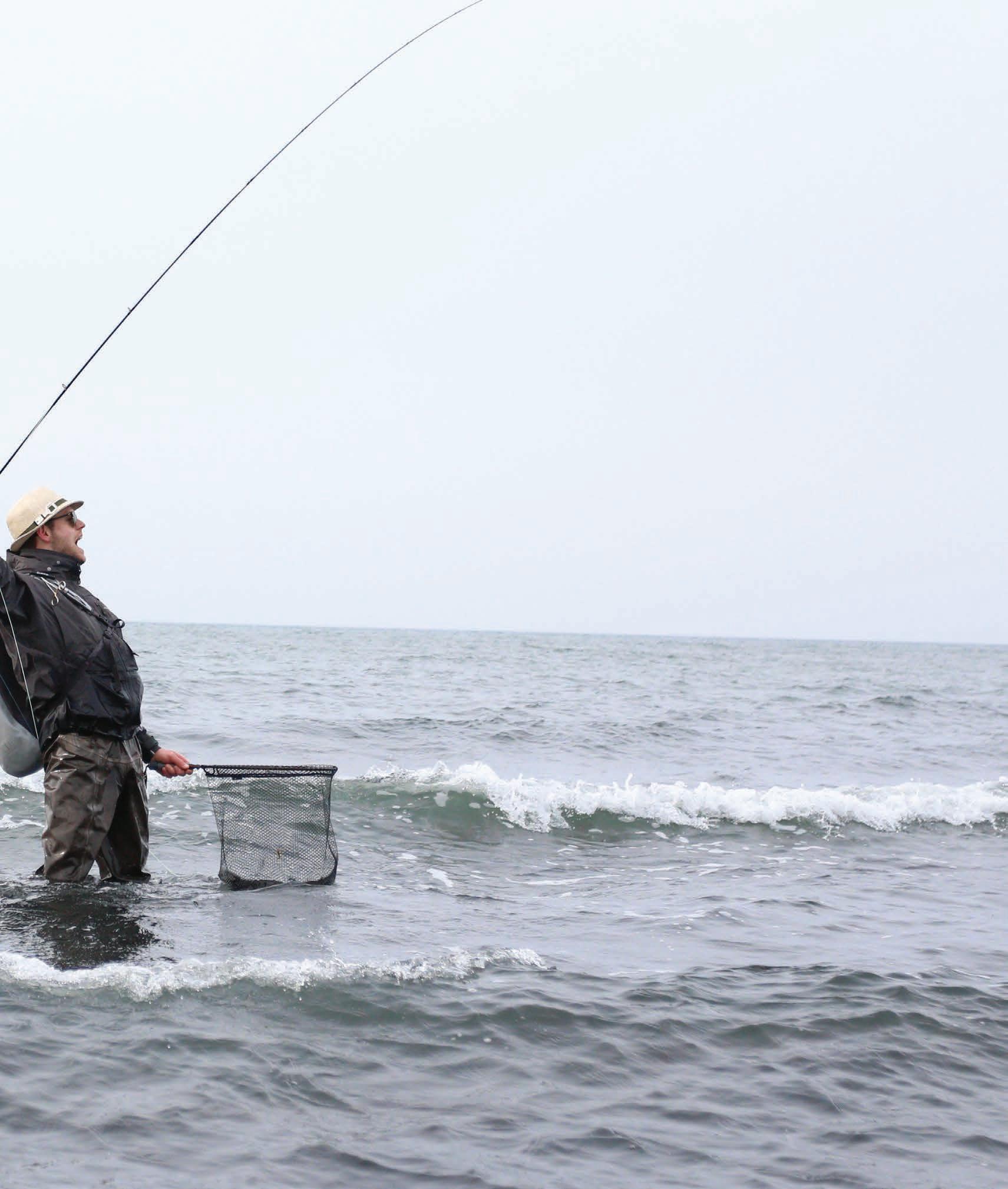
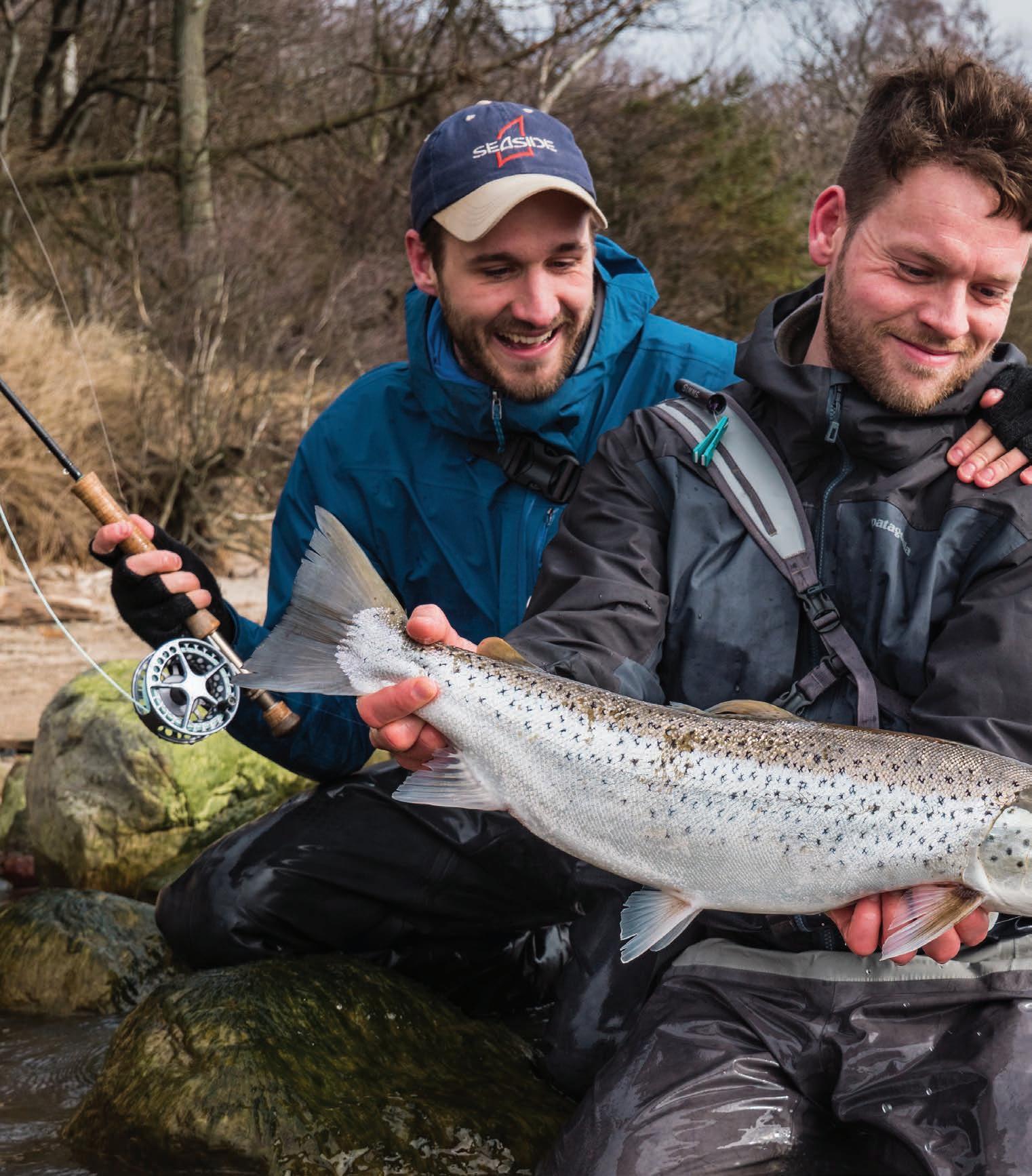
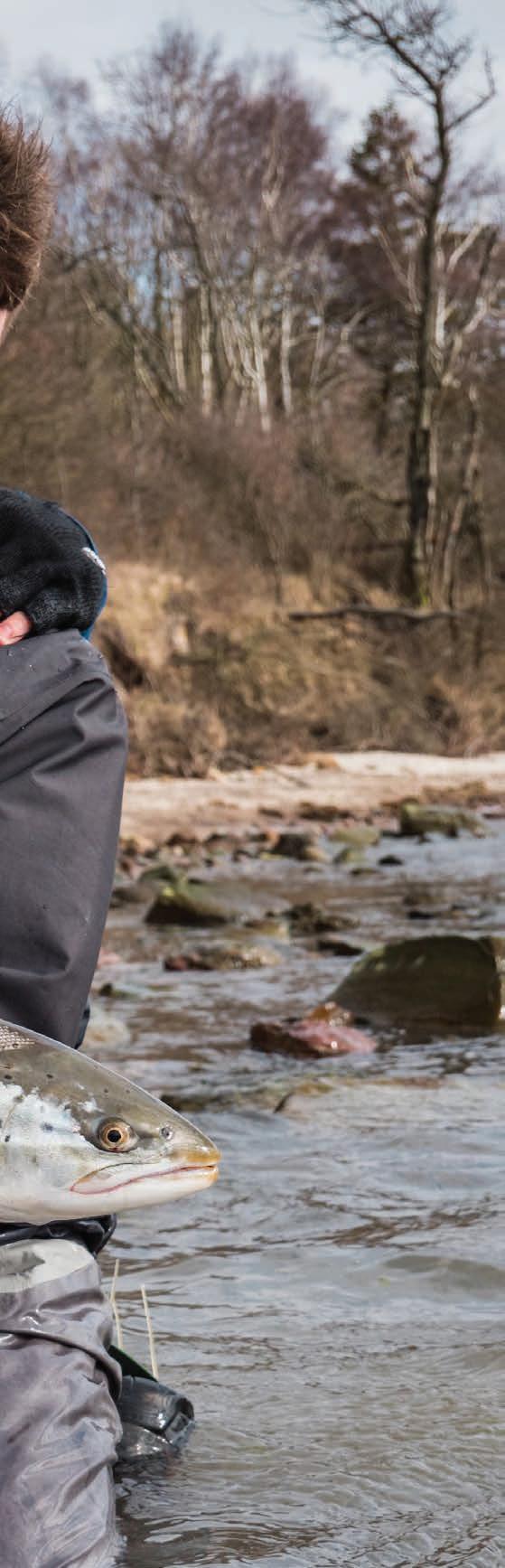
In addition to enabling relatively long casts with a short stroke, shooting heads also cut through the wind effectively.
Depending on the wind, a 9’ #6 or 9’ #8 setup works well. The reel should be durable enough to withstand harsh conditions, equipped with plenty of backing and a strong drag. Bornholm produces sea trout of intimidating size every year - and there is always a chance that a fully grown salmon will suddenly strike. For lines, an intermediate shooting head that runs just under the choppy surface is ideal. The leader should be between 3 and 4.5 meters, ending in a 0.25 mm fluorocarbon tippet.
In addition to the fly setup itself, a stripping basket is essential. When covering water, it prevents your loose line from snagging on rocks, stones, and seaweed, or from tangling in the surf.
The fly-fishing season runs from late October through late April, and in the coldest months many locals swear by small flies in pink, chartreuse, and pearl shades. Otherwise, baitfish imitations are typically the way to go.
If you’re looking to hire a guide, please refer to one of the following: www.bornholmfiskeguide.dk www.bornholm.info/en/bornholm-fiskeguide

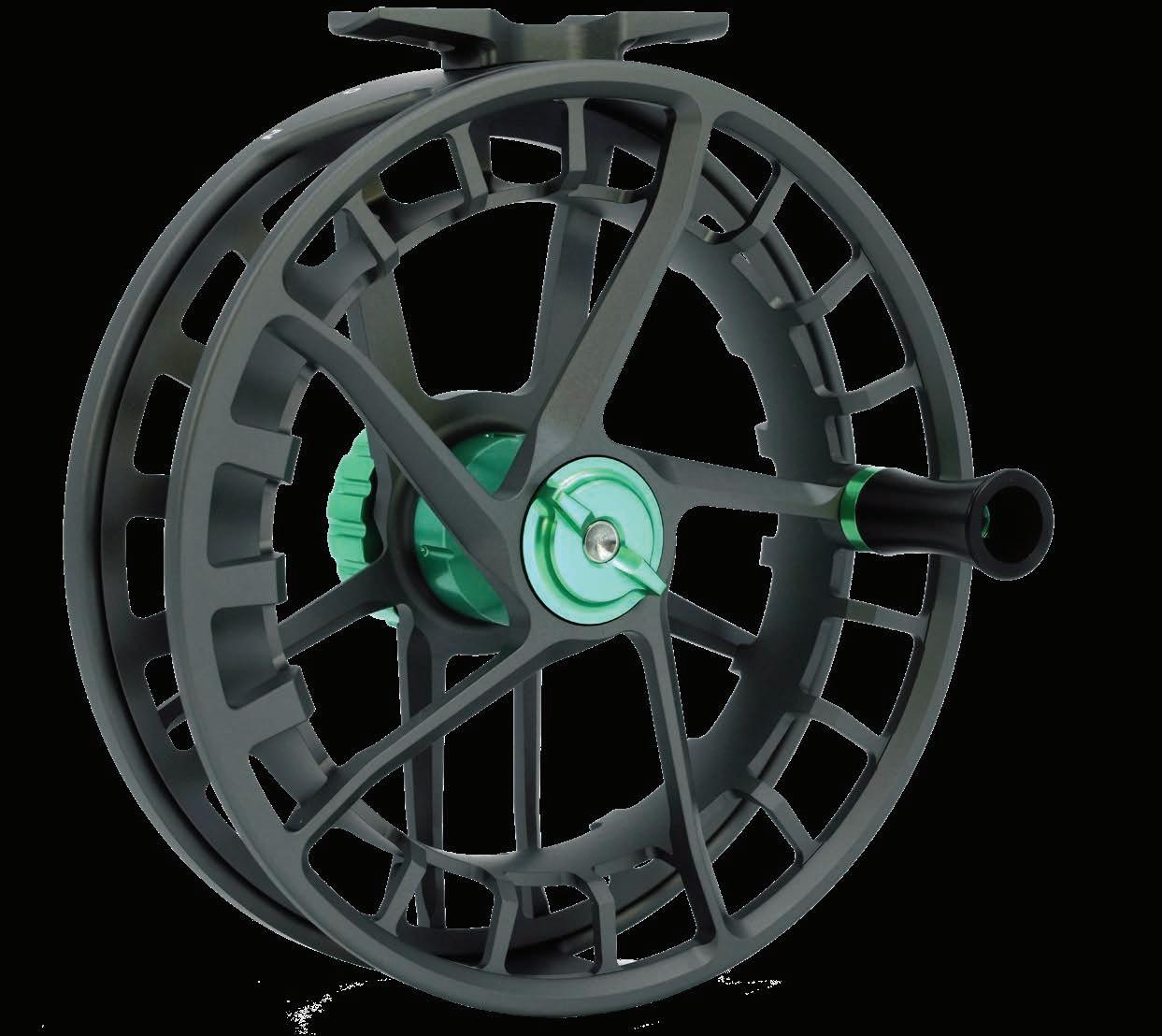

Buckle up. As we’ve said - the performance benchmark for a fly reel is retrieve rate per ounce. There’s no downside to high retrieve rate other than the extra weight. Imagine an 8 weight reel the diameter of a 12, envision gobbling up 14” of line per rotation. Now stop wondering and try to keep up with the Hyperspeed M8. Coming in at less than an ounce heavier than its Litespeed M8 counterpart, this radical design maximizes line pick up unlike any reel we have ever dreamed up. Every inch of the frame and spool has been meticulously CNC machined with even material distribution along critical load paths. Ensuring unrivaled strength, stability, and lightness despite its impressive size. So light you might forget it’s there, but commanding enough to demand attention. Find a new gear with this reel that’s primed to keep pace with even the fastest fish you can find.
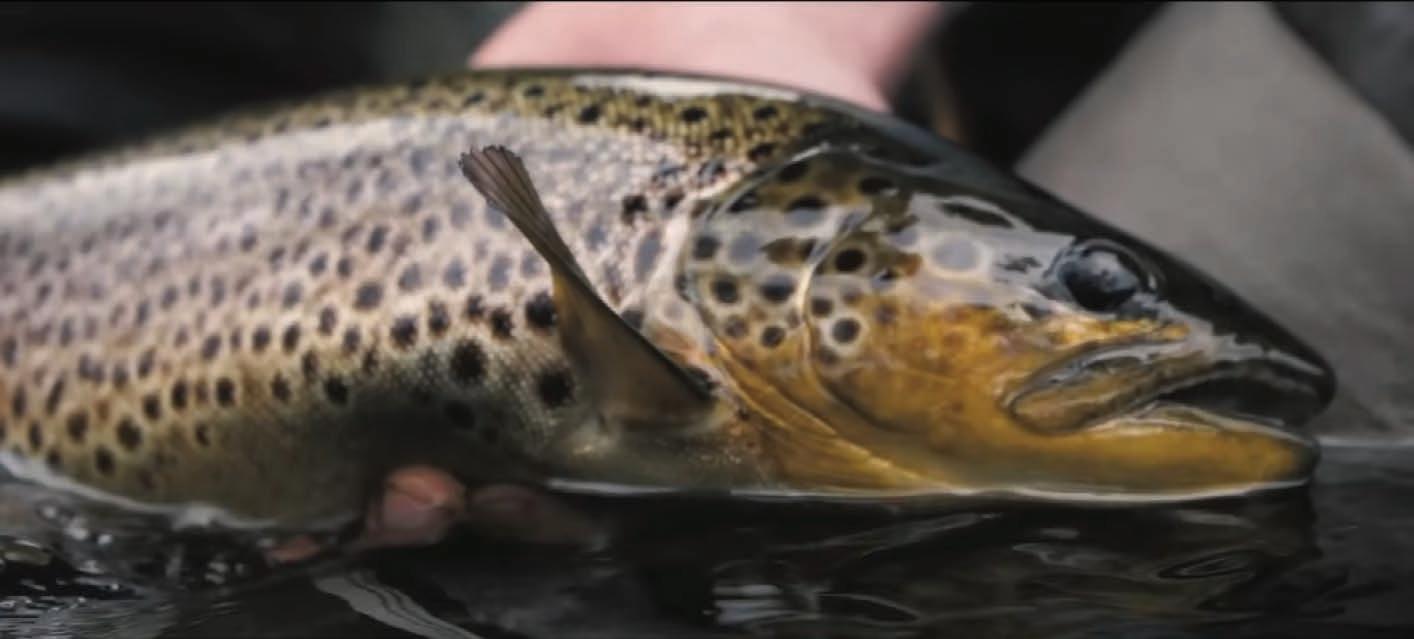
By ROLF NYLINDER
Two friends venture on a spectacular week of dry fly fishing in the arctic.
The music is made by Ben Lester, Zach Hanson, Sean Carey, Jazz & Fly Fishing, Jupiter, Torbjörn Ömalm

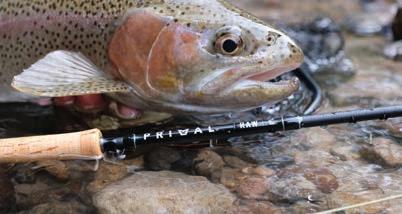

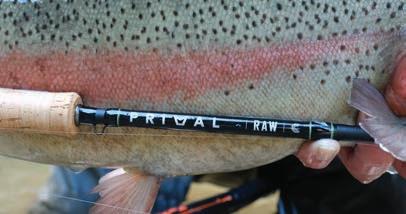
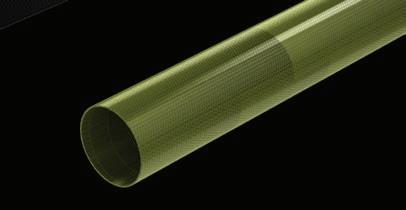
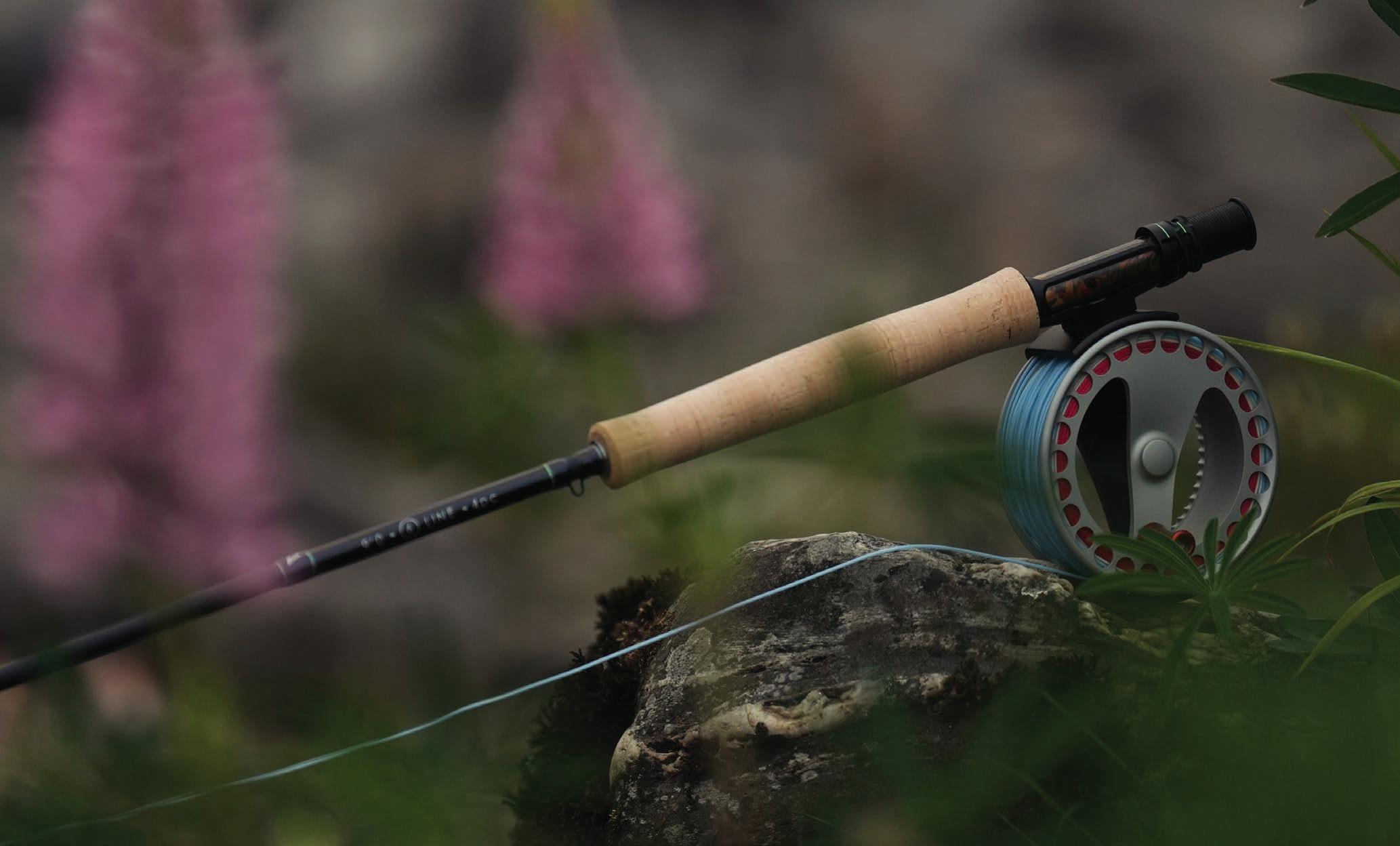

For many fly anglers, winter is a time for fly tying and relaxing by the fireplace. However, for those eager to fish, a trip to neighboring Norway offers year-round seatrout fishing, with plenty of opportunities across numerous locations. Similarly, in southern Sweden, coastal fishing begins early, with the season opening as early as January 1st.
By MORTEN VALEUR
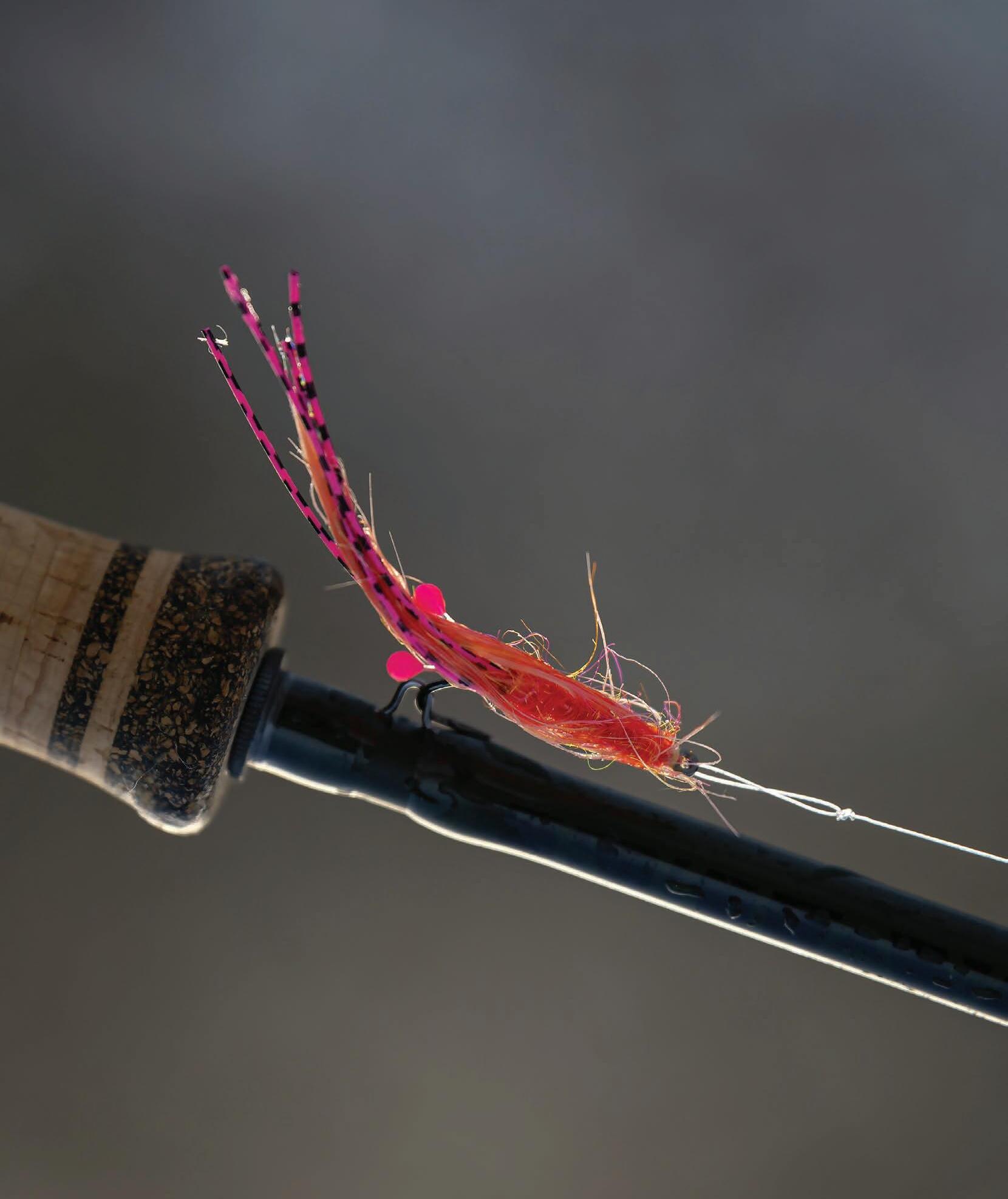
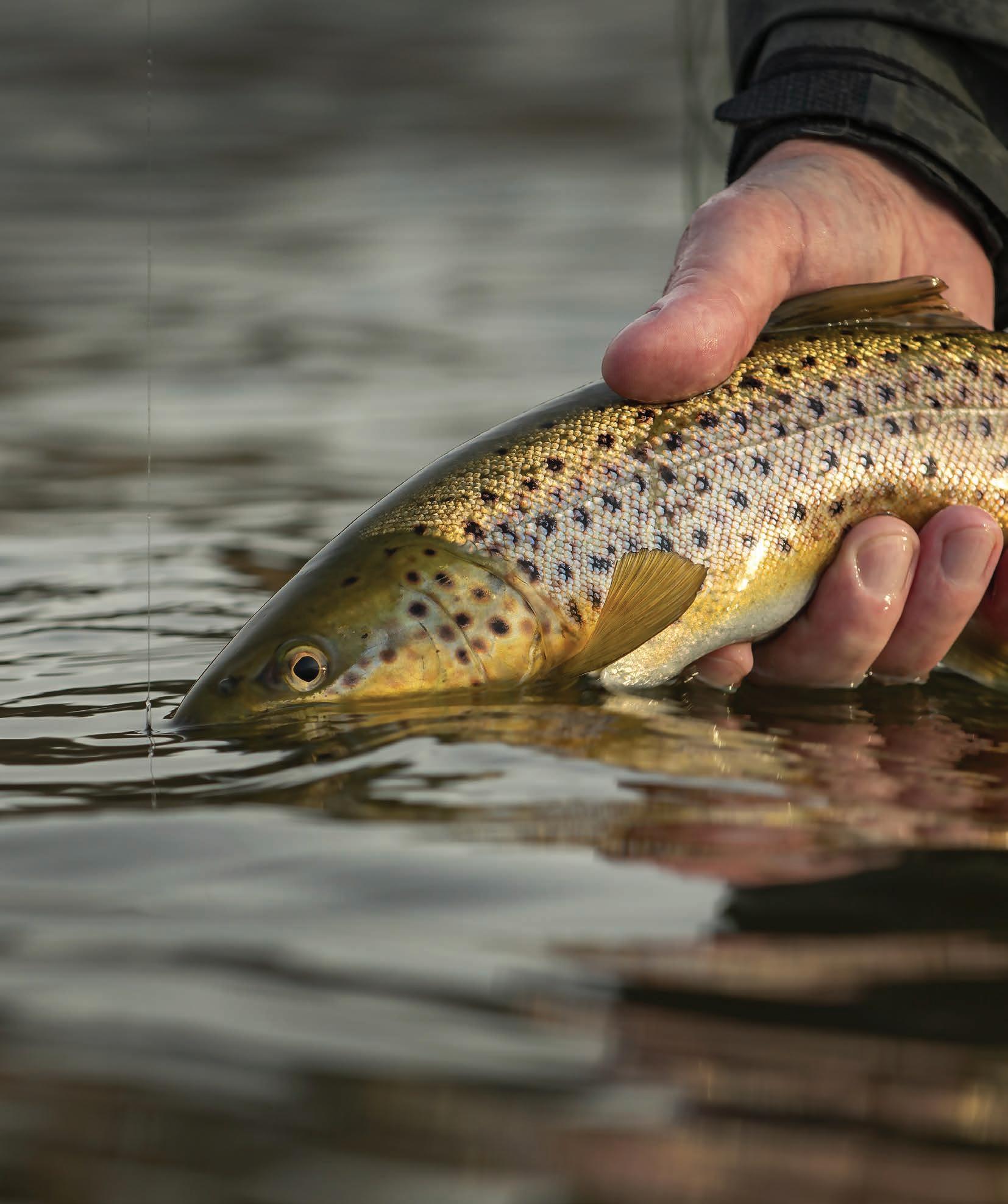
Winter seatrout fishing stands out due to the often extremely low water temperatures, which mean the fish aren’t actively hunting for food. Instead, success hinges on locating the fish and presenting a fly with a pulsating motion that can catch their attention from a distance.
Popular patterns during this time include Pattegrisen and Woolly Bugger, tied in bright colors like fluorescent pink, orange, and magenta. Patience is key, as well as the ability to retrieve the fly extremely slowly. Fly anglers have a clear advantage here over spin anglers, as a properly tied fly paired with the right line and leader can hover enticingly in the water.
For winter coastal fishing, soft and mobile materials are essential. The Pattegrisen, with its enticing Spey hackle, is an excellent choice for this type of fishing. However, sourcing these feathers can be challenging since Whiting often struggles to meet demand, and the necks and skins can be quite expensive - if available at all. Fortunately, Whiting offers other
products in the same salmon-pink shade specified by the original Pattegrisen recipe. One such product is Rooster Softhackle/Chickabou, which is taken from the rooster’s breast and thighs.
The breast feathers resemble oversized hen hackle with broad, incredibly soft fibers, making them ideal for flies requiring hen hackle, especially on larger hooks. Meanwhile, the fluffy Chickabou feathers, found along the rooster’s thighs, are like miniature marabou feathers. Unlike marabou, Chickabou feathers have relatively thin stems, allowing them to be wound like hackle.
Bright colors such as pink and orange are preferred for winter fishing. The salmon-pink shade is less intense and has a nearly translucent appearance when wet. The soft hackle fibers move seductively in the water.
To enhance the colors and movement, the PE-MO fly incorporates rubber legs that catch the fish’s eye and pique their curiosity.
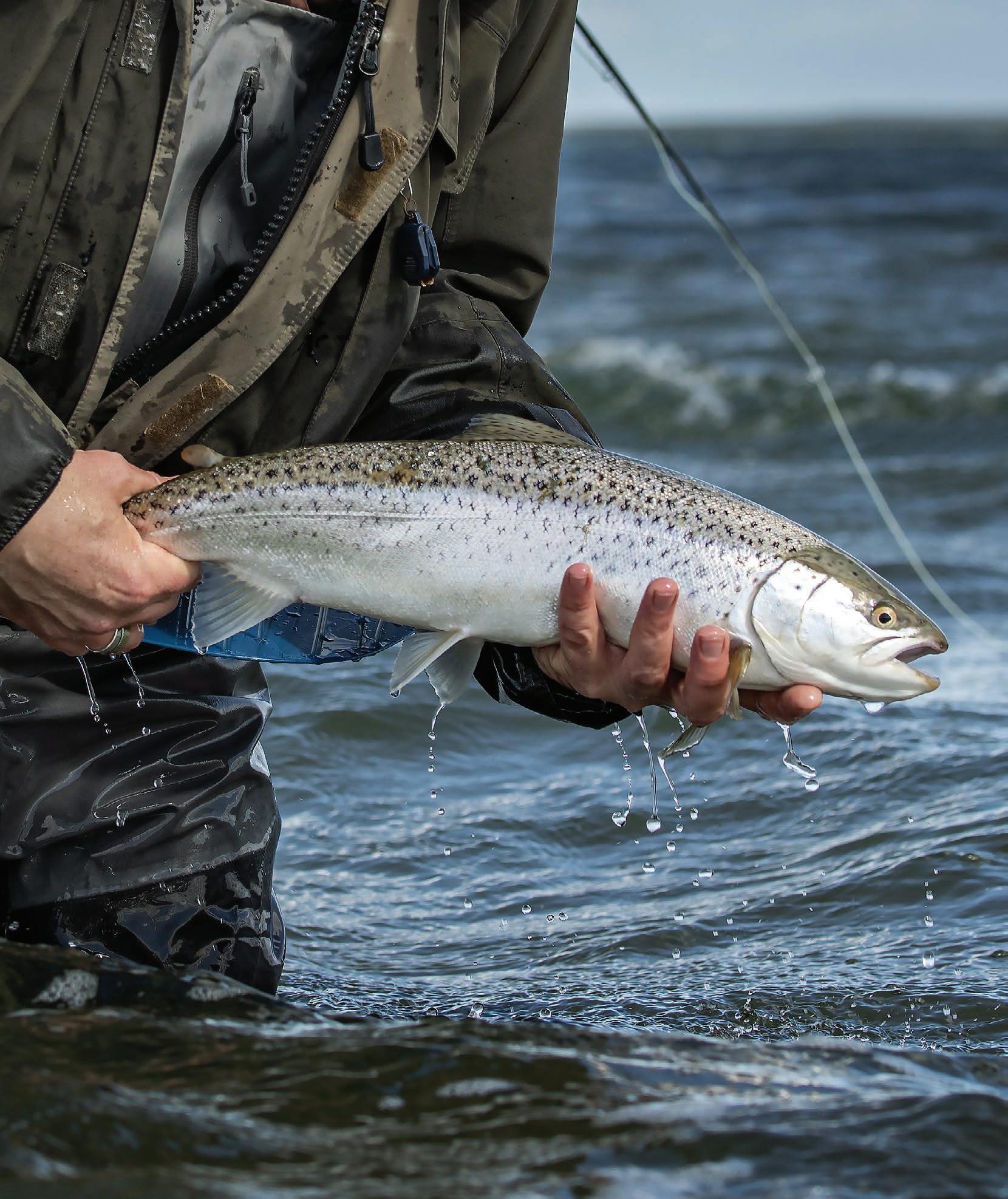
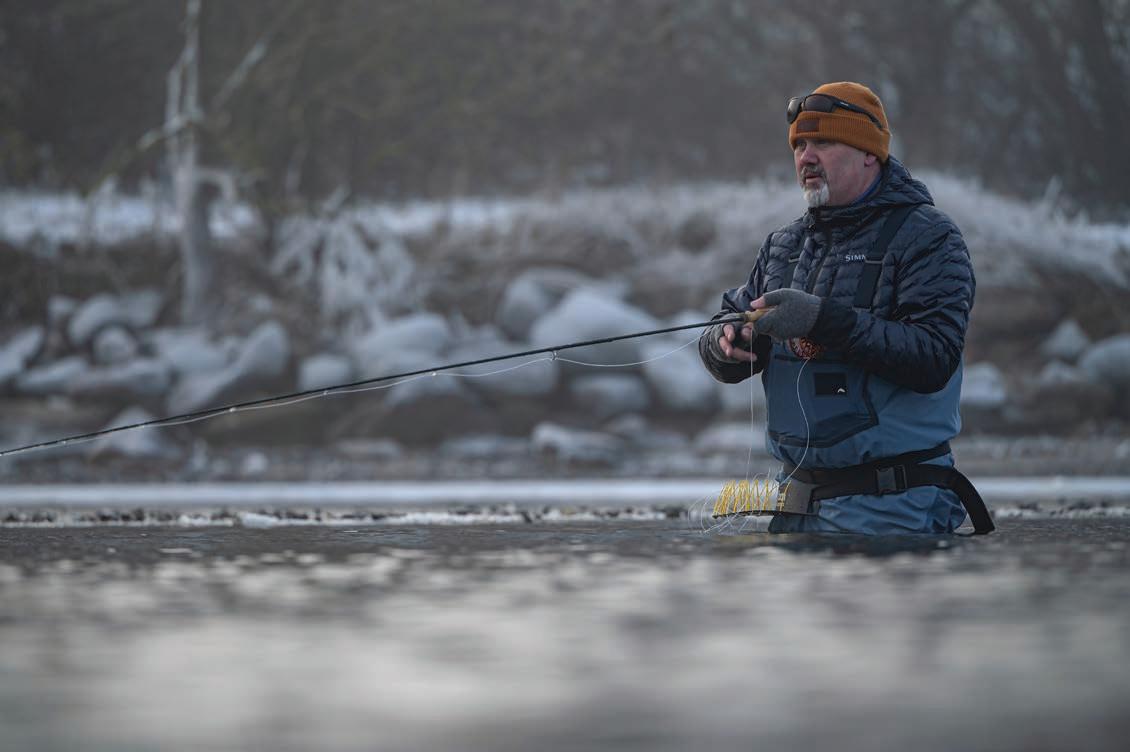
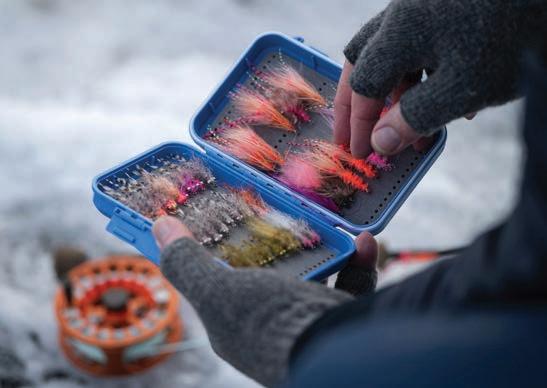
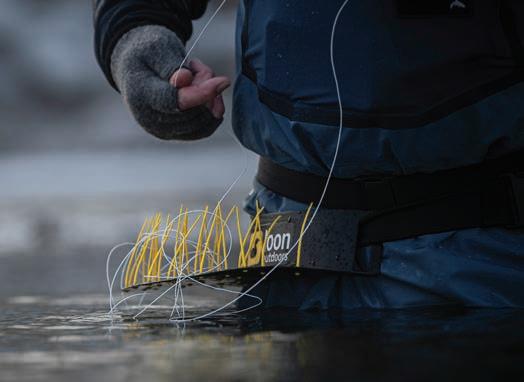
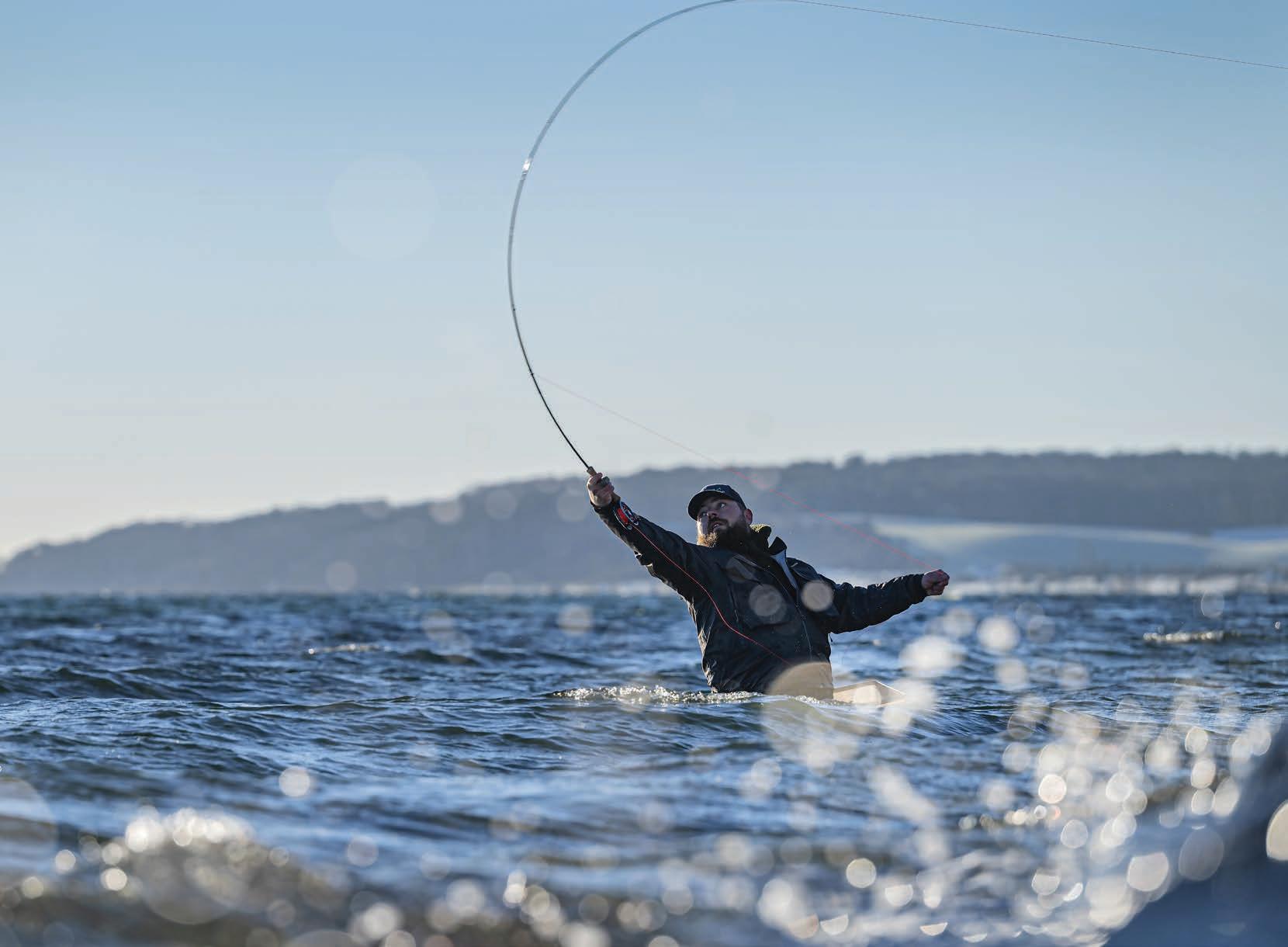
The fly is typically tied on size 4 – 8 hooks. For additional weight, lead can be added to the underside of the hook to ensure proper orientation. Most of the time, a floating or intermediate line is used, as the fly is often fished in shallow waters with slow retrieves.
The PE-MO is most effective with a slow handtwist retrieve or short, sharp pulls that mimic the pulsing movement of shrimp or baitfish.
Thanks to the foam hackle and rubber legs, the fly’s motion is highly visible, even in murky waters. It can also be fished with longer pulls, where it dives slightly and then rises during pauses - an effective technique to trigger aggressive strikes from sea trout.
Hook: Ahrex NS122, sizes 4–8
Thread: Veevus GSP 50 denier, white
Tail: Whiting Chickabou, Salmon Pink
Crystal Flash Mirage
Pink Barred Rubber Legs
Eyes: Easy Shrimp Eyes, Fluorescent Pink
Hackle: Whiting Softhackle, Salmon Pink
Body: Spawn Simi Seal Dubbing, Shrimp Orange
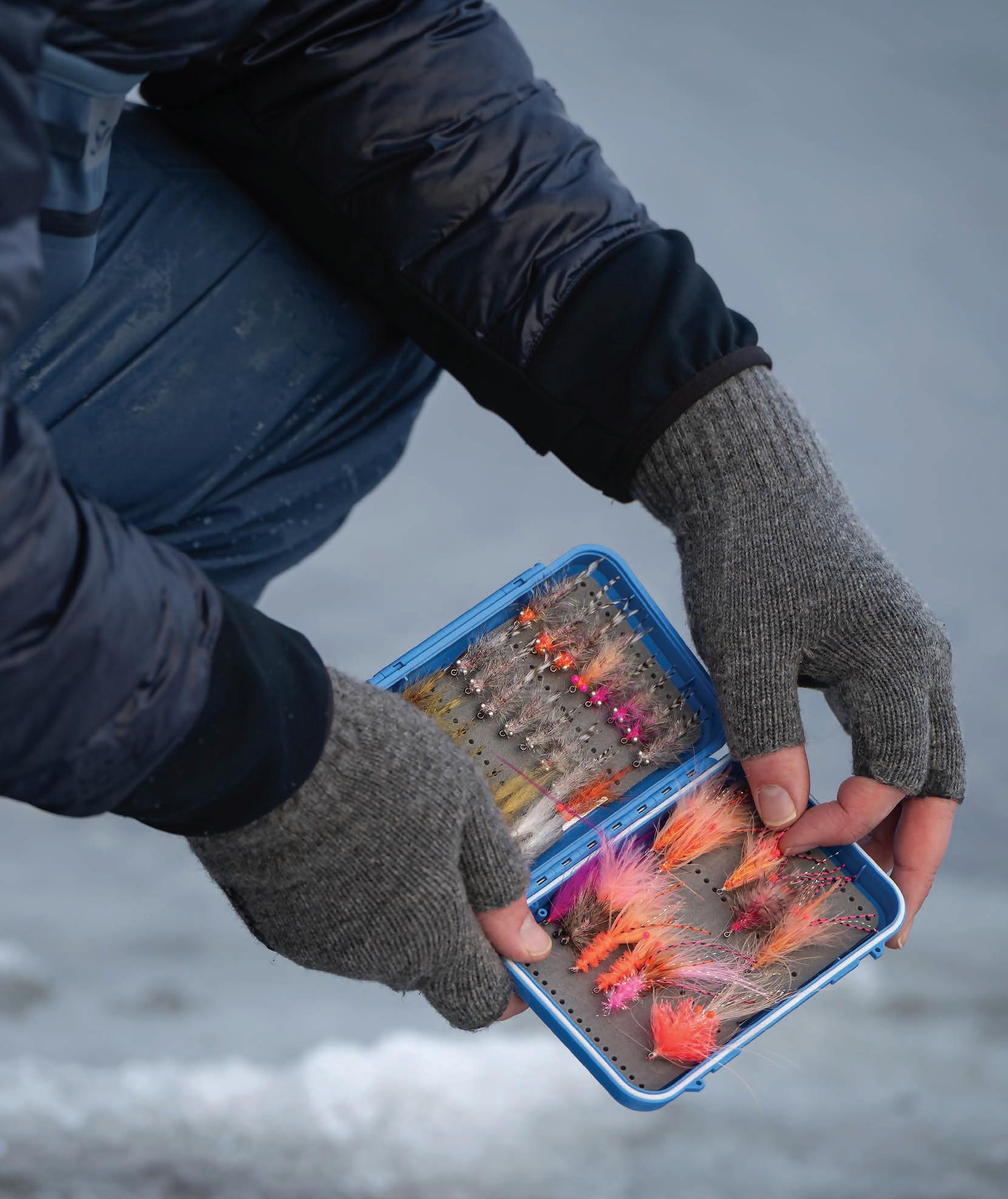
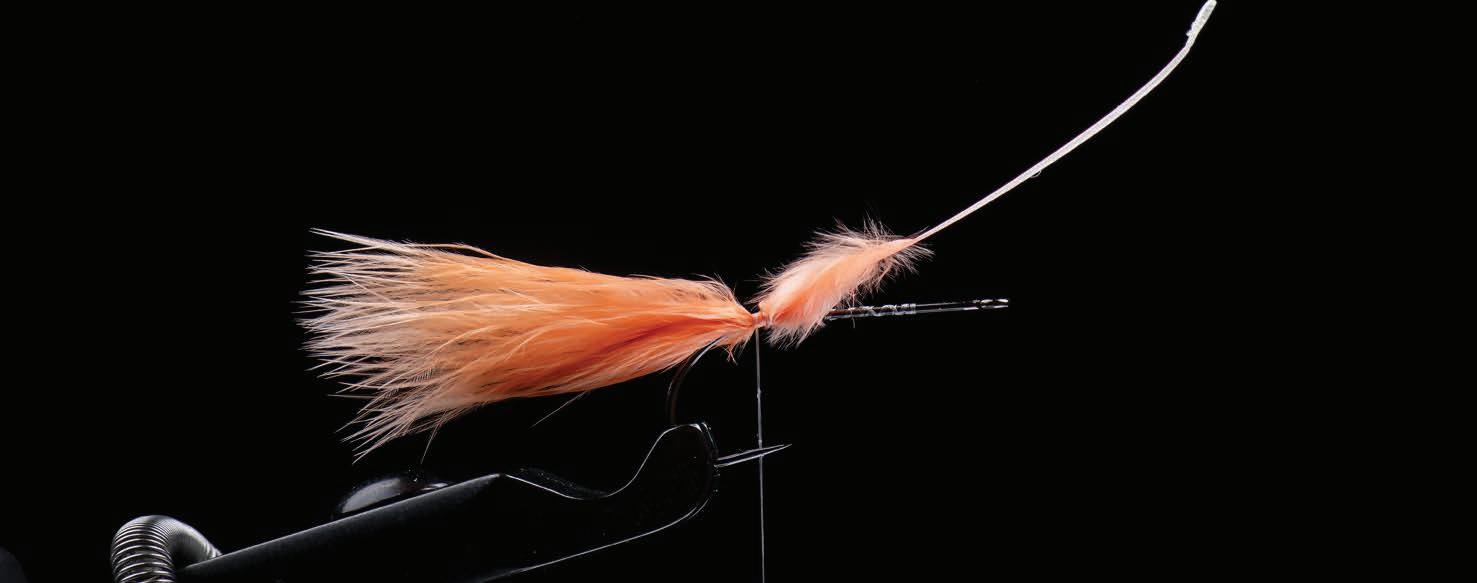
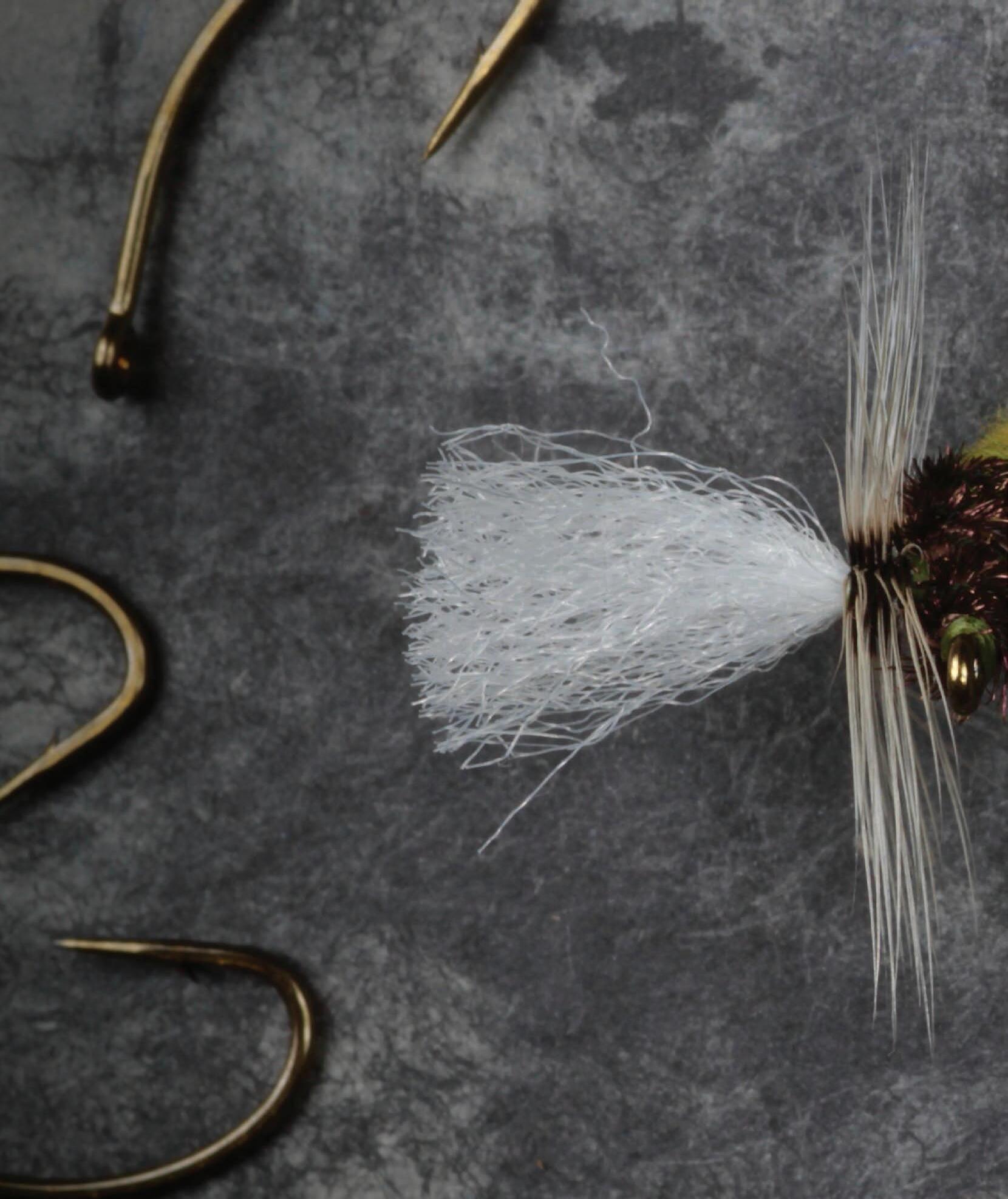
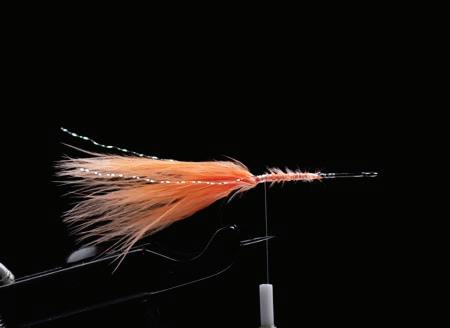
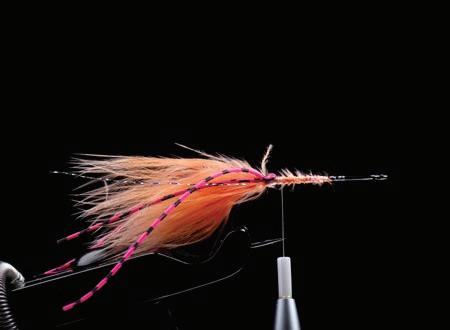
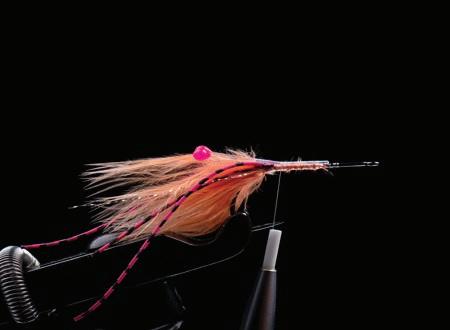
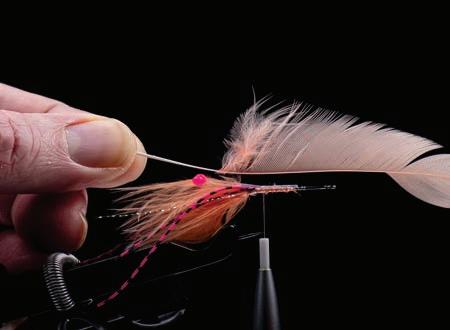
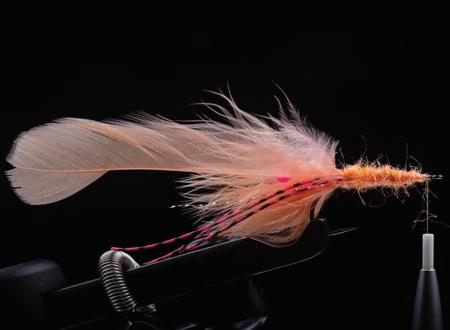
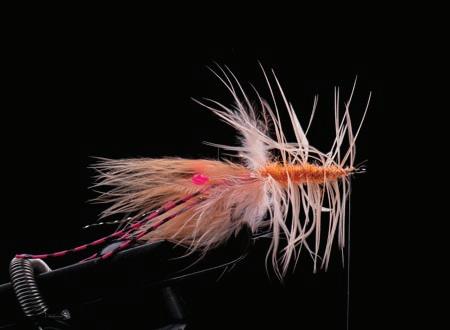
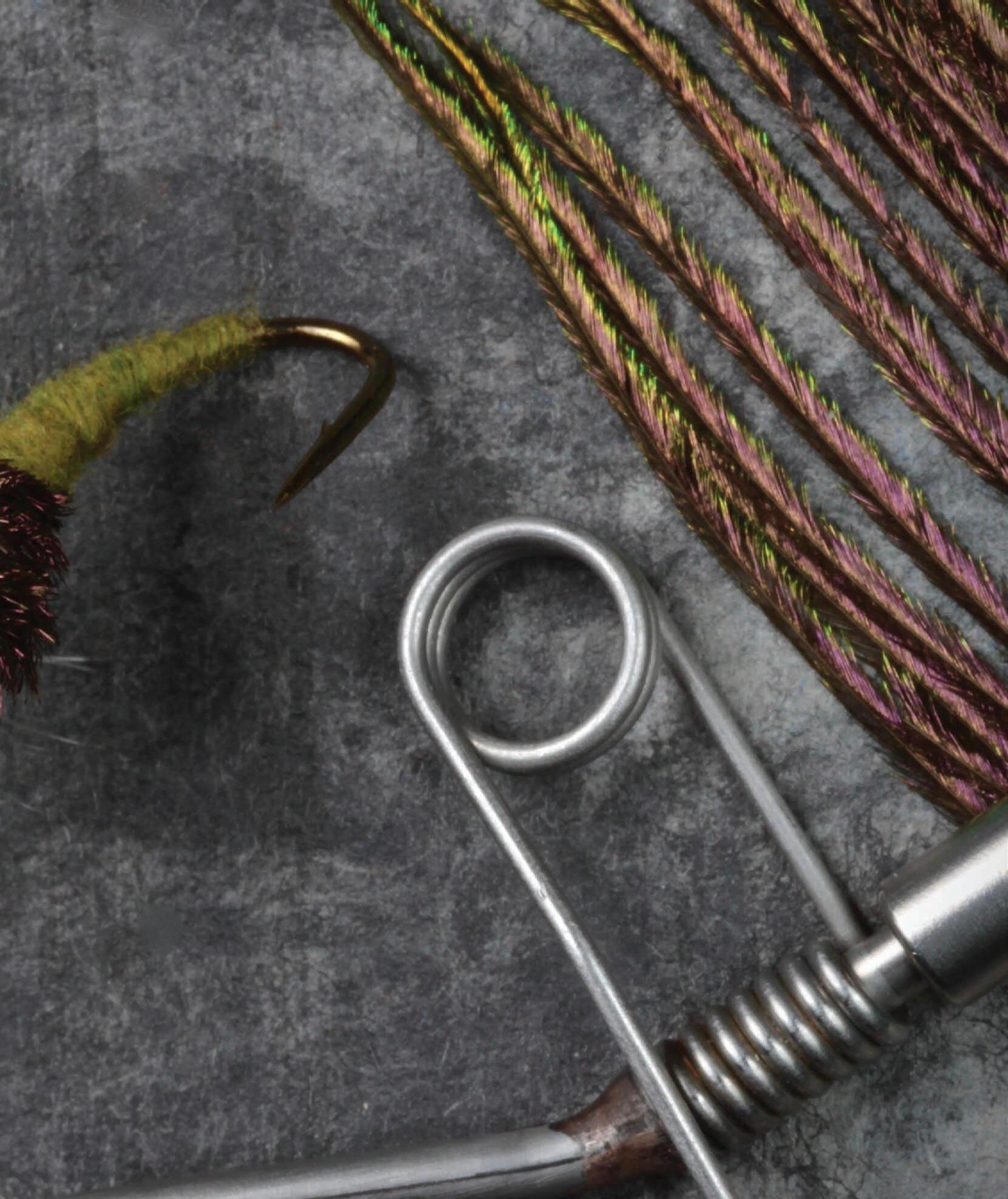
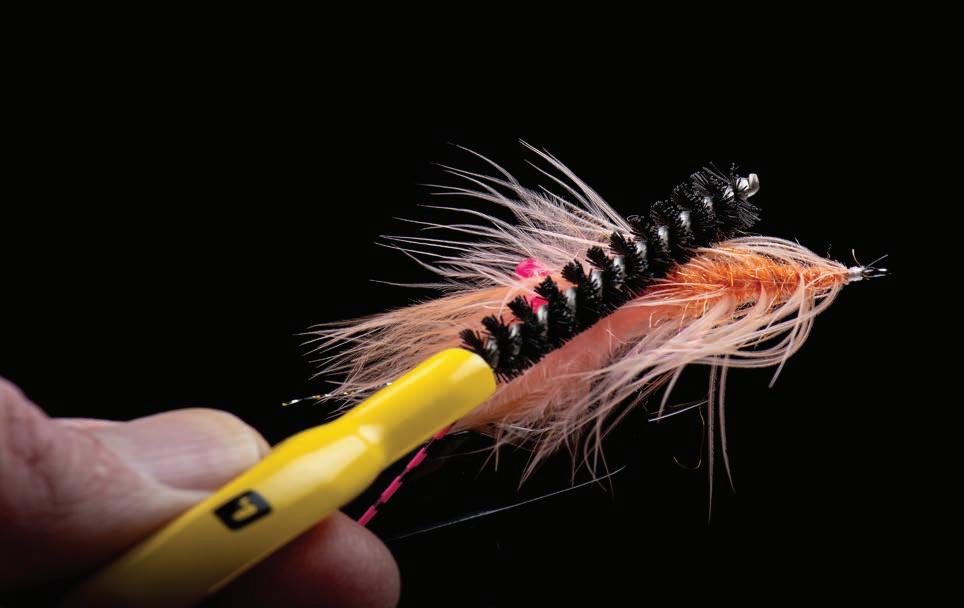
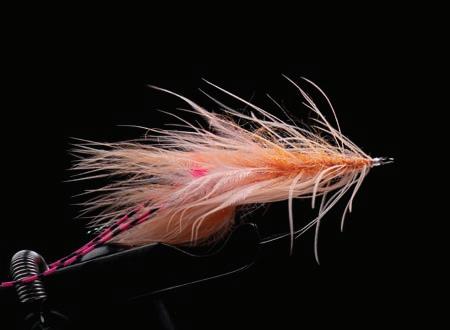
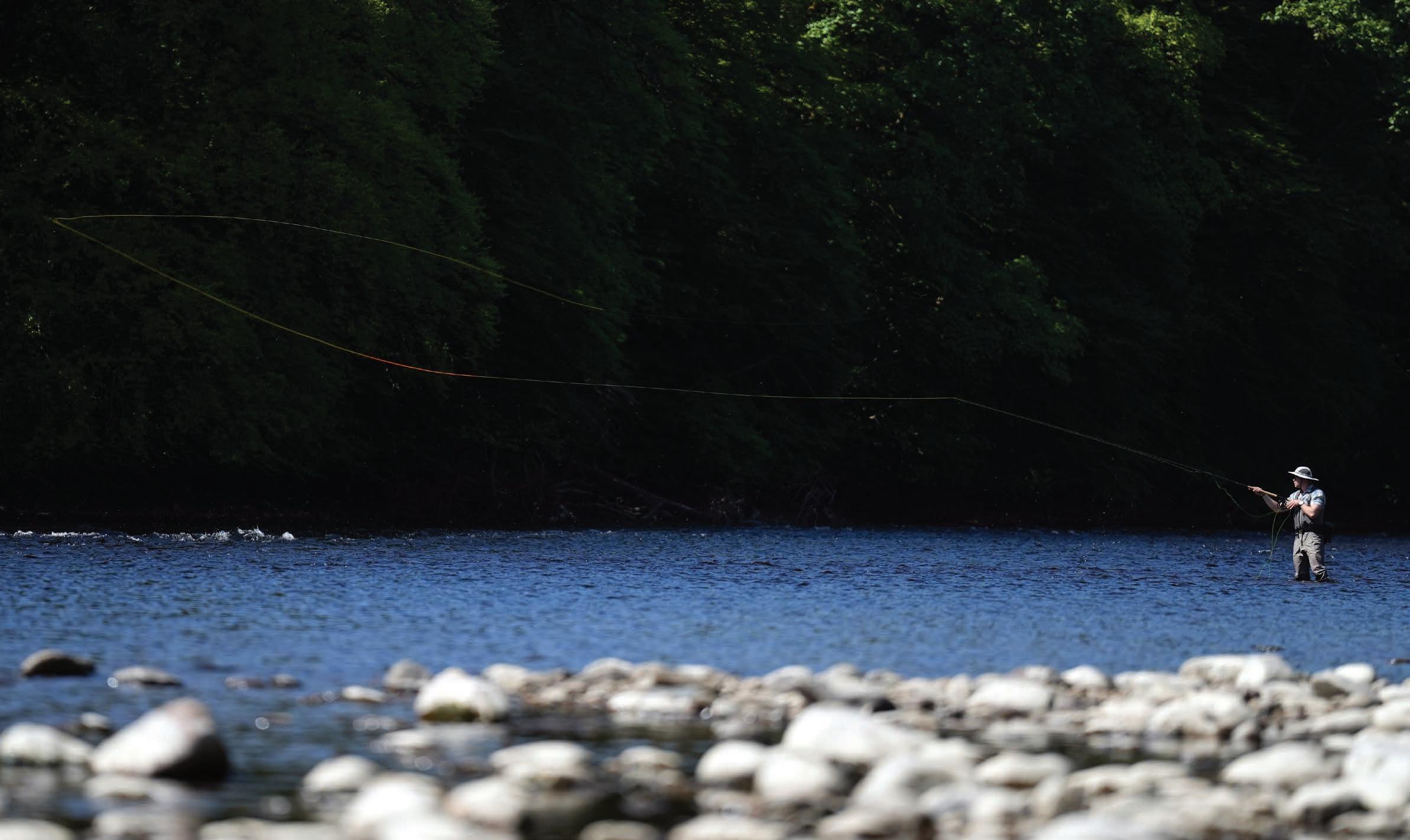
We proudly introduce Headway Strategic Bellies — a more compact evolution of the widely acclaimed Headway Bellies. The tapers on Headway Strategic feature the same powerful rear-weighted design as the original Headway, ensuring effortless rod loading and smooth Spey casting.
One of our primary goals was to create tapers that eliminate hinging during both the back cast and forward cast. Hinging can sap energy from the loop, diminishing performance during the anchoring of the back cast and the execution of the forward cast. With Headway Strategic, you’ll experience seamless energy transfer and precision with every cast.
Back in the 1800s, Mustad emerged in the Norwegian town of Gjøvik. Ole Mustad took on a wire-producing factory and made his dream a reality. His journey through time, fueled by the commitment and ingenuity of both a dedicated team and the global community of enthusiasts, has become a testament to the determined spirit that defines Mustad.
By EDDIE PAYTON
OVESEN
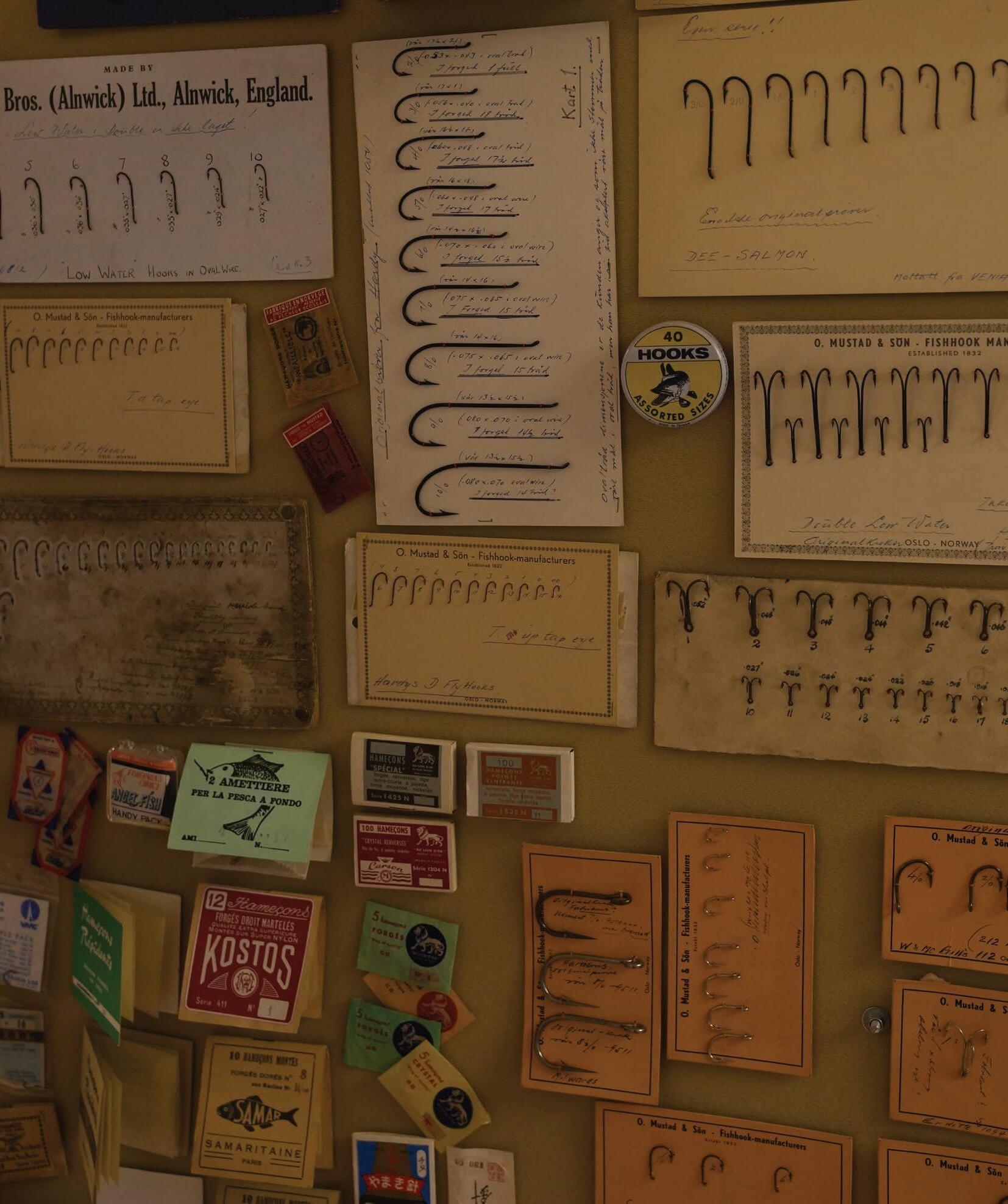
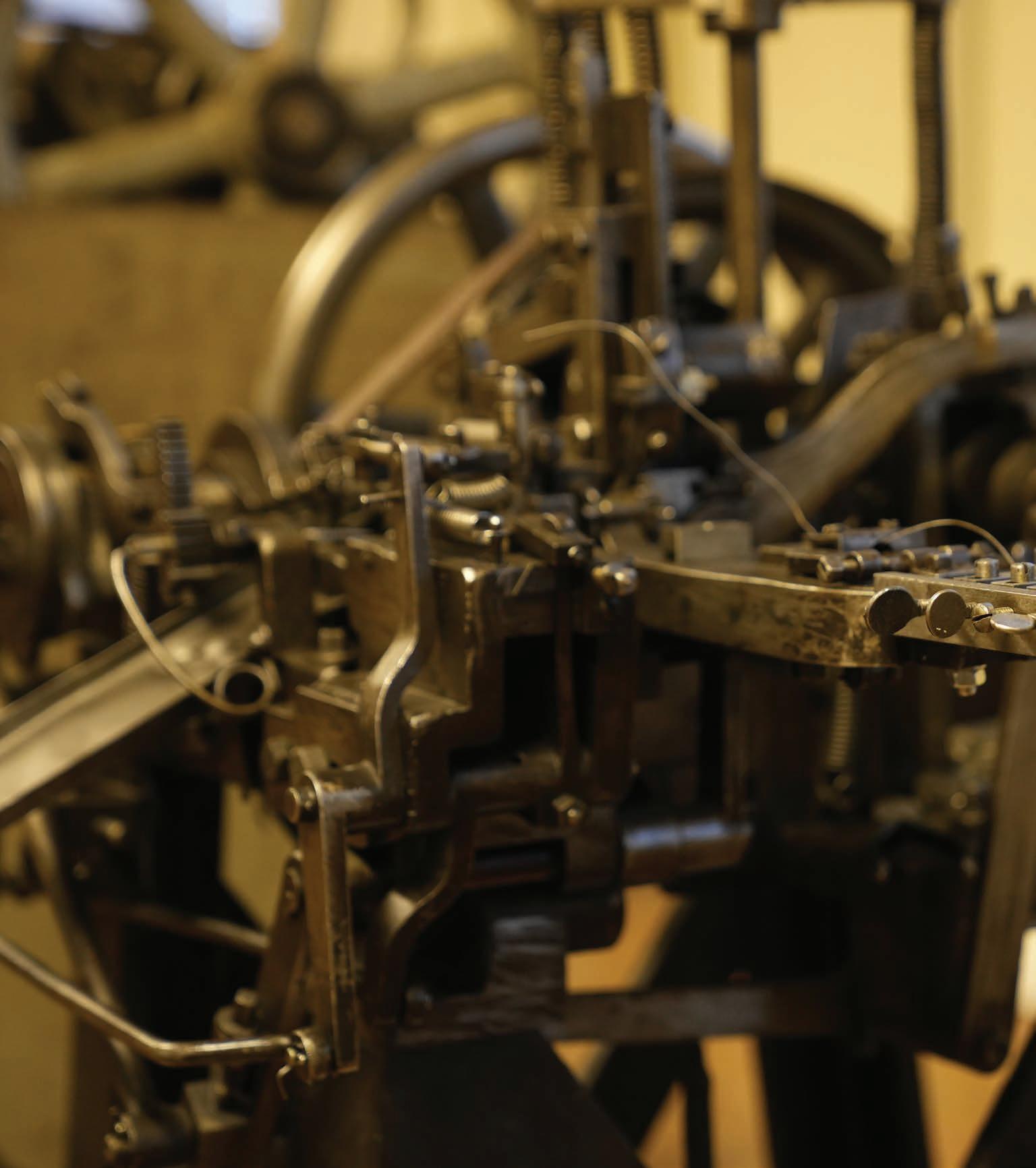
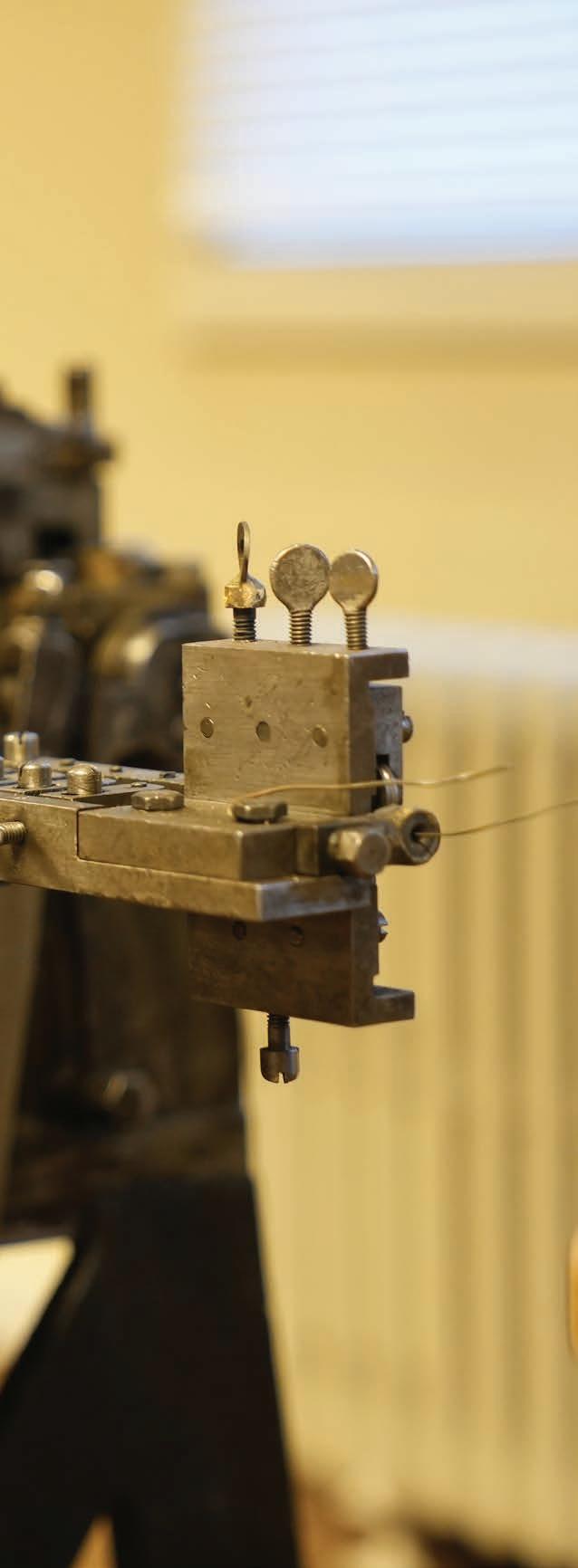
Picture the mid-1800s, a period steeped in economic gloom. Amidst this adversity, together with leader Ole Mustad, Mathias Topp conceived a vision that aimed, and succeeded, in changing the fishing industry. Having dedicated years to the production of nails and wire, the Mustad factory near Gjøvik was poised for a transformation - the birth of a new era in hook craftsmanship.
Topp envisioned a machine where steel wire entered on one end, only to emerge on the other as a masterpiece of high-quality hooks. In 1877, “The Hook Maker” materialized. Fearing mimicry by competitors, Mustad masked the creation in secrecy. Blueprints were carefully protected, and the details of the machine remained a mystery to the public.
The confidentiality wasn’t without reason. The Hook Maker wasn’t just a contraption; it was the key to Mustad’s intense growth in fishing globally. Mustad dispatched a team across the globe. Their mission: to unveil the needs of fishing hooks in all corners of the world and utilize “The Hook Maker,” returning modernized hooks to the source with unparalleled strength, consistency, and affordability.
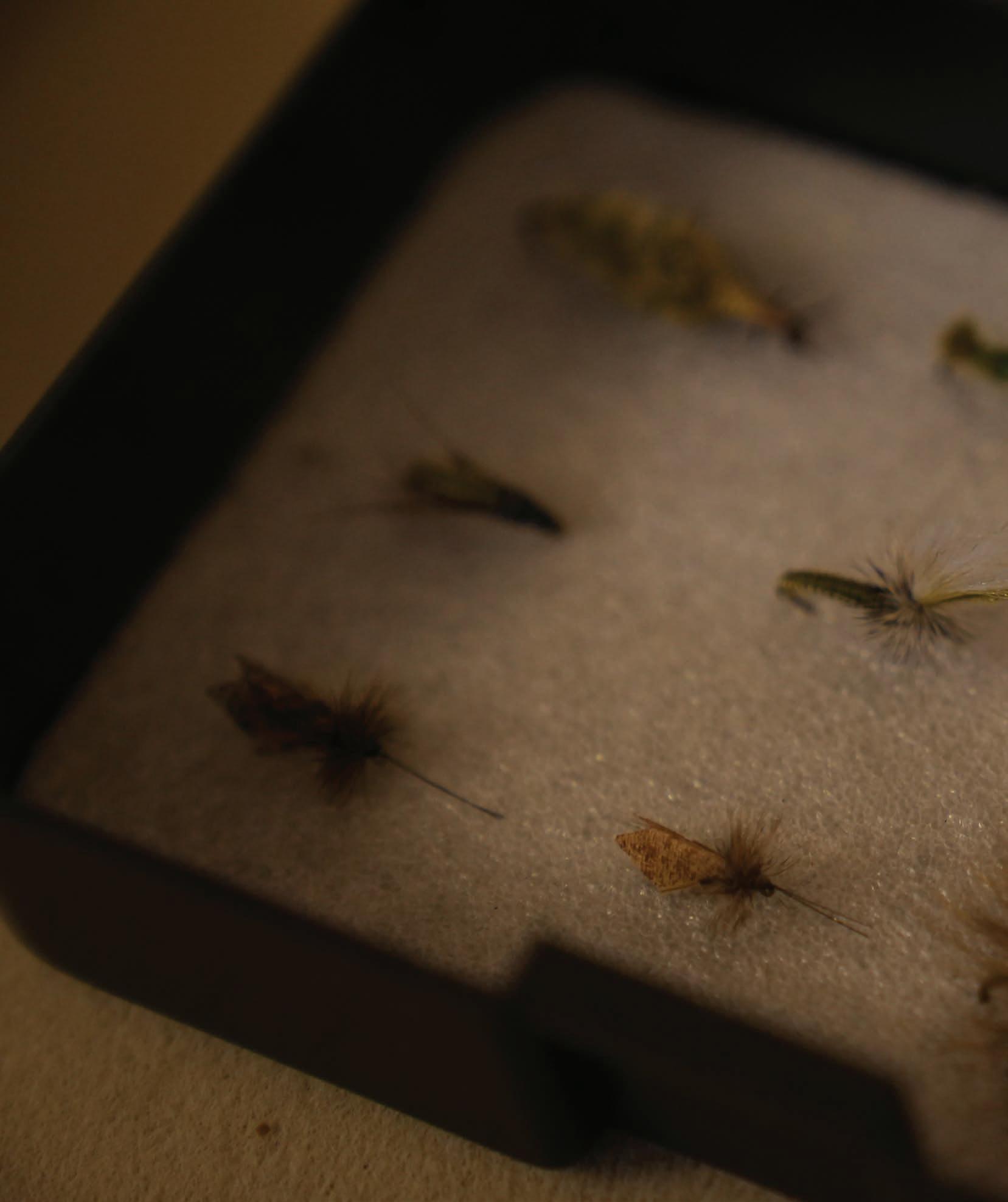
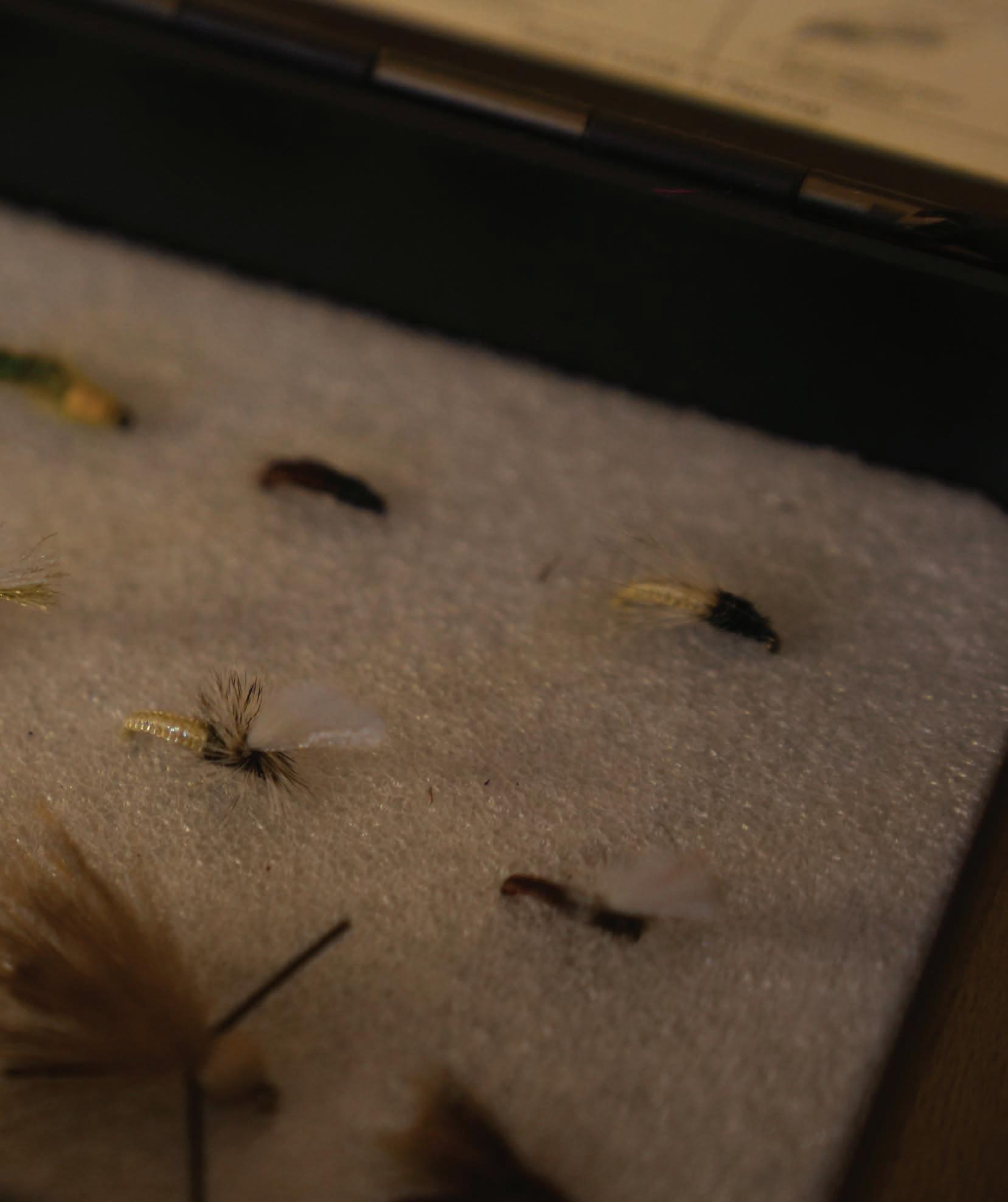
The quality and pioneer spirit of the company soon made Mustad’s name a household name in the fishing world, representing 50% of the world’s fishing hook production in the 1950’s and continuing to be the world’s largest fish hook manufacturer. This might explain why to this day, the word “mustad” simply translates into “fishing hook” in many corners of the world— a testament to the enduring mark left by Mustad on the art of angling and legitimizing the brand’s expertise in the making of fishing hooks.
As Mustad dived into the artistry of fly hooks, communities dedicated to tying embraced the range, becoming a driving force to propel innovation and ushering in a modern era of fly tying. The evolution of fly hooks blossomed into a collection of today’s iconic selection, celebrated by fly tiers crafting patterns for an array of flies and targeted species. With the advent of automated production, a groundbreaking assurance emerged for tiers — for the first time, the balance and weight of hooks could be trusted.
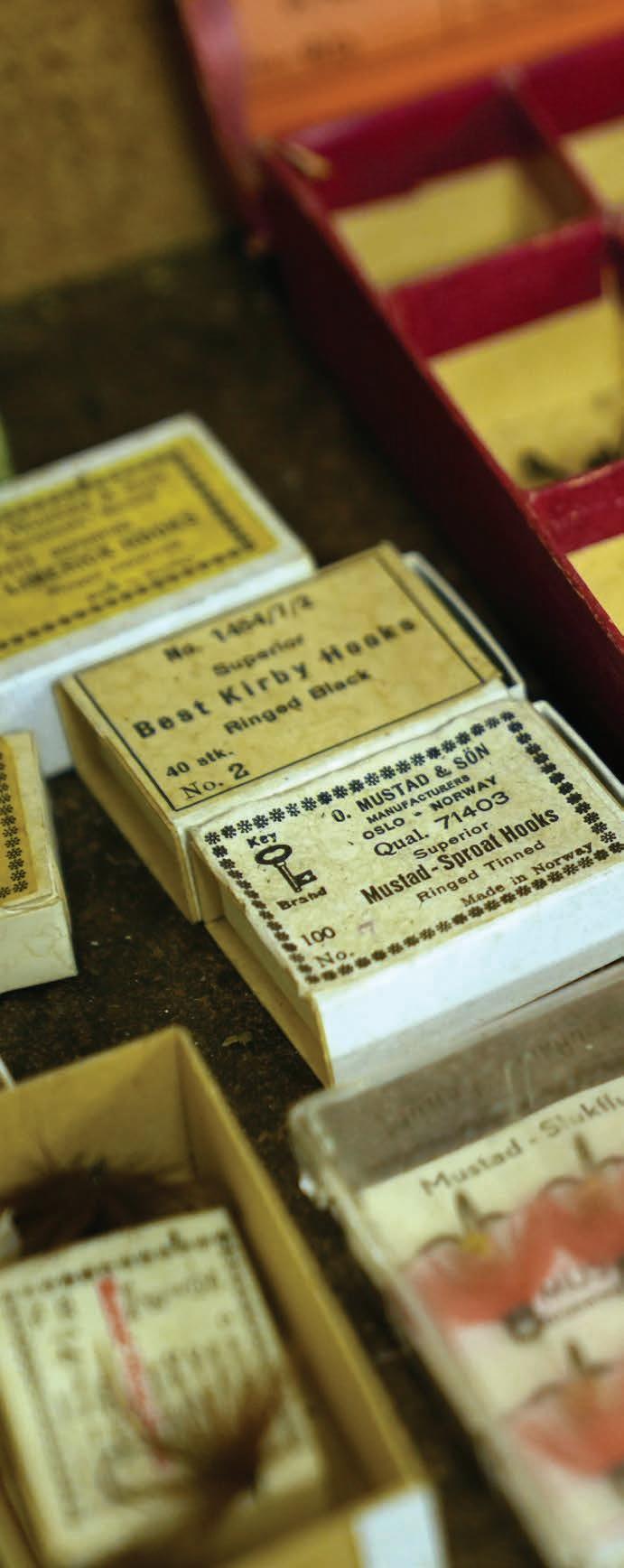
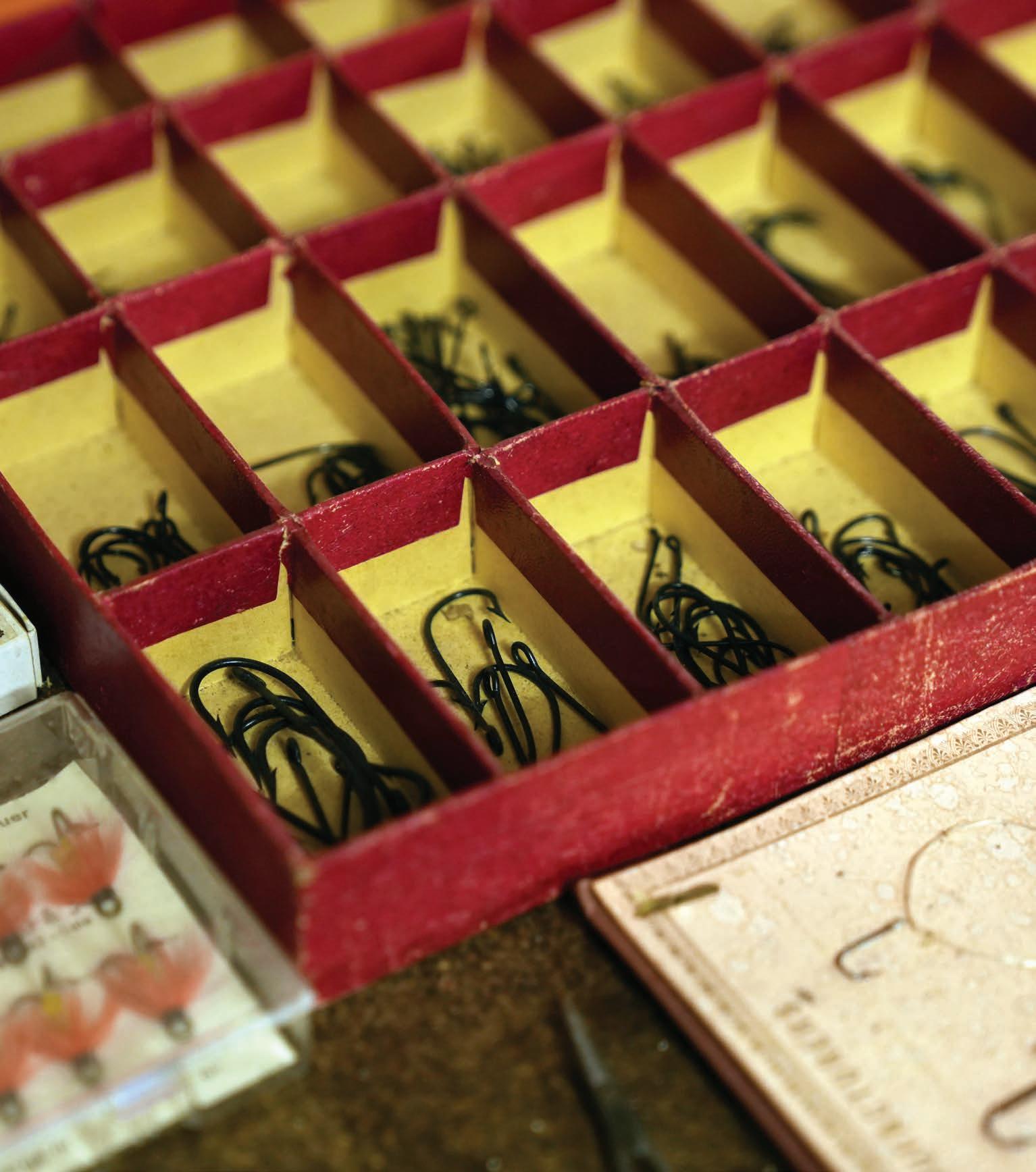
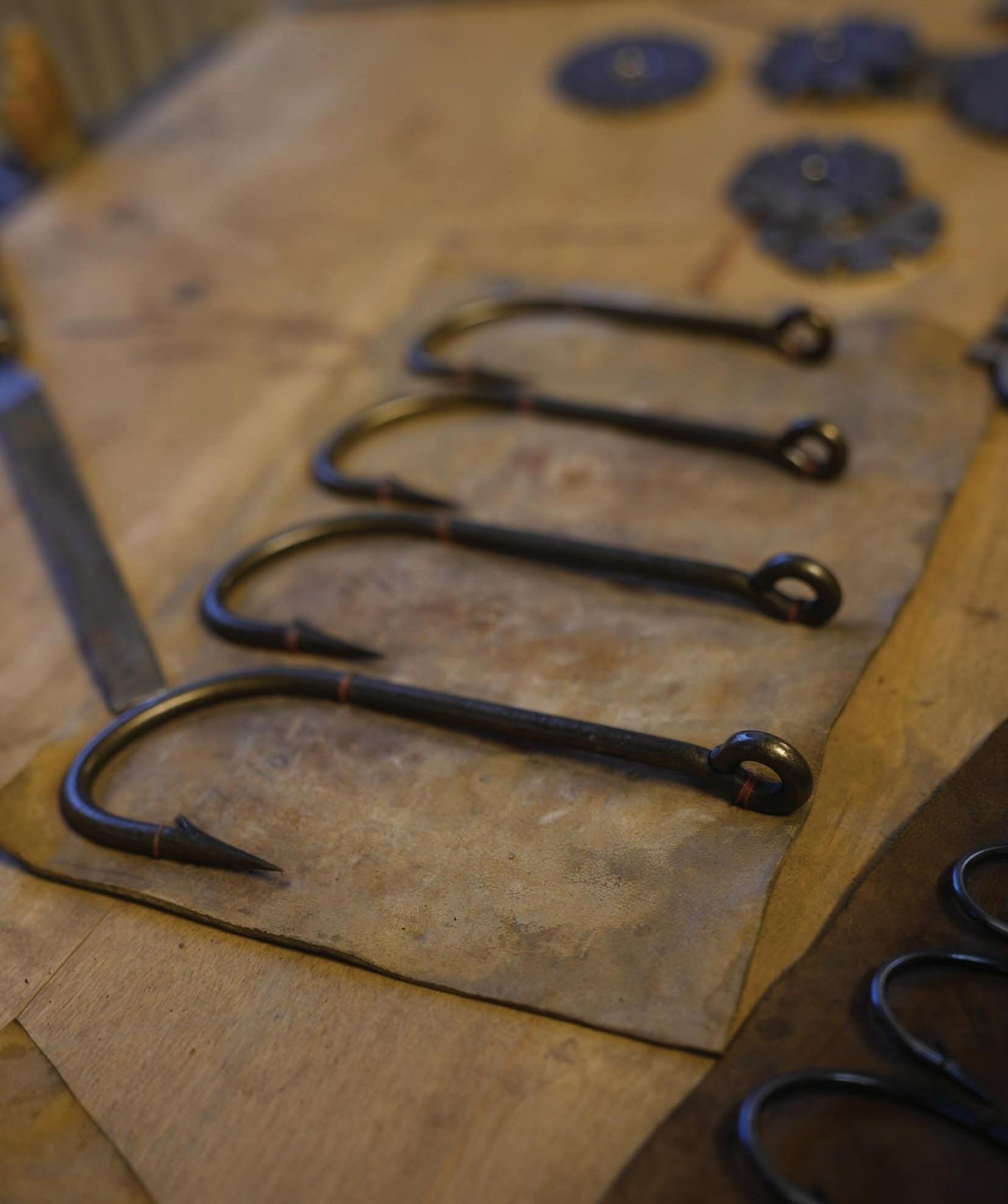
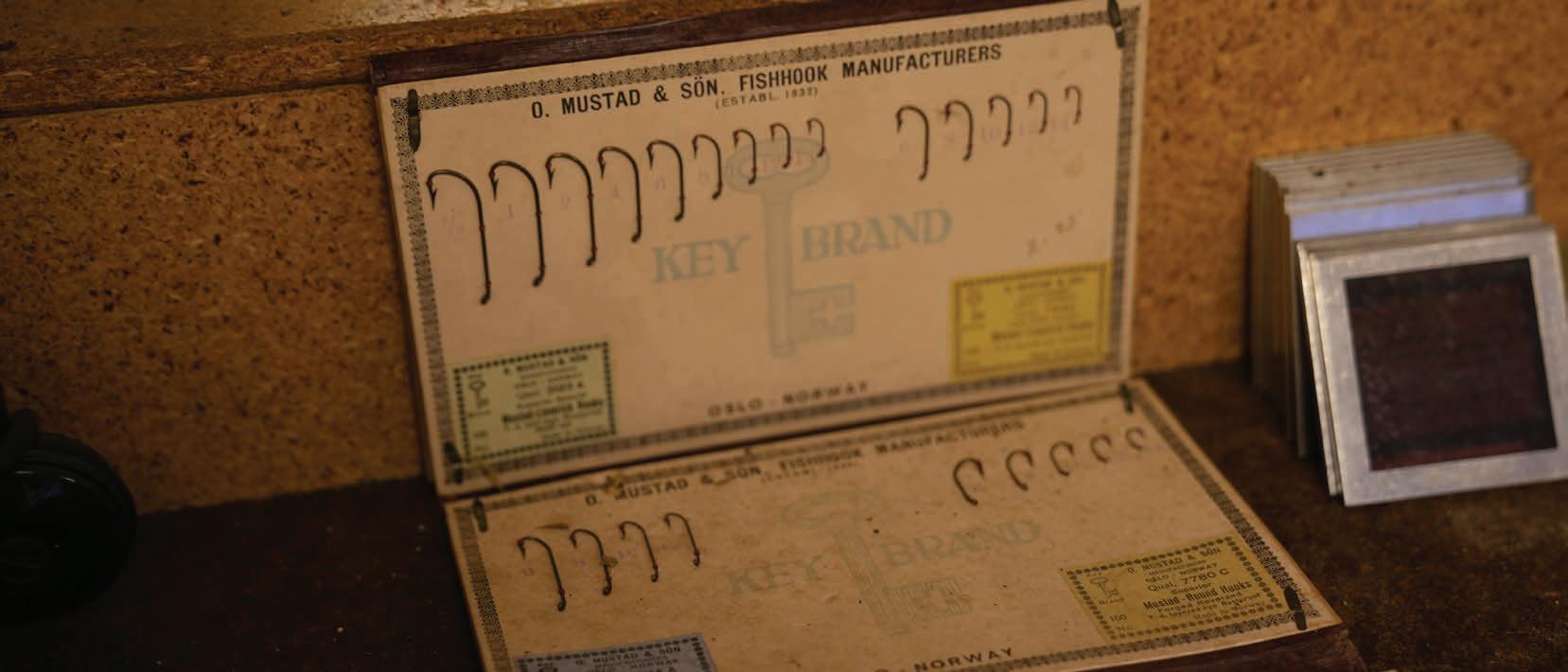
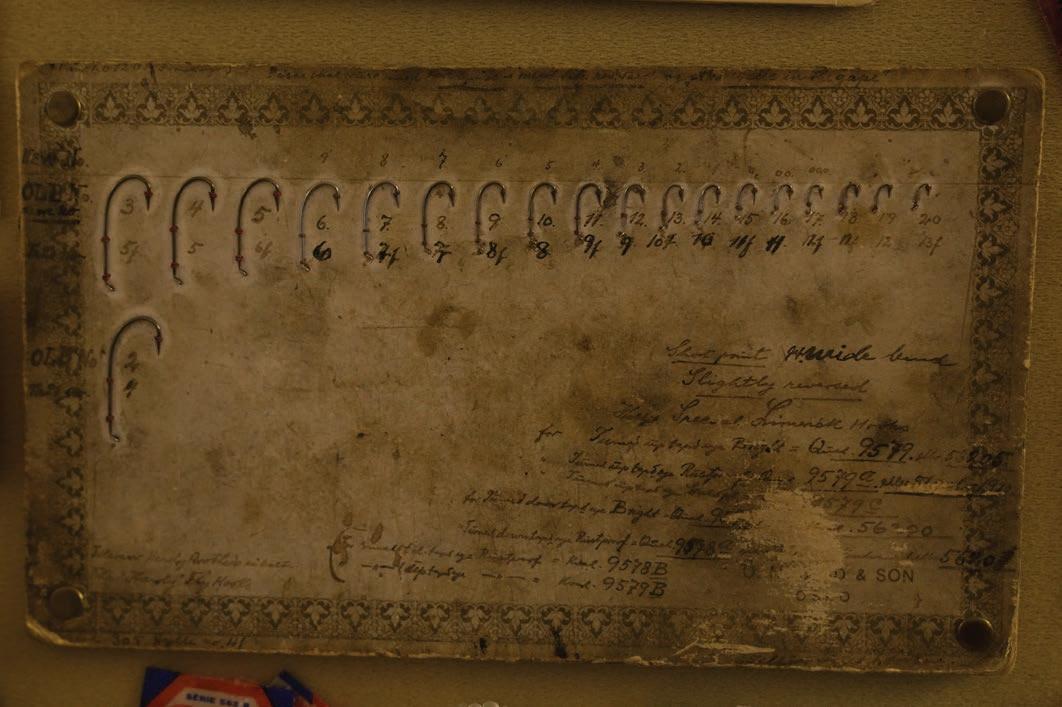
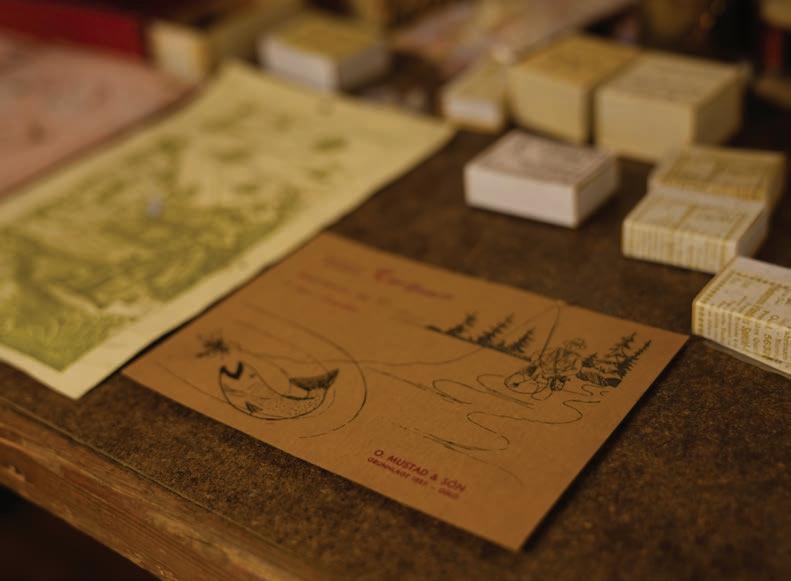
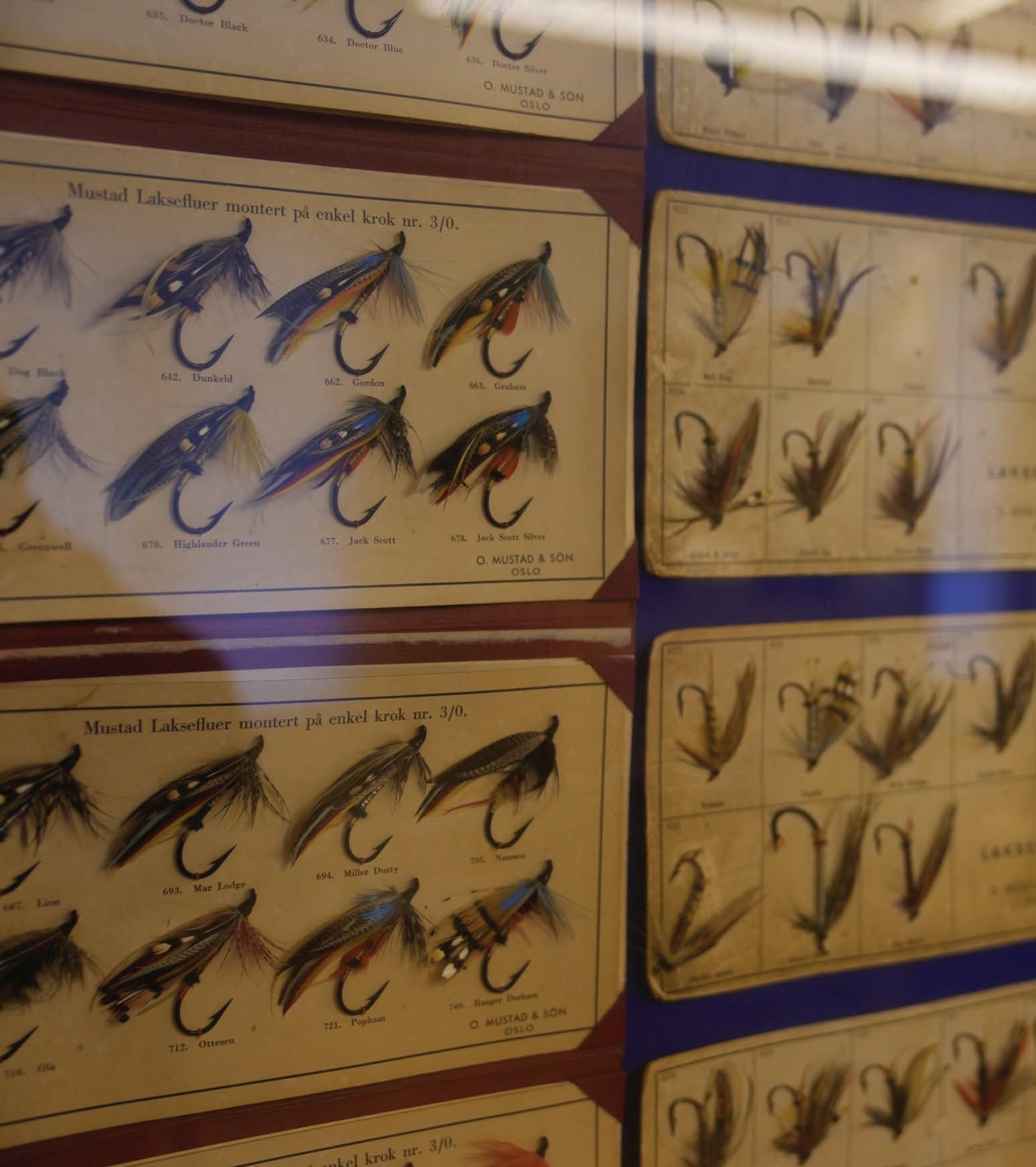
As Mustad perfected fly hooks, tying communities took a liking to the range and supported the innovation and modernization of fly tying. The development of fly hooks grew into a range of legendary hooks known well among fly tiers across all types of flies and targeted species. Automated production meant to tiers that for the first time, the balance, weight and quality of hooks could be trusted.
For over a century, Mustad not only perfected fly hooks but also curated a selection of flies meticulously handcrafted by some of the world’s most skilled tiers. Year after year, these designs garnered accolades, etching Mustad’s presence in the annals of fly tying. Though the era of Mustad-tied flies has past, the tradition endures as top-tier fly artisans continue to choose Mustad for their creations.
The evolution of Mustad fly hooks into notoriety owes much to the continuous development of technologies and the prevailing trends in the industry. This progression began when Mustad made the first fly hook with its automated production back in 1877 then to introducing unmatched point technology to fly fishing, starting with UltraPoint 4.3 over a decade ago and leading up to AlphaPoint 4.8 today.
Together with experienced tiers and anglers, Mustad continues to grow and develop hook technologies and styles that evolve with the times and techniques, culminating in a family of fishing hooks that match the legacy of Mustad’s enduring, trustworthy traditions.
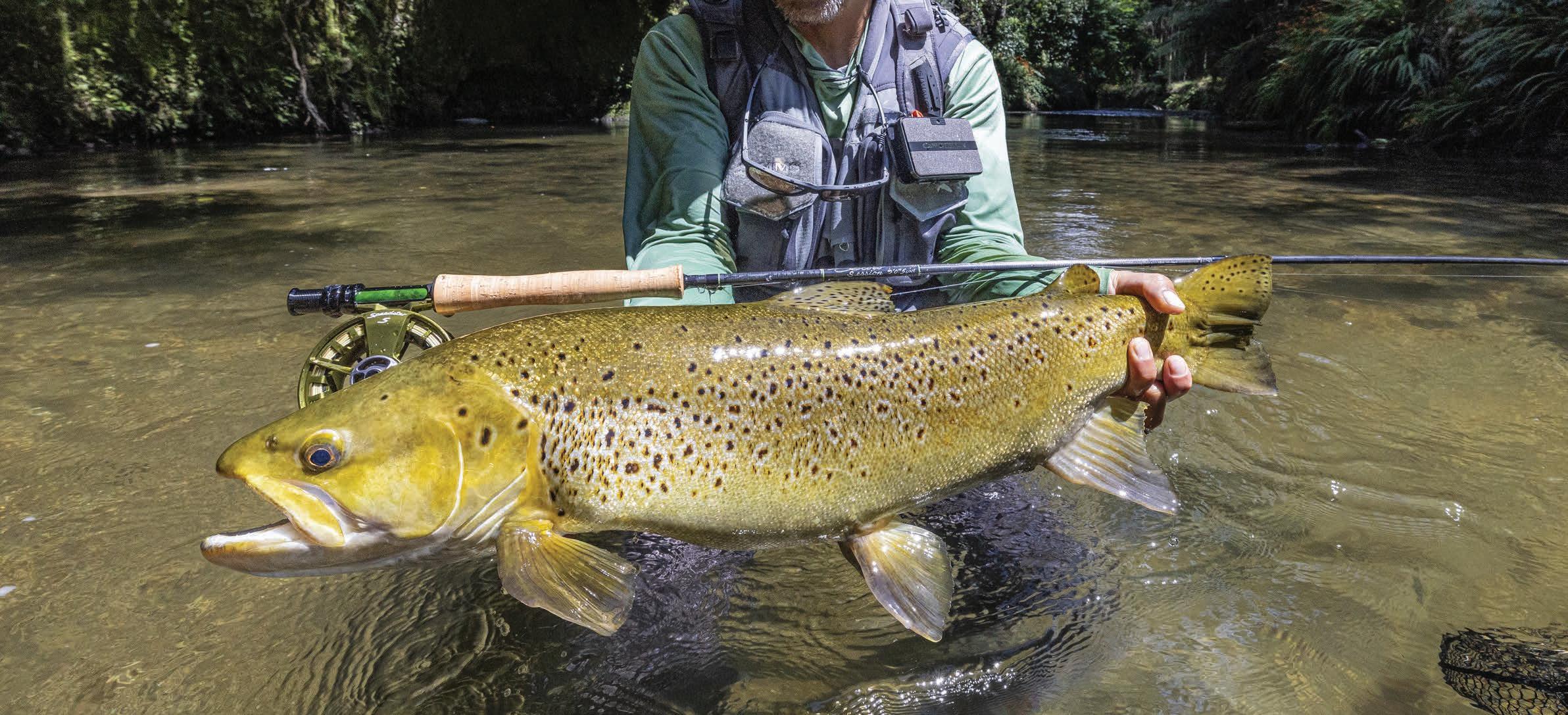

Session rods are high-performance hand-crafted fly rods that blend some of our most acclaimed design approaches with our latest materials and technologies.
Scott Fly Rod Company | Handcrafted in Montrose, Colorado
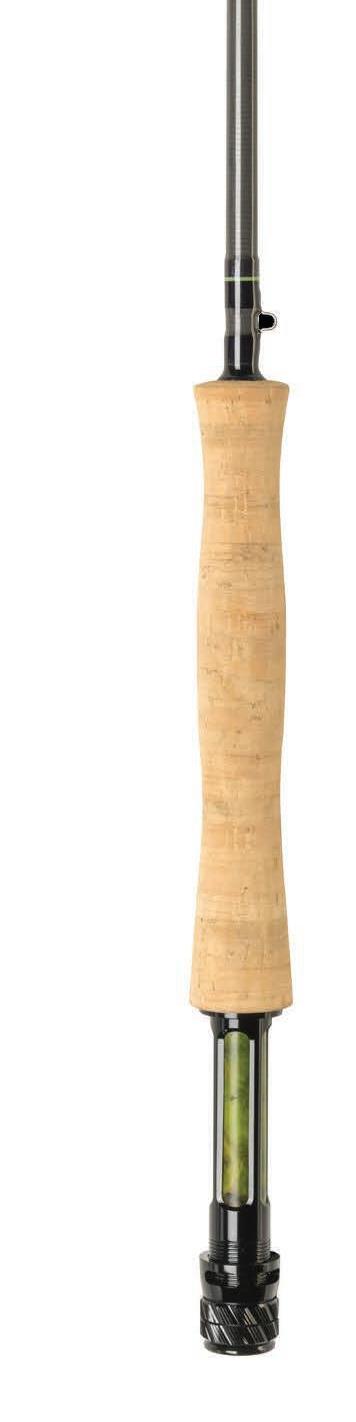

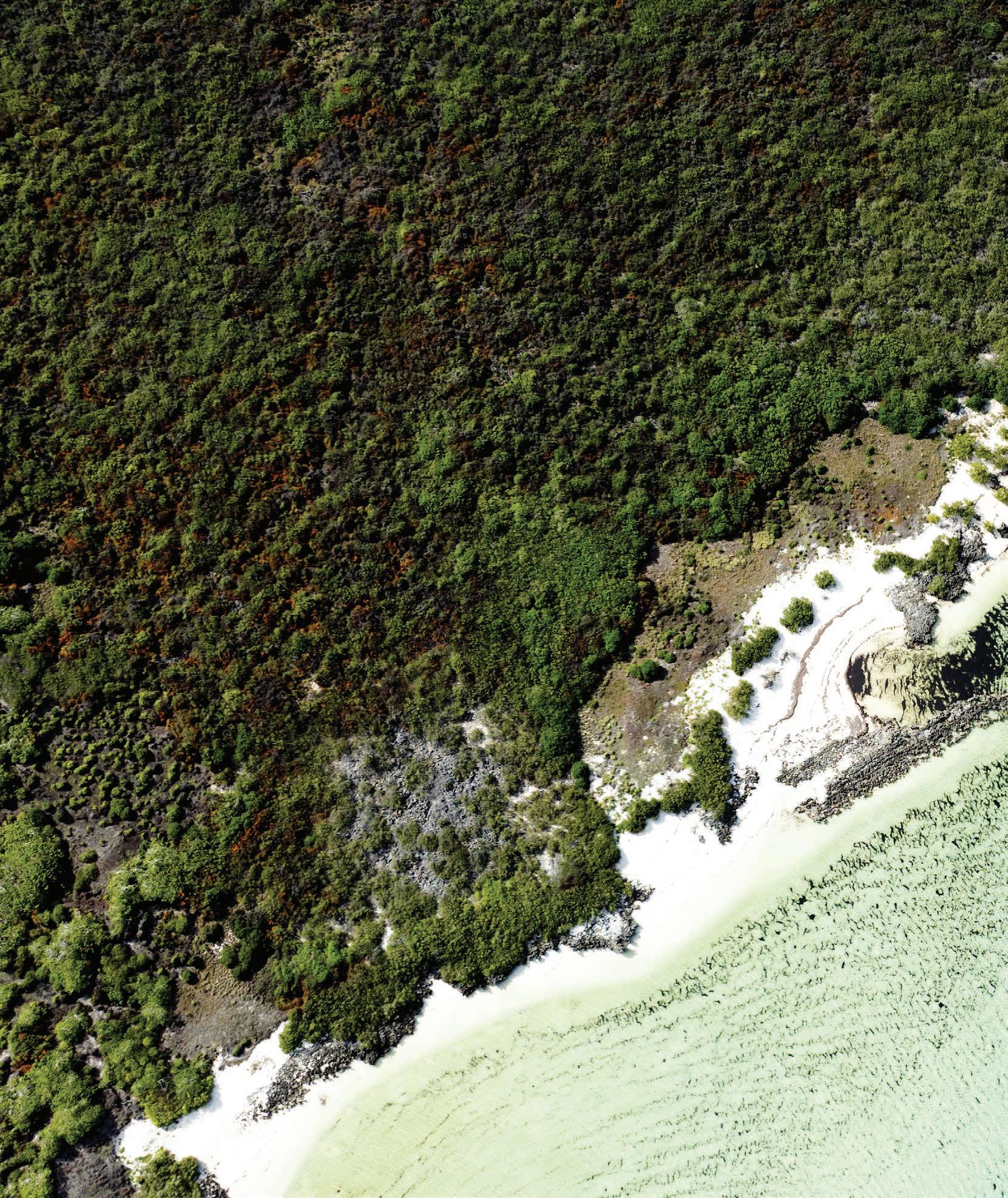
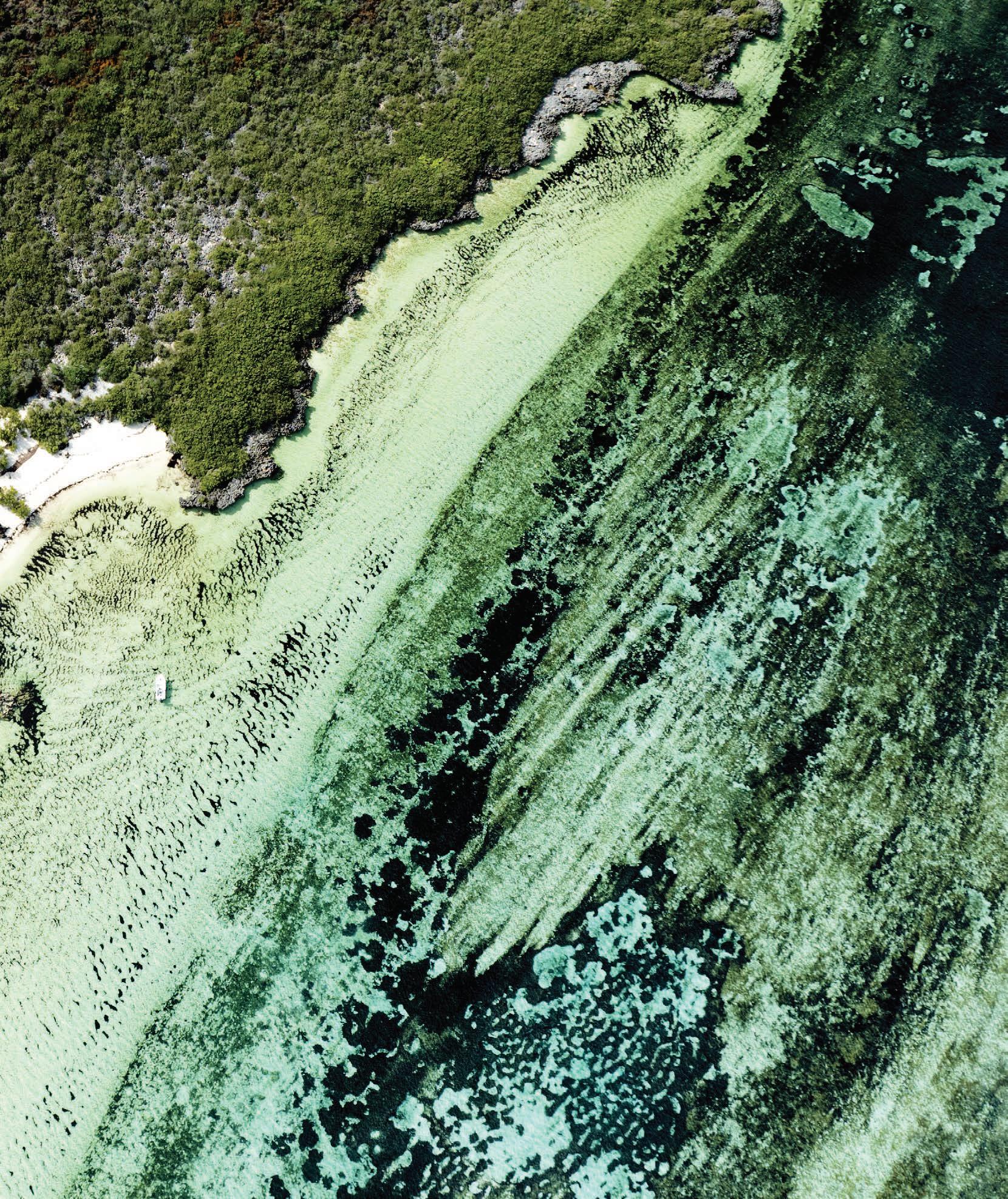
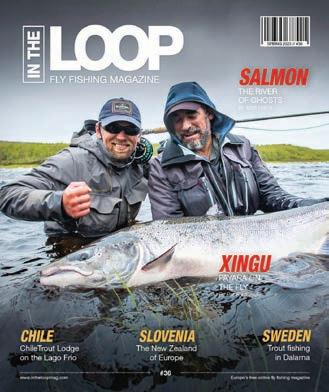
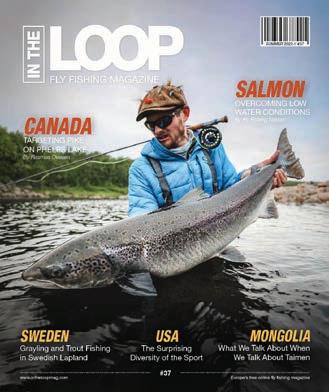
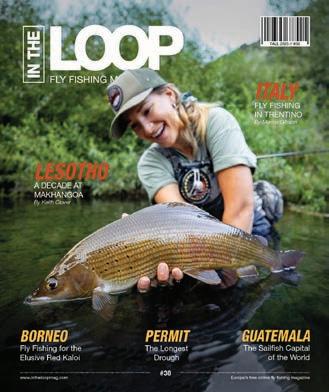
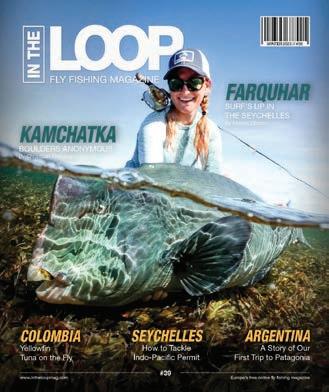
Join the fight to protect our oceans, lakes, and rivers, the pristine aquatic ecosystems across the globe and thei precious fish stocks. It’s an acutely important battle - and one that we simply cannot afford to lose!
Join the fight to protect our oceans, lakes, and rivers, the pristine aquatic ecosystems across the globe and thei precious fish stocks. It’s an acutely important battle - and one that we simply cannot afford to lose!