

The IMF InfoLine team is here to support you and your loved ones with the most up-to-date information about myeloma
Call the IMF InfoLine at 1.800.452.CURE (toll-free in the U.S. & Canada) or 1.818.487.7455 (worldwide), or email InfoLine@myeloma.org with your questions, or if you wish to discuss the contents of this booklet.
Want answers and don’t want to wait?
Get the answers you need anytime from Myelo® , your 24/7 generative AI assistant that is designed to support you on your journey with myeloma. Ask Myelo your questions at myeloma.org.
Join the Myeloma Knowledge Platform
Visit myprofile.myeloma.org and create your personal online IMF account to receive the most helpful content recommendations tailored to support your unique myeloma journey.
You are not alone
The International Myeloma Foundation (IMF) is here to help you. We are committed to providing information and support for patients with multiple myeloma (which we refer to simply as “myeloma”) and their care partners, friends, and family members.
The IMF supports the myeloma community with a broad range of resources available on our website myeloma.org, and through numerous programs and services such as publications, seminars, webinars, workshops, and the IMF InfoLine.
The IMF InfoLine responds to your myeloma-related questions and concerns in a compassionate and caring manner. To receive the most up-to-date information about myeloma, call 1.818.487.7455, email InfoLine@myeloma.org, or schedule a convenient time to talk with an IMF InfoLine Coordinator at mmsm.link/infoline.
IMF publications
Myeloma is a cancer that is not known to most patients at the time of their diagnosis. If you have been diagnosed with myeloma or if you suspect that you might have myeloma, the IMF will help you become well-informed about this disease so that you can have an active role in your own medical care and make good decisions about your care in partnership with your doctor.
We suggest that you read the IMF’s Patient Handbook, an overview of myeloma diagnosis, risk stratification, effects on the body, treatments approved by the U.S. Food and Drug Administration (FDA), and key supportive care measures. This booklet will also direct you to other resources that may be relevant in your particular case.
The IMF’s Understanding-series publications are intended to offer more detailed information about a broad range of myeloma-specific topics, including drugs and drug regimens, and the symptoms and the side effects of both myeloma and its treatments.
Words in bold+blue used in this and in other IMF publications are explained in the IMF’s companion booklet, Understanding Myeloma Vocabulary, which you can access directly at glossary.myeloma.org. Another helpful reference booklet is Understanding Your Test Results.
If you prefer to read any of the IMF’s publications in electronic format, the light blue links will take you to the corresponding resources. All IMF publications are free-of-charge and can be read, downloaded, or requested in printed format at publications.myeloma.org.
What you will learn from this booklet
This booklet discusses the drug called Lynozyfic™ (also known as linvoseltamab-gcpt, its generic drug name). Lynozyfic was granted accelerated approval by the FDA on July 2, 2025. You will learn who is a candidate for Lynozyfic, how Lynozyfic works, its dose and schedule, clinical trial experience with Lynozyfic, possible side effects and how to prevent or minimize them, as well as available support programs.
Indications for the use of Lynozyfic
Lynozyfic is approved by the FDA for the treatment of adult patients with relapsed or refractory multiple myeloma (RRMM) who have received at least 4 prior lines of therapy, including a proteasome inhibitor, an immunomodulatory agent , and an anti-CD38 monoclonal antibody. The FDA approval of Lynozyfic expands the treatment options available to patients with RRMM.
How Lynozyfic works
Lynozyfic is an immunotherapy, a treatment that engages the patient’s own immune system to attack their myeloma. Lynozyfic is part of a drug class called bispecific antibody therapies (sometimes simply called “bispecifics”). Bispecific antibodies have two (“bi”) arms that target and attach to two types of cells. One arm attaches to a myeloma cell, while the other arm attaches to an immune cell. This is what makes bispecific antibodies a dual threat to myeloma.
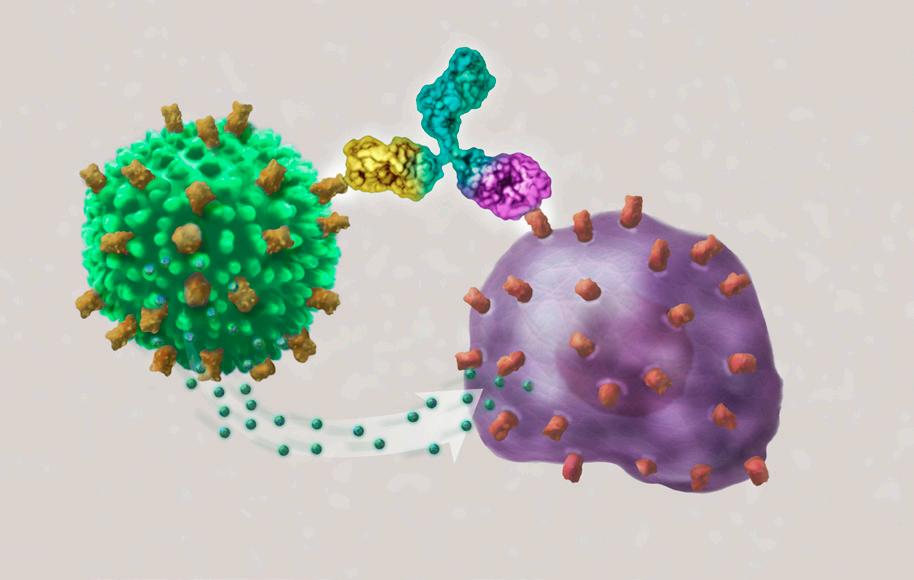
Lynozyfic binds to CD3 on the surface of the T cell


T cell receptor (TCR)
Lynozyfic binds to BCMA on the myeloma cell surface
BCMA tumor-specific antigen on the surface of the myeloma cell


Lynozyfic activates the T cell to release cytotoxic granules that kill the myeloma cell
Lynozyfic is a bispecific antibody that uses one arm to attach to the B-cell maturation antigen (BCMA) on the surface of the patient’s myeloma cells; BCMA is involved in myeloma cell growth and survival. Lynozyfic uses a second arm to attach to the CD3 antigen on the surface of the patient’s T cells (T lymphocytes), a type of white blood cell (WBC). Lynozyfic activates T cells to release lethal granules that engage and destroy myeloma cells.
A similar strategy is already used in myeloma, known as chimeric antigen receptor (CAR) T-cell therapy, for which T cells are collected from a patient, then altered in a laboratory, so that they can attach to BCMA on the surface of a myeloma cell. These engineered cells are multiplied in a laboratory, then re-infused into the patient to attack their myeloma cells.
To treat myeloma with Lynozyfic, there is no need to collect, modify, and manufacture engineered T cells over the course of several weeks. Lynozyfic is an “off-the-shelf” product that’s ready to be used right away, which eliminates the wait time for the myeloma patient when compared to CAR T-cell therapy. In addition, patient comfort may be greater than with T-cell harvesting and the re-infusion.
Clinical trial experience with Lynozyfic
A clinical trial is a medical research study with people who volunteer to test scientific approaches for preventing, detecting, diagnosing, or treating cancer, or to answer scientific questions. A clinical trial is launched only after laboratory studies have demonstrated the potential of a treatment or procedure to be more effective and/or less harmful than previously existing methods. The goal of clinical trials is to improve patient care.
Lynozyfic was approved by the FDA based on the LINKER-MM1 phase I/II clinical trial of myeloma patients treated with 200 mg of Lynozyfic as monotherapy (single-agent). The median age was 70 years and 39% of participants had high-risk multiple myeloma (HRMM) based on chromosomal abnormalities, with 28% of patients being “pentarefractory” (resistant to at least 5 drug classes).
At a median follow-up of 11.1 months, the overall response rate (ORR) was 71%, with 45% achieving complete response (CR) or better. The median duration of response (DoR) was 29.4 months. Lynozyfic at a dose of 200 mg induced deep and durable responses in heavily pre-treated patients with RRMM.
Finding a clinical trial to match your needs
Participating in a clinical trial may give you access to treatment that is not yet available outside of a study. If you have an interest in participating in a clinical trial, be sure to discuss with the doctor treating your myeloma all the potential risks and benefits that may apply to your particular case.
Clinical research in myeloma has become a robust field, with many studies enrolling patients at any given time. To help myeloma patients with personalized support for identifying and exploring clinical trial options across the U.S., the IMF has partnered with SparkCures. Visit myeloma.org/sparkcures or contact the IMF InfoLine for more information.
The U.S. government maintains the website clinicaltrials.gov, an online database of thousands of research studies from around the world. You may wish to also explore this resource. However, the U.S. government does not review or approve the safety and science of all the studies listed on this website.
For more information about what’s involved in study participation, read the IMF’s publication Understanding Clinical Trials in Myeloma.
Lynozyfic schedule of administration
¡ Lynozyfic is given as an intravenous (IV) infusion. You will be monitored after receiving your infusions.
¡ “Step-up” dosing is used for the first 2 weeks to help your body adjust to the treatment and to lower the risk of side effects. Typically, patients are hospitalized for 24 hours on Day 1 and 24 hours on Day 8; however, some treatment centers administer Lynozyfic on an outpatient basis.
¡ Step-up dose 1 (week 1) of 5 mg Lynozyfic, 4-hour infusion
¡ Step-up dose 2 (week 2) of 25 mg Lynozyfic, 4-hour infusion
¡ Full dosing is administered once-a-week after step-up dosing is completed.
¡ Full dose 1 (week 3) of 200 mg Lynozyfic, 4-hour infusion
¡ Full dose 2 (week 4) of 200 mg Lynozyfic, 1-hour infusion
¡ Full dose 3 through 13 (weeks 5 through 15), 30-minute infusions
¡ Full dosing is continued once every 2 weeks for 5 more doses.
¡ Full doses 14 through 18, given as 30-minute infusions
After your 18th dose, your myeloma doctor will assess your response to treatment and determine if you should continue receiving Lynozyfic once every 2 weeks, or if you can receive Lynozyfic once every 4 weeks. Your doctor may modify your treatment based on your response and factors specific to your particular case. Your doctor will decide how long your treatment should continue.
In the LINKER-MM1 clinical trial, patients who achieved a very good partial response (VGPR) or better were switched from receiving Lynozyfic once every 2 weeks to once every 4 weeks. VGPR means that your monoclonal protein (myeloma protein, M-protein) in the serum (blood) and in
the urine are detectable by the immunofixation test but not by the electrophoresis test (≥ 90% reduction in serum M-protein; < 100 mg per 24 hours urine M-protein).
For more information about treatment with Lynozyfic, please visit regeneron.com/downloads/lynozyfic_fpi.pdf.
Prophylactic tocilizumab
Myeloma guidelines by the National Comprehensive Cancer Network (NCCN) for the use of bispecific therapies state that the drug tocilizumab can be given as a prophylactic prior to administering a bispecific antibody. Ask your doctor if this is recommended in your case.
In the LINKER-MM1 phase I/II clinical trial, tocilizumab was given to 22 patients (18.8%) who experienced cytokine release syndrome (CRS) but did not respond to steroid therapy. Prophylactic use of tocilizumab is not a requirement for the clinical use of Lynozyfic.
Important safety precautions with Lynozyfic
Lynozyfic is available through a Risk Evaluation and Mitigation Strategy (REMS) program. REMS programs are required by the FDA for treatments that may have serious safety concerns. REMS programs support the use of treatment and help ensure that the potential benefits outweigh the risks.
Cytokine release syndrome (CRS)
Cytokines are proteins secreted by cells which can stimulate or inhibit the growth or activity in other cells. In patients with myeloma, cytokines are produced in the bone marrow and circulate in the bloodstream. Cytokines are normally released in response to hematologic-related events (low blood counts) and infection.
CRS is a potentially fatal, uncontrolled immune reaction in which cytokines trigger an overwhelming immune system response. A “cytokine storm” can seriously damage body tissues and organs. CRS is the most frequent side effect observed with T-cell therapies, but the incidence and severity of CRS are lower with bispecific antibodies than with CAR T-cell therapy.
Prevention and treatment of CRS
Patients are monitored following their IV administration. Lynozyfic step-up dosing schedule lowers the risk of CRS. At the first sign of CRS, immediate evaluation must be made to consider the patient for hospitalization. Supportive care is administered based on severity of CRS. Further management should follow current practice guidelines. Depending on severity of CRS, Lynozyfic therapy may be interrupted or discontinued.
Neurologic toxicities
Immune effector cell-associated neurotoxicity syndrome (ICANS) occurred in 7.7% of patients in the LINKER-MM1 clinical trial. After treatment with Lynozyfic, ICANS can occur before, during, or after CRS onset, or after CRS resolution. ICANS can also occur in the absence of CRS.
ICANS may be severe, life-threatening, or fatal. Symptoms of neurologic side effects include but are not limited to confusion, disorientation, loss of consciousness, seizures, tremors, slower movements, changes in personality, depression, tingling and numbness of hands and feet, leg and arm weakness, facial numbness, and difficulty speaking, reading, or writing.
Prevention and treatment of neurologic toxicities
Patients must be monitored for signs and symptoms of neurologic toxicity during treatment with Lynozyfic. At the first sign of neurologic toxicity, including but not limited to ICANS, patients should receive supportive therapy based on severity, and Lynozyfic treatment may also be withheld.
Possible side effects of Lynozyfic
The following were the most common possible side effects of Lynozyfic in the LINKER-MM1 clinical trial.
Infections
Infections were reported in 74.4% of patients in the clinical trial, with the frequency and severity declining over time.
Lynozyfic can cause severe, life-threatening, or fatal infections. Do not start treatment with Lynozyfic if you have an active infection.
Prevention and treatment of infections
You must be monitored for signs and symptoms of infection prior to and during treatment with Lynozyfic. It is essential that you promptly report any infection to your doctor. Antibiotics and/or antivirals may be prescribed. Treatment with Lynozyfic may be interrupted or discontinued based on severity. Your immunoglobulin (Ig) levels should also be monitored to assess if you may need to receive intravenous immunoglobulin (IVIG). Ask your doctor about keeping current with your vaccinations.
Neutropenia
Lynozyfic can cause neutropenia, a reduced level of neutrophils (a type of white blood cell necessary to combat bacterial infection). Having too few neutrophils can lead to infection. Febrile neutropenia is the development of fever, often with signs of infection, in a patient with neutropenia. Febrile neutropenia is usually treated with antibiotics even if an infectious source can’t be identified.
Prevention and treatment of neutropenia
Complete blood counts (CBC) should be measured at baseline and monitored periodically during treatment. Fever is the most common sign of neutropenia. If you have a fever, you must get immediate medical attention.
Lynozyfic support programs
Patient Wallet Card
Patients who are prescribed Lynozyfic will receive a Patient Wallet Card that summarizes the signs and symptoms of problems that may occur with treatment. Patients who develop any of the signs and symptoms listed on the Lynozyfic Patient Wallet Card must seek medical help immediately.
Lynozyfic Surround™
Lynozyfic Surround is a support program offered by Regeneron, the manufacturer of Lynozyfic. This program offers financial and educational resources to help patients throughout their treatment journey with Lynozyfic. Call 1.844.746.4363 and visit regeneron.com for more information.
In closing
This booklet is not meant to replace the advice of your doctors and nurses who are best able to answer questions about your specific healthcare management plan. The IMF intends only to provide you with information that will guide you in discussions with your healthcare team.
To help ensure a good quality of life through effective treatment, you must play an active role in your own medical care. We encourage you to visit myeloma.org and to join the IMF’s Myeloma Knowledge Platform at myprofile.myeloma.org.
To receive the most up-to-date information about myeloma in a caring and compassionate manner, call the IMF InfoLine at 1.818.487.7455, email InfoLine@myeloma.org, or visit mmsm.link/infoline to schedule a convenient time to talk with an IMF InfoLine Coordinator.
To get answers to your questions without having to wait, ask Myelo® anytime 24/7 at myeloma.org. This generative AI assistant is designed to help you find the right resources.
Use the hyperlinks and web addresses included in this publication for quick access to a variety of resources. Sign up at subscribe.myeloma.org for our quarterly journal Myeloma Today and weekly e-newsletter Myeloma Minute, as well as alerts about IMF news, events, and actions.
The International Myeloma Foundation (IMF) is the global leader in myeloma. Our mission is to improve the quality of life of myeloma patients while working toward prevention and a cure. Since 1990, the IMF has been serving the myeloma community through the following four pillars:
RESEARCH At the IMF, finding a cure for myeloma is our top priority. The IMF Scientific Advisory Board (SAB) of leading myeloma experts identifies key opportunities to drive research forward. The IMF Black Swan Research Initiative® (BSRI®) is pushing the boundaries with early screening for a precursor condition of myeloma as well as cure-focused myeloma clinical trials. The IMF International Myeloma Working Group (IMWG) provides trusted guidelines for diagnosing, treating, and managing myeloma. We also fund innovative research through the IMF Brian D. Novis Research Grants.
EDUCATION Myeloma is a complex and unique journey for each patient. The IMF offers hundreds of videos and free publications in multiple languages to inform and empower patients and care partners to navigate their myeloma journey. All IMF seminars, webinars, and workshops are free-of-charge and designed to directly connect the patient community with expert myeloma clinicians. The IMF Nurse Leadership Board (NLB) provides recommendations for the management of myeloma. The IMF M-Power Project works to break down barriers and ensure health equity in underserved populations.
SUPPORT Studies show that social support can greatly improve the quality of life of people with cancer. The IMF offers more than 160 myeloma support groups across North America, including specialized groups for Spanish-speakers, people with smoldering myeloma, care partners of patients with myeloma, and patients who do not have care partners. The IMF InfoLine answers myeloma-related questions. Myelo®, the IMF’s generative AI assistant, is available 24/7 to help you find the right resources.
ADVOCACY In the U.S., the IMF Advocacy team represents your interests at the federal and state levels. Internationally, the IMF Global Myeloma Action Network (GMAN) works to improve patient access to treatments.