09, 2026 - February 15, 2026
09, 2026 - February 15, 2026

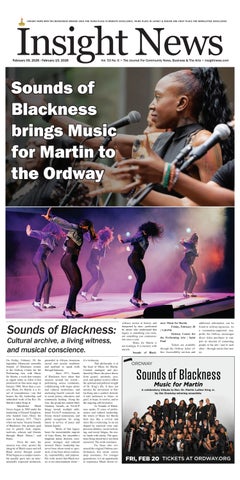
Cultural archive, a living witness, and musical conscience.
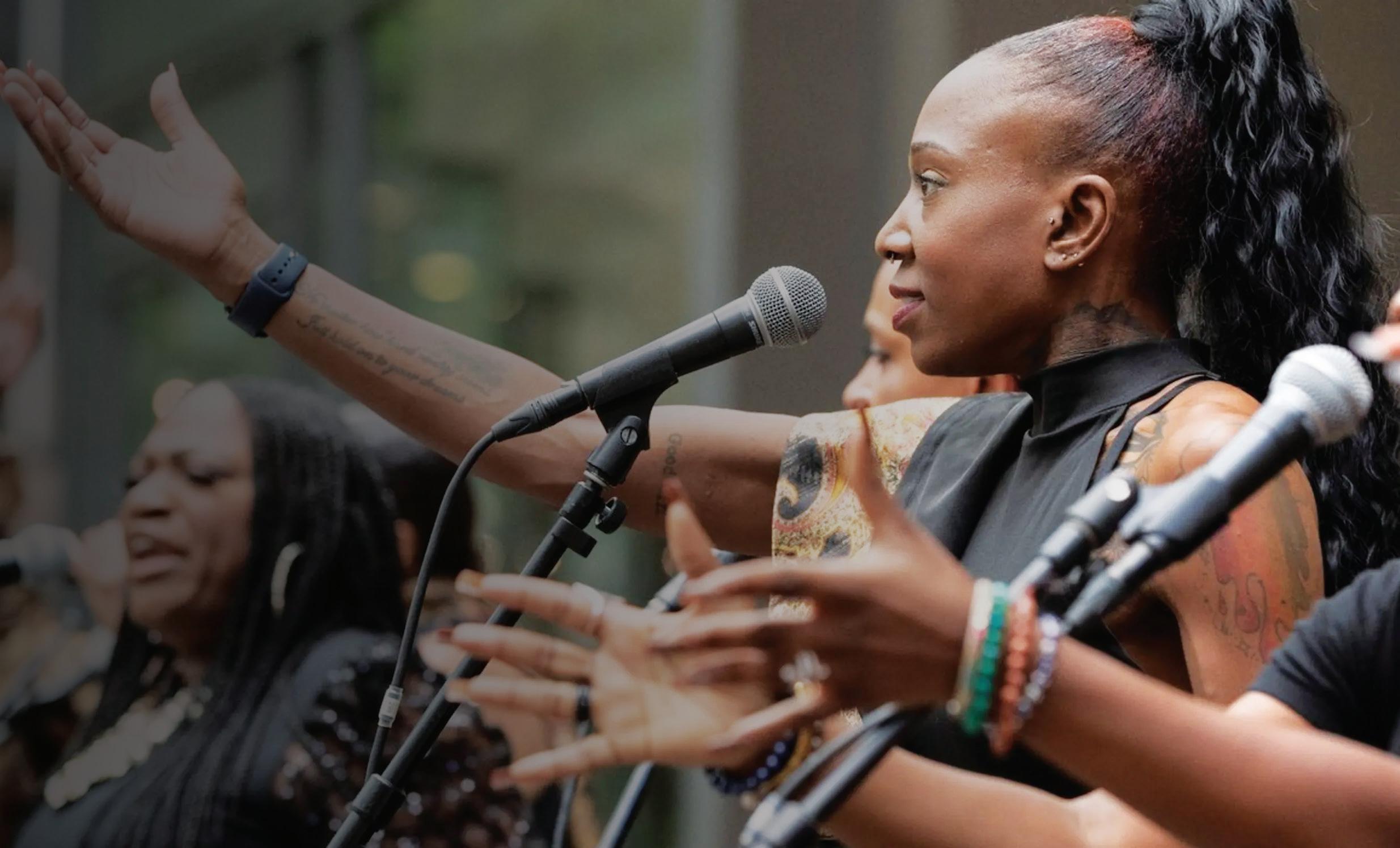
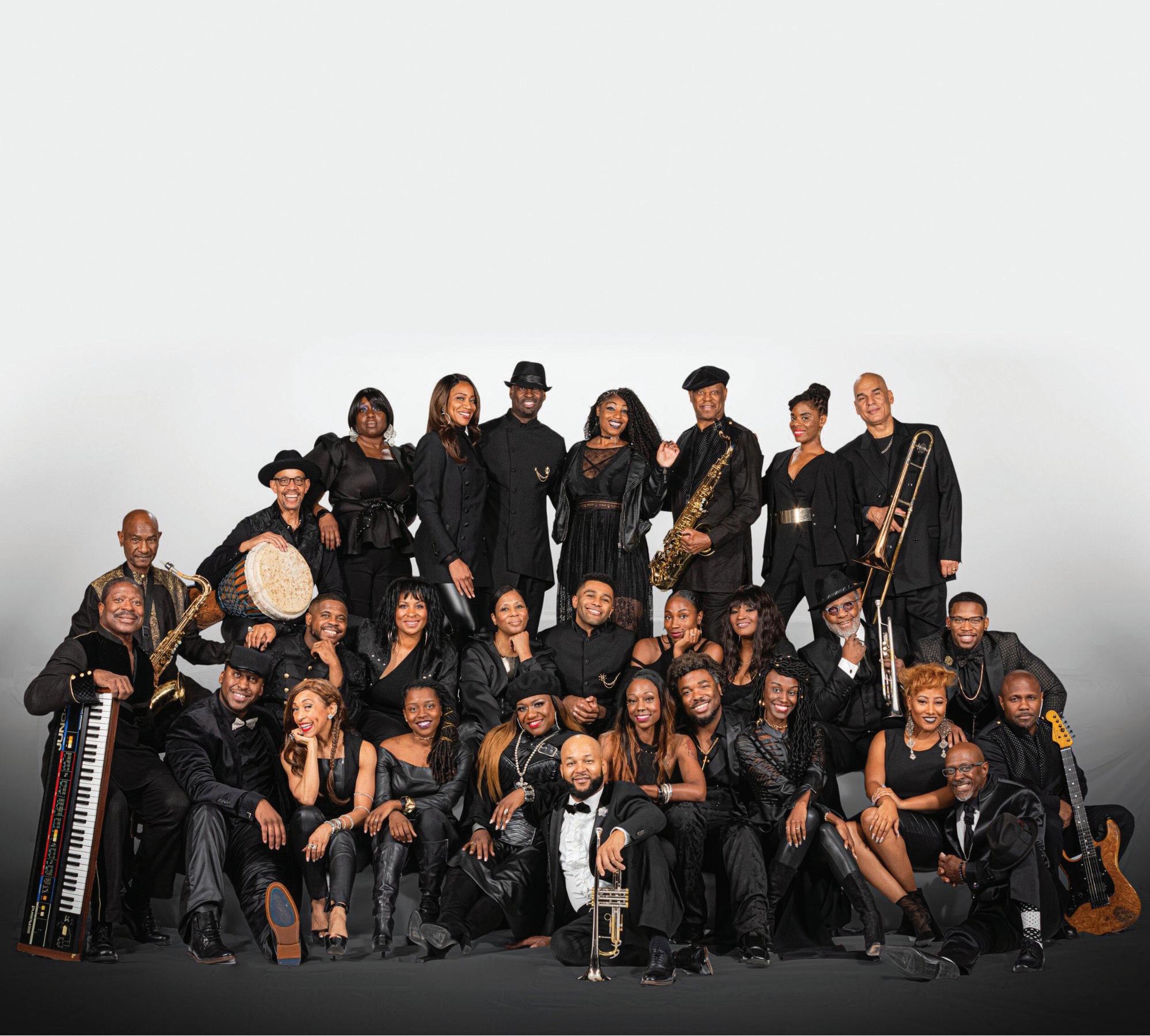
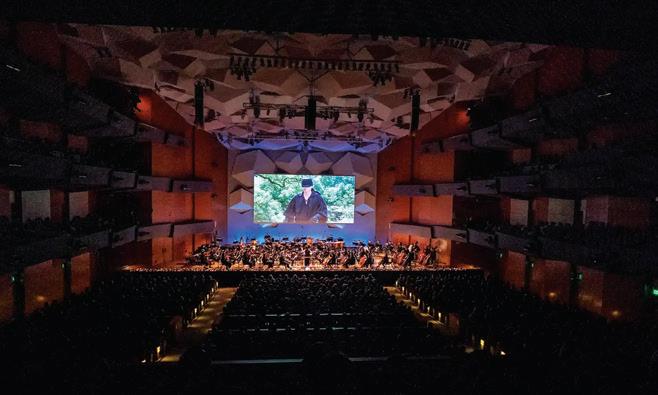
On Friday, February 20, the legendary Minnesota ensemble Sounds of Blackness returns to the Ordway Center for the Performing Arts with Music for Martin, a work that remains as urgent today as when it first premiered on that same stage in January 1988. More than a concert, Music for Martin is a ritual of remembrance—one that honors the life, leadership, and unfinished work of the Rev. Dr. Martin Luther King Jr. Macalester Black Voices began in 1969 under the leadership of Russell Knighton, who handed Gary Hines the reins in January, 1971. "That’s when our name became Sounds of Blackness. Our primary goal was to glorify God, inspire, motivate, educate and liberate through Black Music," said Hines. From the start, the mission was clear: protect the integrity of Black music and tell Black stories through sound. What began as a campus ensemble quickly grew into an internationally respected institution,
grounded in African American sacred and secular traditions and unafraid to speak truth through harmony.
Since 1971, Sounds of Blackness have taken that mission around the world— performing across continents, collaborating with major artists and cultural institutions, and anchoring benefit concerts tied to social justice, education, and community healing. Along the way, the group has earned three Grammy Awards, an NAACP Image Award, multiple additional NAACP nominations, an Emmy Award nomination, and global recognition for using music in service of peace and human dignity.
Much of that legacy bears the unmistakable imprint of Gary Hines, the ensemble’s longtime music director, composer, arranger, and cultural steward. Hines’ leadership has never been about trend or spectacle; it has been about continuity, responsibility, and purpose. His work insists that Black music is not entertainment alone—
it is testimony. That philosophy is at the heart of Music for Martin. Created, arranged, and produced by Hines, the piece draws from gospel, spirituals, jazz, soul, and spoken word to reflect the spiritual and political weight of Dr. King’s life. It does not sanitize the movement or flatten King into a symbol. Instead, it asks audiences to listen—to grief, to hope, to resolve, and to the ongoing call for justice.
As Sounds of Blackness marks 55 years of performance and cultural leadership, the return of Music for Martin feels less like a revival and more like a reckoning. In an era shaped by renewed voter suppression debates, racial reckoning, and moral fatigue, the music lands with clarity. The questions King raised have not been answered. The work continues. For those who witnessed the original Ordway performances, this return carries deep resonance. For younger generations, it is an opportunity to experience Black choral ex-
cellence rooted in history and sharpened by time—performed by artists who understand that legacy is something you carry, not something you commemorate once a year. Music for Martin is not nostalgia. It is memory with muscle.
Sounds of Black-
ness: Music for Martin Friday, February 20 | 7:30 PM Ordway Center for the Performing Arts | Saint Paul
Tickets are available through the Ordway ticket office. Accessibility services and
additional information can be found at ordway.org/access. As a community-supported nonprofit, the Ordway encourages direct ticket purchases to support its mission of connecting people to the arts—and to each other—through stories that matter.
tribute


















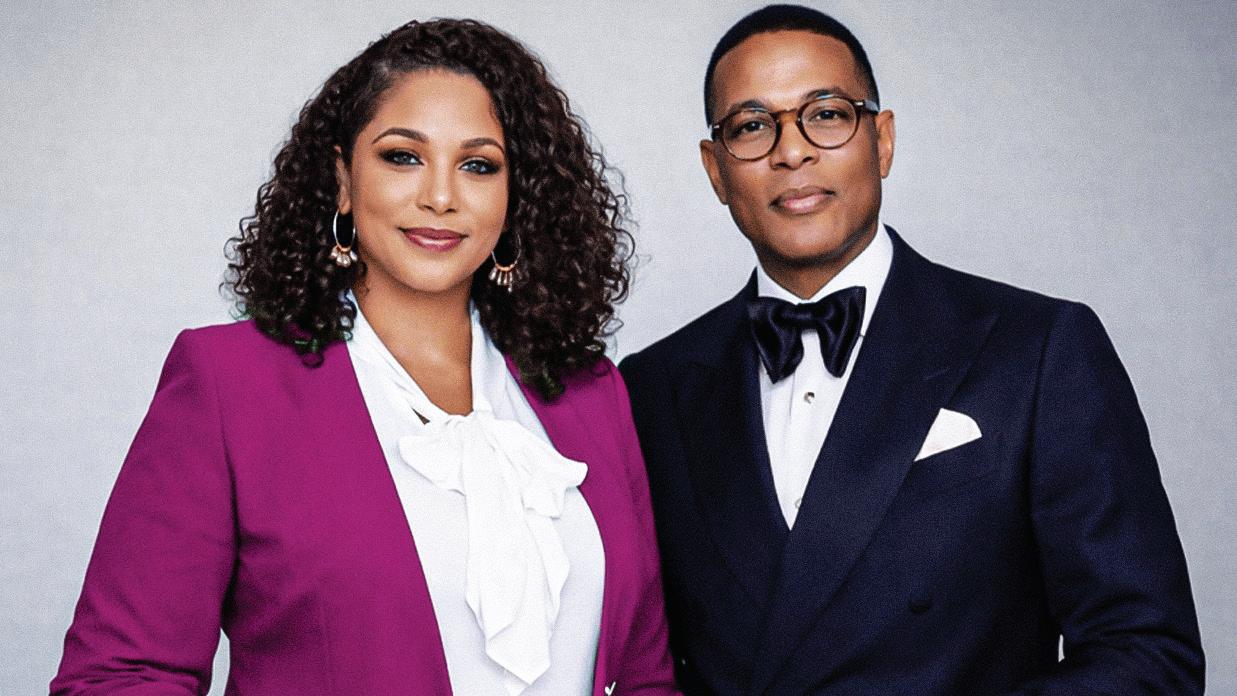
Don Lemon made the headlines, but Georgia Fort’s arrest shows no journalistis is safe
By Stacy M. Brown, NNPA Newswire Senior National Correspondent
Famed journalist Don Lemon
may draw the headlines, but Emmy-winning independent reporter Georgia Fort and Trahem
Jenn Crews and Jamael Lydell Lundy were also taken into custody as federal agents moved against four Black journalists whose only apparent offense was documenting protests crit-
ical of the Trump administration’s immigration crackdown. Lemon, a veteran broadcaster and longtime critic of President Donald Trump, was arrested late Thursday night in Los Angeles after livestreaming an anti-ICE demonstration connected to a January protest at a St. Paul, Minnesota, church. A short time later, Fort, a respected Minnesota-based journalist, was arrested by federal agents in her home state for reporting on the same protest, according to public statements and court
records.
Los Angeles Mayor Karen Bass said the arrests signal a dangerous escalation by the Trump administration rather than any attempt to ease tensions following the fatal shootings of civilians by federal agents in Minnesota. She said Lemon was simply doing his job when agents arrested him and stressed that Fort’s detention made clear this was not an isolated incident but a broader assault on press freedom.
Federal authorities revived charges tied to a protest at Cities Church in St. Paul after a magistrate judge had already declined to approve arrest warrants against Lemon and others, citing insufficient evidence. Prosecutors then pursued in-
dictments through a grand jury, a move civil liberties advocates say appears designed to sidestep judicial scrutiny and chill coverage of protests against ICE operations.
Fort documented her own arrest in a brief livestream as agents arrived at her door, telling viewers she was being taken into custody for filming the protest as a member of the press. Her arrest, announced publicly by Attorney General Pam Bondi, placed an Emmy-winning journalist alongside protesters in a case the administration has described as a coordinated attack.
Civil rights leaders
Governor Tim Walz and Attorney General Keith Ellison last Tuesday called for greater transparency from the federal government regarding the number of children being held in immigration detention facilities, citing growing harm to Minnesota families, schools, and communities.
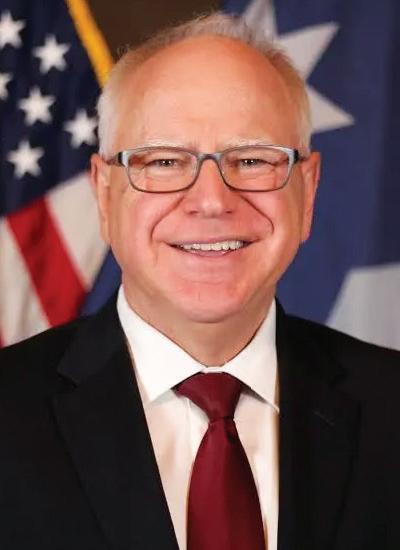
Joined by education, health, and public safety leaders, Walz and Ellison highlighted mounting concerns from educators, social workers, and families who described widespread fear in school communities following recent federal immigration enforcement activity near schools and child care centers. Those accounts included sharp drops in school attendance, disruptions to learning, and heightened anxiety among children.
Governor Walz said the impact of the enforcement actions extends far beyond immigration policy and into the core of community wellbeing.
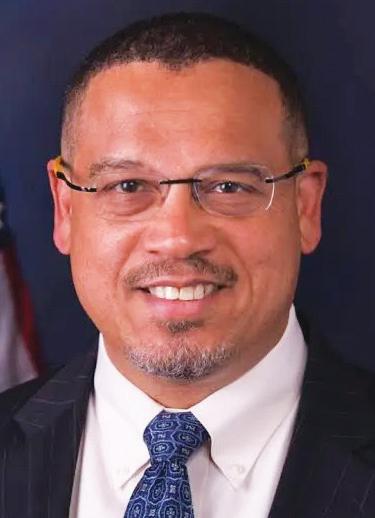
“What we are seeing is not public safety—it’s chaos,” Walz said. “When parents are afraid to send their kids to school, when classrooms sit half-empty, and when children are taken to detention facilities
Abrams urges faith leaders
LOS ANGELES — Voting rights leader and civic organizer Stacey Abrams delivered a forceful call to action during Founders Day 2026 at First African Methodist Episcopal Church of Los Angeles, urging faith communities to reclaim their historic role as defenders of democracy amid growing threats of authoritarianism.
Abrams, keynote guest for the Southern California Conference celebration, grounded her remarks in the principles of her national 10 Steps Campaign, a framework designed to help communities recognize democratic erosion and mobilize sustained civic engagement.

“Authoritarianism doesn’t arrive all at once,” Abrams has said in explaining the campaign. “It comes in steps — small erosions of trust, power, and participation.”
Though a full public recording of the address has not yet been released, short video clips and social media posts from the event reflect Abrams’ emphasis on vigilance, participation, and moral leadership — themes consistent with her national messaging.
Hosted by Dr. Larry Campbell, President of the Southern California Conference Ministerial Alliance, the Founders Day gathering featured a moderated conversation
on their way to learn, we’ve crossed a line. Minnesotans need to know how many children are in detention facilities, who they are, and where they’re being held.”
Attorney General Ellison sharply criticized federal actions, characterizing the detention of children as part of a broader pattern of punitive measures affecting Minnesota families.
“Kidnapping young children is a feature, not a bug, of Trump’s campaign of revenge and retribution against Minnesota,” Ellison said. He pointed to previous legal battles over food assistance and child care funding and referenced a
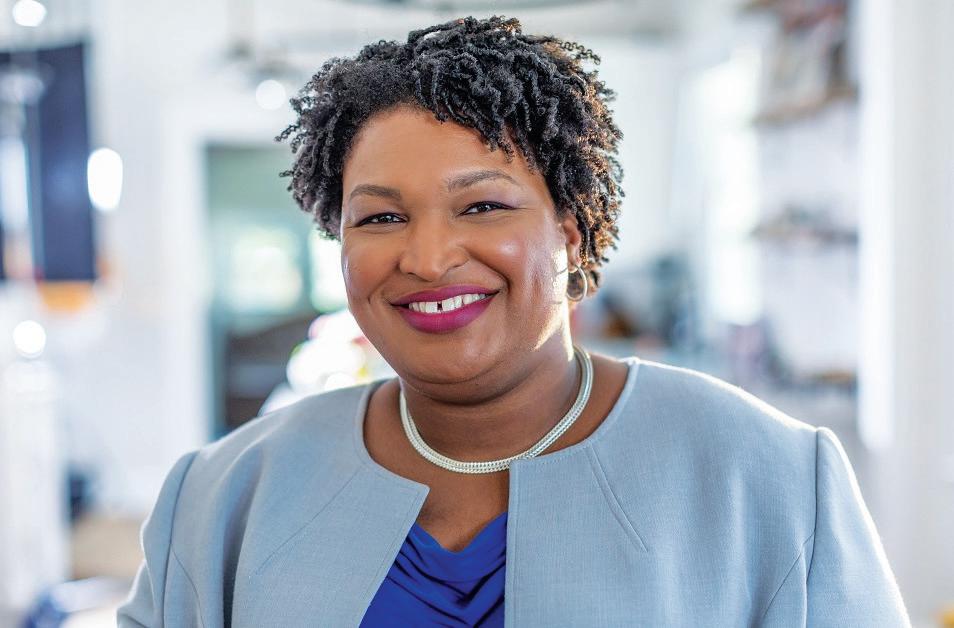
between Abrams and Bishop Francine A. Brookins, 141st Bishop of the African Methodist Episcopal Church and Presiding Prelate of the Southern California Conference. Abrams underscored
the central role of faith institutions in moments of democratic crisis, echoing the AME Church’s founding legacy.
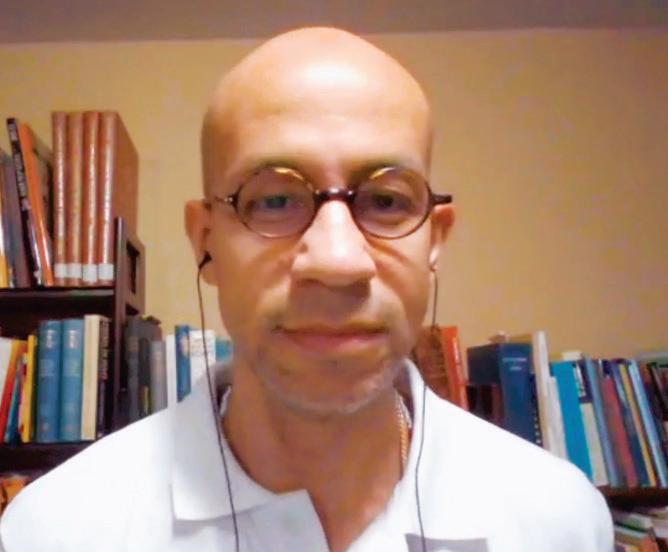
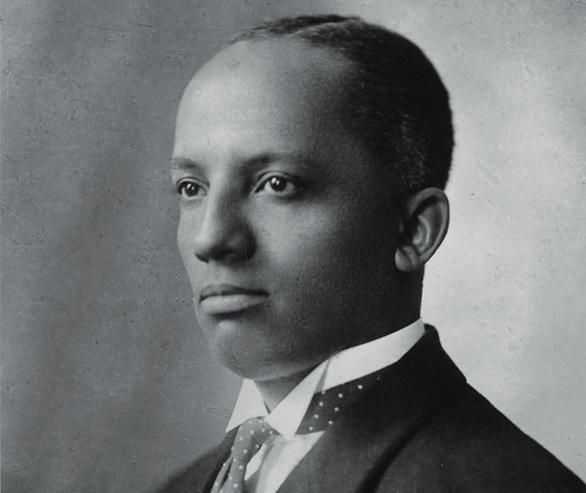
On February 2, marking the beginning of Black History Month, Dr. Mario Beatty Associate Professor, Africana Studies at Howard University delivered a critical presentation to his Medu Netcher class, offered online through Knarrative.com. The lecture addressed widespread misconceptions about Black History Month
while revisiting the original intent of its founder, Dr. Carter G. Woodson.
Dr. Beatty opened by challenging a familiar refrain often heard in classrooms and public discourse—that Black history has been diminished or marginalized by being confined to the shortest month of the year. He emphasized that this belief misrepresents Woodson’s purpose and obscures the true failure of educational institutions to engage Black history
Gov. Tim Walz on Tuesday said the U.S. Department of Justice targeted him after he demanded transparency and accountability around actions affecting Minnesota, calling the scrutiny “retaliation” and warning of broader threats to democratic norms.
In a statement, Walz said the attention from federal authorities was not coincidental, arguing it reflected an authoritarian playbook that seeks to overwhelm critics, weaponize the justice system, and raise the personal cost of dissent until people stop speaking out.
Despite the pressure, Walz said he will continue to press his case, emphasizing
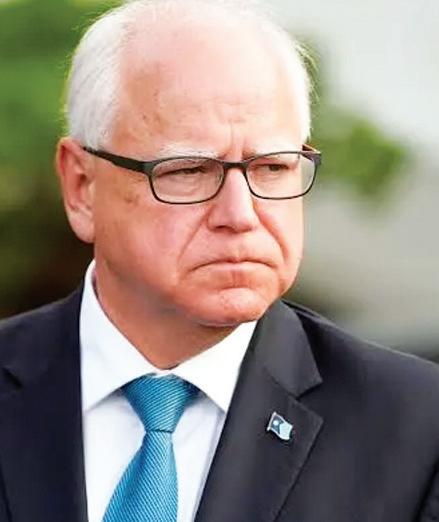
Minnesota’s commitment to the rule of law,
and public safety rooted in trust and cooperation rather than fear, chaos, or political theater.


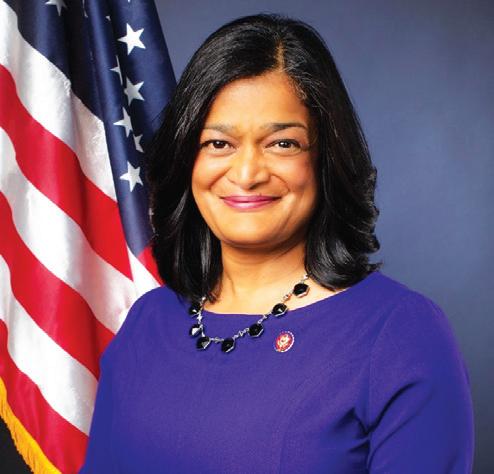
WASHINGTON — The recent U.S. military operation in Venezuela has sparked intense controversy in Washington, with leading lawmakers condemning the action as unconstitutional and warning of dangerous implications for U.S. foreign policy and executive authority. In the early hours of January 3, U.S. forces launched a dramatic military strike in Venezuela that resulted in the kidnapping of Venezuelan President Nicolás Maduro and his wife, Cilia Flores, according to multiple reports. The Trump administration framed the operation as part of a broader campaign against alleged “narco-terrorism” networks tied to the Venezuelan leadership, and U.S. officials have indicated that both Maduro and Flores are expected to face charges in U.S. courts. However, senior lawmakers and constitutional experts have sharply challenged the legality of the mission. Representative Pramila Jayapal (D-Wash.) in a statement condemned the operation as “illegal and unconstitutional,” noting it was carried out “without any authorization from Congress and with no plan for what comes next.” Jayapal and other critics argue that the Constitution grants Congress — not the president — sole authority to declare war or authorize military action.

“The American people have said over and over again that we do not want another war,” Jayapal said in her
Writer
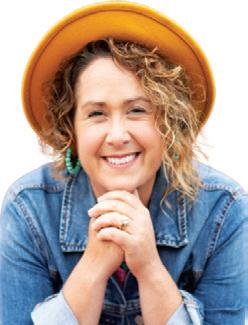
By Diana Oestreich
We have to be clear about what we are witnessing from Immigration and Customs Enforcement in Minnesota.
As a combat soldier, I recognize a mission when I see one — not because it’s announced, but because it’s being carried out. In the span of weeks, ICE and Border Patrol operations in Minneapolis have resulted in the deaths of two Minnesotans. In over a year of combat in Iraq, my battalion of 500 soldiers did not kill a single person.
That difference matters.
My unit spent 397 days on the battlefield. We were shot at. We feared for our lives. Snipers fired from crowds. Improvised explosive devices lined the roads we were ordered to clear. And still, we did not return fire unless strict conditions were met: The shooter had to be clearly identified, civilians could not be in the line of fire, and lethal force had to be the last resort.
Why? Because that was not our mission.
Our mission was to build bases, secure supply routes, and protect civilian life.
By TK Kelly Program Manager,
At The Man Up Club, we believe confidence is built through trust, consistency, and care. Sometimes that care looks like mentorship, structure, and accountability. Other times, it looks as simple as a haircut.
We offer our boys free haircuts whenever they ask for

We were governed by Rules of Engagement, the Uniform Code of Military Justice, and the War Crimes Act. Violations were not brushed aside. Soldiers are criminally accountable when we break the law. That accountability is what separates professional soldiers from mercenaries. This isn’t just my experience. It’s the standard. Minneapolis Police Chief Brian O’Hara stated publicly that, in 2025, the Minneapolis Police Department recovered roughly 900 guns from the street and arrested hundreds of violent offenders — and did not kill a single person.
one. Not because we’re trying to make a fashion statement, but because we understand the value behind it. A haircut is one of the most personal forms of care a young man can receive. When a boy asks for a haircut, he’s really saying he wants to feel better about himself, he wants to be seen, and he wants to show up differently in the world. We don’t take that lightly. Giving our boys haircuts has become one of the most
Let that sit with you. If the Minneapolis Police Department didn’t kill anyone in a year of active policing, and my combat unit didn’t kill anyone in over a year of war, Minnesotans — and all Americans — are right to ask why ICE and the Border Patrol have killed two people in my state in two weeks.
The answer is uncomfortable but unavoidable. Either this is their mission — or they are operating outside accountability.
Minnesota is demanding a full legal investigation into the killings of Renee Good and
Alex Pretti, including allegations that lifesaving medical care was delayed or denied. Refusing transparency or investigation is not partisan disagreement. It is a constitutional failure.
When armed agents operate beyond the reach of law, they are no longer public servants. They are something else entirely.
Mercenaries are defined not only by who pays them but by what restrains them. Mercenaries answer to orders, not to law, ethics or public accountability. That is
precisely why soldiers and law enforcement officers hold codes of conduct so fiercely. Without those codes, uniforms become disguises instead of safeguards.
As a veteran, I refuse to accept mercenary behavior hiding behind federal badges on Minnesota soil. This is my home. Minnesota stands for liberty, justice and due process — not secrecy, immunity or violence without consequence. Staff changes are not legal accountability. Silence is not justice. Justice delayed is justice denied. Minnesotans are de-
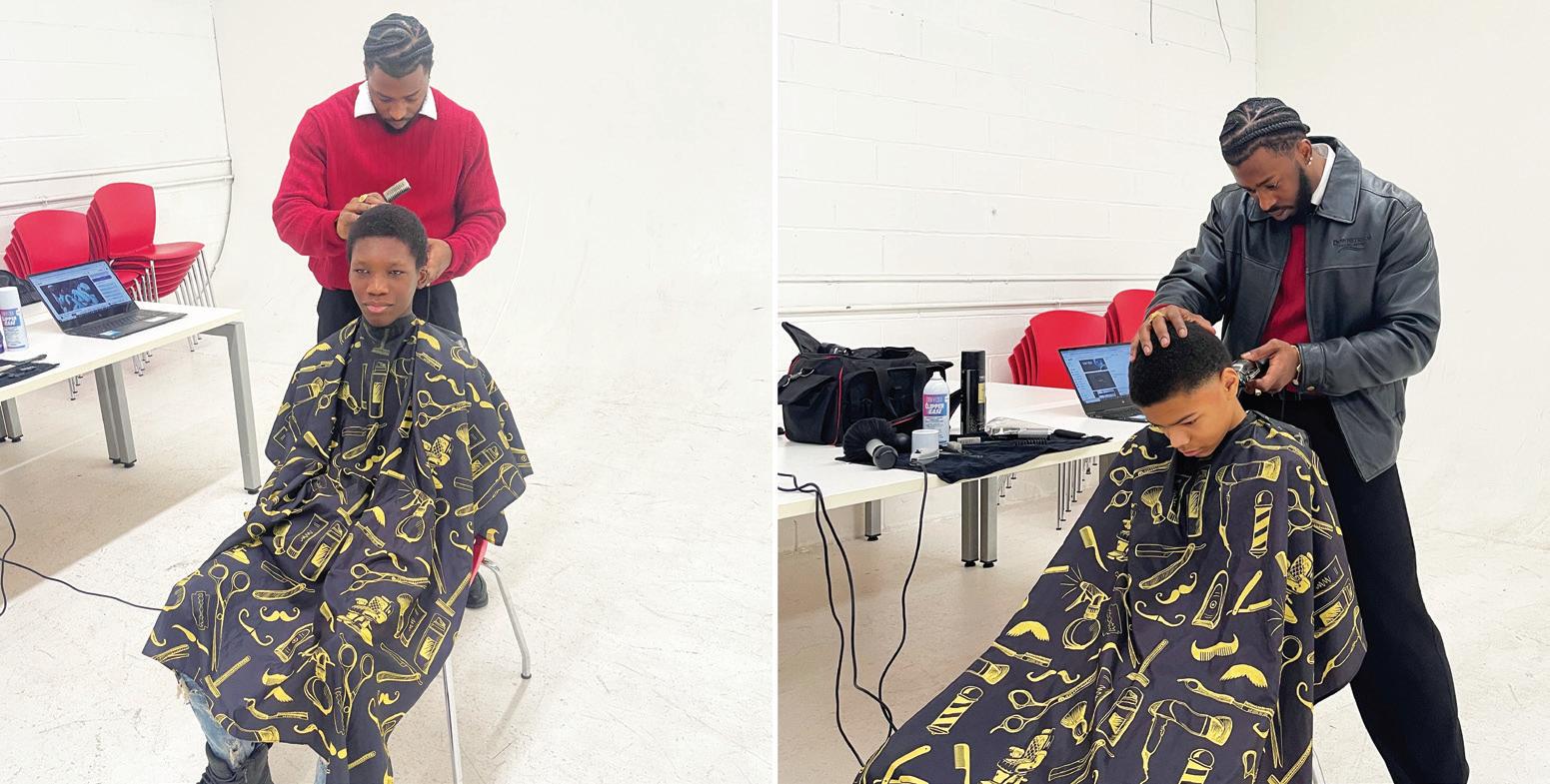
organic ways we bond with them. Sitting in the chair creates conversation. It creates comfort. It creates trust. Some of the best talks we’ve had with our young men happen while the clippers are on. They open up about school, family, pressure, insecurities, and goals. In that moment, they are relaxed, they feel cared for, and they know they matter. That is the culture we work hard to build. A haircut does something powerful. When a young man looks in the mirror and sees himself clean, sharp, and put together, his confidence rises. His posture changes. His energy changes. He walks a little taller. That confidence doesn’t
come from vanity. It comes from pride. Pride in how he looks, pride in how he presents himself, and pride in who he is becoming. At The Man Up Club, we teach that appearance matters because self-respect matters. How you show up is often a reflection of how you feel about yourself. When a young man takes pride in his grooming, it usually shows up in other areas of his life. His discipline improves. His mindset sharpens. His effort increases. Grooming becomes a habit tied to responsibility and self-worth. We also believe in preparing our boys for the real
world, not a filtered version of it. Like it or not, people make judgments quickly. In our mentorship sessions, we often spoke about the reality that within the first seven seconds of seeing someone, people subconsciously judge their economic status, confidence level, mannerisms, and even their sexuality before a word is spoken. That may be uncomfortable to hear, but it is real. We do not teach this to scare our boys. We teach it to equip them. Our goal is not to change who they are, but to help them understand how the world works so they can move through it with awareness and




TK Kelly
At The Man Up Club, we believe confidence is built through trust, consistency, and care. Sometimes that care looks like mentorship, structure, and accountability. Other times, it looks as simple as a haircut. We offer our boys free haircuts whenever they ask for one. Not because we’re trying to make a fashion statement, but because we understand the value behind it. A haircut is one of the most personal forms of care a young man can receive. When a boy asks for a haircut, he’s really saying he wants to feel better about himself, he wants to be seen, and he wants to show up differently in the world. We
don’t take that lightly. Giving our boys haircuts has become one of the most organic ways we bond with them. Sitting in the chair creates conversation. It creates comfort. It creates trust. Some of the best talks we’ve had with our young men happen while the clippers are on. They open up about school, family, pressure, insecurities, and goals. In that moment, they are relaxed, they feel cared for, and they know they matter. That is the culture we work hard to build. A haircut does something powerful. When a young man looks in the mirror and sees himself clean, sharp, and put together, his confidence rises. His posture changes. His
ergy changes. He walks a little taller. That confidence doesn’t come from vanity. It comes from pride.
“When
manding a full, independent investigation under state law into the agents involved in these deaths. No one — federal or otherwise — is above the law of this land.
If ICE and the Border Patrol cannot operate within the Constitution, with restraint, transparency and accountability, then they are not fit to carry out their mission in Minnesota — or anywhere else.
Because when force is untethered from law, our freedom is already in danger.
Diana Oestreich is a combat veteran, founder of The Waging Peace Project, and author of “Waging Peace: One Soldier’s Story of Putting Love First.” As an author, activist and soldier-turned-peacemaker, she’s a nationally recognized speaker at the intersection of justice, nonviolence, faith and how everyday peacemakers are challenging and changing our world.
This article appeared in Huffington Post. This story is part of HuffPost’s commitment to fearlessly covering the Trump administration.
confidence. A clean appearance does not define a man, but it can remove unnecessary obstacles. It can open doors. It can shift first impressions. It can help a young man be taken seriously before he ever has the chance to speak for himself.
The Man Up Club is rooted in values like discipline, accountability, respect, and intentional living. We believe that excellence starts with the small things done consistently. Showing up groomed is one of those small things. It signals readiness. It signals self-awareness. It signals pride.
When we give a young man a haircut, we are not just cutting hair. We are reinforcing identity. We are telling him, you are worth investing in. You deserve to look your best. You belong in rooms that expect excellence.
Ultimately, our mission is to develop boys into confident, capable young men of character. Sometimes that development happens through mentorship sessions, workouts, or life skills training. And sometimes it starts with a simple request, “Can I get a haircut?” We say yes every time, because we know what that moment can unlock.

The case could weaken Section 2 of the Voting Rights Act, making it harder to challenge discriminatory election maps
By Robert D. Bland Assistant Professor of History and Africana Studies, University of Tennessee
Back in 2013, the Supreme Court tossed out a key provision of the Voting Rights Act regarding federal oversight of elections. It appears poised to abolish another pillar of the law.
In a case known as Louisiana v. Callais, the court appears ready to rule against Louisiana and its Black voters. In doing so, the court may well abolish Section 2 of the Voting Rights Act, a provision that prohibits any discriminatory voting practice or election rule that results in less opportunity for political clout for minority groups.
The dismantling of Section 2 would open the floodgates for widespread vote dilution by allowing primarily Southern state legislatures to redraw political districts, weakening the voting power of racial minorities.
The case was brought by a group of Louisiana citizens who declared that the federal mandate under Section 2 to draw a second majority-Black district violated the equal protection clause of the 14th Amendment and thus served as an unconstitutional act of racial gerrymandering.
There would be considerable historical irony if the court decides to use the 14th
Amendment to provide the legal cover for reversing a generation of Black political progress in the South. Initially designed to enshrine federal civil rights protections for freed people facing a battery of discriminatory “Black Codes” in the postbellum South, the 14th Amendment’s equal protection clause has been the foundation of the nation’s modern rights-based legal order, ensuring that all U.S. citizens are treated fairly and preventing the government from engaging in explicit discrimination.
The cornerstone of the nation’s “second founding,” the Reconstruction-era amendments to the Constitution, including the 14th Amendment, created the first cohort of Black elected officials.
I am a historian who studies race and memory during the Civil War era. As I highlight in my new book “Requiem for Reconstruction,” the struggle over the nation’s second founding not only highlights how generational political progress can be reversed but also provides a lens into the specific historical origins of racial gerrymandering in the United States. Without understanding this history – and the forces that unraveled Reconstruction’s initial promise of greater racial justice – we cannot fully comprehend the roots of those forces that are reshaping our contemporary political landscape in a way that I believe subverts the true intentions of the Constitution.
From 3 said the symbolism was unmistakable. Rev. Al Sharpton, founder and president of the National Action Network, said Lemon’s arrest marked a direct blow against the First Amend-
underscored the urgency of returning all detained children to Minnesota and pledged to continue legal challenges against what he described as unlawful and unconstitutional practices.
recent federal court order freeing a child named Liam and his father. Ellison said that ruling
Earlier Tuesday, Governor Walz sent a letter to U.S.
The long history of gerrymandering Political gerrymandering, or shaping political boundaries to benefit a particular party, has been considered constitutional since the nation’s 18th-century founding, but racial gerrymandering is a practice with roots in the post-Civil War era.
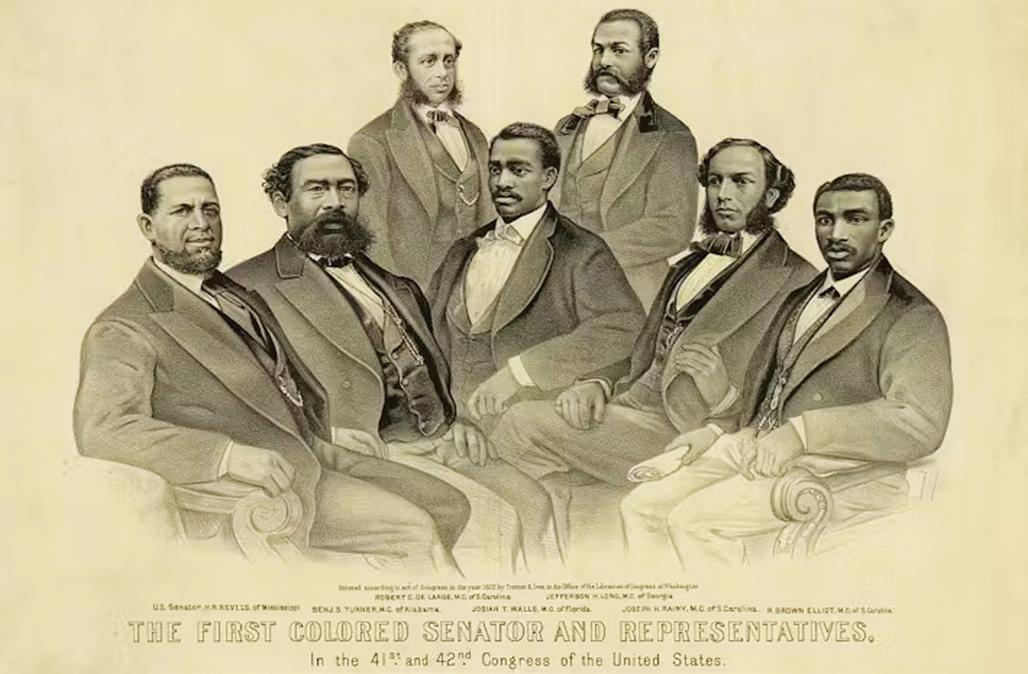
Expanding beyond the practice of redrawing district lines after each decennial census, late 19th-century Democratic state legislatures built on the earlier cartographic practice to create a litany of so-called Black districts across the postbellum South. The nation’s first wave of racial gerrymandering emerged as a response to the political gains Southern Black voters made during the administration of President Ulysses S. Grant in the 1870s. Georgia, Alabama, Florida, Mississippi, North Carolina and Louisiana all elected Black congressmen during that decade. During the 42nd Congress, which met from 1871 to 1873, South Carolina sent Black men to the House from three of its four districts.
Initially, the white Democrats who ruled the South responded to the rise of Black political power by crafting racist narratives that insinuated that the emergence of Black voters and Black officeholders was a corruption of the proper political order. These attacks often provided a larger cultural pretext for the campaigns of extralegal political violence that terrorized Black voters in the South, assassinated political leaders, and marred the integrity of several of the region’s major elections.
Election changes Following these po-
ment and warned that journalists critical of the president were being singled out. Press freedom advocates echoed those concerns. Lisa Gilbert, co-president of
Department of Homeland Security Secretary Kristi Noem demanding detailed information on how many children are currently being held in federal detention, their identities, and their locations.
Since December 1,
Credit: Library of Congress
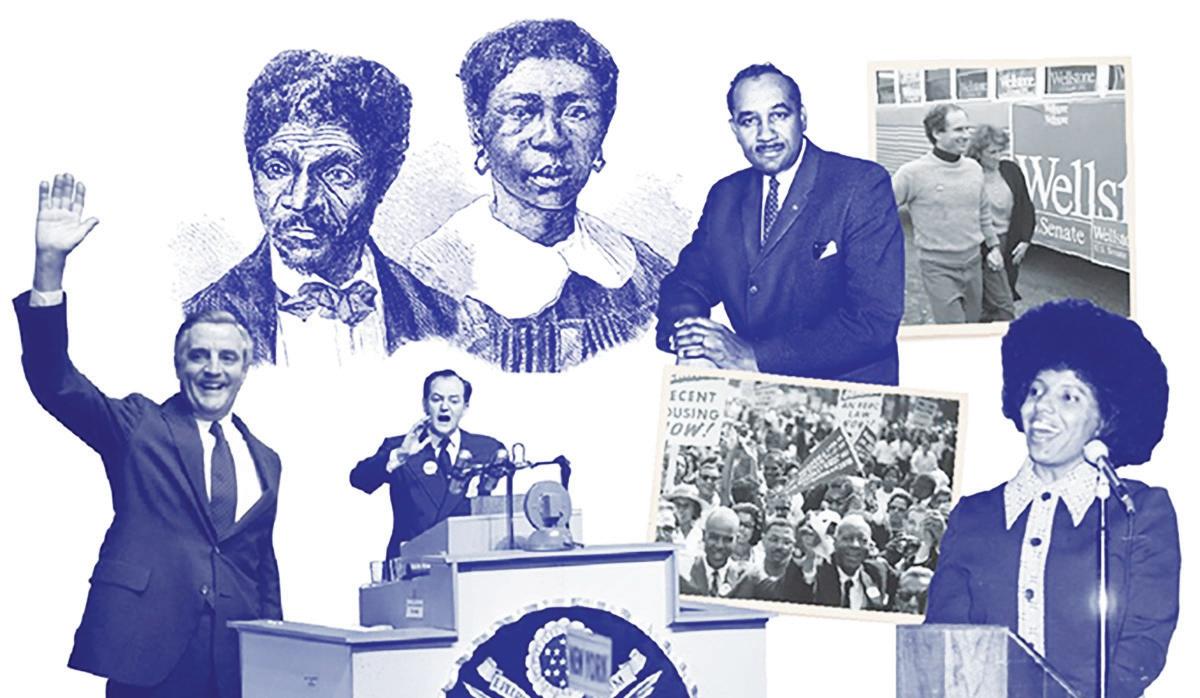
The first Black senator and representatives were elected in the 1870s, as shown in this historic print
groms during the 1870s, southern legislatures began seeking legal remedies to make permanent the counterrevolution of “Redemption,” which sought to undo Reconstruction’s advancement of political equality. A generation before the Jim Crow legal order of segregation and discrimination was established, southern political leaders began to disfranchise Black voters through racial gerrymandering. These newly created Black districts gained notoriety for their cartographic absurdity. In Mississippi, a shoestring-shaped district was created to snake and swerve alongside the state’s famous river. North Carolina created the “Black Second” to concentrate its African American voters to a single district. Alabama’s “Black Fourth” did similar work, leaving African American voters only one possible district in which they could affect the outcome in the state’s central Black Belt.
South Carolina’s “Black Seventh” was perhaps the most notorious of these acts of Reconstruction-era gerrymandering. The district “sliced through county lines and ducked around Charleston back alleys”
Public Citizen, said the arrests represent a constitutional crisis for journalism in the United States, adding that reporters have the right to document and share information with the pub-
2025, more than 600 individuals have filed cases in federal district court in Minnesota challenging their detention. Judges across Minnesota’s federal bench — including those appointed by former President Donald Trump — have issued
– anticipating the current trend of sophisticated, computer-targeted political redistricting.
Possessing 30,000 more voters than the next largest congressional district in the state, South Carolina’s Seventh District radically transformed the state’s political landscape by making it impossible for its Black-majority to exercise any influence on national politics, except for the single racially gerrymandered district.
Although federal courts during the late 19th century remained painfully silent on the constitutionality of these antidemocratic measures, contemporary observers saw these redistricting efforts as more than a simple act of seeking partisan advantage.
“It was the high-water mark of political ingenuity coupled with rascality, and the merits of its appellation,” observed one Black congressman who represented South Carolina’s 7th District.
Racial gerrymandering in recent times
The political gains of the Civil Rights Movement of the 1950s and 1960s, sometimes called the “Second Reconstruc-
lic without fear of retaliation.
Mayor Bass said she contacted the U.S. attorney to demand information about Lemon’s status and warned that arresting journalists for entering
rulings finding that DHS detention practices are not in compliance with the law.
tion,” were made tangible by the 1965 Voting Rights Act. The law revived the postbellum 15th Amendment, which prevented states from creating voting restrictions based on race. That amendment had been made a dead letter by Jim Crow state legislatures and an acquiescent Supreme Court. In contrast to the post-Civil War struggle, the Second Reconstruction had the firm support of the federal courts. The Supreme Court affirmed the principal of “one person, one vote” in its 1962 Baker v. Carr and 1964 Reynolds v. Sims decisions – upending the Solid South’s landscape of political districts that had long been marked by sparsely populated Democratic districts controlled by rural elites.
The Voting Rights Act gave the federal government oversight over any changes in voting policy that might affect historically marginalized groups. Since passage of the 1965 law and its subsequent revisions, racial gerrymandering has largely served the purpose of creating districts that preserve and amplify the political representation of historically marginalized groups. This generational work may soon be undone by the current Supreme Court. The court, which heard oral arguments in the Louisiana case in October 2025, will release its decision by the end of June 2026.
Disclosure statement
Robert D. Bland does not work for, consult, own shares in or receive funding from any company or organization that would benefit from this article, and has disclosed no relevant affiliations beyond their academic appointment.
“Faith communities have always stepped forward when democracy was under threat,” Abrams has said in public discussions of the 10 Steps framework. “When institutions fail, values must lead.”
Democracy as a Daily Practice
The 10 Steps Campaign extends beyond electoral politics, focusing on local action, voter access, civic education, and accountability. Abrams has repeatedly emphasized that democracy requires continuous participation, not episodic engagement.
learning, serving as a moment to reflect upon, synthesize, and publicly affirm what should already have been taught.
Woodson’s selection of February, Dr. Beatty noted, was deliberate. The month already held significance within Black communities due to the birthdays of Frederick Douglass and Abraham Lincoln. Yet beyond commemorative timing, Woodson’s larger goal was the perpetual and continuous study of Black history, not its confinement to a symbolic window.
“Democracy isn’t something you visit every four years,” Abrams has said. “It’s something you practice — in your neighborhoods, schools, and churches.”
critique—one aimed primarily at academic interpretations of Woodson’s work. Drawing from a 1943 editorial in the Negro History Bulletin titled Activities for Negro History Week, he highlighted a frequently misunderstood passage in which Woodson wrote that the celebration was “not so much a Negro history week as it is a history week,” and that the emphasis should be placed on “the Negro in history.”
Dr. Beatty then turned his attention to a more nuanced
“Justice doesn’t survive on good intentions alone,” Abrams has said. “It survives when people organize and show up.”
A Founders Day Call for This Moment The 2026 Founders
Instagram clips shared by attendees show Abrams engaging clergy and community leaders directly, urging them to view civic engagement as a moral obligation rooted in faith.
phrase narrowly as “the Negro in American history.” Woodson, he argued, intentionally avoided such limitation. By referring to “the Negro in history,” Woodson aligned himself with thinkers such as Arthur Schomburg, John Edward Bruce, and W.E.B. Du Bois, all of whom understood African history as global, ancient, and foundational to human civilization, rather than as a subsidiary narrative within the American nation-state.
Dr. Beatty cautioned against the common academic tendency to interpret this
Woodson’s call was not for racial praise or selective celebration, Dr. Beatty
State and education leaders warned that ongoing fear is keeping children out of classrooms, forcing schools to deliver meals to absent students, and undermining both academic progress and school funding. Officials also cautioned that prolonged absenteeism and instability threaten children’s mental and physical health while eroding trust in institutions charged with protecting families.
Day observance honored the African Methodist Episcopal Church’s origins in resistance and renewal while recommitting today’s faith leaders to public service and democratic participation.
Abrams’ message resonated strongly in a period marked by voter suppression efforts and political polarization.
explained, but for historical accuracy—a history of the world free from national bias, racial hostility, and religious prejudice. The contributions of African people required no exaggeration, Woodson argued, only proper placement within the broader human story.
Concluding his presentation, Dr. Beatty reflected on the contemporary relevance of Woodson’s vision, particularly during moments of political and cultural crisis when Black history is often narrowed to themes of trauma or national
“Hope is not passive,” Abrams has said. “Hope is a discipline.”
As the gathering concluded, the message was clear: protecting democracy requires faith translated into action — a charge Abrams placed squarely before the Southern California faith community.
critique alone. Such moments, he suggested, make Woodson’s insistence on breadth, depth, and global perspective all the more urgent.
Dr. Beatty’s lecture set the intellectual tone for Black History Month within the Medu Netcher course, reaffirming that the study of African history neither begins nor ends in February, nor is it confined to the borders of the United States. Instead, it remains a continuous and expansive inquiry into the role of African people in the history of the world.
a church while reporting crosses a line the Constitution was written to prevent. “It’s an egregious assault on constitutionally protected First Amendment rights,” Bass said. consistently throughout the year. According to Dr. Beatty, Negro History Week—established by Woodson in 1926 and later expanded into Black History Month—was never intended to replace the ongoing study of African and African-descended peoples. Rather, it was designed as the culmination of a year-long process of
Venezuela
Critics also dispute the administration’s portrayal of the mission as focused on drug trafficking, noting that if combating narcotics were truly the priority, the president would not have issued pardons to other leaders previously convicted in high-profile drug cases. Legal scholars have echoed concerns about both constitutional and international law, pointing out that unilateral
From 3 Men
statement, asserting that allowing unilateral strikes of this scale sets a dangerous precedent for future executive overreach.
From 4
use of force in another sovereign nation without clear congressional or United Nations authorization raises serious legal questions. The episode has sparked a broader debate in Congress about war powers and executive authority. Some lawmakers from both parties have called for measures to reaffirm
legislative oversight of major military engagements, including proposed resolutions stating that future operations of this nature require explicit legislative approval.
Supporters within the administration have defended the action as necessary to address threats from abroad, but even some Republican lawmak-
ers have expressed frustration at being kept uninformed ahead of the strike.
As debate continues, the operation’s implications — for U.S. constitutional order, international norms, and bilateral relations in the Western Hemisphere — remain deeply contentious.
Our goal is not to change who they are, but to
it. Like it or not, people make judgments quickly. In our mentorship sessions, we often spoke about the reality that within the first seven seconds of seeing someone, people subconsciously judge their economic status, confidence level, mannerisms, and even their sexuality before a word is spoken. That may be uncomfortable to hear, but it is real. We do not teach this to scare our boys. We teach it to equip them.
help them understand how the world works so they can move through it with awareness and confidence. A clean appearance does not define a man, but it can remove unnecessary obstacles. It can open doors. It can shift first impressions. It can help a young man be taken seriously before he ever has the chance to speak for himself.
The Man Up Club is rooted in values like discipline, accountability, respect, and intentional living. We believe that excellence starts with the small things done consistently. Showing up groomed is one of those small things. It signals readiness. It signals self-awareness. It signals pride. When we give a young man a haircut, we are not just cutting hair. We are reinforcing identity. We are telling him, you are worth investing in. You deserve to look your best. You belong in rooms that expect excellence. Ultimately, our mission is to develop boys into confident, capable young men of character. Sometimes that development happens through mentorship sessions, workouts, or life skills training. And sometimes it starts with a simple request, “Can I get a haircut?” We say yes every time, because we know what that moment can unlock.
By Aswad Walker Houston Defender, Word In Black
This post was originally published on Defender Network (WIB) – John Peavy III was seemingly destined to reimagine education.
His mother, Gail Revis, spent 35 years leading guidance counselors for HISD. His grandmother taught Spanish and served as an assistant principal. His grandfather pioneered the School of Liberal Arts at Texas Southern. Peavy grew up surrounded by conversations about both the promise and pain of educating Black children.
Now, as founder of Radiant 7 Ventures, Peavy is pairing those lessons with cut
ting-edge artificial intelligence to re-engineer how students learn.
Netflix-GPT University
Peavy’s vision sounds like something out of science fiction — a “Netflix-style” education model where learning is personalized, flexible and available on demand.
“From that experience, I knew it was not just about the hard numbers in terms of grades and scores, but you have to treat students holistically,” said Peavy. “So, I’ve founded Radiant 7 Ventures, and we’ve partnered with AI enterprise software companies that allow us to create applications that enhance the student experience, enhance the faculty and staff experience and also lower administrative costs for schools, both at higher ed and K through 12.”
“One of the primary things in terms of enhancing the student experience is that we’re able to create a knowledge base for the students that takes the student experience from being a fixed schedule, fixed curricular experience to something more like a streaming or a Netflix experience where you get personalized learning that’s adapted to the students’ learning styles, their learning gaps,” he explained. “They don’t have
By By
As we celebrate the 100th anniversary of Black History Month, I’m reflecting on the century of economic volatility and roadblocks that have often defined the experiences of disenfranchised communities. Our collective legacy is marked by resilience to overcome the economic challenges faced while trying to achieve the American dream. For the last 50 years, many have pushed a single narrative: success can only come from a four-year college degree. While this opened the pathway to education, access, and wealth creation, this singular focus doesn’t consider the varied ways people work to make our world move and operate. That path doesn’t fit everyone, and it doesn’t have to. Check the news: the best kept secret is out, and it is a career in the trades.
Starting a career in the skilled trades now means

to be at school at 8 a.m. to get math. They can get math if they want and they can seamlessly go from math to Spanish and back to history based on what they need at that moment.”
We’re able to create a knowledge base for the students that takes the student experience from being a fixed schedule, fixed curricular experience to
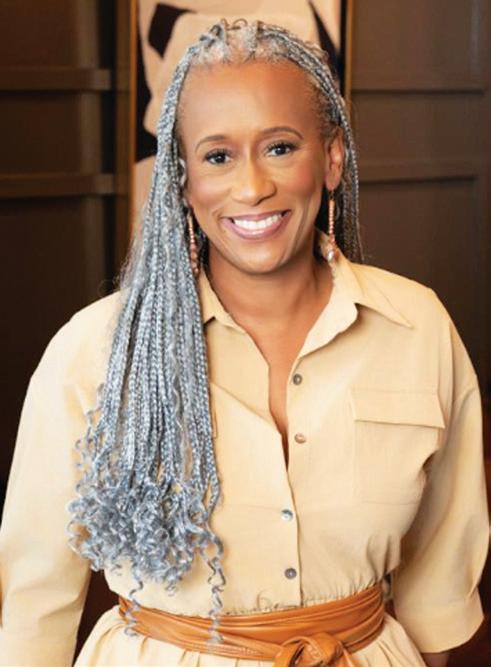
something more like a streaming or a Netflix experience. –John Peavy III
The interface is designed like ChatGPT.
“So, the ability to use an interface like ChatGPT, talk to it, get answers, have the answers prompt you for questions to make sure that you are actually learning the materials, makes it very easy to digest,” Peavy
added.
Hyper-personalized lessons
Peavy said the apps his company is producing go beyond standard curricula and take student life experiences, including past traumas, into consideration.
“We know that different students have different learning styles. We also know there are certain social determinants that drive students’ ability to learn. So, we can’t just teach the curricula,” stated Peavy. “We also have to address those learning styles and those social determinants. If we know there’s a food inequity situation, plus they’re a visual learner, then that’s a certain type of curricular material that the student needs. That becomes true personalization.”
World as classroom
Peavy is not alone in reimagining education for Black students.
Tori Cofield, a 37year veteran educator, has opened three charter schools in Houston, Memphis and Detroit, specializing in school turnaround.
“We have to be creative. There’s always a way,” said Cofield. “Right now, Good Hope Missionary Baptist Church is working with Cullen Middle School. My husband (Rev. Dr. D.Z. Cofield) has this Cullen Initiative that is working
to help that school rise. We have a boatload of kids who come to the church. Trump can’t tell us what to do at the church. We are taking the opportunity to teach those lessons our kids need.”
Cofield encourages schools to partner with local community agencies.
“Get in touch with places like the Emancipation Park Conservancy. Tell the students, ‘I’ll meet you at the museum on Saturday.’ Kids will show up if they love their teachers,” she said. “Mike Miles, Donald Trump cannot stop you from meeting kids to talk about our story.”
Book boom
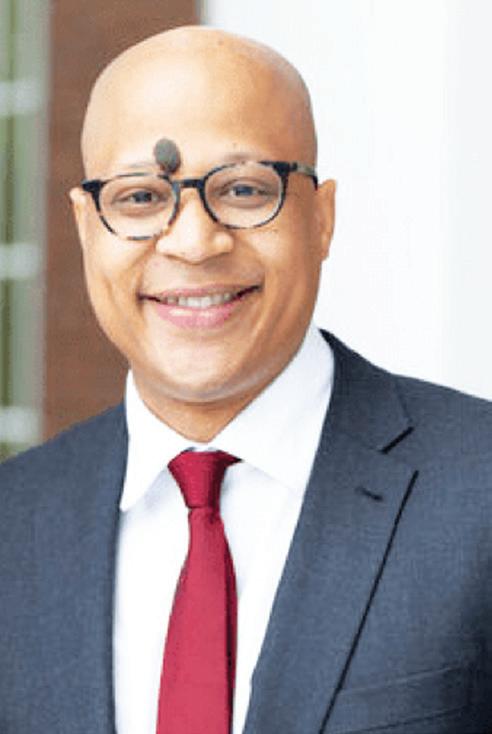
Educator and author Marsita Jordan sees a literacy crisis.
“We are living in the State of an Education Emergency,” Jordan said. “If Black parents, mentors, administrators, pastors, community leaders, politicians, etc., do not step up and take ownership of the education of our Black children, this state of emergency will

not important. We have to be mindful of that character culture piece if we want success.”
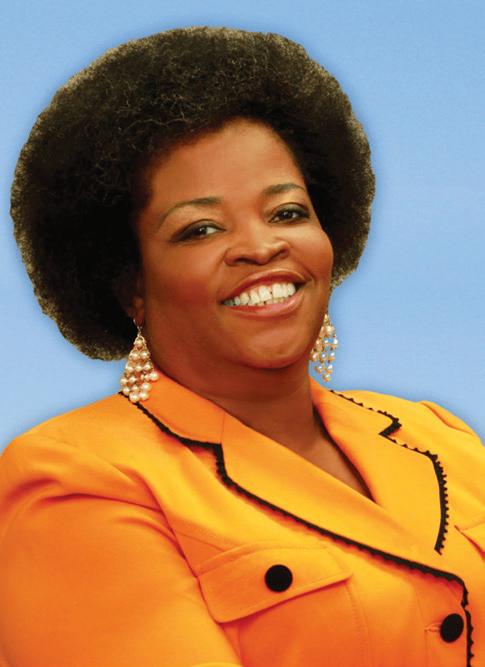
Centering agency HSPVA alum and Harvard professor Dr. Lumumba Seegars emphasizes reframing how Black history is taught.
“It’s imperative that Black youth are educated on history and understand the history of Black agency in our own struggle for liberation, and not think of our trajectory as something that was just given to us over time,” Seegars said. “Black people have always been the central authors of our own stories here, and understanding that is imperative for understanding our own sense of self-efficacy and collective imagination for who we can be.”
soon be catastrophic. It is a call for aggressive literary tactics.” Jordan calls for home and community-based solutions.
“Libraries, no matter how big or small, home or mobile, books have to become a norm in our homes and communities,” shared Jordan. “Reading development and literacy centers need to be mobilized and fueled by volunteers to provide intervention, remediation and tutoring. These centers can be established as makeshifts in local community centers, barbershops, salons, churches and pop-up locations.”
Culture is queen Cofield also insists school culture is key.
“They call me the culture queen because when I go in, the first thing I do is look and see what does the school culture look like? What feels good about being here? Why would a kid want to be here?” shared Cofield. “Many people say, ‘Well, the students need to acclimate to what I want them to be.’ No, that’s not going to get them. You have to realize where they’re coming from.
“If you don’t understand the community and the kids, you can’t be successful with them.”
Cofield says being ignorant about the school neighbor’s culture can have negative impacts.
“Some teachers put down (degrade) working in Burger King and McDonald’s,” said Cofield. “Some of these kids, that’s where their parents work. So right out the gate, you’re saying to them they’re
entering an industry with financially rewarding in-demand careers that are essential to the future of our economy. Skilled trades — like construction, plumbing, electrical work, carpentry, masonry, and HVAC — are not only in high demand, but they’re also recession-resistant. As America rebuilds its infrastructure, provides disaster relief efforts, and moves toward a greener economy, these trades are leading the charge. And at OICA we are building America’s workforce to rebuild America by enrolling thousands of people per year to start their careers in the skilled trades. According to the U.S. Bureau of Labor Statistics, more than 500,000 skilled trade workers are needed every year to fill openings. And with roughly 40% of skilled trades workers expected to retire in the next decade, the demand will continue to grow and more pathways to the middle class will open up. These are careers that can’t be outsourced and that AI won’t replace. They require technical know-how, problem-solving skills, and hands-on training.
“Many parents don’t realize that so-called ‘AI safety tools’ in schools — from facial recognition to vape detectors — are not neutral,” Campbell explained. “These systems often misidentify students and disproportionately punish Black children. What’s sold as safety is, in reality, pushing too many of our kids closer to the school-toprison pipeline, and that should alarm every Black family.
“When schools invest millions in surveillance but struggle to hire counselors or retain teachers, it sends a very clear message: Discipline is being valued more than development. Black parents should be deeply concerned that resources are being diverted from what truly helps our children thrive — caring educators, counselors and supportive learning environments.”
What you can do
Advocate for personalized learning tools that consider social and cultural factors.
• Support community-based education initiatives like church programs, museums and after-school enrichment.
Push for Black history and culture to remain central in learning spaces.
• Invest in literacy at home and community hubs through book drives, home libraries and tutoring programs.
• Challenge harmful school surveillance policies and push for funds to go toward counselors and teachers instead.
Help build strong school cultures by engaging with parents, teachers and local leaders.
Another pathway to build a financially stable life. At OIC of America, along with our affiliates across the country, we’re working to dismantle the negative assumptions around vocational careers and open doors for young people and adults alike to explore these life-changing opportunities. We’re also making sure women, returning citizens, multicultural and multigenerational folks are at the table — and in the field — where these good-paying jobs are waiting. By 2030, we’re on track to place over 50,000 people in the skilled trades per year –a pivot that opens up a world of economic potential they were previously locked out of. A career in the skilled trades is not just about working with your hands. It’s about building an economic future — for yourself, your family, and your community. In my view, that’s truly one of the best ways to honor the legacy of Black History Month. For more information, or to be connected to a training program near you, visit http:// www.oicofamerica.org.
The Minnesota Orchestra has released its operating results and artistic highlights for the 2024–25 season, reporting record earned revenue, a return to pre-pandemic attendance levels and a year marked by major artistic initiatives under Music Director Thomas Søndergård.
The fiscal year, which ran from September 2024 through August 2025, featured the launch of Søndergård’s signature projects, including the critically acclaimed Nordic Soundscapes Festival, opera-in-concert performances of Puccini’s Turandot and a new recording partnership with the international label PENTATONE. The Orchestra also celebrated pianist Jon Kimura Parker’s five-year tenure as Creative Partner for Summer at Orchestra Hall and marked the 50th anniversary of Orchestra Hall, including the renaming of its main auditorium as the Lindahl Auditorium in honor of longtime philanthropists Nancy and John Lindahl.
Artistically, the season included 130 ticketed and free concerts and events. Nordic Soundscapes, a January festival highlighting Nordic repertoire alongside Scandinavian food, design and culture, drew nation-
al attention, earning praise from The Wall Street Journal and The New York Times. The Orchestra performed Turandot for the first time in 40 years, beginning a multi-year initiative to present annual opera-in-concert productions with leading vocalists. The Orchestra’s new relationship with PENTATONE resulted in a live recording of works by composer Thomas Adès, including the world premiere of The Exterminating Angel Symphony and the Violin Concerto featuring Leila Josefowicz. Released in November 2025, the album received strong international reviews.
Other highlights included the return of the Composer Institute and Future Classics concert, solo performances spotlighting Orchestra musicians, three sold-out John Williams concerts curated by Sarah Hicks, and the final season of Jon Kimura Parker’s tenure as Creative Partner. The Orchestra also removed paywalls from its digital content, making its full archive of performances freely available on YouTube, where its videos were viewed more than 828,000 times during the season. Education and community engagement remained

central to the Orchestra’s work. Young People’s Concerts welcomed more than 28,000 students from across Minnesota, while additional programs and the Hall Pass initiative brought thousands more young people to Orchestra Hall at no cost.
Broadcasts on Twin Cities PBS, YourClassical MPR and digital platforms reached an average of 9,800 viewers per live television broadcast.
On the financial side, the Orchestra reported total revenues of $38.1 million in fiscal 2025, with operating expenses
of $42.3 million, resulting in a $4.2 million operating deficit. Despite the shortfall, the organization achieved its highest-ever levels of earned revenue and annual fund support. Earned revenue reached a record $12.1 million, while annual fund contributions rose to an all-time high of $10.6 million. Total contributions across all categories totaled $20.4 million. Attendance rebounded significantly, with Orchestra Hall reaching 82 percent paid capacity, a nearly 9 percent increase over the prior year and
the first return to pre-pandemic levels. More than 230,000 people attended in-person concerts during the season, representing audiences from 83 Minnesota counties, all 50 states and 24 countries. Including digital, broadcast and streaming audiences, total reach exceeded 2.5 million. The season also marked progress on the Upper Harbor Amphitheater project, an 8,000-seat outdoor venue along the Mississippi River to be jointly operated by the Or-
By Wanda Haynes, Certified Sommelier

a stemless wine glass version and a version for stemmed glasses. Very sturdy units that have a chill cradle which easily comes away from the base and put into the freezer for 3 hours or longer. A magnet securely holds the chill cradle to the base, and the unit is very simple to use. The look is sleek and contemporary, and each product comes in several colors. A new color was recently introduced “Noir” is solid black. Products are made from a highly durable polycarbonate plastic. Also used is a High-Density Polyethylene for the Chill Cradles™. This is a reliable material that performs optimally for a lifetime of freeze-thaw cycles. Don’t put the wine chiller in a dish washer or in dish water. Simply wipe all components clean with a damp or dry cloth.
Glasses for VoChill What glass shapes will fit my VoChill? Wine chillers are designed to pair with most standard stem or stemless glassware. However, wine glass bowls wider than 3.75 inches and stems longer than 4.5 inches may not be suitable with VoChill. Glasses with a flat bottom, such as a highball or whiskey tumbler, are not recommended for either style.
VoChill Has a Brand of Wine Glasses German-made from the finest lead-free crystal. Designed with an ultra-thin rim that enhances the wine’s flavor. Crafted with a seamlessly pulled
By D. Brian Blank
Associate Professor of Finance, Mississippi State University
Brandy Hadley Associate Professor of Finance and Distinguished Scholar of Applied Investments, Appalachian State University

nominee.
1. He is a familiar face … Warsh brings deep experience with monetary policymaking to the role. A graduate of Stanford University and Harvard Law School, he served as special assistant to the president for economic policy and executive secretary of the White House National Economic Council under President George W. Bush before becoming one of the
youngest members of the Federal Reserve Board of Governors. Warsh is no newcomer to discussions about Federal Reserve leadership. He was a finalist for the job in 2017, when Trump instead appointed Powell. Trump has since stated that he made a mistake by not selecting Warsh then – though clashes between Trump and Powell may have influenced that view. Warsh’s credentials are unquestionable. As a governor of the Federal Reserve Board from 2006 to 2011, he worked closely with other policymakers and with Wall Street
stem from the bowl for a sleek, durable design that exudes elegance and balance. The glasses are lovely and can be used for any varietal of wine. Just like wine these wine chillers are for adults only and contain multiple small magnets. Dispose of

Community conference highlights health disparities, caregiving, and culturally grounded solutions
MINNEAPOLIS — Health leaders, caregivers, and community advocates will gather later this month to confront the growing impact of Alzheimer’s disease and dementia in Minnesota’s communities of African descent.
The African American Child Wellness Institute, in partnership with the Alzheimer’s Association Minnesota & North Dakota Chapter and other
community organizations, will host Rooted in Care: Dementia, Caregiving and Culture on Saturday, February 21, at North Point Health & Wellness Center, 1256 Penn Ave. N., Minneapolis. The free conference runs from 9 a.m. to 3 p.m. in the fifth-floor conference rooms.
Organizers say the event is designed to address long-standing disparities in diagnosis, treatment, and caregiv-
ing that disproportionately affect African American families.
By centering culture, lived experience, and community-based knowledge, the conference aims to equip families and caregivers with practical tools while
strengthening advocacy and support networks.
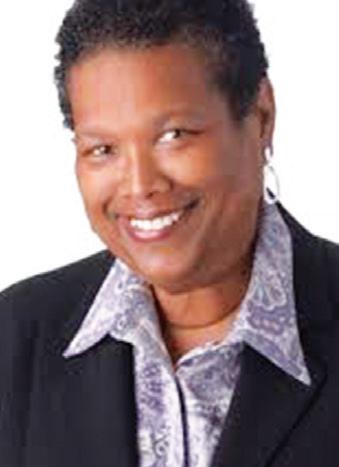
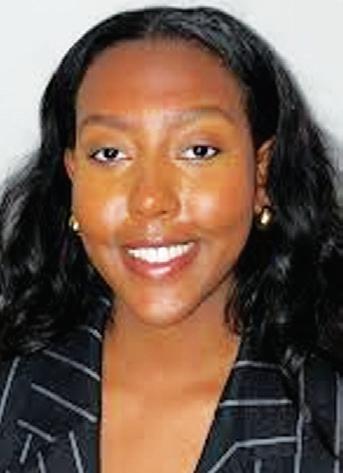
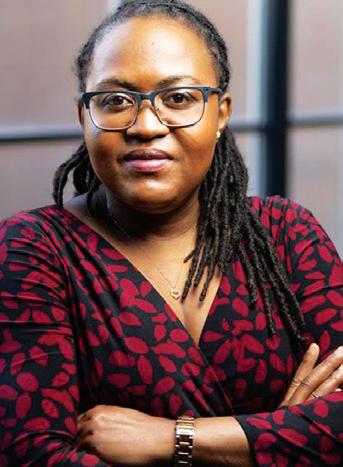
Participants will hear from regional experts including Nassise Geleta, senior director of community engagement with the Alzheimer’s Associa-
tion Minnesota & North Dakota Chapter; Dr. Manka Nkimbeng, associate director of equity and community engagement at the Center for Healthy Aging and Innovation (CHAI) and assistant professor at the University of Minnesota School of Public Health; and Robbin Frazier, Minnesota lead for Alter, a dementia-friendly faith program, and assistant director of dementia caregiving programming dissemination at CHAI.
By Jordan Miller Teaching Professor of Public Health, Arizona State University
The U.S. departure from the World Health Organization became official in late January 2026, according to the Trump administration – a year after President Donald Trump signed an executive order on inauguration day of his second term declaring that he was doing so. He first stated his intention to do so during his first term in 2020, early in the COVID-19 pandemic.
The U.S. severing its ties with the WHO will cause
ripple effects that linger for years to come, with widespread implications for public health.
The Conversation asked Jordan Miller, a public health professor at Arizona State University, to explain what the U.S. departure means in the short and long term.
Why is the US leaving the WHO?
The Trump administration says it’s unfair that the U.S. contributes more than other nations and cites this as the main reason for leaving.
The White House’s official announcement gives the example of China, which – despite having a population three times the size of the U.S. – contributes
90% less than the U.S. does to the WHO.
The Trump administration has also claimed that the WHO’s response to the COVID-19 pandemic was botched and that it lacked accountability and transparency.
The WHO has pushed back on these claims, defending its pandemic response, which recommended masking and physical distancing.
The U.S. does provide a disproportionate amount of funding to the WHO. In 2023, for example, U.S. contributions almost tripled that of the European Commission’s and were roughly 50% more than the second highest donor, Germany. But health experts
Breakfast and lunch will be provided. While walkins are welcome, advance registration is encouraged at https:// bit.ly/4byjzL5.
Community leaders say the conference reflects a growing recognition that addressing Alzheimer’s and dementia requires not only medical expertise, but also culturally responsive care, faith and family engagement, and sustained investment in community health.
The day-long gathering will feature expert presentations, caregiver panel discussions highlighting real-life challenges and resilience, and resource tables offering culturally informed, community-based supports. Organizers also emphasize opportunities for dialogue and collective action focused on reducing risk and promoting brain health across the lifespan.

point out that preventing and responding quickly to public health challenges is far less expensive than dealing with those problems once they’ve taken root and spread. However, the withdrawal process is complicated, despite the U.S. assertion that it is final. Most countries do not have the ability to withdraw, as that is the way the original
agreement to join the WHO was designed. But the U.S. inserted a clause into its agreement with the WHO when it agreed to join, stipulating that the U.S. would have the ability to withdraw, as long as it provided a one-year notice and paid all remaining dues. Though the U.S. gave its notice when Trump took office a year ago, it still owes the WHO about US$260 million in fees
HealthPartners ® Minnesota Senior Health Options (MSHO) (HMO SNP) bundles Medicare, Medical Assistance and prescription drug coverage into a simple $0 premium plan. It saves you money. And it comes with valuable perks and support. Plan highlights
• A dedicated care coordinator helps you navigate your health
• Rides to appointments
• Extras like tablets with well-being tools and lifelike support pets*
• Up to $450 in rewards for health screenings

for 2024-25. There are complicated questions of international law that remain.
What does US withdrawal from the WHO mean in the short term?
In short, the U.S. withdrawal weakens public health abroad and at home. The WHO’s priorities include stopping the spread of infectious diseases, stemming antimicrobial resistance, mitigating natural disasters, providing medication and health services to those who need it, and even preventing chronic diseases. Some public health challenges, such as infectious diseases, have to be approached at scale because experience shows that coordina-
Easy, guided enrollment Call 855-394-8845 (TTY: 711) to find out if you’re eligible. Oct. 1 to March 31: 8 a.m. to 8 p.m. CT, seven days a week April 1 to Sept. 30: 8 a.m. to 8 p.m. CT, Monday through Friday
HealthPartners is a health plan that contracts with both Medicare and the Minnesota Medical Assistance (Medicaid) program to provide benefits of both programs to enrollees. Enrollment in HealthPartners depends on contract renewal. *The benefits mentioned are a part of special supplemental benefits for members with certain chronic conditions such as: heart failure, dementia, diabetes, cancer, or a disabling mental health condition. Not all members will qualify, and all applicable eligibility requirements must be met. For details and a complete list of eligible conditions, please contact us. Discrimination is against the law. HealthPartners does not discriminate because of race, color, national origin, creed, religion, sexual orientation, public assistance status, marital status, age, disability or sex. H2422_004969_M Accepted 8/30/25 25-3491751-3609006 (9/25) © 2025 HealthPartners

The Minnesota Twins have claimed right-handed pitcher Jackson Kowar off waivers from the Seattle Mariners, the club announced. Kowar, 29, appeared in 15 games for Seattle last season, posting a 2–0 record with a 4.24 ERA across 17.0 innings. He allowed eight earned runs, issued seven walks, struck out 15 and held opposing hitters to a .222 batting average. At Triple-A Tacoma, Kowar made 16 appearances and went 1–0 with a 2.57 ERA over 14.0 innings, recording 15 strikeouts and limiting opponents to a .173 average.
A native of Weddington, North Carolina, Kowar was selected by the Kansas City

in the first round (33rd overall) of the 2018 First-Year Player Draft out of the Universi-
From 8
during the global financial crisis of 2008. Since departing the Fed, he has returned to Stanford as a visiting fellow at the Hoover Institution and a lecturer at the Graduate School of Business, as well as a member of the Panel of Economic Advisers of the Congressional Budget Office.
He also has ties to the finance industry. He began his career in mergers and acquisitions at Morgan Stanley and, since leaving the Fed, has worked as a partner at Duquesne Family Office, an investment firm that manages the personal wealth of hedge fund manager Stanley Druckenmiller and oth
er investors.
From 9
tion across borders is important for success.
The U.S. has been the largest single funder of the WHO, with contributions in the hundreds of millions of dollars annually over the past decade, so its withdrawal will have immediate operational impacts, limiting the WHO’s ability to continue established programs.
As a result of losing such a significant share of its funding, the WHO announced in a recent memo to staff that it plans to cut roughly 2,300 jobs – a quarter of its workforce – by summer 2026. It also plans to downsize 10 of its divisions to four.
In addition to a long history of funding, U.S. experts have worked closely with the WHO to address public health challenges. Successes stemming from this partnership include effectively responding to several Ebola outbreaks, addressing mpox around the world and the Marburg virus outbreak in Rwanda and Ethiopia. Both the Marburg and Ebola viruses have a 50% fatality rate, on average, so containing these diseases before they reached pandemic-level spread was critically important.
The Infectious Diseases Society of America issued a statement in January 2026 describing the move as “a shortsighted and misguided abandonment of our global health commitments,” noting that “global cooperation and communication are critical to keep our own citizens protected because germs do not respect borders.”
What are the longer-term impacts of US withdrawal?
By withdrawing from the WHO, the U.S. will no longer participate in the organization’s Global Influenza Surveillance and Response System, which has been in operation since 1952. This will seriously compromise the U.S.’s ability to plan and manufacture vaccines to match the predicted flu strains for each coming year. Annual flu vaccines for the U.S. and globally are de-
In 2016, Trump included Warsh in an economic advisory group assembled during his transition. Critics of Warsh’s nomination point toward his father-in-law, Ronald Lauder, a college friend and donor of the president, as evidence of politicization.
2. … with evolving monetary views
The big question people have is what a Warsh Fed would mean for monetary policy – that is, is it likely to play tight or loose with rates. When the economy is growing quickly, like in 2021, the Federal Reserve tightens policy by raising interest rates to avoid the kind of economic growth that may not be sustainable long term and can lead to bubbles. However, during downturns, like in 2008 or 2020, the economic policy
veloped a year in advance using data that is collected around the world and then analyzed by an international team of experts to predict which strains are likely to be most widespread in the next year. The WHO convenes expert panels twice per year and then makes recommendations on which flu strains to include in each year’s vaccine manufacturing formulation.
While manufacturers will likely still be able to obtain information regarding the WHO’s conclusions, the U.S. will not contribute data in the same way, and American experts will no longer have a role in the process of data analysis. This could lead to problematic differences between WHO recommendations and those coming from U.S. authorities. The Centers for Disease Control and Prevention estimates that each year in the U.S. millions of people get the flu, hundreds of thousands of Americans are hospitalized and tens of thousands die as a result of influenza. Diminishing the country’s ability to prepare in advance through flu shots will likely mean more hospitalizations and more deaths as a result of the flu.
This is just one example of many of how the U.S.’s departure will affect the country’s readiness to respond to disease threats.
Additionally, the reputational damage done by the U.S. departure cannot be overstated. The U.S. has developed its position as an international leader in public health over many decades as the largest developer and implementer of global health programs.
I believe surrendering this position will diminish the United States’ ability to influence public health strategies internationally, and that is important because global health affects health in the U.S. It will also make it harder to shape a multinational response in the event of another public health crisis like the COVID-19 pandemic.
Public health and policy experts predict that China will use this opportunity to strengthen its position and its global influence, stepping into the power vacuum the U.S. creates by withdrawing. China has pledged an additional US$500 million in support of the WHO
that can provide a backstop for the economy is looser. The Fed tends to lower rates in these situations, which supports growth.
Warsh’s views on monetary policy have long been considered hawkish, meaning he is inclined toward tighter policy and generally higher interest rates to keep inflation in check, even at the expense of slower economic growth. During his previous tenure at the Fed, he signaled concern about expansive monetary tools such as quantitative easing, in which the central bank buys Treasurys and other securities to stimulate the economy. This resulted in what Warsh called a “bloated” Fed balance sheet that held almost US$9 trillion of debt at its peak in 2022. In recent public remarks leading up to his nomination, however, he has increasingly aligned in part with
over the next five years.
As a member of the WHO, the United States has had ready access to a vast amount of data collected by the WHO and its members. While most data the WHO obtains is ultimately made available to the public, member nations have greater access to detailed information about collection methods and gain access sooner, as new threats are emerging.
Delays in access to data could hamstring the country’s ability to respond in the event of the next infectious disease outbreak.
Could the US return under a new president?
In short, yes. The WHO has clearly signaled its desire to continue to engage with the U.S., saying it “regrets the U.S. decision to withdraw” and hopes the U.S. will reconsider its decision to leave.
In the meantime, individual states have the opportunity to participate. In late January, California announced it will join the WHO’s Global Outbreak Alert & Response Network, which is open to a broader array of participants than just WHO member nations. California was also a founding member of the West Coast Health Alliance, which now includes 14 U.S. states that have agreed to work together to address public health challenges.
California Gov. Gavin Newsom has also launched an initiative designed to improve public health infrastructure and build trust. He enlisted national public health leaders for this effort, including former Centers for Disease Control and Prevention leaders Susan Monarez and Deb Houry, as well as Katelyn Jetelina, who became well known as Your Local Epidemiologist during the COVID-19 pandemic. I think we will continue to see innovative efforts like these emerging, as political and public health leaders work to fill the vacuum being created by the Trump administration’s disinvestment in public health. Disclosure statement Jordan Miller does not work for, consult, own shares in or receive funding from any company or organization that would benefit from this

Trump’s push for lower interest rates and discussed establishing a new Treasury-Fed Accord, like in 1951, when Fed independence from fiscal authorities such as the Treasury Department was established.
3. His nod highlights fight over Fed independence
A central question surrounding this nomination is whether it promotes the politicization of the Federal Reserve. The Fed’s independence from day-to-day political pressure has long been viewed as a cornerstone of U.S. economic policymaking. Decisions about interest rates, inflation control and financial stability are insulated from electoral politics for that reason. A truly independent Fed can resist making decisions that provide a short-term economic bump –something incumbent govern-
ments tend to like – but may lead to longer-term economic pain down the road.
The Fed tends to use its monetary policy tools carefully. Yet politicians tend to want looser monetary policy so the economy grows fast and they get credit for it.
And Warsh’s nomination can be seen in the context of a broader push from the executive branch to exert greater influence over monetary policy.
Given Trump’s public criticism of Powell and vocal calls for his early departure, the president almost certainly intended to nominate someone who would lower interest rates according to preferences stated by the administration.
Critics of the nomination have argued that Warsh has a tendency to be more opportunistic with his policy views than Powell and other economists,
who try to ignore political preferences.
As such, Warsh’s nomination encapsulates more than just a leadership transition. It highlights the ongoing tensions between political priorities and the traditional economic playbook, between short-term growth pressures and long-term stability, and between institutional independence and democratic accountability.
Time will tell whether he turns out to be hawkish or politically motivated as chair, if he is confirmed.
Disclosure statement
The authors do not work for, consult, own shares in or receive funding from any company or organization that would benefit from this article, and have disclosed no relevant affiliations beyond their academic appointment.
article, and has disclosed no rel- evant affiliations beyond their academic appointment.


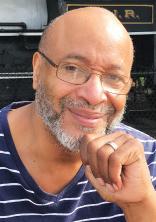
By W.D. Foster-Graham Book Review Editor
By Zephaniah Martin
It’s Black
History
Month, a time of celebration of our heritage, a time of resilience, a time of remembrance of the lessons our ancestors taught us, and a time to put that knowledge into action.
It is empowering and
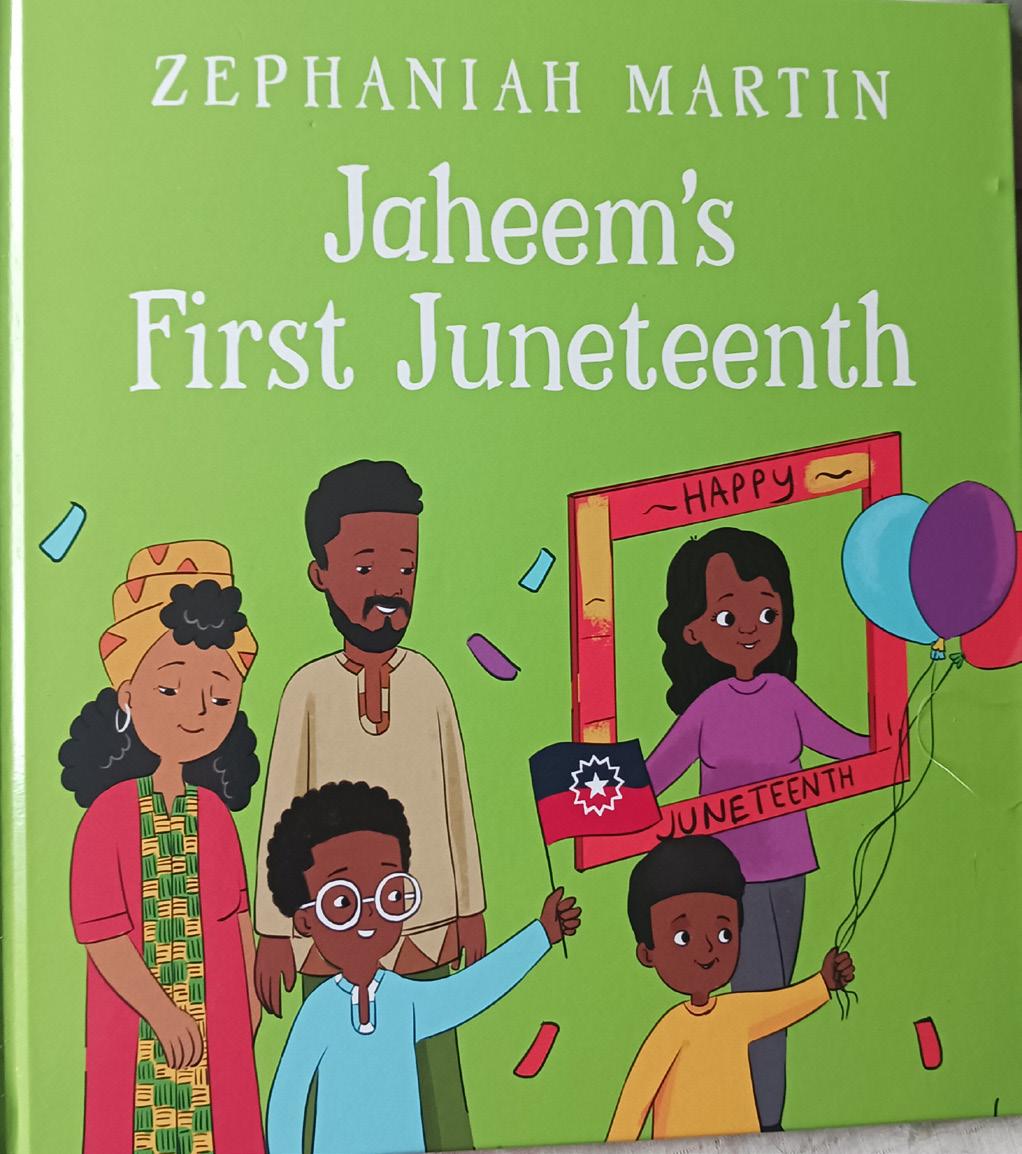
heartwarming to read more and more children’s books featuring Black characters and written by Black authors. It is extra special when these books are written by Black children, as is today’s author. That being said, it is my great pleasure to present to you Zephaniah Martin’s Jaheem’s First Juneteenth.
Our main character Jaheem is a young Black boy who loves reading. Visiting the public library is exciting for him, and he picks a book about Black History. He reads about Black activists, but he also reads about the Juneteenth holiday. This spurs his desire to learn more, so he researches the topic on his laptop. He learns that although the Emancipation
Proclamation officially freed the slaves, not all the slaves were freed until June 19, 1865.
Jaheem asks his parents if they would celebrate Juneteenth, and they joined other members of the community celebration. While it was fun, he also gained a new understanding of how important freedom is.
Included in Martin’s book is the Juneteenth flag and what each portion of it symbolizes, as well as inspirational quotes from Fannie Lou Hamer, Frederick Douglass, and Opal Lee.
Our young author enjoys reading, storytelling, writing, and discovering new information, as well as music, sports,
and spending time with family. Yes, I admit it, I was smiling from ear to ear when I read his book, knowing the importance of supporting our children’s gifts.
I give a hat tip to Bilal Karaca and Reyhana Ismail who, with their gifts of illustration and design, helped to make this book beautiful reality. Jaheem’s First Juneteenth is available through Amazon, Barnes & Noble, and the Planting People Growing Justice Press website (www.ppgjli. org).
Thank you, Zephaniah, for sharing your story. We as adults can learn a lot from you!
History has a way of whispering before it finally speaks aloud. For decades, the life and work of Florence Beatrice Price — the first Black woman to have a symphony performed by a major American orchestra — lingered in footnotes, archives, and forgotten manuscripts. With
My Name is Florence, a world premiere opera from Minnesota Opera’s New Works Initiative, her story is no longer whispered. It is sung. Presented last week at the Ordway Music Theater,
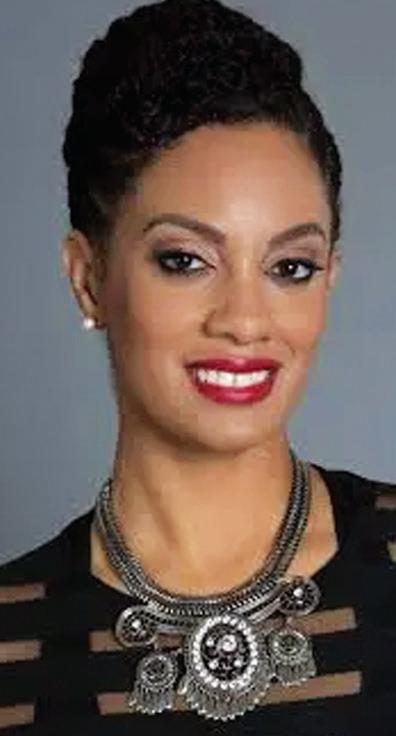
My Name is Florence was s not a conventional biography. Instead, it was a lyrical reclamation — a meditation on memory, family, ambition, and the cost of brilliance in a world determined to narrow Black possibility. Through music, poetry, and intimate vignettes, the opera asks not only what Florence Price accomplished, but what she endured — and why her name still matters.
A Composer Whose Moment Is Now
At the heart of the production is composer B.E. Boykin, whose meteoric rise in contemporary classical music mirrors the overdue recognition of Price herself. A composer, conductor, and pianist of formidable range, Boykin brings both technical mastery and emotional clarity to the score.
Her work has recently appeared on two albums nominated for the 2026 GRAMMY Awards in the category of Best Classical Solo Vocal Album — Black Pierrot and In This Short Life — cementing her standing as one of today’s most compelling musical voices. Performances of her music at the Kennedy Center and Carnegie Hall have further affirmed her influence.
Yet Boykin’s impact extends far beyond the concert hall. A sought-after choral conductor and clinician, she led the Atlanta Music Project Senior Youth Choir to international acclaim as category winners at the 2024 World Choir Games, the largest choral competition in the world. She currently serves as Director of Choral Activities at the Georgia Institute of Technology and sits on the National Board of the National Collegiate Choral Organization — roles that underscore her com-

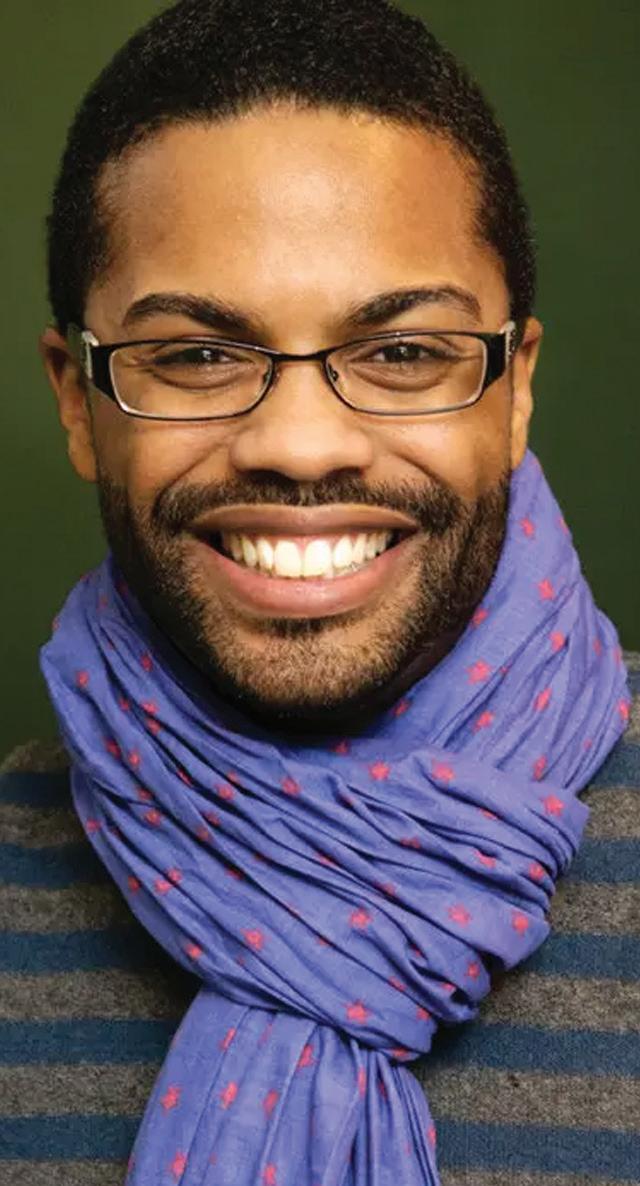
mitment to cultivating the next generation of artists.
In My Name is Florence, Boykin does not quote Price’s compositions directly. Instead, she channels their emotional truth. The score carries echoes of lyricism, resilience, and ache — a sonic landscape that feels haunted by Price’s spirit without imitating her voice. It is an act of translation rather than replication, honoring the past while speaking fully in the present.
A Libretto Rooted in Memory and Truth
The opera’s text comes from Harrison David Rivers, an award-winning playwright and librettist based in St. Paul, whose body of work has long explored identity, history, and the intimate consequences of public silence. From acclaimed plays like This Bitter Earth and we are continuous to television projects for HBO, Peacock, and Amazon, Rivers brings a poet’s ear and a historian’s conscience to the libretto. Rivers structures My Name is Florence as a series of moments rather than milestones. His language is fluid, dream-like, and emotionally precise — allowing the opera to move freely across time and place. The result is a story that feels less like a chronology and more like remembrance itself: nonlinear, tender, and unresolved.
Walking Through an Open Door
For director Eboni Adams, the opera represents both a personal and artistic threshold. In her director’s note, Adams reflects on her journey into opera as “walking toward a door I didn’t know was open-
ing — or one I wasn’t sure I was allowed to walk through.” That sensibility permeates the production.
Adams frames the opera through the presence of mother, daughter, and the woman herself, revealing how love and memory move across generations. Central to that movement is the piano — depicted not just as an instrument, but as a sanctuary. A place of defiance. A site where Black and white keys find harmony even when the world refuses it.
Every design element — costumes, lighting, staging — reinforces the idea that Florence Price’s life was both expansive and constrained, luminous and burdened. Adams describes Price as “a giant — a Black woman brilliant and unrelenting,” whose manuscripts
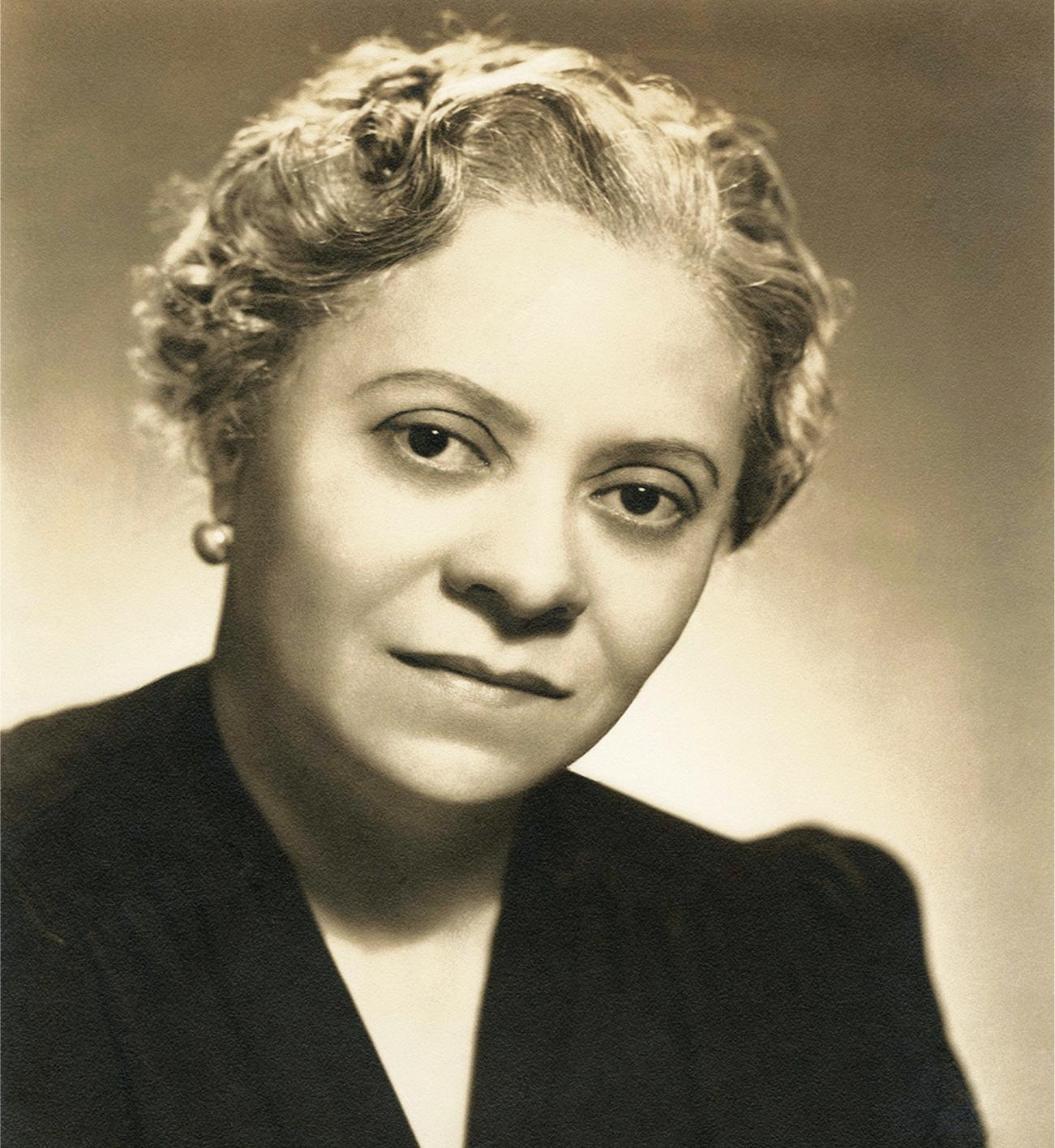
waited patiently to be rediscovered by a world finally willing to see her.
The Story, Scene by Scene The opera opens in Little Rock, Arkansas, in 1900, where a young Florence Beatrice practices piano under her mother’s watchful eye. Music is already her refuge — “like walking barefoot through the grass.” Yet even in childhood, lessons about colorism and survival intrude. Her mother warns her that lighter skin opens doors, urging her to stay “light like me.” In Boston, 1902, Florence studies at the New England Conservatory, where her talent for composition is recognized — but the realities of race and gender remain unavoidable. Teaching is presented as the safer path. Composition, the riskier
truth of her desire.
By 1911, following her father’s death, Florence’s mother leaves Arkansas to pass as white elsewhere. Their goodbye is final, a quiet rupture that reverberates through the rest of Florence’s life. The final movement shifts to Chicago (1931–1944), seen through the eyes of Florence’s daughter, Florence Irene — nicknamed Lo-Lo. Here, triumph and heartbreak coexist. The completion and premiere of the Symphony in E Minor, her Wanamaker Prize win, and the exhilaration of hearing her music performed by the Chicago Symphony Orchestra stand alongside professional stagnation, unanswered letters, and institutional silence.
Despite it all, her daughter witnesses a mother who refuses to stop creating. Re-
fuses to disappear. And claims pride in sharing her name.
Giving the Flowers Now My Name is Florence is ultimately an offering — an act of naming, remembering, and returning. It insists that what was once overlooked was never lost, only waiting. In speaking Florence Price’s name aloud, the opera restores her to the fullness of her humanity and her rightful place in American music.
For audiences, the invitation is clear: to listen deeply, to step into spaces that call them, and to believe — as Florence did — that legacy is built not only by recognition, but by persistence.
As Eboni Adams writes, the opera is a quiet affirmation: you are plenty.

Two communities. A shared struggle. A complicated, enduring bond. PBS’s four-part documentary series Black and Jewish America: An Interwoven History arrives this February with a timely, deeply researched examination of the relationship between Black and Jewish Americans—one shaped by mutual resistance to racism and antisemitism, forged through civic action, and tested by moments of painful division. A Story of Solidarity—and Strain At its core, the series asks a hard but necessary question: What happens when communities united by oppression must also confront their differences? Through expert scholarship, personal testimo