
Protest, pulpit and power
Faith leaders and activists challenge
ICE Pastor at Cities Church
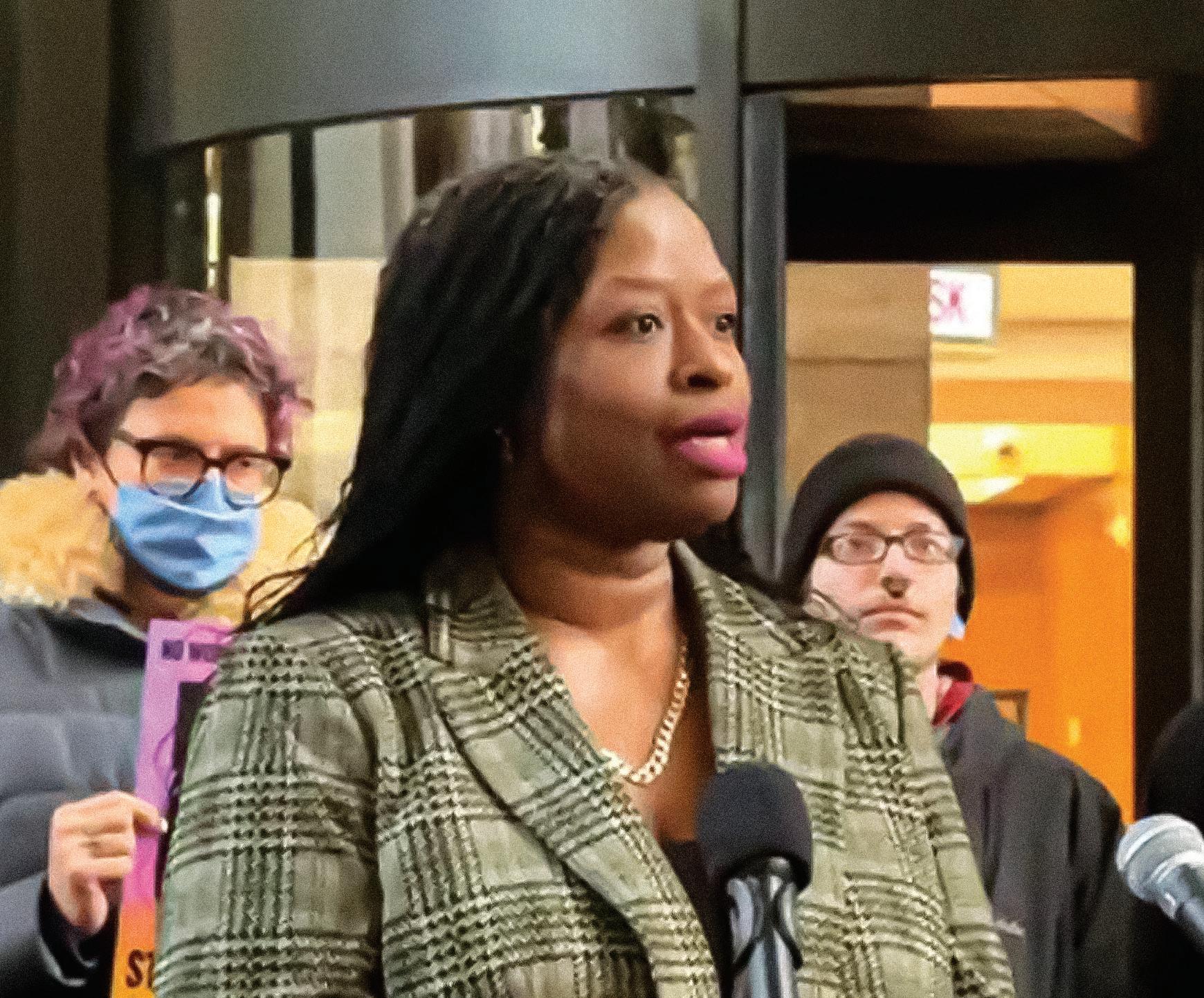
The sanctuary of Cities Church on Summit Avenue is usually a place of quiet worship, but on the Sunday before Martin Luther King Jr. Day, the calm fractured.
“ICE out.”
“Justice for Renee Good.”
Chants echoed through the church as protesters stood, hands raised, interrupting the service to confront what they called an irreconcilable moral contradiction: that a senior federal immigration enforcement official also serves as a pastor. Within hours, the protest — livestreamed by Black Lives Matter Minnesota drew national attention. By Sunday night, the U.S. Department of Justice announced it was investigating the demonstrators who disrupted worship at the St. Paul church.
At the center of the controversy is David Easterwood, listed on Cities Church’s website as a pastor and identified in court filings as the acting director of U.S. Immigration and Customs Enforcement’s St. Paul field office. Minnesota Public Radio reported that Easterwood’s personal information matches that of the ICE official, who also appeared alongside Homeland Security Secretary Kristi Noem at a Minneapolis press conference last fall. For organizers, the issue was not protest for protest’s sake — it was theology, accountability and life-and-death consequences.
“This was not an insurrection,” said Monique Cullars-Doty, co-founder of Black Lives Matter Minnesota. “This was a correction.”
At a Jan. 20 press conference at the Hennepin County Government Center, clergy, activists and community leaders defended their actions
and demanded Easterwood’s resignation from the church.
Leading the event was Nekima Levy Armstrong, an ordained reverend, civil rights attorney and longtime Minneapolis activist.
“I am an ordained reverend,” Armstrong said. “Let me repeat that again: an ordained reverend. And my faith informs my activism.”
Armstrong said the demonstration at Cities Church was intentionally held on the Sunday before the MLK holiday to honor not just King’s words, but his actions.
“Our society commemorates Dr. King,” she said, “but most of the time we do not repeat his actions — which had to do with disrupting the status quo and calling out our government.”
Armstrong said she and other organizers have since received threats.
“One person emailed me and said, ‘Renee Good deserved what she got, and you
would have gotten the same,’” she said, reading the message aloud. “That’s what we’re dealing with.”
The protesters’ central claim is that Easterwood’s dual roles violate the core teachings of Christianity. “Someone help me
understand how it is possible to hold both roles with integrity,” Armstrong said. “Because the gospel I believe in says we are to love our neighbor as we love ourselves.”
Armstrong and others described ICE operations in Minnesota as violent and terror-
Legacy of giving builds generational wealth
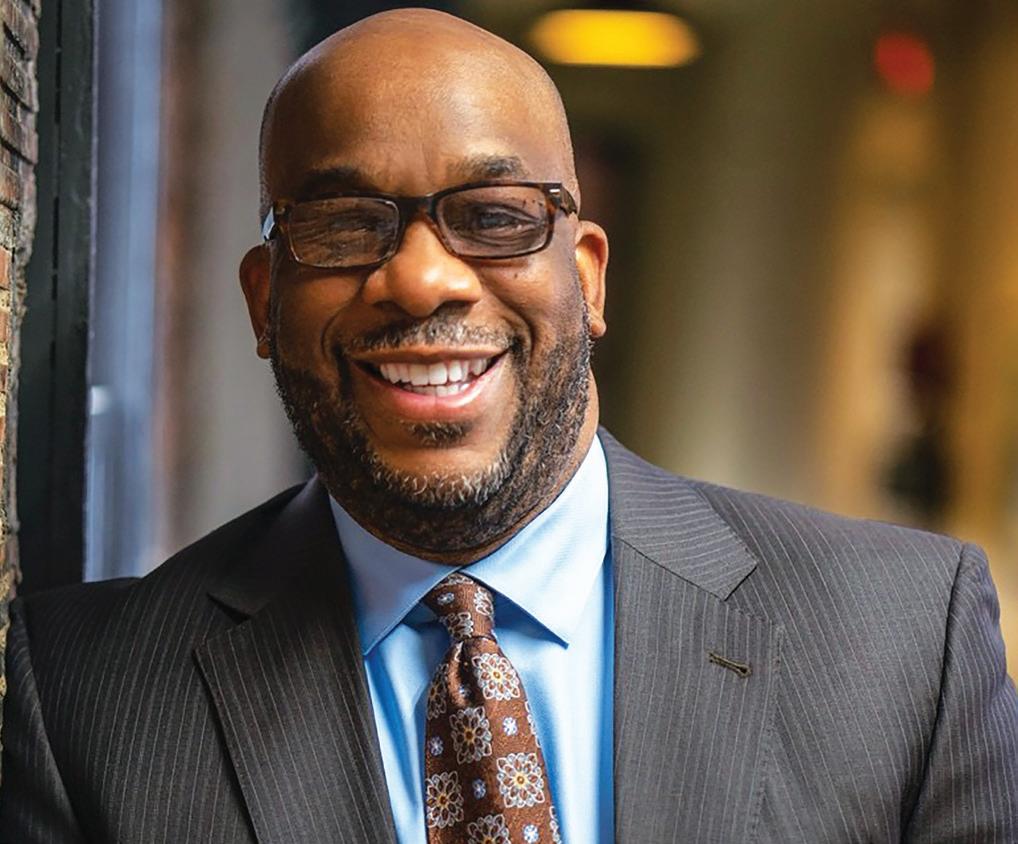
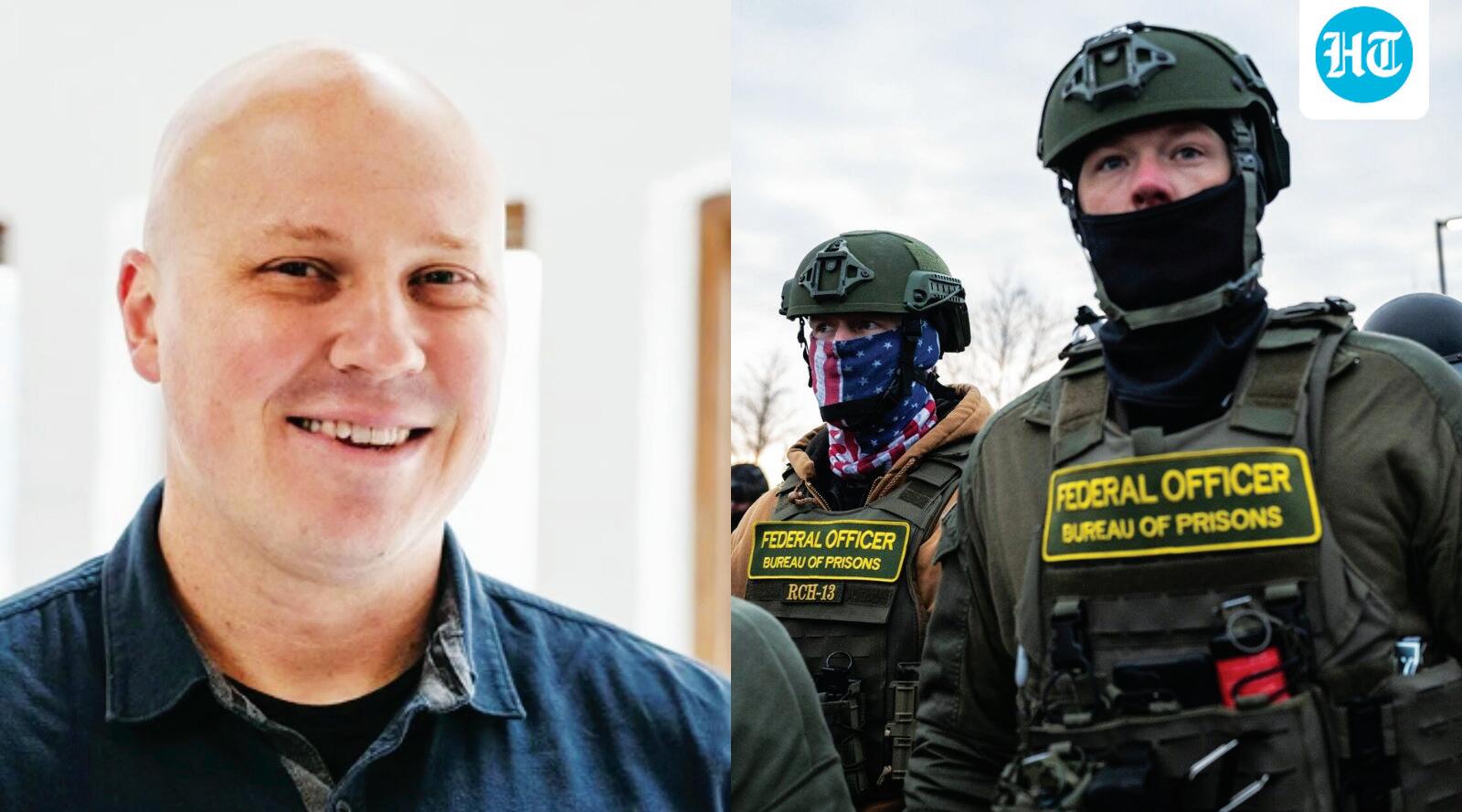
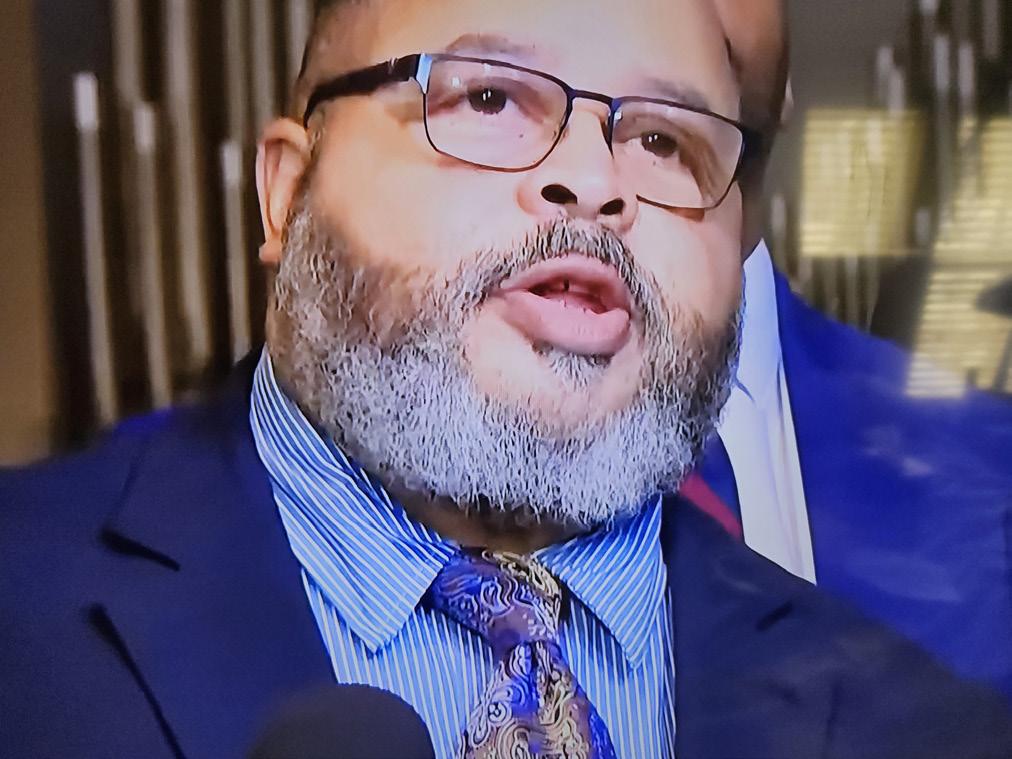
David Easterwood, a pastor at Cities Church in St.
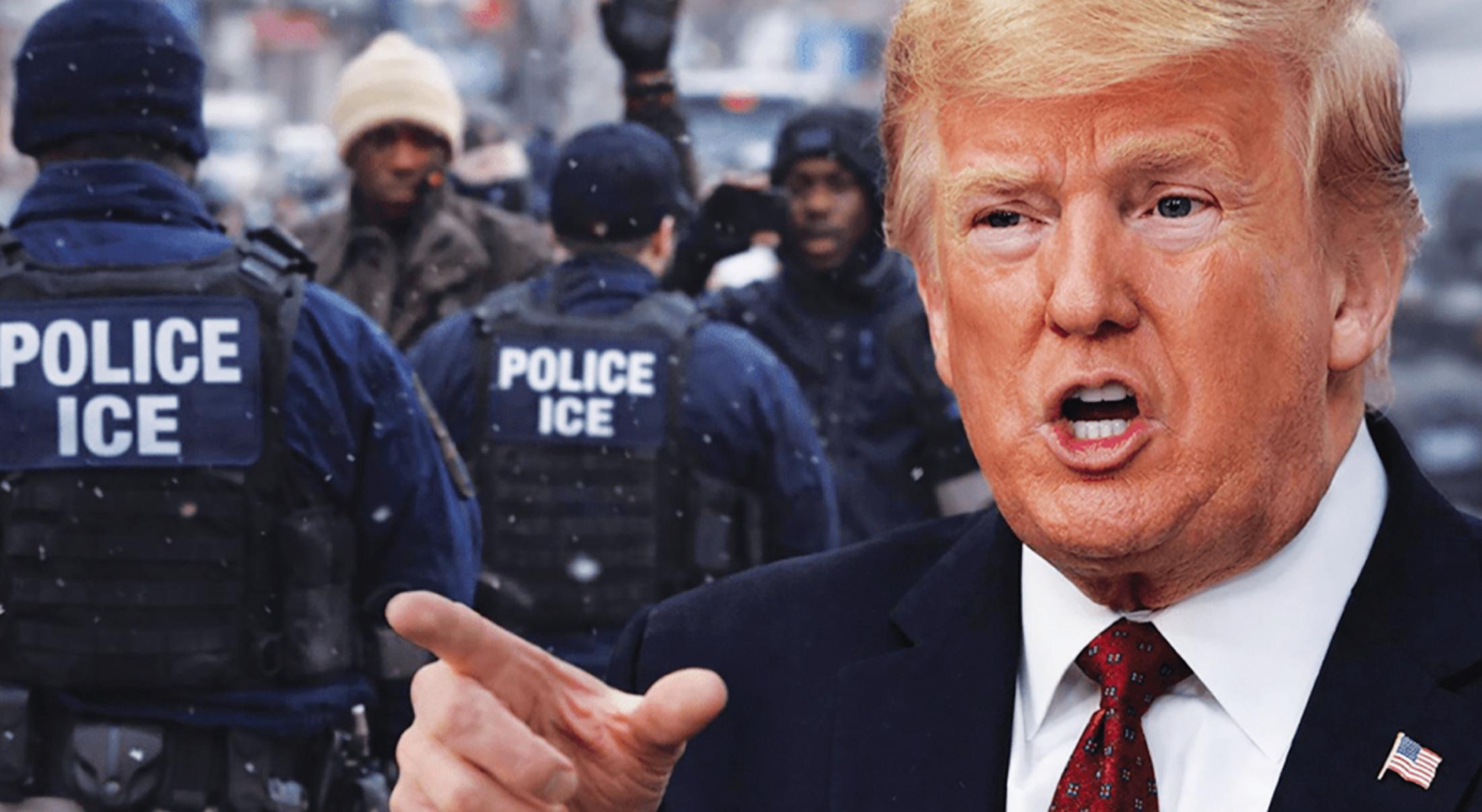
Davind Easterwood, left and ICE officers

















From civil rights to ICE raids
Trump’s unchecked power puts every community at risk
By Stacy M. Brown, NNPA Newswire Senior National Correspondent
Donald Trump’s presidency has long carried a familiar weight for Black America. What feels different now is that the force once aimed primarily at Black and brown communities is no longer contained there. With the fatal shooting of Renee Good, a 37-year-old white mother of three, by an ICE agent in Minneapolis, the unchecked power
of the federal government has moved into spaces many Americans once believed were insulated.
Good was killed during an immigration operation after her vehicle moved forward as agents blocked a roadway. Federal officials quickly labeled the shooting self-defense and branded Good, a “domestic terrorist,” even as video and eyewitness accounts raised questions and Minnesota officials accused the Trump administration of weaponizing immigration enforcement. Pro-
“A presidency that treats civil rights as disposable, dissent as criminal, and federal power as personal authority does not stop at one community.”
tests spread across the state, and Minnesota, Minneapolis, and St. Paul sued the federal government, calling the deployment of immigration agents a “federal invasion.”
As the unrest grew, Trump responded with a Truth Social post aimed at Minneso-
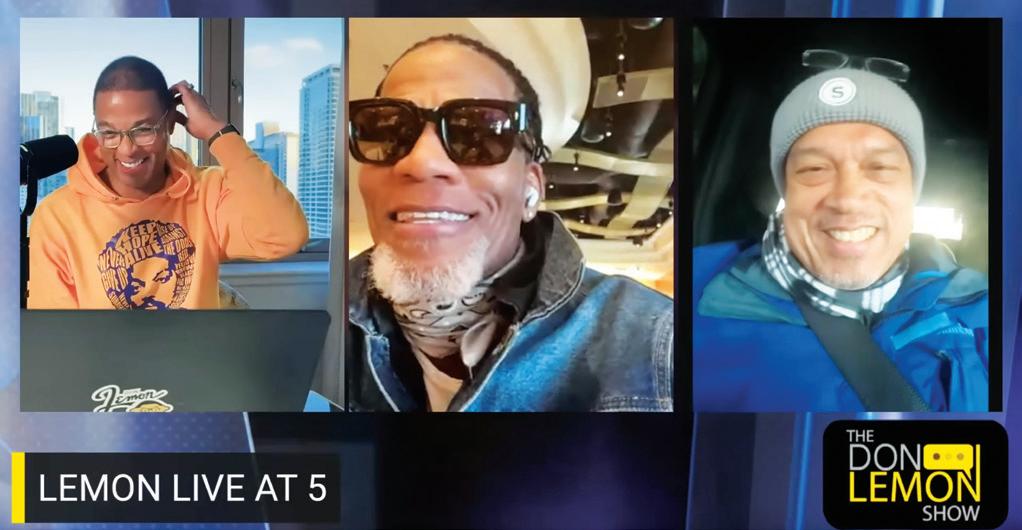
By Al McFarlane Editor-In-Chief
What began as a discussion about a church protest quickly escalated into a blunt indictment of power, protest, and free speech when Minnesota Attorney General Keith Ellison joined journalist Don Lemon and comedian DL Hughley for a wide-ranging conversation on the First Amendment.
“This country started with a protest,” Ellison said.
“Protest is fundamental to American society. None of us are immune from the voice of the public.” Lemon framed the controversy by pointing to what he described as a glaring contradiction.
“They’re upset about protests in a church,” Lemon said, “but this same administration tried to get courts to allow them to arrest migrants in church. They wanted to arrest
tans that read less like a call for calm and more like a threat. He warned that a “DAY OF RECKONING & RETRIBUTION IS COMING,” while painting entire communities as overrun
Faith, civil rights leaders call for peace, unity amid ICE concerns and community trauma
By Insight News Staff
Faith leaders, civil rights advocates, elected officials, and community organizers gathered in St. Paul this week to deliver a unified message of peace, dignity, and solidarity in response to heightened Immigration and Customs Enforcement (ICE) activity and the death of Renee Good, which leaders say has intensified fear and trauma across Minnesota communities.
Standing shoulder to shoulder, representatives from the NAACP Minnesota and Dakotas Conference, local NAACP branches, clergy from multiple denominations, and city leadership emphasized nonviolence, community service, and collective responsibility—framing the moment as
both a crisis and a moral test for the state.
“This is not a moment of blame or division,” said Pas-
tor Richard Pittman, president of the NAACP Minnesota and Dakotas Conference. “This is a collective state issue that impacts all of us—urban and rural, immigrant and native-born, Black, Brown, White, and Indigenous. We must stand together as one Minnesota.” At the center of the gathering was a strong condemnation of ICE enforcement tactics that leaders say have resulted in increased fear near schools, places of worship, businesses, and residential neighborhoods. Pittman cited civil rights monitoring and
Federal immigration enforcement incident in North Minneapolis sparks renewed protests and national tensions
On Wednesday night, January 14, 2026, federal immigration enforcement agents conducting a targeted operation in north Minneapolis shot a Venezuelan man, identified by the Department of Homeland Security (DHS) as Julio Cesar Sosa Celis, in the leg after a pursuit and struggle on 24th Avenue North.
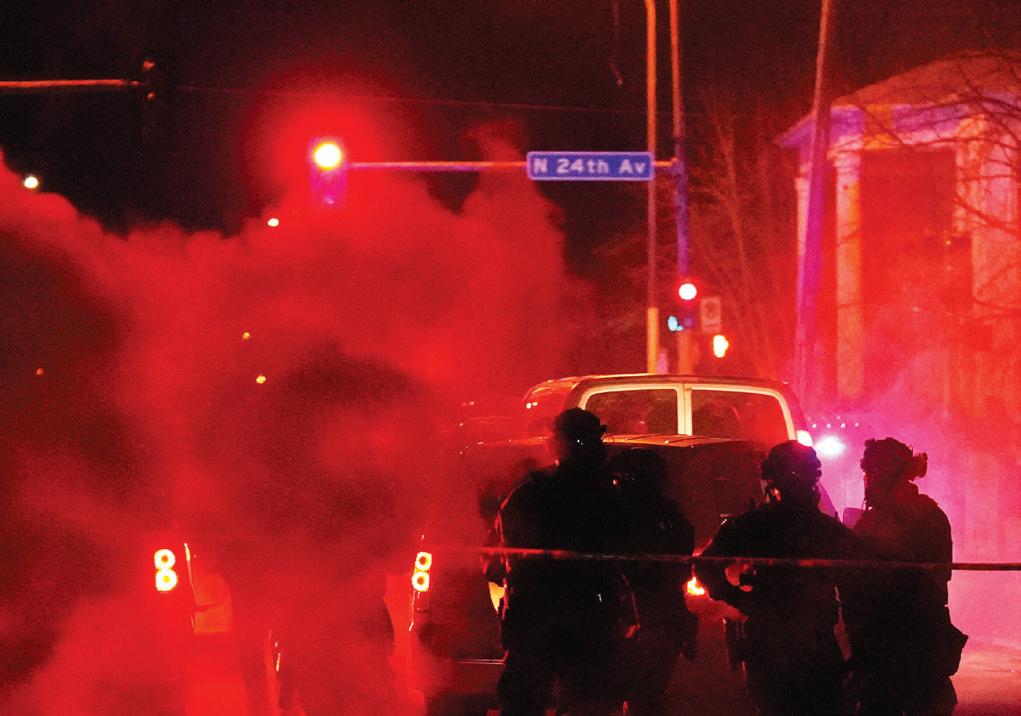
DHS says the ICE agent was attacked during an attempted arrest, including by others with a snow shovel and broomhandle, and fired in what officials described as self-defense — a version disputed by community members and protesters. The wounded

man and the ICE agent were both taken to hospitals with non-life-threatening injuries. Federal agencies, including the Minnesota Bureau of Criminal Apprehension and the FBI, have been reported to be investigating the shooting. This incident occurred one week after ICE agent Jonathan Ross fatally shot Minneapolis resident Renée Good, escalating a broader dispute over federal enforcement presence in the city.
Almost immediately
King called for an aggressive federal effort to reverse racial inequality. Instead, we’re getting one to entrench it.
By Dedrick Asante Muhammad
Dr. Martin Luther King, Jr.’s words from his “Beyond Vietnam” speech still ring true.
“When machines and computers, profit motives, and property rights are considered more important than people,” he warned, “the giant triplets of racism, extreme materialism, and militarism are incapable of being conquered.”
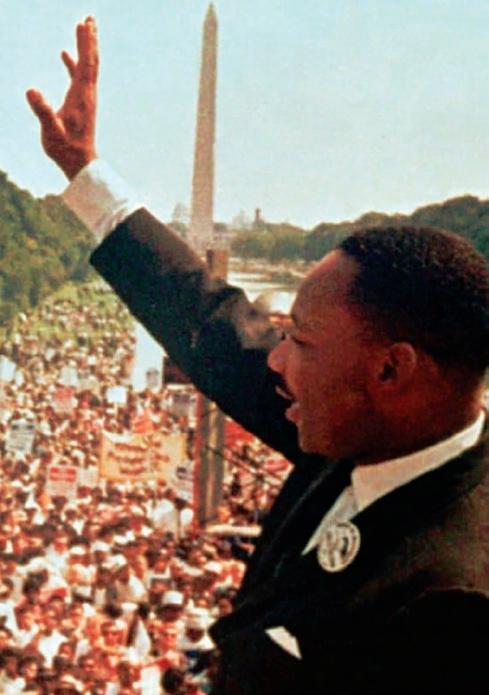
Those words, delivered in 1967, still summarize today’s political moment. Instead of putting the lives of working Americans first, our leaders in Congress and the White House have prioritized advancing corporate profits and wealth concentration, slashing government programs meant to advance upward mobility, and deploying military forces across the country, increasing distrust and tension.
By Sarah Bellamy
What words can be offered in the wake of such blatant disregard for human life? What to say to respond to such hypocrisy and moral degradation from our federal government?
On Wednesday morning three children lost their mom. Parents lost their daughter. A wife lost her beloved. Neighbors witnessed profound, unchecked violence in front of their homes. Officers saw a colleague act with force, snuffing out a life. And we are all witnessing a government vilify the victim.
My God, the pain. The trauma we endure and find a way to survive.
We have been through so much harm as a community, and walking wounded through the world makes every little thing harder and requires more effort. I know that. I feel that. And still, I am going to ask
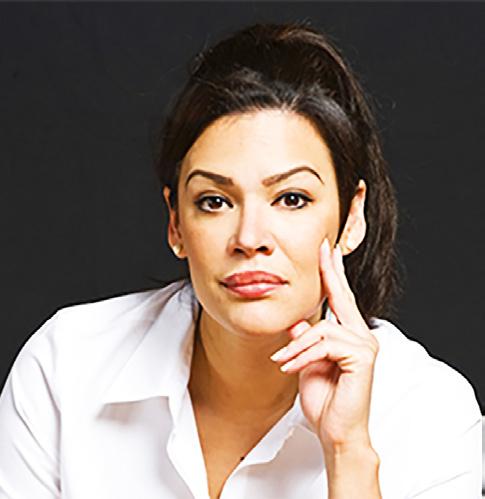
something from you… The first is a plea for care. In the face of hatred and fear our best and most forceful shield is love. Love yourselves: your body, your hands, your voice, your spirit, your singular, unique, one-and-only self. This is a direct counterbalance to the inhumanity this administration is unleashing with ICE recruitment, training, and the justification of their brutal and violent actions. Where they sow hate
By Insight News Staff
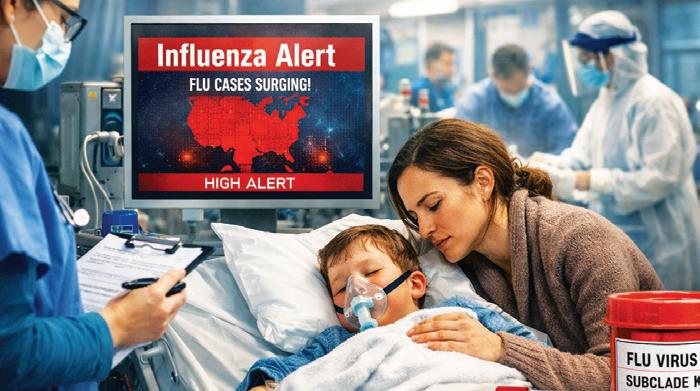
Credit: AI Image by Stacy Brown for NNPA
Civil rights leaders say the policies are not abstract. They translate into lost jobs, closed pathways, and communities left unprotected.
Credit: AP/file
Dr. Martin Luther King
Sarah Bellamy
Credit: AP Photo/John Locher
Pastor Richard Pittman
Nekima Levy Armstrong and the Gospel of Disruption Commentary
By
It feels like time has been creeping by for Black women. Ever since November 2024, a lot of us have carried a quiet, collective question that is hard to say out loud, whether our efforts to make America better are worth the cost. We share memes of cities burning while Black women sit on top of a building sipping tea, not because we want destruction, but because exhaustion has learned how to speak in shorthand. That feeling is rooted deep in sorrow, watching the first Black woman to lead a major-party presidential ticket lose, and watching pieces of the coalition we believed made up the Democratic “we” fail to show up the way we thought they would. The same coalition that put Barack Obama in the White House twice, or at least claimed it could do that kind of moral math again.
I understand those feelings because I have felt them too. There are days when hope feels like labor, and labor feels like a trick. But every so often, someone comes along and reminds you that what you are experiencing is not only disappointment, it is a warning flare from history. Someone reminds you that we are tied to this struggle in ways we did not choose, and in ways we do not get to escape. Someone reminds you of the great trees who came before us, the elders whose lives made space for our lives, and the responsibility that comes with being able to stand where they never got to stand.
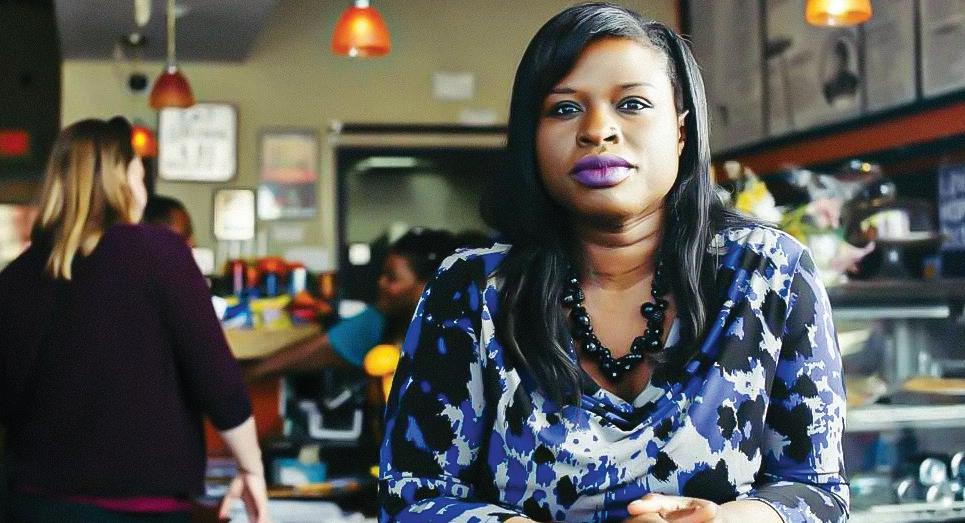
In Minnesota right now, that reminder has a name: Nekima Levy Armstrong.
Over the past week, many Minnesotans have been standing up. I do not want to take anything away from the breadth of courage I have seen, from neighbors who refuse to be silent, from organizers who keep showing up, from families who keep choosing community
in a time designed to fracture us.
But something about Armstrong has struck me in a particular way, the authenticity of the life she is living. Not just in a moment built for cameras, but in a tradition Black women know by heart. The tradition of telling the truth when it costs. The tradition of refusing to let “business as usual” become a moral hiding place.
If you do not know Armstrong’s work, you are not alone. She is a civil rights attorney and longtime Twin Cities advocate, she has led major racial justice work for years, including serving as president of the Minneapolis NAACP and founding the Community Justice Project, a civil rights legal clinic. She has also built organizing infrastructure through the Racial Justice Network. And she is also an ordained reverend, a detail that matters here because what she is doing cannot be understood only as politics.
Last Sunday, activists interrupted a worship service at Cities Church in St. Paul, chanting “Justice for Renée Good,” after determining that one of the church’s pastors, David Easterwood, appears to also be the acting director of ICE’s St. Paul field office. The action was organized and led by four Black women, Armstrong and three co-organizers she publicly
thanked by name: Monique Cullars-Doty, Chauntyll Allen, and Satara Strong-Allen.
Even writing that sentence feels like the point. Four Black women walked into a church, sat in pews, and forced a question into the open that polite society would rather keep sealed behind stained glass: what does it mean for someone to preach the gospel of Jesus Christ while also overseeing, or being connected to, federal enforcement operations that are terrorizing communities right now.
There are people who will never forgive that the question was asked inside a sanctuary. They will call it disrespect, desecration, chaos. Federal officials have already signaled investigations and possible prosecutions, framing the disruption as potentially criminal. The instinct from power has been loud: protect the worship service, protect the worshippers, protect the institution.
And I keep thinking, protected from what, exactly. Because the gospel that so many invoke is not a gospel of comfort for the powerful. The Jesus story, when you actually read it and not just quote it, is an ongoing, uncomfortable engagement with power. Jesus does not merely “disagree.” He confronts. He names hypocrisy. He steps into spaces where injustice has been normalized and makes it impossible to pretend it is normal. People love to cite “peace,” but they get nervous when peace looks like accountability.
Armstrong said as much in her own words this week, at a press conference where she framed her activism as rooted in faith. She described her work, “speaking truth to power,” and “disrupting business as usual,” as something that flows from what she believes about the gospel. She spoke about honoring Dr. King not only through his words, but through his actions, the kind that disrupt the status quo and call out government power. That framing matters because it refuses the lie that faith is supposed to be quiet when the vulnerable are being harmed. This is where I want Black women, especially Black women still carrying the fallout of 2024, to pause and listen.




Because one of the more painful dynamics of this moment is how quickly some people can find the language of sacred protection when discomfort enters a church, while forgetting the long, brutal history of what has happened to Black churches in this country. Black sanctuaries have been attacked not symbolically, but strategically, because the Black church has always been more than a worship space. It has been a refuge, a meeting place, a training ground, a shelter for organizing, and in many eras, the closest thing we had to protection when the state was the threat.
In 1963, the Sixteenth Street Baptist Church in Birmingham was bombed by the Ku Klux Klan, killing four Black girls and injuring many more. In 2015, a white supremacist entered Emanuel AME Church
in Charleston, sat through Bible study, then murdered nine Black worshippers. And in the 1990s, federal testimony and public reporting documented waves of suspicious fires and arsons targeting predominantly Black churches, a reminder that Black worship has often been treated as disposable in the American imagination.
So yes, it is worth noticing how quickly outrage mobilizes when a mostly white institution says it feels threatened, and how often our institutions move slower, speak softer, or look away when Black churches are literally attacked, burned, bombed, or shot up. That contrast is not a rhetorical trick. It is a mirror.
The Cities Church protest is now being framed by some as the great crisis, the disruption of worship. But what Armstrong and the other organizers forced into view is a different crisis: a conflict of witness.
If the church is a place where the gospel is preached, then the church is also a place where the gospel must mean something. If the foundation is to “love your neighbor as yourself,” then it is not unreasonable to ask what it means, in real life, for a pastor to hold a role connected to an enforcement apparatus that is deliberately violent and destabilizing.
In local reporting, activists said they mobilized after connecting Easterwood’s name to litigation challenging ICE tactics, then finding him listed as a pastor at Cities Church. That “dual role” is not gossip. It is the core moral tension. It is the reason the pew became a protest.
Armstrong did not choose distance. She chose proximity.
That is what “truth to power” actually looks like. It is rarely comfortable. It rarely fits into a neat script. It often forces a moment where people have to pick between protecting their routine and confronting a contradiction.
The response from federal officials is also instructive. When the DOJ starts talking about investigations and prosecutions, it is not only about one Sunday service. It is about the boundaries of dissent in this moment, and about whether the people who raise hard questions will be turned into an example.
I have watched how quickly the narrative tries to shift. Away from the murder that sparked the chants, away from the fear communities are naming, away from the moral question at the center, and onto the protesters’ “tone,” the protesters’ “place,” the protesters’ “manners.” That is not new. That is an old American reflex. When people demand accountability, the system often responds by putting the accountability-seekers on trial.
As a young Black woman and an attorney, I recognize the script. I also recognize why Armstrong’s voice matters so much right now for Black women who are tired. Because what she is modeling is not performative outrage. It is a life aligned with what she says she believes. It is the refusal to split faith from justice, or worship from witness, or courage from consequence.
And this is where I want to speak plainly to my fellow Black women who have been tempted, since November 2024, to detach, to let it all collapse without us, to sit on the rooftop with our tea and our receipts while the world burns below.
I understand the temptation. I understand the heartbreak. I understand the sense of betrayal, the sense that our labor is always expected, our pain is always minimized, our clarity is always requested only after the damage is done.
But Armstrong is a reminder we need. Not because she is asking Black women to carry everything again, we have carried enough. She is reminding us of something deeper, that we are not only reacting to politics, we are inheriting a fight. And whether we like it or not, history keeps asking the same question in new clothes: who will stand up when the vulnerable are being harmed, and who will insist that “normal” is not the same thing as righteous. To ignore her right now would be to turn our backs on ourselves. On the Black church’s legacy as a site of resistance and refuge. On the Black women tradition of telling the truth in rooms that would rather keep lying. On the spiritual DNA that shaped freedom movements long before it shaped hashtags.
Armstrong did not invent the moment Minnesota is in. She did not create the tension between faith and power. She held it up to the light.
And if her courage is making people uncomfortable, it might be because the comfort was never the point.
The point is what we will do in these times.
Will we protect institutions from discomfort, or will we protect people from harm. Will we weaponize faith as a shield for power, or will we live faith as a call to accountability. Will we keep treating Black women’s clarity as optional, or will we finally admit that Black women have often been the early warning system this country survives on. Time has been creeping. Yes.
But voices like Armstrong’s are the reminder that the clock is not the only thing moving. History is moving too, and it moves whether we are ready or not.
So if you are a Black woman still sitting with the aftermath of 2024, still wondering whether it is worth it, still carrying the ache of being asked to save a coalition that did not save you, I want you to hold this image in your mind: four Black women standing up in a pew, refusing to let a sanctuary become a hiding place for moral contradiction, insisting that the gospel has something to say about what is happening in our streets. Not because disruption is the goal. Because freedom is.

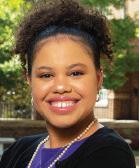
Columnist
Haley Taylor Schlitz, Esq.
Nekima Levy Armstrong and award-winning civil rights lawyer, scholar-activist, and past president of the Minneapolis NAACP.

From 3 by criminals and praising ICE for removing “thousands of criminals,” claims local leaders sharply disputed.
For many Black Americans, the moment felt grimly familiar.
“This is what unchecked power looks like,” said Rev. Al Sharpton, founder and president of National Action Network.
“Donald Trump sent up his latest test balloon for erasing Black history with his twisted, alarming claims that white Americans were discriminated against from the civil rights protections that many
fought, bled, and in many cases died for.”
Sharpton’s remarks came after Trump told The New York Times that white people were “very badly treated” by laws adopted during the Civil Rights Movement. The president framed civil rights protections as a form of “reverse discrimination,” echoing a broader administration effort to dismantle diversity, equity, and inclusion initiatives across the federal government.
“The facts simply don’t match up to the reality Donald Trump has chosen to live in,” Sharpton said. “Even more than 60 years after the Civil Rights Act or the Voting Rights Act, many Black Americans continue to lack access to equitable education, capital dol-
lars, or even their right to exercise democracy.” Under Trump, those disparities have widened. His administration has eliminated DEI programs, curtailed civil rights enforcement, and backed legal efforts that have weakened affirmative action and pushed the Voting Rights Act closer to irrelevance. Civil rights leaders say the policies are not abstract. They translate into lost jobs, closed pathways, and communities left unprotected.
The timing of Trump’s comments struck another nerve.
“That he made these statements on the eve of the King federal holiday is perhaps the most telling,” Sharpton said. “The Trump administration has already made attempts to min-
imize this holiday, as well as Juneteenth, while propping up his own birthday.” At the same time Trump has elevated claims of discrimination against white Americans, his administration has expanded aggressive immigration enforcement that critics say operates with little transparency or accountability. Investigations have documented immigration agents using banned chokeholds, detaining U.S. citizens, and conducting masked operations that leave communities fearful of leaving their homes.
The consequences now extend beyond immigrant communities. Good’s killing, and the administration’s rapid defense of the agent involved, has jolted Americans who once
viewed federal force as distant or theoretical.
Members of the Congressional Black Caucus say the pattern is unmistakable. In a separate statement, caucus leaders condemned Trump for bypassing Congress to carry out an unauthorized military operation in Venezuela, calling it a grave abuse of power and warning that the president is increasingly willing to act without legal restraint, whether abroad or at home.
“While Nicolás Maduro is, in fact, an illegitimate leader, the deployment of U.S. military power to impose political change in a sovereign nation without the consent of Congress threatens to draw the United States into an indefinite conflict,” the caucus said in its statement. For Black institutions, the pressure has been economic as well as political. The Black Press of America, founded nearly two centuries ago to give voice to people denied access to mainstream media, has seen corporate advertisers and sponsors retreat under the Trump era’s hostility toward racial equity. Newsrooms have shrunk. Resources have dried up. The mission has grown harder just as the stakes have risen. What Black America has warned about for years is now playing out in real time. A presidency that treats civil rights as disposable, dissent as criminal, and federal power as personal authority does not stop at one community.
community reports indicating that ICE presence has destabilized immigrant-owned businesses, increased school absenteeism, and created widespread psychological harm.
The NAACP also highlighted the death of Renee Good, described as a tragic and unacceptable loss connected to ICE operations. Leaders offered condolences to her family and framed her death as emblematic of broader systemic failures.
“No family should have to endure such a loss as a result of enforcement actions carried out without care, restraint, or humanity,” Pittman said. “Our neighborhoods are not war zones. Our schools are not targets. Our young people are not criminals.”
The conference called on ICE to immediately cease what it described as harmful practices, withdraw aggressive presence from St. Paul and surrounding communities, and commit to treating Minnesota
residents with dignity and respect.
Faith leaders played a central role in shaping the tone of the gathering, repeatedly invoking the teachings of Dr. Martin Luther King Jr. as the state approaches celebrations of his life and legacy.
Bishop Richard Howell, addressing concerns about rising fear among youth, spoke of a generation now afraid to attend school, shop for groceries, or spend time in public spaces.
“Fear is gripping the hearts of our young people,” Powell said. “Our children deserve to feel safe in their homes, in their neighborhoods, and in their city.”
He urged residents to seek refuge and support in
cal news reports and community coverage describe hours of protest activity that stretched into the early morning around the shooting scene.
houses of worship and to channel grief and anger into peace, prayer, and collective care. “Violence cannot be answered with more violence,” he said.
Other clergy echoed the call, stressing that Minnesota must resist escalation and refuse to “take the bait” that could lead to militarization, further surveillance, and deeper harm to vulnerable communities.
NAACP branch leaders reinforced the importance of knowing civil rights while remaining disciplined and strategic in response to enforcement activity.
The president of the NAACP Saint Paul branch urged residents to document and observe ICE actions lawfully,
enforcement tactics. The protests have fueled wider political conflict:
supporting efforts by Minnesota
Attorney General Keith Ellison to build a case addressing alleged misconduct.
“Yes, you have the right to videotape. Yes, you have the right to be present,” the leader said. “But do it peacefully and lawfully. We are building our own Minnesota case.”
Cynthia Wilson, president of the Minneapolis NAACP branch, announced a series of ongoing prayer gatherings and healing circles on both the north and south sides of Minneapolis. The gatherings, held on the 7th of every month—the date of Renee Good’s death—are intended to provide space for grief, processing trauma, and mutual support.
“What we’re experi-
encing is something we have never seen before,” Wilson said. “There is a lot of trauma being re-induced in our communities, and we must be intentional about healing.”
St. Paul Mayor Kaohly Her voiced strong support for the messages delivered by civil rights and faith leaders, emphasizing service as a pathway forward.
“In times of chaos, confusion, hurt, and pain, we must look inward and reconnect to what centers us—love, compassion, and care,” Her said.
The mayor encouraged residents to turn anxiety into action through service, whether by delivering food, supporting families unable to work, or participating in community defense networks that offer constitutional observer training.
“Our liberation is tied together,” Her said. “Every shade, every background. This is how we show that we are together.”
after the shooting on Lyndale Avenue, residents and activists gathered into the night in protest. Demonstrators attempted to block federal officers and clashed with them as tear gas and chemical irritants were deployed to disperse crowds. Lo-
From 3
them in church.”
“They’re getting real tender about a church service now,” Ellison said, “but they’ve arrested people in clinics, schools, churches—anywhere they choose. Sacred places only matter when it works in their favor.”
Ellison examined the original purpose of the Ku Klux
From 3
This historic regression corresponds with a recessionary environment for Black America in particular. That’s what my organization, the Joint Center, found in our report, “State of the Dream 2026: From Regression to Signs of a Black Recession.”
The economic landscape for Black Americans in 2026 is troubling, with unemployment rates signaling a potential recession. By December
From 3
and strip human beings of dignity, you have the power to restore love, connection, care, and witness. Your heart—though likely bruised—is powerful. Love your heart. Love how it beats, honor its power and its fragility, and then extend that same
Neighbors reported tear gas entering homes and long-lasting unrest in the block surrounding the shooting.
Protest organizers and community leaders have called for accountability, local control, and an end to what they describe as heavy-handed federal
Klan Act, which US Department of Justice is saying it might use in charging Lemon for his role in reporting on the protest that interrupted Sunday service at Cities Church in St. Paul.
“That law was passed to protect African Americans who were being literally terrorized, murdered, and killed,” Ellison said. “They had just emerged from bondage and servitude, and the Reconstruction Congress said the federal government would not allow the Klan to attack Black people for asserting their rights.”
2025, Black unemployment had reached 7.5 percent — a stark contrast to the national rate of 4.4 percent. This disparity highlights the persistent economic inequalities faced by Black communities, which have only been exacerbated by policy shifts that have weakened the labor market. The volatility in Black youth unemployment, which fluctuated dramatically in the latter months of 2025, underscores the precariousness of the situation.
The Trump administration’s executive orders have systematically dismantled structures aimed at promoting racial equality. By targeting programs such as Lyndon Johnson’s 1965
• • A federal judge in Minnesota issued an injunction restricting ICE and DHS agents from using force, detentions, or chemical agents against peaceful demonstrators and observers without evidence of criminal behavior, a decision that advocates hailed as a protection
He warned that invoking that law today against journalists or protesters represents a dangerous inversion.
“Think about the perversion of the federal government saying, ‘We’re going to use this Act to punish people who are reporting facts,’” Ellison said. “That’s the opposite of what it was designed to do.”
“I was not there as an activist,” Lemon said. “I was there simply chronicling what they were doing—which is what journalists do all the time.”
Ellison responded
Equal Employment Opportunity executive order and defunding agencies like the Minority Business Development Agency, the administration has shifted federal support away from disadvantaged businesses. As a result, Blackowned firms risk losing contracts and resources tied to federal programs, potentially resulting in job losses and reduced economic growth. These changes threaten billions in federal revenue for Black-owned firms and undermine efforts to move beyond racial inequality in the workforce.
The GOP’s so-called “Big Beautiful Bill,” passed in 2025, further entrenches in-
of civil liberties. President Donald Trump has threatened to invoke the Insurrection Act and place active-duty troops on standby to quell unrest if local authorities do not curb protests. Thousands of National Guard members are reportedly mobilized in support roles. Federal authorities have reportedly opened probes into local officials — in-
with a stark assessment.
“When you have an unjust ruler, objectivity itself becomes a threat,” he said. “Your First Amendment prerogatives interfere with tyrannical prerogatives. That’s how this works.”
Broadening the discussion beyond journalism, Ellison said, “They throw people in jail and kick them off the air for telling jokes,”“
“That should scare everybody,” Hughley said.
“DL, I love your comedy,” Ellison responded.
equality by providing tax cuts that disproportionately benefit high-income households and corporations — while simultaneously slashing investments in programs like Medicaid and SNAP, limiting access to essential services for low-income households. The technology sector, a critical component of the American economy, is also affected by this disregard for civil rights. Executive orders like “Removing Barriers to American Leadership in Artificial Intelligence” have stripped away protections that could advance inclusion in this rapidly growing field. As a result, the future of the American economy risks
cluding Minnesota Governor Tim Walz and Minneapolis Mayor Jacob Frey — over their public criticism of the federal operation.
In recent public statements, municipal leaders have framed the federal presence as an occupation, advocating for peaceful protest and local autonomy.
Public sentiment polls released amid the clashes show
“You’re a gifted, gifted man.
But when comedians are punished for jokes, that tells you exactly what kind of moment we’re in.”
Addressing allegations that Lemon had been “chanting,” Ellison was unequivocal.
“Chanting cannot be a crime,” he said. “It’s freedom of expression. In America, you can chant.” Lemon pointed to the double standard.
“In Charlottesville, people chanted ‘Jews will not
reinforcing past inequalities.
Speakers repeatedly framed the moment as one that will define Minnesota’s identity—both within the nation and beyond. Several leaders described the state as being watched closely, with the potential to model a response grounded in dignity, nonviolence, and humanity.
“This is not about Republican or Democrat,” said Pastor Donnell Bratton, NAACP housing chair. “This is about people under attack. Everything we need is in the house, and now is the time to pull our forces together.” The gathering concluded with a moment of silence for Renee Good and a prayer calling for wisdom, peace, and restraint. Leaders warned against repeating cycles of destruction and rebuilding, referencing past trauma while insisting that Minnesota must chart a different course.
“We’ve already rebuilt once,” one leader said. “We will not do it again.”
Community leaders also urged residents to respect their own safety—staying home if needed—while contributing in ways that sustain neighbors most affected by fear and enforcement actions.
majorities of Americans disapprove of ICE’s actions in Minneapolis, particularly after the high-profile fatal and non-fatal shootings.
The situation continues to evolve rapidly, with federal and local responses shaping both public safety measures and the political narrative around immigration enforcement in the Twin Cities.
replace us,’ and that was protected speech,” Lemon said. “But speak up in opposition, and suddenly it’s criminal.”
“That’s hypocrisy,” Ellison replied.
As the conversation closed, Ellison offered realism rather than reassurance. “In an unjust world, the just are going to be persecuted,” he said. “So hold your chin up. I believe people will ultimately be vindicated—but between investigation and justice, real harm can be done.” Hughley summed up
Dr. King’s call for strong, aggressive federal leadership in addressing racial inequality remains highly relevant. However, instead of eradicating structures of inequality, our current leadership is implementing policies that destroy government jobs and dismantle agencies responsible for preventing predatory economic practices. These choices undermine longstanding efforts to combat racial and economic disparities — and exemplify the regressive economic policies that coincide with rising Black unemployment. As Dr. King stated, “we refuse to believe that the bank of justice is bankrupt.” But urgent action is required. Unless we act deliberately, economic and racial inequalities will become entrenched, resulting in generational loss. The core question is whether we will move beyond our nation’s history of racism, materialism, and militarism, and — as Dr. King urged — embrace “the fierce urgency now” to advance equity. Dedrick Asante-Muhammad is an associate fellow of the Institute for Policy Studies and president of the Joint Center for Political and Economic Studies, America’s Black think tank. This op-ed was distributed by OtherWords.org.
ber that we are this community. We make our community each day with our intentions and our presence and our dollars and our participation in the belief that we matter to each other. May the memory of Renee Nicole Good bring a blessing of profound solidarity, and may her dear ones find comfort in their incalculable grief. Justice springs only from love. Warnings
sacred awe to everyone in your circle. We are powerful and we are mortal. Love now, harder. The second is a plea for acknowledgement. Look hard at how this administration is turning on those whom it claims to be protecting. Renee Nicole Good was more than I can sum up here, and certainly I don't intend to limit her to the identities she embodied, but I want us to be honest—naked-
ly, courageously honest—about who she was, and how she was still gunned down, and how her memory is now being viciously criminalized by the federal government. We in the Black community have known this for generations. We saw it with the attempted justification of George Floyd’s murder. For those who don’t understand what is happening because you may think
you are not their target, I urge you to feel the gravity of what vilifying Renee Nicole Good means: Your whiteness will not protect you. Your femininity will not protect you. Your citizenship will not protect you. Your address will not protect you. Your Christianity will not protect you.
And because you may finally understand this now, more importantly than any of that, as our beloved ancestor Audre Lorde taught us: your silence will not protect you.
Silence will not protect any of us. So speak up, love harder than hate, and remem-
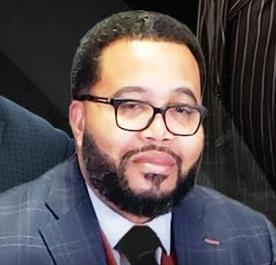
Pastor Donnel Bratton
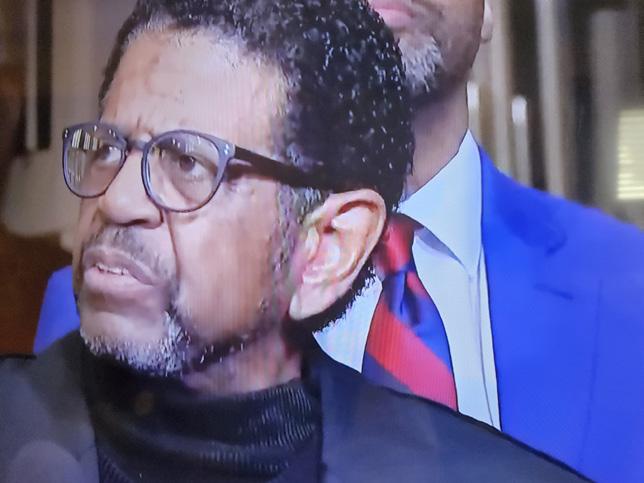
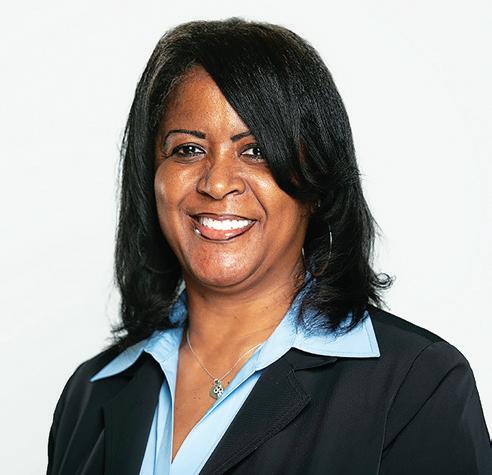
Cynthia Wilson Bishop Richard Howell
Congressional Field Hearing
Omar, Jayapal host hearing on Trump’s deadly assault on Minnesota
By Insight News Staff
U.S. Representatives Ilhan Omar (MN-05) and Pramila Jayapal (WA-07), Ranking Member of the Subcommittee on Immigration, Integrity, Security, and Enforcement, last week hosted a shadow hearing titled Kidnapped and Disappeared: Trump’s Deadly Assault on Minnesota. Twenty-seven Members of Congress attended from across the country to conduct oversight.
“I was honored to host this crucial hearing with Rep. Jayapal,” said Omar. “The Twin Cities is under attack from the Trump administration. There is no modern precedent for this level of federal overreach, violence, and lawlessness carried out in the name of immigration enforcement. I’m grateful to my congressional colleagues from all across the country who joined us to raise the alarm and learn what has been happening on the ground.”
This was the sixth hearing in the series Kidnapped and Disappeared, a congressional fact-finding mission. The Minnesota hearing is examining intense trauma and terror for Minnesotans who are being subjected to the lawlessness and violence of ICE and Border Patrol agents, said Jayapal. “We
By Insight News Staff
In opening remarks marked by urgency and alarm, Rep. Ilhan Omar warned that Minnesota is experiencing an unprecedented level of federal overreach and violence as a result of aggressive immigration enforcement policies under President Donald Trump.
Omar delivered the remarks on Friday, January 16, 2026, during a field hearing in St. Paul, Minnesota, co-hosted with Rep. Pramila Jayapal (WA07). The “shadow hearing,” titled “Kidnapped and Disappeared: Trump’s Deadly Assault on Minnesota,” was convened outside Washington, D.C. to document the impact of intensified federal immigration operations on local communities.
The hearing centered on what lawmakers described as unlawful federal actions and the fatal shooting of Renee Ni-
heard from incredibly powerful witnesses — members of the community who are standing up for their neighbors, and even who have been detained and had their rights violated for no reason. Instead of making us safer, Trump is deliberately escalating tensions in a city where crime rates have been declining. And the tactics are only accelerating. Let me be clear: this pattern of reckless, even lethal, use of force cannot continue, and we will do everything in our power to hold this Administration accountable and stop this lawlessness,” she said. “Every Minnesotan has the right to feel safe and welcome. The actions of the Trump administration and Kristi Noem’s DHS are an attack on our state that is making
cole Good, a U.S. citizen killed during an immigration enforcement operation. Omar said the killing did not occur in isolation but within a broader pattern of escalating violence and intimidation.
“What we are witnessing right now is unprecedented,” Omar said. “There is no modern precedent for this level of federal overreach, violence, and lawlessness carried out in the name of immigration enforcement.”
She rejected claims that the operations were about routine enforcement or public safety, instead characterizing them as political retaliation. Omar pointed to statements made by the president himself, arguing that the strategy is designed to provoke chaos and fear in order to justify invoking the Insurrection Act and expanding executive power.
“This is not about immigration,” she said. “This is
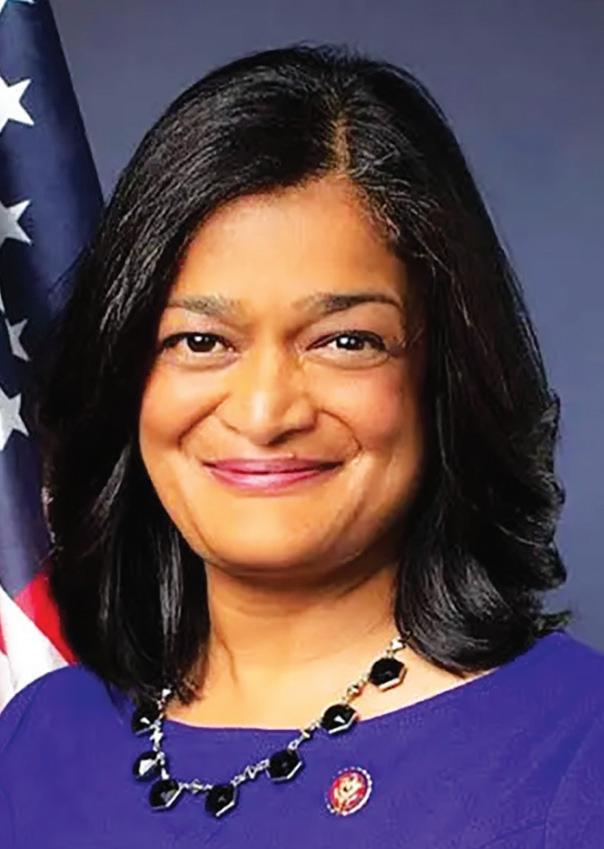
our community more dangerous. ICE and DHS agents have threatened and assaulted workers in their workplaces, families on the way to day care, and students outside their schools. These actions must end,” said Representative Betty McCollum (MN-04). “At our hearing we heard from Minnesotans whose lives have been impacted by the Trump administration’s actions. I thank every one of our witnesses for sharing their testimony. I also want to thank my House Democratic colleagues for traveling to Minnesota’s Fourth Congressional District to stand in solidarity against Trump and Kristi Noem’s assault on our state. The appalling conduct at ICE and DHS starts with its leadership. Kristi Noem needs to go, and ICE must cease
about political retribution.”
Omar accused the administration of unleashing what she described as a paramilitary force into Minnesota neighborhoods, terrorizing families and escalating enforcement tactics that have now resulted in the death of a citizen. She warned that the situation represents only “the tip of the iceberg.”
According to Omar, her office has received numerous reports of individuals detained without warrants, explanation, or access to legal counsel. She described agents targeting people based on appearance—particularly Latino and Somali residents—using force that has led to car accidents, shattered windows, and people being dragged from vehicles.
“Abandoned cars with broken windows have become a normal sight of daily life in the Twin Cities,” she said.
Omar challenged
operations in Minnesota.”
This hearing featured testimony from a state elected leaders, including Minnesota Attorney General Keith Ellison, Minneapolis Mayor Jacob Frey, and Saint Paul Mayor Kaohly Her, followed by a panel of witnesses including Executive Director of the ACLU of Minnesota Deepinder Mayell, Executive Director of Unidos MN Emilia González Avalos, Executive Director of Minnesota Chapter of the Council on American-Islamic Relations (CAIR-MN) Jaylani Hussein, Chief of Police of Mendota Heights Police Department Kelly McCarthy, and community members Patty and Mubashir.
"Our work aims to vindicate the rights of Minnesotans who have been victimized by their own government simply for exercising their First Amendment rights, to end the false sense of impunity that fuels the worst of federal agents’ misconduct, and to ensure that Minnesotans can assemble, observe, document and criticize –without fear of retaliation,” said Deepinder Mayell, Executive Director of the ACLU of Minnesota.
“I was made to feel scared and humiliated throughout the arrest process, and at the detention center, I was made to feel intimidated and as though my constitutional rights and
the administration’s claim that “Operation Metro Surge” targets criminals, stating that the enforcement campaign has deliberately blurred the lines between public safety threats, legal immigrants, refugees, and U.S. citizens. She said dozens of citizens in Minnesota have been detained and later released without charges because no legal basis existed for their arrest.
She further accused federal authorities of intentionally transferring detainees out of state to block access to attorneys and family members, undermining due process protections. Refugees with open legal cases, she said, have been separated from counsel without justification.
“This is the behavior of a paramilitary force operating outside the bounds of law,” Omar said.
The congresswoman also described door-to-door ICE operations in North Minneapo-
biological needs didn’t matter,” said Patty, a community member. “After all that, I was released without charges, which makes it clear to me that this is more of a campaign to spread fear and terror than it is to enforce the law. My neighbors and I are collateral damage to the Trump administration’s political theater — a campaign to paint Black and brown people, and ‘liberals,’ as villains to distract from an unprecedented reign of corruption and criminality at the federal level, while at the same time making it clear to all of us — even U.S. citizens — that this administration does not and will not honor the basic constitutional rights to which we are all entitled.”
"At no time did any officer ask me whether I was a citizen or if I had any immigration status,” said Mubashir, a community member. “They did not ask for any identifying information, nor did they ask about my ties to the community, how long I had lived in the Twin Cities, my family in Minnesota, or anything else about my circumstances.”
“We have to acknowledge that the tactics being used by some ICE agents during Operation Metro Surge are reducing the public’s trust in local police, making the jobs of our cops harder, and making us all less safe,” said Chief of Police of Mendota Heights Police Department Kelly McCarthy. This was the sixth shadow hearing in this series, each of which has focused on a different aspect of immigration oversight. The others have focused on detention abuses, Trump’s assault on Chicago, families that have been torn apart, unlawful third-country deportations, and efforts to undermine due process. Jayapal and Omar were joined by Senators Amy Klobuchar (D-MN) and Tina Smith (D-MN) and Representatives Yassamin Ansari (AZ-03), Becca Balint (VT-At Large), Katherine Clark (MA-05), Angie Craig (MN-02), Jasmine Crockett (TX-30), Adriano Espaillat (NY-13), Jesús G. "Chuy" García (IL-04), Adelita Grijalva (AZ-07), Val Hoyle (OR-04), Glenn Ivey (MD-04), Jonathan Jackson (IL-01), Henry C. "Hank" Johnson, Jr. (GA04), Ted Lieu (CA-36), April McClain Delaney (MD-06), Betty McCollum (MN-04), Rob Menendez (NJ-08), Dave Min (CA-47), Gwen Moore (WI04), Kelly Morrison (MN-03), Chellie Pingree (ME-01), Emily Randall (WA-06), Luz Rivas (CA-29),
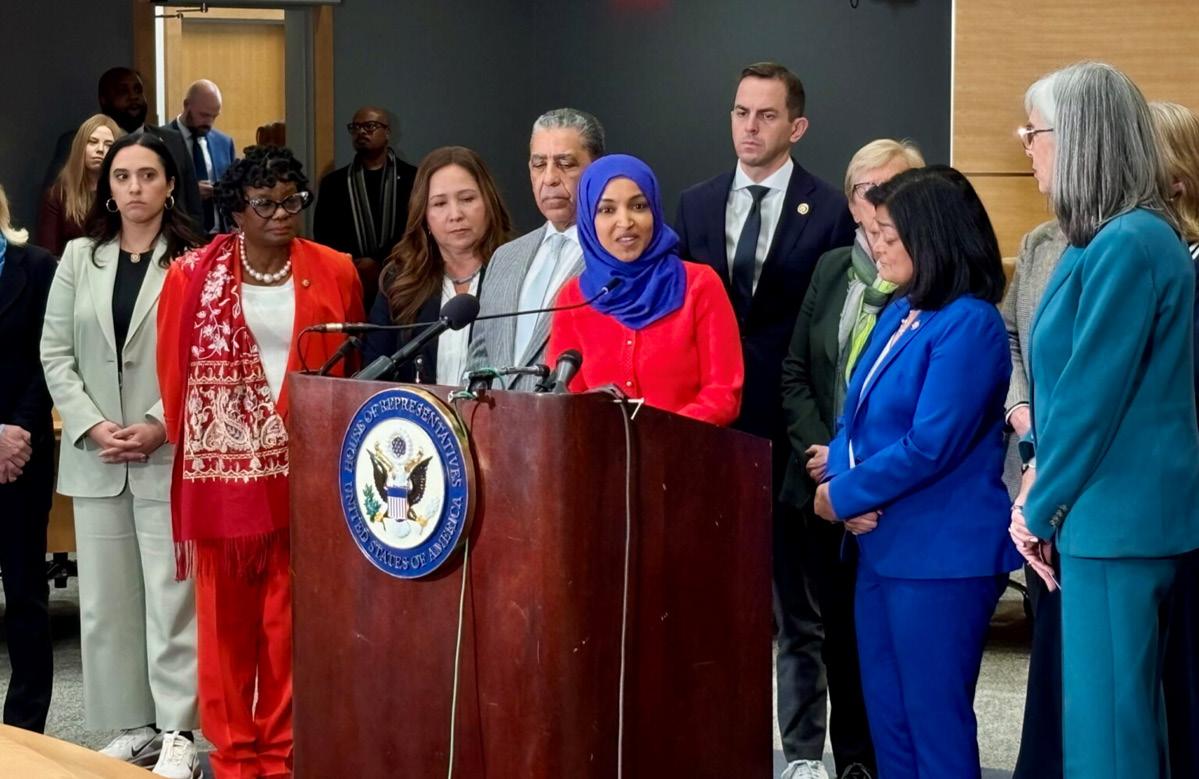
lis conducted without judicial warrants, with agents battering down doors, drawing weapons, and using flashbangs, pepper balls, and chemical irritants. She said residents have been shoved into traffic and nearly struck by buses during enforcement actions.
“This administration has been entirely unresponsive,” Omar added, noting that families, attorneys, and even members of Congress have been unable to determine where detainees are being held. Omar concluded by
affirming that Minnesotans will resist what she called an assault on civil liberties and community safety.
“This is not the America we want,” she said. “This is not the Minnesota we deserve— and we will fight back.” The hearing continued with testimony from witnesses detailing the human toll of the federal operations, as lawmakers pressed for accountability, transparency, and justice in the wake of Renee Good’s killing.
By Insight News Staff
On a weekend dedicated to the legacy of Martin Luther King Jr., U.S. Rep. Gwen Moore delivered a forceful reminder that civil rights are not bound by geography.
“People say, my family, I have plans today—why are you in Minnesota?” Moore said.
“And that’s because, as Martin Luther King Jr. said, injustice anywhere is injustice everywhere.”
Moore’s remarks came Friday, Jan. 16 during a tense congressional field hearing examining immigration enforcement, racial profiling, and the growing role of federal agencies such as ICE in local communities. Her questions—
By Insight News Staff
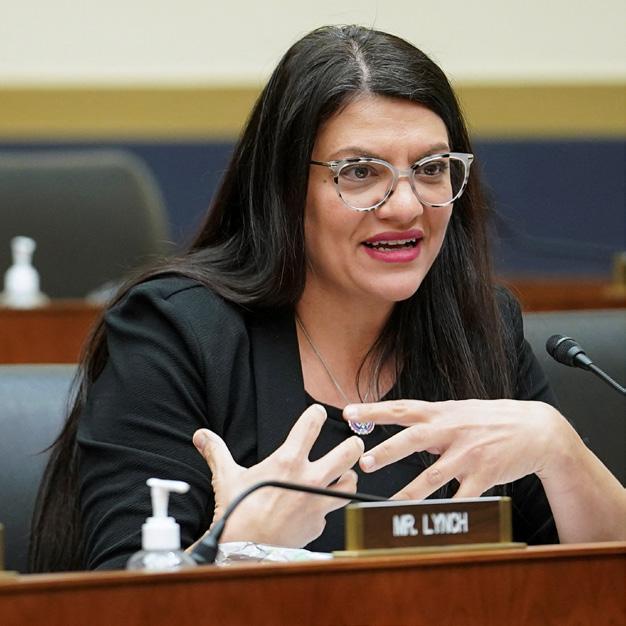
Rep. Rashida Tlaib delivered a forceful condemnation of the Department of Homeland Security (DHS) and Immigration and Customs Enforcement (ICE) during a field hearing on Friday, January 16, 2026, warning that federal recruitment messaging is normalizing rhetoric associat-
direct, quote-rich, and morally framed—cut to the heart of fears reverberating across Black, immigrant, and Muslim communities in Minnesota and nationwide.
Addressing testimony from a government witness, Moore did not mince words.
“I’m wondering,” she asked, “what is the threat of probable cause being subsumed by reasonable suspicion and that becoming the new standard of care?”
Though the witness attempted to reassure lawmakers that “reasonable suspicion is not the standard,” Moore made clear she was unsettled.
“I’m not a lawyer,” she said. “But I feel nervous that Supreme Court justices even came up with this, and I’m fearful.”
ed with white nationalist movements. The remarks came during a “shadow hearing” titled “Kidnapped and Disappeared: Trump’s Deadly Assault on Minnesota,” convened by Ilhan Omar (MN-05) and Pramila Jayapal (WA-07). Held in St. Paul, Minnesota, the session was hosted outside Washington, D.C. as part of a broader series examining federal immigration
Moore referenced concerns raised earlier by Rep. Pramila Jayapal, particularly around a Supreme Court concurrence tied to the so-called “shadow docket.”
“I don’t want to give a single justice’s concurrence opinion—one that no other justice joined—too much weight,” Moore said. “But racial profiling is not allowed. Race alone cannot justify a stop. And we will continue to litigate that.”
Her point was clear: rhetoric from the highest levels of government matters, even when legal outcomes are unsettled.
“I do not want to minimize how powerful rhetoric is—from federal officials, from the top of the administration— to incite, to demonize, to create an environment of hostility,”
enforcement actions and their impact on Minnesota commu nities. Addressing DHS leadership, Tlaib argued that marginalized communities can not rely on government institu tions for protection, citing what she described as a long history of discriminatory enforcement and recent judicial decisions that, in her view, embolden ra cial profiling.
she said.
Moore also highlighted data shared during the hearing showing that alleged criminal activity within Minnesota’s Somali community represented one-tenth of one percent of the population.
“That’s what stood out to me,” she said. “And I’m wondering if that’s a legal standard we can expect to be adopted elsewhere.”
Then she paused and posed a chilling rhetorical question.
“One of us, all of you. What does that remind you of?”
The implication— collective punishment, racialized suspicion, and historical echoes of mass targeting—hung heavy in the room.
Turning to public safety officials, Moore asked
whether local police could protect residents during ICE operations.
“Are you able to protect citizens from ICE,” she asked, “or do you have to stand down?”
The response underscored the bind many local departments face.
“We cannot interfere in a lawful arrest,” a police chief explained. “We often aren’t even informed these actions are happening. We find out after the fact.”
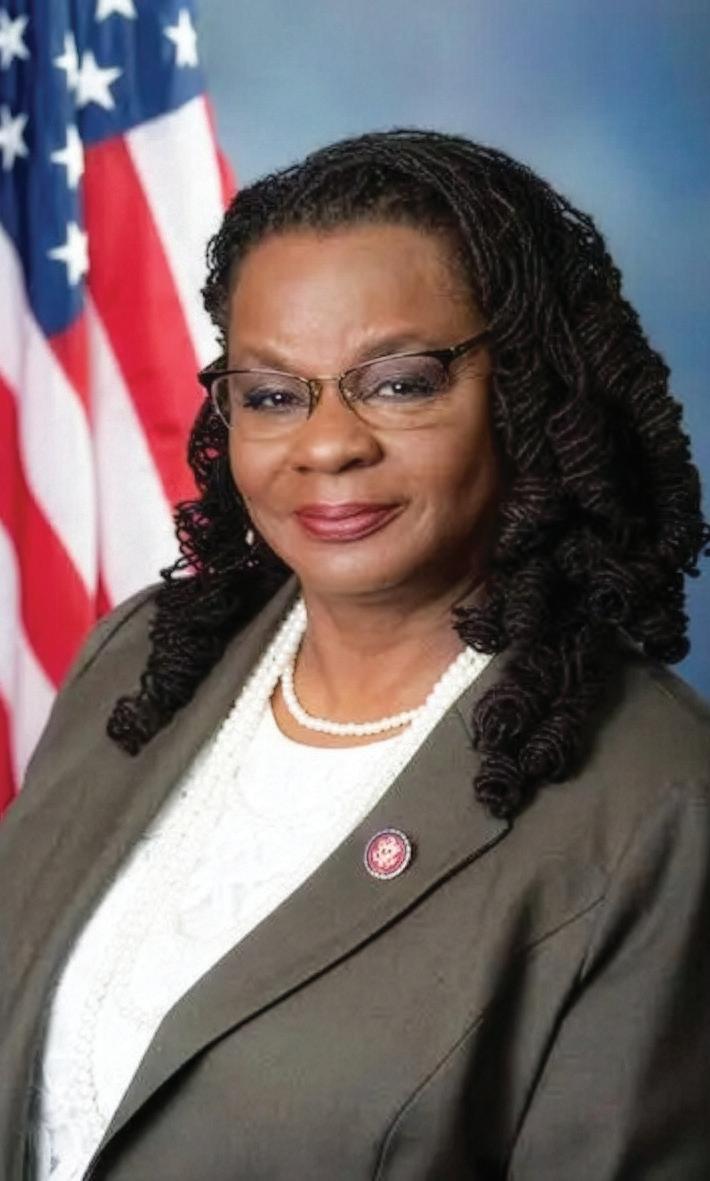
What Moore brought to Minnesota was not just oversight—it was moral clarity. On MLK Jr. weekend, she framed immigration enforcement not as an abstract policy debate, but as a civil rights struggle with real human consequences. Her message echoed long after the gavel: constitutional standards matter, rhetoric matters, and silence—especially in moments like this—is not an option.
As Dr. King warned decades ago, and as Gwen Moore reminded Minnesota this weekend, injustice anywhere still threatens justice everywhere.
At the center of her critique was reporting from The Intercept detailing how DHS used a song popular in neo-Nazi online spaces in an official ICE recruitment post. The Instagram post appeared less than two days after an ICE agent fatally shot René Good during a controversial enforcement operation in Minneapolis. According to the report, the post featured the phrase “We will have our home again,” paired with a song of the same name by Pine Tree Riots. The lyrics reference reclaiming a homeland through “blood or sweat,” language that extremism researchers have identified as common in white nationalist and accelerationist
Mary Gay Scanlon (PA-05), Lateefah Simon (CA12), Rashida Tlaib (MI-12), and James Walkinshaw (VA-11).
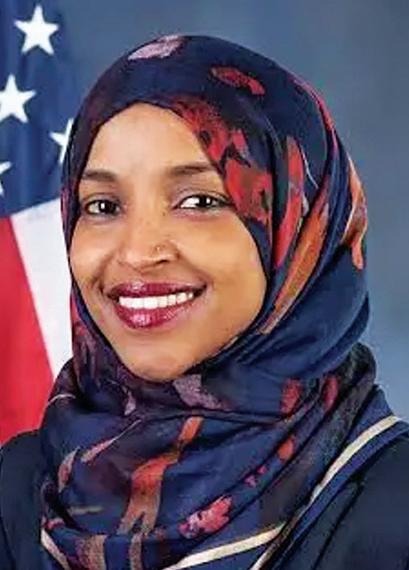
Ilhan Omar Pramila Jayapal
Congressional field hearing - “Kidnapped and Disappeared: Trump’s Deadly Assault on Minnesota”
Gwen Moore
Rashida Tlaib
Why the world’s central bankers had to speak up against Trump’s attacks on the Fed
By John Hawkins Head, Canberra School of Government, University of Canberra
Central bankers from around the world have issued a joint statement of support for US Federal Reserve Chair Jerome Powell, as he faces a criminal probe on top of mounting pressure from US President Donald Trump to resign early.
It is very unusual for the world’s central bank governors to issue such a statement. But these are very unusual times.
The reason so many senior central bankers – from Australia, Brazil, Canada, Europe, New Zealand, South Africa, South Korea, the United Kingdom and other countries, as well as the central banks’ club the Bank for International Settlements – have spoken up is simple. US interest rate decisions have an impact around the world. They don’t want a dangerous precedent set.
Over the course of my career as an economist, much of it at the Reserve Bank of Australia and the Bank for International Settlements, I have seen independent central banks become the global norm in recent decades.
Allowing central banks to set interest rates to achieve inflation targets has avoided a repeat of the sustained high inflation which broke out in the 1970s.
Returning the setting of monetary policy to a politician, especially one as unpredictable as Trump, is an unwel-
come prospect.
What’s happened
Trump has repeatedly attacked the US Federal Reserve (known as the Fed) over many years. He has expressed his desire to remove Powell before his term as chair runs out in May. But legislation says the president can only fire the Fed chair “for cause”, not on a whim. This is generally taken to mean some illegal act.
The Supreme Court is currently hearing a case about whether the president has the power to remove another Fed board member, Lisa Cook.
And this week, Powell revealed he had been served with a subpoena by the US Department of Justice, threatening a criminal indictment relating to his testimony to the Senate banking committee about the US$2.5 billion renovations to the Fed’s historic office buildings.
Trump has denied any involvement in the investigation.
But Powell released a strong statement in defence of himself. He said the reference to the building works was a “pretext” and that the real issue was: whether the Fed will be able to continue to set interest rates based on evidence and economic conditions – or whether monetary policy will be directed by political pressure or intimidation.
On Tuesday, more than a dozen of the world’s leading central bankers put out a statement of support: We stand in full solidarity with the Federal Reserve
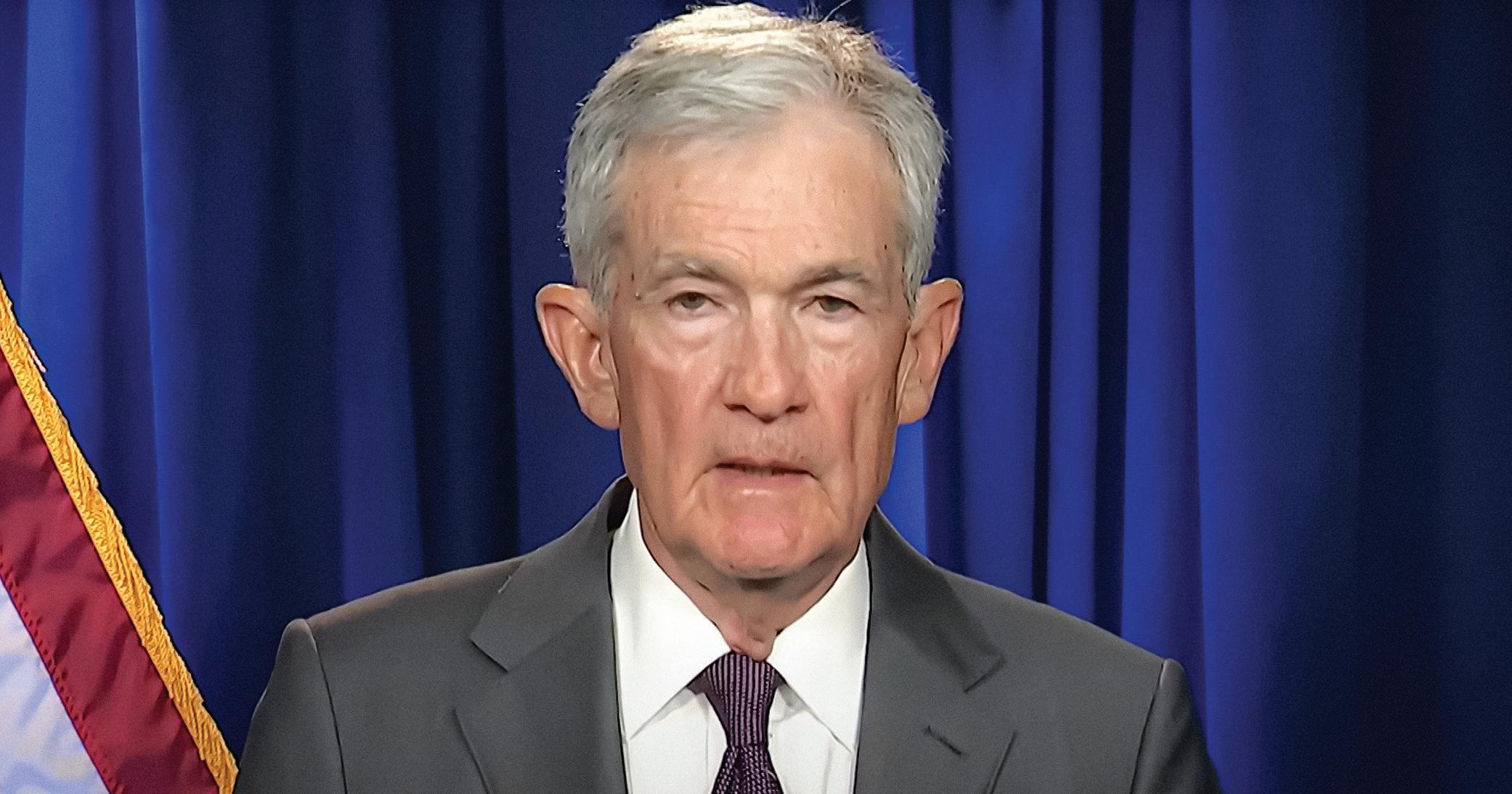
System and its Chair Jerome H Powell. The independence of central banks is a cornerstone of price, financial and economic stability in the interest of the citizens that we serve. It is therefore critical to preserve that independence, with full respect for the rule of law and democratic accountability.
Another statement of support came from leading US economists – including all the living past chairs of the Fed. This included the legendary central bank “maestro” Alan Greenspan, appointed by Ronald Reagan and reappointed by George HW Bush, Bill Clinton and George W Bush.
This statement warned undermining the independence of the Fed could have “highly negative consequences”

for inflation and the functioning of the economy.
Why it matters for global inflation
Trump has said he wants the Fed to lower interest rates dramatically, from the current target range of 3.5–3.75% down to 1%. Most economists think this would lead to a large increase in inflation.
At 2.8% in the US, inflation is already above the Fed’s 2% target. The Fed’s interest rate would normally only drop to 1% during a serious recession.
A clear example of the dangers of politicised central banks was when the Fed lowered interest rates before the 1972 presidential election. Many commentators attribute
this to pressure from then president Richard Nixon to improve his chances of re-election. This easing of monetary policy contributed to the high inflation of the mid-1970s.
A more recent example comes from Turkey. In the early 2020s, President Recep Tayyip Erdoğan leaned on the country’s central bank to cut interest rates. The result was very high inflation, eventually followed by very high interest rates to try to get inflation back under control.
Trump should be careful what he wishes for What will happen if Trump is able to appoint a compliant Fed chair, and other board members, and if they actually lower the short-term interest
rates they control to 1%? Expected inflation and then actual inflation would rise. This would lead to higher long-term interest rates.
If Trump gets his way, US voters may face a greater affordability problem in the runup to the mid-term elections in November. This could then be followed by a recession, as interest rates need to rise markedly to get inflation back down.
And as over a dozen global central bank leaders have just warned us, what happens in the US matters worldwide.
Disclosure statement
John Hawkins was formerly a senior economist at the Reserve Bank of Australia and the Bank for International Settlements.
Martin Luther King Jr. was ahead of his time in pushing for universal basic income
By Tarah Williams Assistant Professor of Political Science, Allegheny College
Andrew
Bloeser Associate Professor of Political Science; Director, Center for Political Participation, Allegheny College
Each year on the holiday that bears his name, Martin Luther King Jr. is remembered for his immense contributions to the struggle for racial equality. What is less often remembered but equally important is that King saw the fight for racial equality as deeply intertwined with economic justice.
To address inequality – and out of growing concern for how automation might displace workers – King became an early advocate for universal basic income. Under universal basic income, the government provides direct cash payments to all citizens to help them afford life’s expenses.
In recent years, more than a dozen U.S. cities have run universal basic income programs, often smaller or pilot programs that have offered guaranteed basic incomes to select groups of needy residents. As political scientists, we have followed these experiments closely.
One of us recently co-authored a study which found that universal basic income is generally popular. In two out of three surveys analyzed, majorities of white Americans supported a universal basic income proposal. Support is particularly high among
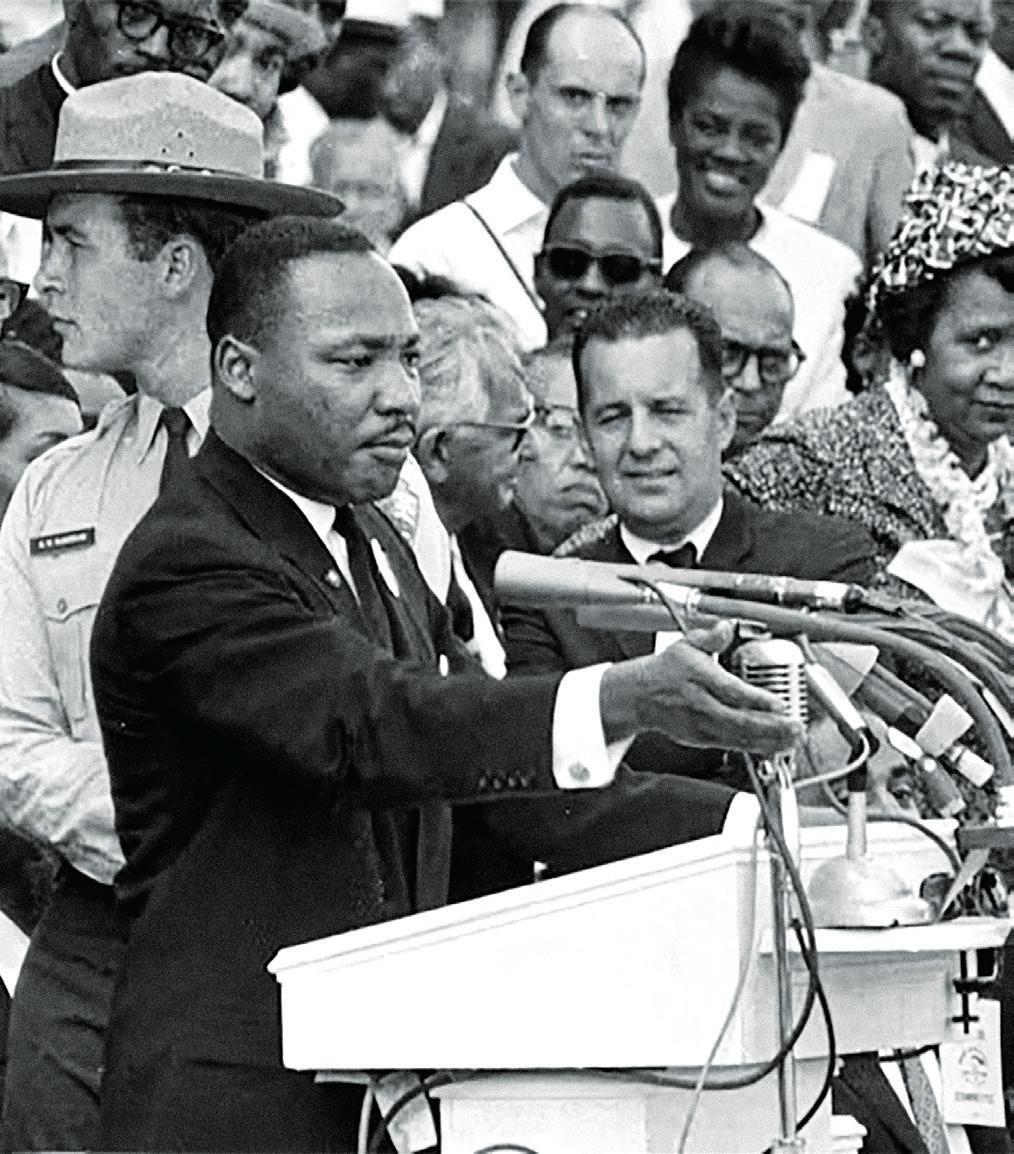
those with low incomes. King’s intuition was that white people with lower incomes would support this type of policy because they could also benefit from it. In 1967, King argued, “It seems to me that the Civil Rights Movement must now begin to organize for the guaranteed annual income … which I believe will go a long, long way toward dealing with the Negro’s economic problem and the economic problem with many other poor people confronting our nation.”
But there is one notable group that does not support universal basic income: those with higher levels of racial resentment. Racial resentment is a scale that social scientists have used to describe and measure anti-Black prejudice since the 1980s.
Notably, in our research, whites with higher levels of racial resentment and higher incomes are especially inclined to oppose universal basic income. As King well knew, this segment of Americans can create powerful opposition.
Economic self-interest can trump resentment At the same time, the results of the study also suggest that coalition building is possible, even among the racially resentful.
Economic status matters. Racially resentful whites with lower incomes tend to be supportive of universal basic income. In short, self-interest seems to trump racial resent-
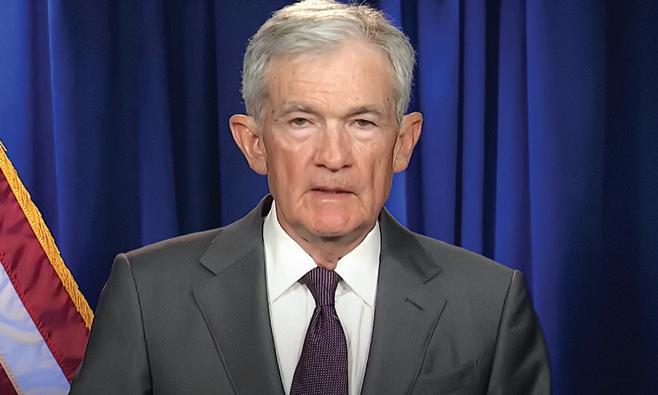
Credit: Youtube/ Federal Reserve
From the video of US Federal Reserve Chair Jerome Powell’s statement addressing the investigation
Martin Luther King Jr. believed Americans of different racial backgrounds could coalesce around shared economic interests.
New variant of the flu virus is driving surge of cases across the US and Canada
By Zachary W. Binder Associate Professor of Pediatrics, UMass Chan Medical School
After a sharp uptick in flu cases in mid-December 2025, flu activity across the U.S. and Canada remains high.
Although cases are trending downward in Canada as of Jan. 9, 2026, the season has yet to peak in the U.S., according to data from the Centers for Disease Control and Prevention.
As an emergency room pediatrician in central Massachusetts, I’m seeing a tremendous amount of flu over the past few weeks. I’m hearing from colleagues in emergency rooms across the country that they are experiencing a similar explosion of flu cases.
In early January, New York state recorded the highest number of flu cases in a single week on record. Several other states, such as Colorado, are also experiencing record flu levels, and 44 out of 55 states and other jurisdictions are reporting high or very high flu activity, according to the CDC.
The spike in flu cases – widely referred to in media reports as a “superflu” – is largely driven by a newly identified subtype of the virus called subclade K.
What’s different about the current flu season?
Flu seasons vary every year. In 2024-2025, influenza cases rose fast beginning in October 2024. In contrast, the
2025-2026 season started out slow, but then it’s as if a switch was flipped in early to mid-December.
In the last week of December, throughout the United States, over 8% of doctors visits were for flu symptoms – the highest weekly rate since 2005. Emergency department visit rates for flu are spiking throughout the country, most notably in the South and Northeast, where rates exceeded the national average.
Over this same time period, more than 26% of flu tests taken throughout Canada were positive for influenza.
As of Jan. 15, the CDC estimates that flu has caused 15 million illnesses, 180,000 hospitalizations and 7,400 deaths this season. One small saving grace is that the flu this season hasn’t come on concurrently with either a respiratory syncytial virus – RSV –or COVID-19 surge, as it often does.
Traditionally, the flu is most dangerous for people over 65 or those with underlying health conditions, with young children experiencing more mild symptoms. But this year’s strain is hitting kids harder. They are arriving in the emergency room after having had a high fever of more than 104 degrees for 5-7 days, or with flu complications including febrile seizures, croup or severe dehydration.
An especially high number of children is currently being hospitalized for flu, the CDC reports. As of Jan. 9, the U.S. had seen 17 deaths of children due to flu so far during the 2025-2026 season.

In 2024-2025, the deadliest year on record for kids, flu caused 289 pediatric deaths.
What is subclade K?
Every year, the subvariants of the influenza virus that are the most pervasive change slightly.
This year, the most prevalent variant is subclade K, which is a subtype of influenza H3N2. Subclade K was first detected in Australia in July 2025. It’s driving 91.5% of infections in the U.S. so far this season and is also responsible for the peak in Canada.
Subclade K has proved itself to be a particularly infectious variant, based on how quickly the volume of flu cases has surged. Its dominance may be driven by mutations that make it different from previous strains. Some scientists speculate that H3 influenza viruses have circulated at relatively low levels the past few years, which may have led to lower levels of immunity in the general population.
In my emergency de-
New federal loan limits will worsen America’s nursing shortage leave patients waiting longer for care
By Kymberlee Montgomery Senior Associate Dean of Nursing, Drexel University
Mary Ellen Smith
Glasgow Professor of Nursing, Duquesne University
There is growing need for nurses in the United States – but not enough nurses currently working, or students training to become nurses, to promptly see all of the patients who need medical care.
Tens of thousands of nurses have left practice since the pandemic, and many more plan to leave within a few years, according to the 2024 National Nursing Workforce Survey, which reviews the number of registered nurses working in the U.S. Meanwhile, the U.S. Bureau of Labor Statistics projects that there will be an average of 189,100 openings for registered nurses each year through 2032. In addition, there will be a need for approximately 128,400 new nurse practitioners by 2034 – making it the fastest-growing occupation in the country.
The tax and spending package signed into law in July 2025 will take effect on July 1, 2026. Among other things, it will likely make it even harder for people to take out loans and help pay for a graduate nursing degree.
We are nurses and professors who oversee large nursing programs at universities. We believe that new restrictions on how nursing students can take out federal loans to pay for their education are likely to prevent people from pursuing advanced nursing roles. These new regula-

tions will cause the shortage of practicing nurses to intensify –in turn, worsening the quality of care patients receive.
Clinics may offer fewer appointments, hospitals may be forced to reduce services, and nursing programs may have to accept fewer students. As a result, some patients will wait longer, travel farther, or not see nurses altogether.
Paying for nursing education
Someone can become a registered nurse with an associate or bachelor’s degree. But a graduate-level degree is needed for other nursing roles – including nurse practitioners, nurse anesthetists and nurse midwives.
Nursing school costs vary greatly, depending on which degree students are seeking and whether they attend a public or private school. Roughly three-quarters of graduate nursing students rely on student loans and graduate with debt to pay for programs that can range from US$30,000 to $120,000 or more.
We have found that nursing students, unlike medical students, often work while enrolled in their programs, stretching their education over
longer periods and accumulating additional costs.
The tax and spending law eliminates several federal grants and loan repayment programs for nurses and aspiring nurse educators – faculty members who teach nursing students in colleges and universities.
The law also sharply restricts how much money graduate nursing students can borrow through federal student loans.
Approximately 59% of 1,550 nurses surveyed in December 2025 said that they are now less likely to pursue a graduate degree with the new borrowing limit changes.
A fractured system
Nurse practitioners provide the majority of primary care in the U.S. – particularly in rural areas and communities with few physicians.
In addition, certified registered nurse anesthetists administer anesthesia for surgeries and procedures in many areas. Meanwhile, certified nurse-midwives deliver babies and provide prenatal and postpartum care, especially in areas where there are few obstetricians.
partment, we’re also seeing particularly high spiking fevers of 104 or 105 degrees, compared with more usual lower grade fevers. That in itself is not dangerous, but for young children it does result in more instances of febrile seizures and dehydration.
How late is too late to get vaccinated?
Generally speaking, I recommend people get the flu shot, in line with guidelines by the American Academy of Pediatrics. Getting vaccinated for the flu has proved to decrease the risk of serious illness, hospitalization and death. People who get the vaccine are more likely to have milder cases. For people still considering getting the flu shot for this season, I strongly recommend doing so sooner rather than later. Waiting longer would limit the window in which the vaccine is most effective. That’s because it takes a couple of weeks for the flu shot to impart its maximal benefits. Vaccination in mid-January would mean
peak protection in late January and early February. Flu season generally peaks in December through February in North America. One thing to note, however, is that the strains that were chosen to be included in the 2025-2026 flu vaccine weren’t a great match for the predominantly circulating subclave K. Still, evidence suggests that this year’s vaccine does provide protection.
Should you take an at-home flu test?
In my opinion, in most cases home testing for flu is not especially useful.
Many people seek out flu tests to determine whether they should get antiviral therapies like Tamiflu. But while those therapies might decrease your symptoms slightly, they aren’t particularly effective, and they come with their own risks, such as upset stomach, vomiting and diarrhea. Most of my colleagues in the emergency department, myself included, rarely recommend them.
Whether you have the flu or a flu-like illness such as RSV, COVID-19 or rhinovirus, the recommendations for treating and managing the illness at home as well as the point at which I’d suggest someone seek care are no different.
Because of that, being able to put a label on the disease isn’t all that important. With the high levels of flu circulating now, if you’re feeling unwell and have signs of fever and upper respiratory symptoms, you can almost assume it’s the flu.
One exception is for people with underlying health conditions such as heart disease or severe asthma. For them, as for people who are hospitalized for flu, antiviral therapy may be recommended and thus testing for the flu can be helpful.
Basic precautions can protect you and your community
The same precautions apply for all flu-like illnesses, but it’s worth being particularly mindful of just how contagious subclade K seems to be. It’s important to protect yourself and your community. Washing your hands frequently can minimize exposure to flu-containing droplets. Even more importantly, people who feel unwell – particularly if they have a fever – should stay home from work, school or activities, if possible, until they are fever-free for 24 hours.
Disclosure statement
Zachary W. Binder does not work for, consult, own shares in or receive funding from any company or organization that would benefit from this article, and has disclosed no relevant affiliations beyond their


Frazier condemns federal ICE operations, announces gun violence prevention town hall
Minnesota State Representative Cedrick Frazier is sharply criticizing federal immigration enforcement actions in the state while reaffirming his legislative focus on gun violence prevention and community safety.
Frazier described what he called an ongoing “federal occupation” of Minnesota communities, pointing to heightened Immigration and Customs Enforcement (ICE) activity under “Operation Metro Surge.” While the operation has been framed by federal authorities as a public safety initiative, Frazier said recent weeks have
been marked by volatility, unconstitutional conduct, and human rights violations by ICE and other federal agents.
“These actions are not making our communities safer,” Frazier said, reiterating his call for ICE to cease operations and leave Minnesota. He emphasized his solidarity with Minnesotans impacted by the enforcement actions and expressed concern over the disruption and fear they have caused in local neighborhoods.
Despite the turmoil surrounding federal enforcement, Frazier said he remains
focused on advancing legislation aimed at preventing gun violence. He underscored that improving public safety requires sustained attention and collaborative policymaking, particularly to protect children and families.
Acknowledging the complexity of the current political and social climate, Frazier emphasized the importance of continued dialogue around gun violence prevention. As part of that effort, he announced a Town Hall on Gun Violence Prevention scheduled for Tuesday, January 27, 2026, from
6:30 p.m. to 8:30 p.m. Location
details will be shared with those who RSVP to Emma.Erdahl@ house.mn.gov.
The town hall will feature a panel of community leaders and public safety professionals, including: Jess Palyan, Policy Program Manager, Violence Free Minnesota • Jordan Borer Nelson, Executive Director, MAD DADS of Minneapolis Emanual Williams, Community Defense Attorney, Legal Rights Center Ashley Sarow, JCPP Com-
Background: Cities Church, St. Paul
Cities Church is a Christian congregation in St. Paul (1524 Summit Ave). It describes itself as a community of believers focused on worshiping Jesus, making disciples of Christ, and living out their faith in the Twin Cities. The church teaches traditional Christian doctrines, emphasizes the Bible as authoritative, and organizes community groups and discipleship activities for members.
• The church holds Sunday worship services (typically morning gatherings). Its beliefs center on the gospel — that Jesus Christ lived, died, and rose again for salvation — and on
biblical authority.
• Cities Church engages in community life through smaller groups and events aimed at spiritual growth. The congregation meets in a historic church building on Summit Avenue originally constructed in 1912 by an Episcopal congregation and later used by Cities Church.
Cities Church is in the news due to a highly publicized protest that occurred during a Sunday worship service: On January 18, 2026 activists from local movements — entered and disrupted a worship service at Cities
Church. They were chanting and accusing one of the church’s pastors of having ties to U.S. Immigration and Customs Enforcement (ICE) and criticized immigration enforcement actions in the Twin Cities.
The protesters alleged that a pastor served as the acting director of the local ICE field office
• The disruption drew national attention and prompted a U.S. Department of Justice investigation into whether the protest violated federal protections for religious worship under laws like
come a rallying cry for activists. Federal officials initially described Good as a domestic terrorist — a claim her family and supporters strongly dispute.
“They had guns,” Armstrong said, quoting Good’s wife. “We had whistles.”
She also described ICE raids in which agents allegedly dragged people from their homes in freezing temperatures, including a Hmong elder brought outside partially clothed and a Liberian immigrant detained in North Minneapolis.
“These are military-grade weapons being unleashed on our communities,” Armstrong said. “And instead of addressing that, the federal government threatens to investigate peaceful protesters.”
Cullars-Doty was blunt in her assessment of Easterwood’s pastoral role.
“You cannot stand within four walls and call yourself a church if you are not preaching, teaching, living and walking the gospel,” she
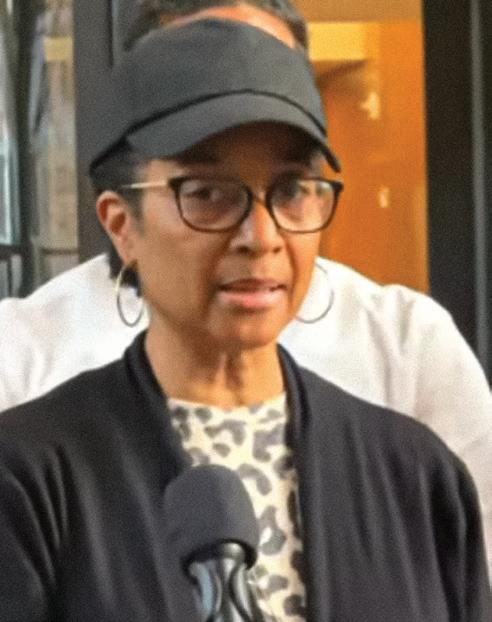
said. “It is an abomination for someone to place the title of ‘Reverend’ before their name while acting as a field director for ICE.”
“There is nothing in the Bible that supports what ICE is doing,” she added. “It is sinful, at best.”
Cullars-Doty said the church’s leadership attempted to downplay Easterwood’s ICE role, a claim she said is documented publicly.
“People who walk in the fruit of the Spirit walk in discernment,” she said. “There is no way someone grounded in the Word would sit through that service and not question why peaceful protesters were there.”
panying imagery included the word “Invasion” alongside the call “America needs you — join ICE now.” Speaking directly to DHS officials, she questioned who such messaging was de-
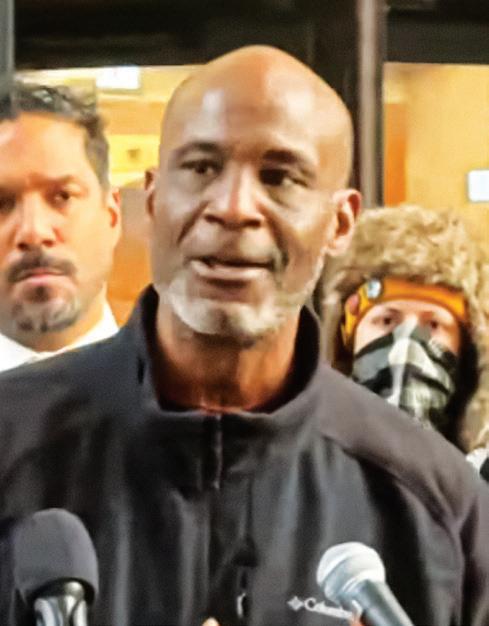
She rejected criticism that churches should be off-limits to protest.
“What do people think Jesus did when he turned over the tables?” she asked. “There was nothing gentle about that moment. And there is nothing gentle about ICE.”
Trahern Crews, co-founder and lead organizer of Black Lives Matter Minnesota, framed the protest within the history of civil rights struggles.
“The civil rights movement was founded on dignity and equal treatment under the law,” Crews said. “For a pastor to lead a church while directing ICE raids is profoundly hypocritical.”
signed to attract. “Who do you think wants to join an agency advertising like this?” she asked, concluding that the answer was “white supremacists.” She warned that the
ment. This is consistent with King’s idea of how an economic coalition could be built and pave the way toward racial progress.
Income is not the only thing that shapes attitudes, however. Some of the strongest supporters of universal basic income are those who have higher incomes but low levels
of racial resentment. This suggests an opportunity to build coalitions across economic lines, something King believed was necessary. “The rich must not ignore the poor,” he argued in his Nobel Peace Prize lecture, “because both rich and poor are tied in a single garment of destiny.” Our data shows that this is possible.
This approach to coalition building is also suggested by our earlier research. Using American National Election Studies surveys from 2004-
“That’s not saying no to yourself,” he says. “You are simply choosing to spend wisely.”
drive to build relationships that grow communities, he adds,
“That’s why I am teaching others. I want people to enjoy life,” Bowman states, “but, first we must learn to be intentional with our finances.”
What is golden rule?
Before a purchase, ask: Is this a need? If not, then pause,
For Bowman, budgeting and saving are just the start. What is the real game-changer? Investment. “People who are not financially stressed are those who invest their money,” he adds “even if you only have a little cash, you can invest and watch it grow.” He suggests setting up an appointment with him or a banker to talk about wealth management. Also, he adds, more banks need to be
2016, we found that for white Americans, racial resentment predicted lower support for social welfare policies. But we also found that economic position mattered, too. Economic need can unite white Americans in support of more generous welfare policies, including among some who are racially prejudiced. At a minimum, this suggests that racial resentment does not necessarily prevent white Americans from supporting policies that would also benefit Black
more supportive in helping their account holders understand how to grow their money. His framework pushes beyond personal finance into community strategy. He challenges us to focus on equitable wealth-building pathways: home ownership, entrepreneurship and strategic savings. He teaches the mechanics such as paying off debt, starting investment accounts, boosting savings and totally champions the power of learning together.
“Sharing financial ed-
munity Liaison, New Hope Police Department Antonio Williams, Founder and Executive Director, T.O.N.E U.P.
Community members are encouraged to attend, submit questions, and participate in what Frazier described as a “robust discussion” on solutions to gun violence. RSVPs and question submissions can be made online.
Frazier expressed gratitude for continued community engagement and support, calling civic participation essential to a healthy democracy.
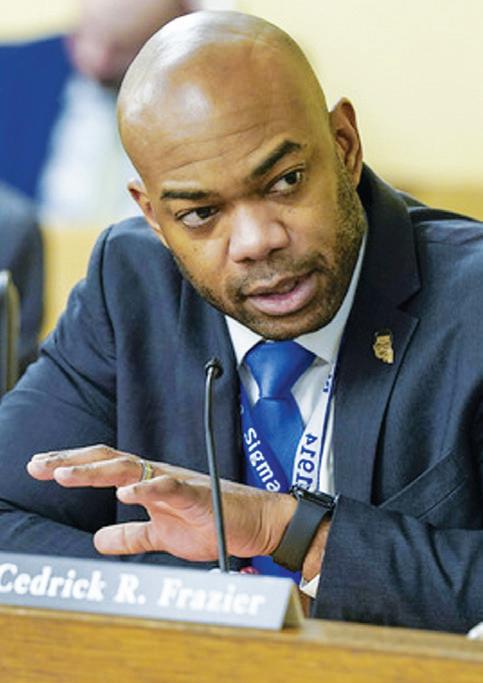
He encouraged constituents to contact his office with legislative questions, ideas, or requests for assistance.
Representative Cedrick Frazier represents his district in the Minnesota House of Representatives and serves as a member of the People of Color and Indigenous (POCI) Caucus.

the FACE Act (which prohibits interference with religious services).
• Responses to the event
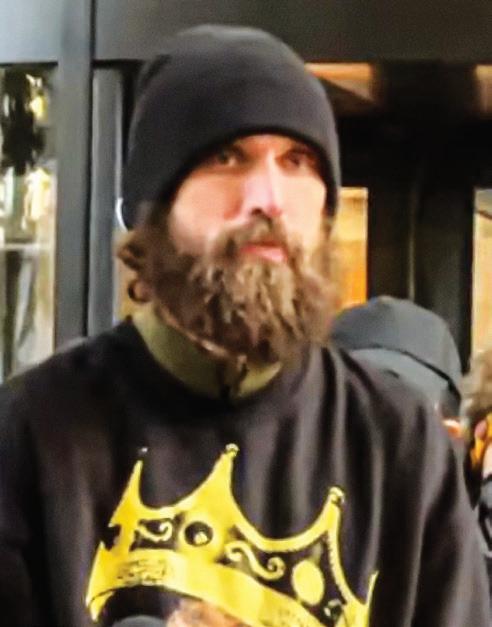
Crews noted that Black churches have historically been bombed and attacked.
“We came not with violence,” he said, “but with a desire for dialogue.”
He criticized the Justice Department’s decision to investigate protesters instead of alleged abuses by federal officers.
“We believe DOJ should return to investigating police brutality and systemic abuse of power,” Crews said. William Kelly, a combat infantry veteran who participated in the protest, said he has been labeled a domestic terrorist.
“We entered that
recruitment approach raises serious concerns about accountability, training, and the ideological composition of future ICE agents—particularly as Congress considers a proposed
Americans.
Building lasting coalitions During his career as an activist in the 1950s and 1960s, King struggled with building long-term, multiracial coalitions. He understood that many forms of racial prejudice could undermine his work. He therefore sought strategies that could forge alliances across lines of difference. He helped build coalitions of poor and working-class Americans, including those who are white.
ucation peer-to-peer builds confidence,” he notes, highlighting this powerful model. For him as a PWCC board member, he is proud to see how PWCC’s collective education builds wealth and shatters the isolation around money for the Northside community.
Another pathway to wealth building is through supporting local small businesses in our communities. Most small businesses provide vital services, income and the connec-
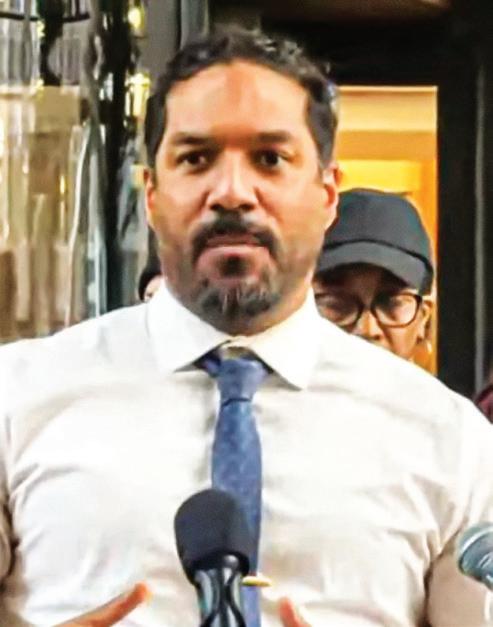
church peacefully,” Kelly said.
“Yet Black churches are left in pieces. Muslim families are afraid to attend mosques. Latino families are afraid to attend church.”
“You cannot be both an ICE agent and a pastor,” he said. “Supporting the terrorization of communities is not faith — it is hate.”
Kelly said he has received hundreds of threats since the protest but will not back down.
“I will continue my mission of peace,” he said.
Artist and activist Toussaint Morrison said ICE agents’ use of masks speaks volumes.
“There is a reason
$170 billion increase in immigration and border enforcement funding. The issue, Tlaib emphasized, is personal. Identifying herself as a Muslim woman,
He was not so naive as to think that shared economic progress would eliminate racial prejudice, but he saw it as a place to start.
Currently, the nation faces an affordability crisis, and artificial intelligence poses new threats to jobs. These factors have increased calls for universal basic income.
Racial prejudice continues to fuel opposition to universal basic income, as well as other forms of social welfare. But our research suggests that
tive fabric that makes a neighborhood thrive. He encourages more bankers to champion small businesses, “We, bankers, must take the time to offer suggestions to help small business owners scale operations, create significant wealth and create assets passed on to next generations.”
Trent Bowman’s work embodies the blueprint: leveraging our innate generosity toward ourselves and our future, ensuring our financial strength
why they wear masks,” Morrison said. “They know what they’re doing is wrong.” Morrison, whose name honors the leader of the Haitian slave revolt, said the exposure of Easterwood’s identity marked a turning point.
“When David Easterwood was identified,” he said, “you could see it in their faces that they had been caught.” Cities Church has issued a statement calling the protesters “lawless,” a response activists say deepened the divide.
“Instead of saying,
‘We made a mistake,’ the church chose gaslighting,” Armstrong said. “That is unconscionable when human lives are at stake.” As the Justice Department investigation continues, organizers say the issue is far bigger than one Sunday protest.
“This affects immigrants. It affects Black communities. It affects American citizens,” Armstrong said. “And it demands moral clarity.” While quiet may have returned to Cities Church, the questions raised — about faith, power and accountability — continue to reverberate far beyond the sanctuary walls.
a Palestinian American, and the daughter of immigrants, she said the messaging sends a clear signal of exclusion. “When I see this,” she said, “I see that I’m not welcome here.”
this is not insurmountable. As King knew, progress toward economic equality is not inevitable. But, as his legacy reminds us, progress does remain possible through organizing around shared interests. Disclosure statement
The authors do not work for, consult, own shares in or receive funding from any company or organization that would benefit from this article, and have disclosed no relevant affiliations beyond their academic appointment.
matches the strength of our community spirit. This is how we build. This is how we thrive. His mission is also personal. He grew up in North Minneapolis, played ball at PWCC attended the Center’s music festivals and now proudly serves on the board.
Stay tuned for our next installment, where we highlight Phyllis Wheatley Community Center’s groundbreaking Women’s Wealth Building Initiative.
have been polarized:
some religious leaders condemned the protest as an intrusion on worship, while others have defended aspects of the protest as
drawing attention to broader tensions around immigration enforcement.
Monique Cullars-Doty Trahern Crews
William Kelly
Toussaint Morrison
Books, Arts & Culture
WHERE IS MY SISTER?
By W.D. Foster-Graham Book Review Editor
By Shannon Gibney
As adults, processing grief over the loss of a loved one is difficult. It can be immediate. It can hit you at times when you least expect it. Events like a loved one’s birthday and holidays can trigger it. Children, on the other hand, process grief differently from adults. If they are very young, they don’t fully
understand death, and it has to be handled with care and sensitivity, even when the parent is grieving themselves. That being said, I bring to you a different kind of children’s book—Shannon Gibney’s Where Is My Sister?
Salome and her older brother Gerald were excited about becoming big siblings, just as her parents were happily anticipating their third child.
Salome had been watching her mother’s tummy growing day by day, and she was thrilled when Mommy and Daddy announced that they were expecting a baby girl.
However, when Mommy and Daddy came home from the hospital, there was no baby with them. The baby, Toni, was stillborn.
Salome knew how sad everyone was, but having no understanding of death, kept asking her grief-stricken parents, “Where is my sister?”
Her parents explained as best they could about Toni being in the cemetery and remembering the funeral, while Gerald said that though her sister’s body was there, she wasn’t really there, that she was in the spirit world.
Daddy and Gerald talk to Salome about how they saw Toni in spirit. Gradually, Salome asks herself if her sister was in stories, photos, her mother’s tears, by her favorite tree. Eventually, she comes to recognize that her sister is everywhere.
Gibney, through this book, gives the reader a gen-
tle, loving way to cope with the loss of a baby and the loss of a sibling, especially when it comes to small children. A loss like this never fully goes away, but over time it can be managed. Grief doesn’t have a timeline, as is illustrated by Salome’s mother, but she still finds a way to let her surviving children know that they are loved and that Toni will always be their sister. I give a hat tip to Huy Voun Lee, whose illustrations beautifully captured the tone of the story.
Where Is My Sister is available through Amazon, Barnes & Noble, and the University of Minnesota Press. Thank you, Shannon, for the grace and the love you gave to this story.
Yellow Tree Theatre affirms commitment to community support, announces food drive
Yellow Tree Theatre is reaffirming its commitment to community connection and care amid growing uncertainty and unrest affecting families across Minnesota.
In a statement shared with patrons and supporters, leaders at the Osseo-based nonprofit theatre company emphasized solidarity with neighbors navigating questions of migration, safety and belonging, as well as individuals experiencing fear, grief or exhaustion related to current events.
“In times of unrest and upheaval, theatre does not retreat. It leans in,” the statement said.
Founded on community-centered storytelling, Yellow Tree Theatre said it will continue creating spaces where people can gather, share stories and engage in thoughtful dialogue. Company leaders noted that theatre can offer language for difficult conversations and foster understanding when answers are not clear. The organization also

underscored its commitment to safety and mutual respect as it moves forward with upcoming rehearsals, educational programs and performances. Yel-
low Tree said it is collaborating with colleagues across the Twin Cities arts, social services and advocacy communities to ensure its spaces remain welcom
on traditional federal loans.
ing and secure for both artists and audiences.
As part of its response, Yellow Tree Theatre announced it is hosting a food drive to support neighbors and families experiencing disruption and hardship. Donations will be distributed through trusted local partners working directly with affected community members.
“Together, we can make sure no one feels alone or forgotten,” the statement said. In addition to material support, the theatre shared information about local mental health and counseling resources in Osseo and nearby communities, encouraging individuals feeling overwhelmed or anxious to seek professional support. The company clarified that the resources are provided as a courtesy and that it is not
in the U.S. turned away more
affiliated with the listed organizations. Yellow Tree Theatre said it will continue to provide updates as needed and remains anchored in its mission to tell meaningful stories and foster connection, courage and hope. The nonprofit also encouraged supporters to contribute financially, noting that community donations help sustain bold storytelling and support local artists.
is located in
and operates as a
organization. More information is available through the theatre’s box office at boxoffice@yellowtreetheatre.com or by phone
Long waits for new patient appointments are now common across the country, with national surveys showing that patients often wait weeks to months before they receive medical care.
About a decade ago, new patients could often book appointments within days to a few weeks; but today, there are fewer available medical appointments and medical professionals to treat them. This is particularly true for many medical practices serving women, older adults and rural communities.
One of us – Dr. Montgomery – is a women’s health nurse practitioner who routinely sees patients wait months
for new appointments in the mid-Atlantic. These delays translate into postponed cancer screenings, delayed medication management and untreated chronic conditions. Research consistently shows that nursing shortages are associated with worse patient outcomes, including higher mortality and delayed treatment.
Nursing left off the professional degree list Under the new law, the Department of Education created a classification system that distinguishes professional from nonprofessional graduate degrees. Nursing is now considered a nonprofessional degree. As a result, graduate nursing students will soon face lower borrowing limits than they currently do. Previously, there was
no need to label nursing as professional or not, because federal student loan borrowing was not capped in a way that required this distinction.
Now, students in professional graduate programs, such as medicine and law, may borrow up to $50,000 per year in federal loans and $200,000 in total.
Graduate nursing students, by contrast, will soon face a federal student loan cap of $20,500 per year and $100,000 total over the course of their education – a significant reduction from prior borrowing options.
The new law also eliminates the Direct PLUS Loan program. This separate, federal student loan program allows students to borrow up to the full cost of attendance of graduate nursing school after they reached annual loan limits
More than 140 members of Congress from both political parties urged the Department of Education in December 2025 to reverse course and classify nursing as a professional degree.
The faculty bottleneck Graduate loan limits will worsen another critical problem – the shortage of nursing faculty.
There are currently 1,693 full-time vacancies for nursing faculty positions, according to a survey in 2024 by the American Association of Colleges of Nursing. Of those open positions, 84% require or prefer a doctoral degree.
Universities cannot admit nursing students if there are not enough faculty to teach them. Nursing programs
than 80,000 qualified applicants to baccalaureate and graduate nursing programs in 2023, in part because they did not have enough faculty.
Better solutions exist
There are policy changes that could prevent this domino effect.
Policymakers could classify nursing as a professional degree for loan purposes, aligning borrowing limits with the documented costs of accredited programs.
Congress and individual states could expand scholarships and loan-repayment programs for nurses who teach or serve in rural and underserved communities.
Universities and governments could work together to share nurse training costs. Graduate nursing
education is not a luxury. It is a cornerstone of the country’s health care system. Helping nurses afford an education is not just about nurses – it is about patients, communities and the future of medical care in the U.S. Disclosure statement Mary Ellen Smith Glasgow is an AACN Board Member. The views, analyses, and conclusions expressed in this article are those of the authors and do not necessarily reflect the official policy or positions of the American Association of Colleges of Nursing. Kymberlee Montgomery does not work for, consult, own shares in or receive funding from any company or organization that would benefit from this article, and has disclosed no relevant affiliations beyond their academic appointment.
Pictured: Brandon Raghu, Grace Happe, Austene Van and Andre Shoals.
Photo by Alex Clark.
Yellow Tree Theatre
downtown Osseo
nonprofit arts
Where Is My Sister? Book cover art