




High performance metal powders. Designed for precision, performance, and innovation.
Linde Advanced Material Technologies Inc. (Formerly known as Praxair Surface Technologies)
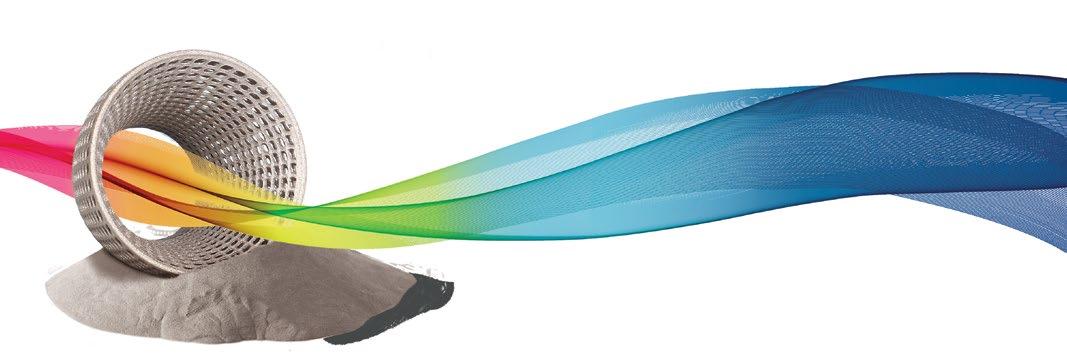
Our TRUFORM™ metal powders are custom-designed for AM industries and trusted by leading OEMs in aerospace, medical, energy, and industrial markets. With a broad product portfolio that includes custom alloys, we’re always pushing the boundaries of innovation in our R&D additive lab.
Revolutionizing Aerospace Materials Together
Linde AMT and NASA have announced a licensing agreement for the GRX-810 ODS Alloy. This innovative oxide dispersion strengthened alloy, developed by Linde AMT and tested by NASA, exhibits exceptional properties at high temperatures (1093°C), making it ideal for aerospace applications.


Publisher & Editorial Offices
Inovar Communications Ltd
11 Park Plaza
Battlefield Enterprise Park
Shrewsbury SY1 3AF
United Kingdom
Tel: +44 (0)1743 469909
www.metal-am.com
Managing Director & Editor
Nick Williams, nick@inovar-communications.com
Group News Editor
Paul Whittaker, paul@inovar-communications.com
Advertising Sales Director
Jon Craxford
Tel: +44 (0)207 1939 749 jon@inovar-communications.com
Assistant News Editor
Charlie Hopson-VandenBos charlie@inovar-communications.com
Editorial Assistant
Amelia Gregory, amelia@inovar-communications.com
Technical Consultant
Dr Martin McMahon
Digital Marketer
Mulltisa Moung, mulltisa@inovar-communications.com
Production Manager
Hugo Ribeiro, hugo@inovar-communications.com
Operations & Partnerships Manager
Merryl Le Roux, merryl@inovar-communications.com
Office & Accounts Manager
Jo Sheffield, jo@inovar-communications.com
Subscriptions
Metal Additive Manufacturing is published on a quarterly basis as either a free digital publication or via a paid print subscription. The annual print subscription charge for four issues is £150.00 including shipping. Rates in € and US$ are available on application.
Accuracy of contents
Whilst every effort has been made to ensure the accuracy of the information in this publication, the publisher accepts no responsibility for errors or omissions or for any consequences arising there from. Inovar Communications Ltd cannot be held responsible for views or claims expressed by contributors or advertisers, which are not necessarily those of the publisher.
Advertisements
Although all advertising material is expected to conform to ethical standards, inclusion in this publication does not constitute a guarantee or endorsement of the quality or value of products or of the claims made by its manufacturer.
Reproduction, storage and usage
Single photocopies of articles may be made for personal use in accordance with national copyright laws. All rights reserved. Except as outlined above, no part of this publication may be reproduced, modified or extracted in any form or by any means without prior permission of the publisher and copyright owner.
Design and production
Inovar Communications Ltd.
ISSN: 2057-3014 ( PRINT )
ISSN: 2055-7183 ( ONLINE )
This magazine is also available for free download from www.metal-am.com © 2024 Inovar Communications Ltd

These are very interesting times for metal Additive Manufacturing in the automotive industry. While the technology has been widely used in F1 for more than a decade, AM is now a go-to technology for supercar production and is being primed for wider adoption in mainstream automotive manufacturing – as highlighted in both our lead news story and lead article.
Looking back, it has been nearly three years since we published our article ‘Metal AM in automotive: How the Czinger 21C is redefining next-generation car manufacturing’ (which remains one of our most-read articles) and more than six years since we reported on BMW’s groundbreaking roof bracket for the i8 Roadster.
Whilst some may argue that progress has since been slow, the reality is that so much essential groundwork has been done in the intervening period in so many areas – process control, speed, automation, and standards to name just a few – that we are now at a point where the technology is primed for rapid growth.
In the last month alone, McLaren Automotive and Bugatti announced their adoption of the Divergent Adaptive Production System (DAPS), joining the likes of Aston Martin in leveraging the potential of Laser Beam Powder Bed Fusion (PBF-LB) when combined with an innovative digital manufacturing solution.
Meanwhile, BMW’s focus at its Additive Manufacturing campus has been on optimising PBF-LB for higher-volume production environments and exploring the potential of ‘new’ technologies, such as Directed Energy Deposition (DED), in structural automotive applications.
Nick Williams Managing Director

Cover image
The Rolls-Royce Ghost features numerous metal AM components that are manufactured at BMW’s AM campus and its external suppliers (Courtesy Rolls-Royce Motor Cars)
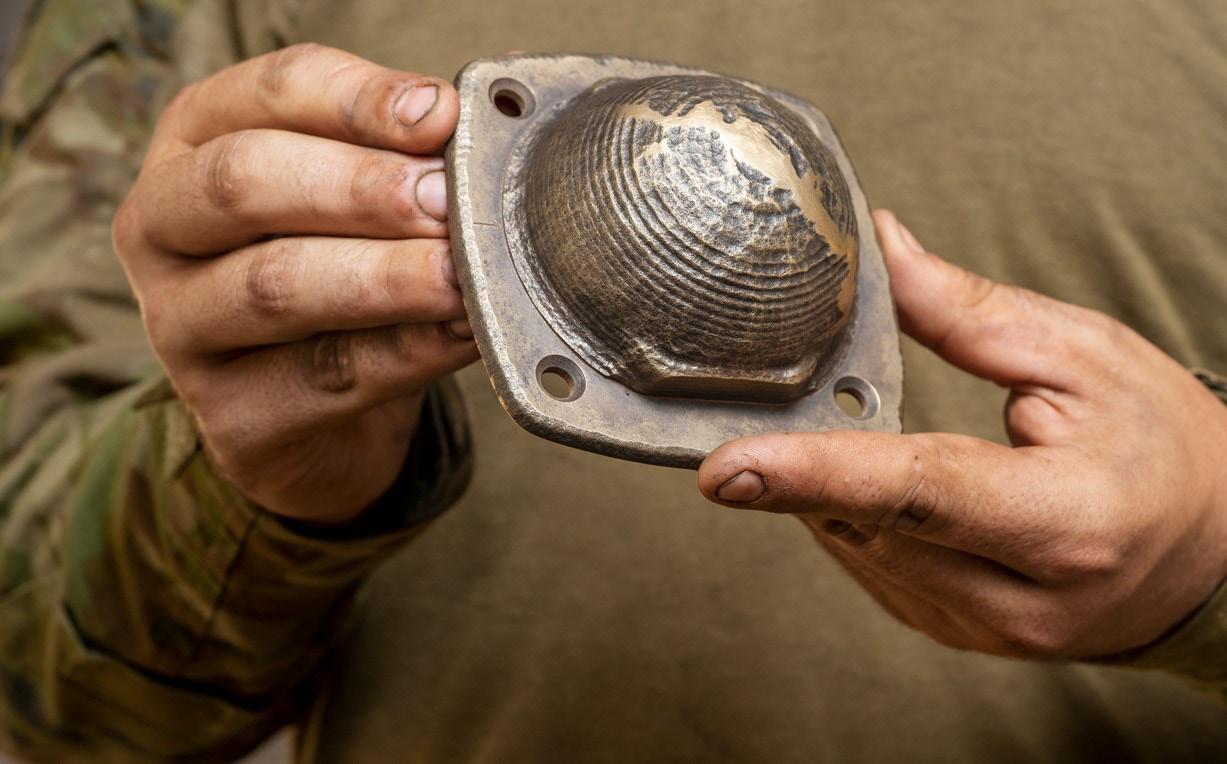
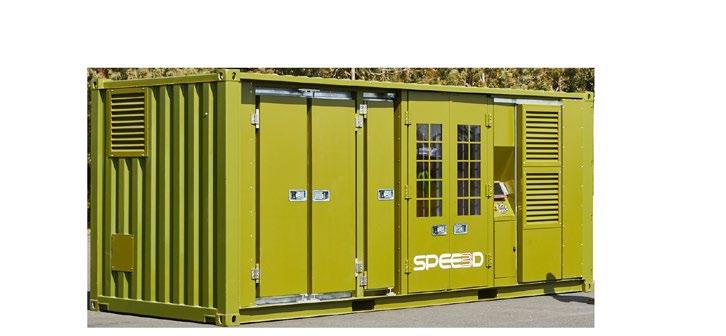
The Expeditionary Manufacturing Unit (EMU) makes it possible to accelerate equipment repair and produce cast-equivalent parts faster than ever thought possible.
• Fabricate critical applications in hours not days
• Containerized, ruggedized, and quick to deploy
• Print, post-process, and test metal parts onsite in harsh environments

131 BMW Group: Laying the foundations for the application of metal Additive Manufacturing in the automotive industry
The very existence of BMW Group’s stateof-the-art Additive Manufacturing Campus, located close to Munich, speaks volumes about the potential of AM technology in the automotive industry.
In April, Metal AM magazine’s Technical Consultant, Martin McMahon, and Managing Editor, Nick Williams, had the opportunity to visit the campus. As is revealed here, they discovered an operation that not only functions as an application development centre and centralised location for the BMW Group’s AM expertise, but also operates as a model AM factory built around the concepts of productivity and automation. >>>
149 Predicting the metal Additive Manufacturing market – and breaking the hype cycle
Additive Manufacturing has experienced significant growth over the past thirty years. However, many market players have found themselves disappointed with current market volumes compared to earlier projections for the industry. Today, the AM industry is at an intriguing stage. Depending on your perspective, it can appear to be either declining or thriving. How do these perspectives align, and how is its current status represented by data and forecasts?
AMPOWER’s Maximilian Munsch, Eric Wycisk and Matthias Schmidt-Lehr share their assessment and consider the challenges of predicting a highly-complex industry. >>>

to large frame printing
> Flexibility
> Certainty of a proven & reliable
> The most cost a ordable access system architecture
> Controlled & safe operation, handling and powder control of size on demand (Monthly or lifetime licenses available)
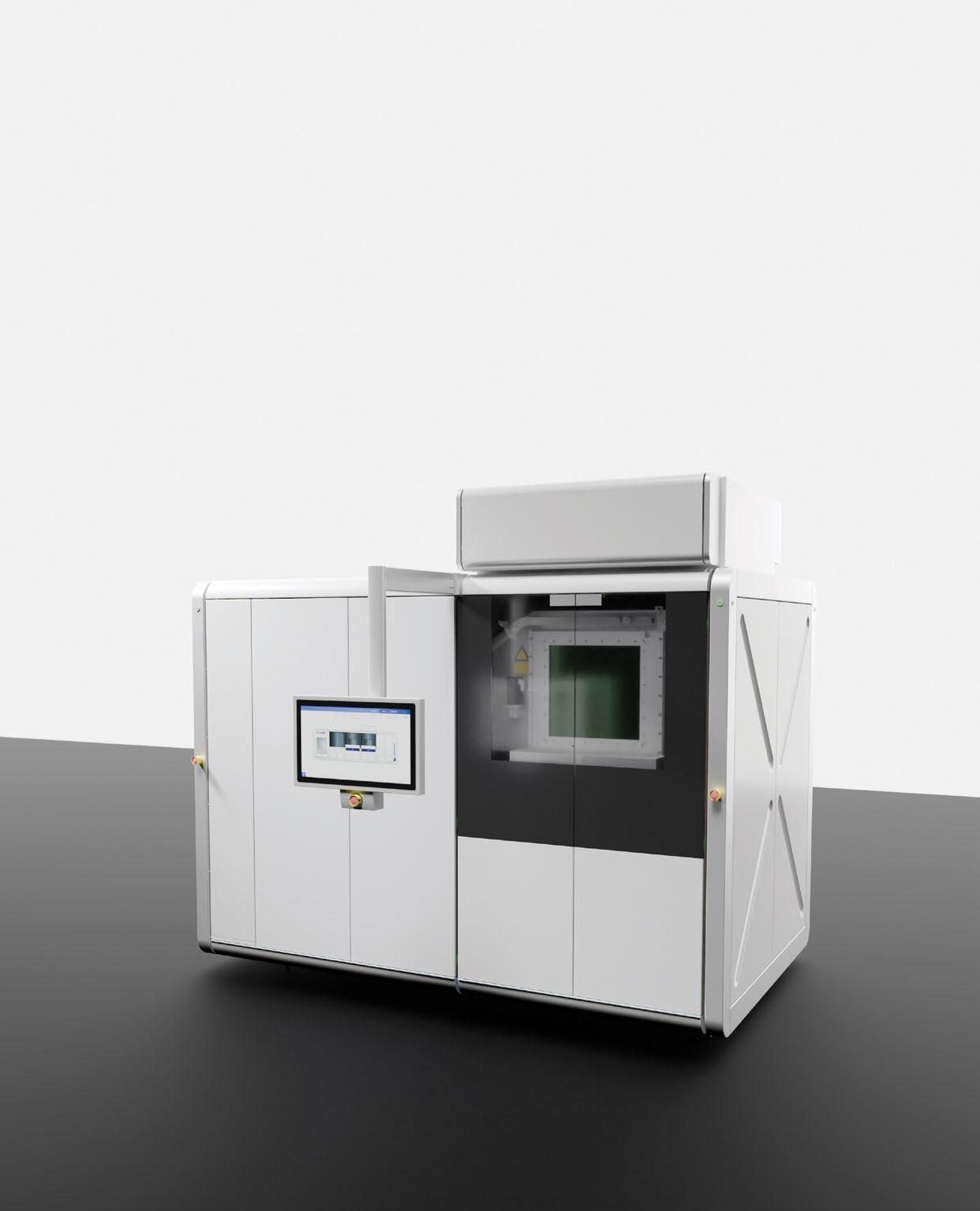

Starting from 730,000 USD

157 China’s thriving metal Additive Manufacturing industry: An outsider’s perspective
China’s Additive Manufacturing industry is growing at extraordinary speed, driven forward by intense domestic competition and AM technology’s role in the country’s national manufacturing strategy.
Based on a recent visit to the TCT Asia 2024 exhibition, Joseph Kowen shares an outsider’s perspective on what is happening in the Chinese metal AM industry. Are Chinese AM machines now rivalling those from the West in terms of capability, and how is an increasingly complex geopolitical situation impacting the dynamics of the AM industry? >>>
167 Enhancing the productivity of Additive Manufacturing facilities through PBF-LB automation
The metal Additive Manufacturing industry has significantly increased machine productivity in recent years. In the case of Laser Beam Powder Bed Fusion (PBF-LB), efforts have primarily focused on what happens inside the build chamber.
Here, Sebastian Becker, Head of Product Management Metal, EOS GmbH, reports on how, with Grenzebach Maschinenbau GmbH and Volkmann GmbH, the company is looking outside of the build chamber. Thanks to automation, machine time utilisation can be taken from an estimated 60% to nearer 90% through rapid automated build box exchange and fully automated powder removal and recycling. >>>
www.metal-am.com/subscribe-to-the-metal-




173 Award-winning metal AM parts from the MPIF’s 2024 Design Excellence Awards
For many decades, North America’s Metal Powder Industries Federation (MPIF) has organised its PM Design Excellence Awards competition in order to showcase the capabilities of the Powder Metallurgy industry. With the growing commercial success of metal powder-based Additive Manufacturing, the competition is seeing an ever larger number of entrants from this sector.
Award-winning parts in this year’s competition include parts not only produced by Laser Beam Powder Bed Fusion, but also a wide range of innovative sinter-based AM processes. >>>
179 Performance of eddy currents for the in-situ detection of defects during PBF-LB metal AM
In this joint study by Carl Zeiss AG, AMiquam SA, and EOS GmbH, the performance of eddy currents as a tool for the in-situ detection of defects in Laser Beam Powder Bed Fusion (PBF-LB) has been assessed.
Process variations, including lack of fusion and keyhole formation could be detected in-situ, as well as individual defects as small as 0.3 mm post-build and post-polishing.
Here, Jonatan Wicht, Harald Krauss, Frank Widulle, Julian Schulz, and Edson Costa Santos, Alain Berthoud, and Bernard Revaz present their latest findings. >>>
Our advertisers’ index serves as a convenient guide to suppliers of AM machines, materials, part manufacturing services, software and associated production equipment.
In the digital edition of Metal AM magazine, available at www. metal-am.com, simply click on a company name to view its advert, or on the weblink to go directly to its website. >>>













A quarter of a century. We could have only accomplished this by forging solid partnerships, friendships and collaborations build on trust, integrity and commitment.
DSH Technologies is the GO-TO support team for helping to process metal powder parts and materials. Real world solutions to real world problems, we can help solve technical, process and engineering related issues.
• Remote or In-Person process support
• Toll Debind and Sinter Services – “You Print It, You Mold It – We Debind & Sinter It”
• In person facility walk through, process evaluation, and education programs
For the past twenty five years, DSH is the only source for the best process support, toll processing and educational resource for your MIM and Metal AM applications.









To submit news please contact
Paul Whittaker, Group News Editor: paul@inovar-communications.com
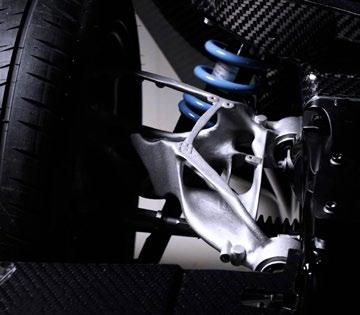
Divergent Technologies, Inc, located in Torrance, California, USA, is partnering with both Bugatti Automobiles SAS and McLaren Automotive to additively manufacture chassis components. In separate announcements, it was reported that the companies will use the Divergent Adaptive Production System (DAPS), a complete software-hardware solution using AI-driven generative design software and Additive Manufacturing, to produce optimised components impossible to build through traditional vehicle manufacturing techniques.
Bugatti Tourbillon
Bugatti will use DAPS for both chassis and suspension components in its upcoming Tourbillon hypercar. Divergent’s digital, endto-end approach to vehicle design and manufacturing were said to have enabled Bugatti to unlock
more efficient geometries for the vehicle chassis, dramatically reducing the weight of the vehicle and improving performance.
“We are pleased to provide structures for the Tourbillon that complement the aesthetic beauty that the world has come to expect from Bugatti,” stated Lukas Czinger, president and Chief Operating Officer of Divergent. “Today’s announcement demonstrates Bugatti’s commitment to integrating next-generation technology into its performance vehicles.”
Mate Rimac, CEO of Bugatti Rimac stated, “We are excited to announce this partnership after working closely together for the past eighteen months. It is clear that Divergent is the industry leader in digital engineering and Additive Manufacturing. These optimised chassis components find their perfect home in our most advanced vehicle to date.”

McLaren’s next-generation supercars
McLaren announced that its multi-year collaboration with Divergent will see Additive Manufacturing used to produce chassis components for its next-generation of supercars. The technology will allow McLaren to integrate new and more complex designs into its vehicle architecture, enhancing vehicle performance, sustainability, and production efficiency.
Initially, McLaren will utilise DAPS to additively manufacture chassis components, allowing the company to further reduce weight and improve dynamic performance – all areas seen as ‘core to the McLaren DNA.’
“We’re excited to work with Divergent who, like McLaren, have demonstrated a commitment to manufacturing and engineering innovation,” stated Michael Leiters, CEO, McLaren Automotive. “This technology will help us to further reduce weight in our complex structures, which will ultimately benefit the driving experience of our customers and support McLaren’s mission to push the boundaries of performance.”
www.divergent3d.com
www.bugatti.com
www.cars.mclaren.com
Nano Dimension, based in Waltham, Massachusetts, USA, and Desktop Metal, Inc, headquartered in Burlington, Massachusetts, USA, have jointly announced that they have entered into a definitive agreement under which Nano Dimension will acquire all outstanding shares of Desktop Metal. The deal is an all-cash transaction for $5.50 per share, subject to possible downward adjustments to $4.07 per share. At $5.50 per share, the transaction represents a 27.3% premium to Desktop Metal’s closing price and a 20.5% premium to the 30-day VWAP as of July 2, 2024, for total consideration of approximately $183 million, possibly down to $4.07 per share or $135 million in total.
Together, the combined company is expected to have a strong financial profile and cash reserves, with approximately $665 million at the $5.50 per share price, or $680 million at the reduced price of $4.07 per share. The combination will enable pooling of resources in administration, sales, marketing and R&D and generate efficiencies and cost savings
opportunities, while enhancing R&D and innovation capabilities.
The combination is anticipated to generate in excess of $30 million in run-rate synergies over the next few years, in addition to previously announced cost savings from each of the two organisations. Business operations and capabilities will provide for consolidation opportunities as the combined company focuses on core geographies, including offices, R&D and manufacturing facilities in multiple US locations, the UK, Germany, Switzerland, Netherlands, Italy, Israel and APAC.
Yoav Stern, Nano Dimension’s Chief Executive Officer and member of the board of directors, said, “Our combination with Desktop Metal is another step in Nano Dimension’s evolution to become the leader in digital manufacturing, with capabilities in mass manufacturing for critical industrial applications. We’re excited to join forces with an excellent group of technology leaders, all of whom share our vision for transforming manufacturing to Digital Industry 4.0. I look forward
GE Additive has officially relaunched as Colibrium Additive – a GE Aerospace company. As part of the transition, it was also announced that both the Concept Laser and Arcam EBM legacy brands will be retired. Part of GE Aerospace’s Propulsion & Additive Technologies (PAT) division, Colibrium Additive, formerly GE Additive, was established in 2016 when GE acquired Additive Manufacturing machine makers Concept Laser and Arcam EBM. At the same time, it acquired metal powder producer AP&C, a division of Arcam since 2014.
“While we are changing our name, we maintain our unwavering focus on our customers, quality, and reliability. We will continue to lead the Additive Manufacturing industry from the front and positively disrupt it,” stated Alexander Schmitz, CEO of Colibrium Additive.
The name Colibrium Additive is a portmanteau, incorporating the words collaborative and equilibrium. It is said to reflect the company standing shoulder to shoulder with customers, whilst educating regulators, partnering with academia, and fostering the next generation of AM talent.
to working with Ric Fulop and his team to drive value for all our stakeholders, including creating opportunities for our employees as part of a larger, more diversified global innovative company, driving customer support and generating long-term growing value for shareholders as we focus on profitable growth.”
Ric Fulop, Desktop Metal’s co-founder and Chief Executive Officer, stated, “We’re excited to bring together our pioneering, complementary product portfolios that will further enhance our ability to serve our customers in high-growth industries with a more complete offering of digital manufacturing technologies for metal, electronics, casting, polymer, micropolymer and ceramics applications. We look forward to working with Nano Dimension to join two great companies and their devoted teams that can serve our stakeholders to the maximum extent possible.”
The transaction, which was reportedly unanimously approved by the board of directors of both companies, is expected to close in the fourth quarter of 2024.
www.nano-di.com www.desktopmetal.com
“We were ready for a change. GE becoming three standalone companies provided an ideal opportunity to review our corporate identity,” shared Shaun Wootton, head of communications at Colibrium Additive. “Our new name and brand identity are both modern and dynamic. Both were designed to reflect our focus and company values, the pace of change in the additive industry, while accruing to GE Aerospace’s overall brand identity.”
As part of the relaunch, AP&C has also undergone a minor brand refresh with a new colour palette, a slightly adapted logo and new attribution line, ‘a Colibrium Additive business,’ to align with GE Aerospace’s brand architecture. www.colibriumadditive.com

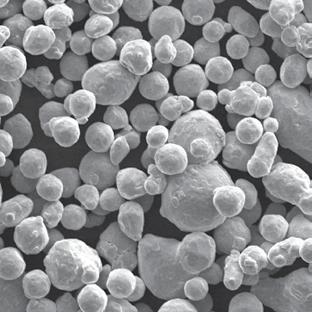
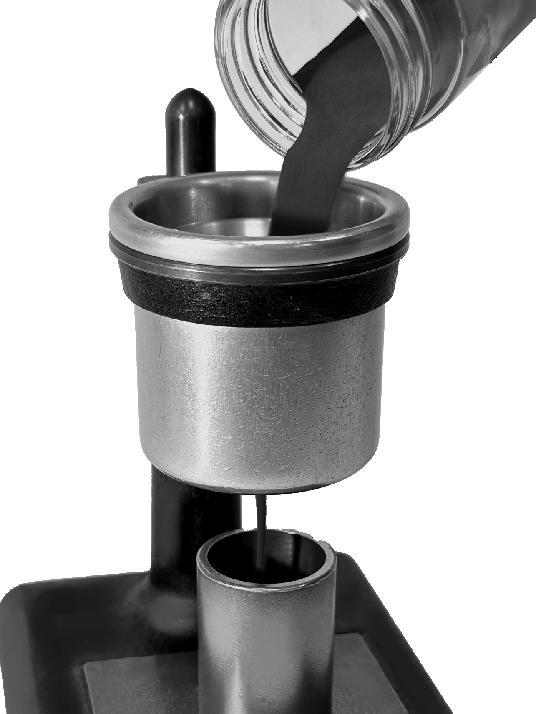
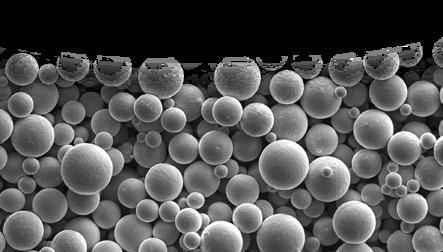
CHARACTERISTICS
Plasma Quality Powder
High Sphericity
High Purity Traceability
Eplus3D, based in Hangzhou, China, has launched the EP-M2050, adding to its range of large-format metal Laser Beam Powder Bed Fusion (PBFLB) Additive Manufacturing machines. The new machine is supplied with thirty-six lasers as standard, but can be upgraded to forty-nine or sixtyfour lasers if required. It has a build volume of 2050 x 2050 x 1100 mm and a customisable Z-axis up to 2000 mm.
Eplus3D’s latest machine also offers the flexibility of choosing between 500 W or 700 W fibre lasers, enabling it to process a diverse range of materials including titanium alloy, aluminium alloy, stainless steel, and tool steel. The EP-M2050 is capable of Additive Manufacturing at speeds of up to 1080 cm³/h and, with a layer thickness range of 20-120 µm, the machine is reported to be ideal for
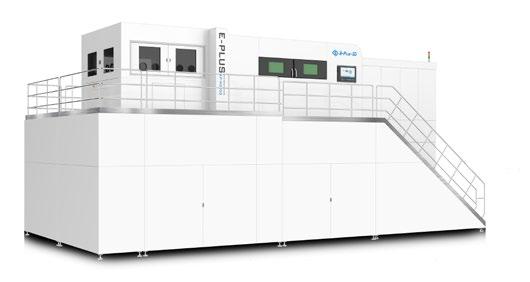
the manufacturing of large-scale, high-precision components for aerospace and other demanding sectors. As is common with Eplus3D’s large-format PBF-LB machines, the EP-M2050 can be connected to the company’s closed-loop sieving tower, ensuring the highest user safety, reduced downtime and reduced material waste.
The EP-M2050 follows the launch of Eplus3D’s sixteen-laser EP-M1550 in September 2023. With an option for up to twenty-five lasers, the EP-M1550 has now been successfully installed at customer sites, added the company.
www.eplus3d.com
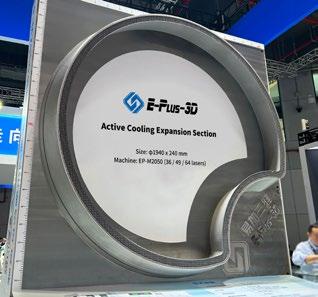
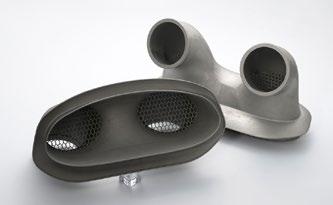
The EP-M2050 large format multi-laser metal Additive Manufacturing system has a 64-laser option. Seen right is a cooling component built on the new machine (Courtesy Eplus3D)
Forward AM, the Additive Manufacturing business of BASF, has undergone a management buyout (MBO), creating a new independent company named Forward AM Technologies. Led by CEO Martin Back, and supported by BASF, the acquisition includes Forward AM’s materials and solutions, as well as its Sculpteo service business.
Forward AM offers a range of Ultrafuse metal filaments, including 17-4 PH and 316L stainless steels, for the Material Extrusion (MEX)-based Additive Manufacturing process Fused Filament Fabrication (FFF). The new company will retain control over intellectual property and, with its strong supply chain, reports that it expects to meet future demands
and fulfil all contractual obligations without disruption.
“I would like to express my gratitude to BASF for all their support during the MBO process,” stated Martin Back, CEO at Forward AM. “By working together, we could ensure that our team of experts and the innovative tools currently in place can continue to provide leading AM solutions to the manufacturing industry in times of volatility.
The team at Forward AM is truly passionate about shaping the future of manufacturing and all the exciting opportunities to build and grow within this innovative AM community. I’m looking forward to this empowering journey ahead.”
Forward AM has posted strong performance, with a consistent 30% annual growth rate over the past two years, said to stand at more than double the industry average.
“It is a very exciting time to be part of the AM industry. Building on excellence in materials, services, and solutions, we’re going to continue to drive innovation through our work and collaborative efforts with our partners,” said Back. “We know the manufacturing sector faces growing volatility and uncertainty, creating a demand for more resilient and sustainable materials and agile solutions. Forward AM is here to deliver on that demand head on. This new venture emphasises our continued commitment and dedication to providing expedient and robust AM solutions, focusing on the success of our customers and partners.”
www.forward-am.com
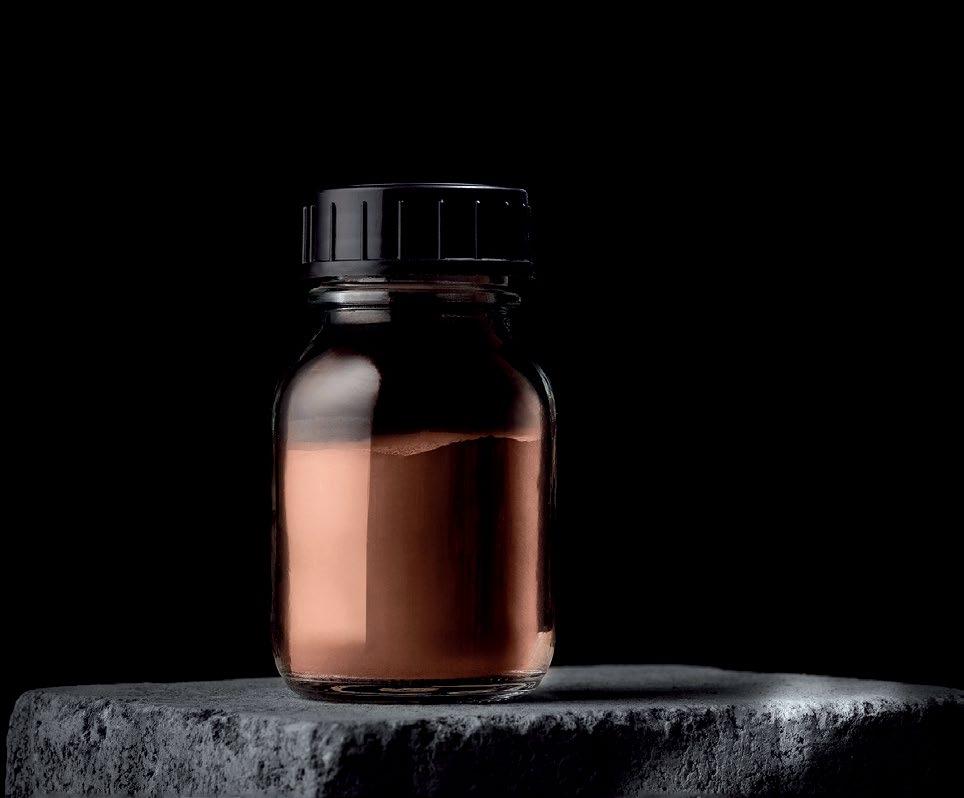
We’ve expanded our webshop selection of premium-quality titanium, maraging steel, nickel-based superalloys, and stainless steels to include Osprey® C18150. This new copper-based metal powder for additive manufacturing is tailored for excellent conductivity and strength at high temperatures. The checkout process is simple, and we accept credit card payments. Just add to cart at any time, and we’ll ship within 48 hours.
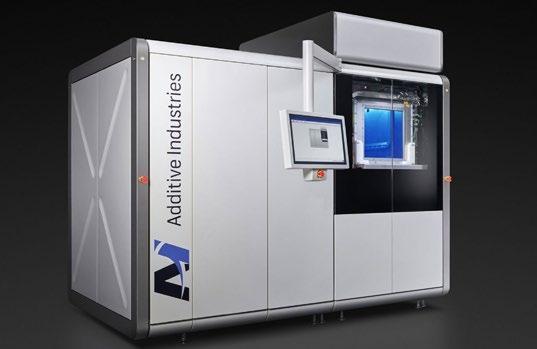
Additive Industries, headquartered in Eindhoven, the Netherlands, unveiled its new MetalFab 300 Flex metal Additive Manufacturing machine at RAPID + TCT 2024. The MetalFab 300 Flex is coupled with a unique build platform that enables users to increase the
build area on-demand, said to be the first of its kind in the industry.
Designed as a cost-effective entry package, the MetalFab 300 Flex has two full-field 500-watt lasers that can access every corner of a flexible build envelope. The baseline build area is
Nikon SLM Solutions AG, headquartered in Lübeck, Germany, has commenced production for its NXG XII 600 metal Additive Manufacturing machine in the United States. The expansion of its manufacturing capabilities now provides North American customers with a fully ‘American Made’ metal AM machine.
Production of the NXG XII 600 is located at a facility in South Carolina, and is intended to enhance Nikon SLM Solutions’ ability to meet the growing demand for its metal Additive Manufacturing solutions across key industries, including aerospace, defence, automotive, and energy.
Charlie Grace, CCO at Nikon SLM Solutions and president of Nikon SLM
Solutions NA, commented on this strategic expansion, “Establishing the production of the NXG XII 600 in the United States, allows us to better support our North American customers by providing them with locally produced, high-quality Additive Manufacturing systems. Our commitment to innovation and excellence is reflected in this expansion, and we are excited about the opportunities it brings to our industry.”
By localising the supply of the NXG XII 600, Nikon SLM Solutions aims to deliver faster lead times, enhanced customer support, and a strengthened presence in the US market.
The company added that its US operations adhere to the relevant
300 x 300 x 400 mm, with the ability to flex access to a larger 420 x 420 x 400 mm envelope on-demand.
The MetalFab 300 Flex is specifically designed to simplify the adoption process for new market entrants, across industries such as automotive, defence, energy including oil and gas, semiconductor, and industrials. Its integrated powder handling and unique flexibility is expected to lower the barrier to entry, making it ideal for companies seeking to manage their financial and technical risk as they embrace and develop metal AM, states Additive Industries.
“At Additive Industries, we are proud to lead the way in making metal Additive Manufacturing more accessible and affordable,” stated Mark Massey, CEO at Additive Industries. “The MetalFab 300 Flex, which is based on our proven metal PBF technology, is designed to help our customers manage their technical and financial risk as they grow their AM business. It is specifically aimed at customers who need to be able to build both small and large parts but without incurring the upfront expense of a large printer.”
www.additiveindustries.com
Andre Thiemann, VP of Production, celebrates the start of US production of the NXG XII 600 (Courtesy Nikon SLM Solutions)
acts and regulations, being Buy American Act (BAA)-compliant and meeting the Department of Defense Federal Acquisition Regulation Supplement (DFARS) requirements for Department of Defense-related sales. The machines are also Trade Agreements Act (TAA)-compliant US-made end products. www.nikon-slm-solutions.com
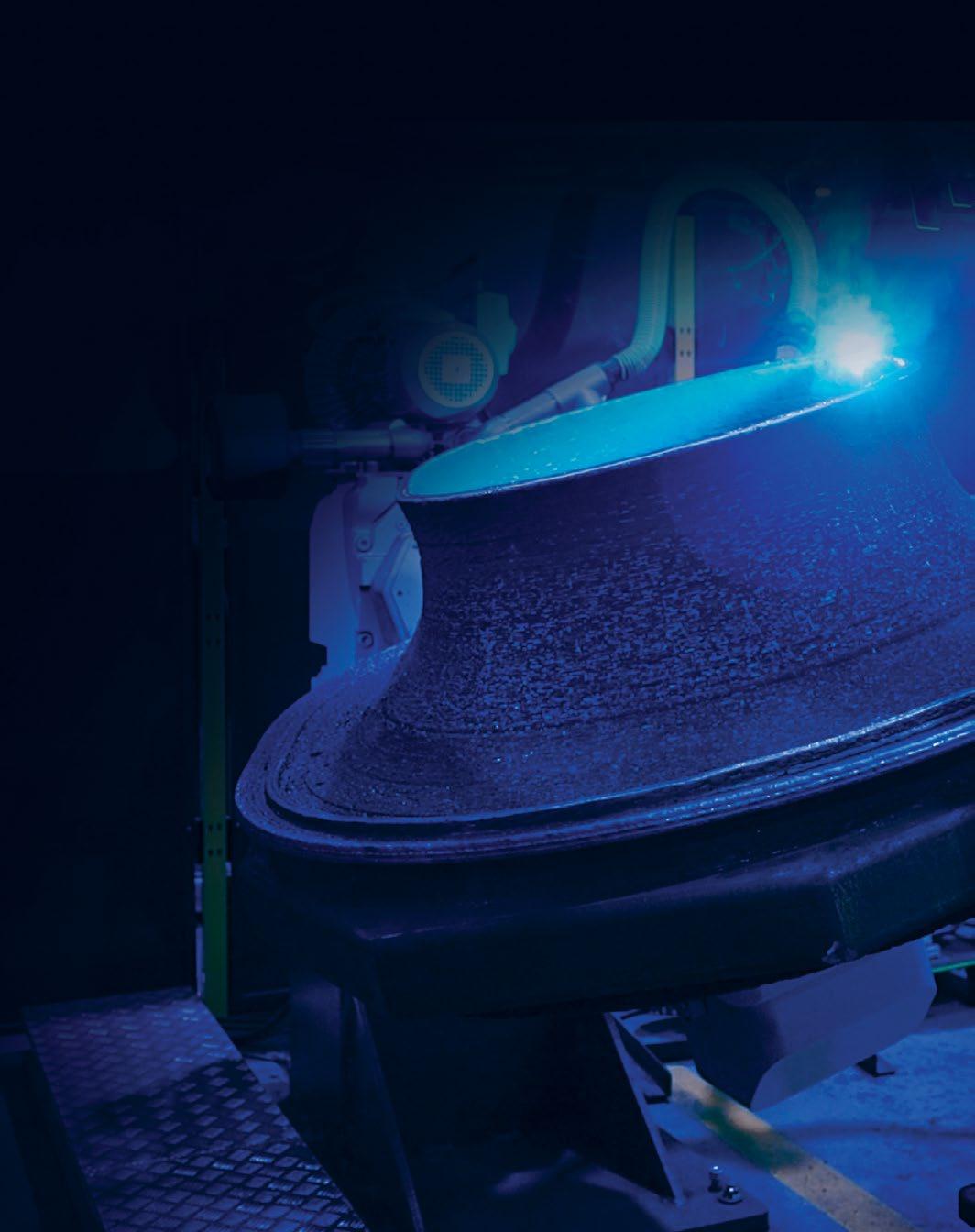
Increase manufacturing productivity with ARCEMY® .
Maximize efficiency and performance in your Aerospace, Defense, Maritime, and Oil & Gas operations with ARCEMY® , a revolutionary metal 3D printing solution powered by proprietary software and our patented Wire-arc Additive Manufacturing (WAM®) process.
ARCEMY® delivers:
• Superior-quality metal parts that meet rigorous industry standards.
• Unmatched design freedom for fabricating complex, mission-critical parts.
• Reduced lead times and production costs compared to traditional methods.
• Minimized waste through efficient material utilization.
Contact us today to discuss how ARCEMY® can transform your mission-critical manufacturing, delivering unprecedented efficiency and performance.
Shown: Panama Chock, ship board fitting. Manufactured with ER70S-6, deposited mass 1.25 tonne, size 1,500 x 1,290 x 540 mm, total print time 188 hrs.


EASYMFG, based in Wuhan, China, has expanded its range of metal Binder Jetting (BJT) Additive Manufacturing machines with the launch of the M550Max and M150Inno. The lineup now includes three models, with the M550Max targeted at medium to large-sized parts, the M400Pro for small-scale production and the new entry-level M150Inno aimed at R&D applications.
Founded in 2013, EASYMFG is one of China’s earliest adopters of Binder Jetting technology. In addition to metal, it offers sand and full-colour BJT machines.
M550Max
This flagship M550Max is designed to efficiently produce medium and large-sized parts. The machine has a build chamber of 550 x 370 x 200 mm with the layer height adjustable from 30 to 200 µm, and offers a maximum build rate of up to 2,442 cm 3/hour.
The new M550Max features 9,600 nozzles arranged across a width of 350mm, with a resolution of 600 NPI. With the capability to simultaneously deposit 3.3 pl droplets, the M550Max achieves a single-layer printing time
of 12 seconds while maintaining surface quality and precision. Moreover, it can produce green parts with a density exceeding 60%, leading to a post-sintering density of up to 99% for stainless steel components.
The M550Max can process a wide range of metals, including titanium alloy, tools steel, copper, stainless steel, and more.
The M400 Pro was launched in 2023 and is specifically designed for the rapid production of small-scale production-grade parts. It offers
fast and reliable manufacturing capabilities, catering to the needs of medium-sized products.
The machine has a build chamber of 400 x 250 x 200 mm, a maximum build rate of 1,440 cm 3/hour and an adjustable layer height ranging from 40 to 200 µ m.
The M150Inno is an entry-level model for metal Binder Jetting designed to cater to the research and development needs of universities and institutions.
This machine offers a build chamber of 150 x 70 x 70 mm and has a build rate of 189 cm 3/hour. It also has an adjustable layer height ranging from 40-200 µ m. www.easymfg3d.com
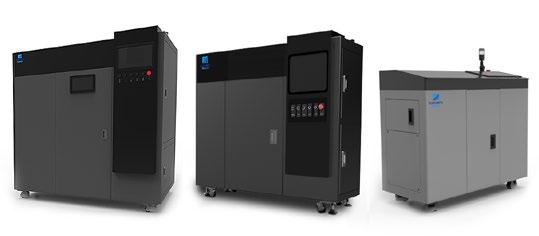
EASYMFG now offers three metal Binder Jetting Additive Manufacturing machines. L-R M550Max, M400Pro and M150Inno (Courtesy EASYMFG)
Shapeways Holdings, Inc, headquartered in New York City, USA, has ceased operations and filed for bankruptcy. All of the company’s subsidiaries were reported to have also ceased operations and filed voluntary petitions for bankruptcy relief.
Prior to the announcement, Shapeways’ digital manufacturing platform offered customers access to a range of manufacturing services, including Additive Manufacturing and traditional manufacturing processes. The company’s purpose-built software, a wide selection of materials and
technologies, and global supply chain was intended to lower manufacturing barriers and speed delivery of products. Throughout its lifespan, the company has reportedly delivered over twenty-one million parts to a million customers in over 160 countries.
It was also announced that Greg Kress, the company’s Chief Executive Officer, Alberto Recchi, Chief Financial Officer, and Andy Nied, the company’s Chief Operating Officer, resigned as executive officers. Following the bankruptcy filing, neither the company nor any of its subsidiaries have officers
or employees. Directors Leslie CG Campbell, Raj Batra, Ryan Kearny, Greg Kress, Christine Gorjanc, Alberto Recchi and Josh Wolfe also tendered their resignations as members of the company’s board of directors.
In 2021, Shapeways was acquired by Galileo Acquisition Corp., a publicly-traded special purpose acquisition company. Later that year, the company was listed on the New York Stock Exchange. In 2023 the company transferred its listing from the New York Stock Exchange to The Nasdaq Global Market. Also in 2023, Shapeways launched MFG Materials, offering a range of raw materials to manufacturers at discounted rates. www.shapeways.com
Desktop Metal, Inc, headquartered in Burlington, Massachusetts, USA, has announced the launch of its PureSinter furnace. Capable of debinding and sintering metal parts created via Binder Jetting (BJT) Additive Manufacturing, the new furnace is also suitable for parts produced using traditional Metal Injection Moulding (MIM) and Press and Sinter Powder Metallurgy (PM) methods.
In development for more than five years, PureSinter features hot walls that prevent contamination buildup and an airtight processing environment to enable efficient waste exit and high levels of purity.
Contamination can be caused by hydrocarbons and other waste emitted by the powdered metal parts, explains Desktop Metal. This builds up on walls and other surfaces inside the furnace and can cause undesirable chemical reactions and furnace reliability.
PureSinter has undergone extensive testing and is reported to show little to no contamination or buildup inside the furnace, even after hundreds of runs.
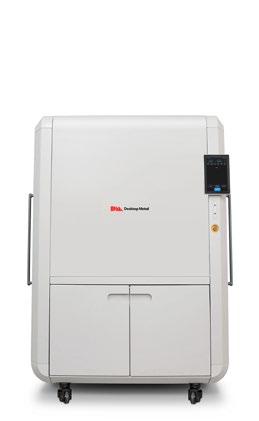
“Rather than trying to simply mitigate the factors that lead to poor performance in an all-in-one debinding and sintering furnace, we have eliminated them with an innovative all-new design,” stated Ric Fulop, founder and CEO of Desktop Metal. “This is the first product from Desktop Metal aimed at manufacturers using both Additive Manufacturing and traditional manufacturing methods.”
“We have put the PureSinter through a prolonged period of testing to rigorously verify our new design, and it has exceeded all expectations. PureSinter is an exemplary demonstration of the innovation for which Desktop Metal and our engineers are known. We believe this furnace will revolutionise sinter-based AM and the traditional furnace industry.”
The PureSinter furnace can reach a maximum temperature of 1,420°C and is qualified for use with a variety of processing gases, including argon, nitrogen, forming gas, and air. The machine features a total of seventeen fans and a pop-out ceiling vent for active,
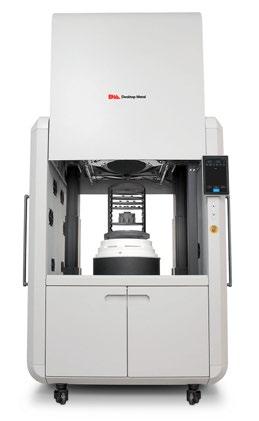
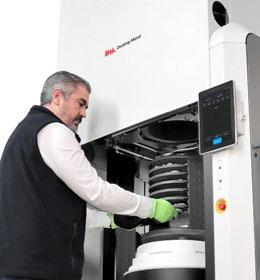
rapid, and consistent cooling, lowering temperatures from 1,420°C to 200°C in less than four hours and without expensive water-cooled walls.
PureSinter features a vertical furnace design, an automated thermal hood lift, touchscreen controls, and visibility inside the retort. With an oxygen-tight retort seal, and its efficient cooling system, the energy requirements are also reported to be lower than similar machines.
The new furnace is compatible with all of Desktop Metal’s metal AM machines and binders. It is also validated with fourteen metal powder and binder combinations, including stainless steels, tool steels, superalloys, and reactives. PureSinter can also process titanium with a high degree of confidence without the complex preparations which may be required with other furnaces. It was added that additional material validations are in process.
The first PureSinter furnace has been installed at FreeFORM Technologies, a metal Binder Jetting contract manufacturer based in St. Marys, Pennsylvania, and the largest owner of a fleet of twentyfour Desktop Metal AM machines, to validate new materials.
Shipments of the PureSinter furnace are slated to begin in Q3. 2024. www.desktopmetal.com
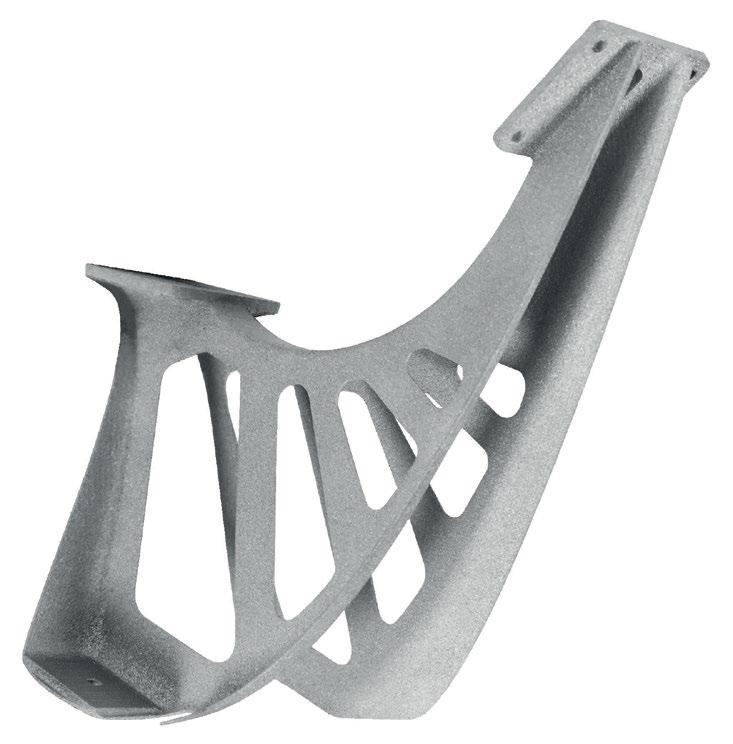
HP showcased updates to its metal and polymer Additive Manufacturing machines at this year’s RAPID + TCT.
For the HP Metal Jet S100, these include an increased build height up to 170 mm, allowing for the production of larger parts and more parts in a single build cycle, enabling manufacturers to explore new dimensions in product design and innovation.
The HP Metal Jet S100 also leverages the economies of scale offered by Metal Injection Moulding (MIM) powders, significantly lowering operational and material costs for large-scale production compared to other AM technologies, states HP.
HP also introduced new materials through collaborations with Indo-MIM and Sandvik. These materials include IndoMIM M2 Tool Steel, ideal for high-strength mould inserts and cutting tools, and Sandvik’s Osprey® 316L, which offers improved corrosion resistance and processability for applications in the medical, automotive, and industrial markets. Both materials have undergone rigorous HP qualification processes, helping to ensure reliable performance and accessibility.
“HP is deeply committed to driving the Additive Manufacturing industry forward with persistent and new enhancements to our existing portfolio,” said Savi Baveja, President of HP Personalization & 3D Printing.
“Our innovations in both metal and polymer 3D printing technologies are testament to our dedication to advancing the capabilities and applications of 3D printing, empowering our customers to turn their ideas into reality with unprecedented efficiency and quality.”
HP also announced the launch of its HP Metal Jet Production Service accessible via a dedicated website. Here, customers can submit queries, request sample parts, and access comprehensive production services. The move aims to address and overcome common barriers in metal Additive Manufacturing, including cost, time, and effort, making the technology more accessible and practical for a wide range of industries.
To support this initiative, HP has established a Metal Jet Adoption Center located in Corvallis, Oregon.
This centre looks to provide endto-end application qualifications, from benchmarking and sample part testing to process optimisation, helping to ensure that customers can seamlessly transition from prototype to production. HP’s network of Contract Manufacturers will play a pivotal role in supporting application development and scaling to serial production.
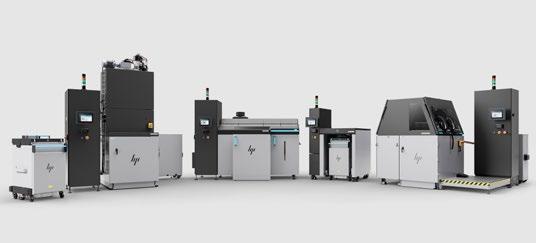
Enhancements to the HP Metal Jet S100 Additive Manufacturing machine includes an increased build height up to 170 mm (Courtesy HP)
Software collaborations
HP’s collaboration with Autodesk has resulted in the readiness of the Autodesk® Fusion® bundle with HP AM machines, enhancing design and production integration. Similarly, a collaboration with Altair will provide customers with proprietary HP material information, facilitating better design and production of AM parts.
CoreTechnologie’s collaboration with HP aims to elevate texturing for additively manufactured parts, providing users with an extensive digital texture library within the 4D_Additive software, pushing the boundaries of surface design.
“We are excited to help our customers better design parts for HP Metal Jet and HP Jet Fusion 3D Printing Solutions by giving them access to HP material information,” said Yeshwant Mummaneni, Chief Engineer of Data Management and Analytics at Altair. “Through this collaboration with HP, we are creating a bridge across the often-siloed functions of design and production of additive parts so that even more exciting applications can be realised.”
For HP’s polymers and metals customers, a collaboration with Dyndrite will now support HP’s entire Additive Manufacturing ecosystem, giving the option to use Dyndrite build manager software to create and submit build jobs. Additionally, HP’s multi-level build feature included in the process development will allow process parameters to be adjusted on a per level basis for up to 20 levels within a single build.
HP also introduced the HP 3D Texture Visualizer, developed by Leopoly, a 3D and XR software technology provider. This key component of the HP 3D Digital Texture Library enhances the 3D design process by allowing users to apply and visualise digital 3D textures on their CAD geometry in real time. The tool also supports the import of custom digital textures and provides the flexibility to adjust parameters like scaling, depth, and resolution to achieve the desired look.
www.hp.com
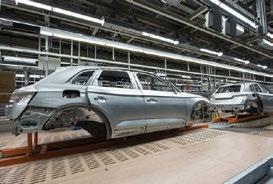








Sintavia, LLC, based in Hollywood, Florida, USA, has announced its single largest expansion in facilities and equipment since 2019. The $25 million investment includes additional advanced manufacturing space, largeformat Additive Manufacturing machines, large-format post-processing equipment, and component testing equipment. With this investment, Sintavia is expected to be able to meet the demand from the programmes it supports across the US Department of Defense for the balance of this decade.






“Looking into the next few years, it is clear to us that we need to make the investments today that will support the demand from our customers tomorrow,” said Brian Neff, Sintavia’s founder and CEO. “As the world’s first truly all-digital aerospace component supplier, Sintavia is in a unique position to push the boundaries of what is possible in terms of designing and manufacturing nextgeneration aerospace components along a single, fully digital thread. But to do that, you need first to have the right facilities, hardware, and software in place. That is what we are doing today in support of our customers and their critical programmes.”





A major focus of the new expansion will be the continued design and development of high-performance thermodynamic components, in particular aerospace heat exchangers. Sintavia’s heat exchangers, which are enabled using additively designed triply periodic minimal surface structures, reportedly demonstrate improved heat rejection at comparative flow rates when evaluated against traditional versions. Additionally, the manufacturing sturdiness of a fully digital thread results in production is said to yield close to 100%, multiples higher than manufacturing yields often experienced by traditional heat exchanger manufacturers.
As part of the expansion, Sintavia signed a longterm lease for an additional 2,300 m 2 of manufacturing space adjacent to its existing headquarters, which it will use for Additive Manufacturing, post-processing, and materials testing. New equipment included in the expansion includes Sintavia’s second SLM NXG XII 600, a third AMCM M4K-4, a second CT Scanner (450 kV), a second large air furnace, cold flow test machine, a shock and vibration table, pressure cycle testing equipment, acoustic testing equipment, multiple additional five-axis CNC machines, multiple additional fatigue rigs, and multiple additional polishing machines. Sintavia is also the North American launch customer for the AMCM M8K-8, one of the largest Laser Beam Powder Bed Fusion (PBF-LB) AM machines available to date, with a build volume of 820 x 820 x 1600 mm.
The expansion is expected to be completed by the fourth quarter of 2024.
www.sintavia.com
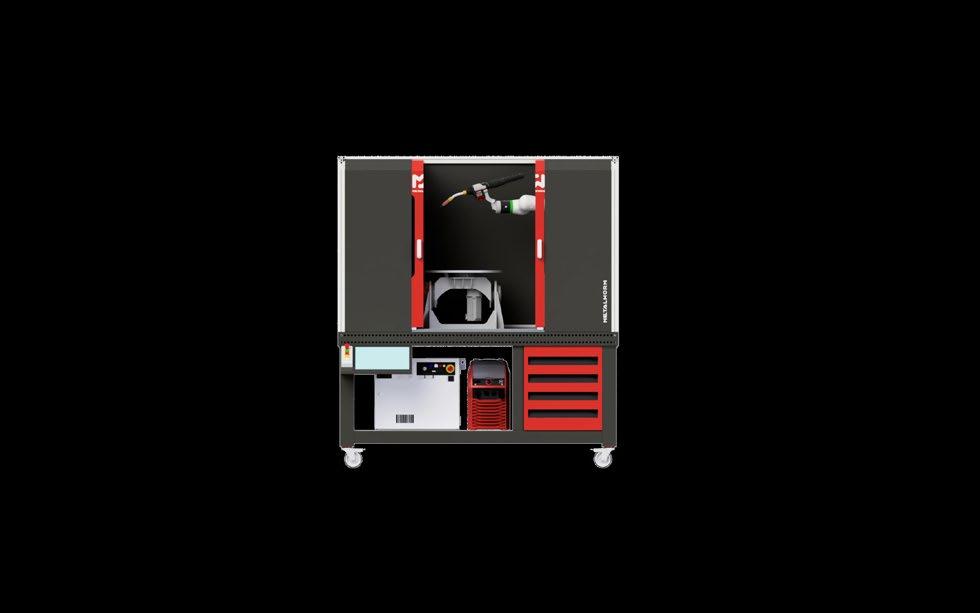
MetalWorm Additive Manufacturing Technologies Inc, a spin-off of Intecro Robotics Inc, based in Ankara, Türkiye, has introduced the MW500 LAB, a Directed Energy Deposition (DED) machine designed to make high-quality Additive Manufacturing accessible to universities, research institutes, and industrial applications.
The MW500 LAB is engineered to handle workpieces up to ⌀ 500 x 500 mm, with a payload capacity of 250 kg. At its core is the Fanuc CRX-5iA Cobot. Coupled with the Fronius CMT Technologies’ TPS400i or iWave 500i power sources, the MW500 LAB enables consistent, high-quality results across a wide range of applications.
The proprietary MetalWorm Diagnostic and Tool Path Planning Software is a key feature of the MW500 LAB. This advanced software facilitates meticulous process planning and execution, enabling optimal performance and precision. Equipped with an array of sensors and cameras, the system offers comprehensive process monitoring and control, providing real-time feedback and adjustments for enhanced accuracy and efficiency.
The MW500 LAB is designed to work with a diverse array of materials, making it suitable for a variety of industrial applications. Its material capabilities include aluminium alloy, steel, stainless steel, Invar, aluminium nickel bronze, and nickel alloy. This versatility ensures that the MW500 LAB can meet the needs of various industries, from aerospace and automotive to medical and research sectors.
The MW500 LAB is said to provide a platform for material development, Wire Arc Additive Manufacturing (WAAM) process optimisation, and Digital TWIN research. By making advanced WAAM technology more accessible, the MW500 LAB supports the exploration and development of new materials and manufacturing techniques.
The MW500 LAB is intended to increase opportunities for collaborations with universities and research institutes, partnerships which can focus on process development and the execution of joint research projects. These collaborations aim to foster a rich environment of knowledge exchange and innovation, leading to groundbreaking discoveries and
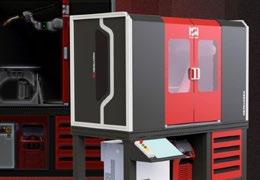
The MW500 LAB (Courtesy MetalWorm)
advancements in the field of Additive Manufacturing. www.metalworm.com

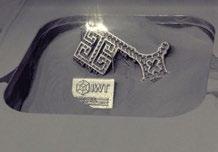

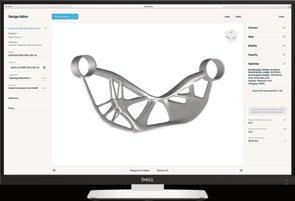
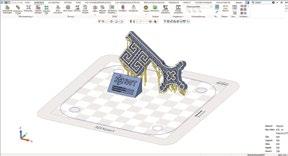


DMG Mori, headquartered in Tokyo, Japan, launched the LASERTEC 30 SLM 3rd Generation Laser Beam Powder Bed Fusion (PBF-LB) Additive Manufacturing machine at the company’s Open House event in Bielefeld, Germany. The new machine features quad lasers, a full overlap working area, and a build volume of 325 x 325 x 400 mm.
To reduce the time between build jobs and increase flexibility, the machine makes use of the company’s rePLUG self-contained, automated
powder material processing units that can be exchanged with other rePLUG units. Existing customers with qualified processes, which are often found in the aerospace and medical industries, use the rePLUG system to ensure the quality of powder in use. The excess powder from the working area is sieved, stored and prepared for re-use, all under an inert gas atmosphere within a closed loop. This not only minimises oxidisation or any moisture build-up but also reduces potential
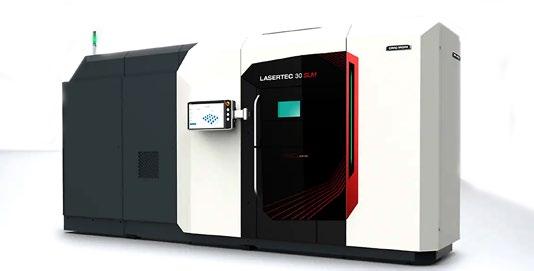
DMG Mori has introduced the LASERTEC 30 SLM 3rd Generation at its Open House in Bielefeld, Germany (Courtesy DMG Mori)
Replique, Mannheim, Germany, has announced the extension of its seed funding round. This follows on from its original May 2023 funding round. Lead investor STS Ventures, along with the others, have reportedly increased their financing in Replique.
Leveraging Additive Manufacturing, Replique works to enable companies to shift from a physical to a digital inventory and provide industrial-grade parts in the right quality anywhere worldwide via a secure network of more than 100 production partners.
“We’re very optimistic about Replique’s future,” Stephan Schubert from STS Ventures commented.
“The strong customer growth and continuous platform extension both by function and region demonstrate the team’s commitment and the value they bring to customers.
The company converted numerous proof-of-concept projects successfully to serial applications with their customers.”
Markus Bold, Managing Director of Chemovator, the business incubator and early-stage investor of BASF, where Replique’s journey began, stated, “Seeing the progress of our portfolio company Replique is truly remarkable. The commitment and support from the existing
operator exposure to the powder. For other customers, the rePLUG makes changing between different materials much easier.
For the first time on a DMG Mori LASERTEC SLM machine, rapid exchange of the build container is also possible, it was stated. This further increases machine efficiency since it is no longer necessary to wait for the build job to cool down. Camera monitoring of the powder bed’s surface further minimises disruption during manufacturing. After each layer, the surface is scanned for anomalies before the re-coater moves.
The newly designed inert gas flow over the powder bed enables a consistent laminar flow during operation. The secondary gas flow below the protective glass aims to avoid residue build-up on the protective glass. A secondary camera system constantly observes the protection glass and warns if there is a problem.
DMG Mori has placed emphasis on the usability and ergonomics of the machine, including reducing the operator contact with the powder.
The LASERTEC 30 SLM 3rd Gen utilises the CELOS X operating environment which guides the operator through all the steps required to get a job running.
www.dmgmori.com
investors are invaluable contributors to this success.”
Over the past few months, Replique has been used in numerous customer projects to efficiently and flexibly manufacture spare parts, small series and high-performance parts. Meanwhile, companies like Alstom, BASF, Miele, Danfoss, MAN and more than eighty others use Replique to deliver parts on demand.
With the extended seed funding, Replique intends to invest in the development of new platform modules to further automate and extend its AM services. Replique also plans to increase its network of qualified production partners globally to satisfy the strong demand for on-demand manufactured industrial parts. www.replique.io
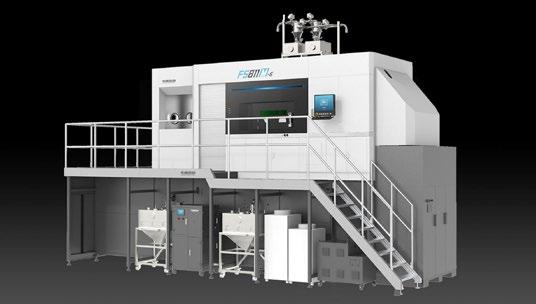
Farsoon Technologies, based in Changsha, China, has added the FS811M to its range of metal Laser Beam Powder Bed Fusion (PBF-LB) Additive Manufacturing machines. With the option for six, eight, ten or twelve 500 W fibre lasers, the FS811M series has a build volume of 840 x 840 x 960 mm and is geared towards high-volume manufacturing.
“Being the latest addition to Farsoon’s metal 3D printer portfolio, the FS811M grew out of a co-innovation project with our key industry customers operating multiple FS621M systems,” shared Wenyu Guo, Vice-director of Farsoon metal product line management. “We’ve spent the past two years developing
and optimising the FS811M platform for specific application projects.”
“Starting one year ago, we started to see the rapidly expanding largeformat metal 3D printing application in aerospace, oil & gas, energy and automotive sectors, the industry customers are drawing greater requirements for manufacturing efficiency, reliability, and larger build size than FS621M,” Guo continued.
“This is when we decided to fully commercialise the FS811M platform to scale up metal series production.”
With an XY build platform size of 840 x 840 mm and a vertical axis of 960 mm, the FS811M features a total build volume of 677 litres. The Z height is intended to open many
A strategic collaboration, between Sweden’s Freemelt AB, Sandvik AB and Mid Sweden University, is aiming to establish Electron Beam Powder Bed Fusion (PBF-EB) Additive Manufacturing as an innovative and competitive manufacturing technology for industrial applications. The parties will focus on developing and improving manufacturing processes and materials by combining expertise, experience, and solutions.
Freemelt will utilise its knowhow and solutions within PBF-EB, especially its knowledge of tungsten material processes. Sandvik will certify its tungsten powder for use in Freemelt’s AM machines. Mid Sweden University and Sports Tech Research Centre will invest in a Freemelt ONE open-source research PBF-EB machine and provide resources intended to accelerate the technology.
new manufacturing possibilities in large-scale industrial applications in aerospace, oil & gas and more.
Equipped with up to twelve fibre lasers, the high-speed galvo system boosts a production yield of up to 300 cm 3/h. The advanced multi-laser scanning strategy enables highefficiency distribution and calibration accuracy in the overlapping area for uniform mechanical properties of a single over-sized object or volumeproduction parts.
The FS811M platform features a multi-layer gas flow. The design enables high oxygen content and low inert gas consumption during the build process, enabling part quality consistency and reducing operational costs.
The build chamber is equipped with both front and rear doors in an effort to ease operation and maintenance. Once the build is completed, the part cylinder can be transferred to the powder breakout and part extract stations via an integrated conveyor system. The breakout station is fully enclosed and can be accessed through glove boxes on all four sides, allowing multiple operators for powder removal and detail cleaning under a safe, inert atmosphere.
The FS811M powder handling system shares a common modular powder container design for loading, recycling, and sieving under inert gas protection, offering a continuous powder supply to the build job and the ability to monitor powder quality. www.farsoon.com
“This collaboration highlights the expertise of the Swedish research and industry in Additive Manufacturing to maintain leadership in innovative manufacturing capabilities, stated Daniel Gidlund, CEO, Freemelt. “Tungsten is a focus material for Freemelt in which we have established a strong position for various industrial applications, therefore it’s extra rewarding and valuable to enter into this collaboration with Sandvik who is a leading supplier of tungsten powder.”
www.freemelt.com | www.miun.se www.metalpowder.sandvik
ADDiTEC, headquartered in Palm City, Florida, USA, has introduced the Hybrid Series, a multi-technology manufacturing platform offering precision five-axis CNC manufacturing and two metal Additive Manufacturing technologies. The new Hybrid 2 platform adds Liquid Metal Jetting (LMJ), a process which falls broadly into the ISO/ ASTM 52900:2015 category of Material Jetting, using aluminium wire as the primary feedstock to the CNC machine. The Hybrid 3 adds both LMJ and laser-based Directed Energy Deposition (DED) technologies.
LMJ, with its high-resolution capabilities, is said to unlock the potential for creating intricate and finely detailed components. Utilising cost-effective welding wire, LMJ enables complete material utilisation and exceptional detail.
Laser-based DED Additive Manufacturing, known for its high deposition rate, makes it well-suited to the production of larger components or reducing lead times. Like LMJ, DED employs welding wire, ensuring cost efficiency and full material utilisation.
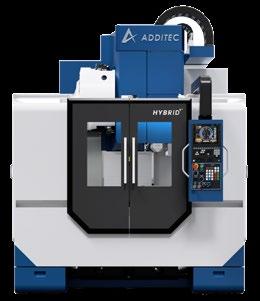
The new Hybrid 3 combines both Liquid Metal Jetting and laser-based Directed Energy Deposition with CNC machining (Courtesy ADDiTEC)
The Hybrid Series also features an integrated two-axis positioner rated

The Hybrid Series incorporates a high-temperature build bed assembly with ADDiTEC’s patented quick-release technology for LMJ parts, providing automatic part removal.
The machine’s subtractive process, primarily driven by CNC machining, enables users to achieve the desired surface finish and tight tolerances for parts manufactured using additive processes. www.additec3d.com

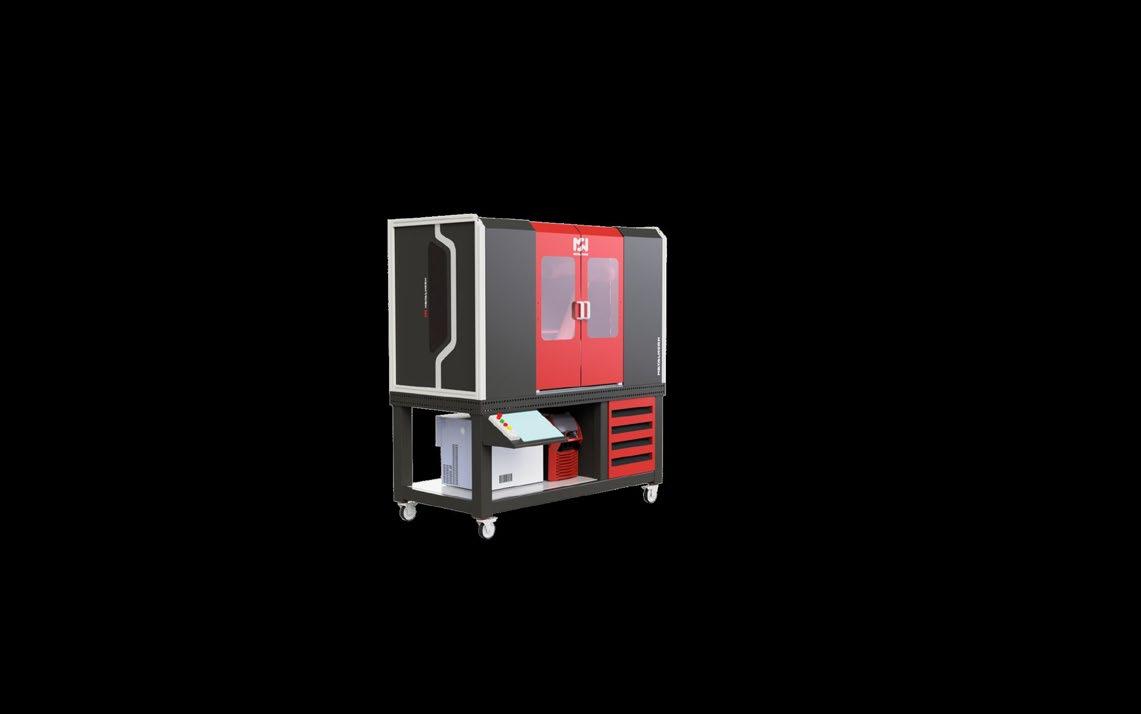
Colibrium Additive, a GE Aerospace company, has unveiled the Spectra M Electron Beam Powder Bed Fusion (PBF-EB) Additive Manufacturing machine. The Spectra M has a build envelope of Ø270 x 430 mm
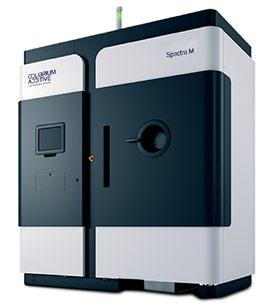
The new Spectra M is a small-build PBF-EB machine (Courtesy Colibrium Additive)
and, with a beam power of 4.5 kW, is compatible with Ti6Al4V Grade 5 and Ti6Al4V Grade 23.
Colibrium Additive states that the Spectra M is in response to interest from additive manufacturers seeking a smaller build volume PBF-EB machine, without compromising the freedom of design and productivity benefits offered by the electron beam technology. The company added that it has been developing a smaller build volume AM machine for some time, building on the technology and productivity gains achievable on its Spectra technology platform.
Its smaller build volume makes the Spectra M a suitable option for AM users in most industries, but especially for medical and orthopaedic implant manufacturers looking to further reduce cost-perpart and Additive Manufacturing production costs.
RPM Innovations, Inc (RPMI), Rapid City, South Dakota, USA, has announced the groundbreaking of a new facility to support increased demand for its metal powder-based Directed Energy Deposition (DED) Additive Manufacturing machines and component manufacturing services. The new state-of-the-art facility will be located adjacent to its existing
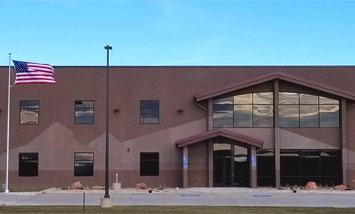
building and will provide over 4,000 m 2 of additional floor space, bringing the total to over 9,000 m 2. The expansion will triple RPMI’s current component manufacturing service capacity by providing space for over forty-five DED machines dedicated to producing parts for its customers.
RPMI believes the substantial increase in interest in its DED part production services over the past few years is due to the technology’s ability to drastically reduce development times, quickly adapt to changes or revisions in part design, and incorporate complex internal designs that were not previously manufacturable by traditional methods. It currently operates fifteen DED machines around the clock and plans to increase the number of these throughout 2024.
“Having the largest installed base of highly experienced, longstanding users provides invaluable insight and help is constantly evolving our portfolio to provide EB-PBF technologies that fulfil their specific requirements as they continue to scale their Additive Manufacturing operations. Spectra M is in direct response to constant dialogue with our customers, particularly those additive super users in the orthopaedic implant industry,” stated Oscar Angervall, senior product manager, Colibrium Additive.
The Spectra M comes equipped with the new EBMControl 6.4 and is fully compatible with Point Melt, Powder Supports, and Plate Free technology. Depending on the application, customers can choose between a high-productivity theme or an advanced Point Melt-based process theme, to enable supportfree AM without compromising surface roughness or mechanical properties.
www.colibriumadditive.com
“This expansion is a testament to the trust our customers have in our team at RPMI and our dedication to see DED exceed the challenges and expectations set forth from industry,” stated Nick Wald, General Manager at RPMI, a twenty-year DED industry veteran. “This growth is expanding the critical manufacturing infrastructure we want to see throughout the USA.”
RPMI’s large-scale 557XR laser DED Additive Manufacturing machine has a build volume of up to 1.5 x 1.5 x 2.1 m. With ITAR compliance and AS9100 certification, the company produces flight-approved production components, rapid prototype parts, and forging/casting replacements. RPMI machines are also used for the application of wear coatings, repairs, and the development of new alloys.
RPMI is aiming to begin moving additional DED machines into the new building and begin production in early 2025.
www.rpm-innovations.com
Learn from our experts how powder affects profitability, reliability, and productivity. In addition to developing great powder, we offer:
• A passion for additive manufacturing,
• experienced applications engineers, and
• groundbreaking materials science.
How to Choose the Right Material for Efficient, Consistent Additive Manufacturing
Tip #1
With early and open collaboration, powder design can be optimized to achieve design performance targets and complete material and part qualifications (MQ/PQ) with consistent, repeatable results.
Tip #2
Default process parameters provided by AM machine vendors are generally a compromise. Your materials supplier can suggest parameter sets that better meet the particular needs of your project.

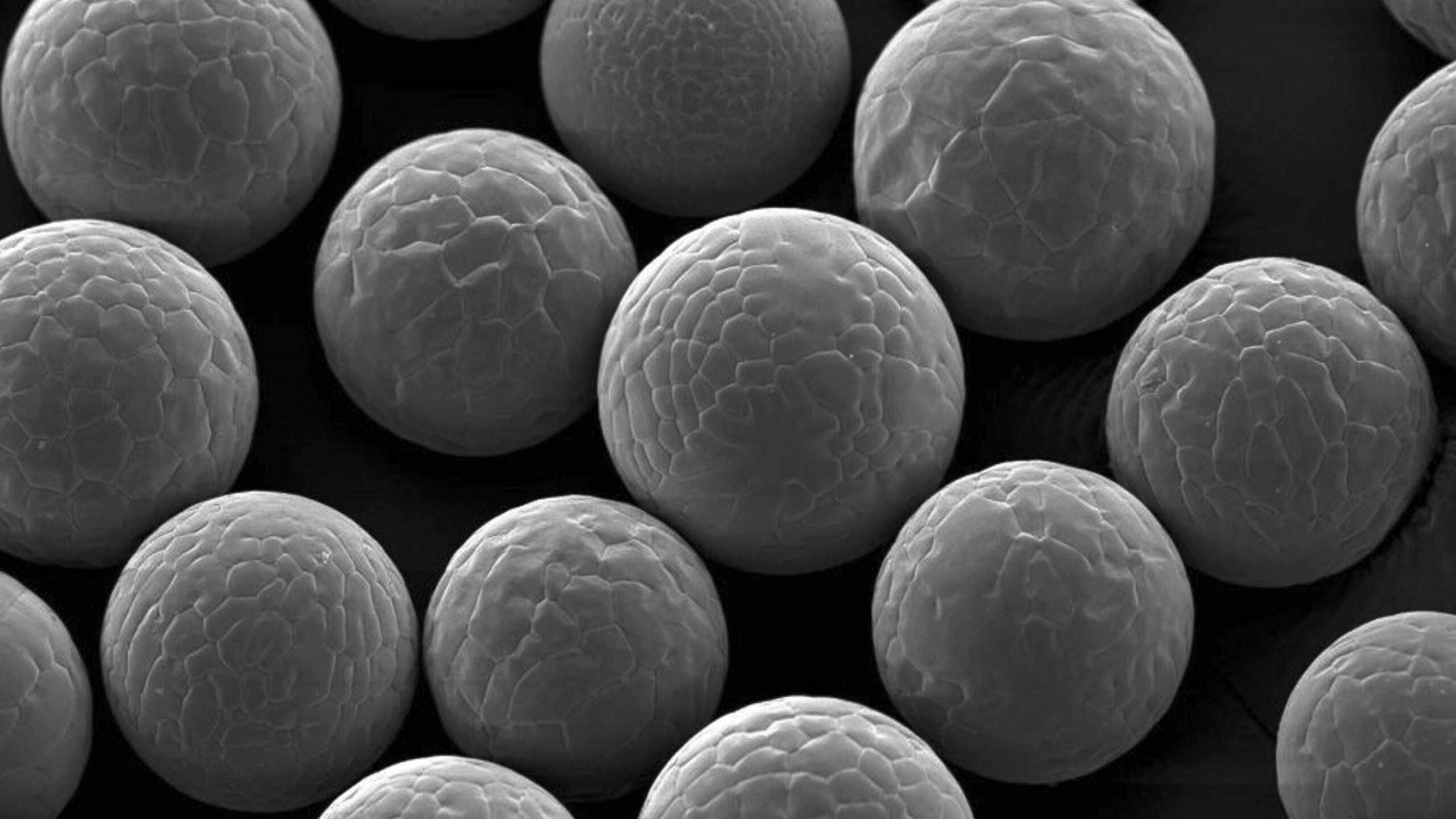
Beyond Safety: Non-Explosible Aluminum Feedstock is Simpler, Cleaner, Quicker for Additive Manufacturing
How does NExP-1 streamline operations?
• NExP-1 does not have the same explosion risk as typical aluminum powders.
• NExP-1 reduces the need to invest in specialized handling equipment and safety systems required for explosive dusts. It can use existing powder storage areas.
• Operators will notice it sticks less to surfaces and makes machine clean-up easier.
Quadrus Corporation, Huntsville, Alabama, USA, reports that its Quadrus Advanced Manufacturing Division (QAMD) has fabricated what is claimed to be the world’s first bimetallic rotating detonation rocket engine (RDRE) injector via Laser Beam Powder Bed Fusion (PBF-LB) Additive Manufacturing. The work is reported to be the culmination of a series of Small Business Innovation Research (SBIR) Phase II and Phase III Efforts, managed by engineers at NASA MSFC.
RDRE injectors face significant challenges due to the intense heat generated by the spinning detonation waves, states Quadrus. In response, QAMD manufactured a solution featuring a thin faceplate made from thermally conductive GRCop-42 and a manifold made of oxidationresistant nickel-based superalloy Monel K500.
GRCop-42 allows propellants to effectively cool the injector face while the oxidation resistance and strength of Monel K500 allows
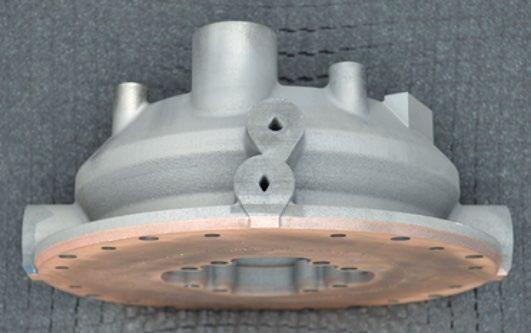
Quadrus Corporation has additively manufactured the world’s first bimetallic rotating detonation rocket engine injector (Courtesy Quadrus Corporation)
AIM3D GmbH, based in Rostock, Germany, reports it has relaunched following a consolidation phase and reorganisation of its shareholder structure after a management buy-out. The company has also entered into a cooperation agreement with the AM service provider Replique based in Mannheim, with the aim of making the material ULTEM™ 9085 more suitable for Additive Manufacturing.
In addition, AIM3D announced the optimisation of its patented
Voxelfill process. Strength tests are reported to show that this process can overcome inhomogeneous strengths of additively manufactured components in the X, Y and Z axes, and thus coming close to conventional processes such as injection moulding.
Variations of the Voxelfill strategy enable hybrid multi-material solutions with different Voxelfill materials, including within the same component. In this way, the material properties can be ‘customised’.
thinner walls in the manifold, resulting in a lighter design solution tailored to the demands of RDRE applications.
Quadrus Corporation overcame numerous hurdles associated with bimetallic fabrication, including precise geometrical alignment, mitigation of the risk of material cross-contamination, and the formation of high-strength bimetallic bonding. This required strict attention to detail in all three areas, while maintaining an orifice hole of 1.016 mm through the bimetallic region.
The bimetallic injector brings to a head a multi-year NASA SBIR effort focused on thermal management for combustion injector applications. The success includes the development of Quad Mesh, reported to be a groundbreaking approach to transpiration cooling for injector faceplate applications. Quad Mesh enables customisable permeability in high heat flux regions, synergistically complementing the PBF-LB build process and depowdering techniques.
The bimetallic injector, along with a monolithic GRCop-42 injector that includes the Quad Mesh technology, is slated for hot fire testing at NASA’s Marshall Space Flight Center during this summer, said to mark a significant step forward in advancing thermal management for rocket injector applications.
www.quadruscorp.com
Defined component weight, damping properties, elasticity or changes to the centre volume chambers (selective densities), component properties could be influenced in a targeted manner on the basis of FE simulations.
Clemens Lieberwirth, CTO at AIM3D, commented, “Of course, the Voxelfill process is particularly suitable for 3D printing of plastics and fibre-filled plastics, but it is also suitable for 3D printing of metal and ceramic components using the CEM process. In general, there are advantages due to the higher build speed and cross-layer filling.”
www.aim3d.de





We combine processes to boost your production. Address your production needs with our versatile additive manufacturing tools. Start with your application, and we'll create the perfect solution.


Additive

September 9 - 14, 2024, McCormick Place, Chicago, IL Come visit us in booth #432320 in the West Building, level 3. Come visit us in booth #432320 West Building, level 3.
Substractive Inspection


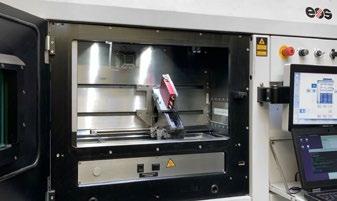
EOS has launched the dual-laser EOS M 290-2 metal Additive Manufacturing machine. Based on the M 290 series, the new machine has been developed through the company’s AMCM group and features two 400 W lasers with full-field overlap and a 250 x 250 x 325mm build volume. The new machine is compatible with existing EOS M 290 process parameter sets, and features optimised laminar gas flow to ensure the comparability of material properties. It includes a digital scanner with active cooling, up to 7.0 m/s and a process quality and material library comparable to EOS M 290 single field.
“While not always discussed publicly, many of the biggest and most widely known production applications in the history of metal AM have been underpinned by the EOS M 290,” stated Monica Smith, EOS metal
product line manager. “The heritage of the EOS M 290 family of systems dates back two decades with nearly 2,000 M 290s installed globally, which speaks to the popularity of the system and makes this line of AM technology perhaps the most adopted system in the world. The new EOS M 290-2 has a lot to live up to, and we are both proud and confident about the next generation of metal AM production stories that will be written using this system.”
The new EOS M 290-2 will be offered alongside the EOS M 290 as well as the EOS M 290 1 kw, developed for copper and copper alloys.
An early adopter of the EOS M 290-2, AMEXCI, located in Karlskoga, Sweden, piloted the new machine.
“The new EOS M 290-2 is as reliable as the EOS M 290, while significantly boosting our produc -
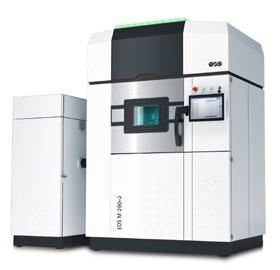
EOS has introduced the EOS M 290-2 dual-laser machine (Courtesy EOS)
tivity,” added Johannes Karjalainen, AMEXCI Managing Director. “This system is ideal for serial production, particularly for smaller components. The part quality is also best-in-class, and the integration of the Smart Fusion & OT is a game-changer and has opened doors for us to completely new customer cases and geometries.” www.amcm.com www.eos.info

Desktop Metal, Inc, has announced its financial results for the first quarter ended March 31, 2024. The company reported revenue of $40.6 million, down from $41.3 million in the same quarter last year. First quarter 2024 net loss was $52.1 million, reportedly impacted by one-time noncash charges related to accelerated amortisation and depreciation on certain intangible and fixed assets.
Adjusted EBITDA was $13.6 million, marking a yearover-year improvement of 44.3%. Cash, cash equivalents, and short-term investments closed the first quarter of 2024 at $66.3 million, as the rate of cash consumption declined 47% compared to the same period last year.
“We started 2024 on a solid foot, despite persistent challenges across the capital investment backdrop, which has been a headwind to our overall demand function. The DM team has shown a continued ability to improve operational performance as we decrease our operating expenses for the ninth consecutive quarter,” said Ric Fulop, co-founder and CEO of Desktop Metal.
“We are continuing to see strong demand for our production binder jet systems that produce metal, sand and ceramic parts, as well as a constructive environment for the value of Additive Manufacturing 2.0 systems. Looking ahead to the balance of 2024, we are confident in achieving positive adjusted EBITDA in the second half of 2024. Given our strategic cost-outs, we expect strong leverage as sales growth returns,” Fulop concluded.
www.desktopmetal.com
Xact Metal, headquartered in State College, Pennsylvania, USA, has announced a strategic partnership with 3Dees Industries, based in Prague, Czechia, expanding the availability of its metal Additive Manufacturing solutions in Czechia, Slovakia, and Ukraine.
“Our new partnership with Xact Metal takes us to the next level in 3D printing. Their technology allows us to offer customers solutions that are faster, more accurate, and above all, more economically accessible,” stated Daniel Adam, CEO at 3Dees Industries.
Through the partnership, 3Dees Industries looks to offer comprehensive support and services to Xact Metal customers in the region. This includes access to an Additive Manufacturing technology centre featuring the XM200G AM machine, where customers can explore specific applications and receive expert guidance from application engineers.
www.3dees.cz | www.xactmetal.com








Chinese metal Additive Manufacturing machine maker HBD has added the HBD 400 to its medium-sized line of Laser Beam Powder Bed Fusion (PBF-LB) AM machines. The new six-laser HBD 400 has a 350 × 400 ×
400 mm build chamber and is said to offer a significant breakthrough in production efficiency among metal AM machines of a similar size.
In addition to its multi-laser configuration, the HBD 400 is
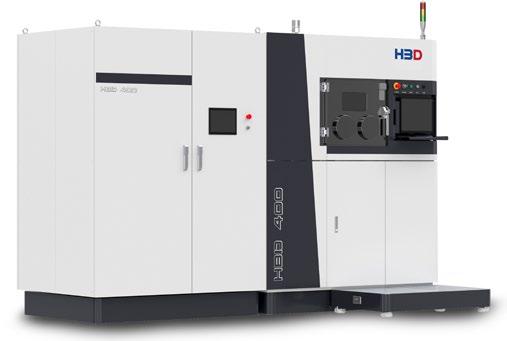
HBD has added the HBD 400 to its mid-sized Additive Manufacturing fleet (Courtesy HBD)
i3DMFG invests in twelve
Integrated 3D (i3DMFG), based in Redmond, Oregon, USA, is set to purchase twelve, four-laser EOS M 400-4 metal Additive Manufacturing machines from EOS GmbH, Krailling, Germany. Announced during the recent Rapid+TCT exhibition, the investment will grow i3D’s capacity to thirty-six EOS machines at its Redmond production facility. Delivery of a large portion of the machines is expected in 2024, and the remainder completion of deliveries is slated for 2025 and 2026.
“i3D’s strong partnership with EOS has had a demonstrable impact on our ability to serve broad customer-based needs for complex metal additive components. The combination of forward-thinking, resiliency, reliability and best-inclass technology is at the forefront
of why i3D continues to expand our relationship with EOS,” stated Erin Mastroni, CEO, i3D.
Since the acquisition of an EOS M 280 in 2013, i3D has grown into a major player in metal AM, with customers in a broad spectrum of industries, such as space, medical device manufacturing, clean energy, and automotive. The company’s place in the Additive Manufacturing market is said to enable the acceleration of technological development for other customers under the umbrella of the BTX Precision brand in the aerospace and semiconductor industries. Those industries — along with the growth in rocket, satellite, and defence applications — are said to be propelling factors for both i3D’s and BTX’s growth in the high-precision manufacturing sector.
equipped with an intelligent variablespeed bidirectional powder coating system. This is said to intelligently identify additively manufactured parts and generate segmented variable-speed powder coating strategies, combined with dual blades bidirectional powder coating components, it reportedly significantly reduces Additive Manufacturing time and is able to recover un-sintered powder.
The optimised stability performance of the machine is another attribute highlighted by HBD. The build chamber of the machine utilises an integrated structure, enhancing overall strength and rigidity while working to mitigate any adverse effects stemming from assembly errors. This fosters favourable conditions for achieving high precision and stability in construction, explains HBD.
Furthermore, the new machine features an optimised multi-laser automatic calibration system with a calibration accuracy of up to 0.05 mm, which is able to effectively improve build quality and stability.
www.en.hb3dp.com
“This order is one of the largest single metal AM investments ever in North America. The fact that i3D is fully committed to EOS technology is extremely gratifying. i3D’s extraordinary team, led by Erin, has driven dynamic, ambitious growth. The reliability of EOS systems and services has been integral to their progress. There is an amazing collaborative bond between our two companies. Strong, supportive relationships at every level have helped create the path to today’s announcement,” Glynn Fletcher, EOS North America President, shared.
With four 400-watt lasers and a 400 x 400 x 400 mm build volume, the EOS M 400-4 is tailored for serial Additive Manufacturing and can accommodate the processing of a range of materials including aluminium, copper, stainless, titanium, and tool steels, among others.
www.eos.info www.i3dmfg.com
PyroGenesis Canada Inc., Montreal, Quebec, Canada, has announced its financial and operational results for the first quarter ended March 31, 2024. The company recorded revenue of $3.5 million, up 34.5% year-overyear compared to Q1 2023.
“Q1 continues to confirm our contention that we have successfully rebounded off the low revenue mark of Q1 2023 and that our cost controls and project optimisation efforts are having the impact we expected,” said P Peter Pascali, president and CEO of PyroGenesis. “We now have four straight quarters comfortably exceeding that three-year low point, with this recent quarter being 34% clear. As we stated in our last earnings call, we had anticipated the upward revenue momentum of the last few quarters to continue, and while we remain cautious, we are ever encouraged that the overall trend continues to be positive and upward.”
“I am pleased with this quarter,” stated Pascali. “We achieved some notable milestones, both in terms of (i) existing projects such as the fumed silica reactor project on behalf of our client HPQ Silicon, and (ii) with regard to new market entry, as evidenced by new contracts signed, and advance negotiations underway, with several clients in industries as diverse as green cement to steelmaking to aerospace manufacturing. The company’s flagship technologies are now being assessed, tested, or in use across a much wider array of major heavy industry categories, in more primary jurisdictions globally, than even we once thought possible. In so many ways, we are just getting started.”
Pascali added, “We have more work to do as we continue our optimisation efforts, but this is a good start, and with our backlog of projects holding strong above $28 million, and our sales pipeline growing, we become better positioned with each passing quarter to succeed in our stated goal of becoming a leader in heavy industry decarbonisation technology solutions.”
The gross margin for Q1, 2024 was $0.8 million or 22% of revenue compared to a gross margin of $0.5 million or 20% of revenue for Q1 2023. This increase in gross margin was mainly attributable to the increase in spare parts sales which yield high profit margins by the added benefits from a vast in-house inventory of over 1,000 unique items and approximately 40,000 parts, allowing the company to avoid long lead times on parts, which ultimately, enables the company to process additional orders in a shorter period of time. www.pyrogenesis.com
Any metal or alloy based on YOUR PARTNER FOR METAL POWDERS
HIGH QUALITY
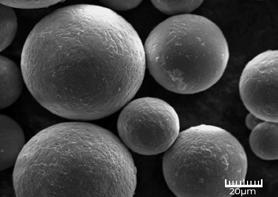
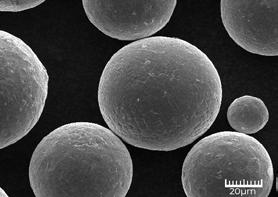
spherical and pore free metal powder for AM applications (LPBF, DED, ebeam,…)
• Screening, classifying and packaging to our customers‘ needs
• All processing steps possible under Argon 5.0 atmosphere
• Standard PSDs for 5-20, 15-45, 20-63, 45106 µm
• Specific PSDs for customized applications
• Pure and uniform powders with 0% pores
• High flowability
• Lower oxygen content
• Lower specific surface
• Increased production rate www.metalpine.at part of UN Global Compact Initiative
Westinghouse Electric Company LLC, Cranberry Township, Pennsylvania, USA, has used Additive Manufacturing to fabricate bottom nozzles that improve debris capture and fuel endurance within nuclear fuel assemblies. The nozzles, reported to be a nuclear industry first, were integrated into four Lead Test Assemblies delivered to Alabama Power’s Joseph M Farley Nuclear Plant, operated by Southern Nuclear, in the first quarter of 2024.
Debris-wearing action on the fuel rod cladding – known as debris fretting – is the primary source of leaks in pressurised water reactor (PWR) fuel assemblies. Additive Manufacturing technology offers significant improvements in debris filtering thanks to enhanced design freedom which reduces the diameter of debris that can enter into the reactor. In testing, the AM components demonstrated a 30% improvement in debris resistance.
“Over the past decade, Southern Nuclear has led the industry in the development and implementation of new technologies that improve fuel resiliency,” said Pete Sena, Southern Nuclear President. “The existing
nuclear power fleet is the backbone of our country’s clean energy supply, and we are innovating nuclear fuel today to be more robust in order to deliver safer, more affordable and more reliable carbon-free clean nuclear power for decades to come.”
“Our Additive Manufacturing technology is allowing us to achieve breakthrough performance with an immediate positive impact for our customers,” Tarik Choho, Westinghouse President of Nuclear Fuel, shared. “This significant technology innovation for PWR reactors mitigates the risk of leakage in the fuel rods due to the accumulation of debris, strengthening the safety and efficiency of our customers’ operations.”
In 2015, Westinghouse conducted one of the first material irradiation studies of additively manufactured nuclear components. In 2020, Westinghouse installed its first-ever safety-related AM component, a Thimble Plugging Device, into an operating commercial reactor, and in 2024 Westinghouse produced the 1,000th additively manufactured flow plate for VVER-440 fuel assemblies. www.westinghousenuclear.com
Amaero International Ltd, based in McDonald, Tennessee, USA, has announced the installation and testing of its new metal powder atomiser supplied by ALD Vacuum Technology GmbH, Hanau, Germany. The atomiser has achieved all technical specifications stipulated in the contract, and acceptance has been formally acknowledged by both parties.
“Amaero’s leadership team is relentlessly focused on execution,” stated Hank Holland, chairman and CEO. “With final acceptance and commissioning of the atomiser, we have achieved a significant milestone and we have achieved the milestone ahead of schedule.”
With this installation completed, Amaero’s technical and manufacturing team will begin work on proprietary modifications of the atomisation process and parameter optimisation.
“Given the importance of advancing priority hypersonic and strategic missile programmes from development and demonstration phases to serial production as quickly as possible and the pressure to achieve material properties and performance criteria, Additive Manufacturing plays an important role,” Holland continued. “The insertion of Additive Manufacturing in high-temperature applications is enabled by improved resiliency, scalability and responsiveness of US domestic production of C103 and speciality alloy powders.
Amaero is committed to collaborating with the US government, the Department of Defense, prime defence contractors and suppliers, to address priority initiatives to re-shore strategic industrial base capabilities.”
www.ald-vt.com
www.amaeroinc.com
YOUR LONG-TERM PARTNER
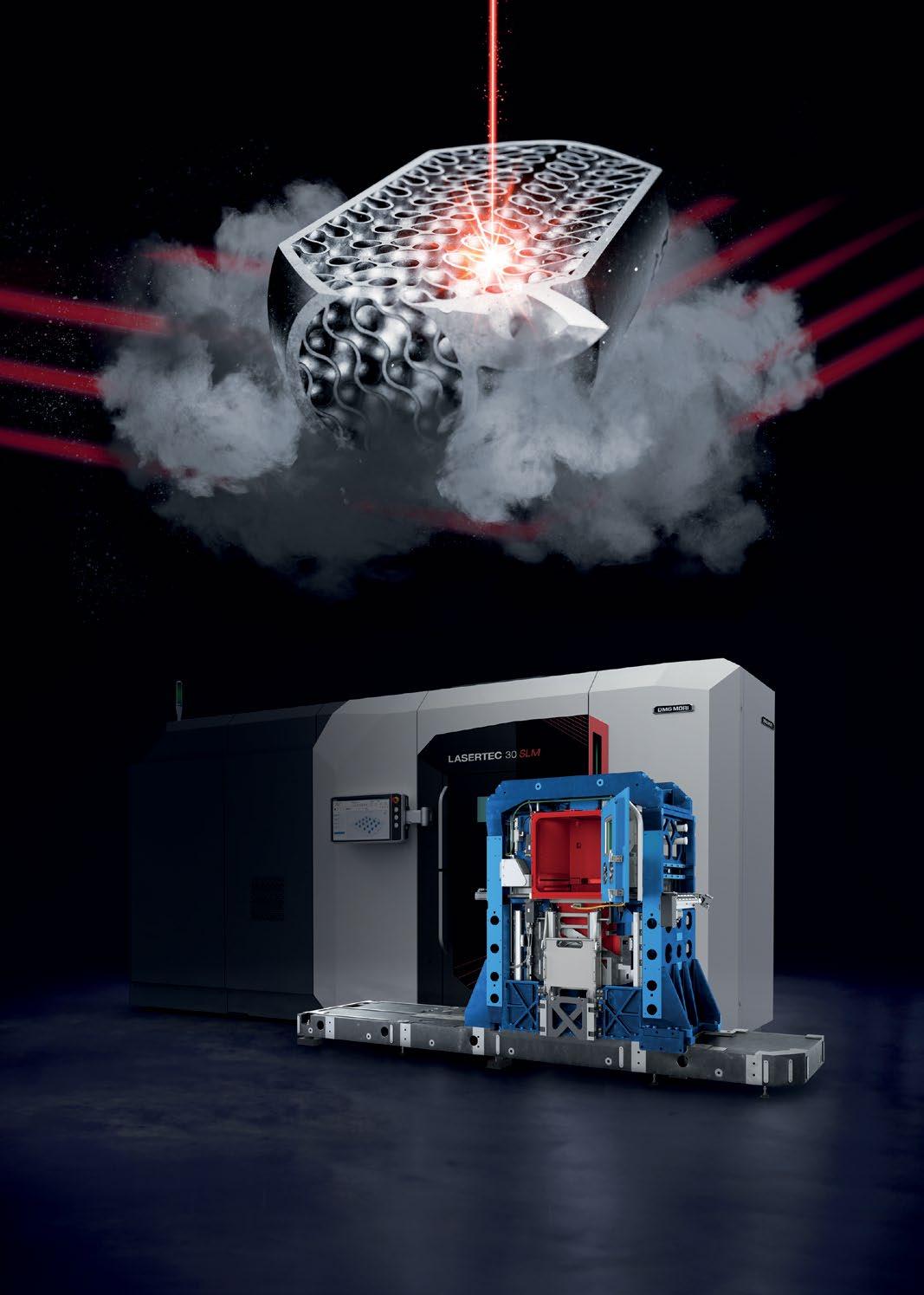
LASERTEC 30 SLM 3 rd GEN.
PRODUCTIVITY
Single, dual or quad lasers with up to 1,000 W and a 325 × 325 × 400 mm build volume.
RELIABILITY
Constant part quality due to highly rigid & thermosymmetric cast iron machine bed and active temperature compensation.
More than 110 sales & service locations and 17 factories worldwide.
Digital Metal AB, based in Höganäs, Skåne County, Sweden, has officially changed its name to Markforged Sweden AB, effective from April 18, 2024.
Digital Metal, acquired by Markforged in 2022, uses a proprietary Binder Jetting Additive Manufacturing technology that enables intricate, detailed parts to be manufactured in high volumes, whether identical or of custom design.
The decision to change the company name is intended to strengthen the brand’s identity and position it for continued success. Markforged added that no additional changes have been made to the company following the official renaming.
www.markforged.com
Exentis Group AG, located in Stetten, Switzerland, reports it has maintained profitable growth in its 2023 financial year across all three strategic business areas of pharma, new energy, and ultra-fine structures. The number of Additive Manufacturing machines sold rose from fourteen in 2022 to eighteen in 2023, increasing revenues by €3.6 million year-on-year to €18.98 million, a 23% growth. In addition to the AM machines, numerous other machines are currently in the commissioning phase and in the initial engineering and pre-assembly stages. The further development of the modular Additive Manufacturing machines, and associated economies of scale, are said to have contributed to the improvement of the gross margin to 71%, an increase of ten percentage points compared to 2022.
Exentis confirmed that it had returned to profitability, posting €1.1 million on EBITDA level in the financial year 2023. The corresponding operating margin was 6%.
In 2023, the number of patent claims increased by 25% to 4,882. With an average remaining patent term of fifteen years, the license-based business model, with its recurring revenue generation, is expected to be well-positioned to deliver earnings with above-average profitability in the future.
Exentis added that it had a record volume of offers at the end of the financial year 2023. Based on multiple current customer projects, resulting in system and license sales as well as foreseeable contract manufacturing, revenues of approximately €51.4 million are expected for the financial year 2024, along with a further increase in profitability.
www.exentis-group.com
Bright Laser Technologies (BLT), located in Xi’an, China, has released its financial review for 2023, reporting operating income of approximately $170 million, representing a 34% increase compared to the previous year. The net income experienced a significant rise to approximately $19.6 million, marking a notable increase of 78% year-over-year.
Revenue breakdown by industries revealed a strong foothold in key sectors: aerospace and aviation comprising 56%, industry with 37%, and research institutes contributing 6%. Revenue from customised Additive Manufacturing products, self-developed Additive Manufacturing equipment, and Additive Manufacturing raw materials saw significant increases of 34%, 26%, and 99%, respectively, compared to the prior year.
As of December 31, 2023, BLT had a workforce of 1,720 employees, with approximately 30% dedicated to research and development efforts. The company’s extensive infrastructure comprises over 440 Additive Manufacturing machines and over 120 complementary analysis and testing systems. During the year, BLT manufactured some 299 Laser Powder Bed Fusion (PBF-LB) AM machines, with 242 of these sold domestically and internationally.
To meet the substantial demand from aerospace and aviation industries for large-scale metal Additive Manufacturing equipment suited to batch production, new models were introduced. These included the BLT-S615, BLT-S815, and the BLT-S1500,
featuring twenty-six lasers and an extra-large format.
In 2023, BLT also unveiled several high-temperature alloys and titanium alloy materials tailored for the aerospace sector. These alloy materials included BLT-In738, for applications in critical components like aerospace engines and gas turbines. BLT-Ti64 powder showcases remarkable mechanical properties and corrosion resistance, while BLT-Ti exhibits moderate mechanical characteristics, high plasticity, and excellent corrosion resistance, both suitable for aerospace and other industries. Furthermore, BLT-Ti2AlNb powder and BLT-Ti65 powder have surpassed the limitations of traditional titanium alloys, typically used below 600°C, and can now be employed in high-performance aerospace components.
Additionally, BLT introduced BLTTiAl4822 powder designed for PBF-EB processes. www.xa-blt.com

Process Sensing Technologies (PST), based in Ely, Cambridgeshire, UK, offers a range of oxygen and moisture measurement analysers developed to ensure the highest safety and quality in metal Additive Manufacturing processes. The systems provide a means of achieving precision and maintaining build consistency, which is critical to successful production.
Oxygen measurement for quality
Oxygen levels in the build chamber can significantly impact quality, explains PST. Excess oxygen can lead to oxidation, compromising the integrity and strength. To prevent oxidation, the oxygen concentration should typically be below 500 ppm for metal AM processes such as Laser Beam Powder Bed Fusion (PBF-LB).
PST’s oxygen analysers have been specifically designed to be integrated into the Additive Manufacturing machine manufacturer’s control and safety systems. These analysers provide real-time monitoring and control, maintaining optimal oxygen levels during the build process, and can trigger inert gas purges (like argon or nitrogen) to maintain low oxygen levels. When measuring oxygen, PST has sensors capable of detecting oxygen from as little as 1 ppm. Operating ranges from 0-10 ppm to 0-25% with a response time of T90<15 seconds.
For ease of use and compact design, PST offers the Microx Oxygen
Analyzer, an integrated solution featuring three configurable alarm contacts, an LCD screen displaying O 2 concentration, a remote sensor and three analyser mounting options for flexibility. Its zirconia sensor performance is proven in the harsh environment of an Additive Manufacturing build chamber.
Measuring oxygen for safety
PST’s zirconia and solid-state technologies have been specially developed for harsh process applications. They can be supplied with SIL2-capable oxygen analysers or transmitters designed to comply with the requirements of IEC 61508 (SIL Capable) for fail-safe oxygen measurement in inert gas blanketing applications.
For example, the SIL-O2 Process Oxygen Analyzer is engineered for highly reliable oxygen measurement in safety-critical applications, including the AM machine, depowdering system, and sieve station. It includes a DIN rail-mounted control unit with galvanic barrier and a remote electrochemical (solid state) sensor with interconnecting cable (up to 30 m), providing a flexible, easily integrated package.
The inert gas (argon or nitrogen) used to create an oxygen-free environment should have a purity level of 99.99% or higher. Gas purity analysers, such as PST’s Oxydew, can ensure the supplied gas meets the
required purity standards, preventing contamination during the building process.
Moisture is another critical factor in metal Additive Manufacturing, adds PST. High moisture levels can cause defects in the manufactured parts, such as porosity and reduced mechanical properties. The SF82 DewPoint Transmitter from PST provides accurate moisture measurement in critical phases of the AM process, such as the AM machine, de-powdering system, and sieve station.
Inside the build chamber, the SF82 Transmitter continuously monitors and controls humidity levels. This helps improve the structural integrity and performance of the final product. This level of control is also essential within the post-processing process to help ensure the integrity of the powder material. Moisture in powder materials can cause particles to clump together, leading to inconsistent powder flow and poor layer deposition during AM. This can result in defects in the manufactured part.
What PST notes as setting it apart, is the ability to provide a complete solution for measuring oxygen and moisture in different applications within the whole AM process – from gas feed to powder recovery. By integrating these advanced analysers into AM systems, PST enables manufacturers to achieve comprehensive control over critical environmental parameters.
This integration ensures that oxygen and moisture levels are precisely monitored and maintained within optimal ranges, preventing potential issues such as oxidation, material degradation, and build defects. As a result, manufacturers can consistently produce high-quality parts with superior mechanical properties and surface finishes. Additionally, PST’s solutions enhance process efficiency and reliability by reducing the risk of equipment malfunctions and minimising downtime.
www.processsensing.com


Cobra Golf, headquartered in Carlsbad, California, USA, has announced its new LIMIT3D irons, reported to be the world’s first set of commercially available additively manufactured steel irons. Cobra partnered with nTop, an engineering design software company headquartered in New York City, USA, to create a compact blade profile that offers a similar level of forgiveness as an oversized, game-improvement club, with the feel of a forged iron. Cobra was the first golf company to introduce an additively manufactured steel putter in 2020, followed by a full line of KING additively manufactured multi-material putters in 2021.
“Cobra is always looking for meaningful ways to use new technology to create superior products and performance,” stated Mike Yagley, Vice President of Innovation and AI, Cobra Golf.
“nTop’s computational design tools integrated with 3D printing, also known as Additive Manufacturing, allowed us to create an incredible new design that looks and feels like a forged blade but performs like a
larger, game-improvement iron. No one has done this before, and we’re excited to introduce these unique irons to the world.”
Traditionally, designing a golf iron with more forgiveness meant sacrificing the look and feel of the iron by making it larger in profile. Cobra aimed to design an iron with the shape and feel of a compact blade desired by better players and the forgiveness that the aspirational player needs. Before, this was unachievable due to design and manufacturing constraints of traditional methods such as casting and forging.
The fully additively manufactured 316L stainless steel body features an innovative internal lattice structure that allows 33% of the overall clubhead weight to be repositioned without sacrificing strength. This unique design, which is only possible using Additive Manufacturing, allows for up to 100 g of tungsten to be placed in the heel and toe areas of the clubhead, creating a low centre of gravity and a high moment of inertia relative to the shape and size of the club.
Cobra was the first golf company to introduce an additively manufactured steel putter in 2020, followed by a full line of KING additively manufactured multi-material putters in 2021 (Courtesy HP)
Utilising the combination of nTop’s design software and Additive Manufacturing meant that Cobra engineers were also able to create and test prototypes faster. nTop’s software capabilities allowed Cobra to automate the design exploration process and make iterations two times faster to speed up the development process significantly. The faster process also allowed Cobra’s R&D team to test a variety of lattice designs to optimise internal mass distribution and acoustics, resulting in a final product that exceeded expectations in looks, performance, and soft feel to appeal to the most discerning players.
“Our new Limited-Edition 3D Printed irons represent Cobra’s dedication to pushing performance and technology to the limits,” stated Jose Miraflor, Vice President of Product Architecture at Cobra Golf. “These incredible new irons are the most significant technological advancement to happen to the category in the past twenty years and offer a look into the future of golf club design and performance.”
Just 500 sets of the new LIMIT3D additively manufactured irons are expected to be made available worldwide.
www.ntop.com www.cobragolf.com
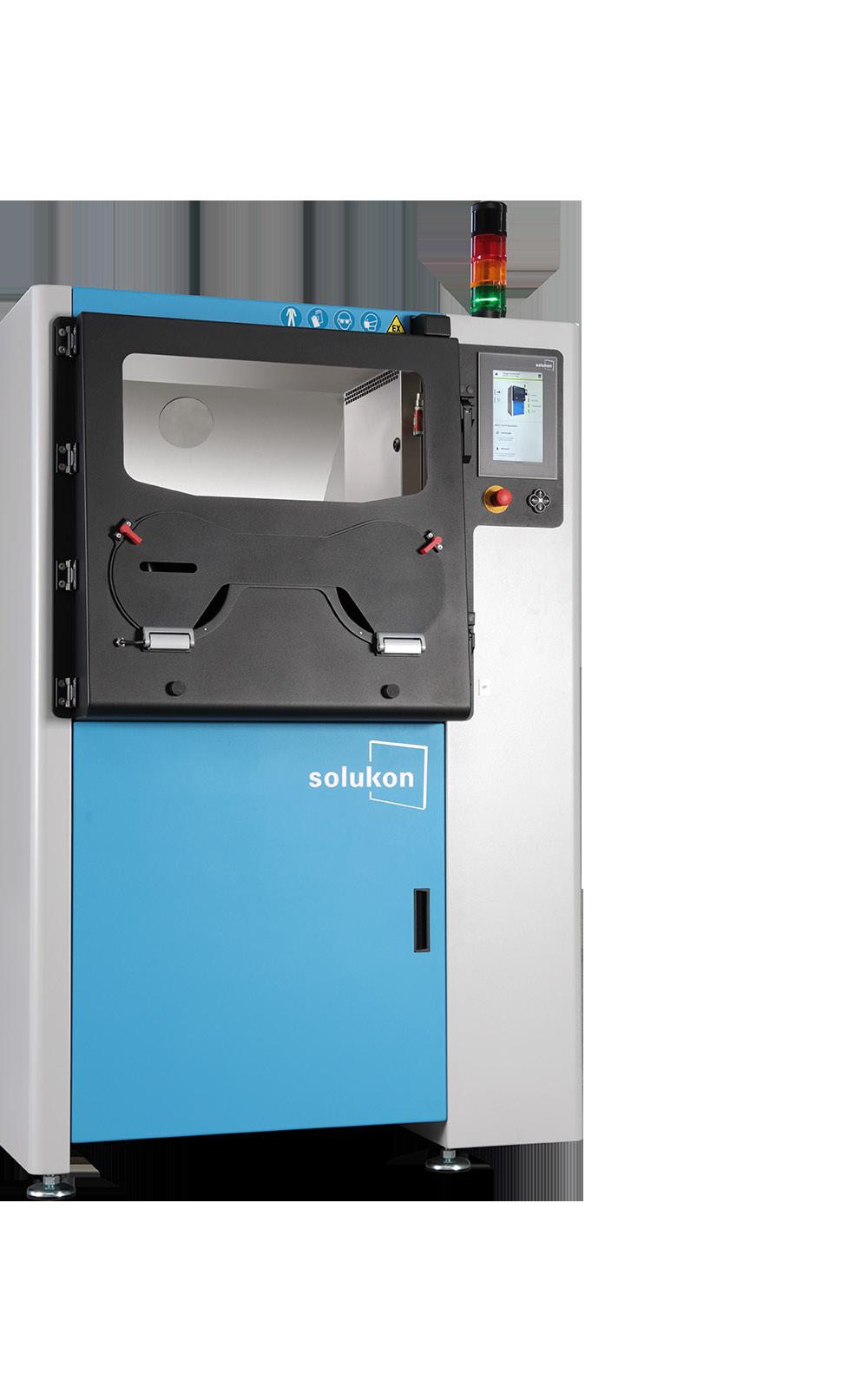
1. Extended Dimensions
NEW up to 100 kg
400 x 400 x 400 mm
500 x 280 x 400 mm

2.
For delicate structures with piezoelectric excitation in ultrasonic range
WAAM3D, based in Milton Keynes, UK, has launched MiniWAAM, a compact metal Wire Arc Additive Manufacturing machine. Sitting alongside the larger RoboWAAM, launched in 2022, MiniWAAM is said to offer a competitively priced manufacturing solution for process development, metallurgical characterisation, production of mechanical test pieces, exploration of new wires, and the testing of new sensors.
Dr Filomeno Martina, CEO of WAAM3D commented, “We are very excited to be launching MiniWAAM, as its introduction brings the benefits of metal 3D printing to an even wider audience. Thanks to its versatility, MiniWAAM is ideal for the creation of small- to medium-sized metal parts for prototyping and for production and research applications. Its use of two wire feeds also makes it of interest for those looking to experiment with
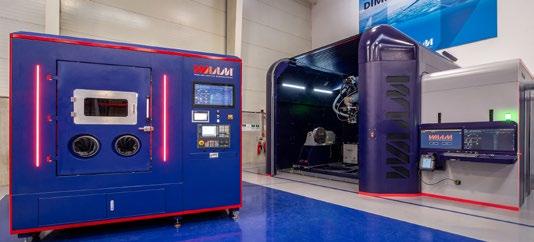
WAAM3D has added the MiniWAAM to its range of wire-based Additive Manufacturing machines (Courtesy WAAM3D)
Metal powder producer Equispheres, Inc, based in Ottawa, Ontario, Canada, has completed an initial close on its Series B financing totalling around $14.6 million (CA $20 million). The financing was led by Martinrea International Inc., a global automotive supplier specialising in the design, development, and manufacturing of highly engineered, lightweight structures and propulsion systems.
The financing round also saw participation from new institutional investors.
Equispheres offers a range of aluminium powders for Additive Manufacturing. The company’s aluminium powders are reported to increase building speeds up to nine times higher than industry stand -
ards, thereby lowering production costs by up to 80%.
“The potential of Additive Manufacturing to transform traditional manufacturing is undeniable as evidenced by the fact that most of the top companies in the automotive, aerospace and defence sectors are actively engaged. Yet widespread industrial adoption requires a leap in productivity,” said Kevin Nicholds, president and CEO of Equispheres.
“By working closely with global leaders in automotive, aerospace and defence, we have been able to use our technology to engineer materials that unlock new high-speed AM processes and new applications.”
Funding will be used to bring on multiple new reactors in 2024 to support existing production
composition development and multimaterial structure creation.”
Departing from robotic architectures, MiniWAAM features three-axis overhead CNC system, plus an additional 500 mm rotational table with 60 kg payload. It has a 800 x 800 x 600 mm build envelope and offers plug-and-play installation with full health and safety compliance.
MiniWAAM offers the same hardware capabilities as the bigger RoboWAAM solution, including WAAM3D’s proprietary ShapeTech interferometric sensor, essential monitoring (voltage, current, and travel/wire feed speed), double-point measurement capability, a process camera for melt-pool imaging, and global shielding for the deposition of reactive materials with fully automated purging, atmosphere maintenance and evacuation cycles. With no changes of setup, engineers are able to programme the feeding of either the same alloy with two wires to increase deposition rates; or the feeding of different wires to produce functionally graded parts or to perform in-situ alloying. www.waam3d.com
programmes, expand facilities and continue to expand collaboration on new materials with strategic partners.
“Martinrea is the ideal lead investor for our Series B financing,” Nicholds continued. “Not only are they a highly successful global automotive leader who are experts in lightweighting of aluminium components, but they are also an innovative thought leader with a great culture. We can learn a lot from Martinrea on our journey to be the leader in what is forecast to be a multi-billion materials market for Additive Manufacturing.”
“We are also grateful to have the continued support of Business Development Bank of Canada and Sustainable Development Technology Canada at this critical growth stage,” he added.
www.equispheres.com www.martinrea.com
Aubert & Duval, a subsidiary of the High Performance Alloys Division of Eramet Group based in Paris, France, and Alloyed Ltd, based in Oxford, UK, have announced the release of Alloyed’s nickel superalloy ABD-1000AM, the latest in its range of alloys developed specifically for the Additive Manufacturing process. Designed using Alloyed’s computational Alloys-by-Design platform, the alloy provides excellent environmental resistance and hightemperature strength, with a working temperature range beyond 1,000°C (1,832°F) in its age-hardened state. Compared to cast alloy Ni247LC, the alloy is said to offer near-equivalent stress rupture life while allowing crack-free Additive Manufacturing and heat treatment, enabling complex part design for components within the aerospace, power, automotive, defence and space industries.
The agreement between Alloyed and Aubert & Duval expands upon the successful partnership already in place covering ABD-900AM, a readily processable ultra-high temperature nickel alloy. Under the terms of the agreement, Aubert & Duval will be Alloyed’s production partner for ABD-1000AM, supplying Alloyed with the powder feedstock that it is using to manufacture components.

Additive Manufacturing technology combined with high-temperature powder alloys is a promising solution in particular to achieve carbon footprint reduction in various industries: over the last five years, we have indeed seen huge growth in interest and orders for these innovative alloys across all industrial sectors, so we are excited to see what new products and performance gains will be enabled by the commercial availability of ABD-1000AM.”
Designed to be free of solidification, liquidation, and strain-age
cracks, ABD-1000AM is said to showcase exceptional processability for such a high-performance alloy. The typical microstructure is characterised by a relative density above 99.9% and low defect levels, consisting of 55% gamma prime phase fraction in the age-hardenable state, a characteristic that attributed to its development on Alloyed’s ABD platform, enabling the alloy to be specifically designed for the characteristics of the AM process. www.aubertduval.com www.alloyed.com
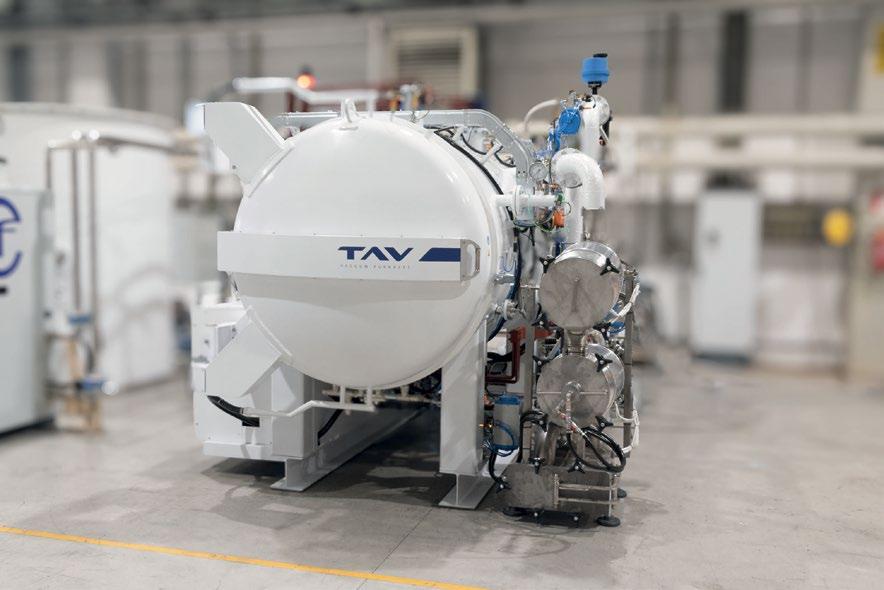

“We are very pleased to extend our metallic powder activities with our long-term partner Alloyed through this new agreement for ABD-1000AM; for Aubert & Duval, the ABD alloys demonstrate the potential that can be realised by designing materials for the AM process, so adding a best-inclass alloy such as ABD-1000AM as part of our powder range portfolio is an exciting next step,” said Jean-François Juéry, EVP Business Development & Strategy of Aubert & Duval. “We are convinced that



In the world of metal powders, Höganäs is always at the forefront of innovation.
From more sustainable production processes to new and patented powder compositions, we are dedicated to offering you optimal solutions while reducing environmental impact. With our range of powders designed for additive manufacturing, we can offer powders designed for any application. Combining optimal powder performance with improved sustainability is a priority for Höganäs, as we are on a journey to becoming the world’s first sustainable metal powder producer.
In addition to our material innovations, we have also committed to Science Based Targets and are founding members of the Additive Manufacturing Green Trade Association, demonstrating our ongoing commitment to leading sustainable transformation in our industry.
AP&C, a Colibrium Additive company, based in Québec, Canada, is now offering a coarse titanium Ti-6Al-4V (Ti64) powder suitable for Laser Beam Powder Bed Fusion (PBF-LB) Additive Manufacturing machines. The new coarse grade is reported to offer the same quality as AP&C’s finer powders, but with larger-size particles.
AP&C and Colibrium Additive – a GE Aerospace company – explains that Ti64 is a key material for Additive Manufacturing, especially in the orthopaedic industry, alongside cobalt chrome. There are also many Ti64 applications in the aerospace sector as wel as in consumer goods products like bicycle parts, so it is relatively easy to find new niche applications for it. Ti64 has already been widely adopted by the additive community compared to other alloys, which has led to optimised parameters for this material, making it easier to find business use cases.
When metal AM was first developed, the data was lacking to identify the ideal powder, continues AP&C. Therefore, the industry started with powder from more conventional technologies, such as Metal Injection Moulding. The emergent PBF-LB technologies selected the 15-45 µm and 15-53 µm particle size distribution (PSD) grades.
Today, PBF-LB technology is now the largest market for spherical Ti64 powders reports AP&C, but by using only the finer fraction of the ‘as-produced’ PSD, coarser Ti64 powder becomes available and in need of a market. However, there is no technical reason why coarser Ti64 powder could not be used in the PBF-LB process with slight tuning on deposition parameters. Of course, larger Ti64 particles also exhibit the same quality as the finer powders, as they have been created using the same validated process. In fact,
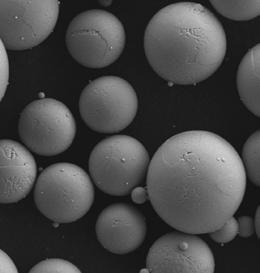
AP&C is now offering a coarse titanium Ti-6Al-4V powder suitable for Laser Beam Powder Bed Fusion Additive Manufacturing machines (Courtesy Colibrium Additive)
similar coarse powders are used in Electron Beam Powder Bed Fusion (PBF-EB) and Direct Energy Deposition (DED) with great results, but the penetration of those technologies remains small compared to PBF-LB. Academic research, and AP&C’s own internal data, have shown that using larger particles with a tuned deposition process produces highquality AM parts with comparable mechanical properties and excellent process stability. After extensive work and validations, AP&C is now commercialising a parameter for the Colibrium Additive M2 platform for coarse Ti64.
Another important advantage highlighted by AP&C is that coarse Ti64 is also safer than finer powder, since the higher PSD is substantially less reactive. Powder handling, storage and reuse can be significantly simplified and local regulations for powder storage are easier to meet.
Particularly, coarse Ti64 powder is not classified as flammable (while fine Ti64 is) and, more importantly, its minimum ignition energy is high enough that the powder is not sensitive to electrostatic discharge which can change the applicable safety controls associated with using this powder.
www.advancedpowders.com www.colibriumadditive.com
Velo3D, Inc, headquartered in Campbell, California, USA, has announced the financial results for its first quarter ended March 31, 2024. The revenue for Q1 stood at $10 million, an increase compared to Q4 2023. Given its backlog and shipping forecast exiting the first quarter, the company has stated that it expects revenue growth of more than 30% in the second quarter of 2024.
Net loss for the quarter was $28.3 million, reflecting a non-cash loss of $3.1 million reported to be due to the change in the fair value of warrants and contingent earnout liabilities. Adjusted EBITDA for the quarter was a loss of $11.7 million.
“We were pleased with our first quarter performance as we continued to successfully execute on our strategic priorities,” stated Brad Kreger, CEO of Velo3D.
“Specifically, we are now just starting to see the benefit of our new go-to-market initiatives as we booked $17 million in new orders during the quarter. Additionally, we entered the second quarter with $22 million in backlog.”
The company expects a positive gross margin in the second quarter of 2024 as a result of increased system shipments, improvements in its system balance of material costs, benefits from its new long-term supply contracts and higher operating and manufacturing efficiency.
Velo3D ended the quarter with $11 million in cash, cash equivalents and investments. First quarter cash flow, excluding financing activities, was in line with the company’s forecasts and improved by more than 35% on a year-overyear basis. The company continues to expect sequential quarterly improvement in cash flow in 2025. www.velo3d.com
Tekniker, a technology centre based in Eibar, Spain, and member of the Basque Research and Technology Alliance (BRTA), displayed its Titan metal Additive Manufacturing machine at this year’s International Machine Tool Biennial Exhibition
(BIEMH), which took place June 3-7 in Barakaldo, Spain.
The Titan is a wire-based Directed Energy Deposition (DED) Additive Manufacturing machine with the capacity to build large metal components up to 1900 x 800 x 750 mm. The equipment has been specifically designed to process a range of metal alloys, such as titanium, nickel, iron, aluminium etc, under normal pressure and temperature conditions, in inert and vacuum atmospheres.
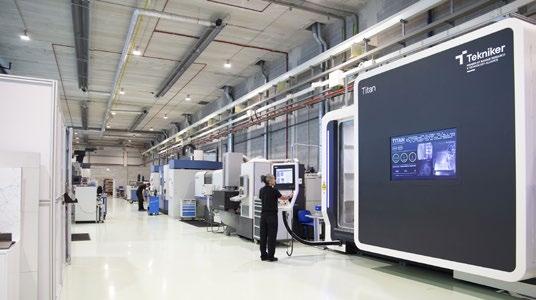
Tekniker showcased its Titan metal AM machine at this year’s International Machine Tool Biennial Exhibition (Courtesy Tekniker)
The US has announced plans to exempt its AUKUS partners, Australia and the UK, from its International Traffic in Arms Regulations (ITAR). In addition, the US Commerce Department also announced an expansion of the scope of licence-free trade to AUKUS nations by amending the Export Administration Regulations on April 18, 2024.
The department cited the need “to enhance technological innovation among the three countries and support the goals of the AUKUS Trilateral Security Partnership”. This followed the US National Defense Authorization Act (NDAA), which was passed in December 2023. The NDAA set specific criteria for the Australian and British governments to meet before the exemptions took effect. These reforms are expected to significantly reduce licensing
requirements for the UK and Australia as well as facilitate public and private sector security institutions’ delivery of a more integrated defence industrial base.
While the specific parameters have not been announced, the new exemptions that will remove licensing requirements for ‘most military goods and technology items’ are expected to reduce the burden associated with US export licenses for dual-use goods to Australia worth almost $2 billion (AU $3.1 billion). This appears to include both Pillar I submarine components and Pillar II advanced technologies.
The Australian government responded with its law in March of this year, offering an exemption for the UK and US from export control permit requirements. This exemption is expected to take effect in September 2024.
The machine features a controlled atmosphere enclosure to simulate different environmental conditions, making it useful for sectors such as aeronautics, shipbuilding and space missions, where operations must be carried out in extreme climates.
Carlos Soriano, a Tekniker researcher, explained, “Titan is a piece of innovative advanced manufacturing equipment fully developed by Tekniker to produce large parts that incorporate a range of metal alloys to withstand extreme operating conditions. Consequently, we will showcase a rocket engine nozzle currently being manufactured on a machine that simulates environmental conditions on planet Mars.”
www.tekniker.es
Similarly, the UK will release its Open General Export Licence in September 2024 to implement the exemption for Australia and the US. These US reforms are occurring as the AUKUS roadmap progresses, with news that British company Rolls-Royce has started producing components for the nuclear reactor to be installed in the first SSN-A, a nuclear-powered attack submarine.
However, the UK Ministry of Defence (MoD) noted that, despite reaching the 120-day milestone set by the NDAA, the UK is in the process of finalising the remaining technical steps in order to benefit from the NDAA provisions.
“We are confident that by the next 120-day period we will have completed all the requirements for full implementation of the ITAR exemptions,” said the UK MoD in a release welcoming the reforms.
www.gov.uk
www.defense.gov
www.defence.gov.au
CNPC’s Carbon Footprint:
Innovative technology
100% green recycleable materials
Low carbon environmental protection
Exceptional Carbon Footprint/kg, with a reduction of 10.77 in 2023 to 1.04 in 2024.
Indo-MIM, headquartered in Bangalore, India, has officially opened its new Additive Manufacturing production cell, acquired as part of its strategic partnership with HP. Announced at last year’s Formnext exhibition, Indo-MIM has invested in three HP Metal Jet S100 Binder Jetting machines.
Krishna Chivukula Jr, CEO at Indo-MIM, and Savi Baveja, President at HP 3D Printing, inaugurated the new cell. Also celebrating the installation of the new Additive Manufacturing machines were Jagadish Holla, Senior Vice President of Sales and Marketing at Indo-MIM Limited,
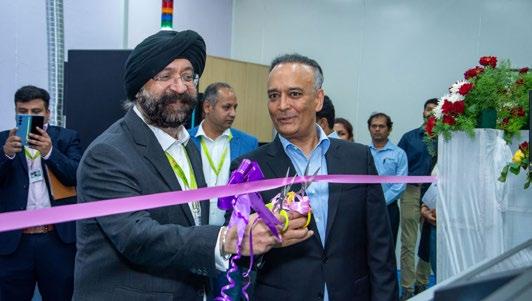
SPEE3D, based in Melbourne, Australia, introduced its new largeformat metal Additive Manufacturing machine, TitanSPEE3D, at the Large Scale Additive Action Team (LSAAT) meeting held at the DCU Center in Worcester, Massachusetts, USA, June 11-13, 2024.
TitanSPEE3D uses SPEE3D’s proprietary Cold Spray Additive Manufacturing technology, which allows for rapid and relatively low-cost metal Additive Manufacturing. The new AM machine will have a build volume of 2.4 m in diameter and 1 m in height, with a manufactured part maximum weight of 2,000 kg. TitanSPEE3D was designed to work with a number of metals, including 6061 aluminium, aluminium bronze, and 316 stainless
steel. The AM machine has a 4.3 x 4.3 m footprint and is 3.3 m tall at its highest point, weighing approximately 5 metric tonnes.
“SPEE3D revolutionised largescale metal 3D printing when we launched our first printer utilising our unique Cold Spray Additive Manufacturing technology and have elevated this success through continual expansion of our 3D printing technologies,” said Paul Maloney, Chief Revenue Officer at SPEE3D. “The TitanSPEE3D will be a game changer for industries that rely on casting for very large parts, including defence, heavy industry, and others, to have the ability to print quickly, sustainably, and at a competitive cost. We’re thrilled to preview this technology at LSAAT.”
and Dr Shivashankar T S, Vice President of Operations at IndoMIM.
Announcing the partnership last year, Baveja stated “We are proud to partner with Indo-MIM to create new possibilities for their customers leveraging our S100 solution and metals Additive Manufacturing capabilities. We are thrilled to work with Indo-MIM to drive new metals applications, expand material possibilities and increase precision and productivity.”
Chivukula Jr also said at that time, “Our partnership with HP signifies a milestone in our journey to provide cutting-edge production ready 3D metal binder jet solutions to our customers. The acquisition of HP’s Metal Jet S100 printers equips us with the latest technology, enabling us to meet the growing demands of our customers with efficiency and precision, as well as expand the library of materials qualified on the HP printer platform.”
www.indo-mim.com www.hp.com
The new TitanSPEE3D will be available to a limited number of beta customers in 2024, with the commercial release scheduled for 2025. www.spee3d.com
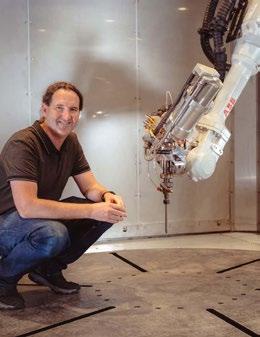

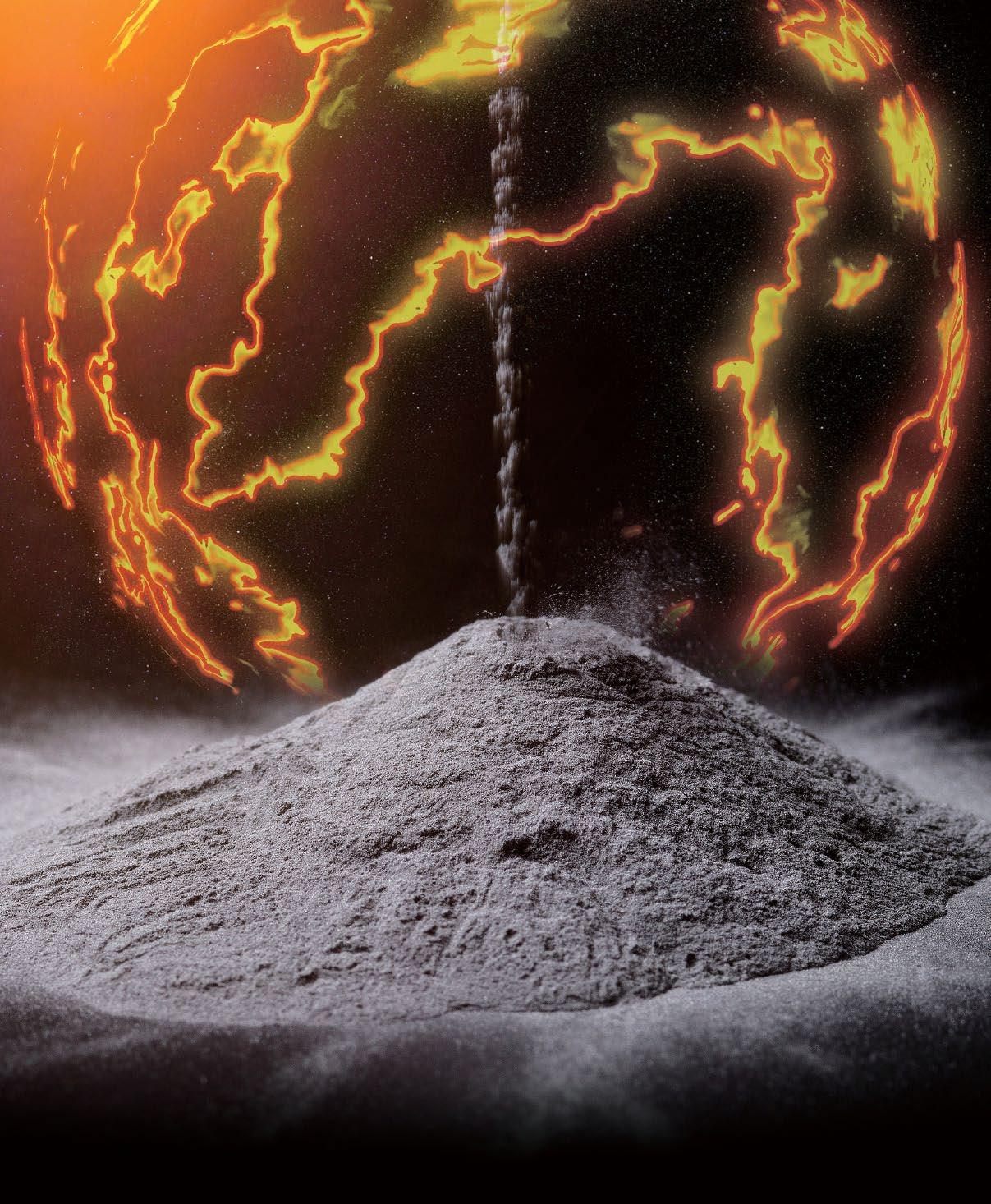

Desktop Metal, Inc, headquartered in Burlington, Massachusetts, USA, has announced the launch of a Reactive Safety Kit for its Production System P-1 metal Binder Jetting (BJT) Additive Manufacturing machine. The P-1 is capable of processing 17 metals, but the Reactive Safety Kit is required for the Additive Manufacturing of titanium and aluminium. Reported to be in development and testing for more than two years, the P-1 Reactive Safety Kit features ATEX-rated components, as well as critical hardware and software updates to ensure the highest level of safety. ATEX certification is given to equipment that has undergone rigorous testing outlined by European Union directives and is considered safe to use in specific environments with explosive atmospheres.
“Titanium and aluminium are two of the most frequently-requested materials at Desktop Metal, and we’re proud to say that we can now offer a commercial 3D printer with
the necessary safety features to binder jet 3D print these materials,” stated Ric Fulop, founder and CEO of Desktop Metal. “Based on our ongoing projects with major manufacturers, we know our technology is well on its way to unlocking new designs that deliver higher performance, weight reductions, and other benefits – all with our high-speed 3D printing technology that makes Additive Manufacturing more affordable for production volumes. We are diligently following our roadmap to deliver high-volume production of these materials on our largest printers in the future.”
A number of Desktop Metal’s customers are already Binder Jetting titanium and aluminium.
“Our team at TriTech has found Binder Jetting to be a good complement to our Metal Injection Moulding business,” said Robert Swenson, owner of TriTech and also the former owner of AmeriTi. “With binder jet 3D printing, titanium production of even the
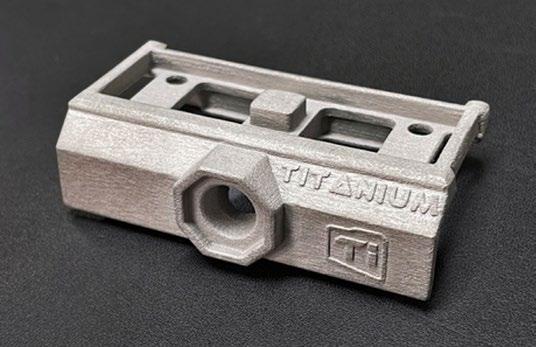
Users can now additively manufacture titanium alloy Ti6Al4V parts, such as the one shown here made by TriTech Titanium Parts LLC, on Desktop Metal’s Production System P-1 using the Reactive Safety Kit (Courtesy Desktop Metal)
most complex geometries can be greatly simplified and achieved at a lower cost. We’re excited to offer this cutting-edge manufacturing technology to our customers.”
Additionally, Desktop Metal has several projects in development with manufacturers using a variety of speciality materials developed by Kymera International, including titanium and aluminium. “Since formalising our partnership in 2021 through a Joint Development Agreement, we have been excited to work closely with Desktop Metal to develop a range of metal powder solutions optimised for the Binder Jetting process,” said Joe Croteau, Technology Manager – Specialty Materials with Kymera.
A global supplier of specialty materials and surface technologies, Kymera International has contributed decades of metallurgical expertise and process knowledge to offer sintered aluminium alloys with excellent performance.
“Kymera’s well-established relationships with a diverse group of customers has given us the opportunity to focus on the needs of high-volume manufacturers, and we are proud to now have a commercially-established solution. Over the past two years, we’ve successfully printed a variety of aluminium geometries and part sizes through multiple programmes.”
The production System P-1 is qualified to additively manufacture seventeen metals, including stainless steels, low-alloy steels, copper alloys, tool steels, nickel-based alloys, precious metals, and more.
With this announcement, titanium (Ti6Al4V) is now classified as Customer-Qualified on both the P-1 and X-Series models when upgraded with an inert atmosphere and other safety features. Aluminium is also now classified as Customer-Qualified on the X-Series and R&D Qualified on the P-1 when upgraded with an inert atmosphere and other safety features. www.desktopmetal.com
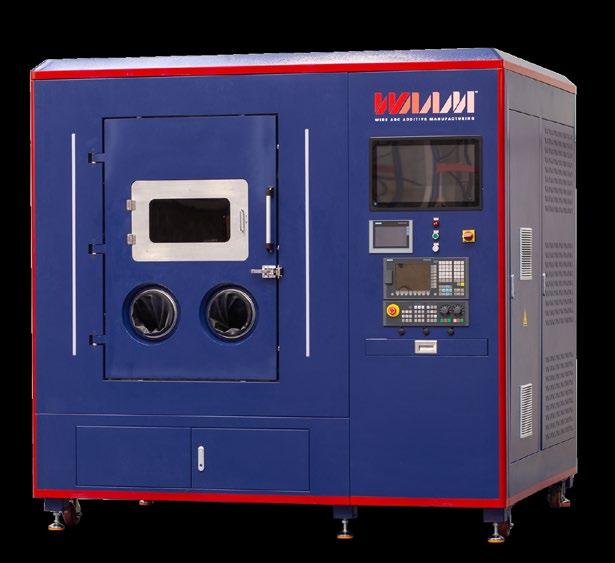
• Plasma Transferred Arc WAAM
• Print envelope: L600 x W600 x H500 mm3
• Materials: titanium alloys, iron alloys, nickel alloys, and others
• Multi-material capabilities via dual-wire feeding
• <50 ppm O2 inert atmosphere control
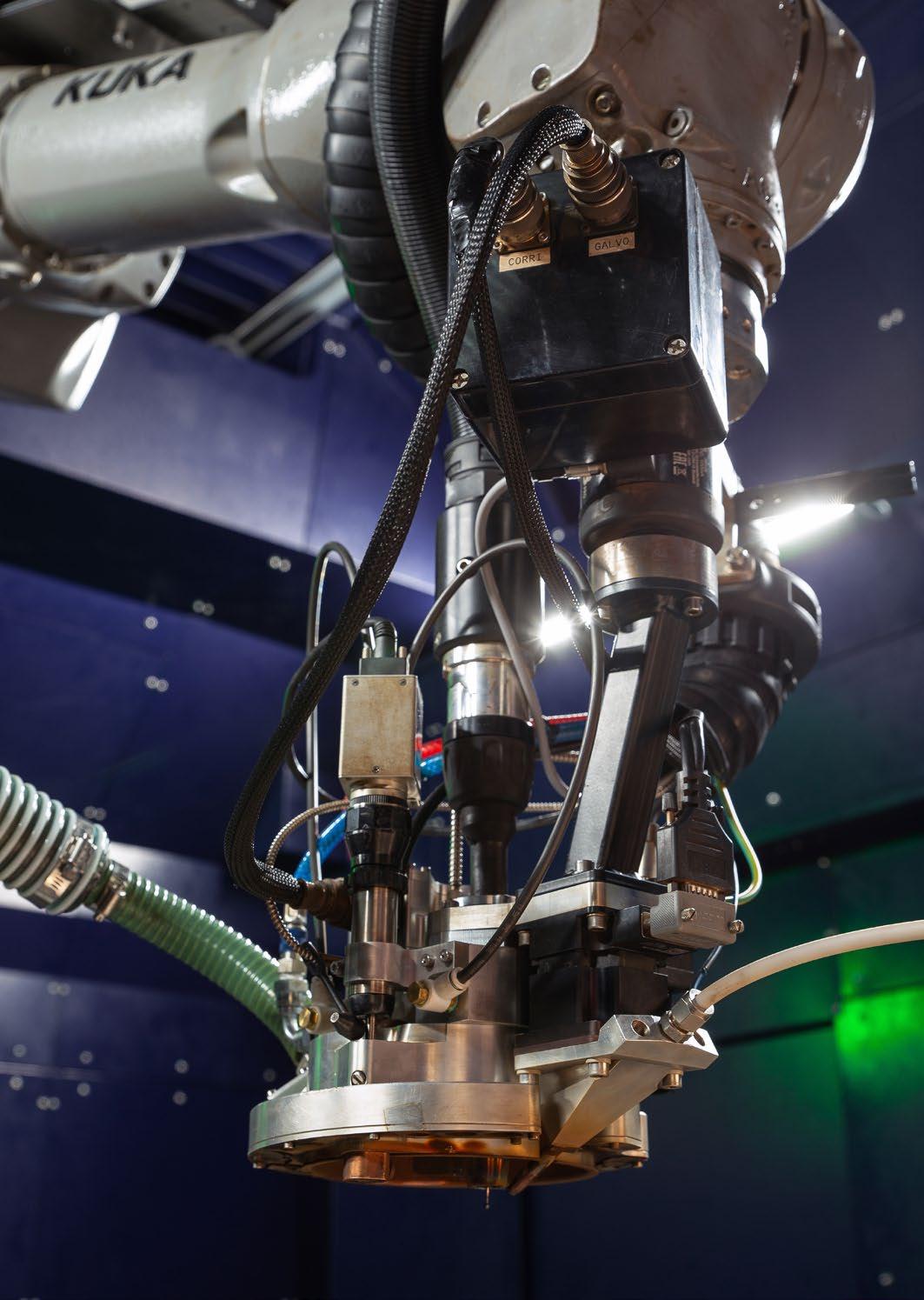
Revolutionize your manufacturing workflow with the cutting-edge MiniWAAM® system, seamlessly integrating Wire Arc Additive Manufacturing (WAAM) technology. Experience heightened productivity, reduced waste, and unlock new manufacturing possibilities across a diverse range of scenarios.
Benefits:
Easy mastery:
• MiniWAAM® features our established dual-wire Plasma Transferred Arc process, a Siemens controller, and dedicated software. Seamlessly transition into additive manufacturing with confidence, delivering impeccable prints from day one.
Innovation at its core:
• Embrace innovation effortlessly with MiniWAAM®’s native multi-material capabilities. Produce functionally graded components or pioneer new alloys directly on-site, expanding your manufacturing repertoire like never before.
Intelligent performance:
• Experience unparalleled monitoring and control features, mirroring the sophistication of RoboWAAM® With MiniWAAM®, rest assured in the quality of your parts and the outcomes of your R&D endeavors.
Unlock the full potential of additive manufacturing with MiniWAAM® .
Elevate your production, minimize waste, and chart new manufacturing frontiers with ease. Experience the future of manufacturing today.
Sintavia LLC, based in Hollywood, Florida, USA, has been awarded a contract by the US Department of Defense for the development of additively manufactured hypersonic propulsion components.
The contract, part of the Growing Additive Manufacturing Maturity for Airbreathing Hypersonics (GAMMA-H) project, contracted through the S²MARTS OTA managed by National Security Technology Accelerator (NSTXL), was awarded in part to Sintavia to develop and prove the quality and operational processes needed to design and manufacture critical precision components needed for hypersonic flight.
By validating these processes specifically with respect to hypersonic propulsion components, Sintavia’s efforts under GAMMA-H are hoped to be suitable for use across
the growing hypersonic industrial base. The contract is expected to run through 2025.
“The GAMMA-H award represents an important step forward in developing and formalising standard Additive Manufacturing processes that can be used across the industry for hypersonic production,” said Brian R Neff, Sintavia’s founder and CEO. “As the industry leader in this effort, Sintavia is uniquely positioned to work with the GAMMA-H project to successfully develop and validate these processes. We are grateful to the GAMMA-H team for their trust in Sintavia regarding this absolutely critical national security imperative.”
Announced in October 2023 with a budget of $106.7 million, the GAMMA-H project is a joint effort between the Office of Secretary
Sintavia has been awarded a US DoD contract to additively manufacture hypersonic propulsion components (Courtesy Sintavia)
of Defense ManTech and the Naval Surface Warfare Center, Crane Division. In addition to the direct GAMMA-H award, Sintavia supports several other efforts also funded by the GAMMA-H project. www.sintavia.com

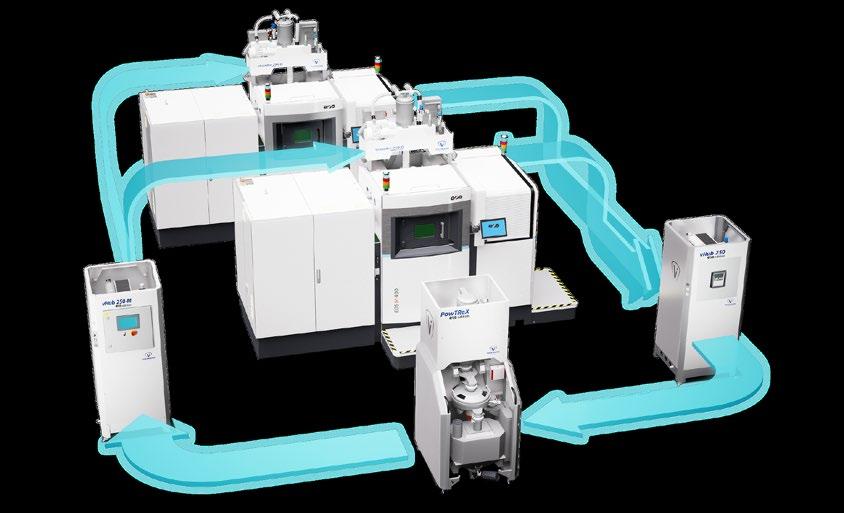
AML3D Limited, headquartered in Edinburgh, Australia, has announced the signing of a sixty-four-month lease that establishes AML3D’s US headquarters and manufacturing facility. The new US Hub, located within a manufacturing and industrial district in Stow, Ohio, USA, follows a new round of investment to support AML3D’s US growth strategy, raising $6.9 million.
Since it was launched in 2023, AML3D’s US ‘Scale up’ strategy has delivered ~$12.2 million of US defence sub-contracts that are being supported by the company’s Adelaide-based facilities. The demand for AML3D’s advanced manufacturing technology within the US is reported to be growing strongly, particularly within the defence sector with an emphasis on supporting the US Navy’s submarine industrial base.
The establishment of the US Hub is expected to drive a significant increase in defence contract wins and support an expansion into the US marine, oil & gas and aerospace sectors. AML3D is also planning to leverage the US Hub to bid for ITAR and other US-only controlled information Defence contracts that are restricted to US-based manufacturers. The US Hub’s location at Stow not only allows ease of access to transport infrastructure to service US customers but also to the supporting industries and materials required for AML3D’s advanced manufacturing processes. The US Hub is expected to be operational in Q1 FY25 and to be AML3D’s US corporate headquarters and base for the company’s US direct sales, administration, and technical teams, led by Pete Goumas, President & CEO of AML3D USA, Inc.
“Establishing our US manufacturing hub here, in Northeast Ohio, is very exciting. We can be more responsive to our existing US customers, better positioned to win new customers and contracts and be directly plugged into the transformation of US sovereign manufacturing capability to Additive Manufacturing,” Goumas said. “I’ve already started building out our direct sales and technical support team members that will add firepower to our existing capabilities and support our expected growth in US Defence contract wins and opportunities to expand into additional defence, marine, aerospace and oil & gas sectors.”
AML3D CEO Sean Ebert added, “Our Adelaide facilities have been critical in supporting our expansion into the US market, but as our US Hub comes online in the early part of FY25 it will help to free up capacity at our Adelaide facility to continue to pursue the Australian, Asian Pacific and European defence markets. We will in effect look to leverage our US playbook.”
www.aml3d.com




















Rocket Lab USA, Inc, Long Beach, California, USA, has signed the largest Electron launch agreement in the company’s history; a ten-launch deal with Earth observation company Synspective, based in Tokyo, Japan. The Electron launch vehicle is powered by the Rutherford Engine, reported to be the world’s first additively manufactured, electric pump-fed rocket engine.
Rutherford Engine, which is used as both a first and second stage engine, features a combustion chamber, injectors, pumps and main propellant valves produced using Electron Beam Powder Bed Fusion (PBF-EB) Additive Manufacturing.
The agreement was announced in Tokyo at an event attended by Rocket Lab founder and CEO Sir Peter Beck, Synspective founder and CEO Dr Motoyuki Arai and New Zealand Prime Minister Christopher Luxon, who was in Japan with a business delegation to deepen ties and accelerate growth in technology and other sectors.
Rocket Lab has been the sole launch provider for Synspective since 2020 when the company deployed
the first satellite in Synspective’s synthetic aperture radar (SAR) constellation, which is designed to deliver imagery that can detect millimetre-level changes to the Earth’s surface from space. Since that first mission, Rocket Lab has been the sole launch provider for Synspective’s StriX constellation to date, successfully deploying four StriX satellites across four dedicated Electron launches.
In addition to the ten new dedicated launches, another two launches for Synspective have already been booked and are scheduled for launch this year from Launch Complex 1 in New Zealand. The launches in the new deal are expected to take place across 2025-2027.
By launching as the sole payload on Electron, Synspective has control over the launch schedule as well as the precise deployment parameters for each satellite, enabling them to build their constellation out on their terms and maximise the coverage they can provide to their end customers.
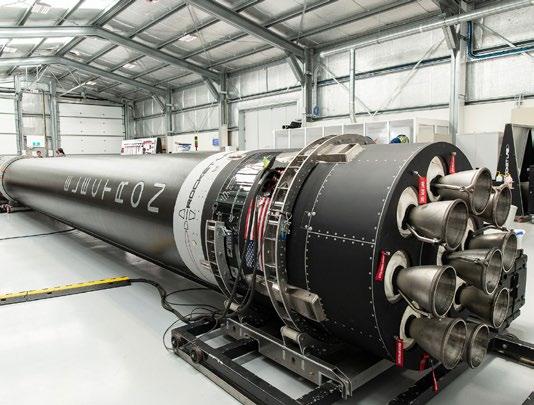
“We are honoured that the Synspective team has once again entrusted Rocket Lab with the deployment of their constellation and we’re proud to be their launch partner for another ten missions, our largest launch agreement to date,” stated Peter Beck. “Japan’s space industry is one of the fastest growing globally and we’re excited to be enabling this growth through the unique collaboration of a US rocket and a New Zealand launch site, delivering an unprecedented level of tailored access to orbit for Japanese small satellites.”
Synspective founder and CEO, Dr Motoyuki Arai, shared, “We are pleased to have reached an agreement with Rocket Lab to launch ten new satellites. This agreement gives us a solid foundation and confidence, as Rocket Lab is an innovative launch provider. We look to accelerate building our satellite constellation and expand our services in the future. We appreciate Rocket Lab’s significant role in moving our business forward. We will continue to build an analytics platform that enables visualisation and analysis of global environmental and economic activities, starting with constructing a SAR satellite constellation. These efforts will help make human activities sustainable for our generation and address the challenges of a changing global environment and depleting resources.”
“New Zealand innovation in space technology is rapidly putting our country on the map in this fast-growing industry. I am very pleased to witness the signing of this significant contract during my first visit to Japan as Prime Minister – it is a clear demonstration of the many opportunities to grow trade and prosperity between our two nations. Collaboration with international partners is critical to enabling our space industry to maximise its potential on the global stage,” Christopher Luxor concluded.
www.synspective.com www.rocketlabusa.com
In the complex world of AM, let Lucideon be your guide Partner with us and unlock a pathway to streamlined solutions, innovative processes, and unparalleled support in AM
Nidec Machine Tool Corporation, headquartered in Ritto, Japan, has launched the LAMDA5000, the company’s largest metal powderbased Directed Energy Deposition (DED) Additive Manufacturing machine to date. The machine has
a build envelope measuring 5 x 2.5 x 1.6 m and is aimed at industries requiring large components, such as shipbuilding, aerospace, oil and gas, and automotive tooling.
“The LAMDA5000 shatters the physical limitations of DED Additive Manufacturing,” stated Hiroyuki Tauchi, Nidec’s LAMDA lead engineer. “This groundbreaking system opens doors for entirely new applications, allowing us to produce massive, complex metal structures on demand.”
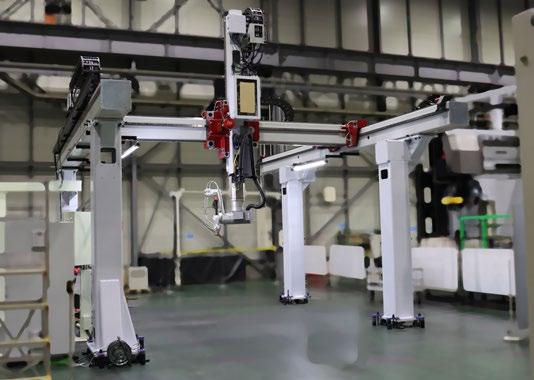
Barron Industries, a manufacturer of precision machined castings and assemblies for aerospace, defence, automotive, and other demanding industries based in Oxford, Michigan, USA, is reported to be expanding into metal Additive Manufacturing.
The company is building a new Advanced Aerospace Manufacturing Center with support from the Michigan Strategic Fund (MSF), and is seeking to acquire advanced metal Additive Manufacturing and machining equipment.
The expansion is anticipated to generate $9.1 million in capital investment and create fifty new jobs. To support this expansion in Oakland County, the MSF has awarded
the company a $900,000 Michigan Business Development Program performance-based grant.
“This project marks a significant milestone for Barron Industries and Oxford Township, showcasing the power of collaboration between local government and businesses,” stated Oakland County Executive Dave Coulter. “As we celebrate their expansion into an advanced aerospace manufacturing centre, we recognise Barron’s century-long commitment to excellence and innovation. Their continued contributions to Oakland County, both economically and through community engagement, exemplify the spirit of entrepreneurial success we champion.”
Nidec’s DED technology includes real-time melt pool monitoring and high-speed feedback, enabling consistent material properties and high quality throughout the entire build. The use of AI and machine learning for anomaly detection is intended to further protect against defects.
The LAMDA5000’s nozzle design with local shielding reportedly eliminates the need for a costly environmental chamber, simplifying operation and reducing overall production costs. The use of a second optional powder feeder allows both gradient and multiple material builds.
“The LAMDA5000 signifies a significant leap forward in DED Additive Manufacturing,” concluded Tauchi. “We are confident that this machine will empower manufacturers to push the boundaries of design and production, paving the way for a new era of large-scale metal fabrication.”
www.nidec.com
Michigan’s defence and aerospace ecosystems continue to be a key industry in the state, with nearly 4,000 businesses that serve the defence, defence aerospace, and homeland security industries and over 690 Michigan businesses contributing to the aerospace industry.
“We appreciate MEDC’s support of Barron Industries in our next stage of growth and expansion in Oxford to open our Aerospace and Defense Advanced Manufacturing Technology Center,” added Bruce M Barron, president/CEO of Barron Industries, Inc. “This support provides crucial funding for building and equipment early on in the launch while Barron aggressively onboards and trains the high-level technicians needed to staff the new facility.”
www.barron-industries.com
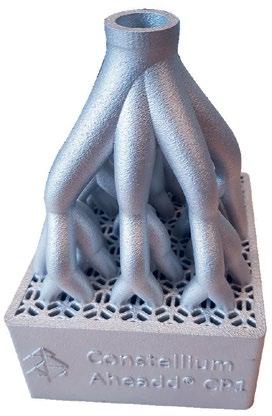
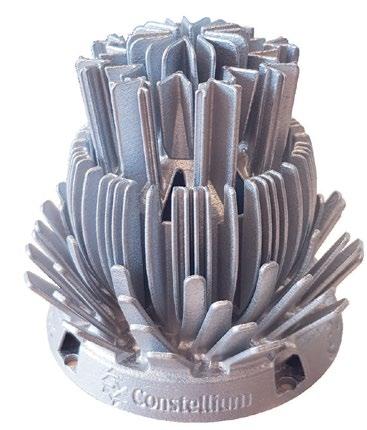
SPEE3D, based in Melbourne, Australia, has launched its Expeditionary Manufacturing Unit (EMU), a complete on-site mobile Additive Manufacturing solution. The EMU combines the company’s XSPEE3D metal Additive Manufacturing machine with its SPEE3Dcell post-processing and testing unit in two 6 m shipping containers, which together can produce metal parts close to the point of need.
The EMU is intended to help those working in the field tackle equipment repair and part replacement head-on. It makes it possible to additively manufacture, post-process, and test metal parts on-site. It is designed for easy deployment, requires no
specialised training, and delivers metal properties equal to or superior to those of cast counterparts.
“The launch of our Expeditionary Manufacturing Unit addresses the current state of the global supply chain, which is fragile and increasingly under pressure,” said Byron Kennedy, CEO of SPEE3D. “Part of the issue for defence and other heavy industries is getting critical equipment up and running quickly to avoid costly production delays.”
The EMU can produce high-density metal parts in a wide range of materials, and includes a fully-equipped post-processing shop – with a heat treatment furnace, CNC three-axis mill, tooling, and testing equipment.
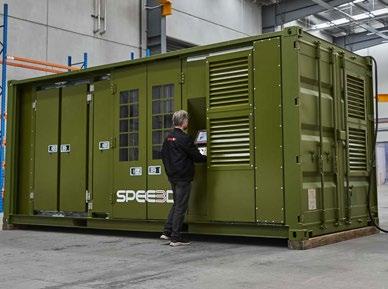
It can be transported on a single platform truck trailer, ship or by plane.
The containerised, ruggedised machine uses patented software to automate the Cold Spray Additive Manufacturing (CSAM) tool path, enabling users to build directly from CAD files. It also lets users simulate the process before they build, so users can proactively identify unfeasible part features and modify designs accordingly.
When users are ready to build, XSPEE3D uses an ultra-high-energy nozzle to spray metal powder at supersonic speeds onto a base plate, using only compressed air to build their part. Once it’s manufactured, the SPEE3DCell expeditionary postprocessing unit allows users to heat treat, machine, and test the part before using it.
www.spee3d.com
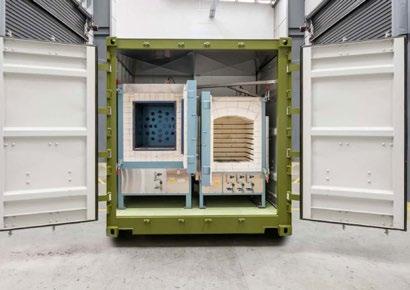
Beehive Industries, based in Englewood, Colorado, USA, has opened a new $4 million facility in Knox County. The expansion is expected to almost triple the number of employees at its Tennessee site, creating 150 jobs.
“Knox County continues to be a terrific area to grow as a business with Pellissippi State Community College, the Tennessee College of Applied Technology, the University of Tennessee, and Oak Ridge National Laboratory providing a well-trained
workforce and technical partnerships to advance the state of manufacturing for this country,” said Jonaaron Jones, President of Beehive’s Additive Manufacturing Sales during the opening celebrations.
“Congratulations to Beehive as they open their new facility,” added Knox County Mayor Glenn Jacobs. “Since their founding in 2020, Beehive has been growing across three states and doing impressive work in the aerospace, defence, and power
generation industries. We are grateful that they have selected Knox County and look forward to the jobs that this expansion will create.”
“Our goal is to manufacture one hundred percent of our product offerings at Beehive facilities. Ensuring we’re located in areas with like-minded industries and a qualified talent pool is critical to our success. Knox County has exceeded our expectations as we strive to be a top tiered defence supplier and valued member of the community,” Darius Ehteshami, Beehive’s Chief Operating Officer, added. www.beehive-industries.com


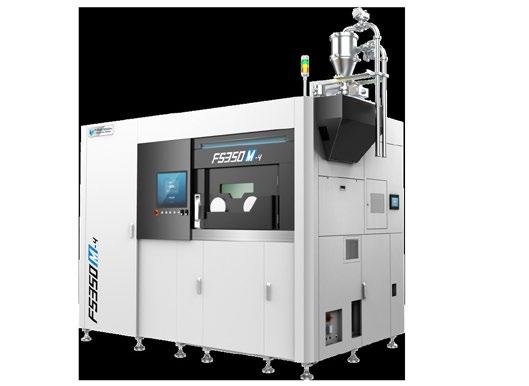
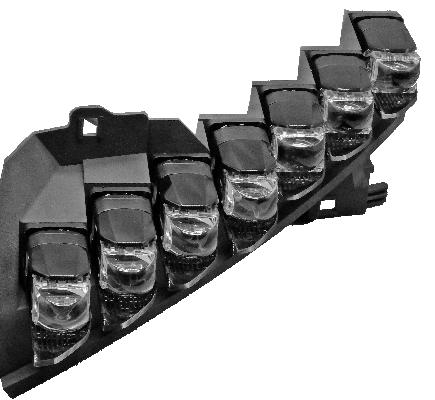
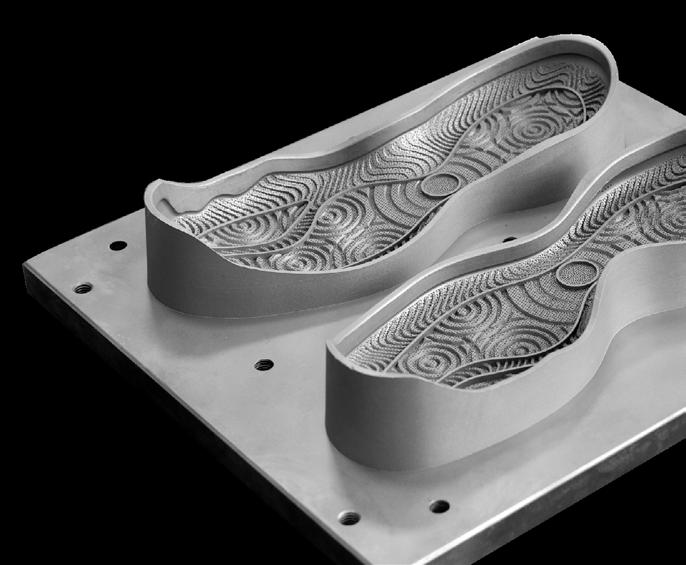
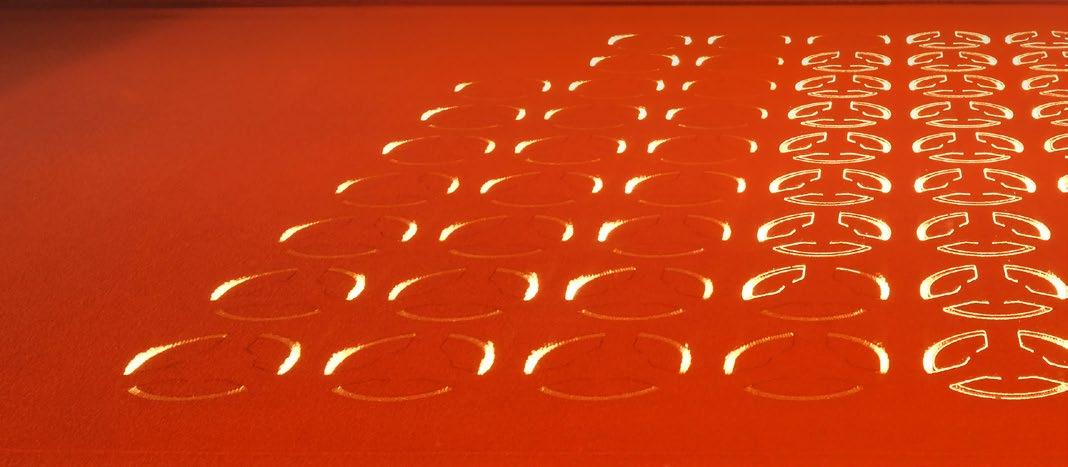


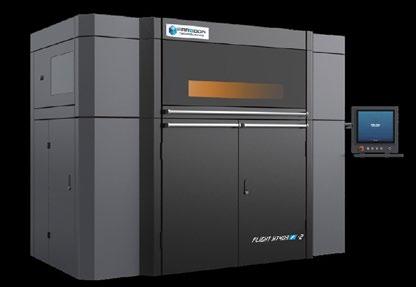

Malvern Panalytical, part of Spectris plc, Egham, Surrey, UK, announced the launch of Revontium, an XRF spectrometer. This new instrument delivers elemental analysis in a compact footprint for the optimal balance between precision and efficiency. Revontium offers an alternative to 1-2 kW floor-standing systems, and is said to deliver high-quality, repeatable results at a reduced cost of ownership and environmental impact. Together, these benefits are intended to open new possibilities for elemental analysis across multiple industries.
X-ray fluorescence (XRF) is a nondestructive technology for elemental analysis, with a number of gains over techniques such as inductively coupled plasma spectroscopy (ICP) and atomic absorption spectroscopy
(AAS). However, large floor-standing wavelength-dispersive (WDXRF) instruments can be both energyand cost-intensive. Revontium is reportedly the only XRF spectrometer on the market delivering comparable results and data quality to these larger instruments, at a reduced footprint.
Revontium’s cost of ownership is reportedly more than 25% lower than that of WDXRF, AAS, and ICP instruments. This is due to its reduced need for consumables, and simpler maintenance and sample preparation requirements. Revontium is said to need fewer consumables, such as acids and high-purity gases, than ICP, requires no daily calibration, and analyses samples in ambient conditions. Unlike high-powered WDXRF
The Revontium XRF spectrometer (Courtesy Malvern Panalytical)
instruments, there are reportedly no external chiller requirements and associated costs, thanks to internal cooling in the Revontium system. Its power consumption is only 250 watts per hour, compared with 2,000 watts per hour for traditional WDXRF.
After non-destructive XRF analysis using Revontium, the same sample can still be measured using ICP, AAS, XRD, or other methods if required. www.malvernpanalytical.com
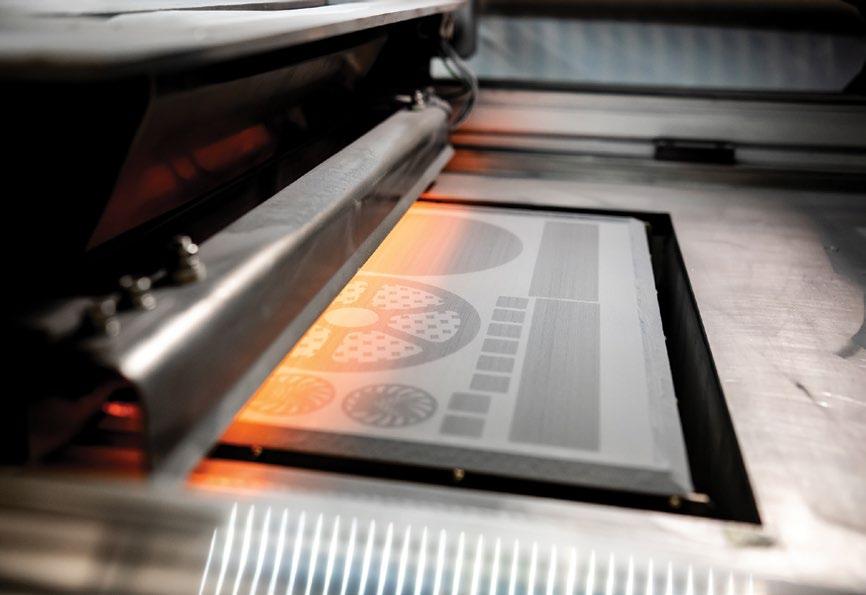
Greene Group Industries (GGI) Inc, a leading manufacturer of complex components via Metal Injection Moulding, headquartered in Oceanside, California, USA, has announced the acquisition of the assets of Holo, Inc, a producer of metal additively manufactured parts based in Newark, California, USA. Holo uses its patented PureForm AM technology for the rapid prototyping and scaled production of metal parts.
Alexis Willingham, GGI’s CEO, said, “Holo’s technology is a great addition to our comprehensive offering of Metal Injection Moulding, stamping and precision machining. This transaction enables GGI to deliver prototype metal parts, with a surface finish and feature resolution comparable to Metal Injection
Moulding, in a best-in-class lead time of less than two weeks.”
Holo’s PureForm Additive Manufacturing technology begins with a proprietary slurry of MIM powder and photoresistive polymer binder. Parts are built layer-by-layer with high resolution, high throughput optical printers developed by Holo. The resulting ‘green state’ parts are then sintered to remove all traces of binder, resulting in highly pure final parts with qualities approaching bulk material. Suitable materials in production or development include >99.9% copper, 316 and 17-4 stainless steels, CoCrMo ASTM F75, Ti-6Al-4V, Inconel 625, Hastelloy C22 and Al 2O 3
Willingham added, “PureForm Additive Manufacturing technology will strengthen our partnerships
Greene Group Industries has acquired Holo and its PureForm AM technology (Courtesy Holo Inc)
with customers by supporting faster iterations through the entire product life cycle, while GGI maintains its premium engineering service and quality performance.”
The terms of the transaction were not disclosed. www.greenegroup.com www.holoam.com

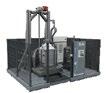




Liebherr-Aerospace, Toulouse, France, has celebrated a new milestone with the approval of a metal additively manufactured flex shaft, a component with a high degree of complexity produced from titanium. The part will now enter serial production for Airbus, following approval by the aircraft producer and
the European Union Aviation Safety Agency (EASA).
Leveraging the design freedom that Laser Beam Powder Bed Fusion (PBF-LB) Additive Manufacturing offers, Liebherr was able to replace an assembly of seven parts, formerly conventionally manufactured, with just one single
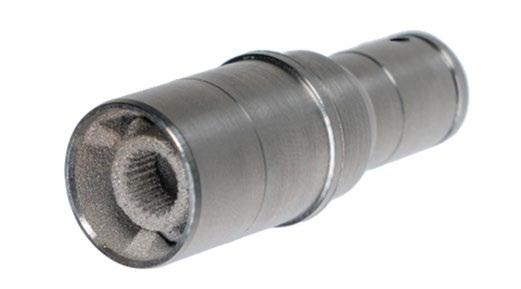
Liebherr is celebrating another Additive Manufacturing milestone with the news that this titanium flex shaft is entering serial production for Airbus (Courtesy Liebherr-Aerospace)
Velo3D, Inc, headquartered in Campbell, California, USA, has appointed Hull Xu as its Chief Financial Officer, replacing acting CFO Bernard Chung. The appointment was announced alongside re-alignment initiatives said to maximise cash flow and keep operational efficiency on track.
Additionally, Michelle Sidwell, the company’s Executive Vice President of Global Sales and Business Development, has been appointed to the newly created position of Chief Commercial Officer to unify sales, product strategy, and the company’s
customer service initiatives. She will now oversee the company’s sales, marketing, customer service and business development organisations. The company also announced that Renette Youssef, Chief Marketing Officer, will be leaving the company to pursue other opportunities.
“We are excited to announce the appointment of Hull as Chief Financial Officer. He is a highly accomplished financial executive who brings more than fifteen years in financial, operating and capital market experience to Velo3D and his knowledge will be critical in the
additively manufactured component. The reduced number of parts leads to improved reliability and a significant weight reduction.
The flex shaft is part of the Airbus A350 high lift system, where it will be integrated in the active differential gearbox of the flap system. The flex shaft transmits the rotary movement to a position sensor and thus compensates for an angle and axis misalignment between gearbox and sensor.
Liebherr-Aerospace already has a history of additively manufacturing aerospace applications. At the beginning of 2019, it commenced the serial production of additively manufactured parts with the introduction of an AM proximity sensor bracket for the A350 nose leading gear. This bracket was reportedly the first-ever introduced Airbus system part qualified for titanium Additive Manufacturing.
Compared to the additively manufactured parts previously developed and manufactured by Liebherr, the flex shaft has a higher degree of complexity and, states the company, represents the next step towards applications in highly integrated systems.
www.airbus.com
www.liebherr.com
execution of our strategic priorities,” said Brad Kreger, CEO of Velo3D. “I would also like to thank Bernie for his dedication and guidance, especially over the last six months, as we positioned the company for future success and wish him the best of luck in his future endeavours.”
Discussing the position of the company, Kreger added, “Overall, I am very pleased with our strategic initiative execution so far this year. We are successfully rebuilding our backlog and pipeline as we booked $27 million in new orders since midDecember 2023. Also, our efforts to improve system reliability are paying off as we are seeing increased orders from existing customers while rapidly expanding our footprint in the defence sector.”
www.velo3d.com
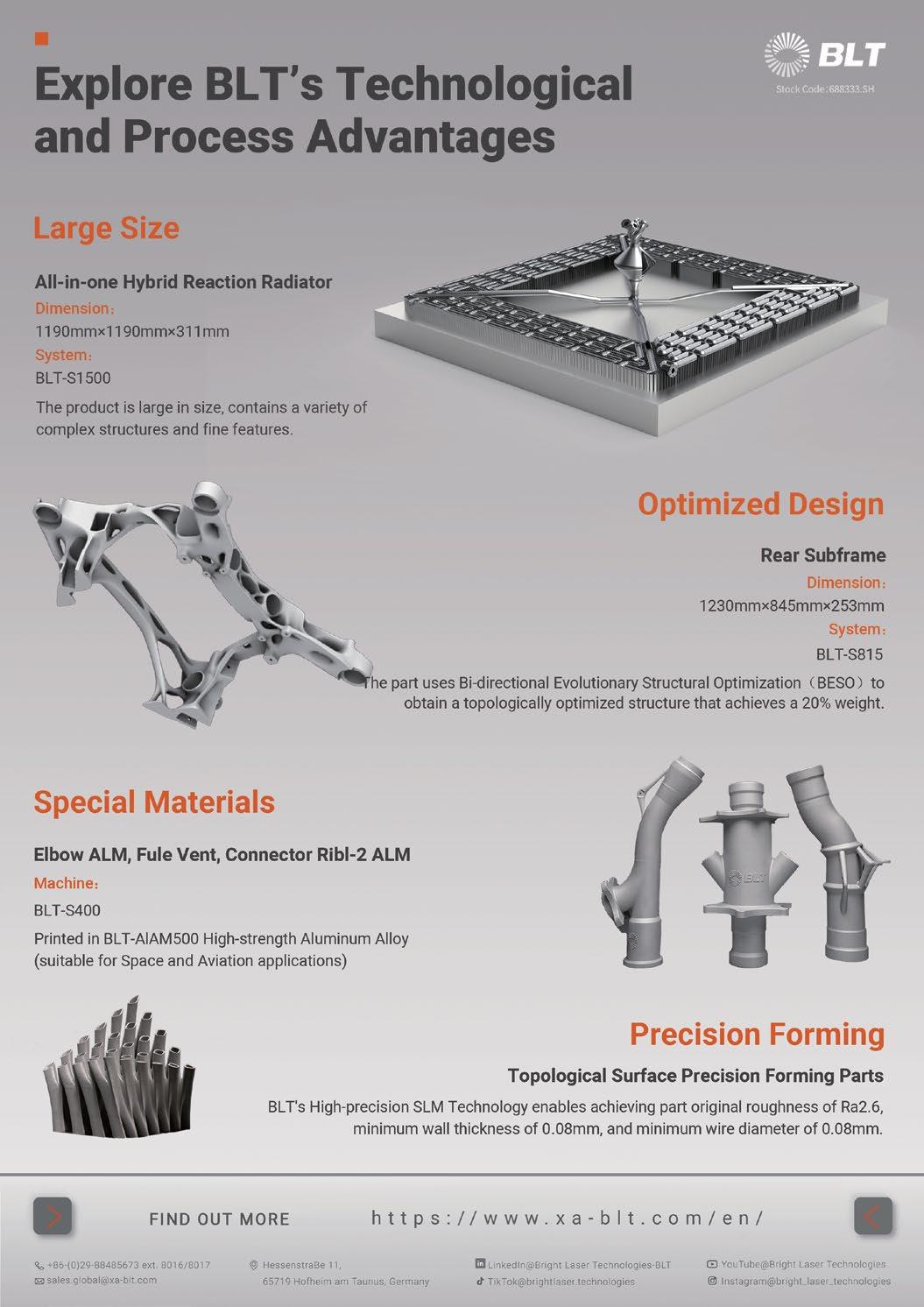
INDO-MIM, headquartered in Bangalore, India, reports that it is using metal Binder Jetting (BJT) to produce M2-grade tool inserts for its Metal Injection Moulding business. After exploring various Additive Manufacturing methods, the company adopted
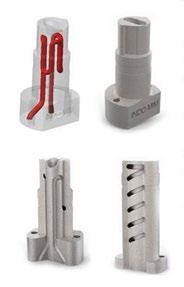
the BJT process in mid-2022 and has since produced over 800 inserts. Tool inserts have been additively manufactured using laser-based Powder Bed Fusion (PBF-LB) for over a decade, explained Jagadish Holla, Sr VP-Marketing at INDO-MIM.
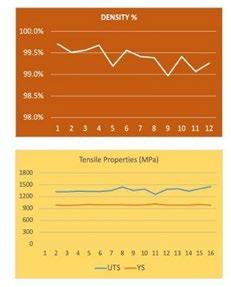
Binder Jetting allows for the inclusion of complex conformal cooling channels, as well as offering improved mechanical performance (Courtesy INDO-MIM)
IMR Metal Powder Technologies, Velden am Wörthersee, Austria, has finalised its agreement with KBM Advanced Materials, LLC, based in Fairfield, Ohio, USA, for sale and distribution of IMR’s aluminium powders through KBM’s metal powder distribution network.
IMR has been a provider of industrial metals, semi-finished products, and chemical products for over thirty years, marketing its products globally. There will now be a dedicated stock of IMR material at KBM’s warehouse in Ohio, providing access to producers of aluminium parts.
IMR primarily produces aluminium alloy powder for the Additive Manufacturing industry. It partners in the development and production of customer-specific powders for Laser Beam Powder Bed Fusion (PBF-LB), Direct
Energy Deposition (DED), and other processing technologies.
Thomas Rimmer, IMR CEO, stated, “By offering our aluminium alloy powders on the platform of KBM, our US customers now have access to their products on short-term notice which supports their inventory management optimisation as well as fast response to new business opportunities in a still evolving and sometimes difficult to predict market environment. The availability of IMR’s products to the US AM community from a local warehouse with the expert service of KBM were the main reasons for moving into this exciting opportunity.”
KBM offers products and services to AM powder consumers in the USA and Canada. Its business model results in KBM having large amounts of stock available for order at any given time, allowing customers to
However, the process can be relatively slow and it is only possible to use Maraging Steel for tool insert applications. “This material can, at best, get to 55 HRC post heat treatment, making it unfavourable for many tooling applications.”
“Given our material development and sintering expertise, fine-tuned over twenty-five plus years, our M2-grade material offers 50-80% increase in wear resistance, 40% better machinability compared to conventional wrought M2 material,” added Holla. “These are accomplished through finer grain microstructure and 99% minimum density post sintering. Our M2 material can guarantee 63-66 HRC hardness consistently.”
INDO-MIM can use BJT to build tool inserts weighing between 300 g and 8 kg, all to near-net shape and including complex conformal cooling channels. As well as producing these for in-house use, the company also offers the production of tool inserts as a service to its customers.
www.indo-mim.com
order and receive metal powder quickly and efficiently. KBM is reputedly North America’s largest marketplace for metal powders, allowing customers access to a variety of alloys and producers. It also offers transparent pricing and access to a variety of producers.
Kevin Kemper, KBM CEO, shared, “KBM is excited to partner with IMR to increase accessibility of their metal powders in North America. On-demand availability of products differentiates producers into those that can ship product when consumers need it and those that have a lead time. Our e-commerce solution features an easy-to-use interface, secure online transactions, detailed product information, pricing transparency, and the ability to ship products within a day of purchase. We want it to be easy and efficient for part producers to procure the raw materials they need to be successful. IMR is a strong and exciting addition to our offering.”
www.kbmadvanced.com www.imr-metalle.com

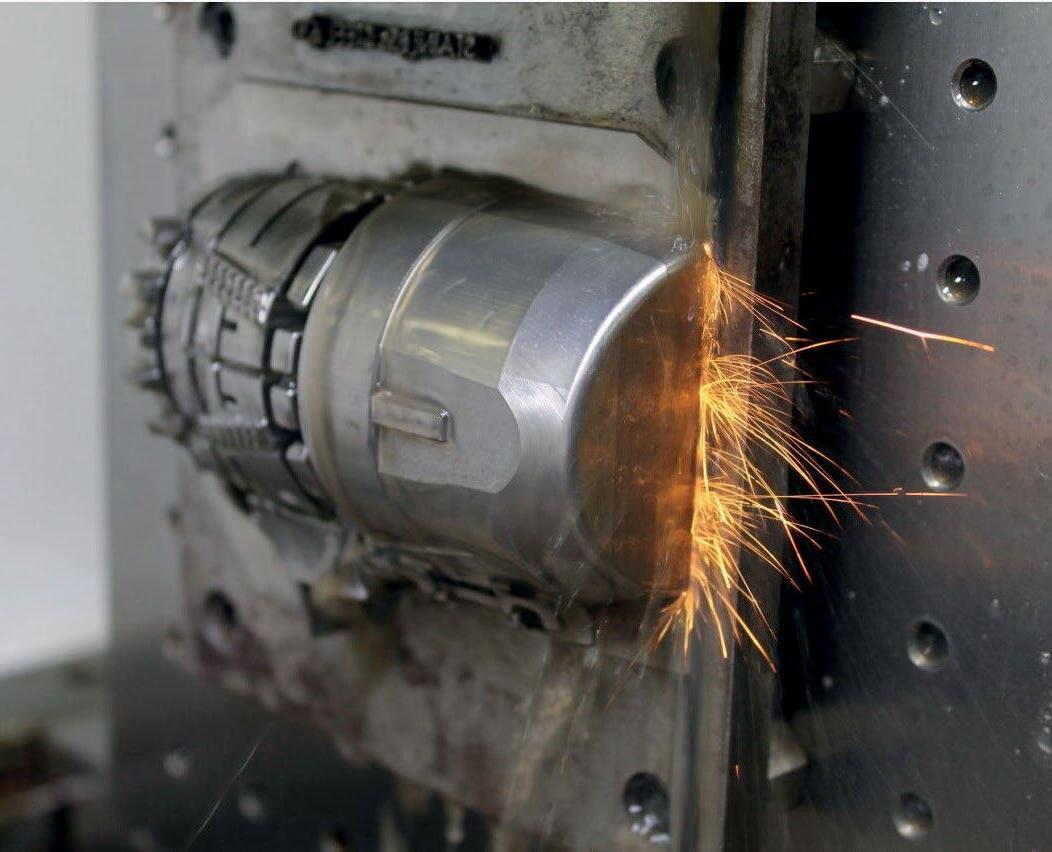
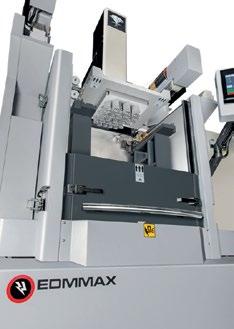
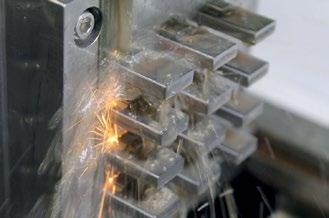
The University of Utah’s Department of Materials Science and Engineering and IperionX, based in Charlotte, North Carolina, USA, have celebrated the opening of an Additive Manufacturing research centre on the University’s campus. This follows the tenyear, $10 million research agreement announced earlier in the year.
The lab is intended to serve as a hub for the collaboration between Metallurgical Engineering Professor Zak Fang’s Powder Metallurgy research team and IperionX as they work to advance metallurgical technologies for producing primary metals, focusing on titanium.
The Titanium Additive Manufacturing Research Center allows University students to gain hands-on experience with materials science and engineering technologies. The partnership aims to inspire the next generation of metallurgical innovators, equipping them with the skills and experience needed to pioneer breakthroughs in sustainable metal production and processing.
“This new lab represents the tangible fruits of our partnership with IperionX and underscores our shared commitment to developing transformative solutions for the energy and
Pelagus 3D, headquartered in Singapore, reports it has achieved International Standard requirements ISO 9001:2015, ISO 14001:2015, and ISO 45001: 2018 certifications across its global operations. This certification signifies the implementation of a comprehensive Integrated Management System (IMS) that is said to reflect Pelagus 3D’s dedication to the highest standards in quality,
transportation sectors,” said Fang, the lead researcher on the project. “By combining our academic expertise in materials science and engineering with IperionX’s industry know-how and resources, we are poised to make significant strides in areas like Additive Manufacturing of titanium alloys and recycling of critical minerals.”
IperionX’s role in sustainable titanium production is said to be a key component of this collaborative research effort. The company has patented technologies to recycle valuable metals at a lower cost and with a reduced environmental impact compared to traditional methods.
“It all started here at the University of Utah, with Dr Fang’s innovation and his vision for manufacturing and re-shoring low-cost, high-performance titanium metal in America,” said Taso Arima, IperionX CEO. “The Titanium Additive Manufacturing Research Center will allow us to continue to rapidly innovate, and we believe this centre and continued work with Dr Fang and his research team will assist in attracting students to materials science and engineering–because this is what drives innovation for the critical technologies needed for the US and society as a whole.”
environmental, and occupational health and safety management systems.
The certification scope, encompassing “Sales, Engineering, Supply, and Manufacturing (including 3D printing) Spare Parts on Demand through Digital Platform”, holds weight within the maritime and offshore industries as it emphasises Pelagus 3D’s ability to consistently provide spare parts and services that meet customer requirements, as well as applicable quality and regulatory requirements.
“Achieving these certifications is not only a significant milestone in Pelagus 3D’s journey towards
Joint efforts with industry partners have been part of the University of Utah’s research growth over the past decade. In fiscal year 2023, university research funding reached a landmark $768 million, nearly doubling its support in the last ten years. As the University of Utah continues to work towards a goal of $1 billion in research funding, its leadership views industry collaboration as a vehicle to accelerate discovery and translate research into real-world applications.
“This academic-industry partnership of the Fang Lab and IperionX exemplifies the College of Science’s innovative bench-to-application research to meet the needs of our energy future,” said Peter Trapa, dean of the College of Science. “By supporting cutting-edge research that addresses real-world challenges, we are cultivating the next generation of scientific leaders and driving economic growth in Utah.”
The university’s Department of Materials Science is jointly overseen by the colleges of Science and of Engineering.
“Collaborations like this one are virtuous cycles,” said Richard Brown, HE Thomas Presidential Endowed Dean of the John and Marcia Price College of Engineering. “Cutting-edge research and industry supporting one another is the backbone of a growing innovation economy.”
www.iperionx.com
www.mse.utah.edu
operational excellence but also a reaffirmation of our commitment towards quality management of additive manufactured spare parts through the Pelagus platform,” said Kenlip Ong, Chief Executive Officer of Pelagus 3D.
The ISO certifications reinforce the reliability and functionality of additively manufactured spare parts through the Pelagus Platform that links end users, including vessel and offshore asset managers, to Original Equipment Manufacturers, empowering both parties to store customised digital inventory and create certified parts at scale globally.
www.pelagus.com
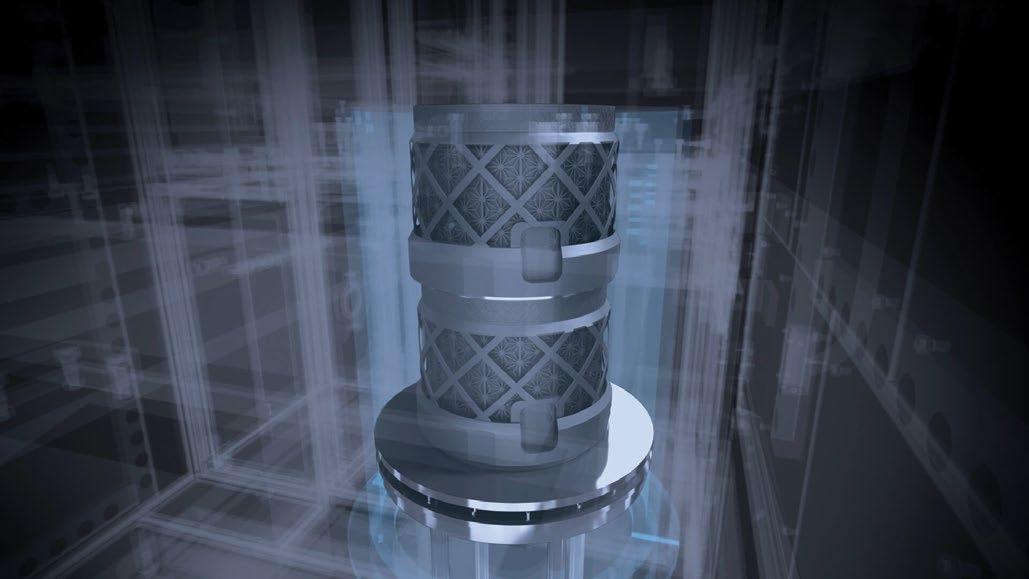
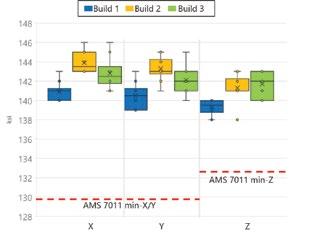
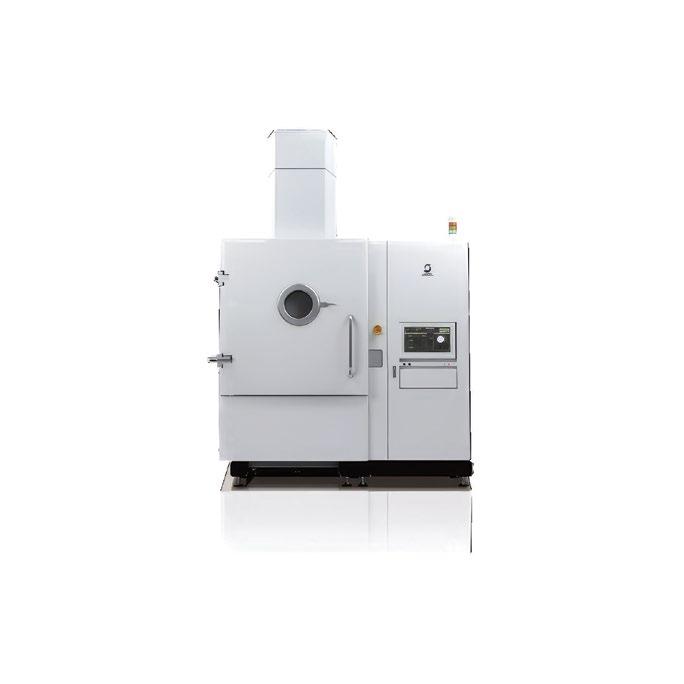

FORG3D, based in Edinburgh, UK, has expanded its operations at the Advanced Manufacturing Park (AMP) in Rotherham, UK, just a few months after establishing a base. After operating remotely from Scotland, founder and CEO Richard Mincher secured office space within the AMP, however, continued growth has seen FORG3D move to a recently completed unit on the AMP as it looks to double staff numbers this year.
The company intends to spearhead the Green Fourth Industrial Revolution and to transform the realm of large-scale metal Additive Manufacturing by offering the repeatable quality of forgings combined with the benefits of Additive Manufacturing.
Through a novel Additive Manufacturing process, FORG3D

looks to deliver a greener, smarter and faster alternative to castings and forgings for companies in the aerospace, space and defence sectors that are looking to innovate in this area – whether that is to reduce carbon emissions, speed up production, or for something as specific as solving the problem of how to manufacture in space.
“We’ll be recruiting heavily in the region in 2024. South Yorkshire is the heart of the UK advanced manufacturing sector and access to the rich talent pool that gravitates around this industry was a key attractor for us,” Mincher shared. “We also knew that we wanted to be based close to The AMRC and within a community at the forefront of innovation. The other occupiers here all work in the same industry as we do. They are all potential or existing partners,
FORG3D has expanded within the Advanced Manufacturing Park in Rotherham, UK (Courtesy FORG3D)
customers or suppliers. It’s the ideal location for us.”
To keep pace with demand and opportunities, FORG3D will be recruiting for a number of highly skilled and experienced engineers, software developers and robotics engineers in 2024. Other priorities in 2024 include exploring emerging markets in the US and launching a new fundraising drive to further scale the business.
www.forg3d.ai
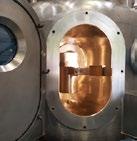

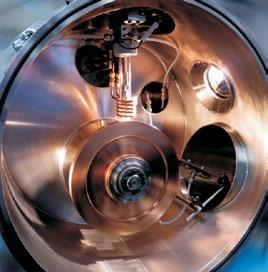
Meltio, based in Linares, Spain, has partnered with Accufacture, Rochester Hills, Michigan, USA and FANUC America to introduce Alchemist 1, an all-in-one Additive Manufacturing robotic workcell made in the USA.
Powered by Meltio’s Directed Energy Deposition (DED) wire-laser technology, Alchemist 1 is said to enable the cost-effective production of large, fully dense metal parts, suited to the needs of industries such as automotive, aerospace, mining, and oil and gas. The machine features a deposition rate of up to 1 kg an hour, a build volume of 98 x 198 x 98 cm, and compatibility with inexpensive welding wire feedstock. The pre-integrated Alchemist 1 Cell combines Meltio’s LW-DED head with a state-of-the-art FANUC six-axis positioner within a sleek, laser-safe enclosure. Furthermore, the system comes complete with a complementary Meltio Space robotic slicer license, though customers have the flexibility to utilise other slicer technologies as well.
Xavier Fajardo, CEO of Accufacture, remarked, “Our Alchemist 1 Cell marks the culmination of our extensive relationship with Meltio and FANUC, aimed at expanding the horizons of large format metal 3D printing. By offering a standardised, preconfigured solution, we aim to streamline the adoption process for our customers, thereby accelerating innovation across diverse industries.”
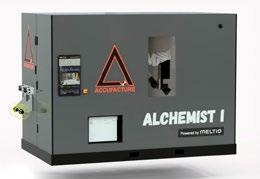
Alejandro Nieto, Meltio Engine Product Manager, added, “We are thrilled to deepen our collaboration with Accufacture through the introduction of Alchemist 1. This solution not only caters to the needs of North American customers but also underscores
our shared commitment to efficiency and simplicity in metal Additive Manufacturing.”
Michael Sharpe, Executive Director Sales for Materials Joining, remarked, “The DED print quality coupled with the FANUC Robot motion allows for Accufacture to combine the best of both companies’ technologies into a complete Class 1 laser package.”
www.meltio3d.com www.accufacture.com www.fanucamerica.com

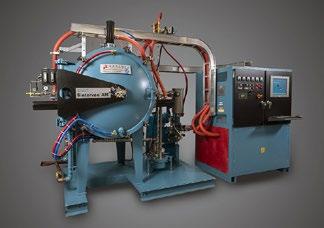
• Metal or graphite hot zones
• Processes all binders for metals or ceramics
• Sizes from 8-1500 liters (0.3–54 cu ft.)
• Pressures from 10-6 mbar to Atmosphere
• Precision heat treating post processing available
• Vacuum, Ar, N2 and H2
• Max possible temperature 3,500°C (6,332°F)
• Worldwide field service, rebuilds and parts for all makes
Farsoon Technologies, based in Changsha, China, first introduced its Support Reduction System (SRS) technology at TCT Asia 2023. The company has now released further information on the novel process,
which it says requires significantly fewer supports when compared to standard metal Laser Beam Powder Bed Fusion (PBF-LB) AM.
The development of the company’s SRS technology is said to address
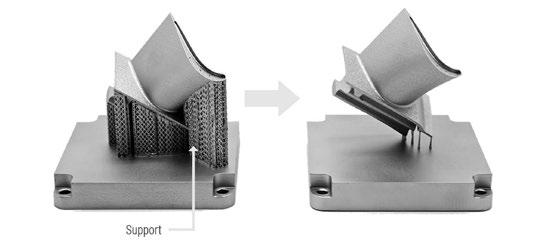
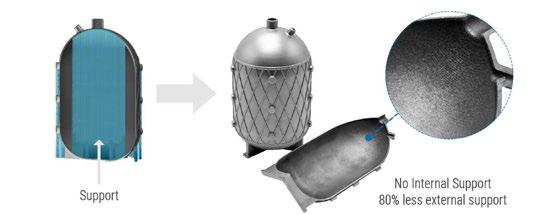
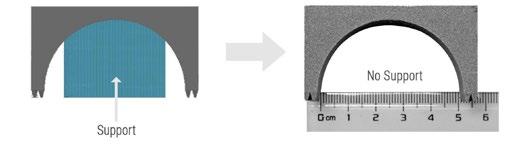
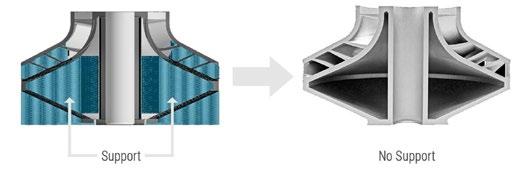
The turbine blade (a) was produced with 99.8% less support structures. The fuel tank (b) has no internal supports and requires 80% less external support structure. Support-free horizontal circular holes (c) are possible up to 50 mm in diameter. Closed impellers (d) have an inverted conical structure with a 20°-25° angle (Courtesy Farsoon)
the internal stress and deformation during the cooling phase of metal PBF-LB, which can lead to part failure, especially in overhanging structures.
A core feature of this is the ability to fabricate inverted conical structures and horizontal circular holes with no support. Applicable to all Farsoon metal PBF-LB platforms, the new SRS technology can successfully form inverted conical structures with a 20-25° angle and support-free horizontal circular holes up to 50 mm in diameter.
The advancement significantly reduces the need for support structures traditionally necessary for low-hanging angles (typically below 45°) to mitigate the risk of part failure. This not only saves on material costs and reduces manufacturing and post-processing time but also minimises potential damage to the part, enhancing both efficiency and quality in sectors like aerospace and automotive.
The use of Farsoon’s slicing software and scanning strategies allows for precise control of energy input and local part temperature. This ensures high part density and significantly improves the capability of forming low-angle structures over traditional scanning technologies.
The SRS support-reduction technology reportedly offers increased design freedom and reduces the constraints imposed by traditional manufacturing methods. For example, a closed impeller made of IN718 material, approximately 130 mm in diameter and 50 mm in height, can now be manufactured 33% faster, with cost reductions exceeding 25%.
Farsoon has applied this minimal-support technology to a variety of real-world materials and applications, including titanium, high-temperature, and aluminium alloys and stainless steel. Applications range from combustion chambers to closed impellers, valve bodies, and nozzles, with the largest parts exceeding 450 mm.
www.farsoon.com
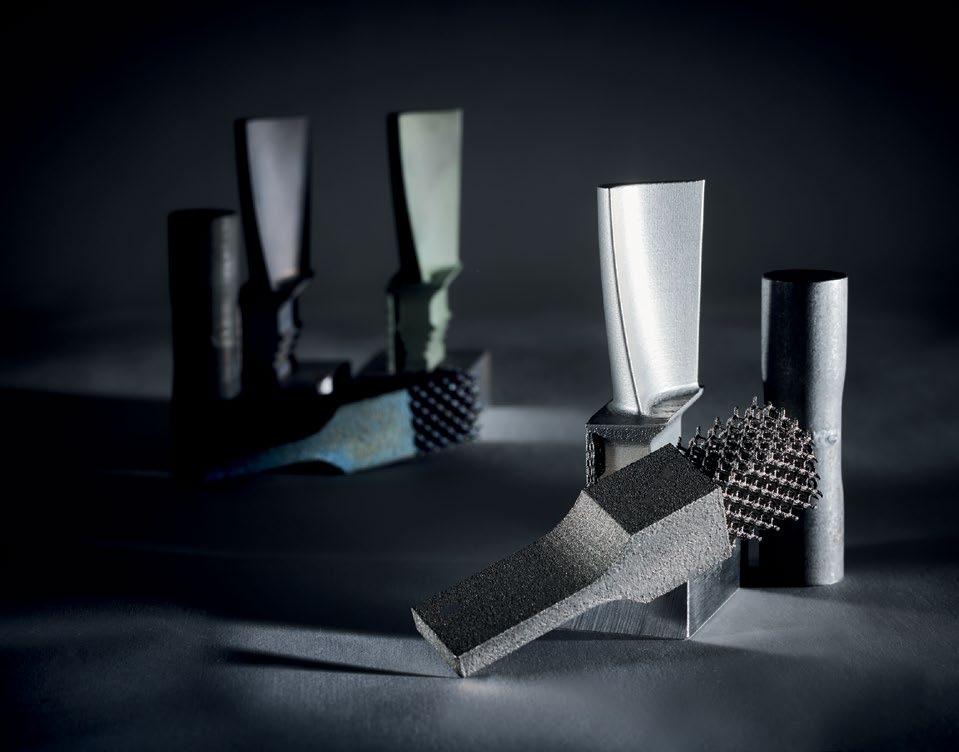
Redefine your HIP process with Quintus Purus for superior surface quality and consistent performance
Quintus Purus is the innovative solution for clean Hot Isostatic Pressing (HIP). Designed to minimise oxidation and discoloration, Quintus Purus combines advanced High Pressure Heat Treatment (HPHT TM) techniques, automated system bakeout routines, and tailored oxygen getter cassettes.
Find out more about Quintus Purus by scanning the QR code.
Quintus Technologies is the global leader in high-pressure technology, specializing in advanced material densification, sheet metal forming, and high-pressure processing for food safety and shelf life. Serving industries such as energy, medical, aerospace, automotive, and food processing, Quintus has a strong global presence, with installations in 45 countries. Headquartered in Västerås, Sweden, the company is renowned for its innovative high-pressure solutions and comprehensive support services.
Visit www.quintustechnologies.com for more information!

Sweden’s Höganäs AB has received a Partner of the Year award from the GTCC Division of Mitsubishi Heavy Industries (MHI), a leading global industrial group headquartered in Tokyo, Japan. Höganäs was recognised for its performance in the stable supply and quality of its thermal spray powder for MHI’s gas turbines.
“We are immensely honoured to be named Partner of the Year 2023 from the GTCC Business Division of Mitsubishi Heavy Industries,”
Höganäs AB has received the Partner of the Year award from the GTCC Division of Mitsubishi Heavy Industries (Courtesy Höganäs)
shared Hans Keller, President Coating & Brazing Technologies.
“This award is a reflection of the hard work, dedication, and passion exhibited by every member of our team. It reaffirms our commitment to forging strong partnerships and exceeding the expectations of our customers.”
The recognition is said to underscore Höganäs’ commitment to excellence, innovation, and
unwavering dedication to customer satisfaction.
“We extend our heartfelt gratitude to Mitsubishi Heavy Industries for recognising our efforts and for the invaluable partnership we have built over the years,” Keller added. “This recognition serves as motivation for us to continue pushing boundaries, raising standards, and driving innovation in the metal powder industry.”
www.hoganas.com
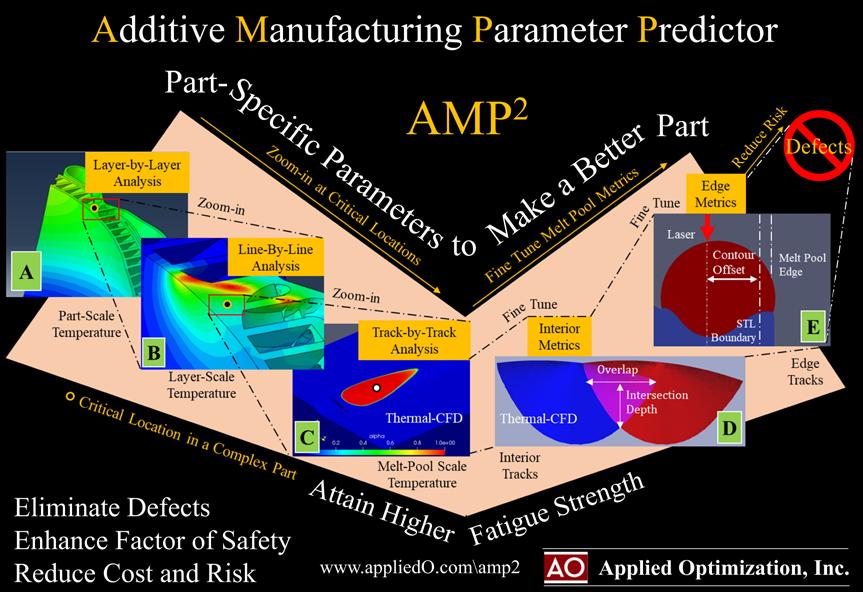
Experience the power of performance, the spark of innovation, and the strength of partnership
Performance:
As a global leader in powders, pastes, and granules, we excel in materials like Aluminum, Copper, Titanium, and more. Our precision manufacturing ensures superior product attributes tailored to your requirements.
Innovation:
Utilizing state-of-the-art research and development alongside cutting-edge technologies, we provide tailored solutions for PM and additive manufacturing. Our emphasis on materials and process advancements positions us as industry leaders in quality, service, and operational excellence.
Partnership:
Count on us as your trusted development and production ally. Our expertise in metal powders and alloys ensures top-tier materials for critical applications, empowering industries worldwide.
At Kymera International, we’re not just a powder provider; we’re your strategic partner in the world of specialty material solutions and additive manufacturing. Contact us today to revolutionize your projects
www.kymerainternational.com
info@kymerainternational.com
VAC-U-MAX, based in Belleville, New Jersey, USA, along with GEMCO, Middlesex, New Jersey, and VORTISIV, Salem, Ohio, have announced the collaborative development of the AM-MPRR, a portable system designed to manage the metal powders used in Additive Manufacturing. This system handles the entire lifecycle of metal powders for Laser Beam Powder Bed Fusion (PBF-LB) and Binder Jetting (BJT), including unloading, handling, reclamation, and reconditioning.
The new system utilises advanced vacuum technology to fully extract metal powders from the build bed while removing unused metal powder and reconditioning it for future use. It
is reputed to reclaim unused powders from the bed in 85% less time than traditional methods, reconditioning them for reuse.
Residual identical powder from multiple machines can be delivered to the tumble blender module to be homogenised into a consistent master batch for reuse. Another version of the MPRR blends the powder and also dries it to a singledigit moisture content to improve the powder flowability.
AM-MPRR integrates with GEMCO’s mixing and drying technology, allowing users to reclaim and recondition unused metal powder and extend its useful life. Overall, this
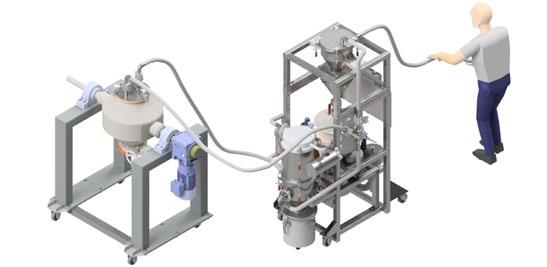
VAC-U-MAX, GEMCO, and VORTI-SIV have announced a portable system designed for AM with metal powders (Courtesy VAC-U-MAX)
Masan High-Tech (MHT) Materials Group, headquartered in Ho Chi Minh City, Vietnam, parent company of HC Starck Tungsten, has signed a framework agreement with Mitsubishi Materials Corporation Group (MMC), Tokyo, Japan, for the sale of all shares in HC Starck Holding GmbH.
MMC, which operates its own site for the recovery and processing of tungsten as well as the manu -
facturing of tungsten-based tools, is a long-standing customer of the Goslar-based company. It acquired a 10% stake in MHT in 2020, shortly after the latter took over HCS from the former HC Stark Group.
As a result of the acquisition, MMC Group will have tungsten operations in four major markets: Japan, Europe, North America and China.
MMC stated that Japan New Metals Co, Ltd (a wholly owned
system is intended to lead to waste reduction, material usage optimisation, and cost savings – all while maintaining the high standards required for critical AM applications.
“Experience is not an experiment,” said Doan Pendleton, president of VAC-U-MAX. “There is no need to reinvent the proverbial wheel for metal powder handling needs. The MPRR family of products comes with experience as a standard feature, from a team of companies including GEMCO and VORTI-SIV that have supported Additive Manufacturing and 3D printing since its early days.”
All MPRR products are designed to process reactive and non-reactive metal powders in accordance with NFPA and UL standards in a plug-andplay design. VAC-U-MAX, GEMCO, and VORTI-SIV have also highlighted the improved ergonomics for operators, safe material handling, and reduced spillage from manual handling of small powder containers or manual sieving.
Casey Bickhardt, GEMCO President, CEO & owner shared, “We are firmly committed to advancing the entire Additive Manufacturing industry. This new, joint AM-MPRR effort perfectly embodies that spirit.” This commitment is further exemplified by GEMCO’s recent membership of the National Institute of Standards and Technology’s Metal Additive Manufacturing Powder Consortium.
www.okgemco.com www.vorti-siv.com www.vac-u-max.com
subsidiary of MMC) and HC Starck will work together to create synergies and increase corporate value by strengthening R&D capabilities and promoting cross-selling, as well as developing a global tungsten recycling business.
Dr Hady Seyeda, CEO of HCS, stated, “We know Mitsubishi Materials very well as a customer and investor. Their extensive activities in Japan and our own global presence complement each other perfectly.” www.masanhightechmaterials.com www.mmc.co.jp www.hcstarck.com
























● GAS AND ULTRASONIC ATOMIZERS FOR SPHERICAL POWDERS WITHOUT ANY SATELLITES for LPBF, MIM, Binder Jetting and other Additive Manufacturing applications. High purity, sphericity and wide range of reproducible particle size distribution.
● WATER ATOMIZERS FOR MORE IRREGULAR POWDERS ideal for recycling/re ning process, press & sinter process and others.


● AIR CLASSIFIERS FOR THE PRECISE SEPARATION OF METAL POWDERS into ne and coarse powder fractions especially in the range < 25 µm
● MAXIMUM PURITY BY OXIDATION-FREE PROCESSING
● ALL SYSTEMS DESIGNED FOR EASY HANDLING AND CLEANING, QUICK ALLOY CHANGE WITH MINIMUM CROSS CONTAMINATION




● FOR A WIDE RANGE OF METALS AND FOR SMALL TO MEDIUM AMOUNTS






Materialise NV, headquartered in Leuven, Belgium, and Renishaw, based in Wotton-Under-Edge, Gloucestershire, UK, have announced a partnership that aims to increase efficiency and productivity for users of Renishaw’s Additive Manufacturing machines. Through the partnership, Materialise’s Build Processor software will be tailored to Renishaw’s RenAM 500 series of metal AM machines and users will have access to Magics, Materialise’s data and build preparation software. It is expected this will enable users of Renishaw’s AM machines to build a seamless workflow from design to additively manufactured part, control and customise their AM process, reduce production time, and increase the efficiency of AM operations.
“Working with Materialise enables us to support Renishaw users deploying 3D printing in a host of different manufacturing applications,” said Matt Parkes, AM Strategic Development Manager at Renishaw. “Their next-generation build processors, in combination with their software portfolio, complement our recent technology updates. We’re pleased to be collaborating on the tools needed to support the industry as metal 3D printing becomes an essential piece of the manufacturing puzzle.”
Build processors link AM machines with data preparation software, streamlining the Additive Manufacturing process from design to build. Materialise’s build processor is said to complement Renishaw’s recently launched TEMPUS technology.
Materialise’s software handles data consistently and is said to speed up data processing of complex geometries and high volumes of parts. Additionally, the new build processor for Renishaw AM machines enables dedicated build parameters at the part level for increased productivity and optimised quality, making it a viable solution for the volume production of different or identical parts. The build processor will provide users with advanced workflow control and automation, including the recently launched e-stage for Metal+. This software optimises data and build preparation for PBF-LB machines, using physics-based modelling to automate support structure generation.
Manufacturing companies can also rely on the Materialise build processor software development kit to create their own intellectual property. www.renishaw.com www.materialise.com
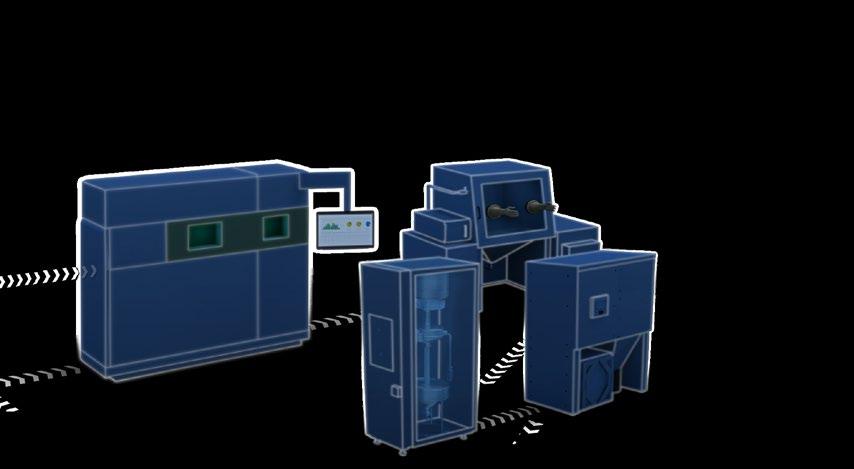

Rocket Lab USA, Inc, Long Beach, California, USA, has signed the largest Electron launch agreement in the company’s history; a ten-launch deal with Earth observation company Synspective, based in Tokyo, Japan. The Electron launch vehicle is powered by the Rutherford Engine, reported to be the world’s first additively manufactured, electric pump-fed rocket engine.
The agreement was announced in Tokyo at an event attended by Rocket Lab founder and CEO Sir Peter Beck, Synspective founder and CEO Dr Motoyuki Arai and New Zealand Prime Minister Christopher Luxon, who was in Japan with a business delegation to deepen ties and accelerate growth in technology and other sectors.
Rocket Lab has been the sole launch provider for Synspective since
2020 when the company deployed the first satellite in Synspective’s synthetic aperture radar (SAR) constellation, which is designed to deliver imagery that can detect millimetre-level changes to the Earth’s surface from space. Since that first mission, Rocket Lab has been the sole launch provider for Synspective’s StriX constellation to date, successfully deploying four StriX satellites across four dedicated Electron launches.
In addition to the ten new dedicated launches, another two launches have already been booked and are scheduled for launch this year in New Zealand.
“We are honoured that the Synspective team has once again entrusted Rocket Lab with the deployment of their constellation and we’re proud to be their launch partner
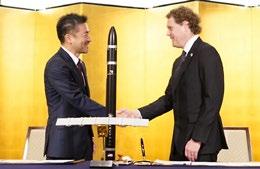
Rocket Lab has signed a ten-launch deal with Synspective (Courtesy Synspective)
for another ten missions, our largest launch agreement to date,” stated Peter Beck. “Japan’s space industry is one of the fastest growing globally and we’re excited to be enabling this growth through the unique collaboration of a US rocket and a New Zealand launch site, delivering an unprecedented level of tailored access to orbit for Japanese small satellites.”
www.synspective.com
www.rocketlabusa.com
AdditiveLab, based in Leuven, Belgium, has partnered with AddUp, headquartered in Cébazat, France, to release the latest version of AddUp Manager. The build preparation software for metal Additive Manufacturing now includes a simulation engine specifically designed to streamline and optimise the production process on the FormUp 350 Laser Beam Powder Bed Fusion (PBF-LB) machine. AddUp Manager allows users to fine-tune over 250 variables and parameters, create custom melting strategies, and visualise laser trajectories. The latest release, version 7.6, integrates a simulation module in an effort to enhance precision and flexibility in metal AM.
“We are excited to partner with AddUp because their customers use metal AM for challenging designs at
a serial production level. Our software integration will help AddUp customers overcome production challenges, enabling them to manufacture complex designs more efficiently,” said Christian Rossmann, AdditiveLab CEO. “This partnership presented an excellent opportunity to collaborate and make an impact on industrialising metal AM.”
The companies believe that simulation software is crucial for predicting stresses and deformations in the build before manufacturing begins. By anticipating and correcting these issues, manufacturers can reduce errors and increase success. The new simulation software integrated into AddUp Manager 7.6 offers a solution for optimising scanning strategies and understanding the intricate details of the AM process.
Many AM users have had to rely on separate software for build preparation and simulation, which increases costs as well as the potential for overlooked deformations or errors across platforms. The integration of a simulation engine within AddUp Manager simplifies the build preparation process, providing a singular platform that reduces the learning curve associated with multiple software tools.
From AddUp’s perspective, the collaboration was a clear choice.
“After testing multiple options, the result from AdditiveLab was superior. Their simulation software was very simple to use and provided an easy way to integrate functionality into AddUp Manager,” explained Sebastien Devroe, AddUp’s Chief Technology Officer. “The partnership with AdditiveLab ensures our customers have a seamless and efficient user experience.”
www.additive-lab.com www.addupsolutions.com

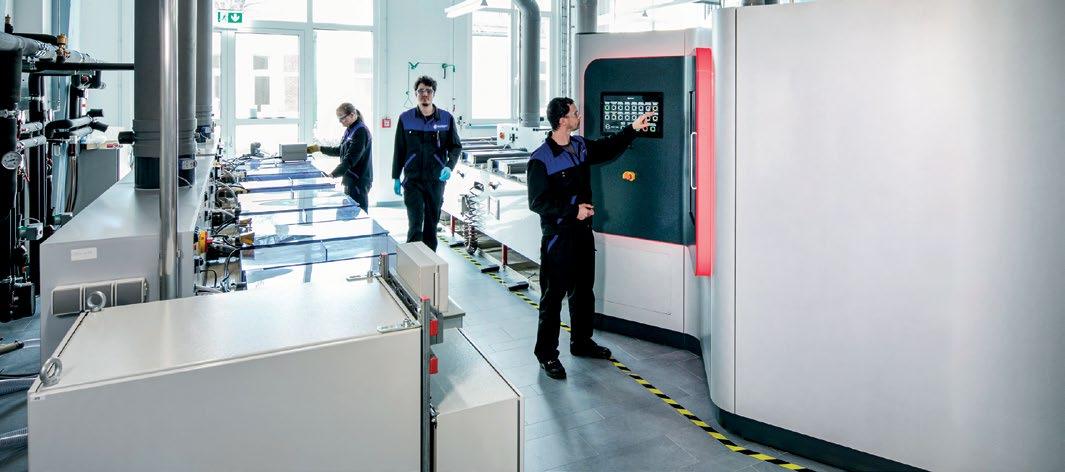



We dissolve your surface problems.



Dynamic (electro-)chemical surface finishing for the most challenging structures and geometries.
• Undercuts
• Stacked parts









• Inner channels






• Delicate geometries











• Improvement of roughness, corrosion resistance, fatigue strength






Contact us for post-processing of your parts at
RENA Service Finishing Center
Wiener Neustadt, Austria














































Freemelt AB has announced that it is relocating from its Mölndal location to Majorna, Gothenburg, Sweden, with the signing of a five-year lease with Corem Property Management Group.
The 1,500 m 2 premises will house the headquarters, including central management functions and product management, innovation and application centres. The move-in date is set for Q4 of 2024.
“Freemelt is now switching up the company’s strategy with commercialisation and industrialisation, which results in a growing organisation and a need of new types of competence,”
stated Daniel Gidlund, CEO of Freemelt. “An innovative and inspiring work environment is an important piece of the puzzle for our continued development and to be able to attract the best competence to achieve our ambitions to become a leading productivity partner in Additive Manufacturing in 2030.”
Anna Lidhagen-Ohlsén, property manager at Corem, added, “We are pleased to welcome Freemelt as a new tenant at Corem. Together with the tenant, we will now make the final adaptations of the premises,
Dyndrite Corporation, Seattle, Washington, USA, has announced support for HP’s Multi-jet Fusion (MJF) and Metal Jet line of Additive Manufacturing machines. The forthcoming Additive Manufacturing preparation software is expected to bring powerful new serial production features to direct and contract manufacturers, including automated build preparation from multigigabyte mesh files, or native CAD, fully controllable 2D & 3D advanced labelling, and more. The company is currently accepting new beta users via its Early Adopter Program.
“From the outset Dyndrite’s goal has been to usher in a new era of serial production in AM,” said Stephen Anderson, Strategic Relations, Dyndrite. “Our direct support for HP Multi Jet Fusion and Metal Jet now avails the most production oriented users in AM with software capable of accelerating their production capabilities and throughput. We look forward to working with Multi Jet and Metal Jet users to solve their toughest serial production challenges.”
Dyndrite for MJF, built upon Dyndrite’s Accelerated Computation
Engine (ACE), provides enterprise features that directly help industrial users speed production, increase repeatability, and improve traceability. Users can now work with large multi-gigabyte files, leveraging native CAD files and their associated metadata to enable automation, finely tune advanced 2D and 3D nesting, part serialisation and QR code labels and script automated build prep that eliminates human error. Dyndrite users can enjoy native machine connectivity and full HP file plug-in support. Additionally, Dyndrite’s native Python APIs enable data integration with a wide range of databases and 3rd party apps, including AMFG, to improve part ordering, job submission, and reporting.
“HP is excited that Dyndrite has announced support for HP’s 3D printing ecosystem for both polymers and metals,” said Arvind Rangarajan, Global Head Software and Data, Personalization and 3D Printing at HP Inc. “HP 3D printing customers will now have the option of using Dyndrite to create and submit print jobs.”
www.hp.com
www.dyndrite.com

Freemelt will move to new headquarters in Majorna, Sweden, by the end of 2024 (Courtesy Freemelt)
where we will also review how we can work with recycling. As a new tenant, Freemelt contributes positively to strengthening the area Fiskhamnen in Majorna and the development that takes place here.” www.freemelt.com
AM 4 AM, a producer of advanced metal powders for Additive Manufacturing based in Foetz, Luxembourg, has announced that it has been accepted into the EIT Raw Materials Accelerator Phase 2 programme.
The company successfully completed Phase 1 last January, a project undertaken by its EIT Raw Materials team of María Encina López Arias, Antonis Politis, Nicolas Menou, and coaches Joachim Blazer and Hans Westerhof. Phase 2 of the Accelerator programme gives companies six months to validate assumptions made surrounding customer demand and marketplace entry during Phase 1.
“Being part of this prestigious accelerator provides us with an incredible opportunity to further develop our technology, expand our network, and drive impactful change in the raw materials sector,” the company said.
Co-funded by the EU, the objective of the EIT RawMaterials project is to secure a sustainable raw materials supply by driving innovation, education, and entrepreneurship. eitrawmaterials.eu www.am-4-am.com
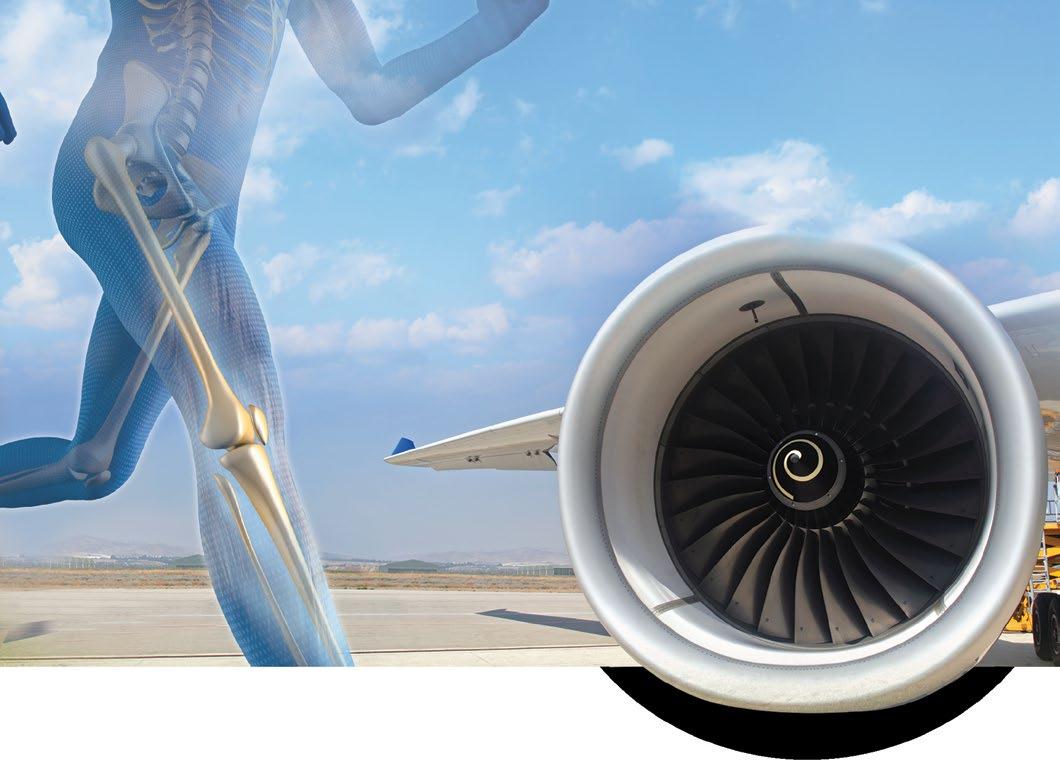




Markforged Holding Corporation, headquartered in Watertown, Massachusetts, USA, announced that, on April 11, 2024, the jury in the US District Court for the District of Delaware awarded Continuous Composites Inc, Coeur d’Alene, Idaho, $17.34 million in monetary damages against wholly-owned subsidiary Markforged Inc.
In July 2021, Continuous Composites filed a patent-infringement lawsuit against the company. While the jury found one of the two patent claims Continuous Composites
Ames National Laboratory, Iowa, USA, will partner with eight other DOE National Laboratories to support the Critical Materials Supply Chain Research Facility recently announced by the US Department of Energy’s (DOE) Office of Fossil Energy and Carbon Management. Ames Lab will lead the Critical Materials Refinery Center, one of four centres to be established in the facility.
The Minerals to Materials Supply Chain Research Facility (METALLIC) will be led by the National Energy Technology Laboratory (NETL). Together, they will focus on ensuring the resilient, diverse, and secure domestic supply of critical minerals and materials.
Critical materials are essential ingredients in many clean-energy, defence, transportation, and commercial technologies, and include rare earth metals, lithium, cobalt, and others. High demand, lack of domestic sources and processing, and geopolitical instability can disrupt material supply chains.
asserted at trial against the company to be invalid and not infringed, they found that Markforged had infringed the other patent claim and awarded monetary damages.
While the company reports that it cannot predict what additional action Continuous Composites may take, it is possible that Continuous Composites may seek additional relief through post-trial motions for royalty payments on future revenue, which could materially impact the Markforged’s business and operations.
Ames National Laboratory’s global reputation in rare earth science, high-purity metal and alloy refining, and critical materials research, coupled with its strong tradition of translating lab-scale discovery science to commercial adoption makes the Lab well-suited to support the mission of METALLIC, said Tom Lograsso, the director of Ames Lab’s Critical Materials Innovation Hub (CMI), which accelerates the innovation of technological solutions to critical materials supply challenges.
“Our recognised research strengths and successful track record in commercialising new technologies at Ames Lab make us valuable partners in METALLIC,” stated Lograsso. “We will be combining our decades of expertise with new capabilities so that we can collaborate and innovate with METALLIC partners to address current and emerging critical materials supply challenges.”
Ames National Laboratory will support METALLIC by starting up new facilities that support mid-scale refining, separations technologies, and advanced alloy processing. As part of the proposal, Ames will lead the Critical Materials Refinery Center which is intended to:
• Allow users to develop economical, energy-efficient, and environmentally friendly critical materials refining technologies
Markforged reportedly disagrees with this verdict and intends to seek to overturn the verdict in post-trial motions with the District Court. The company is said to be exploring all available options, including seeking to overturn the verdict and any resulting judgment through the appeals process.
While the company is currently assessing the verdict’s impact on its business, given its current balance sheet, effective cost controls and new product line, it intends to remain focused on the future of the company and its ability to drive the adoption of Additive Manufacturing on the factory floor.
www.continuouscomposites.com
www.markforged.com
• Integrate advanced diagnostics and data analytics into critical materials refining, making realtime process monitoring and control possible
• Foster collaboration with stakeholders to develop commercially scalable solutions to fill technology and capability gaps that currently limit critical materials supply chains.
“The Critical Materials Refinery Center will create a national resource that provides key solutions to critical material supply challenges,” said Ryan Ott, who will be the Critical Materials Refinery Center lead. “These powerful new capabilities will allow us to work with partners across the nation to bridge mid-scale processing to commercial adoption of new refining technologies needed to support critical materials supply chains.”
The importance of critical materials to economic and national security requires accelerating discovery-todeployment, which has long been the hallmark of Ames Laboratory research, said Ott.
“Supporting resilient and sustainable critical material supply chains has been intrinsic to Ames Laboratory’s research for decades,” he added. “We are inspired by the goals of METALLIC, and excited for this new opportunity to realise resilient and sustainable critical material supply chains.”
www.ameslab.gov

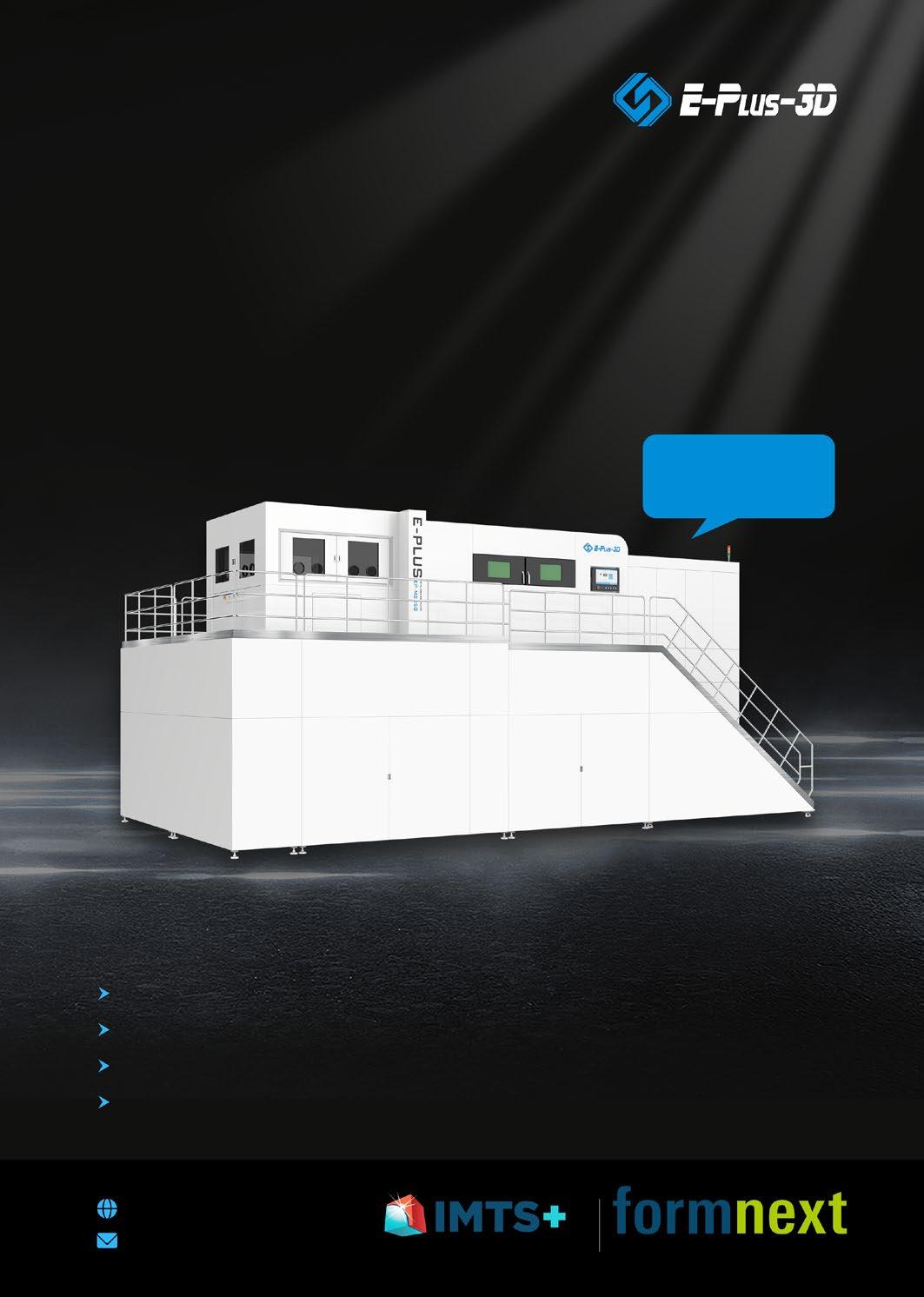

Hyliion, a developer of sustainable electricity-producing technology headquartered in Austin, Texas, USA, has installed its first Additive Manufacturing machine. Hyliion selected GE Additive (now Colibrium Additive) XLine AM machine to manufacture aluminium parts for the KARNO generator.
Colibrium Additive’s XLine 2000R has a build volume of 160 litres and is used for producing largescale components in the aero -
space and automotive industries. The machine features separation of the process and handling station, which enables safe operation of the machine and easier handling. Additionally, the X Line 2000R has a rotating mechanism, allowing two build modules to be used reciprocally, guaranteeing constant production with minimal downtimes.
Hyliion has reported that more AM machines will be added once
Nikon Corporation, headquartered in Tokyo, Japan, has expanded its range of Directed Energy Deposition (DED) metal Additive Manufacturing machines with the release of the Lasermeister LM300A. The company also announced the release of a complementary 3D scanner, the Lasermeister SB100. The LM300A is designed for industrial applications and, when paired with SB100, is aimed at tasks such as repairing turbine blades and moulds. Nikon
developed the LM300A and SB100 to reduce lead times and minimise post-processing requirements for this sector. The technology is intended to provide great value to aerospace, automobile, railway, machinery industry and other repair applications.
Nikon highlighted scanning and tool path generation as a key benefit of its SB100: by placing a workpiece inside the machine, the module begins to scan and measure it inside
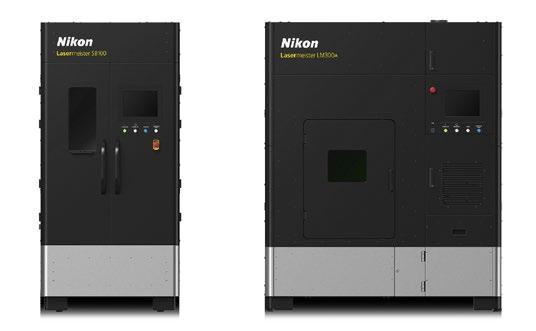
Hyliion has installed a GE Additive XLine Additive Manufacturing machine at its Austin headquarters (Courtesy Hyliion)
the company has set up its Texas production facility. www.hyliion.com www.colibriumadditive.com
the chamber. It then compares its current actual shape with its ideal CAD model to extract the difference, using a built-in high-precision scanning feature. The SB100 then automatically generates the tool path data for repair specific to each damaged or worn-out workpiece.
The tool path data is then transferred to the LM300A to initiate high-precision Additive Manufacturing. Once the AM process is completed, the workpiece can be placed back into SB100, where it will be scanned and inspected to confirm the repair was performed to its ideal model. This automation and streamlined workflow can contribute to reduced costs and lead time for industrial users.
The company also highlighted the LM300A’s high-precision processing of various metal materials. The LM300A can process within the accuracy of +0 mm to maximum +0.5 mm difference for the XY-axis direction and +0.5 mm to maximum +1.5 mm difference for the Z-axis direction, enabling ultra-high precision.
In addition, real-time laser power control by the melt pool feedback system delivers smooth surface finishing and precise processing of parts, ultimately achieving crackless repair with high quality and stability. www.nikon.com
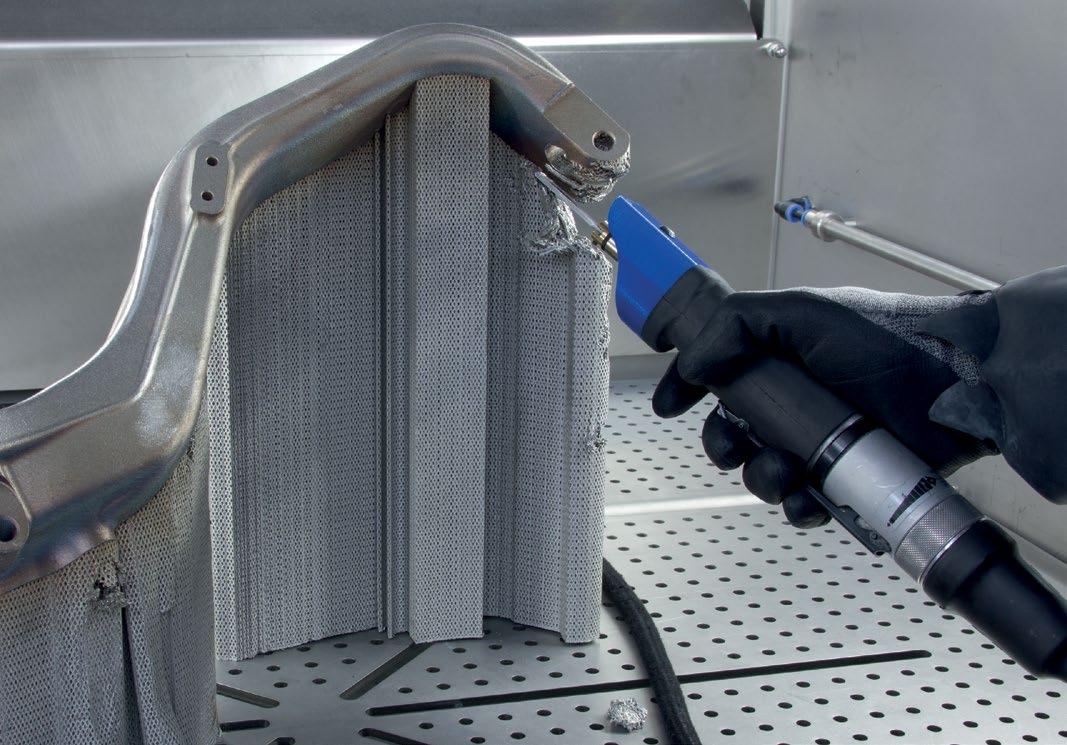

Phone +49 2204 8390 | Mail info@joke.de www.joke-technology.com The full range of AM postprocessing equipment 100% made in Germany The safe postprocessing system for all materials and work steps
joke Technology GmbH
Asselborner Weg 14 -16 51429 Bergisch Gladbach, Germany
Incodema3D, based in Freeville, NY, USA, has acquired four additional EOS M 300-4 Laser Beam Powder Bed Fusion (PBF-LB) Additive Manufacturing machines. The investment brings the number of EOS metal Additive Manufacturing machines at Incodema3D to twenty-eight, with more acquisi -
tions anticipated before the end of 2024.
“It can take years for some AM projects to gestate — it is not easy and requires a lot of legwork. Now we are seeing the fruit of these efforts with multiple programmes scaling at one time – from aerospace to energy and a variety of

other sectors with highly engineered applications where AM brings the highest value,” stated Sean Whittaker, founder and CEO of Incodema3D.
Incodema3D has grown steadily since its first EOS machine purchase in 2012 and has consolidated its business exclusively around EOS metal AM technology. Incodema3D has also made considerable investments in all the ancillary equipment necessary for pre-and post-production.
“We chose the EOS M 300-4 because our current fleet of EOS printers are operating near 90% production utilisation, so we need the fastest systems on the market to enable the growing production needs of our customers. The EOS M 300-4 is a production workhorse, and our technicians rave about how user-friendly and reliable a system it is,” Whittaker added. “For twelve years, EOS has been instrumental in our success, from the day-today support of our fleet to the continuous product advancements in speed and performance of its printer platforms. Our relationship with EOS is one of the key pillars of our business.”
The EOS M 300-4 features four 400 W precision fibre lasers, and full field overlap with a focus diameter of approximately 100 µm. It offers a build area of 300 x 300 x 400 mm and a scan speed of up to 7.0 m/s and dual material recoaters that reduce the time between laser exposure.
“The Incodema3D team is a great example of what can be achieved when extraordinarily talented people work together towards an aspirational goal. We continue to be blown away by what Incodema3D is accomplishing with EOS systems. They are a wonderful example of AM success, and we are grateful to be a part of their success story and look forward to helping them write their next chapter,” shared Glynn Fletcher, president of EOS North America.
www.incodema3d.com www.eos.info


Materialise, based in Leuven, Belgium, and ArcelorMittal Powders, a business unit of ArcelorMittal in Aviles, Spain, have signed a memorandum of understanding (MoU) to develop solutions that optimise Laser Beam Powder Bed Fusion (PBF-LB) Additive Manufacturing equipment and metal AM strategies.
“Our collaboration with Materialise supports our vision that the key to success in Additive Manufacturing is about finding the right blend of digital instructions and steel powders to deliver the best balance of quality and productivity in an application. Whether developing new applications with new alloys or proving the feasibility of
new designs for existing applications through steel Additive Manufacturing, Materialise offers us a formidable channel to bring build instructions straight to the heart of a 3D printer,” stated Aubin Defer, Chief Marketing Officer, ArcelorMittal Powders.
Through the MoU, ArcelorMittal will use Materialise’s build processor. Build processors link Additive Manufacturing machines with data preparation software, streamlining the Additive Manufacturing process from design to manufacture. Materialise’s build processor supports larger build volumes and more complex geometries than traditional build processors, so users will be able
to customise process parameters, streamline workflows and manufacture faster.
Combined with the AdamIQ steel powders made specifically for Additive Manufacturing applications, these solutions are expected to improve setup and production speed, part quality, cost-efficiency, reproducibility and repeatability.
“Our collaboration with ArcelorMittal marks a significant milestone in advancing our shared vision. By enhancing processes and solutions, we aim to expand the applications and industries utilising Additive Manufacturing. This partnership brings us closer to a future where 3D printing achieves its full potential, enabling both mass customisation and large-scale production,” said Udo Eberlein, Vice President of Software at Materialise.
www.powders.arcelormittal.com www.materialise.com


Sodick Co Ltd, Yokohama, Japan, and the shareholders of Prima Additive, part of Italy’s Prima Industrie Group, controlled by Alpha Private Equity and Peninsula Capital funds, have signed an investment agreement through which Sodick will acquire a minority share of 9.5% through a reserved capital increase. The agreement will also see the development of a business alliance between the two companies.
Sodick manufactures high-speed and high-precision machine tools, as well as metal Additive Manufacturing machines and hybrid systems that combine additive and subtractive processes. Sodick has a large customer base and sales network in the field of precision machinery around the world, particularly in Asia.
Prima Additive develops, manufactures and sells machines for metal Additive Manufacturing using Laser Beam Powder Bed Fusion (PBF-LB) and Direct Energy Deposition (DED), as well as other advanced laser technologies, including remote laser welding and laser hardening, processes particularly used in the automotive sector.
In addition to machine development, Prima Additive also focuses on application capacity testing in various industrial sectors, including automotive, aerospace, jewellery and medical. In Europe, Prima Additive actively collaborates with universities and research centres and is recognised as one of the main players in the market of laser technologies for metal Additive Manufacturing.
Through the business alliance agreement, Prima Additive and Sodick will develop new applications and machines for metal AM. Furthermore, the collaboration will allow the promotion and cross-selling of products in Japan, Europe and the US.
Paolo Calefati, CEO of Prima Additive, declared, “We warmly welcome Sodick into our corporate structure: an investment by another important industrial partner that gives confidence in the company’s growth path. This is a project in which possible and future synergies will be explored, at the centre of which there will be the valorisation of the complementarity of the products, but also of cultural differences. It is a project that brings together two companies that approach the world of metal AM starting with the search for profitable and scalable applications thanks to an innovative mindset and a strong industrial tradition.”
www.primaadditive.com
www.sodick.co.jp
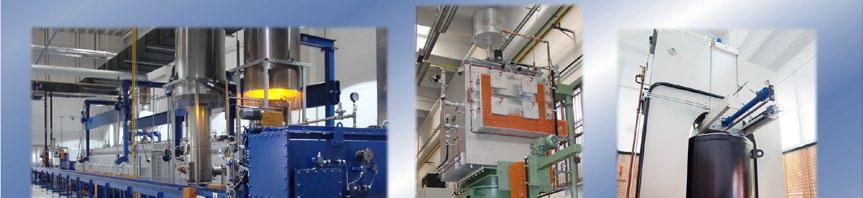
Nabertherm GmbH, headquartered in Lilienthal, Germany, showcased its new LH..DB range of compact sintering furnaces at this year’s ceramitec 2024 exhibition in Munich, Germany, ahead of its official market launch in May. The LH..DB series looks to set new standards in the heat treatment of ceramic parts and additively manufactured ceramic components on a laboratory scale, as well as meeting the thermal post-processing requirements of additively manufactured components.
It is stated that the furnaces can be easily converted from air atmosphere to operation with inert gas, which offers a wide range of
applications for debinding and sintering AM metallic and ceramic components.
During the debinding phase, the DB debinding package is said to guarantee the highest safety standards. Outgassing from the materials are diluted and reduced to a non-ignitable atmosphere in the furnace by preheated fresh air, which minimises potential risks and ensures a smooth process flow.
With the LH..DB series, Nabetherm offers a complete solution that is not only versatile but also easy to operate. The furnaces will be available in two sizes, with furnace volumes of 120 or 216
CADchat, headquartered in Columbia, South Carolina, USA, has officially launched its cloud-based digital workspace. Developed with the needs of product development teams in mind, it offers tools intended to extend the functionality of traditional video calls into a persistent collaborative environment.
“Product development doesn’t end when the meeting does, and neither should the tools we use,” said Graham Bredemeyer, CEO of CADchat.
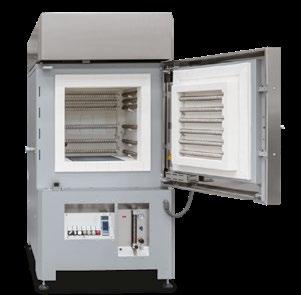
Nabertherm’s LH 120/13 DB machine (Courtesy Nabertherm GmbH)
litres and for maximum furnace temperatures of 1,200 or 1,300°C. When using the optional gassing box, processes up to 1,100°C can be performed. www.nabertherm.com
“With CADchat, we are thrilled to offer a platform that not only supports realtime collaboration but also enriches the continuity of teamwork. Our digital workspaces ensure that everything from 3D models to critical feedback remains accessible and interactive long after the calls have ended.”
CADchat’s environment retains every interaction after the discussion has ended. Communication within the platform is integrated with the actual work, enabling conversations to lead
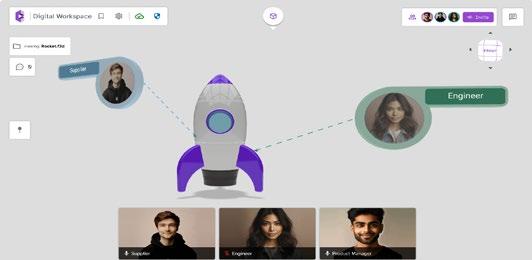
development without the need for app-switching. Unlike repository web services, CADchat’s hub offers interactive collaboration on documents and designs, allowing users to conduct real-time or asynchronous design reviews, and pin comments on designs and 3D models.
CADchat aims to enhance the value of CAD tools like Fusion or SOLIDWORKS by embedding them within a broader context of team collaboration, allowing for the creation and collective refinement of 3D models. All project communications and files are kept and remain accessible to users in an environment protected with AES-256 encryption, meeting SOC 2 compliance.
In the case of one customer, CADchat reportedly enabled GE Vernova to reduce part and tooling development cycle times from two to three months to as little as one to two weeks, an improvement of over 90% in efficiency achieved without any system or hardware changes.
CADchat is now available for teams looking to enhance their productivity and reduce the time spent on project coordination. Those interested can sign up for a free trial. www.CADchat.com

From prototyping to full-scale production, Ipsen has your post-processing heat-treating equipment requirements covered. We build furnaces as small as 12” x 12” x 24” and as large as your needs require. For 75 years, Ipsen has been at the forefront of innovating furnace technology to meet strict and exacting requirements in critical industries. No matter what the future brings, Ipsen is here as your partner in success.
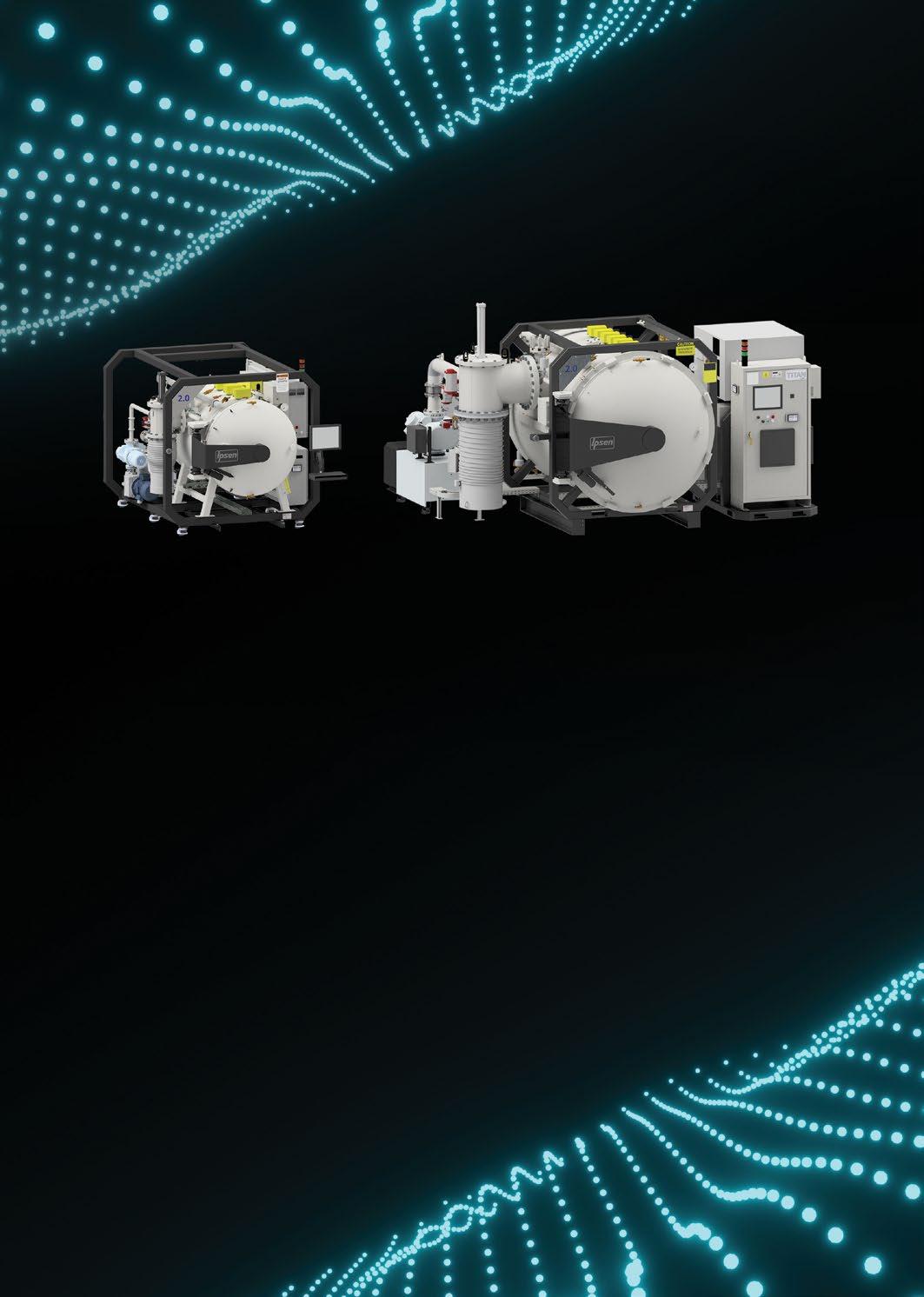

Legor Group SPA, headquartered in Vicenza, Italy, is a manufacturer of premium metal alloys, plating solutions and precious metal powders catering to the jewellery, luxury goods and fashion sectors. With the launch of its new 3D Metal Jet Printing Service, the company is promoting a new way of creating jewellery and fashion accessories by exploiting the full potential of metal Additive Manufacturing.
The 3D Metal Jet Printing Service is part of the Legor’s 3D Metal Hub, a division launched two years ago whose goal is to experiment and produce jewellery, fashion, and industrial components using metal Binder Jetting (BJT) Additive Manufacturing technology.
Partnering with HP Metal Jet
Through collaboration with HP, Legor is reported to be the first Italian company to introduce its Metal Jet technology for full-scale production. This provides an exclusive Additive Manufacturing service for developing new solutions in a variety of sectors, from the jewellery and fashion industry – Legor’s core business – to potential applications in the automotive, aerospace, and electronics industries.
Legor believes that its 3D Metal Jet Printing Service could benefit the entire manufacturing sector. Applications include rapid prototyping, the production of complex geometrical parts, the reduction of material waste and related costs, and the ability to manufacture parts with different functions in a single object, thereby reducing assembly needs. It also offers cost savings for complex parts or low volumes and promotes greater sustainability.
Powder production
In anticipation of further widespread adoption of Additive Manufacturing in the jewellery and fashion sectors, Legor has developed its own range of metal powders under the Powmet brand. The range of certified metal powders is reported to be produced using an exclusive atomising process that enables perfectly spherical, extra-fine and homogeneous particles to be obtained, featuring uniform chemical composition and low levels of impurities.
Currently, Legor can produce parts in steel (316L, Panacea nickel-free, 17-4 PH), bronze, silver (925) and platinum (950). The company’s next step will be Additive Manufacturing with 18-carat gold.
Encouraging AM adoption
In addition to the production opportunities in terms of agility and sustainability, the intent of the 3D Metal Jet Printing Service is to encourage more players in the manufacturing sector to rethink the entire production
process, revolutionising it in every single phase, both in the realisation of objects and in the concept, design, and aesthetic enhancement possibilities.
Thanks to Additive Manufacturing, designers, first and foremost, can create objects that are currently not even possible to produce with other technologies, thus expanding the boundaries of creativity. In this sense, Legor has promoted its ‘Beyond Extraordinary’ concept – an invitation to think beyond the ordinary, outside the box, to shape the future through innovative methodology within an increasingly dynamic and evolving market. The company is spreading this message through numerous webinars and workshops aimed at the manufacturing sector.
Through the 3D Metal Jet Printing Service and showcasing the potential of AM, Legor explains that it is positioning itself as a catalyst for innovation in the jewellery and fashion accessory sector. It sees its role as being able to facilitate the integration of cutting-edge technology with the artistic and creative vision of designers, bringing exceptional and personalised metal products to the market.
www.legor.com
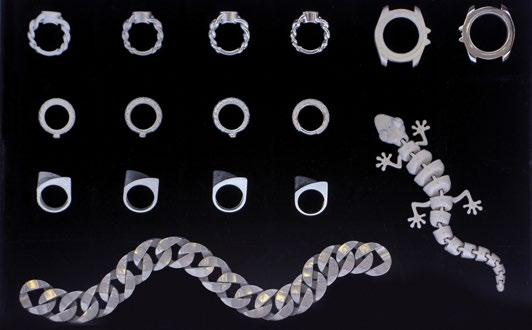


https://www.daido.co.jp/en/products/powder/dap_am2/
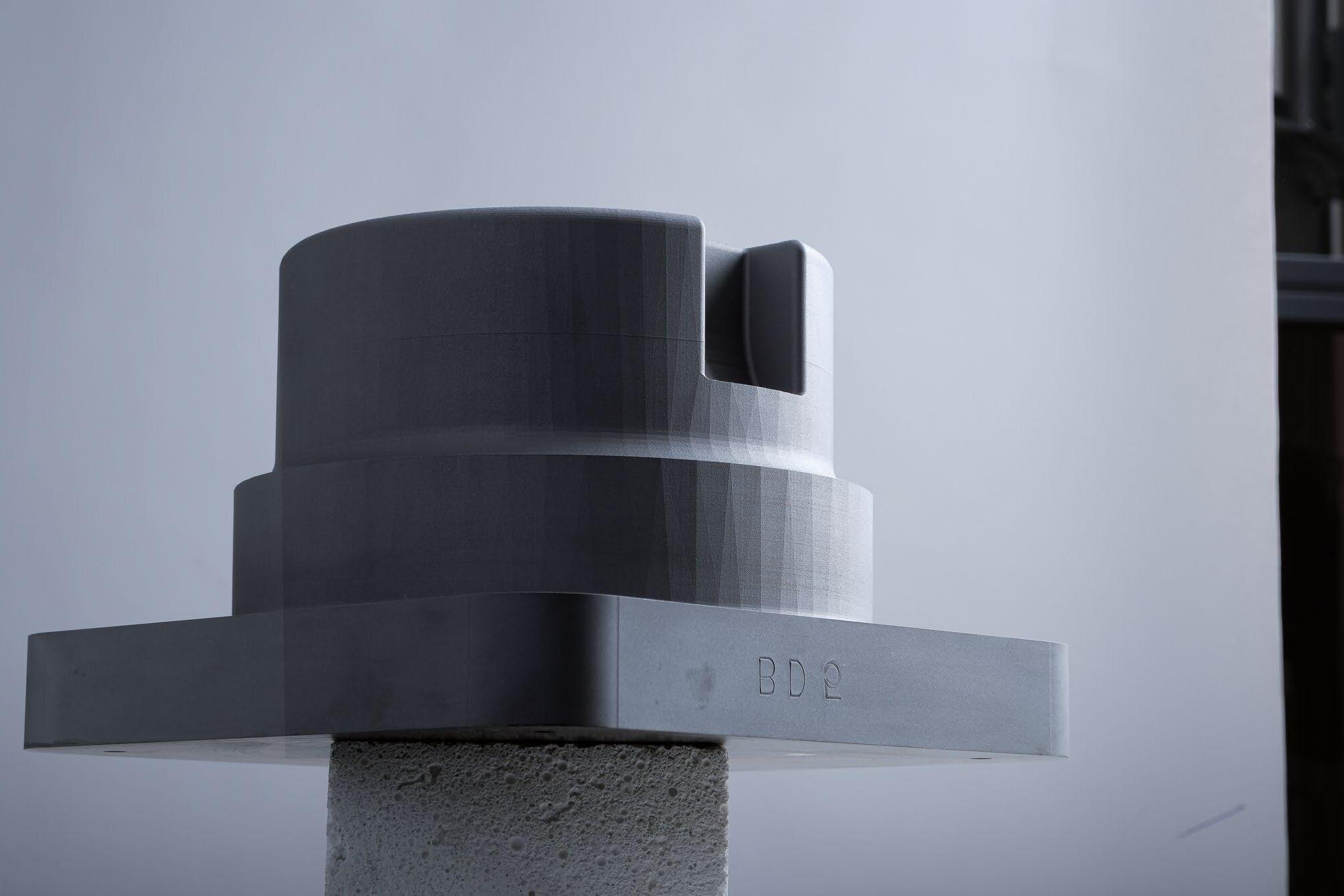
IperionX Ltd, based in Charlotte, North Carolina, USA, has signed a framework agreement with United Stars Holdings Inc, Beloit, Wisconsin, for a definitive commercial supply agreement for IperionX’s titanium products. United Stars expects to purchase up to 80 metric tonnes annually of IperionX’s titanium products over a ten-year supply term.
United Stars and IperionX’s partnership will focus on the defence and advanced technology sectors with products for vehicle drivetrains, robotic motors and wind turbines, that require lightweight, strong, compact and corrosionresistant performance.
IperionX is working to build an ‘end-to-end’ American titanium supply chain solution, that spans
from the production of US-sourced titanium minerals, advanced technology to refine these minerals to +99% TiO 2, and the capability to utilise a large range of recycled scrap titanium to produce low-cost, high-performance titanium alloys.
“Titanium is a superior metal for a majority of use cases and ever since the US became 100% import reliant on titanium metal sponge from foreign sources in 2020 I have been searching for a US company with the ability to economically and securely re-shore an integrated supply chain for titanium,” stated Roger West, United Stars Chairman and CEO. “This relationship will prove incredibly valuable for my portfolio of companies and I’m also proud to play a role in supporting the interests of US
national security. Taso Arima’s vision to re-shore the US titanium supply chain, combined with the team that he has assembled, makes IperionX an organisation that I am pleased to partner with.”
Anastasios (Taso) Arima, IperionX CEO, stated, “IperionX is pleased to partner with Roger West and his team at United Stars to manufacture advanced titanium products for the defence and commercial sectors. United Stars, a leading American supplier of precision gears, shafts, and complex assemblies, is a strong commercial partner to manufacture advanced titanium components for their global customers across the automotive, defence, oil & gas, construction, mining, locomotive and agriculture sectors. United Stars are aligned with our mission to rebuild an integrated ‘end-to-end’ US titanium supply chain and strengthen America’s manufacturing independence.” www.iperionx.com www.ustars.com
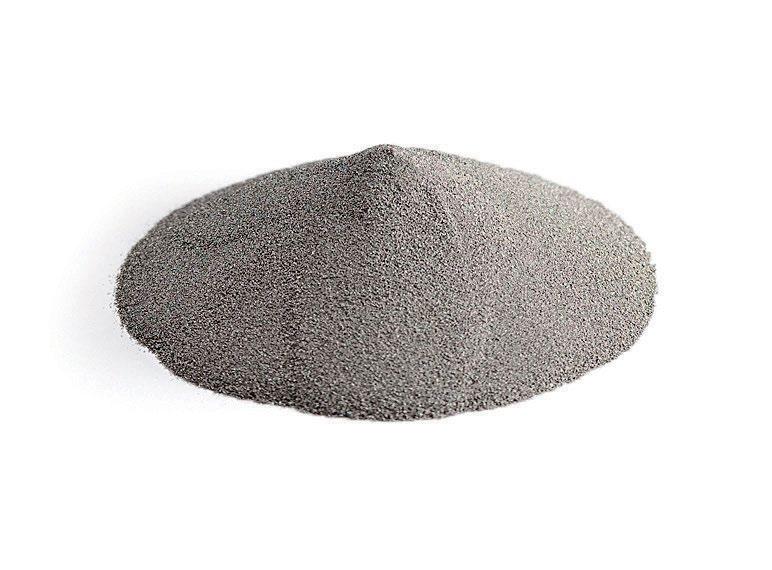
Volkmann GmbH, a developer of powder handling systems for Additive Manufacturing headquartered in Soest, Germany, is expanding its facility with the construction of a new 4,500 m 2 production hall.
The company is adding to its existing site and has also acquired a neighbouring building. “I am grateful that we can tap into so much spatial growth potential and thus secure our future here at this location,” stated Thilo Volkmann, managing partner of Volkmann.
Volkmann was founded in 1973 and manufactures vacuum conveying systems for powders, grains, granules and other small-sized materials. The company first entered the AM market approximately ten years ago, building on its experience in the field of powder conveying, where it had already been able to gather considerable knowledge in safely transporting powder. www.volkmann.info
Additive Manufacturing consultancy Ampower, based in Hamburg, Germany, has released its 2024 Additive Manufacturing market report. The details of market development in 2023, and a forecast to 2028, are available in the new Ampower Report 2024
The report states that the industrial Additive Manufacturing market, including metal and polymer equipment, materials, and part manufacturing services, grew by 10.3% in 2023 and is now valued at €10.5 billion. Ampower projects a compound annual growth rate (CAGR) of 13.8% until 2028. Building on 300 personal interviews with industry buyers and suppliers, the report distinguishes between buyer and supplier forecasts for metal and polymer, in an effort to give readers a full picture of the AM market from over 34,000 data points. additive-manufacturing-report.com
Additive Manufacturing market development and a forecast to 2028 are available in the new Ampower Report 2024 (Courtesy Ampower)
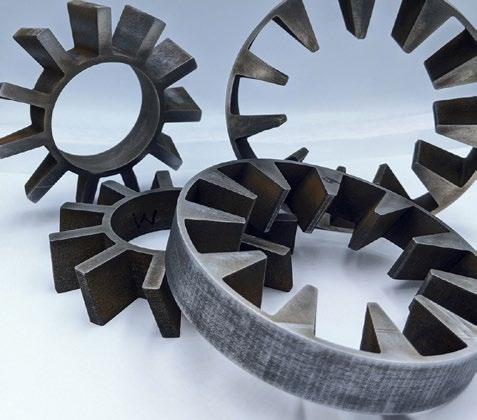
Low-Cost Solution for Industrial AM Applications
• Laser Powder Bed Fusion
• Powder Bed Binder Jetting
• Direct Energy Deposition
• Cold Spray Additive Manufacturing
• E-Beam Additive Manufacturing

Dimecc Ltd, Helsinki, Finland, has reported that a pressure vessel, produced in cooperation with Andritz Savonlinna Works Oy and the Finnish Additive Manufacturing Ecosystem (FAME), withstood the non-destructive and destructive tests carried out by Lappeenranta-Lahti University of Technology (LUT). In the tests, the pressure was increased until the vessel started to break, occurring at a pressure of 111 bar, exceeding expectations.
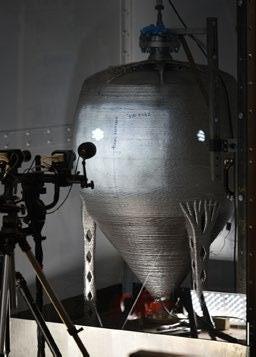
has reported the successul testing of its DED-produced pressure vessel (Courtesy Dimecc Ltd)
“The test results have been published in an article for the benefit of the entire AM community. We are proud to have made such a significant effort publicly available,” stated Eetu Holstein, FAME Ecosystem Lead at DIMECC.
The vessel is manufactured with Andritz Savonlinna Works Oy’s Wire Arc Additive Manufacturing (WAAM) equipment. Made of acid-resistant stainless steel (316L), the approximately 300 kg pressure vessel has a diameter of 900 mm and a height of 1,600 mm.
“This vessel was designed for an operating pressure of 10 bar, which includes the safety factors. The preliminary calculation showed that the rupture would occur at around 90 bar, i.e. the actual durability far exceeded expectations. It must be noted that in real production pieces, the test pressure of the pressure vessel is usually only done at around 1.5x the operating pressure, i.e. in this case the test pressure would have been only 15 bars,” added Santeri Varis, Additive Manufacturing Manager at Andritz Savonlinna Works Oy.
In the pressure test, water was pumped into the vessel, and it was monitored what changes it caused in the diameter of the widest part
of the vessel. The pressure was gradually increased until it reached its maximum.
During the pressure test, water was pumped into the vessel, which was monitored to observe changes to its diameter at its widest point. The pressure was progressively increased until it reached its maximum.
“Under 66 bars, there were still no noticeable changes in the vessel. The shape started to give way after 80 bars. We continued the test so long that some water leaked out of the vessel at 111 bars. At that point, a small crack appeared next to the legs of the vessel. The diameter had expanded by seven percent. The result is very good for a piece like this, which is designed to withstand much lower pressure,” said Doctoral Researcher Kalle Lipiäinen from LUT University.
The crack was welded, but, in the next test, there was a fracture right at the leg again. This indicated that the leg area was a structural weak point, and the first breakdown was not due to, for example, a manufacturing error.
‘Manufacturing and mechanical performance of a large-scale stainless steel vessel fabricated by wire-arc direct energy deposition’, was published in Materials & Design
www.dimecc.com
Ceratizit USA, part of the Ceratizit Group, headquartered in Schaumburg, Illinois, has announced the launch of a new additively manufactured indexable insert milling system, the MaxiMill – 211-DC.
Developed specifically for heatresistant materials, such as titanium and other super alloys, the MaxiMill –211-DC includes an advanced coolant supply made possible through the use of Additive Manufacturing.
The Additive Manufacturing process allows the patented shoulder mill to funnel the maximum amount of coolant directly on the insert flanks, providing process reliability when machining heat-resistant superalloys. The MaxiMill – 211-DC is reported to offer 60% longer tool life compared to tools with standard cooling. Further, despite the
complexity of the coolant holes inside the tool body, the MaxiMill- 211-DC is compatible with standard adapters with through-coolant supply without requiring any standard coolant on the chip breaker.
“We put Additive Manufacturing to work for our customers and to achieve results that are only possible when we push boundaries,” stated Dan Cope, President of the Americas for Ceratizit Group. “Titanium and other super alloys are unconventional materials that require unconventional strategies.” cuttingtools.ceratizit.com
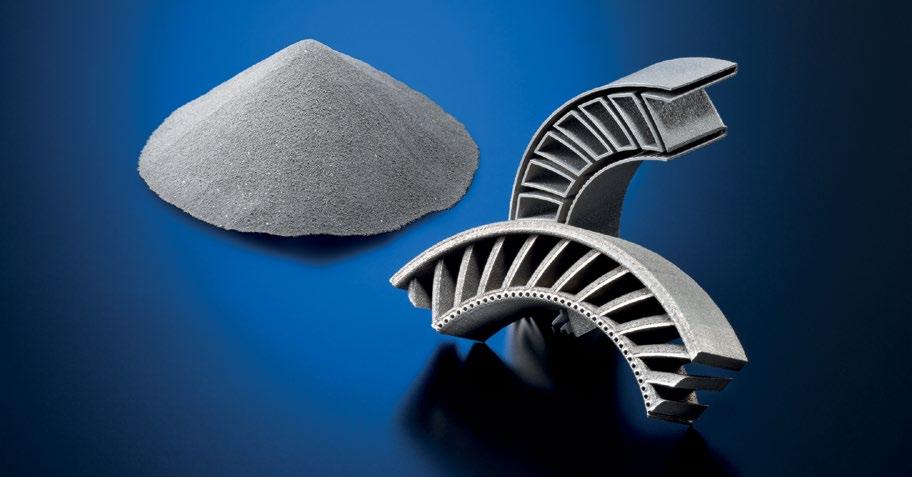




While the world is busy imagining the future of Additive Manufacturing, Burloak is busy living it.
Discover how Burloak is manufacturing complex parts at scale at burloaktech.com.


Volume Graphics GmbH, headquartered in Heidelberg, Germany, has released the latest version of its software suite developed to help users collaborate and evaluate product quality from CT and other Non-Destructive Testing (NDT) technologies.
The widespread digitisation of manufacturing is enabling companies to make products faster. As a result, the physical inspection of finished goods, based on CT and other industrial product-scanning technologies, has taken on even more importance, explains Volume Graphics. As the digital productdevelopment pathway has become increasingly sophisticated, simple scan-data-based, quality-assurance software may be key to its successful application in aerospace, automotive, electronic, medical, and other industries.
The newest release of Volume Graphics’ advanced non-destructive evaluation software suite is intended as a response to this ease-of-use need. It features enhanced data interpretation, collaboration and presentation capabilities, enabling users to more easily refine, integrate and share their product-manufacturing-quality results and initiatives.
The underlying architecture of the suite (which includes VGSTUDIO MAX, VGSTUDIO, VGMETROLOGY, VGinLINE, and myVGL) harnesses algorithms developed over decades, incorporates greater automation, and now includes customised deeplearning tools. The latest updates enable even the non-expert user to quickly and effectively apply these powerful resources to quality evaluation throughout the product lifecycle – and collaborate with its experts in a common language.
Interactive reports and PNG format for easier sharing New in 2024.1 is a HTML report functionality that supports 3D interactive part or result views. Self-contained documents are now accessible with any Chromium-based browser like Edge or Chrome, so that analyses can be interactively viewed at any stage of the quality-assurance process.
Along with this, a new userrequested PNG export functionality is available. When using PNG as a storage or data-exchange format, all images produced by Volume Graphics analyses can now be copied and pasted directly into almost any kind of media without the need for additional file conversions. This
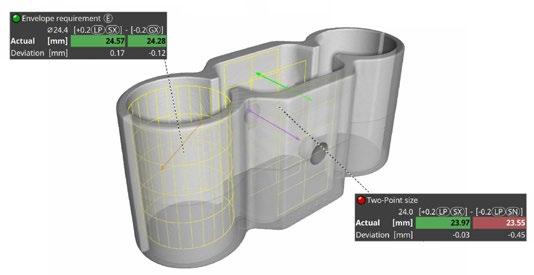
On-screen callouts of industry-standard abbreviations makes it easier to perform GD&T evaluations based on scan data to determine product quality (Courtesy Volume Graphics)
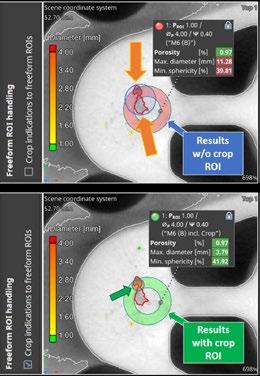
Porosity inclusion analysis results are colour-coded to show whether pores in a manufactured part are within industry tolerance standards (Courtesy Volume Graphics)
change provides for more powerful visualisations, reports and presentations – and a faster workflow for importing or exporting volume data.
Linear sizes for metrology
Linear functionality is valuable for users concerned with geometric dimensioning and tolerancing (GD&T). The common abbreviations used to indicate linear sizes are now visually represented directly within report graphics. This simplifies standard conform measurements by providing direct support for modifier symbols – and enables easier evaluations for many size features such as two-point measurements (LP), envelope requirement €, and global modifier symbols like (GG).
PIA updates – of particular interest to the casting industry
Updates in Volume Graphics’ porosity inclusion analysis (PIA) capabilities make it easier for casters to meet industry-compliance requirements P 202 and P 203. Multiple regions of interest can be evaluated to determine whether they are in tolerance, or not – with instant, colour-coded viewing of tolerance states. www.volumegraphics.com
Wohlers Associates, Inc., Fort Collins, Colorado, USA, powered by ASTM International, has announced the release of the Wohlers Report 2024 Published for twenty-nine consecutive years, the report is aimed at providing organisations worldwide with detailed guidance, perspective, and research results on the Additive Manufacturing industry.
Shipment of Additive Manufacturing systems for metal parts, as shown in the graph, increased by 24.4% in 2023. An estimated 3,793 metal Additive Manufacturing machines were sold in 2023,
compared to 3,049 in 2022. Meanwhile, the AM industry grew by 11.1% to $20.035 billion, an estimate based on hard data received from hundreds of companies worldwide.
“Investors, government agencies, and organisations adopting AM are eager to know what will drive growth in the future,” shared Terry Wohlers, head of advisory services and market intelligence at Wohlers Associates. “Significant expansion will come from a much wider range of applications and demand for end-use parts. For this to occur, systems will become faster, reducing the
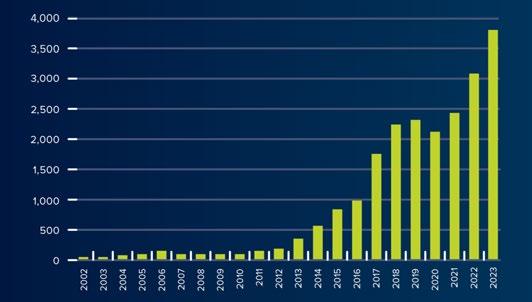
Ametek Specialty Metal Products (SMP), Collegeville, Pennsylvania, USA, has announced the successful renewal of its ISO 9001:2015 certification, reported to underscore its ‘commitment to excellence in manufacturing and quality management.’
The accreditation, bestowed by Bureau Veritas, encompasses SMP’s production of precision strip, shaped wire, and engineered components manufactured from Powder Metallurgy and cast/
wrought products. This certification is valid for three years.
ISO 9001:2015 stands as a globally recognised benchmark for quality management, regulatory compliance, and industry best practices. With over one million companies worldwide accredited under its umbrella, this standard serves as a hallmark of exceptional performance and rigorous product quality control. Businesses adhering to ISO 9001:2015 are said to elevate their own operational standards,
production cost per part. A reduction in material pricing, due largely to competitive pressures, will lower costs further.”
Wohlers Report 2024 details how new materials and their qualification will contribute, especially to the aerospace, defence, healthcare, and energy sectors. The certification of new designs, coupled with industry standards, will also impact growth, according to the new report. Wohlers notes that as Additive Manufacturing machines and methods of post-processing improve, the industry will see new, robust solutions. These developments will change the equation when determining whether Additive Manufacturing fits a production application. Breakeven points will reportedly shift from thousands of parts to hundreds of thousands, and even millions for small parts.
The new report was supported by the extensive contribution of information and data from 245 organisations, including service providers, manufacturers of Additive Manufacturing systems, and thirdparty material producers. More than 110 people, including 100 experts from thirty-five countries, contributed to the Wohlers Report 2024. The report is said to draw on three decades of data and market intelligence work around the world. www.wohlersassociates.com
as well as assuring customers and suppliers of a certain level of quality.
Christopher Nichols, Quality Assurance Manager at AMETEK SMP, commented, “Quality is the foundation of our operations. The renewal of our ISO 9001:2015 certification reinforces our commitment to quality, customer satisfaction, and operational excellence in the field of speciality metal manufacturing. This achievement not only reflects our dedication but also sets a benchmark for continued innovation and advancement in speciality metal manufacturing.” www.ametekmetals.com
Bodycote provides a complete service solution for metal parts built by the additive manufacturing process, including stress relief to minimise distortion and residual stress, EDM to prepare the component for hot isostatic pressing (HIP), heat treatment or HIP to remove microporosity, and associated quality assurance testing.
Reduction in rejection rates and inspection costs
Fatigue properties on par with wrought material
Significant improvement in fatigue strength, fracture toughness, and tensile ductility
100% reduction in porosity possible
Improved machined surfaces and consistency in properties
Improved microstructure
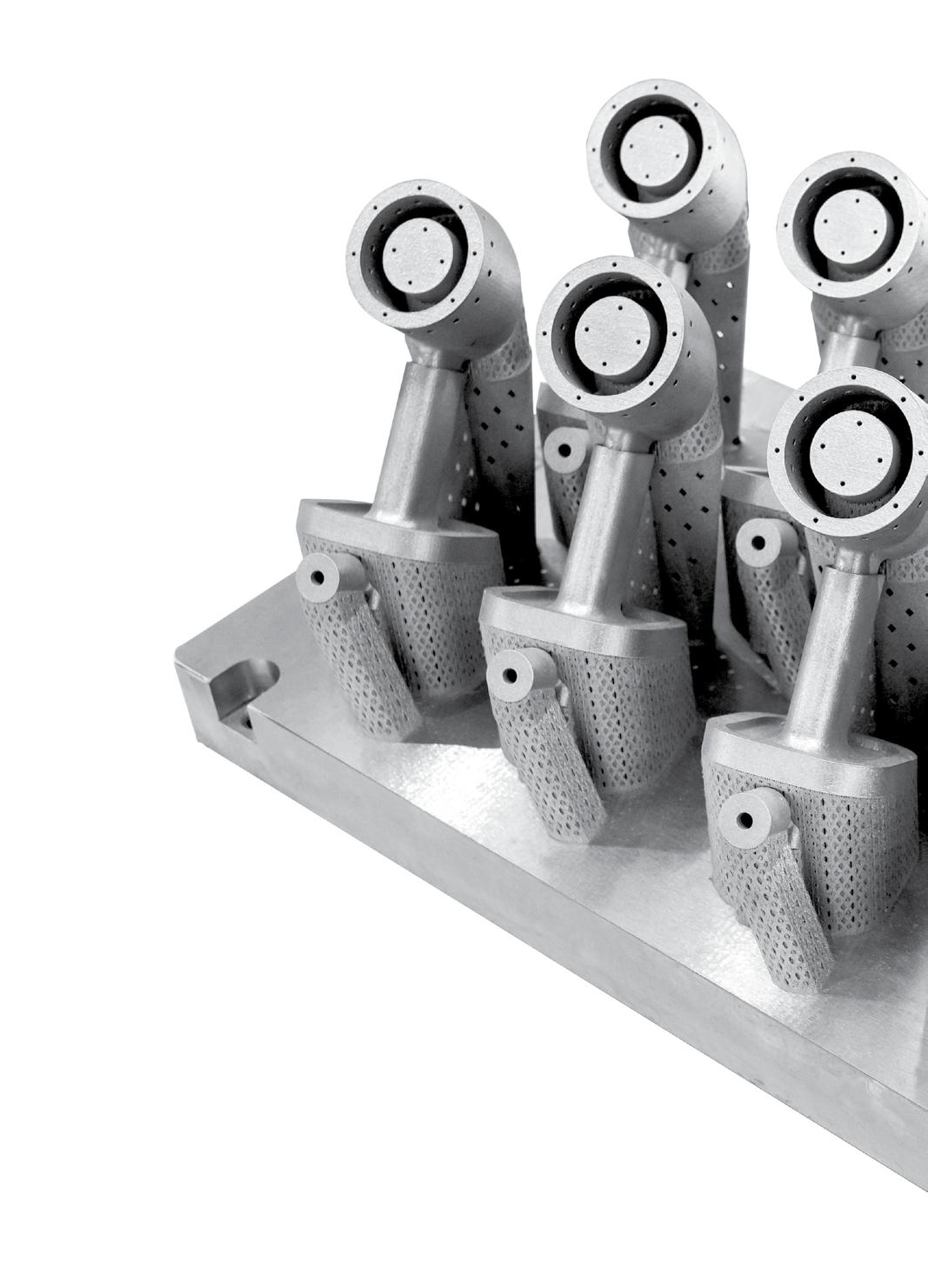
the partner of choice for additive manufacturing
heat treatment | metal joining | hot isostatic pressing | surface technology
SSAB, Stockholm, Sweden, has launched what it is calling the world’s first emission-free steel powder for commercial deliveries. The product, made of recycled SSAB Zero steel, is intended to allow manufacturers to additively manufacture steel components at a lower environmental impact.
“This is a game-changer in the world of 3D-printed steel. SSAB has already proven it’s possible to produce steel without carbon dioxide emissions. Now we’re merging emission-free steel with powder technology to enable sustainable
3D-printed design with unlimited imagination,” said Johnny Sjöström, EVP and Head of SSAB Special Steels.
The production of steel is a large source of CO 2 emissions for the Additive Manufacturing of steel products, states SSAB. By gas atomising SSAB’s emission-free steel with exclusively fossil-free energy sources, the carbon dioxide emissions from the steelmaking are said to be reduced to virtually zero.
Last year, SSAB launched its first conventional steel powder – SSAB AM Engineering – and has since expanded the portfolio with SSAB AM
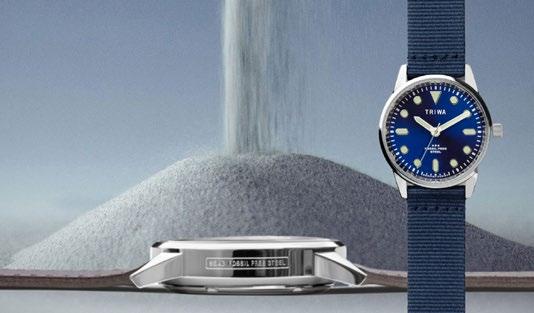
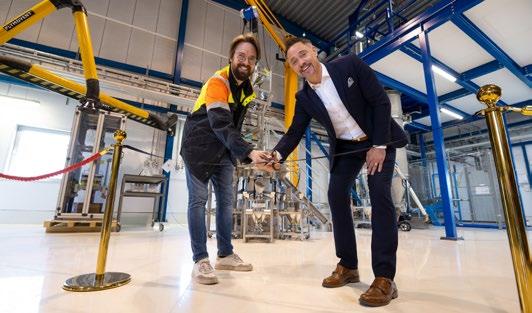
Tough Zero. SSAB will also be able to offer its emission-free steel, based on HYBRIT technology, as a powder in limited volumes.
In 2020, SSAB invested in a steel powder production facility in Oxelösund to produce premium advanced high-strength steel powder for Additive Manufacturing, as a complement to SSAB’s regular steel offering.
“3D printing high-strength steel components will help reduce the amount of raw material used, and cut the weight and increase functionality of the final product. This is especially important for industries, such as automotive or heavy machinery, that are trying to save weight, increase performance, and reduce their CO 2 footprint,” added Jesper Vang, Head of SSAB Powder Technology.
SSAB has already provided prototype emission-free steel powder to selected customers. In 2023, HT Laser additively manufactured a component for a forest machine; mining company Epiroc debuted a prototype hydraulic block for a rock drill in conventional steel powder and said it was exploring the possibility of using emission-free powder. In 2022, Triwa produced a watch, said to be the first consumer product made with emission-free steel powder.
About SSAB Zero and SSAB Fossil-freeTM
SSAB Zero is steel made from recycled scrap using fossil-free energy sources, resulting in zero emissions from the steelmaking process. SSAB Zero was launched at a commercial scale in 2023.
SSAB Fossil-free steel is produced using the HYBRIT-technology, developed by SSAB with mining company LKAB and energy company Vattenfall. Instead of using coal to remove the oxygen from the iron ore, the HYBRIT-technology uses hydrogen gas, produced with fossil-free energy, to make sponge iron for steel production. The carbon dioxide emissions are eliminated, and instead the by-product is water.
www.ssab.com

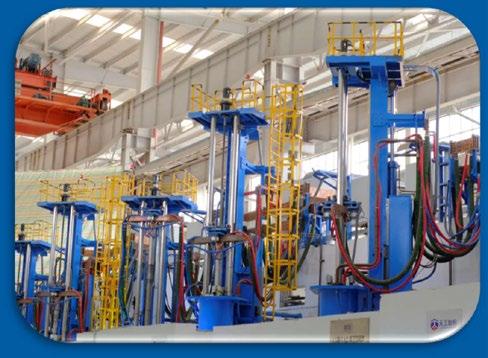
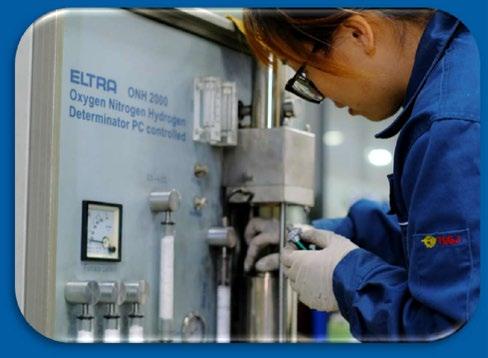
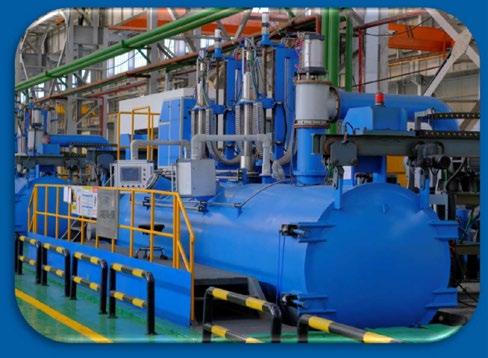

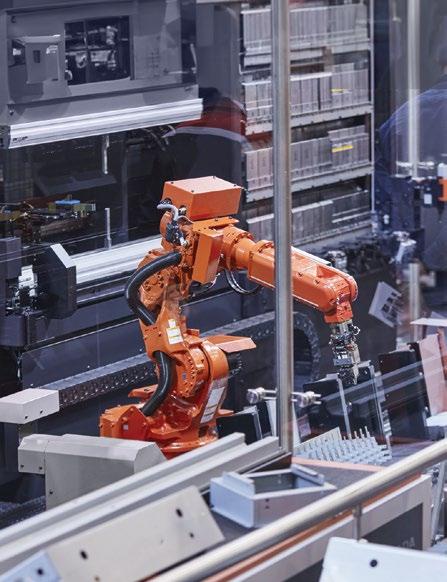

The first digitally engineered and additively manufactured car – the Czinger Vehicles 21C – has now begun Standard Operating Procedures (SOP) in the company’s new Area 21 Factory in its California base of Los Angeles.
Czinger is set to begin deliveries for the 21C and 21C V Max this summer, with only eighty cars to be produced in total. The company anticipates that the 21C will mark the shift from analogue to digital automotive manufacturing and bring the industry ‘into the future.’
The 21C V Max is the newest body variant of the hypercar, engineered for combined acceleration and top speed; its extended and aerodynamic - driven tail profile is intended to set it apart from its high-downforce counterpart.
Czinger also recently expanded its dealer network to seventeen, with the addition of Czinger Charlotte in North Carolina, providing the southeastern United States with exclusive access to the hypercar brand as Czinger begins customer distribution of the 21C this summer.
Dan DeSantis, Dealer Principal, Czinger Charlotte, explained, “Our long history of providing our customer base with top - tier vehicles has earned their trust for having our finger on the pulse of innovation and performance. The revolutionary technology that Czinger uses will be appreciated by our clients, who are serious performance car collectors. We are excited to align with Czinger to bring the future of automotive to the Southeast.”
Lukas Czinger, founder and COO of Czinger Vehicles added, “We proudly welcome Charlotte to our Czinger family of dealers and trust their reputable team’s years of experience to introduce our pioneering brand to their clients across the Southeast. Their appreciation for the technical innovation and performance that drives the Czinger brand makes it an ideal partnership for the 21C and future models.”
www.czinger.com

Atomising Systems Ltd (ASL), headquartered in Sheffield, North Yorkshire, UK, has announced that the sixteenth edition of its two-day course, Atomisation for Metal Powders, will take place in Manchester, UK, September 26-27, 2024. The intensive course will cover the main methods of atomising metals; specific requirements for different metals; the design, operation and economics of plant; and manufacturing and characterising powder for Additive Manufacturing and other advanced manufacturing techniques.
The course will be presented by ASL management members John Dunkley, chairman; Dirk Aderhold, Technical Director; and Tom Williamson, R&D Manager. It will combine up-to-date practical information with atomising theory.
Revisions to this year’s content reflect growing interest in Additive Manufacturing and other advanced manufacturing and special alloy powders. The course covers:
• Systems engineering of entire plants, melting to cooling, drying, dewatering, sieving, conveying, feeding etc.
The factors affecting the relative attractiveness of atomisation and alternative methods
• Both current practice and key areas of current interest in advanced manufacturing, including the main atomisation techniques in current use and powder requirements for different applications, in particular Additive Manufacturing
• The principles of atomisation and the physical processes involved
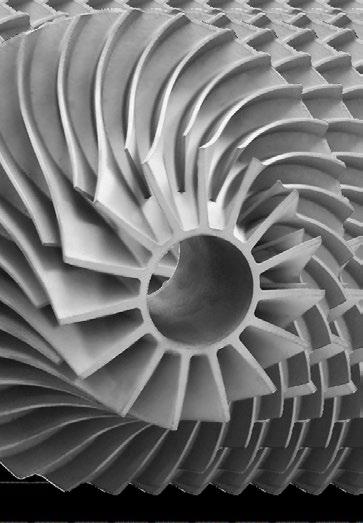
when atomising different metals
• Manufacturing different metal alloy powders, including Ti alloys
ASL specialises in powder production via atomisation. Established in 1992, the company and its founder have over forty years of experience in the technology and have delivered more than 130 plants for metal powder atomisation in thirty-five countries on six continents.
www.atomising.co.uk

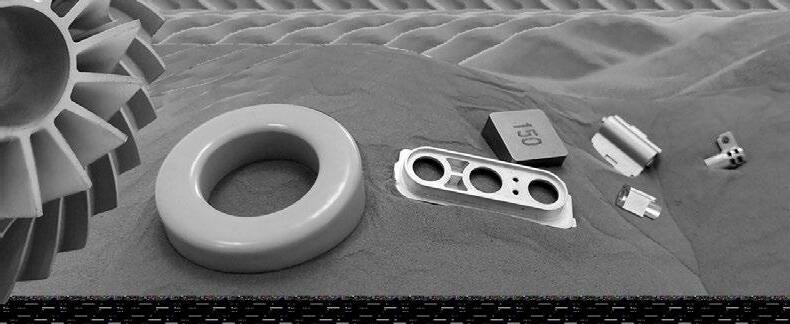
The University of Wolverhampton, UK, and materials technology company, Diamond Hard Surfaces, based in Towcester, UK, have teamed up for a collaborative research project aimed at developing advanced additively manufactured heat spreaders.
Similar to heat sink geometries, heat spreaders are commonly utilised thermal management components that dissipate heat away from critical components, such as electronics and CPUs. However, traditional subtrac -
Research project team (from left)
Nisura Wijeweera, Prof Arun Arjunan, Chris Walker, Niki Zakeri and Dr John Robinson (Courtesy University of Wolverhampton)
tive manufacturing techniques limit geometrical freedom available to fabricate heat spreaders.
The project focuses on using Additive Manufacturing technologies to produce heat spreaders with complex geometries and superior material properties, which can significantly improve heat dissipation compared to traditional manufacturing methods. By utilising Diamond Hard Surfaces’ experience in durable coatings and the University’s research capabilities, the collaboration seeks to push the boundaries of thermal management solutions.
This approach allows for the creation of heat spreaders with optimised surface area-to-volume ratios, leading to more efficient heat exchange. These developments are particularly beneficial for applications in electronics, automotive, and aerospace industries, where managing heat effectively is critical for performance and reliability.
The collaborative research will combine Diamond Hard Surfaces’ patented process and industryspecific knowledge with Additive Analytics’ proprietary data-driven
Researchers from Ondokuz Mayıs University, Samsun, Türkiye, have issued an update to previously published work on adaptive slicing and the variable binder amount algorithm (VBAA) in Binder Jetting in the Rapid Prototyping Journal
The authors stated that the first study featured aspects that needed improvement and, since publication, they have performed a much more detailed analysis of the subject and obtained more favourable results.
Adaptive slicing and VBAA are used in the study to increase the manufacturing speed in Binder Jetting. Taguchi method was used to optimise the layer thickness and saturation ratio in VBAA. According to the Taguchi experimental design, twenty-seven samples were produced in nine different conditions, three replicates each.
As a result of the tests, the optimum AM condition was decided to be 180–250 µm for layer thickness and 50% for saturation. The separate test sample designed to implement
material development and laser processing approach to manufacture next-generation heat spreader devices, enabling a step change in embedded electronic performance for aerospace, alternative energy, chemical processing and motorsport.
Chris H Walker, CEO at Diamond Hard Surfaces, stated, “We are very excited to have the opportunity to work with the University of Wolverhampton and Additive Analytics; two of the leading players worldwide in the field of Additive Manufacturing using copper-based materials. We are hoping this will lead to a number of new and innovative products and services which will benefit both our existing and new customers for thermal management devices.”
Professor Arun Arjunan, director of the ECMS and Centre for Engineering Innovation and Research at the University of Wolverhampton, shared, “This partnership represents a significant step forward in the field of Additive Manufacturing and thermal management. By combining our expertise in advanced materials and 3D printing technologies, we aim to develop innovative solutions that meet the growing demand for efficient thermal management systems across various industries.”
www.additiveanalytics.co.uk www.diamondhardsurfaces.com www.wolverhampton.ac.uk
adaptive slicing was produced in three pieces: adaptive (180–250 µm), thin layer (180 µm) and thick layer (250 µm) with the determined parameters. The roughness values of the adaptive sliced sample and the thin layer sample were similar and better than the thick layer sample. A similar result was obtained using 12.31% fewer layers in the adaptive sample than in the thin layer sample.
The authors stated that use of adaptive slicing in Binder Jetting has become more efficient and expect its use to increase. In addition, a cost effective and straightforward image processing method has been developed to calculate the surface roughness of the parts.
www.omu.edu.tr

Aniwaa, an online B2B sourcing platform dedicated to Additive Manufacturing equipment, has released a new edition of its AM hardware landscape infographic, enabling AM buyers to better navigate the complex industry. The 2024 release includes a new section dedicated to post-processing equipment, as well as over 100 further updates reflecting the industry’s changing landscape.
Despite ongoing consolidations, Aniwaa states that the Additive Manufacturing industry remains incredibly fragmented, with a multitude of manufacturers offering a wide range of solutions. Understanding this complexity, the company has created a comprehensive industry landscape infographic, mapping over 600 active AM and post-processing equipment
manufacturers by materials and technology.
Key findings from Aniwaa’s 2024 industry landscape include the dominance of polymer Additive Manufacturing machines (offered by 55% of manufacturers), followed by metal AM machines (26% of manufacturers). Among the highly scrutinised metal AM machine market, spanning 157 manufacturers across twenty-nine countries, Laser Beam Powder Bed Fusion (PBF-LB) represents 40% of metal AM manufacturers, down from 50% last year. Conversely, Directed Energy Deposition (DED) technology is on the rise, now accounting for 37% of all metal AM equipment brands. In terms of geographic distribution, the top three countries are home to more than half of metal AM brands: the US
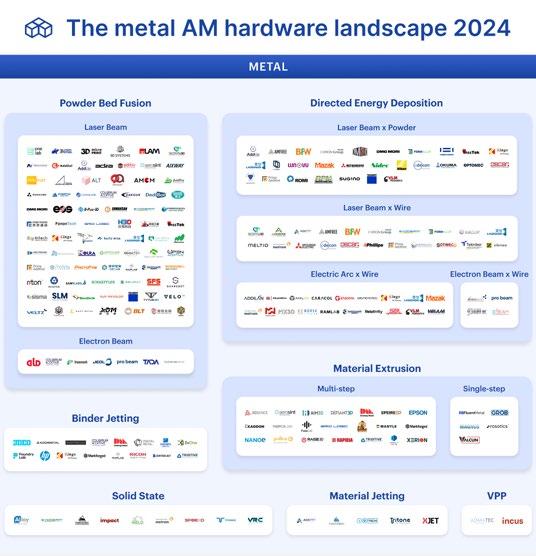
leads the way with thirty-three OEMs, followed by Germany (twenty-eight) and China (twenty-five).
The team at Aniwaa worked collaboratively to improve the infographic, incorporating more than 100 modifications based on feedback from the AM community. Notably, the mapping now includes a section dedicated to post-processing, highlighting twenty pure-play manufacturers offering solutions in this key area of the AM ecosystem, from powder handling to heat treatment, surface finishing, colouring and more.
“At Aniwaa, we understand the challenges faced by buyers in navigating the complex additive manufacturing ecosystem,” said Martin Lansard, founder of Aniwaa. “Our landscape infographic, combined with our digital catalogues, provides buyers with a comprehensive view of all active manufacturers and solutions in each market segment. These insights are invaluable in their journey to make informed purchasing decisions.”
The team recently hit an important milestone: more than 160 manufacturers now actively manage their presence on Aniwaa, thanks to selfservice accounts enabling them to optimise their visibility, monitor their traffic and connect with potential customers.
“Our goal is to provide manufacturers with the tools they need to succeed in this competitive industry,” explained Martin Lansard. “Our platform serves as a gateway for manufacturers to showcase their products, reach new markets, and ultimately acquire new customers. We believe that by enabling seamless and valuable interactions between manufacturers and buyers active in the market, we are driving the industry forward.”
This release comes on the heels of several key upgrades to Aniwaa’s digital marketplace, solidifying Aniwaa’s position as a trusted resource for professional buyers navigating the ever-evolving AM industry.
www.aniwaa.com
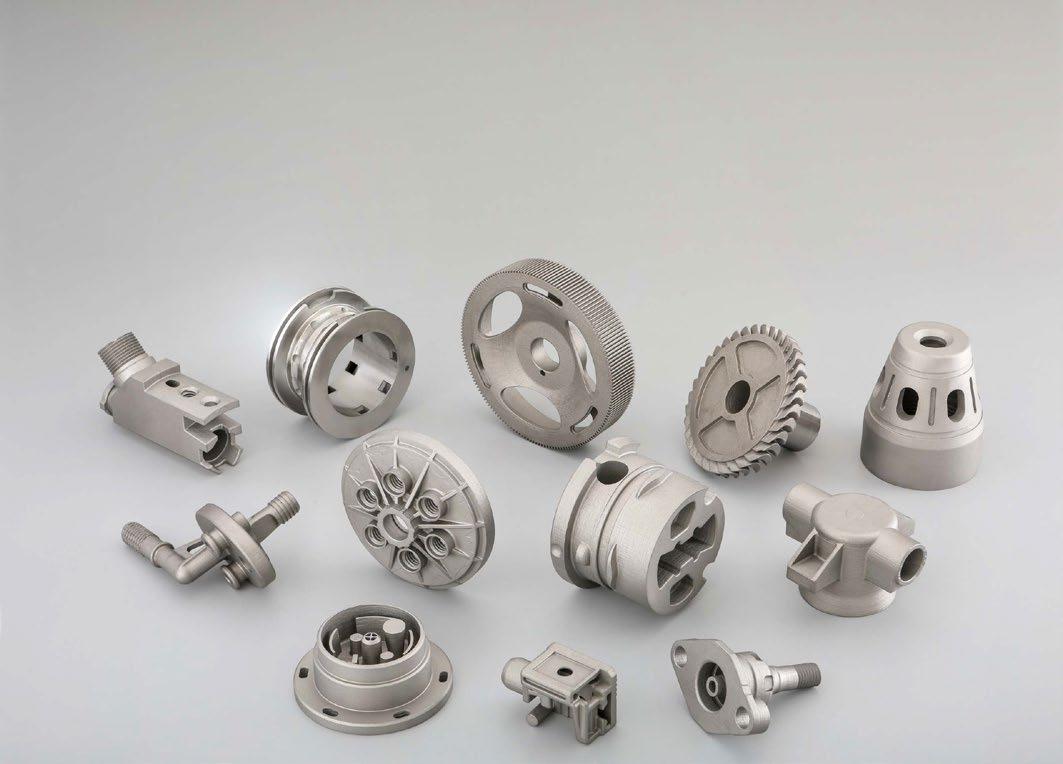
Material Options (Metal)
Material Options (Ceramics)
Build Envelope
Quantity
Tolerance capability
CONTACT FOR MORE DETAILS
NORTH AMERICA
17-4PH, SS 316, Tool Steel M2 & S-7, Inconel 625, 4140
Alumina 99.5%, Zirconia
~ 300 grams max, Footprint equivalent of baseball size or less, 0.02” (0.50 mm) wall thickness minimum
10~50 samples based on footprint. Larger quantities up to 1,000 pcs welcome depending on the part size.
Within 2% of the feature size, 2~3 Ra Surface finish, Option of finishing to closer tolerances available.
Email: Mukund.N@indo-mim.com Ph: +1 (210) 557-1594
EUROPE Email: InfoEU@indo-mim.com Ph: +49 1732656067
ASIA Email: InfoHQ@indo-mim.com Ph: +9198459 47783 / +91 98450 75320
ISO 9001:2015 / IATF 16949:2016 / AS
An additively manufactured rocket nozzle component, produced by Sciaky Inc, Chicago, Illinois, USA, a subsidiary of Phillips Service Industries (PSI) Inc, has proven itself a critical part of Intuitive Machines’ recent IM-1 mission to the Moon. The part itself is the upper section of the main engine nozzle, which provides the main source of thrust for the landers descent.
The component was reported to be manufactured from an expensive, difficult-to-deposit refractory alloy on one of Sciaky’s wire-based electron beam Directed Energy Deposition (DED) Additive Manufacturing machines. It took the company sixteen hours to complete and, for testing, Sciaky produced two additional upper nozzle sections.
Intuitive Machines rigorously tested these parts under hot fire
testing conditions, burning fuel up to the full throttle. After the determination that the part was suitable for end-use, it was assembled into the Nova-C lunar lander, Odysseus, for the IM-1 mission. As a part of the main engine of the lunar lander, the Sciaky-made upper nozzle section was reported to have performed as required in the inhospitable environment of space.
Sciaky’s DED technology, referred to by the company as EBAM (Electron Beam Additive Manufacturing), aims to provide manufacturers with a range of benefits, including reduced material waste, shorter lead times, and increased design flexibility. By utilising wire feedstock instead of powder, EBAM is able to minimise waste and cost. The technology’s ability to fabricate near-net shape parts can also reduce the need for
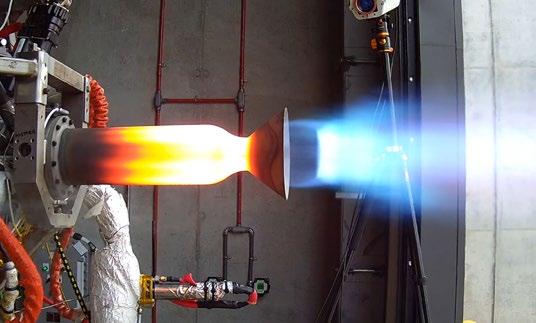



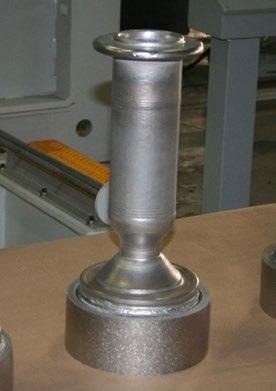
Sciaky additively manufactured the nozzle sections using its wire-based electron beam Directed Energy Deposition technology (Courtesy Intuitive Space/Sciaky)
post-processing and machining.
The IM-1 Mission successfully landed the spacecraft on the Moon’s south pole region, marking the United States’ first return since Apollo 17 and the first commercial lunar lander to transmit valuable science data of each NASA payload from the lunar surface. The IM-1 Mission was part of NASA’s Commercial Lunar Payload Services (CLPS) initiative, which is exploring and preparing the Moon for crewed missions in the future.
The mission had a few challenges, but Intuitive Machines’ concept was proven and the main objectives of the mission were met, as the lander sent back critical data and is said to have made the case for future missions of its kind.
www.intuitivemachines.com
www.sciaky.com













Special stainless steels, nickel and cobalt alloys produced by VDM Metals are used in many of today‘s key technologies for the safe and reliable handling of corrosive and high-temperature processes and procedures. In addition to exceptional materials, available as powder for additive manufacturing in a wide range of particle fractions, we o er you various first class services.


Materials for the future.
vdm@acerinox.com www.vdm-metals.com







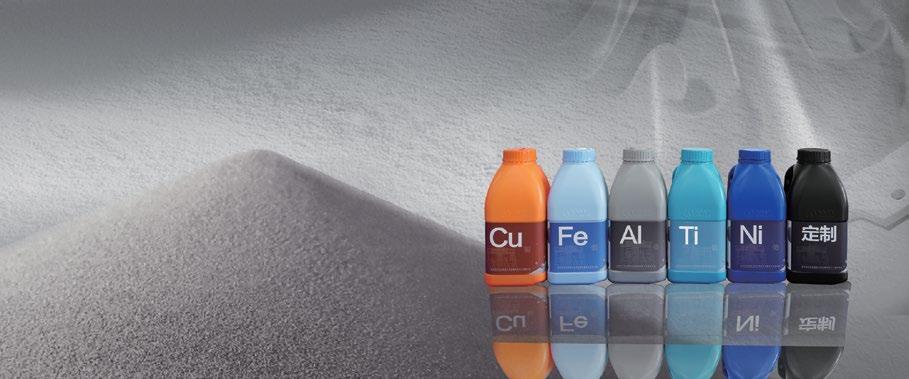

Desktop Metal, headquartered in Burlington, Massachusetts, USA, has announced that the X25Pro production Binder Jetting (BJT) Additive Manufacturing machine can now process TurboFuse – a highstrength binder chemistry intended to eliminate a heating step during manufacturing and improve Binder Jetting speeds by 50% or more.
TurboFuse is currently available for use on the X25Pro with 316L stainless steel and will require the purchase of an upgrade kit for existing customers. The binder is also compatible with sixteen metals and one cermet, with parameter validation now underway.
Eaton, an intelligent power management company with six Desktop Metal AM machines, is currently beta testing TurboFuse on its X25Pro at its Additive Manufacturing Center of Excellence, a part of Eaton Research Labs, in Southfield, Michigan, USA.
“Eaton is thrilled to collaborate with Desktop Metal to prove this new binder technology. Using the new binder, we have reduced our print times by nearly 4X from the previous binder system,” said Eric Johnson, PhD, Senior Manager — Additive Manufacturing, at Eaton Research Labs. “This is a game changer and significantly enhances the affordability of this technology.”
“TurboFuse is an intelligent chemistry developed specifically for Binder Jetting by the world’s most experienced Binder Jetting team at Desktop Metal,” stated Ric Fulop, founder and CEO of Desktop Metal. “By implementing TurboFuse on the X25Pro, we have dramatically improved print speeds of the market’s most popular and trusted production binder jet system and delivered other benefits as well, such as stronger green parts and improved printhead life — all of which reduce operating and per-unit part costs.”
Desktop Metal’s binder portfolio for metal and ceramic Additive Manufacturing now includes TurboFuse, CleanFuse, AquaFuse, PhenolFuse, and FluidFuse.
The X25Pro is a mid-sized production metal Binder Jetting machine with a build volume of 400 x 250 x 250 mm. It is part of Desktop Metal’s X-Series line of metal Additive Manufacturing machines featuring Triple Advanced Compaction Technology (ACT). It has discrete mechanical controls for dispensing, spreading, and compacting ultra-fine powders in Binder Jetting. This feature enables tight parameter control across a wide range of metal and ceramic powder types and size distributions. www.desktopmetal.com
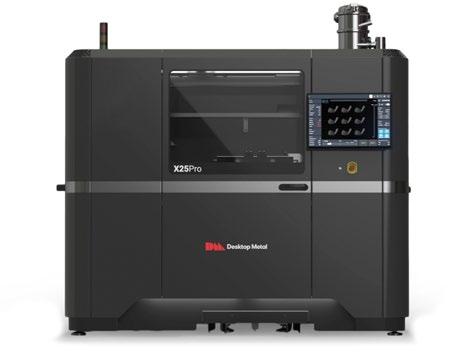
Desktop Metal has announced that the X25Pro production binder jet Additive Manufacturing machine can now process TurboFuse (Courtesy Desktop Metal)
Mesago Messe Frankfurt GmbH, organiser of Formnext 2024, has shared that this year’s event will feature six Formnext Awards. The awards will be presented across different categories, including young innovative companies, sustainable business ideas, and pioneering technologies.
“It’s not just start-ups and new companies who benefit from exchanging ideas, showcasing their
businesses, and networking with potential customers, partners, and investors. Therefore, rather than only supporting our AM newcomers, we now want to reach out to the growing diversity of the AM industry through our Formnext Awards as well and recognise the achievements of an even broader range of disciplines,” explained Sascha F Wenzler, VP for Formnext at Mesago Messe Frankfurt GmbH.
The Formnext Awards will recognise the following categories:
• Start-up Award
• Rookie Award
• Sustainability Award
• Design Award
• (R)Evolution Award
• AMbassador Award
Submissions for the Start-up Award will close on August 9, with the remaining categories open until September 6, 2024. www.formnext.com


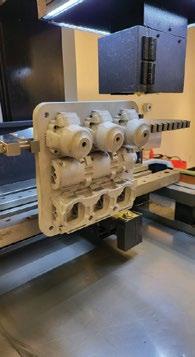
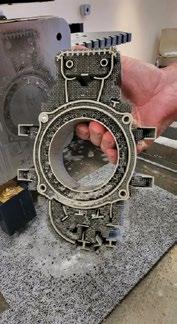
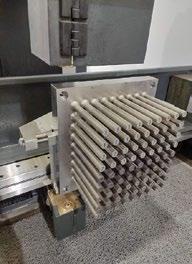
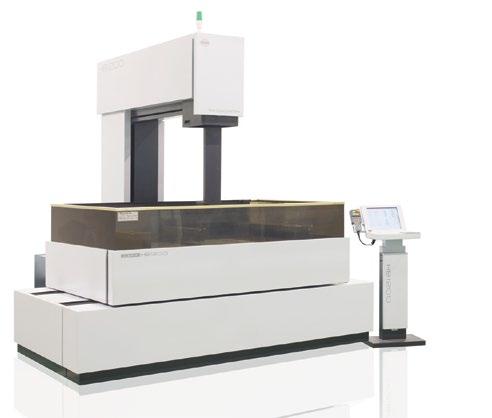



Authentise, based in Philadelphia, Pennsylvania, USA, has announced the release of new integrations for Authentise Threads, the company’s workflow management software that allows users to share, discuss and manage engineering projects. The integrations with Plyable and the Google Docs Suite aim to streamline engineering processes, enhance collaboration, and reduce the time from idea to manufactured part.
The integration with Plyable, an online platform for designing, quoting, and sourcing composite moulds, is anticipated to enable greater efficiency in the mould development process. Engineers can now access Plyable’s features directly within Threads, allowing them to receive a composite mould design, pricing and timelines while collaborating with their colleagues on Threads. They can then complete the order for moulds online within seconds.
This integration streamlines the entire design process by enabling engineers to get the information they need when they need it, ending separate mould development workflows entirely. This reduces lead times and improves collaboration between design and manufacturing teams.
“We are thrilled to partner with Authentise and integrate Plyable with Threads,” stated Martin X, CEO of Plyable. “This integration greatly benefits designers and engineers by making the designing and sourcing of composite moulds as an intrinsic part of their product development process, not a time-consuming separate step. By combining Plyable’s expertise in mould development with Authentise’s powerful collaboration platform, we are empowering engineers to work more efficiently and bring their ideas to life faster.”
The integration with the Google Docs Suite brings additional real-time
Researchers at Oak Ridge National Laboratory (ORNL), Oak Ridge, Tennessee, USA, are reported to have used Electron Beam Powder Bed Fusion (PBF-EB) Additive Manufacturing to produce defectfree, complex tungsten parts, suitable for use in extreme environments. The process is expected to have potential for use in cleanenergy technologies such as fusion energy.
Tungsten has the highest melting point of any metal, making it ideal for fusion reactors where plasma temperatures exceed 180 million degrees Fahrenheit. In comparison, the sun’s centre is about 27 million degrees Fahrenheit.
In its pure form, tungsten is brittle at room temperature and easily shatters. To counter this, ORNL researchers developed a PBF-EB Additive Manufacturing machine to deposit tungsten, layer by layer, into precise three-dimensional shapes. This technology uses a magnetically directed stream of particles in a high-vacuum enclosure to melt and bind metal powder into a solid-metal object. The vacuum environment reduces foreign material contamination and residual stress formation.
“Electron-beam Additive Manufacturing is promising for the processing of complex tungsten geometries,” said ORNL’s Michael Kirka. “This is an important step for
collaboration to engineering teams. User’s comments in Google’s Spreadsheets, Docs, and Presentations are now immediately visible within Authentise, like annotations on 3D models, which Authentise announced in April. By leveraging the familiar Google Docs interface, engineers can work together more easily regardless of location or device, while the integration with Threads makes it easier to tie in colleagues and build new product ideas collaboratively.
“We are excited to introduce these new integrations for Authentise Threads,” said Andre Wegner, CEO of Authentise. “By connecting Threads with Plyable and the Google Docs Suite, we are providing engineers with a unified platform that streamlines their workflows and enhances collaboration. These integrations are a significant step forward in our mission to create a seamless digital thread from idea to manufactured part and are just the first in a slew of planned integrations.”
Authentise Threads with Plyable and Google Docs Suite integrations is now available to all Authentise customers.
www.authentisethreads.com

Researchers have used AM to produce defect-free complex tungsten parts for use in extreme environments (Courtesy Oak Ridge National Laboratory)
expanding the use of temperatureresistant metals in energy resources that will support a sustainable, carbon-free future.”
www.ornl.gov
Asetek, a developer of gaming hardware for next-level immersive gaming experiences, headquartered in Aalborg, Denmark, has announced a strategic partnership with Fabric8Labs, a metal Additive Manufacturing company located in San Diego, USA, to advance its liquid cooling technology for the commercial and consumer desktop computer markets.
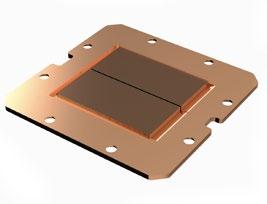
As seen in Asetek’s AI Optimised Cold Plate, sophisticated AI simulation was used to model the cold plate architecture. This structure utilises highly complex geometries which require an advanced manufacturing method to create. Leveraging Fabric8Labs’ proprietary Electrochemical Additive Manufacturing (ECAM)
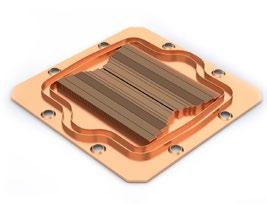
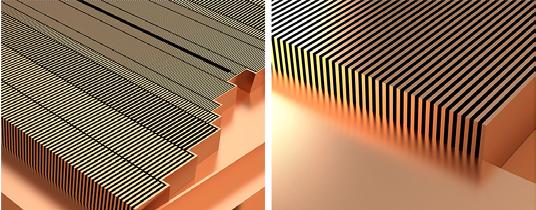
Plansee, headquartered in Reutte, Austria, and Ceratizit, part of the Plansee Group and headquartered in Mamer, Luxembourg, have announced the official opening of their new shared office at the German Centre, Singapore. The event was attended by guests and key partners.
The new office is designed to foster collaboration and efficiency, supporting the companies’ mission to drive sustainable growth and deliver value to their customers
in the expanding Southeast Asian markets.
Alexander Tautermann, Director – Marketing & Sales, Plansee, stated, “Ten years ago, Plansee started our own sales office in Southeast Asia. I am delighted that we can celebrate the tenyear anniversary together with the announcement of a very close cooperation between Plansee and the Ceratizt Group. Our shared office in Singapore is a testament to the strong partnership between
technology, modelled iteration of this cold plate was able to be produced to the optimised specifications.
“Partnering with Fabric8Labs allows us to push the boundaries of liquid cooling technology. Their innovative metal 3D printing process enhances our ability to deliver high-performance, reliable, and sustainable solutions,” said John Hamill, COO of Asetek.
The ECAM method allows for the creation of complex, high-resolution structures that are able to improve thermal capabilities via enhanced fluid dynamics. And by eliminating the need for post-processing, ECAM enables high quality and integrity of each cold plate and is highly scalable to support high-volume production demands. Beyond these performance attributes, the AI Optimised Cold Plate production process is also able to emphasise sustainability, as an additively manufactured component.
“We are excited to collaborate with Asetek to bring our proprietary ECAM technology to the desktop market, providing customers with superior performance. This partnership exemplifies our shared dedication to quality and innovation,” said Jeff Herman, CEO and co-founder of Fabric8Labs.
www.fabric8labs.com
www.asetek.com
both companies in this very important region. It will serve as a hub for our mutual cooperation and be our centre of excellence, allowing us to better serve our customers and achieve our strategic goals.”
Andreas Fritz, President – Asia Pacific, Ceratizit Group, added, “This new office represents our commitment to expanding our footprint in Southeast Asia and delivering superior support and services to our customers in the region. We look forward to leveraging this space to drive innovation and strengthen our market presence.”
www.plansee.com www.ceratizit.com

Combiningyearsofexperience, collaborationandthepowerof ElectronBeamMelting(EBM).
OurcollaborativeElectronBeamMelting manufacturingservicehelpsAMusersstayon schedule,makeinformeddesigndecisionsand unlockapainlesspathtoproduction.Operating andspecializinginEBMforalmostadecade meanswe’velaidthetechnicalgroundworkso youdon’thaveto.
Withabuildvolumeofø360mmx380mm, optionsforfastdedicatedbuildsoreconomic ridesharebuilds,andtheabilitytomanufacture partswithtallandthin-walledstructuresand/or designswithsignificantcross-sectionalareasWehavesolutionsreadyforanysituation.
TalkwithourAMexpertstodaytogetstarted.
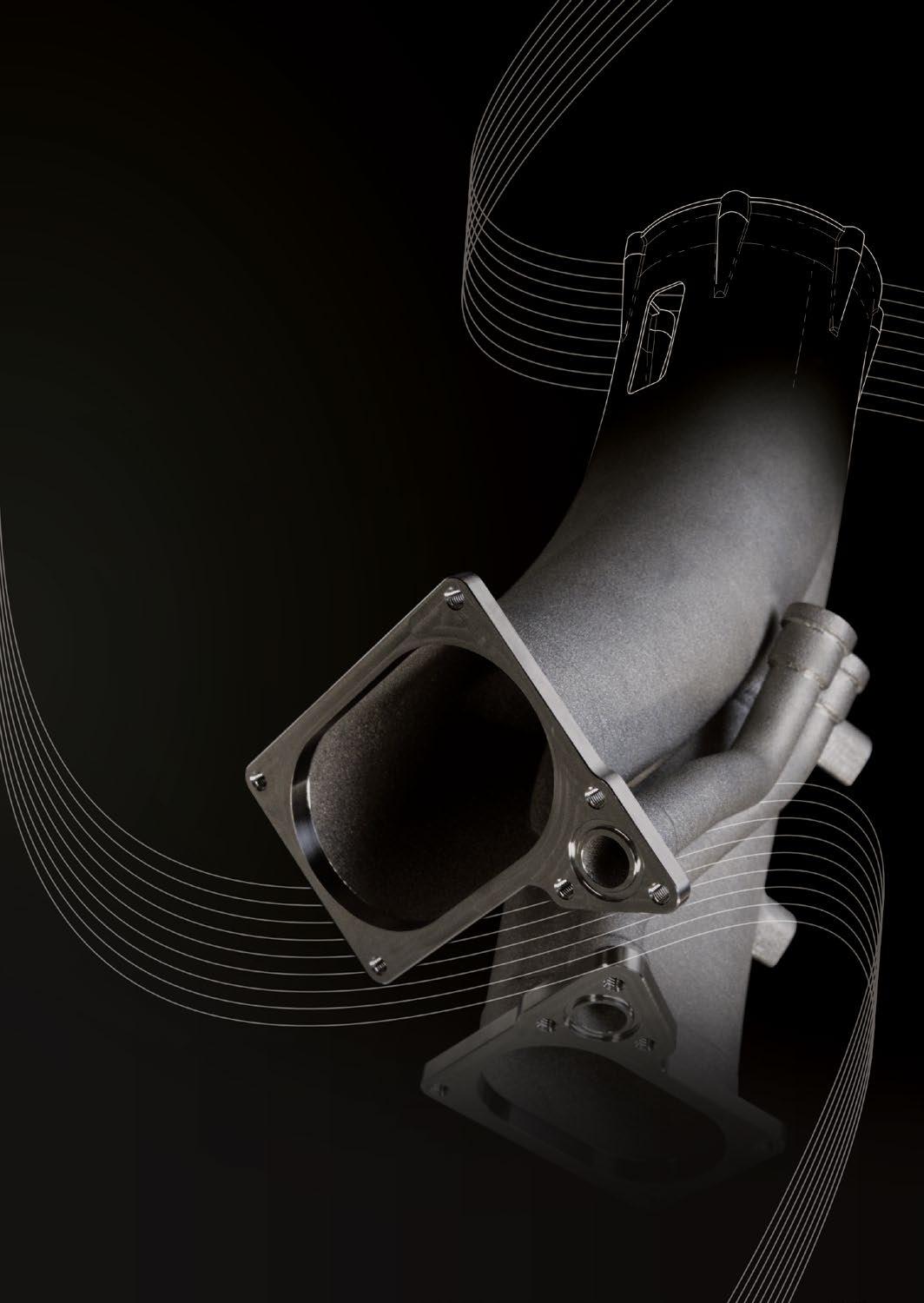


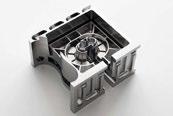
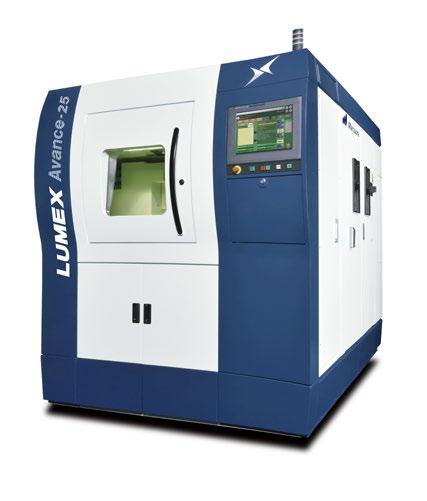


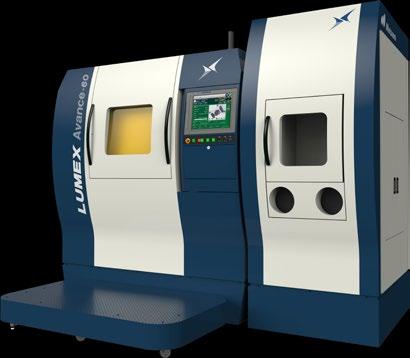
In a recent case study, Eplus3D, based in Hangzhou, China, detailed the use of its Additive Manufacturing technology by PWR Advanced Cooling Technology, a global company and manufacturer focused on highcomplexity, small-batch customised heat exchangers and supporting components, which are specially designed for motorsport and aerospace application, headquartered in Ormeau, Australia.
On its journey to adopt Additive Manufacturing technology, PWR conducted an evaluation of AM machines from a variety of companies.
“We provided the same challenge to all the vendors, and Eplus3D stood out,” stated Toby Maconachie, Additive Manufacturing Engineer at PWR. “They not only delivered the test part the fastest, but their test part also passed rigorous pressure and leak tests, demonstrating exceptional stability and reliability. Furthermore, Eplus3D excelled in external surface finishing, achieving a design with leak tight thin tube walls and fine fin geometry, with consistently high print quality and minimal iterations required. These were the deciding factors for us to choose Eplus3D.”
Aheadd CP1 as a requirement
Aheadd CP1 is an aluminiumiron-zirconium powder solution designed specifically for Additive Manufacturing without volatile elements, rare earths, silicon or

ceramic particle additions. Aheadd CP1 was approved by the Federation Internationale de l’Automobile (FIA) for use in Formula 1 racing beginning in the 2024 season.
In response to PWR’s decision to use the high-performance aluminium powder Aheadd CP1, Eplus3D worked with the company to develop optimised process parameters. The optimisation process enables parts to be manufactured at an average density of 99.93%. This is in combination with the as-built properties of Aheadd CP1, which offers high ductility and the possibility of producing large components with minimal geometric deformation.
Deepening collaboration
As the collaboration with Eplus3D deepened, PWR reported its use of the company’s Additive Manufacturing has enabled quick and economical product design and manufacturing capabilities, allowing PWR to meet complex client demands.
Maconachie stated, “This improvement in capability has brought us unexpected gains. By showcasing our diverse capabilities and tailored solutions, we inspire confidence in our customers, fostering long-term collaboration and a reliable brand reputation.”
“The aerospace industry, especially in the realm of electronics cooling, is presenting new opportunities,” Maconachie added. “Meanwhile, in the context of evolving technologies, we’re seeing a shift towards more sophisticated cooling systems.”
www.pwr.com.au
www.eplus3d.com
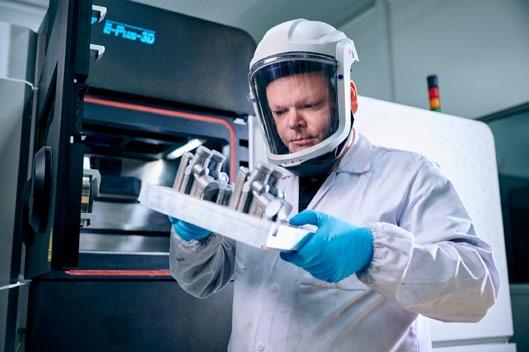
Eplus3D has outlined its partnership with PWR in the production of heat exchangers and supporting components (Courtesy Eplus3D)

NSL Analytical Services, Cleveland, Ohio, USA, has announced the relocation of one of its two metallurgical testing laboratories to a new 1,850 m 2 facility in the same city. The move approximately doubles the size of the lab and will provide
the comprehensive infrastructure to support NSL’s growth as one of the nation’s leading independent materials testing services companies.
NSL now offers high-temperature stress rupture testing services for Additive Manufacturing, aerospace,
NSL has doubled the size of its metallurgical laboratory with a recent relocation (Courtesy NSL Analytical Services)
EOS GmbH, headquartered in Krailling, Germany, has opened a new Additive Minds Academy Center in Novi, Michigan, USA. Additive Minds Academy, the training arm of EOS’ Additive Minds applied engineering team, is designed for training and upskilling industrial Additive Manufacturing engineers and operators.
The new in-person academy training facility provides an educational hub for both experienced AM users and those new to the technology. By supplying both handson and classroom learning experiences, the training centre is intended to underline EOS’ goals focused on customer support and industry development.
“We have long recognised the need to look beyond the scope of AM technology acquisition. To grow our industry and AM adoption, education
must keep pace, and building a strong workforce to support the burgeoning, transformational technology is essential. We are committed to both the enablement of our customers and to the successful education of all those exploring powder-bed AM,” stated Glynn Fletcher, EOS North America President.
Supporting the new Additive Minds Academy Center are engineers, consultants, technicians and other experts who have completed more than 1,000 successful customer projects spanning the past five years.
“Whether training customers or new AM system operators, I often use the technical knowledge and experience I gained from my years as an AM field service engineer. My time spent working side by side with in-house customer engineering teams has given me unique insight into what opera -
space and other manufacturing clients. The company specialises in testing metals, alloys, plastics, composites and ceramic materials in powdered, solid, or liquid form.
“This move represents the next chapter of growth for NSL Analytical Services,” according to Ed Herderick, Vice President of Science and Technology Development. “Our new ANAB- and Nadcap-accredited metallurgical testing lab has meaningfully expanded both NSL’s testing capacity and testing capabilities. We are thrilled to be offering our customers a more expansive line of metallurgical testing solutions and look forward to supporting their future testing needs with excellent service that they have come to expect from NSL.”
The new facility, opened in late March, includes an office space and also supports operations at NSL’s analytical laboratory, located about 3.2 km away in Warrensville Heights, Ohio. Approximately 70% of NSL’s clients utilise the services of both testing laboratories.
www.nslanalytical.com
tors need to know to be successful and how to train a self-sufficient AM production team,” Julio Mejia-Andino, AM academy instructor, shared.
EOS is also collaborating with metro Detroit-based Automation Alley by offering training opportunities to its Project DIAMOnD network. Funded through Oakland County, Project DIAMOnD has already successfully connected more than 300 smalland medium-sized manufacturers by providing them with Additive Manufacturing machines.
“Through our partnership with EOS, Project DIAMOnD participating companies will be able to leverage EOS’ expertise in both metal and polymer AM and will receive guidance on optimising their designs for 3D printing. We look forward to partnering with EOS to help our small- and mediumsized manufacturers fully embrace Additive Manufacturing,” added Pavan Muzumdar, COO of Automation Alley and CEO of Project DIAMOnD.
www.eos.info


(AGM and Technical Conference) will take place in Tokyo
September 8th-11th 2024




Non-members are welcome to attend this event. The T.I.C. General Assembly attracts global industry leaders. Full details will be made available at www.tanb.org
Our 2024 conference will explore issues such as:




Tantalum-Niobium International Study Center
Chaussée de Louvain 490, 1380 Lasne, Belgium Phone: +44 7745 521449 Email: info@tanb.org www.TaNb.org

Ursa Major Technologies Inc, located in Berthoud, Colorado, USA, has reported the successful hotfire testing of its Draper engine. Ursa Major uses metal Additive Manufacturing to develop and manufacture its rocket engines. The recent testing is reported as a milestone for the liquid engine, first announced in May 2023.
Drawing on the architectural and manufacturing legacy of Ursa Major’s Hadley engine, Draper combines the storable attributes of a solid rocket motor with active throttle control and throttle range of a liquid engine, providing the manoeuvrability and flexibility that is needed for hyper -
sonic defence. It is this unique design that allows the engine to effectively simulate hypersonic threats and makes the engine well-equipped to address the critical gap in America’s hypersonic capabilities.
The 4,000-pound-thrust closed catalyst engine uses a non-cryogenic fuel that optimises storability, making the engine uniquely suited for in-space propulsion applications.
Based on its thrust profile, the engine is not only capable of manoeuvring objects in orbit but doing so without fully depleting its store of propellant, potentially allowing for additional mission functions.
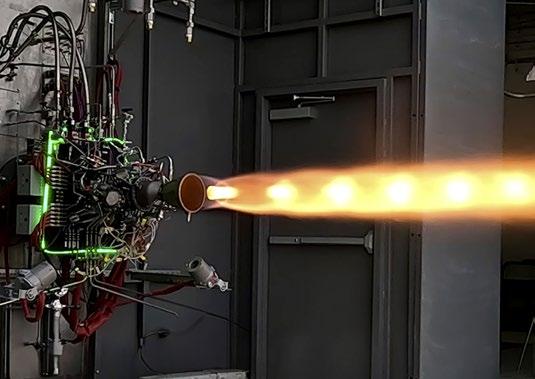
Replique GmbH, based in Mannheim, Germany, has announced the launch of Material Hub, a searchable online database of materials for Additive Manufacturing. Users can navigate the hub via numerous filtering options to find suitable materials for their specific applications, with
industry standards and application fields provided for each material.
“We are thrilled with the positive reception of our Material Hub during the beta phase. The public launch marks an important step in our mission to democratise access to Additive Manufacturing,” stated
“We’re excited with how quickly the development programme has progressed and look forward to fielding the engine for hypersonics and in-space applications in the coming years,” Brad Appel, Chief Technology Officer at Ursa Major, stated.
The development and testing of Draper are supported by funding from a contract with the Air Force Research Laboratory (AFRL). The funding was also directed to building the Draper-specific test stand at Ursa Major’s headquarters in Berthoud, Colorado, which has and will continue to allow for greater testing capabilities and, in turn, quicker iteration and development of the Draper engine.
“Perhaps the most-impressive aspect of this programme is the delivery of a versatile, storable rocket engine in such an incredibly short timeframe. AFRL and industry is taking on the challenge our USAF and USSF leadership has asked of us…to deliver faster capabilities, craft tighter bonds with industry, and leverage what is already in existence to provide asymmetric advances. And thankfully, this is just the tip of the iceberg when it comes to what we are doing as one team,” said Dr Shawn Phillips, Chief of AFRL’s Rocket Propulsion Division.
Following this successful engine hotfire, Ursa Major intends to continue a development campaign and mature the engine towards flight qualification.
www.afresearchlab.com
www.ursamajor.com
Dr Max Siebert, CEO, and Co-Founder of Replique. “We are committed to continuously enhancing the platform to meet the evolving needs of our users.”
Replique added that it is expanding the capabilities of the Material Hub with additional features and materials. While the current focus is on polymers, the company confirmed that metal materials will be added in the near future.
www.replique.io

Inert gases displace oxygen, creating an oxygen-deficient environment ideal for printing processes but not for personnel safety. Oxygen deficiency monitors contribute to safe working environments in any applications utilizing oxygen-depleting gases.
• Long-Life 10+ Average Sensor Life
• Measures 0-25% Oxygen
• Continuously Measures Inert Gases Including Argon and Nitrogen
• Operating Temperatures -40º to 140ºF (-40º to 60ºC)
• No Scheduled Maintenance
• Plug and Play Set-Up
• Built-In 90dB Horn wwww .P ureAireMonitoring.com
The Technical Programme for the 2024 World Powder Metallurgy World Congress & Exhibition (World PM2024) has now been published. Organised by the Japan Powder Metallurgy Association and Japan Society of Powder and Powder Metallurgy, the event will take place October 13-17 in Yokohama, Japan. In addition to the conference, World PM2024 will include an international exhibition, providing excellent opportunities for exchanging information, networking and meeting colleagues from around the world. Early-bird discounted registration is available until September 2.
Keynote Presentations
The Keynote presentations include:
• Metallurgy-Inspired Solar Panels Recycling, by Y Shen, University of New South Wales
• Mechanical Properties and Reliability of Structural Materials for Spacecraft Applications, by E Sato, ISAS/JAXA
Iwatani’s Efforts Towards the Realization of a Hydrogen Society, by M Tsuyoshi, Iwatani Corporation
There will also be fourteen Special Interest Seminars at World PM2024. These seminars include the following:
SIS1 Powder Production
• SIS2 Novel processing strategies for beam-based AM
SIS3 Promising Future of Sinter Based AM
• SIS4 Trends and Sustainability of MIM
• SIS5 MIM Challenges for New Materials
• SIS6 Industrial Application of Functional Materials
• SIS7 Powder Design for Industrial Application
SIS8 Sintered Materials
SIS9 Hard Materials
SIS10 Amorphous/ Nanocrystalline Soft Magnetic Materials
• SIS11 Energy Materials
• SIS12 Carbon Neutrality (CN) in PM
• SIS13 Circular Economy and Sustainability in PM
• SIS14 DX in PM
Germany’s Mesago Messe Frankfurt, organiser of the Formnext series of Additive Manufacturing industry events, has confirmed that it is bringing the format to the USA, with the new Formnext Chicago set to take place April 8-10, 2025.
“We see huge potential in US companies that have not yet encountered Additive Manufacturing or are not utilising the benefits of this technology,” explained Sascha F Wenzler, Vice President Formnext. “Our focus is on the various user industries to which we want to provide solutions. This will further raise awareness of the opportunities offered by Additive
Manufacturing across the industry. We also intend to promote AM technologies and significantly increase our exhibitors’ business contacts.”
With Formnext Chicago, Mesago Messe Frankfurt is expanding its strategy of regionally adapted formats in relevant AM markets, based on the successful original Formnext event in Frankfurt. International examples to date include the Formnext + PM South China in Shenzhen, China, and the Formnext Forum Tokyo, Japan.
Formnext Chicago is being organised by Mesago Messe Frankfurt in collaboration with AMT
General Sessions
The conference will include general sessions covering all aspects of PM, MIM and metal AM. Topics include:
• Powder Production
• Compaction and Sintering
• Modelling and Sintering
Hot Isostatic Pressing
• Field Assisted Sintering
• AM Beam-based Technologies
AM Sinter-based Technologies
• MIM – New Processing Routes
• MIM – Stainless Steel and Heat Resistant Alloy
Innovative Technology
• Automotive Component Technology
• PM Technologies to Support Future Society
• Tribology in PM
• Ferrous Materials
• Non Ferrous Materials
High Temperature Materials
• Hard Materials
• Hard Magnetic Materials
• Soft Magnetic Materials
• Composite/Hybrid Materials
• Non-oxide Materials
• High Entropy Alloys
Materials Characterisation of AM Materials www.worldpm2024.com
(the Association for Manufacturing Technology) and Gardner Business Media. AMT is the organiser behind International Manufacturing Technology Show (IMTS), reputedly the largest manufacturing trade fair in North America. Gardner Business Media is a North American media company focused on machining, plastics processing, and other manufacturing technologies.
“Formnext was early to recognise the significance of the US market for the AM industry and announced the 2025 Chicago event back in 2021. The AM community’s global growth is evidence of the high demand for the successful format,” added Douglas Woods, AMT President. www.formnextchicago.com
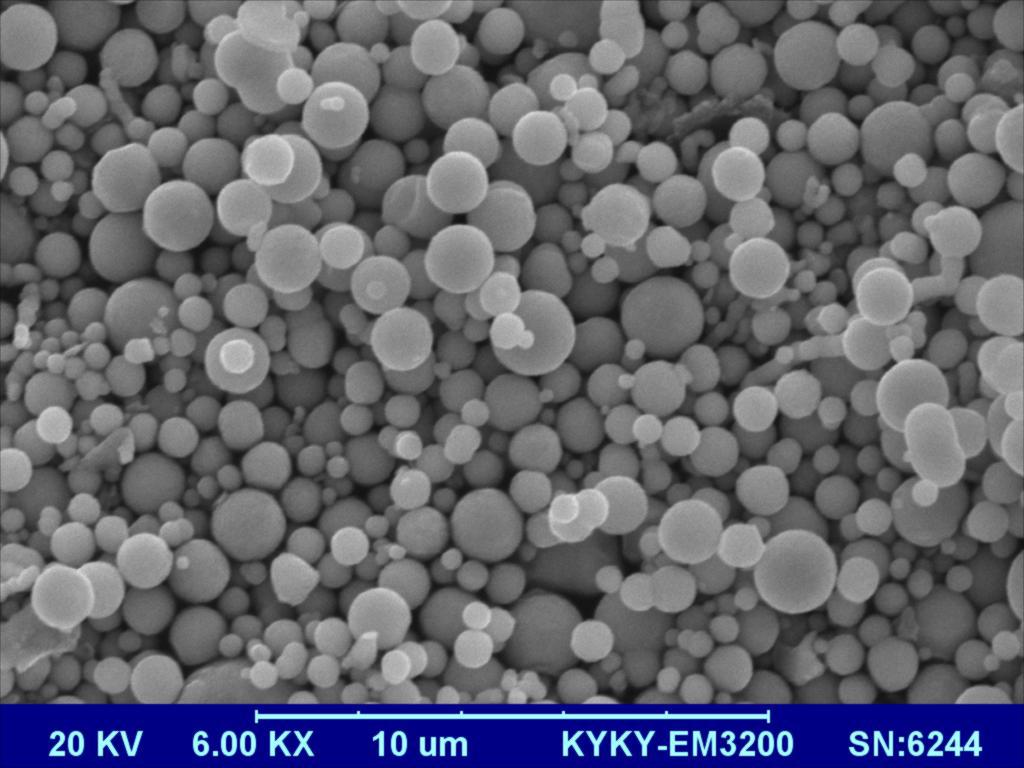
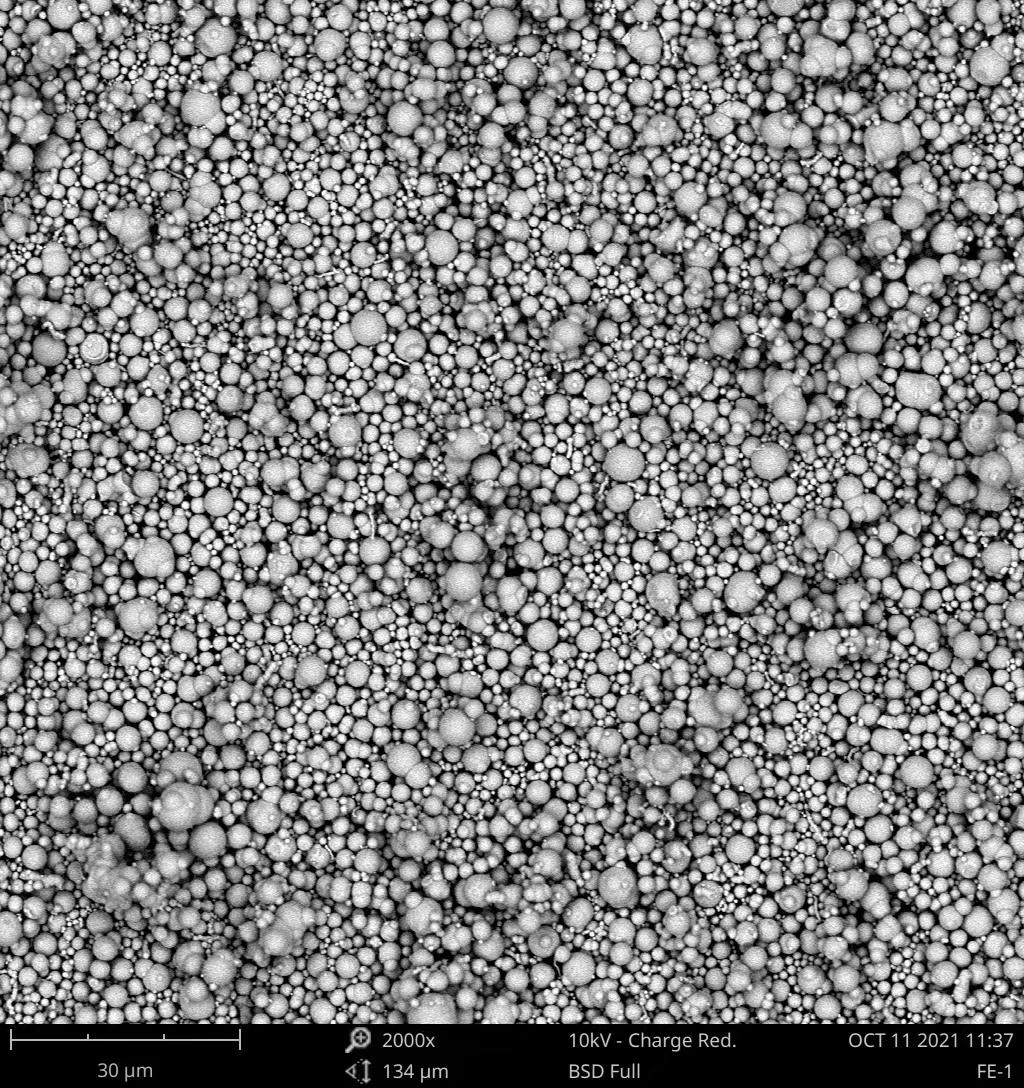
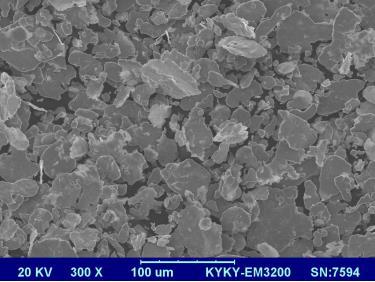
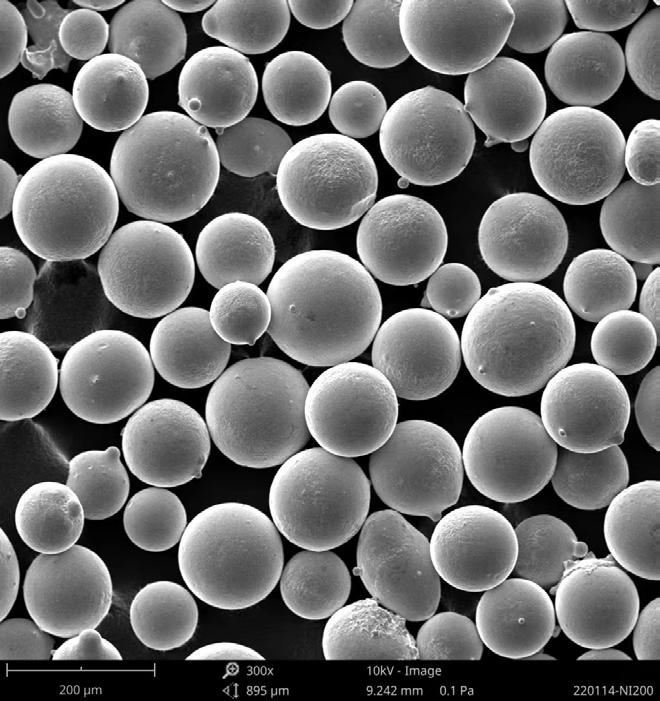
Honorary sponsor
Demand for more complex, customized parts is rising fast. Product cycles are shortening, traditional supply chains are evolving, and the importance of sustainability continues to grow. Additive Manufacturing offers you the solutions to meet these challenges and inspire your customers.
The very existence of BMW Group's state-of-the-art Additive Manufacturing Campus, located close to Munich, speaks volumes about the potential of AM technology in the automotive industry. In April, Metal AM magazine's Technical Consultant, Martin McMahon, and Managing Editor, Nick Williams, had the opportunity to visit the campus. As is revealed here, they discovered an operation that not only functions as an application development centre and centralised location for the BMW Group's AM expertise, but also operates as a model AM factory built around the concepts of productivity and automation.
For many years, automotive applications have been considered a somewhat out-of-reach target for the Additive Manufacturing industry. Suppliers, researchers and many in the wider investment community have been continually looking for the signs of success which signal the ‘coming of age’ of the AM industry. This is because production for the automotive industry is, by and large, on a scale equated with high-volume consumer products – so, if the technology is good enough for the manufacturing of automotive parts, it should follow that it would be good enough for a wide range of consumer-driven markets.
However, many are unaware that automotive companies have been the drivers of much of the core development behind the Additive Manufacturing technologies we have today – especially those used in polymer AM. Some of the early success in the use of polymers was naturally followed by interest in metal AM, and one company in particular that has been taking the lead in this respect is BMW.
BMW has been actively exploring Additive Manufacturing for more than three decades, but, in recent years, there has been a surge in activity to grow and develop the use of metal AM. This culminated with the official opening of its Additive Manufacturing
Campus in Oberschleissheim, on the outskirts of Munich, in June 2020. The campus, on which development started in April 2018, was the result of an initial €15 million investment and had the stated aim of enabling the BMW Group to develop its posi -

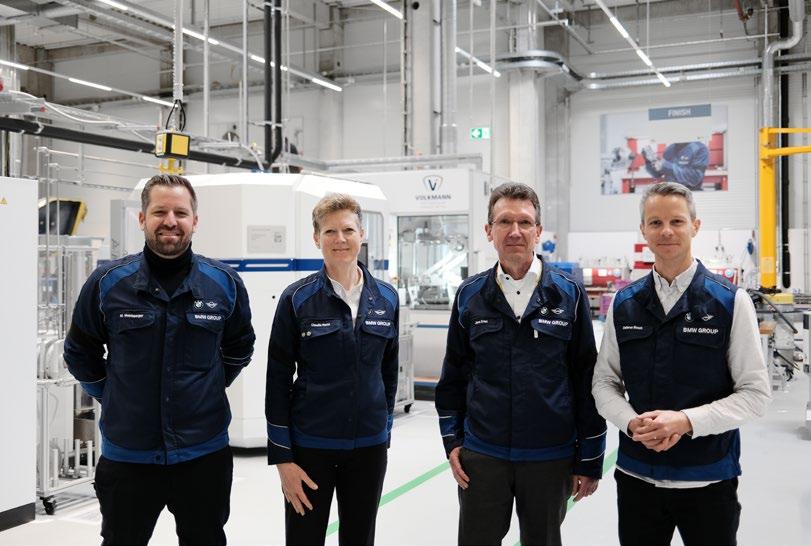
“The overwhelming impression is, however, that the campus is a stepping stone to production – a demonstration factory where the concept of AM production for the automotive industry is proven and optimised.”
tion as a technology leader in the utilisation of Additive Manufacturing in the automotive industry.
When asked to picture a campus, most people would imagine leafy green open spaces with wooden benches for exchanging ideas and a building dedicated to education and the exploration of technology, with a focus on knowledge sharing and partnerships. Arriving at BMW’s AM campus, however, puts paid to that
idea, with its large, modern industrial facility. It is meticulously laid out with office space, meeting rooms and, of course, a machine shop area.
A campus feel is, to an extent, maintained by the perfectly clean environment, which is divided into polymer and metal areas, each with zones for process and materials development, experimentation, and collaboration. The overwhelming impression is, however, that the
campus is a stepping stone to production – a demonstration factory where the concept of AM production for the automotive industry is proven and optimised.
Our visit started with an introduction to the team whose job it is to make such an impressive facility stay that way, led by Jens Ertel, BMW company veteran and Director of the BMW Group Additive Manufacturing Campus. Ertel is supported by a management team that consists of Maximilian Meixlsperger, Head of Additive Manufacturing Production; Claudia Rackl, Head of Projects & Qualification in Additive Manufacturing; and Stefanus Bosch, Head of Additive Manufacturing Predevelopment and Planning (Fig. 2).
Additive Manufacturing is used across all four of BMW’s brands –BMW, Mini, Rolls-Royce, and BMW Motorrad – for both component production and to optimise vehicle
manufacturing operations. Although not yet utilised in any mass-market cars, it is evident that metal AM parts have been produced, and are still being produced, for cars whose production runs number into the thousands.
Some of these applications have already been highly publicised over the years, such as the German Touring Car Masters (DTM) race car water pump wheels from 2015, produced by Laser Beam Powder Bed Fusion (PBF-LB) (Fig. 3), and brackets for the soft-top opening mechanism of the BMW i8 Roadster, from 2017, also produced using PBF-LB. But don’t be fooled into thinking that any application developed in BMW’s AM campus is a ‘novelty’ part used to showcase its metal AM capabilities – far from it. The team at BMW stresses that any part that goes into production is far from a ‘PR effort,’ but rather the result of a deep dive into an application’s economic and technical feasibility. BMW only goes ahead with production using metal AM when and if there is a compelling cost benefit in doing so.
The campus supports BMW’s adoption of AM throughout its global operations and is used to build a culture of innovation that ensures designers and engineers understand how and when to leverage the technology's opportunities. Employees travel to the campus to receive the training and skills to drive AM in their respective business units.
For BMW, as an experienced user of AM technologies, the campus represents a single centralised knowledge hub for everything Additive Manufacturing. The company is focused on creating a workforce that understands the opportunities that AM offers the business, and on the role of educating individuals at a product level about design, processes, materials properties, and economics.
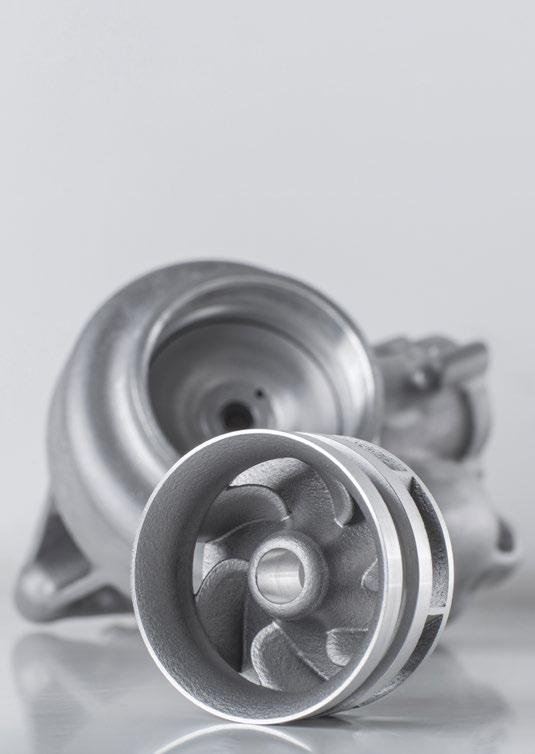
“The company is focused on creating a workforce that understands the opportunities that AM offers the business, and on the role of educating individuals at a product level about design, processes, materials properties, and economics.”
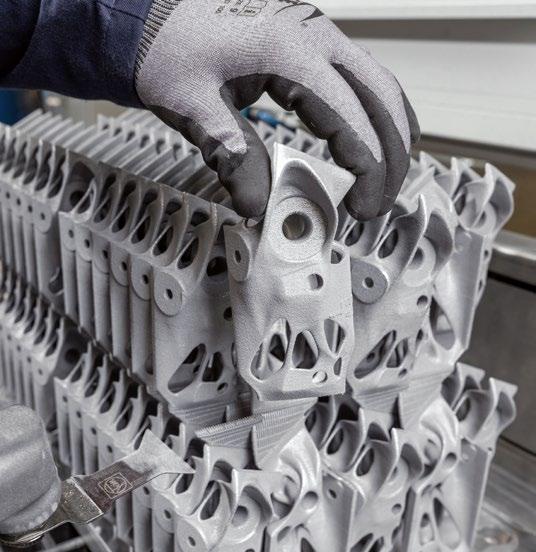
Through the goal of establishing a deep understanding of AM and how the technology supports its business needs, BMW reveals itself to be very selective when deploying the technology within the group. The implementation model for the role of the AM campus is not about ‘going all out’ to find potential parts for production via AM and then producing the ‘low-hanging fruit,’ but about collaboration and development, experimentation on
candidate AM technologies and materials, building the business case, and getting it right first time when the decision is made to go into production.
Having somewhere to explore the seemingly continuous development of AM technologies in isolation from the rest of its manufacturing operations provides BMW with the freedom to explore the real value of AM to the business and consider how this will evolve.
“While it may still be true that metal AM is restricted to prototyping and small-series production, the decisions regarding when any given AM process will be suitable for standard high-volume technology will come from within the campus.”
While it may still be true that metal AM is restricted to prototyping and small-series production, the decisions regarding when any given AM process will be suitable for standard high-volume technology will come from within the campus, in much the same way that decisions are made whether to use casting, forging, machining, etc.
What does BMW consider to be suitable metal AM technologies for the automotive industry right now? As we toured the machine shop area of the campus dedicated to metals, it became very clear that BMW’s primary focus is Laser Beam Powder Bed Fusion (PBF-LB). Series production is undertaken on machines from Nikon SLM Solutions; machines from other companies are also installed, notably Trumpf and Additive Industries, but the impression was that these were not used for series production. Of the machines from Nikon SLM Solutions at the campus, there is one SLM500-2 and two SLM500-4 machines, all equipped with 700 W lasers.
Whilst solely European AM machines are currently installed, at the campus, Ertel stated that machines from other world regions would be considered, but the expected levels of local service and support would need to be in place.
“We are open to buying machines from overseas, if the availability of service and spare parts is locally organised and guaranteed."
When it comes to series production, very few would argue against four lasers being better than two, but the choice of the configuration of the PBF-LB machines at BMW is the result of years of analysis. We witnessed the SLM500 machines, configured with 700 W lasers, being used for series production, with this configuration based on the increased productivity of higher power lasers. The team explained that it has been able to achieve higher build rates
using 100 µm powder layers when combined with the higher power lasers, in contrast to the standard 50 µm layers. Additionally, building with one laser per part ensures that no defects are introduced by the stitching of laser scan patterns in any overlap regions, thereby giving full confidence that there has been no change in properties as the result of any double exposure.
Rather surprising was the surface finish that BMW is achieving with these builds when using 100 µm layers. It would have been a misguided decision to increase build speed only to introduce additional post-process requirements. Evidently, this is where some of the value of the work carried out at the campus extends. It has allowed the team to precisely determine the correct design and post-processing requirements.
Further improvements in the speed and productivity of PBF-LB are expected to come from developments in beam shaping technologies. Funded by Germany’s Ministry for Economic Affairs and Climate Action (Bundesministerium für Wirtschaft und Klimaschutz), the Autobeam project sees BMW, Trumpf, Oerlikon Surface Solutions, and Technische Universität Darmstadt working together on the industrialisation of beam shaping technologies. “The aim is to leverage higher production rates and lower costs per part (€/cm 3) through PBF-LB processes within the automotive industry. By reducing the cost of AM parts, more topologyoptimised lightweight components can be used in vehicles in the future, saving energy and CO 2 emissions in its life cycle,” stated Maximilian Binder, Technology Scouting AM at BMW Group.
Materials selection is always going to be one of the most important considerations for any commercial vehicle manufacturer. Like many other industries, the automotive sector continues to struggle with
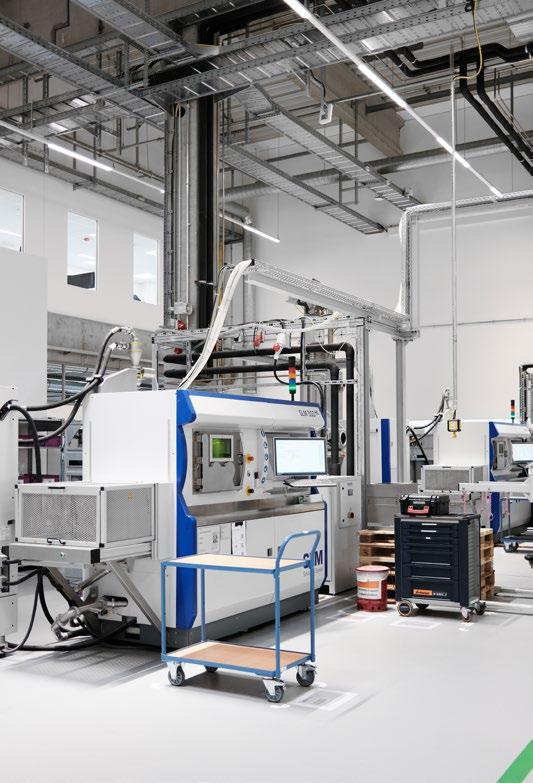
5 Two SLM 500 HL PBF-LB Additive Manufacturing machines from Nikon SLM Solutions at BMW's AM campus
the availability of qualified data for candidate alloys. One of the key roles of the campus has, therefore, been obtaining the necessary data.
All PBF-LB production parts made at the campus are produced from just one alloy – AlSi10Mg. However, in recognising that this alloy cannot fulfil all of BMW’s needs, other aluminium alloys are under active development. Ertel stated, "In the past there were developments to understand which material was best suited, comparing alloys such as AlSi7Mg, AlSi9Cu3, AlSi12, based
on the components that were needed. This resulted in the use of AlSi10Mg. Today, through process control and the heat treatment of this core alloy, we are able to modulate the material properties to behave like other conventional alloys."
Beyond this – and apart from maraging steel (DIN 1.2709) that is used in a limited way for part and tooling applications – there has been no significant demand or interest in other common automotive alloys (e.g. Mg alloys).
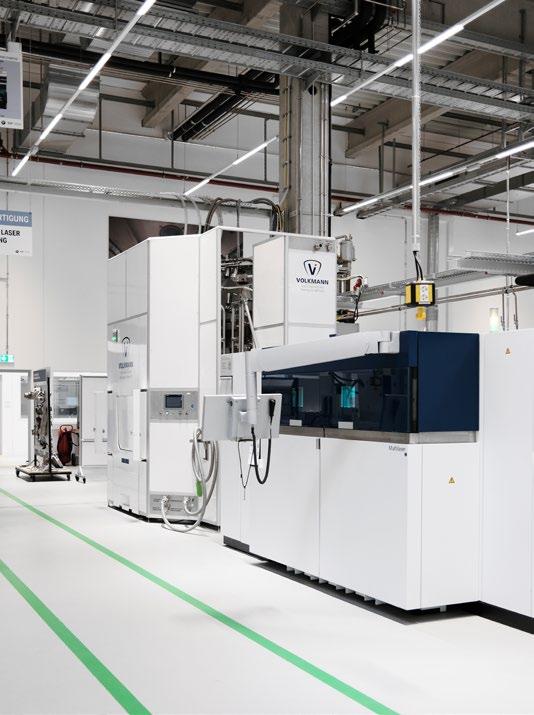
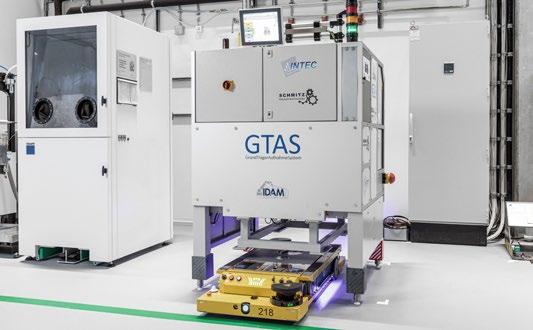
There can be no series metal AM parts production without the necessary post-processing to finish parts and manage materials handling. At the BMW campus, post-process automation has been a topic of considerable development. The Industrialisation and Digitalisation of Additive Manufacturing (IDAM) project, which ran from 2019 to 2022 and was led by BMW as part of a consortium of twelve companies, helped the company to automate much of its PBF-LB operations, improving efficiencies and, in turn, making the production of further metal AM parts far more likely.
In particular, the IDAM project resulted in a very impressive Volkmann installation at the campus that connects PBF-LB machines to a single centralised powder recovery and reconditioning unit (Fig. 6). Pipework to and from each AM machine passes overhead across the main thoroughfare of the workshop, thus demonstrating that shifting metal powders over quite significant distances is no longer a barrier to the future industrialisation of metal AM.
Similarly, post-processing of the actual build plate starts with de-powdering. For this, there is another semi-automated workstation that is capable of accepting any configuration of build box, potentially from any type of PBF-LB machine.
A fully automated driverless transport systems (FTS) is currently under development with the goal of moving AM build chambers between modules in the IDAM production lines (Fig. 7). Builds can also be transferred directly to the in-house heat treatment facility, housed within the same campus building, and subsequently to further finishing cells. All in all, this was a very impressive setup that demonstrated a full end-to-end production process.
The successful implementation of the IDAM project, which was funded by the German Federal Ministry of
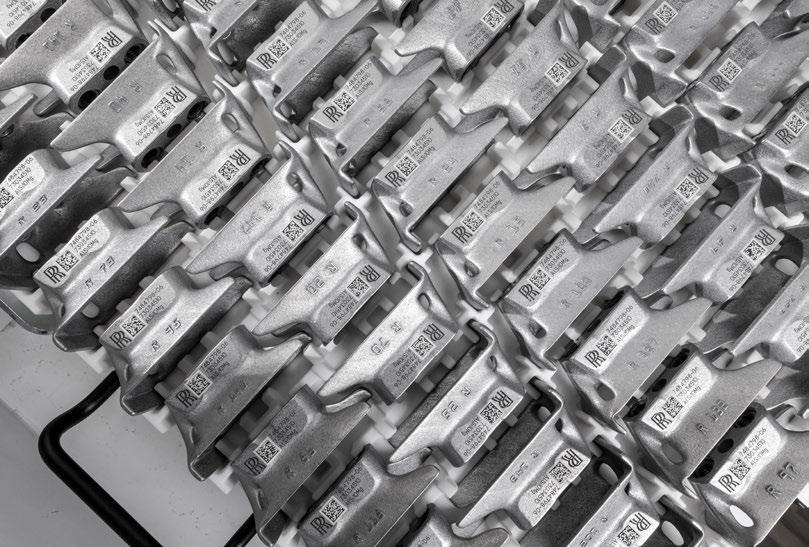
Education and Research (BMBF), leveraged the expertise of all project partners. “From the very first day of the project, you could feel the team spirit among the partners,” stated Felix Haeckel, Consortium Leader and BMW Group Project Manager. “Learning from one another, developing innovative solutions together and making the best use of each partner’s individual strengths – those were key to successful industrialisation and digitalisation of Additive Manufacturing.”
When discussing what BMW would most like to see from AM machine builders in the future, the immediate response was compatibility. Having ‘universal’ machine interfaces enables process automation on the factory floor. The clear message was that AM machine makers should focus on their strengths – the build process itself – and leave those with the necessary expertise to develop solutions to connect and automate all of the other steps required in an effi -
cient AM factory. Furthermore, it was stated improvements in availability, build speed and build size would be welcomed.
One critical goal in AM application development is the achievement of reliable and consistent materials properties in production parts. As a crucial requirement in the qualification of parts, BMW needed to find new heat treatment processes that could transform as-built properties to exactly match those of conventionally produced material, since any with different properties would invalidate existing design data.
In this respect, it was the team’s analysis that made them come to the conclusion that it is far easier to make materials match known properties and performance than to introduce new data. No wonder
then that the facility comes equipped with its own in-house heat treatment facility for aluminium alloys, with drop quenching and age-hardening furnaces.
With regards to process qualification in AM, Ertel stated, “Our approach to generic process qualification is published via ISO/ASTM DIS 52945, and safety-critical components have additional testing, but they are no different to parts produced by conventional processes.”
Naturally, one wonders how far off the commercial supply chain is from using metal AM technologies to produce parts that can meet BMW's needs. The team responded that one of the reasons that they exist is because the supply chain is not ready to produce economical parts, and, even if this weren’t the case, there
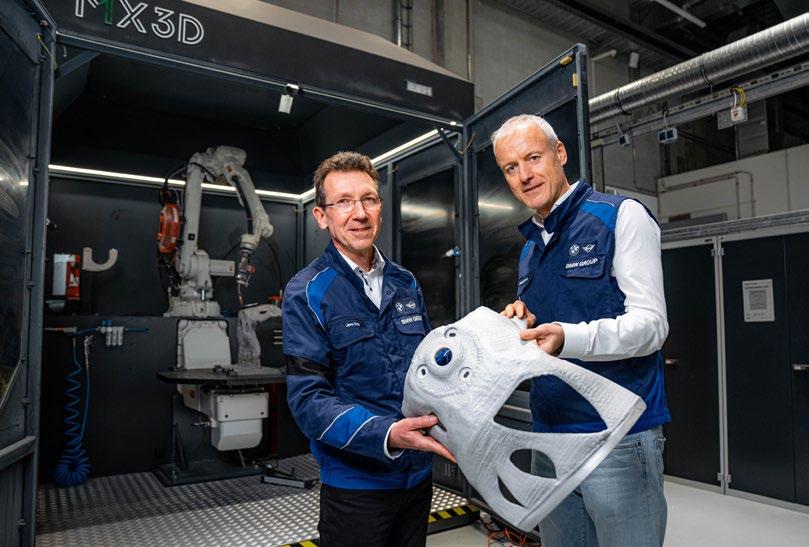
“To those who say that the technology isn’t ready for mass production, 30,000 metal parts per year is not a quantity to be dismissed. Of course, in the context of the automotive industry, these are small numbers, but the progress is welcome.”
are currently insufficient applications in production to warrant this.
That part design and production methods are fixed when homologation occurs prior to production has been a barrier to the wider use of AM. For those unfamiliar with the term ‘homologation’, this is the process that all car manufacturers must follow in order to be granted approval for their design by the regulatory authority. It is a meticulous process that ensures all products meet the
required standards and regulations for aspects such as safety and environmental impact. So, once locked in, nothing can change on the series until a new design iteration. This then places a restriction on any common parts manufacturer from using AM to modify any existing parts used in current models, since they cannot simply choose to start making parts via AM and expect to have the major car brands start using those parts.
The process must start early on in a new model's lifecycle, either from within the car company – such as within BMW’s Oberschleissheim campus – or in parallel with the specific expected external supplier. Being a long process, it doesn't necessarily depend on the readiness of external suppliers alone. However, it was made very clear that this would also not happen if there wasn't a strong business case to use AM over other traditional processes.
BMW recently announced that it produced around 300,000 AM parts in 2023 at the AM campus, with a further 100,000 parts produced at other facilities worldwide. Ertel explained that the split between plastic and metal is about 90:10. In the minds of many who have worked in the AM industry for a decade or more, reaching tens of thousands of metal AM parts in a year has always seemed like a ‘just around the corner’ scenario. To those who say that the technology isn’t ready for
mass production, 30,000 or so metal parts per year is not a quantity to be dismissed. Of course, in the context of the automotive industry, these are small numbers, but the progress is welcome. And given that all these AM parts are only produced by BMW when it makes financial sense, it should be taken as the necessary proof that the technology is massproduction ready.
In order to manage AM application development and orders for the whole group, parts are logged within an ordering system called AM.OS. This bespoke solution connects the BMW Product Lifecycle Management (PLM) system with its AM production network.
The size limitations of PBF-LB had limited the development of larger AM parts at BMW. While ever bigger PBF-LB machines are coming to market, their price and complexity, combined with the high cost of the powder needed to fill them, pushes their use towards specialised, highvalue applications. This was one of the drivers behind BMW’s decision to explore Wire Arc Directed Energy Deposition (DED) AM.
A DED machine from Dutch company MX3D looms impressively in an area set aside for predevelopment (Fig. 9). It is clearly relatively early days for BMW in its evaluation of DED but, nonetheless, impressive work has been carried out. Unsurprisingly, much of the actual R&D activity is a closely guarded secret; the black-shrouded area was very conspicuous.
With DED technology, BMW is taking the logical step towards largeformat metal Additive Manufacturing. The process allows BMW to produce parts that are lighter and more rigid than comparable die-cast parts currently manufactured in series production. These components can also be produced more sustainably thanks to lower energy requirements and less material waste.
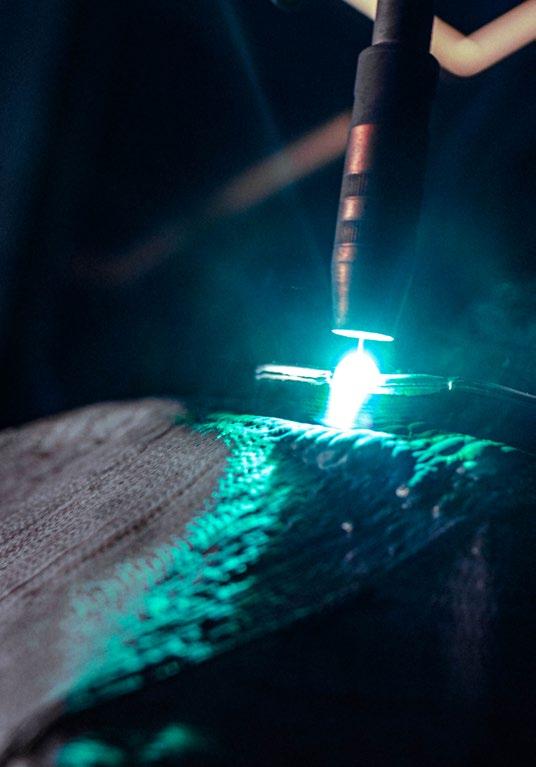
“With DED
technology,
BMW
is taking the logical step towards large-format metal Additive Manufacturing. The process allows BMW to produce parts that are lighter and more rigid than comparable die-cast parts currently manufactured in series production.”
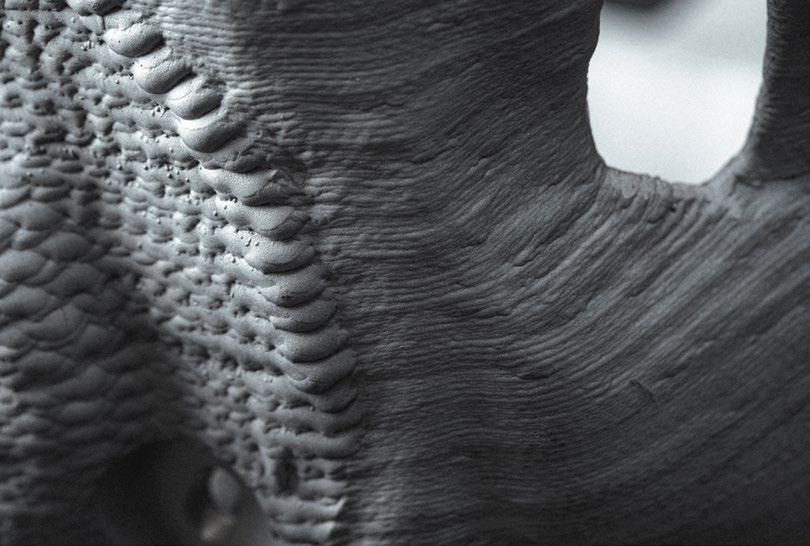
Typical DED wall thicknesses are well-suited to components in the body, drive, and chassis areas. Whilst BMW has been looking at the DED process since 2015, MX3D’s machine was installed in 2021. “In this early stage it is already clear that the WAAM [Wire Arc Additive Manufacturing, an alternative name for wire/ arc DED] process can result in lower emissions in the production process. The lower weight of the components,
their advantageous materials usage ratio, and the option to use renewable energy means that the components can be produced more efficiently,” stated Ertel.
The next stage of development on the path to series production is testing components in the vehicle; this will start in the near future.
In relation to the example chassis part shown in Figs. 9-11, minimal post-processing was a high priority:
“To maximise the potential of the DED process, the combination of the manufacturing process and innovative new component design is paramount. To this end, the BMW Group continues to accelerate the use of generative design...”
the team at BMW fully recognises the importance of only using a cutting tool on an AM part in the most minimal way possible.
The wider welding seams in the DED process mean that the surfaces of components are rippled rather than smooth. Whilst critical areas such as those that connect with other components need to be machined, BMW has demonstrated that DED components can be used for high loads, including cyclical loads, without any post-treatment of the surface. Optimised process parameters are crucial for ensuring durability directly from production, so the combination of the welding process and robotic path planning must be optimally coordinated.
To maximise the potential of the DED process, the combination of the manufacturing process and innovative new component design is paramount. To this end, the BMW Group continues to accelerate the use of generative design, utilising
algorithms to design optimised components based on specific requirements. These algorithms are developed in close collaboration with interdisciplinary teams.
As with bionic structures, the first step is to use only the material that is actually required for the topology of the component; during fine-tuning in the second step, the component is reinforced only where necessary. This ultimately results in lighter and more rigid components as well as greater efficiency and improved vehicle dynamics.
“It’s impressive to see how WAAM technology has developed from research to become a flexible tool for not only test components but also series production components. The use of generative design methods enables us to make full use of design freedom and, thus, the potential of the technology. That was unthinkable just a few years ago,” stated Karol Virsik, Head of BMW Group Vehicle Research.
BMW’s stated aim is to use components manufactured using the DED process in BMW Group production vehicles. Given the faster build speeds and significantly lower cost of DED wire compared to metal powders for PBF-LB, it will be interesting to see how DED develops as a potential high-volume technology for large automotive chassis components, in contrast to, for example, the large-format PBF-LB components used by companies such as Czinger Vehicles in the US. Centralised DED production will take place at the Oberschleissheim AM campus, though future production at other locations – and the use of the technology by suppliers – is possible. Further, it would even be conceivable to produce individual components on-demand directly on the assembly line using this process. During our visit, a further interesting point was made when it was said that non-AM engineering teams appeared to be far more at ease with DED than PBF-LB because of the widespread use of robotics and welding in BMW’s wider operations.
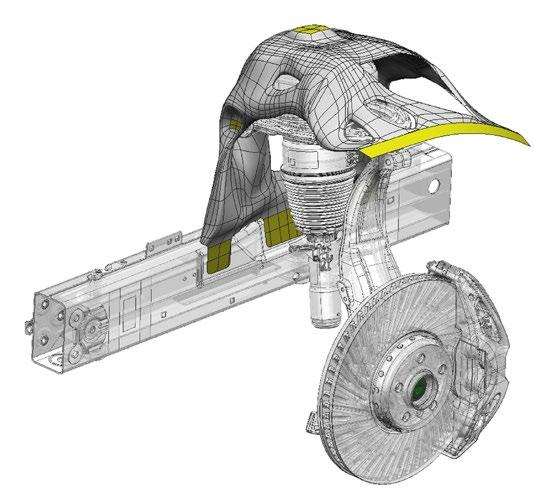
Fig. 12 The suspension strut support produced by BMW using wire-based DED. The company stated that the use of generative design methods enables it to make full use of design freedom and, thus, the potential of the technology (Courtesy BMW)
“Given the faster build speeds and significantly lower cost of DED wire compared to metal powders for PBF-LB, it will be interesting to see how DED develops as a potential highvolume technology for large automotive chassis components.”
But what of other metal AM technologies? BMW was quick to recognise the potential of Binder Jetting (BJT) technology, resulting in an early investment in Desktop Metal in 2017 through BMW iVentures. However, no Binder Jetting machines remain at the campus, being discontinued due
to the early state of the technology and limited material portfolio at the time. Ertel commented, “There is still interest in this technology, but the decision to use it for producing parts has to be based on the right economic business model, and the right selection of parts. It’s possible that those that supply into BMW might find more opportunities for this technology, but it hasn’t been the case for us up to now.”
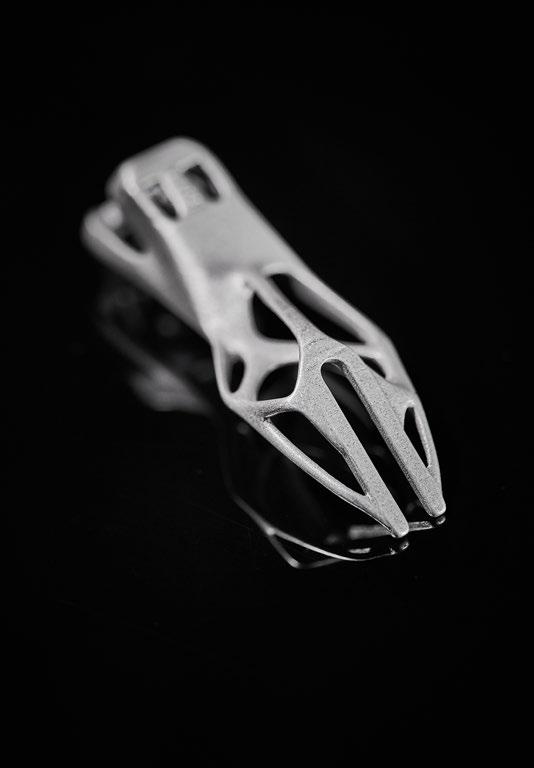
Fig. 13 This bracket, made for the convertible roof mechanism of the i8 Roadster, was manufactured as a left and right pair in AlSi10Mg. The metal part is lighter, and stiffer, than the proposed plastic part with which it competed (Courtesy BMW)
“You can clearly identify the downskin build surfaces, but BMW knows that this is unimportant in this application, especially for a part that is mostly unseen. Better still, through the work at the AM campus, the team has proven that it doesn’t impact performance.”
As for other metal technologies on the market, he added, “Technology scouting is part of our pre-development, but no other processes are currently considered mature enough, economical enough, or even close enough from a logistics point of view. We are constantly screening for new AM metal technologies on the market and invest strategically whenever we see high potential.”
The automotive sector is a highly regulated market, and the adoption of AM technologies has been slowed by a lack of standards, process automation that can provide data-led production qualification, and other quality aspects of each type of AM process. This lack of regulatory standards for AM was one of the drivers behind the establishment of the AM campus, allowing BMW to do a lot of its own investigations and assessments on the possible quality outcomes from AM.
In a world that expects to receive fully finished parts with machined surfaces, BMW has been questioning whether it is possible to build metal AM parts with no – or at the very least minimal – post-process machining. Is the surface finish really that critical? The brackets made for the i8 Roadster (Fig. 12) are a great example of the successes they have achieved in this area. The part is easily removed from the build plate without any wire EDM or sawing operation, and simply tumbled to smooth the surfaces. Apart from some laser marking, that’s all that was required to produce the finished parts. Rather incredibly, this part, manufactured as a left and right pair in AlSi10Mg, was lighter than the alternative plastic part thanks to the use of topology optimisation.
Sure, when you look at any of these parts very closely, you can see a lot of surface texture. You can clearly identify the downskin build surfaces, but BMW knows that this is unimportant in this application, especially for a part that is mostly
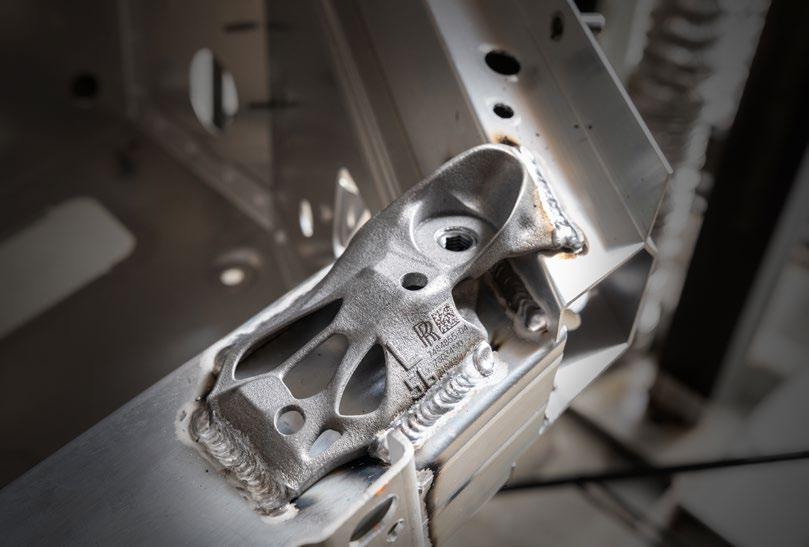
unseen. Better still, through the work at the AM campus, the team has proven that it doesn’t impact performance.
The next area that is clearly a concern for BMW is cost of production. There is no doubt that they believe there is still a lot to be done in order to make these technologies viable, but machine prices and cost of feedstock materials are still a significant barrier to higher volume production, even without restrictions from a homologated design. Designs combining the functionality of multiple parts, or avoiding complex assembly operations, are already a reality. BMW is taking a cautious approach here and obviously only considering parts on new models where design engineers are able to consolidate parts via AM and fulfil the main criteria of reducing overall cost.
One question that those unfamiliar with metal AM often ask – especially of PBF-LB – is whether AM parts can
“Used on the production line of at least one Rolls-Royce model are additively manufactured structural aluminium car body bracket plates, produced in multiple left and right geometries that are welded to the body.”
be welded. It is a curious question to ask, really, considering that fusion-based metal powder AM is really little more than continuous micro-welding. There have certainly been no problems with welding AM parts at BMW either (Fig. 14). Used on the production line of at least one Rolls-Royce model are additively manufactured structural aluminium car body bracket plates, produced in multiple left and right geometries that are welded to the body.
Welding, of course, features heavily in car production, and the team at BMW explained how metal AM for Rapid Prototyping (RP) is as valuable a tool as ever. One interesting example is where metal AM was used to study the manufacturability of a new motorbike frame. Here, they had even replicated the artificial weld beads that would be part of the frame when it is fabricated from extruded steel pipe sections. It’s a use of AM that we’ve not seen before and probably would
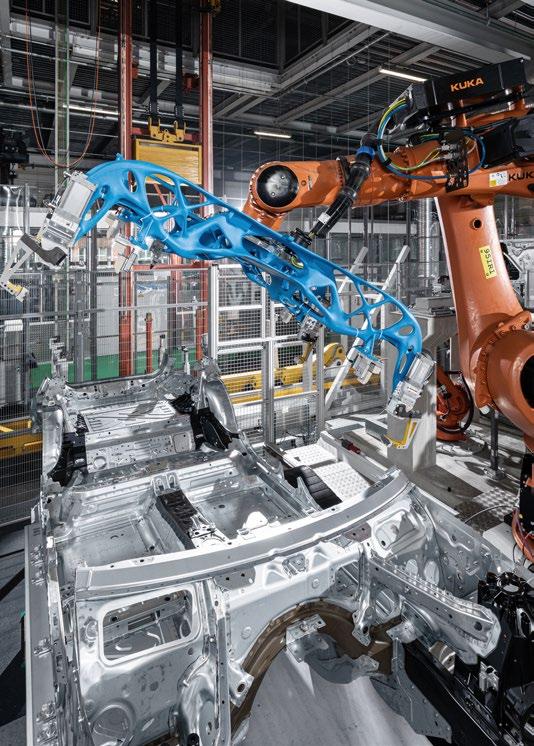
Fig. 15 This very large robotic gripper tool, cast in aluminium using additively manufactured sand cores for the castings, was reduced in weight by a factor of three to just 50 kg (Courtesy BMW)
Whilst not a metal AM part per se, an impressive application that we saw on the tour was a very large robotic gripper tool, cast in aluminium using additively manufactured sand cores for the castings. Through the use of AM, and the design advantages it enabled, BMW reduced the weight of this main body gripper by a factor of three to just 50 kg. Interestingly, at the same time as seeing this in metal, we were presented with another similarsized AM polymer-composite
gripper. These are important achievements, and ones that often go completely overlooked – certainly never targeted by other companies as they try to imagine what benefit AM could have to their own businesses. The message coming out of BMW is that they view tooling and process improvements that can be achieved through AM as being equally as important as trying to make parts better and or cheaper via AM – perhaps even more important.
never have imagined – and that’s even with the years of experience providing parts to the F1 sector, and, in particular, the wind tunnel test teams, where RP is also still very commonplace.
No car manufacturer can claim to be a 100% vertically integrated company with the entire assembly bill of materials coming from within its own four walls. Hence, as with the majority of the industrial world, each company relies on a supply chain to deliver what it needs to build its cars.
Even though companies like BMW have been preparing for the changes that AM brings, does that mean its supply chain is positioned to respond to future requirements? The answer to this question is not straightforward. As stated previously, because of the homologated design, no car producer can simply switch to an AM parts supplier for any existing components on a car already in production. This means that the design of future car models calling specifically for AM parts will be the catalyst for the supply chain to deliver. For this, at least, BMW does have standard practices for qualifying suppliers; if they were to need a sub-contracted AM service or part, then the process would not be any different.
In terms of the wider car industry, if the old cliché ‘a rising tide lifts all vessels’ is true, then perhaps greater cross-sector collaboration may see the accelerated adoption of AM as a series production technology. This may mean more direct engagement with tier suppliers and other car makers. A problem arises, however, when considering that this is a notoriously secretive sector about its development work, and BMW is no exception in this respect. However, the team was quick to point out they do not have a closed-door policy for collaboration. “In principle, we are open to cooperation with plant manufacturers, standardisation bodies and other industrial partners as well as universities,” explained Ertel.
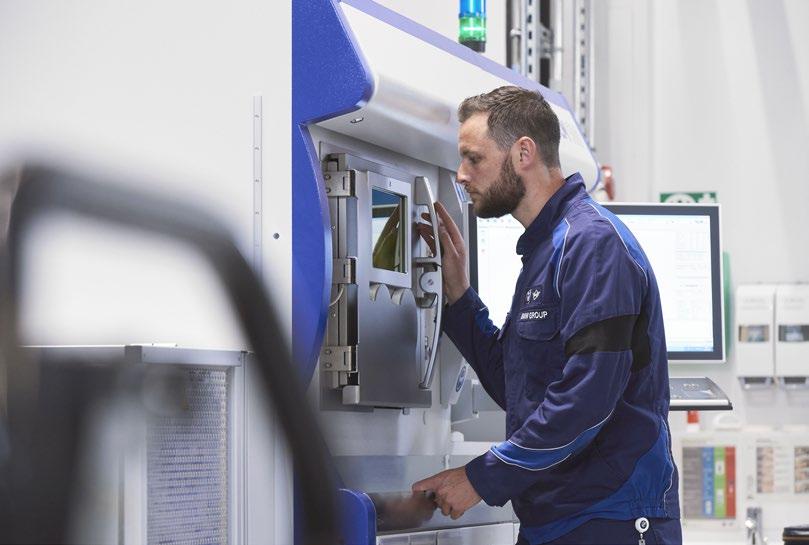
This further underlines the importance of understanding the restriction of only being able to plan for the incorporation of AM parts in newer models, and only where it makes economic sense to do so. This permits a longer-term vision that is enhanced, though not controlled, by AM – and this also means conventional manufacturing will still be in use for a very long time. Looking ahead, whilst the wider AM community faces with some nervousness the challenge of developing new, high-volume applications for the technology, it is good to know that BMW sees the role of metal Additive Manufacturing continuing to grow in importance. But there is still work to be done, especially around cost. Ertel said, “It is important to understand that Additive Manufacturing is another manufacturing process in the toolbox, complementing other technologies rather than replacing them. Additive Manufacturing is always used when there is an advantage in terms of time, cost and quality.
Whether Additive Manufacturing will continue to grow as a technology for series production depends on various factors, and one of the most important factors is the reduction in material and production costs.”
This highlights probably the most common factor for any industry wishing to adopt AM technology and make the most of the investment:
How can it be made economical enough to displace conventional manufacturing? It’s no surprise that the largest given cost factors are the machine and raw material. Typically, the former is handled with longerterm amortisation of the assets, but there’s a nervous response to this when the world is used to rapid changes in technology.
“Even though companies like BMW have been preparing for the changes that AM brings, does that mean its supply chain is positioned to respond to future requirements? The answer to this question is not straightforward.”
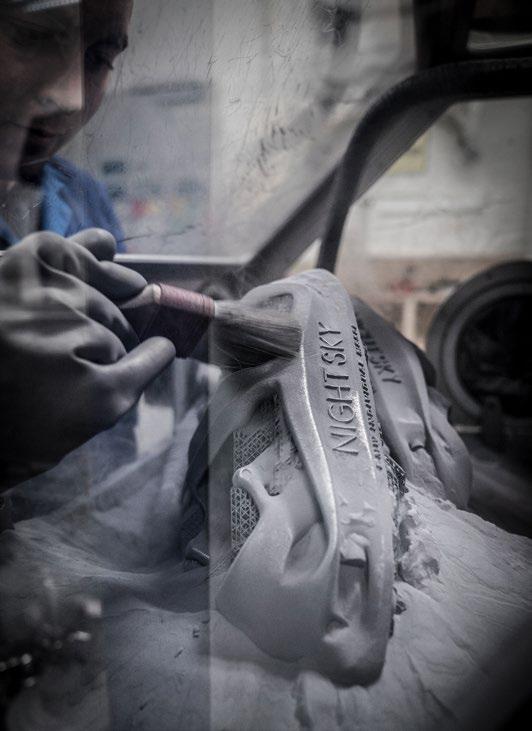
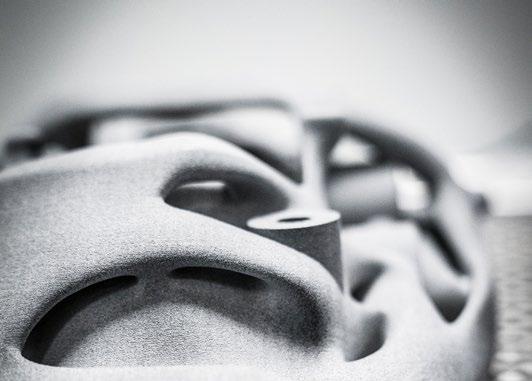
No one knows if any machine will still be considered state-of-the-art after even two years, let alone ten. This does perhaps explain why there are so few other AM technologies on display or in active service at the campus. Knowing that the 700 W laser machines are suitable for aluminium parts, BMW needs to maximise the return from these machines first, across the limited range of cars within the four brands that are using AM parts, before investing in other technologies.
However, one area that has already resulted in significant reductions in cost is the use of software, particularly in the design of components. Ertel emphasised BMW’s approach, “In the case of series components, and parts for other areas of the production system, the geometry is always optimised in terms of weight and manufacturability. This saves weight/material and thus also reduces production time and costs.” Thus the advances in softwaresupported design, and the choice of applications that now include sophisticated simulation routines, have enabled the economic use of Additive Manufacturing at the BMW Additive Manufacturing Campus.
A team of design and engineering specialists compares a variety of software solutions and uses them to design components. Software has clearly been a game changer, and it was stated, “Software is no longer a limiting factor; in fact, the better the software becomes, the faster and better components can be optimised.”
The BMW AM Campus has clearly been a successful investment for the company, where it houses its biggest concentration of AM equipment and expertise. Even so, BMW has eight locations globally practicing AM, in countries including Mexico and the US, with over 200 machines covering both plastics and metals technologies.
Might we see similar campuses spring up in any one of these other territories? This would take a special set of circumstances, and Ertel was quick to explain it would be highly dependent on having access to locally supplied AM technology. Ultimately, the expansion of this campus or any other site depends on the increased needs of the rest of the group. Ertel stated, “We are seeing continuous and annual growth in Additive Manufacturing applications and the production of AM parts, including metal parts. This growth is the result of several factors that are driving the use of Additive Manufacturing.”
In exploring these factors, it was stated that Additive Manufacturing is becoming increasingly accessible, becoming part of product development activity. Knowledge about the technology is also increasing, and the capabilities of AM processes are constantly being optimised, guaranteeing the test-relevant properties in functional validation. Combined, these factors will increase the demand for Additive Manufacturing applications and the production of AM components.
The usefulness of Additive Manufacturing in the automotive sector is very much being proven on a daily basis at BMW’s AM campus as well as BMW's plant in Landshut. While the level of activity is still low compared to mainstream road car production lines, with AM part runs numbering into the thousands and tens of thousands annually, the business case to make parts for a few
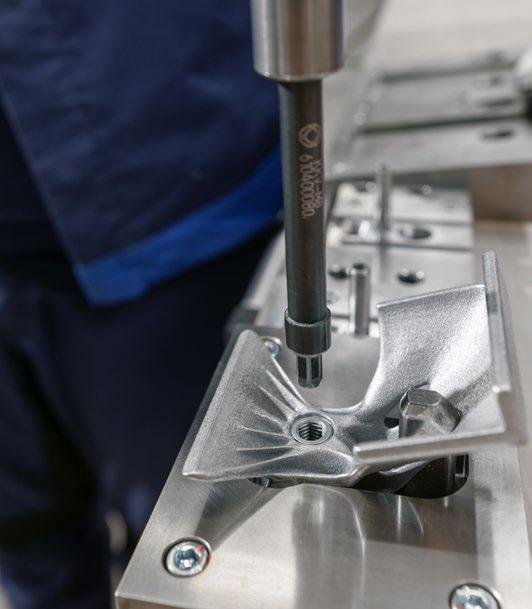
of the higher-end models has led to a significant production capability. Certainly, many more parts are being made per year than in many other industry sectors and this should be viewed as a universal positive.
“The usefulness of Additive Manufacturing in the automotive sector is very much being proven on a daily basis at BMW’s AM campus ...the business case to make AM parts for a few of the higher-end models has led to a significant production capability.”
Benedikt Torka
Corporate and Governmental Affairs
BMW Group
Benedikt.Torka@bmwgroup.com www.bmwgroup.com
Authors Dr Martin McMahon
Technical Consultant, Metal AM magazine, and founder of M A M Solutions. Martin.McMahon@MAMSolutions.uk
Nick Williams Managing Editor
Metal AM magazine nick@inovar-communications.com
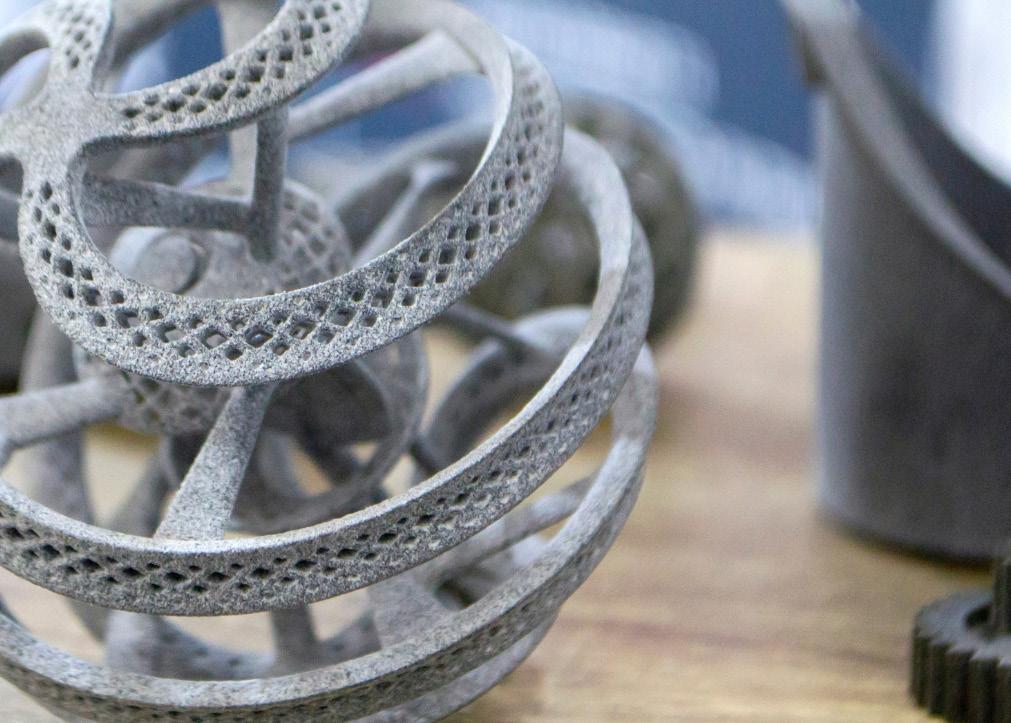
We Convene...
The most brilliant minds from industry and academia We Coordinate... Transformative technical and workforce data We Catalyze... High-value, high-impact collaborative projects
America Makes is the leading collaborative partner for additive manufacturing and 3D printing technology research, discovery, and innovation in the U.S. Structured as a public-private partnership, we innovate and accelerate AM/3DP to increase global manufacturing competitiveness.
Join Us for Our Annual Members Meeting & Exchange (MMX) August 6-7, 2024 Youngstown, OH

Focused on additive manufacturing, America Makes is the first institute of the Manufacturing USA® network.
Learn more at www.AmericaMakes.us
Additive Manufacturing has experienced significant growth over the past thirty years. However, many market players have found themselves disappointed with current market volumes compared to earlier projections for the industry. Today, the AM industry is at an intriguing stage. Depending on your perspective, it can appear to be either declining or thriving. How do these perspectives align, and how is its current status represented by data and forecasts? AMPOWER's Maximilian Munsch, Eric Wycisk and Matthias Schmidt-Lehr share their assessment and consider the challenges of predicting a highly-complex industry.
With the introduction of direct metal Additive Manufacturing machines and the expiration of early patents in polymer AM ten to fifteen years ago, Additive Manufacturing was expected to become a game-changer for serial manufacturing. Driven by the hype, specialists and large management consultancies alike predicted a prosperous future market with significant profit opportunities for every major company. This anticipation led to substantial investments from global corporations and heavy funding into numerous startups.
While the industry has indeed grown substantially over the decades, there are signs that the market could be reaching its first saturation point, with a multitude of companies offering a variety of technologies, platforms, materials, services, and software solutions. Today, only around 2,000 metal AM machines from twenty different technology derivatives are sold annually by nearly 200 machine OEMs. This ratio resembles more of a specialised machinery market than a fast, scal -
able machine business model, which may explain some of the frustration among current market players. Still, all major AM reporting organisations agree that metal AM will continue to grow and achieve a double-digit growth trajectory over the next five years, and user feedback

from major industry players supports this claim of increased adoption – but this is where the consensus among reporting publishers often ends. A closer look at the market numbers reveals significant differences in both current figures and five-year projections. This article dives deeper

Today, only around 2,000 metal AM machines from twenty different technology derivatives are sold annually by nearly 200 machine OEMs. This ratio resembles more of a specialised machinery market than a fast, scalable machine business model...

“A general market slowdown in 2023 in terms of unit sales, combined with market saturation among suppliers, difficulties in product differentiation, and concerns over profitability have led to low stock market valuations and sparked discussions of consolidation.”
into how AMPOWER Report data are generated and the challenges that must be overcome. It begins by examining the current market conditions and trends in the metal AM industry as outlined in the report.
The past year presented considerable challenges for the metal Additive Manufacturing industry, marked by intensified competition among equipment suppliers and a steady influx of new market entrants. A general
market slowdown in 2023 in terms of unit sales combined with market saturation among suppliers, difficulties in product differentiation, and concerns over profitability have led to low stock market valuations and sparked discussions of consolidation.
In particular, suppliers from the Asian market are increasingly aiming to expand their presence beyond domestic borders to attract customers. Established players are closely monitoring Chinese Powder Bed Fusion (PBF) suppliers, who are rapidly expanding their product portfolios. These suppliers are
introducing machines with increasingly large platforms and dozens of lasers at competitive price points. In recent months, public metal AM companies like Desktop Metal and Velo3D have experienced low stock valuations, reflecting investor hesitation likely stemming from ongoing profitability concerns. This trend underscores the broader challenges faced by the industry, including global economic uncertainties and high capital costs. It also reveals that the market was overhyped and overvalued for many years; investors and C-level decision-makers were drawn to the repeatedly touted message that metal AM is a technology ‘no one can afford to miss.’
But funding and valuations were based on market multiples that projected unreasonably high results and ignored rational factors. These multiples have now crashed to below 1 for value over the next twelve months' revenues. Consequently, the claims made by Additive Manufacturing industry founders are now being scrutinised more closely, as many once highly valued startups still lack the promised profitability years later.
Despite these difficulties, the metal Additive Manufacturing industry achieved a double-digit growth rate of about 15% in 2023, outperforming traditional manufacturing sectors and demonstrating resilience in challenging conditions. Looking ahead, both buyers and suppliers in the Additive Manufacturing industry maintain an optimistic outlook, anticipating an annual growth rate of around 20% (Fig. 1). They foresee substantial growth in the coming years and continued adoption across an increasing number of industrially significant applications in addition to those where it is already highly successful. Amid geopolitical tensions, for instance, there is potential for Additive Manufacturing to benefit from increased defence spending, as well as from growing demand for complex solutions and resilient manufacturing capabilities in other sectors.
As growth slows and profitability remains uncertain, industry consolidation becomes more likely. The product portfolios of various Powder Bed Fusion OEMs, for instance, are near identical, making it difficult to find their respective niche wherein they provide a unique selling proposition to users. Consolidating them into a single portfolio, however, holds the promise of blending the best features from many worlds.
This mass consolidation could also lead to synergy effects, particularly in cost savings for sales and marketing, which is currently estimated at around 20-30% of the revenue due to the complexity of their products; in contrast, other manufacturing industries like CNC typically have sales and marketing expense ratios ranging between 5-15%. Furthermore, there's potential for additional cost savings through synergies in R&D, as PBF companies often follow identical or similar tracks in their development efforts to meet customer demands.
The way end users have adopted metal Additive Manufacturing technology has evolved significantly over the past decades. In the 2000s, pioneers acquired machines primarily to conduct baseline studies and R&D work to explore the technology's potential. The 2010s saw a surge in metal AM machine installations driven by curiosity and the fear of missing out on the next big innovation, with many aiming to jump directly into serial production.
A common misconception during this period was that Powder Bed Fusion would directly replace CNC machining on a wide range of products. In reality, however, PBF components often require lengthy redesign cycles, including rethinking and redesigning entire components and assemblies to harness the technologies’ benefits. Today, experimentation has mostly given way to strategic investment by industries with viable business cases in specific applications. Machines are purchased based on rigorously calculated business cases that must demonstrate economic feasibility. The introduction of metal Additive Manufacturing into various regulated environments has furthered the shift to serial production. A shared understanding within the industry regarding standardisation and qualification has helped reduce uncertainty and increase adoption, with regula -
tory and certification authorities supporting this shift by taking a more active role.
Applications are no longer visible to public; development in secret
Contrary to the early years, with continuous coverage of perceived breakthroughs and innovation leaps, a lot of today’s metal AM successes remain hidden from the public eye. Metal AM often serves as a key enabler for high-performance components that have significant impact on much larger products. Hence, IP concerns are often a reason for secrecy of the most attractive parts. For instance, Space X is reputed to have a significant PBF capacity and utilises AM extensively for new and efficient rocket components. However, the company has maintained a low profile regarding this technology in its press releases since 2017, aligning with its reputation for discretion.
Another example involves implant manufacturers who have been successful and highly profitable for over a decade in providing bone replacement parts made from titanium and cobalt chrome alloys. In their product advertisements, however, AM as a production technology does not play a major role, with the focus instead on the benefits of the product. This approach is fitting for a mature industry, where the emphasis shifts from the production technology itself to emphasising the additional value of the product.
“Today, experimentation has mostly given way to strategic investment by industries with viable business cases in specific applications. Machines are purchased based on rigorously calculated business cases that must demonstrate economic feasibility.”
“Many high-level reports describe the AM market with just one value for its total size, blending polymer, metal, and other material systems into one. The question arises: who is interested in this aggregated market...?”
The aim of a market report is to offer comprehensive and reliable insights and analysis of the current state, market trends, and opportunities to facilitate informed business decisions. These reports typically concentrate on specific areas (e.g. the metal AM industry) by evaluating factors like revenues, the flow of goods, and/or purchase criteria to derive requirements and actions for stakeholders. The approach to gathering this information varies depending on the specifics of the industry in question. However, creating a market report entails various challenges across multiple facets.
The market model is crucial for accurately reflecting the condition of the market with the available dataset. It becomes particularly important when the analysis extends beyond simple summations of, for example, revenues, and requires imputations of missing data or scaling available data to the full size of the market. Such models are highly specific to a market. At AMPOWER, for example, the models differ between metal and polymer technology, as each has its own intrinsic specialities.
An important consideration when creating the market model is to initially define its boundaries. Metal AM, for instance, can be categorised as a niche industry within the manufacturing sector that is predominantly a B2B market. Its players – both on the supplier and buyer sides – are
primarily active in countries with high-value production. Unambiguous is the inclusion of machine and material suppliers. Other entities that could be potentially included in such a model are providers of other related services and goods such as manufacturing services, peripheral equipment, software solutions or value of additively manufactured end user components.
A specific example in the metal AM market where reports often struggle to provide a clear answer is whether the value of the production output is added to the market size. At AMPOWER, we treat the goods and services from part manufacturing services as part of the metal AM industry, whereas AM products manufactured by the OEM (for instance a hip cup produced by an implant or contract manufacturer) is categorised as a good that is generating value within the medical industry, but not the AM industry. A similar discussion arises when considering the software market, where pure-play software products are limited and there is often a mixed use of software products such as CAD or MES functions for AM as well as other operations in a company.
Typical approaches for primary data acquisition are standardised questionnaires, survey interviews, or analysis of secondary public sources. Questionnaires are essential to collect quantitative data such as revenues or installed machine base. Additional qualitative research is necessary to understand the context of the quantitative data and get a
grasp of the trends. Public sources such as financial reports or economic databases provide additional insights and data points to round the model input.
It is, of course, challenging to gain access to this dataset. Of high importance are the sources for the data acquisition for the questionnaires and surveys. A large majority of the metal AM market suppliers do not publicly share financial data, recent developments or their long-term forecasts.
Other challenges come into focus when deciding on how to display the analysis results. Market research can easily yield thousands or more data points across various categories such as technologies, industries, regions and materials. The challenge here is then packaging this information into the correct segmentation that addresses the reader's needs. For example, many high-level reports describe the Additive Manufacturing market with just one value for its total size, blending polymer, metal, and other material systems into one. The question arises: who is interested in this aggregated market, and what decisions regarding business strategy can be derived from it?
Analysts on the report’s customer side prefer data they can use in their specific business setting, neglecting all other input; a company working in metal AM is hence less interested in comparing their business success to developments from polymer AM. This allows them to assess the development of a market share for a technology or within a region and to eventually derive specific actions.
In a highly dynamic environment, these segmentations are not necessarily static as new customer industries or new technologies evolve or disappear quickly. This can prove to be a balancing act between providing consistency in data preparation versus the adaption to changing market conditions. Returning customers expect a recurring format as they would like to plug the report data into their internal templates to prepare the familiar analysis result.
One solution here could be to share the raw data, but this is not always a feasible alternative, as a lot of surveyed data is sensitive and confidential. Hence, segmentations have to be well-considered.
Forecasts play a major role in a market report as readers expect guidance on aligning their strategic direction. However, forecasting is a challenging topic as it attempts to provide a glimpse into the crystal ball. In the case of metal AM, a niche industry in a B2B environment, the straightforward approach is to analyse the expected development of the most important players that will likely dictate the market.
However, metal AM is a highly dynamic environment with numerous new entrants every year, many depicting fast growth with their solutions ‘tapping into the trillion-dollar manufacturing market’, as often exaggeratedly claimed, and solving its issues. These startups often aim to present an attractive value proposition to investors, depicting a very favourable but ultimately unlikely scenario.
“New metal AM startups often lack true understanding of their value, leading to overly optimistic forecasts or overly conservative estimates that fail to capture the market's true potential.”
New metal AM startups often lack true understanding of their value, leading to overly optimistic forecasts or overly conservative estimates that fail to capture the market's true potential. The lack of experience-based projections can double the difficulty, as they may rely heavily on anecdotal evidence or incomplete market understanding. Consequently, accurately capturing market potential requires a delicate balance of research-based optimism and an understanding of the market's evolving nature. Managing likely unreasonable exaggerations or lowballing projections is a challenge in such an environment.
When evaluating the historical data published in various reports, it becomes clear that the Additive Manufacturing industry has become a victim of a self-fulfilling prophecy. Inflated forecasts and expectations have led to a reciprocal buildup of growth expectations: the suppliers' forecasts were based on the inflated expectations from the reports, which in turn led to high values in the reports. An assessment in hindsight of several market predictions and AMPOWER’s assessment to the total market size of polymer and metal AM is shown in Fig. 2.
AMPOWER believes its role in the market is to provide an accurate picture of the current situation without perpetuating the overly optimistic hype of the 2010s. The AMPOWER Report represents one of the latest reports in the AM market,
allowing the team to design a market assessment methodology that aligns with the current market situation without being constrained by outdated models. The team identified two methodic differentiators aimed at adding more value and contributing to the accuracy of both the current market assessment and the forecast.
When the first AMPOWER Report was generated, the industry was already significantly more competitive than in previous years. Anybody compiling market data was faced with challenges in acquiring highly sensitive sales data from non-public companies, which were not inclined to provide their business data due to slower growth than had been forecast. As a result, the AMPOWER team refrained from publishing any company-specific data and treats all shared insights discreetly.
Part of the AMPOWER methodology is to ensure complete confidentiality of all market numbers provided by companies. While this approach led to companies supporting the research by providing highly accurate numbers and a high response rate from market participants, it also had its drawbacks. Calculating market shares became more difficult for the readers of the report, and companies were unable to assess their competitors' performance. Additionally, certain technology breakdowns or regional data was limited to prevent single-
Sold units
AMPOWER forecast
Supplier (Report 2023)
Supplier (Report 2024)
Buyer (Report 2023)
Buyer (Report 2024)
Supplier Forecast
Buyer Forecast Report 2023 Forecast
Source: additive-manufacturing-report.com © Copyright 2024, AMPOWER GmbH & Co. KG
Fig. 5 Trend of metal PBF equipment unit sales. Development of suppler vs buyer forecast (Source: AMPOWER Report 2024)
source providers in specific countries or technologies from being exposed in the detailed segmentation.
However, reflecting on discussions with report customers to refine the model and depiction of data, it became evident that specific company data is not necessary to describe market trends. Segmentation into technologies, for example, can provide sufficient insights into developments without highlighting specific market players.
A view from metal AM users likely provides the most accurate market representation and forecast. In this more mature stage of metal AM, users can offer insights into future machine investments based on their current programme developments, adding bottom-up accuracy to the model. Additional datasets (e.g. current machine utilisation and material consumption based on user feedback) constitute the most accurate database on a global scale.
While this methodology requires significant effort, it pays off in terms of data accuracy. In the recent survey for the AMPOWER Report 2024, 31% of the interviewees represented the buyer, or user, side, Fig. 3.
The user perspective is utilised in the AMPOWER Report to provide two different indicators for market forecasts. Over a five-year outlook, this buyer perspective allows for a reflection on supplier opinions. Users typically report lower market expectations compared to suppliers. For instance, projections of equipment revenue growth by suppliers stand at 23%, whereas users expect only 13.9% growth year-over-year until 2028, as shown in Fig. 4. Certainly, this data may reflect a bias towards known users today, but recent purchasers gain a higher weighting in the model to compensate.
Established suppliers have adjusted their growth outlook over the past years, adopting the user perspective, which has proven to be closer to the actual value in hindsight
evaluation, as illustrated in Fig. 5 on PBF equipment sales. This approach of taking into account additional factors rather than only questioning the supplier base led to a market valuation we have often heard from readers to be on the lower side compared to other reports; or, as we like to put it, on the realistic side.
Authors
Dr.-Ing. Maximilian Munsch
Dr.-Ing. Eric Wycisk Matthias Schmidt-Lehr AMPOWER
munsch@ampower.eu www.additive-manufacturing-report. com



China's Additive Manufacturing industry is growing at extraordinary speed, driven forward by intense domestic competition and AM technology's role in the country's national manufacturing strategy. Based on a recent visit to the TCT Asia 2024 exhibition, Joseph Kowen shares an outsider's perspective on what is happening in the Chinese metal AM industry. Are Chinese AM machines now rivalling those from the West in terms of capability, and how is an increasingly complex geopolitical situation impacting the dynamics of the AM industry?
In its Spring 2023 issue, Metal AM magazine published an article entitled ‘An inside perspective on China’s thriving metal Additive Manufacturing industry’ written by Xuesong Pan [1]. Pan is the cofounder of Nanjixiong, a leading Chinese-language website covering the AM market in China for domestic readership. The article was able to disseminate Pan’s market insight into a valuable catalogue of the market parameters, major players and events in the Chinese AM market.
Given that the article reported on the dynamism of the market and its impressive growth inside China, the question may be asked: So what does the AM market in China look like from the outside looking in through the prism of the international AM industry? This is not to suggest that the information in Xuesong Pan’s article was in any way inaccurate or incomplete. On the contrary, the data reported are as comprehensive a source of raw data on metal AM in China as one could find anywhere outside of China. Still, there are two sides to every coin, and each may just be as valuable as the other.
In two trips to China over the past nine months, I have been afforded the opportunity to see what is happening in AM in China firsthand, as well as speak with local participants and representatives of companies in China to gauge their opinions on industry developments. The adage that ‘what you see from there, you
cannot see from here’ is a truism that is especially applicable in circumstances where cultural and linguistic differences can affect an objective impression or assessment of the industry – and it is even more true in the completely unpredictable reality of pandemic-induced disruption and inaccessibility.
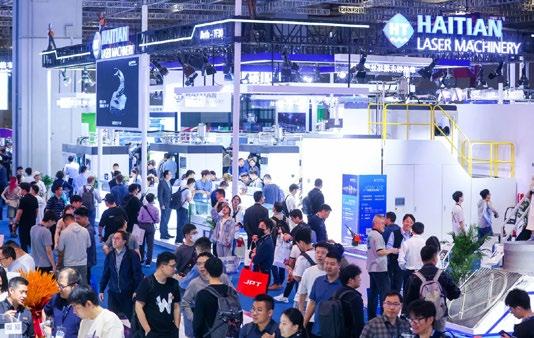
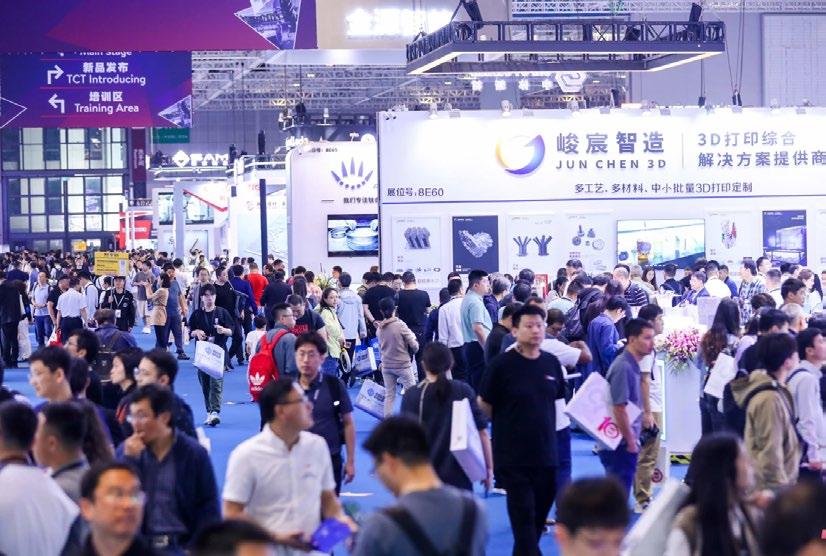
What follows is a collection of impressions and observations of the Chinese Additive Manufacturing industry as seen through an outsider’s eyes. It does not purport to be a studied opinion borne of a structured or technical methodology by a China expert. It is informed by broad exposure to AM in many countries and through conversations and interviews with numerous individuals active in the Chinese AM industry.
This less-than-conventional approach is an opportunity to address interesting aspects quite freely, unbound by the discipline of rigorous methodology. It is, by definition, a subjective account, and possibly affected by the author’s own biases. By exposing readers to thought-provoking ideas, it is hoped that a discussion of AM in China and its role in the larger AM community can spark an objective discussion and exchange of opinion.
“Compounding an outsider’s view of China have been global events and a changing geopolitical climate – factors not within the expertise of the average AM industry analyst, but any analysis is obviously impacted by them.”
Compounding an outsider’s view of China have been global events and a changing geopolitical climate –factors not within the expertise of the average AM industry analyst, but any analysis is obviously impacted by them. Consider that quarantine requirements for visitors to China ended only on January 8, 2023. Until then, entering China was burdensome enough to cause all but the most determined visitors to delay plans to visit China. Anti-COVID regulations within China also severely restricted the ability of Chinese companies to interact, extending to the elimination of industry events at which the local market customers could obtain industry information through direct interaction with multiple and competitive suppliers in one place. A less obvious impact of these restrictions is the lack of visibility of industry movement in China, both to global and domestic observers.
The most extreme example of this was Shanghai, China’s largest city. Beginning in March 2022, a phased lockdown was ordered for the city. It was extended to the whole of the city in early April that year and remained in effect until June 1, 2022. By contrast, industry events in Western countries started to take place, albeit with restrictions, in 2021. Exhibitions and tradeshows in China were severely impaired.
The Additive Manufacturing segment suffered a particularly painful blow in late August 2022 when, due to a COVID lockdown in Shenzhen, the TCT Asia exhibition, a leading AM event in China, was shut down by authorities nine hours before it was due to open. More than two hundred AM companies were denied the opportunity to exhibit, victims of China’s zero-tolerance COVID response policy.
All of these obstacles notwithstanding, the Chinese AM industry did not stand still. As shall be seen, AM technologies and business over the past decade have still seen China become a significant centre for the development of AM and its industrial application.
Additive Manufacturing in China had its origins in university research programmes starting in the 1990s – early by global standards. Researchers in AM later went on to found commercial companies. Commercialisation of AM technologies by Chinese researchers commenced after the first product launches in the US and Europe. EOS was among the first foreign companies to see potential in China, and began its activities there in collaboration with Xi'an Bright Laser Technologies Co., Ltd. (BLT), although it subsequently also opened a Chinese subsidiary. BLT was founded in 2011 and went on to develop its own systems, the sales of which now dwarf those of the company with which it once collaborated.
“The Additive Manufacturing segment suffered a particularly painful blow in late August 2022 when, due to a COVID lockdown in Shenzhen, the TCT Asia exhibition, a leading AM event in China, was shut down by authorities nine hours before it was due to open.”
In many respects, by a conservative assessment, the Chinese AM machinery industry as a whole has almost closed the gap with foreign machine manufacturers. A more reasonable estimate would say that the gap has already closed. Indeed, a fair case could be made for saying
that, at least in some respects, Chinese industry has pulled ahead of its peers in the West. Overall, the development of science and technology in China has been impressive, and the performance of the AM segment has to be understood against the
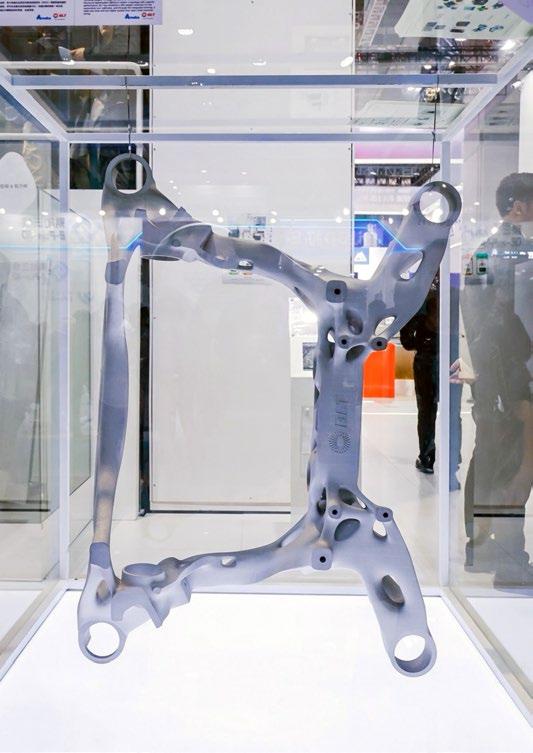
Fig. 4 This rear subframe of an electric vehicle uses what BLT calls a Bi-directional Evolutionary Structural Optimization (BESO) to create a topology with superior performance. The entire parametric design/optimisation process features a high degree of automation. The final part adopts a hollow lattice filling structure with a wall thickness of 2 mm and the part is 20% lighter than a die-cast aluminium alloy alternative. The part measures 1,230 mm x 845 mm x 337 mm (Courtesy BLT)
“According to Context, which tracks AM machine shipments, in the fourth quarter of 2023, Chinese vendors of PBF-LB machines sold more units globally than Western suppliers. Year-on-year growth by Chinese vendors was 36%, whilst Western AM machine manufacturer sales declined by 27%.”
general growth and excellence in scientific endeavour in China. Chinese manufacturing prowess needs no introduction to Western consumers. The iPhone is a prime example of the success of taking a product developed elsewhere and manufacturing it in China with flair, quality and commercial success for both the local manufacturer and the Western customer manufacturing there.
New products developed in China are racking up successes in many industries. Take, for example, electric vehicles, where Chinese manufacturers are making a significant global impact despite many brands being, until recently, unfamiliar to consumers outside of China. In 2023, China overtook Japan to become the largest exporter of cars. BYD has overtaken Tesla in the number of EVs shipped. The electric vehicle may not have been invented in China, but it has been adopted there with impressive results. Applied research, or product development, in China is strong and a source of national pride, encouraged by a government with an active agenda in growing new industries.
But what about basic research? According to The Economist [2], data shows that China has become a scientific superpower. It has overtaken both the US and Europe in the number of high-impact scientific papers published by authors located within the country. The article goes on to note even more surprising data from 2022: in the fields of materials science, chemistry and engineering, Chinese researchers account for more than 70% of the authors of high-impact academic papers; in the case of materials science, the figure is above 80%.
There is no reason to suggest that this data is any different when it comes to AM research. Anecdotally, those who follow AM research publications cannot have failed to notice the bump in the number of papers being led by Chinese research teams, or in which Chinese researchers at foreign institutions participate. Sceptics might correctly point out that Chinese researchers
are incentivised to publish – to which one might respond that the research still must be good enough to pass peer review.
The AM market is active in both polymers and metals. Chinese companies have been successful in Vat Photopolymerisation (VPP) and Material Extrusion (MEX). Large service providers additively manufacturing polymer parts are vigorously competitive throughout China and run primarily Chinese machines. For our purposes, let’s take a more detailed look at the most important segment: metal AM.
According to Context, which tracks Additive Manufacturing machine shipments, in the fourth quarter of 2023, Chinese vendors of PBF-LB machines sold more units globally than Western suppliers. Year-on-year growth by Chinese vendors was 36% whilst Western AM machine manufacturer sales declined by 27%. Analysts believe that there are explanations for the poor performance of Western suppliers in international markets. One reason might be high interest rates that depress capital expenditure; pent-up demand might cause this trend to reverse, they say, but this will only be known when the figures for 2024 start to roll in.
An interesting statistic reported by Context for the year 2023 is that unit sales in China of industrial machines costing $100,000 or more exceeded the sales of such machines in North America. All told, one-third of industrial machines sold globally were in China. North America accounted for 31% of industrial machine shipments. While it is true that this regional breakdown of shipments covers both polymer and metal industrial machines, it seems that quarterly sales of metal machines in each of the past five quarters accounted for between 35-45% of all high-end industrial unit sales. Reporting from Wohlers Associates, a unit of ASTM International, also confirms the strong growth of metal machines in China.

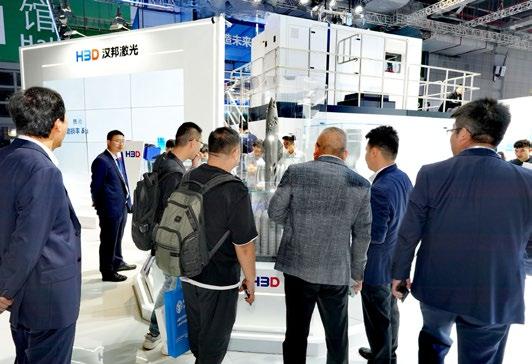
A recent trend in AM in China has seen the organisational and financial maturing of some leading companies. A number of larger established companies have opened AM activity within their existing corporate structures. For example, Ningbo Haitian, a leader in China's injection moulding machine market, recently launched a series of metal AM machines. Two leading PBF-LB manufacturers have gone public on the Shanghai Stock Exchange: BLT and Farsoon.
BLT went public on July 22, 2019. The company listed its A shares on the Shanghai Stock Exchange's Science and Technology Innovation Board under the ticker symbol 688333. BLT became the first Chinese AM machine manufacturer to be publicly listed in China. The IPO raised CN¥626 million, the equivalent of about $91 million at the time.
Farsoon Technologies went public on April 17, 2023, on the same exchange under the ticker symbol 688433. Farsoon had been talking about an IPO for some time, but the market conditions were not in
“Walking the aisles at the TCT Asia exhibitions in Shanghai in 2023 and 2024, a foreign visitor could not have failed to be struck by the number of competitors in general, and in metal Additive Manufacturing in particular.”
its favour. It eventually pulled the trigger to go public in less-thanoptimal conditions, only raising CN¥112.7 million ($16.3 million).
Speaking to industry insiders, it seems that the AM industry in China continues to be going through the local equivalent of the IPO or SPAC hype cycle that afflicted AM in the US over the past few years – or at least that is the hope of some of the leading Chinese AM companies. Recent IPOs of US companies, performed by way of SPAC mergers, raised considerably more money than the two Chinese IPOs to date, even allowing for differences in macro-economic conditions, culture and geography. Desktop Metal, for example, raised $575 million in its SPAC merger in 2020 and, until its public listing, had raised more than $400 million in VC funding since its establishment in 2015.
BLT is the largest and most established AM company in China and has set the pace for many
others to follow. This is mostly true for its leadership on the technical and commercial fronts, but no less so than for its IPO achievement. A number of companies planned to follow BLT, but about six months after the BLT IPO global conditions changed dramatically, and uncertainty reigned.
A number of companies are still planning IPOs, despite the less-thanoptimal financing conditions. As one China AM industry observer said, not all companies are going to realise their IPO dreams, and they would be wise to internalise this fact. Uniontech, mainly a manufacturer of Vat Photopolymerisation machines, does not hide its plans to go public, but it is behind schedule on its hoped-for exit.
Stock market conditions in China are still not at their peak, though far from their nadir. At the time of writing this in June 2024, the stock price of BLT was around CN¥59 per share, and its fifty-two-week price
ranged from CN¥44-98. Farsoon, which has only been trading for about a year, was priced at CN¥23 per share but ranged from CN¥17 to 44 per share over the course of the year.
Table 1 compares the stock prices and market capitalisation of leading Western companies to the two public Chinese companies.
We’ll leave a more detailed review of financial and market performance to financial analysts trained to unpack the meaning of the financial numbers and provide comparisons of the financial performances of public companies in the industry. However, even to a financial novice, there are some obvious points to note:
Chinese companies trade at much higher multiples than their Western counterparts
• Both Chinese companies are profitable, while their Western counterparts struggle to make money
Walking the aisles at the TCT Asia exhibitions in Shanghai in 2023 and 2024, a foreign visitor could not have failed to be struck by the number of competitors in general, and in metal Additive Manufacturing in particular. Even a visitor with some knowledge of the players in AM in China would encounter unfamiliar brands.
Xuesong Pan’s article reports that there are more than sixty suppliers of metal AM machines in China; a number that includes companies producing Directed Energy Deposition (DED) and Binder Jetting (BJT) machines. Metal powder companies are proliferating in many smaller cities in China, small enough that sales literature is only available in Chinese. These types of companies are a long way from being able to target foreign sales.
Another very noticeable feature of the TCT Asia events was the size and sophistication of the booths of the major companies. Booths were larger than any of the booths that were ever mounted at Formnext,
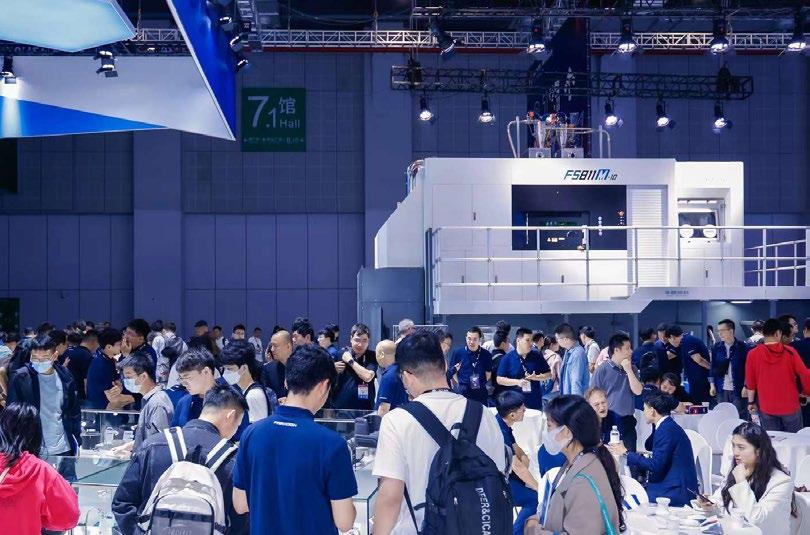
which is considered the West’s leading showcase. Even investment in trade shows in the high-flying years before COVID-19, when companies such as GE Additive, EOS, Nikon SLM Solutions, and HP vied to impress the industry with the most elaborate booths, could not be compared with the display that leading metal AM companies put on in China.
A number of these leading Chinese metal AM machine companies are already active overseas and have attended international trade shows for a number of years. In a few cases, companies have established sales offices in both Europe and the US. Chinese companies with a presence overseas include BLT, Farsoon and E-Plus 3D, the ‘big three’ of the Chinese metal AM industry. These and other companies – such as HBD, Z-Rapid, Easymfg and AmPro – have appeared at Formnext. From the TCT Asia show statistics for 2023, conservatively less than 5% of visitors came from overseas, more than half of them from Asia. Very few
Europeans or Americans could be seen on the exhibition floor at TCT Asia 2024. Of the Europeans, unsurprisingly, many were Russians, a country the Chinese market is willing to supply, while Western countries are bound by sanctions.
In 2023, the total number of exhibitors was up 10% over the figure for 2019, and exhibitor space was up 28%. This means that the average booth size per exhibitor was up to around 85 m 2 from around 70 m 2
in 2019. Unique visitors numbered around 17,000, up 50% from 2019. Could the decision to mount such expensive and eye-popping exhibition booths at TCT Asia have been related to the leading companies’ desire to enter international markets? Given the data above, it is unlikely. The TCT Asia show – as clear an index or mirror as one could expect to find about the state of the Chinese AM industry – suggests that competition in China is very much a domestic
“Very few Europeans or Americans could be seen on the exhibition floor at TCT Asia 2024. Of the Europeans, unsurprisingly, many were Russians, a place the Chinese market is willing to supply, while Western countries are bound by sanctions.”
affair. Looking at this problem from the reverse perspective, are foreign AM companies actively pursuing business in China? Only 2.8% of exhibitors by floor space were from overseas, though some foreign brands were represented by dealers and representatives. Only EOS operates a subsidiary in China.
So, with few foreign companies offering any kind of competition in China, how can one explain the aggressive competitive environment in China? The Chinese word used to describe the type of competition in AM in China is 內卷 (neijuan). The formal definition of this term is ‘to become increasingly competitive.’
Competition in AM is currently in a state of internal hypercompetition.
TCT Asia is only very marginally an event for the international AM community. It is primarily an event developed from a Chinese competitive dynamic. It is sharp, clear and aggressive competition. The larger companies vie to show the biggest and the best at a level of competition that exceeds what one could observe among Western companies.
Not all companies will come out on top in a competitive environment such as this. Some companies will rise, others will sputter or even fail, and others might find solace in consolidation. It is not unlike the competition that one would observe in Western countries. It can be said that this level of competition is driving the Chinese industry as a
“Competition in AM is currently in a state of internal hypercompetition. TCT Asia is only very marginally an event for the international AM community. It is primarily an event developed from a Chinese competitive dynamic. It is sharp, clear and aggressive competition.”
whole to push the boundaries and produce better products. Foreign competitors, perhaps facing relatively fewer competitors, should take note. Strong competition is a driver of innovation and improvement.
Table 2 provides one window into the way Chinese companies are pushing the envelope in metal AM. While bigger is not always better, the impression one gets from a firsthand interaction with the metal AM landscape in China is the pride that the companies take in pushing boundaries and bringing to market devices that display considerable engineering prowess and achievement, even if the commercial viability and market potential might be less obvious. Having more lasers and large build volumes is a technological calling card that projects an image of excellence. In a market of hyper competition, technological excellence helps build a brand and leads commercial success for smaller machines as well. There is a market for large volume, multi-laser systems, although the parameters of that market might not yet be determined. The exhibition floor was scattered with huge parts,
in particular for the aerospace segment. The confidence that Chinese metal AM manufacturers display in advancing the technology is palpable.
A question that many ask is whether Chinese machines can compete with more experienced machines from Western suppliers. Anecdotal evidence suggests that the gap, if any, between parts made on Chinese machines and those made on international brands is – at most – negligible. Details and application requirements matter, and eventually measurement and testing will be able to lay to rest the argument as to whether Chinese machines can compete on quality with Western counterparts. Parts on display at exhibitions should never be a reliable measure of what a machine can do, however. It’s the reality of the shop floor where, over time, an evidence-based argument can be made. Companies in Western countries have more experience than their Chinese counterparts. BLT was founded in 2011. EOS was founded in 1989, and their metal systems were introduced in 1998.
Taking into account all of the circumstances and the progress made by Chinese metal AM machine manufacturers, experience suggests that it’s only a question of time before any gaps will close or disappear completely. Conversations with industry professionals with operational experience from the customer side – meaning they’re not beholden to any manufacturer – suggest anecdotally that there is already little difference today between Western and Chinese quality.
All of the major suppliers asked indicate that key components in their machines, such as laser systems and galvanometers, are the same top-of-the-line international components that equip the best of the international machines. IPG lasers and Scanlab galvanometers are standard on all topflight Chinese machines. Interestingly, pricesensitive local customers can opt for alternative Chinese-made components should there be a need.
“A question that many ask is whether Chinese machines can compete with more experienced machines from Western suppliers. Anecdotal evidence suggests that the gap, if any, between parts made on Chinese machines and those made on international brands is –at most – negligible.”
While these components might not have the reliability or product life expectancy of their best-of-class competitors, there is no evidence to suggest that the parts made with them are significantly inferior.
Several central insights have emerged:
• The Chinese market is large and developing fast
• In some respects, metal AM in China has at the very least achieved parity with global AM
• Intense competition in China is fuelling excellence, innovation and a healthy willingness to take calculated risks in pursuing industry leadership
• Given the slope of the growth trajectory of AM in China, avoiding proactive interaction and contact with developments there is ill-advised.
Opinions, by definition, are expected to differ. The author’s view and interpretation of Additive Manufacturing in China is not immutable. Readers are encouraged to take exception to the ideas communicated in this article. Opinions expressed have tried to conform to the facts as presented. Additional facts may emerge over time which may affect how one views the AM market in China. All
would agree, though, that China is an increasingly important player in the Additive Manufacturing world.
[1] An inside perspective on China’s thriving metal Additive Manufacturing industry, Xuesong Pan. Read in full at https://bit.ly/3xn7eId
[2] www.economist.com/scienceand-technology/2024/06/12/ china-has-become-a-scientificsuperpower
Author
Joseph Kowen
Joseph is an industry analyst and consultant who has been involved in Additive Manufacturing since 1999. He is an Associate Consultant at Wohlers Associates, part of ASTM International’s AM Center of Excellence.
www.linkedin.com/in/joseph-kowena5129b3/



The metal Additive Manufacturing industry has significantly increased machine productivity in recent years. In the case of Laser Beam Powder Bed Fusion (PBF-LB), efforts have primarily focused on what happens inside the build chamber. Here, Sebastian Becker, Head of Product Management Metal, EOS GmbH, reports on how, with Grenzebach Maschinenbau GmbH and Volkmann GmbH, the company is looking outside of the build chamber. Thanks to automation, machine time utilisation can be taken from an estimated 60% to nearer 90% through rapid automated build box exchange and fully automated powder removal and recycling.
Additive Manufacturing has already enabled countless innovations across a wide range of sectors, including aviation, medical and electrical components. Design freedom and rapid iterative prototyping have allowed designers to reimagine components without the limitations of traditional manufacturing methods, while also cutting production costs.
While the Additive Manufacturing production cycle has been optimised and simplified for both polymer and metal applications, as any production manager will tell you, every moment spent doing something other than manufacturing components is considered unproductive waiting time. Whilst significantly more productive than other manufacturing methods, Additive Manufacturing still has processes that fit into this category. In Laser Beam Powder Bed Fusion (PBF-LB) these include build preparation, de-powdering, and cooling time prior to post-processing (Fig. 1).
EOS has worked for decades to improve the efficiency of both its metal and polymer AM machines with improved software, faster build speeds, and new light sources. Combining a larger build chamber and powerful quad lasers in machines such as the EOS M 300-4 and EOS M 400-4 has also dramatically improved efficiency in serial production environments.
Job done, waiting for unpacking
Fig. 1 Division of productive and non-productive AM machine time in Laser Beam Powder Bed Fusion (Courtesy EOS)
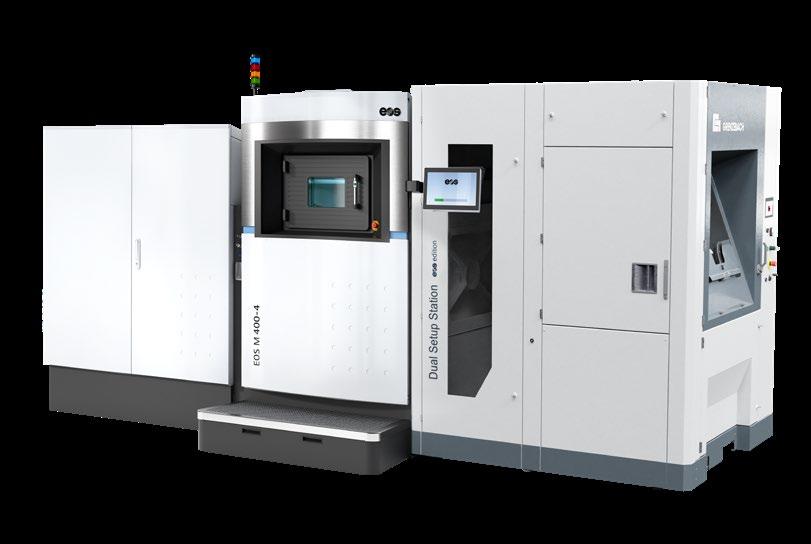
“While these machines have some of the most impressive build speeds, at the end of a job, some 30% of time is lost waiting for unpacking. A further 9% makes up the cool-down and de-powdering processes.”
Whilst evolutions in Additive Manufacturing have improved efficiency inside the build chamber, unproductive waiting time is predominantly lost outside it in the wider production process. A typical EOS M 300-4 or EOS M 400-4 metal AM machine will spend an estimated 60% of its production time building parts. While these machines have some of the
most impressive build speeds, at the end of a job, some 30% of time is still lost waiting for unpacking. A further 9% makes up the cool down and depowdering processes.
Whilst this idle time is typical across the industry and offset by productivity gains in other areas, EOS is seeking to claw this time back for customers and sees automated production as the key. Jens Karnapp, Product Line Manager for Metal Systems at EOS explains, “For us, it was all about squeezing the unproductive time out of the
production process. We wanted every possible moment to be productive for our customers. Working with our partners to introduce automated production means we have dramatically increased the ‘laser-on’ machine utilisation possible with EOS AM machines.”
Working with Grenzebach Maschinenbau GmbH and Volkmann GmbH, EOS has introduced a new Dual Setup Station (Figs. 2, 3) and complete powder handling solution, that eliminates some of the biggest bottlenecks, improves machine utilisation, and supports multi-machine production environments.
With nearly a third of production time spent waiting for unpacking, EOS has worked with Grenzebach to develop the Grenzebach Dual Setup Station – EOS Edition. This system accepts
two exchangeable frames, which are automatically swapped in the AM machine when the first job finishes. Once swapped, the AM machine automatically starts the second job. This approach eliminates waiting time, pushing productive machine utilisation for building parts up to 90%. The ‘laser-off to laser-on time’ is under 30 minutes, with no worker interaction required. While the first job is being unpacked by operators, the second job is already underway. Once cleared, the first frame can be prepared and ready to go again as soon as the second job has finished. With this setup, the cool down of the build job can now be done in the Dual Setup Station, rather than in the M 400-4.
Jobs can also be scheduled to start unattended outside a production line's normal shift hours. A build could be configured to start running before shifts start, overnight, or even allow unattended 24/7 availability of machines throughout the weekend.
Powder handling is another time-consuming task that impacts the productivity of the production line. From filling machines to de-powdering and reprocessing powder extracted from the build space, they all take time. The Volkmann Automated Powder Handling Solution – EOS Edition automates these tasks, improving productivity and enabling staff to spend their time on higher-value-added tasks.
The closed-loop system enables the rapid removal of metal powder during unpacking, automatically sieving and recycling it back into future build cycles.
The basic system can be applied to a single machine or, by combining different components, build a fully closed loop powder circuit that can serve everything from a single machine to a manufacturing cell of multiple EOS metal AM machines.
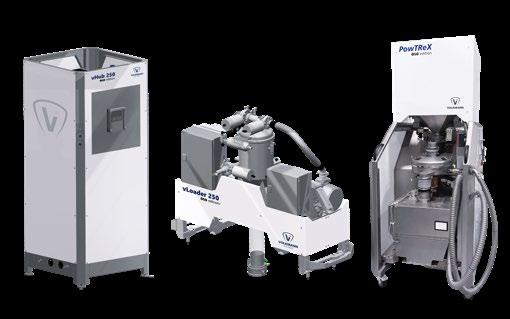
Vacuum conveyor
Powder buffer tank, 30 L vol.
Feeding system
Ultrasonic sieve
Oversize material collector
Powder handling options
a) EOS bottle
b) EOS dispenser (as shown)
c) 100 L container for closed powder loop
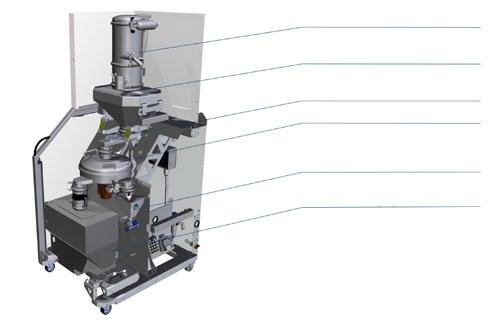
3 Components of the Volkmann Automated Powder Handling Solution –EOS Edition, including interior details of the PowTReX – EOS Edition (Courtesy EOS/Volkmann)
“The closed-loop system enables the rapid removal of metal powder during unpacking, automatically sieving and
recycling it back into future build cycles.”
The central system component is the PowTReX – EOS Edition. This unit combines powder extraction and automatic, ultrasonic sieving of the used powder. The powder is then made available for either manual refilling of the machine or automatic
conveying to the vHub 250. This automatic process lowers both the safety risks of staff conducting these tasks, as well as the risk of powder contamination. The PowTReX can also be used with a standalone AM machine.
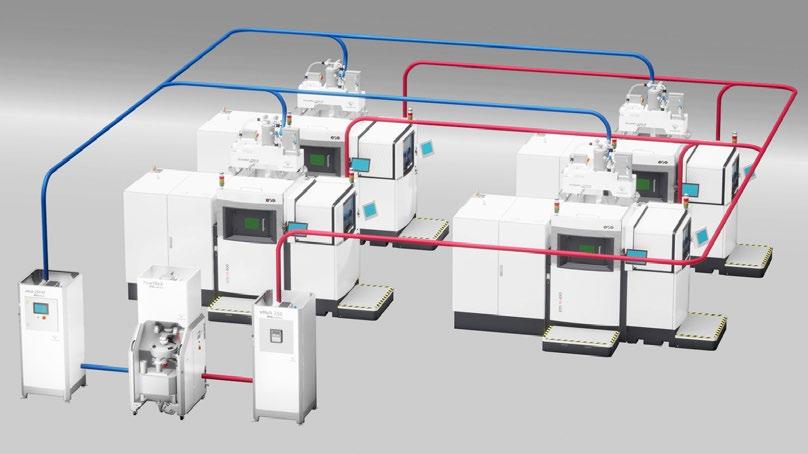
4 A fully closed loop powder circuit can serve everything from a single machine to a manufacturing cell of multiple EOS metal AM machines (Courtesy EOS/Volkmann)
“Whether it is a single machine, or a larger production cell of multiple AM machines, the new Dual Setup Station and Automated Powder Handling solutions can significantly improve the performance of AM production equipment...”
The vHub 250 – EOS Edition is a 250 litre powder reservoir and vacuum conveying system that can be used to transport powder to machines, and receive recycled powder. It acts as a buffer unit to secure powder availability throughout the powder circuit (Fig. 4).
The final component to complete a fully closed powder handling circuit is the vLoader – EOS Edition. It automatically fills a gravity-fed metal AM machine on demand and can include an optional dryer module to vacuum dry powder before introduction to
the machine. This can improve the flow properties of the powder and the quality of the final components.
In a constant search for improved efficiency and reduced downtime, EOS has looked outside the machine as much as it has inside. Manufacturers can now look to increase the utilisation of their machines, deploy additional production cycles, and employ staff in other aspects
of the serial production process. Whether it is a single machine, or a larger production cell of multiple AM machines, the new Dual Setup Station and Automated Powder Handling solutions can significantly improve the performance of AM production equipment and better leverage investments in production capacity.
Author Sebastian Becker Head of Product Management Metal
EOS GmbH www.eos.info




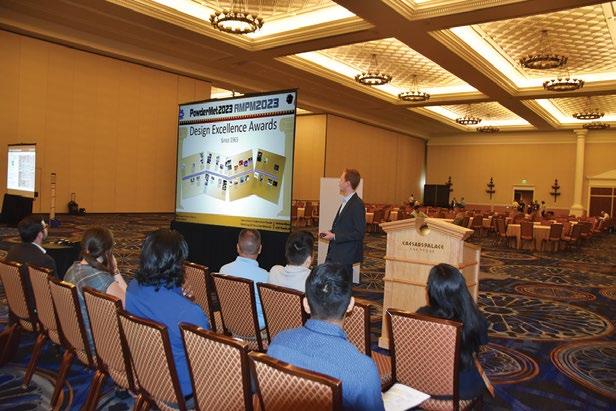



Award-winning metal AM parts
For many decades, North America's Metal Powder Industries Federation (MPIF) has organised its PM Design Excellence Awards competition in order to showcase the capabilities of the Powder Metallurgy industry. With the growing commercial success of metal powder-based Additive Manufacturing, the competition is seeing an ever larger number of entrants from this sector. Award-winning parts in this year's competition include parts not only produced by Laser Beam Powder Bed Fusion, but also a wide range of innovative sinterbased AM processes.
The winners of the 2024 Powder Metallurgy Design Excellence Awards competition, sponsored by the Metal Powder Industries Federation (MPIF), were announced at the annual PowderMet conference, held this year in Pittsburgh. Ten Grand Prizes and seventeen Awards of Distinction were presented in this year’s competition, with entries divided into three categories: conventional 'Press and Sinter' Powder Metallurgy (PM); Metal Injection Moulding (MIM) and Metal Additive Manufacturing (AM).
The winners once again demonstrate outstanding examples of the diversity of the powder metallurgical manufacturing of high performance components, and the capability of all of the featured processes to meet the most critical of requirements. From electric vehicles to medical implants, parts manufacturers have demonstrated the versatility of PM, MIM and metal AM to challenge competing technologies.
This article highlights awards presented in the Metal Additive Manufacturing category. Details of
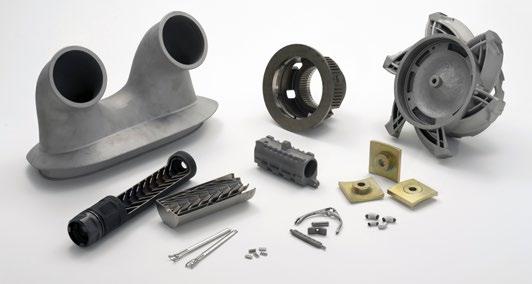
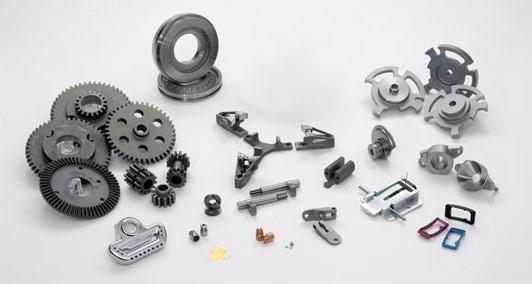
Award of distinction winners
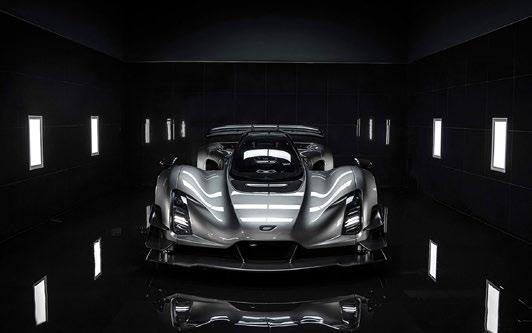
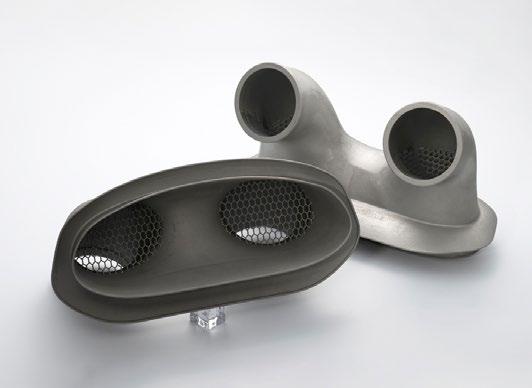
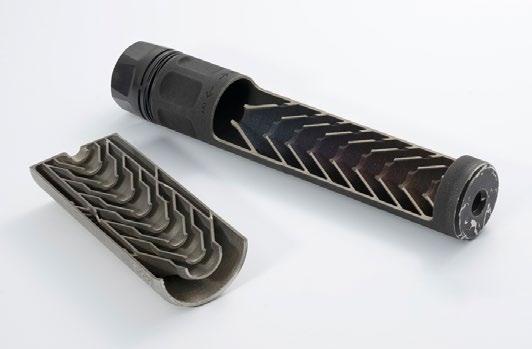
winners in the Powder Metallurgy category can be viewed on the PM Review magazine website (https:// bit.ly/4bx8JRY), and details of winners in the Metal Injection Moulding category can be viewed on the PIM International magazine website (https://bit.ly/4bICz6p).
In the Automotive – Engine Category for metal AM components, a Grand Prize was awarded to Divergent Technologies, Inc for its CZV engine exhaust tip for the Czinger 21C (Fig. 2). The part was produced by Laser Beam Powder Bed Fusion (PBF-LB) and a built-in honeycomb structure was iteratively positioned along the flow pathway to optimise weight, balance and ideal pressure drop.
Additive Manufacturing enabled rapid design loops, manufacturing, and testing to optimise the product's design in less than one month. It was stated that a similar product would take up to six months to produce via conventional manufacturing. Lightweighting was a particular focus of the part's design.
A Grand Prize in the Military/ Firearms Category for metal AM components was awarded to Australia's Amaero and its customer, Wedgetail Industries, for a firearms suppressor (Fig. 3). The suppressor is made by PBF-LB, using either Ti-6Al-4V or Inconel 718.
Firearms suppressors are typically manufactured as an assembly of precision machined components, joined with one or more threaded joints. Metal Additive Manufacturing provides the opportunity to create very complex suppressor designs that contain no mechanical joints, and permits design details that are unachievable through traditional manufacturing processes.
A Grand Prize in the Hardware/ Appliance Category for metal AM components was awarded to Kennametal Inc for a stator bore-reaming tool (Fig. 4). The component is part of a cutting tool for machining stator bore housings for electric vehicle motors, and is capable of machining two diameters concurrently in one pass.
The component was produced by PBF-LB. The design allows large sections of the component to be self-supporting, reducing the need for post-processing operations. The AM process also enabled the production of a lighter tool, facilitating manual and automated tool handling, as well as enabling faster and more efficient acceleration of the machine spindle.
In the Medical/Dental Category for metal AM components, a Grand Prize was awarded to 3DEO Inc and its customer, Zimmer Biomet, for bone marrow harvester parts (Fig. 5). Advanced suction curettage technology can harvest small to large volumes of cancellous (trabecular) bone and non-diluted bone marrow aspirate in a few minutes through a minimally invasive incision.
3DEO's sinter-based Additive Manufacturing process eliminates the complexity and expense associated with post-processing operations, and waste is minimised. 3DEO is an Additive Manufacturing service bureau that uses an in-house patented process called Intelligent Layering. The technology is a fusion of Binder Jetting (BJT) and CNC machining that, the company claims, is faster, cheaper and capable of higher resolution than BJT alone.
Automotive – Electric Vehicle
An Award of Distinction, in the Automotive – Electric Vehicle Category for metal AM components, was presented to Azoth3D for a seatbelt
“The AM process also enabled the production of a lighter tool, facilitating manual and automated tool handling, as well as enabling faster and more efficient acceleration of the machine spindle.”
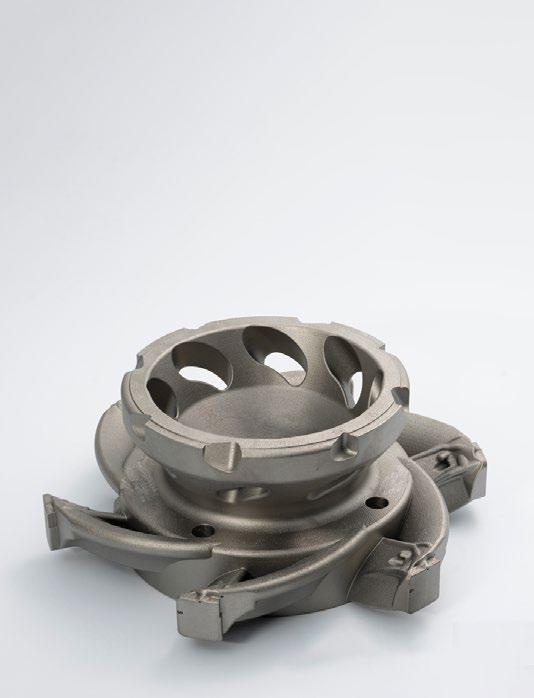
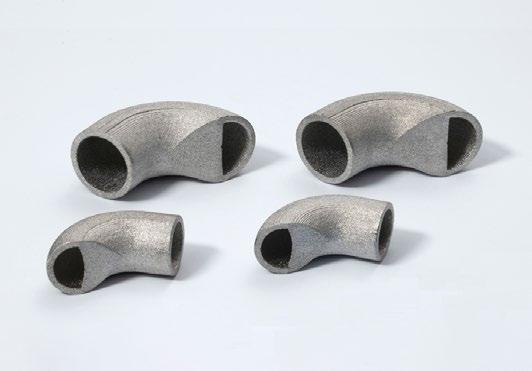
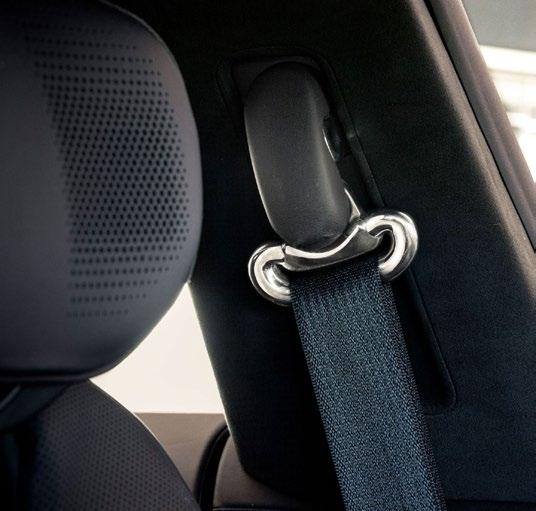
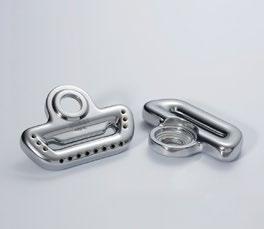

“BJT
allows the assembly of this part to be reduced from four separate components to one complete component, saving time and money. BJT makes this part optimised for targeted strength and weight performance. As GM’s first safety-related 3D printed metal part, this pushes the boundaries of what we can accomplish.”
pillar adjustable guide loop for its customer, General Motors (Fig. 6). The part is used in the all-electric Cadillac Celestiq. The stainless steel part is produced by Binder Jetting (BJT) and sintered to 97% relative density. The surface of the part is semi-automatically polished prior to a multi-layer bright nickel-chrome plating operation to improve corrosion performance and provide a hard, scratch-resistant surface.
When Cadillac revealed its Celestiq vehicle, it marked a significant milestone on the path to achieving the company's goal of creating an all-electric, ultra-luxury vehicle. John Roth, Vice President of Global Cadillac at General Motors, stated that the team at GM "rethought everything, resulting in the most technologically advanced vehicle in the brand’s history."
The development of the vehicle resulted in numerous innovations, including 115 parts produced by Additive Manufacturing. This seatbelt pillar adjustable guide loop is GM’s first safety-related metal AM part.
"BJT allows the assembly of this part to be reduced from four separate components to one complete component, saving time and money. BJT makes this part optimised for targeted strength and weight performance. As GM’s first safety-related 3D printed metal part, this pushes the boundaries of what we can accomplish and facilitates Cadillac’s place at the forefront of innovation and luxury," stated Roth.
An Award of Distinction in the Hardware/Appliances Category for metal AM components, was presented to APG-MIM, a Division of Nichols Portland Inc, for 150 mm pneumatic chuck jaws for work-holding during precision turning (Fig. 7). The parts are made using Moldjet technology from Tritone Technologies.
This sinter-based Additive Manufacturing process allows inner-lattice structures to be formed without having to de-powder,
eliminating the risk of any powder entrapment in difficult-to-access areas. Moldjet processing generates little waste, and the wax used to form the in-process mould is recovered and can be re-used for the next build.
In the Medical/Dental Category for metal AM components, an Award of Distinction was awarded to Azoth3D and its customer, Sur-Set Connect LLC, for electromedical connector components comprising a set screw, set screw block, and a spring housing (Fig. 8). These components mate with the associated catheter and provide mechanical feedback to the surgeon ensuring proper insertion of the catheter in the patient.
The very small size and complexity of these components led to depowdering issues when made using Binder Jetting. The problem was overcome by changing to Xjet's material jetting (MJT) process. The parts are produced in 316L stainless steel with high resolution and good surface finish.
Contact
Metal Powder Industries Federation 105 College Road East Princeton, NJ 08540 USA
info@mpif.org www.mpif.org
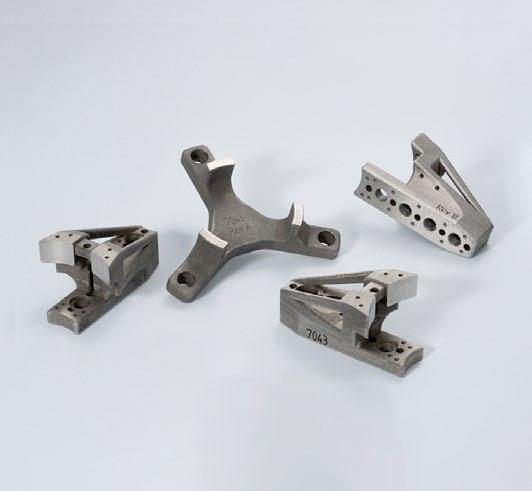
Fig. 7 APG-MIM, a division of Nichols Portland Inc, won an award for these 150 mm pneumatic chuck jaws for work-holding during precision turning. The parts are made by a sinter-based AM process, called Moldjet, developed by Tritone Technologies (Courtesy MPIF)
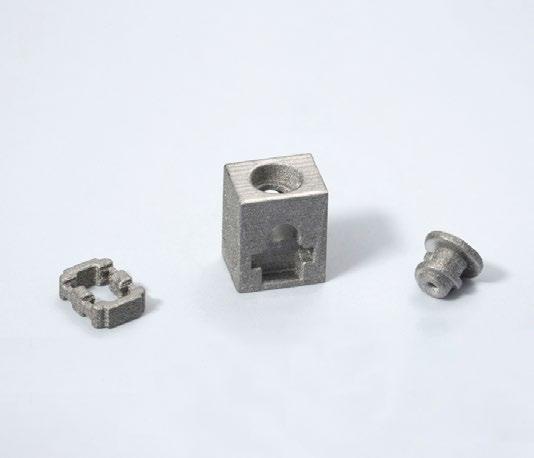
Fig. 8 Azoth3D and its customer, Sur-Set Connect LLC, won an award for these electromedical connector components comprising a set screw, set screw block, and a spring housing. These sinter-based AM parts are made using Xjet's Material Jetting (MJT) process (Courtesy MPIF)
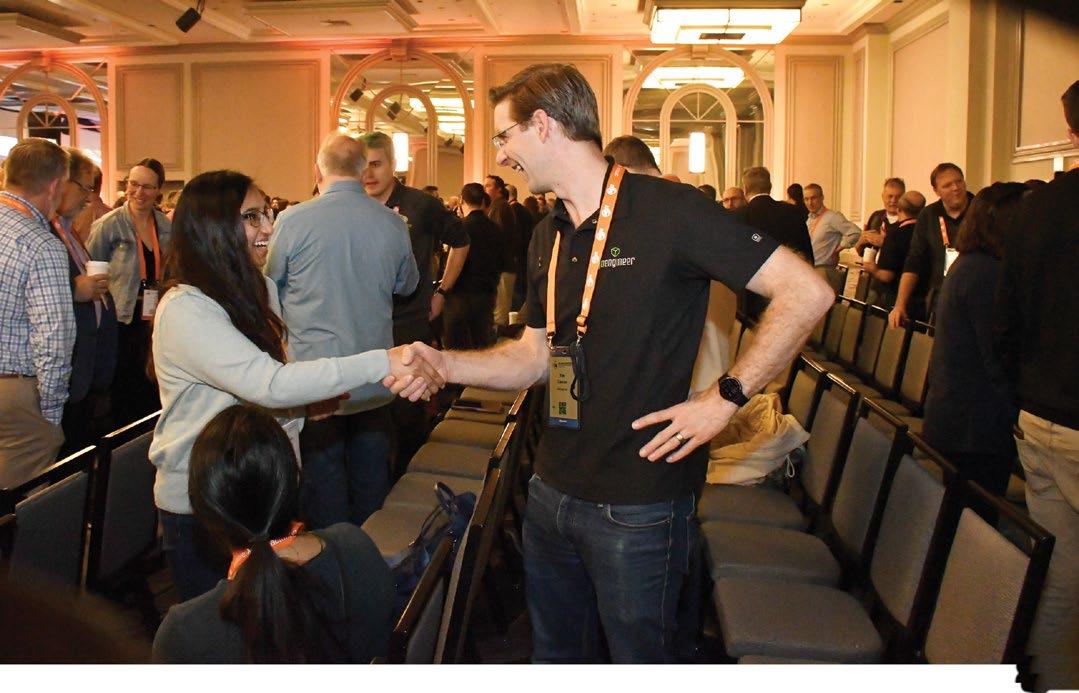
Gain practical knowledge through proactive participation and handson experience
n Become more productive through AMUG’s community of problem solvers
n Learn and share expertise, best practices, challenges, and application developments
Network
Impactful networking without any agendas
n Embrace the camaraderie and enjoy effortless networking
n Form meaningful connections through casual conversations
Value
Get the most value of any conference with an ALL-INCLUSIVE program
n 4-day conference
n Hands-on workshops
n Technical competition
n AMUGexpo
n Meals and entertainment throughout



In this joint study by Carl Zeiss AG, AMiquam SA, and EOS GmbH, the performance of eddy currents as a tool for the in-situ detection of defects in Laser Beam Powder Bed Fusion (PBF-LB) has been assessed. Process variations, including lack of fusion and keyhole formation could be detected in-situ, as well as individual defects as small as 0.3 mm post-build and post-polishing. Here, Jonatan Wicht, Harald Krauss, Frank Widulle, Julian Schulz, and Edson Costa Santos, Alain Berthoud, and Bernard Revaz present their latest findings.
Near-surface and sub-surface defects are one of the main factors currently hindering the growth of metal Additive Manufacturing applications. This is because they reduce the performance of the produced parts and lead to significant production, qualification, and certification costs. It is therefore desirable to accelerate the development of a technique enabling early detection of these defects –ideally during the process.
Only a few physical principles are available to achieve this goal: eddy currents, ultrasound, thermography, and X-ray. These detection technologies are based on the physical changes in the material caused by the defects (difference in electrical conductivity, acoustic properties, heat-transfer, x-ray absorption, etc.). They can, however, only be used in-situ if they meet certain detection requirements (accuracy, defect types) within the constraints of the Additive Manufacturing process (speed, surface roughness, machine environment) and machine integrability [1, 2].
In this study by Carl Zeiss AG, AMiquam, and EOS, the performance of eddy currents was assessed in this context. In-situ measurements were taken using the AMiquam Eddy Current W1 to document potential industry use cases and assess the actual performance of the product. The eddy current measurements have
been achieved by instrumenting the machine recoater with shielded absolute coils (5.8 mm outer diameter (OD) and 200 kHz interrogating frequency, resulting in a theoretical electromagnetic penetration depth of 0.95 mm in the Inconel 718 material from which the components are made).
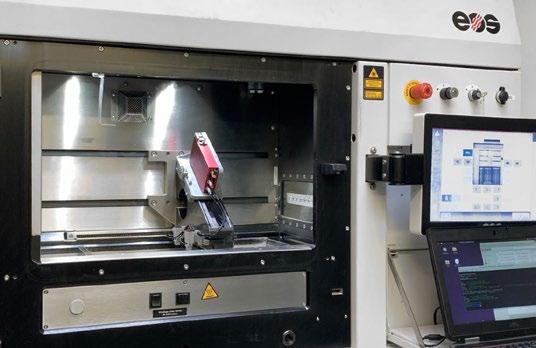
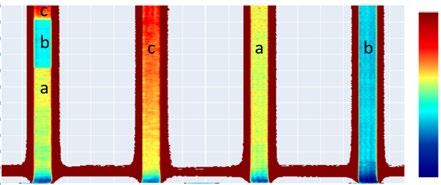
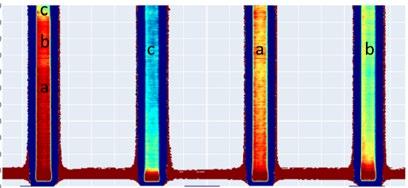
Fig. 2 Cross section view of four cuboid samples measured in-situ with three different processes parameters: 90 J/mm 3 ([a] nominal parameters), 38 J/ mm 3 ([b] lack of fusion), and 113 J/mm 3 ([c] keyhole). In b) the electrical conductivity was normalised to a reference sample with highest quality produced in these conditions
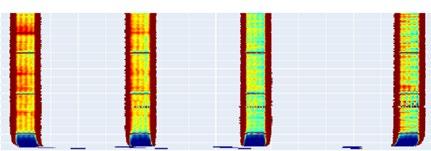
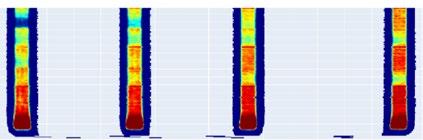
Fig. 3 Samples with seeded defects with a) lift-off (colour map in microns) and b) normalised
About fifty cuboid samples were additively manufactured on an EOS M280 Laser Beam Powder Bed Fusion (PBF-LB) machine at the EOS Applications Centre. These contained process-induced defects (lack of fusion and keyhole) and seeded/designed voids; additional samples for post-processing measurements were also manufactured. These samples were additively manufactured such that the sensor’s sensitivity could be assessed in different use cases:
1. Process variation without seeded defects (see Fig. 2 and Fig. 4), where the volumetric energy density has been varied. The volumetric energy density E v is defined as E v (J/mm 3) = P / (v · d · t) where P stands for output laser power (W), v stands for scan speed (mm/s), d stands for scan spacing (mm), and t stands for powder layer thickness (mm)
2. Seeded defects in regular array geometries without process variation (Fig. 3 and Fig. 7)
3. Single seeded defect without process variation (Fig. 5 and Fig. 6)
Seeded defects in regular array geometries were investigated to mimic an averaged defect density, which is calculated by the number of defects within the sensor’s probe volume. By varying the distance between these defects, the effect of different defect densities can be assessed.
By transforming the in-phase and out-of-phase electrical signals of the eddy current measurement, the lift off distance (the distance from the sensor to the top of the consolidated metallic part) and the electrical conductivity of the sample can be determined. The process variations produced homogenous porosity that linearly affected the electrical conductivity for small porosity. In this linear regime, the normalised electrical conductivity can be directly related to the density of the sample with a 0.1% resolution.
CT scans have been performed on one sample where three different parameter sets (a-b-c, see Fig. 2) have been applied one after the other and are presented below.
These data confirm previous results obtained by AMiquam showing that the detection resolution is 0.1% by volume, meaning a porosity increase of 0.1% can detected during the process using eddy currents. CT scans can be used to calibrate the eddy current response. Indeed, as different physical processes are involved in the two techniques, we expect some difference in the amplitude of the response of the two techniques. Using the CT scan result as the reference measurement, one concludes that a normalised electrical conductivity variation of 0.3% corresponds to a porosity of 0.12%.
In general, the detectability of defects depends on the defect density. If it is above a certain threshold, the SNR becomes larger than one, meaning that small defects of a certain size (<0.3 mm for
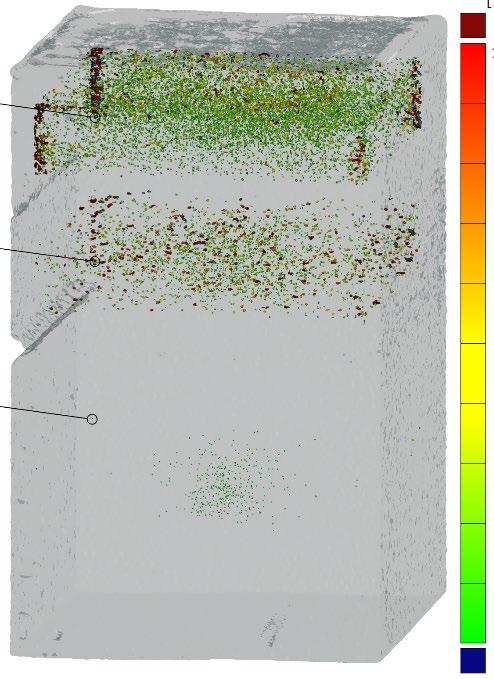
Fig. 4 CT scans and comparison with the results of the eddy current measurements. The CT Scan was carried out using a voxel-size of 37.5 µm, 1.00Sn pre-filter, 900 projections, exposing the detector for 2.5 s for each projection. The ZEISS Inspect software was used for defect segmentation and evaluation of the volumetric data
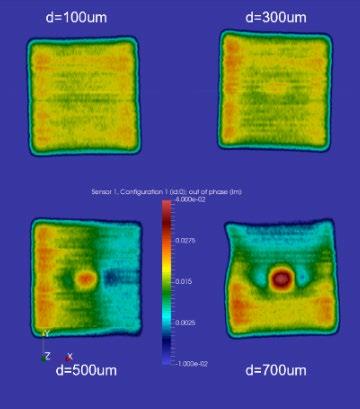
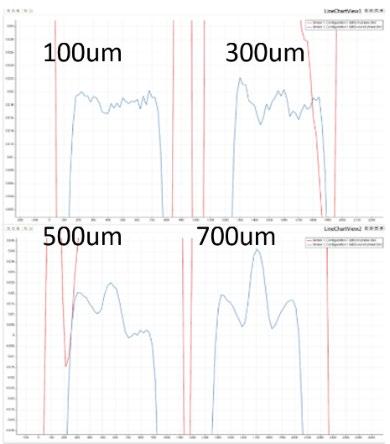
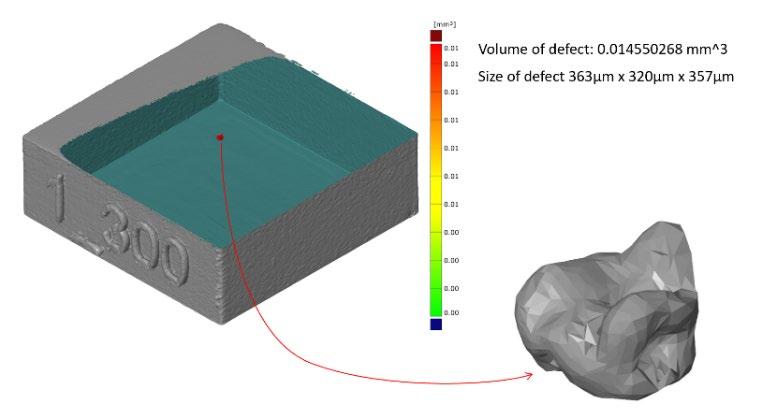
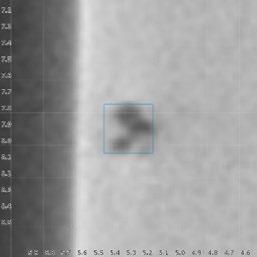
Fig. 5 Post process eddy current measurements performed using a gantry scanner and probe SR25 on four polished samples, each with an individually designed pore of different size. Values are in Volts. On a) top view EC scans (‘C-scans’) of the conductivity component, b) signal amplitude along the centre line crossing the pore and c) CT scan of the 300 µm size pore showing irregular structure
“The impact of the surface roughness on the sensitivity of the reading has been investigated by comparing the data of the as-manufactured and the processed surfaces. As-manufactured surfaces do not exhibit a significantly worse SNR compared to the polished ones...”
example) can be detected – though not resolved individually – if there are enough defects present in the probe volume (i.e. if it meets a certain threshold).
Precisely determining the performances of the setup requires the separation and assessment of the various causes that affect and obscure the signal of the ideal pore: the probe vibration, material inhomogeneities, fused surface topology, and electric noise alongside the fact that the pore does not have the desired shape (Fig. 5c).
To reach this goal, a gantry scanner was calibrated to measure off-machine four 16 x 16 mm coupons, each manufactured with a a single pore of different diameters (0.7, 0.5, 0.3, 0.1 mm) located at their respective centres, 0.16 mm below the surface (the surface has been polished after the manufacturing, removing about 0.1 mm of material, 0.16±0.02 mm is therefore the thickness of the material on top of the ‘ideal’ defect). First, the scanner was equipped with the same experimental setup as the one used for the in-situ measurements (sensor ABS58) and then with a higher sensitivity sensor consisting of two 2.5 mm OD coils mounted in a send-receive configuration (sensor SR25).
The results are summarised in Table 1. The signal-to-noise ratio (SNR) is defined by the ratio between the maximal amplitude of the signal on the pore and the noise value. For the ABS58 sensor, the noise value has been evaluated to 20 mV with the signal variation caused by the vibrations of the scanner dominating the electronic noise (about 3 mV). For the SR25 sensor, the noise value is 5 mV, and the noise caused by the vibrations is mostly present in the other phase. We note that different sensor configurations may have different lift-off vs electrical conductivity responses. The resolution can be estimated using the spatial extension of the region with measurable pore signal, which is 5 mm for the ABS58 sensor and 3 mm for the SR25 one.
The C-scans on Figs. 5 and 6 show different responses to the same defects because of the different probe configurations. The ring response of the ABS58 probe is the consequence of the ferrite pot core surrounding the wire coil. This confines the magnetic field in a ring shape, which becomes visible when homogeneities smaller than the coil OD (a pore for instance) are measured. In addition, the usage of this ring response with a deconvolution can improve the detection capability of the system.
The impact of the surface roughness on the sensitivity of the reading has been investigated by comparing
Table 1 A summary of experimental results
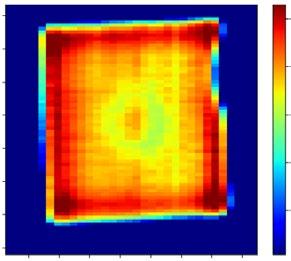
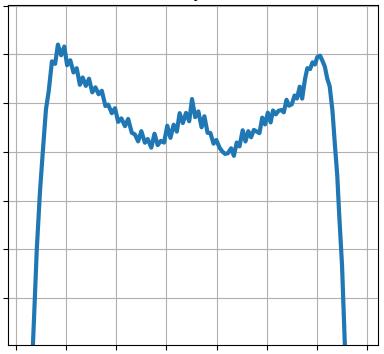
Fig. 6 Post-process eddy current measurement performed using a gantry scanner and probe ABS58 on the sample with the 700 µm single pore (values are in Volts). Top: top view EC scan (C-scan) of the electrical conductivity component. Bottom: signal amplitude along the centre line crossing the pore position
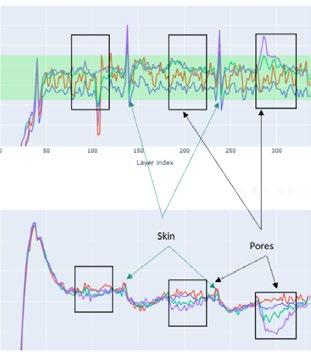

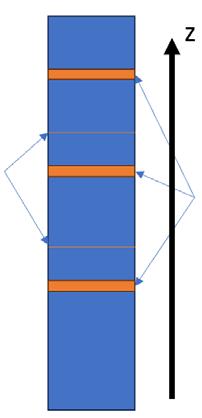
Fig. 7 Cross section of the eddy current signal along the z direction showing the different response of the skin and pore arrays. Each curve corresponds to a different coupon. Each coupon had the same sequence pore array-skin-pore array-skin-pore array along z (as shown in the side view sketch of the coupons on the right), with the same array parameter and different pore size 0.7 (indigo), 0.5 (green), 0.3 (blue), 0.1 (red)
the data of the as-manufactured and the processed surfaces. As-manufactured surfaces do not exhibit a significantly worse SNR compared to the polished ones because the characteristic length of the surface roughness is much smaller than the sensor OD. Thus, the details of the surface topography do not have a significant impact on the EC signal. On the other hand, the EC probes may pick up some features of the laser trajectories, but we do not yet have systematic data about it.
Obviously, the ABS58 sensor operated with the standard parameters and along with the gantry scanner does not have the sensitivity to detect pores of size 0.1 mm, even with a polished surface. The filtering of the signal to remove the scanner vibrations (20 mV) should increase the SNR, potentially making the pore detectable. As expected, the SR25 sensor provides a better SNR, explained by the smaller coils and the send-receive configuration. Integration of arrays of these sensors
“The defects show different behaviours, especially when the two phases of the eddy current signals are considered. These results have been added to a larger set of data from which a robust classifier has been designed.”
in PBF-LB Additive Manufacturing machines is possible at the cost of the number of sensors that is about twice that of ABS58 arrays. Several parameters can be optimised to improve the detection capabilities of the system. This includes the operating electrical parameters (frequency, gain, etc.) and the probe configuration (smaller coils, send-receive configuration). The reduction of the vibration of the scanner or recoater should also help to improve the SNR, although the separation of the lift-off and electrical conductivity signals was successful in the in-situ experiments. Finally, to establish the ultimate sensitivity of a specific setup, the manufacture of pores with a high contrast compared to the base material (using for instance subtractive laser or spark erosion techniques) is needed. For PBF-LB it is a challenging task to generate small pores in a controlled manner (i.e., with dedicated size, geometry, and position.) On the other hand, the effort of testing and data analysis is much higher for stochastically generated, real process defects.
“Moreover, the penetration depth of the eddy currents allows us to track the presence of pores even when subsequent dense layers are consolidated over the pores, therefore enabling to determine whether the defects are ‘healed’...”
As stated in the ASTM 3166:20 standard, eddy currents are recommended to detect a variety of surface and near-surface defects, including cracking, porosity, inclusions, lack of fusion, residual stress, and surface defects. In this study, we documented the difference in the eddy current response between three types of discontinuities: lack of fusion; arrays of pores; and regions in the XY plane manufactured with the ‘skin’ parameters. The defects show different behaviours, especially when the two phases of the eddy current signals are considered. These results have been added to a larger set of data from which a robust classifier has been designed. Moreover, the penetration depth of the eddy currents allows us to track the presence of pores even when subsequent dense layers are consolidated over the pores, therefore enabling to determine whether the defects are ‘healed’ (i.e. the region around the pore is
remelted during subsequent layer deposition so that the pore disappears) or remain in the part. The sensitivity to subsurface defects is the key advantage of this technology over all optical systems.
We emphasise that the sensitivity of the EC system presented in this study is outperforming the state-ofthe-art NDT technique by one order of magnitude. Indeed, NDT applications based on eddy currents do not usually enable submillimetre defects to be detected, especially with coils exceeding 5 mm OD as used in this study. An explanation comes from the regular motion of the scanner/ recoater and the 2D nature of the deposition process.
Authors
Jonatan Wicht
Alain Berthoud
Bernard Revaz
AMiquam SA, CH 1196 Gland Switzerland
Harald Krauss
EOS GmbH Electro Optical Systems, D 82152 Krailling Germany
Frank Widulle
Carl Zeiss AG, Carl-Zeiss-Str. 22, 73447 Oberkochen, Germany
Julian Schulz
Edson Costa Santos
Carl Zeiss Industrielle Messtechnik GmbH, Carl Zeiss-Str. 22, 73447 Oberkochen, Germany Contact bernard.revaz@amiquam.ch www.amiquam.ch
[1] Mission possible: The five-year plan to gain FAA and EASA acceptance of in-process monitoring, MAM Vol. 9 No. 4 p. 147ff
[2] ASTM Strategic Guide: AM In-Situ Monitoring TRL, ASTM E 3166 : 2020, Standard Guide for Nondestructive Examination of Metal Additively Manufactured Aerospace Parts After Build
Metal AM magazine is dedicated to driving awareness and development of metal Additive Manufacturing and its related technologies. Key to this aim is our support of a range of international partner conferences and exhibitions. View our complete events listing on www.metal-am.com
America Makes MMX
August 6–7, Canfield, OH, USA www.americamakes.us/events/mmx
The 9 th World Battery & Energy Industry Expo (WBE 2024)
August 8–10, Guangzhou, China en.battery-expo.com
Formnext + PM South China
August 28–30, Shenzhen, China www.formnext-pm.com
5 th Workshop on Sinter-based Additive Manufacturing 2024
September 4–5, Bremen, Germany www.ifam.fraunhofer.de/en/Events/sinter-basedadditive-manufacturing-workshop-2024.html
Powder Metallurgy and Additive Manufacturing of Titanium (PMTi 2024)
September 4–6, Madrid, Spain www.pmti2024.com
IMTS 2024
September 9–14, Chicago, IL, USA www.imts.com
Metal Additive Manufacturing Conference (MAMC 2024)
September 17–19, Aachen, Germany www.mamc.at
The 12 th Edition RM Forum
September 25–26, Milan, Italy www.rmforum.it
The Atomising Systems Course on Atomization for Metal Powders
September 26–27, Manchester, UK www.atomising.co.uk/news
Euro PM2024 Congress & Exhibition
September 29–October 2, Malmö, Sweden www.europm2024.com
The Advanced Materials Show USA
October 8–9, Pittsburgh, PA, USA www.advancedmaterialsshowusa.com
World PM2024
October 13–17, Yokohama, Japan www.worldpm2024.com
Global AM Summit 2024
October 15–16, Singapore www.namic.sg/events/gams2024/
Scotland Manufacturing & Supply Chain Conference & Exhibition October 23–24, Glasgow, Scotland www.manufacturingexposcotland.com
13 th International Conference + Expo on Additive Manufacturing and 3D Printing October 24–25, Bengaluru, India www.amsi.org.in/conference
AM Summit 2024
October 24, Copenhagen, Denmark www.amsummit.dk
International Conference on Advanced Manufacturing (ICAM 2024)
October 28–November 1, Atlanta, GA, USA www.amcoe.org/event/icam2024/
Advanced Engineering
October 30–31, Birmingham, UK www.advancedengineeringuk.com
Space Tech Expo Europe 2024
November 19–21, Bremen, Germany www.spacetechexpo-europe.com
Formnext
November 19–22, Frankfurt, Germany www.formnext.com
Aerospace & Defense Manufacturing & R&D Summit
December 5–6, Dallas, TX, USA www.dec24.aerospacedefensesummit.com
Additive Manufacturing Strategies 2025
February 4–6, New York, NY, USA www.additivemanufacturingstrategies.com
Military Additive Manufacturing Summit 2025
February 11–13, Tampa, FL, USA www.militaryam.com
International Conference on Injection Molding of Metals, Ceramics, and Carbides (MIM 2025)
February 24–26, Costa Mesa, CA, USA www.mim2025.org
AM China 2025
March 10–12, Shanghai, China www.amatex.cn
Fraunhofer Direct Digital Manufacturing Conference (DDMC 2025)
March 12–13, Berlin, Germany www.ddmc-fraunhofer.de
AM Forum Berlin 2025 March 17–18, Berlin, Germany www.am-forum.de
AMUG 2025
March 30–April 3, Chicago, IL, USA www.amug.com
RAPID + TCT 2025
April 8–April 10, Detroit, MI, USA www.rapid3devent.com
Formnext Chicago 2025
April 8–10, Chicago, IL, USA www.formnextchicago.com
Powdermet 2025 / AMPM 2025
June 15–18, Phoenix, AZ, USA www.powdermet2025.org / www.ampm2025.org
If you would like to see your metal Additive Manufacturing related event listed in this magazine and on our websites, please contact:
Merryl
Le Roux, Operations and Partnerships Manager merryl@inovar-communications.com


In this webinar, discover how Legor Jewellery has embraced innovation, leveraging HP 3D Metal Jet technology to revolutionise its production process. Explore firsthand how Additive Manufacturing breaks free from traditional constraints, offering unparalleled design flexibility and efficiency. Through captivating examples and expert insights, witness how this technology transforms workflow and ignites creativity.
This webinar isn’t just about showcasing cutting-edge technology; it’s about sparking a mindset shift.
For this webinar, HP teams up with Legor Jewellery to discuss the “Beyond Extraordinary” workshop, which challenges norms and explores the game-changing potential of 3D printing in jewellery manufacturing and beyond.
The initiative encourages a shift from conventional design approaches, enabling a comprehensive exploration of Additive Manufacturing’s potential in product development and design. The focus aims to catalyse innovation across sectors such as automotive, aerospace, and industrial design.
www.metal-am.com/webinar-legor-a-binder-jettingsuccess-story-with-hp-metal-jet/




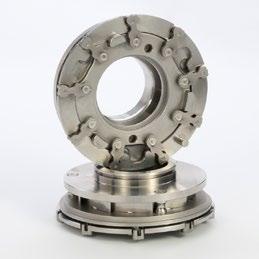
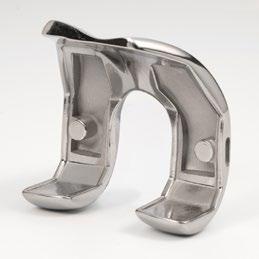
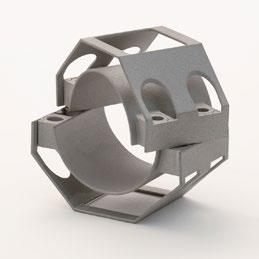
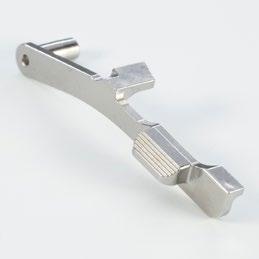
MANUFACTURING INNOVATIONS: • Part design • Part Inspection
• Tooling
• Molding
• Debinding
• Sintering
• Secondary Operations
• Simulation
• Competing Technologies
• Coatings
MATERIALS ADVANCEMENTS:
• Metals & alloys
• Ceramics
• Hardmaterials
• Binder Technologies
• Mixing
• Mechanical Properties
TARGETED AUDIENCE:
• Product designers
• Engineers
• End users
• Manufacturers • Researchers
Educators • Students

Our advertisers’ index and buyer’s guide serves as a convenient guide to suppliers of AM machines, materials, part manufacturing services, software and associated production equipment. In the digital edition of Metal AM magazine, available at www.metal-am.com, simply click on a company name to view its advert, or on the weblink to go directly to its website. Additive
www. aml3d.com
Avimetal AM Tech Co., Ltd
www.avimetalam.com
BLT - Bright Laser Technologies
www.xa-blt.com
DMG MORI CO., LTD.
www.dmgmori.co.jp
Eplus3D
www.eplus3d.com
Ermaksan Additive
www.ermaksan.com.tr
Farsoon Technologies
www.farsoon.com Guangdong Hanbang 3D Tech Co., Ltd.
en.hb3dp.com
Matsuura Machinery Ltd
www.matsuura.de
Metal, Inc.
www.desktopmetal.com
AM Technologies Inc
Inc. 34 www.cmfurnaces.com
CREMER Thermoprozessanlagen GmbH 93 www.cremer-polyfour.de
Systems 08 www.elnik.com Ipsen Global 95 www.ipsenglobal.com
Vacuum Furnaces SPA 47 www.tav-vacuumfurnaces.com
DSH Technologies 10 www.dshtech.com Toll debinding & sintering
NEL Hydrogen 90 www.nelhydrogen.com
BLT - Bright Laser Technologies 67 www.xa-blt.com
Burloak Technologies Inc. 102 www.burloaktech.com
Hybrid Manufacturing Technologies 33 www.hybridmanutech.com
Indo-MIM 113 www.indo-mim.com
Kennametal Inc. 64 www.kennametal.com
Sandvik Additive Manufacturing 15 www.additive.sandvik
Zenith Tecnica 121 www.zenithtecnica.com

The 7th edition of the International Conference on Powder Metallurgy and Additive Manufacturing of Titanium, PMTi2024, will gather, for the first time in Spain, researchers and professionals on the processing, design and application of titanium and its alloys fabricated by powder metallurgy and additive manufacturing technologies.
The conference will take place in person in Madrid, after a successful series of previous conferences held in Australia, New Zealand, Germany, China, the United States and Canada.
Topics covered in the conference are the following:
• Powder production and characterization
• Metal Injection Molding (MIM)
• Consolidation of PM alloys
• Sinter-based Additive Manufacturing
• Powder-bed and powder-deposition Additive Manufacturing
• Alloy design in PM and AM
• Titanium Aluminides and Ti Metal Matrix Composites
• Properties and characterization
• Part and process qualification
• Applications
• Recycling and sustainability
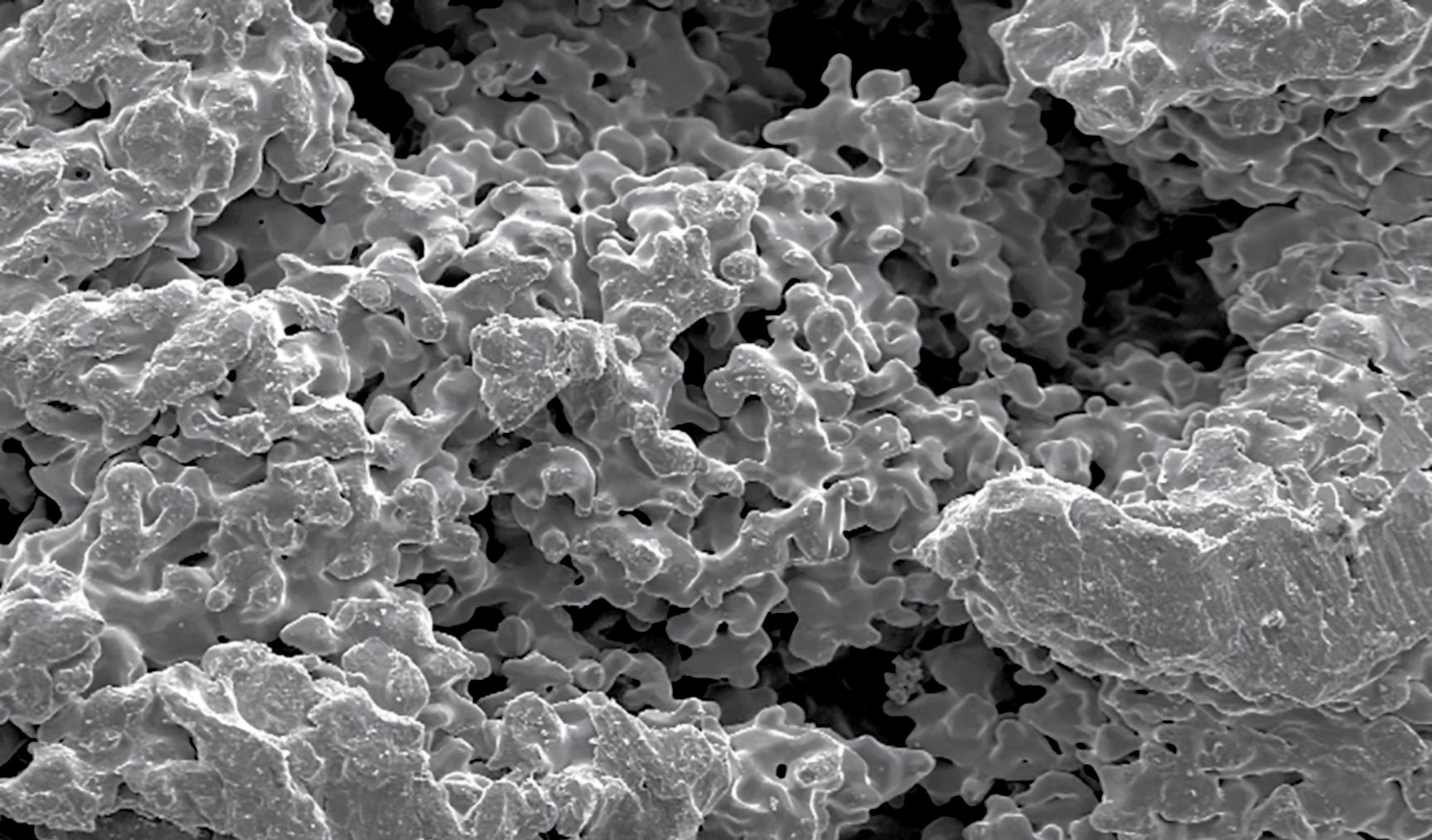

















Avimetal AM Tech Co., Ltd 27 www.avimetalam.com
BLT - Bright Laser Technologies 67 www.xa-blt.com
CNPC Powder Group Co., Ltd. 51 www.cnpcpowder.com
Constellium 61 www.constellium.com
Continuum Powders 82 www.continuumpowders.com
Daido Steel Co., Ltd. 97 www.daido.co.jp
Epson Atmix Corporation 53 www.atmix.co.jp
Equispheres 31 www.equispheres.com
Höganäs AB 48 www.hoganas.com
Hunan Hualiu New Materials Co., Ltd. 109 www.hlpowder.com
IMR Metal Powder Technologies 41 www.imr-metalle.com
Indo-MIM 111 www.indo-mim.com
Jiangsu Vilory Adv. Mat. Tech. Co.,Ltd. 116 www.wllxcl.com
Jiangxi Yuean Advanced Mat. Co., Ltd 129 www.yueanmetal.com
Blue Power Casting Systems GmbH 79 www.bluepower-casting.com
Phoenix Scientific Industries Ltd. 72 www.psiltd.co.uk
Tekna 13 www.tekna.com
Kennametal Inc.
Kymera International 77 www.kymerainternational.com
Linde Advanced Material Tech. Inc. IFC www.linde-amt.com
Metalpine GmbH 35 /37 www.metalpine.at
Mimete S.r.l. 18 www.mimete.com
Osaka Titanium Technologies Co. Ltd. 98 www.osaka-ti.co.jp Proterial, Ltd. 101 www.proterial.com Rio Tinto 99 www.riotinto.com S&S Scheftner GmbH 24 www.scheftner.dental Sandvik Additive Manufacturing 15 www.additive.sandvik
Sino-Euro Mat. Tech. of Xi’an Co., Ltd. 81 en.c-semt.com Tekna 13 www.tekna.com
Ultra Fine Specialty Products 23 www.ultrafinepowder.com
VDM Metals 115 www.vdm-metals.com
Jiangsu Tiangong Technology Co., Ltd 107 www.tiangongti.com
Powder processing, classification & analysis
Blue Power Casting Systems GmbH 79 www.bluepower-casting.com
For information on advertising contact: Jon Craxford
Advertising Sales Director
Tel: +44 207 1939 749 jon@inovar-communications.com
This free-to-access archive offers unparalleled insight into the world of metal Additive Manufacturing from a commercial and technological perspective through:
• Reports on visits to leading metal AM part manufacturers and industry suppliers
• Articles on technology and application trends
• Information on materials developments
• Reviews of key technical presentations from the international conference circuit
• International industry news
All past issues are available to view online or download in PDF format. All downloads are free of charge.

Organised by:
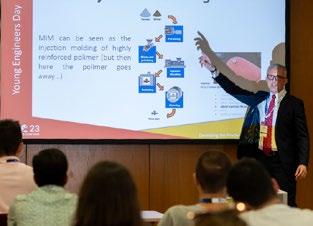
Dive into the heart of the PM industry at Euro PM2024, where industry leaders, academics, and professionals converge.
With 250 presentations over three days, including Keynote paper presentations and Special Interest Seminars, this event promises to redefine industry standards and unveil the latest PM advancements.
Explore the latest trends and advancements in PM as you connect with industry-leading suppliers, engage with potential clients, and discover cutting-edge PM solutions
New this year: Micro stands can be reserved by new exhibitor at the Euro PM2024 and the Exhibition will provide an area dedicated to showcasing Sweden’s PM industry!
Embark on a journey to meet the driving forces behind powder metallurgy technology, industry and innovation at Euro PM2024.
Don’t miss out the opportunity to attend our social events: The Welcome reception on Sunday evening, the poster reception on Monday and the congress dinner at Slagthuset on Tuesday.


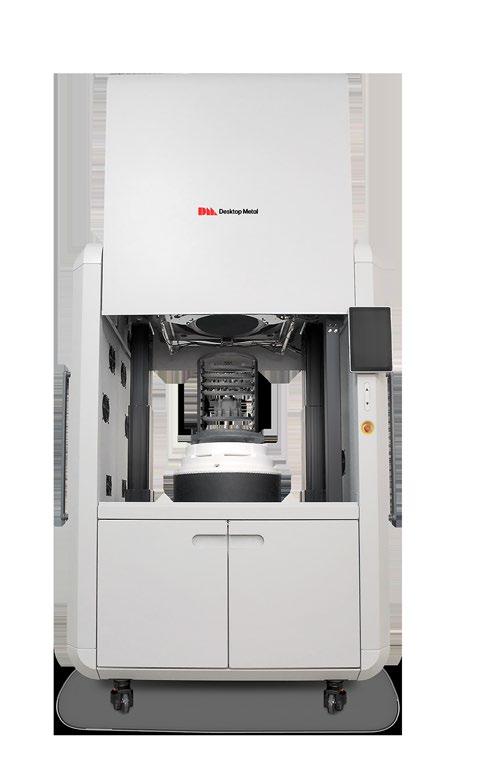
Affordable, state-of-the-art furnace designed as a total industry solution – not just for sinter-based AM, but also for PM, MIM, and other sectors that could benefit from a compact, highpurity vacuum furnace for combined debinding and sintering.
Breakthrough, patentpending furnace design features a vacuum retort and delivers parts-perbillion levels of purity
Heating elements and insulation are located outside vacuum retort so oxygen, water vapor, and binder cannot contaminate sintering environment
Ti-tested™, delivering better Ti6Al4V performance results for density, tensile strength, and elongation*
More than a dozen fans cool from 1,420°C to 200°C in <4H without watercooled walls
—
Airtight design and efficient cooling dramatically lower operating costs
Compact footprint and automated, vertical hood enables access to 15.8L retort
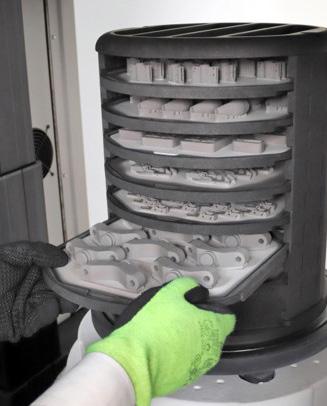
*With Ti6Al4V, the PureSinter furnace delivered higher part density — greater than 98% — than a popular, premium third-party vacuum furnace with much less power, in addition to other performance benefits. See complete PureSinter brochure for more details.
PureSinter delivers the highest quality sintered parts, on par or better than industrial furnaces with higher acquisition and operating costs. Even titanium can be easily sintered with a high degree of confidence without the complex preparations and getter materials required with other furnace.
Download the brochure and see the video at teamdm.com/puresinter