

January 26, 2026
January 26, 2026




Chris Bowen Minister for Climate Change and Energy, Member for McMahon

and Water, Senator for Queensland



Michelle Rowland Attorney-General, Member for Greenway

Anika Wells Minister for Communications, Minister for Sport, Member for Lilley





Dr Anne Aly Minister for Small Business, Minister for International Development, Minister for Multicultural Affairs, Member for Cowan






Minister for Social Services, Member for Sydney

Andrew Giles Minister for Skills and Training, Member for Scullin


Julian Hill Assistant Minister for Citizenship, Customs and Multicultural Affairs, Assistant Minister for International Education, Member for Bruce









PUBLISHER
Pawan Luthra
EDITOR
Rajni Anand Luthra
CONTRIBUTORS
Torrsha Sen, Sruthi Sajeev, Lakshmi Ganapathy, Apoorva Tandon, Harini Sridhar, Prutha Chakraborty, Tarini Puri, Jai Patel, Ekta Sharma
SALES AND MARKETING
Charu Vij
GRAPHIC DESIGN
Shailesh Tinker
Indian Link is a monthly newspaper published in English. No material, including advertisements designed by Indian Link, may be reproduced in part or in whole without the written consent of the editor. Opinions carried in Indian Link are those of the writers and not necessarily endorsed by Indian Link. All correspondence should be addressed to:
INDIAN LINK MEDIA GROUP
Level 25 / 259 George St, Sydney 2000 GPO Box 108, Sydney 2001 Ph: 02 9279-2004
Email: info@indianlink.com.au

BY PAWAN LUTHRA
ollowing the Bondi terror attack on 14 December 2025, Australia now has a Royal Commission into Antisemitism and Social Cohesion.
The very existence of such a commission sends a clear message: issues of hatred, exclusion and division are being taken seriously, as they should be.
Yet social cohesion does not begin and end with institutions, policies or headlinemaking incidents. It is also shaped quietly, in everyday interactions - in our conversations, assumptions, and the small, often unnoticed ways we interpret and judge one another.
This makes it worth asking an uncomfortable but necessary question: how well are we, as Indian-Australians, actually engaging with the society we now call home?
This is not about assigning blame or questioning anyone’s intentions. Rather, it is an opportunity for reflection - an honest pause to consider how we relate to the broader Australian community.
Many Indian migrants arrived here in search of a better life: economic stability,
safety, quality education, and opportunity for the next generation. By and large, Australia has offered these things. Indian-Australians have contributed to professional sectors, built successful businesses, and become an established part of the national fabric.
At the same time, within our own communities, there are familiar narratives that circulate quietly but persistently.
Australians are sometimes described as lacking family values, being indifferent to hard work, or showing insufficient respect for elders. These views often arise not from malice, but from difference - from contrasting social norms around work, authority, communication and independence.
Leaving work on time, encouraging children to speak openly, or addressing senior colleagues informally – these are not signs of disrespect. They reflect a cultural emphasis on work-life balance, equality, and personal boundaries. These values differ from many traditional Indian norms, but difference does not imply deficiency.
A socially cohesive society should be able to respect elders while also recognising that dignity and respect are not granted solely by age, gender or status. These ideas can exist alongside one another without conflict.
Another common refrain is that Australia lacks culture. Yet culture is not limited to
festivals or ancient traditions. It is expressed through daily life - from Indigenous heritage (one of the oldest continuous cultures in the world), to sport, love of the outdoors, volunteering, social rituals, and a strong emphasis on community participation.
Culture does not need to mirror our own to be valid.
It is also important to acknowledge that racism exists in Australia. It does. It must be named, challenged and addressed through systems and accountability.
But social cohesion is not a one-way process. Mutual respect cannot grow if it is accompanied by quiet contempt or disengagement.
The underlying message of the Royal Commission is, at its heart, simple: meaningful connection matters. Communities weaken not only through overt conflict, but through distance - when people live alongside one another without genuine interaction.
If we work here, build homes here, and raise children here, then Australia is not just a place of residence. It is home. And there is no requirement to choose between Indian values and Australian values. Both can coexist, adapt and enrich one another - given time, openness and willingness on all sides.

Turn your passion into a career. Choose from over 80 in-demand qualifications and short courses with no tuition fees. Make it real at vic.gov.au/free-tafe-punjabi




Are you looking to open your next business? Have you considered Armstrong Creek?
We are pleased to present an exclusive leasing opportunity at Warralily Quarter, a vibrant new town centre development. This is the perfect chance for an ambitious business owner to make their mark and cater to the growing Armstrong Creek community.
Armstrong Creek is booming as Australia’s fastest growing community, and local residents are calling out for more retail.
Join an exciting retail mix at Warralily Quarter. We partner with operations to build a curated mix anchored by Aspire Early Learning and Snap Fitness. Positioned opposite Woolworths at the Village Warralily and near Aldi, the centre delivers strong daily traffic and proven demand. Existing tenants include a Café. Pizzeria, laundromat, and barber – with room for more businesses to thrive alongside them.
For further information about this Retail Leasing Opportunity, contact us:




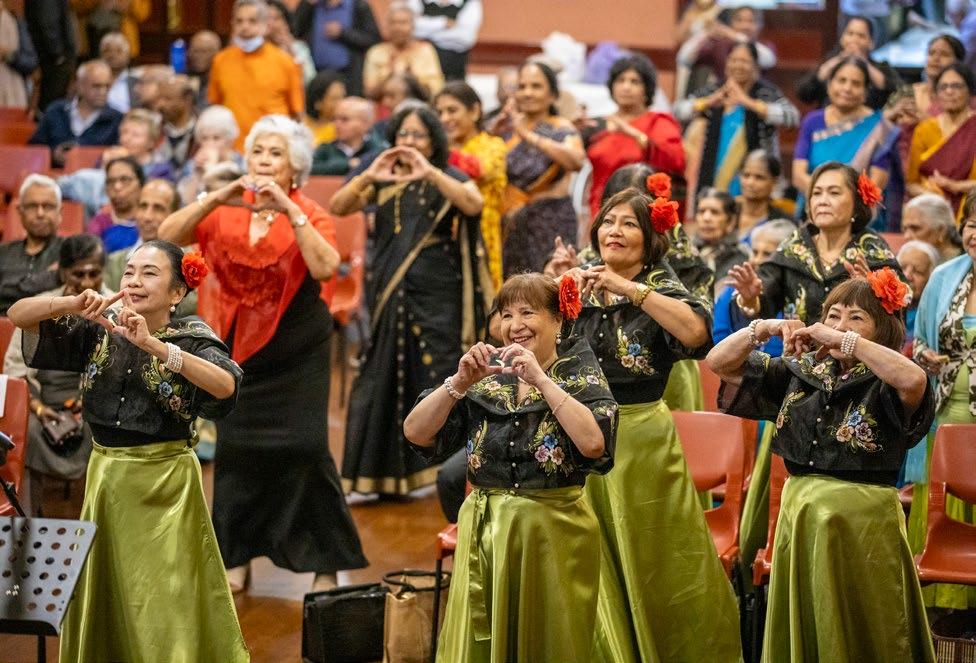




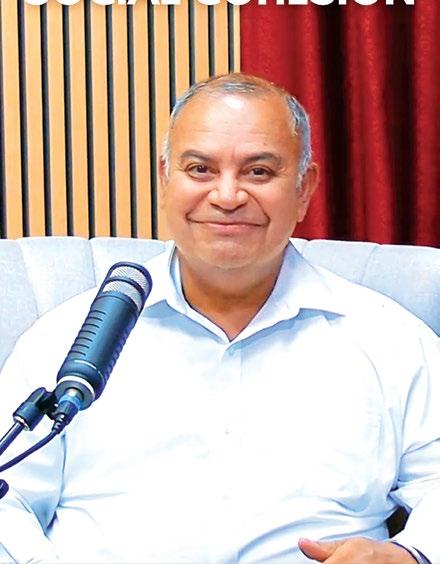

Social cohesion isn’t just a government problem, it’s a mirror. If we ask for belonging, perhaps we also need to ask how we see the place we live in.
PAWAN LUTHRA checks in on our own unconscious biases.
Rakesh Arora wrote: Powerful thoughts, Pawan. These words deserve a much wider reach - especially among Indians who proudly call Australia home. They remind us to honour our Janambhoomi, the motherland that shaped our values, while respecting Australia as our Karmabhoomi, the land that gives us opportunity and purpose. Messages like this inspire reflection, unity, and a deeper responsibility - strengthening the bond between our roots and the place we now call home.
Navjeet Singh Matta wrote: Great words, Pawan. These thoughts truly resonate. Messages like this encourage reflection, unity, and a deeper sense of responsibility towards the country that has given so many of us opportunities to grow, contribute, and build a future. Sharing perspectives like these can inspire positive conversations, stronger community values, and a more meaningful connection between our roots and the place we now call home.
David Avasthi wrote: True assimilation wonderfully described - applies to all people of all backgrounds - to immigrants moving to America as much as Americans settling in Europe, Asia or Latin America, Europeans settling in other parts of the world etc. Not ‘living in Rome as Romans do’ is a source of a lot of issues causing civil, political and social strife in many parts of the world.
Jason Donald wrote: I love your message Pawan, eloquently said with dignity and wisdom.
Rahul N Ram wrote: This is lovely, and possibly much-needed. Not just for Indians in Australia, but Indians abroad in general. And yes, it would be great to show this to Indians in India as well. Great work.
Eugene Reinboth wrote: Perfect analysis and message
John Peacock AM wrote: Great words! Thank you, Pawan.
Matt Ritchie wrote: Wonderful. Thanks Pawan.
Susanne Gervay wrote: Thank you for this wise advice.
Aparna Thadani wrote: Fear drives us apart…and it goes both ways. You're fearless, Pawan. Awesome.
Vinaya Rai wrote: An important self-roast to have. Well said!


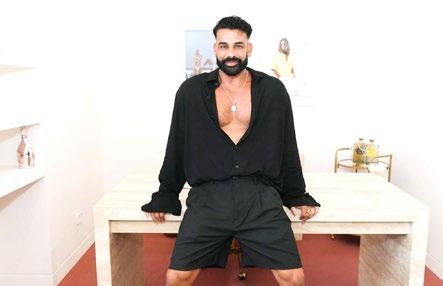
JAI PATEL pays tribute to his cousin PREM PATEL – a fashion visionary and a fearless creative.
Deepak Gidwani wrote: Prem was a game changer - his light will shine forever.
Alan J Maurice wrote: A star fades off this planet.
Ishita Terry wrote: Deepest condolences to all in your family Jai.
Pankaj Savara wrote: Jai, very sad. Heartfelt condolences to you and your family.
Rajni Anand Luthra wrote: You shared a very close bond, Jai Patel. I did not know Premal at all, but your words describe a full and rich life. Deepest condolences.


The European T20 Premier League unveiled its first three franchises in Sydney recently.
Kevin O’Brien wrote: The ETPL will change cricket in Europe for everyone – players, fans, administrators, governing bodies. Should be the start of something special.
Steve McConchie wrote: Kevin O’Brien, spot on. An amazing opportunity to continue the growth of the game into an emerging market. Great to see someone like yourself leading from the front. Well done.

What is Vidya Balan thinking in this picture?
Poornima Menon wrote: Hope these false eyelashes stay put throughout this photoshoot.
Meena Sundar wrote: Hope I can fit in these clothes forever!
Rajni Anand Luthra wrote: I hardly ever go to my local bank branch - and when I do, it’s my excuse to wear this impulse-buy outfit I swore I’d never wear.
Sruthi Sajeev wrote: I’m assuming I’m here to act out a bank heist… but they don’t expect me to do stunts in this dress, do they?
Harini Sridhar wrote: There’s that person I never want to see. But now we’ve made eye contact I’ve got to act social and say Hi.
Lakshmi Ganapathy wrote: If I wear enough blue, will they let me inside the bank?

For outstanding public service in strengthening trade and investment relationships between Australia and Southeast Asia
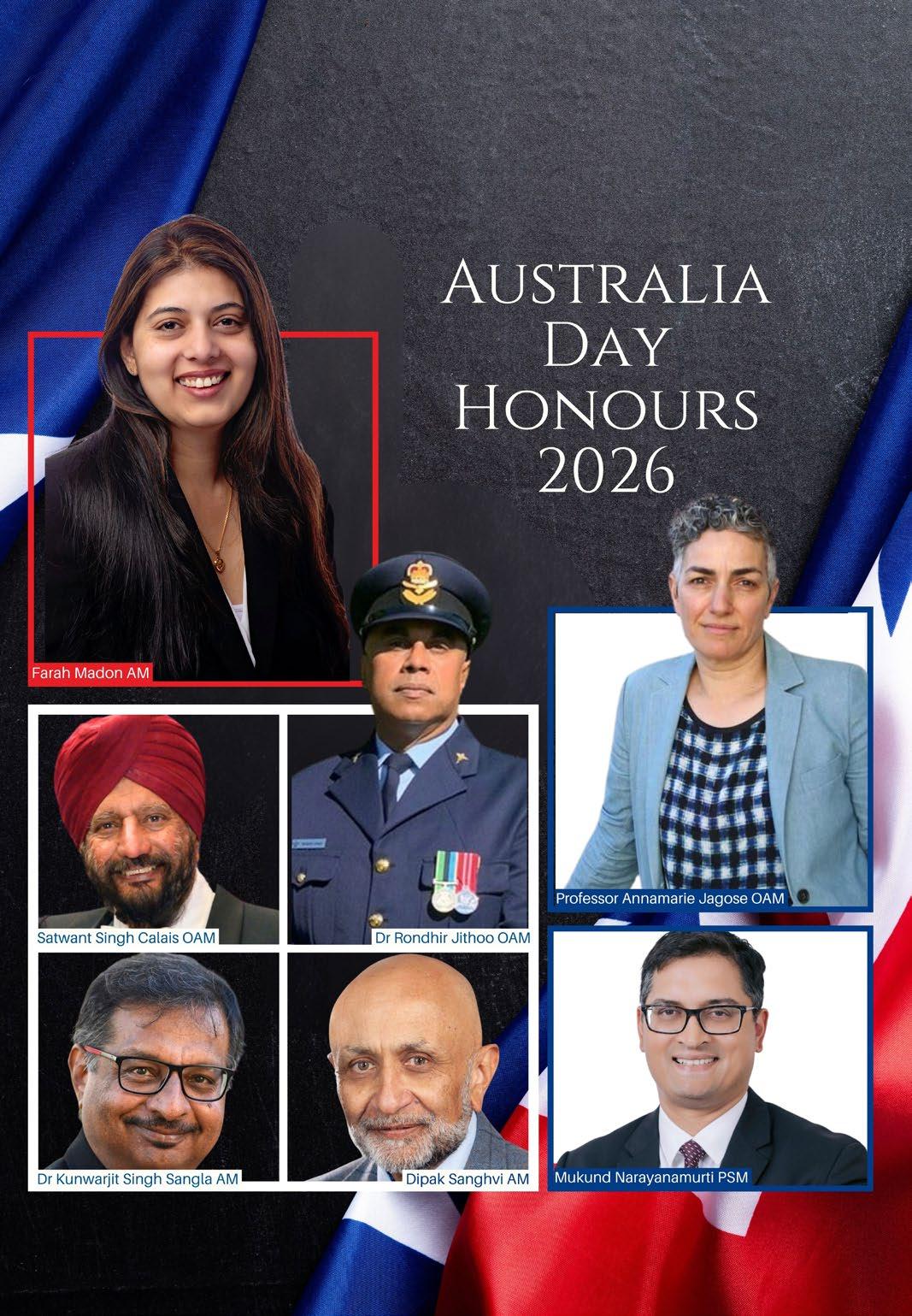
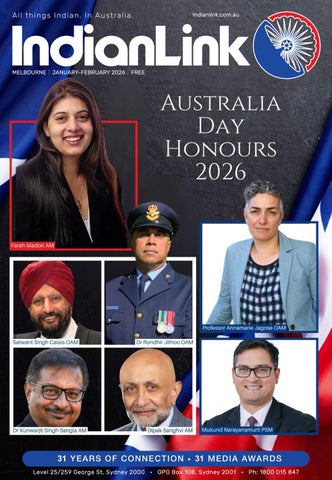
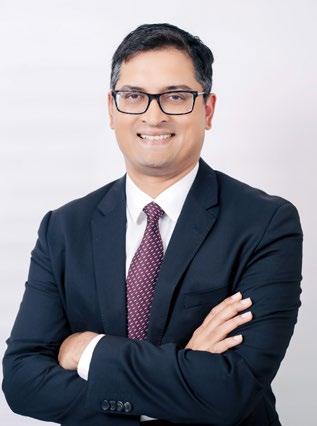
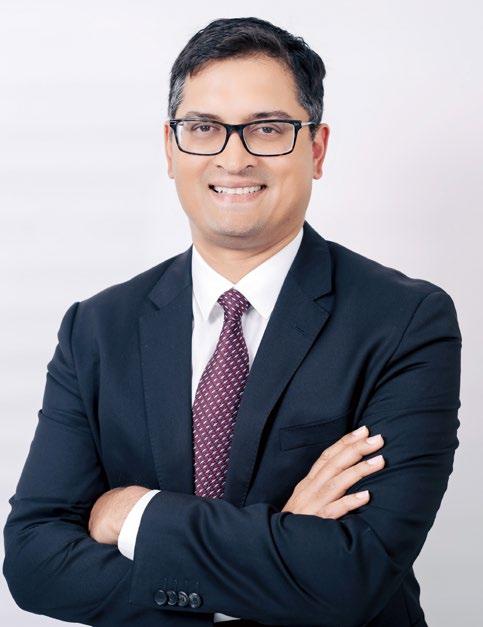
For Mukund Narayanamurti, Australia’s relationship with Southeast Asia has never been a theoretical concept – it has been the central thread of his professional life. That lifelong commitment was recognised on Australia Day, when he was honoured for outstanding public service in strengthening trade and investment relationships between Australia and Southeast Asia.
“I’ve focused my entire career on Australia’s relationship with our region,” Narayanamurti tells Indian Link. “Over the last 25 years, I’ve been drawn to the richness of the Southeast Asian region, its people, cultures, history, politics, and markets. I truly love every country in the region.”
That affinity has been shaped by decades of work across Asia, including Greater China, Northeast Asia and South Asia, before a more deliberate focus on Southeast Asia. In 2020, he made a defining decision to base himself in Jakarta with the Australian Trade and Investment Commission (Austrade), placing himself at the heart of the region Australia increasingly sees as central to its economic future.
“Our proximity, economic complementarity, and growing alignment meant that it made sense to focus my career on strengthening Australia’s trade and investment relationship with Southeast
Asia,” he says.
That focus culminated in Narayanamurti
leading Austrade’s contribution to ‘Invested: Australia’s Southeast Asia Economic Strategy to 2040’, one of the most significant economic policy initiatives Australia has undertaken in the Indo-Pacific. Translating a long-term strategic vision into practical action across 10 markets, however, came with considerable complexity.
“The hardest part is ensuring alignment with the large number of senior stakeholders entrusted with the success of the Southeast Asia Economic Strategy,” he says, pointing to the breadth of leadership involved – from Australia’s Special Envoy
Hard work does pay off, says Dr Ravinder Raj Anand of Perth, who has been honoured with the Member of the Order of Australia award (AM) at this year’s Australia Day.
As a scientist and researcher with a career spanning more than 40 years, Dr Anand together with his team has helped to transform the mining industry in the country. His research into regolith and landscapes across different regions of Australia has helped unearth mineral deposits such as gold, base metals as also
for Southeast Asia Nicholas Moore, to ministers, agency heads, states, territories and business leaders.
“Through consultation, genuinely incorporating feedback, and building evidence-based arguments, anchored in the Australian Government’s priorities, you build confidence to secure alignment,” he says. “Ensuring alignment is crucial to execute with confidence.”
At the centre of the Strategy’s development was an unprecedented consultation process, with more than 750 engagements across government and business. Narayanamurti credits Moore’s leadership as pivotal.
“He is one of the most consequential
leaders I’ve worked with,” he says. “Nicholas led the consultations – every single one of the 750 plus consultations in the lead up to the development of the strategy.”
Crucially, the process reinforced confidence in Australia’s standing in the region.
For Narayanamurti, success in Southeast Asia is inseparable from cultural understanding and relationships built over time.
“Cross cultural understanding is crucial to engage deeply with counterparts in the region,” he says. “Language and cultural understanding are important, as is a deep understanding of markets, and having longterm established relationships with public and private sector counterparts in the region.”
He credits Australia’s diplomatic and trade officials on the ground for modelling that approach. “We are fortunate to have exceptional Heads of Mission and Austrade teams in Southeast Asia,” he says. “I learnt tremendously from them on how to build strong personal relationships that can aid economic diplomacy.”
Over the past decade, Narayanamurti has seen Australian business engagement with Southeast Asia mature, becoming more sophisticated and confident – though still uneven.
“Southeast Asia is not a homogenous region, and the opportunity set varies across sectors and markets,” he says. “It is appropriate for businesses to take a riskadjusted lens to assessing their returns from doing business in Southeast Asian markets.”
At the same time, he believes misconceptions persist, particularly around business exits.
“One of the misconceptions is that when Australian businesses exit the region it must be due to a failure,” he says. “Australian exits are too often framed as failures when there is often significant nuance and strategy underpinning such decisions.”
Against a backdrop of geopolitical uncertainty, Mukund Narayanamurti sees the Southeast Asia Economic Strategy as a clear signal of Australia’s intent.
“It offers a coherent, long-term narrative of how we will engage with the region to drive two-way trade and two-way investment,” he concludes.
Prutha Chakraborty
rare earths and critical minerals. The findings of research led by him have helped to make mining more cost-effective and converted hindrances into money-spinning resources.
Expressing delight and gratitude for the recognition, he admits the enormity of the award has still not truly sunk in.
“Throughout my career, I’ve found the greatest satisfaction in innovating and seeing my research applied and valued by industry,” he says, adding that he is pleased the outcomes of his work will continue to benefit the country for years to come. “I
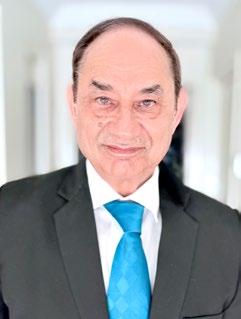
For significant service to architecture, and to people
Farah Madon’s AM honour this Australia Day recognises a career that has quietly but deeply reshaped how Australians think about architecture, accessibility, and inclusion.
Quite early in her career, Madon began to see how the built environment often sent a powerful, unspoken message about who belonged - and who did not.
“I came to architecture first drawn by the idea that good design could improve people's lives,” she tells Indian Link. “In my early years, I was focused on aesthetics, functionality, and the technical aspects of the craft, but it was through people with disabilities that my perspective changed on the true meaning and impact of the built environment.”
What followed was a fundamental shift in how she viewed her profession.
“Suddenly, I wasn't just noticing what looked good or worked efficiently; I was acutely aware of what excluded people. The steps that couldn't be navigated, the doorways that were too narrow, the spaces that essentially told people that they don't belong.”
Architecture stopped being just about creating beautiful or innovative spaces. “It became about creating access, dignity, and independence. It became about designing spaces that work for everyone,” she says.
Farah Percy Madon has worked as lead author for the National Disability Insurance Scheme’s Specialist Disability Accommodation (SDA) Design Standard. This key document sets minimum building requirements for new SDA housing for people with extreme functional impairment.
But translating lived experience into national guidelines was complex.
“One of the most profound challenges was honouring specific individual needs while
do acknowledge however that the award reflects the collective effort of the teams I’ve worked with over many years.”
Dr Anand, who retired from the pinnacle position of chief research scientist at the Commonwealth Scientific and Industrial Research Organisation (CSIRO) credits the research body for bringing his dreams to life. He continues to serve the organisation as an honorary member and mentors young scientists.
Dr Anand has been in Australia since 1981 when he first landed here to pursue his doctorate from the University of Western Australia. He had been a lecturer of Soil Science at Himachal Pradesh Agricultural University in Palampur in northern India before

creating standards broad enough to serve a diverse range of people with disabilities,” she notes.
Another challenge was shifting entrenched thinking. “How do we move beyond the medical model mindset that has historically dominated accessible design,” she says.
“My hope is that the conversation around enablement and participation will focus on ‘Does this design support someone to live the
migrating and surprised everyone around him when, six years later, he switched industries from the ‘expected’ agricultural line into mining and mineral exploration.
Looking back at that life altering decision, Dr Anand says, “I saw a lot of potential for my soil research to be innovatively applied to mineral exploration. Australia is rich in minerals, but they are hidden deep because much of the continent is covered by a thick blanket of soils, sediments and weathered rocks known as regolith. Our research has managed to capture ‘signatures’ of the mineral deposits hidden underneath.”
Driven by his research and pioneering
on Penrith City Council’s Access Committee, grounding her work in lived reality.
“Over the years, thanks to the work of the Access Committee, Penrith has made extraordinary strides in improving accessibility and inclusion,” she says. “We have seen infrastructure such as pathways, bus stops, play areas improved and attitudes shift toward genuine inclusion.”
That grassroots experience, she says, is essential. “Grassroots work keeps you honest. It reminds you that design isn't about elegance on paper - it's about being fit for purpose.”
Despite progress, Madon believes Australia continues to fall short, particularly in housing.
“The biggest shortfall I would say is the hesitation from the building industry to create adaptable residential dwellings,” she says. “It ends up costing more money for all concerned because adaptability is not considered in design from the very beginning.”
The statistics reinforce the urgency.
“Currently over 4.4 million people in Australia have some form of disability. Around 5.75 million Australians will have mobility limitations by 2060. Only 5% of the new homes built over the past decade have complied with any accessibility standards.”
Through leadership roles with the Access Consultants Association and Livable Housing Australia, Madon has focused on lifting professional standards and shifting industry norms.
“We were often brought in too late, treated as box-tickers rather than design collaborators,” she says. “Through the Association, we've worked to change that narrative.”
She believes access consultants are now increasingly part of early design conversations, and inclusive housing features - once considered radical - are slowly becoming mainstream.
Receiving the Member of the Order of Australia, she says, is deeply humbling and collective.
life they choose?’”
National policy work has shown her what is required to scale impact. “I've learned that inclusive design isn't just about the physical environment - it's about the regulatory frameworks, procurement processes, and accountability measures that either enable or obstruct good design at scale.”
Madon has also spent more than 15 years volunteering as a community representative
technologies, Dr Anand has travelled across the country to help correctly sample regolith, thus significantly reducing costs of exploration, as well as helping to extract minerals from the regolith – converting it from a hindrance to an additional source of income for the miners. The research led by Dr Anand has contributed to discoveries of a series of gold deposits across the country.
His latest work, concentrated on the discovery of gold and other metals in the leaves of native trees as well as in termite mounds, has helped exploration. This research has made significant and lasting changes to the practice of geochemical exploration
“This recognition is incredibly meaningful to me,” she says. “Any spotlight on these issues therefore potentially opens doors, creates conversations, and signals to younger practitioners that this career path is valued and viable.”
Farah Madon is clear the honour belongs to many. “Every outcome I've been part of, has involved people with lived experience who shared their stories and expertise. All these people who've shaped my journey, this honour is also dedicated to them.”
Prutha Chakraborty
globally. Industry leaders value deposit discoveries linked to regolith research to over $15B.
Expressing pride at the width of impact of his work, Dr Anand says, “The processes developed by our research are being used by mining industries in Africa and South America as well, thus contributing substantially to the export economy of Australia as well.”
More than 300 publications and several awards later, Dr Anand says his love for the subject remains the same. “As a scientist, I just love the subject. It’s never been a nine-to-five job for me, and I have often woken up in the middle of the night too to jot down new ideas.”
Tarini Puri
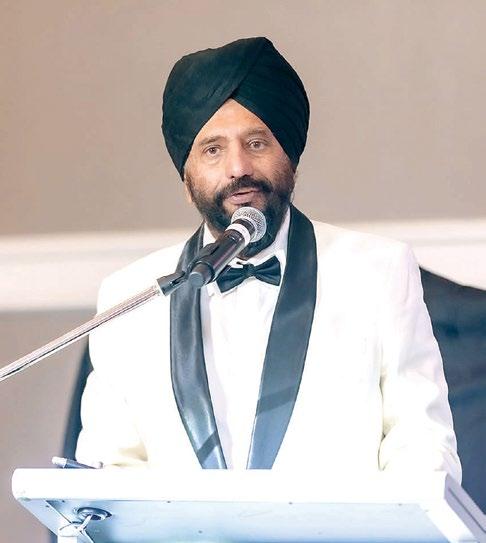
For service to the Sikh community
When Satwant Singh Calais arrived in Australia in 1970 as a high school student, the adjustment was challengingparticularly at boarding school, where his turban and full head of never-cut hair often drew attention.
But those moments are not what define his memories of those early years.
“The staff and students were accommodating and welcoming, which was very nice,” Calais says of his time at The Friends' School, Hobart, a Quaker institution.
However, it did prove transformativesetting him on a lifelong path of helping others like him find their footing in Australia, and guiding the next generation towards becoming well-adjusted Sikh Australians.
For this, Calais has received the OAM honour this Australia Day.
Heading to the University of Tasmania for further studies in science, the Malaysiaborn Calais met with many overseas students - all struggling to settle in.
“I was blessed to stay with a foster family during holidays, gaining an intimate understanding of Australian culture and its nuances.” he recounts. “That allowed me to support new students - and led to the establishment of the Overseas Student Service.”
Years later, after moving to Sydney with his family, Calais joined like-minded friends to establish the Punjabi School in 1997. Soon after came a deeper realisation. “We knew our youth needed confidence and a stronger understanding of their heritage. Wearing a patka makes you stand
out — and confidence matters.”
In 1999, youth camps were launched to help young people understand who they are, feel comfortable in themselves, and explain their identity to Australians.
“Racism often comes from ignorance,”
Calais says. “When our own sons attended The King’s School, we immersed ourselves in the school community. It broke barriers — and we’ve shared those lessons widely.”
What began with 18 attendees has since grown into Sikh Youth Australia (SYA), which saw 350 young people attend its annual camp at Collaroy just weeks ago. The movement has grown organically with its participants — into university through leadership programs, and into the workforce via the Young Sikh Professionals Network (YSPN).
“At YSPN, young people mentor each
Dr Kunwarjit Singh Sangla, AM
For significant service to endocrinology, and to the rural and Indigenous communities of Queensland
T“his honour is both deeply personal and a tribute to the incredible communities I’ve had the privilege to serve,” says Dr Kunwarjit Singh Sangla of Townsville, who has been awarded the Member of the Order of Australia award (AM) on Australia Day this year.
Dr Sangla is currently serving as the Medical Director for Medical specialities at Townsville University Hospital. Specialising in endocrinology, general and obstetric medicine and deeply passionate about rural, remote and indigenous
other, while invited speakers guide them through workplace realities,” Calais explains. The network now spans Brisbane, Melbourne, Perth and Auckland, and welcomes members from all backgrounds.
Health became another focus when SYA’s medical students identified high rates of diabetes and heart disease among migrants. This led to Culture Care, a volunteer-run initiative delivering free health clinics at gurdwaras for those facing language and access barriers. A clinic at Glenwood Gurdwara in October alone supported 150 people.
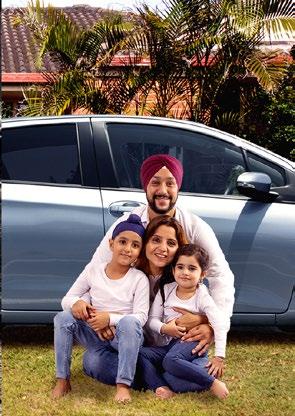
SYA’s charity arm, Sikh to Give, has also stepped up during times of crisisdistributing food relief vouchers during floods and donating a car to a family with a disabled daughter who lost everything.
Another landmark initiative, Divine
Steps, was launched in 2019 to mark the 550th anniversary of Guru Nanak. Inspired by his four udaasis, the open-air interfaith concert brought together nine faith communities to share sacred music and philosophy before an audience of 5,000.
Today, SYA also runs one of the few nationwide Sikh spiritual development programs. Small jathas travel across Australia, taking kirtan, simran and meditation into gurdwaras, community spaces and homes. “It’s not radical or preachy,” Calais says. “We simply engage young people at their level.”
Recognition of service is another theme through the biennial Sikh Awards for Excellence. “So many people contribute quietly to Australia’s social and economic life,” Calais notes. “We uncover hidden gems across the country.” Around 200 applicants are assessed by an independent panel each cycle, culminating in a black-tie awards event that celebrates achievement and encourages recipients to step forward for broader national honours.
All of the SYA activities are volunteerrun and family-driven, with mums, dads, kids and grandparents all chipping in. “My own success is a reflection of the strengths of my family and their support - my OAM is really a recognition of the total contribution of all the Sikh sevadars, the people that make time for community.”
With deep spirituality guiding all his endeavours, what does Calais make of current times, when religious tolerance feels in short supply?
“It’s ignorance, at the end of the day,” Satwant Singh Calais notes. “We’ve got to engage with all faith groups with respect. A classic example is music - engagement can be taken across boundaries. Engaging everybody like that in a positive sense, and with mutual respect and love, and perhaps patience - because you can't have change overnight - can be successful.”
And in that patience - rooted in faith, service and shared humanity - Calais has spent a lifetime proving that belonging is something you build, together.
Rajni Anand Luthra
health, he says it’s rewarding to be able to continue to help shape policy for the betterment of rural and indigenous communities as a Board Member of Townsville Hospital and Health Services.
Dr Sangla takes pride in his work of over two decades, delivering face-to-face outreach clinics in Central, West and North Queensland.
“The communities (here) face limited access to specialist care and high rates of clinician turnover, often resulting in fragmented care. I have supported patients and clinicians with email and telephone advice over many years and continue to
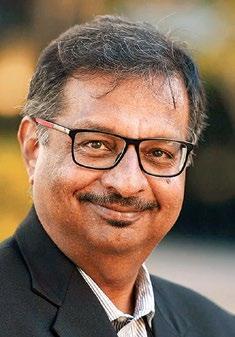
For significant service to community health through governance and board roles
C“ommunity is meant to support each other, look after each other; in philosophical words, humanity is community,” says Dipak Sanghvi, a man well acquainted with caring for his neighbours.
Sanghvi has received a Member of the Order of Australia (AM) for his work as a pharmacist and board member for many of Australia’s premier healthcare institutions, including Monash Health, Musculoskeletal Australia, Amcal Australia, the Pharmacy Guild of Australia and most recently, Ambulance Victoria.
“Healthcare is one of the purest forms of public service… it was fortunate that I got into pharmacy and it started to get me interested in understanding people’s suffering and understanding what they require,” he says of his career.
Born in Uganda, Sanghvi studied pharmacy in Brighton, UK, before migrating to Australia with his wife in 1976, a journey he says has helped him ‘understand the demands and requirements of different cultures’.
Though initially feeling the familial pressure to become a doctor, it was the frontline communication and retail aspects of pharmacy that first captured his interest, before burgeoning into an interest in the life spans of customers.
“Health is a very addictive place in a sense, because once you are in health, you just get involved too much and there’s no way out of that,” he says.
In 1979, Sanghvi opened his first pharmacy on Smith Street, Collingwood,
do so. This was prior to Telehealth being available, which helped me expand my footprint across the region,” he says.
“I have been travelling by plane, by road and in two-to-four-seater single-engine aircrafts three to four times a month, to visit these communities. Of course I’ve seen a fair share of challenges during these travels, considering the vast distances I need to travel, weeks away from home and the time commitments required,” he admits.
The in-patient diabetes dashboard developed by Dr Sangla enables a nurse to virtually monitor blood glucose levels of all admitted patients across the health service — including rural hospitals with a digital footprint — and provide tailored management advice. The innovation, which improves patient outcomes, earned him
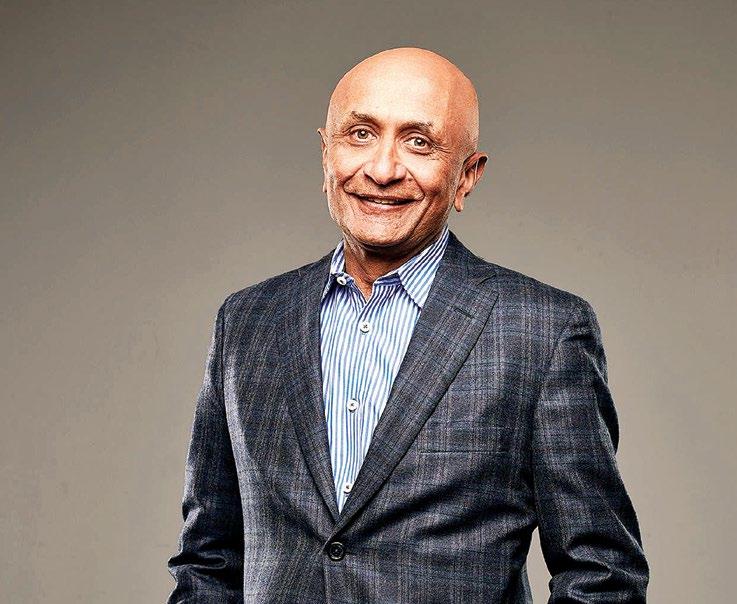
working three jobs to make the deposit; now a bustling inner-city precinct, he remembers Collingwood in the ‘80s as a ‘quite nice little area with a little pharmacy’. Later, in the same decade, he opened more pharmacies in the western suburbs (Melton, Deer Park, St Albans), some of which are still owned by the family.
“I used to live in Ivanhoe and drive out at 7am to open the pharmacy (in Melton), and then close at 9pm, and come home at 10:30pm – that was repeated seven days a week for months without any breaks,” Sanghvi recalls.
“But that was part of life. My wife was very supportive; she would bring our three kids to visit me in the pharmacy. She put a lot of effort in making sure that the support was there for me to continue the work I did.”
It was here Sanghvi realised the importance of pharmacies as a frontline community health service, something which has informed his advocacy on the boards of Amcal and the Pharmacy Guild of Australia.
“We would talk to 40, 50 people a day and sometimes 30 didn’t need any
the Health Roundtable Health Innovation Award in 2023.
Other notable achievements of Dr Sangla include the drafting of the statewide protocol for managing patients (16+ years) presenting to hospital with Diabetes Ketoacidosis, mostly seen in patients of Type 1 diabetes.
In 2024, Dr Sangla received the Queensland Health award for digitising healthcare by developing the venous thromboembolism (VTE) virtual dashboard, which is centrally monitored by high-risk pharmacists to ensure correct VTE prescription/modality, and appropriate and timely charting and administration across the health service. “This can be life threatening and has been one of the leading causes of unexpected deaths in patients
medication, they just needed comfort and an understanding of their health [conditions]… you start to realise how important it is to help some people by talking about their problems,” he says.
“I also saw a lot of loneliness in the community. There were many old people coming in who had no one to talk with. They would come in, say hello, talk a bit, and then head off. The more I look at the health system with all the knowledge I have… loneliness is the biggest problem we’ve got.”
As the chair of Gold Cross Products and Services until 2014, a subsidiary of the Pharmacy Guild of Australia, Sanghvi upheld the quality and trust of the brand behind the iconic Glucojel jellybeans and pharmacy-only everyday medicines.
He has just finished his tenure as chair of Monash Health, a role he has been in since 2016. Over his tenure, Sanghvi has seen the organisation through the challenges of COVID-19, the opening of the Victorian Heart Hospital, and Monash Health’s highest-ever volume of planned surgeries.
“The thing that I observed and admired
admitted to hospital,” he explains. His greatest satisfaction, however, comes from the waiver of intellectual property rights on all three initiatives by Queensland Health for them to be freely and widely adopted by other health services.
Dr Sangla, a graduate of Medical College in Amritsar (Punjab), credits his Indian upbringing for his mental resilience to be able to keep up with the demands of his profession. “I deal with emergencies quite frequently, and regularly manage complicated pregnancy cases,” he explains. “One must keep abreast of the changes in medications, technology, and latest investigations to deliver person-centred care, which is evidence-based, safe and of the highest quality.”
Acknowledging the increasing numbers
[during COVID] was the compassion and the professionalism of all these people in looking after health [of patients]. Their whole idea was how to make the patient comfortable, safe, and give them the right treatment,” he remembers.
“When you look at other countries, a lot of doctors and nurses died – we didn’t lose a single one.”
Sanghvi is currently a board member for Ambulance Victoria, where he utilises his knowledge of primary healthcare and the hospital system to reduce the strain on emergency services and deliver the right services to patients.
“COVID helped us see that people can contribute in different ways,” Sanghvi says. “Physiotherapists, dentists – they’re all part of the health ecosystem. The challenge is how we bring them together to deliver the best outcomes for the public.” He elaborates, “Hospitals have limited capacity. We need to ensure that those who require hospital care receive it, while the rest of treatment is delivered through primary healthcare.”
Lakshmi Ganapathy
of people of Indian origin winning the top honours in Australia, Dr Sangla says it speaks volumes about Indian culture and upbringing which are reflected in our shared commitment to excellence. Dr Sangla was born in Delhi but lived all around India courtesy his father’s defence postings.
Recalling his own amalgamation with the Australian way of life, Dr Sangla emphasises on the importance of integration. “When I migrated to Australia in 2001, people of Indian origin were few and far between. We had to learn and adapt quickly. I believe it’s important for new migrants to Australia step out of their comfort zone and embrace diversity,” he advises.
Tarini Puri
It is with quiet humility that Dr Rondhir Jithoo talks about his OAM honour conferred this Australia Day.
“It’s not a recognition of an individual achievement,” he says simply. “It’s recognition of service to neurosurgery.”
That distinction matters deeply to a man whose career has been shaped not by accolades, but by collective effort, duty, and an unwavering belief that medicine exists within, not above, the community it serves.
With more than three decades in neurosurgery, the Melbourne-based Dr Jithoo’s work has spanned Australia’s major public hospitals as well as some of the most remote and underserved regions in the Pacific. From Indigenous communities in Australia to surgical outreach missions in Fiji and Papua New Guinea, his practice has been defined by access, equity, and service over prestige.
“In the old days, the surgeon was seen as the boss,” he reflects. “They took the credit when things went well. But surgery is a collective endeavour.”
Nurses, anaesthetists, allied health professionals, support staff, the people who rarely receive public recognition are, in his view, just as deserving of this honour.
That philosophy also explains his careerlong commitment to public hospitals. Unlike many specialists, Dr Jithoo did not prioritise private practice. “This recognition,” he says, “also acknowledges that I chose to spend much of my career in the public system.”
Service, for him, extends beyond hospitals.
Later in life, in his mid-forties, Dr Jithoo
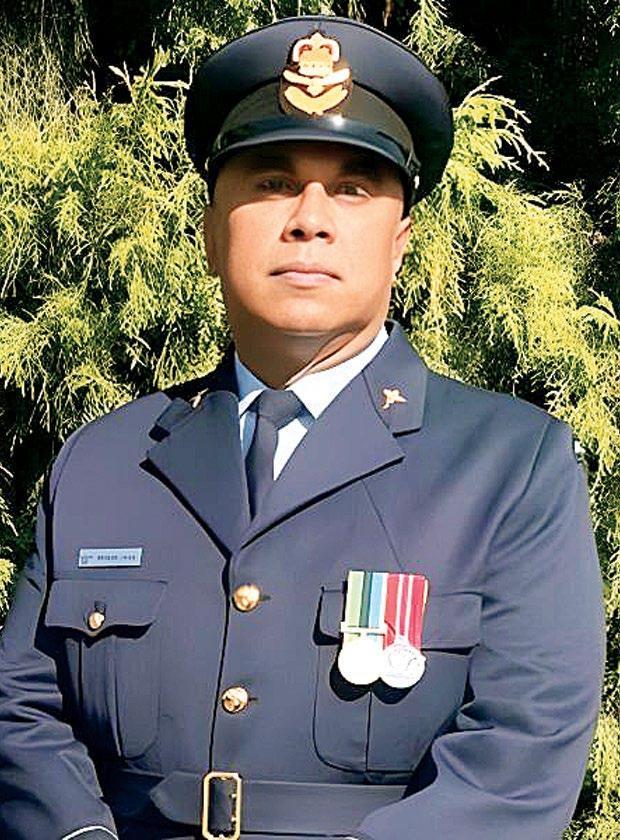
joined the Australian Defence Force as a medical officer, a decision rooted as much in family history as personal values. His great-uncle served in the Indian Air Force during the Second World War and died on active service, buried in a pre-Partition war grave in Karachi. “Duty, teamwork, accountability, service before self,” he says, listing the military values that mirror those of surgery. “They are deeply aligned.”
He has since completed overseas deployment in the Middle East, providing medical care to those serving the nation.
The experience, while professionally rewarding, came with emotional costs.
“When you deploy, your family waits at home – anxious,” he says. In that sense, the OAM feels less like a personal reward and more like recognition for those who stand quietly behind the service professional, their family, colleagues, community.
Dr Jithoo’s own story is shaped by a layered diaspora journey. Born and raised in South Africa, he traces his ancestry to Lucknow and Bihar, with his greatgrandparents migrating in the 1860s and
Shyam Das, OAM
For service to the Indian community of Queensland
Shyam Das reveals there was quiet disbelief - and then gratitude - as he got news of his OAM. “I humbly accept this honour,” he tells Indian Link.
Das arrived in Australia in 1988, a young, newly married man from Calcutta, India with a background in travel and tourism. Brisbane, at the time, had only a handful of Indian families. Community gatherings were difficult to organise, and even locating fellow Indians required effort.
There was no social media, no WhatsApp groups, no ready-made networks. “I went through the telephone directory,” he recalls, scanning for Indian surnames and making cold calls. One introduction led to another, and
slowly, the idea of community took shape. Professionally, Das found his footing early. Seeing the absence of any Indian or ethnic travel agency in Queensland, he established in 1989 what would later become Target Travel and Tours. Drawing on his experience from India, he built the business steadily, promoting travel and tourism while forging connections between Australia and India. Over the years, his work earned recognition, including the Bharat Gaurav Samman in 2012, presented in New Delhi for his contribution to promoting Indian tourism abroad.
Yet it is his community work that has defined his public life. Even before migrating, Das had
1870s as dairy farmers near Durban, a city deeply connected to Mahatma Gandhi’s early activism. His great-grandfather was involved with the Natal Indian Congress, adding a thread of civic engagement to the family legacy.
Medicine, too, runs deep. His father was a general practitioner, his mother an academic anthropologist. When Dr Jithoo migrated to Australia in 2002 as a qualified doctor, neurosurgical training followed, primarily in Melbourne. Today, that legacy continues through his children - daughter Arya who is a neuroscientist and son Ved who is a doctor - though he is quick to say they followed their own paths, inspired perhaps by their grandfather as much as him.
Neurosurgery, he acknowledges, is not for the faint-hearted. Long hours, physically demanding operations, highrisk decisions and outcomes that can be devastating. “You don’t always get a good result,” he says quietly. “Patients can die.” It is this proximity to vulnerability and mortality that he believes demands not just technical skill, but character.
“Patients may never see your surgical skill,” he says. “That happens in the operating theatre. But they see your kindness, your compassion.” He recalls being taught that whether a patient is homeless or the Prime Minister, “once you open their head, the brain looks the same.”
One of the cases that has stayed with him occurred during a surgical outreach in Fiji. Faced with a child suffering from tuberculosis meningitis, with limited resources available, Dr Jithoo improvised using a low-cost shunt sourced from India. The operation saved the child’s life, a reminder that innovation in medicine is often born from necessity, not technology.
As he reflects on his career, one belief remains constant: “Service before self”, he says, is the foundation of medicine and perhaps what the Order of Australia ultimately recognises.
“This feat doesn’t change how I work,” he says. “I would still do the same thing. But if it strengthens trust for my community, then it has meaning.”
Torrsha Sen
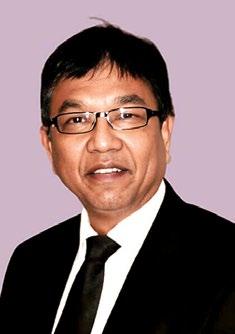
University of Sydney Provost and Deputy Vice Chancellor Professor Annamarie Jagose describes receiving an OAM as an ‘unexpected honour’.
“It feels less a personal accolade than an acknowledgment of the collective effort that goes into advancing higher education in Australia. I’m proud to contribute to a sector that transforms lives and shapes futures, both individual and collective,” she tells Indian Link.
Growing up as the middle child of five in New Zealand’s Waikato region, Professor Jagose remembers her early years as filled with ‘curiosity and openness to difference’, owing to her mixed Parsi and Irish Catholic upbringing, something which would go on to inspire her second published story, ‘Milk and Money’.
“We were very familiar at home with the milk-and-money story of the how the Parsis came to settle in India (milk and sugar in some tellings but always money in ours) by sliding a gold coin into a brimful pitcher of milk to persuade the local rulers that they would not disrupt the existing society and would add richness,” she said.
“Like the mix of our family, that story also helped me value diversity, even when I was too young to know that word.”
Completing her PhD in 1991, she found herself drawn to lesbian and gay studies - a field emerging from feminist studies’ examination of gender norms - as a vehicle to reevaluate fixed notions of the world.
“Feminist Studies and Queer Studies
been involved in social initiatives in India, from medical support to grassroots welfare. In Queensland, he joined the India Australia Society, one of the state’s oldest Indian organisations, and soon began thinking beyond gatherings and celebrations. At a time when India’s global image was often misunderstood, he felt the need to actively showcase the country’s cultural depth. “In a multicultural society, you cannot confine yourself,” he says. “You have to be part of the mainstream.”
That belief translated into action. Independence Day events grew into India Day fairs that highlighted Indian history, artefacts, arts and literature. Das became a founding member of the Queensland chapter of GOPIO and later played a key role in forming the Federation of Indian
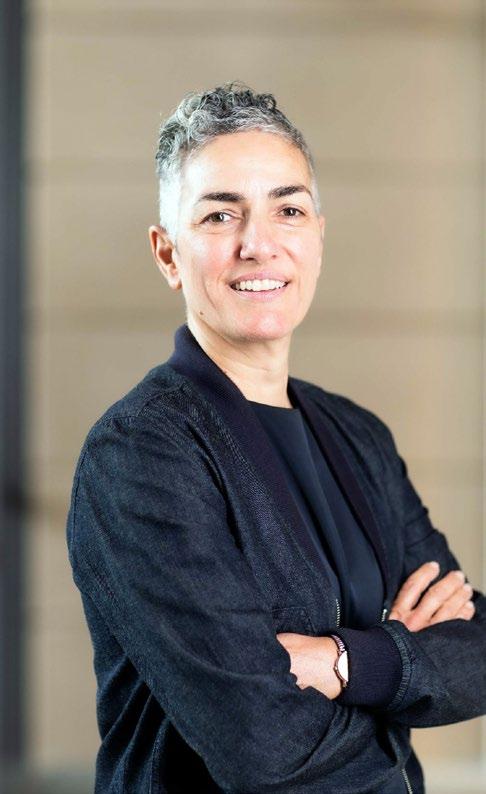
are often treated as successive waves of critical thinking, but I like to think of them together. I was drawn to the analytic power of these two frameworks because they offered intellectually rigorous ways to question taken-for-granted assumptions about identity, power and social norms,”
Professor Jagose says.
“Their openness to rethinking the world - and my place in it - was energising and generative for my academic life.”
Holding academic positions at the University of Melbourne, and then
Communities of Queensland, an umbrella body representing more than 100 Indian organisations. The federation created a unified voice for a rapidly growing community and a clear point of contact for local, state and federal governments.
As a Bengali, Das also helped establish the Bengali Society of Queensland in the early 1990s, ensuring space for Durga Puja, Saraswati Puja and cultural programming. But his engagement extended well beyond any single identity. Over the years, he has worked closely with broader South Asian groups, as well as mainstream Australian organisations. Today, he serves as President of the McGregor Lions Club, a Queensland institution in operation since 1971.
Another cornerstone of his work has been ethnic broadcasting. Das is now a director
In 2003, Professor Jagose took a risk, taking a year of leave without pay to write a historical novel on nineteenth-century sea voyages, Christian missionaries and colonial law.
The result, Slow Water, went on to win The Vance Palmer Prize for Fiction at the Premier’s Literary Awards in Victoria, and was shortlisted for the Miles Franklin Literary Award.
“I think Slow Water resonated because it brings readers inside an intimate story that has moral complexity for twenty-firstcentury readers even as it unfolds against a descriptively rich slice of colonial history,” she reflects.
“The novel’s focus on human entanglements - tender, fraught and imperfect - seems to have prompted reflection that stays with readers.”
Six years into her time at the University of Sydney, in 2017, Professor Jagose was made Dean of the Faculty of Arts and Social Sciences, where she led their Future Fix research program suite, and saw the faculty through a challenging stint for the higher education sector during the pandemic.
With the period bringing mass restructuring and shifts to online learning across every institution in the country, Professor Jagose came under fire for her response at the time.
“Slightly to my surprise, I find I don’t need to be liked; I need to measure up to myself at the end of every day,” wrote Professor Jagose in a piece from 2019. But Professor Jagose has remained steadfast in her approach to education and the mission of universities.
“We must retain our core purpose: the continued free and unfettered development of new knowledge in an environment also committed to student learning,” she said in a 2023 address published in The Australian.
University of Auckland, Professor Jagose would go on to be a leading voice in this fledgling area of study, with her ground breaking 1996 book Queer Theory: An Introduction cited over 6000 times.
Straddling both fiction and academic works, Jagose would come to be known for her subversive approach to form resisting simplistic views of lesbianism, described by peer Toni McCallum as ‘a wry, intellectual humour’, and ‘one of the most exciting writers to have come from Aotearoa.’
of the Ethnic Broadcasting Association of Queensland, one of Australia’s oldest multicultural radio networks, serving over 50 communities. Through radio, he helped promote language, music and culture, while also supporting new migrants and international students navigating life in a new country.
Das describes a period of intense community mobilisation during the COVID-19 pandemic: food deliveries, grocery support, medical assistance and emergency accommodation for stranded students and tourists. Fundraising efforts extended beyond Australia, with significant aid raised for India. Mental health seminars, organised with psychiatrists and counsellors, addressed growing distress among students. “We were there 24 hours,”
Becoming Senior Deputy ViceChancellor and Provost last year, Professor Jagose is optimistic about the future of Australia’s oldest university and the potential of collaboration.
“To realise our considerable potential, we must act collaboratively right across our large and complex organisation,” she says.
“Collaboration and collectivity are very enlivening frameworks for action. We know we are best when we are aligned in our purpose and help each other succeed.”
Lakshmi Ganapathy
he says. “Whatever way we could help.” That philosophy, he says, comes from his spiritual grounding in the Ramakrishna Mission and Vedanta teachings. “Do the right thing, and don’t expect anything in return,” he says. “Peace of mind comes from service.”
Today, Shyam Das continues to serve his community with unwavering commitment. Guided by his belief that multiculturalism underpins peaceful coexistence, he is now working towards an ambitious vision: the creation of a “House of India” in Queensland, a permanent cultural hub for future generations. Alongside this, his advocacy remains firmly focused on confronting critical issues such as domestic violence, cyberbullying and youth mental health. Torrsha Sen
For service to the Tamil and Indian communities of Queensland
Palanichamy Ochathevar Thevar OAM has become somewhat of a household name in Brisbane’s Tamil communities. Only a phone call away for many, the social worker has spent over 40 years as a dedicated community worker, helping bring change on a local scale.
Thevar has worked in disability care, has been an advocate for multicultural communities, helped refugee families, and has dipped his toes into politics. But his work started even before he first set foot into Australia.
Inspired by his own parents’ acts of service to their rural community near Madurai, Tamil Nadu, Thevar began a course in rural development and as a young adult, helped improve the lives of over 12,000 families in rural India. His move to Australia in 1996 after his MPhil in Peace Research and New Global Society, turned his focus to the struggles faced by those in migrant communities, specifically, new migrants.
“As a migrant myself, I understood the challenges and the practical issues people face when they move to a new country,” he tells Indian Link. “After living in Australia for so long, you forget how different the systems here are to the ones in India. Even grocery shopping - where there are so many different types of milk and bread availablecan be overwhelming for some people.” Despite facing the same challenges that
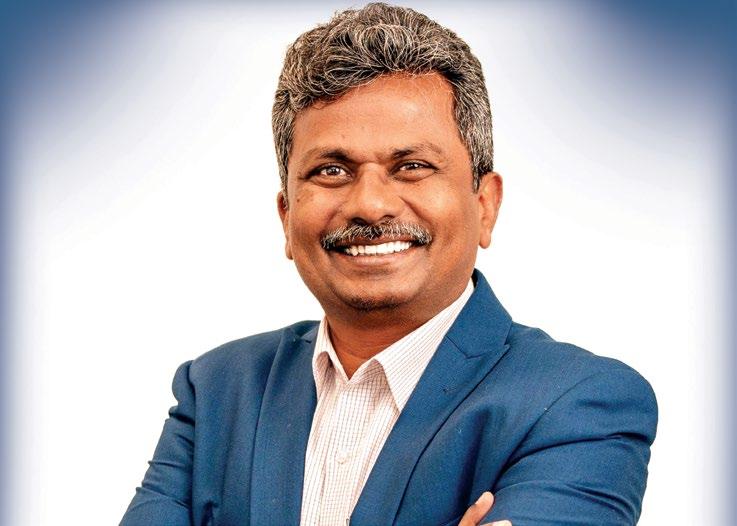
many new immigrants face, his passion for his community never waned. Within three years of arriving in Australia, he was elected as the President of the Tamil Association of Queensland, an organisation dedicated to celebrating Tamil heritage.
“Everyone in this organisation worked together with other Indian associations to make sure the Indian community stayed united. At the end of the day, we all aim to support individuals to become good citizens of Australia,” he asserts.
His work in this role and beyond has been varied. He’s arranged community celebrations, assisted individuals seeking to obtain visas and has helped raise funds for funerals and other events.
Recalling an instance where a young mother lost her husband due to an unknown illness, he says, “I remember being so annoyed that the police officer didn’t offer any assistance, and just told the
For service to the Indian community of Brisbane
“I
t’s a great honour,” Tausif Khan OAM says of his Australia Day recognition. “I would like to thank the Australian Government – and the Queensland Government for helping facilitate the activities and endeavours that have got me this award today.” The gregarious 80-something has been a community builder since his arrival in Brisbane in 1986.
Born in Agra, India, Khan later moved to the UK for higher studies, earning a degree in data electronics at the dawn of the information technology era. His first job took him to Germany, where he met and married Renate, now his wife
mother to talk to her community leaders. As a new migrant, she had very few links to the greater community.”
He took it upon himself to arrange for funeral preparations and to raise funds for the young mother and her children.
Whilst few would go to such lengths, Thevar, who has been known to take unpaid leave to volunteer, urges individuals to get involved in their community in any capacity.
“There are many opportunities out there, and it’s just a matter of searching for it. Talk to the people in your neighbourhood and ask if they need any assistance, become a volunteer at your local organisations,” he says.
“But more importantly, keep your eyes and ears open. Read the news and be aware of what’s going on around the world. If you don’t, then you won’t understand how to help.”
Just some of the positions he holds in the new year include being the advisor of the Federation of Indian Communities of Queensland, being the Vice President of the United Nations Association of Australia, Queensland and being an Executive Member and Conference Delegate at Together Union.
Professionally, Thevar is currently a social worker at the Ipswich Rural Mental Health Community Care Service, and at The Park - Centre for Mental Health, West Moreton Health. He also lectures at the National Academy of Professional Studies. Being named an Australia Day honouree doesn’t change his approach to his work, Thevar claims – but reveals it motivates him to continue learning and addressing the needs of his community.
“Whenever there’s a crisis in my community, I’ll do my best to be there.” Sruthi Sajeev
of 57 years. The couple eventually moved to Australia to raise their family, while Khan worked in the insurance industry. By the time India liberalised its economy in 1992, Khan had built a vast network of professionals spanning India, Australia and Europe, positioning him well to engage with the emerging market. Keen to help Queensland develop trade links with India, he was supported by the then Indian High Commissioner to Australia Akbar Khaleeli, as well as the Consulate General of India in Sydney in setting up the India Trade Centre, where he served as Chair from 1992 to 2008.
A natural connector of people, his language skills proved invaluable. Among his contacts were Chinese businesses and professionals keen to enter the Indian market, leading to his active involvement with the Chinese Club of Queensland and the Chinese Business and Professional Association.
Khan’s wide-ranging interests - spanning radio, music, sher-o-shayari and sport - led him to create platforms that brought the growing Indian community together in the late 1990s.
“I was part of an active and passionate
DrRavin Sadhai OAM has spent much of his career sharing his medical knowledge beyond the four walls of his practice. His two initiatives, the “Pub Clinic,” and the “Ladies Lounge,” bring medicine to the community in a way that is accessible and casual.
“Most blokes don’t generally listen to what you say if you simply sit them down and force them to listen. [In the Pub Clinic] we don’t have PowerPoint presentations – it’s just a casual gathering where we can have a beer and a chat.”
Dr Sadhai began envisioning the program, which has now been running for 17 years, after recognising a pattern amongst men who had passed away whilst still in their forties and fifties. Most of them hadn’t had a medical check up in years.
“My question then was, ‘how do I take my clinic to these fellows’,” he says.
Dr Sadhai’s solution was to take his practice to a local pub in the Victorian regional town of Bacchus Marsh, an area he’s served for 20 years. At the Pub Clinic, men across the neighbourhood, a range of specialist doctors as well as allied professionals gather for a chat and a casual discussion. Attendees also get their blood pressure and sugar levels tested, their weight and height measured and tips on what to discuss with their GP.
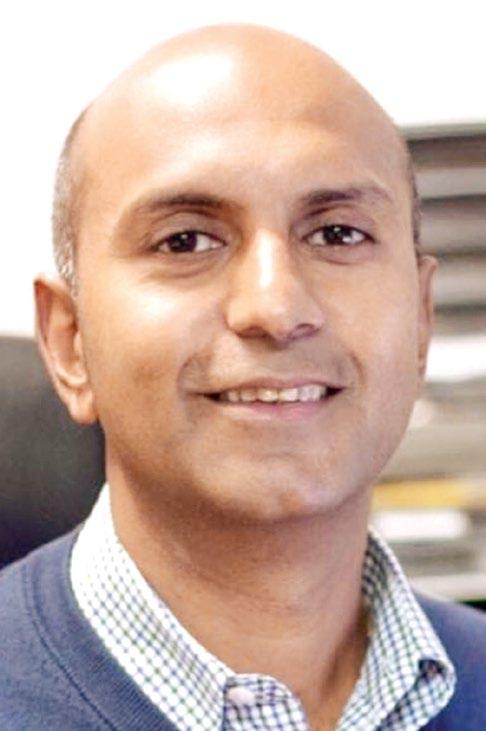
“Anecdotal evidence suggests the initiative has led to more men going to their trusted GP and getting tested,” Dr Sadhai says.
Since starting in 2008, the Pub Clinic has seen a steep rise in attendees with nearly 130 people attending the most recent event held in 2025. Its success has led to the creation of a sister event, The Ladies Lounge, which specifically focuses on women’s issues.
However, Dr Sadhai was a familiar
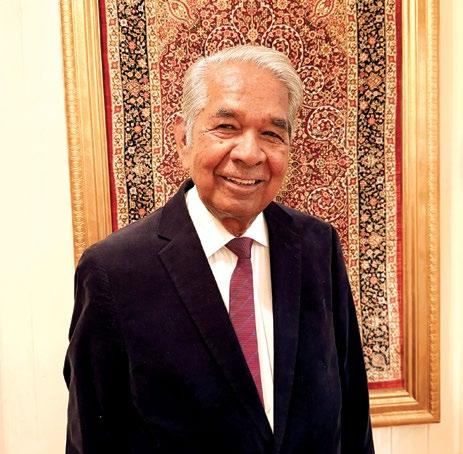
for footy and medicine by becoming a medic for the Bacchus Marsh Football club. Soon after, he worked as a medic for the Victorian Football League.
“To this day, I am still in touch with many of those players I met a good 15 years ago. Some of them still come and see me for their check-ups.”
Whilst being on the field was his dream come true, it was his work in palliative care which gave him the most satisfaction.
“As a GP, most of our interactions with patients are transactional. If you’re like me and you’ve stayed in one area for a long time, then you can learn a little more about their stories and families. But, in palliative care, you very quickly develop a deep understanding of your patients,” he explains.
“It is a privilege and an honour to take care of patients in that context,” he says.
To Dr Sadhai, receiving the OAM is a reminder of the support of his loved ones, particularly his late father. After leaving South Africa in 1977 at seven years of age and arriving at Bacchus Marsh, Dr Sadhai witnessed first-hand the impact that his father, Dr Jay Sadhai, had on the town. He would go on to practice in the same town for 30 years, all whilst being an active anti-apartheid activist.
“He’s the biggest inspiration in my life, not only in terms of how he worked, but also in terms of what he did for his community,” Dr Sadhai emphasises.
face in Bacchus Marsh and beyond even prior to these initiatives.
In 2005, Dr Sadhai combined his love
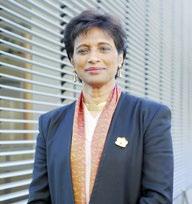
team that built the first Indian association here – with funding from both the city council and the state department,” he recalls. “Through the India Australia Society of Queensland and the Indian Cultural Association of Queensland, we presented multicultural festivals, India fairs, India bazaars and musical events.”
While these associations played a vital role in the 1990s and early 2000s, Khan acknowledges that such platforms are less impactful today.
“In the early years, people in the community were incredibly supportive. Any newcomer was welcomed and helped until they were settled,” he reflects. “Now, information is more easily available, and many migrants already
His father’s legacy lives on in The Pub Clinic, the Ladies Lounge and in Dr Sadhai’s other endeavours all of which have allowed him to foster unique and strong relationships with his patients. These relationships don’t just save lives, but have strengthened the Bacchus Marsh community as a whole.
Sruthi Sajeev
Warm congratulations also to Emeritus Professor
felicitated with the AM honour for significant service to tertiary education, particularly through international partnerships.
have friends or family to assist them. That may be why engagement has declined.” Khan is nevertheless pleased with how the Indian community has acclimatised. “In hospitals, industry, universities and government, we are contributing significantly. And when I see international students working extremely hard to support themselves, I feel proud.” But he also offers a word of advice to newcomers.
“Your mindset matters,” Khan advises. “In Australia, we are all equal – we respect each other and care for one another. New migrants should arrive with an open mind, respecting every religion and every person, regardless of background.” Rajni Anand Luthra
Haven’t made it to Ballarat yet? Just 90 minutes from Melbourne, this regional city promises a weekend filled with colour and curiosities. From high tea on a vintage tram to flower fields in bloom, here’s our must-do list for an autumn escape.
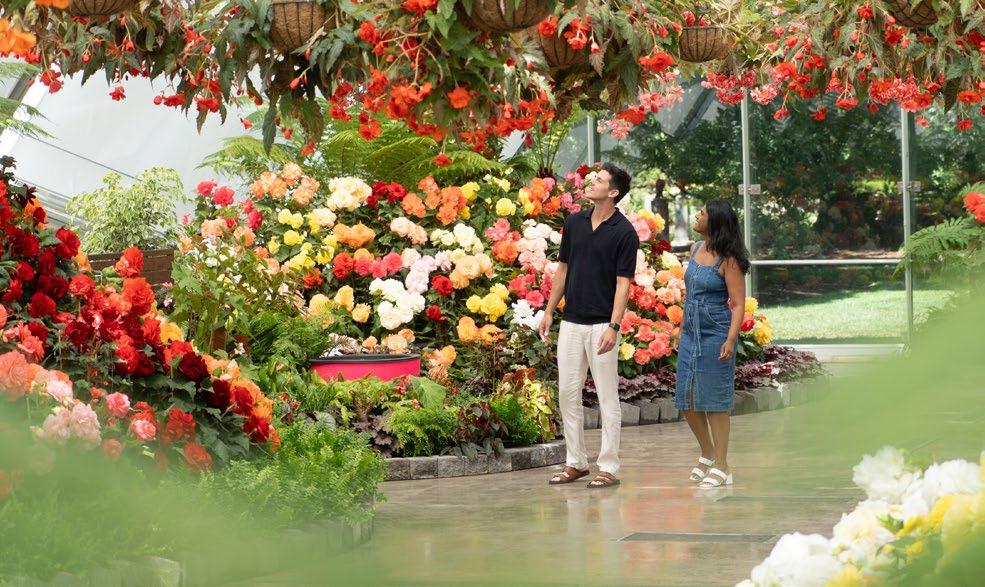

This famous festival is back in Ballarat from 7-9 March, with hundreds of colourful begonias on display in the Robert Clark Conservatory. A free event for the whole family, the Ballarat Botanical Gardens will come alive with markets, music, “singing plants” and even a parade alongside Lake Wendouree. The begonias will be on show for a few weeks after the festival, but it’s worth the trip over the Labour Day long weekend to see these beauties at their best.
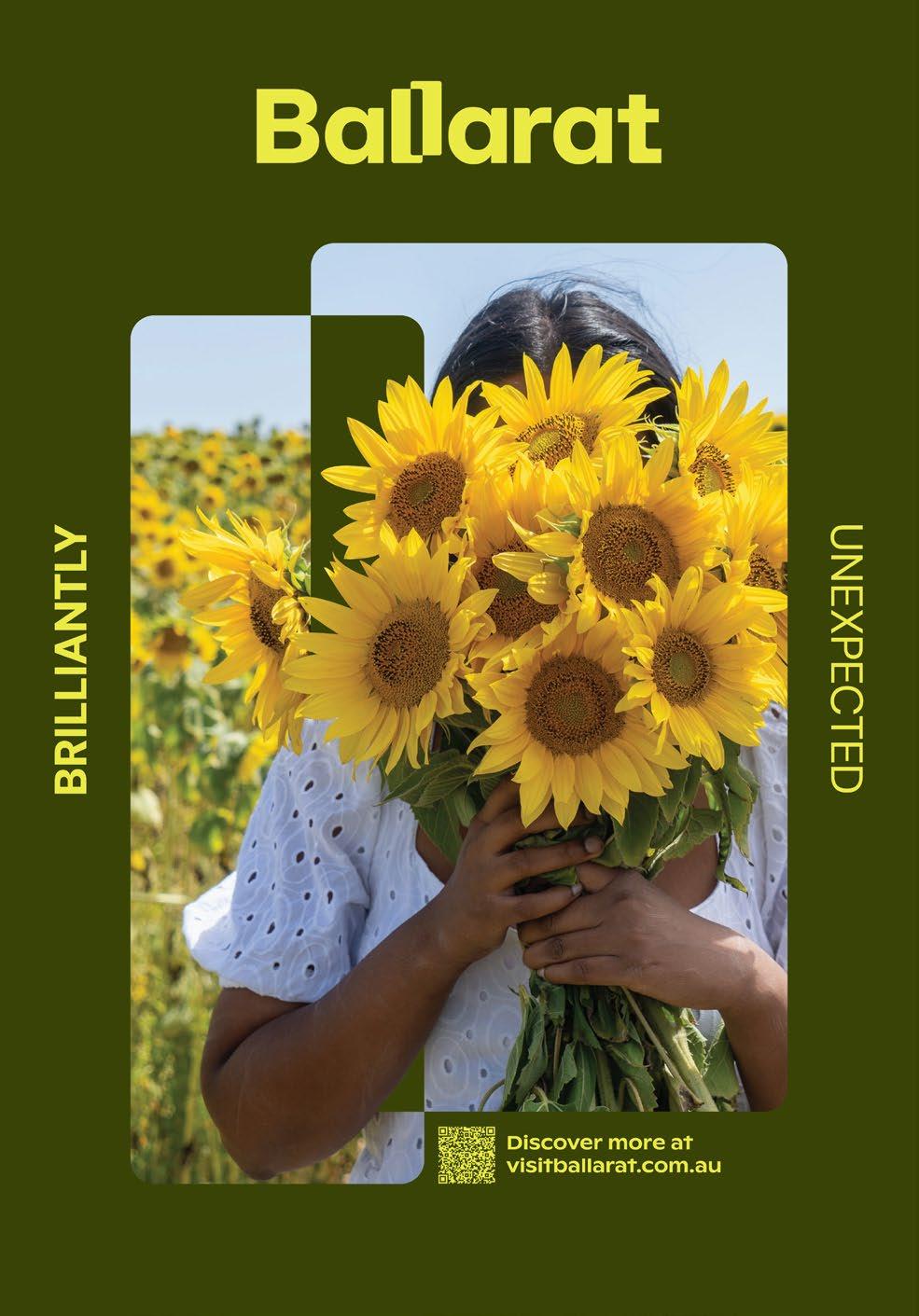
A short drive from Ballarat, Dunnstown’s sunflower fields will be ready to bloom from late February–March. Follow Pick Your Own Sunflowers on Facebook or Instagram for season updates.
Pair this brilliant photo op with a visit to nearby Kryal Castle to enjoy medieval-themed action including knights on horseback, potionmaking, archery and more. You can even stay the night in a castle suite!
Been to the iconic Sovereign Hill before? You haven’t seen it like this! As the sun sets, the AURA sound and light show transforms Sovereign Hill into a moving theatre to explore the creation, discovery and impact of gold. Book ahead as tickets for this 90-minute experience are limited.
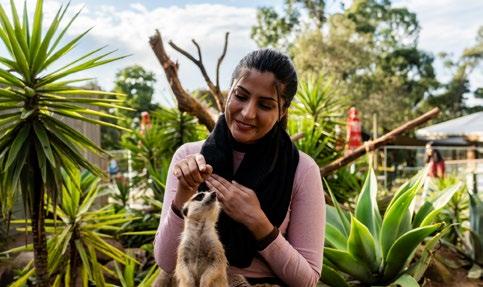
Crocodiles and tigers in Ballarat? Oh my! At the Ballarat Wildlife Park, you can feed friendly kangaroos, pat a koala or maybe even have a meerkat stand on your head! In the
school holidays, keep an eye out for the Junior Keeper program, a three-hour experience for children aged 6-15.
For a delicious stopover between Ballarat and Melbourne, pick your own fruit at Payne’s Orchards in Bacchus Marsh. Now in season: nectarines (February–March) and apples (February–June). Craving something sweeter? Ballarat’s top dessert spots include Il Piccolo Gelato, Froyo & Co, Timboon Ice Cream and Augustus Gelatery (who serve up hot brownies alongside their gelato and açaí). You can also try cute takeaway spot Naomi & i, where you’ll
find an ever-changing menu of local baked scrolls, cookies and pudding foam matcha.
As the weather cools down, it’s time to bring out the tea set. Enjoy high tea on board a 1940s vintage tram, G&Tea (gin high tea) at luxurious distillery Grainery Lane, or a classic Sunday afternoon high tea at the historic Craig’s Royal Hotel. And shhhh, we’ll let you in on a secret: Florelie flower farm will host afternoon tea in their dahlia field for a limited time only this autumn.
For more inspiration, head to visitballarat.com.au
















Each episode explores a unique theme, from Deaf sports, arts, and recreation to studying and finding inclusive workplaces
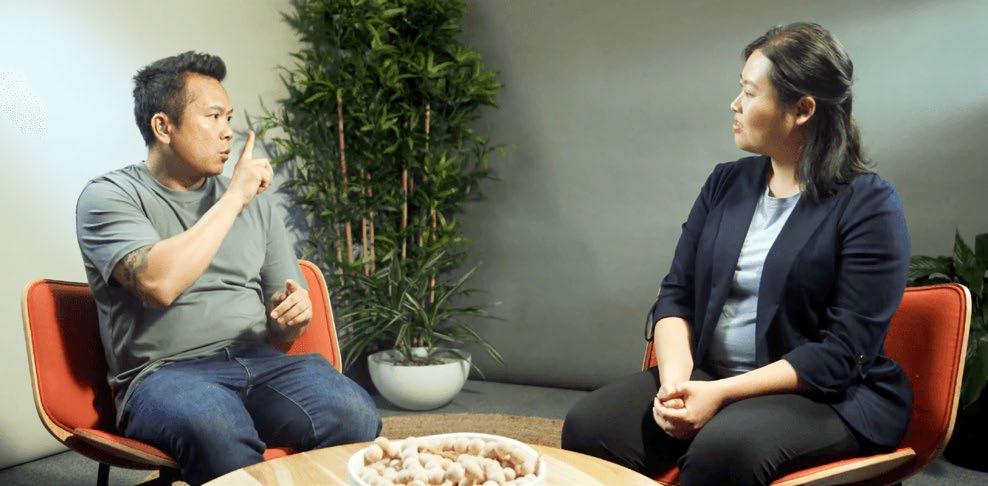
The Ethnic Communities’ Council of NSW is thrilled to launch a brand-new Auslan video series, designed to share stories, insights, and conversations from within the Deaf community.
This exciting initiative is part of the Speak My Language (Disability) Program and has been created in partnership with Deaf Australia.
Across five episodes, Deaf individuals from diverse cultural backgrounds open up about their experiences, covering topics such as inclusive recreation, education, employment, and more.
One storyteller, Sokong Kim, explains how joining Deaf Basketball not only improved fitness, but improved his social connections.
When he first arrived in Australia, he noticed that sports and activities were a big part of the culture, so he and his siblings quickly got involved.
“I was the only Deaf one, but we all just loved basketball, we grew up playing basketball.”
When Sokong discovered there was a Deaf basketball team in Sydney, everything changed.
“I reached out and said I want to join. From there, I was completely immersed in the club. We had sign language. Communication was not an issue. When I was playing in the mainstream basketball teams, communication was quite difficult. But getting into Deaf sports and the Deaf basketball team, I found my identity. I found my community.”
Sokong went on to represent Australia
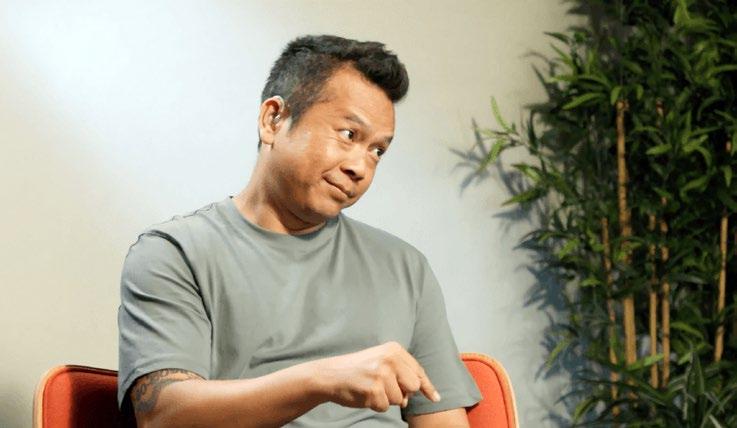
for the Deaf men’s basketball team in the 2007 World Deaf Basketball Championship in China.
Through Deaf sports, he also took up leadership opportunities, and held seats on the Board of Deaf Australia (NSW branch), Deaf Cricket NSW, Deaf Basketball NSW and Deaf Basketball Australia.
“Joining the Deaf basketball team gave me opportunities to travel. It was through those competitions that I was able to meet so many new people. It was amazing and
my identity just grew from there as a Deaf person.”
Sokong’s story is one of many featured in the new Auslan video series
Each episode explores a unique theme, from Deaf sports, arts, and recreation to studying and finding inclusive workplaces. Episodes are hosted by Deaf Australia’s CEO, Shirley Liu. To ensure accessibility, all episodes are subtitled in Hindi and English.
The Speak My Language (Disability) Program is funded by the Commonwealth Department of Health, Disability and Ageing. It is led by the Ethnic Communities Council of NSW and proudly delivered through a historic partnership with all State and Territory Ethnic and Multicultural Communities’ Councils across Australia. Watch the series on our YouTube channel and gain a deeper understanding of Deaf voices and the perspectives of people living well with a disability.

VBY TARINI PURI
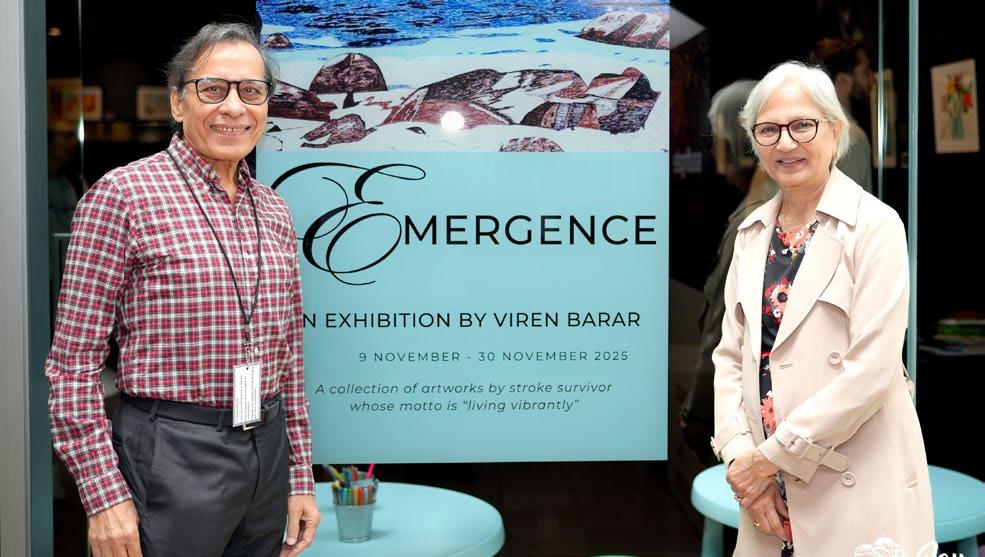
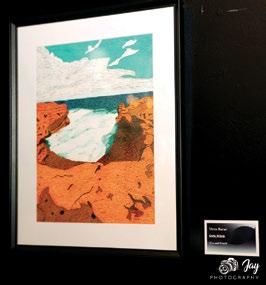
iren Barar was never an artist. He barely gave a thought to the colour of his shirt. From being a typical corporate techie in the banking industry, to recently showcasing 30 of his artworks at an exhibition in Melbourne titled ‘Emergence’, it’s truly a transformation.
Not one that he ever planned for, though, and certainly not one that was easy. On the contrary, it’s the resurgence of the human spirit that just refused to give up and give in to the curve ball that life threw at him.
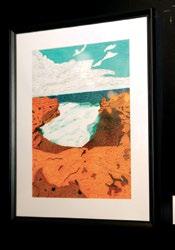
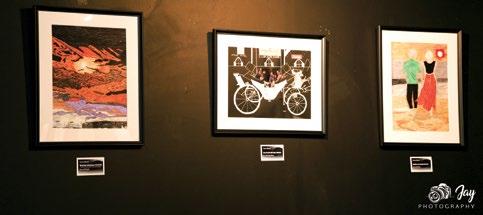
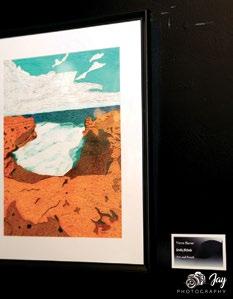
Viren is a stroke survivor, and the exhibition, held within the art precinct of Southgate in the heart of Melbourne showcased his passion to live joyfully – with artworks of nature, objects and everyday life drawn on canvas using gel pens in a multitude of colours. Interestingly, for a man who has never painted before, greens, blues and shades of orange and brown dominate his paint palette.
For nearly two years now, the canvas has been Viren’s sole language to the world. He has lost the ability to speak following a ‘massive’ and life-altering brain stroke in December 2022 while on a trip to India. His wife Anita had stayed behind in Melbourne.
Viren had been just a week away from flying back home. It was an ordinary day, until he couldn’t grip the cup of tea his sister was offering him. She saw his body bend to
one side, his face twisted awkwardly, and he couldn’t speak a word.
Immediate action from family meant he got timely medical treatment. The blood clot that caused the stroke was successfully removed, but unfortunately, left behind acute Aphasia and Apraxia, affecting nearly 40% of his brain and irreversibly impairing his speech, language skills and comprehension. Thankfully his memory has remained unscathed.
Three years of multiple visits to a variety of specialist doctors, hospitals and sessions of therapy have allowed him to regain some of his physical fitness. He can play sports like tennis and badminton and can even be left independently for short durations.
Viren’s wife and carer Anita Barar says she is amazed by what his brain is continuing to do. Describing Viren’s rebound at life, she agrees it’s not been easy, but the positive spirit and motivation to live have outshone the steep road to recovery.
“It’s been a long road,” she describes. “We started with writing to communicate, as thankfully that ability remained intact. He had to re-learn how to simply move his lips as if to speak. It took a full year for him to master just eight basic sounds.”
The desire to do art came from Viren himself. “He had never picked up a paint brush before, but in 2024 he expressed that he wants to do colouring. We started off with a rough scrapbook from home, and then gradually moved to proper art paper. While he finds it difficult to concentrate on other tasks beyond 15 to 20 minutes, he can do art tirelessly for hours. His art is entirely self-taught; he uses gel pens to draw what he enjoys and whatever possibly returns to his mind as a memory – the botanical garden, a flower vase in our home, scenes of boating, children’s park etc,” she explains.
Stressing the role of other family members in helping stroke survivors return
Stroke survivor turned artist Viren Barar’s indomitable spirit shines through every ‘penned’ artwork
to a new normal, Anita says, “One needs to remain patient, as it is a very slow process. Don’t try to play down the reality and surely stay away from pity for yourself or the survivor.”
Ignorance about the subject is immense, Anita rues. “Most people are only just scratching the surface,” she says from experience.
Viren’s exhibition was supported by Melbourne City Council’s Connected Neighbourhood Small Grant and proved to be a showcase of the transformative power of art in enhancing health and wellbeing.
The opening day included an information talk by Antonia Arfaras from the Stroke Foundation and speech pathologist Zoe Singer who both highlighted facts about stroke and the challenges that sufferers as well as carers face daily.
Travelling overseas? One of life’s great joys is travelling. Whether for a long-awaited holiday, to reconnect with loved ones, or for a spiritual or cultural journey. But no matter how excited you are about where you’re going, the best trips are the ones where you return home safe, well, and with memories worth cherishing. That’s where Smartraveller, the Australian Government’s free official travel advice resource, steps in to help.
For many Australians, especially those from culturally and linguistically diverse (CALD) communities, international travel is shaped by unique experiences, visiting family back home, attending weddings or festivals, or travelling to places that feel familiar yet have completely different rules, risks and expectations. Smartraveller is designed with all those journeys in mind.


Why Smartraveller should be your first travel companion
Many travellers place trust in familiarity, returning to the country they were born in, or joining family members who “know the place.” But even the most familiar destination can carry unexpected risks: political changes, new laws, health outbreaks, natural disasters, or shifts in local security conditions. Before you go, Smartraveller.gov.au provides clear, reliable and up-to-date information on more than 175 destinations worldwide. This includes essential guidance on safety, local laws, transport, cultural norms and emergency contacts. It’s about empowering you to make informed decisions so that your travel is both safe and enjoyable.


A tribute to a fashion visionary and entrepreneur Premal Patel (1978-2025), who built globally resonant brands, leaving an indelible mark on industry and community

IBY JAI PATEL
t was a farewell as vibrant and loving as Premal Patel himself. More than 500 guests gathered – fashion leaders, business figures, and members of Sydney’s Indian diaspora, alongside family and friends who had travelled from across the world.
The funeral blended comfort and celebration: music and memories, heartfelt tributes, shared food, and white doves released into the sky. The only thing missing was Premal – present everywhere in spirit, yet absent from the room.
This moment marked a fitting tribute to Premal Patel, a trailblazing fashion designer, entrepreneur, and philanthropist.
With fearless creativity and sharp business instinct, the 47-year-old built a portfolio of influential brands, including Runaway The Label, Runaway Mens, Seven

fashion on the global stage while creating new opportunities for local talent. His success story reflects the dynamism of Australia’s increasingly diverse economy, where innovators from multicultural backgrounds are shaping industries and driving international expansion.
As a proud Indian-origin entrepreneur, whose grandparents migrated to Australia in 1969, Premal broke the mould of traditional expectations within his community, forging a remarkable career on his own terms. Starting on the shop floor in retail sales and studying design – he gained a Bachelor of Design degree from the Whitehouse Institute of Design, Australia (Sydney campus) – his early work with the iconic British brand Lonsdale was but the start of a stellar career. He launched his first brand in his early twenties.
Premal’s achievements resonate strongly with the Indian diaspora, now Australia’s fastest-growing migrant community, with almost one million Indian-born residents as of June 2024 (Australian Bureau of Statistics). Premal stands as a powerful example of how cultural diversity enriches Australia’s business landscape.
Beyond his business achievements, Premal was deeply committed to philanthropy.
His initiatives in Australia, Nepal, Bali, Cambodia and Uganda uplifted lives and livelihoods in underprivileged communities and among vulnerable women, providing education, employment, and empowerment.
This dual legacy of commercial success and social impact underscores his role as a
model for purpose-driven entrepreneurship.
A shining light for his family
Prem was vibrant, generous, and gifted with a rare ability to make others feel special. He was my cousin and best friend – a brother. We grew up encouraging each other to explore the world, challenge ourselves, stretch boundaries, and break down barriers.
Those at the farewell heard rare insights into how a ‘skinny little Indian kid’ journeyed through self-acceptance, selfbelief and self-determination as a secondgeneration migrant. He was unreservedly generous, determined, proud, ambitious and intensely loving. His persona was larger than life; he was fiercely adored by his enormous family, his partner, his friends and his colleagues.
My own tribute to Prem at his farewell was musical, as he would have liked. I picked, among others, the bhajan Premal Jyoti – a Gujarati version of Lead, Kindly Light, originally written by John Henry Newman and later chosen by Mahatma Gandhi as a central prayer at his ashram.
The farewell song Together Again by Janet Jackson (one of Prem’s favourites) was delivered by preeminent Australian vocalist Jacinta Gulisano.
Prem’s vision and generosity will continue to inspire the fashion industry, young Australians, and the broader business community across cultures and continents.
Wonders The Label, and Vacanza Resort. Under his leadership, these labels combined design excellence with strategic growth, pioneering breakthroughs in production, marketing, and e-commerce.
From women’s wear to menswear, his designs attracted influencers and fashion followers drawn to an expressive and chic aesthetic – one that quietly led rather than followed. Premal often credited his bold use of colour and celebration of the human form to early inspiration from his mother and his passion for reinterpreting cultural identity.
His style provoked confidence, and his brands remain relevant across generations and continents. Beyond design, he built a resilient global business underpinned by the talented design teams he nurtured and strong management systems he embedded. Today, the company employs 80 staff in Sydney, has recently launched a US warehouse and logistics centre in Texas, and is positioned for enduring success.
Premal’s legacy extends far beyond his own business. By blending artistry with enterprise, he helped position Australian


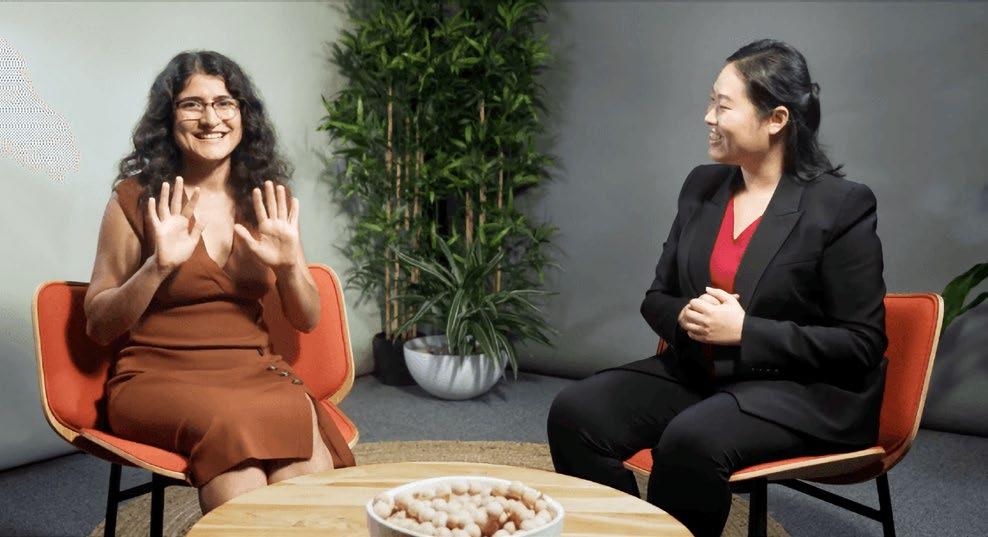
The Ethnic Communities’ Council of NSW are excited to launch a new Auslan video series, created to share stories, information, and conversations from within the Deaf community. The initiative, which is a part of the Speak My Language (Disability) Program, was produced in partnership with Deaf Australia.
The five episodes feature Deaf people from different cultural communities telling their story, discussing inclusive recreation, studies, employment and more.
For many refugees and migrants who are Deaf, learning Australian Sign Language is the gateway to more opportunities and connections in life.
One guest, Kishkok, explains that she and her sisters were unable to communicate in their home country because of the barriers between hearing and Deaf people.
“Previously, we hadn’t signed or used sign language for communication at all,” she says.
“In Australia, using Auslan has been a totally different experience. I’ve now accepted my identity as a Deaf person.”
Like many of the people interviewed in the series, Kishkok first learned English and Auslan at TAFE after migrating to Australia. “I’m really pleased I’ve got those languages too, and those means of communication,” she says.
Gaining Auslan as a language became the gateway to a greater sense of community and connection. Kishkok is now heavily involved in the community through many inclusive activities.
“I do yoga, art, exercise, sports. I was previously very concerned about getting involved in communicating with others in sporting activities. But here, with
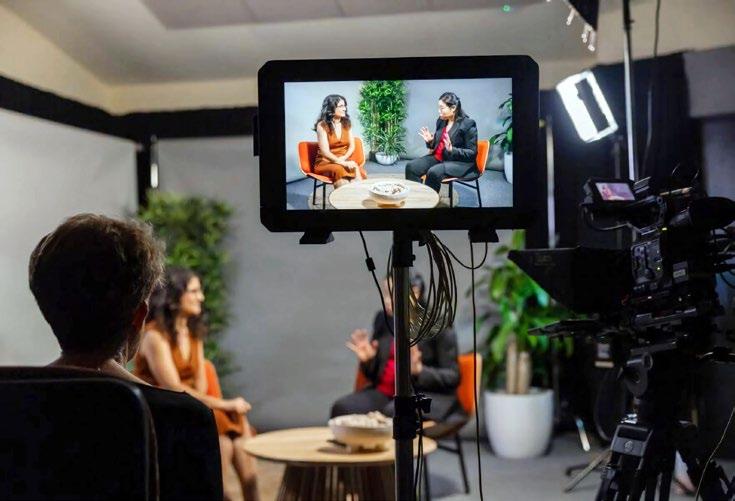
communication, it’s so much better. I really like sport, I really like exercise now.”
Each episode touches on a different topic, including Deaf sports, arts and recreation, studying as a Deaf person and finding an inclusive place to work.
The five episodes, produced in partnership with Deaf Australia, have been subtitled in Hindi and English. Episodes are hosted by Deaf Australia’s CEO, Shirley Liu.
Speak My Language (Disability) is funded by the Commonwealth Department of Health, Disability and Ageing.
The Program is being led by the Ethnic Communities Council of New South Wales and is proudly delivered via an historic partnership between all State and Territory Ethnic and Multicultural Communities’ Councils across Australia.
At this stage, over 500 interviews are
available as audio podcasts or videos, featuring hundreds of people with disabilities and their supporters in more than 28 languages.
You can now watch the episodes on the Speak My Language (Disability) YouTube channel and learn more about the perspectives of people living well with a disability, with more episodes on the way soon.

MANNIE KAUR VERMA is the principal lawyer at Regal Lawyers, a firm providing affordable, intersectional legal support to marginalised communities. Co-founder of the domestic violence charity Veera Brave Girl, she is currently on the board of One Girl, and was named IABCA’s 2025 Business Woman of the Year.

Your firm places intersectionality at the core of law practice. What does that mean?
We recognise that people don't experience legal problems in isolation; your gender, culture, migration status, disability, language barriers all intersect, and those intersections shape the outcomes that are available to you, your ability to access the justice system and your ability to then rebuild. In practice, what that means is that we don't treat the law as one size that fits all. We would ask different questions, listen more carefully, and tailor the legal advice that's provided to clients. For example, if we had a victim survivor who was dependent on her spouse for a visa, the advice available to her would look different to someone who might be a citizen here. We wouldn't really be encouraging her to file for separation or parenting orders or financial resolution - what might be more suitable is how to draw boundaries and other tools to act when the need arises.

You do a lot of frontline advocacy work for those experiencing family violence –how do you deal with empathy fatigue?
walk down that path. My role is not to step into their shoes and absorb their pain.
That's also helped me because there have been times when you think ‘surely you're going to follow this path’ and they choose not to, and then you tend to feel frustration. [I take] a step back and say they've got to make the right decision for them, and if they're not ready to walk that path today, then that's fine.

be more funding and resources available for prevention with [an] intersectional understanding [of] what the requirements are for different societies.

The honest answer is you do feel the weight of this work - I think we need to accept that this work does come at emotional cost. It’s not about numbing yourself or trying to care less, but how you responsibly deal with those emotions. I've learned over the last decade or so working in this space the key is to set boundaries and be professional about that. Particularly working with survivors of domestic violence, there can be a bit of clinginess, a reliance on you to make decisions for them - the sort of language that we hear often is ‘you know what's right for me, I trust you completely’. [You have to] draw yourself back and say, ‘well, that's not my role’. What’s worked for me is to walk alongside them, to help them use the law as a tool and make sure they're aware of the options available to them, but ultimately it's for them to
Outside of work, having a balanced life certainly helps - you can't really pour from empty cups…looking after yourself and your mental health isn't a luxury in this workspace, it’s a must.

If you were in charge, what reforms or shifts would you enact in Australia’s legal and social systems to better support survivors of violence?
There has been a lot of investment in prevention-based strategies, but I do think ultimately our society is still very focused
If we looked at just legislative reform, a lot of the vulnerable groups that we work with are people on temporary visas…[who] are exploited because of the loopholes within the migration system - how do we fix those?
We’ve done some work with women that are on spouse visas – if they’re facing domestic violence, they can rely on schemes to still obtain residency without having to live within the relationshipthere needs to be more reforms similar to that.
We talk about the debts that state and federal [government] have, but I think we need to invest more, particularly in community organisations and not-forprofits that provide legal aid - they're always under pressure, there's not enough [funding].


What's something that you're currently listening to/reading/ playing/watching?
I keep going back to this one book from Joe Dispenza, Becoming Supernatural - it talks about the power of your subconscious mind. It's a difficult book to read, but it talks about meditation and I find a lot of the concepts in the book somewhat complement the key ideas of the Sikh religion.
What’s a word that you like in a South Asian language, and what does it mean?
My word of the year and something that I’m learning to embrace is Chardikala - it's a Punjabi word mentioned a lot in the Sikh religion. The concept is to live in high spirits, to not numb your emotions, to overcome any problems that come in your life and to always have a positive outlook - no matter what happens, let's move on, let's find a way forward.

And finally: Soan Papdi or Papdi Chaat?
I have a sweet tooth, so always Soan Papdi.



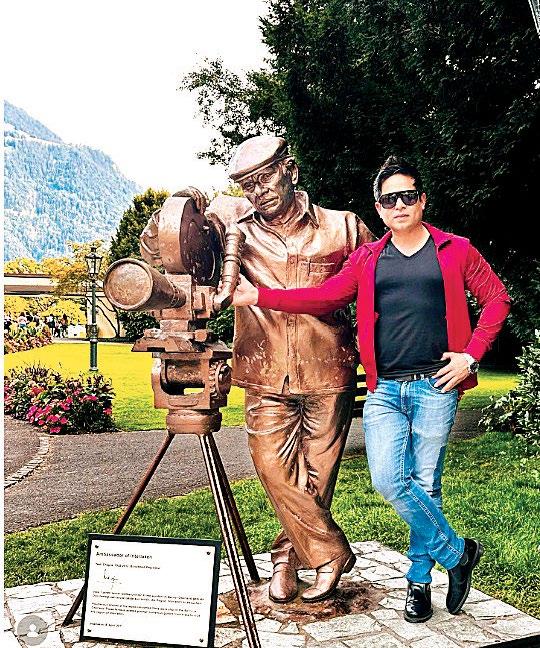

MBY TORRSHA SEN
uch before travel became content and destinations were judged by Instagram aesthetics, Bollywood had already mastered the art of wanderlust. Hindi cinema has long used foreign locations not just as scenic backdrops, but as emotional extensions of its stories. These landscapes carried longing, freedom, heartbreak and self-discovery. In doing so, Bollywood quietly shaped how generations of Indians imagined the world beyond home.
The tradition goes back several decades, when foreign shoots were rare and aspirational. Seeing Indian characters sing, fall in love or confront life in distant lands felt magical. Over time, as budgets grew and audiences evolved, these locations became more intentional, more layered and often deeply symbolic.
It is impossible to talk about Bollywood and global locations without acknowledging Switzerland and the filmmaker who made it iconic, Yash Chopra. Through films like Chandni and Dilwale Dulhania Le Jayenge,
Switzerland transformed into a cinematic shorthand for romance. Snow covered peaks, green meadows and quiet European villages came to represent love in its purest, most poetic form.
For Indian audiences of the 1990s, Switzerland was not merely a country. It was a dream. Couples did not just travel there, they aspired to recreate what they had seen on screen. Even today, decades later, the association remains so strong that Switzerland continues to market itself as the land of Bollywood romance.
If Switzerland symbolised fantasy, New York represented reality for the Indian diaspora. Kal Ho Naa Ho used the city not just for its skyline, but for its emotional weight. Shot across Manhattan, Central Park and Brooklyn Bridge, the film captured the pulse of immigrant life - fast, overwhelming, lonely and full of possibility.
London in SRK’s Kabhi Khushi Kabhi Gham became a space of emotional exile and aspiration, where Indian traditions survived in foreign homes, and family bonds stretched across continents without breaking.
By the time Zindagi Na Milegi Dobara arrived, Bollywood’s relationship with travel had matured. Spain was not presented as a

tourist checklist, but as a journey inward. Road trips, festivals and open landscapes became metaphors for emotional release and personal reckoning. The film sparked a surge of interest in Spain among Indian travellers, many seeking the same sense of liberation they saw on screen.
A few years later, Tamasha chose Corsica, an island far less familiar to Indian audiences. Its quiet streets and rugged coastline became the space where its characters could momentarily escape societal roles. Corsica was not glossy or grand. It was introspective. After Tamasha, the island gained recognition among Indian travellers.
Australia holds a special place in Bollywood’s global journey. Cities like Sydney and Melbourne have featured repeatedly, often representing independence, reinvention and modern relationships.

Films such as Salaam Namaste explored contemporary love in Melbourne, while Dil Chahta Hai used Sydney’s beaches and harbour to capture friendship and youthful freedom. Australia’s multicultural fabric, striking coastlines and urban energy allow it to feel both foreign and familiar.
Back in early 2000s Kaho Naa... Pyaar Hai introduced New Zealand to Indian audiences as a land of sweeping landscapes and cinematic romance, where snow-clad mountains and open skies amplified first love, escape and destiny.
As Hindi cinema embraced scale and spectacle, international locations became central to action narratives. Dilwale turned Iceland’s frozen landscapes into a dramatic visual canvas, using its stark beauty for stylised song sequences. The country’s raw terrain added novelty and scale, making it instantly memorable for audiences. War brought a different flavour by
shooting in Porto, Portugal. The city’s historic architecture and narrow streets elevated chase scenes, lending the film a sleek European edge.
Then there was Ek Tha Tiger, which took Bollywood to Havana, Cuba. The city’s faded grandeur, vintage cars and lived - in streets offered authenticity and grit. Havana felt real, political and textured, marking a shift away from polished postcard visuals.
Some of Bollywood’s most fascinating international choices came when filmmakers stepped outside expected destinations.
Sushant Singh Rajput starrer Drive featured song sequence shot in Israel, including Tel Aviv and Jaffa. While the film itself divided opinion, its locations stood out for their rarity in Hindi cinema.
Earlier, Hrithik Roshan and Abhishek Bachchan’s Dhoom 2 had already surprised audiences with Rio de Janeiro. Long before Brazil became a familiar cultural reference in India, the film showcased its beaches and cable cars as the playground for a

Today, foreign locations in Bollywood are becoming more deliberate. Audiences are well travelled and visually savvy. A destination alone is no longer enough. It must serve the story. As cinema moves towards more grounded narratives, international shoots are being chosen for emotional relevance rather than novelty. Bollywood has turned the world into its stage. And wherever Hindi cinema travels next, it will continue to carry its audiences with it.
stylish heist.
Perhaps the most unexpected was Salman Khan’s Lucky: No Time for Love, shot in St. Petersburg, Russia utilizing its stunning historic architecture and snowy landscapes.
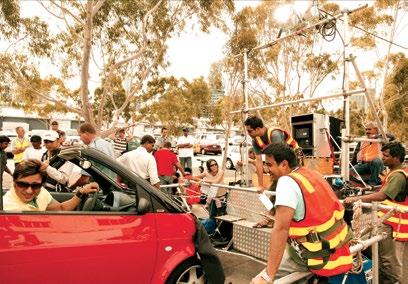
Swoon-worthy romances to pulse-raising thrillers: February 2026 delivers a Valentine’sseason cinema lineup packed with love, laughter and epic storytelling. By EKTA SHARMA
VEER MURARBAJI (In cinemas)
If you love historical dramas, this one should be on your watchlist. Directed by Ajay and Anirudh Arekar, the film brings to life the legendary bravery of Murarbaji Deshpande, one of Chhatrapati Shivaji Maharaj’s most loyal warriors. Featuring Ankit Mohan as Murarbaji, Sourabh Raaj Jain as Shivaji Maharaj, Dipika Chikhlia as Jijabai, and Arun Govil as Shahaji Bhonsle, the movie promises a grand spectacle of loyalty and sacrifice. Set against the thrilling backdrop of 17th-century Maratha history, it’s perfect for anyone who loves epic stories of courage and heroism.
Releasing 19 Feb
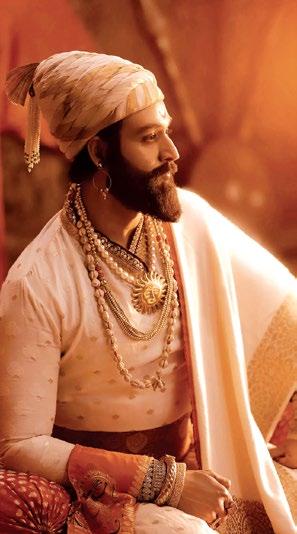

BHABIJI GHAR PAR HAIN: FUN ON THE RUN (In cinemas)
India’s most loved neighbourhood comedy jumps out of the living room and onto the big screen. Directed by Shashank Bali, the film reunites fan-favourite characters played by Aasif Sheikh, Rohitash Gaud, Shubhangi Atre and Vidisha Srivastava, while adding fresh chaos with stars like Ravi Kishan, Mukesh Tiwari, and Dinesh Lal Yadav (Nirahua). Together, they turn a daily-soap sensation into a theatrical laugh riot.
Releasing 6 Feb
SEEKING GROOM
36-year-old Indian divorcee woman seeking a life partner. You must be PR or a NZ or AU citizen. Looking for a family-oriented man who has good morals and great values. Please text or WhatsApp on 0430 025 516 with your biodata and a photo.
Professionally qualified match for Brahmin dentist girl, practising in Sydney. Divorced, no children. Australian citizen, 1986-born, 5’3”. Interested parties may share profile on mobile and WhatsApp +61 468 342 814, or email profrajayurveda@gmail.com

TU YAA MAIN (In cinemas)
This romantic survival thriller stars Adarsh Gourav and Shanaya Kapoor, directed by Bejoy Nambiar. Two influencers, their innocent meeting quickly spirals into danger when they are trapped in a remote location. Their fight for survival intensifies when they encounter a bloodthirsty crocodile. Will they be able to trust each other to work towards an escape?
Releasing 13 Feb


Vadh 2 takes viewers back to the dark and serious world that made the first film special, with Sanjay Mishra and Neena Gupta once again in lead roles. The film is a spiritual sequel, telling a new story with new characters while keeping the same strong emotions and moral questions. At its pre-release screening at the International Film Festival of India (IFFI), it was noticed for its simple storytelling and powerful performances, creating interest in it as a thoughtful crime drama.
Releasing 6 Feb

This one’s shaping up to be one of the most closely watched releases of the month. Directed by National Award winning filmmaker Kamakhya Narayan Singh, the film serves as a follow-up to the much-debated 2023 hit The Kerala Story. The sequel promises to widen the lens, delving deeper into hard-hitting narratives that the makers claim remain largely unexplored. With its intense tone, socially charged themes, and a storytelling approach that leans into realism rather than spectacle, expect this one to spark conversations well beyond cinema halls.
Releasing 27 Feb
This pan-India romantic action-adventure follows Kaada, born into a hunting legacy, whose life is transformed by love. Led by Kaad Natarajwho also wrote the story - and directed by Gilli Venkatesh, the film’s title teaser has already captivated, promising a blend of high-octane adventure, music and emotional storytelling. With a multilingual soundtrack, Karikaada will release in Kannada, Hindi, Telugu, Tamil and Malayalam. Releasing 6 Feb
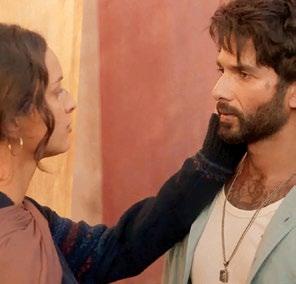
Director Vishal Bhardwaj and actor Shahid Kapoor reunite after previous hits Kaminey and Haider. Expect the mixing of deep emotions with complex stories, as this film explores themes of love, obsession, and conflict through a dark and romantic perspective.
Releasing 13 Feb
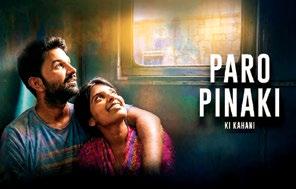
Sanjay Bishnoi is Pinaki, a marginalised manhole cleaner, and Eshita Singh is Mariyam, a struggling vegetable vendor. Their delicate and unconventional love story grows through secret, fleeting meetings during their daily commute - moments that become their only escape from harsh social realities. When Mariyam suddenly stops appearing, Pinaki is thrust into an emotionally intense and physically dangerous search to find her. The film moves beyond romance to become a stark social commentary, using personal loss and longing to reflect systemic injustice.
Releasing 6 Feb
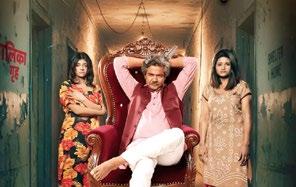
Here’s a gripping story about a young woman whose sister gets trapped in a corrupt shelter home, run by a ruthless owner and supported by powerful politicians. Determined to save her sister and the other girls, she teams up with a brave CBI officer to uncover the truth, face danger, and fight for justice. Directed and written by Kumar Neeraj, the film promises intense drama, thrilling investigation, and powerful messages about courage and justice – all while shining a light on the hidden problems of institutions meant to protect the vulnerable.
Releasing 20 Feb

Siddhant Chaturvedi and Mrunal Thakur star in lead roles in this film directed by Ravi Udyawar and produced by Sanjay Leela Bhansali. Set in a bustling Indian city, the film follows two young people whose chance meeting sparks a modern romance shaped by careers, personal baggage and the pressures of urban life, as their bond is tested by real-world choices.
Releasing 20 Feb

Indian weddings are a whirlwind of joy, chaos, drama, and unforgettable moments. This Punjabi film directed by the master of laughs Smeep Kang, captures all the madness in a riotous celebration of love, family, and everything that makes our weddings so wildly entertaining. The film stars Gippy Grewal as the charming yet conflicted Kartar, and Nimrat Khaira as the enchanting love interest. Vibrant dance numbers, family drama, romance, humour – expect all the infectious energy of a traditional Punjabi shaadi.
Releasing 27 Feb

What happens when a cow named Surbhi enters the life of a hard-core scientist? Can the presence of a simple animal truly transform his beliefs and lead him to explore the deep wisdom behind Panchgavyabased medicine, and sustainable living? Directed by Vinod Kumar Chaudhary and Ameet Prajapati, Godaan follows a scientist who starts to see life differently when he begins to learn about traditional practices and the wisdom of nature. As he spends more time with Surbhi, he uncovers the healing powers of cow products and how they can help people live in a more sustainable and healthy way.
Releasing 6 Feb
By SRUTHI SAJEEV
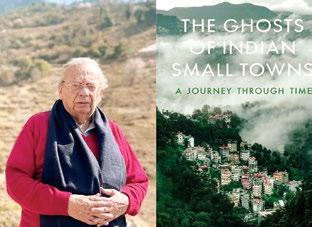
Literary tour de force Ruskin Bond has always held a deep interest in the overlooked villages of India. In his latest release, The Ghosts of Indian Small Towns: A Journey Through Time, he delves further into his passion. In this book, Bond wears many hats including that of a historian, record-keeper and a storyteller as he reflects on the lives of those who walked through these towns and their impact on the places they once called home.
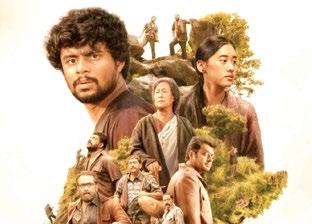
Dinjith Ayyathan’s Eko is one of the most compelling stories to come out of the Malayalam film industry last year. This eco-feminist critique wrapped in the gloss of a mystery thriller succeeds because of its breakneck pace, visually stunning scenes and its ability to pull the rug from under the audience with a sleight of hand. This breathtaking film is a reminder of the power of nature and the futility of trying to master it.


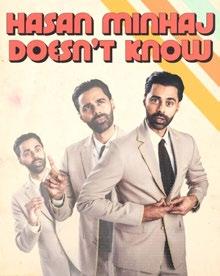
In his hit show Patriot Act, Hasan Minhaj made information that would otherwise require deep-reading, money and access to libraries, freely available to a generation of young people. His latest podcast, Hasan Minhaj Doesn’t Know aims to do the same, only this time, he relishes being the fool. Experts in season 2 of the podcast series include Neil De Grasse Tyson and Malcolm Gladwell who discuss topics as varied as AI, science and history.
Sydney CHRISTOPHER KULENDRAN THOMAS: SAFE ZONE
Until 15 Feb, Artspace, The Gunnery, 43-51 Cowper Wharf Roadway, Woolloomooloo




No, it’s not a made-up fantasy dessert…for Melbournians at least. Made with ladyfingers infused in a cardamom, rose water and saffron milk, rasmalai tiramisu is the dream dish for those sweet tooths who cringe at the thought of coffee. Offered at the Ambrosia Restaurant in Melbourne, this sweet treat is perfect for winding down during these 40 degree days. If you’ve got deep pockets, this dish is easy enough to attempt on your own too!
Can we use AI to investigate, interrogate and present our past?
Christopher Kulendran Thomas’s exhibition Safe Zone combines paintings composed by a neural network with television to do just that. This visual reconstruction of the past and deconstruction of national myths educates and shifts perspectives.
Melbourne SONGS OF THE BULBUL
3- 7 Feb, Arts Centre Melbourne, 100 St Kilda Rd


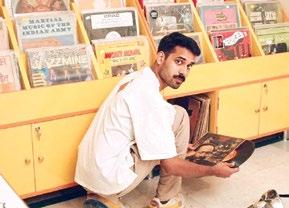
90% of the songs you’ll hear during Digging in India’s 100% vinyl set will be new to you. The artist, archivist and vintage enthusiast collects overlooked world music and combines them to bend genres, defy boundaries and to create good vibes.
Brisbane

Sashi Perera is back with another show, this time with a special focus on pears. Whether that be her last name (which literally translates to pear tree) or the pear-shaped events between Sri Lanka and Australia. Witty and insightful, this is Perera at her best.

Witness a true trailblazer in the world of modern magic. Beloved magician, actor and showman Saksham Sharma’s innovative style combines cutting-edge tech with masterful illusions and transformations. His latest show will leave you amazed, bewildered and inspired.

Aakash Odedra defies boundaries in his latest production and combines Sufi storytelling with Kathak dance in what amounts to a manifesto for spiritual enlightenment. Audiences will be treated to original orchestral compositions and a deeply touching story about a bird’s (the bulbul) path to freedom.

Minal Khona has been reading tarot cards for the last two decades. She uses her intuition and connect with the cards mostly to help people.
Adopt an apprentice mindset at work - you’re laying foundations for a brighter future, and good things take time. Singles may soon meet someone special, while estranged couples could find their way back. New projects, bonuses or extra sales will lift morale. Emotional growth requires stepping beyond your comfort zone. Finances improve in small but steady spurts. Resist the urge to force outcomes; patience and trust will allow situations to resolve naturally.
Drawing this card for Leo softens the usually stubborn, home-loving bull, making you more outgoing this month. Singles prefer freedom over commitment for now, while money matters may spark the occasional disagreement. You’ll stay engaged with self-improvement reading, exercise and much-needed me-time. Short trips and passion projects are favoured. A challenging situation can be overcome with patience and compassion. Luck supports you financially, with a sense of divine protection quietly guiding your steps.
You pick the card for Virgo, making the mercurial Gemini a bit more meticulous this month. A rocky marriage could come to an end; those in a relationship should watch out for manipulation by their partners. Professionals might be thinking of a career switch. Seek medical help for a chronic health issue before it affects your lifestyle. The self-employed will have to wait a bit longer for their plans to take off. Stay detached to find the right solution.
An overseas trip may be on the cards, and lingering problems should begin to ease this month. Relationships, however, could feel strained, with unnecessary friction - and for some, a decision to end things. Pay close attention to your health, as neglect could lead to bigger issues and even affect your income. If your health remains steady, improved finances are likely. Workplace tensions may flare up, so staying calm and measured will help you navigate challenges smoothly.
You draw the card for intuition, spiritual learning and truths coming to light. Secrets may be revealed, while a short trip and a pleasant surprise at home are likely. After a slow start, self-employed ventures begin to gain momentum. A rocky relationship remains uncertain, with decisions still pending. Recovery from illness looks positive, though be mindful of period-related concerns. A second job or side hustle brings financial gains. Trust the timing - let the universe reveal its plan.
A strong desire for financial security drives you now, but progress depends on releasing inner attachments. Fear could become the biggest obstacle to success if left unchecked. Despite challenges, those in relationships will want to make things work. Business owners may be presented with a promising new opportunity. Don’t ignore health concerns, as delays could lead to greater discomfort later. Property matters, including a possible sale, may arise. Stay cautious and wait until the full picture is clear before deciding.
Knights bring fast-moving energy, signalling that something you’ve been waiting for is finally on its way. Life-changing decisions around relationships, finances or even a move may arise. Some may encounter a connection with true soulmate energy. A workrelated wish is likely to be fulfilled sooner than expected. If tensions with colleagues surface, lie low and avoid confrontation - the mood will pass. While things may feel complicated right now, remember this phase is temporary and momentum is building.
You’ll feel drawn to reconnect with friends, especially those you’ve been distant from. In relationships, gain clarity about what you truly want before committing, and avoid mistaking friendship for love. At work, support from people in authority may come unexpectedly, possibly opening the door to increased income. Don’t ignore even minor health concerns. Resolving inner conflicts across different areas of life will set you up for success. Be clear and intentional - let the universe know exactly what you’re asking for.
This looks like a strong month at work, with the possibility of a raise, promotion or a promising new opportunity - take it if the pieces fall into place. Business ventures are set to thrive, bringing a sense of security. On the personal front, you may feel ready to stand up to a controlling parent, especially a father figure. For women facing marital issues, counselling and reflecting on paternal dynamics can help. Some may also choose to end an unfulfilling relationship.
This month brings strong intuitive nudges and a sense that not everything is as it seems. Trust your instincts and avoid relying too heavily on others. In relationships, issues around trust or infidelity could prompt difficult decisions. Workplace conflicts you didn’t cause may feel stressful, but staying calm and not reacting will work in your favour. Don’t ignore health warning signs such as cysts or lumps. Release old grudges and welcome new beginnings - change, though unsettling, is inevitable.
A karmic cycle concludes in your birth month, bringing sudden change to a longstanding situation. Singles may meet someone new, possibly in a different city, while short work-related trips are likely. Some may even receive a marriage proposal. If emotional challenges persist, inner-child healing can bring meaningful relief. Discipline and routine support better health. Step out, socialise and shake things up a little. A lucky break is also on the way, giving your finances a timely boost.
This may not be an easy month, as inner conflicts could heighten stress. Confrontations at work, family disappointments and personal struggles may feel draining. It’s important to address any stored grief you’ve been carrying. A recurring health issue may persist, calling for ongoing care. Finances remain stable, yet lingering money insecurity needs reflection. Practising gratitude and showing greater empathy will soften challenges. Expect a mixed bag - progress and wins in some areas, setbacks in others - but valuable lessons throughout.
the awards we should absolutely have, but don’t.
On Australia Day, we celebrate outstanding service and contribution to the nation.
The citations are stirring, the congratulations earnest, and the humilityworn with great commitment. And rightly so. It’s possible, however, that the Australian honours system is overlooking a whole category of national service.
So, in the spirit of fairness, inclusion and very serious nation-building, we present the Alternative Australia Day Honours List - with recognisable heroes from IndianAustralian life.
For exceptional linguistic adaptation under minimal exposure.
Awarded to migrants who master the Australian pronunciation of “mate”rendered confidently as “mite” - within four weeks of stepping foot in the country.
Recipients demonstrate advanced accent absorption, casual shoulder shrugs, and the instinctive use of the phrase in (spice)shops, workplaces and Bunnings aisles. Plus of course, excellent Interpersonal Phoneme Optimisation Strategy IPOS, which the millennials casually refer to as “code switching”.
Citation recognises commitment to integration, phonetic bravery, and the quiet shock of relatives overseas hearing it for the first time, alongside utterances such as “tryne stye-tion,” “woddah” and “Ow-ya-garn?” (to indicate, respectively, transportation
hub, life-giving fluid, and the Australian equivalent of Namaste).
For outstanding bravery in the face of cultural shock.
Awarded to migrants who approach Vegemite with optimism, apply it with restraint (having learned from an earlier mistake), and eventually declare, “It’s not bad… actually.” Recipients demonstrate remarkable adaptability by spreading it thinly, pairing it correctly with butter, and defending it to relatives overseas as an “acquired taste”.
Citation recognises courage, growth, and the quiet decision never to eat it plain again.
This distinction is awarded to secondgeneration Australians who consume Vegemite casually, without ceremony or explanation, and who express genuine confusion at their parents’ ongoing mistrust of it.
Recipients demonstrate advanced assimilation by requesting Vegemite and cheese, spreading it confidently, regarding the entire debate as “not that deep”, and inventing delicacies like Vegemite-on-idli.
Citation notes quiet cultural fluency, inherited resilience, and the ability to switch seamlessly - between Vegemite at breakfast and achar by dinner.
For exceptional comprehension of compressed national communication.
Awarded to migrants who fully understand the classic literary passage: “Got a bingle out in Broady… towies on site but as a result it’s chockers in that direction.”
(Rumour has it that this characteristic Australianism is on the Australian Values Test that the Opposition hopes to use to vet future migrants.)
Recipients demonstrate elite-level cultural literacy by correctly interpreting this as a traffic update involving a minor accident, Broadmeadows, tow trucks, and widespread inconvenience - not a personal injury, wildlife incident or housing crisis.
Citation recognises mastery of Australian shorthand, geographic guesswork, and the ability to nod sympathetically without asking a single clarifying question.
For partial engagement in a national tradition.
Awarded to individuals who can name neither the horses nor the jockeys, yet possess strong opinions on fascinators, office sweep etiquette and whether it’s acceptable to drink champagne before noon. Recipients demonstrate advanced cultural participation by asking, “Who won?” while already planning lunch.
Citation recognises commitment to the race that (briefly) stops a nationfashionably, with minimal understanding of the actual race, and fully embracing the festival for its true purposes (food and beverage, fashion and fun).
It urges integration for New Australians who think the Cup is all about crockery, or those who ask “Which country is playing?” or those who think it is like the IPL - but with horses.
These awards may never be televised. There will be no medals pinned, no hands shaken at Government House. But across backyards, temples, gurdwaras, and Indians in XYZ Facebook groups, Australians will know. Rajni Anand Luthra






Police are out day and night to keep everyone in the community safe.
If you break the law while driving, you could receive large fines and lose your licence.
Don’t take risks while driving and follow the road rules or chances are you will be caught.




Wendy Lovell mp
Member for Northern Victoria Region 5821 6668 Wendy LovellMP wendy.lovell@parliament.vic.gov.au

Jess Wilson mp Victorian Liberal Leader
Member for Kew 9853 2999 JessWilsonKew jess.wilson.mp@parliament.vic.gov.au

David Southwick mp
Member for Caulfield 9527 3866 SouthwickMP david.southwick@parliament.vic.gov.au

Evan Mulholland mp
Member for Northern Metropolitan Region 9651 8242 EvanMulhollandMP evan.mulholland@parliament.vic.gov.au

Ann-Marie Hermans mp
Member for South Eastern Metropolitan Region 9794 7667 AnnMarieHermansMP ann-marie.hermans@parliament.vic.gov.au

Trung
Luu mp
Member for Western Metropolitan Region 8742 3226 TrungLuuWesternMetro trung.luu@parliament.vic.gov.au

Brad Battin mp
Member for Berwick 5953 0216 BradBattinMP berwick@parliament.vic.gov.au