The magazine for the library and information sector
Lifting literacy
The role of Tasmanian school libraries in the state’s Lifting Literacy plan
The convenience trap
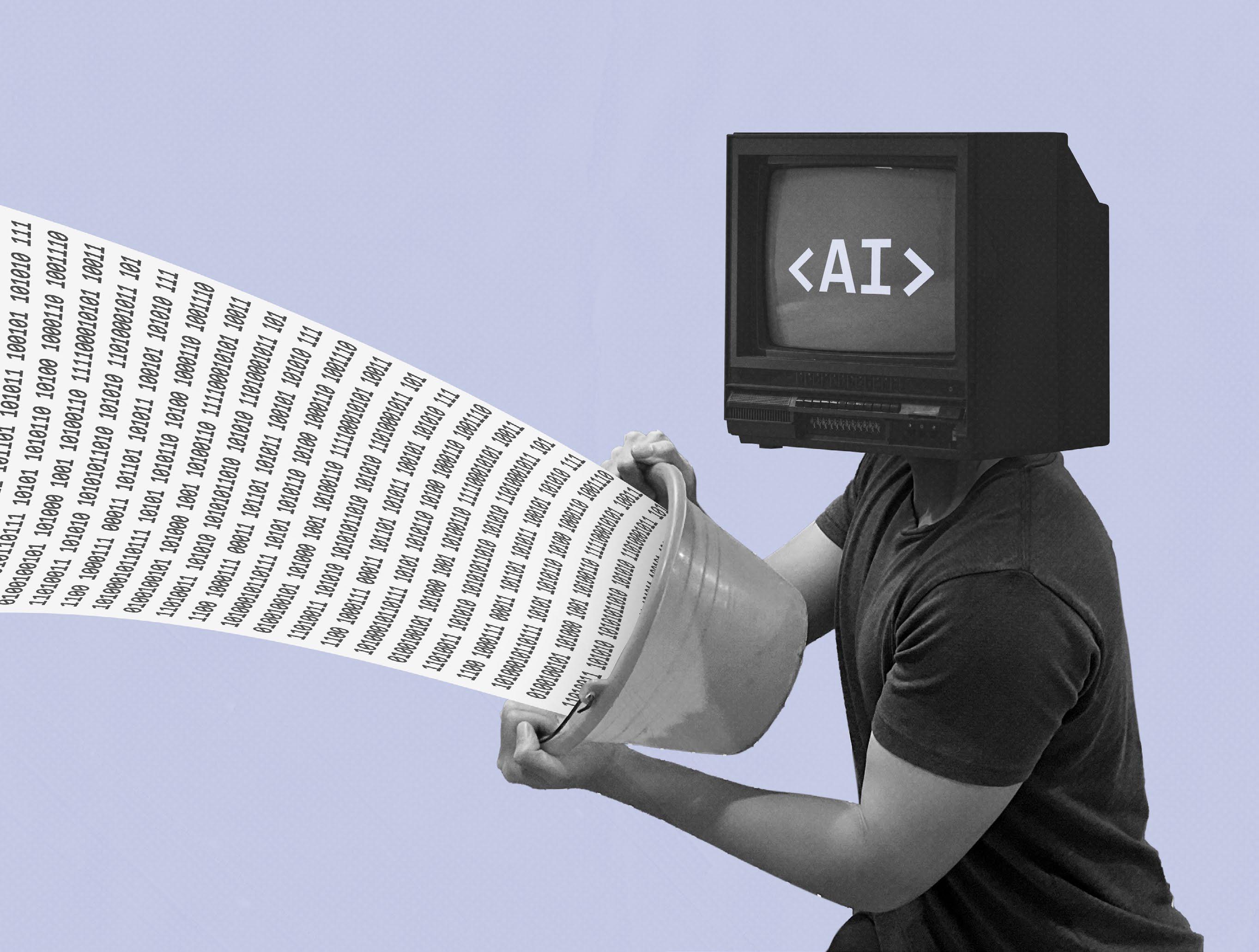
AI overviews and the erosion of critical reading
Belonging
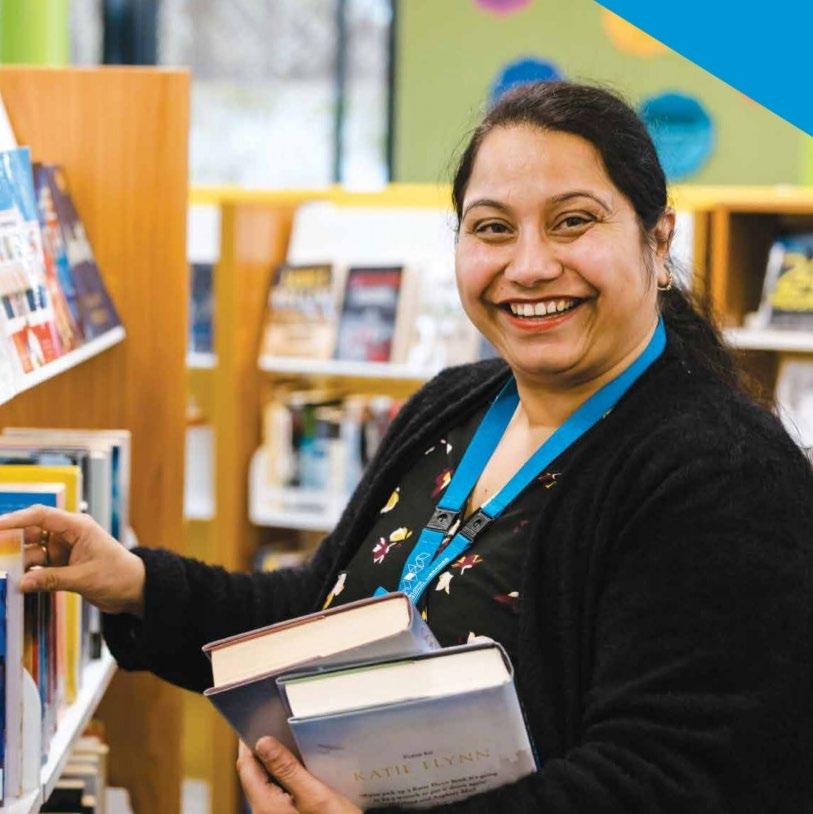
The role of libraries in multicultural Australia
A library experience that matters
Innovative helps you deliver an intuitive and exciting library experience to patrons and staff, whether in the library or online.
Boost Productivity
Innovative provides solutions that streamline workflows, reduce tedious tasks, and unlock efficiencies so staff can reinvest time in library programs and community engagement.
Excite Your Community
We help libraries meaningfully and consistently connect with patrons to create involved community advocates and build more modern, impactful experiences.
Invest Responsibly
Through our collaborative development process, we offer a full ecosystem of smart, scalable, and adaptive library solutions to maximize your operating budget and drive better outcomes.
For more information contact
andre.stephenson@clarivate.com
ALIA ABN 40 090 953
ALIA House, 9–11 Napier Close Deakin ACT 2600 PO Box 6335, Kingston ACT 2604 Ph: 02 6215 8222 enquiry@alia.org.au www.alia.org.au
ALIA EXECUTIVE Cathie Warburton, CEO cathie.warburton@alia. org. au
Kylie Fiddy, Chief Operating Officer & Company Secretary kylie.fiddy@alia.org.au
Jessica Coates, Director Policy Education and Research jessica.coates@alia.org.au
Amy Walduck, Director of Partnerships & Events Liz Bradtke, Director Communications & Engagement liz.bradtke@alia.org.au
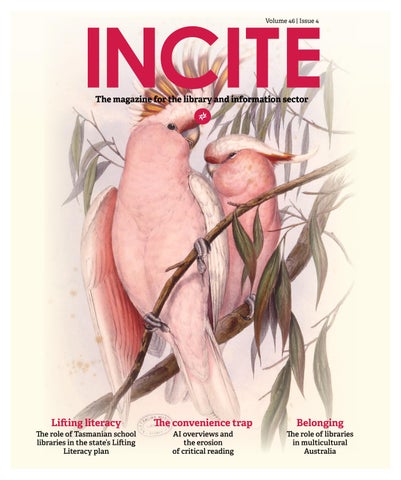
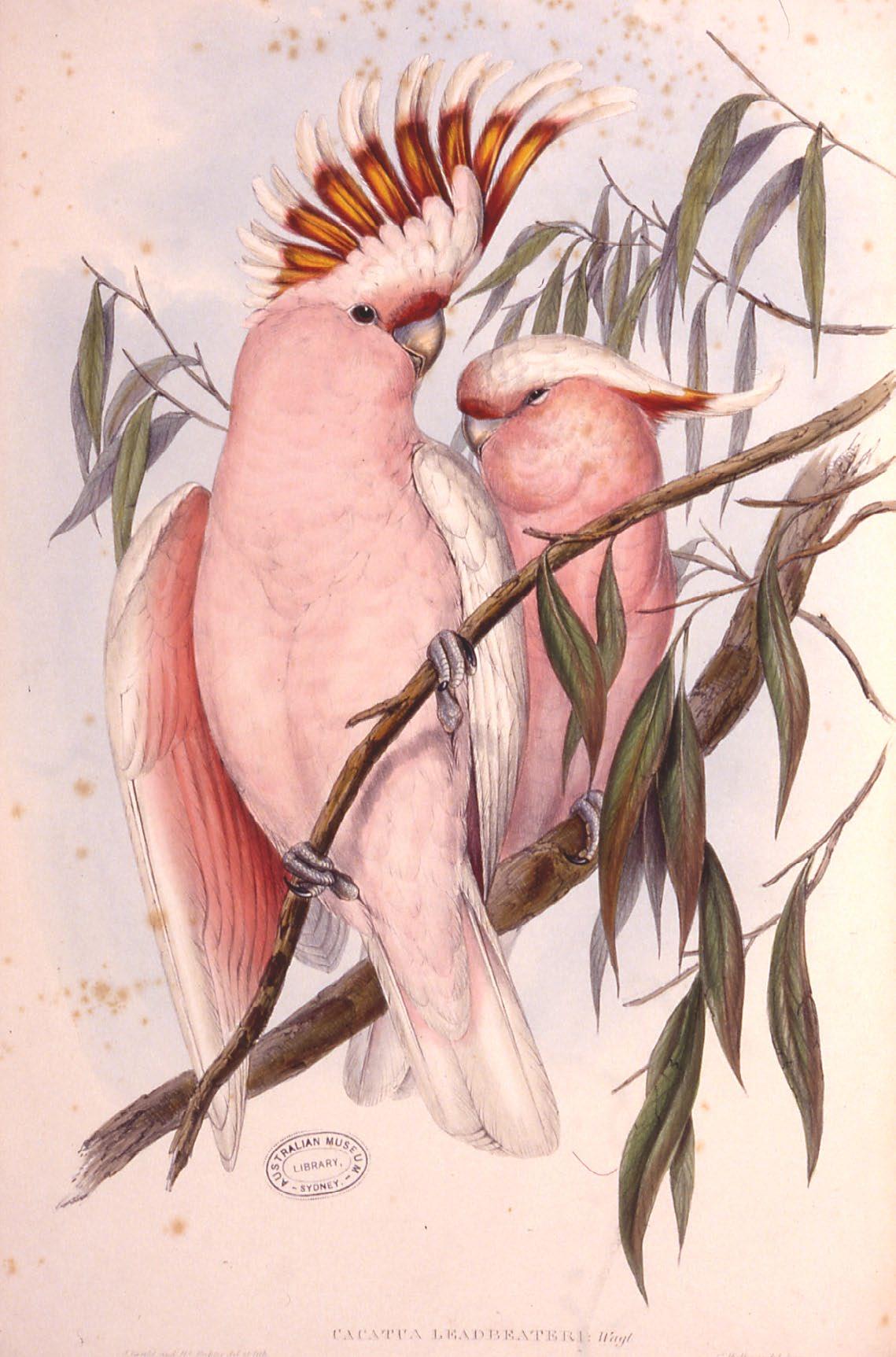
Cover: Cacatua leadbeateri. Illustration by John Gould, The birds of Australia, Vol. 5.
Welcome to the December edition of INCITE. As with every issue,, this issue is filled with stories that shine a light on the work happening across our sector. But before we dive in, we have some exciting news to share about INCITE in 2026.
Next year, INCITE enters a new chapter, transforming into a dynamic digital hub. We’ll bring you fresh stories, insights and perspectives throughout the year rather than in quarterly editions. This new approach creates more opportunities for contributors, more moments to highlight the depth of expertise and creativity in our sector, and greater flexibility to respond to timely conversations as they unfold. It also allows us to celebrate the work of our community in real time.
Above all, this shift is part of INCITE’s ongoing evolution: a publication that continues to adapt, grow and reimagine itself to meet the changing needs of ALIA Members and the wider library and information community.
More information about the transition to INCITE Online will be shared in early 2026 — so keep an eye on the ALIA website, social media and other communications channels.
And now to this edition. In ‘Library stories’, we speak with Angela Berney, Team Leader for Woodcroft Library and Events and Programs at Onkaparinga Libraries. A deeply engaged ALIA Member, Angela has led impactful initiatives including the Citizen Science Corner and the Community Cohesion project — work that has strengthened community connection and inspired her colleagues.
Our ‘Researcher insights’ section highlights research projects from Dr Kieran Hegarty, Sarah Brundrett and Anita Dewi (and team) covering topics ranging from libraries’ growing role in addressing digital inequalities, to the evolving use and measurement of open educational resources, to the changing landscape of student placements in librarianship, archives and records management.
By Liz Bradtke Editor
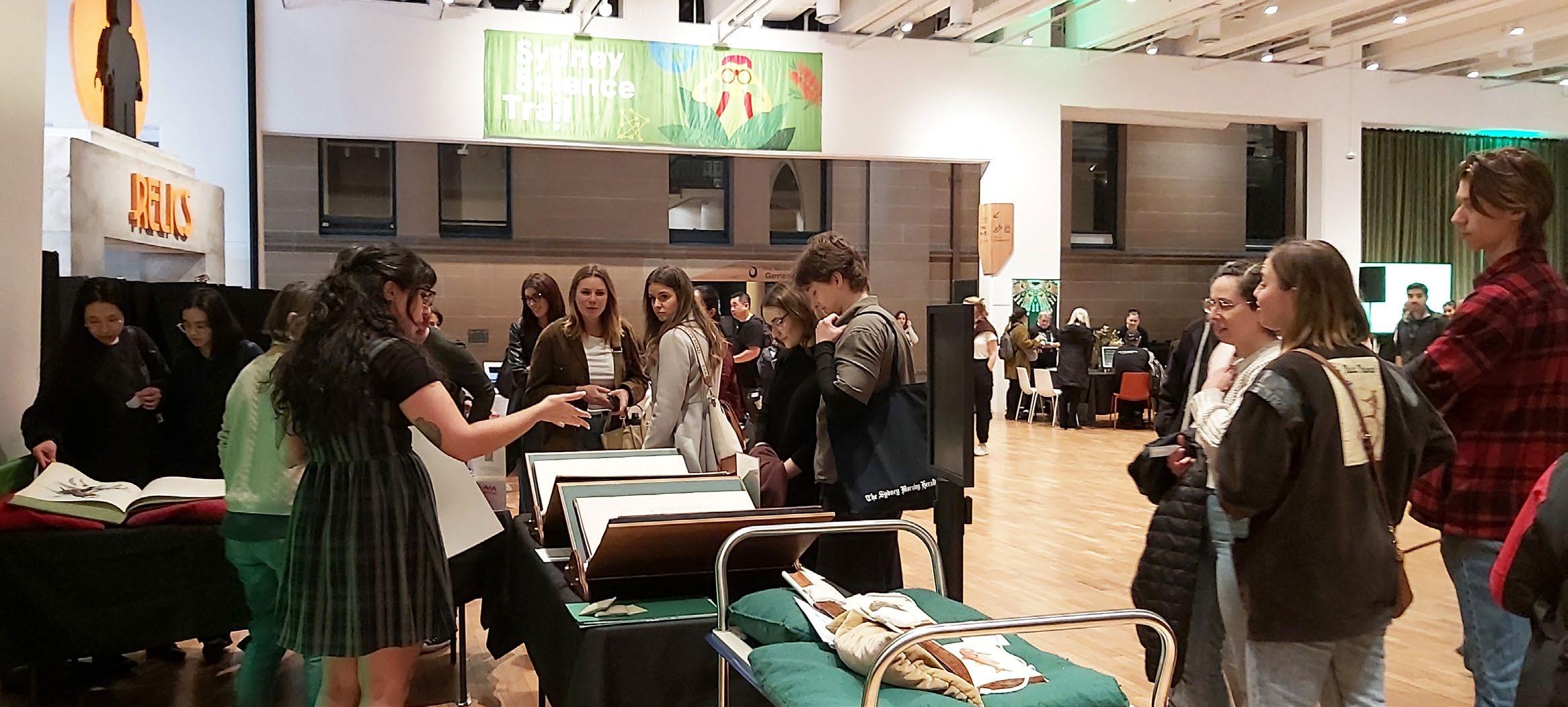
In ‘From the archive’, Irene Guidotti and Janelle Townsend share how the Australian Museum Research Library brought its rare books and historic collections to life through the Sydney Science Trail.
In this issue’s feature articles we look at an inspirational international youth partnership linking Wyndham Libraries with colleagues in the United States and New Zealand; dive into Libraries Tasmania’s new Lifting Literacy plan and the crucial role school libraries play in its success; examine how AI-generated overviews are reshaping how we gather and process information and why critical reading matters more than ever; and share three powerful stories about belonging and multiculturalism in Australian libraries.
In our ‘ALIA news’ section, you’ll find updates on national initiatives, including our ongoing partnership with the Department of Health supporting older Australians to navigate aged care reforms, and our collaboration with the Office for Social Cohesion to deliver hundreds of community-building programs across the country.
I hope you enjoy this edition of INCITE — the last in this particular format — and I wish everyone a safe and restful holiday period.
Liz Bradtke, Editor incite@alia.org.au
Acknowledgment of Country
The Australian Library and Information Association acknowledges the Traditional Owners of Country throughout Australia and recognises their continuing connection to lands, waters, cultures and communities. We pay our respect to Aboriginal and Torres Strait Islander peoples; and to Elders past and present.
Artwork: Richard Allan Jr.
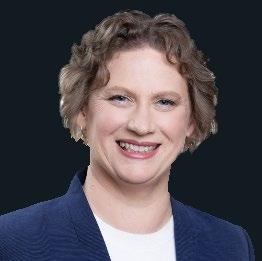
As we close out the year, I’ve been reflecting on the extraordinary work happening across our library and information community — much of it captured in the pages of INCITE this year. Although a broken ankle has kept me grounded for much of the past six weeks, the developments, conversations and celebrations across the sector have been a welcome reminder of the energy and commitment that define our profession.
One special moment I was able to attend was the opening of the new Library+ in Caloundra, Queensland. It was a pleasure to represent ALIA and to witness firsthand the vision behind this modern, flexible community space.
This quarter also saw the release of the Australian Public Libraries Statistical Report 2023–2024 developed with ALIA Australian Public Library Alliance and National and State Libraries Australasia. The new data shows a strong and continuing rise in library use, with 88 million in-person visits, 174 million collection uses, and more than 7 million participants attending 409,000 programs nationwide. This report provides a vital evidence base for our sector, illustrating both the scale of public library services and the impact they have on communities.
We have also had much to celebrate through our state and territory awards administered by some of our fantastic ALIA Regional Groups:
• In the Northern Territory, Carol Cheng from City of Darwin Libraries was awarded the 2025 NT Library & Information Excellence Award. Carol was recognised for creating inclusive, empowering programs that strengthen community engagement. Drawing on her own experience as a recent migrant from Hong Kong, she has become a catalyst for belonging and wellbeing for newcomers to the Northern Territory.
• In Queensland, Dr Helen Weston was awarded the 30th Queensland Library Achiever of the Year Award from ALIA Qld, recognising her leadership in school libraries and her pioneering work establishing Citizen Science Corners nationally.
• In South Australia, it was wonderful to see Zoran Opacic announced as the winner of the 2025 SALIAs, administered by ALIA SA. Zoran’s expansion of digital literacy programs into regional areas has strengthened staff and community members’ skills, confidence and engagement with technology.
• And in NSW, Sam Figuera from Wollongong City Libraries was awarded the NSW Library & Information Excellence Award from ALIA NSW. Sam led the Hill 60 Stories oral history project, preserving the voices and memories of Aboriginal Traditional Owners connected to this culturally significant site in Port Kembla. Through respectful consultation, onsite QR-linked storytelling and community collaboration, Sam has deepened public understanding of Hill 60 and strengthened relationships with Aboriginal communities.
These awards affirm what we know so well — that our libraries thrive because of the people who work in them and shape them. Whether delivering frontline services, driving digital inclusion, developing collections or creating welcoming spaces, our workforce continues to make a profound difference in Australian communities.
As we look to 2026, I am grateful for the dedication and generosity shown by our members, volunteers and colleagues throughout the year. Thank you for everything you contribute to our profession.
I wish you all a safe, restful and joyful end to the year.
Jane Cowell AALIA (DCP) ALIA President
Write for INCITE in 2026
If you’d like to contribute to INCITE in 2026, you’re invited to submit either an article idea or a full draft for consideration via the Submit Your Story form. Our editorial team will review your pitch and be in touch to confirm next steps. The new INCITE Online will launch in March 2026.
Jane Cowell AALIA (DCP)
ALIA President
‘Don’t pass up opportunity for growth (within reason!)’
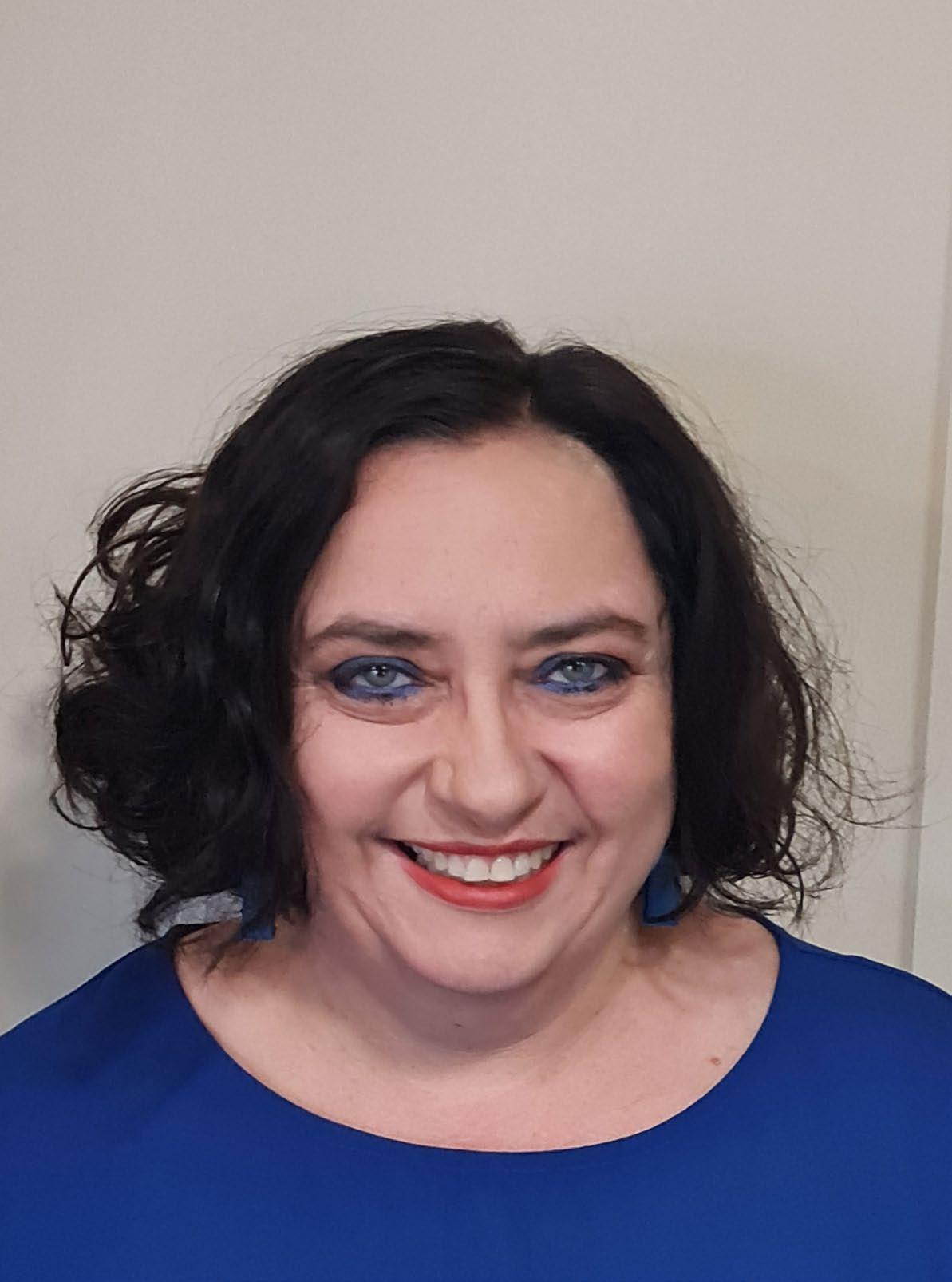
In this edition of ‘Library stories’, we talked to Angela Berney, Team Leader for Woodcroft Library and Events and Programs at Onkaparinga Libraries. Angela is a deeply engaged ALIA Member and library professional whose leadership in initiatives such as the Citizen Science Corner and Community Cohesion project has had a lasting impact on both her community and colleagues. She spoke with us about her career journey, what drives her work, and the power of libraries to create connection, curiosity and belonging.
Library stories Angela Berney
ALIA: What first drew you to the library and information sector?
AB: In 1986, my family had just moved to Australia from England. While I was studying, I often visited the library — I’d always been a big reader, and my parents had taken me to the library regularly as a child, so there was definitely a nostalgia factor. I always felt welcomed in that space and thought it would be a wonderful place to work. Can you share a little about your career journey and how you came to your current role?
I’ve worked in many different roles throughout my career. In the early days, I was involved in purchasing, cataloguing and even processing cassette tapes. I later worked in a joint-use library, where I managed rosters and collections, and then I joined the operations team at the main library, where I managed rosters and coordinated casual staff across six sites. In that role, I supported the team leader with our computer system, helped team members manage the overdues process, and troubleshooted circulation issues — especially angry customers who had received a final notice. I was a bit of a jack of all trades, I suppose.
In 2012, I moved to Woodcroft Library as the branch coordinator. At that stage, I hadn’t had much experience with events and programming, but my team leader at the time was very inspiring — and that inspiration was contagious. Over time, that passion for community programming grew and, in 2023, I became the Team Leader for Woodcroft Library and Events and Programs across
Onkaparinga. I was recently made permanent in this role, which I’m really proud of. What does a typical day look like for you (if there is such a thing)?
There’s really no such thing as a typical day when you’re working in a library. My days can involve everything from back-to- back meetings and facility management to supporting staff and listening to community feedback. There’s approving timesheets, managing health and safety concerns — and yes, occasionally getting involved in the ‘glamorous’ tasks like dealing with code browns or emptying rubbish bins.
But beyond the day to day, what really matters to me is implementing new programs and initiatives that are really going to benefit our community and inspiring our staff to think creatively and plan events and programs that contribute to this. Each day brings something unexpected, and that’s exactly what makes it so rewarding. You and your library have been deeply involved in the Community Cohesion project and Citizen Science Corner initiative. Could you tell us a little about your experience working on these projects, and the impact they’ve had on your community and library visitors?
First, I want to mention that Woodcroft Library is one of six library sites within Onkaparinga Council, and the branch where I’m based is located in the Woodcroft Community Centre. Our building is a designated Green Hub, and because of this, we’re often the first team to trial new sustainability initiatives. For example, we
host a Seed Library and a Library of Things, and run a range of environmental workshops.
The Citizen Science project felt like a natural extension of that work, so when the opportunity came up, I applied for all six of our libraries to be involved. There’s growing community interest in citizen science at the moment, particularly as our region grapples with the algal bloom crisis. In the month since our libraries set up their Citizen Science corners, there have been 40 new observations recorded through iNaturalist.
The Community Cohesion project is close to my heart. As our world struggles with the loneliness epidemic, this project has allowed me to really reflect on the programs we offer — why we run them, where the gaps are and whether we can do anything about it. Immersing yourself in a project like this truly changes your perspective. Our first Community Cohesion project was the Ageing Well Expo, and even though I’m familiar with the statistics around loneliness, it was still difficult to read feedback from people who shared that they feel lonely or disconnected from their community. It reinforced for me just how important programs like this are in helping people build connections and feel a sense of belonging.
In your view, what is the biggest challenge facing the sector at the moment?
That’s a big question! Rising areas of concern involve technology and AI, social activism, and how we cope with things like our ageing populations and the loneliness epidemic. I think one of the biggest challenges — and opportunities — for our sector is ensuring that new staff are equipped with the skills to be agile and adaptable to cope with our changing environment. Everything is evolving so quickly, and libraries play a key role in helping our communities navigate these changes, often while we’re learning ourselves.
It’s also important that we talk openly about the full scope of library work — from community engagement to facility management and everything in between. The reality of the job can sometimes surprise people, but I think that’s what makes it such a dynamic and rewarding field. Every day brings a new chance to learn, connect and make a difference.
I also believe we need to become stronger advocates for what libraries do. Many
community members don’t fully understand the breadth of what we offer — they often discover us only when they’re in need of support. The challenge is finding ways to share our message more widely, so people see libraries as vibrant, essential spaces for everyone, every day.
What have you learned about your community — or yourself — through your work in libraries?
I’m always learning about myself. Patience is definitely a work in progress. I’ve realised that I like to lead by example and be inspiring — and I’ll admit, I sometimes struggle with bureaucracy; I’m much more of a doer. I’ve learned that not everyone has the same passion as me and that’s okay. Recently, some of my staff described me as ‘ferocious, inspiring, and a good listener’ — I’ll happily take that.
Our community is so diverse, and that’s one of the things I love most about this
work. Every day, I meet people from different backgrounds, with different stories and needs, and it reminds me that libraries are truly for everyone. I’ve learned that connection looks different for each person — sometimes it’s a friendly chat, sometimes it’s finding the right book, and sometimes it’s just providing a safe, welcoming space. Working in libraries constantly reinforces how small acts of kindness can have a big impact. What advice would you give to new or emerging library professionals?
Be agile. The world is changing very quickly, and we need to be ready to say yes to opportunities; even when they push you outside your comfort zone, don’t be scared to fail.
Remember, libraries are about people first. Take the time to listen, be kind, and really understand your community and team. Recognise the diversity within your team and trust them to use their strengths to enrich the library and community they serve.
Angela Berney. Photo: Supplied
Researcher insights
‘Research insights’ is a forum for ALIA to share and celebrate some of the important and interesting research being done across the sector. In each issue, we showcase three projects from an academic, LIS practitioner and a PhD candidate, highlighting the diverse types of evidence being developed across the library and information sector. The research topics covered in this edition of INCITE range from libraries’ growing role in addressing digital inequalities, to the evolving use and measurement of open educational resources, to the changing landscape of student placements in librarianship, archives and records management during and beyond the COVID-19 era.
Researcher: Dr Kieran Hegarty
Role: Research Fellow, ARC Centre of Excellence for Automated Decision-Making and Society, RMIT University
Project description: Dr Kieran Hegarty contributes to a number of national research projects that highlight how community organisations, including public libraries and neighbourhood houses, help address digital inequalities. These include projects funded by the Australian Communications Consumer Action Network, Telstra and the Victorian Government. These projects are led by researchers at RMIT and Swinburne, particularly through the ARC Centre of Excellence for Automated Decision- Making and Society.
These projects have found that, in a range of settings, public libraries are increasingly taking on the role of supporting people experiencing digital exclusion to access vital online services, including government services, banking, etc. While this role brings opportunities for libraries to act as crucial intermediaries to services for vulnerable groups in a digital society, it also brings economic and emotional costs that are rarely recognised by governments and service providers that are shifting services online. The aim of these projects is to identify the costs of extra pressures on library services and how libraries and their staff can be better supported.
Kieran says, ‘As a former practitioner, one of my goals is to apply concepts, theories and methods that I’ve learned through my academic training to understand the social and cultural role of libraries in a digital society. I am excited to continue work with library professionals and pursue new projects that benefit the library community.’
Status: In progress
Contact: kieran.hegarty@rmit.edu.au
Research practitioner: Sarah Brundrett Research team:
• Dr Danny Kingsley, Director, Library Services (Information), Deakin University
• Sarah Brundrett, Manager, Library Services (City East), University of South Australia
• Dr Kay Steel, Associate Librarian, Research Services, Federation University
• Richard White, Manager, Copyright & Open Access, University of Otago
Project description: Led by Dr Danny Kingsley, this research project explores how open monographs are being increasingly used as open educational resources (OERs) across Australia and New Zealand, although tracking their actual use in teaching and learning remains far from straightforward. Usage data are fragmented and inconsistent as neither syllabus reviews nor download counts provide a complete picture of engagement or educational impact. The research team found that the definition of what qualifies as an OER varies widely and, from our experience, there are few formalised institutional policies actively supporting OER creation, dissemination and adoption, making it difficult to link these policies to genuine uptake and sustained use. They used this to make a case that a coordinated, sector-wide effort is needed to standardise metrics, consolidate data and develop consistent policies to better understand and encourage OER use.
Status: Completed
Contact: sarah.brundrett@unisa.edu.au
PhD student: Anita Dewi
Role: Lecturer in Information Studies, School of Information and Communication Studies, Charles Sturt University
Project description: Anita Dewi is currently pursuing her PhD in Information Studies. Her PhD project investigates how students, industry host supervisors, professional accreditation bodies and university placement coordinators view placement programs. The scope of research is undergraduate and postgraduate librarianship, archives and records management student placements in Australia, between 2020 and 2023. To add to the mix, the COVID-19 pandemic that occurred during this period has brought about difficulties in organising placement programs. This is also acknowledged and investigated as one of the research questions in the study. In addition to having an impact on the current and future placement programs in the areas of libraries, archives and records, findings of the study are expected to also maintain and potentially enhance the mutual benefits among the stakeholders involved. Anita is very much looking forward to sharing findings from her work with the wider library community after completing her PhD.
Do you have a project you’d like to share? We’d love to hear from you — contact the ALIA Research Advisory Committee at enquiry@alia.org.au with the subject line ‘Researcher insight submission’.
The living archive: How historic collections inspire contemporary science
By Irene Guidotti and Janelle Townsend
From the archive
For this edition of ‘From the archive’, Irene Guidotti, Digital Librarian at the Australian Museum Research Library, and Janelle Townsend, Creative Producer, Science Engagement and Public Programs at the Australian Museum, bring us a story that bridges past and present — showing how the treasures of our collections continue to inform and inspire the world around us.
The Australian Museum Research Library’s participation in the Sydney Science Trail is a vivid example of how the materials held in our libraries, museums and archives are not static artefacts but living resources that shape contemporary science, spark community curiosity, and contribute to ongoing conversations about our future.
This piece reminds us that every rare book, illustration and historical record has the power to illuminate modern discovery — connecting centuries of exploration with the questions and conversations of today.
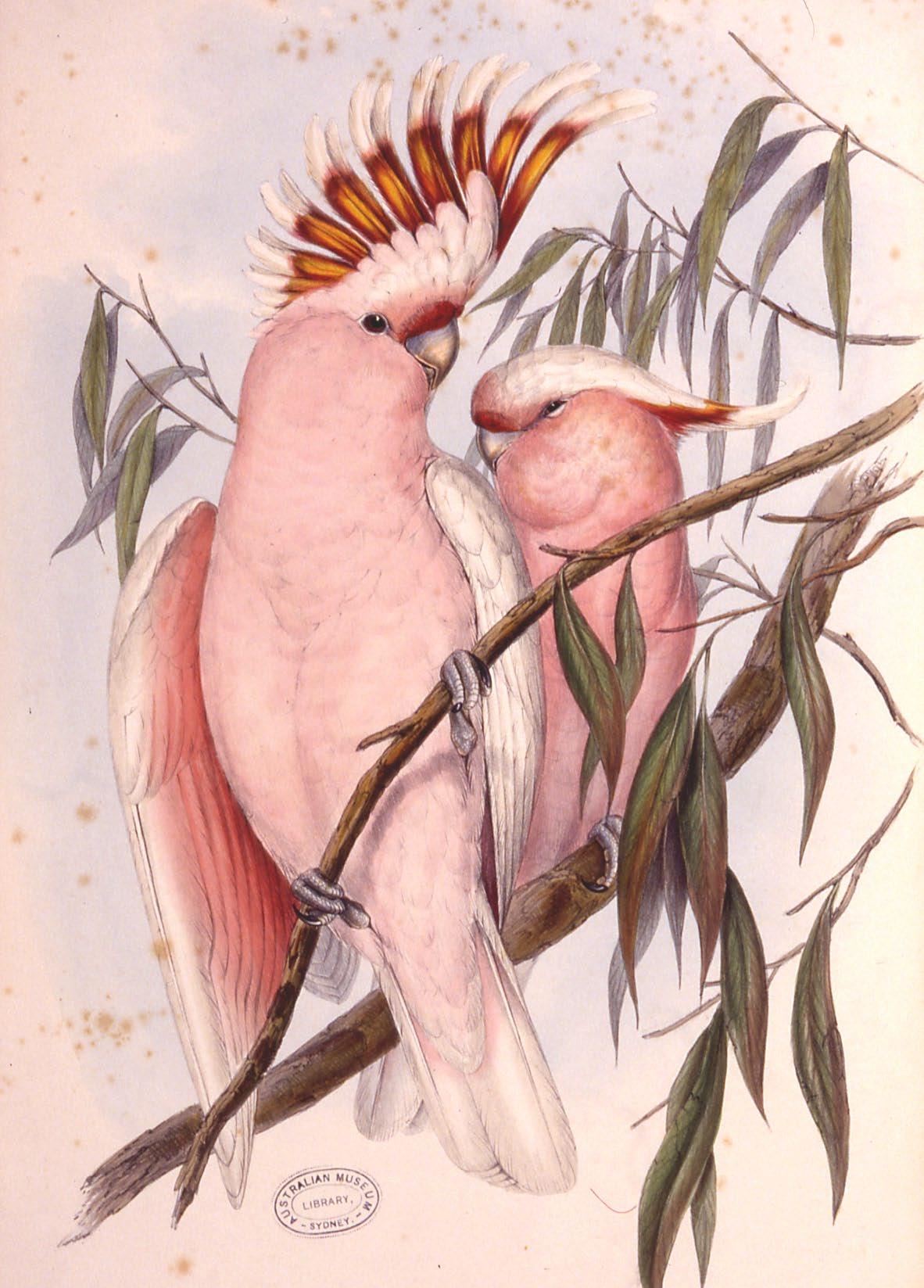
Cacatua leadbeateri. John Gould, The birds of Australia, Vol. 5.
In August 2025, the Australian Museum Research Library (AMRL) joined the Sydney Science Trail (SST) for its most successful year yet. Through a rare book display featuring tactile facsimiles and through conversations with library staff and volunteers, visitors discovered how centuries-old natural history works continue to shape modern science.
Delivered across National Science Week, SST is a collaboration between the Australian Museum and Royal Botanic Gardens, Sydney, that has successfully delivered educational and community events for the past six years. Designed as an annual science festival with something for everyone, SST aims to capture imaginations and inspire curiosity by highlighting research from science, technology, engineering and mathematics (STEM) organisations across NSW and interstate. Its program includes school excursions, community days for families, and an evening networking event for the adult science community. Each year, SST engages more than 14,000 participants from Greater Sydney and beyond.
Social events
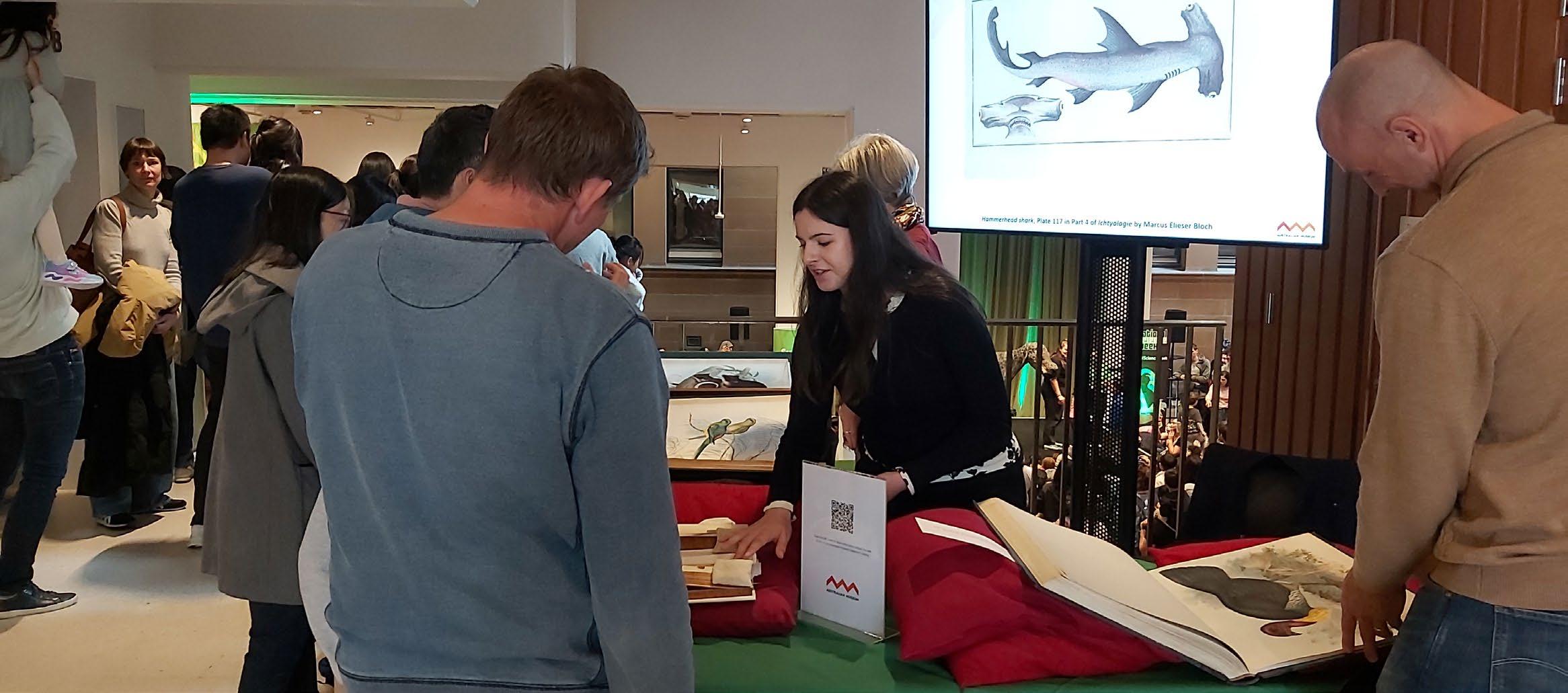
The Australian Museum’s SST Community Day is a free, museumwide event featuring the SST Expo, which brings together more than 20 STEM organisations including universities, government bodies, citizen science groups and research institutions. Participants engage in science shows, workshops and activations showcasing the spectrum of research undertaken by the Australian Museum Research Institute. AMRL’s participation across SST’s Community Day and The Science Social events reflected a growing curiosity about what lies behind the museum’s collections, and is a reminder that libraries are living parts of the scientific ecosystem. When visitors realised they could interact with replicas of John and Elizabeth Gould’s The birds of Australia, the sense of wonder was palpable.
AMRL: A brief history
Established in 1836, the AMRL is one of the oldest continuously operating natural history libraries in the world and the second oldest in Australia. From its beginnings, when a bookcase was provided for works on scientific subjects, the collection has grown to nearly 200,000 volumes, representing centuries of exploration, taxonomy and discovery.
The library’s early years were shaped by collaboration and curiosity, with books, correspondence and specimens exchanged among scientists and collectors to build the museum’s growing collections. Among the treasures acquired were rare works by John Gould and fellow naturalist William Swainson, whose vibrant lithographs remain visitor favourites today.
By the late 19th century, the AMRL had become a key research hub, housing expedition reports, scientific journals and publications from around the globe. Many volumes, including Maria Sibylla Merian’s Metamorphosis insectorum Surinamensium (1705), Gerard Krefft’s The snakes of Australia (1869) and Guillaume Rondelet’s Libri de piscibus marinis (1554), are still consulted by researchers, offering a window into the evolution of both science and printing.
Today, the AMRL continues this dual mission: supporting the research needs of museum staff and visiting scholars, while sharing its heritage through displays, exhibitions and educational programs.
AMRL today
In 2024, the museum identified an opportunity to use SST to connect the broader community with the AMRL’s collection and highlight its significance to scientific research. The AMRL display proved immensely popular at both The Science Social (attended by more than 270 adult science enthusiasts) and the Community Day (attended by more than 6,500 visitors). Attendees viewed Fishes of Ceylon (1834) by John Whitchurch Bennett, The birds of Australia (1848) and John Gould’s The mammals of Australia (1863), with other digitised
images showcased. Visitors spoke with library staff and volunteers and directly engaged with recently commissioned replica books of Elizabeth and John Gould’s Australian bird illustrations.
Event engagement
Building on the events’ success in 2024, the AMRL returned to SST Community Day and Science Social events in 2025. With a combined visitation of more than 11,000, this year’s events proved to be an even greater opportunity to engage museum visitors and expand the library’s reach and impact, especially with children and family groups — a new audience for the AMRL, which is not normally open to the public. An addition to the stall this year was a QR code directing participants to the library catalogue and digitised publications online. As a result, the AMRL webpage received a 59% increase in traffic over the week of SST compared to that of the previous week.
Successful participation in SST has complemented other library and archives community engagement initiatives. The birds of Australia: John and Elizabeth Gould StoryBox digital experience toured NSW from 2024 to 2025, featuring the Goulds’ story and new digital scans of The birds of Australia through a conservation and First Nations storytelling lens. At the museum in June and July 2025, the experience was supplemented with a display of the Goulds’ original works, interactive digital books and public engagement events using the replica volumes.
Meanwhile, the inaugural Scientist for a Day: Librarian and Archivist full-day school holiday workshop sold out across four sessions held in July and October. Designed for primary school-aged children, the workshops offered participants a tour of the rare books collection, the chance to create their own scientific drawings and keepsake journals, and insight into the behind-the-scenes work of the museum’s librarians
and archivists. Together, these public events and programs highlight how the library’s collections can inspire curiosity across all ages.
A bright future
As the Australian Museum approaches its 200th anniversary in 2027, events like SST are more than community celebrations. This year, the rare book stall and program once again confirmed that diverse audiences want to see, touch and experience the stories within the collection.
In both 2024 and 2025, visitors showed keen interest in the authors, illustrators and naturalists behind the rare books on display, prompting lively discussions about the library’s wider collection and its role in documenting scientific discovery. Many scanned QR codes for more information or asked when the next display would be held. These small moments of connection reveal something profound: the Research Library is not merely a repository; it also continues to spark curiosity and foster engagement with the stories of science.
Looking ahead, the AMRL is exploring ways to build on this enthusiasm. Future events could include more interactive elements, giving visitors new ways to engage with the library’s collections beyond the gallery. As the museum prepares for its bicentenary, the AMRL’s role will only grow stronger: preserving knowledge, sharing its narratives, and reminding us that discovery often begins with a book.
AUTHORS
Irene Guidotti
Digital Librarian, Australian Museum Research Library Information Coordinator, Preservation and Conservation Section, IFLA
Irene.guidotti@australian.museum
Janelle Townsend
Creative Producer, Science Engagement
Public Programs, Australian Museum janelle.townsend@australian. museum
Australian Museum Research Library volunteers Theoni Apostolopoulos and Deborah Cassell at the library stall during the Sydney Science Trail Community Day event.
Three years strong: Information about aged care reforms in the library
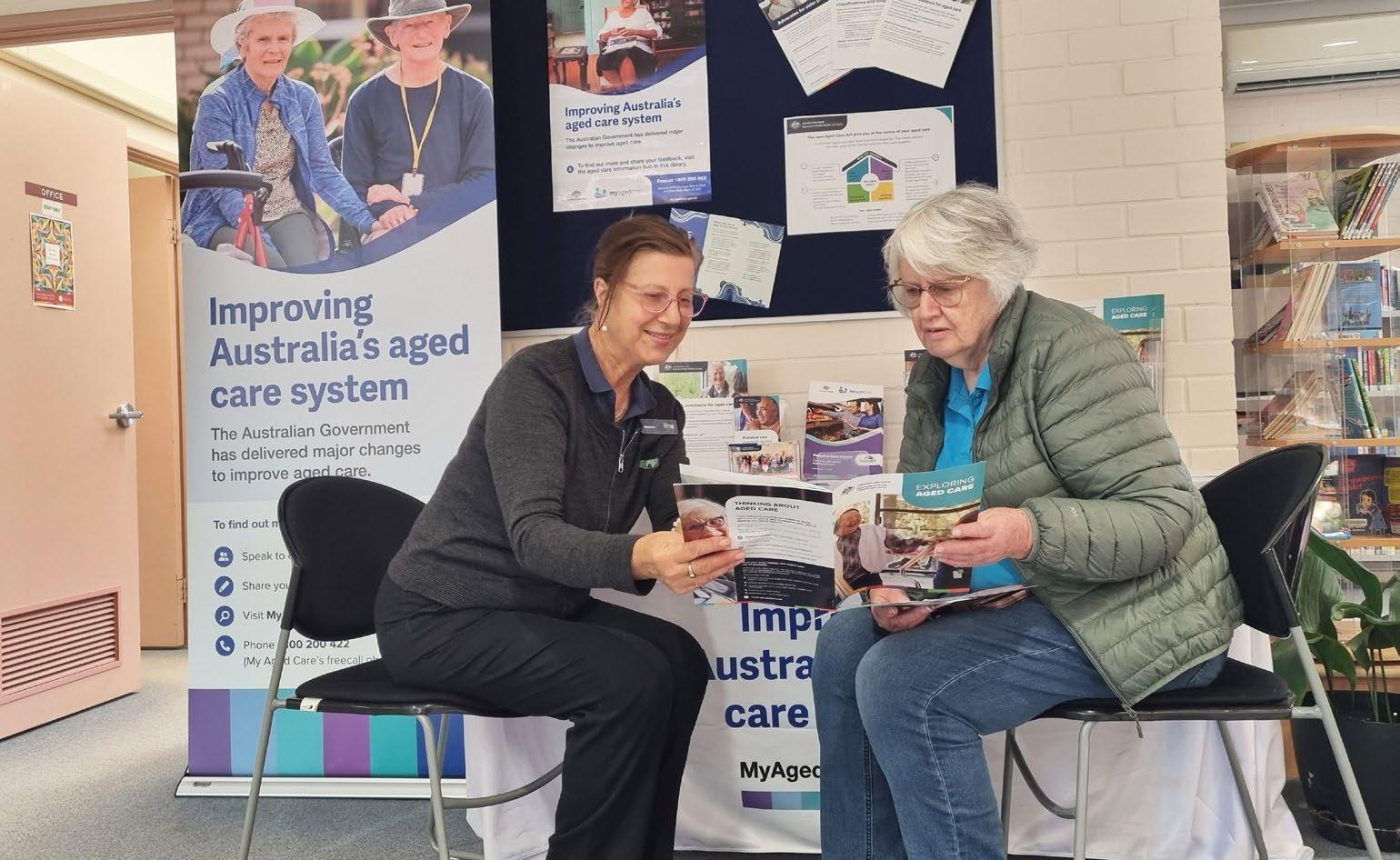
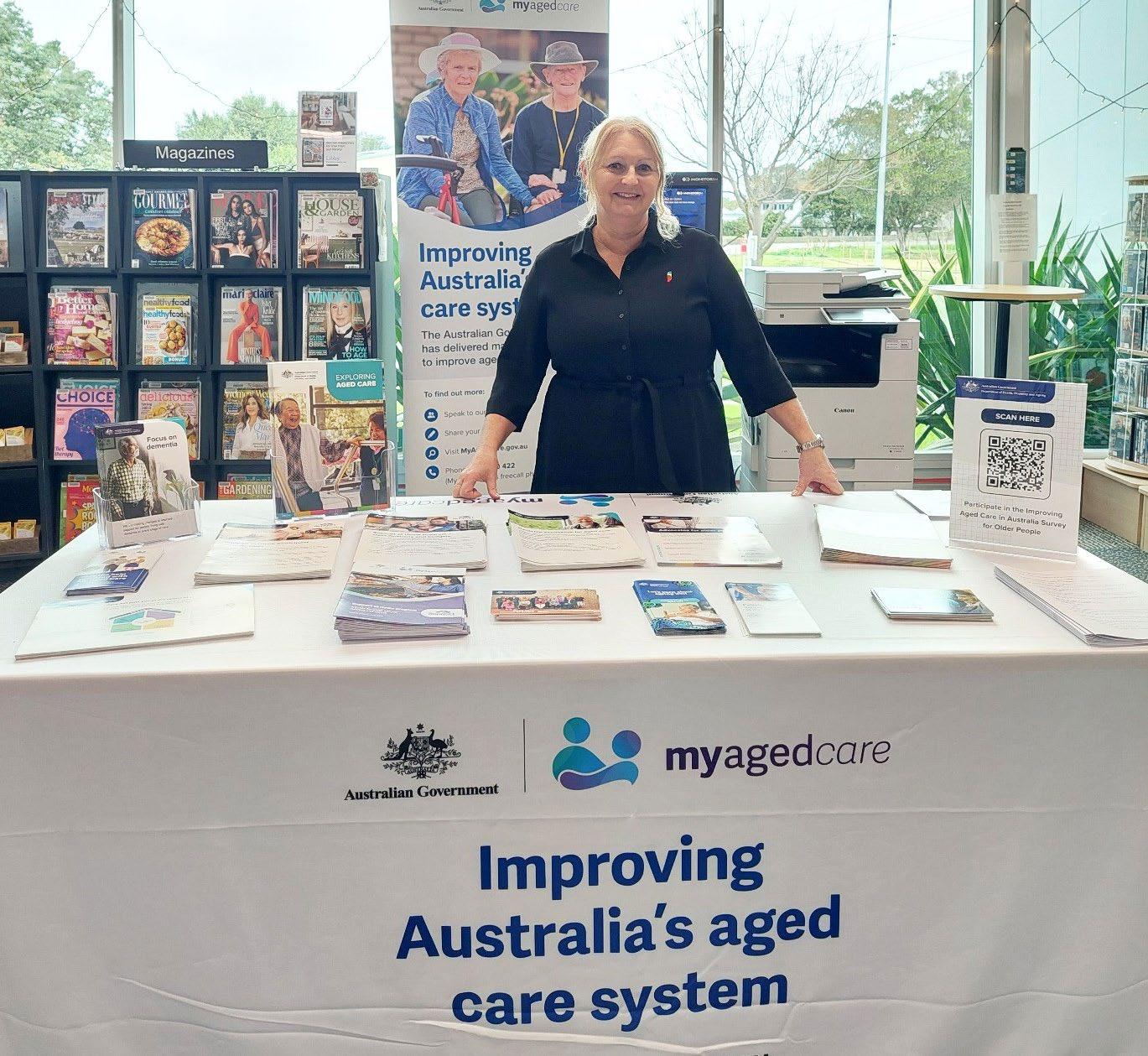
In partnership with the Australian Department of Health, Disability and Ageing, ALIA managed the rollout of Aged Care Reforms Information Hubs in public libraries for the third year in a row.
The programs involved developing, supplying and implementing aged care information hubs in libraries across Australia and supporting library staff to resource the hubs. The strategic partnership recognised that libraries are often visited by older people, their families and carers and are well placed to act as intermediaries for information sharing.
The 2025 partnership aimed to contribute to the following broader aged care engagement objectives:
• communicate key changes in aged care, such as the Support at Home program and the new Aged Care Act 2024, as well as to support communication objectives around informing and empowering older people to age positively, including by:
• planning for aged care early
• understanding how to access and navigate the system
• feeling confident that their rights and needs are protected
• share information about the changes that were occurring as part of aged care reforms and how these would benefit older people and the community
• learn from aged care consumers, older people, families and carers, and other stakeholders about what they thought of the changes, how reforms impacted
Albury LibraryMuseum
Belmont Library
Concord Library
Gordon Library
Leeton Shire Library Leeton
Singleton Public Library Singleton NSW
Sutherland Library Sutherland NSW
Tumut Library
City of Palmerston Library
Beaudesert Library
Dorothy Jones Library (Tully)
Mareeba Shire Library
North Lakes Library
Proserpine Library
Gawler Civic Centre Library
Goolwa Library
Parks Library
Palmerston NT
Beaudesert Qld
Tully Qld
Mareeba Qld
North Lakes Qld
Proserpine Qld
Gawler SA
Goolwa SA
Angle Park SA
Alexandra Library Alexandra Vic
Bright Library Bright Vic
Horsham Library
Phoenix Park Library
Shepparton Library
St Albans Library
St Kilda Library
Albany Public Library
Broome Public Library
High Wycombe Library
Riverton Library
Rockingham Library
Williams Public Library
Horsham Vic
Malvern East Vic
Shepparton Vic
St Albans Vic
St Kilda Vic
Albany WA
Broome WA
High Wycombe WA
Riverton WA
Rockingham WA
Williams WA
them, and what mattered most to them and why
• understand how consumers and stakeholders were being impacted by reforms as changes took place.
Libraries participating
The program in 2025 involved 30 public libraries across all states and territories excluding Tasmania. The libraries hosted the information hubs for a period of 12 to 16 weeks between August and December. Since the start of ALIA’s involvement in the project, 86 libraries have taken part — a major step towards helping older Australians and their families confidently navigate the aged care system.
MORE INFORMATION
visit Aged Care Reforms Information Hub in libraries
Right
The libraries are hosting the information hubs for a period of 12 to 16 weeks between August and December. Photo: Supplied
Introducing the New Comprehensive Collection of Chinese Classics
Bringing together over two decades of scholarly collaboration and editorial expertise, DLCC offers unprecedented access to a vast, expertly curated and punctuated collection of classical Chinese texts.
What’s included?
▪ 510 texts spanning 200 million characters, equivalent to 282 volumes (approx. 140,000 pages).
▪ Contributions from nearly 500 scholars across China, Korea, Japan, and Vietnam.
▪ Includes 52 newly excavated manuscripts from across China, published here for the first time.
▪ Organized into four key classical categories: - Classics (經 Jing): 190 texts - History (史 Shi): 56 texts - Philosophy (子 Zi): 85 texts - Literature (集 Ji): 127 texts
▪ 52 recently excavated manuscripts from across China
Plus:
An additional 160 Chinese language texts from Korean, Japanese and Vietnamese collections will be added at a later stage at no additional cost.
Special year-end offer:
Scan the QR Code, explore DLCC today!
40% discount on institutional purchases before December 31, 2025 exclusive for Australia & New Zealand!
Contact your local representative to learn more!
Libraries helping communities come together and drive social cohesion
An exciting new partnership between ALIA and the Department of Home Affairs’ Office for Social Cohesion is supporting libraries Australia-wide to deliver a diverse range of programs that help build stronger and more cohesive communities.
The initiative will see 115 public and 10 university libraries deliver 750 programs to a range of audiences including families, seniors, youth and people at risk of isolation. It will run until April 2026.
Library programs delivered through this initiative will help build a shared understanding of the importance of cohesive communities, are designed to grow and strengthen connections, networks and relationships, and lay the groundwork to encourage togetherness in times of stress.
The initiative builds upon the work that libraries already do in connecting individuals and communities. As we in the sector and many in the broader public already know, libraries are increasingly becoming go-to hubs for community connection — safe, welcoming spaces where people can gather for assistance, support and friendship. ALIA’s partnerships with government agencies such as the Office for Social Cohesion will further empower Australia’s vast network of libraries and drive place-based initiatives that benefit communities.
The Office for Social Cohesion is providing each participating library service with $9,900 to support the delivery of six programs each. For some libraries this means developing and delivering programs that have been on the wish list, but cost has been a barrier. For others this opportunity means libraries can expand their programs to reach more people.
Here are just a few examples of some of the programs underway at public libraries around Australia. Stay tuned to INCITE in 2026 as we feature some of the programs on offer from university libraries.
Children’s Book Week at Albany Public Library
Albany Public Library hosted a Children’s Book Week program designed to foster inclusive cultural exchange, active student participation and connection to community and the library. The program created a welcoming space where 649 students from lower and upper primary and 82 teachers from 10 schools could safely explore diverse ideas, express themselves and engage with others.
A significant financial barrier exists when it
comes to schools being able to participate in programs at Albany Public Library. Funding from this initiative enabled the library to pay for buses so that students from most primary schools in Albany were able to travel to attend programs at the library.
Fun Palace community day at Fraser Coast Libraries
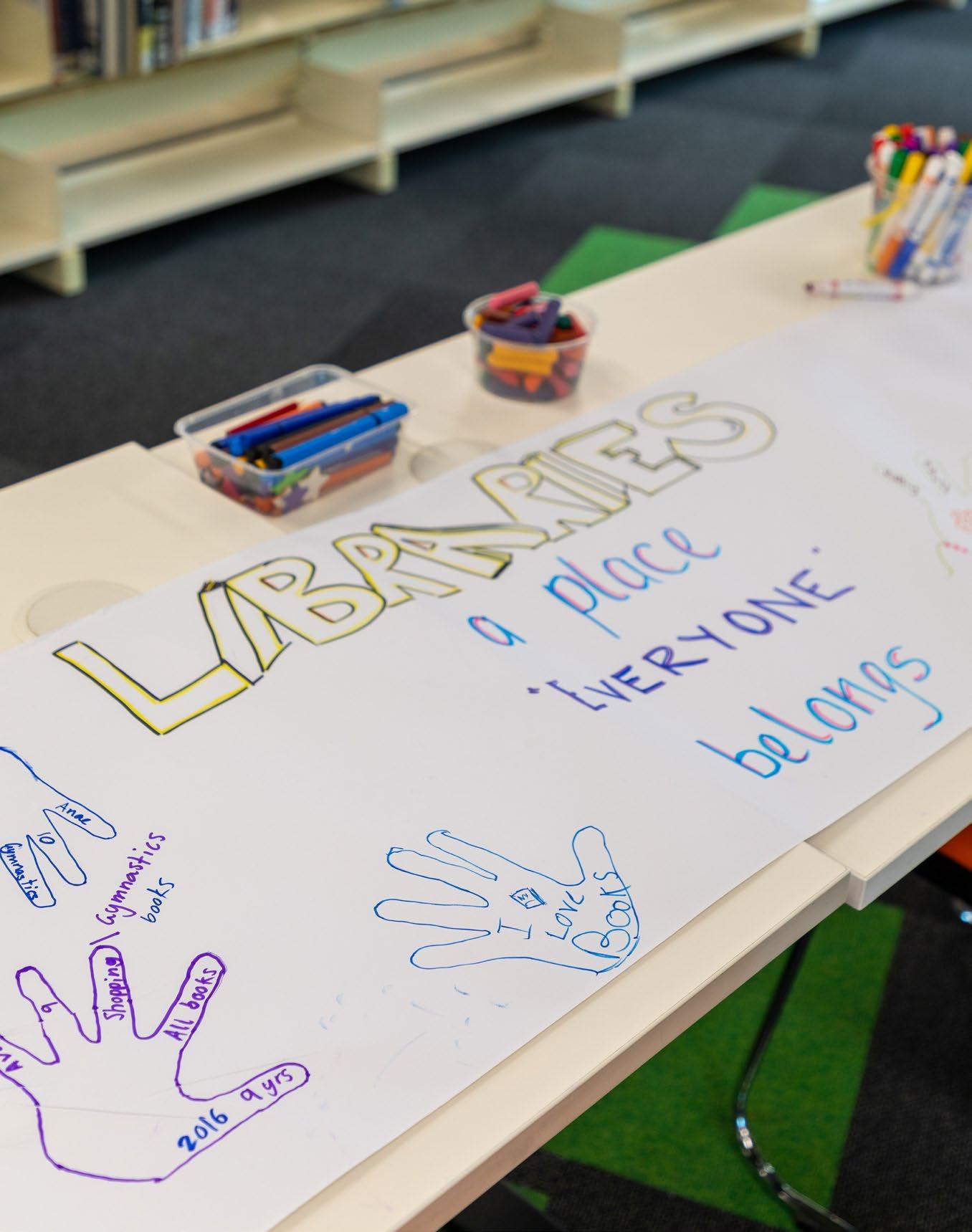
Fraser Coast Libraries hosted a free community day to show how libraries are ‘a place everyone belongs’. Around 1,000 attendees engaged in a diverse range of activities including robowars, science displays, creating fish for a virtual display, Tetra Pak printing, face painting and weaving. Also on offer were music, performances and a free barbecue. Many local groups and businesses
Mareeba Shire Expressive Art Workshop. Photo: Supplied
also participated in the event, further enhancing community connection and conversation.
‘All the different sections outside and inside were well set-out and people were so positive to encourage even the shyest of kids.’
– Participant
‘Amazing experience … the community really came together.’
– Library staff member
Indigenous Literacy Day at narrm ngarrgu Library
narrm ngarrgu Library hosted a storytime event to mark Indigenous Literacy Day. Thirty children and adults participated in the event with Annette Sax, a Taungurung
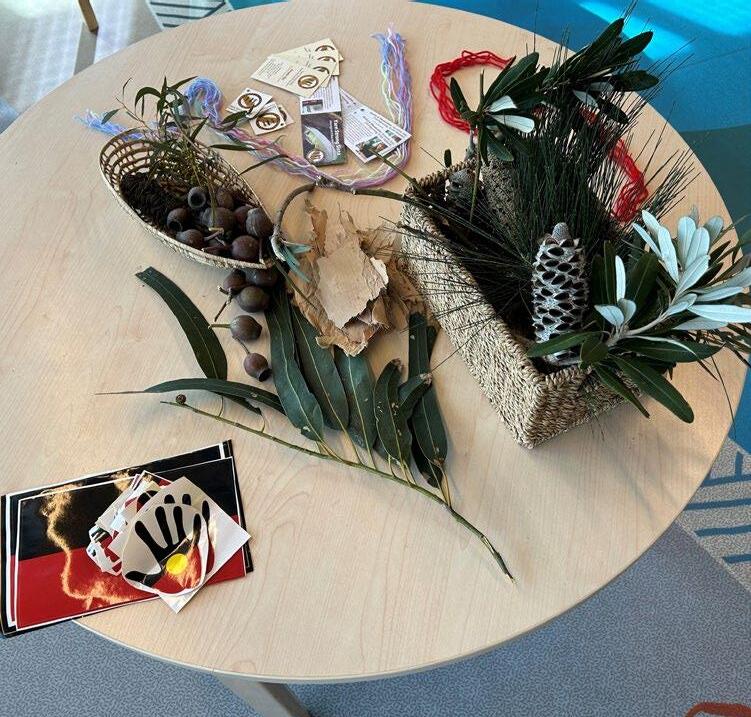
artist and storyteller, who shared Bartja and Mayila, a contemporary story written by Yorta Yorta author Sue Atkinson and illustrated by Annette. The story explores themes of Country, family and identity, introducing children and adults to Victorian Koorie storytelling traditions. After the story, families joined Annette in a hands-on craft session using natural materials gathered from her Country. The activity encouraged participants to connect with nature and First Nations perspectives on caring for land.
‘First time at this library and love it so much. It was great learning about the space and First Nations history. The family will be back for more programs.’
– Participant
Shared Stories: Building community through writing, voice and visibility at Bathurst Library
The Shared Stories program offered the Bathurst community three opportunities to learn new ways to amplify their stories and experiences and extend professional opportunities to connect and build their experience in reaching more people.
The two workshops, Telling your truths: A community workshop on writing about illness and disability and How to: Writing, editing and publishing, as well as a local writers’ showcase event, helped facilitate community connection and relationships while emphasising the diversity of people’s lived experiences. Through the initiative, Bathurst Library
Fraser Coast Libraries hosted a free community day to show how libraries are ‘a place everyone belongs.’ Photo: Supplied
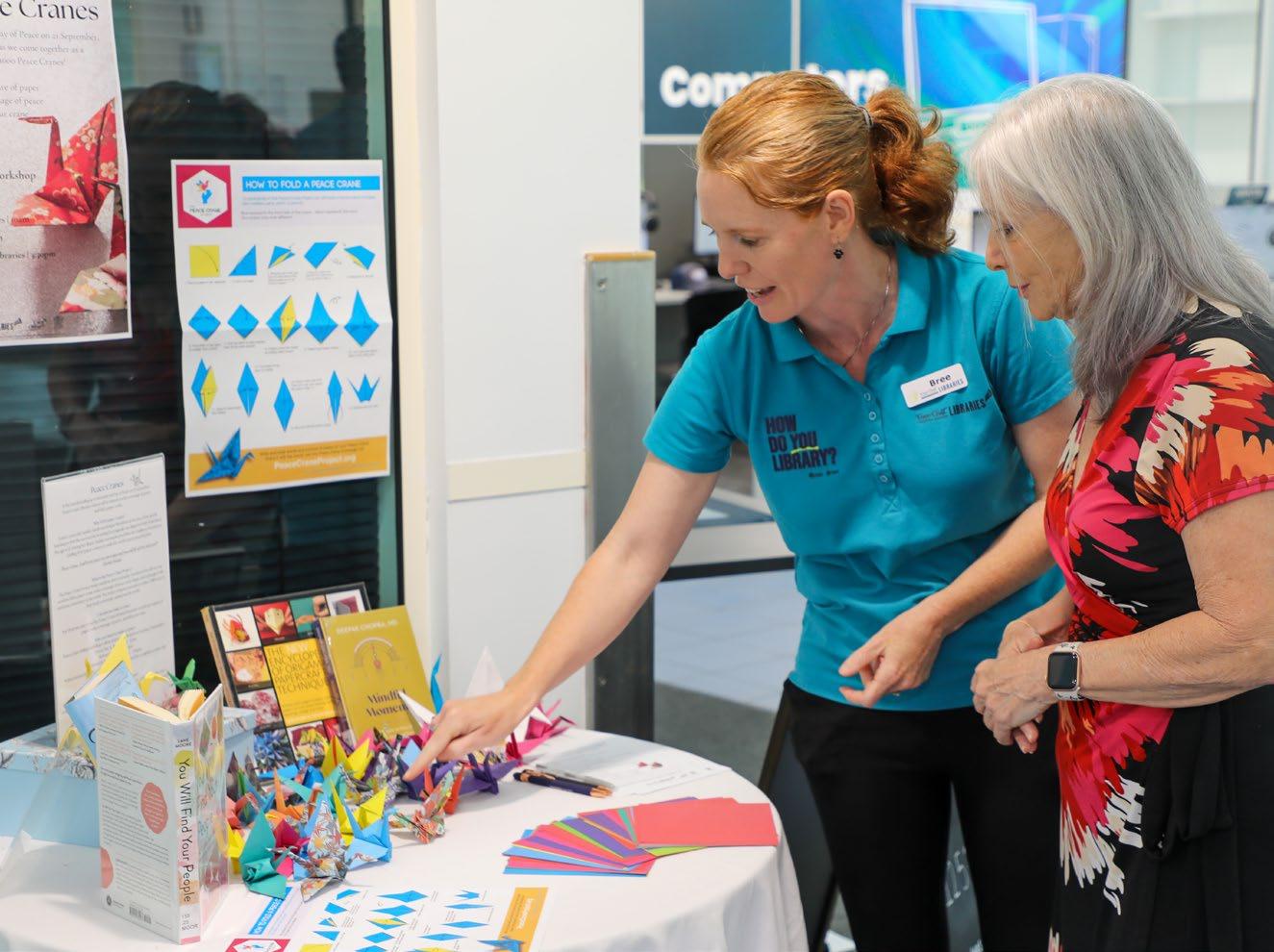
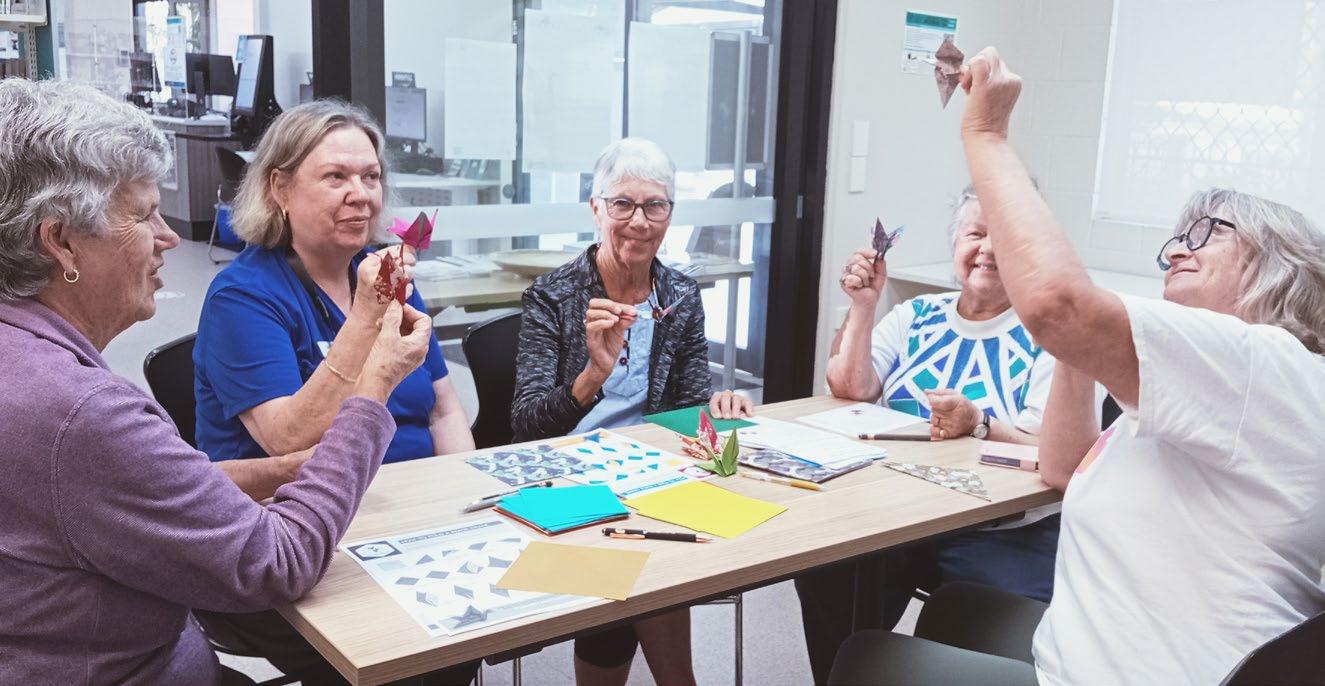
Community members participating in the Fraser Coast Library Peace Crane Project. Photo: Supplied
Supplied
has been able to make all three events completely free.
Expressive art workshops at Mareeba Shire Libraries
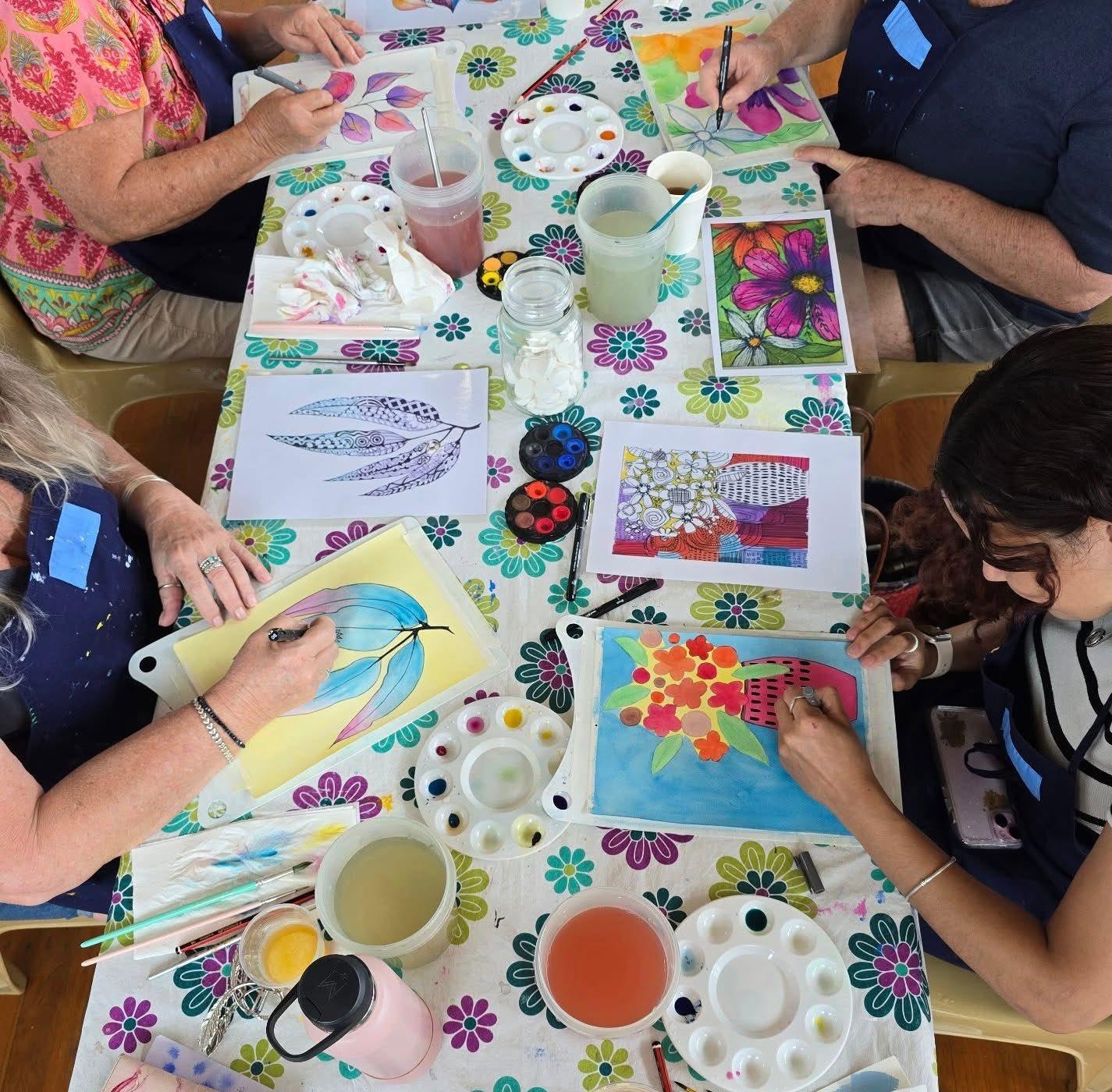
Mareeba Shire Libraries hosted expressive art workshops, facilitated by a qualified expressive art therapist and designed for those seeking connections and ways to manage stress. The two-hour workshops were attended by more than 30 participants from diverse backgrounds and supported individual healing, fostered collective resilience and encouraged community belonging.
‘This was one of the most rewarding programs the library has provided. It was interesting to see a mix of individuals attending — family units, friends and solo participants. I had not seen these participants together in the same group before. Each session had a truly impactful outcome, as participants connected with each other by appreciating the artworks and sharing the stories behind their ideas.’
– Library staff member
MORE INFORMATION
Visit the ALIA website for more details, including a map showing participating libraries.
ALIA identifying trends in the LIS workforce
ALIA’s Library and Information Services Workforce Advisory Committee (LISWAC) has recently undertaken a national survey to better understand trends, changes and opportunities across Australia’s LIS workforce.
LISWAC is a cross-sectoral advisory body that supports the ALIA Board with matters relating to the library and information workforce, including by:
• identifying trends and emerging issues in LIS, including in LIS education
• reviewing and developing the ALIA Framework of Skills, Knowledge and Ethics
• conducting the annual LIS workforce survey
• addressing other matters as requested. The 2025 workforce consultation included two surveys — one for individuals and one for organisations — inviting input from both ALIA Members and non-members. The aim was to capture insights into the composition, interests and needs of LIS workers and workplaces.
Findings from this research will guide strategic and workforce planning across the sector and inform ALIA’s future work and priorities. More detail about the results will be shared in 2026.
narrm ngarrgu Library hosted a storytime event to mark Indigenous Literacy Day.
Photo:
Host a Prime Minister’s
Literary Awards
Winner at Your Library
ALIA Institutional members – express your interest to host a winning author of the 2025 PMLA’s. Selected libraries will receive up to $4,000 to support the delivery of the event, and Creative Australia will cover travel and accommodation for the visiting author.
Learn more
Photo: iStock
Global collaboration, local impact: Connecting young people through libraries
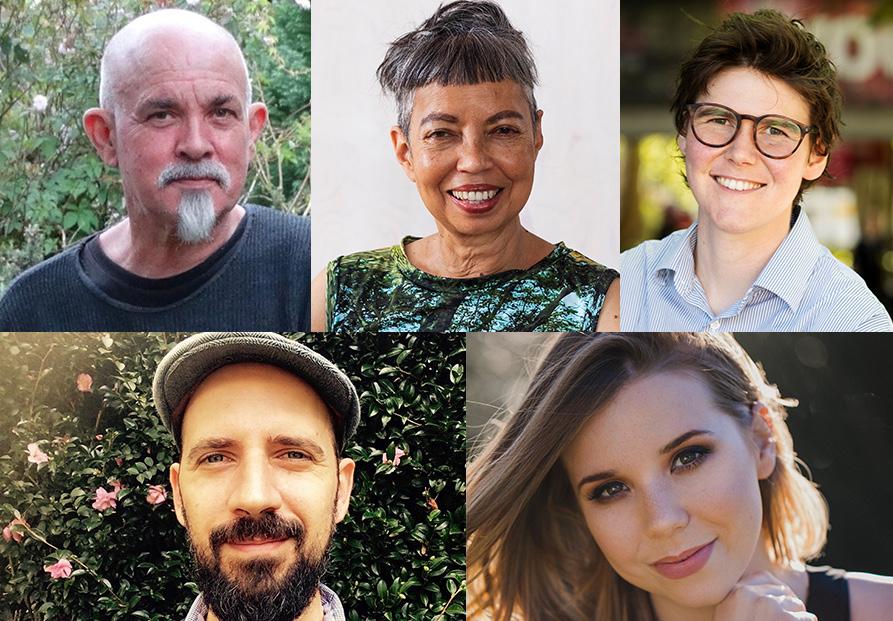
By Jacqueline Cooper, Teen Services Librarian, Jessamine County Public Library
Anna Gerring, Education and Youth Librarian, Wyndham City Libraries
Jenny McKnight, Coordinator Library Operations, Wyndham City Libraries
Back in November 2020, Wyndham Libraries received an email from a librarian based in Jessamine County (Kentucky, United States) seeking to partner with international colleagues. With the pandemic in full swing, the moment did not appear to be well- aligned with exploring global engagement opportunities. Our colleague who forwarded the email did so apologetically — was it spam? Should we even reply? Thankfully we did, and this initial exchange has led to an ongoing partnership between Wyndham Libraries and Jessamine County Public Library. It continues to this day and has now reached more than 100 young people from Australia and the US.
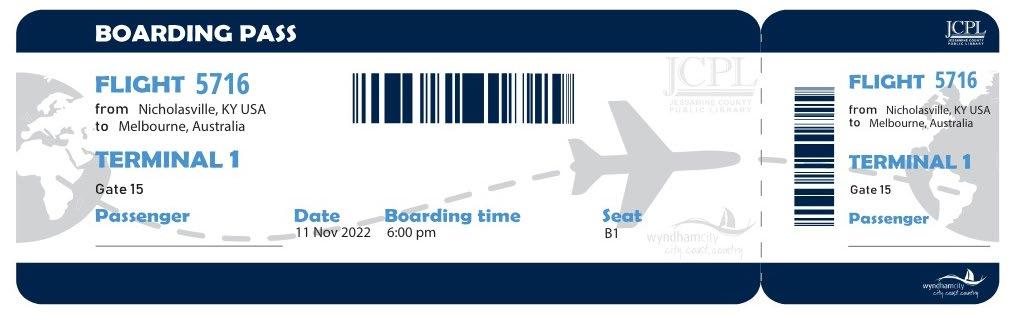
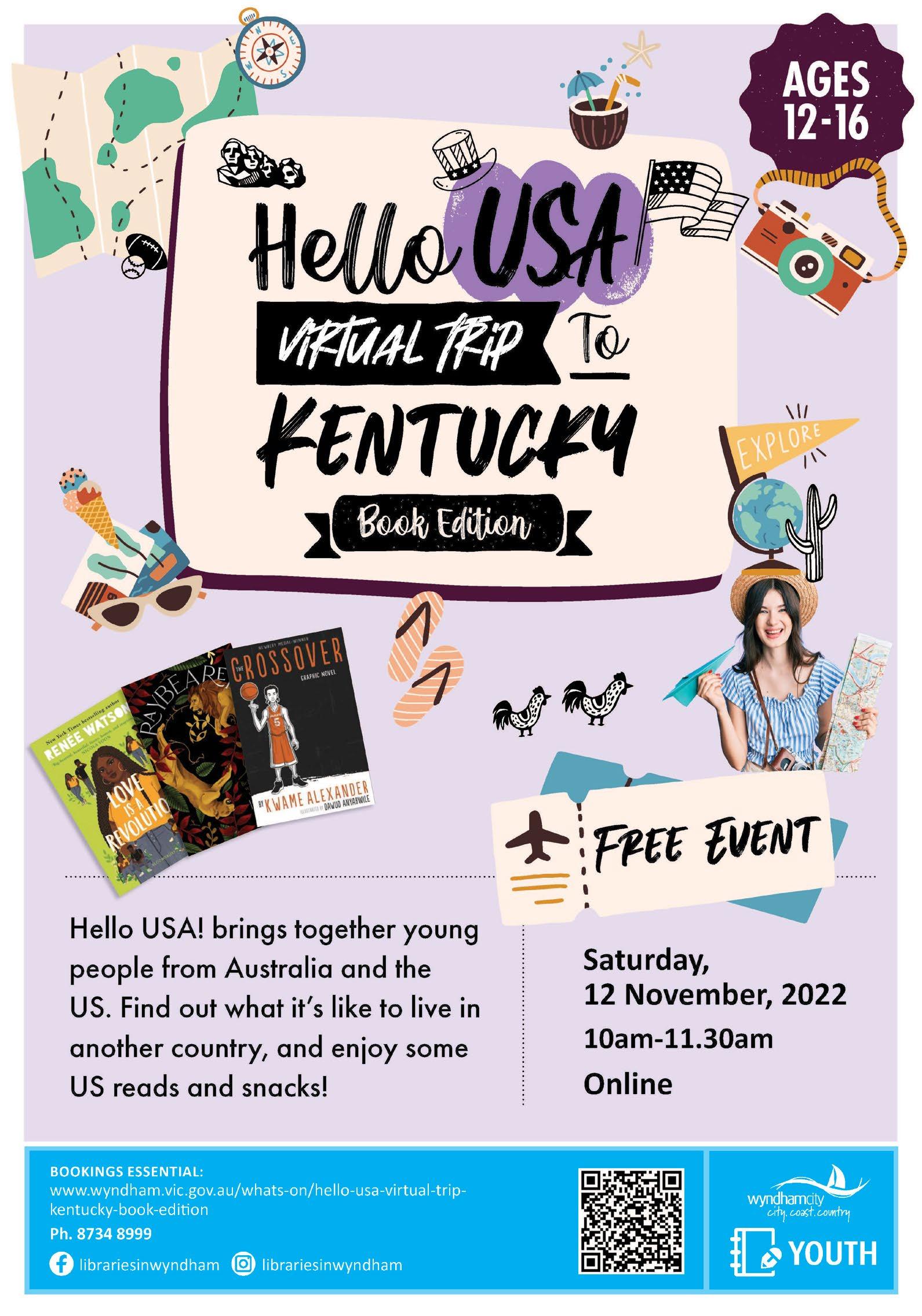
Following a series of meetings, we determined that an online event bringing together young people from both countries would be our first initiative together. The program (called ‘Hello USA’ in Australia and ‘Teen eTravel’ in the US) would foster global understanding through play and dialogue. Young people would play games, participate in moderated chat rooms and exchange souvenirs from their home country.
Inaugural event
Our first event was held in March 2021 with 28 young people participating. With a 14-hour difference in time zones, there was little choice about when to schedule the program. It had to be early on a Saturday morning in
Melbourne and Friday night in Kentucky. Despite the odd timing, places filled quickly, and all the young people booked in showed up. Many of the teens attending had no prior experience meeting peers from another country. The event was not only fun but also provided an opportunity to dispel myths and assumptions about each other’s countries in a safe and welcoming environment. Our attendees reported their astonishment at having meaningful conversations with people they would never have met otherwise, about topics they would never typically broach in their own social circles (sales tax, school dress codes, education and politics to name a few).
‘Connecting with people from another country was never something that I thought that I would do, but I did!’
– Event attendee
Far-reaching effects
This first event (now one of several) worked astoundingly well for the young people participating. However, what has become apparent as we have continued with this partnership are the substantial benefits for ourselves as practitioners. Our partnership work has created a valuable community of practice and enriched our understanding of each other’s cultures, the political and organisational environments we work in, and library service delivery for young people across different countries.
Our partnership presents a replicable model for libraries seeking to build meaningful international engagement and open a space where diverse views and experiences meet. We have recently brought in a new partner from New Zealand (Wellington Libraries) and have successfully delivered our first event, with young people joining from all three countries. We encourage you to reach out if you would like to learn more.
Activities
Suggested activities for online programming for children and young people include:
• virtual library tour
• Kahoot! quiz and/or Gartic Phone game
• exchange of cultural artefacts (e.g. popular spreads from each country, such as Vegemite and Marshmallow Fluff)
• colloquialisms
• share your favourite thing from your home with the group
• breakout rooms
• Google Maps virtual tour of our cities.
ABOUT THE AUTHORS
Jacqueline Cooper, Teen Services Librarian, Jessamine County Public Library jcooper@jesspublib.org
Anna Gerring, Education and Youth Librarian, Wyndham City Libraries anna.gerring@wyndham.vic.gov.au
Jenny McKnight, Coordinator Library Operations, Wyndham City Libraries jenny.mcknight@wyndham.vic.gov.au
Quiet achievers: The role of Tasmanian school libraries in the state’s Lifting Literacy plan
By Petrina Osborne, Libraries Tasmania
The Tasmanian Government has embarked on a bold three-year Lifting Literacy Implementation Plan to improve the literacy of children, young people and adults.
The goal is courageous. As documented on the website, ‘The Lifting Literacy plan has an aspirational and inclusive vision: to lift literacy so that no matter their age, background or postcode, all Tasmanians can grasp opportunities to develop or improve their literacy skills.’
The Lifting Literacy Implementation Plan 2024–2026 specifies that the aspiration of 100% functional literacy is central to the plan (see Figure 1). It references the hope that all Tasmanians will eventually benefit from the social and economic benefits that literacy provides.
Underpinning the plan is the requirement that schools adopt a consistent, evidencebased, structured and explicit approach to teaching literacy. The minimum schooling guarantee positions reading as foundational to all other literacy learning. This ensures that school libraries play a key role.
School Library Improvement Project Libraries are identified as foundational to the plan’s success because they support literacy development right across the community. This led to Libraries Tasmania being tasked with several Lifting Literacy projects, including the School Library Improvement Project.
The formation of a new School Libraries Team (SLT) was central to this project. The new team uses existing school support services and strong relationships with schools. Libraries Tasmania shares a library management system with government schools and provides them with cataloguing support. Schools in all sectors are encouraged to connect with public library services and activities. Since April 2025, the SLT has been complete, comprising three full-time library and information services (LIS) professionals. The team consulted widely before planning and enacting strategies to meet project objectives. The major focus areas are:
• upskill the school library workforce
and provide professional learning (PL) opportunities and activities
• provide just-in-time and targeted support for school libraries
• improve access to literacy-rich environments, rich reading experiences and contemporary library services by:
• improving print collections
• increasing usage of e-resources
• advocacy to improve understanding of the value of good school libraries and their contribution to lifting literacy.
Professional learning
Tasmania has experienced a steady decline in the number of qualified LIS school library staff. The 2022 Tasmanian School Library Survey revealed an even split between those with LIS qualifications and those who bring other skill sets to their roles. One issue that unites this workforce is the need for libraryfocused PL. The survey identified PL as the highest priority improvement needed by the school library community. The SLT therefore prioritised the development of a fully funded
PL webinar program, accessible to school library staff in all sectors.
The webinar program engaged the support of three high-interest speakers: Dr Margaret Merga, library, education and literacy researcher; Sally Rippin, Australian Children’s Laureate 2024–2025 and bestselling author and illustrator; and Kevin Hennah, library design consultant. Respected local LIS professionals also present webinars about collection development issues. These local webinars are recorded and provide an on-demand PL collection.
Close relationships were established between the SLT and two LIS associations that are active in Tasmania. The SLT is funding access to ALIA webinars and short courses. ALIA is supporting the SLT to develop a PL plan to guide new practitioners through available PL opportunities. The Australian School Library Association (ASLA) has generously helped the team to fund school memberships for government schools. This provides access to ASLA’s newsletter, journal, webinars and mentoring program.
Increasing numbers of teachers are seeking help to reinvigorate collections so they can better support lifting literacy efforts and the curriculum.
There has been widespread interest and increasing participation in PL activities. To maximise the usefulness of these opportunities, the SLT is investigating how to support school leadership teams to include library-specific goals, actions and PL activities in annual professional development plans.
Rich reading experiences
Small library budgets and restricted staffing levels are contributing factors in the prevalence of overly large and old school
library collections. It is undeniable that print collections won’t engage students if they aren’t well developed and maintained. School library staff are very aware of these issues. Increasing numbers of teachers are seeking help to reinvigorate collections so they can better support lifting literacy efforts and the curriculum. As a result, the SLT is increasingly providing advice and practical support to remove shabby and out-of-date books, reorganise collections and modernise library spaces. The results are encouraging because teachers and students inevitably show interest in reinvigorated collections.
The 2022 Tasmanian School Libraries Survey resulted in Libraries Tasmania providing government schools with access to Overdrive’s Sora digital reading platform. The SLT is liaising with teachers to increase awareness and usage and promote ways Sora can support recreational reading and literacy programs. Extra funding has been provided so the SLT can quickly respond to teacher and student requests for new titles,
Photo: Unsplash
There is evidence-based structured (systematic and explicit) literacy teaching from early years to adulthood.
All Tasmanians have opportunities to access the support they need to develop literacy skills.
Overarching Principles
Educators put their learners at the centre by understanding and responding to the ecological contexts of those they teach.
Use evidencedata, and research Consistency
Investment
There is long term investment in evidencebased approaches to lift literacy, based on delivering services at a scale and intensity proportionate to the degree of need.
Partnerships / Systems
Trusted partnerships between educators, families and the community are developed and encouraged for ensuring high quality literacy teaching, and support.
Foundations for success
Libraries Libraries are positioned as pivotal community centres for providing opportunities and supporting literacy development for Tasmanians of all ages.
Workforce
Approaches to teaching literacy are underpinned by the large body of cognitive research on how our brain learns to read and write.
Families
Establishing or expanding effective initiatives that assist families understand and fulfill the foundational and ongoing influence on their children’s literacy development is prioritised.
The literacy workforce is provided with professional learning in evidence-based practices for literacy acquisition and development. Professional learning is underpinned by cognitive neuroscience as well as robust educational research on the most effective instructional practices for improving literacy.
All Tasmanians have access to structured (systematic and explicit) evidence-based literacy education that considers the learners’ individual needs.
extra copies and multiple formats.
1: Overarching principals of the Lifting Literacy Framework. Source: Lifting Literacy Implementation Plan 2024–2026 and reading engagement.
Next steps
• Provide accessible and practical information to families on how to encourage and support their child’s language and literacy development.
• Maintain and promote a focus on the first 1,000 days of life as a a key foundation for future literacy success.
• Offer place-based early intervention and identification support for families.
On the advice of a teacher librarian working in a rural government primary school, the SLT funded statewide access to the StoryBox digital literacy platform for K–6 schools in all sectors. The launch of this initiative in June 2025 was very successful. Demand was so strong that access was soon extended to government high schools. The next goal is to ensure that StoryBox is promoted to families. It is hoped that families who can’t read aloud to their children at home will watch and read along to these high-quality storytelling videos. The aim is that students and their families will enjoy being emersed in stories, enjoy reading and become readers for life.
• At all levels of schooling, the workforce is trained and supported to deliver evidence-based, structured (systematic and explicit) literacy instruction, aligned to the Australian Curriculum.
• Evidence-based structured literacy approaches are adopted and evaluated at classroom, school and sector levels.
• Everyone has a role in lifting literacy.
• Strengthen the community focus on the importance of literacy as everyone’s business, including addressing stigma around low literacy.
• Embed evaluation in all initiatives to ensure focus and resources are directed to activities that work.
Targeted support is also provided to a small number of government primary and high schools. These schools are regularly visited so the SLT can support projects identified by the school. The aim is to form a close relationship with these schools so that quantitative and qualitative data can be gathered and used to develop case studies. This body of work will enable the SLT to investigate how LIS research and evidence-based practice can help Tasmanian school libraries improve reading engagement, support literacy programs and promote reading for pleasure.
• There is a focus on literacy development from foundational skills (e.g., decoding, spelling) through to higher-level literacy skills (e.g., reading comprehension, written expression).
• Students who need additional assistance in literacy are identified and supported throughout their school years.
of Community
• Encourage partnerships between all levels of government, organisations, the literacy workforce, and broader community to align their strategies for better literacy outcomes..
• Address stigma around literacy and in accessing literacy support.
• Employers and tertiary education providers are enabled to support employees and learners to acquire or continue to develop their literacy skills.
• Promote opportunities for training and retention initiatives for the adult volunteer literacy workforce.
Milestone Targets for literacy achievement against the Framework – Birth to Adulthood
Supporting school libraries
Tasmanian children developmentally on track in the communication and language domains of the Australian Early Development Census (AEDC) are equal to/ exceed the Australian average.
Demand for advice and practical support from the SLT has steadily grown. Between April and June 2025, support was provided to 88 schools. In July to August 2025, the number rose to 138. Just-in-time support is provided via phone, email and in-person. The most frequently asked questions related to weeding, inventories/stocktakes, Sora and StoryBox, PL, library design, genrefication
All students in their Preparatory (Prep) year of schooling will undertake an on-entry assessment to ascertain their literacy proficiency.
Some Tasmanian school library staff regularly attend in-person meetings organised by the Northern Library Group and Southern School Library Group. The activities of these groups enable the SLT to develop online support groups. Microsoft Teams groups have been established for LIS diploma students, NSW-based school library staff, staff in schools that host joint- use libraries with Libraries Tasmania, and staff new to government school libraries.
All students entering year 7 will meet an expected Progressive Achievement Tests (PAT) reading standard.
All Year 3, 5, 7, and 9 students will achieve at or exceed the ‘strong’ proficiency standard in NAPLAN.
The hard work and effectiveness of many school library staff is often taken for granted and not well recognised. Many develop fun ways to engage students in their libraries via library monitor/champion/leader programs. Others build an intimate knowledge of children’s and youth literature and curate collections to provide a literacy- rich space that supports the curriculum and recreational reading. Some libraries are the heart of a school’s reading culture. Staff strive to create a welcoming and inclusive space that is a refuge to students with diverse needs. The SLT is in a privileged position because it celebrates these staff and shares their joys and achievements. This will remain a strong focus throughout the project.
All Year 12 students attain the Tasmanian Certificate of Education (TCE) or equivalent qualification.*
All adults are meeting functional literacy levels.
The SLT is developing strategies to make advocacy a strong focus in 2026. The aim is to educate leadership teams about the characteristics of a thriving school library. This will deepen understandings in school communities about the inherent potential of school libraries to support literacy programs, and the key role libraries play in building a lifelong love of reading in students and staff.
Whole
Figure
The convenience trap: AI overviews and the erosion of critical reading
By Ruairi Murphy, Learning and Research Librarian, University of Tasmania
In Amusing ourselves to death — Neil Postman’s 1985 book about the ascendancy of television culture — the author argued that while the Western world’s imagination was captured more by George Orwell’s totalitarian vision in 1984 (1949), it was Aldous Huxley’s subdued dystopia in Brave new world (1932) that proved more prophetic: depriving people of information is scarcely necessary when they ‘adore the technologies that undo their capacities to think’.1
I am reminded of this each time I see an AI overview, or AI-generated summary, of the kind now ubiquitous on prominent search engines like Google and Bing. It is not surprising that these summaries seem to have been quietly accepted across many industries and sectors; indeed, why would anyone object to a tool that instantly delivers an answer that summarises information from multiple sources?
My reservations are perhaps best introduced with reference to the 19th century economist Frédéric Bastiat, who in his famous essay ‘What is seen and what is
not seen’ declared that ‘the bad economist confines himself to the visible effect; the good economist takes into account both the effect that can be seen and those effects that must be foreseen’.2
I would argue that the good librarian must do the same.
The ‘seen’ in this case is obvious, and I am not immune from being seduced by the convenience of receiving a concise summary that ostensibly removes my need to read beyond it. The unseen, by virtue of being less visible, is much harder to appreciate, and its harm will only become apparent later.
Librarianship, at its heart, is the pursuit of strengthening the public’s relationship to their information ecosystem. From providing greater and more equitable access to this system, to teaching people how to navigate it, to organising and preserving its materials and providing education on the use and construction of these materials, librarians are among the pre-eminent communal guides that connect people to information.
Crucial to this connection is an awareness that knowledge is derived from multiple
sources. A reader is helpless in understanding their information ecosystem without first recognising that it comprises a community of interrelating sources. Even setting aside the great advantage that, when presented with multiple sources, a reader must exercise choice — which in turn necessitates value judgements that demand basic critical thinking and analytical reasoning skills — the mere presentation of an array of sources, even as simple as books on a shelf, has value of its own. It promotes awareness that knowledge is a pluralistic landscape, born of a diversity of ideas.
For all its flaws, the traditional list of links provided by legacy search engines over the past three decades gives readers a glimpse of this landscape. AI overviews, in contrast,
blind them to it, limiting the reader’s understanding about the provenance of their information. One might argue that AI overviews still provide links to the sources they loot; but, unsurprisingly, fewer readers are accessing these links when provided with the answer to their question.3 Surely it won’t be long before this new clickless search culture renders them an anachronism.
This isn’t a luddite call to arms; humanity’s love of a cognitive shortcut is indomitable. But if we want to preserve a society populated by active, critical readers, librarians will have to continue to pursue and understand alternative ways to strengthen the public’s connection with their information ecosystem. Not to do
so leaves our communities open to another Orwellian nightmare, this one from The road to Wigan Pier and more likely to eventuate: ‘A machine evolves by becoming more efficient, that is, more foolproof; hence the objective of mechanical progress is a foolproof world — which may or may not mean a world inhabited by fools.’4
Library staff and LIS researchers around Australia are already stepping up to understand the deep and far-reaching impact of AI — on information access, interpretation and trust — as well as how to communicate its responsible use to library users and consumers. As this technology continues to evolve, this is no easy task, but it remains essential if we are to preserve an informed, discerning and critically engaged public.
References
1. Huxley, A. (1932). Brave new world Chatto & Windus, London.
2. Bastiat, F. (2017). Economics sophisms and ‘What is seen and what is not seen’. In D. M. Hart, D. O’Keefe, J. Paul-Dejean & J. de Guenin (Eds.), The collected works of Frédéric Bastiat. Liberty Fund.
3. Germain, T. (2025, June 13). Is Google about to destroy the web? BBC.
4. Orwell, G. (1937). The road to Wigan Pier. Victor Gollancz Ltd, London.
ABOUT THE AUTHOR
Ruairi Murphy Learning and Research Librarian, University of Tasmania ruairi.murphy@utas.edu.au
Photo: iStock
Where belonging begins: The role of libraries in multicultural Australia
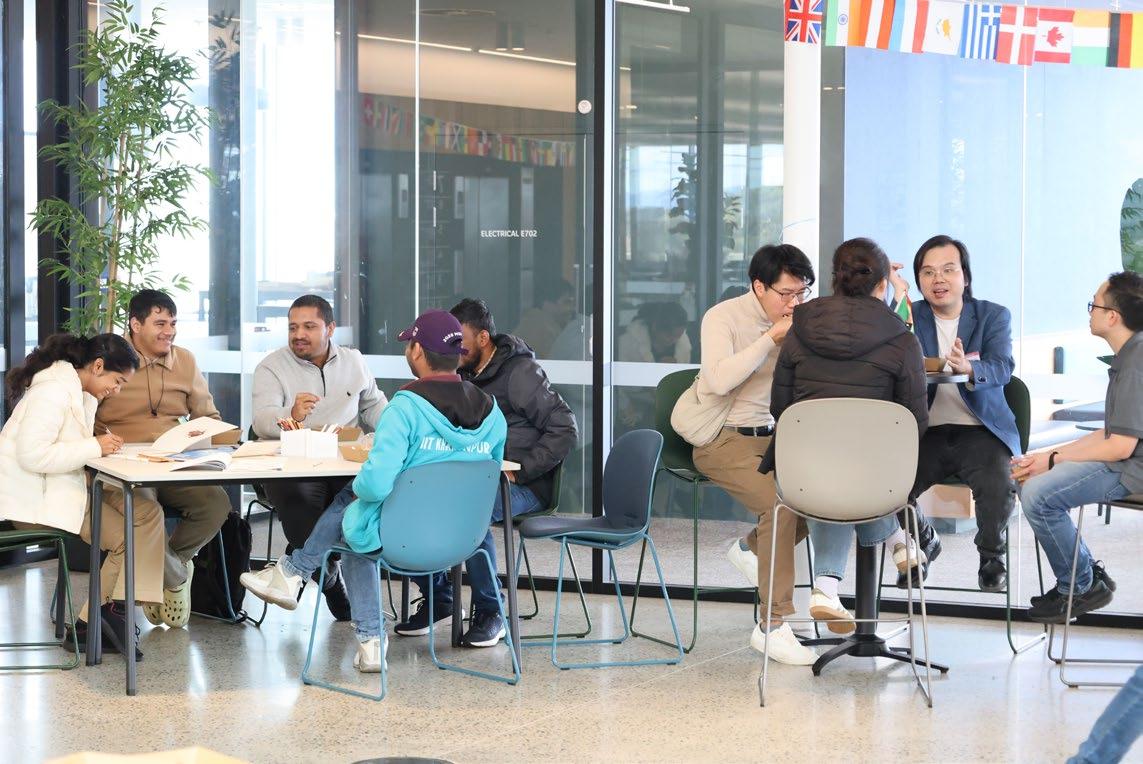
Across Australia, libraries of all kinds play a powerful role in helping newly arrived individuals and communities find their place. For students, families and others arriving in an unfamiliar country, libraries offer everything from crucial information about housing, health and employment to access to printers and copiers for important documents and copies of passports, and free, stable wi-fi for those still finding their feet. Beyond these practical supports, libraries offer a safe and welcoming space where newcomers can learn, connect and begin to belong.
In this collection, we explore three firsthand examples of how libraries have created moments of connection and belonging. We start with Kanchan Panday, PhD candidate at Deakin University, and his research into public libraries’ role as multicultural community hubs. Then Sukhpreet Kaur shares her personal journey from homesick newcomer in Tasmania to a staff member at Geelong Regional Library Corporation. Finally, LIS student Louis Lu reflects on how his placement at the Royal Australian Historical Society revealed the deeper humanity behind library and archival work — where collections are cared for not just through systems and processes, but also through people, patience and quiet dedication.
Public libraries: Gateway to multicultural Australia
By Kanchan Panday, PhD candidate, School of Humanities and Social Science, Deakin University
In the year 2023–24, the net migration to Australia was 446,000, with students being the largest group of immigrants (Australian Bureau of Statistics). While this number is a decrease from the previous year, 2025 has seen an increase in anti-immigration rhetoric. Australian society aspires to hold multicultural credentials, which can be thwarted by a rise in exclusionary sentiments. Even when such sentiments imbibe an anti-racial attitude, this does ask us to rethink multiculturalism in Australia and how public libraries can act as a beacon of democratic and multicultural belonging.
Immigrants are uprooted beings, either by choice or obligation. Even with the abundance of information on social media, when
immigrants arrive in a new country, it is always an unknown social territory. Immigrants may not yet know about how to secure housing or navigate health insurance, education or the employment situation in their new home. Some may need information or guidance about society, cultural characteristics and everyday etiquette of living.
Most often these demands are, to some extent, addressed by ethnic community organisations. Religious, ethnic or racial community groupings are primary institutions shaping cultures in multicultural societies. Due to the inherent tendency of multiculturalism to emphasise group representation, these community groupings not only shape the mode of belonging but also the relationships among minority cultures along with the majority culture.
Kanchan Panday. Photo: Supplied
Such strategies of representation often dilute the inner-group differences of caste, class, gender and more, also producing ethnic enclaves of distinct communities.
While these community-specific organisations play an important role, nurturing multiculturalism requires inclusive community spaces. Australian public libraries have historically aspired to offer such a community space. These are physical spaces meant for the sharing of knowledge and the exchange of ideas. But they are also community hubs for guidance and learning. Along with a vast repository of knowledge in the forms of books, audiobooks and ebooks, public libraries offer English language literary and speaking services, free wi-fi, resources for digital literacy and activities for kids and the elderly. Most state libraries have multilingual book collections, and many public libraries include books in languages other than English.
In this manner, public libraries have enormous potential to become a catalyst for immigrant integration into Australian social life. They can be a primary introduction to a new city and its ways of being as they carry the cultural and social DNA of a locality, city or state. Libraries can be spaces where isolated individuals can find a community that does not carry an identity label, but that addresses the need for belonging. The problem of ethnic enclaves, which have their own value, can be addressed through libraries. These can become secular democratic safe spaces where all communities, regardless of their ethnic allegiance, can be welcome and mingled. Even as libraries are moving into the new role of becoming spaces of belonging for all, and accommodating immigrants, often these services do not reach us. The information gap hinders their reach. And this also poses an additional burden on library apparatus, which often suffers from funding cuts. Libraries offer valuable services for immigrants; their role in multicultural inclusion should be acknowledged and must be supported by state and national governments.
From visitor to staff: How the library lit my path
By Sukhpreet Kaur, Geelong Regional Library Corporation
When I landed in Australia in 2008, everything was new — the culture, the people, even the air felt different. My husband and I had just touched down at Melbourne Airport, exhausted from the long flight, only to miss our domestic connection to Tasmania. I still remember the anxiety bubbling up inside me — a new country, no familiar faces, and a three-year-old daughter I had left behind with her grandparents. My heart ached.
Eventually, we arrived in Hobart late at night and checked into a hostel. The very next morning, we began searching for university campuses and a place to live. That’s when I discovered the local library. We needed to print documents and copies of our passports, so we walked into the nearest public library, and I still remember the staff member who served us. Her kind smile, calm voice and helpfulness felt like a ray of sunshine in my unsettled world.
That simple interaction planted a quiet
hope inside me. I had brought a laptop with me from home but had no internet connection. So, the library quickly became more than just a study space — it was my lifeline. I used the public computers to check my email, stay in touch with my daughter back home, and complete my university work. Day after day, the library was the one place where I felt safe, welcome and connected. In those early days of homesickness and cultural shock, the warmth of that library’s staff gave me strength.
As my husband found work and I completed my Master of Information Systems, I continued to spend time at the library, always studying, always dreaming. I would watch the staff help people from all walks of life and quietly think, ‘One day, I want to work here too.’ I didn’t know why at the time, but something about the library — the calm, the purpose, the service — touched me deeply. A seed was planted: I wanted to work in a library. But as an international student in Tasmania, finding work wasn’t easy. I applied for countless jobs in libraries but was often told I didn’t
Sukhpreet Kaur.
Photo: Supplied
have the right experience. I didn’t give up. I completed a Certificate III in Library and Information Services, volunteered at the very same library that once comforted me, and gained experience at my daughter’s school library as well. I balanced work as a community support worker while pursuing my library dream at night, searching for job ads, updating my resume, and holding on to hope.
Eventually, I completed a Diploma in Library and Information Services, volunteering in both public and academic libraries along the way. And in December 2021, we moved to Melbourne. I told my husband, ‘This time, it’s a library job or nothing.’ It felt like my last shot. I applied and, finally, I got the job. Today, I work in a Melbourne public library. Every day, I try to carry the same smile that once made such a difference to me. I greet newcomers, students, mothers and migrants because I know what it’s like to feel alone in a new country. I greet them with warmth, answer their questions and try to offer not just service, but also a sense of connection. Because I know what it means when someone simply makes you feel seen.
The ALIA slogan says, ‘Libraries Change Lives.’ For me, it’s not just a slogan. It’s my truth. Libraries didn’t just help me study. They helped me belong. They helped me grow and, ultimately, they helped me become who I am today.
ABOUT THE AUTHOR
Sukhpreet Kaur is a staff member at Geelong Regional Library Corporation. After migrating to Australia in 2008 and overcoming the challenges of resettlement, she found a sense of connection, belonging and purpose through libraries. Her journey from being a homesick newcomer in Tasmania to becoming a proud library professional in Victoria is a true reflection of how libraries change lives.
From outsider to storykeeper: Finding belonging through history
By Louis Lu, LIS student
When I began my 10-day placement at the Royal Australian Historical Society (RAHS), I thought it would simply be a chance to practise the basics of library and archival work — reviewing records, checking rare books, supporting the Foster Archive. It was all valuable training, but as the days unfolded, the placement grew into something deeper: a personal encounter with history, belonging, and the quiet strength of the library and information profession.
As a migrant student, I have always been curious about Australia’s past. At RAHS, that curiosity found a place to take root. I worked through more than 600 records, examined rare books and supported cataloguing tasks. At first, these duties seemed like routine exercises. Yet each item I handled carried more than information — it carried memory. Archives, I came to realise, are not only collections of data, but also vessels of care and dignity.
The gravestone photographs left the strongest impression on me. Thousands of images, each one engraved with a name and a date. On the surface, they were repetitive. But over time, they revealed themselves as deeply human. Each stone marked a life once lived, a story condensed into a few lines. Handling those photographs day after day gave me a sense of stillness and reflection. Archival work is not just about preserving facts, but also about holding space for memory, ensuring that meaning
endures even when voices have fallen silent. What deepened this understanding was the people around me. Staff and volunteers at RAHS worked with steady dedication, protecting and sharing collections without fanfare but with quiet persistence. Their example reminded me that libraries and archives are living communities, sustained not only by systems and processes, but also by human care.
I am especially grateful to Librarian Donna Newton, whose guidance shaped my experience from the first day. She provided not just direction but also encouragement, making me feel included and supported. Her openness and kindness gave me confidence to step beyond routine tasks and see the broader purpose of archival work.
By the end of the placement, the experience had become more than training. It was a deepening — a gradual movement from practice to meaning, from curiosity to belonging.
As I left 133 Macquarie Street and stepped back into the city, I felt an unexpected clarity and energy. It wasn’t about resisting the void, but about discovering meaning within it — through history, through the library, through the enduring strength of archival work. What I carried with me was a gift of significance, something to guide me into the chapters still to come.
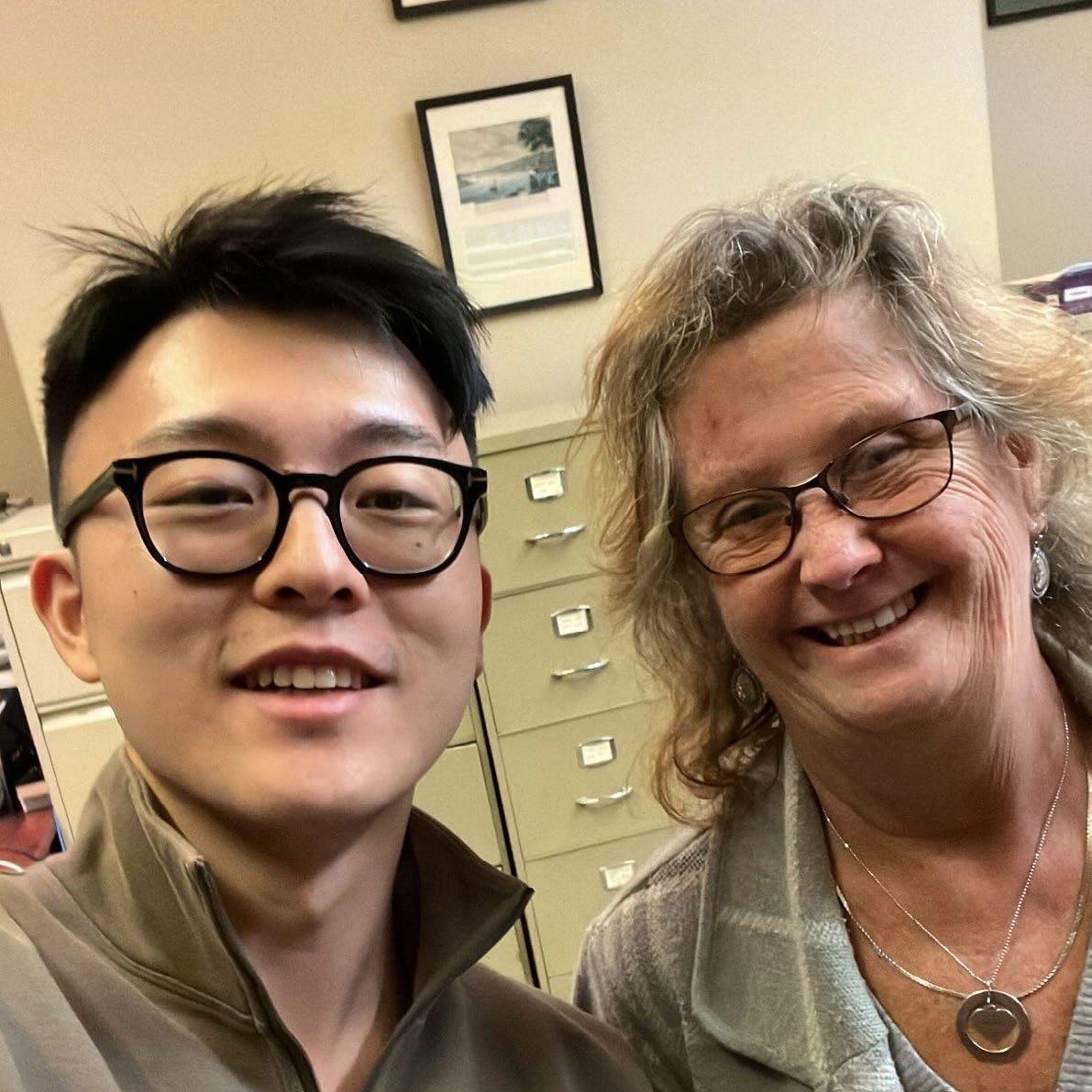
Lu and Donna Newton, Librarian at the Royal Australian Historical Society..
Louis
Photo: Supplied
Help every patron continue their education.
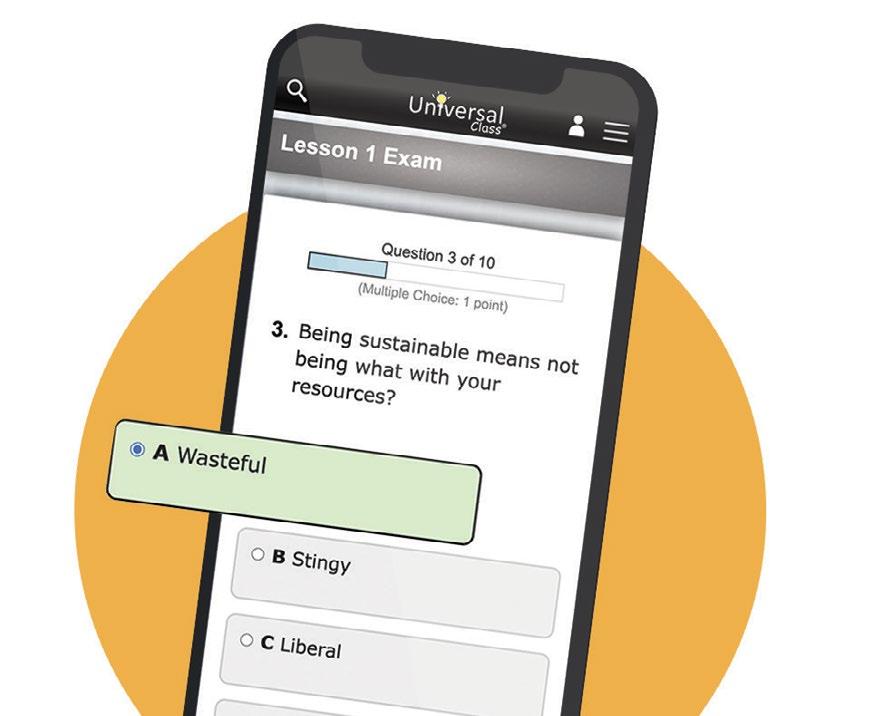
Help your community upskill and explore new hobbies with UniversalClass for Libraries. Access hundreds of accredited online skills training courses for job seekers and lifelong learners.
Self-Guided
& Social Learning
Learners can complete courses at their own pace, on their own schedule. But they don’t have to do it alone. Instructors review all assignments and exams.
• Learn anytime on any device
• Get feedback from real human instructors
Fun for casual learners
Lifelong learners can choose to pursue CEUs or complete courses quicker in video-only mode. No assignments or exams required for meaningful learning.
• Audit courses in video-only mode
• Enrich your life with new hobbies like gardening, feng shui, bread baking, knitting, and so much more!
Accredited Courses & CEU Certificates
Job seekers can master marketable skills—and market themselves to potential employers. Courses provide internationally accredited Continuing Education Units (CEUs) by IACET.
• Earn accredited CEUs
• Upskill in accounting, administrative, education, medical, and more!
Thesis Fest: From small beginnings to big impact
By Kitty Delaney
Research Engagement Librarian, Faculty of Business & Law, Faculty of Humanities,
Lead: Strategic Publishing Service, Curtin University Library
Jaya Ralph
Research Engagement Librarian, Faculty of Business & Law, Faculty of Humanities.
HDR and Researcher Engagement, Curtin University Library
In a landscape where libraries are constantly reimagining their roles, how can academic libraries actively shape the research journey and support student success?
At Curtin University, one answer is Thesis Fest. Many Higher Degree by Research (HDR) students experience isolation, uncertainty and a lack of structured support, and Thesis Fest was created to change that. This dynamic two-day event empowers HDR students to build research skills, strengthen their wellbeing, and move toward thesis completion with greater confidence and success.
Now in its fifth year, Thesis Fest has grown from a modest initiative into an award-winning event, supported by the Vice-Chancellor, Professor Harlene Hayne. It’s a reminder that even small ideas can evolve into transformative, institution-wide programs that enrich research culture and student wellbeing.
We’re excited to share what we’ve learned and to show how libraries can play a transformative role in supporting research students.
How it all started
Thesis Fest began in response to real concerns raised by HDR students and staff across faculties. Research engagement librarians, embedded in graduate studies and research
committees, identified a clear need to address key challenges in the research journey. Students were asking for more support, stronger connections, and more opportunities to speak openly about their research experience.
Thesis Fest created a space where they could do exactly that, while also gaining practical skills and insights from experts, peers and alumni.
What’s in the program?
Held over two days, the program evolves each year to stay fresh and relevant. It covers a wide range of topics ranging from academic writing and publishing to presenting with confidence, navigating supervisor relationships and tackling low motivation and imposter syndrome.
Panels featuring professors, thesis examiners and recent graduates offer invaluable insights into the PhD experience. A diverse mix of presenters from local, national and international institutions adds depth and variety to the conversations.
We also build plenty of time into the program for networking, making Thesis Fest a rare space for cross-disciplinary connection, collaboration and friendship. As one of the few university-wide events open to all HDR students, it fosters research networks and conversations across disciplines, while creating
a safe and supportive environment for open dialogue, including about challenging topics like supervisor relationships.
Many students leave the event feeling inspired, supported and part of a thriving academic community, demonstrating that Thesis Fest can aid in transforming the solitary research journey into a shared experience.
Marketing that works
Our marketing strategy has evolved with the event, helping increase attendance each year. We reach HDR students through direct emails, posters in HDR hubs, university event pages and key faculty contacts including HDR support teams and directors of graduate research.
In recent years, we’ve enhanced our email strategy by spotlighting one presentation each week. These messages explain why each session matters, helping students see its relevance and encouraging deeper engagement.
Word of mouth has become one of our most powerful tools. During the event, students often message their peers, urging them to drop everything and join in. This organic buzz has helped build a strong, connected community around Thesis Fest. With more than 100 students attending in person in 2025, it is evident that the event has been enthusiastically embraced.
Real impact, real change
Thesis Fest has made a measurable impact. It has strengthened ties between the library, the Graduate Research School and the faculties, sparked the creation of online networking communities for PhD students, and positioned the library as a key partner in HDR support. The event has opened conversations between HDR students and university leadership and helped raise the library’s profile as a valuable collaborator in shaping research culture. In 2023, the Thesis Fest team was awarded the Vice-Chancellor’s Award for Excellence in Health, Safety and Wellbeing.
One Dean of Research described Thesis Fest as a program with a long-lasting, positive impact on student wellbeing, rippling out to supervisors, the Curtin community, and potentially the wider HDR landscape across Australia.
Students have echoed this praise, consistently highlighting the event’s impact on their research journey. Many said they
Thesis Fest 2025 attendees. Photo: Supplied
Many students reflected on how the event renewed their motivation, with one noting, ‘I was really inspired and am more convinced that I should proceed with my PhD. Some of the struggles that were presented I can already relate to and it’s good to know that these struggles are normal.’
feel more connected and less alone after attending Thesis Fest because they now understand that everyone else is feeling and experiencing similar things to themselves.
The topics were described as ‘so relevant and on point with things many PhD students struggle with’. One attendee remarked, ‘I needed this — and so many students here today needed this.’ Another added, ‘This is one of the best events I’ve attended at Curtin.’ Many students reflected on how the event renewed their motivation, with one noting, ‘I was really inspired and am more convinced that I should proceed with my PhD. Some of the struggles that were presented I can already relate to and it’s good to know that these struggles are normal.’
Above all, students expressed deep appreciation for the library’s role, with one saying, ‘We need more events like this. But more importantly, [we need] people like the organisers who understand, empathise, sympathise and actually care about us.’
Lessons learned Planning and purpose:
• Start small — HDR students value any support.
• Identify gaps in HDR support.
• Define your goals: make your event stand out from others.
• Be flexible — experiment until you find what works.
• Stick to your budget.
Collaboration and team building:
• Engage faculties and the Graduate Research School or Research Office.
• Build a committee with diverse strengths, and include an HDR student and library staff from different teams.
Program design and development:
• Keep the program fresh so students can return and build on past learning.
• Stay informed on HDR issues and potential speakers throughout the year.
Evaluation and visibility:
• Plan how to gather feedback early — it will guide future improvements.
• Collect consistent data — design your feedback form to compare year on year.
• Share outcomes with the library and faculty to show alignment with university goals and to reinforce your role as a strategic partner.
Thesis Fest shows how university libraries can build on traditional services to create innovative partnerships with their academic institutions. By aligning with broader strategic goals, libraries can become active collaborators in shaping research culture and supporting HDR students. At Curtin University, Thesis Fest has helped position the library as a trusted partner, strengthening its relationships with the faculties and contributing to a growing recognition among academics that library staff are valuable allies in both research and HDR support.
MORE INFORMATION
Thesis Fest website
Photo: Supplied
Photo: Supplied
Designing a new library or breathing life into a tired one?
IntraSpace partners with schools, universities, and libraries across Australia to deliver dynamic, functional, and inspiring spaces. From custom-built shelving to complete furniture solutions, we design, manufacture, and install with precision and care. With a comprehensive range of products and services, IntraSpace collaborates with you to shape learning environments that are both effective and efficient.
Start the conversation with a complimentary consultation and site measure. IntraSpace helps you get your storage right the first time.