Bachelor
Sustainability Management
Transforming organisations towards circularity, climate fitness and resilience
Bachelor
Sustainability Management
Transforming organisations towards circularity, climate fitness and resilience
Global environmental change and social challenges are reshaping our society and economy. Addressing these issues requires businesses and organisations to operate within a safe and just space: staying within the planet’s ecological boundaries while ensuring no one falls short of essential social foundations. Finding sustainable solutions and strategies that balance these boundaries is crucial for a thriving future.
This bachelor degree programme gives you the skills to support organisations actively in reaching this sustainable sweet spot.
Once you have a solid foundation in the interactions between society, economics and ecology, you’ll learn how to integrate sustainability principles into business and organisational strategies. To tackle sustainable management challenges, the programme will address topics like circular business models, environmentally friendly innovations, as well as fair supply chains and international cooperation.
Experts from various sectors like science, business, politics and society teach the degree programme. Using case studies, excursions and participative project work, they will give you the opportunity to co-create innovative solutions for real-life challenges in sustainable management. What
Courses normally take place from Friday to Saturday. There is also 1 block week per semester.
The language of instruction is English. This prepares you for your international career in a multicultural environment.
The degree programme lasts 3 years, with a total workload of 180 ECTS. Graduates receive the academic degree of Bachelor of Arts in Business (B.A.).
EU/EEA citizens pay a study fee of EUR 363.36 per semester, plus the student union fee.
Did you know, that …
... sustainability management means that companies and organisations plan and manage their activities according to the “triple bottom line”: environmentally friendly, socially responsible, and economically successful? The goal is to use resources efficiently, promote social justice, and protect the environment to achieve long-term benefits.
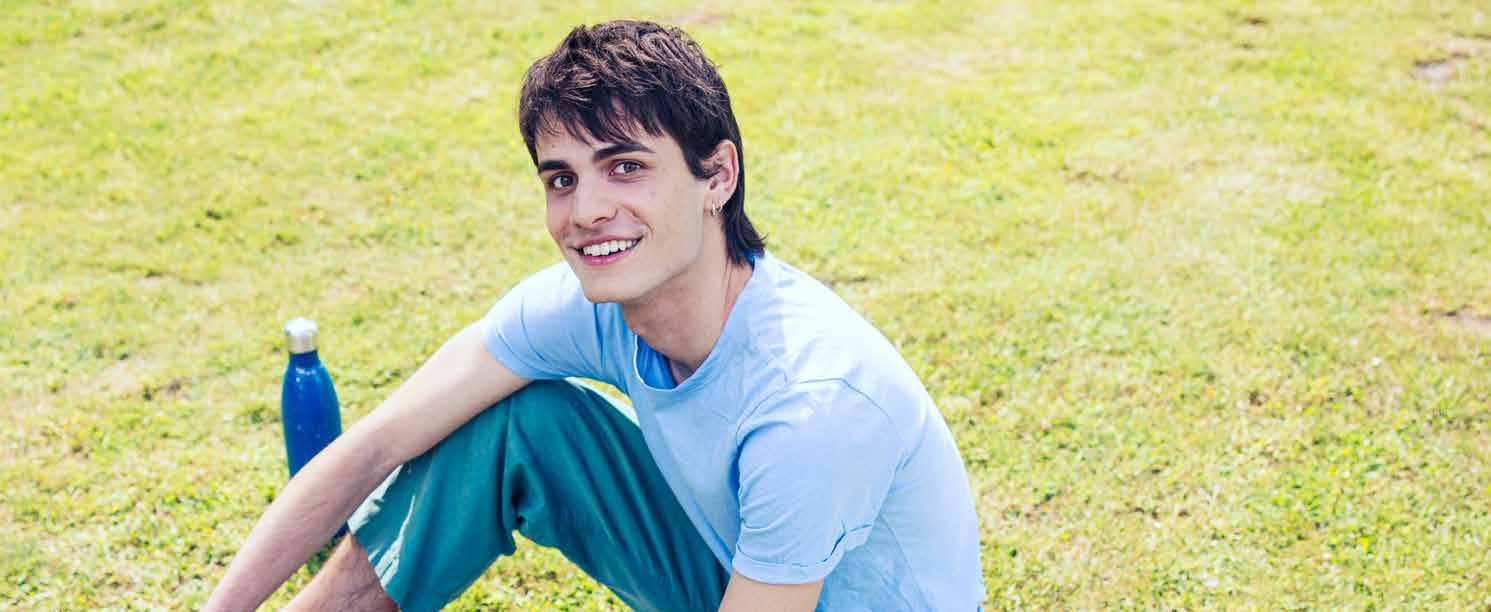
Following this triple bottom line, the programme covers 5 key areas: while global sustainability focuses on principles and challenges of sustainable development and management, circular business explores the sustainable design of products and services. In economics, topics such as efficiency and effectiveness are introduced. Interdisciplinary topics such as behavioural science and data management, as well as future skills – ranging from the ethical use of artificial intelligence to inclusion and diversity management – complete the curriculum.
MANAGEMENT ESSENTIALS ECONOMICS
ACCOUNTING PRINCIPLES OF LAW
PRINCIPLES OF SUSTAINABILITY
SCIENTIFIC METHODS & ANALYSIS
INTRODUCTION TO CIRCULAR ECONOMY
DATA & DECISION MAKING
SUSTAINABILITY & ENVIRONMENTAL MANAGEMENT
FUTURE SKILLS I –INCLUSION & DIVERSITY MANAGEMENT
FUTURE SKILLS I –COLLABORATION & CONFLICT
FUTURE SKILLS I –MANAGING SYSTEMS & COMPLEXITY
Subject to possible alterations
MARKETING & MARKETING RESEARCH
FINANCE, INVESTMENT & MATHEMATICS
EMERGING TECHNOLOGIES
GLOBAL SUSTAINABLE TRADE & VALUE CHAINS
FUTURE SKILLS II –PERSONAL MASTERY
FUTURE SKILLS II –STRESS MANAGEMENT
FUTURE SKILLS II –INTERCULTURAL COMPETENCE
BUSINESS MODELS & BUSINESS PLANNING
BEHAVIOURAL SCIENCE & PSYCHOLOGY
SOCIAL BUSINESS & INNOVATION
CIRCULAR PRODUCT & SERVICE DESIGN
SUSTAINABLE MATERIALS & TECHNOLOGIES
INTERNATIONAL COOPERATION FOR SUSTAINABLE DEVELOPMENT
CURRENT ISSUES IN GLOBAL SUSTAINABILITY & CIRCULAR BUSINESS
COOPERATION, COCREATION & COMMUNITY ENGAGEMENT
BACHELOR THESIS I
PRACTICAL/ PROFESSIONAL COMPETENCE I
POLITICAL SKILLS –INSTITUTIONS & INFLUENCE
BACHELOR EXAM
BACHELOR THESIS II
PRACTICAL/ PROFESSIONAL COMPETENCE II
More details on the curriculum, courses, contact hours and ECTS (European Credit Transfer System) can be found on:
www.imc.ac.at
Upon graduation, you will have the skills to analyse and evaluate complex sustainability management and circular business challenges and provide well-grounded solutions. This degree programme prepares you for a career in sustainability management (e.g. sustainable supply chain management), sustainable business development (e.g. circular economy management), innovation and sustainability promotion (e.g. sustainability consultancy), and business management.
IMC Krems
University of Applied Sciences
3500 Krems, Austria
Admission & Info +43 2732 802-222
information@imc.ac.at www.imc.ac.at
It’s all in me.
Accreditations

Memberships
Version: 12/2025