We’ve been Doing the Right Thing since 1964. We are a third-generation, family-owned, independent managing general agency and wholesale insurance broker with a history of valuing and trusting business relationships. Our underwriters and brokers coordinate among specialty teams to meet the needs of multi-faceted risk opportunities, piecing each risk puzzle together for our producers.
We strive to be a premier resource through our core pillars of honesty, integrity, respect and trust.
from the Chair
INDEPENDENT AGENTS: NOT THE FAINT OF HEART
Stepping into the role of Chair feels a lot like unlocking my agency door every morning. It is busy and full of purpose. Running an agency right now is not for the faint of heart. One thing I keep coming back to is this. When agents, our association and lawmakers work together, we move the needle for our businesses and our communities.
Like many of you, my agency sees the impact of lawsuit abuse in real ways. We feel it in loss ratios, coverage conversations and client premiums. That is why tort reform is not an abstract policy issue to me. It affects whether our clients can keep their doors open and whether our young producers believe this industry has a long-term future. Our lobbyists are in Frankfort every session, tracking bills, educating legislators and making sure independent agents are heard when liability and tort reform come up. As a member, our role is simple but incredibly important. Share real stories. Respond to action alerts. Be the voice that reminds elected officials who they represent back home.
Grassroots advocacy sounds big and intimidating, but most of the time it is anything but. In towns like Berea, it looks like inviting a legislator to your agency, grabbing coffee with a candidate or explaining to a neighbor why a bill matters to their business. When lawmakers hear the same message from people they trust locally, it gives our association team the leverage they need. The association provides talking points so you can advocate with confidence.
None of us can do this alone. Between hard markets, legislative challenges, hiring struggles, technology decisions and rising client expectations, it can feel like a lot. That is why association relationships matter so much. Big I Kentucky connects us to market access tools, hiring resources and technology guidance that help us run smarter agencies. These benefits are designed to take weight off your shoulders so you can focus on serving clients and leading your teams. Our carrier partners and sponsors play a big role in making this possible, and their support is truly an investment in our agencies.. If your carriers are not involved, it’s a conversation worth having.
As we start 2026, my challenge for you is to take one real step to engage in grassroots advocacy or tort reform efforts. Reach out to a fellow agent or association partner and strengthen that relationship. Small steps add up! Thank you for trusting me to serve as your Chair. I look forward to standing shoulder to shoulder with you in the Capitol, at association events and in the everyday work of protecting our neighbors.
How to Grow an Agency in 2026
BY ANDREA WELLS, Insurance Journal
After years of rate inflation in nearly all lines of property and casualty insurance, 2026 offers some reprieve for insurance buyers. Agents and brokers can no longer rely on agency growth through rate increases and exposure changes.
“We’ve been in a fairly high inflationary rate environment for the last five or six years in terms of rate inflation,” said Tony Caldwell, the founder of OAA (One Agents Alliance), which is the top-ranked Strategic Master Agency of SIAA. “And that tends to mask real organic growth.”
Organic agency growth in the new year should get back to the basics of adding new business to the agency’s book and with a clear plan to focus on retention. And those agencies in a position to buy might see a more vibrant merger and acquisition market to spur growth.
This report offers six recommendations from industry thought leaders on how to enhance agency growth in 2026: retention, bottom line, talent, alternative revenue, M&A, and innovation.
A FOCUS ON RETENTION
Consumer dissatisfaction over sky high insurance premiums over the past several years will continue to drive considerable shopping.
Shopping rates for auto, homeowners, and rental insurance rose throughout 2024. While shopping cooled during the second quarter of 2025, switching rates overall remained up, reported J.D. Power in July. For small commercial lines, retention rates fell significantly this year, according to another J.D. Power study released in August. Customers cited competitive pricing as a key reason they select and stay with an insurer, but service is just as important for retention, J.D. Power said.
OAA’s Caldwell said retention is an area that agencies should focus on in 2026 as retention numbers for many agencies may have slipped due to hard market conditions, and the rapid run-up in prices.
“I would suggest building a retention plan and making that a top business priority in 2026,” he said. “Measure your retention over the last three years, and whatever it is, set a goal to improve it.” Caldwell said it’s a lot easier to make money by increasing retention than it is to sell new business.
A focus on retention could also keep current customers from shopping around.
“Agents would do well to develop a strategy as to how they are best suited to respond to shoppers and keep their current clients from shopping,” said Chris Burand, founder and president of Pueblo,
Colorado-based Burand and Associates, and author of Insurance Journal’s monthly column, The Competitive Advantage.
Also, the agency should have plans to capture other shoppers, he added. Agencies that focus on capturing shoppers will win new business. The challenge might be that some agencies simply cannot respond well to shoppers, Burand added. But those that do often have focused marketing programs specifically geared to attract shoppers.
“Along these lines, many carriers cannot support their agencies adequately in this environment,” Burand said. “They don’t have the financial wherewithal and/or lack the structure required. Agencies without the right carriers will not be able to take advantage of this growth opportunity even if they do everything else correctly.”
Many agencies that wish to improve retention may not know where to begin.
According to Caldwell, there’s no better way to start than simply going out and thanking current customers. “I don’t think we’re grateful enough for the business that we already have,” he said. “We write letters to say ‘thank you for your business,’ but when is the last time a producer took a client to lunch and the client said, ‘What’d you want to talk about?’ And the producer says, ‘I have one agenda item today–and that’s just to say thank you.’?”
Another opportunity for more sophisticated clients and agencies is to utilize risk management tools to help decrease the need for insurance. This might also help with retention.
“Commercial clients should be primed to listen to this approach because high insurance premiums are a top-three expense that they must manage in the next year,” Burand said.
FOCUS ON THE BOTTOM LINE
Another way agencies can bolster profitability in 2026 is by taking a hard look at their bottom line.
...the producer says, ‘I have one agenda item today–and that’s just to say thank you.’” “
“I think this is a great time to benchmark your agency, to take a look and ask yourself if your expenses are under control. And if they’re not, are there adjustments that you can make?” Caldwell recommended. “Because gross profit is just a function of revenue minus expenses, and revenue is going to be declining on a per policy basis over the next couple of years.”
Caldwell suggests that agencies look at all agency expenses including compensation. “There’s been such a scramble for talent in the last five or six years that salaries have gone up and commission rates for producers have gone up, far faster than inflation,” he said.
“Most of us that run businesses in this industry are salespeople, and we tend to think about growing the top line. But the real thing to grow is the bottom line.” And if the bottom line is growing, that usually means the top line is growing, too, he added.
Another area to consider is the agency’s contingency income.
“Contingency income has been pressured from lots of different directions by unpredictable weather as well as social inflation and other things,” Caldwell said. Contingencies make up a significant portion of a typical agency’s net income. “So, there’s an opportunity for agencies to bolster their net by taking a really hard look at where they’re placing business,” he added.
The past several years agencies have been under pressure to just maintain their business. “To keep business on the books, agencies have had to focus
on just remarketing and getting business placed wherever they could find a home for it,” he said. “Well, as the market softens, this creates the opportunity to now ask, ‘Is this business where it belongs, or should we be moving it someplace else?’”
Now is the time to find opportunities for clients in better markets that may also benefit the agency, through higher commission revenue and better management of loss ratios that maximize contingent income. “That’s an area that has a lot of promise for the bottom line of all agencies,” Caldwell said.
FOCUS ON TALENT
Kevin Stipe, CEO and partner of Reagan Consulting, believes that agencies looking to grow organically in 2026 need to take a close look at their sales talent.
Reagan’s quarterly update of the insurance distribution marketplace released in late August showed the fourth consecutive quarterly decline in organic growth. Brokers responding to the report posted median organic growth of 7.8% for Q2 2025 compared to 7.9% in Q1 2025 and 8.5% in Q2 2024.
While the decline from Q1 2025 was miniscule (0.1%), the drop is significant when compared to the peak organic growth in 2023 at over 11%. Stipe said that nearly all of that decline is driven by softening commercial property rates and cash pricing.
For agencies to grow in 2026, they need to add more talent to sales. “Generally speaking, firms need to hire more salespeople than they’re hiring now,” Stipe said. “Every study we’ve ever done shows that agencies tend to underhire salespeople because they don’t really account for how many they need to reach the goals that they want to reach.” Burand believes it’s time for agencies to snag talent. “With all the acquisitions resulting in good employees not wanting to stay with their new employer, and now large layoffs by some of those same firms, agencies have a great opportunity to acquire quality, experienced employees,” he said.
But hiring new producers is really a long-term answer to ramping up organic growth, Stipe added. “You hire a new salesperson today, you’re not going to see significant results for two or three years. … You have got to be able to move faster than that.”
The immediate focus that can be done now is to improve results from the agency’s current sales team. “For many, that means figuring out how to deploy better accountability, how to crystallize their message to make their sales efforts more effective,” Stipe said.
That also means focusing on how to get more out of existing salespeople now. “Not by driving them into the ground but by helping them become more efficient and effective in the marketplace, and with retention strategies that can really help you hold down your most important clients,” Stipe advises.
FOCUS ON ALTERNATIVE REVENUE
Another way that agencies can look at more strategic agency growth is in alternative revenue areas such as wealth management.
“There’s been a movement over the last 20 years to offer corporate retirement benefits. So, you’ve got corporate clients, you’re doing their group medical, and say, ‘let’s do their retirement, their 401(k),’” Stipe said. “That’s been an extension of group benefits for a lot of agencies, but now they’re taking that even further and saying, ‘let’s go into individual wealth management investment advisory.’”
Is that a better, more fruitful growth path than just focusing on their bread-and-butter business and getting better at the blocking and tackling of competitive brokers? That question is up for debate. “I’m not sure it would be the best prescription to go into a new line of business,” Stipe said. Maybe for some, but certainly not everyone.
Some larger brokers are doing more to vertically integrate, add specialty capabilities, and potentially bring in underwriters and add MGA capabilities. But Stipe contends that the jury’s still out on that growth opportunity.
“That could be very successful for those that really do it well, but I also think that some underestimate the strength of the competition,” he said. “There’s plenty of MGAs out there, and that’s their bread and butter,” he said. That model may succeed for some, but it also may be a tougher competitive landscape than expected.
“So, my advice for most brokers is to lean into technology and look at your new business sales and your account retention and figure out how to improve both of those by 10%,” Stipe said. “Be better at new business sales, be better at retention, and then continue to focus on producer hiring that you need to do systematically every year, and you’ll do fine.”
FOCUS ON M&A
Mergers and acquisitions (M&A) activity overall is down 7% this year compared to last year, according to financial consulting firm OPTIS Partners. But that downward trend seems to be changing as the pace of insurance agency M&As picked up during the third quarter of 2025.
John Wepler, chairman and CEO, MarshBerry, sees agency M&As picking up again in 2026 as pressure on organic growth continues.
“As organic growth slows, the desire and the need to grow by acquisition becomes amplified–and that trend is even more exacerbated by the fact that there’s growing confidence,” he said. Lowering interest rates also have created even more headroom on covenants and even additional cash flow to support acquisitions, he explained.
Another reason he foresees additional M&A activity in the new year is a strong hold on valuations for privately-held independent agencies. “Valuations have been holding for insurance agencies, and they will, in our opinion, continue to hold,” Wepler said.
In particular, valuations for high-quality firms have not declined. “There is a distinction today in valuations between those firms that are growing organically at a higher double-digit organic growth rate,
and those that are not,” Wepler said. “And those firms that are more specialized versus generalists are trading at a higher value,” he said. “Quality of a firm’s growth and leadership is being rewarded more today than it was in the past.”
Plus, there’s a limited supply and a tremendous amount of demand in the market. Those trends are leading 2025 to be the second most active year on record for agency M&A deals, according to Wepler. “The year 2021 was the most active year; 2025 we believe will be the second most active year, and that’s with about a six-week break during Trump’s Liberation Day tariffs. The whole market needed a little bit to just digest that.”
Now the market has not only rebounded, but the level of demand has increased substantially, Wepler said. “So, rolling into 2026, we feel that 2026 could be as active as 2025, and if there’s no systemic shock to the system, it could even come close to 2021.”
Reagan’s Stipe said that while M&A deals trended down in 2025, it’s difficult to get the full picture. “Some of it is because folks aren’t announcing deals like they have in the past,” he said. “There’s a movement to keep deals quiet,” he said. That’s in part due to the risk of talent poaching. “People don’t like to announce deals because they’re afraid that it’ll just turn them into a target.”
Stipe also sees M&A trending up again in 2026 as acquisitive firms look for added growth. “We’re also getting back into a realm where deals now make marginally more sense,” he said.
Burand added that as the market changes, large “buyout” firms will have a more difficult time achieving true organic growth beyond rate/exposure increases. “So, they must keep buying agencies and related firms” to grow.
FOCUS ON INNOVATION
While technology has been working to help independent agencies innovate for years, new tools empowered with artificial intelligence promise to
bring greater efficiencies and profits. But the hype, and volume of AI products on the market today, is overwhelming and actually “absurd,” said Graham Blackwell, president of Applied Systems.
However, he maintains that the right AI tools and products, made for and by the insurance industry, will absolutely help to drive efficiency, solve the need to scale, and free up time so agencies can get closer to their customers. “And they actually work,” Blackwell said.
“Our strategy is to help agencies connect with their partners, whether that’s a premium finance company or a carrier, and actually AI is something we’re trying to infuse into every single workflow that we facilitate,” Blackwell said.
Why? “People are busy, and they don’t want to go hire more folks to drive growth,” he said. AI can take the friction out of the growth process, bring intelligence to agencies that allows for growth, and eliminate manual keying, creating greater efficiencies and more time to sell and service clients. “It can really drive a lot of growth potential,” he said. Blackwell cautions that agencies not investing in these tools should be wary because someone else already has.
Work done behind the scenes in an agency is a great area to focus on when it comes to implementing AI, said James Thom, chief product officer at Vertafore
“The agency back office is full of potential for artificial intelligence to deliver immediate value by turning the avalanche of information in PDFs, emails, and carrier statements into structured, searchable data,” he said. “In 2026, AI will become more embedded in this flow, so teams can ask natural-language questions like, ‘Which policies include this exclusion?’ and get instant, accurate answers,” Thom said. “That shift won’t just save time; it will help agencies provide better service and find new opportunities for growth.”
“Now, I will say, I think it’s really important for insurance agencies, insurance carriers to find insur-
ance AI-specific partners–and there’s a sea of AI partners out there. Whether it’s Applied or some other provider, a native AI insurance company, AI expertise is going to matter,” Blackwell said.
Agencies need to ask the right questions to make the right decisions on the most helpful AI tools.
“My advice is don’t pick the random player off the street. OpenAI is a great business, but they don’t care about insurance. Applied cares about insurance, and there are many other software vendors that care about insurance,” Blackwell said. •
Andrea Wells is vice president of content for Wells Media Group Inc., overseeing coverage for its multiple print and digital platforms. She is a veteran insurance journalist with more than 20 years’ experience covering the property/ casualty industry.
Reprinted with permission from Insurance Journal
How to Escape Burnout and Boredom and Start Growing Again
BY MICAH SILAS, for IA magazine
The dreaded “Producer Plateau.” Every producer hits it eventually. I hit mine around $1 million.
You’re not a rookie hustling for scraps anymore. But you’re also not at the top, sipping matcha in your $2 million corner office. You’re somewhere in the middle. Floating between $250,000 and $1 million in annual revenue. Maybe up one year, down the next. Always within spitting distance of the same number. It’s not failure. It’s more like stagnation.
And here’s the thing that’s weird about hitting the plateau: It doesn’t feel like you’re hitting a wall. It feels more like going through the motions. You start asking questions: Do I even like this job? What am I doing all this for? Is it too late to start my own boring business?
You’re not alone. I’ve been there. And I’ve talked with tons of other producers who’ve felt the same
way. Burned out. Bored out of their minds. Still hungry, but not sure how to break through.
If you feel this way, here are five ways to change it:
1) Make it about more than you. To me, most plateaus aren’t technical. They’re emotional. Your “why” got fuzzy. You hit your income goal. Bought the house. Upgraded the car. Now what? The answer? Make it about something bigger than yourself, like your family or your vocation. When your work becomes a vehicle for something beyond just you, you start showing up different.
2) Leverage peer pressure and gamification. There’s nothing like a friendly competition to wake you up. One producer I know has a $5 weekly bet with a buddy: Whoever sets more meetings wins. That’s it. It’s not about the money, it’s about the scoreboard.
Gamifying prospecting brings back that competitive itch many of us had from sports. Leaderboards. Gongs. Championship belts.
expectations. Say no to revenue that isn’t worth the mental tax. Burnout doesn’t happen because you’re weak. It happens because you’re too generous with
Beyond a Burst of Optimism
Leveraging Lasting Gratitude for Yourself and Co-Workers BY DR. ROBERT TURNER
What if the fulfilling work life you’ve been searching for is within plain sight, in the everyday moments you typically overlook? Cultivating a consistent state of gratitude and appreciation — for ourselves and for co-workers — is a deeply transformative practice. It shifts your focus from a sense of lack and limitation to one of abundance and hope, encouraging greater resilience, deeper connections and a more authentic sense of well-being. By intentionally recognizing the good, you open yourself to more positive experiences, creating a cascading benefit for your career, as well as for those who work around you. This isn’t just a transient burst of optimism; it’s a conscious decision to integrate a constructive mindset into every aspect of your profession.
The question then becomes: How can you develop effective strategies to not only move beyond workplace challenges, but also to consistently cultivate and sustain an active sense of gratitude and appreciation? Consider the following actionable objectives:
FOR SELF
Start a Gratitude Journal: Utilize a notebook or a digital document to reflect on your achievements and strengths, recording the best moments of the workday. Also, list three things that you believe you did especially well, focusing on your effort or character. Weekly, review your list and identify trends, such as recurring strengths or positive traits. Acknowledge and affirm these qualities. Remember to celebrate every win, regardless of its perceived significance. Cultivate the practice of discovering the extraordinary in the everyday. The difference between ordinary and extraordinary life experiences is remarkably small — a mere one degree. When confronting a challenge or crisis in confidence, go back to your journal to remind yourself of your capabilities and successes.
Practice Self-Compassion: Treat yourself with the same kindness and support you would offer a co-worker. Be strategically mindful and pay attention to the quality of your thoughts. During mo-
AGENTS OF Solidarity
We’re with you every step of the way
Behind every Progressive agent is the support of more than 50,000 Progressive employees. It’s our mission to make sure you have the tools and resources you need to succeed.
From caring field sales reps to dedicated agent service teams, we’re ready to help you grow. Plus, we supplement your counsel and guidance with aroundthe-clock claims and customer service via our mobile app and online servicing.
Whether it’s sales, service, claims or anything in between, you’ve got a partner every step of the way.
TO LEARN MORE
Search for us online at Agents of Progressive, Progressive Connect, or Progressive Appointment.
ments of self-incrimination, pause and acknowledge the feeling without passing judgment. Speak to yourself kindly, with encouraging phrases like, “This is painful, but it’s only temporary and I’ll get through it stronger than before.” Engage in small acts of self-care daily that re-energize and nourish you, whether it’s a brisk walk in the morning air or the preparation of a favorite meal. When you prioritize your own needs, you lay the foundation for growth and put yourself in the best position to genuinely value the needs of others.
Use the “Mental Subtraction” tool: Reflect on what your job would be like without certain positive things, boosting a greater appreciation for their presence.
Choose one dimension of your job you often dismiss, such as your co-workers, office or supervisor. Now imagine the absence of that beneficial circumstance or relationship and how your professional situation would be hindered without it. Return to the present and accept the gift again with a deeper sense of gratitude, consciously acknowledging its value. Often, a sense of entitlement works against a mental state of gratitude. When good things are always present in our lives, we forget their immense value. Gratitude reminds us of what we have, which fosters a healthy sense of self. | AC&F |
FOR OTHERS
Start a Gratitude Journal: Utilize a notebook or a digital document to reflect on your achievements and strengths, recording the best moments of the workday. Also, list three things that you believe you did especially well, focusing on your effort or character. Weekly, review your list and identify trends, such as recurring strengths or positive traits. Acknowledge and affirm these qualities. Remember to celebrate every win, regardless of its perceived significance. Cultivate the practice of discovering the extraordinary in the everyday. The difference between ordinary and extraordinary life experiences is remarkably small — a mere one degree. When confronting a challenge or crisis in confidence, go
back to your journal to remind yourself of your capabilities and successes.
Practice Self-Compassion: Treat yourself with the same kindness and support you would offer a co-worker. Be strategically mindful and pay attention to the quality of your thoughts. During moments of self-incrimination, pause and acknowledge the feeling without passing judgment. Speak to yourself kindly, with encouraging phrases like, “This is painful, but it’s only temporary and I’ll get through it stronger than before.” Engage in small acts of self-care daily that re-energize and nourish you, whether it’s a brisk walk in the morning air or the preparation of a favorite meal. When you prioritize your own needs, you lay the foundation for growth and put yourself in the best position to genuinely value the needs of others.
Use the “Mental Subtraction” tool: Reflect on what your job would be like without certain positive things, boosting a greater appreciation for their presence.
Choose one dimension of your job you often dismiss, such as your co-workers, office or supervisor. Now imagine the absence of that beneficial circumstance or relationship and how your professional situation would be hindered without it. Return to the present and accept the gift again with a deeper sense of gratitude, consciously acknowledging its value. Often, a sense of entitlement works against a mental state of gratitude. When good things are always present in our lives, we forget their immense value. Gratitude reminds us of what we have, which fosters a healthy sense of self. | AC&F | •
Rev. Dr. Robert Turner, PCC, BCC is a speaker and consultant that works with executives who want to intensify their leadership brilliance and success. Leveraging his 30+ years of experience, his clients pivot to a mindset of clarity and confidence so they continue to produce and collaborate at extraordinary levels. For more information, visit ExecutiveCoachTurner.com.
siaa.com
Empower Your Agents with
Trusted Choice® Marketing Resources
FREE for all Big “I” members!
Help your appointed agencies grow their business and strengthen their digital presence. Trusted Choice offers Big “I” member agencies access to free marketing tools and educational materials that make it easier to compete and connect with consumers in the modern marketplace.
How Trusted Choice Helps Agents:
Enhanced online presence by leveraging our social media automation and website monitoring tools.
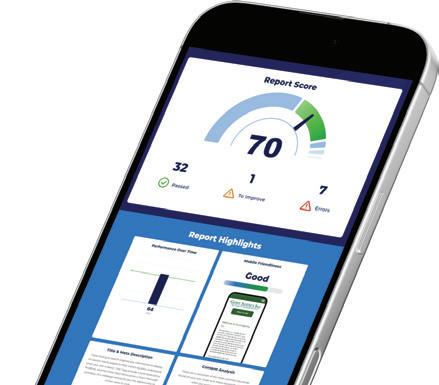
The Digital Performance Hub: Monitors an agency website and identifies key SEO insights and metrics in an easy-to-read dashboard.
Social Jazz: Creates a unique content calendar populated with professionally designed graphics and posts to agency social accounts automatically.
Access to professionally designed marketing and advertising materials
Agents can access a comprehensive library of videos, print and digital ads that can all be customized in-house to feature their headshot, logo, and agency information.
Reimbursement funds and reliable vendor support
Trusted choice provides agents with up to $1000 in reimbursement funds for consumer marketing efforts or working with our network of vendor partners.
Informative toolkits and guides that help agencies navigate topical challenges
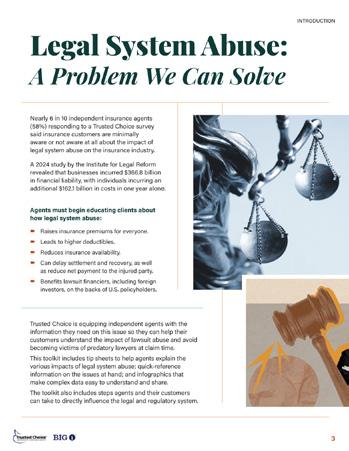
Leveraging a.i. for marketing Legal System Abuse
Social Media Advertising And more
Session is Coming!
BY TARA PURVIS, Big I Kentucky
A play on the saying from the HBO series A Game of Thrones, but its true the 2026 Regular Session of the General Assembly is around the corner, set to convene on Tuesday, January 6. So truly…Session Is Coming!
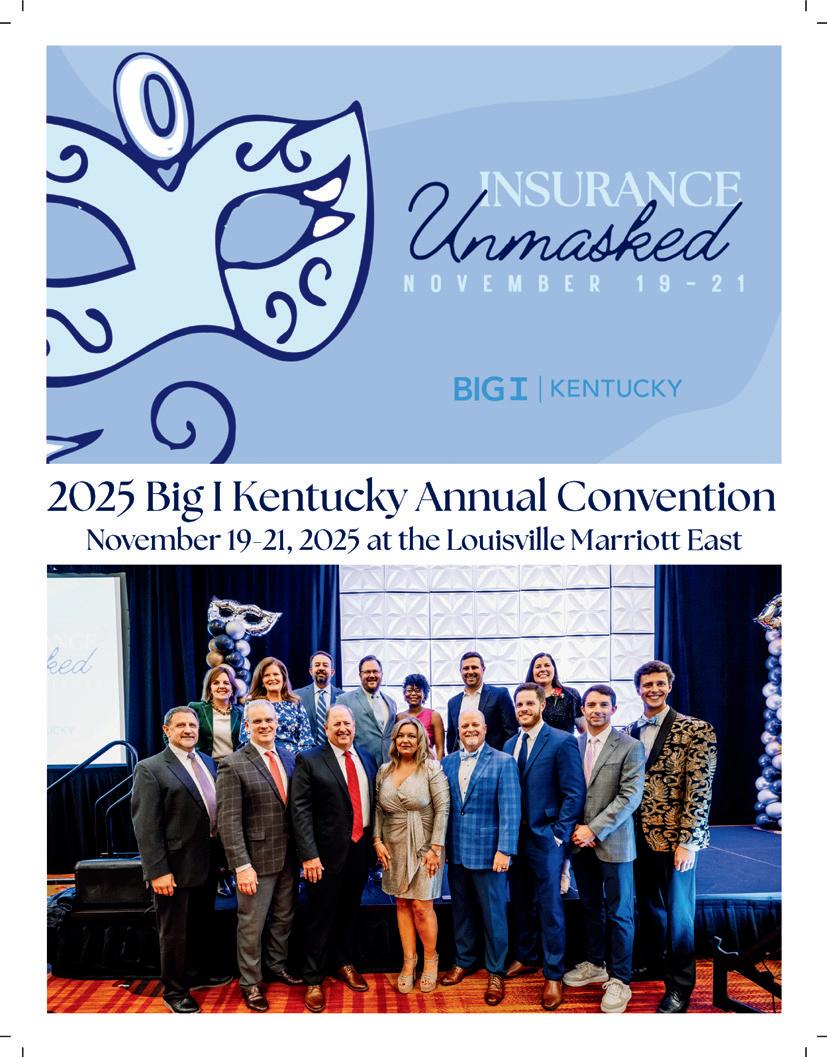
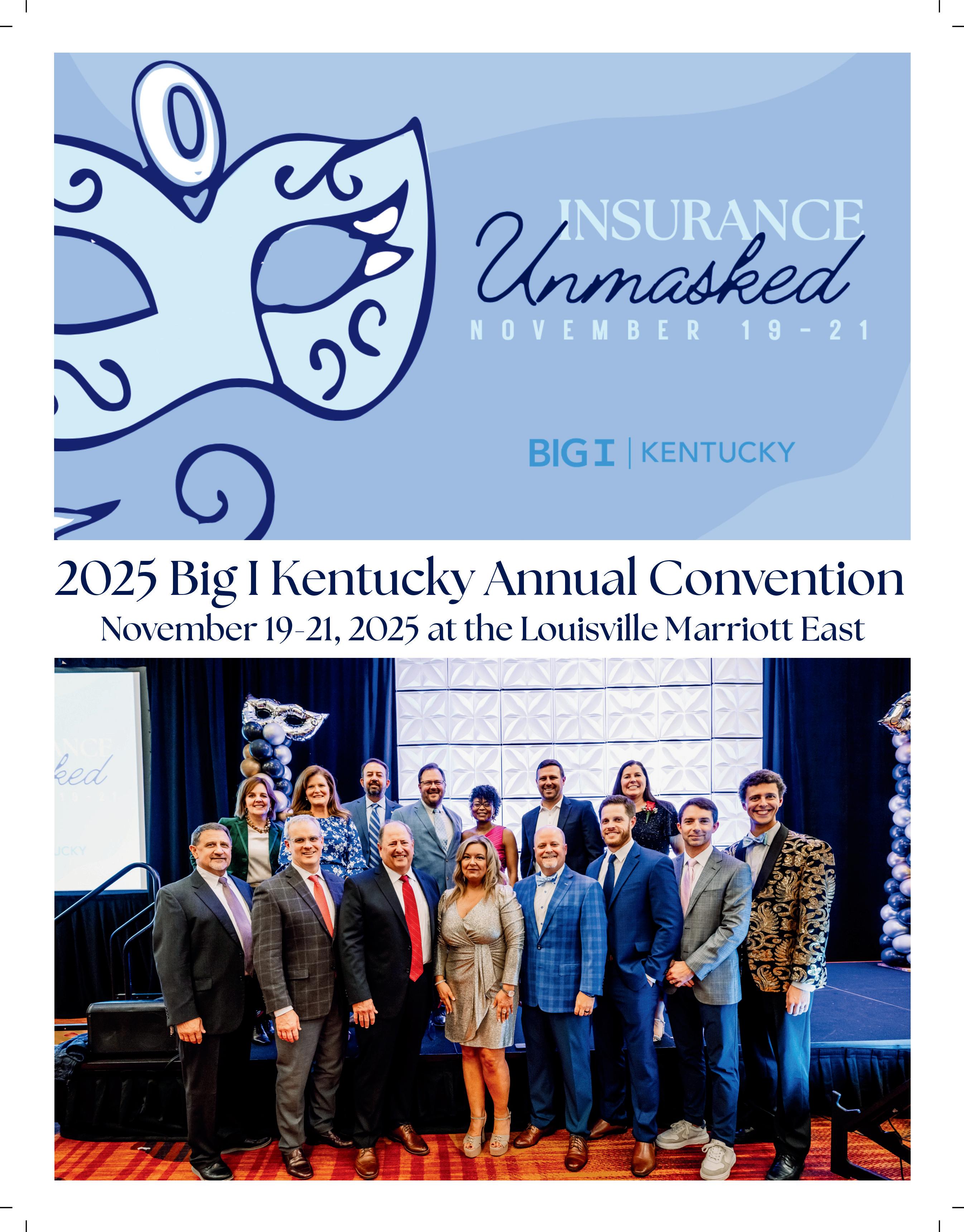
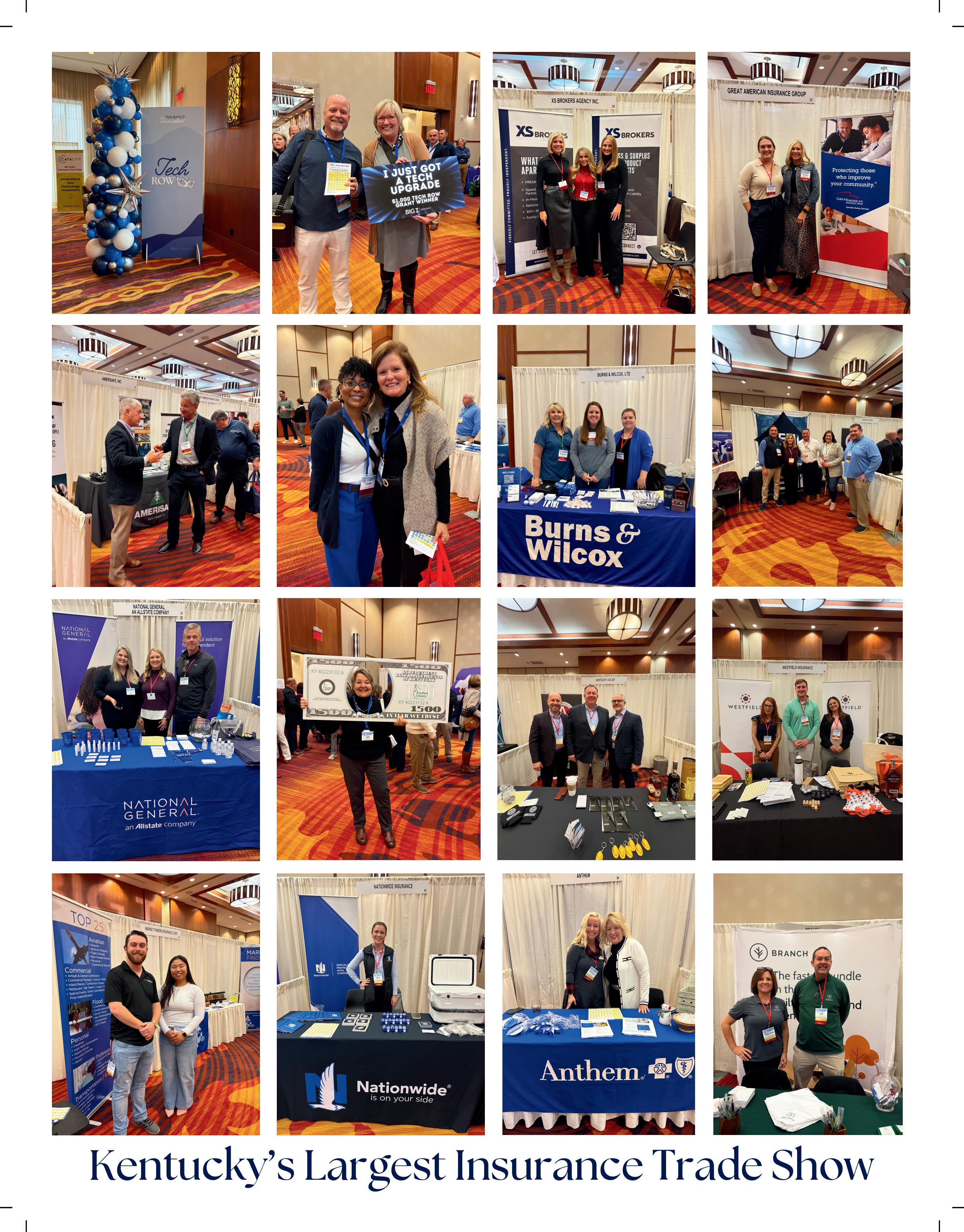
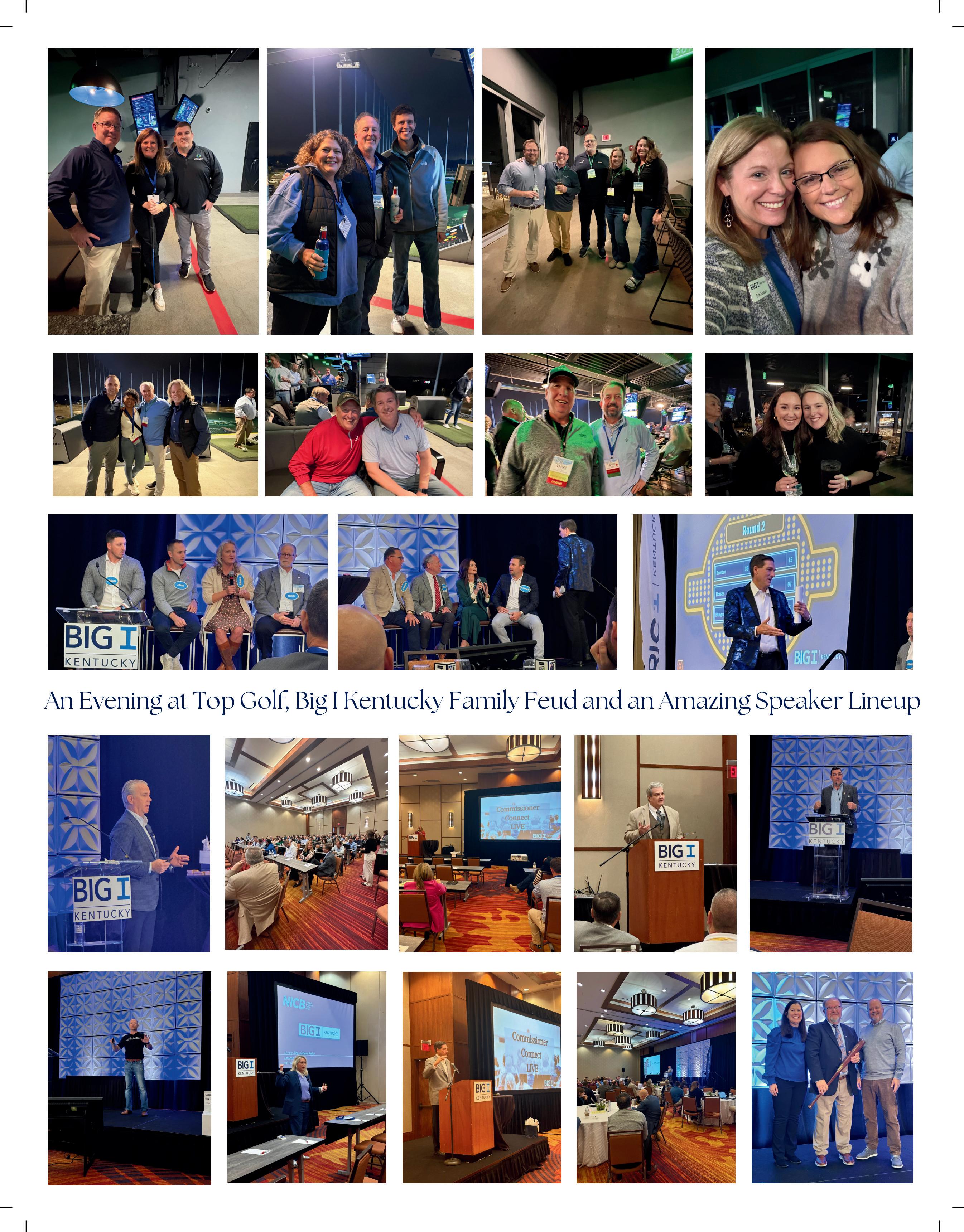
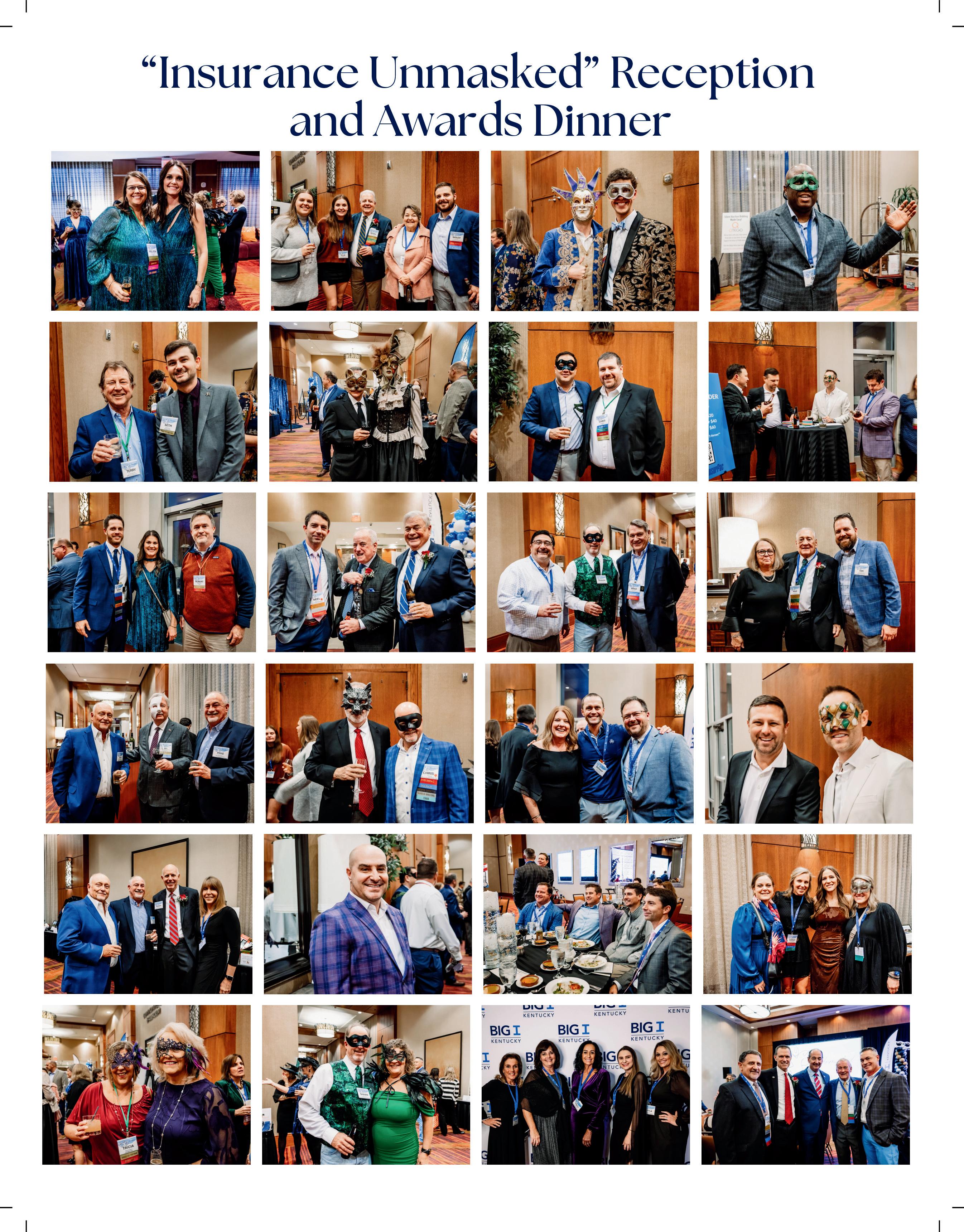
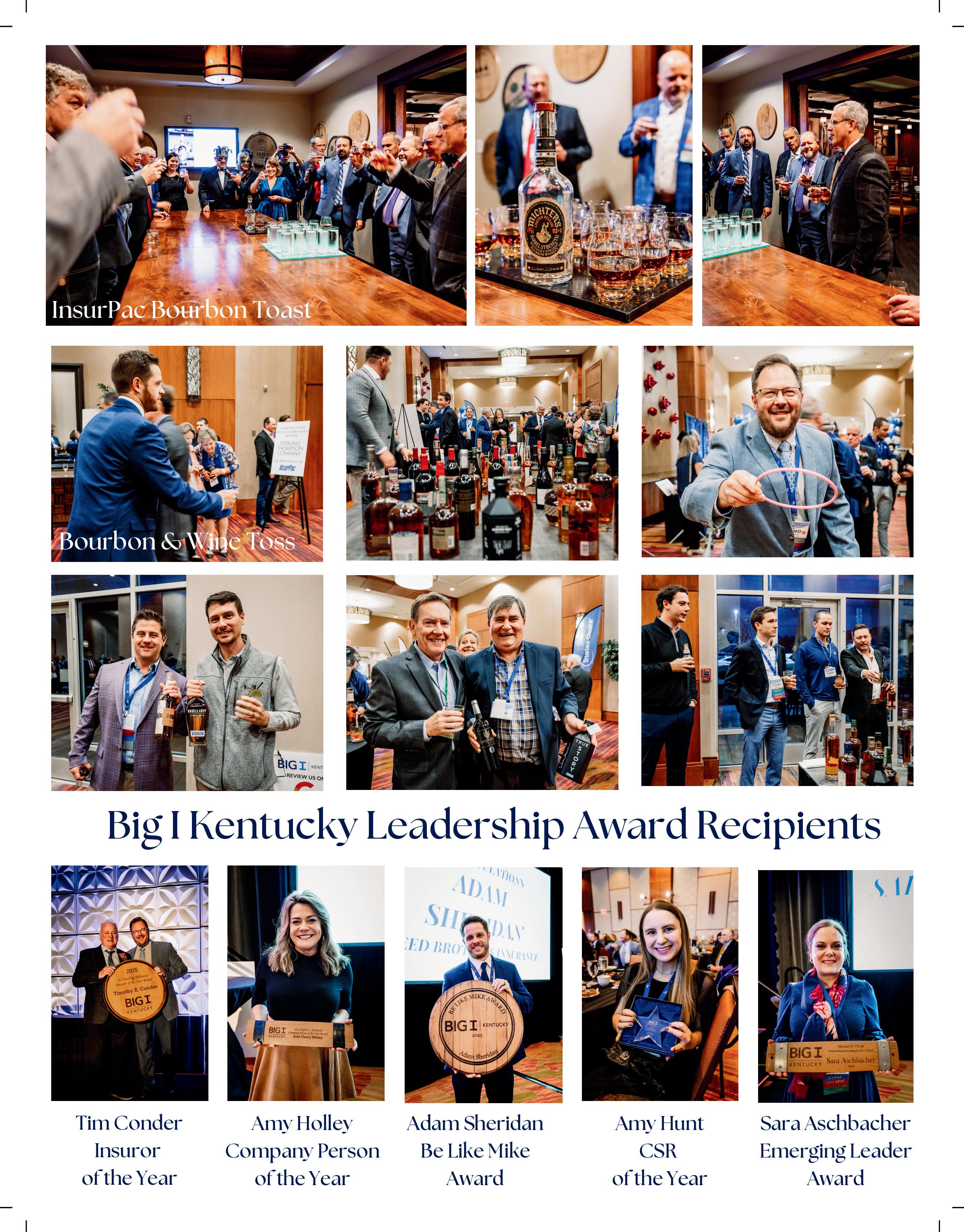
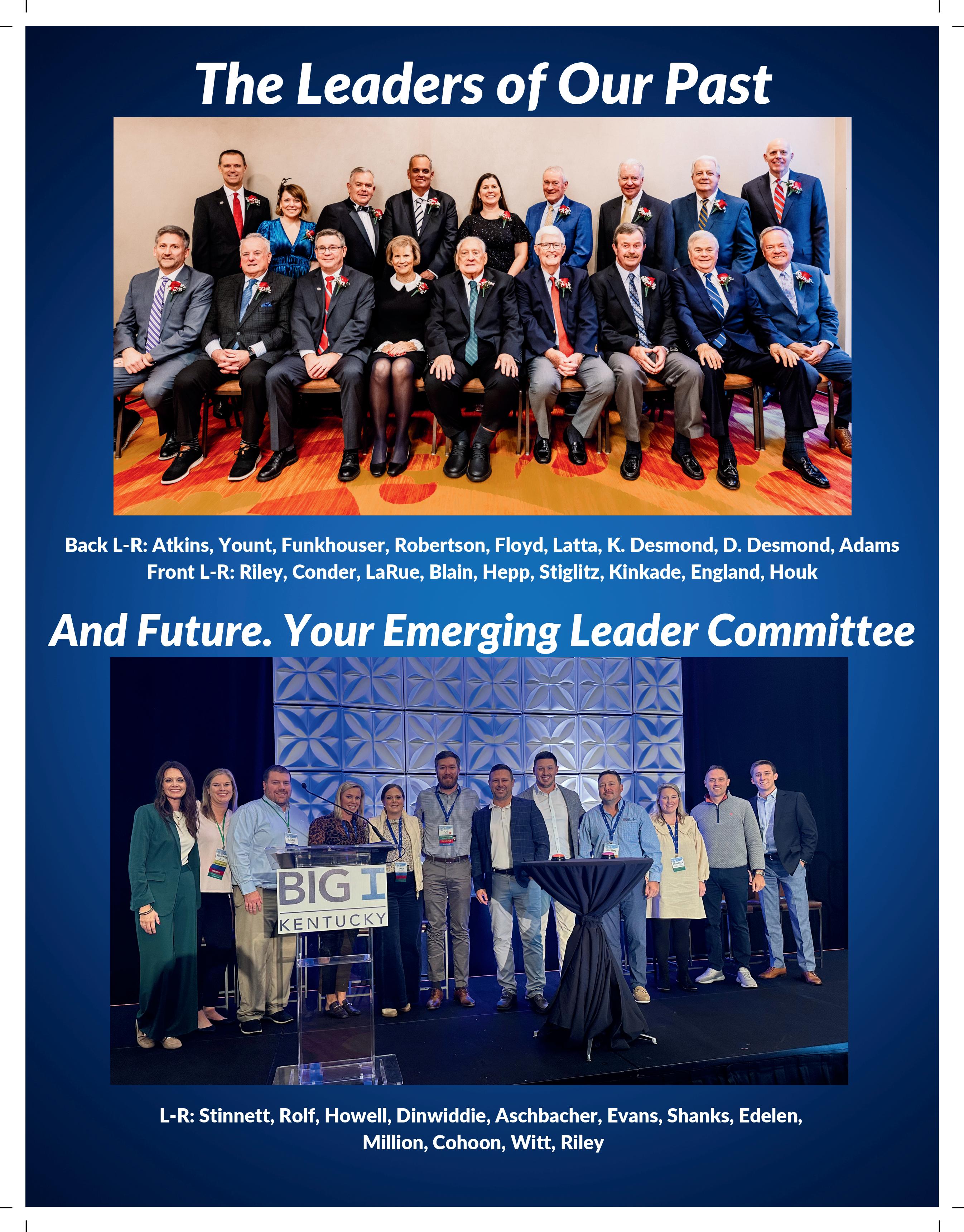
With that in mind Advocacy has been on the brain at the Big I and was a theme for our 2025 Annual Convention held November 19-21 in Louisville. As our members gathered from all over the Commonwealth to network and educate themselves on the latest insurance trends we intentionally had a focus on advocacy. A few highlights:
- Insurance Commissioner Sharon Clark joined us to provide an update on the key issues her office has been dealing with including the rollout of the Strengthen Kentucky Homes program. This legislation was passed in the 2024 Session and had a $5 million appropriation to create a grant program
for Kentuckians to get a Fortified roof put on their homes and to require insurers to provide an actuarially justified discount and an endorsement. This is a critical program to help solve some of the hard market problems we have today. The program goes live January 1, 2025 and agents will play a critical role in helping educate their clients and local roofing contractors about the benefits of this program.
- The Commissioner of Workers Claims Scott Wilhoit joined our Commissioner’s Quarterly Connect at convention and brought a pro-workers comp message that…Comp Is Cool! With Workers Compensation insurance rates set to drop for a 9th straight year, certainly this is an insurance product bucking the trends of increased rates in health and property insurance. Maybe the largest applause Commissioner Wilhoit received was an announcement that his department was rolling out electronic improvements to streamline the Form 4
process to check if there are exemptions on file at the Department. This is a labor intensive process today for agents, so the hope is that these electronic improvements involving a database will reduce paperwork in agents’ offices.
- PIP Reform was the most discussed issue during our legislative panel that featured Sen. Rick Girdler, Rep. Erika Hancock, Rep. Sarge Pollock and Sen. Steve Rawlings. For the first time in history legislation to reform our auto insurance Personal Injury Protection system passed the state House, before stalling out in the state Senate. Several of the members of the panel highlighted their support to apply the Work Comp fee schedule to medical bills submitted under the PIP system and the Big I will be pushing hard to get the bill across the finish line in the 2026 Session.
The message to leave you with here that also came from our legislative panel is…customer service. The legislative panel was in conjunction with our Emerging Leader luncheon and so the focus was on advocacy and getting involved with the legislative
process. Emerging Leaders wanted to know if they called their legislator what to expect.
Rep. Sarge Pollock, an insurance agent by trade, shared that though he may know a lot about insurance he doesn’t know a lot about the myriad of issues voted on in Frankfort, so he needs community and business leaders to reach out to him and share their experiences and expertise, because they know more than him and those conversations help form his opinion on many issues.
Also an insurance agent, Rep. Erika Hancock, said that it is her goal to return every phone call she receives even if she disagrees with the constituent’s opinion. She shared a story of a recent day she spent returning 600 phone calls from constituents.
I am always reminded of the saying that is certainly overplayed and overused, but very true…Democracy Is Not A Spectator Sport! We lived that out at the Big I convention this Fall and I believe our members are ready to be more active in the legislative process in 2026! •
lines, and
direct access to open-brokerage capabilities, in-house binding authorities and MGA facilities, or a combination of these resources is what sets CRC Binding apart.
LET’S TALK SOLUTIONS
Our Kentucky CRC Binding team is ready to help — connect with any of the contacts listed to get started.
Aimee Stumler
Executive Vice President, Senior Team Leader 317.581.3243 astumler@crcgroup.com
Sallie Howerton Team Lead, Team Stumler 317.581.3226 showerton@crcgroup.com
Crystal Reid
Associate Team Lead, Team Stumler 317.581.3246 creid@crcgroup.com
Tanya Herrmann, CISR Inside Underwriter, Team Stumler 502.292.4674 therrmann@crcgroup.com
Linnette Camacho Inside Underwriter, Team Stumler 317.581.3244 lcamacho@crcgroup.com
Better Hires, Better Business
IdealTraits is your all-in-one hiring platform to make better hires, faster.
JOB POSTING
Get more candidates
Broadcast your jobs to all of the leading job boards like Indeed, ZipRecruiter, Google, LinkedIn, Talent.com and more.
AI Powered Career Page
APPLICANT TRACKING
Collaborate, organize and automate your candidates
Join forces with your team in real-time. Organize your candidates in a hiring pipeline. Automate routine recruiting tasks.
2-Way Texting
PRE-HIRE ASSESSMENTS
Predict job performance with assessments
Use personality, cognitive and video assessments to find candidates who are a perfect fit for your team’s culture and values
Support
ONE-WAY VIDEO INTERVIEWING
Screen candidates faster with video interviews
Complete your pre-screening interview process up to 75% faster, saving valuable time for both employers and candidates
AI Powered
Fund Transfer Fraud
HOW CYBERCRIMINALS STEAL MONEY FROM YOUR AGENCY
BY CyberFin for Catalyit
Fund transfer fraud is one of the biggest cybersecurity threats facing insurance agencies today. This type of fraud involves cybercriminals manipulating and exploiting the invoice and fund transfer processes at an agency to redirect payments to outside fraudulent accounts.
There are a few key ways fund transfer fraud typically occurs:
• Criminals gain access to insurance agency systems and send fake invoices or payment requests from what appears to be a legitimate vendor, client, or partner. However, the payment details they provide route to accounts controlled by the criminals.
• Fraudsters hack into vendor, client, or partner email accounts and send messages with modified account numbers or routing information to redirect payments.
• Malware or phishing scams infect agency systems, allowing criminals to quietly modify legitimate payment details in the background.
As more insurance business is conducted online, criminals have increased opportunities to carry out these types of cyberpayment frauds, making this a top threat agencies must understand and safeguard against.
HOW FUND TRANSFER FRAUD OCCURS
Cybercriminals utilize social engineering and hacking techniques to gain access to email accounts, impersonate vendors or clients, manipulate legitimate invoices and requests, and redirect payments to hacker-controlled accounts.
The fraud typically begins when hackers compromise email accounts through phishing attacks, weak passwords, or other vulnerabilities. Once inside a business email account, the criminals patiently monitor communications to understand normal invoice and payment processes.
At an opportune time, the hackers send forged emails impersonating a vendor or client. These
emails contain fake invoices or requests with the criminal’s bank account details instead of the legitimate vendor’s information. The emails often look identical to normal invoices or requests, making the fraud difficult to detect.
Since the emails come from a seemingly legitimate source, unsuspecting staff process the invoices or requests like normal and change the payment details. With everything appearing in order, the staff unwittingly approves payments to the hacker’s account instead of the real vendor or client.
The entire scheme relies on carefully impersonating trusted contacts through compromised email accounts and manipulating standard payment procedures. Insurance agencies can be prime targets due to high funds transfers and complex third-party relationships. Staying vigilant and protecting email security are crucial to avoid this type of cyber fraud.
IMPACT ON INSURANCE AGENCIES
Fund transfer fraud can have a significant impact on insurance agencies in multiple ways:
Financial losses – A successful fund transfer fraud can result in substantial direct financial losses if money is redirected to a criminal’s account. Depending on the amount transferred, this could have major monetary consequences for the agency.
Reputational damage – Beyond direct losses, the reputational damage from fund transfer fraud could be severe. If an agency’s clients have their transfers intercepted or accounts compromised, it will undermine trust and confidence in the agency’s ability to handle finances securely. Even if the fraud wasn’t the agency’s fault, its reputation will still suffer.
Liability concerns – There may also be liability issues if an agency is seen as negligent in allowing fraudulent transfers or failing to have sufficient defenses in place. Regulatory fines, litigation from affected clients, and other legal consequences could result, adding further monetary and reputational
damage. The liability risk makes prevention an urgent concern.
In summary, the financial, trust, and legal implications of fund transfer fraud make it a threat insurance agencies cannot afford to ignore. Implementing strong protections needs to be a top priority to avoid endangering the business.
Preventing Fund Transfer Fraud
Fund transfer fraud can be prevented through several key measures:
• Strong email security protocols – Implement DMARC, SPF and DKIM to prevent email spoofing. Be wary of any payment requests received via email and always verify legitimacy through secondary channels like telephone.
• Verify all payment requests – Double check all payment and invoice details. Call the suppliers to confirm any payment or account changes before transferring funds.
• Use multi-factor authentication – Require an additional step like a one-time passcode to authorize payments and access accounts. This prevents fraudulent access even if login credentials are compromised.
• Employee training on red flags – Educate employees on signs of fraudulent payment requests like urgency, changes in vendor details, or requests from free webmail accounts. Empower them to question abnormalities before approving fund transfers.
With multiple layers of protection, insurance agencies can effectively guard against this cybersecurity risk. Staying vigilant, verifying requests, and enforcing strong access controls will help prevent loss of funds through transfer fraud.
TAKE ACTION AGAINST FUND TRANSFER FRAUD
If your insurance agency experiences fund transfer fraud, it’s important to take swift action to limit the damage and prevent future incidents. Here are some steps to take:
• Report Incidents to Authorities – Contact law enforcement and file a report about the fraudulent activity. Provide as many details as possible about how the fraud occurred, the accounts involved, and the scope of the breach. Filing a report creates an official record and can help with recovery efforts.
• Conduct a Forensic Investigation – Hire a cybersecurity firm to conduct a forensic investigation to determine the root cause and full impact of the breach. Analyzing the technical evidence can reveal vulnerabilities and help prevent similar attacks. Preserve and document all evidence.
• Notify Clients of the Breach – If any client data was compromised, you are obligated to inform those individuals about the breach. Follow data
breach notification laws and regulations. Be transparent about what occurred and the steps you’re taking to enhance security.
• Update Policies and Controls – Review your cybersecurity policies and internal controls around payments and fund transfers. Identify any gaps that allowed the breach to occur. Implement additional safeguards like multi-factor authentication, separation of duties, or payment verification processes. Train employees on updated protocols.
Taking quick action after a fund transfer fraud incident can help minimize damages, restore trust with clients, and bolster defenses against future cyberattacks targeting your insurance agency. Don’t allow fraudulent activity to go unchecked. •
All the agency tech guidance you
need
in one place.
Catalyit is the ultimate technology ally for independent insurance agents. We’re here to guide you through the tech landscape to help your agency thrive in the digital age.
Why Catalyit?
Smart Technology Choices
Avoid costly mistakes with our trusted guidance.
Enhanced Agency Performance
Leverage our insights to get the most out of your tech investments.
Stay Informed
Keep ahead with the latest in tech trends and updates.
Save Time
Efficient solutions that let you focus on what matters—your clients.
Achieve More
Stress less about tech and focus on growing your business.
Start transforming your agency today!
Agency Tech Assessment & TechSelectors™
Understand your tech needs and how to fulfill them.
Generative AI Guide
Get the latest AI news and recommended tools.
Guides & Reviews
Make informed decisions with our comprehensive reviews.
Consulting
Our advisors can help identify your agency’s tech challenges & implement the solutions.
Agency Owners: Ask These Questions...
BY KEITH MANGINI, InsurBanc
Most insurance agency owners seeking a loan tend to focus on the basics: loan terms, interest rate, timing and closing costs. But choosing the right lending partner requires a broader lens. Borrowing, when used strategically — for example, to fund growth, technology upgrades or succession — can serve as a valuable asset. A well-run agency that relies solely on retained earnings may miss expansion opportunities and fall behind more leveraged competitors.
In fact, the term “leverage” as it applies in finance is often misunderstood. In and of itself, it refers to the use of borrowed money (debt) to increase investment returns, acquire assets or fund business operations. It allows businesses to increase their returns by investing more capital than they have available, but it also carries increased risk. Many business owners may believe that they are prudent not to have any debt on their books. But is that the best strategy?
Consider as an analogy investing for retirement. An
agency owner can invest in certificates of deposit and be assured of a positive return if held to maturity. However, in doing so and avoiding the risk of other investments such as stocks and bonds, the owner gives up the opportunity to achieve greater growth of the retirement portfolio.
Similarly, an independent agency that sees opportunities but does not seek outside capital is limited in trying to acquire other agencies or implementing more efficient technology to improve the customer experience.
KEY QUESTIONS TO ASK LEADERS
Independent insurance agencies operate differently from businesses in other sectors. Banks with a generic, one-size-fits-all approach can frustrate owners and potentially miss important risk factors or growth opportunities. That is why it is critical for agency owners to ask the right questions and recognize when the answers raise red flags.
• What collateral will be required? Will personal guarantees, liens on LLC or S Corp ownership, C Corp stock, or assignments of life insurance policies be expected?
• How will financial statements be handled? Must they be CPA-prepared? How often will they be reviewed?
• Does the bank understand how to interpret carrier premium reports?
• Does the bank understand how independent agencies operate? Can they speak to cash-flow cycles, contingency income, premium trust accounts, and other operational intricacies?
• Is there flexibility in loan structure? What criteria determine loan terms and repayment schedules? Are these adjusted for industry-specific dynamics?
• How are varying financial positions among co-owners addressed? If one partner has weaker personal finances, how does that impact the bank’s lending criteria?
• Will the bank help interpret loan covenants? Can they explain terms like debt service coverage or trust ratio requirements, and help the agency plan for contingencies?
• Can the bank advise on Small Business Administration (SBA) vs. conventional loans? Do they understand which loan suits the agency’s current situation and future goals?
• What is the bank’s view on succession planning? Will they assess the management team’s ability to sustain operations if a principal exits unexpectedly?
As agency owners or principals evaluate the responses to these questions, they should consider whether the lender truly understands the agency’s business model and whether the owners are comfortable with the lender as a long-term partner.
Does the lender have a history of working with agencies like this one? Can the lender provide insight that goes beyond the numbers, the same way the agency does for its own clients?
Before vetting potential lenders, agency owners
should pause for introspection and anticipate the kinds of questions a bank’s underwriting team is likely to ask:
• Has the agency demonstrated stable cash flow over several years?
• Are the financial statements well-organized and easy for a third party to evaluate?
• Are there past business disruptions, such as the death of a principal or the discontinuation of a product line, that may need to be explained?
Agency owners should be prepared to clearly articulate why the financing is needed and what results they expect it to generate. Whether the capital is intended for talent acquisition, technology investment or business expansion, agency owners will need to present a complete picture of the agency’s financial health and how the loan supports its broader strategic objectives.
From the outset, agency owners should take a relationship-focused approach rather than viewing the lending process as purely transactional. There are many facets to financing that a bank with deep industry experience can help clarify. Most importantly, the lending officer can assist early in determining whether capital is being sought for the right reasons and whether the timing aligns with the agency’s current reality.
Independent agency owners stress with their insurance customers that having an insurance agent who truly understands their needs is vitally important in helping them with their personal and business risk management. Agency owners should view their bank lender in a similar manner, emphasizing a relationship rather than a transaction. •
Keith J. Mangini has more than 25 years of experience in the financial services industry and is vice president, commercial team leader for InsurBanc. He can be reached by sending an email to kmangini@insurbanc.com.
Page IC Arlington/Roe
Page 11 Big I Employee Benefits
Page 13 Harford Mutual
Page 15 Progressive
Page 17 Secura
Page 17 RLI Personal Umbrella
Page 22 SIAA
Page 29 Trusted Choice Marketing
Page 31 CRC Group
Page 32 IdealTraits
Page 33 Levitate
Page 36 Big I Group Health
Page 37 Catalyit
Page 40 Big I Professional Liability
Page 43 InsurBanc
Page BC Johnson & Johnson
February 19 2026 CE Day
Thank You Industry Partners!
OUR 2026 SUPPORTERS as of 1-1-2026
DIAMOND
AF Group
Agile Premium Finance
Amerisafe Anthem
Auto-Owners
Bailey Special Risks
BBSI
PLATINUM GOLD
Berkshire Hathaway GUARD Branch
Capitol Special Risks
Commercial Sector Ins. Brokers
BRONZE
Countryway
Cowbell Cyber
EMC
Encova
FCCI Insurance Group
First Benefits Mutual
Frankenmuth Insurance
Grange Insurance
GRIP
The Hartford ICW
Iroquois Group
J.M. Wilson
Johnson & Johnson
Market Finders Insurance
National General
Nationwide
Peoples Premium Finance
Summit Holdings
Swiss Re/Westport Travelers
Westfield Insurance
Big I Kentucky gratefully acknowledges these fine companies, our 2026 Industry Partners. Without their assistance, fees for the events and programs throughout the year would be significantly higher and/or the quality of the program would be restricted.
TO BECOME A SPONSOR OR FOR MORE INFORMATION ABOUT OUR INDUSTRY PARTNER PROGRAM, PLEASE CONTACT ERIN FOSSON, SALES & MARKETING DIRECTOR, AT 502-245-5432 OR EFOSSON@BIGIKY.ORG
Experienced Team — decades of truck underwriting experience and strong carrier relationships - delivering expert guidance to our Agency partners
Responsive Support — calls always answered, emails returned quickly
Flexible Billing interest-free installment plans
proud to represent four of the top wholesale truck markets our target accounts:
• Insureds that have operated in the same name for 2 or more years (5 or more for fleets)
• Low driver turnover, low loss frequency and good loss experience
• Clean drivers with 5+ years of experience
• For-hire truckers with 1-250 power units (any radius)
• Van, flatbed, & reefer operations (no logging or coal operations)