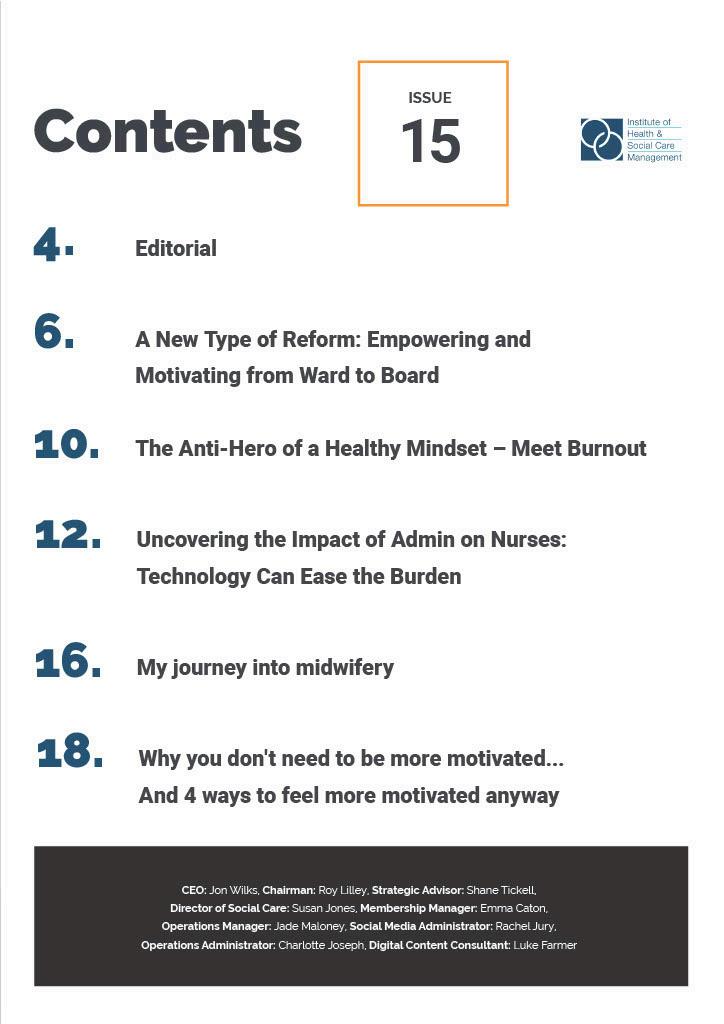
. Why Early Research Skills Matter: An exploration of personal journeys
Building a Human Firewall: The Role of Cyber Awareness Training in Organisational Security
Innovative Ways Managers Can Help to Reduce Stress for Healthcare Workers
Building a Healthier Croydon: Why It’s Time to Unite for Better Community Dental Care Connecting Health, Care and Home: The Role of Housing Associations in Integrated Care
O I N U S
Eslam Sharkas
IHSCM Member
A manager working in health and social care who completed the IHSCM Compassionate Leadership Programme
Compassionate Leadership in Health and Social Care:
My Reflections
As a Senior Registrar responsible for a busy Clinical Unit, I enrolled in this programme to enhance my leadership of a complex, highstakes multidisciplinary team. The Compassionate Leadership Programme provided me with essential framework, shifting my perspective from purely clinical command to inclusive, system-wide leadership.
E D I T O
R I A L
Module 1: What Compassionate
Leadership is and why it matters
This module established why compassion matters, a concept sometimes lost in the pressurecooker of critical care.
Module
2: Why compassionate leadership works
This session provided the evidence that compassionate leadership is a necessity for patient safety and staff wellbeing, reducing errors and improving outcomes – a powerful motivator. The programme's core tools became immediately applicable.
Module
3 – How to create psychologically safe teams.
The AUEH model (Attending, Understanding, Empathising, Helping) transformed my approach to daily work like ward rounds and handovers.
I now consciously practice ‘Attending’ – pausing to notice non-verbal cues from nurses or other staff – which has helped me identify unspoken concerns early.
Applying this to understand the perspective of a struggling trainee (Understanding & Empathising) allowed me to offer supportive supervision (Helping) instead of criticism, fostering a more open learning environment within our team.
Module
4 - How to lead inclusive and compassionate teams
This session on inclusive teams was vital. Using the DAC model (Direction, Alignment, Commitment), I reviewed our MDT practice.
Our Direction (patient survival/recovery) was clear, but Alignment between medical, nursing, and therapy roles is sometimes blurred. I aim to initiate brief, focused MDT huddles to clarify daily goals for each discipline, significantly improving coordination.
The concept of being an "inclusion ally" has made me more proactive in amplifying the voices of junior nurses and students during family meetings.
Module 5 – How to lead compassionately across boundaries
This resonated deeply. Leading across the PICU-ward interface and with tertiary services requires system leadership.
I will use the "Curiosity Curve" before challenging conversations with consultant colleagues or external teams, moving from "confident dismissal" to "cautious openness," which will improve collaboration and patient transfer processes.
Module 6 – How to lead compassionate change
This session equipped me to lead change.
To implement new guidelines, I will be using Kotter’s 8-Step Model, forming a "powerful coalition" including lead pharmacist and nurse specialist to drive adoption.
I also now recognise the JCurve of performance dip after change and can anticipate and support my team through it.
Additionally, the RAIN technique (Recognise, Allow, Investigate, Nurture) for self-compassion has been a vital tool in managing my own wellbeing after particularly difficult cases, ensuring I can continue to lead effectively.
My plan is to formally introduce the "Temple of Planning" to MDT to co-design our quality improvement projects.
This programme is facilitated by Sue Jones, Director for Social Care, IHSCM and comprises six 1-hour online interactive workshops.
It is acknowledged by Professor Michael West, a leading expert in organisational psychology and compassionate leadership in healthcare.
It equips leaders across health and social care to embed compassion at the heart of practice.
This programme has equipped me to lead my unit with a courageously compassionate, evidencebased approach that benefits patients, the entire MDT, and myself.
Participants leave with strategies to build trust, foster wellbeing, and lead with humanity.
To enquire about the next cohort, contact Sue Jones, Director for Social Care, at sjones@ihm.org.uk.
FELLOW
Hayley Robertshaw FIHSCM Chief Executive Officer
St Martins Care
Hayley is dedicated to improving care services through partnership, co-production, and collaboration. Her role involves promoting and developing skills and knowledge within the adult social care workforce.
“Since the beginning of the pandemic in early 2020 the IHSCM has provided me with a voice and a network of supporters and collaborators that continue to be an integral part of what I do every day. I know I would not have survived the ‘COVID years’ without the social care innovators.”
S P O T L I G H T
“I promote the IHSCM with my own workforce and know the corporate membership we have had for several years has underpinned our culture transformation programme with a focus on compassionate leadership.
The deputy manager development programme has also enhanced our workforce development plan.”
“I value the role the IHSCM has across the health and social care landscape and look forward to many more years of true partnership.”
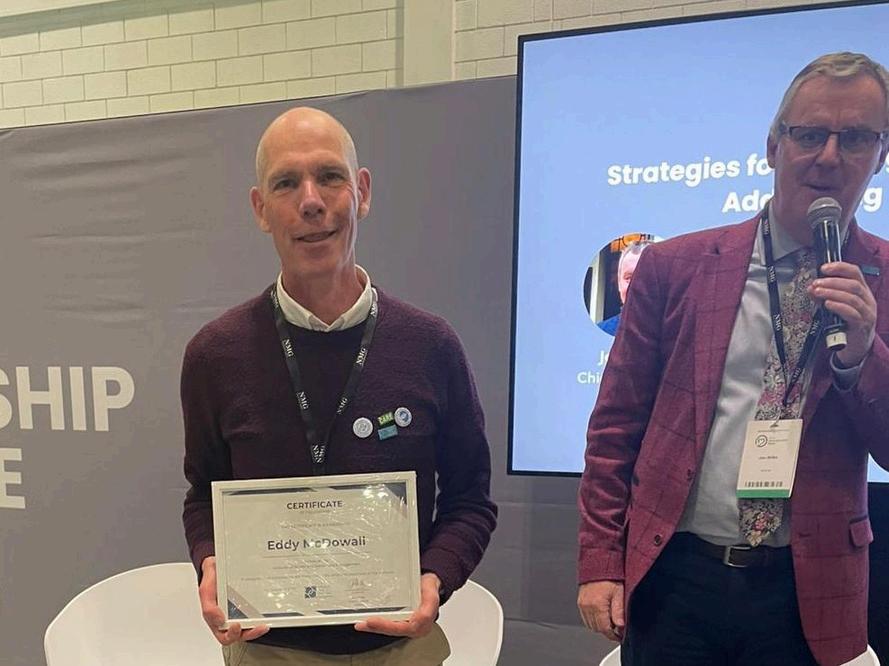
Eddy McDowall FIHSCM
Chief Executive
Oxfordshire Association of Care Providers
I am genuinely honoured to be invited to be a Fellow of the IHSCM and to be able to continue the excellent work of Jon, Sue and the whole team. It is only by sharing our knowledge of our experiences of working in care that we can improve our sector. IHSCM provides an excellent platform for doing this.
Hope is Not a Plan -
Tom Bell Director and Lead Consultant Cormetis Consulting
Twelve Steps to Save and Sustain the NHS:
Scrap the Care Quality Commission - “Inspection does not improve quality, nor guarantee quality. Build quality into the service in the first place.”
- W Edwards Deming.
Of all the high-profile tragedies, scandals, and fiascos that have dogged Health and Social Care in past decades, not one was unearthed by the officially appointed regulator of healthcare services, the Care Quality Commission.
The CQC costs taxpayers in excess of two hundred million pounds each year. But as it presently exists it is not fit for purpose.
It is staffed and led by people who have moved from one part of the healthcare system to another who consistently fail to look for the cultural indicators of unsafe care and seldom get under the bonnet of what is really happening in the settings they inspect.
In many cases, the CQCs easily manipulated inspection processes have meant they were duped into approving the continued provision of poor care and even ill-treatment of patients by providing what ultimately proved to be a false quality rating.
I once worked under an NHS director who launched a comprehensive and expensive internal communications campaign with the explicit objective of influencing the outcome of a CQC inspection by making sure staff did not say anything negative about the Trust.
Outstanding, Good, Requires Improvement, Inadequate, what do such arbitrary snapshots and wholly inadequate descriptors of complex interconnected organisations and the multiple services they provide mean to service users, patients, staff, and local communities?
My GP Practice was rated Outstanding by the Care Quality Commission because it was perceived as having an active patient participation group.
This motley group of which I was once part consisted of half a dozen patients who came together for a cuppa and a chat but never influenced anything.
The practice website looked like it had been designed by a student in the early nineties. Sure, the doctors are great, but to label the practice overall as outstanding, that was quite a stretch.
At the time of writing this article, my GP Practice website still has the Care Quality Commission rating on from June 2018.
When it comes to NHS Trusts, when the Care Quality Commission comes to town and dishes out an undesirable rating, a promise of improvement is swiftly issued by the communications team; hospital bosses promise improvements will be made in the wake of latest assessment - we’ve heard it all before.
The NHS in North Cumbria where I live had almost twenty changes of chief executive in the last quarter of a century.
The CQC have never taken the blindingly obvious systemic factors that surround the provision of healthcare services in this large rural area into account in their ratings. Nor do they take the time to talk meaningfully with patients or service users. These being the only audience whose views in the end should really matter.
Let’s change the role of the regulator from feared, loathed, ineffective enforcer, to adviser and monitor.
The Care Quality Commission should become a repository of best practice, and the sum of their accumulating knowledge an increasingly informed and valuable resource. They should switch their focus from regulation and inspection, to advising, to ensuring and monitoring the consistent spread and application of accepted best-practice and know-how as part of a virtuous cycle of continuous organisational and system-wide improvement.
A critical friend that holds the common vision of what good looks like and helps every organisation in the system move towards that point.
A system advocate, unafraid to identify and name the wider barriers and issues that may be hindering progress.
The Pension Problem: Why Women Get Less
for
Helen Hollister, Director and Product Designer, Guiide
Retirement
Right now, on average men retire with about £205,000 in savings, but women retire with only about £69,000. To catch up, a woman would have to start saving for retirement at age three.
Guiide can’t solve the wider issues in society that cause this gap but it can help women work out how they can get the retirement they would hope for. But more than this, coming soon couples will be able to do this together using Guiide.
Unfortunately the main reason for the difference in pension savings between men and women starts with pay as women, on average, earn less than men during their working lives.
People’s savings into their pensions is related to their working income and with less saved earlier on the difference grows bigger over time.
It isn’t just about earning less overall. Women are much more likely to take time off work to look after children or older relatives.
These breaks mean they stop paying into their pension and miss out on the money that savings would have earned over time, seriously hurting their final pot.
Even working part-time to handle family life means less money going into the pension.
Auto-Enrolment is the system where money is automatically deducted from pay to go into savings; employers will also contribute alongside this, effectively, the government contributes as. This automatic system doesn’t apply to people on low-paid, part-time workers which can often be women.
Where marriages break down and end in divorce it is often overlooked about splitting savings fairly between couples. Women generally actually need more than men because they are more likely to live longer.
The government and businesses are taking steps to address some of these problems:
Widening Auto-Enrolment to lower paid has been proposed
There are calls to make it easier for mothers to continue working with better, cheaper childcare and for more parents to share time off after a baby is born
Companies are trying to teach women to start saving earlier, find old lost pensions, and understand how divorce affects their savings.
Smart companies are fixing their pay gaps, offering flexible work, and helping women understand their finances.
Experts believe that at the current speed, it could take another 20 years to close the gap.
Everyone needs to keep pushing for change so women can have a safe and secure retirement.
Using Guiide's retirement modeller is really simple and should only take a few minutes. You don't need everything to hand right now as you can save it and come back and update it later. Find out about building a model of your retirement.
Scan the QR Code to get started:
Top Tips: “How To”
Become a More Innovative Leader
Innovation. What is it?
Who has it? How do I get some of it?
What is it? Innovation does have an oxford dictionary definition “INNOVATION. Noun. the introduction of new things, ideas or ways of doing something”
Innovation is about staying relevant introducing ideas/approaches to benefit organisations being creative thinking outside the box increasing efficiency, but more importantly improving effectiveness more than just digital solutions.
Who has it? Innovation is not exclusive to any particular person. We all have the ability to be innovative, but really innovation requires buy in from the top leadership down. If your teams are being innovative but the senior managers aren’t supporting or promoting that innovation, your team will go else where with their amazing ideas.
How do you get some of it? Being part of the Institute of health and social care management is indeed a good first step, but engagement with the wider sector and even different sectors is crucial. Adoption of innovation isn’t necessarily about reinventing the wheel, but instead adapting the wheel to fit the vehicle you’re currently driving.
Effective Communication
How are you communicating to your stakeholders? By that we mean your team, those you support, the public. What are you communicating to them?
People need to be invested in what you are doing so clear, concise, and person-centred communication is essential.
Consider: Communication formats (written word, video, audio, infographics)
Accessibility of the communication (font and size, language, easy read)
Understand your audience –tailor your communication to the groups you are talking to Frequency of communication – too little or too often, it’s a bit of a goldilocks situation and there is no specific answer other than to ASK people who often they would like to receive communications
Collaboration and Coproduction “Collaboration is so important; you can’t do everything yourself.”
Work with others in your team, your networks, and your community to give legs and a diversity of background, skills, and resources to your projects.
Different to but a type of collaboration, co-production is when multiple parties work together and invest equal effort for the lifetime of a project or initiative.
Effective forms of coproduction in health and social care generally involve equal partnerships with health, social care, and citizens to ensure positive outcomes.
Involve the Community Engage with your community. During recent crises we have witnessed the formidable and inspiring force of our communities as they rally together to support those in need.
Communities want to be involved, but we need to engage with them. How do we get the best of our communities when there isn’t a crisis? The involvement of communities can also significantly reduce cost and investment of your own resources. Many social and health care innovations look at the use of local communities to help relieve the pressures of over stretched services, how could your community benefit you?
Embed a New Culture
Change, which is what is usually introduced through innovations, requires more than just the innovator to succeed. It also requires more than just all current team members and stake holders to be engaged. Change needs to be embedded within the culture.
Ask yourself, “If I was to leave, would things carry on as they are now, or would the new culture revert back to old ways”
If you think it would revert back, then your team haven’t fully embraced the culture, it hasn’t become an unconscious part of your service.
Some brief pointers for creating a new culture:
Break old habits by creating new ones
Go slow, don’t rush
Communicate
Have a clear outcome and make sure everyone is aware and agrees
Ensure majority cooperation –If the majority are against the change- ask why
Measure your progress – set mini goals to boost morale and commitment
Empower everyone to take responsibility for change
Have a Clear Mission and vision
Encouraging our teams to be innovative and to take chances on new ideas is great, but without a clear vision they will soon get lost.
Your company/service must have a clear vision of where you’re heading so that your team can focusing on innovations that will get you there.
It also helps to have a defined mission and values. What does your company stand for, what are its core beliefs?
Having a set of values allows you and others to ensure all new ideas and ventures resonate with the beliefs of the organisation.
It helps keeps you on brand and if you truly believe in your values, then it makes adopting to change much easier if it matches up to said values.
Be Prepared to Make Mistakes
Being an innovator means accepting that you’re going to get things work, being an innovative leader means you tell your team you will get things wrong. We can’t get things right all of the time, and being open and honest with our teams only serves to strengthen trust.
The freedom to try new things with the knowledge that they may not always work will also provide your team with the confidence to experiment.
Be a bit Disruptive
Innovation by it’s own definition as we discovered earlier is about introducing something new, so don’t be afraid to take risks.
For fear of offering up a cliché, you can’t make an omelette without breaking eggs. But in the same vein, break an egg to hard and your omelette gets shell in it and becomes inedible.
Don’t be afraid to bring radical ideas to the table but be conscious the more radical the change, the more effort and care will be needed to achieve success.
Be Passionate
It’s a well known fact that people respond better when they believe in what they’re selling. Your passion will be the catalyst that will either ignite or resonate with the passion of your team and others involved.
We all have the power to bring positive change that will improve the effectiveness of our services and, in turn, improve the life outcomes of those we support.
As leaders we are also responsible for inspiring the leaders of tomorrow. No matter how difficult things are, we are never powerless, we just need to believe we can bring change.
LOOP Sarah Rochelle Operations Manager, MyDoctor by Northern IHSCM Member.
The IHSCM Summer Leadership challenge landed at the perfect time for me.
“I was feeling slightly lost and confused and had lost sight of my purpose, but this opportunity has boosted both my confidence and my motivation.”
I have always thought of myself as a values driven leader, but working in a tiny team has really challenged my thought process on this and I have questioned what is important to me.
I have always worked in large organisations in the past with clear directions and purpose. Values have been hit and miss (on one particular occasion I clearly remember an expensive trip to London to create our values.
A room fu pipe clean of coloure like the beginning of something. The values were launched. 6 months later they were nowhere to be seen).
I have also worked at organisations where I have been called ‘fluffy’ for even using the word. Assuming anybody who ‘cared’ couldn’t possibly hit hard deadlines. But now at my time of confusion, revisiting these seemed to make sense.
Firstly, “identifying my personal values and leadership style was incredibly timely. ”
I’d studied towards my ILM qualification years ago and although I’d enjoyed elements, the timing felt forced and the knowledge, although interesting felt a little disconnected from my current role. This time felt different.
I realised very early in this learning that this is what I needed. Both for myself, my team and my organisation and that I could put the learning to practical use quickly and that it would add value.
Firstly, investing some time in understanding more about myself, brought some instant clarity to the feelings I was having.
My ‘collaborative’ and ‘provider’ traits weren’t a surprise, but my ‘Pilot’ elements helped explain some of the internal conflict and what felt like were contradictions. But now, these don’t feel like contradictions at all. They feel like assets, and ”I can use the knowledge built to identify areas I can improve and set personal goals.”
Both IHSCM’s Empowered Leaders and High Performance Leadership series were really eye opening and again helped to remind myself of my purpose and the important role that I can play.
These skills aren’t fluffy. They are integral and I feel that many people working in high level roles could do with being reminded of them in any sector.
As a business that sits in a rather unique place, not feeling fully part of the Healthcare Community or the Recruitment Community the opportunity to review healthcare news and other people’s posts was also something I had never thought to do before.
“I did have a moment of self doubt” of what on earth could I contribute to these discussions as a total outsider, but reading articles, blogs and news made me realise that we are not as segregated as we feel and there are more things we can do to align ourselves to these communities.
IHSCM’s archive media sessions also felt like worthwhile power hours that could easily be slotted in regularly to a usual work plan and can provide regular ongoing knowledge building going forward.
Although, I was only available for the 4 of the 6 weeks challenge I already feel how important it is to continue to allow for weekly time to continue to build on these skills and look forward to continuing to review the content and possibly even attend some live sessions and not feel like an outsider.
I already know that “the content has impacted both how I lead and generated ideas that I would like to implement in the future.”
Including: The importance of weekly self-development and reflection – I plan to review the IHSCM resources and create more in-depth development plan to ensure I continue to learn
I will also explore other external resources and materials for selfdevelopment.
To realise my own personal power and how I can add value - I’m not just fluffy
I will also promote the importance of this to my team to ensure they feel empowered
I would like to embed a more values based approach in our recruitment, review and retention process. For example, more values driven interview questions and team questionnaires to understand more about individuals values.
I will continue to promote a continuous improvement ethos and ensure that staff know their value and feel comfortable to contribute.
We are about to embark on a brand strategy project, which I hope will help us finalise our values. I plan to review all of our working practices and processes to ensure these are embedded through our business and messaging and not lost.
No wasted coloured post-it notes for us.
I will continue to promote the importance of consistent positive work culture and working practices and will actively look at identifying additional ways we can embed this
I will continue to promote the importance of inclusivity and using the skills of the team around us in decision making and planning.
“You can’t be an expert in everything.”
I will continue to suggest positive changes and not let my own lack of direction impact what I can control and where I can add value.
“I look forward to continuing on this journey to find my ‘why’ to hopefully help me steer our ‘where’.”
“Genuinely thoughtful, thought provoking and useful content.”
- IHSCM Member
E N R O L N O W
ENROL NOW
Leadership Reflections
Gavin Fletcher’s
Gavin Fletcher Dip. HSC Operations Manager
Taylor Made Care IHSCM Member, West Midlands Care Association
Journey Through the IHSCM
Deputy Manager
Programme
I was aware of the IHSCM Deputy Manager Programme training through our service’s annual subscription to West Midlands Care Association.
I had originally joined the IHSCM in September 2023 having an interest to better myself professionally and personally. I have recently taken on the role of Operations Manager, alongside my current role as Registered Care Manager.
I took a lot of information from Module 1, which allowed me to really think of how I present myself to others within our organisation.
Under the Zookeeper Model, I align naturally with the dolphin, which to my surprise so did about 90% of the people on the course, it showed me that not many people like confrontational situations.
“I have always led by example,” which is a longer method, but has been proven to work in our organisation.
I invited two of my colleagues to join me on this course as they had both taken on more responsibility within our organisation, together we will share our learning from this course with our team and discuss specific points learnt within staff members supervisions and team meetings.
I chose Authenticity, Trust and Reliability from the values list, these resonated with me. We will try the exercises from Module 1 with our team and gather feedback, maybe do a joint supervision at some point to openly discuss our strengths and areas for improvement.
From Module 2 I found that by choosing the right wording in any scenario can influence a thought and an outcome, so I pay particular attention to how I ‘frame’ a conversation. I really liked the TNT (tiny noticeable things) section. We can get lost in governance and outcomes, but TNT’s can be so important, especially as our service provides support to adults with complex conditions, who may not be verbal.
“Culture Eats Strategy is so true,” when we started our service in 2017, we involved the people who use our services and worked ‘as one’ to co-produce and align before we could truly see our journey ahead.
I was unable to attend Module 3 as an emergency occurred at our service which I had to prioritise, so I watched Module 3 back via the email from Sue.
I enjoyed the advice and techniques explained about having potentially difficult conversations and will try the role play examples to draw out more productive answers from colleagues in team meetings.
The perspective exercise was refreshing, as this will often diffuse a situation before it arises.
The GROW model is something I will be working on and as a dolphin, coaching is a tool I will be using combined with the EESC feedback clarifying the desired outcomes.
Module 4 brought my attention to Kotter’s 8 Step Change Model, highlighting the importance of short-term wins, which build a sense of progression within a team, then creating a wave of change to help us feel motivated to reach that end target.
I am glad to say that our values have been our success, as when we started our service we were all like minded individuals who wanted to make a positive difference to people’s lives, also employing the people we support in our service helps us stay person centred.
We will use the Temple of Planning with new employees to embed our original ideas into their foundations – then hopefully we can all blow the roof off!
I will be glad to use the IHSCM raft of available courses, I enjoy reading Jon’s weekly email updates, his accounts offer real insights into social care and adjoining sectors.
On a personal note, I thoroughly enjoyed listening to Sue and taking in the information, which has prompted me to investigate NLP, which I hope I can use to help me on my journey also. Many thanks.
Why early research skills matter:
An exploration of personal journeys
A research-active healthcare workforce contributes to improved quality of care . 1
Organisations that engage in research have higher rates of patient satisfaction, reduced mortality, improved Care Quality Commission performance, improved organisational efficiency and reduced staff turnover . 2
Individuals who engage in research benefit from increased perception of skills and confidence in practice and ultimately improved job satisfaction . 2
Although research-informed practice is a core pillar of allied health practice, access to carry out research should not be restricted to clinicians.
Research is for everyone. However, taking the first steps into research can be daunting.
Staff require support, training, access to expertise and guidance, and an infrastructure which allows them to take the first steps, make mistakes and learn.
Clinicians are already capable of applying early research skills, such as critically questioning and appraising care, but often don’t realise these are skills that can be applied to research.
Other ways staff can gain early research skills include carrying out local audits and service or quality improvement projects helping them to become research confident.
Dr Nicky Eddison, Salma Benyahia, Kate Pugh, Ndana Mupawaenda, Sharon Scott, Jo Billin, and Dr Ros Leslie
The orthotics service at the Royal Wolverhampton NHS Trust is a research-led service and although it is the smallest allied health profession (AHP) service in the Trust it has a higher number of research publications than all the other AHP services combined.
Part of its success is due to encouraging and supporting staff to engage in early research skills.
I collated information from the whole team so it would be beneficial to all.
The referral was a success and is now implemented throughout the Trust and is used for all orthotic in-patient referrals.
It gave me insight into the process of getting a project from the “idea” stage to completion.
Kate Pugh – Orthotic Clerk: When given the opportunity to conduct a service improvement project in the Orthotics department I started with designing a new in-patient referral form which would assist orthotists and orthotic clerks when triaging and processing inpatient requests.
Having never done anything like this before I had the full support of my manager, Dr Nicky Eddison, who listened to my ideas, encouraged, and supported me through the process.
Having the support of my peers and colleagues gave me the confidence to develop other “ideas” on a larger scale.
I did not think being in a clerical position these opportunities would be open to me. It also provided me with an insight into the time and work put into reaching the final stage of a project.
I have since gone on to lead larger projects within the department which has developed my skills further.
The opportunity has given me a wider knowledge of the department, it has given me the confidence to speak to a range of professionals and collaborate with new people. It ensured I accurately recorded my findings and responses so that I could take the necessary steps to progress. I also learnt that sometimes things don’t go the way you expect, and you must go back a step to progress again. Something that can be incorporated into all work.
If there was an opportunity to learn or be involved in anything research-based again, I would be interested to get involved. It gave me a real sense of pride in achieving something like this.
It was a time-consuming task, to obtain randomised data for 10 patients for each clinician.
I worked with a member of the administrative team to collaborate on the data and present the findings to our team and later to clinical governance.
We had the support of our manager, Nicky Eddison, which gave me the confidence to carry out the task.
The anonymised data was available to the whole team, and everyone was advised of their results. This allowed us to support one another to raise the standards of note-keeping within the service, improving standards and patient care.
Sharon Scott – Senior Orthotist
Throughout my career, I have not had much exposure to research. Recently I undertook the task of a clinical note audit for the clinicians in our service. The audit was based on the standards of our professional body and our regulating body.
We discussed the results, providing tips to each other and agreeing on strategies to improve.
We have since implemented changes in our records system to allow easier data capture for the future.
The completed audit gave me a sense of accomplishment which made the hard work well worth it.
It has also given me the desire to extend my skills further for future audits and the confidence to access the world of research.
I have since taken the lead in establishing a journal club where we can support one another to continue our journey into gaining research skills.
I look forward to continuing to raise the profile of our department within our Trust and beyond.
Jo Billin – Orthotist
The audit process is a hugely important part of any clinical setting to ensure that standards within a workplace are being met.
I was fortunate to have the opportunity to complete an audit with one of our administration team last year.
We audited the completion rates of our Skin Integrity Tool Proforma. This is a document which requires completing whenever an orthosis is supplied to any in-patient in our Trust. The proforma must be completed to ensure we are regularly considering tissue viability when prescribing orthoses.
I was grateful to have the support of my team and my manager as I had never completed an audit before, nor any type of formal research. I was given a structure in which I would need to present my findings, and the guidance I required on how to tackle the task.
I found that I was pushed out of my comfort zone as I started working on the audit without a clear idea of how to begin but found that the project helped me develop my early research skills in obtaining important information and organising and presenting it in a way which was informative and useful to the other members of my team.
This audit highlighted some areas that we could improve on as a team and we were able to focus more clearly on issues surrounding the completion of this pressure tool which we had not realised was a barrier before the audit.
I feel that the initial audit and the guidance I was given have given me the confidence and skills to complete further audits and the desire to be involved in any future research-based projects.
Once I better understood the model I approached my manager, Dr Nicky Eddison, who supported me in coming up with a document to communicate my project proposal to the wider orthotics team to get staff engagement.
This was the biggest challenge, getting the team members interested in the project as they could not initially see the potential benefits.
Ndana Mupawaenda –Orthotic clerk
I had the opportunity to pilot a project for the orthotics service which I felt would improve our service and ultimately improve the experience of our service users.
I attended the Trust training programme for the ‘Shared Decision-Making Panel’.
I had to learn how to engage people, how to answer questions that put me outside of my comfort zone and how to manage expectations.
The Shared Decision-Making Panel explores issues or concerns that could be a barrier to service efficiency and patient satisfaction.
Once I gained confidence, I volunteered to work on other projects including the department’s ‘Going Green’ project. Which aimed to review our service via a green lens, to reduce our carbon footprint.
I used the skills I learned on the previous project and was delighted when the orthotics service was used as an example by the Trust’s sustainability team and won a sustainability award.
Being able to take part in these projects has helped me to learn new skills including critical thinking, communication, organisation, and planning.
I now look forward to taking up opportunities that help me to improve my early research skills.
Carrying out a literature search was a long and arduous, but necessary process. Requiring me to hone my research skills and my time management skills.
Salma Benyahia – Orthotist
Getting an article to publication was a thoroughly enjoyable experience, however not without its challenges.
Working within a team and publishing alongside others meant that not only was I able to learn and gain invaluable skills from more experienced researchers, but also split the workload and time it took to get the article to publication.
Working within a team allowed the workload to be shared, ensuring that no data got overlooked and all relevant research was included allowing for a well-researched and thorough literature review. I was conscious of ensuring the research was done as thoroughly as possible as my goal was not just to publish an article, but to publish an article of excellent quality that would add to the current body of literature and ultimately help improve patient care.
Working with a team of wellseasoned and excellent researchers allowed me to develop my research skills and explore the process of publication within a supportive framework, knowing that anything I may overlook would be picked up on, whether that was in the research or the actual formulating of the journal article.
This enabled me to work with confidence.
Managerial support is clearly key to success.
3
Getting our research accepted into an international peer-reviewed journal was amazing and being able to look up my work and know that a university student somewhere may one day be quoting it in one of their assignments fills me with a lot of pride and confidence to continue researching.
Summary
Understanding that research is for everyone, and not just for clinicians, is essential to creating an inclusive research-ready workforce and these real-world examples are an effective way of sharing innovative practice.
Local audits and service improvement projects are a valuable way of supporting the wider workforce to become research-ready and empowering them to challenge current practice and expand horizons.
The rewards for staff are clear - advancing knowledge; improving problem-solving skills; improving communication and teamworking skills; contributing to the evidence base and improving patient care; the opportunity to publish. By encouraging and supporting staff to gain early research skills we can create a fully inclusive research and innovation culture for our entire AHP workforce.
References
Iles-Smith H, Burnett C, Ross DH, Siddle HJ The clinicians’ skills, capability, and organisational research readiness (SCORR) tool Int J Pract Learn Heal Soc Care 2019;7(2):57-68 doi:10.18552/ijpblhsc.v7i2.644
Harris J, Cooke J, Grafton K. Shaping Better Practice Through Research: A Practitioner Framework.; 2017. Eddison N. Benyahia S and Chockalingam N. The effect of spinal orthoses on immobilising the cervical spine: a systematic review of research methodologies. J Prosthetics Orthot. 2021;April 2022(Issue 2):p e93-e98. doi:doi: 10.1097/JPO.0000000000000382
NEW
E-BOOK FREE
Do you want to improve how you handle setbacks and failures as a leader?
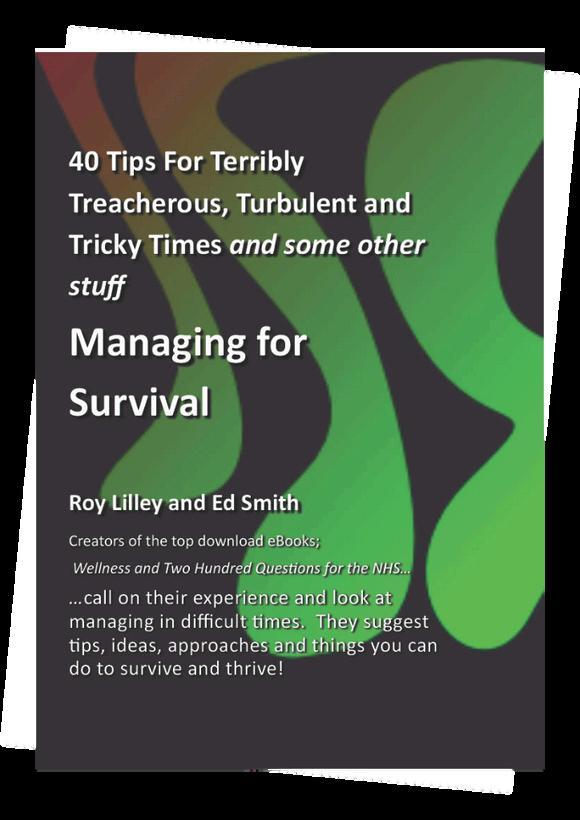
The new e-book titled "40 Tips for Terribly Treacherous, Turbulent and Tricky Times" by Roy Lilley and Ed Smith is a collection of practical advice and strategies for navigating through challenging times.
Building a Human Firewall:
The Role of Cyber Awareness Training in Organisational Security
In today's digital age, businesses are relying more on technology and online platforms, making them vulnerable to cyberattacks.
Cybercriminals are constantly developing new ways to exploit weaknesses, from phishing scams to ransomware attacks, to gain unauthorised access to sensitive information.
Providing cyber awareness training for staff has become essential for organisations of all sizes and across all industries.
Why should your organisation invest in cyber awareness training?
The purpose of cyber awareness training is to provide employees with the necessary knowledge and abilities to recognise and counter cyber threats.
This training focuses on informing them about prevalent attack methods, including phishing emails, harmful websites, and social engineering techniques.
By gaining an understanding of these attack strategies, employees can enhance their vigilance and decrease their susceptibility to becoming victims of such attacks.
One of the primary benefits of cyber awareness training is that it helps create a "human firewall."
Employees are often considered the weakest link in an organisation's cybersecurity defences, as they can inadvertently click on a malicious link or download an infected attachment. However, with proper training, employees become the first line of defence, capable of spotting potential threats and reporting them to the proper channels.
Another advantage of cyber awareness training is that it fosters a culture of security within the organisation. By educating employees on the potential risks and their responsibilities in countering them, it encourages the adoption of secure practices like using robust passwords, avoiding questionable links, and maintaining up-to-date software.
This collective effort significantly reduces your organisation's overall risk of a cyberattack.
Additionally, organisations can ensure compliance with industry regulations, data protection laws, and cyber insurance requirements through cyber awareness training. These regulations often stipulate the need to establish security awareness programs for employees.
By providing such training, organisations show their commitment to protecting sensitive data and can avoid potential legal and financial repercussions.
What is the best way to deliver cyber awareness training?
Whilst online cyber awareness training offers convenience and flexibility, human-delivered training brings a dynamic edge that boosts engagement and understanding. This facilitates questions, discussions and clarifications which leads to a better understanding and retention of the security concepts, threats and prevention.
Delivered training comes with the added benefit of providing realtime interaction and immediate feedback which creates a more impactful learning experience.
These sessions can provide content tailored to the specific needs of the organisation where trainers can address industryspecific threats and answer questions about internal security policies.
Online training may be more generic without the nuanced focus that delivered training can provide.
Online training can sometimes be passive, with learners simply clicking through the material without active participation.
A blended approach to cyber awareness training leverages the strengths of both methods to create a more impactful and comprehensive learning experience. For example, delivered training can be used to introduce key concepts and specific organisational components, and online training can be used to reinforce learning, provide additional resources, and track progress.
This blended approach can maximise effectiveness and provide scalability to meet your organisation's changing needs.
Is cyber security awareness just for the office?
The importance of cyber security awareness stretches far beyond the office walls. In today’s digitally connected world, our personal lives are intertwined with online activities, leaving us vulnerable to threats such as identity theft and financial fraud.
Delivering tailored cyber awareness training which focuses on the personal aspects of cyber security resonates more with employees, and provides a useful context away from the office which is generally more effective in changing behaviour when compared to training which focuses solely on a corporate perspective.
By addressing the personal implication of cyber threats, your organisation can foster a security-conscious culture which extends beyond the workplace. This approach helps safeguard employee’s personal lives and strengthen the overall cyber security posture of your organisation by reducing threats entering through employees’ personal devices and online activities.
The modern workplace must view cyber awareness training as more than just a recommended practice; it is an indispensable investment.
It is vital to understand that cybersecurity is a collective duty, and each employee holds a significant responsibility in safeguarding the organisation's digital prospects.
An effective cyber awareness training platform will empower employees to recognise threats and reduce risky behaviours, forming an extra layer of cyber defence.
By equipping employees with the necessary knowledge and abilities to recognise and counter cyber threats, organisations can fortify their security and preserve the trust of their customers and stakeholders.
For any of your cyber security business needs, don't hesitate to get in touch with CyberScale. Our team of experts is ready to help you navigate the complexities of cyber security and ensure your organisation's safety!
Email info@cyberscale.co.uk and a member of the team will get in touch.
Rayhan Abdullah Zakaria IHSCM Member
Innovative Ways Managers Can Help to Reduce Stress
for Healthcare Workers
This article is mainly aimed at the managers who are having to think of innovative ways to reduce stress for healthcare workers.
It is impossible to eradicate workplace stress however there are ways to reduce it significantly or better manage it.
It is important to note that there are many ways to manage workplace stress and no one model fits all.
The goal here is to make everyone aware of the importance of managing workplace stress and the ways to go about it.
So, here are some of my top 10 ideas of how a manager can reduce workplace stress.
Sort out the staffing issues
The healthcare arena is always understaffed. It is key to get this fixed.
The less staff you have the quicker your current workforce will be burnt out and leading to long-term sickness.
Start working with the recruiting teams as well as staff to fasttrack the process of good quality staff hiring and make sure you can hold on to your current staff too. You can do this by listening, communicating and understanding their needs and concerns. Make them feel valued, help them with their daily challenges, empower them, and build trust and a culture of care and honesty. This is a slow and difficult process but if get it right the benefits are unimaginable.
Get the work-life balance right
You would never get it 100% correct but as a manager, you got to work with your team and get everyone together with regards to designing work rota making sure all services are met. This is a team effort so don’t be afraid of trying new ways out, keep it fresh, but most importantly hear all staff's opinions, feelings and commitments. Let them have a key role in designing, shaping and monitoring the work rota. Empower them so that they take responsibility and ownership of implementing a good work-life balance.
Embrace the concept of mindfulness micropractices
These are simple actionable tools which take minimal time to implement example let your staff have time to name their challenging emotions such as am I feeling anger, exhaustion, or concern.
Naming allows us to selfmanage. Also, allow staff to take a moment or micro break in between tasks and reflect and aligning themselves.
Re-design
the concept of break
Strictly enforce your staff take adequate break, if they do not take a break it will affect their output. Get the staff together to design their breakout space and breakout activity, and allow them to switch off completely
Manage chaos
Look for ways to improve management of noise, healthcare environment is highly pressurised with various types of sounds and lights.
Look at ways to get natural lights, natural sounds, fresh air in.
Use calming colours, and pictures. Cut out noise by implementing reduce noise procedures will help a lot. Having indoor plants, living wall, and water features all helps towards combating stressful stimuli.
Better nutrition
Make sure staff get wholesome good quality natural food in the canteen, better even let the staff design good quality wholesome meal plan for the canteen. Sell these at heavily reduced prices. Your staff works so hard for you so offering them good quality free food (if possible) is the least you can do. Having a well-fed, hydrated workforce will enhance your service delivery.
For example, a nurse's or doctor's daily routes could have small calming alcoves for a moment of rest by adding soft cushions, natural or soft lights, or a quiet place to call family etc.
Connect with the outdoor green space
Use real plants and greenery in small to large spaces. Having floor-to-ceiling windows, letting in natural lights, and fresh air, make outdoor spaces a haven for flowers, insects and birds, flowing water features, and living walls, so that staff get a lot of natural stimuli, all of this help to cut out stress.
Be smart with indoor space
Look at corridors, pathways alcoves and think of the best ways to use these to reduce stress.
Maintain a high level of cleanliness and tidiness
Clutter breeds more stress. Having a clean tidy work area, walkway, path, lift, and stairs will help staff relax more. This should be throughout the hospital site indoors and outdoors from the parking space to every area around the hospital trust.
Know
your staff
This is one of my favourites as to help your staff to reduce stress you should know them better. This is where you should talk to them daily, build one team mentality, hear their concerns, give them a voice, and let them feel they are genuinely valued and listened to.
Get them together to build a positive working culture. When your staff feels valued, listened to, respected and can be who they are this will help in reducing work stress issues.
Final
thought:
So there you have my 10 tips on how to manage staff stress within a healthcare environment, I hope you have found it informative and maybe try some of the tips for your selves within your teams.
We’re living through rapid digital and organisational change — and the pace isn’t slowing. As pressure rises, so do stress, burnout, anxiety, and the impact these have on productivity, relationships, and wellbeing.
Curve provides practical, strategic support to help organisations and individuals thrive in this environment.
Programmes
Strategic Business Advantage Programme
Four focused sessions designed to strengthen organisational performance:
Insight → Strategy → Impact.
Addressing resistance to change and remaining resilient. Planning content that connects, engages and endures: From clarity to impact.
Plan. Act. Achieve: A Sustainable Path to Business Success.
Personal Stress Management Programme
Four sessions to build personal resilience and wellbeing: Personal Stress Management Overview. Breaking Burnout. Resilience. Wellbeing.
Trauma-Informed Leadership and Compassionate Practice
Lead with clarity, care, and confidence in times of change.
Whether you need organisation-wide development, executive mentoring, or flexible online and in-person programmes, Curve tailors support to fit your culture and goals.
For more information or to discuss your needs:
�� claire@curve-strategic.co.uk
�� Connect with me on LinkedIn
Building a Healthier Croydon:
Dr. Ivy Fortune Glavee Clinical Entrepreneur and IHSCM Member
Why It’s Time to Unite for Better Community Dental Care
Across the UK, conversations about oral health often happen too late—after pain begins, after a tooth is lost, or after a preventable issue becomes an emergency.
In Croydon, however, we have an opportunity to shift that narrative. A growing movement is taking shape: a community dedicated to open, practical discussions about dental health, prevention, and accessible care for everyone.
And this is the perfect moment to join in.
Why Croydon Needs a Community Dentistry Network
Croydon is vibrant, diverse, and full of families and individuals balancing busy, demanding lives. Tooth decay remains one of the most common chronic conditions, yet it is also one of the most preventable.
The gap between what we know and what people experience can be closed if we make space for shared knowledge and meaningful connection. A community-driven network can:
• Bring professionals together to share insights, innovations, and strategies tailored to the realities of Croydon.
• Empower families and individuals with accessible guidance, helping them take charge of their oral health.
• Strengthen partnerships between dental teams, schools, local organisations, and health advocates.
• Promote early prevention, reducing the long-term impact of tooth decay and building healthier lifelong habits.
What Joining This Movement Means
This initiative isn’t just about meetings or professional updates it’s about building a collective voice. By participating, you contribute to a local ecosystem where prevention becomes a community norm rather than an overlooked afterthought.
Imagine a Croydon where children grow up with fewer dental problems, adults feel confident seeking advice, and prevention-focused dentistry is woven naturally into everyday conversations. That is the vision. And it begins with a connected, motivated community.
How You Can Get Involved
Whether you’re a dental professional, a healthcare worker, a community leader, a parent, or someone passionate about public health, your contribution matters. Engage in discussions, share practical tips, highlight challenges from your corner of the community, and help shape the initiatives that will drive real change.
Together, we can create a Croydon where good oral health is not a privilege but a shared standard achieved through collaboration, education, and collective action.
If you believe in prevention, empowerment, and community-driven health, this is your invitation to get involved. Let’s build something remarkable for Croydon—one conversation at a time.
Please DM to discuss further.
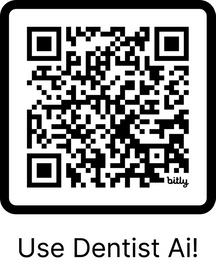
Scan the bar code screening tool above to screen your own teeth and it will give you a personalised report.
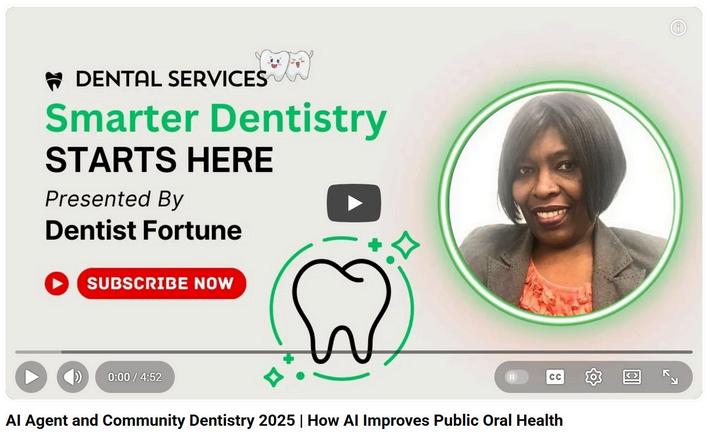
In this video, you’ll learn: What Community Dentistry means in 2025
How AI agents support early detection and oral health awareness The role of AI in community dental programs and outreach How technology improves patient access and preventive care Why AI-driven dentistry is essential for the future of public health
“You have found your presents.”
12 Days of IHSCM
“This is Our Gift to You.”
Connecting Health, Care and Home:
Joe McLoughlin Executive Leader Housing, Care & Technology-Enabled Services
Joe McLoughlin Consulting Ltd IHSCM Member
The Role of Housing Associations in Integrated Care
As the boundaries between health, social care and housing continue to blur, the importance of truly integrated approaches has never been clearer.
“For the NHS and care providers seeking improved outcomes and better demand management, housing associations represent a potential essential partner in the system.”
Across the country, housing associations are no longer functioning merely as landlords. They act as community anchors, supporting people to live well and independently in their own homes for longer.
Increasingly, they deliver or coordinate services that help prevent hospital admissions, reduce delayed discharges and improve the overall quality of life for residents and local communities alike.
Homes as the Foundation of Health
It is widely recognised that the home environment is one of the biggest determinants of health and wellbeing. Poor housing conditions contribute to physical and mental ill health, while safe, warm and accessible homes provide the stability people need to recover, manage long-term conditions and stay connected to their communities.
The book ‘Health Is Made at Home, Hospitals Are for Repairs’ argues that much of what keeps us healthy happens outside hospitals: in homes, schools, workplaces and communities.
Hospitals, the author suggests, are largely for “repairs”: responding when things go wrong rather than building the conditions in which people stay well.
This perspective aligns powerfully with the role of housing associations, whose services help create the conditions for health rather than simply responding to illness.
Housing associations are already investing in digital solutions, home adaptations and proactive support that deliver measurable health outcomes. Digital helplines, telecare and emergency response services provide 24/7 reassurance and fast access to help when residents need it most.
These services, delivered by colleagues embedded within local communities, integrate directly with health and social care systems, creating seamless pathways from home to hospital and back again.
Working Together: Opportunities for Integration
There are clear opportunities for the NHS and local authorities to work more closely with housing providers to achieve shared objectives.
For example:
Early intervention and prevention: joint referral routes for frailty, falls or welfare checks can prevent crises before they occur.
Hospital discharge and step-down services: housing associations can provide short-term accommodation and wraparound support, reducing pressure on acute beds.
Digital care and monitoring: housing-led services can extend the reach of telehealth and remote monitoring, particularly for residents living alone or managing multiple conditions.
Community resilience and wellbeing: housing associations have deep relationships with residents and community networks that can help tackle isolation, promote wellbeing and deliver targeted health campaigns.
The idea of “health creators,” introduced by Nigel Crisp, reinforces this.
Individuals, communities and organisations outside the formal health system all play a role in keeping people well.
Housing associations are ideally placed to act as those health creators in partnership with local care and health providers.
Ensuring Professional Standards and ResidentCentred Services
From a housing association perspective, it is also important to recognise the evolving regulatory and professional landscape. The new Competence and Conduct Standard introduces a framework to ensure that colleagues working in social housing have the skills, knowledge, experience and behaviours to deliver highquality, respectful services.
For integrated care partners, this matters. It means housing services you partner with are increasingly held to the same professional expectations as other frontline services.
When accommodation support, emergency response teams or digital helpline functions are delivered by housing associations, you can be confident they are aligning with regulatory ambitions for competency and conduct, promoting better outcomes for residents and services alike.
Building the Next Phase of Integration
To unlock the full potential of housing in integrated care, closer collaboration is needed at the system level.
Integrated Care Boards (ICBs) and place-based partnerships have an opportunity to bring housing providers into strategic planning conversations, recognising them as equal partners in delivering population health outcomes.
Joint commissioning, shared data frameworks and co-designed service models can ensure housing-led services complement statutory provision rather than simply sit alongside it.
The evidence is clear: when health, care and housing work together, people recover faster, live independently for longer and rely less on emergency and institutional care.
Housing associations stand ready to be part of that solution, offering not only homes but the digital infrastructure, skilled colleagues and community reach that modern integrated care systems need.