Wherever their dreams take them, let an HSBC Education Loan get them there
Wherever their dreams take them, let an HSBC Education Loan get them there
Wherever their dreams take them, let an HSBC Education Loan get them there
• Save up to $200 when you apply online
• Save up to $200 when you apply online
• Save up to $200 when you apply online
• Competitive interest rates
• Competitive interest rates
• Competitive interest rates
• Flexible repayment terms
• Flexible repayment terms
• Flexible repayment terms
Apply online today at www.hsbc.bm/educationloans
Apply online today at www.hsbc.bm/educationloans
Apply online today at www.hsbc.bm/educationloans School can be hard work Funding it
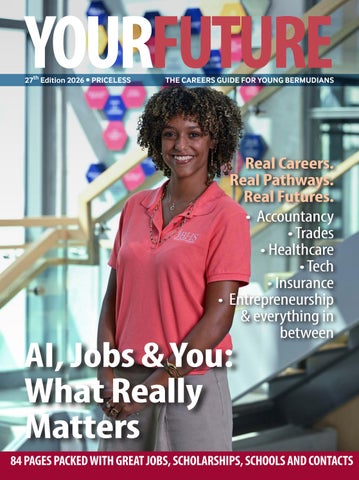
YOUR FUTURE
27th Edition 2026
Enquiries to Director of Marketing, Lissa Fisher. Email: lfisher@bm.bm
Published by Bermuda Media. PO Box HM 2032, Hamilton HM HX, Bermuda Tel: 441-292-7279.
Email: hello@bm.bm www.bermudamedia.bm
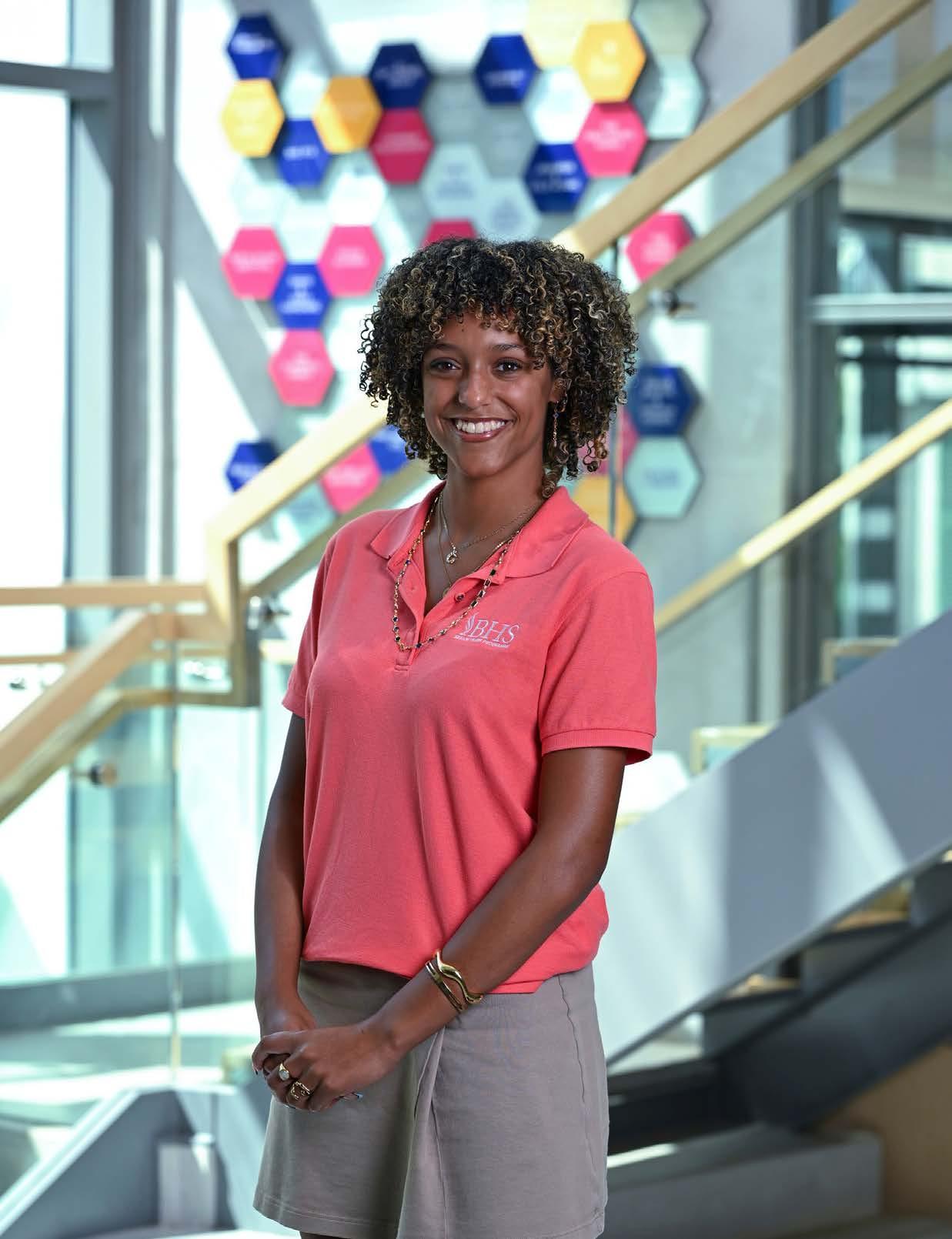
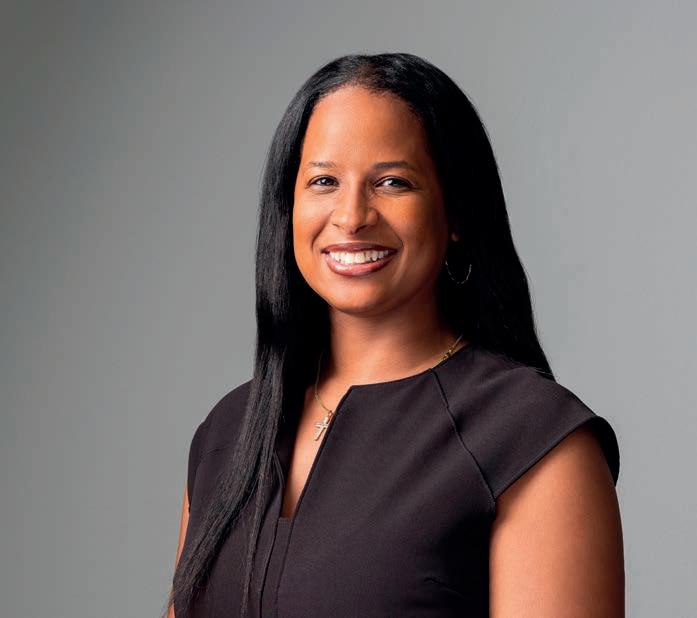
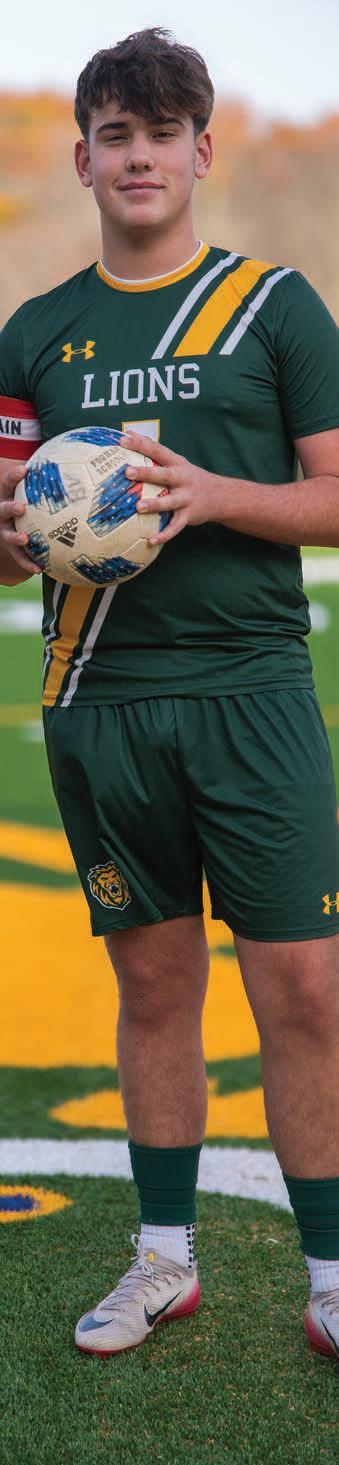
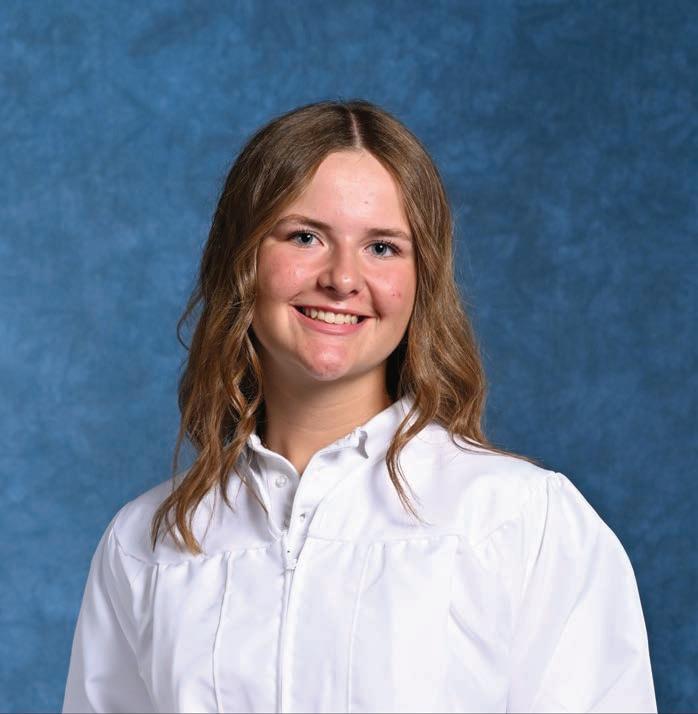
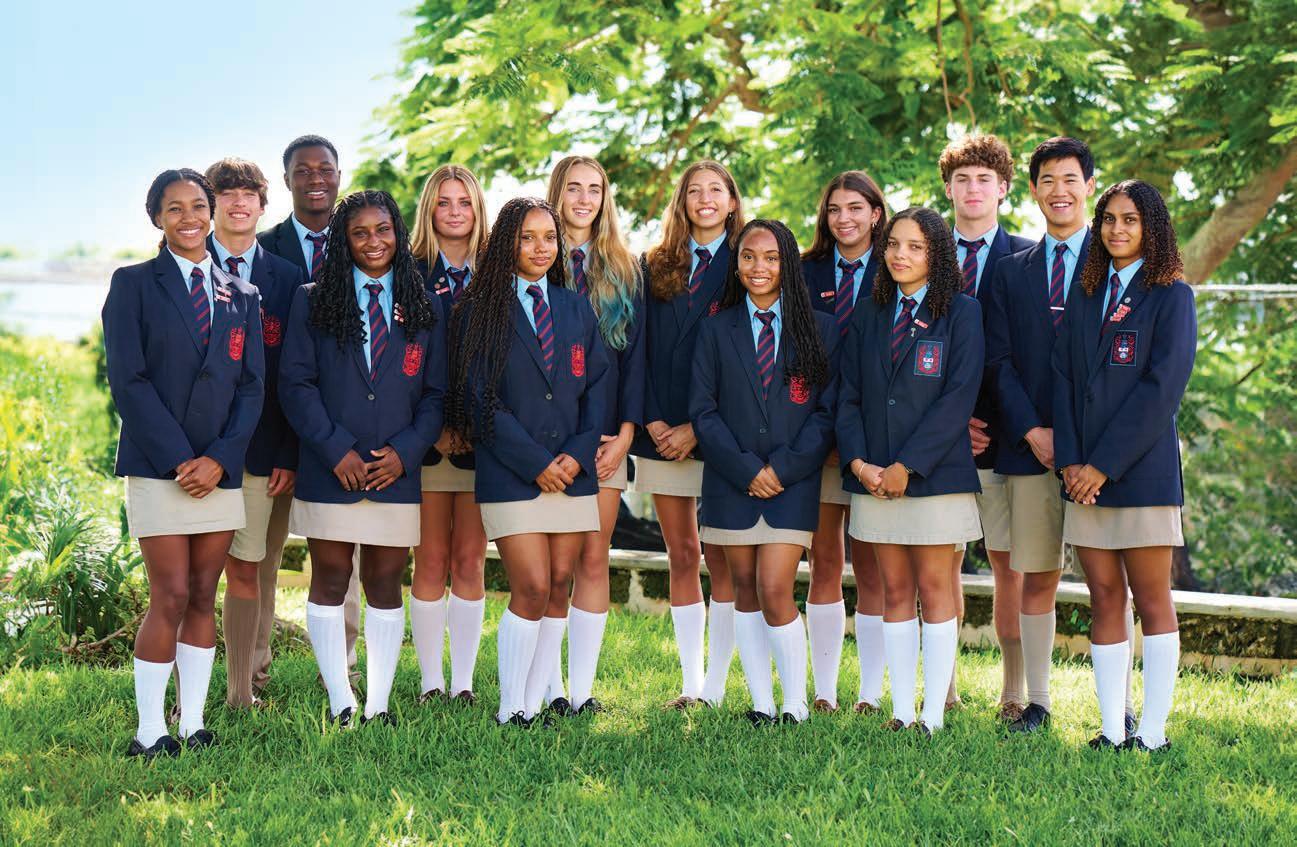
Printed in the US Cover image: Carmela Easton, BHS.
10 Accounting Hard work but exceptionally rewarding
19 Drugs and college The dangers of vaping
20 Construction Building a career in construction
21 Technical trades Your future in energy
23 Entrepreneurship Turning your summer into a business
25 Technology Grants The EDD programme
26 Coding Working Smarter with AI
TOP PROSPECTS
27 AI, Jobs & You What really matters
32 Healthcare Careers in caring
36 Money management Tips for students
38 Scholarships and Internships The right one for you
50 Service Royal Bermuda Regiment
51 The Stuff No One Explains Real guidance for the questions you’re asking
59 Educational Opportunities Making the right choice
You’ll find the best opportunities at these companies, local and overseas educational institutions
Albert College 63, 64
Allshores 16
Association of Bermuda International Companies (ABIC) 38, 39
AXA XL 43
BELCO 21, Back Cover
Bermuda Cancer and Health Centre 32, 33
Bermuda College 60, 61, 62
Bermuda Economic Development Corporation (BEDC) 22, 23
Bermuda Foundation for Insurance Studies 40, 41
Bermuda Hospitals Board 34
Bermuda Waterworks 51
Bermuda Zoological Society 47
BermudaScholarships.com 42, 43
BHS 64, 65, 67
Bishop Strachan School 69, 81
Branksome Hall 65, 66, 68
Cedarbridge Academy 66, 68, 70
Centennial Bermuda Foundation 5, 44, 45
Connectech Coding 26
Construction Association of Bermuda (CAOB) 20
Dalhousie University 68, 69, 71
Deloitte 10, 11
Department for National Drug Control 18, 19
Department of Workforce Development 59
Eagle Hill School 69, 72 EY 9, 15
Forman School 70, 72, 73
Government of Bermuda, Economic Development Department 24, 25
Government of Bermuda, Department of Employee and Organisational Development 58
Green Family Scholarship 48
Havergal College 72, 73, 76
HSBC First Right Hand Page, 37
KPMG 12, 13
MJM Limited 49
Mounts Saint Agnes Academy (MSA) 73, 74, 75, 77
Ontario Tech University 75, 77, 78
Orbis 48
PwC 7, 14
RenaissanceRe Inside Front Cover
Royal Bermuda Regiment 50
Saltus Grammar School 78, 79, 80, 81
St John’s University 77, 78, 79
The Bermuda Centre for Creative Learning (BCCL) 63, 68
The Garden Club of Bermuda 46
The Gow School 75, 81
Trinity College School 81, Inside Back Cover
University of Guelph 74, 82
Wakefield Quin 49
Warwick Academy 65, 82
OUR SCHOLARSHIP CATEGORIES:
Bermuda/Community College
For Bermuda College or overseas Community College
Undergraduate
For students working toward their first degree
Arts Degree
For students in creative and performing arts
Postgraduate
For advanced degrees and professional qualifications
Skill Up
For those pursuing vocational, technical, or trade skills
Multiple scholarships are available in each category for up to $35,000/year and up to four years.
Applications are now open.
Deadline closes March 31, 2026
Apply today: www.centennial.bm/scholarships
For further information and eligibilty requirements:
Building Pathways to Opportunity
Irecall returning to Bermuda after university, full of ambition, questions, and a determination to find my place and make a meaningful contribution. This was not easy then, and I know that many of you are now navigating similar crossroads: finding careers, building skills, balancing opportunity with affordability, expanding your professional network and envisioning what a fulfilling life in Bermuda looks like. Your aspirations matter, and your Government is committed to ensuring that those aspirations can be realised here at home. That is why we are focused on expanding pathways into the future of work. We are aligning education and employment opportunities with the skills Bermuda needs to thrive in the future economy. Programmes such as the Bermuda Coders Initiative, expanded technical and apprenticeship training, and access to the Bermuda College, including new AI courses, are designed to equip you with skills that are globally competitive and locally relevant.
We also know that experience matters. Through record levels of participation in the Summer Employment Programme, growing internship and graduate trainee placements, and stronger collaboration with the private sector, we are helping young Bermudians gain hands-on experience, build professional networks, and move confidently from education into meaningful careers.
The Government is reimagining what careers in public service can look like for a new generation. Through initiatives to modernise and open up the Public Service, young Bermudians can explore rewarding careers that make a direct impact on our island. If you are ready to contribute to Bermuda’s progress, we invite you to consider a career in public service. The work is meaningful, the impact is real, and the opportunity to help shape Bermuda’s future is in your hands.
As I share this final message in Your Future as Premier, I do so with optimism and reflection on the progress our island has made since this Government returned to office in 2017. Recognising that young Bermudians needed clearer pathways from education into meaningful work, we launched the National Youth Employment Strategy to guide a coordinated, long-term approach to youth development, training, and employment.
We have increased scholarships for students and collaborated with international business partners to create a record number of internships. The Government expanded its summer and youth employment programmes and launched the Graduate Apprenticeship Programme through the Department of Workforce Development to ensure graduates gain real-world experience, skills development, and sustained employment.
My message to you is simple. Your Government is here to support you and will continue to do so.
Having worked alongside young Bermudians across every sector, I have seen how these investments have translated into stronger skills, greater confidence, and clearer employment pathways. The future of our island is in capable hands, and I look ahead with confidence in the leadership and innovation that will build on this foundation.
As you continue to progress in your education or career, remain curious, and do not be afraid to try, fail, and try again. The future will be shaped by those willing to step forward, and Bermuda needs your voice, your skills, and your ambition.
I wish you the very best in all your endeavours, and I look forward to seeing the positive impact the next generation will have on our island.
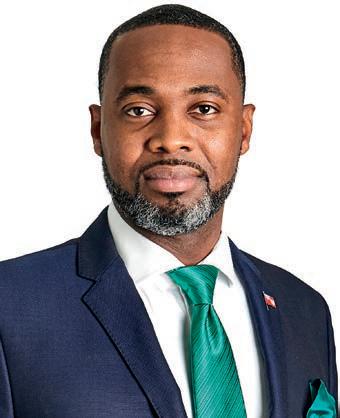
The Hon. E. David Burt, JP, MP Premier of Bermuda
We’re empowering our people to change the world. Join our HeadStart programme and create impact with clients, shape industries and provide a lasting impression in our communities. Are you ready to get started?
As well as industry-leading coaching, you’ll get:
• Rewarding client experience
• Real-time development
• Leadership opportunities
• Flexible working
• Opportunities for international work experience
• Paid study leave and exam support
We know that when people from different backgrounds and with different points of view work together, we create the most value – for our clients, our people and society. We’re looking for a new generation of talent to bring new ways of thinking to our business.
Learn more at pwc.com/bermudacareers
The Future You Build
The future isn’t something you wait for; it’s something you build. And the skills you learn today can open doors to exciting, respected, and in-demand careers tomorrow.
Careers in the skilled trades—such as plumbing, electrical engineering, carpentry, and automotive technology— are powerful pathways to success. These professions combine hands-on craftsmanship with modern innovation. Electricians work with smart systems and renewable energy; automotive technicians use advanced computer diagnostics; carpenters build with precision and technology; and plumbers design and maintain the systems that keep communities running.
These careers require creativity, problem-solving, and technical expertise. These are the same skills that drive innovation in every industry. Skilled trades are not “backup options.” They are essential careers. They shape how we live, work, and grow as a society.
There’s another important truth: Skilled trades can offer strong earning potential and career stability. They can also offer opportunities for entrepreneurship, often without the burden of heavy student debt. You can build a future that is both financially rewarding and personally meaningful.
You will see the real-world impact of your work every day.
For more than 50 years, Bermuda College has been a cornerstone of education and workforce development, preparing students for success through technical education, hospitality, culinary arts, and professional training. The College continues to empower students with the skills, confidence, and innovation needed to thrive in a changing world.
As you think about your future, remember this: don’t just consume— create. Don’t just watch—build. Whether you design systems, repair engines, wire buildings, cook with excellence, or master a trade, you have the power to shape the world around you.
The question is not, “What can I do?”
It is, “What will I build?”
Your future is in your hands. Explore trades, technology, and hands-on learning. Talk to your teachers. Visit training centres. Discover pathways where your skills matter. The world needs builders, makers, problem-solvers, and innovators.
And that future could be yours.
Senator, The Hon. Crystal Caesar, JP Minister of Education
A Career That Counts
Ali Hyland’s career path at Deloitte
1. What made you choose a career in accounting?
I’ve always been drawn to numbers, structure, and problem-solving, so accounting felt like a natural fit. As I learned more about the profession, I realised how central accountants are to how organisations actually run. That combination of logic, impact, and long-term opportunity made the decision feel right for me.
2. How did you pick your university and major?
I went to boarding school in Canada from age 15, so I always planned to stay there for university. After touring several schools, I chose Huron at Western because it offered a close-knit campus experience within a larger university environment. I started in general business and later declared a double major in Finance and Accounting, which aligned well with both my strengths and interests.
3. Why CPA?
After graduating with a degree in Finance and Accounting, pursuing the CPA felt like the natural next step. It provides a strong technical foundation while opening doors across industries
and roles. More than just a designation, it represented the clearest path toward the kind of long-term career I wanted.
4. Why Deloitte Bermuda?
Growing up in Bermuda, Deloitte was always part of the community, from sponsorships to the Deloitte Open. When I learned more about the firm, its values and commitment to Bermuda really stood out. Starting my career at a firm that invests so deeply in its people and community felt like the right choice.
5. What is a typical day like for you?
No two days look the same, which is what I enjoy most. Each engagement brings new challenges, and at this stage of my career I’m constantly learning — whether through audit testing, collaborating with my team, or tackling something completely new.
6. What is the most challenging accounting problem you’ve had to solve?
My biggest challenge wasn’t technical; rather, it was deciding how to start my career in a way that would set me up for long-term success. I chose to step away from work to complete a Master
of Accounting and fast-track the CPA. It was a big decision, but it paid off. Completing the programme allowed me to focus fully on my work and development without juggling exams.
7. What is one piece of advice you wish you had been given when you started your career?
Advocate for yourself and take the path that works best for you, even if it looks different from everyone else’s. Early on, it’s easy to compare yourself to others, but success isn’t one-sizefits-all. Understanding what helps you thrive makes all the difference.
8. How have you made an impact at Deloitte?
I’ve made an effort to get involved early, from participating in Impact Day to volunteering at the PGA event on behalf of Deloitte. Professionally, passing the Common Final Examination (CFE) — the final exam required to earn the CPA designation — and investing in my own development has allowed me to contribute more effectively to my teams. I’m still early in my career, but I’m committed to showing up, getting involved, and continuing to grow.
Where potential comes to life
Learn. Lead. Make an impact.
At Deloitte, we equip students with the skills, experiences, and support needed to thrive. Through immersive on-the-job learning, an inclusive culture, and purpose-led leadership, you’ll build more than a career — you’ll create lasting impact.
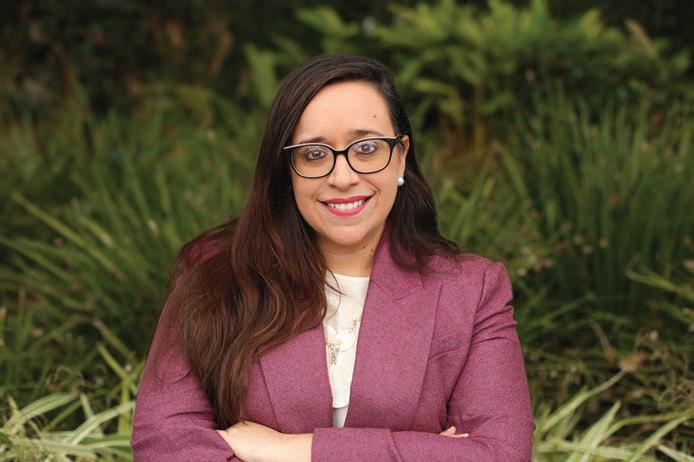
From student support and mentorship to real-world experience and professional growth. Kathryn Mason shares her KPMG story
As an Accounting and Finance student, I knew I wanted to begin my career in a firm where I could work toward my chartered qualification while building strong, practical skills. The KPMG Scholarship stood out because it offered exactly that: the chance to train at a local office with a strong focus on student support and development, while also benefiting from the global reach of an international firm. What appealed to me most was the learning environment and sense of community. I would be surrounded by peers on similar exam journeys and mentors who had faced the same challenges, balanced work and study, and gone on to qualify. Learning directly from people who had successfully navigated this path was a key reason I was drawn to KPMG.
The scholarship made a world of difference. It eased the financial pressure of being a student, allowing me to focus fully on my classes. Structured exam support and guidance from several mentors gave me a head start, helping me grow much faster than I could have on my own. At KPMG, I never felt like I was navigating my career alone. Returning as a summer intern before joining full-time was a game-changer, allowing me to develop practical skills early and feel fully prepared to hit the ground running in the Graduate Programme.
Within the Graduate Programme, there is a genuine culture of support. Everyone at the firm — not just assigned mentors — is invested in your success. Whether it’s a quick question or a complex topic, there’s a real willingness to help you grow. I’ve already learned so much and love that I’m constantly being pushed toward new opportunities rather than staying in my comfort zone. A short-term placement at a local captive was a highlight, giving me exposure to underwriting, risk management, finance, and legal teams. Seeing how these pieces fit together gave me a deeper perspective on the broader
insurance industry and its core processes. Mentorship has been the most valuable aspect of the programme. Support comes from every career level, from peers who were recently in my shoes to senior leaders with years of insight. This breadth of perspective is rare and has been instrumental in my growth, helping me develop not only technical expertise but also the communication and qualitative skills essential for a long-term career. Winning the KPMG Scholarship launched my career, but the opportunity to test-run a short-term placement within a local captive — as part of the newly introduced Captive Scholarship initiative — truly broadened my perspective and highlighted new career paths within the sector.
I’m currently working toward my ACA, supported by a structured process that includes education mentors, covered
fees and materials, and dedicated study leave. One of the most rewarding parts of this journey has been coming full circle and giving back to the next group of students. Stepping into a mentorship role at networking events and being a familiar face for new scholarship recipients has been incredibly fulfilling.
KPMG is an exceptional place to launch a career. It’s more than just a firm — it’s a community of people who genuinely want to see you succeed. Looking ahead, I see myself continuing to grow within the accounting industry and stepping into leadership, mentoring new students just as others have mentored me.
The KPMG Scholarship provides $30,000 per year for up to four years, the Frontier Scholarship offers $15,000 per year for up to three years, and the KPMG Captive Scholarship grants $20,000 per year for up to three years.
THE PATH FORWARD STARTS
Starting Out at PwC
Jon Speight, Senior Associate, Assurance at PwC Bermuda, shares his advice on starting a career in audit and accounting, and how internships, flexibility, and continuous learning have shaped his professional journey.
1. What’s your advice for someone considering a career in audit or accounting?
Stay curious and be open to continuous learning. This field is constantly evolving with new regulations, technologies, and business practices, so adaptability is key. One of the best things a student can do is start as early as possible, whether through summer internships or termtime co-ops. These opportunities provide valuable exposure and guidance that can help you choose the right career path. PwC’s Headstart programme offers internships, co-ops, an associate programme, and scholarships.
2. How does PwC’s flexible working environment benefit you? It has greatly enhanced my work-life balance, allowing me to manage my
professional responsibilities alongside personal commitments more effectively. The ability to work from home two days a week is a significant benefit — it has increased my productivity, reduced commuting time, and made me more efficient overall.
3. What is your favourite part of working at PwC?
The collaborative and supportive culture. The team environment encourages continuous learning and professional growth while fostering a strong sense of community. This job wouldn’t be possible without the character and quality of my audit colleagues. I also appreciate the firm’s commitment to flexibility, which helps me stay motivated and productive. Being part of meaningful projects that
make a real impact on our clients and the wider community makes the work truly rewarding.
4. Let’s hear more about you. Where did you go to high school, and why did you consider a career in audit and accounting?
I attended high school here on the island before pursuing an undergraduate degree in law at the University of Kent. I then completed the Legal Practice Course (LPC) and a Master of Laws (LLM) at City, University of London. After returning to the island, I initially sought opportunities within law firms but accepted an internship at PwC in 2021, which was intended to be temporary. I quickly realised how much I valued the experience and opportunities here, and I have been with PwC ever since.
5. What are you passionate about outside of work?
Outside of work, I focus on recharging. When I have more free time, I’m passionate about cooking — whether experimenting with new recipes or putting a personal twist on classics. I also really value spending quality time with my wife.
6. How have you made an impact at PwC?
I believe I’ve made a positive impact by using digital tools to enhance the efficiency of audit testing. I’ve also applied the experience I’ve gained to help develop more streamlined audit approaches, supporting the team in delivering high-quality results. PwC’s strong coaching culture has played a key role in my growth, allowing me to learn from experienced colleagues and continuously improve my skills.
7. One word of advice for your younger self?
Your maths teacher was right about mental math.
Growing at EY: From Intern to Professional
Starting your career is a big step, but at EY Bermuda, that step comes with guidance, opportunity, and a clear path forward. For some, the journey begins as an intern and evolves into something far greater: a career with purpose.
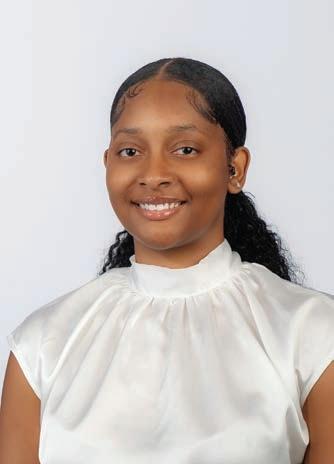
Donnauri Robinson: Intern to Staff
Two years ago, Donnauri joined EY Bermuda as an intern, eager to learn and gain real-world experience. What stood out immediately was EY’s commitment to development. Through structured onboarding, mentorship, and exposure to client work, Donnauri built confidence and skills that mattered. After completing her second internship, Donnauri transitioned into a full-time role on EY’s Actuarial team — a move that reflects EY’s focus on converting talent into long-term careers.
“The support was incredible,” Donnauri shares. “From technical training to guidance from my team, EY made sure I was ready for the next step.”
Today, Donnauri is thriving in a role that challenges and inspires, with a clear path for growth ahead.
Caroline Berlo: Intern to Associate Partner
Caroline’s story shows what’s possible when ambition meets opportunity.
Starting as an intern in Bermuda, Caroline embraced every chance to learn and
grow. In 2019, she took her career global, spending several months in EY’s New York office — an experience that broadened her perspective and deepened her expertise. Since returning, Caroline has earned several promotions and now serves as an Associate Partner on EY’s Audit team. Her journey demonstrates EY’s commitment to building careers without borders.
“EY provided the opportunities and guidance that shaped my career from the start,” Caroline says. “The mentorship, global exposure, and continuous learning gave me the confidence to take on challenges and grow into a leader who empowers others.”
What Makes EY Different?
These stories aren’t exceptions; they’re examples of what happens when talent meets support. EY invests in people through:
• Mentorship that matters: Experienced professionals guide and champion your growth.
• Growth without boundaries: From
technical certifications to leadership programmes, EY ensures you’re continuously building skills for the future.
• Careers without borders: Opportunities to travel for work, collaborate across jurisdictions, and take advantage of global mobility programmes that broaden your perspective and accelerate your impact. At EY, you’re not just filling a role — you’re shaping your career. The support systems are real, and the possibilities are endless.
Your Next Step
EY offers more than a job; it offers a journey. From internships and scholarships that help you start strong, to mentorship, learning programmes, and global mobility options that allow you to grow and explore, EY is committed to supporting your ambitions every step of the way.
Discover how far you can go with the right support behind you. Explore opportunities at ey.com/careers. Your future starts here.
Donnauri Robinson
Caroline Berlo
ARE YOU THE FUTURE OF BERMUDA?
The Allshores Postgraduate Scholarship provides $20,000 for one year of support to a student who is studying in areas that strengthen our island — anything from business and insurance to health and technology, and more.
Why? Because Allshores believes that to be truly resilient, Bermuda should be prepared not just protected. And education is among the best forms of preparation we have. Applications close on April 30, 2026. Find out more and apply today at bermudascholarships.com
Because Bermuda’s future needs you.
Why Accountancy Is a Smart Career Choice
When people think of accountancy, they often picture spreadsheets, calculators, and long hours at a desk. The reality is far broader — and far more exciting. In Bermuda, accountancy is one of the most versatile, respected, and future-proof career paths available to students today. It is a profession that sits at the heart of business, finance, insurance, government, and global commerce. And once you’re qualified, the opportunities truly are limitless.
A Career That Opens Doors
Accountants play a central role in how organisations operate. They help businesses understand their financial position, manage risk, comply with regulations, and make informed decisions. In Bermuda’s international financial services sector — which includes insurance, reinsurance, banking, and investment management — these skills are in constant demand.
What makes accountancy especially appealing is that it is not a narrow career path. A qualification such as CPA provides a strong technical foundation, but where you take it is entirely up to you. Qualified accountants work in audit, tax, advisory, risk management, compliance, finance, consulting, and leadership roles across both the private and public sectors.
Strong Demand, Locally and Globally
Bermuda’s economy relies heavily on financial services, and accountancy skills are essential across the industry. From global firms like PwC, KPMG, Deloitte and EY, to local businesses, international reinsurance firms, captives, and government departments, trained accountants are needed at every level.
Importantly, accountancy qualifications are internationally recognised. That means skills developed in Bermuda are transferable worldwide. Whether your ambitions take you overseas or you plan to build a longterm career at home, accountancy
offers flexibility and mobility few other professions can match.
Structured Pathways and Support
One of the biggest advantages of choosing accountancy is the clear, structured pathway into the profession. Many students begin through internships, scholarships, and graduate programmes. These programmes allow students to earn while they learn, gain real-world experience, and work toward professional qualifications with strong employer support.
Firms invest heavily in their people, offering mentorship, exam support, paid study leave, and exposure to a wide range of clients and industries. For students who value guidance and long-term development, accountancy offers a clear and supported route from education into a professional career.
Skills for the Future
Accountancy is evolving rapidly, driven by technology, data analytics, and automation. Far from making accountants obsolete, these changes are reshaping the role — shifting focus toward higher-level analysis, problemsolving, and strategic thinking.
Today’s accountants need strong communication skills, ethical judgment, adaptability, and the ability to interpret data and tell a story behind the numbers.
These are transferable skills that remain valuable no matter how the workplace changes.
Financial Stability and Growth
Accountancy also offers strong earning potential and career stability. As you progress through qualification and gain experience, salaries typically increase, and opportunities for advancement expand. Many qualified accountants move into senior management, executive leadership, entrepreneurship, or board-level roles.
Others specialise, becoming experts in areas such as insurance, tax planning, forensic accounting, or advisory services.
Once Qualified, the Sky Is the Limit
Perhaps the greatest strength of accountancy is what happens after qualification. Once you earn your professional designation, the doors open wide. You are no longer limited to one role, one industry, or one location.
Accountancy is not just a job — it is a platform. A platform for leadership, innovation, and long-term success. For students who enjoy problem-solving, want strong career prospects, and value flexibility and global opportunity, accountancy remains one of the smartest career choices you can make. And in Bermuda, that choice can take you anywhere.
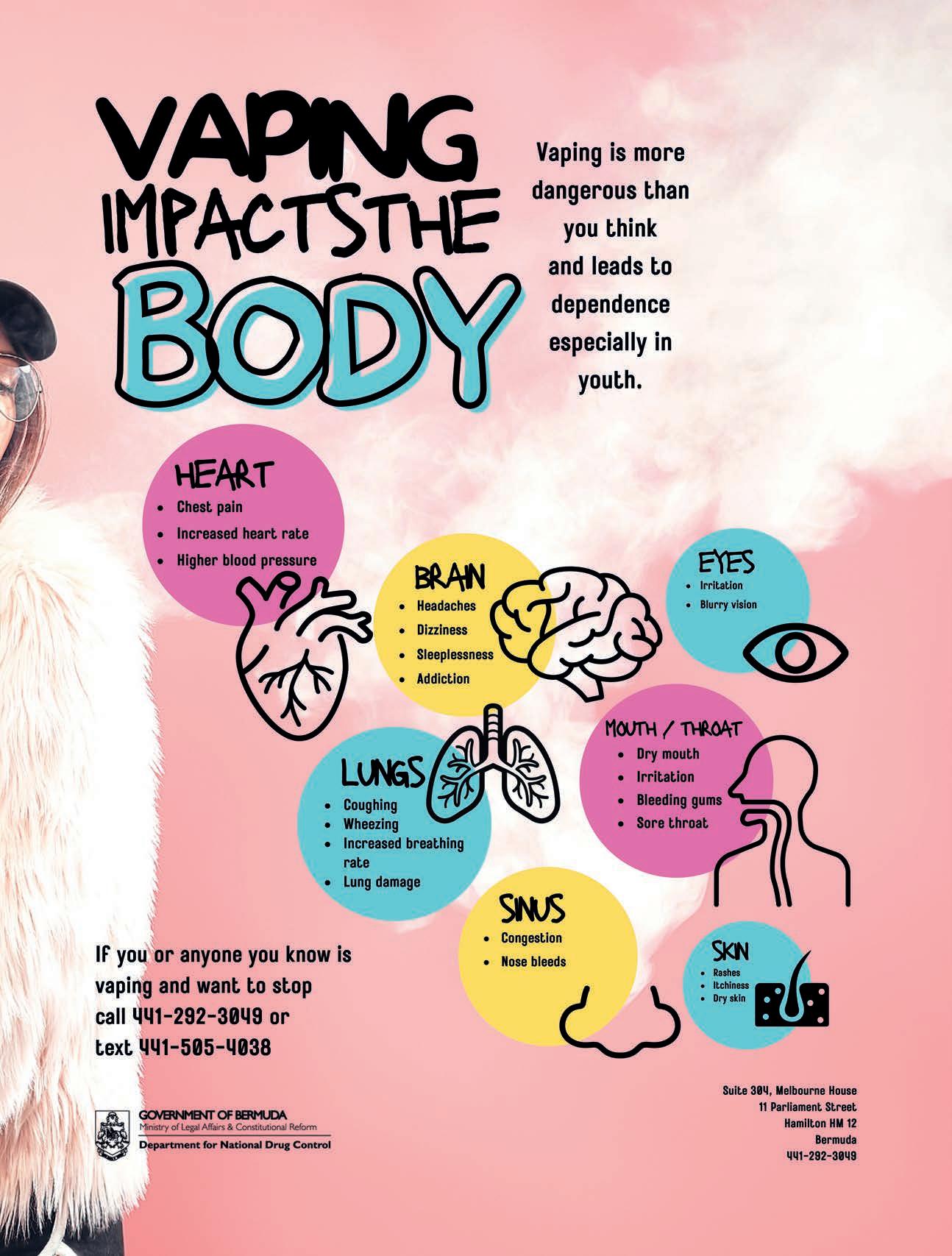
Vaping: more dangerous than you might think
Research shows vaping is causing serious medical conditions, even among young people
In recent years, the number of young people in Bermuda, aged 18 or under, who have either tried or taken up vaping has increased, and this poses a great risk to their health.
But why should we be worried about this when vaping isn’t as bad as smoking?
For a start, many don’t always know the exact ingredients contained in the liquids they’re vaping. Nor do they appreciate the potential consequences of these substances on their brain, lungs, heart, skin, eyes, mouth, throat, and sinuses.
The Bermuda Government’s Department for National Drug Control did a National School Survey in 2023 which found that 16% of Bermuda’s students aged between 12 and 18 admitted to vaping nicotine, marijuana, and ‘flavouring’.
The most common vape substance among young people is Nicotine, followed by ‘Just Flavouring’, and Marijuana/ hash oil. Just Flavouring is the flavoured liquid known as ‘e-liquid’ or ‘vape juice’. It’s marketed well, looks cool, tastes great and comes in a wide selection of colourful containers. This liquid is heated in e-cigarettes and vape rigs, creating an aerosol that users inhale.
However, according to Johns Hopkins cardiologist Michael Blaha, these great tasting, cool liquids can also be deadly.
This is because flavour is just one of the ingredients in e-liquid. Vape juices usually include nicotine and dye as well as several other additives and chemicals. Even the heating coil, which allows the liquid to become an inhalable aerosol, releases new chemical substances and trace metals into the user’s lungs.
EVALI, which stands for ‘e-cigarette, or vaping, product use associated lung injury’ is a serious medical condition whereby your lungs become damaged from substances contained in e-cigarettes and vaping products. Symptoms include shortness of breath, cough, and chest pain.
What’s more worrying is that, in the US,
patients were under 18 years old.
If you’re young you’re vulnerable
The substances in e-cigarettes disproportionately impact younger bodies.
Nicotine has been proven to harm the adolescent brain, because it is still developing up until the age of 25.
According to the US Centre for Disease Control (CDC), using nicotine while your brain is still developing can harm the parts that control attention, learning, mood, and impulse control.
At a time when diagnoses of conditions such as ADHD (attention-deficit/ hyperactivity disorder), ADD (attention deficit disorder) and anxiety are at an all-time high, this trend is particularly worrying and nicotine addiction using e-cigarettes can make these conditions worse.
In addition to damaging the brain and lungs, vaping can irritate the eyes, damage the heart, cause congestion and nose bleeds, give users a dry mouth, sore throat and bleeding gums, and cause skin irritation and rashes.
Addiction Risk
One of the reasons people say they enjoy vaping is because it releases their stress and anxiety. They think it clears their head and gives them a burst of energy, but this is just the short-term effect of the nicotine, and the more you inhale, the more you need.
Nicotine is addictive and using it when you’re young increases the risk of addiction to cigarettes or other drugs later in life, with potentially disastrous consequences for your overall health and wellbeing.
How to Stop
For a start, don’t start. It is very hard to say ‘no’ to something, particularly when your peers are doing it and putting you under pressure to do so, but if you value your health, sporting abilities and bank balance – vaping costs money –choose friends who respect your decision.
If you have started and want to stop, support is available. Please talk to your school counsellor, or a medical professional.
where this has been studied, some EVALI
CONSTRUCTION
Reimagining Careers in the Trades
The Construction Association of Bermuda makes the case for investing in trades careers
The future of trades in Bermuda has become a pressing topic. Recent developments within the public school system, particularly in trades training and certification, represent a much-needed step forward in producing qualified local talent. However, for a country that prides itself on leadership in many fields, trades have long been neglected, with little meaningful progress in training and development.
It’s easy to point fingers at successive governments over the last 40 years— especially since the closure of the Bermuda Technical Institute—but the reality is that industry also shares the blame. Professional sectors like accounting, law, teaching,
and engineering all have established feeder programs, career fairs, workshops, and
certification are only part of the equation. Another challenge is the perception of trades as a viable career option. Despite the promise of great pay, job security, and opportunities worldwide, the trades are often overlooked in favour of careers in technology or bespoke industries. Advancements in technology have made even basic tasks, like writing a paragraph, simpler through tools like voice-to-text and AI. Young people are more likely to aspire to careers involving keyboards than careers requiring hammers and saws.
PLAN A CAREER, BUILD A FUTURE…
The Construction Association of Bermuda (CAOB) is a registered charity that is dedicated to making the construction industry safer, more efficient, more competitive and better able to contribute to the development of Bermuda.
The CAOB Scholarship provides awards to students enrolled in a construction related field either at university or applied technology program. Fields include engineering, surveying, construction management, masonry, carpentry, electrical, plumbing, HVAC and welding.
VISIT WWW.BERMUDASCHOLARSHIPS.COM TO APPLY. APPLICATION DEADLINE 12TH JUNE 2026
WWW.CAOB.BM INFO@CAOB.BM
mentoring initiatives to create pathways into their fields. Yet, within the trades, such programs are glaringly absent. While some contractors have developed in-house training programs—often for their own benefit—there is little coordinated effort across the industry to nurture and recruit talent.
There is some good news. The Department of Workforce Development launched a programme in 2025 that focuses on masonry, carpentry, and plumbing. With 12 participants, this initiative is a solid start. Applicants are required to meet basic educational requirements, such as having a GED or high school diploma, and will complete an NCCER Core course covering safety, mathematics, and tool knowledge. If successful, this program could become a recurring initiative and potentially serve as a feeder system for the public school curriculum. However, training and
This is not a problem unique to Bermuda. Globally, there is a shortage of skilled tradespeople. In the United States alone, it is estimated that over three million trade jobs remain unfilled. The reality of some physically demanding conditions— freezing steelwork sites or the baking sun for masons—can deter many 20-year-olds when considering their career paths.
Still, the potential is immense. With the right combination of tools, marketing, education, and enthusiasm, young Bermudians can be inspired to pursue fulfilling careers in the trades. These professions offer the chance to always be in demand, earn excellent compensation, and contribute meaningfully to the economy. It’s time for Bermuda’s schools, government, and industry leaders to come together, coordinate their efforts, and ensure a brighter future for the trades.
For more information on careers in construction visit: www.caob.bm
Powering Your Future
As Bermuda’s energy sector evolves, BELCO is creating clear pathways for young Bermudians to build skills, careers, and longterm opportunity.
Your future in energy starts here. As Bermuda transitions to a cleaner, smarter power grid, there’s never been a better time to build your career at Bermuda Electric Light Company Limited (BELCO).
As BELCO progresses toward a more sustainable future, there are many current and future opportunities for Bermudians through scholarships, apprenticeships, on-the-job training, and employment.
The BELCO Apprenticeship Programme provides on-the-job training to young Bermudians pursuing careers in the energy sector, with 32 apprentices joining between 2021 and 2026. The programme blends technical training and academic study with hands-on work
experience, allowing participants to earn while they learn in Bermuda’s evolving energy industry. Upon completion, successful candidates move into graded positions as Electrical Fitters, Mechanical Fitters, Line Workers, and Electrical Jointers. BELCO’s Apprenticeship Programme has evolved over the last 30 years, and many members of the Company’s skilled workforce are former apprentices who graduated from the programme and are now employed fulltime.
Each summer, BELCO offers employment opportunities to college and university students looking to gain real-world experience in their field of study. Students are matched to departments that align with
their academic focus, including bulk generation, transmission and distribution, information technology, and human resources.
To support BELCO’s vision, the Company continues its long-standing commitment to investing in education and developing local talent. Each year, BELCO awards scholarships totaling more than $145,000 for undergraduate and postgraduate students in engineering, STEM, and business fields, as well as internal scholarships valued at up to $20,000. BELCO has a particular need for electrical engineers and offers two dedicated $25,000 electrical engineering scholarships each year for students committed to returning to Bermuda and joining the energy sector. The Company also provides $1,000 Bermuda College bursaries to graduating seniors of Cedarbridge Academy and The Berkeley Institute, along with STEM education awards of varying amounts.
Whether you’re interested in engineering, technology, business, or hands-on skilled trades, BELCO offers real opportunities to earn while you learn, build expertise that matters, and help power Bermuda’s future. To learn more about opportunities at BELCO, visit www.belco.bm.
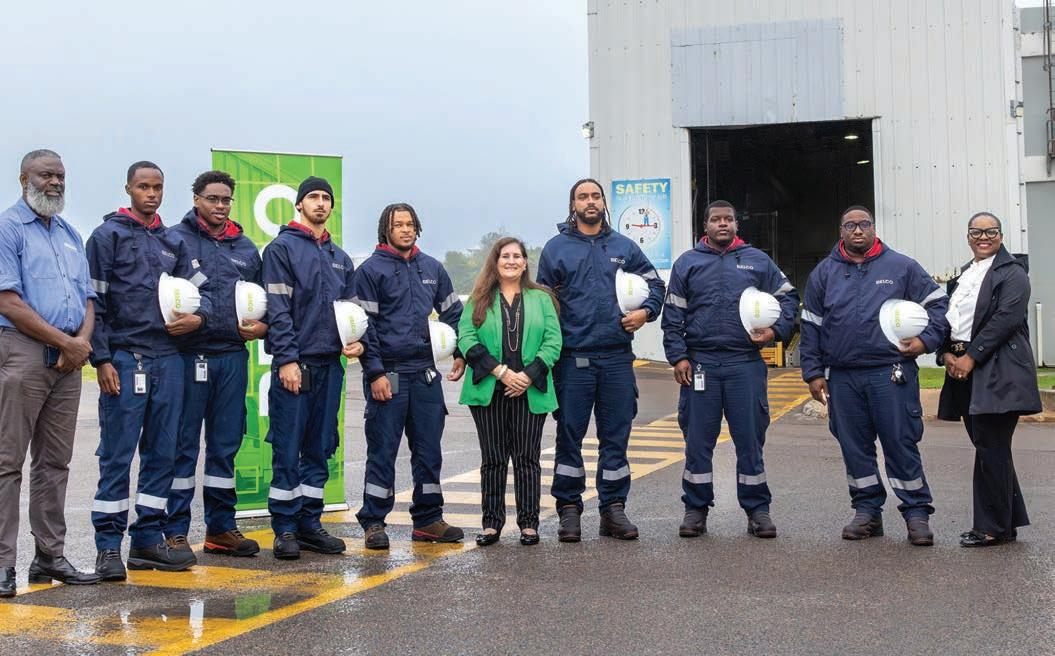
BELCO Apprentices 2026 Cohort with Wayne Caines, BELCO President (left), Senator Lauren Bell, Junior Minister for Health, Economy & Labour, and Housing & Municipalities (middle), Malika Cartwright, Director, Department of Workforce Development (right)
EARN MONEY & WIN PRIZES
Earn your own money by selling your products and services. Compete with your peers! The three participants with the most profit will earn additional 1st, 2nd, and 3rd place financial rewards.
RECEIVE SUPPORT & TRAINING
All students will receive, quality educational training, resources and support to launch, grow and sustain their own enterprises during the program.
RECEIVE START-UP FUNDS
All students will receive a weekly financial stipend and startup funds to get their businesses started.
BE YOUR OWN BOSS
Why spend the Summer working on someone else’s dream when you can be building your own! Learn how to be your own boss and build your own business.
Turning Summer Break Into a Business Opportunity
For many students, summer break is a time to relax or take on a shortterm job. While those experiences have value, summer can also be an opportunity to build skills, earn income, and explore future career paths in a more meaningful way. Entrepreneurship offers young people a practical and supported way to do exactly that.
Through the Bermuda Economic Development Corporation’s (BEDC) Summer Student Entrepreneur Program (SSEP), students are encouraged to turn ideas into action. Whether it is a small service business, a creative product, or a solution to a local problem, the program helps students learn what it takes to start and run a business in a real-world setting.
For students, this is a chance to do more than earn a pay cheque. Participants gain hands-on experience in budgeting, marketing, customer service, and time management. They learn how to problem-solve, adapt, and build confidence in their abilities. These are skills that apply not only to entrepreneurship, but to any future career. The program also allows students to test their interests early, helping them make more informed decisions about their education and career goals.
For parents, the SSEP offers structure, guidance, and support. Students are not left to figure things out on their own. BEDC provides training, mentorship, and ongoing advice to help participants develop responsible business practices and realistic expectations. Entrepreneurship through BEDC is not about taking unnecessary risks, but about learning how to plan, manage money, and make informed decisions in a supportive environment.
For educators, entrepreneurship is a valuable extension of classroom learning. It reinforces concepts such as financial literacy, communication, and critical thinking, while giving students practical context. The program supports broader educational goals by helping students apply what they learn in school to real-life situations, strengthening their
readiness for work, further study, or selfemployment.
As the world of work continues to change, young people need more than academic qualifications alone. They need adaptability, creativity, and the confidence to create opportunities for themselves. Entrepreneurship is no longer a niche option; it is a viable career path and a powerful tool for economic growth and personal development.
BEDC remains committed to supporting Bermuda’s young people at every stage of their entrepreneurial
journey. The SSEP is one of the many ways we help students explore business ownership while building skills that last a lifetime.
If you are a student looking to make your summer count, a parent seeking meaningful opportunities for your child, or an educator supporting career readiness, now is the time to engage. Learn more about the Summer Student Entrepreneur Program and how BEDC can support the next generation of business owners. Visit www.bedc.bm today. Bermuda Business Starts Here.
BERMUDA CODERS
Hon. Jason Hayward, JP, MP, Minister of Economy and Labour
Unlocking Futures
How the EDD Grant Programme Empowers Students and Educators
Every year, the Economic Development Department (EDD) offers a grant programme designed to support learning, training, and skill-building in areas such as fintech and digital innovation. This programme leverages a range of partnerships to provide meaningful opportunities for Bermuda’s growing tech community.
Examples include the EDD’s support of the Technology Leadership Forum (TLF) and The Berkeley Institute’s Fintech Signature Programme. Both initiatives underwrite the cost of internships that offer real exposure to emerging technologies and provide students with opportunities to be embedded in the tech ecosystem. This work supports a broader
national goal: helping Bermuda grow a future-ready, digitally literate workforce. Said the Hon. Jason Hayward, JP, MP, Minister of Economy and Labour: “I am proud of the EDD’s commitment to nurturing Bermuda’s tech talent and expanding access to emerging technologies. This work creates real pathways for success in the digital economy. Through its annual grant programme and strong community partnerships, the EDD is helping ensure that Bermudians are not only participants in the global tech landscape, but leaders within it.”
The various grants offered by the EDD are focused on ensuring Bermudians are not left behind as both the global and local economies continue to evolve. Some grants help cover the cost
of courses, certifications, and hands-on learning experiences that introduce students to new technologies in an accessible way. Others are open to professionals looking to upskill or bring fresh knowledge into their classrooms or workplaces.
For students, this could mean a chance to try coding, explore digital finance, or attend a technology conference. For parents, it offers a way to support a child’s development without added financial pressure. And for teachers and mentors, it provides an opportunity to stay connected to emerging trends and resources that enhance learning.
More information about the EDD’s grant programme is available at www.gov.bm.
Connectech Coding: Working Smarter with AI
As technology accelerates, entrylevel roles in marketing, law, finance, and software are shifting. Positions that once focused on basic production and on-the-job learning now require immediate contribution. Employers increasingly value proficiency with AI tools, problem-solving ability, and
strong communication skills over time spent on routine tasks. Expectations have shifted from slow learning to quick, effective production.
AI tools such as ChatGPT are predictive language models that can draft reports, summarise research, and generate code quickly. These models excel at
recognising patterns, not understanding meaning. Problems arise when AI is used without oversight or subject knowledge. These systems can amplify bias, appear authoritative without expertise, and encourage automation without verification. In such cases, confidence overtakes competence, and errors can scale rapidly.
Critical thinking is the key differentiator when AI systems fail or produce inaccurate results. Real skills are still necessary. The advantage is no longer access to tools, but discernment — knowing when outputs are unreliable, when context is missing, and when human intervention is required. Speed without understanding is risky, not impressive.
So how should we embrace AI technology? By not outsourcing human thinking to machines. Human insight remains essential; nuance, context, and ethics cannot be automated. As professional standards rise, those who fail to adapt fall behind — not because machines replace them, but because others learn to work smarter alongside them.
TECH COURSES
AI Won’t Take Your Job — But Someone Using AI Might
For many students, artificial intelligence feels less like an opportunity and more like a threat. Headlines warn that AI will replace jobs. Social media is full of predictions about entire careers disappearing. And in classrooms, students are often told what not to do with AI, rather than how to use
it responsibly.
The truth is far more nuanced — and far more hopeful.
AI is not replacing work so much as reshaping how work gets done. Across Bermuda’s key industries — from hospitality and accounting to insurance, energy, and beyond — AI is increasingly
CAREERS GROWING BECAUSE OF AI
AI isn’t shrinking opportunity — it’s shifting it. Careers expanding because of AI include:
• Accounting & financial analysis
• Insurance, risk & compliance
• Digital marketing
• Cybersecurity
• Software & systems engineering
• Energy & sustainability
• Data analytics
• Business advisory roles
The strongest candidates combine: Industry knowledge + human judgment + smart use of technology
being used as a tool: to automate routine tasks, analyse data faster, improve planning, and free people up to focus on higher-value, more human work.
For students planning their futures, the real risk is not that AI will take your job.
It’s that someone who knows how to use AI well will outpace someone who doesn’t.
This article explores how to think about AI clearly, how to use it responsibly, what employers actually expect, and why many careers are growing — not shrinking — because of AI.
AI Is a Tool — Not a Substitute for Thinking
AI tools such as ChatGPT, Copilot, and other generative systems are often described as “intelligent,” but that label can be misleading. These systems are predictive language and pattern-recognition models. They
don’t understand meaning, intent, or consequences in the way humans do.
They are excellent at:
• summarising information
• drafting first versions of text
• spotting patterns in large data sets
• automating repetitive processes
They are not good at:
• exercising judgment
• understanding context
• making ethical decisions
• verifying truth on their own Problems arise when AI is used without subject knowledge or oversight. Errors can sound confident. Biases can be amplified. Outputs can look polished while being fundamentally wrong.
That’s why employers are not looking for people who simply “use AI.”
They’re looking for people who can question, interpret, and challenge what AI produces.
Using AI Responsibly as a Student AI can be incredibly helpful during school, university, and job preparation — if used correctly.
What AI can help with:
• brainstorming ideas
• explaining difficult concepts in simpler language
• helping structure essays or reports
• summarising long readings
• preparing for interviews
• practising presentations
• refining CVs and cover letters
What crosses the line:
• submitting AI-generated work as your own
• using AI to replace learning core skills
• relying on AI answers you don’t understand
• skipping fact-checking or verification
Professional bodies, universities, and employers increasingly agree on one principle:
AI should support your thinking, not replace it.
As accounting leaders note, mastering fundamentals first is essential. Writing clearly, analysing information, and understanding how things work without AI assistance is what allows you to later use AI intelligently — and ethically.
What Employers Actually Expect
Contrary to popular belief, employers are not expecting graduates to arrive as AI experts. What they do expect is:
• curiosity
• adaptability
• ethical awareness
• critical thinking
• strong communication
• willingness to learn
Across industries, the message is consistent: human skills matter more than ever.
Hospitality: Technology Supports Service — It Doesn’t Replace It
In hospitality, AI is already being used behind the scenes to improve efficiency. Reservation systems analyse booking patterns. Scheduling tools match staffing levels to expected demand. Marketing teams use AI to generate ideas and visual concepts.
Philip Barnett, President & Managing Director of Island Restaurant Group, sees AI as a way to improve operations — not replace people.
“As we all get more comfortable with AI and realise that when used correctly it can save time and money in specific parts of the business, it allows us to focus more on what really matters: human service.”
AI & Integrity: The Non-Negotiables
• AI does not remove personal responsibility
• You are still accountable for accuracy
• Ethics matter more, not less, in an AI-enabled world
• Trust is built by questioning outputs, not accepting them Remember:
AI can assist your work — but your judgment defines your value.
Philip Barnett
The most important skills for hospitality, he says, can’t be automated.
“Human touch and empathy. Being talked to and assisted by a real person who can pick up on subtle mood cues will be a huge asset. These are traits you can’t learn out of a book.”
Stephen Todd, Chief Executive of the Bermuda Hotel Association, agrees.
“AI is viewed as complementing — not replacing — the level of service that only a person can provide. Technology should enhance the guest experience, while people deliver the personal, professional service.”
For students considering hospitality, the message is clear: embrace technology, but never lose the human connection.
Accounting: From Number-Crunching to Strategic Insight
Few professions illustrate AI’s impact more clearly than accounting.
According to Jozelle Opoku, President & CEO of CPA Bermuda, AI is already transforming how accountants work.
“AI is helping accountants work more efficiently by supporting data analytics, reporting, and research — reducing time spent on administrative tasks and increasing capacity for analysis and insight.”
Routine tasks such as reconciliations and data processing are becoming increasingly automated. But rather than reducing the need for accountants, this shift is elevating their role.
“As AI educator Garrett Wasny notes, AI can level up performance — taking an accountant from okay to good, and from good to exceptional.”
What skills will matter most over the next decade?
“Professional judgment, ethical decision-making, communication, and the ability to advise businesses. Accountants must question, interpret,
and explain information clearly, rather than relying blindly on AI outputs.”
In other words: AI handles the mechanics; people handle the meaning.
Insurance & Reinsurance: Data, Risk, and Human Judgment
Bermuda’s insurance and reinsurance sector is built on analysing risk — an area where AI excels at processing data but still depends heavily on human expertise.
John Huff, President & CEO of the Association of Bermuda Insurers & Reinsurers (ABIR), explains:
“AI is bringing efficiency and effectiveness to reinsurance processes and operations — but nothing substitutes relationships in this industry. AI will only make reinsurance jobs more meaningful, not less.”
As advanced analytics support underwriting, modelling, and claims analysis, the need for curiosity, risk awareness, and foundational knowledge becomes even more important.
“Future-proofing careers means being a lifelong learner. Access to learning has never been more available — through social media, earnings reports, regulatory filings, and trade associations.”
AI doesn’t remove the need to understand risk. It raises the bar for understanding it well.
Energy & Skilled Trades: Technology Meets Infrastructure
AI’s impact isn’t limited to offices and screens. In the energy sector, technology is shaping how infrastructure is managed, maintained, and modernised.
At BELCO, Bermuda’s energy provider, the future workforce will blend technical expertise with digital capability.
LaKeitha Cunningham, Director of Human Resources & Culture at BELCO, points to a growing need for:
“Lineworkers, engineers, renewable energy technicians, and digital innovators — professionals committed to powering a stronger, cleaner, more resilient island.”
As energy systems become smarter and more data-driven, skilled trades remain essential — but increasingly supported by digital tools, predictive maintenance, and advanced monitoring.
Her advice to young people is simple and future-focused:
“Be bold, stay curious, and embrace
Jozelle Opoku
every opportunity to learn. A career in this industry gives you the chance to make a real impact.”
AI doesn’t replace hands-on work. It enhances how that work is planned, delivered, and sustained.
Careers
Growing Because of AI
While some roles are changing, many careers are expanding because of AI, including:
• data and analytics roles
• cybersecurity
• digital marketing
• risk and compliance
• software and systems engineering
• sustainability and energy management
• AI ethics and governance
• business advisory and consulting
In many cases, AI creates demand for hybrid skills — people who understand both the technology and the industry it supports.
The Real Advantage: Thinking Better, Not Faster
The most important shift students need to understand is this: The advantage is no longer access to tools. The advantage is discernment.
Knowing:
• when an AI output is wrong
• when context is missing
• when ethics matter
• when a human decision is required
Speed without understanding isn’t impressive — it’s risky.
Those who succeed in the AI era will be the ones who:
• learn continuously
• build strong fundamentals
• stay curious
• communicate clearly
• work with technology, not behind it
A Final Word to Students
AI is here. It’s not going away. But it doesn’t have to be something you fear. Used responsibly, AI can help you:
• learn faster
• work smarter
• explore careers more confidently
• focus on what makes you uniquely human
The future of work isn’t about humans versus machines. It’s about humans who know how to use machines wisely. And that future is very much yours to shape.
AI: Do’s & Don’ts for Students
DO
• Use AI as a study assistant, not a shortcut (brainstorm ideas, explain concepts, structure work)
• Ask AI to clarify, then rewrite in your own words
• Fact-check everything — especially statistics, dates, and quotes
• Use AI to prepare, not perform (interview practice, CV drafts, presentation outlines)
• Learn the fundamentals first — AI works best when you understand the subject
DON’T
• Submit AI-generated work as your own
• Use AI to replace learning core skills (writing, maths, analysis)
• Assume confident answers are correct
• Skip verification because the output “sounds right”
• Let AI “do the thinking” for you
Rule of thumb:
• If you can’t explain it without AI, you’re not ready to use AI on it.
Stephen Todd
LaKeitha Cunningham
What Global AI Leaders Say About Your Future
Students often hear dramatic claims about artificial intelligence — that it will replace jobs, reshape society overnight, or make entire careers obsolete. But when you look closely at what the people building and leading AI actually say, a more balanced message emerges. Across industries and continents, AI leaders consistently emphasise adaptation, responsibility, and human skills, especially for the next generation.
Sam Altman — Learn How to Work With AI
Sam Altman, CEO of OpenAI, has repeatedly said that AI will change how work gets done — but not eliminate the need for people. His advice to students focuses on learning how to use AI as a tool, much like earlier generations learned to use computers, spreadsheets, or the internet.
Altman has highlighted that those who understand how to ask good questions, apply judgment, and combine AI with domain knowledge will be the most valuable. Rather than memorising facts, students should focus on problemsolving, creativity, and learning how systems work. In short: AI amplifies capability — but only if you know what you’re doing.
Elon Musk — Be Curious, Not Passive
Elon Musk often speaks about AI in dramatic terms, but his core message to young people is clear: don’t be passive users of technology.
Musk has said that understanding AI — how it works, what it can and cannot do — is essential for future leaders. He encourages young people to develop strong foundations in engineering, physics, mathematics, and critical thinking, while also maintaining ethical awareness. Technology shapes society, but humans decide how it is used.
For students, the takeaway is not fear, but active engagement. Learn the tools. Understand the risks. Be part of shaping outcomes rather than reacting to them.
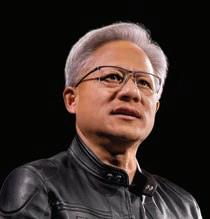
Jensen Huang — AI Is a Productivity Multiplier
As CEO of NVIDIA, the company that builds the chips powering much of today’s AI, Jensen Huang has a front-row view of how AI is being adopted across industries. Huang frequently compares AI to earlier breakthroughs like electricity or the internet. His message is optimistic: AI doesn’t
replace human talent — it multiplies it. He has noted that AI allows individuals to do more, faster, and at higher quality, especially in fields like science, medicine, finance, engineering, and creative industries.
For students, Huang’s advice centres on adaptability. Careers will evolve, but those who can combine technical literacy with human judgment will always be in demand.
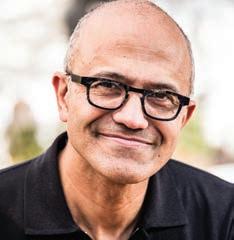
Satya Nadella — Human Skills Matter More Than Ever
Microsoft CEO Satya Nadella has consistently emphasised that AI should be used to augment human capability, not replace it.
Nadella speaks often about the growing importance of skills AI cannot replicate easily explaining ideas, working in teams, understanding context, and making ethical decisions. He has argued that empathy, communication, and leadership will become more valuable, not less, as automation increases.
For students, this reinforces a key message: learning how to work with people is just as important as learning how to work with machines.
Sundar Pichai — Lifelong Learning Is Essential
Google CEO Sundar Pichai describes AI as one of the most profound technologies humanity has ever developed. But he also stresses that adaptation is possible — and necessary.
Pichai often highlights the importance of continuous learning. Careers will no longer follow a single straight path. Instead, students should expect to update their skills throughout their lives, using AI itself as a learning partner.
His message to young people is reassuring: the future isn’t about knowing everything today — it’s about staying curious and learning continuously.
What This Means for Students
Despite different industries and personalities, these leaders agree on a few core points:
• AI is a tool, not a replacement for human intelligence
• Understanding how to use AI responsibly is a major advantage
• Human skills — judgment, ethics, creativity, communication — are essential
• Lifelong learning matters more than ever
The future won’t be shaped by people who avoid AI, or by people who rely on it blindly — but by those who work with it thoughtfully and confidently.
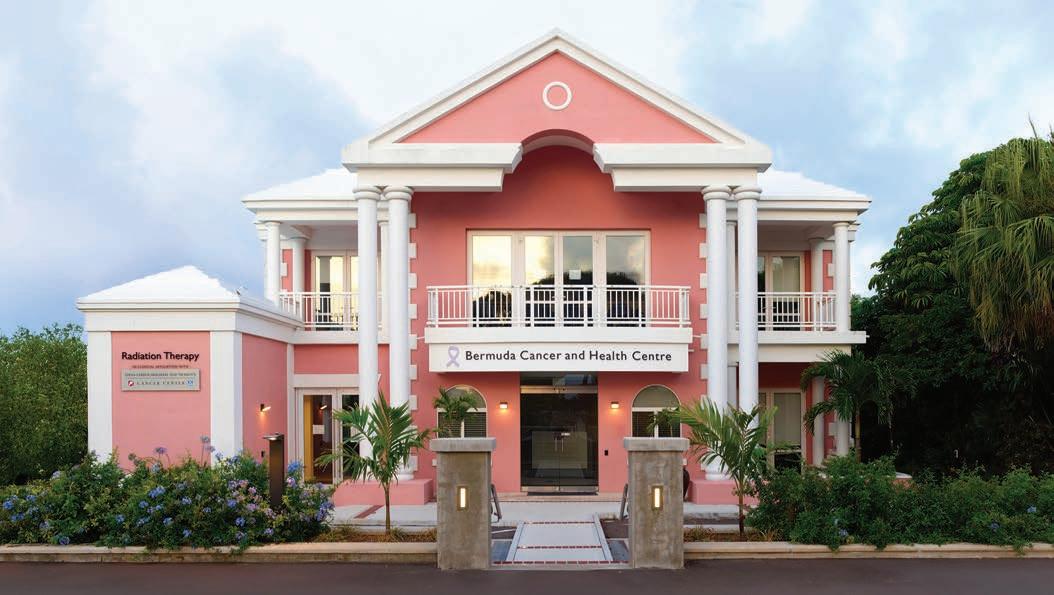
At Bermuda Cancer and Health Centre, we support people and families through every stage of the cancer journey, with care, compassion, and expertise. Our work goes beyond medicine. Cancer care depends on technologists, scientists, navigators, educators, communicators, and operations professionals working together to make a real difference.
If you’re studying science, healthcare, technology, communications, or business, there may be a future for you in cancer care, and in Bermuda.
Careers in Cancer Care
Behind every cancer diagnosis is a team of people working together to support patients and families — and many of those careers begin with students like you.
Cancer care is about more than medicine. It brings together science, technology, communication, education, and compassion to make a real difference in people’s lives. At Bermuda Cancer and Health Centre, multidisciplinary teams work together to deliver high-quality, patient-centred care for the Bermuda community.
Cancer develops when cells change and grow uncontrollably. Early detection and timely treatment save lives, but it is the people behind the care who guide patients through diagnosis, treatment, and recovery. Every role plays a part in ensuring patients feel supported, informed, and cared for.
Bermuda Cancer and Health Centre is an independent, registered charity providing diagnostic imaging, radiation therapy, patient services, and cancer education. A core part of its mission is equitable access to care, ensuring patients can receive services regardless of health insurance status.
Careers That Work Together
Cancer care depends on many professionals working as one team.
In diagnostic imaging, radiologists, mammography technologists, sonographers, nurses, and medical transcriptionists use advanced technology to support early detection and diagnosis. The Centre’s mammography services are accredited by the Canadian Association of Radiologists (CAR), reflecting nationally recognised quality and safety standards.
Patient navigators help individuals understand their care, coordinate appointments, and access support. Their work ensures care is personal, timely, and centred on the patient.
Radiation therapy teams include radiation oncologists, medical physicists, radiation therapists, and oncology nurses. Bermuda Cancer and Health Centre’s radiation oncology programme is accredited by the American College of Radiation Oncology (ACRO), demonstrating a commitment to excellence in treatment and patient care.
Behind the scenes, health educators, marketing and fundraising teams, IT professionals, business analysts, operations and facilities staff, and teams in
accounting, administration, compliance, and patient services ensure the Centre operates effectively and sustainably. These roles make care possible.
Pathways Into Cancer Care
Careers in cancer care often begin with studies in science, healthcare, technology, communications, or business.
Some roles require overseas education and professional certification. Many professionals return home to apply their skills in Bermuda, helping to strengthen the island’s healthcare system for the future.
Is This a Path for You?
Cancer care attracts people who value impact, teamwork, and purpose. Whether you work directly with patients or support care behind the scenes, every role contributes to better outcomes and better experiences for people facing cancer.
Cancer care needs people with different strengths — from science and technology to communication and leadership.
If you are considering a future where your skills can make a meaningful difference, cancer care offers challenging, rewarding career pathways right here in Bermuda. Learn more at cancer.bm.
Building a Career at BHB — Engineering a Future in Healthcare
From scholarship recipient to fulltime Assistant Engineer, Keishun
Swan’s journey with Bermuda Hospitals Board (BHB) is a clear example of how early exposure, mentorship, and determination can shape a rewarding career.
Keishun first became connected to BHB as a summer student and scholarship recipient in 2023 and 2024. At the time, he was still exploring what engineering looked like beyond the classroom. His experience working within the organisation helped turn theory into practice.
“Working as a summer student at BHB helped me see what engineers actually do day to day,” he explains. “By observing and assisting with projects, I began to understand how engineering applies maths, science, and creativity to solve practical problems.”
“I was involved in various projects, including LED lighting upgrades, emergency generator installation, and air handling unit maintenance. I also participated in site visits with contractors at both hospital campuses,” he adds.
That firsthand exposure proved pivotal. “The opportunities not only strengthened my technical skills but also inspired me to consider engineering within healthcare facilities,” he says.
In October 2025, Keishun officially joined BHB as a full-time Assistant Engineer, marking the next step in a journey that began through the organisation’s scholarship and student employment programmes.
Reflecting on his path, Keishun emphasises the importance of perseverance for students considering similar careers.
“The advice I would give to aspiring students would be to take the initiative to pursue your passion and not be afraid of challenges,” he says.
Keishun’s story highlights the impact of investing in young talent and providing meaningful opportunities for students to gain real-world experience. Through programmes like BHB’s scholarships and summer employment, students are not only financially supported in their academics but also given a clear pathway into professional careers.
Interested in starting your own journey?
BHB’s Summer Student Programme is
currently accepting applications. The deadline for 2026 summer placements is 28 February 2026. Visit https://bermudahospitals.bm/ student-services/summer-studentprogramme/ for application details.
Scholarship applications open from 1 March to 30 April and are available on the Bermuda Scholarships website.
For students considering careers in healthcare and beyond, opportunities like these can be the first step toward a fulfilling future.
Careers in Healthcare: Where Skills Meet Purpose
When people think of healthcare careers, they often picture doctors and nurses working on the front lines. While those roles are essential, healthcare is much bigger than that. It is a sector built on teamwork, compassion, and a shared goal: helping people at some of the most important moments of their lives.
If you are someone who cares about others, wants to make a real difference, and is looking for work that feels meaningful, healthcare offers an extraordinary range of career pathways — many of which students don’t realise exist.
Caring for People, Making a Difference
At its heart, healthcare is about people. Nurses, physicians, and caregivers play critical roles in diagnosing illness, delivering treatment, and supporting recovery. For many, these careers are rewarding not only because of the skills involved, but because of the human connection.
Nurses build relationships with patients and families, often becoming a source of comfort during stressful times. Caregivers and elder-care professionals help seniors maintain dignity, independence, and quality of life. Allied health professionals such as physiotherapists, radiographers, laboratory technologists, and mentalhealth specialists use science and training to restore health and improve daily living.
These roles require empathy, patience, and resilience — but they also offer something rare: the chance to see the direct impact of your work on another person’s life.
Healthcare
Needs More Than Clinicians
What many students don’t realise is that hospitals and healthcare centres are like small cities. They rely on a wide range of professionals working behind the scenes to function safely and effectively.
Facilities managers ensure buildings are clean, safe, and properly maintained. Engineers and technicians keep medical equipment running. IT specialists manage patient records, cybersecurity, and digital systems. Administrators and finance teams handle scheduling, billing, compliance, and operations. Without them, patient care would not be possible.
Even roles such as cooks, nutrition assistants, and food service workers are essential. Nutrition plays a key role in healing, recovery, and long-term health. A well-prepared meal can make a difficult day easier for a patient or family member.
In healthcare, every role — clinical or not — contributes to the same mission: caring for people.
Skills
That Transfer, Careers That Grow Healthcare careers suit a wide variety of strengths. If you enjoy science, there are pathways in nursing, diagnostics, and medical technology. If you like problem-solving and systems, facilities management, logistics, and IT may be a fit. If communication and organisation are your strengths, roles
in administration, patient services, education, or community outreach could be ideal.
The sector also offers strong job stability and opportunities for advancement. Many healthcare professionals continue to train throughout their careers, moving into leadership, education, research, or specialised roles. Skills learned in healthcare — teamwork, communication, critical thinking, and compassion — are valued everywhere.
The Reward of Giving Back
One of the greatest benefits of working in healthcare is the sense of purpose it brings. Helping someone heal, supporting a family through uncertainty, or simply making a patient feel seen and cared for can be deeply fulfilling.
Healthcare professionals often describe their work as challenging but meaningful. While not every day is easy, many say the rewards outweigh the difficulties because they know their work matters.
You don’t need to wear scrubs or perform medical procedures to experience this sense of impact. Whether you are managing facilities, preparing meals, maintaining systems, or supporting patients behind the scenes, you are still part of something bigger than yourself.
Is Healthcare Right for You?
If you value compassion, teamwork, and service — and want a career where your work improves lives — healthcare may be worth exploring. The sector welcomes people with different talents, backgrounds, and educational pathways, all united by a shared commitment to caring for others.
Healthcare is not just a job. It is a calling, a community, and an opportunity to use your skills to support your fellow human beings. And for many, that makes it one of the most rewarding career choices you can make.
Money Basics No One Teaches You
For many students, money is one of the biggest sources of stress — and one of the least talked about. You’re expected to manage budgets, bank accounts, loans, and paycheques, often without anyone ever explaining how they actually work. The good news? You don’t need to be a finance expert to make smart decisions. You just need a few basics.
Budgeting on a Student Income
Budgeting sounds intimidating, but at its core, it’s simply knowing what’s coming in and what’s going out. Start by listing your income — part-time work, allowances, scholarships, or bursaries — and then your essential expenses such as food, transport, phone bills, and school supplies.
A simple rule to remember: pay essentials first, then decide how much is left for non-essentials like eating out or entertainment. Budgeting isn’t about saying no to everything — it’s about avoiding the shock of running out of money before the month ends. Even tracking your spending for a few weeks can make a big difference.
Credit Cards: What Helps vs What Hurts
Credit cards can be useful — or dangerous — depending on how they’re
used. When used responsibly, they help build a credit history, which matters later when renting a home or applying for a loan. When misused, they can quickly lead to debt.
The golden rule: never spend money you don’t already have. Treat a credit card like a debit card with a delay. Pay off the full balance every month if you can, and avoid carrying a balance that attracts interest. Minimum payments may feel manageable, but interest adds up fast.
Student Loans, Scholarships, and Work-Study
Not all funding is created equal. Scholarships and bursaries are the best option because they don’t need to be repaid. Work-study and part-time jobs offer income and experience, but require careful time management.
Student loans can be helpful, but they come with long-term commitments. Before borrowing, understand how much you’ll owe, when repayment begins, and how interest works. Ask yourself: Is this loan helping me build a future skill, or just making today easier?
Your First Paycheque Explained Your first paycheque can be confusing.
The amount you receive is often less than you expected because of taxes and deductions. Common deductions in Bermuda include payroll tax, social insurance, health insurance and pension contributions. And in the US, Canada and the UK will also include income tax. These aren’t mistakes — they fund public services and future benefits. Learning how to read a payslip helps you understand where your money is going and prevents surprises. Keep your payslips; they’re important records.
Common Money Mistakes to Avoid
Many money problems don’t come from big decisions, but small habits:
• Ignoring bank balances
• Missing bill deadlines
• Relying on credit for everyday spending
• Avoiding money conversations altogether
None of these define your future — but learning early helps you avoid stress later.
Money Is a Skill, Not a Talent
No one is “naturally good” with money. Financial confidence comes from learning, practising, and asking questions. Whether you’re earning your first paycheque, choosing a scholarship, or deciding how to pay for school, remember this: small, informed decisions today can protect your freedom tomorrow.
Money doesn’t have to control your life — but understanding it gives you options.
Smart Money Tips For Teens
HSBC Bermuda offers some money-saving tips for teens
As a teenager, there are plenty of things you’d like to buy if you had a little more money: the latest trainers, a new phone, your first bike, or even a car.
Saving up for these things can feel like a challenge, but it does not need to be. By following a few simple tips, you can start building a savings pot to spend on whatever you want, while still enjoying some disposable cash for day-to-day expenses.
Here are our best savings tips for teenagers.
1. Open a savings account
A savings account can help you keep a pot of money separate from your main account, reducing the temptation to spend it. Many savings accounts also offer better interest rates, meaning you can grow your savings faster.
The best way to manage a savings account is to add to it regularly and withdraw as little as possible. Setting up a direct debit allows you to save automatically without having to think about it. It is easy to make a plan with good intentions, but human error or forgetfulness can get in the way. A direct debit removes this hurdle and makes saving more consistent.
Different types of savings accounts offer various benefits and restrictions, so check the terms and conditions carefully to ensure the account aligns with your personal goals and saving habits.
As a teenager, you may need a parent or guardian present to open a savings account, and you might need to meet certain eligibility criteria.
2. Figure out how much you can afford to save
Setting a regular savings target each month is the best way to build your savings consistently. If you have a regular income from a part-time job or allowance, consider adding a percentage of it to your savings account each month. Leave the remaining amount for everyday expenses and treats.
The more you save, the faster you
will reach your goal. However, it is important to be realistic. Find a balance that maximises your savings while leaving enough disposable cash to enjoy yourself occasionally.
3. Set a savings goal
Setting a specific goal to reward your saving efforts can be a great incentive to stay on track. This could be something specific, like a bike or a trip overseas, or simply an amount you want to reach by a particular date. Understanding why you are saving can motivate you to stick to your plan.
Make sure your goals are ambitious yet realistic. Leaving yourself too short of everyday cash can lead to frustration and make it harder to stick to your plan. Whatever your goal, keep track of your progress. Noting down your achievements can encourage you to stay committed and even help you reach your goal faster.
4. Review your spending
Before you start saving, it is a good idea to review how you currently manage your money. Do you often run out of money before the end of the month, or do you have some left over?
Make a list of your regular expenses, such as food, clothes, and nights out. Identify any areas where you might be overspending and consider cutting back
to free up more money for your savings goals.
5. Keep going
Saving money can feel like a long road at first, but it is important to stick with it. Do not be disheartened if challenges arise along the way. As long as you consistently put money aside and resist the temptation to dip into it too often, your ultimate savings goal will remain within reach.
6. The earlier, the better
It is never too early to start saving for your future. As a teenager, time is on your side, and you can take advantage of compound interest (interest on interest). Starting early is a significant advantage. In the long term, investing can be an excellent way to grow your savings and achieve specific financial goals. Saving to invest is a smart strategy for building your funds for the future.
Take the Next Step
To find out more about opening a savings account, visit www.hsbc.bm. You can apply online at https://www.hsbc. bm/accounts/apply-online/. If you are under 18, we recommend sitting down with your parent or guardian to open an account. Alternatively, call 299-5959 to book an appointment and speak with someone at the
Investing in Bermuda’s Future
The Enduring Impact of the ABIC Education Awards
For nearly five decades, the ABIC Education Awards have helped shape Bermuda’s talent pipeline. Established by the international business community, the programme was created with a clear purpose: to ensure Bermudians have access to post-secondary education and the opportunity to build meaningful careers within the sector that underpins the island’s economy.
While the Awards have evolved to reflect the changing needs of students and employers, they remain rooted in a founding belief that education is essential to sustainable economic growth. At its core, the mission of the ABIC Education Awards is to support and develop Bermudian talent by providing access to education and career pathways aligned with international business. Its vision looks ahead to a future where Bermudians are equipped, empowered, and represented at every level of the sector, contributing to a globally competitive and resilient workforce.
A Collective Investment in Talent
Since its inception, the programme has supported thousands of Bermudian students, opening doors to university study, professional qualifications, and career-changing opportunities both locally and overseas. Funded through annual contributions from ABIC member companies, the Awards represent a collective investment by industry in Bermuda’s future.
An ABIC Education Award is about more than financial assistance. It is an investment in potential. Recipients receive support toward tuition and education-related expenses, alongside exposure to international business careers and access to a network of professionals committed to their
Jaden-Alex Walrond is the 2025 ABIC Education Award Undergraduate Scholarship recipient. JadenAlex is a recent Dual Enrollment graduate, earning his Associate’s Degree in Actuarial Science from Bermuda College with Distinction, and his BSD from The Berkeley Institute just over a month later. Jaden continues his actuarial studies at St. John’s University, with the goal of becoming one of the youngest qualified actuaries in Bermuda.
success. For many students, this combination of funding, guidance, and connection provides the confidence and clarity needed to take the next step in their academic or professional journey.
Highlights from the 2025 Awards Season
The 2025 Awards season reflected the programme’s continued growth
pathways are not always linear. Targeted support was also provided through the Adam Prunty Math Award, which recognises excellence in mathematics—a foundational skill across many international business roles. In addition, the PwC Bermuda College Award ensured that students pursuing accounting studies locally were supported, alongside PwC’s continued sponsorship of
and impact. Building on that legacy, Jessica Cardoso assumed the role, bringing fresh perspective and a continued commitment to advancing the programme.
A defining feature of the ABIC Education Awards is the Mentor Programme, which pairs recipients with professionals from ABIC member companies. Through one-on-one guidance and industry insight, mentors support students as they navigate academic choices, workplace expectations, and early career decisions.
Looking Ahead
and adaptability. Undergraduate Awards supported students pursuing Bachelor’s degrees aligned with international business, while the Greta Peters Postgraduate Award assisted advanced study. The Career Shifters Award recognised an individual making a strategic transition into the sector, acknowledging that career
undergraduate accounting awards.
Leadership and Mentorship
The year also marked an important leadership transition. After years of dedicated service, Michelle Seymour-Smith stepped down as Executive Chairperson, leaving a strong foundation of governance
Your Global Journey Starts Here
Applications for the 2026 ABIC Education Awards are now open and close on April 9, 2026. As the programme continues to evolve, its purpose remains unchanged: investing in education, mentorship, and opportunity to help shape not only individual futures, but the future of Bermuda itself.
Apply at www.bermudascholarships.com
Unlock new opportunities with an ABIC Scholarship, designed to support students pursuing studies in international business. Undergraduate scholarships provide up to $15,000 per year for two years, while the graduate scholarship offers a one-time award of $20,000. Additionally, the Bermuda College Accounting Scholarship, valued at $5,000 per year for 2 years, and the ABIC/PwC Accounting Scholarship valued at $15,000 per year for 2 years, supports students excelling in accounting. Awards are based on financial need and academic excellence. Take the next step toward your future with ABIC and open the door to a world of possibilities. APPLY TODAY bermudascholarships.com
SUBMISSION DEADLINE
For more information contact Malinda Jennings at 441-293-4600 or 441-505-0392 or mjennings@abic.bm April 8, 2026
Showcasing Success Stories FROM
JOYCE DUARTE
BFIS SCHOLAR: 1996
SVP, Southeast Regional Executive ALLIED WORLD ATLANTA
STEPHEN BATH
BFIS SCHOLAR: 2005 Chief Underwriting Officer
EUCLID MORTGAGE BERMUDA
MEAGAN STECKO
BFIS SCHOLAR: 2016
Assistant Actuary CHUBB
GINO Z. SMITH
BFIS SCHOLAR: 1996
Board Director, Bermuda Monetary Authority Global Reinsurance Executive
TIM FOX
BFIS SCHOLAR: 2008 VP Property and Casualty Underwriter SOMPO
AMON WEDDERBURN
BFIS SCHOLAR: 2018 Underwriter International Property Reinsurance CONVEX
NAOMI PROCTOR
BFIS SCHOLAR: 2019 Assistant Underwriter Casualty ARCH RE
STEPHEN JONES
BFIS SCHOLAR: 1998
SVP Financial Lines CHUBB
MELANIE MENDONCA
BFIS SCHOLAR: 2015 Broker LOCKTON RE LONDON
NISHA SMITH
BFIS SCHOLAR: 2020
Actuarial Analyst CONDUIT RE
SHELLÉ THOMPSON
BFIS SCHOLAR: 2002
Product Lead, Bermuda Healthcare Division ALLIED WORLD
REEM BUSHARA
BFIS SCHOLAR: 2015 AVP Team Lead Financial Lines CHUBB NEW YORK
SHANE WHITE
BFIS SCHOLAR: 2020
Associate Underwriter, Professional Liability MARKEL
Start Your Insurance Career with the BFIS 5-Step Programme
Over the past 30 years, BFIS has funded 297 students, and 94% of them have gone on to careers in the insurance industry, both in Bermuda and internationally—a proven record of success. This impact would not have been possible without the continued generosity and commitment of BFIS donors, whose support has helped transform opportunity into achievement.
The Bermuda Foundation for Insurance Studies (BFIS) has been helping young people explore and succeed in Bermuda’s insurance and reinsurance sector for decades. Their 5-Step Programme takes students from curiosity to career-ready, providing a clear pathway into a dynamic and globally connected industry.
Why insurance?
Bermuda’s insurance sector manages worldwide risks, from natural disasters to corporate liabilities. It thrives on creativity, analytical thinking, and problem-solving—skills many students already have. BFIS shows how these strengths can lead to meaningful, highimpact careers.
The 5 Steps:
1 – Awareness: Learn how Bermuda’s insurance market works and why it matters globally.
2 – Exploration: Attend workshops, meet professionals, and discover diverse roles—from actuary to claims specialist.
3 – Experience: Gain real-world exposure through internships, job shadowing, and hands-on activities.
4 – Preparation: Build key professional
skills—résumé writing, interview coaching, and career guidance—so you’re ready to stand out.
5 – Launch: Pursue scholarships, internships, and entry-level positions, with BFIS and industry partners supporting your transition.
The programme is flexible, meeting students wherever they are —whether just exploring careers or ready to dive in. Strong industry connections give access to mentorship, real-world experience, and opportunities that are hard to find elsewhere.
Students leave BFIS with confidence, experience, and a network of peers, mentors, and alumni who continue to guide them long after the programme ends. Even if they choose a different path, the skills gained— communication, leadership, analytical thinking, and professionalism—are valuable in any field.
For ambitious, curious students ready to make an impact, the BFIS 5-Step Programme opens doors to one of Bermuda’s most important industries. With 30 years of experience, a strong network, and a 94% success rate, BFIS is where your journey to a rewarding, global career can begin.
BermudaScholarships.com
A Step-by-Step Guide for Students & Parents
BermudaScholarships.com is the central online portal for accessing a wide range of local scholarships and awards. The process is straightforward, but it requires planning, organization, and early action. This guide walks you through the key stages in the scholarship journey and what students should be working on at each step.
STEP 1: Complete Your Student Profile
Timeline: As early as possible Your profile is the foundation of everything you do on BermudaScholarships.com. You cannot apply for awards without completing it fully and accurately. The following will help you complete the profile:
• An up-to-date resume (education, activities, leadership, work experience)
• Academic transcripts (school-issued or official where required)
• Acceptance letters or proof of application (if already available)
• Personal details, education history, and intended course of study and associated costs
Tip for parents: Encourage students to gather documents early and keep digital copies saved securely.
STEP 2: Prepare Required Supporting Documents
Timeline: Early - don’t leave this to the last minute
Many awards require similar documentation. Having these ready will save time and stress later. Common required documents include:
• Status Certificate (from the Department of Immigration)
• Completed Financial Need Form (often requires parent/guardian input)
• References (academic, professional, or character)
Important: References should be requested well in advance and referees should be given clear deadlines and guidance. Provide academic referees with plans for study and program being applied to as well as resume and copy of grades.
STEP 3: Search & Identify Eligible
Awards
Timeline: Once your profile is complete
Use the platform to search for scholarships that match your:
• Course or field of study
• Institution or jurisdiction
• Background, parish, or eligibility criteria Remember:
• Some awards are course-specific
• Others are non-course-specific and open to all students (e.g. Government awards, Parish awards, general trust awards)
• You may be eligible for multiple awards Strategy: Apply broadly and do not selfeliminate unless you clearly do not meet eligibility requirements.
STEP 4: Prepare Essays & Submit Applications
Timeline: Ongoing - work backwards from deadlines
Each scholarship may have unique essay questions or personal statements. What to focus on:
• Answering the question clearly and honestly
• Demonstrating motivation, goals, and community involvement
• Proofreading carefully before submission
Once complete, upload all required documents and submit applications directly through BermudaScholarships. com to the scholarship providers. Important Note on External Application Portals
While BermudaScholarships.com is the central place to search and identify scholarship opportunities, some award providers manage their applications through their own separate portals.
For example, awards such as Centennial Bermuda Foundation are advertised on BermudaScholarships.com, but students must complete and submit their applications directly through the provider’s external system.
Always read the award details carefully so you understand:
• Where the application must be submitted
• Any additional instructions or deadlines
Final Advice for Success
✔ Start early and pace yourself
✔ Keep track of deadlines
✔ Save copies of all documents
✔ Ask questions if you are unsure Need help? Contact: admin@ bermudascholarships.com
Good luck to all students and families as you navigate the scholarship process!
Supporting Students, Shaping Futures
For many students, the path to higher education is shaped not only by ambition and hard work, but by access to opportunity. Centennial Bermuda Foundation exists to help bridge that gap. Through its scholarship programme, Centennial supports Bermudian students who demonstrate academic promise and financial need, helping them pursue post-secondary education and build purposeful, secure futures. Over the years, Centennial has invested tens of millions of dollars into education and community initiatives, quietly strengthening the fabric of life in Bermuda. The six students profiled here are recent Centennial scholarship recipients — young people whose stories reflect determination, potential, and the power of support at a pivotal moment in their educational journey.
Destiny-Amor Matthie
MSc Applied Marine Science University of Plymouth
Shaping a future in marine science grounded in creativity, purpose, and lived experience.
“I've learnt that the most meaningful opportunities are often unplanned. Value lies not in accolades, but in lived experience. Guided by faith and purpose, my experiences across research, fieldwork, policy, and community spaces have expanded my understanding of the world and myself. I now see learning as something beautiful, shaped through uncertainty and my vision is to use the mind God gave me to nurture curiosity, growth, and connection.”
Message to future applicants: "If you're unsure, apply anyway. Growth doesn't come from certainty, it comes from showing up, giving yourself grace, and trusting the process."
Cassandra Da Ponte
Bachelor of Arts with Honours, Business Management with CMI Accreditation Birmingham City University
“My journey has been shaped by curiosity, discipline, and a desire to grow. Receiving this scholarship reaffirmed I'm on the right path. I strive to succeed by embracing new challenges and becoming more knowledgeable every day. I hope to contribute to Bermuda with integrity and ambition, helping those who doubted their potential like I once did.”
Message to future applicants:
"Take the chance, even if you don't feel ready. Centennial is more than financial support – it's a community that believes in growth and ambition. The process itself can be empowering and open doors you may not have imagined. Don't let doubt hold you back."
Ashlyn Lee
Mathematics
Howard University
Aspiring Mathematics Educator and Researcher
“In 2019, I suffered a severe concussion and my lengthy recovery meant restarting IB, but what seemed a setback actually set me up for my trajectory in the subject I love. Howard University provided opportunities in Mathematics and Education, encouraging me to pursue a PhD. I intend to join Bermuda's teaching profession and inspire the next generation. The scholarship enabled me to study without financial stress and to access opportunities, like being featured in the ‘Journeys of Black Mathematicians’ documentary.”
Insight for future applicants:
"Applying for a Centennial Scholarship is one of the best decisions for your tertiary education. You receive not just financial support but a community of connections. Centennial truly cares for its awardees and Bermuda's future."
Sakai Newman MComp Computer Science
Newcastle University
Junior Actuarial Software Engineer
“I was awarded the Centennial Undergraduate Scholarship in 2024 during my penultimate year. This provided financial support, the mentorship programme, and the
alumni network. The most rewarding part was my mentor - an industry professional who provided career guidance and helped expand my professional network. I encourage future recipients to take full advantage of these resources.”
Insight for future applicants: "Apply regardless of career aspirations, university choice or degree level. You miss 100% of the shots you don't takeWayne Gretzky."
Diauri Richardson-Hardtman BSc Biomedicine
University of Reading
Aspiring Physician with a Focus on Public Health
“Watching those around me navigate illness sparked my curiosity about health and medicine. I completed a Nursing Assistant course in high school and earned my EMT certification before beginning my BSc in Biomedicine. The Centennial Scholarship gave me freedom to focus on academic and clinical growth. I've seen how compassion and patient-centred care make a profound difference. I hope to return home equipped to strengthen Bermuda's healthcare services, support patients, and inspire the next generation of healthcare professionals.”
Message to future applicants:
“The Centennial Scholarship opens doors, provides invaluable support, and gives you the freedom to explore your passions. It has made a real difference in my journey and it could do the very same for you."
Elena Menéndez Sánchez
BFA Drama
New York University (NYU), Tisch School of the Arts
Assistant Director of 12 Angry Black Women
“Going from a tiny island to the big city, and a school that could fit your whole country, can be jarring. At first, I wanted to get as far from Bermuda as possible to chase my dreams. In New York, I found community and learnt about sound design and producing my own plays. Within two years, I'd fallen back in love with the island, especially who we are as Bermudians. There's no one like us. You don't need to be rich or connected to go for your dreams.”
Message to future applicants:
"The scariest part is applying. Don't assume you won't get it because of all the reasons you tell yourself. Give yourself a vote of confidence, let your village help, and they will want to support you as much as you want the help."
Cultivating Careers in Horticulture
The Garden Club of Bermuda (GCB), established in 1921, aims to stimulate interest in horticulture, floral design and related subjects, while also aiding in the conservation of natural resources.
Each year, the GCB awards a scholarship to students pursuing tertiary education in Agriculture, Horticulture, the Environment, and related disciplines. This scholarship is designed to support Bermudians who are interested in these fields, as their expertise is vital for ensuring sustainability within the community.
Applicants must demonstrate both a passion for learning and meet certain academic standards. The selection process considers various factors, including involvement in relevant activities and demonstrated commitment to the environment.
For more details, please visit: www. bermudascholarships.com www.gardenclubbermuda.org Facebook: thegardenclubofbermuda Instagram: @bermudagardenclub
THE GARDEN CLUB OF BERMUDA provides
Careers Protecting Wildlife and Our Oceans
The BZS Steinhoff Scholarship continues to empower Bermudian students who are passionate about protecting our natural world. Recent recipients exemplify the impact of this support.
Loryn Ming, currently studying Wildlife Ecology and Conservation at the University of South Wales, discovered her calling at a young age and is driven to be a voice for wildlife and habitat protection. Her goal is to gain international conservation experience and bring that knowledge home to Bermuda.
Ruth Mello-Cann has a lifelong connection to the ocean shaped by both her sailing career and academic excellence. Now completing a degree in Environmental Science and Sustainability, she aspires to contribute
remaining open to opportunities abroad.
Established in 2009 by former BZS President Robert “Bob” Steinhoff, the scholarship supports students in the final stages of environmental degrees,
Bermudian scientists and environmental stewards committed to preserving Bermuda’s ecosystems. To apply, visit https://bzs.bm/learn/adult-and-youngadult-programmes/internships-and-
Scholarship
Ruth Mello-Cann
Loryn Ming
GREEN FAMILY SCHOLARSHIP
The Green Family Scholarship is for between $5,000 and $10,000 a year for Bermudian undergraduate students studying abroad. Larger amounts will be awarded for students studying in fields deemed important to Bermuda such as medicine, nursing, hotel and hospitality, accounting, solicitor, insurance, etc.
Applications can be found at: www.bermudascholarships.com
We would like to remind candidates that they must apply for the Knowledge Quest Scholarship in order to be eligible for the Green Family Scholarship.
Shortlisted finalists will be notified in the summer and will have a joint interview with Knowledge Quest.
The Green Family Scholarship will be awarded to ten students each year who will then receive $5,000/$10,000 annually for a period of no more then four years towards education and tuition costs to an accredited college or university abroad, subject to receipt of satisfactory grades at the end of each academic year.
Applicants, who must have demonstrated financial need, shall have first applied for a scholarship through Knowledge Quest, a registered charity, in order to be eligibile for the Green Family Scholarship.
Applications for the Knowledge Quest scholarship must be received by April 30th. For applications, please visit the Knowledge Quest website at www.knowledgequest.bm For further inquiries, please contact Knowledge Quest at: knowledgequest@logic.bm
The Green Family reserves the right to determine which degrees are considered important for Bermuda and the right to modify the terms and conditions at any time.
We o er an engaging and impactful experience for high potential students who are interested in the investment industry.
The internship provides potential exposure to our Investment Research, Client, Operations, Assurance, Legal, and IT teams.
To learn more about Orbis and our summer internship, please visit our Careers website at orbis.com/Careers
Shaping Legal Futures
How MJM Limited’s Legal Scholarship supports the next generation of Bermudian lawyers.
MJM Limited is one of Bermuda’s leading law firms. It helps to support and nurture the next generation of legal professionals. Its Legal Scholarship provides
financial award to an outstanding Bermudian or PRC holder who is enrolled in law school or a postgraduate vocational course or equivalent that leads to a Commonwealth qualification and subsequent admission to the Bermuda Bar. www.mjm.bm
Supporting Future Lawyers
Wakefield Quin provides comprehensive onshore and offshore legal services in Bermuda law and is dedicated to supporting Bermudian students aspiring to careers in the legal profession. The Directors of Wakefield Quin
offer a legal scholarship of $15,000 for one year to students who are currently pursuing law degrees leading to a Commonwealth legal qualification and subsequent admission to the Bermuda Bar. For more information, visit www.wq.bm.
The MJM Legal Scholarship provides financial award to an outstanding Bermudian or PRC holder who aspires to enter the field of law and return to Bermuda to practice.
Our scholarship is renewable for up to four years and is subject to academic progress and other conditions.
Emily Orchard receiving her award from Jeremy Leese, Director 2025 Legal Scholarship Winner
Beyond the Uniform
Exploring leadership development through service with the Royal Bermuda Regiment
As Aide-de-Camp to the Governor, Captain Christopher Matvey plays an important role supporting His Excellency while representing the Royal Bermuda Regiment and engaging with the wider Bermudian community. The position requires precision, professionalism, and strong time management, while offering opportunities to contribute to initiatives that directly benefit the island.
In supporting the Governor, Captain Matvey regularly attends community events that reflect Bermuda’s values of service and civic responsibility. These include beach clean-ups, food bank support, and environmental
activities such as planting native and endemic trees in Bermuda’s national parks. The Aide-de-Camp role reaches beyond ceremonial duties, as he remains connected to the Regiment’s operational life through overseas deployments, local exercises, and training courses.
Captain Matvey continues to participate in training serials, complete fitness tests, and provide visible morale support to troops when present in camp.
Captain Matvey’s journey through the Royal Bermuda Regiment spans more than 15 years and has been one of significant personal growth. Before joining, he described himself as shy, quiet, and
LOOKING TO GAIN SKILLS, CHALLENGE YOURSELF & LEAD?
had not found his calling. Within the first weeks of training, however, he began stepping outside his comfort zone, forming friendships, developing teamwork, and embracing the physical and mental demands of service. Those early experiences built the confidence that now supports his leadership and communication skills.
Since joining in 2010, Captain Matvey credits the Regiment with providing skills that continue to shape his success, particularly in time management. In a role where planning and punctuality are essential, the discipline instilled from day one remains one of the most valuable qualities he carries forward.
Serving as Aide-de-Camp has also brought extraordinary opportunities, including
overseas travel in support of the Regiment, attending the start of the Newport Bermuda Race, and witnessing Bermudians competing on the world stage at the 2024 Olympics. Meeting visiting dignitaries and supporting major national events has been both memorable and rewarding.
Captain Matvey hopes his service demonstrates to young Bermudians that leadership, excellence, and opportunity are possible no matter how small the island may be and that the Royal Bermuda Regiment remains one of the strongest platforms for growth, development, and national pride.
For more information about the Royal Bermuda Regiment, visit rbr.bm or call 238-1045.
Choosing a Career Without “One Perfect Answer”
If you’ve ever felt stuck trying to choose a career, you’re not alone. Many students believe there is one perfect path they’re supposed to find — one right major, one correct job, one decision that will define the rest of their lives. That pressure can be paralysing.
The truth is, most careers don’t follow a straight line. And that’s not a failure — it’s normal.
It’s Okay to Change Direction
One of the biggest myths about careers is that you must get it right the first time. In reality, many people change direction multiple times before finding work that suits them. Some discover new interests at university. Others realise a job they once wanted doesn’t fit their lifestyle, values, or strengths.
Changing direction doesn’t mean you’ve wasted time. Every experience teaches you something — about yourself, about how organisations work, and about what you enjoy (or don’t). Those lessons become part of your professional toolkit.
Careers evolve because people evolve. What matters most is learning how to adapt.
Transferable Skills Matter
More Than Your Major
While degrees and qualifications are important, employers often care more about what you can do than what you studied. Skills such as communication, teamwork, problem-solving, time management, and critical thinking apply across almost every profession.
A student who studied history might work in law, marketing, policy, or business. Someone who started in engineering might move
into project management or entrepreneurship. A biology graduate could end up in healthcare administration, education, or environmental policy.
Your major opens a door — it doesn’t lock you into a room.
Most Careers Aren’t Linear
Career paths shown in brochures often look neat: study → graduate → job → promotion. Real life is messier. People take internships that lead somewhere unexpected. They switch industries. They step away for family, health, or travel, then return with new perspective.
Many successful professionals will tell you their current job didn’t even exist when they were students. Technology, globalisation, and changing industries mean new roles are constantly emerging. What matters is not predicting the future perfectly, but building skills that let you move with it.
Exploration Is Not Failure
Trying something and deciding it’s not for you is still progress. Part-time jobs, summer work, volunteering, internships, and student programmes all help you test different environments without committing for life.
A Mouth-Watering
Opportunity
Bermuda Waterworks produces a utility water supply by desalination. The company also produces bottled water via distillation.
Each experience helps you answer important questions:
• Do I prefer working with people or data?
• Do I enjoy structure or flexibility?
• Do I like solving problems, creating things, or supporting others?
Those insights are just as valuable as grades.
Pressure Can Come From Everywhere
Sometimes the pressure to “choose correctly” comes from family, teachers, or social media. It’s easy to compare yourself to friends who seem confident or certain. But certainty is often temporary — and comparison rarely tells the full story.
Your career does not need to look like anyone else’s to be valid or successful.
Focus on Direction, Not Destination
DRINK
MORE WATER.
Drinking up to eight glasses of water a day will help you get clearer skin, feel more energized, lose weight, and keep you staying hydrated.
Instead of asking, “What job should I do forever?” try asking:
• What am I curious about right now?
• What skills do I want to build?
• What environment would help me grow?
Careers are built through movement, not perfection. You don’t need the final answer today — just a next step that helps you learn more.
Your Path Is Allowed to Change
The most important thing to remember is this: choosing a career is not a one-time decision. It’s an ongoing process. You are allowed to change your mind, shift direction, and redefine success as you learn more about yourself and the world. There isn’t one perfect answer — and that’s good news. It means your future is flexible, personal, and still being written.
“If you are interested in engineering,” says a spokesman, why not consider a career in the water industry. Water is the oil of the twenty-first century. 32 Parsons Lane. Devonshire.
Personal Branding for Students
You’re already online — now learn how to make it work for you
Whether you realise it or not, you already have a personal brand. Every post, comment, photo, username, and profile contributes to how others see you online. For students preparing for college, scholarships, internships, or part-time work, that digital footprint matters more than ever.
Personal branding doesn’t mean turning yourself into an influencer or pretending to be someone you’re not. It’s about being intentional, honest, and aware of how you present yourself — especially to teachers, employers, and organisations who may search your name long before they meet you.
Your Online Presence Is Already Being Seen
Many students assume employers only care about grades or experience. In reality, a quick online search is often part of the process. Social media profiles can reveal maturity, interests, communication style, and judgement — sometimes more clearly than a résumé.
That doesn’t mean you need to delete everything or become boring. It does mean thinking twice about content that
could raise questions later. Ask yourself: Would I be comfortable explaining this post to a teacher, employer, or scholarship panel?
Cleaning up your social media isn’t about hiding your personality. It’s about removing content that could distract from your strengths.
Cleaning
Up Without
Starting Over
Start by reviewing your privacy settings. Personal accounts don’t need to be public. Remove old posts that no longer reflect who you are. Check usernames and profile photos — they should be neutral and recognisable.
You don’t need to erase humour or hobbies. In fact, interests such as sports, volunteering, music, or creative projects can add depth to your profile. The goal is balance: showing you’re human, responsible, and growing.
LinkedIn Isn’t Just for Adults
LinkedIn may sound intimidating, but it’s increasingly common for students aged 16–18 to have a basic profile. Think of it as a digital introduction, not a job application.
A student LinkedIn profile can include:
• Your school and subjects
• Volunteer work or part-time jobs
• Clubs, sports, or leadership roles
• Career interests or areas you’re curious about
You don’t need experience to start — you gain experience by starting. LinkedIn also helps you learn how professionals talk about their work and how careers actually unfold.
How to Talk About Yourself (Without Sounding Fake)
One of the hardest parts of personal branding is describing yourself confidently without exaggeration. You don’t need buzzwords or dramatic claims. Simple, honest language works best.
Instead of saying, “I’m passionate about leadership,” explain what you’ve done: “I enjoy organising group projects and helping teams stay on track.” Let actions speak louder than labels. Authenticity builds trust. People can usually tell when something feels forced.
Your Brand Can Change — And That’s Okay
Your personal brand is not permanent. It should evolve as you grow, learn, and gain experience. What matters is showing progression: curiosity, responsibility, and effort.
Employers don’t expect perfection from students. They look for awareness, willingness to learn, and good judgement. A thoughtful online presence signals all three.
Small Steps Make a Big Difference
You don’t need a personal website or a perfectly curated feed. A few small actions go a long way:
• Google yourself and see what appears
• Adjust privacy settings
• Remove content that no longer represents you
• Create a simple LinkedIn profile
• Be mindful of what you post going forward
Your personal brand won’t get you a job on its own — but it can open doors, build confidence, and prevent unnecessary obstacles.
You already have a brand. Taking control of it is one of the smartest early career moves you can make.
How to Study Smarter (Not Harder)
Practical study habits that save time, reduce stress, and improve results
Many students believe studying longer automatically means studying better. Late nights, endless rereading, and last-minute cramming often feel productive — but they’re usually not. The real key to success isn’t working harder; it’s working smarter.
Studying smarter means using your time intentionally, choosing methods that actually help information stick, and protecting your energy so you don’t burn out before exams even arrive.
Time Blocking: Take Control of Your Day
One of the biggest challenges students face is not a lack of motivation, but a lack of structure. Time blocking is a simple method that helps you decide in advance how your day will be used.
Instead of saying, “I’ll study later,” you block out specific periods in your calendar for specific tasks — for example, maths revision from 4:00–5:00pm, followed by a break, then reading from 5:30–6:00pm. When the time arrives, you focus on that task only.
Time blocking works because it reduces
decision fatigue. You’re not constantly asking, What should I do now? You already decided. It also helps you see that studying doesn’t need to take over your entire day to be effective.
Note-Taking That Actually Works
Many students rely on highlighting textbooks or rewriting notes word for word. While these feel active, they’re often passive learning methods. Research shows that the best note-taking strategies involve thinking, not copying.
Try these approaches:
• The Cornell Method: Divide your page into sections for notes, key questions, and a summary. This encourages review and reflection.
• Active recall: After studying a topic, close your notes and write down what you remember. Then check what you missed.
• Teaching the material: Explain a concept out loud as if you’re teaching someone else. If you get stuck, you’ve found a gap to work on.
The goal is not perfect notes — it’s understanding.
Short, Focused Sessions Beat Long Marathons
Studying for hours without a break often leads to diminishing returns. Your brain needs rest to process information.
Many students find success with focused study sessions of 25–45 minutes, followed by short breaks. This keeps your attention sharp and prevents mental overload. Quality matters far more than quantity.
If you’re struggling to concentrate, start small. Even one focused session is better than none.
Avoiding Burnout Before Exams
Burnout doesn’t happen overnight. It builds slowly when stress, pressure, and fatigue pile up. One of the smartest study strategies is recognising when rest is part of the work.
Signs of burnout include constant exhaustion, irritability, lack of motivation, and difficulty concentrating. Ignoring these signs usually makes things worse.
Protect yourself by:
• Getting enough sleep (it improves memory more than extra studying)
• Eating regularly and staying hydrated
• Scheduling breaks and downtime
• Asking for help when you’re stuck
Studying smarter means pacing yourself so you can perform when it matters most.
Study Is a Skill — Not a Personality Trait
Some students believe others are “naturally good” at studying. In reality, effective studying is a skill that improves with practice and adjustment. What works for one person may not work for another — and that’s okay.
Pay attention to what helps you learn best. Review regularly, not just before exams. Reflect on what worked after each test and adjust for the next one.
Progress Beats Perfection
You don’t need the perfect system to start studying smarter. One small change — time blocking your evenings, switching note-taking methods, or protecting your sleep — can make a real difference.
Studying smarter isn’t about doing more. It’s about using your time, energy, and attention wisely. And that’s a skill you’ll use far beyond school.
Gap Years: Smart Move or Risky Choice?
What students need to know before hitting pause on full-time study
For some students, the idea of a gap year feels exciting — a chance to travel, work, volunteer, or simply take a breath before committing to the next stage of life. For others, it feels risky. Will I fall behind? Will universities or employers take me less seriously? Will I lose momentum?
The truth is that a gap year can be either a smart strategic move or a missed opportunity. The difference lies in how intentional it is.
When a Gap Year Makes Sense
A gap year can be valuable when it serves a clear purpose. Students who benefit most often fall into one of these categories:
• You’re genuinely unsure about your next academic or career step
• You need time to earn money or manage financial pressures
• You want real-world experience before choosing a field of study
• You feel burned out and need time to reset before committing
A gap year can help students mature, gain perspective, and return to study more motivated and focused. Many students who take purposeful gap years perform better academically when they return because they know why they are there.
When a Gap Year Becomes Risky
A gap year becomes risky when it lacks structure. Taking time off with no plan often leads to drifting, lost confidence, and difficulty re-entering education or training.
Warning signs include:
• No clear goals or timeline
• Long periods without meaningful activity
• Avoiding decisions rather than exploring options
• Financial dependence without progress
The issue isn’t time off — it’s time off without direction.
How to Structure a Gap Year That Helps Your CV
Employers and universities care far less about whether you took a gap year and far more about what you did with it.
A strong gap year usually includes:
• Paid work (especially with responsibility or progression)
• Volunteering or community involvement
• Internships, apprenticeships, or job shadowing
• Travel with purpose (work placements, cultural exchange, teaching, conservation)
• Skill-building courses or certifications Even part-time work matters if you can show reliability, teamwork,
communication, or leadership.
The key is reflection. Be able to explain:
• What you learned
• What skills you gained
• How the experience shaped your next decision
A simple journal or portfolio during your gap year can make this much easier later.
How Employers Really View Gap Years
Contrary to popular belief, most employers do not see a gap year as a negative — if it’s well used.
Employers value:
• Maturity and self-awareness
• Initiative and independence
• Real-world experience
• Communication and adaptability
A candidate who worked, volunteered, or took responsibility during a gap year often stands out from someone who followed a straight academic path without broader experience.
What employers don’t like is a gap year that can’t be explained. “I just took time off” is far less compelling than “I worked, learned, and grew.”
What About Falling Behind?
It’s easy to worry that taking a gap year means being “behind.” In reality, careers rarely follow a straight line. Many students change majors, switch careers, or return to education later in life.
One year rarely determines long-term success. What matters is momentum — and that momentum can come from experience just as much as from classrooms.
A Question Worth Asking
Instead of asking, “Should I take a gap year?” ask:
• What do I need right now to make a confident next step?
• How will this year move me forward?
• What will I be able to say about this time in two years?
The Bottom Line
A gap year isn’t automatically smart — and it isn’t automatically risky. It’s a tool. Used intentionally, it can clarify goals, build skills, and strengthen future applications. Used passively, it can stall progress.
Living Away From Home for the First Time
What to expect — and how to thrive — when you’re on your own
For many students, studying away from home is exciting, daunting, and life-changing all at once.
For Bermudian students, the transition can be especially significant. Studying in the United States, Canada, or the UK often means not just leaving home, but adjusting to a different country, climate, pace of life, and set of cultural expectations. That added distance can make the experience more challenging — and more rewarding.
The good news? Feeling nervous is completely normal. Learning how to live independently is a skill, not a talent, and like any skill, it improves with practice.
Managing Homesickness
Homesickness doesn’t mean you’re failing. It means you’re human.
Even students who are confident and well-prepared can feel unsettled in the first few weeks. Familiar routines disappear, time zones change, and family and friends feel suddenly very far away — especially when home is a flight, not a short drive.
What helps:
• Give it time. The first few weeks are often the hardest. Feelings usually ease as routines form.
• Create new habits. Regular meals, exercise, or finding a favourite café can make a new place feel familiar.
• Stay connected — but not stuck. Keep in touch with home, but avoid spending every free moment online.
• Talk about it. Many students feel the same way, even if they don’t say it out loud.
Homesickness isn’t a sign you should go home. It’s often a sign you’re growing.
Adjusting to a New Environment
Living overseas brings additional adjustments. From colder winters and larger campuses to different classroom styles and social norms, change can feel overwhelming at first.
Give yourself permission to learn. Ask questions, observe how things work, and
be patient with yourself. Over time, what once felt unfamiliar becomes routine, and many students gain confidence from learning to navigate new systems independently.
Basic Life Skills You’ll Use Every Day
Living on your own means managing things your parents may have handled before — and that’s part of the learning curve.
Cooking:
You don’t need to be a chef. Learning a few simple, affordable meals saves money, supports better health, and builds confidence. Batch cooking can help during busy weeks.
Laundry:
It may seem minor, but knowing how to manage laundry, read labels, and plan ahead prevents unnecessary stress.
Healthcare:
Understand how to book appointments, refill prescriptions, and access medical services where you live. If you’re overseas, know how your health insurance works and where to go in an emergency.
Money management:
Track spending carefully. Between rent, groceries, transport, and exchange rates, costs can add up quickly. Budgeting early makes a real difference.
Staying Safe While Being Independent
Independence doesn’t mean being reckless. Awareness and preparation are
part of adult life.
Simple safety habits include:
• Knowing your neighbourhood and transport routes
• Avoiding oversharing personal information online
• Trusting your instincts
• Keeping emergency contacts accessible
• Letting someone know your plans, especially at night
Staying safe isn’t about fear — it’s about confidence and awareness.
Building a Support System
Living away from home doesn’t mean doing everything alone.
Make an effort to attend orientation events, join clubs or sports teams, introduce yourself to classmates or housemates, and use student support services if you’re struggling. Universities and colleges expect students — especially those studying overseas — to need support. Asking for help is a strength.
Learning to Problem-Solve
Things will go wrong. You’ll miss a bus, burn a meal, forget a deadline, or feel overwhelmed.
These moments don’t mean you’re not ready. They’re how resilience is built. Each challenge handled increases confidence — skills that employers value just as much as academic results.
The Bottom Line
Living away from home for the first time — particularly in another country — is one of the most powerful personal growth experiences a student can have. It isn’t always easy, but it builds independence, resilience, and self-belief.
You don’t need everything figured out straight away. Independence isn’t about perfection; it’s about learning, adapting, and discovering that you’re more capable than you thought.
For many Bermudian students, that journey begins far from home — and shapes who they become for life.
Imposter Syndrome Is Real
(And You’re Not Alone)
At some point in your academic or career journey, you may quietly wonder: Do I really belong here?
If that thought has crossed your mind, you’re not failing—you’re human.
Imposter syndrome is the feeling that you’ve somehow slipped through the cracks, that your success is accidental, and that sooner or later someone will “find you out.” It’s surprisingly common, especially among students who are stepping into new, unfamiliar environments. For Bermudian students, this feeling can be even stronger.
When you leave home to attend college overseas, you’re not just adjusting to lectures and assignments. You’re navigating a new country, a different culture, unfamiliar accents, and systems that weren’t designed with you in mind. That alone is a big leap. Add academic pressure, financial responsibility, and high expectations, and it’s easy to see why self-doubt can creep in.
Who Experiences Imposter Syndrome Most?
Imposter syndrome can affect anyone, but it tends to show up more often among students who are already pushing boundaries.
First-generation students may feel this acutely. When no one in your family has gone through the college system
before, it can feel like everyone else has a secret guidebook you never received. You might hesitate to ask questions, worrying they’re “obvious,” or assume others are more prepared than you are. Scholarship recipients often carry a different kind of pressure. Instead of pride, there can be a nagging fear: What if I don’t live up to this opportunity? The belief that you must constantly prove you deserve your place can make every setback feel bigger than it is.
Students entering competitive fields—medicine, law, engineering, finance, tech, the creative industries— are especially vulnerable. When you’re surrounded by high achievers, it’s easy to compare your behind-the-scenes struggles to everyone else’s highlight reel.
And for Bermudian students studying abroad, all of this is happening while you’re far from your usual support systems. That matters.
Let’s Normalize This
Here’s something many people don’t tell you: imposter syndrome often shows up because you’re growing, not because you’re unqualified.
Feeling unsure doesn’t mean you don’t belong—it often means you’re stretching beyond what’s familiar. In fact, many high-performing students and professionals experience imposter
syndrome precisely because they care deeply about doing well.
What’s important is not eliminating self-doubt entirely, but learning how to manage it so it doesn’t hold you back.
Tools to Deal with Imposter Syndrome
1. Name it when it shows up
Instead of believing every anxious thought, label it. Saying to yourself, “This is imposter syndrome talking,” creates distance. You can acknowledge the feeling without letting it define you.
2. Track evidence, not feelings
Imposter syndrome is emotional, not factual. When doubt creeps in, remind yourself of real evidence: your grades, your acceptance letter, your scholarship, the work you’ve already completed. You didn’t get here by accident.
3. Stop assuming everyone else is confident
Many of the people you admire feel exactly the same way—often quietly. Confidence is frequently learned behaviour, not proof of competence.
4. Ask questions early Struggling in silence fuels imposter syndrome. Asking for help doesn’t expose weakness; it shows engagement. Professors, tutors, and advisors expect questions—using support is part of the system.
5. Find your people
Whether it’s other Bermudian students, international student groups, or classmates who share your interests, community matters. Feeling understood can dramatically reduce feelings of isolation and self-doubt.
6. Redefine what “belonging” looks like
Belonging doesn’t mean feeling comfortable all the time. Often, it means staying even when things feel awkward or unfamiliar. Growth is rarely tidy.
A Final Reminder
If you ever feel like you don’t belong, remember this: you are doing something brave. You left home. You stepped into a new environment. You are learning how to navigate systems that weren’t built with your background in mind.
That doesn’t make you an imposter— it makes you a pioneer.
Imposter syndrome may show up along the way, but it doesn’t get to decide your future. You do.
The Jobs Bermuda Will Need Most in the Next 10 Years
Bermuda’s economy has long been anchored by international financial services — particularly insurance and reinsurance — with tourism and hospitality also playing important roles in employment and community life. As automation, advanced analytics, and artificial intelligence reshape the global job market, these cornerstone sectors are evolving and creating new opportunities for Bermudians.
For students planning their careers, this shift means thinking strategically about skills that combine human judgement with technology. The roles in highest demand over the next decade will be those that blend technical capability with communication, ethical reasoning, and problem-solving — strengths that technology alone cannot replace.
Financial Services: Insurance, Reinsurance & Risk
International business remains the largest contributor to Bermuda’s GDP and a major driver of employment. The island is globally recognised as a centre of insurance and reinsurance excellence, supported by strong regulation and deep actuarial expertise.
This translates into a wide range of career paths, including:
• Risk analysts and modelers, using quantitative tools to forecast losses and guide decision-making
• Underwriters and actuaries, assessing risk and structuring coverage
• Compliance and regulatory specialists, ensuring firms meet global standards
• Claims and catastrophe response professionals, applying data to real-world events
• Financial analysts and consultants, advising on investment risk and capital strategy
As financial data becomes richer and more automated, demand will grow for professionals who can interpret results critically, apply ethical judgement, and understand sector-specific context.
Technology & Data: Supporting Every Sector
Technology roles are expanding well
beyond traditional IT departments. Digital systems now underpin finance, hospitality, energy, and infrastructure, increasing demand for professionals who can manage, analyse, and protect data.
Key growth roles include:
• Data scientists and analysts, translating information into insight
• Cybersecurity specialists, protecting sensitive systems and information
• Software and systems engineers, maintaining essential digital platforms
• AI and machine learning developers, building tools that support human expertise
Graduates who combine technical knowledge with strong communication skills will be particularly valuable, as many of these roles require collaboration with non-technical teams and clients.
Hospitality & Tourism: Human-Centred Growth
While tourism contributes a smaller share of GDP than finance, it remains vital to employment and community life.
Investments in hotel capacity — including the reopening and redevelopment of major properties — are expected to expand opportunities in this sector.
Growing roles include:
• Guest experience and service leadership, where empathy and personal interaction are essential
• Digital hospitality specialists, using booking platforms, CRM systems, and social analytics
• Event and tourism managers, linking
local experiences with international visitors
Technology in hospitality is designed to enhance service, not replace it. Systems that streamline operations allow staff to focus on the personal touch that defines Bermuda’s tourism offering.
Sustainability & Energy: Powering the Future
As Bermuda moves toward a cleaner and smarter energy system, demand is rising for technical talent in sustainability and infrastructure. These roles blend engineering fundamentals with digital skills.
Expected growth areas include:
• Renewable energy technicians
• Electrical and mechanical engineers
• Smart grid analysts
• Maintenance specialists using digital diagnostic tools
These careers offer both strong technical pathways and the chance to contribute to long-term environmental and community goals.
Business, Advisory & Entrepreneurship
Bermuda’s business landscape continues to diversify. As financial services support fintech growth and local demand for professional expertise increases, opportunities are expanding in:
• Business advisory and consulting
• Project management
• Entrepreneurship and innovation
• Professional services such as accounting, legal support, and financial planning
These roles rely heavily on strategic thinking, adaptability, and communication — skills that remain distinctly human.
The Industry Shift: People + Technology
Across all sectors, a clear pattern emerges: the jobs Bermuda will need most are those where technology amplifies human contribution rather than replaces it.
Employers increasingly value professionals who can use digital tools effectively, communicate insights clearly, solve problems creatively, make ethical judgements, and work collaboratively.
For students, the key is to think in terms of capabilities, not just job titles — building skills that combine technical expertise with adaptability and human insight.
Hotel investment is creating new opportunities in Bermuda’s hospitality industry.
What Employers Notice in the First 30 Days
An insider’s guide for interns and early-career hires
The first 30 days in a new job matter more than most students realise. Whether you’re starting an internship, apprenticeship, or your first full-time role, employers begin forming opinions almost immediately. The good news? They’re rarely expecting perfection. What they are watching closely might surprise you.
Here’s what really stands out in that first month—and how to make it work in your favour. Attitude Beats Skills (Almost Every Time)
Skills matter, of course. You were hired because you showed potential. But in the early weeks, attitude carries far more weight than technical ability.
Most employers assume you’ll need time to learn systems, processes, and company culture. What they’re looking for instead is how you approach that learning. Do you seem open, positive, and willing? Or defensive, disengaged, and easily discouraged?
A strong attitude shows up in small ways: being receptive to feedback, saying “I’ll figure it out” instead of “I don’t know,” and staying calm when things don’t go perfectly. Employers notice who brings energy into the room—and who drains it.
You don’t need to be endlessly cheerful. You just need to show that you care, you’re trying, and you want to improve.
Reliability Is Your Superpower
If there’s one trait employers value almost universally, it’s reliability.
This means showing up on time. Meeting deadlines. Doing what you said you’d do. Letting someone know early if something is going to be late or needs clarification.
Many managers will tell you this: they’d rather work with someone who delivers consistently than someone who is brilliant but unpredictable.
Reliability builds trust fast. Once people trust you, they’re more likely to give you responsibility, opportunities, and flexibility. In the first 30 days, being dependable can quietly set you apart from others at the same level.
Communication: Speak Up (Thoughtfully)
Employers don’t expect you to know everything—but they do expect you to communicate.
This includes asking questions when you’re unsure, updating people on progress, and responding to messages in a timely way. Silence is often more worrying than mistakes.
Good communication doesn’t mean talking all the time. It means being clear, respectful, and proactive. If you don’t understand an assignment, say so early. If you finish a task, let someone know. If you’re struggling, ask for guidance before it becomes a problem.
Managers notice who keeps them in the loop—and who leaves them guessing.
Curiosity Signals Potential Curiosity is one of the strongest indicators of long-
term success. Employers pay attention to who asks thoughtful questions, who wants to understand why things are done a certain way, and who shows interest beyond the bare minimum.
Curiosity doesn’t mean challenging everything. It means showing genuine interest in the work, the team, and the industry. Reading around a topic. Listening carefully in meetings. Wanting to learn how your role fits into the bigger picture.
When employers see curiosity, they see growth potential.
Common Mistakes Interns Make (and How to Avoid Them)
Many early-career mistakes are easy to fix once you’re aware of them:
• Trying to look perfect instead of being honest about what you don’t know
• Waiting to be told rather than taking small initiative
• Taking feedback personally instead of using it constructively
• Disappearing when unsure instead of asking for help
• Underestimating professionalism, especially in emails, meetings, and punctuality
Remember: mistakes won’t ruin your reputation—ignoring them might.
The Takeaway
In your first 30 days, employers aren’t asking, “Is this person amazing yet?” They’re asking, “Can I trust this person? Do they care? Do they want to learn?”
Bring a positive attitude. Be reliable. Communicate clearly. Stay curious. Do those things consistently, and you’ll be remembered for all the right reasons—long before your skills fully catch up.
Your career doesn’t start with knowing everything. It starts with showing up well.
Launching Careers, Strengthening Bermuda
The Bridge to Work Programme, delivered by the Department of Workforce Development, is a transformative initiative designed to support young Bermudian professionals as they transition from education and training into meaningful employment.
This 10-week paid attachment programme provides participants with hands-on, real-world experience in professional work environments across Bermuda. Through structured placements and on-the-job mentorship, participants gain practical exposure, develop workplace confidence, and build the professional skills required to succeed in today’s competitive labour market.
Young adults enrolled in the programme are currently working in a diverse range of priority sectors, including Information Technology, Skilled Trades, Finance, Business Development, the Blue and Green Economy, and the International Business sector. These placements allow participants to apply their knowledge, explore career pathways, and contribute directly to Bermuda’s economic development.
In addition to technical experience, the Bridge to Work Programme emphasizes professional growth; supporting participants in developing communication skills, workplace
readiness, accountability, and adaptability. Employers benefit from access to emerging talent while helping to shape Bermuda’s future workforce.
The programme reflects the Government of Bermuda’s commitment to investing in Bermudian talent and creating strong, sustainable pathways into employment.
For more information, contact the Department of Workforce Development at 297-7714 or visit www.dwd.bm
THE DEPARTMENT OF WORKFORCE DEVELOPMENT is here for you!
We offer training, apprenticeships, internships, scholarships, professional development, and career readiness programmes in areas of high demand to support Bermudians throughout their education, training and employment careers.
We want to hear from Bermudians, employers and business owners. Register or enquire through the following channels:
GENERAL ENQUIRIES dwd@gov.bm or call 297-7714
OVERSEAS AND LOCAL SCHOLARSHIPS www.bermudascholarship.com
LEARNING WEBINARS dwdlearning@gov.bm
SUMMER EMPLOYMENT sepinfo@gov.bm
SUMMER INTERNSHIPS sipinfo@gov.bm
APPRENTICESHIP OR TRAINEESHIP apprenticeship@gov.bm
REGISTER FOR JOBS ONLINE www.bermudajobboard.bm
GOVERNMENT OF BERMUDA Department of Workforce Development
Careers in Corporate Governance
How governance skills open doors across business, law, and public service
Behind every successful company, charity, or public body is a strong framework guiding how decisions are made, risks are managed, and responsibilities are upheld.
That framework is known as corporate governance, and it plays a vital role in today’s increasingly complex business environment.
For students and parents thinking about future-proof careers, corporate governance offers a pathway into a profession that is respected, globally relevant, and increasingly in demand. Over the past decade, demand for governance professionals has grown significantly as organisations face tighter regulation, rising stakeholder expectations, and more complex operational risks — particularly in international business centres like Bermuda.
Corporate administrators, in particular, have become increasingly important partners to lawyers, boards, and senior management. Their role has evolved from traditional support to one that is central to delivering accurate, compliant, and cost-effective governance and legal services.
At Bermuda College, students and working professionals now have a local route into this field through the Athora Division of Professional and Career Education (APACE). The College offers certified corporate governance qualification courses in partnership with the Chartered Governance Institute (formerly ICSA), reflecting the importance of developing globally qualified governance professionals on the island.
Corporate governance focuses on how organisations are directed and controlled. It encompasses legal and regulatory compliance, ethical leadership, financial accountability, and board effectiveness. In practice, good governance helps organisations make sound decisions, manage risk,
protect stakeholders, and build long-term trust. Poor governance, by contrast, can result in financial loss, reputational damage, and legal consequences.
“In today’s environment, organisations need people who understand not just how a business operates, but how it should be governed,” said Tawana Flood, Director of APACE. “Corporate governance professionals help ensure organisations are transparent, compliant, and resilient.”
Because governance skills apply across sectors — from finance and insurance to healthcare, education, charities, and public bodies — corporate governance qualifications can open doors to a wide range of career paths. For many organisations, governance professionals are now viewed as essential strategic contributors rather than back-office support.
The Corporate Governance Foundations programme offered through APACE is designed as an accessible entry point into the profession. It is suitable for individuals with no prior background in law, finance, or governance, making it an attractive option for recent school leavers, career changers, and those seeking a non-traditional route into a professional career.
The programme introduces learners to how organisations are structured, governed, and regulated, covering core areas such as business law, compliance, and financial fundamentals. It also provides a strong foundation for those who wish to progress toward further professional qualifications in corporate governance.
Importantly, the programme allows participants to work while studying, making it possible to enter the workforce immediately after high school while continuing to build recognised professional credentials.
“This programme is about building confidence as well as competence,” Ms Flood said. “It gives participants the essential knowledge they need to understand how
organisations function and how good governance supports long-term success.”
Examinations are held twice a year, offering flexibility for individuals balancing employment, family responsibilities, or further studies. For many, corporate governance can also become a rewarding long-term career, offering strong earning potential, professional mobility, and international recognition as experience and qualifications grow.
The launch of the Corporate Governance Foundations programme reflects a broader commitment by Bermuda College to workforce development and lifelong learning. Under its 2025–2030 Strategic Plan, the College has prioritised modernising academic offerings, expanding professional education, and aligning programmes with Bermuda’s economic needs.
Corporate governance fits squarely within that vision. As Bermuda continues to operate as a global hub for international business, demand for skilled governance professionals — including corporate administrators, compliance officers, and board advisers — is expected to remain strong.
“Good governance underpins trust in every sector,” Ms Flood said. “By offering this programme locally, we’re helping to develop talent that can support Bermuda’s organisations today and into the future.”
Carleen Place, Programme Lead within APACE, said the Foundations programme is designed to remove barriers to entry while maintaining international standards.
“This is a practical, structured pathway into a profession that is often misunderstood but critically important,” Ms Place said. “Students gain internationally recognised knowledge while studying locally, supported by faculty who understand Bermuda’s business environment.”
For students exploring career options, corporate governance offers a blend of intellectual challenge, professional status, and global relevance. For parents, it represents a pathway grounded in employability, adaptability, and long-term value.
In a world where organisations are under increasing scrutiny, corporate governance is more than a good idea — it is a smart investment in the future.
Those interested in learning more about the Corporate Governance Foundations programme can contact Carleen Place at cplace@college.bm.
The Athene Career Development Centre at Bermuda College
Start Here. Go Anywhere.
How Bermuda College helps students save money and earn global degrees
For many students finishing high school, the question isn’t just what to study — it’s where, how, and at what cost.
With overseas tuition fees continuing to rise, families are increasingly looking for smarter, more flexible pathways to higher education.
At Bermuda College, a growing network of articulation agreements is helping students do exactly that: start their academic journey locally, save money, and still earn internationally recognised degrees.
Articulation agreements are formal partnerships between institutions that allow students to complete part of their studies at one college and then transfer seamlessly to another, with credits guaranteed.
In practical terms, this means students can study for their first two years at Bermuda College, where tuition costs are significantly lower, before transferring overseas to complete a bachelor’s degree.
“These agreements are designed to create clear, efficient pathways for students,” said Dr. Ali Arouzi, Vice President of Academic Affairs at Bermuda College. “By aligning curricula and streamlining credit transfers, we reduce barriers that often delay progress and increase costs.”
Studying abroad can be an exciting prospect, but it can also be expensive. Tuition, accommodation, travel, and living expenses can quickly add up. Starting locally allows students to manage those costs while still progressing toward their long-term academic goals, said Dr. Arouzi.
Most articulation agreements follow a “2+2” model: two years at Bermuda College earning an associate degree, followed by two years at an overseas university.
“Because programmes are carefully aligned, students avoid repeating courses or losing credits — a concern for many families
navigating higher education choices.
“When students know their credits will transfer and their pathway is mapped out in advance, they’re far more likely to complete their degree on time,” Dr. Arouzi added. “That confidence makes a real difference — academically and financially.
Bermuda College has now signed more than 40 articulation agreements with accredited institutions in Canada, the United States, the UK and the Caribbean. These partnerships give students access to a wide range of academic and professional options across
high-demand fields such as education, engineering, healthcare, business, and technology.
Just as importantly, the work is not finished. The College is actively pursuing additional articulation agreements in the UK, responding to strong student interest and the value of British degrees in the global job market.
“Our goal is to give students choice,” Dr. Arouzi said. “Whether they see their future in North America, the UK, or elsewhere, we
want to ensure there are wellstructured pathways that support their ambitions.”
Articulation agreements are carefully designed with workforce needs in mind. One example is Bermuda College’s partnership with Kean University, in the US, which creates direct pathways for aspiring teachers, including opportunities for advanced study.
The focus extends beyond individual success to broader national priorities, particularly the need for qualified educators in STEM subjects.
Engineering pathways are also expanding through an agreement with the University of Memphis, allowing students who complete an Associate of Science degree at Bermuda College to transfer into bachelor’s programmes in electrical, civil, mechanical, and computer engineering.
“These agreements are about more than academic progression,” Dr. Arouzi said. “They’re about preparing students with the skills, confidence, and qualifications needed to succeed in real careers.”
Articulation agreements form a key part of Bermuda College’s long-term vision to expand access, affordability, and global opportunity. They allow students to stay close to home, manage costs, and build a strong foundation, before taking their next step onto the international stage.
For students planning their futures, and parents looking for value as well as opportunity, the message is clear: sometimes, the smartest path forward begins right here at home.
WHERE NEXT?
There are many exciting opportunities in Bermuda and oversease. We look at the best schools, colleges and universities
Albert College
For more than 100 years, Bermudian students have heard the call to study in Canada at Albert College in Belleville, Ontario. The boarding and day school offers a ‘home away from home’ with the benefits of a small city and a diverse student body, hailing from more than 15 countries.
Heather Kidd wears two hats at Albert College, as both the Director of Enrolment Management and the Director of one of three boarding houses on campus. In her more than 40 years at the school, she has seen dozens of Bermudian students gain independence, life skills and a strong academic experience that prepares them for university in Canada and beyond. In the boarding houses, students become a family, celebrating Bermudian and other international food and cultures, while also enjoying distinctly Canadian traditions like applepicking, camping, skiing and playing a wide variety of outdoor sports.
At Albert College, every student participates in the Five A’s – academics, arts, athletics, active citizenship and adventure – ensuring they can discover and pursue many passions. These activities also bolster their university applications, giving them a breadth of
post-secondary choices.
Along with scholarships offered through the Frederick Sydney Smith ’31 Fund for Bermudian students, students also now qualify for Canadian boarding fees. “These are ways to help us encourage applications from Bermudian students, who are such a positive addition to our school,” explains Ms. Kidd.
“If I were to give advice to any family considering Albert College, it would be to not delay – this is the perfect time to take advantage of these incentives. We love our Bermudian families!” www.albertcollege.ca
Bermuda Centre for Creative Learning
As Bermuda’s economy continues to evolve, so too must the way we prepare young people for life beyond school.
For students with learning differences, success depends not on fitting into a traditional mold, but on having access to education that recognizes their strengths, builds confidence, and develops real-world skills from an early age.
The Bermuda Centre for Creative Learning (BCCL) is a boutique city school serving students aged 4-18 who learn differently. In the Primary and Middle Years, BCCL focuses on
building strong foundations in literacy, numeracy, and social-emotional development through small class sizes, personalised learning plans and a flexible, supportive learning environment. Early intervention and targeted support help students develop confidence, curiosity, and a positive relationship with learning.
At the secondary level, BCCL offers the CMASAS Programme (Christa McAuliffe Academy School of Arts and Sciences) - an alternative pathway designed for students who benefit from flexibility or who balance education with other commitments or passions such as sports, music, or drama. Through this programme, students can work toward a globally recognised US high school diploma, while following personalised academic pathways aligned with their strengths and goals.
By supporting students at every stage of their educational journey, BCCL equips young people with the tools they need to thrive - in education, in work, and in life - on their own terms.
Mikayla Grako
Mikayla is an enthusiastic and creative
Grako, BCCL
Heather Kidd with Jordan Farias, current Albert College student from Bermuda.
Mikayla
EDUCATIONAL OPPORTUNITIES
student who recently relocated from Phoenix to Bermuda. She enjoys a diverse program through CMASAS at BCCL, with particular interest in Marine Science and Myths and Legends, inspired by a lifelong fascination with mythology and storytelling. Mikayla is highly artistic, imaginative, and reflective, often expressing herself through drawing and writing. She regularly volunteers with younger children, where she takes pride in supporting their academic and personal growth. Passionate about animals, Mikayla is looking forward to volunteering at Windreach and aspires to a future centered on helping others while continuing to explore her creative talents. www.bccl.bm
BHS
Leauna Young
Leauna began her BHS journey as a Year 3 student in 2015 and has capitalised on every opportunity throughout her educational journey. Leauna spends much of her free time working with our After-School Programme and supervising camps during the school breaks as she finds working with
BENEFITS FOR BERMUDIANS
Leauna Young, BHS
children to be very rewarding. Currently undertaking the IB Diploma, Leauna plans to pursue a Psychology degree at Pennsylvania Western University. After graduation, she is hopeful to pursue a career path working with children. Leauna is also passionate about fundraising, using her CAS project to raise over $1,000 for both Beyond Inclusion and The Family Centre. Outside of academics, Leauna practices martial arts.
Carmela Easton
Starting at BHS in 2013, Carmela has been a dedicated student over the last 13 years. After completing her A Levels, Carmela is planning to chase her dream of working in an animal sanctuary by pursuing a degree in Zoology in the United Kingdom. Over the past several years, Carmela has volunteered at the SPCA and BAMZ, where she now works doing various tasks in the different exhibits. Following a Round Square trip to Columbia in Year 12, Carmela served on the Round Square Council, representing the Environmental Stewardship pillar. Outside of School, Carmela expresses herself through dance and art. www.bhs.bm
Branksome Hall
Branksome Hall is Toronto’s only leading all-years International Baccalaureate (IB) World School for girls. Our IB Advantage for Girls sparks students’ curiosity and passion for new challenges through our unique combination of outstanding academics, well-being, international mindedness and strong focus on innovation. Our inquiry-based Liberal Arts curriculum is enriched by our four core values: sense of community, inclusiveness,
creativity and making a difference. An independent school, Branksome Hall educates over 915 students on our 13-acre campus in downtown Toronto. Our state-of-the-art facilities include an Athletics and Wellness Centre, STEAM Studio, Innovation Hub, Makerspaces and flexible learning environments. We offer a Boarding Program and an immersive Study Abroad Program with our sister school, Branksome Hall Asia in South Korea. Our graduates are welcomed by leading universities in Canada, the
Rooted in strong values and traditions, and always focused on the future, Warwick Academy offers an innovative curriculum within a diverse and supportive community - nurturing curiosity, collaboration and leadership, and preparing students to thrive in a rapidly changing world.
You can find out more by contacting Mrs. Rochelle Lee, our Director of Admissions, at rlee@warwick.bm
Carmela Easton, BHS
SO MUCH MORE THAN A PLACE TO LEARN
Mr. David Horan, B.Ed., M.Ed. Principal
U.S. and around the world, most with scholarships. More than $1.5 million in student financial assistance is provided each year.
www.branksome.on.ca
Cedarbridge Academy
Riley Darrell
With ambition matched by compassion, Riley Darrell stands out as a natural leader and high achiever. As Deputy Head Girl and a Prefect at CedarBridge Academy, she leads by example, earning Principal’s Honors and ranking among the Top 10 students. As dual-enrollment Associate of Science student, she will make history as one of the first to complete the Certified Nursing Assistant program alongside her college courses and is a proud member of Phi Theta Kappa Honors Society. A 2022 Dame Jennifer Smith Future Leader Award winner and Candy Striper graduate, she balances academics with athletics, competing in volleyball, netball, and basketball. Deeply committed to service, she volunteers with C.A.T.S Bermuda and interned at Cedar Tree Vet Clinic in summer 2025. Aspiring to become a
or
Mateo Marsh
Mateo is a driven student with a quiet
confidence, he balances academic excellence with a genuine eagerness to grow. As a dual-enrollment student at CedarBridge Academy, he has earned Honor Roll recognition multiple times
pediatric
neonatal surgeon, she plans to study in England, travel, and complete her fiction novel.
Branksome Hall
Riley Darrell, Cedarbridge Academy
Mateo Marshs, Cedarbridge Academy
Ready For The World
The only Round Square school in Bermuda, BHS students are advantageously positioned to take part in exchanges, conferences, and service projects around the world. Learn more at BHS.bm
EDUCATIONAL OPPORTUNITIES
Located in the heart of Hamilton, the Bermuda Centre for Creative Learning (BCCL) is a boutique city school for children ages 4 - 18. We are the only school in Bermuda that exclusively enrolls students with learning differences.
The BCCL’s mission is to empower students through a personalized and flexible learning environment focusing on their academic, social and emotional needs.
and is a proud member of the National Honors Society. His completion of the Future Leaders program further reflects his commitment to leadership and service. With a strong interest in civil engineering, he is motivated by the idea of building and improving infrastructure that benefits his community. Humble, respectful, and pleasant by nature, he is always willing to learn and embrace new academic challenges. After high school, he plans to complete his Associate of Science degree at Bermuda College while working part-time, before pursuing a bachelor’s degree in civil engineering overseas. www.moed.bm/CBA/
Our students have strengths as well as language-based and/or attention- based learning differences such as Dyslexia, Dysgraphia, Dyscalculia, ADHD, executive functioning skills and school-related apprehension.
We can make a difference.
“We are incredibly thankful to BCCL for bringing joy back into our daughter’s educational journey. BCCL recognizes and embraces her unique learning needs and specifically tailors their approach to her. Because of this, Elle feels more confident in her abilities, and her self-esteem is blossoming. It has brought us so much comfort knowing she is in a supportive environment. Elle is our happy little girl again.
- Cary & Spencer Butterfield
What is the BCCL difference?
6:1student-to-teacher ratios
Individualized/personalized learning plans
CMASAS Secondary Programme
UK National Curriculum and the International Primary & Middle Years Curriculum
Rolling admissions for children ages 4–18 www.bccl.bm
BERMUDA REGISTERED CHARITY # 985
IDEAS SO BIG, SHE HAS TO SHARE THEM WITH THE WORLD.
Dalhousie University
Nicole Stovell
“I attended Mount Saint Agnes Academy when I was in Bermuda, and then the Royal Hospital School in the UK. I am now a thirdyear undergraduate science student at Dalhousie, majoring in Neuroscience, with plans to apply to the honors program next year. I am vice president of the Dalhousie Sailing Team, the 2024-25 winners of the CICSA season, and winners of this year’s Fleet Racing National Championships. I love my education
Nicole Stovell, Dalhousie University
and greatly appreciate the academic rigor of the neuroscience program at Dalhousie, as well as the academic and professional opportunities the program provides. I plan to attend graduate school post-graduation, and I am excited to see what else my future holds after leaving Dalhousie.
www.dal.ca/just-right
Eagle Hill School
Tucked into the rolling hills of Hardwick, Massachusetts, Eagle Hill School is a coeducational boarding school for diverse learners. At EHS, no one student is like another, and learning is personalized. As an authorized IB World School, Eagle Hill offers the IB Diploma Programme alongside a curriculum that meets students where they are, helping them grow academically and as confident, self-aware individuals. Small classes, averaging six students, create close connections with teachers, supported by a boarding community that fosters skills, encourages independence, and nurtures lifelong friendships. Bermudian students have long made Eagle Hill their home. Olivia Jackson ’28 gained confidence in writing and dorm life; Daisy Langley thrived as a three-season athlete while exploring theater and the arts. Ethan Butterfield ’22 embraced small classes, biology experiments, and early-morning fitness. Ryan Fleming ’22 pursued aviation through hands-on mentorship, while Lauren Dietz ’20 balanced academics, athletics, and meteorology. Now, new student Tristan Shah ’29 is adding to that tradition of growth and learning. Together, they demonstrate how Eagle Hill shapes learners, leaders, and individuals who are ready to embrace college and beyond. www.eaglehill.school
Eagle Hill School
Forman School
William Dodwell is a senior at Forman School, a boarding and day college preparatory school in Litchfield, Connecticut, that serves students with identified learning differences. From his first conversations with teachers during his campus tour, it was clear that Forman offered the academic support he needed for his ADHD, along with a welcoming community.
As a boarding student, William quickly found a strong sense of belonging. Spending time with friends in the dorms
is one of his favorite parts of campus life. “It’s like a sleepover every night,” he says, describing the close friendships that make Forman feel like home. Having his sister, now a sophomore, join him on campus has made the experience even more meaningful.
Beyond the classroom, athletics have played an important role in William’s journey at Forman. He completed four seasons on the Boys’ Varsity Soccer team and served as captain for two of them. This past fall, he earned multiple honors, including the United Soccer
William Dodwell, Forman School
DALHOUSIE UNIVERSITY
JUST RIGHT FOR YOU
Just the right amount of fresh salt air
Halifax, Nova Scotia: vibrant city energy meets East Coast beauty.
Just the right amount of choice
300+ programs across 13 areas of study, from business and arts to health sciences and medical sciences—and more.
90%+ of students dive into experiential learning, like co-op placements, each year.
Just right for what’s next
Career support and employer connections from day one.
Dal grads are in demand: 90% are employed within six months of graduation, 95% in their field of study.
EDUCATIONAL OPPORTUNITIES
Coaches High School Senior Excellence Award and recognition on the 2025 Coaches Association All-State Small Prep Team. He plans to continue playing soccer in college, where he intends to study business.
William feels well prepared for life after high school, having grown both academically and personally at Forman. Through executive function coaching and individualized support, he strengthened his reading skills, refined his time management and study habits, and developed confidence in his independence. Most importantly, William reflects, “I learned how I learn and what’s best for me.” https://www.formanschool.org/
Havergal College
All-Girls Independent Boarding School for Grades 9 to 12. Nestled on a stunning 22-acre campus in the heart of Toronto, Havergal College is more than just an all-girls school—it’s a transformative experience. At Havergal, each student is encouraged to take charge of her education, crafting a journey that blends academic
Havergal College
excellence with personal growth. With a rigorous curriculum grounded in both academics and wellbeing, Havergal offers a holistic approach that nurtures creativity, confidence, and leadership. Student agency is at the core of everything we do, ensuring our graduates leave with the skills and curiosity needed to solve complex problems and thrive in an ever-evolving world. www.havergal.on.ca
Mount Saint Agnes Academy (MSA) MSA is an Alberta Accredited International School, providing world-class Catholic education from the Early Learning Program through Grade 12. Students graduate with the internationally recognized Alberta High School Diploma. Beyond academic achievement, MSA cultivates social development, community outreach, mental and physical wellness, and faith-based values to provide an educational experience that centers the whole child.
MSA promotes active learning, creativity, and collaboration in a nurturing environment. Small class sizes facilitate participation, while Kagan Cooperative
Learning structures keep students meaningfully engaged.
Extracurricular activities enable students to explore their passions, enrich friendships, and practice leadership. Learn more about the MSA family at msa.bm.
Paige Roberts
Paige has been a proud member of the MSA community since kindergarten, growing into a dedicated leader and role model. She has earned Honors every year since Grade 6, demonstrating her commitment to academic excellence. During her time at MSA, Paige has received several notable awards, including the Garry A. Madeiros Leadership Award, the Christian Witness Award, and the School Spirit Award. She is also a member of the Elizabeth Seton Branch of the National Honor Society, recognized for both achievement and character.
Leadership has been central to Paige’s journey. She has served on High School Student Council since Grade 9 and now leads as Student Council President, showing responsibility, initiative, and a strong dedication to her school community. Paige has also earned the
Paige Roberts, MSA
Duke of Edinburgh’s Bronze and Silver Awards, further reflecting her perseverance and leadership.
A committed athlete, Paige captains both the girls’ volleyball and basketball teams, leading with integrity on and off the court. She has also volunteered every summer since Grade 6 at MSA’s summer camp, demonstrating her passion for service and mentorship.
Beyond school, Paige has spent the past two years teaching children to swim at Aquamania Swimming, gaining valuable experience working with youth while strengthening her teaching and leadership skills.
Looking ahead, Paige has received multiple offers from Canadian universities. She plans to pursue a degree in Business Management at Mount Saint Vincent University, confident that the
skills and values gained at MSA have prepared her for future success. www.msa.bm
Ontario Tech University
Located in Oshawa, in the Greater Toronto Area of Ontario Canada, Ontario Tech University has grown out of a bold, ambitious vision: Take on the grand challenges we face as a society and find solutions to meet and exceed tomorrow’s needs—from artificial intelligence and clean energy to health innovation and sustainable communities.
There are two campuses in Oshawa, offering undergraduate, graduate and college-to-university transfer programs to suit a variety of needs, while forging hundreds of partnerships with industry and community partners. Areas of study include degrees in business, computers and technology, education, engineering, environment
Learn ^ Differently EVERYTHING
Who attends The Gow School?
Boarding and day students in grades 5-12 + post-graduates with language-based learning differences who are ready to learn EVERYTHING differently.
Jaizae Smith, Ontario Tech University
and sustainability, health sciences and medicine, science, and social science and humanities. A leader in emerging technologies, Ontario Tech is home to a newly established School of Ethical Artificial Intelligence (SEAI), advancing education and research in areas such as machine learning, data science, intelligent systems and responsible AI. Our unique and technology-rich teaching and learning environment challenges students to push the boundaries of innovation and discovery, and prepares them to excel in the global, knowledgedriven economy of the 21st century— the possibilities are endless.
Ontario Tech has a growing reach for excellence in research and teaching. Research Infosource named Ontario Tech the Canadian Research University of the Year for the last three years. The university currently appears in the world’s most influential global university rankings including Times Higher Education World University Rankings, and Shanghai Ranking’s Global Ranking of Academic Subjects.
A Student Perspective
Jaizae Smith, a second-year Business
and Information Technology student specializing in Technology Management, shares his experience: “Choosing Ontario Tech was an easy decision! Not only did I already have a friend attending, but the university offered a strong combination of business and IT-focused courses that aligned perfectly with my interests and future goals. Right from the start, participating in Orientation in my first year was a great introduction to campus life and helped me meet new people while learning my way around campus. One pleasant surprise about life in Canada has been discovering great, affordable restaurants and shops near campus, including a favourite burger spot. These everyday comforts, combined with the welcoming campus atmosphere, have played a big role in shaping my overall experience at Ontario Tech. Beyond daily life on campus, I also value the university’s strong support system and academic reputation. I would strongly encourage prospective Bermudian students to consider Ontario Tech.”
Discover More
Ontario Tech University offers an inspiring academic environment designed to
Ready for Success
Mount Saint Agnes prepares students for meaningful, successful futures. Our supportive community and faith-based values nurture the whole child. Following the world-class Alberta Curriculum, our students develop strong academic skills and core competencies to thrive in all aspects of life.
empower students to achieve their potential. Learn more about how you can join a community that’s shaping the future at www.ontariotechu.ca
St. John’s University
Alay Burgess-Rocker
Being a student at St. John’s University has opened a world of opportunity within
Alay Burgess-Rocker, St. John’s University
my first semester alone. I have been actively engaged in career and networking events related to my field of interest, including the Risk and Insurance Management Society’s (RIMS) Young Risk Professionals Panel, where I gained valuable insight and formed meaningful connections with industry professionals. I also participated in the Career Shadow Program, which allowed me to experience the professional environment of Manhattan’s financial district firsthand. Together, these experiences have strengthened my sense of direction and affirmed St. John’s role in equipping me for
As a student in the School of Risk Management, I got to experience the business up close, whether through traditional classrooms or through opportunities like the global destination course that brought me to London, Munich and Zurich. At the time, those were exciting experiences. Today, I recognize them as defining ones.
St. John’s prepared me for the transition into the workforce. I worked closely with the Career services team to help me along the way as entering this industry can be overwhelming because there are so many different paths. But I didn’t feel lost. I felt ready to explore it.
Since graduating, I’ve started my career at Chubb in Bermuda, supporting Financial Lines and Excess Casualty underwriting teams. Seeing how the industry
really reinforced everything I learned in school. Concepts I carried as a student now show up in real conversations, real submissions, real policies, and real outcomes. That’s when it from being curious about the I began at Saltus in Foundation
Year, which gave me the opportunity to observe the school’s growth while undergoing my own personal development. Currently, I’m in my senior year and enrolled in AP Biology, AP Chemistry, AP Psychology, AP English Literature and an Introduction to Calculus course. Taking such a variety of challenging courses has broadened my knowledge, enhanced my critical thinking skills and prepared me for universitylevel coursework.
My time at Saltus has allowed me to step into various leadership roles. This year I am a Head Prefect and Student Council
Miguel Simas, Alumni, St. John’s University
President. These roles have strengthened my teamwork and leadership skills immensely. Beyond the classroom, I have also been a member of the Saltus netball and football teams.
I’m also a member of the Saltus Public Speaking and Debate team and I was fortunate enough to travel with the team to the IISPSC (International Independent Schools Public Speaking
Competitions) Championship in Portland, Maine in 2025. These experiences have allowed me to develop my ability to collaborate with others and take initiative, skills for which I’m forever grateful that Saltus has provided. Outside of school, I’m also a recreational coach at the Bermuda Gymnastics Association, which allows me to give back to a younger generation of gymnasts after training there myself.
After graduating from Saltus, I plan to study Health Sciences in either Canada or the USA with the goal of pursuing a career in medicine. While preparing to step into the next chapter feels both thrilling and unfamiliar, I’m confident in the foundation that Saltus has provided me with and look forward to the growth ahead.
Steven Chu
2024. Today, I’m still amazed by how welcoming and comforting this community is. Students and staff show unimaginable amounts of encouragement and kindness, which has made my transition into Saltus not only smooth, but also enjoyable. I’m currently taking AP Biology, AP Calculus AB, AP Chemistry, AP Physics 2, AP Psychology, and Honours English 2. These Advanced Placement courses have strengthened my ability to think critically and analyze problems meticulously, and also opened my eyes to lead me to become more curious about how our world works.
Apart from the opportunities I get in class, Saltus has given me countless opportunities to grow and thrive. I’m honoured to serve as Head Prefect, a role that has helped me develop confidence, responsibility, and
Tse Burgess, Saltus Grammar School
Steven Chu, Saltus Grammar School
volleyball and swimming teams, beach clean-ups, and leadership development conferences have also allowed me to contribute to our community while also developing my own character.
After graduating, I plan to attend a university in Canada and major in biomedical and chemical engineering. I’m confident that good things are to come, and I’m excited to see what the future has in store for me. www.saltus.bm
The Bishop Strachan School
The Bishop Strachan School is a leading independent JK to Grade 12 day and boarding school for girls in Toronto. Through our challenging inquiry-based program, students are equipped with core academic knowledge and skills, and empowered to become confident changemakers. Our 7.5-acre campus
features STEAM-focused learning spaces, arts, design and athletics facilities. BSS Boarding is a vibrant, nurturing environment for students in Grade 8 to 12 from around the world. Through purposeful programming, boarders explore their passions, build independence and life skills, and form meaningful connections. For more than 150 years, BSS has inspired girls to be fearless and educated them to be leaders. www.bss.on.ca
The Gow School
After 7 years at The Gow School, Jack Gazzard ('25) from Warwick, celebrated his graduation in May 2025. Jack turned his learning differences into competitive advantages through Gow's proprietary curriculum, intentional boarding school experience, and small class
sizes instructed expert faculty. At Gow, Jack found success on his own terms through the right balance of support, guidance, and structure – all designed with learning differences in mind.
Since 1926, The Gow School has pioneered ground-breaking practices for teaching students with dyslexia, ADHD, and other language-based learning differences. Located 25 miles from Buffalo, NY, Gow is a coeducational boarding and day school for students in grades 5-12 with a one-year post-graduate program. Every year, 100% of graduates are accepted to colleges and universities around the world.
www.gow.org
Trinity College School
At TCS, learning extends far beyond the classroom. One of the most meaningful ways students engage with the world is through our Week Without Walls program, which encourages hands-on service learning and personal growth. For Bermuda student Jemma Konyecsni '27, this program provided an opportunity to make a real difference while connecting with the TCS mission. Jemma spent time at a farm that provides therapeutic programs for individuals of all abilities.
“Being at the farm made me realize that helping others isn’t just about doing tasks, it’s about connecting with people and learning from them.” Jemma's experience reflects the heart of TCS: learning through service, connection, and community.
www.tcs.on.ca
The Bishop Strachan School campus
Jack Gazzard, The Gow School
Jemma Konyecsni, Trinity College School
University of Guelph
Located an hour outside Toronto, in one of Canada’s safest cities, you’ll find a stunning campus where learning and discovery thrive. The University of Guelph offers over 100 majors in career-focused disciplines, with opportunities to support ground-breaking research and earn paid work experience while completing your studies.
Charlotte Slayton, a Bermudian in the Animal Biology program loves the University of Guelph for its combination of career readiness with an outstanding student experience, including guaranteed first-year housing. “The beautiful campus, athletics and food are some of my favourite things at U of G. I’ve had many opportunities to get involved, including the underwater hockey team, outdoors club and rock climbing!” www.uoguelph.ca
Warwick Academy
Nh’Lae DeRoza is in her final year of the International Baccalaureate Courses
Programme and currently serves as Student Council Co-President. She joined Warwick Academy in Year One and is known for her positive attitude,
leadership, and strong commitment to her school community.
In addition to her academic studies, Nh’Lae is completing her Duke of Edinburgh Gold Award and serves as a Duke of Edinburgh Participant Representative, where she represents student voices and supports peers working toward the award. She is also an active member of the Youth Mental Health Board, contributing to initiatives that promote youth wellbeing and mental health awareness. Outside the classroom, Nh’Lae is a dedicated basketball player, balancing training, and competition alongside the demands of IB Year 2.
Reflecting on her time at Warwick Academy, Nh’Lae shares that the school has provided her with meaningful opportunities for growth, leadership, and connection. She plans to further her studies in Canada, focusing on Psychology, with the long-term goal of working internationally and advocating for positive change. www.warwick.bm
Nh’Lae DeRoza, Warwick Academy
Charlotte Slayton
University of Guelph Campus
Energy for Generations
Are you planning for a sustainable future? We invest in young Bermudians who can develop our energy future in ways we have not yet dreamed. By providing scholarships, nurturing the love of STEM education, and offering employment opportunities to students and apprentices, BELCO is lighting the way for future generations.
To learn more about what BELCO can do for you, visit belco.bm.