The professional journal for the Institution of Agricultural Engineers
In this issue...
Practice – AI in Agricultural Engineering
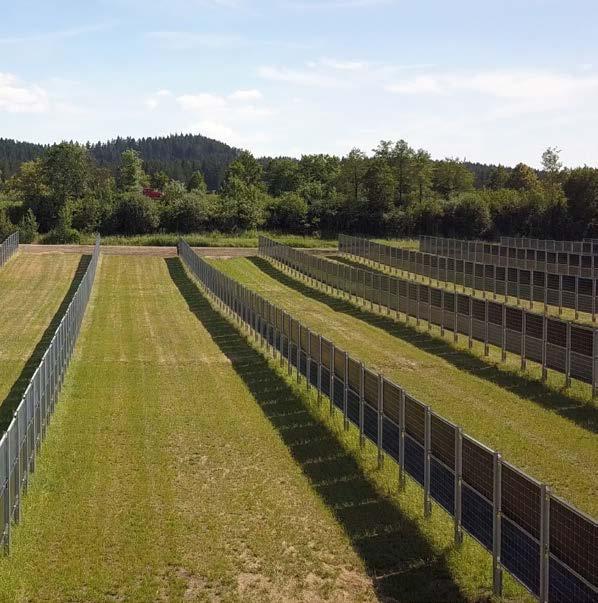
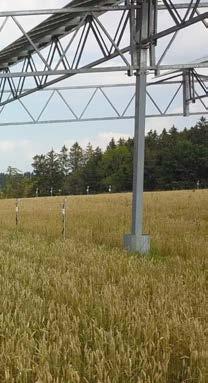
Profession – Using Cropland for Solar
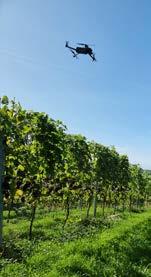
Practice – The Forestry Engineering Group Symposium
Technical – Engineering for Sustainable Smallholders
Progress your career with REnvP
launched in partnership between the Institution of Agricultural Engineers (IAgrE) and the Society for the Environment is the new grade of Registered Environmental Practitioner (REnvP).
This is a huge step forward to ensure high standards of professionalism and proven competence are met by those working to enhance and protect the environment across every sector.
This registration is timely and relevant for agricultural engineering and the associated technology sectors and the intention is that professionals in the industry will apply. The industry includes many different disciplines which need people to apply a professional approach and the Registered Environmental Practitioner grade is ideal for this.
Why should I register?
• Improve your career and salary prospects
• Stand out from the field
• Join a network of dedicated professionals
• Demonstrate your competence and skills.
Register through IAgrE now:
t: +44 (0) 1234 750876
e: membership@iagre.org
w: www.iagre.org
Although the standards are high, IAgrE makes the process simple.
“The launch of REnvP is a landmark moment for environmental professionalism, providing more individuals with the opportunity to gain professional registration and achieve external verification of their competence.”
Dr Emma Wilcox Chief Executive Officer of the Society for the Environment
Editors Welcome
Reminder
Associate Members can upgrade free to Member grade
If you are an existing Associate Member you have the option to upgrade to Member grade providing you have completed 5 or more years in a relevant career. However, if you prefer, you can remain as an Associate Member for as long as you wish. For more information scan this QR code or contact Alison at; membership@iagre.org
Yours truly’s feet have barely touched the ground since the last edition.
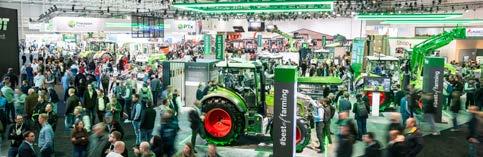
Between reacquainting myself with the pleasure of the company of the Forestry Engineering Group (FEG) and their excellent Symposium in September (see page 26) and finishing up at the Land.Technik Conference in Hanover (page 16), immediately followed by Agritechnica, it’s been hectic.
Not forgetting the Institutions own insightful and thought provoking Landwards Conference, posing the question Will Artificial Intelligence Revolutionise Agriculture? For those who didn’t manage to attend, the write up gives some pointers and food for thought from page 18.
I always return home from any conference or event with a spring in my step, and the train journey back from Hanover gave plenty of time for reflection.
My, how technology is moving on? With autonomy, sensing and mechanical weed control coming to the fore, and a liberal dose of AI handled data helping support decisions, woven throughout.
The DLG’s Agrifuture Concepts Awards is a good starting point to review the emerging themes for and from the world of Agricultural Engineering, from page 42.
I hope you enjoy reading this as much as I have, both attending the above and putting pen to paper to report for this edition.
It just remains for me to wish you a very Merry Christmas and all the best for 2026!
Code of Conduct Update
IAgrE provides a Code of Professional Conduct to lay down, both for its members and for the general public, the standards of professional conduct and ethical behaviour by which its members should abide. They represent the minimum standard of conduct required of members of any grade. It is a member’s duty to read and understand all the rules.
Members are reminded to be familiar with these rules have a look at the full code here:
Editor
Andy Newbold
Andy Newbold Hon FIAgrE ARAgS
Tackling the yield Gap and Advancing Resilience
Soil and Water Management Centre Soil 25 Conference - Wednesday December 3rd - live in person at Harper Adams University and on-line.
How can a more resilient farm business be built against these headwinds? This years conference “Tackling the yield gap and advancing resilience” sets out the challenges and also addresses a number of solutions that can aid that building of business resilience.
Scene setting
In July the government published its “Updated food strategy for England” - Although full details are not expected until next year. What do we know so far? Diane Mitchell, Chief Environmental Advisor NFU.
Will this policy deliver a more resilient agriculture and food sector?
– Peter Craven, Head of Agriculture at Natural England.
Yield limiting factors
Once again Drainage or rather the current limitations of many farm drainage schemes was again critical in terms of crop performance for harvest 25. Whilst widely recognised as an issue too many farms feel unable to currently make the necessary investment.
Can productivity be increased by enough to justify the investment?
Tim Sisson from drainage contractors, William Moorfoot.
Trials results from the AHDB Strategic Farm North – David Blacker has made that investment and has been investigating the benefits – we will hear from David and Lenny Lowth (AHDB).
Wider Resilience
Agroforestry. Whilst a few years ago was considered somewhat
niche is now gaining interest as its potential is becoming apparent – for those of us new to the idea and the benefits it can bring – Alexander Bentley, Forestry Commission, will discuss the principles followed by Shropshire farmer Mark Lea talking about his experiences in introducing agroforestry onto his farm.
Controlled Traffic Farming (CTF)
Has been known for many years to be able to deliver soil health and crop output benefits in arable systems
of CTF. And Brian Fruergaard-Rioed, on his forage grass will share their knowledge and experiences.
On Farm monitoring and the impact of decisions made on soil and crops and enabling better decision making.
SAMS – Morley Soil and Agronomic Monitoring Study - the goal of this project is to link soil health with yield, profitability and resilience through long term on-farm monitoringDavid Clark, NIAB.
Bookings can be made via the QR code:
What can CTF bring to grassland management?
– Hans Hendrick Pederson , Danish researcher and long term farmer user
New Generation Of Apprentices Graduate As Programme Marks Continued Growth
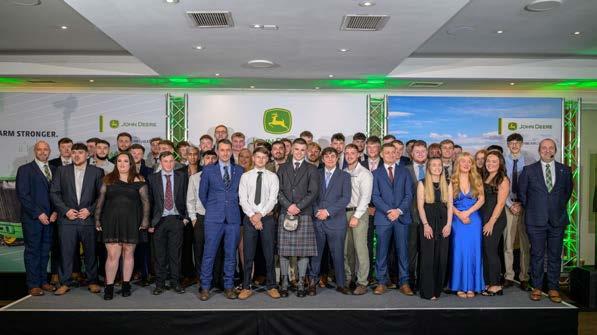
More than fifty apprentices have graduated from John Deere’s established Ag Tech, Turf Tech, and Parts Tech programmes, joining dealerships across the UK and Ireland as qualified technicians and parts specialists.
The graduates, trained in partnership with ProVQ at the John Deere Apprentice Training Centre in Upper Saxondale, Nottinghamshire, were recognised at a special ceremony celebrating their achievement and the ongoing success of one of the longest-running manufacturer apprenticeship schemes in the industry.
Jacob Ellwood from the Thomas Sherriff dealership was named Technician Apprentice of the Year for 2025, while Alex Hind from Farol won the Parts Apprentice of the Year award. Both received trophies and iPads to mark their success.
Now in its fourth decade, John
Deere’s apprenticeship scheme continues to evolve to meet the changing needs of modern machinery dealerships. The programme equips students with a mix of technical, diagnostic, and digital skills, alongside customer service and communication training.
“Our apprenticeships continue to play a vital role in developing the next generation of talent for our dealer network,” said John Deere Training Centre Manager Allan Cochran MIAgrE. “The industry is moving fast, with connected machines, advanced diagnostics, and precision technology becoming standard, so it’s essential that our apprentices leave fully prepared
for those challenges. Seeing them graduate and take their next steps with our dealers is hugely rewarding.”
Apprentices on the Ag Tech and Turf Tech courses work towards the Land-Based Service Engineering Technician Level 3 qualification, while those on the Parts Tech route complete a Level 3 parts diploma. The expanded Parts Tech programme, introduced last year, now includes greater emphasis on technical knowledge and customer interaction in response to the growing importance of John Deere’s after market and service support.
An apprenticeship programme is
also available to those working in the construction industry with the John Deere-owned Wirtgen Group. Since its inception in 1992, the John Deere apprenticeship programme has supported well in excess of 1,200 young people to find skilled roles across the company’s worldwide dealership network. Recruitment for the next intake is now underway, offering school and college leavers the opportunity to build long-term careers in the agricultural and turf machinery industries.
2025 John Deere Apprentice Graduates
Ag Tech apprentices:
Ethan Pywell (Farol), Joe Wroughton (Farol), Tristan Ingram (Hunt Forest Group), Dennis Goode (Hunt Forest Group), William Edmunds (Hunt Forest Group), Oliver Crowden (Hunt Forest Group), Robert Smith
(J S Montgomery), Lewis Goddard (Masons Kings), Kieron Knights (Tuckwells), Kane Rose (Tuckwells), Dexter Cox (Tuckwells), Kieran Day (Tuckwells), Carter Gagg (Tuckwells), George Lane (Tuckwells), Harvey Resker (Tuckwells), Luke Francis (Tuckwells), Harry Douglas (Ripon Farm Services), Ryan Ford (Ripon Farm Services), Marcus Bulled (Smallridge Bros), Thomas Tamblyn (Smallridge Bros), Edward Girdler (Smallridge Bros), Ben McNally (Stephen W Moore), Shane Kirwan (Templetuohy Farm Machinery), Noel Morton (Templetuohy Farm Machinery), Colin Power (Templetuohy Farm Machinery), Ben Ballantyne (Thomas Sherriff), Daniel Campbell (Thomas Sherriff), Jacob Ellwood (Thomas Sherriff), George Rutland (Ben Burgess), Jack Balls (Ben Burgess), Ben Rimmer (Ben Burgess), Niall Lambert (Cornthwaite), Cameron Steele (Cornthwaite), James Holden (Cornthwaite), Robert Ward (Farol)
Turf Tech apprentices:
Nathan Tilley (Ripon Farm Services), Ellis Lane (Tallis Amos Group), Dylan Philip (The Double A Trading Company), Aiden May (Farol)
Parts Tech apprentices:
Elisabeth Akers-Wood (Ripon Farm Services), Jasmine Grant (Thomas Sherriff), Libby Holden (Balmers GM), Alex Hind (Farol), Holly Ward (Farol)
Construction apprentices:
Dyllan Du Plessis (Wirtgen) Diploma apprentices: Declan Bryan (Farol), Nicholas Cokayne (Farol), Joshua Hartwell (Farol), Bradley Kebej (Farol), Daniel Lewis (Farol), Gaurav Patel (Farol), Kacper Racziewicz (Farol), Max Spiers (Farol), Lucy Walker (Farol), Lucy Winfield (Farol)
Autonomous Loading Technology Takes a Step Forward
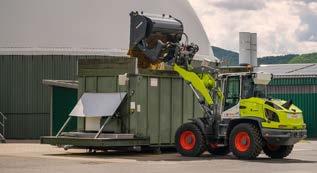
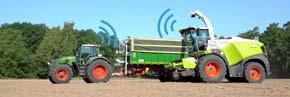
A major development in autonomous material-handling technology for agriculture was showcased at Agritechnica 2025, where Claas introduced the Torion Autonomy connect, the first fully autonomous wheel loader designed specifically for agricultural operations. Aimed at biogas plants and dairy units, the system demonstrated how labourintensive silage management tasks could be handled without an operator.
Developed in partnership with Liebherr, the autonomous loader used a combination of LiDARbased environmental scanning and advanced AI to create a digital twin of its working area. This allowed the machine to plan and adapt its work cycle without the need for external surveying equipment or pre-mapped routes. The system also performed automated pile analysis, enabling it to detect material, calculate loading points, and select the most efficient route for every movement. Through Claas connect, operators were able to pre-plan tasks using
a small number of intuitive inputs, allowing the machine to carry out repetitive loading and material-handling operations with minimal supervision. The technology did not rely on GPS, making it fully functional inside buildings, feed sheds, or locations with canopy cover.
The machine operated in both fully autonomous and manual modes, offering operational flexibility for farms requiring multi-purpose loader capability. According to Claas, the
technology represented a significant step towards automated silage logistics, especially for businesses facing skilled labour shortages or looking to optimise repetitive daily tasks.
The autonomous system independently executed work cycles, responded to environmental changes, and handled precision tasks such as accurate material pickup and stacking, marking a major advance in autonomous feeding and biogas-plant workflows.
From the CEO’s desk
Charlie Nicklin
The CEO’s Energy Crisis
Dark nights are here, the heating has begrudgingly been turned on, and for the first time ever I proactively filled up the oil tank in the summer when kerosene was cheaper. My log store is also pretty full so it feels like we’re very prepared for winter. What, no solar panels and ground source heat pumps I hear people cry?
Unfortunately not, and no EV car yet either, I’m still very reliant on fossil fuels as is our industry. My first IAgrE conference involvement was our Future Fuels one in 2021, and when I look back it feels like little has changed in our sector. Yes there are a few small electric loaders and tractors, hydrogen and methane are still there as a potential fuel source,
but fossil fuels still rule the fields and I think will do for many years yet.
This year is Agritechnica and the Land.Technik AgEng 2025 Conference in Hanover; which I will have attended by the time this goes to print. Many of the machinery orientated papers will come from the large OEMs so it will be interesting to see where they see driveline technology going in our sector.
Conference Feedback
Talking of conferences, IAgrE recently held the Landwards Conference and what a fantastic array of speakers we had, including highly respected academics and established industry experts. This
year the format was online which allowed a more diverse geographic attendance, plus it enabled us to have four overseas speakers. I’m sure those that attended found it really interesting as we explored how AI is already revolutionising agriculture. Our president Mark will cover more about this in his musings and we have also devoted some of Landwards pages to the conference.
Seeing the Wood for the Trees
Continuing on the conference theme the IAgrE Forestry Engineering Group (FEG) held their technical symposium in Gretna Green back in September and I was invited to speak at the event. The symposium
was their first event since Covid, and what a fantastic come back it was. Our Editor Andy Newbold has covered the FEG conference in detail so I won’t dwell on it here. However the presentations were excellent and ranged from modern timber research, bridge/road construction, water management and forestry machinery. I’m certainly looking forward to next year’s event which is planned to be in Wales.
Livestock Innovation
I mentioned in my last piece for Landwards that I had been invited to judge the Agri-Tech Innovator of the year at the Farmers Guardian British Farming Awards which was held in October. The entries were excellent and ranged from livestock technology and machinery to soil management and even fire suppression! In our judges eyes,
the livestock innovation from Irish firm Herdwatch shone through and was very much about providing livestock farmers with accurate AI supported information to their smart phones enabling efficient timely herd management decisions to be made. The app they have developed certainly compliments their existing suite of farm management tools.
Continuing with awards LAMMA will soon be on us, and I look forward to being involved in judging the Machine of the Year and the IAgrE Ivel Innovation Best in Show award in January. I’ve said a number of times engineers and technologists don’t shout enough about some of the great work they do, we have our own awards coming up soon so start nominating people and projects for the various categories; it’s a great way to recognise people’s efforts and inspire young people to study engineering.
Licence Renewals
From an operational perspective many of you will be aware that we have gone through successful registration license renewals with both the Engineering Council and the Society for the Environment, as part of this we have updated our Code of Conduct. There are no significant changes but we need to ensure the language used and content remains relevant in todays society. A benefit of being an IAgrE member is that clear indicator of professionalism, as you abide by a Code of Professional Conduct; these can be found on the IAgrE website under
Membership Fees
Membership fees for 2026 will be due soon, we continue to keep our fee increases as low as we can around normal inflationary levels. We do continue to offer great value professional membership for those in the sector with an excellent range of content to suit all. Annual discounted Direct Debit is the most cost effective way to pay, but if you wish to spread your fee over the year the monthly payment scheme continues.
Also worth a reminder is our 50% discount on registration fees for applications in by the year-end. If you are interested, then please do get in touch with Alison at membership@iagre.org and although it’s getting late I’m sure we could support you with a discount!
And finally, seasons greetings to you all and best wishes for the New Year.
Charlie Nicklin CEO, IAgrE
ceo@iagre.org
President’s Musings
Mark Moore
Agricultures AI Revolution
This year’s IAgrE Landwards conference attempted to answer the question “will artificial intelligence (AI) revolutionise agriculture? Having listened to the speakers and the following panel discussion, my answer to this question is a resounding yes – AI is going to revolutionise agriculture. Each presenter gave practical examples of where AI is being used to generate information from data, and how that information is being used to make farming practices and food production more efficient and sustainable. Therefore, like it or not, AI is already enabling better and faster decision making which is transforming aspects of food production.
An Innovative Industry
As the presentations and discussion progressed, the one thing that struck me was farming is not as low-tech as some may perceive it to be. On the contrary, I would suggest our conference demonstrated that agricultural engineering is one of the most hi-tech and innovative industries that exists today. The amount of innovation that is happening is remarkable as we strive to develop more efficient food production systems to feed a growing population.
Data Ownership
Of course, AI is not without its challenges, which our conference
discussed at length. A recurring concern came from data ownership, and if the farmer owns the data whether they should receive an income for it from stakeholders within the food chain. There was much discussion on this and the consensus was that farmers own their own data and ought to have a choice as to what to do with it. There also seemed to be a growing recognition that farmers should be paid for their data, especially if organisations within the food chain are able to use it for commercial gain.
Compatibility
Another challenge that was discussed was linked to data
compatibility. There was general agreement that if data sets become fragmented it will impede development and the adoption of technology. Standards and systems thinking around data structure and formats will be essential if we are going to avoid the mistakes of the past where technology like precision farming was fragmented and relied heavily on farmers becoming the systems integrators. If you recall, systems thinking was the theme of our 2024 Landwards conference, so we know innovating in isolation is not the way forward and technology needs to be fully integrated into the farming systems if we are going to get widespread adoption.
Revitalising Precision Farming
For me personally, I am convinced AI will help farmers and other
stakeholders derive more value from data and technology like precision farming. When I was doing my PhD in precision farming in 1990, I was severely restricted by my ability to analyse and make decisions from the huge amounts of data I was getting from the Massey Ferguson yield mapping system and soil mapping systems. 35 years ago, it was difficult to turn data into information and information into decisions, and even today farmers are still struggling to understand what to do given the large amounts of data they are collecting. I am sure AI will help revitalise precision farming as it starts to allow farmers and agricultural advisors to use cloud-based technology to access and compare large data sets to gain a better understanding of what to do given what they are seeing in the here and now. This will transform
decision making and operational practices.
Opportunities for Engineers
A key conclusion from our conference for me was the great opportunities that exist for agricultural engineers. It is clear from this and our 2024 conference that stakeholders within the food chain are looking to us for innovation and to integrate resulting products and services into food production systems.
A Big Thank You
I am pleased to hear the feedback from delegates attending our Landwards conference has been extremely positive. So, on behalf of the entire IAgrE membership I would like to thank the IAgrE team, Charlie, Sarah, Marion and Alison, for organising another very successful conference. Events like this don’t just happen! There is a great deal of planning that goes into organising the Landwards conference and I would like to recognise this effort. Thanks should also be extended to the presenters, Fernando Auat Cheein (Professor of Engineering at Harper Adams University), Jonathan Henry (Managing Director, Garford Farm Machinery), Allan Kildeby (Head of Camera Sensors at CLAAS), Morten Bilde (Managing Director of AGCO Innovation Centre), Kieran Fitzgerald (Vice President Digital Services), and Simon Pearson (Professor of Agri-Food Technology at the University of Lincoln), who all prepared and delivered excellent presentations. Finally, a special thanks must go to Olivia Midgley (Editorial Director, Farmers Guardian), who did an excellent job of chairing the conference throughout the day.
Dr Mark Moore FIAgrE, IAgrE President 2024-2026
Biosystems Engineering
Biosystems Engineering
Volume 256, August 2025, 104176
Spatially variant scattering-based single-image dust removal in agriculture.
Peter Buckel, Thomas Dietmüller and Timo Oksanen, Technical University of Munich, Chair of Agrimechatronics and Munich Institute of Robotics and Machine Intelligence (MIRMI), 85354, Freising, Bavaria, Germany
Baden-Wuerttemberg Cooperative State University (DHBW) Ravensburg, 88045, Friedrichshafen, Baden-Wuerttemberg, Germany
Highlights
• Reference-based night time dataset for vision-based dust removal in agriculture.
• The dust raised during tillage in agriculture is a significant challenge.
• Spatial variant local illumination estimation with a maximum filter.
• Dust is partially removed from the image, even though noise is added.
• The code and dataset are open-source available.
Vision systems must deal with various environmental conditions, such as fog, haze, sun, clouds, and snow. A significant challenge in agriculture is the dust raised during soil cultivation. Like all particles in the atmosphere, dust particles are exposed to light and, therefore, scatter light. Earlier studies have discussed the optics of the atmosphere, identified the scattering process, and developed scene recovery methods. These approaches concentrate on haze removal. However, dust is non-homogeneous and spatially variant. Moreover, dust is raised at different times during the day; thus, the illumination differs. This work proposes a local adaptive scattering model for scene recovery. A maximum filter is used to extract the local non-uniform lighting and the resulting illumination map is refined with image-guided filtering, which results in a blur effect. The blurry
Over the past three months (August – October 2025), Biosystems Engineering published 3 volumes (with 2 volumes in September) with a total of 94 articles (including 3 reviews and 2 short communications). The large number of articles for this quarter is due to the
changes in the publisher’s system, which resulted in fewer articles in the last quarter (and thus more in this quarter). The following three articles, one from each volume, have been chosen to illustrate the diversity of work in the journal.
map represents the multiple scattering of light through particles. The scene is then recovered on a per-pixel basis. The proposed method was validated with images from the same scene with and without dust. Compared to state-of-the-art methods, the adapted algorithm performed significantly better and low-density dust was removed. Furthermore, the method showed good generalisability to images recorded out of the cabin. Dust particles were removed, even if they covered the entire
image. The proposed approach was less effective if the dust was too dense. Nevertheless, in all situations dust effects were significantly reduced, and thus, more information can be extracted.
In addition, N-Dust, a reference-based dataset for nighttime evaluation of dust removal algorithms was introduced. N-Dust consists of 90 pairs of dusty and dust-free images. The code and dataset are open-source available.
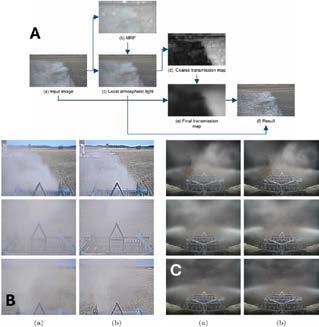
Fig A. A: Simplified structure of the proposed spatially adaptive approach to improve visibility in dust affected images. B: Generalisability of daytime images (a) original image from the tractor cabin, and (b) image after application of the proposed approach showing improved visibility. C: Similar example using nighttime images recorded out of the tractor cabin. (a) original and (b) after processing.
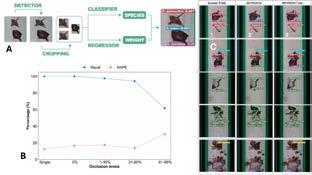
Fig. B A: Outline of the basic multi-stage approach using a general species-agnostic regressor. Bounding boxes, species and estimated weights are merged for the final result. B: Performance metrics for the proposed approach under increasing levels of occlusion (overlapping) between fish species in the images. The method is less effective when occlusion is > 60%. C: Visual results of detection, classification, and weight estimation (kg) for the 1 -ground truthed image, 2 – single-stage approach and 3 – multi-stage approach, showing similarities and differences in detecting fish that overlap (occlusion).
Biosystems Engineering
Volume 257, September 2025, Article 104239
Multi-stage image-based approach for fish detection and weight estimation
Manuel Cordova, Maria Sokolova, Aloysius van Helmond, Angelo Mencarelli and Gert Kootstra
Wageningen University and Research, Agricultural Biosystems Engineering/ Wageningen Marine Research/ Greenhouse Horticulture Unit, Wageningen, the Netherlands
Highlights
• A multi-stage approach for fish detection and weight estimation is proposed.
• Task separation improves overall performance in fish detection and weight estimation.
• The multi-stage approach outperformed the single-stage by 6.41 points on F1-macro.
• The multi-stage approach reduced the single-stage MAPE by approximately 60 %.
• Performance drops significantly in scenarios where fish are occluded by more than 60 %.
Challenges with sustainable use of aquatic resources stimulated the implementation of fishing regulations. To check compliance with regulations, observer programmes and electronic monitoring have been implemented but these suffer from low coverage because of extensive fishing activities and their high human-labour dependency. To enable the automatic registration of the counts and weight per species in the discards, this work introduces a flexible image-based multi-stage approach composed of detection, classification, and weight estimation. The modular
structure of the proposed approach allows the training of each component in an independent manner requiring only specific data for each stage (bounding boxes, species or weight), therefore different training sets could be used which was expected to improve overall fish detection and weight estimation. Experimental results on the Fish detection and Weight Estimation dataset, containing 1086 images and 2216 fish instances, demonstrated the superiority of the proposed multi-stage approach over two single-stage methods.
In addition, the modular structure of the multi-stage pipeline allows each component to be easily updated with the latest computer-vision methods and alleviates the full ground-truth dependency of single-stage methods. Consequently, separate data can be used in each stage. Moreover, new down-stream tasks can be included into the pipeline without the need for complete retraining. The proposed approach represents a significant step towards the automatic registration of discards, facilitating the transition from the landing obligation to a registration obligation. It can be utilised on board or ashore, depending on the computational resources. Furthermore, this methodology can be applied to various aspects of fisheries management where fish detection and weight estimation are critical.
Biosystems Engineering
Volume 258, September 2025, Article 104255
Modelling machine-induced soil deformation in forest soils using stump proximity and machine learning.
Gunta Grube, Stefano Grigolato, Jari Ala-Ilomäki, Johanna Routa, Harri Lindeman, Rasmus Astrup and Bruce Talbot b
Department of Land, Environment, Agriculture and Forestry (TESAF), University of Padova, 35020 Legnaro, Padova, Italy
Department of Forest and Wood Science, Stellenbosch University, 7599 Stellenbosch, South Africa
Natural Resources Institute Finland (Luke), Helsinki/Joensuu/Tampere, Finland
Norwegian Institute of Bioeconomy Research (NIBIO), Høgskoleveien 8, 1433 Ås, Norway
Highlights
• Rut depth was measured after multiple machine passes on peatland soils.
• An exponential decay model quantified the effect of stump proximity on soil strength.
• Random Forest predicted rut depth using soil, machine, and stump proximity data.
• Stump proximity was a key factor in reducing rut depth on forwarder trails.
Soil deformation is a key challenge in sustainable timber harvesting, particularly in environments with low bearing capacity. This issue is especially pronounced in forested peatlands, where rutting arises from soil displacement and root shearing within the soft, organic substrate. While tree roots are known to reinforce soil, the specific role of stump-root systems in mitigating rut formation remains underexplored. This study examines the influence of stump presence on rut depth using Unmanned Aerial Vehicle (UAV) based digital terrain models, manual field measurements, spatial modelling, and machine learning techniques. Statistical analysis confirmed that cumulative stump influence significantly reduced rut depth, with a small to medium effect in straight trails and a moderate to large effect in curved trails. This study demonstrated
that stump presence plays an important role in reducing rut formation on peatland soils, with effects varying by trail configuration. Using UAV-based measurements, statistical analysis, spatial modelling, and machine learning, the role of biological reinforcement in mitigating machine-induced soil deformation is highlighted.
This study presents a spatially informed methodology to evaluate the influence of tree stump-root systems on rut formation in peatland soils. By integrating UAV mapping and machine learning, this study enabled the predictive identification of low-impact areas, reducing site disturbance and supporting climate-smart forestry. These findings offer a practical starting point and a potential tool for optimising skid trail layout, improving operational efficiency, and minimising soil disturbance and site damage. The approach supports evidence-based decision-making in peatland conservation, helping align forest operations with broader environmental and climate goals.
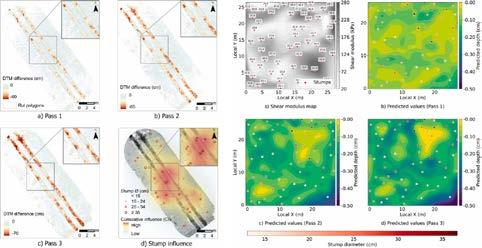
Fig C. Left: Elevation change maps derived from UAV-based digital terrain models (DTMs) for one straight trail (straight configuration) over three passes (a – c) and the cumulative stump influence, computed from stump diameters and proximity using the proposed methodology. Right: Spatial visualisation of shear modulus (a) and predicted rut depth (cm) across multiple passes (b – c) using the root reinforcement value, cumulative influence, and shear modulus as predictors.
Biosystems News
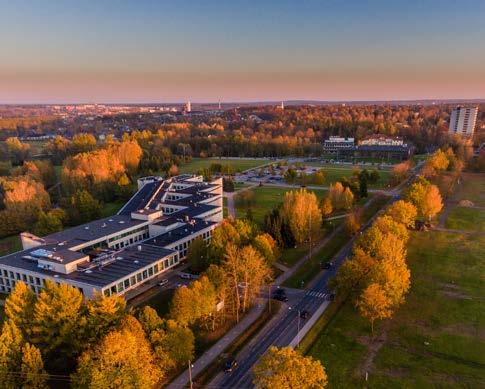
The Estonian University of Life Sciences has confirmed it will host the 16th international Biosystems Engineering Conference from 6–8 May 2026 in Tartu, Estonia.
The event – which has grown in scale, participation and scientific significance annually – will again bring researchers, engineering specialists, industry and technology developers together from across Europe and beyond. The organisers expect representatives from at least 30 countries.
The 2026 programme will focus on new technologies and research within agriculture, agrorobotics, engineering, food systems, energy applications, fuels & vehicles, bioeconomy, biorefining, waste recovery, and associated education. A central objective of the
Biosystems Engineering 2026 Announced
Estonian University of Life Sciences to Host Major Scientific Gathering in Tartu
conference continues to be enabling effective technology transfer between scientific research and industry.
Abstract submissions are open now. Submission instructions are available at:
Authors of approved abstracts will be invited to submit full papers. Accepted papers will be published in special issues of Agronomy Research and Energies.
For 2026, students will also be able to apply for supported attendance via
Conference Chair of BSE 2026 is Assoc. Prof. Timo Kikas, Head of the Chair of Biosystems Engineering, Estonian University of Life Sciences.
EurAgEng
LandTechnik AgEng2025 Conference
Out and About
It was great to catch up with so many members face to face at the Land.Technik AgEng2025 Conference, Hanover in November. Alongside the Executive Board and Advisory Council meetings, delegates also found out more on the latest agricultural engineering research through a full and wide-ranging set of papers.
The Society also recognised two key European agricultural engineers for their service and achievements with awards during Land.Technik AgEng2025. More on those below.
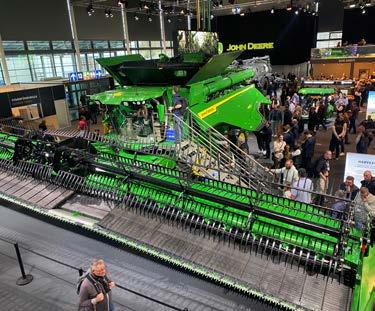
With Land.Technik AgEng2025 immediately before Agritechnica meant that the Secretary General could march the exhibition halls of the Messe and see how close the conference papers were to the offers for farmers. Very, is the quick answer, with numerous autonomous, and alternative energy solutions field ready.
Whilst sitting on the train home writing this, I can’t help but wonder where agriculture will be, and how innovation and technology will be shaping this in another two years time!
Andy Newbold
C.Eng. Hon FIAgrE ARAgS
Secretary General
European Engineers
Recognised
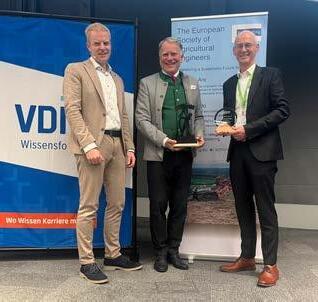
The European Society of Agricultural Engineers recognised leaders in Agricultural Engineering in a ceremony at the VDI Land.Technik AgEng2025 Conference in Hanover, Germany on 7th November 2025.
The Award of MeritInnovation into Practice –winner Klaus Pöttinger
The criteria states that the award will, in general, be made to a leading
light in the industry. The winner will have made an outstanding contribution to commercial practice and to engineering innovation that has been widely recognised through new products or by governmental and
L-R Dr Boris Kettelhoit, chair of EurAgEng Awards Panel, Klaus Pöttinger and Peter van der Vlugt
other organisations, for the benefit of agriculture, environment, industry and/or the rural sector in Europe.
Klaus Pöttinger, one of the owners of PÖTTINGER Land.Technik GmbH, acted as Technical Managing Director from 1991 to 2016. During this time, he has introduced innovative technologies and processes that have significantly increased efficiency and quality in agricultural production.
His vision and commitment have made PÖTTINGER synonymous with quality and innovation in agricultural technology.
The EurAgEng awards panel were unanimous in their verdict, and said ‘although the nominations were of a very high standard, Klaus Pöttinger was the stand out candidate.’
Recognition Award – winner
Peter van der Vlugt
This award acknowledges personalities who represent the European idea of EurAgEng in a special way and promote it to the professional public.
EurAgEng owes a huge debt of gratitude to the many people who have given time, energy, and enthusiasm to the Society in many different ways.
After a first working experience in an industrial setting, Peter van der Vlugt joined the Kverneland Group in 1996 as a software/hardware engineer. Working on multiple projects for customers, he left a good impression: A positive person who people can easily approach and with a sense of humor. Combining these personal skills with his professional skills and a family background in farming, Peter grew within the Kverneland electronics department to positions of Project Manager and R&D Manager. During this period, he worked at many projects from the early stages of precision farming and was actively participating in the development of the ISO-11783 (ISOBUS) standard. Being good and pleasant in cooperation, he
Joint CIGR – EurAgEng World Congress 2026
With a theme of “Emerging Technologies and Innovation in Biosystems” CIGR International Commission of Agricultural and Biosystems Engineering and the European Society of Agricultural Engineers (EurAgEng) looks forward to welcoming delegates and speakers to Torino, Italy on 24-26 June 2026.
This distinguished event brings together leading researchers, professionals, and stakeholders from around the world to exchange scientific advances, practical insights, and forward looking perspectives in the field of biosystems engineering.
Don’t forget EurAgEng members receive a discount to attend events such as AgEng2026 in Torino.
works with passion and enthusiasm on projects to achieve the best possible result within the corporate environment.
His huge engagement in the ISO 11783 standardization process brought him into contact with the Agricultural Industry Electronics Foundation (AEF). Peter has been a member of the AEF Steering Committee since the beginning and was elected as AEF Vice- Chairman in 2008. In autumn 2012, he was formally elected as AEF Chairman during the General Assembly meeting of that year.
The Agricultural Industry Electronics Foundation (AEF) is an independent organization. Today eight manufacturers and three associations are working as core members together with 200 general members. His efforts as the AEF Chairman have made the AEF into the success it is today.
With this verdict The EurAgEng awards panel said ‘We are delighted to be able to make this award to such an internationally respected professional. His dedication, determination and ability to draw the industry together is a testament to his standing as an agricultural engineer.’
The European Society of Agricultural Engineers congratulated both winners for their sustained industry support and achievements.
Find out more about EurAgEng
Conference
Artificial Intelligence: Opportunities and Challenges for Agricultural Engineers
The 2025 IAgrE Landwards Conference explored AI’s current applications, challenges, and potential, highlighting the critical role of agricultural engineers in integrating and deploying these innovations effectively. Andy Newbold reports.
Artificial Intelligence (AI) is poised to revolutionise agriculture, transforming how food is produced, processed, and delivered. From precision crop management to livestock welfare, AI-driven technologies enable faster, smarter, and more sustainable decision-making across the agricultural value chain.
AI and the Agricultural Revolution
AI, once considered a futuristic concept, is now embedded in everyday life and industrial applications, including agriculture. From sophisticated machine learning platforms to robotics, AI is enabling agricultural systems to process vast
datasets, recognise patterns, and make real-time decisions that were previously impossible.
Dr. Mark Moore, IAgrE President, emphasized that agricultural engineers who fail to embrace AI risk being left behind. AI not only aids in immediate operational decisions but also enhances long-term sustainability by improving resource efficiency, reducing environmental
Artificial Intelligence (AI) is poised to revolutionise agriculture
impact, and supporting food security. The 2025 IAgrE Landwards Conference highlighted AI’s integration across both crop and livestock sectors, underscoring its transformational potential in creating smarter, more responsive agricultural systems.
Precision Weeding and Robocrop Systems
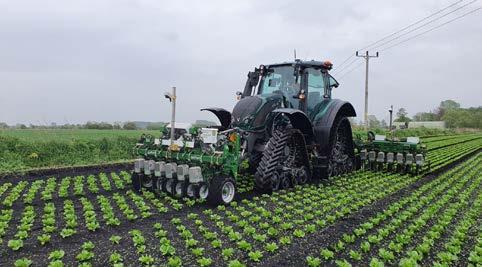
Jonathan Henry, Managing Director at Garford Farm Machinery, presented the Robocrop AI system, a vision-guided hoeing machine that combines colour, infrared, and depth sensing to differentiate crops from weeds. This precision reduces herbicide use, lowers labour costs, and increases overall productivity. Key engineering challenges include:
• Scope Management: Ensuring AI systems perform reliably across diverse crop types and field conditions.
• Skill Requirements: Engineers must design and maintain systems that are robust, safe, and user-friendly.
• Training Data: AI accuracy depends on high-quality datasets; insufficient data can limit system effectiveness.
He emphasised that while AI reduces manual labour, human oversight remains essential for system supervision and troubleshooting.
Machine Learning for Crop Monitoring
Allan Kildeby, Head of Camera Sensors at CLAAS, discussed machine learning applications in crop evaluation and automation. AI systems can:
• Assess silage and grain quality.
• Detect weeds such as docks in grasslands.
• Optimize harvesting machinery using real-time data.
He highlighted the importance of data acquisition and annotation, pointing out that the quality of AI predictions depends heavily on the precision and comprehensiveness of the input data. AI accelerates development cycles and enhances operational efficiency, but robust hardware and software integration are critical.
Jonathan Henry MIAgrEManaging Director at Garford Farm Machinery
Allan Kildeby - Head of Camera Sensors at CLAAS
Garfords Robocrop system combines colour, infrared and depth information with AI to precisely identify plants and stem locations
Dairy Farming and AI Integration
Kieran Fitzgerald, Vice President Digital Services at DeLaval, presented innovations showcasing how AI enhances dairy management. Key applications include:
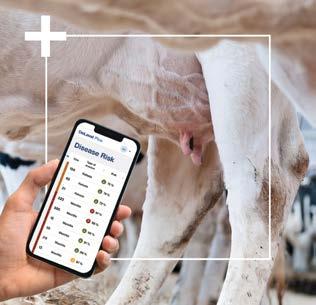
• Disease detection models for early identification of mastitis and ketosis.
• Automated decision support for herd management.
• Predictive maintenance of milking equipment.
He emphasized data security and ownership, highlighting that farmers should retain control of their farm data. Digital twins—virtual representations of individual cows or herds—enable performance monitoring and predictive interventions, effectively creating a “Fitbit for cows.”
AI penetration in mature dairy markets is currently around 20 – 25%, with a gradual shift towards subscription-based services reflecting real-time value and cost efficiency.
He also made the observation that AI supported decisions made with livestock can produce almost immediate results, in comparison to very slow responses with a growing crop.
Robotics and Autonomous Systems in Agriculture
of Engineering at Harper Adams University, presented on AI-driven robotics in farming. His research focuses on real-world deployability, emphasising:
• Crop health monitoring and pest detection.
• Autonomous decision-making systems.
• Integration of AI with diverse machinery under varying regulatory frameworks.
He highlighted technology readiness levels (TRLs), noting that while AI is advanced in controlled environments, scaling these solutions to real-world farms presents challenges such as connectivity, interoperability, and cost. Fernando also raised concerns about patent competitiveness, indicating that the UK lags behind some global players in AI innovation.
Hype or Transformational..?
Simon Pearson FIAgrE, Professor of Agri-Food Technology at the University of Lincoln discussed the transformational impact of AI on agriculture, highlighting his roles in various AI-driven companies. He noted significant advancements in AI applications, such as robotic crop harvesting and animal care, and emphasised the need for diverse AI tools.
Fernando Auat Cheein, Professor
Kieran Fitzgerald - Vice President Digital Services for DeLaval
DeLaval’s DeepBlue AI powered technology collects herd data and provides animal health alerts and management information
Fernando Auat Cheein FIAgrE, Professor of Engineering at Harper Adams University
Simon stressd the importance of standards over regulations, citing a 2023 report predicting 25% of agricultural jobs could be replaced by AI. He also mentioned the potential of VLA models to simplify farming tasks and the importance of industry-led standards for AI adoption. The discussion also focused on the future of AI in agriculture, including potential job role changes and the role of large companies in supporting AI technologies.
Transforming User Experience and Product Lifecycles
Morten Bilde, Managing Director of AGCO Innovation Center Randers, Denmark, discussed the reusability of hardware in AI solutions,
emphasizing the scalability and cost efficiency of continuous application development.
He highlighted the use of the same hardware and data for multiple applications, such as optimising combine performance and generating weed population maps. He also covered the Innovation Hub, a platform for co-creating solutions with farmers, and stressed the importance of AI in sustainable farming and automation.
He noted the continuous life cycle of AI products, which evolve through data collection, model training, and deployment. The challenges of high development costs and the need for interoperability among AI systems was also noted.
Panel Discussion
The day wrapped up with a wide ranging and insightful set of questions and perspectives ably chaired by Farmers Guardians Editorial Director Olivia Midgley.
Safety and Traceability
AI also enhances safety by monitoring machinery, detecting anomalies, and providing predictive alerts. Furthermore, AI improves traceability in supply chains, ensuring compliance with food safety regulations. However, the lack of standardised safety certifications remains a challenge.
Data Ownership, Privacy, and Governance
A recurring theme at the conference was data governance. AI’s effectiveness depends on high-quality, timely data, yet questions remain:
• Who owns farm data?
• How can data be shared while preserving privacy and commercial advantage?
• Can farmers monetise their data?
Simon Pearson suggested data trusts, where farmers control access to anonymised datasets, allowing them to derive value while contributing to broader AI development. Conversely, Fernando Auat Cheein questioned the commercial viability of selling farm data, highlighting the need for careful business models.
Challenges in AI Adoption
Despite the promise, several obstacles remain:
1. Connectivity and Edge
Computing: Cloud-based AI solutions are vulnerable to outages, making local edge computing a critical consideration for reliable farm operations.
2. Cost and ROI: AI development and deployment are expensive, and farmers with narrow profit margins may struggle to justify investment. Reusability of hardware and software can help reduce costs.
3. Skill Gaps: Farmers and engineers need training to understand, trust, and manage AI systems effectively
4. Interoperability: Diverse AI solutions must integrate with existing farm machinery to avoid closed ecosystems.
Standards, Regulation, and Ethical Considerations
Simon Pearson and other experts stressed the importance of industry-led standards over
Morten Bilde, Managing Director of AGCO Innovation Center Randers, Denmark
Simon Pearson FIAgrE - Professor of Agri-Food Technology, University of Lincoln
Olivia MidgleyJournalist and editor
prescriptive regulations. These standards ensure AI systems are reliable, safe, and ethically deployed. Key points include:
• Certification for safety and compliance.
• Transparent decision-making in AI algorithms.
• Clear guidelines for data usage and farmer rights.
Establishing robust standards will foster trust, accelerate adoption, and support public acceptance of AI technologies.
Future Directions and Emerging Technologies
The conference highlighted several emerging AI trends:
1. Vision, Language, Action (VLA) Models: These foundation models aim to simplify complex tasks by integrating perception, understanding, and decisionmaking in a single AI system.
2. Reinforcement Learning for Farm Automation: AI agents can optimize machinery performance continuously through adaptive learning loops.
3. Co-Creation Platforms (Innovation Hubs): Engaging farmers in early-stage prototyping ensures AI solutions are practical, user-friendly, and aligned with operational needs.
4. Subscription-Based AI Services: Reflecting real-time value, these models provide access to cutting-edge tools without large upfront capital investment.
Implications for Agricultural Engineers
Agricultural engineers play a pivotal role in the adoption and scaling of AI in agriculture. Responsibilities include:
• Designing robust AI-enabled machinery suitable for varied environments.
Recommendations for Stakeholders
For Engineers:
• Prioritise scalable and reusable AI hardware and software.
• Incorporate edge computing for critical operations.
• Engage in standards development for AI safety and interoperability.
For Farmers:
• Maintain ownership and control of farm data.
• Evaluate cost-benefit ratios before investing in AI solutions.
• Participate in co-creation initiatives to shape AI tools that meet operational needs.
For Policymakers:
• Support industry-led standards and certification frameworks.
• Encourage initiatives for data trusts and secure data-sharing mechanisms.
• Provide incentives for AI adoption that aligns with sustainability goals.
For Developers and AI Vendors:
• Focus on user-centric design and farmer engagement.
• Ensure interoperability with existing machinery and farm management systems.
• Develop transparent, explainable AI models that farmers can trust.
• Developing interfaces that are intuitive for farmers and operators.
• Integrating AI with farm management software and legacy equipment.
• Ensuring compliance with emerging standards and safety protocols.
• Supporting education and training initiatives to bridge skill gaps.
Engineers must balance innovation with practical deployment, ensuring AI solutions are economically viable, environmentally sustainable, and socially acceptable.
Conclusion
Artificial Intelligence is transforming agriculture at an unprecedented pace. From vision-guided weeding and robotic harvesting to digital twins for livestock management, AI enhances productivity, sustainability, and resilience across the sector.
However, challenges remain in connectivity, cost, skills, interoperability, and data governance. Agricultural engineers will be central to ensuring these technologies are deployed safely, effectively, and ethically. By embracing AI, engineers and farmers can work together to optimize food production, reduce environmental impact, and secure a sustainable future for global agriculture.
The IAgrE 2025 Landwards Conference underscored that AI is not a passing trend—it is here to stay. Its full potential will be realised through collaboration, innovation, and the careful integration of human expertise with intelligent systems.
Letter from America
A Letter from America – IAgrE President Elect
Kit Franklin writes
Like many Agricultural Engineers I have been fortunate to travel extensively in my career to date; India, South Africa, USA and much of Europe. However, an opportunity to live abroad has until now not presented itself.
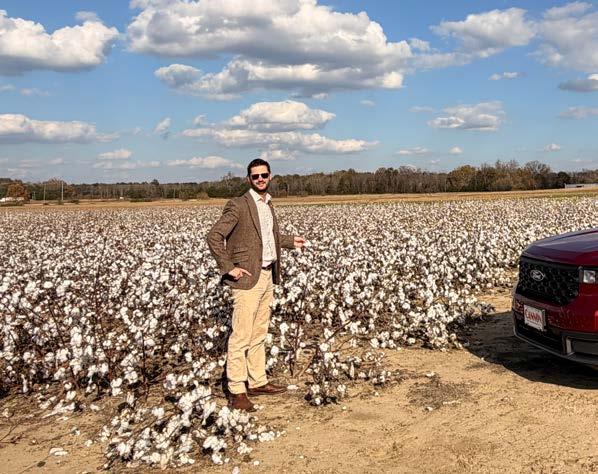
So, following my belief of saying “YES” (as discussed in my Landwards Podcast interview) I find myself sat in Mississippi State University (MSU) as a visiting scholar to the Agricultural Autonomy Institute (AAI).
It’s not my first time to MSU as I was previously invited here by Agricultural and Biological Engineering Department Head Prof Alex Thomasson to share lessons of the Hands Free Hectare at the 2023 AAI launch:
“ I have now set out in that truck to see the regions agriculture, peanut,cotton and corn fields”
Alex and I stayed in regular contact, and with commercial collaborations and a growing number of student research projects within the AAI, he invited me back for a six-month stint to support the team.
First Steps
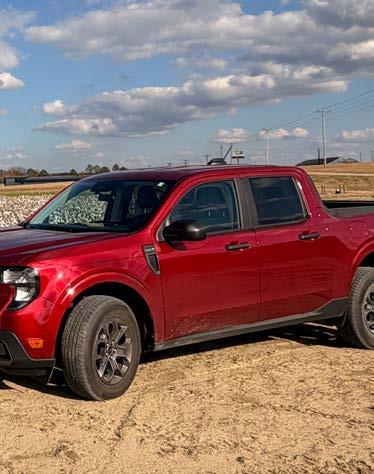
Like arriving anywhere new the first few weeks were spent setting up life; bank account, driving licence, finding a house (got myself a “duplex” = semi-detached) and essential for rural USA, a pick-up truck, albeit a small one!
I have now set out in that truck to see the regions agriculture, peanut, cotton and corn fields, irrigation systems and catfish ponds.
Fried catfish being a staple of the US South.
Most impressive so far being the Bogue Chitto Cotton Gin, processing up to 500 raw cotton modules (2500kg round bales) a day into enough clean cotton to make c. 250k pairs of jeans!
I have also taken a quick trip out to Sacramento California to the FIRA USA ag automation event, there is lots of money and confidence swilling around Californian Agri-tech, but from my impression the UK is level pegging in the technology race. Time now for me to settle into some project work for the AAI, amongst the cowboy boots and trucker hats, but don’t worry I am still wearing my tweed jackets and flat cap!!
About the Agricultural Autonomy Institute (AAI)
The Agricultural Autonomy Institute (AAI) at Mississippi State University, founded in June 2023, is the first academic institute in the U.S. wholly dedicated to advancing autonomous systems in agriculture.
Its vision is to make Mississippi the “Silicon Valley of Agricultural Autonomy.” Its mission focuses on boosting the state’s economy by attracting ag-autonomy manufacturers, supporting research and startups, developing a specialized workforce, and establishing MSU as a national leader.
AAI works across domains— land, air, and even maritime systems where relevant— to apply autonomous technologies in crop production, processing, and research.
Facilities include a 4,800 ft² Autonomy Lab on campus and a 5-acre “Autonomous Acres” proving ground on MSU’s North Farm.
FEG Symposium
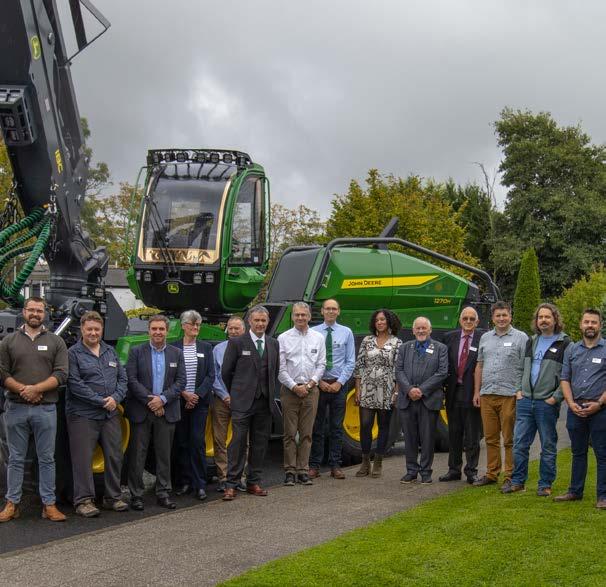
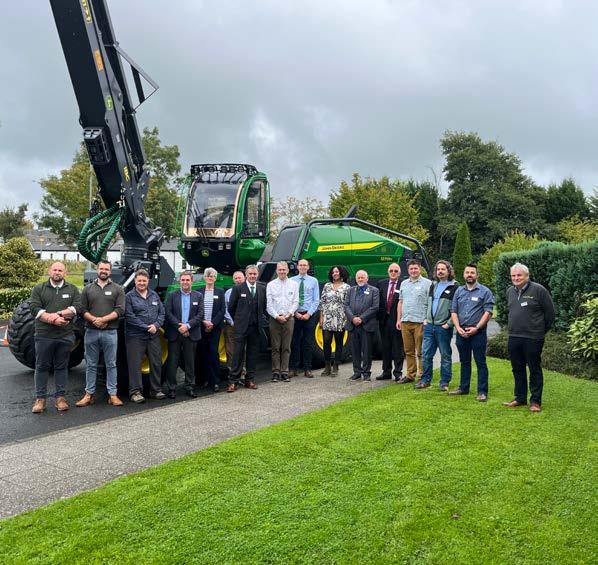
Speakers and committee members at the Symposium
FEG Symposium 2025: Building Resilience in Rural Environments
When engineers, foresters, and environmental specialists gathered at Smiths of Gretna on 3rd September for the FEG Symposium 2025, the mood was one of realism tempered with optimism. The event, themed “Wood, Water & Innovation: Building Resilience in Rural Environments,” offered an unflinching look at the challenges facing forestry and land-based engineering — and showcased practical, science-led responses emerging from across the UK.
Chaired by Jock McKie, Forestry Engineering Group (FEG) Chair and representative of John Deere Forestry UK, the symposium was supported by the Institution of Agricultural Engineers (IAgrE). CEO Charlie Nicklin opened proceedings by highlighting IAgrE’s role in connecting engineers across sectors and enabling professional registration and CPD. The day that followed demonstrated exactly why those connections matter: forestry and agricultural engineers are increasingly being called upon to design the resilient systems that rural Britain will depend on in the decades ahead.
Adapting Our Forests: New Thinking for a Changing Climate
The morning keynote, “Once and Future Timber”, came from Professor Dan Ridley-Ellis of Napier University. He tackled a fundamental question: if climate change, pests, and shifting markets are reshaping forestry, what trees should we be growing for the future?
Ridley-Ellis argued that the sector must look beyond traditional mainstays such as Sitka spruce, oak and Douglas fir, exploring a broader range of species to secure future supply. This shift demands longterm planning and better data on how new species perform under changing conditions. “We’re growing the timber for 2050 right now,” he reminded delegates — underscoring the long lead time of forestry compared to agriculture.
Although much of the data on alternative species is still limited, Ridley-Ellis urged engineers and managers to start gathering and sharing what information exists. “Some data is better than none,” he said, highlighting that even small-scale trials can guide future decision-making and processing adaptations.
Takeaway: Forestry resilience will rely on species diversification, open data sharing, and engineering
systems that can adapt to both biological and climatic uncertainty.
SuDS and Soil: Managing Water in Rural Landscapes
Two sessions on Sustainable Drainage Systems (SuDS) drew strong interest from delegates, highlighting the growing importance of integrated water management across both agriculture and forestry.
Anna Cuanalo, a senior consultant at ARUP, set out the broader policy picture. Wales has been an early adopter of SuDS legislation, embedding drainage standards originally designed for urban
environments into all new developments. The challenge, she said, lies in interpreting those rules in rural and forestry contexts — where catchments, soils, and land uses differ dramatically from towns and cities.
Cuanalo stressed that engineers have a central role in translating urban drainage frameworks into workable rural solutions. Her message was clear: managing water is not just about flood prevention, but about soil health, habitat creation, and long-term resilience.
Adding a practitioner’s perspective, Felix Merry of Natural Resources
Anna Cuanalo, a senior consultant at ARUP, set out the broader policy picture regarding Sustainable Drainage Systems (SuDS)
Wales described how the forestry sector has had to rethink its design processes to gain SuDS consent. Better hydraulic modelling, clearer communication with regulators, and low-maintenance features such as swales and timber dams have become essential. While implementation has been far from straightforward, he argued that the lessons learned in Wales will inform best practice across the UK.
Takeaway: Agricultural and forestry engineers must lead on integrating SuDS into rural infrastructure — improving modelling, design, and collaboration to balance productivity with water stewardship.
Safety, Systems and the Law: CDM in Forestry
Iwan Lloyd Williams, forestry consultant, tackled an issue that many in the sector still overlook: the application of Construction Design and Management (CDM) Regulations 2015 to forestry. His talk, based on the new FISA 808 guidance, explained how tasks such as road construction, fencing, and drainage often fall under CDM rules — even when carried out deep in the forest rather than on a building site.
Iwan called for a cultural shift, urging forestry managers to adopt the professional practices long familiar in construction: risk assessments, clear communication, and shared accountability. CDM, he noted, is not an optional extra but a legal framework designed to protect workers and clarify responsibilities.
Takeaway: Forestry operations are construction by another name. Engineers must embed CDM principles and safety planning into every project from the outset.
Resilience in Practice: Designing for Change
The term resilience has become a buzzword, but Chris Watson, Woodland Resilience Advisor at the Forestry Commission, gave it real-world substance. His session
examined how forests can continue to deliver timber, carbon capture, and biodiversity services under mounting pressure from climate change, pests, and disease.
Watson argued that traditional long-term plans, built around stable conditions, are no longer viable. Instead, engineers and forest managers must adopt adaptive planning — regularly reviewing management practices, diversifying species and structure, and investing in access infrastructure that can withstand flooding, drought, or fire. He likened it to “business continuity for forests,” urging immediate action rather than delayed adaptation.
Takeaway: The next generation of forestry infrastructure — from access roads to drainage and fire breaks — must be designed for flexibility, not permanence.
Innovation in Infrastructure
Resilience, the symposium showed, is also about innovation in materials.
On infrastructure, Graeme White of Forestry and Land Scotland addressed a long-standing issue in forestry: the short lifespan of timber bridge decks. With modern timber treatments offering only 10–15 years of service life, FLS has begun replacing them with precast concrete panels designed to last 50 years or more. The system allows rapid installation with minimal specialist equipment — a significant advantage for forestry teams operating in remote areas.
Takeaway: Smart material choices — from biofuels to concrete — are helping the forestry sector achieve longer-lasting, loweremission infrastructure.
Engineering, People and Progress
The final speaker, Douglas Clark of William Clark & Sons (Parkgate), provided a centenary perspective. Founded in 1924 as a small blacksmith’s business, the company
has grown into a trusted engineering supplier across forestry, recycling, and rail. Clark’s reflections were as much about culture as technology: “We hire for attitude first,” he said. “Skills can be taught, but enthusiasm and curiosity can’t.”
It was a fitting close to a symposium that had celebrated both innovation and professionalism. Across every theme — from timber diversification and water management to safety and resilience — the human dimension stood out. Engineers, after all, are the connectors: between policy and practice, technology and ecology, today’s work and tomorrow’s landscapes.
The Takeaway for Agricultural Engineers
The 2025 FEG Symposium reaffirmed that engineers in forestry are not just maintaining systems — they are designing resilience. Their role now extends beyond machinery and structures into climate adaptation, policy integration, and resource management.
For the IAgrE community, three priorities emerged:
1. Collaborate across disciplines. Forestry, water, and environmental management are converging — engineers must lead these conversations.
2. Design for uncertainty. Build systems that can adapt to changing weather, markets, and regulation.
3. Value the long view. Forestry operates on decades-long cycles; today’s design choices will shape the resilience of 2050.
As delegates lingered over tea at the close, one sentiment seemed to sum up the day: the future of forestry resilience will not depend on any single innovation — but on the collective ingenuity and professionalism of the engineers who keep our landscapes working.
Forthcoming events
Wrekin Branch
January2026 Technical Presentation
Save the date for Wrekin’s January 2026 Technical Presentation. More information will follow nearer the date. ...
13/01/2026 - 7.30pm
Harper Adams University, AEIC Lecture Theatre
Sign Up Now for the Field Robot Event
The 23rd Field Robot Event will take place as part of the DLG-Feldtage, 16 to 18 June 2026 at the International DLG Crop Production Centre Bernburg, Germany.
Are you interested in participating as a team or sponsoring the Field Robot Event?
Sign up here and be the first to receive the latest information:
Lunchtime Lecture - AFTRAK
16/12/2025 - 1pm-2pm
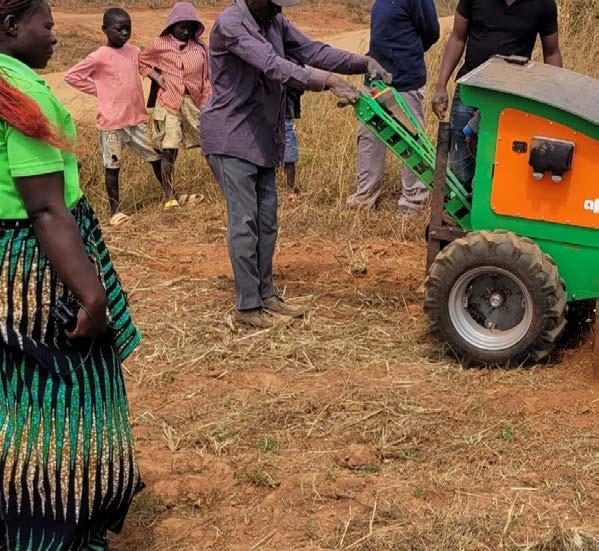
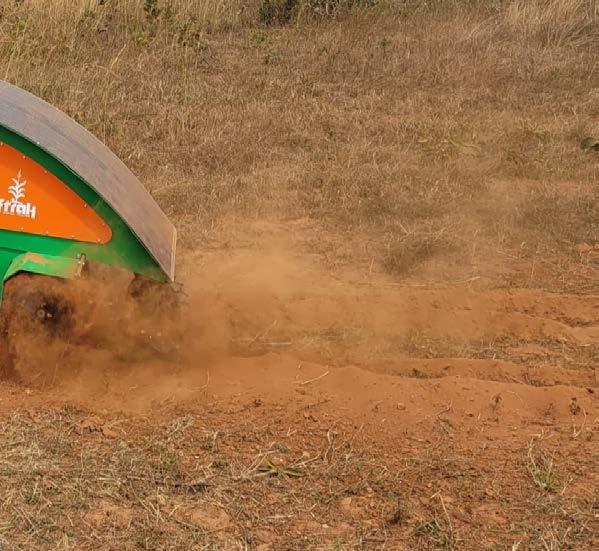
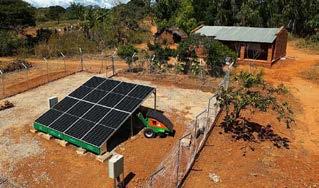
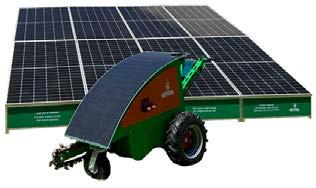
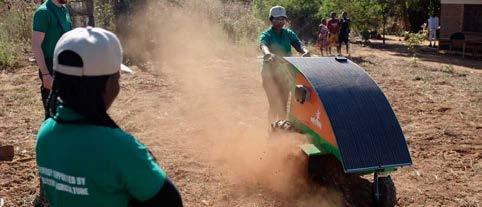
Aftrak is a ground-breaking initiative that combines solar microgrids and tailored tractors to empower smallholder farmers across Africa. It aims to significantly increase crop yields and smallholder incomes while providing access to clean, green electricity in rural communities.
Aftrak is the Winner of the $1 million Milken-Motsepe Prize in Green Energy global competition.
Jonathan Wilson is a cofounder of the project from The Wolfson School of Mechanical Electrical and Manufacturing Engineering, which is one of the biggest engineering schools of its kind in the UK with a research portfolio of around £52 million. The Centre for Renewable Energy Systems Technology (CREST) has a cohort of around 60 academics, researchers and PhD students and a range of laboratory facilities for prototype manufacture and testing.
Details of the Zoom invitation for this talk will be distributed to members before the event. If you wish to particpate and do not have the joining details please contact Sarah at the Secretariat.
Lunchtime Lecture - Marketing to Farmers: Lesson from Five Years of Data
13/01/2026 - 1pm-2pm
Over the past five years, Hillsgreen’s Marketing to Farmers report has tracked how farmers think, buy, and make decisions. In this session, Ed Seed unpacks the key lessons from the data and explores what they mean for businesses marketing to farmers today. From trust and authenticity to content and channel choices, discover how attitudes have shifted, what really influences farmer behaviour, and how brands can build stronger, more effective connections across the agricultural industry.
Hillsgreen is a specialist marketing agency that helps businesses connect with farmers and the wider rural community. Founded by people who understand agriculture inside out, Hillsgreen blends strategic insight, data-driven marketing, and deep sector knowledge to deliver measurable results. Through initiatives like the annual Marketing To Farmers report, the agency continues to lead the way in helping brands engage the farming audience with authenticity and impact.
Details of the Zoom invitation for this talk will be distributed to members before the event. If you wish to particpate and do not have the joining details please contact Sarah at the Secretariat.
Profession
Lunchtime lecture
Land Sparing, Land Sharing and the Engineering Reality of Agrivoltaics
The Institution of Agricultural Engineers’ September Lunchtime Lecture provided an update on the evolving field of Agrivoltaics, the co-location of crop production with solar energy generation, from an international perspective. Andy Newbold reports.
Solar
Paul Mwebaze, agricultural economist at the University of Illinois, Urbana-Champaign, presented the latest findings from a multi-disciplinary team exploring large-scale Agrivoltaic deployment in the US Midwest. The research builds on previous studies, examining how solar expansion interacts with cropland, and comparing conventional utility-scale
photovoltaic (PV) deployment with land-sharing approaches.
According to Paul, the US Midwest currently hosts 67% of the nation’s solar capacity, a concentration driven by the region’s flat terrain and proximity to transmission infrastructure. However, this rapid expansion has prompted questions about land use, community
acceptance, and the trade-offs between food and energy production.
Land Sparing versus Land Sharing
He framed the discussion around two conceptual approaches: land sparing and land sharing.
Sparing Cropland for
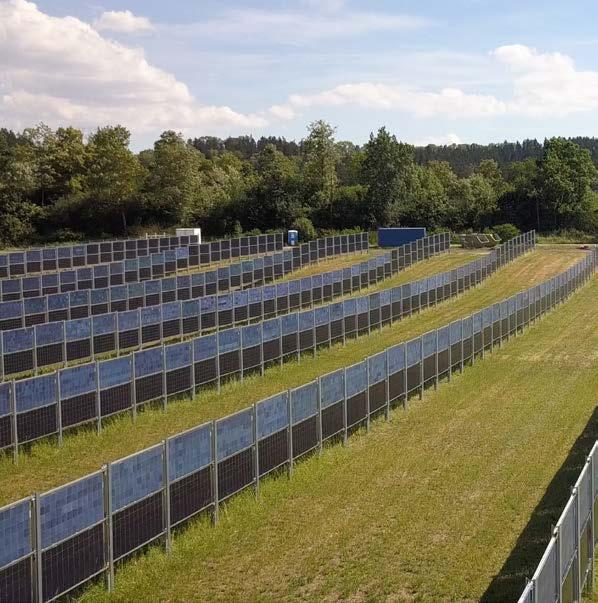
Land sparing prioritises the most productive land for agriculture while allocating less productive areas for solar energy. By contrast, land sharing, or Agrivoltaics, integrates PV panels with crops on the same land, allowing dual use but requiring careful management of light, water, and crop machinery.
The engineering and economic trade-offs of these approaches are nuanced. Land sparing is generally more efficient in terms of food production and energy yield, with conventional PV generating electricity at lower cost per hectare. Agrivoltaics offers potential benefits, including diversified farm income and improved social acceptance, but these depend on crop type, system design, and local conditions.
Row crops, such as corn and soybeans, present particular challenges. Standard Agrivoltaic layouts with panels raised approximately eight feet above
ground to allow machinery passage are technically feasible, but they can reduce energy capture due to shading and complicated planting and harvesting operations. Specialty crops, high-value horticulture, or regions with water scarcity may offer more promising economic and environmental returns under Agrivoltaic schemes.
Engineering Design Considerations
From an engineering perspective, Agrivoltaic systems must balance structural, operational, and safety requirements. Panels must comply with standards such as IEC 62446 for PV system testing and commissioning, while supporting structures require appropriate load ratings and clearance heights to allow agricultural machinery access. In systems integrating livestock, designers must also consider BS 8611 and ISO 18497 for safety in automated or robotic systems to
prevent harm to animals and operators.
The speaker presented a stylised layout for row-crop Agrivoltaics, illustrating panel spacing, elevation, and orientation. The key research questions focus on comparing energy generation, crop yield, and profitability between land-sparing and land-sharing systems under projected US solar targets for 2050.
Economic and Environmental Implications
Financial analysis shows differing incentives for farmers and developers. Developers often prefer utility-scale PV alone due to higher energy yields and lower installation costs.
Conversely, farmers may derive additional income through leasing land under Agrivoltaics, managing vegetation, or integrating small-scale livestock grazing. Sheep grazing, in
particular, has emerged as a practical and environmentally friendly approach to managing vegetation beneath panels, reducing mowing requirements and maintaining soil health.
Paul’s work also considered the annualised cost of electricity. Agrivoltaic systems generally involve lower panel density and increased engineering complexity, translating into higher per-unit energy costs. These factors underscore the importance of business model innovation and policy support if land-sharing approaches are to become viable at scale.
Global Perspectives and Scaling Challenges
While the study focuses on the US Midwest, its insights are relevant internationally. Countries with high agricultural value per hectare, limited land availability, or specific energy demands may need to weigh
the benefits of land-sharing systems against the higher technical and operational costs. In denser regions, such as parts of Europe or Asia, Agrivoltaics may offer a compromise between energy expansion and preserving farmland, particularly when combined with specialty crops or livestock integration.
Agrivoltaics are not a one-size-fitsall solution. Factors such as crop selection, panel orientation, climate, water availability, and local policy all influence outcomes. Site-specific design, adaptive management, and careful integration of farming operations with PV infrastructure are crucial to achieving both energy and agricultural objectives.
Community Engagement and Policy Considerations
Community acceptance remains a critical factor in the success of solar deployment. Opposition often arises from concerns about reduced land values, impacts on food production, aesthetics, and equitable distribution of benefits.
Agrivoltaics may help to maintain a visible agricultural presence on land, potentially easing social licence issues, but it does not automatically ensure equitable outcomes.
Mwebaze stressed the importance of strong community input in planning, alongside innovative business models and policy incentives to encourage co-location of energy and agriculture.
Looking Forward: Research and Innovation
Ongoing research explores integrating livestock and specialty crops with PV systems, optimising panel layouts for light management, and improving the economics of dual-use land. In particular, solar grazing with sheep has shown promise for reducing maintenance costs and providing complementary farm income, while maintaining soil and crop health. Globally, these findings reinforce
the need for a systems-level view of energy and agricultural planning. Engineers, economists, agronomists, and social scientists must collaborate to develop solutions that balance technical feasibility, profitability, environmental impact, and social acceptance. Standards for structural safety, PV performance, and operational safety play a vital role in ensuring that dual-use systems are both productive and safe for operators and livestock.
Conclusion
Agrivoltaics represents a promising approach to reconciling the competing demands of food production and renewable energy expansion. Yet, as the work demonstrates, the approach is highly context-dependent. Conventional utility-scale PV remains more efficient in energy generation and land use for row crops, while Agrivoltaics may offer advantages in specialist scenarios, with livestock integration, or in regions with constrained land availability.
The global engineering challenge is clear: designing systems that maximise energy production without undermining agricultural productivity, while ensuring safety, economic viability, and social acceptance. Adaptive, site-specific solutions, supported by rigorous standards and policy frameworks, are essential if Agrivoltaics is to move from experimental to mainstream practice.
As the solar and agricultural sectors evolve in parallel, engineers and researchers are at the forefront of developing integrated solutions. The combination of innovative design, operational insight, and community engagement offers a pathway toward land-sharing approaches that can complement, rather than compromise, both food security and renewable energy goals.
Obituaries
James “Jimmy” Wallace – a tribute
James (Jimmy) Wallace was born 7th December 1924 and died 20th August 2025.
He was born in Ochiltree, Ayrshire, Scotland into a farming family.
Living and growing up on the farm in the 1930’s taught the young Jimmy many lessons, the foremost of those being “we’ll just keep that, you never know when it will come in handy”.
Jimmy started his working life at Wallacetown Engineering as an apprentice turner and like so many of his generation Jimmy went to Night School, firstly in Ayr and then the Technical School in Glasgow.
While at Wallacetown Engineering
he caught the eye of the young Elizabeth Henderson, the wages clerk. Being the daughter of an Agricultural Engineer you could say it was a match forged in heaven and they were married on 4th June 1949.
A Combine Man
In 1952 he joined the then Massey Harris Company as a Design Draughtsman. He specialised in combine harvesters and he was responsible for a number of safety features which were later to be introduced as industry standards and he had several patents in his name.
The move to Coventry came in 1959 when the amalgamated Massey-Harris and Ferguson
companies relocated their engineering departments.
During the mid 1950’s he and a team from Massey-Harris (Kilmarnock) were involved in a project to help revitalise the agricultural industry at Eschwege in what was then West Germany. Later in the mid 1970’s he and a team from MF were based at a castle behind the “Iron Curtain” doing similar development work.
The MF 760 combine was his ’baby’ from drawing board to field; he knew every nut, bolt, pulley and blade and latterly when he transferred to field support introduced many modifications, some already made in his garage ready to be implemented. One redesign was to revolutionise
the method by which oil seed rape was harvested and it is used by all combines today, thus saving farmers the world over time, money, and making their harvesting easier.
Post Retirement
Upon retirement from MF in 1986 he joined the Agricultural Training Board to pass on his engineering and combine harvester knowledge.
He also worked on a range of projects from rehanging the bells in the village church to helping setup and run the Kenilworth Show. In all this, Jimmy was ably supported by Betty. Their four sons grew up in the village. In his 90s, when Betty became frail and died, Jimmy took on the cooking and running the household tackling it with the same purposeful approach he had in all other projects in his life.
Institution Life
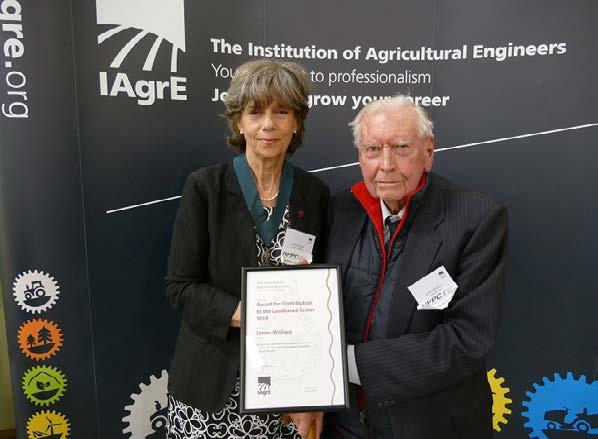
Being a member of the Institution of Agricultural Engineers for over 70 years these efforts were recognised first by the IAgrE Award for his contribution to Land Based Sector in 2019, and he was the first to receive his 70 years Long Service Certificate on 11 September 2024 (see article in Landwards Winter 2024 edition).
His later years were at Town Thorns care home where he was able to observe the seasons slip by, safe, warm, and well fed. He was surrounded by fields and the agricultural landscape he loved.
Jimmie’s other great passion was Rabbie Burns and he had served as a President of the Coventry and District Caledonian Society. He convinced the care home that Burns Night ought to be honoured, a tradition they started for him.
There was also a piper in attendance at his funeral, and as Jimmy would say – “Gang awa and be cheery”.
William Waddilove October 2025
New report maps innovation opportunities to accelerate UK agri-tech growth
The Future of Arable and Horticulture Innovation: Shaping the Next 10 Years
A new report published by the UK Agri-Tech Centre sets out a vision for how the UK’s arable and horticultural sectors can harness agri-tech to strengthen productivity, resilience and sustainability over the next decade.
Commissioned and developed by the UK Agri-Tech Centre, ‘The Future of Arable and Horticulture Innovation’ looks ahead to 2035 and identifies the enabling technologies and innovation pathways that will drive growth for UK agri-tech businesses and deliver impact across the wider food system.
The report highlights that the UK’s agricultural landscape is at a turning point.
As climate pressures intensify, labour challenges persist and input costs rise, the need for intelligent, efficient and integrated farming systems has never been greater.
Emerging and enabling technologies, from advanced sensing and AI to biotechnology and controlled environment systems, will be critical to meeting these challenges while creating new commercial opportunities for UK businesses. Grounded in interviews and workshops with stakeholders across the supply chain and informed by the UK Agri-Tech Centre’s technical expertise, the report identifies three strong themes to drive new innovation opportunities:
• Climate change mitigation
• Automation and digitisation
• Diversification of production
Dr Harry Langford, Innovation Director at the UK Agri-Tech Centre, said: “For agri-tech to realise its full potential, businesses need both clear pathways and the ability to connect innovations with the complexities of real-world farming.
“By linking research technology development with commercial practice, the sector can bridge the critical gaps between concept and adoption, delivering scalable, on-farm solutions.”
Building on these themes and to set an aspirational agenda for the sector, the Centre has defined four innovation pathways for technology development within arable and horticulture, over the next 10 years.
Technical Engineering a Sustainable Future for
African Smallholder Farming
Across sub-Saharan Africa, hundreds of millions of smallholder farmers continue to face persistent challenges: poor soil fertility, unreliable rainfall, limited access to machinery, and a lack of affordable, reliable electricity. The result is a cycle of low yields, poverty, and vulnerability to climate shocks. While numerous interventions have targeted these challenges in isolation, the Aftrak project, led by researchers at Loughborough University, is tackling them together.
An integrated system that brings together solar microgrids, micro electric tractors, and Deep Bed Farming techniques.
Aftrak is an integrated system that brings together solar microgrids, micro electric tractors, and Deep Bed Farming techniques. The aim is to provide farmers not only with the tools to increase productivity but also with the means to build resilient rural economies powered by clean energy. For agricultural engineers, this project offers both inspiration and a technical roadmap for how interdisciplinary design can support sustainable development at scale.
The Concept: Energy Meets Agriculture
At its core, Aftrak is designed to create a virtuous cycle of farming and energy use. The system is built around three components:
1. Solar Microgrids – A communitybased renewable energy system that supplies electricity for homes, businesses, and crucially, agricultural machinery. Unlike diesel generators, solar systems
are clean, quiet, and resilient to fuel price volatility.
2. Micro Electric Tractors – Scaled to the needs of smallholder farmers, these tractors are affordable, robust, and charged directly from the microgrid. Their design emphasises simplicity and ease of maintenance, ensuring they can be serviced locally without dependence on costly imports.
3. Deep Bed Farming (DBF) – An agronomic technique where raised soil beds improve drainage,
aeration, and water retention. DBF helps reverse soil compaction, reduces erosion, and can triple crop yields compared with traditional ploughing.
The innovation lies not in each component individually, but in how they interact. The tractor enables DBF, which increases yields and incomes. Higher incomes allow communities to purchase electricity, sustaining the solar microgrid. This closed loop creates both agricultural and economic resilience.
Engineering the Micro Electric Tractor
For agricultural engineers, the tractor design is central to Aftrak’s feasibility. Unlike conventional large-scale machinery, the Aftrak tractor must be:
• Small and lightweight, to operate on fragmented plots and in soils that cannot withstand the compaction of heavy tractors.
• Electrically powered, with batteries sized for day-to-day farm tasks and recharged from the local solar grid.
• Affordable and robust, using simple mechanical systems that can be repaired with locally available tools and materials.
• Adaptable, to perform multiple roles: bed formation, cultivation, and transport.
This presents a design challenge. This presents a design challenge. Engineers must balance torque requirements for soil preparation with energy efficiency. Battery capacity must align with solar charging availability, while weight distribution affects both traction and soil health. In essence, the Aftrak tractor requires a systems approach to design, integrating mechanical, electrical, and agronomic needs.
Solar Microgrids: Power Beyond the Farm
Electricity remains one of the greatest constraints to rural development in Africa. Grid extension is often slow, expensive, and unreliable. By deploying localised solar microgrids, Aftrak delivers a decentralised
energy solution.
From an engineering perspective, the microgrid must be carefully sized. Energy demand is not only agricultural but also residential and commercial. Farmers need reliable charging cycles for tractors, while households depend on electricity for lighting, refrigeration, and small businesses. Engineers must therefore design systems that balance load, manage storage, and withstand environmental stresses such as heat, dust, and storms.
Maintenance is another critical factor. Solar arrays and batteries require servicing, and community capacity for upkeep must be built from the outset. Here, agricultural engineers overlap with electrical engineers, ensuring that the power system is not only technically sound but also socially embedded in rural life.
Deep Bed Farming: Soil Science Meets Machinery
The third pillar of Aftrak is agronomic. Deep Bed Farming (DBF) is a method where farmers prepare soil into raised beds, typically 1.5–2 metres wide, separated by furrows. The technique has multiple benefits:
• Enhanced water retention in dry periods.
• Improved drainage in wet conditions.
• Greater root aeration and reduced compaction.
Micro Electric Tractors – Scaled to the needs of smallholder farmers, these tractors are affordable, robust, and charged directly from the microgrid
The combined use of solar panels and storage (the microgrid) enables remote power
• Reduced soil erosion on sloping land.
Trials have shown that DBF can increase yields up to threefold, a transformative gain for subsistence farmers. However, bed formation is labour-intensive if done manually. This is where the electric tractor becomes essential, mechanising the process while reducing drudgery.
Agricultural engineers must consider how bed dimensions interact with soil types, rainfall patterns, and crop choices. Machinery must be capable of precise tillage while avoiding excessive disturbance that could degrade soil structure.
Challenges to Implementation
While the Aftrak model is promising, scaling it requires engineers to address significant challenges:
• Durability and Repairability: Machinery must be designed for harsh environments, with dust, mud, and heat all taking a toll. Local repair networks are essential.
• Affordability: Even low-cost tractors and solar systems may remain out of reach for individual farmers. Financing models such as leasing or cooperative ownership are necessary.
• Soil and Climate Variability: DBF must be adapted for local conditions — what works in one agro-ecological zone may not in another.
• Community Engagement: Adoption depends not only on technical performance but also on trust, training, and alignment with local farming traditions.
These are not just technical issues; they demand interdisciplinary collaboration across engineers, agronomists, economists, and social scientists.
Scaling Potential
With 800 million smallholder farmers across Africa, Aftrak’s potential impact is enormous. If deployed widely, it could:
• Drive substantial gains in food security and household income.
• Provide millions with access to reliable, renewable electricity.
• Reduce reliance on fossil fuels in agriculture.
• Build resilience against climate variability.
For engineers, scalability requires standardisation of design, modular production, and local manufacturing where possible. Pilot projects must inform continuous design improvement, ensuring the system is
adaptable across diverse regions. Conclusion
Aftrak is more than a research project — it is a blueprint for sustainable rural transformation. By integrating renewable energy, adapted machinery, and soil-focused agronomy, it demonstrates how engineering can enable a self-sustaining cycle of productivity and power.
For agricultural engineers, Aftrak provides an opportunity to apply systems thinking at the intersection of energy, machinery, and farming. Its success will depend not only on innovation but also on robustness, affordability, and adaptability to local contexts. If these challenges are met, Aftrak could become a model for how engineering solutions can deliver on the promise of both food security and clean energy for millions.
Find out more:
Aftrak will be the subject of IAgrE’s December Lunchtime lecture:
Deep Bed Farming
DBT
The Douglas Bomford Trust
Latest News
This last quarter the Douglas Bomford Trust has been busy supporting the development in agricultural engineering with several initiatives. David White Technical Secretary reports.
Prize Winning Postgraduate
On Thursday, 18 September 2025, Trust Chair, Nick August, attended the Royal Agricultural University Graduation Ceremony. Postgraduate student, Kestrel Lambert, was awarded the Top Agricultural
Student prize supported by The Douglas Bomford Trust. Miss Lambert graduated with a MSc in Agricultural Technology and Innovation, with Distinction. During the ceremony, Kestrel was presented with a certificate and a cash prize. Following graduation, Kestrel has returned to working in the financial
sector, as an analyst at Avondale Private Capital. She is excited to use her practical agricultural knowledge to support investment decisions and risk management of nature-based projects. The graduation ceremony marked the 180th anniversary of the Royal Agricultural University.
Nick August, DBT Chair with Top Agricultural Student Award winner Kestrel Lambert
Inspiring and Nurturing Young Potential
For many years, the Trust has sponsored Arkwright Engineering Scholarships. The Scholarships aim to identify, inspire and nurture high-potential students aged 16 to 18. Initially, the Trust sponsored two students per year. In the Trust’s Jubilee Year, this was increased to four students per year. When selecting students for the 2025-27 programme (starting September 2025), there were 5 outstanding candidates and trustees decided to fund all five. Trustee, John Baines, is their mentor.
Summer School
The Agricultural Universities Council (AUC) held a Summer School from 16 to 20th June 2025. It was supported by several organisations, including the Douglas Bomford Trust.
The school was part of the AUC’s Future Agricultural Researchers programme. It was attended by 26 master’s and undergraduate students from universities across the UK. The school started at The Royal Society before 5 days of visits and presentations including Rothamsted Research, G’s Growers, Agri-TechE, British Beet Research Organisation,
Allerton Research and Educational Trust, University of Nottingham, Harper Adams University and The Royal Agricultural University: many of these institutions receive DBT awards to support research, for example, PhDs, and student travel awards.
The author had the pleasure of joining the students and tour leader, Kayleigh Crouch, at Green Acres Farm, Kemberton, Shropshire where Mark and Liz Lea have been farming their mixed arable and livestock 175 ha farm in a five year rotation organically since 2000.
After an overview of their farming
system and their conversion from conventional to organic in their visitor centre, we had a farm tour led by Mark. Mark was open and honest about their successes and things that had not gone so well.
The session finished back in the visitor centre for more Q and A and presentations during which I had the opportunity to discuss the mission of The Douglas Bomford Trust and how we might be able to help the Summer School students in the future. The AUC have recently published a final report about the school.
For further information, see the Trusts website:
Or contact the Secretary David White via: enquiries@dbt.org.uk
You can also follow: @ BomfordTrust on ‘X’ and ‘LinkedIn’, for news , opportunities and events
Mark Lea with AUC Summer School students
Agrifuture Awards
DLG Agrifuture Concept Winners 2025
The five engineering concepts shaping the next decade of crop production.
The DLG (German Agricultural Society) has announced the five winners of the 2025 DLG-Agrifuture Concept Winner award – arguably the strongest single global indicator of what agricultural machinery engineering will actually look like beyond 2030.
Unlike most innovation awards where the market arrival is within one product cycle, DLG’s Agrifuture winners must be 5–10 years ahead. This is now the third cycle of the award, and its track record is becoming important for engineers: what wins here, ends up defining new machine architecture, new system architecture, and new interoperability models.
The awards were presented on 12 November 2025 at Agritechnica in Hannover, at the DLG Expert Stage “Smart Efficiency”.
The winner selection process is notable itself – national expert panels, international expert panels, academia, and DLG’s own specialist committees vote against a shortlist pre-selected by an independent jury.
This is not brand marketing. This is pre-competitive engineering direction setting.
The five Agrifuture Concept Winner 2025 projects:
AEF – FieldDataSync
Machine-to-Machine data synchronisation for mixed fleet autonomy
Europe is dominated by mixed fleets. The advantage of machinery choice becomes a structural disadvantage when the digital layer becomes brand siloed.
FieldDataSync tackles this directly: standardised, secure, brandindependent radio communication between agricultural machines to enable cooperative, synchronised field work. This includes field boundaries, position data, section control coordination, video streaming, group management, unloading interaction and diagnostics.
Critically: this works without mobile reception.
This is the strongest strategic indicator this year of where the future autonomy standard battle will be fought: not brand verticals – but cooperation protocols, safety assured, cybersecurity assured, and enforceably interoperable.
Funded by BMELH, and implemented via AEF standardisation – this is foundational infrastructure.
AI.Land – DAVEGI
The first end-to-end autonomous vegetable farming + direct local food supply system
Vegetable crop roboticisation has been fragmented: separate machines, separate tasks, separate logistics.
DAVEGI integrates the entire chain: soil preparation → planting → plant care → selective robotic harvesting → direct crate fulfilment → direct local delivery.
Two robotic manipulation arms –trained for gentle pick – execute the highest labour portion of vegetable production.
This isn’t “automation of farming”. This is dismantling the supply chain itself.
If this succeeds, the largest economic value is not CAPEX saving. It is cost removal: no centralised grading, no centralised distribution, no disposable packaging, radically reduced cold chain.
TRL 6 target is close – which is unusually high for a concept award winner.
Amazone – SoilDetect
Real-time multi-sensor soil data → AI soil zone map generation during primary tillage
There have been numerous zone mapping tools, but no one has fused machine process data + geoelectric + geo + satellite + yield layer + climate → into a single continuously updating system using a cultivator itself as the sensor head.
Amazone’s SoilDetect does this.
The engineering implication is profound: if soil zonation becomes available while you are creating the seedbed, variable rate decisions can become closed loop inside the operational pass –not separate mapping exercise → office → prescription.
SoilDetect is not a new tillage architecture. It is a new soil information architecture.
SLS – Nextdrip
Industrialised Drip Irrigation Assembly With Site Specific Mass Customisation
Drip irrigation is the most water efficient method we have – but labour kills it in high wage economies.
NextDrip moves the assembly from field → factory.
In factory, drip units are pre-cut, site geometry encoded, site zone drippers and valves can be inserted at manufacture, metal marker implants allow mechanised retrieval.
This is agricultural engineering design reframed: the manufacturing system becomes part of the agronomic system.
The biggest implication is that this is a bridge tech for industrialised markets to adopt water efficiency tech that previously was only viable in low labour cost regions.
Zürn – SEED SELECT
Mechanical Weed Seed Destruction Inside the Combine Itself
Weed seed spread via harvest machinery is a major but largely ignored vector. Zürn now directly targets this with dual drum screens mounted behind combine cleaning sieves. Straw + chaff pass normally. Weed seed fraction is isolated, devitalised, and returned as safe organic matter.
This has low space requirement, low power requirement, modular retrofit compatibility – high probability of mass adoption.
This is the most immediately disruptive of the five. If this becomes common, it will change weed seedbank trajectory engineering.
Key Engineering Themes Signalled by the 2025 Winners
Theme
Interoperability will beat proprietary digital
Supply chain collapse is now an engineering objective
The implement becomes the sensor
Manufacturing moves upstream into agronomy
Weed control becomes mechanical not chemical
Why this matters now to agricultural engineers
Agricultural engineering over the last decade has been dominated by digitisation, cloud, ISOBUS maturity, and automation inside brand stacks.
This award cycle shows the next phase:
• Autonomy is no longer “OEM per OEM” – it is cooperation
Engineering Meaning Strategic Consequence
FieldDataSync makes autonomy only viable if machines cooperate
DAVEGI eliminates logistics layers
SoilDetect proves sensing migrates into the working tool
NextDrip factory mass customisation is a new category
The OEM competitive advantage moves from “my system” → “my compliance + my speed of iteration inside the system”
Future machinery value capture moves post-farm not pre-farm
SEED SELECT reframes where weed suppression happens Mechanical suppression and bioactivity suppression regain primacy
protocol design
• The supply chain itself is being engineered away
• Sensing is no longer a separate device class
• Manufacturing engineering becomes an agronomic performance tool
• Weed suppression returns to mechanical engineering innovation
That is a total reframing of where
engineering leverage is in ag.
This is why this award has become the single most valuable indicator set for agricultural engineers globally.
Agritechnica remains the platform where this horizon is made visible.
As agricultural engineers – this is where the next decade of your design work and your system thinking is going to live.
Membership Matters
150th Anniversary Celebration at the Science Museum
On Thursday 6th November, The Agricultural Engineers Assocation (AEA) chose the Science Museum in London for their spectacular 150th year anniversary dinner.
Top Honours in His Field
As many of you will know, the Institutions CEO Charlie Nicklin spends many spring and autumn weekends enjoying his hobby of match ploughing with his trusty MF35 and Ransomes plough.
L-R Paul Hemingway (IAgrE President 2020-2022) Peter Leech (IAgrE President 2010-2012),Alastair Taylor (former IAgrE CEO) and Mike Whiting (IAgrE Western Branch Secretary)
With 300 guests in attendance from worldwide locations, the event demonstrated the AEA’s prominent role in steering the industry through decades of change.
Following an opening speech by Director General Ruth Bailey, a video rolled the years back with images of how mechanisation was first embraced through to modern day technology.
The servings of fine wine and a Michelin star menu stimulated the banter across the tables, interspersed with museum exhibits.
The evening speaker Gyles Brandreth emphasised the level of personal effort which underpins the success of businesses, both big and small. This common goal contributing to keeping the nation fed through global challenges. President Sian Pritchard closed the formalities with a toast to the next 150 years.
A memorable event held in a fitting location, demonstrating how outputs from the AEA team and its members contribute to a sustainable and profitable agricultural sector.
Mike Whiting – Newmac Ltd & IAgrE representative
On October 11th/12th the 74th British National Ploughing Championships were held in Allesley in the West Midlands, and Charlie took the title for Vintage Mounted Ploughs on the Saturday out of a class of 30
entrants from
This is the 2nd time Charlie has won, as he gained the
top
all over the UK.
title in 2021 in Northumberland.
Northern Ireland Branch Visit
The Caledon Estate - 500 kWe Anaerobic Digester
Terence Chambers reports
Northern Ireland Branch members recently visited Caledon Estate in Co Tyrone to learn more about its anaerobic digestion (AD) facility. This was a valuable opportunity to see first-hand how on-farm AD technology is supporting sustainable energy generation and nutrient recycling on a large estate.
Farm manager, Christopher Gill, welcomed all and went on to provide an overview of the surrounding farm structure and lead an in-depth tour of the AD plant. Caledon Estate spans 2,500 acres enabling a controlled local source of feedstock and efficient nutrient management.
The Digester
The Hochreiter Ring-in Ring type anaerobic digester, which has a working volume of 5,447 cubic metres, was installed in 2014. Operating under thermophilic conditions at 52 degrees C the plant has a 120-day hydraulic retention
time to ensure complete breakdown of the organic material and stable biogas production. It generates around 260 cubic metres of methane rich (52%) biogas per hour to fuel two combined heat and power (CHP) engines producing 500kW of renewable electricity. The heat produced by them is directed to maintain the digester temperature and to dry wood. The low (5 ppm) hydrogen sulphide concentration of the biogas has not caused problems in the CHP engines over their 10 years of operation.
Feedstock
The digester is fed 36 tonnes per day with a mixed diet of 8t of wholecrop silage, 18t of grass silage and 10t of separated slurry solids. The crop feedstocks are grown on the farm, within a short 2.5-mile radius, minimising transport emissions and on-road movement. The plant also uses slurry supplied by local farmers.
IAgrE members were particularly interested in how Caledon Estate has integrated the digester into its wider farm system. The estate currently also uses a FAN screw-press separator to produce a phosphorus high dry matter fibre for use on arable crops and future export off the farm and a nitrogen rich liquid for on-farm use. This was a good example of a circular model system
where crop residues and livestock by-products are converted into energy and nutrient-rich digestate for recycling.
Mr Gill emphasised throughout his presentation the importance of feedstock planning, heat utilisation and nutrient management to ensure long-term efficiency and environmental benefit. The discussion about the use of mobile slurry separators on farms was of particular interest.
Thanks
The visit concluded with a discussion on current industry challenges, government policy and future opportunities for agricultural renewable energy deployment in Northern Ireland. The branch members thanked Caledon Estate and Christopher Gill for hosting such an informative and engaging visit that highlighted the continued role of engineering and innovation in driving sustainable agriculture.
The active Northern Ireland IAgrE Branch was set up more than 50 years ago and organises a regular programme of technical meetings. Details of further events arranged for this winter can obtained from the Branch Secretary Ian Duff, on: ianduff42@gmail.com
Engineer Receives Recognition
On Tuesday, October 14th, The House of Lords, Westminster, opened its historic doors to celebrate the outstanding achievements of 32 trailblazers in the UK’s food and farming industry.
The prestigious event, hosted by The Rt Hon Lord Taylor of Holbeach PC CBE FRAgS, praised the recipients for their significant contributions to the sector in the presence of 100 fellows, associates and guests.
Organised by the English Panel of the Council for Awards of the Royal Agricultural Societies (CARAS), the ceremony was a true celebration of the innovators, mentors and leaders who are shaping the future of British agriculture.
IAgrE Honorary Fellow Andy Newbold was recently awarded an Associateship of the Royal Agricultural Societies (ARAgS).
The awards highlight individuals who have gone above and beyond, driving change in sustainable agriculture, supporting charities, and pushing the boundaries of research and technology. From advancing traditional farming practices to taking on voluntary roles that strengthen the sector, these honourees are transforming the industry for the better.
Andrew Newbold citation
This Agricultural Engineer graduated in 1993 and has since dedicated his career to advancing the discipline and supporting engineers in agriculture. He has managed major events, like Tillage-live, Scotgrass and the National Sprayer Demonstration and he set up and ran the Precision Farming event from 1996 onwards.
He has published key industry magazines, notably ‘Tillage and Soils’ and has co-authored influential reports and he runs a safety consultancy, with both UK and International clients, ensuring that new kit is safe to use. He serves as Secretary General of the European Society of Agricultural Engineers and has held leadership roles in the Institution of Agricultural Engineers, including President, and for his great work, he was awarded an Hon Fellowship in 2023.
His voluntary work spans safety, education, journalism, and community projects, emphasising sustainable food production and net zero goals. Passionate about skills development, he strives to ensure engineering supports future agricultural challenges.
Andy Newbold Hon FIAgrE receives his award from The Rt Hon Lord Taylor of Holbeach PC CBE FRAgS
Membership Changes
01/08/25 to 31/10/25
Admissions
Member
Mr Mark Schwarz (South Eastern)
Mr Samuel Egbejinmi (Wrekin)
Mr Robert Edwards (Western)
Mr James Fegan (Ireland)
Dr Muhammad Kabir (Nigeria)
Dr Lyubov Shymko (Scotland)
Prof Simeon Jekayinfa (Nigeria)
Associate Member
Mr William Marley (South Eastern)
Affiliate
Ms Olivia Midgley (Southern)
Technician
Mr Wayne Keating (Western)
Mr Simon Bray (South Western)
Mr Rupert Hayes (East Anglia)
Student CAFRE
Peadar Barrett
Sean McCann
John Glenn
Oliver O’Hara
William (Andrew) Henderson
Keele University
Thomas Wynn
Munster Technological University
Noah Lynch
Matthew Rowe
Danielle Fogarty
Rory Murphy
Michael Devane
Harper Adams University
Fraser McGready
University of Nottingham
Alice Bengree
Deaths
We have recently learned of the death of the following members and we send our condolences to their family and friends:
Mr James (Jim) Wallace AIAgrE
Mr Wallace joined the Institution in August 1954 as an Affiliate member. He was a long-standing valued member of the Institution with over 70 years of membership. See full tribute on page 34.
Mr Maurice A Keech FIAgrE
Mr Keech joined the Institution in March 1963 as an Associate Member. He went on to gain Member grade in October 1968 and was then awarded Fellow grade in January 1969. Mr Keech was a long-standing valued member of the Institution with over 60 years of membership.
Mr John (Barrie) Hudson MIAgrE
Mr Hudson joined the Institution in July 1989 as an Associate Member. He then went on to gain Member grade in September of the same year. Mr Hudson was a long-standing valued member of the Institution with 36 years of membership.
Mr John M Edwards AIAgrE
Mr Edwards joined the Institution in April 1967 as an Affiliate Member. He was a long-standing valued member of the Institution with over 50 years of membership.
Mr John W Roberts AIAgrE
Mr Roberts joined the Institution in June 1959 as a student member and then went on to transfer to Affiliate Member in April 1967. He was a long-standing valued member of the Institution with over 60 years of membership.
Transfers
Fellow
Dr Pankaj Pathare (Oman)
Mr Athanasios Mandis (South Eastern)
Associate Member
Mr Barnabas Pickford (Western)
Technician
Mr Edward Jones (Wiltshire)
Registrations
Chartered Engineer
Mr Sean Blaney (Ireland)
Commercial Members
Academic Members
TIAgrE, your professional identity
Technical presentations
eNewsletters
Access to Landwards journal
Networking opportunities
Competitions & awards
Local branches
Careers guidance & Jobs and much more
A listed technician with the Institution of Agricultural Engineers demonstrates a high quality of education and training, compliance to our code of professional ethics and commitment to continual learning. In addition to displaying your professional identity, you get lots of other benefits, as above. simply complete the online application form Visit iagre org for details