Landwards
The professional journal for the Institution of Agricultural Engineers


In this issue...
Practice – Landscape Scale Restoration
Preview – Landwards Conference
Profession – The Latest Podcasts
Technical – The use of AI

In this issue...
Practice – Landscape Scale Restoration
Preview – Landwards Conference
Profession – The Latest Podcasts
Technical – The use of AI

launched in partnership between the Institution of Agricultural Engineers (IAgrE) and the Society for the Environment is the new grade of Registered Environmental Practitioner (REnvP).
This is a huge step forward to ensure high standards of professionalism and proven competence are met by those working to enhance and protect the environment across every sector.
This registration is timely and relevant for agricultural engineering and the associated technology sectors and the intention is that professionals in the industry will apply. The industry includes many different disciplines which need people to apply a professional approach and the Registered Environmental Practitioner grade is ideal for this.
Why should I register?
• Improve your career and salary prospects
• Stand out from the field
• Join a network of dedicated professionals
• Demonstrate your competence and skills.
Register through IAgrE now:
t: +44 (0) 1234 750876
e: membership@iagre.org
w: www.iagre.org
Although the standards are high, IAgrE makes the process simple.
“The launch of REnvP is a landmark moment for environmental professionalism, providing more individuals with the opportunity to gain professional registration and achieve external verification of their competence.”
Dr Emma Wilcox Chief Executive Officer of the Society for the Environment


If you are an existing Associate Member you have the option to upgrade to Member grade providing you have completed 5 or more years in a relevant career.
However, if you prefer, you can remain as an Associate Member for as long as you wish.
For more information scan this QR code
or contact Alison at; membership@iagre.org
As I look out of the office window, it’s raining, for the first time in 15 days, but unlike other areas of the country, we have had decent rainfall all summer and are still green as a result.
For farmers, the UK’s climate challenges often practically boil down to either too much, or too little rain, so it was great to be able to attend the Institutions members visit to the Great Fen Restoration Project in Cambridgeshire. The project is engaged in major engineering to tackle peat loss and restore water levels. The full report is from page 26 with some insight on farming with fragile soils following on page 32.
This year’s IAgrE Conference has the theme of Will Artificial Intelligence Revolutionise Agriculture? With an assembled panel of UK and international perspectives, the day promises to engage and inform
delegates regarding how AI is and will change agriculture.
Aptly, the conference is online this year with the speakers and programme being previewed from page 18.
Elsewhere in Landwards we find out more Branch activity from page 46, how the Douglas Bomford Trust is supporting Agricultural Engineering on page 40 and say goodbye to some valued members on page 36.
I will look forward to (virtually) seeing you at the Conference in October.
Andy Newbold
Andy Newbold Hon FIAgrE ARAgS Editor andy@farm-smart.co.uk
With more than 2,700 expected exhibitors—65 percent international—Agritechnica 2025 is fully booked, filling all 23 halls. With 430,000 international visitors expected, the largest agricultural machinery trade fair will run from 9 to 15 November in Hanover, Germany, debuting its “7 Days, 7 Topics” format, with each day targeting a specific group. This high exhibitor turnout reflects the event’s premier importance for farm equipment manufacturers to present their innovations.
All leading global farm equipment manufacturer have now committed to Agritechnica, joined by a broad spectrum of specialist machinery companies, suppliers and a strong presence of startups. Together, these exhibitors from more than 50 countries will present solutions for every stage of the farming process— from tractors, tillage and spreaders to sprayers and harvesters — across 23 halls, clearly structured into defined product areas. Autonomous
systems, field robots, and advanced digital technologies, key drivers of innovation in arable agriculture, will also be featured. The majority of exhibitors originate from Germany, followed by Italy, China, Turkey, the Netherlands, France and India.
“The numbers speak for themselves, and the feedback confirms it. The industry continues to time its innovation launches with Agritechnica. Numerous companies have expressed strong support for our new ‘7 days, 7 topics’ concept, which aligns specific technologies and themes with targeted visitor groups on each day. This ensures focused engagement and greater efficiency for all involved,” says Timo Zipf, project manager of Agritechnica.


The UK Agri-Tech Centre has welcomed the UK Government’s recognition of agri-tech as a priority Advanced Manufacturing ‘frontier’ industry, in its Industrial Strategy, as well as its role to deliver on ambitions for growth, to boost productivity, build climate resistance and reduce emissions from agriculture.
The Strategy, published recently, identifies high potential industriesincluding agri-tech - that develop and commercialise strategically important technologies, and describes how the Government will support their successful development.
It outlines eight priority industries, including Advanced Manufacturing, incorporating agri-tech. Another one of the eight frontier sectors is Digital & Technology, including Engineering Biology, of which precision-breeding is part, and for which secondary legislation was passed in the House of Commons on 13th May 2025.
The Strategy has a ten-year scope and is committed to the promotion of free and fair trade via strong international partnerships, and to reducing regulatory burdens to speed up the development of innovation, including via the Regulatory Innovation Office.
It also recognises the importance of UK-wide expertise and clusters. It commits to support a nationwide approach to targeting those areas
across the UK that support the sectors included in the Industrial Strategy.
In addition to the Strategy’s publication, Defra has confirmed its commitment to continue to invest £200 million in the Farming Innovation Programme up to 2030 to help unlock the sector’s potential.
The UK Agri-Tech Centre’s CEO, Hannah Senior said: “We welcome the UK Government’s recognition of agri-tech as a frontier industry to deliver on ambitions for growth, to boost productivity, build climate resilience and reduce emissions from agriculture. The UK Agri-Tech Centre has a successful record of supporting government ambitions in these areas, and has already made an impact in driving company growth and industry adoption. Our nationwide capabilities and deep and sector-wide expertise now have even greater potential to be maximised via this Strategy, and we shall continue to work with Government, its agencies and the sector to bring it to fruition.
“We also welcome the Strategy’s ten-year scope: agri-tech requires forward thinking on behalf of innovators and investors, but there are long-term dividends for the economy and society from its successful creation and deployment. The Strategy’s commitment to promote free and fair trade is also critical: there are significant
global production needs, but also opportunities. The UK Agri-Tech Centre has established connections in international markets, and is therefore well placed to deliver on these ambitions.
“We also welcome the Government’s recognition of the role of a regulatory environment that is conducive to innovation. We are working with the Regulatory Innovation Office and actively working on unlocking opportunities around regulation for automation & robotics and insect bioconversion.
“It is encouraging to note the Government’s recognition of the importance of nationwide expertise via strategic clusters; we are proud of our UK-wide suite of cutting-edge facilities and expertise to support the test, trial and adoption of agri-tech innovation – successfully delivering solutions through to commercialisation.
“Finally, we welcome Defra’s commitment on the back of the Strategy’s publication to allocate £200 million in FIP up to 2030 to support the homegrown adoption of technology that can make a real difference on farms in England and Wales, supporting productivity and resilience in the agricultural sector and the agri-tech companies whose products can enable this.”
We Are Land-based Engineering, which is run by the Land-based Engineering – Training and Education Committee (LE-TEC Ltd), has announced the winners of the Land-based Engineering Technician of the Year Award 2025.
This prestigious award recognises the next generation of engineering talent driving innovation and excellence across the land-based sector in the UK. With record-breaking entries received, technicians across the country were nominated by their peers, colleagues, employers and lecturers to this year’s awards, answering questions set by the We Are Land-based Engineering panel.
Charlie Nicklin, CEO of Institution of Agricultural Engineers (IAgrE)
comments on this year’s competition, “As judges, it was a challenge to get to our three winners from the fantastic array of entries we had this year. The three technicians chosen are a credit to their employers and have individually shone through for a variety of reasons, including technical ability, commitment and passion in their roles. They are all great ambassadors for our industry and will hopefully inspire others going forward”.
After multiple rounds of sifting through the entries, the following three technicians were picked and Gareth Ford of the Agricultural Engineers Association (AEA) shared, “These three outstanding technicians showcase the skills, talent, and dedication that our industry has to offer. Their achievements reflect the strength of our training providers, employers, and the wider land-based engineering community.”
The Land-based Engineering Technician of the Year Award 2025 winners are:
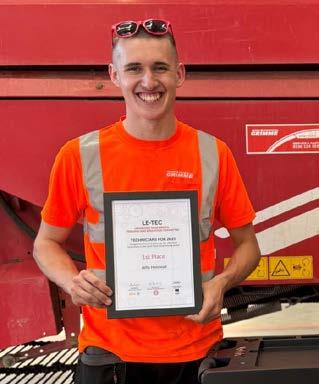
Alfie Holstead, representing Grimme UK, has been awarded 1st place. Nominated by his lecturer at Reaseheath College, Alfie stood out for his exceptional technical ability, dedication to continuous learning, and passion for agricultural engineering. His achievement highlights the vital role of apprenticeships and education in shaping the future of the industry. Alfie was awarded a Kubota Tool Box as his prize. Alfie commented – “I was already over the moon to hear I’d won 1st place, but to find out what my prize was, it’s incredible. Thank you to those involved in the judging process and to Kubota UK for the prize”.
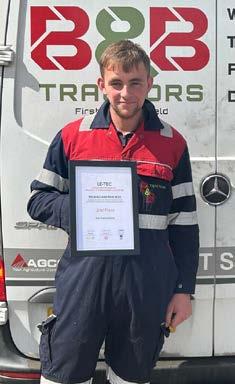
Taking 2nd place is Joe Sweetmore of B&B Tractors
Joe’s nomination came from his service manager. Joe impressed the judges with his level of hands-on expertise, excellent problem-solving skills, and commitment to delivering high-quality service in a fast-paced environment. Joe was awarded a Makita UK Radio for coming second place.
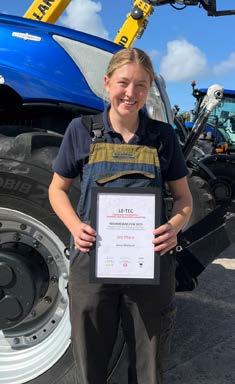
3rd place was awarded to Anna Welland of Rea Valley Tractors
Anna was nominated by her lecturer at Writtle College. Anna’s strong academic performance, practical aptitude, and enthusiasm for the sector made her a standout candidate and a role model for
aspiring technicians. Anna received a Makita UK Tool Kit for coming third in the competition, this will be invaluable to her career moving forward.
The Land-based Engineering Technician of the Year Award continues to shine a spotlight on the vital contributions of young professionals in agriculture, horticulture, and groundcare machinery. Backed by LE-TEC Ltd, the award is a testament to the sector’s commitment to nurturing future leaders and innovators, whilst showcasing the high quality careers that are available.
“The We Are Land-based Engineering initiative is extremely important to the sector, building awareness of the career opportunities on offer by reaching out to younger generations and potential career changers
alike. The calibre of the entrants we saw in this year’s Land-Based Engineering Technician of the Year was outstanding, filling myself and my fellow competition judges with pride and optimism for the new talent emerging across the board.” –Nick Darking, General Manager of BAGMA.
For more information about the awards, next year’s competition details, and the work of We Are Land-based Engineering, visit today.
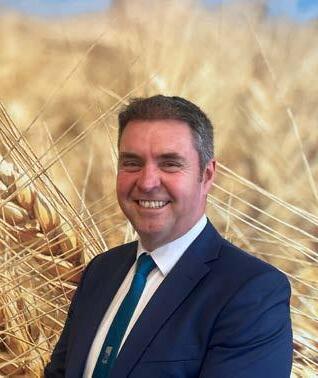
Charlie Nicklin
Often I look back at what I’d written 12 months ago for Landwards, and this time last year we gained a Labour Government. My comment back then was “Historically Labour have never done Agriculture many favours…” and that has certainly started to ring true. IAgrE is of course politically neutral but it is worth picking up on the effects it is having in our sector, particularly around new technology and investment. Agricultural/business property relief, inheritance tax and then the cancellation of the Sustainable Farming Incentive (SFI) were some initial big blows to the sector. Although the SFI has been reopened again these policy decisions really
impacted potential investment plans for agricultural businesses, which of course then ricochet through the supporting industries, whether its sales of new tractors and farm equipment or investment in new agri-tech solutions.
We’ve certainly seen investment in agri-tech reduce and the landscape for start-ups is tough with a few succumbing to cash-flow issues. Some good news is that agri-tech has been listed in the Government’s Industrial Strategy Advanced Manufacturing Sector Plan as one of six frontier industries. The important point to note is that being listed under advanced manufacturing places the emphasis on engineering solutions with machinery, systems and processes, and that needs engineers and technicians.
Continuing on that theme I see plenty of technicians coming
through the array of colleges and training providers, but where are the engineers? We really need more people choosing to study agricultural engineering and we need more universities offering these pathways along with flexible ways to study like part time courses and degree apprenticeships schemes. The latter is something that is not offered in our sector, however I do get asked if one is available fairly regularly. I recently attended Hartpury College’s opening of their new land-based engineering facility, its great to see this investment going in at a vocational level to train technicians. Its essential that we also have graduate engineers coming through to fill roles in existing industry and also to get more involved in future technology developments which are happening outside of the traditional manufacturers.
There is a fantastic array of speakers lined up for the IAgrE conference on the 22nd October. This year will be online with two overseas speakers and we want the conference to be accessible for all, no matter your location. The subject is AI, and we don’t mean insemination, we mean artificial intelligence. It’s a subject that’s being discussed and debated by governments, educators and industry, so we’re keen to understand where it could take us in agriculture.
I like to see a blend of academic research and practical use, which is reflected in the speakers. The conference will end with a panel discussion chaired by Olivia Midgely from the Farmers Guardian. Please have a read about the speakers on page 16 and sign up on the website.
Charlie Nicklin CEO, IAgrE ceo@iagre.org
Scan the QR code to find out more about the conference
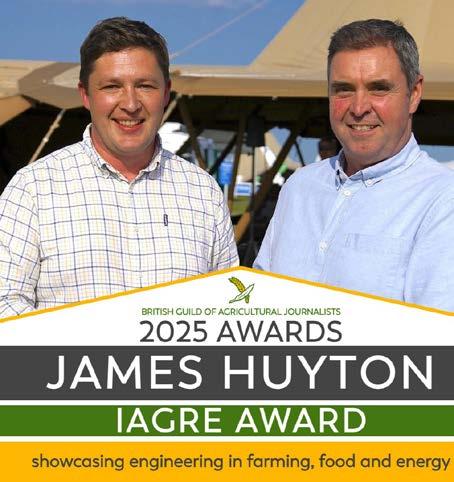
The summer brings the UK Cereals exhibition where IAgrE present our awards for technical articles to members of the British Guild of Agricultural Journalists. This year the show was blessed with an abundance of glorious sunshine and an equally abundant attendance; which was an underlying concern given the challenges in the industry at present. Our award winner this year was James Huyton from the Farmers Guardian for his excellent article on JCB’s recently launched 403E electric compact wheeled loader. James delved deep into comparability with its diesel equivalent and gave a great view from a usability perspective. Given its compact size and yard based operation the 403 is an obvious machine that could be electrified, it’s great to see JCB do this.
Judging and presenting awards is a fantastic part of the job and recently I’ve had the honour of being asked to judge the Agri-Tech Innovator of the year at the British Farming Awards. What is very evident to me is that engineers don’t shout enough about some of the great work they do, as they say, “you’ve got to be in it to win it!”, so come on, start nominating people and projects for awards, its great to be recognised for your efforts and it’s a great way of inspiring young people to study engineering.
Mark Moore
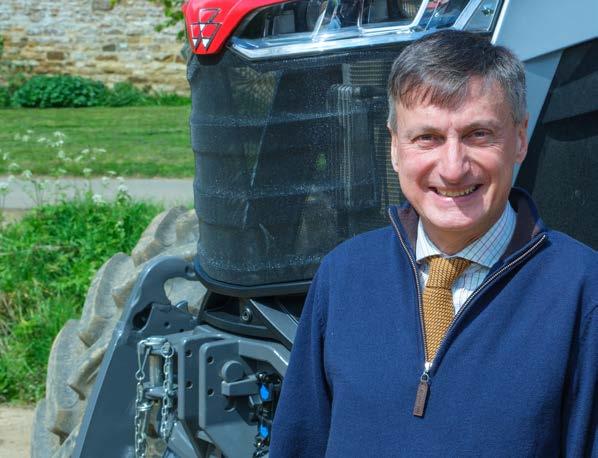
The main issue on my agenda over the past few months has been tariffs and their potential impact on the farm machinery sector and the wider global economy. In April President Trump shocked the world by announcing a range of tariffs, only to put most of them on hold which caused further uncertainty in global markets. Since April there has been a flurry of negotiations as countries try and reach trade deals with the US.
The UK was one of the first to negotiate a trade deal where a baseline tariff of 10% was applied from the 5th April 2025. This was
followed by others as governments including the European Union, Japan and China, struck deals with the US. These negotiations continue and it is hoped farm machinery and technology becomes an industry of strategic importance enabling tariffs to be reduced. Our sector is actively advocating for this to happen given the requirement to produce more food with less. I don’t need to remind everyone the FAO states we must produce 60% more food by 2050 to feed a projected world population of 9.3 billion. Many governments acknowledge this challenge and recognise that our sector has an essential role in achieving this growth in food production.
Another significant announcement came in June when the UK government published its Advanced Manufacturing Sector Plan with the aim of ensuring the UK is at the forefront of tackling the challenges of our era. Within the plan, I was very pleased to see that agri-tech is highlighted as one of six priority manufacturing industries with the fastest growth potential, the others being: Automotive, Batteries, Aerospace, Space, and Advanced Materials.
The plan states “Innovations in the agri-tech sector are vital
to improving UK agricultural productivity and sustainability”. As President of the IAgrE and someone that has been involved in agricultural innovations for the past 35 years, I enthusiastically support this statement. To achieve this the UK government intends to advance initiatives that positively impact controlled environments, robotics and automation, advanced sensors, AI, and data systems. These are indeed encouraging signs the UK is taking our contribution to food security and the economy more seriously than has perhaps been the case in the past.
However, I sense there is work to do. I have been involved in UK agri-tech since 2012 when it first became part of the UK governments
strategy. It will be interesting to see the impact of this new plan because agri-tech has had limited commercial success in delivering integrated technology to farmers. If you recall from our November 2024 conference, speakers presented clear evidence that a systems approach was required to accelerate the adoption of technology on farm, and our conference discussion concluded it is important to work together to develop products that integrate into sustainable food production systems. Without increased levels of technology integration, history demonstrates it will be difficult to upscale individual technology products, so they become more widely adopted. We know the consequence of this is slow commercial reward for the companies involved and limited economic growth for the UK.
Nevertheless, the advanced manufacturing sector plan does recognise the importance of working with farmers during the development phase as it states the Farming Innovation Programme (FIP) will support SME’s to work with farmers to trial new technologies and practices. My concern is this becomes a repeat of the past decade where project teams continue to work in silos rather than being encouraged to consider how agri-tech innovations integrate into farming systems. However, the plan outlines the creation of the Agricultural Productivity Group, which will support industry led action to accelerate agri-tech adoption. This group has a very important leadership role as there are many challenges with achieving the systems approach required to increase the adoption rates of agricultural technology like Precision Farming. Some of these are technical challenges, such as farm data interoperability, while others are commercial, such as protecting intellectual property, all of which need to be managed and balanced to ensure success for the entire food chain.
I am optimistic there are increasing opportunities for agricultural engineers. Given our wide range of skills and knowledge many stakeholders regard us as natural systems integrators as we bring all the different elements together into solutions. A good example of this is the Institutions October 2025 conference which brings two of the six UK governments priorities together – agri-tech and Artificial Intelligence. So, my message to you all is – let’s keep talking and working together on the challenges to realise the opportunities.
Dr Mark Moore FIAgrE, IAgrE President 2024-2026
Biosystems Engineering
Volume 253, May 2025
Pages 104 - 130
Machine learning of clod evolution under rain for numerical simulation of microtopographic variations by clod layout
E. Vannier and R. Dusséaux
LATMOS/IPSL, Université de Versailles Saint-Quentin-en-Yvelines, Paris-Saclay, France
Highlights
• Numerical simulation of a seedbed-like surface evolution under rain is presented.
• DEM recording and Machine Learning allowed to learn clod evolution under rain.
• Surface representation by clod layout captures the main properties of the surface
Soil surface roughness (SSR) is shaped by tillage operations and evolves with weathering. It is related to geomorphologic processes and to soil fertility and therefore an important input for various models and the object of many studies. However, the measurement of SSR is cumbersome. The numerical simulation of surfaces is an alternative to surface measuring that enables the rapid generation of a large number of surfaces of desired properties.
This paper proposes a way to numerically generate soil surfaces resembling seedbeds with roughness that have evolved due to rain. As SSR is related to clod-size distribution, the principle is to set modelled clods on a planar surface, as a first approximation of the surface. An experiment was designed to get controlled surface roughness by setting pre-sieved clods on a nearly horizontal surface of loose soil and then subjecting the surfaces to rainfall events performed by a rainfall simulator. Digital elevation models (DEMs) of each state of the surfaces were recorded
Biosystems Engineering, owned by the IAgrE, and the official scientific journal of EurAgEng, is published monthly with occasional special issues.
To view the full article list of the latest edition and to find out more about depth and breadth of articles accepted for publication scan the QR code.
Reduced subscriptions are available to IAgrE members.
Scan the QR code for details of the preferential rates for both paper and electronic versions.
Over the past three months (May - July 2025), Biosystems Engineering published 40 articles, including 2 reviews and 1 short communication.
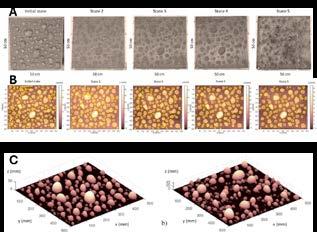
Experimental and
for soil surface roughness.
Experimental images of clods arranged on a soil surface that are then sequential eroded over time by simulating rainfall to reach different state levels; (B) Image analysis and segmentation of the degraded experimental tests showing clod evolution; and (C) Two examples of numerical simulation of clods to generate different initial soil surface roughness conditions.
by a laser scanner to monitor the evolution of clods under rain. Clods were segmented and matched to form a data base of individual clods at each state of the surface. The evolution of clods under rain was then modelled using a Machine-Learning approach. The robustness of the model was demonstrated, such that the modelling produced simple surface representations that captured the main properties of the soil surface. These small-scale soil surface models will be useful for various applications, such as rough surface scattering, and more generally, modelling where soil surface is an input. An interesting point is that this approach of modelled clods on a flat surface is representative of the autocorrelation function of the surface. That is to say that it captures the main properties of the surface. Also, as soil surface roughness is shaped by tillage operations
and evolves due to weathering, it was important to learn how to generate an evolved roughness. It may benefit also for modelling signals of natural origin that have an exponential like autocorrelation function.
Biosystems Engineering
Volume 254, June 2025
Pages 104-144
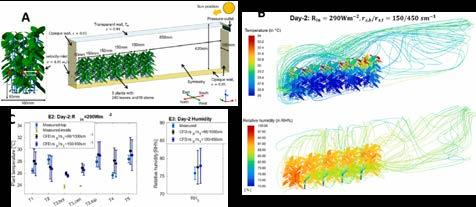
A detailed plant model in CFD that resolves the microclimate around individual leaves.
W. Plas, T, Demeester, Z. Y. Ahmed, J. R. Coussement, K. Steppe, and M. De Paepe
Department of Electromechanical, Systems and Metal Engineering, Ghent Uni., Ghent, Belgium
Regular readers will notice that this is fewer than normal for a 3-month period. Elsevier is currently undergoing changes to their manuscript handling process, which has resulted in shorter issues June and July. This is being compensated by much larger issues in subsequent months. The editorial team is aware of this and is trying to achieve a more even distribution of articles per issue. The following three articles have been chosen to illustrate the diversity of work
published in the journal over the past three months.
Regular readers of the journal will also note that as of May 2025, Elsevier has moved the Biosystems Engineering Journal from pagination to article numbering for indexation. This was a compulsory move in line with the evolution of Elsevier’s manuscript handling services.
Flanders Make, Heverlee, Leuven, Belgium
Laboratory of Plant Ecology, Faculty of Bioscience Engineering, Ghent Uni., Ghent, Belgium
Department of Mechanical Engineering, Uni. of Cape Town, Rondebosch, South Africa
Highlights
• A realistic plant geometry consisting of leaves and stems is used in CFD
• The mass and energy balance is closed for each individual leaf.
• The CFD plant model is validated using a set of experiments.
• The climate-plant model simulates the indoor climate of a plant factory.
• The new climate-plant model can be used to simulate different ventilation concepts
Plant factories require effective
ventilation to promote proper plant growth. Computational Fluid Dynamics (CFD) is commonly used to evaluate ventilation strategies in these environments. Traditionally, porous models have been employed to study ventilation in plant factories. However, this study proposes an alternative approach using the actual geometry of the plant, i.e., its leaves and stems, which reduces the need for fitting parameters typically used in porous models. The study focuses on the herb basil, with plant geometry based on experimental data to ensure accurate representation. For the first time in a model, the mass and energy balance around each leaf in a plant was closed, thereby obtaining an individual leaf temperature and water vapour fraction at both sides of the leaves. Radiative heat exchange was also included in the plant model by using the solar ray tracing algorithm to solve for shortwave radiation and the surface-to-surface radiation model for longwave thermal radiation. The model was validated during the night,
when there was no incoming shortwave radiation and during the day when there was.
The stochastic positioning of leaves in a plant model with actual leaves is more pronounced compared to a porous model simulation, where such effects are averaged out by the nature of the porous model. However, this proposed model has the advantage that certain zones can be better analysed under a higher spatial precision, namely the individual leaf level. Using this model, it is possible to study different ventilation concepts, thereby identifying dead spots and improving the ventilation efficiency of certain ventilation concepts. This model could be used by other researchers or plant growers to study the microclimate around individual plants in controlled environment agriculture. Using the model, ventilation strategies could be improved, which in turn leads to higher overall energy efficiency in a controlled environment agriculture setting.
Biosystems Engineering
Volume 255, July 2025, Pages 104 - 171
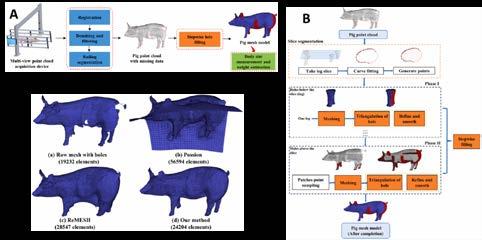
A reconstruction method for incomplete pig point clouds based on stepwise hole filling and its applications.
Z. Xu, Q. Li, W. Ma, M. Li, X. Xue, and C. Zhao
College of Information Engineering, Northwest A&F University, Yangling, China
Information Technology Research Centre, Beijing Academy of Agriculture and Forestry Sciences, Beijing, China
National Innovation Centre of Digital Technology in Animal Husbandry, Beijing, China
National Innovation Centre for Digital Seed Industry, Beijing, China
Highlights
• A method for completing missing point clouds in multi-view Kinect reconstruction.
• Watertight mesh models of the pigs and their volume were obtained.
• Proposed method yields smaller errors in cannon bone, chest, and abdominal girth.
• Volume-based Logistic regression performed well in weight estimation MAPE of 4.06 %.
• Suitable for body and weight estimation during pen changes in pigs’ life stages.
The 3D model accurately depicts the surface characteristics of pigs, enabling measurement of their body size and prediction of the weight. However, multi-view 3D point cloud reconstructions of pigs (and other animals) often suffer from significant missing areas in the leg and torso regions due to the presence of operational factors, such as railing and camera blind spots. Therefore, a method for reconstructing incomplete pig point clouds is needed to rectify noisy data collected in operational, commercial situations. This paper proposes a completion method based on stepwise hole filling. The approach converts the point cloud into a mesh, initially filling part of the large, high-curvature holes, that are difficult to handle, to reduce the influence of these large gaps on meshing. This is then followed by a filling of the remaining gaps based on known pig morphology. Experimental results showed that the completion effect of this method was visually superior to existing completion methods and the mean relative errors for key morphology features were generally < 5% and a mean
absolute percentage error of ~4% for pig weight, which meets industry accuracy requirements.
Body measurements and weight data of live pigs obtained through 3D reconstruction technology has the potential to support growth monitoring and health assessment. Tracking changes in pig body shape over time may help analyse growth trends, while estimating weight from these measurements can assist in optimising feed allocation. Additionally, monitoring sudden changes in body shape serves as an early warning for potential health issues, and optimising breeding selection and mating strategies enhances reproductive efficiency. Moreover, the methods presented in this paper can also be easily transferred to model reconstruction of similar quadrupeds such as cow, sheep, and horse.
A drawback at the moment are long processing times for this proposed method, but potential improvements are available, including introducing sparse point cloud processing techniques to reduce computational load or adopting GPU-accelerated meshing solutions during the reconstruction process to enhance computational efficiency.
The fourth in a series of free public lectures to mark the 180th anniversary of the Royal Agricultural University (RAU), will look at the how we can hope to meet all the UK’s policy targets that rely on land without damaging the nation’s food security.
From tree planting to house building, it is estimated that an area more than twice the size of Wales is needed to meet all the UK’s policy targets that rely on land but there is no more land.
So, what is the best mix of ‘land sparing’ and ‘land sharing’ approaches to balancing food production and nature? Even if everyone could agree how best to use land in theory, can government achieve any of this without treading too heavily on farmers’, and landowners’, toes? And is all this actually just a licence to build houses and forest the uplands?
In the lecture Our Future in the Land, which takes place at the RAU on Wednesday 10th September, Professor Tom MacMillan, recently appointed an Honorary Visiting Professor at the RAU, and Sue Pritchard, Chief Executive of the Food, Farming and Countryside Commission (FFCC) and an independent Governor of the RAU, will dig into these questions and many more.
The FFCC’s 2019 report, ‘Our Future in the Land’, recommended a national land use framework for England and the organisation has played a central part in shaping the Government’s approach and ensuring input and scrutiny from farmers, communities, and others it could affect.
Sue Pritchard said: “When we started out on this project, back in 2018, very few people wanted to talk about land and land use decisions. Now spatial plans are
popping up everywhere!
“Tom and I will talk about why we all need to care about land use decisions for a more adaptable, resilient and prosperous future, and how we can make sure rural and grassroots voices are not side-lined in national plans.”
Professor MacMillan added: “While central government holds some crucial cards that are needed for England to make the most of its land, it will be the rest of us – farmers, land managers, planners, and communities – who put any of this into practice.
“This lecture will focus on the tools we need to make joined-up decisions about land use. There are already some brilliant examples but also a need and opportunity for innovation.”
The free ‘Our Future in the Land’ lecture will take place in the University’s Boutflour Hall, at its Cirencester campus, from 6pm to 8pm (doors open at 6pm with the lecture starting at 6.30pm) on Wednesday 10th September and is open to all. Please visit https://our-future-in-the-land. eventbrite.co.uk to reserve your free tickets.
Originally established in 1845 as the Royal Agricultural College, the first agricultural college in the English-speaking world and with just 25 students, the Royal Agricultural University gained its university status in 2013.
To celebrate its 180th anniversary, the institution - which now has around 1,100 students at its Cirencester campus as well as more than 3,000 studying worldwide with its many international partnershas a calendar of events taking place throughout the year including this series of free public lectures.
Other events include the unveiling of a new sculpture made especially for the anniversary, the opening of the University’s new £5.8m land laboratories, a Community Open Day – taking place on Saturday 13th September - and a global online party for the University to celebrate with its international partners.
This lecture is generously sponsored by the Elizabeth Creak Charitable Trust, a grant giving body that invests in people who will advance healthy, fair and sustainable UK food production. Grants finance projects that help farmers innovate to survive and thrive while scholarships support and encourage individuals to innovate sustainable practices in farming.
For more details and to book a place at one of the remaining 180th anniversary free public lectures, please scan the QR code.
The department Max-EythGesellschaft Agrartechnik (VDIMEG) announced the Max-EythNachwuchsförderungspreis again for 2026. It is awarded to two authors of the best agricultural bachelor’s, master’s or diploma theses. The winners will receive a cash prize of €1,000 each. This is provided by the Max-Eyth-Stiftung.
University lecturers who represent the field of agricultural technology or supervise an agricultural topic of a thesis are eligible to submit the submission. To participate in the call for tenders, an expert
report is required, which shows the outstanding quality of the thesis and the special importance for agricultural technology.
“The Max-EythNachwuchsförderungspreis is known both at universities and colleges as well as in industry as an outstanding honor for students who have written theses in the field of agricultural technology of the highest quality,” says Professor Dr. Heinz Bernhardt, Chairman of the VDI-MEG Working Group for the Promotion of Young Talents. “For the prize winners, the Max Eyth Young Talent Promotion Award is also a popular ‘entry ticket’ for professional entry into science and research as well as for management functions in companies in the agricultural technology industry,” Bernhardt notes. “We are looking forward to a large number of submissions again after this year’s call for proposals”.
The prize winners will be presented at the VDI-MEG Young Talent Promotion Conference on 8th May 2026 at the company Kotte Landtechnik GmbH & Co. KG in Rieste (Lower Saxony). For further information on the Max-Eyth Nachwuchsförderungspreis, please contact Dr. Andreas Herrmann and Dorothea Velikonja, contact persons for the Max-Eyth-Gesellschaft Agrartechnik department.
Applications can be submitted until 16th January 2026 to the following address:
VDI e.V., Gesellschaft Technologies of Life Sciences, VDI-Platz 1, 40468 Düsseldorf or by email to: nachwuchs-meg@vdi.de
The prize was awarded in 1978 by the Max-Eyth-Gesellschaft für Agrartechnik e. V. Since 1995, it has been awarded to up to four prize winners every year as part of the conference for the promotion of young researchers of the VDI department Max-Eyth-Gesellschaft Agrartechnik. The prize is an award for the best agricultural theses from the universities of applied sciences and universities. A jury will decide on the awarding of the prize. The prize winner receives a certificate and a cash prize. The prize money is provided by the Max Eyth Foundation.
The recent AEF Machine Plugfest, held from June 10-12, 2025, brought together around 100 participants from member companies to test the performance of multi-branded TIM (Tractor Implement Management) machine combinations in real-world conditions.
Participants brought a variety of equipment, including tractors, balers, spreaders, mowers, harvesters, and guidance systems, allowing for comprehensive testing of the AEF ISOBUS functionality TIM. This hands-on approach provided valuable insights into the interoperability and efficiency of TIM in actual field operations.
A special thanks goes to DEULA Westfalen-Lippe GmbH in Warendorf, Germany for hosting the event and providing exceptional support. Their facilities were crucial for the successful execution of the Machine Plugfest, ensuring all participants had the necessary tools and environment for testing.
Feedback from participants was overwhelmingly positive. Many appreciated the opportunity for practical testing and highlighted the benefits of such collaborative events supporting multi-brand compatibility. There is a strong desire for similar events in the future to continue advancing the AEF ISOBUS TIM Functionality.
Scan the QR code for more information about TIM:
With a theme of “Emerging Technologies and Innovation in Biosystems” CIGR International Commission of Agricultural and Biosystems Engineering and the European Society of Agricultural Engineers (EurAgEng) looks forward to welcoming delegates and speakers to Torino, Italy on 24-26 June 2026.
This distinguished event brings together leading researchers, professionals, and stakeholders from around the world to exchange scientific advances, practical insights, and forward looking perspectives in the field of biosystems engineering.

• First attempt to use AI to validate impact and effect of regenerative practices
• Expected to confirm increase in yield and dry matter content; reduction in water use and crop protection products
• Results will enhance grower profitability and aid processors’ sustainability objectives
The UK will be a pilot location for a Europe-wide project designed to validate and verify the impact of regenerative farming practices in potato production.
The project, led by agricultural AI pioneer Cropin and funded by a €700,000 (£605,000) grant from the EU’s EIT Food innovation agency, is thought to be the first to apply ‘big data’ to regenerative practices.
It will use real-time field data, computer models and predictive analytics to secure objective data points that can be used to verify
the effects of regenerative methods without compromising potato crop yield or quality, including the dry matter content sought by processors.
Known as FIRST Potato – Field Intelligence for Regenerative Agriculture and Sustainability in Potato Farming – Cropin’s AI-powered initiative is designed to encourage the adoption of regenerative practices across Europe. It brings together a consortium of food processors, research institutions and sustainability leaders to accelerate the transition from conventional to regenerative practice.
Find out more about EurAgEng


Wednesday 22nd October from 10am - online
Embrace it or not, Artificial Intelligence (AI) has become an integral part of our daily lives—from routine web searches to sophisticated platforms like ChatGPT. Its growing influence is undeniable, fuelling both excitement and critical debate across industries.
In agriculture, AI is transforming the entire value chain. It enables faster, smarter responses to environmental, technical, visual, and market-driven changes. Engineers, scientists, and technologists are harnessing AI to analyse vast datasets, support complex real-time decision-making, and deploy machine learning systems that can distinguish crops from weeds and detect early signs of disease. These innovations extend beyond arable and horticultural systems into livestock production, where AI is enhancing animal welfare by identifying behavioural anomalies and early health issues.
Looking ahead, a central question emerges: How will AI shape the future of sustainable food systems?
The 2025 IAgrE Conference will explore this question by examining the current landscape and future potential of AI in agriculture. Attendees will gain insights into real-world applications, cutting-edge innovations, and the challenges that lie ahead. Presenters will showcase real-world applications, share insights into cutting-edge innovations, and examine the challenges and potential of this technology, bringing together two
of the UK Government’s six Priority Industries, AI and Agri-Tech. This conference invites delegates to engage with the evolving role of AI, what it means and how it will assist in tackling the complex global challenges facing agriculture today.
Intelligence and Robotics in the Farming Landscape: field-ready AI - Fernando Auat Cheein (FIAgrE, IEEE Senior Member)
Fernando Auat Cheein is Professor of Engineering at Harper Adams University and Director of the Harper Institute of Technology.
Embrace it or not, Artificial Intelligence (AI) has become an integral part of our daily lives

His research focuses on robotics, AI, and intelligent systems for agricultural challenges, with a strong emphasis on perception, autonomy, and the validation of technologies in real-world farming environments. He has led and contributed to multidisciplinary projects across Europe and Latin America, addressing sustainability, standardization, and food security. Prof. Auat Cheein has authored over 200 scientific publications and serves on several editorial boards of journals in robotics and agricultural engineering, as well as on program committees of international conferences. His work bridges academic innovation and practical agricultural applications under
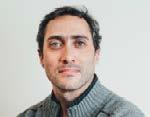
diverse regulatory frameworks.
This talk explores the current technology readiness levels (TRLs) of AI and robotics in farming, focusing on real-world deployability. Using case studies from the UK and beyond, it examines adoption trends, global barriers, and key challenges that impact the transition from research to practical use in diverse farming environments.
Introduction to Garford
Robocrop AI, an example of AI deployment in agriculture
Jonathan Henry is Managing Director at Garford Farm Machinery. Jonathan is an agricultural engineer with a wealth of experience in innovative technologies for weed management across a huge range of crops.
His talk will explain how the Robocrop system uses artificial intelligence to combine colour, infrared and depth information to precisely identify crop plants and stem location. This technology ensures a higher weed control efficacy, ultimately bringing value to the farmer.
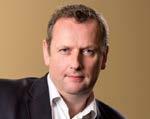
Allan Kildeby - Head of Camera Sensors at CLAAS and an engineer with over 20 years of experience in computer vision, with a focus on its practical application in agricultural automation and driver assistance systems. His work centers on integrating AI, machine learning, and imaging technologies to automate harvesting processes and enhance operational efficiency.
At this conference, Allan will share insights into how AI and computer vision are driving practical innovation in agricultural engineering.
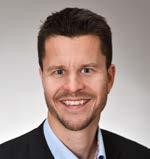
Kieran Fitzgerald - As Vice President Digital Services, Kieran leads a team of Product Managers for DeLaval responsible for providing services for DeLaval’s customers and dealer network that help them reach their goals. Kieran has a family background in dairy and 20 years professional experience in herd management, reproduction management, feed advice and since 2011 in roles from sales, product management to his current role with DeLaval. He doesn’t describe himself as someone who is particularly digital, or cloud, native but is passionate about finding ways for emerging technology to help the dairy industry continue to improve.
Our objectives haven’t changed, as an industry we still aspire to produce milk more efficiently, more profitably and more sustainably (which is much more than only the environmental impact). The tools that we have at

our disposal have however changed unrecognisably since Gustaf DeLaval developed the first milking machines. “Artificial Intelligence” is one such tool and in this session we’ll discuss some ways that DeLaval use AI to help achieve those objectives.
Simon Pearson FIAgrE is Professor of Agri-Food Technology at the University of Lincoln, where he leads interdisciplinary research at the interface of agriculture, engineering, and data science. He has played a central role in shaping the UK’s agri-tech landscape, working across academia, industry, and policy to accelerate the development and adoption of innovative technologies in food production. In 2025, Simon was awarded the IAgrE
Award of Merit in recognition of his contributions to agricultural engineering and technology. His current work focuses on AI-driven automation, digital assurance, and sustainable food systems.
Simon will explore how artificial intelligence (AI) is set to transform agriculture over the next two decades. Building on the current momentum, he will highlight the rapid adoption of AI-enabled technologies across the sector— from precision weeding and crop grading to semi-autonomous machinery. The talk will consider how far these innovations might go, not just in reshaping agricultural systems and productivity, but also in
redefining the roles and realities of farmers and farm workers. Simon will also reflect on the risks of overhyping AI’s potential, and the importance of developing robust standards, and potentially regulation, to ensure AI in agriculture is deployed safely, ethically, and with public trust
Olivia Midgley is a journalist and editor with 18+ years’ experience of working in publishing across print and digital media.
Currently editorial director of Farmers Guardian, she is spearheading the 180-year-old brand’s digital transformation and is responsible for setting the tone and vision of its market leading content. Taking up the reins as editor in 2023, Olivia set about reinvigorating the brand, which included a new digital strategy and redesigned weekly print product. Olivia was named the British Society of Magazine Editors New Editor of the Year in 2024.
A regular pundit across regional and national media channels, Olivia provides analysis on the issues facing farming businesses and helps to promote agriculture as a rewarding career choice.
She is also a director and deputy chair of the Guild of Agricultural Journalists which promotes training and careers for journalists and PR professionals working in agriculture and is a mentor with the Creative Mentor Network which works to make the creative industries more inclusive.

Morten Bilde, Managing Director of AGCO Innovation Center Randers, Denmark, will explain how AGCO are integrating AI to deliver a better experience to the end user.
Morten is an engineering executive with over 20 years of experience driving innovation in agricultural machinery and smart farming technologies.
With a background in Marine Engineering and Agricultural Mechanics, Morten has held various leadership roles at AGCO Corporation and led international teams, delivering cutting-edge solutions in mechanical, electronic and software systems in agriculture. In his current role, Morten is leading the development of automation solution through co-creation and integration of AI and digital technologies.
Morten Bilde, Managing Director of AGCO Innovation Center Randers, Denmark
For the full programme scan this QR code Book your place now and join the conversation, scan this QR code
Jonathan Gill MIAgrE was interviewed for a recent Landwards Podcast where AI was discussed.
Q - In your view, how can the agricultural industry strike the right balance between embracing new technologies like AI while also preserving traditional farming knowledge and practices?

Jonathan expressed concern that as the industry adopts new technologies, there is a risk of forgetting valuable lessons from the past: “I’m sometimes worried that we’re not necessarily remembering the old lessons that were learned of years gone by, and actually then paying attention to some of those...” He highlights the importance of not losing sight of traditional practices that have stood the test of time, such as crop rotation and timing of planting.
While AI and advanced technologies can be powerful tools for data analysis and decision support, they should not replace human judgement and experience. Jonathan says, “I still necessarily think the human in the loop is actually the most important aspect of making decisions of what’s actually then going on,” emphasising that technology should augment, not replace, the expertise of farmers.
- The conversation also touches on the idea that technology is only as good as its application: “AI is fantastic for lots of things like data crunching and so on and so forth. But, abdicating responsibility, handing it over to a cloud based third party with no kind of legal responsibility, it worries me...” This highlights the need for responsible use of technology, ensuring that it serves as a tool rather than a crutch.
There is a recognition that learning and adaptation are ongoing processes. Jonathan mentions the importance of continuous learning and resilience: “I’m only where I am because I don’t give up... we do this because it’s hard, and we do it because it’s not been done before.” This mindset is crucial for integrating new technologies while respecting and retaining traditional knowledge.
In summary, the agricultural industry can strike the right balance by:
• Using AI and new technologies as tools to support, not replace, human expertise.
• Actively preserving and passing down traditional knowledge and practices, ensuring they inform the use of new tools.
• Encouraging continuous learning and critical thinking among practitioners.
• Maintaining a “human in the loop” approach, where technology augments decision-making but does not override the wisdom gained from experience.
This balanced approach ensures that innovation enhances, rather than erodes, the rich heritage and practical know-how that underpin successful agriculture.
Listen to the Podcast here:
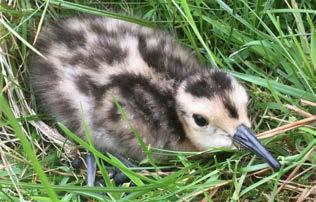
Conservation work to detect and protect curlew and other ground-nesting birds in Wales have been given a helping hand by new AI monitoring technology used by researchers from the Game & Wildlife Conservation Trust (GWCT) and Liverpool John Moores University.
To better recognise curlew and their chicks, they trained a new real-time object detection model called YOLOv10 to spot and recognise not only curlew, but also 25 other species, including foxes, deer and rabbits, by combining a pre-existing conservation AI database with nearly 39,000 images from across the UK.
The results of the study, which saw researchers test the system’s ability to monitor curlew and their chicks on 11 sites across Wales during the 2024 nesting season, were presented in a new scientific paper published this spring.
Using the 3G and 4G networks, 1,072 images were sent from AI enabled cameras through to the technology system, which then processed the curlew footage in real-time, making it accessible through an app on a mobile phone.
They proved that the model was able to filter out blank images triggered by moving vegetation and could also reliably identify curlew chicks, despite their natural camouflage. It correctly identified curlew over 90% of the time and never falsely detected them when they were not there.
To help the AI model handle real-world challenges, the team taught it to recognise animals under different conditions, such as changes in lighting, angles and sizes. This was done through data augmentation, a technique that adjusts images by changing colours, brightness and flipping them to create variety.
In the past, conservation efforts for vulnerable ground-nesting birds like curlews have often been labour intensive and logistically challenging, as the work to process the vast number of images from camera traps is time-consuming, delaying conservation action.
Making use of this new AI assisted technology will significantly reduce conservationists’ workload, allowing them to respond more effectively to protect the sites where breeding curlew have been detected.
‘Game
Katie Appleby, Curlew and People Officer for GWCT Wales and co-author, said: “Curlew is one of the fastest declining bird species in Wales, and as a breeding population it is predicted it will be extinct by
2033 if this trend continues.
“Ground-nesting birds are an essential component of open grassland and wetland ecosystems. Sadly many of them are under threat as the open habitats they rely on are being encroached by agricultural intensification, urban development and other changes in land use.
“Nesting on the ground also makes them very vulnerable to predation by foxes, badgers and corvids which all eat their eggs and chicks. This means species such as lapwing, skylarks and curlews are struggling to maintain stable populations across Wales.
“The new AI model performed really well in detecting curlews and after working with the system to enhance the detections it became extremely reliable in understanding the curlew behaviour and movements around the nest sites.
“Where historically with traditional trail cameras each image would need to be sifted through manually, we are now able to see in real time what is happening and spot the chicks when they hatch, which is very exciting.
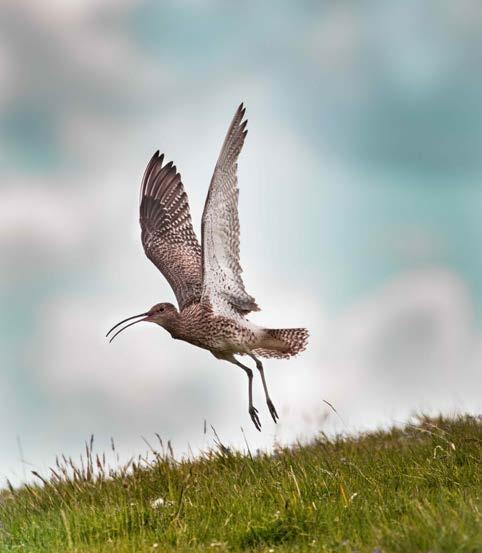
This allows me to focus time more effectively across the site and better support the birds.”
James Warrington, Project Officer GWCT Wales, said: “This new AI tool has allowed the team to integrate the technology in other areas of our work in Wales. It has created opportunities for communities, and public engagement through ‘citizen scientists’, to set up cameras in local environments such as gardens, land and workplaces.
“Not only does this increase the data that can be collected, which supports the AI tool, but it also encourages interest and engagement in conservation and raises awareness about the importance of protecting wildlife.”
Lee Oliver, Director for GWCT Cymru, said: “My team are working very hard on the ground during the breeding season to find nests to protect eggs and chicks from predation, alongside working with
farmers for delayed cutting and grazing management.
“The use of AI technology is advancing rapidly, and in the field of ecological research is a game changer.
“Time which my team would have spent in the field, manually retrieving and processing images from camera traps, can now instead be spent implementing practical measures to protect curlew.”
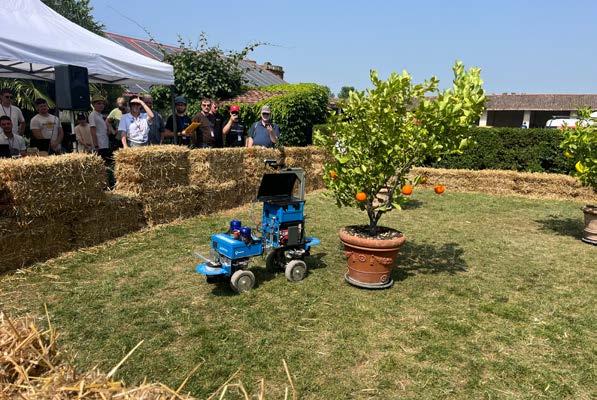
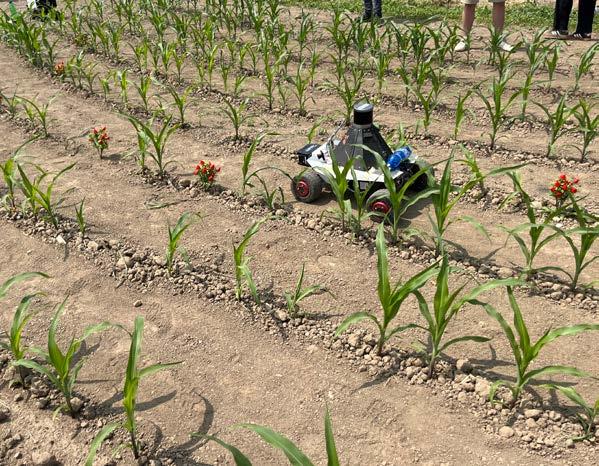
Fruit ID – This task required the robot to identify and log the location of each of five different fruit types (apples, lemons, bananas, grapes and oranges) within three minutes of starting.
Back in June, the Field Robot Event (FRE) occurred in the fields at Agriturismo Da Pippo, near Milan in Italy. EurAgEng Secretary General Andy Newbold reports.
This year’s FRE was the 22nd edition of the international competition, with 16 teams representing 10 countries. The nations represented included Germany, the Netherlands, UK, Italy, Turkey, Peru, Slovenia and Norway.
What was striking was that whilst many of the teams represented universities, for instance Wageningen University in the Netherlands and Lincoln Institute for Agri-Food Technology in the UK, several teams were robotics and engineering clubs. Consequently, the youngest competitor was 16 years old.
The Field Robot Event is now well established with a core organising committee who are previous competitors. Its history and the benefits of participation are well respected and known across Europe and wider.
Surprisingly (to the author) GNSS/ GPS was not allowed, other than in the freestyle task and all robots had to rely on relative positioning and sensor-based behaviours.
All robots had to be disconnected
from PC connections, either wireless or wired, to ensure that their operation was truly autonomous.
Once a task run had commenced, no performance modifications were allowed, and robots had to wait in a parc ferme during each task.
All robots had to act autonomously throughout each task, except for the freestyle category, with no intervention or manual corrections other than using the stop/start controller.
The robots had to complete a series of field tasks as follows:
1. Autonomous Field Navigation
2. Autonomous Field Navigation with Strawberry Bush Detection
3. Fruit Counting
4. Bioluminescent Fungi Discovery
Plus, there was a freestyle round, where teams were encouraged to present innovations on their own topic. Each team had to present their idea and explain the solution.
Teams entering the Field Robot Event for the first time could apply to the Claas-Stiftung for a maximum grant of €1500 to support their costs and equipment for taking part.
Scan the QR code for further details regarding participation
The Field Robot Event (FRE) was founded by Wageningen University in 2003 to motivate students to develop autonomous robots. Behind the engineering skills, one of the key aspects of the FRE is the opportunity for learning within teams and between international colleagues.
The Field Robot Event was a great opportunity for teams to get involved and work alongside international colleagues in a positive and supportive environment. As an observer, the author was struck by the collaboration between teams and the ‘can do’ attitude of all involved.
It is worth noting that the participants were from a full range of technical, professional, research and academic backgrounds, some with robotics and autonomy specialisms, others were engineering apprentices. All coming together to solve problems.
A worthwhile event to get involved with.
Mushrooms – In the Bioluminescent Fungi Discovery task, the robots acted in a 10m x 10m field, operating under night time conditions, the robots carried a UV lamp to reveal glowing mushrooms. Mushrooms were scattered on the floor in a regular grid with a minimum inter mushroom spacing of 1mm. The objective being to locate and record as many glowing mushrooms as possible within 3 minutes.
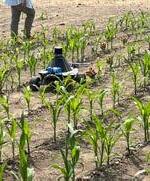
Maize – The robots had to navigate as far as possible up and down a series of curved maize rows, planted at 75cm centres.
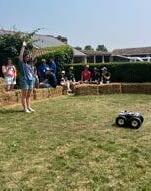
LIAT Freestyle – LIAT’s freestyle activity addressed the need for autonomous machines to follow people at work and respond to simple gestures, for instance when picking produce in a glasshouse.
Participants were from a full range of technical, professional, research and academic backgrounds, some with robotics and autonomy specialisms, others were engineering apprentices. All coming together to solve problems.
Practice
Engineering a
Landscape
Restoration
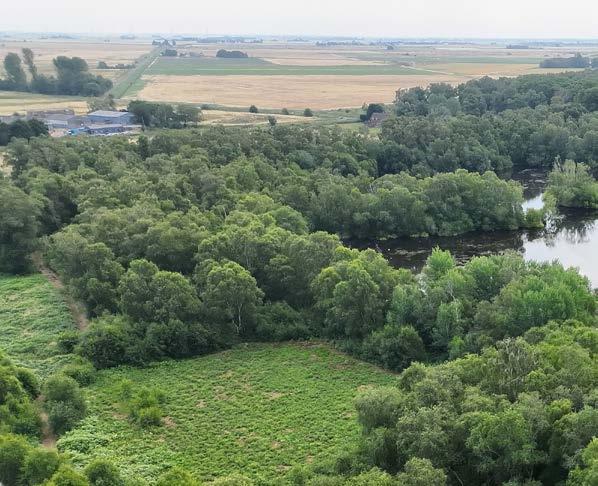
Back in July the Great Fen Restoration Project (winner of this years IAgrE Environmental Engineer Team Award) kindly hosted a visit open to all Institution members. On one of the hottest days of the year, Andy Newbold went along to find out more.
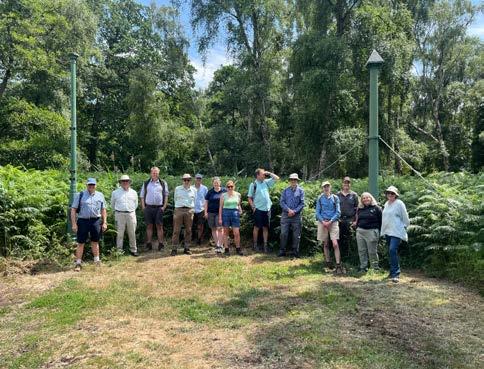
Hosted by Martin Parsons, Peatland Restoration Officer and Lorna Parker, the Project Manager for The Great Fen, over a dozen members spent a fascinating day immersing themselves in the theory and practicalities of a landscape scale wetland project.
Summary
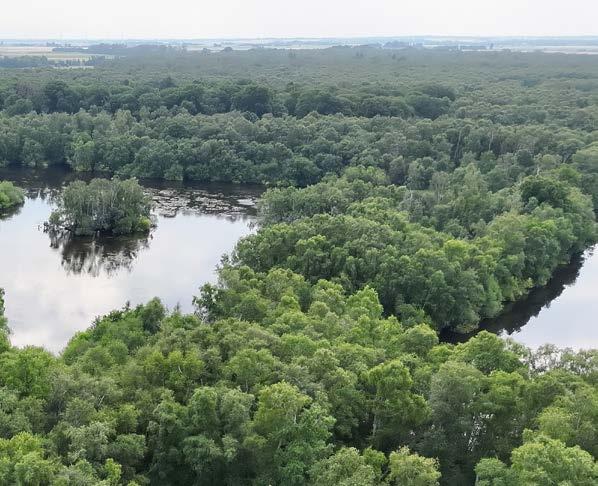
The Great Fen Project is an ambitious, century-long initiative to restore 3,700 hectares of fenland in Cambridgeshire, tackling peat loss, carbon emissions, biodiversity decline, and water management challenges. Led by the Wildlife Trust for Bedfordshire, Cambridgeshire, and Northamptonshire in partnership with Natural England, the Environment Agency, the Middle Level Commissioners, and Huntingdonshire District Council, the project is reimagining the role of water in one of the UK’s driest regions.
This article examines the technical and ecological strategies being used, with insights for agricultural engineers on hydrology, soil management, and adaptive farming practices.
Scan the QR code for further information
The Great Fen is not just an ecological restoration project—it is a major land and water engineering undertaking. The goal is to transform 3,700 ha (9,143 acres) into a nationally important wetland linking two National Nature Reserves, reversing over a century of peat oxidation and fenland degradation.
The Great Fen Project is an ambitious, century-long initiative to restore 3,700 hectares of fenland in Cambridgeshire
Currently, around 50% of the target area is in conservation ownership, with the rest farmed under multi-generation tenancies or held by investors.
Since large-scale drainage began in the mid-19th century, more than 85% of peat stock has been lost to oxidation and wind erosion (“fen blow”). Measurements at Holme Fen reveal the peat surface sinking at 9mm per year, a stark reminder of the urgency.
Historically, fenland engineering focused on moving water out—via pumping stations and channels—
to protect crops. The Great Fen reframes water as a managed resource, stored for dry periods rather than discharged to sea. Hydrological modelling underpins the master plan, factoring in:
• Seasonal storage in on-farm reservoirs.
• Controlled rewetting of 650 ha to raise water tables without uncontrolled flooding.
• Redirection of flows north toward Yaxley rather than eastward drainage.
This shift is essential as climate change produces no increase in annual rainfall but more intense winter rain events, stressing drainage networks and navigation routes.
• Peat Crisis:
Current 50 cm peat layer losing 2cm/year = <25 years before exhaustion if unmanaged.
• Water Reimagined:
Shift from rapid drainage to on-farm retention and seasonal storage.
• Engineering Scope:
Hydrological modelling, master planning, spatial stakeholder mapping.
• Biodiversity Actions:
Habitat creation for water voles, badgers, and wetland species under strict licensing.
• Carbon Impact:
Drained peat emits 25–30 t/ha CO₂ equivalent annually; rewetting reduces losses.
• Farming Transition:
Trials in wetter grazing, paludiculture, fixed wheelings, and precision levelling.
• Community Role:
Thousands engaged through outreach, open days, and farmer-led soil carbon groups.
Drainage and Water Table Management
Engineers face the paradox of needing to break historic land drains to rewet peat, while sometimes retaining them to aid capillary rise. Restored areas can take over two years to recharge with water, especially where compaction has reduced infiltration.
Trials are testing 10 m drainage spacing (vs. 20 m typical) to keep water just below crop roots— critical for lettuce and other shallow-rooted crops.
Soil and Carbon
Whilst on the visit, we witnessed the ‘Fen Blow’ first-hand, as plant was working on the New Decoy peat land restoration earthworks. With prevailing east winds and fragile peat
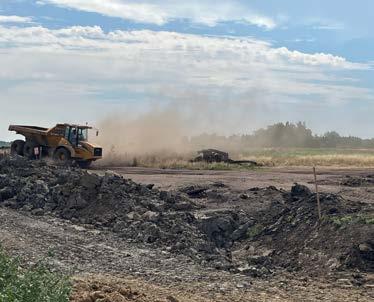
soils, wind-blown losses on worked land can be, and are a significant contributor to the peat loss.
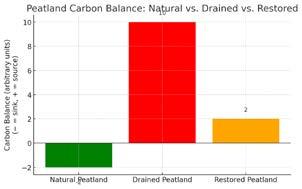
Drained peat emits 25–30t CO₂-e/ha/ year; re-wetting reduces oxidation.
Monitoring uses both advanced tools (carbon flux towers) and low-cost innovations like the “Ikea chair” peat cameras—seats fixed in place with a camera and tape measure to track subsidence.
Paludiculture trials—such as controlled grazing, wetland-friendly crops, and fixed wheeling’s for machinery—offer paths for farmers to adapt without abandoning productivity.
In the mid-19th century, local landowners around Whittlesea Mere, led by William Wells of Holmewood Hall, collaborated to fund its drainage in exchange for shares of the reclaimed land. Wells foresaw that draining the peat would cause shrinkage, like a sponge losing water, and insisted on measuring the effect. In 1848, his engineer, John Lawrence, installed a timber post driven into the underlying clay with its top level with the soil surface. At the time, the peat depth at the site was around 22 feet.
As drainage began, the land surface sank rapidly. In 1851, the wooden post was replaced by a cast-iron
column, reportedly sourced from the Crystal Palace in London, set on an oak pile reaching the clay base. Initially cut level with the ground, the column gradually became exposed as the peat subsided. To stabilise it, steel supports were added in 1957, alongside a second iron post placed nearby. Both remain standing today as markers of the ongoing process.
Records show that in the years immediately after drainage, the land subsided at an extraordinary rate of around nine inches per year, with the most dramatic shrinkage occurring in the first three decades. Over time the rate slowed, but the long-term effect has been striking. By now, approximately four metres of the iron post protrude above the ground, a stark, visible record of the subsidence since 1852 and a reminder of the irreversible transformation caused by draining Whittlesea Mere’s peat soils.

Date plates show the year and the soil surface. The peat loss following the drainage of Whittlesea Mere is significant.
There’s a common myth about peat land restoration that goes something like this:
“If you restore peat lands, they’ll quickly start absorbing huge amounts of carbon again, like a forest.”
But the reality is more complicated. Here’s why:
1. Peat lands are special ecosystems
• Peat forms over thousands of years as plants grow, die, and partly decompose in waterlogged, oxygen-poor conditions.
• This slow accumulation means peat lands are long-term carbon sinks, storing twice as much carbon as all the world’s forests despite covering just ~3% of land.
2. The damage problem
• Draining peat lands for farming, forestry, or fuel exposes the peat to oxygen.
• This flips them from carbon sinks into major carbon sources, releasing CO₂ and sometimes methane.
• Degraded peat also loses biodiversity and water regulation functions.
3. The restoration myth
• When people talk about “restoring peat,” they often imagine:
• The land starts sequestering carbon again immediately.
• It will quickly offset emissions.
But that’s not quite true:
• Restored peat lands don’t instantly become carbon sinks.
1. Re-wetting stops further rapid degradation, but the peat may keep releasing greenhouse gases for years to decades.
2. Methane emissions can even increase short-term when the soil gets waterlogged again.
• The main climate benefit is preventing much larger future emissions by halting the breakdown of stored carbon.
1. Think of it less as “capturing carbon” and more as “stopping the bleeding.”
4. Long-term outlook
• Over decades to centuries, restored peat can once again accumulate carbon slowly.
• In the short term, the biggest win is avoiding ongoing CO₂ losses.
• Plus, restoration revives biodiversity, improves water quality, and reduces wildfire risk.
So the myth is: “Peat land restoration is about sucking carbon back out of the air right now.”
The truth is: “Restoration mainly stops catastrophic carbon losses, and only slowly returns the land to being a carbon sink.”
Re-wetting requires complex wildlife relocations under strict regulation. One phase involved moving 13 water voles at a cost of £80k, with extensive pre-surveying to ensure no displacement of existing populations. In one instance, vole work was delayed by badger licensing time lines, underscoring the interdependency of ecological and engineering actions.
The Great Fen sits on land once covered by the sea. The underlying clay layers influence hydrology, making water retention feasible. Historical case studies, such as the draining of Whittlesea Mere, reveal the rapid degradation that follows deep drainage of organic soils.
Readers will remember Nicholas Corker CEnv, MIAgrE, FRSA’s article from the Autumn 22 edition of Landwards. This discusses, in depth, the drainage of Whittlesea Mere and the opportunities for agricultural engineers in low carbon agriculture.
A spatial master plan aligns multiple actors—Natural England, drainage boards, local councils, and land managers—ensuring interventions are sequenced to avoid conflict and
1. Integrate Hydrology Early: Long-term water modelling is critical in balancing conservation with ongoing agricultural use.
2. Factor in Licensing Timelines: Wildlife regulations can dictate construction schedules; anticipate them in project planning.
3. Design for Adaptive Use: Infrastructure should allow both wetland restoration and productive wet farming systems.
4. Use Multi-Scale Monitoring: Combine high-tech tools like flux towers with simple, low-cost ground measurements.
5. Plan for Climate Volatility: Seasonal water capture is vital to withstand both drought and intense rainfall events.
maximise impact.
Lessons from other projects, such as a “cousin” wetland near Cambridge that proceeded without a master plan and faced planning issues, have reinforced the value of rigorous upfront modelling.
Beyond engineering works, the project runs open days and outreach programmes, engaging both the public and practitioners. The farmer-led Fenland Soil group shares findings on carbon footprints and water-smart farming.
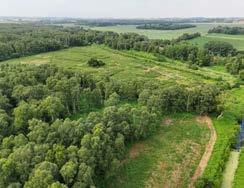
The Great Fen Project demonstrates that large-scale environmental restoration is as much an engineering challenge as an ecological one. For agricultural engineers, it offers a live case study in hydrology, soil science, adaptive land use, and stakeholder coordination—all against the backdrop of a changing climate and urgent carbon reduction goals.
Thanks to Martin Parsons, Lorna Parker and the entire Great Fen team who were fantastic hosts and gave a great insight into the challenges and progress of the project. If you get the chance, go and have a look.
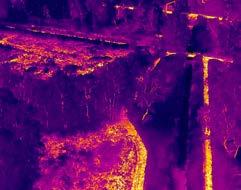
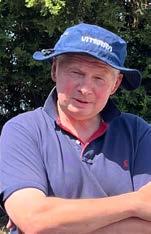
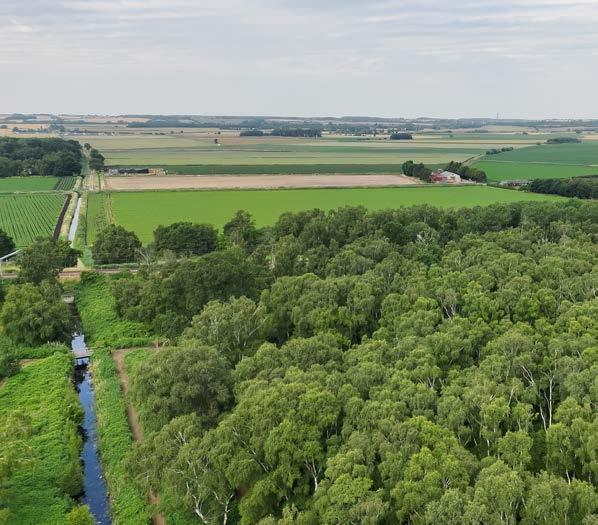
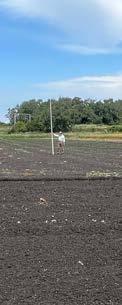
Alongside the Great Fen Restoration Project delegates visited Willow Hall Farm, where Jonathan Davis explained some of the issues facing farmers on peat soils.
The 160Ha Willow Hall Farm, near Yaxley in Cambridgeshire, is home to some of the UK’s most unique and challenging agricultural land. Lying approximately 4.2 meters below sea
level, this is one of the lowest fields in the country. This farm is situated on deep peat soils, with peat depths reaching at least four meters. These conditions, while historically
productive, present significant environmental and operational challenges for modern farming.
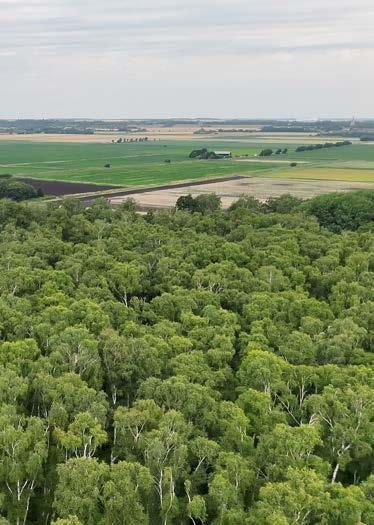
The land at Willow Hall Farm has a rich history. It was brought into agricultural production in 1942, transitioning from grazed grassland into arable farmland. The last section of the farm was converted for cultivation in 1954. Historically, drainage practices were designed to remove excess water from the deep peat, with drains up to 1.7 meters deep installed as early as the 1960s. These drains were essential for making the peat soils workable, but over time, under-draining and intensive cultivation have
contributed to the degradation of the peat. Jonathan is often ploughing up sections of the original drains now.
Peat soils at Willow Hall Farm, particularly those composed of sphagnum moss, are highly organic and hold significant carbon reserves. Unfortunately, traditional cultivation practices, including deep ploughing and under-draining, have accelerated peat oxidation, releasing an estimated 27,750 tonnes of carbon
Jonathan’s calculations show that the farm loses 3cm of soil per year, with 236t/Ha of carbon in 15cm of soil depth, this equates to 47.2t/Ha of carbon per year. Working with a CO2 equivalent, this is about 174t/Ha of CO2 release annually.
Over the 160Ha farm business, the CO2 emissions equate to 27715 tonnes per year.
Extrapolating this across the 33000 Ha of Soilscape 26 series soils nationally this is 5.7 Million tonnes of CO2 released every year.
This illustrates the problem with a ‘business as usual’ farming philosophy.
annually from the farm’s 160Ha.
The land is subsiding, having dropped approximately two meters since the 1960s, and the drainage infrastructure requires increasingly intensive pumping to keep the fields workable. The Internal Drainage Board (IDB) now needs to pump water three times to move it from the farm into the sea—a clear indicator that current farming methods are unsustainable.
As peat subsides, conventional farming practices become less viable. Machinery struggles to operate on wet soils, and waterlogging during summer prevents timely planting and harvesting. With climate change increasing rainfall variability, these challenges are only likely to intensify.
In response to these constraints, the business has been experimenting with raised water table management. Traditional irrigation methods involved flooding back via land drains, but modern approaches focus on maintaining water tables closer to the surface to reduce peat oxidation and soil loss. This requires careful balancing: keeping soils wet enough to protect carbon stores but dry enough to allow machinery access.
One innovative project with the British Beet Research Organisation (BBRP), explores the feasibility of growing sugar beet using tracked machinery in fields with raised water tables. By distributing machinery weight over larger areas, tracks reduce soil compaction and allow cultivation in wetter conditions, making it possible to grow crops without excessively draining the peat.
Other approaches under consideration include reed production for insulation panels, providing an alternative, low-carbon agricultural output. With carbon
The soils at Willow Hall Farm include Soilscape 26, described as a raised bog peat soil, which make up only 0.3% of England’s soils.
In 1966, 1968 and 1970 the farm was under drained with drains set at 1.7m depth. During the last three years Jonathan has struck the field drains whilst ploughing. The peat now being ploughed up is sphagnum moss peat.
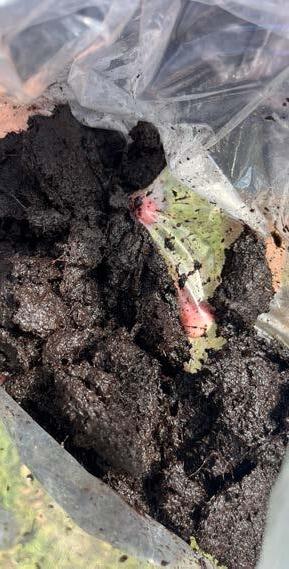
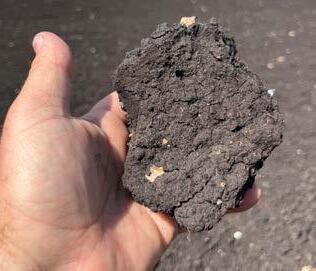
emissions per hectare on these peat soils exceeding those of Brazilian rainforests, any strategy that reduces emissions while generating economic value is vital. Indeed, one hectare of peatland here equates to the carbon emissions of approximately 40 hectares of typical farmland elsewhere.
Managing water on deep peat soils requires more than farm-level interventions. Willow Hall Farm is working closely with regional authorities and stakeholders to improve drainage infrastructure, particularly on the west side of the railway, where culverts and ditches need widening. Some adjacent land is currently in probate, delaying upgrades to sluices and water control measures. New pumping stations are also planned to regulate water levels more effectively and reduce the environmental impact of continued peat cultivation.
It is important to note that peatland restoration is limited in scope. Full restoration is not possible once the land has been drained and oxidized. Rewetting can prevent further carbon loss but cannot restore lost
peat; the goal is to stabilize the soil and prevent further degradation. As such, proactive water management and careful crop planning are central to sustainable operations on deep peat.
The Soils classification identifies this type of soil (Soilscape 26) as extremely rare, covering only 0.3% of the UK’s soils. Recognising the environmental sensitivity of peat, COP26 recommendations suggest removing peat from conventional agricultural production. For Willow Hall Farm, this presents both a challenge and an opportunity:
how to maintain productivity while meeting environmental targets.
Jonathan Davis is at the forefront of this transition. By integrating raised water table management, experimenting with alternative crops, and collaborating with local stakeholders on drainage infrastructure, Willow Hall Farm exemplifies how traditional farming knowledge can be combined with modern innovation to address one of the UK’s most pressing soil sustainability issues.
Farming on deep peat soils is a complex interplay of environmental stewardship, engineering, and agricultural practice. At Willow Hall Farm, the combination of deep peat, land subsidence, and high carbon emissions creates a landscape where traditional methods are no longer viable. However, through adaptive water management, innovative machinery use, and exploration of alternative crops, the farm is pioneering approaches that balance productivity with sustainability.
For agricultural engineers, the lessons from Willow Hall Farm are clear: effective peatland farming requires a multidisciplinary approach, integrating soil science, hydrology, infrastructure planning, and sustainable crop management. The challenges are significant, but so too are the opportunities for innovation in preserving some of the UK’s most valuable and vulnerable soils.
“One hectare of peatland equates to the carbon emissions of approximately 40 hectares of typical farmland elsewhere”.
Obituaries
Honorary Fellow and former President of The Institution of Agricultural Engineers (86-88) EUR ING. Professor John Matthews CBE, has died at the age of 95, following a brief illness.
Born in Steeple Claydon, Buckinghamshire, John Matthews developed a fascination with agricultural machinery from an early age. By nine, he was already driving tractors, and this practical interest became a lifelong professional passion. Following wartime service with the RAF as a radar technician, he pursued a physics degree while working at GEC, and ultimately found his vocation in agricultural engineering when he joined the National Institute of Agricultural Engineering (NIAE) at Silsoe in 1959. Over the next 30 years, Professor
Matthews rose from junior scientific officer to Director of the Institute.
His early contributions to grain drying technologies and instrumentation led to more advanced work in ergonomics, tractor vibration, and cab design. He was a key figure in developing the Institute’s first multi-channel digital data logger and led its pioneering research into ride vibration and noise control in agricultural machinery. Many of today’s standards in tractor-implement efficiency and operator safety can be traced back
to his innovations.
Under his leadership of the Tractor and Ergonomics Department and later the Tractor and Cultivation Division, Matthews championed the integration of ergonomics and automation into farm machinery. He oversaw breakthroughs in automatic gradient control, orchard vehicle steering, and animal feeding systems. Perhaps most notably, he played a central role in the development and commercialisation of robotic milking systems.
Appointed Director of Engineering Research for the Agriculture and Food Research Council (AFRC) in 1984, he managed a staff of over 400 and maintained the Institute’s momentum through a challenging period of funding cuts by increasing commercial income from 19% to 40%. During this time, the Institute was twice awarded the Queen’s Award for Innovation—a testament to both his leadership and the strength of the research teams he fostered.
Matthews also made an enduring contribution to international standards and cooperation in agricultural engineering. He chaired key committees under the OECD, ISO and the EU, and presented influential keynote papers at the AgEng Biennial Conferences and the Club of Bologna. His expertise
was sought across the globe, including consultancies and advisory work in India, China, Kenya, Italy, and beyond. His contributions were recognised with numerous accolades, including the Max Eyth Medallion (Germany), the Chevalier du Mérite Agricole (France), and a Fellowship of the Accademia dei Georgofili (Italy), alongside the Royal Agricultural Society’s prestigious Research Medal.
In retirement, Professor Matthews continued to serve education and healthcare with distinction. As Chair of Governors at Luton College of Higher Education (later the University of Luton), he helped raise student numbers from 4,000 to 11,000 and secured university status. He later served as Pro-Chancellor and oversaw the development of an acclaimed Health Services Research
Institute. He also contributed to the NHS in Wales as Vice Chairman of the Ceredigion and Mid Wales NHS Trust, chairing both the R&D and Audit Committees.
His post-retirement life was as full as his professional one. A keen bowler, he served as Club Captain and Chairman of Ceredigion’s Short Mat Bowling Association. He was active in local RAF veterans’ association and chaired the Teifiside Probus Club.
Reflecting back on his career in agricultural engineering Professor Matthews wrote: “I thank my lucky stars that agricultural engineering provided me with the best career I could imagine. The scope of activities and opportunities has always been unmatched by other industries”
John was trained at Harper Adams from 1954 to 1956 (NDA) and spent most of his career in the Agricultural Division of the Electricity Council (The Farm Energy Centre) responsible for the Horticultural division.
He was the Electricity industries National Horticultural specialist and arranged research projects and trials on commercial grower’s premises and research centres over a 40 year period.
He lectured throughout Britain at Horticultural conference meetings and events and as his expertise became known internationally, he travelled to many countries to help growers and continued to do so long after his retirement.
If a grower wished to explore the benefits of artificial lighting, John would design (later computerised) the trial lighting and in most cases the work was commercially successful.
This led to new applications being added to the wide range of Electricity Council publications. Wherever possible the Electricity council paid for the installations and gifted the lighting and controls to the grower as a thank you for their collaboration.
John and his wife Nessa lived in London as the division was initially based in London before moving to Stoneleigh in 1964. Nessa was a highly regarded secretary to members of the House of Lords.
During Johns national service he was in Malaya and responsible for large calibre artillery pieces in the battles against the guerrillas. Without ear protection this affected Johns hearing and he quickly became an expert on hearing aids.
John was a Member of the Institution throughout his career and served as a Director of the Institution from 2001-2007. He regularly recruited members during his very long membership.
John was technically brilliant and also a very kind man who was very widely respected both in the Electricity Council, the regional electricity companies and throughout horticulture.
Thanks to Dr Dan Mitchell for kindly submitting the above.
During the last quarter, We have interviewed several IAgrE members for the Landwards Podcast, have a read of the summaries below and perhaps listen to them via your usual podcast provider or via the IAgrE’s YouTube channel.
Controlled Traffic Pioneer –Tim Chamen
This podcast episode of Landwards features agricultural engineer Tim Chamen, whose lifelong passion has centred on soil, cultivation, and machinery. Tim recalls his early life, the loss of his father, and the transition to a progressive boarding school in Dorset, where his love for the countryside developed. After school, he spent time working on farms before pursuing agricultural studies, gaining qualifications at Askham Bryan, Rycotewood, and Silsoe, where he completed a degree in agricultural engineering.
During his student years, Tim worked at the National Institute of Agricultural Engineering, testing combines and balers. In 1971, he joined its Cultivations Department, contributing to large-scale field trials that measured machinery performance, energy use, and crop yields. These trials provided fundamental data on draft requirements of ploughs and cultivators, which Tim argues remain valid today.
Tim’s engineering work led to innovations such as the rotary digger, a low-draft cultivator that combined tine and rotor action. Despite strong technical performance, it failed commercially due to poor timing in the market. He also worked on subsoilers and the Paraplow,
developing stabilisation systems to overcome side forces in angled tine designs.
A turning point came when Tim joined long-term soil compaction trials on heavy clay. He observed that when soil was left untrafficked, it transformed into a friable, workable medium requiring minimal cultivation. This was, in his words, a “eureka moment,” leading him to focus on controlled traffic farming (CTF)—keeping machinery off most of the field to protect soil structure.
Inspired by historical designs, Tim also helped develop a 12-metre gantry system capable of performing all farm operations from cultivation to harvest, demonstrating reduced energy needs and improved soil quality. However, the project was ultimately discontinued when government funding was withdrawn.
Summary
David Whattoff’s career illustrates how agricultural engineering, agronomy, and technology can converge to meet modern farming challenges. From a Cambridgeshire family farm to his role as UK Country Manager for METOS, he highlights the importance of continuous learning, relationships, and integrated technology.
• Early farm and machinery experience shaped a practical, problem-solving mindset.
• Academic path included a Cranfield MSc in variable depth cultivation.
• Career shift from farming to precision ag services, then ag-tech leadership.
• Strong advocate of integrating weather, soil, and machinery data for decision support.
• Sees climate change as driving need for smarter water and input management.
• Advice: build networks, keep learning, and respect all expertise in agriculture.
Raised on a mixed arable farm, David’s early work revolved around machinery and soils. After a YTS in agricultural engineering and a National Diploma in Agriculture, he later gained BASIS and FACTS qualifications, before completing a Cranfield master’s on cultivation systems. Education, he notes, sharpened his analytical and research skills as much as his technical knowledge.
In 2010 he moved into precision agriculture with SOYL, supporting soil mapping and nutrient management. A chance meeting with Gottfried Pessl of METOS led to his current role managing agricultural
technology business operations across the UK.
David stresses that too many ag-tech tools operate in silos. He envisions systems where weather stations, soil probes, and robotics exchange data seamlessly, helping farmers make confident decisions on spraying, irrigation, and input use.
With more variable weather—wet winters and dry summers—he points to soil moisture monitoring and decision support as essential tools. Farmers must increasingly know not just when to act, but when to hold back.
He encourages newcomers to “lift stones”—stay curious, build relationships, and listen. Agricultural engineering, he concludes, is as much about people and credibility as it is about machinery and data.
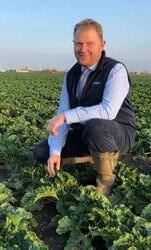
Scan the QR code to listen to each podcast
For Jonathan Gill, farm innovation specialist at the UK Agri-Tech Centre, the path into agricultural engineering was anything but linear. Speaking on the Landwards podcast, he described himself as a curious child who preferred dismantling gadgets to playing with them. That hands-on instinct—repairing, re-purposing, and creating from limited means— proved to be the foundation of a career that bridges robotics, offshore engineering, and precision agriculture.
After early academic struggles linked to undiagnosed dyslexia, Jonathan found his stride at Plymouth University, where a foundation year in engineering revealed both his aptitude and passion for robotics. He later worked in the offshore oil industry with remotely operated underwater vehicles, gaining vital experience in telepresence systems, machine reliability, and problem-solving under pressure. Yet even amid global assignments, his interest in flying autonomous drones for crop monitoring rekindled a connection to agriculture.
That link drew him back to Harper Adams University and eventually into the pioneering “Hands Free Hectare” project, which demonstrated that an entire cropping cycle could be managed autonomously. For
Jonathan, the value lay not only in the technical achievement but also in the collaborative culture of agricultural engineering—where curiosity and persistence drive progress against complex, real-world challenges.
Today, at the UK Agri-Tech Centre, Jonathan’s work focuses on translating advanced technologies into tools that deliver tangible benefits for farmers. His current projects range from vineyard information systems to hyperspectral analysis of wheat from satellite data. He emphasises the importance of moving beyond proof-of-concept: “It’s not theory anymore—it’s practice that adds value to farming.”
Jonathan was cautious about over-reliance on artificial intelligence, warning that human judgement remains indispensable. Farming, he argues, is grounded in centuries of experiential knowledge that must complement digital decision-making. His mantra of “learn one new thing every day” captures the mindset he believes engineers should carry into the sector.
Asked what advice he’d give newcomers, his message is simple but compelling: agricultural engineering offers unmatched variety, intellectual challenge, and the satisfaction of working on technologies that directly sustain society. “It’s a career where your creativity meets the essential task of feeding the world,” he says—and his own journey is proof of that.
On 25th June, Nick August (DBT Chair) and Professor Paul Miller (DBT Emeritus Trustee) attended the Cranfield University School of Water, Energy and Environment prize giving ceremony.
Koeurtis Bankoue Nbunkeu received The Douglas Bomford Trust Award for the best student on an agriculture themed course who best demonstrated the application of engineering and technology for sustainable agriculture. Koeurtis graduated from the MSc in Food Systems and Management course. Koeurtis’ thesis was titled “Critical evaluation of polymers to improve emergence and yield in high value horticultural crops”. The aim of the thesis was to critically evaluate the
effect of polymers on emergence, stand establishment and yield of commercial salad onions (Allium cepa) and/or spinach (Spinacia oleracea).
Maria Fernanda Estrada Romero received The Douglas Bomford Trust Award for the best student on an environmental themed course who best demonstrated the application of engineering and technology for sustainable agriculture. Maria graduated from the MSc in Geographical Information Systems course. Maria’s thesis was titled “In-field biomass measurement of Miscanthus bio-energy yield using remote sensing”. Maria’s objectives were to evaluate correlations between vegetation indices, such as NDVI, derived from multispectral drone images and Miscanthus crop biomass; Use point cloud data generated by aerial laser scanning to observe the shape, size, and volume of Miscanthus plants, and compare them with biomass measurements obtained in the field; and Implement methods to extrapolate and expand biomass measurements made in selected samples to the entire
Miscanthus crop. Unfortunately, Maria could not attend the Ceremony.
Dr Holly Vickery, Dr Laura Palczynski, and Prof David Rose from Harper Adams University received a DBT travel award to attend the 27th European Seminar on Extension and Education, Vila Real, Portugal (30 June to 4th July 2025).
The award enabled them to present a paper (delivered by Dr Holly Vickery) on the use of Large Language Models (LLMs) to improve agricultural extension, considering opportunities and risks for overcoming the data-action gap on-farm. Science and technology plays a key role in precision farming, but farmers can often lack actionable insights from the collection of such data. They also attended plenary sessions devoted to this topic with presentations from University of Guelph, National Research Institute for Agriculture, Food and Environment (INRAE), Texas A+M University, and McGill University.
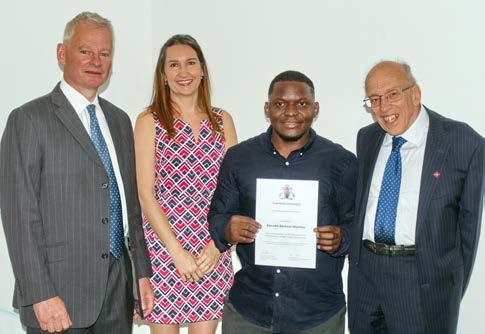
David, Holly and Laura.
The DBT travel award also allowed Holly, Laura and David to present other papers related to supporting farmers’ mental health and wellbeing and on establishing a multi-actor call-action network. This would not have been possible without the support of the DBT. These papers were well received and will lead to future collaboration.
“We wholeheartedly thank the Trust for their support”, Prof David Rose, Dr Holly Vickery, Dr Laura Palczynski.
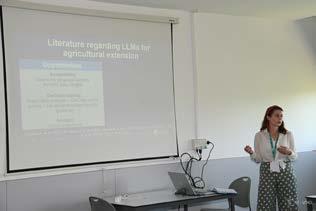
For further information, see the Trusts website:
Or contact the Secretary David White via: enquiries@dbt.org.uk
You can also follow: @BomfordTrust on ‘X’ and ‘LinkedIn’, for news , opportunities and events
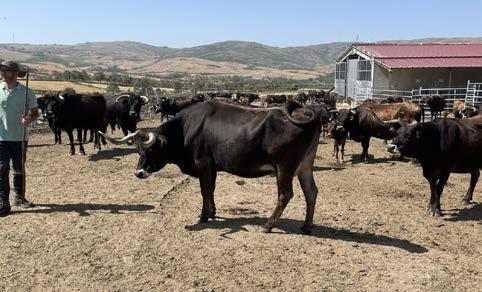
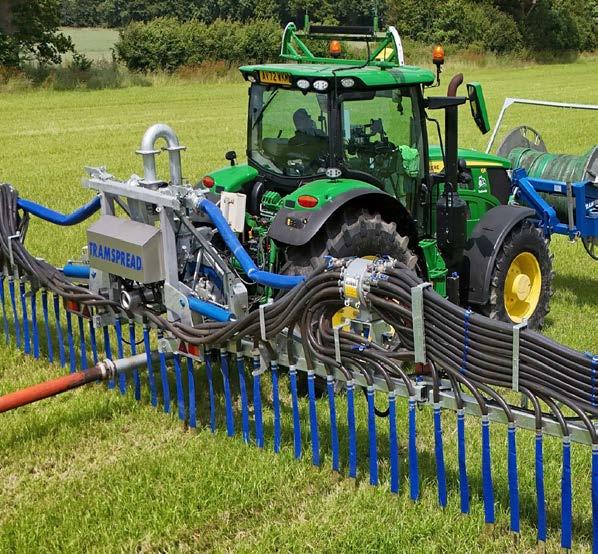
Research from Harper Adams University examining how potential pollutants could become helpful on-farm resources has featured in a new House of Lords report.
The Lords Environment and Climate Change Committee’s report into nitrogen management, Nitrogen:
time to reduce, recycle, reuse, examines the impact the chemical can have on the environment, the ways these effects can be minimised – and how scientists are working with farmers to turn this potential pollutant into an important asset.
Baroness Sheehan, Chair of the
Environment and Climate Change Committee, said: “Nitrogen is an essential chemical element for all living things. It constitutes 80 percent of the air we breathe.
“However, when nitrogen combines with other elements, it can form dangerous and deadly pollutants
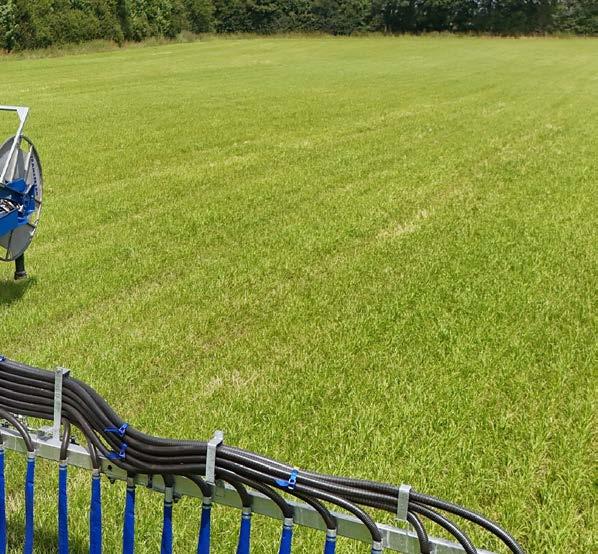
Research examining how potential pollutants could become helpful on-farm resources has featured in a new House of Lords report
that affect air quality, contributing to tens of thousands of premature deaths per year - and damages and kills aquatic life, precious habitats, plants and wildlife. The associated economic, social and environmental costs are immense.
“It is an essential priority to quantify the major flows, sources, and sinks of nitrogen and minimise nitrogen pollution by capturing and re-using pollutants, turning them from damaging waste into a valuable resource.”
Evidence from Harper Adams University academics is featured across the report.
It draws on both Dr Marie Kirby’s research stripping nutrients from slurry to create sustainable fertilisers, and Deputy Vice-Chancellor Professor Michael Lee’s work with the Food and Agriculture Organization of the United Nations (FAO) on the role of livestock in a circular bioeconomy.
Dr Kirby’s work at Harper Adams has seen her collaborating with
the School of Sustainable Food and Farming at Harper Adams, along with industrial partners elentecBio, Merigan, Stoic Options and Mastek to remove water from slurry and create concentrated phosphorus and nitrogen products.
This research project is funded by DEFRA as part of their Farming Innovation Programme Nutrient Management competition and is delivered in partnership with Innovate UK, the UK’s innovation agency.
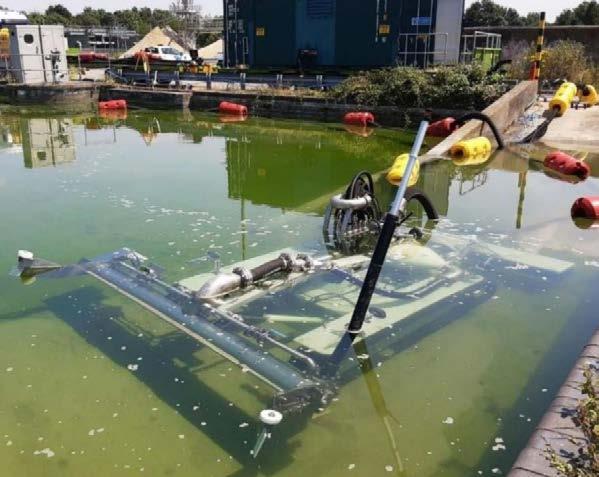
Cranfield University is involved with three projects recently awarded funding from Ofwat’s Innovation Fund Water Breakthrough Challenge. Winning a share of £42 million in funding, the projects will focus on solutions to some of the water sector’s biggest challenges.
Led by United Utilities and involving Ruben Sakrabani, Professor of Soil Chemistry, the Next-Gen Digestion
project was awarded £5.1 million to enable water companies to generate additional biogas. This is a gas product from the breakdown of organic matter during wastewater treatment, reducing the volume of residual biosolids (treated sludge).
The project aims to convert biogas into energy, which can be used by water companies to power treatment processes, reducing operational costs whilst investigating the impact of digestate on soil health.
SandSCAPE, led by Thames Water, was awarded £2 million to test operator guided robots, up to five metres in length, that make chemical-free ‘slow sand filtration’ more efficient.
Slow sand filtration is a highly effective nature-based solution for cleaning water. However the need to regularly stop and drain the sand filters makes the process inefficient
and this is what the project team will be tackling.
Dr Francis Hassard, Reader in Public Health Microbiology, is involved in the project which will trial underwater cleaning of sand filters by robots, whilst the filters are in operation.
Faster, cheaper, sustainable removal of ‘forever chemicals’
The removal of PFAS, or ‘forever chemicals’, is a crucial issue in the water sector. A new project called Microwave Reactivation of Granular Activated Carbon, led by Severn Trent, has been awarded £1.9 million to create a faster, cheaper and more sustainable approach for dealing with this challenging family of pollutants.
Developing an industrial-scale microwave solution, powered by renewable energy, the project promises to meet the demand for Granular Activated Carbon to remove PFAS without increasing carbon emissions. Dr Irene Carra and Peter Jarvis, Professor of Water Science and Technology, add their expertise to the project.
Ofwat, the Water Services Regulation Authority for England and Wales, established the £600 million Innovation Fund to grow the water sector’s capacity to innovate, enabling it to better meet the evolving needs of customers, society and the environment.
The Innovation Fund, delivered in partnership with Challenge Works (formerly known as Nesta Challenges) and supported by Arup and Isle Utilities, is designed to complement Ofwat’s existing approach to innovation and to help deliver against Ofwat’s strategy which highlights the role of innovation in meeting many of the challenges the sector faces.
Hartpury University and Hartpury College officially opened its newly refurbished Agricultural Engineering Workshops and SMART Livestock Hub in June – a major milestone in the institution’s continued investment in future-ready, industry-aligned education.
The facilities, unveiled during an official ribbon-cutting ceremony, mark the latest stage in just under £8 million of investment into agriculture at Hartpury University and College since 2018. Backed by £1 million in refurbishment funding and a further £1.5 million in state-of-the-art equipment, the new workshops will especially support the delivery of the T Level in Land-Based Engineering. These include high-specification resources such as a dynamometer, advanced electronic diagnostic equipment, and a suite of cultivation and harvesting machinery designed to prepare students for the realities of modern agricultural practice.
The SMART Livestock Hub will further enhance T Level teaching and learning on both the Livestock Production and Crop Production specialisms. Students will have access to the latest livestock technology and digital systems that are reshaping food production and animal welfare standards.
The opening was officiated by Charlie Nicklin, Chief Executive Officer of The Institution of Agricultural Engineers, whose extensive industry experience includes 24 years at JCB. His presence underlined the strong ties between Hartpury and the agricultural engineering profession. Speaking at the event, the leadership team highlighted the critical role these developments play in aligning education with local, regional, and national skills needs.
“Our curriculum is designed in partnership with employers to ensure students leave Hartpury ready to make a meaningful impact,” said Claire Whitworth, Principal of Hartpury College.
“These new facilities will allow learners to develop the technical skills and confidence needed to thrive in a rapidly evolving agricultural landscape.”
Wirtgen Group 10 June 2025
David Yates reports
20 members of the East Midlands Branch visited the UK headquarters of the Wirtgen Group, an international operation which covers the entire road construction process chain, including processing, mixing, paving compacting and rehabilitation. The Group are market leaders in road planning, tarmac manufacture plants and laying machines.
Paul Holmes, Managing Director, and Paul Howard, Service Manager gave the visitors a full presentation on the company and a guided tour of the facilities.
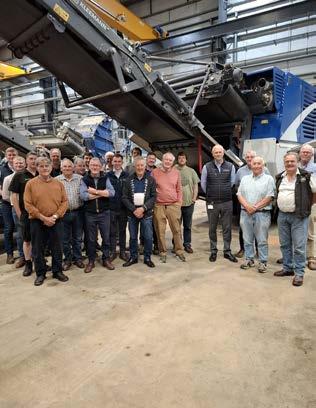
Group - A John Deere Company
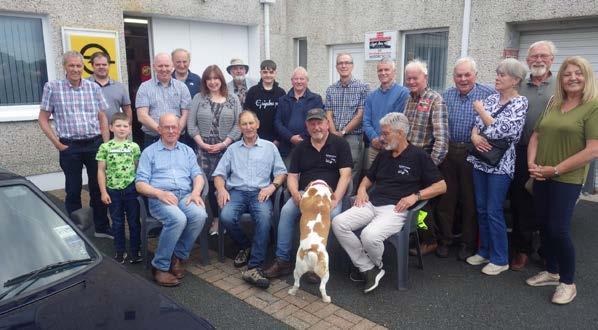
Northern Ireland group
The Abington Collection
Terence Chambers reports
NI Branch IAgrE members and their guests recently enjoyed a visit to the impressive and popular Abington Collection, near Omagh, Co Tyrone. This private museum, now open for over 50 years, is run by the Faithful family and is open, free of charge, by appointment for visitor groups. Their voluntary cash donations are passed on as contributions to Cancer Research UK.
The displays are arranged around two separate themes:
(1) A wide range of more than 2500 Military memorabila items on permanent display from across the Allies involvement in World War Two. This is one of the largest collections in private ownership and was inspired by recognition of the long military service by and direct loss of actual Faithfull family members involved in the conflict.
(2) Restored actual classic cars and motorcycles, die cast models and collectibles from the 50s and 60s such as automotive enamel signs and traditional petrol pumps. There is also a feature on cycles and pedal cars.
More detail about the themes, origin, content and location of these impressive collections can be viewed by scanning the QR code:
The group really enjoyed a detailed tour commentary and discussion, led by Mr Philip Faithfull, around the items on display. After expressing sincere thanks to him for the privilege of getting so close to this unique collection we went on to complete a very enjoyable Tyrone visit by having a meal within the Millstone Restaurant in the same area.
This private museum, now open for over 50 years, is run by the Faithful family and is open, free of charge, by appointment for visitor groups.
Developing, testing, selling and servicing. Tractors and machinery on a global scale.
Mike Whiting reports.
Paul Baskerville opened his presentation with the simple and clear message, “I’m an agricultural machinery man”. His exploits across the globe confirmed to us that the industry has certainly benefitted from his involvement.
Following studies at Tamworth College, Paul took up a place at Silsoe College in Bedfordshire. Twice weekly rugby matches along with county ploughing matches provided the necessary recreational activities amongst the studies between 1967 and 1969. Paul was one of the first Silsoe graduates entering the industry with a BSC in Agricultural Engineering.
New Holland provided the first employment role as a test engineer. An initial project focused on regular failures of disc mowers. The investigations concluded that storage in the vertical position over the winter resulted in gearbox oil heading south, leaving bearing and transmission systems without residual lubrication. Not the best preparation for machinery to encounter peak loading from heavy grass crops. A timely reminder that applying the essential principles of gravity can often solve problems. The change of disc shape from circular to oval contributed to preventing strips of uncut grass. The result of the rotational direction of the disc and the build-up of material, forcing the standing crop away from the blade.
Overseas travel soon beckoned with passport stamps obtained from both Europe and the US. ‘Snakes in the grass’ became a literal experience when testing double chop foragers in Florida. Thankfully local wildlife wasn’t part of the challenges when demonstrating NH 435-disc mowers during a three-week stint in Germany. The era of self-propelled
foragers entered the marketplace in the early 1970’s. An image illustrated a two-row machine from the Zedelgem based manufacturer harvesting maize in South Africa. Although operators will prefer the luxury of modern cabs rather than the simple standing platform which was the initial offering. Prototype NH 276 square balers were also on the agenda for the engineers visits to the southern hemisphere. It’s noted the ‘mules’ were fully adorned with the NH livery unlike the current trends to disguise designs in bland colours to keep new developments under wraps. There was no need to attend the gym as bale sledges weren’t part of test plan and musculoskeletal injuries hadn’t become an employee safety metric.
Careers move on and in 1976 Paul took on the role of Technical Advisor for Eastern Counties Farmers’ cooperative based in Ipswich. Failure of rear axles on Leyland’s Tractors resulted in a strategic move to market Deutz tractors from the Wiltshire based UK importer Watveare. The German link continued with working demonstrations of Lemken ploughs.
A move to the ‘red’ team occurred when Paul was appointed Massey Ferguson technical sales representative from 1976 to 1978, based in Singapore. The resultant effect of a strike by the Spanish manufacturing sites quality control team surfaced in the form of engine balancer failures and poor paintwork. More success was achieved with steel tracked MF combines for the Japanese market.
The calling of pea production brought Paul back to the UK as parts manager with FMC, based in Fakenham Norfolk. Helicopters
provided rapid deployment of spares when seven-day, 24-hour harvesting required the crop to reach the factories within two hours of harvesting to maintain nutritional value. Other food related projects included fillers and closers for Heinz.
A return to Ford, and ultimately CNH was somewhat inevitable where Paul took on a range of sales and business development roles from the early 1980’s through to 2006. African markets resulted in large tractor sales orders for hauling sugar cane along with smaller specification units such as the 4610 for tea plantations. An image of a New Holland TF range combine harvester along with construction machinery illustrated Paul’s involvement with the full product range. Management responsibility at board level is clearly demonstrated with his introduction of a global template for CNH competitive price comparisons.
The presentation concluded with his senior roles at both Spearhead Machinery and Master Farm Services. Followed more recently by machinery consultancy for a range of companies including Claydon and Indian based TAFE.
What did we learn from an engaging session? Paul’s career has involved all aspects of design, testing, marketing, sales and strategic development for global players in our sector. Challenges are only overcome by forming relationships and engaging with all stakeholders.
If you want to wear the ‘agricultural machinery’ T-shirt, then Paul is your man for guidance and motivation. A very enjoyable evening and we would welcome the opportunity to hear more of Paul’s stories and experiences.
01/05/25 to 31/07/25
Fellow
Dr Fernando Auat Cheein (Scotland)
Mr Sean Blaney (Ireland)
Professor Yong He (China)
Member
Mr Richard Charles (West Midlands)
Mr Edward Dennett (West Midlands)
Mr Stephen Lawton (Western)
Mrs Snezana Lee (East Midlands)
Mr Jason McVerry (Ireland)
Dr Umer Ijaz (Scotland)
50 years
25 years
Student East Durham College
Will Robson
Joe Wheldon
Anthony Barker
Tyler Kinghorn
Open University
Sanda Eglite
Commercial & Academic
Newmac Ltd - Killington Hall Farm, Killington, LA6 2HA
Agricultural Recruitment Specialists –St Gregorys House, George Baylis Rd, Droitwich, Worcestershire, WR9 9RB
Horizon Agricultural Machinery Ltd –Cliftons Bridge, Fishergate, Sutton St James, Spalding, Lincs, PE12 0EZ
Mr John Jones (Scottish)
Associate Member
Mr Charles Jackson (East Midlands)
Technician
Mr Tom Ablitt (Western)
We have recently learned of the death of the following members and we send our condolences to their family and friends:
Mr Keith Jenkins IEng CEnv MIAgrE
Mr Jenkins joined the Institution as a Member in July 1986. He gained his Incorporated Engineer Registration through the Institution in February 1990 and went on to gain his Chartered Environmentalist Registration in September 2005. Mr Jenkins was a long-standing valued member of the Institution with nearly 40 years of membership.
Dr David John White FIAgrE
Dr White joined the Institution as a Fellow in March 1976. He was a Chartered Engineer through IMechE. Dr White was a long-standing valued member of the Institution with nearly 50 years in membership.
Eur Ing Professor John Matthews CEng HonFIAgrE
Professor Matthews joined the Institution as a Fellow in January 1970. He went on to gain his Chartered Engineer registration in January 1982. Professor Matthews was an IAgrE President from 1986 to 1988. He was awarded Honorary Fellow in May 1994 and was a long-standing valued member of the Institution for 55 years.
John T Chambers MIAgrE 09 Sept 2025
Paul A Skinner CEng CEnv MIAgrE 01 June 2025
James Cowie EngTech MIAgrE 22 June 2025
Andre Hudson AMIAgrE 21 Sept 2025
A Graham Smith IEng CEnv MIAgrE 26 Sept 2025
This free drop-in session is an informal chance to quiz our team about your next steps towards your Chartered Environmentalist (CEnv) goal. Think of it as a coffee break with a splash of career development.
More information to follow nearer the event.
07/10/2025 - 7pm
Horsch UK Ltd, 6 Cobblestone Way, Newark East, Peterborough Cambs PE1 5WJ


Have a think about your CEnv plans. Did you stumble across some questions? Here’s the time to ask. Register for free using the very simple form and join us on the day via Zoom. Your questions come with zero obligation to apply for CEnv, but the planet might thank you.
Join us at any time between 8.30am – 9.30am BST on the 2 October 2025 from anywhere in the world.
These Q&A drop-in sessions are mainly designed for those at the early stages of application or those thinking about it. Having said that, we’ll try to help with all questions and signpost to valuable resources or to another contact.
02/10/2025 - 8.30am-9.30am Online via Zoom
The IFST Autumn Conference 2025 is the Institute’s flagship annual event, bringing together over 200 leaders, innovators, and experts from across the food system. Taking place on Tuesday 7 October 2025 at the East Midlands Conference Centre in Nottingham, this year’s conference will explore the critical themes of food resilience and food security; issues that are increasingly central to the future of our sector.
Delegates will engage with a dynamic programme of practical presentations, expert panels, and thought-provoking discussions designed to address the challenges and opportunities facing food professionals today. From climate change and sustainable farming to AI-driven innovation and biosecurity, the conference will offer insights that are both timely and actionable.
The event is designed to foster collaboration across industry, academia, and policy, offering a unique platform for knowledge exchange and professional networking. A pre-conference dinner and networking evening on Monday 6 October will provide additional opportunities to connect with peers and speakers in a relaxed setting.
07/10/2025
0930 - 1630 East Midlands Conference Centre, NG7 2RJ
























































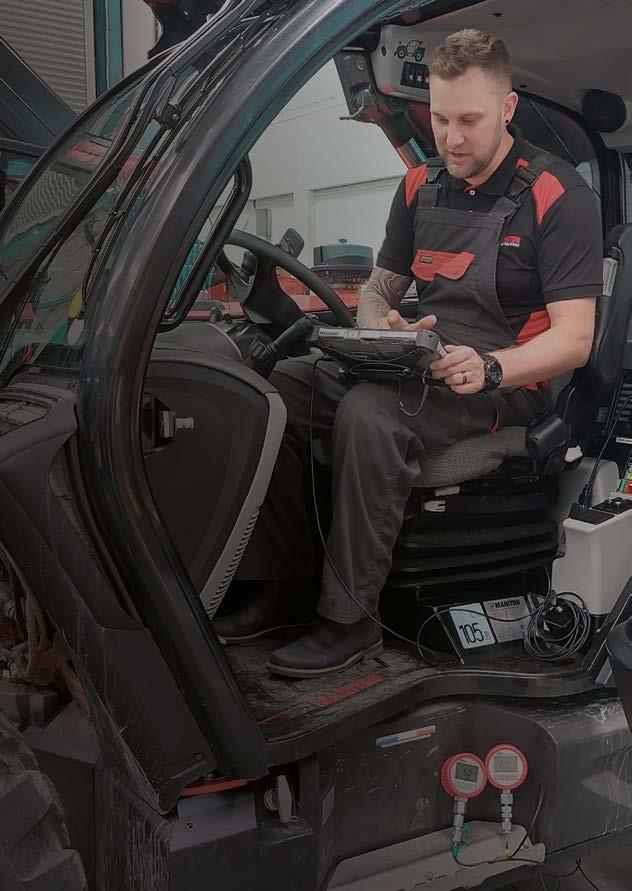
Technical presentations
eNewsletters
Access to Landwards journal
Networking opportunities
Competitions & awards
Local branches
Careers guidance & Jobs and much more
A listed technician with the Institution of Agricultural Engineers demonstrates a high quality of education and training, compliance to our code of professional ethics and commitment to continual learning. In addition to displaying your professional identity, you get lots of other benefits, as above. simply complete the online application form Visit iagre org for details