Two Voices, One Vision: A Conversation with Our New School Captains
See Me Before You Teach Me A Grape Success
Fire Trucks, Big Hoses, and Little Learners
John Guy - A Life in Firsts and Lasts
Speaking The Future
Erasmus: A Living Bridge
Leadership Without A Badge
Threading Empathy
Flying High: Inside the World of a Young Trampolinist
Etched in Skin, Etched in Story
Alumni
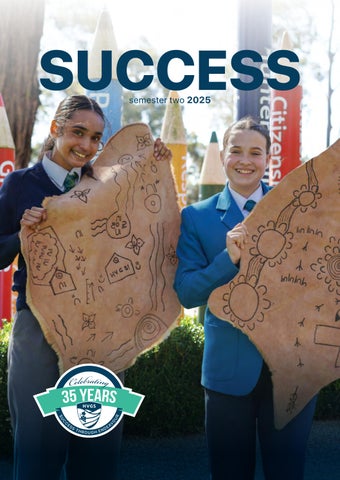
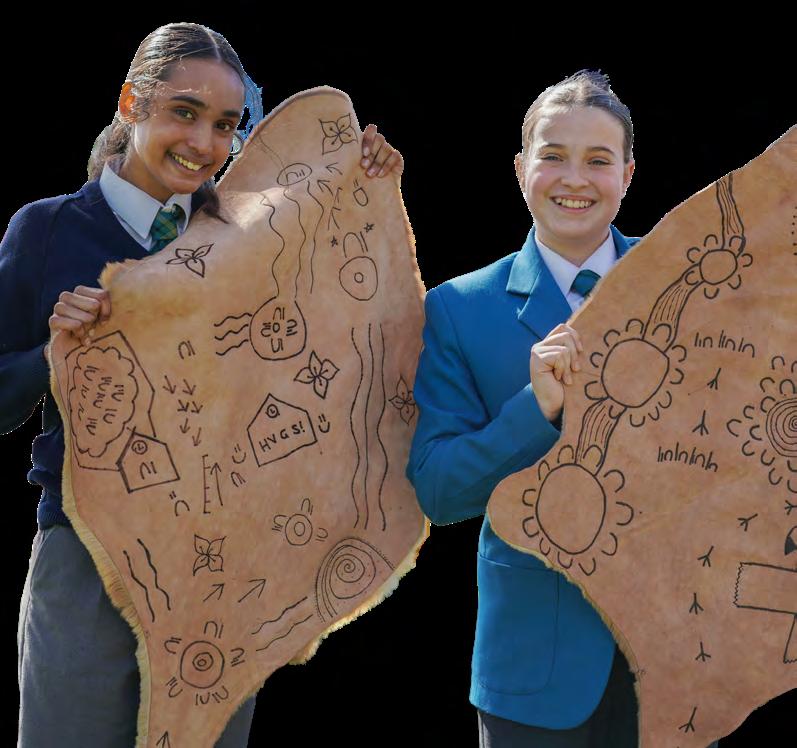
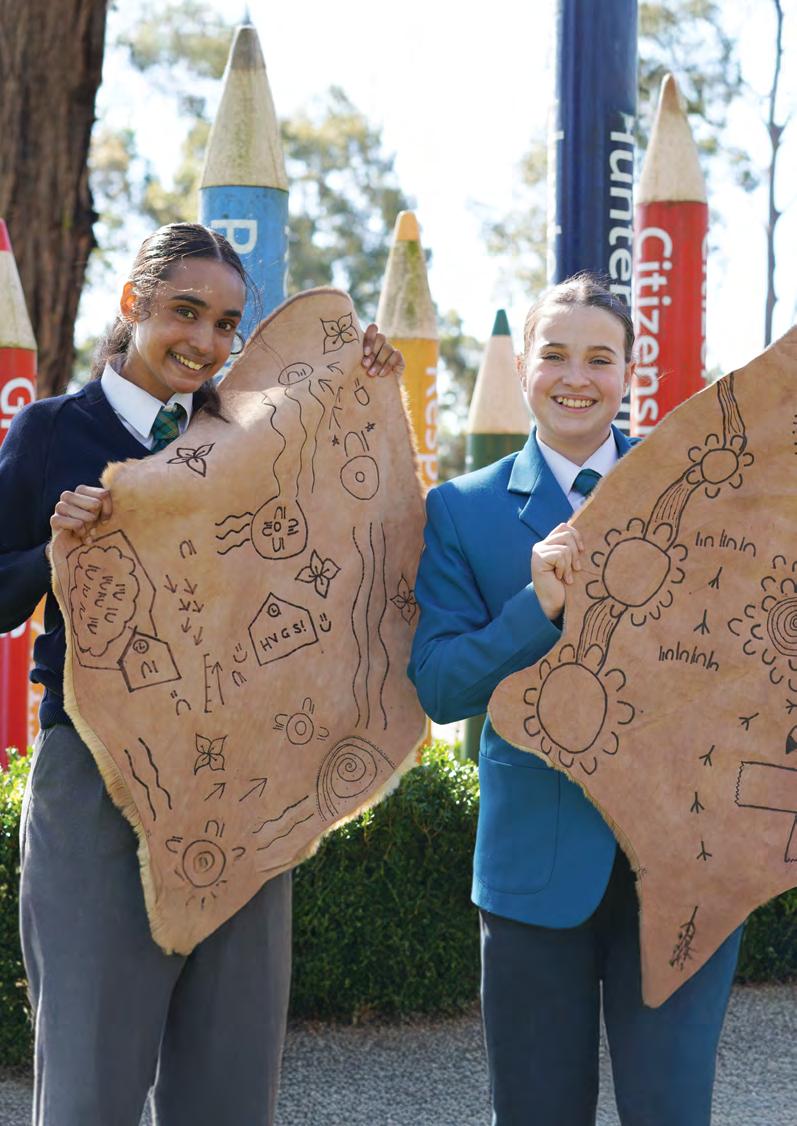
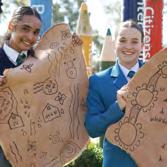
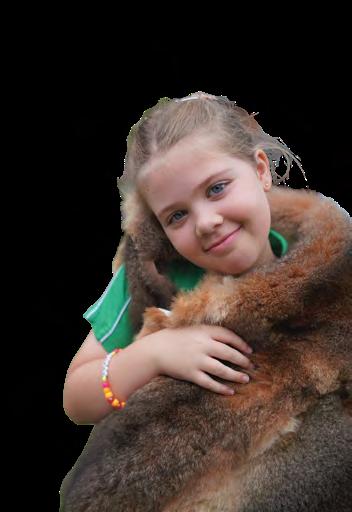
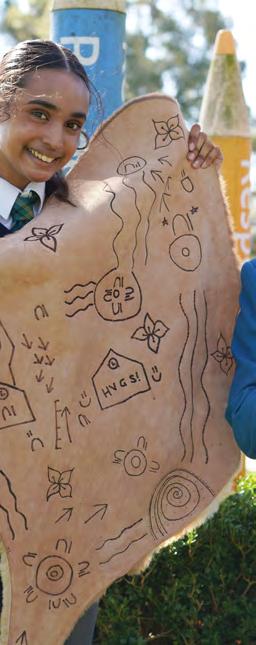
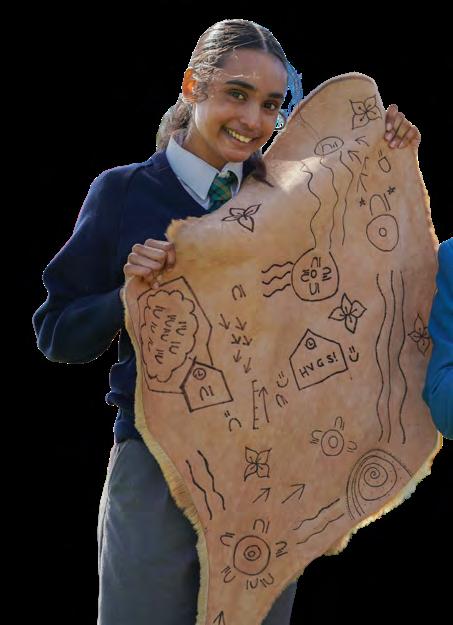
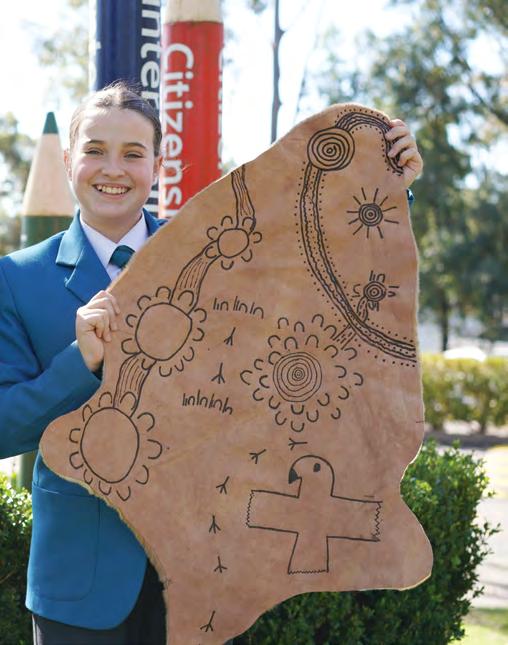
Cover: Bella & Scarlett with their kangaroo hide stories.
Civility CONTROVERSY WITH
Written by Principal, Rebecca Butterworth
One of the greatest challenges of leadership is navigating difference. Disagreement is inevitable - but how we approach it defines the kind of leaders we become.
In our Year 11 Leadership Program, we use the Social Change Model of Leadership, a values-based framework that begins with self-awareness and extends to collaboration and community. At its heart is the belief that leadership for meaningful change is a shared process, grounded in respect and purpose.
A key element of this model is Controversy with Civility It recognises that passionate views are natural, but they must be expressed with respect and a willingness to listen.
Too often, public discourse leans toward debatecombative, win-at-all-costs exchanges that leave little room for understanding. Dialogue, by contrast, seeks to explore perspectives, build trust, and find common ground.
Helping students develop this skill is vital. It means creating safe spaces where they can practise dialogue, challenge ideas respectfully, and appreciate different worldviews.
It also means modelling these behaviours as adultslistening deeply, engaging with empathy, and valuing diversity of thought.
The Social Change Model reminds us that leadership begins with knowing ourselves - our values, our convictions - and then learning to work with others who may think differently.
When we do this, we not only strengthen our own leadership but also contribute to a culture where shared humanity comes first.
True leadership isn’t about winning arguments; it’s about listening deeply.
Scan the QR code to read more of Rebecca's blogs.
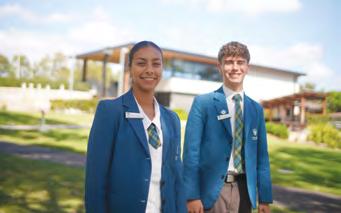
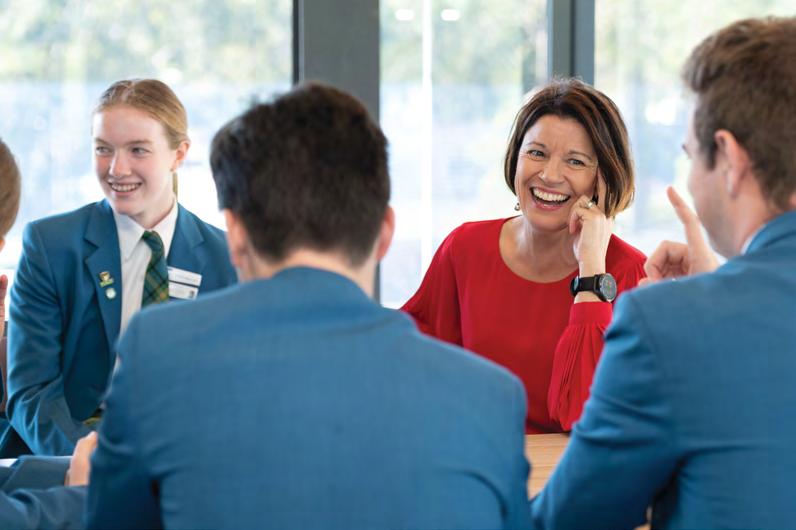
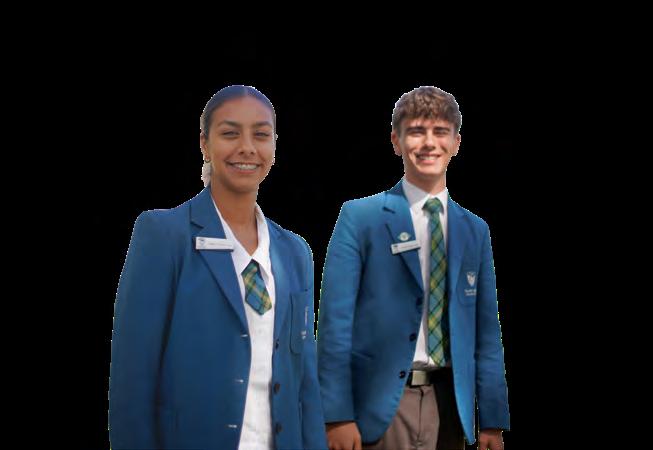
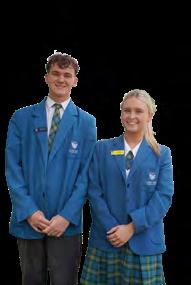
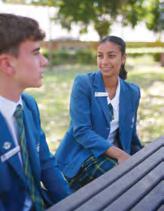
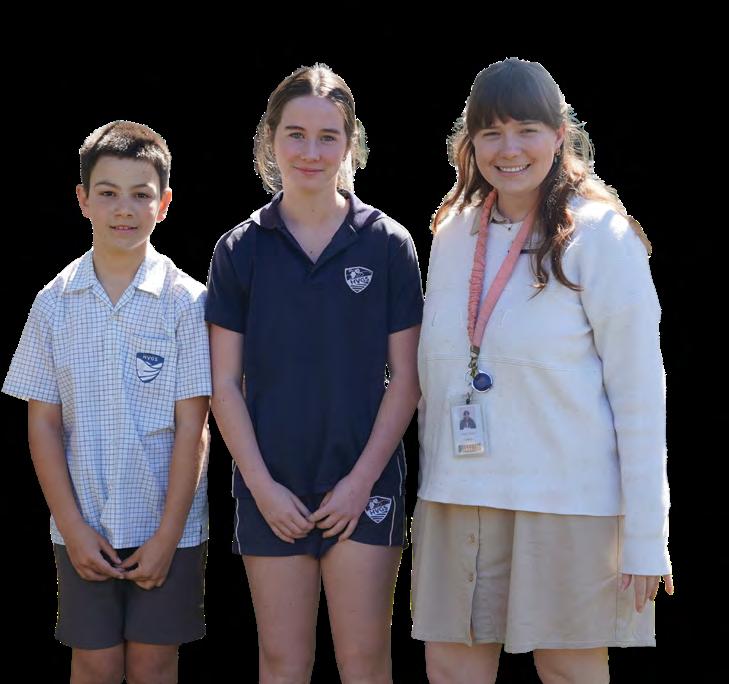
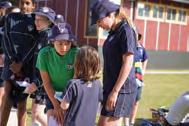
Two voices, one vision
On a field in Singleton, a twelve‑year‑old representative stands at a line marked with numbers. Run this fast. Jump this high.
Years later, Jasmine remembers how those bars felt“really detrimental to young players,” she says. So when she began running strength and conditioning for the rep side, she pushed back.
“We shifted expectations away from raw metrics. Success aged eight or twelve isn’t a sprint time; it’s confidence, growth and belonging.”
It’s a small story with a big clue to how Jasmine leads.
“What I get out of leadership can only be equal or lesser to what I achieve for others,” she says. “I’m often the one at the front of the room - but I see my role as making sure the people at the back are heard.”
For Jack, leadership started at the school gate on his first day at HVGS.
“The captains were open, kind and funny,” he grins. “I thought they were the coolest people in the world.”
Thirteen years on, he’s ready to carry that feeling forward.
“I’ve always wanted to give back - to show the community what school has given me.”
Both captains speak the language of process.
Jack frames it simply: “Leadership is a continuum. Our 2025 Captains, Lachie and Phoebe started things; we continue them; the next captains take them further.”
Jasmine agrees: “It’s about service and structure - clear goals, defined roles, and legacies you can point to: I did this; it mattered.”
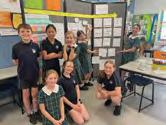
Earlier this year, we travelled to Sydney to join a student panel at the 2025 HICES Conference. The theme, Future Trailblazers: Evolving Education, Transforming Societies, brought together educational leaders from across New South Wales. We were two of four students invited to share our perspective with more than 200 Principals from independent schools - a pretty exciting opportunity to have our voices heard!
One key message we shared was that school should prepare us for more than the HSC. The world is changing
They’re also students of self-knowledge. Following a recent leadership workshop on the Social Change Model, both captains focused on self-awareness.
“People won’t get the best of me if I’m not getting the best of myself,” Jasmine says.
That means mapping strengths and weaknesses, and inviting constructive feedback.
Leadership begins when you accept who you are. If I can’t regulate my own goals, how can I help others do that? Knowing myself lets me trust my abilities and give fully.
- Jack Ryan
The other value that underpins their leadership is the notion of controversy with civility. Jasmine credits her mentor, Mr Hannon, for years of morning “Devil’s Advocate” conversations.
“I enjoy civil, thought-provoking disagreement,” she says.
“My values are things I’ve thought about deeply. We can’t erase bias, but we can evolve it.”
Jack’s rule of thumb has all the makings of a motto:
“You’re not fighting the person; you’re fighting the idea. Keep your body language open. Hear everything - even when you disagree.”
Listening is an art they practise deliberately - especially with quieter voices.
On the football pitch, Jack creates “time and space away from external factors,” stays back after training, and “silently hints” to teammates so the group adapts without spotlighting anyone.
Jasmine’s approach is to be everywhere: band, debating, public speaking, coaching junior netball, running workshops. “A diverse range of activities gives me links across the school. It keeps me grounded. I’m not just ‘the captain’; I’m another person in the group.”
Ask them where student agency should grow next, and they answer in stereo: via the Student Council.
Jasmine wants it promoted as a drop-in space - not a daunting title.
“Sub-teams of 2-3 students working with the right staff champions would improve communication chains,” she says.
Jack wants to end the habit of ranking and prioritising issues.
“Keep multiple streams moving over time. Leadership is a process - solutions should be too.”
Project that forward five years and Jack sees a school where students are part of decisions, not just recipients of news.
“When a fundraiser is announced, students should say, ‘I knew about that; I was part of it.’”
Jasmine wants to see purposeful, thought-out action embedded in the calendar: deeper teen mental-health initiatives around R U OK? Day, stronger Junior-Senior links, and student-led workshops for Year 6-7 transitions.
They’re not waiting. During Term 4, Jasmine’s first move has been addressing the structure of collaboration.
Meetings that don’t clash between Council and the Year 12 leadership group.
Defined roles so legacies are clear and momentum survives timetables.
Jack is leading the World’s Greatest Shave and laying groundwork for a student support network: a weekly, low-pressure space where students and staff can simply turn up - play games, connect, talk.
so fast that much of today’s content may be irrelevant by the time we graduate. What will always matter are the skills we develop along the way - problem-solving, communication, and adaptability.
That’s why the International Baccalaureate feels so valuable at HVGS. It focuses on skills and dispositions that remain essential, no matter how the world evolves.
We also spoke about student agency and why it’s vital for students to feel ownership of their learning. When we’re
engaged and see purpose in our work, outcomes are stronger and more meaningful.
Chelsea shared how her teachers inspired the phrase “See Me Before You Teach Me.” They take the time to understand their students as individuals, and that personal connection makes all the difference. For us, it’s a reminder that education is most powerful when relationships and student voice are at the centre.
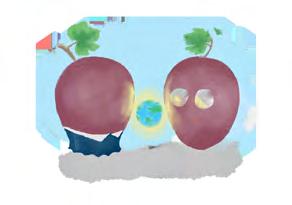
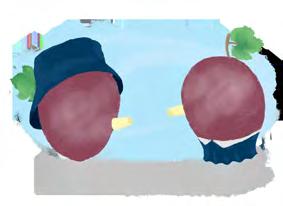
A Grape Success
Meet the characters changing how we learn
What do grapes have to do with learning? At HVGS - everything!
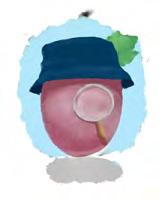
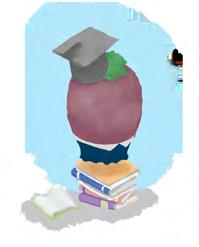
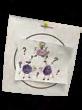
Say hello to our newest Junior School celebrities: the Grapes. These quirky, colourful characters aren’t just cute - they’re clever. Each one represents an attribute of the IB Learner Profile, the backbone of our approach to developing globally minded, wellrounded students.
So why Grapes? The idea sprouted from our School Crest and Hunter Valley roots. But the real magic? It came from our students.
Year 5 learners took the lead, working from an artist’s brief to design characters that make big ideas bitesized and fun.
Armed with pencils, imagination, and guidance from Specialist Art Teacher, Mrs Meg Wisemantel, they brainstormed, sketched, and refined their creations.
Where it all began
The result? Ten vibrant personalities that bring the Learner Profile to life in a way that’s 100% HVGS.
It’s about giving students agency and making learning visible
- Ms O'Dwyer
"The students' creativity drove this project from start to finish."
Soon, you’ll see the Grapes everywhere: on learning walls, desk mats, stickers, and even magnets.
They’ll help students connect classroom content with personal growth - because learning isn’t just about what you know, but who you become.
And here’s the best part: these characters are oneof-a-kind. You won’t find them in any other school, anywhere in the world. They’re ours, and they’re here to make learning juicy.
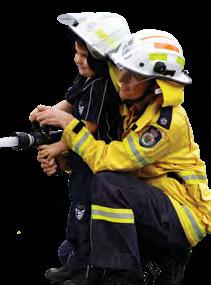
FIRE TRUCKS, BIG HOSES,and little learners
The ELC gets a visit from Thornton RFS
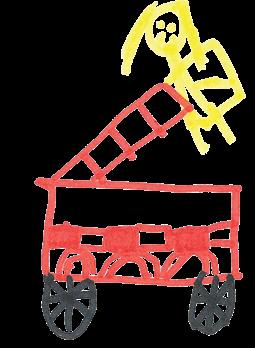
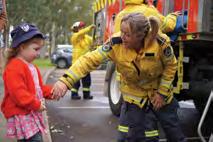
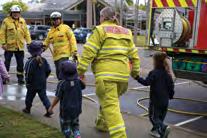
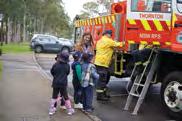
The preschool playground buzzed with excitement as the Thornton Rural Fire Service (RFS) rolled in, sirens flashing and fire hats gleaming.
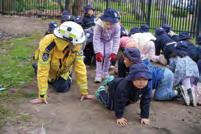
For the children, this wasn’t just a visit - it was a chance to climb into a real truck, grip a heavy hose, and practice the life-saving mantra: “Get down low and go, go, go!”
What unfolded was more than play. Through these hands-on moments, the children connected their fire drill practice to the real world, transferring knowledge into action.
They discovered that safety isn’t just something adults manage - it’s something even the youngest learners can take ownership of.
The visit reflected the Early Years Learning Framework in action: children building confidence, contributing to their community, and developing responsibility for their own health and safety. From a PYP perspective, it was agency and inquiry in its purest form.
Their wonderings - “What happens if smoke comes inside?” “How do you know when to call 000?” - sparked authentic learning, showing how real encounters deepen understanding of how the world works and how we care for one another.
And in their own words:
“If they have a fire in their house, they need to call the fire station!”
- Margot K
“When you see smoke, you crawl, crawl, crawl to the door.”
- Grace R
“Call 000.” - Anna
“I got to have a turn of the hose! It sprayed the fire.”
- Margot Y
“If there is a fire, you run to your mailbox.”
- Sutton
The firetruck may have driven away, but the learning will last far longer - leaving our little learners empowered, capable, and ready to keep themselves and others safe.
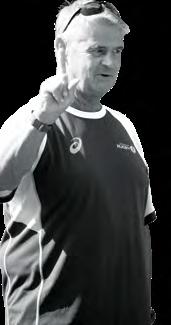
A LIFE IN FIRSTS and lasts
In the early 1990s, John Guy stepped into a demountable building at Hunter Valley Grammar School, unsure of what lay ahead. The school was in its third year, its future uncertain, and its staff small enough to fit into a single room.
Coming from Singleton High - a large, well-resourced school - John found himself in a place where even the viability of the school was under review.
“It was filled with trepidation,” John recalls.
“I’d come from a school with 1,500 students. Suddenly I was at a small school with limited resources and big questions about its future.”
His first role was as a Humanities teacher in the old C Block, teaching Geography and History in modest rooms with shared spaces. Despite the challenges, the staff were welcoming, professional, and determined to make things work.
“We had one overhead projector and one video recorder,” he says.
“Everyone wanted to use modern teaching methods, but you just had to make do.”
It didn’t take long for John to become a cornerstone of the HVGS community. He took on leadership roles as Head of Gloucester House and Head of Stage, and became a driving force behind the school’s pastoral care program.
His belief in the potential of every student - especially during their most challenging moments - earned him deep respect.
“I’ve always believed in the capacity of young people to do the right thing,” he says.
“To be good people, and to learn from their mistakes.”
Firsts that built a legacy
John’s career was marked by bold beginnings.
He helped organise the School’s first overseas rugby and netball sports tour to Fiji with no mobile phones or email, just fax machines and determination.
He led the first outdoor education camp at Skate Bay, where teachers were treated like students, hiking through the bush and cooking ration packs.
And he witnessed the surreal moment of the first Presentation Ball, when a bomb scare forced everyonestudents in gowns, parents in black tie - into the carpark to cut the cake.
Took a risk, made a contribution, adapted to the challenge of change and left a legacy. It was an honour, not a job.
“It felt like Lord of the Flies,” he laughs.
“But those moments helped shape the School’s cultureresilient, resourceful, and united.”
Lasts that leave a mark
After 33 and a half years, John’s final days were filled with reflection and celebration.
His last Year 12 Economics class was particularly meaningful, with students sharing how his teaching had changed their career paths.
“Some students told me they’d discovered a passion for Economics,” he says.
“That was incredibly rewarding.”
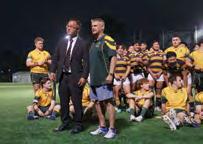
The farewell assembly on 29 July - coincidentally his son’s birthday - was a humbling experience. Speeches from Heather McLaren, Rebecca Butterworth, the House Captains, and video messages from past students brought home the impact he’d made.
And then came the moment that took him by surprise: the school rugby field being named in his honour.
“That was totally unexpected and deeply moving,” John says.
“It meant a lot.”
SPEAKING THE FUTURE
In a world of rapid change, learning another language is less about vocabulary lists and more about developing the kind of mind ‑ and heart ‑ that can navigate complexity and difference.
You may wonder, why bother when translation apps fit in your pocket? Because language learning reshapes how we think. Research links it to stronger attention, problemsolving, and cognitive flexibility - and even suggests it can help build “cognitive reserve,” delaying dementia symptoms later in life.
But the most immediate shift isn’t neurological - it’s human. Language learning teaches us to question assumptions, read context, and listen for what sits between the lines. These are the dispositions behind empathy and intercultural competence - skills employers and universities prize in a globalised world.
It’s also about belonging. In a country where more than 5.6 million people speak a language other than English at home. Languages connect identity, family, and place. In classrooms, they’re never “just” a subject - they’re a way to practise perspective-taking.
As Head of Modern Languages, Sharon Cashen says, “Language learning is empathy in action.”
If you talk to a man in a language he understands, that goes to his head. If you talk to him in his language, that goes to his heart.
- Nelson Mandela
Language at a glance
• ELC to Year 6: French
• Years 7‑10: Choice of French, German, Japanese, or Mandarin
• Years 11 12: Spanish is offered exclusively through the International Baccalaureate (IB) Diploma or Career-Related Programme (CP). French, German, Japanese, and Mandarin are available to Year 11 and 12 students across both HSC and IB pathways.
Why it matters
• Builds empathy and intercultural competence
• Strengthens memory and problem-solving
• Aligns with global-readiness skills
• Reflects Australia’s multilingual reality
What’s next
Expect more authentic use and global collaborations: visiting schools from China and Germany, and language trips to Japan, China and Europe.
Hear Charlotte - Year 12 speak Mandarin
A living BRIDGE
Two schools, two decades, and countless small moments that changed how people see the world and each other.
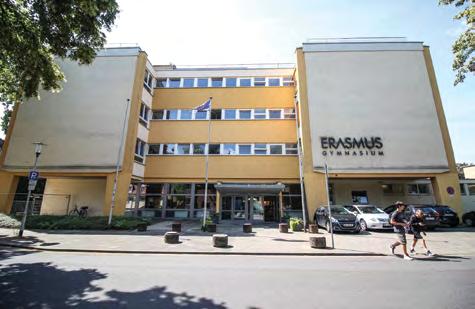
What began in the early 2000s as a connection between a teacher and his former school, Erasmus-Gymnasium in Germany, has grown into a partnership that shapes students, families, and teachers on two sides of the world.
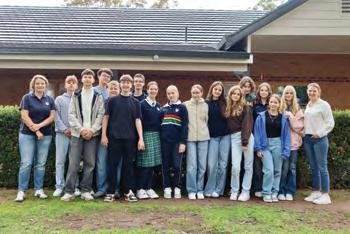
Every second year, Erasmus students join us for homestays and classes, while in alternate years our students travel to Germany as part of the European Tour. Homestay is the heart of it - ordinary routines becoming extraordinary lessons in perspective.
“It’s about connection. The world isn’t as big as you think it is.”
- Sharon Cashen
The first hello
Exchanges start at the kitchen table. Conversations turn into friendships that outlast the return flight. Some families still share Christmas photos years later.
School days, real days
For eight to ten days, visiting students shadow buddies, join bilingual lessons, and navigate new routines. “Ordinary” in one place feels extraordinary in another.
Ideas that travel
Teacher conversations spark change: mobile-phone policies, learning principles, even the idea for shared community spaces, such as Treetops, began over coffee.
Same planet, different Tuesday
Uniforms here, no uniforms there. Dinner at sixor eight. Politics taught in English at a bilingual school. The comparisons aren’t about better or worse - they’re about noticing and questioning.
Next up: Erasmus exchange students will come to
HVGS in August 2026, alongside new visiting schools from China.
Julia Rümens:
My two-week exchange in Australia was an amazing experience. I felt very welcomed by my host family and quickly became part of the school community. I enjoyed discovering the Australian way of life, making new friends, and exploring the beautiful surroundings. This exchange broadened my horizons and gave me memories I will never forget.
without a badge Leadership Addison Molly Markus
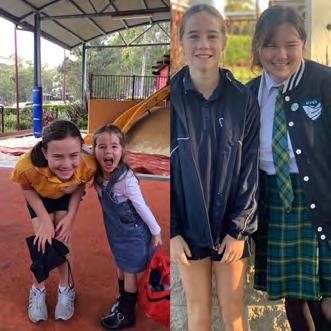
Leadership doesn’t always come with a title. Sometimes, it’s found in the quiet moments a Year 6 student tying a shoelace, reading a story under a tree, or offering a reassuring hand on the first day of school.
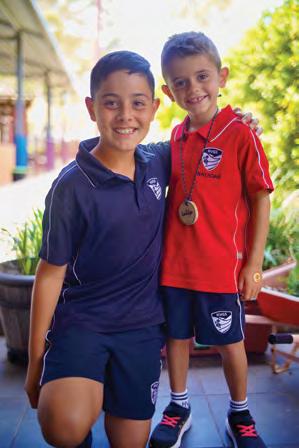
The Buddy Program is a cherished tradition that pairs Year 6 students with Kindergarten children for a full year of connection, mentorship, and shared experiences.
The relationship begins even earlier, at Kindergarten Orientation, where buddies meet and begin building trust before the school year starts.
Throughout Terms 1 and 2, buddies meet weekly for reading, maths games, craft activities, and shared lunches. They celebrate milestones together - like 100 Days of Kindy and Pyjama Day - and form bonds that often last well beyond the school year.
In the playground, Year 6 students become quiet leaders - initiating games, tying shoelaces, and guiding younger students through the social landscape of school life.
It’s leadership in its purest form: unbadged, unprompted, and deeply meaningful.
“The best part of the Buddy Program is its ability to foster meaningful connections across stages, allowing Kindergarten students to have a friendly and supportive face in the playground beyond their teachers,” says Molly Fisher, Education Assistant and former student/buddy.
“Students in Year 6 develop valuable mentoring and leadership skills through this buddy program, which fosters a sense of responsibility and enables them to forge meaningful relationships with younger peers. This experience not only enhances their interpersonal abilities but also promotes empathy, confidence, and a strong sense of community.”
It’s leadership in its purest form: unbadged, unprompted, and deeply meaningful.
A tradition rooted in values
The Buddy Program is more than a series of activitiesit’s a living expression of values. It teaches responsibility through mentorship, compassion through care, and gratitude through shared moments and memories. Students often write letters to their buddies, many of which are kept as treasured keepsakes.
These relationships create a sense of continuity. The Year 6 students of today were once Kindergarten buddies themselves. And the Kindergarten students of today will one day step into leadership roles, guiding the next generation through life’s big transitions.
Three generations of buddies
Few stories capture the depth of the Buddy Program better than the one shared by Molly Fisher. As a Year 6 student, Molly was paired with a Kindergarten buddy named Addison. Fast forward to today - Molly is now an Education Assistant at the school, and Addison is in Year 10.
In a beautiful continuation of the tradition, Addison was later paired with Markus, when he started Kindergarten. Markus is now in Year 4 and, in just a few years, will have the opportunity to become a buddy himselfcompleting a full-circle moment of mentorship and connection.
This story is a powerful reminder of how the Buddy Program weaves through the lives of families, creating lasting bonds and shared memories that span not just years, but generations.
Growing together
The Buddy Program is a celebration of growth - not just academic, but emotional and social. It’s about learning to lead with empathy, to support others, and to find joy in shared experiences.
It’s about transitioning through life’s big moments together, hand in hand.
“It’s not just a program - t's a relationship that lasts.”Shannon O’Dwyer.
Molly Graduating Junior School and Addison Graduating Junior School
Threading empathy
Phoebe knows this firsthand.
In Australia, over 946,000 children and young people live with a disability. That’s more than one in ten ‑ each navigating daily challenges that many of us never have to think about. For some, even getting dressed can be a barrier to independence.
In Year 10, she tore her ACL and spent months on crutches, her leg locked in a brace at 90 degrees. Suddenly, something as simple as putting on pants became a frustrating ordeal.
“Putting on pants was definitely a challenge,” she says. “I kept thinking - there should be an easier way.”
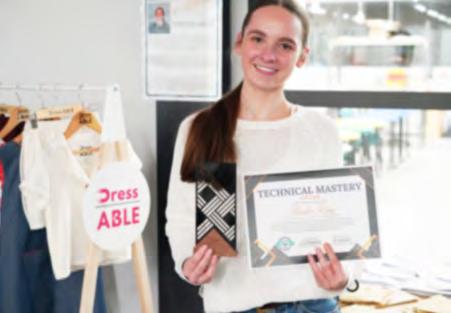
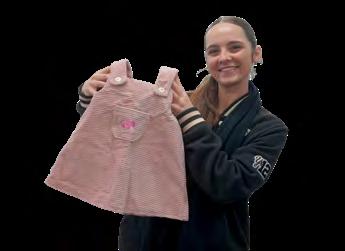
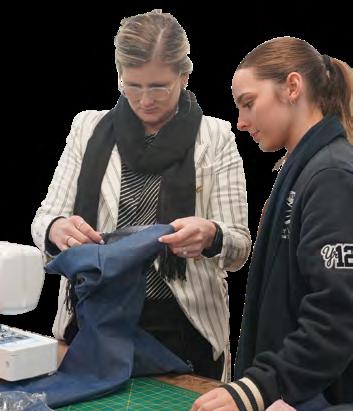
That moment of discomfort sparked an idea. For her HSC Major Design & Technology Project, Phoebe set out to design adaptive clothing for children with disabilities or temporary impairments - garments that make dressing easier, preserve dignity, and support independence.
Her designs are thoughtful and practical. Magnetic closures replace fiddly buttons and zippers. Soft, flexible fabrics allow for movement. Each piecefrom an overall dress to boys’ jeans with magnetic seams - is crafted to be functional, stylish, and empowering.
“I’m really proud of the magnetic closures,” Phoebe says. “They were hard to get right, but when they finally worked, it was just really cool to see how that came together.”
Phoebe’s work was selected to be featured on UpRising, a national platform celebrating student innovation. Through UpRising, she connected with other creatives, shared her designs, and received seed funding to elevate her project.
“It’s been incredible,” she says. “I’ve been able to purchase better fabrics and improve the quality of my design.”
She also developed a DIY adaptive kit, a resource that includes magnetic features and a manual to help families modify everyday clothing, including school uniforms.
Whether they’re injured or have a disability - those are struggles on a person’s physical and emotional wellbeing, she says. If you can make things easier, that’s always important.
“When I was in my brace, I wouldn’t have wanted to wear something different and look different to other people,” Phoebe explains. “This way, kids can wear the same thing, but it’s just easier on the user.”
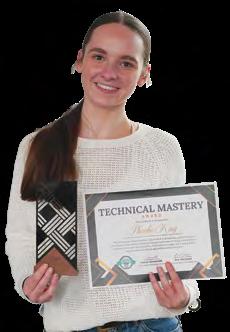
Her project earned her the Technical Mastery Award at our Innovate D&T HSC Showcase, recognising her high level of craftsmanship, attention to detail, and strong understanding of design principles and processes.
But beyond the accolades, Phoebe’s project is a story of empathy turned into action. She had never done a textiles-based project before. She taught herself to sew, problem-solved through setbacks, and embraced every opportunity to grow.
“I like to include something I haven’t done before in every project,” she says. “So I can learn new skills and increase my skill set.”
Phoebe’s work is part of a growing movement. The adaptive clothing market is projected to reach $32.12 billion globally by 2032, driven by rising awareness, inclusive design, and the needs of millions of people living with disability.
Yet in Australia, adaptive fashion remains underrepresented, making Phoebe’s contribution all the more powerful.
Her advice to future students considering Design & Tech?
“100% do it,” she says. “Design & Tech is such a release. You get to make something that matters.”
Phoebe’s project is more than a garment. It’s a statement. A solution. A stitched-together story of resilience, compassion, and creativity.
FLYING HIGH: Inside the World of a
Young Trampolinist
The first time Caladen set foot on a trampoline, it wasn’t part of a lifelong dream it came from a tip from a coach at his sister’s cheer gym.
“We didn’t even own a trampoline at the time, but it sounded fun,” he recalls.
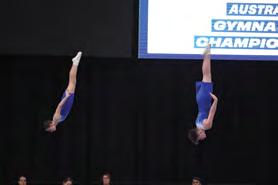
Twelve weeks of lessons later, he entered his first competition - and won. Just four months after that, he was a National Champion.
I just got through it one day at a time and didn’t beat myself up about it. Consistency is key.
What makes trampolining so addictive? “Flying! I try to jump as high as I can so I have more time in the air. The feeling of flying is something I cannot explain.”
A typical training week is rigorous and precise. During competitions, his mind is equally disciplined: “Feet, legs, arms, feet, legs, arms. Pointed feet, straight legs, tight arms - that’s all running through my head during finals. I focus on what earns the most points for clean execution.”
Representing New South Wales at Nationals for the past three years has been a highlight, and the pride is palpable. “When I win, I feel like I win for all my friends who are in the sport too.”
But the path hasn’t been without setbacks. An ankle injury stalled his progress for over three months.
His advice to younger athletes? “It’s all mindset. Daily habits and food intake are what make a champion. Even on days you don’t want to train, you have to push through - someone else would love to live your dream, so you have to put in the work.”
Support comes from all corners: “My family and mates are my biggest cheerleaders. And Dong Dong, the Olympian - he’s epic and my biggest inspiration.”
Looking ahead, he’s chasing bigger goals. Missing gold by less than a point this year has only fueled his determination. He’s aiming for Nationals again and is branching into men’s tumbling as a complementary discipline.
His message to anyone thinking of trying trampolining is simple: “Just try it. It’s so much fun and harder than it looks. Jump as high as you can, point your feet, keep your legs straight, land in the middle - then imagine doing flips on top of that. It’s the best feeling ever.”
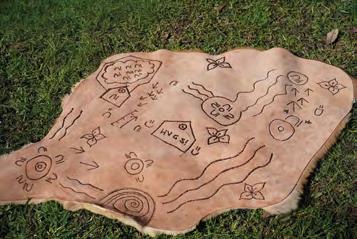
In the soft hum of a Wednesday afternoon, the scent of scorched hide lingered in the air. Around the room, students leaned over pieces of kangaroo skin, pyrography tools in hand, carefully burning symbols into the surface.
Each mark told a story - not just of who they are, but of where they’ve been, and what they carry with them.
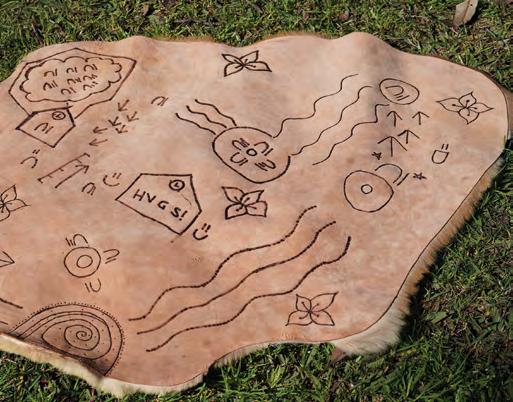
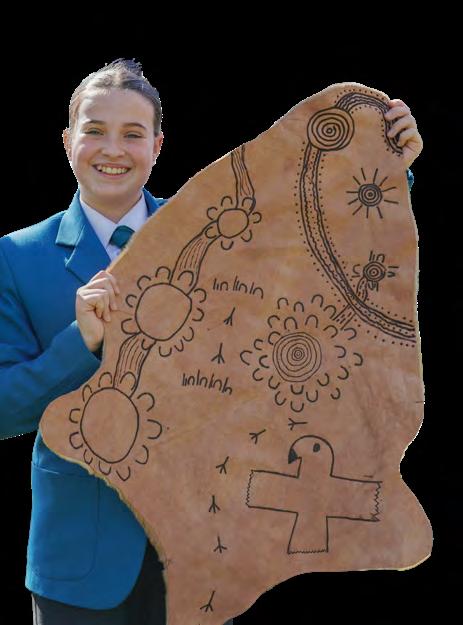
For Scarlett, the process was deeply personal. Her kangaroo skin held the story of her life so far - thirteen footprints tracing her journey, symbols of her family, and the three schools she’s attended.
Her totem, an eagle, soared across the skin, representing strength and connection. The act of storytelling through burning was slow and intentional, each mark a reflection of identity.
Bella’s story was different, but just as meaningful. Her kangaroo skin mapped a journey from Newcastle to Sydney, with symbols representing her school history, and her brother - a treasured part of her life. Each element was chosen with care, etched into the hide with quiet reflection.
“There are important parts in there,” Bella said. “Like having my brother, starting school, and high school - it’s a big opportunity.”
This was more than an art project. It was a cultural practice rooted in tens of thousands of years of Aboriginal tradition.
Kangaroo skins have long held significance - used for warmth, water carrying, ceremony, and storytelling.
Cloaks were sewn with sinew and decorated with ochre or carvings that told personal, family or clan stories.
They were used to carry water, worn in ceremony, and passed down through generations. Every part of the animal was used with care and respect, reflecting deep cultural knowledge and sustainability.
When students engage with cultural practices like kangaroo hide storytelling they’re not just learningthey’re connecting
- Mark Miles
Today, that tradition continues in new ways. As part of our Culture Club, supported by our Head of Aboriginal and Torres Strait Islander Education, Mark Miles, students were invited to engage with this practice through a hands-on experience that blended reflection, creativity and cultural learning.
Scarlett
“They’re building bridges between past and present, between personal identity and shared history. It’s a powerful reminder that every story matters, and every student has one worth telling.”
Students spent hours across Wednesday afternoons and lunchtimes, slowly crafting their stories. The process gave students agency - to choose what mattered, to honour their journey, and to connect with something bigger than themselves.
Kangaroo hide storytelling is more than a creative task. It’s a bridge between past and present, between personal memory and collective heritage. It fosters cultural understanding, empathy, and global citizenship. It invites students to listen, to reflect, and to share.
For Bella and Scarlett, the experience was transformative. Their stories now live in the fibres of the hide - etched in skin, etched in memory.
Acknowledgment of Country HVGS acknowledges the Wonnarua people as the Traditional Custodians of the land on which our school stands. We pay our respects to Elders past and present and extend that respect to all Aboriginal and Torres Strait Islander peoples.
Florence Searle
(CLASS OF 2020)
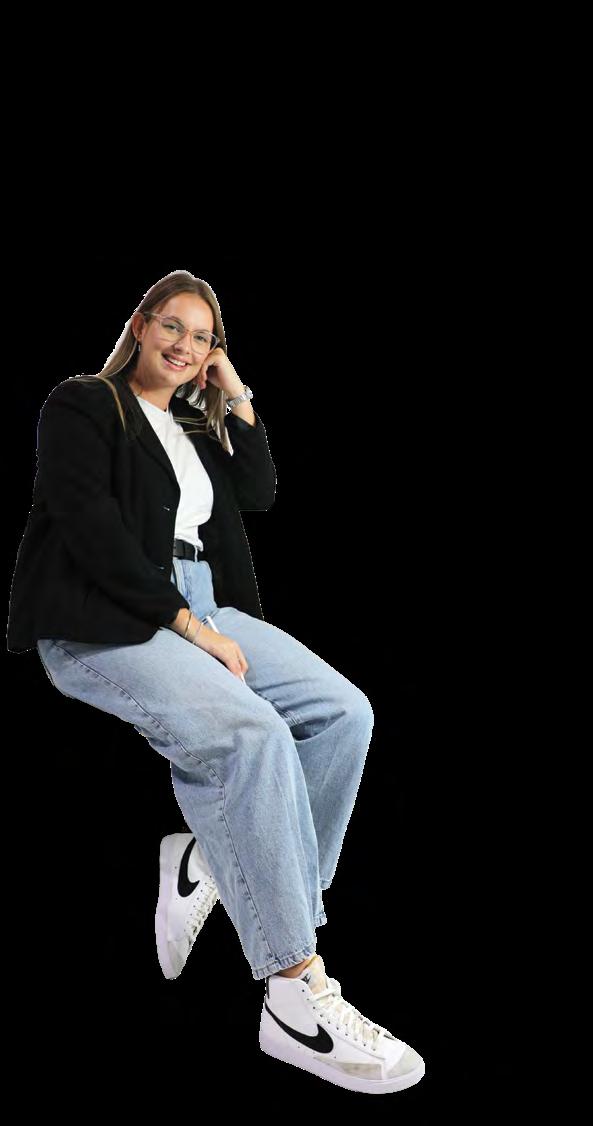
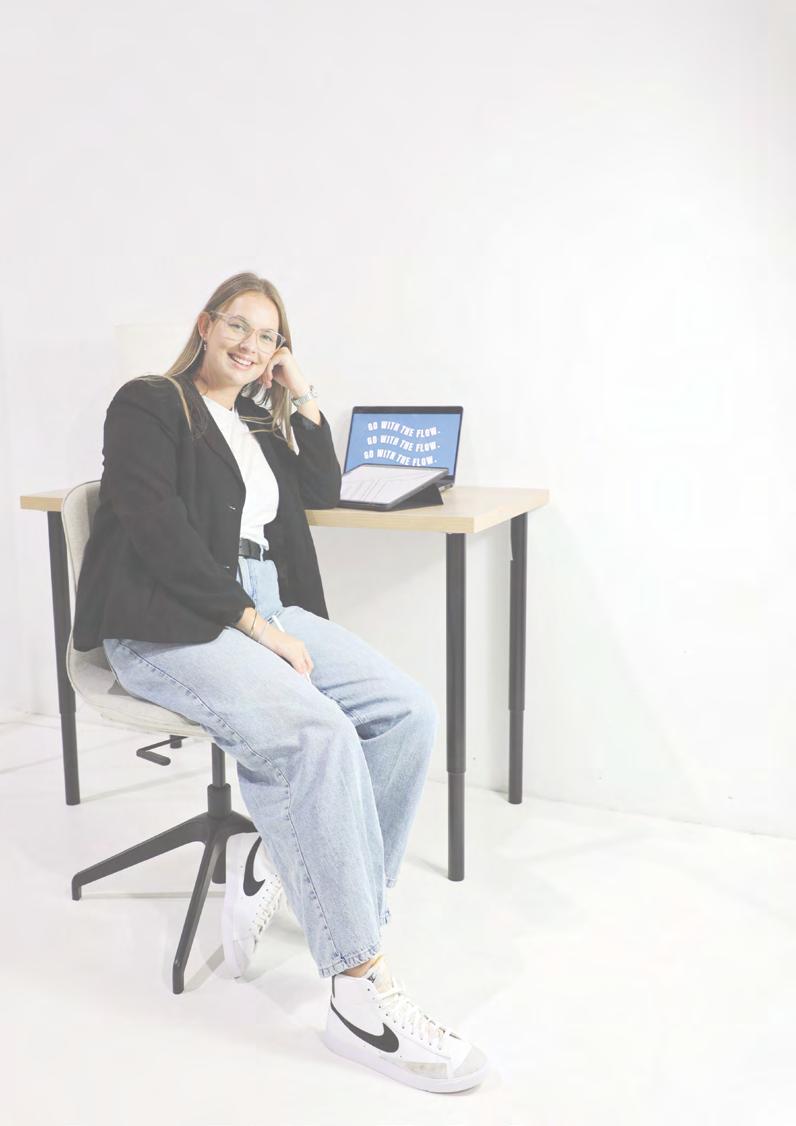
For Florence “Flo” Searle, the spark for a creative career started in Year 7, when she chose Visual Design as an elective.
“I fell in love with it. That experience led me to discover the Visual Communication Design degree at UON - and I never looked back.”
After graduating from HVGS in 2020, Flo threw herself into her studies, completing her degree with High Distinction. Her first steps into the professional world were in a corporate signage company, designing for big brands like KFC, Hungry Jack’s, and Isuzu Trucks. While the work was valuable, Flo longed for more creative freedom.
A period of travel broadened her horizons, and soon she took a bold leap: launching Flow Studio, her own graphic design and photography business. Today, she works full-time as a freelance designer, building brands, websites, and signage - shaping a career on her own terms.
Take the time to figure out your dreams. Don’t be afraid to dream bigit’s worth it
“Being my own boss has given me the freedom and flexibility I’ve always craved,” she says. “Right now, I’m focused on growing my client base and establishing a strong reputation within the industry.”
Yet it isn’t all about work. Some of Flo’s most meaningful memories from HVGS remain from the Vietnam service trip.
“It was truly life changing. We visited war memorials and orphanages for children affected by Agent Orange. I was lucky to share the trip with my brother and best friend, and we still reflect on those memories today.”
Her success, she says, wouldn’t have been possible without the support of teachers who believed in her - particularly Mrs Hemsworth (formerly Miss Aubin).
“She believed in me even when I didn’t believe in myself and made the TAS building feel like home. I’ll always be grateful for her guidance.”
Looking back, Flo sees a clear thread from that first spark in Year 7 to the studio she runs today.
A wise man once told me, ‘If your dreams don’t scare you, they’re not big enough.’ I couldn’t agree more.”
Pat McMahon
(CLASS OF 2017)
Connections. Hang out with people who do what you want to do and ask questions. Anything’s possible - just give it a go
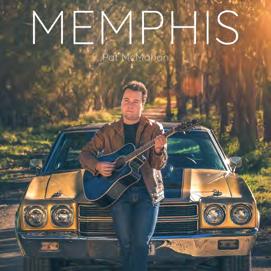
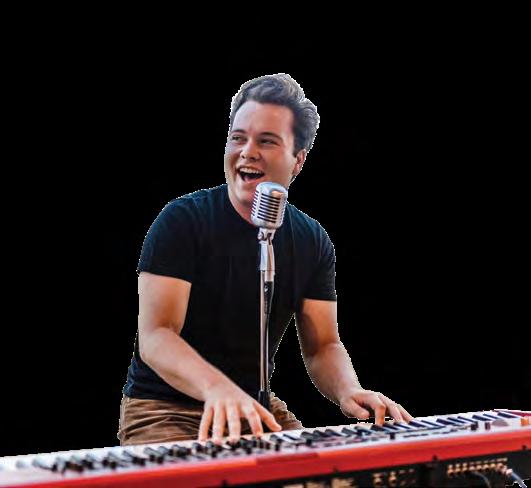
When HVGS alum Pat McMahon sat down at a piano in Nashville, he didn’t expect one of his favourite songs to come together in just a few hours - or that he’d end up recording it with the son of Jimmy Barnes.
That session led to his debut single, Memphis: a soulful reflection on travel, connection, and the places that shape who we are.
“I’d driven from Texas through New Orleans and up to Memphis,” Pat recalls.
“When I got there, I had this strange sense of déjà vu - memories I didn’t own, but had seen through documentaries and photos. Memphis is about finding that special place that means something to you, even if it’s a long way from home.”
The song was co-written with ARIA-winning artist Rick Price, who became both mentor and collaborator.
“Rick taught me not to overcomplicate things - to let the story and lyrics speak for themselves. He also told me to give myself permission to be a songwriter as well as a performer. That changed everything.”
Now an established singer-songwriter and performer, Pat continues to write and record original music that blends authenticity with melody.
His songs explore themes of love, connection and belonging - stories drawn from lived moments, familiar emotions and fleeting encounters.
“I’m always trying to capture something real,” he says. “Music connects people in ways words alone can’t.”
Pat says his time at HVGS gave him both the technical foundation and the personal confidence to pursue music seriously.
“I had great teachers and access to instruments and opportunities - like Stage Band - where I made lifelong friends. HVGS taught me respect, balance and drive, and I still use those values in my career today.”
He also credits the late Jacob Neale, his piano teacher, for shaping his love of jazz and rock’n’roll, and music teacher Mr Gidney for giving him the courage to sing.
“It all clicked in Year 12 - and I’ve never looked back.”
For current HVGS students dreaming of a creative path, Pat’s advice is simple:
“Connections. Hang out with people who do what you want to do and ask questions. Anything’s possible - just give it a go.”