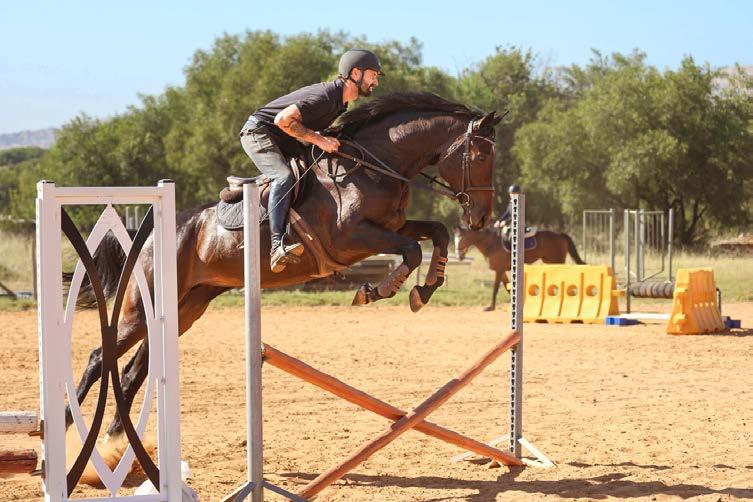
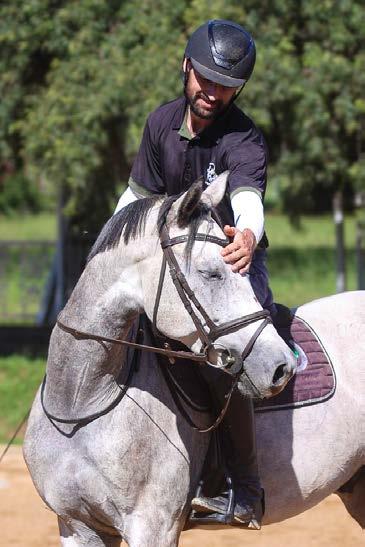
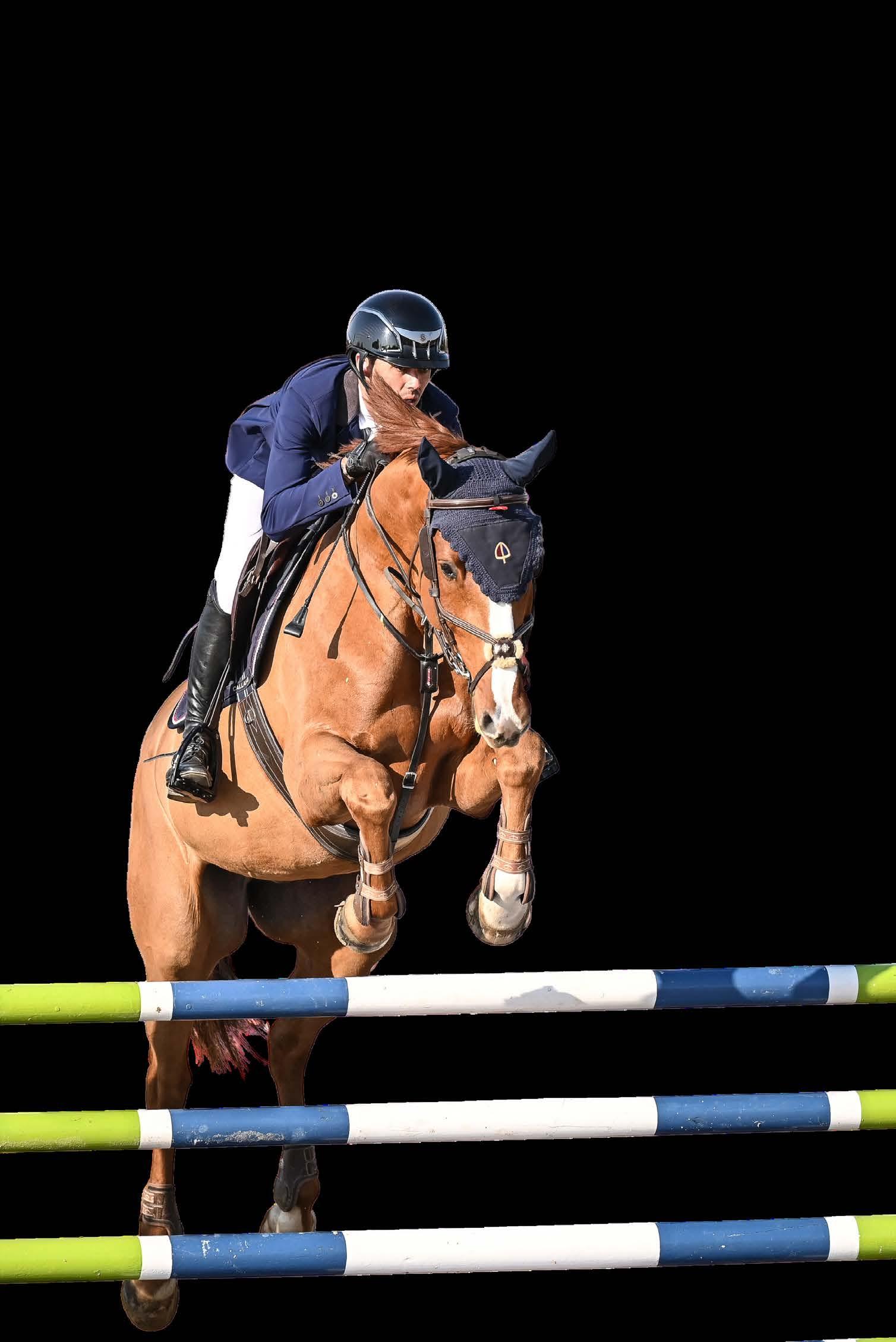
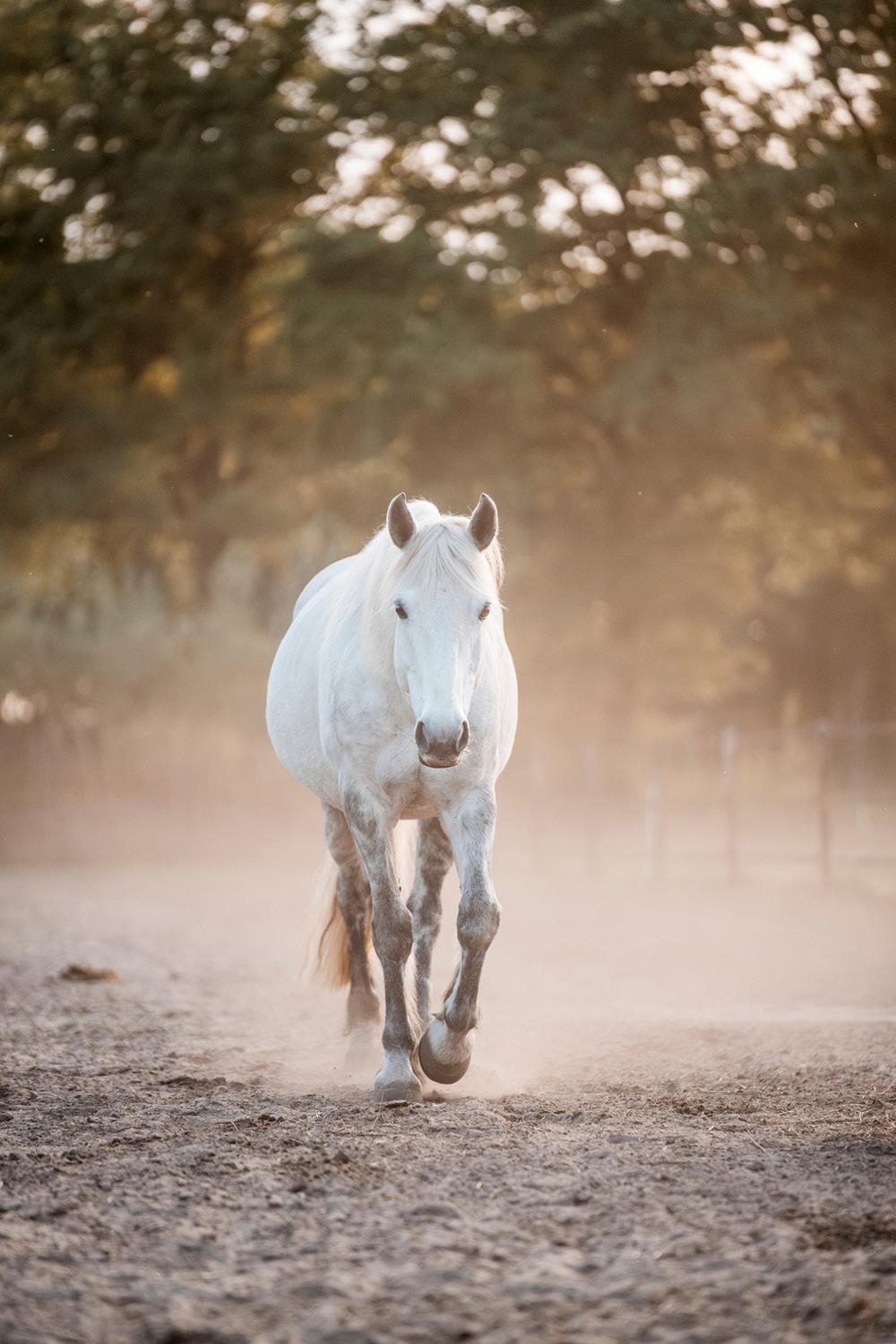
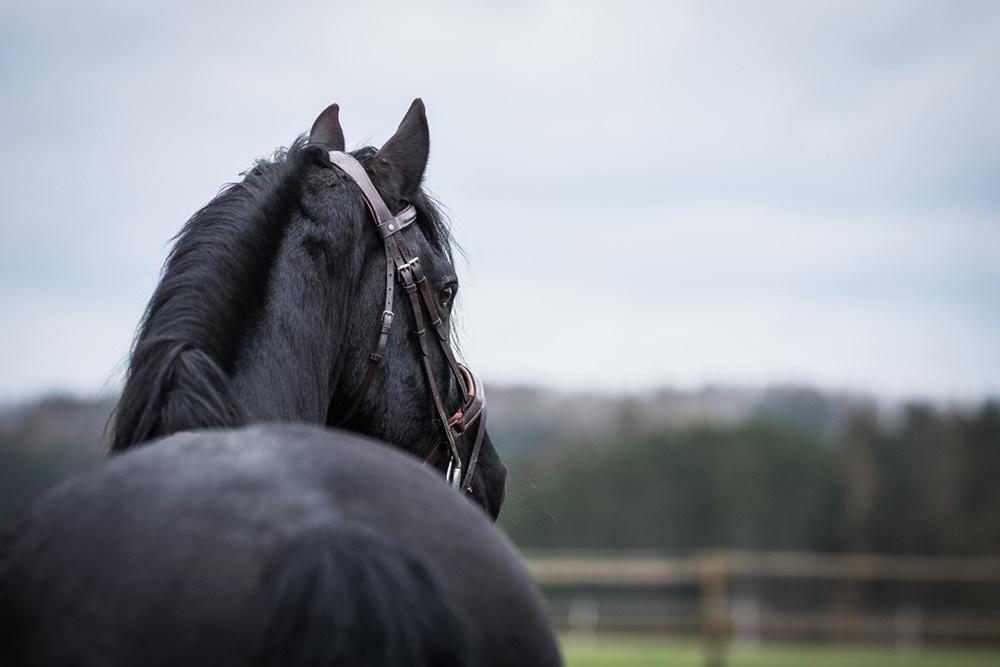
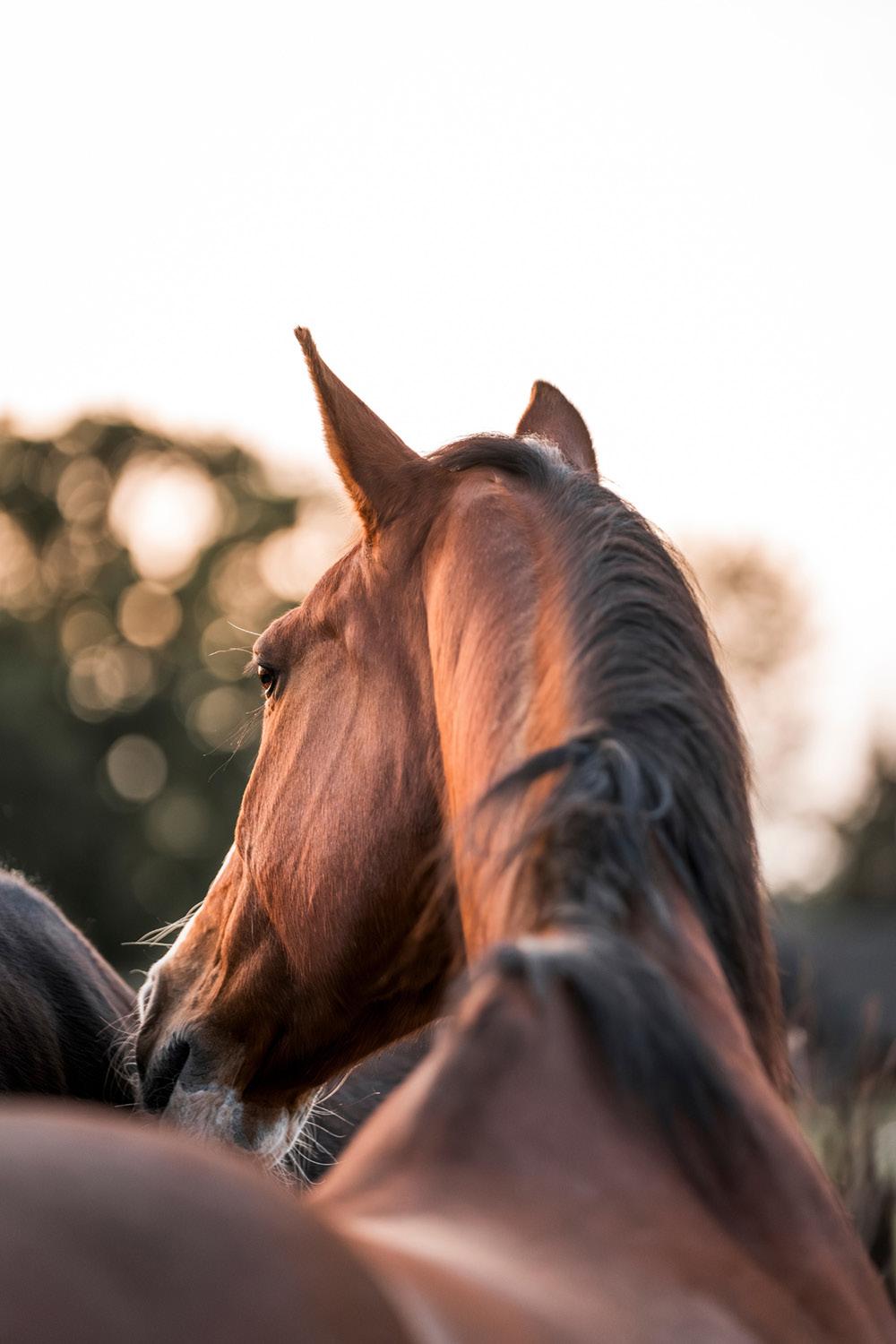
As the year winds down and routines shift into something quieter, we find ourselves reflecting on care - not as a checklist, but as a practice. This issue explores what it means to care well: for horses in transition, for those who need rest, and for the decisions we make when the answers aren't straightforward.
We begin with the practicalities of bringing a new horse home from auction. Beyond the logistics of transport and introducing horses to a new routine lies the deeper work: reading a horse's history through behaviour, building trust, and committing to the long view. It's a process that asks more of us than we often anticipate, and one that deserves honest conversation.
Our feature on off-season care looks at what happens when competition stops and management shifts. Letting down isn't passive - it's a deliberate recalibration. We explore how to support recovery, both mental and physical, and how to prepare horses quietly for what's ahead without rushing the in-between.
We also step into less comfortable territory with our piece on sedation versus behavioral training. It's a question many of us face: when does intervention help, and when does it mask a problem we need to address differently? This isn't about judgment - it's about asking better questions and making decisions rooted in welfare, not convenience or tradition.
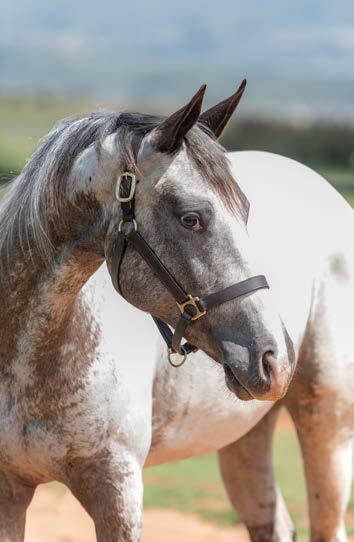
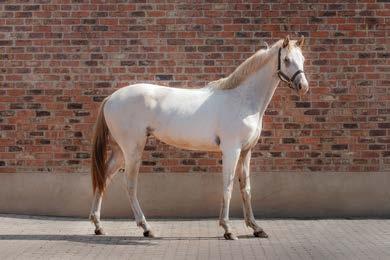
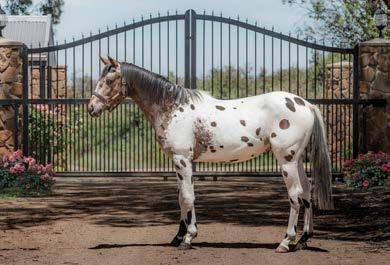
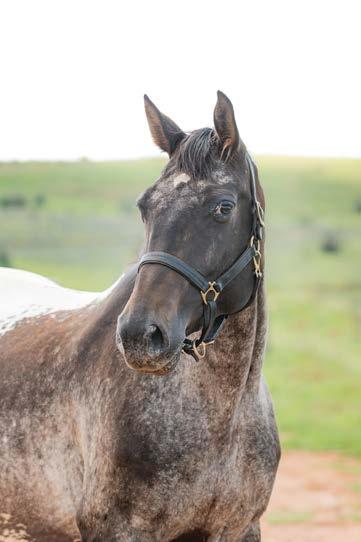
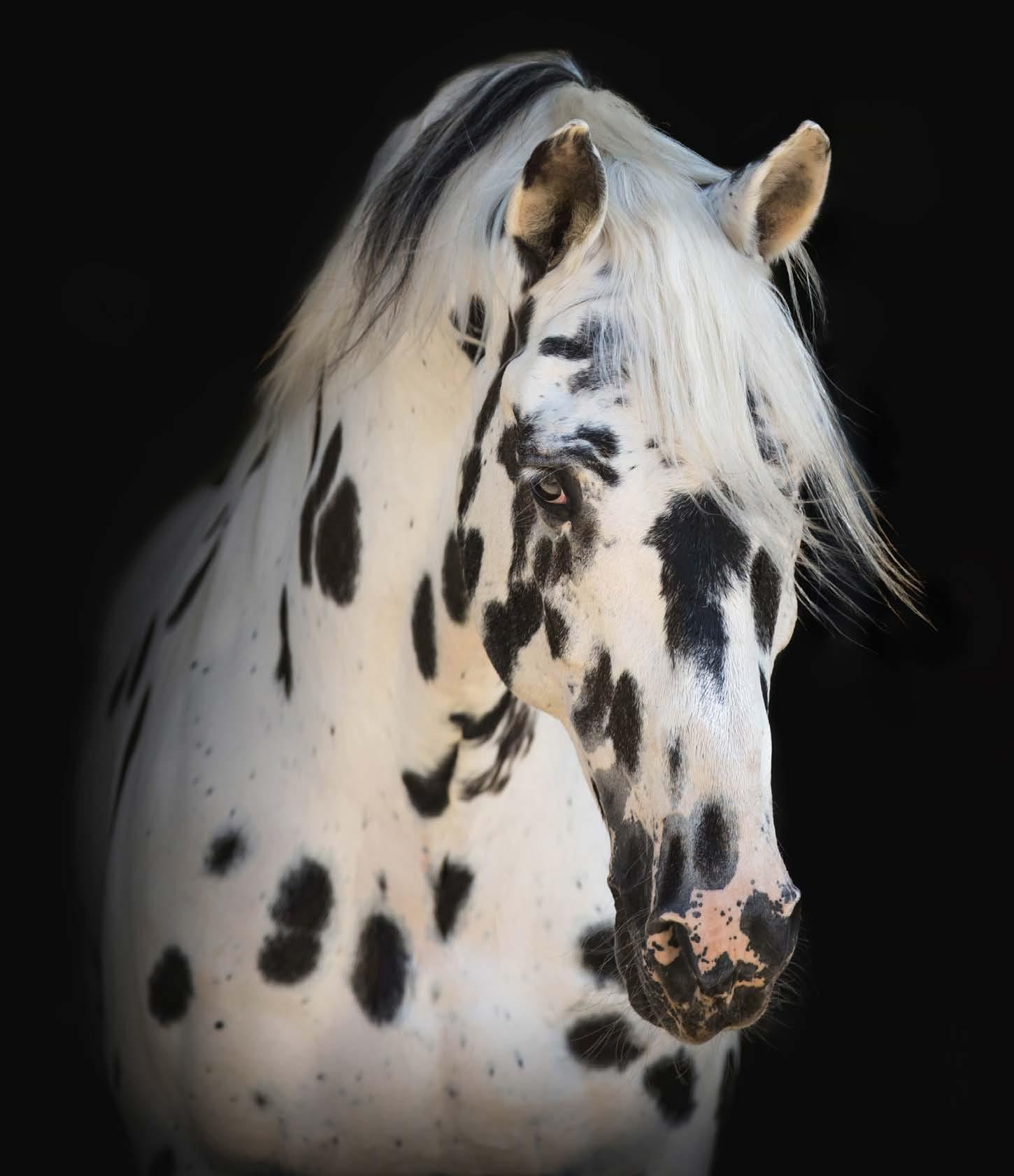
This month's breed focus takes us to the Knabstrupper, a breed defined by striking coats and steady temperaments. We visit The Majestic Knabstrupper Stud to see how thoughtful breeding, patience, and long-term vision continue to shape these remarkable horses.
Finally, we return to one of the most influential mare families in the sport: the descendants of Ratina Z. Her legacy isn't just in results, but in the depth and consistency of talent that continues to emerge, generation after generation.
From all of us at HQ, we wish you a wonderful festive season and look forward to seeing you in the New Year.
Dr Lizzie Harrison | Editor
CONTENTS
Chasing dressage excellence
Daliah Thill's journey from Jo’burg to Europe
Your first auction horse
What to do when you bring them home
Beyond the rodeo
A guide to Western disciplines
Mare families that made the sport
Ratina Z – The mare who ruled the world
Spotlight on The Majestic Knabstrupper Stud
A Legacy in the making
The art of off-season care
Why strategic rest may be your sporthorse's secret weapon
Sedation vs behaviour training
Understanding when calm is care, and when sedation masks a deeper problem
AskHQ
Your questions answered
CHASING DRESSAGE EXCELLENCE
DALIAH THILL'S JOURNEY FROM JO’BURG TO EUROPE
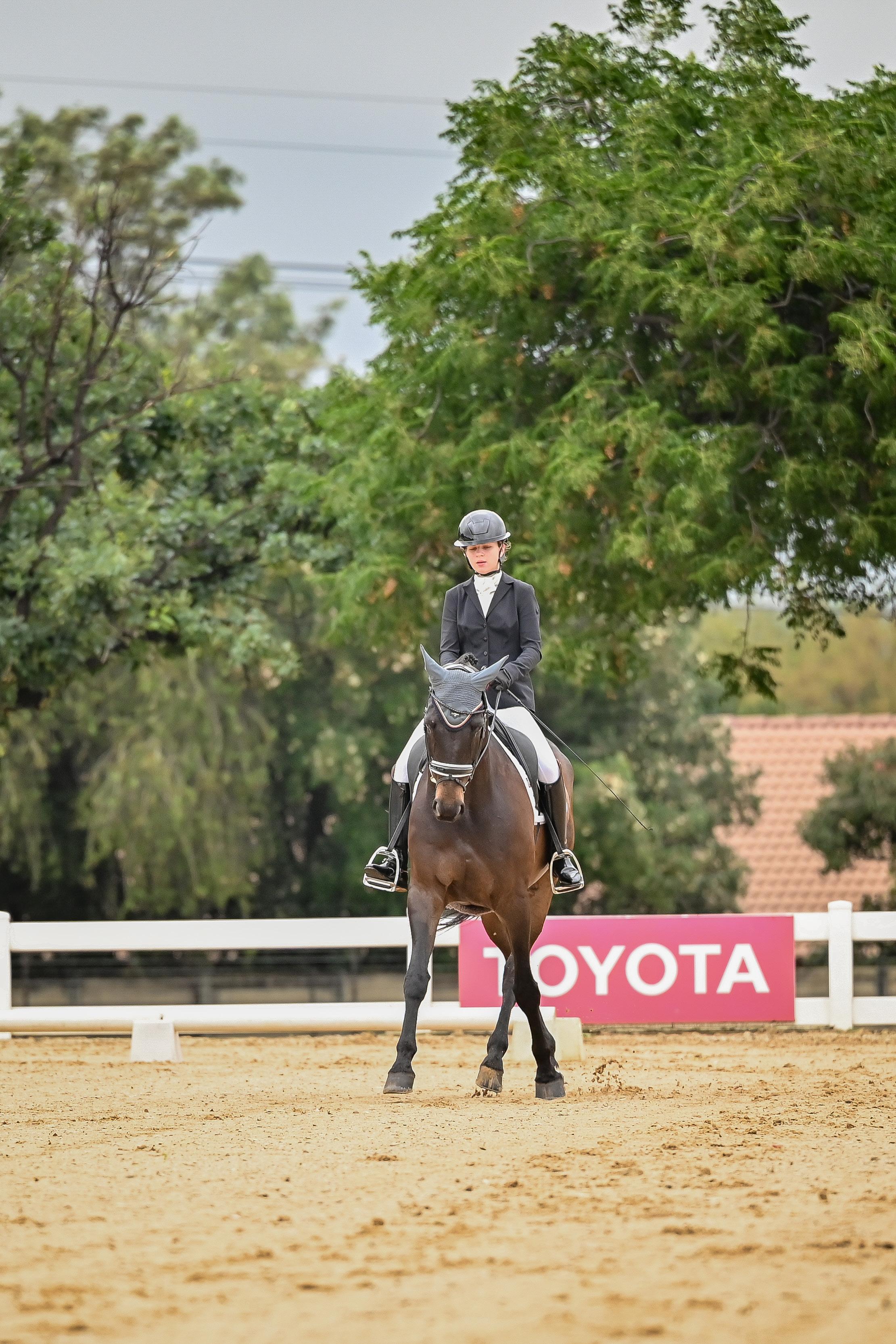
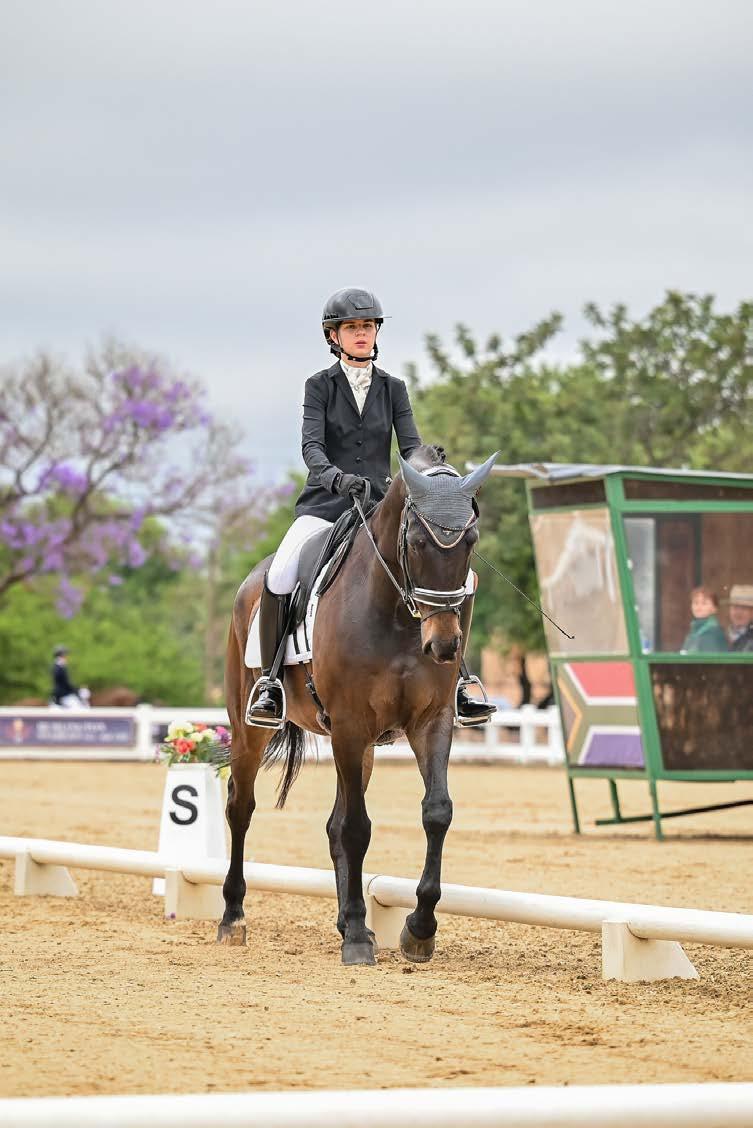
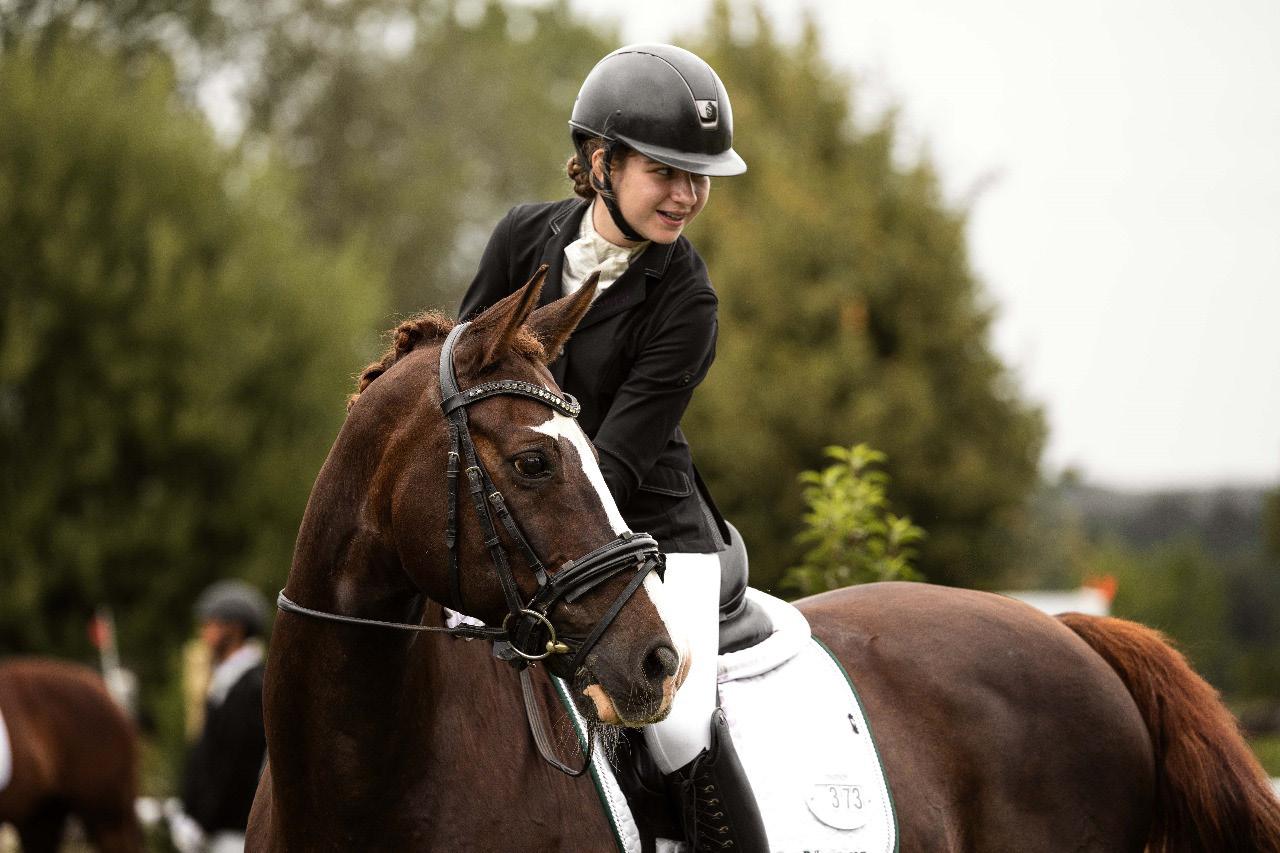
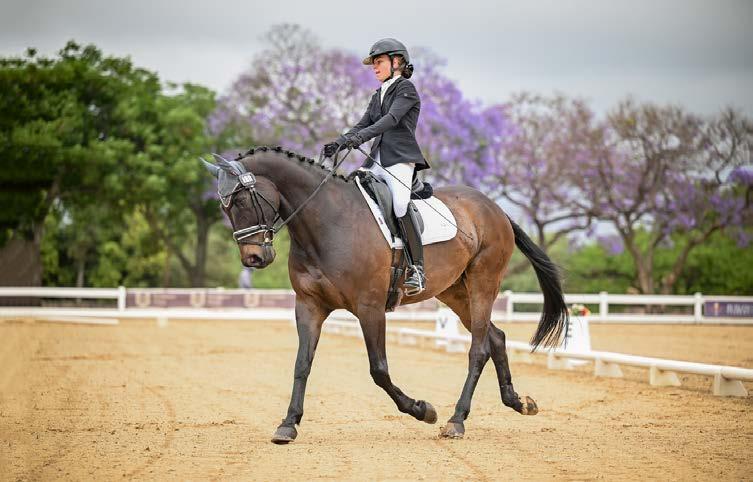
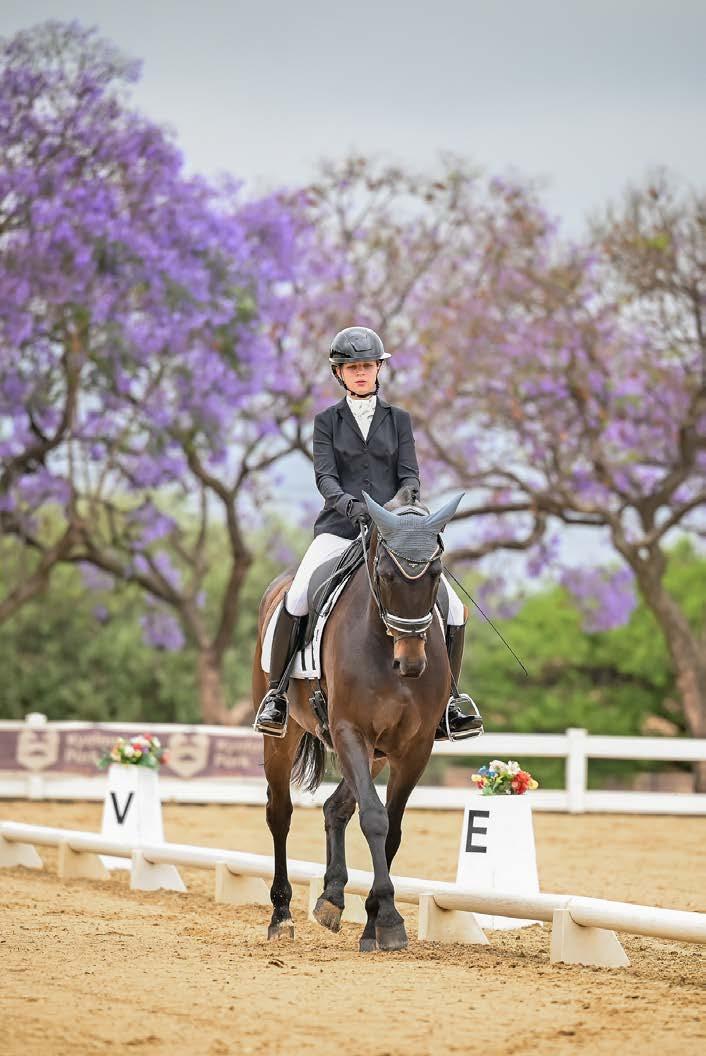
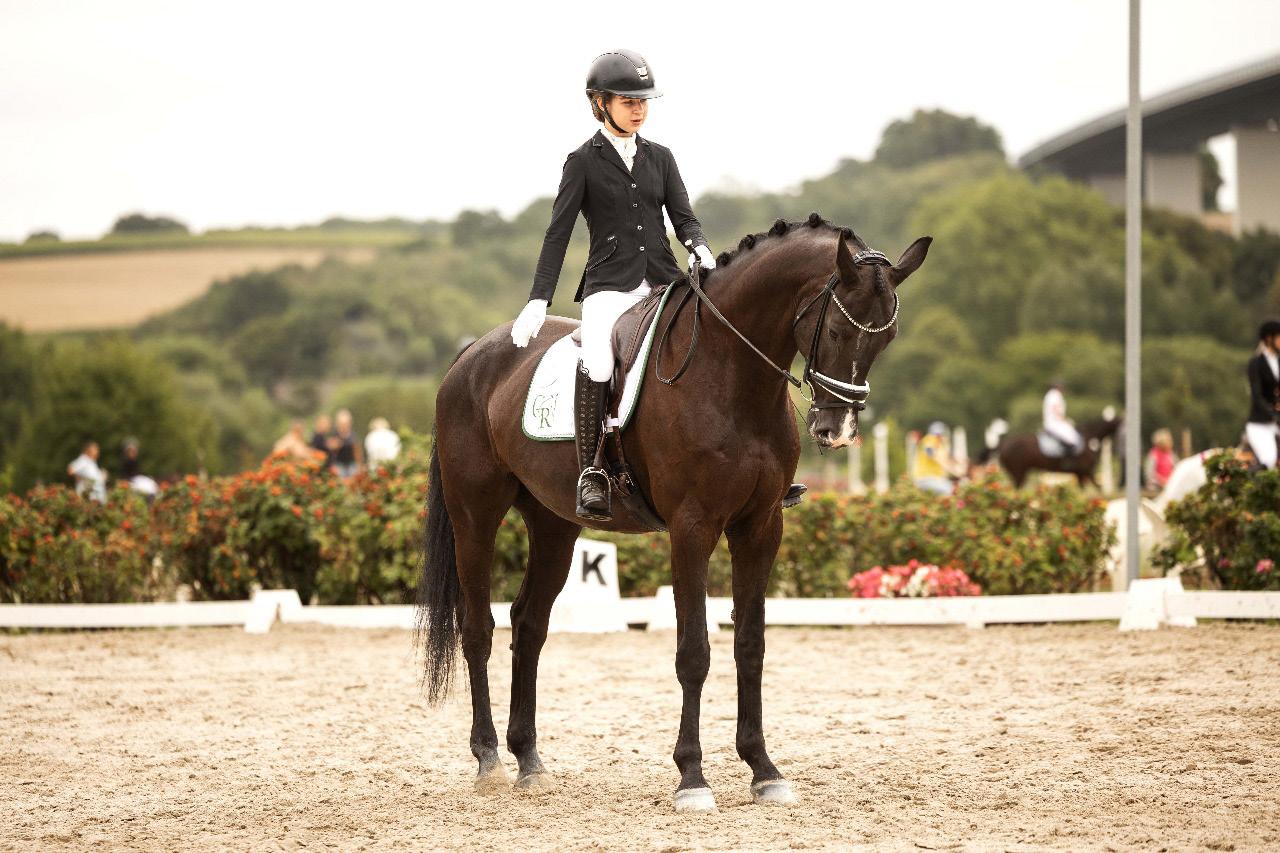
At just 15 years old, Daliah Thill is living a reality that most young riders only dream about. Splitting her time between South Africa and Germany, competing internationally for Luxembourg, and training with top European and South African coaches while maintaining her schoolwork and musical pursuits, Daliah represents a new generation of equestrian athletes who are redefining what's possible at a young age.
Her journey is one of evolving passions, clear ambition, and an unwavering commitment to excellence that has seen her transition from eventing aspirations to dressage dedication, ultimately finding herself on the international stage far sooner than most riders dare to imagine.
FROM EVENTING DREAMS TO DRESSAGE PASSION
Like many young riders, Daliah's equestrian dreams were initially shaped by the books she devoured as a child. Stacy Gregg's popular series captured her imagination, and she set her sights on what she considered the ultimate achievement: winning the Grand Slam in eventing.
I first wanted to be an eventer because of these books I read when I first started riding. I also wanted to win the Grand Slam in eventing because that's the biggest eventing goal that you can have, but in order to do that, you have to get good in dressage because dressage is a very big thing in eventing, and it helps a lot if you get a good score."
What began as a means to an end, improving her dressage to enhance her eventing scores, gradually revealed itself to be something far more significant. As Daliah progressed through the levels, the complexity and precision of dressage began to overshadow her initial eventing ambitions.
So my goal was first to get to Grand Prix level in dressage while still jumping on the side to still keep the jumping going, and then actually start doing big eventing competitions. But eventually the dressage started getting so cool and so complex that it got a lot more fun because you don't just go round and round in circles, and it doesn't repeat—it's a lot more than that. It's precision, and you need to be a lot more in time, and it's really fun, so then I just wanted to do dressage."
marking a significant turning point in Daliah's career trajectory. What drew her wasn't just the technical challenge, but the aesthetic and philosophical appeal of the discipline–the pursuit of invisible communication between horse and rider.
I knew that dressage was the discipline that I wanted to pursue this year because it just started being so much fun to ride. I want to get to where you use the slightest aid to do the movement, and it looks like you haven't even done anything. It’s about achieving perfect harmony."
and horse and rider move as one, demonstrates a maturity of understanding that belies Daliah's age. It's this deeper appreciation for the art form that drives her training regimen and informs her decision to seek instruction at the highest levels.
THE SOUTH AFRICAN FOUNDATION
HUCK FINN DB
At the heart of Daliah's South African training is her partnership with Huck Finn DB, a 14-year-old Hanoverian who has been instrumental in her development over the past two years. Huck came to Daliah just as he was starting Prix St. Georges work, providing her with the perfect platform to develop at FEI level.
He is a big, thickly built boy, but he's such a cutie pie. He loves getting attention. He's so sensitive, and if you don't do something the way he likes or if you repeat things too much, he throws small tantrums. He's very picky, but he's so adorable."
Managing Huck's training while she's overseas has required careful planning and a strong support team. Her coaches, Jesse and Jo, ride him during her absences, while stable manager Thato and groom John ensure his overall well-being is maintained. This collaborative approach has allowed Daliah to pursue her overseas opportunities without compromising Huck's development.
SARATOGA SKY DANCER
While dressage has become her primary focus, Daliah hasn't entirely abandoned jumping. Her Warmblood mare, Saratoga Sky Dancer, keeps her competing and provides a different kind of riding experience.
She's my jumper. I've also had her for about a year now, and she's given me so much confidence in jumping and even overall. I feel like I can do anything on her. I've jumped an oxer with one hand with a bag of glass bottles in my hand. I've jumped a Saint Andrews cross on her bareback at about 80cm and she's given me just so much confidence."
Sky Dancer’s confidence –inspiring nature has translated into competitive success as well, with Daliah winning two championships on her at the 90cm level: the Easter Festival Championship and the Post Derby Championship.
THE EUROPEAN EXPERIENCE
The decision to train in Europe was driven by Daliah's ambition to compete at the European Championships, a goal that required establishing a presence on the continent. With her coach Jesse's networking and industry connections, an opportunity materialised at Gut Römerhof in Düsseldorf, where Daliah now trains under the guidance of Tara Schneider.
The logistics of maintaining a presence in two countries while managing schoolwork has been challenging. "Yes, it has been hard to manage time-wise, especially with school, because I have also gone during school time. It has needed a bit of juggling but I am starting to figure it out," Daliah admits.
CULTURAL DIFFERENCES IN TRAINING
The contrast between South African and German training cultures has been one of the most valuable aspects of Daliah's overseas experience. The European approach, honed over generations of dressage tradition, brings a level of intensity and attention to detail that distinguishes it from training in other parts of the world.
The training culture in Germany is a lot more intense; they train a lot more, and they pay a lot more attention to detail and precision because they know that that is where you pick up those extra points for those higher marks."
THE GERMAN HORSES
In Germany, Daliah rides two horses that provide distinctly different educational experiences. O'Finley RB, a six-year-old Warmblood standing 17.2 hands, offers the opportunity to develop a young horse and learn the systematic progression through the levels that German training is famous for. Best Friends Forever, known as Bruno, is a 16-year-old 16-hand Warmblood who brings experience and schoolmaster qualities to her education.
They're both really, really cool and really awesome and absolutely lovely to ride."
LESSONS BEYOND THE SADDLE
The learning extends far beyond riding technique:
I’ve learnt how to deal with the different types of trainers and how they teach because everyone has a different way of teaching. I'm also learning about time management and how to manage school work and riding, and also dealing with the cold, as it's not this cold in South Africa; it's currently 0° here, so I also need to learn how to ride in that cold weather."
THE COMPETITION CIRCUIT
The European competition experience differs markedly from what Daliah was accustomed to in South Africa, both in structure and atmosphere.
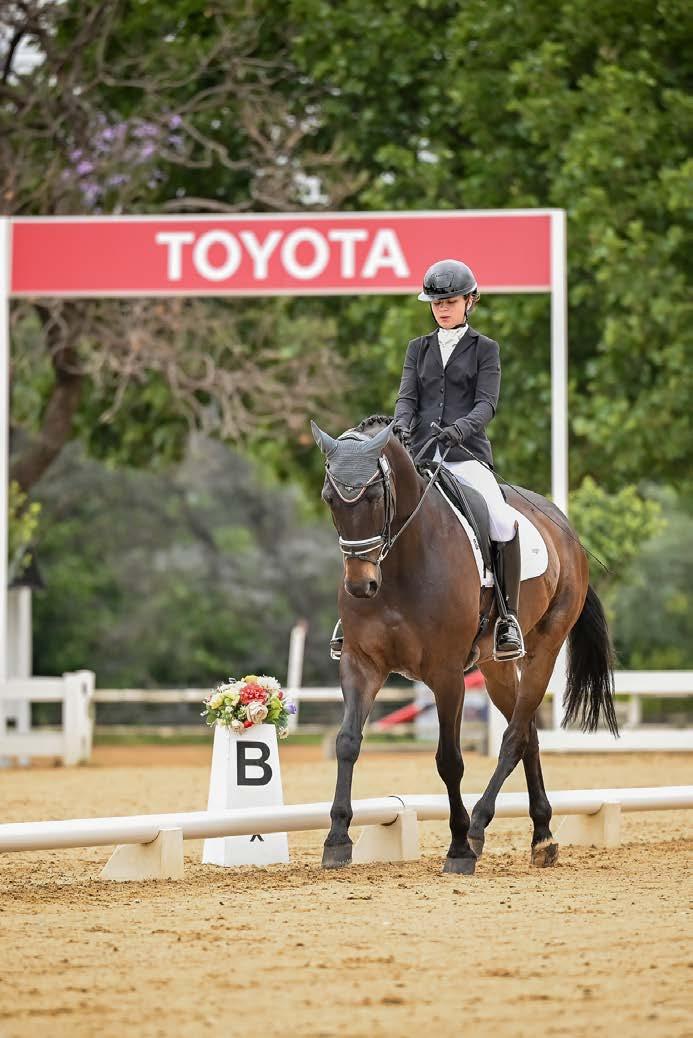
At most of the shows, they have riders of all ages, so adults and children compete together, and you can have professional and amateur riders together. There are a lot of riders, usually about 30 or so, in a single class, and I'm usually one of the youngest unless it's a children's show specifically. There are a lot of shows to choose from most weekends, and at the shows, there's always music. They always have flower pots, and even at the higher levels, sometimes you still ride in a 20m by 40m arena, even though it's mostly on the same level as a Medium test."
BREAKTHROUGH ACHIEVEMENTS
Daliah's time in Europe has already yielded remarkable results. Most significantly, she has qualified to represent Luxembourg at international competitions at FEI Children's Level, an achievement that opens doors to high-level competition experience.
I managed to qualify to ride for Luxembourg as a Luxembourgish representative, which means I can ride at an international competition at the FEI Children's Level until the end of this year, and then I need to requalify, as then I will be a Junior."
Her competitive scores have been impressive as well, earning wins with 80% on O'Finley in October and 76% on Bruno in another competition.
THE SUPPORT NETWORK
Behind every successful young rider is a network of supporters, and Daliah's is both extensive and deeply committed. At the foundation are Jesse and Jo from Terrouges Equestrian, where Daliah has ridden since she was seven years old.
Additional influences include coaches Natalie Hobday and Karen Keller, each contributing different perspectives and skills to her development. She also cites Belgian Grand Prix rider Justin Verboomen as an inspiration, particularly admiring his harmonious partnership with his horses – a goal that aligns perfectly with her own aspirations.
Jesse and Jo, especially Jo, have been there for my whole riding journey since I started when I was seven. I started at Terrouges Equestrian, which is where I'm still riding today, and they have helped me so much, and I think I would never have been able to come so far without their support and help."
Perhaps most crucial though has been the unwavering support of Daliah's family, who have made considerable sacrifices to enable her pursuit of excellence.
The role that my family has played is they have helped me; they have supported me; and they have encouraged me to continue. I'm very, very lucky to have such a supportive family. I'm lucky that my mum can come with me on all these riding trips to Germany, and when we go to the competitions. My dad travels a lot, so when he can, he does come to my competitions both in South Africa and in Germany, which is really, really nice, and I really do love it."
MOTIVATION AND MENTAL STRENGTH
When asked how she maintains motivation through the challenges of training in two countries while managing schoolwork, Daliah's answer is refreshingly simple.
It's always been a big passion, and I've always loved it so much that it's never really occurred to me to give it up because I enjoy it so much and I want to keep doing it. Sometimes time management is a bit hard, but my teachers and my coaches and my family all support me, so I just continue, and I love it."
OUTSIDE THE ARENA
Despite the demanding nature of her riding schedule, Daliah maintains other interests that provide balance and develop different skill sets. She plays violin, following in her mother's footsteps, and participates weekly in an orchestra while also having taken part in larger orchestral events. She also plays chess regularly, though she acknowledges that riding dominates her schedule.
LOOKING AHEAD
Daliah's objectives for the coming year are both specific and ambitious. She aims to qualify for international competition at FEI Junior level and potentially compete at the European Championships if Luxembourg selects her for their team.
My goals for next year are to qualify for international competition FEI Junior level and to possibly go to the European Champs next year if Luxembourg puts me forward for that and my long term ambitions are to compete professionally for Luxembourg at the highest level."
When asked where she hopes to be in five years, Daliah doesn't hesitate to name her ultimate ambition.
One day, I would love to represent Luxembourg at the Olympics. That is my dream goal."
A BLUEPRINT FOR ASPIRING RIDERS
Daliah’s journey offers valuable lessons for young riders dreaming of competing at high levels. Her story demonstrates that success requires more than just talent and hard work; it demands adaptability, strong support systems, and the courage to pursue opportunities even when they're challenging or uncomfortable.
Her willingness to train abroad, to compete in unfamiliar environments, to manage the complexity of representing a different country, and to maintain her education alongside her riding shows a level of commitment and maturity that bodes well for her future in the sport.
Most importantly, her focus on harmony and invisible aids, on the classical ideals of dressage rather than just competitive success, suggests that she's building a foundation that will sustain her throughout a long career. This understanding that dressage is ultimately about the relationship
between horse and rider, not just scores and placings, is what separates riders who achieve temporary success from those who make lasting contributions to the sport.
As Daliah continues to develop, splitting her time between Johannesburg and Düsseldorf, working with Huck and her German horses, pursuing her Olympic dreams while maintaining her love for music and chess, she embodies the modern young rider. She’s ambitious yet grounded, focused yet well-rounded, dreaming big while attending to the small details that make those dreams achievable!
The journey from that young girl reading Stacy Gregg books and dreaming of eventing glory to a teenager representing Luxembourg on the international dressage stage has been swift, but it's clear that this is just the beginning. If her trajectory continues, those Olympic dreams may well become reality. Good luck, Daliah! We’re all rooting for you here!
Follow Daliah's journey as she continues to compete in both South Africa and Germany, pursuing her goal of representing Luxembourg at the highest levels of international dressage.
20 GIFTS HORSES GIVE US
1. PRESENCE
Horses bring us back to the moment. Their need for clarity, calm, and consistency forces us to leave the noise behind and show up honestly.
20 GIFTS HORSES GIVE US
2. HUMILITY
No matter how experienced we are, horses remind us that mastery is temporary and learning is lifelong. Their feedback - sometimes subtle, sometimes less so - keeps ego in check.
20 GIFTS HORSES GIVE US
3. PERSPECTIVE
A single ride can shift the way we see everything. Horses recalibrate our priorities, reminding us that progress is rarely linear and that the smallest breakthroughs often matter most.
FIRST AUCTION HORSE
Buying your first horse at auction is both exciting and daunting. You've successfully navigated the bidding process, and now you're standing in your yard with a young horse who's just had their entire world turned upside down. What comes next can make all the difference between a future star and a long, frustrating journey.
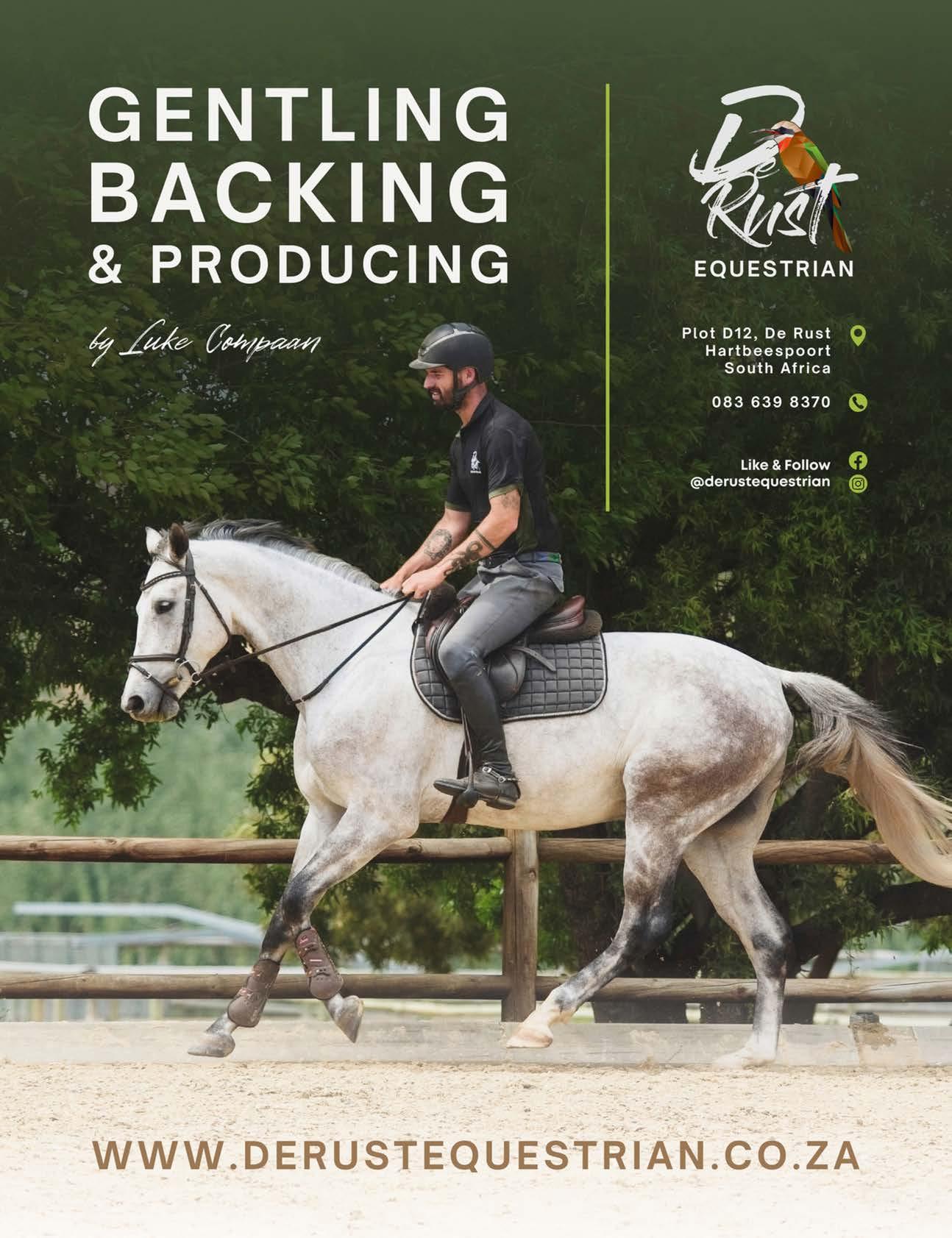
Luke Compaan of De Rust
Equestrian has worked at two of South Africa's biggest auction houses and now specialises in training and retraining young and challenging horses at his facility in Hartebeespoort. His approach is refreshingly straightforward: slow down, assess honestly, and build a solid foundation. Here's his advice for anyone bringing home their first auction purchase.
DOWNTIME
The transition from an auction environment to a new home is a massive adjustment for any horse. They're dealing with new surroundings, unfamiliar routines, different handlers, and a new herd dynamic all at once. Give your horse genuine time to settle in and
rushing this phase - in fact, the quiet time you invest now will set you up for success later. Think of it as building a solid foundation before you start construction. Some horses need a week, others need longer. Watch for signs that they're relaxed: eating well, moving freely in the paddock, and showing interest in their surroundings.
2. ASSESS WHERE THE HORSE REALLY IS
It's easy to assume a young horse is further along in their training than they actually are, especially when you're eager to get started. Luke recommends taking a deliberate step back and reassessing the basics honestly. Start with the fundamentals and build from there. Ask yourself this simple question:
"Does my horse go where I ask, at the speed I ask, without resistance?"
If you can't answer with a confident yes, that's your starting point. There's no shame in going back to basics; it's the mark of a thoughtful horseperson. Work on responsiveness to your aids, establishing clear communication, and building trust through consistent, patient work.
3. DON'T ‘JUMP’ STRAIGHT INTO JUMPING
This might seem obvious, but it's worth emphasising: only introduce fences once your horse is genuinely relaxed, rideable, and confident in their flatwork. You're not training for next month's competition, you're building a long-term athlete. Solid
foundations now will pay dividends for years to come. A horse who can't maintain rhythm, balance, and straightness on the flat isn't ready to tackle obstacles. Rushing this stage is one of the most common mistakes new owners make, and it can create problems that take months or years to undo.
4. BUILD PARTNERSHIP BEFORE YOU CHASE GOALS
In the early stages, resist the temptation to focus on achievements or timelines. Instead, invest your energy in understanding your horse: their personality quirks, what makes them confident, what worries them, and how they communicate.
Establishing genuine trust and a two-way relationship will influence everything that comes later. Every champion partnership started with these quiet, unglamorous early days of simply getting to know each other. This mutual understanding forms the bedrock of your relationship for the future.
5. GET THEM OUT AND ABOUT –SENSIBLY
If your youngster is comfortable and relaxed, start incorporating hacking (trail riding) into their routine relatively early. Varied terrain and new environments develop their brain, build confidence, and provide crucial exposure to the real world. However, if they aren't mentally ready for adventures yet, don't force
it. Simple activities like hand-walking around the property, hand-grazing in different areas, or just spending quiet time together can go a long way toward building confidence. The key is meeting your horse where they are and progressing at their pace, not yours.
6. ASK FOR HELP WHEN YOU NEED IT
There will inevitably be moments when you feel unsure, stuck, or nervous; this is completely normal, especially with your first auction horse. Don't hesitate to reach out to a professional who has experience developing young horses. Guidance at the right moment can prevent small issues from becoming longterm problems. The investment in a few training sessions or even just a consultation can save you months of frustration and help ensure both you and your horse stay safe and happy. Remember, asking for help isn't a sign of weakness; it's a sign of wisdom and commitment to doing right by your horse.
GET IN TOUCH WITH LUKE
Whether you've just brought home your first auction purchase or you're hitting a roadblock with a young or tricky horse, Luke Compaan and the team at de Rust Equestrian are here to help. Based in Hartebeespoort, Luke offers:
• Professional training and retraining for young horses
• Problem-solving for challenging behaviours
• Foundation work for auction horses
• Consultations and advice for owner-riders navigating the early stages
Tel: 083 639 8370
Instagram: @derustequestrian
Website: www.derustequestrian.co.za
With experience from two of South Africa's biggest auction houses and a practical, patient approach to horse training, Luke understands exactly what auction horses need to thrive. Reach out to him and see how he can help!
20 GIFTS HORSES GIVE US
4. DISCIPLINE
Their care structures our days and seasons. Routine teaches responsibility, and effort becomes habit. Horses shape a discipline that follows us far beyond the arena.
20 GIFTS HORSES GIVE US
5. CALMNESS
Horses regulate us far more than we realise. In our fast-paced lives, they offer a slower, more peaceful space.
20 GIFTS HORSES GIVE US
6. TRUST
No partnership is possible without it. Horses teach us how trust is built - slowly, through fairness, consistency, and a thousand tiny choices.
BEYOND THE RODEO
A GUIDE TO WESTERN DISCIPLINES
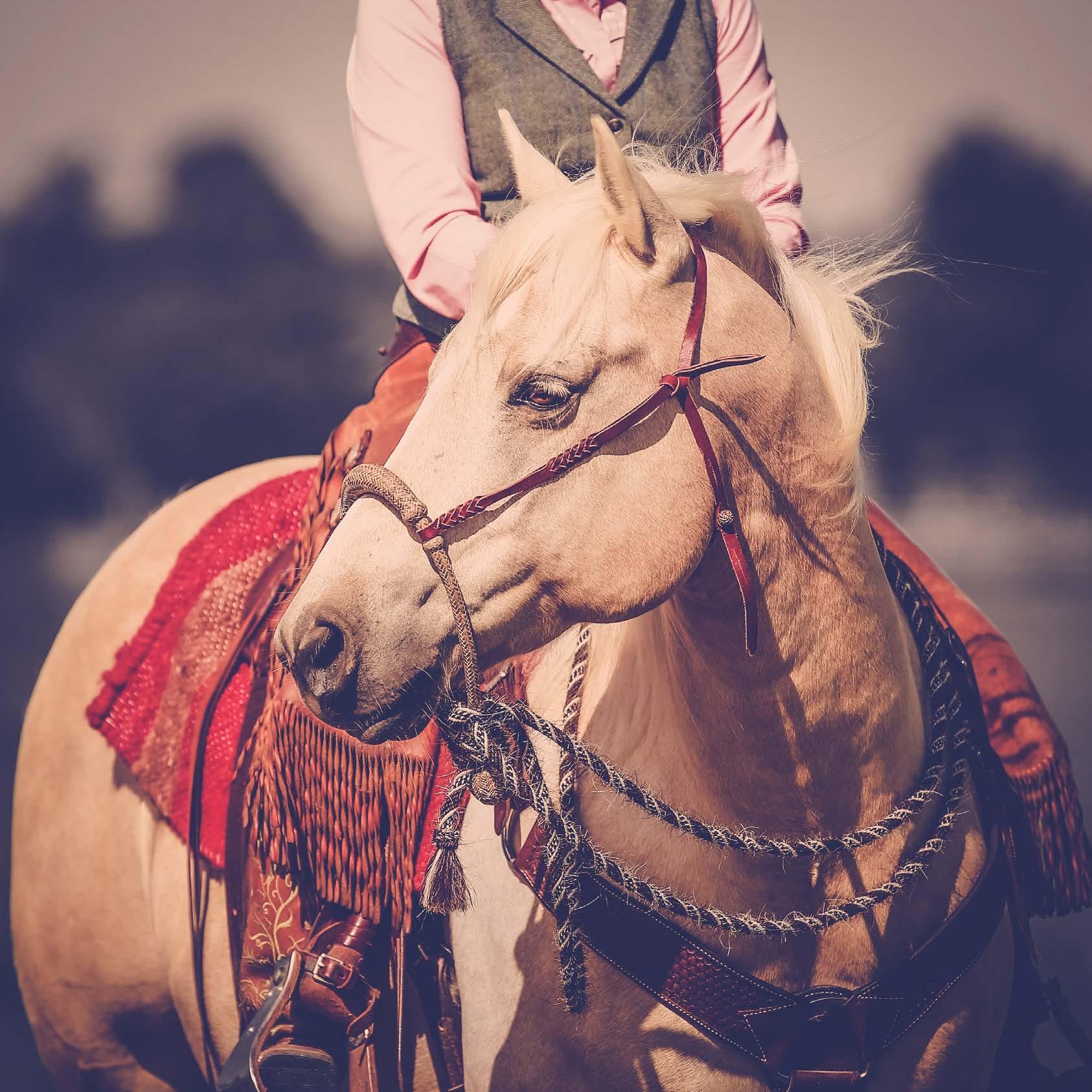
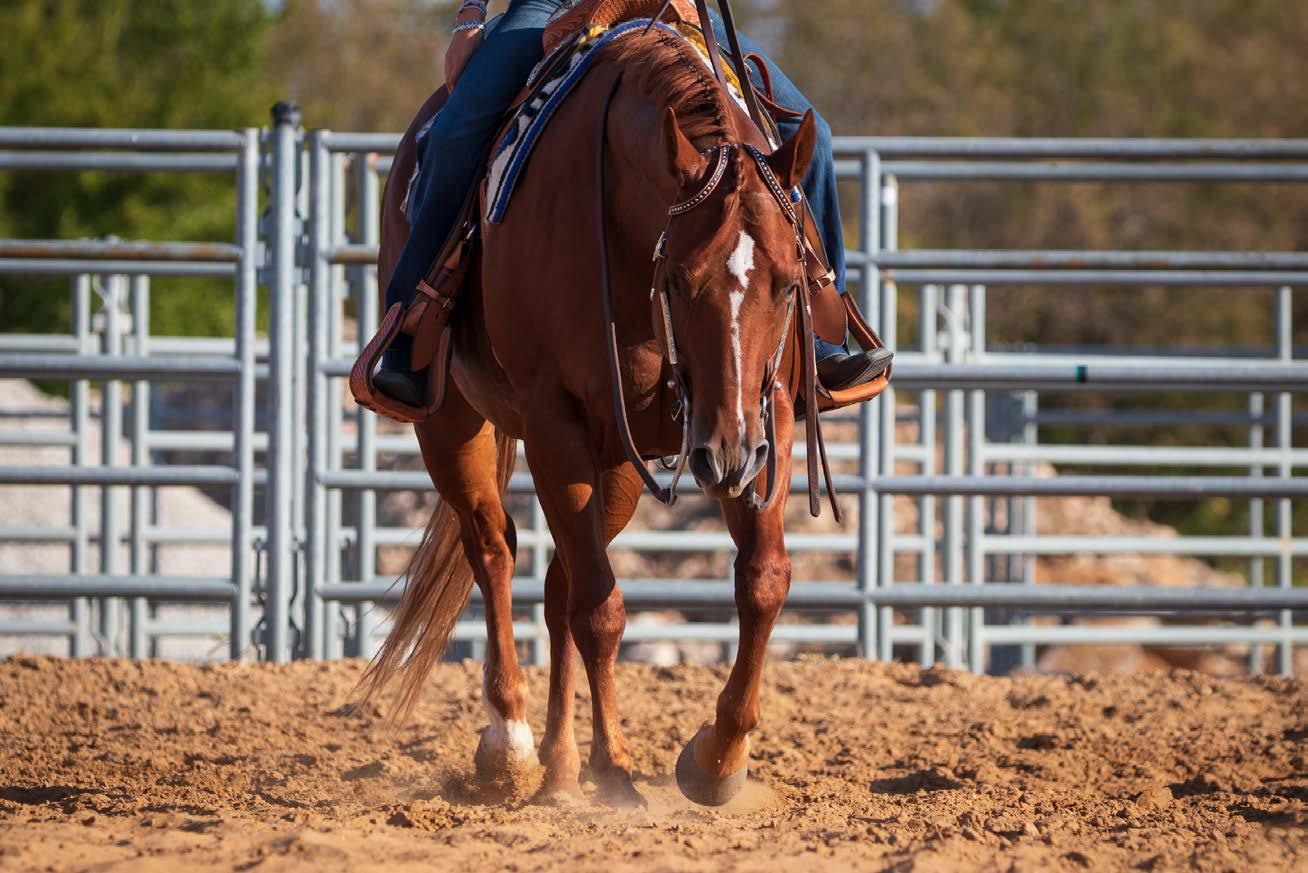
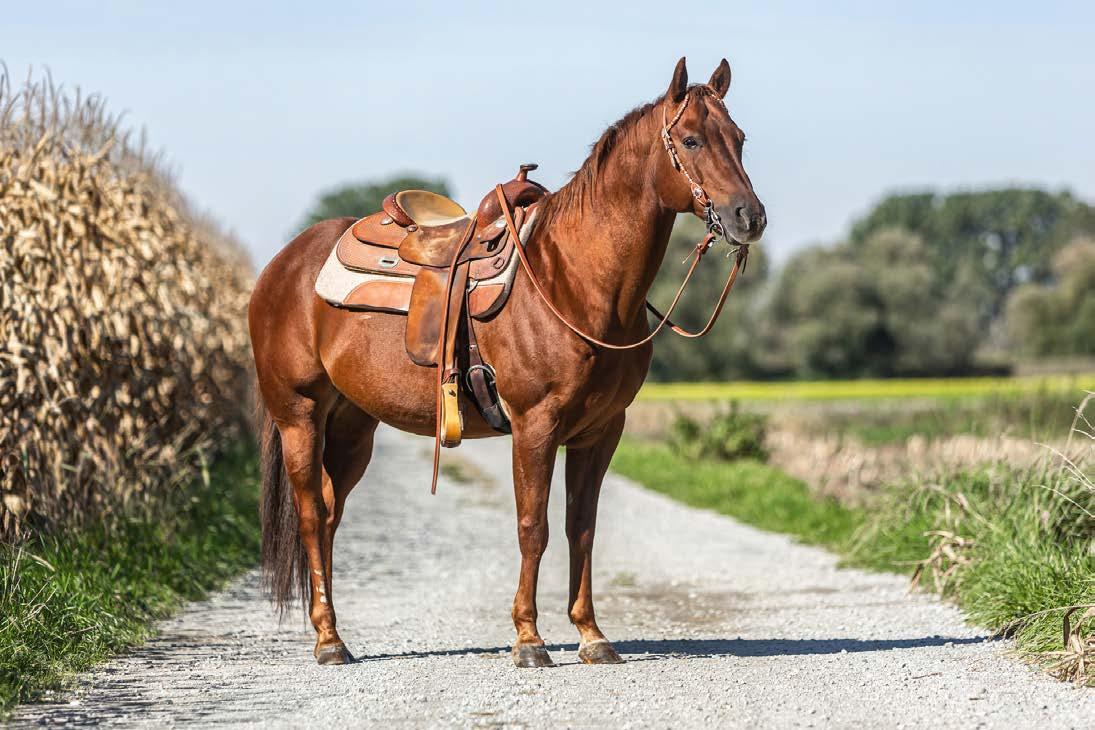
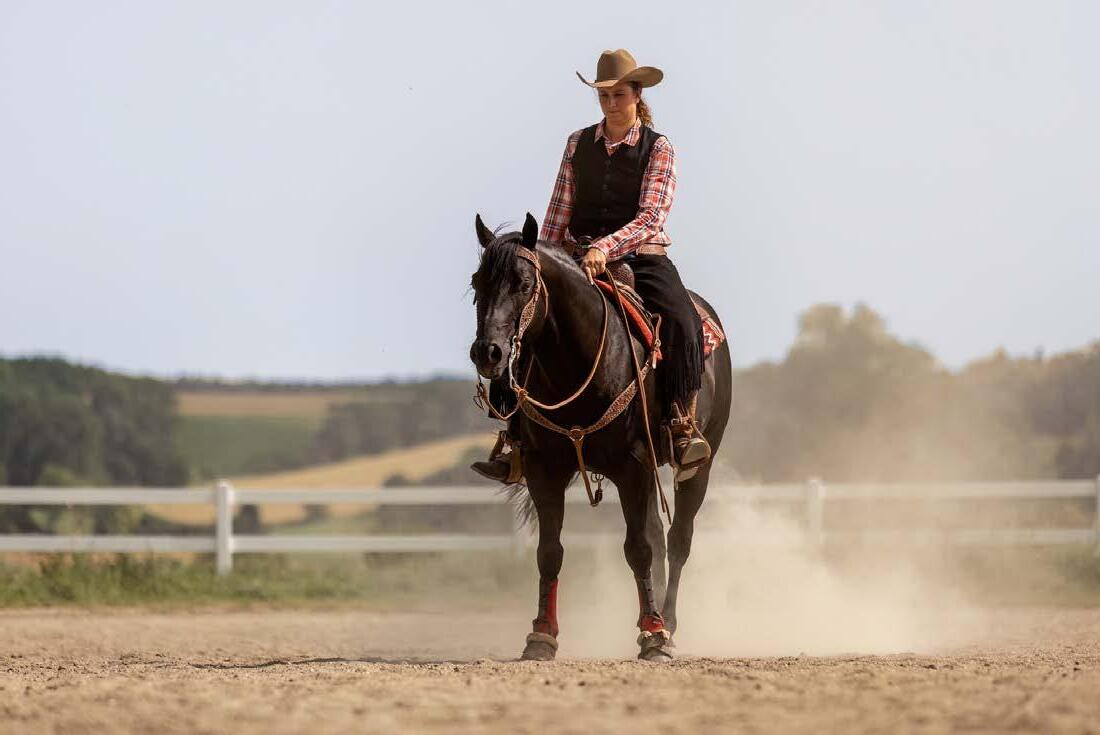
From the precision of reining to the thrills of barrel racing, Western riding offers a diverse range of disciplines that combine athleticism, partnership, and heritage. Whether you're an English rider curious about crossing over or looking to expand your competitive horizons, the Western world has something for every horse and rider.
THE WESTERN WAY
Western riding emerged from the working traditions of cattle ranching in the Americas, where functionality governed every aspect of horse training. Unlike the European military traditions that shaped English riding, Western horsemanship developed to meet the practical demands of long days managing livestock across vast, rugged terrain. This heritage continues to influence modern Western disciplines, even those far removed from ranch work.
At its core, Western riding emphasises the development of a willing, responsive partner who can work independently when needed. The ideal Western horse should be calm, confident, and capable of performing complex manoeuvres with minimal visible cues. This philosophy of creating a thinking partner rather than simply an obedient mount permeates all Western disciplines and represents one of the fundamental differences from English riding traditions.
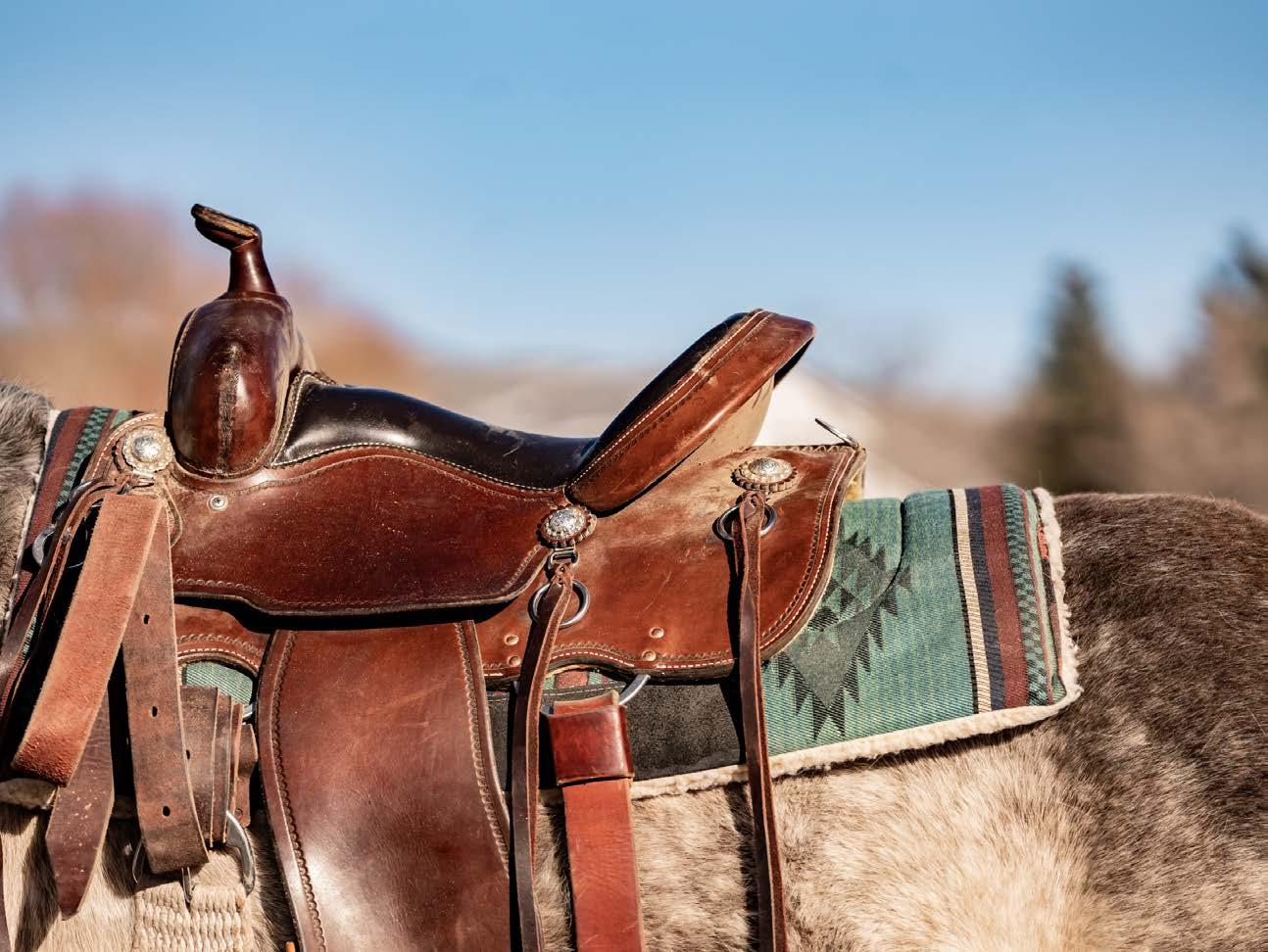
The tack itself reflects this practical heritage. The Western saddle, with its deep seat, high cantle, and prominent horn, was designed for all–day comfort and security whilst working cattle. The longer stirrups and forward–facing foot position allow riders to move with their horse whilst maintaining stability. Split reins, neck reining, and one–handed riding techniques developed to leave one hand free for roping or working gates – practical necessities that have become hallmarks of Western style.
THE TRADITIONAL DISCIPLINES REINING
Often called the Western equivalent of dressage, reining is arguably the most elegant and technical of the Western disciplines. Originating from the skills needed to work cattle on open ranges, reining has evolved into a precise sport where horse and rider perform a set pattern of manoeuvres, including spins, sliding stops, flying lead changes, and rollbacks.
What makes reining captivating is the combination of speed, precision, and apparent effortlessness. A well–executed sliding stop – where the horse gallops forward, then locks its hindquarters and slides to a dramatic halt, front legs still walking – can produce slides of five metres or more in top competition. The spin, where
the horse pivots rapidly on its inside hind leg whilst its front legs describe a circle, should be smooth and continuous, with the horse maintaining speed and balance throughout multiple rotations.
Reining is unique amongst Western disciplines in being an FEI–recognised sport, with its own World Equestrian Games medal events. This international recognition has brought reining to audiences worldwide and makes it an accessible entry point for English riders curious about Western riding. The discipline demands athletic ability and training comparable to upper–level dressage, though the end result looks and feels completely different.
CUTTING
Cutting is perhaps the purest expression of working ranch heritage in Western competition. In this discipline, horse and rider enter a herd of cattle, select a single animal, and separate it from the group. Once separated, the rider drops the reins, and the horse works independently to prevent the cow from returning to the herd, matching its movements and anticipating its attempts to escape.
The magic of cutting lies in watching a trained horse work. The best cutting horses possess an almost supernatural ability to read cattle, dropping low on their front end, mirroring the cow's movements, and blocking escape attempts with
lightning–fast reflexes. This innate 'cow sense' – the instinctive ability to track and control cattle – is highly valued and sought after in cutting horses, though proper training is essential to channel this instinct into competitive performance.
What fascinates many observers is the partnership dynamic in cutting. During the actual work, the rider becomes a passenger, sitting deep and quiet whilst the horse makes independent decisions. The rider's role is to set up the cut, select the cow, and remain balanced and supportive, but interfering once the horse begins working is penalised. This level of trust and independence is uncommon in other equestrian disciplines.
WORKING COW HORSE
Working Cow Horse, also known as Reined Cow Horse, combines elements of both reining and cutting into a comprehensive test of versatility. Competitions typically consist of three parts: a reining pattern demonstrating control and precision, fence work where the horse prevents a cow from crossing the arena, and either cutting work or boxing (containing a single cow in one end of the arena).
This discipline showcases the true working ranch horse – an animal that can perform with the collection and precision of reining, then switch gears to work cattle with intensity and independence. The fence work
portion is particularly exciting to watch, as horse and rider race alongside a cow down the length of the arena, turning it at each end whilst maintaining control and position.
Working Cow Horse demands versatility from both horse and rider. The partnership must transition seamlessly from the controlled, precise movements of the reining pattern to the explosive, reactive work with cattle. Training programmes must develop both the calm responsiveness needed for reining and the sharp instinct required for cow work – a balancing act that requires skill and patience.
BARREL RACING
Barrel racing is perhaps the most widely recognised Western discipline, offering pure adrenaline as horse and rider race against the clock around a cloverleaf pattern of three barrels. What appears simple – run to each barrel, turn it, race home – demands precision, athletic ability, and split–second timing. Knocking over a barrel adds five seconds to the run time, often meaning the difference between winning and losing.
The appeal of barrel racing lies in its accessibility and excitement. Unlike many Western disciplines that require cattle, barrel racing can be practised wherever there's space to set up a pattern. This accessibility has made it popular worldwide, and it's often the discipline that introduces riders to Western competition. Yet reaching
the top levels requires exceptional horsemanship – top competitors complete patterns in less than fifteen seconds, with horses reaching speeds over 50 kilometres per hour whilst making tight, precise turns.
The turning technique – the 'rate' – separates good barrel horses from great ones. The horse must approach each barrel at speed, then collect and rock back on its hindquarters to make a tight turn around the barrel before accelerating away. This requires tremendous strength, particularly in the hindquarters and core, along with excellent proprioception and balance. Training focuses on building the muscular strength and body awareness needed for these explosive manoeuvres whilst maintaining straightness and rhythm between barrels.
ROPING EVENTS
Team roping and other roping events represent the Western tradition's working heritage in its most direct form. In team roping, two mounted ropers work together to catch a running steer – the 'header' ropes the head or horns whilst the 'heeler' catches both hind legs. The clock stops when both horses face the steer with ropes tight. Successful teams complete runs in less than six seconds.
What makes roping compelling is the coordination required between the two teammates and their horses. Each partnership must read the steer's movement, position themselves correctly, deliver accurate ropes, and coordinate the catch – all
whilst galloping at full speed. The horses must rate the steer (match its speed), position themselves for the catch, then stop and face up to hold the steer between them once caught.
Roping horses develop tremendous cow sense and anticipation, learning to track cattle and position themselves before being cued. The relationship between roper and horse becomes almost telepathic at high levels, with the horse reading both the cattle and the roper's intention. Individual events like tie–down roping (catching a calf and dismounting to tie three legs) and breakaway roping (where the rope releases from the saddle horn when the calf is caught) showcase similar skills.
WESTERN PLEASURE AND HORSEMANSHIP
Western Pleasure and Horsemanship represent the 'rail' classes of Western competition – events judged on the quality and correctness of movement and performance rather than completion of a task or speed. In Western Pleasure, horses are judged on their movement, manners, and suitability as pleasurable riding mounts, performing gaits including the walk, jog, and lope (canter) on both reins. Horsemanship adds evaluation of the rider's position, effectiveness, and ability to show the horse to advantage.
These disciplines have faced significant criticism and evolution over recent decades. Historical trends toward extremely slow, shuffling gaits and unnatural head carriage prompted rule changes and judging reforms. Modern Western Pleasure increasingly rewards horses that move with natural rhythm, cadence, and self–carriage, though debates about what constitutes correct movement continue within the community.
At its best, Western Pleasure showcases a calm, willing horse moving with grace and ease – the
kind of mount you'd genuinely want for a long day in the saddle. The ideal Western Pleasure horse should demonstrate relaxation without sluggishness, responsiveness without tension, and natural movement that's pleasant to watch and comfortable to ride. Progressive judges reward these qualities whilst penalising artificial or forced appearances.
Trail class deserves mention alongside these rail classes. Whilst not a 'pleasure' class, Trail tests the horse's ability to navigate obstacles encountered during trail riding –backing through L–shapes or around corners, sidepassing over poles, negotiating bridges or gates, and performing tasks like ground tying or standing for mounting. Trail rewards calmness, precision, and genuine usefulness rather than flashy movement.
A NOTE ON ROPING
Concerns about animal welfare in roping events have led to ongoing discussions about techniques and rules. Modern competition rules include requirements for cattle handling, restrictions on equipment, and veterinary oversight. Many ropers are vocal advocates for cattle welfare, recognising that healthy, well–handled cattle are essential for both the sport's sustainability and its social license to operate.
EMERGING AND ALTERNATIVE DISCIPLINES
WESTERN DRESSAGE
Western Dressage represents a fascinating fusion of classical dressage principles with Western tack and training methods.
Developed over the past two decades, this discipline applies dressage's emphasis on suppleness, balance, and precise movement to horses trained in Western style, performing dressage–style tests whilst using Western equipment.
What makes Western Dressage significant is its focus on making classical training principles accessible to Western riders whilst respecting Western traditions. Tests range from introductory levels suitable for pleasure horses through advanced levels requiring collection, lateral movements, and flying changes. The emphasis remains on willing partnership, light contact (or no contact at higher levels), and natural movement – all fundamental Western values.
Western Dressage has particular appeal for riders seeking to develop their horses' training beyond basic pleasure riding without necessarily competing in cattle or speed events. It provides a structured progression focusing on gymnastic development and communication refinement. For English riders curious about Western riding, Western Dressage offers familiar objectives achieved through different techniques and tack.
The discipline has faced some scepticism from both traditional Western and classical dressage communities, with questions about whether it represents genuine synthesis or simply dressage in Western tack. However, as the sport matures, serious
practitioners are developing distinctive training philosophies that genuinely integrate both traditions, creating something neither purely Western nor purely classical but authentically its own.
RANCH RIDING AND VERSATILITY
Ranch Riding emerged as a response to concerns about artificial trends in Western Pleasure and other classes, celebrating horses that genuinely look and move like useful ranch mounts. Patterns include extended gaits, stops, turns, and obstacles, all performed with the efficiency and naturalness expected of a working horse. Judges reward horses that cover ground freely, maintain rhythm and cadence, and show willing responsiveness.
Ranch Versatility and similar classes take this concept further, testing horses across multiple ranch tasks in a single competition. These might include ranch riding, ranch cutting, ranch trail (with obstacles more challenging than standard trail), and ranch reining or cow work. The concept is to identify horses truly versatile enough for varied ranch work rather than specialists in a single discipline.
These disciplines have gained significant popularity precisely because they reward practical horsemanship and natural movement. They're accessible to horses of various breeds and types, don't require extremely specialised training, and can be enjoyed at many levels of competition. For riders in regions without established Western competition infrastructure, Ranch Riding provides an achievable entry point requiring minimal specialised knowledge or facilities.
WESTERN MOUNTED GAMES
Western Mounted Games adapt the fast–paced, team–based format of Pony Club Mounted Games to Western tack and style. Teams compete in relay races and skill challenges that test speed, agility, accuracy, and teamwork. Events might include barrel races, pole bending, flag races, rescue races, and various challenges requiring riders to manipulate equipment whilst maintaining speed and control.
What distinguishes Western Mounted Games from their English counterparts is the adaptation to Western riding style and equipment. Mounting and dismounting techniques differ, turns around barrels or poles use Western–style
neck reining and body position, and the overall aesthetic reflects Western tradition whilst maintaining the fast–paced excitement of mounted games.
The appeal of Mounted Games –Western or English – lies in their inclusivity and sheer fun. Young riders who might find dressage tedious or lack access to cattle for cutting can enjoy competitive Western riding through games. The team format builds camaraderie and sportsmanship, whilst the varied challenges develop all–round horsemanship skills. Games horses must be brave, agile, and responsive, with the mental toughness to perform under pressure in a chaotic environment.
From a developmental perspective, Mounted Games build confidence, timing, and practical riding skills. Riders learn to maintain balance and control at speed, make quick decisions, and develop the deep, independent seat that
underpins all good riding. For regions building Western riding communities, Mounted Games offer an accessible, affordable entry point that generates excitement and engagement, particularly amongst young riders.
BUILDING WESTERN RIDING IN SOUTHERN AFRICA
The growth of Western riding in Southern Africa presents both opportunities and challenges. Whilst the region lacks the deep Western heritage of North America or South America, interest continues growing, driven by the versatility of Western horses, the accessibility of certain disciplines, and the appeal of a riding style that emphasises partnership and practical skills.
Several factors support Western riding's development in the region. Many disciplines don't require extensive specialised facilities – barrel racing needs only space and barrels, Western Dressage can be practised in any arena, and Ranch Riding celebrates practical horsemanship accessible to various horse types. The emphasis on developing willing, thinking partners resonates with riders seeking deeper connections with their horses beyond simply following commands.
Challenges include limited access to qualified instruction, scarcity of purpose–bred Western horses (though many breed types can excel in Western disciplines), and the need to develop judging expertise and competition infrastructure. However, the international nature of some disciplines – particularly reining and Western Dressage – provides pathways for education and development through clinics, online resources, and international collaboration.
For English riders curious about crossing over, Western riding offers fresh challenges and different perspectives on horsemanship. The emphasis on lightness, responsiveness to subtle cues, and developing the horse's independence can enhance any riding program. Many principles translate across disciplines –collection, suppleness, willing partnership – though the language and techniques differ.
The future of Western riding in Southern Africa likely lies in adapting international disciplines to local conditions whilst maintaining authentic Western principles. Ranch Riding's practical focus, Western Dressage's structured progression, and the excitement of events like barrel racing
and Mounted Games all offer pathways for growth. Success seems certain, however, with local expertise, Western riding communities and even Western horse breeding programmes growing all the time.
CONCLUSION
Western riding encompasses far more than simply using a different saddle or wearing a cowboy hat. It represents a comprehensive approach to horsemanship rooted in practical necessity, emphasising partnership, responsiveness, and the development
of horses capable of thinking and working independently. From the precision of reining to the excitement of barrel racing, from the intensity of cutting to the accessibility of Mounted Games, Western disciplines offer something for riders of all interests and abilities.
For riders in Southern Africa, Western disciplines present opportunities to explore different aspects of horsemanship, compete in new arenas, and connect with a global community passionate about these sports. Whether drawn by specific disciplines or simply curious about different training approaches, exploring Western riding can enrich any rider's understanding and deepen their partnership with their horse.
As Western riding continues to develop in the region, their heavy focus on welfare, authentic horsemanship, and the development of willing partnerships will ensure these disciplines contribute positively to the broader equestrian community. The Western way – building horses that are calm, confident, responsive, and capable – represents values that transcend any single discipline or tradition, offering lessons valuable to riders of every background.
20 GIFTS HORSES GIVE US
7. CURIOSITY
Every horse has something new to teach. They make us ask better questions, try new methods, and understand more deeply.
20 GIFTS HORSES GIVE US
8. JOY
From a swinging trot to a nicker at feed time, horses bring an uncomplicated joy that cuts through daily stress.
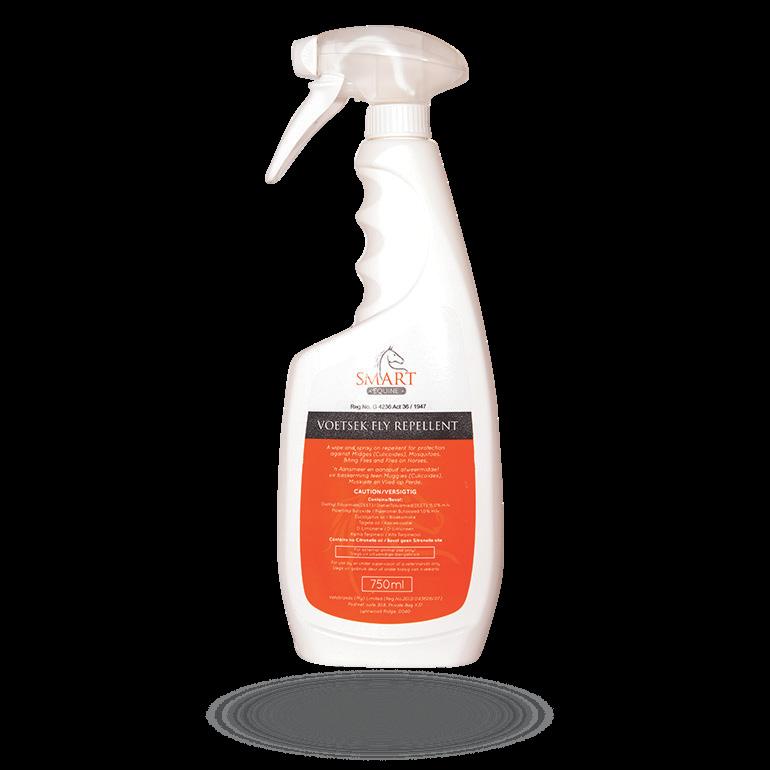
It doesn’t have to be like this.
Think SMART
MARE FAMILIES THAT MADE THE SPORT
RATINA Z – THE MARE WHO RULED THE WORLD
There are influential mares… and then there is Ratina Z. From Olympic glory to redefining what a modern sport mare could be, her legacy continues to shape the genetics of champions across the globe.
Foaled in 1982 at the legendary Zangersheide Stud in Belgium, Ratina Z arrived into the world as the daughter of two exceptional parents: Ramiro Z and Almé Z. Bred by the visionary Leon Melchior, she would grow to
become not just one of the greatest showjumping mares in history, but a matriarch whose influence reverberates through bloodlines worldwide.
What sets Ratina Z apart isn't just her own extraordinary competitive record – though that alone would cement her place in history – it's the remarkable consistency with which she passed on her talents. She became a blueprint, a genetic goldmine that breeders would chase for generations.
A CHAMPION'S STORY
Under Dutch rider Piet Raymakers, Ratina Z burst onto the international scene with a style that was unmistakable: electric, careful, and fiercely competitive. When Ludger Beerbaum took over the reins, their partnership would become one of the most celebrated in the sport's history.
The accolades speak for themselves: Olympic team gold in Barcelona (1992), team silver in Atlanta (1996), multiple World Cup Final victories, and both World and European Championship medals adorning her record. But these statistics, impressive as they are, don't capture the full picture. Ratina Z competed at the highest level with a consistency and longevity that few horses – male or female – have ever matched.
She wasn't just winning; she was redefining expectations. In an era when mares were often underestimated in top sport, Ratina Z proved that heart, scope, and competitive fire knew no gender. She fought for every clear round, attacked every course with intelligence and precision, and showed the world what a truly great sport mare looked like.
She didn't just compete at the top – she owned it.
THE BROODMARE OF A LIFETIME
If Ratina Z's competitive career had been her only legacy, she would still be remembered as one of the greats. But her second act – as a broodmare – elevated her into true immortality.
Her offspring reads like a who's who of elite showjumping genetics:
Carthago Z – Perhaps her most famous son, Carthago Z became an Olympic stallion and one of the most
influential sires of his generation. His offspring compete at the highest levels worldwide, and his sons and daughters have themselves become sought–after breeding stock. The Carthago line carries forward Ratina's trademark scope, carefulness, and mental fortitude.
Cordoba Z – A successful sire who brought classic Holsteiner type combined with Ratina's jumping prowess. His contribution to German breeding has been particularly notable.
RAMIRO Z
HOLST 276321210389565
pref
1965 Dark brown 1.75m
Lic.: BWP, HANN, HOLST, KWPN, NRPS, SF, W 1.60m Jump
RATINA Z
Mare 1982 Brown 1.69m
HANN 276331316874882
Leistungsstute S 1.60m Jump.
Rider(s)
FEI (BEL02742)
ARGENTINA Z HANN 276331310213077
Hauptstutbuch 1977 Chestnut
RAIMOND HOLST 276321210380760
Stb
1960 Grey 1.65m
Lic.: HOLST, KWPN, NRPS
VALINE HOLST 276321210313603
Hauptstutbuch
1961 Dark brown 1.50m Jump
ALME
SF 25000160001122N
1966 Brown 1.66m
Lic.: AWR, BWP, HANN, KWPN, SF 1.60m Jump
HEUREKA Z HOLST 276331317660360
Hauptstutbuch
1960 Brown 1.70m 1.60m Jump
The clones – In a remarkable testament to Ratina's value, Zangersheide cloned her. In 2009, three clones were born: Ratina Alpha Z, Ratina Beta Z (who tragically died after a pasture accident at age two), and Ratina Gamma Z. A fourth clone, Ratina Delta Z, was born in 2015. These clones carry Ratina's exact genetics forward, used exclusively for breeding – a rare honour in equestrian sport and proof of just how valuable her genetic blueprint was considered.
RAMZES X AA 1937 1.50m Jump
INFRA HOLST 1950
COTTAGE SON XX xx 1944 HOLLE HOLST 1949
IBRAHIM SF 1950
GIRONDINE SF 1950
GANEFF HOLST 1947
NOBIDA HOLST 1954
The extended family – Beyond her direct offspring, Ratina's descendants include Grand Prix stars like Cicero Z and Crown Z, along with countless other horses competing successfully at the international level. Open any international start list, and you're likely to find horses tracing back to this remarkable mare.
The Ratina Z line has enriched multiple studbooks: Holsteiner, Zangersheide, BWP, and Oldenburg have all benefited from her genetics. It's rare for a single mare to have such cross–breeding influence, but Ratina's qualities were so universally desirable that breeders across disciplines and registries sought her blood.
THE RATINA FORMULA: WHAT MADE HER SPECIAL?
Breeders and riders who've worked with Ratina Z descendants consistently identify three hallmark traits that define the line:
1.
A FIERCE WILL TO WIN
Ratina's descendants don't just jump; they compete. There's a mental toughness, a refusal to give up, that runs through the line. These are horses that fight for the last rail, that dig deep when the pressure is on. In the jump–off, in the final round of a championship, Ratina horses show up.
2. EXCEPTIONAL CAREFULNESS
Cat–like reflexes over the fence are a Ratina trademark. These horses
respect the rails, possess lightning–quick reactions, and have an almost uncanny ability to adjust mid–air. It's the kind of carefulness that saves rounds, that turns near–misses into clear rounds. This trait alone has made Ratina blood highly sought–after in breeding programmes focused on producing consistent, scopey jumpers.
3. RIDEABILITY UNDER PRESSURE
Perhaps most valuable of all is the competitor's mind that Ratina passes down. These are horses you can trust when it matters most: horses that don't fall apart under pressure, that stay with you in the ring when the stakes are highest. They're rideable, they're sensible, and they have the mental strength to perform week after week at the top level.
4. LONGEVITY
In a market where buyers are increasingly conscious of longevity at the elite level, the Ratina line offers something special: a track record of horses that not only reach the top but stay there. It's not just about producing one–hit wonders; it's about creating horses with the physical and mental capacity to campaign successfully over many seasons.
These are horses that fight for the last rail – competitors through and through.
CLONING A LEGEND
When Ratina Z passed away in 2010, Zangersheide had already taken an extraordinary step to preserve her genetics: they cloned her. While cloning horses remains relatively unusual – particularly for mares – the decision to clone Ratina Z speaks volumes about her perceived value to the sport.
In 2009, three clones were born: Ratina Alpha Z, Ratina Beta Z, and Ratina Gamma Z. Ratina Beta Z tragically died following a pasture accident at just two years old, but her sisters survived. In 2015, a fourth clone, Ratina Delta Z, was
born. All of the surviving clones have been used exclusively for breeding, their role being to pass on Ratina's exact genetic code to future generations.
The cloning of Ratina Z raises fascinating questions about genetics, breeding, and the preservation of exceptional bloodlines. While her traditionally–bred offspring like Carthago Z had already proven the transmissibility of her talents, the clones represent something different: a genetic time capsule, an exact replica of the mare who changed the sport.
Ratina Gamma Z, in particular, has proven valuable as a broodmare. Her daughter, Air Ratina Z, demonstrates that even cloned mares can successfully pass on the Ratina magic. It's a modern twist on an ancient story: the continuation of a great mare family, achieved through 21st–century science.
The decision to clone multiple copies of Ratina Z – not just one, but four attempts – underscores just how irreplaceable she was considered. In an industry where mare families are often undervalued compared to stallion lines, cloning Ratina Z was a statement: this mare's genetics are worth preserving at any cost.
GLOBAL INFLUENCE, LOCAL RELEVANCE
While Ratina Z's influence is felt worldwide, her impact on South African breeding deserves particular mention. Many local breeders – particularly those with strong Zangersheide connections – have actively sought Ratina blood to add proven championship genetics to their mare herds.
South African breeders working with Ratina–line mares report consistent results: horses with correct jumping technique, strong work ethic, and the kind of trainability that makes them suitable for both amateur and professional riders. In a country where we often need to produce horses that can handle diverse conditions and varied rider abilities, the Ratina temperament is particularly valuable.
THE DYNASTY CONTINUES
Through both traditional breeding and modern cloning, Ratina Z's legacy shows no signs of fading. If anything, it grows stronger with each generation. Her daughters, granddaughters, and even her clones continue to produce horses that show up at championships – proof that the power of a true dynasty mare is not diluted by time but rather concentrated through careful breeding.
Today, when breeders discuss foundation mares, when they talk about the horses that truly shaped modern sport, Ratina Z's name is always in the conversation. She represents something rare: a mare who was both an exceptional individual performer and an even more exceptional producer.
In an industry obsessed with stallion lines, Ratina Z stands as a powerful reminder that mare families matter, perhaps even more than we realise. The best stallions come from great mares, and the best breeding programmes are built on maternal lines that consistently produce quality.
Ratina Z gave us championships on the field and champions in the breeding shed. She showed us what a great sport mare looks like, what she can achieve, and what she can create. Before 2025 ends, as we reflect on the mares who shaped our sport, we must remember: there are influential mares… and then there is Ratina Z.
HELLO QUALITY EQUESTRIAN
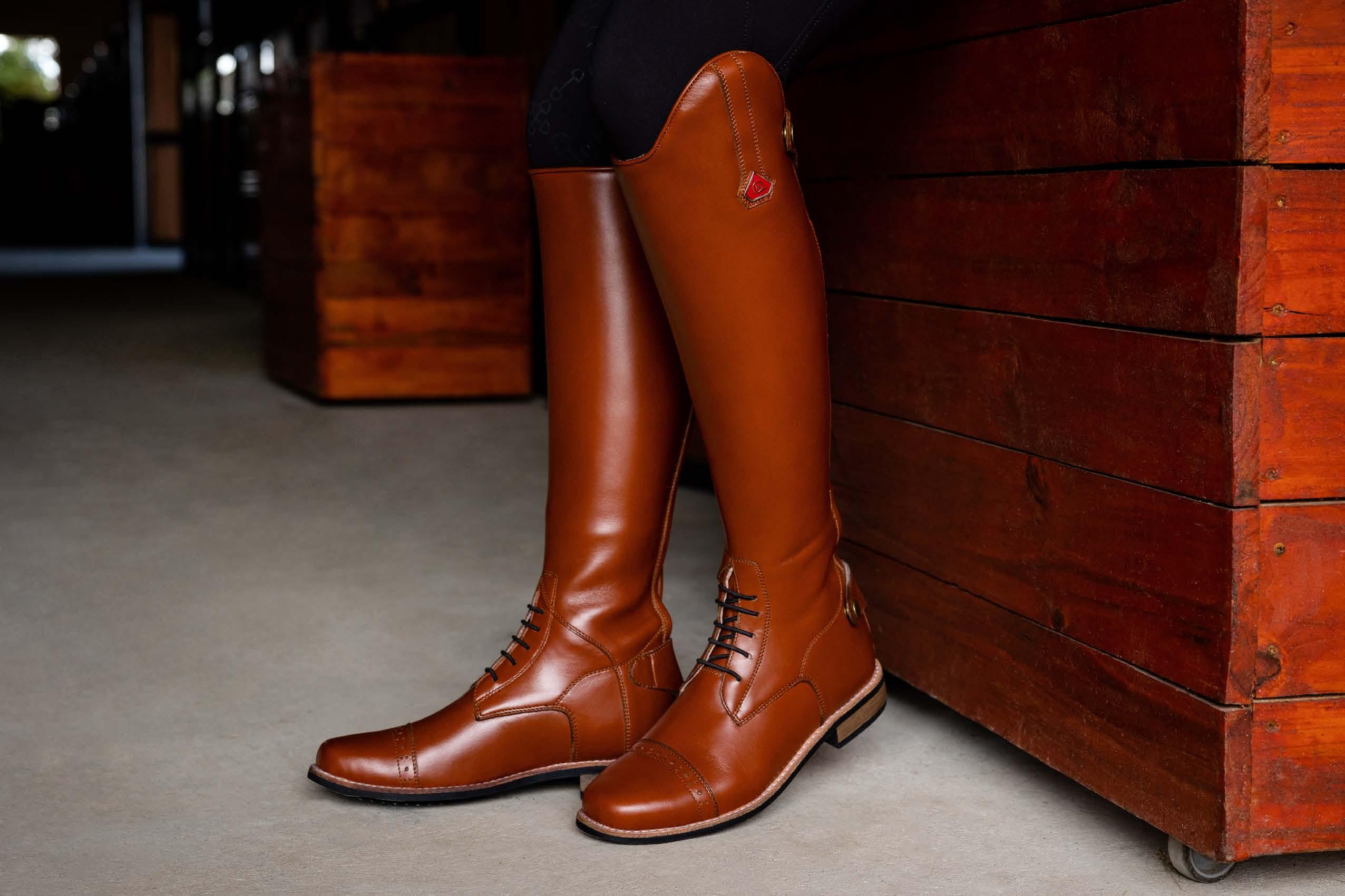
HANDCRAFTED BOOTS.
Timeless Style. Everyday performance.
Discover bespoke and pre-order riding boots, jodhpur and country boots, work boots, and finely made accessories — all crafted with premium materials and meticulous workmanship.
HQE Gift Vouchers - now 10% off
The perfect gift: let your loved one choose their fit, style, and finish. Redeemable across our full collection.
Purchase online at: helloquality.co.za delivered instantly by email.
20 GIFTS HORSES GIVE US
9. PATIENCE
Nothing worthwhile with horses happens quickly. They teach us to slow down, to listen, and to celebrate incremental progress.
20 GIFTS HORSES GIVE US
10. FREEDOM
A gallop, a solo hack, a cross-country round - horses offer moments of freedom that are hard to replicate anywhere else.
OGILVY EQUINE REHABILITATION CENTRE - WHERE OUR PASSION IS EQUINE REHABILITATION AND OUR GOAL IS A SOUND AND HAPPY HORSE!
Situated in Pretoria East | Contact Anca Roode for more information on 082 736 0457
20 GIFTS HORSES GIVE US
11. RESPONSIBILITY
Horses depend on us utterly. Their care teaches accountability, empathy, and the privilege of being trusted with another life.
Features a lightweight build, built-in speakers, and our patented Electronic tint-adjustable lenses for no lapse in vision and ultimate focus during workout.
Available with or without audio. A range of Sport, Lifestyle and Fashion models
Tucked away in the undulating hills of the Van der Stel Pass near Botriver lies a hidden gem capturing the attention of the international equestrian world. The Majestic Knabstrupper Stud, renowned for its rare, spotted horses and an award-winning stallion, is quietly building a legacy of excellence in South Africa.
At the helm is Dr Marna SmithStofberg, a specialist animal geneticist by training and a horsewoman by heart. Her lifelong passion for spotted horses inspired her to begin breeding Knabstruppers three decades ago. Today, her stud is a beacon for those seeking to preserve the classical lines and regal bearing of this rare Danish breed.
Marna’s scientific approach to breeding is grounded in her deep understanding of genetics and unwavering commitment to preserving the original lineage of the Knabstrupper. By selecting only the finest bloodlines and prioritising both physical soundness and mental aptitude, she has consistently produced horses of rare quality.
This dedication was recently validated during her second Knabstrupperforeningen for Danmark (KNN) evaluation - an international benchmarking process for the breed. Of the 20 horses presented, 90% achieved Premium status, a remarkable feat in any breeding program.
Majestic Donatella performing at Liberty with Marna.
THE KNN EVALUATION
The KNN evaluation is an exhaustive process conducted by a judging panel that includes three travelling Danish judges and an accredited equine veterinarian. Horses are assessed according to their age and developmental stage, with a range of evaluations designed to test conformation, movement, soundness, and performance ability for modern horse disciplines.
Before a stallion can apply for evaluation to obtain its KNN stallion
license, a pre-vetting is necessary upon application, with a known and proven approved pedigree. This enables male animals with known equine genetic disorders to be eliminated from performance testing.
Each component of each test (movement, jumping, endurance and even temperament) is scored on a scale from 1 to 10, with temperament given particular weight in the final grading. “Temperament is essential,” says Marna. “A good mind is just as important as athleticism”.
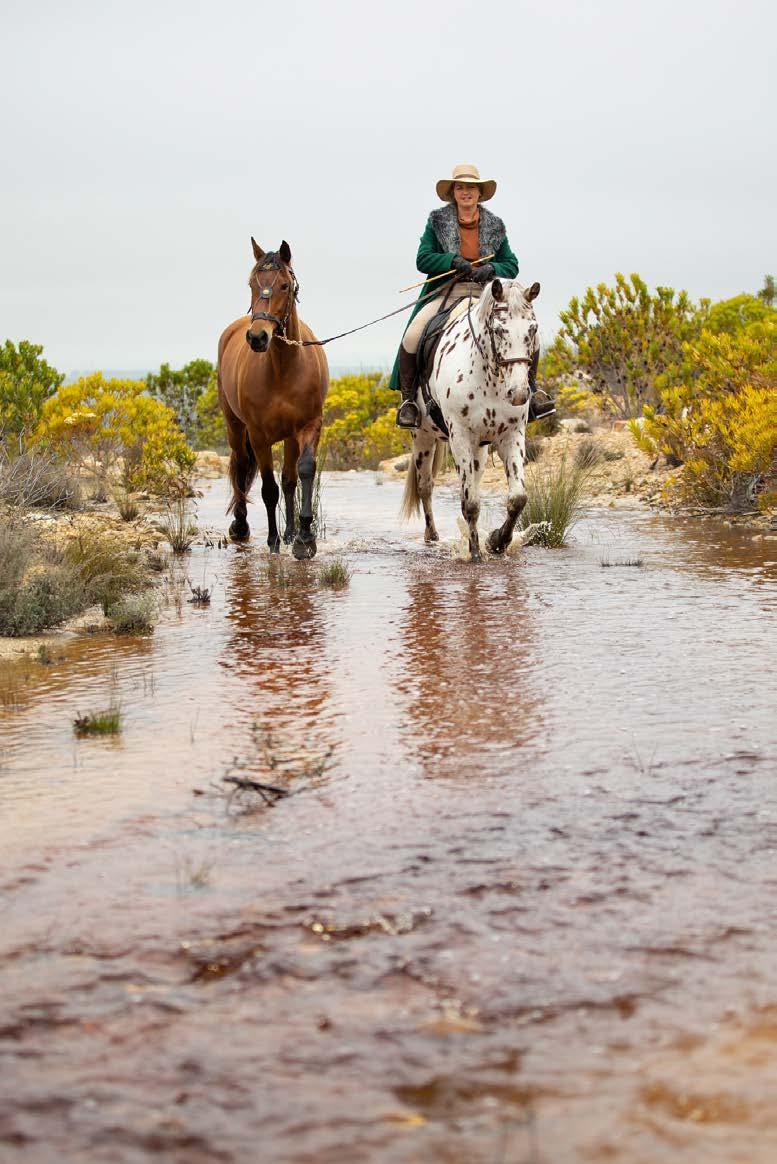
Majestic Donatella, and Sartor Danish Design ridden by Marna, taking water in their stride.
THE STALLIONS
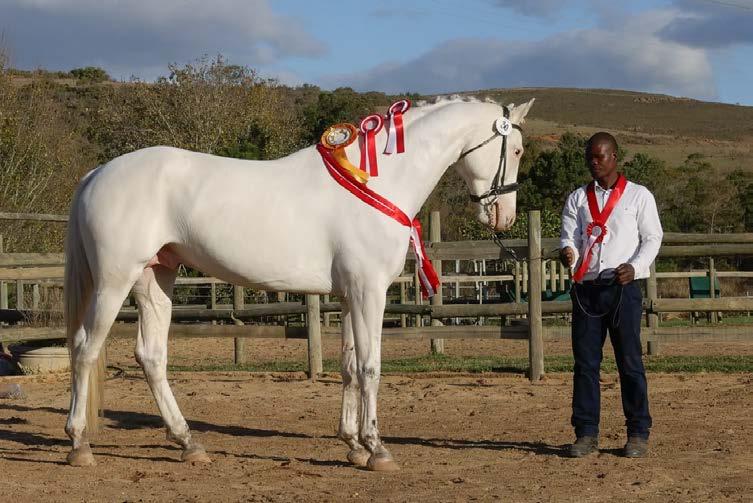
Leading the male herd was her young “porcelain” stallion Majestic Don Giovanni, who was awarded a coveted nine overall - a distinction held by only 10% of inspected stallions worldwide. His majestic presence, both genetic and athletic, exemplifies the breed’s potential.
“It was a proud day for all of us,” Marna shared. “A celebration of how far we’ve come.”
However, this comes as no surprise to the stud since dedicated breeding decisions and great dam lines make for a great stallion. Don Giovanni is the only direct son of her late beloved and world-renowned Danish full performance tested stallion, Figaro af Hallundbaek, and the KNN recognized Gold Medal mare, Sartor Danish Design, here
in SA. Don Giovanni now steps into the role of a senior stud stallion, representing the next generation of modern spotted excellence.
However, this was not the only accomplishment in the stallion category. Majestic Orpheus (7/8), considered by the KNN as true-totype and a rare find for an almost extinct breed, obtained a premium status with an overall 8 for his stallion licencing, together with Majestic Dreamz Time, who was granted a special pre-licence due to his young age. A delighted Marna said “All three of these young stallions contribute in their unique way to the Knabstrupper gene pool and enable me as a breeder to apply selective breeding to amplify breed characteristics here in South Africa”.
Majestic Dreamz Time, a two-year-old colt, presented for the 2025 Knabstrupperforeningen for Danmark (KNN) evaluation.
THE LINEAGE
For Marna, the Knabstrupper’s rich lineage and strict governing body are part of what makes the breed so exceptional. “Their performance history of the last 50 years is documented in written studbooks, giving the breed a sense of permanence and nobility,” she explains. To have a breed as old as the Knabstrupper withstand change over time, you need to have access to these records in real time, enabling us to observe phenotypes associated with different era purposes (Cavalry, Agricultural and Entertainment) and performance
records linked to their genotype for selective breeding decisions.
Though the breed's existence has waxed and waned and past breeding has often neglected genetic soundness. It is a few committed breeders like Marna who have revived the original elegant classical cavalry type: a well-balanced, lightfooted, bold and intelligent riding horse. Through strategic imports and careful pairings, Marna has re-established the genetic integrity of this endangered breed in South Africa, suitable for modern-day riding.
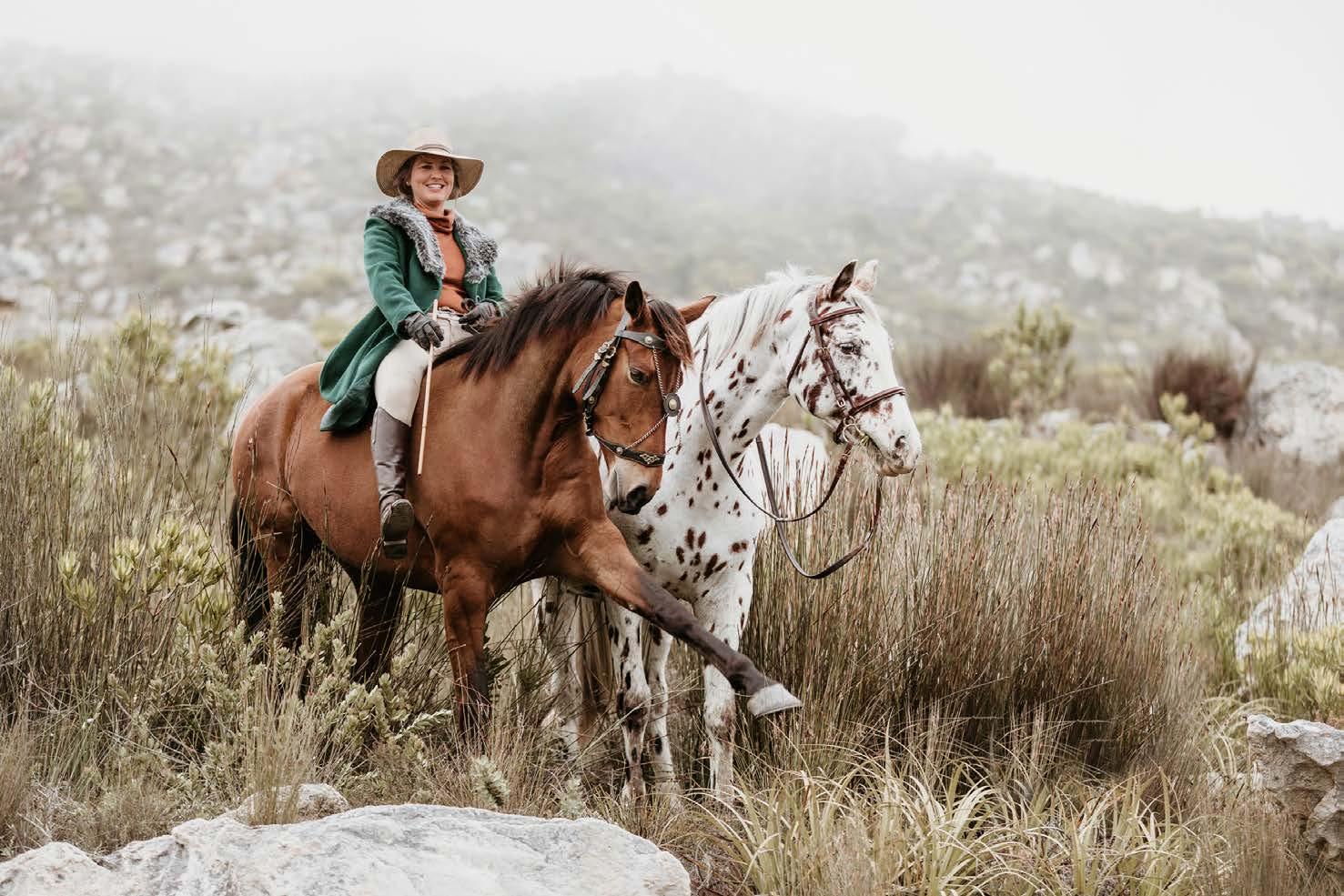
Majestic Donatella ridden by Marna, and Sartor Danish Design, on a mountain ride.
THE MAJESTIC STUD’S HORSES
The Majestic Stud’s horses are bred with purpose, putting special focus on the Knabstrupper mares at the stud. Any stud’s success lies deeply embedded in its dam lines.
The stud imported a uniform mare herd together with the original two divergent stud stallions, placing the stud in a category of its own with well-established Knabstrupper dam lines. Nine Knabstrupper mares with some very purebred lineage (6/8 to 8/8) were added to the stud’s breeding herd after the 2025 KNN inspections. Results of the recent KNN inspection, where several individuals and progeny groups were presented, illustrated the consistency of the stud’s offspring quality.
The KNN is one of the very few governing bodies acknowledging and awarding a stallion or mare based on their consistency for producing progeny true to Knabstrupper type. Statistically, this type of presentation is extremely rare with only one mare group presentation and two stallion group presentations world-wide last year, as recorded by the KNN. Four progeny groups were presented by the stud here in SA this year, with some group sizes ranging from 3 to 8 individuals per group. Every sire and dam participant at the stud received medals ranging from silver to bronze, with one gold (two in the world) obtained during the last inspection. This puts the stud in a league of its own when it comes to superior genetics.
Gold medal stallion
Majestic Don Giovanni
What underpins this consistent success apart from genetics?
“The environment of course, our land itself plays a massive role,” says Marna. “The hilly terrain and mineral-rich soil of the Overberg is ideal for raising strong, healthy foals. Our young horses are given time to grow, with space to roam and as such develop naturally. Safe paddocks, with natural stimulatory components like dams, streams and different types of vegetation, allow the development of attentive youngsters, enthusiastic and
optimistic about life. Foals are handled twice a week in a stressfree environment with a positive reinforcement system to enable optimal brain development, creating a thinking horse willing to work in a modern environment riddled with different pressures. The backing system alone takes up to two years, where youngsters are trailed with lead mares for several months. There is no rush on development for these horses. They’re emotionally balanced, physically tough, and mentally sound.”
Majestic Donatella, and Sartor Danish Design ridden by Marna, on a mountain ride – just another typical day on the farm.
BREEDING IN SOUTH AFRICA
South Africa has the advantage of space, terrain and staff to breed the best horses in the world, which has recently been proven in the Knabstrupper. Although Europe implemented horse performance testing, which has become increasingly vital for their success as equine Olympic athletes, we have the advantage of piggybacking on this already developed sciencebased system. With a strong database of test results, breeders can predict breeding values with
greater accuracy, refining traits such as rideability, conformation, and performance. For the Knabstrupper, this process is non-negotiable: a licence is only granted if the horse meets exacting standards across multiple disciplines.
At The Majestic Knabstrupper Stud, tradition meets science in the rolling hills of the Overberg. Through passion, patience, and precision breeding, Dr Marna Smith-Stofberg is preserving both a noble legacy and excellence in the breed.
Majestic Donatella performing dressage moves ridden by Marna.
20 GIFTS HORSES GIVE US
12. COMMITMENT
Horses ask for consistency and reward loyalty. They teach us the value of showing up, especially on the days we don’t feel like it.
20 GIFTS HORSES GIVE US
13. GRIT
Whether it's rehab, retraining, or rebuilding confidence, horses teach perseverance. They show us how to keep going when things get challenging.
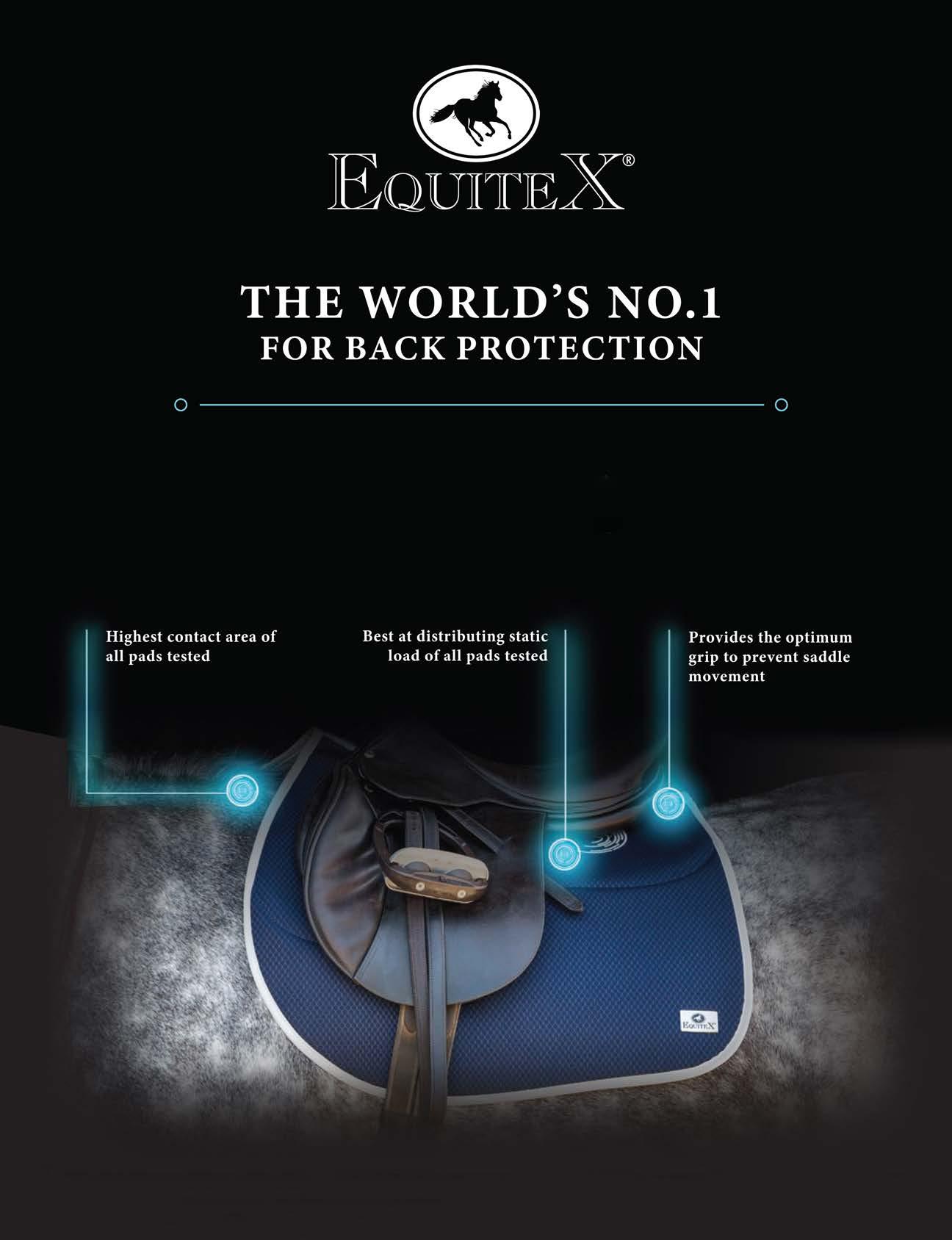
This pad from EquiteX allow horses to develop muscles while in ridden work through the use of technical foam that springs back after every stride.
20 GIFTS HORSES GIVE US
14. RESPECT
They remind us that power can be gentle. Respect is not demanded but offered mutually, through fair boundaries and thoughtful communication.
Callaho Corleone uses Balius Fly Spray
THE ART OF OFF-SEASON CARE
WHY STRATEGIC REST MAY BE YOUR SPORTHORSE'S SECRET WEAPON
For competitive horses, the show calendar can feel relentless. Between conditioning cycles, travel days, new venues, and the mental pressure of performing, the sporthorse works harder, both physically and psychologically, than we often appreciate. As we wrap up a demanding season, it's worth looking at the off-season a little differently: not just as a pause, but as an essential phase of training.
In elite human sport, rest is an integral part of performance science. Olympic athletes don't
finish their season and immediately begin the next training block at full intensity. They are taught that adaptation happens during recovery, not during exertion. Yet in equestrian circles, many horses dive straight from the show arena into boot camp for the next year. The result? Accumulative stress, burnout, behavioural changes, and injuries that are harder and more expensive to fix later.
True longevity is built in the quiet weeks. This is your guide to making those weeks count.
WHY HORSES NEED A RESET
Rest doesn't mean inactivity. It means lower mechanical load, psychological decompression, and maintaining movement without stress. Think of the off-season as controlled freedom: we continue to support the horse's body, but we remove the pressure. The goal isn't to lose fitness, but to rebuild soundness, calmness, and motivation.
The science behind this approach is compelling. Connective tissues like tendons and ligaments experience microtrauma during training and competition. While these tissues are remarkably strong, they have a limited blood supply compared to muscle, which means they heal more slowly. During intense training periods, damage can accumulate faster than repair occurs. The offseason gives these structures time to fully regenerate, emerging stronger and more resilient.
But the benefits extend far beyond the physical. Many horses competing at high levels exist in a state of controlled stress. Their nervous systems are constantly activated, their cortisol levels elevated, their gut flora disrupted by travel and performance anxiety. Research in equine stress responses shows that chronic elevation of stress hormones suppresses immune function, interferes with digestion, and can lead to gastric ulceration. A proper off-season allows the entire system to recalibrate.
We see improved tendon and ligament resilience, better topline development if muscle was lost during the season, reduced gastric stress and cortisol levels, strengthened immune function, and happier horses who are eager to return to work. Horses who receive adequate mental and physical recovery between seasons show better focus, increased willingness, and fewer resistance behaviours when training resumes.
HOW LONG SHOULD THE OFF-SEASON BE?
There's no one-size-fits-all answer, and this is where understanding your individual horse becomes critical. Younger horses benefit from a longer mental break. Their brains are still developing, their attention spans are shorter, and they haven't yet built the mental resilience of a seasoned competitor. A fourmonth break for a five-year-old isn't excessive; it's developmentally appropriate.
Horses competing at higher intensity levels need more time to recover. A horse competing at advanced eventing or grand prix jumping is operating at the edge
of their physical capacity. Their joints bear tremendous force, their cardiovascular system is pushed to maximum output, and their mental focus is razor-sharp for extended periods. These athletes need substantial recovery time, not a brief holiday before ramping back up.
Those with injury history require extra weeks for bone and soft tissue adaptation. If your horse has had even minor suspensory issues, kissing spine, or recurring soreness, consider extending the off-season. Veterinary research consistently shows that tissues continue to remodel and strengthen for months after clinical healing appears complete.
As a general guide, full competition horses need one to two months off. Youngsters or horses stepping up a level next year often benefit from two to four months. But for all horses going into 2026, consider also incorporating shorter micro-breaks within the season. A long weekend or a week of hacking every few months can prevent stress from stacking up. These mini-recovery periods can be remarkably effective at maintaining freshness throughout a demanding year.
LETTING DOWN
Going from Grand Prix to grazing overnight might sound idyllic, but it can be physiologically jarring. Joints accustomed to daily work suddenly experience no load-bearing exercise. Lungs adapted to aerobic demands are suddenly less utilised. Gut flora balanced for a high-concentrate diet face an abrupt shift to pure forage. This all means that the transition matters, perhaps as much as the rest itself.
During the first two weeks, reduce schooling intensity and increase hacking. Your horse is still relatively fit, so longer hacks at a relaxed pace allow them to maintain cardiovascular conditioning without the mental or physical pressure of arena work. This is also an ideal time to explore new trails, let them stretch their legs in different terrain, and begin the psychological transition away from performance mode.
In weeks three and four, transition to mostly hacking and ground work. By now, their fitness is beginning to decline, but that's exactly what we want. Ground work, particularly exercises that encourage core engagement and proprioception, helps maintain body awareness without the load of a rider. Poles scattered randomly in a field, rather than set in patterns, encourage them to think about their feet without the precision demands of schooling.
From week five onwards, increase turnout hours while minimising ridden work. At this stage, most of their movement should be self-directed. They choose when to trot, when to roll, and when to stand quietly with a companion. This autonomy is psychologically valuable for animals who spend much of their working life being directed by humans.
Slow changes protect against soft-tissue injuries when training resumes. Veterinarians see a predictable pattern: horses brought back into work too quickly after a period of complete rest often develop tendon strains, ligament injuries,
or muscle tears within the first few weeks. The tissues simply weren't given time to adapt to the changing demands.
The cardiovascular system adapts quickly, but connective tissues don't.
THE MENTAL HOLIDAY
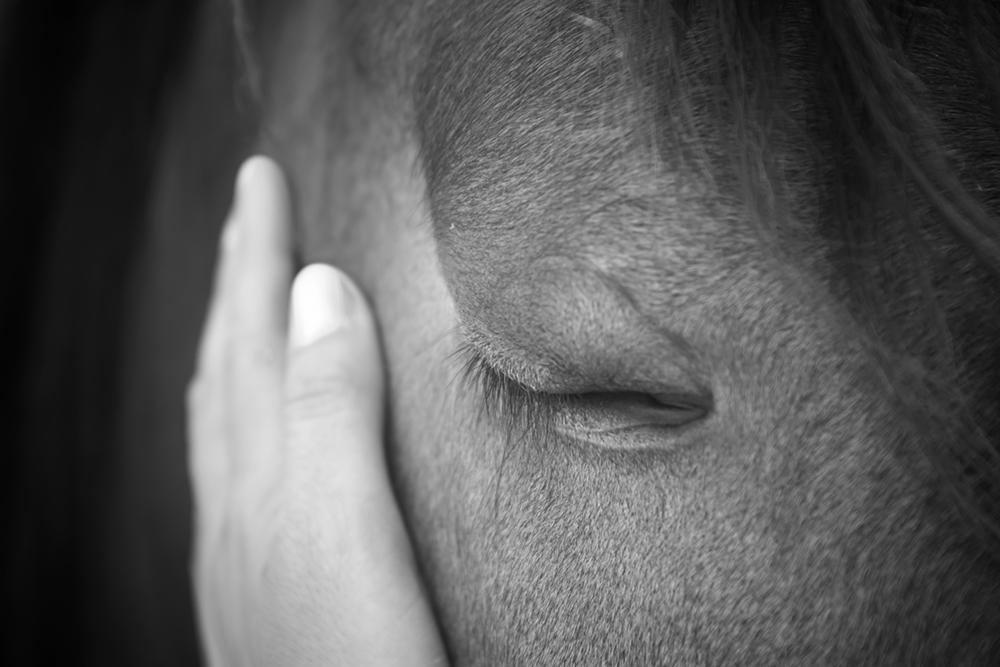
Unfortunately, many show horses are trained to hold tension. They learn to collect their bodies, focus their minds, and maintain alertness even in chaotic environments. The break should teach them to let that tension go, to rediscover the simple pleasure of being a horse rather than being a performance machine.
Hacking in new environments works beautifully for this. Novel landscapes, different footing, the absence of mirrors and arena markers, all signal to the horse that performance isn't required. Hill walking is particularly valuable because it builds strength through natural terrain variation while keeping the brain engaged with navigation rather than collection or precision.
Liberty sessions allow horses to move without constraint, to choose their own gaits and directions. For horses who've spent months being micromanaged in their movement, this freedom
is profoundly restorative. Clicker training introduces a new type of mental engagement, one based on curiosity and problem-solving rather than obedience and precision. And riding with friends provides social wellness. Horses are herd animals; the opportunity to move alongside companions, to match strides naturally rather than on command, fulfils a deep biological need.
What doesn't work? Over-schooling weaknesses while they're tired. It's tempting to use the off-season to fix technical problems, but a fatigued horse learns slowly and often develops compensation patterns. Busy arenas with high pressure defeat the purpose of mental recovery and demanding new skills when they need recovery space creates frustration rather than progress. A mentally fresh horse learns faster next season and resists less. The improvements you're hoping to drill in during their time off will come more easily when they return rested and willing.
CHANGING MANAGEMENT FOR THE HOLIDAY
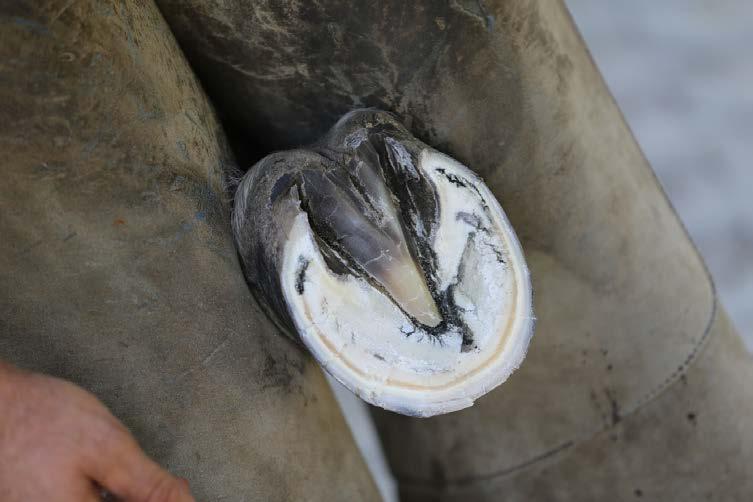
Some horses thrive with a temporary management shift: more turnout, a barefoot break to improve hoof health, or lower-energy feeding with forage-focused routines.
GOING BAREFOOT
A barefoot break is one of the most underutilised tools in equine management, yet it can yield remarkable benefits. Shoes, while necessary for many performance horses, provide rigid support that interferes with the natural hoof mechanism. Over time, this can lead to contracted heels, compressed digital cushions, and weakened
hoof walls. A barefoot period allows these structures to return to their natural function.
When the shoe is removed, heels can expand and contract with each step, promoting blood flow and tissue development in the back of the foot. The digital cushion, a fibrocartilaginous structure that absorbs shock, has the opportunity to thicken and strengthen. Nail holes, which can sometimes become infection pathways, are allowed to grow out completely. And the hoof wall, no longer bearing the repetitive stress of nails, often grows in with better quality and structure.
That said, not all horses can or should go barefoot. Footing matters enormously; a horse on rocky ground will be uncomfortable without protection. Workload during the break is also relevant. If you plan to continue riding regularly, shoes may still be necessary. Conformational factors play a role too. Horses with very flat soles, significant underrun heels, or poor hoof quality may not be good candidates. And if there's any existing pathology, such as navicular changes, pedal bone rotation, or collateral ligament
damage, a farrier and vet should jointly advise on the appropriateness of going barefoot.
For horses who aren't quite ready for full barefoot turnout, hoof boots offer a middle ground. They provide protection for occasional ridden work while allowing natural hoof function the rest of the time. Short turnoutonly barefoot breaks, where shoes are pulled for a month or six weeks of pure pasture time, can also bridge the gap if soles are sensitive or terrain is challenging.
PASTURE RESET
When workload drops, energy intake must follow suit, but fibre intake must not. This is a crucial distinction that many people get wrong. The temptation is to reduce feed across the board, but a horse's digestive system needs constant fibre to function properly. Aim for forage first, roughly one-and-a-half to two percent of bodyweight daily, while reducing starch and balancing minerals for hoof and ligament health. The goal is to maintain body condition without allowing weight to creep up.
Concentrate feeds should be reduced significantly, but don't neglect micronutrition. Performance horses on high-grain diets often receive their vitamins and minerals through fortified feeds. When you reduce or eliminate concentrates, you may inadvertently create deficiencies. A quality vitamin and mineral supplement or a low-calorie balancer pellet ensures they're still receiving what they need for tissue repair and maintenance.
Specific supplements worth discussing with your veterinarian include vitamin E, joint supplements and gut health stabilisers. Vitamin E is a powerful antioxidant that supports muscle recovery and immune function, but it degrades quickly in stored hay. Horses on primarily hay diets often become deficient unless supplemented. Joint support supplements containing glucosamine, chondroitin, or hyaluronic acid remain valuable
during rest because cartilage continues to develop and repair during this period. Some research suggests that supplementation during rest may actually enhance the quality of tissue repair. And gut health stabilisers, such as probiotics or prebiotics, can ease the transition if management is changing. Travel, new environments, and dietary shifts all disrupt the delicate microbial balance in the hindgut.
VET CHECK OR DECOMPRESSION FIRST?
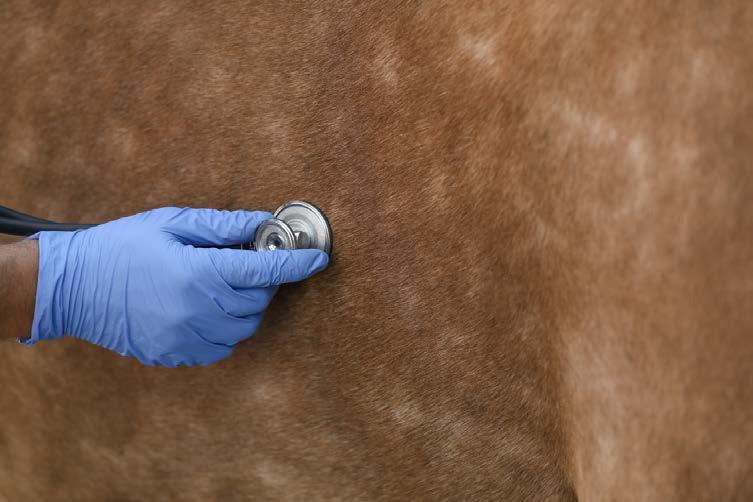
This is a question many owners grapple with, and the answer is ideally both. Some veterinarians recommend a post-season assessment before the horse goes on break, while others prefer to see them after a few weeks of rest when acute inflammation has subsided and chronic issues become more apparent.
A post-season veterinary assessment can identify tiny tendon changes before they escalate into career-threatening injuries.
Ultrasound imaging can detect fibre disruption that isn't yet causing clinical lameness. Catching these changes early allows for targeted rehabilitation rather than emergency treatment later.
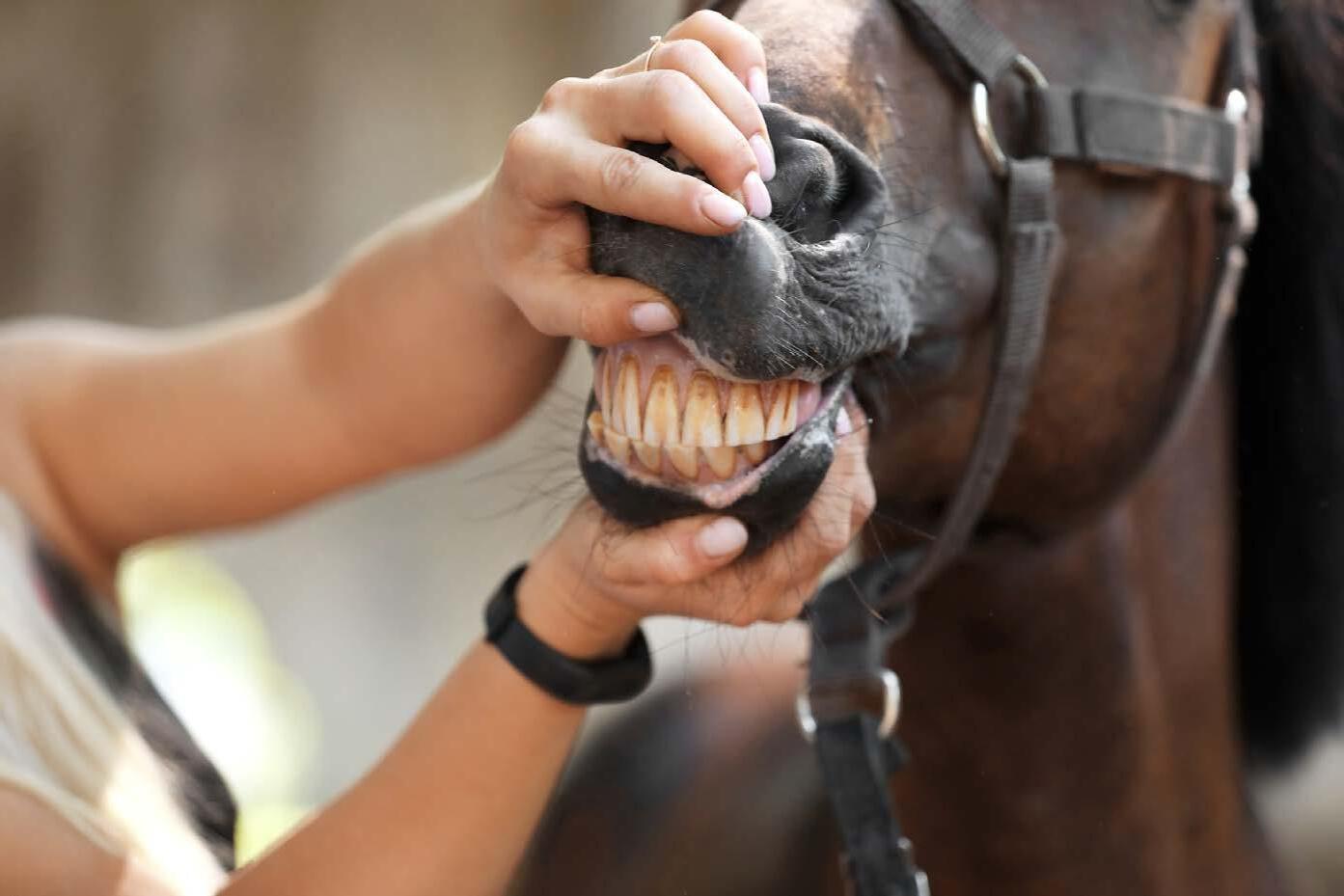
Dental needs often emerge during competition season but get overlooked until the horse is struggling with bit contact or showing resistance. A dental examination and treatment at the start of the offseason means your horse can eat comfortably and gain condition more easily.
The examination should also check for soreness that didn't show in competition. Horses are remarkably stoic, and the adrenaline of competition can mask discomfort. Once home and relaxed, subtle lameness or stiffness may become apparent.
Saddle fit drift is another common finding. Horses change shape during the season, losing topline or
developing different musculature, and the saddle that fit perfectly in spring may now be creating pressure points.
And gastric ulcers, present in up to ninety percent of performance horses according to some studies, need diagnosis and management. The off-season is an ideal time to treat ulcers because stress levels are lower and management is more consistent.
Early intervention means longer careers. The most successful sport horses aren't necessarily the most talented; they're the ones who stay sound year after year. That longevity is built on catching small problems before they become large ones.
WHEN TO RETURN TO WORK
The decision to bring a horse back into work should be based on readiness, not on the calendar.
Watch for these green flags: relaxed posture in movement, not just at rest but during play and interaction with other horses. A horse who is tight, resistant to stretching, or moving stiffly isn't ready. Hooves should be stable and comfortable, with good sole depth, healthy frog tissue, and walls that show quality growth. If you pulled shoes for a barefoot break, the feet should be tough enough to handle the work you're asking without sensitivity.
Body condition should be ideal, which means you can't see the spine or ribs, but there's no crest fat or deposits behind the shoulder. Too thin, and you haven't adequately supported recovery. Too heavy, and you'll be managing weight while trying to rebuild fitness, which is both inefficient and hard on joints.
And watch for bright, curious behaviour. A horse who's mentally ready to work shows interest in their surroundings, engages with you during handling, and has a sparkle in their eye. A dull, disinterested horse needs more time.
Avoid rushing back for early-season qualifiers. The competitive calendar is relentless, and there's always pressure to get started, to qualify, to not miss opportunities. But longterm soundness wins seasons, not rushed fitness. A horse brought back
too quickly may get you through that first qualifier, but at what cost to the rest of the year? Planning a realistic timeline that allows for gradual conditioning protects your horse's body and, ultimately, your competitive goals.
Just as rest days make athletes stronger, the off-season creates the horse your 2026 season needs you to have.
THE TAKEAWAY: PERFORMANCE IS BUILT IN THE PAUSE
A well-planned off-season protects your horse's longevity, strengthens your partnership, makes training more effective, prevents injury cycles, and brings comfort and free movement back into the horse's body. These aren't separate benefits; they build on each other. A horse who feels physically good is mentally available. A partnership built on respect for the
horse's need for recovery is stronger than one built purely on performance demands.
The off-season is not wasted time. It's not something to be rushed through or minimised. It's a strategic investment in your horse's future, a recognition that sustainable performance requires cyclical rest, and an acknowledgement that horses are living athletes whose well-being must come before our competitive ambitions.
20 GIFTS HORSES GIVE US
15. EMPATHY
Horses mirror emotion with remarkable sensitivity. They teach us to understand others not through words but through presence, tone, and intention.
SEN COMPLETE SUPPORT
Ricolette du Preez Founder and developer of Supreme Equine Nutrition BSc Diet, BTEC Professional Dip Equine Nutrition (UK) FOR ULTIMATE HEALTH AND PERFORMANCE.
Supreme Equine Nutrition’s Complete Support delivers a scientific, integrated approach to joint health, muscle function, gut integrity and inflammation control, all in one comprehensive formula.
Every horse carries lessons. Their quiet wisdom anchors us when life feels uncertain.
20 GIFTS HORSES GIVE US
17. ENERGY
A horse’s power is palpable. They teach us how to harness energy and channel it productively.
SEDATION VS BEHAVIOUR TRAINING
UNDERSTANDING WHEN CALM IS CARE, AND WHEN SEDATION MASKS A DEEPER PROBLEM
The conversation usually starts the same way. A horse owner calls their vet, frustrated and worried. The farrier can't work safely anymore, or clipping has become a nightmare, or loading onto the trailer requires an hour of stress for everyone involved. The question, spoken or unspoken, is always: can you just sedate him?
It's a reasonable question. Sedation is safe, readily available, and undeniably effective at creating compliance. But it's also a question that reveals a deeper tension in
modern horse management: when does chemical intervention serve the horse's welfare, and when does it simply make difficult situations more convenient for us?
The line between appropriate sedation and avoidance of behaviour work is not always clear. It shifts depending on the horse, the situation, the handler's skill, and the resources available. This article explores that grey zone, not with simple rules, but with the nuanced thinking that horses deserve.
WHEN SEDATION IS GENUINELY APPROPRIATE
There are situations where sedation is not just acceptable but necessary. These are moments when the horse's brain cannot process information, when survival instincts override all learning capacity, or when physical safety cannot be guaranteed without pharmaceutical support.
Medical procedures sit squarely in this category. A horse having a tooth extracted, a wound debrided, or diagnostic imaging performed cannot be expected to stand perfectly still through pain or discomfort. Asking them to do so isn't training; it's
unfair. Sedation in these contexts is a welfare decision. It prevents trauma, allows the vet to work safely and effectively, and protects the horse from associating necessary medical care with unmanageable fear or pain.
Emergency situations also justify sedation. A horse trapped in a fence, tangled in wire, or injured in a way that makes handling dangerous needs immediate chemical restraint. There's no time for systematic desensitisation when a lacerated leg needs pressure bandaging, and the horse is in shock. In these moments, sedation is crisis management, and it's the right choice.
Then there are the less clear-cut cases: horses with such extreme fear responses that training cannot begin safely. A horse who rears, strikes, or bolts at the sight of clippers is not being naughty. They're experiencing genuine terror, and attempting to force the issue without support can deepen that fear. Here, sedation can act as a bridge. It lowers arousal enough that the horse can experience the stimulus without panic, creating a neutral or even positive association rather than reinforcing the trauma. Used this way, sedation becomes
part of a behaviour modification plan, not a replacement for one.
‘Sedation should remove panic, not replace training.’
The critical question is always: what happens next? If sedation is used once or twice to allow positive experiences to begin, and then systematically faded as confidence builds, it's being used ethically. If it becomes the only way a routine task can be accomplished month after month, something else is wrong.
WHEN SEDATION MASKS THE REAL PROBLEM
The trouble starts when sedation becomes normalised for situations that should be manageable through training. If a horse requires pharmaceutical intervention for routine farriery every six weeks, that's not a quirky horse. That's a training gap, a pain issue, or both.
Consider the horse who cannot be clipped without heavy sedation. On the surface, it seems like a practical solution. The job gets done, no one gets hurt, and we move on. But what's actually happening? Each sedated clipping session is a missed opportunity. The horse never learns that clippers are safe, never builds tolerance, never develops the coping skills that would make future sessions easier. Instead, the underlying fear is preserved perfectly, waiting to resurface.
Worse, repeated sedation for the same task can create a psychological dependence. The horse learns that certain situations signal sedation is coming. They may become resistant to being caught on clipping days, or anxious in the area where sedation is typically administered. We've solved the immediate problem but created a longer-term one.
Pain is another factor that sedation can obscure. A horse who is difficult for the farrier might have navicular changes, arthritis in the lower limb, or back pain that makes holding a leg uncomfortable. Sedating that horse allows the farrier to work, but it doesn't address why the horse was struggling in the first place. The pain continues, potentially worsening, while we mistake compliance under sedation for resolution.
There's also the issue of rushed or inadequate training. Young horses need time to learn how to be handled. They need repetition, patience, and incremental challenges. A two-year-old who hasn't been taught to stand tied, lift feet on cue, or tolerate grooming shouldn't be expected to handle clipping without fear. Sedating that horse might get us through the immediate task, but it shortcuts development that should have happened gradually.
And then there's convenience. This is the hardest factor to acknowledge because it implicates us. Sometimes sedation is chosen not because the horse can't learn, but because training takes time we don't have, skills we haven't developed, or patience we've run out of. The horse could probably be desensitised to clippers over a few weeks with systematic work. But we need them clipped now, and sedation solves that. It's not always wrong, but we should at least be honest about why we're making that choice.
THE GREY ZONE: WHERE GOOD JUDGMENT LIVES
Most situations aren't black and white. They exist in a grey zone where multiple factors compete, and the right answer depends on context. This is where experienced professionals earn their value, because navigating these decisions requires not just knowledge but wisdom.
Take the example of a horse with a traumatic history. Perhaps they were mishandled as a youngster, or injured during a previous veterinary procedure, or simply never properly taught basic handling skills. Now they're seven years old, and their owner has acquired them with all this baggage intact. Should that horse be
sedated for routine procedures while behaviour work happens?
The answer might be yes, temporarily. Sedation can provide safety while systematic desensitisation and counterconditioning occur. The farrier shouldn't have to risk injury while the horse learns that hoof handling is safe. But this requires a plan. What specific training is happening between farrier visits? Who's responsible for that work? How will progress be measured? When will sedation be reduced or eliminated?
Without a plan, sedation becomes indefinite. With a plan, it becomes a tool for rehabilitation.
Another grey area involves the handler's skill level. A confident, experienced professional might safely work with a nervous horse where a novice owner would create a dangerous situation. Should the novice sedate while they develop their skills? Perhaps, if it means the horse receives consistent, positive experiences rather than inconsistent, stressful ones. But again, the goal must be progression, not permanent reliance.
Time and resources also matter. An owner with unlimited time, access to skilled trainers, and financial flexibility can pursue ideal behaviour modification protocols. But not everyone has those resources. A working owner who can afford either sedation or months of professional training, but not both, faces genuine constraints. We can debate the ethics of horse ownership under these circumstances, but the reality is that horses exist in imperfect situations, and sometimes sedation is harm reduction rather than ideal practice.
WHAT GOOD COLLABORATION LOOKS LIKE
The best outcomes happen when veterinarians and behaviour professionals work together rather than viewing each other as competing solutions. A good veterinarian doesn't just dispense sedatives; they ask why this horse needs sedation and whether there's an underlying cause that can be addressed. A good behaviourist doesn't dismiss pharmaceutical support as cheating; they recognise when it serves the horse's welfare and how it can be integrated into a training plan.
This collaborative approach starts with ruling out pain. Before attributing behaviour to fear or poor training, a thorough veterinary examination should assess whether physical discomfort is contributing. Horses don't tend to differentiate between pain and threat in their responses. Both trigger avoidance and resistance. Treating pain might not solve a behaviour problem entirely, but it often reduces its intensity enough that training can begin.
Next comes a realistic assessment of what training can achieve and over what timeframe. Some behaviour issues resolve quickly with competent handling. Others require months of patient, consistent work. Understanding this helps everyone set appropriate expectations. A horse who's never been clipped might learn to tolerate it in a fortnight. A horse who was traumatised by clipping might take six months. Knowing the difference prevents frustration and premature abandonment of training.
When sedation is part of the plan, it should be used strategically.
Light sedation that takes the edge off anxiety but allows the horse to process what's happening is often more useful than heavy sedation that renders them nearly unconscious. The goal is reducing arousal enough that learning can occur, not eliminating awareness entirely. Some newer protocols use low-dose anxiolytics that don't heavily sedate but do reduce fearfulness, allowing the horse to remain mentally present while feeling safer.
‘The question isn't whether to use sedation, but whether we're using it as a bridge or a crutch.’
QUESTIONS TO ASK YOUR VET
When discussing sedation with your vet, these questions can help ensure you're making an informed decision:
• Could pain be contributing to this behaviour?
• What level of sedation are you recommending, and why that particular protocol?
• Will this sedation level allow the horse to process what's happening, or will they be too heavily sedated to learn anything?
• Do you know a qualified behaviourist or trainer who could help address the underlying issue?
• What would a plan to reduce sedation over time look like?
• Are there any risks or side effects I should watch for after sedation?
Progress should be monitored and the plan adjusted accordingly. If a horse is sedated for three farrier visits while training happens, there should be visible improvement by visit four. Maybe full sedation becomes light
sedation. Maybe light sedation becomes oral medication. Maybe oral medication becomes just extra patience and positive reinforcement. The trajectory should be towards less intervention, not static reliance.
THE QUESTIONS TO ASK
Before deciding whether sedation is appropriate, consider these questions. They won't give you a simple yes or no answer, but they'll help clarify whether you're making a decision in the horse's best interest or your own convenience.
First, is this an emergency or a routine situation? Emergencies justify immediate sedation. Routine situations deserve training solutions, even if sedation bridges the gap initially.
Second, have we ruled out pain? A veterinary examination should precede any assumption that behaviour is purely psychological. Pain-related behaviour doesn't respond to training alone.
Third, what training has already been attempted? If the answer is none, sedation is premature. If the answer is extensive, systematic work with no improvement, sedation might be part of a revised strategy.
Fourth, is there a plan to reduce or eliminate sedation over time? If not, you're managing symptoms rather than addressing causes.
Fifth, who's responsible for the training work between sedated procedures? If no one, the behaviour won't improve.
Sixth, are we being honest about why we're choosing sedation? Sometimes the answer is that we're tired, stretched thin, or out of our depth. That's human, but it requires acknowledgment.
MOVING FORWARD
The goal isn't to eliminate sedation from equine management. That would be naive and potentially harmful. Sedation is a valuable tool that serves genuine welfare needs when used appropriately. The goal is to use it thoughtfully, as part of a broader strategy that prioritises the horse's long-term wellbeing over short-term convenience.
This means being willing to invest in training even when sedation seems easier. It means consulting with behaviourists or skilled trainers before reaching for pharmaceutical solutions. It means monitoring progress and adjusting our approach when something isn't working. And it means being honest about our motivations and limitations.
Horses don't arrive in our lives fully trained and infinitely tolerant. They
learn through experience, repetition, and how we set them up for success. Good training builds coping strategies, resilience, and trust. Sedation, used well, can support that process. Used poorly, it replaces it.
The difference lies not in whether we use sedation, but in whether we use it as a bridge to better behaviour or as a permanent solution to avoid the work of training. One serves the horse. The other serves us.
20 GIFTS HORSES GIVE US
18. CHALLENGE
They stretch us, question us, and show us where our boundaries are. Every challenge with a horse becomes an opportunity for growth.
20 GIFTS HORSES GIVE US
19. ADVENTURE
From a first canter to a championship round, horses turn ordinary days into stories we never forget.
Rising 2yo:
Martini Delroy (Dallas VDL x Callaho’s Corinth) - dam jumping in the opens
Martini Lamosa (Legend KWPN x Argentinus) – dam produced wining 1,40m horses Callaho Talana & Callaho Corina
Yearlings:
Martini Pinot Noir (Pegase van’t Ruyterhof/ Berghof Eragon) – dark bay colt
Martini Kool Blue (Kobalt VDL/ Ubergabe) – grey colt out of proven dam line of Callaho Liberace
Martini Uno Chocolate (Up To You/ Candy de Nantuel) - bay filly
CONTACT STUD OWNER: Claire Martin on 0825007273 or martinistud@gmail.com
@ Martini Stud
20 GIFTS HORSES GIVE US
20. HOPE
Horses renew our sense of what's possible. Every training session, every fresh start, every young horse is a reminder that change happens.
our christmas
edition OF
Are you towing your horsebox legally and safely?
Towing a horsebox is something many horse owners take for granted, but it’s a responsibility that goes far beyond hitching up and driving off.
Every trip carries legal and safety obligations that protect not only your horse but everyone on the road. Ignoring these can lead to serious consequences, including fines, invalid insurance claims and dangerous situations that put lives – yours, your horse’s and that of other road users – at risk.
South Africa recorded more than 10,000 road deaths in 2024, and vehicle-related factors such as overloaded trailers and incorrect towing setups contributed to nearly 10% of these fatalities, according to the Road Traffic Management Corporation.
Towing-related incidents are a growing concern with many drivers unaware that their license may not allow them to tow legally. A large proportion of motorists tow illegally because they hold a Code B license, which only permits trailers under 750kg. A horsebox typically weighs around 1000 kg empty, and with two horses, tack and water, the total weight can easily reach 2500 kg or more. This means most horseboxes exceed the legal limit for a Code B license, requiring a Code EB license for safe and lawful towing.
To tow safely, you need to understand your vehicle’s specifications and confirm its towing capacity is sufficient for the weight of your horsebox when fully loaded. It’s also essential to check your license. In 1998, South Africa introduced the credit card-style driver’s license and converted all existing Code 08 licenses to Code EB. Since then, new standard licenses have been issued as Code B only. If you have a Code B license you can only tow a light trailer under 750kg. For heavier trailers such as a horsebox, you need a Code EB license.
Overloading your vehicle and trailer can compromise braking performance, steering control and overall stability. This can lead to dangerous sway or even jackknifing. Exceeding your vehicle’s Gross Combination Mass can cause brake failure and loss of control. These risks are real, and they escalate when weight limits and towing guidelines are ignored.
Equine Insurance that makes horse sense
KNOW YOUR TOWING LINGO:
Gross Vehicle Mass (GVM) – maximum allowed weight of the vehicle itself, including all passengers, cargo, fuel and accessories.
Gross Combined Mass (GCM) – maximum weight of the fully loaded tow vehicle plus the fully loaded trailer.
Gross Trailer Mass (GTM) – maximum weight of a trailer when it is fully loaded.
Towing Capacity – maximum weight your vehicle can safely tow specified by the manufacturer, which includes the trailer weight and cargo.
Tongue Weight – refers to the downward force your trailer exerts on the vehicle’s hitch ball.
You can find your vehicle’s GVM and GCM on its compliance plate, usually located in the driver’s door frame or under the bonnet. To calculate if your car can tow your horsebox legally subtract the GVM from the GCM. For example, if your vehicle has a GCM of 6000 kg and a GVM of 2500 kg you can tow up to 3500 kg. It’s also important to check your towbar’s tongue weight rating as it needs to handle the weight of a fully loaded horsebox. Always verify current regulations through official channels, as requirements change periodically. Towing a horsebox isn’t just about compliance. It’s about protecting your horse and everyone sharing the road with you. By understanding your vehicle’s limits, checking your license, and following the law, you ensure a safe and stress-free journey. Before you hitch up take the time to double-check your specs and drive responsibly.