
Understanding the Factors Influencing the Consumption of Meat and Animal Products at Hofstra University
Trevor Johnson
Mentor: Dr. Sasha Pesci
Introduction
• Environmentally, high meat production affects “climate change in respect to the global warming potential, acidification potential and eutrophication potential; consumption of natural resources (mainly water and energy) and; polluting the environment with various types of waste and wastewater discharge” (Djekic 2015).
• High demand for meat has resulted in thousands of factory farms which treat animals miserably, leading a poor life, packed in densely with little to no room to move or relax practically on top of each other (Anomaly, 2015).
• Factory farms result in the spread of pathogenic viruses and because of this, the bacteria becomes antibiotic resistant, spreading into our shared environment (Anomaly, 2015).
• While meat is very rich in protein, people in the U.S and other higher income countries consume significantly more than the recommended amount of protein daily (Clonan et al., 2015).
Research Questions
• What is the level of awareness of the negative externalities of meat production of Hofstra students?
• What factors’ influence students’ decisions about their diet? (In relation to consumption of meat/animal products)
• What barriers do students who want to reduce their meat consumption face?
Methodology
• Collected 65 survey responses
• Emailed invitation to participate to department heads, who dispersed to students
• Participants were given a choice to enter a raffle for a $100 Visa gift card
• Mixed methods, with some quantitative (multiple choice, Likert scale) and some qualitative questions (open-ended responses)
• Data analyzed in Excel
• Examined awareness levels of environmental/animal welfare factors in factory farming, as well as barriers and motivations for limiting/abstaining from meat/animal product consumption
Department of Geology, Environment, and Sustainability
Results
Quotes from the question: “Is there anything else you'd like to share about how your level of awareness of the environmental and animal welfare implications of the meat industry might impact your dietary choices? ”
• “Ability to incorporate other sources of protein into my diet”
• “I think that after truly understanding it in detail, I will probably reduce my consumption of animal-based foods.”
• “Yes, knowing the environmental damage and animal cruelty linked to the meat industry has made me more mindful of my food choices. It motivates me to reduce meat consumption and choose more sustainable, plant-based options whenever can.”
• “… As of right now, there is that cognitive dissonance between the image of a cow and the image of a hamburger and not the harm that happens in between. If I knew more (and took the time to do so), I am sure my motivations would change.”

Discussion
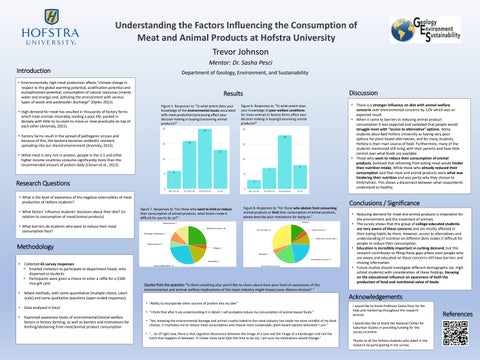
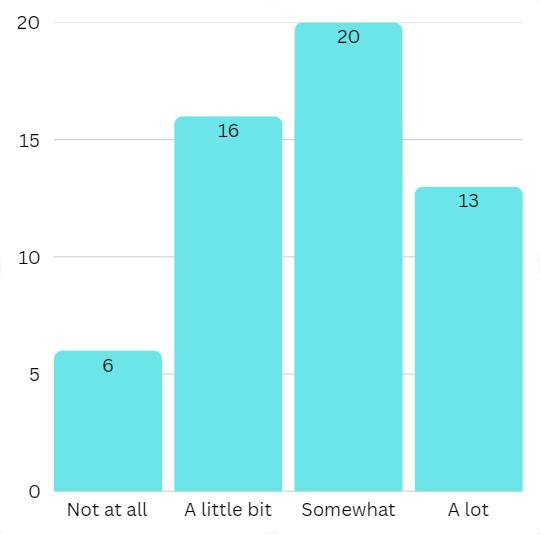
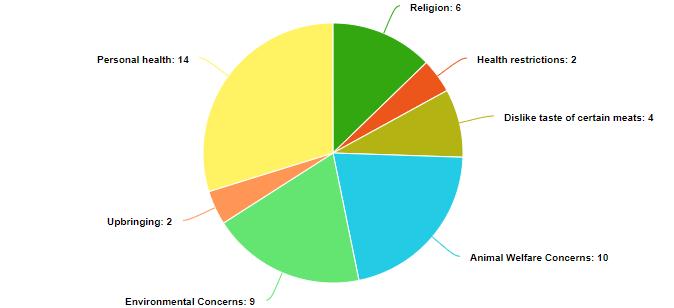
• There is a stronger influence on diet with animal welfare concerns over environmental concerns by 12% which was an expected result.
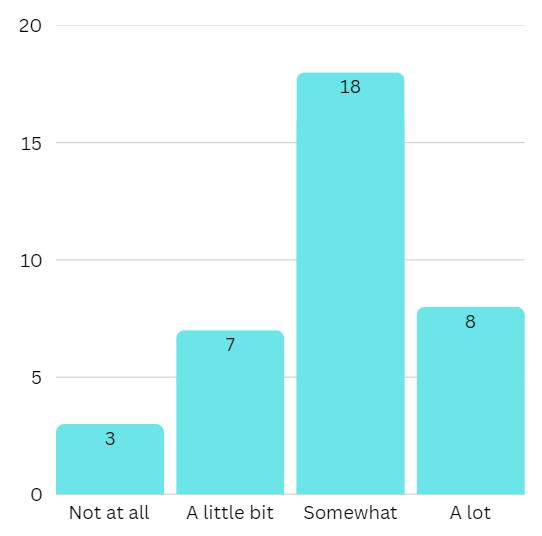
• When it came to barriers in reducing animal product consumption it was expected and validated that people would struggle most with “access to alternative” options. Many students described Hofstra University as having very poor options for plant-based alternatives, and for many students, Hofstra is their main source of food. Furthermore, many of the students mentioned still living with their parents and have little control over what foods are available.
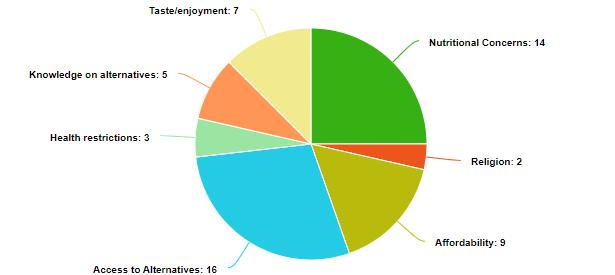
• Those who want to reduce their consumption of animal products, believed that refraining from eating meat would hinder their nutrition intake, While those who already reduced their consumption said that meat and animal products were what was hindering their nutrition and was partly why they choose to limit/refrain. This shows a disconnect between what respondents understand as healthy.
Conclusions / Significance
• Reducing demand for meat and animal products is imperative for the environment and the treatment of animals.
• The survey shows that this group of college-educated students are very aware of these concerns and are mostly affected in their eating habits by them. However, access to alternatives and understanding of nutrition on different diets makes it difficult for people to reduce their consumption.
• Education is incredibly important in curbing demand, but this research contributes to filling those gaps where even people who are aware and educated on these concerns still have barriers and missing information.
• Future studies should investigate different demographic (ex. High school students) with consideration of these findings, focusing on the educational influence on awareness of both the production of food and nutritional value of foods
Acknowledgements
I would like to thank Professor Sasha Pesci for her help and mentoring throughout the research process
I would also like to thank the National Center for Suburban Studies in providing funding for the survey incentive.
Thanks to all the Hofstra students who aided in the research by participating in the survey.
References

Figure 5. Responses to “To what extent does your knowledge of the environmental issues associated with meat production/processing affect your decision making in buying/consuming animal products?”
Figure 7. Responses to “For those who want to limit or reduce their consumption of animal products, what factors make it difficult for you to do so?”
Figure 8. Responses to “For those who abstain from consuming animal products or limit their consumption of animal products, please describe your motivations for doing so.”
Figure 6. Responses to “To what extent does your knowledge of poor welfare conditions for many animals in factory farms affect your decision making in buying/consuming animal products?”