Hobsons Bay City Council acknowledges the Bunurong People of the Kulin Nation as the Traditional Owners of these municipal lands and waterways, and pay our respects to Elders past and present.
INTRODUCTION
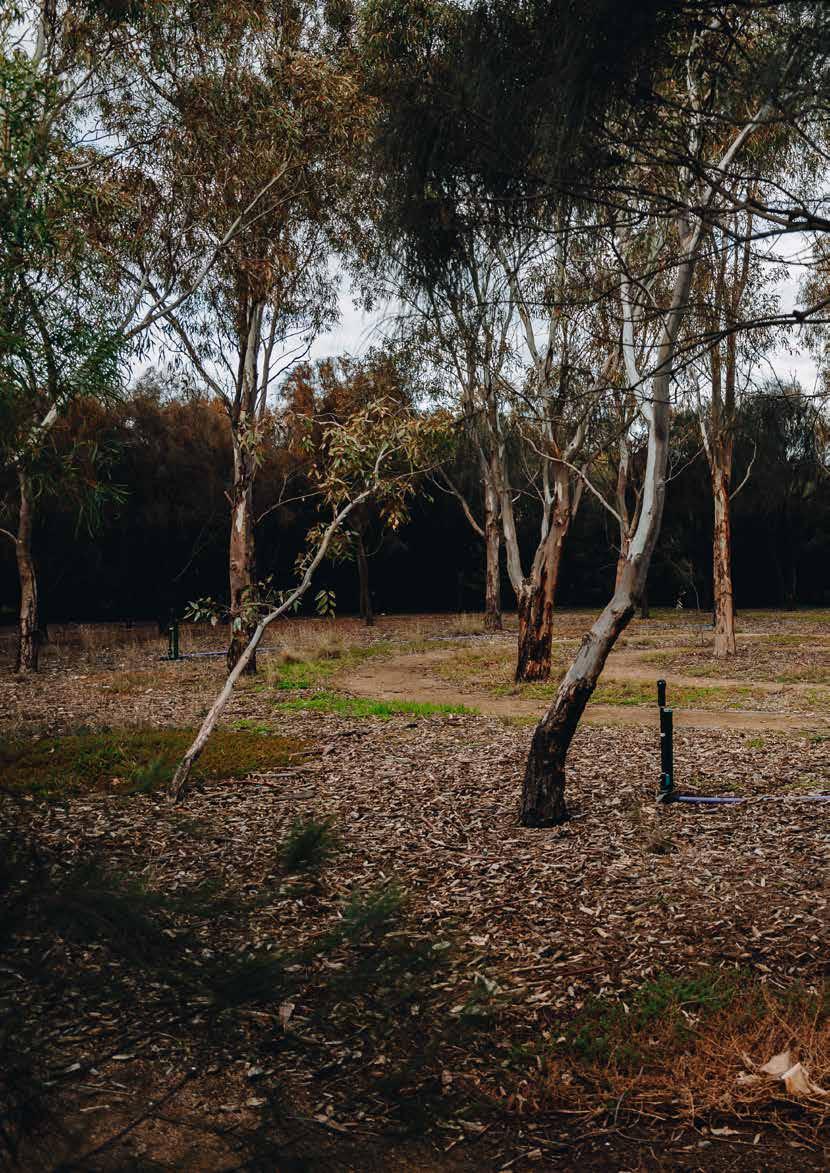
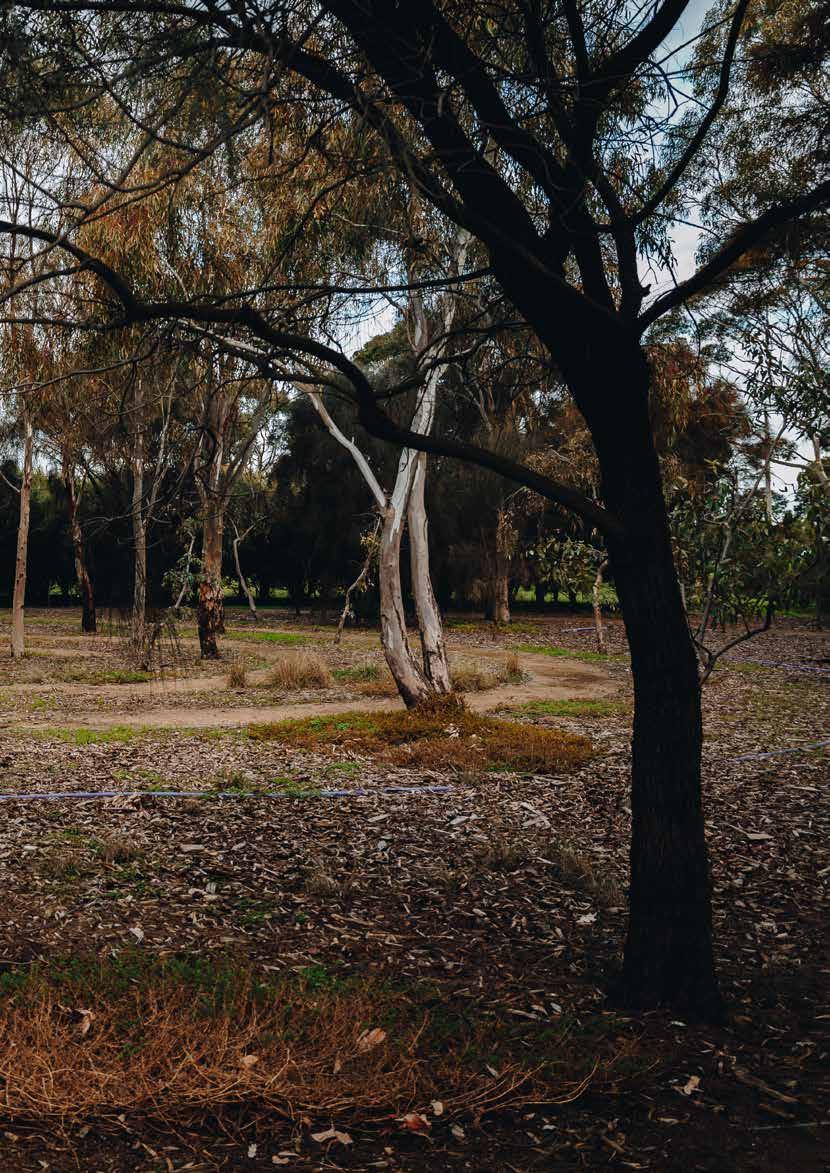
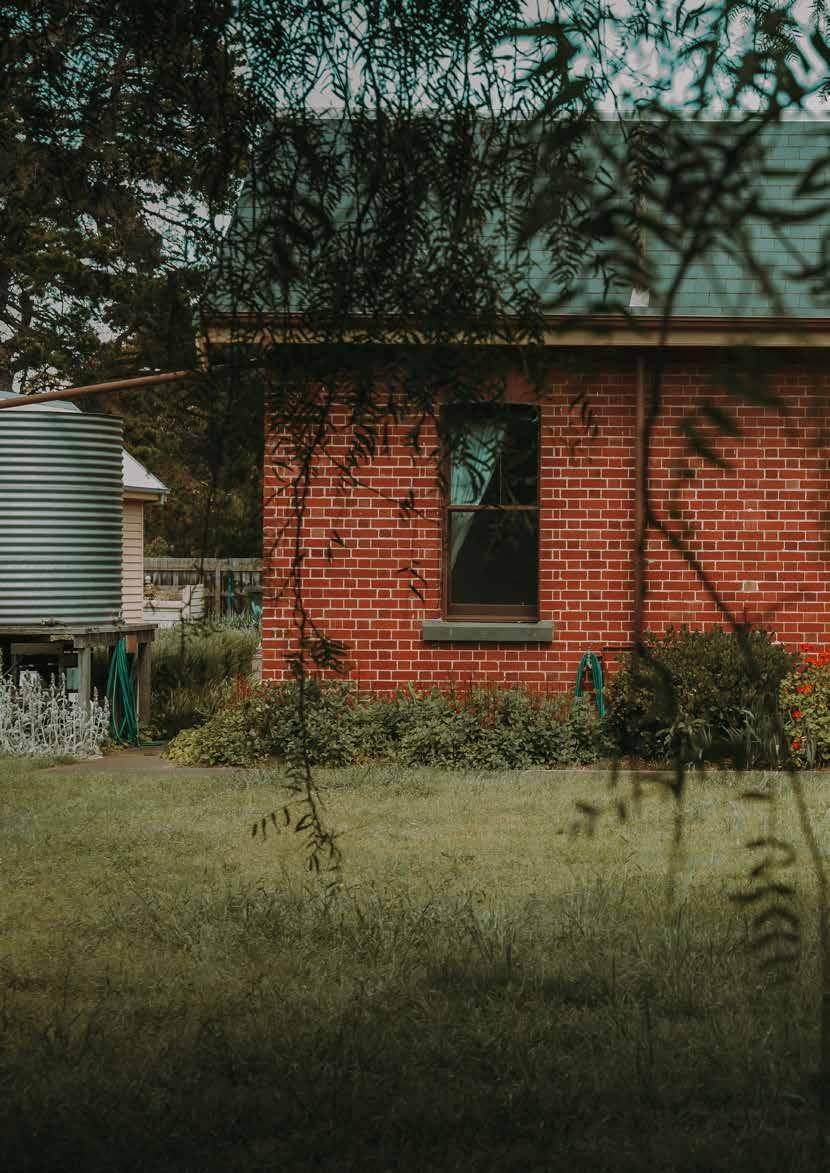
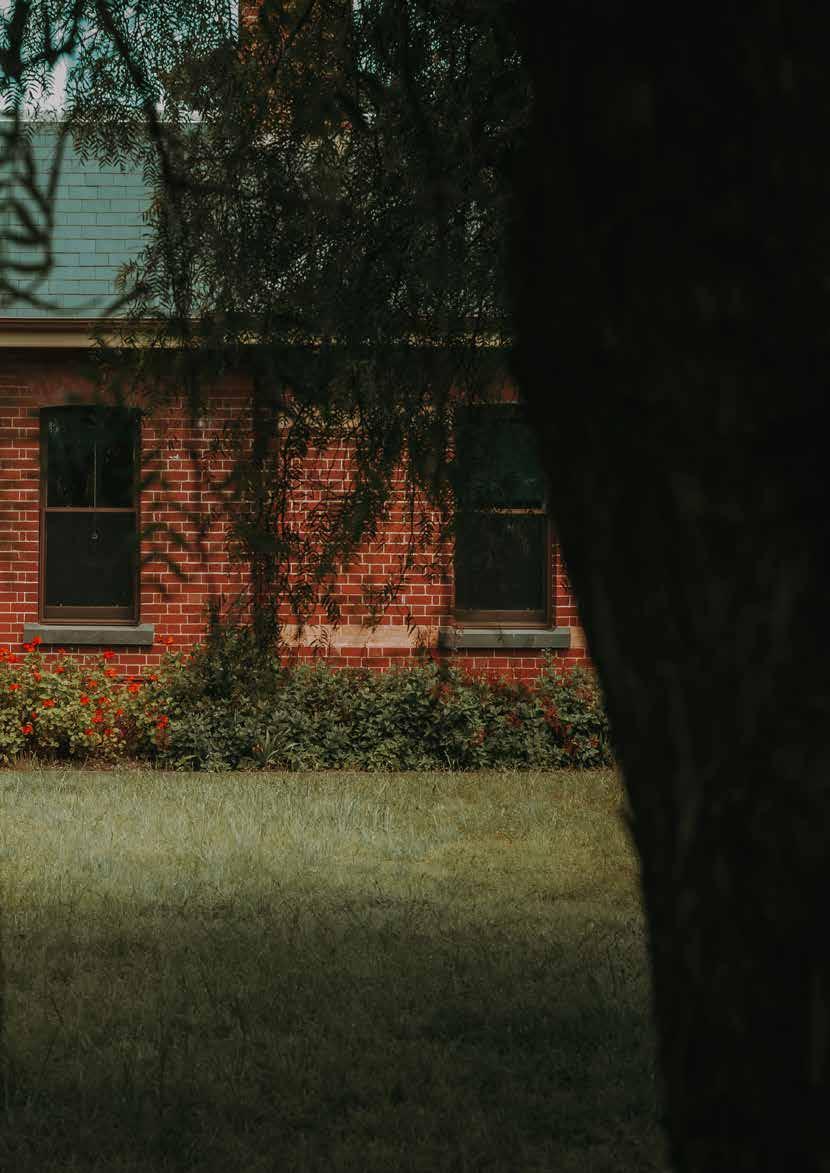
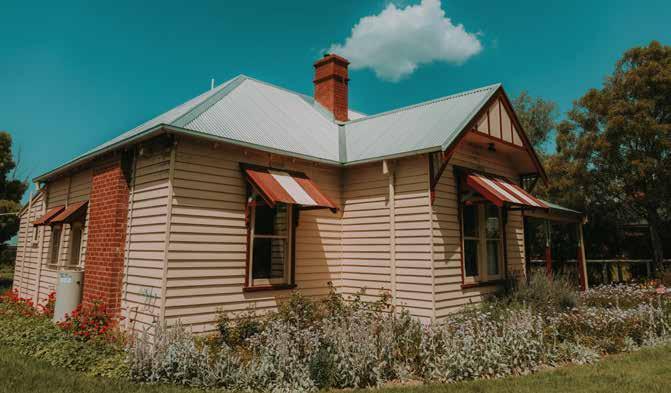
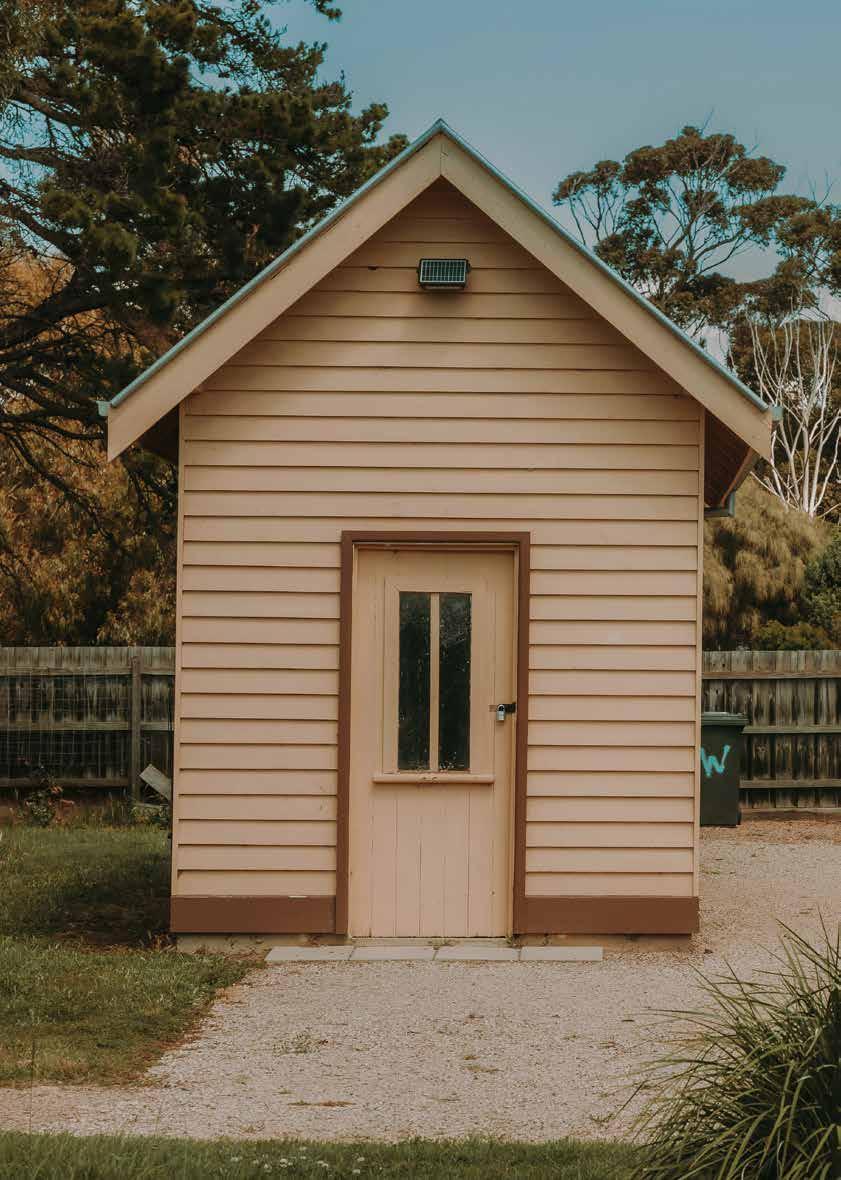
‘Dear Agnes ’ brings together two unique sites in Hobsons Bay — ‘A Forest for Australia’ by Agnes Denes at Greater Western Water, Altona Meadows, and Truganina Explosives Reserve, a significant heritage site, restored and nurtured by volunteers.
‘A Forest for Australia’ is a major land artwork by Agnes Denes, internationally recognised for her pioneering environmental practice. With ‘Dear Agnes’, Council sought to pay homage not only to the Forest itself, but to the gesture of care and environmental stewardship it represents. The title reflects the idea of a love letter to Denes — a thank-you for her vision, which continues to inspire contemporary art practice and environmental thought worldwide.
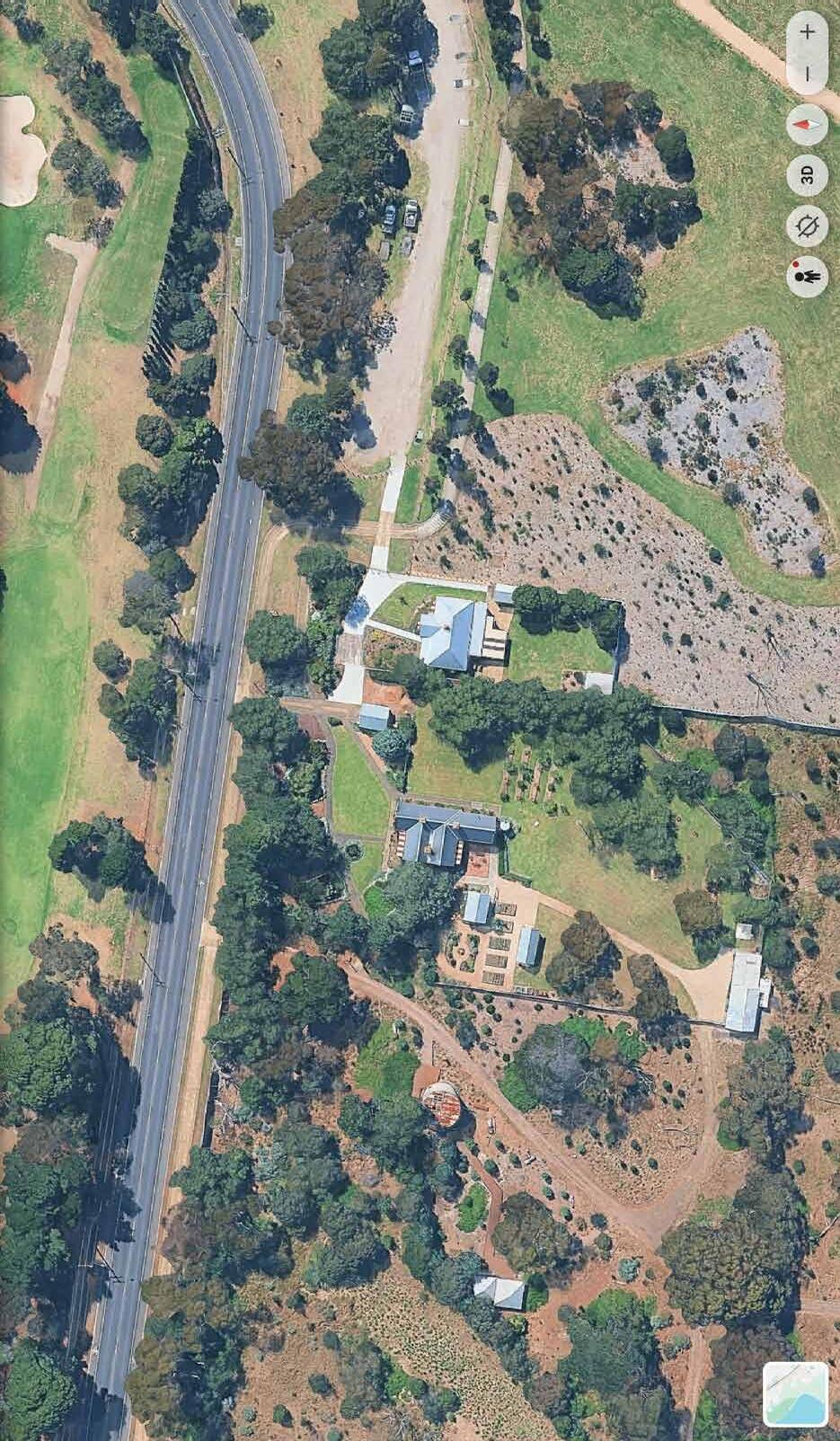
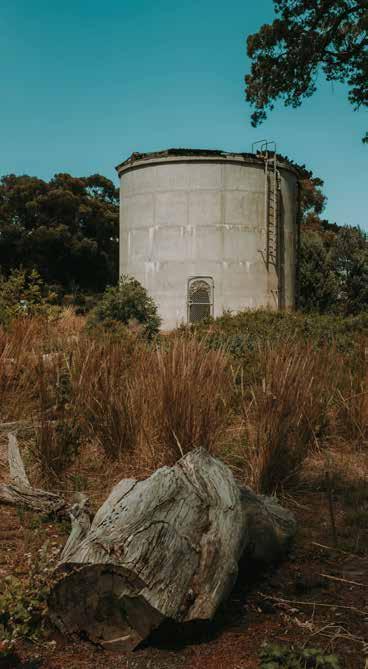
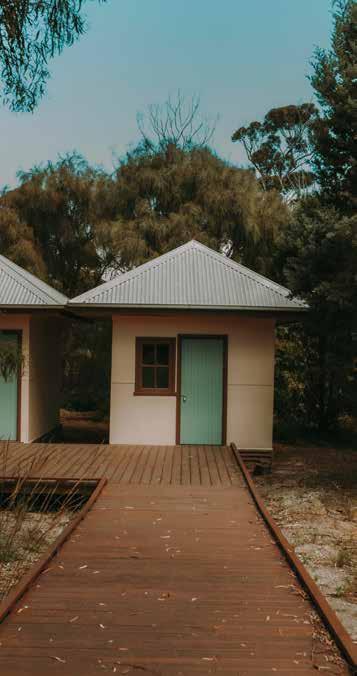
Hosted at Truganina Explosives Reserve, the exhibition invited artists to respond to both the legacy of Denes’ forest (situated 1km away) and the layered histories of Truganina — a former explosives site carrying industrial memories within its soils yet now re-imagined as a place of
heritage and renewal. Together, the sites reveal how landscapes shaped by history and industry can become catalysts for creativity and reflection.
Partnerships were vital. Greater Western Water worked with Hobsons Bay City Council to open ‘A Forest for Australia’ for artists and, for the first time, for public tours — a new chapter for our collaboration that will continue to grow. Deakin University and RMIT University supported the program by being part of the selection panel and through mentorship.
Set within a broader context of wetlands and coastal ecologies, ‘Dear Agnes’ underscores the balance between industry, history, and environment. For Hobsons Bay City Council, the project enhances Hobsons Bay’s position as a Creative City — fusing heritage, environment, and contemporary art in ways to ‘tell our stories’ in ways that resonate both locally and globally.
HobsonsBayArtsandCultureTeam
FOREWORD
Fiona Hillary, RMIT University
Katie Lee, Deakin University
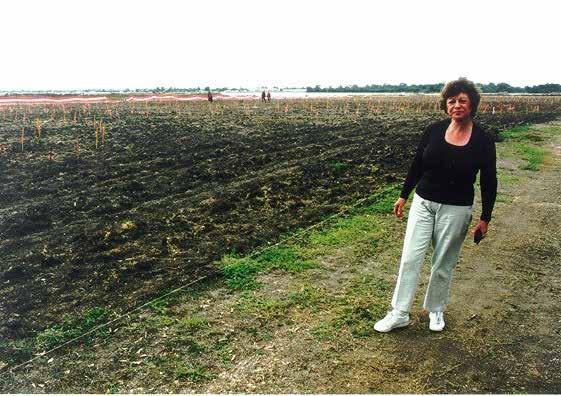
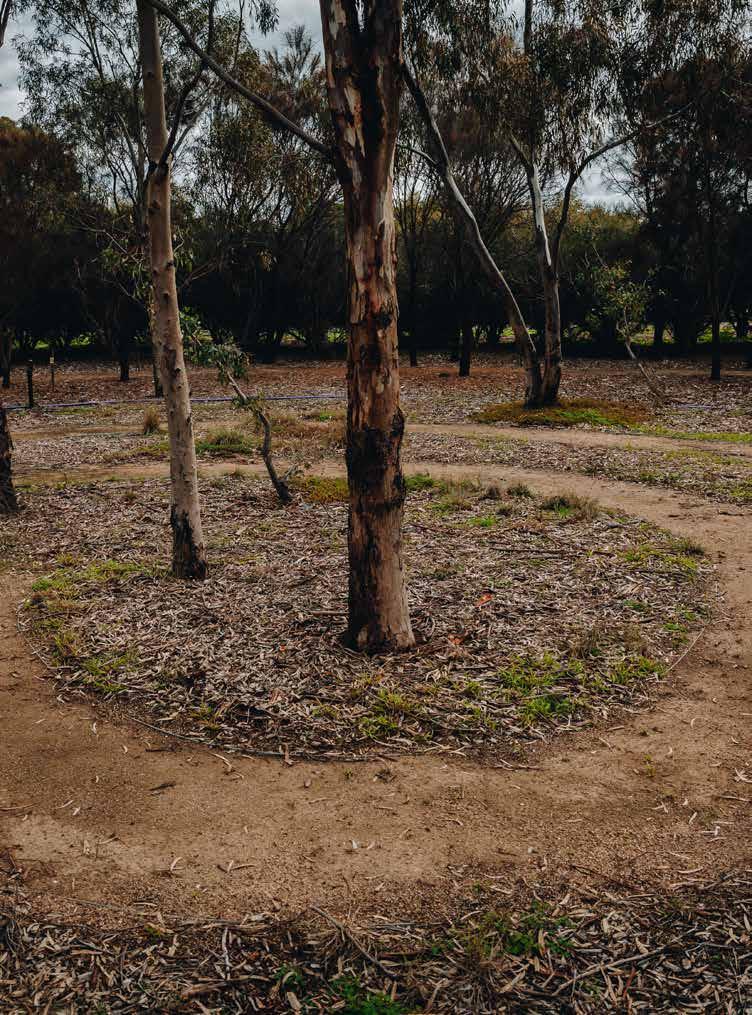
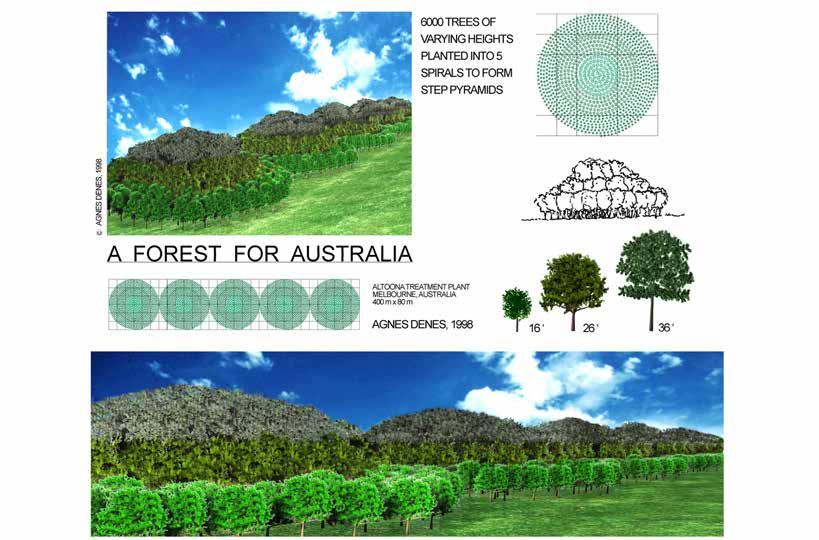
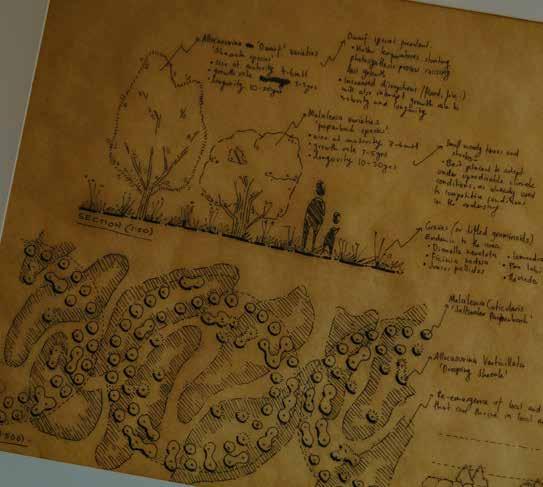
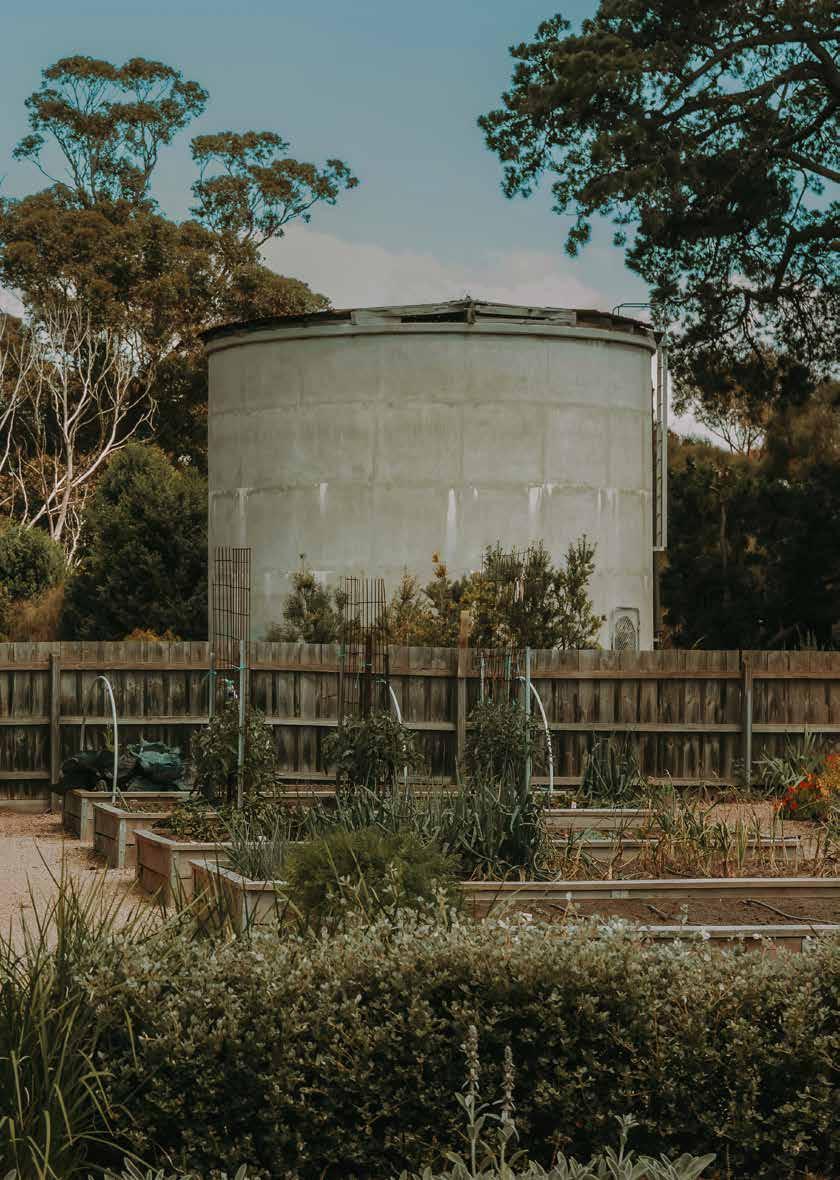
In 1998, internationally renowned environmental artist Agnes Denes created ‘A Forest for Australia’—an ambitious public artwork conceived as a living monument to ecological restoration and renewal. Intended as a forest of 6000 endangered tree species arranged in five spirals to form step pyramids when mature, this visionary work aimed to address Australia’s pressing environmental challenges of land erosion and desertification. Yet despite its profound public purpose, the forest has remained largely invisible, hidden behind the fence line of Greater Western Water’s Altona Treatment Plant, inaccessible to the very community it was created to serve.
The ‘Dear Agnes’ contemporary public art program emerged from a collective desire to honour Denes’ pioneering vision while addressing this paradox of public art made private. This triennial initiative, developed through the generous collaboration of Hobsons Bay City Council, Greater Western Water, Deakin University, and RMIT University, represents more than an exhibition—it is an act of cultural reclamation and artistic dialogue across time.
Over nine transformative days in March 2023, Truganina Explosives Reserve became a site of creative convergence. Twelve artists and collectives, mentored by teams from RMIT and Deakin Universities, developed site-responsive works that reimagined Denes’ forest and engaged deeply with the layered histories of Altona’s industrial landscape. From the reserve’s past as explosive storage to its present as
habitat for the endangered Altona Skipper Butterfly, each artwork navigated the complex relationship between human intervention and environmental stewardship.
This catalogue documents not merely an exhibition, but a community’s response to one artist’s environmental call to action. Through diverse mediums and methodologies—from physical installations to process-based community engagement and performance—these contemporary works extend Denes’ ecological vision into new territories of meaning and possibility.
In bringing ‘A Forest for Australia’ back into public consciousness, ‘Dear Agnes’ asks us to consider what it means to tend, to restore, and to reimagine our relationship with the landscapes we inhabit. The works gathered here offer twelve distinct answers to that question, each a letter of response to Agnes Denes’ enduring invitation to heal the world through art.
The forest may remain behind its fence, but its spirit—and its challenge—lives on in these pages and in the continued commitment of artists, institutions, and communities to make visible what has been hidden, to make accessible what has been remote, and to keep alive the radical potential of art to transform both place and perception.
FionaHillaryandKatieLee
‘DearAgnes’Contemporary PublicArtProgram
A primary figure among the concept-based artists who emerged in the 1960s and 1970s, Agnes Denes is internationally recognised as a pioneer of ecological and land art.
Often working on a monumental scale and in a wide range of mediums, Denes’s artistic practice is distinctive in terms of its aesthetics and engagement with socio-political ideas. Her work is immersed in science, philosophy, history, and psychology, addressing the challenges of global survival.
Read more about Agnes Denes and her work at agnesdenesstudio.com
ABOUT AGNES DENES
ABOUT ‘A FOREST FOR AUSTRALIA’
‘A Forest for Australia’ is a public artwork created in 1998 by one of the world’s leading environmental artists, New York-based Agnes Denes.
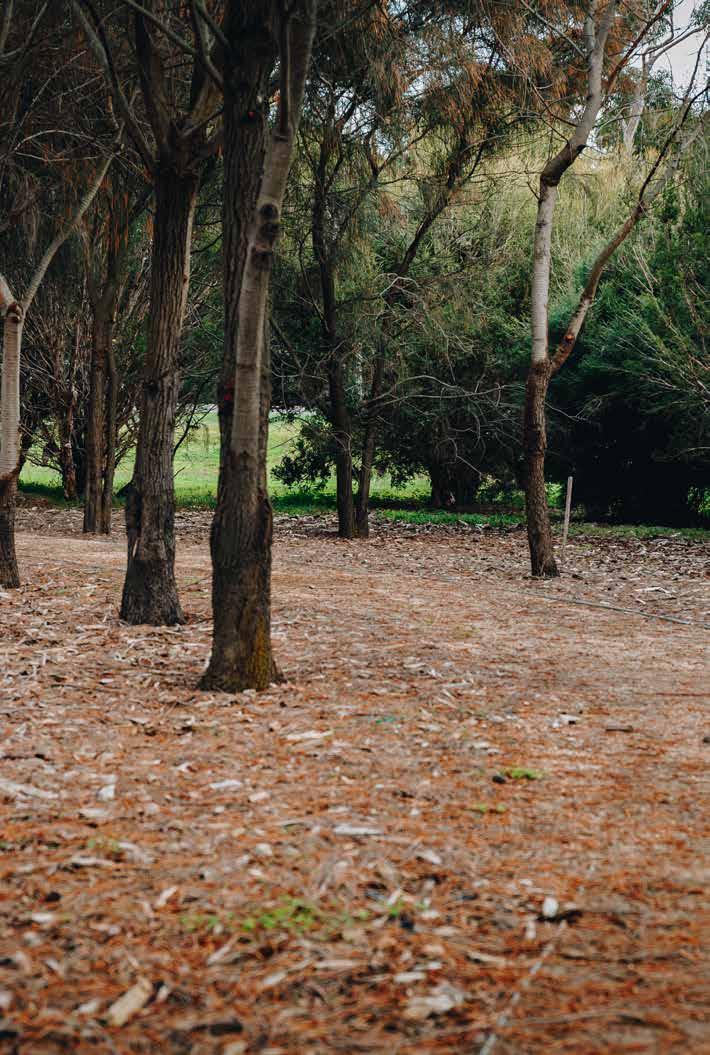
Originally commissioned by Australian artist Richard Thomas for his project ‘The Bridge’, the intention for ‘A Forest for Australia’ was to plant endangered species to create seed supply, however, the combination of soil type and the ravages of drought have seen the forest struggle to flourish. Currently, it is located behind the fence line of Greater Western Water’s Altona Treatment Plant and proximity to the treatment facility compromises public access.
The intention of the work was to plant a ‘forest’ of 6000 endangered tree species with varying heights at maturity. Planted into five spirals and creating a step pyramid for each spiral when the trees are full-grown, the tree plantation aimed to help alleviate serious land erosion and desertification threatening Australia.
The ‘Dear Agnes’ contemporary public art program pays homage to Agnes Denes by inviting artists to reimagine her work ‘A Forest for Australia’ and its surrounds.
“A well-conceived work can motivate people, visualise what lies beneath the surface, and influence how things are perceived. Artistic vision, image, and metaphor are powerful tools of communication that can become expressions of human values with profound impact on our consciousness.”
– Agnes Denes in conversation about A Forest for Australia and the transformational potential of art (1998)
James Price, Anillustratedguidetouncertainty,astoldtothetrees
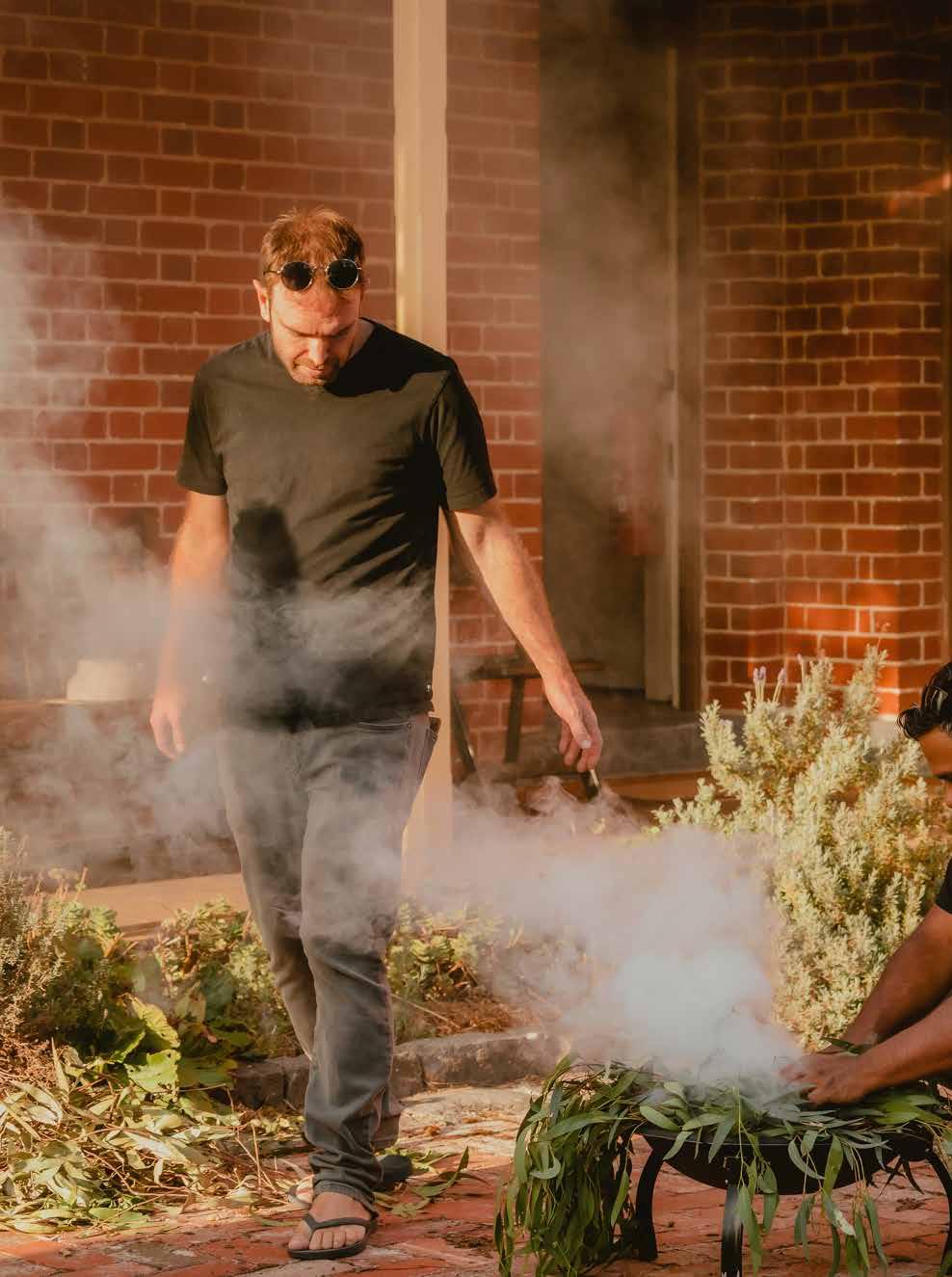
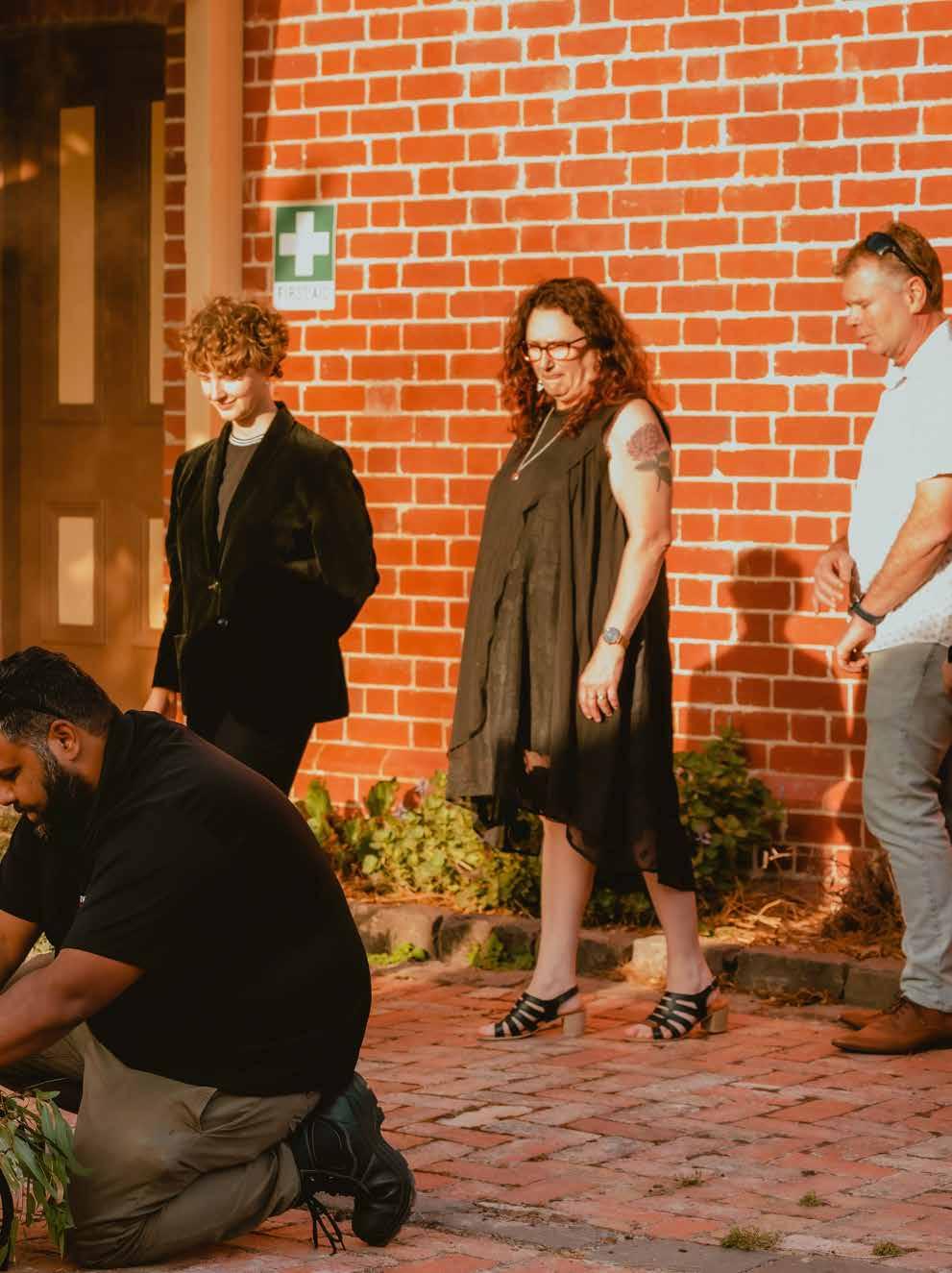
Smoking ceremony at launch of ‘Dear Agnes’ contemporary art program at Truganina Explosives Reserve, 2023
Artists: Natasha Gardos Ainslie Peverell
Meg Stewart-Snoad
NATASHA GARDOS
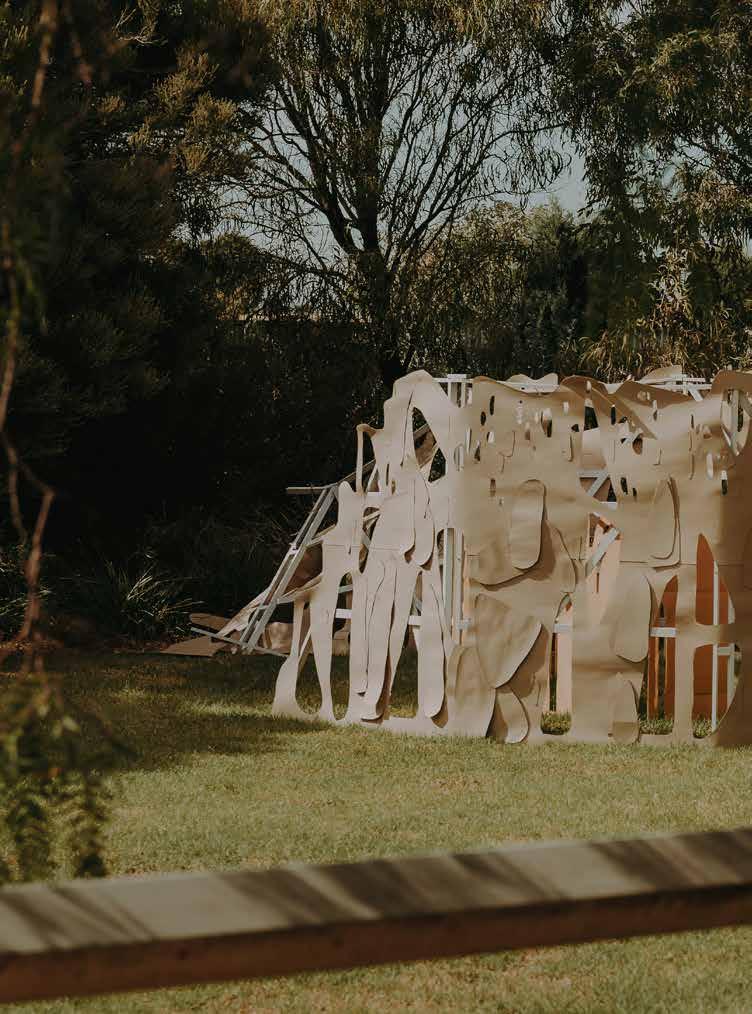
Always in the In-between Installation, 2023
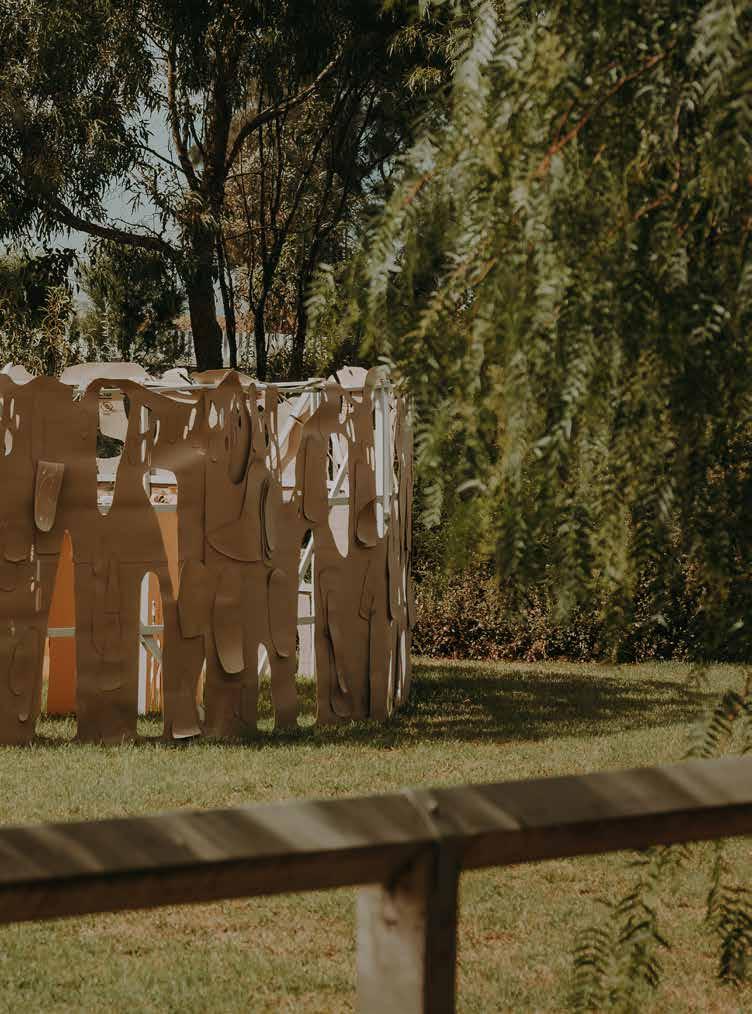
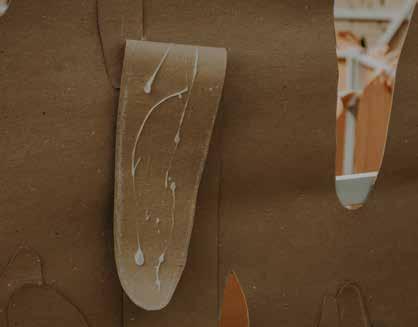
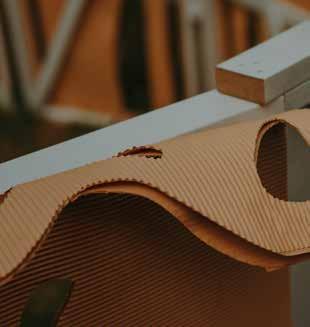
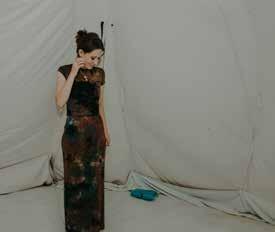
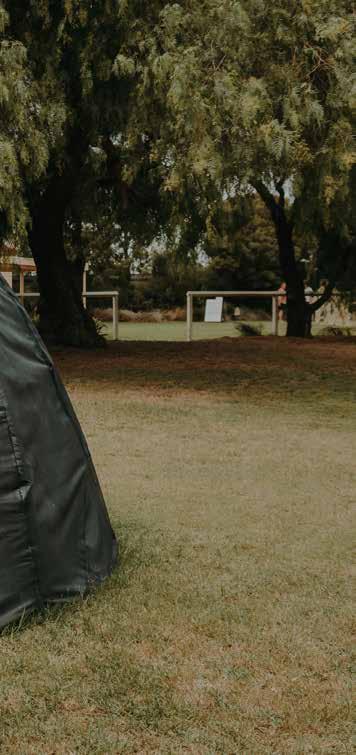
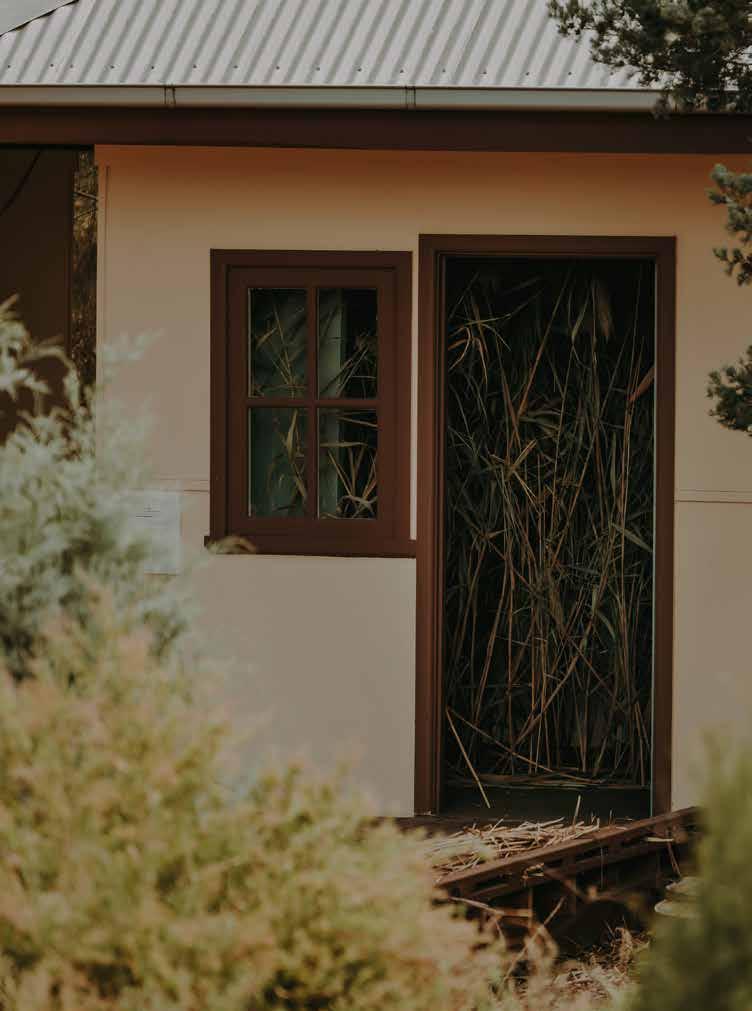
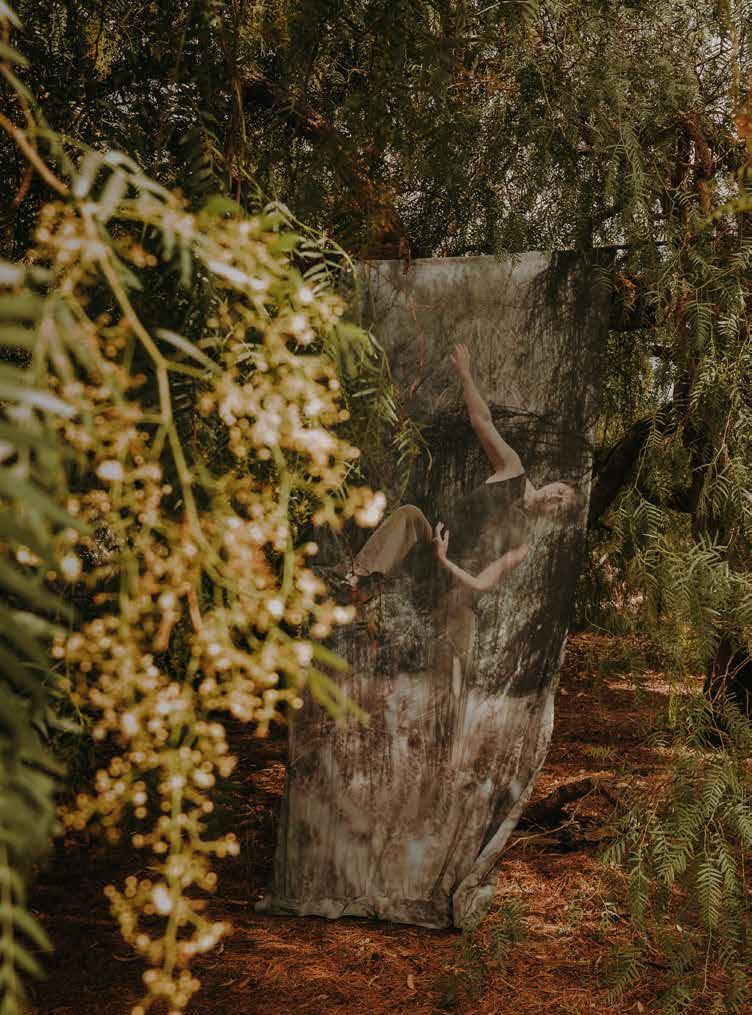
Witness the ruin and the beauty of ‘Always in the In-between’ as it succumbs to the elements at the Truganina Explosives Reserve. During the three weeks of the ‘Dear Agnes’ contemporary public art exhibition, these ghostly forms, which echo our spatial experience within Agnes’s spiral forest interiors, will slowly decay and take on the marks left by visitors.
We invite you to watch as the light shifts and changes. See the dappled shadows dance and the walls crumple. Leave a mark if you wish. Stay on the outside peering in. Or seek out a point of entry and become enveloped in the strange sculptural form that is ‘Always in the In-between’.
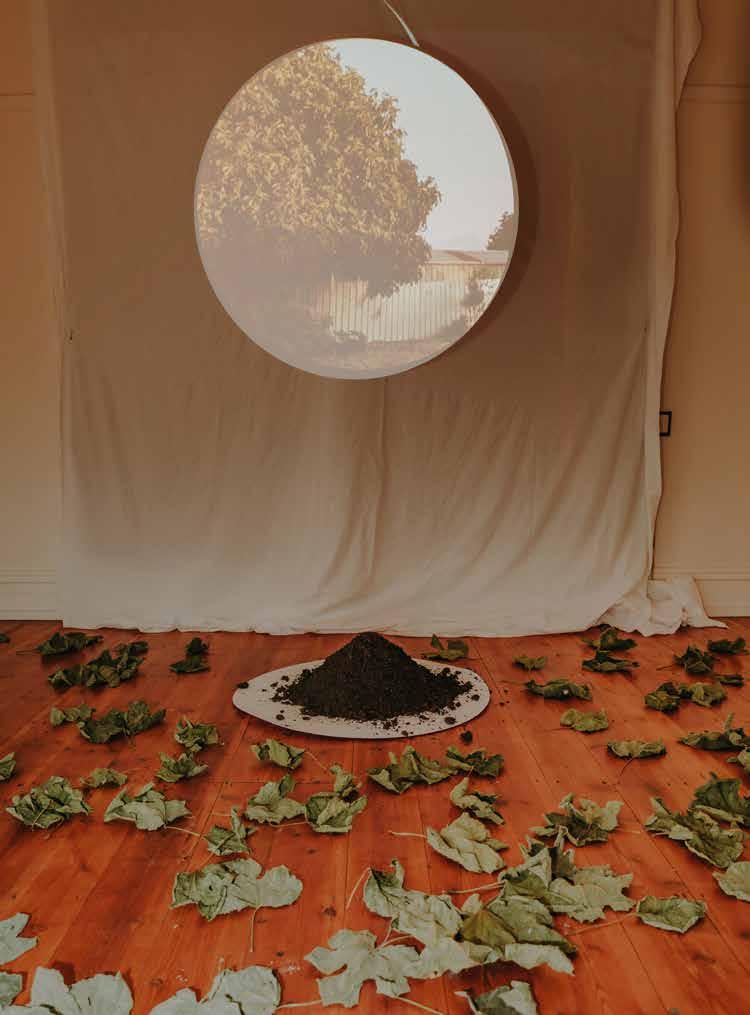
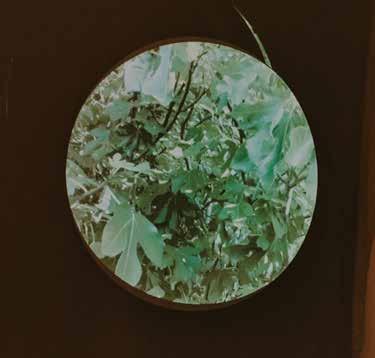
I grew up in this area, where ‘A Forest for Australia’ is located and site of Agnes Denes’ project and I have used it as a base to delve into personal narratives of place and memory, blending human experience with nature. A poetical look at the connection of a personal journey and the Ficus Carica (fig tree) that has spanned a lifetime. Subtle movements in nature evoke memories revolving around growth, death, birth and tragedy that ebb and flow as I move through different life stages. The installation invites you to experience various layers of a fleeting but complex relationship with one species of the natural world and its effects that are deeply ingrained in my story.
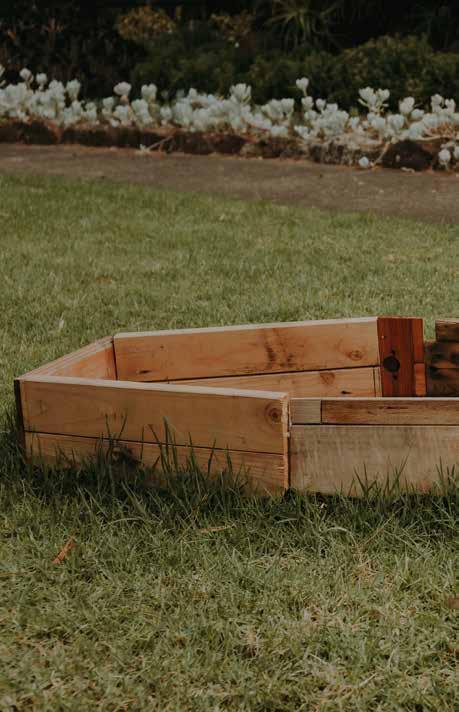
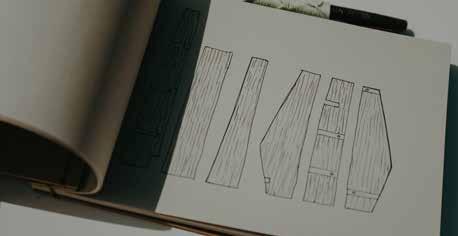
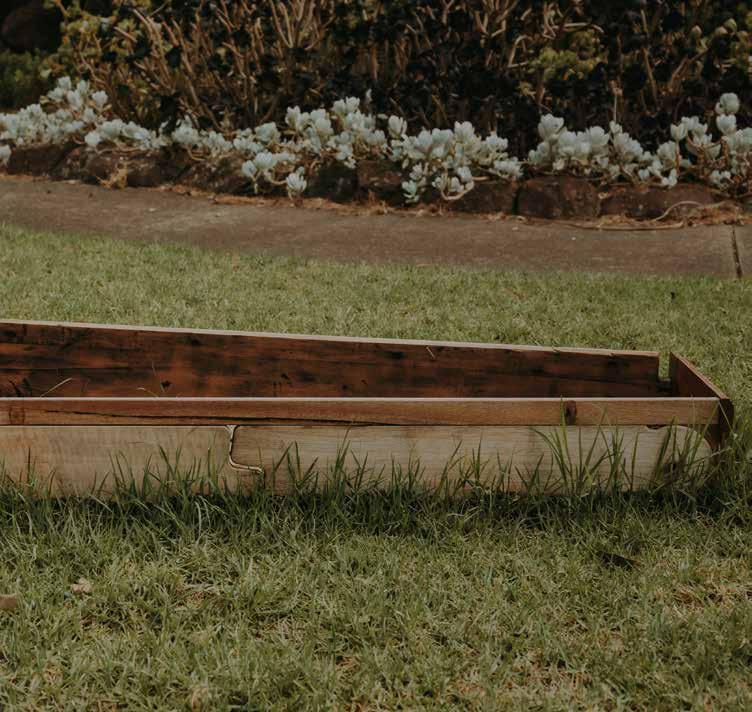
This project was born from a disagreement with the excessive felling of trees and deforestation. The intention when building this coffin was to be able to give recognition and pay tribute to each of the trees that are cut down many times for no specific purpose. Each piece of wood that constructs the coffin at some point was part of a tree, and now it has been thrown into the street as garbage.
If there is something that really represents the irony of human actions, it is the act of killing a tree, which is mainly what gives us life to create the container of something that is dead, a coffin.
Each piece of wood is unique, it has marks and scars, it has a story to tell. Each of them resists to die in vain. The vigil ceremony taken by the artist is an act of resistance, each of these pieces were rescued to talk. It is transcendental to take the wood to the ground, to adapt it by removing paints or lacquers that at some point prevented it from following its natural cycle… to take them to their place of origin and return them to where they belonged, the earth, and finally provide them with the natural destiny they deserve.
@the_future_ana
AUTUMN TANSEY
Deconstructed Labyrinth in 9 Pieces
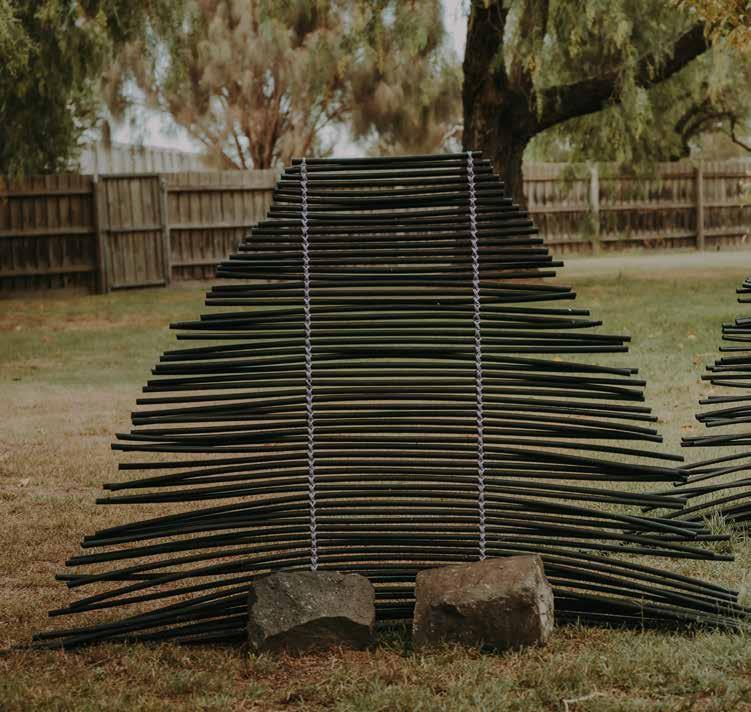
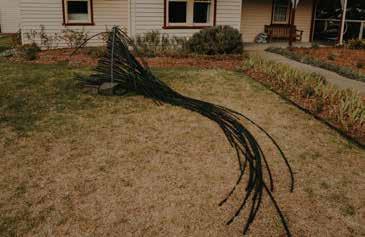
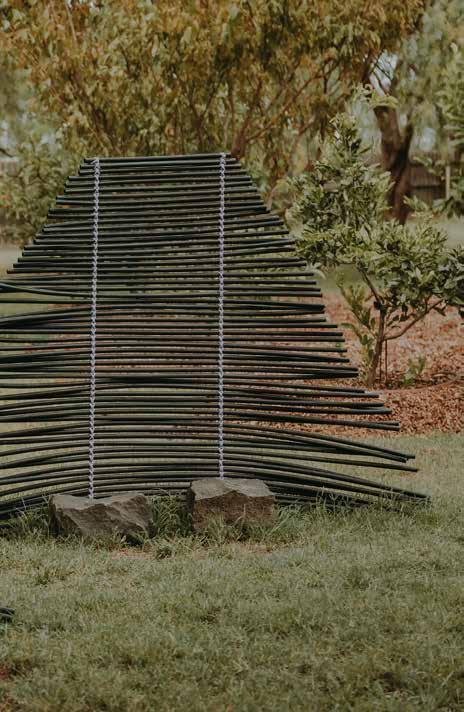
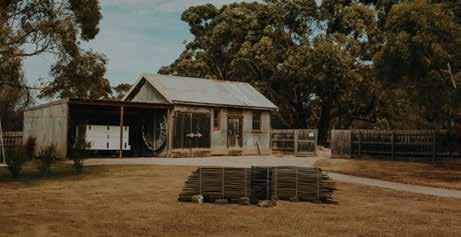
Recycledpolypipe,cotton,steel, bluestone, 2023
Agnes Denes planted mathematical forests ‘to blend human intellect with the majesty of nature.’ Installed 25 years ago on a water treatment site, her spirals have disappeared, and any clear pathways have long since faded. What remains are markers of a spiral that now takes a different turn.
‘Deconstructed Labyrinth in 9 Pieces’ is an invitation to actively participate in moving towards a ‘centre’ that is off kilter. The intensity of the planet in crisis can feel overwhelming and there are many different experiences and emotions surrounding the multi-faceted issues we all face. Drought, floods, irrigation hose, life rafts; where the earth is falling away and falling apart, so does our path.
Moving through and around the remnants of meandering pathways is an opportunity for deep listening to our environment.
And while reflecting on environmental concerns as does ‘A Forest for Australia’, nine sculptures signify a deconstructed labyrinth that was, is, and can, point us to the path when we are not sure of the way.
autumntansey.com
CALEB HARDY
JESS PHILLIPS
Recordings of ‘Viewer’
Tracingpaper,graphite,mixedmedia 2023
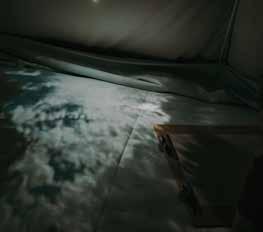
By harkening back to analogue forms of technology it is often found that in there lies the possibility of solutions to modern problems such as, ‘How do we record/ make records of a landscape whilst being conscience of our responsibilities to site preservation?’ or ‘How do you circumvent obstacles that present themselves in utilising high quality digital equipment in a natural setting?’. Perhaps you don’t. Through the means of harnessing primitive devices and their foundational science behind them, a dynamic relationship between technology and the natural world can emerge that doesn’t seek to dominate or impact its surroundings.
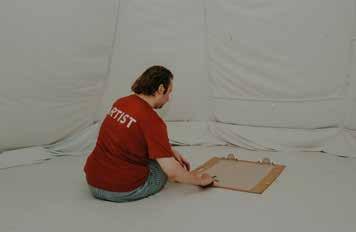
As part of the work Caleb Hardy performs a common practice of utilising Jess Phillip’s work ‘Viewer’—a large camera obscura, as a tool in which some artists sort out to trace landscapes. Throughout art history the assistance of using various types of tracing mechanisms has been fraught with controversy as to what is considered a tool to learn and enhance qualities of realism against other opinions to the effect of it being viewed as ‘cheating’ and what is considered by some to be ‘skillful’ is to record with the naked eye. Caleb wanted to test these frequent points of discourse by using tracing as the primary focal point in producing a work. By taking recordings Caleb generates a layering of tracings from inside the camera obscura that when compiled, transform a 2D dimensional view into a 3D dimensional recording to show the progression of layering in real time and social media, in turn creating a dialogue between digital and analogue recording devices, their advantages and shortcomings.
@dressed_to9s
CHISPA FLASKAS
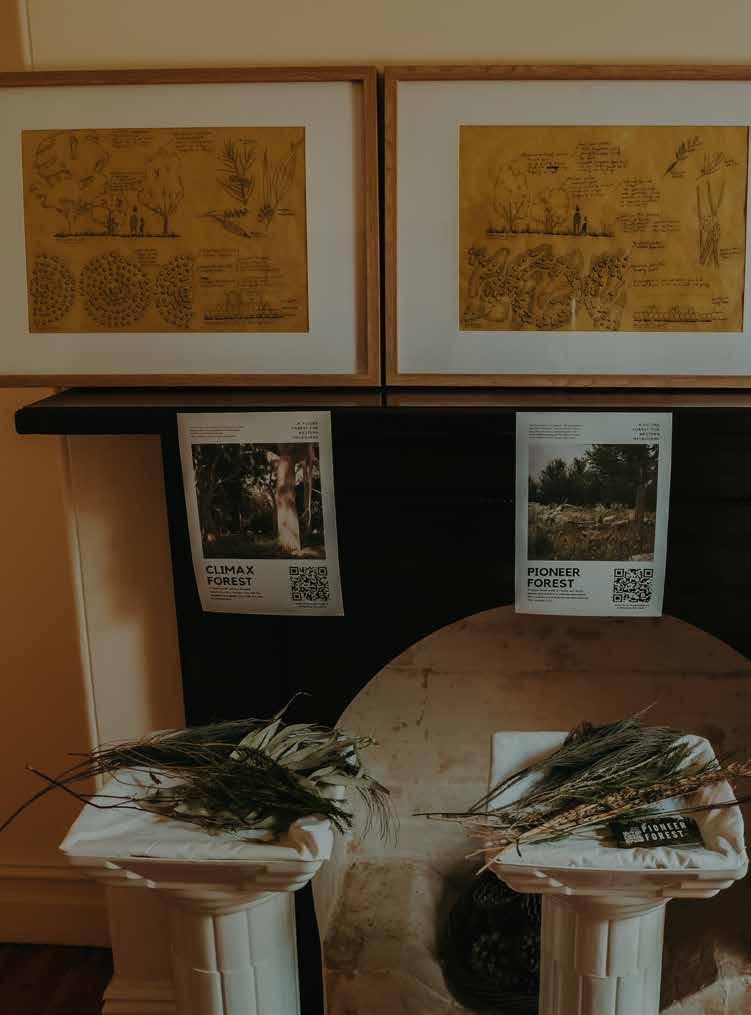
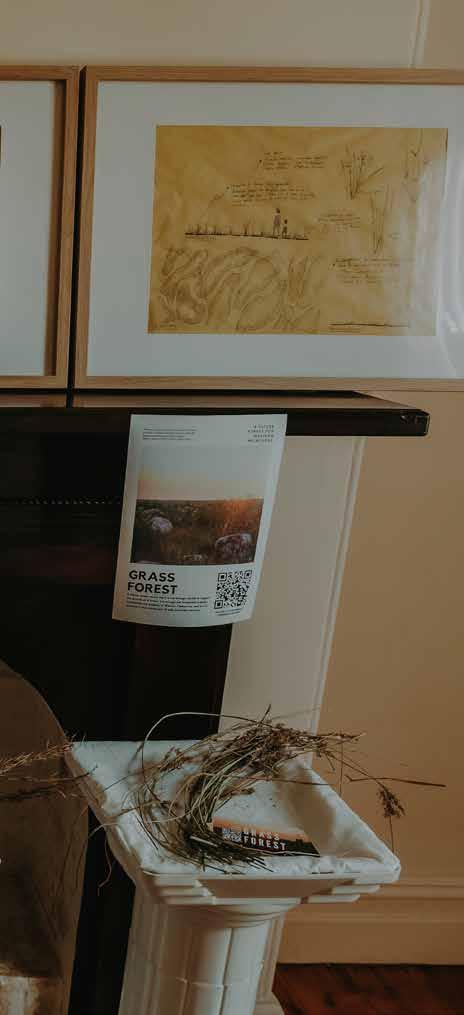
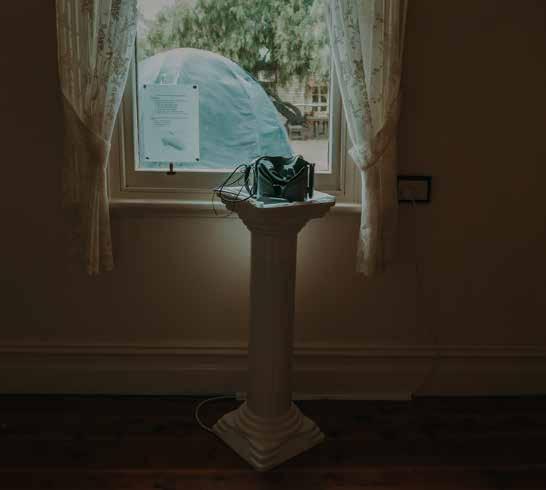
A Future Forest for Western Melbourne Digitalart(virtualreality),2023
This project speculates on the future of Western Melbourne’s natural landscapes and plant ecologies, and how they are likely to adapt to increased climate unpredictability. It is theorised that Western Melbourne will experience an average temperature increase of 0.6-1.3 degrees and a decrease in average rain fall in the next 10-20 years (CSIRO, 2012). This will place both the human and non-human communities under increased pressure and make the region more vulnerable to climate related illnesses. In this future reality, our evolutionary human reliance on ‘natural’ environments and iconography to stimulate health and well-being will be tested, as plant species increasingly become extinct, and the quintessential tree-lined landscapes begin to disappear.
This artwork offers participants three different virtual realities for the future of Agnes Denes site specific artwork, ‘A Forest for Australia’. Mirroring Denes’ concerns for land stability and ecological longevity, these realities predict what a future ‘forest’ may look like for Western Melbourne in the next 20-30 years.
Using the QR codes (via your phones) or virtual goggles, you are invited to investigate these theorised landscapes.
cflaskas.wixsite.com/home
A Future Forest for Western Melbourne 2023
Artist: ChispaFlaskas
DAVID MURPHY
Dear Agnes…..Love, David
Video (7 minutes), 2023
Composer:ErikGriswold
Systemdesign:PaulLim
Drone video: Leo Dale
Colour/soundediting:GraemeLeak
Dear Agnes,
It was a rare gift to be asked to respond to your work, “A Forest for Australia”, with my own work. I love those five huge spirals you planted (whirlpools of trees), and that you made an artwork and a seed bank for the future in one fell swoop.
I downloaded Red Gum’s genome and turned the chloroplast genes that it uses to suck carbon from the atmosphere into a scrolling sequence of colours for The Genie. I filmed it one dawn amongst the Red Gums in your artwork. It’s a portrait of DNA, three billion times larger than life, formed on a cylindrical array of Fibonacci numbers; the Genie connects math’s most irrational number to the geometry of DNA. Erik Griswold generated the music from the same data set; the twenty colours are from those treesgenetic data as an art medium.
I also contributed to The Bridge: Construction in Process IV. I see the “pure language” of maths you spoke of back then throughout your drawings and sculptures – it makes me smile. My ideas and dreams speak a similar language. Thank you for your work. You are mighty!
‘Fens Laboratories’ is a live artwork. It responds to Agnes Denes’s work, ‘A Forest for Australia’, planted nearby in 1998. A fen is ‘An area of wetland vegetation that receives its water by both rainfall and ground water flow, and in which the summer water table is at or below the surface of the sediment.’ (Oxford Reference, 2023). Often seen as unremarkable, the Truganina swamp, Cheetham Wetlands and their saltmarshes are actually exquisite. They offer fragments of what has been cared for by the Yaluk-ut Weelam clan of the Boon Wurrung Nation for millennia and continue to offer hope.
In 2023, ‘Overlapping Collective’ made art walks into these special watery places. They have come to feel connected to them, paying attention and learning from the others: plants, animals, landforms, water and weather.
‘Overlapping Collective’ invites you to take time in nature, feeling it with all your senses and respond to it through drawing, writing, photography and making. Explore how you might give something back to the land that cares for you.
Annee Miron @anneemiron
Forest Keegel forestkeegel.com/dear-agnes
JAMES PRICE
An illustrated guide to uncertainty, as told to the trees.
Syntheticpolymer,plywood,concrete, 2023
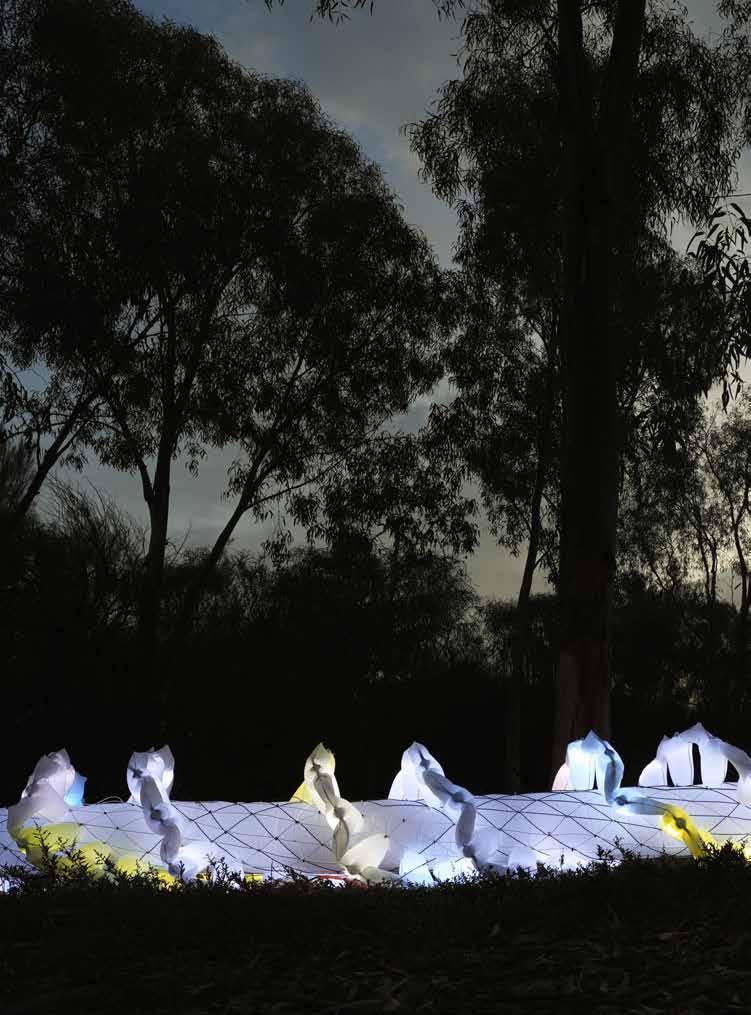
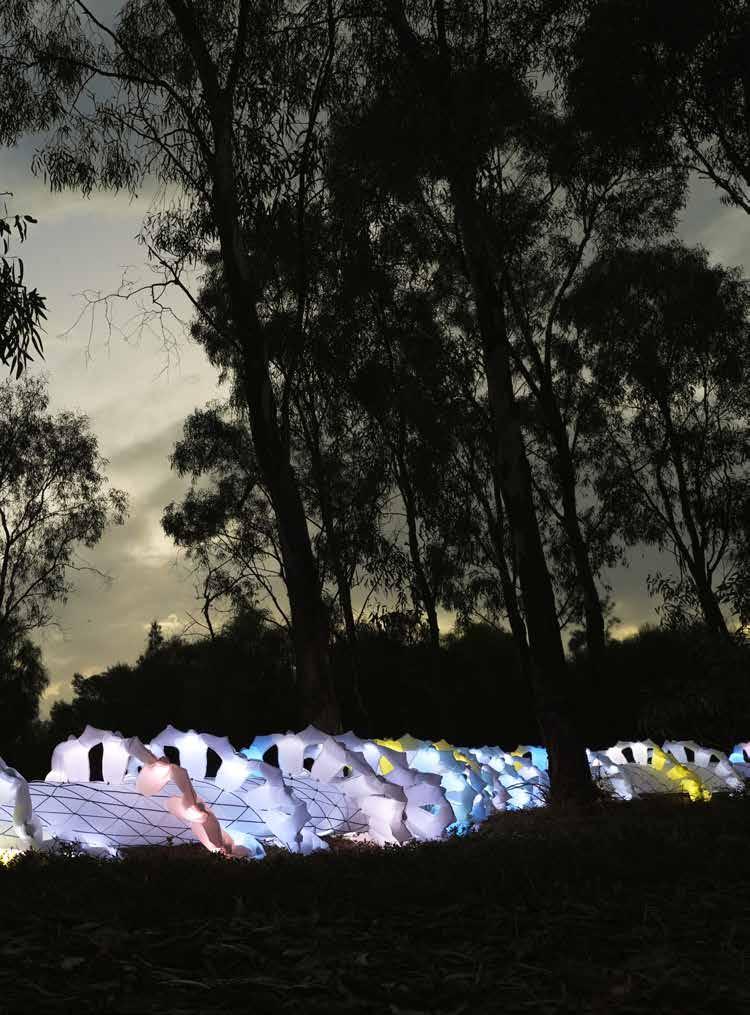
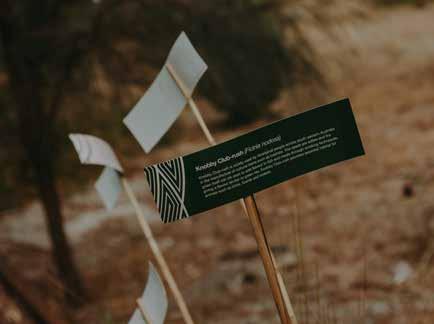
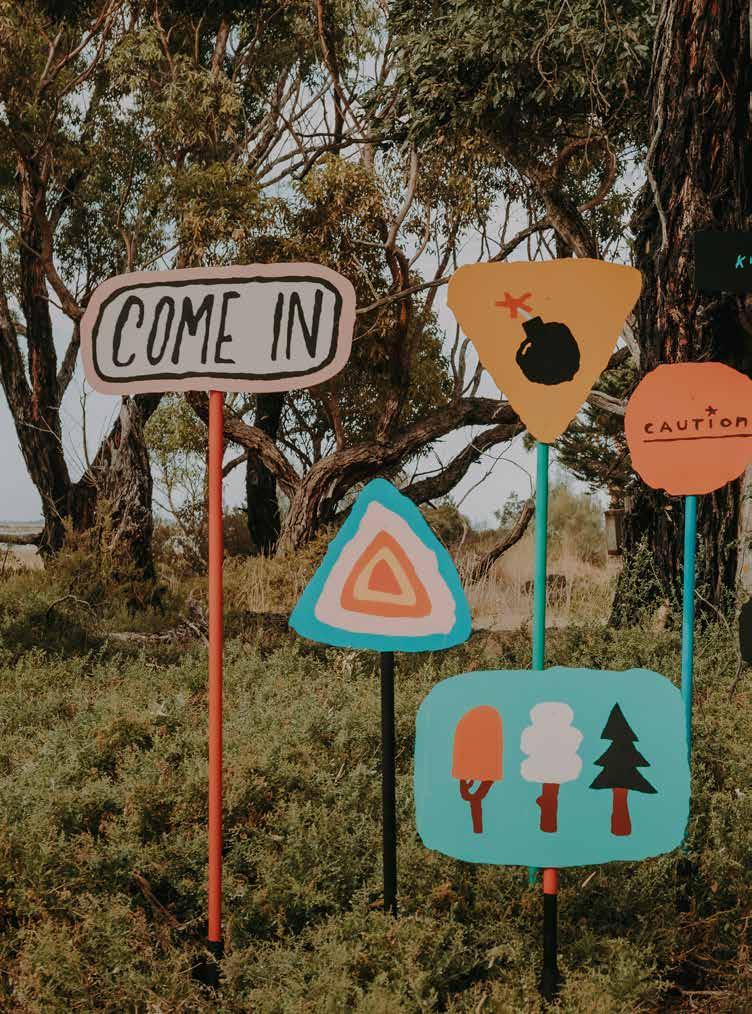
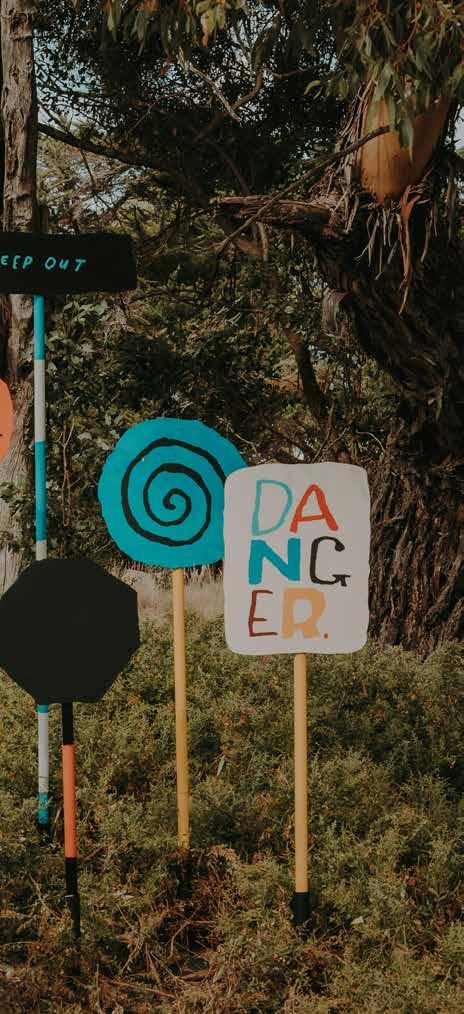
‘An illustrated guide to uncertainty, as told to the trees.’ is an ephemeral sculptural installation work. The work consists of a series of 9 signs that tell the story of the Truganina Explosive Reserve, and its surrounds.
The 9 signs explore the evolving human interruptions of this site throughout its post-colonial history. The work collapses that history into our current moment in order to excavate the human intervention of this space and highlight its chaotic evolution.
The signs are clearly handmade, and hand painted. The use of the human hand in creating the signs exposes the veil that authority uses in claiming agency over space. The work makes it clear that any authority is, after all, only people - people whose opinions, like the wind, will change.
theartofjamesprice.com
DR MICHELLE COX
Rare Banksia Circles
Sculpturalinstallationfrommixedmedia,2023
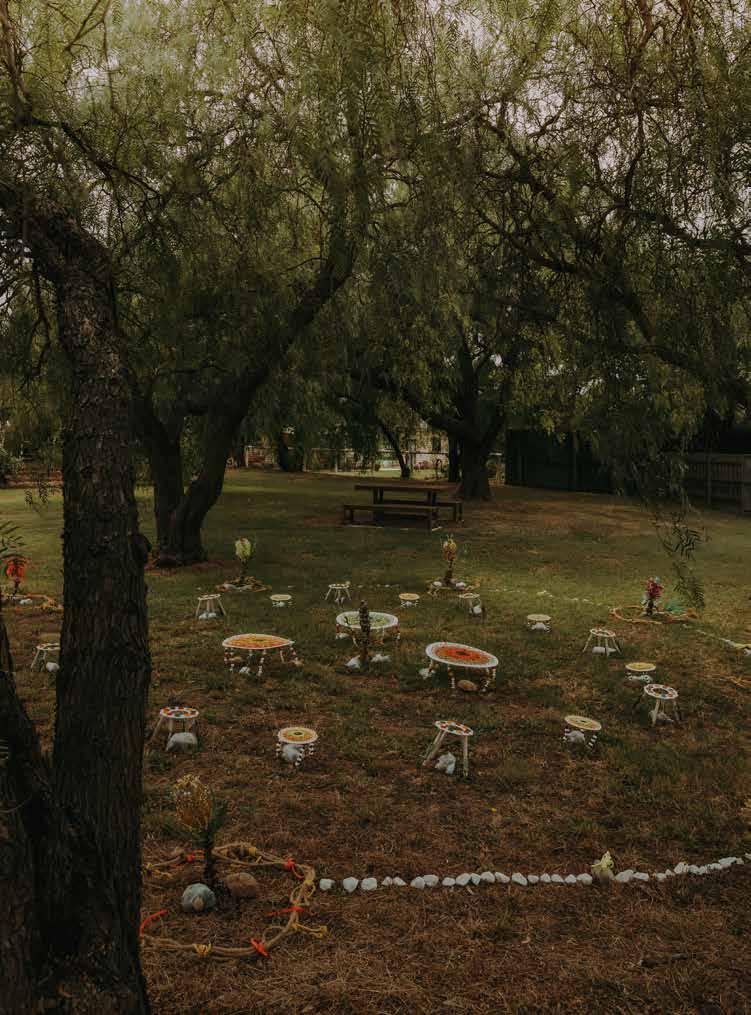
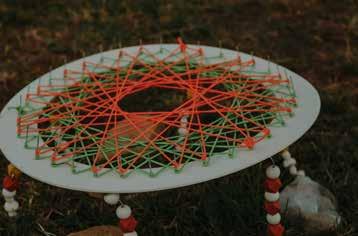
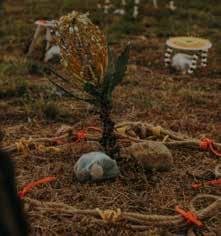
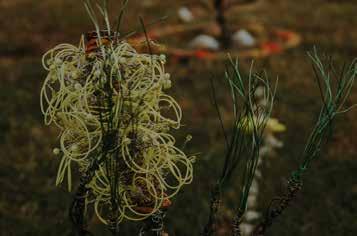
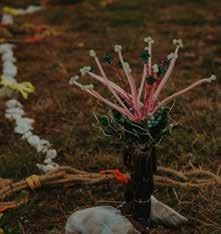
I am inspired by the circles and spirals in the work of Agnes Denes, ‘A Forest for Australia’ (1998), which incorporated endangered, Australian plant species. My sculptural installation pays homage to rare Australian Banksia species by creating sculptural plant and floral forms from mixed media including beads and wire. I am instinctively drawn to these materials, which are historically feminine, stitched together with wire. Each flower in the installation has been created instinctively and uniquely, with a playful flair.
These sculptural installations have a childlike joy and humour, which engages viewers. The installation has a central focus of geometrical spirals using mathematical curve stitching in a range
of sizes, interspersed with symbolic floral motifs. As mathematics underlies nature, the central feature springs forth the floral pieces, which circle the outer realms of the installation. The installation draws attention to some endangered Banksia species such as Banksia Vincentia, Matchstick Banksia, Good’s Banksia, Saw-tooth Banksia, Pine Banksia and Feather Leaved Banksia. Interpretations of the unusual Tennis-ball Banksia, Red-swamp Banksia and Hairpin Banksia have also been featured. I have always been fascinated by geometry, symmetry and mathematics have always fascinated Michelle and the form, patterns and colours of the flowers have inspired these sculptures.
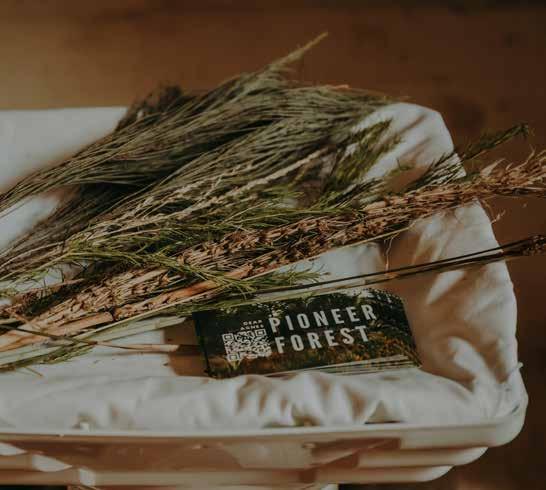
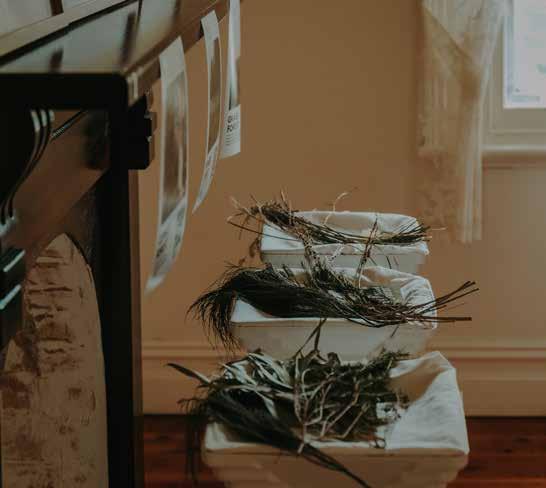
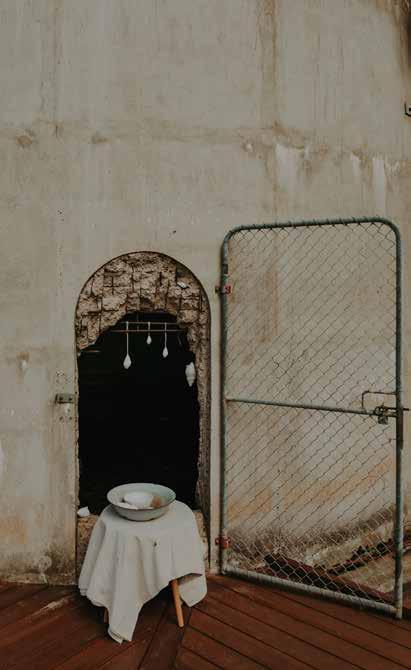
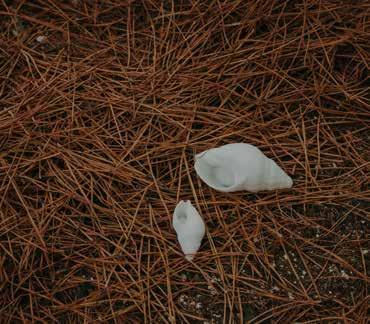
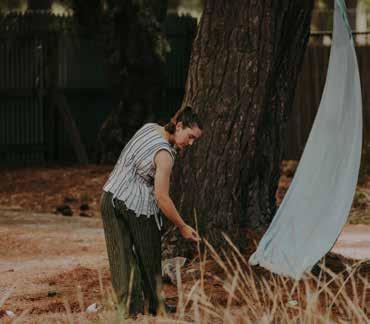
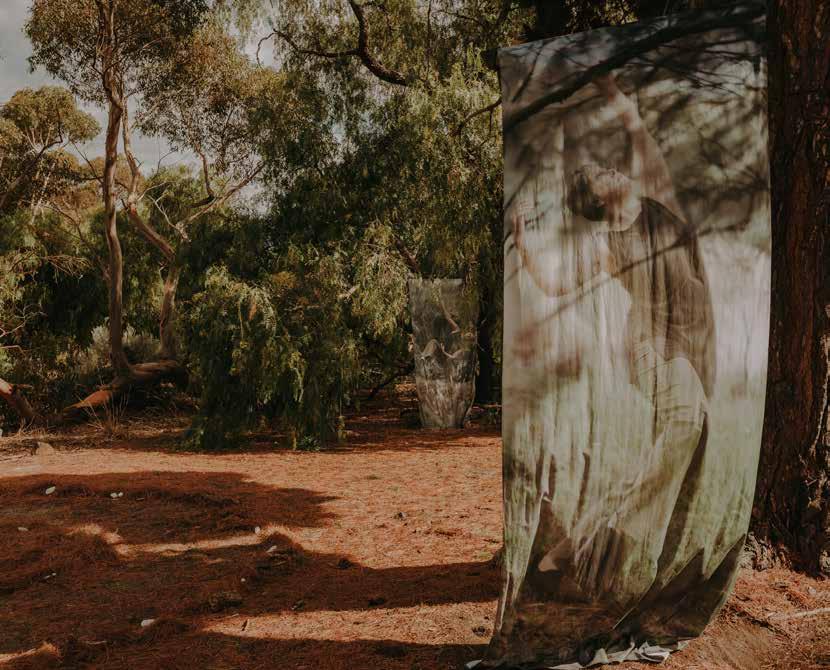
As the climate changes, salt rises towards the earth’s surface, signalled by the salt bush appearing in Agnes Denes’s Forest. Inter-weaving somatic memory and the emerging moment, PIPS presents an embodied dialogue between Agnes Denes ‘A Forest for Australia’ and the Truganina Explosive Reserve. Ancient seabeds, encroaching salt, she-oaks, salt paper barks, red gums, bird calls and remanent seashells, inspire the performance, creating a conversation through time, place and space. Sound and movement provide the audience with the opportunity to ‘tune in’, extending and attending to their senses in the natural surroundings by seeing, hearing, and perceiving the environmental setting of Truganina Explosive Reserve and its link to the ‘A Forest for Australia’ site. The installation of sound, shells, spiral and banners serve as artefacts of the performance. By carrying the conversation beyond the performers’ presence, these artefacts open space and place to visitors, allowing the dialogue to continue moving and developing.
PIPS (Performance in Public Space) is Catherine Magill and Vivienne Tate. The duo creates collages of sound and movement, text, and site responsive work.
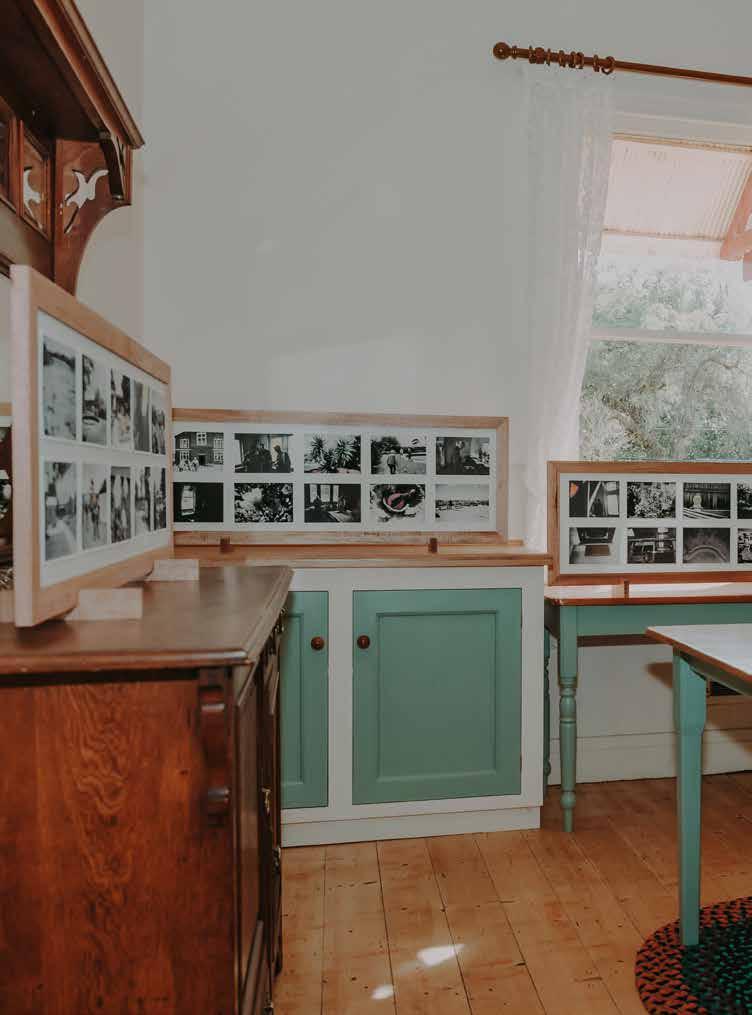
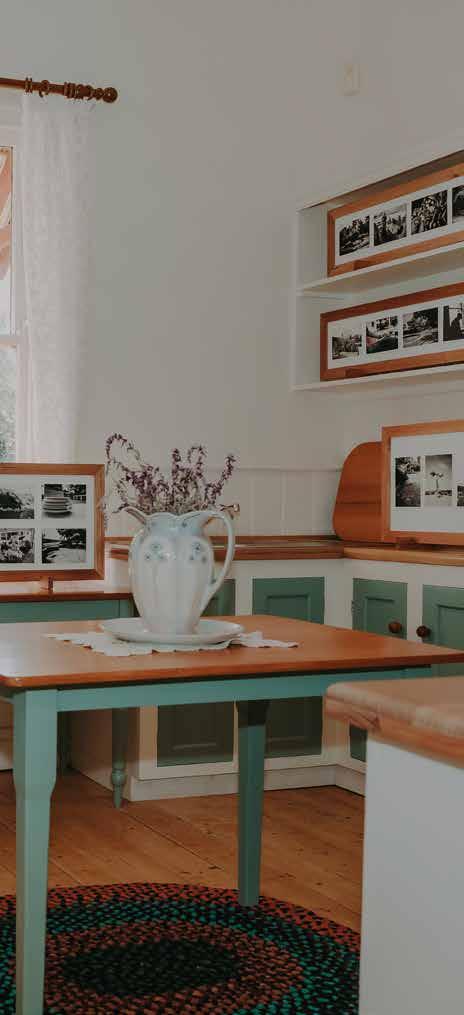
A series of 93 colourised black andwhitephotographs,2023
This work acknowledges and brings together Truganina Explosive Reserve Protective Society (TERPS) volunteers who repair, remediate, and maintain the Truganina Explosives Site and the Newport Rail Works. They have recorded their impressions of places, people and actions which represent hospitality, welcome and care on black and white disposable film cameras. The photographs have been colourised to bring focus to aspects of the photographs.
‘A Forest for Australia’ was planted with Indigenous species that were not endemic to the local area, and because of this, along with insufficient resourcing of maintenance and a drought of nine years many of the trees failed to thrive. People too, over time, relocate to places and this attention to fostering and care while they take root in new communities has an impact on their wellbeing and their ability to thrive. Key to successful adaption to a new place is hospitality and nurturing. These elements stood out to me when I observed and met the volunteers responsible for renewing and restoring the land and buildings at the Truganina Explosives Reserve. I was struck by how welcomed I was, and I witnessed simple considered acts of care in the restoration of the buildings and the grounds.
As a socially engaged artist Victoria Vyvyan focuses on giving voice to the concerns and experiences of the communities that she works with through art making in a range of mediums and approaches. Her research explores the process of participatory art within collectives from a queer feminist perspective.
soupcollective.org
ACKNOWLEDGEMENTS
With thanks to the following individuals and organisations for their support and contributions:
Hobsons Bay City Council
Tania Blackwell, Caitlin Holden, Mena Cassetta, Stella Kinsella, Max Hayward, Heather Van Heerwaarden, Andrew Webster, Janet Dawes, Events and Conservation Teams, Venue Officers
Deakin University
David Cross, Cameron Bishop, Katie Lee
RMIT University
Heather Hesterman, Fiona Hillary
Greater Western Water, Altona Meadows
Jessica Jury, Joseph Philips
Truganina Explosives Reserve Preservation Society
Volunteers
Hobsons Bay Wetlands Centre
Volunteers
Hobsons Bay Men’s Shed Volunteers
Technical Support
David Murphy, Richard Thomas
Photography & Videography
Matto Lucas
Graphic Design
Megan Slattery
Social Media
Rachel Morley
All exhibiting artists, workshop hosts, and performers
‘Dear Agnes’, was produced by Hobsons Bay City Council in partnership with Deakin University, RMIT University, and Greater Western Water.
“This philosophy that I have, I call my work a visual philosophy, has now become philosophy in the land.
I do these reclamation projects and I work on wildlife preserves and landfills and create forests that go into the future, which are really transcending our time and the benefit future generations.”