A primary role of the ADAA is to bring together producers and marketers of coal combustion products (CCPs). Our activities cover research and development into CCP usage, advocacy and technical assistance to CCP producers and users, as well as a forum for the exchange and publication of CCP information.
For more information visit us at www.adaa.asn.au
CURRENT MEMBERS
• Adbri Limited www.adbri.com.au
• BG&E Materials Technology www.bgeeng.com
• Bilmar Solutions www.bilmarsolutions.com.au
• Boral Quarries & Recycling www.boral.com.au
• Cement Australia www.cementaustralia.com.au
• CS Energy www.csenergy.com.au
• Daracon Constructions www.daracon.com.au
• Delta Electricity www.de.com.au
• Dr. Jane T Aiken Consulting & Environmental Services www.cessoils.com.au
• Origin Energy Eraring Power Station www.eraring-energy.com.au
• SA Premium Cement sapremium.com.au
• Stanwell Corporation www.stanwell.com
• Vecor Australia www.vecor.com.au
RECIPROCAL MEMBERSHIPS
• CSIRO www.cmit.csiro.au
• European Coal Combustion Products Association (ECOBA) www.ecoba.org
• UK Quality Ash Association www.ukqaa.org.uk
• American Coal Ash Association www.acaa-usa.org
• World Wide Coal Combustion Products Network (WWCCPN) www.wwccpn.org
EDITORIAL Welcome to the final Issue of Coal Ash Matters for 2025!
This edition brings together a powerful snapshot of momentum across Australia’s CCP, cement, concrete, and broader construction landscape. From on-the-ground project activity to major industry partnerships and technological breakthroughs, the sector continues to evolve with purpose—driven by innovation, collaboration, and a clear focus on future sustainability.
That progress is evident across multiple fronts. The SPS BESS Project continues to demonstrate how circular-economy principles are being embedded into real-world construction, with SPS-certified fly ash successfully incorporated into its concrete mix designs.
Industry collaboration is also accelerating, reflected in SYSTRA joining forces with BG&E—an alliance that strengthens Australia’s engineering and infrastructure capability. At the same time, anticipation grew around Concrete 2025, which brought together leaders, researchers, and practitioners committed to advancing materials performance, durability, and sustainability.
Research and development remain central to this momentum. RMIT and Bristile are delivering promising outcomes through ongoing product testing and material innovation, while Latrobe Magnesium progresses another major milestone, with Sal Awad outlining the next steps in commercialising their magnesium production technology. On the global stage, updates from WOCA highlight shifting international standards and new approaches to resource optimisation and carbon reduction.
Commercial developments are also reshaping the landscape. Cement Australia’s completion of its acquisition of BGC’s Cementitious Division on the 1st of October marks a significant shift in supply dynamics, product availability, and national capability. To further support industry knowledge and accessibility, the ADAA has launched its new website and digital library, giving members streamlined access to technical papers, data, research and resources.
Finally, insights from the latest Membership Survey provide a clear understanding of member priorities, expectations, and opportunities for enhanced support across the year ahead.
Collectively, these updates reflect an industry that is not simply adapting to change but accelerating through it—fuelled by shared purpose, technical excellence, and a renewed sense of momentum as we head into 2026. It has truly been a privilege to serve as the Marketing Manager for the Ash Development Association of Australia during such an exciting and transformative time for our industry. A heartfelt thank you to everyone who has contributed, collaborated, and supported our work throughout the year—your commitment continues to drive this industry forward.
Sam Patane Editor
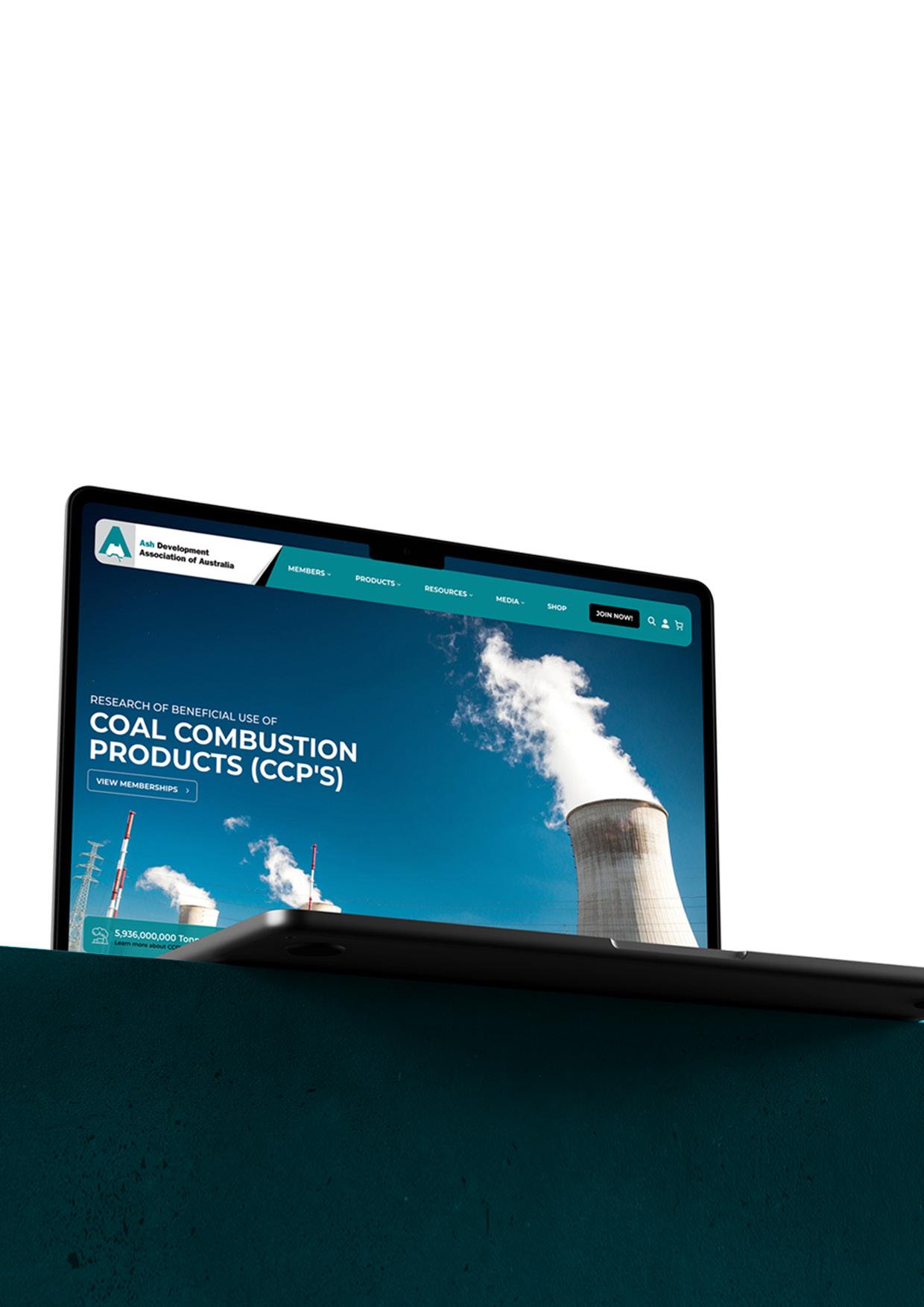
NEW ADAA WEBSITE AND LIBRARY
We’ve got a brand-new look that is full of various new features ready to meet all your needs. We are ecstatic with the results, and we think you will be also!
In a significant leap towards fostering innovation and excellence within the Ash Development industry, the Ash Development Association of Australia proudly unveils its new website: www.adaa.asn.au. This dynamic online platform has been meticulously designed to serve as a comprehensive resource hub for ADAA members, offering a wealth of information, tools and services to elevate their professional journey.
EASY NAVIGATION, USER-FRIENDLY EXPERIENCE
Our website boasts an intuitive design for easy navigation. Whether you’re a seasoned professional or just starting in the industry, finding the information you need has never been more straightforward. Explore the various sections seamlessly, and discover the wealth of resources at your fingertips.The launch of www.adaa.asn.au marks a pivotal moment in ADAA’s commitment to providing exceptional value to its members. This website serves as a testament to our dedication to investigating and developing market opportunities for the use of these materials in various industry applications such as construction, agriculture and manufacturing.
STAY INFORMED WITH INDUSTRY NEWS AND RESOURCES
In conjunction with various individuals and companies, the ADAA has produced a broad range of technical literature since the Association was founded in 1990. Through the development of technical guides, technical reports, reference data sheets and case studies the association aims to disseminate information relevant to all interested parties facilitating the use of CCPs. Keep your finger on the pulse with our regularly updated resources section. Stay informed about the latest literature on Coal Combustion Products (CCP’s).
While the principal output from coal combustion is energy, significant quantities of by-products in the form of coal combustion products (CCPs) are also produced. In life cycle terms, the opportunities to exploit the low energy embodied in CCPs such as fly ash, furnace bottom ash, boiler slags and cenospheres are extensive. The combustion of pulverised coal in the furnace of a coal-fired power station boiler results in the production of a number of solid by-products. Internationally we now more accurately classify these inert solid by-products as coal combustion products. This term reflects a more positive view and is in keeping with circular economy concepts, being an industrialised approach that seeks to use one industry’s by-product output as another industry’s material inputs.
We trust you find this website helpful, moreover gain a better understanding of coal combustion products which are man-made minerals that can help conserve finite natural resources.
SPS BESS PROJECT USES SPS CERTIFIED FLY ASH IN CONCRETE
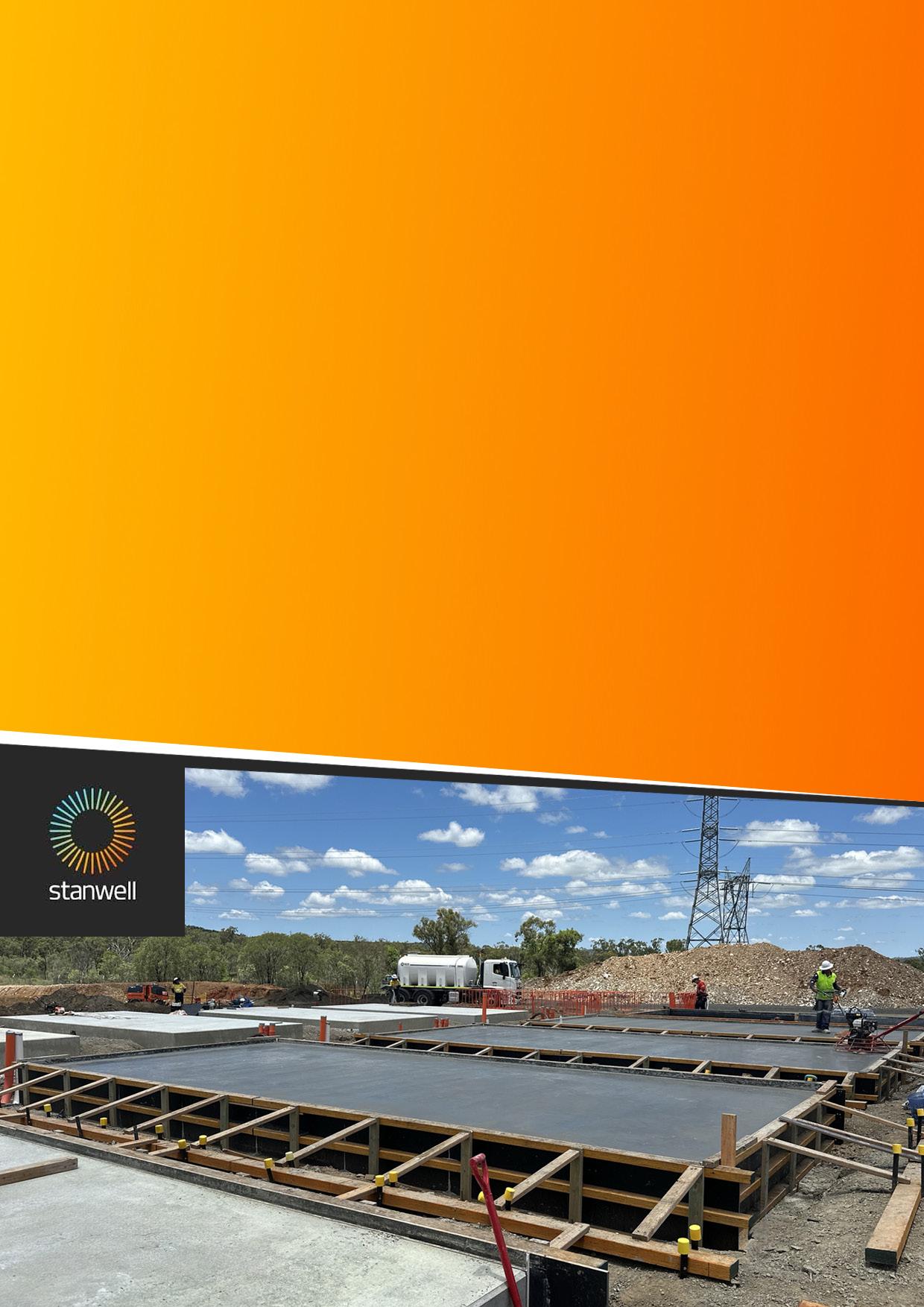
THE STANWELL Power Station (SPS) 300 MW Battery Energy Storage System (BESS) and its contribution to a more sustainable energy future is well reported. Less reported, is the use of more sustainable concrete in the 324 concrete slabs supporting, protecting and insulating each of the 38 tonne Tesla Megapack 2XL lithium-ion units.
At the end of May 2025, the project had placed 7,433m3 of concrete into concrete slabs containing between 25 % - 50 % SPS fly ash or a total volume of 1,100 tonnes. Concrete slabs don’t demand credit or attention. But for a BESS, they are the silent guardians supporting the units without shifting or settling and supplying level bases for proper alignment and performance. Concrete is non-combustible and acts as a fire barrier, helping contain thermal runaway events, electrical fires and acting as thermal insulation to buffer ground temperature fluctuations. For these reasons, concrete quality and quantity cannot be reduced.
Early engagement with internal Stanwell procurement mapped pathways to the use of SPS fly ash compliant to AS/NZS 3582.1:2016 Supplementary cementitious materials Part1: Fly ash. Collaboration between Stanwell Corporation, principal contractor Yurika and local industry identified local batching plant Regional Group within 15 kilometres of SPS and the SPS BESS project site resulting in a reduction in both project and transport associated emissions.
It is standard practice to use fly ash as a supplementary cementitious material (SCM) in Queensland concrete. However, Stanwell were keen to apply a circular economic approach and use SPS produced fly ash to reduce both emissions and storage requirements on-site.
Early research highlighted three main roadblocks:
• SPS fly ash is sold and transported out of the region.
• Local concrete suppliers rely on fly ash from other generators.
• Suppliers are reluctant to alter proven concrete mixes with fly ash from a different source.
Approximately 55 per cent of the CO2 emissions of the cement and concrete sector in Australia originate from limestone calcination. 26 per cent are identified as fuel-based emissions, 12 per cent from electrical energy usage and another 7 per cent indirect emissions are attributed to the transport of cement and concrete to the customer.
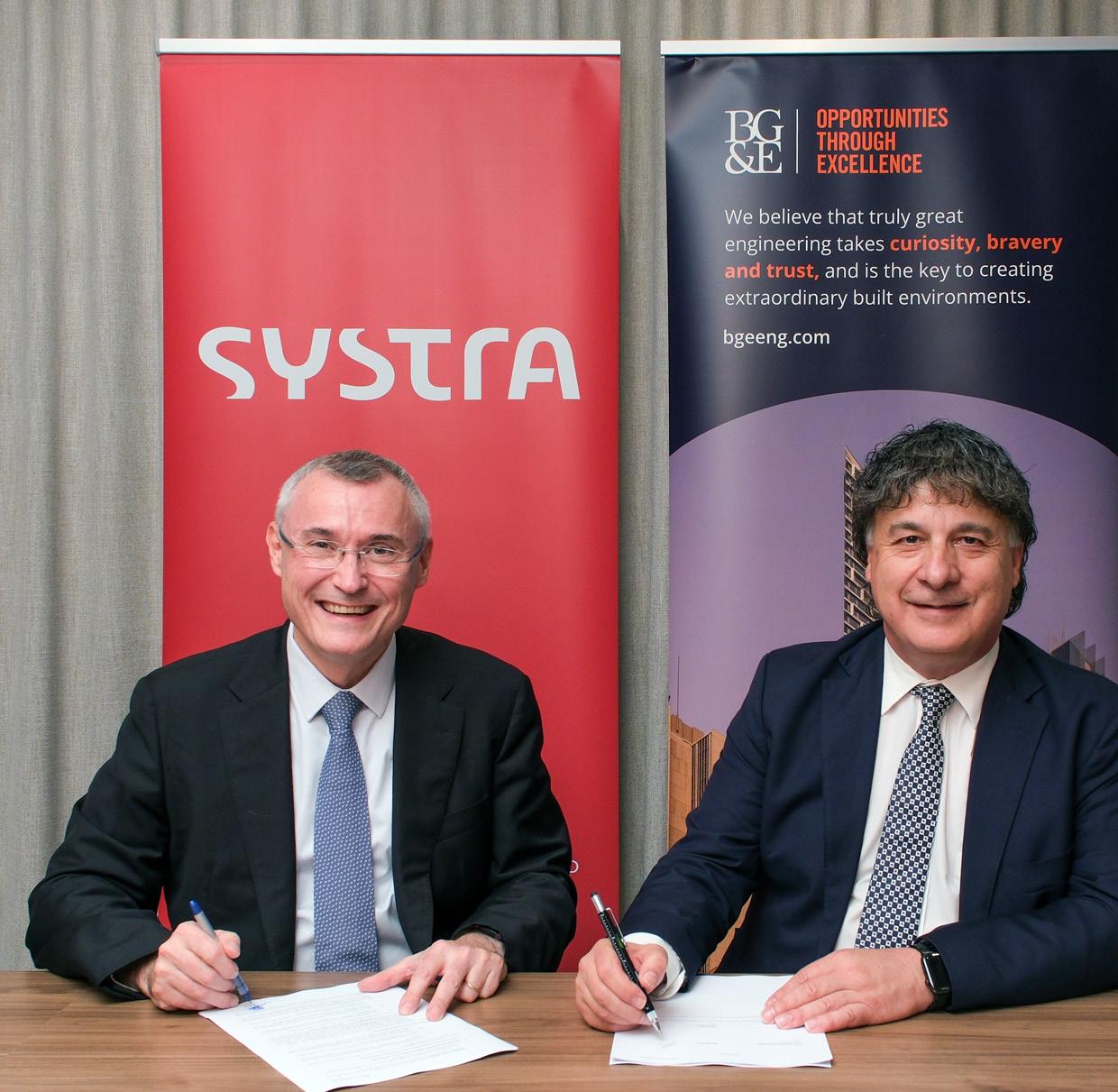
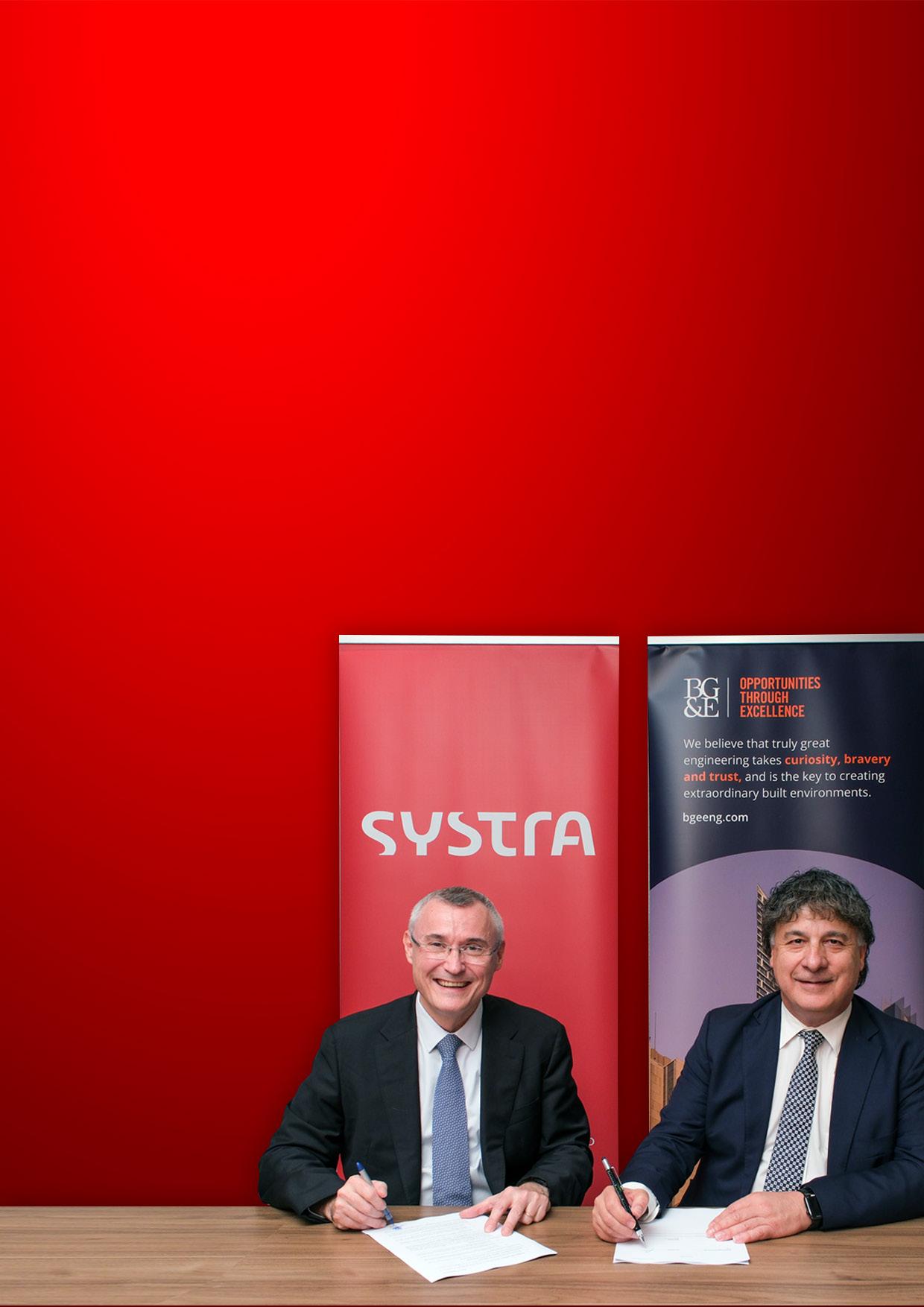
SYSTRA joins forces with BG&E to strengthen presence in Australia and develop a global offering for complex buildings.
ADAA Member BG&E, is a multi-disciplinary engineering company founded in Australia, with expertise in transport infrastructure and complex buildings. The company employs more than 800 people and has offices in Australia, New Zealand, Asia, the Middle East, and the United Kingdom. SYSTRA, the global engineering and consultancy in public transport and mobility solutions, acquired BG&E in October 2025. This strategic transaction marks a significant step in the development of SYSTRA in Australia and New Zealand and launches a new international offering dedicated to complex buildings.
Together, SYSTRA and BG&E will have more than 1,000 employees in Australia and New Zealand, further strengthening their position in one of the world’s most dynamic infrastructure markets. With a comprehensive portfolio of multi-disciplinary engineering services covering the entire project lifecycle, SYSTRA and BG&E will be able to deliver high-quality, sustainable technical solutions to their clients, who will benefit from the best international practice and the continued backing of a global engineering leader. Furthermore, BG&E’s presence in the United Kingdom, Singapore, and the United Arab Emirates will enable SYSTRA Group to strengthen and expand its offering in these countries.
Beyond its geographical footprint, this transaction gives SYSTRA the opportunity to build a global offering in the field of complex buildings. Initially recognised for its design work on transport-related structures (stations, depots, maintenance centres), SYSTRA, thanks to the integration of BG&E’s expertise, now expands its scope to all types of complex buildings. This newly combined network will bring together more than 700 specialists, able to operate anywhere in the world.
Together, we have a unique lever to support the transformation of infrastructure in Australia, New Zealand, and beyond. “ “
Jean-Charles Vollery, CEO of SYSTRA
Jean-Charles Vollery, CEO of SYSTRA, said: “We are delighted to welcome the talented BG&E teams to SYSTRA. Together, we have a unique lever to support the transformation of infrastructure in Australia, New Zealand, and beyond. This partnership reflects our growth ambitions and our aim to be the signature team for engineering in the transport and complex buildings sectors worldwide.”
Frank Cerra, Managing Director of BG&E, commented: “Over the past 55 years of our operations, we have been involved in some of the largest infrastructure and buildings projects in Australia and overseas. Therefore, it made perfect sense to team up with a bold, innovative and technically excellent engineering firm like SYSTRA. Joining SYSTRA is the right cultural and strategic fit for BG&E, enabling us to embark on the next stage of our growth journey.”
The acquisition comes at a pivotal moment of growth and transformation in the infrastructure sector and underlines SYSTRA and BG&E’s commitment to meeting the evolving needs of their clients and communities.
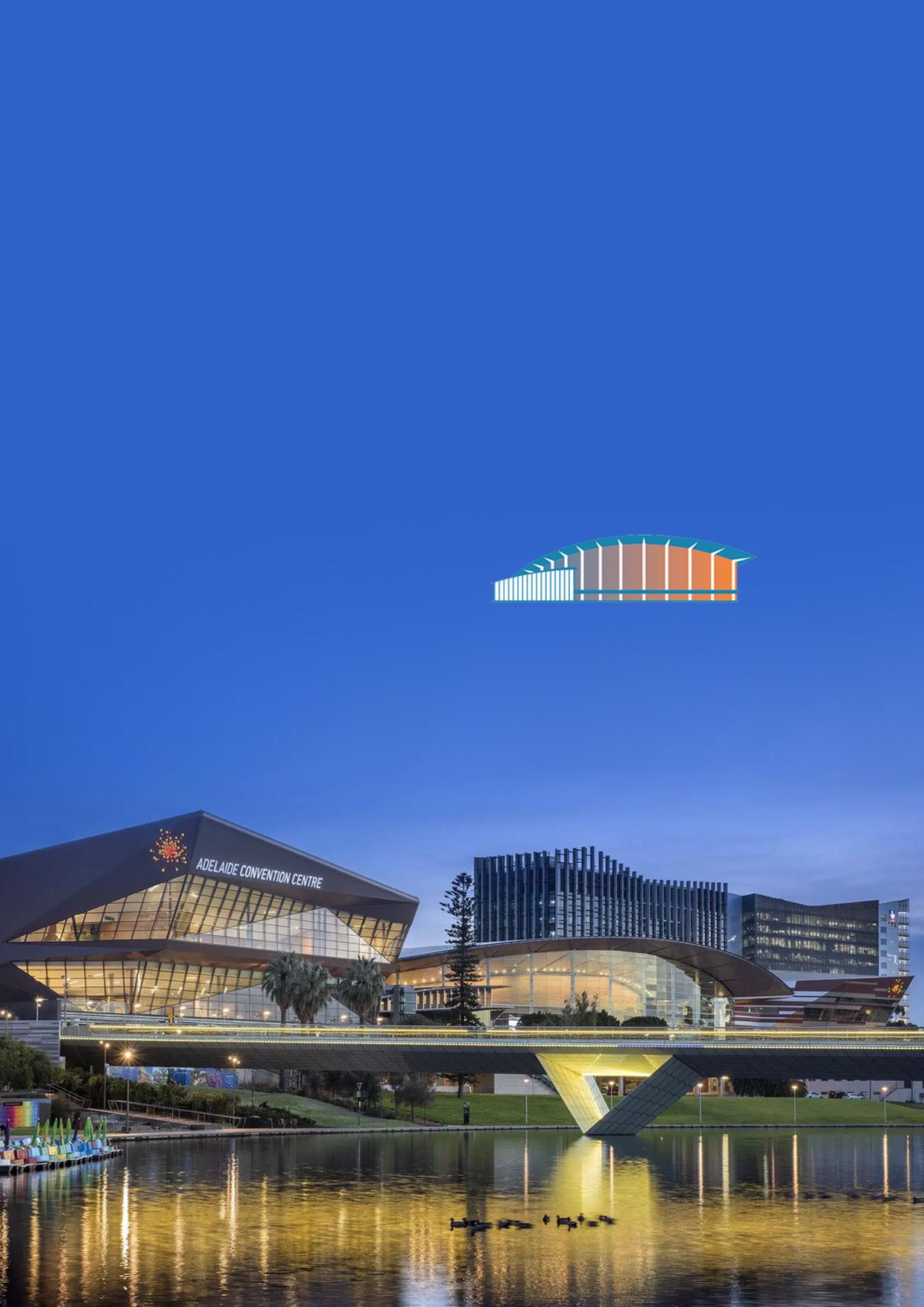
The 32nd Biennial National Conference, Concrete 2025, hosted by the Concrete Institute of Australia (CIA) from 7–10 September 2025 at the Adelaide Convention Centre, was a landmark event for the concrete and construction industries.
With the theme “Concrete Solutions for a Sustainable Future,” the conference brought together CIA members, industry leaders, and international experts to tackle the challenges facing the sector. Over three days, delegates explored everything from materials and design to construction, repair, and maintenance — all through the lens of sustainability and innovation.
Co-chaired by Tom Benn and Yan Zhuge, Concrete 2025 featured over 200 papers and presentations across four streams, covering more than 20 concrete-related topics. Delegates also participated in workshops focused on sustainability and emerging industry trends, while keynote and invited speakers offered valuable insights on the future of concrete. The program was further enhanced by the NEXGen Forum and Women in Concrete Forum, celebrating leadership and inclusion in the industry.
The Ash Development Association of Australia was proud to be an exhibitor at the conference. The exhibition hall and sponsorship showcase provided an excellent platform to connect with peers, share innovations and highlight the role of coal combustion products in advancing sustainable construction practices.
Beyond the technical program, the event offered a lively social program, including the Concrete 2025 Gala Dinner, where the prestigious Awards for Excellence in Concrete were presented.
Concrete 2025 was more than a conference — it was a hub for collaboration, idea-sharing, and practical solutions that will drive the industry toward a more sustainable future. ADAA looks forward to continuing its engagement with the concrete community and supporting innovation across Australia and beyond.
CONCRETE 2025 CONCRETE 2025
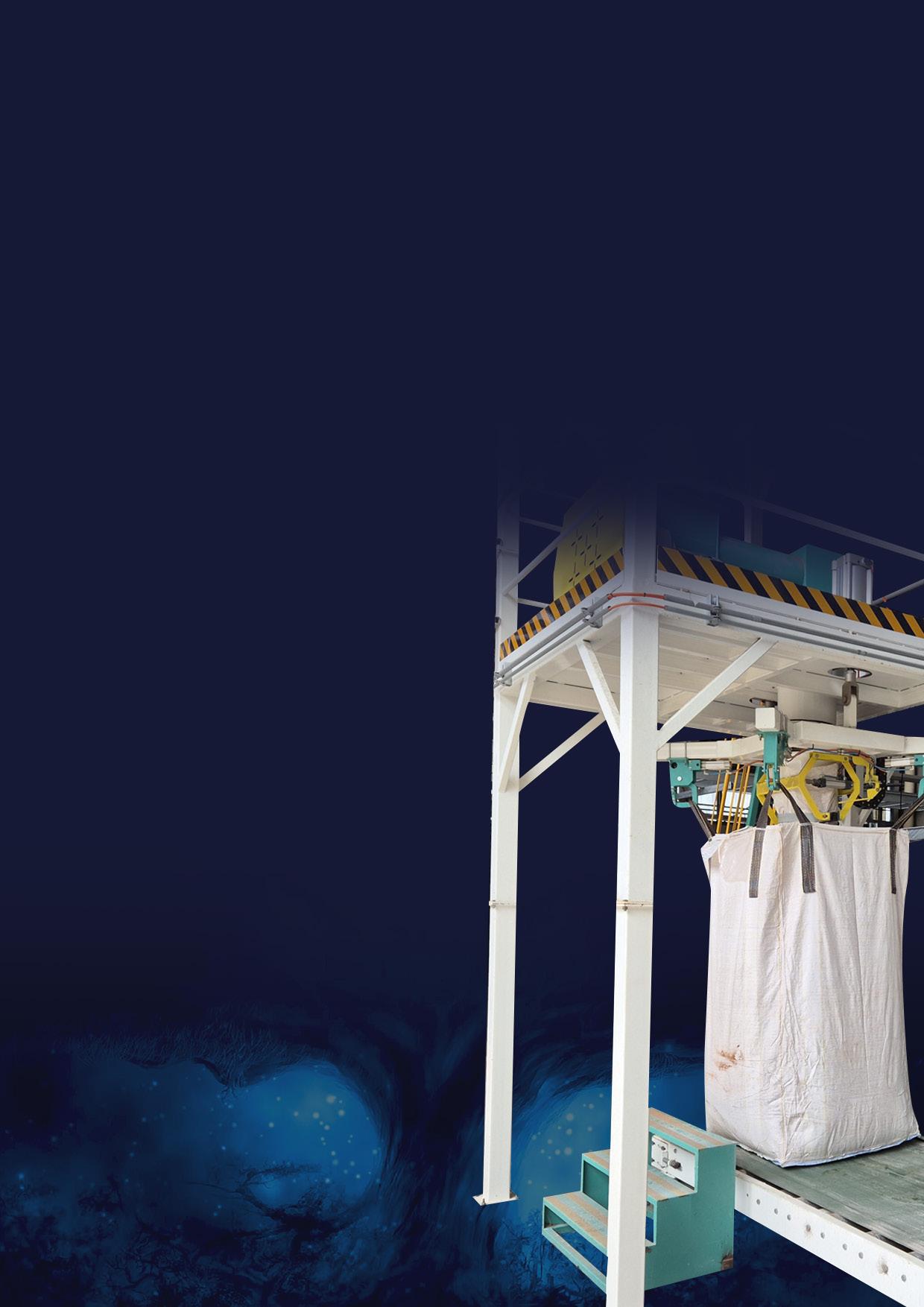
LATROBE MAGNESIUM COMMENCES SUSTAINABLE MAGNESIUM PRODUCTION
Since our last update, Latrobe Magnesium Limited (ASX: LMG) has announced significant progress in its mission to transform the production of magnesium metal through environmentally sustainable methods.
The company has successfully produced Magnesium Oxide (MgO) from brown coal fly ash, a by-product of power generation in Victoria’s Latrobe Valley.
This milestone validates the core proprietary components of LMG’s patented magnesium production process, de-risking operations and marking a significant step forward in sustainable magnesium recovery.
INNOVATIVE EXTRACTION PROCESS
Central to Latrobe Magnesium’s approach is its proprietary hydrometallurgical and thermal reduction process. This world-first technology enables the extraction of magnesium metal and other valuable by-products, such as silica, char, iron oxide, and calcium carbonate, from magnesium-rich industrial materials. By recycling fly ash, the process not only reduces emissions but promotes a circular economy, aligning with global sustainability goals.
DEMONSTRATION PLANT MILESTONE
The Demonstration Plant in Hazelwood North, Victoria, has commenced operations, successfully producing MgO. Over 200 tonnes of fly ash have already been processed in the first few weeks, demonstrating the viability of the 1,000 tonnes per annum (tpa) facility as a proof of commercialisation. The plant has also produced saleable by-products and provides crucial operational data to optimise the technology/ process for future projects under the expansion pathway.
MgO production will continue and is being stockpiled in preparation for initial delivery to offtake partners. Validation trials with multiple interested parties are underway, aimed at securing long-term offtake agreements for both Demonstration Plant and future Commercial Plant by-products. LMG plans to commission a full-scale plant by Q1 2026, with a target commercial production of 10,000 tpa by 2027. COMMITMENT TO SUSTAINABILITY
Latrobe Magnesium’s operations emphasise environmental stewardship. By converting nearly 100% of industrial fly ash into valuable products, the company not only addresses disposal challenges, and its legacy, but also contributes to the reduction of greenhouse gas emissions. The production of magnesium metal from recycled industrial challenges further supports the transition to a low-carbon economy, aligning with both national and international sustainability objectives.
CONCLUSION
Latrobe Magnesium’s advancements in sustainable magnesium production represent a significant leap forward in the utilisation of industrial materials for valuable resource recovery. With its innovative extraction process, operational Demonstration Plant, and plans for strategic expansion, the company is poised to play a pivotal role in the global magnesium market. As industries increasingly prioritises sustainability and diversification, Latrobe Magnesium demonstrates how innovation can deliver both economic and environmental benefits.
ABOUT LATROBE MAGNESIUM
Latrobe Magnesium (ASX: LMG) is developing a magnesium production facility in Victoria’s Latrobe Valley, using a world-first patented process to extract magnesium metal and cementitious material from industrial ash – currently a by product from brown coal power generation.
Magnesium’s superior strength-to-weight ratio makes it a key material in automotive, aerospace, medical, and electronics sectors.
LMG’s project exemplifies ESG leadership by minimsing resource loss, cutting carbon emissions and promoting a circular economy.
RMIT AND BRISTILE ROOFING
CARBON ROOF TILES GIVE INDUSTRIAL WASTE A NEW HOME - THROUGH CCP INNOVATION
A collaboration between RMIT University and Bristile Roofing has produced new sustainable roof tiles made with coal ash and recycled glass, cutting CO₂ emissions by 13% compared with traditional concrete tiles.
Developed and trialled at Bristile Roofing’s Melbourne facility, the trial demonstrated clear environmental and performance advantages. The tiles were lighter, offered improved fire resistance, and still met all Australian Standards for durability and strength. A full circular life cycle assessment - covering everything from raw material inputs to disposal - found the new design cut carbon emissions by 13% compared with conventional concrete roof tiles.
RMIT project lead Dr Chamila Gunasekara said the reduced environmental footprint is largely due to the use of harvested pond ash and unwashed recycled glass, both of which avoid energy-intensive processing and replace virgin materials.
“By substituting 10% of cement with pond ash, and another 10% of river sand with unwashed glass, we can cut landfill waste and improve fire resistance — a valuable feature for the Australian climate,” Dr Gunasekara stated.
Australia generates roughly 12 million tonnes of coal ash each year, with more than 400 million tonnes already stored in large ash ponds. At the same time, over 1.3 million tonnes of glass waste is produced annually, and more than half still ends up in landfill.
RMIT Principal Research Fellow Dr Yulin Patrisia stated that the trial showed these “waste” resources can be used in significant quantities without compromising product safety or long-term performance.
“Pond ash can be less reactive due to years spent submerged, but it’s still a valuable material,” she said. “It improves long-term behaviour by reducing shrinkage, boosting dimensional stability, and maintaining ongoing strength development. That makes it ideal for durable nonstructural products like roof tiles.”
The engineering findings are detailed in Sustainable Materials and Technologies, while the environmental study appears in The International Journal of Life Cycle Assessment. RMIT is now partnering with councils and commercial organisations to test the tiles in realworld installations.
FROM ROOF TILES TO BRICKS: EXPANDING THE IMPACT
The same concrete formulation is also showing promise for other construction products.
The research team has developed prototype concrete bricks containing 15% pond ash and 20% recycled glass, replacing 35% of traditional raw materials. Despite the high waste content, the bricks meet Australian standards for load-bearing structural performance and fire safety.
The bricks also offer improved energy efficiency, with testing showing a 30% reduction in heat loss compared with conventional cement bricks.
Engineering performance results for the brick prototypes were published in Case Studies in Construction Materials, with the life cycle assessment - showing an 18% drop in CO2 emissions - also reported in The International Journal of Life Cycle Assessment. Industry partners are now progressing toward large-scale trial manufacturing.
DRIVING A CIRCULAR CONSTRUCTION FUTURE
This ongoing program is supported by the ARC Industrial Transformation Research Hub for the Transformation of Reclaimed Waste Resources into Engineered Materials and Solutions for a Circular Economy (TREMS). Led by RMIT’s Professor Sujeeva Setunge, TREMS brings together experts from nine universities and 36 government, industry, and international partners to convert waste materials into high-value products for construction and advanced manufacturing.
With successful full-scale trials, published engineering validation and growing industry interest, the team believes these innovations could become mainstream construction solutions - transforming Australia’s waste challenges into durable, low-carbon building materials.
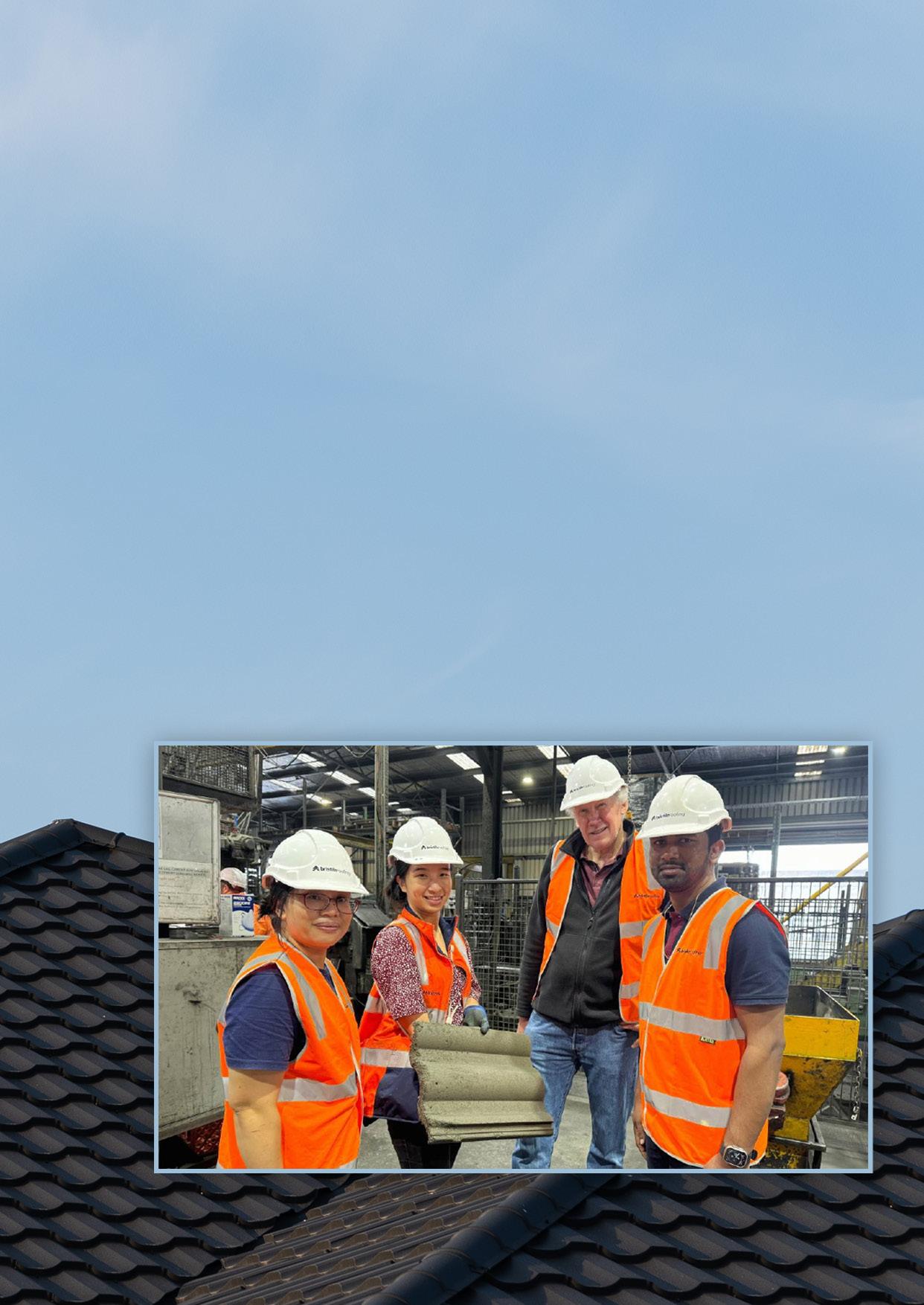
RMIT’s Dr Yulin Patrisia, Bristile Roofing’s Samantha So, RMIT’s Dr David Law and student Madushan Mudiyanselage at the Bristile factory in Dandenong.
WOCA is an international conference organized by the American Coal Ash Association (ACAA) and the University of Kentucky Center for Applied Energy Research (CAER).
The 2026 conference is the 11th joint biennial meeting with a focus on the science, applications and sustainability of worldwide coal combustion products (CCPs) as well as gasification products.
WHERE Lexington (Kentucky, USA)
LOCATION
Central Bank Center, 430 W Vine St , Lexington,KY 40507
WHEN Monday May 4 to Thursday May 7, 2026
BECOME A WOCA SPONSOR
Connect with over 1000 potential customers and colleagues at the largest ash-related event in the world – World of Coal Ash 2026! As a sponsor, you will be able to network with attendees not only on the exhibit floor, but also while enjoying yourself at social events as well as sitting side-by-side in a technical session. Select from a variety of sponsorship opportunities to increase your exposure to WOCA attendees. If you are looking to become a WOCA sponsor, this is the time to act. Opportunities are still available but are going fast. Become a sponsor here!
WOCA REGISTRATION EASIER THAN EVER BEFORE
The WOCA team has streamlined and simplified the registration process. Log in and register here.
*The early-bird rate ends on April 1, 2026. After that date, the regular rate will take effect.
BOOK YOUR STAY AT WOCA’S HOST HOTEL
Get the most out of your WOCA experience by staying at the WOCA host hotels:
• Hilton Downtown Lexington
• Hyatt Regency Lexington
WOCA DELEGATION INVITATION
The Ash Development Association of Australia (ADAA) invites you to join our Australian delegation to the World of Coal Ash (WOCA) 2026, the premier international conference on the science, application, and sustainability of coal combustion products (CCPs).
CONFERENCE DETAILS:
• Dates: May 4–7, 2026
• Venue: Central Bank Center, Lexington, Kentucky, USA
• Hosts: American Coal Ash Association (ACAA) & University of Kentucky Center for Applied Energy Research (UK CAER)
• Registration window: Online registration opens July 11, 2025; closes May 1, 2026
• Call for abstracts: Submissions due December 15, 2025 (if you wish to present)
• Short course: Monday May 4, 2026 (separate registration)
• Accommodation: Room blocks available at Hilton Downtown Lexington and Hyatt Regency Lexington (adjacent to the venue)
WHY ATTEND WITH ADAA?
• Access the latest global advances across CCP harvesting, beneficiation, standards, and low-carbon concretes.
• Network with utilities, specifiers, researchers, and solution providers from across North America, Europe, and the Asia-Pacific.
• Coordinate with fellow Australian stakeholders to amplify our national priorities and showcase local innovation.
EXPRESSIONS OF INTEREST
• ADAA Delegation Visit to UK CAER (Lexington, Kentucky)
• In conjunction with WOCA 2026, ADAA is forming a member delegation to visit the University of Kentucky – Center for Applied Energy Research (UK CAER) to view laboratories and current CCP-related research programs (e.g., cementitious/low-carbon binders, petrology/beneficiation labs). The visit will be scheduled in Lexington around the conference dates to minimise travel.
PROPOSED INCLUSIONS (subject to confirmation):
• Guided lab tours and research briefings at UK CAER (cementitious/low-carbon materials; harvesting & ash characterisation).
• Targeted roundtable with ACAA/UK CAER experts on standards, market development, and ponded-ash harvesting.
• Optional WOCA short course attendance and exhibitor hall walk-throughs.
HOW TO PARTICIPATE
Attend WOCA 2026 - Register directly via WOCA (early is best for flights & hotels). https://worldofcoalash.org
COSTS & TRAVEL
• Delegates self-fund flights, accommodation, registration and incidentals. WOCA has negotiated hotel blocks beside the venue; book early for best rates. If you have questions—or if your organisation is interested in sponsoring an element of the Australian delegation—please contact Craig Heidrich - CEO at cheidrich@adaa.asn.au
I am looking forward another successful conference and everyone representing Australia’s leadership in CCP utilisation on the world stage and strengthening links with our ACAA and UK CAER colleagues.
MEMBERSHIP SURVEY
JANUARY
TO DECEMBER 2023
SUMMARY
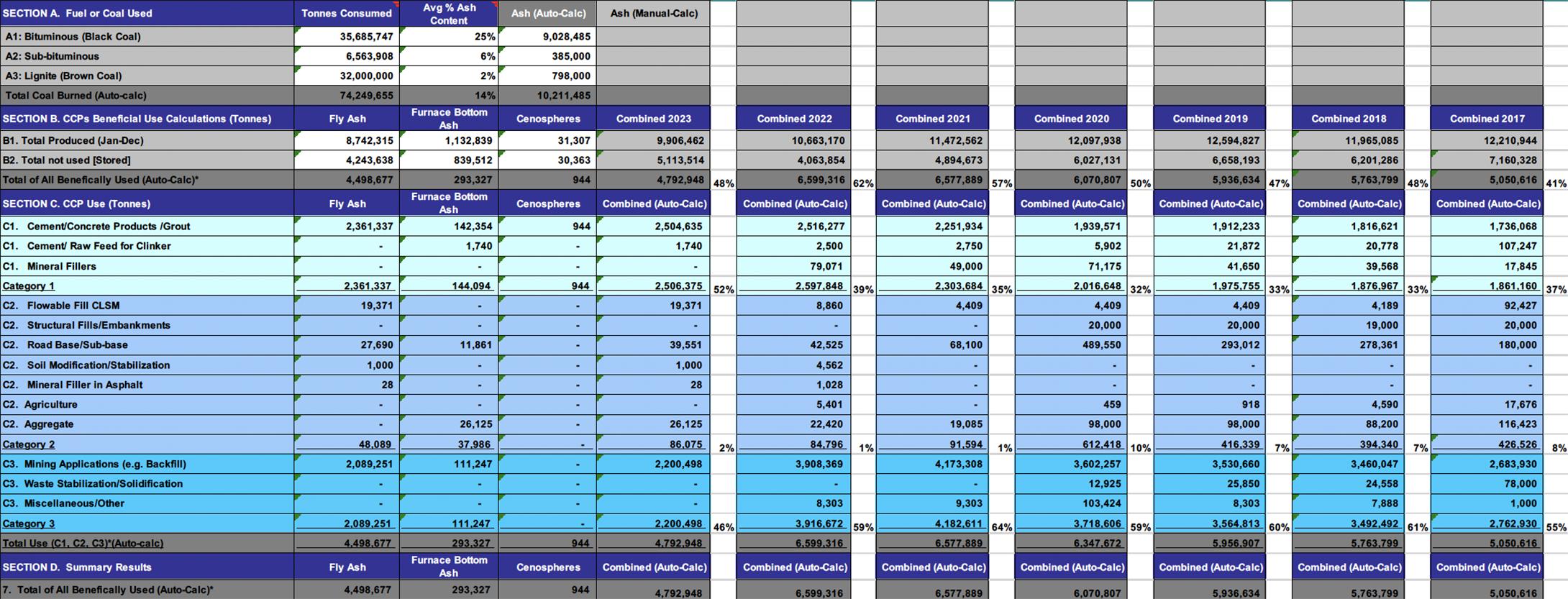
The beneficial use of coal combustion products (CCPs) during 2023 resulted in 4.8 million tonnes or 48% being beneficially used, resulting in the conservation of; energy; finite natural resources, the reduction of carbon emissions through the recovery of CCPs being mineral byproduct resources.
The survey results for CCP production and end uses for the period January to December 2023 discussed in this report are shown in Table1. Over the survey period more than 74 million tonnes of thermal coal was consumed to generate vital energy to support the Australian economy. Some 10.2 million tonnes of all CCPs were produced with 48% being effectively utilised1 within various civil and construction applications throughout Australia. Total CCPs produced reduced slightly over the reporting period, with the longer-term trend continuing to decrease as planned closures out top 2050 come into effect. This decline is consistent with ongoing closures of coal fired power stations and reduced demand for thermal coal as an energy source, coupled with ongoing energy reforms, renewable energy targets (RET) and state government privatisation agenda for electricity over the past several years. For example since 2006 total megawatt available generation capacity has reduced 22% from 30,159 MW to 23,434 MW, with a further 10% reduction of generation capacity planned to occur in the next 3 years.
METHODOLOGY
Annually members and non-members are surveyed for CCPs generated, stored and sold during the reporting period January to December 2023. Information provided by members2 and non-members3 is collated, compared with other data sources for verification purposes and then aggregated into national data set. The import and export of CCPs were included, however, sources and destinations are not identified.
DISCUSSION OF RESULTS
Total CCPs generation for the period decreased from 10.6 (2022 adjusted) million tonnes to 10.24 (2023) million tonnes. Over the period CCPs used also decreased from 6.5 million tonnes (2022) to 4.8 million tonnes during 2023. Large scale projects offering some beneficial use (e.g. on-site mine remediation, local haul roads etc.) reduced significantly over the period, but continued demand within the supply chains for construction materials (e.g. cement and concrete manufacture) are steady.
High value utilisation end uses in Category 1 continue to be attributable to ‘graded’ (See AS 3582.1 and AS 2758) materials used in cement and concrete manufacture at 2.5 million tonnes. The largest decreases occurred in structural/civil, mining and mine site remediation in Category 2 and 3. ‘Harvesting’ of CCPs continues to increase in internationally, particularly within well-established markets such as the USA where access to CCPs has become restricted due the station closures. Ongoing regulatory reform advocated by the Ash Development Association of Australia continues its focus on new end use market opportunities for ‘ungraded’ material applications, when coupled with changes to AS3582.1 and AS 2758, these end-use applications are expected to grow. The use of CCPs, in particular fly ash has been proven to significantly contribute to further reducing the carbon footprint of the cement and concrete sector4, however additional processing capacity to produce ‘graded’ fly ash to meet growing demand, coupled with supply chain inventory capacity are essential.
Further research will commence with support from the NSW Government under the NSW Carbon Recycling and Abatement Fund to investigate harvesting the large volumes of ‘homogenously’ stored materials within
ash dams to buffer natural material supply chain demands. Ongoing monitoring of cumulative storage with ash repositories estimates there is more than 700 million tonnes of CCPs stored nationally. For example, at current consumption rates of fly ash in the cement and concrete sectors the Association estimates there are more than 250 years of recoverable material.
Demand for fine and coarse aggregate use in structural/civil applications is closely tied to consumption or growth in the future development of infrastructure in both urban and regional Australia –estimated to be more than 200 million tonnes annually of natural virgin material. Extractive resources are generally widespread and remain in adequate supply nationally, however, shortages in important large-scale markets (Sydney, Melbourne and Brisbane) have emerged, requiring additional logistics and associated handling costs not historically incurred. These are mainly attributed to unsuitable geology, conflicting or incompatible land uses and environmental problems caused by high rates of urban expansion. Natural sand and gravel resources are also being depleted leading to opportunities for substitution by ungraded CCPs.
Considerable interest from extractive industries to supplement natural sand and gravel resources with recovered resources such as CCPs continues to grow, which is an area of considerable focus.
KEY RESULTS OF SURVEY
The survey results include all generators5, marketers6 and users for the total production and resulting sales by each end use. Where required, data was supplemented with importation data and other secondary data7 sources for accuracy purposes.
• Approximately 10.2 Mt (million tonnes) of CCPs were produced within Australasia. On a per capita basis, this equates to approx 390kg/person. (10.2Mt/26M population)
• Some 4.8 Mt or 48% of CCPs produced have been effectively utilised in various value-added products or to some beneficial end over the period. On a per capita basis, this equates to approx 190kg/person recycled or reused. (4.8Mt/26M population)
• Approximately 2.5 Mt or 52% of fine grade fly ash was used beneficially in high value-added applications such as cementitious binders, concrete manufacture or mineral fillers.
• About 0.086Mt or 2% of CCPS was used in non-cementitious applications such as flowable fills, structural fills, road bases, coarse/fine aggregates.
• Some 2.2Mt was used in projects offering some beneficial use (e.g. on site remediation, local haul roads etc.). These uses typically generate no economic return, that is, cost avoidance or recovery only.
• 5.1 Mt were placed into onsite storage ponds awaiting some future use opportunity where material would be harvested for economic use.
• More than 62.5Mt of CCPs [fly ash] have been used in cementitious applications or concrete manufacture from 1975 to 2023 [48 years].
In summary, the use and recovery of CCPs provide positive and significant environmental impacts, including resource conservation, the reduction of greenhouse gas emissions through the conservation of energy and processing emission from conversation of virgin resources through displacement or substitution by CCPs.
Ash Development Association of Australia 2023 Membership Survey - CCP Production & Use Survey
CEMENT AUSTRALIA FINALISES ACQUISITION OF BGC CEMENTITIOUS
STRENGTHENING HOLCIM AND HEIDELBERG MATERIALS’ PRESENCE IN WESTERN AUSTRALIA
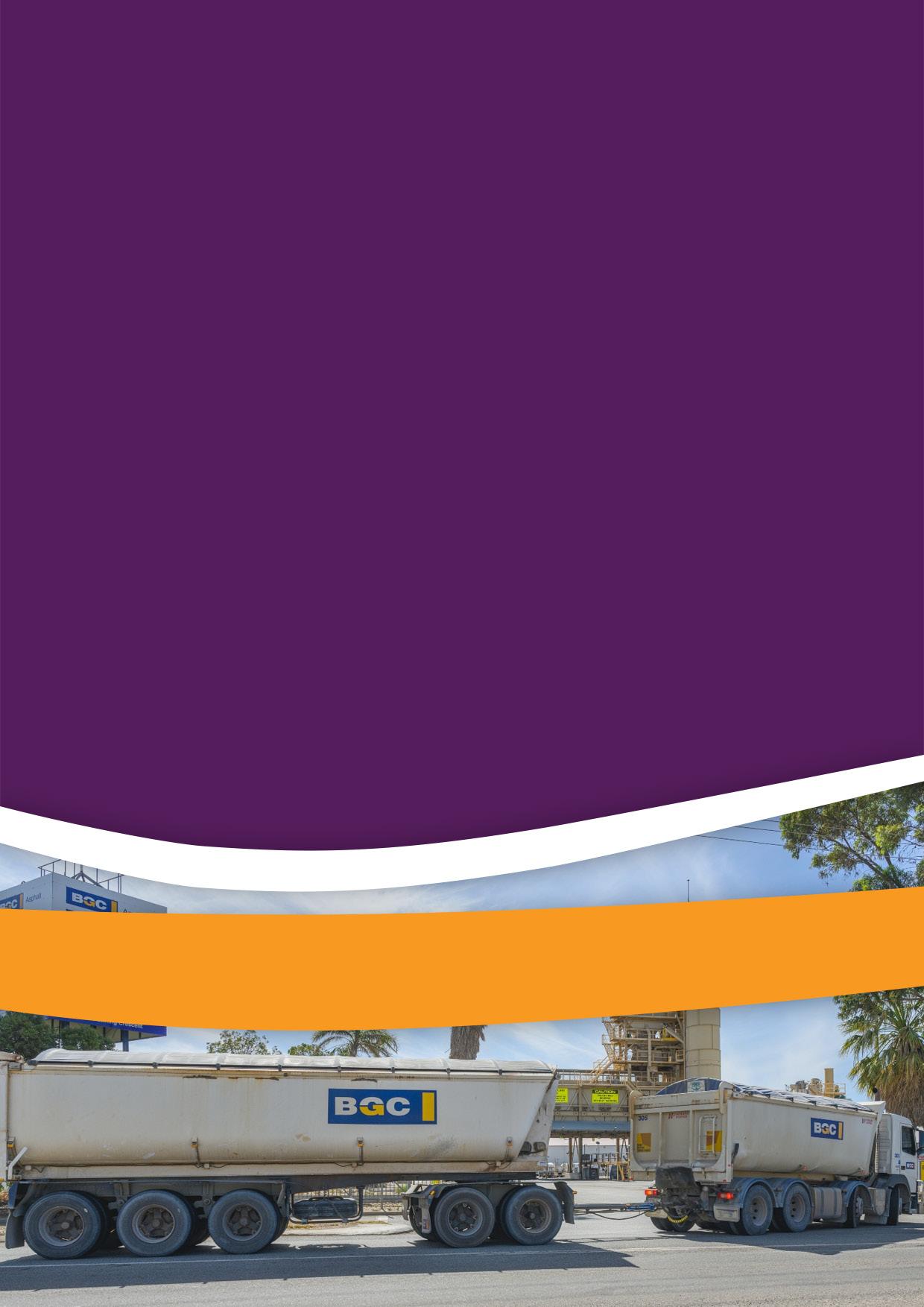
ADAA Member, Cement Australia (CA), which is a joint venture between Holcim Australia and Heidelberg Materials Australia, has announced the completion of its acquisition of the cementitious division of the Buckeridge Group of Companies (BGC), effective 1 October 2025.
The transaction includes BGC Cement, related transport operations, and the cement-related assets of BGC’s Materials Technology Centre.
As part of the agreement, CA has also acquired BGC Concrete’s RMX site at Kwinana, which will be leased to Holcim. Holcim will additionally take over BGC Concrete’s RMX operations at Canning Vale, while Heidelberg Materials Australia will assume operations at Bassendean.
Holcim also confirmed that the acquisition expands its footprint across Western Australia, aligning with its NextGen Growth 2030 strategy to remain the leading partner for sustainable construction. Holcim will operate the newly added ready-mix concrete sites in Canning Vale and Naval Base, complementing its existing network of more than 20 plants servicing the region.
With the backing of Holcim’s global innovation capabilities and Heidelberg Materials’ industry leadership, the transition strengthens supply security for customers and enhances the delivery of high-value, sustainable building solutions across Western Australia.
Rob Davies, CEO of Cement Australia, expressed enthusiasm for the milestone.
“The addition of these facilities - and the talented people who operate them - strengthens our position in the West Australia market and ensures greater security of supply for our customers. This complements our existing footprint in WA and will help streamline logistics, further enhance our service capability, and expand our sustainable, innovative and high-value building solutions in the West.”
Holcim Australia and New Zealand CEO George Agriogiannis also welcomed the expansion.
“The addition of these facilities—and the talented people who operate them—strengthens our position in the Western Australian market and ensures greater security of supply for our customers,” he said. “This complements our existing footprint and will streamline logistics, enhance our service capability, and expand our sustainable and innovative building solutions in the region.”
Cement Australia emphasised that it is committed to operating a safe, healthy, and sustainable business while ensuring continuity for employees, customers, and suppliers throughout the transition.
The company warmly welcomes the BGC team into the Cement Australia family, marking a significant step forward in strengthening the nation’s cement and concrete supply chain and advancing sustainable construction across Western Australia.
WRITE FOR
COAL ASH MATTERS
Coal Ash Matters is the ADAA’s main educational publication that is produced twice a year for the benefit of ADAA members and readers. Before each publication is drafted, an email is sent out to all members, urging them to contribute stories that they think are of interest. The types of content we are looking for include:
• NEW DEVELOPMENTS
• TECHNOLOGICAL INNOVATIONS
• NEW PROJECTS
• NEW EMPLOYEES
• INDUSTRY RESEARCH
If you have an idea or some content that you think should be shared with the CCP community, get in contact with the editor, Sam Patane at publications@adaa.asn.au