SPOTLIGHT
The Oracle investigates recent local anti-ICE student protests following deaths in Minnesota.
PAGES 8,9

LIFESTYLE
Forum Editor Melody Song reviews a book that has never been checked out before. PAGE 15
Henry M. Gunn High School
The Oracle investigates recent local anti-ICE student protests following deaths in Minnesota.
PAGES 8,9
Forum Editor Melody Song reviews a book that has never been checked out before. PAGE 15
Henry M. Gunn High School
fter years of limited access to incounty psychiatric care for youth, Santa Clara County is preparing to open the new Child and Adolescent Psychiatric Facility. The facility, part of the Behavioral Health Services Center, is set to open in spring 2026 on the Santa Clara Valley Medical Center campus in San Jose, and will provide both inpatient and outpatient care.
The project aims to address longstanding gaps in youth mental health care, as demand for psychiatric beds continues to outpace availability. According to Palo Alto Online, Stanford Health professionals are stressing the need for expanded local mental health treatment options.
The effort traces back to 2010, when Palo Alto resident Sigrid Pinsky learned during a county advisory board meeting that children in psychiatric crises were routinely being sent outside the county for treatment. Due to a severe shortage of psychiatric beds, patients were transported to facilities in Marin County, Bakersfield and across the East Bay.
According to SCVMC Interim Hospital Executive Dr. Brian McBeth, the lack of local psychiatric help often forced families to travel during medical emergencies, disrupting continuity of care.
“The relocation from the area added to the stress for parents already dealing with work requirements and their children’s well-being,” he said. “Our community deserves a care location close to home where family and friends can be nearby.”
21.9%
Source: Self-selected survey sent out to Gunn students by The Oracle from Jan. 25 to Feb. 3 with 73 responses. OF SURVEYED STUDENTS DO NOT k NO w wh ERE TO SEEk mENTal hEalTh RESOURcES


41.7%
Source: Self-selected survey sent out to Gunn students by The Oracle from Jan. 25 to Feb. 3 with 73 responses. OF SURVEYED STUDENTS b E li EVE ThaT Th ERE a RE NOT ENOU gh m ENT al h E alT h RESOUR c ES i N PalO alTO
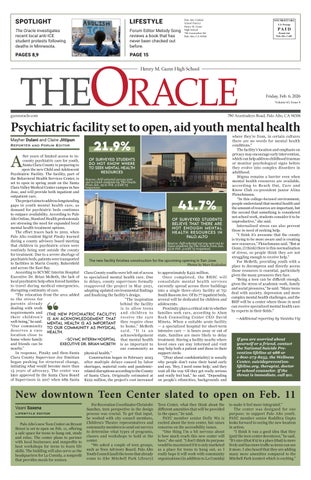
The new facility finishes construction for the upcoming opening in San Jose.
Clara County youths were left out of access to specialized mental health care. Due to delays, county supervisors formally reapproved the project in May 2021, adopting updated environmental findings and finalizing the facility’s design.
(Th E NE w PSYchiaTR ic Facili TY ) i S a N ack NOwl ED g E m ENT T haT mENTal hEalTh iS aS imPORTaNT TO OUR cOmmUNiTY aS PhYSical hEalTh.
ScVmc INTERim hOSPiTal ExEcUTiVE DR bRiaN mcbETh
In response, Pinsky and then-Santa Clara County Supervisor Joe Simitian began pushing for structural change, initiating what would become more than 15 years of advocacy. The center was later approved by the Santa Clara Board of Supervisors in 2017 when 689 Santa
“The inspiration behind the facility is to allow teens and children to receive the care they require close to home,” McBeth said. “It is an acknowledgement that mental health is as important to our community as physical health.”
Construction began in February 2023 after multiple delays caused by labor shortages, material costs and pandemicrelated disruptions according to the County of Santa Clara. Originally estimated at $222 million, the project’s cost increased
to approximately $422 million.
Once completed, the BHSC will consolidate mental health services currently spread across three buildings into a single three-story facility at 751 South Bascom Ave. Of its 77 inpatient beds, several will be dedicated for children and adolescents.
Proximity plays a critical role in whether families seek care, according to Alum Rock Counseling Center CEO David Mineta. When a suitable acute facility — a specialized hospital for short-term intensive care — is hours away or out of state, families are more likely to delay treatment. Having a facility nearby where loved ones can stay informed and visit may help both a patient and those in their support circle.
“(Fear about confidentiality) is usually why people don’t raise their hand early and say, ‘Hey, I need some help,’ and they wait all the way till they get really serious and really feel bad,” he said. “Depending on people’s ethnicities, backgrounds and
where they’re from, in certain cultures there are no words for mental health conditions.”
The facility’s location and emphasis on privacy may encourage early intervention, which can help address childhood traumas or monitor psychological signs before they evolve into complex disorders in adulthood.
Stigma remains a barrier even when mental health resources are available, according to Reach Out, Care and Know Club co-president junior Alina Fleischmann.
“In this college-focused environment, people understand that mental health and the amount of resources are important, but the second that something is considered not school work, students consider it to be unproductive,” she said.
Internalized stress can also prevent those in need of seeking help.
“I think it’s awesome that the county is trying to be more aware and is creating new resources,” Fleischmann said. “But at Gunn, (I think) there is this normalization of stress, so people think they are not struggling enough to receive help.”
For McBeth, providing youth with a place to decompress and directly access those resources is essential, particularly given the many pressures they face.
“Being a teen can be difficult enough, given the stress of academic work, family and social pressures,” he said. “Many teens deal with anxiety, depression and more complex mental health challenges, and the BHP will be a center where those in need can receive specialized mental health care by experts in their fields.”
If you are worried about yourself or a friend, contact the National Suicide Prevention lifeline at 988 or 1-800-273-8255, the Wellness Center, suicidepreventionlifeline.org, therapist, doctor or school counselor. If the threat is immediate, call 911.
Palo Alto’s new Teen Center on Bryant Street is set to open on Feb. 11, offering a safe space for teens to hang out, study and relax. The center plans to partner with local businesses and nonprofits to host workshops for teens to learn life skills. The building will also serve as the headquarters for La Comida, a nonprofit that provides meals for seniors.
For Recreation Coordinator Christofer Sanchez, teen perspective in the design process was crucial. To get that input, he worked with city council members, Children’s Theatre representatives and community members to send out surveys to determine what types of programs, classes and workshops to hold at the center.
“We asked a couple of teen groups, such as Teen Advisory Board, Palo Alto Youth Council (and) the teens that already come to (the Mitchell Park Library)
Teen Center, what they think about the different amenities that will be provided in the space,” he said.
PAYC member senior Dolly Wu is excited about the teen center, but raises concerns on the accessibility issues.
“One thing I’m a bit nervous about is how much reach this new center will have,” she said. “I don’t think its purpose would be maximized if it is only marketed as a place for teens to hang out, so I really hope it will work with community organizations (in addition to La Comida)
to make it feel more integrated.” The center was designed for one purpose: to support Palo Alto youth.
PAYC member senior Ruddhra Gupta looks forward to seeing the new location in action.
“I think it was a good idea that they (put) the teen center downtown,” he said. “It’s nice (that it’s) in a place (that) is more lively and has more traffic so teens can use it more. I also heard that they are adding many more amenities compared to the Mitchell Park (center) which is exciting.”
Sarah Grupenhoff News Editor
As students settle in for a new semester, state lawmakers have implemented new legislation. In response to statewide and local issues on student safety, these bills focus on education and heightened national political tensions.
The enforcement of these laws means major changes to student life. According to Palo Alto Vice Mayor Greer Stone, youth perspectives carry weight in city government.
“As elected leaders, we’re so used to hearing from older people in the community,” he said “But when young people speak up, especially regarding local government and their towns and their communities, our ears really perk up.”
Under Senate Bill 98, which took effect on Jan. 1, California schools must alert students and staff if immigration enforcement agents are on campus.
Recently, U.S. Immigration and Customs Enforcement conducted several arrests across the nation that civil rights advocates and local officials say were warrantless, including instances in which agents entered homes without court orders. The new measure limits ICE’s ability to enter certain school areas without a warrant or court order, a move Stone says responds to the Trump administrations current actions and strengthens protections for the community.
“(The current government) reminds me of more authoritarian types of regimes that we’ve seen around the world,” he said. “Anything our state can do to be able to push back is a worthy endeavor.”
Senior Lauren Murakami — co-president of the Civic Engagement and Education Project — works to educate students on civic issues and current events. She maintains a similar viewpoint,
placing schools as important sanctuaries for education.
“I think (SB 98) will increase student safety and transparency within communities,” she said. “Schools are a place to learn, not a place where we should have to worry about our safety.”
PAUSD hosted a training in March 2025 for staff on appropriate safety protocols in the event of an ICE raid, according to Assistant Principal Kat Catalano in a press conference with The Oracle on Jan. 21.
California law decrees that state police officers cannot check immigration status. Under that law, when reporting a crime to the Palo Alto Police Department, officers will not ask about legal status. If they do discover that someone is undocumented, they are precluded from reporting that to any federal agency.
Senate Bill 640 took effect on Jan. 1, expanding the California State University Direct Admissions Program to include every school district in the state. All qualified California high school students who maintain a grade point average of 2.5 or higher are now guaranteed admission to a CSU campus, beginning the next fall 2027 application cycle.
The measure could be especially helpful for students who lack access to private college services due to financial barriers.
“I know a lot of people who don’t have access to things like college counselors or (other) higher-level resources to help them with their college application process,” Murakami said. “(SB 640) will give them some sense of comfort in knowing that they already have at least one option to go to.”
Stone said he supports SB 640 as part of a broader effort to ensure access to free public education for all students.
“We have some of the best state schools in the country,” he said. “I think (this is) a step in the right direction to ensure that all students do have a state school that they are able to get into because we all learn at different phases. We all find success at our own pace.”
Assembly Bill 461, which went into effect on Jan. 1,
relaxes school attendance policies, repealing laws that once allowed parents or guardians of chronically absent students to face misdemeanor charges.
Stone, who also teaches high school history, raises concerns about how this bill might negatively impact students’ work habits, both in school and later in the workplace. He notes attendance issues as a challenge persistent among his own students — one that he said lawmakers may not fully understand without classroom experience.
“We have seen chronic absenteeism increase across the state,” he said. “(They have) been removing accountability from the classroom, (and) we’re now seeing what is happening when you have students who have grown up in environments without those types of consequences entering the workforce.”
According to Assistant Principal Erik Olah, addressing the root causes of chronically absent students’ records is more effective than harsh punishment, which he said can add to the existing issues that being regularly absent causes.
“Ultimately, for me, it’s about finding (out) the why: Why is it that you’re not coming to school, and (how can we) help break barriers down?” he said. “There are natural consequences of not going to class, and that (affects) your grades. (Gunn administration’s approach is) really focused on solutions-based discussion, not punishment.”
Olah raises concerns about these students’ futures, pointing to the extreme potential consequences that such behavioral patterns can lead to in the professional world.
“What happens in the future when you have a job, and you’re missing it, or you’re late?” he said. “You’re not going to get paid, and then you’re getting fired. So it’s (important to instill) that kind of mindset at this point and understanding why it matters now to set that character for yourself going forward.”
19.2% of students are not certain they will get admitted to a four-year college of surveyed students oppose implenting stricter attendance policies 82.2%


780 Arastradero Rd. Palo Alto, CA 94306
(650) 354-8238
www.gunnoracle.com
Editorial Board
Editor-in-Chief
Sylvie Nguyen
Ma naging Editors
Yu-Ming Liu
Ya-An Xue
News
Vin Bhat
Sarah Grupenhoff
Vanisha Vig
Forum
Kaylee Cheng
Claire Jittipun
Melody Song
Features
Gwen Domine
Lena Duggan
Eanam Maor
In-Depth
Roy Lao
Melody Na
Sports
Yael Gottesman
Olivia Lee
Lifestyle
Anne Dong
Ezra Rosenberg
Vaani Saxena
Social Media
Vaani Saxena
Photo Editor
Mars Ezakadan
Graphics Editor
Azuki Radhakrishnan
Staff
Business/Circulation
Eanam Maor
Graphics Artists
Vin Bhat
Hannah Jung
Kai Knutson
Sophie Kou
Michael Lu
Alexandra Liu
Sahana Mahadevan
Dani Massarweh
Nina Pankov
Photographers
Inaaya Ahmed
Vin Bhat
Evelyn Chow
Maryam Maskatia
Victor Peng
Claudia Wolff de Tourreil
Chloe Wu
Reporters
Arjum Ahluwalia
Annabel Brown
Mayher Dulani
Athena Gao
Ellen Kim
Yuji Song
Fiona Wu
Noa Zeitlin
Cici Zhang
Michelle Zhou
Adviser
Kristy Blackburn

Gunn’s annual Elimination game is underway, sending the campus into a frenzy of animal plushies and avid strategic planning.
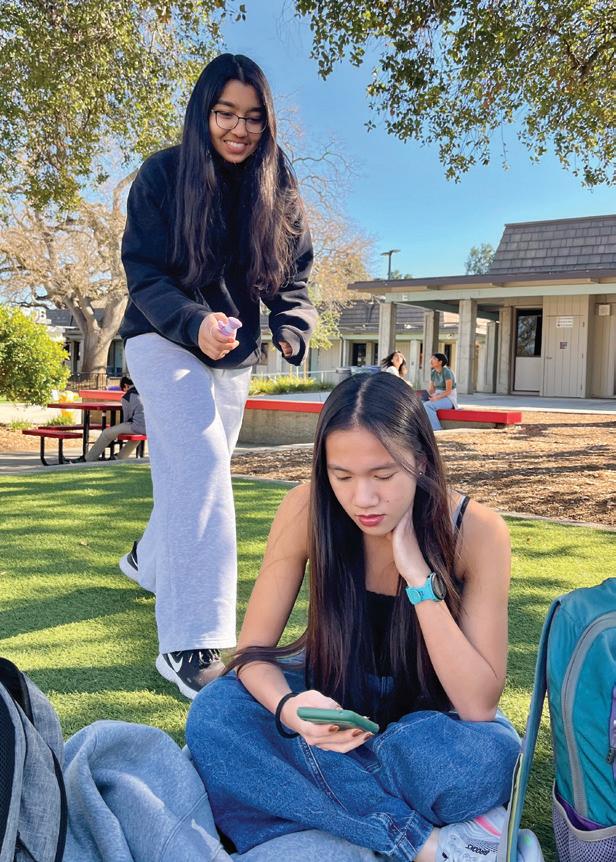
Dating back to the first game in 2017, the SEChosted tradition continues to brew excitement and light-hearted competition among students. Each year, hundreds of participants register through the student-created game website and receive a target. The goal is to tag that student with a plush toy to eliminate them, enter their code into the site and climb up the rankings.
Student Body Secretary junior Esther Li describes Elimination as a friendly atmosphere that brings out everyone’s inner child.
“The fact (is) that your target can be anywhere in this school,” she said. “It could be someone you know or may not know (which) makes the process of trying to eliminate them a fun way to
get to know new people and build connections.”
From holding a plushie in a specific hand to wearing wigs, the game has daily rules that protect players from being tagged. Participants must simultaneously hunt their targets and adhere to these constraints to stay alive in the game.
For many students, like freshman Ellie Fidanboylu, Elimination is the social highlight of the year. As the competition stakes intensify throughout the weeks, shared memories and new connections are made along the way.
“It’ll be a fun activity to do with my friends,” she said. “There will be something new every single day that gives everyone something to look forward to.”
The Student Executive Council will host the annual Love Week on the quad, where students can celebrate on-campus connections from Feb. 10 to Feb. 12.
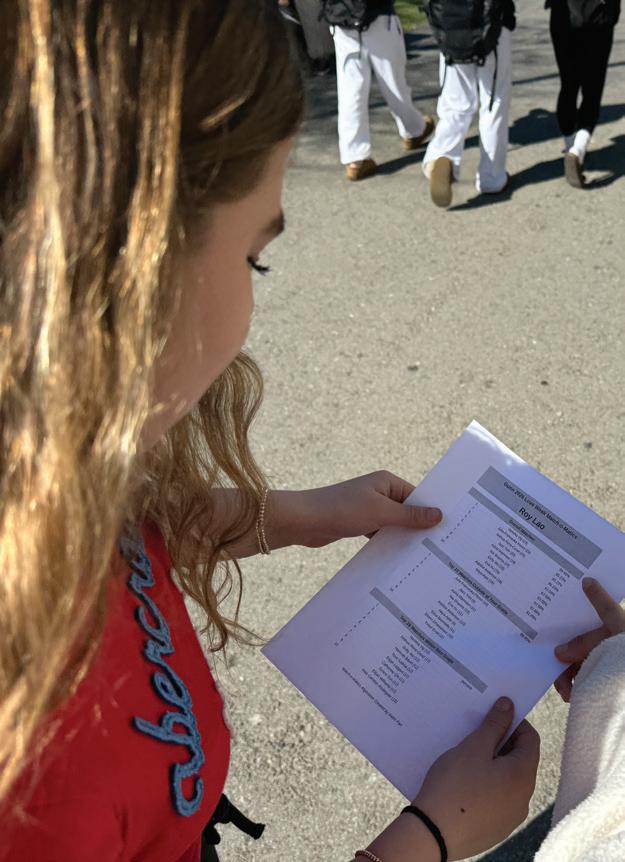
On the first day, students who completed the Match-o-Matics survey distributed through Schoology, will receive their results revealing their most and least compatible matches across all grades.
Sophomore Naomi Weiner, who participated last year, enjoyed the sense of community and opportunity for new opportunities to bond.
“I think (SEC) fosters a great sense of community from Match-o-Matics, especially because you can find people that you bond with or are similar to you without actually ever meeting them before, and you get to meet new people that way,” she said.
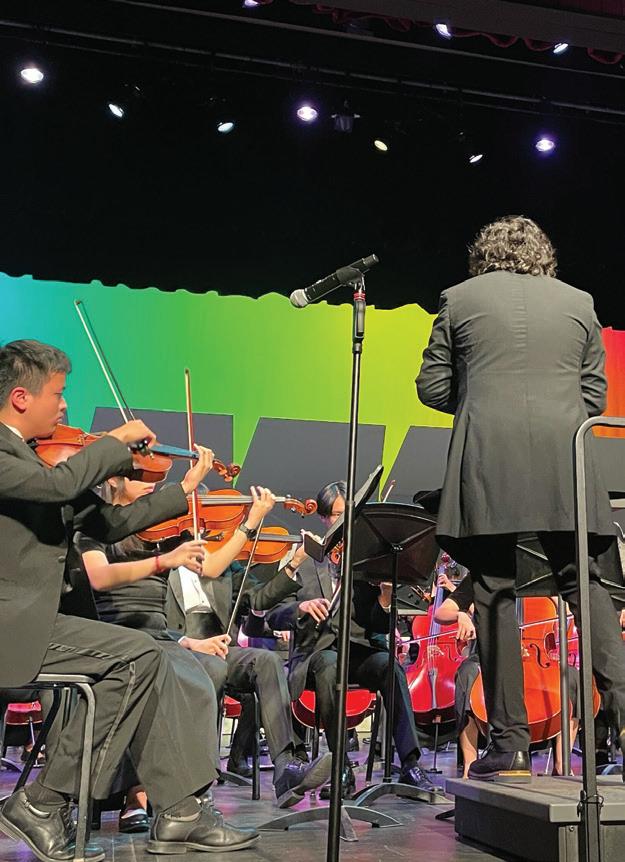
Students started the second semester with a refurbished Spangenberg Theater, complete with new rigging systems, trusses for stage lights, updates to the control booth, electrical upgrades and a new fire curtain.
The renovations prioritized lighting upgrades to bolster the audience experience, introducing color-changing LEDs and moving fixtures with remote pan, tilt and zoom control, according to PAUSD Supervisor of Theatre Production and Facility Rental Kyle Langdon.
“The theater is much more evenly lit when you walk in,” he said. “These improvements benefit all performers, designers and attendees for events at Spangenberg Theater.”
While the equipment improves production capabilities for Gunn’s performing arts programs, the primary driver behind the construction was

—December 5, 2025—
The following day, students can make bracelets together before the week culminates in a symbolic “marriage” under an arch with fake rings and flowers. The Love Ceremony is the most popular event of the week, according to Student Activities Director Lisa Hall.
“People all gather together, and it’s nice because significant others and friends can get married under the arch,” she said.
Special Events Commissioner junior LeeAh Ji said the organizing team is changing the Matcho-Matics algorithm to fix previous years’ flaws.
“Some people got the same person in their sheets (as other people), so we’re hoping to create a better system that’s more varied,” she said.
safety and compliance, according to Assistant Principal of Facilities Dr. Mycal Hixon in a press conference with The Oracle on Jan. 21.
“(We had to) make sure we were up to fire code with the fire marshal,” he said. “California changes things on a consistent basis to make sure that things are sustainable.”
During the construction period, Gunn’s performances, including instrumental music concerts, the staff-choir musical and theater productions, were relocated, primarily to Paly’s Performing Arts Center.
“It is a lot of work to take a show on the road, and everyone involved did a great job to help those changes run smoothly,” Langdon said.
There are no current plans for further major construction. Performances have since resumed.



Friday, February

Gwen Domine Features Editor
Hallmark of early facial altering technology, the Snapchat face-swap filter is a fun lens well-known to many longtime Snapchat users, reaching peak popularity in 2016. However, image alteration platforms take on a new role when considering the evolution of softwares: platforms used to have a goal of fun, interactive experiences for users. However, artificial intelligence has entered the realm of dangerous possibilities for the many who are unable to distinguish AI-generated videos from real media. While cats baking a cake or Donald Trump singing a viral song are relatively harmless uses of AI, much of the work created by generative AI can have lasting, dangerous effects that run rampant due to a lack of effective regulation.
Without proper legislation and enforcement, AI has the power to spread misinformation in the hands of those with dangerous intentions. In January 2025, Trump signed Executive Order 14179, effectively removing the limitations on American AI development that Biden had previously set to mandate safety testing. In addition, Trump signed The Known Exploitation by Immobilizing Technological Deepfakes on Websites and Networks Act (TAKE IT DOWN) in May 2025, which prohibits the publication of AI-generated explicit images, and in case of publication, requires the photo
to be taken down within 48 hours. However this act has not yet been effective. For instance, deepfakes — false videos of real individuals, often sexual in nature — carry malicious intents that endanger the lives of subjects, and are still found commonly across the internet. The potential to ruin lives with AI-generated nudes or impact careers by creating a video of someone using a slur is far too easy. In 2023, the U.K.-based charity Internet Watch Foundation found that AI-generated images of children in a sexual nature are becoming available on a subscription basis, allowing users of specific sites to pay to receive pictures monthly. The lack of generative AI moderation causes harm to unsuspecting minors, permanently altering their online, and real, presence and perception.
Left unchecked, AI can be weaponized in political campaigns to attack opponents, manipulate public perception and mislead voters. According to the U.S. Department of Homeland Security, prominent cybersecurity company FireEye found images that were artificially-generated in order to promote the Lebanese political party. AI skews how constituents form their beliefs due to abusive and unethical tactics utilized by international politicians, jeopardizing the integrity of governments.
To solve this pressing issue and fix the shortcomings of the TAKE IT DOWN Act, legislation should mandate watermarks that clearly label AI-generated content. While it may be impossible to altogether stop the creation of deepfakes and other products of generative AI, as seen with the TAKE IT DOWN Act, there is still a path forward. To fix the problem, it must be addressed at its roots: the companies. TAKE IT DOWN has failed
largely because it leads to delayed reactions that allow for over two days of reshares, screenshots and potential to go viral. Google’s creation of SynthID, an invisible tool marking AI products, is a first step. However, invisible watermarks may fall short in any setting beyond the academic. To protect the public, visible watermarks are necessary to ensure users can immediately recognize fabricated media. For example, OpenAI’s Sora features a small logo on each AI-generated video, indicating its origin. California has also begun promoting legislation in a similar direction. Effective in January, the California AI Transparency Act requires generative AI platforms to have a feature where users can detect AI content or add a watermark. This bill is a start to the regulations that need to become much more widespread.
Of course, there is the issue of national versus international jurisdiction. That is, if the United States is the only country to regulate AI-generated content, companies may move operations abroad to bypass domestic laws while still influencing U.S. audiences. This reality calls for world-wide cooperation. As with international agreements, such as the Paris Agreement on climate change and the Geneva Conventions on humanitarian law, effective AI governance should require coordination beyond national borders.
As technology grows more powerful, so do the risks. Generative AI has increasingly fallen into the hands of those willing to exploit a public that cannot distinguish altered media from the real world anymore.

Yuji Song Reporter
In a society that equates late nights and packed schedules with ambition and future success, being busy has become a source of pride. Ask any of your friends or coworkers if they can make plans for the weekend. The most common response is, “Sorry, I’m busy.” The words double as a signal of productivity and importance, as if constant exhaustion is proof that achievement is made. However, continuous activity is mistaken as success, and making the two synonymous can obscure the damaging consequence of burnout.
Being busy is a measure of activity, not accomplishment. Spending numerous hours answering emails, working on tasks and attending meetings can count towards the amount of work done but might not even have a goal behind all the tedious labor and time spent. A 2012 research from the University of Chicago found that people set goals to justify themselves
a task rather than nothing, even if it meant that task was pointless. In fact, excessive worry can mask one’s motivations: people may focus on filling their schedules rather than stopping to question what truly matters or what meaningful results they want to achieve. Across careers, overworking is rewarded and constantly praised. Employees who work longer hours and take on multiple tasks are characterized as hard working and disciplined. Meanwhile, equally efficient workers who finish their work without extra hours may be devalued. Research conducted by the National Bureau of Economic Research in 2006 found that in the early 2000s, employees who worked over 55 hours per week earned a weekly salary 24.5% higher than workers working 40 hours. While this may seem beneficial, this 24.5% salary increase is due to an over 35% increase in working hours, which is less bang for your buck.
According to the American Psychological Association, multi-tasking can cause a person to lose up to 40% of their productive time. During the course of rigorously replying to the numerous emails and notifications along with processing

The same pattern extends into classrooms. Students overpack their time with multiple extracurriculars, advanced classes and other fulfilling opportunities, hoping this lifestyle is the ticket to a good college. But chasing quantity over quality can backfire. While there are benefits to having a variety of interests, being overpacked with excessive work severely impacts mental health, increasing depression, anxiety and burnout, leading to an obscured vision of pure interest and passion. In 2013, researchers at Lewis and Clark College surveyed over 4,000 students, revealing that overloaded schedules directly linked to symptoms like headaches and exhaustion. Success in education, or in any field, comes hand in hand with passion, learning and growth, not the volume of work done. It starts with a goal and deliberate actions that pursue it. The most accomplished students and professionals are not



people feel but rarely name. When you’re not constantly braced for disappointment or exploitation, your body stands down. Over time, that calm accumulates, shaping mental health, physical resilience and how long people stay well enough to show up for others again and again throughout their lives.
Vin Bhat News Editor Kaylee Cheng Forum Editor
Something has shifted in how people think about their place in the world. More and more, a simple philosophy has taken hold: “You don’t owe anyone anything.” “Look out for yourself.” “Invest time only where there’s a clear payoff.” It sounds liberating, even empowering. But this mindset comes with costs that are only beginning to be understood.
In a massive Seoul National University-led 2020 study tracking 636,055 adults in South Korea, people living in neighborhoods with higher collective trust and reciprocity lived longer, with lower rates of death from cardiovascular disease and cancer. This wasn’t because they smoked less or exercised more. The protective effect remained even after accounting for those healthy lifestyle choices. This suggests that social cohesion itself may shape population health in ways individual choices alone cannot.
According to a St. Louis University study published in 2013, across many populations and study designs, communities with stronger trust and reciprocity tend to have better health outcomes compared with less connected ones. Beyond mortality, large systematic reviews and meta-analyses show that people living in more connected communities tend to be healthier. Studies on social capital research — which focuses on the networks, trust and norms of mutual aid — associate higher levels of social connection with better self-reported health and reduced risk of death overall.
Across studies, stronger neighborhood trust and mutual support correlate with better moods, less loneliness and greater life satisfaction. In these settings, social networks function as emotional infrastructure, scaffolding that holds people up when everything else threatens to collapse.
Strip that away, and what’s left? The answer is already being lived around the world. Loneliness and isolation increase risk for depression, anxiety and cognitive decline. They diminish quality of life in measurable, devastating ways. The “I owe nothing” attitude doesn’t free anyone. It isolates.
The objection is predictable. It sounds like guilt-tripping people into obligation, as though social connection requires self-sacrifice in the name of some outdated sense of duty. But that fundamentally confuses what reciprocity means.
Reciprocity isn’t a burden carried for someone else’s benefit. It’s an investment in a system that benefits everyone, including the person making the investment. When communities operate on trust and mutual aid, they become resilient. They can weather economic downturns, natural disasters and personal crises. They create environments where information flows, where help is accessible and where people look out for one another not because they have to, but because it works.
Real fReedom isn’t the absence of connection but the pResence of meaningful choice within a web of Relationships that sustain.
Perhaps the deepest misconception about the “owe nothing” mentality is that it represents true freedom. It doesn’t. Real freedom isn’t the absence of connection but the presence of meaningful choice within a web of relationships that sustain.
In our post-pandemic, AI-andtechnology ridden, politically hostile, fastpaced life, the loneliness epidemic, this grey filter blurring the warmth communities and connections are meant to offer, is now a more pressing problem than ever.
I read a quote somewhere (from TikTok, unfortunately) that said, “In order to have a village, you have to be a villager.” It all sounds so simple, but what does it mean to be a villager?
I’ve grappled with that question in a lot of friendships in the past. Does being a villager mean 100% sacrifice with no expectations of a favor being returned? Does it mean perpetually prioritizing the happiness of others over yourself? Or feeling responsible for their every bad day? As someone who has been trapped in those scenarios before, I can tell you that it doesn’t equate to fulfillment, just deep burnout and stress. There’s definitely a delicate balance, but in a world where social media artificially creates friendships that are low-effort to maintain, it’s difficult to find genuine, nontransactional relationships. When you post a birthday story, comment on a post and tag your friends in videos, it’s easy to feel like you’ve done enough for the friendship, that you’ve done all you’re “supposed to do.”
Research from the Finnish Department of Health in 2013 adds another layer to this picture by showing that social participation is independently associated with healthier behaviors and better self-rated physical and psychological well-being. All in all, this too complicates the preconceived notion that individualism and the “I owe nothing” attitude are helpful or advantageous.
Physical health tells only part of the story. When people withdraw from contact with others, convinced they owe nothing to those around them, they lose something harder to quantify but just as vital: the buffer against life’s inevitable hardships.
Trust isn’t some abstract virtue floating above daily life. It shows up in small, ordinary moments, like a friend checking in with you when you go quiet or a coworker sharing advice without guarding it. Those moments lower stress in ways
Communities built on trust and reciprocity are dramatically healthier and happier. When people tell themselves they owe nothing to anyone, they make a trade without full awareness. They exchange the illusion of total independence for the very real benefits of interdependence. Isolation gets chosen over resilience, loneliness over belonging and — whether anyone realizes it or not — sickness over health.
The path forward isn’t complicated. Society doesn’t need revolutionizing. Autonomy doesn’t need sacrificing. Mutual responsibility, civic engagement and social reciprocity aren’t constraints on human flourishing. They’re conditions for it. The question isn’t whether communities are worth investing in. It’s whether anyone can afford not to.
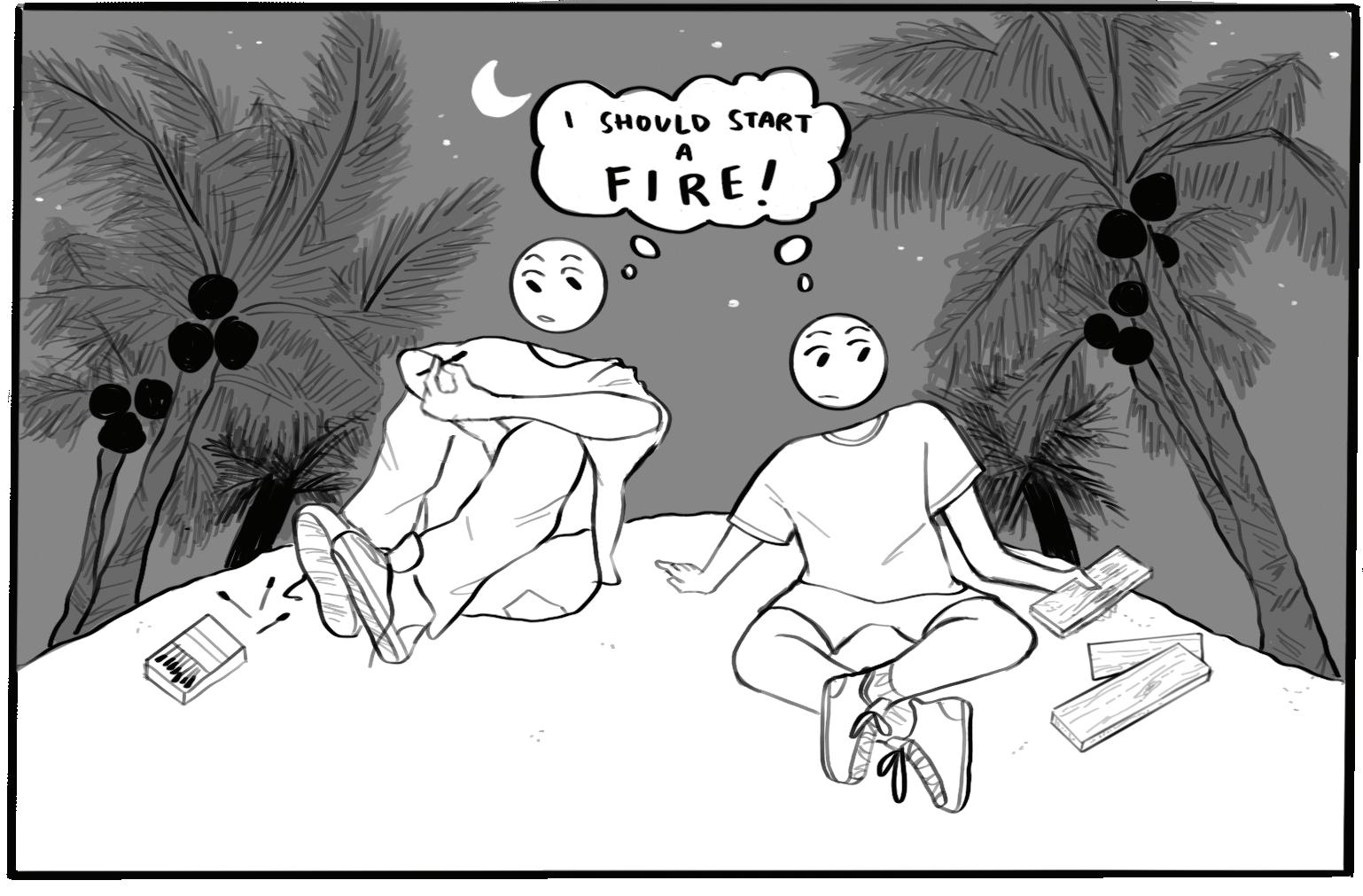
The account feels settled. Yet this thinking doesn’t encourage us to spend quality time with the people we love, pick them up from the airport at 4 a.m. or offer to make them soup when they’re sick. After all, the saying refers to it as a village, not an E-community. Another one of the biggest reasons for our widespread loneliness is a collective loss of empathy when humanity is impersonalized through a screen. Especially following the boon in mental health awareness, we are encouraged to always put ourselves first, build a space where we are the most comfortable and prioritize our own comfort always. I’m not saying at all that this is wrong. In fact, I think past-peoplepleaser-Kaylee would have benefitted a lot from adapting this philosophy. However, this mindset can’t be the only way we move through the world. You can’t avoid everything that is an inconvenience by making the case that “you gotta put yourself first.” Don’t cancel plans just because you suddenly don’t feel like hanging out. Don’t cut people off without putting in the effort to have a genuine conversation and try to fix the issue — because when it comes to people you love, those hard conversations are the things that prove you care. I am grateful every single day for not only having met my friends, but more importantly, for feeling my effort, vulnerability and presence reciprocated in a tangible way needed to keep real relationships alive. This metaphor of finding my “village” has been an unspoken mentor in my journey to unlearn previous instincts and reach out to others with a renewed confidence. Being part of a village does not mean forgetting yourself and who you are. It is an assurance of the important role you hold in other’s lives.
Ultimately, if we crave community and fear loneliness, then making interpersonal connections remains a choice we consciously keep making, and eventually, you will find the people that you mutually ride or die for.
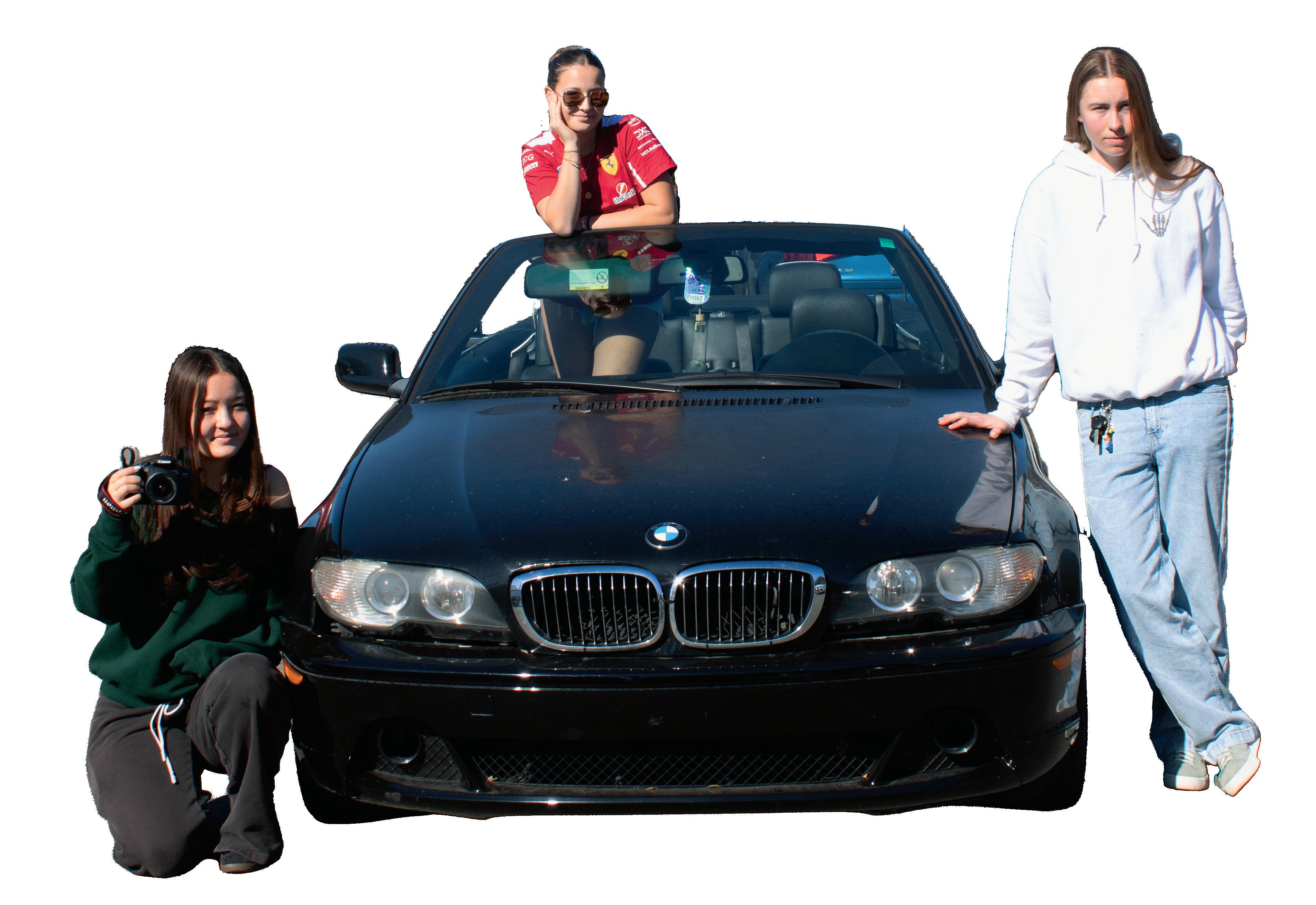
From Hot Wheels toys to Lightning McQueen bed sheets, the idea that cars are made for boys has been imprinted into young minds for decades. Meanwhile, young girls are expected to gravitate towards Barbies or pretend-play kitchens, interests which are labelled as feminine. For sophomore Natalie Noh, these examples of early gender-specific marketing can influence how girls view themselves and limit future opportunities.
“Cars being primarily targeted towards boys can definitely delay interest for a lot of girls from a young age,” she said. “Guys are exposed to (things from) toy cars and trucks to video games or other media while girls might not be as exposed to the same things.”
This marketing framework is reflected in research from the Geena Davis Institute on Gender in Media. The study found that in advertisements distributed during 2022 for best-selling toys, boys were three to four times more likely to be shown playing with cars, weapons and sports toys than their female counterparts. These patterns in representation do not end in childhood: They become prevalent in the workforce too. While women in the automotive industry have grown in numbers recently, according to the Bureau of Labor Statistics, women only held 23.9% of manufacturing jobs, which includes food and transportation manufacturing, and 12.1% of automotive repair and maintenance roles in 2022.
wheels. Having grown up watching her dad work on his own car, she started her sports photography career two years ago and enjoys taking photos of motor sports while also watching Formula One racing.
Throughout her journey, Noh mentions that the bias she has felt in the motor field has only grown stronger. She has noticed that there are differences in people’s behavior when she is alone in contrast to when she is with her male counterparts.
it could also be good to have women coming into the automotive industry and representing that diversity among genders. that’s what I’m trying to do.
junior vanessa dahl
As the only girl in her auto class, junior Vanessa Dahl pushes past assigned gender roles by but leading projects amongst her male peers. Her interest in cars began in Fletcher Middle School where she took the Industrial Tech, and has remained a defining part of her life. Responsibilities like changing engine oil, working on her own car outside of school or completing projects in Gunn’s auto class have inspired Dahl to pursue a career in automotive engineering.
“I feel like (the automotive industry would) be more inclined to have men just because it (may) seem
“At car meets and events, I’ve definitely noticed that the owners (of cars) are more likely to explain the specifications and the details of the cars when I’m with guys, whereas when I’m only with other girls that doesn’t always happen,” she said.
Even in sports entertainment, women often must fight for their place as a fan. Sophomore Gaia Kimhi considers herself a F1 superfan, from waking up at dawn to watch races and traveling across the world to attending the F1 Grand Prix. Her love for motorsports stemmed from the influence of her dad and older brother, as she often attended car races with them starting from the age of six. Throughout the countless events she has attended, Kimhi has noticed the large gap in attendance between the two genders. Similar to Dahl and Noh, she believes this disparity stems from societal beliefs that women are not interested, or cannot handle the technical side of auto.
pursuing more male-dominated hobbies.
“I definitely think that the way that cars are spoken about from a young age impacts a lot of women’s outlook on cars, and especially in F1 because it almost discourages women from wanting to look into it further, out of the fear that they’ll fall out of being womanly or elegant,” Kimhi said.
Nevertheless, Noh has been able to overcome barriers by finding a supportive community and leaning into her passion. Photography helps create bonds between people in the same hobby. Shooting different car shows with her friends keeps her motivated to keep going.
“I think through car photography, I made a bunch of friends with other photographers, some of whom also shoot motor sports, which eventually got me to bring my camera to different car shows and events,” she said. “I think what keeps me interested is getting to see different cars for the first time. It is always such a surreal experience.”
Carrying her love of sports photography and a sense of self-confidence, Noh pushes past gender norms and plans on continuing on the motor sports photography path in college.
“I think that if you know your stuff and are just confident and passionate about it people respect that no matter what your gender is,” she said.
what keeps me interested is getting to see different cars for the first time. It is always such a surreal experience.
sophomore natalie noh
“I think one of the biggest (stereotypes) is that women only like the sport because they’re attracted to the driver and that’s the only reason they would keep up with the sport,” she said. “So it’s almost like having to explain why you’re a fan of something that other people may be too, but because you’re a woman, you
Although the stereotypes put onto girls in the field are not easy to deal with, Kimhi prefers to think of it as motivating rather than discouraging.
“It’s easy to be thrown off by subtle observations such as the smaller attendance of girls like me or stereotypes that I feel like are constantly being placed on women,” she said. “The truth is, I feel even more passionate to prove my gender right in a hobby full of men which is why I keep showing up and doing what I love.”
by Lena Duggan and Ellen Kim
Gwen Domine, Eanam Maor and Ezra Rosenberg Features Editors and Lifestyle Editor
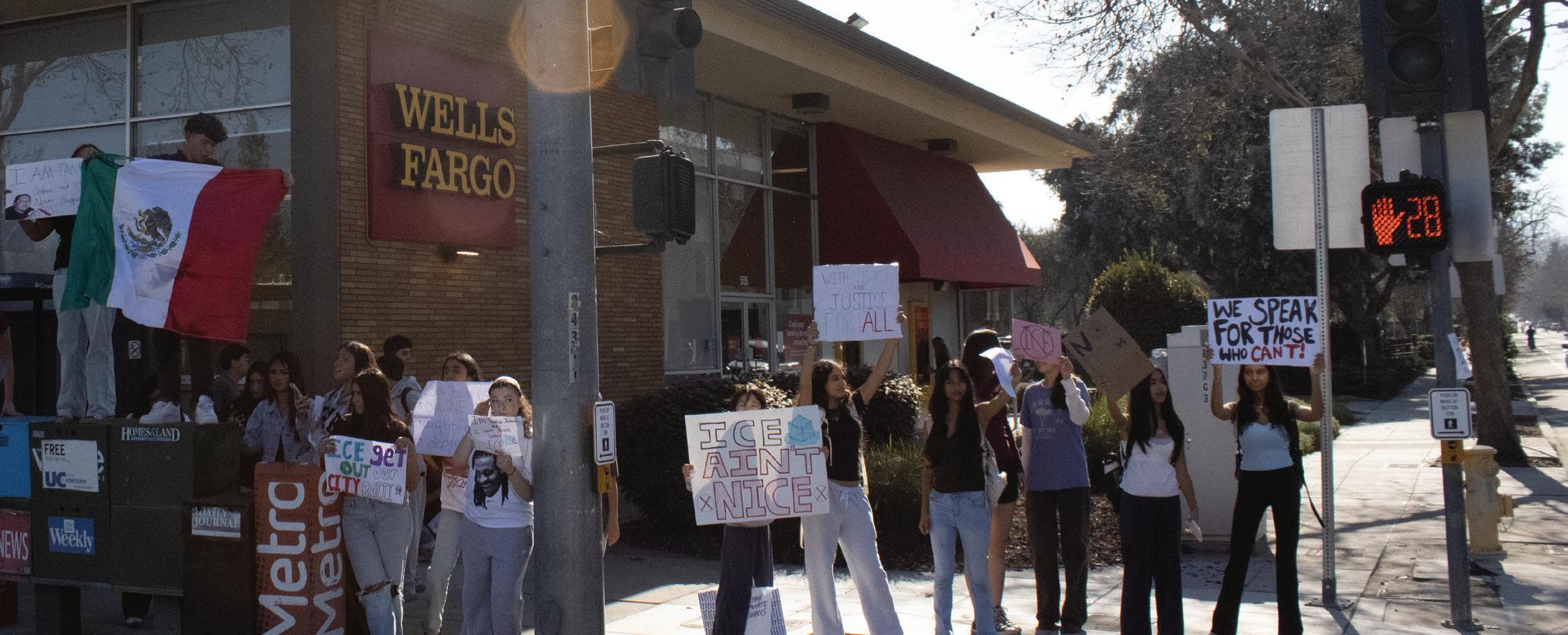
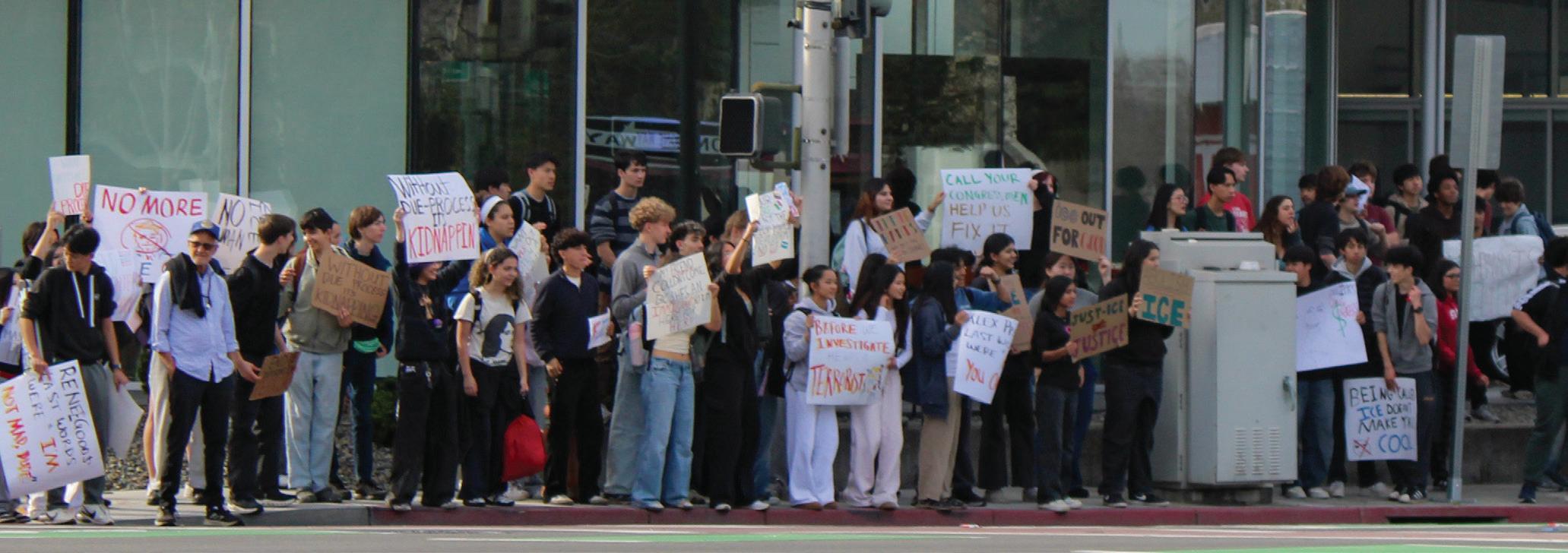
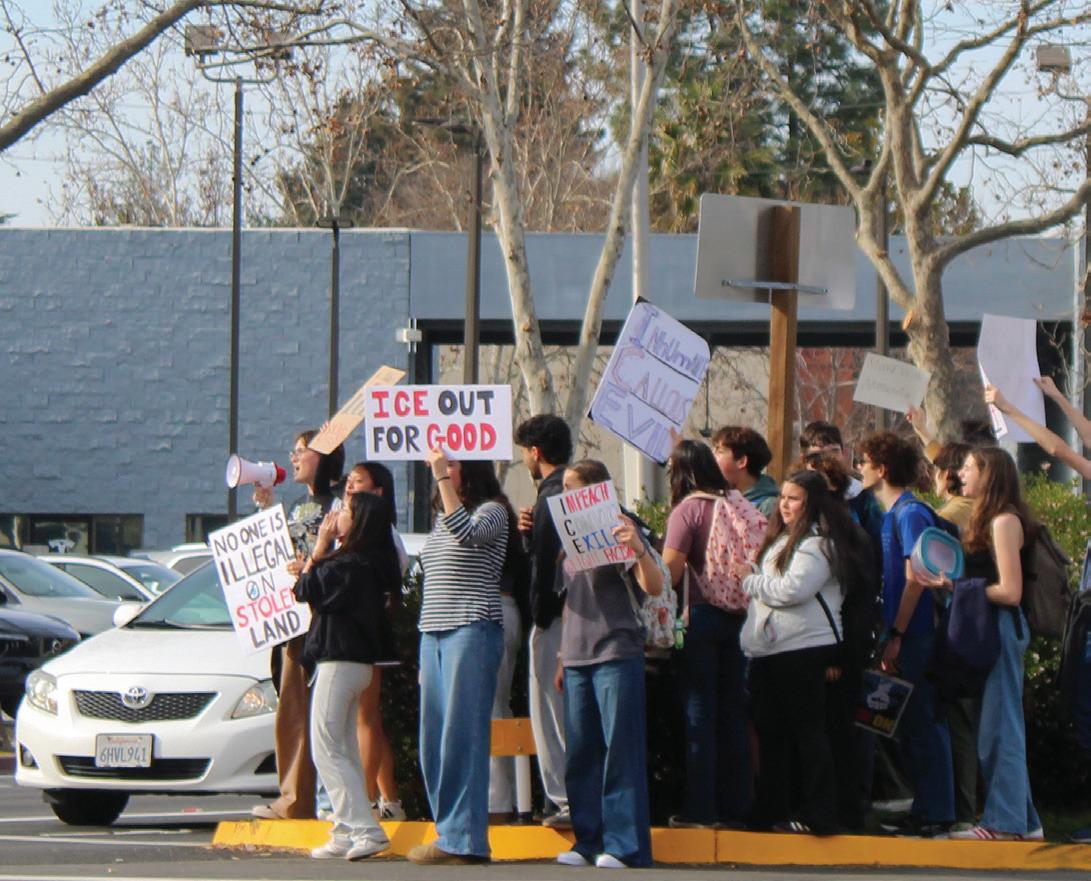
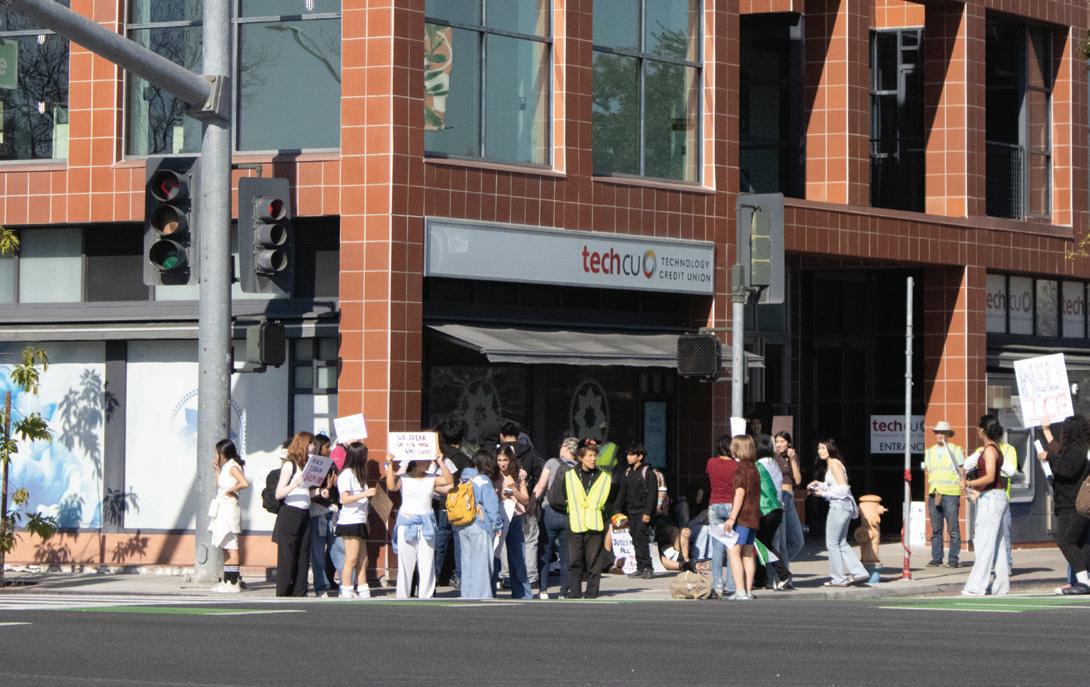
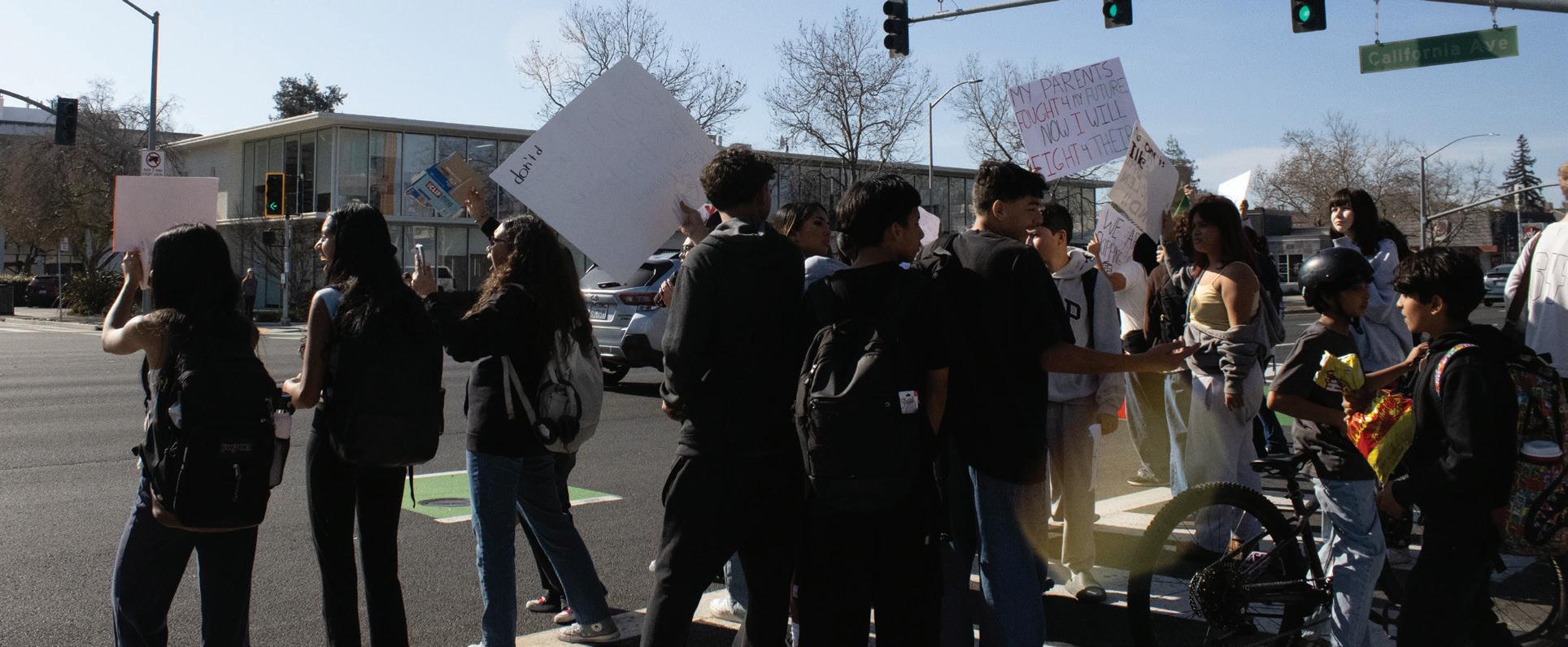
Palo Alto students from across grade levels and schools took to the streets in recent weeks, joining a wave of nationwide youthled protests in light of the U.S. Immigrations and Customs Enforcement killings of Renee Good and Alex Pretti. Students gathered in the senior quad on Friday, Jan. 30, to begin a march from Gunn to El Camino Real, holding signs and chanting phrases such as “Melt the ICE!” Four days later, on Feb. 3, students across PAUSD schools — Gunn, Jane Lathrop Stanford, Fletcher, Greene, Palo Alto Middle College and Paly — gathered on California Avenue after unforeseen circumstances prevented them from realizing the original plan of meeting at Paly and progressing to the district office.
Junior Kalissa Huang and sophomore Noa Zeitlin (who is also a reporter for The Oracle) led the first walkout, promoting it largely through Instagram on their account @walkoutatgunn. The students amassed hundreds of followers in just days. Friday’s protest stemmed from a nationwide movement protesting ICE’s actions, referred to across social media as a “day of strike.” Students ended up gathering around the Tesla dealership and surrounding areas with signs and chants. Other students drove by in their cars and honked in support of their peers as the protesters cheered. Before the protest, Huang and Zeitlin reached out to Assistant Principal Kat Catalano in order to gain more information as well as go over legal regulations regarding student demonstrations.
Tuesday’s walkout, however, was Bay Area-centric and included five other PAUSD schools. While it was organized by members of Gunn’s Latinos Unidos Club and Black Student Union, it was not an official club event. Spearheaded by juniors Sophia Chakos-Mitchell and Keylee Villanueva Dominguez along with seniors Khloe Hisatomi, Megumi Estrada and Natalia Martinez, their goal was to show support specifically for Latino and immigrant communities rather than protest ICE and the Trump administration.
Chakos-Mitchell helped organize the logistics and communication. The intention was to advocate for the district to release a statement or letter to marginalized communities assuring them of their support, similar to previous district protest responses, according to Chakos-
Mitchell. However, as of Feb. 4, there has not been an official publicized statement from PAUSD. She mentioned that while she believes the district has made some good choices and is doing a better job than many nearby districts, students are advocating for a more empathetic response.
“(I would urge people to) listen to marginalized groups when they are telling you of their experiences,” she said. “Just because it’s something that you haven’t heard of (or) something that you’re not aware (of) doesn’t mean it’s not true.”
District staff are prohibited from supporting any political agenda during working hours, according to PAUSD board policies that cite California Education Code sections 7050-7057. Essentially, staff are not allowed to officially endorse protests or personally encourage students to attend during working hours. Although PAUSD cannot advertise or label a protest as a district-sanctioned event, they have the power to advocate for safety, which they took measures to promote.
“Our administration team wants to support student efforts,” Catalano said. “We also sent some information out through ParentSquare that was posted yesterday afternoon (Jan. 30), just to inform the community.”
The ParentSquare post detailed the walkout plans, and read that the administration’s priorities are “student safety, respectful learning environments and clear expectations,” stating that instruction would continue regardless of the walkout.
According to Title IX Coordinator and Compliance Officer Robert Andrade and Gunn administration, safety is the largest priority of district staff. However, once students step off campus to protest, they are no longer the responsibility of the district. Andrade noted that the majority of students participating in the Jan. 30 event followed safety protocols and remained on sidewalks. Some students, however, instead stood in the road or filled a vehicle above capacity — prompting safety concerns.
“At that point, you’ve taken (the safety) out of the district’s hands,” Andrade said. “Safety always begins when you come to school and are at school. Safety ends once you leave school and are off of school property.”
disproportionate targeting of the Latino
“We wanted (Tuesday’s protest) to personally show and shed light on “A lot of people didn’t understand hosted by Latinos, and it was a major the same time, we have to do what we support us or not, that’s their decision.”
Another concern was the lack whereabouts as a result of attendance allowed one school day of excused engagement events, according to California an excused absence, students were their absence at least 24 hours in submit the form, causing a high volume leaving a significant number of students
“The turnout was a good deal higher we had turned in for excused absences,”
Through both the Feb. 3 and Jan. confidence in the state of youth voices. Students from each middle demonstrating a level of involvement national events affected adolescents.
JLS eighth grader Rhea Page feels peers have a duty to speak up and believes a necessity even when young.
“I showed up here because I want out for this, and for those who are getting “It doesn’t matter who’s who (or) what together to support it.”
Dominguez encourages students political activism locally, especially just in response to national movements.
“We want to do more walkouts, the more people,” she said. “We don’t want
Although the protest drew large turnouts, the organizers of the first and second protest faced challenges coordinating their efforts. Friday’s

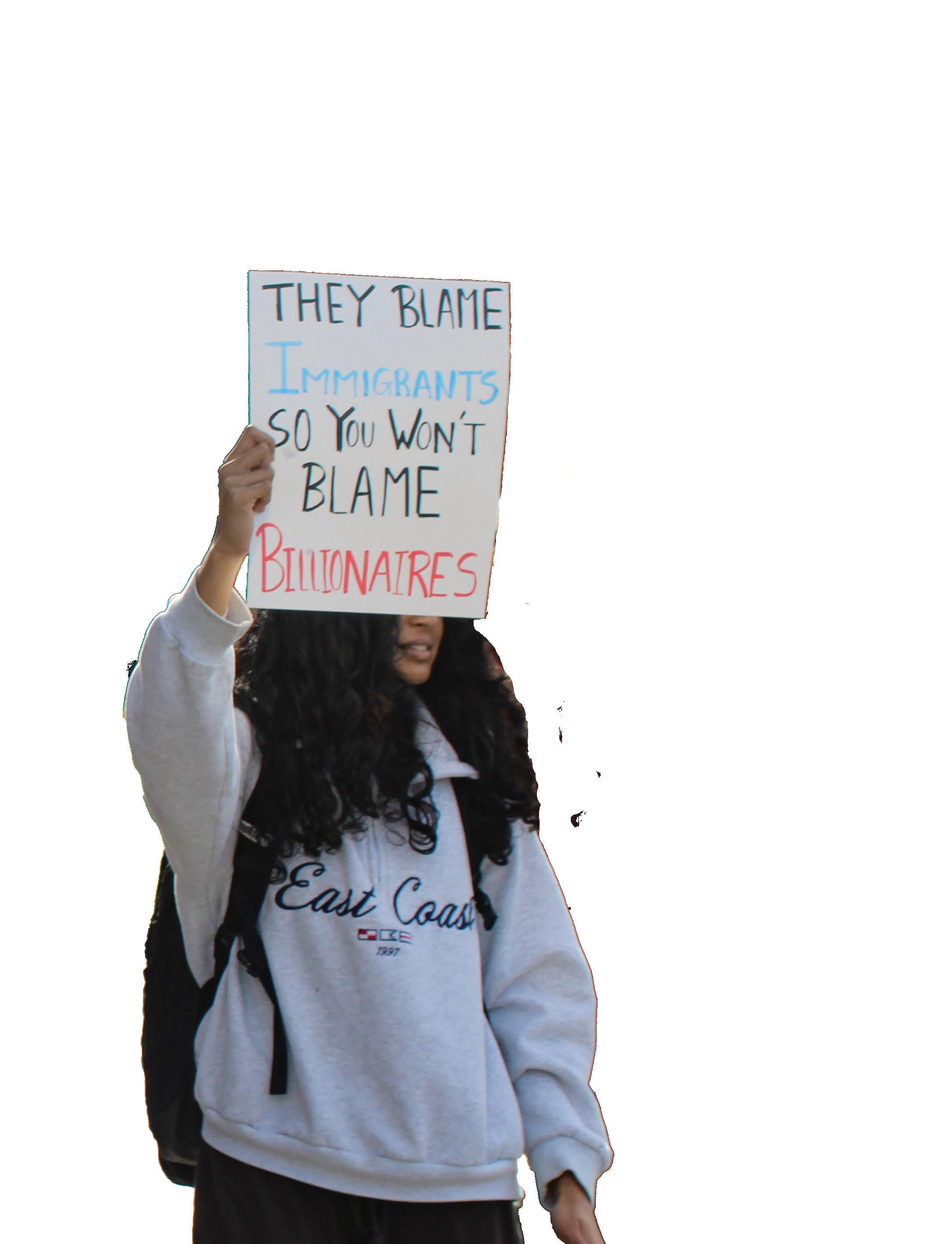
Jan. 30 protest attendee senior Arjun for students to vocalize their opinions make change and mobilize awareness.
“We have to come out and show going on in our country,” he said. “We and the deportation of immigrants who opportunities. We’ve got to change
While the Jan. 30 and Feb. 3 protests were not entirely student-populated.
Latino demographic by ICE. to be hosted by Latinos to be able to our community’s issues,” she said. why we thought that it should be major problem at the beginning, but at we want to do, and if people want to decision.” of knowledge regarding students’ attendance discrepancies. Students are excused absence to participate in civic California Senate Bill 955. To receive required to fill out forms detailing advance. However, many did not volume of unexcused absences and students unaccounted for. higher than the number of forms that absences,” Catalano said.
Jan. 30 walkouts, students gained activism and the power of their school in PAUSD also participated, involvement that reflected the extent to which adolescents. feels that regardless of age, she and her believes that spreading awareness is want to support those who can’t speak getting deported unfairly,” Page said. what grade you are: We’re just all here students to continue to participate in especially regarding current events and not movements. the bigger the better, so that there’s want to do it for the trend or just a
Arjun Sinha thinks that it is important opinions on issues they care about to help awareness. show that we really care about what’s “We really want to stop all of the hate who come to this country looking for that.”
protests were both student-led, they student-populated. At both the Jan. 30 and Feb. 3
present at the events to ensure both safety and support. Through a network of online news, emails and various forms of communication, the word spread to adults in the community.
Former Youth Community Service director and current Rotary Club of Palo Alto member Leif Erickson attended the Jan. 30 walkout at Gunn after attending the one at Paly. He did so to make sure students were safely crossing the streets they were protesting on during the event.
“The only reason I’m here is to keep students safe,” he said. “I think it’s a very positive development, and the fact that it’s happening not just at one school but all over the country shows great solidarity.”
Indivisible Palo Alto Plus, a local activist organization promoting democratic values, brought eight members to Tuesday’s California Ave. protest. These peacekeepers, IPA+ member Steve Wagman explained, went through training and were prepared for contingency plans in the event of the protest going wrong.
“We’re out here to make sure that no counter-protesters come and start arguing with the protesters,” he said. “I think it’s great everybody’s yelling and making people honk and having a good time and keeping people aware.”
The community continues to look ahead for next steps while holding space for grief and remembrance. Freshman Kayla Barile, who attended the Friday protest, is the daughter of an immigrant and was taken aback by events on the news regarding ICE arrests, describing them as “unjust and unlawful.”
“It honestly makes me feel a little bit sad that we have to miss our school to come here and protest,” she said. “But it’s kind of empowering that everyone’s coming out here to show up.”
According to a Feb. 2 Schoology post from Assistant Principal Erik Olah, Board Policy 1445: “Response to Immigration Enforcement” is on the agenda for consideration at the Feb. 10 school board meeting. Chakos-Mitchell highlights that there are still gaps that must be addressed, leading her to personally email the district to advocate for the upcoming policy to include mental health and emotional support for students in these demographics.

and it doesn’t matter if other people aren’t following in our footsteps. It matters that we’re doing what’s right.”
This emotion and community connection is what drives action. Looking to the future, sophomore Edgar Cruz believes that political activism should be used as a catalyst to create changes that combats perceived injustices.
“We’re doing a peaceful protest so we can make it right and help the community,” he said. “(ICE is) going to start terrorizing things, breaking things, getting people and taking them. We want our community to be a safe place where people won’t be scared.”
—Additional reporting by Vin Bhat
• sB 955: allows students to have one excused aBsence per year for participation in a civic or political event if they provide advance notice
• 1st amendment: riGht to protest, record video and photoGraph police, Government officials and anythinG in puBlic spaces
“I saw that they had an ICE policy in place, and that’s good (because) that can give students a little bit of reassurance,” she said. “But a lot of it also is making sure that emotionally, students know that the school
According to Chakos-Mitchell, changes to the plans for the Feb. 3 protest prevented the event from achieving its original goal: going to the district office and pushing PAUSD to implement specific policies and actions. Still, she mentions that the high volume of student support made an impact, which led to an email back from the district and drew the attention of district officials, including Superintendent Don Austin. She continues to advocate for students to stand up against inequalities.
to show up for communities that you’re not a part of,” she said, “We should always be supporting our underrepresented communities as
• 5th amendment: riGht to remain silent to avoid self-incrimination
• 6th amendment: riGht to seek leGal counsel If arrested or detained
• If stopped, ask if you are free to Go. If yes, calmly walk away. If not, ask why.
• incitinG violence
• threateninG and/or swearinG at people.
• carryinG weapons
• interferinG with law enforcement
• trespassinG on private property
Source: ACLU, CA Senate Bill, U.S. Constitution, InFocus


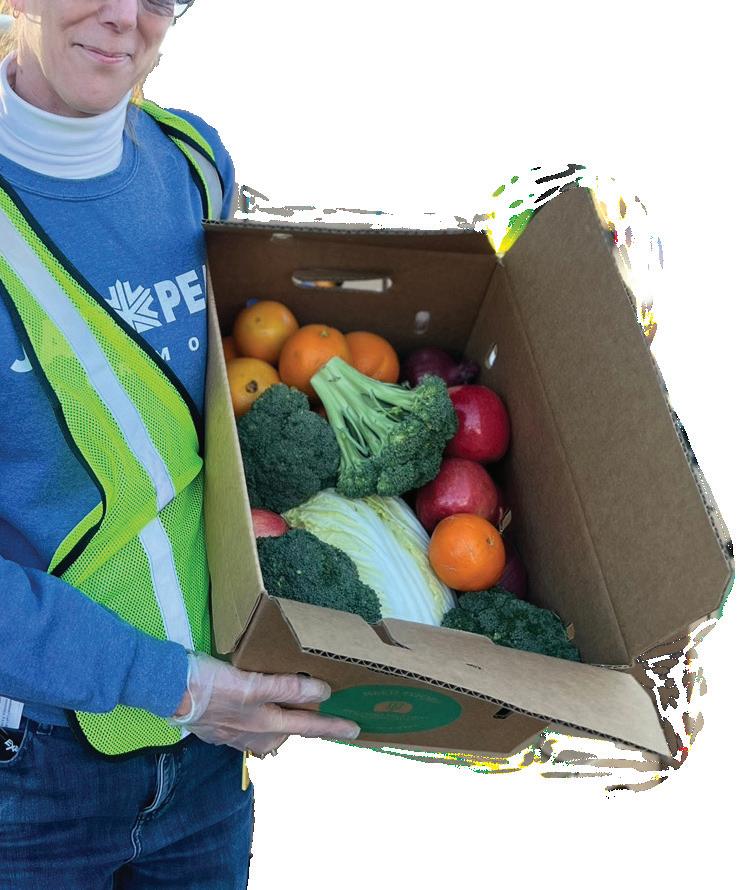
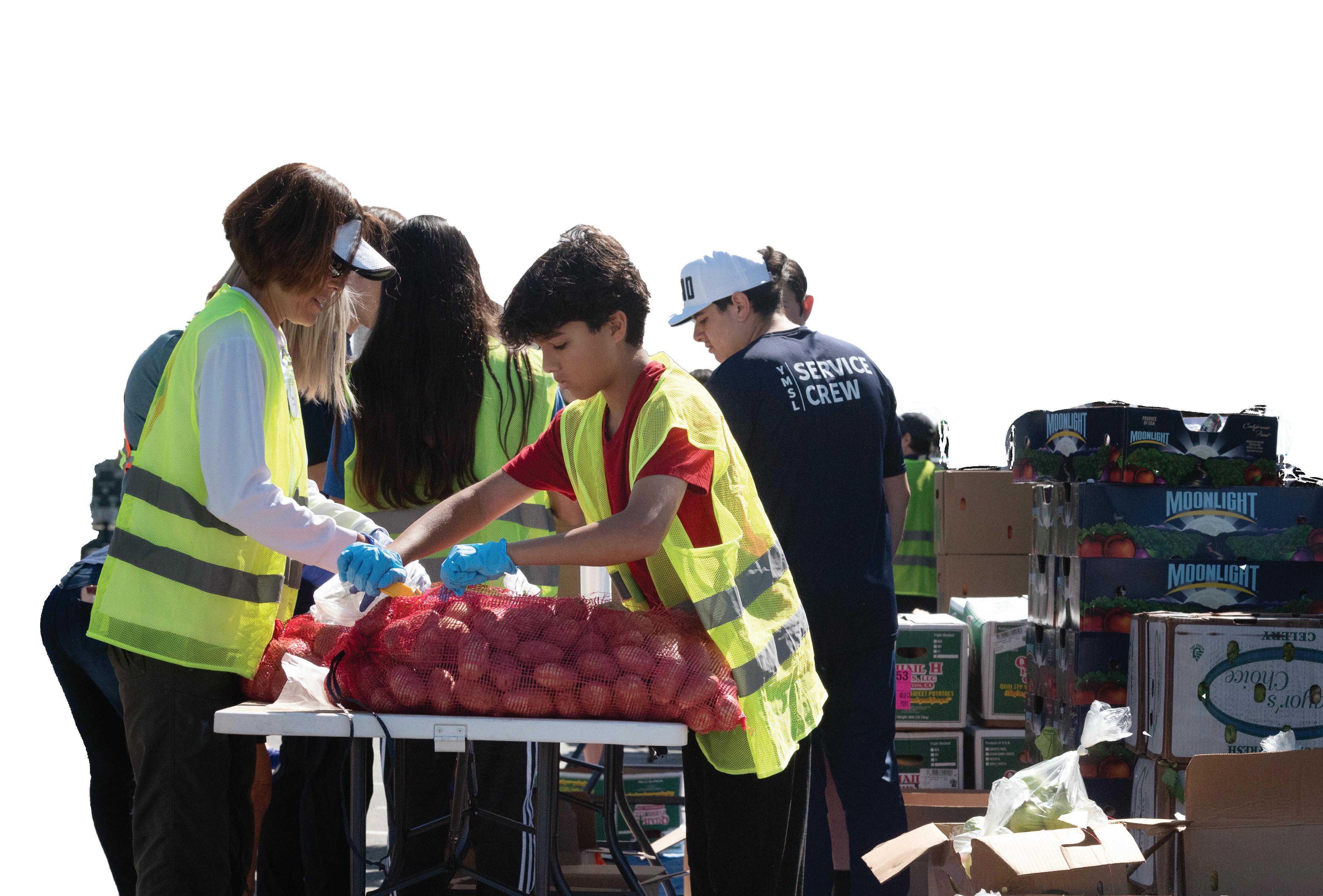
While the Bay Area prides itself on tech innovation and education, hundreds of thousands of residents struggle to put food on the table, as they face food insecurity as a daily reality. In fact, 16.6% of people still struggle to access consistent meals in the Bay Area, a number significantly higher than the national average of 13.7%, according to Feeding America. In response, Gunn students and faculty are taking action, both within the school community and across the broader Bay Area. Among these efforts is the community’s collaboration with Second Harvest, to provide nutrition and volunteering opportunities in food drives.



with little for basic needs like consistent groceries. Food insecurity extends further into income inadequacy, with lower-income households struggling to afford the cost of food with stagnant wages, while high-income households thrive.

P.E. teacher Jill Naylor, who has volunteered with Second Harvest, encourages people to volunteer at food drives to combat food insecurity.
promote this event. Organizers hung posters around Gunn’s hallways and in many classrooms, and numerous teachers across different departments took class time to promote the event to their students.
The largest food bank in Silicon Valley, Second Harvest serves Santa Clara and San Mateo counties by distributing free, nutritious food. The nonprofit also connects families with resources like CalFresh, which provides monthly Electronic Benefit Transfer debit cards to aid low-income individuals and families. Operating across more than 400 different sites, Second Harvest serves approximately 500,000 people per month.
For many Gunn students, Second Harvest has become a familiar name through volunteering. The organization is a popular option for fulfilling the 15-hour requirement for graduation. The website sign-ups allow volunteers like him to book their three- to five-hour shifts up to a day before the event, making it a convenient way to complete service hours.
Senior Daniel Schwartz, who has volunteered at Second Harvest, says volunteering has proved to be an eye-opening reminder to have gratitude.
“Unfortunately, (food insecurity) is very prominent,” she wrote in an email. “Families are being impacted all over the Bay Area. Food is a basic necessity that should be given to all. Not defined by income, status or race but by the basic human need for fuel.”
Students and faculty have also taken further steps.
Social Emotional Literacy and Functionality Program
food iS a baSic neceSSity that Should be given to all. not defined by income, StatuS or race but by the baSic human need for fuel. ”
“(I learned) that maybe I don’t know as much as I think I know (about food insecurity),” he said. “It made me feel grateful for the free food that we have here (at Gunn). I know a lot of people could benefit from it.”
“A lot of the effort (and the success of the food drive) was possible because of other parts of the Gunn community coming together,” Kim said. “It felt really good (to be part) of something that was able to make people’s lives easier.”
It made me feel grateful for the free food that we have here (at gunn). I know a lot of people could benefit from it.
Kim was also involved in expanding the food drive beyond the campus community, including elementary and middle schools within the district. According to him, schools such as Hoover and JLS also collected donations, which were transferred to Gunn to be redistricted.
Senior daniel Schwartz
Coordinators Laurel Howard and Christina Norberg partnered with the Student Executive Council to organize a food drive from November to December in 2025. The event raised enough donations to feed approximately 20 families, which accounted for over 95 members of the Gunn community receiving the $2,000 worth of donations.
p e teacher Jill naylor
Touching moments stood out in particular. Schwartz recalls handing out food to kids at the distribution site, which further inspired him to continue volunteering.
“Just seeing them smile when you gave them food really impacted me,” he said.
Even as community efforts grow, questions remain about why food insecurity is significantly higher in the most affluent area in California to begin with. The rising price of housing, childcare and transportation leaves many families
Junior Site Council Representative Chanew Kim helped organize. The drive aimed to offset the pause in benefits — such as the Supplemental Nutritional Assistance Program, which provides monthly grocery funds to lowincome households — caused by the recent government shutdown.
“A lot of families in our community weren’t able to put meals on their family table,” he said. “That was a pretty big issue that we realized was affecting our community as well, not just other communities as we previously saw in a lot of the (other) current political issues.”
To promote the food drive, the SELF coordinators created a competition between grades and SELF cohorts as an incentive for students to donate or volunteer. Cohorts earned points for donations, and the winning group got pizza at their next meeting. The grade with the most points got another reward, such as ice cream. Many different communities on campus took efforts to
“(We were) trying to expand the food drive at other schools in PAUSD, besides just benefiting the communities at Gunn,” he said.
The P.E. department played a particularly high role, urging participation in the food drive by announcing that students who donated at least one bag of food items would be excused from participating in the upcoming mile. Naylor, alongside P.E. teachers Amy Anderson and Paul Medeiros, has been using this tactic to promote the food drive for the past decade.
“Knowing that there could be students or families in our community struggling to meet the basic necessities we all need to function has never sat right with me,” she wrote. “When your stomach is growling, or a headache occurs because you have not eaten for a while, it can make basic things like concentration, attention, and other physiological reactions unbearable. My students and I couldn’t sit idle and not take action.”
Naylor believes that “paying it forward” is a way for communities to connect for the better good. She showed students the importance of giving back.
“(The students) realized (that) their incredible gestures were going to help many people in our Gunn community have a meal or two that otherwise may not have happened without their assistance,” she wrote. “Seeing their proud faces made me want to do something for them in exchange.”
Approximately 300 students across multiple teachers’ classes participated in the incentive. For Naylor, the turnout reflected what is possible when the community comes together and discovers a shared purpose.
“(It showed me that) we all can fight this fight together and help stop this terrible food insecurity from continuing,” she wrote. “We can make this happen if we all commit to helping one another along the way, showing kindness, and recognizing it’s happening right here in our own backyard.”
—Written by Athena Gao and Eanam Maor


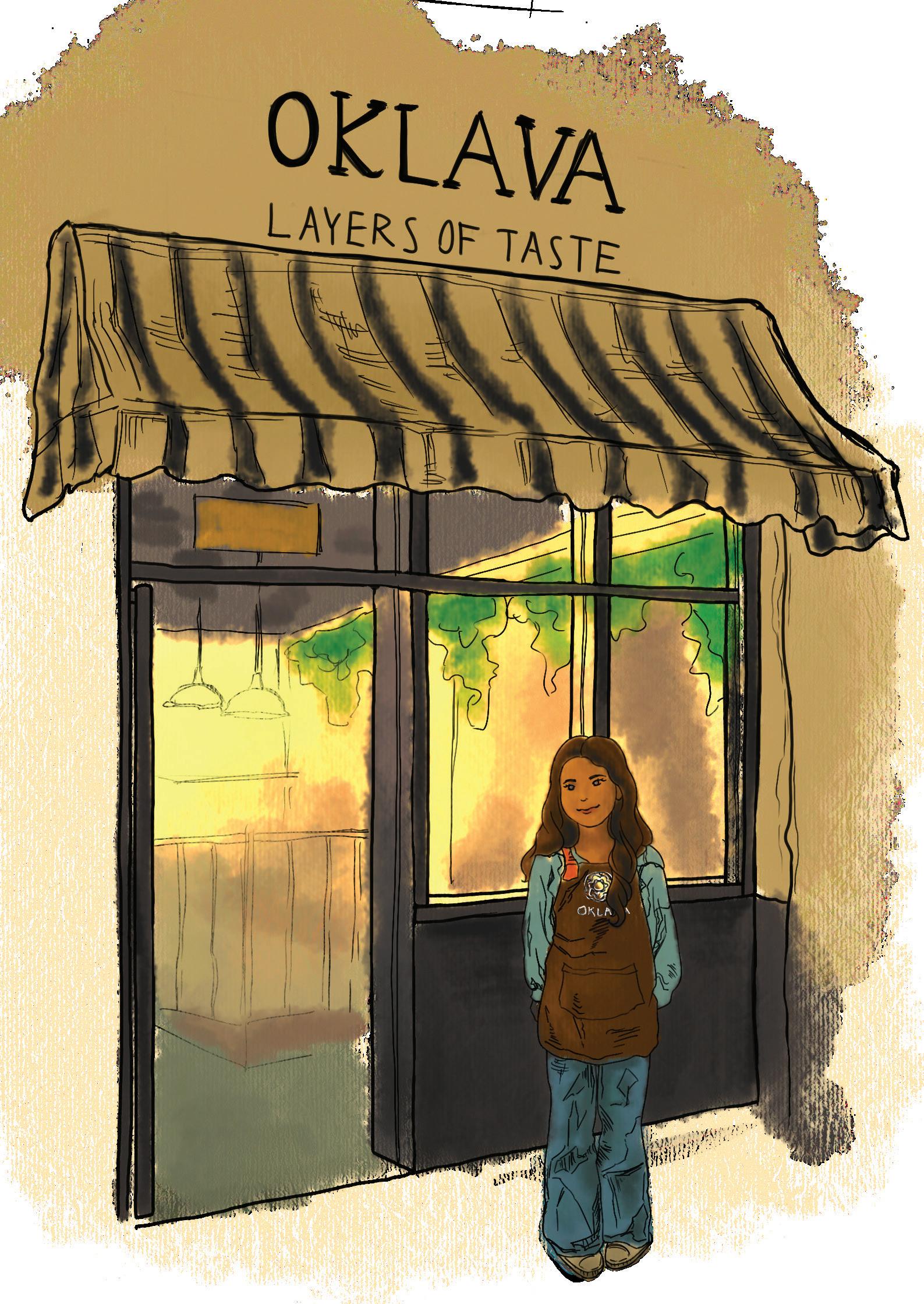
The rich smell of coffee and fresh Turkish pastries greets sophomore Melike Serbest the moment she steps into Oklava Cafe. As the morning crowd begins to fill the store, she ties on an apron and takes her place behind the counter, ready for another weekend shift.
For Serbest, Oklava is a family story. The cafe is co-owned by her uncle Aziz Asla and partner Elif Asli Uzun. They both opened the downtown store to bring more authentic Turkish food to Palo Alto. While carrying plates of authentic dishes that range in flavors from sweet and airy to savory and flaky, Serbest has discovered a variety of new tastes from her heritage.
“I’ve been introduced to a lot of Turkish desserts,” she said. “We sell things that I didn’t even know existed before. To name a few, there’s muska shape, diyarbakir burma, shobiyet baklava and halep burma.”
Weekend mornings at the cafe are Serbest’s intentional scheduling choice to help her balance school and work. While juggling both activities was difficult at first, she found a routine that lets her manage the responsibilities efficiently.
“I spend my weekdays trying to finish all my homework,” she said. “That gives me time on the weekends to work.”
For sophomore Enzo Wolff de Tourreil, the chocolate industry has been a constant thread in his life. He started learning the craft as part of his mom’s business, The Chocolate Garage. Now, he helps his stepdad run Lonohana Estate Chocolate on the island of Oahu in Hawaii.
With extensive knowledge of both Lonohana’s history and the creation process, Wolff de Tourreil’s role varies as a young chocolatier. On the island, he turns cacao beans from their farm into the finished chocolates sold in their stores, leads exclusive factory tours and guides guests through flavor profiling during tastings. His usual recommendations include Salted Milk, Cardamon Milk and Passion Orange Guava.
“What’s helpful about working with (my stepdad) and just being there as part of the family business is whenever he has to do something special and needs an extra pair of hands, I’m able to go and assist,” he said. “I can also just fill in for people when they’re out, which is very useful because usually they don’t have someone to do that.”
He may not have a formal role at Lonohana, but his family ties give him the opportunity to
Serbest had wanted to work alongside her uncle since Oklava first opened in 2023. When she started the job, the family-run aspect made the cafe feel welcoming rather than intimidating.
“I felt less pressure,” she said. “I think part of the reason was because my interview wasn’t really formal. I was introduced to the manager and then just started getting taught how to do things.”
The cafe attracts a diverse customer base, whether its regulars and newcomers or those who come to reconnect with the flavors of home.
“Some people come to just sit down, get coffee and enjoy the feeling of the cafe,” she said. “Some come to try Turkish food, and some come because they miss the Turkish food from their homes.”
That sense of community at the cafe has led to strong relationships between her and the customers, according to Serbest.
“I see some people every week that I work,” she said. “Some customers even gave big tips or presents during Christmas. It’s nice. It creates a feeling of community.”
create unique bonds with his co-workers.
“You can convey to your parents, who are the owners, basically what the workers want and what they would be afraid to go and tell the owners directly,” he said.
Wolff de Tourreil often returns to Oahu every other break or for half of the summer to see family and help out at the store.
“It’s nice to know that I can always go and work without having any commitments of always being there,” he said. “That’s the nice thing about not having a traditional job — it’s that you can just show up when you want (and) leave when you want.”
Lonohana’s mission is one that Wolff de Tourreil prides himself in and a key reason for why he enjoys working there.
“It’s regenerative agriculture because we source cacao from our farm on Oahu using sustainable practices and good working conditions,” he said. “It really fosters a sense of community and pride, and I’m proud to be a part of (Lonohana).”
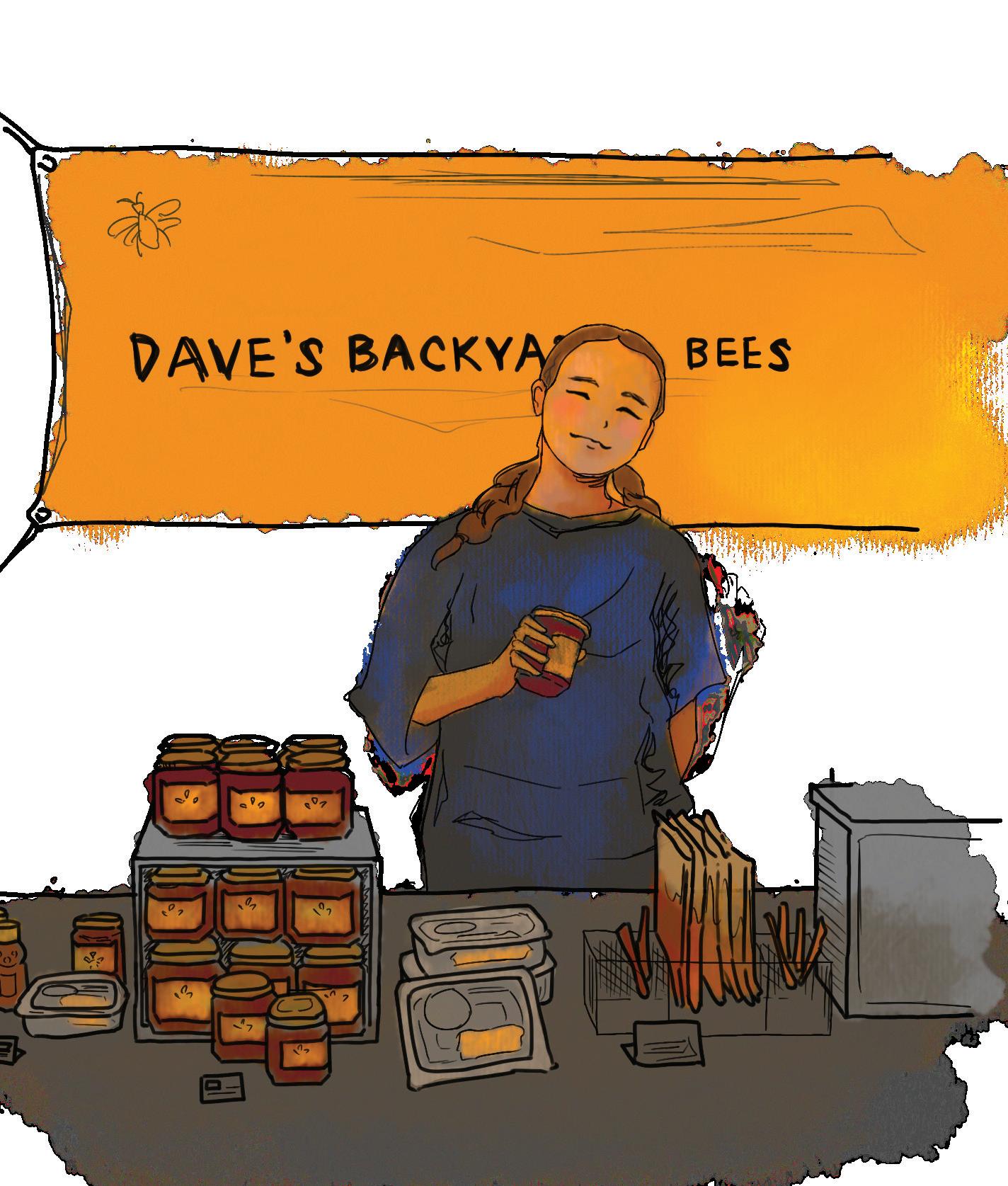
Sticky-sweet air wafts through the Sunday farmers market as glass jars of honey bask in the morning sun. As shoppers weave through various produce stands, senior Rachael Rickling can be found twisting lids shut, loading the honey into bags and answering customer questions for the family business her father started: Dave’s Backyard Bees.
Originally started as a hobby of hers during the COVID-19 lockdown to both cure boredom and get his kids out of the house. What started from a single beehive in their yard blossomed into 150 hives across the Bay Area. The products are now available at local farmers markets, as well as at DeMartini Orchard and Country Sun.
“My dad is the head beekeeper and he takes care of all the news and getting honey,” she said. “Then my siblings (and I), and whoever else he hires, help sell the honey and package it into the different things that we offer like beeswax, candles and fresh honey on the comb.”
Once the honey is extracted, Rickling fills and labels jars, packaging and packing orders. Additionally, she helps out her dad at weekend farmers markets in Palo Alto, Cupertino and San Jose.
However, with a part-time job of her own as a Winter Lodge employee, Rickling has to compartmentalize her time between helping out with the business, her own job, school and extracurriculars.
“I tend to only work long hours for my dad’s business on the weekends, which is when I don’t have schoolwork or skating,” she said.
Over time, Rickling has seen a big change in her dad’s attitude towards work since Dave’s Backyard Bees took off and is very proud of the progress they’ve made. She plans to continue to contribute to the business in the future when she visits from college.
“The best thing I’ve learned is to follow your passions no matter what age you are,” she said.
“Before this, my dad worked a boring office job for decades before he started beekeeping. But he’s much happier now and actually enjoys his work, which I think is important.”
—Written by Kaylee Cheng
As one of the biggest sporting events of the year the Super Bowl extends far beyond the field because of its scope. While millions of fans focus on the match up, the halftime show, commercials and local communities experience notable economic effects as thousands of visitors from all over the country travel to the Bay Area.
Although the Super Bowl will be played at the Levi’s Stadium in Santa Clara on Feb. 8, Palo Alto — situated a short drive away from the stadium — experiences spillover effects through hotels, restaurants and local businesses. Visitors need a place to eat, stay and spend time, creating both opportunities and challenges for the local economy.
According to the Louisiana Economic Department, Super Bowl LIX generated an estimate $1.25 billion in total economic output, with the combined visitor and vendor spending totaling $658.4 million. However, the event still involved significant investment, including over $70 million in infrastructure upgrades and $24 million for hosting. Alongside increased media attention these numbers can be a reason cities submit a bid to host the event.
Many football fans, like senior Min-Jae Kim, associates the Super Bowl with family traditions and team rivalries rather than the greater economic impact that it leaves.
“I don’t think students really think of the Super Bowl as more than a big game,” he said.
Still, even if students and fans do not actively weigh in on the economic aspect behind the event, its presence can be felt in subtle, indirect ways, like increased traffic, busier streets and more crowded local businesses throughout the area.
One of the most noticeable economic effects of the Super Bowl is its impact on local hotels. An increase in demand for rooms often begins months in advance, with the lodging seeing price fluctuations and being sold out the
weekend of. According to Crowne Plaza Palo Alto by InterContinental Hotels Group, while prices usually stay around $142 to $230 in the days leading up to the Super Bowl between Feb. 4 and 8, the prices stay between $325 to $425.
Crowne Plaza Palo Alto hotel front desk worker Anne — who preferred to keep her last name confidential — verified the increased demand for rooms, explaining the hotel’s pre-planned procedures to deal with large-scale events.
“We’re basically sold out the day before, the day of, the day after, with rooms only being available the Friday before,” she said. “The amount of staff that we have, we’re prepared to handle this large volume of people. This hotel, in particular, is a business hotel, so we get a lot of corporate bookings. So along with that, we also get price increases.”
While hotels and certain local businesses may have a temporary increased revenue and demand, the overall economic impact is more complex. Economics teacher Philip Lyons explained that large sporting events like the Super Bowl often produce significant short-term gains, but do not always lead to long-term economic changes, and sometimes even have a negative impact.
“The amount of money that people spend to put these events on, they anticipate getting all this money
back and more,” he said. “And what happens is they end up spending more than they generate, and long term, it’s a disaster. But there isn’t any proof to say it has a long term benefit, and it also depends on how much money you have to put in to run the event. If you only put in a small amount, then you can maybe have a benefit.”
The Super Bowl may differ from other large-scale international sporting events, such as the Olympics or the World Cup, which often require extensive new infrastructure. For example, according to CNN, for the Sochi Olympics in 2014, the budget was around $12 billion, but the actual cost ended up at an estimated $55 billion. The total cost surged due to large infrastructure projects such as new railroads, roads and several venues. In the Bay Area’s case, Levi’s Stadium has already been built, reducing the need for additional spending and leaving the possibility for a longer-term net positive for the area.
“The Super Bowl here in the Bay Area might work out because the stadium was already built,” Lyons said. “They don’t really have to do anything. So everybody just comes for one weekend, spends a bunch of money and leaves. So it might have a one-time short term impact, but I don’t think it’ll have a long term impact.”
—Written by Olivia Lee

Every Super Bowl Sunday, sounds of laughter, chatter and snacking fill living rooms, drowning out the whistles and commentary of the game. While some avid fans crowd around the screen, focusing on the rivalries and action, others discuss iconic commercials or the upcoming halftime show. For many, the Super Bowl is more than just a football game: It’s a special annual tradition.
With the Super Bowl happening on Feb. 8, excitement is building among students. Freshman Benett Clifton enjoys watching the game with his family and friends every year. A key part of this event for them is the food. Along with food, his
family also plays Super Bowl bingo and participates in Super Bowl pools, guessing scores for prizes.
“There is always a Super Bowl pool,” Clifton said. “You pick the score and you can win money or prizes. I do sometimes believe in superstitions like saying something is not going to happen (and) then it does. (Our) traditions started with my parents and because I like sports and like watching sports.”
For junior Anish Mathan, the event is about being surrounded
by those who matter most.
“It’s a time to gather around with everyone that you love and people you hold close to your heart,” he said. “All my aunties, all my uncles, we all come together and have a big barbecue together.”
The Super Bowl calls to more than just sports fans: With brands pouring large figures into commercials, the event encompasses American entertainment and culture. According to sophomore Tai Ford, the football game itself is not always the center of attention.
“It’s not even about being super into the game,” she said. “I care more about the halftime show.”
The game often serves as a mere backdrop for countless memories and stories shared in living rooms and on backyard patios across the country.
“Food is another community thing,” Ford added. “Bonding getting to enjoy snacks and homemade food with friends and family is really a big facet of the game.”
—Written by Arjum Ahluwalia
Student stands in Titan Gym were packed in support of the varsity boys basketball game vs. Paly on Saturday, Jan. 10. Just two hours before, for the girls’ game at 4:30 p.m., the audience was almost a quarter of the size, and the reception towards the former match was visibly less.
This favoritism is part of a larger national trend. According to a 2023 study by Wasserman’s “The Collective,” women’s sports make up only 15% of total sports media coverage. Moreover, certain sports take the spotlight. A 2024 survey from The Economist highlighted that 10% of U.S. sports fans’ favorite sport was soccer, 17% was basketball and 36% was football.
At Gunn, these patterns continue. Flag football captain senior Aliya Sidhu has noticed bias against her team, especially with resources. In some instances, while tackle football had full use of the field, flag was not prioritized.
different sports.
“Track is a really big sport with more people (participating) so there’s more people that go watch the games,” she said. “They have a food truck that shows up there, and its really cool, but you don’t see that stuff for lacrosse, partially because we just have less people.”
Smith found that the many instances where her sport felt unfavored could stem from miscommunication, like lights turning off in the middle of evening practice or two years of senior nights in different locations.
In freshman year, our athletic director scheduled a middle school track meet (at the same time), so that made it difficult to set up for the senior night.
“Last year, for example, we would practice on the black tops or on the bad grass field with all the potholes, and people just kept getting injured or falling,” Sidhu said. “It was really hard to get a workaround to actually be able to practice.”
Both flag football and tackle football involve fields with end zones, forward passes and a “down” system which helps advance the ball down the field. The main differences are that flag football replaces tackling with deflagging and fewer people on the field. These similarities make the difference in student support between the two sports even more puzzling to Sidhu, especially since flag football has had a more successful season.
“We tried to get cheerleaders to come to a flag game,” she said. “And they’re like, ‘No, we can’t do that. We have practice.’ But they go to every single (tackle) football game.”
Turnout is also something girls lacrosse player junior Trinity Smith noticed, but attributed to the sheer scale of
“In freshman year, our athletic director scheduled a middle school track meet (at the same time), so that made it difficult to set up for the senior night, and the track meet wasn’t even for our school,” she said. “And last year, we had to have our senior night at Paly, so not even at school (due to a home game for the Boys Lacrosse team), which was kind of frustrating.”
Lacrosse’s late practice and game times are also a factor that may dissuade both spectators and potential players. However, Athletic Director Justin Halas says that many factors go into the complicated scheduling process due to the number of events Gunn must host.
“Many coaches have full-time jobs and families, which determine the times they are able to hold practices,” he said. “Multiple teams often share the same facilities, so coaches must communicate and coordinate their schedules with other teams.”
Smith also added that despite the frustrations, she still appreciates all the efforts from the staff.
“All the athletic directors and school staff are definitely trying their best to help all athletes equally, but when it comes to teams as a whole, that’s when some unintentional favoritism might happen,” she said.
—Written by Vanisha Vig

By the numBers
92.2%
of student athletes who practice late get less than 8 hours of sleep per night, according to the national library of medicine
1.3 million fewer opportunities provided by schools for females to play sports than males, according to the national women’s law center of schools report that their athletic facilies are shared, according to the national library of medicine
88.9%
Light spills onto the ice as sophomore Dennis Frenkel — who has been playing hockey for 12 years — weaves between his teammates, battering an ink-colored puck across the rink. Outside, darkness envelopes the building.
“Getting fundamentals such as skating, using the stick properly and shooting goals out of the way early was nice,” he said. “I still need to practice, but I can focus on more important skills that really set me apart as a player.”
As student-athletes grow and progress within their sports, perseverance becomes a requirement — teens invest thousands of hours of training, drilling and
expectations in different ways,” Frenkel said. “However, before you start playing, you begin to really focus on your game, and the pressure doesn’t bother you as much (and) motivates you to keep going and to push yourself to the highest level that you can.”
Social expectations increase, too. From freshman year, junior Shreya Jog has found herself in the water. However, when she switched from swimming to water polo, Jog had to rebuild her confidence in the pool. Refining her technique and mindset through training naturally translated into results.

“Before, I was really nervous to take risks,” she said. “Now, I’m more confident in doing so, because what’ll happen if I don’t? A win is a win.”
As she progressed in her athletic career, and eventually making it onto the varsity team, she noticed a phenomenon: Young players mirrored her behavior.
“When I first started, I was on JV,” Jog said. “Then I moved to varsity, and people looked up to me, setting expectations for me to keep my team together, to raise morale and just to stay focused on whatever drills we’re
For junior Nico Cortez, his sport — soccer — isn’t just about earning recognition for his investment. Although winning inevitably relationships built significance to
“One of the things in soccer he said. “Anyone skills in the world, have that mental

perform well — whether it’s pre-game nerves, resilience when dealing with injuries or keeping composure in the middle of a game.”
After playing for over a decade, he believes that players define the atmosphere of their teams, and closeknit environments such as soccer are the perfect places to build lifelong friendships.
“I think that the people you surround yourself with are really important,” Cortez said. “If you have good relationships with your teammates, it’s so much easier (to perform) because you kind of get into that zone where
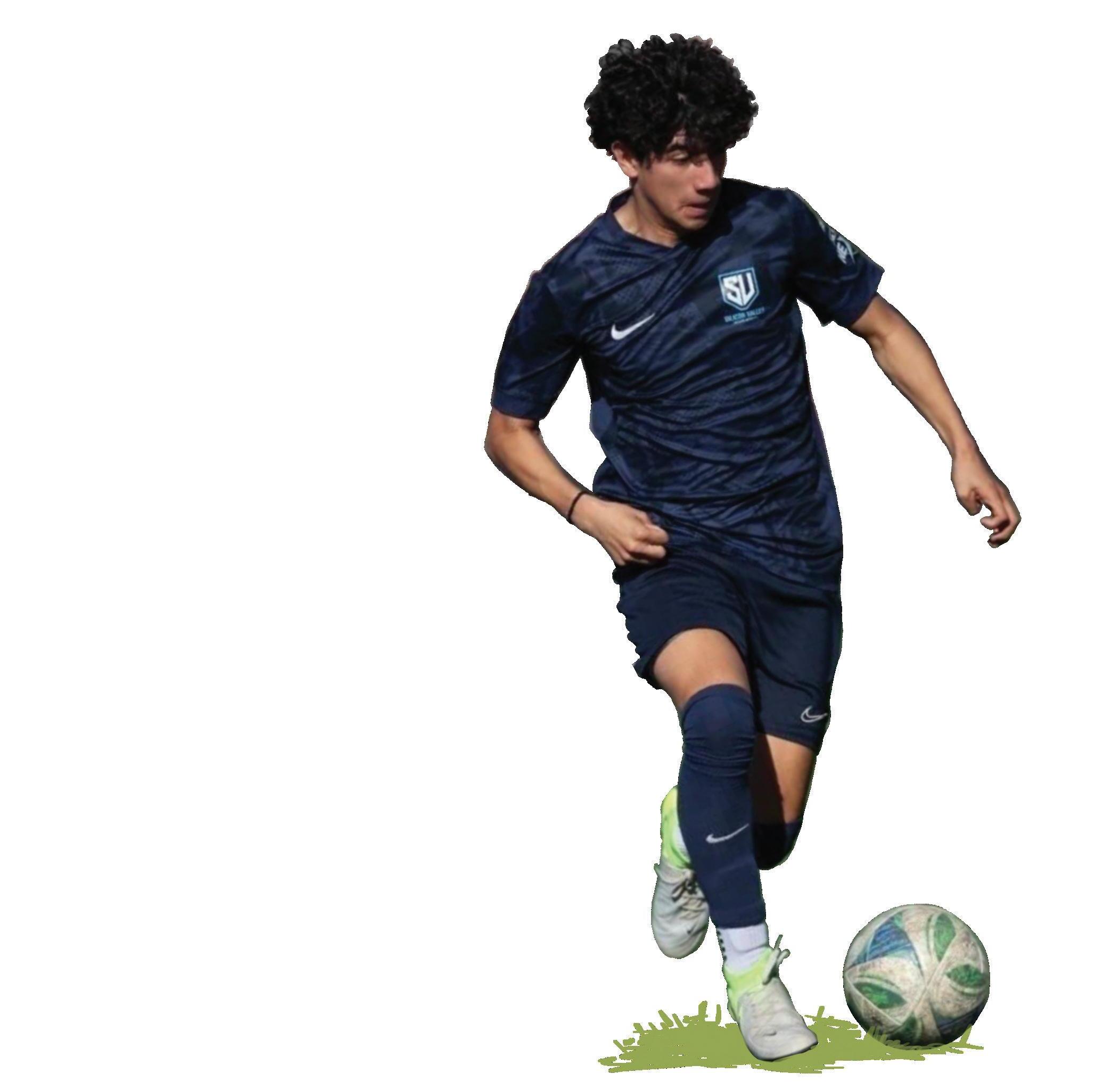
—Written by Cici Zhang
Following the emergency room staff in the fictional Pittsburgh Trauma Medical Center as the doctors handle drug overdoses, stab wound victims and more, “The Pitt” is unlike any other show I’ve ever watched, medical drama or not. Now, it’s back for Season 2, and if there’s one word to describe it so far, it’s this: unrestrained. Jumping forward about ten months after the end of Season 1, protagonist Dr. Michael “Robby” Robinavitch (Noah Wyle) rides his motorcycle (helmet-less, I might add) to work on the morning of the July fourth holiday, ready for his final shift before heading off on a sabbatical. Ready to take the reins as the attending doctor on the hospital floor is Dr. Baran Al-Hashimi (Sepideh Moafi), who’s in the emergency room early.

Coming into Season 2, I was worried that I would see a reduction in quality as the new characters introduced in Season 1 were no longer new. I needn’t have worried. Through the released episodes so far, “The Pitt’s” veterans seem different but the same, in a good way. Dennis Whitaker (Gerran Howell), whom we last saw as a fourthyear medical student, is now serving his first year as an intern and seems much more confident, leading the new rotation of medical students. The pace of the show hasn’t slowed down at all, either: Without closed captions, I definitely wouldn’t catch the blood pressure readings or medical terms used (Someone tell me what “V-fib” means, please!) whenever a new trauma patient wheels in. As the doctors and nurses handle one patient after another, viewers get no breaks in the action, making the medical procedures all the more intense.

and yet my focus is still locked on the disgusting maggot-infested wounds or the volatile condition of motorcycle accident victims. Going into Season 1, I had no idea that the amount of gore per episode was comparable to “The Walking Dead” and “Dexter” — the degloved foot set the stage for me. Twenty minutes into Season 2, a gruesome depiction of open heart surgery complete with a lateral opening of the chest and a prosthetic beating heart proves that the makeup department has not slowed down at all.
Thankfully, the visuals are more than enough to make up for what’s lost in the terminology barrier. The sheer detail put into the crafting of injuries makes it almost difficult to keep watching instead of switching to a more peaceful show like “The Wire” —


To make things even more hectic than the blood already does, the format of “The Pitt” shoves the entirety of its exposition and drama into 15 hours. Since each season encapsulates a single hospital shift and each episode corresponds to one chaotic, jam-packed hour of that shift, tensions escalate as the story moves forward without taking any breaths.
Season 2 has one slightly large pitfall thus far, though: the new medical staffers. Compared to Season 1, where the doctors and nurses all had their own unique dynamics and personalities, Season 2’s fresh medical students seem a little cliché. The know-it-all likeness of newcomer medical student James Ogilvie (Lucas Iverson) does not bring the same air of intrigue as that of Nebraska farmboy Whitaker or veteran combat medic and amputee Dr. Jack Abbott (Shawn Hatosy). Hopefully, we’ll get to see some kind of development in that wheelhouse soon to prove me wrong, since Ogilvie and Dr. Al-Hashimi are a little one-dimensional as of episode 4.
New episodes of “The Pitt” release weekly on Thursdays at 6 p.m. PST on HBO Max.
—Written by Yu-Ming Liu
Most are familiar with the two classic comedy shows, “The Office” and “Seinfeld.” Perhaps you binged “The Office,” with its homey vlogstyle look at the crazy antics of the workers at the Dunder Mifflin Paper Company, or the bustling, quirky “Seinfeld,” where every day is a day to eat lunch at Tom’s Restaurant and getting to know your next-door neighbor is a rite of passage. No matter which comedy you switch on when you grab the remote, both shows have a distinctive writing style that makes their loyal viewers beg for more episodes. But this poses the question: Which show is funnier?
To accurately compare the two, I selected some of the highest-rated episodes of each series on IMDb. For “The Office,” I watched “Stress Relief Part 1,” rating 9.7/10. The show opens in a panic when Dwight, the rule follower, simulates a fire in the office to see if his coworkers effectively follow fire safety protocol. Unsurprisingly, no one does the safe thing and Michael, the boss, tries to find strategies that relieve stress after the chaotic occurrence. What truly made this

episode stand out to me is the disarray of the fire alarm intro, which many people consider the best opening of all television. Many comedians call this a “subversion of expectations,” where an event is expected to happen but a completely different outcome occurs. Additionally, the smaller plotlines were crafted with extreme care. For example, when Angela tries to save her cat from the “fire,” she throws a $12,000 realistic prop into an open ceiling tile. When Jim, Pam and Andy watch a fake pirated movie, it features actors Jack Black and Cloris Leachman in an unexpected cameo.
In “The Opposite,” in which Jerry’s close friend George feels unlucky, so he decides to approach everything the opposite way he normally would. Jerry notices that while George is the luckiest he’s ever been and his other friend Elaine is curiously the opposite, everything evens out for him. This joke is brought up several times throughout the episode, such as when he loses a $20 bill and finds another one minutes later in his pocket, and when he surprisingly breaks even in his poker games.

The best part about “The Opposite,” rating 9.5/10, is the repetition of jokes that are brought from the opening to the end. “Seinfeld” uses a tactic known as the “Rule of Three,” where two ordinary things are mentioned in a list and the third is an unusual item that serves as the punchline. In this particular episode, George and Elaine are two ordinary people having good and bad days, whereas the outcome of Jerry’s day remains completely neutral. In contrast to sitcoms like “Friends” and older shows such as “Three’s Company” and “Happy Days,” “Seinfeld” creates laugh tracks from live audiences. This results in more genuine reactions, without actors

having to pause awkwardly for the canned laughter to subside. However, due to “Seinfeld” being a sitcom that started airing over 37 years ago, some jokes concerning gender and race may not land as well in today’s
While both shows have their strong points, “The Office” is the one that I truly hold closest to my heart. While “The Opposite” is based on everyday events being entertaining, “Stress Relief” surpasses expectations. It isn’t just funny because of the chaos, but also because the audience has been acquainted with the cast of characters for several seasons, making their frenzy even more witty. I think the key to creating timeless TV shows is making a conscious effort to interweave techniques that are sure to make people laugh, while also remaining consistently funny, regardless of how many years have passed.
1. Cupid’s projectile
2. Tundra, e.g.
3. “Stay healthy”
4. Lou Gehrig’s disease, for short
5. Bay Area Mediterranean restaurant
6. Greek heroes led by Jason abbr.
7. Search thoroughly
8. Laertes, to Polonius
9. Where the biggest crowd is on NYE
10. High cards
11. Philosopher Descartes
12. Dancing insects
13. Eight in German
20. Oracle
21. Low island
23. Lyra’s brightest star
25. Organisms not from earth abbr.
27. Tabula __
28. Scalar velocity
30. Continental currency
31. Singer Benjamin
32. Directional scientific test
33. Hail __ (2)
34. Utilities payment
35. __ Major
37. Simplicity
40. Thrown out of Manhattan’s windows
42. St. Louis landmark
44. Negative quality in a T-chart
45. Not manual
48. Beetle, e.g.
50. Novel by Christopher Paolini
52. Person with binoculars, maybe
54. Work __ (2)
55. Get up
56. Vocal quality
57. Barks
58. Blood fluids
59. Nicholas II, e.g.
61. Reversed British goodbye
62. “Do the Right Thing” pizzeria
65. Educational ad
66. “Take On Me” band
Staffer discovers unturned pages: ‘Rubyfruit Jungle’ highlights feminism, queer identities
The Oracle staffer Melody Song went to the library, found a book that has never been checked out and reviewed it.
Although relatively unheard of by younger generations of readers, “Rubyfruit Jungle” by Rita Mae Brown is often considered a classic in literary circles — at least established enough to warrant a SparkNotes page. Published in 1973, it follows a young girl named Molly Bolt, who comes of age in the ‘50s. On the surface, Molly seems to have it all figured out: excellent grades, class president and a full ride to the University of Florida. Secretly, though, she feels more alienated.
Molly has known from a young age that she likes girls instead of boys. Privately, she’s never had any qualms about her sexuality. Publicly, though, she stays discreet. Still, that doesn’t stop the scholarship committee from discovering her relationship with her roommate and rescinding her financial aid. Unable to continue her education, she heads to the city. After all, “there are so many queers in New York that one more wouldn’t rock the boat.”
In the Big Apple, she badgers admissions officers and finds her way into New York University, shielding her dream of being a Hollywood director from assailants in the form of bitter lovers, bigoted professors and crippling poverty. Is this when she will finally break?
Through Molly’s internal monologue, Brown strays away from traditional values and conformity. Through Molly’s intense authenticity and self-belief, readers come to understand a worldview that is both childlike and wise in its simplicity. “I don’t feel like having to fight until I’m fifty,” she thinks. “But if it does take that long then watch out world because I’m going to be the hottest fifty-year-old this side of the Mississippi.” As art historian
Jonathan D. Katz put it: “(Molly’s) story, for all the struggles it contained, was about something we hadn’t yet even named: queer joy. No wonder it shepherded so many coming out; it made queerness heroic.”
Her bravery, after all, is contagious. As readers, we live vicariously through characters, with the most attractive being ones who make you feel like a greater person than you currently are. To inhabit Molly Bolt is to live fearlessly, trust yourself completely and devote yourself entirely to chasing your dreams. “I’m the hottest thing since Eisenstein; they’re lucky to be able to help me in my formative stage,” she tells herself.
Even so, “Rubyfruit Jungle’s” merits are not limited to the protagonist. As a lesbian author writing about a lesbian protagonist, Brown also finds ways to celebrate womanhood, criticizing misogynistic social institutions and cultural phenomena including marriage, higher education and workplace harassment. For anyone worried, this novel has no man-hating agenda — Molly’s father is a trustworthy, dependable character, encouraging her to go to college and pursue her dream of becoming a director. This novel is simply committed to a single idea: a “pure” feminine existence, completely liberated from

Yes, “Rubyfruit Jungle” is for the girls and the gays, but in there is a message for everyone because insecurity and fear don’t discriminate. It is a reminder of the miraculousness of life and a call for everyone to live honestly despite what society thinks, because the person you are is more special and valuable than anyone you could ever pretend to be.
—Written by Melody Song
The start of 2026 is met with the revival of vintage filters, full glam makeup, iconic skinny jeans and bittersweet splashes of nostalgia from the infamous year of 2016. However, this trend of 2026 being the new 2016 is not society copying 2016, instead it’s being influenced by it.
For senior Maya Drews, this 2016 revival is about more than just fashion, but rather a shift in societal mindset and culture.
The year of color was synonymous with 2016: Detailed patterns, vibrant colors and bold looks dominated fashion. There was no concept of “doing too much,” and the mindset of the time was to unapologetically be your true self, authentically expressing it through style.
yourself),” she said. “Do whatever your thing is, whether it be statement necklaces or neutral colors: If it is you, then it is you.”
As the modern-day aesthetic preaches the idea of neutrality and tameness, 2016’s influence brings back rejecting typical beauty standards and embracing natural lifestyle.
Evelyn Rodden believes students feel pressure from the media to keep up with these mainstream trends.
“We are moving through trends so much quicker now,” she said. “Social media is playing a part in spreading consumerism and a lot of microtrends.”
do whatever your thing is, whether it be statement necklaces or neutral colors: if it is you then it is you.
” senior maya drews
“I think that 2026 being the new 2016 is about people bringing back that nostalgic, fun, colorful, maximalist aesthetic,” Drews said. “People are embracing their inner weirdos and being a little more creative.”
The trend has spread through social media, breaking a period marked by minimalist and cleangirl aesthetics that focused on incorporating neutral greys, blacks and navy blues.
Sophomore Iolanta Volchek, who creates lifestyle and fashion content on Instagram, compares the nostalgia of 2016 with modern-day style as she does on her platform.
“The modern-day muted colors are more aesthetically pleasing to people, because many are used for minimalist outfits with less detail and patterns,” she said. “(There were) more single-color outfits with, one layer. It used to be multiple layers, accessories, and lots of belts.”
Although items like over-theknee boots, bomber jackets and off-the-shoulder tops are making a comeback, the biggest component of 2016 fashion that has made a resurgence is the focus on accessories, where one statement piece of jewelry would be styled around. Lack of right or wrong in fashion contributed to a carefree lifestyle.
“Fashion is more about not being one style or the other, but if you are bright and colorful, (to go) all out and (embrace

“(It’s) that idea of being yourself and being out there,” Drews said. “That it’s okay to be messy. As someone with curly hair (which) I definitely didn’t embrace when I was little, I’ve started wearing
The fast-changing algorithms lead to expectations and judgment within society. The need for the “perfect” photo rather than expressing one’s authentic self and unfiltered life prevents the 2016 carefree lifestyle from catching on.
“As social media evolves, it is pressing people down and
” sophomore Iolanta volchek
TV series like “Stranger Things” have produced their long awaited finales. 2016 was an era known for pop artists releasing albums that emphasized more creativity and connection. Artists using high energy and themes to execute their performances contributes to the 2016 atmosphere. Zara Larsson dressing in outfits covered in sequins and bright blue accompanied with full-glam maximalist looks, for instance, sets the nostalgic mood. Music artists and other celebrities have also begun reposting their old photos to help bring back an era where life was unfiltered and fun.
In 2016 trends, people were more outgoing and extroverted, so I feel like they want to bring that societal culture.

“I really like that we’re going back to that kind of (positive and upbeat) music,” Volchek said. “I think if more people listen to happier music (then) they’re going to have a better mood.”
However, 2026 mirrors 2016 in more ways than expected. While many view 2016 through rose-tinted glasses, the political atmosphere at the time was similarly polarized to today, parallels that can be attributed to the reelection of President Donald Trump. In 2016, fashion, culture and physical connection were used as a way to cultivate a carefree and transparent environment. In our current uncertain political atmosphere, society yearns to experience an enjoyable and less divided time.
“A lot of people want to get rid of social media and would rather go back to physical media or just older times where we would connect more,” Volchek said. “Not only is it about dressing differently, or having a different vibe, but it’s about connecting and not being afraid to be yourself.”
—Written by Mayher Dulani
OUT
use of technology
Conforming to norms Being yourself Superficiality

“I want to be able to try new things, because I think it’s important to get a better idea of what I want to do in the future. I also want to get better at working, because right now, I get easily distracted by my tech. I want to (improve) my attention span.”
—Scarlett Mao, 9
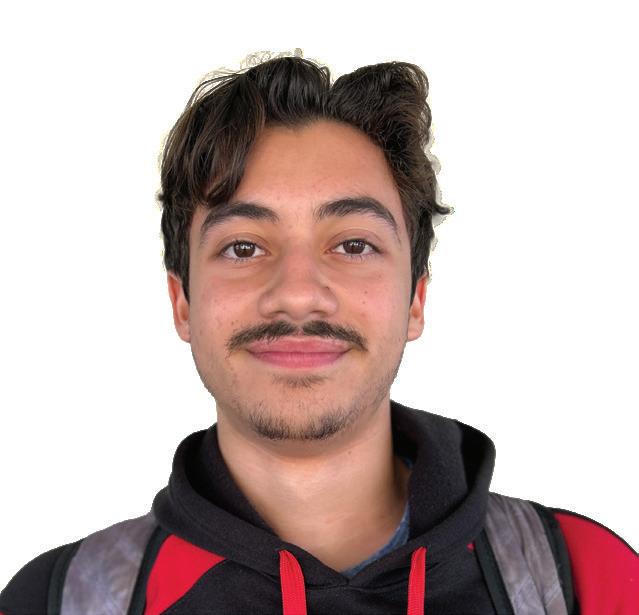


“A big thing for me is to work out without someone like a coach telling me to, because I’m bad at working out on my own. I haven’t been staying on a super strict schedule, but every so often, I will do some exercise on my own and feel good.”
—Isaias Chavez-Wright, 10


“My New Year’s resolution for this year is to find what I find interesting and really pursue that and spend more time doing what I enjoy and love. I’m going to set some time aside every week for a bit of hobby time so I can do things that I value.”
—Henry Dominik, 11
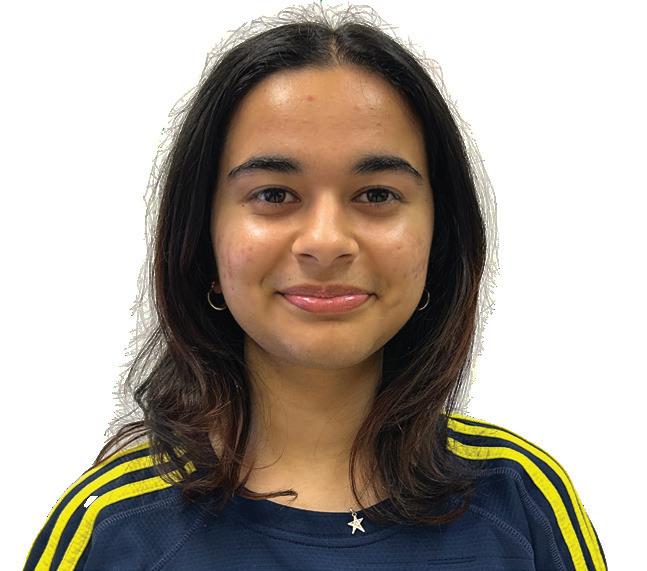


“My resolution is to be on my phone less. I’m doing that by using focus apps. I’m keeping myself busy in ways that don’t require me to be on my phone like spending more time with friends, working on robotics and spending time with my family.”
—Riya Chaudhary, 12