Read
personal column about the female Asian American experience and struggles.
Read about The Oracle’s trip to the National High School Journalism Convention in Nashville.


Henry M. Gunn High School
Read
personal column about the female Asian American experience and struggles.
Read about The Oracle’s trip to the National High School Journalism Convention in Nashville.
Henry M. Gunn High School
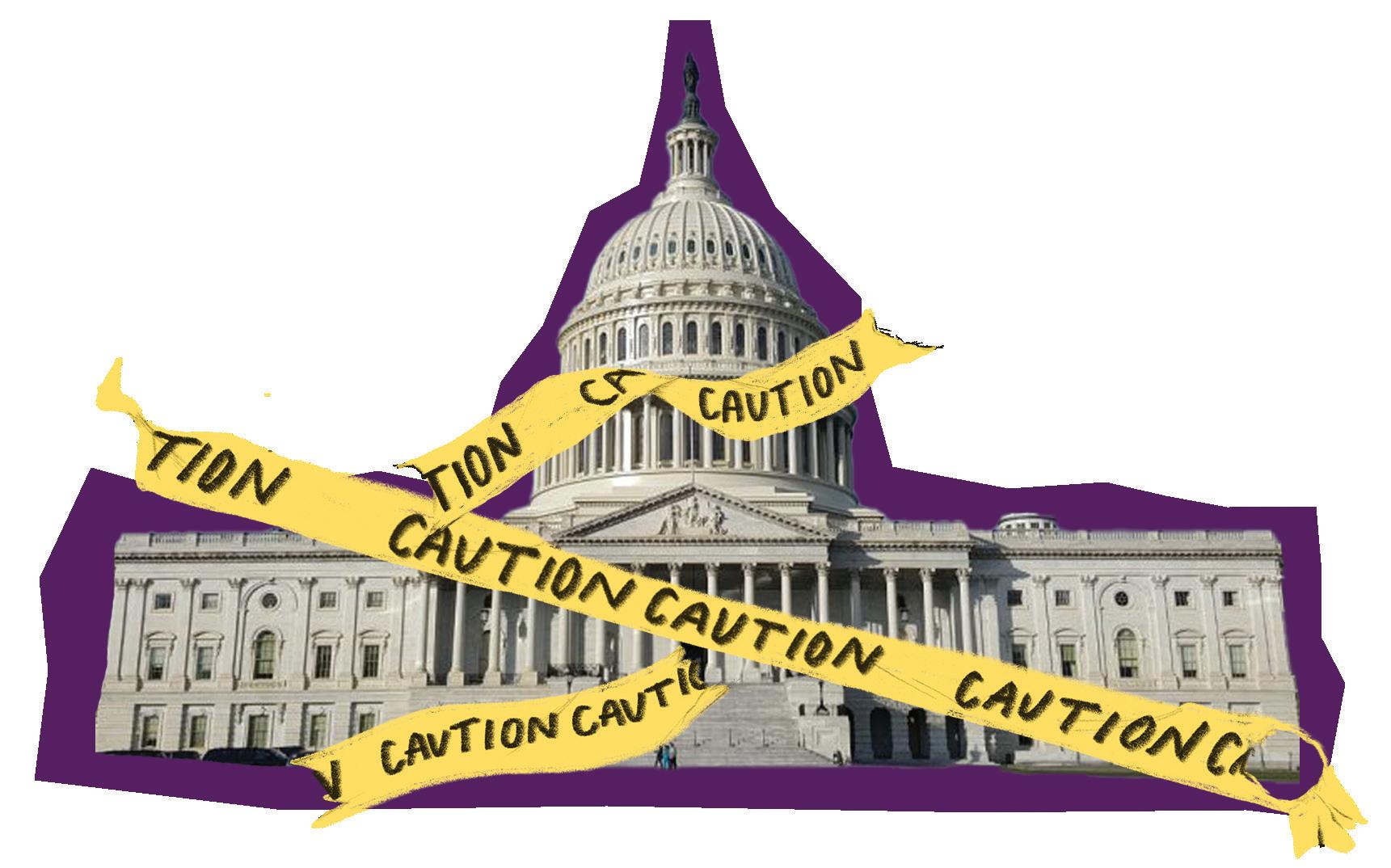
he U.S. government exited a 43day long shutdown on Nov. 12 that delayed funding for and temporarily paused key federal programs, such as the Supplemental Nutrition Assistance Program and Head Start. The shutdown also created many airport and national park service staff reductions, leading to national and local impacts as flights were grounded and national parks provided limited service. When President Donald Trump signed the bill to reopen the government, it marked the end of the longest shutdown in U.S. history.
The government shuts down when Congress is unable to reach a majority vote to pass a large bill that determines the budget for the before the end of year, or in this case, Sept. 30. The Democratic-backed funding proposal included an extension of the Affordable Care Act — a law that provides health insurance to the uninsured — and clashed with the Republicanbacked proposal that aimed to fund the government for a short period of time and excluded an ACA extension. Neither party initially gave in to the other’s demands, beginning the shutdown on Oct. 1. The bill that was passed to end the shutdown did not contain an extension for the federal health
insurance subsidies.
SNAP provides funds to low-income households for groceries each month.
Nationally, about one in eight Americans receive SNAP benefits, and some 40 million people were impacted by the pause in service. Over five million people receive SNAP benefits in California and over
to organize and execute the food drive.
Safety and Family Specialist Jose Ordonez made contact with families to efficiently get food to them.
Norberg feels proud of the Gunn community for their effort and support in the food drive.
Valley organization with a goal to end hunger in the Bay Area, also responded to SNAP service reductions with its own host of food drives.
11.8%
Source: Self-selected survey sent out to Gunn students by The Oracle from Nov. 21 to Dec. 2 with 170 responses. of students had flights delayed or canceled due to the recent government shutdown
the drive. SELF leaders organized a competition between grades of who could donate the most to the food drive, promoting the cause.
SELF Coordinators Christina Norberg and Laurel Howard worked for many hours
• Second Harvest of Silicon Valley: shfb.org
• Community Services Agency of Mountain View and Los Altos: csacares.org
• Hope’s Corner: hopes-corner.org
• Samaritan House of San Mateo

ensuring that families are getting the food they need.
“I’m glad that we have been able to provide (resources) to the number of families we have,” she said.
Second Harvest Food Bank, a Silicon
On pages 8 and 9, The Oracle presents a one-year update into the Trump administration, spotlighting funding cuts in healthcare and universities as well as local effects in immigration. In healthcare, the Big Beautiful Bill’s large-scale funding cuts to Medicaid will potentially eliminate local essential services like county hospitals, mental health programs and services for the unhoused. The bill has also significantly
The Head Start program educates and supports over 85,000 children in California at around 1,800 individual locations with about $1.6 billion in federal funds. Head Start CA Executive Director Melanee Cottrill wrote in an email that four programs across California were significantly impacted by the shutdown. One of those locations, Encompass Community Services in Santa Cruz, had to close and will unfortunately not reopen. Many of the children were able to transfer to a nearby district temporarily, Cottrill wrote, and they now face issues with the center being closed. The other three programs were able to continue operating, but the 4,000 community members that ECS supported each year now have to search for other ways to obtain various health and human services.
Air traffic controllers, who are employees of the Federal Aviation Administration, coordinate arrivals and departures of the
cut Stanford University’s funding, leading to massive layoffs and delays in its research programs. Locally, Santa Clara County is considering reevaluating federal grants, if they face conflicting regulations like diversity cuts. Moreover, in Palo Alto, the city has spread messages that it has immigrants’ best interests at heart, a result of growing lack of trust in law enforcement from the immigrant community.
2.4%
Source: Self-selected survey sent out to Gunn students by The Oracle from Nov. 21 to Dec. 2 with 170 responses. of surveyed students have been imPacted by cuts to snaP benefits
Vin Bhat News Editor
California and Santa Clara County held a special election on Nov. 4, which had two issues on the ballot: Proposition 50, focused on House of Representatives map redistricting in the state, and Measure A, a 0.625% general sales tax for the County.
California voters approved Prop 50, a sweeping constitutional change that shifts redistricting power from an independent citizen’s commission back to the state legislature temporarily, on Nov. 4. The measure passed by a comfortable margin, delivering a major victory for Governor Gavin Newsom and Democratic leaders who championed the effort.
Social studies teacher Max Zipperstein shared that the effort was framed as a counterpunch to partisan gerrymandering efforts in predominantly Republican states, especially Texas, arguing it protects California’s voice in Congress.
“Due to the current political landscape, California Democrats agreed to allow voters to decide how redistricting should take place in their state to ‘defend’ the redistricting actions that were taking place in Texas,” he wrote in an email. “Redistricting usually takes place within a year after a Census was given. So, the fact that Texas planned to redraw their maps two years before the midterms, and five years after the last census is unprecedented. California basically chose to allow its voters to decide what to do.”
Newsom, progressive backers and allied Democrats said the new maps would help reclaim as many as five U.S. House of Representatives seats, bolstering the party’s national position ahead of the 2026 midterms. Critics, including Republicans — namely President Donald Trump — and some political reform advocates, blasted the measure as self-serving and undemocratic, accusing lawmakers of undermining independent review in favor of political advantage.
Polling ahead of the election indicated strong public support of the bill: An Oct. 22 CBS News survey found that about 62% of likely California voters backed Prop 50, with more than half of those citing opposition to President Donald Trump as a primary motivator. The measure ended up passing with support from 64.4% of voters of the state, while 35.6% dissented.
While Prop 50 does not directly redistrict CA
District-16, it still impacts local community members.
“Whether or not CA-16 is directly impacted or not, people will always have an emotional reaction to what is going on in other parts of the country,” Zipperstein wrote. “Eligible voters need to decide for themselves what is best for them and their families, and how they want to — or not want to — participate in our democracy. For this reason, it’s important for all voters to educate themselves, pay attention to what is going on in other parts of the country, so that they can make informed decisions when they head to the ballot boxes.”
Under the measure’s terms, the legislature will draw new maps for the next three election cycles, but after the 2030 Census, the independent commission will resume its usual role.
During the special election, Santa Clara County voters approved Measure A, a five-eighths percent temporary sales tax increase. County officials say the measure could generate roughly $330 million annually to make up for severe federal funding cuts.
The tax hike, which will last five years, was placed on the ballot after the Santa Clara County Board of Supervisors declared a fiscal emergency on Aug. 29. The urgency stems from sweeping reductions in Medicaid, known as Medi-Cal in California, funding following federal budget changes under H.R. 1.
Santa Clara County Supervisor Margaret AbeKoga’s office — after being contacted for a statement on Measure A — redirected The Oracle to a press release and interview by Abe-Koga with the Los Altos Town Crier indicating support for Measure A.
“Our community needs this stability,” she told the Town Crier. “People are just reeling from loss — the latest in the SNAP food aid, but also overall a sense of loss, with cuts and the scarcity of things that our communities need to be healthy. Santa Clara County is taking a huge $1 billion hit in federal funding largely through Medicaid that enables our most vulnerable to access healthcare. Measure A will stanch about onethird of that loss and prevent the most severe reductions to vital county services such as healthcare, food assistance, housing, and other safety-net programs.”
The county says the revenue will go toward critical services such as trauma care, emergency rooms, mental health and public safety. Local backers also point to transparency and oversight: They say the funds will be closely monitored and easily auditable.
However, the measure has not been without
controversy. Opponents caution that even though the tax is temporary, county governments can struggle to sunset new revenues. Some critics also argue that as a general county sales tax, which requires only 50% of the vote to pass, the funds may not strictly be used for healthcare. Sales tax revenue, unless bound by a super majority vote, can be allocated at the county’s discretion.
The measure was passed with support from 57.25% of the county by a margin of 14.5%. The increase in sales tax is set to begin on April 1, 2026, and continue through spring 2031.
“At the end of the day, ‘We the People’ get to make the choice and we have to accept what the majority voted for,” Zipperstein wrote. “If we don’t like it, then it is our obligation to convince others why our side of the argument is better. It’s up to the citizens to choose the direction they want to take — and it starts with choosing to exercise the power of your vote.”
An extended version of this story will be posted to The Oracle’s website (gunnoracle.com) in the coming weeks that includes interviews from notable local politicians.

57.6%
Source: Self-selected survey sent out to Gunn students by The Oracle from Nov. 21 to Dec. 2 with 170 responses. of students agree with the implementation of measure a

majority of flights that occur in the national airspace such as some of the biggest airports in the U.S., including San Francisco, Los Angeles and New York John F. Kennedy International airports. Due to the shutdown, many FAA workers faced work without pay, leading to many staffing shortages. This led to over 11,000 cancelled flights over U.S. airspace. and many more delayed during the shutdown.
Some members of the Gunn cross country team flew to New York for a competition in early November, and both athletes and coaches were worried about the possibility of their 1 a.m. school
night, red eye flight back — arriving just eight hours before school started — being delayed due to the shutdown. Team
member junior Noah Cheng shares the stress he felt for himself and his fellow student athletes during the trip due to potential shutdown impacts on their academic success.
“It makes me feel worried for not just myself, but other people (as well), because of how dependent everyone is on flights being on time,” he said. “(Delays) could mess up how much sleep we got as well, which could affect performance.”
National parks across the U.S. temporarily lost many employees due to the shutdown, which led to a decrease in park maintenance,
causing many visitor centers, bathrooms and roads to close. Increases in human waste problems and vandalism were also rampant among parks that saw severe staff reductions.
People made 330 million recreational visits across all U.S. national parks in 2024. The ones in California are quite popular.
Park rangers ensure that wildlife thrives, everyone is enjoying nature safely and people treat the parks with respect. One impact that a lack of human traffic can have on landmarks is giving nature time to heal.
Sophomore Victoria Blanchet has gone on family vacations to national parks such as Yellowstone, Yosemite and Grand Canyon. She sees the importance in people always being able to access the
countless beauties and so much wildlife that national parks hold. The government shutdown, for Blanchet, hinders the ability to preserve the national parks.
“I think what gets people to care about wildlife in national parks is being able to experience it firsthand,” she said.
“I think pictures don’t do (national parks) justice, and if you’re there, I think that is what gets people to care. That’s what gets people to continue to take care of these parks and preserve them.”
A little more than three weeks since the end of the shutdown, SNAP is running at almost the same level, Head Start has recovered, planes are flying smoothly and national parks, enjoying a short recovery from human interaction, are functioning well.

780 Arastradero Rd. Palo Alto, CA 94306
(650) 354-8238
www.gunnoracle.com
Editor-in-Chief
Sylvie Nguyen
Ma naging
Editors
Yu-Ming Liu
Ya-An Xue
News
Vin Bhat
Sarah Grupenhoff
Vanisha Vig
Forum
Kaylee Cheng
Claire Jittipun
Melody Song
Features
Gwen Domine
Lena Duggan
Eanam Maor
In-Depth
Roy Lao
Melody Na
Sports
Yael Gottesman
Olivia Lee
Lifestyle
Anne Dong
Ezra Rosenberg
Vaani Saxena
Social Media
Vaani Saxena
Photo Editor
Mars Ezakadan
Graphics Editor
Azuki Radhakrishnan
Staff
Business/Circulation
Eanam Maor
Graphics Artists
Vin Bhat
Hannah Jung
Kai Knutson
Sophie Kou
Michael Lu
Alexandra Liu
Sahana Mahadevan
Nina Pankov
Ezra Rosenberg
Photographers
Inaaya Ahmed
Vin Bhat
Gwen Domine
Reporters
Annabel Brown
Mayher Dulani
Athena Gao
Yuji Song
Adviser
Kristy Blackburn

Vin Bhat and Annabel Brown News
Editor & Reporter
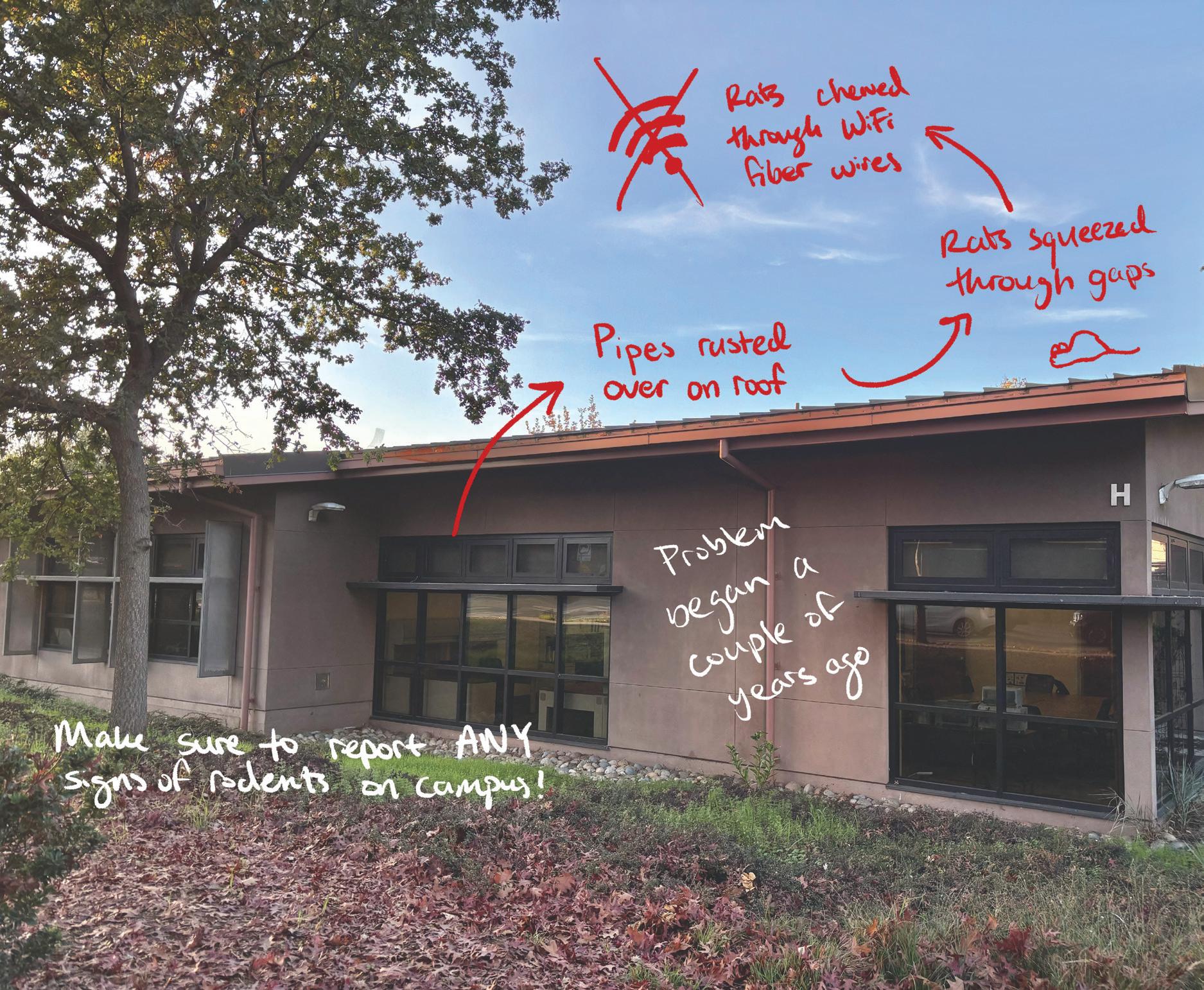
Rats have gotten into H-building classrooms over the past few months, disrupting lessons by chewing wires of both the Wi-Fi and temperature settings on two separate occasions.
According to head custodian Luciano Hernandez, the roofs of the H-building had pipes that rusted over, allowing the rats to squeeze through gaps in the pipes and chew through fiber cables that brought internet connection to surrounding classrooms. The Wi-Fi outage lasted for a few class periods this fall, but the issues started arising over the summer.
“Two of the things that rats need to survive are heat and food, and there’s plenty in at least a couple of the (classrooms),” he said. “We try to advise teachers not to have a lot of food in their class and make sure that everything is sanitized and disinfected.”
When there are issues with rodents or other animals on campus, the custodial team works to patch up property that was affected, ensure that no nests are left inside and set up traps as an extra layer of mitigation.
“I think that the (rats) affected the students more than us, because we just go after and clean,” Hernandez said. “It’s just the idea that there might be rats in their (classes).”
According to Assistant Principal of Facilities Dr. Mycal Hixon, students and staff on campus should be encouraged to report any sightings of rodents as soon as possible.
the type of assessments that we’re doing, because there might be additional spots that they might be coming from that we’re not aware of,” he said.
For World Languages Instructional Leader Matt Hall, the rats have been an ongoing issue on and off for a couple of years.
two of the things that rats need to survive are heat and food, and there’s plenty in at least a couple of the (classrooms).
head custodIan lucIano hernandeZ
“If you notice any rodents around, that’s something that we need to know to reassess the area or amp up
“There have been at least two separate incidents where the rats damaged infrastructure to the point where instruction was impacted,” Hall wrote in an email. “(It wasn’t) the end of the world, but certainly a disruption.”
When rodents are detected on campus, the school and district launch a multi-step plan to rectify
The Oracle strongly encourages and publishes signed Letters to the Editor and Comments. Comments are generally shorter responses, while Letters are longer pieces of writing.
Please include your name, grade and contact information should you choose to write one.
“I liked the design of the newspaper a lot. I’m always a good appreciater of art and the effort behind it, and this issue was no different.”
“I enjoyed reading the (article) about women’s sport clothing, cause it applied to me.”
the situation.
“We had one of the rodent control companies come out and be able to assess the problem, trying to figure out what’s happening,” Hixon said. “So if there’s holes within the wall, or if they’re coming in some other way, we want to definitely patch up those potential holes. We would set up some aspects of traps, and then check again the next day to see if they’re going inside the traps, letting us know if there’s a bigger situation that we need to be concerned about.”
rodent infestation.
If you notice any rodents around, that’s something that we need to know to reassess the area or amp up the type of assessments that we’re doing.
assistant principal of facilities dr. mycal hixon
“When kids eat everywhere and they throw food, you’re going to have rodents,” Hernandez said. “If they can just dispose of food properly and try to do their best to clean up and throw everything in the trash, (it would help).”
Hernandez also emphasized the importance of keeping the campus clean to reduce potential
IF you have any concerns about rodents on campus, please contact assistant principal oF Facilities dr. mycal hixon at mhixon@pausd.org
Letters and Comments may be edited to meet space requirements, and the writer is solely responsible for the accuracy of the content.
Letters to the Editor, Comments and ideas for coverage may be sent to oraclegunn@gmail.com. These letters do not need to be from current students.

The Oracle: What was the origin of the Gunn Food Drive since there wasn’t one last year?
Christina Norberg: There is always a food drive on campus related to Second Harvest in conjunction with the Harvest Feast...Because that is run by SEC, any food that is donated goes to Second Harvest directly. To my knowledge, there hasn’t been a Gunnspecific — meaning to get (food) to Gunn families — food drive before. I, personally, (think) about parents who can’t feed their young children because they’re not receiving the benefits that they normally rely on — which are also insufficient in the first place. It’s something deeply unsettling to me (as a parent myself).
A conversation on the Gunn Food Drive and effects of the government shutdown on SNAP benefits
TO: Can you explain the motivation behind having a SNAP-centered food drive?
CN: SNAP benefits weren’t initially paid to families in November. They continued to be so up in the air and going back and forth. Something that I think we’ve seen, and I think going forward, is that we don’t really know what’s going to happen. Clearly not just in our community because we as a community are very affluent. But across the country, there are many people that are experiencing food scarcity, and it’s something that — back to (me) having a 10-month old at home and imagining not being able to feed him — is gonna make me start crying. That was the motivation behind making (the food drive) happen.
The Oracle: What do you think of the recent victory for Yes on Proposition 50?
Max Zipperstein: Before Proposition 50, the state of California and their electorate voted to have an independent California Citizens Redistricting Commission. Voters favored this in 2008 on the Voters First Act. Although California is largely a blue state, the independent commission allows its electorate to have faith that congressional lines are being drawn in a non-partisan way. California voters overwhelmingly decided to bypass the Independent Commission, at least temporarily. Republicans are currently contesting the constitutionality of Proposition 50 in the courts.
TO: How have SNAP benefit-related cuts affected Gunn students?
CN: It’s one aspect of growing up. Potentially being in an environment where you don’t have access to resources that are just basic human rights — a safe place to lie down your head at night, food that you can eat and nourish your body, the essentials that we all need just to be able to survive. That’s my own personal opinion, and for students who are experiencing that, I know often parents will go hungry for days so that their kids can eat. They will try to shield their children from that fact, because the kids are the priority. In some cases, that’s not even an option because there’s no food to give.
A conversation on the Nov. 4 California state and Santa Clara County special election
TO: CA-District 16 stays the same under Proposition 50. How is Gunn affected?
MZ: In our democratic-republic, Palo Altans seem to be pretty politically engaged from my observation. Whether or not CA-16 is directly impacted, people will always have an emotional reaction to what is going on in other parts of the country. Eligible voters need to decide for themselves what is best for them and their families. For this reason, it’s important for all voters to educate themselves and pay attention to what is going on in the country, so that they can make informed decisions when they head to the ballot boxes. So, yes, from an emotional standpoint, CA-16 and Gunn families are impacted.
TO: How has the increase in political polarization affected our state and nation?
MZ: I think there is a lot of anxiety and fear around the political state of our country right now, felt on both sides of the political aisle. There has always been division in politics, but it’s pretty extreme right now. Part of this is due to the rhetoric we see in our elected officials when they give public speeches or when they address the media. It has led to families breaking up, abandoned friendships, and in some cases, political violence. If we want to change the political landscape, we have to be willing to have difficult conversations with people who hold political beliefs different to our own.
—Compiled by Vin Bhat and Ezra Rosenberg. Edited for clarity


Yuji Song Reporter
In the modern dating world, the question of whether men should pay on the first date remains unresolved. While gender roles have evolved, public opinion and surveys argue that men should pick up the check when feasible, not out of expected obligation, but to foster mutual respect and effort.
According to a study conducted by Cal State LA professor Janet Lever and her colleagues in 2015, people in the modern day still adhere to the gender expectation that men should pay and act dominant as the provider. The research found that most men (84%) reported that men should still pay more expenses. Furthermore, many men are compelled to resist when women pay, as the majority of men (76%) said they feel guilty when accepting women’s money.
The stereotype that mistakes a man paying for dates as an act of dominance
distracts the pure emotional intent behind it. Most women offer to split the bill out of consideration, but a man’s willingness to pay represents a way of expressing themselves.
Dating expert Amy Nobile also supports men paying when they initiate dates. In an interview for CNBC, Nobile recommends that “men should pick up the bill on all of the dates before a couple becomes exclusive.” A 2016 survey by women’s lifestyle magazine Refinery29 showed that nearly 60% of women reported feeling appreciated when their date paid.
Critics argue that expecting men to pay reinforces traditional gender norms. However, a man’s gesture of choosing to pay should not be seen as an economically motivated choice but motivated by the courtesy it shows to their partner. More importantly, it allows for the time to build a balanced dynamic in the future. Instead of undermining equality, the gesture often initiates it.

Lena Duggan Features Editor
Throughout history, picking up the bill was a man’s responsibility. This expectation did not appear out of nowhere — it was shaped by older cultural norms of men being viewed as providers. In recent years, these gendered expectations around paying the bill have been brought into question, prompting alternative practices.
Splitting the bill challenges and dismantles traditional gender roles by reflecting a shift toward gender equity. According to a 2016 survey by Refinery29, 60% of women always or sometimes split the check while on a date. It highlights reasons for splitting the check is optimal
her date anything based on who paid. Among teens, the expectation to pay can create pressure as they try to uphold traditional dating norms. 53.1 % of teens ages 16 to 24 are employed in America, according to the Department of Labor. Although that is over half, it shouldn’t be an expectation for the working partner to always pay. Some of it should be saved for college and other things, spent on food or used to support their family. Splitting the bill can make dating more equitable and accessible since the burden won’t just fall on one person entirely.
As society changes, our dating norms should change too. Old expectations about who pays no longer match a world that values gender equality. Updating how we split the bill isn’t just practical; it reflects a shift toward fairness and shared responsibility in modern relationships.
Source:
OF SURVEYED STUDENTS DO NOT bEliEVE ThERE ShOUlD bE a cERTaiN paRTNER whO paYS
Source: Self-selected survey sent out to Gunn students by The Oracle from Nov. 21 to Dec. 2 with 107 responses.


Gwen Domine Features Editor
“Talking stage,” “situationship” and “ghosting” are all dating-related terms that have arisen from increased use of technology in relationships. These ambiguous concepts and blurred labels all stem from dating standards created in a modern era, where expectations are pushed by TikTok and other social media platforms.
Due to the shift of technology, relationships once labeled as dating, or “going out,” have deviated from the clearcut lines of exclusivity, leaving couples in a more casual state. A reliance upon online platforms has created a new landscape for the dating scene: Higher expectations, unclear relationship statuses and an emphasis on independence all lead to a new set of modern
dating standards that are more difficult to navigate than ever before.
As the holiday season approaches, viral videos of “brr baskets” and “cuffing season” pop up on feeds, creating unnecessary pressure on viewers who hadn’t planned on these endeavors. Instead of a meaningful gift for one’s significant other, elaborate guides to the perfect present for a romantic partner appear in formulaic lists. According to a 2024 study by MHM Marketing Agency, 55% of individuals found holiday gift ideas via TikTok. By listening to the voices of influencers rather than prioritizing genuine interests, social media users are giving into trends instead of demonstrating attentiveness to their partner’s preferences.
At the same time, dating now comes with higher, often unrealistic, standards from who is expected to pay for dates to how quickly someone should reply. Even the rise of online dating forms and compatibility checklists reinforces the idea that relationships should fit a perfect template, adding more pressure than clarity.
Much of modern dating standards have been affected
by the idea of self-care and putting oneself first. The overthe-top prioritization of “protecting your peace,” a phrase that is commonplace on social media, has served not to further the individual, but instead to push away others. While it is important to care for yourself, it is still beneficial to have external support, both for physical and mental health. A 2025 study by the American Psychological Association stated that, as romantic partners spent time together, cortisol — a hormone associated with stress — decreased.
In a rapidly changing society, the digital era has an outsized impact on dating. As weeks of texting — or “talking” — replace long dates and paid influencer advertisements replace meaningful gestures, social media is one of the biggest factors in relationships. To prioritize genuine connection, it’s important to put the phone down and take a break from obsessing over the so-called perfect gift or how to become uber-independent, and instead, spend time on in-person interactions. Choosing reality over social media is vital to maintaining one’s mental health and cultivating a healthy relationship.

Only in the United States do we hear the names Jade jewelry, bangles and Scandinavian Scarves. Elsewhere, in their origin countries, they are Yù, churis and dupattas — same items, different names. Historically, Asians have been looked down upon due to racist ideologies: no matter if that meant treating East Asian women as objects to be lusted over, South Asian men as “creeps” or South Asian women as dirty. However, when it comes to the clothing and jewelry we wear, or even the food we eat, all of those foreign traits are now seen as money-makers. Many aspects of Asian culture, whether it’s clothing and accessories, beauty standards or representation in the media, have been monetized, while the meaning behind these items and the tradition they hold are deemed unimportant.

There is a difference between cultural appropriation and appreciation, and most of these items are put on the market without consideration of the meaning behind them — directly appropriating Asian culture. Often, cultural clothing is cruely inserted into mainstream fashion. For example, when fashion brand Bipty marketed South Asian dupattas as Scandinavian scarves, it no one cared about culture when it looked cute. According to Elle fashion magazine, “The dupatta is more than a piece of cloth — ask anyone who grew up folding it into school uniforms, borrowing their mother’s silk ones for college farewells, or pinning it just right for religious ceremonies. It’s a garment that carries history, symbolism, and deep cultural memory.” However, this deep culture is discarded and instead overlooked by a westernized take on it. The fashion is only seen as beautiful when it appears on white models.
to envy,” and “The shadowed side of that is they then become targets of hate, sexual violence and physical violence when they aren’t perceived as fully human and deserving of rights to be safe.” While this objectification may seem innocuous, it triggers physical harm. When men can’t “obtain” East Asian women, it can cause them to commit

This instance occurred with bangles too, which typically symbolize protection and good energy in Thai Buddhism. The “Buddha girl” trend, already a perturbing name, has spread throughout social media, but no one bats an eye. It seems to have originated from a brand called “Budhagirl,” which was founded by a woman who does not practice Buddhism. In founder Jessica Jesse’s travels to Thailand, she was gifted gold bangles by Thai monks. The idea of being gifted a sacred item from monks, and then creating a brand to sell those gifts is baffling. Rather than dedicating her brand to the ideals of Buddhism or raising awareness for the religion, she dedicated it to capitalism, yet another instance where Asians and Asian culture is undermined.
Not only are our cultures commodified, even East Asian women themselves are seen as objects or something to be desired. They are viewed as something to lust over. People feel that they can objectify them and treat them the way they do, because East Asian women are less than human. This is not flattery; it is a real issue that can become dangerous. Sociologist and author of “Reel Inequality” Nancy Wang Yuen reported in a USA Today article that “The idea that Asian women are desirable and exotic and passive isn’t just an innocent stereotype or a desirable trait

mocking Indian accents and disparaging the Indian community. People mock and ridicule the fact that Indian people eat food with their hands and talk with an accent, but somehow chicken tikka masala — an Indian dish — is their favorite food. Along with Indians, Chinese people are also laughed at for their accents and for having “small eyes.” In J.K. Rowling’s Harry Potter series, she named the singular Asian character Cho Chang. This sounds a little too similar to the slur associated with Chinese people, another common phrase used to mock Asians. Despite this, she became a best-selling author. Chinese names have significant meanings, but Cho Chang is a nonsensical one. “Cho” isn’t even a real Chinese character. Instead of taking the opportunity to show real diversity in media, Rowling took the easy way out without doing even a bit of research. It should not slide now, and it should not have slid then.
The sound “Hibachi Bennihana Teriyaki” took over TikTok. Little did they know this infamous sound came from a real movie, “Scary Movie 4,” where the actors were speaking Japanese, but it was just a bunch of random words that resemble Japanese culture. According to Box Office Mojo, the movie made approximately $178 million. It’s horrifying to see this movie put out to the public with no shame. The writers did not even make an effort to properly showcase Japanese culture. They focused on making money, making it “funny” and disregarded how it could affect
These are just a few examples of how Asians and each respective culture has been commodified. Throughout the media there have been numerous accounts of normalized racism and ignorance. This is an issue that we need to recognize and stop repeating. Instead of using the culture, brands should research the cultural significance, recognize the cultures they are borrowing from and appreciate the culture rather than appropriate it.
More than an ‘ABG’: Asian women deserve respect

It feels strange to be an Asian American woman in the twenty-first century. Of course I am proud of my heritage and the weight it carries into my identity, but there’s another form of baggage that comes with it. It’s as if most of the time I’m seen as a category loaded with assumptions, fantasies and stereotypes that were written long before I was even born. There’s a difference between appreciating a culture and reducing it to something you can consume, and it’s not representation if the world is celebrating a lie they’ve projected onto us. When Asian womanhood is commodified, it doesn’t honor us: It undermines our lived experience and who we are as a whole.
If I had a dollar for every guy who’s said he “has a thing for Asians,” I could probably buy a plane ticket back to my “home country” just to get away from all of them. Hearing you’re someone’s “type” because of your race isn’t flattering. It’s dehumanizing. The Center at 909, a victim services organization in the United States, reported that 1 in 3 Asian and Pacific Islander women surveyed experienced sexual violence in their lifetime, a risk researchers directly link to stereotypes that cast Asian women as docile, compliant and less likely to resist. So when someone claims they like me “because I’m Asian,” it’s hard not to feel like they’re attracted to a fantasy, not a person. But this obsession with Asian women didn’t start with the guys I’ve dated — it’s older and far more violent than just a “preference.” The fetishization of Asian women in America is woven into the country’s history. The first federal immigration law, the Page Act of 1875, targeted Asian countries, stating that “the importation into the United States of women for the purposes of prostitution is hereby forbidden,” effectively framing Asian women as sexual and equating their presence with illicit sex work. This stereotype only grew during the wars. A research article from Washington and Lee Journal of Civil Rights and Social Justice dived into historical instances of Asian women being commodified during the Philippine-American War, stating that American soldiers referred to Fillipina women as “little brown f---ing machines powered by rice.” U.S. wars and occupations across Asian countries throughout the 20th century only intensified these labels. During the Vietnam War, bases in Thailand housed up to 70,000 soldiers cycling through for “Rest and Recreation,” igniting a multimillion-dollar sex industry built to exploit Asian women. Many of the women in these economies were there not by choice, but because poverty, coercion or violence left them with no alternatives. These encounters solidified the Orientalist archetypes that still cling to Asian women today — the submissive “lotus flower,” the fragile “china doll” and the hypersexual “dragon lady.” Hollywood helped cement these fantasies in American culture through works like “Madame Butterfly,” “Full Metal Jacket” and “Miss Saigon,” shaping how Asian women continue to be perceived after the wars ended.
This history didn’t stay in the past. The same Orientalist fantasies that shaped military policy and sex industries in Asia now shape casual comments, modern-day dating and entire online trends. What frustrates me most is how Gen Z tries to disguise the same old fetishization as humor. The so-called “Oxford study” is the perfect example — not an actual study, just a TikTok meme people throw around whenever an Asian woman dates a white guy. I hate it. It takes a tired, racist stereotype — that Asian women exist to fulfill white male fantasies — and repackages it as a joke everyone’s supposed to laugh at. It flattens our relationships into punchlines and reinforces the idea that our dating choices somehow prove we’re “naturally” drawn to whiteness, instead of acknowledging the long history of fetishization that shapes why people pursue us in the first place. And the ‘Asian baddie girl’ (ABG) stereotype does the same thing: painting Asian women as a caricature for others to desire or imitate. I’m tired of hearing people categorize Asian women as “ABG,” “anime girl,” “boba girl” or “K-pop girl” like we’re menu options or micro-genres. Gen Z loves calling itself progressive, but in reality, it has just modernized Orientalism, making it trendier, more palatable and somehow even more dehumanizing. These so-called jokes don’t reflect who Asian women are. They reflect what people still think they’re entitled to reduce us to.

So when someone insists they “love Asian women,” I hear more than a preference. I hear the legacy of occupation, commodification and Orientalist fantasy wrapped in a single sentence. It reminds me that the world learned to fetishize us long before it ever cared to understand us. And that is exactly why Asian women are speaking up — because our identities aren’t aesthetics, our bodies aren’t trends and our womanhood is not a blank canvas for someone else’s desires. I’m not here to be desired, I’m here to be seen.
Flour, water and sugar — but not too much. Junior Jonathan Law, his family’s designated baker, folds the hunks of butter into the pastry. Whether it’s Thanksgiving, or another festive occasion, his strawberry pie usually finds its way onto the table.
Law began his baking journey in eighth grade with one thought in mind: the desire for a sweet treat. As he immersed himself further in baking, Law started posting some of his creations on Instagram, finding it a low-stress outlet to document and share his work. Even when he wasn’t physically bringing others baked goods, his posts connected him and his friends, enabling them to see and appreciate what he made.
“My mom was kind of surprised when the cookies came out of the oven,” he said. “I thought it’d be cool if I posted it to my friends.”
For senior Anika Kumar, preparing food, whether it’s baking a Thanksgiving meal with her sister or learning a traditional Indian recipe from her grandparents, deepens connections with family and those around her.
“Every time I make something, I’ll either give it to my family or go around and give it to my friends,” she said. “Food is always something that brings people together.”
Kumar’s cooking journey began early in her life at her mother’s side in the kitchen, helping with dinner. By second grade, her passion opened doors to competitive opportunities. She joined her first local competition, Sodexo Future Chefs Palo Alto and became one of the only qualifiers from her school. Later, she would move on to be a MasterChef Junior top 50 contestant in fifth grade and a national runnerup in Top Chef Family Style in seventh grade.
Since then, Kumar’s adventures have become more local, focused on giving back to her community. In addition to teaching at Kids Cooking for Life, a non-profit focused on teaching healthy eating and to children, she feels her experience competing has allowed her to refine her skills and make memories with others.
a volunteering program.”
For many, care is also synonymous with food. In junior Kalissa Huang’s life, baking is a love language as she uses her skills to take care of others.
“My mom will be like, ‘Oh, I’m really craving biscotti,’ so I learned to make biscotti for her,” she said. “It’s a way of expressing love and appreciation for people.”
Her love for cooking up food — particularly sweets — started with making Rice Krispie Treats for Santa on Christmas Eve. Huang’s dad allowed her and her older sister to help with measuring ingredients and mixing everything together. Still, she remembers the aroma surrounding them at that moment.

EvEry timE I makE somEthing, I’ll EithEr givE it to my family or go around and givE it to my friEnds. food is always somEthing that brings pEoplE togEthEr.
it teaches her more than a typical academic setting would.
“If I just experiment (with) doing (things) myself, I feel like I can learn a lot more than studying for a test,” Law echoed the sentiment, finding that his journey with food has largely been built around attempting and innovating. During his first attempt at baking cookies, Law had a mishap with the brown butter — adding it in at the wrong time led to the cookies not rising. Instead of giving up, Law looked for ways to improve.
a lot of my customErs havE bEEn middlE-agEd ladiEs (as wEll as) studEnts, so thErE’s a prEtty widE rangE to markEt, and I’m trying to Expand. a lot of pEoplE Enjoy cookiEs.
junior k alissa huang
“The smell of butter and marshmallows — oh my gosh, it was so delicious,” she said. “I remember the morning after just eating half of the half of the pan. And then I was like, ‘Maybe I should make more of this stuff.’” Now, chocolate chip cookies of all shapes, blends and variations are Huang’s favorites to eat and make. Recently, she has turned her love for dessert into a business. With this new adventure comes a new challenge for Huang: finding the right audience. While proving to be the most difficult aspect of working her business, it also allows Huang to connect with consumers she didn’t realize would be interested.
sEnior anika kumar
“It’s tough to reach new audiences since my target audience was (originally) students or parents of children who like sweet treats,” she said. “But a lot of my customers have been middle-aged ladies (as well as) students so there’s a pretty wide range to market and


“I modified the recipe later,” he said. “There was a better version. I added half brown butter and half normal, and then they took shape again.”
Having cooked and baked, Kumar also finds herself regularly inventing new ideas and refining old recipes to create something original.
“I think everything I cook is a recipe (I create),” she said. “I always riff off of (a baseline). I never actually follow the recipe exactly.”
Kumar’s favorite dessert, macarons, are also complex in methodology — egg whites with sugar are whisked in powdered sugar and almond flour until the consistency is just right. Her chance to innovate, however, lies in the middle of the process: the flavor.
“I’ve experimented a lot with fillings to put in macaroons,” she said. “I’ve made apple pie macaroons, ginger spiced macaroons, mango macaroons. It’s been super fun.”
Freedom of design has also played a big role in the way Law interacts with food. He enjoys a challenge in the form of his favorite baked good, strawberry shortcake. The unique recipe breaks the rules, omitting baking power, which typically helps whip the eggs and make the cake rise. Once it is baked, Law allows his taste to guide him.
“The fun part about it is really when I get the piping bag and I can put little dollops of whipped cream on the sides or I can choose how many strawberries I get to put in there,” he said.

As life becomes busier, Kumar continues to find her relationship with food is a way to connect with herself.
“Cooking is a good destressor for me,” she said. “I just enjoy the fact that you get to make something edible. It’s like an art.”
—Written by Vanisha Vig




is estimated that economic output will decrease by about $37 billion, raising concerns for the industry.
While national politics can often feel distant, Palo Alto has felt the implications of new federal policies in tangible ways. From Stanford University’s research cuts to strategies enforcing deportation efforts around Silicon Valley, the Trump administration has triggered and heightened challenges for the local community over the past year.
City Council Member Greer Stone is a life-long Palo Alto resident — a PAUSD graduate and former teacher who is now a teacher in a nearby district. As an active community member, he raised concerns about how shifts in the federal policies have significantly changed the nation.

Recently, Bay Area Pediatrician and Immediate Past President of the California Medical Association Dr. Shannon Udovic-Constant has been hearing talk about closing clinics and health centers due to the heavy budget cuts. Last month, Udovic-Constant heard that Santa Barbara County was planning to stop services to federally qualified health centers. She is nervous about how it will impact hospitals across the state.
“They decided to put that on hold for now, but those are the kind of conversations that are happening,” she said. There’s several hospitals across the state that already are managing on very tight margins, and if they lose this income, we’re very concerned that some hospitals will close.”
31.2% of students noticed changes in healthcare fundIng under the trump administration
“It’s not the America that we’ve come to know in our own lifetimes,” he said. “It’s not even reminiscent of an America that I can recall looking back on in the history books. We’ve had our moments in American history where we wish we could go back and change, but this (is) sort of slides towards a more authoritarian style government where there is retribution for political foes.”
Source: Self-selected survey sent to Gunn students by The Oracle from Nov. 21 to Dec. 2 with 125 responses.
According to Stone, the change in the federal government’s overall direction is evident through categorical grants, which are federal funds given to state or local governments in exchange for conditions or requirements being met. Palo Alto relies on these grants for tens of millions of dollars. Recently, new conditions, or wording of conditions, have arisen that may conflict with the city’s ethics, according to Stone. While these changes have not been significant enough to cause the city to reject aid yet, Stone thinks that if the city faces conditions that they are morally against, there is potential for significant budget cuts.
For example, the Trump administration has recently incorporated removing affirmative action and DEI in hiring practices into these grant conditions. Since California law under Proposition 209 already prohibits this practice, Stone says that as a city, this condition hasn’t currently affected the city’s grants. However, he views it as a way to devalue diversity in hiring and staffing and the start of a worrying trend.
“It’s going to be challenging (having these) discussions about foregoing money in order to stand up for what we believe in,” he said. “But hopefully, that’s a decision that we will not have to make.”
Public perception of the economy overall has seen a dip. Just over half of the U.S. adults as of September 2025 say Trump’s policies have made economic conditions worse, with 19% of Republicans having this sentiment, according to Pew Research Center.
According to Stone, many signs currently indicate a major economic downturn — including decreased consumer sentiment, drop in sales tax, rising inflation and a weakening tech job market with the emergence of AI. He mentions that the county is expecting a deficit between now and 2030, raising the possibility of going into a recession. Additionally, during the November election, the county passed Measure A, which increased sales tax in order to raise additional revenue to account for this predicted deficit.
Udovic-Constant has a multifaceted view on this matter, including concerns about costs and the community.
“As you take away the insurance, that (economic or mental burden of disease) is still going to be there, and without that ‘medical home,’ people will delay seeking help, and we will identify disease and illness at later stages,” she said. “One of the things that the healthcare community, specifically physician advocates, is planning is to make sure that we’re educating our communities about the impact that votes from their members of Congress can (have on) their access to health care.”
The One Big Beautiful Bill, signed by President Donald Trump in July has led to budget cuts for the county, and according to Stone, the county relies on much of this budget to be able to provide essential services such as mental health programs, various county hospitals and services for the unhoused. Due to this, there have been conversations proposing to cut or eliminate some of these services, such as allcove, a county funded teen mental health service that has partnered with the district in addressing youth well-being and teen suicides. Stone emphasizes that many of these services combat some of the city’s major issues, and cutting them could have detrimental impacts on the community.
“If we lose something like that (allcove), is the city capable of stepping up and offering similar services?” he said. “We’re all connected in this kind of greater ecosystem, so there’s a lot of concern, a lot of fear, (and) a lot of just uncertainty moving forward. All (of) that is compounded by an administration that kind of just governs at a whim.”
University Funding

The One Big Beautiful Bill also set out to cut $140 million from Stanford University’s funding, according to the Stanford Daily. This resulted in layoffs for the university, and federal funding grants were cancelled. The university’s staff was officially notified in January 2025, when the information started to circulate on the campus.
39.2%
of students noticed changes in research funding under the trump administration
Source: Self-selected survey sent to Gunn students by The Oracle from Nov. 21 to Dec. 2 with 125 responses.
“It’s going to help slow the bleeding a little bit, but it’s not going to completely close the funding gap that the One Big Beautiful Bill caused (which) will have a ripple effect across the county,” he said. “The county is going to experience deficits, (which) cities are going to feel the impacts of.”
Healthcare and social Services
The One Big Beautiful Bill, issued in July 2025 to reallocate funding, has cut trillions of funding from Medicaid nationwide, and California’s Medicaid, known as Medi-Cal, will have billions of funding cuts, according to UC Berkeley’s School of Public Health. It
One of Stanford’s finance managers Nicole Wang has already noticed a significant shift in the research projects. However, there is still hope for sustaining these projects.
“Some projects may need to be adjusted to fit within a tighter budget,” she said. “Even so, many research efforts are continuing, and the university is actively exploring additional funding sources to help keep important projects moving forward.”
Along with these research projects, the staff and students are experiencing the impacts.
“Students may see fewer paid research positions or fewer available spots in some labs, although we’re working hard to keep students involved wherever possible,” Wang said. “Many (faculty members) have adjusted the size of their research teams or scaled their activities to fit within the tighter budget.”
While these funding cuts are nerve-wracking for Stanford, Wang has already seen people working together to fight back, and urges the community to do the same.
“Stay informed about the importance of research and support students and faculty during this period of adjustment,” she said.
“Locally, people can support student research programs, attend campus events or contribute to initiatives that help maintain
educational and research opportunities.”
As these areas, including social services research, see their budgets reduced, the been reallocated toward bolstering and Customs Enforcement under the Bill. Since January, the nation has been swept by ICE, deployed to find illegal immigrants, raids and threats: instigating fear and violence among immigrant communities across the country.
The new Deputy White House Chief of Staff Stephen Miller and Department of Homeland Security Secretary Kristi Noem, both appointed by Trump, made a directive in a meeting in May 2025 to arrest 3,000 immigrants a day — four times the previous daily average. Since taking office in January 2025, more than 100,000 illegal migrants have been deported under the Trump Administration, according to The White House.
On January 20, 2025 the administration action that stopped law enforcement “sensitive areas,” including schools reversal gives ICE the ability to enter safe for community members. A DHS change in policy.
“This action empowers the brave ICE to enforce our immigration laws including murders and rapists — who country,” they said in a press release. “Criminals to hide in America’s schools and churches Administration will not tie the hands and instead trusts them to use common
As of November 2025, however, deported, 73% had no conviction, conviction — with the other convictions vice and property. While detainees criminal charges or criminal convictions from January, the share of people in ICE with criminal convictions has decreased according to Cato Institute, a libertarian Immigration and Customs Enforcement’s, Stone mentioned the concern that accumulate fear towards all types of city and county. He says this lack of trust prompted by Trump’s harsh agenda, city must therefore work to increase recognition that they have all community including immigrants’, best interest at heart. One way Stone proposes is having an accessible town hall to immigrant communities, such as at one of the trailer parks.
Student and Family Engagement Specialist Jose Ordonez said that since the administration has displayed its intentions regarding immigration, the school has received concerns from Gunn families about student safety. Fear is one of the biggest negative outcomes of this, according to Ordonez, and student attendance and engagement has also been impacted. Additionally, he said that families have had to draw back on certain jobs that could be dangerous due to traveling. These changes have heightened the need for it remains a safe space for all students
“The main concern (for me) is making that they’re able to get the support they as) mental health,” he said.
Along with city officials and school that law enforcement in the area, Department, are resources that any should have trust in.
“The community is trying to keep support them (for) whatever they need themselves, but for their kids as well,”
Ordonez actively works to ensure

opportunities.”
Deportations
services and academic the funds have instead U.S. Immigration the One Big Beautiful

district are informed about what is going on around the area, have the resources they need, and feel they are supported by their community and leaders. Using Santa Clara County Rapid Response Network, along with other forms of more direct communication, Ordonez and others proactively release information to vulnerable members across all of Santa Clara County in hopes of protecting their safety and limiting fear. One way Ordonez especially aids in this process is by being the communicator from English to Spanish, as many news updates and information meetings within the city and school take place in English — sparking a challenge for non-English speaking community members.
42.2% of students noticed changes in immigration under the trump administration
Source: Self-selected survey sent to Gunn students by The Oracle from Nov. 21 to Dec. 2 with 125 responses.
administration rescinded an enforcement from acting around and within and places of worship. This enter these facilities priorly deemed DHS spokesperson reported on the men and women in CBP and laws and catch criminal aliens — who have illegally come into our “Criminals will no longer be able churches to avoid arrest. The Trump hands of our brave law enforcement, common sense.” however, of the people detained and while only 5% had a violent convictions including traffic, immigration, arrested by ICE who have no convictions rose from 1,000 to 21,000 ICE detention who were arrested decreased by half since January, libertarian research organization using Enforcement’s, “Detention Management.” that immigrants in Palo Alto may government, including the trust in law enforcement, can be dangerous. The and maintain trust and community members,
What changes have you noticed in the past year during the second Trump Administration?
“(These resources) are for them to not only just reach out, but be able to ask questions,” he said. “It’s been ongoing (since before the administration) but now we use it to send information and resources (regarding immigration and deportation updates).”
The County Rapid Response Network has a 24/7 hotline that provides emergency legal support and observation. Along with this, they provide real-time updates about ICE and important news or information in the area and offer Hotline Cards and Posters that have instructions for dealing with ICE officers and other law enforcement, providing legal support and more. Ordonez emphasizes that ensuring steady communication and maintaining community support is essential to aiding struggling members of our community through this difficult time.
Community Response
Stone has noticed a shift in sentiment, in both Democrats and Republicans, towards Trump since his reelection. He mentions that while Democrats have been opposing these policies prior, it has grown. In addition to that, he’s noticed Republicans, both major politicians and communities more locally, reduce their support for Trump’s administration as well.
“That’s giving me hope that maybe finally as a country we are getting close to being able to stand up in a more unified fashion and say this is not who we are, and we’ve got to get back to sensible governing,” he said.
Stone has seen a significant decrease in MAGA hats and signs within the Bay Area, to little-to-no Trump flags in view on Highway 5, something he attributes to a decrease in support since Trump took office.

“We’ve had times where we have fallen back a little bit, but ultimately we have moved towards progress,” he said.
“I do believe this is momentary. We will look back with great shame as a country, but we will ultimately get past it, and I’m hoping that we’re starting to see the beginning of that now.”
16.8% of students noticed changes in InternatIonal support under the trump administration
Source: Self-selected survey sent to Gunn students by The Oracle from Nov. 21 to Dec. 2 with 125 responses.
Gunn and the city to emphasize students and community members. making sure the kids feel safe (and) they need (regarding issues such school staff, Ordonez emphasized including the Palo Alto Police community members can and keep them here and be able to need to be successful, not only for well,” he said.
ensure families within the PAUSD

The city has been displaying their opposition as well: joining in to various lawsuits against the Trump administration, specifically pushing back against certain federal overreach including unlawful immigration enforcement.
“We’re trying to find ways in which we can fight back that is going to kind of leverage the power we (cities) have and ultimately be the most beneficial to our residents”
Stone urges the community, primarily the youth, to continue to push leaders to stay within their power range. He already highlights community action such as the numerous No Kings protests that have taken place across the city, where community members have expressed their concern for federal overreach. He also emphasizes that younger people should use this time to reflect on the problems and build a better future.
“We’re seeing the cracks in (our systems) for maybe the first time in our lifetimes, and so we can’t take elections for granted, and we got to fight like hell every day to be able to make sure that we are preserving the good in this country (which) I believe we will,” he said.
My lab researches female autoimmunity, and a bunch of our grants were canceled because of the word ‘female.’ Many of our grants also had things about women’s health so a lot of (them) were canceled because of those words.”
Kabir Mahajan, 12
Katelyn Winslow, 11 “
I personally think that any differences put on healthcare funding by the Trump administration is not to the benefit of the people.”


My opinion on the current state of immigration is that it should not be revised. We should take away some of the restrictions that we’re (implementing) and make it an easier process for people.”
Malika Oberoi, 10
I think that it’s too hard to get citizenship and legally cross the border to come to the United States. I think that’s what results in so many illegal immigrants being in our country today.”
Anika Kasinadhuni, 9


Elliot Engstrom, 11 “
California and Palo Alto are pretty isolated from the Trump administration and its policies, but I think lots of people who are less well off than many people at Gunn might have noticed changes.”
Make a Donation - Santa Clara Valley Medical Center
https://tinyurl.com/m27hduuj
Santa Clara County Rapid Response Network
https://tinyurl.com/ytvjhwnc
Giving | Stanford Institute for Economic Policy Research
https://tinyurl.com/5n6reyxe
Few are as dedicated to Palo Alto as Mayor Ed Lauing is. With multiple of his own children in PAUSD, experience as a former council member and 13 years on city commissions, Lauing has been dedicated to Palo Alto for decades. A Palo Alto resident for 37 years, he was elected mayor in January of this year.
Getting involved in his son’s baseball team was the start of his engagement with the community.

a successful career in Palo Alto governance in the Parks Commission, and after seven years, became part of the Planning
“We always call that one the hard commission, and the Parks
Source: paloalto.gov
Commission is the fun commission, because everybody likes what happens in parks and recreation and playing fields,” Lauing said. “When you get to the Planning department, it’s a lot of regulations and math, and saying no to residents who want to put up something that’s not according to code.”
After six years on the Planning Commission, Lauing was set up with 13 years of commission experience that prepared him for a position on the Palo Alto City Council. As a council member, Lauing became one of those seven votes that he had relied on in the past.
“I felt that with my background, I would be a good representative of the residents because of all my experience,” he said.
City Council meetings occur at least three Mondays each month, which the mayor is required to attend. The mayor is a city council member, and fulfills those duties, but also has a larger set of responsibilities, including interactions with other city officials.
“You have your council member job, but you also have the mayor job, and that’s quite different, (there’s) much more interface with the city manager and some of the other department heads, like fire and police,” Lauing said. “There’s also a lot of interface with community members, (such as) speaking engagements that are every week, and some of those are volunteer groups or for opening of a healthcare center.”
As a council member, Lauing is also expected to help manage the larger issues the city experiences. During his term as mayor, one of the more difficult challenges that has arisen is the oversized vehicles situation, including the RVs. After surrounding cities, such as Mountain View and Menlo Park, changed their legislation to restrict where RVs can park, many of the owners moved their vehicles to Palo Alto. As a result, flow into businesses has decreased because of the lack of parking availability.
“That problem has, frankly, exploded,” he said. “It’s a very difficult problem to address, and now it’s just gotten too large.”
A vital part of Lauing’s job is to ensure that the voices of constituents are heard, one of his favorite aspects.
“One of the things I started as the mayor is the Mayor’s Press and Community Forum, (where) we invite the press, and we invite any person that wants to come and listen, and they can come at me with any issue they want,” Lauing said. “Speaking to the residents about what we’re doing and accomplishing feels good, because it’s giving them information sometimes that they don’t have.”
Connect with the community you serve. These words still resonate with Palo Alto Police Department Lieutenant David Lee. Having served the city for 19 years, Lee has worked up the ranks from officer to agent, then sergeant and now lieutenant.
Being an officer was not easy. With working late night shifts and dangerous experiences, it was a challenge Lee had to overcome.
“The profession inevitably takes a toll — both physically and mentally,” he said. “For several of those years (in my career), I worked the night shift, and over time you start to feel like a vampire: awake through the night and asleep during the day. The constant switching of schedules has led to long-term sleep issues. On the mental health side, I’ve encountered more than my share of traumatic incidents. But my experience isn’t unique — every first responder faces repeated exposure to traumatic events throughout their career. It’s an inherent part of the job, and one that affects us all in different ways.”
Lee always dreamed of working in law enforcement. When he was younger he felt inclined to follow a more straightforward career path, but he eventually made the decision to pursue his dream.
Born in Korea and later immigrating to the United States at age seven, Lee felt a cultural pressure to pursue a career in a field such as medicine or law that would
provide financial support to be able to give back to his family. Initially while in college, he explored being a dentist. However, after taking a strenuous biology course in his freshman year, he decided dentistry wasn’t the path for him.
“That experience helped clarify what I truly wanted, and I redirected my focus toward my lifelong dream of becoming a police officer,” Lee said.
In high school, he attended a police and fire magnet program that prepared him for a career in law enforcement. After high school, he attended San Francisco State University and majored in criminal justice, and later received a master’s degree in law enforcement and public safety leadership. He truly loves his job, and is grateful to be where he is.
“Becoming a police officer has always been more than a career goal for me — it felt like a calling,” he said. “Early TV shows like ‘CHiPS’ and ‘COPS’ shaped my perception of the profession, highlighting the impact officers can have through helping others, holding offenders accountable and facing new challenges every day.”
In each position, he worked with a variety of people, who each impacted him differently. Being a young officer looking for guidance, Lee’s mentor, John Costa, the police department’s most senior sergeant at the time, guided him in his career and shaped him
drastically.
“Throughout my career, I’ve been fortunate to work alongside exceptional officers, and those experiences have been some of the most rewarding parts of my journey,” he said. “I had the great fortune of working for a great supervisor, who was then the most senior sergeant in our department. He was a great mentor to me, and he really taught me what was important in our profession.”

paloalto.gov
Source: paloalto.gov

Debate has sparked between players, families and city staff in recent months on whether to keep synthetic turf at Cubberley Soccer Field in Palo Alto or change the fields into grass. Additionally, in November, a divided City Council was unable to reach a decision on whether to remodel the old turf at El Camino Park with new turf or grass. Urged by the public to opt for natural grass, the council battled with the division between the turf’s practical application for soccer players and preservationist benefits behind using a natural material.
The postponed decision reveals the difficulty of the choice as local governments expressed their concerns for the environment conservation and high costs. Voices from players and coaches amplify the practicality of turf, while environmental advocates and city council members emphasize the potential of leaking microplastics and chemical contamination affecting field surroundings. Players and coaches show their favor in turf for its greater playtime quality as natural grass becomes muddy during the winter season.
Soccer players junior Edo Yasu and sophomore Kinnera Jagarlamudi have spoken out about their experience with turf yielding cooler surfaces and injury-free games. Yasu, who has played on Cubberley Field’s turf for seven years, described the risks when grass degrades, such as inconsistency across different pitches.
“I prefer playing soccer on turf because it’s overall more smooth and never goes wrong,” he said. “Grass once in a while can be bad grass or grade grass, while turf is always just perfect. They should be changed to turf because of the maintenance and just the general place of how the turf itself feels.”
Jagarlamudi, who began playing when the school season started, shares her fresh experience on the Gunn turf soccer fields.
“I prefer to play on the turf because I feel like it is more organized,” she said. “It doesn’t interfere with my play and others’ play.”
Their preference reflects how synthetic turf can withstand more play and safety than natural grass without deteriorating. For many players, the reliability of a turf field means fewer injuries and an overall smooth game.
According to Yasu, keeping the field material the same would help put his team and other teams’ minds at ease.
“I think by changing the field material to turf, it will affect my personal soccer team in the way that we can play on better fields without worrying about it and playing the best we can each game in each field,” he said.
However, the opinions of environmental advocates overrode the teams that run the field in legislation. Palo Alto City Council member Greer Stone voted against fellow City Council member Julie Lythcott-Haims’ motion for turf at El Camino and weighed the heavier consequences of turf over grass.
“Public health cannot be outweighed by marginal improvements in scheduling reliability, and to me, prioritizing play hours over health and environmental risk is not true stewardship,” he said.
A study conducted by Lloyd Consulting Group found artificial turf more reasonable and compatible for El Camino due to increasing playing hours.
For now, no formal decision has been made to change Cubberley Soccer Field’s material. City staff have suggested a hybrid approach by installing turf in soccer fields like El Camino with higher playing capacity and implementing a natural grass pilot in other cities, approved by the Parks and Recreation Commission and yet to be established.
Athletics director Gagan “Gee” Cheema, however, remains firmly neutral in the debate.
“There are a lot of factors that go into it that
we have to consider.” she said. “Grass fields are great but they do have to be maintained properly. I think grass is great, it is very hard to maintain and costly, but there are a lot of artificial turfs that provide the proper material that comes in to them so that it is a little more accessible for everyone. So I think there are positives for both. It really depends on the maintenance of those fields.”
Cheema explains that both surfaces have their benefits when maintained. The technology of producing synthetic turf can replicate the characteristics of grass, coming with a long-term cost and additional injury risks, while grass, on the other hand, has been a common field material for many players at a young age and can be a great natural material for playing but requires constant maintenance.
“I do love grass,” she said. “Many kids have played on that field little when they were little, and it is most of the time softer, but then again the technology of turf they are coming up with is also taking that into consideration.”
—Written by Yuji Song



Balancing school and sports is definitely one of the hardest things I’ve had to do, just because sophomore year (has) so much more work, and I do around 18 to 20 hours of (hockey) training a week. It’s rough, but I love doing it.”

Dennis Frenkel, 10, Hockey

(Every other weekend) I go to the Tahoe terrain park to practice my snowboarding jumps, there’s actually a lot (of training) you can do off snow to help you improve on snow. Adding snow is like the cherry on top.”
Maya Stepanova, 11, Snowboarding


The biggest thing that I’ve learned from ice skating is to slow down in life. “If you (skate) too fast, you’ll mess up your jump. (And in life), if you don’t take a second to appreciate the good things, you’ll run right by it.”
Rachael Rickling, 12, Ice Skating
—Compiled by Athena Gao
Women’s athletics have long been forced into the backseat while men’s sports were given priority. The NFL, MLB and various other men’s sports leagues are televised, advertised and promoted over the smaller, less popular women’s associations. The Bay Area, however, is on a path to taking back women’s places in professional sports through the Golden State Valkyries, Bay FC and numerous nonprofit organizations encouraging young players to get involved with each sport no matter their economic status.
In their debut 2025 WNBA season, the Valkyries were a commercial success, becoming the first team in the WNBA to sell out every home game with 22 regularseason sellouts at Chase Center. In their first year as a team, they set a new league attendance record, averaging 18,064 fans per home game and drawing a total of 397,408 attendees over the course of the season. One of these spectators is Varsity girls basketball player Stella Kitch, who sees this addition to the bay a step in the right direction for women’s sports.
“As a basketball player it’s helpful to see role models in your own community,” she said. “The closest WNBA team was the Los Angeles Sparks which is at least an eight hour drive, so having a team to look up to thats so close is a big motivator for people like me and other girls who are playing basketball.”
The influence goes beyond just the stats: The Valkyries have made a mark
on the community, specifically Asians in the Bay Area, by hosting the first Taiwanese player in the WNBA, Kaitlyn Chen, along with Asian-American WNBA coach Natalie Nakase. Varsity girls’ basketball player senior Jocelyn Lu has seen the impacts within her community.
“I think it’s important for everyone to be represented and its cool to have influential Asian-American women to look up to,” she said. “ When I was younger, I didn’t really get to see anyone who looks like me playing professional ball, so I think it’s really cool.”
The widespread rise in popularity of women’s sports allows for new teams to form and expand women’s leagues, improving their outreach. Bay FC, a relatively new soccer team formed in 2023, represents the Bay Area in the National Women’s Soccer League. In just three years, the team has already made a significant impact on their community. Through initiatives such as hosting soccer clinics, visits to local hospitals, and their Bay it Forward program provides access to sports for marginalized communities while simultaneously teaching leadership skills, they reached hundreds, if not thousands.
Giving women a separate channel helps boost confidence in their play and provides strong examples of equity and inclusivity. The Baseball For All nonprofit organization allows women to play the sport they love by hosting
tournaments and offering opportunities for players, coaches and leaders to make a difference within the sport. Following the Valkyries’ successful launch in San Francisco, Baseball For All and the newly founded Women’s Baseball League announced their arrival to the city. Although the area will not be hosting teams for their first year, the hope for the future is to bring the Bay Area love to the baseball community as they have done in the past.
Smaller environments are looking to further their options for women’s sports as well: Gunn added the girls flag football team as a fall sport in 2024, increasing participation in football as a whole. Although girls are allowed to play football, having their own space to express themselves and play feels a lot more comfortable. Sophomore varsity flag football player Emily Podulk reflects on the importance of bringing equality and fairness to the sport.
“I think it’s really important to have (girls flag football teams) because I feel that football has always been seen as a men’s sport, and bringing a girls flag football team can bring a new angle on looking at sports,” she said.
—Written by Lena Duggan
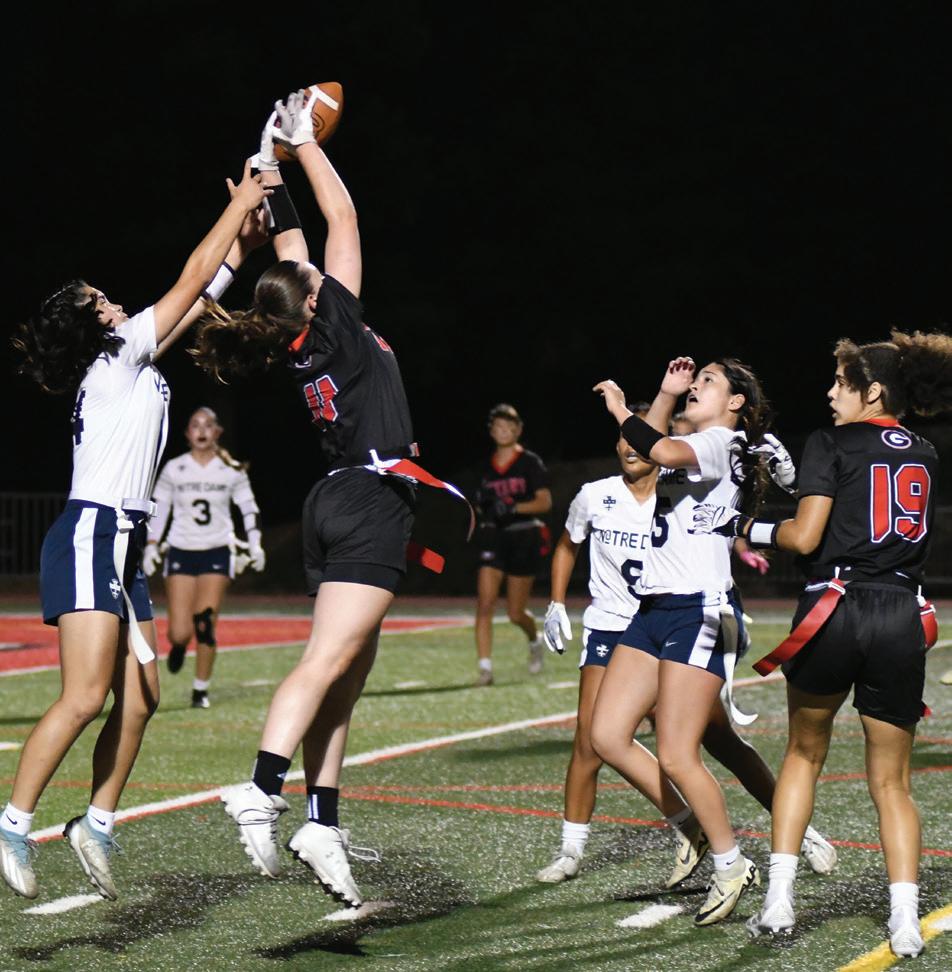
Spring 2026 will be the start of the Golden state Valkyries’ second season fall 2024 was the Girls flaG football team’s inauGural season
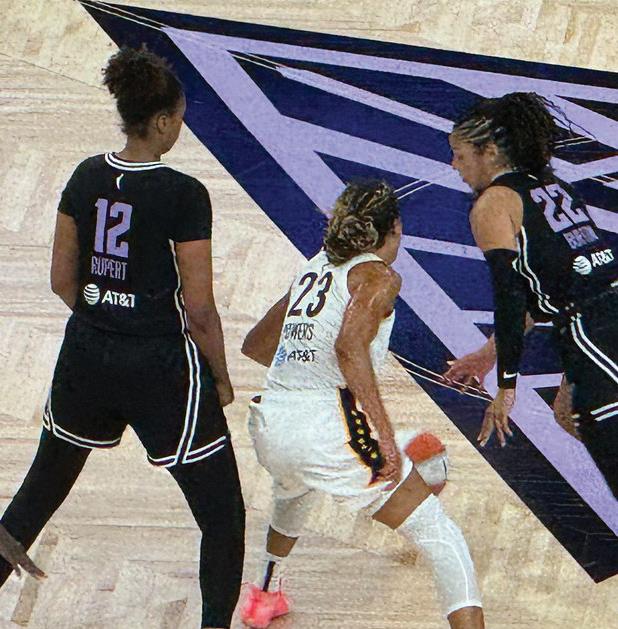
For over a decade, the NBA belonged to a familiar group of stars, namely Stephen Curry, LeBron James and Kevin Durant. Many childhoods were shaped by the dynasties of this era, their skills and highlights inspiring many. But as those players step into the twilights of their careers, a new generation is claiming the spotlight.
Today’s league is defined less by big-name dynasties and more by competitive balance and explosive young talent. Cooper Flagg, V.J. Edgecombe, Kon Knueppel and Victor Wembanyama are leading the new wave of young talent with more versatile play. With more players capable of shooting, passing and defending anywhere on the floor, the current style of play looks completely different from the 2010s era dominated by Stephen Curry’s threepoint revolution.
Gunn senior Zach Willis has witnessed that change firsthand. With his mom working for the Rockets when he was younger, Willis grew up with the older players, ultimately favoring them over the new generation.
“I feel like they’re still playing really well (but) compared to young players, it depends,” he said. “There’s some young players that I feel like are better than them, but at the same time, players like Curry are still some of the best players in the NBA.”
Willis does acknowledge that the faces of the NBA may change, and that a new era is being ushered in before our very eyes.
“In different eras of the NBA, there’s been different playstyles,” he said. “I think the faces people associate with it will be changed because for whatever time period in whatever sport, you associate that time period to the good players at that point.”
Sophomore Gaia Kimhi — a diehard Golden State Warriors fan — has always loved basketball for its speed results.”

Still, the shift is undeniable. Young stars have more pressure and higher expectations placed on them, having to be able to defend, shoot and create plays, regardless of their position.
“There’s always been a new skill set being introduced,” Kimhi said. “Players have to be good at everything.”
Willis and Kimhi both point to one young star on the rise who is reshaping the league with his size and skill: Victor Wembanyama.
“He shows extreme promise to be a leader in the league because statistically, he is the best defensive player already, he has an extremely well-rounded skill set offensively and he is towering above other players in the league,” Kimhi
The days of a single dynasty running the league may be over — at least for now. Instead of the Warriors and Cavaliers facing off in the NBA Finals every June, no team has won more than one title since 2019, seeing champions from Boston, Milwaukee, Denver and more. Both Willis and Kimhi believe that while the faces of the game will change, fans will continue to love watching for the same reasons: excitement, drama and constant evolution.
“There’s a ton of younger players that I especially like to see, (but) the players on the Rockets will always be my favorite players because I watch them the most,” Willis said. “I definitely feel that they have a bunch of young and new players that are exciting, so as time goes on. I’ll just grow to enjoy the sport the same because you’re cheering for who the players are at the same time.”
Grim plumes of smoke engulfed the naval base Pearl Harbor at dawn on Dec. 7, 1941, a somber shroud looming over the aftermath of an unforeseen attack by the Japanese Empire. As National Pearl Harbor Remembrance Day approaches to denote the 84th annual commemoration of those lost on this date, it is not only necessary to memorialize the soldiers and civilians in Oahu, Hawaii who passed away either at or near the scene of the attack, but also to recognize the rampant racism and discrimination against Japanese Americans that surged as a result.
The incident killed 2,403 Americans and wounded 1,178, burdening families with devastation. Of the 1,177 soldiers who died aboard the USS Arizona, only 107 ever had their identities confirmed. This significant lack of closure afforded to their lives only further stresses the importance of observing Dec. 7 as a day of remembrance.
Following the attack, President Franklin D. Roosevelt signed Executive Order 9066 on Feb. 19, 1942, authorizing the incarceration of Japanese Americans in order to mitigate their “threat to national security.” Forced into barracks with limited amenities and abusive authorities, more than 120,000 people of Japanese descent lost their livelihoods and basic freedoms as a result of the U.S. government’s prejudiced, fear-driven campaign. This highly unconstitutional Executive Order 9066 violated Japanese Americans’ Fifth Amendment right to due process and Fourteenth Amendment right to equal protection.
Furthermore, while Roosevelt’s executive order exacerbated the unjust imprisonment of Japanese Americans to this scale, the issue itself had also already been established earlier in the war. Using reasoning rooted in racism rather than thought, the government had been detaining Japanese Americans even before the attack. English teacher Diane Ichikawa, whose relatives the government had incarcerated in the camps, recalls her great uncle’s experience as a victim of this practice, affected even before the United States turned to mass internment.
“He was brought in (because they thought) that he was a spy,” Ichikawa said. “His wife was a Japanese national, and they had sent some money to her brother, who was starving.”
By the numBers
AmericAn cAsuAlties
2.6-3.1
jApAnese civiliAn And militAry deAths, According to nAtionAl WW2museum .org million 1,177 2,403
Discrimination against Japanese Americans prior to the attack was pivotal in determining its outcome. According to Foreign Policy Honors teacher Tara Firenzi, this prevalent prejudice hindered the strength of the U.S. military’s response to the attack.
“The lack of preparation (and) awareness that an attack was coming at Pearl Harbor was in part due to xenophobia and racism,” she said. “The military leadership in Oahu really thought that there was going to be (some) sort of mass sabotage from the Japanese Americans who were living in Oahu. They were so focused on protecting their harbor and their planes that they dropped the ball on protecting themselves against (external) attacks.”
In the decades that followed, Japanese American internment remained a taboo topic of conversation for both Japanese Americans and the wider public. Ichikawa observed this to be quite apparent while she was growing up, although discussing the subject gradually became more common as she got older.
“(My father) never talked about the camps,” she said. “Nobody in that generation really ever talked about it very openly, so it wasn’t until I was in high school and there was a one paragraph section in our history books about it (when) I asked him and he told me a little bit more.”


AmericAns of jApAnese descent lost bAsic rights soldiers died on the uss ArizonA
120,000
Source: National WW2 Museum of New Orleans, National Archives
However, tiptoeing around dialogue about the internment of Japanese Americans is not a proper solution. Instead, Ichikawa encourages greater exposure to these difficult topics as a way to learn from past mistakes so as not to make them again. By incorporating more of these subjects into schools’ curricula, students and teachers can push back against the normalized bigotry spewed in society on a daily basis.
“We can’t sweep things under the rug and just not look at the ugly parts of our history,” he said.
Similarly, Firenzi stresses that gaining multiple perspectives from a certain point in time allows for greater objectivity in understanding what occurred.
“If we don’t look at everything and we can’t acknowledge the nuance, then we are probably going to fall prey to being told stories that come from only one side,” she said.
—Written by Sarah Grupenhoff

From the moment humanity learned to communicate its thoughts in speech, we’ve been storytellers. From Ancient Mesopotamia’s “The Epic of Gilgamesh,” to Homer’s “The Odyssey,” to Mario Puzo’s “The Godfather,” many of our stories have always blurred the line between truth and enchantment. When we romanticize parts of history, though, we perpetuate misconceptions about the past and struggle to analyze the nuances of each time period.
Glittering parties, towers of champagne glasses and dazzling chandeliers come to mind for most when asked about 1920s America. Flapper dresses, jazz snaking its way through a crowd of dancing couples — thanks to the misinterpretation of novels and films like F. Scott Fitzgerald’s “The Great Gatsby” — the decade lives in the minds of many as an era of endless festivities and effortless glamour.
Under the sequins and saxophones, however, was a far more dreary reality. Any historian would tell you that the “Roaring ‘20s” were marked by rampant inequality, soaring nativism, Prohibition-era violence and an economy tumbling towards depression. This contrast between idealization and reality exhibits
how deeply the media reshapes public perception of the past.
Part of the reason we prefer to remember
were later remembered as negative. This psychological phenomenon also applies to the greater community, explaining why

market. In pursuit of profit, these creators may emphasize spectacle and plot over accuracy, only sustaining the public’s perception and idealization of the past. Another point of blame, sadly, is the curriculums of our education system. Many history classes around the country often oversimplify items like the immigrant experience, exploitation of the Native Americans and our extensive record of corporate corruption.
We don’t need to shun historically inaccurate works, but we must be mindful of our tendency to glorify certain people or time periods. When we discuss history, we must be sure to consider the underrepresented voices, often the silent majority. Schools can provide more primary sources from marginalized groups, giving students a more objective view of topics like systemic racism and wars, while still showcasing the ups in our stories. When we employ critical thinking and make an effort into learning the whole story, we can break our cycle of misinformation and embellishment. There’s no harm in enjoying a guilty-pleasure movie night with friends, as long as we don’t allow Hollywood to be our history teacher.
The onset of the winter holiday season is not defined by December. Students replace the orange pumpkins on patios with the stringing of colorful lights almost immediately when Halloween ends, indicating the true start of the holiday season to be when Halloween is over. Even while fall is in season, buyers spot the snowglobes in aisles and wreaths for sale, encouraging festive participation as soon as possible. Before the weeks of winter holidays — Christmas, Kwanzaa and Hanukkah — the holiday season really begins when Halloween ends because people are that ready for it.
Setting the festive mood, holiday menus are released and clocks are set backward, further encouraging many to partake in the festivities. The eager mood of the people is what drives this “early” start of the celebrations. The holidays set this positive and wholesome tone, which people are excited to participate in. Setting up decorations as soon as possible introduces a magical environment: The ornaments and menorahs remind students of the joy the celebrations will bring, motivating them to persevere through their exams. The decorations contribute to the uplifting atmosphere the holiday season invites. The happy mood is what makes the calendar of this festive season come sooner.
The joy of
the holiday season is not limited to one month. The series of celebrations begin earlier, inviting the festive mood. The season ranges from Thanksgiving, to Christmas.
The mood is what determines the start of this season, and the mood is created from the early decorating, and the sugar cookie coffees. At the end of the day, holidays are dependent on how people celebrate them.
—Written by Mayher Dulani
As the calendar flips past Halloween and into November, many begin to switch into the winter mood, even though leaves are still turning yellow and candy wrappers are still left behind on kitchen counters from the night prior. Suddenly, porches and houses that were previously decorated with jack-o-lanterns and skeletons are entirely decked out with big inflatable Santas and wreaths on every door or window. But in the rush to embrace the holiday season, the charm of the fall season is often


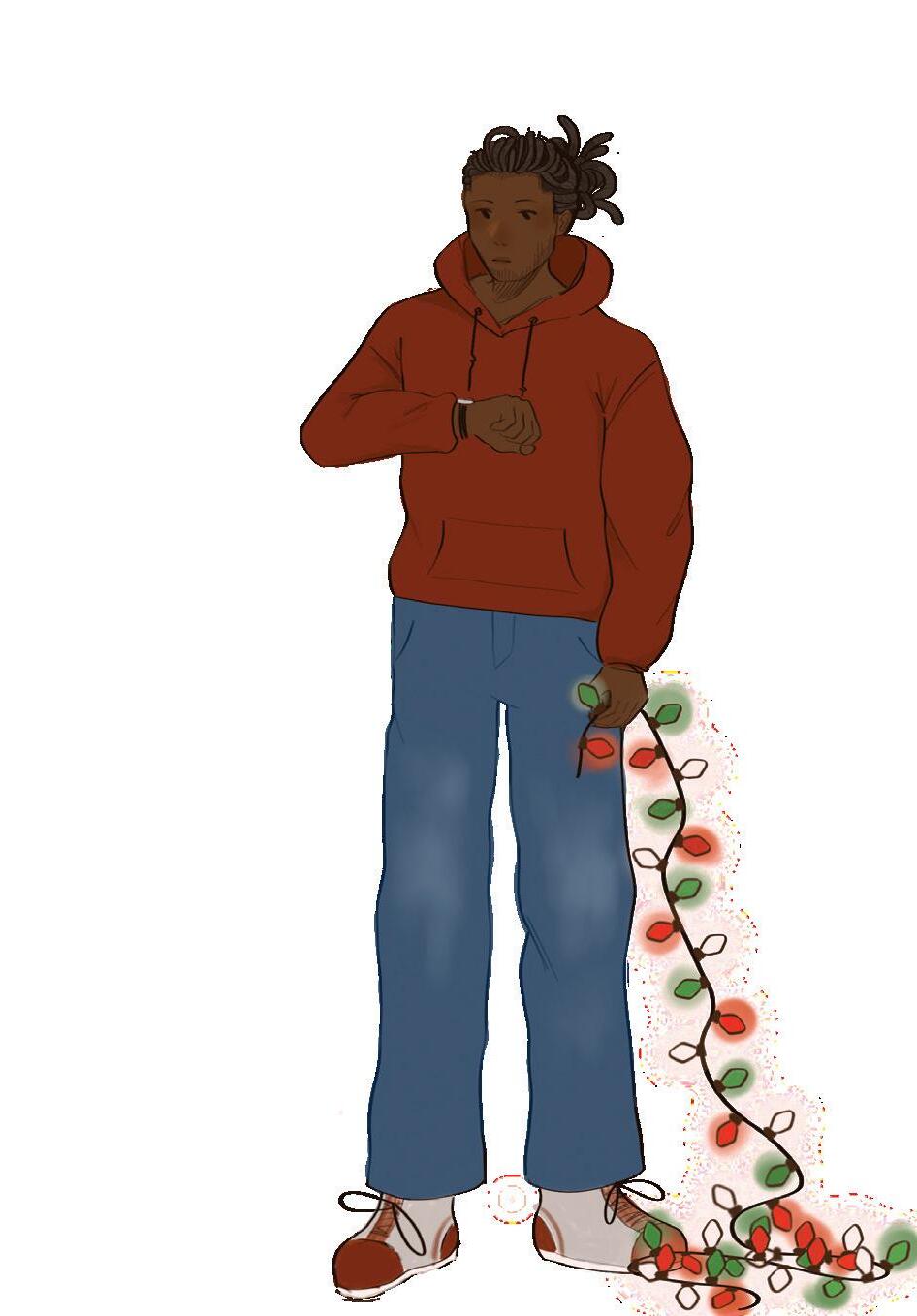
overlooked, even though it is one that deserves to be enjoyed to its fullest before transitioning.
Rushing into the winter season takes away from the natural fall rhythm. November brings its own unique atmosphere with the changing leaves and anticipation of Thanksgiving, yet this often gets overshadowed by the pressure to celebrate the holidays prematurely. By waiting until December to bring in winter decorations, people can properly enjoy each part of the year. Starting festivities and decorating in November can also contribute to burnout during the holiday season. When the decorations go up right after Halloween, the excitement associated with the holidays begin to fade even before the season is supposed to begin. Stretching the celebrations across two entire months dilutes the special feeling that makes the holidays truly meaningful. In addition, November naturally provides a moment of reflection, gratitude and gathering before entering the busy holiday rush. Respecting this pause allows people to enjoy the winter season to its full potential when it arrives. So while it may be tempting to bring out the decorations as soon as the last piece of Halloween candy is eaten, allowing the holiday season to start in December maintains the anticipation and ensures that each part of the year receives the attention it deserves. And now that December has arrived, it’s finally the time to celebrate the holiday season and start putting up the decorations.
—Written by Olivia Lee

You’re alone in the mountains, a snow storm swirling around you and in the distance you see a gorgeous woman with long black hair, porcelain skin and dark piercing eyes. Don’t start celebrating your luck just yet — Japanese folklore insists that you be cautious.
The legends of Yuki-onna, the snow women in the Japanese Alps that prey on travelers lost in blizzards, trace back centuries. Likely originating as speculative local stories of mountain spirits and travelers freezing to death, these tales were recorded as early as the Muromachi period. Later, Lafcadio Hearn’s 1904 collection “Kwaidan,” an anthropology of Japanese ghost stories, introduced Yuki-onna to the Western audience.
They are described to be irresistible beauties that use their elegance to hide a deadly truth — their bodies are as cold as ice and a single touch can reach deep into the bones, leaving victims shaken, or frozen.
There is some variation to their representation. Some versions say Yuki-onna feeds on human life force by exhaling an icy breath that freezes travelers solid. In other versions, she glides soundlessly across frozen ground without leaving footprints, attempting to lure lost wanderers into the storm. Not every tale, however, paints her as a cruel villain. In certain regions, she is said to be a tragic figure — lonely, not cold-blooded, capable of love and immortally bound to winter.
Thinking of taking a selfie with the giant furry creature on your Himalayan hike? Be warned that it might not be a mascot, but rather the Yeti, otherwise known as the “Abominable Snowman.”
The Yeti’s roots trace back to Sherpa and Tibetan folklore, where it is often described not as a monster but as a powerful mountain spirit connected to ancient deities. The Yeti was even mentioned in pre-Buddhist cultures, such as the Lecha people, who worshipped a “Glacier Giant.” Some stories portray the Yeti as a guardian of the sacred peaks, while others warn travelers to avoid its territory.
The Yetis are said to stand from 8 to 10.5 feet tall, have reddish-brown or black fur, and overall resemble a huge, upright-walking ape.
It wasn’t until 1921 that the Western obsession began. When British mountaineer Charles Howard-Bury discovered abnormally large footprints during an Everest expedition, newspapers ran wild with the phrase “Abominable Snowman.” Since then, countless expeditions have searched for evidence of hair samples, footprints, bones, skulls and even supposed sightings. Although most of these so-called “evidences” have turned out to be staged or explainable with bears or goats, there is still some unknown. The most popular explanation for the existence of the Yeti, however, is that it is often a misidentification of Himalayan wildlife such as the Tibetan blue bear or the Himalayan brown bear.
Michael Lu

—Compiled by Kaylee Cheng
Cailleach: Celtics’ goddess of winter Krampus: Saint Nicholas’s polar opposite
In Celtic mythology, Cailleach is the goddess of winter and wisdom. She is typically seen as an old woman and can affect the land and the seasons. To some, she is a protector of the land, and to others she is a bitter deity.
Krampus is best known as Saint Nicholas’s evil counterpart in Alpine folklore. On December 5, Krampus looks for disobedient children and punishes them for their poor behavior.
—Compiled by Vaani Saxena

1. Guitar accessory
2. “When I was ___” (2)
3. Exposed
4. Smiles smugly
5. Italian byes
6. Sister of Elsa in Frozen
7. Location of a festive kiss
8. Band’s traveling vehicle
9. “Make ___ for myself” (2)
10. River in France
11. Sugar suffixes
12. Important component of glasses
14. Yes or if, in Spanish
18. Skedaddles
23. Small dollar bills
25. 2000 pounds (2)
26. Black Friday deals
27. Used to smell (2)
28. What’s driving me crazy
31. Protective gear
32. Play groups
34. Father Christmas (2)
35. And so on (abbr.)
38. Coffee __
39. What a teen needs to get somewhere (2)
41. Homecoming outfits
42. Literary humor
45. Multiple Bensons
47. Like a thick book
48. City, in German
49. Low-___ diet
50. Like a lightbulb above one’s head
52. How you should take your vitamins: ___ day (2)
53. Abraham’s wife, alternate spelling
54. Ads to raise awareness
55. Greek cheese 58. Golden state

the MLB
63. Kit___ (candy bars)
64. Cool ___ cucumber (2)
As the season for California cold rolls in, so does the season for sweets and treats. For this edition of Staffer Bakes, Anne and Gwen went on a kitchen journey to create hot chocolate, chocolate gelt and, of course, gingerbread men.
We began with the gingerbread dough. Although it’s a classic, neither of us had endeavored to bake it ourselves. A quick Walmart run brought us all the ingredients we lacked (along with some microwavable taquitos as a snack), and we were set to begin.
The gingerbread dough itself was not extremely complicated — a basic mixture with molasses and ginger for that holiday taste. However, after rolling it out and chilling it, we discovered that the freezer may not have been the best method, regardless of time efficiency. As we attempted to cut out the gingerbread shapes, the thick blob began cracking apart.
Instead of attempting to save all of the dough, since we had plenty already, we used what we could in hopes of salvaging at least a couple of halfway-decent gingerbread men. Decorating these proved more difficult than expected: While we had planned to use a simple royal icing mixture, homework called, and store-bought frosting always works well in a pinch. We used a plastic piping bag to create gingerbread man with a classic zigzag and button pattern. However, our attempts proved futile — neither of us was blessed with the skills required to become a professional baker.
Alas, we had to eat our creations. Despite our challenges, they tasted good. It wasn’t the perfectly chewy, melt-in-your-mouth gingerbread we’d dreamed of, but it definitely delivered that nostalgic, spiced holiday flavor. Even if our gingerbread men looked a little more like a five-year-old’s arts and crafts project, they were still reminiscent of the classic holiday treat and flavor that we all love.
Next came our attempt at Abuelita hot chocolate, which proved to be much more difficult than we had anticipated. As self-proclaimed hot chocolate aficionados, we ventured into the process with too much confidence. After realizing that we’d forgotten to buy a jug of milk, we scrounged up a few small boxes of whole
milk from the pantry, feeling only slightly ridiculous as we lined them up on the counter to pour individually.
We heated the milk on the stove, following the instructions on the back of the package as faithfully as possible. Once it began to boil, we dropped in the Abuelita hot chocolate puck, expecting for it to melt into a smooth, rich holiday drink. It didn’t.
What we didn’t know was that Abuelita’s hot chocolate required whisking to dissolve the chunks of floating chocolate, not a gentle stir with a single, sad spatula. We kept circling the spatula around in the pot, hoping for the puck to magically begin dissolving, but it instead bobbed around stubbornly, resisting all of our attempts to create a smooth mixture. Even after enlisting the help of Gwen’s mom, a much more experienced chef, our efforts remained futile. Eventually, we decided to ladle the film of chocolate chunks from the surface of the liquid and pour ourselves a cup of what remained.
Despite the textural chaos, the flavor was delicious: warm, sweet and a little spicy. Even in its lumpy form, it felt like the perfect drink for a cold winter evening. Next time, we’ll know to whisk, not stir.
To round out our holiday treats, we paired our Christmas gingerbread men with homemade chocolate gelt for Hanukkah. Compared to our previous kitchen escapades, this was surprisingly straightforward. We microwaved a bowl of dark chocolate melting wafers, and with a touch of ingenuity, realized we could shape the coins by pouring the chocolate into the bottoms of mini muffin tins.
Once the chocolate was poured in, we waited for them to harden in the fridge. We then topped them with the limited selection of toppings we had at hand — almond slivers and sprinkles. The gelt turned out about as one would expect: a basic treat with no overbearing taste, but a classic chocolate flavor. We were indifferent about the simple dessert, but Gwen’s dad was a fan.
Baked goods are often associated with the holidays, and provide a way to bond with family
and friends. Although we enjoyed our baking adventure, it’s definitely a good thing that we have alternative career options: Our plan for a co-owned bakery doesn’t look too bright anymore. Regardless of our subpar results, baking these treats from various celebrations brought a hands-on activity to learn more about different cultures and an opportunity to be festive and eat good food.

Five Olympian staffers and 12 The Oracle staffers attended the JEA/NSPA fall annual National High School Journalism Convention from Nov. 12 to Nov. 15, chaperoned by adviser Kristy Blackburn along with English teacher Danielle Whichard and guidance counselor Jorge Chavez.
An early flight demanded that we arrive at San Francisco International Airport by 7:30 a.m. — a rough deadline, even for journalists! After landing in Nashville, Tenn. in the afternoon, we clambered into vans and headed to the Fairfield Marriott Inn, our den for the next few days. Just a short drive to the convention center, the Marriott became our home base, where hotel rooms doubled as makeshift newsrooms for late-night editing, brainstorming layouts, and staff bonding.
For our first meal, we all walked over to the nearby Logan’s Roadhouse, trying not to freeze in the sub-60 degree weather. Don’t play with the South’s cooking: the steaks were spectacular! A good night’s rest allowed us to head out to the Gaylord Opryland resort the next morning, the convention space that hosted our journalism activities. The first day of events separated our crews into four-hour and eight-hour crash courses on leadership, newswriting, social media and more. Some staffers went off-site to visit local legislation hubs and a museum of Nashville’s biggest claim to fame: country music.
Heads were spinning after Friday’s fast-paced convention sessions, teaching everything from broadcast writing and interviewing to InDesign skills and source protection. After each 45-minute session, thousands of teens swarmed out of classrooms, backpacks and pencils in hand. Tracking down all the classes we’d chosen for the day was chaotic — the Opryland is bigger than anyone could imagine — but it was packed with learning. That afternoon, we headed to compete in the National Student Media Contests: two-hour sessions tested our skills on layouts, commentary writing, captions and many more journalistic subjects. The Oracle reigned successful: we took away a multitude of awards within NSPA’s categories, including a Superior, multiple Excellents and Honorable Mentions — and The Oracle itself received sixth place in Best of Show.
After a long couple of days, we enjoyed a final dinner at Solario Cantina, an upscale Mexican restaurant in the resort, sharing memories and tacos. The next morning, a sunrise greeted us as we climbed into vans for the last time of the week and boarded our flight back to the Bay.
—Written by Yu-Ming Liu and Gwen Domine
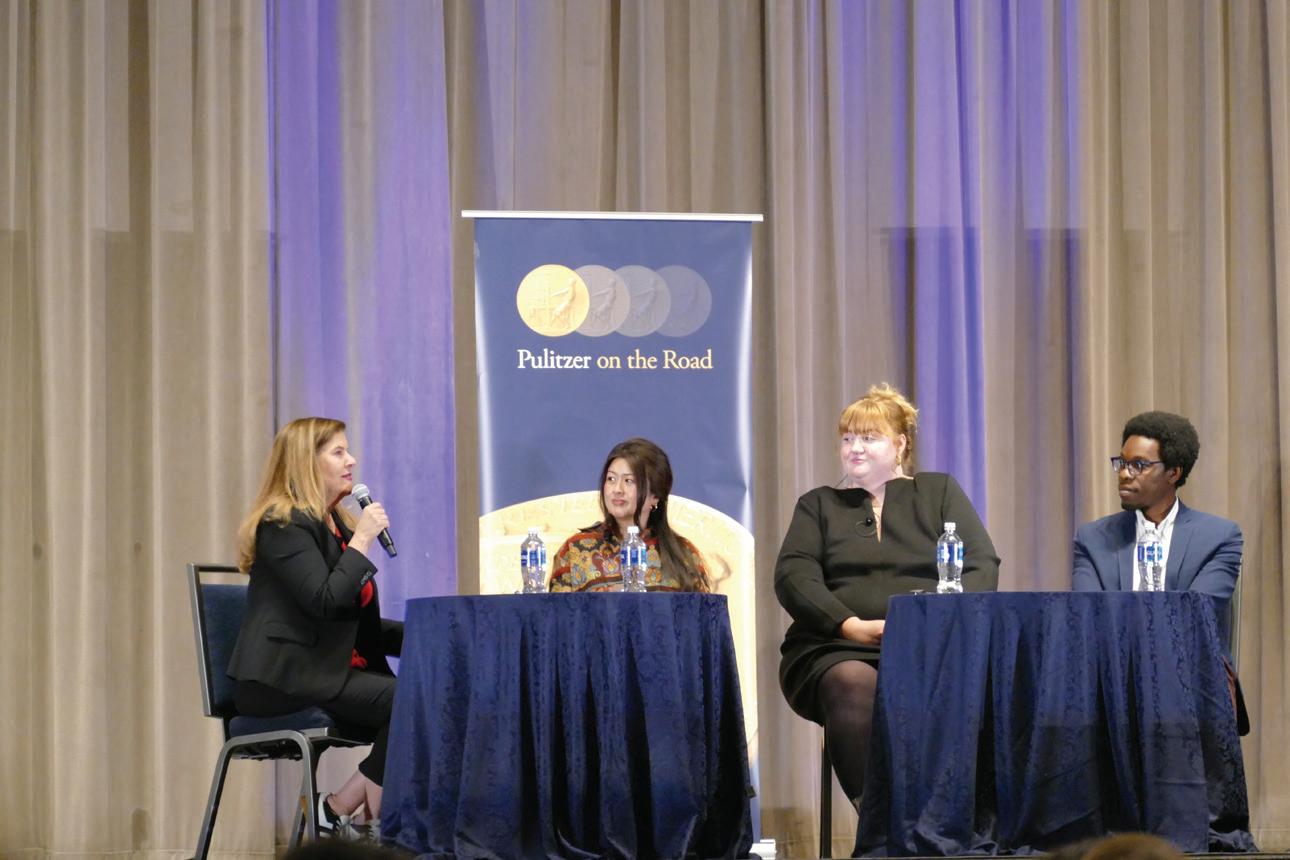
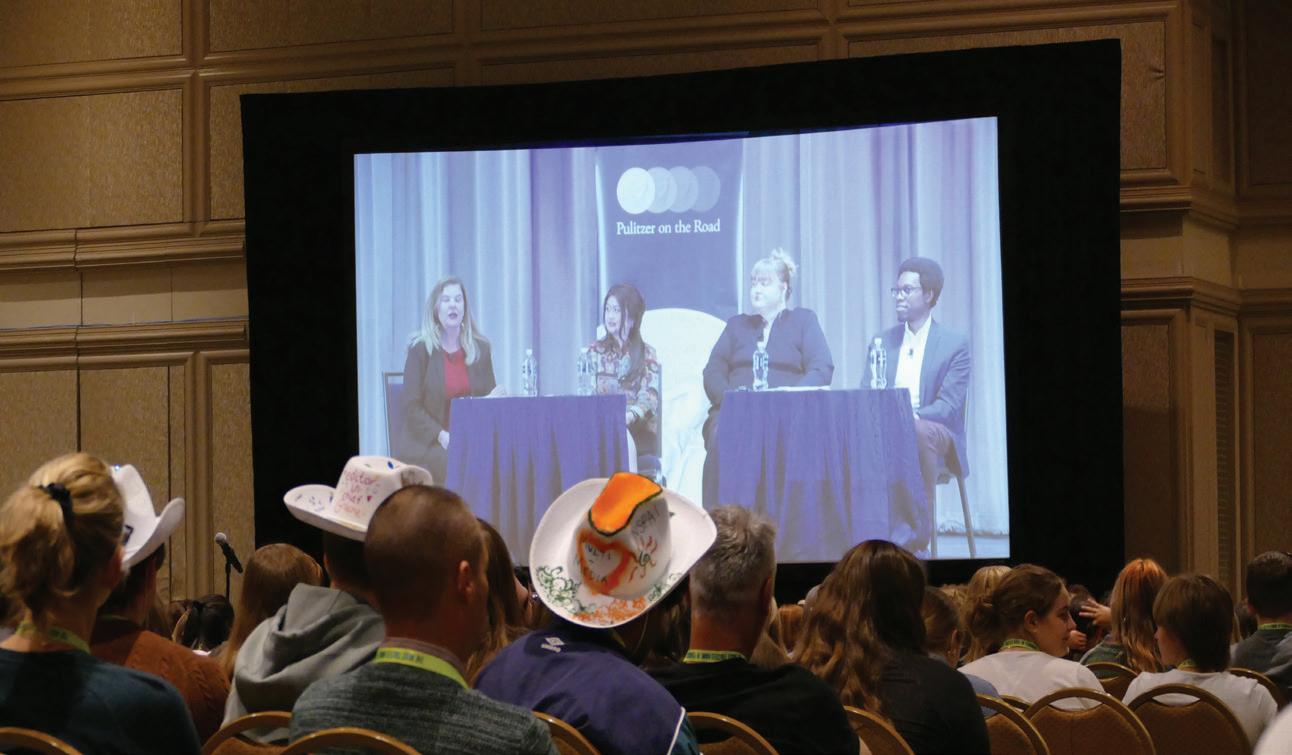
On Thursday night,
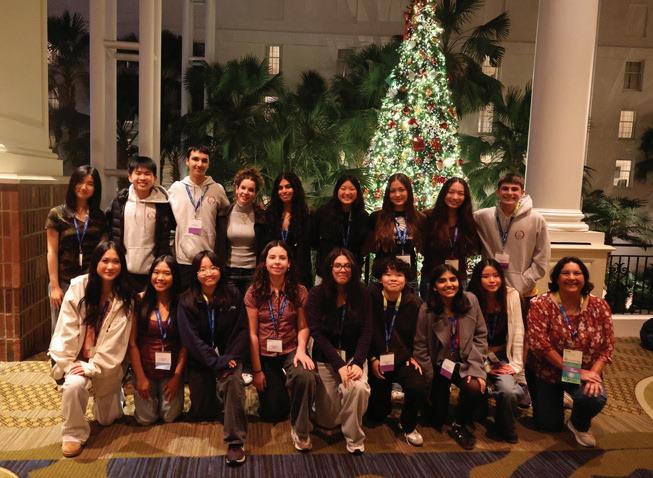

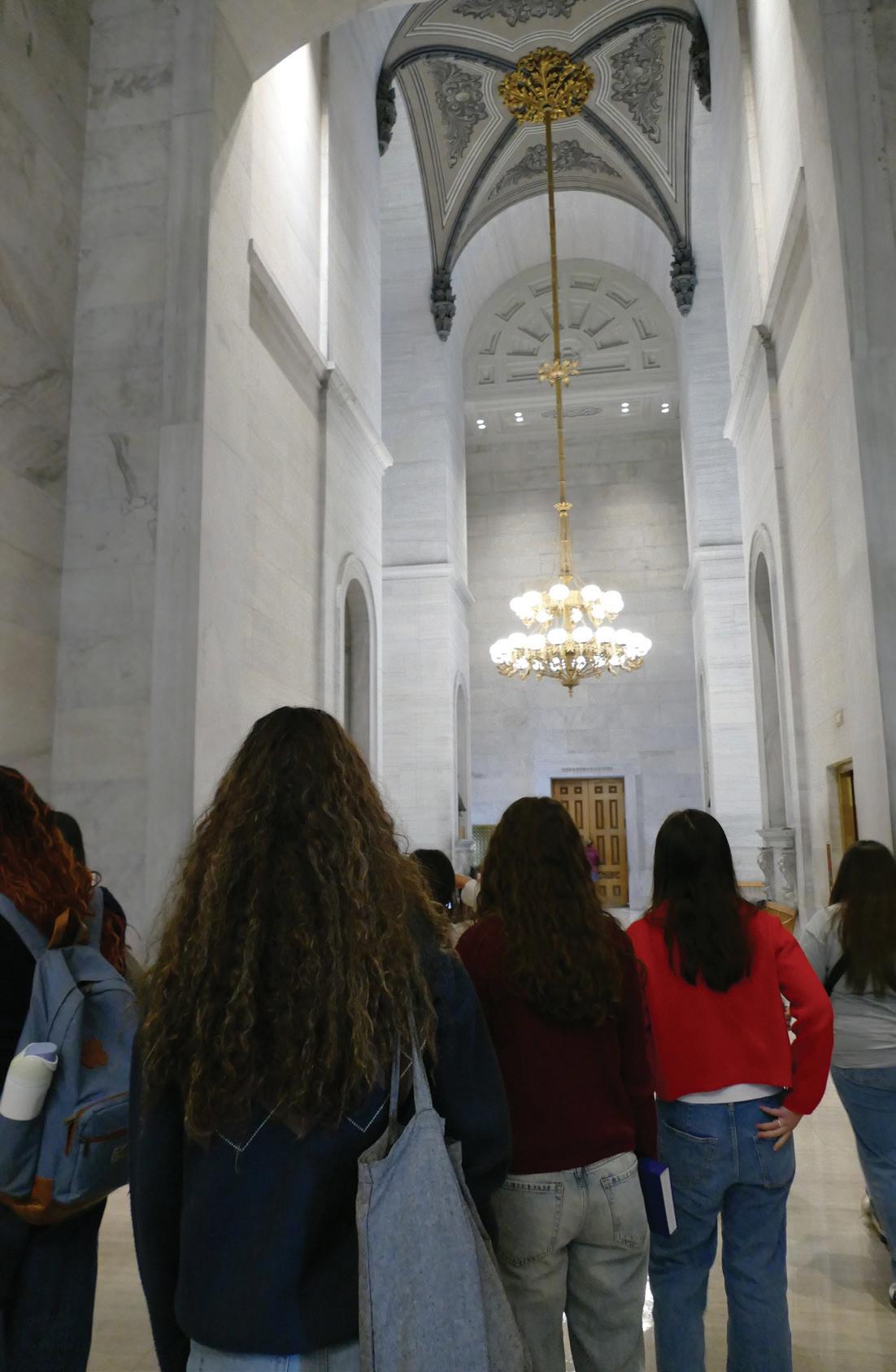
Pre-convention workshops on Thursday brought Ezra and Gwen to the Tennessee State Capitol for a media tour chaperoned by advisors from other high schools. They learned about Tennessee’s legislative history and current


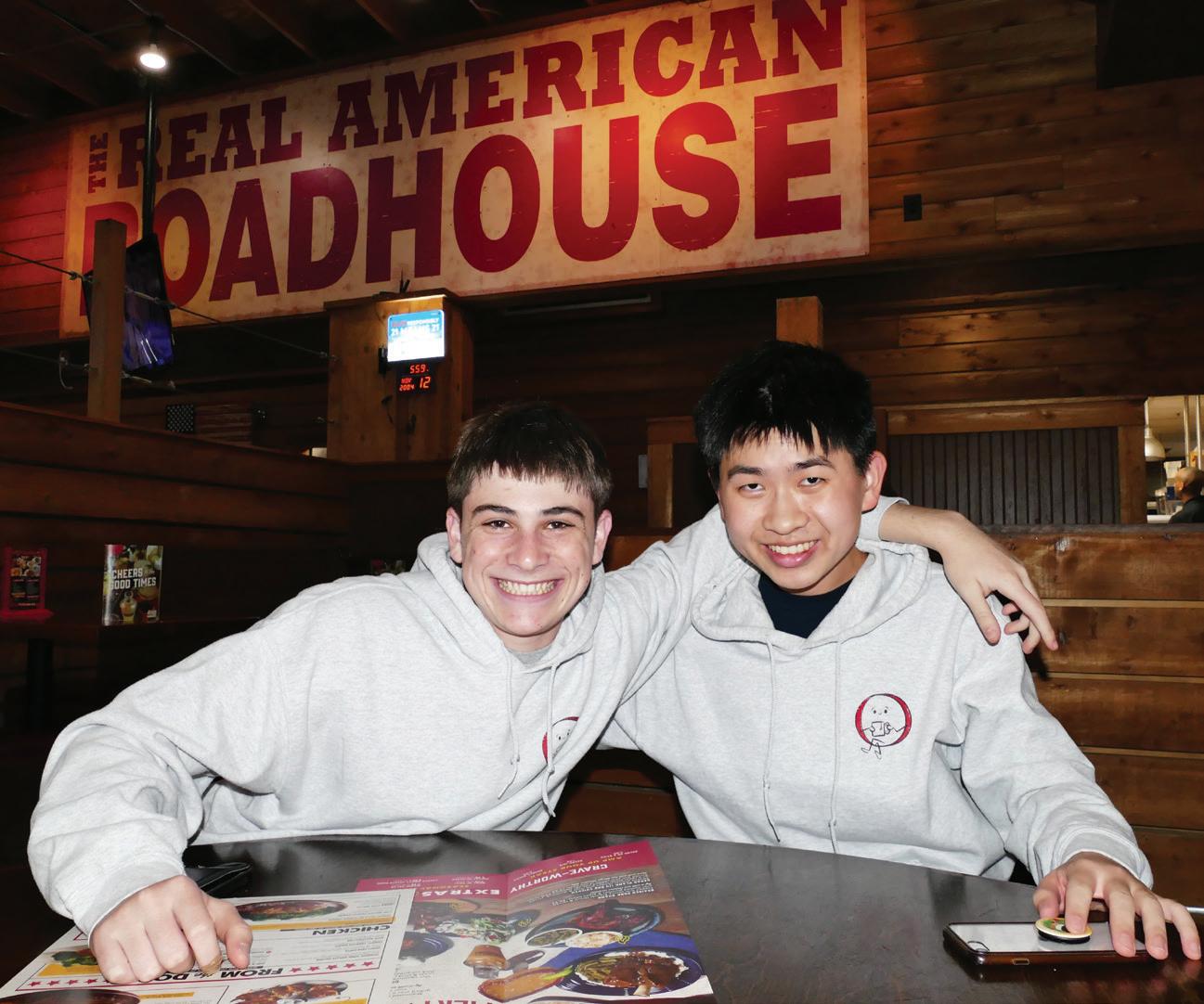

Even though staffers were given a variety of dinner options, all roads led to Rome: each student headed to Logan’s Roadhouse. A classic Southernstyle dinner, thick steaks and rolls with lemonade were enjoyed by all. While the service may have taken longer than was ideal, who can blame a restaurant trying to serve 17 hungry journalists? Big shoutout to the servers who dealt with our billsplitting!