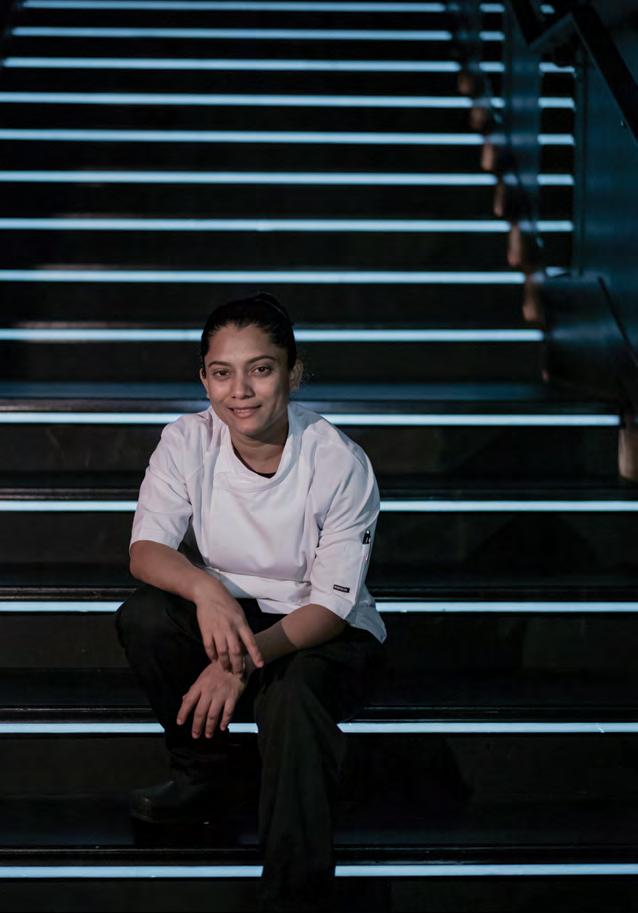
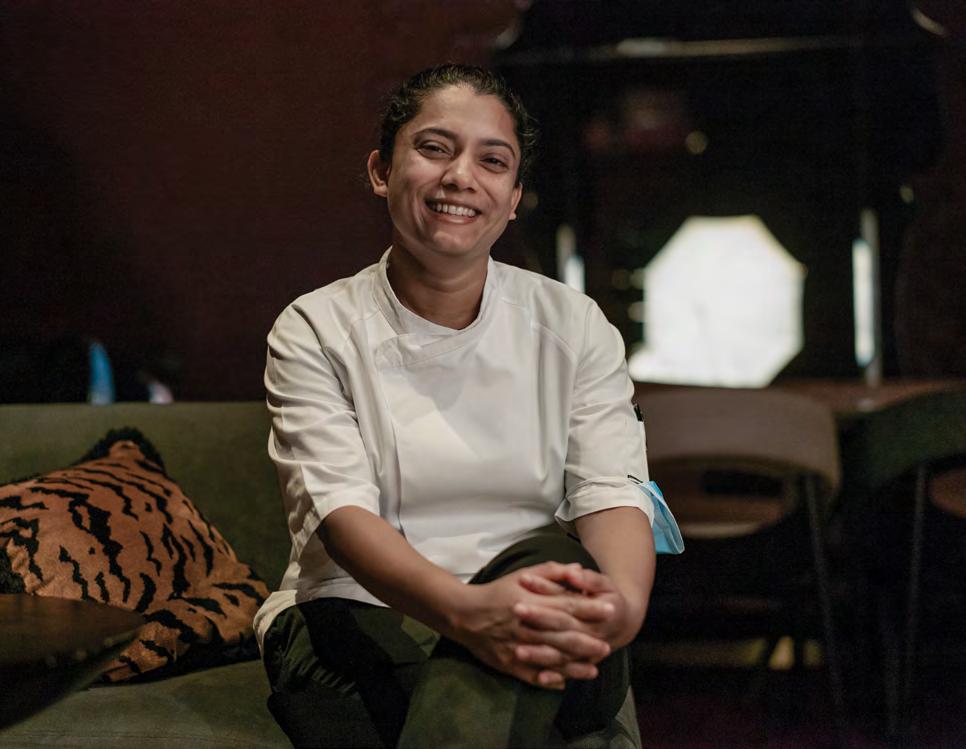
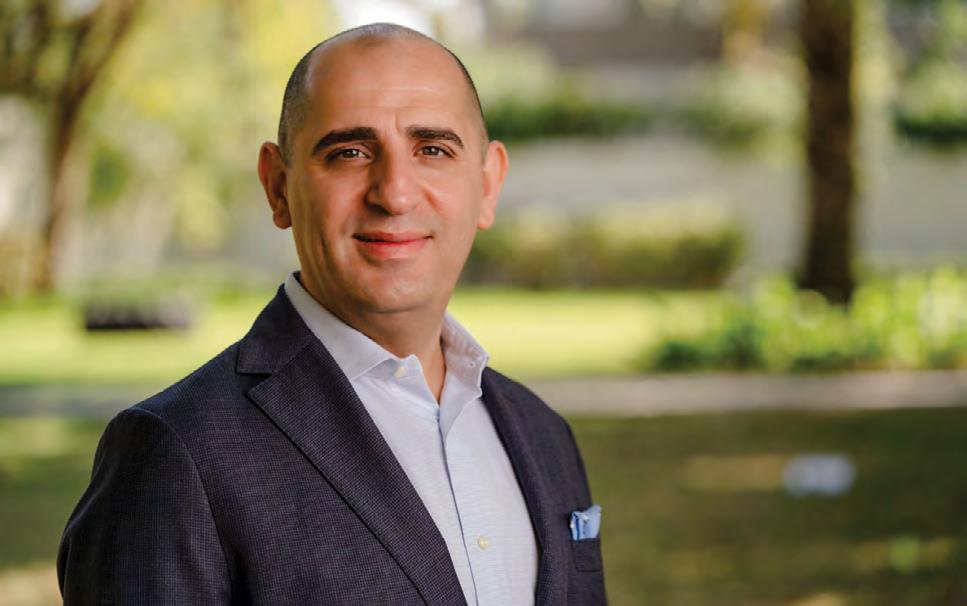
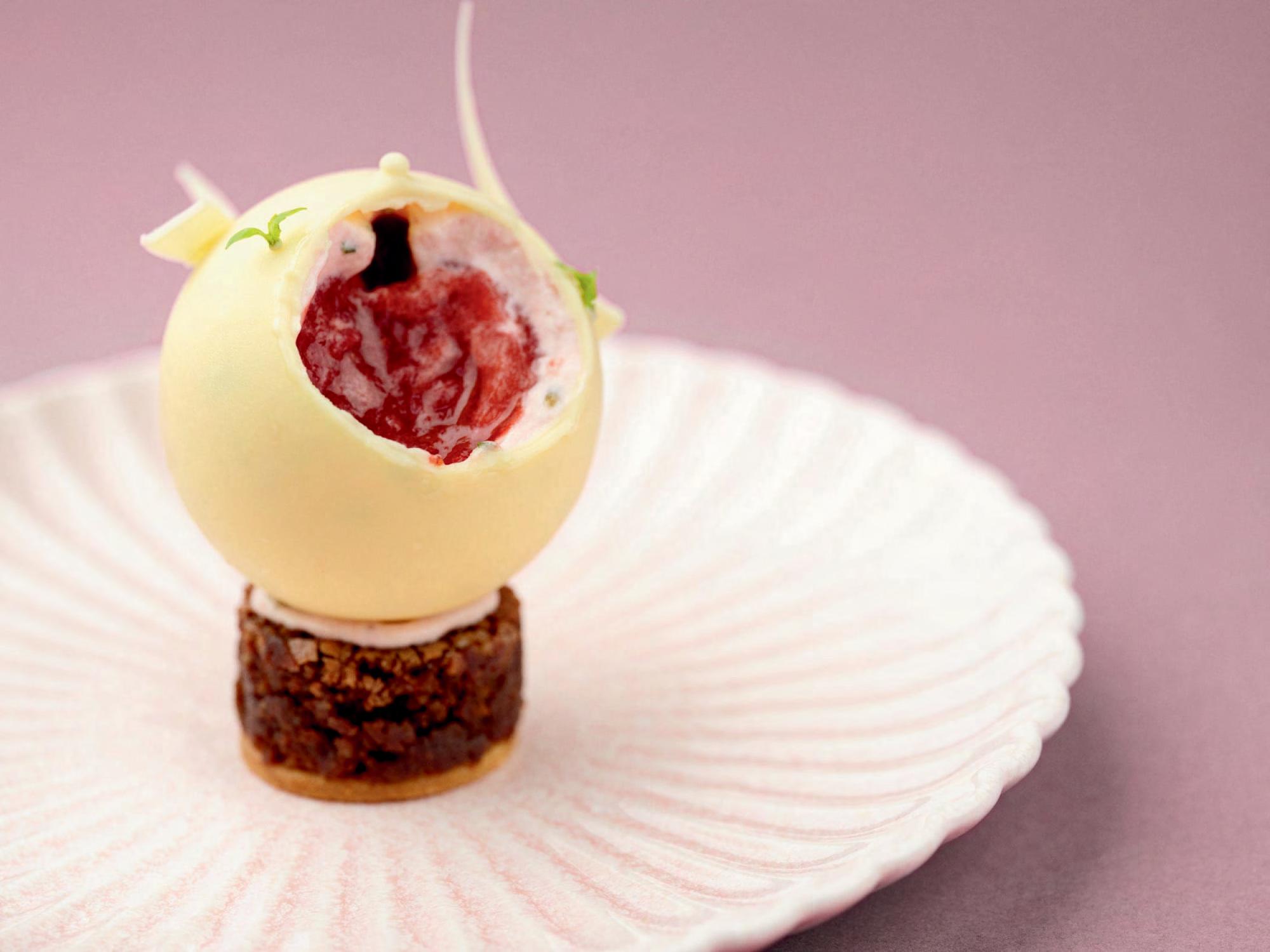
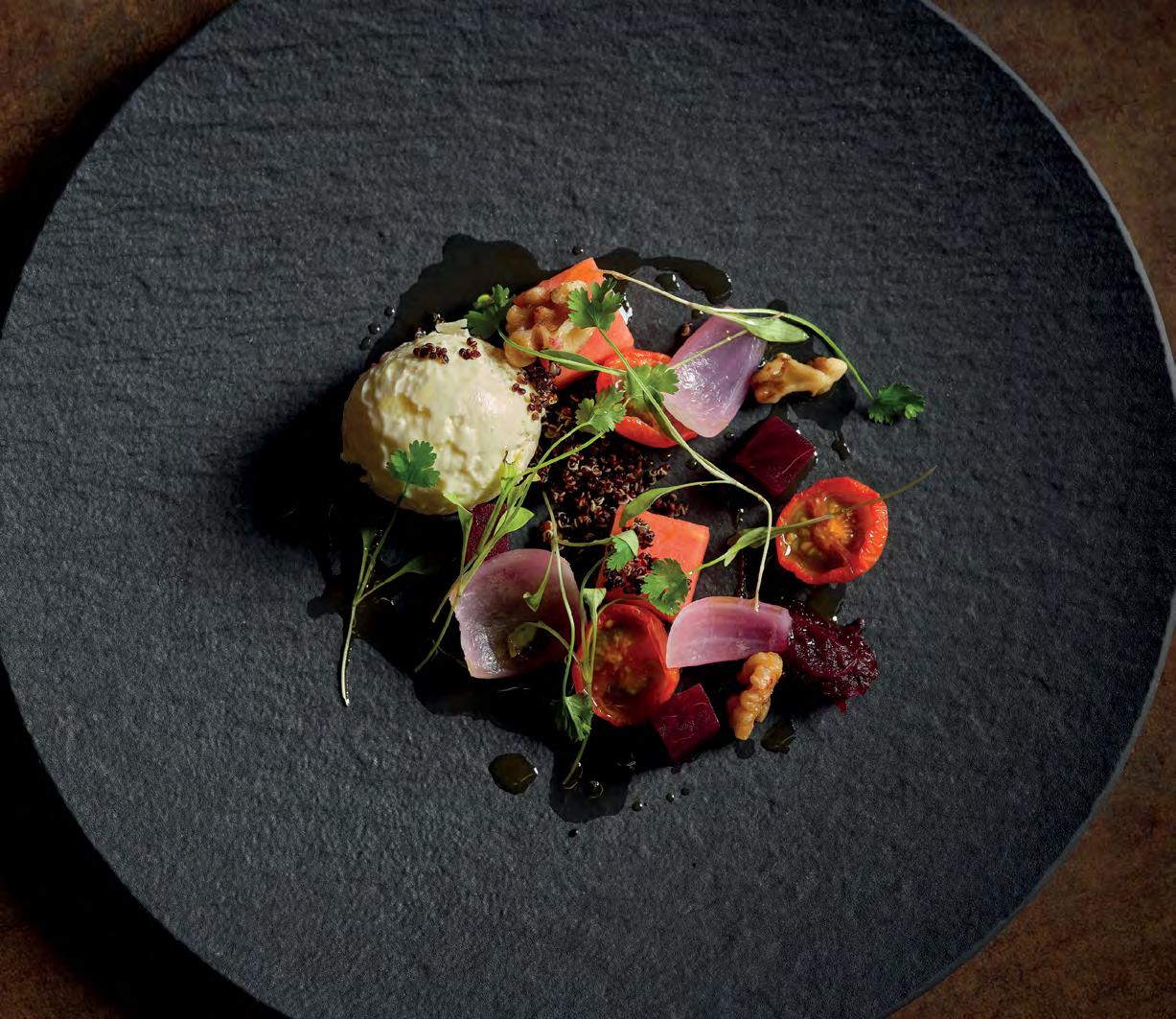
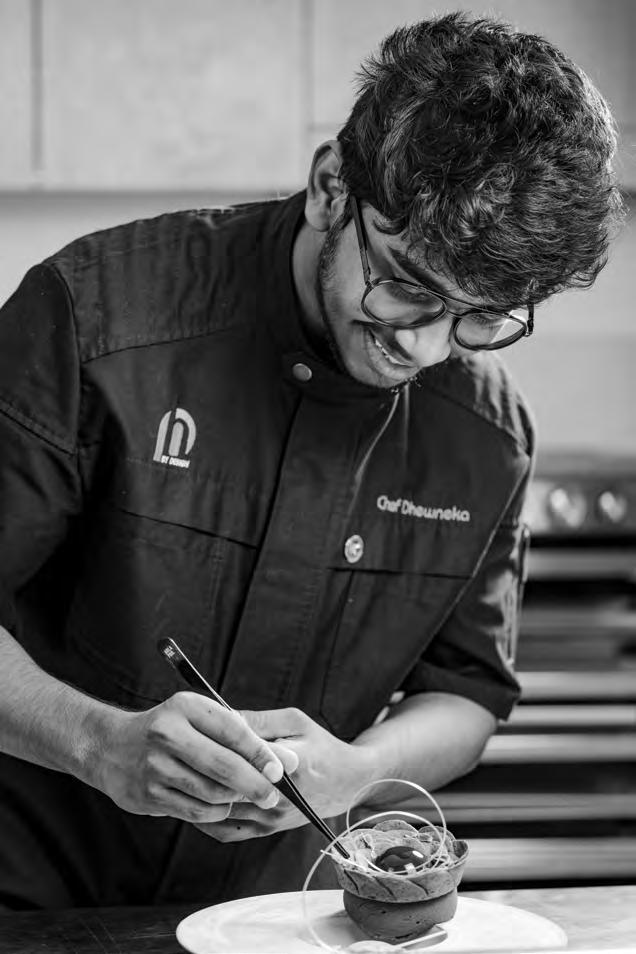
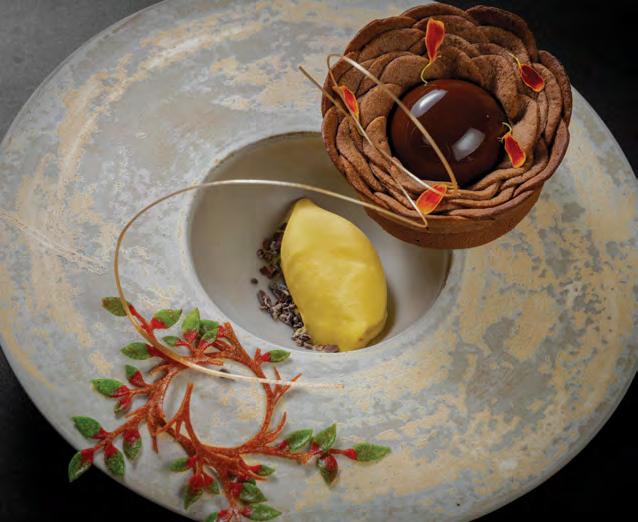
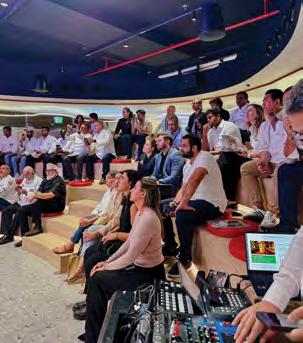
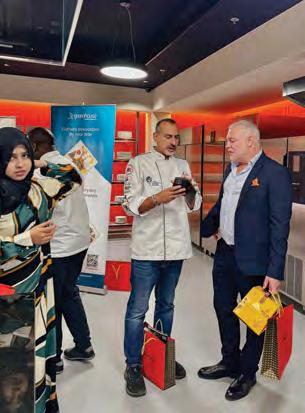
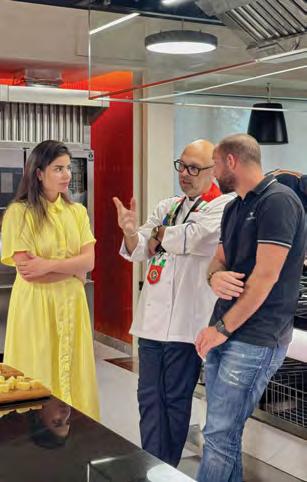
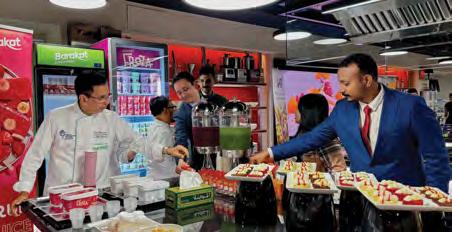
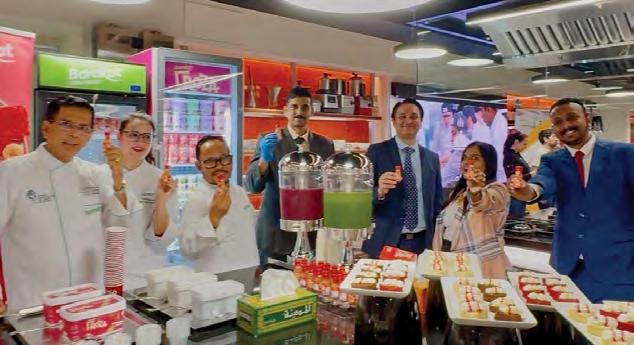
Dhewneka Thasindu Wijeratne takes on the Arla Pro Pastry Mastery Competition, experimenting and chasing sweet dreams
THE QUESTION MARK BOY
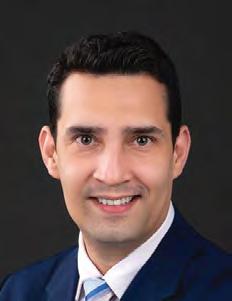
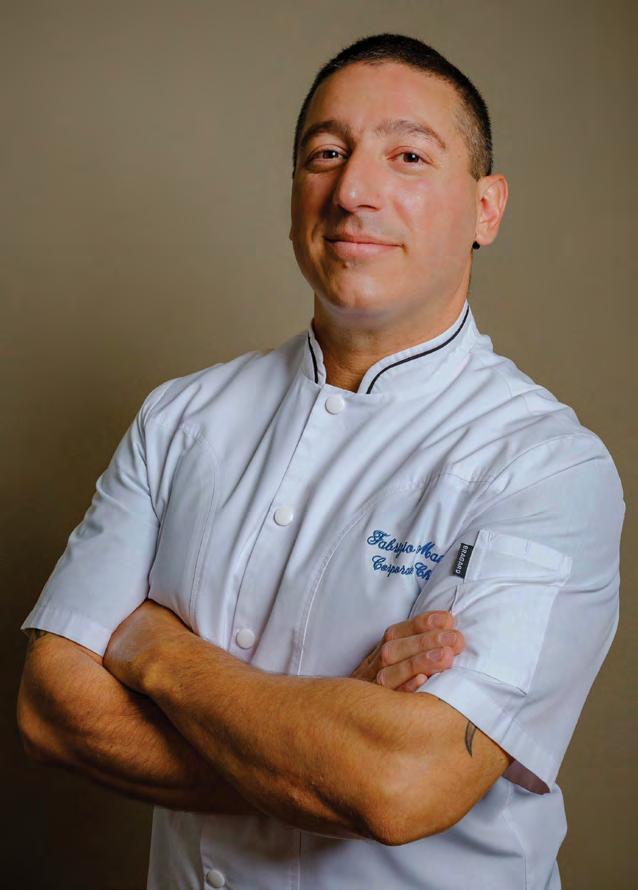
Chef Fabrizio Manni on seeing food through its mechanics and how sometimes, all you have to do is ask
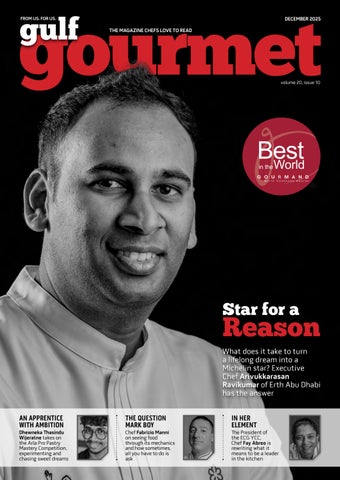
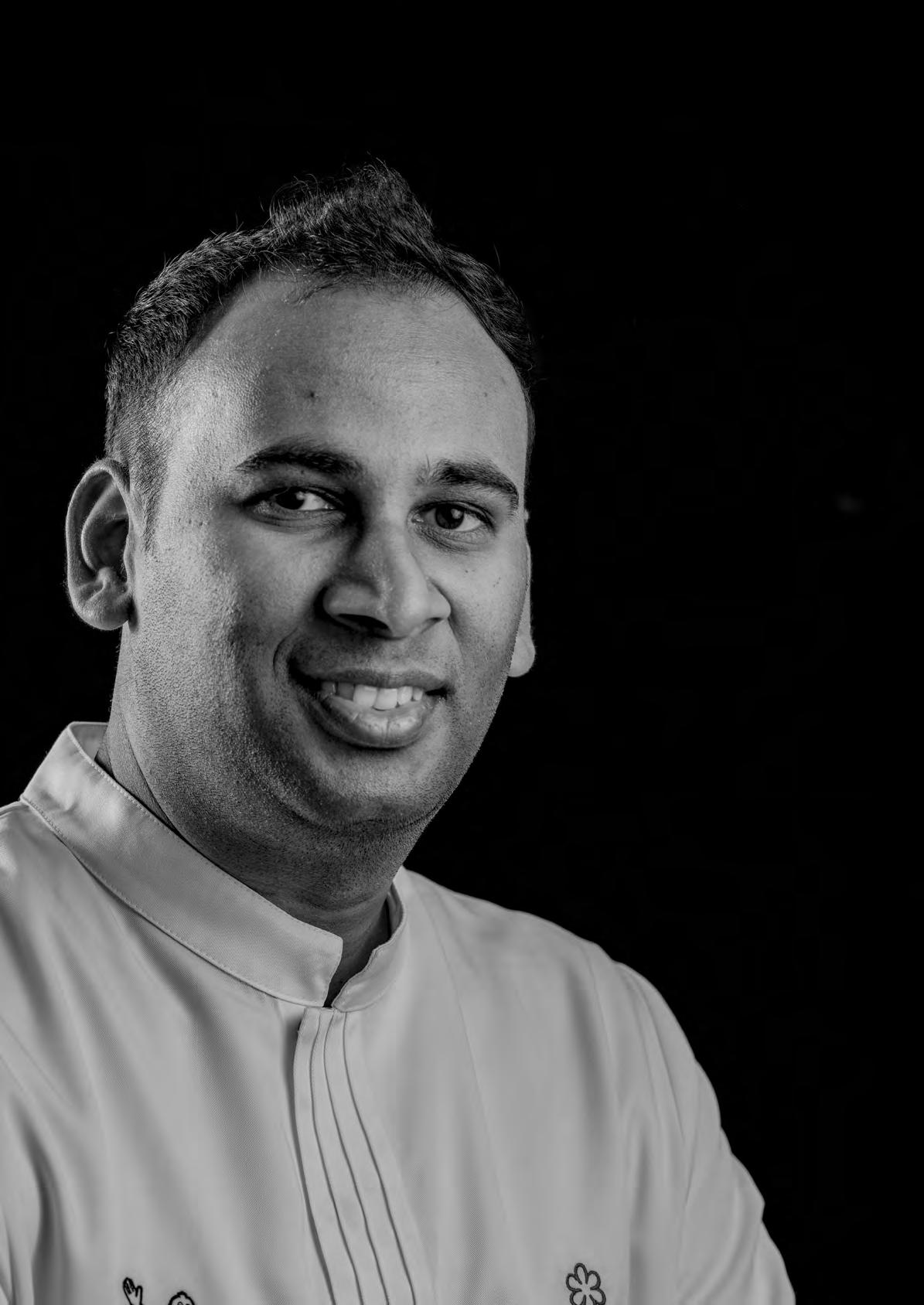
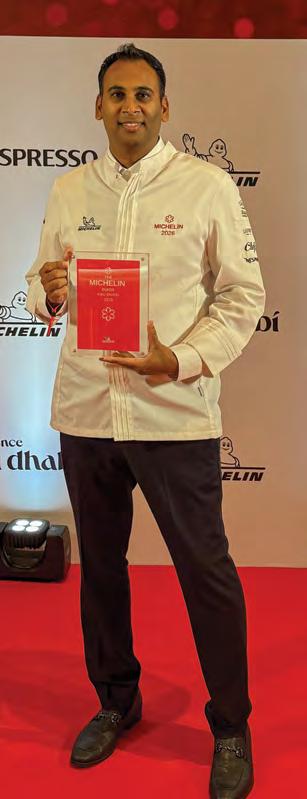
What does it take to turn a lifelong dream into a Michelin star? Executive Chef Arivukkarasan Ravikumar of Erth Abu Dhabi has the answer
IN HER ELEMENT
The President of the ECG YCC, Chef Fay Abreo is rewriting what it means to be a leader in the kitchen
president’sstation
email editor@gulfgourmet.org
Dear Members, Friends, and Partners, Welcome to the December issue of Gulf Gourmet.
This year brought many events, collaborations, and opportunities for our Guild to grow. Through competitions, we observed how chefs inspire each other with their skill, heart, and curiosity.
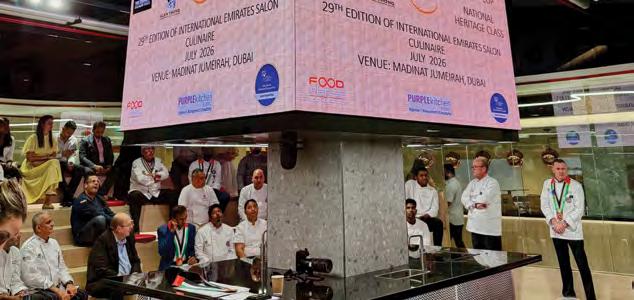
We have been working hard, and have an exciting announcement for next year. We look forward to hosting a larger and more dynamic Salon Culinaire in Dubai, with expanded exhibitions, more culinary showcases, and, for the first time, a focus on sommeliers. The turnout is expected to be huge, and the development work is already underway. If you would like to learn more about the next edition of Salon Culinaire 2026, please reach out to us. Your involvement and curiosity are always welcome.
December is a moment to catch our breath. Suddenly, we are looking back at a whole year and wondering how it went by so fast. This month has a way of nudging us to ask What did this year teach me? What did I give? What did I learn? And who did I become along the way?
In the culinary world, these questions matter. Our craft is fast, demanding, and endlessly creative. Food teaches us to pay attention. To be curious. And as the UAE comes alive with festivals, celebrations, and some of the biggest events of the season, we see that learning happens all around us.
This issue centers on learning and sharing. Chef Fabrizio opens with a
beautiful message about curiosity and the courage to ask questions. Growth begins with an ember of What if?
Our cover story features Chef Arivukkarasan Ravikkumar, Executive Chef of Erth Abu Dhabi. From childhood dreams of bringing people together through food to earning a Michelin star, his story shows how passion, heritage, innovation, and authenticity can lead a chef toward his highest potential.
Then there is the incredible story of Chef Fay Abreo. Calm, confident, and inspiring. From a finance graduate to the President of the Emirates Culinary Guild Young Chefs Club, she has carved her own path with heart and vision. And now, she is welcoming her first child while continuing to guide the next generation of chefs.
You will also meet one of our most inspiring young talents, Chef Dhewneka, only 19. He arrived in the UAE with no formal training and stepped into the creative world of culinary arts with an open mind and a willingness to grow.
Our op-eds this month look back at the year from different angles, industry techniques, negotiations, food-waste management, and the lessons from experts who help us understand the bigger picture of where the F&B world is heading and what role we play in it.
We invite you to explore past issues https://issuu.com/gulfgourmetmagazine and emiratesculinaryguild.net to stay updated on events and news. If you have not already, follow us on social media to see what chefs around the world are
creating, and perhaps connect with someone who inspires you. As always, if there is something you would like to see in a future issue, send us an email. Let us know what matters to you, what stories you want told, and what lessons you have learned along the way.
If you have any questions about the events, please reach out to us at emiratesculinaryguild@gmail.com
A heartfelt thank you to every member, corporate partner, supporter, and friend of the Emirates Culinary Guild who has contributed to our initiatives and competitions this year.
Before the year ends, take a moment for yourself. Think about what you learned, what you accomplished, and what you left behind. Did you follow through on something you promised yourself? Did you do something meaningful for others? Did you build a new skill? Think about your accomplishments as well; they do not always have to be monumental. Even the seemingly minor victories can add up to a meaningful year.
If you find yourself feeling a bit overwhelmed or wishing you had done more, take a moment to breathe deeply. The year ahead will provide new direction and opportunities. It is waiting, and you deserve to enter it with clarity, kindness, and purpose.
Culinary regards, Alan Orreal
ggcontents
President Alan Orreal expresses gratitude for this year’s achievements and looks forward to big plans for the 2026 Salon Culinaire
Latest industry news and updates from around the
From a finance graduate to mentoring young chefs as President of the ECG YCC, Chef Fay Abreo is rewriting what it means to be a leader in the kitchen
Chef Arivukkarasan Ravikkumar shares about the Michelin win and looks back on the journey that made him who he is
A year-end reflection on the UAE culinary scene by Chef Tarryn-Leigh Green
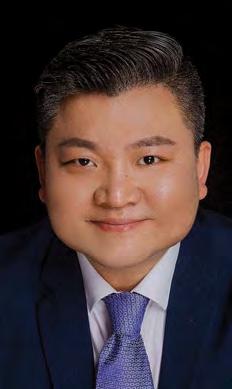
Marvin Alballi, the Vice President of F&B at Hilton AsiaPacific, talks entrepreneurship, culinary trends, and his Marvanism nuggets of wisdom for 2026
Chef Helen
and Highlights.
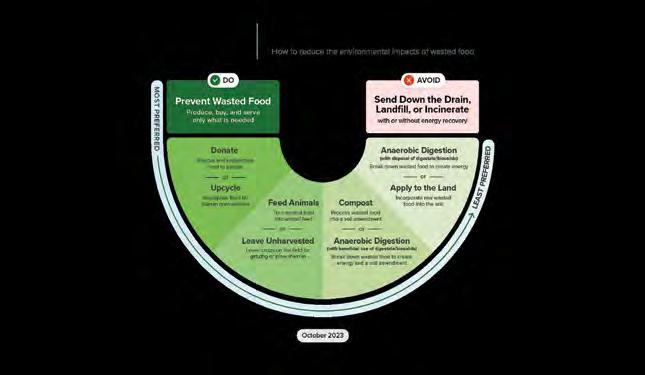
Chef Carl Shi on rethinking food waste in professional kitchens (part 2)
Sulemana A. Sadik explains the grading science behind Wagyu, Black Angus, and Angus
FOOD & BEVERAGE INDUSTRY SERIES
Something unexpected is driving the new language of hospitality, writes Elvis Taylor
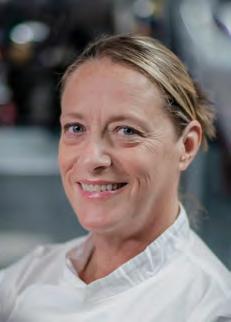
An Apprentice with Ambition
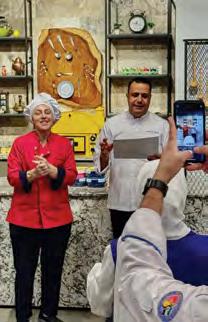
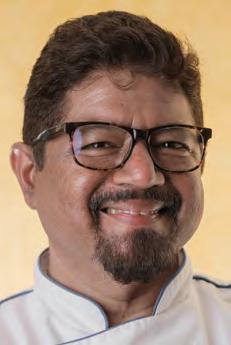
Chef Dhewneka Thasindu Wijeratne takes on the Arla Pro Pastry Mastery Competition, experimenting and chasing sweet dreams
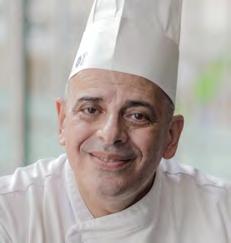
The Question Mark Boy
Chef Fabrizio Manni on seeing food through its mechanics and how sometimes, all you have to do is ask
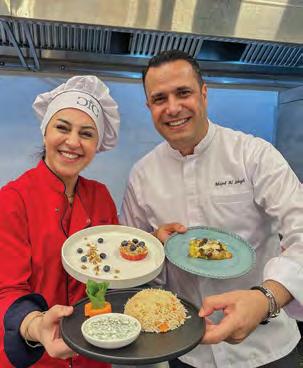
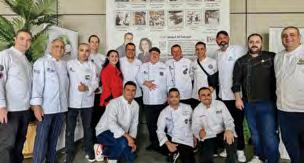
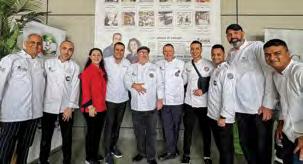
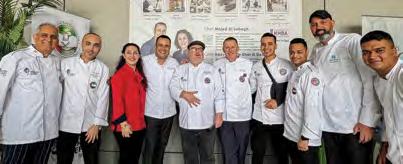
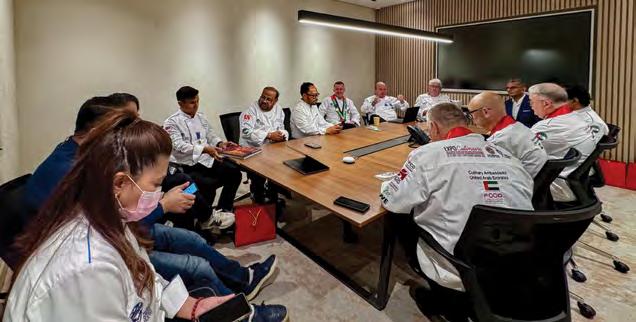
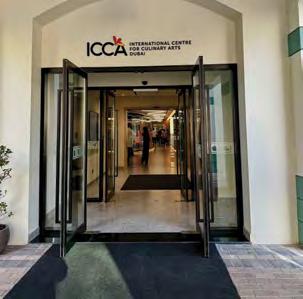
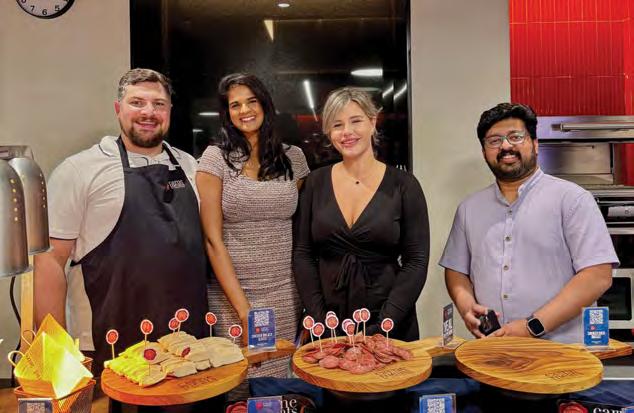
ICCA Dubai hosted the latest Guild meeting, impeccably organised by Shanaaz and Sunjeh Raja
Membership Directory
A listing of all the leading food, beverage, and equipment suppliers in the region
Simon Says
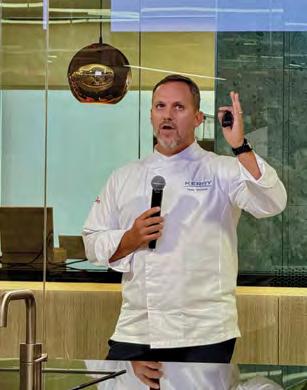
Simon Martin, Executive Chef at Kerry Taste & Nutrition (Food Service), on festive baking trends, cinnamon buns, sweet, savoury, and unexpected fillings for 2026
friends of the guild
Find
Young Chefs, Big Ideas
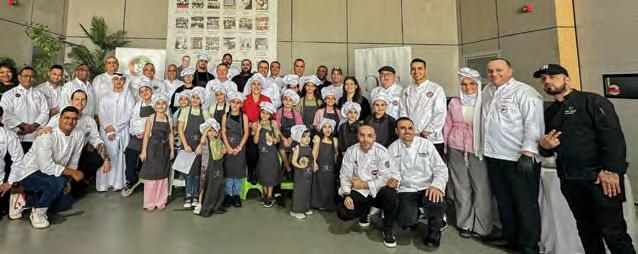
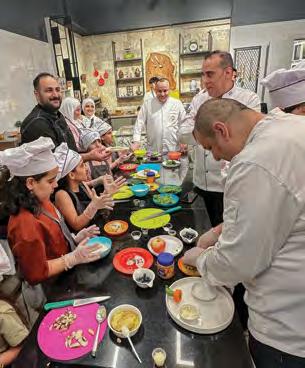
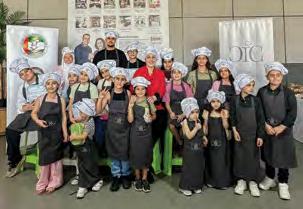
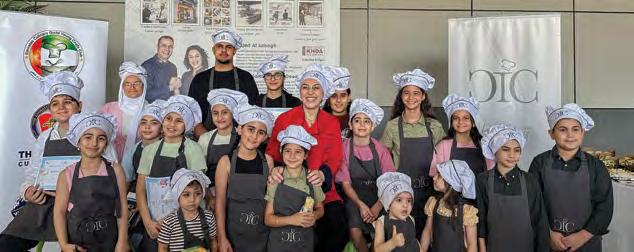
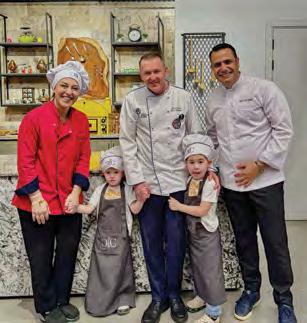
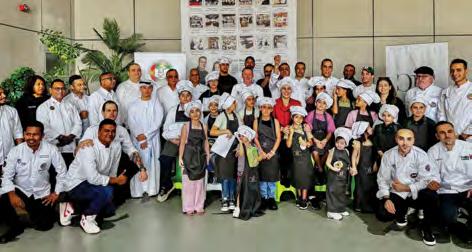
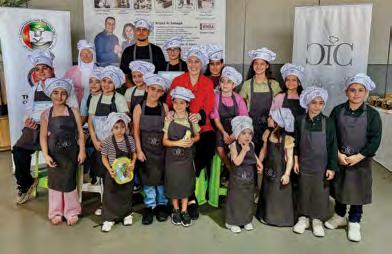
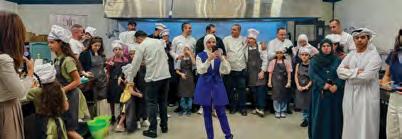
To mark International Chefs’ Day, UAE Chefs held a Family Cooking Event
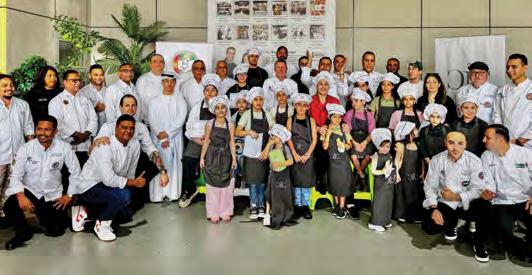
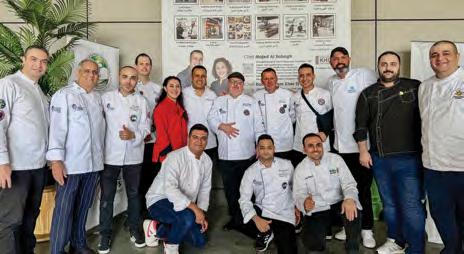
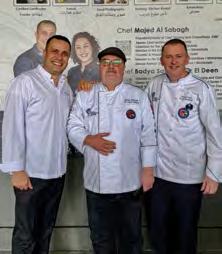
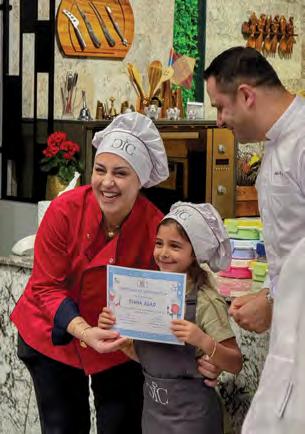
This year, the Emirates Culinary Guild (ECG) and the Syrian Culinary Guild, in collaboration with Chef Training & Consultancy (CIC), Chef Majed Al Sabagh, Madam Badya Salam, Chef Islam, and the ECG Committee, joined senior and junior chefs to mark International Chefs’ Day. The event was led by Chef Badia Salam, a member of the Worldchefs International Chefs’ Day Committee.
Held two days ahead of the official International Chefs’ Day, the event brought chefs together with their children and families.
The celebration spent the day guiding children through the process of creating healthy dishes, showing that culinary passion begins with sharing knowledge.
More than 75 participants prepared
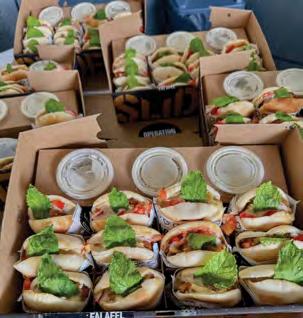
healthy meals and discussed key ingredients for daily nutrition. Senior and junior chefs worked alongside the children, offering guidance and practical tips for everyday healthy eating.
The event concluded with families enjoying their creations, understanding food education, and underscoring how chefs inspire healthy habits and future generations. ■
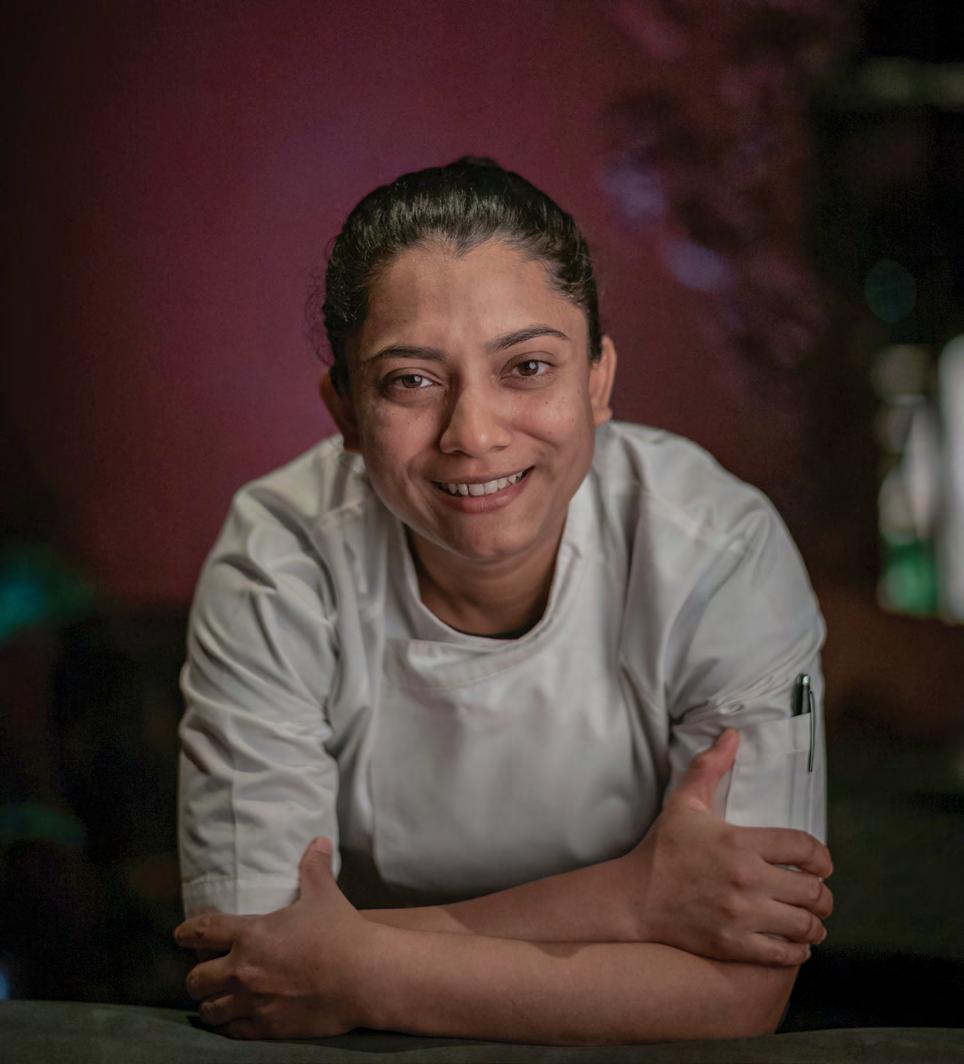
In Her Element
Even a kitchen at full tilt cannot rattle Chef Fay Abreo. From a finance graduate who leapt into the culinary world a decade ago to mentoring young chefs as President of the Emirates Culinary Guild Young Chefs Club, she is rewriting what it means to be a leader in the kitchen. She is now balancing it all while welcoming her first child. Shreya Asopa chats with this trailblazing chef who is inspiring the Gen (Y)oung chefs to dream big
If there is a story that captures the paradox of thriving by going against the grain, it is that of Chef Fay Abreo. Far be it from Chef Fay Abreo to choose the obvious route; a corollary of leaving a career in finance for the kitchen is a life that marries precision with passion. Within the kitchens of Emirates Flight Catering (EKFC), her sous chef's coat upholds that balance with operational finesse.
At EKFC, her day begins with breakfast service, followed by lunch, and then preparations for the evening service. She oversees recipe execution and delivers high-quality meals at a nominal cost. "Productivity, efficiency, quality, and consistency are essential to our operations," she explains.
Disregarding neither precision nor creativity, she balances the art of cooking with the science of operations. "One outlet caters to walk-in guests, staff members, and top executives, while another serves crew training students, providing meals to cadets and trainees. The quality remains consistently high, regardless of who is being served. While we prioritize quantity on the production side, we also achieve quality through proper recipes and processes," she adds.
What Chef Fay finds most rewarding, however, is being part of a team with members who are eager to grow and improve their lives. “At times in workplaces, you find people who simply go through the motions, work eight or nine hours, collect their salary, and go home. But here, I have encountered individuals who are genuinely passionate about pursuing their careers,” she says, adding that working with motivated people breaks the monotony of the kitchen.
The Heat Never Broke Her
Unlike many of her peers, Chef Fay forayed into the culinary world only a decade ago. Growing up in Mumbai, she associated food with warmth and togetherness, inspired by her mother's
I left finance for the kitchen because something in me knew I was built for more than numbers
creativity in the kitchen and by her grandmother's blend of Mumbai–Goan home-cooked dishes. Her early career was all numbers, not knives; she worked her way up the ranks at a major bank in Mumbai before realizing something wasn't clicking.
It took all her fascination with cooking shows and restlessness to yank herself away from spreadsheets and take the leap to enroll in training at the International Centre for Culinary Arts in Dubai.
Her first professional role at Hyatt Regency Dubai Creek Heights was both thrilling and daunting. Coming from a finance background, she had to adapt quickly. “The kitchen pace was fast, everything moved with urgency, but thanks to supportive colleagues, I quickly acclimated,” she recalls. Not long after her promotion at Park Hyatt, the pandemic interrupted the momentum her career had been gaining.
With some time to excogitate on her skills, she prepared for what came next.
What followed was her work at Topgolf Dubai as Chef de Partie, and later at Sweetheart Kitchen in 2021, where she rose through the ranks to become the head chef. It was there that she began to muse on the meaning of leadership in the kitchen, understanding that a strong foundation had to come before guiding others.
Realizing she still had more to master, Chef Fay joined SLS Hotels and Residences. But her momentum came to a sudden halt when a kitchen accident tore a ligament. Over the years, she has come to see the incident in the context of how much the culinary landscape has changed. "If such an accident had happened ten or twenty years ago, there might not have been the same platforms and opportunities for women chefs as exist today. The challenge was not only the physical pain but also the assumptions that came with it. Some even suggested that maybe the kitchen was not the right place for me. That hit hard," she shares.
Respect matters. We don’t know everything. If there’s a better way to work, we must be open to it
The road back was long and demanding; it took over a year to regain her pace in the kitchen. After six months of recovery, she joined Westin Dubai Mina Seyahi Beach Resort as Chef de Partie at Papillon restaurant.
Moving to the restaurant, she now had firsthand insight into the two contrasting facets of the culinary world: the elegance of hotels and the fastpaced efficiency of gourmet restaurants. From there, she advanced to a sous chef role at a renowned location in Dubai,
just outside the Burj Khalifa, where she took on leadership responsibilities and managed daily kitchen operations in one of the city's most competitive culinary hubs. This experience sculpted the foundation for her current position at Emirates Flight Catering.
Generation Y in the Kitchen
Chef Fay joined the Young Chefs Club in 2016 as a member, attending sessions and learning the ropes. Over time, she became part of the core committee, helping to organize events, and gradually took over the club’s communications, including social media. Her ardor to guide young chefs and keep the club running smoothly propelled her to the role of President of the Emirates Culinary Guild Young Chefs Club. (ECGYCC).
The club she envisages is not just a hangout space. Her goal is to create a place where every young chef feels welcome, whether they are struggling with worklife balance, trying to grasp something technical, or simply needing a place to vent.
“The kitchen is tough. Long hours, pressure, and physical strain. When things get overwhelming, you should have a space where you can talk to someone and trust their advice. We also believe in creating a space where young chefs can proudly say, ‘I am part of this group. I have learned and evolved because of it.”
Over the past year, she has made the Young Chefs Club more productive by organizing masterclasses designed to impart practical, hands-on knowledge that helps young chefs in their kitchens and builds their confidence for competitions.
“We have hosted several classes. One was with U.S. Potatoes, where chefs learned to create desserts using potatoes; a pizza masterclass by Emirates Snack Foods, where we made everything from dough to sauce, understanding the precision of baking with time, temperature, and measurements; and a bread workshop with Home of Breads, led by Chef Jürgen,” she shared.
Another initiative, though simple, came from real-world observations. “I have seen chefs at the CDP level trying to sharpen knives the wrong way together, and if a CDP does that, the commis watching will learn it wrong. If we set the foundation right, they will carry that skill throughout their careers. A skill every chef must know. “The small details always matter. We focus on the bigger picture, but it comes down to that one stroke of the brush that makes the whole painting come alive,” she puts it beautifully.
The initiatives yielded results. Participation from young chefs increased compared to last year, and many shared their satisfaction with what they learned. For Chef Fay, the feedback was reassuring — it showed the team was on the right track and that young chefs were truly gaining skills they could take back with them.
She attributes much of the club’s success to the collective camaraderie and positive environment that has
Quality doesn’t change with who we are serving. Consistency is non-negotiable
turned it from a room of strangers into a family bound by shared passion. Diversity and inclusion have grown more pronounced within the Guild.
“Chef Tarryn, the founder of the Women’s Culinary Chapter, is doing a fantastic job of empowering women in the industry. We recently had a session with remarkable keynote speakers, and the turnout was incredible. I had never seen so many women chefs gathered in one place. It was beautiful to witness how many of us share similar experiences, navigating a kitchen that has traditionally been male-dominated.”
Even the smallest changes are making waves. She points to initiatives like Ronai's maternity jackets and trousers, made possible through the Women's Culinary Chapter.
Leadership in today’s kitchens, according to her, revolves around empathy and respect. “Those days when chefs would command without listening are fading away. The younger generation listens and also has the discernment to know the difference. For example, when it comes to cutting an onion, there are many ways to do it. It is not just about
one standard method. In kitchens today, there is an openness to discussing better approaches. Conversations are no longer limited to just ‘Yes, Chef.’ Now, chefs might hear, ‘Yes, Chef, and can we also try it this way? Is that a possibility?. Respect matters,” she emphasizes. “We don’t know everything, but if there’s a better way to work, we should also take that into account.”
Looking back at those heady days, she recounts the early challenges and lessons learned, which imbued her with a sense of the importance of mentorship and the careful approach required when guiding today's chefs, for whom criticism can be easily taken personally. "You have to choose your words carefully. Give them constructive criticism and guide them. Help them understand why certain practices are necessary. A level of patience is required now more than ever."
Equally passionate about mentorship, Chef Fay, as the Worldchefs Global Young Chef Ambassador for the UAE Chapter, is also inspiring emerging talent while staying firmly rooted in the kitchen. Despite her busy schedule, Chef Fay still holds onto the culinary dream. The last time Gulf Gourmet caught up with her in 2022, she spoke passionately about creating a space where guests could come together over simple, good food. That dream, as she put it, is "still very much alive."
"When the day comes, I will be thrilled," she smiled, "but I have to admit, currently I am a little overwhelmed, as I am juggling between pampers, milk, and sleep duty - tending to our little one, which makes managing everything more difficult. It can be quite wild at times,
but I have a strong support system. My husband, Ashwin, has been a real blessing during this journey and the arrival of our firstborn."
She later shared how much Ashwin’s support had meant to her. The past week had been an emotional whirlwind for the couple. "My delivery was planned due to complications, and I had to undergo a C-section. Soon after, we realised I had lost over two litres of blood internally. I needed another surgery to control the bleeding and spent a couple of days in the ICU. It was only when I returned home that the seriousness of the situation sank in. Ashwin stayed calm through it all. He kept moving between checking on our son and me, and it was a lot, especially without immediate family here. Our friends supported us in every way they could. It is reassuring to know that I am blessed to have a husband like him," she says.
Balancing personal and professional life is never easy. "It is tough, especially for women in the industry. It is not always a rosy picture, but it really depends on who you have around you, your family, partner, and friends. There are days I am completely drained, and my husband steps in to help. That support makes all the difference."
His constant encouragement has helped her balance both her career and preparing for motherhood. She finds that same steady support in her team at Emirates Flight Catering. “The EKFC company policies are excellent for employees and promote a healthy worklife balance. There is no pressure to work long hours. My line manager actually tells me, 'It is time to go home; you have worked your nine hours!'”
Her reflection also reaches back to an earlier chapter in her career, when she worked in finance. "In my early days at the bank, my department head always advised us of the importance of productivity over merely putting in long hours. It was a lesson that stuck with me."
Young chefs deserve a space where they can proudly say: ‘I learnt, I grew, I belong here
Within her team, discipline and coordination are second nature. "They are consistent, like clockwork. They are aware of their responsibilities because they have been thoroughly trained, which minimizes the need for ongoing instruction. It is almost like muscle memory; they know what to do."
When obstacles surface, Chef Fay steps in to troubleshoot and guide her staff through solutions. "The team adapts quickly. I clearly communicate timelines and changes. In a kitchen environment, sometimes, some individuals prefer their own ways, and that is when I encourage them to welcome new approaches," she notes.
Still, maintaining that momentum had not come easily. “It was challenging, and even more so while I was pregnant, because standing for long hours was not easy,” she admits. Her team, however, rallied around her with compassion. “They always urged me not to stress, and me being me, I found it hard to step away from the kitchen,” she says.
She also applauds the powerhouse team of the Young Chefs Club, thanking Chef Islam, Chef Deshan, Chef Roberto, Chef Hillary, Chef Raghu Prasad, and newcomers Esther, Oliver, Kareem, and Maheesha, whose talent and guidance contributed to what the ECGYCC is today.
Busy as she is, Chef Fay continues to pursue growth as a chef, hoping to return to competitions and, in time, step into the role of a judge. She understands that genuine growth is about absorbing every nuance of the journey before guiding others. "You cannot simply become a judge without first immersing yourself fully in the process through active competition. Once I have accomplished what I have set out to do, my focus will naturally shift toward judging."
Her message to the next generation of chefs is to hold their ground in the kitchen while choosing battles wisely."When you know you are right and it is in the team's best interest, speak up, because no one else will. Learn when to listen and when to speak. Put your points clearly and respectfully."
In every leap, setback, and comeback, Chef Fay teaches us what it means to stub out doubts and keep moving forward. That courage and calm are shown in sticking to your ground, even when it is messy. That leadership is about guiding without taking over and letting others find their way, and that strength comes from getting back up, even when it hurts. ■
Star for a Reason
They say chase the moon and you might land among the stars. For Chef Arivukkarasan Ravikkumar, the moon was always his passion for making food that brings people together, and it has carried him all the way to a Michelin star. In a beguilingly frank tête-à-tête with Amaresh Bhaskaran, the Executive Chef of Erth Abu Dhabi, looks back on the journey that made him who he is today
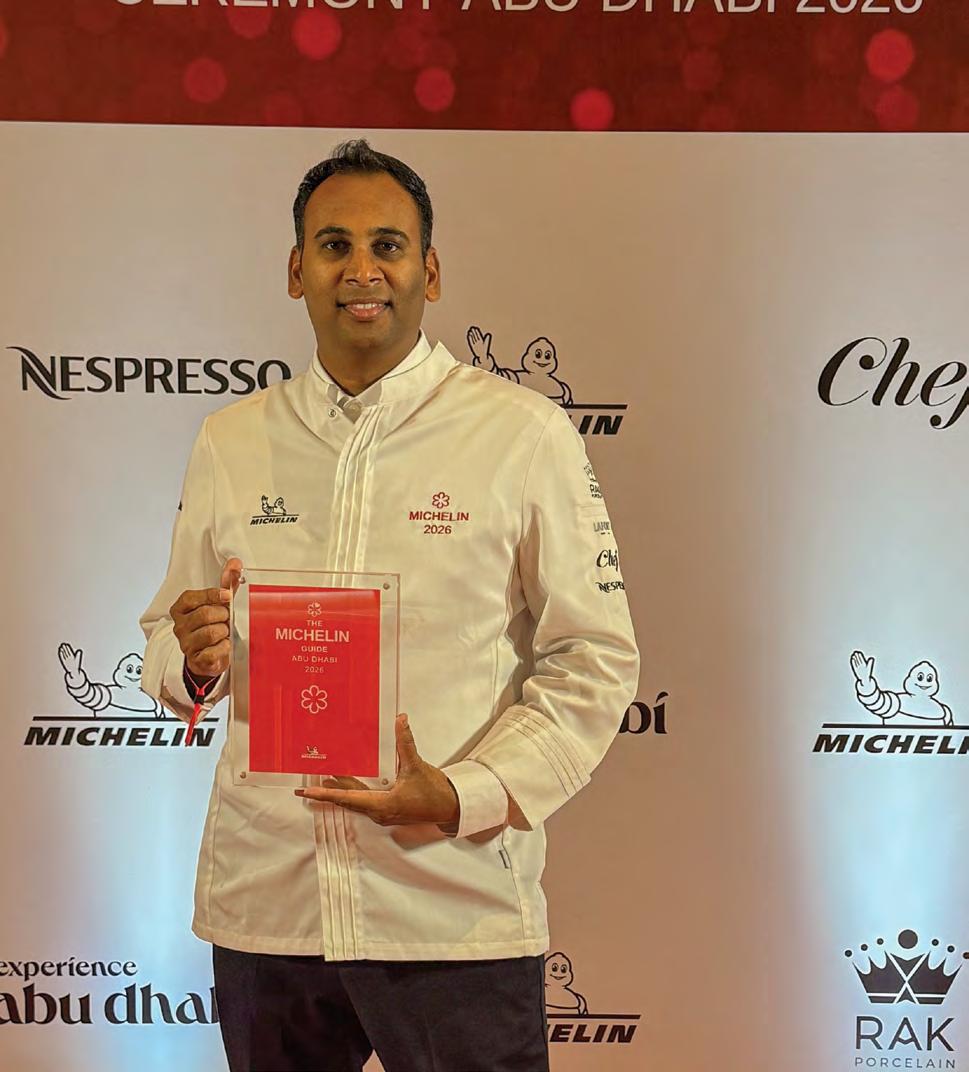
The Emirates Palace Mandarin Oriental, awash in warm light and indistinct murmurs, held the evening that would forever alter Chef Arivukkarasan Ravikkumar's path. He arrived ten minutes early, eyes scanning the room as staff adjusted flowers and polished silver. This was the evening of the Michelin Guide Abu Dhabi. A briefing came first. "How to walk, how to cross the red carpet, all the directions," says Chef Arivu.
The wait stretched. The selection included 56 restaurants. One by one, names were called. Then came the One Michelin Star announcements, a roll call of quality, consistency, and the exacting standards every chef must meet. Chef Arivu sat beside his COO, Mr. Clarke Tomlinson, feeling a knot of anticipation tighten in his stomach."You start to feel it. The pressure, the nerves. But I had this feeling inside that we were going to get something," he admits.
In a flash, the moment arrived. Erth Restaurant retained its Michelin Star for the 2026 edition. Erth restaurant retained a Michelin Star for the 2026 edition. "It felt like a dream. Every time I travel to Europe, I dine at Michelinstarred restaurants to see what they do better and what sets them apart. I learned from each one," he says. "When they put the jacket on me, it was the happiest moment of my life," he says, adding that after 19 years in the kitchen, the Michelin Star felt like the culmination of a lifelong pursuit.
Every triumph, he says, has a strong foundation. "The incredible team at Erth has always been there for me. My culinary director and COO gave me the chance to work alongside such talented individuals, and all of their support helped me achieve new heights."
When felicity peters out, one begins to grasp what it takes to retain Michelin acclaim and develop a vision that makes people tip their hats. As a consecutive two-year 1-Star Michelin recipient,
When they put the Michelin jacket on me, it was the happiest moment of my life
Erth Restaurant shows that reaching this level requires every part of the experience to rise to another plane. And much of that standard is rooted in a culinary perspective that rises from what the soil, sea, and season provide.
"We use local seafood, meats, fresh vegetables, and artisanal honey. Even our tea comes from local karak chai spices. The same thinking guides our desserts. We use dates in many preparations, even in a date cappuccino. Something as simple as a cucumber granita begins with cucumbers from nearby farms. We bring in white sweet potatoes, cheese from local dairies, and oyster mushrooms from regional growers. We also use fresh mangoes from nearby farms," he explains.
That is what he loves most, the honesty of it all. "Everything is fresh and local, and that is the beauty of it. Real ingredients with real stories, and that is what makes our dishes special."
Anyone who believes that the use of what the region offers ends with the produce is in for a surprise. The restaurant's identity finds its way onto the table itself, with bowls and plates made here in the UAE. "We worked with COE on bespoke ceramics, and I have personally collaborated with them to design a few of the serving plates and bowls. They all feel very special," he says.
Quality is another element that sets the restaurant apart, evident in how dishes are cooked, prepared, and assembled.
Sharing, a central part of Emirati culture, is in accord with the chef's own Indian upbringing. He remembers how his family would gather around a single plate when his mother cooked. That tradition became a springboard for the restaurant, where some dishes are designed to create moments of connection.
"Food is meant to bring people together. We have these large serving bowls designed for three or four people. Then we have dishes like Lamb Ouzi, a slowcooked whole lamb shoulder, or other whole fish and rice options, all made for communal enjoyment and celebration."
To see himself now as Executive Chef at Erth Restaurant with a Michelin win takes him straight back to the very beginning, to his dream of becoming the best chef he could be. Coming from a small town in central Tamil Nadu, India, his family expected him to follow the well-trodden path of academics.
Oddly enough, a jibe from his uncle, then a hotel management student, pushed him to prove the naysayers wrong. You are too thin, he said, you will never be able to carry the kitchen's weight. The words stayed with him, and in 2006, he completed his hotel management diploma, laying the first stones of his culinary dream.
"My heartfelt thanks to Rowther Gani, a school friend who encouraged me, and Muthuarasu, who gave me my first break in the industry. Their support became the foundation for everything that followed."
Fast forward to the UAE, with a visit visa in hand and ambition in his step, he started at a small four-star hotel called Lotus Hotel. Not long after, a door opened that would change everything.
"I finally got my chance at the Fairmont, one of the best hotels I have ever worked for," he recalls. "Actually, I had read a clam chowder recipe in Gulf Gourmet by a chef I admired. A few days later, in fact,
I met him and mentioned the recipe. The next day, he called me for an interview and soon an offer letter was in my hand," he says, remembering how he joined the award-winning fine dining steakhouse.
The Fairmont was where his life as a real student began. Everything he had learned back home on sauces and techniques finally came alive. Chef Fabio Pineda showed him how to turn theory into practice, letting him taste, experiment, and reimagine how flavours work.
His inflexion point arrived a couple of years later when he joined Jumeirah Emirates Towers Hotel. With thirteen dining outlets came thirteen outlet chefs, each one formidable, each one a new school. A South Korean chef recast his understanding of sushi with daring combinations. He learned Italian cuisine under a Michelin-starred chef, mastering ravioli, sauces, and doughs made fresh from scratch every morning. Other chefs came from Europe, Asia, and the Middle East, each with their culinary grammar.
Some days he watched. Other days, he cooked or filled pages with notes. Chef Arivu did not stop there. He also made his way to C&I amid the sheer scale of operations. Every station, every chef, every plate was another lesson absorbed firsthand. "During breaks, I went to other kitchens and asked the chefs if I could learn, and they always said yes. That is how you grow. It was like a global school."
In the years that followed, he moved to Mövenpick Jumeirah Beach Hotel and then to the Sheraton Grand, steadily leading larger teams, banquets, and outlets without ever stepping out of the learner's stance.
Pull through conviction. That is how Chef Arivu describes the turning point of 2018, when he joined Hell's Kitchen as a sous chef. In those early days, he had the rare chance to work with Chef Gordon Ramsay. Watching Chef Ramsay maintain consistency across hundreds
What I learned in the CPU kitchen, I would not have gained in ten lifetimes anywhere else
of dishes, work with inventive seasonal ingredients, and plate with calm, flawless speed set a new benchmark for excellence for him.
The rigor of that Michelin kitchen stuck to him like a second skin. So when he joined Erth a year later as Executive Sous Chef, he was already moving at Michelin tempo. He took charge of the central production unit, leading 159 chefs who produced 30,000 meals a day. His ability to guide hundreds of chefs through banquets and high-volume operations did not go unnoticed. His efforts accrued, and soon after, he was offered the position of Executive Chef.
Taking the reins at Erth, he came to understand that the heart of the restaurant lies in culture, in Emirati traditions themselves. "The foundation is heritage, and the charm lies in honouring it. At Erth, traditional Emirati recipes meet international technique, and we create food that carries its history forward without losing its soul," he says.
Starting nine months before Ramadan, his first task was to revamp the menu. Some signature dishes remained, but about sixty percent changed. He spent weeks exploring the city, visiting Emirati restaurants, taking notes, observing techniques, learning balance and restraint, and ascribing their depth of flavour to authenticity rather than embellishment.
"I had a big responsibility. When you come into a team fresh, you must understand the people, the ingredients,
and the tradition. Thanks to my year in the CPU kitchen, it strengthened my technical base. Even though it was high volume with hospitals, hotels, and catering, I also worked in the fine dining section and learned from Emirati chefs on machboos, harees, and regag." Those lessons, he says, were ones he would never have gained in ten lifetimes anywhere else.
From leading the pre-opening of all Erth restaurants, including Erth London, to launching operations and spearheading the transformation of traditional Emirati cuisine into fine-dining experiences with contemporary finesse, his role expanded rapidly.
When Chef Arivu joined the Earth restaurant, it already had a Michelin star, which meant he knew the pressure would be real. Maintaining that standard was no small task, but he always believed in his team. "To retain a Michelin star, the most important thing is consistency. 365 days a year, the quality, presentation, and taste have to be the same. You cannot have one bad day," he admits.
"Consistency first, innovation second," he adds. "Training is the key for everyone, be it the kitchen team or even the stewards. Everyone must understand the dish, the story, and how it is presented. The plating must always look and taste exactly the same. That is how we maintain the standard."
Freshness is another pillar of his system. Nothing lingers. Each morning, the team brings what they need, cooks it, and finishes it the same day. The next morning, everything begins again. "Every station runs like clockwork. Everyone knows their job. Mise en place must be top-notch."
In a high-pressure Michelin kitchen, Chef Arivu runs his brigade with a simpatico presence that keeps the room steady. His current team of ten keeps him grounded. "They are very supportive," he explains. "The learning process is good. Anything
Every kitchen was a new school. Every chef, a new chapter
we teach, they pick it up so fast. From day one, I told them that every recipe we do has measurements. Nobody does it by eye. Everything is measured, documented, and done properly."
Mistakes made by young chefs do not trouble him. They are part of the process. "People make mistakes. I made mistakes. The important thing is to learn from them. I was in their position ten years ago. I understand the hunger to learn something new."
Even in interviews, Chef Arivu values a young chef's hunger to learn over technical skill. Attitude matters as much. "You need people who listen and respect each other. Respect keeps
Consistency first, innovation second. There is no Michelin star without discipline
the structure strong. A kitchen should have military discipline."
As countless chefs will tell you, no culinary journey is ever walked alone, and Chef Arivu is the first to
acknowledge it. "This journey… it is not just two or three people I should thank. It is so many more," he smiles, as though mentally flipping through the chapters of his past. "They all are my guru, my guardian who made my basics strong and taught me new ways to see food, to see work, to see passion."
He lets out a chortle. "If I had to name everyone who helped me on this journey, I would need a whole book. I am grateful to Chef Uwe, Chef Andy, Chef Hugh (Fairmont Dubai, Sheraton Grand), Chef Rene (Sheraton Grand Dubai), Chef Chris Lester (Caesars Palace), and Chef Craig (Gordon Ramsay's Hell's Kitchen) for making me what I am today."
Two incredible individuals have played a defining role in his culinary journey. His mother, who nurtured his love for cooking and hospitality from a young age, filled their home with the aroma of delicious meals and the belief that no guest should ever leave unfed. She showed him what it means to serve others and to share culture through food. And his wife, who has been his constant support, encouraging him to explore, to grow, and to push boundaries.
“From Michelin-starred restaurants to exploring local gems, my wife has always been by my side. One memorable experience that stands out is when her parents took me to El Bulli, Ferran Adrià's iconic restaurant, which is 4 hours from Barcelona. These experiences have helped me discover my strengths and define my culinary identity. I'm grateful for their love, support, and influence in my life.”
Chef Arivu has a rather impressive past in competitive cooking. A gold medal at the Luxembourg World Cup in 2018, several silvers and bronzes at the Salon Culinaire over the years, and a silver at the Dubai World Hospitality Championship 2013 for his five-course gourmet menu. Add to that his gold medals at Chef's Table in 2019, 2020, 2021, and 2022 for live cooking, and
you begin to see why his trophy cabinet is beginning to look like an heirloom collection in the making.
"I still remember, I was working for Fairmont Hotel at the time, and Salon Culinaire was taking place right in front of the hotel. I went as a visitor and I was fascinated!" he recalls. When he told his superior he wanted to try his luck at the competition, his senior chef promptly entered him in four categories. "I won a bronze. Mistakes were made, but I learnt from them. The next year, I participated again in three categories and won silver."
Despite a precarious start, he has claimed more than 30 medals. He actively sought out tougher competitions, including international ones, because he believed that if you want to swim with the sharks, you must learn to handle deep waters. So when an opportunity opened for the Luxembourg World Cup, he threw his hat into the ring. For two years, he prepared with the team; as a result, the UAE team walked away with gold and two silvers.
Given the inordinate amount of research, trial, and elbow grease that go into mastering these competitions, few things have given him as much satisfaction as training junior chefs. Many of the juniors he mentored went on to win gold medals, a fact he speaks of with a fatherly pride.
He has an uncanny eye for spotting the potential of young chefs long before they do. "While it is good for chefs to develop their own ideas, a nudge in the right direction always helps," he says. Wherever he has worked, he has pushed young chefs to compete, to step onto the big stage. "I put a lot of competition for them. They were like my own family. I would bring them in, train them, and handle all the behind-the-scenes work. I was their driver, their logistics, their everything!"
In 2022, he once again proved his mettle, going up against celebrated chefs from no less than 17 countries
Everyone in the kitchen must understand the dish, its story, and its purpose
at the Global Chefs Challenge in Abu Dhabi. Each participant had four hours to prepare a complete four-course menu from scratch. "No shortcuts, no mise en place. Everything had to be done in real time, with 12 judges watching every move. It was unbelievable. Even today, I still cannot believe I pulled it off."
It has been a theme of his life to lift others as he has been doing in countless indescribable ways.
Over the years, Chef Arivu has also guided countless young chefs toward the ICCA culinary course, helping them find their footing in kitchens across the world. "I am thankful to Mr. Sunjeh Raja and the ICCA team. It amazes me to see how far those young chefs have come. And now, those young chefs tell me they have students they want to recommend for the ICCA scholarship, and they see them grow in their careers. That is what makes me happy."
If Gulf Gourmet were to give him a Star, it would be for one reason only: for always stepping up to help and for being selfless. Chef Arivu smiles at that, the kind that comes out of humility, not pride. "This is how I learned from my seniors," he says. "Chef Uwe, Chef Andy, I did not work with them directly, did not even know them much, but they taught me the value of giving without expecting anything back."
He recalls, reverently, moments that left their imprint. "In 2016, I was at a competition in Singapore when Chef Uwe called me over to stand by the stage. He asked me to taste different dishes and explained what went right or wrong with each one. Whatever he tasted, I tasted. I learned to see through his eyes." Those small gestures showed him the picture of the mentor he longed to be.
Chef Arivu is no cat with nine lives. He does not rely on luck or second chances. What characterizes him are consistency, character, and compassion, qualities he believes are unbecoming of anyone who forgets their responsibility, yet imperative for those who hope to inspire change in the culinary world.
In the end, the win says everything about him, a man always observing, always learning, always giving back. "Life is a circle," he says. "Others help you, you help others."
How gloriously he has given, learned, and grown, and when it all comes together, it is Chef Arivu under the Michelin lights. ■
Raising the Bar, Raising Each Other
A
year-end reflection on the UAE culinary scene
by Chef Tarryn-Leigh Green
As 2025 comes to a close, I find myself reflecting not just on the milestones of my own culinary journey, but also on the collective progress we have made in strengthening community, culture, and opportunities for women in kitchens across the UAE. This year marked a pivotal moment for The Women's Culinary Chapter (WCC), an initiative I launched under the Emirates Culinary Guild with the simple belief that when women are given space, support, and visibility, they do not just thrive, they transform the profession around them.
A Year of Growth, Courage, and Connection
The UAE’s culinary sector has always been defined by ambition, but this year we felt a different kind of shift. Women stepped forward confidently. Young apprentices challenged expectations, seasoned chefs openly shared their experiences, and leaders pushed for safer, more supportive kitchen environments.
Within WCC, our community expanded rapidly. Women from hotels, restaurants, catering, education, nutrition, and entrepreneurial food businesses came together with a level of honesty and solidarity that is rare in our industry. The energy at every session was a reminder that women have always been ready for more. What they needed was a platform.
One of the standout moments of the year was our September gathering, hosted in partnership with Hilton and led by the inspiring Emma Banks, a consistent champion of gender balance and progressive leadership in hospitality.
This was not a surface-level conversation. It was a raw, future-focused exploration of the barriers women face daily: obstacles to leadership, mental health
pressures, outdated policies, and systemic gaps. Emma challenged the industry to build clearer pathways for women to rise, innovate, and lead from the front, not the sidelines. This session set a new benchmark for what meaningful, solution-driven collaboration should look like.
Made to Fit: Shefswear for Women, by Women
We were also proud to spotlight Ronai and their newly launched Shefswear range, an initiative driven by The Women’s Culinary Chapter and brought to life in collaboration with Ronai. For the first time, we saw jackets, aprons, trousers, and accessories designed specifically for women’s bodies rather than the unisex, male-centric uniforms we have long been expected to make do with.
This thoughtfully engineered range goes far beyond improved tailoring. It includes purpose-built maternity wear and modesty wear, recognising the full diversity of women working in professional kitchens.
This development reflects the essence of WCC: practical, meaningful change that supports women in their daily work. The Shefswear line is not just about comfort; it is about dignity, safety, identity, and respect. By addressing movement, temperature, functionality, and fit, it acknowledges women as a vital and growing force in the culinary industry.
Seeing this level of care woven into what we wear signals a powerful shift. Women no longer need to shrink themselves to fit the industry; our tools and environments are finally beginning to evolve to fit us.
Elevating Industry Culture Through Honesty
Another highlight of WCC’s work this year was our continued focus on
mental wellness and psychological safety in kitchens. In collaboration with organisations like The Burnt Chef Project, we opened conversations that had long been kept in the dark - burnout, emotional regulation, support systems, and the realities behind kitchen doors.
For many women, speaking openly about these pressures for the first time revealed just how necessary these conversations are for real change to take root.
If 2025 was a foundation-building year, then 2026 will be a year of structure, systems, and scale. Our goals include:
� Launching the WCC Mentorship Programme to support emerging female chefs with development and leadership pathways.
� Expanding our annual calendar with workshops, roundtables, chef-led demos, and leadership sessions.
� Strengthening industry partnerships to drive practical, scalable improvements in kitchen culture and gender equity.
This year has reminded me that progress does not always come from loud revolutions. Sometimes it begins in a room where women finally feel able to speak freely. Sometimes it is sparked by a long-overdue conversation. Sometimes it is ignited by the courage to say, “We deserve better.”
As we enter a new year, I remain committed to advocating for women in our industry, amplifying their voices, and working with partners who believe in genuine change.
Here’s to another year of rising, together.
Tarryn-Leigh Green
The Marvel of Marvinism
Marvin Alballi, the Vice President of F&B at Hilton AsiaPacific, talks entrepreneurship, culinary trends, and his Marvanism nuggets of wisdom for 2026
By Shreya Asopa
There is a crisp, anticipatory hush when I log into Teams. Marvin Alballi appears on screen from Vietnam, wearing a tailored blazer, phone in one hand, calm and composed. Marvin speaks in breadth rather than flourish.
He oversees 26 countries and territories across the Asia Pacific and more than 1,000 restaurants as the Vice President of F&B at Hilton Asia Pacific. "What I bring to the table is experience, and it's a colorful one. That might be an understatement. His résumé reads like a world tour of the industry, covering fast food, fast casual, fine dining, franchises, coffee shops, Formula One catering, Michelin-starred kitchens, hotels, and working alongside a constellation of celebrity chefs and even penning his book, Restaurant Excellence, which has topped the Amazon UAE charts 24 times over two and a half years.
I am not a fan of the conventional way. Creativity, difference, and innovation— those are the paths that matter
"Unlike someone in the hotel industry, who stays in hotels their whole career, I have been fortunate to work across all sectors. It can be summed up in two words - different perspective..of seeing things differently and pushing boundaries."
The contrast is the point. On one side, corporate scope and bestseller metrics; on the other, a beginning so humble it feels almost accidental. He tells the
story of his favorite singer, Lionel Richie. There was no internet then. A friend told him that a singer at a fine-dining restaurant had the printed lyrics to Richie's song Hello. So the two boys went to that glamorous hotel, slipping into a world far shinier than their own. They approached the singer, seeking lyrics, and just then, the maître d' approached him asking for help.
"The job was to polish the silverware, including knives, forks, and spoons, and as I did, I watched live music, wine, and dancing, and thought, I want this," he recalls.
But that is how it has been. Conventional paths do not interest him; they have never been a trope in his life. "I am not a fan of doing things the conventional way. I like creativity, difference, and innovation. Ten to fifteen minutes each day, without fail, I dedicate to reading and researching. I never stop," he says, and it does not sound like ambition so much as instinct.
At the same time, he runs his business with kindness, holding his team together and executing at high standards, always with humility. He makes it a point to speak to everyone; servers, cooks, dishwashers.
"The best ideas," he insists, "come from the ground. I never settle for the first answer. I always question. I always want to improve and make Hilton the best F&B brand. Over the past year alone, I have flown 33 chefs across the region, from a Japanese chef in India to an Indian Chef in the UAE. We are also partnering with the the World's 50Best chefs, bringing the top chefs and Michelin-starred talent for popups at our hotels. The chefs love it, the customers are delighted, and the strategy has been highly successful."
Training, for him, is strategic muscle. Every month, the hotels receive three hours of focused training on culinary, hospitality, and business management, delivered by chefs, corporate leads, and Marvin himself for business sessions.
"By next year, the aim is 42 hours of curriculum, building the largest F&B training library in the hotel industry, and being recognized for having the richest and most comprehensive F&B knowledge base in hotels," he shares.
Culinary and Commerce
Red flags abound when chefs or entrepreneurs, brilliant in their creativity but unprepared for the realities of running a business, open their own restaurants. Marvin elaborates, "Running a restaurant is a business. A restaurant is much more than a fun place; it’s a business with commercial needs, and if you do not treat it as such, it is doomed to fail." Culinary talent alone is not enough; operators need skills in inventory, ordering, accounting, hiring, training, and marketing. Without that, even great chefs stumble. "If a chef does not have those skills, they need a partner who does."
One of the biggest traps he sees is the menu “variety” trap. Chefs want to
I never settle for the first answer. I always question. Improvement is a constant pursuit
showcase everything they can do, but bloated menus only expand inventory, slow kitchens, and increase mistakes. The most successful restaurants in the world stick to 25 to 30 menu items.
On the entrepreneur side, the issue flips. People assume that because they travel or dine out often, they know what people want. They skip data, research, and focus groups, replacing discipline with intuition. Sometimes they land a hit by luck, but more often, they burn out quickly. The truth, he remarks, is that chefs fail without business knowledge, and entrepreneurs fail when they rely on assumptions instead of research. Culinary skill matters, but in Marvin's world, it is only one piece of a much larger, far more demanding puzzle.
Sustainability and AI are also the two themes redrawing the horizon of hospitality. "Hilton is a big believer in sustainability. We have several programs, such as Travel with Purpose and sourcing sustainable fish and cage-free eggs. We
are also piloting a program to reduce kitchen waste, which we plan to roll out across APAC next year," he explains.
AI, he adds, sits somewhere between promise and exaggeration. Menu management and guest behavior analytics are tools that could streamline operations and lighten workloads, but Marvin stresses the need for caution. Many AI tools promise big results but deliver very little. "Only adopt what works. Only trust what proves itself," he says. He even recalled testing an AI recipe tool whose techniques, in his words, were completely wrong. Helpful, yes, but far from flawless.
In discussing his talent strategy, he is clear that attitude leads and skill follows. He believes the strongest hospitality professionals are built on personality, mindset, and curiosity. Technical skill can be learned, but positivity and sociability are not teachable.
"Hospitality is dynamic. Things change daily, and your team needs to pivot quickly. I value commitment and consistency. Someone can be brilliant for a day, but what matters is sustained performance and integrity over time."
The conversation snaps taut back to the kitchen. Amid the common industry concern that young cooks are expected to step into the dining room and engage with guests, Marvin did not hold back in questioning the trend. "I actually disagree with that," he says firmly. "Your first responsibility is the kitchen. If the restaurant is fully booked, the waitlist is long, and the kitchen runs with flawless consistency, then stepping into the dining room makes sense. But if the basics are not strong, if the food is merely acceptable, the room is half empty, or inconsistency persists, guest-facing appearances become a distraction. FOH appearances do not compensate for BOH problems," he emphasizes.
He breaks it down with clarity. Frontof-house roles require cheerful, social
individuals who genuinely enjoy interacting with others. As he put it, anyone can learn to open a bottle of wine or enter an order into a POS system, but no amount of training can manufacture warmth, positivity, sociability, or happiness.
Back of house, on the other hand, demands technical excellence. "You need to show that you can make great food, manage your station, keep your kitchen clean, and lead others. Collaboration, stamina, and patience matter. You have to be ready to spend 14 to 16 hours a day and still handle criticism professionally."
On costs and creativity, he is equally pragmatic. The solution to runaway food costs is careful planning and menu discipline. He calls it responsible creativity, innovation with guardrails. "Do not overcomplicate things. If you have oysters, you do not need to put cheese on them or bake them in a salamander. It is a great ingredient as it is. Desserts do not need smoke, steam, or extra flourishes. Keep them original. Be creative, yes, go outside the box, but make sure it makes sense."
Trends and Balance
Trends, he notes, take their cues from ingredients. Avocado, once ascendant, is now almost passe; truffle and truffle oil, he says, have been overplayed (and imitation truffle earns a particularly flat look). Chia seeds had their moment. There are brighter notes as well. He welcomes local sourcing and sustainability, and is excited by experiments with overlooked staples such as banana flower, camel milk, and cactus. Small revolutions that feel promising rather than performative.
"It is an incredible time to be in F&B. We are seeing a great deal of Nikkei and Peruvian food surging in popularity. There is a great deal of fusion happening, Japanese mixed with Arabic, Indian with Japanese, and Indian with Arabic. There is nothing wrong with fusion, but subtlety is key. If you overcomplicate, it
Only adopt what works. Only trust what proves itself— AI included
leads to fusion confusion. You have to get flavors, textures, colors, and ratios right. Otherwise, it is simply chaos on a plate," he adds.
Hospitality, after all, is notorious for swallowing time whole. Then arose the big question of how anyone in a highstakes role ever manages to take a break.
Marvin admits he tries. "I have a personal trainer, I work out, I go to the movies, and I am planning a long vacation in December." He laughs at himself, always in what he calls go, go, go mode, but he has learned when to pause. Creativity comes to him in the mornings, so he structures his day around that rhythm. "I do take breaks," he says. "But yes," he concedes with a faint, almost amused honesty, "I could probably take more. Balance is always a work in progress."
I ask about perfection because his standard of excellence is unmistakable. He waves the idea away. "I am not a perfectionist. Perfectionism slows you down. You want to innovate, move forward, but if you chase perfect, you lose momentum."
In a rare personal moment, he shares a glimpse of life outside the kitchen, with
a son in Canada studying to become a pilot, evenings filled with soccer, gym sessions, new restaurant visits, and plenty of singing at home. "That is me in a nutshell," he smiles. These details sit alongside the billion-dollar responsibilities and reveal that the man running a thousand restaurants still finds joy in ordinary pleasures.
He also hints at a personal project on the horizon. A second book is slated for release in January. Unlike his first, which was written with a technical and managerial focus, the upcoming one leans into storytelling, filled with humor and snapshots from a life lived across North America, the Middle East, and Asia.
For those looking for a shortcut through the wisdom, there is always Marvinism, his personal code of tidbits distilled from decades in kitchens and boardrooms. "Marvinism for 2026 begins with this. If you want to know what people do not like, check your garbage. Stand by the dish area and observe what is coming back from the dining room. Half-eaten steaks, shrimp, pasta, it tells you something. Guests are sending you a message. Second, revenue is freedom. Always think revenue. You are not simply a server or an order taker; you are an experience maker. That mindset should guide everything you do. And one last piece of advice for chefs is that there is no finish line for success. Always question your dish and ask what you need to make it better."
Before the screen fades to black, he leaves with a final thought on what separates great chefs from those who cook to fill the hours between punch-in and punch-out. "The truly successful ones are always questioning. You have to be proactive in learning, experimenting, and questioning your product. Ask yourself if this is the best dish I can make today. If the answer is no, then you have work to do. Satisfaction comes from striving for excellence. That is how you reach the pinnacle in any craft." With that, he signs off, never leaving progress waiting.
The Grand Finale of 2025
Drama
My last article discussed the importance of supporting the hospitality industry, championing our students, promoting the dynamic world we love, and inspiring more people to join it. Little did I know that by writing it, I might have jinxed myself. Because here I am, knee-deep in ‘let’s collaborate’ season, those two infamous words that somehow sound promising yet tend to come with… terms and conditions apply.
It is peak season and events galore, conferences back-to-back, hotels buzzing, and suddenly everyone remembers that students exist! My inbox is full of ‘Let’s collaborate!’ and I brace myself for the follow-up, ‘Of course, it is unpaid, but what an amazing experience!’ Ummmm and a deep sigh.
I am all for supporting charity events, genuinely. When the cause is good, we are there, sleeves rolled up, smiles on, and no payment required. But when it is a corporate gig charging guests more than my monthly grocery bill, I have my reservations. Let us not pretend ‘exposure’ pays the bills. In places like the UAE, student casuals get paid, and rightly so. So yes, I am currently on a polite (but persistent) crusade in my current place of residence to convince our industry friends that collaboration should not mean free labour with snacks. Stay tuned, and I will report back once I have won this battle of pay versus invaluable experience.
Now onto my second small rant (or philosophical reflection, depending on the wind direction) - Artificial Intelligence. Do not get me wrong, I adore AI. It is the colleague who never complains, never takes coffee breaks, and turns my rambling ideas into neatly structured activities, quizzes, and presentations. It is a blessing when I am
juggling a dozen deadlines and need to turn chaos into something publishable before the next ‘let’s collaborate’ email. But as much as I champion AI, I am also cautious. It is an enhancer, not a replacement. I see students (and, yes, the occasional colleague) copying and pasting entire outputs, including parentheses, signature mishaps, and lack of font alignment, and sending them out as their own. A small part of me dies inside every time I see [Insert name here] still left in an email.
So, I have made it a teaching point. In class, students experiment with two activities: one generated entirely by AI, and another developed through thorough research. They compare, critique, and rewrite. It is working for now. I am still unsure whether I like how AI saves them hours of reading; surely they should feel the pain I went through, right?
But I admit, it is giving them a sharper focus on analysis and synthesis (kind of; it is a learning curve and a work in progress), the kind that used to take us days, sleepless nights, and mild despair.
Next - LinkedIn, I am looking at you. Confession time, I have quietly ghosted LinkedIn lately. Why? Because half the
posts I see are clearly ChatGPT’s doing, and not even the well-edited kind. If I can tell you did not even tweak a comma, I am out. I have been upfront in a past article: I use AI to assist my writing, making it more polished, but it is still my thoughts, my work, with a little bit of shine. Use AI, by all means, but use it, refine it, add your tone, your quirk, your voice. Otherwise, we may as well all sound like robots trying to win Employee of the Month from an algorithm. So please, before you post, reread it and ask yourself, Is this really me? If not, rework it. I promise I will start scrolling again once authenticity makes its comeback.
Now to finish on something lighter and less ranty as we come to the end of another year. If this past year has taught me anything, it is that life is best served with equal parts flavour, laughter, and a touch of madness. From the serene hills of Shropshire to the sensory overload of Dubai, from ranting about noisy diners to reflecting on work-life balance, I have eaten, taught, laughed, and occasionally (well, ok, more than occasionally) rolled my eyes through it all. So, pour yourself a cuppa (proper British), loosen that waistband, and join me on a culinary journey that is as heartfelt as it is unapologetically honest.
This year began with reflection, and writing about my culinary escapades was equally nostalgic and therapeutic. I revisited late-night laughs, pre-social media memories, and the kind of unfiltered camaraderie that only kitchens can forge. Some stories are fit for print, others will stay safely marinating in memory. Still, the best part of writing these tales was realising how much this industry has shaped me. And yes, I now dictate my articles instead of typing, a nod to modernity, but the humour and sarcasm are still all mine.
Chef Helen Morris on Collaborations, Crusades, and a Dash of AI
Next came adventure. I ditched the beach towel for walking shoes and embarked on a food-fuelled escapade from Dubai to Belgrade. Dubai, ever the glittering playground of gastronomy, delivered edible art, and Michelin-starred excellence, charming chefs, and a glass or two of something fizzy… Belgrade, on the other hand, was a revelation. It is a city that does not bother to impress you at first glance and then quietly sweeps you off your feet with pastries, ćevapi, and enough Balkan spirits to make you forget your own postcode. Between Michelin plates and puff-pastry dreams, I left Serbia full, happy, and only mildly concerned about my waistband. Oh, how I long to go back.
Then came another rant. Because nothing tests your patience quite like people who think public spaces are personal cinemas. Whether it is diners blasting iPad cartoons, influencers filming their dinners in Dolby Surround Sound, or business calls conducted at full volume, I have had enough. My British death stare got quite the workout this year.
So, here is my plea to restaurant managers: add “No loud videos, no video calls, no public playlists” to the house rules. Surely, we can ban inconsideration. It is not radical, it is manners.
Then, from international indulgence to rural romance, June brought me home to the Shropshire countryside, where life moves at the pace of a tractor with muddy boots, and a pie so good it makes you emotional. I grew up surrounded by honest food, peas on the doorstep, eggs bought with coins in a rusty tin, and enough potatoes to feed an army. And then there was Chef in the Woods, a small shed serving divine hot pies, cakes, coffee, and comfort food during lockdown. It was my happy place, proof that food does not need gimmicks to heal the soul. When it closed after four years, I felt real heartbreak. But its legacy lives on and is a reminder that the best food is born of simplicity, heart, and the occasional soggy bench in the British drizzle.
Then came summer… the rare British kind where the sun actually makes an appearance. I set out on a mission to eat my way across the countryside, coast, and capital. From reinvented market stalls to Welsh coastal bakeries, I sampled everything from green curry and dumplings to the mighty Oggie, a pastry fortress of mutton and leeks. The highlight?
Where the Light Gets In, a Stockport gem, is reached only by risking your ankles on medieval steps. Inside awaited a tasting menu that sang of summer, beetroot and sheep yoghurt, mackerel and blackberries, and a dessert so quivering it practically danced off the plate. Add to that ice cream delivered by golf cart (yes, really) and London indulgences at Quaglino’s and The Crispin, and you’ve got yourself a perfectly British blend of decadence, humour, and definitely elasticated trousers. By the end of it, I had gained memories, stories, and possibly a dress size. Worth every bite.
After months of eating my way through continents, it was time for something heavier, a serving of truth. This piece was not about food but about people, the beating heart of hospitality. We are in the middle of a global talent crisis. Gen Z, often dismissed as demanding,
might actually be our salvation. They value purpose, balance, and respect, and the industry needs to adapt. Hospitality has always been about care, and that must include caring for the people behind the plates.
There it is twelve months of travel, tasting, teaching, and occasionally tutting. A year of discovering that simplicity is the absolute luxury, that hospitality starts with humanity, and that nothing, absolutely nothing, beats a good fish and chips under an English sky (I am biased, of course).
So, as 2025 comes to an end, I will keep doing what I do best, fighting for fairness, laughing at the chaos, teaching students how to think (and occasionally un-think like AI), and championing the industry that still gives me a thrill every time a guest walks in or a student lights up with new knowledge. And to the next person who emails me saying, ‘Let’s collaborate…’, I will smile, take a deep breath, and reply, ‘Of course! Let us also talk about fair compensation, my favourite topic this season.’
Wishing you a season sprinkled with sparkle, joy, and just the right dash of mischief. See you in 2026… apron on and spirit high! ■
Culinary Future A Fresh Recipe for Our
The future of the kitchen belongs to young chefs who dare to lead with clarity and heart, writes Chef Tarek Mouriess
The movie Any Given Sunday captured a truth that every chef feels in their bones: In either game, life or football, the margin for error is so small... The inches we need are everywhere around us. We fight for that inch. We tear ourselves and everyone around us to pieces for that inch. We claw with our fingernails for that inch. Because we know when we add up all those inches, that's going to make the difference between WINNING and LOSING between LIVING and DYING.
In kitchens, this is not philosophy. It is a daily reality. But those inches are not won by leaders who stand back and simply say, “I trust the team. They will handle it.”
Leadership means being there, side by side, fighting for those inches together.
Continuing our journey of giving hope to young chefs, where we last spoke about breaking free from cookie-cutter resumes and owning your story, it is time to move one step deeper. Because the path to a meaningful culinary career does not end with landing a job. It actually begins the moment you step into a kitchen and introspect the kind of leader you want to become.
As we approach the end of 2025, there is a powerful energy in the air. It is a mix of reflection, ambition, and possibility. This message is for young chefs dreaming of leading their own brigades and seasoned professionals who feel that familiar urge for reinvention. Our kitchens are filled with extraordinary people, many with twenty years of muscle memory and an unmatched ability to execute any event with precision. But skill alone is not enough when the system keeps the engine stuck in first gear.
For too long, our leadership model has been built on one expectation of cook, deliver, repeat. It produces
reliable results, but not growth. When teams are trained only to execute, not innovate, they operate on autopilot. Not out of complacency, but because no one has given them a new destination. We face transitions such as the departure of key staff and the arrival of new chefs. All too often these challenges are opportunities, chances to reshape culture, elevate standards, and demonstrate resilience. As the saying goes, “Winners find a way; complainers find excuses.” Now is the moment to find our way.
Lead with a Shared ‘Why’: A team without a vision is simply following old orders. Change begins with one clear page answering:
� Why are we here?
� What will we be known for in five years?
� How do we support the financial goals of the business?
When everyone owns the “Why,” passion replaces gap-filling.
Speak the Language of Business: Chefs must become business leaders who cook, not cooks who avoid the balance sheet. Monthly, simple P&L briefings, connected to real events and real numbers, transform understanding and drive accountability.
Build Bridges, Not Walls: Collaboration with sales, marketing, and commercial teams is essential. Mutual respect replaces frustration when each side understands the other's pressures and realities.
Integrate New Talent with Purpose: New chefs deserve more than a rulebook; they need culture, vision, and clarity. Their induction must show them what we stand for, not what we have simply repeated for 30 years.
Be Human Before Chef: Respect, humility, and joy must be core
ingredients. A sustainable kitchen nurtures people, not just production.
The deeper issue is that the business mindset is missing. Across the industry, many culinary teams exhibit the same pattern: tremendous technical strength paired with a lack of long-term direction. Executive chefs often operate without a shared vision. Task execution becomes the default mode. Creativity is replaced with firefighting. The business side of the operation remains distant or misunderstood. The team sees themselves as chefs first, not business partners responsible for millions in revenue.
This does not happen because teams resist change, but because they have simply never been guided toward it. And that is where young chefs come in. You have the chance to be the new drivers by shifting the gears, setting the map, and helping build kitchens where people grow. The future of our craft is not waiting for someone else. It is waiting for you.
This past week at the Airshow reminded me of everything that matters in leadership. After more than three decades in this country and countless events, these five days were different. I saw us fighting for inches. The doubt, the stress, the missing items, the tough moments, and the quiet battles. Yet I also saw patience, resilience, understanding, and the deep human courage that defines us.
We will be remembered for the inches we earned side by side, for the heart we showed, and for the way we belonged to one another. This message is for every chef, every intern, every casual worker, and every person who fought for their inches this week. God bless you all and your families.
Let us create something extraordinary together. ■
Oops! The Entrepreneurial Don'ts (Part III)
Every challenge in the kitchen can teach a business lesson, writes Chef Vivek Huria
Back in 1999, I worked at a revolving restaurant called Patang in Ahmedabad. The challenge was running the buffet in a way that impressed guests while keeping costs under control. Instead of reducing prices, we added more dishes that were simple, highquality tasty, and inexpensive to prepare. The fuller spread made guests feel they were enjoying generous value, which drew more visitors and lifted sales. That experience taught me one of my first entrepreneurial lessons: every challenge is really an invitation to rethink, adjust, and get creative. And believe me, the kitchen is full of such no’s. It is a story I have also shared in my book Jalfrezi: From the Vantage of the Culinary World
Continuing from Part 2 of my entrepreneurial don’ts series, here is another serving of lessons from the kitchen:
� Do Not Rely on a Single Plan: Always have a Plan B. There have been plenty of times in my life when I felt stuck, and even today, whenever a sudden problem pops up, I remember how a setback once turned into a small victory. Instead of panicking or cutting corners, I found a way to turn the challenge into something positive, and it worked. In business, things rarely go exactly as planned. Always have a backup plan.
� Do Not Stay in Roles That Do Not Fulfill You: After moving to a standalone restaurant in Delhi, I started feeling restless. The work was fine, but the energy was missing. It felt like cooking without tasting anything myself. I confided in my wife
Every challenge is an invitation to rethink, adjust, and get creative
Rosy, who, in her ever-supportive way, told me to find what made me happy. That was my cue to look for a new opportunity. Entrepreneurs need to recognize when a venture or job is not serving them. Staying too long in unfulfilling roles only slows your growth and your sanity.
� Do Not Undervalue Your Skills or Market Worth: I did not realize my true value until I spoke to a headhunter. Suddenly, I had options I never imagined, roles that offered better pay and more responsibility. Know your worth. Do not sell yourself short. Whether you are pricing a product or
negotiating your salary, understanding your value is crucial. Otherwise, someone else will gladly take the advantage you left on the table.
� Do Not Overextend Yourself or Your Team: In the early days, I stayed late at the hotel just to make sure every guest was happy. I would finish at midnight and wonder why my back ached and my coffee cup was empty again. While working hard is part of the game, overextending is dangerous. Your energy is not infinite, and neither is your team’s. Learn to step back, share the load, and yes, take a break now and then. Even chefs need to eat their own food. Do Not Neglect Team WellBeing and Leadership. Perfectionism is overrated when it starts draining your team or yourself. Lead with positivity, care for your people, and watch your business flourish.
Running a business is messy, unpredictable, and sometimes downright chaotic. You will burn a few dishes. Spill a little sauce. Wonder why you thought this was a good idea in the first place. These five don’ts are just the tip of the iceberg. The real magic comes from keeping your wits sharp, laughing at the small disasters, and celebrating the little wins along the way.
Entrepreneurship is not perfect. So learn to dance in the chaos and hold a smile that refuses to quit. ■
Hospitality has many names across the world. In Portugal, hospitality takes the form of unhurried time. No one hurries a meal, no one rushes a conversation. In Japan, it is omotenashi, the art of anticipating needs before they are spoken. In India, it becomes Athithi Devo Bhava, the belief that a guest is a living form of the divine. Morocco teaches warmth through ritual, where tea is poured not only to refresh but also to welcome. Italy insists that a table is a place of belonging, where food is only one part of what is being shared. Or in many parts of Africa, hospitality is rooted in the idea that generosity is a form of dignity, and that the more one gives, the richer one becomes in spirit.
All of these traditions find a home in the United Arab Emirates, a melting pot of culture that gathers the world around one table. You can stand in a single dining room here and have the rare privilege to witness many interpretations of hospitality happening at once.
When I look back on the busy and successful 2025, this idea stays with me. The industry may be unpredictable, but the heart of hospitality is the same in a way that feels almost timeless. You may call it passion, or grit, whatever we choose to call it, it lives in the stories we share.
This became clear in January, when we began the year by telling the story of Chef Rohit Manek. His career grew through demanding moments and challenges few of us will ever fully understand. Despite a hearing impairment, Rohit has built an extraordinary career by answering every difficulty with humility and tireless practice. In the details of his life, the challenge is only a shadow. The real light
A magazine is not printed work alone—it is layers of thought, ideas, failures, fixes, and shared effort
comes from his character, effort, and devotion to the work.
Then there was Chef Khum Gaha. His entire career shifted because of one train ride. A simple, everyday moment… He met a man with an eye patch, unusual enough to catch his attention, and their small conversation ended up nudging his life in a new direction. How many such stories must have been born in trains and buses over the years? Back then, you would chat with whoever was sitting next to you, share a snack, complain about the heat, talk about work, family, and dreams. These days, it feels different. Everyone is looking at a phone, earphones are in, and eyes are fixed somewhere else. Personal space has grown so large that it has become its own kind of social distance. The stories are still there, millions of them, but they hardly ever come into the light anymore. How decisive a small moment of human connection can be, and how rare it is becoming.
We were honoured to run a conversation with Chef Pierre Gagnaire. He calls the plate a language of feelings, and emotion as the backbone of service. It made something clear that technique alone can feel cold, and emotion alone can drift without direction. The best meals
reach that sweet, uneasy balance where head and heart meet. Technique builds structure, but emotion gives it life. As he said, what are we without emotion? It was a question worth sitting with.
On the sweeter side, Chef Ruwan Kumara’s pastry journey was unforgettable. The idea that perfection is found not by adding, but by removing… there is a life lesson in that. How many of us are guilty of chasing more when the real beauty lies in simplicity? From time to time, we should step back and see things simply.
Judging, too, found its own spotlight this year. Chef Otto Weibel, with his decades of judging experience, offered another kind of insight, the kind that comes only from age, patience, and watching many hopeful cooks put their hearts on the line. To judge with grace is as much about generosity as it is about skill. It is about seeing the person behind the mise en place and treating their effort with the dignity it deserves. Sometimes, it is easy to forget the weight that words carry. As his story speaks, one must be mindful, for words of praise or criticism can stay with someone long after they are spoken.
And then the underdog story that everyone loves. Chef S.D. Udaya Nilanga, who walked onto the floor at the International Emirates Salon Culinaire and proved his mettle. Over 930 competitors, and his calm, grounded approach took home the Best Cuisinier title. His advice to reset your thinking when things go wrong is a lesson to keep in your back pocket for when you find yourself in a tight spot.
And then there was the September edition, which again brought attention to women in the culinary world. It shared stories by women chefs, for women chefs,
and for all who believe in the power of their work. What a powerful, almost electric journey that was. We thank the chefs who made this edition possible, and Chef Tarryn for guiding its vision. Our associate publisher again contributed a brilliant idea. For the first time, the cover featured not a single chef, but a silhouette representing women across the industry. The edition was a progressive dialogue on mental health, leadership opportunities, and policies that make a difference. It showed that real change comes not from words on paper, but from rolling up your sleeves and putting effort into action.
Some leadership stories read like practical prayers. Chef Grant Marias’ journey, from delivering newspapers at dawn to running large operations, is full of lessons in perseverance and in never taking things for granted. If you ask me what it means to pull a Grant, it is leading in a way that lifts others, helps them grow, and never lets the small moments or hard work go unnoticed.
The FHAM competition brought joy in another form. The UAE team’s haul of 21 medals at the FHAM Global Culinary Challenge was a collection of small decisions turned into big outcomes. But again, what I remember most from the story is Chef Uwe’s words that every medal is a lesson in gold. The first medal you earn, be it bronze, silver, or gold, is like gold because out of so many participants, you have managed to win a medal. That is your achievement. You must learn from your judges’ advice and be like a sponge. Observe, absorb, take suggestions from seniors, and build on them. Every medal teaches us to be better.
And now, December closes with Chef Arivu Ravikkumar on our cover, a fitting way to end the year. His work at Erth, a Michelin-starred Emirati restaurant, is part of a larger conversation about place, identity, and what it means to carry a region’s story on a plate.
This year’s journey was a genuine team effort. The team’s late nights, the layout
that found clarity in chaos, the photos with perfect light. To me, this magazine is not just printed work. Layers of thought, conversation, trial, error, design, writing, all shared work… all reaching toward something meaningful.
It is a proud moment to share that Gulf Gourmet Magazine was named Best Magazine in the World during the Gourmand Awards. This win is a nod to the passion, hard work, and collaboration that bring each edition to life. And I want to share something our art director, Vahiju PC, said, “This year’s ECG magazine journey was truly rewarding. Each issue reflects real teamwork. Collaborating with the Editorial Team helped shape every edition with clarity and creativity, and I am grateful to be part of defining the magazine’s visual identity.”
Many thanks to our Guild Coordinator and Editor, Chef Andy Cuthbert, and to the Guild’s Past President Chef Uwe Micheel and Madame Josephine Cuthbert. I would also like to give heartfelt thanks to Chef Alan Orreal, President; Amaresh Bhaskaran, Associate Publisher; and Vahiju PC, Art Director, and to all our op-ed contributors whose support and guidance helped keep everything on track.
Thank you for reading, for arguing with us, for sending us tips, and for sharing with us stories to learn from. Here’s to a 2026 that keeps asking hard questions, celebrates the little answers along the way, and has plenty of laughter in the kitchen.
Shreya Asopa, Writer @Gulf Gourmet
Bin to Brilliance
Chef Carl Shi on rethinking food waste in professional kitchens (part 2)
In the first part of this series, we explored how waste silently accumulates in professional kitchens and how small interventions in procurement, storage, prep, and portioning can create immediate impact. Now, let us go further. Beyond control and prevention lies the creative heart of culinary sustainability: repurposing, team culture, and public engagement.
Creative Repurposing
One of the most empowering shifts in a kitchen is when waste is viewed not as a nuisance, but as a potential resource. Trimmings, surplus, and even plate returns can be the raw materials for stocks, sauces, purees, pickles, or even signature dishes.
Cross-utilisation should be a standard consideration at the design stage of any menu. What surplus from one dish can be integrated into another? For example, offcuts from a roast chicken can feed a staff meal, become a base for consommé, or be crisped into garnish. Herb stems can become oil infusions,
and citrus peels can be candied or dried for use in cocktails. Vegetable skins can be fried, dried, or fermented for depth and crunch. Fermentation, dehydration, and pickling are no longer niche; they are now mainstream kitchen skills that extend shelf life, elevate flavour, and reduce bin volumes.
Menu Agility
Repurposing works best when menus are
built with flexibility in mind. A 'Chef's Special' section that adapts to what is available enables dynamic use of excess. Daily rotating soups, stir-fries, or pastas can absorb vegetables or proteins nearing the end of shelf life.
Staff meals are another opportunity. Rather than serving random leftovers, the design staff prepares dishes intentionally from surplus. It ensures respect for ingredients, boosts morale, and gives junior chefs a chance to experiment. Customers are increasingly sustainability-savvy and enjoy knowing that the kitchen is resourceful. It enhances brand integrity and can even justify price points. In high-end hospitality settings, however, it is important to communicate this practice with care. While many diners today are sustainability-savvy, transparency around repurposing must be handled discreetly and professionally to align with brand image.
Sometimes, subtle messaging or behindthe-scenes storytelling is more effective than direct declarations, especially when introducing repurposed elements into premium menus.
Avoid & Reduce
No strategy succeeds without people. Building a waste-conscious culture means every team member, from dishwasher to sous chef, knows their role in sustainability.
Start with training: cover not only procedures (FIFO, labeling, portioning) but also the principles behind them (why we do this). Regular briefings, posters, and waste audits help reinforce values. Share stories and success metrics. Make sustainability a point of pride.
Reuse & Repurpose Practices
Engage the team through competitions like zero-waste challenges or creative plate-ups using limited ingredients. Celebrate innovations publicly, whether in internal meetings or on social media. Recognition drives repetition.
Involve front-of-house, too. Waitstaff can gather feedback on portion sizes and diner preferences, help explain flexible options, and showcase the kitchen's sustainable approach.
Digital tools can support food waste reduction by tracking expiration dates, automating inventory management, or providing analytics on purchase-towaste ratios. Apps like Too Good To Go or Olio can redistribute surplus food, and commercial food digesters offer
last-mile composting solutions. But no technology replaces leadership. The mindset and values of the chef set the tone. Equip your team with digital tools, but empower them with the knowledge to use judgment and creativity.
Today's diners care about values. Sharing your sustainability journey can engage customers in a meaningful
way. Highlight food waste initiatives on menus, websites, or table talkers. Post behind-the-scenes videos showing how surplus becomes a new dish. Invite feedback. Transparency fosters trust. This story does not need to be perfect; it just needs to be authentic. Share your goals, challenges, and milestones. Show that your kitchen is committed to constant improvement, not greenwashing.
Action Framework
Here are four steps to institutionalise food waste reduction:
� Audit waste weekly. Know what, where, and why.
� Set measurable targets. For example, reduce prep waste by 15% over a three-month period.
� Educate and empower. Train, brief, and give creative license.
� Celebrate and share. Reward ideas, post results, and involve customers.
These are not abstract ideals; they are tangible systems. And in practice, they build pride, cohesion, and resilience within a culinary team. The measure of a great kitchen is no longer just its food; it's the totality of its practices. How ingredients are sourced, stored, transformed, and valued reveals a kitchen's philosophy.
Culinary leadership in the 21st century includes environmental and ethical responsibility. And it starts with the decision to treat waste not as inevitable, but as an opportunity. Let us strive for brilliance not just on the plate, but in everything we touch before and after service, because that is the kind of excellence that truly lasts.
Beef Grading Understanding
Sulemana A. Sadik explains the grading science behind Wagyu, Black Angus, and Angus
In the world of premium beef, not all steaks are created equal. Behind every perfectly marbled Wagyu ribeye or tender Angus sirloin lies a story of genetics, feeding, and meticulous grading. Understanding how beef is graded and what distinguishes Wagyu, Black Angus, and Angus helps both chefs and consumers make informed choices based on quality, consistency, and trust.
Wagyu: The Gold Standard of Marbling Originating from Japan, Wagyu literally means ‘Japanese cattle.’ What makes it unique is its extraordinary marbling, the fine web of intramuscular fat that melts at a lower temperature, giving Wagyu its buttery texture and unmatched juiciness.
In Japan, beef grading is based on the standards established by the Japan Meat Grading Association (JMGA). Two key components define the grade:
� Yield Grade (A, B, or C): Indicates how much meat is obtained from the carcass.
The best Wagyu is A5, representing top yield and superior quality. Australian Wagyu, which has become a global benchmark, follows the AUS-MEAT Marble Score (MS) system, ranging from MS 0 to 9+. A higher score means richer marbling and a more luxurious eating experience.
Black Angus: Consistency and Depth of Flavor
The Black Angus breed, originally from Scotland, is celebrated for its finely textured meat and balanced marbling.
In markets like Australia and the U.S., ‘Angus’ is not just a breed name. It is a certified standard that assures certain genetics and meat quality.
In Australia, Certified Black Angus Beef programs must meet specific criteria. The cattle must be verified as 100% Angus and grain-fed for a minimum period to achieve consistent marbling. The grading process is conducted by independent AUS-MEAT or MSA (Meat Standards Australia) graders who assess:
� Marbling score (0–9+)
� Meat color
� Fat color
� Maturity
� pH and temperature (to ensure tenderness and shelf life)
Each carcass is graded under controlled conditions, ensuring every cut meets the expectations associated with the Angus name: juicy, flavorful, and reliable.
Angus: Tradition and Versatility
The broader term ‘Angus’ encompasses both Black Angus and Red Angus breeds. While Black Angus dominates premium beef programs, Red Angus is equally respected for its tenderness and adaptability. What sets Angus apart from other breeds is its genetic predisposition for fine marbling and excellent fat distribution.
In Australia, Angus beef is graded through the MSA system, which does not just look at marbling but also predicts eating quality based on cut, cooking method, and aging time. This sciencebased approach ensures consumers experience consistent tenderness and flavor, whether they are enjoying a grilled
striploin or a slow-cooked chuck roll.
Certification and Integrity in the Process
Grading and certification are more than marketing; they are about trust and traceability. Each carcass undergoes an independent assessment, ensuring that labels such as Wagyu, Black Angus, or Angus are backed by verified data.
From feedlot records to carcass identification, traceability is maintained throughout the supply chain. The Australian Wagyu, Black Angus, and Angus Brands operate under strict AUSMEAT or MSA standards, providing both chefs and consumers with confidence in what's being served.
For those in the culinary and hospitality world, understanding grading is not just technical; it is a competitive advantage. The difference between a Marble Score 4 Wagyu and a 9+ is not merely visual; it translates into a richer mouthfeel, longer flavor persistence, and a premium experience worth every dirham.
Ultimately, grading systems help bridge the gap between the paddock and the plate, ensuring that every steak, regardless of breed, delivers on its promise of quality.
In essence, Wagyu sets the gold standard for marbling, Black Angus defines reliable premium quality, and Angus represents the backbone of tenderness and taste. When these breeds are graded and certified correctly, they embody not just meat but also craftsmanship, transparency, and a shared commitment to excellence, from farm to fork. ■
F ood & B everage
I ndustry series
Something unexpected is driving the new language of hospitality — Elvis Taylor
Negotiation Lessons from the FBI – Volume 2 How Empathy & EI Drives Loyalty In the FBI, negotiators coax critical information not with facts, but with feelings. In fine dining, the same principle applies emotional connection not flawless service, dictates guest loyalty.
Research from Cornell University’s School of Hotel Administration and Harvard Business Review has shown that emotional connection, not satisfaction, is the strongest predictor of guest loyalty and spending. Guests don’t only return because the food was good. They return because they felt understood.
Across the hospitality industry, we still rely on scripted courtesy: “Enjoy your meal.” “Is everything okay?” “Thank you for waiting.” These phrases once defined professionalism. Today, they barely register. They acknowledge the transaction, but they do not deepen the relationship.
Politeness is not influence, and courtesy is not connection.
In the FBI, negotiators are trained to listen not for information, but for emotion. The same principle now defines the future of the hospitality industry. Emotional intelligence, not flawless procedure, is what builds trust, drives loyalty, and creates brand memory.
The Next Language of Hospitality: Mirrors and Labels
Mirrors and labels, used by the FBI to rapidly build trust, are now reshaping how leading hospitality brands speak to guests.
� Mirroring: Repeating the guest’s key words with gentle curiosity. This invites them to share more, making them feel heard rather than processed.
� Labelling: Naming the guest’s emotion (“It sounds like…”, “It seems like…Looks like…feels like”), which validates their experience and creates instant rapport.
“The most powerful language in hospitality is not spoken at the guest, I believe it’s reflected from the guest.”
A Defining Moment
A note was left for me at reception:
“If possible, I would like to meet Elvis personally.”
The guest had never met me.
When I called her suite, she replied warmly: “Please come up when you have a moment.”
When she opened the door, she paused and smiled.
“You’re not what I expected.”
I mirrored:
“Not what you expected?” She laughed.
“In our office, whenever your name is mentioned, we don’t talk about the hotel; we talk about you. I expected someone older, someone legendary, someone we’d never actually meet.”
I labelled:
“Sounds like expectations were quite high.”
Her posture softened. In that moment, I realized:
Hospitality is not about impressing guests. It is about reflecting them.
Trust is not created through perfection, but through psychological presence.
The Emotional Intelligence Operating System of Hospitality
These tools are not soft skills; they are commercial levers. Brands that train their staff to engage emotionally experience higher guest spend, increased return frequency, and measurable increases in positive online reviews.
I call this shift The Emotional Intelligence Operating System of Hospitality, a new model where mirrors and labels replace outdated scripts and activate guest loyalty at scale.
Hospitality is no longer a service industry. It is a human influence industry.
Hospitality is not about what we say; it is about what the guest feels after we say it.
The brands that master this will not adapt to the future; they will define it. ■
Guest Says Traditional Response Mirror / Label Response Result
“The dish isn’t as hot as usual.” “I’ll check on it.”
Label: “Sounds like time matters today.” The guest feels prioritized
Mirror: “Not as hot?” The guest feels acknowledged
An Apprentice with Ambition
Taking on the Arla Pro Pastry Mastery Competition this month is a rising young talent who is all about learning, improving, and following his passion
At just 19, Sri Lankan pastry talent Dhewneka Thasindu Wijeratne is making his mark inside one of Dubai's most innovative Patisserie Consultancy kitchens, PH by Design, led by renowned pastry chef Paul Hayward. When he arrived in the UAE, Chef Dhewneka had no formal culinary training. Curiosity and discipline pushed him forward, and with the guidance of Chef Paul Hayward and Chef Stephen Braganza, he has been building his skills in pastry, bakery, and hot kitchen.
We catch up with the youngest competitor of this season's Arla Pro Pastry Mastery Competition to talk about his sweet creation, his journey, and the lessons that shaped him.
What brought you into the culinary world?
Growing up in Kandana, near Colombo, Sri Lanka, my world was shaped by the smells and sounds of the kitchen. While my mother took my older sister to tuition, I spent my afternoons with my grandmother, learning to cook Sri Lankan food like rice and curries. One dish that always reminds me of her is pol roti with seeni sambol. Even now, I can make it, but it never quite tastes the same as hers.
I always wanted to travel, cook, and Dubai was a place I wanted to experience. My father was already working here with the Jumeirah Group as a duty manager. Since I had no formal culinary training, he reached out to Mr. Don Chamil at Jumeirah Al Qasr, who helped me secure the chance to connect
with Chef Paul Hayward, and that is how my three-year apprenticeship began.
What does a day inside PH by Design look like?
I start my workday by heading straight to the kitchen. We always begin with a morning briefing so we know the plan for the day, and every day is different. There is always a new project, a new recipe, or something we are developing for a client. Our work is very creative. We are constantly creating new flavours, testing ideas, and refining concepts. Most of the research comes from Chef Paul; he is always exploring. Sometimes I suggest something new, and if he thinks it is good, we try it. Once the recipes are finalised, we do tastings for the clients. We also train their chefs on the dishes and menus as part of businessto-business work. We demonstrate the dishes, walk them through the menu, and explain the entire process from preparation to execution.
What do you remember most about your initial training days under Chef Paul and Chef Steven?
The environment was really friendly from day one. At first, I was scared because I had heard stories about chefs being strict or angry. But here it was the complete opposite. Even when I repeated the same mistake, they corrected me calmly and taught me properly. That supportive environment made me love coming to work every day. I came in with pure passion but no professional skills, and they gave me the space to grow.
Now that it has been two years, how would you compare the person you were on your first day to the person you are today, and what would you say is your strongest skill now?
Two years ago, I had no training, no confidence, no skills. Back then, I didn't even know how to mix dough or what many of the techniques involved. All I knew was that I wanted to become a chef. Today, I am preparing to compete against chefs who have years of experience, and sometimes it still
Two years ago, I didn’t know how to mix dough. Today, I’m competing against chefs with years of experience
feels surreal. I can honestly say I am a thousand percent better than I was on my first day. This kitchen has opened up a whole new world for me. What once felt impossible is now part of my everyday work. My strongest skills lie in culinary preparation, particularly in creating sauces and hot dishes. We started with pastry, but recently we have expanded into other cuisines, and clients now request different dishes more than sweets. I handle pastas, pizzas, burgers, and much more, and I feel confident in every dish I create.
Could you tell us a little about your family and your support system? I live with my parents. My sister came with us to Dubai, but now she's studying medicine in Russia. At home, the kitchen belongs to my mom; that is her space. But on weekends, I cook for her. My family supported me from the beginning.
I also thank Mr. Don Chamil from Jumeirah Al Qasr. He guided me toward this apprenticeship. And of course, Chef Paul and Chef Steven are my mentors. I work directly under them, and everything
I know comes from their guidance and instruction. A special thanks to the Guild and Arla Pro for the ingredients and for giving me the chance to compete.
You are the youngest competitor in this edition of the Arla Pro Pastry Mastery Competition. How does that feel? Honestly, I am really excited. Most of the chefs I will be competing against are very confident and experienced, but I love this work and have always wanted to compete. This will actually be my second competition. My first was in May of this year at Salon Culinaire, where I participated in the Plated Desserts category sponsored by Arla Pro. So this is my second chance with Arla Pro, and I am incredibly grateful. I will meet new people, learn from different chefs, and build new connections. That means a lot to me.
Tell us about the dish you created for the Arla Pro Pastry Mastery Competition. What was your inspiration?
I wanted to reimagine the classic pairing of chocolate and orange, so I built the dessert around kumquat, a bright, slightly unexpected citrus note. The dish combines several components, including hazelnut praline paste, milk-chocolate hazelnut praline, a soft kumquat jelly, rich chocolate mousse, chocolatealmond dough, kumquat ice cream, milk-chocolate crèmeux, isomalt sugar décor, honey tuile, and a chocolate glaze. The most challenging element is the chocolate tart rose. I love working with floral shapes, so I sculpted the tart into a rose. It is delicate, but visually it brings the whole piece alive. Beneath that is a velvety chocolate mousse, topped with a thin layer of kumquat jelly. I finish it with a simple honey tuile and a touch of sugar work for height and texture.
Where do you usually go for inspiration or to research new ideas? Do you follow any chefs closely? I follow a lot of cooking shows and check for trends on Instagram. For research, I mostly turn to YouTube, Google, and even ChatGPT, as AI is really helpful now. One
Chocolate And Orange CombinationClassic Reimagined
HOMEMADE 60% HAZELNUT PRALINE PASTE 1000 Grams
Whole Blanched Hazelnuts 600g
Water 70g
Caster Sugar 370g
Glucose Syrup 30g Method
� Roast nuts on a tray at 150°C for 18 minutes until cooked golden brown.
� Weigh water, sugar, and glucose into a small pot and cook until a medium caramel brown color, and immediately pour out thinly onto a parchment paperlined tray and allow to cool.
� Break it into small pieces that fit in your food processor along with cooled nuts and crush on low speed until a crumble, then max speed until as fine as can go, and then add oil and grind again until grainy fluid paste.
� Store in an airtight container at room temperature
of my favorite chefs is Gordon Ramsay, and of course, Chef Paul Hayward, who has taught me so much. I watch a mix of chefs' videos, and I really look up to many Sri Lankan pastry chefs, as well as those doing incredible chocolate and sugar work. There is so much creativity out there that it keeps me inspired.
Let us talk about the future. Ten years from now, you will still be very young. Where do you see yourself? In the near future, I will be completing my apprenticeship, and I would love to continue working here. At the same time, I really want to study further and earn a formal qualification. I have been selected for the ICCA scholarship program, and I will be joining the new one-year batch. Classes are only on Sundays, which works perfectly for me since I work Monday to Friday. It makes the balance much easier.
� Add all ingredients into a mixing bowl and mix on slow speed until combined
� Use as required
SOFT KUMQUAT JELLY 500 Grams
Boiron Kumquat Puree 300g Water 100g
Caster Sugar 89g
Pectin NH 11g Method
� Heat puree and water to 40 °C.
� Mix sugar and pectin and add to the mix and bring to a boil, and cook for 20 seconds.
� Let it cool and apply it on top of the frozen mousse.
I made mistakes, but my chefs corrected me calmly — that gave me the confidence to grow
Looking ahead, I definitely want to open my own place one day. My first goal is to start a cookie business, something small and focused, where I can experiment with over 30 flavors I already know and keep developing more. After that, I want to open a hot kitchen, maybe a cozy pasta spot. I love Italian food, so I would love to create a simple, dedicated concept built around it. That is also the dream. ■
RICH CHOCOLATE MOUSSE 500 Grams
35% Arla Pro Whipping Cream
Chocolate (Melted)
Pasteurized Egg Whites
Caster Sugar
Method
� Bring cream, milk, and salt to a boil.
� Pour over soft butter and melted chocolate, and mix until combined.
� Whisk egg whites, albuwhip until semi-stiff and add sugar slowly while whisking.
� Whisk for another 30 seconds until smooth and glossy.
� Whisk 1/4 of this mix into the warm chocolate mixture, and then pour it back onto the meringue and fold together.
� Pipe into the mold and freeze until completely frozen.
� Remove from the mold.
CHOCOLATE ALMOND DOUGH
Grams
Icing Sugar 20g
Almond Flour 15g
Whole Eggs 24g
Honey 19g
All Purpose Flour #1 35g
Cocoa Powder 10g
All Purpose Flour #2 69g Method
� Mix butter, salt, sugar, almonds, eggs, honey, flour #1, and cocoa powder until the dough starts to come together to form a dough.
� Add the second quantity of flour #2 and mix until just combined.
� Roll out the dough between plastic Sheets to a two mm thickness.
� Chill, cut to circle, and chill again.
� Line mold and freeze.
� Bake at 160-170 °C in a convection oven.
KUMQUAT ICE CREAM 1000 Grams
Boiron Kumquat Puree 330g
35% Arla Pro Whipping Cream 230g
Arla Pro Cream Cheese 100g
Pasteurized Egg Yolks 130g
Caster Sugar 170g
Glucose Syrup 40g
Louis Francois Stab 2000 3g Method
� Bring puree and cream to a boil.
� Mix egg yolks, sugar, glucose, yolks, and stabilizer.
� Pour boiling liquids over the egg mix while whisking and return to the pot.
� Cook until 78 °C, remove from the heat, and continue stirring for two minutes with a whisk until the temperature starts to drop.
� Pass through a fine sieve.
� Chill over ice bath and then rest overnight in the chiller to age.
� Blend for three minutes with a stick blender before freezing.
� Freeze in an ice cream machine as per instructions.
MILK CHOCOLATE CREMEUX 200 Grams
35% Arla Pro Whipping Cream 45g
Full Fat Milk 45g
Caster Sugar 8g
Egg Yolks 18g
Milk Chocolate 84g Method
� Bring milk and cream to a boil.
� Mix sugar and yolks with a hand whisk.
� Pour on boiling liquid while stirring.
� Cook until 78 °C, stirring continuously with a whisk.
� Remove from the heat and continue stirring until the temperature starts to drop.
� Pour this mix over unmelted chocolate in a measuring jug and combine using a hand blender until smooth.
� Pour into molds and freeze until fully frozen.
ISOMALT SUGAR DÉCOR 200 GRAMS
Isomalt Crystals
� Mix and cook until 156 °C
TUILE – 200 GRAMS
All Purpose Flour
Chefmaster Gel Colours Method
� Melt butter in a pot.
� Add the remaining ingredients and mix until smooth.
� Add the colours as desired colours.
� Use immediately or refrigerate.
� Soften in the microwave and spread on the stencils.
� Bake at 150 °C, Fan 1 until completely dry, 10-12 minutes.
CHOCOLATE GLACAGE GLAZE 200 Grams
Gelatine Powder 3.4g
Method
� Soak gelatine in cold water*
� Bring water, sugar, glucose, inverted sugar, and cream to a boil.
� Add cocoa powder and mix in, and bring back to a boil.
� Remove from the heat and add the soaked gelatine and olive oil slowly while blending.
� Pass through a fine strainer and chill.
� Warm up and blend, and let the temperature drop to 27°C, and pour over frozen cremeux domes, and place on top of the jelly, which is on top of the mousse, and chill until use.
Present
� Place the prepared tuiles on the plate.
� Sprinkle some cocoa nibs in the middle of the plate.
� Quenelle the kumquat ice cream on top of the cocoa nibs.
� Place the completed mousse on the top side of the plate.
� Place the chocolate tart on top of the mousse.
� Place some fresh edible flower petals on top.
� Place the sugar work leaning on top of the chocolate and the tuiles.
The Question Mark Boy
Pineapple on pizza, ancient ruins older than the pyramids, the pull of galaxies, and the perfect dough fermentation curve, Chef Fabrizio Manni has thoughts on all of them. In this Gulf Gourmet exclusive, Shreya Asopa chats with the Corporate Chef & Products Culinary Development at Emirates Snack Foods about seeing food through its mechanics and how sometimes, all you have to do is ask
The sacrosanct colliding with evolution is one of the oldest tensions in food. Nowhere is this feud of what do we owe to tradition, and what do we owe to curiosity, more humorously found than in pineapple over pizza. It is exactly in this grey zone of respect and reinvention that Chef Fabrizio Manni has found a negotiation.
“Pineapple on pizza!! It is a culinary crime in Italy,” Chef Fabrizio deadpans. But he does not dismiss the idea outright. Instead, he talks about balance. “There is a way to do it,” he admits. “It can be done with very thin slices of pineapple, caramelized a bit, not dumped in sugary canned cubes or overwhelming the dough. If you avoid that aggressively sweet flavour and get the ratio right, it can even be paired with meat. You can play, you can be creative, but you should respect certain parameters.”
Having spent 20 years in the food and hospitality industry, Chef Fabrizio has seen every imaginable topping trend. “If someone wants authenticity, I will
You can play, you can be creative, but you should respect certain parameters
keep it authentic,” he says. “But you also have to adapt to the market. There are already several styles of pizza, American, Filipino, and Bolivian, but it depends on where you start. For me, I always start with the Italian base, and then find flavors and combinations that work for me, and that is when you are making a fusion, not confusion.”
Creativity does not replace tradition; it negotiates with it. And when that negotiation is done with intention, even the most controversial topping can find its place on the plate. This new prism through which he interprets the classics is born from his years of grounding every innovation in the idea of revisiting the basics.
And this comes from a chef who never planned to become a chef. Coming from a family of merchants, a teen Fabrizio initially pursued studies in economics, earning a diploma in the field. Circumstances, however, pushed him toward the kitchen. At 15, after having to repeat a school year and with limited financial support, he began taking part-time jobs. He began in a pizzeria in Rome. By the age of 17, he was working full-time and refining his art of making pizza dough. It was a formative period, one that shaped his approach to cooking, teaching him that creativity must always dance with respect for tradition.
“I began to notice the faces, the smiles, and the happiness of people when they ate the pizzas I made. Seeing people enjoy something you created with your own hands, it really touched me,” he says on his formative period when he learned to develop and perfected various pizza dough recipes through expert flour mixing techniques.
Making pizza was just the beginning. Chef Fabrizio wanted to know the reasons behind every step, the science in the dough, and the logic behind each flavor combination. He asked question after question, earning himself the nickname the ‘question mark boy’ in the kitchen.
Seeing people enjoy something you created with your own hands… it really touched me
“What is missing today is curiosity. There is no such thing as a stupid question. People are usually afraid to ask, but even the smallest question can open a door to understanding. Being curious is what gave me the chance to grow because when you want to know, you learn, and you improve.”
To slake his curiosity, his boss sent him to a three-month professional course at Associazione Pizzerie Italiane (API). There, he learned proper pizza-making techniques, the art of adapting and maintaining the dough, and fermentation under Master Pizzaiolo Angelo Iezzi.
The payoff for the young why-seeker came when he competed in the Italian Pizza Championship in Fiuggi. “It was my first time at a competition like this. The rules stated that you had to replicate your daily operations. With judges watching everything, from how you stretch the dough to how you cook the pizza, and the techniques used. I was a bit nervous.”
He grinned at the memory. “Everyone was presenting their pizzas on wooden boards, decorated beautifully. And I walked with my pizza peel, wearing gloves, and presented the pizza to the judges. They looked at me like I had walked off a different planet. I just shrugged and said the rules say I have to work like I do at the pizzeria, and I did the same,” he laughs.
He did not win that year, but seeing so many different pizzas opened up a whole new world for him. The following year, he returned and finished fourth out of 73 competitors. Along with the recognition he earned after the championship, he was also approached by a fellow pizza maker to join them in opening a restaurant in Spain. By then, he had already spent over six years in a pizzeria and knew he belonged in the kitchen.
Chef Fabrizio spent the first eight months in the small Spanish town of Torremolinos, helping set everything up. Perched on a hill overlooking the sea, the restaurant attracted all the tourists walking down the main street, and business quickly began to pick up. Then, one morning, he showed up to find the restaurant suddenly closed, the owners gone without a trace. At just 22, he was stranded with only 300 euros in his account. Luckily, a friend helped him, and he managed to fly back to Italy.
“That was a great lesson to learn,” he admitted. “You know, you never expect something like that, especially from people you know. The manager there was
from my village and knew my friends. So I cannot imagine they would do something like that.”
With hindsight, his advice for young chefs is simple. “Work for a company that cares about its people. You can usually tell when they do not, although it may not be immediately obvious. In a new place, watch how people are treated and how the business runs. Experiences like that make you grow.”
After three months in Italy saving money, Chef Fabrizio decided to move to the UK, a step that marked the next act of his story. When he first arrived, he did not speak a word of English. He went door to door with his CV to eventually bag a position at Alloro restaurant.
"All the chefs there had followed the traditional path of culinary school and working their way up, whereas I had jumped straight in without formal
Discipline matters. Kitchens are not instant-success places like going viral online
training. The restaurant changed its menu every month, and daily specials had to be prepared alongside the regular menu. And at times, I felt I was not confident enough yet. But the Chefs there encouraged me. They would always ask What are we doing for tomorrow's special? They were tough people, but incredible teachers."
He further adds, "My real mentor, though, was Chef Daniele Camera, who found me like a small diamond under dust and shaped me into who I am. Those five years spent there were like
a culinary school. By the end, the burns and cuts on my hands felt worth it. The focus earned their respect and the position of sous-chef."
His journey took another turn in 2011 when he moved to Australia in search of sunnier skies. Over two years in Sydney, he cooked at venues such as Chiswick Restaurant & Bar, Aria Catering, Stuart Knox's restaurant, and Balla at The Star Casino, expanding his repertoire while keeping one foot firmly in Italian tradition.
Following the trail of “Dubai, Dubai, Dubai” like a breadcrumb path, his curiosity then nudged him further. One click, a few résumés, and Crowne Plaza on Sheikh Zayed Road offered him his first foothold in Dubai’s fast-evolving dining scene.
A few years in luxury hotel kitchens, and then he transitioned to a production manager role at a pasta factory. "Suddenly I was not just cooking," he recalls. "I was overseeing production lines, recruiting talent, choosing machinery, and making sure entire systems worked."
That breadth of experience eventually led him to Emirates Snack Foods. "Joining ESF pulled back the curtain even further," he says. "I was not only a chef, but I was dealing with raw materials, suppliers, producers. I began to understand food from its source, not just its result. It changed how I see the entire chain."
His days now begin early, as he works closely with the sales team, develops recipes, troubleshoots products, and supports client demos. He laughs. “I literally came straight from a training in Abu Dhabi to this interview. That is the job, full of movement.”
He loves visiting kitchens across the region, because every one reveals something new.“Wherever I go, I try to leave a small piece of my approach. I never say someone’s wrong; I just offer alternatives. You know A, I show you B and C. You choose. That is real learning.”
Teaching through the language of the senses, he lets the dough speak through touch, smell, and reaction.“Many chefs work by habit. They know what to do, but not what is happening in the dough, why it relaxes, why it stretches, why it resists. So we make them experiment. That is when the lightbulb switches on.”
This tactile, immersive teaching also came to life in a recent masterclass he led with the ESF team, giving the young chefs of the Guild a practical session on dough and sauces. "We taught them about gluten formation, protein structure, the impact of humidity, temperature, and mixing. We make them feel the dough as it changes. And honestly, it made me happiest, seeing them learn, understand, and grow."
He is realistic about the new generation. "They want shortcuts. They think success is instant, like a post going viral," he says. "But kitchens do not work that way. You need discipline and understanding of why things behave the way they do. If I correct you, it is because precision matters. Mistakes teach you more than success ever will.”
Technology, he says, has changed the craft entirely. “You can now explain every reaction, what heat does, what proteins do, and how ingredients interact. You have to stay ahead. Clients and corporate chefs expect answers.”
His role often takes him into kitchens in troubleshooting mode. “I get calls: ‘Fabrizio, the dough is tight,’ or ‘It’s too dry.’ I go in, we break down the process, step by step, and fix it together. That hands-on problem solving resolves everything.”
One of his most complex projects involved creating a pizza dough for high-volume machine production. “It had to be soft enough to puff, strong enough to survive the rollers. We tested hydration, mixing times, resting stages, everything. That is when fundamentals matter. You start with the classic dough and engineer it for the equipment.
A recipe that works on one machine might collapse on another.”
He smiles. “That is the difference between following a recipe and understanding dough. Machines repeat. Cooks interpret. Chefs understand.”
When the conversation turns to his family, he reflects on how his relationship with his mother has shifted over the years. She had been strict when he was growing up, but after his parents separated and his brother left Italy to pursue his career, it suddenly became just the two of them. That shift pushed them closer, and slowly they began to understand each other. Distance has a way of softening edges, and when he eventually moved away, he found himself missing her more than he expected. "She has become my best friend now," he says, almost reflective. "She taught me right from wrong, and how to turn mistakes into lessons."
His older brother has built a different life in Australia, working as a team leader for a company that relocates offices around the country. He is constantly on the road with his truck and small crew. “Sometimes he sends photos of tiny villages and the scenic beauty and simplicity of life. Honestly, sometimes it makes me jealous,” he laughs. “He is living in a postcard!”
Somewhere in the future, he sees
Being curious is what gives you the chance to grow — when you want to know, you learn, and you improve
himself opening his own restaurant back in Italy. It would be a return to his roots in a stronger, more independent way. “I have learned that in life, you can care for others only if you are happy and stable yourself. If you are not content within, you cannot support anyone else,” he says, pointing out that passion and purpose are what keep life moving.
Another side of him emerges when he discusses documentaries, space, dark matter, galaxies, and ancient civilizations. It is unexpected at first, but unmistakably genuine. As he describes discoveries like the ancient site in Turkey that predates the pyramids by thousands of years or new findings in the cosmos, there is still the boy in him who grew up curious and never lost it.
“Curiosity is the key. If you are curious, that means you care. And caring is what matters most,” he concludes. ■
The Guild Meet
ICCA Dubai graciously hosted the latest Guild meeting on November 18, 2025. The event had a fantastic turnout, thanks to the excellent organization by Shanaaz and Sunjeh Raja and the ICCA team
Arab Marketing and Finance, Inc. (AMFI) Simon Bakht, Tel: +961-1-740378 / 741223 / 751262, SBakht@amfime.com
Arla Foods
Rachna Amarnani, Marketing Specialist, raamy@arlafoods.com, B7 Building Digital park - Dubai Silicon Oasis - Industrial Area - Dubai www.ArlaPro.com, www.arlafoods.com
Bakemart FZ LLC
Syed Masood, Director of Sales Mob : +971 55 609 7526, Tel: +971 4 56708 masood@bakemart.ae, www.bakemart.ae
Barakat Group of Company
Kenneth D’Costa, Managing Director Neil Ranasinghe, Head Culinary Innovation Tel: +971 4 8802121
Cuisine Solutions Middle East LLC FZ Juan van Huyssteen, Company GM Mob: +971 52 926 5628, jhuyssteen@cuisinesolutions.com, www.cuisinesolutions.com
Del Monte Foods (U.A.E) FZE
Hany Shamseldeen, Mob +971 50 146 7400, hali@freshdelmonte.com, me.freshdelmonte.com
Diamond Meat Processing Co.L.L.C
Kamparath Suresh, Assistant General Manager Business Development, Mob: +971 50 655 4768 wnedal@siniorafood.com, www.almasadubai.com
Distribution UAE and Oman: Aramtec, PO Box 6936, Al Quoz Industrial Area No. 1, Near Khaleej Times Office, Mob +971 507648434, www.aramtec.com
IFFCO
Mary Rose Lopez, Associate Customer Service Manager, Mob:+971 506719882, 065029025 / 6264 mlopez@iffco.com, www.iffco.com
Indoguna Dubai LLC / Indoguna Productions FZCO
Ana Elena Saenz, Juancho Capistrano, Regional Business Dev Manager, Group Sales and Marketing, Mob:+971 55 573 7035, +971 58 246 9330 ana@indoguna.ae, juancho@indoguna-dubai.ae indogunadubai.com, indogunaproductions.com
Date of Application: .................................................
Family Name: First Name/s: Ms/ Mrs/ Mr/ Other:
Nationality: Civil Status: Date of Birth: dd/mm/yyyy
Employee/ Business Owner: Name of Business: Designation:
Work Address: Email Address: Contact Number:
Type of Membership: (please tick)
SENIOR:
(Above the rank of chef de partie/ senior chef de partie on executive chef’s recommendation).
MEMBER:
(Below the rank of chef de partie 29 years old and over).
AED350 joining fee/ AED150 renewal fee
Includes certificate; member-pin, member medal and ECG ceremonial collar
AED150 joining fee/AED75 renewal fee
Includes certificate; member-pin, member medal and ECG ceremonial collar
YOUNG MEMBER: (under 28 years) Free
Includes certificate; member-pin
Declaration to be Signed by Applicant:
I wish to join The Emirates Culinary Guild in collaboration with The Women’s Culinary Chapter.
I have read the ECG Constitution and By-laws. I agree to be bound by the requirements of the constitution. If elected, I promise to support the Guild and its’ endeavours to the best of my abilities.
Approved by President: Signature: ..............................
Approved by Chairman: Signature: ..............................
Note: The membership is only applicable to those who are working in the UAE as professional chef or with a background related as Chef in the hotel and restaurant industry.
The WCC is in collaboration with the Emirates Culinary Guild, which is a member of the World Association of Chef’s Societies
Pavilion Foods LLC is an icon of the culinary sector, providing comprehensive innovative cuisine solutions from start to finish. Our mission of becoming the market leader in creative culinary solutions has been fuelled by our dedication to excellence, innovation, and customer happiness.
Our areas of specialisation are Manufacturing and distributing sausages, cold cuts,fresh, frozen, and chilled foods from cuisines across the globe as well as food ingredients, sauces. We provide our innovative solutions to a range of customers throughout the Middle East and beyond under the trademarks Pavilion Foods, D&F, and Rusingo Our company specializes in crafting bespoke culinary solutions tailored to the unique needs of our
partners in the hospitality and food service industry.
We have established meaningful partnerships with leading hotels, renowned restaurants, and airline catering companies. Our commitment to excellence is reflected in the premium quality of our food products, which are trusted and sought after by major retailers, supermarkets, and convenience stores across the Middle East)
Distinguished by our expertise and knowledge, we have emerged as
pioneers in the GCC and beyond, setting industry standards for specialized food service solutions. Collaborating with top players in the field, we offer private label options for a diverse range of culinary products, further showcasing our dedication to meeting the specific preferences and branding requirements of our clients.
A hallmark of our proficiency lies in our robust capabilities in storage, logistics, and reliable product delivery. This ensures that our premium offerings reach discerning markets not only within the GCC but also globally. As a result, our company stands as a trusted and innovative partner in the culinary industry, known for delivering exceptional products and services that exceed expectations
Puneet Jha, Assistant Sales Manager, and Roshan VS, Business Head, Pavilion Foods, received the membership certificate from Chef Harald Oberender, VP of Corporate ECG, and Andy Cuthbert, Coordinator of the ECG.
Trends Express Culinary
Simon Martin, Executive Chef at Kerry Taste & Nutrition (Food Service), on festive baking trends, cinnamon buns, sweet, savoury, and unexpected fillings for 2026
Welcome back to Trends Express. Without further ado, let's jump on board the "Trends Express" and see what's hot and appearing in our region. Remember, "LIKE IT, BUY IT, SNAP IT, SHARE IT."
They're not complicated, but just a few simple ingredients will rock your culinary planet...
Well, the Festive Season is nearly upon us, bringing the seasonal joys of roast turkey with trimmings, the smells and aromas of cinnamon and cloves wafting through dining areas. Jolly looking gentlemen with white beards in bright red suits in the Malls, and pine trees with silver and golden decorations. Yet it is the time we all gather around the mise en place stations to prepare Brussels sprouts, turn potatoes for roasting, and slice carrots. Although this seems never-ending, it might well be the prop that's driving a few trends Ho, Ho, Ho ☺
Cinnamon Buns…These are comfort food at its best, soft, enticing, and ever so tempting; however, the trend is now to either replace the cinnamon with sweet or savoury things like cardamom, or date rolls topped with speculoos icing MMMMMM. Or pesto filling. This week, I have also seen a version with beef bacon and cheese…VINNOISIERIE is going to a
whole new level: sun-dried tomato and goat's cheese, encrusted in flaky, buttery laminated dough…, on the flip side, try Peanut butter and strawberry jam… role over, Elvis, this is the new rock and roll. As Bakeries across our region become more adventurous, prepare to see this trend grow throughout 2026.
Did you know that GLP-1 is getting so so big? In fact, some research in the USA suggests consumers are putting 12% less fresh food in their baskets due to GLP-1. There is currently no public data on its use across the region, but pharmaceutical companies expect it to grow from 1.1 billion USD to 11 billion USD within the next 10 years. So, what will this mean for us as an industry? Well, our customers will want smaller, more protein-packed, nutrient-dense meals that are rich in fibre. So, less sodium, sugary foods, fatty and fried
foods. The rise of this is driving lean grilled meats paired with whole grains. The trend is pushing either ½-portion or plate-sharing. This is the biggest change in eating habits since the wrapped sliced loaf of bread or the birth of the ready meal in 1972.
This month, I have been seducing my taste buds with tantalising and exciting flavours from across our region. Banoffee croissants were an absolute delight, Uzbek Palov is becoming a rapid go-to comfort food with its abundance of dried fruit, nuts, and quail eggs in fragrant rice. Floral coffees, lavender, or honeysuckle were pretty tasty. I even tried the Kombucha-marinated chicken, which was, by far, the best dish of 2025. I revisited it with whole carrots glazed in carrot juice, finished with crumbled feta, toasted pine nuts, and micro sorrel. I am salivating at the thought of this simple delight and craving it!
I would like, on behalf of Kerry food service and, of course, the Emirates Culinary Guild, to wish you a happy festive season and look forward to seeing you all in 2026. As we all in our industry gear up for a busy season of long working days and hopefully happy customers. Nae saal kee shubhakaamanaen-Bonne Annee!
Finally, looking at trends, our corporate partners at the Emirates Culinary Guild are also helping define the landscape of trends with their visions. Their foresight to make their latest products available to us at our monthly meetings reflects both innovation and current market trends. Stay ahead of the curve, talk to them, and try their products. Join them and us in driving the trends in our region.
Kerry Foodservice provides custom-made solutions (coatings, sauces, beverages, etc.) and branded solutions such as Chef’s Palette and DaVinci Gourmet to global and regional chains, QSRs, and casual diners across the region.