












Nationwide Healthcare Services has skilled nursing facilities in Delaware and Pennsylvania that provide exceptional short-term rehabilitation and long-term care. Each facility supports the physical, emotional and spiritual needs of their residents, while enhancing their overall health, well-being and quality of life.




At Dunwoody Village, nature is more than a backdrop — it’s a way of life. Whether you’re an avid gardener, bird watcher, photographer, or fervent environmentalist, Dunwoody Village’s 83 acres o er a vibrant, green haven just steps from your door. Contact us today to nd out more.


CONVENIENT TO MAIN LINE GOLF COURSES!




Mosaic is centered in the urban charm of Lancaster, PA, which consistently ranks among the nation’s best places to retire. Here, your daily adventure might take you to a historic market or modern food hall, a new art exhibit, or baseball game.
Mosaic will offer world-class service, premier amenities, and a walkable, one-of-a-kind location, along with the proven excellence of Willow Valley Communities — recently named by Newsweek as the #2 Continuing Care Retirement Community in the country. Momentum is building and now is the perfect time to explore the exceptional lifestyle waiting for you at Mosaic. To learn more, call today or visit us online: mosaiclancaster.com/guide | 888.893.1423




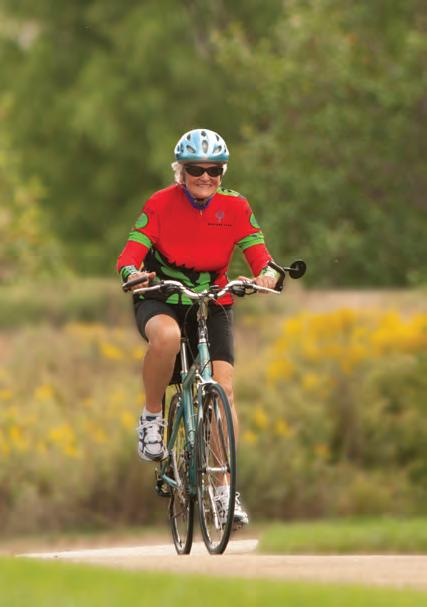
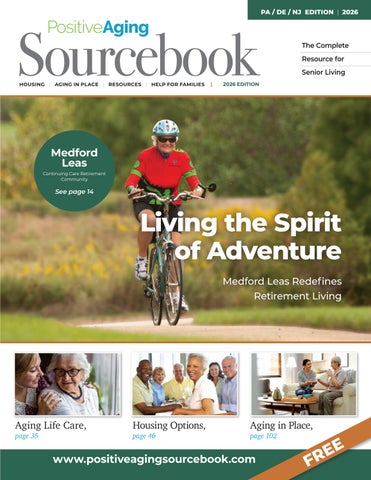
Medford Leas Redefines Retirement Living
Medford Leas stands as a testament to what retirement living can be when vision comes to life. This accredited, not-for-profit Continuing Care Retirement Community (CCRC), guided by Quaker principles, offers residents ages 55 and above far more than just a place to live, it provides a gateway to exploration, growth, and genuine community connection. | Pages 14-19
| FEATURE STORY |
An Aging Life Care Professional acts as a guide and advocate for families who are caring for older relatives or disabled adults. They can help families by providing assessments, monitoring, problem solving, and creating a plan of care including recommendations for housing or home care. | Page 35

| FEATURE STORY |

The senior living industry includes housing options that are perfect for every person and every situation. Start here to find the right option. | Page 46
| FEATURE STORY |
Whether you are committed to remaining in your long-time family home or an amenity rich apartment community, there are plenty of options for aging in place. Home care options include companion care, home healthcare or skilled nursing care. Adult day care centers can also help with aging in place. | Page 102


Pennswood Village is a welcoming and vibrant Life Plan Community where residents have lifelong opportunities to learn, thrive and grow.
There is no better way to see what Pennswood Village is all about than to experience it firsthand.
Visit Pennswood and tour our modern apartments, featuring open floor plans & exceptional amenities, on a bucolic 82 Acre Newtown, PA campus within beautiful Bucks County, PA.











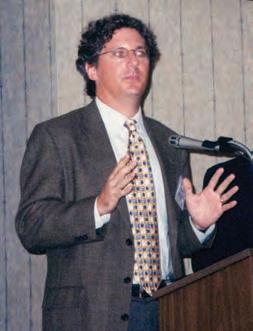
In the 35 years since I founded Guide to Retirement Living in 1990, the landscape of aging resources has grown exponentially. While we still have progress to make, the support available today is far more robust and diverse.
One significant shift is the recognition that aging doesn’t have to be a solitary journey. The emergence of professionals like Aging Life Care Managers, Move Managers, Daily Money Managers, Patient Advocates, and Mediators has revolutionized how we approach informed decision-making for ourselves and our loved ones. No matter what you need assistance with, there are qualified people available to help.
Caregiving is no longer the purview of family members struggling in isolation to provide for their aging relatives. As lifespans extended and people began marrying later, far too many individuals found themselves in the “sandwich generation”—stuck between the demands of raising children and the increasing needs of their aging parents. It is this generation of people who have led the charge for additional help with senior care needs.
“Aging in Place” has become a familiar concept, supported by innovations like the Village Movement, Continuing Care at Home, and Shepherd Centers. These initiatives create supportive environments that allow people to remain in their cherished neighborhoods. Technological advancements in home design and remodeling have further enhanced safety and engagement for those aging at home.
The home care industry has flourished, offering services ranging from companionship to skilled and palliative care. Families can now turn to home care providers whether their loved one needs live-in care or just a little help with medication management.
Perhaps the most striking development is the wealth of resources now available for those living with dementia, including innovative day care support and specialized memory care centers. With an increased understanding of how dementia progresses, providers

are able to offer customized care for patients whether they need a low level of help or constant supervision.
Housing options have expanded dramatically since my grandfather’s move to a traditional nursing home in the 1980s. Today’s choices range from expansive campuses and luxurious high-rises to intimate residential settings. More importantly, these communities now prioritize person-centered care and support, focusing on individual needs and preferences. The range of amenities has also expanded tremendously—from pickleball to theater and from aquatics programs to pottery classes.
Most recently, we have seen a movement to meet the needs of “solo agers,” older adults who have neither children nor spouses and are planning to age alone. This particular demographic has led to a growth in social options, clubs, and activities at all types of communities.
While we’ve made remarkable strides, there’s still work to be done. The positive changes over the past 35 years give us hope for an even brighter future in aging well.

STEVE GURNEY steve@proaging.com










Your life. Your plan. Your community.
At SpiriTrust Lutheran®’s six Life Plan Communities, with both in-town settings and countryside locales, you can find continued growth opportunities with Spirit360TM, a lifestyle filled with flexibility and choice, a variety of sought-after services, and no maintenance. You’ll also secure a plan for any future care needs. Come discover a place where “planning” and “living” merge and allow for living life to the fullest!
• The Village at Utz Terrace Hanover, PA | 717-646-2420 Create your dream home







• The Village at Gettysburg Gettysburg, PA | 717-334-4443
• The Village at Kelly Drive York, PA | 717-854-5010
• The Village at Luther Ridge Chambersburg, PA | 717-261-1251
• The Village at Shrewsbury Shrewsbury, PA | 717-235-5737
• The Village at Sprenkle Drive York, PA | 717-767-0579
There’s no single path for senior living that fits everyone; journeys involve detours, intersections, and opportunities to reroute. Countless resources are available to help you navigate your journey. Remember, you don’t have to take this trip alone!
Choose to remain in your home or move to an apartment or condo that is not in a senior living community.


HOME CARE (page 102)
LIFE PLAN COMMUNITY/ CONTINUING CARE RETIREMENT COMMUNITY (CCRC) (page 58)

INDEPENDENT LIVING (page 69)

ADULT DAY CARE (page 106)
SAFE & ACCESSIBLE HOME (page 42)
ASSISTED LIVING / PERSONAL CARE (page 78)
When your current home is not the desired or most appropriate option to live a purposeful lifestyle.

NURSING AND REHAB (page 92)
CARE (page 90)
MOVING AND DOWNSIZING (page 48)
You don’t need to walk the road alone. A variety of resources are available for support and decision making.
• Money Matters —Find help with managing day-to-day finances and planning ahead (page 32)
• Elder Law—Understand your legal rights and plan ahead with advance directives and wills (page 44)
• Aging Life Care Professionals—Make care decisions easier with professional help (page 35)
• Area Agencies on Aging—Find assistance from local governments (page 34)
Whether you plan out every minute or always wait until the last minute, there is still time to create a positive aging experience. Find your decision-making style and get ready to take the next—or the first—step.
Planners
Also known as “advance planners,” these older adults research alternatives and plan for retirement while they are still healthy. While everyone approaches decision making differently, planners tend to perform exhaustive research with a clear goal in mind—whether that is aging in place or moving to a retirement community.
Procrastinators
They are “not ready yet.” From their perspective, retirement is years—maybe even decades—away. Many people put off retirement planning because they are overwhelmed by the magnitude of the decisions or because they simply do not want to deal with the realities of aging.
Procrastinators fall into two distinct categories:
• Reluctant Consenters – These procrastinators are pushed by loved ones to make a change. Often, a loved one notices a decline in the person’s physical or mental health or ability to function independently.
• Wake-up Call Decision Makers – These individuals often abruptly change their living
arrangements or quickly plan for their retirement following a near crisis. Often, this event is a fall.
Scramblers
SCRAMBLERS
Quickly compare local options in our comprehensive tables
Scramblers are procrastinators without intervention. Scramblers have never thought about senior living and never discussed a plan with their loved ones. Then, one day, everything changes.






At Tel Hai, we’re about living life to its fullest!



Residents Al & Sally Weigand find peace of mind in a worry‐free, independent lifestyle that encourages them to live for today, while also planning for tomorrow. Whether it’s sailing on the Chesapeake, wintering in Punta Gorda or traversing North America in their motorhome, the Weigands thrive on enriching their life through travel… 49 countries and counting!
Choose a Life Plan Community that offers the freedom and independence to live life on your terms, plus the assurance of priority access to continuing care services if or when you need it.
It’s time to get started today! To schedule a visit, contact Marketing at (484) 796-4262 or online at telhai.org/visit

Tel Hai Retirement Community | 1200 Tel Hai Circle P.O. Box 190 | Honey Brook, PA 19344 | telhai.org




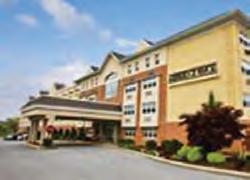





Nestled within the tranquil embrace of the 250-plus acre Barton Arboretum and Nature Preserve, Medford Leas stands as a testament to what retirement living can be when vision comes to life. This accredited, not-for-profit Continuing Care Retirement Community (CCRC), guided by Quaker principles, offers residents ages 55 and above far more than just a place to live, it provides a gateway to exploration, growth, and genuine community connection.
The moment you step onto either of Medford Leas’ two campuses in Medford and Lumberton, New Jersey, the difference is palpable. With more than five miles of paved and natural hiking, walking, and biking trails winding through bucolic meadows and woodlands, residents have unparalleled access to nature’s bounty.
“I love walking the trails through the woods and meadows, seeing and photographing the wildlife and flowers,” shares Hank Heidler, a proud member of the community’s Trails Committee, who moved to Medford Leas with his wife Pat in 2021. Pat echoes her husband’s sentiment about their garden apartment setting: “We love the surroundings here at Medford Leas. We walk out our front door into a beautiful garden. The landscaping is so gorgeous, and we are surrounded by nature.”
Holly Jamros, who moved to the community in 2020 with her

husband Joe, added; “We looked at other CCRCs in New Jersey and Delaware, but none of them compared to Medford Leas in terms of the environment, location, and the beauty of the grounds.”
Medford Leas continues to evolve with the changing needs and preferences of modern senior living. The community recently completed a major upgrade focused on accommodating the changing lifestyles of retirees. Renovations include new formal and casual dining rooms, an outdoor terrace, a game room and pub, and a new fitness center featuring a heated indoor lap pool.
These improvements reflect a deep understanding of how retirement living has transformed. The renovated dining venues now offer multiple cuisine options for residents to enjoy and professionally prepared meals by the Executive Chef, from formal dining experiences to casual graband-go choices. The latter became
Medford Leas residents can enjoy many upgraded facilities, which include multiple dining venues, a game room and pub, fitness center, and a 60-foot lap pool.
popular during the pandemic and have remained in demand.
The renovation project also includes significant wellness enhancements. The aquatic center has undergone an extensive transformation, with the heated indoor swimming pool length doubled to 60 feet to better accommodate the many residents who enjoy swimming for exercise. Complementing the enhanced pool is an upgraded fitness center with personal trainers and modern equipment, including bikes, treadmills, and balance and resistance training equipment, along with yoga and fitness studios.
Outdoor amenities have received equal attention, with an upgraded terrace featuring a fire pit surrounded by comfortable couches, and an outdoor kitchen area that extends
Continued on page 16
Continued from page 15
dining and social opportunities into the natural setting that makes Medford Leas so distinctive.
As a CCRC, also known as a Life Plan Community, with more than 50 years of experience, Medford Leas provides something invaluable: peace of mind. The community offers comprehensive healthcare for life, with most residents selecting the Life Care plan that ensures all future care needs will be met regardless of changing circumstances.
“Our children are very grateful that we’ve come here because they can come to see us, but they don’t have to worry about us; they know we’re cared for,” explains Len Shipley, who moved to Medford Leas in 2021 with his wife Betsy from Chestertown, Maryland. “Moving here to Medford Leas was our gift to them! They won’t fully understand that for a few more years, but it is a real gift that we’ve given them.”
With two full-time primary care physicians and a nurse practitioner on staff, plus a continuum of onsite care, including assisted living, memory care, rehabilitation services, and an onsite pharmacy, Medford Leas ensures residents can age in place with dignity and comprehensive support.
Diane Symcak, a Medford Leas resident since 2017, noted, “Residents are proud that Medford Leas is CARF accredited.” CARF is an

international non-profit organization that accredits the healthcare, program, and operational aspects of CCRCs. As a former nurse, inspector, and evaluator of NJ healthcare facilities, focusing on health and safety regulatory compliance, Diane had the unique perspective of witnessing Medford Leas’ high standards first-hand. Her insight into the operations and healthcare at Medford Leas was a significant contributing factor in her decision to reside here. “What has always impressed me is that Medford Leas maintains its CARF accreditation,” she reflected. “It shows their commitment to a high quality of care, as well as the care and concern that the staff has for the residents.”
Perhaps what sets Medford Leas apart most distinctly is its residentdriven culture and opportunities for socializing. The Medford Leas
At Medford Leas, the spirit of adventure is a way of life that celebrates the truth that the best years can indeed be yet to come.
Residents Association operates more than 90 committees and activity groups, creating a self-governing community where residents actively shape their daily experiences.
“The residents decide on what activities we want, and Medford Leas supports those activities and helps us make them happen,” notes Holly Jamros.
The breadth of programs and activities reflects the diverse interests and backgrounds of residents. From maintaining trails and woodlands to producing a literary journal and two newsletters (one for each campus), from organizing trips to the Philadelphia Orchestra and local theaters to birding expeditions and volunteer work, there truly is something for everyone.
“I was welcomed with open arms (when I became a new resident),” exclaimed Kathy Tarr, who joined the community in 2021. “It’s a very friendly and vibrant place, people are invited all the time to join social events, and I’m extremely involved in many activities here. There’s always something fun going on!”
Holly Jamos added, “Everyone is so welcoming. Within a week of moving in, this community felt like home. That’s because of the extremely kind residents and the staff who go out of their way to make sure you’re happy and well taken care of.”
Scott Bucheitt explained why he and his wife, Pam Perry, made Medford Leas their home in 2023, “We chose Medford Leas in part because we found a real sense of community here,” said Scott. “It had a combination of things that was entirely unique which enticed us to reside here, and we’re glad we did. While other places can duplicate one or more of these things, I don’t know of another place that can duplicate everything.”
The community’s commitment to providing comprehensive amenities is evident throughout both campuses. Residents enjoy access to a 310-seat theater, art gallery, libraries, computer labs, tennis and pickleball courts, fine arts studios, woodworking and metal shops, gift and thrift shops, and both indoor and outdoor pools.
The variety of maintenance-free housing options ensures that residents can find the perfect fit

for their lifestyle, with spacious single-level garden and ranch-style homes, as well as townhomes. All feature open floor plans, full kitchens, washers and dryers, and patios or decks that invite residents to enjoy the natural beauty that surrounds them.
What makes these amenities even more valuable is their accessibility, residents have access to all amenities on either campus, regardless of where they reside, creating a truly integrated community experience.
While Medford Leas offers a serene, nature-immersed lifestyle, residents haven’t sacrificed convenience. The campus location provides easy
The Medford Leas Residents Association operates more than 90 committees and activity groups, creating a self-governing community where residents actively shape their daily experiences.
access to the cultural richness of Philadelphia, the Jersey Shore, and New York City, while local amenities are just minutes away.
“The campus here is so beautiful and quiet, but with a short drive you have everything you ever need; restaurants, stores, parks, recreation and churches are all just minutes from here,” Len Shipley observes.
Pat Heidler takes full advantage of this proximity, enjoying live
Continued on page 19


































Medford Leas
Continued from page 17
performances on campus while also taking the complimentary bus service to venues like the Kimmel Center and Walnut Street Theater. Her husband, Hank, an avid golfer, greatly enjoys golfing at multiple courses throughout the surrounding area, as well as taking quiet strolls on campus trails along the Rancocas Creek. It was during one such stroll that a revelation came to him: “I was sitting by the canoe docks by the creek one day, and I realized that this is my new backyard — the entire (250-plus acre) campus is my backyard.”
Underlying all aspects of life at Medford Leas are the Quaker principles that have guided the community for more than five decades. These values create a welcoming and friendly atmosphere of peace, inclusivity, equality, and mutual respect that residents consistently cite as transformative.
The nondenominational community focuses on nurturing the physical, emotional, intellectual, social, and spiritual well-being of each resident, creating an environment where people can continue growing and exploring throughout their retirement years.
Perhaps the most telling endorsement of Medford Leas comes from residents who wish they

had made the move earlier. “I was reluctant to come, but I will tell you now that I should have moved here earlier,” reflected Len Shipley. “I wish I’d come to Medford Leas sooner.”
This sentiment echoes throughout the community, where residents discover that retirement living doesn’t mean slowing down, it means having the freedom, security, and community support to pursue adventure with renewed vigor.
At Medford Leas, the spirit of adventure isn’t just a marketing tagline, it’s a way of life that
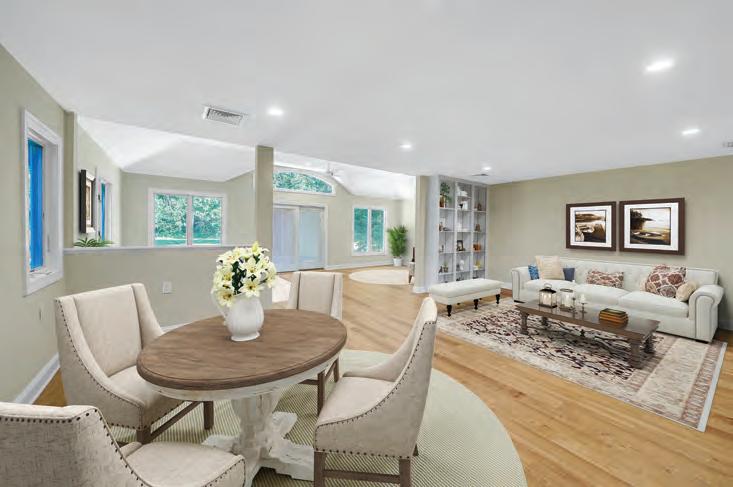
(Top) Medford Leas offers residents a wide variety of modern, spacious homes, ensuring that the changing lifestyle needs of today’s retirees are met.
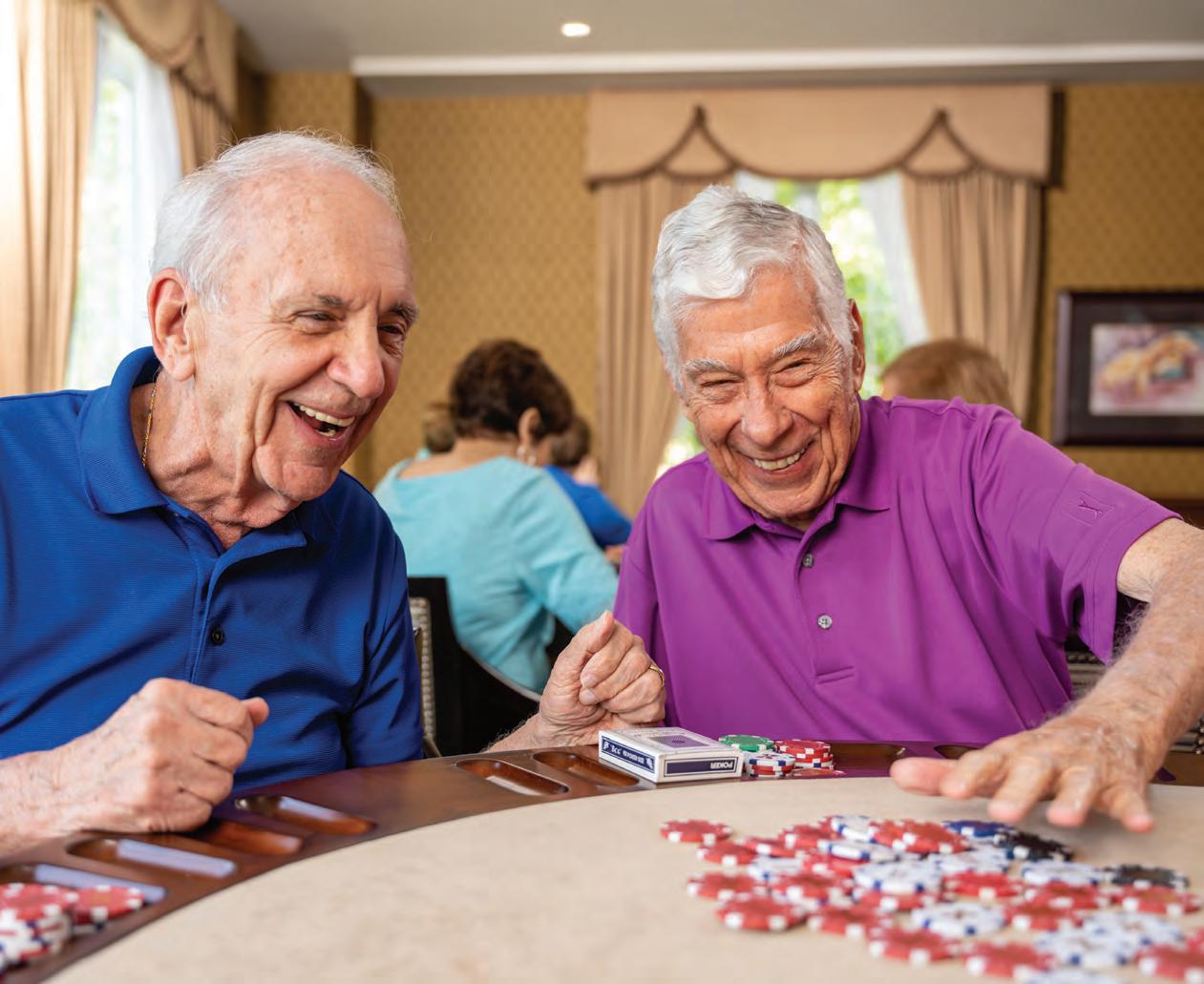
(Left) Perhaps the most telling endorsement of Medford Leas comes from residents who wish they had made the move earlier.
celebrates the truth that the best years can indeed be yet to come. With its combination of natural beauty, comprehensive amenities, innovative renovations, and genuine community spirit, Medford Leas continues to redefine what it means to age well in America.
For those ready to embrace their own spirit of adventure, the message from current residents is clear: there’s no time like the present to explore what retirement living can truly offer at Medford Leas.
For more information, visit medfordleas.org

Financially, emotionally, and from a practical perspective, choosing a continuing care retirement community (CCRC, or “life plan” community) is a big decision. We strive to provide information and create resources that can help seniors make a more informed decision about whether this particular senior living option is right for them, and if so, which CCRC may be a good fit. After all, this is a choice that will impact your quality of life, health, happiness, and wallet for years to come.
To help make the CCRC decision process a little easier and more manageable, we have simplified the sometimes-overwhelming list of deciding factors into six key areas that consumers should evaluate when considering a CCRC.
When looking at a CCRC, assess the physical campus and the various amenities provided by the community. I recommend you take several tours of the community’s residences, considering different floorplans and features, and then contemplate what is important to you.
Because one of the principal reasons people opt for a CCRC is the continuum of care services they offer, be sure you look at both the independent living residences, as well as the assisted living portion of the community. You want to have confidence that you will feel at home once you are settled into your new surroundings.
There is also an assortment of amenities that will be provided by a CCRC, though these offerings
can vary widely from community to community, from basic services to high-end conveniences. You will need to determine which are essential and which, in your opinion, are just nice-to-haves.
Some amenities to look for may include: technology that helps residents stay safe as well as keep up with the times; community gardens, walking trails, and manicured grounds; transportation services and planned excursions; multiple dining options like cafés and bistrostyle settings; a fitness center, pool, golf course, and tennis or pickleball courts; and concierge-style services and move-in coordinators.
Generally speaking, there are five common types of CCRC contracts
Continued on page 22


Continued from page 20
offered among communities: Type A (lifecare), Type B (modified), Type C (fee-for-service), Rental, and Equity/ Co-op. And when it comes to entry fees (which almost all CCRCs require), some are refundable and others are not (or are only partly refundable).
Because they aren’t apples-toapples, comparing the cost of these various types of CCRC contracts, especially in different parts of the country, can be challenging. A lifecare contract in Seattle may be substantially more than a fee-for-service contract in Cleveland. Or, suppose one CCRC’s campus and facilities are older and it has fewer amenities than another community.
Bottomline: It is critical that you have a thorough understanding of which contract is right for your particular situation, and which one you are signing.
CCRCs offer numerous attractive services and amenities for those living independently, but let’s keep sight of the primary reason for considering a CCRC: access to a continuum of care services. You want to be sure that the care services—both assisted living services as well as long-term skilled nursing care services within the onsite healthcare center—will be up to your expectations, should you one day need them.
You will want to do your due diligence research on the care provided by the CCRC, and there
are a number of resources you can and should explore in order to do this. If the CCRC’s healthcare facility is Medicare-certified (as opposed to private pay only), you can check out their Center for Medicare and Medicaid Services (CMS) rating. You also can reach out to your state’s long-term care ombudsman program to see if the CCRC has had any complaints filed.
It’s wise to do some shoe-leather investigating yourself as well by

visiting the healthcare center and observing how residents are being cared for, if the facilities appear well-maintained, and if the staff appears to be content. Get some first-hand reviews from the CCRC’s residents to see what their impressions have been of the care they and their fellow residents have received.
A CCRC is home to its residents, but it is also a business, and like most businesses, CCRCs are usually only as good as their administrators. You want to ensure the CCRC you are considering is well-managed and in good financial standing.
The financial viability of the community is important. Select a community that will be able to provide residents the quality of care and services that they
expect and have paid for into the future. Consider consulting with an accountant or financial professional who is well-versed in CCRC contracts and finances to ensure you will be getting what you expect and have paid for.
It’s also wise to understand the leadership structure of the community; get a feel for the expertise and experience brought by members of the board, and ask if residents are involved in a leadership capacity.
If you are considering a move to a CCRC, it’s crucial that you understand exactly how it will impact your personal finances in the long-term. Since cost and contract terms vary dramatically, it can be challenging to determine on your own if you will be able to afford the cost of a CCRC over the long-haul, particularly given that different CCRCs offer different types of residency contracts.
If you are comparing multiple communities, you want to be sure you are doing a true comparison of what each will cost, not just today but also in the future, so you can make an informed decision about which one is right for you.
The concept of “lifestyle” relates to the factors that will impact your daily living experience within the community. It makes up the answer to the question, “Will I be happy and comfortable living here?” The CCRC you choose should foster your lifestyle preferences so that you can live the life you want to live.
Continued on page 63




At Living Branches, spend more time doing what you like – with people you love.
There’s something special about living steps away from your friends, surrounded by endless amenities and beautifully kept spaces.


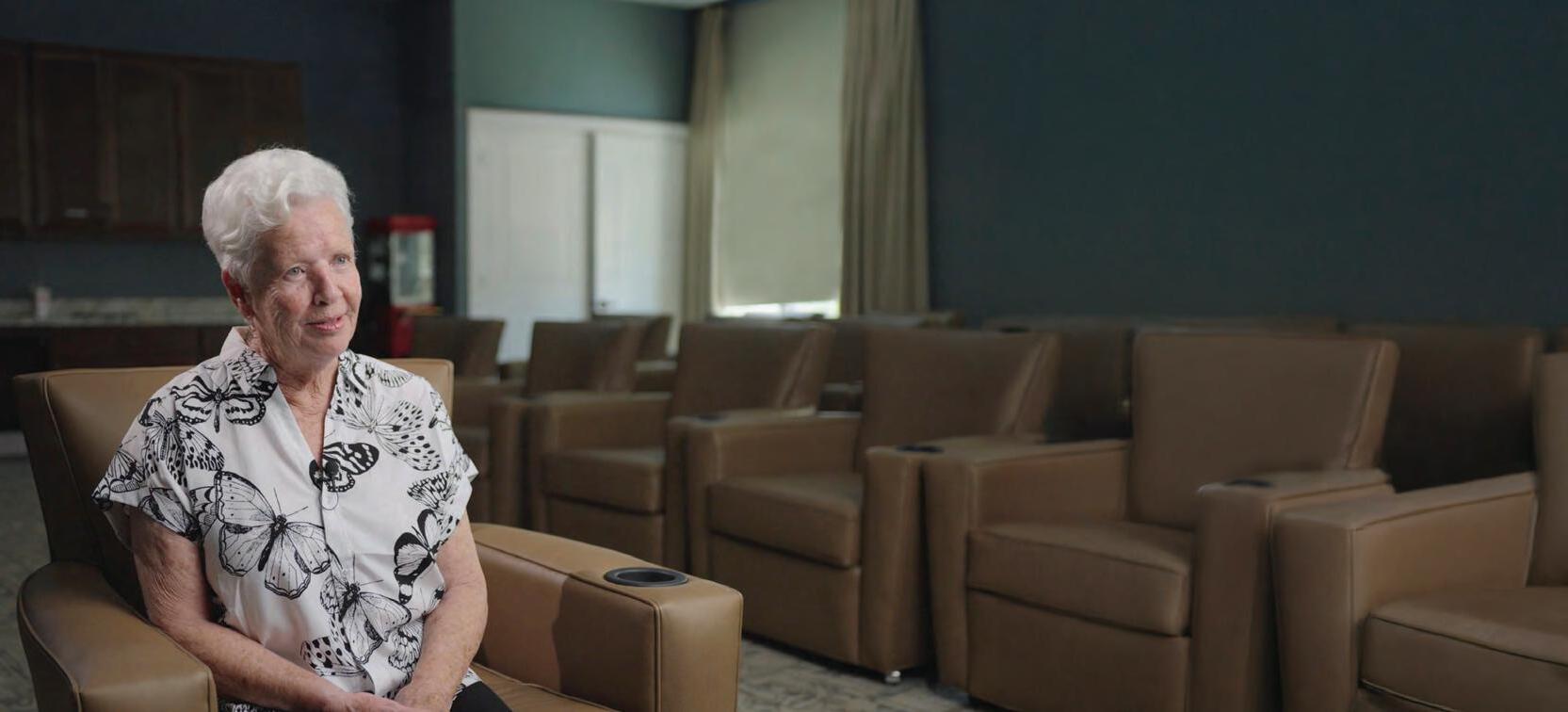
“I’ve made excellent friends here—all we do is laugh. I feel comfortable, needed and loved.”
— Harmony Resident
Independent Living • Memory Care • Assisted Living / Personal Care
Visit a Harmony Location Near You Today!
Harmony Communities in Pennsylvania & Delaware:
HarmonyAtDiamondRidge.com (412) 679-1093 3301 Market Place Blvd Moon Township, PA
HarmonyAtWestShore.com (717) 403-1016 1910 Technology Parkway Mechanicsburg, PA
HarmonyAtHartsRun.com (412) 455-6454 3450 Harts Run Road Glenshaw, PA
HarmonyAtGlasgow.com (302) 722-6157 2530 Old County Road Newark DE
HarmonyAtHershey.com (717) 220-3634 75 East Canal Street Hershey, PA
HarmonyatStateCollege.com (814) 325-9774 121 Havershire Boulevard State College, PA
HarmonyAtKent.com (302) 505-5498 1435 E Lebanon Road Dover, DE
HarmonyAtHockessin.com (302) 504-8007 621 McGovern Rd Hockessin, DE

Solo aging is simply aging on your own. For most people, this means aging without a spouse, adult children, or other close relatives. Whether they are widowed, divorced, estranged, or never had a spouse or children, many solo agers find themselves in their 70s, 80s, and beyond without any immediate family members.
Long misunderstood and misrepresented, solo aging is emerging as a desirable and increasingly popular way to age.
Anyone and everyone who is over age 65 and living independently. Solo agers are making decisions on their own as they age. It is important to remember that solo aging is not just for individuals who have always been single. For instance, an older adult may become a solo ager when their spouse predeceases them. Even individuals with kids may become solo agers if their children live far away or if they are unable to be involved in aging decisions or caregiving.
Joy Loverde is a senior living expert and industry veteran, as well as the author of The Complete Eldercare Planner and Who Will Take Care of Me When I’m Old? She joined a recent Positive Aging Sourcebook Digital Discussion on solo aging. In the last decade, Joy’s focus has shifted from helping individuals care for their elderly loved ones to helping them plan for their own future.
When should you start planning for solo aging?
Yesterday. Or today. Or as soon as possible. Planning for solo aging is

much easier and far less stressful if it is done BEFORE a crisis.
Solo agers need to consider how they want to live and receive care as they get older. They should also give serious thought to whether they want to “age in place” or move to a senior living community of some type. Aging in place means that you will be living in your current neighborhood or live in another community that is not age restricted.
How do you maintain and build connections and friendships as you age?
Joy explained that there are community organizations, events and clubs in every town and city— many designed for older adults.
With no shortage of places to meet people, you have to focus on not just meeting volumes of people, but on being a good friend and forming long-term, deep commitments. Friendships take time and perseverance, and there must be a balance of give and take. As a start, Joy recommends seeking out county and city groups for older adults run through Area Agencies on Aging. She also suggests a quick google search of “free activities” and your city or town’s name.
What do you need to be a successful solo ager?
While the specific answer varies widely according to personal desires, the short answer is quite simple: a clear, actionable plan.
Solo Aging has many facets including:
• Location – Decide where you will age. Do you plan to age in place in your current private residence or move to a different location or senior living community?
• Accessibility – If you are aging in place, does your current residence need updates or modifications to accommodate your needs?
• Finances – Do you have the financial means to see your plan through? Have you calculated your projected expenses?
• Legal – Both financial and medical planning may require a legal professional. You should at the very least have a power of attorney appointed to oversee your decisions and estate if you can longer do it.
• Medical – Do you have any long-term health conditions you need to plan for? Do you have a strong family history of a certain condition? Have you appointed someone (friend, family, or attorney) as a medical power of attorney?
• Emotional – Do you have a social safety net? What can you do to create one? Do you have relationships with your neighbors or friends close by?
For more information on solo aging, download the digital discussion at positiveagingsourcebook.com. You can also find Joy Loverde’s books at www.elderindustry.com











Immaculate Mary Center For Rehabilitation & Healthcare 2990 Holme Avenue Philadelphia, PA 19136 215-335-2100 IMrehab.org PHILADELPHIA
St. Francis Center For Rehabilitation & Healthcare 1412 Lansdowne Avenue Darby, PA 19023 484-493-7111 SFrehab.org
St. Martha Center For Rehabilitation & Healthcare 470 Manor Avenue Downingtown, PA 19335
610-873-8490
STMrehab.org
St. Martha Villa For Independent & Retirement Living 490 Manor Avenue Downingtown, PA 19335 610-873-5300
STMrehab.org
St. Mary Center For Rehabilitation & Healthcare 701 Lansdale Avenue Lansdale, PA 19446
215-368-0900
SMMrehab.org

St. Mary Villa For Independent & Retirement Living 701 Lansdale Avenue Lansdale, PA 19446 215-368-0900
SMMrehab.org
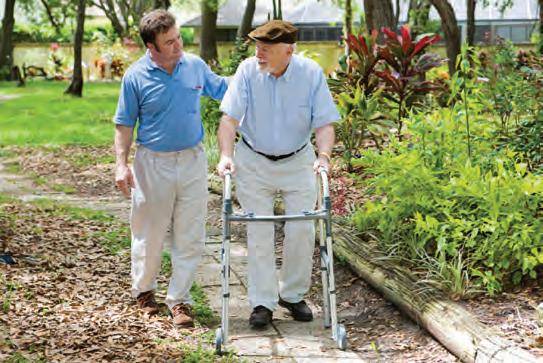
According to the Centers for Medicare and Medicaid Services (CMS), dementia affected more than 6.7 million Americans in 2023. That number is projected to soar to 14 million impacted Americans by 2060. Caring for individuals with dementia often falls to unpaid family caregivers who face enormous obstacles managing the behavioral and psychological symptoms of dementia.
Dementia patients may also have multiple chronic conditions which makes caring for them even more complicated. Given the need for care and supervision around the clock, it is not surprising that dementia patient caregivers are often unable to provide long-term care in the family home.
The Guiding an Improved Dementia Experience (GUIDE) Model, launched by the Centers for Medicare & Medicaid Services (CMS) on July 1, 2024, represents a significant step forward in dementia care. This eight-year voluntary nationwide program aims to enhance the quality of life for people with dementia and reduce the strain on their unpaid caregivers.
GUIDE focuses on comprehensive, coordinated dementia care through a standardized approach. The model provides Medicare payments for a package of services including care coordination, care management, caregiver education and support, and respite services. This allows beneficiaries to remain

The GUIDE program focuses on comprehensive, coordinated dementia care through a standardized approach.
in their homes and communities longer, potentially avoiding premature institutionalization.
Key components of the GUIDE program include:
• Care Coordination: An interdisciplinary team creates and maintains a person-centered care plan, coordinating services with primary care providers and specialists. This helps ensure that family caregivers are not dealing with a dementia diagnosis in isolation and trying to manage care without knowledge of the disease or long-term needs.
• 24/7 Support: Beneficiaries and caregivers have round-the-clock access to care team members or navigators. Challenges will arise when caring for someone with dementia. This support gives caregivers a place to turn for advice when they are facing
specific challenges or feeling worn down.
• Caregiver Support: The program offers training, education, and support for unpaid caregivers, recognizing their crucial role in dementia care. Caregivers learn specific skills for avoiding conflict, maintaining patience, and dealing with hyper fixations (like leaving the home or going to a specific place).
• Respite Services: GUIDE provides payments for respite services, allowing caregivers temporary breaks from their responsibilities. This can help caregivers avoid dangerous burnout. These small breaks also give caregivers the time they need to take care of their own doctor appointments and other errands.
• Medication Management: Regular medication reviews and adherence support are provided. Medication management can be one of the biggest challenges preventing individuals from remaining in the family home. This service ensures that medications are reviewed and schedules are followed.
To be eligible for GUIDE, beneficiaries must have a diagnosis of dementia, be enrolled in Medicare Parts A and B, and not be receiving Medicare hospice benefits or living in a long-term care facility.
The GUIDE Model sets a new standard for dementia care by addressing key drivers of
Continued on page 83
Few things are guaranteed in the game of life. Healthcare costs just might be one of them. At some point, most people will face ongoing and potentially large healthcare costs. The odds increase dramatically with age. Now is the time to prepare for healthcare costs as you age.
Do you have a plan to get to the store and doctor appointments when you stop driving?
Have you considered having services come to your home when you stop driving?
Do you know how your health conditions will progress with age?
Have you thought about staying in your home versus moving elsewhere as you age?
Do you know the senior services support organizations in your community?
Do you have a support system in place if you are caring for a loved one with Alzheimer’s Disease or another form of dementia?
Do you have social security and if so, do you know your monthly income?
Do you have a pension and if so, do you know your benefit income?
Do you understand social security and pension survivor benefits?
Do you know the direct and indirect costs of your health insurance?
Are you saving to cover for emergency healthcare costs?
Do you understand what
Medicare will and will not pay for?

Do you understand the three qualification areas to apply for Medicaid financial assistance?
Do you know how your monthly income will change if one spouse dies?
Do you know the kinds of expenses that could be considered deductible when faced with a chronic illness?
Have you consulted with your tax preparer to optimize deductions relating to increased healthcare costs for this year?
Do you know how the SECURE Act affects your retirement?
Do you work with a financial professional?
Do you know when to change your investment strategy (cash, CDs, bonds, stocks, etc.) based on an increase in healthcare costs?
Have you considered if it still makes sense to have accounts at multiple financial institutions versus simplifying or consolidating?
Can family members access and understand your accounts to help when needed?
Do you understand what your LTCI policy will and will not pay for?
Do you know if your policy has a maximum payout?
Do you know your options if asked to pay a higher premium?
Do you know the criteria for submitting a claim?
Are you aware of the actual cost of care compared to your LTCI reimbursement amount?
Do you plan to stay in the same area, move closer to family, or move to warmer weather?
If you want to age in place in your home, have you had your home assessed by a healthcare professional for livability?
If you are planning to work with an agency to provide help in the home, have you researched the hourly/daily fee?
If you are considering moving to a retirement community, do you have an idea of the services offered and pricing models?
Are you or your loved one in need of 24-hour care?
Are you familiar with all of the senior housing options?
What do you want your retirement to look like? At Senior Supportive Services, Inc., business for over 30 years, we take the time to address what is typically beyond the services. Your lifestyle objectives should be an integral part of your Retirement Planning.
We specialize in helping you decide whether "To Move or Not to Move?". We will which community best fits your Lifestyle and Financial Resources. We will assist choose to ''Age in Place".
Our Retirement Specialists review your assets, investments, health benefits, long term tax information and budget, as well as other areas of importance to you and your family. personalized plan which will fund your retirement goals. A sound retirement plan guaranteed income that you can never outlive, will result in your complete peace of
Together, our team will deliver a program that is a powerful collaboration resulting financially secure retirement strategy in a comfortable environment in order for well-deserved New Beginning!

Call the Eldercare Locator: 1-800-677-1116
The National Aging Network, headed by the Administration on Aging, includes 56 state Agencies on Aging, 622 Area Agencies on Aging, and more than 260 Native American aging programs. All individuals age 60 and older are eligible for services through this network. Most services are delivered on the local level by Area Agencies on Aging (AAAs).
AAAs are public or private nonprofit agencies designated by a state to address the needs and concerns of all older persons at
Visit: eldercare.gov
the regional and local levels. AAAs operate in specific service areas that may include a city, county, or multi-county districts. AAA is a general term—names of local AAAs may vary.
AAAs coordinate and offer services that help older adults remain in their homes or stay engaged in the community. Services vary widely, but a list of typical offerings is included below. By making a range of supports available, AAAs make it possible for older individuals to choose the
Email: eldercarelocator@USAging.org
services and living arrangements that suit them best.
To help individuals find services, the federal government established the Eldercare Locator. The Eldercare Locator is a nationwide service that connects older Americans and their caregivers with trustworthy local support resources.
Older adults and caregivers should tap into these federal, state and local resources to get the help they need to age well or to care for an aging loved one.
• Adult Day Care is available for individuals who need daytime supervision.
• Case Management Services are conducted by professionals who can assess needs and arrange for services to encourage continued independence.
• Elder Abuse Prevention Programs provide investigative services and intervention in cases of abuse.
• Financial Assistance and benefit counseling is conducted by professionals.
• Home Health Services provide needed care in the home environment.
• Home Repair Programs help older adults complete needed repairs to avoid major problems.
• Home Modification Programs provide renovations to make the home safer and more
To find services near you, visit n4a.org
secure for individuals who choose to age in place.
• Legal Assistance is available for individuals aged 60 and older with legal problems involving government benefits, tenant rights and consumer issues.
• Nutrition Services Programs provide home delivered meals to homebound individuals and congregate meals in specified locations in the community.
• Respite Care provides caregivers with a much needed break from the constant care and supervision of their elderly loved one.
• Senior Centers offer educational, recreational and social activities for older adults.
• Transportation Programs can provide door-todoor transit for individuals who do not have private transportation and/or cannot use public transportation.
Aging Life Care / geriatric care management is a holistic, clientcentered approach to caring for older adults or others facing ongoing health challenges.
An Aging Life Care Professional™, also known as a geriatric care manager, is a health and human services specialist who acts as a guide and advocate for families who are caring for older relatives or disabled adults. The Aging Life Care Professional is educated and experienced in any of several fields related to aging life care / care management, including, but not limited to gerontology, nursing, social work, psychology or occupational therapy.
The Aging Life Care Professional assists clients in attaining their maximum functional potential. The individual’s independence


is encouraged, while safety and security concerns are also addressed. Aging Life Care Professionals have extensive knowledge about the costs, quality and availability of resources in their communities.
Aging Life Care Professionals are members of the Aging Life Care Association™ (ALCA) and differ
from Patient Advocates, Senior Advisors, Senior Navigators and Elder Advocates. ALCA members must meet the stringent education, experience and certification requirements of the organization, and all members are required to adhere to a strict code of ethics and standards of practice.
Continued on page 36
Celebrating 15 YEARS in business!

www.brandywineeldercare.com/about/what-we-do | Work



Continued from page 35
What Services do Aging Life Care Professionals Provide?
Aging Life Care Professionals provide guidance to help families ensure quality care and an optimal life for those they love through: A ssessment and monitoring
• Planning and problem-solving
• Education and advocacy
• Family caregiver coaching
• Long-distance caregiving
Aging Life Care Professionals are engaged to assist in a variety of areas, such as:
• Housing – helping families evaluate and select the
appropriate level of housing or residential options.
• Home care services –determining the types of services that are right for a client and assisting the family to engage and monitor those services.
• Medical management –attending doctor appointments; facilitating communication between doctor, client and family; and if appropriate, monitoring client’s adherence to medical orders and instructions.
• Communication – keeping family members and professionals informed as to the well-being and changing needs of the client.
• Social activities – providing opportunities for the client to engage in social, recreational or cultural activities that enrich quality of life.
• Legal – referring to or consulting with an elder law attorney; providing expert opinions for courts in determining level of care. Financial – may include reviewing or overseeing bill paying or consulting with an accountant or client’s Power of Attorney.
• Entitlements – providing information on Federal and state entitlements; connecting families to local programs.
• Safety and security –monitoring the client at home; recommending technologies to add to security or safety; observing changes and potential risks of exploitation or abuse.
• Long-distance care –coordinating the care of a
loved one for families that live at a distance, including crisis
A care plan tailored for each individual’s circumstances is prepared after a comprehensive assessment.
How do you know that you need an Aging Life Care Professional?
You may need an Aging Life Care Professional if:
• The person you are caring for has limited or no family support.
Your family has just become involved with helping the individual and needs direction about available services.
• The person you are caring for has multiple medical or psychological issues.
• The person you are caring for is unable to live safely in his/her current environment.
Your family is either “burned out” or confused about care solutions.
• Your family has limited time and/or expertise in dealing with your loved ones’ chronic care needs.
The person you are caring for is confused about his/her own financial and/or legal situation.
• Your family is at odds regarding care decisions.
Your family needs education and/or direction in dealing with behaviors associated with dementia.
• You live at a distance from your loved one.
Thank you to the Aging Life Care Association™ for permission to share this information. Learn more about Aging Life Care™ at aginglifecare.org

By Heidi L. Garvis, BS, CMC® (Certified Care Manager), Aging Life Care
Here’s what an Aging Life Care™ Professional (aka Geriatric Care Manager) did for you today:
1. Listened. She (or he) listened to your concerns and began to assess your short-term and longterm needs with regard to a parent.
2. A sked questions. She asked about important aspects of your life and the life of an aging loved one. How has quality of life diminished? What worries you the most? What happens when you talk about your concerns to your loved one? What motivates him/her? Who has Power of Attorney? What is the medical history? What is the financial picture?
3. Created a mutually agreeable plan of care. The Aging Life Care Professional assessed the risks and needs and created a dynamic plan of care to solve
problems and monitor outcomes. She helped you select a home care senior living residence.
4. Gathered information and created an emergency file. She put all the pieces of information together (doctors, medications, medical history, do not resuscitate (DNR) order, family contacts, legal contacts and other documents) and told you that she would be there for you and your loved one 24/7 when they go to the doctor or hospital. She was there when you went on vacation, so you could enjoy a break.
5. Became the neutral party. She helped you and your loved one meet common goals. And most importantly, she helped you be the daughter or son, instead of a harried, potentially shorttempered caregiver.
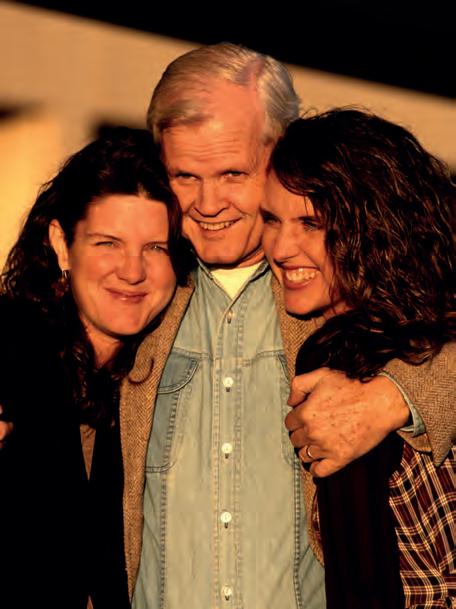
“The
help you have given us can only be described as priceless. If I have any regret, it is in not having made the connection earlier.”
–W.D.R. JR., CLIENT’S SON
Our highly qualified and trained professionals can assist clients in working with their special needs trusts by monitoring health care, providing wage assessment proposals, assuring quality of life, obtaining relevant entitlements, and supporting client compliance.
We are grateful to the Positive Aging Sourcebook for continuing to be a champion for older adults by connecting them to the resources and services they need to thrive as they age. As Aging Life Care Professionals, we provide seniors with a personalized tailored plan that integrates resources and other pertinent professionals into your care plan team. Integrated planning relies upon professionals who understand the health care system and you.
Healthcare and senior care can be confusing, overwhelming, and ambiguous. Our organization of health and human service professionals will provide you with advocacy, guidance, and resources by integrating these services into a meaningful plan designed to optimize your health and wellbeing.
Because many of us have diverse backgrounds, we work
in concert with one another to address your concerns across several health care fields. We adhere to a high code of ethics and commitment to the highest standards of care for our clients. We answer only to our clients’ best interest for their best possible quality of life. As the President-Elect of the Mid-Atlantic Chapter, I am proud to serve an organization that has upheld the gold standard of Care Management since 1986. I look forward to the future and to serving the Mid-Atlantic chapter and my community!. Visit us at midatlanticalca.org. We look forward to working with you.

Rebecca Roskey-Brunner BSN, RN, CEN, CMC President Aging Life Care™ Association Mid-Atlantic Chapter
Catherine
Rhiann Condon
Aimee Lynn Curry
DosSantos
Dana D’Amico
Kith Elder Care (215) 391-0038 kithcare.com
NAME
PENNSYLVANIA (Continued)
Janice Duffin CareDirect (610) 649-2078 caredirect.net
Elizabeth Dunleavy Kith Elder Care, LLC (215) 880-3541 kithcare.com
Laura Enslen Senior Management Services (717) 235-3008 smseldercare.com PRO
Helene Feldman Helene Feldman Inc./Elder Care Mgmt. (215) 483-1231 feldmancare.com AVP
Michael Gallagher Geriatric Care Manager (814) 490-2760 AVP
Kimberley Gately 35 Brandywine Elder Care Mgmt, LLC (888) 721-1975 BrandywineECM.com
Lisa Grillo Catholic Social Services (610) 284-0497
Aimee Gustitis
Good Caregiver, LLC (610) 724-8950 goodcaregiver.net
Patricia Hanson IKOR of Western PA (412) 275-0345 ikorofwpa.com
Page Hinkle 35 Brandywine Elder Care Mgmt, LLC (888) 721-1975 BrandywineECM.com
Sandra Katz Sandra Katz (610) 664-0565 sckphilly522@gmail.com
Erin Kershaw
Deborah Klock DLK Managed Care Solutions, Inc. (610) 631-5689
Kiralie Konde
Crossroads, LLC (267) 546-7551 generationcrossroads.com
Louise Kostick Senior Solutions (610) 258-0700 senior-solutions.com
Gary Kozick Gary Kozick Elder Care Solutions, LLC (215) 510-8901 garykozick.com
Elizabeth Kramer
265-4300 completecarestrategies.com
Joan Krechmer Points of Life Services LLC (717) 880-9420 jkkrechmer@gmail.com AVP
Theresa Kuhar IKOR of Eastern Pennsylvania (267) 530-1709 ikorepa.com AVP
Mary Catherine Lain 35 Brandywine Elder Care Mgmt, LLC (888) 721-1975 BrandywineECM.com AVP
C. Barbara LeMunyon Elder Care Advocacy Services, Inc. (215) 357-7200 ecasinc.org AVP
Wendy Liebling Liebling Elder Care (610) 733-1473 AVP
Barbara Lyon BAL Eldercare Management, LLC (623) 824-9799 PRO
Carole Mancini Newman Elder Law (215) 534-3612 newmanelderlaw.com PRO
Lynne Mancini 38 Complete Care Strategies (610) 389-8841 completecarestrategies.com PRO
Peggy McFarland Senior Management Services (800) 253-9236 smseldercare.com PRO
Marian Mullahy Chestnut Hill Hospital, S.B.H.U. (610) 585-2709 chestnuthill.towerhealth.org AVP
Sandy Myers 35 Brandywine Elder Care Mgmt, LLC (888) 721-1975
Kristy Neff
Sonali (Soni) Pahade
Jami Pazuchanics
Teekemia Reynolds
C. Denise Rissell
Care Advocates (610) 856-1050 patientcareadvocates.com
Katherine Rosenblatt (518) 366-6424 Krosenblatt218@gmail.com
Rebecca Roskey-Brunner 38 Complete Care Strategies (610) 265-4300
Jodi Rush-Goldman 35 Brandywine Elder Care Mgmt, LLC (888) 721-1975 BrandywineECM.com
Saniquah Salaam–Hendrick 37 The Option Group (215) 896-6756 theoptiongroup.net
Mindy Shaw (724) 787-0698
Jayma Sitton Whole Senior Care, LLC (267) 997-8866 wholeseniorcare.com
Cynthia Smith A New Beginning Counseling Service, LLC (724) 504-1281
Janelle Solomon Elevation Home Care Agency (267) 281-7755 elevationhca.com
Deborah Soltis Soltis Senior Care Connections (814) 355-9434 soltisseniorcare.com
Tammy Steier Avail Care Managers, LLC (717) 552-1883 availcare.com
Mary Stroman 38 Complete Care Strategies (610) 265-4300 completecarestrategies.com
Nicole Stroman Waverly Connect (215) 837-1404 WaverlyConnect.com
Debbie Thomas SAGE Care Advisors (610) 331-0036 sagecareadvisors.com
Jill Vinicur 38 Complete Care Strategies (610) 265-4300 completecarestrategies.com
Susan Weiss-Cedillos 36 AgeWise Family Services (215) 659-2111 agewisefamilyservices.com
Marian Worthington Worthington Home Care Agency, LLC (610) 489-4663 worthingtonhomecare.com
Use the checklist to interview professionals:
What is your area of expertise?
What certifications or licenses do you have?
What are your professional credentials?
What special training have you received?
Do you work with other professionals to provide referrals if needed?
Are you available for emergencies?
Can you provide me with references?
How long have you been working with senior clients?
Can you provide examples of other clients with situations similar to mine?
What resources will it take to handle this situation?
Are there any alternative courses of action?
What are the advantages and disadvantages of each alternative?
Who will be working with you?
How many professionals may be involved? What about off-hours and backup?
What are your fees? (These should be provided to the consumer/responsible party in writing prior to services starting.)
How are fees computed?
How are travel time and mileage handled?
How are services terminated?
How often do you bill?
Are there additional out-of-pocket fees?

“We’ve lived, laughed and loved in our home for more than 30 years. I never thought our own bathroom would become the source of such worry. As Bill got older, he had trouble lifting his legs over the sides of the tub, and I was afraid he would fall and hurt himself. That’s when I called P.J. Fitzpatrick Bath Solutions. Their tub to shower conversion along with their safety package, that places handrails and even a seat in the shower, took the worry out of our day. We’re not worried anymore about not being able to stay in the home where we raised our family. Thanks PJ!”

Kitchens can be designed to accommodate varying abilities.

— PJ Fitzpatrick Client
Railings with no gaps enhance safety.

The optimal home would have all living areas on one level with no stairs. However, most homes in the region feature living areas on multiple levels, which makes the stairway a critical element of design. Some solutions include:
• Adequate grip rails on both sides that extend beyond the landings
• Lighting on and around the stairway
• Contrasting colors to provide visual cues
• Floor treads
• Chair lifts, platform lifts, elevators
Well designed kitchens can accommodate the different heights and abilities of family members or visitors to the home. Some designs and products to consider include:
• Varying counter heights
• Elevated dishwasher
• Roll-out & pull-down shelves
• Swiveling cabinet doors with lazy Susan style shelving
• Rolling carts
• Dark and light colors for visual contrast
• Pull-out countertops below ovens
• Side-by-side refrigerator
• Knee space underneath cook tops and sinks
• Front control touchpad appliances
• Heat-proof surfaces
• Eliminating sharp corners
• Additional lighting including under-cabinet lighting
• Ergonomic utensils & products














Legal issues that affect people as they age and people with special needs are growing in number.
Elder and Special Needs Law encompasses many different fields of law. Some of these include:
• Preservation/transfer of assets seeking to avoid spousal impoverishment when one spouse enters a nursing home
• Medicaid
• Medicare claims and appeals
• Social Security and disability claims and appeals
• Supplemental and long-term health insurance issues
• Tax planning
• Disability planning, including use of durable powers of attorney, living trusts, “living wills” for financial management and health care decisions, and other means of delegating management and decisionmaking to another in case of incompetency or incapacity
• Access to health care in a managed care environment
• Conservatorships and guardianships
• Estate planning, including planning of one’s estate during life and its disposition on death through the use of trusts, wills and other planning documents
How long has the attorney been in practice?
Does his or her practice emphasize a particular area of law?
How long has he or she been in this field?
What percentage of his or her practice is devoted to Elder or Special Needs Law?
Is there a fee for the first consultation, and if so how much is it?
Given the nature of your problem, what information should you bring with you to the initial consultation?
What will it take to resolve it?
Are there any alternate courses of action?
What are the advantages and disadvantages of each possibility?
How many attorneys are in the office? Who will handle the case?
Source: National Academy of Elder Law Attorneys
• Probate and administration of estates
• Administration and management of trusts
• Long-term care placements in nursing and life-care communities
• Nursing home issues, including questions of patients’ rights and nursing home quality
• Elder abuse and fraud recovery cases
• Housing issues, including discrimination and home equity conversions
• Age discrimination in employment
• Retirement, including public and private retirement benefits, survivor benefits and pension benefits
• Health law
• Mental health law.
Source: www.naela.org
Has that attorney handled matters of this kind in the past?
If a trial may be involved, does the attorney do trial work? If not, who does the trial work? If so, how many trials has he or she handled?
Is that attorney a member of the local bar association, a health advocacy committee, or trust and estates committee?
What is the estimate of the cost to resolve your problem and how long will it take?
Do you bill weekly, monthly, or upon completion of work?
Is there a flat fee for this service?
Will there be any out-of-pocket expenses (charges for copies, postage, messenger fees, court fees, deposition fees and other such costs)?
Do you require a retainer?
As the cost of long-term care continues to climb, many families face a daunting question: will the nursing home take my house?
According to Genworth’s 2024 Cost of Care Survey, the median monthly cost of nursing home care in the Greater Philadelphia Area reached $13,277 for a semi-private room and $15,193 for a private room—totaling $159,324 to $182,316 annually1 These staggering figures can be financially devastating, especially for individuals who have worked hard to build and maintain their homes.
Nursing home care is typically paid in one of three ways: out-of-pocket, through long-term care insurance, or by qualifying for Medicaid. A common misconception is that you must sell your house to qualify for Medicaid or that the nursing home will “take” your house. While the nursing home doesn’t literally seize your property, the fear of losing your home to long-term care costs is valid—especially without proper planning.



| By Rebecca A. Hobbs, Esquire, CELA

Fortunately, Medicaid rules offer protections. In many cases, your home is not considered a countable resource when determining Medicaid eligibility. For example, if you are married and your spouse continues to reside in the home, its value is excluded. However, this protection can be lost if the house is sold or if your spouse moves out.
Misinformation abounds when it comes to protecting your home. Gifting your house to your children may seem like a solution, but it often creates more problems. Medicaid imposes a five-year “look-back”


period: any transfer of assets for less than fair market value during that time can trigger a penalty period of ineligibility. While certain exemptions exist—such as transfers to a disabled child or a caregiver child—these must be carefully evaluated.
Beyond Medicaid penalties, gifting your home can lead to adverse tax consequences. Specifically, your children may lose the stepped-up basis that would otherwise reduce capital gains taxes upon your death. Additionally, once transferred, your home becomes vulnerable to your children’s life circumstances, including divorce, lawsuits, debts, or financial mismanagement.
The good news? With thoughtful planning and guidance from an experienced elder law attorney, you can protect your home and your legacy. Medicaid eligibility and asset protection are complex, but the right strategies can help you preserve what matters most.
1. www.carescout.com/cost-of-care
Accommodating a variety of needs, tastes and budgets
The senior living industry can seem overwhelming, but the important thing to keep in mind is that there is a housing option perfect for every person and every situation. Start here to find it.
What housing options are available and how can they help me?
Life plan communities are also known as continuing care retirement communities. These communities generally feature care options ranging from independent living to long-term nursing care on one campus. Residents can transfer to higher levels of care as needed.
For older adults who want to leave the burdens of home maintenance behind, independent living communities may be the ideal option. In addition to property upkeep, these communities also generally offer 24-hour security and activities to keep residents engaged. Most independent living communities are rental properties, although some do offer the option for residents to purchase units.
Individuals who need assistance with the activities of daily living may want to consider an assisted living community. In addition to daily assistance, these communities also offer activity programs to fit the interests of every resident.
Assisted living communities are an important option for older adults who need some level of help on a daily basis. All of these communities offer standard

services including daily meals; supervision; security; and help with the activities of daily living, or ADLs. ADLs can include assistance with bathing, dressing and toileting. Some communities also offer help with medication management; transportation services; and coordination of medical, health and dental treatments.
Finally, whether for a short-term rehabilitation or a long-term medical
centers serve as permanent residences for individuals who are too sick or frail to live at home. They are also ideal for short-term stays for individuals who are recovering after a surgery or an illness.
How should I find a housing option?
Use our research. Sourcebook features detailed articles, checklists, featured listings and comprehensive tables in each of our specific housing sections. Use these resources to begin your search for a community that is right for you and your family.
The questions below will help determine if a retirement living community may be the right choice.
• Do you feel isolated at home?
• Do you find it difficult to get around your neighborhood?
• Do you lack relationships with your neighbors?
• Do you have difficulty driving?
• Do you wish that someone else would drive you to your errands and appointments?
• Do you frequently go for weeks without seeing friends?
• Do you wish you had more of a social life?
• Do you miss participating in favorite activities?
• Do you find it difficult to run errands alone?
• Do you have a difficult time keeping up with home maintenance?
• Do you find it challenging to clean your home?
• Do you feel unsafe in your home or your neighborhood?
• Do you find it hard to climb

the stairs into or inside your home?
If you answered “yes” to most of the above questions, you may want to consider retirement living. However, you will also want to consider your current and future health care needs before making a final decision on the type of retirement community you should select. For instance, if you have a chronic health condition, you may want to consider an Assisted Living community, or a community that offers both Independent Living and higher levels of care on the same campus.


Moving can be a daunting task—no matter what your age—but it can be even more overwhelming for older adults who may be leaving a home they have lived in for decades. Luckily, the enormous growth in the senior population has led to the development of a wide variety of professional moving and real estate services designed specifically to help older adults and their families.
Senior Move Managers®, Senior Real Estate Specialists®, and Certified Senior Housing Professionals are just a few of the professionals who are specially trained to help seniors
with all the challenges of moving and downsizing.
Senior Move Managers assist older adults and their families with the emotional and physical aspects of relocation. They can also help families who wish to declutter or reorganize a home to better age in place. These professionals provide a multi-faceted approach to the move process, from space planning in the beginning to post-move support and advocacy.
From initial planning to downsizing to the physical aspects of moving, Senior Move Managers create a
New friends are right down the hall!

comprehensive plan that includes selling or disposing of unwanted items and setting up the new residence. Many Senior Move Managers are also movers. Others work closely with a reputable local moving company to complete that aspect of the job.
Senior Real Estate Specialists are Realtors who are specially trained to manage the sale of a home for consumers over the age of 50. They bring targeted knowledge, senior experience and marketing savvy to each sale. These specialists have extensive knowledge about everything from reverse





mortgages and the importance of universal design to the uses of pensions, 401k accounts and IRAs in real estate transactions.
Finally, Certified Senior Housing Professionals (CSHPs) are real estate professionals who have completed extensive coursework on how best to assist older adults and their families in the home buying or selling process. CSHPs understand that late-in-life moves can be more complicated





and require greater physical and emotional energy than traditional moves. They are trained to help older adults navigate the complexities of moving by addressing their fears, concerns, needs and goals.
The first step in every move process should be to evaluate the current living situation and needs. Then consumers can contact the many local professionals to inquire about services and costs.
Most professionals offer a diverse menu of services, ranging from full service moves to help with particular aspects of moving, buying or selling.
While the moving process may never be fun, there is no longer any reason for it to be difficult. Older adults and their loved ones can now let specially trained professionals handle all the details of selling, buying and moving—from cleaning out the cluttered basement to finding the perfect new place for every piece of treasured furniture. With professional help, every move can be a smooth one.
Sources: nasmm.org, seniorsrealestate.com, and seniorsrealestateinstitute.com Senior Move
















Learning and growing together
A drive to create. A desire to learn. A yearning to be understood. There is more that unites young people and older adults than divides them.
By focusing on the commonalities between older adults and children and encouraging more exposure and understanding, intergenerational programs can build connections and help participants learn and grow at every age.
Generations United and LeadingAge teamed up with the Retirement Research Foundation to complete Intergenerational Programming in Senior Housing: From Promise
to Practice, a report detailing findings from a year-long study on intergenerational programs in senior housing.
The report explains that “[i]ntergenerational practice involves bringing people together in purposeful, mutually beneficial activities that promote greater understanding and respect between generations and contribute to building more cohesive communities.”
Intergenerational programs tend to focus on shared interests and common goals. The programs
typically leverage the resources that the young and the old can offer each other. Programs are designed so that both the older adults and the children or young adults stand to gain knowledge and connections.
Intergenerational programs help to reduce social isolation and increase self-esteem and wellbeing. They also help individuals better understand and appreciate people who are not the same age as them. Ultimately, the programs help to foster good will and build strong communities.
According to the study, many retirement communities are
incorporating intergenerational activities into their programs—and they are seeing positive results for both residents and youth. Retirement community efforts tend to focus on specific intergenerational activities to engage residents and young people, such as art or technology classes or events. The benefit of these short-term events is that they do not require a major commitment from either staff or participants. However, utilizing single events can make it harder for young people and older residents to form relationships. While the interaction may be positive, it is not the same as building long-term relationships.
Some of the most promising programs identified by the study included tutoring and mentoring
efforts. These programs allow retirement community residents to support young people by providing guidance and professional development opportunities.
Mentoring programs have been particularly effective for helping youth in foster care, special education students, and English as a Second Language students. Older adults can help young people improve their language and literacy skills or run after school homework clubs for youth.
While the report identified several significant challenges to implementing intergenerational programming, the benefits have the potential to far outweigh the challenges.

The Birches excels thanks to our:
• Simplified pricing and leveling with no hidden fees!
• Award-winning care that has been recognized by Caring.com, A Place for Mom® and U.S. News & World Report
• Friendly staff and compassionate caregivers
• Family-like atmosphere, where residents are proud to call us home!
• Specialized memory care program, Daybreak, reshapes our approach to supporting residents with Alzheimer’s disease and dementia. Visit our renovated memory care neighborhood and learn all the ways we can help your loved one.
Stop in and see why we are the best in senior living or schedule a personalized tour with Justin by calling 215-395-8165.



“I feel happy and at home here! The staff is so helpful and friendly.”
– Murial
This glossary is a compilation of key terms from all of our articles to help readers quickly find—and define—terms they may hear while calling providers or performing additional research.
A seal of approval given by an independent organization to a community or service provider. Communities or providers must meet high standards set by the organization and submit to regular inspections and reviews.
Communities designed for active adults who do not need healthcare services. Communities typically feature an array of amenities and are often adjacent to golf courses. Individuals must be 55 or older to move into these communities.
Activities that are typically performed on a daily basis including eating, bathing, dressing, grooming, toileting, and medication management.
Legal documents that express an individual’s wishes with regard to medical decisions. These can include living wills, powers of attorney and health care proxies. They provide direction to an appointed agent to speak on behalf of a person who is unable to speak for himself.
An agency of the United States Department of Health and Human Services. AoA promotes the wellbeing of older individuals by providing services and programs
designed to help them live independently in their homes and communities.

Facilities that offer socialization, activities and necessary supervision for seniors during the day. Assistance may also be available with the activities of daily living.
The idea that seniors can choose to remain in their home living environments despite the physical and/or mental decline that may occur with aging.
Health and human services specialists who act as a guide and advocate for families who are caring for older relatives or disabled adults. Also known as Geriatric Care Managers.
Organization that represents Aging Life Care Professionals. Members must meet stringent education, experience and certification requirements.
A type of dementia that causes problems with memory, thinking and behavior. Symptoms usually develop slowly and get worse over time, becoming severe enough to interfere with daily tasks.
Organizations that serve senior populations in their local areas. AAAs receive federal funding under the Older Americans Act and most supplement that funding with additional state and local revenues. AAAs provide a broad range of services for seniors and their families. To find your AAA, visit n4a.org.
Communities that offer residents housing and supportive services delivered by qualified staff members. Assistance with the activities of daily living (ADLs) is available. Amenities vary widely but all communities offer basic services, including meals, supervision and security. In Pennsylvania, Assisted Living is also known as Personal Care.
The primary person charged with caring for an older adult or individual with a disability. Caregivers can be a family member or a designated healthcare professional.
Continued on page 54
3500 West Chester Pike, Newtown Square, PA 19073 • 610-359-4400 www.dunwoody.org
Dunwoody Village is a not-for-profit continuing care retirement community located on 83 picturesque acres in Newtown Square, PA. The expansion and renovation of the community building was completed in 2022, offering brand new amenities—multiple dining venues, auditorium, fitness center, library, arts and crafts studio, woodshop and salon. Other amenities and services include fully enclosed and heated walkways, swimming pool, Jacuzzi, gift shop, weekly housekeeping and flat linen service, transportation and door-to-door mail delivery. Its five-star quality rated healthcare includes 81 private personal care residences and 81 private skilled nursing rooms on the campus, giving residents peace of mind as a topnotch continuing care retirement community for nearly five decades.

www.waverlyheightsltd.org • (610) 645-8764 1400 Waverly Road, Gladwyne, PA 19035
Waverly Heights is a not-for-profit Life Plan Retirement Community located in the heart of Philadelphia’s Main Line. Beyond the beautiful gardens and lawns, Waverly Heights offers unparalleled service to residents in an atmosphere of classic style and elegance. The comfort, security, health, well-being, and personal enrichment of our residents is of the highest priority and we are proud of the atmosphere we’ve created to help seniors enjoy and embrace life at Waverly!
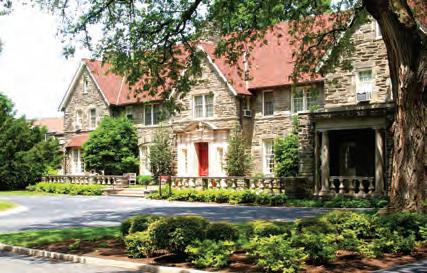
1200 Tel Hai Circle, Honey Brook, PA 19344 • 484-796-4262
www.telhai.org
Founded in 1956, Tel Hai Retirement Community is a non-profit, 501(c)3 Life Plan Community (formerly a continuing care retirement community) located in the rolling countryside of Chester County in Honey Brook Township. Tel Hai offers the full-continuum of aging services including residential living, personal care, memory support, health care, short-term rehab, home care services and outpatient therapy services. Tel Hai is motivated by Christ’s love for all, and our covenant is to provide a vibrant caring community that enhances the lives of those served, including more than 850 residents and 450 team members.
Continued from page 52
SENIOR HOUSING PROFESSIONALS (CSHPS)
Real estate professionals who have completed extensive coursework on how best to assist older adults and their families in the home buying or selling process.
A type of home care delivered by caregivers, or companions, who serve as surrogate family members. Assistance can include meal preparation, medication reminders, laundry, light housekeeping, shopping, transportation and assistance with exercising.
Communities offering long-term contracts that guarantee lifelong shelter and access to specified health care services. Different levels of care are available to residents including independent living, assisted living and nursing care. See also Life Plan Communities.
Spectrum of care available at life plan communities (also known as continuing care retirement communities). This spectrum

includes care options ranging from independent living to nursing and rehabilitation care. Residents can move up or down this continuum of care as needed
Dementia is a general term for a decline in mental ability severe enough to interfere with daily life. Alzheimer’s is the most common type of dementia.
Individuals who specialize in areas of the law that are particularly relevant to seniors and their families. They may receive specialized training and certifications from professional organizations.


Anticipate more well-being, more fellowship, and more fun at York’s premier senior living community.
Swim some laps in our pool, join our Kinnections Brain Health program, and enjoy all the new friends you’ll make as you walk our lovely campus.
Offering a wide range of apartments and cottages for active senior living with on-site health services for future peace of mind.


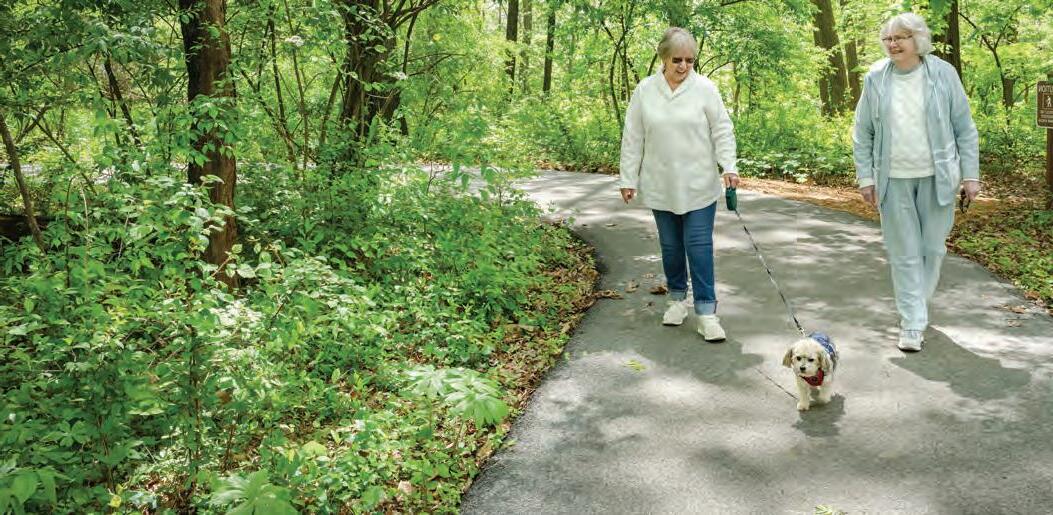

The fees paid by residents when entering a retirement community. Entrance fees vary widely depending on the type of agreement selected.
Individuals who are restricted to their residence because of a permanent disability or disease.
Healthcare and supportive services offered by professionals in private homes. Home care can include companion care, home healthcare and skilled nursing care.

able to perform the activities of daily living alone, but who do not need skilled medical services.
Care that is offered to patients
social services, and emotional and spiritual support.
Residential communities for active older adults. Communities offer various amenities and activities. Home and exterior maintenance is included.
Properties offering a combination of living options for older adults, including independent living, assisted living and skilled nursing services. Different levels of care are generally all offered on a single campus. Residents have the option

Continued on page 63

Live the life you love. Find out how at AboutActs.com/RetirementSource or call (888) 716-4037
Brittany Pointe Estates | Cokesbury Village Country House | Granite Farms Estates Gwynedd Estates | Lima Estates Manor House | Normandy Farms Estates Southampton Estates | Spring House Estates

Home is a special space. It’s more than four walls and a roof. It is a feeling.
Whether home is defined by the people you are with or the natural surroundings out your window, that old cliché about home being where the heart is rings true.
Home may very well be where the heart is, but it’s also where the amenities, friends, and activities are, according to several residents of Cornwall Manor, a continuing care retirement community (CCRC) in central Pennsylvania.
Cornwall Manor is located on an 190-acre campus ripe with history and surrounded by natural beauty. Formerly the home of the Coleman family who owned and operated the Cornwall Iron Furnace, a large iron ore furnace dating back to the 1700s, the campus features a mix of historic buildings that have been preserved and enhanced, as well as modern buildings and amenities to accommodate the lifestyle of its residents. The community is home to active residents who enjoy a wide array of activities on campus and in the larger community. A variety of housing and floor plan options are available, and residents can transition from independent living to personal care and nursing care, as needed.
While some residents of Cornwall Manor hail from Pennsylvania, Delaware, and New Jersey, many are from much farther away. Whether they are coming from a sprawling retirement community in Florida or a small town in the mid-West, residents choose Cornwall Manor for the friendly atmosphere and the true sense of community.
Linda and Bruce Chadbourne have moved many times. When it came time for retirement, they decided to settle in Florida, but the shine of the sunshine state soon wore off. The Chadbournes found themselves searching the mid-Atlantic for a forever home near their children.
A native of Boston, Linda moved every two years throughout her childhood as the family followed
| By Christy Brudin

“The fact that everything is taken care of at a continuing care retirement community is huge. There is no burden to our kids. That just seems like an enormous weight off their shoulders.”
her father’s jobs. She was living in central New York when she met Bruce. The two became high school sweethearts and were later married. The moving continued when Bruce joined the Navy. The couple finally settled in New Hampshire and raised two children.
As Bruce prepared for retirement, the couple started investigating where they would live. They found a large active adult community in Florida and built their dream home in 2012.
After a few years on Florida’s nature coast, the Chadbourne’s were missing their family. Because of the distance, their family wasn’t visiting as often as they would have liked, and traveling was difficult and inconvenient. With their kids settled in Pennsylvania and New Hampshire, they started looking at retirement communities that would put them closer.
“We looked at a lot of places, but our daughter had a piano student who had a family member living at Cornwall Manor and loved it. We thought it was worth a visit,” recalled Linda.
Bruce continued, “When we came to Cornwall Manor for the first time, we stopped at the café and ordered a coffee. The lady who prepared our coffee told us she had been working here for 35 years and loved it. We knew then that this was a special place.”
The Chadbournes were also happy to find a continuing care retirement community. “As you age, there are going to be health issues, and we liked the fact that we would already have assisted living or nursing care in place if we needed them down the road,” said Linda. “The fact that everything is taken care of at a continuing care retirement community is huge. There is no burden to our kids. That just seems like an enormous weight off their shoulders.”
After moving to Cornwall Manor in 2018, the Chadbournes quickly settled in and loved their new home on The Woods campus. However, when the COVID pandemic shut down the world, they realized once again how lucky they were to have a strong community.
“This community was absolutely wonderful during COVID. I have never felt so taken care of in my whole life,” Linda remembered. “The staff went above and beyond to keep us safe and to make us feel cared for

and important. I can’t imagine what that experience would have been like if we had still been on our own.”
Now that COVID restrictions have lifted, the Chadbournes are once again enjoying all that Cornwall Manor has to offer. A former piano teacher, Linda plays for church services on campus. She also plays pool, teaches a class on making greeting cards, and enjoys long walks.
“It can actually be hard to take a long walk around campus because you get stopped by neighbors to talk so often,” she said. “A 20-minute walk can take an hour. What an incredible blessing that is to have such a friendly community!”
Bruce, who is a bivocational minister, volunteers in hospice, visits residents in the on-campus health center, and teaches a bible study. “I am so glad that we didn’t wait until we were too old to enjoy all the wonderful things that Cornwall Manor offers, and that we have the opportunity to give back,” he said.



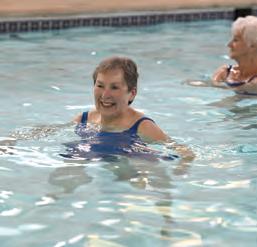


Life Plan Communities are properties offering a combination of living options for older adults. These communities offer an active lifestyle for residents, as well as a wide array of amenities and services.
Life Plan Communities were formerly known as Continuing Care Retirement Communities (CCRCs).
Living options available at Life Plan Communities may include independent living, assisted living and skilled nursing services. These different levels of care are all offered on a single campus. Residents have the option to have all their current or future healthcare needs met without ever leaving campus.
Life Plan Communities afford residents endless opportunities to remain active and involved. These communities generally appeal to young, healthy older adults. Amenities vary widely but often include swimming pools, fitness centers, gardening areas, and golf courses.. Additionally, residents have access to hundreds of activities— from art classes to yoga classes to walking groups. Residents are also very involved in the operation and management of Life Plan Communities through resident boards or councils.
Finally, Life Plan Communities are generally integrated into the larger community. With active residents, these communities can focus on
This guide can help you navigate the different contracts you may encounter as you embark on your search for a new home. Life plan communities, also known as continuing care retirement communities (CCRCs), offer multiple levels of care all on one campus. This setting is generally attractive to seniors who like to plan ahead. Life Plan Communities are most useful for seniors who can come in at the independent living level and move through higher levels of care as needed over time.
1. Type A (Life Care Agreements). According to the Commission on Accreditation of Rehabilitation Facilities, Type A contracts include

giving back and acting as a socially responsible neighbor.
Life Plan Communities give older adults the freedom and security to live active, healthy lives. They are the perfect option for individuals who want to plan ahead for future care needs, while focusing on enjoying every day.
Source: lifeplancommunity.org
| By Kelly Hagler
overall housing, residential services (amenities) and unlimited healthrelated services. Type A contracts provide a sense of stability, as future costs are much more predictable regardless of any changes in needed services or care. Residents pay a much larger entrance fee compared to other contract types, but the monthly fee is flat through all levels of care.
2. Type B (Modified Agreements). As with Type A, Type B contracts include housing and residential services. Unlike Type A, Type B does not cover all future health care needs but does offer discounted or waived rates for those services.
3. Type C (Fee-For-Service Agreements). Like both A and B, Type C contracts cover housing, residential services and health care. “Basically, it’s pay as you go,” says Mark Herrera, vice president of skilled nursing administration and risk management at be.group. Residents pay a smaller entrance fee in the beginning. Then, if you don’t need to use higher levels of care, there is no additional cost to you beyond your monthly service fee for using amenities like transportation or activities. While Type C contracts will save you on up-front costs, the resident risks the potential for large costs down the road if there is a sudden need for care.






















1. Consult a financial adviser.
Joining a senior living community is a serious investment. Spend time with your trusted financial adviser. “Your biggest pitfall is not understanding how health care, especially Medicare, works in our country,” says Daniel S. Ogus, executive vice president and chief operating officer at be.group. “How much money do you have and how much will you need? Understand what benefits you’re getting from Medicare as well as your retirement packages.”
2. Research the organization and management. The financial stability of the community as well as the continuity of management

are two essential factors to vet thoroughly.
3. Understand services covered. Asking about guaranteed services will alleviate many of those “what if ” questions: What if you get dementia? What if you become debilitated? Ask management specific questions about what’s covered in your contract beyond care services.
4. Find out how refunds work.
Signing a Life Plan Community contract is a big decision—so what if you change your mind?
5. Ask about a benevolence program. Many nonprofit Life Plan

Communities offer benevolence programs if a resident exhausts his or her financial resources.
6. Make sure your voice will be heard in the future. Some communities have their own associations, and residents have the right to be represented on boards.
7. Determine what role your family will play. “We can’t share information with children if the resident doesn’t give us permission to do so,” says Ogus. Make sure your family understands the financial commitment and how your contract works.

















Most life plan communities require payment of a one-time fee, usually called the entrance fee, before moving to the community. The entrance fee amount often depends on the level of care at the time of entry, type of housing chosen (with larger units requiring a larger fee) and agreement type. The entrance fee allows the life plan community to offer lower monthly fees and provide for the future needs of residents.
State regulations can impact the terms of the entrance fee and in some states, refunds are called rebates. Entrance fees are typically structured in one of three ways:
Declining scale refunds, also known as amortizing entrance fees, specify a period of time in which the entrance fee will be refundable to the resident on a declining basis. For example, if an entrance fee under this arrangement declines at the rate of 1 percent each month, after 6 months 94 percent of the entrance fee is refundable.
Partially refundable entrance fees guarantee a specific percentage

of the refund that will be returned within a certain period of time regardless of the term of residency. For example, 50 percent of the entrance fee may be refundable upon termination of the contract or to the estate upon the resident’s death.
Full refunds offer just that, a full refund of the entrance fee. A fixed charge may be deducted before the refund is made, and the agreement generally states how long the refund is valid and under what conditions a refund
State regulations can impact the terms of the entrance fee and in some states, refunds are called rebates.
is due. Entrance fees that offer full refunds are typically more expensive than those without refunds or those that are partially refundable or refundable on a declining basis.

Nationally, only 15 percent of all Continuing Care Retirement Communities have earned the "seal of approval" from the nonprofit CARF Continuing Care Accreditation Commission. The CARF is the nation's only system for accrediting continuing care retirement communities.
We are proud that our communities:
■ voluntarily meet the HIGHEST STANDARDS of excellence
■ submit to regular inspections and reviews
■ care about our residents' well-being and our staffs' training
■ maintain financial accountability and competent administration
We invite you to call or visit us to see what makes us different!

Waverly Heights 1400 Waverly Road Gladwyne, PA 19035 (610) 645-8600 waverlyheightsltd.org
Landis Homes 1001 East Oregon Road Lititz, PA 17543 717-381-3550 landishomes.org
Kendal~Crosslands Communities PO Box 100 Kennett Square, PA 19348 800-814-8133 kcc.kendal.org
Medford Leas 1 Medford Leas Way Medford, NJ 08055 866-407-5047 medfordleas.org
For more information or a nationwide list of accredited communities contact: CARF Continuing Care Accreditation Commission www.carf.org


Continued from page 55
ever leaving campus. See also Continuing Care Retirement Communities (CCRCs).
Federal program designed to provide health coverage for lowincome people. States administer their Medicaid programs individually, resulting in variations in coverage across the country.
Federal health insurance program for people age 65 or older. Certain people younger than age 65 can qualify for Medicare, too, including those with disabilities and those who have permanent kidney failure.
Specialized care delivered by communities that are equipped to handle patients with Alzheimer’s disease or dementia.
(NAELA)
A national professional association. Members are attorneys who are experienced and trained in the legal problems of aging Americans and individuals of all ages with disabilities.
NATIONAL ELDER LAW FOUNDATION (NELF)
A national organization certifying practitioners of elder and special needs law.
NURSING & REHABILITATION CENTERS (SKILLED NURSING CARE CENTERS)
Facilities that provide care administered by professionals under the direction of a physician. Centers may serve as permanent residences for individuals who are too sick or frail to live at home. Short-term care is also available for those who are rehabilitating from surgery or an injury. Also known as Skilled Nursing Care Centers.
See Assisted Living
Care that helps patients recover from an illness or injury. Generally offered at Nursing & Rehabilitation Centers.
Professionals who assist older adults and their families with the emotional and physical aspects of relocation.
SENIOR REAL ESTATE SPECIALISTS
Realtors who are specially trained to manage the sale of a home for consumers over the age of 50.
HOME)
A type of home care prescribed by a physician and administered by a registered nurse.
Benefits available for individuals who have served their country in the armed forces. Benefits are provided through the U.S. Department of Veterans Affairs.
Continued from page 22
“Lifestyle” is a highly individualized concept, so the priorities of one person may be different from another person’s, but important lifestyle-related considerations may include aspects such as lifelong learning opportunities, dining choices and meal plan flexibility, community involvement size and location of the CCRC, and general vitality level of the residents who live there.
CCRCs are also touted for the many wellness benefits they offer their residents. In fact, a recent study found that CCRC residents are in fact happier and healthier than those who do not live in such a community. From fitness classes to continuing education to nutritious food offerings, a CCRC’s wellness programs are designed to nurture residents’ minds, bodies, and spirts.
Many communities will allow you to stay on-site for a night or two to get a feel for what it’s like to live there and the lifestyle and wellness opportunities offered by the CCRC.
There are a variety of reasons making the choice to move to a CCRC more complex than most other senior living options. This is a BIG decision! However, as you explore various CCRCs and consider different contract types, these six key factors above should remain top-of-mind.
Content provided with written permission from myLifeSite: www.mylifesite.net
Use this checklist to review options:
Is the community clean and well maintained?
Is ample parking available for residents and visitors?
Are exterior maintenance, snow removal and landscaping included in the monthly fees?
Are there multiple floor plans available?
Can residents decorate their cottages, condos or apartments according to their personal tastes?
Is the community pet friendly?
Do individual residences include safety features, such as emergency alert and fire suppression systems?
What levels of care does the community offer? Independent living?
Assisted living?
Skilled nursing care?
Short-term rehabilitation?
Memory care?
Do residents have access to in-home care should it be needed?
What services are included in the monthly fee?
What services are available for an additional fee? What are the fees?
How often do resident rate increases occur?
Are there multiple contract options?
Do some contract options offer entrance fee refunds?
Is the community well staffed overnight?
How does the community handle residents who need additional care and support?
Are housekeeping and laundry provided?
Do staff members undergo screenings and background checks prior to employment? Are transportation services available?
Do caregivers positively interact with residents? What is the staff-to-resident ratio for each level of care?
Does the dining room look and smell inviting?
Are the dining room tables, chairs and linens in good condition?
Are residents allowed to invite guests for meals?
Can residents select their own meal times, or are there designated meal times?
Are three daily meals, snacks and beverages included in the monthly rate?
Can the community accommodate special dietary needs?
Is there a dietician or nutritionist involved in meal planning?









PENNSYLVANIA (continued)
Providing security with no home maintenance
Independent living communities are residential communities for active older adults who want an enjoyable lifestyle free of the worries of home maintenance. They are similar to any apartment, condominium or single-family development, except that they provide special services, including security. Most independent living communities are fully secured with staff members greeting and screening all visitors around the clock.
As many individuals at this stage in their lives are looking to pursue new hobbies and interests, the activities and amenities available at a community are a major factor for potential residents. Most independent living communities provide a full range of activities such as shopping trips, outings to cultural events, organized gatherings and an array of clubs. Some communities also have tennis courts, swimming pools and other amenities.
Independent living communities typically offer a variety of meal plans.

Residents also have the option of preparing their own meals.
Most independent living communities do not offer health care services. However, some communities are affiliated with health care facilities that can provide such care when it is needed. Residents also have the option of purchasing home health care services from outside providers.
Most independent living communities are rental communities, but some are condominiums or single-family communities in which residents
Consumers should carefully research the independent living community options in their target areas or neighborhoods.
purchase their units or homes. Costs and services vary widely. In some communities, a monthly fee covers many services, while in others a fee-for-service system is used. A few communities offer subsidies based on strictly defined need. To learn more, contact your local Area Agency on Aging.
Consumers should carefully research the independent living community options in their target areas or neighborhoods. After requesting and reviewing information from communities, prospective residents should plan on-site visits to each community they are considering.
The U.S. Department of Housing and Urban Development (HUD) funds several rental assistance programs for seniors who qualify. These programs include public housing or low-income housing that is owned and operated by a local housing authority. To apply for public housing or Section 8 certificates
or vouchers, you must go to your housing authority. Each housing authority has a system for accepting applications. Their representatives can explain their system and how to find an available apartment.
HUD’s Section 202 program includes apartments where the
government provides subsidies directly to owners of qualified properties developed with loans or grants from the federal government.
Contact your local HUD office to get a list of privately-owned communities near you.

Use this checklist to review options:
Is the community clean and well maintained?
Is ample parking available for residents and visitors?
Are exterior maintenance, snow removal and landscaping included in the monthly fees?
Are there multiple floor plans available?
Can residents decorate their cottages, condos or apartments according to their personal tastes?
Is the community pet friendly?
Does the community have safety features, such as handrails and grab bars?
Do individual residences include safety features, such as emergency alert and fire suppression systems?
Are activities scheduled throughout the day and evening?
Are fitness classes offered?
Are there dedicated spaces for resident clubs and informal gatherings?
Does the community offer regular outings to local restaurants, theaters, museums and other destinations?
Are there outdoor spaces available for walking, gardening and recreation?
Are volunteer programs available?
Do the residents appear engaged and energetic?
Is the community well staffed overnight?
How does the community handle residents who need additional care and support?
Do staff members undergo screenings and background checks prior to employment?
Are housekeeping and laundry provided?
Are transportation services available?
Do caregivers interact with residents in positive ways?
What is the staff-to-resident ratio?
Does the dining room look and smell inviting? Are the dining room tables, chairs and linens in good condition?
Are residents allowed to invite guests for meals?
Can residents select their own meal times, or are there designated meal times?
Are three daily meals, snacks and beverages included in the monthly rate?
Does the resident committee work with the dining staff to develop menus?
Can the community accommodate special dietary needs?
Is there a dietician or nutritionist involved in meal planning?
Is there public transportation nearby?
Is the community in a safe neighborhood? Are there shopping, dining and entertainment options near the community?
Is the community near preferred medical providers?
What services are included in the monthly fee? What services are available for an additional fee? What are the fees?
How often do resident rate increases occur? Are subsidies available? How do residents qualify for subsidies? Is there a waiting list?
Does the community look and feel like a place you could call home?
Talk with residents and their family members. What do they like about the community? Can they recommend it?
Did they consider other options when searching for a community?
Why did they choose this community?
PENNSYLVANIA
INDEPENDENT LIVING COMMUNITIES
PENNSYLVANIA
PENNSYLVANIA
Advanced Living at Derstine Run 215-362-0227
Advanced Living at Schwenckfeld Manor
Advanced Living at Schwenckfeld Terrace
Anthology of King of Prussia
Arbour Square of Harleysville
Beaumont at Bryn Mawr 610-526-7000
Brightview East Norriton
610-557-3357
LIVING COMMUNITIES
Hayes
Kearsley Retirement Community
Olde Kensington Pavilion
Riverside Presbyterian Tower
Sartain Apartments
St. John Neumann Place
St. Mary’s Convent
Estate, Inc., The
of Allentown
Cross Keys Village - The Brethren Home Comm.
Harmony at Diamond Ridge 24-25 412-679-1093
at Hershey
Highland Point Retirement Community
Highlands at Wyomissing, The
Homewood at Plum Creek
Homewood at Spring House Estates 814-623-0349
Kirkland Village 610-691-4500
Lutheran Home at Topton, The
Menno Haven 717-262-2373
Moravian Hall Square 610-746-1000
Moravian Village of Bethlehem 610-625-4885
Ohesson 717-447-5092
Phoebe Allentown
Offering needed assistance and rewarding activities
Assisted living/personal care communities—frequently known as Personal Care Communities in Pennsylvania—offer a vital option for older adults who need some assistance with daily living. While the specific amenities will vary, all assisted living/personal care communities offer basic services including meals, supervision, security and help with personal care needs.
In most states, assisted living/ personal care communities are registered, licensed or certified by an appropriate department or agency of the state that has
a process for issuance of initial licenses and for renewing existing licenses. This process provides basic protections for consumers.
Residents of assisted living/personal care communities are generally seniors who need some assistance with basic activities, frequently called the activities of daily living (or ADLs). Some communities may accept residents with Alzheimer’s disease and other forms of dementia.
The services and activities provided in these communities help to promote the quality of life and independence of the residents. One


key offering is 24-hour supervision of the residents and the property. Resident safety and security is a priority at all assisted living /personal care communities.
All communities also offer three meals a day in a group dining room. However, dining options and cost can vary dramatically in terms of the meal plans.
Finally, all assisted living/personal care communities offer personal care services, also known as help with the ADLs. These services include assistance with bathing, dressing and toileting.







Anticipate more well-being, more connection, and more comfort at Ivy Gables, Wilmington’s trusted assisted living and memory care community. Discover personalized care, comfortable apartments, and engaging activities, all while making new friends and enjoying our beautiful campus. At Ivy Gables, you’ll find a warm, welcoming environment that truly feels like home.







Other services and activities available at some assisted living/ personal care communities include:
• Medication management
• Coordination of services by outside health care providers
Assistance with arranging medical, health and dental care
• Social services
• Transportation services
• Outdoor areas for walking or gardening
• Supervision and assistance for persons with Alzheimer’s or other dementias and disabilities
• Spiritual activities Exercise and wellness programs
• Laundry and linen service
• Housekeeping and maintenance
• Individualized services
While assisted living/personal care communities do provide a high level of care, it is important to consider what is not provided at these communities before selecting one. Assisted living/ personal care communities are a bridge between living at home and living in a nursing home. Assisted living/personal care communities do not typically provide the level of continuous skilled nursing care found in nursing homes and hospitals. For instance, if a prospective resident needs constant care, a nursing home may be a more viable option.
There is no set standard for assisted living accommodations. Therefore, options can vary greatly from one assisted living community to the next. Consumers must consider the prospective resident’s personal needs, financial means and personal preferences before selecting a community.
Source: www.ahcancal.org
Use this checklist to review options:
What services are included in the monthly fee?
How often do resident rate increases occur?
Is the community clean and well maintained? Are there multiple floor plans available?
Does the community have safety features, such as handrails and grab bars?
Does the dining room look and smell inviting?
Are three daily meals, snacks and beverages included in the monthly rate?
Does the resident committee work with the dining staff to develop menus?
Can special dietary needs be accommodated?
What is the staff-toresident ratio?
Is the community well staffed overnight?
How does the community handle residents who need additional care and support?
Is in-home care available if needed?
Do staff members undergo screenings and background checks prior to employment?
Does the community have its most recent survey results posted for families to review?
Are staff trained and retrained at regular intervals?
Are housekeeping and laundry provided?
Are transportation services available?
Do caregivers interact with residents in positive ways?
Do residents appear tidy and well cared for?
Are activities scheduled throughout the day?
Does the community offer regular outings to local restaurants, theaters, museums and other destinations?
Are there outdoor spaces available for walking, gardening and recreation? Are volunteer programs available?
Do the residents appear engaged?
Is the community conveniently located for friends and family to visit?
Is the community in a safe neighborhood?
Are there shopping, dining and entertainment options near the community?
Is the community near preferred medical providers?
Source: www.whereyoulivematters.org, a senior living resource powered by the American Seniors Housing Association (ASHA)
PENNSYLVANIA
Continued from page 31
poor-quality care. It defines a standardized approach to care delivery, provides an alternative payment methodology, addresses unpaid caregiver needs, and offers respite services. As the program progresses, it has the potential
to significantly impact the lives of hundreds of thousands of Medicare beneficiaries living with dementia and their caregivers.
By linking healthcare systems with community-based organizations and providing structured support and resources, GUIDE aims to transform the fragmented system that many providers and patients have
struggled with in the past. This innovative approach to dementia care represents a promising step towards improving outcomes and quality of life for those affected by this challenging condition.
Some information adapted from the Centers for Medicare and Medicaid Services. Visit www.cms.gov/priorities/ innovation/innovation-models/guide for additional details and updates.




ASSISTED LIVING/ PERSONAL CARE
ASSISTED LIVING/ PERSONAL CARE
Azalea At Cinnaminson
609-246-6663
609-461-5108
856-202-3380
609-877-0555
856-235-1214
856-988-2400
856-914-0444
ASSISTED LIVING/ PERSONAL CARE
ASSISTED LIVING/ PERSONAL CARE
Brandywine
609-404-1099
609-625-4878
609-409-7525
ASSISTED LIVING/ PERSONAL CARE
The Alzheimer’s Association provides the common signs
Memory loss that disrupts daily life is not a typical part of aging. It may be a symptom of Alzheimer’s, a fatal brain disease that causes a slow decline in memory, thinking and reasoning skills. Every individual may experience one or more of these signs in different degrees and it is recommended you see a doctor if you notice any.
1. Memory loss that disrupts daily life
One of the most common signs of Alzheimer’s is memory loss, especially forgetting recently learned information. Others include forgetting important dates or events; asking for the same information over and over; and relying on memory aides (e.g., reminder notes or electronic devices) or family members for things they used to handle on their own.
What’s typical? Sometimes forgetting names or appointments, but remembering them later.
2. Challenges in planning or solving problems
Some people may experience changes in their ability to develop and follow a plan or work with

numbers. They may have trouble following a familiar recipe or keeping track of monthly bills. They may have difficulty concentrating and take much longer to do things than they did before.
What’s typical? Making occasional errors when balancing a checkbook.
3. Difficulty completing familiar tasks at home, at work or at leisure
People with Alzheimer’s often find it hard to complete daily tasks. Sometimes, people may have trouble driving to a familiar location, managing a budget at work or remembering the rules of a game.
Considering a residential facility
For older adults with Alzheimer’s disease or another form of dementia, moving to a residential memory care facility may be the best option. These communities can offer varying levels of care, depending on the needs of the
patient. They also offer valuable peace of mind for family members and caregivers, who may no longer be able to provide care at home.
Most retirement living communities offer options
What’s typical? Occasionally needing help to use the settings on a microwave or to stream a television show.
4. Confusion with time or place
People with Alzheimer’s can lose track of dates, seasons and the passage of time. They may have trouble understanding something if it is not happening immediately. Sometimes they may forget where they are or how they got there.
What’s typical? Getting confused about the day of the week but figuring it out later.
Information from the Alzheimer’s Association: www.alz.org
for individuals with memory care needs. Before selecting a community, potential residents and their families should carefully evaluate their current and future care needs. Consumers should also familiarize themselves with the wide variety of community options available. More information about housing
Continued on page 92
At a nursing care center, care is administered by professionals under the direction of a physician. Many facilities also offer sub-acute, respite, rehabilitation and other short-term care. Rehabilitation services can be especially helpful for individuals who are recovering from surgery, an illness or any other life-changing event.
These communities serve as permanent residences for
Continued on page 92

A long-term care ombudsman is an advocate who strives to improve the quality of life for individuals receiving long-term care services. Ombudsmen resolve complaints against long-term care providers through counseling, negotiations and investigations. They can also provide vital information about long-term care providers to help consumers make informed decisions.
Using trained volunteers, ombudsman programs make regular visits to long-term care facilities to interact with residents and staff. Finally, ombudsmen strive to educate the community about long-term care issues, train long-term care staff and consult with long-term care providers.
The ombudsman program is federally mandated and located in every state. Operated by the
Administration on Aging, the ombudsman program has 7,734 volunteers certified to handle complaints and 1,300 paid staff.
An Ombudsman can offer advice on housing and help with complaint counseling, negotiations, investigations and resolutions. Ombudsmen stand with residents of long-term care communities, ensuring that their voices are heard and their complaints and concerns are addressed.
For families who are searching for a nursing facility or an assisted living facility, Ombudsmen can provide vital information about facilities, services, complaint histories, inspection reports, and features to look for while searching for a community.
As a consumer of long-term care, Ombudsmen can help you voice any concerns you may have about current providers. They can also take you through the steps necessary to resolve any complaints. This generally starts with negotiation, during which the two parties sit down to discuss the concern and the Ombudsman serves as a facilitator. In many cases, both parties are able to agree to a solution.
If negotiation is not successful or appropriate, Ombudsmen can launch a formal complaint investigation aimed at achieving a resolution to support the resident. Ombudsmen will accept anonymous complaints. In cases where names will be used, residents and/or their families must sign a waiver of the right to confidentiality.
For more general information about the program or to find programs in your area, visit Ltcombudsman.org
Continued from page 90
options is available throughout the Sourcebook.
These communities provide a full range of care options from independent living to nursing care. Residents with memory care needs would generally move in while they are still healthy and progress to higher levels of care.
Assisted living facilities offer additional support for residents, including assistance with the activities of daily living. Many assisted living facilities offer services designed for people with dementia.
These communities offer roundthe-clock care for patients. Some nursing homes have specialized units and specially trained staff to accommodate the needs of patients with dementia.
Special Care Units, or SCUs, are also called memory care units and are designed to meet the specific needs of individuals with Alzheimer’s and other dementias. These units are often located within other residential care options. Some of these units are locked or secured for the safety of residents. SCUs generally offer other specialized services, including highly trained staff and activities designed for individuals with varying stages of dementia.
Source: Information adapted from the Alzheimer’s Association (www.alz.org).

Continued from page 91
individuals who are too sick or frail to live at home, or as temporary facilities during a recovery period. Some residents enter a nursing care center for a short-term stay after a surgery or illness, while others enter on a more permanent basis.
Medicare, Medicaid, private insurance and personal assets are all used under various circumstances to pay for services in a nursing care facility. If a facility is not certified by Medicare and Medicaid, the care will have to be paid for entirely with personal funds.
In general, Medicare pays for skilled nursing care following hospitalization for the same illness
or condition at 100 percent of the cost for days 1 – 20. Some long-term care insurance pays for nursing care centers; insurance payments are usually a fixed amount for a specified number of qualified days.
The basic daily rate is the standard charge the nursing care center bills to all residents, which covers the fundamental services every resident receives, including rent for the room, housekeeping, meals and general nursing care. It is important to understand all the services and amenities that are not included in the basic daily rate.
Before choosing a community, contact the Long-Term Care Ombudsman Program of your Area Agency on Aging. Ombudsman programs promote the highest quality of life and care for residents of nursing facilities and can help families and staff with inquiries and complaints.
Don’t walk the road alone. Find professional resources who can help you. (p.32)
PENNSYLVANIA - CHESTER COUNTY (continued)
NURSING & REHAB CENTERS
PENNSYLVANIA
PENNSYLVANIA

Accela
REHAB
Phoebe
Phoebe Berks 484-205-9489 1 Reading Dr Wernersville Presbyterian Village at Hollidaysburg 866-499-5042
Spruce
Stonebridge Nursing & Rehabilitation 717-834-4111 102 Chandra Dr Duncannon
Woodland
Home care can include a wide variety of healthcare and supportive services from professional nursing and home health aide services to physical, occupational, respiratory and speech therapies. Home healthcare is essentially skilled nursing care and certain other forms of healthcare that you get in your home for the treatment of an illness or injury.
An incredibly diverse field, home care includes companion care, home healthcare or skilled nursing care.
COMPANION CARE is provided by caregivers or companions,
who serve as surrogate family members, performing many of the tasks that family members would typically complete. Assistance from companion caregivers can include meal preparation, medication reminders, laundry, light housekeeping, shopping, transportation and assistance with exercising. The overall goals of companion care providers are to ensure that the home environment remains safe and that the individual has a companion to spend time with when family is not available.
HOME HEALTHCARE is for those who are no longer able to perform


all of the functions of daily living by themselves but who do not require skilled medical services. A home health aide can help with activities of daily living (ADLs), which include bathing, dressing, transferring, eating and toileting. Additional services generally include meal preparation, mobility exercises, housekeeping, laundry, medication reminders and transportation.
SKILLED NURSING CARE is prescribed by a physician and is administered by a registered nurse. The services provided by skilled nurses include: administering injections, administering medications, wound care, IV monitoring, blood tests, catheter care, respiratory and physical therapy, feeding tube administration and more.
Medicare recipients can use can use home health care benefits if all of the following applies to their situation. Your doctor must prescribe that you need medical care at home and create a care plan.
The care you need has to be intermittent and in the form of skilled nursing care, physical therapy, occupational therapy or speech therapy. The home health agency must be Medicare-certified and you must be homebound, or unable to leave the home unassisted.
Once you have established those requirements, it is important to understand what Medicare will actually cover, which includes the following:
• Home health aide services on a part-time or intermittent basis, as long as there is a skilled need
• Medical social services
• Durable medical equipment (wheelchair, walker, bedside commode, etc.)
• Certain medical supplies
Given the services and products that Medicare does cover, it is also valuable to take note of what is not covered. Care that is required 24 hours a day will not be covered. Other services not covered include personal care provided by home health aides such as bathing and dressing, along with homemaker services like cleaning and laundry. Also not included are home-delivered meals.
If you require care that goes beyond intermittent visits for a limited amount of time, or if your needs are not covered by Medicare, an important option to consider is private duty home care. For more information on Medicare coverage, visit medicare.gov
Use these questions to interview providers:
How long has this provider been serving the community?
How does this provider select and train its employees?
Are nurses or therapists required to evaluate the patient’s home care needs? If so, what does this entail?
Are patients involved in making care plan changes?
Does it protect its workers with written personnel policies, benefits packages and malpractice insurance?
Does this provider supply literature explaining its services, eligibility requirements, fees and funding sources?. Is the patient’s course of treatment documented, detailing the specific tasks to be carried out by each professional caregiver? Does this provider take time to educate family members on the care being administered to the patient?









Providing socialization and care
Adult Day Centers are an important option for family caregivers, as they offer socialization, activities, and necessary supervision to those who are socially isolated or need care and assistance.
Caregivers can feel confident that their loved one is safe and well cared for at an adult day center while they are at work or performing other necessary tasks. Centers offer a variety of programs and amenities, including exercise programs and a diverse schedule of engaging activities.
Assistance with the activities of daily living, including eating, walking, toileting and medication management may also be available.
Additionally, many centers offer physical, speech and occupational therapies to their participants. All licensed centers provide nutritious meals and snacks on a daily basis.
After locating nearby providers, call them to request flyers, brochures, calendars and application information.
While reviewing this information, pay careful attention to how many years the provider has been in business and their licensures and certifications. Be sure to understand the staff credentials, staff-to-participant ratio, and the medical conditions the facility and its staff are equipped to handle.
Use this checklist to review options:
Use the following questions to guide your visits to adult day centers. Be sure to get all your questions answered and do not hesitate to ask follow-up questions if anything seems unclear.
How many years has the center been in operation?
Is the center licensed, certified or accredited?
What are the days and hours of operation?
If needed, is assistance provided with eating, toileting and dispensing medication?
What types of activities are provided?
Do participants help plan activities?
Are meals or snacks provided?
Can special dietary needs be accommodated?
Do participants have individual service plans?
How often are they updated?
What is the staff-to-participant ratio?
Inquire about the availability of transportation to and from the program if it is necessary. Specific costs and any financial assistance that is available should be clearly outlined in the information packet.
The final decision of which adult day center to use must be made in person. During the visit, staff members should be able to provide clear and easy-to-understand information about the services and activities provided at the center. Checking references from individuals who are currently using this provider or have used them in the past is the final step in the decision-making process.
Source www.nadsa.org
What type of training do staff members receive?
Are fees charged hourly, daily or monthly?
What will the total fee be for services?
How are payments accepted?
Is a deposit required?
Is financial assistance available?
Are special care options available for participants with certain conditions, such as memory loss?
Are transportation services available? What is the additional fee?
Is physical or occupational therapy available on site? Is there an additional fee?
Is the facility easily accessible?
Is the facility clean and pleasant?
Do staff members and participants seem to interact frequently?
Active Day of Newark
Riverside AD Prog. - Wilmington
Active Day of Bristol
Active Day of Broomall
Active Day of Center City
Active Day of Chestnut Hill
Active Day of Clifton Heights
Active Day of Crozer
Active Day of Exton
Active Day of Horsham
Active Day of Kennett Square
Active Day of Overbrook Park
Active Day of Plains
(continued)
Lifespan Adult Day Care Srvs - Quakertown 215-536-6016
Main Line Adult Day Center - Bryn Mawr 610-527-4220
Manatawny Manor Adult Day Srvs 610-705-3749
Menno Haven ADC - Chambersburg 800-222-6695
302-533-3543
302-765-4175
215-788-2408
610-325-1600
267-773-8135
215-242-4501
610-626-4270
484-768-2110
610-363-8044
215-443-5300
610-388-1166
215-877-0202
570-823-5161
Active Day of the Northeast 215-676-7800
Active Day of Warminster 215-343-6250
Adult Day Srvs Souderton Ctr - Souderton 215-703-0523
Adult Day Service at Westminster Village 610-782-8390
Chandler Hall Health Services - Newtown 215-860-4000
Delta Community Supports - Levittown 215-943-9230
Elderwatch Plus - Philadelphia 215-877-0202
Evergreen Adult Day Program - Wyndmoor 215-233-6309
Homelink, Inc. - Philadelphia 286-951-4321
Kit’s Corner - Frederick 610-754-7878
Landis Adult Day Services 7 717-581-3939
LifePath, Inc. - Sellersville 215-257-8687
Lifespan Adult Day Care Srvs - Pennsburg 215-679-2659
Lifespan Adult Day Care Srvs - Quakertown 215-536-6016
Mid County Senior Srvs - Newtown Square 610-353-6642
Montgomery Adult Day Living Ctr - Lansdale 215-855-7997
Narberth Adult Day Care Center - Narberth 610-617-7850
North Penn VNA Adult Day Srvs - Lansdale 215-855-8296
North Penn VNA Adult Day Srvs - Souderton 215-703-0523
Northeast Adult Day Care - Philadelphia 215-671-0200
Riverview Adult Day Health Svrs - Royersford 610-792-2399
SarahCare Adult Day Care 107 215-999-1200
SarahCare of Malvern 610-251-0801 St. John Neumann Ctr – Phila. 215-698-5655
St. Joseph’s Adult Day Services - Reading 610-378-2267 The Hickman - West Chester 610-696-1536
Active Day of Brick 732-899-1331 Active Day of Bridgeton 856-451-7227 Active Day of Camden 856-246-3350 Active Day of Carneys Point 856-878-6035 Active Day at Casa Manito 201-223-6800
Active Day of Cape May County 609-465-8840
Active Day of Delran 856-461-1700
Active Day of Galloway 609-652-3600
Active Day of Hamilton 609-883-0200
Active Day of Laurel Springs 856-784-4000
Active Day of Marlton 856-988-3250
Active Day of North Bergen 201-869-4443
Active Day of Vineland 856-691-3756
Active Day of Washington Township 856-227-1377
Entertainment
Socialization
Transportation Beauty,
Bathing
Podiatry Outings




Copyright ©2026 by Regrad Solutions, LLC. Phone 1-800-394-9990. The contents of this publication may not be copied or reproduced in any manner without express written permission of the publisher. Every effort has been made to assure the accuracy of all information published in the Positive Aging Sourcebook. Regrad Solutions assumes no liability for damages arising from errors or omissions. For information about advertising, circulation, or editorial content, call toll-free: 1-800-394-9990.
All property advertisements in the Positive Aging Sourcebook are subject to the federal Fair Housing Act, which makes it illegal to advertise any preference, limitation, or discrimination because of race, color, religion, sex, handicap, familial status or national origin, or intention to make any such preference, limitation, or discrimination. State and local laws forbid discrimination based on factors in addition to those protected under federal law. Positive Aging Sourcebook will not knowingly accept any advertising for real estate which is in violation of the law. All persons are hereby informed that all dwellings advertised are available on an equal opportunity basis. We are pledged to the letter and spirit of U.S. policy for the achievement of equal housing opportunity throughout the
of
We encourage and support an affirmative
and marketing program in which there are no barriers to obtaining
or national origin.









Green and Sustainability Initiatives make a difference when living in a Senior Living Community. From our Forest Restoration Project to investing in geothermal heating and cooling, Foulkeways is committed to green practices and planning to help ensure that future generations have access to the resources we have today.
Foulkeways at Gwynedd, a Life Plan Community guided by Quaker Values, promotes independence, quality of life, respect, inclusion, and choice.



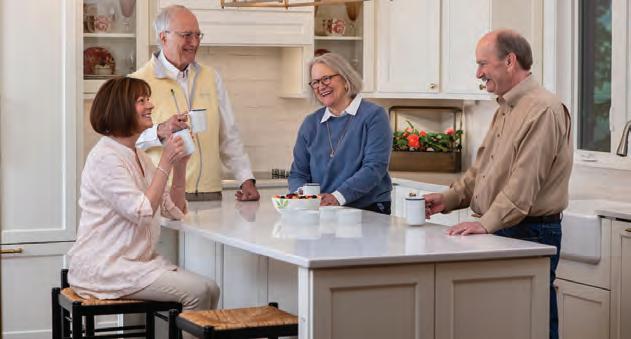
At Kendal~Crosslands Communities you can have it all—relax in the comfort of your home, or step outside to connect with friends and neighbors in our vibrant community. Whether you prefer peaceful solitude or active socializing, the choice is always yours.
But the most important step is making a plan for your future self. Secure the life you deserve by creating a path for your future retirement living needs. It’s never too early.
to join an event and get started planning for your future retirement living needs.
