

GERMANY’S BEER FESTIVALS | ANCIENT ST. AUGUSTINE | WINTER ESCAPES

GERMANY’S BEER FESTIVALS | ANCIENT ST. AUGUSTINE | WINTER ESCAPES




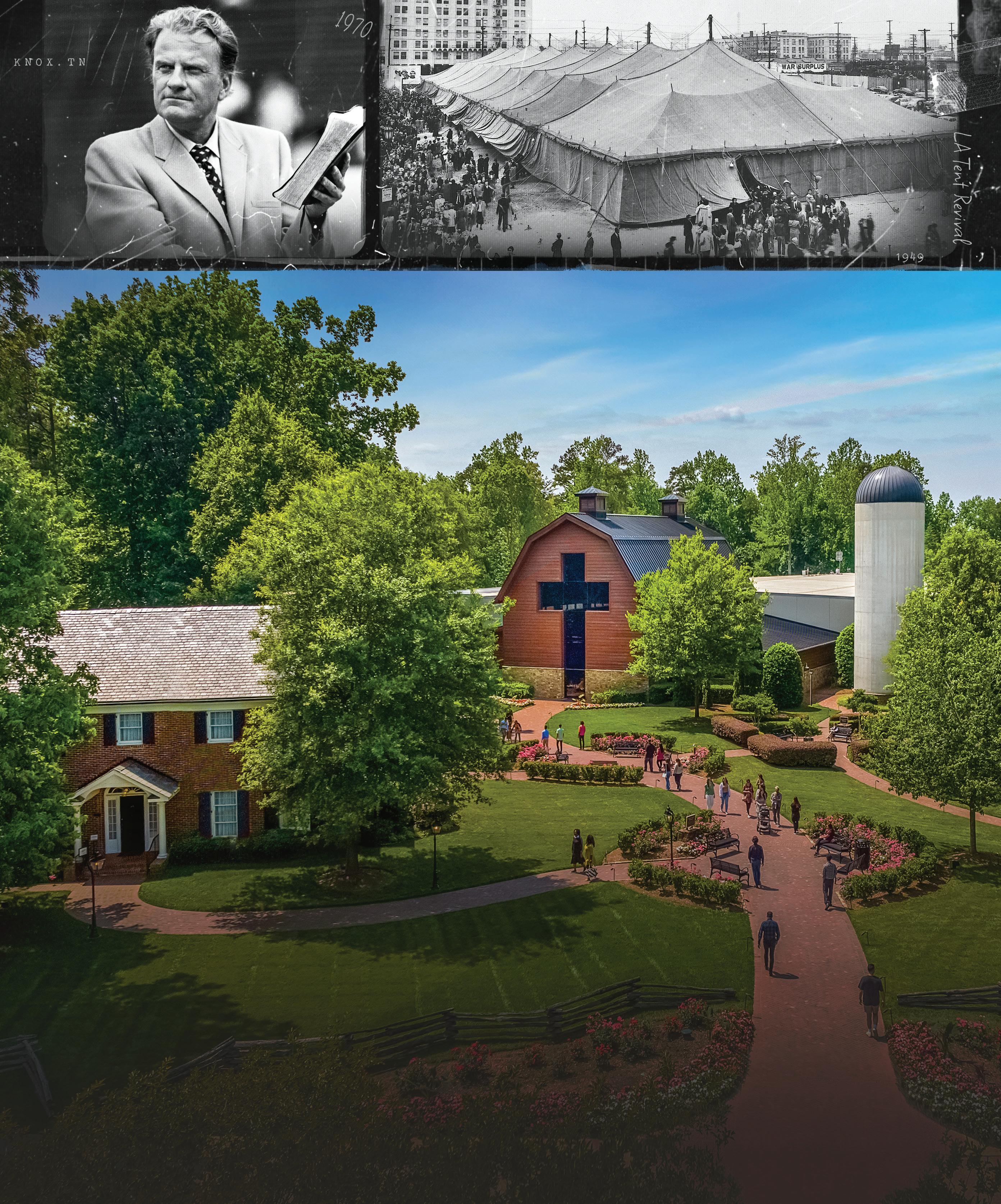
Invite your group to discover a powerful story of hope at the Billy Graham Library. Together, you can retrace Billy Graham’s journey of faith as you explore multimedia presentations, displays, photos, and memorabilia. Come see what God can do through a life that is fully surrendered to Him.
In the travel industry, it pays to move fast. On August 7, our executive editor, Brian Jewell, asked me if I could go to Germany for a beer festivals article. On September 3, I boarded a flight for Frankfurt.
I toured three delightful cities in Germany: Augsburg, Regensburg and Erfurt. I discovered their medieval highlights, attended two amazing beer festivals, ate my fill of German sausages, met some wonderful people and was home a week later. It was a crash course in German culture, and I had a blast.
I traveled with Ted Keppler, who owns Inside Europe with his wife, Sandra Weinacht. They maintain residences in South Carolina and Germany and serve as U.S.
representatives for Historic Highlights of Germany, a group of 17 smaller cities that showcase places outside its largest metros.
Before we parted ways, I asked Keppler which of his character traits he attributes to his German heritage. He ticked them off: “We’re hardworking. We follow the rules. We obey speed limits, except on the autobahn where there aren’t any. We arrive on time. We’re organized.”
I could have written those myself after traveling with him in Germany. Travel is about culture first, I think. If you discover a place’s people first, they’ll show you the rest.
The next time you have a chance to drop what you’re doing and enjoy another culture, take it. Your own culture will be here when you get back.
Mac Lacy — Publisher
Email me anytime with your thoughts at maclacy@grouptravelleader.com.
Ashley DeLucia has been named advertising sales manager for The Group Travel Leader and Pioneer Publishing. She will work alongside Telisa Rech to sell advertising and marketing programs to destinations and companies in the group travel and meetings markets. DeLucia is based in the home office of both companies in Lexington, Kentucky.
As advertising sales manager, DeLucia will represent four brands: The Group Travel Leader, Small Market Meetings, Select Traveler and Going On Faith, all of which offer internationally known print and digital content for their markets. She will also sell sponsorships for “Gather and Go with Brian Jewell,” the group travel industry’s premier
podcast, and OnSite destination familiarization tours for all four brands.
“Ashley has years of sales experience in the education field and has worked extensively with school districts across Kentucky, Indiana, New York, Pennsylvania and Texas,” said publisher Mac Lacy. “After graduating from college, she spent a year teaching in Hanoi, Vietnam, and she also spent two years in Charleston, South Carolina. She traveled internationally as a student and brings a very broad-based perspective to our sales efforts for destinations throughout the world.”
DeLucia lives with her husband, Steven, and their three children, Elayna, Deacon and Piper, in Lexington. Clients can reach Ashley by phone at 859-253-0455 and by e-mail at adelucia@grouptravelleader.com


BY BRIAN JEWELL
To take your travel program to the next level, there’s no replacement for expert advice.
Travel magazines, conferences and social media can give you lots of advice about places to go and what to do when you get there. But they’re not always optimized for delivering expertise on how to innovate your products, streamline your operations and grow your profits.
Fortunately, there’s a solution for that. Our podcast, “Gather and Go,” features interviews with thought leaders, industry pros and smart strategists who will give you big ideas and practical tips for leveling up.
Here are five episodes from this year that you may find especially useful. Scan the QR codes to listen to each episode or find the entire library at grouptravelleader.com/podcast


handling payments? don’t get swiped!
Is taking credit card payments — or using the wrong cards when you travel — costing your business more than it should? Greg Bottenhorn thinks travel planners need to keep a close eye on the way they use and process cards, both to keep their clients’ funds safe and to keep their costs low. As chief marketing officer at fintech company Jassby, he specializes in helping tour operators leverage payment technology to meet their needs in innovative ways. On this episode, he walks you through the world of travel payments and shows you how to save time and money.




Your ideal travel customer may be easier to reach than you think. Everybody says they love travel, but some people actually demonstrate that with their spending. Anna Cashman, head of B2B brand and insights for GetYourGuide, has dug deep into the data to find the “super spenders” who shape the group travel industry — and who are poised to be your best customers. On this episode, she shares who these super spenders are and how you can reach them. She also suggests ideas for developing products and messaging that will resonate with those travelers.
Adventure travel is for everyone, no matter their age or fitness level. That’s what Shannon Stowell believes. As CEO of the Adventure Travel Trade Association, Shannon is on a mission to help more people discover the joy of adventure tourism and learn how to do so responsibly. On this podcast episode, he busts common myths around adventure travel and helps you discover the adventure style that will thrill and delight your travelers. He puts to rest the misconception that older travelers don’t like adventure and shares a framework for traveling as respectful guests in the places we visit.


It’s not just you — everybody really is talking about river cruising right now. Colleen McDaniel, editor-in-chief of Cruise Critic, knows exactly why. On this podcast episode, she unpacks the popularity of river cruising and helps you understand how you can make it work for your group. Colleen explains the core value propositions that make river cruises popular with travelers. She examines how river cruising differs from ocean cruises and land tours, breaks down the economics of cruise pricing and gives tips for booking the river cruise that’s right for you.


and…
Could a smart video strategy be your key to selling more trips? Tony Gnau believes it might be. A former TV news reporter and founder of a video production company, Tony has spent his career using video to tell meaningful stories — and helping companies do the same. On this episode, he talks about how travel organizations can use video to build trust and grow sales. Tony shares video storytelling techniques that every traveler can use. He also discusses the most common issue making DIY videos seem unprofessional.


TRAVEL FOCUS
BY WENDY HELFENBAUM
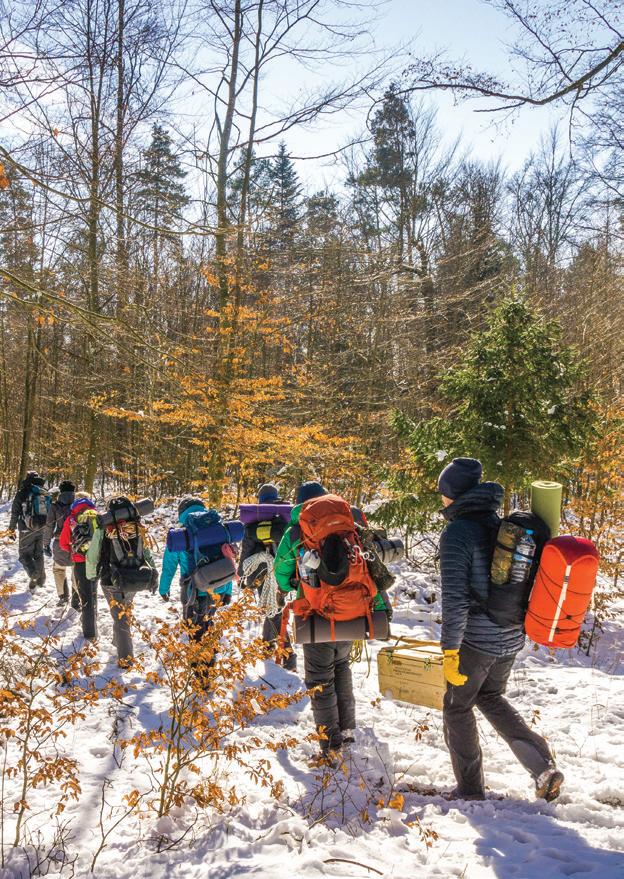
Crunching through the snow, gliding across the ice or conquering a glacier are just some of the heart-pumping winter adventures designed to get groups outside and active. Whether the objective for your group is team
building or simply enjoying downtime surrounded by pristine nature, winter activities bring people together to create unforgettable memories. Here are eight ways to make the most of a crisp, snowy day.
From zooming over fresh powder to taking in the spectacular mountain peaks, groups will love the adrenaline-pumping snowmobile tours arranged by Canadian Wilderness Adventures. With two locations in Whistler, British Columbia’s backcountry — on Blackcomb Peak and in the Callaghan Valley — participants can embark on guided tours ranging from mild to wild, based on their abilities. Guest-to-guide ratio is seven to one, and the operator can accommodate between two and 60 people on a single tour. Groups can choose from two popular options: the leisurely Callaghan Cruiser for beginners, which runs to the historic Northair Gold Mine site, or Wilderness Run for intermediates, which heads to more rugged terrain through thickly forested trails and onto frozen lakes.
In Reno, Nevada, Sierra Adventures coordinates a variety of outdoor backcountry activities in the Reno Riverwalk area for groups of up to 40 people. Their Scenic Snowmobile Adventure enables riders to explore different trails and take in gorgeous views of Lake Tahoe and the surrounding mountains. Groups can go on wide open runs or slower scenic tours. Pickups from local hotels are included, and the snowmobiling activity can be combined with any of the outfitter’s other winter sports.
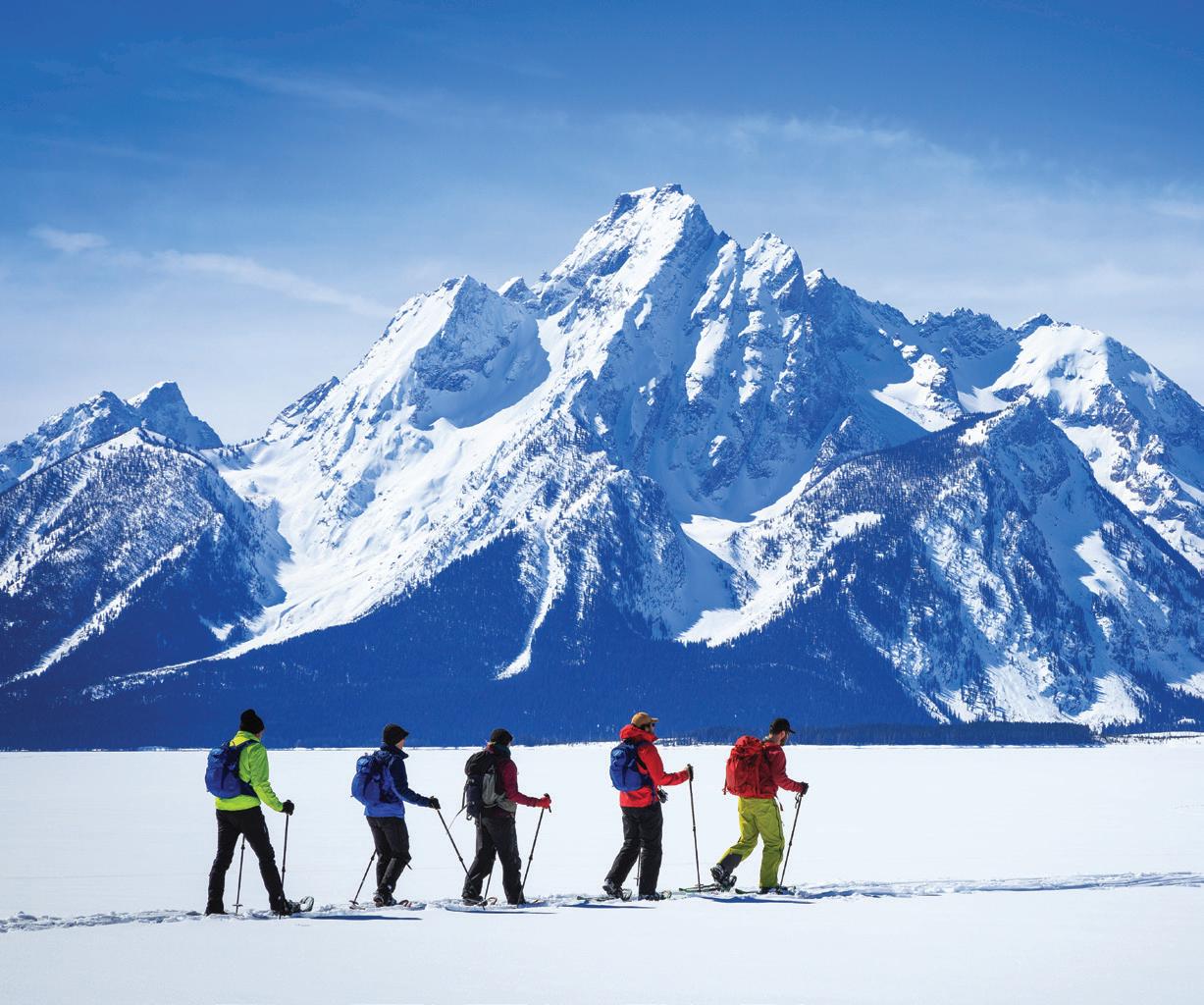
Groups can explore 13 unique areas in Grand Teton National Park on snowshoes, and Jackson Hole EcoTour Adventures in Jackson, Wyoming, is the only company allowed to operate snowshoeing tours in the park. Groups of up to 120 head off the beaten path and into the backcountry areas most visitors typically don’t visit.
The outfitter offers half- or full-day options, which can also include a wildlife safari program or cross-country skiing, meeting the activity level of participants, from leisure to moderate or aerobic-paced adventures. The company is happy to customize private tours, too. All tours are designed to forge a connection between guests and the region’s incredible wildlife, ecology, geology and history. Groups travel in customized safari-style vans and SUVs with roof hatches for unobstructed wildlife views and guaranteed window seats for every guest. Tours include meals, snacks and beverages, and participants are also provided with binoculars, maps and naturalist kits.
Dogsledding racer Alex Therriault and his family own the Ultimate Dog Sledding Experience, running guided dogsled tours on 250 acres of private woodland trails in Canton, Maine. The team can host groups with up to 16 participants at one time; larger groups are welcome with back-toback runs and cozy time in the on-site yurt between tours. Each sled holds two guests, and groups can choose from a 1.5-hour or 2.5-hour experience. Tours begin with an inside look at the life of a sled dog, where participants meet the animals in the micro kennel and learn about their history and daily routines. Most of the handcrafted dog sleds were built by Therriault’s father and feature comfortable memory foam cushions, warm blankets and a weather-resistant sled bag to protect riders from wind and cold as the dogs pull groups through narrow forest paths. After the ride, guests can warm up with complimentary coffee, tea or hot chocolate surrounded by friendly sled dogs who are happy to take selfies. The longer tour features a fireside break in the forest with s’mores, along with tales from the trails from the guide.
With more than 100 peaks rising up to 5,000 feet high, the southwest region of Germany offers ideal conditions for outdoor winter adventures. There are more than 1,200 miles of groomed cross-country ski trails in the Black Forest area, one of the largest connected ski areas in the German low mountain ranges, which have plenty of snow coverage surrounded by breathtaking landscape views. Most holiday resorts in the area also have scenic, plowed
paths for walking, hiking or snowshoeing, so guests can take in the serenity and silence among the fir trees. In the northern part of the forest, in Freudenstadt, visitors can enjoy extended circular hikes through Loßburg or a leisurely hike over the Kienberg, where groups can warm up at the Lauterbad mountain hut. This region of Germany boasts 430 miles of groomed cross-country ski trails, where guests can spot the Alps and Vosges in the distance.
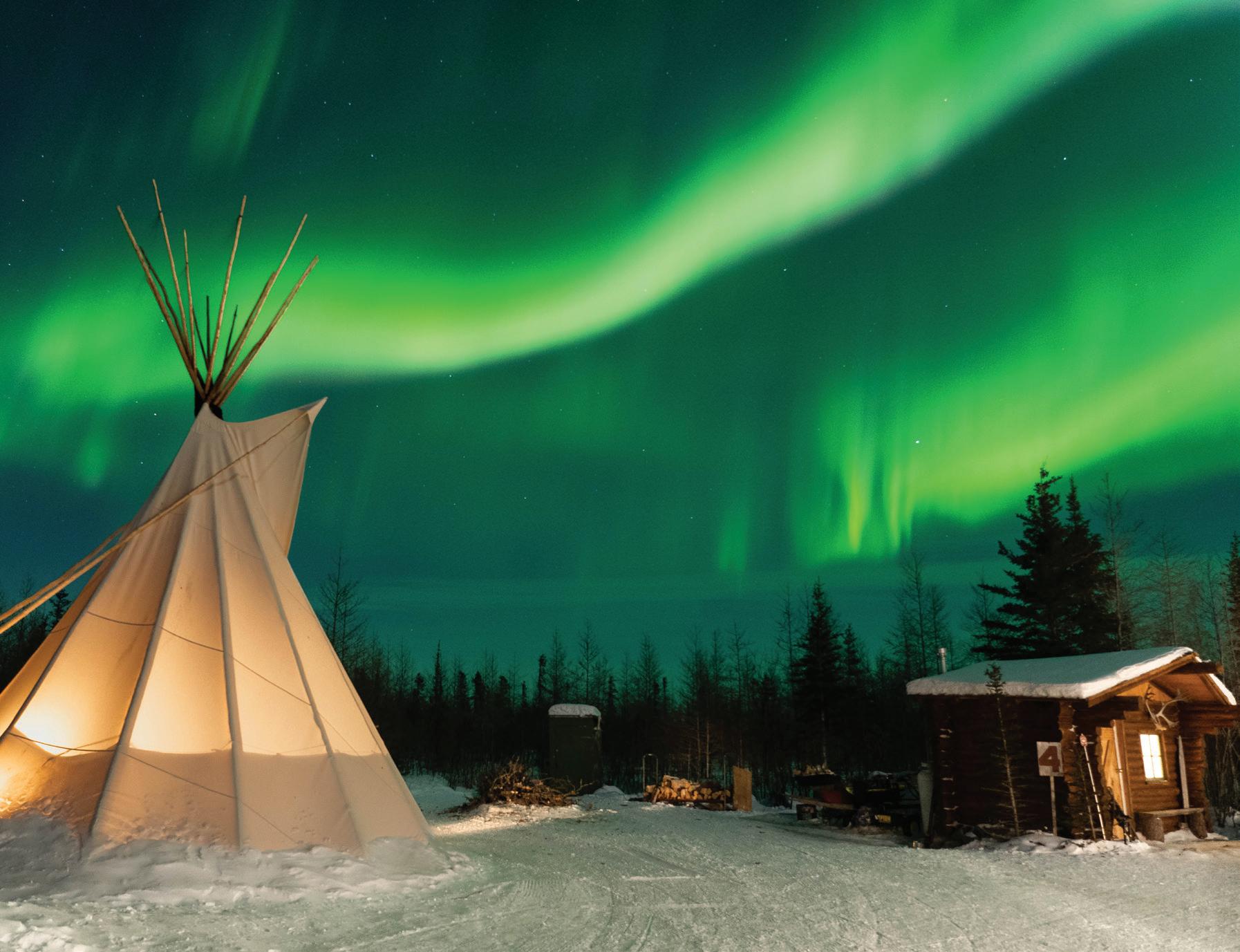
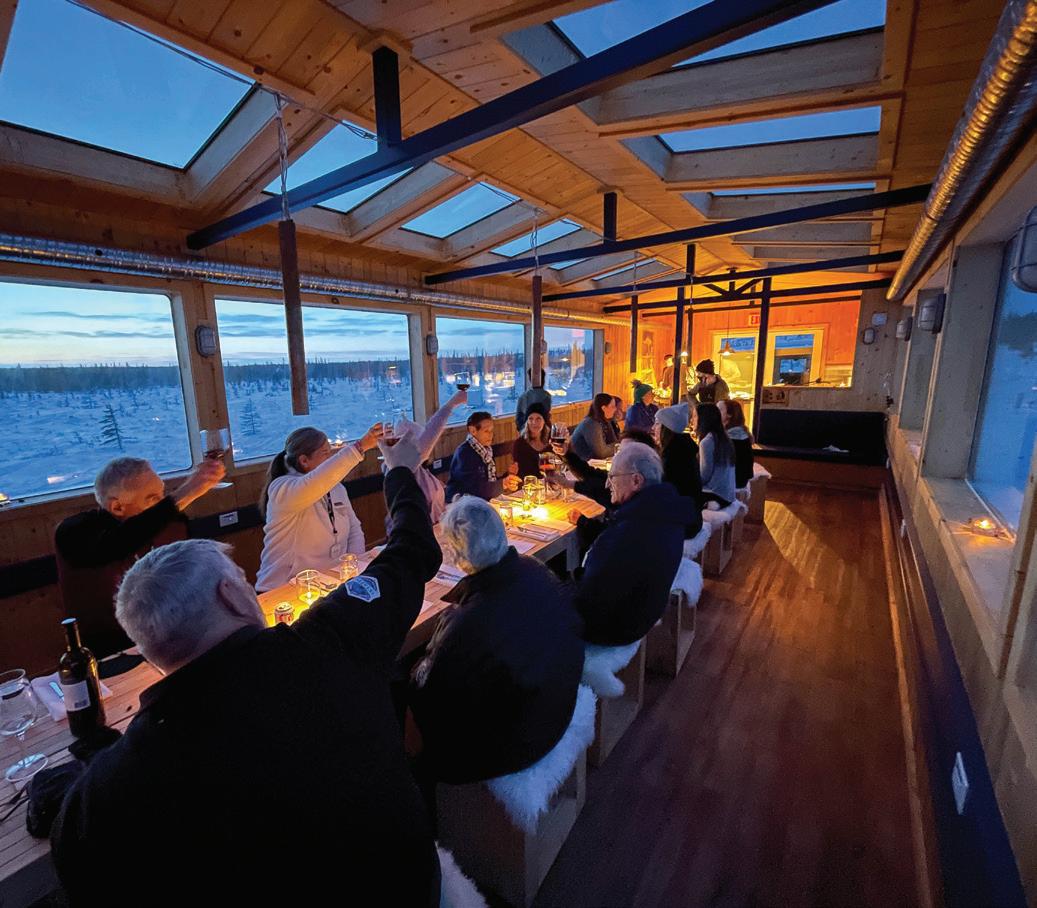
Fairbanks, Alaska, is known as one of the best places in the world to see the Northern Lights. With minimal light pollution and few crowds, the city is well positioned directly under the auroral oval, where aurora activity is concentrated. That means groups can often see the aurora directly overhead, filling up the entire sky, rather than off in the distance. And because Fairbanks receives less than a quarter inch of precipitation in the prime aurora viewing month of March, the Northern Lights are visible for four out of five nights when the sky is clear and dark enough. Another top global destination for Northern Lights viewing is Churchill, Manitoba, which is also located where intense auroral activity occurs, producing spectacular displays of the aurora borealis. During winter, the region’s water sources are completely frozen over, which reduces condensation and results in clear skies for ideal viewing conditions, especially in February and March. Frontiers North Adventures offers a luxury culinary experience beneath the aurora on the frozen banks of the Churchill River. Dan’s Diner, a custom-built venue, features panoramic windows and skylights. Groups enjoy a seven-course gourmet meal featuring local ingredients, followed by cozy views of the Northern Lights for those who prefer to stay indoors. Lake Placid in the Adirondack Mountains offers some of the East Coast’s most pristine dark sky environments, and groups staying at the luxurious Whiteface Lodge will be treated to first-class stargazing experiences at nearby prime spots, including Mount Jo and the John Brown Farm State Historical Site.
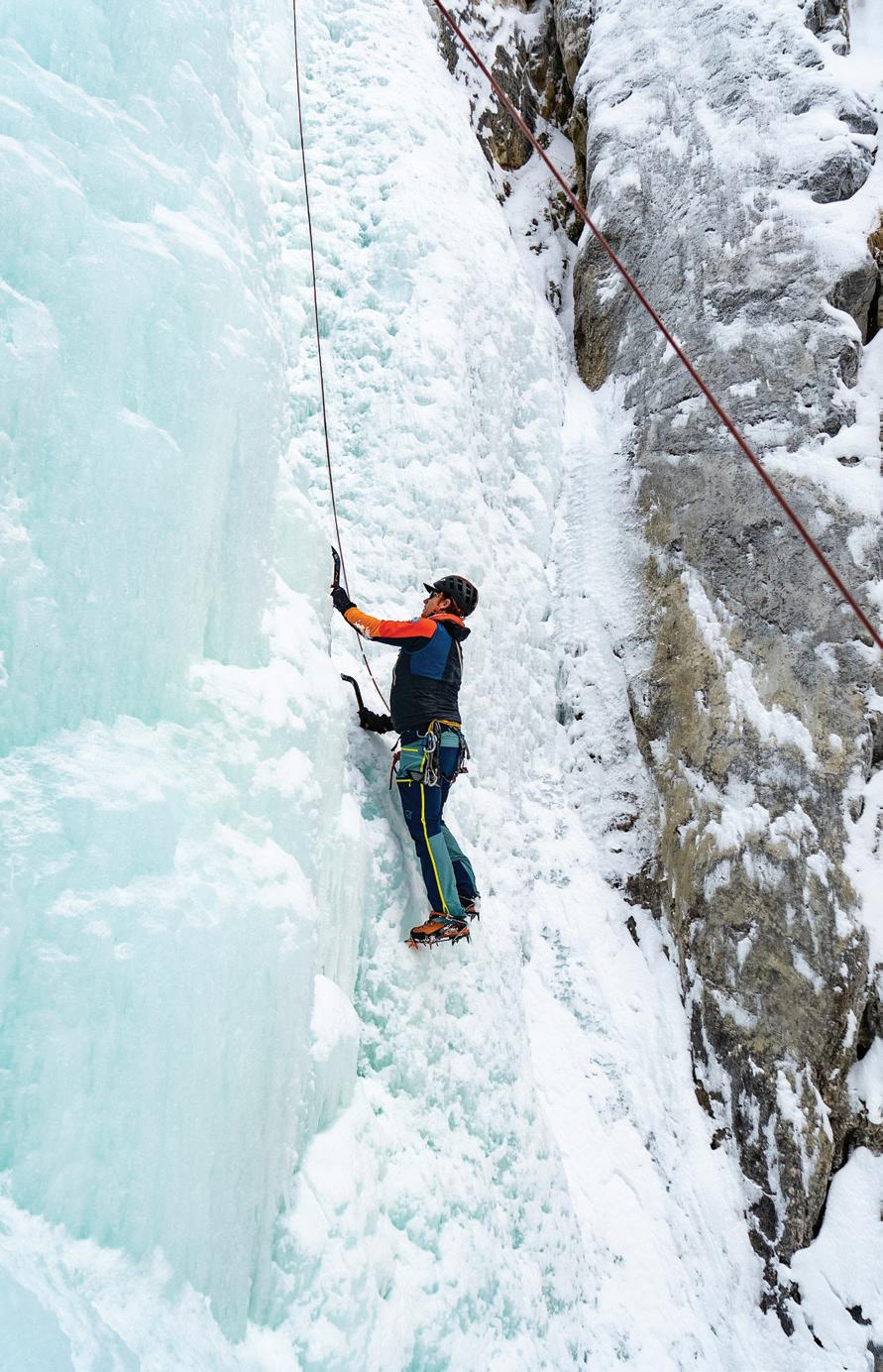
For groups seeking a challenging “bucket list” experience, an ice climbing training course in Alberta is a terrific option. Alpine Air Adventures provides certified mountain guides at a six-to-one ratio to lead beginners or veteran climbers of all ages. Participants will learn essential skills — such as using crampons and ice tools and how to belay on ice — so they can climb safely and confidently on glaciers. Groups will gain practical experience on frozen waterfalls throughout the daylong excursion, including safety practices in a cold-weather environment.

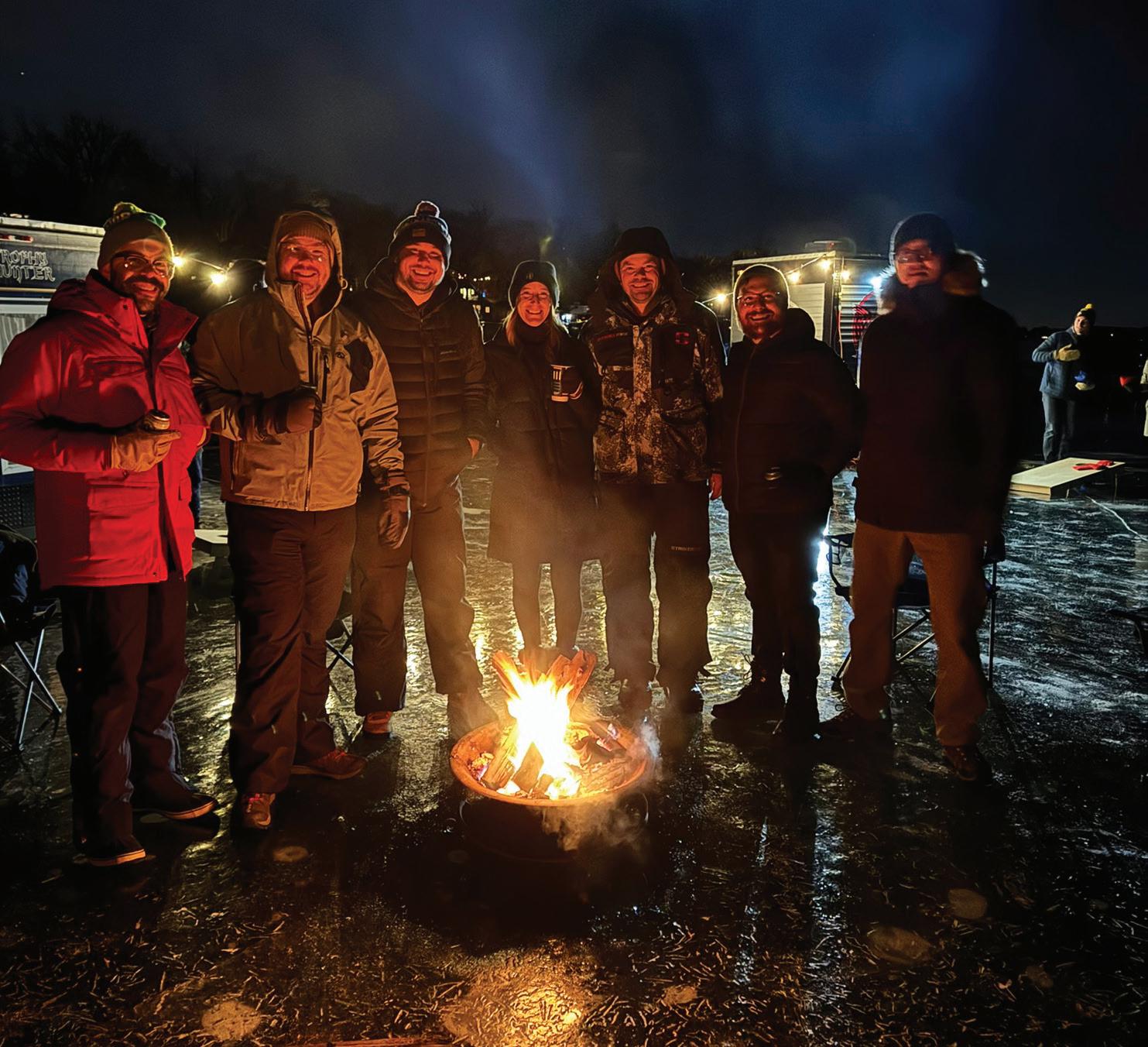
Fishing hosts private ice-fishing events on Lake Minnetonka — one of the most iconic lakes in the Midwest — for groups of 15 to 150 people, with a fully guided, all-inclusive day on the ice, complete with nine heated Ice Castle units and predrilled fishing holes. The company provides fishing lessons, electronics and baiting hooks. The luxury fishing huts feature televisions, fish finders and underwater cameras that are hooked up to the TV, and each house can host up to eight people.

Fishing also sets up fun outdoor activities, such as putting greens, fire pits, a bag toss and fish fries, to complement the ice fishing experience.
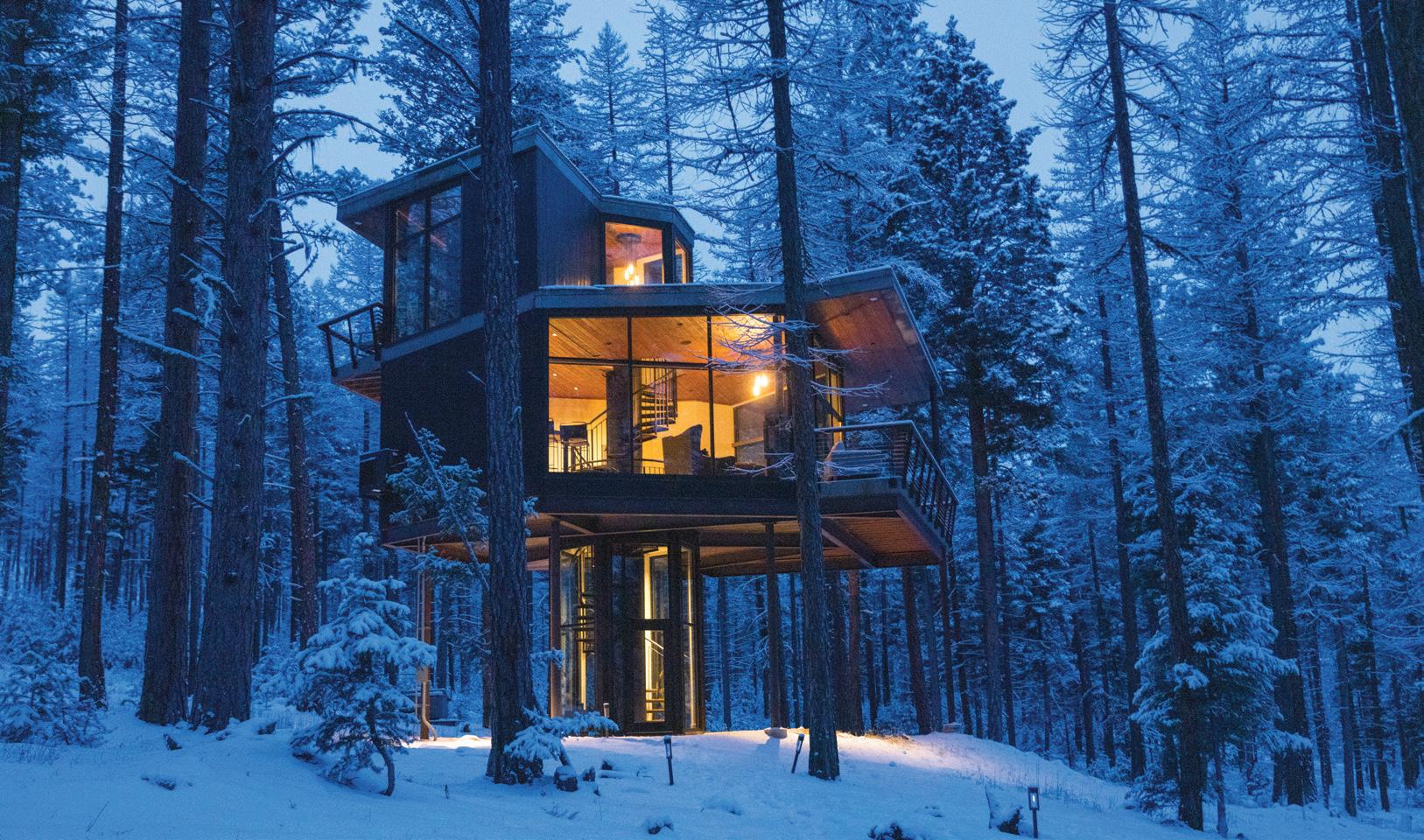
At Paws Up Montana, a year-round resort and working cattle ranch, groups can participate in dozens of winter activities and stay in luxury homes, most sitting on four-acre lots. Located on 37,000 acres of land about 35 minutes from the Missoula International Airport, the property features 100 miles of trails and a wide river, making it ideal for horseback riding, ice fishing, snowshoeing, dogsledding, guided snowmobiling, cross-country skiing and a chance to explore the snow-covered terrain on electric snowbikes called MoonBikes. There are also special winter events, including a guided backcountry biathlon inspired by the Olympic Games, with cross-country skiing and target shooting.



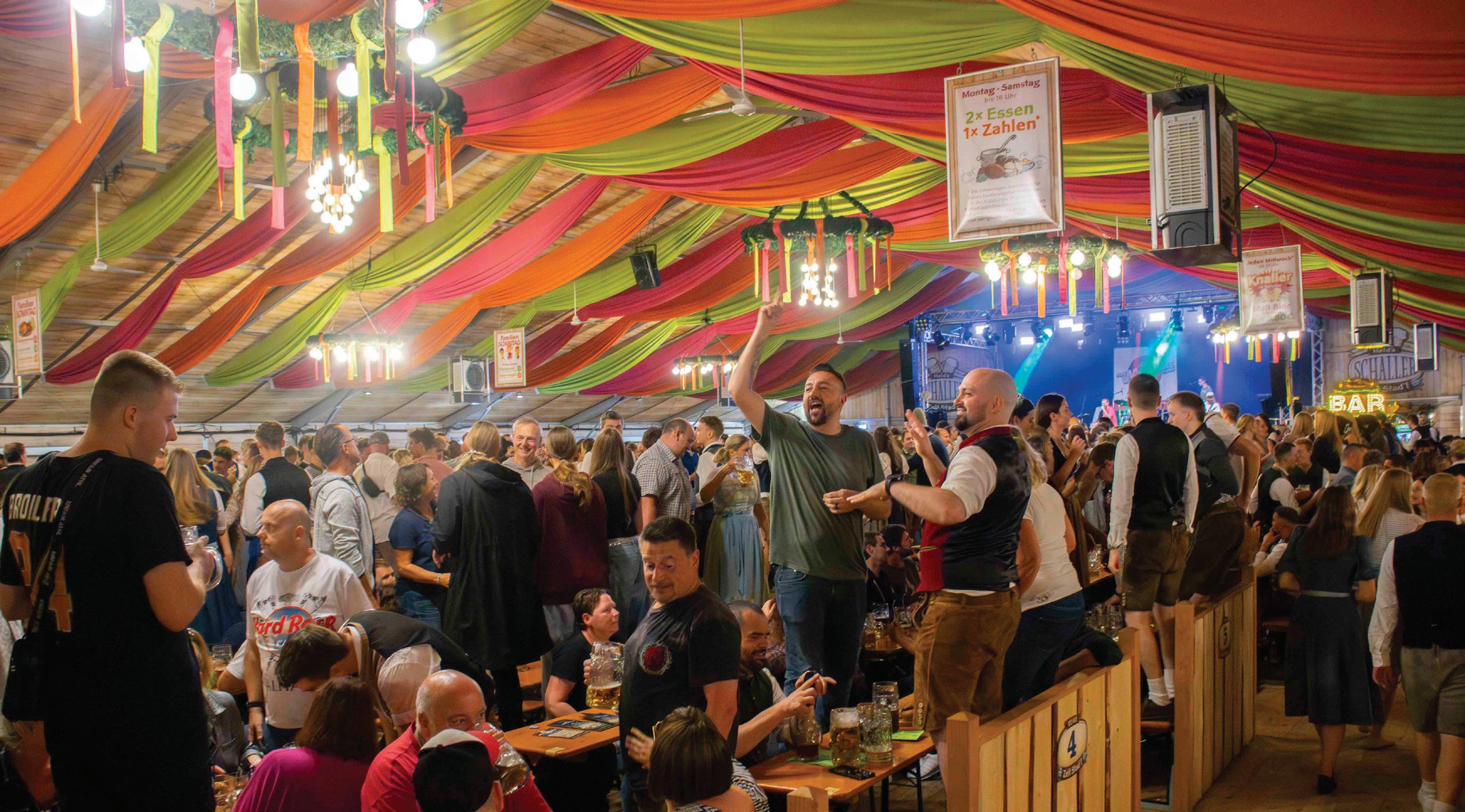
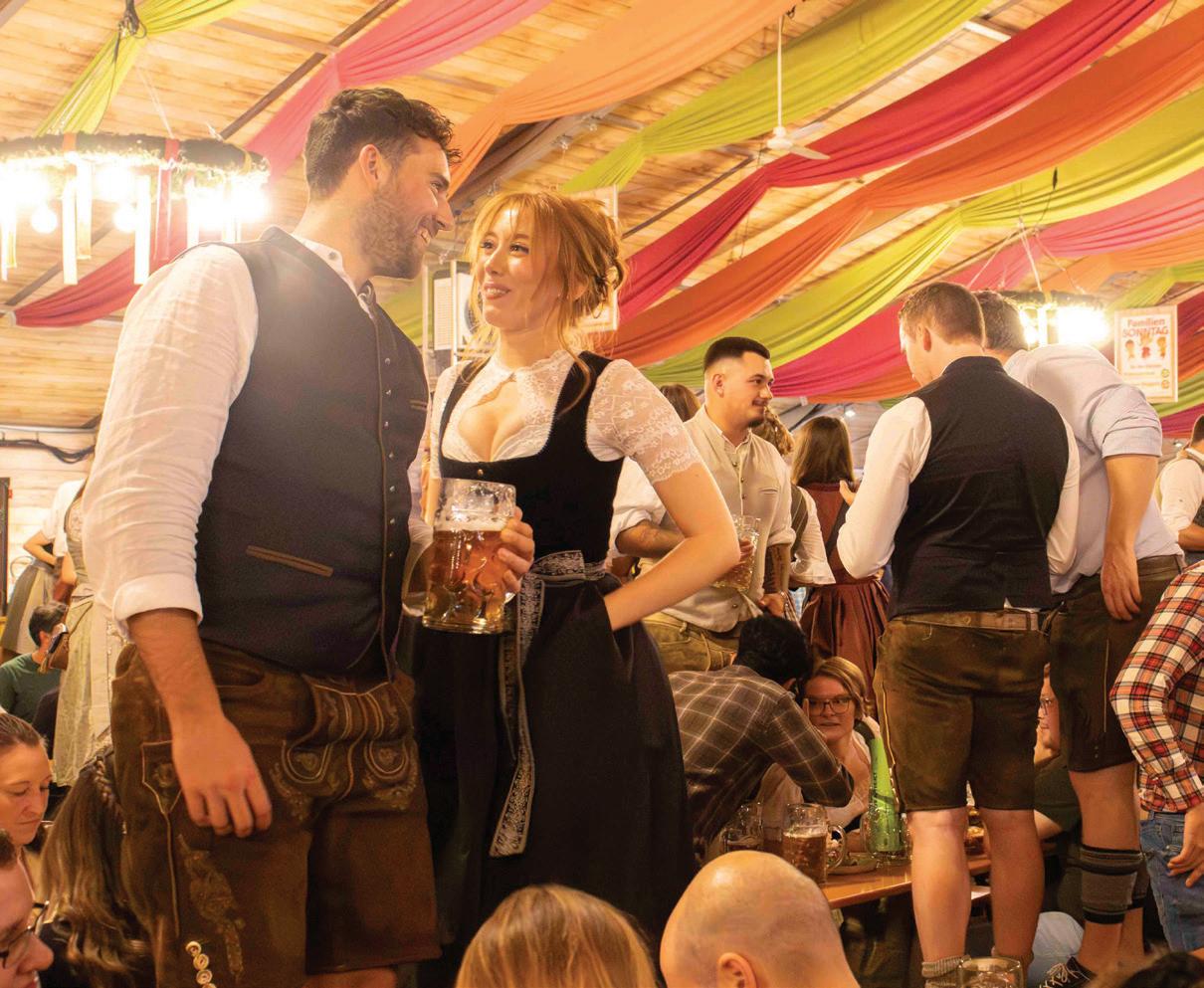
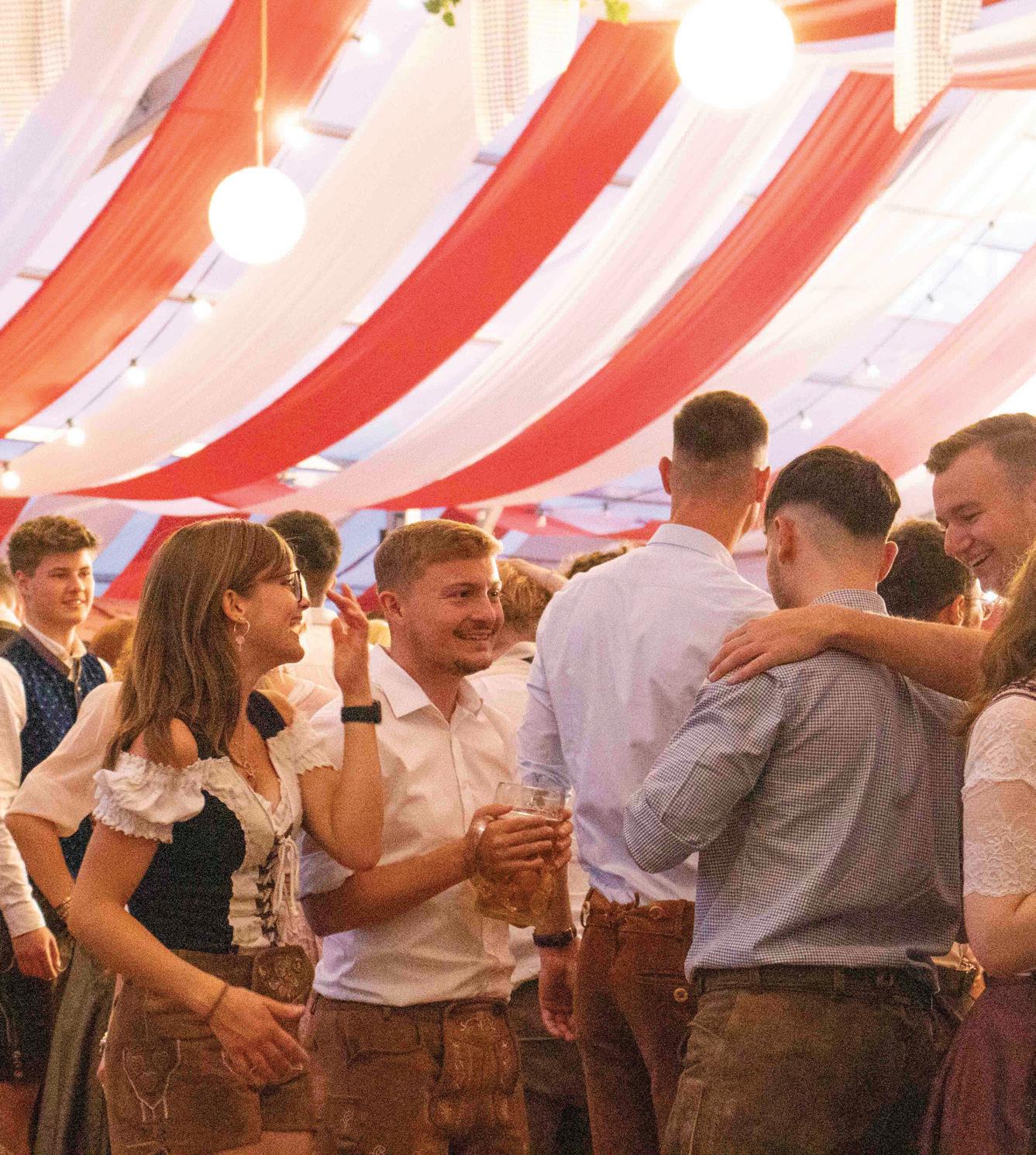
Celebrants in traditional lederhosen enjoy Regensburg’s Dult festival.
BY MAC LACY
Many of us in the U.S. have heard younger generations sing along to decades-old standards like Neil Diamond’s “Sweet Caroline” or John Denver’s “Take Me Home, Country Roads”. Those songs and others transcend age barriers and seem to be passed along from one generation to the next as musical rites of passage.
Listening to young revelers at Germany’s iconic beer festivals, dressed in lederhosen and dirndls with steins raised, sing those American standards was unexpected. The effect for me was camaraderie; I immediately felt welcome at these centuries-old German celebrations.
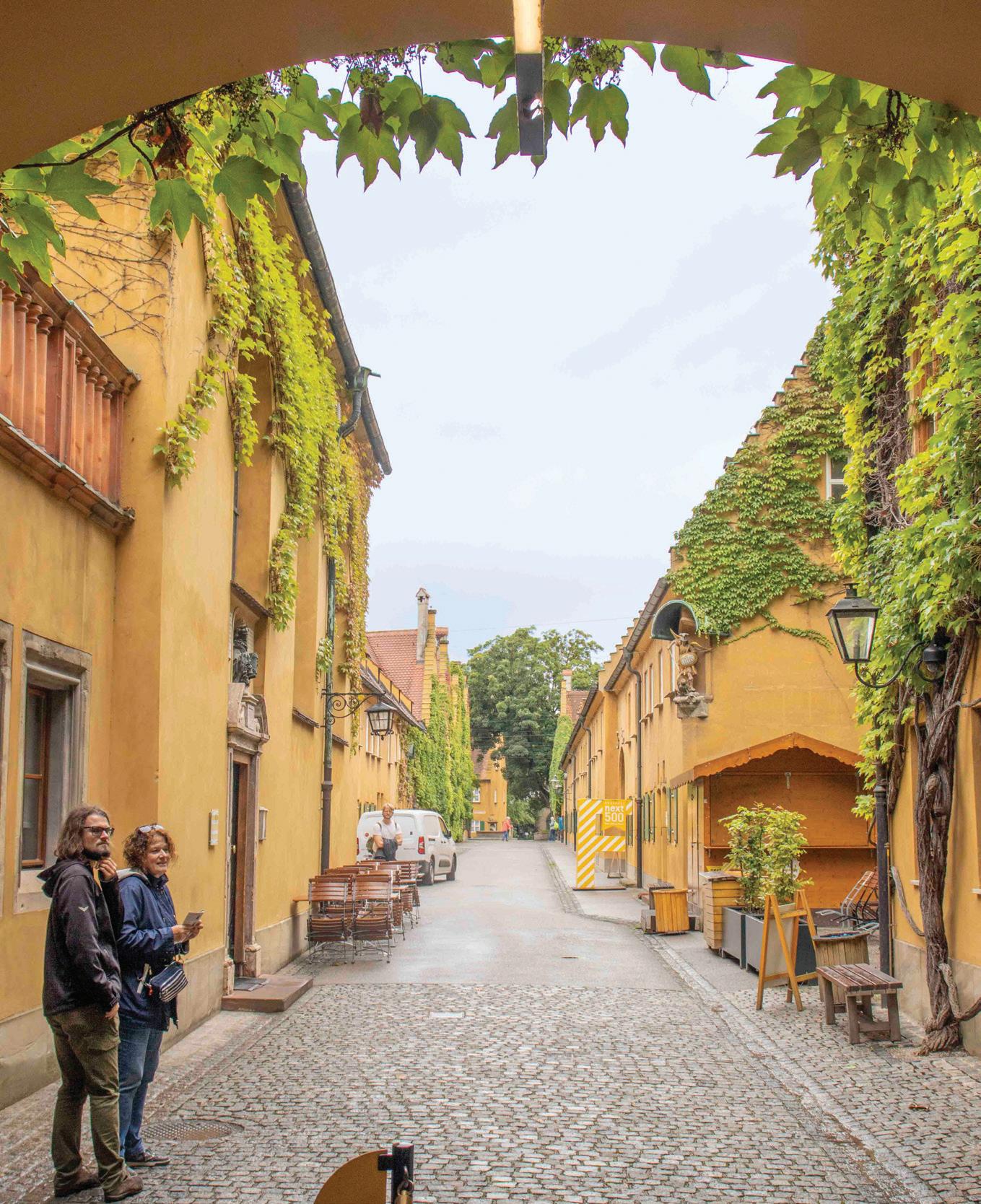
An apartment at Augsburg’s Fuggerei village
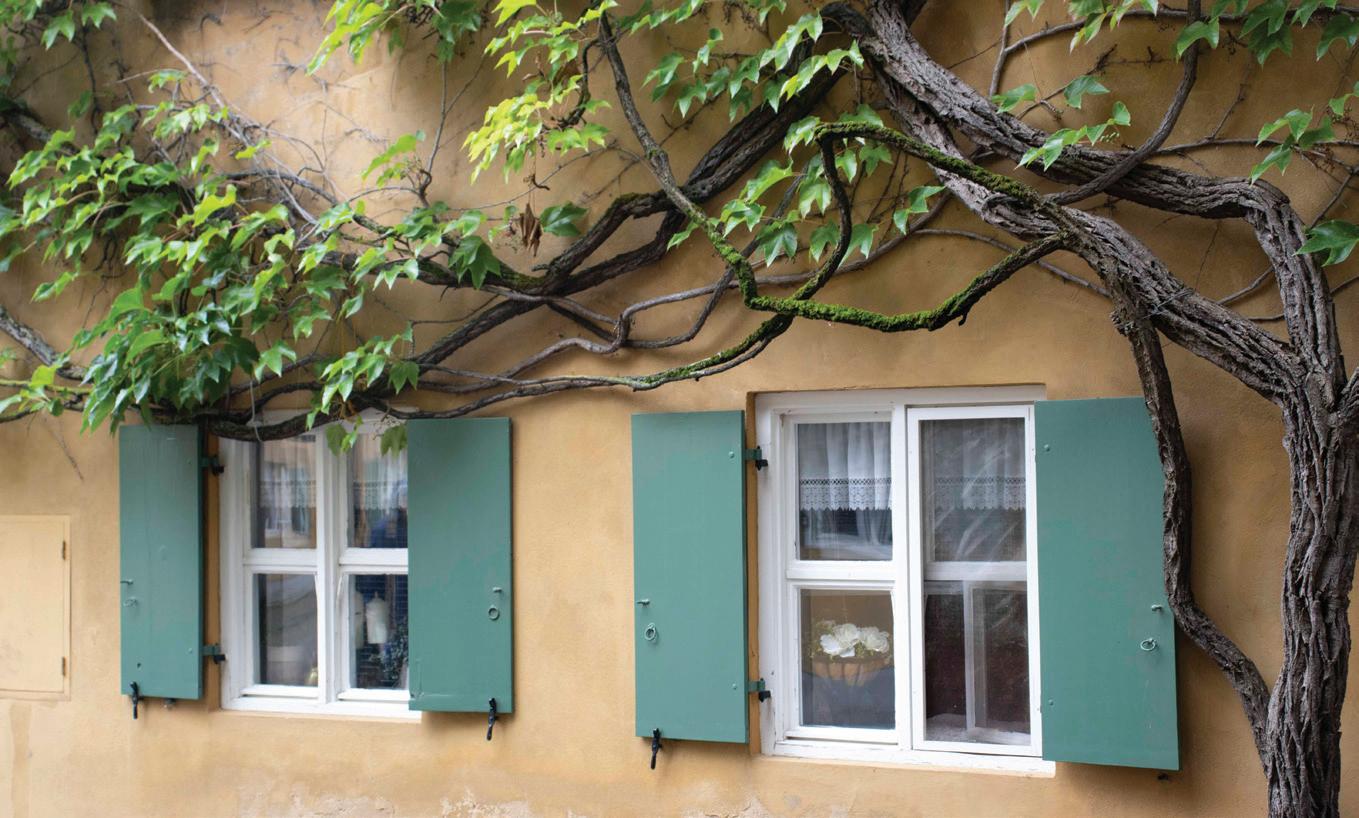
My Historic Highlights of Germany tour during the country’s fall beer festival season began in Augsburg, where I joined my German American host, Ted Keppler, for a few days of toasting, tasting and traveling through Bavaria and Thuringia, two German states. Augsburg in Bavaria became a European center of commerce after the Romans settled there in 15 B.C. The area’s water supply from alpine lakes was an energy source they could harness.
Water systems created between the 14th century and 17th century ultimately earned Augsburg a UNESCO World Heritage Site distinction. The city’s water towers, canals and waterwheels are fascinating for the ancient technologies they illustrate. They are among Augsburg’s most charming features.
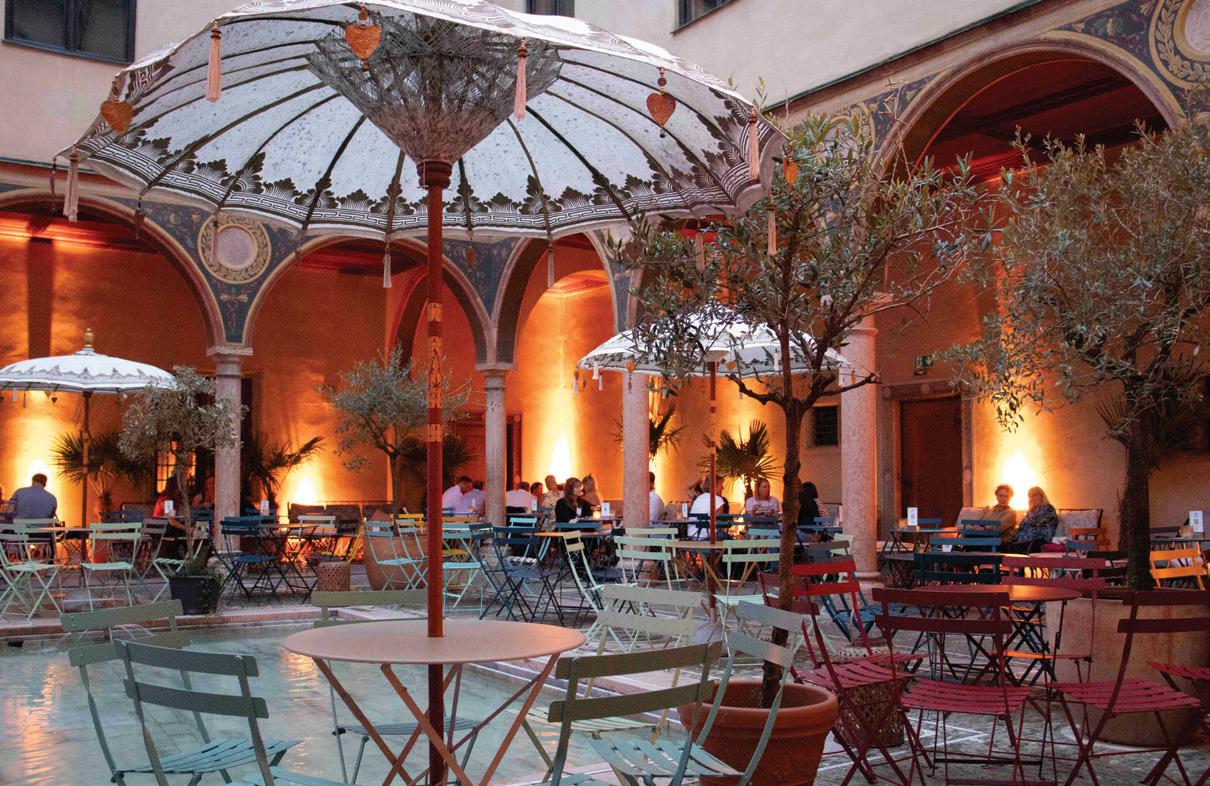
My first German dinner was at Riegele Wirtshaus, a revered Bavarian restaurant whose brewery dates to 1386. My host ordered Augsberger Fladlesuppe, a flavorful broth garnished with pancake strips; Brauhaus Wurstsalat, a marinated sausage salad; and Knusprige Schweinshaxe, a succulent pork knuckle entree. With my meal, I enjoyed a Riegele Hefe Weisse beer, a wheat beer that pairs with many German dishes. Afterward, we walked through the city to have another hefeweizen on the Fuggerhauser complex’s crowded Damenhof Court terrace.
Augsburg Cathedral, a Catholic church featuring Romanesque and Gothic architecture, was constructed in the 11th century and renovated three centuries later. It contains the oldest stained glass windows in Germany, and its intimate Dom Marian Chapel is a cherished site for weddings. Its ancient underground crypt is illuminated by an altar window that has been backlit by sunlight for centuries.
We visited the Augsburger Puppenkiste museum, where dozens of school-aged kids gathered for a matinee. This puppetry collection showcases handmade characters from a celebrated artform. German fairy tales have been performed with marionettes for centuries.
Augsburg’s Fuggerei social project has endured for 500 years since its founder, Jakob Fugger, built it to provide indigent housing for city residents. Fugger was an affluent merchant who helped fund the Hapsburg empire and assuaged his “wealth guilt” by creating this affordable gated community. His residents agreed to send three prayers
daily to God that included intercession on his behalf.
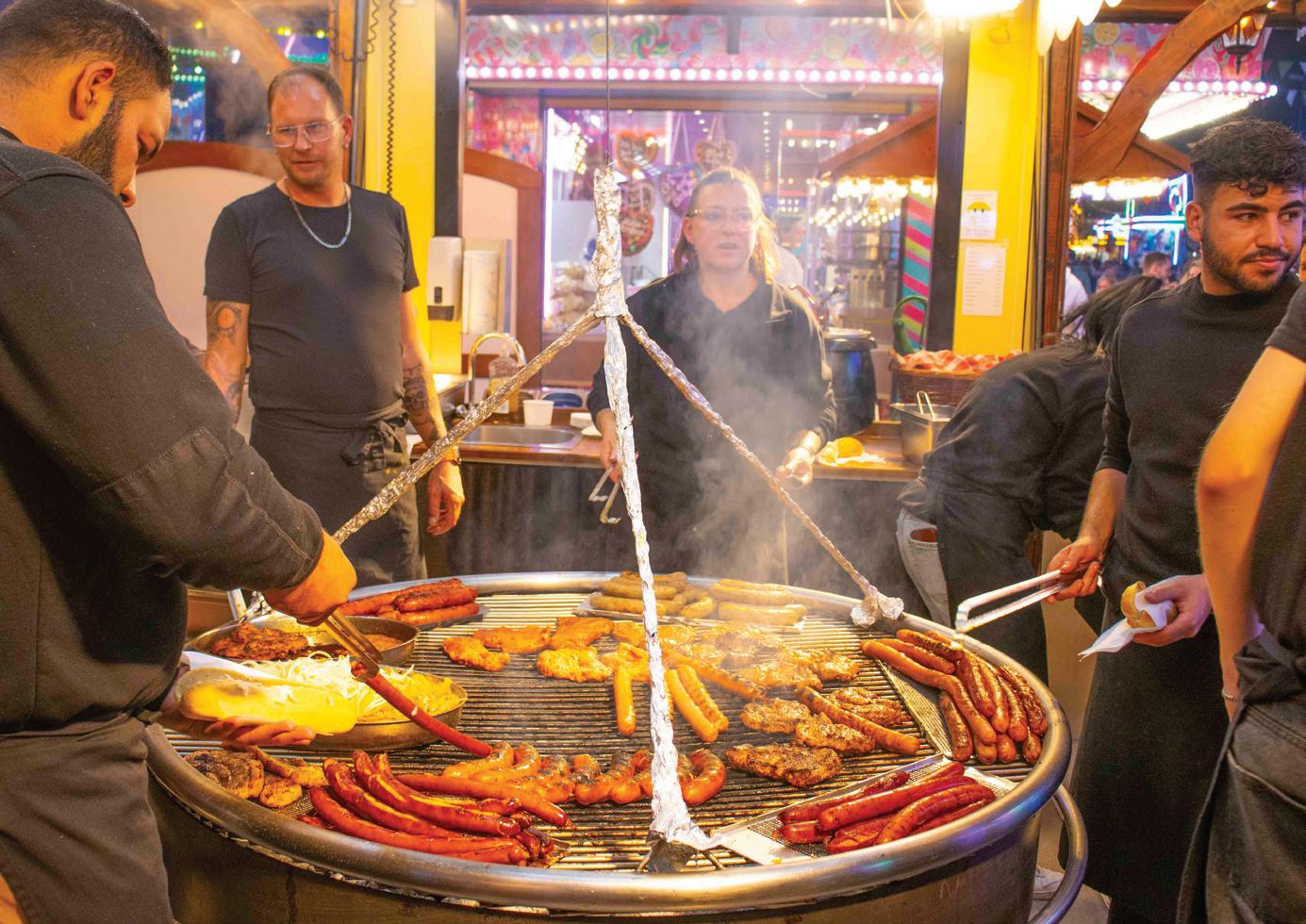
That evening, Keppler and I headed to the first of two beer festivals on the trip, the Augsburg Plarrer, a celebration that has endured for generations. A boisterous carnival setting greeted us, where families gathered for rides and enjoyed sizzling sausages fresh off the grill.
We found our seats in the cavernous festival tent, and Keppler ordered us both a traditional “festbier,” a local Helles beer served in a one-liter stein. He then ordered me a festival favorite, Hendl und Kartoffelsalat, seasoned rotisserie chicken served with potato salad. Keppler immediately taught me that a proper toast in Germany requires locking eyes with your tablemates.
A festive band played on a massive stage, and college-aged kids at tables stood to sing along. These boisterous patrons make the event. The German standard, “Ein Prosit,” translated “A Toast,” is played frequently throughout the night. It’s tradition to stop conversations, sing along and toast your tablemates — Prost!
Sausages
on the grill
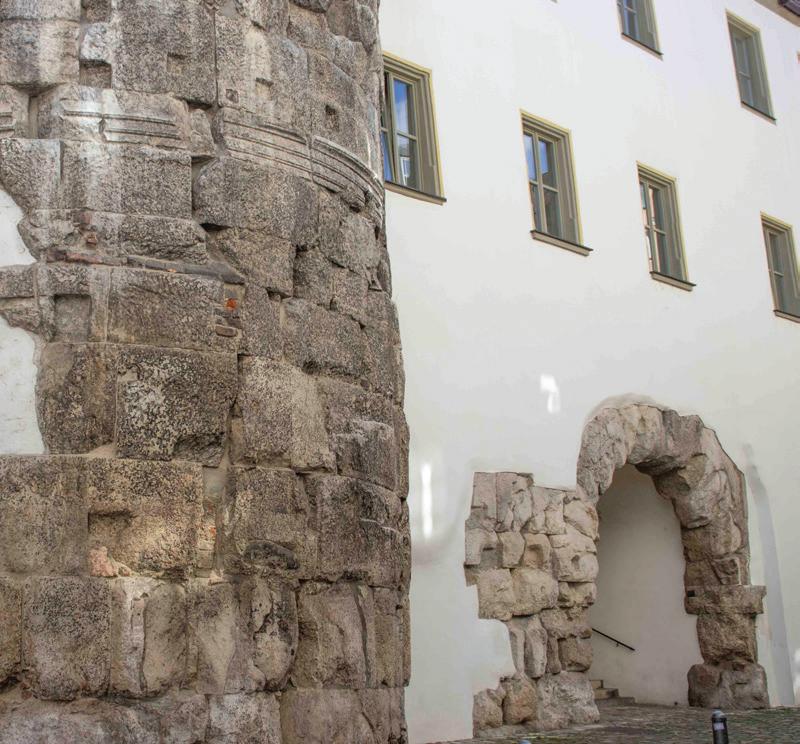
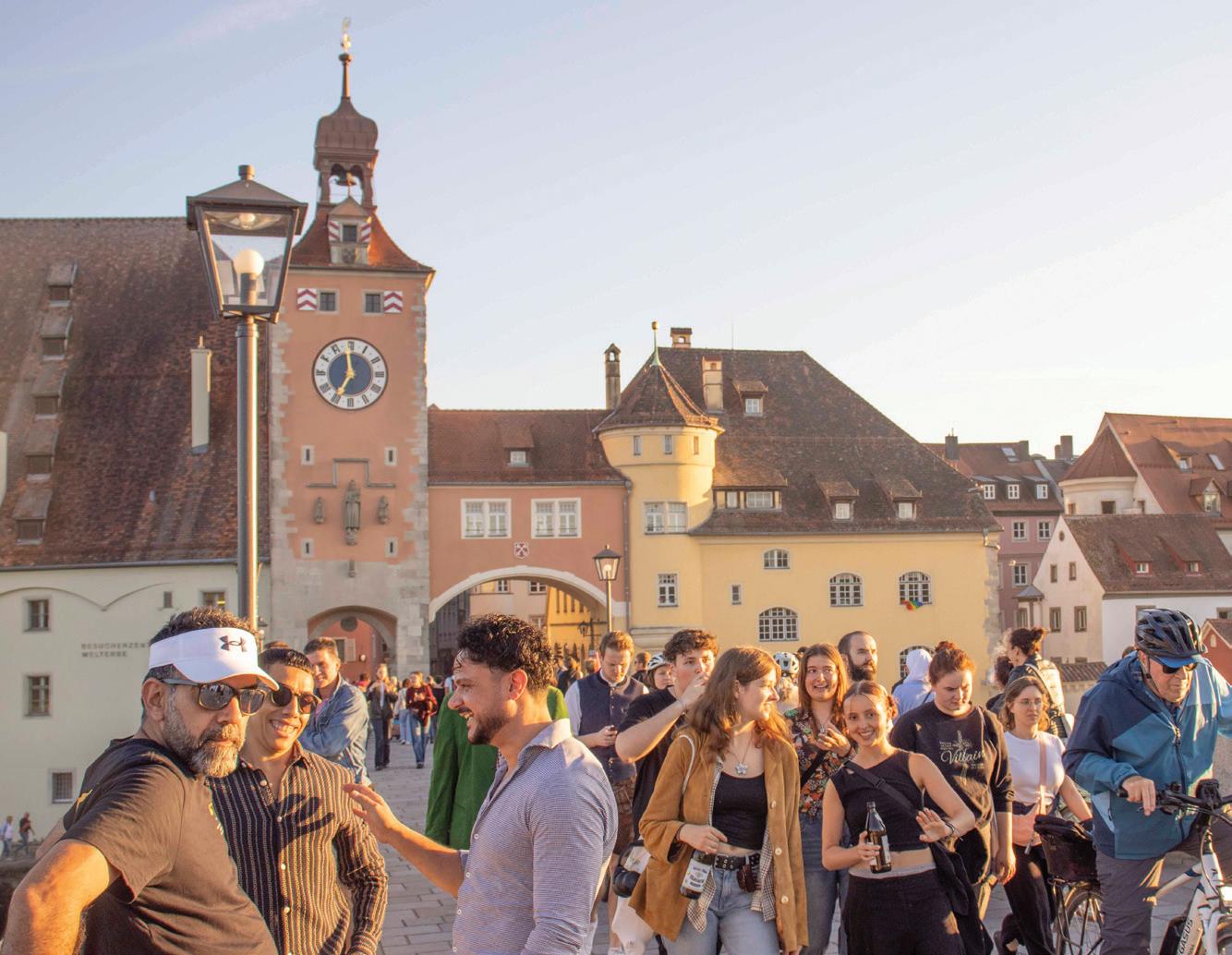
The Danube River intersects the iconic Bavarian city of Regensburg, its banks forever united by a medieval masterpiece: the 900-year-old Stone Bridge. Regensburg’s original Roman settlement began 2,000 years ago on the east bank, and its Porta Praetoria Roman Gate endures as a testament to Rome’s masterful masons.
For lunch, Keppler and I grabbed a Rote Knacker sausage in a bun in the Neupfarrplatz square. This grilled sausage sandwich garnished with spicy horseradish, sweet mustard and pickle was my favorite food discovery of the week.
My tour of Regensburg’s medieval core began in that square where stone markers define the site of the Jewish synagogue that existed 500 years ago. Jewish residents were expelled in the 16th century, but the synagogue’s cellar remains. The Neupfarrkirche Protestant church stands nearby, and Regensburg’s Christmas markets have brightened this square’s holidays for 150 years.
From the ninth to the 13th centuries, local merchants were among Europe’s wealthiest. They competed to build the highest towers for their residences or offices. These medieval towers and other sites, including Stone Bridge, have earned Regensburg. A UNESCO World Heritage Site distinction.
“That evening, Keppler and I headed to the first of two beer festivals on the trip, the Augsburg Plarrer, a celebration that has endured for generations. A boisterous carnival setting greeted us.”
Regensburg’s Roman Gate masonry
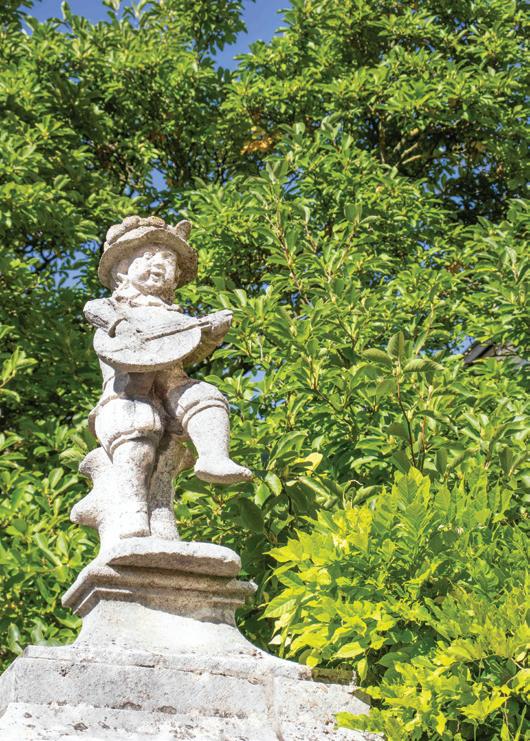
A musician adorns Thurn and Taxis Palace courtyard.
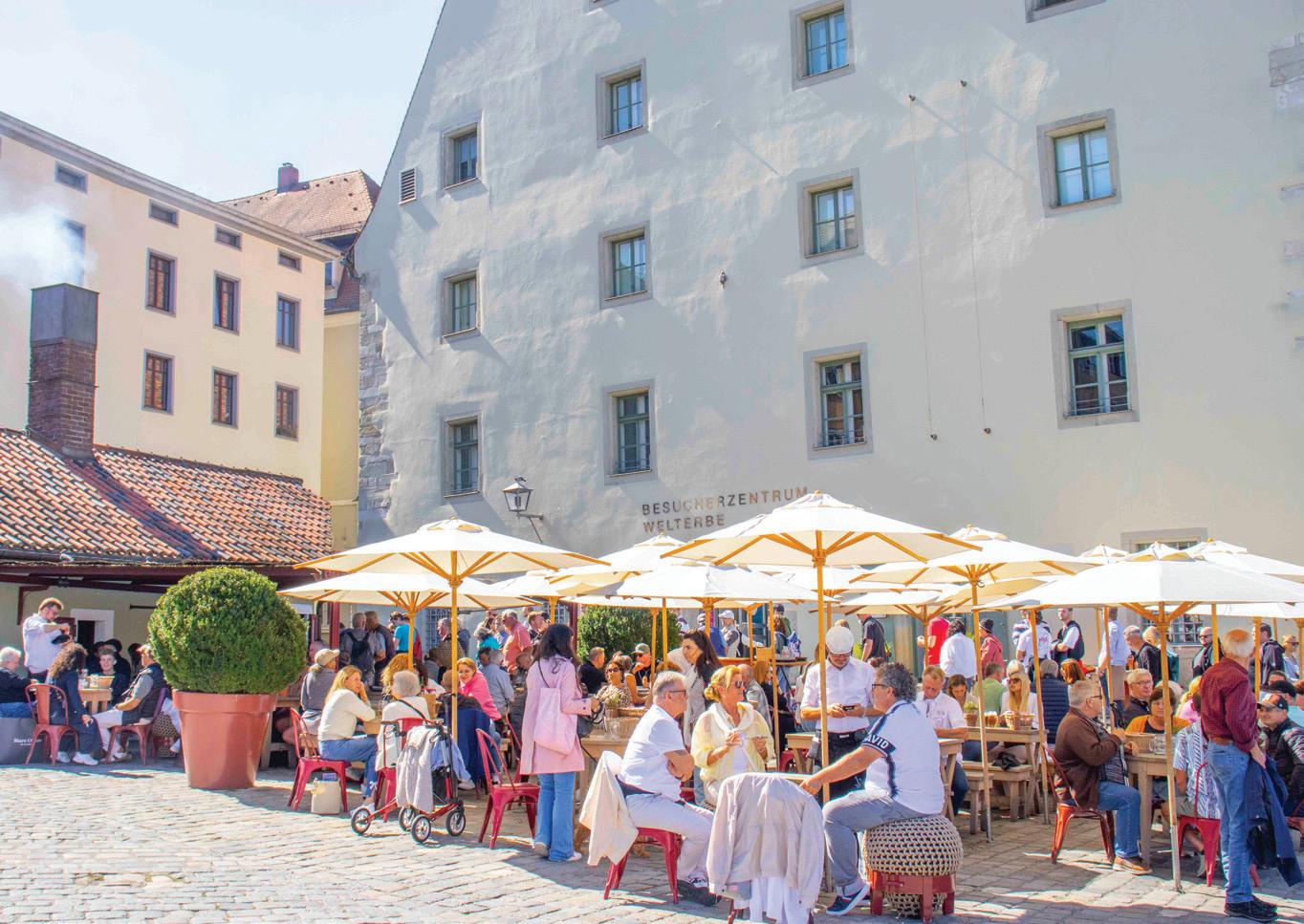
America’s discovery in 1492 began Regensburg’s decline as a trading center. Its merchants remained loyal to the Silk Road and Far East, while many European traders pivoted to the New World.
Thurn and Taxis Palace is a “Princely Palace” that occupies a former 11th-century Benedictine monastery, the Imperial Abbey of St. Emmeram. While numerous rooms of the palace are regally furnished for entertaining, it also contains the best-preserved monastery cloisters in Germany. Thurn and Taxis Princely Brewery occupies a former carriage depot and produces highly regarded beers.
Keppler and I walked to the Regensburg Dult beer festival that evening, where another dazzling midway illuminated the night. The aroma of grilled sausages was intoxicating. At the Dult, we had seats on the wing, facing the youth-filled tables in the center.
Our server brought us a festbier, and Keppler ordered Regensburger Wurstsalat mit Butter und Natursauerteigbrot, a sausage salad with butter and natural sourdough bread; a handmade pretzel; and a plate with items like smoked ham, Emmentaler cheese, pickles and fresh cut tomatoes.
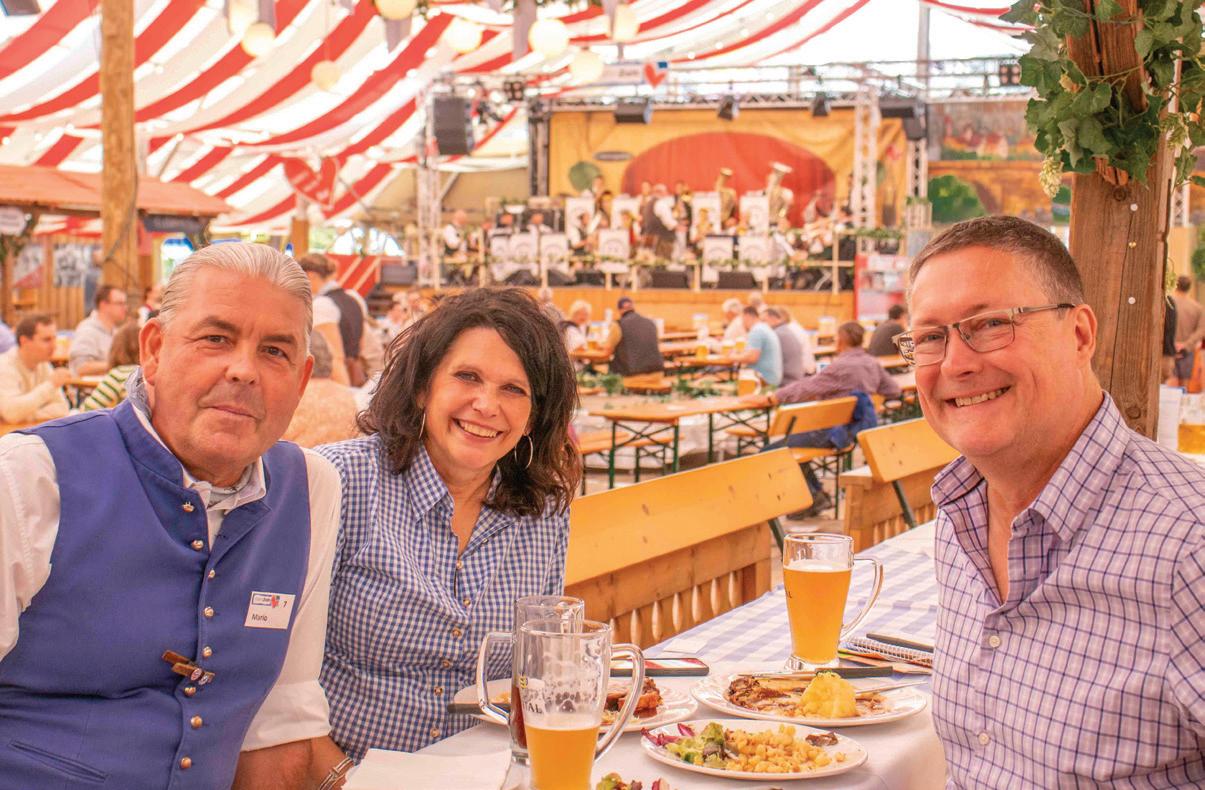
I loved this seating. We were near the action but not engulfed by it. Some 2,000 guests dressed in stylish lederhosen and dirndls celebrated their German ancestry. Servers paced the aisles, carrying five or six beers at a time, having as much fun as the guests. I did the math and knew immediately that two beer festivals are twice as much fun as one.
The following morning, we attended the Dult’s Sunday breakfast, where we joined local hosts for Schweinebraten (pork roast) mit Knodel and Kasespatzle (cheese pasta) with sauerkraut. A traditional German orchestra played while parents watched their children wriggle from their seats to explore their surroundings. Families treasure these cultural gatherings.
Keppler aced the autobahn drive to Erfurt, a charming city in Thuringia that endured four decades of Soviet rule during the Cold War. We made our way to the Zum Goldenen Schwan restaurant, another local landmark that brews its own beers. Keppler ordered us Erfurter
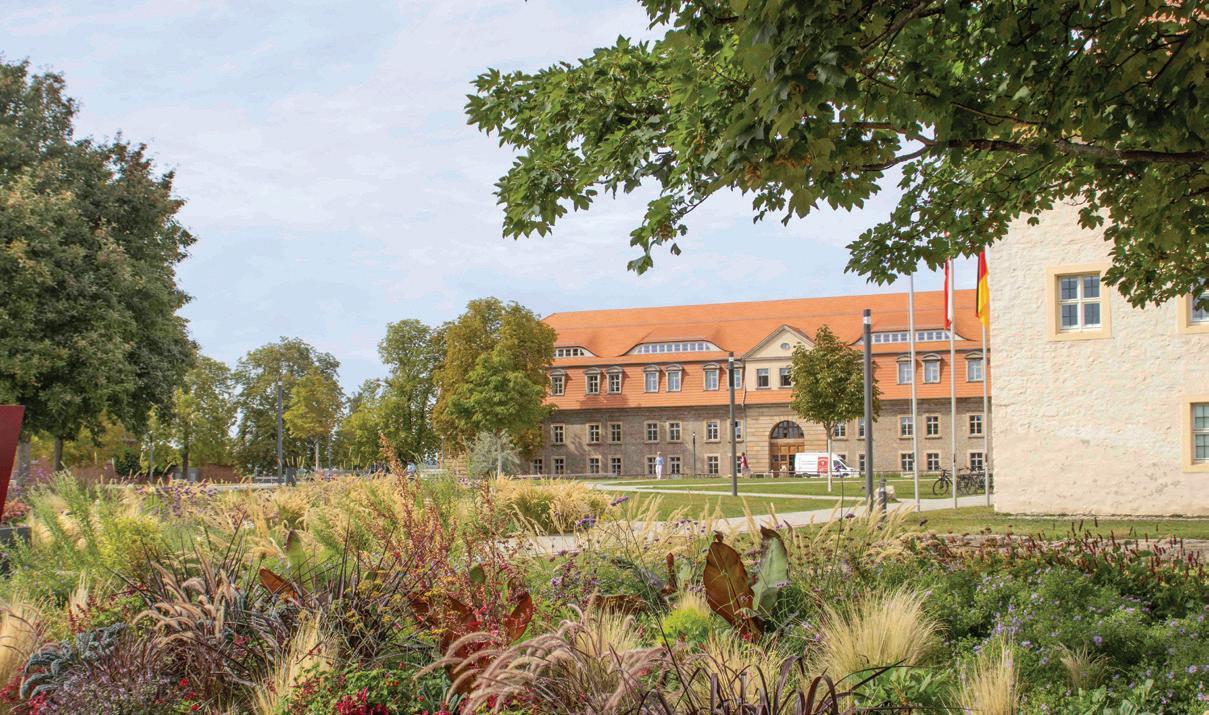
Petersberg Citadel stands on a bluff overlooking Erfurt.
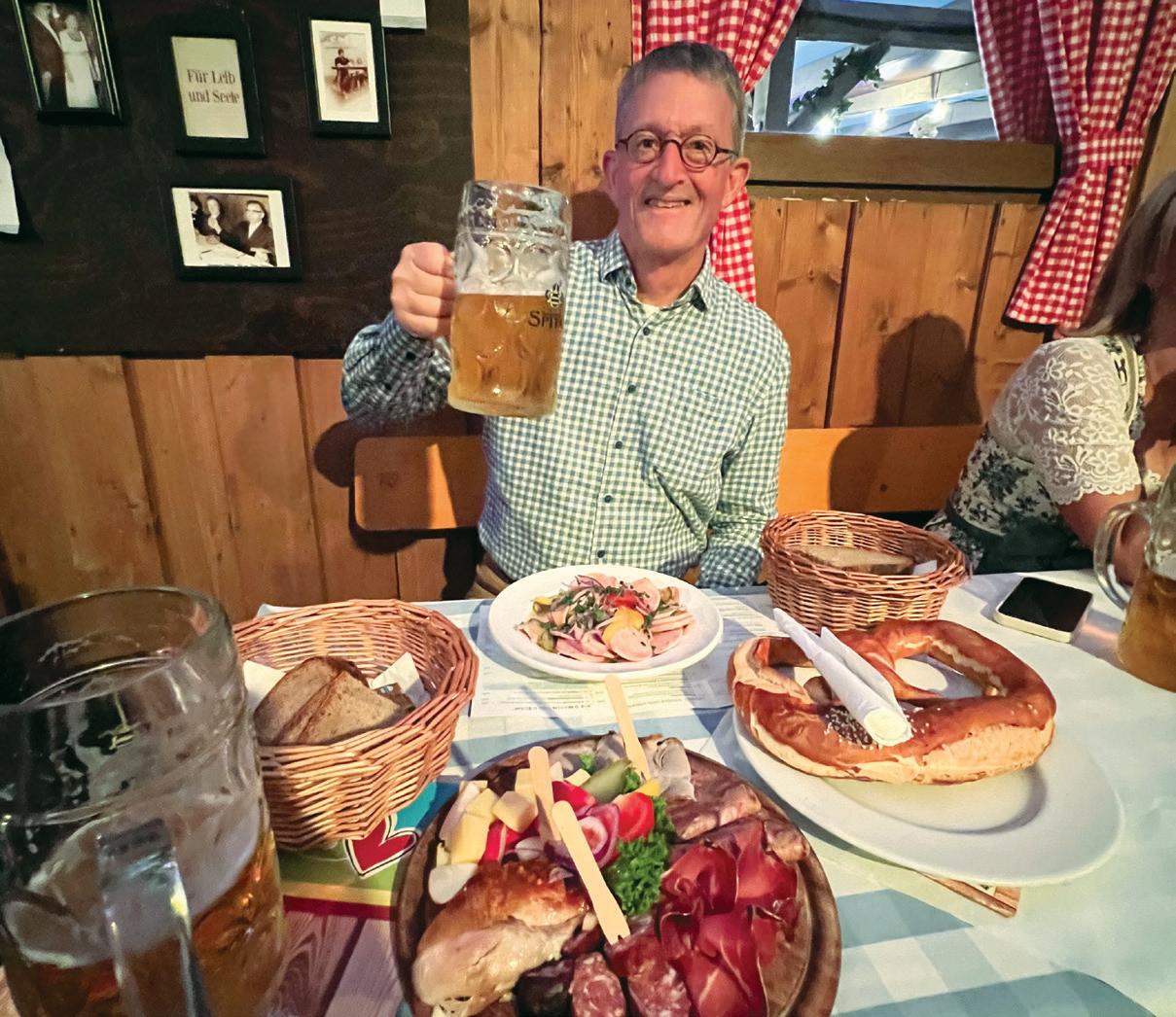
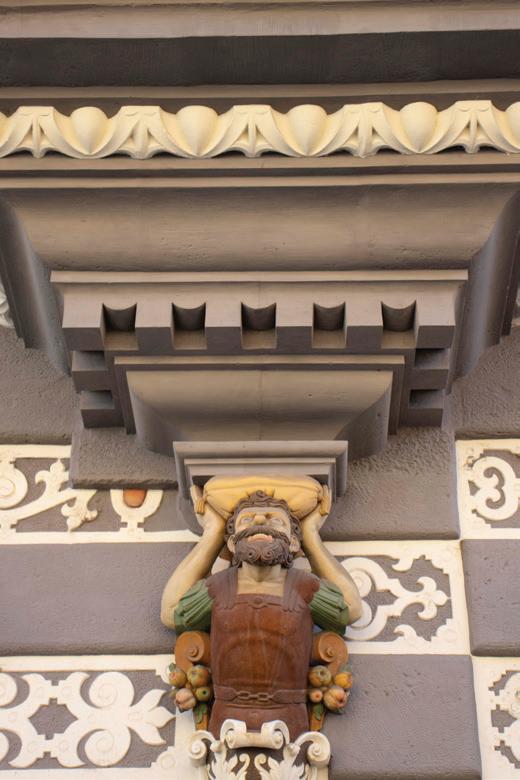
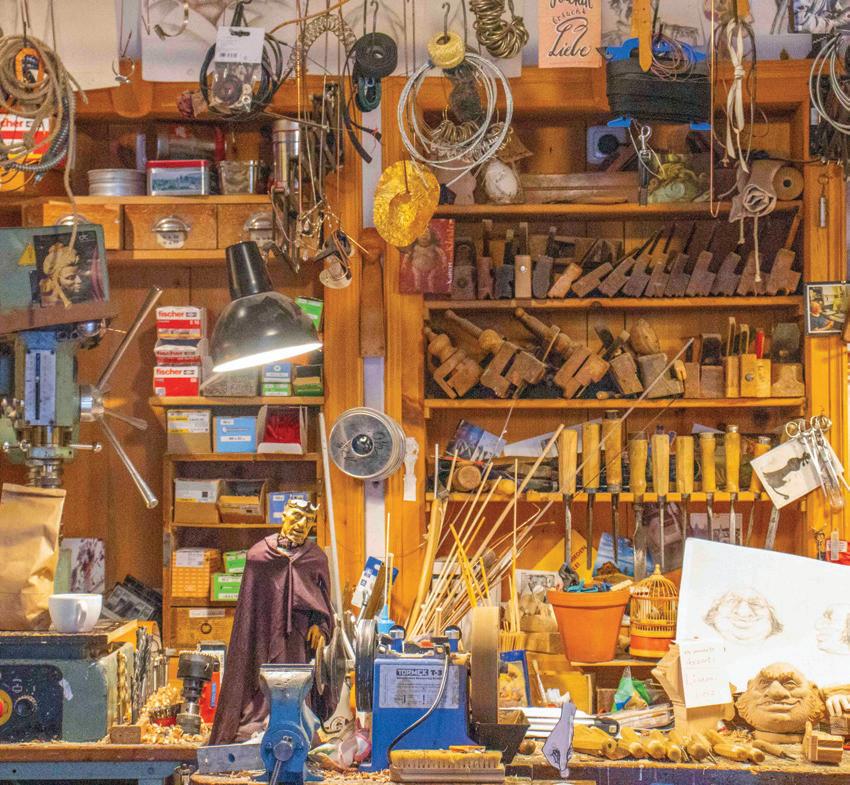
A proud artisan endures
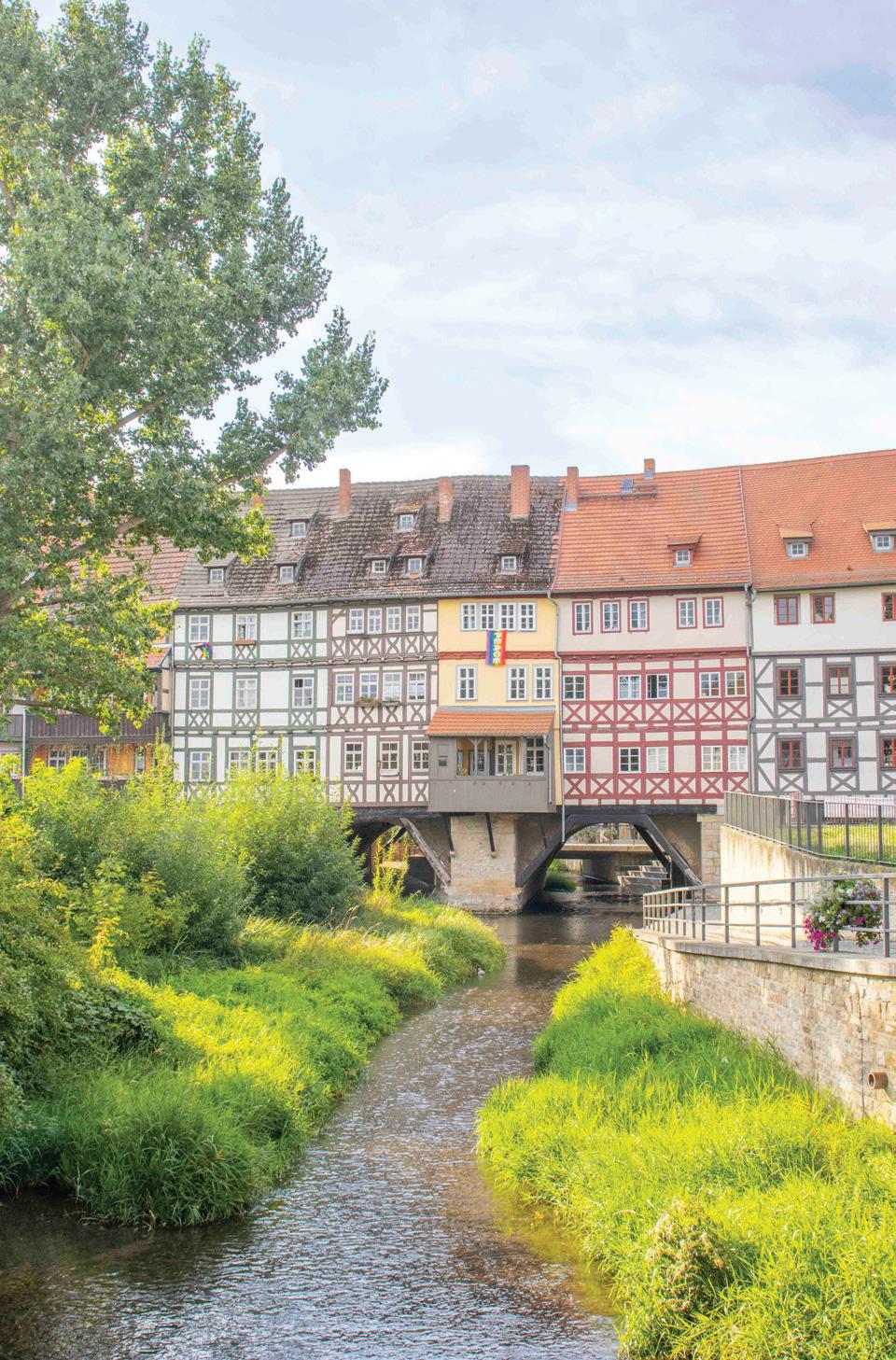
Erfurt artist Martin Gobsch’s studio on Merchant’s Bridge
Bratwurst mit Schinkenbratkartoffeln, a German potato dish, and we both had the Allgauer Buble Weizen, their outstanding wheat beer.
From 1949 until 1989, Erfurt was confined to East Germany, where it languished as democratic West German cities thrived. An abandoned housing development remains as a colossal reminder of the occupation of this lovely city following World War II. Thirty-six years after its liberation, German and American travelers continue discovering Erfurt.
Johann Sebastian Bach’s family resided in Erfurt, and his parents were married at the Merchant’s Church in 1668, where Protestant pioneer Martin Luther preached in 1522. Luther attended university in Erfurt from 1501 until 1505 then entered the nearby Augustine Monastery until 1511. Tours of that site include a restored prayer room as Luther might have known it.
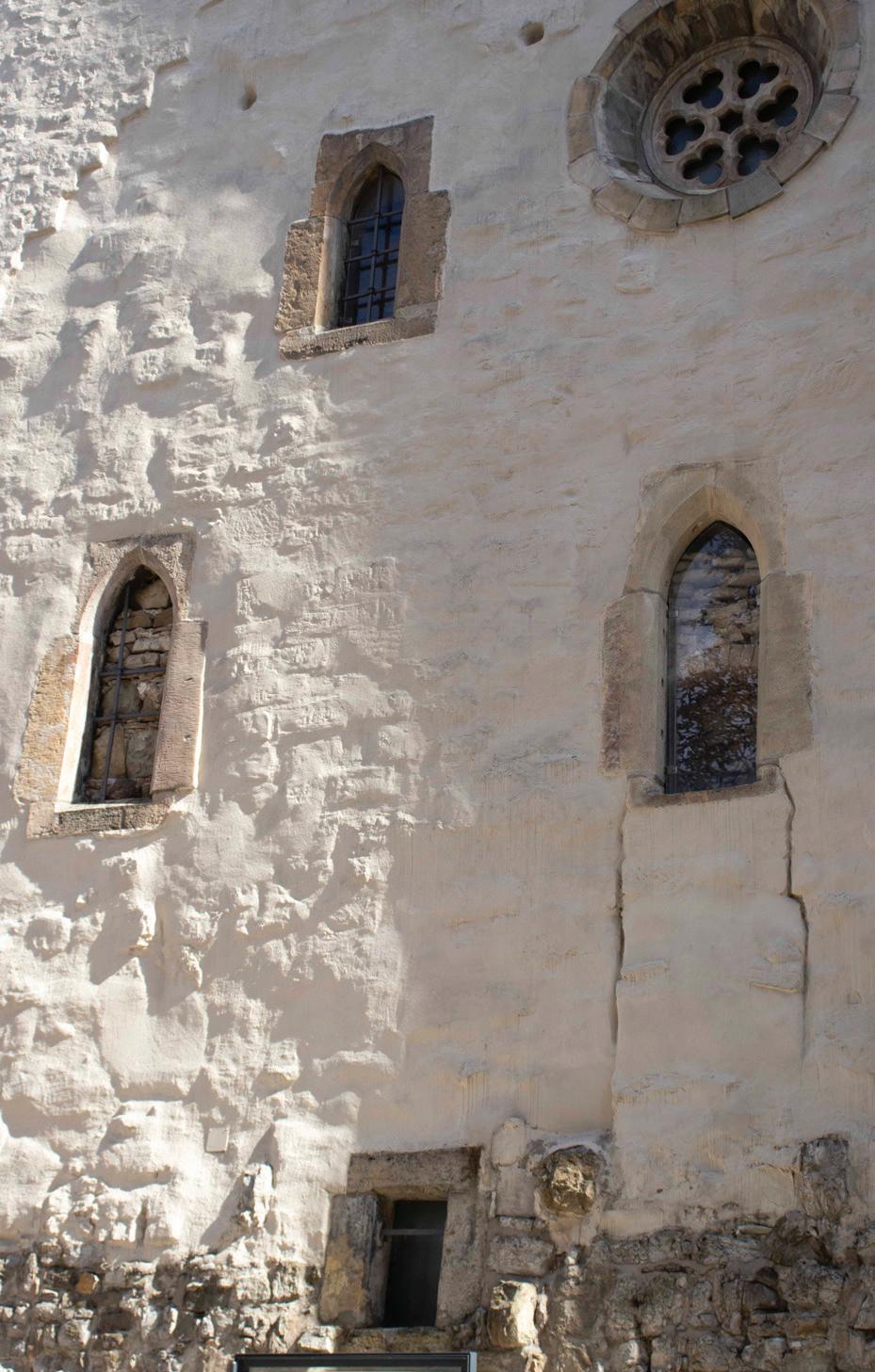
Old Synagogue is a UNESCO World
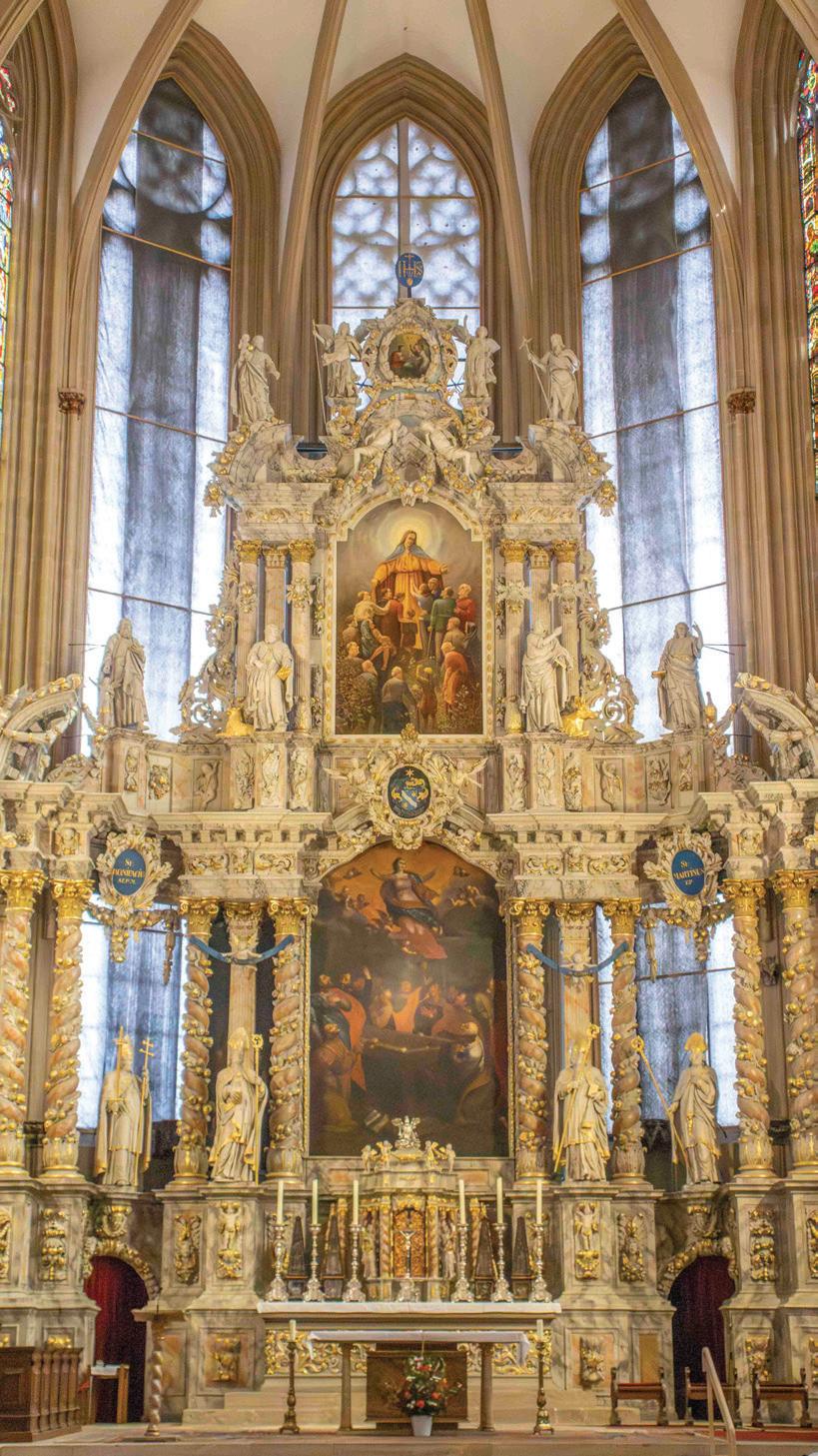
Erfurt’s Old Synagogue was rediscovered in the 1980s after centuries of neglect. From the 11th to 14th centuries, it was among the largest synagogues in Europe. Its museum was established in 2009 and includes a remarkable Gothic wedding ring and ancient Jewish books and manuscripts. Jews lived peacefully with Catholics for generations before being brutally removed in the 14th century due to smoldering resentment over their business practices. The Old Synagogue, the Stone House and the Mikveh ritual bath are now UNESCO World Heritage Sites.
Merchants Bridge anchors the medieval center of Erfurt, and its 14th-century stone arch spans the shallow riverbed where settlers arrived. It was prominent on the Via Regia trade route connecting Rome and the Baltic Sea during the Middle Ages. More than 30 homes and businesses line the colorful arch, and merchant shops cater to residents and travelers alike.
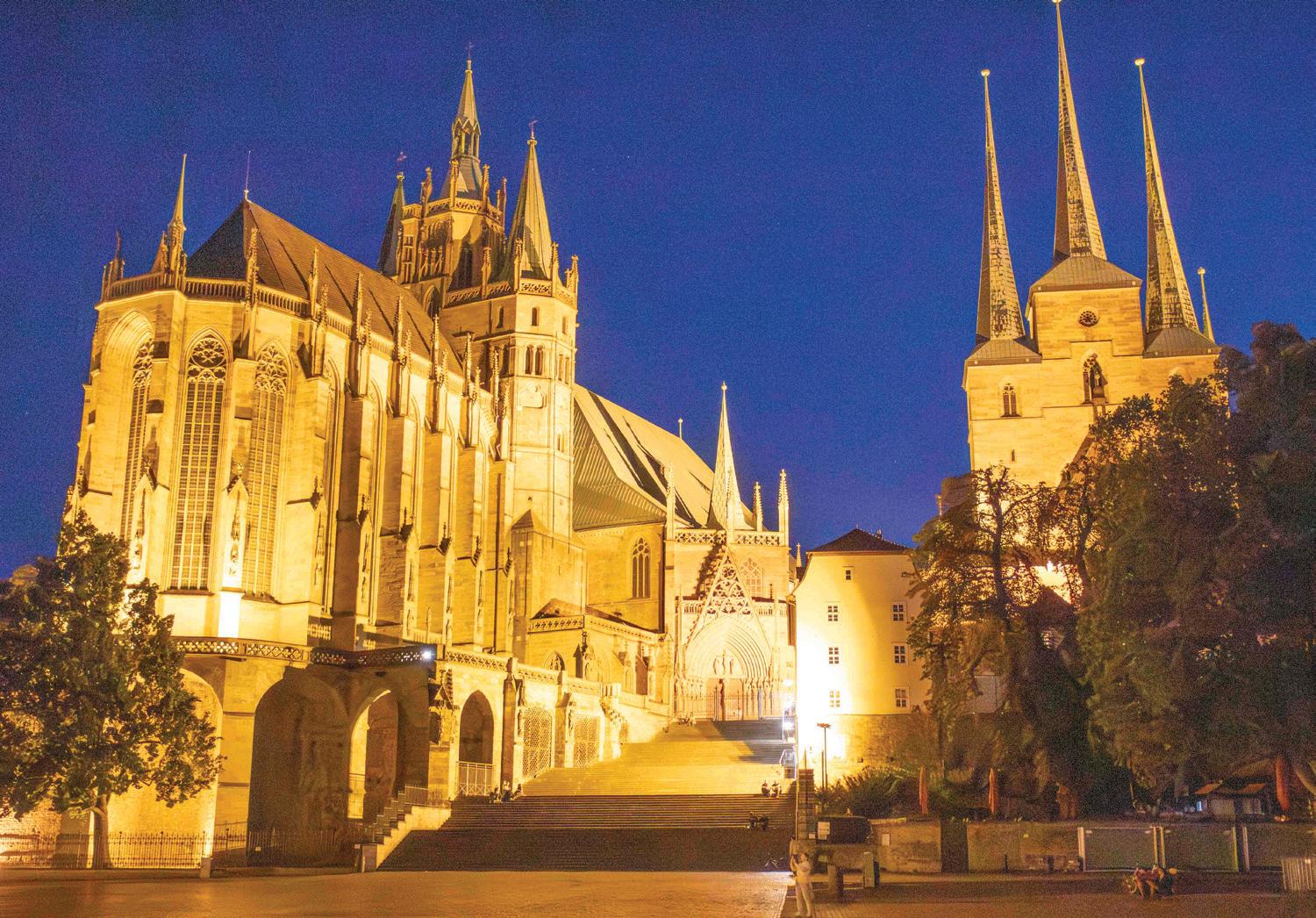
Stately Erfurt Cathedral towers above the city, and its broad stone steps climb upward, offering an aesthetic ascent to its Gothic sanctuary building, which adjoins St. Severus Church. Petersberg Citadel rests on a peak overlooking the cathedral and all of Erfurt, making it the perfect place for a fortress in the 17th and 18th centuries. The star-shaped citadel has been carefully restored and was a centerpiece during the recent German Federal Garden Festival.
My final stop in Erfurt was at the Memorial and Education Centre, locally known as the Stasi Museum, created to illustrate the imprisonment and interrogations of citizens accused of opposing the German Democratic Republic (GDR). The GDR was a pseudo government created
by Russia after World War II. This former prison housed actual and accused dissidents from 1949 to 1989, when the Peaceful Revolution triumphed and Germany was reunified.
Erfurt, now wonderfully free and thriving, offered a delightful conclusion to my Historic Highlights of Germany trip. In the spirit of Germany’s outstanding beer festivals, I’ll propose a toast to the city’s liberation and to its ascension as a major travel destination alongside its Bavarian counterparts, Augsburg and Regensburg. Prost!

BY RACHEL CRICK
North Carolina is a state with many talents. It can whisk travelers away to charming mountain towns with artsy vibes and breathtaking foliage; it can educate them in thriving capitals stocked with historic sites and museums; and it can entertain them for hours on barrier islands with white-sand beaches and crystal-clear waters. The state offers rugged outdoor adventures, refined cultural attractions and restful relaxation in equal measure.
From the Blue Ridge Mountains at the state’s western edge to gorgeous beaches on its eastern coast, here are five places for groups to incorporate on a multifaceted North Carolina itinerary.
Thanks to Herculean restoration efforts following the devastation of 2024’s Hurricane Helene, Asheville is back and better than ever.
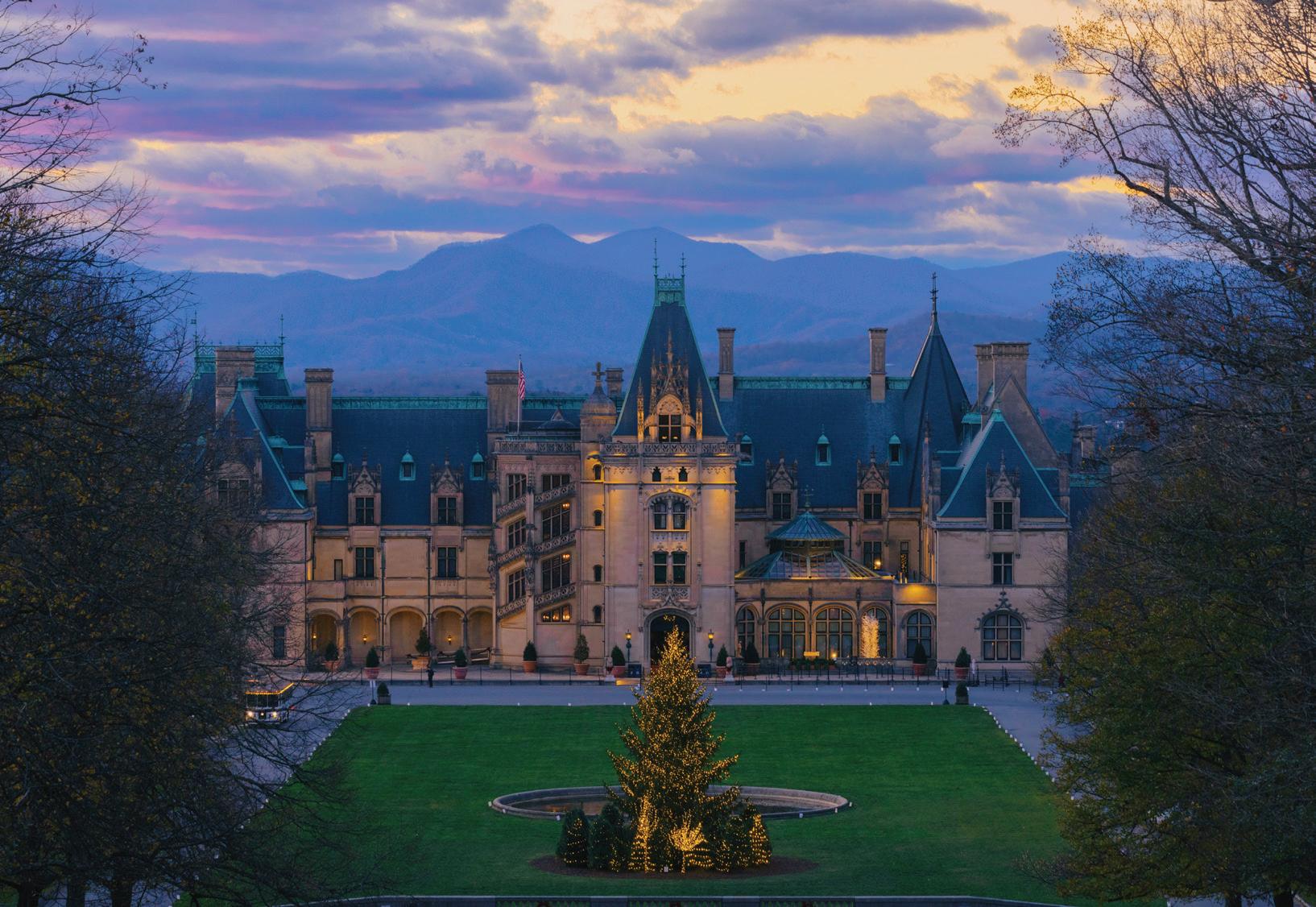
One of the area’s top attractions for groups is the Biltmore Estate, just outside of downtown. Constructed between 1889 and 1895, it’s the largest privately owned home in the U.S. with about 250 rooms and is still owned by the Vanderbilt family. This Gilded Age treasure is now a house museum and Asheville’s largest tourist attraction, drawing in more than 1 million visitors annually to view the Chateau-style mansion and surrounding 8,000 acres. In addition to touring the home and gardens, groups can visit the estate’s winery, the most visited winery in the country. They can also stop at Historic Biltmore Village to peruse dozens of shops.
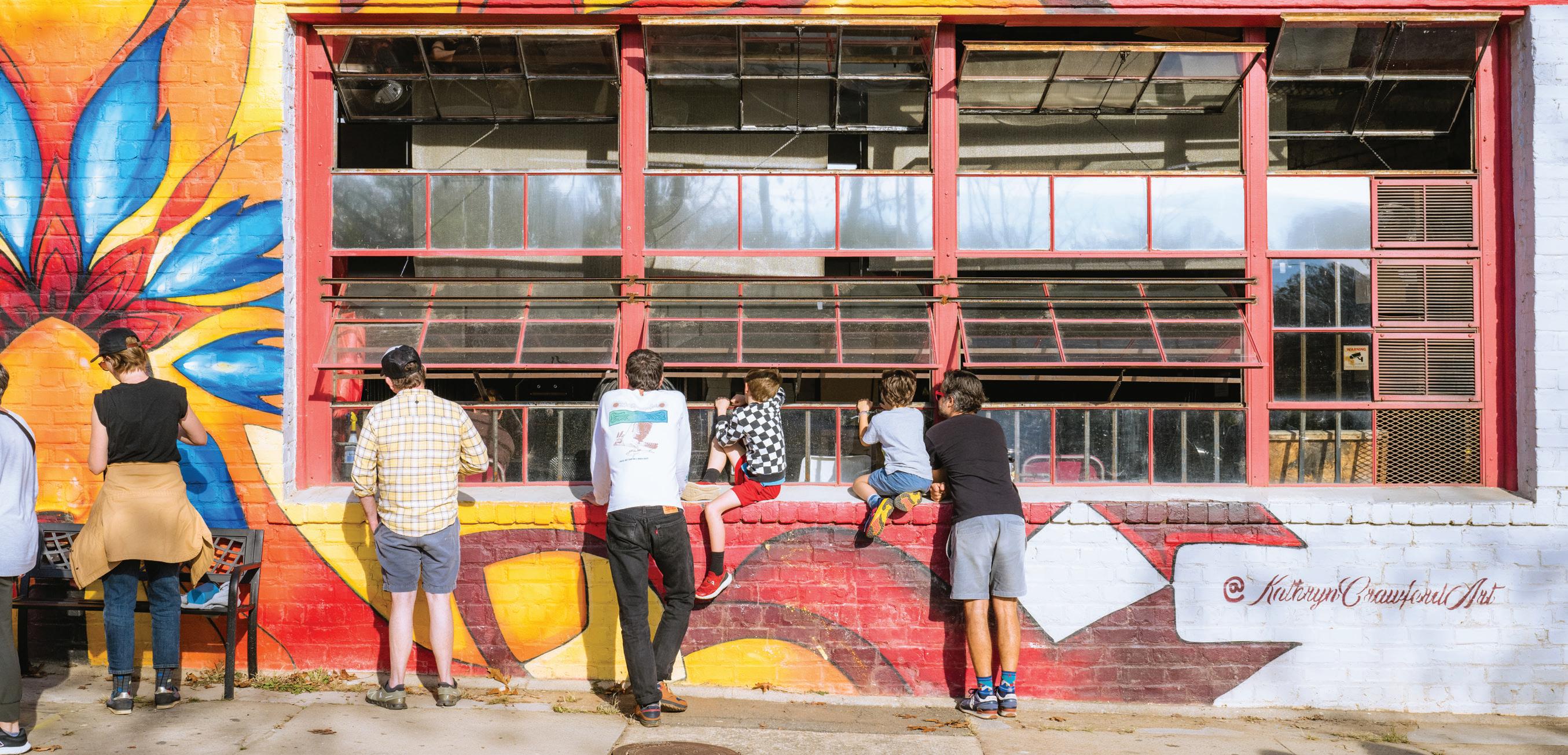
Back in downtown, groups can explore galleries, boutiques, craft breweries and restaurants. For a more organized group outing, they can head to the Asheville Art Museum, featuring contemporary American art from the 20th and 21st centuries. Or they can hit the Asheville Museum of Science to browse exhibits on the natural world, from geology to astronomy. Groups can also take one of Asheville’s unique tours, with themes ranging from food foraging to craft beer. A visit to the River Arts District is another great way for groups to spend an afternoon shopping for art and other handmade goods. Asheville’s nature scene offers countless opportunities for group hikes or even yoga with mountain vistas.
Many Asheville restaurants place an emphasis on locally sourced, seasonal ingredients. Downtown, The Blackbird is open for brunch and dinner and is known
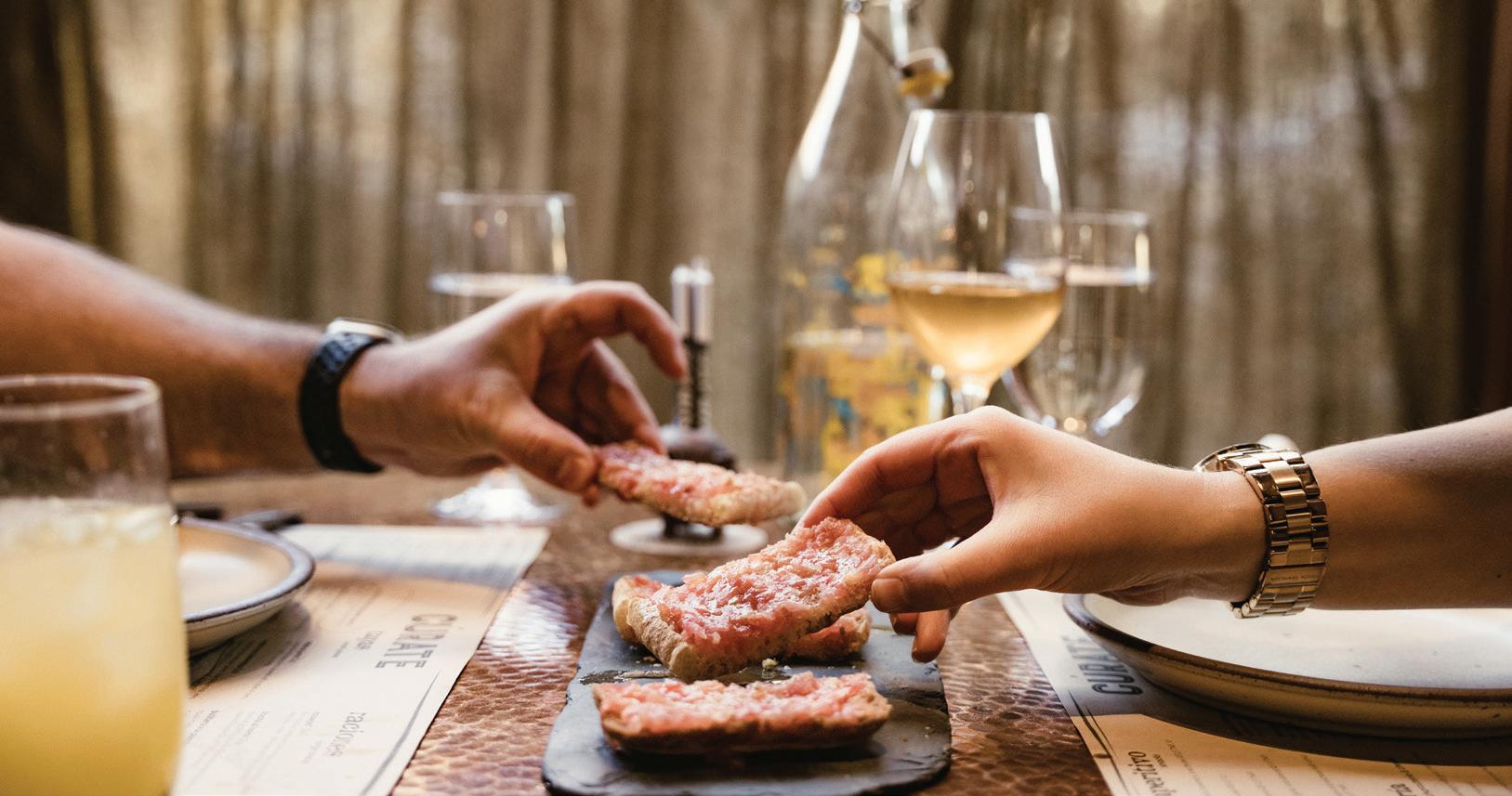
for dishes like braised beef, mushroom risotto and a signature coconut cake. Also in downtown, Curate is a James Beard Award-winning restaurant that serves Spanish cuisine. Groups can dine in its elegant private dining room.
exploreasheville.com
North Carolina’s capital city is nicknamed the “Smithsonian of the South” thanks to its abundance of museums, many of which are free or low cost to the public. Raleigh’s cultural institutions appeal to a broad range of interests, from science to history.
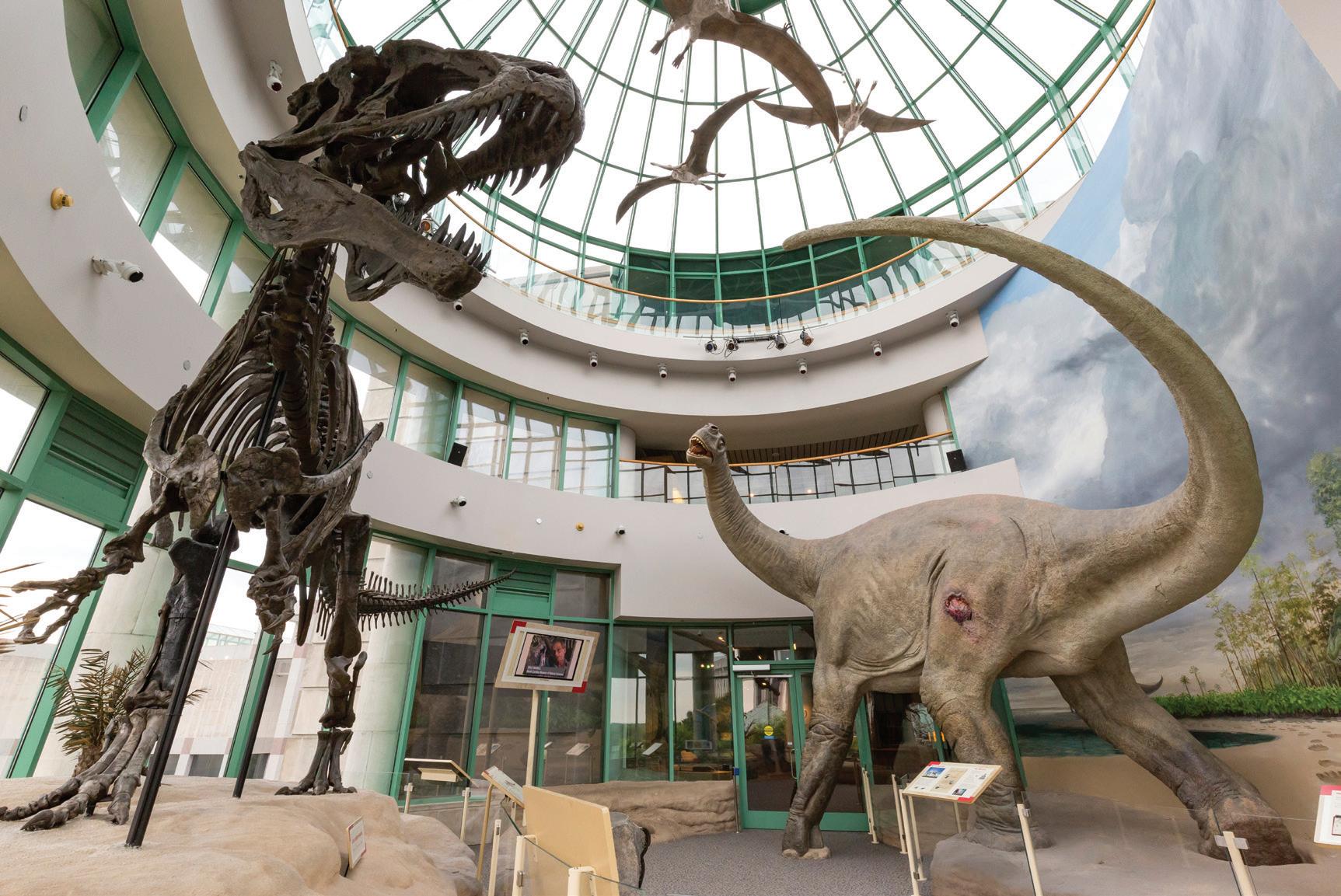
Groups can spend a day or more exploring the city’s trio of free museums, beginning with the North Carolina Museum of Art. The museum showcases a large collection of art and historic artifacts spanning many cultures, from Egypt to the American South. It’s also home to the Ann and Jim Goodnight Museum Park, the largest museum park in the country, with 164 acres boasting beautiful gardens and contemporary art. Next up is the North Carolina Museum of Natural Sciences, a Smithsonian affiliate filled with interactive exhibits exploring the world around us. Finally, the North Carolina Museum of History explores the state’s past and features the North Carolina Sports Hall of Fame.
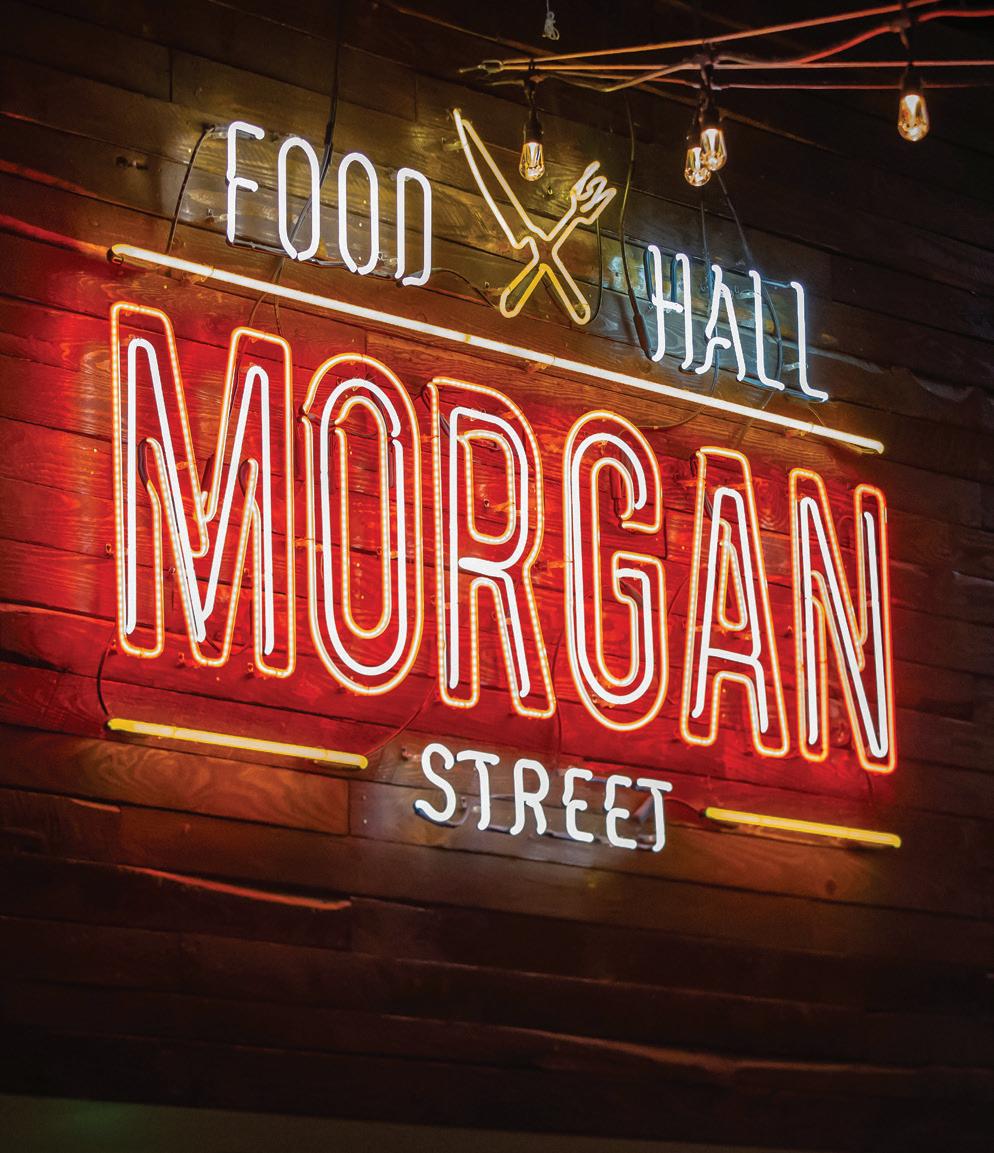
Groups are bound to work up an appetite with all that museum hopping, and Raleigh dishes up meals that delight. Groups can head to Morgan Street Food Hall or Transfer Co. Food Hall to sample food from a variety of local establishments. Visitors can enjoy food from around the world, sip craft brews and spirits, and enjoy the stylish atmosphere of Raleigh’s downtown. Raleigh also has a range of food tours on tap, from walking foodie tours to a tour of Escazu Chocolates.
visitraleigh.com
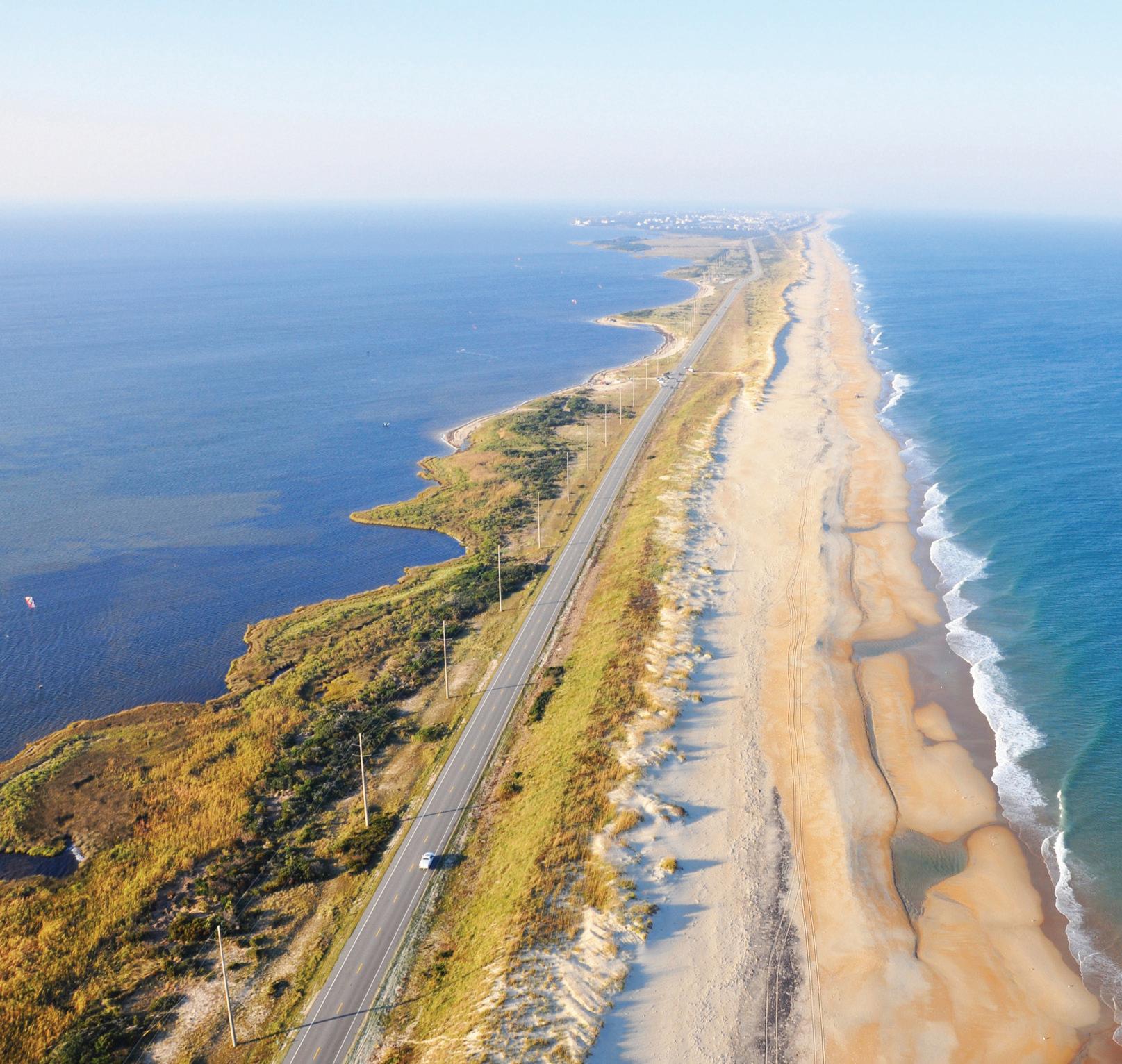
The Outer Banks are a chain of barrier islands that stretch nearly 200 miles from the coasts of Southern Virginia to northern North Carolina. North Carolina’s portion of these islands is over 100 miles long. The islands’ narrow width, natural wonders and quaint communities give them a signature charm and carefree feel that draw in vacationers who want to dine on fresh seafood, explore the waterways and enjoy endless beach days.
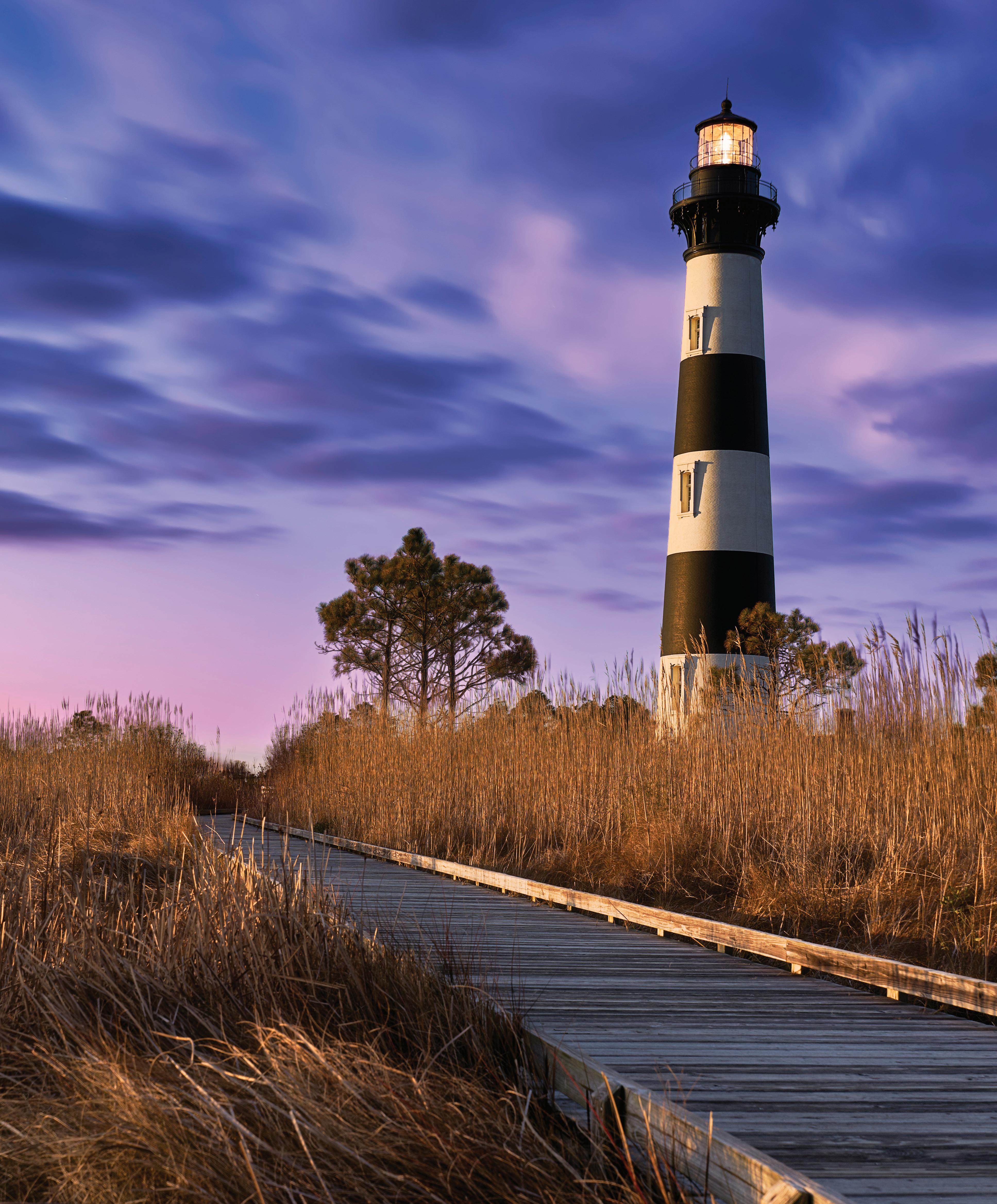
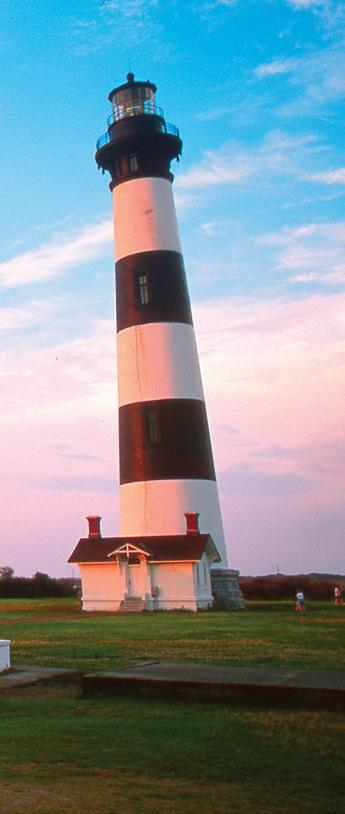
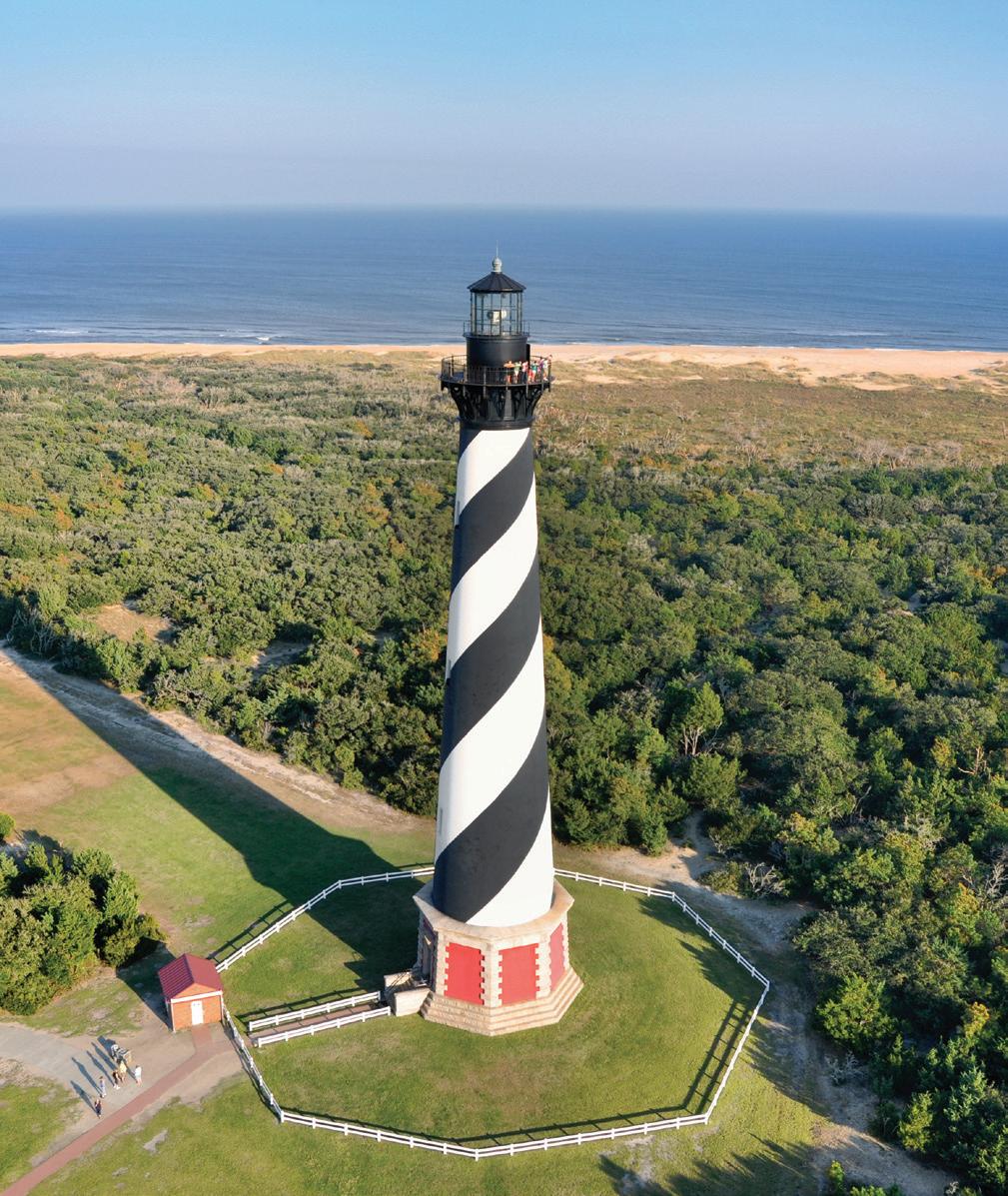
The area is known for its landmark lighthouses, and there are plenty to choose from. The Cape Hatteras Light Station is painted with a black-and-white barber’s pole stripe, making it perhaps the most recognizable. It’s currently undergoing restoration efforts, but when it reopens in
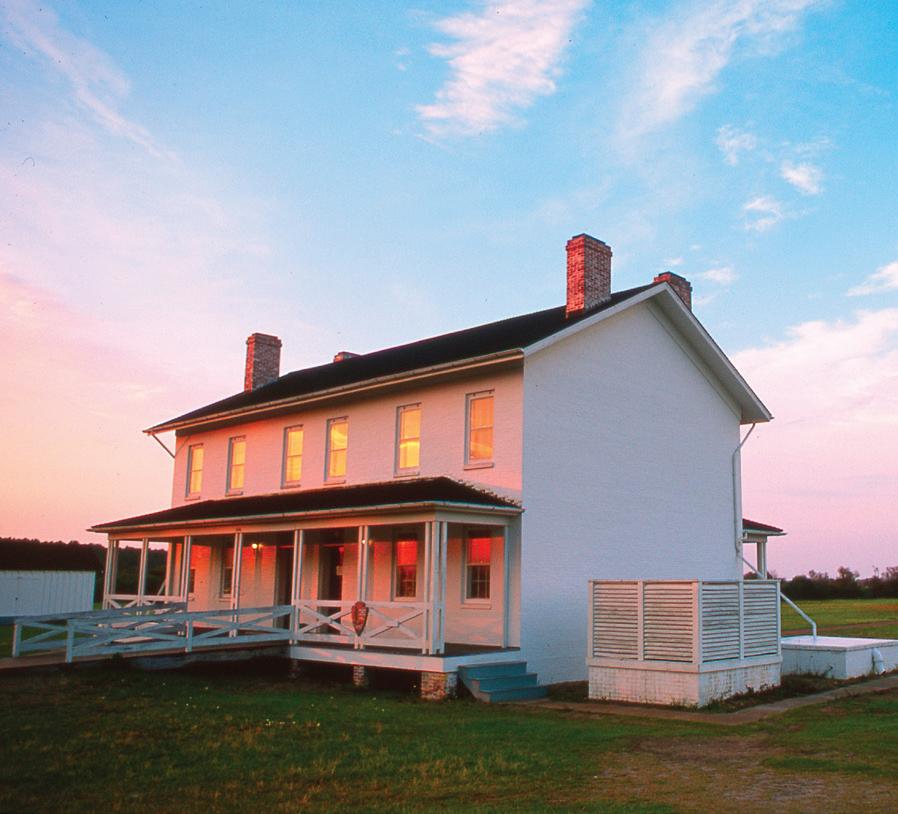
2026, visitors can climb the stairs to the top for breathtaking views. Or they can simply visit the beaches of Cape Hatteras and use the lighthouse for a spectacular photo op. Bodie Island Lighthouse, another black-and-white beauty, is also a popular choice for lighthouse climbs.
Nature lovers are in for a treat at the Alligator River National Wildlife Refuge, which boasts over 150,000 acres of wildlife habitat. Species including alligators, red wolves and black bears can be found in the refuge, in addition to many other species of birds and wildlife. Ranger-led programs, hiking, wildlife viewing and other activities are available for groups visiting the refuge.
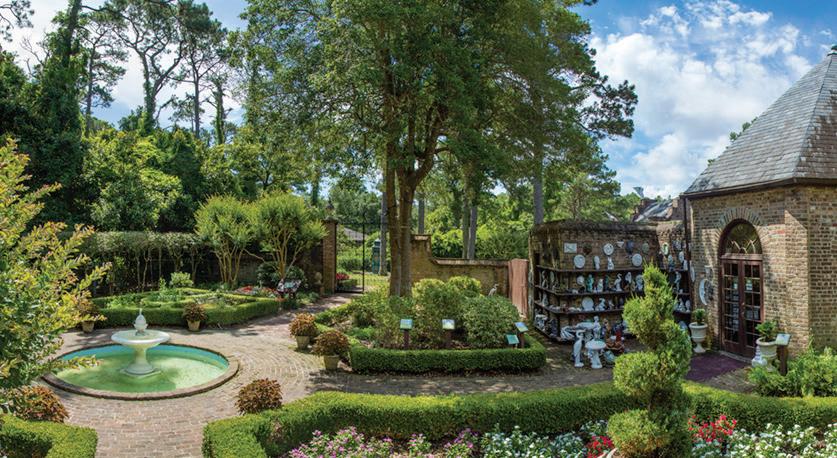
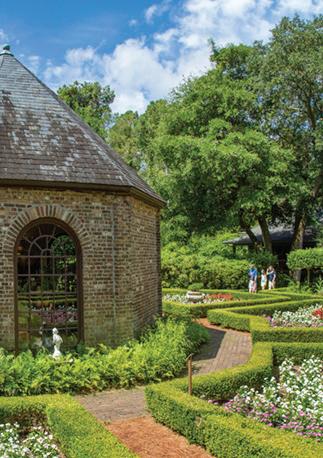
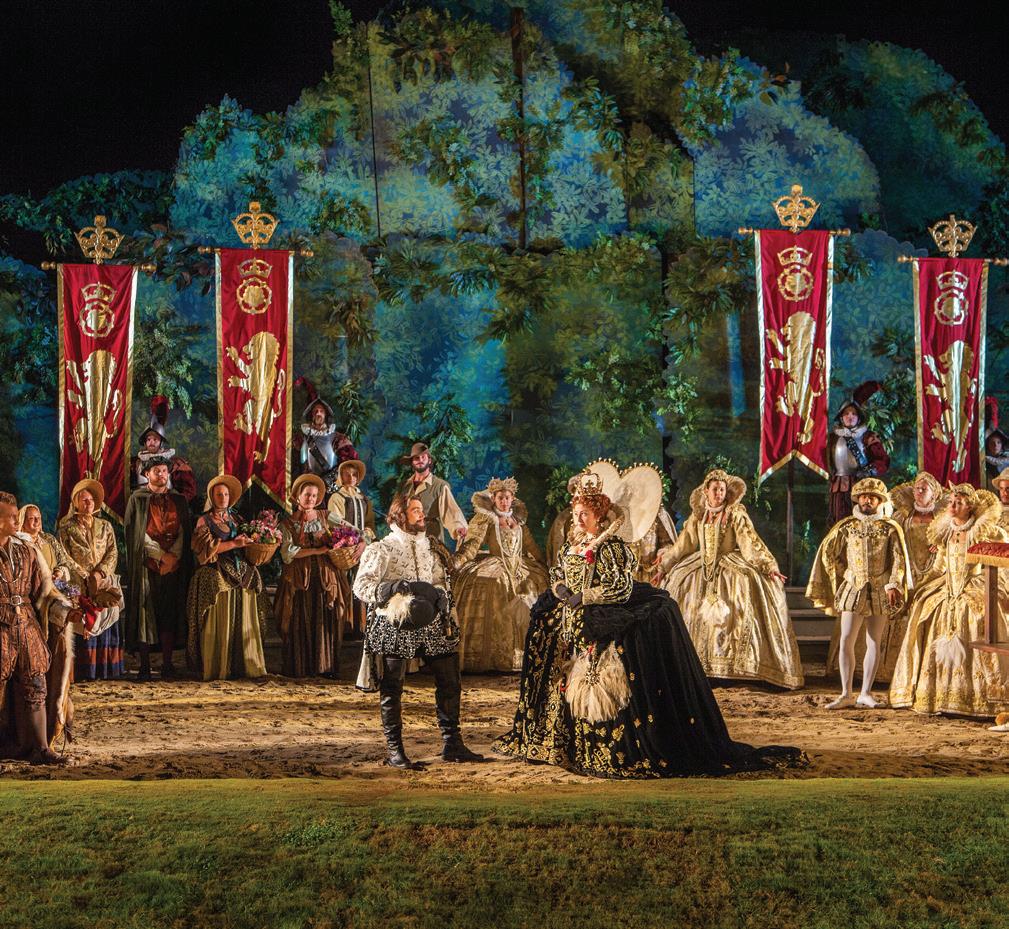
Fort Raleigh National Historic Site, the location of the mysterious Lost Colony on Roanoke Island, offers ranger-led tours and is home to the Waterside Theatre, where groups can catch a popular theater production of “The Lost Colony.” Groups can also visit The Elizabethan Gardens, a botanical garden with a butterfly house, a variety of flowering plants and plenty of sculptures. outerbanks.org
Nature lovers are in for a treat
at the Alligator River National Wildlife
Refuge, which boasts over 150,000 acres of wildlife habitat.
A
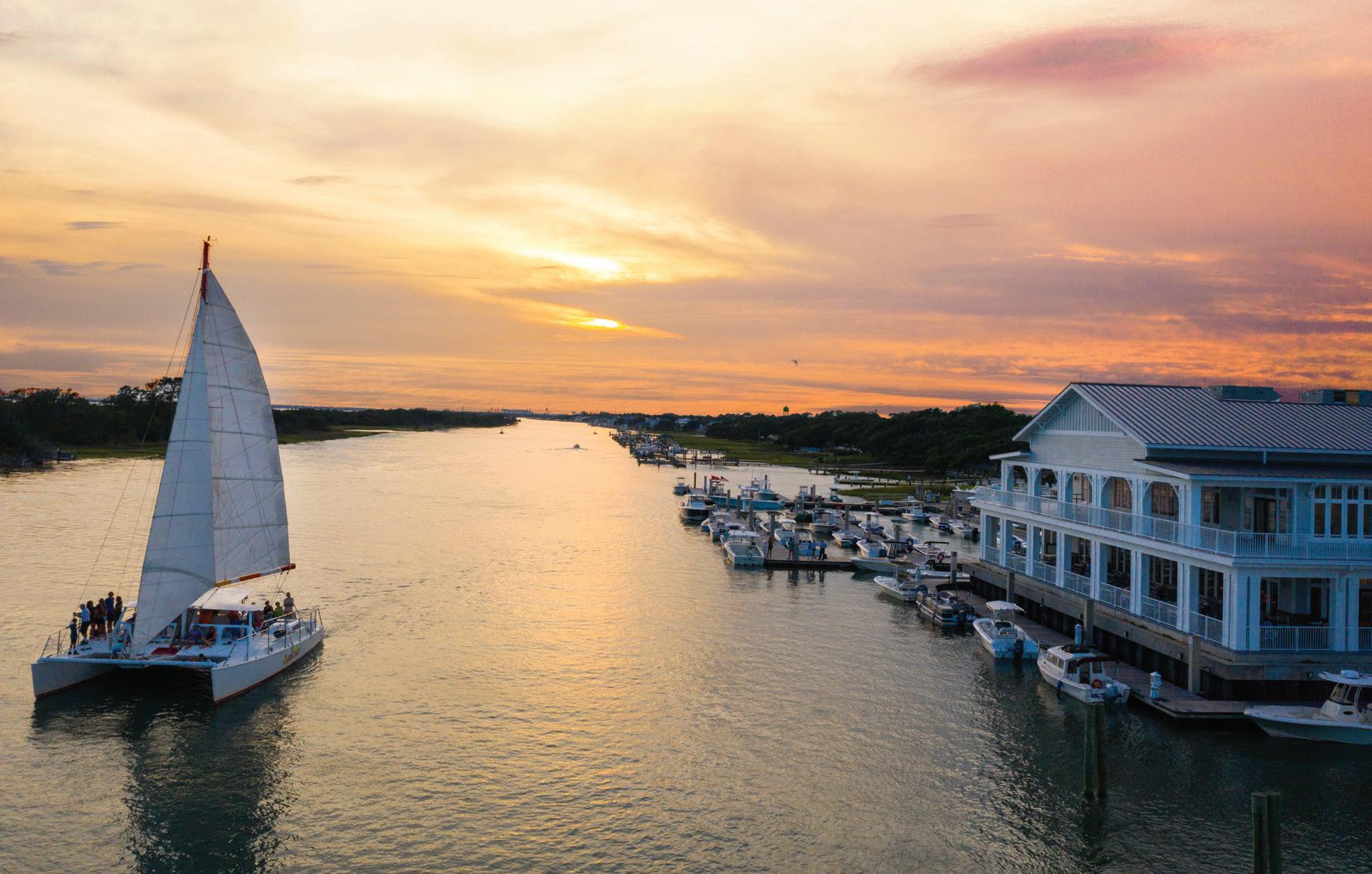
Sometimes called the Southern Outer Banks, the Crystal Coast is an 85-mile stretch of North Carolina coastline that includes communities like Beaufort, Morehead City, Atlantic Beach and Emerald Isle. The Crystal Coast is known for its white-sand beaches, historic towns and distinct wildlife, including wild horses.
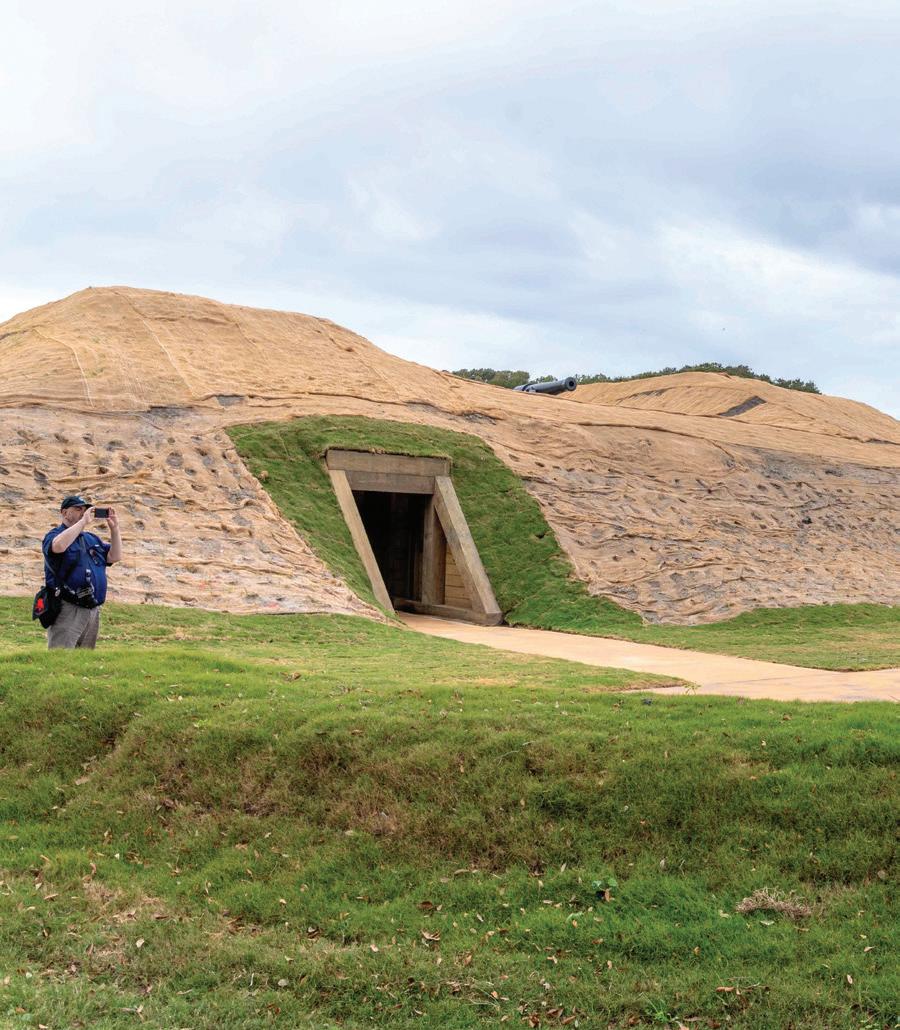
Fort Macon State Park is a great stop for history-loving groups. The Civil War-era fort puts on reenactments in the summer and offers guided tours year-round. Back on the mainland in Beaufort, groups can board a double-decker bus for a historic tour of the city and stop at the North Carolina Maritime Museum. South of Beaufort, the North Carolina Aquarium at Pine Knoll Shores features a charming cast of marine life, from otters to bull sharks.
To catch a glimpse of the wild horses, groups have two options. They can catch a boat to Rachel Carson Reserve, a nature preserve off the coast of Beaufort, where a herd of about 35 horses lives on the barrier islands, or groups can take a ferry farther out to Shackleford Banks, which has a larger herd of more than 100 horses. Many tour companies that bring passengers to Shackleford Banks also stop at Cape Lookout Lighthouse to see the icon-
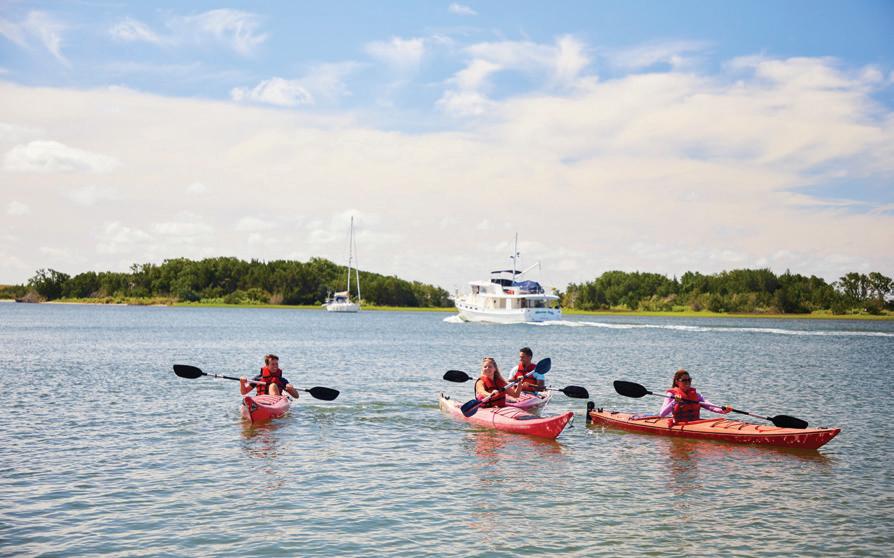
Sailing near the Beaufort Hotel Kayaking on the Crystal Coast
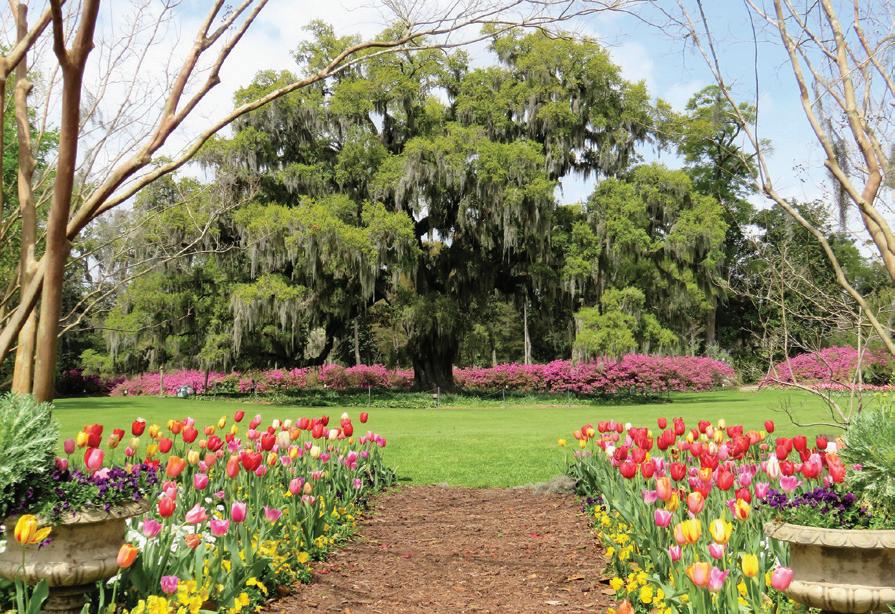
Arlie Oak Tree
ic 150-year-old lighthouse. While they’re on the islands, groups can spend the day swimming and beachcombing for some of the state’s best shells. Sunset dolphin tours are also a popular choice for wildlife viewing.
At mealtimes, groups have their pick of restaurants, bars and cafes in any of the Crystal Coast communities. In Beaufort, 34° North Restaurant offers upscale food and cocktails in a scenic, waterfront setting. For fresh-caught seafood, small plates and a variety of wines, groups can head to Aqua in Beaufort.
crystalcoastnc.org
Even farther down North Carolina’s lovely coastline, Wilmington is a charming, laid-back port city with beautiful beaches and lots of history. With the Cape Fear River on one side and the Atlantic on the other, it’s a birder’s paradise and chock-full of natural beauty. It also has more than 400 film and television credits; “The Summer I Turned Pretty,” “Dawson’s Creek,” “One Tree Hill” and “Safe Haven” are just a few of the popular TV shows and movies that have filmed there. Local tours take set-jetting visitors around town to popular filming locations.
Ghost Walk of Old Wilmington, one of the city’s most popular paranormal tours, offers a 90-minute walk through historic Wilmington, WILMINGTON • NORTH CAROLINA
Groups can enjoy Wilmington’s natural scenery with a trip to the 67-acre Airlie Gardens, home to a 470-year-old oak tree, 75,000 azaleas and even a seasonal butterfly house. Or they can head to the nearby island beaches, including Carolina Beach, Kure Beach and Wrightsville Beach. Cruises and chartered boats can take groups out on the water for sunset cruises, marsh tours, paddleboarding excursions and even an oyster farm tour. If a boardwalk is more their style, groups can head to the vintage Carolina Beach Boardwalk, which offers plenty of amusement rides, shopping and tiki bars.
Groups can’t leave such a historic community without delving into its rich past. One fun way to do so is with a ghost tour. Ghost Walk of Old Wilmington, one of the city’s most popular paranormal tours, offers a 90-minute walk through historic Wilmington, exploring the city’s past through the lens of its allegedly haunted locations and burial sites. Another popular historic attraction on the Cape Fear River is the Battleship North Carolina, a World War II vessel that’s open for tours. Many other museums and historic sites further expand on the city’s history, from its first settlement in the Colonial era to its role in World War II.
wilmingtonandbeaches.com

































































































































































































































BY CYNTHIA BARNES
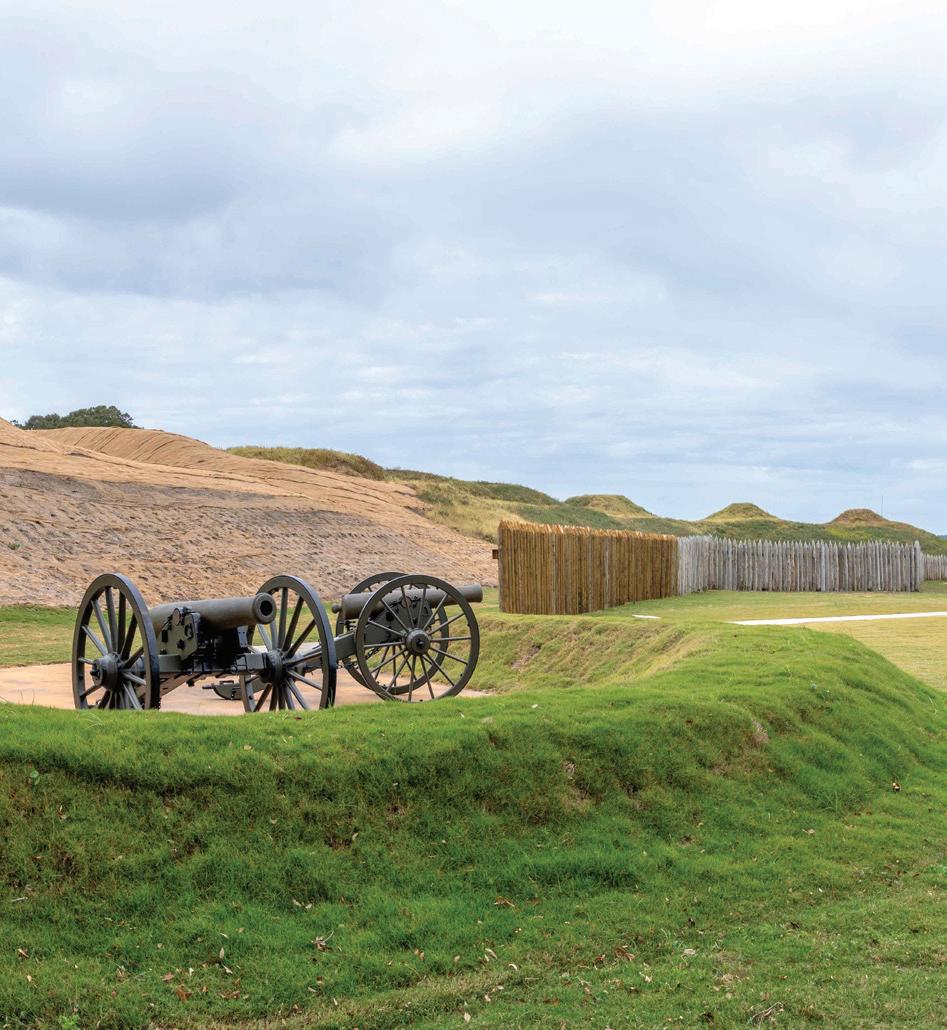
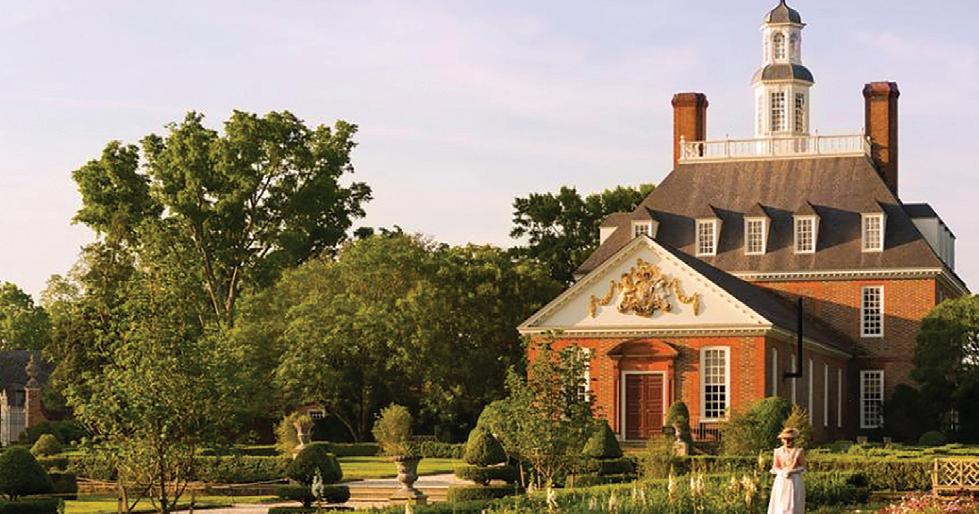
While St. Augustine is famed for its age — founded in 1565, it’s the oldest continuously occupied European settlement in the country — it’s another part of the city’s history that really shines. St. Augustine owes the star-shaped 17th-century Castillo de San Marcos to the Spanish, who replaced earlier wooden fortifications with the city’s first stone fort. Now a national monument, it is the oldest masonry fort in the continental U.S.
The Spanish colonial authorities granted freedom to slaves who escaped from British North America, and Fort Mose, just north of St. Augustine, became the first free Black settlement in what is now the United States. In the late 1700s, St. Augustine also became a haven for embattled indentured servants (many from the island of Minorca, along with Spaniards, Greeks and Italians) fleeing harsh conditions at the disastrous indigo
plantation of New Smyrna, 70 miles to the south. The Minorcans, as they came to be known, flourished in the colony, and more than 20,000 descendants still call the area home today. Their cultural influence remains strong, reflected in dishes like pilau, smoked mullet and chowders livened with the fiery datil peppers native to Florida’s northeast.
But it was Gilded Age potentates of the late 1800s that made the most permanent mark on St. Augustine, creating architecture that still draws visitors today. Northerners had wintered in the city for decades, believing the warmer weather provided a healthy respite or even a cure for their ailments. Writer Ralph Waldo Emerson spent time there in 1827, crediting the climate with easing his tuberculosis and joint pains. Nearly 60 years later, two wealthy businessmen would begin to build the St. Augustine that people flock to today.
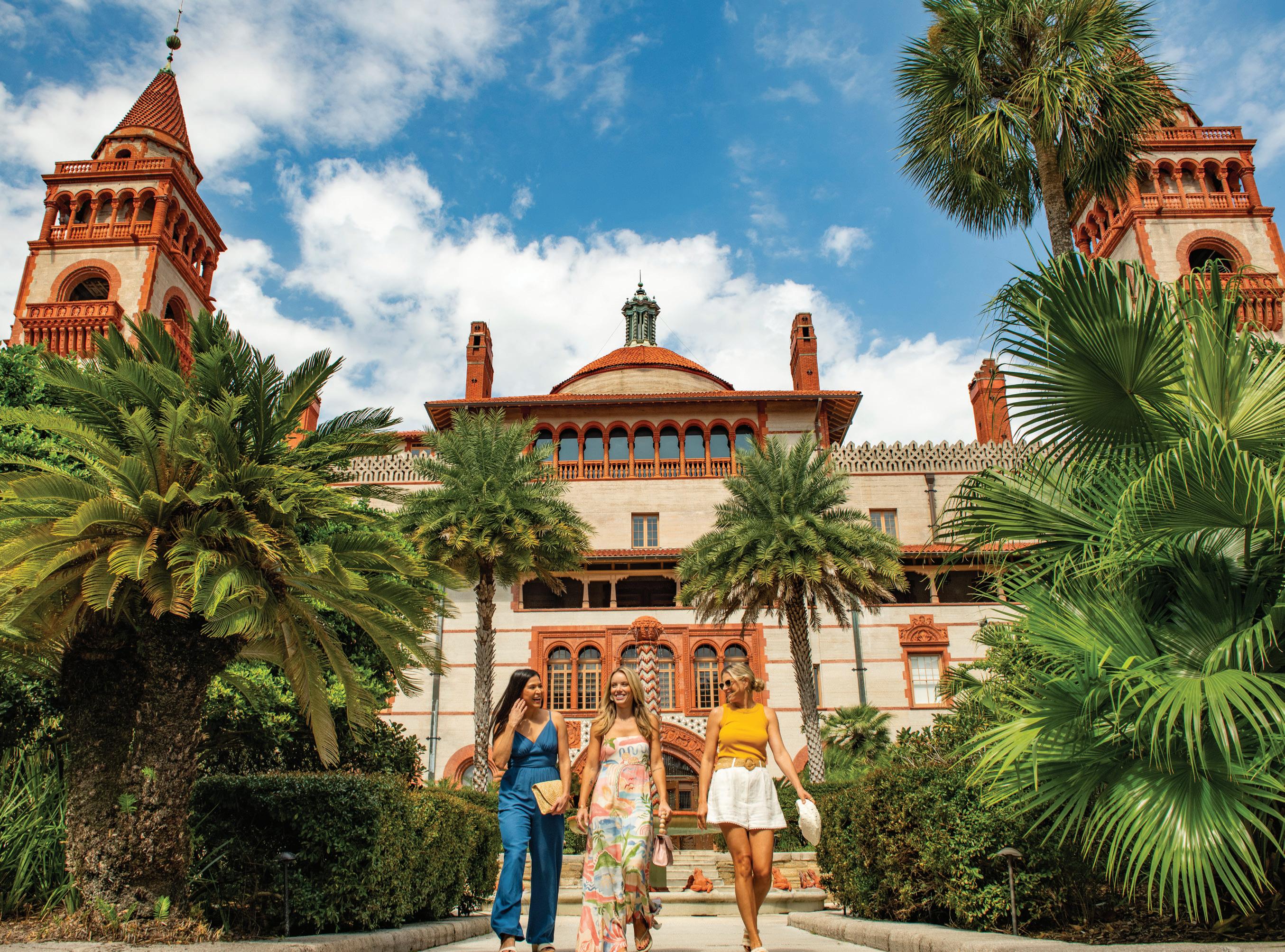
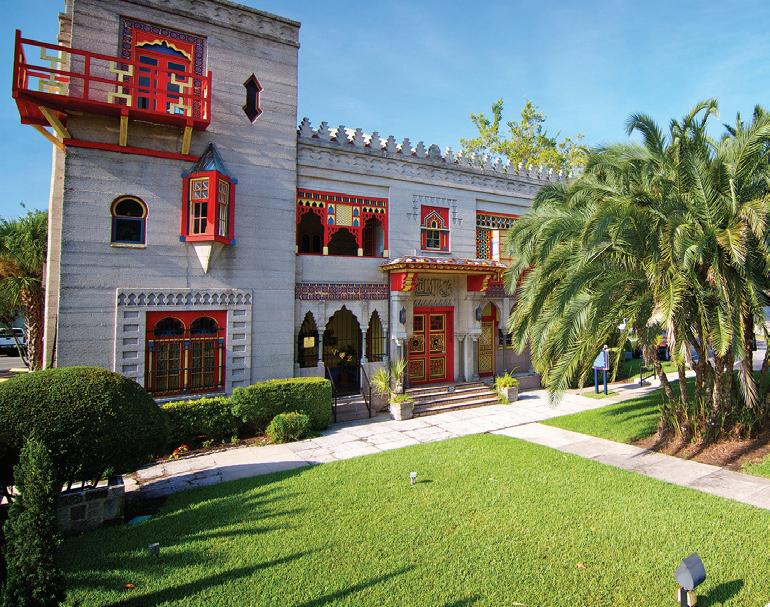
It was Franklin W. Smith, a wealthy hardware store magnate and architecture enthusiast, who introduced the Spanish/Moorish stylings that are now preserved throughout the city. After touring the grand Alhambra palace in Granada, Spain, Smith built his own version in St. Augustine. Smith used his invention — a unique combination of Portland cement mixed with crushed coquina, an abundant porous limestone formed from clam shells — to build Zorayda, the first concrete structure in Florida. This construction method and architectural style became the standard in St. Augustine, permanently influencing the city’s buildings. It notably impressed Henry Flagler, who adopted it for his major projects, and the style was also used in many of St. Augustine’s other historic structures. After Smith’s death, the glorious structure was bought by Syrian antiquities dealer Abraham Mussallem. Today, the museum features the priceless antique collections of both men, including a 2,400-year-old Egyptian rug that is considered to be the world’s oldest carpet.
Henry Flagler, a railroad baron and the co-founder of Standard Oil, was inspired by Smith’s Zorayda and, after attempting to purchase the home, used Smith’s poured concrete construction method to build the opulent Hotel Ponce de Leon. Opened in 1888, the “Ponce” was a modern marvel, with Flagler’s friend Thomas Edison personally overseeing the installation of the entire electrical system, making it the first building in the country designed and constructed for electric power. The hotel was an immediate hit with high society, as presidents and celebrities — including Rudolph Valentino and Babe Ruth — flocked to the ornate 540-room palace. But Flagler’s southward-expanding empire of hotels, served by his Florida East Coast Railway, drew guests to even warmer climates. In 1968, the landmark hotel became home to the newly established Flagler College.
Another Flagler hotel, Hotel Alcazar was designed by the architecture team that would go on to create the New York Public Library and Washington, D.C.’s Russell Senate Office Building. Completed in 1888, the hotel boasted a three-story ballroom and the world’s largest indoor swimming pool. Though the hotel closed in 1932, it was soon given a second life. After a 1946 stay at the Ponce, Chicago publisher Otto C. Lightner purchased the Alcazar to house his impressive collection of art and oddities. The Lightner Museum opened to the public in 1948. The delightfully eclectic exhibits include a shrunken head, an Egyptian mummy, Tiffany lamps and Victorian mechanical musical instruments, all in the former hotel’s grand setting.
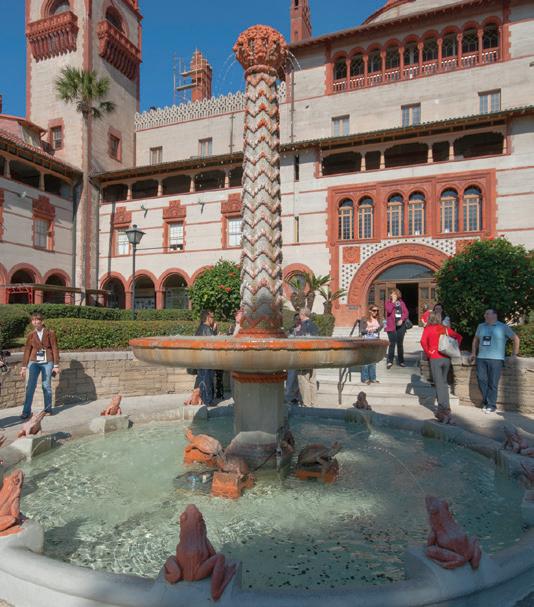
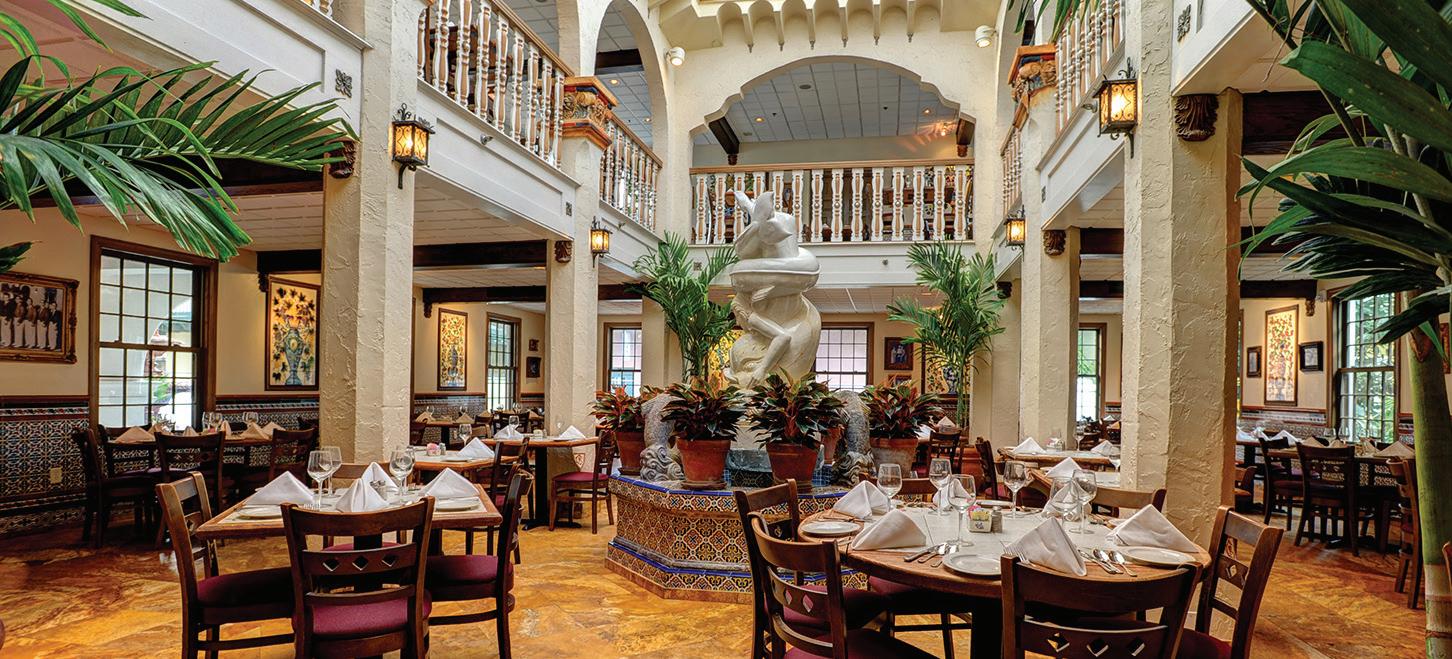
There’s no shortage of distinctive dining for your group in St. Augustine. The ocean waters of Florida’s “First Coast” provide an endless array of fresh fish and seafood while local farms deliver a rainbow of fruits and vegetables.
Hand-painted tiles and bubbling fountains are part of the charm at the family-owned Columbia Restaurant. The Spanish/ Cuban-inflected cuisine is as perfect as the decor and has been delighting diners since 1905.
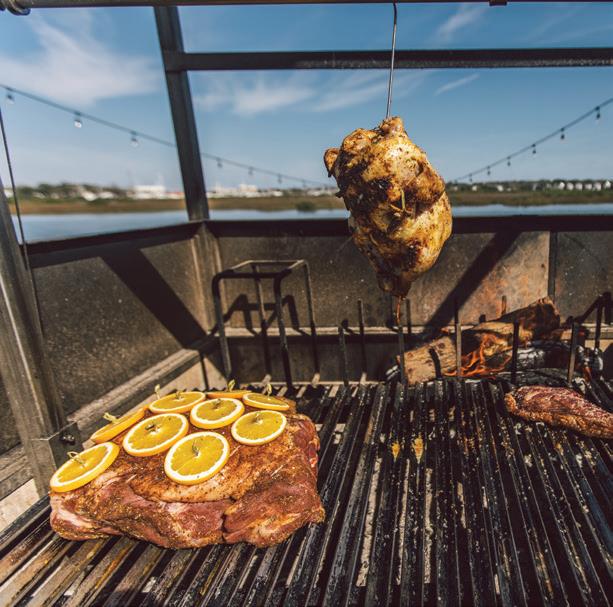
On the banks of the St. Sebastian River, Asado Life offers Argentinian-inspired, live-fire South American barbecue in a relaxing setting.
For spirits that also serve as wonderful souvenirs, reserve a tasting tour at St. Augustine Distillery. Located in a beautifully restored 1917 ice plant, the community-founded and family-owned business produces handcrafted, award-winning bourbon, rum, gin and vodka.
For superb seafood and sparkling sunsets with a rustic, Old Florida vibe, there’s no better choice than Aunt Kate’s Restaurant on the river, where diners can relax on live oak-shaded decks or in the dining room while feasting on icy oysters, fresh shrimp, delicious soups and other delicacies.
Zorayda creator Franklin Smith tried his own hand at the hospitality business, opening the Spanish-style Casa Monica Hotel in 1888, only to sell it after just four months to Henry Flagler. Closed after the Great Depression, the hotel served as the St. Johns County Courthouse in the 1960s. Hotelier Richard Kessler purchased and restored the long-vacant building, opening its doors again to guests — who are welcomed with a cold glass of champagne — in 1999. Today, Smith’s vision is a Moroccan- and Spanish-inspired fantasy, with velvet-draped and art-bedecked walls, ornate chandeliers, and intricate tile and woodwork. Located in the heart of the historic district, it’s the ideal luxurious base for exploring all of St. Augustine’s Gilded Age grandeur.

BY RACHEL CRICK
BY

Everybody loves a good theme, and river cruisers are no exception.
Themes add a layer of cohesion to any itinerary, boost engagement and connection between passengers, and allow enthusiasts to explore what they love most. Food and wine, seasonal joys, or art, music and culture — the world’s rivers provide ample themes for travelers to treasure. Whether they charter a full vessel or book cabins on a pre-planned sailing, here are five themed river cruises groups can get on board with.
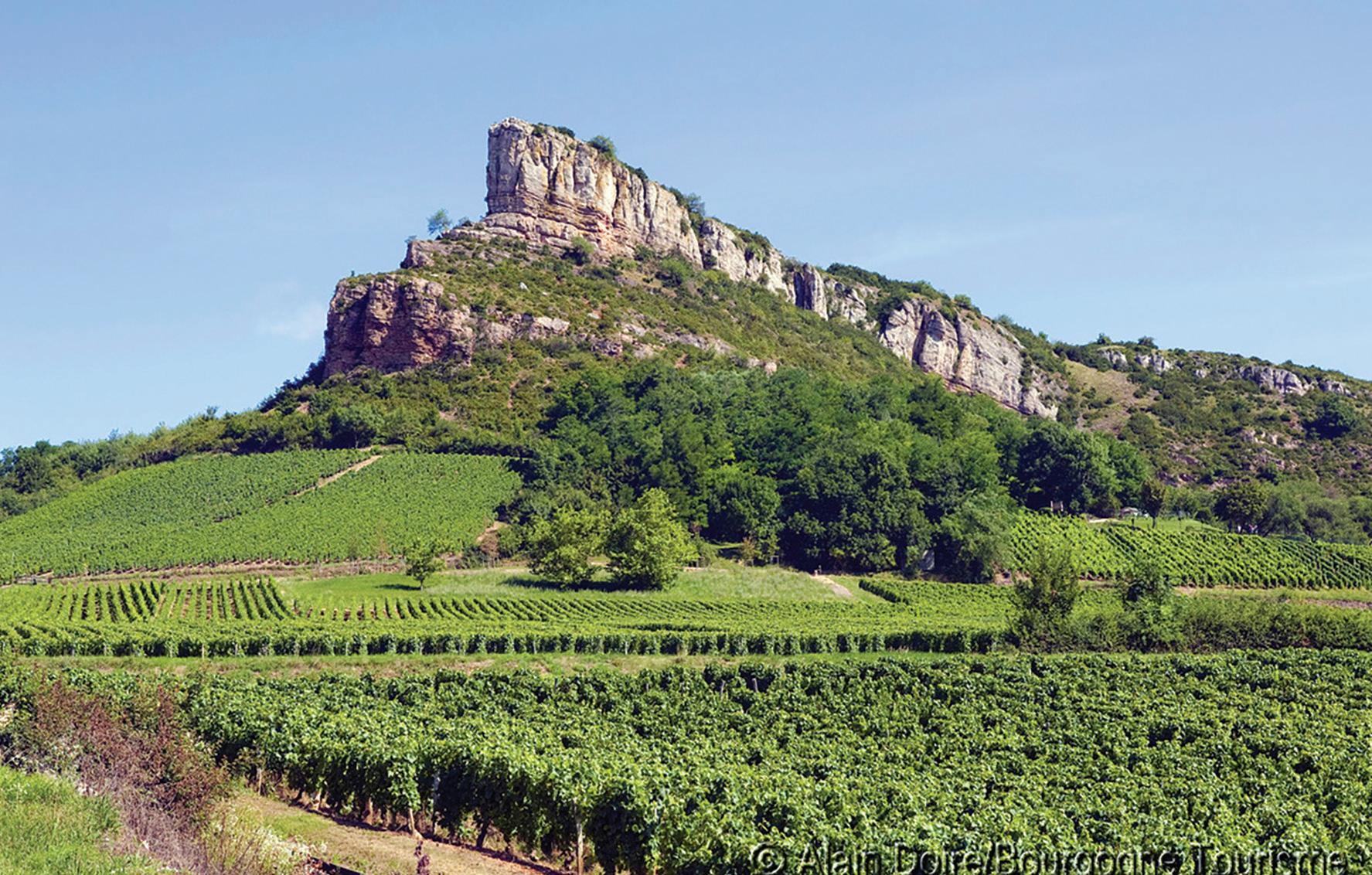
Oenophiles will delight to explore the lush, sun-soaked vineyards of France on a CroisiEurope wine-themed cruise through some of the country’s most famous wine regions. One such cruise, slated for 2026, takes passengers on an eight-day, round-trip voyage from Lyon, following the Rhône River and its tributary, the Saône River. Sailing on the MS Rhone Princess, they’ll enjoy a wine-themed cruise complete with tastings, vineyard tours and fun winethemed activities.
After passengers embark in Lyon, they’ll enjoy an excursion to Halles de Lyon Paul Bocuse, a local market hailed as one of the city’s gastronomical highlights. Guests can expect a tour of Old Lyon, a UNESCO World Heritage Site, and a tasting of some of the region’s local flavors at the market. Then, they’ll cruise toward Mâcon for stops at the Beaujolais vineyards and the Hameau Duboeuf, a winethemed park with attractions and exhibits dedicated to the history and culture of wine. The next stop on the route is Vienne, which features included excursions to and tastings at vineyards in the Condrieu and Côte Rôtie regions, each of which produce their own signature wines.
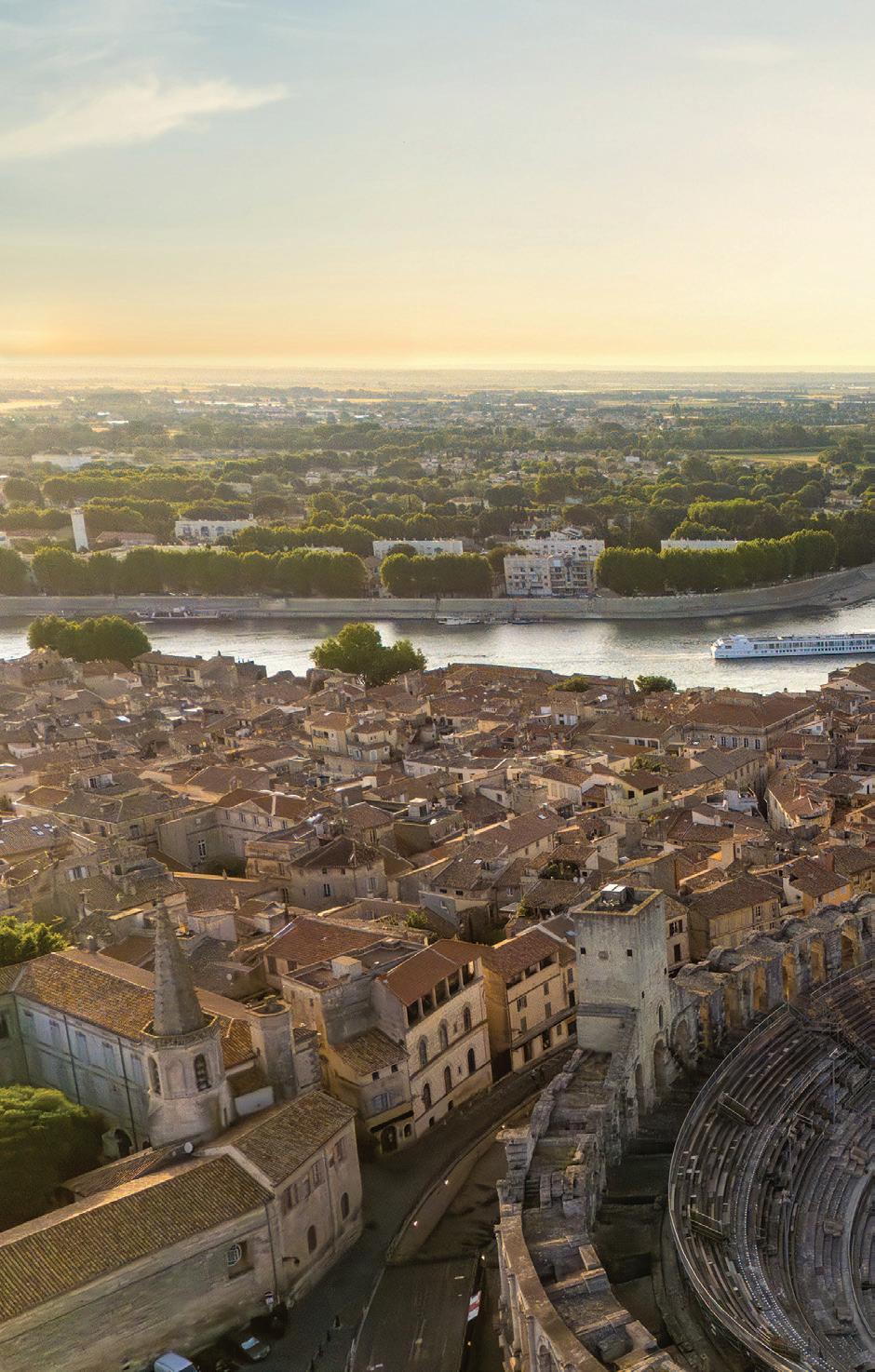
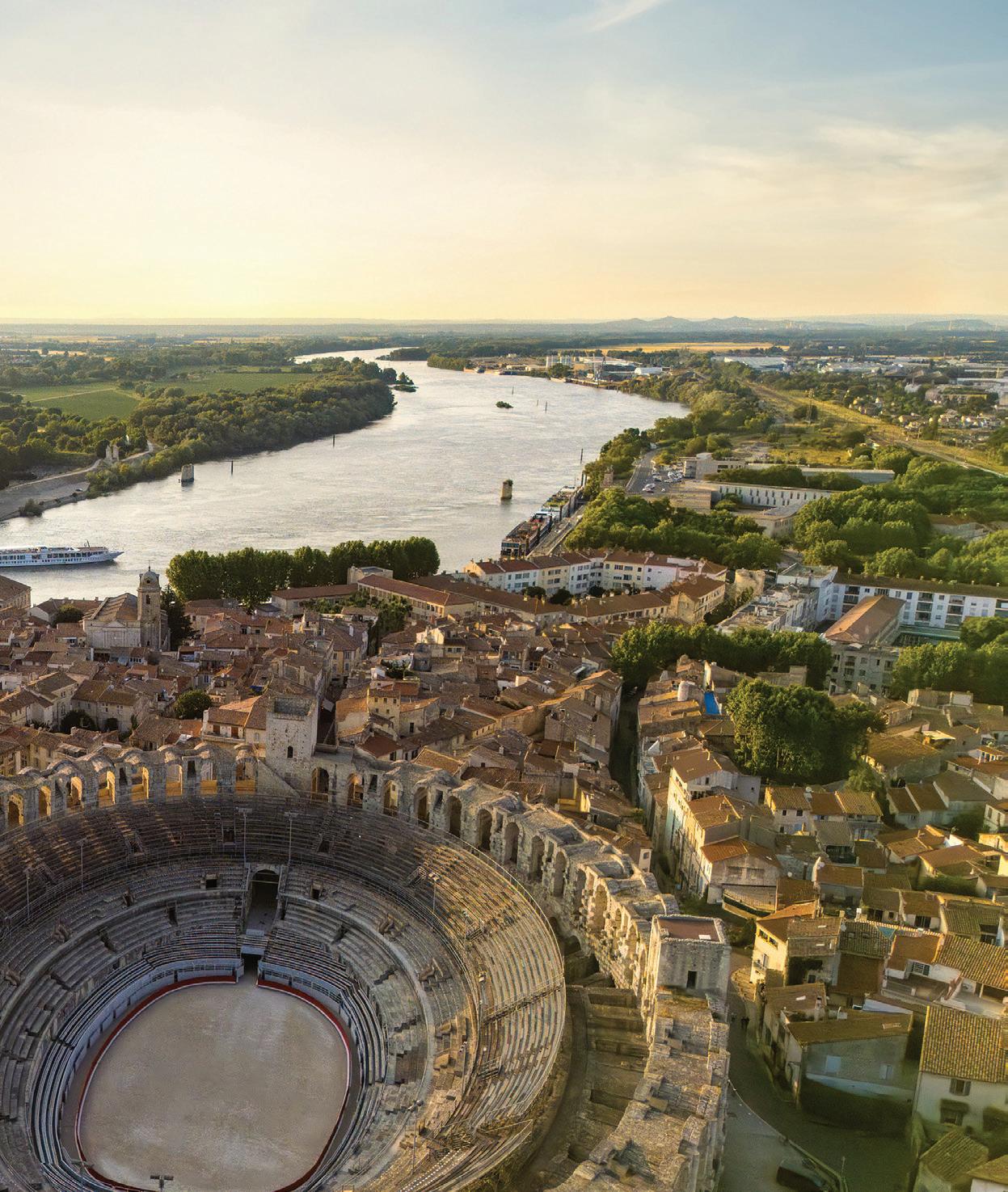
The historic town of Avignon is next. Known for being a papal capital in the 14th century, it’s home to the Palace of the Popes, a large Gothic palace. Passengers will also be treated to a guided tour of Arles, the Roman city that inspired Vincent van Gogh’s artworks “Starry Night” and “Café Terrace at Night.” A tasting at the small village of
Saint-Rémy-de-Provence is also included. Stops in historic Viviers and Tournon-sur-Rhône offer more opportunities to explore the region’s history and culture, including a visit to the famous Tain-l’Hermitage for a tasting of some of the region’s top wines, before cruising back to Lyon.
CROISIEUROPERIVERCRUISES.COM
Large, seasonal, open-air Christmas markets can be found in many European countries in the weeks during Advent; though they originated in Germany and Austria, they occur in many other European countries. Vendors’ handcrafted gifts, ornaments, decor and food make the markets a classic way to celebrate the season’s joy and make them a popular theme for most river cruising companies in Europe. Avalon Waterways offers cruises along the Danube, Main and Rhine rivers that highlight Europe’s Christmas Markets. The markets provide plentiful shopping, delicious mulled wine and spiced gingerbread, cheerfully illuminated towns and informative lectures on local holiday traditions, offering passengers a magical way to spend December in Europe.
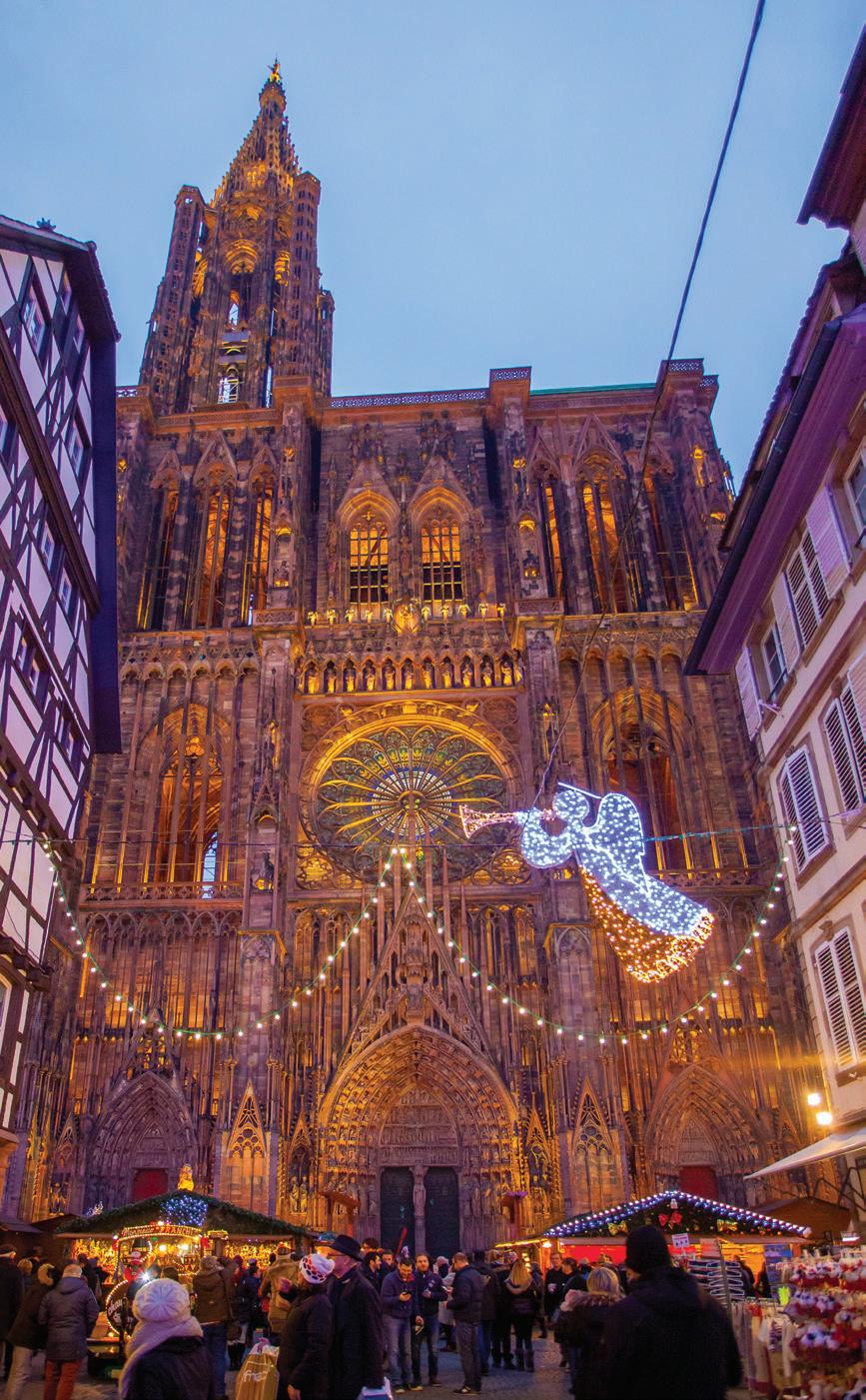
One such itinerary, Christmastime on the Romantic Rhine, takes passengers south on an eight-day voyage from Amsterdam to Basel, Switzerland. Passengers can enjoy a canal tour of the colorful Dutch city before cruising to Cologne, Germany, where they can learn about Germany’s Christmas traditions, enjoy the city’s Christmas markets and see the magnificent Cologne Cathedral. They’ll then sail through the Rhine Gorge, which is also a UNESCO World Heritage Site, en route to Rüdesheim, where castles and delicious coffee await. A guided tour of Heidelberg Castle or a guided city walk in Mainz are next on the itinerary.
The final leg of the trip includes a trip to Strasbourg, France, complete with a sightseeing tour, winter markets and an optional trip to Alsace’s wine country; a stop in Breisach, Germany, with a trip to the Black Forest; and a final docking in Basel, Switzerland, where passengers will disembark.
AVALONWATERWAYS.COM
The Northeastern U.S. is home to some of the most beautiful fall foliage in the world. Every autumn, the forests surrounding the Hudson River come alive with vibrant hues of red, orange and gold in the lush forests of the Catskill Mountains and the Berkshire Hills. Groups can enjoy this stunning scenery and the magic of the season from an American Cruise Lines riverboat. Known for large staterooms, these vessels include balconies and plenty of onboard amenities.
The Hudson River Fall Foliage Cruise begins in New York City and makes stops at Sleepy Hollow, West Point, Hyde Park, Kingston and Catskill before ending in Albany. Reverse itineraries are also offered. In addition to the breathtaking fall foliage and plentiful wildlife, passengers will
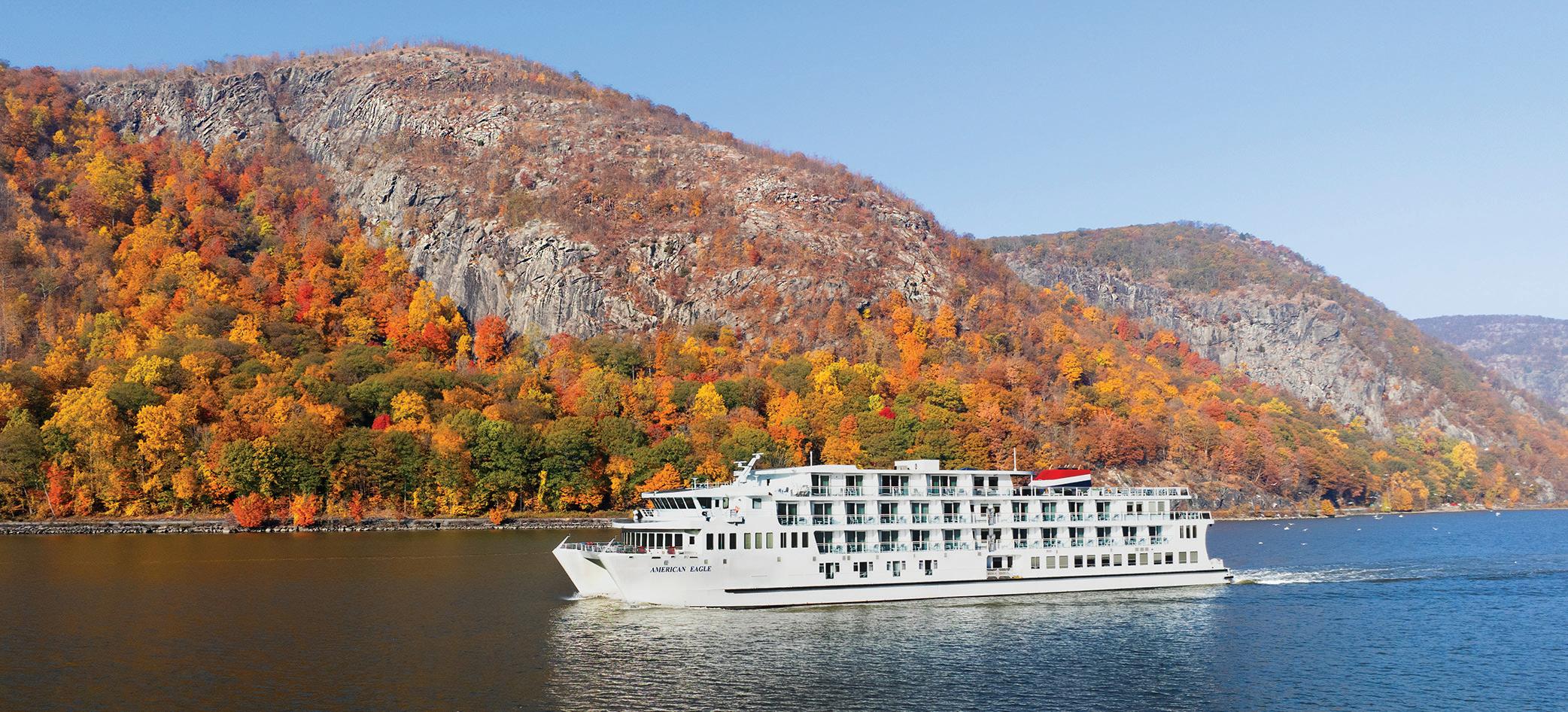
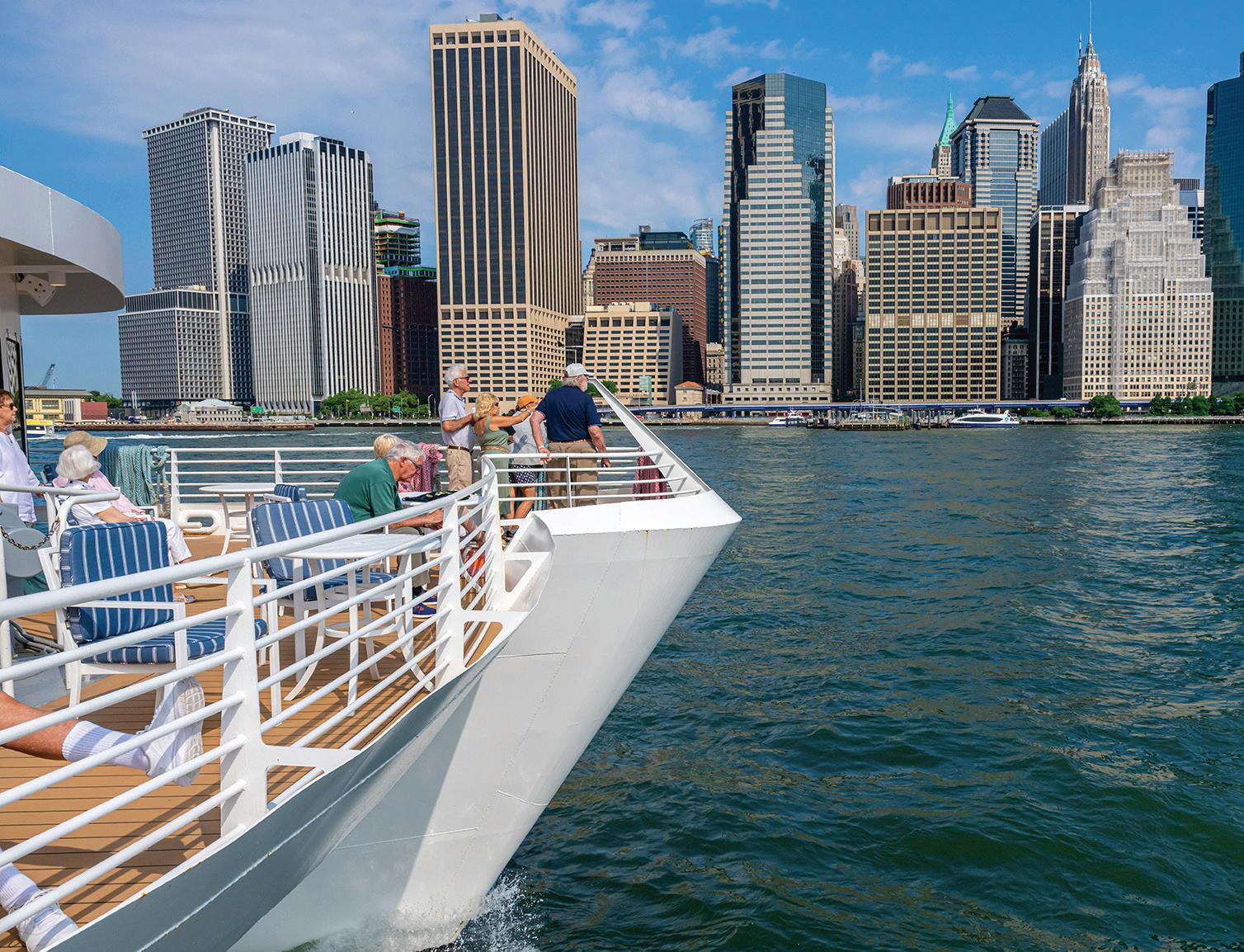
have the privilege of discovering the region’s history. They can explore the town of Sleepy Hollow, which inspired the Washington Irving story by the same name; they can also visit the acclaimed author’s grave in the historic Sleepy Hollow Cemetery. Nearby, they’ll find the Gothic Lyndhurst Mansion and the historical Haverstraw Village. A stop at West Point lets guests take in America’s military legacy or visit a local family farm, where they can take a hayride and leave with a bag of fresh, farm-grown apples as a souvenir.
At the Hyde Park stop, they’ll find the Franklin D. Roosevelt National Historic Site and the Vanderbilt Mansion National Historic Site. They can explore the beautiful mountain town of Catskill before enjoying a day cruising through the mountains for prime leaf-peeping. The vessel spends its final two days of the nine-day itinerary in New York’s capital city, Albany. Groups can explore the city’s history with walking tours and visit its top attractions, including the New York State Museum and the capitol building.
AMERICANCRUISELINES.COM
The Danube is the second-longest river in Europe and flows eastward through much of Central and Southeastern Europe. The Danube gives travelers access to four capital cities, each a hub of culture and history. Uniworld’s Music of the Danube cruise is an excellent way to explore the musical heritage of Europe, including connections to some of the world’s most famous classical composers as well as contemporary musicals and films. The eight-day journey, running from Budapest to Passau, is available in 2026 and features multiple concerts and performances exclusively for the cruising group.
After embarking in Budapest, the cruise’s musical offerings begin with a visit to the Franz Liszt Academy of Music, established in 1875, followed by a drive showcasing
the scenic highlights of city. Next up, in Vienna, passengers will be treated to a private concert of Mozart and Strauss compositions in a castle. They can also take a private, guided tour of Vienna’s Art History Museum, which features works by Vermeer, Velázquez and Klimt, among many other masters.
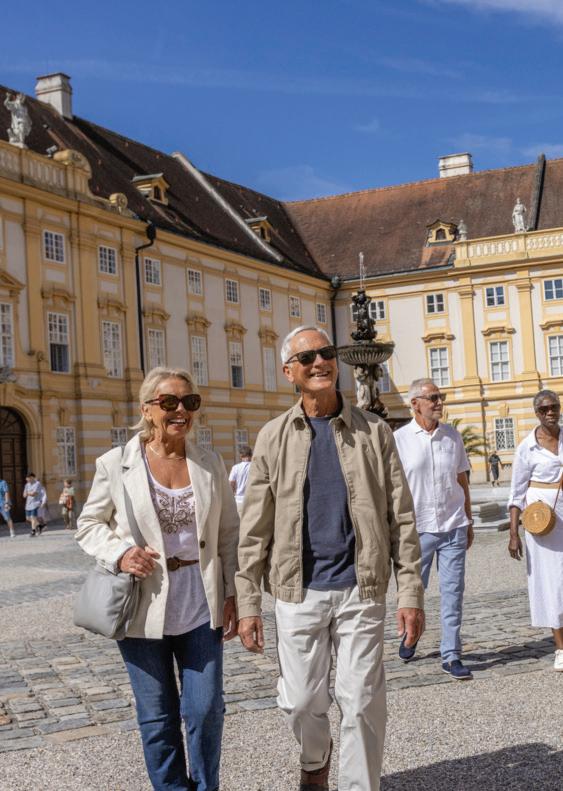
The itinerary winds through Durnstein, known for vineyards and castle ruins, and Melk, with the Melk Abbey, home to Benedictine monks. After docking in Linz, passengers have the chance to explore Salzburg, the birthplace of Mozart and the filming location for the 1965 film “The Sound of Music.” This all-day excursion includes Mozart’s birth home, Maria’s church and a walking tour of Salzburg’s historic squares. In Passau, travelers can see Europe’s largest pipe organ and take an onboard yodeling workshop before disembarking.
More travelers than ever are interested in incorporating elements of wellness into their trips, from relaxing spa addons to active, adventurous itineraries. Most river cruise companies are allowing passengers to opt-in to more active excursions, but Celebration of Wellness River Cruises by AmaWaterways incorporate wellness into the entire experience. AmaWaterways was recently awarded the designation “Best for Active Cruisers” by Cruise Critic because of its extensive health-conscious offerings, including the rentable bikes it keeps onboard for passengers to use during their downtime when exploring port cities.
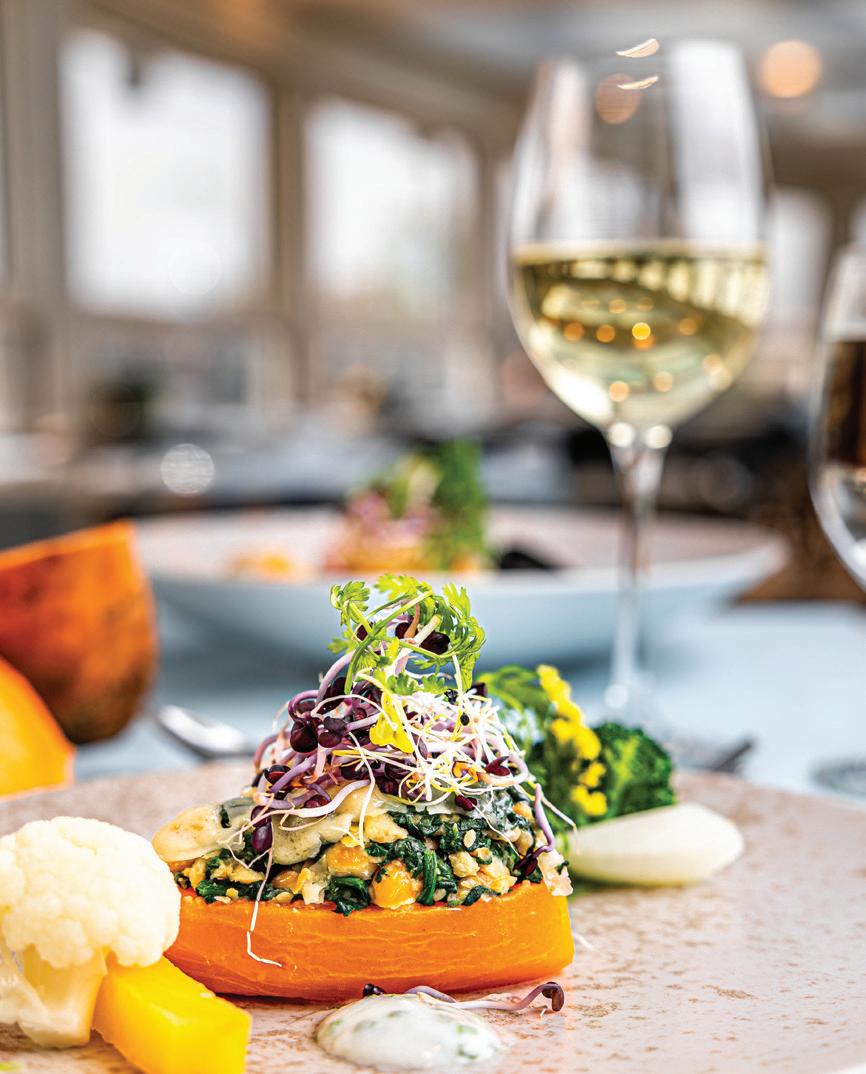
On AmaWaterways’ wellness-focused trips, cuisine is nourishing, plant-forward and delicious, and “detox water” infused with citrus is available to help passengers hydrate. Passengers can sign up for onboard fitness classes, like yoga and spinning with gorgeous river views, and trips ashore explore Europe’s gems with guided hiking, biking and running excursions. These cruises also include trips to wellness-oriented destinations, like exclusive European spas for rejuvenating treatments.
Some of AmaWaterways’ ships feature their own wellness studios, fitness studios, massage rooms, pools and whirlpools. They also feature wellness hosts who lead the daily onboard fitness activities and educate travelers about integrating healthy habits into their trips and their lives.
One Celebration of Wellness cruise itinerary offered by the cruise line is Melodies of the Danube, a seven-night journey from Budapest to Vilshofen with stops in Bratislava, Vienna, Linz and Passau. Stops offer city tours by bike, castle hikes and walking tours, in addition to the onboard wellness experiences.
AMAWATERWAYS.COM

WITH ASHLEY RUNYON
If there’s one style of trip that’s consistently popular with affinity groups, it’s cruising. But deciding to take a cruise is just the first step. There are many options to consider and decisions to make before you can start booking cabins.
With a wide range of ocean cruise lines and river cruise lines — and some lines that do both — it can be tough to know where to start. River cruises and ocean cruises both include domestic and international options. Some cruise lines offer great online booking tools, while some companies have representatives who can help, and some lines provide both.
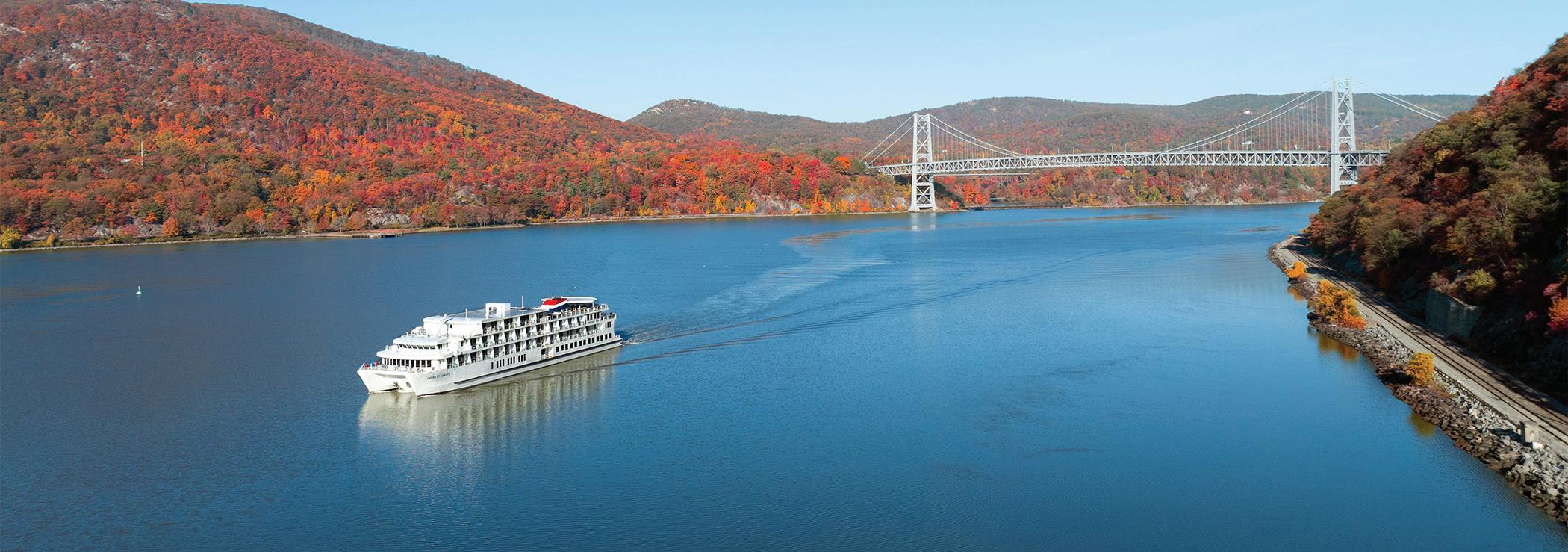
Sailing on the Hudson River during autumn
Group leaders have many factors to consider when choosing cruises. You want your cruise to be popular among your travelers and for them to trust your products. It’s essential to make the right decisions for your travelers so they’ll love the trip and choose to travel with you, over and over again. Here are some things to consider when narrowing down the choices.
River cruising or ocean cruising: That is the question. River cruising often has a more intimate atmosphere because the vessels are much smaller than ocean liners. River cruising frequently offers inclusivity, meaning passengers don’t have to pay extra for every add-on. For example, beverages (even wine and beer) are included with meals, and the itinerary includes a daily walking tour of each city. While river cruises may offer additional paid excursions, there are fewer options than those of ocean cruises. Many river cruises have a minimum age of 12, so this is not an
option for families with young children, especially because most cabins accommodate only two people. However, if your travel club is geared toward adults, this might be the option for your travelers.
Ocean cruises, on the other hand, take place aboard larger vessels that offer multiple restaurants and a wide variety of excursions. They also provide rooms for more than two people, which can appeal to families. And most ocean cruises are a hybrid of inclusive and a la carte pricing; traditional dining is included, but there are additional costs for specialty restaurants, certain drinks and excursions.
Ocean cruises offer a variety of onboard entertainment options, including evening shows, games, swimming, spa services and more. Yacht cruising, though, typically features a more intimate atmosphere and fewer activities and amenities. On these trips, meals, drinks and excursions are almost always included.
Domestic cruising in the United States was a niche product for a long time, though it has recently been growing in popularity. The East and West coasts both offer ocean cruises. You may be interested in fall colors or wine country,
Ashley Runyon is a longtime bank and travel club planner. She lives in Ashland, Kentucky, with her family of six.
and ocean cruising is a great way to experience either. River and Great Lakes cruising are also popular ways to explore our country. Though the prices might be higher than other cruising options, they generally include quite a lot.
Internationally, there are many more options, which means more decisions to make. A great way to narrow it down is to survey your travelers. Choose some popular destinations that your travel club hasn’t offered recently then ask your travelers for input. You may even try incentives to increase the response rate. You can also try looking at group travel trends, which can help sell your cruise.
Consider visiting a travel show to learn about current travel trends, too. If other travelers are already traveling to a specific location, your travelers are likely to see their
pictures and notice when vendors are promoting that destination. This makes it easier for you when it’s time to sell. It’s essential to stay ahead of upcoming travel trends, and you can do this by attending workshops and discussing their projections with vendors. Vendors do extensive research to show you what to promote to your club.
Many group-friendly cruise lines have representatives who are assigned to your region. Reach out to the group’s departments to find who your representative is. It’s great to have someone who can answer your questions and help promote your cruise. The representative is also responsible for keeping you in the loop on any policy changes and updates to ships, which will improve the process. And, if something goes wrong — either before or during your trip — your representative is just a call or email away.
How do you find your representative? Try calling or attending travel shows like the Select Traveler Conference. Your representative might not be present, but they can find someone in your area.
So, there are a lot of decisions to be made when choosing which cruise to advertise to your travel club. Do your research with different companies to find group-friendly options, survey your clients on popular destinations, choose your ideal destination and connect with a representative for the cruise line of your choice.
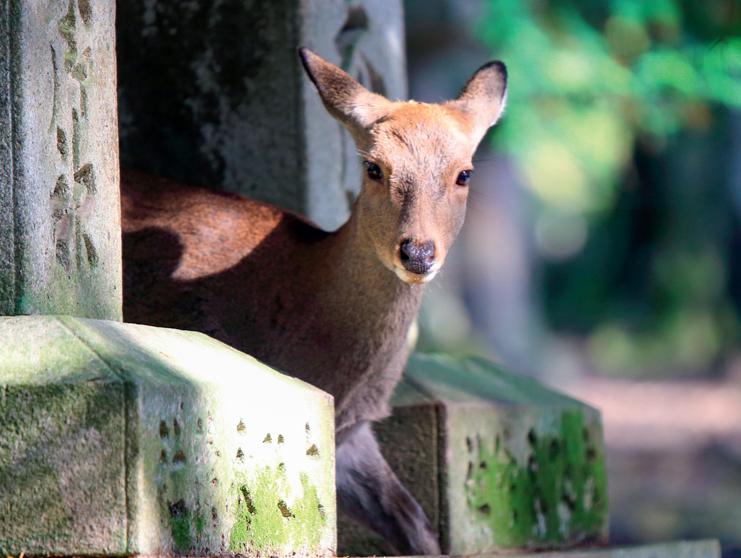
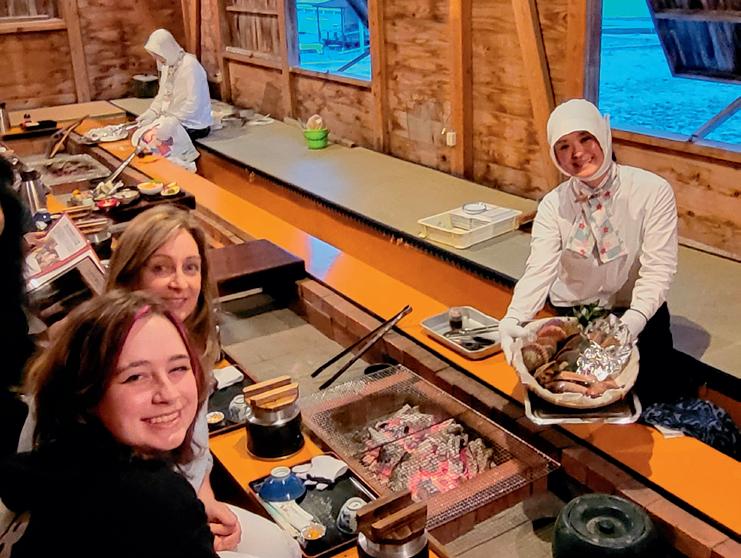
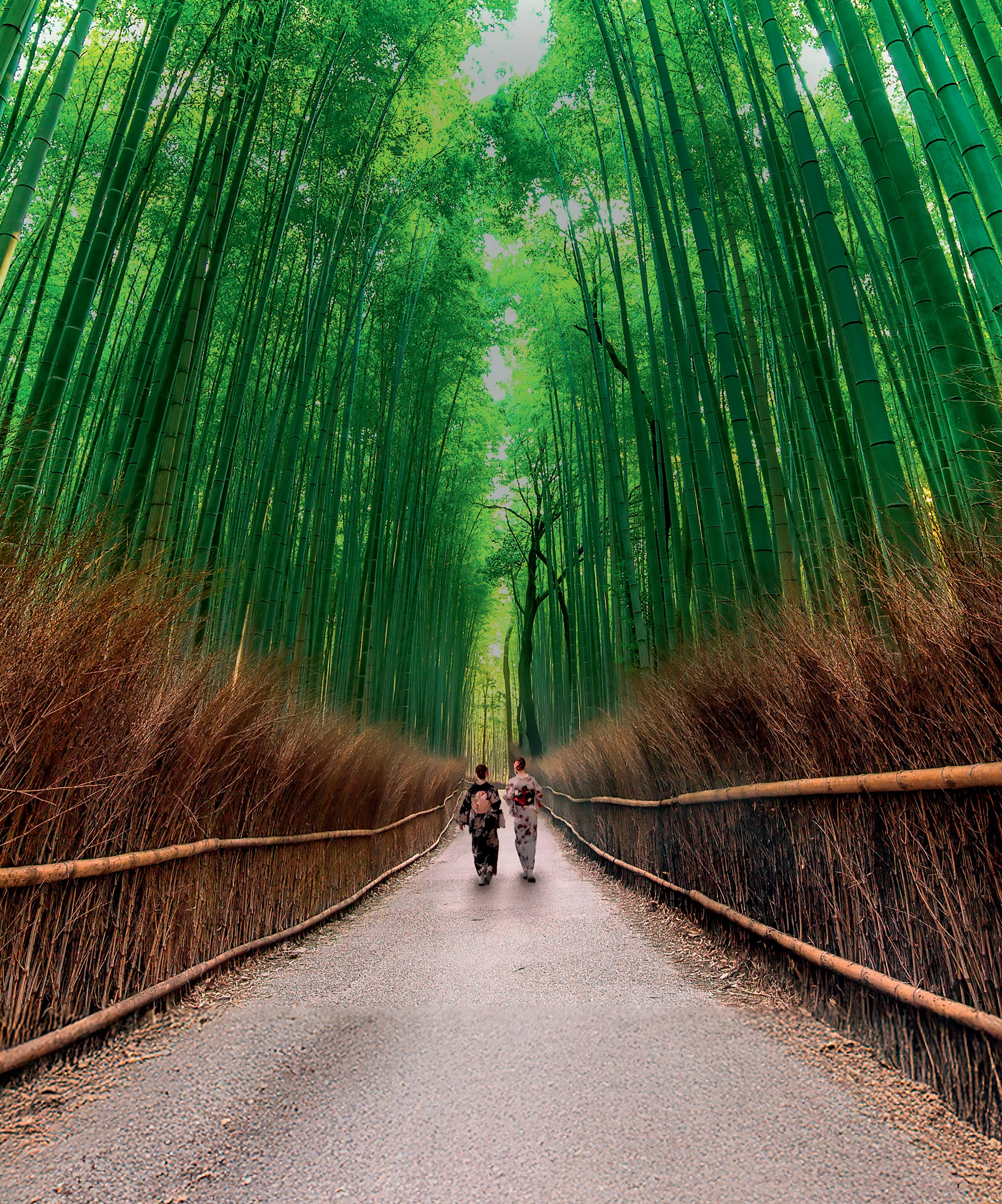
Escape the bustle of Seoul with a traditional home-hosted meal, wander through the bamboo forests of Kyoto, and meet the ama pearl divers and watch their elite profession in action.
Explore the storied pasts and neon futures of East Asia as you dive deep into culture on Collette’s Japan & South Korea: from Tokyo to Seoul tour.

Scan to learn more about this culturally immersive tour, call Collette at 844.445.5663 or visit www.gocollette.com/groups.