Forests & Gardens is the member magazine for Holden Forests & Gardens, which includes the Holden Arboretum in Kirtland and the Cleveland Botanical Garden in Cleveland.
MISSION: Holden Forests & Gardens connects people with the wonder, beauty, and value of trees and plants, to inspire action for healthy communities
VISION: All communities transformed into vibrant places where trees, plants, and people thrive
Editor & Director of Marketing: Jessica Schneider
Editor & Content Manager: David Lardakis
Photography: Gia Beggiani, Albert Jackson, Chris Langer, David Lardakis, Ferole Parmalee, Bob Perkoski
Forests & Gardens (ISSN 2474-6371) is a class and events magazine published quarterly by Holden Forests & Gardens, 9500 Sperry Road, Kirtland, Ohio 44094-5172.
Periodicals postage paid at Mentor, Ohio and additional offices.
Postmaster:
Please send address changes to Forests & Gardens Magazine
how the Holden Arboretum Seed Bank is growing native tree seedlings to
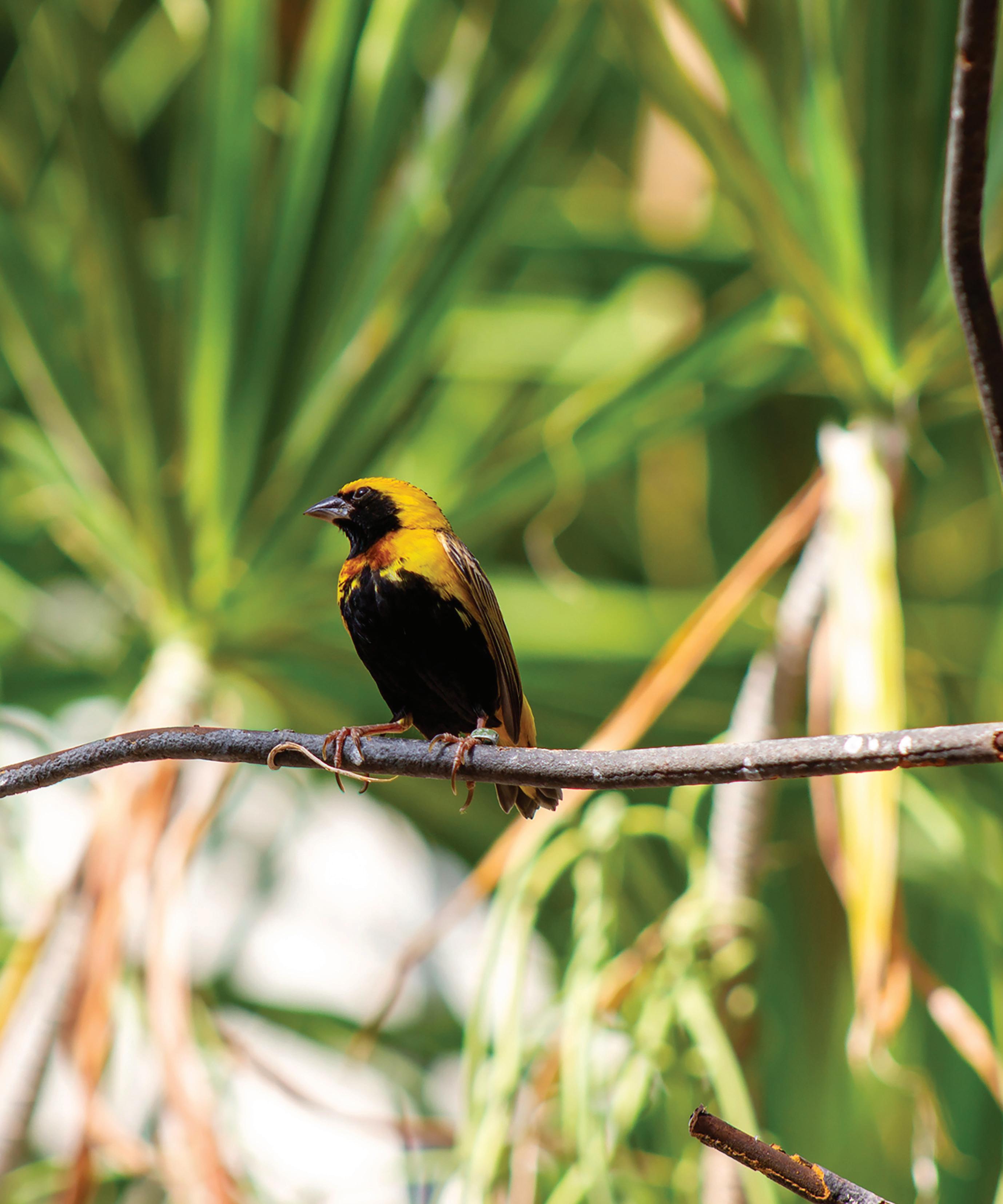
American holly Ilex opaca
NATURE’S Winter Wonderland
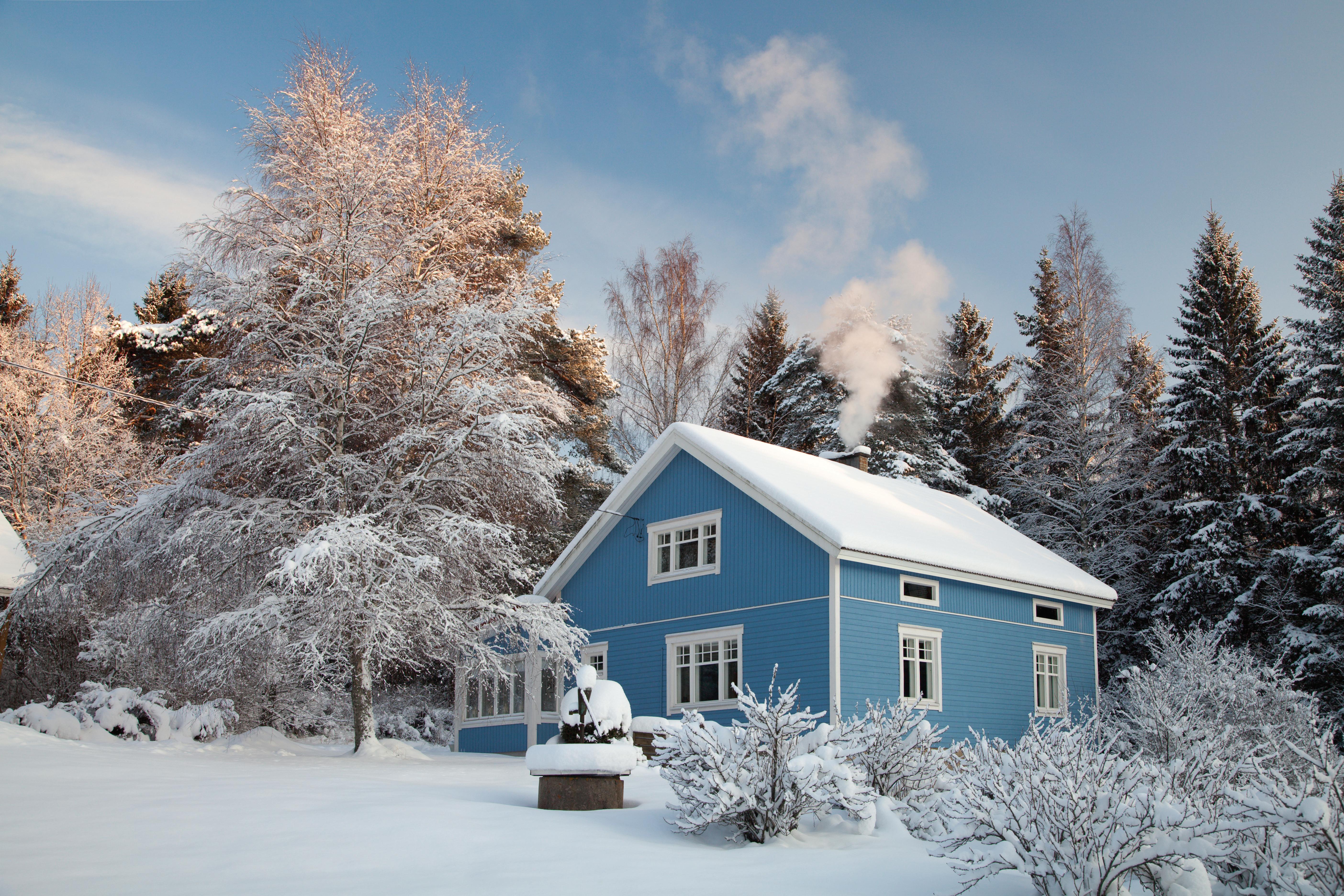
As winter settles across our landscapes, a quiet beauty takes hold. The branches may be bare and the ponds starting to freeze, but the dormancy of this season carries a promise of renewal. Nature reminds us that rest is not an ending — it’s preparation for what comes next. At Holden Forests & Gardens, we embrace this time as both a pause and a preparation for the year ahead.
In this edition of Forests & Gardens, you’ll discover fascinating stories about the majestic baobab trees at Cleveland Botanical Garden, the restoration work at the Holden Arboretum Seed Bank, the new programs of the Working Woods Hub and more. Our horticulturists, researchers and conservationists are busier than ever, inspiring and educating people here at home and around the world.
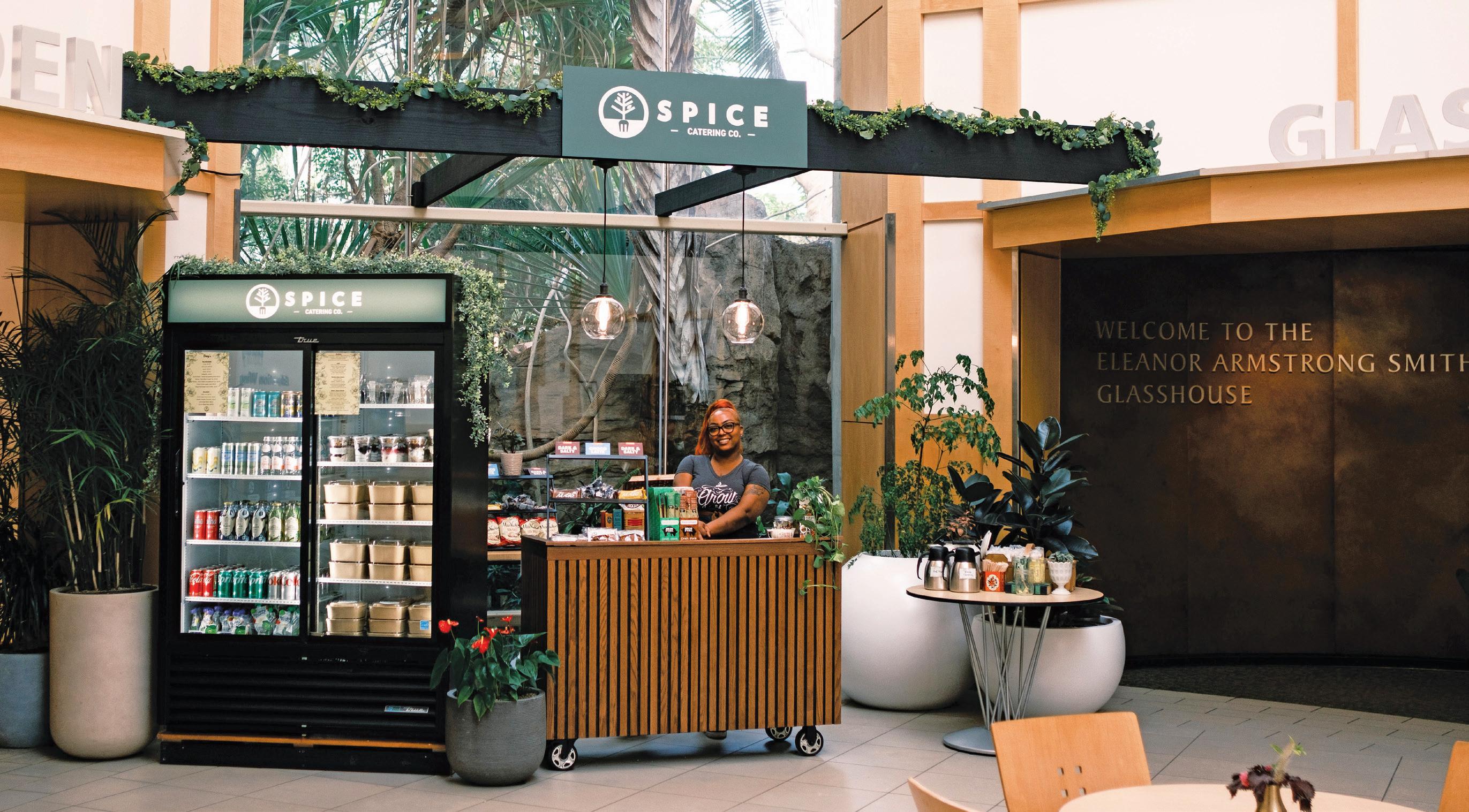
At the end of summer, we expanded a fruitful partnership with a group already working with us at the Arboretum. Spice Catering Co. is now our café and catering partner at the Cleveland Botanical Garden! We are excited to share our updated cafe space and delightful food and drink offerings now available to you.
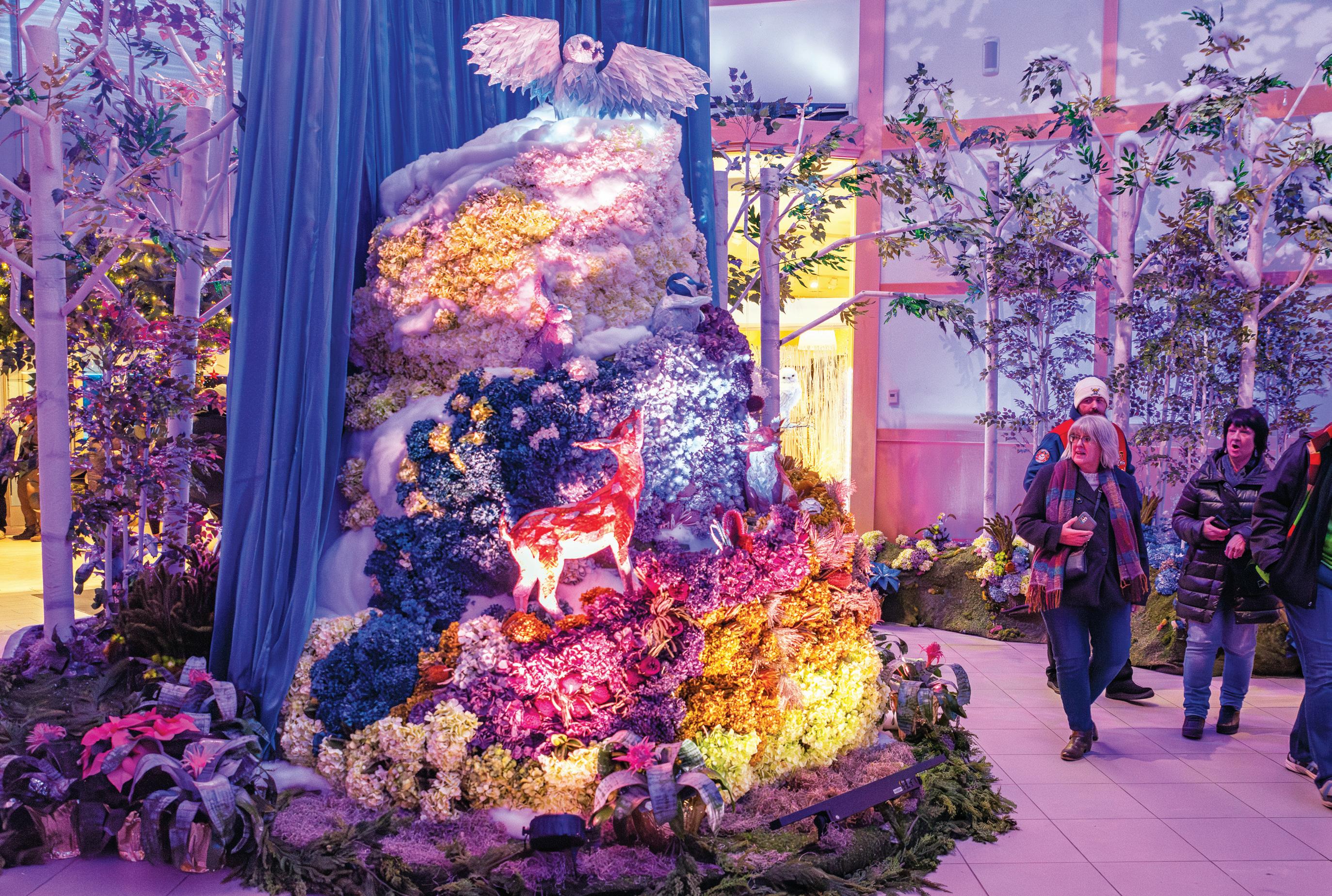
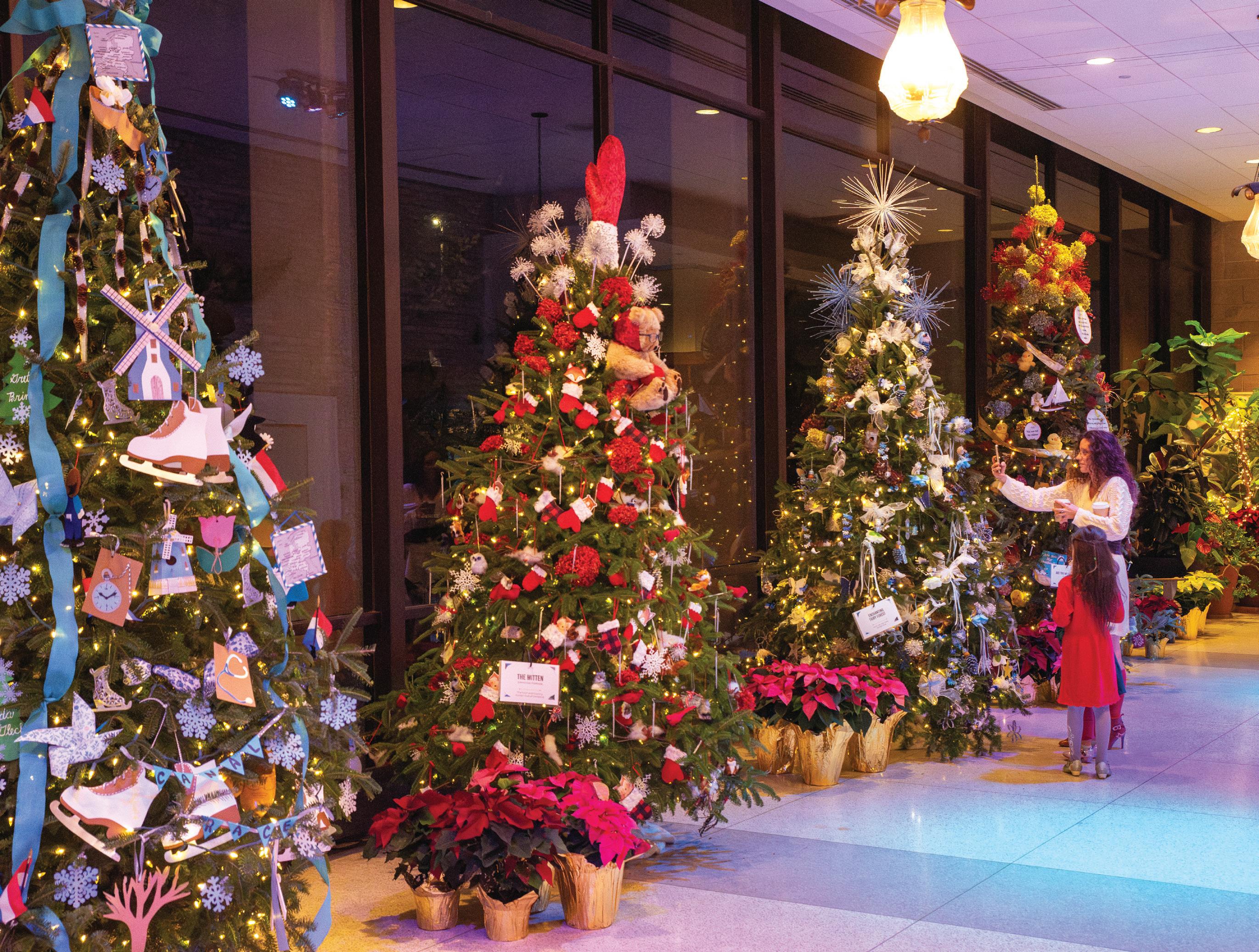
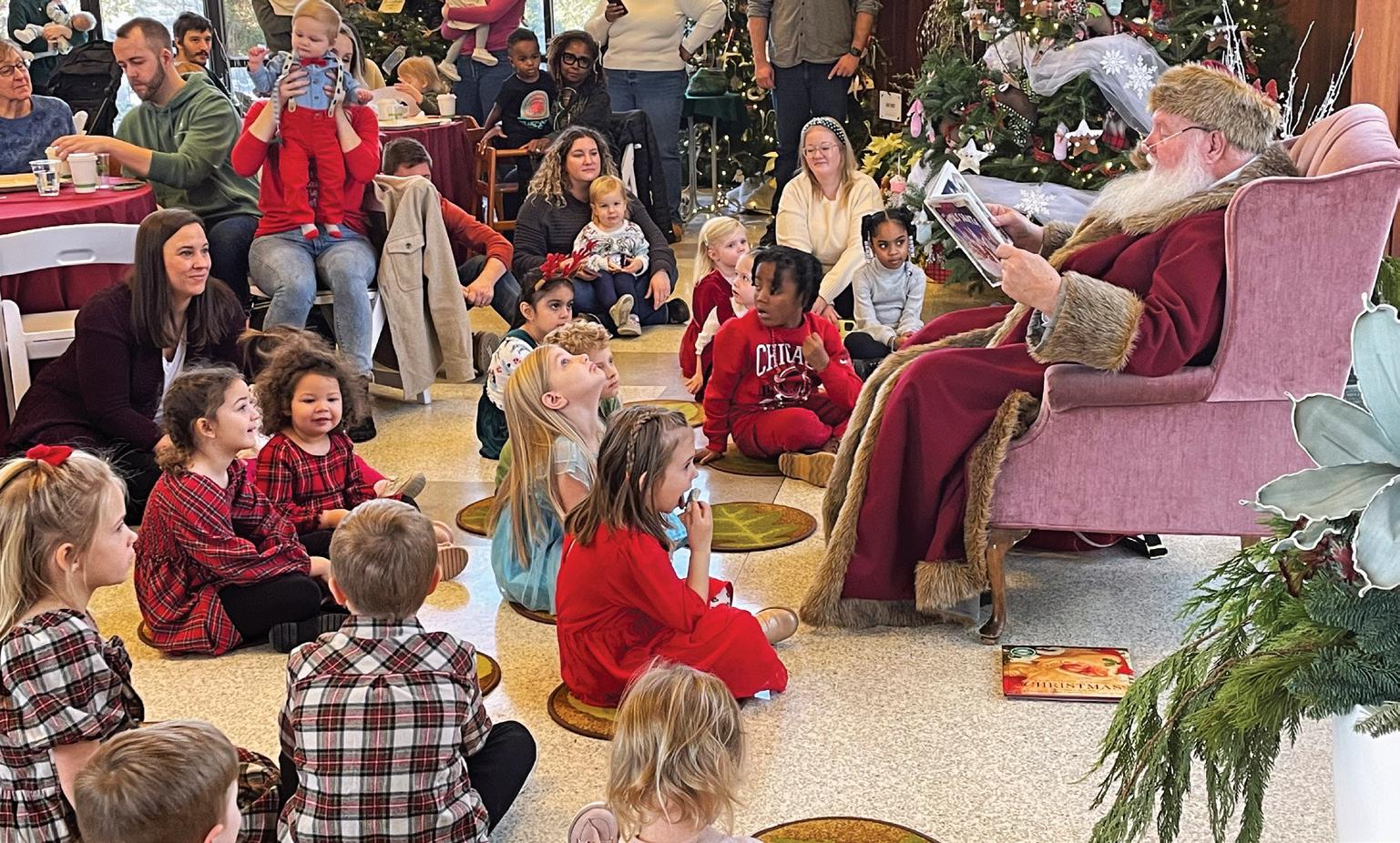
This winter, Frost returns for its third dazzling year at the Cleveland Botanical Garden. Beloved traditions — our gingerbread competition and the beautifully decorated trees and wreaths from local garden clubs — are back in all their festive glory. Family favorites like Storytime with Santa keep the holiday spirit shining bright. Indoors and out, our gardens are ready to welcome you to a season of wonder.
Do you need a year-end reset? Look no further than the expanses of the Holden Arboretum. There’s something magical about the snow-covered, rolling hills of Kirtland. And something truly special about having a quiet forest trail all to yourself. Learn more about the art of winter forest bathing on page 16.
Looking ahead, we’re ready to brighten winter with a burst of color. The transformation begins February 14, when Orchid Rodeo rides into Cleveland Botanical Garden, filling every corner with stunning orchids, bold western flair and a celebration of nature’s beauty in the heart of winter.
For now, I invite you to savor the quiet brilliance of winter. Take a frosty walk, breathe in the sharp scent of evergreens, and let the landscapes remind you of nature’s enduring resilience.
Together, we nurture a world where plants and people thrive, season after season.
See you soon!
Ed Moydell President & CEO
Frost is now open at Cleveland Botanical Garden.
Wander glowing gardens. Meet mystical animal friends. Lose yourself in lights, laughter and the warmth of holiday wonder.
Don't Miss!
The largest gingerbread competition in Northeast Ohio
Dozens of trees & wreaths designed by local garden clubs
Advanced online ticket purchase is required. Guests must select their time of arrival.
FROST AFTER DARK
Open late Thursdays, Fridays & Saturdays until 9 p.m.
Live music every Saturday night, 6:30-8:30 p.m.
Seasonal food & drink specials from Spice available all late nights
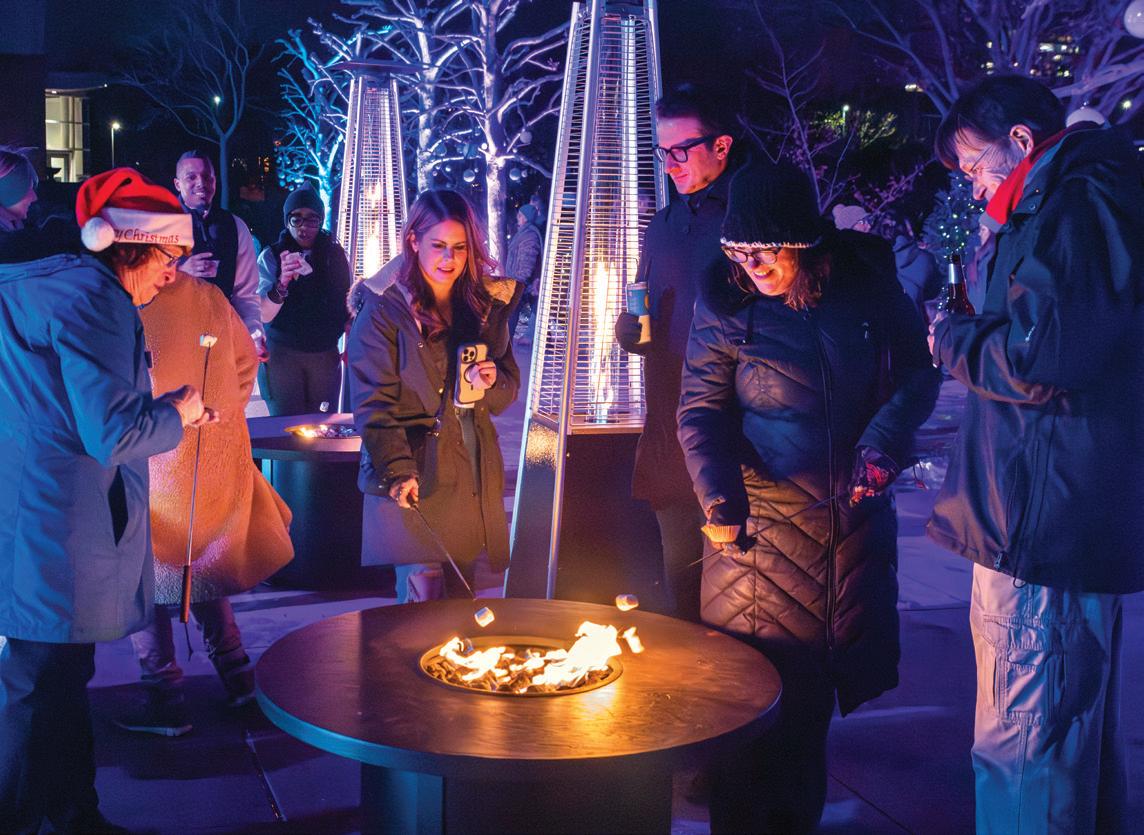
Stunning light displays and glowing gardens best enjoyed after sunset
Cozy fire pits and outdoor lights set the perfect winter scene
A Baobab’s Journey
Learn about how this plant became an important fixture at the Cleveland Botanical Garden.
By Angelica Vasilatos, Ferry Foundation Curation Intern
At the foundation of any botanical living collection are wild-collected specimens. Plants from wild origin play critical roles in research, conservation and education. For that reason, when designing the Eleanor Armstrong Smith Glasshouse at Cleveland Botanical Garden, it was essential to journey all the way to Madagascar in order to curate a collection of scientifically and aesthetically valuable plants. In 2001, a dedicated group of staff members set out to do just that.
Collecting plants in the wild, especially across entire continents, is no simple task. Between March and May of 2000, the horticulture and collections teams at Cleveland Botanical Garden secured both an export permit from the Government of Madagascar and an import permit from the United States Department of Agriculture. With the legal groundwork in place, they scouted collection sites, focusing on areas threatened by gravel mining, zebu (cattle) grazing, deforestation and other human activities. Collecting from such degraded or at-risk habitats ensured that healthy populations elsewhere were not disturbed, while preserving plants that might otherwise have been lost. To maintain the highest ethical standards, our staff worked closely with Madagascar’s Antsokay Arboretum throughout the process.
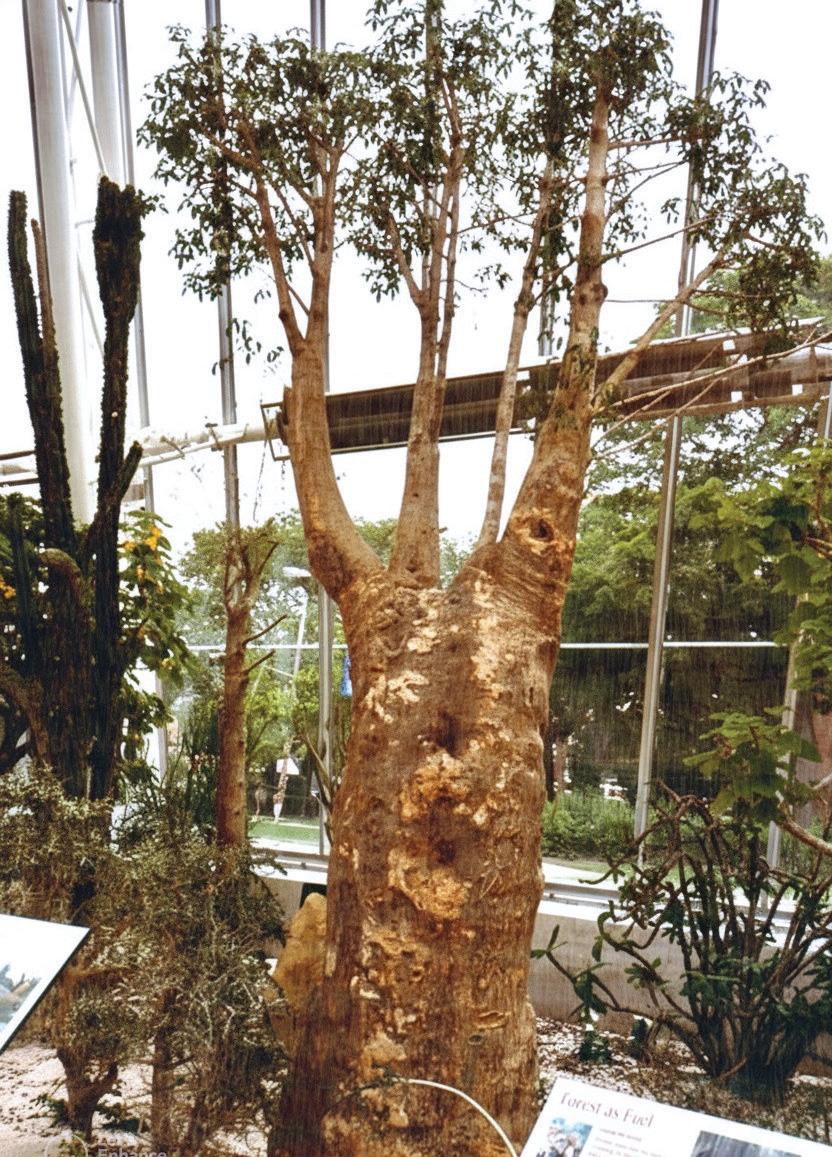
The team devoted much of their energy to locating the most distinctive of the Madagascar collection: the baobab trees (Adansonia spp.). By June 2001, after several attempts, the team found the specimen they had been searching for in Toliara, Madagascar — a fony baobab (Adansonia rubrostipa). Being the smallest of six baobab species native to Madagascar, it was just the right size: small enough to transport, yet large and healthy enough to make the arduous process worthwhile. Despite its relatively modest stature, this tree was already estimated to be more than 70 years old and weighed over 1,500 pounds.
About 95% of species in the Madagascar spiny forest are endemic, meaning they exist nowhere else in the world. Adansonia rubrostipa is one such species. Although not currently at risk of extinction, its limited range continues to be threatened by habitat loss and degradation. Carefully extracting this magnificent tree took a significant amount of time and care. Because baobab roots grow straight down to reach scarce groundwater, it took fifteen people six hours of meticulous digging to expose the roots before cutting them six feet below the surface.
Once freed, the baobab was loaded onto a truck for the first leg of its journey — a two-day trip to Capricorn Flora Nursery in Antananarivo, Madagascar’s capital. Upon arrival, however, the team encountered a new challenge: There were no shipping containers large enough to house the massive specimens. For nearly four weeks, workers built custom crates from Madagascar’s limited wood supplies, which then had to be heat-treated to eliminate pests. After soil removal and pesticide treatments, the plants were finally ready. They left Madagascar aboard an Air France cargo plane bound for the United States.
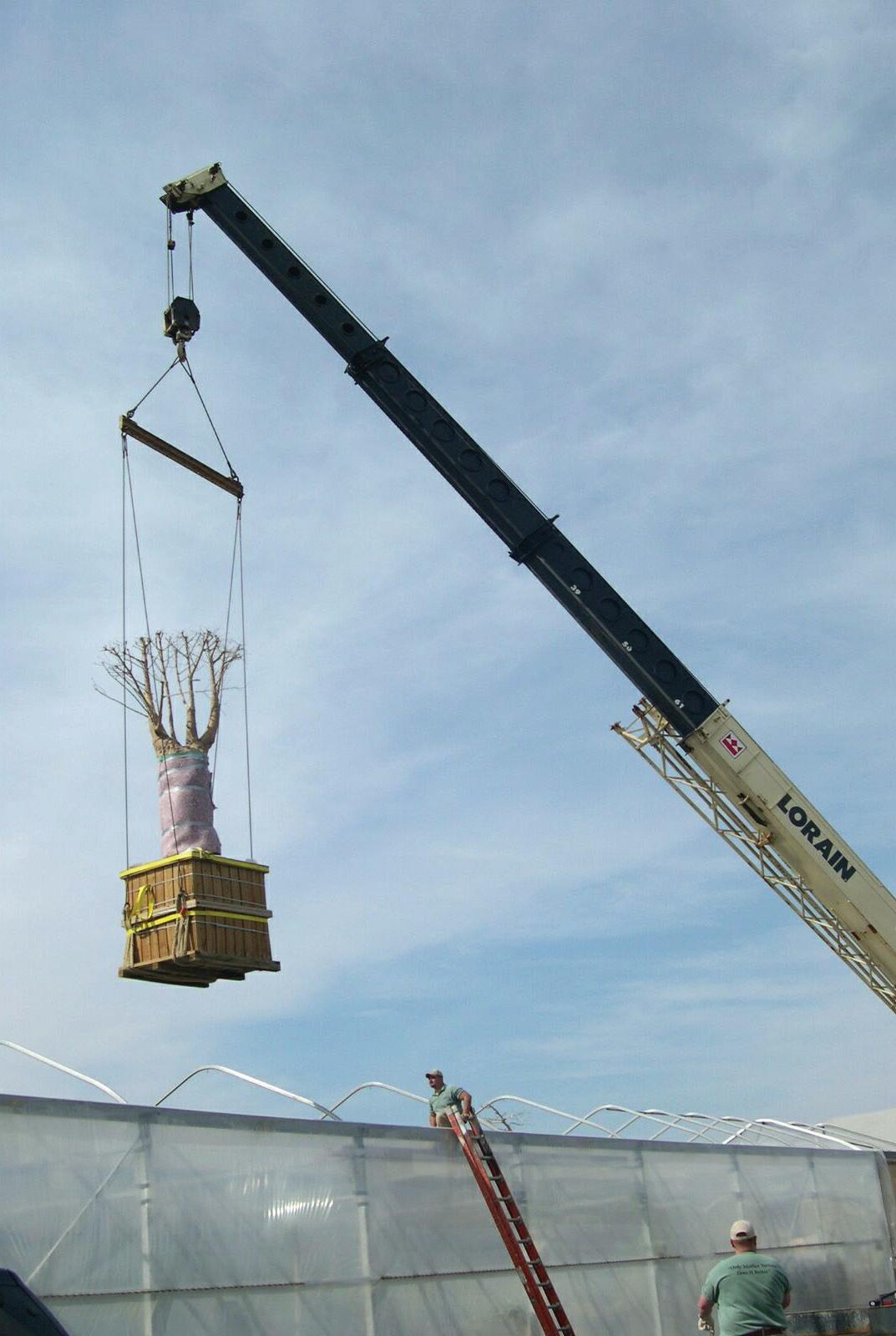
They first landed in New York, then on to Cleveland, where the baobabs were transferred to Willoway Nursery to begin a mandatory two-year quarantine. Because of its immense size, the fony baobab had to be moved in and out of the nursery with a crane.
By early 2003, quarantine had ended and construction at Cleveland Botanical Garden was complete. The baobab arrived at its new home, where a skilled installation team from The Pattie Group unloaded the tree, removed its protective coverings, and carefully settled it into the spiny forest biome of the Glasshouse.
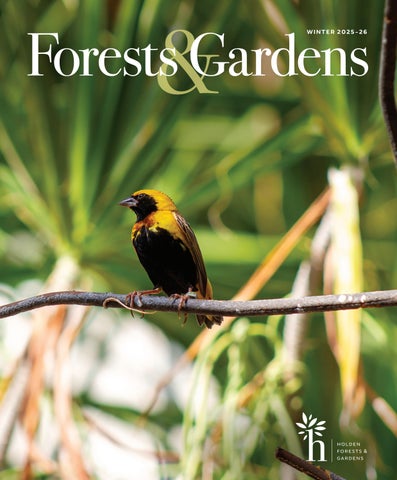
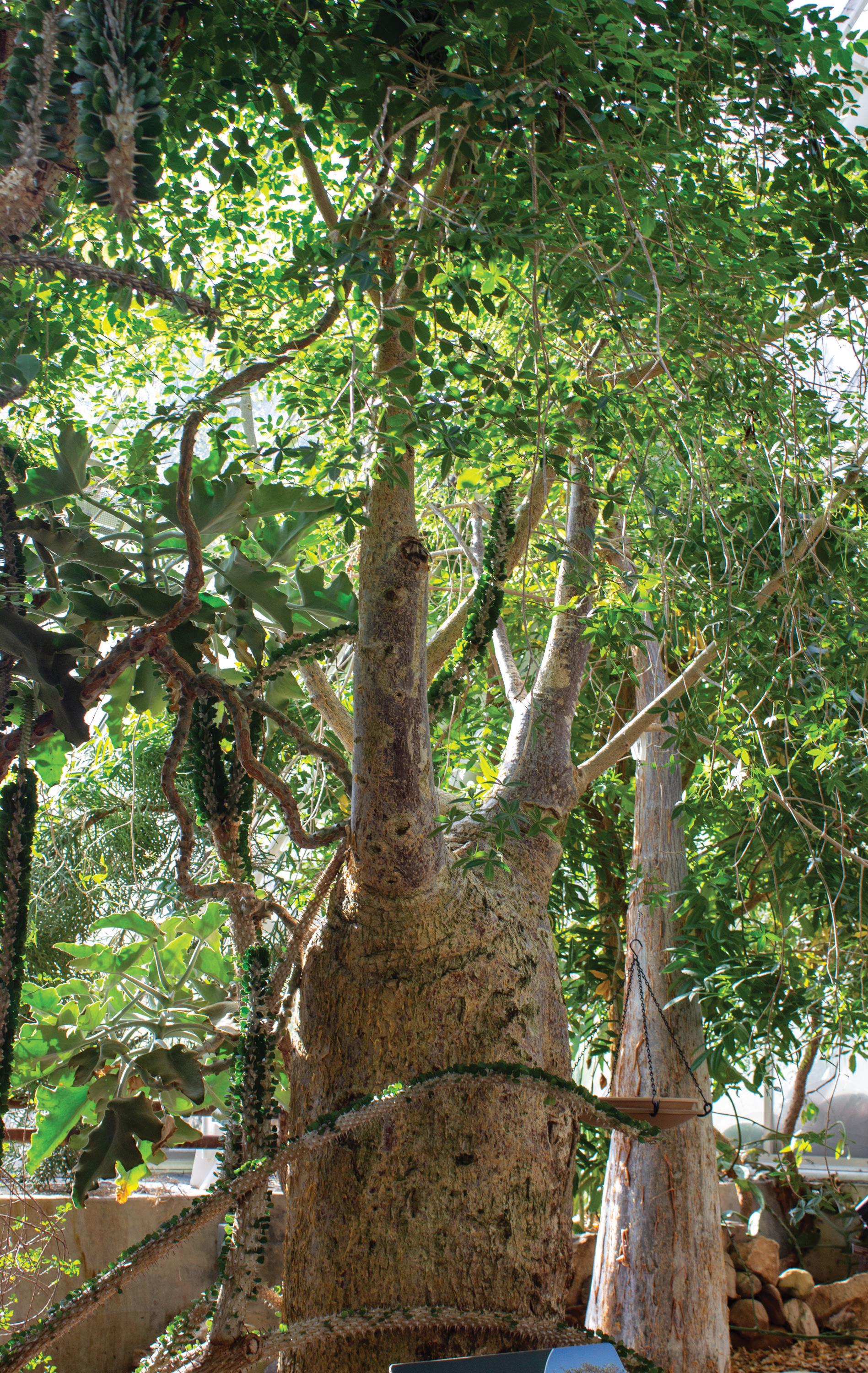
Presently — 24 years after its collection — this remarkable baobab, now approximately a century old, flourishes in Cleveland. Surrounded by a lush spiny forest filled with other wild- and nursery-collected specimens, it anchors the habitat both structurally and symbolically. Its strong branches provide perches and feeders for our weaver birds, bringing even more life to the space.
Curating a botanical garden is a feat of planning and dedication, particularly when it involves transporting fully established trees across continents. More than 9,000 miles from its native soil, this baobab now thrives under the care of our horticulturists, serving as a vital specimen for education and ex-situ (off-site) conservation.
Thank you to Dr. Voara Randrianasolo, Cynthia Druckenbrod and Brian Holley, as well as the late Alfred Razafindratsira and his team at Capricorn Flora Madagascar. The contributions of each of these people, among many others, were instrumental in the collection of these plants and their establishment at Cleveland Botanical Garden.
Visitors can admire this tree and explore many other wild-collected specimens from around the globe with our web application, Flora Finder. Search for “Baobab” or “Adansonia,” or zoom into our Madagascar Spiny Forest Biome to see more of this extraordinary collection. holdenfg.org/flora-finder/
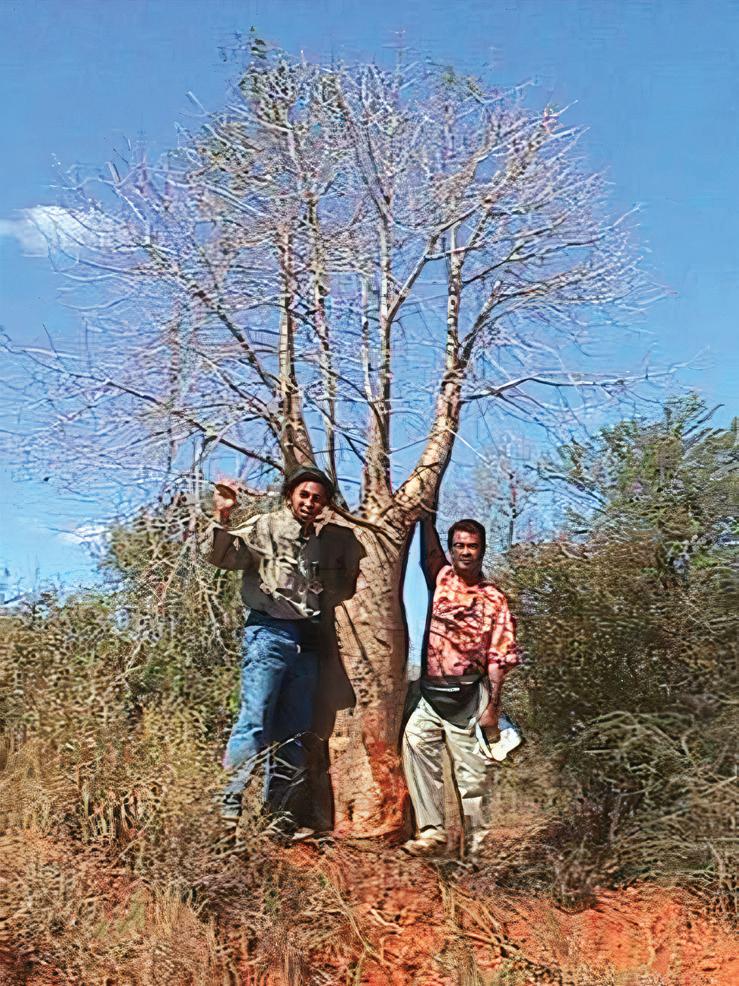
Dr. Voara Randrianasolo and Alfred Razafindratsira prepare to dig up an Adansonia rubrostipa specimen (2001).
The collected baobab, which weighed over 1,500 pounds, being moved into Willoway Nursery via crane (2001).
The specimen in its new home, the Eleanor Armstrong Smith Glasshouse (2003).
Filling the Gap
Holden Arboretum Seed Bank steps up to grow native tree seedlings.
By Anna Funk, Science Communication Specialist
When it comes to restoring forests, the biggest obstacle lately isn’t interest, funding or even labor — it’s supply. Across Ohio and much of the country, there’s a shortage of locally sourced native tree seedlings available for large-scale restoration projects.
“Ideally, we all would be able to plant native trees of local origin, but there just isn’t enough supply to meet that demand,” says Kim Lessman, Seed Bank Manager at Holden Forests & Gardens. “Conservation groups are ready, private landowners are ready, but there’s a bottleneck in the system.”
That bottleneck is why the Holden Arboretum Seed Bank, launched in 2023, decided to expand beyond just collecting and storing tree seeds. Today, the program is also growing out seedlings to make sure native trees — and even herbaceous native plants — are available when restoration projects need them.
“Our strength is our ability to coordinate seed collections throughout all of Northeast Ohio to support work like this.”
— Kim Lessman, Seed Bank Manager
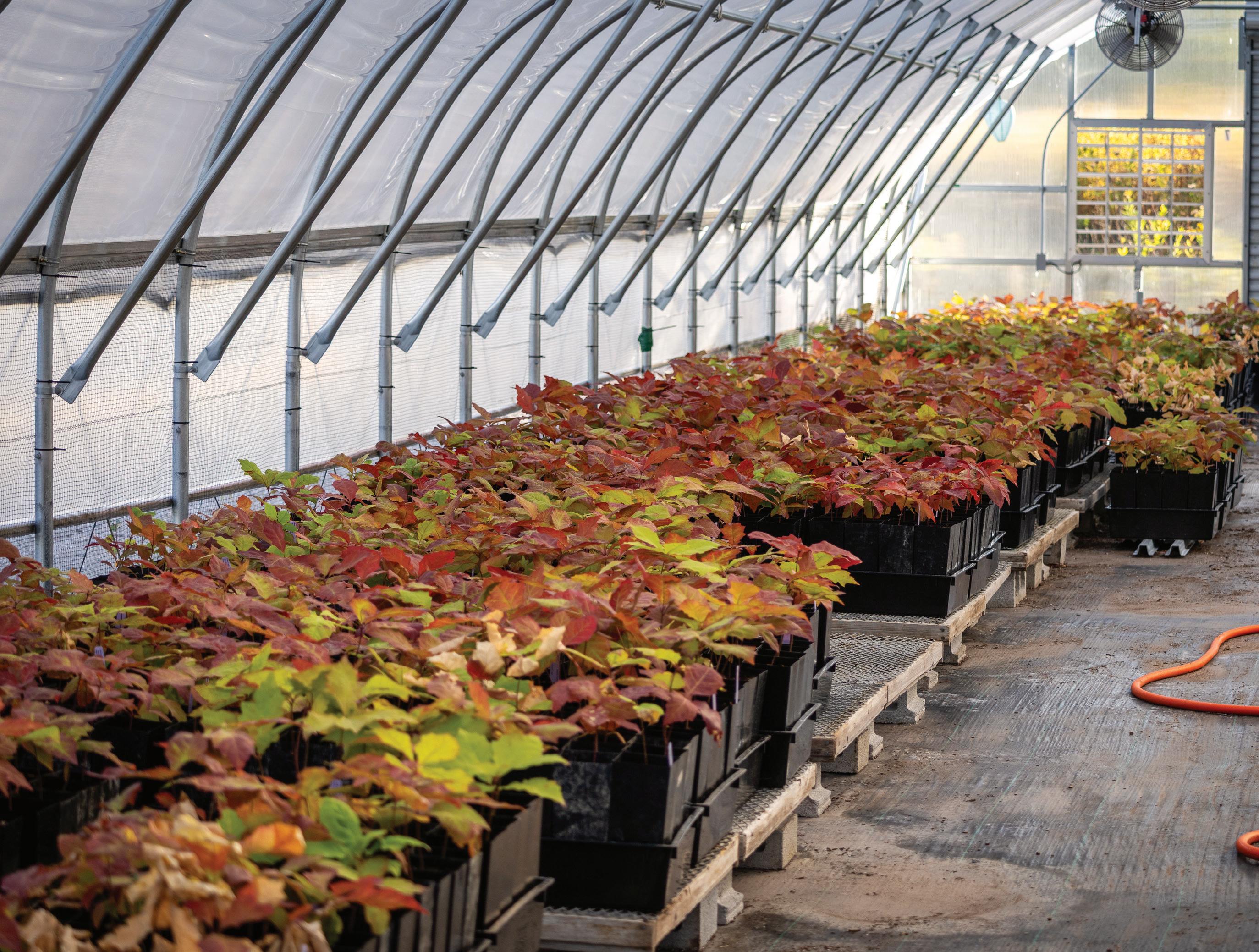
Red oak saplings in a polyhouse at the Holden Arboretum.
From Seed to Seedling
Thanks to two recent additions to the seed bank team, Valerie McCauley and Albert Jackson, there are now dedicated staff members for both seed collection and plant propagation. Planting is already underway: A new poly house on the Holden Arboretum campus is full of tiny trees, shrubs and herbaceous plants sprouting from locally collected seed, earmarked for all sorts of restoration projects.
These seedlings aren’t ready for immediate planting — trees especially will typically take two to three years before they’re ready to face the wild. This timeframe should fit well with the investment needed to plan and properly prepare a site for tree planting. HF&G’s new Consulting Foresters, for example, have recently started working with private landowners whose plans sometimes prescribe large-scale tree plantings with hundreds or thousands of young trees, but for the investment to pay off there are often steps to take to make a planting site hospitable before the trees go into the ground. As the Seed Bank’s seedling stocks grow, it will help ensure landowners have access to the species their forest management plans call for when the time is right to plant.
Partnerships in Action
HF&G’s efforts are part of a larger movement to address the native seed shortage. Lessman regularly participates in national and regional conversations on native seed with groups like the Midwest Native Seed Network, the Institute for Applied Ecology’s Native Seed Network, and the National Association of Restoration Seed Banks. “These conversations with other
Currently, the Holden Arboretum Seed Bank houses about 100 different species and more than half a million seeds
organizations across the country are helpful as we continue to think about what a seed partnership looks like in Northeast Ohio,” she says.
The seed bank is also growing new partnerships to start tackling large-scale restoration projects. One major effort on the docket is a wetland restoration at the Arboretum’s own Strong Acres, which will be restored in partnership with The Nature Conservancy. “We’re starting bulk collections for that restoration project this year and then we’re going to think about ways we can amplify some of that seed,” says Lessman. “We’re talking many, many pounds of seed of each species.”
Another new partner, the Ohio Department of Natural Resources (ODNR), recently asked HF&G to provide sugar maple and black maple seed for the newly revived Buckeye State Tree Nursery, which aims to grow at least 100,000 of each species for ODNR reforestation efforts statewide. And the West Creek Conservancy (Parma, Ohio) is launching a native seed library; the Seed Bank will help coordinate the seed collection efforts supporting the program.
“We’re playing a significant role in helping promote seed access in our area, which is exciting,” says Lessman. “Our strength is our ability to coordinate seed collections throughout all of Northeast Ohio to support work like this.”
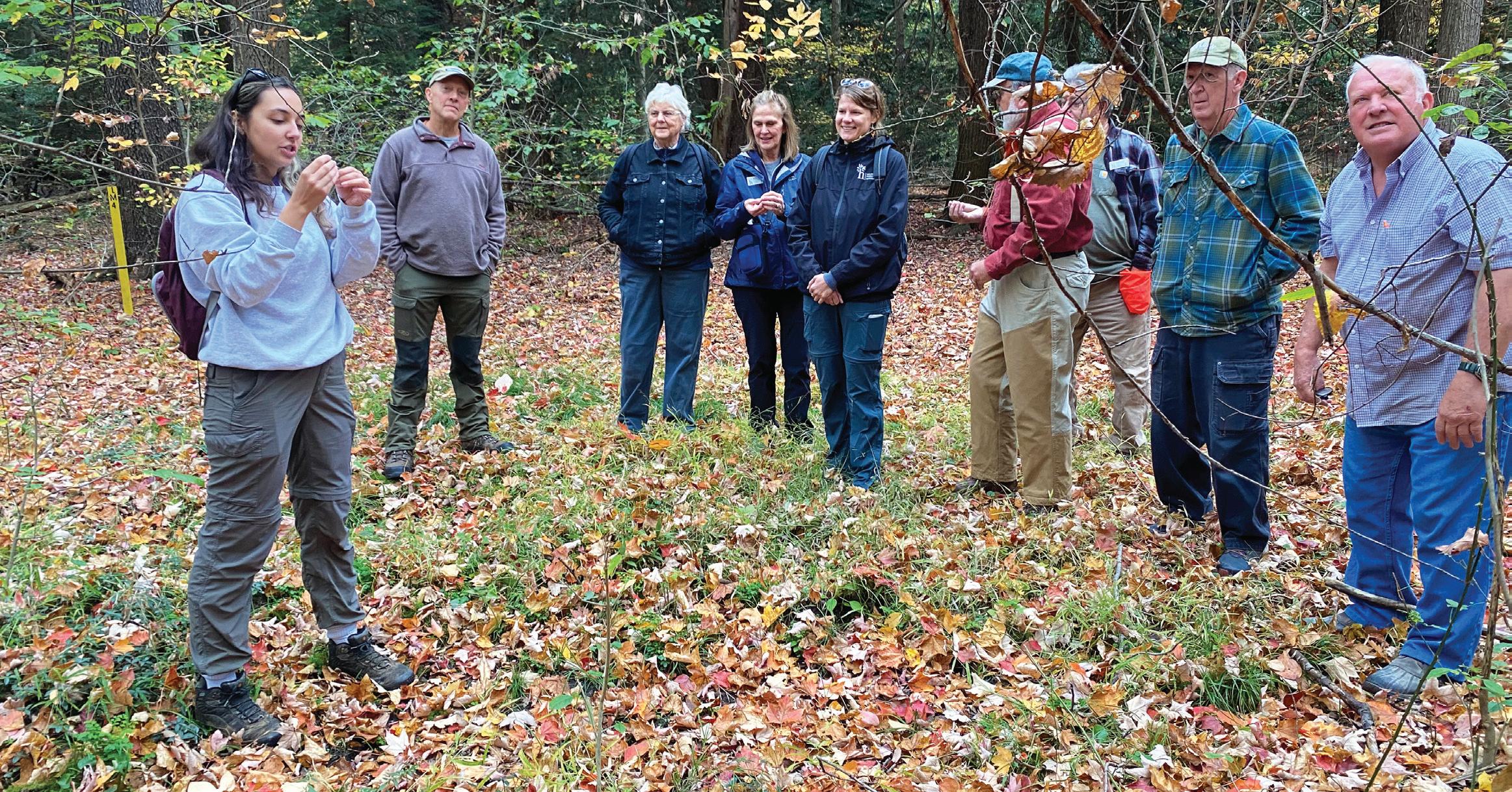
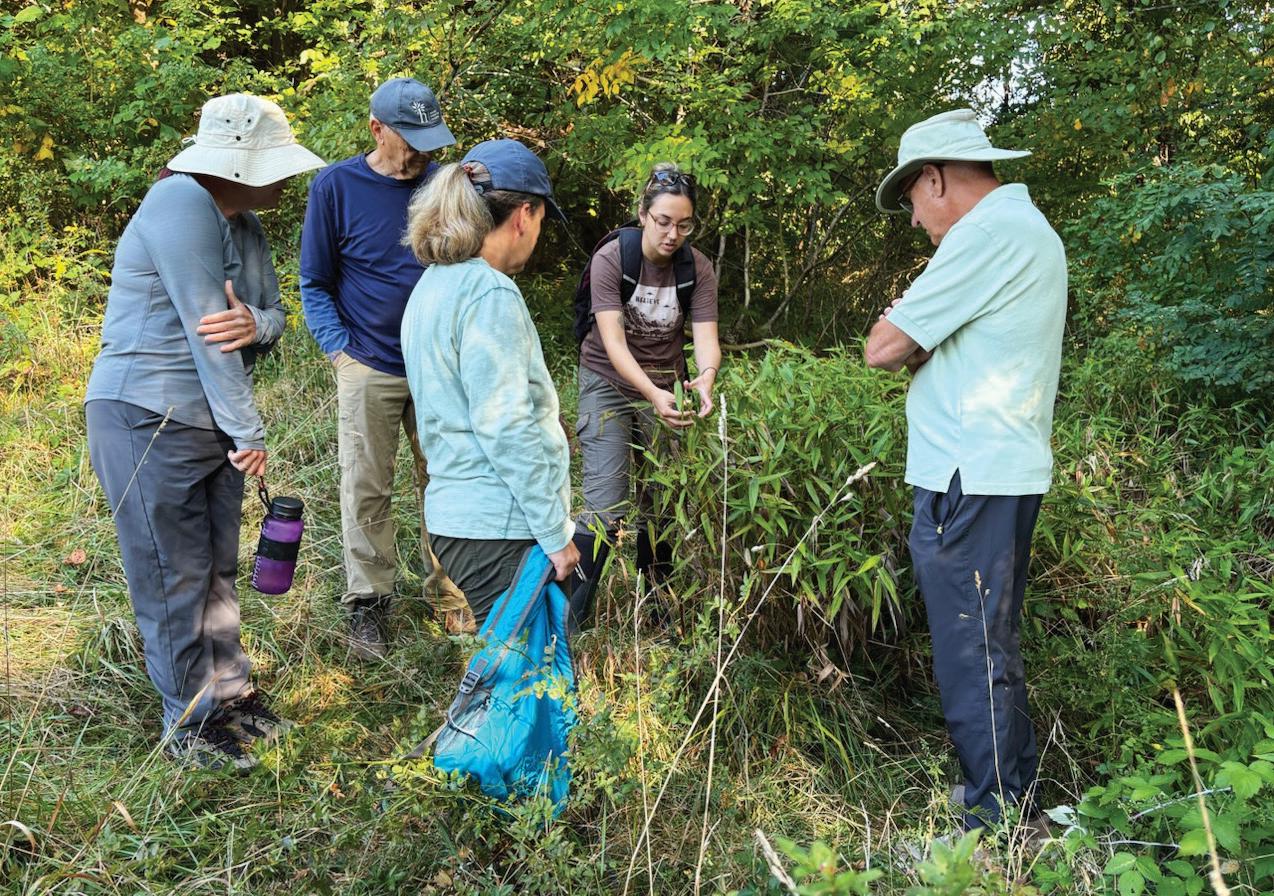
Valerie McCauley leads a group of HF&G volunteers on a seed collecting trip in one of the Holden Arboretum’s natural areas.
Why Local Matters
Why all the fuss about sourcing plants locally? Plants native to our locality have spent the last 12,000 years since the last glaciation adapting to the specific soils, climate, and other species that live here.That means locals should always have the best chance of surviving. Locally sourced native plants are also the best way to support local wildlife like pollinators, birds and other animals.
“To have a well-functioning, self-sustaining ecosystem where every individual’s needs are met — that starts with native plants,” says Lessman.
Local people are part of this story, too. Every week, volunteers from the community help clean, process and plant seeds at the Arboretum — hands-on work that connects local people to the forests they’re helping restore.
Looking Ahead
After this year’s seed collection season, the Holden Arboretum Seed Bank has about 100 different species and more than half a million seeds banked. As requests for plants continue to come in from HF&G’s conservation team and partners across Ohio, the seed bank is stepping up to the challenge, eager to supply reforestation efforts across the state.
“There are a lot of conversations happening about how botanic gardens and arboreta are well-positioned to be leaders in seed banking work,” says Lessman. “Here at HF&G, we’re surrounded and supported by scientists and restoration practitioners asking questions and conducting on-the-ground research, and we have a long history of tracking individual plants and their origin. We already work closely with so many different conservation organizations, and working to source and distribute native seeds for restoration seems like the next piece of the conservation puzzle.”
Responsible Seed Collecting
Interested in gathering seeds yourself?
Here are some best practices the Holden Arboretum Seed Bank follows to ensure every collection is ethical and sustainable:
Ask first.
Seeds belong to the landowner. Always get permission before collecting, even in public areas. Permits may be required — ask!
Know your natives.
Only collect native species. Be sure to never spread an invasive species to a new area.
Skip rare species. Never collect from endangered or threatened plants.
The 20% rule.
Take no more than 20% of the available seed from a given population, leaving plenty behind to regenerate naturally.
By following these guidelines, we can all support resilient forests without harming the habitats we’re trying to protect.
Ways to Love a Forest
Stories of Stewardship Across Northeast Ohio
By Rebecah Troutman, Working Woods Hub Manager and Annie Weight, Forestry Outreach Fellow
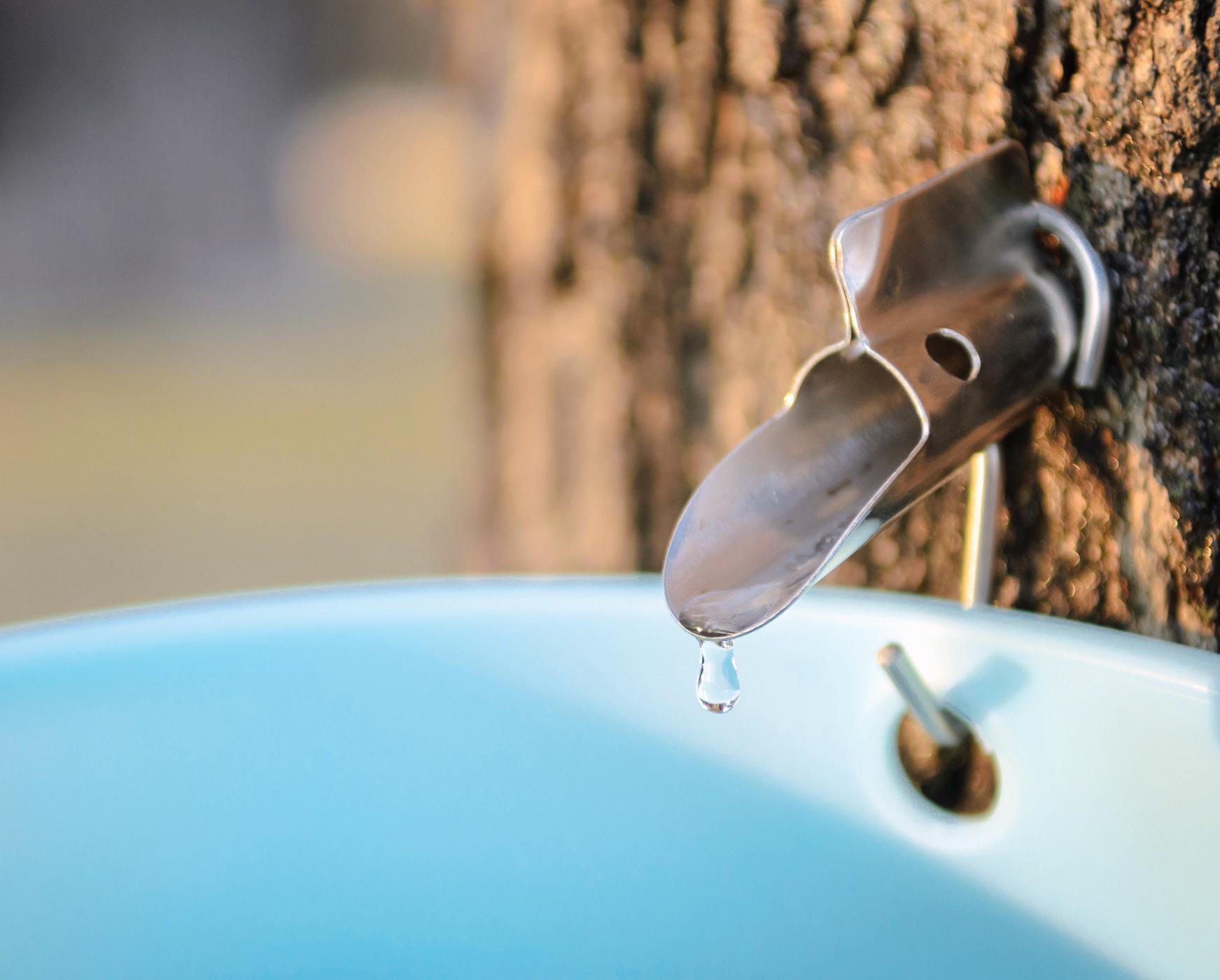
For many landowners across Northeast Ohio, stewardship means forming a living, reciprocal relationship with the woods — one that requires both giving and receiving. “If you take care of the trees, they take care of you,” say Bill and Dee Belew, maple syrup producers and blueberry farmers in Geauga County.
At Holden Forests & Gardens, the Working Woods Hub team partners with landowners to explore exactly what stewardship looks like in practice. The Hub manages a 67-acre learning forest at the Holden Arboretum, conducts research on forest management strategies, propagates native seed and — most importantly — connects with families, farmers and woodland owners who want to see their forests thrive.
This summer, those connections extended from the forest to the fairgrounds. The Working Woods Hub met with hundreds of community members at the Ashtabula, Lake and Geauga County Fairs. Some landowners came with detailed questions about invasive species, timber stand improvement or wildlife habitat. Others simply wanted to talk about the joy of walking
their woods or their hopes of passing healthy land on to future generations. These conversations reminded the team that stewardship is not a one-size-fits-all practice, but a deeply personal journey.
“In Ohio, we’re blessed with this rich and wonderful and yes, renewable, resource!” says Jessica Miller Mecaskey, Consulting Forester for Holden Forests & Gardens. “And the process of stewarding it … can actually tie us more meaningfully to the land.”
That tie looks different for everyone. For some, it’s tapping maples each spring. For others, it’s planting trees, removing invasives or making careful choices about timber harvest. At the Geauga County Fair, even children got a glimpse of stewardship by crafting necklaces from “tree cookies” — small slices of branches that reveal growth rings and spark conversations about the lives of trees.
To capture the breadth of these experiences, the Working Woods Hub interviewed more than two dozen landowners and community members from across Northeast Ohio. Each story
revealed a different path to caring for the woods. Some steward hundreds of acres and think in terms of long-term timber markets and wildlife corridors. Others care for a handful of acres behind their homes, focusing on clearing invasive species or restoring habitat for birds. Still others don’t own forestland at all, but their lives are shaped by it — furniture makers who work with locally harvested wood, hunters who feel most at home in the quiet of the trees, or neighbors who gather sap for maple syrup each spring.
What unites them is a shared conviction that forests are not simply background scenery, but living systems worth investing in. One landowner described walking the same trail for decades and noticing how management choices — whether thinning, planting or leaving areas undisturbed — changed the way light and life moved through the forest. Another spoke of the joy of seeing
Scan below to read stories about the impact of forests in Northeast Ohio
grandchildren climb the very trees their grandparents once tended. These stories show that stewardship is not only practical but deeply generational, connecting people across time as much as across landscapes.
The collection of stories has been brought together in a new booklet, “Ways to Love a Forest: Stories of Woodland Stewardship in Northeast Ohio.” Alongside the personal reflections, the booklet provides helpful resources, advice and partner organizations to guide readers on their own stewardship journey. The hope is that the words of those already tending their woods will spark both gratitude and action, encouraging others to take the first step — whether that means calling a consulting forester, planting a native tree or simply paying closer attention during a walk in the woods.
Stewardship, at its heart, is about belonging. It’s about recognizing the forest not as something separate from us, but as a community we are part of — one that nourishes us in return. And when people and woodlands grow together in reciprocity, both emerge healthier, stronger and more resilient.
Those interested in reading more can request a printed booklet by emailing forestry@holdenfg.org, or access a digital copy using the QR code.
Holden Arboretum Consulting Forestry
YOUR PARTNERS IN FOREST STEWARDSHIP
Holden Arboretum Consulting
Forestry is a professional consulting business that partners with landowners to meet their goals and manage their forests sustainably.
Proceeds aid Holden Forests & Gardens’ efforts for forest health, resilience and biodiversity across the region.
Services we provide include:
Woodland management planning:
• Invasive species
• Wildlife habitat
• Reforestation plantings
• Carbon market enrollment
• Timber stand improvement and sale guidance
• Tax-incentive and cost-share program guidance
• Project management
• And more!
Comprehensive Management Plan: Long-term roadmap that outlines landowner goals, identifies challenges, and recommends sustainable management practices to guide future stewardship.
Forest Health Report:
Concise snapshot of current forest health that highlights key challenges and provides practical recommendations for next steps in management.
Meet Your Forest:
A walk through of your forested property where you can ask for advice or questions about your forest.
Private or group educational workshops and classes
Interested in partnering to achieve your goals?
Email forestry@holdenfg.org or submit an interest form by scanning the QR code.
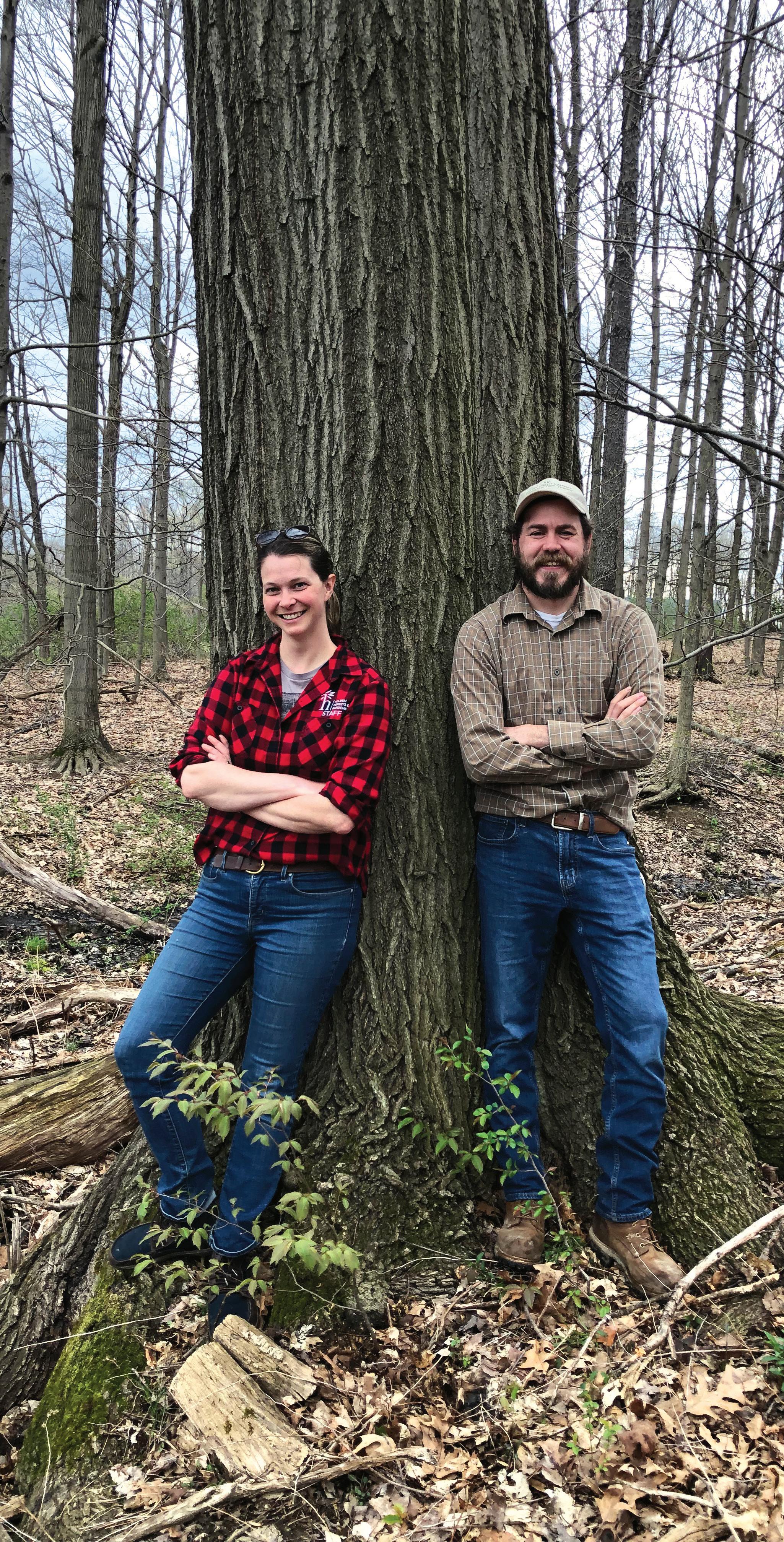
Holden Arboretum's Consulting Foresters, left to right: Jessica Miller Mecaskey, Patrick O’Reilly.
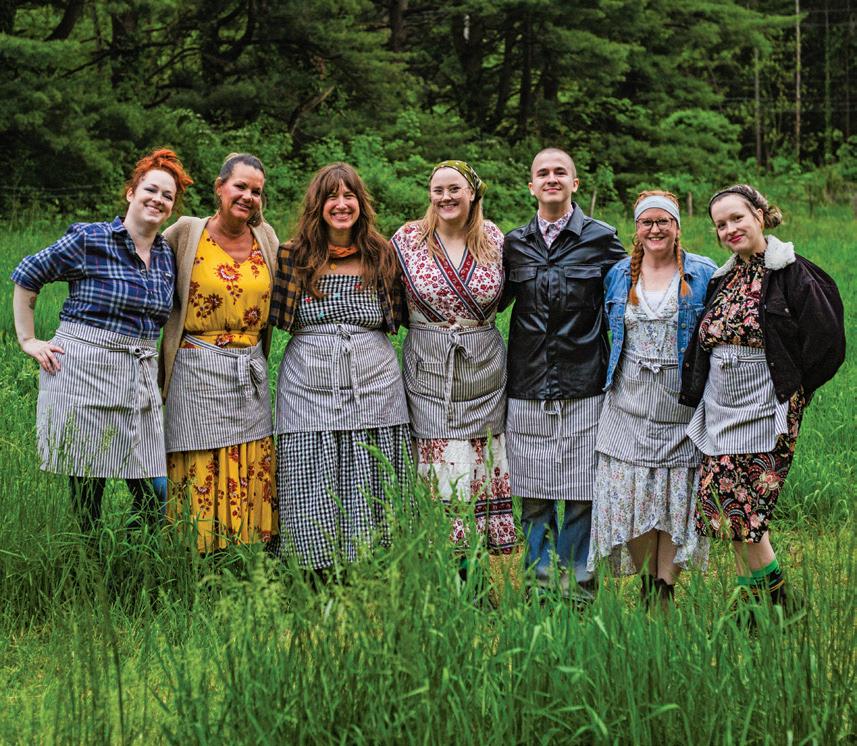
Meet Spice Catering Co.
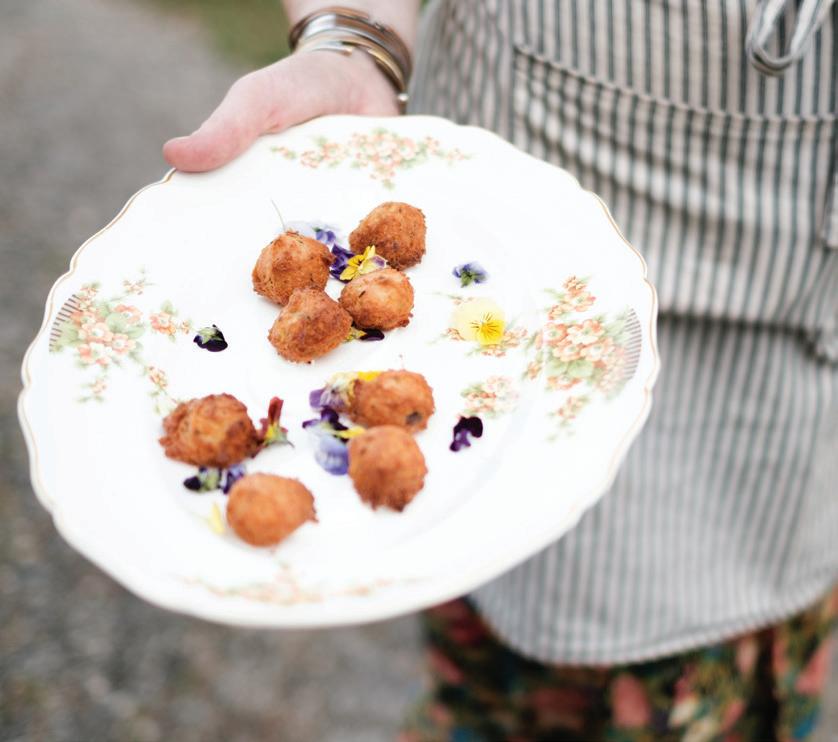
The new exclusive catering partner of Cleveland Botanical Garden
Cleveland Botanical Garden is serving up something new: a culinary partnership with Spice Catering Co., one of Cleveland’s most beloved catering and events teams. As of this fall, weddings, gatherings and everyday visits to the Garden will be infused with Spice’s signature style — regional & seasonal cuisine, thoughtfully created from scratch and rooted in a deep commitment to sustainability.
It’s a pairing that feels meant to be. Holden Forests & Gardens inspires people to connect with nature, while
Spice tells the story of place and season through food. Together, we’ll bring guests an experience that nourishes both people and planet.
Beyond catering, a remodeled café will debut this winter at the Garden, offering a fresh spin on graband-go dining with regionally sourced, seasonal dishes. Whether you’re strolling the grounds or planning a celebration, this partnership promises flavors as vibrant as the setting itself.
Snow, Ice and…Zen?
A Winter Survival Guide
By David Lardakis, Content Marketing Manager
When winter settles over Northeast Ohio, many of us retreat indoors, myself included. But the forest has a quiet invitation: Step outside, slow down and let nature do the rest. This is shinrin-yoku, or forest bathing — a Japanese practice that encourages immersing yourself in the forest to engage your senses, calm your mind and reconnect with the natural world.
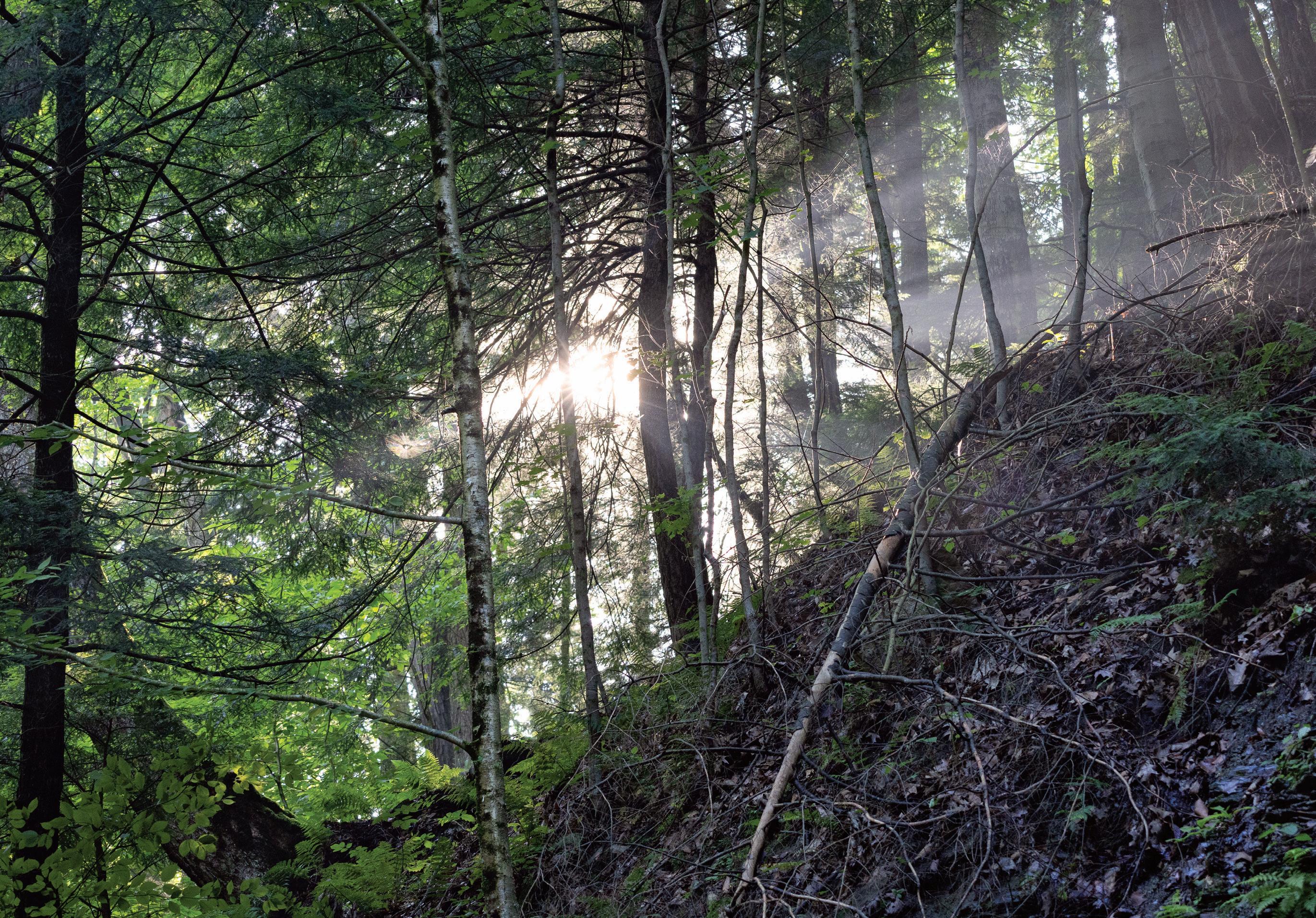
Forest bathing isn’t about exercise, reaching a destination or rubber ducks. It’s about being present. It’s about noticing the brittle crunch of snow underfoot, the muted gray of winter skies and the gentle sway of bare branches. At the Holden Arboretum, winter transforms familiar trails into a serene, almost magical landscape. Frost sparkles on pine needles. Critter tracks trace across pristine snow. The air smells crisp, earthy and alive.
Engage Your Senses
Start with your eyes. Look closely at the intricate patterns of bark, the way snow rests on branches, the shadows cast by low winter sunlight. Listen. The forest is quieter now; a bird call echoes farther, your own footsteps seem amplified, the wind hums softly through the trees. Inhale deeply. Notice the differences in scent between the seasons.
You can deepen the experience with small mindfulness practices:
• Sensory Walk: Focus on one sense at a time. What do you see, feel, hear, smell...taste? Avoid the yellow snow.
•Tree Meditation: Touch a tree, feel its texture, imagine drawing calm and stability from it with each breath. Most trees like hugs; don’t be bashful!
•A Cold Pause: Linger in the quiet. Listen to the wind, the birds, the creaking trees. Do any stand out to you?
• Gratitude Moment: Reflect on small winter wonders — a sunbeam on the snow, wildlife tracks, that one tree root you managed not to trip over.
Move Mindfully
Even gentle movement enhances the experience. Slow walking warms the body and keeps you grounded. Light stretching or yoga among trees heightens body awareness. A thermos of tea or hot water can become part of your ritual. Sip slowly while absorbing the peace around you.
Photography, sketching or journaling can also heighten mindfulness. Focus on ice crystals clinging to twigs or the subtle curves of frozen ponds. These quiet acts encourage observation and awe, letting your mind rest and roam at the same time.
Why It Matters
Winter forest bathing isn’t just peaceful — it’s good for you. Studies suggest spending time in forests can reduce stress, lower blood pressure and improve mood. During Northeast Ohio’s short winter days, a mindful walk among Holden Arboretum’s trees offers grounding, renewal and a gentle reminder that nature continues to thrive even in the coldest months.
As you leave the forest, take one last deep breath. Carry the calm with you. Let the quiet strength of the trees, the crisp clarity of the air and the slow rhythm of your steps remind you that even in winter, the forest is alive...and so are you.
My not-so-secret Spot
Frozen trails? Perfect. Fresh snow? Even better. Head to the Bole Woods Loop for a winter walk completely unique to the Holden Arboretum. Recently honored as part of the Old Growth Forest Network, this forest is home to centuries-old trees that have seen more winters than any living person. Maps are available at the Corning Visitor Center. Enter quietly and let the trees do the talking.
Celebrating 50 Years
A Night of Friendship and Reflection
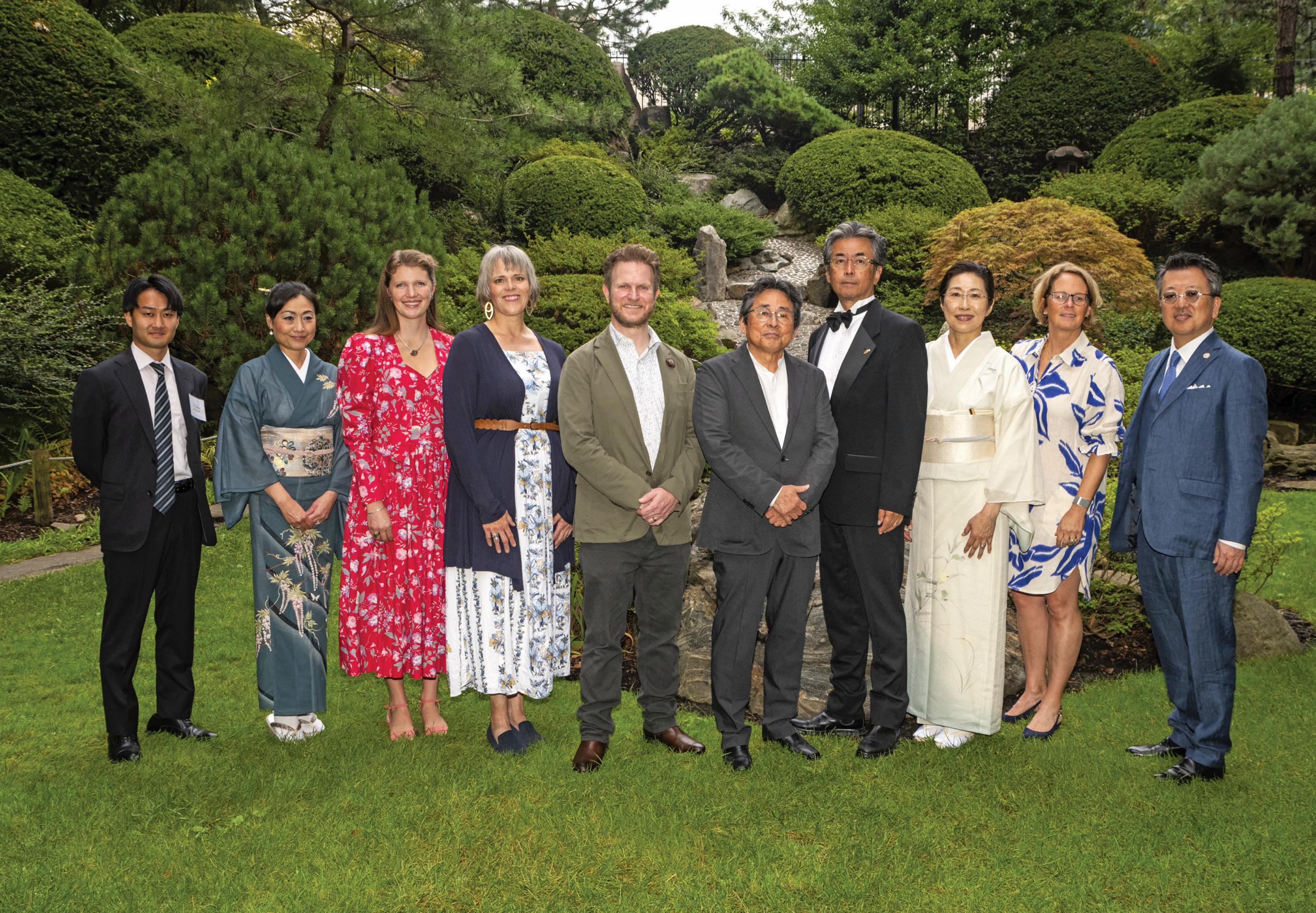
This fall, Holden Forests & Gardens had the honor of welcoming many distinguished guests to the Cleveland Botanical Garden for a memorable evening celebrating the 50th anniversary of our beloved Japanese Garden, Gan Ryuu Tei (translated as “rock, stream, garden”).
In a special reception with board members, supporters and community leaders, Mr. Sadafumi Uchiyama, curator emeritus of the Portland Japanese Garden and one of the world’s foremost experts on Japanese gardens, and Mr. Hajime “Jimmy” Kishimori, consul general of Japan in Detroit, joined in commemorating this milestone occasion.
The program highlighted the artistry, symbolism and cultural significance of Japanese gardens, as well as the deep connections they foster between people and place. Consul General Kishimori spoke of the enduring friendship between Japan and the United States, while Mr. Uchiyama reflected on his longtime friendship with David Slawson, the original designer of Gan Ryuu Tei. Uchiyama also noted the importance of the 50-year milestone in Japanese garden traditions: It represents
Pictured (L to R): Mr. Kanta Mochizuki, Ms. Kyoko Willis, Caroline Watson, Amanda Hannah, Ed Moydell, Mr. Sadafumi Uchiyama, Mr. Hajime “Jimmy” Kishimori, Mrs. Mikiko Fujita, Katie Outcalt and Dr. Hiroyuki Fujita.
the conclusion of the first stage of a garden’s maturity and the beginning of the second.
The evening was filled with meaningful conversation, warm camaraderie and a shared appreciation for the beauty and harmony that Japanese gardens bring to our lives. Guests departed with a renewed sense of connection — both to the cultural legacy of Gan Ryuu Tei and to the global bonds that gardens inspire.
Holden Forests & Gardens extends heartfelt gratitude to Mr. Uchiyama and Consul General Kishimori for their presence, to Mikiko Fujita, HF&G board member, for her leadership in arranging this special visit, and to Amanda Hannah, Director of
Gan Ryuu Tei translates to Rock, Stream, Garden
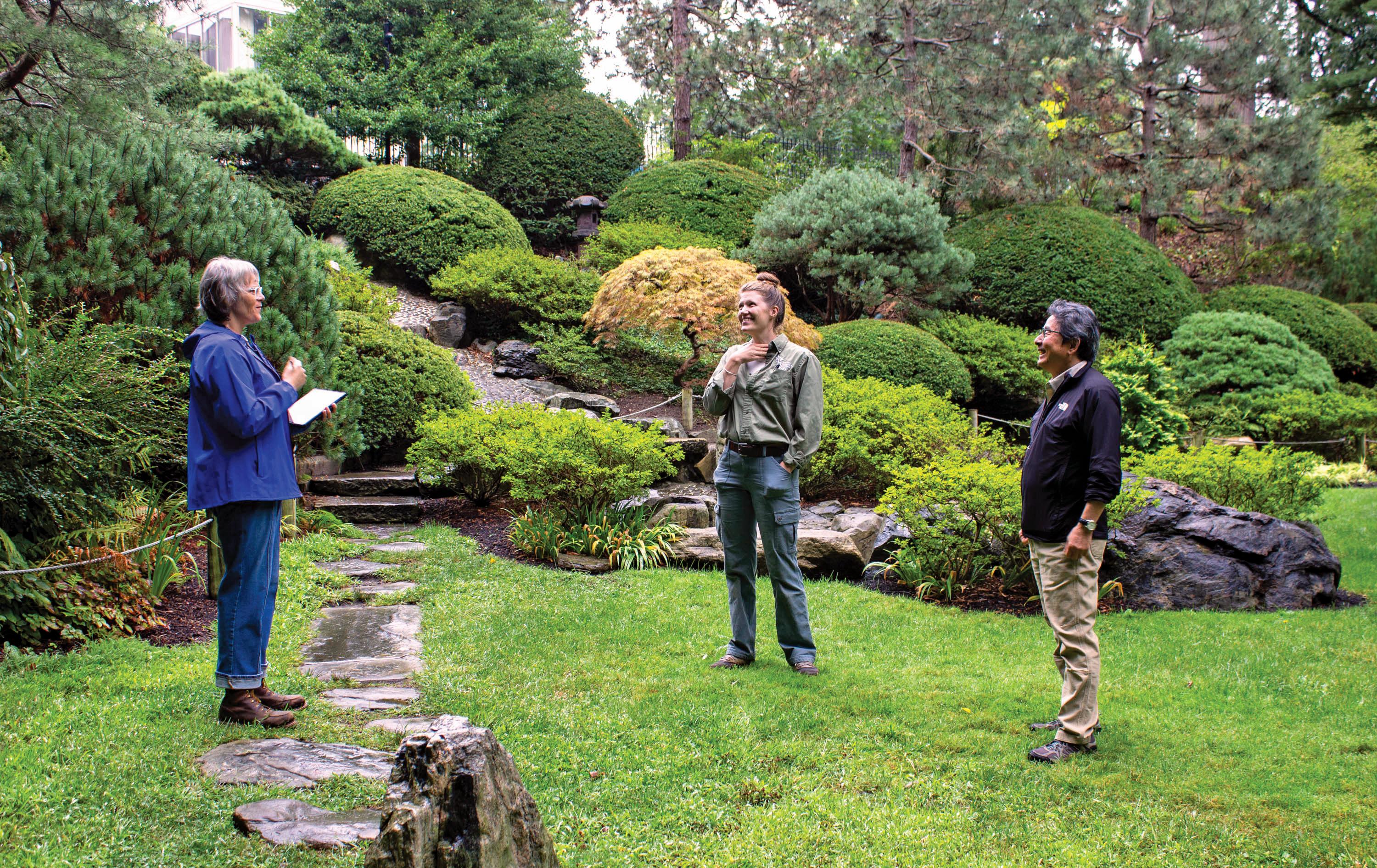
Mr. Sadafumi Uchiyama spent time with HF&G Director of Botanical Garden Landscapes Amanda Hannah and Horticulturist Caroline Watson.
Botanical Garden Landscapes at Cleveland Botanical Garden, and Caroline Watson, Horticulturist, for hosting an engaging day of programs in Gan Ryuu Tei for our distinguished guests.
As she reflected on the day’s events, Mikiko expressed, “I feel so honored to have Gan Ryuu Tei, Mr. Slawson’s garden, in Cleveland. He was good friends with Mr. Uchiyama, who is a master of design and steward of Japanese horticultural techniques. Mr. Uchiyama’s mentorship will help renew our beautiful Japanese garden and continue to share the wonderful traditions of Japanese culture with the next generations here in Cleveland.”
HF&G Horticulturist Caroline Watson, added “A garden is a living thing. As Gan Ryuu Tei reaches maturity, it is time to envision
the next phase of its life. Mr. Uchiyama illuminated the balance between the garden’s original design intentions and its evolving needs to create a plan that will allow it to flourish as a place of beauty, peace and gathering for years to come.”
As Gan Ryuu Tei enters its next stage of life, this anniversary celebration serves as a reminder that gardens are living works of art — always evolving and always deepening their meaning in the lives of those who care for and visit them.
A garden is a living thing. As Gan Ryuu Tei reaches maturity, it is time to envision the next phase of its life...as a place of beauty, peace and gathering for years to come.
— Caroline Watson
A Season to Shine
Don't let the cold weather keep you away! We have plenty of programs and events happening throughout the season.
Above: Trees decorated by local garden clubs for Cleveland Botanical Garden's Frost holiday show.
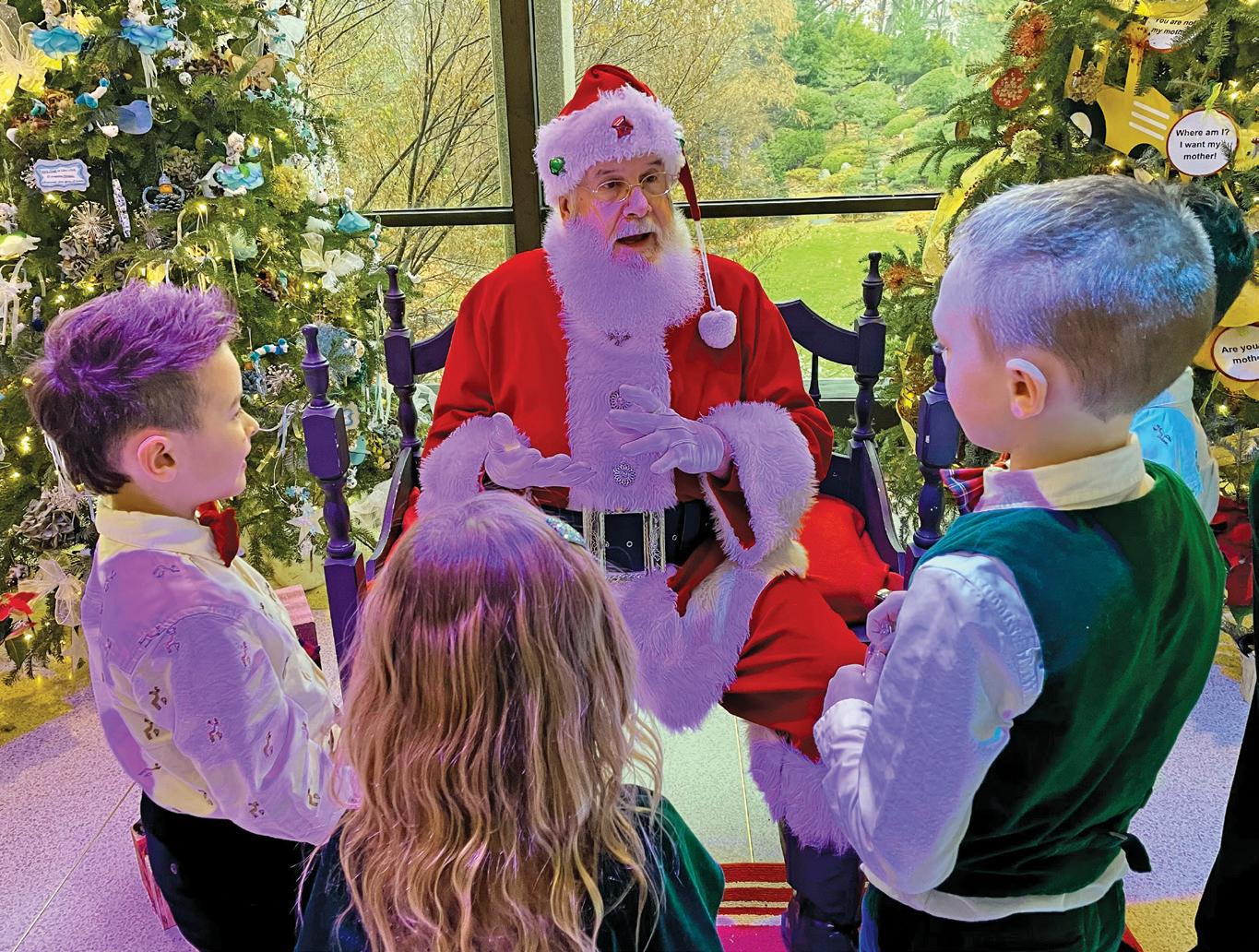
Below: Children sit to hear a winter tale as part of our Storytime with Santa program.
HOLDEN ARBORETUM
LITTLE MOUNTAIN HIKE
January 10, February 15, March 22
11:30 a.m.-3 p.m.
AGE: Adult, children 12 & over with adult
$12 per member, $22 per nonmember
WINE & CHEESE NIGHT HIKE
March 6, 7-10 p.m.
AGE: Adult 21+
$32 per member, $47 per nonmember
CLEVELAND BOTANICAL GARDEN
STORYTIME WITH SANTA
December 7 & 14, 10 a.m.-Noon
Prices vary, see holdenfg.org
GUIDED MEDITATION & TEA BLENDING
January 24, 1-3 p.m.
AGE: Adult
$40 per member, $55 per nonmember
HOUSE PLANTS 101
January 31, 1-3 p.m.
AGE: Adult
$22 per member, $27 per nonmember
GALENTINE’S DAY
February 13, 6-9 p.m.
$20 per member, $25 per nonmember
CLEVELAND BOTANICAL GARDEN IS FOR LOVERS
February 14, 6-9 p.m.
$20 per member, $25 per nonmember
ORCHIDS + OM LADIES NIGHT
February 27, 6-9 p.m.
$35 per person
ORCHID CARE 101
February 25 & 28, Times vary
AGE: Adult
$30 per member, $45 per nonmember
Camp registration opens January 1.
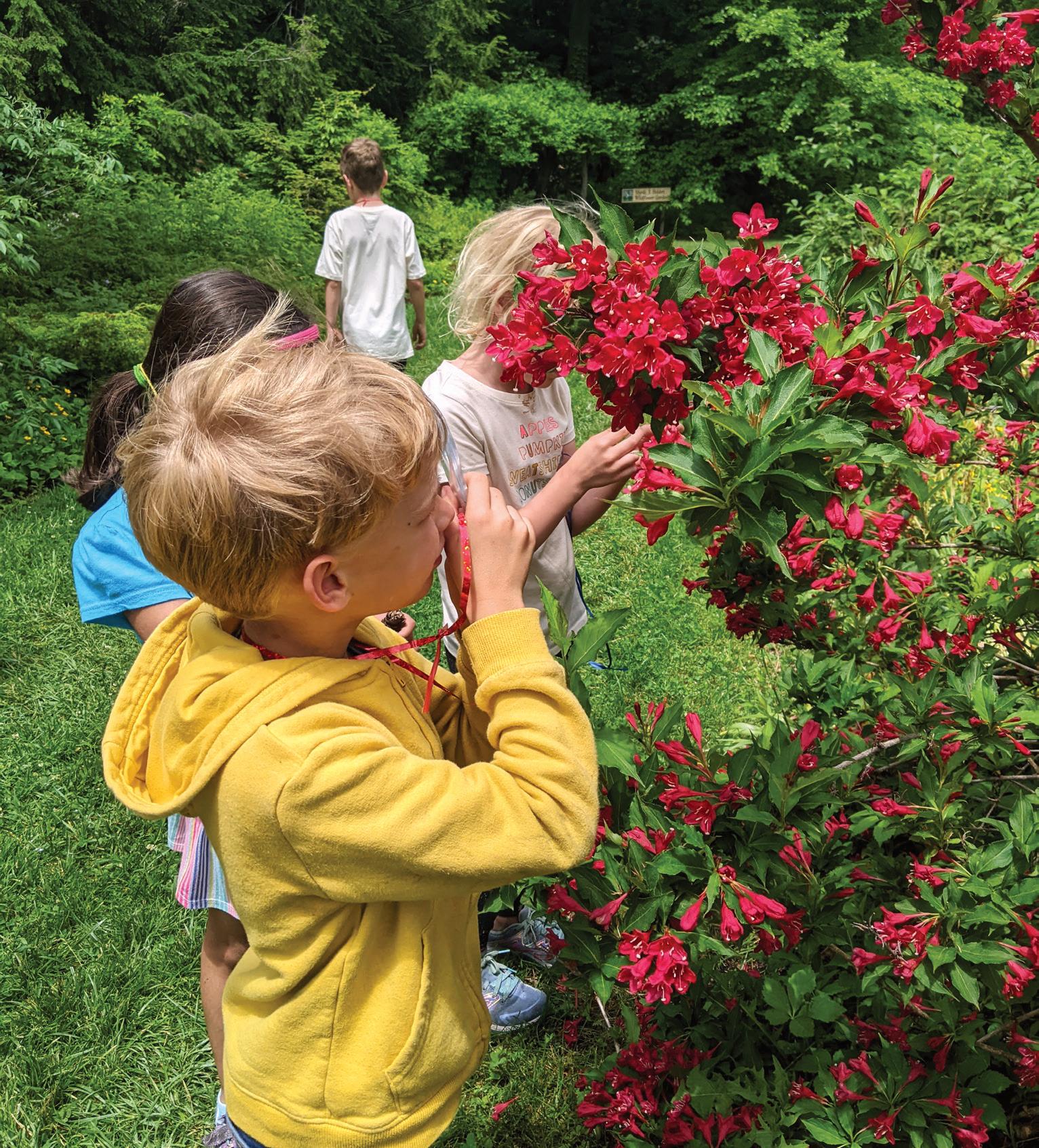
SIDE EFFECTS MAY INCLUDE MUDDY SHOES, BIG SMILES AND LIFELONG CURIOSITY.
$9 per member, $24 per nonmember Register for each session separately
Less screenhugging, more tree-hugging.
GREATER CLEVELAND ORCHID SOCIETY SHOW
March 14, 10 a.m.-5 p.m.
March 15, Noon-5 p.m. Included with admission
HAND PAINTING ON SILK
March 28, 9:30 a.m.-4:30 p.m.
AGE: Adult
$62 per member, $102 per nonmember
SAVE THE DATE: EGG HUNT April 4, 9 a.m.-Noon
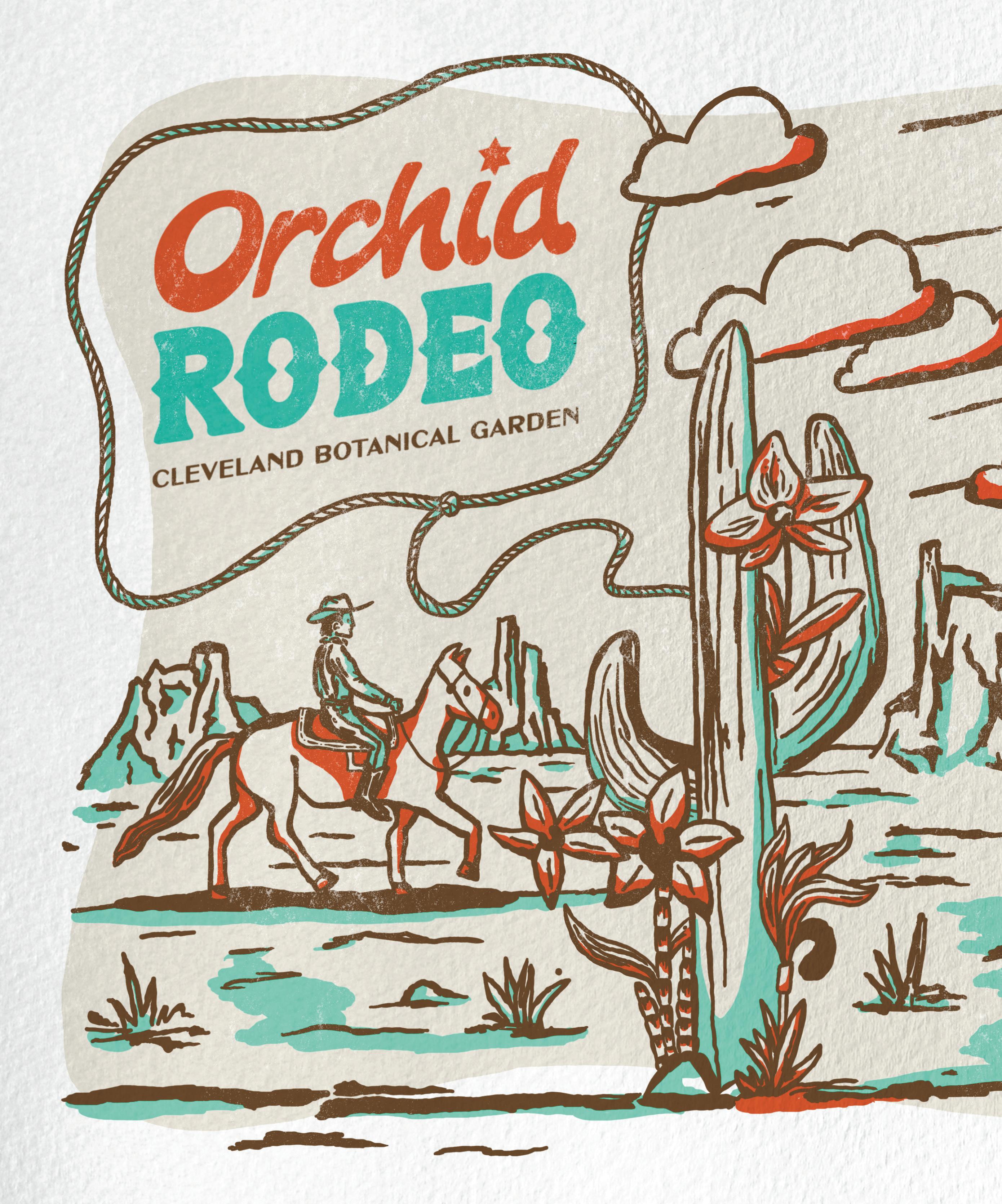
Orchid rOdeO rides intO cleveland!
Saddle up for a spectacle like no other. Orchid Rodeo is coming to Cleveland Botanical Garden! This year’s annual orchid show puts a bold western twist on nature’s most dazzling blooms, blending cowboy spirit with the delicate beauty of orchids from around the world.
Step into a wonderland where rugged meets refined. Wander through vibrant displays bursting with unexpected pairings—soft petals alongside sculptural cacti, lush greenery against sun-baked landscapes.
Follow your nose to our sniffing booths, where you can take a deep breath of sweet, citrusy, and even chocolatey orchid fragrances. Snap Instagramworthy shots beneath larger-than-life blooms or pose with friends at themed photo stations that capture the playful energy of the rodeo.
Dust off your boots, grab your camera, and get ready to be amazed. The wild beauty of orchids is waiting. Don’t miss your chance to ride into the most colorful spring event in town! Scan the QR code foR
9500 Sperry Road
Kirtland, Ohio 44094
holdenfg.org
Forests & Gardens is the member magazine for Holden Forests & Gardens, which includes the Holden Arboretum in Kirtland and the Cleveland Botanical Garden in Cleveland.
MISSION: Holden Forests & Gardens connects people with the wonder, beauty, and value of trees and plants, to inspire action for healthy communities
VISION: All communities transformed into vibrant places where trees, plants, and people thrive