F
A lesson in the processing technology of Japanese sake
S by Satake
ake rice (preferred rice for brewing sake) has external characteristics such as larger grain than regular short grain rice, larger Shinpaku (opaque area) at its belly, and a shallower surface groove. Internally it has lower protein and fat contents, with better water absorption to dissolve rice malt. Moreover, its hard surface and soft endosperm is ideal for sake brewing. A variety named Yamada-Nishiki, which is grown in Hyogo prefecture well, matches these characteristics and is quite popular all over Japan. Occasionally, a variety is selected from normal non-sake rice and used in combination with sake rice.
Milling and milling degree
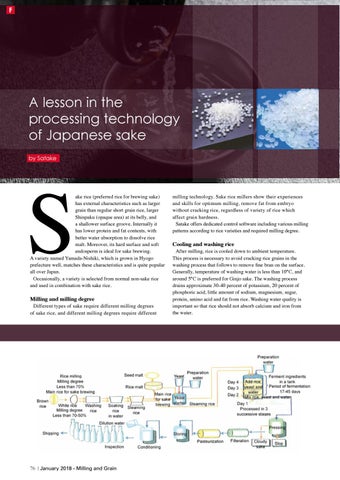
Different types of sake require different milling degrees of sake rice, and different milling degrees require different
76 | January 2018 - Milling and Grain
milling technology. Sake rice millers show their experiences and skills for optimum milling, remove fat from embryo without cracking rice, regardless of variety of rice which affect grain hardness. Satake offers dedicated control software including various milling patterns according to rice varieties and required milling degree.
Cooling and washing rice
After milling, rice is cooled down to ambient temperature. This process is necessary to avoid cracking rice grains in the washing process that follows to remove fine bran on the surface. Generally, temperature of washing water is less than 10°C, and around 5°C is preferred for Ginjo sake. The washing process drains approximate 30-40 percent of potassium, 20 percent of phosphoric acid, little amount of sodium, magnesium, sugar, protein, amino acid and fat from rice. Washing water quality is important so that rice should not absorb calcium and iron from the water.