

The Greatest Show on Earth
Industry expectations for FIFA World Cup 2026









Snapshot
most popular news stories on GamingIntelligence.com
Playtech shares plummet as Evolution names company in report scandal
The UAE Lottery confirms first AED 100 million jackpot winner
Banijay Group agrees transformative deal to acquire Tipico
Premier League club owner denies betting on matches involving his team
Star Entertainment shares soar on Bally’s takeover approval
Gambling industry reacts to UK’s record-breaking Budget
Paddy Power Betfair agrees £2 million settlement
Caesars facing $7.8 million fine over alleged AML failings in Las Vegas
Allwyn and OPAP to combine to create €16 billion lottery and gaming giant
Gambling Commission fines Unibet operator £10 million
Allwyn and OPAP set to create €16bn lottery and gaming giant
ALLWYN INTERNATIONAL AND OPAP have entered into a business combination to create a leading global lottery-led entertainment and gaming operator.
The transaction brings together two leading lottery and gaming operators, and creates the second largest listed gaming entertainment company globally, with market-leading positions across Europe, the United States and other international markets.
Allwyn currently owns a 51.78 per cent majority stake in OPAP, with the all-share transaction valuing the combined company at an equity value of €16 billion.
The agreement builds on the existing successful partnership between OPAP and Allwyn which goes back to 2013, when KKCG, the controlling shareholder of Allwyn, first invested in OPAP.
“For investors, this is a unique opportunity to be part of a dynamic company that is shaping the
future of entertainment,” said Allwyn founder and chair Karel Komarek. “The combined strength and scale of these multi-billion dollar businesses, massive customer base and Allwyn’s continued investment in technology and content, will accelerate innovation and fuel significant international growth. We’re on a mission to build the world’s leading global gaming entertainment company, and today’s transaction takes us one step closer to that goal.”
The combined business will maintain OPAP’s listing on the Athens Stock Exchange, with the company to be renamed Allwyn International. Allwyn also intends to pursue an additional listing on another leading international exchange such as London or in New York.
Independently of the transaction, OPAP has made a strategic decision to change its consumer brand from OPAP to Allwyn from Q1 2026.
M&A ROUND-UP IN Q4 2025

GIQ highlights the key M&A deals during the final quarter of 2025
Banijay Group is seeking to become a European betting and gaming powerhouse after agreeing to acquire a majority stake in Tipico Group for €3 billion. The agreement with CVC and Tipico’s founders will combine the Betclic and Tipico brands, including recently acquired Admiral Austria, with Banijay becoming the majority shareholder of the combined entity. As part of the deal, Banijay has divested its 53.9 per cent stake in bet-at-home.com, the Frankfurt-listed online gaming and sports betting business.

“Banijay Group’s story is one of sustained growth and expansion – uniting entrepreneurs, talent and expertise across industries to build champions,” said Banijay Group chairman Stéphane Courbit, who also serves as president of Lov Group Invest, the largest shareholder in Banijay. “The addition of Tipico marks another decisive step in that journey and reinforces our position as a driving force in the European sports
betting and gaming landscape. This is a strong move that reflects our ambition and long-term vision.”
Elsewhere in Europe, Hacksaw Gaming acquired a minority stake in UK-based games developer Kitsune Studios, which is already a studio partner of Hacksaw’s OpenRGS platform, while Gaming1 agreed to acquire the remaining 50 per cent stake in Betca BV, operator of the Circus.nl brand in the Netherlands.
After completing the acquisition of Bally’s International Interactive business, Intralot is increasing its focus on the lottery and iGaming sectors after selling its stake in Regency Casino Mont Parnes in Athens for €8 million.
Spain’s Cirsa expanded its slot route operations in Valencia with the acquisition of Catarroja-based Amusement Machines Grupo Comatel, and enlarged its land-based presence in Peru with the acquisition of four casinos, three
Allwyn CEO Robert Chvatal commented: “This transaction marks a further milestone in Allwyn’s successful journey. Since being founded 13 years ago, we have grown substantially in terms of business performance, scale and innovation. With this combination, we will be able to grow further, faster as we deploy group-wide know-how, a unified brand and sponsorship strategy, and in-house technology and content.”
DEAL OF THE QUARTER
while OPAP shareholders (excluding Allwyn) will hold the remaining 21.5 per cent, assuming an all-share combination. Following an amendment to the agreement in December, KKCG’s voting interest will be reduced from 85.0 per cent to 75.1 per cent.
Immediately following completion, Allwyn is expected to have an economic interest in the combined company of approximately 78.5 per cent,
“This transaction successful journey.”
of which are based in Lima.
Germany’s Merkur Group was another to strengthen its presence in Spain through the acquisition of eleven arcades in the Basque Country, alongside acquiring Northern Ireland’s largest gaming and amusement machine operator, Oasis Retail Services.
EveryMatrix boosted its front-end development capabilities with the acquisition of Portuguese software provider Goma Gaming, and Oddin.gg strengthened its esports data infrastructure with the acquisition of Denmarkbased GameScorekeeper.
Elsewhere, Aristocrat Leisure agreed a deal to acquire Tel Aviv-headquartered online live casino games provider Awager, Sportradar completed its acquisition of IMG Arena, and Fortuna Entertainment Group entered Montenegro after acquiring a majority stake in Lob, the second largest operator in the country.
In Asia, SJM Holdings entered into an agreement to acquire Casino L’Arc Macau for HK$1.75 billion, while DigiPlus Interactive Corp is preparing to move into the Philippine land-based
“This exciting combination creates a leading gaming company with strong Greek heritage, as well as a continued presence and listing in Greece,” said OPAP CEO Jan Karas. “I’m excited about the opportunity for OPAP to deepen our strong existing relationship with Allwyn, driving innovation and additional growth opportunities.”
Upon completion, Chvatal and Allwyn finance chief Kenneth Morton will continue to lead the management team of the combined company as CEO and CFO respectively. OPAP’s current management team, led by Karas as CEO and Pavel Mucha as CFO, will continue to lead OPAP’s operations in Greece and Cyprus.
Allwyn also owns a 36.75 per cent stake in Kaizen Gaming’s Betano, and is in the process of acquiring majority stakes in fantasy sports operator PrizePicks and iGaming operator Novibet.
gaming sector with the proposed acquisition of New Coast Hotel Manila’s parent company.
It was a busy quarter for Jumbo Interactive which entered the prize draw sector in both the United Kingdom and the United States. First, the company acquired UK-based Dream Car Giveaways for A$109.9 million, where customers can participate to win prizes such as cars, cash, property and lifestyle products. A few weeks later, Jumbo entered the US with the acquisition of the similarly named Dream Giveaway for A$57.8 million.
Also in the US, Kambi accelerated its entry into Nevada’s sports betting market with the acquisition of a player account management (PAM) platform from OMEGA Systems, Accel Entertainment acquired Nevada route operator Dynasty Games, and MGM Resorts agreed to sell the operations of MGM Northfield Park in Ohio to private equity funds managed by Clairvest Group for $546 million.
Entertainment revenue in Q3 2025
trading volumes at Kalshi
equity value of Allwyn and OPAP business combination
Banijay’s proposed offer for majority stake in Tipico

Offshore iGaming: it’s .COMplicated
With greater domestic regulation there is the expectation of a reduction in the offshore iGaming sector. The reality is more complicated.
GOVERNMENTS ACROSS THE world continue the process of regulating their domestic iGaming markets. Brazil’s iGaming sector went live in 2025, while Finland, the last EU member state with an online gambling monopoly, is making progress towards regulating parts of its market, as is New Zealand on the other side of the world. With greater domestic regulation there is the expectation of a reduction in the offshore ‘globally licensed’ iGaming sector. But the nature of the domestic rules being implemented means the situation is more complicated than that.
The blocking lists compiled by gambling regulators give a sense of the scale of the globally licensed sector. Cyprus’ National Betting Authority had almost 21,000 URLs on its blocking list at the end of 2024, up by a third on the number listed in 2021. The Swiss Federal Gaming Board’s list includes 2,600 URLs and the Australian Communications and Media Authority (ACMA) has blocked 1,285 URLs. Across the lists, many URLs are variations used by a single brand and several defunct brands and inactive URLs are included. Nevertheless, the lists do indicate how many opportunities there are for consumers to play with unregulated sites, deliberately or inadvertently, in their domestic market.
There are different approaches to regulating iGaming adopted by governments, but none have been able to prevent the appeal of offshore brands outside their locally-licensed model.
The Hong Kong Jockey Club (HKJC) has long argued that its high taxation and restricted betting options has allowed the illegal market to flourish in Hong Kong.
In 2024 the HKJC briefed a delegation of the United Nations Office on Drugs and Crime (UNODC) that illegal gambling turnover in Hong Kong was estimated to be more than HK$350 billion (€38 billion). By comparison, the HKJC’s own turnover was HK$305 billion in 2024.
Hong Kong’s Legislative Council passed the Betting Duty (Amendment) Bill 2025 in September to legalise betting on basketball in an effort to combat illegal gambling.
The illegal market in basketball betting in Hong Kong is estimated at between HK$70 billion and HK$90 billion.
Expanding the range of betting sports beyond horse racing and football is a welcome development for the HKJC. But its overall duty and profits tax still represents 66 per cent of revenue, so it will always be difficult to be as competitive on price as the illegal market.
Finland’s reason for ending its own gambling monopoly was the recognition that its ability to reduce the social harms associated with gambling has been weakening over the years.
This fact was highlighted in a report published by the Finnish Competition and Consumer Authority (FCCA) in June 2023, which estimated that gambling revenue earned outside the Finnish state monopoly amounted to approximately €520–590 million in 2021, which was 50 per cent of the total spent on online gambling in Finland. This is a level similar to Hong Kong’s estimates of illegal betting turnover – 53 per cent.
Finland’s licensing process will be conducted in several stages, with the first being application for operators’ licences in 2026 and a market launch in 2027.
Looking around Europe, however, there is no guarantee that ending the monopoly in Finland will automatically reduce or end the appeal of the offshore market to consumers.
France ended its gambling monopoly in 2010 but opted not to permit online casino games in its regulation. Online casino games, particularly slots, are the biggest category in many regulated markets, so it is no surprise that unlicensed online gambling is still a significant problem in France.
A 2023 PwC report for French gambling regulator ANJ estimated that unlicensed online gambling revenue in France ranged between €748 million and €1.54 billion, which would represent anywhere from a third to two-thirds of the regulated online sector.
Finland is at least allowing all the key online gambling products under its new regulations, but even fully competitive markets are struggling to achieve a channelisation rate (amount of online gambling revenue spent with licensed operators) of more than 75 per cent.
The Netherlands Gambling Authority (KSA) has conducted research into the size of the illegal market in the country and it drew some stark conclusions. Based on its estimates, the KSA believes that since the start of 2023 the channelisation rate has gradually declined from an average of 66 per cent in Q1 2023 to 57 per cent in Q3 2024.
On 1 October 2024 new deposit limits came into force with the aim of ‘protecting consumers from the risks of online gambling’. After the limits were introduced, the channelisation rate dropped even further to an average of 49 per cent in the final quarter of the year.
The KSA concluded that the size of the illegal online market in the last three months of 2024 represented 50 per cent of the Netherlands’ total online gambling revenue (legal and illegal) at approximately €305 million.
The Dutch government exacerbated the situation by increasing gambling tax to 34.2 per cent at the start of 2025.
For the first four months of 2025, the KSA estimated the channelisation rate for legal online gambling revenue to be 51 per cent.
Furthermore, the regulator said that overall gambling tax revenue in the Netherlands for 2025 will be 5 per cent (€40 million) less than 2024, despite the higher tax rate.
Michel Groothuizen, chairman of KSA, expressed his concern about the developments in the sector: “The measures we have taken to offer players more protection have made it more difficult for providers financially. This has led to a decrease in the gross revenue for the entire market. As a result, the revenue from gambling tax has also decreased.”
In Sweden, the government’s aim for its competitive online gambling market was for 90 per cent revenue channelisation.
Swedish horseracing licensee Ab Trav Och Galopp (ATG) monitors the rate of channelisation in the domestic Swedish market and its Q4 2024 report suggested that the channelisation rate was between 69 per cent and 82 per cent across all products. For online casino gaming,
“The measures we have taken to offer players more protection have made it more difficult for providers financially”
KSA
chairman Michel Groothuizen
ATG estimated the channelisation rate in Q4 could have been as low as 59 per cent.
Even though the rate was likely below target, the government still increased gambling tax from 18 per cent to 22 per cent in July 2024.
In October 2025, the Swedish state-owned operator Svenska Spel called for tighter spending limits and a ban on the direct marketing of gambling to people under the age of 25, as well as a general marketing ban on online games deemed to be high-risk.
Sweden’s online gaming industry trade association BOS warned of driving players to unlicensed sites with these restrictive regulations.
“If Svenska Spel’s proposal were to go through, even greater market share awaits unlicensed and illegal online casinos,” claimed BOS secretary general Gustaf Hoffstedt.
“It is a natural consequence if the legally licensed gaming companies are prevented from marketing themselves and their products. The proposal that Svenska Spel dresses up in the name of consumer protection would therefore, on the contrary, harm consumer protection,
as we know that a transition from licensed to unlicensed gaming entails an increased risk of problem gambling.”
European markets like Sweden, the Netherlands and the United Kingdom have taken many years to adopt regulatory measures that are hurting their online gambling markets. Brazil has started along the same path within just a few months of regulating its gambling sector.
Brazil’s locally licensed gambling market opened at the start of 2025 and the reduction of the country’s illegal gambling market was one of the drivers for regulation.
By June 2025 there was already a proposal for a 50 per cent increase in the rate of gambling tax, taking it from 12 per cent of revenue to 18 per cent.
The Brazilian Institute of Responsible Gaming (IBJR) reacted strongly to the tax proposal, stating, “the measure is unacceptable and makes it impossible for many companies that trusted and invested in the regulated market to operate, generates legal uncertainty and threatens public revenue.”
Fortunately for Brazil’s licensees, the tax increase was removed from the proposal (MP 1,303) before a vote was held in October 2025. A new measure to tax Brazil’s licensees retrospectively on their revenue back to 2014 was added to MP 1,303 at the last minute and this may have caused it to have been voted down in the Chamber of Deputies.
But the Brazilian government does seem intent on increasing gambling tax as part of its revenue-raising plans from “betting, billionaires and banks”.
A survey of 2,000 gamblers in Brazil conducted by Instituto Locomotiva between April and May 2025 concluded that between 41 per cent 51 per cent of the Brazilian betting market was still unregulated.
Regulatory change is not restricted to the onshore iGaming markets and there is also a shift taking place in the offshore gambling
jurisdictions. In recent years there has been a changing of the guard between old and new jurisdictions, as operators’ requirements alter.
Some of the long-established European jurisdictions are fighting for relevance with licensees. Alderney has seen its licensees fall from a peak of 57 in 2016 to 36 in 2024 and the Alderney Gambling Control Commission issued no new licences in 2024.
The Isle of Man Gambling Supervision Commission oversees 63 licensees but in the first nine months of 2025 28 licences were cancelled or surrendered and just five issued.
In August 2025, Annexio Limited, operator of the lottery betting brand LottoGo, said it was to surrender its Isle of Man gaming licence because of what the company described as “changing market realities”.
Annexio highlighted factors such as the rising costs of compliance and customer acquisition across multiple jurisdictions for its decision. The company will maintain its office in the Isle of Man but will operate under licences issued in the UK, Jersey and Northern Territory, Australia.
Jurisdictions like Tobique and Anjouan are finding favour with “globally licensed” operators and both oversee many more licensees than Alderney and the Isle of Man.
The Nevis Online Gaming Authority (NOGA), which was established in 2025, is also seeking to attract its share of offshore operators.
Global Gaming Solutions launched its new venture called iGaming Licensing in September 2025 to meet the needs of the changing market dynamics.
iGaming Licensing positions the rise of the newer jurisdictions as one of financial cost, saying it will focus on “helping emerging operators and software providers which are looking to acquire more affordable licences in jurisdictions such as Anjouan, Nevis and Tobique”.
Mark O’Neill, managing partner, said: “Not every operator and software provider needs a toptier gambling licence, the cost of which is often
Summary of unregulated gambling market size
“Not every operator and software provider needs a top-tier gambling licence, the cost of which is often prohibitive for smaller, emerging companies.”
Global Gaming Solutions managing partner Mark
O’Neill
prohibitive for smaller, emerging companies. However, it’s vital companies still ensure they are compliant and have a strong regulatory framework so they can protect their business and players and build a strong foundation for growth.”
Within the European Union, Estonia is making its own push to establish itself as an online gambling hub and is reducing its rate of gambling tax to 4 per cent over the next few years.
But one of Estonia’s key licensees is notably going against the offshore trend. Yolo Group announced in September 2025 that it would be leaving behind its Sportsbet.io and Bitcasino.io brands in favour of a single Yolo.com brand that will focus on Tier-1 regulated markets.
Yolo stated it would turn its attention to markets like Canada, Sweden and Finland and has also secured two B2B Vendor licences issued by the General Commercial Gaming Regulatory Authority (GCGRA) of the United Arab Emirates.
It is clear there are several competing forces currently acting upon the online gambling sector, which are causing changing market dynamics.
The trend for local licensing is giving more opportunities for both gamblers and operators in regulated markets.
But the accompanying drive for higher tax and restrictions on players’ behaviour in the name of responsibility is an area offshore operators can exploit.
Tax rises are not necessarily ‘seen’ by a player but their impact is reflected in prices, bonuses and even minimum bet size - all of which can be a source of competitive advantage for offshore brands.
At the end of 2025, seven leading European gambling regulators, including the UK, Italy and Spain, announced an agreement to work more closely to tackle illegal online gambling. The agreement focuses on preventing the promotion of illegal gambling. But the success of the likes of Anjouan and Tobique in attracting licensees in recent years combined with governments’ own detrimental policies shows the battle will be far from straightforward. n

Finland enters the modern era
Hippos
ATG chief compliance
officer Antti Koivula
gives GIQ an overview of what’s in store for Finland’s re-regulated gambling market
TUESDAY 16 DECEMBER marked a historic moment for Finland. On that day, Parliament voted 158-9 with 32 absentees to approve the long-anticipated Gambling Reform Bill, formally ending the country’s decades-long reliance on a monopoly model. The new legislation introduces a partial licensing regime that will reshape how gambling is regulated, offered, and supervised in Finland.
Under the new framework, betting, online casino, online bingo and online slot games will move to a multi-licensing system, while other allowed gambling verticals will remain within the exclusive rights of the state-controlled operator. The policy ambition is familiar from other Nordic and European reforms: open parts of the market to competition to improve channelisation and consumer choice, while tightening harm-prevention and enforcement to protect players and the public interest.
Timeline and scope of the new system
The B2C licensing window will open on 1 March 2026, with licensed operators permitted to enter the Finnish market from 1 July 2027. In parallel, Finland will introduce a B2B licensing regime. Applications for B2B licences will open on 1 July 2027, and from 1 July 2028 B2C licensees will only be allowed to use B2B suppliers that hold a Finnish licence.
Legislative background and international benchmarks
The reform builds heavily on the old Lotteries Act, which served as the starting point for drafting the new legislation. Many concepts, obligations and enforcement mechanisms have been carried over directly or modified only slightly, rather than rewritten from scratch. The legislator also benchmarked foreign
systems, with Sweden’s gambling framework serving as the primary reference point. Elements from the Danish, Dutch and a few of other European systems were also considered.
Licensing, fees and taxation
On both the competitive B2C side and the B2B side, the number of licences is not capped, and licences are granted for five years at a time. The B2C licensing fee is € 29k (note: at the time of writing, this had not yet been formally confirmed).
Licensed B2C operators will be subject to a 22% gambling tax on GGR, in addition to an annual supervision fee calculated on GGR. The supervision fee ranges from €4k for operators with under €100k in annual GGR up to €434k for operators with at least €50M in GGR. B2B providers are subject to annual supervision fee of €1500.
Marketing rules and restrictions
Marketing is permitted only through explicitly listed channels, including the operator’s own websites and social media accounts, TV and radio, sports events and other public events, printed media and digital publications equivalent to printed media, search engines, outdoor advertising, direct marketing with explicit customer consent, and sponsorships.
Even within these permitted channels, significant restrictions apply. The use of affiliates and influencers is prohibited, and digital marketing is generally heavily limited. In practice, this is a framework where operators must work harder to earn attention through brand trust and product quality, rather than the typical aggressive acquisition mechanics.
Bonuses and player incentives
Bonuses will be allowed only in a limited and tightly controlled form. Moderate bonuses may be offered to existing customers, but the amount a player has gambled may not influence bonus eligibility or value. In practice, this eliminates welcome bonuses and VIP. Bonus wagering requirements must fall between 1x and 5x.
Player identification and financial safeguards
All players must register and authenticate using strong electronic identification. Gambling with cryptocurrencies is prohibited, as is gambling on credit.
Players will be required to set self-imposed deposit limits. Mandatory loss limits are not included in the initial implementation, although the legislative materials suggest that mandatory loss limits could be introduced later through secondary regulation.
Responsible gambling and duty of care
Finland will introduce a centralised gambling blocking system, closely modelled on Sweden’s Spelpaus. In addition, operators must offer operator-specific blocks as well as game-type or game-specific blocks.
The duty of care obligations require licence holders to use automated processing of specified player data to assess the risk of gamblingrelated harm and to intervene where necessary. Importantly, the system also includes a socalled “panic button”, allowing players to suspend all gambling immediately until the end of the following day. Additionally, the framework mandates gambling time reminders, clear onscreen responsible gambling notices, and clear information on available self-exclusion tools and public gambling harm support services.
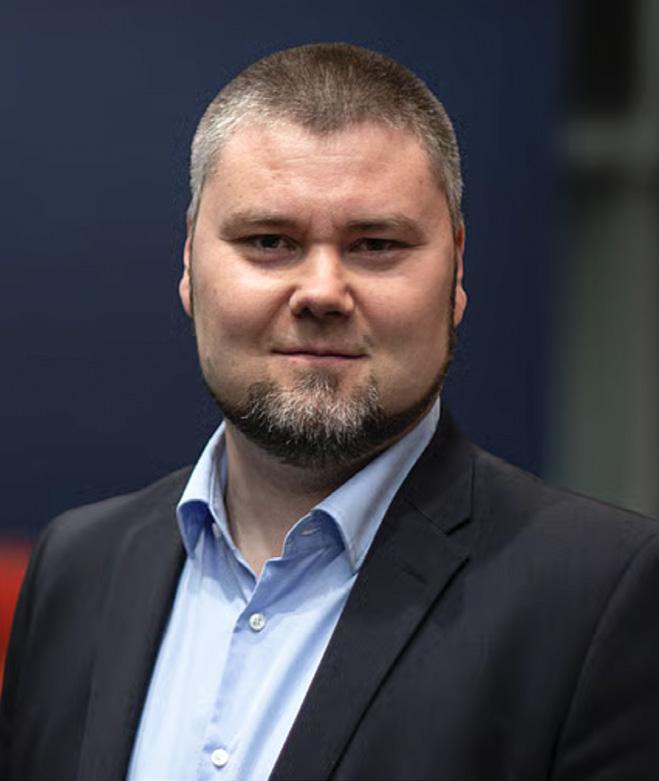
“Finland’s reform offers a rare opportunity to build a sustainable gambling market from the outset, and the ambition if to combine modern player protection tools with transparency and a genuinely player-first mindset.”
Hippos ATG chief compliance officer Antti Koivula
Enforcement and supervision
The regulator is equipped with an enforcement toolbox that includes cease-and-desist orders, administrative fines, content and website removal orders, public “name and shame” listings, referrals to criminal proceedings, and ultimately licence revocation. These tools provide a solid framework for supervising licensed operators that are identifiable, cooperative and operating within the regulatory perimeter. Their ability to address unlicensed offshore operators is, however, more questionable. The possible introduction of payment service provider and internet service provider blocking mechanisms was expressly left for future assessment.
Decree-level regulation and remaining uncertainty
Several key elements of the system were intentionally left to be defined through government or ministerial decrees following the bill’s approval. While this allows flexibility and faster regulatory responses, it also introduces uncertainty, as decree-level rules
can be amended relatively quickly.
Notably, matters such as mandatory loss limits, permitted game characteristics (for example autoplay or bonus buy features), temporal and time-based restrictions, maximum stakes, and round speeds will be determined at decree level rather than directly in the Act. For operators this makes Finland a market where compliance readiness must include not only the statute, but also active monitoring of secondary regulation and its practical interpretation.
What this means for horse betting and Hippos ATG
Hippos ATG is one of the operators preparing for Finland’s new licensing regime. The company has been established to operate in the re-regulated Finnish gambling market with a strong focus on horse racing and is a 50–50 joint venture between the central organisation of Finnish equestrian sports and horse breeding, Suomen Hippos ry, and Sweden’s most prominent gambling operator, ATG. This structure combines deep roots in Finnish horse racing with more than five decades of experience from regulated gambling markets.
The premise is straightforward: in a licensed and competitive environment, horse racing can remain viable only if it competes as a modern gambling product. Horse betting does not exist in isolation, but competes directly with sports betting and online casino, both of which invest heavily in innovation and user experience. To retain its position, horse racing must meet comparable consumer expectations while preserving its close connection to the sport itself through continuous product development and a clear prioritisation of horse racing as a core offering.
The ownership structure reinforces this alignment. Hippos ATG is owned by the sport, and profits flow back to sport. Suomen Hippos receives 60% of all profits, regardless of whether customers choose horse betting, sports betting or casino products. This creates a direct and transparent link between commercial success and the future of Finnish horse racing that no other operator in Finland can match.
Responsible gambling is embedded into this model. Finland’s reform offers a rare opportunity to build a sustainable gambling market from the outset, and the ambition is to combine modern player protection tools with transparency and a genuinely player-first mindset. Operationally, Hippos ATG is building a Finnish organisation for Finnish consumers, operating from Finland with a local team that understands the culture, language and regulatory environment.n



TOGETHER IN PERFECT DISHARMONY






As leading operators try to mitigate higher remote gambling taxes in the UK, GIQ takes a look at what options are available to them
THE UK GOVERNMENT’S policy development in the area of gambling is disjointed and reactionary at best. But to consult on the benefits of tax harmonisation and somehow have more gambling taxes at the end of the process is truly remarkable. That is where the United Kingdom’s remote gambling sector finds itself after November’s Budget.

In May 2025 HM Treasury launched a consultation on the introduction of a single tax for remote gambling, claiming a single duty would provide tax certainty and increase simplification for remote gambling operators.
The proposal in the consultation was for the introduction of a single Remote Betting and Gaming Duty (RBGD) and the government put forward several reasons for the idea:
● ensure the taxation of remote gambling is appropriate to the industry
● create a tax which reflects the commonalities of remote gambling
● simplify the system and reduce administrative burdens
None of these purported benefits will apply to the taxation of remote gambling from April 2027.
A UK online gambling brand with a sportsbook and casino currently pays General Betting Duty (GBD) at 15 per cent of revenue and Remote Gaming Duty (RGD) at 21 per cent.
By April 2027, that brand will pay GBD on horseracing at 15 per cent, GBD on sports betting at 25 per cent and RGD on online gaming at 40 per cent.
UK gambling duty summary

In 2024 RGD collected £1.12 billion in revenue for HM Treasury, which was a new annual record and the second year in a row in which more than £1 billion was earned. RGD was the single largest contributor to UK gambling tax in both 2023 and 2024 at around 30 per cent.
RGD was raised by six percentage points to 21 per cent in April 2019, and measuring the direct impact of this increase is complicated by the pandemic period over the following couple of years.
But revenue from online slots and gaming has generally continued to grow year-on-year and hit £5 billion in FY 2025. A near doubling in RGD from 21 per cent to 40 per cent, however, is a different scale of increase.
From 2027/28, when all the new gambling tax measures from the Budget are implemented, the Treasury estimates it will add £1.1 billion in extra gambling tax per year.
This estimate assumes that 89 per cent of the duty rise is passed on to customers in higher margins and that gambling demand is likely to fall as a result of those higher margins. The assumptions were based on analysis of the 2019 RGD increase and rate changes in both Denmark and Sweden.
The most recent data on the influence of tax
changes to gambling behaviour and revenue comes from the Netherlands, where the Dutch government increased gambling tax to 34.2 per cent at the start of 2025.
The Dutch regulator KSA said that it expects overall gambling tax revenue for 2025 to be 5 per cent (€40 million) less than 2024, despite the higher tax rate.
It is also worth noting that the unregulated online gambling market in the Netherlands is almost equal to the size of its licensed online market.
Several of the leading operators in the UK have understandably said that they will try to mitigate the higher taxes.
So, what options might be open to them?
Increase the win margin
Increasing the margins is the most obvious course of action open to operators and is a key assumption in the government’s estimates.
The sector-wide gross win margin on online slots has been steadily increasing since FY 2021 from 3.87 per cent to 4.95 per cent.
When the annual turnover on online slots exceeds £80 billion, even a rise of a tenth of one per cent is meaningful to improve gross revenue.
ICE SPECIAL 2026
It is easier to hide a margin increase in online slots, but customers will notice that their usual deposit does not last as long as it previously did.
Most individual gamblers will bet their deposit to extinction, so unless they increase their deposit size, the operator is simply earning the same amount of revenue from them more quickly than before it raised the margin – which does nothing to mitigate the RGD it pays.
The risk to raising the margin is that customer demand reduces and some customers stop playing altogether.
Increase the minimum bet size
Increasing the minimum bet size has been used by sportsbooks in jurisdictions where tax rates have been raised.
As with increasing the margin, the measure can mean some gamblers just use up their deposit more quickly, rather than earning the operator any more revenue.
It can also dissuade casual gamblers from betting, which might reduce revenue but does remove a cohort of low-spending customers who are no longer profitable to administer in the face of higher taxes.
The implementation of maximum stakes at £2/£5 for online slots in the UK makes a minimum bet less relevant as a means of mitigation for this product.
Product development – testing the boundaries
The substantial difference between GBD and RGD means there is a definite incentive to test the boundary between fixed-odds betting games and casino games.
This has been seen in South Africa where online betting is permitted but online gaming is not. Sportsbooks have been offering “betting” on online gaming by arguing that their products were not casino games, but rather fixed-odds bets on the outcome of a “scheduled, remote contingency” – such as the spin of a roulette wheel located in another jurisdiction.
A similar argument was used by bookmakers in the UK over 25 years ago to install fixedodds betting terminals in betting shops.
But any significant success in pushing the boundaries will likely be short-lived because government and the regulator will simply close the loophole.
Subscription service
A subscription service with a monthly fee to get better odds, unique promotions or early access to new games can offer a new source of revenue.
The risk for an operator is that there is very
little differentiation between UK brands in the odds and games they offer.
If customers can go to a rival brand to get the same odds or games for free, then the subscription service fails.
Reduce marketing and promotions
Cutting costs is another option for operators and marketing is a key expense for the sector.
Operators that can spend their budget most effectively and target the right customers to get the quickest return on that spending will be in a stronger position for a high-tax environment.
But it is easier said than done, as the oft quoted saying demonstrates: “Half the money I spend on advertising is wasted; the trouble is I don’t know which half.”
Cut jobs and increase automation
The trend for automation in various business processes from game development to customer service and trading will be intensified with the higher taxes.
Reductions in the number of employees could mean that the sector contributes less to employment taxes, offsetting the government’s gain from any higher gambling duty paid.
A final measure announced in the Budget
was that the UK Gambling Commission (UKGC) will receive £26 million in funding over the next three years to tackle illegal gambling.
In November 2025 UKGC published the final chapter of its research into illegal gambling in which it concluded, “having examined different methodologies, we are not yet in a position to make a robust and reliable estimate of the size of this [illegal] market”.
Super Group CEO Neal Menashe responded to the tax increase by saying that it needed to be matched by action on unlicensed brands:
“Super Group supports the reasonable taxation of online gaming in the UK. We rely on the government to ensure that today’s very substantial increase should be paired with robust and strict enforcement against non-paying offshore operators. This is essential to protect the regulated sector’s investment in jobs, technology, and responsible gaming in the UK.”
UK remote gambling brands face a combination of high tax and regulatory measures, such as affordability checks, that play into the hands of unlicensed operators.
The options to mitigate the tax also come with the risk of deterring customers from playing.
Estimates from other jurisdictions with high-tax, restrictive online gambling markets are that the unlicensed sector accounts for anywhere between 18 per cent and 50 per cent of total online gambling.
“UK remote gambling brands face a combination of high tax and regulatory measures, such as affordability checks, that play into the hands of unlicensed operators.”
If UKGC fails to protect its licensees from a growing illegal market, it would be no surprise to see legal action taken by an operator in the future.
The government’s forecast for an extra £1 billion in annual gambling tax is by no means a certainty.n

Be Informed
From breaking news to CEO interviews, legal and regulatory information, financial analysis, product developments, and in-depth company profiles. Gaming Intelligence provides a one-stop source of news and intelligence on markets and competitors.
Sign up today at GamingIntelligence.com and join the thousands of industry professionals who rely on Gaming Intelligence to deliver critical business information.
What do the world’s most successful gaming companies have in common?
They have empowered their organisations from the top down with the information they need to succeed in a rapidly evolving market.




SPONSORED BY

We received an unprecedented number of outstanding nominees for this year’s Hot 50. Congratulations to all of those who are celebrated on the following pages, and thank you to the thousands more that make this industry what it is.


Keiron Downs
Head of Content Operations
Evoke
With over 11 years in the iGaming industry, Keiron has developed deep expertise through his work at Evoke, where he has managed key gaming products for William Hill, 888, and Mr Green. Initially focused on Evoke’s UK portfolio, Keiron has since supported the group’s wider international expansion, developing tailored strategies and curated game roadmaps that align with the unique behaviours, expectations, and commercial priorities of each brand and region.
Over the years, he has become known for his ability to balance customer-focused product thinking with strong commercial awareness, ensuring each market receives a thoughtful, data-driven approach that supports sustainable growth.
Dezso Pazmany
Director of Product Operations
Bally’s Corp
With nearly a decade of experience in the iGaming industry, Dezso has developed deep expertise across multiple verticals, successfully leading teams in marketing, commercial, and product functions. He began his career at Kindred, progressed to key roles at Entain, and now serves as a Director at Bally’s.
Throughout his career, Dezso has established strong relationships with leading suppliers— partnerships that have been instrumental in elevating and expanding Bally’s product portfolio into a truly market-leading proposition. His commitment to personalisation and a data-driven strategy has helped position Bally’s as the UK market leader in new-game performance.
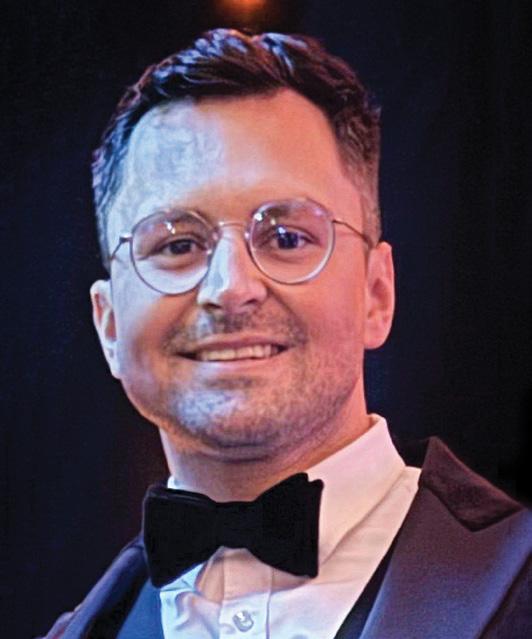
Dezso’s strategic vision, innovative mindset, and disciplined execution continue to drive significant growth. These qualities make him exceptionally well-placed to support Bally’s ambitions for new-market expansion and sustained commercial success.
Rob Passerino Senior Manager, Casino Operations BetMGM
Rob has been instrumental in cementing BetMGM’s position as a leading online casino operator in North America. Overseeing a period of rapid growth and innovation, Rob’s main responsibilities include managing the overall content strategy, owning all commercial relationships and negotiations with vendors, and running day-to-day operations across BetMGM Casino. Having been promoted three times in just five years, Rob has played a pivotal role in shaping Bet-
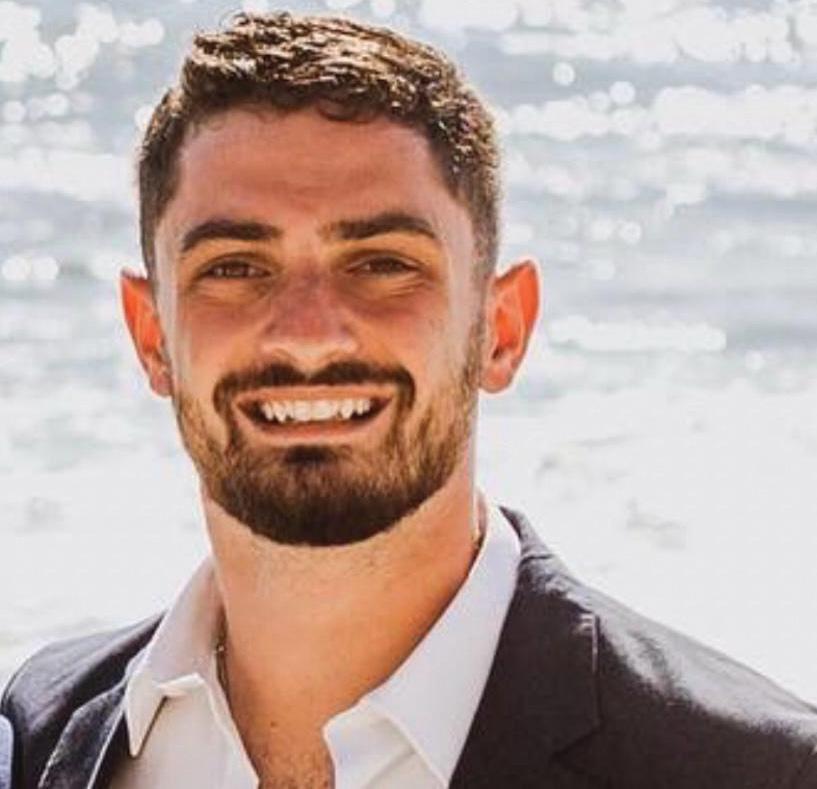
MGM’s success.
During this time, he has helped expand operations into Michigan, Pennsylvania, and Ontario, overseen the launch of Wheel of Fortune Casino, and delivered an industry-first omni-channel exclusive with Rakin’ Bacon, uniting MGM properties and BetMGM online. Rob also secured a landmark partnership with The Wizard of Oz and continues to drive bespoke IP development with major entertainment and sports brands including The Price is Right, the NHL and more. His strategic focus on bringing top new studios to the U.S. market first, including Octoplay, and helping coordinate Push Gaming’s debut in the U.S. following MGM’s acquisition, has further strengthened BetMGM’s leadership position. With his strategic vision, creative leadership, and unwavering focus on execution, Rob continues to set new standards for innovation, partnership, and omni-channel excellence in iGaming.
Greg Kett Director of Casino ComeOn Group
Greg is the Director of Casino at ComeOn Group — a role that builds on his senior leadership experience across some of the biggest names in iGaming, including Betway, Betfair, and Bet365, as well as a stint at The National Lottery (Camelot). With a foundation in product, commercial, and marketing roles, he has developed a deep understanding of how to strategically scale casino operations across multiple brands with a strong focus on regulated markets.

He has led the development and execution of a long-term casino vision, leveraging in-house platforms to drive data-driven personalisation, optimise retention strategies, and deliver a first-class player experience across all casino verticals.
Innovation has been a constant thread throughout his career. In previous roles, he contributed to product roadmaps and crossfunctional initiatives, shaping commercially successful, player-centric offerings. He combines this hands-on experience with a focus on longterm growth — building partnerships, defining go-to-market strategies, and leading transformation initiatives that put the player first, all while ensuring scalability, compliance, and strong business impact.
Keiron Downs
Dezso Pazmany
Greg Kett
Rob Passerino
Sam Leggott
Director of Gaming Operations LeoVegas Group
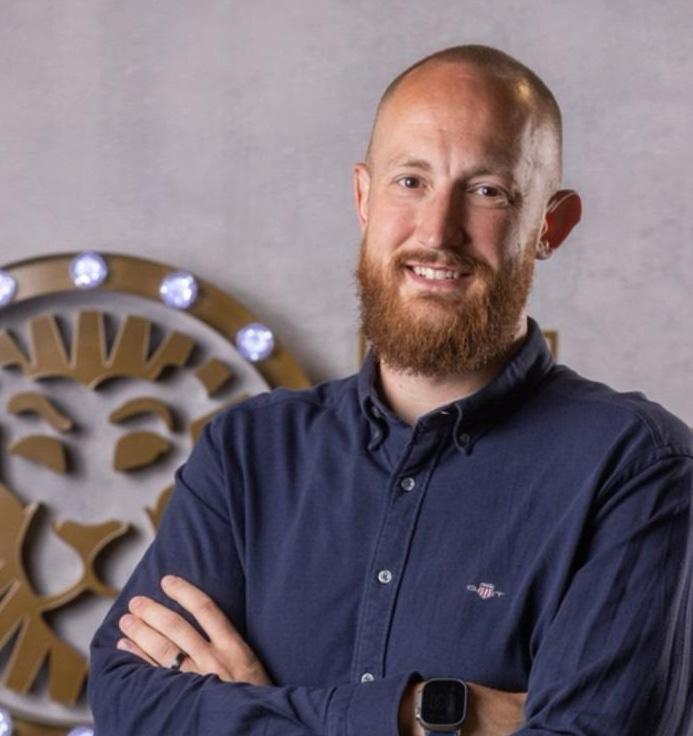
Sam is a seasoned iGaming executive and currently Director of Gaming Operations at LeoVegas Group, where he leads operational strategy and delivery across the gaming division. With more than a decade of industry experience, he focuses on driving performance, efficiency, and product excellence.
Since joining LeoVegas in 2020, Sam has progressed through several senior roles, including Head of Gaming Performance, underscoring his strategic impact and ability to scale operational capability.
His career began at William Hill in 2008, followed by senior positions at Betclic, Kindred Group, BGO Group, Paddy Power Betfair, and Playzido, giving him deep expertise across commercial, operational, and strategic disciplines.
Sam’s promotion to director forms part of Leo Vegas’ wider organisational realignment and reflects his reputation as a forward-thinking leader with a strong track record in shaping high-performing gaming operations.
Tugomil Cerovˇcki
Director of Casino SuperSport – Entain
Few leaders in European iGaming embody longevity, loyalty, and adaptability quite like Tugomil. Celebrating 25 years with the same company, his journey mirrors the very growth of the Croatian market itself. He joined when SuperSport had only one location and personally opened the second. From that moment onward, he has been part of every major chapter in the company’s evolution.
Starting his career in a hands-on operational role, he steadily rose through leadership positions, including Head of IT, Head of Security, CTO, CIO, and ultimately, when Croatian legislation allowed casinos, he built one from
scratch and became Director of Casino. This progression is more than a résume; it represents a rare combination of institutional knowledge, market understanding, and the ability to lead through continuous change.
Under his direction, the company’s casino has grown into a central and eastern Europe industry benchmark. The platform is widely recognised as one of the strongest, most usercentric and best-performing casinos in the region, praised for its design, product quality and commercial impact. His leadership has been instrumental in transforming it from an internal project into a market-defining revenue engine.
Colleagues and partners across the industry describe him as the “go-to person” for understanding how the Croatian online casino landscape truly works. From regulation and product strategy to provider relations and long-term commercial planning. What sets him apart is his ability to balance operational discipline with a sharp strategic eye, ensuring that the casino offering remains both competitive today
Matt Taylor
Content Director
Flutter Entertainment UK&I
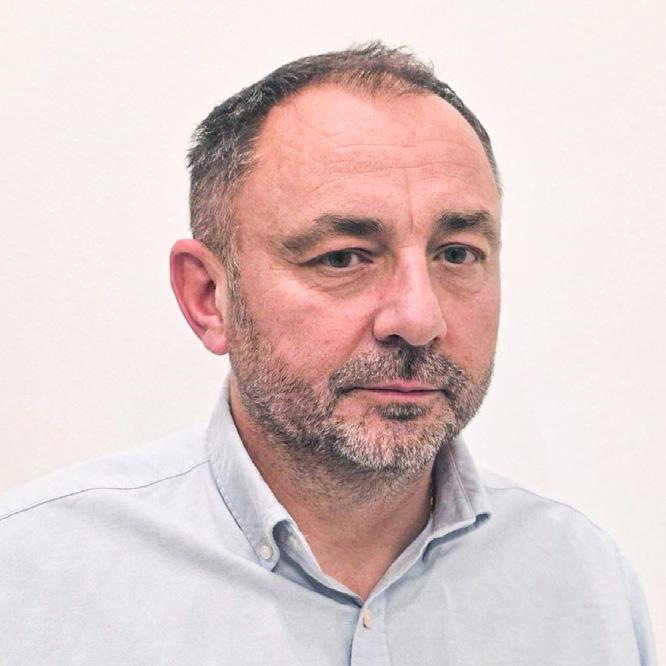
As Content Director for Flutter UKI, Matt has reshaped how three major brands, Sky Betting & Gaming, Paddy Power and Betfair, work together, unifying their content teams into a single, strategically aligned function.
His team now has end to end ownership of the full content lifecycle with dedicated teams focused on Delivery, Growth, Performance & Innovation.
Central to this transformation is Matt’s commitment to building deep, data-driven
and ready for tomorrow.
With 25 years of service, countless launches, regulatory shifts, and market transitions behind him, Tugo continues to drive forward with the same calm determination and clarity that have defined his entire career. His influence on the Croatian iGaming sector is undeniable, and his role in shaping its future is far from over.
Alberto Telias Chief Marketing Officer Codere Online
Alberto is celebrated for his outstanding leadership in elevating the brand across Spain and Latin America. With nearly two decades of digital marketing experience, including stints at William Hill and The Stars Group, he has driven remarkable growth through innovative sponsorships, omnichannel strategies and culturally resonant campaigns. His work played a key role in Codere rising to 7 th in the prestigious “Brand Finance Spain 100” ranking, the only gaming brand featured.
Alberto has also spearheaded highimpact partnerships, including an expanded sponsorship with Mexican football club CF Monterrey, and helped launch Codere’s GOAT campaign, celebrating everyday bettors as the “Greatest Of All Time”.
His data-driven, football-centric marketing has strengthened Codere’s presence across regulated markets, cementing him as an award-worthy leader shaping the future of gaming in Spanishspeaking regions.
partnerships with both internal and external studios to secure the best content possible for Flutter’s players.
With 17 years in the industry and wideranging experience across product, operations, marketing and analytics, Matt’s strategic leadership style allows him to connect teams, align strategy and unlock value.
His influence will be pivotal to Flutter’s growth and content innovation in the year ahead.

Sam Leggott
Tugomil Cerovˇcki
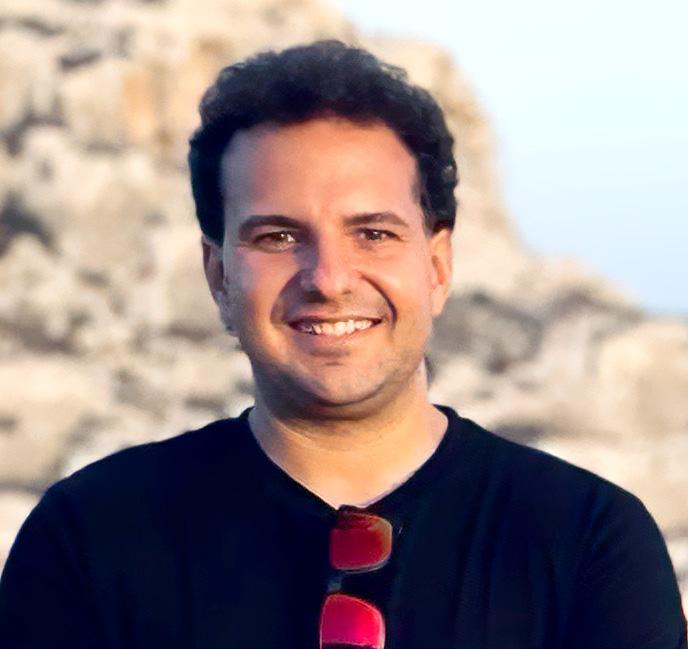
Pierluigi Rinaldi Head of Casino & Business Development FDJ UNITED
Pierluigi is a key strategic leader at FDJ UNITED, driving the direction and commercial performance of the Casino vertical across multiple regulated markets. As Head of Casino & Business Development, he is central to shaping product strategy, elevating supplier partnerships, and ensuring the business delivers against ambitious growth targets. Pierluigi combines strong product expertise
with clear strategic vision, guiding teams to make confident, data-driven decisions that strengthen FDJ UNITED’s market position. His leadership ensures the casino offering evolves with customer needs while staying aligned with long-term business goals. A decisive and influential leader, Pierluigi brings direction, discipline, and measurable impact to every initiative he drives.
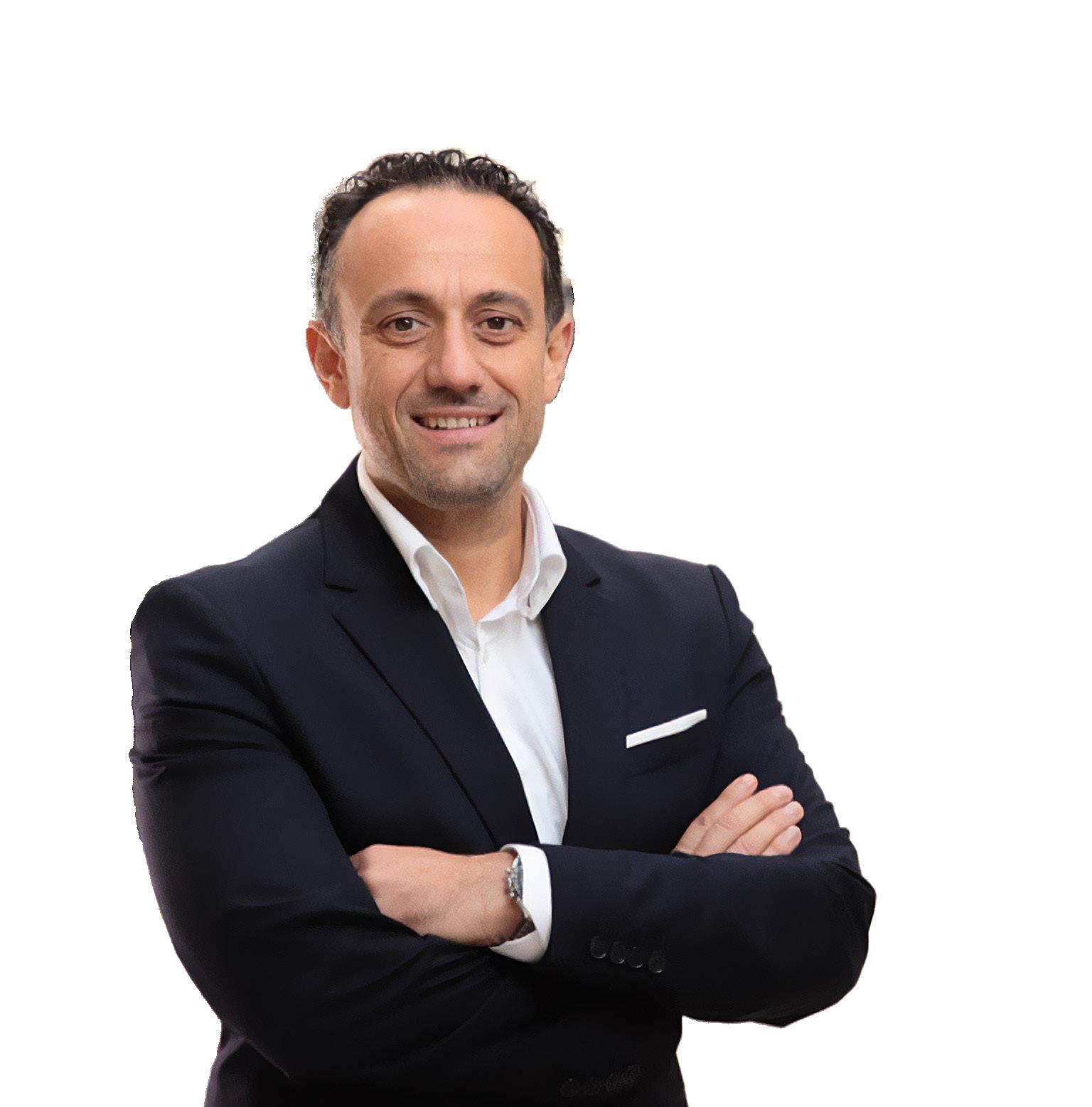
Luca Galli Vice President of Business
Jack Bailey
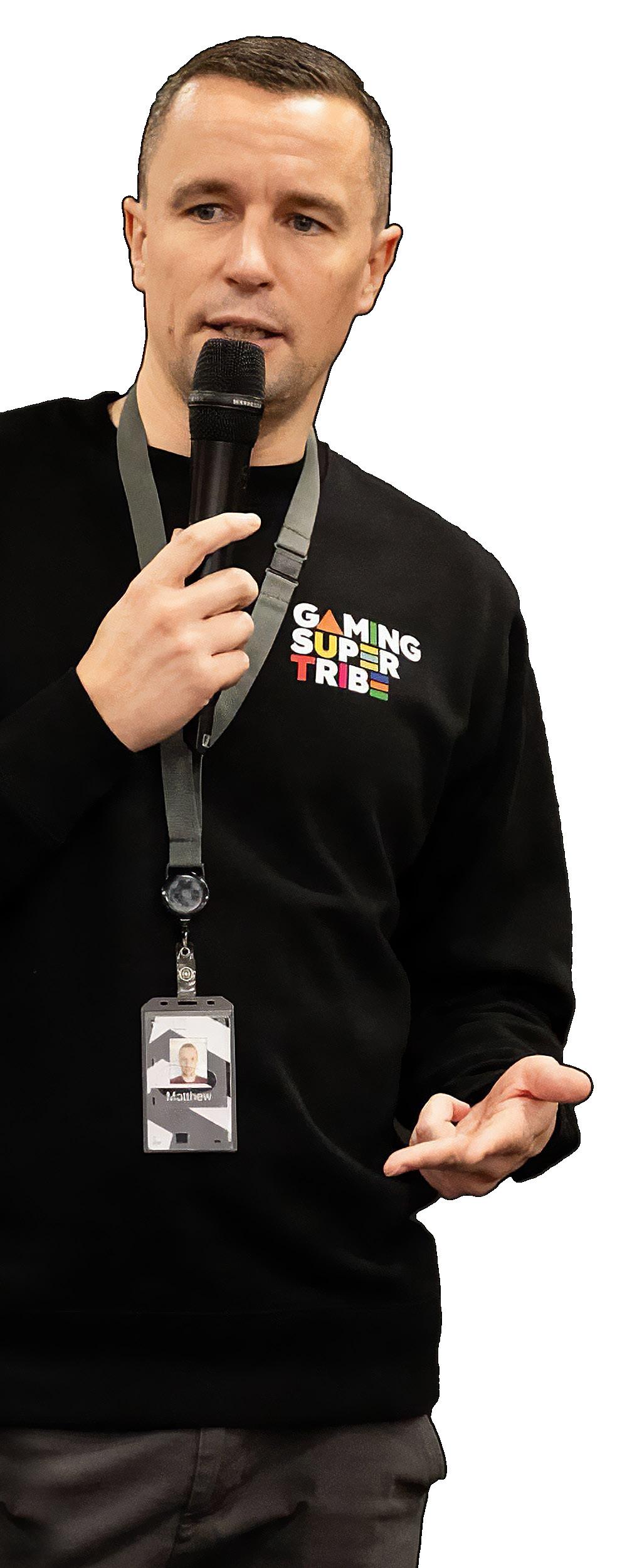
Commercial Director Octoplay
Jack has been a driving force in the iGaming industry for the past four and a half years, beginning his career at Playzido where he led the commercial charge during a period of exceptional growth. Under his leadership, Playzido – now Light & Wonder’s Spark platform – achieved its earnout targets, launched more than ten new studios into all regulated U.S. states, and expanded from just ten operator brands in a single jurisdiction to over 250 operator brands across more than twenty global markets.

Jack’s strategic approach and deep understanding of both product and partnership have been instrumental in elevating Playzido into one of the industry’s most competitive B2B platforms. His ability to blend commercial acumen with creativity has helped forge strong operator relationships and deliver consistent revenue growth.
“Jack’s strategic approach and deep understanding have been instrumental in elevating Playzido into one of the industry’s most competitive B2B platforms”
Luca Galli
Jack Bailey
Matt Taylor
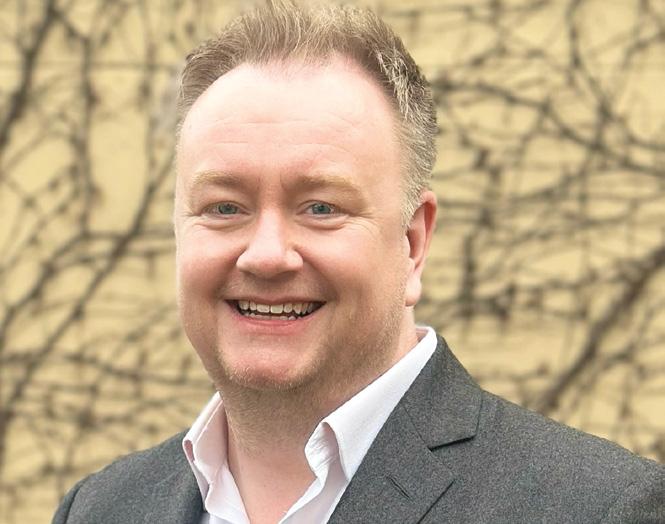
Justin Cosnett Chief Product Officer
Continent 8 Technologies
Justin’s work not only drives Continent 8’s success but also elevates infrastructure standards across the global gaming ecosystem. With more than 25 years in technology and service delivery, including 12 years in betting and gaming sector, he has delivered transformative advances, including the integration of MIRACL’s password-less multi-factor authentication (MFA) into Continent 8’s cybersecurity suite, setting new standards for secure, frictionless authentication.
A respected industry voice, Justin has become a major presence on the international conference circuit, sharing expertise on AI, cybersecurity, cloud and next-generation gaming tech. He is highly respected by Continent 8’s vast customer base, spearheading workshops for customers across the globe, and features regularly on Continent 8’s Ask The Expert podcast. His ability to bridge technical innovation with commercial strategy, while actively shaping industry discourse, make him a worthy Hot 50 winner.
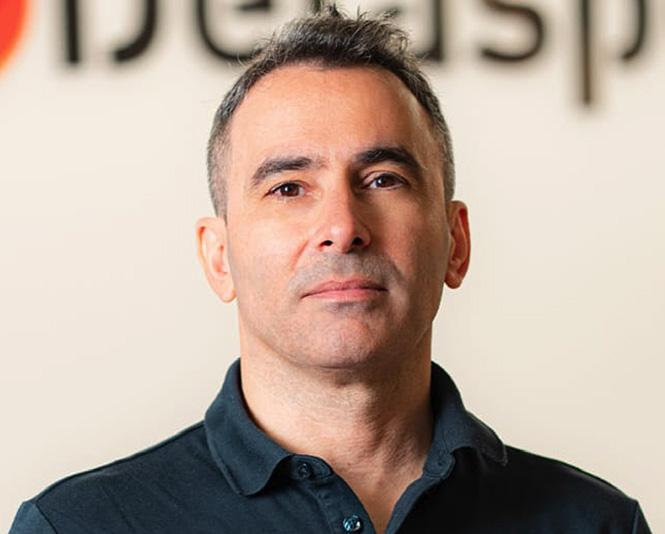
Oren Cohen Shwartz Chief Executive Officer Delasport
Oren is a leader whose vision and expertise continue to elevate the global iGaming technology landscape. With more than 15 years in C-level roles, he brings deep industry knowledge to Delasport, championing innovation and the transformative power of personalization in gaming.
In 2025, under Oren’s strategic leadership, Delasport delivered exceptional double-digit sportsbook growth across major EMEA markets including the UK, Sweden, Denmark and the Netherlands. He has strengthened Delasport’s reputation for reliability and innovation, advancing its GLI-certified full-stack sportsbook and expanding the product suite with standout solutions such as SuperPot.
His impact drives measurable value for partners while shaping the future of personalized, scalable iGaming solutions worldwide. This is Oren’s second Hot 50 award after winning his first nomination back in 2020 while managing director of Skywind Group.
Jonathan Gauci Founder and Chief Executive Officer Elantil
Jonathan is an innovator whose 22 years’ experience in iGaming has reshaped platform engineering and product strategy. He founded Elantil to solve one of the industry’s biggest challenges - the inflexibility of legacy systems. His API-first, modular architecture empowers operators with true control rather than locking them into a “one-size- fits-all” solution.
Elantil has already integrated more than 50
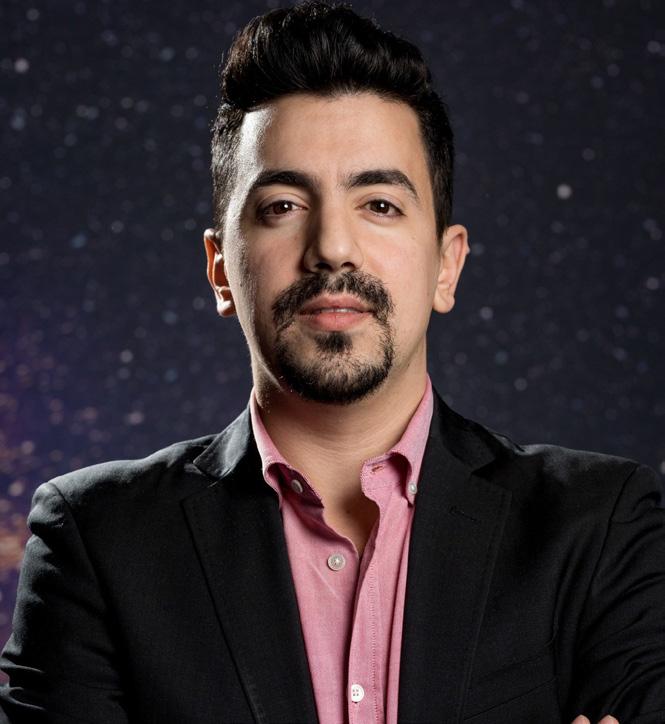
Tom Light
Chief Executive Officer
FIRST - Best in Sports
Tom has been a defining force in sports betting for over 20 years and helped shape the modern sports betting ecosystem through innovations such as SBTech’s Pulse Betting product. After being part of SBTech’s $3.3 billion merger with DraftKings, he founded FIRST – Best in Sports in 2023.
In under two years, he has transformed FIRST into one of Brazil’s leading sportsbook suppliers, powering more than 38 operators, as well as a global B2B powerhouse, serving more than 35 operators worldwide. Tom’s product vision has produced game-changing technolo gies such as SnapBet, SportOS and GMFY, building a team of more than 500 employees and generating over €100 million in B2B rev enue. His impact continues to define the future of sports betting.
partners, setting an internal benchmark where one integration took less than two hours, and launched four customers in just 12 months. He leads from the front with a values-driven approach - focusing on freedom, agility and control - core to Elantil’s operational ethos. His work is shaping the future of iGaming platforms, setting a new benchmark for operator autonomy, scalable architecture and industry transformation.

Justin Cosnett
Tom Light
Oren Cohen Schwartz
Jonathan Gauci
Dr Alexandra Krone Managing Director GAMOMAT
Alexandra’s strategic vision and people-first philosophy has transformed GAMOMAT into one of the iGaming sector’s most respected employers. She joined the supplier as chief people officer in 2017 and stepped into the MD role in 2021, where she has restructured GAMOMAT for long-term success.
This included establishing a new C-level board, building in-house software development and marketing teams that previously didn’t exist, and redefining the company’s identity through five core values that guide its culture and decision-making.
Alexandra’s blend of strategic strength and human-centred leadership has introduced value-based recruitment and developed People & Culture programmes such as GAMOcademy and GAMOlog. Her commitment to transparency, fairness and empowerment has elevated both GAMOMAT’s workplace culture and its standing within the global iGaming industry.
Ebbe Groes
Co-founder and Chief Executive Officer
EveryMatrix
Ebbe is an exceptional industry leader whose vision has transformed the company into the world’s fastest-growing iGaming technology supplier. He has been the driving force behind EveryMatrix since co-founding the company in 2008.
Under his leadership, EveryMatrix has achieved record results, including €181 million in net revenue and €101 million in EBITDA, and tripled the Group’s headcount in the past five years to 1,500 employees across 16 offices. He has also spearheaded the all-cash acquisitions of FSB Technology, Fantasma Games and Goma Gaming, strengthening the company’s global portfolio.
Beyond commercial success, Ebbe’s commitment to social impact is also praiseworthy, with the opening of a second fully funded NGO to provide new careers to veterans of the war in Ukraine. ‘Academy for Heroes’ was inspired by the company’s 300+ employees that are based in Lviv in Ukraine, some of whom are fighting in the war. Ebbe’s leadership drives both industry excellence and meaningful societal change.

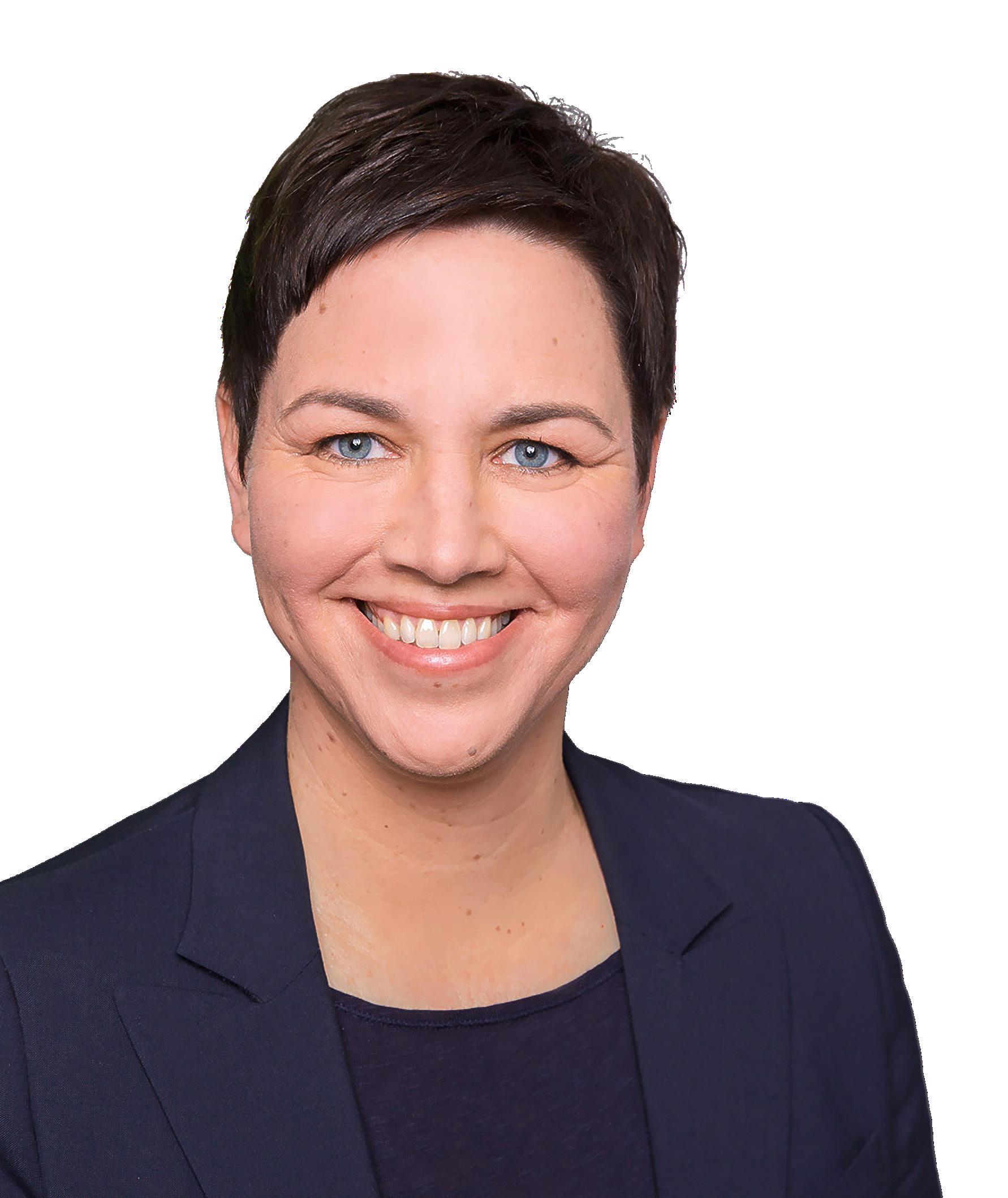
Thomas Metzger Chief Executive Officer Lotto.com
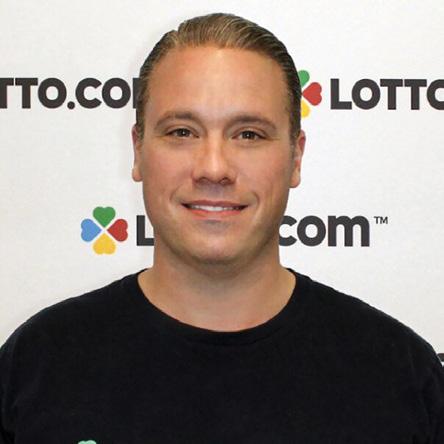
Since founding Lotto.com in 2020, Thomas’s bold vision is redefining how Americans access the lottery. In 2025, he guided Lotto.com to a landmark year, reach ing nearly 4 million cus tomers and celebrating more than $100 million in winnings, including historic wins across Arkansas, Massachusetts, New York, Colorado, Maine, New Jersey and Oregon. Lotto.com expanded access with the launch of a full suite of lottery draw games in Maine and strengthened partnerships in 11 states.
His initiatives have also paved the way for the future of the courier industry as a whole. Through efforts in Arizona, Colorado, Maine, New Jersey, New York and Oregon, courier regulation has been established, creating not only a safer ecosystem for lottery players, but also establishing a standard by which all couriers will continue to abide by.
Lotto.com now employs more than 200 staff and has delivered nearly $200 million back to state programs - modernising an entire industry in the process.

Simon’s vision has helped to redefine CRM and player engagement in iGaming. Within ten years, he has built Fast Track into one of the industry’s leading automation and engagement platforms, celebrated for its deep integration, scalability and multi-brand strength.
While the industry rushed to add AI features to existing systems, Simon pioneered Fast Track AI, iGaming’s first natural language CRM platform, capable of analysing real-time data at massive scale and taking direct action with unprecedented usability.
His leadership has scaled the company to 160 employees across three countries, while maintaining Great Place to Work certification. Simon hasn’t just adapted to the rise of AI, he has reshaped the future of CRM
Simon Lidzén
Thomas Metzger
Dr Alexandra Krone
Ebbe Groes
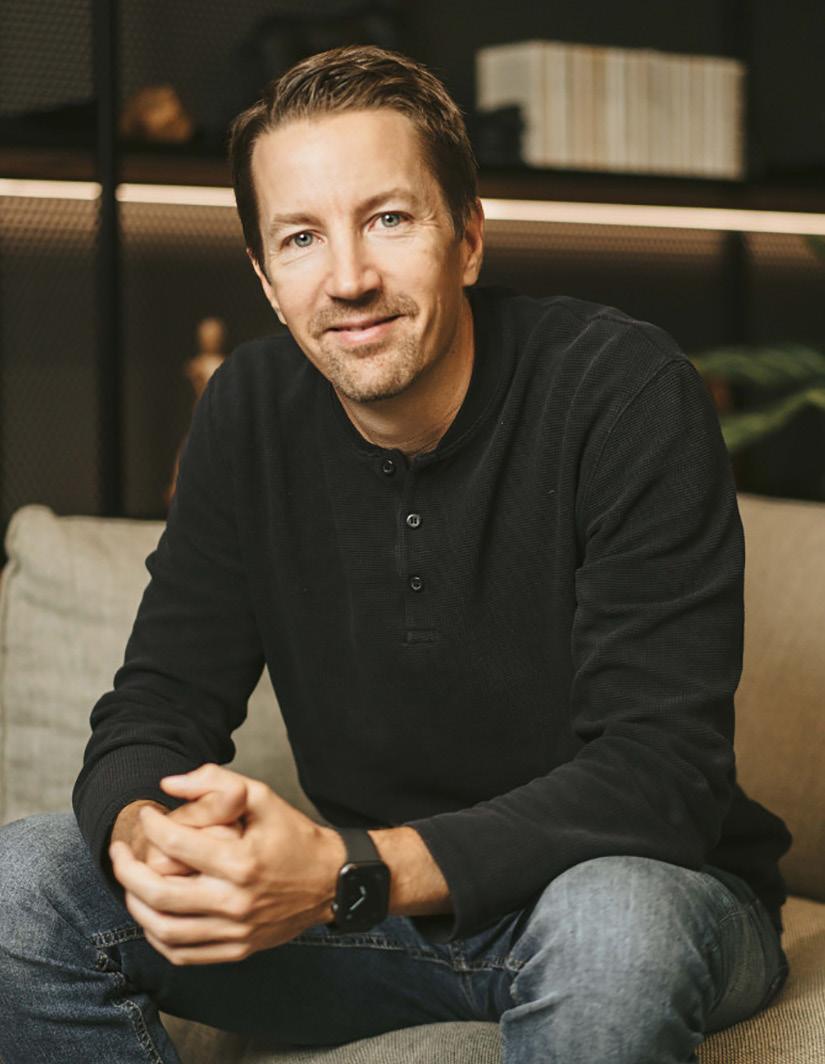
Don Jaques
Senior Vice President – Americas OpenBet
Don is recognized for his transformative impact on the global gambling industry, driving strategic market entry and technology adoption for OpenBet across the Americas. He has delivered significant commercial expansion for the supplier into Brazil’s newly regulated market via landmark deals with GSS and Band - two of Brazil’s largest media conglomerates - to power the end-to-end operations of TQJ and BandBet.
He has also advanced the industry’s commitment to integrity by championing the
widespread adoption of OpenBet’s AI-powered responsible gaming solution, Neccton, and strategically deployed the company’s new geolocation tool, OpenBet Locator, with major partners such as Fanatics during the product’s first live year. After nearly 20 years’ service in the gambling sector, which includes stints at Ongame, Amaya, NYX and SG Digital, Don finally gets the recognition he deserves as a worthy Hot 50 winner.
Merv Huber
Founder and Chief Executive Officer
Merv Digital Solutions
Merv has over 20 years’ experience in the gambling sector, including seven years’ service at Scientific Games, which earned him his first Hot 50 award in 2022 for his leadership of CRM programs across 12 US lotteries.
In 2025, he took a gamble on himself and
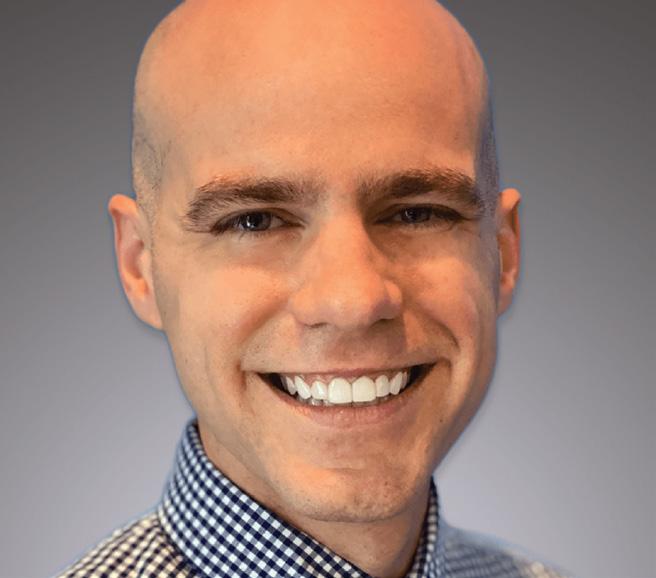
Pini Yakuel
Co-founder & CEO
Optimove
Pini is honoured for his pioneering vision and decade-long commitment to AI in the gambling industry, culminating in last year’s creation of Positionless Marketing. Since founding the company in 2012, he has been instrumental in embedding advanced AI directly into the Optimove platform, setting the stage for modern, data-driven marketing. This foundational work delivered the revolutionary Positionless Marketing method, which breaks down traditional silos and grants marketers the unprecedented ability to streamline workflows from insight to creation to optimization, independently.
This transformative approach has yielded significant, measurable impactimproving campaign efficiency by 88 per cent for global iGaming operators. What started as a two-person startup, Optimove is now a global marketing tech company trusted by hundreds of leading consumer brands. Pini’s ability to transform complex technology into accessible and empowering tools make him one of the most influential leaders in the gaming industry today.

Janine Copperstone
Senior Marketing Manager
PearFiction Studios
Janine is one of the industry’s most dynamic and influential marketing pioneers, fundamentally shifting how studios approach marketing, brand and player-facing storytelling. Upon joining PearFiction, she built the entire studio marketing function from scratch, creating a new, high-impact model that has since been emulated by numerous studios across the Games Global network.
Despite being a team of one, she delivers the output of an entire department, leading strategy, brand and execution for various key launches. 2025 was the year that PearFiction really made its mark on the industry, and Janine was behind every beat of the drum. She developed the marketing strategies for Squealin’ Riches 2 and Treasures of Kilauea 2, resulting in both games breaking internal performance records. Her disruptive approach and ability to transform PearFiction into a distinct, recognized brand make her a true Hot 50 leader who is actively shaping the future of slot studio marketing.

Don Jaques
Janine Copperstone
Merv Huber
Pini Yakuel
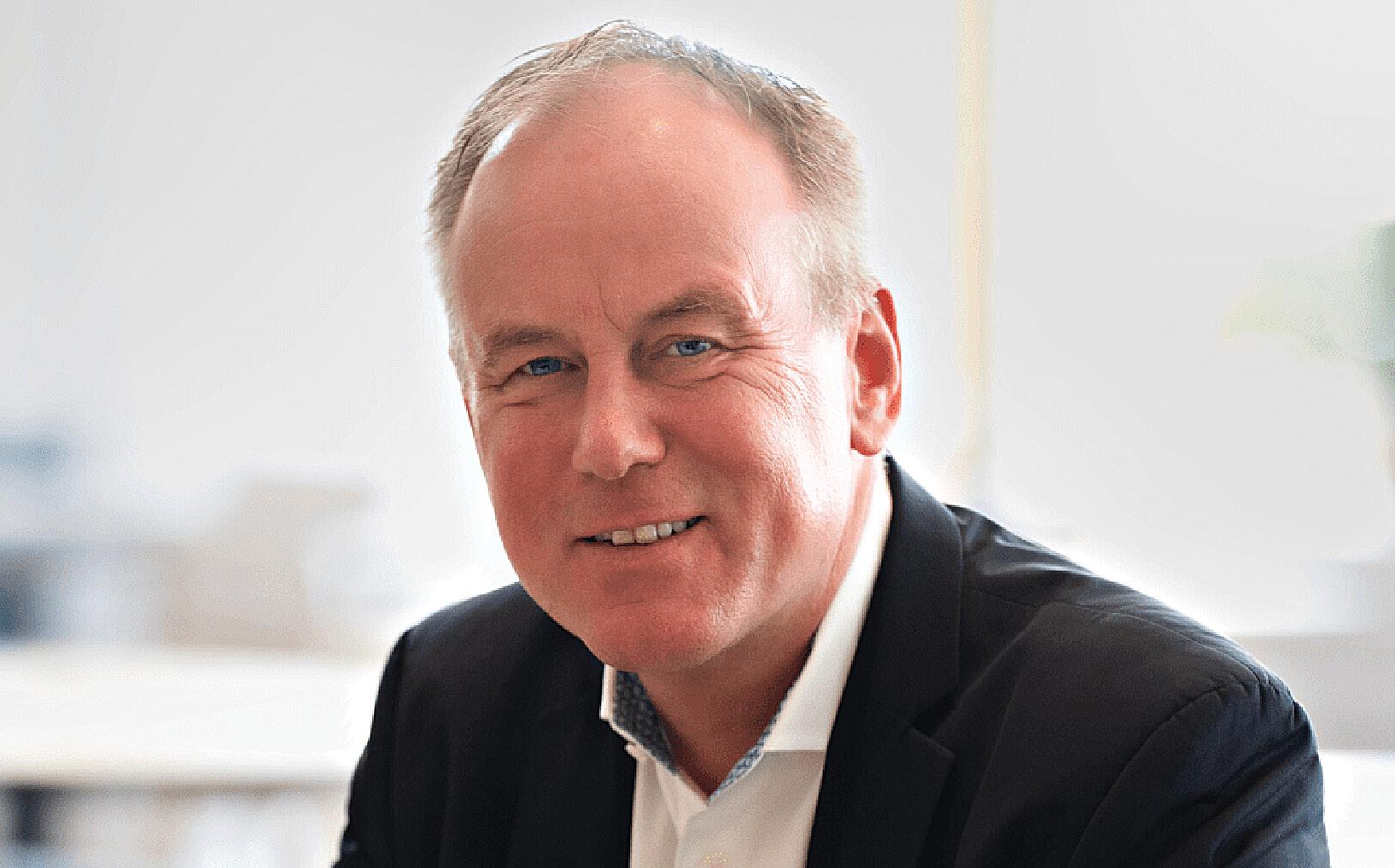
founded two specialised start-up studios to transform lottery and iGaming marketing and game content creation - Merv Marketing Studio and Merv Game Studio.
His marketing studio has already delivered CRM programs for five major clients, including the UAE Lottery and Connecticut Lottery. Simultaneously, his new game studio is building a portfolio of more than 12 eInstant games, featuring entirely new mechanics, which are slated for release in Q1 2026.
Merv’s dual-studio vision is reshaping digital transformation across the lottery and iGam-
Magnus Olsson
Chief Commercial Officer Play’n GO
Now in his eighth year with the company, Magnus has helped to reinforce Play’n GO’s position as a leading supplier in regulated markets by proving that commercial success aligns with long-term sustainability. Under his commercial stewardship, Play’n GO has delivered some of its most significant milestones to date.
He pioneered its entry into the land-based gaming sector through a landmark partnership with Genting, opening a completely new revenue stream for its content. He also oversaw the record-breaking launch of Reactoonz 100, which went live with more online casinos on day one than any other title in 2025, setting a new standard for game rollout success. Central to his impact has been Play’n GO’s continuing global expansion, including its rapid rise across North America, its successful debut in Brazil, and cementing its South African presence
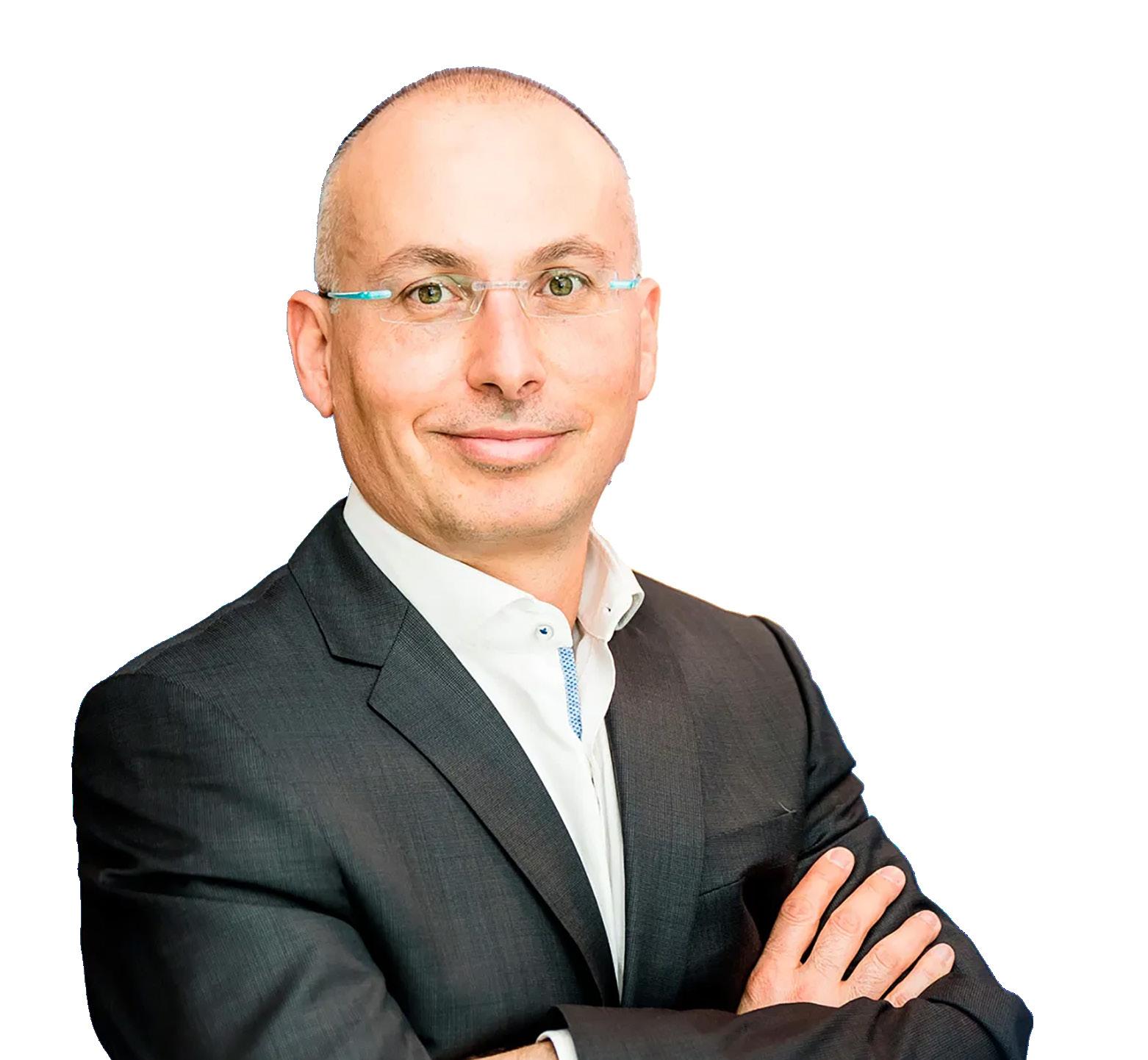
Shimon is the operational backbone who continues to make Playtech tick. He was a Hot 50 honouree in just the second year of the awards back in 2013 when serving as vice president of operations.
“Now in his eighth year with the company, Magnus has helped to reinforce Play’n GO’s position as a leading supplier in regulated markets by proving that commercial success aligns with long-term sustainability”
Now in his 15th year with Playtech, including COO since 2015, he has overseen the supplier’s expansion into new markets such as the US and Latin America, alongside several European jurisdictions.
He has played a critical role in Playtech’s US success since first expanding into the market in 2020, securing landmark partnerships with the likes of DraftKings and Parx Casino. He was also instrumental in landing the innovative ‘Live from Vegas’ deal with MGM Resorts. Shimon’s influence is felt across every key vertical, balancing operational excellence with strategic vision for scalability and compliance. Crucially, he has championed ESG and diversity initiatives, embedding responsible gambling and inclusion into Playtech’s culture.
His ability to balance commercial success with ethi cal leadership makes him one of the most influential figures in the industry today.

Eyal Naor SkillOnNet Chief Operating Officer
Eyal has been the brains behind SkillonNet’s recent technological innovations, including the launch of GAIA Roulette, a ground-breaking new roulette experience powered by AI. He has led transformative initiatives including the integration of advanced AI-driven personalization tools and the development of seamless player-experience features.
His commitment to technological excellence, regulatory expansion, and player-centric product development has strengthened SkillOnNet’s position as a leading B2B platform provider and a successful B2C operator. Eyal’s strategic leadership, ability to execute at scale, and continuous pursuit of innovation make him a deserved Hot 50 winner.
Shimon Akad
Eyal Naor
Magnus Olsson
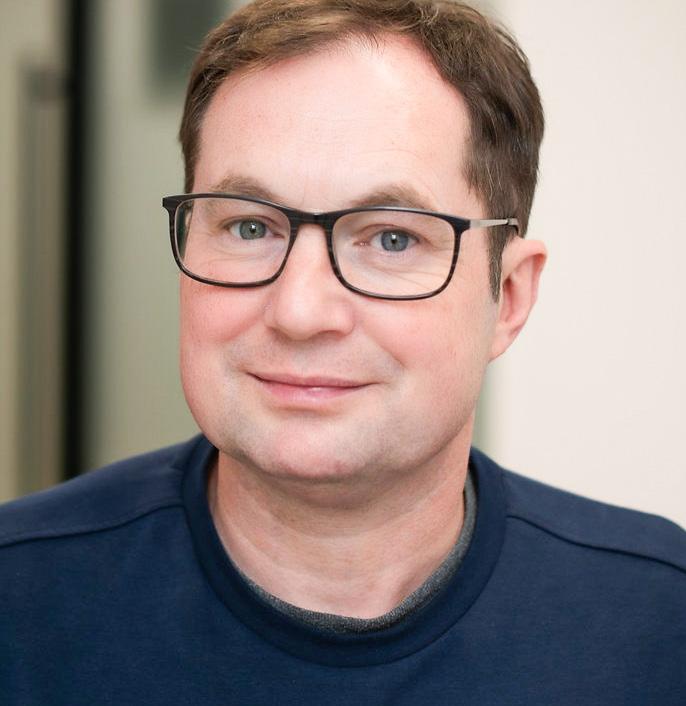
Dom Le Garsmeur
Product Radars
Co-Founder & Head of Tech and Product
Dom has redefined iGaming market intelligence, elevating Product Radars from a nascent concept to an essential industry benchmark that is shaping how the industry views performance and competition. He has engineered a sophisticated data pipeline that processes thousands of daily lobby positions, converting raw data into high-impact commercial insights.
His leadership culminated in the launch of Slot Intel, a first-of-its-kind tool integrating position-weighted scoring and studio consolidation to provide an objective view of highly competitive iGaming markets such as Brazil and the US. By introducing intelligent automation and a user-centric design, Dom has empowered studios and operators to make data-driven decisions with unprecedented speed.
His technical precision and visionary product strategy have established a new standard for clarity, making Product Radars a definitive force in the sector.
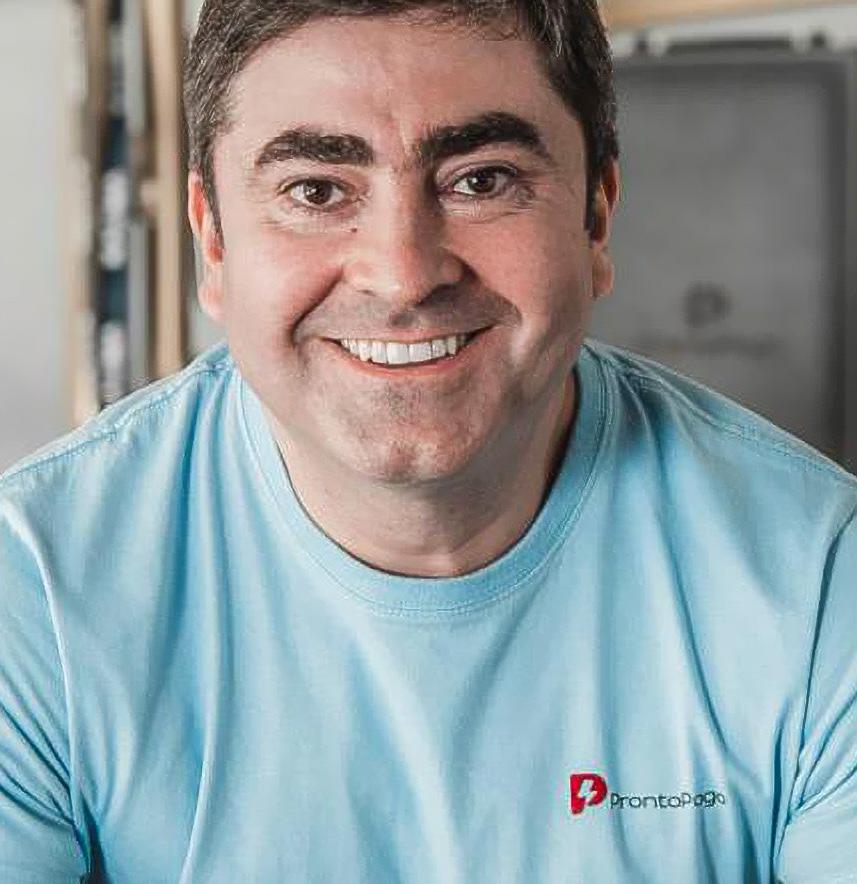
platforms, expanding across Brazil, Chile and Peru. Through this journey, he discovered a much larger challenge: the lack of fast, reliable, and compliant payment infrastructure for the LatAm iGaming industry. In response, he founded ProntoPaga, a payment service provider that now processes over US$220 million monthly, covering 93 per cent of the LatAm population. His influence extends beyond operations into high-level advocacy; Sebastián has been instrumental in shaping modern regulatory frameworks, testifying before the Chilean Senate to champion transparent, responsible gaming standards. Currently spearheading Yol1, a pioneering neobank, he is bridging the gap between traditional banking and fintech. Sebastián’s career is defined by this unique ability to scale complex businesses while driving socio-economic inclusion across the continent.

Sebastián Salazar
ProntoPaga Chief Executive Officer
Sebastián’s path to this Hot 50 award reflects the evolution of Latin America’s digital economy, which began when he founded EstelarBet during the Covid pandemic. What started out as a small initiative soon became one of the region’s fastest-growing iGaming
Michele Fischer SIS Content Services Vice President
Michele has been a trans formative presence in the US racing and betting landscape for more than twenty-five years, helping to modernise racing, expand international wagering and introduce new betting formats that have shaped the future of the industry.
She played a key role in establishing SIS Content Services in 2021 and guiding the com pany’s growth stateside, expanding its esports product into 16 states. Having advocated for fixed-odds wagering long before the repeal of PASPA, she oversaw the launch of fixed-odds horse racing in Colorado with bet365 in 2024an initiative widely recognised as a landmark
moment for the American market. She also played a major role in bringing international racing content from Australia, Bahrain, South Australia, Chile and Sweden into the US market, and helped create the first simulcast wagering link between Australia and North America, strengthening cross-market collaboration.
Michele has shaped the industry’s past and continues to play an influential role in its future.
Ivan Kodaj
Synot Games Chief Executive Officer
Over the past nine years, Ivan has taken Synot Games on a transformational journey, scaling it from a local start-up into a global supplier that is live in 45 regulated jurisdictions. Now with a workforce of over 300 professionals across four international offices, the studio’s portfolio has swelled to more than 220 titles, supported by the development of in-house proprietary jackpot systems and engagement tools. Under his guidance, Synot has evolved into a place where ideas turn into world-class products, and where teamwork drives lasting success. His ability to deliver consistent com mercial growth while maintaining technical excellence has solidified Synot’s reputation as a top-tier iGaming supplier.
Johan Törnqvist
Co-founder and Chief Executive Officer
Play’n GO
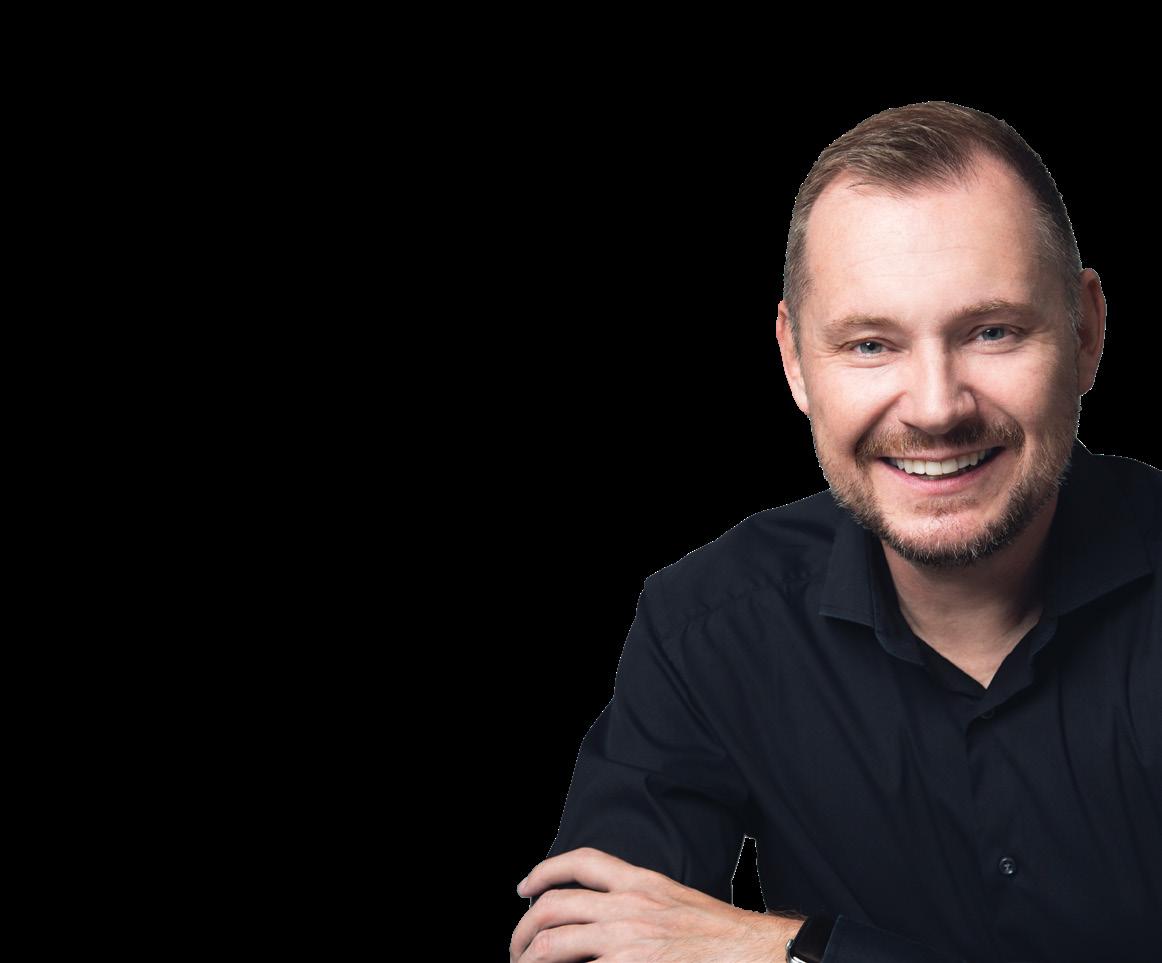
More than two decades after co-founding the company, Johan’s unconventional foresight

Dom Le Garsmeur
Michele Fischer
Johan Törnqvist
Sebastián Salazar
Noémi Németh Director of B2B Services and Customer Success Playtech
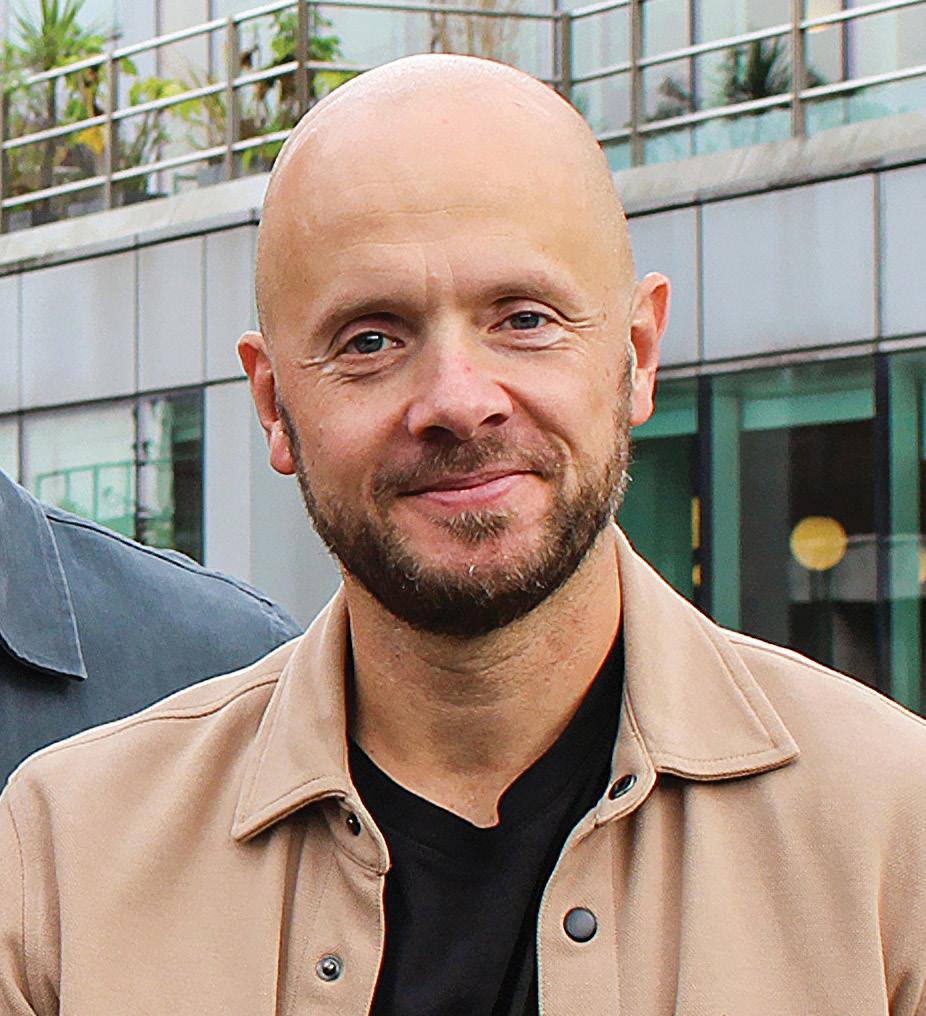
A key figure behind the success of Playtech Managed Services (PTMS), Noémi leads a global team that is redefining what customer success means in the gaming industry. She pioneered the creation and commercial development of PTMS’s Advisory Services, transforming operational expertise into a scalable commercial offering that secures long-term partnerships, including a landmark agreement with Gaming1.
Arguably, her biggest triumph has been the launch of Playtech Academy, a comprehensive online learning platform that democratized access to operational expertise across PTMS’ client portfolio. She spearheaded development of the platform, which contains video content, self-paced courses, searchable knowledge bases, and multilingual support. The platform has had a transformative effect on Playtech’s responsible gambling efforts, with customer protection specialists
tory loopholes of sweepstakes casinos in the US. Furthermore, Play’n GO’s landmark F1 sponsorship with the MoneyGram Haas F1 Team demonstrates an innovative strategy for expanding the gaming audience globally and introducing the brand to new demographics, creating a blueprint for the industry’s future growth and reach.
Dr Eyal Loz
RubyPlay Chief Product Officer
2025 has been a defining year for RubyPlay, and Eyal has orchestrated a period of unprecedented global expansion for the supplier, including a breakthrough launch in the US and rapid expansion across Latin America, particularly in Brazil and Argentina.
Under Eyal’s guidance, RubyPlay’s “Game Craft Unleashed” philosophy has come to define its approach to slot development - blending artistry, psychology and data-driven insight to craft games that captivate players worldwide. He helped transform RubyPlay into a multi-studio powerhouse with the launch of Koala Games in July 2025, a fully independent studio built within the RubyPlay network, and has established himself as an industry thought leader through his iGaming Checkup podcast, delving into the philosophical, psychological and technological dimensions of the online
mational move supported by two high-level C-suite hires that significantly expanded the company’s offering.
A marketing veteran of over 20 years, Ben’s industry authority was further solidified when he delivered the keynote speech at the International Federation of Horseracing Authorities (IFHA) 59th International Conference in Paris. His ability to fuse creative excellence with commercial scale has cemented Square in the Air as one of the UK’s leading PR firms.
Michael Boylan
Chief Operating Officer
Pragmatic Solutions
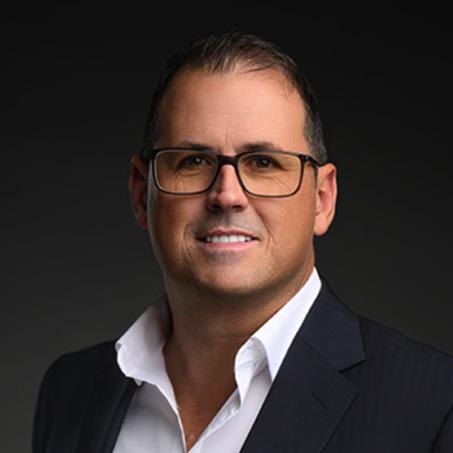
Michael is a highly accomplished technology and operations executive who has been instrumental in the adoption of Pragmatic Solutions’ “client-first” ethos across all of the company initiatives. Bringing two decades of B2C experience from the likes of Entain and DAZN Bet, he brought an insider’s perspective to the platform technology landscape, playing a crucial role in setting the foundation for scalable and sustainable innovation, and implementing clear, data-driven strategies that deliver tangible value.



By bridging the gap between creative storytelling and commercial performance, Eyal has redefined how innovation, localisation and player psychology intersect in the modern iGaming industry.
Ben Cleminson
Chief Executive Officer
Since his promotion to CEO in July 2024, Ben has steered Square in the Air to its most successful period to date, delivering record annual revenues in 2025. Last year he also masterminded the formation of the agency’s fully integrated creative division, a transfor -
Michael’s ability to fuse large-scale B2C operational discipline with B2B technology delivery has directly elevated the standards of service and operational efficiency for platform suppliers across the gambling industry. Great technology is developed and managed by smart, talented and passionate people, and Pragmatic Solutions is fortunate to have some of the best.
Noémi Németh
Dr Eyal Loz
Michael Boylan
Ben Cleminson
Matt King Chief Executive Officer
Fanatics Betting & Gaming
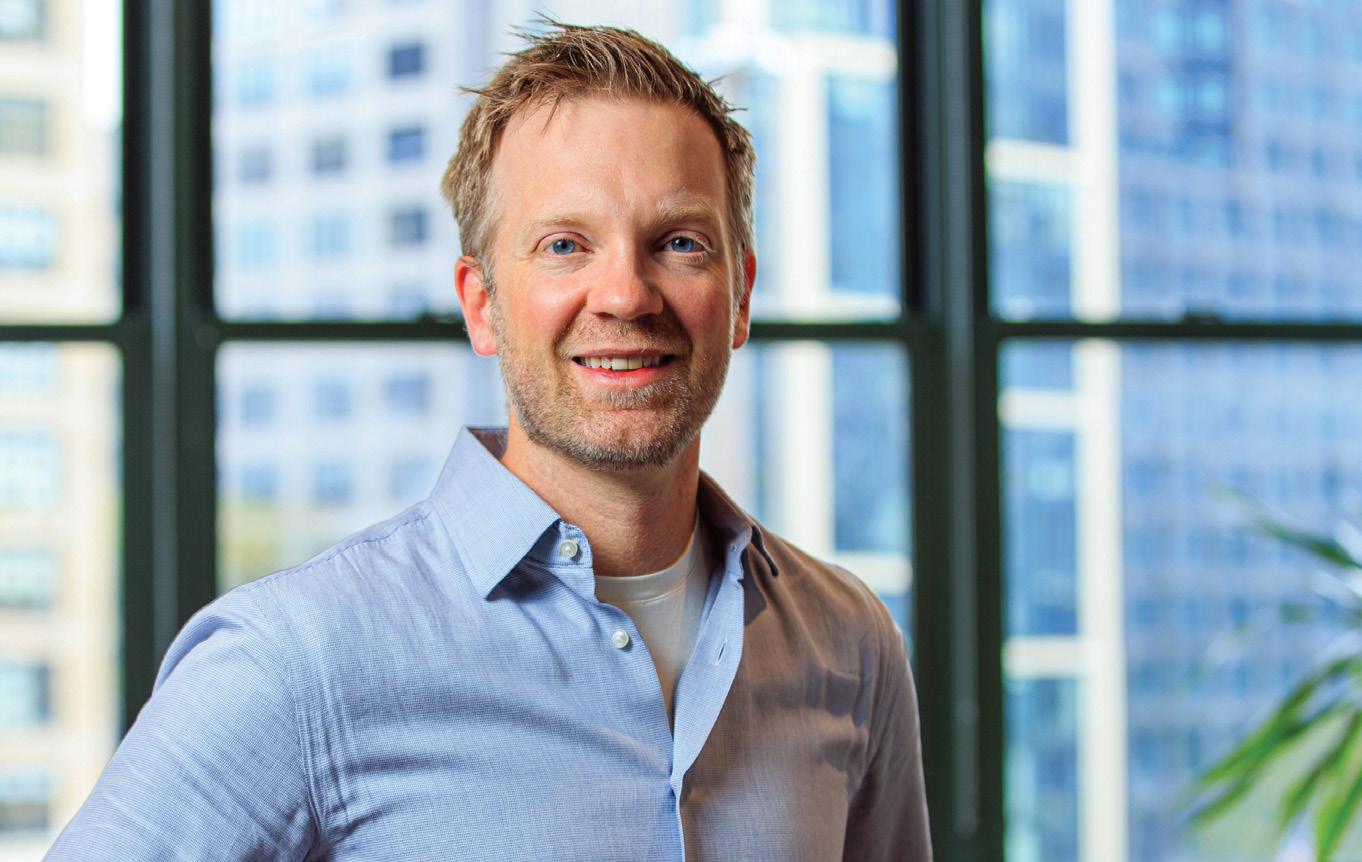
Fanatics Betting & Gaming launched its first retail sportsbook in January 2023. The company followed in the footsteps of other sportsrelated brands such as FOX, Sports Illustrated, and ESPN in believing they could rival the traditional gambling brands.
Under the leadership of former FanDuel CFO turned CEO Matt King, Fanatics has succeeded where other have failed. It is active with its online sportsbook in 24 US jurisdictions and has retail betting in 25. It is also live with online casino in Michigan, New Jersey, Pennsylvania and West Virginia.
But Fanatics is not just there to make up the numbers, it has overtaken the likes of BetMGM and Caesars Sportsbook in several key states and is rapidly catching them up in the rest. With a CEO like Matt who knows how to expand a business without losing sight of the finances that make it viable, Fanatics is shaping up to become the most likely challenger to the dominant betting operators in the United States.
Eduardo Aching
Vice President, iGaming & International Gaming Operations
Konami Gaming
Konami Gaming has long been a force in the land-based casino sector and has provided games to online casino operators for over a dec-
ade in partnership with various game aggregators. This year will see the company officially launch Konami Online Interactive as a new business division.
Under the leadership of Eduardo, Konami Online Interactive will give operators access to Konami’s broad portfolio of slot games via the company’s proprietary remote gaming server, taking the fight to the likes of Light & Wonder and IGT’s PlayDigital business.
With more than 23 years of experience with the likes of Aristocrat, Bally Technologies and Konami, Eduardo will leverage all of his experience to rapidly establish Konami Online Interactive a true force in iGaming. He will also be instrumental in developing opportunities in the upcoming casino markets of the United Arab Emirates, where Konami recently secured license approval.
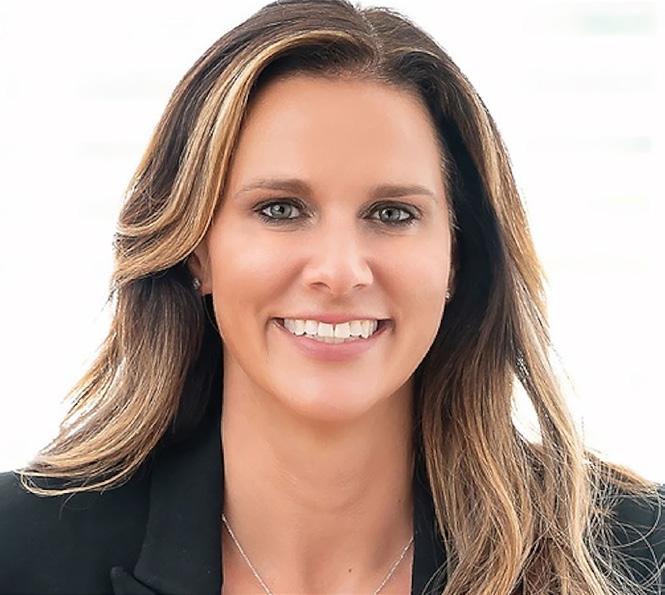
Sara
Slane Head of Corporate Development Kalshi
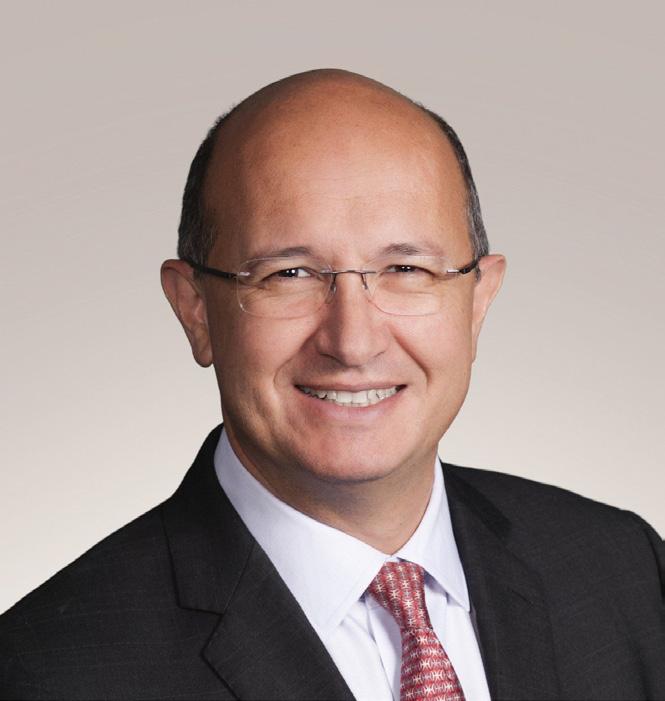
Sara’s Hot 50 recognition is long overdue. She has held key roles in the gaming industry for almost 20 years, most notably as senior vice president of public affairs at the American Gaming Association (AGA) between 2014 and 2019. During her time at the AGA and later as founder of Slane Advisory, Sara helped to create the US sports betting industry that we see today.
Serving at Kalshi since April 2025, Sara’s latest challenge is to ensure that Kalshi’s prediction markets offering can continue to include sports event contracts. She has always been a strong advocate of regulated gaming and recently helped to create the Coalition for Pre diction Markets to defend against state efforts to outlaw sports event contracts.
Having successfully lobbied for the repeal of PASPA and helped to deliver some of the first market access deals between sports teams and betting, no one is better placed to take on this latest fight to shape the sports betting landscape in the United States.
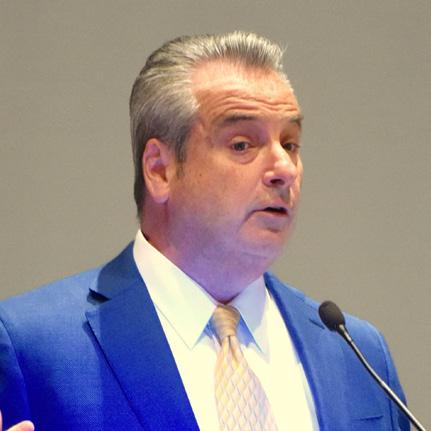
Jim Allen Chief Executive Officer Seminole Gaming
Jim is one of the most influ ential leaders in the global gaming and hospitality industry. As chief exec utive of Seminole Gaming for the past 25 years, Jim has transformed the gaming and hospi tality arm of the Seminole Tribe of Florida, anchored by the 2007 acquisition of Hard Rock International. In 2020 he expanded the Hard Rock brand into online betting and gaming with the creation of Hard Rock Digital, which

Matt King
Sara Slane
Eduardo Aching
Jim Allen
Robeson Reeves
Chief Executive Officer
Bally’s Corporation & Intralot
Robeson is no stranger to the Gaming Intelligence Hot 50. He was recognised in 2021 for his outstanding achievements at Gamesys during a 15-year career with the company, culminating in his role as chief operating officer.
After Gamesys was acquired by Bally’s Corporation in late-2021, Robeson assumed the role of president of interactive and less than two years later he took on the additional role of chief executive officer. As chief executive, Robeson led Bally’s 2025 deal to combine its interactive division with Intralot and now also serves as chief executive of the Greek lottery and gaming supplier. And amid all of this, he also found time to step in and rescue the struggling Australian casino operator, Star Entertainment Group.
Together with chairman Soo Kim, Robeson is transforming Bally’s into a global multiproduct, omnichannel lottery, betting and gaming giant. A second Hot 50 honour has rarely been more deserved.
Daniel Eskola & Simon Hammon
Co-Founders
Big Daddy Gaming
Two-time Hot 50 honouree Simon Hammon has teamed up with his former Relax Gaming colleague and 2019 Hot 50 award winner Daniel Eskola to create Big Daddy Gaming. The game development studio was only officially launched in October 2025, but the industry is already expecting great things from it.
Simon and Daniel have brought in fomer Rootz commercial director Toni Kolehmainen to serve as a director and former Evolution commercial manager Erland Hellström as CEO, creating a powerhouse that aims to provide robust, reliable, and genuinely fun games that address the needs of tier-one operators. We are betting on them achieving great things in 2026, as has Yolo Group’s content aggregation business Hub88, which was one of the first platforms to sign up to distribute their content. Watch this space.
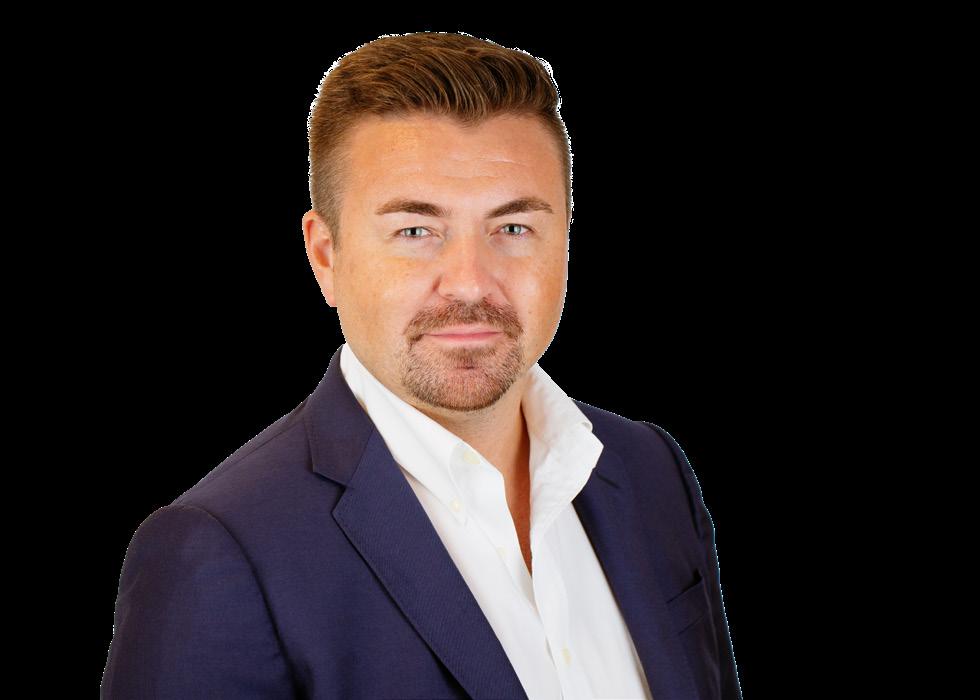
went to acquire 888’s interactive business in the
He has helped to increase Hard Rock’s brand profile with a significant presence in Formula 1 and football and was a natural choice to assist with the FIFA World Cup 2026 as a director of the Miami Host Committee.
His 45-year career in gaming has also seen him serve at the New Jersey Casino Control Commission, and as chairman of the American Gaming Association, where his leadership and experience helped to benefit the entire US gaming industry. He received his first lifetime achievement award in 2016 and a decade later, his achievements just continue to mount.
Brant Dunshea Acting Chief Executive Officer British Horseracing Authority
Brant has more than 10 years’ experience at the BHA and in January 2025 stepped up from Chief Regulatory Officer to become acting Chief Executive Officer. 2025 was a turbulent year for the BHA, both internally and externally, and Brant has successfully navigated the
organisation through those challenges.
his chairman Joe Saumarez Smith was forced to stand down due to ill health and new chairman Lord Allen only took up the role in September.
and successful ‘Axe The Rac ing Tax’ campaign, which highlighted the risks to rac ing and its jobs if betting tax on racing were to be increased.
not fade in 2026 but, in his first year in the role, Brant has shown the skil ful leadership to meet them head on.
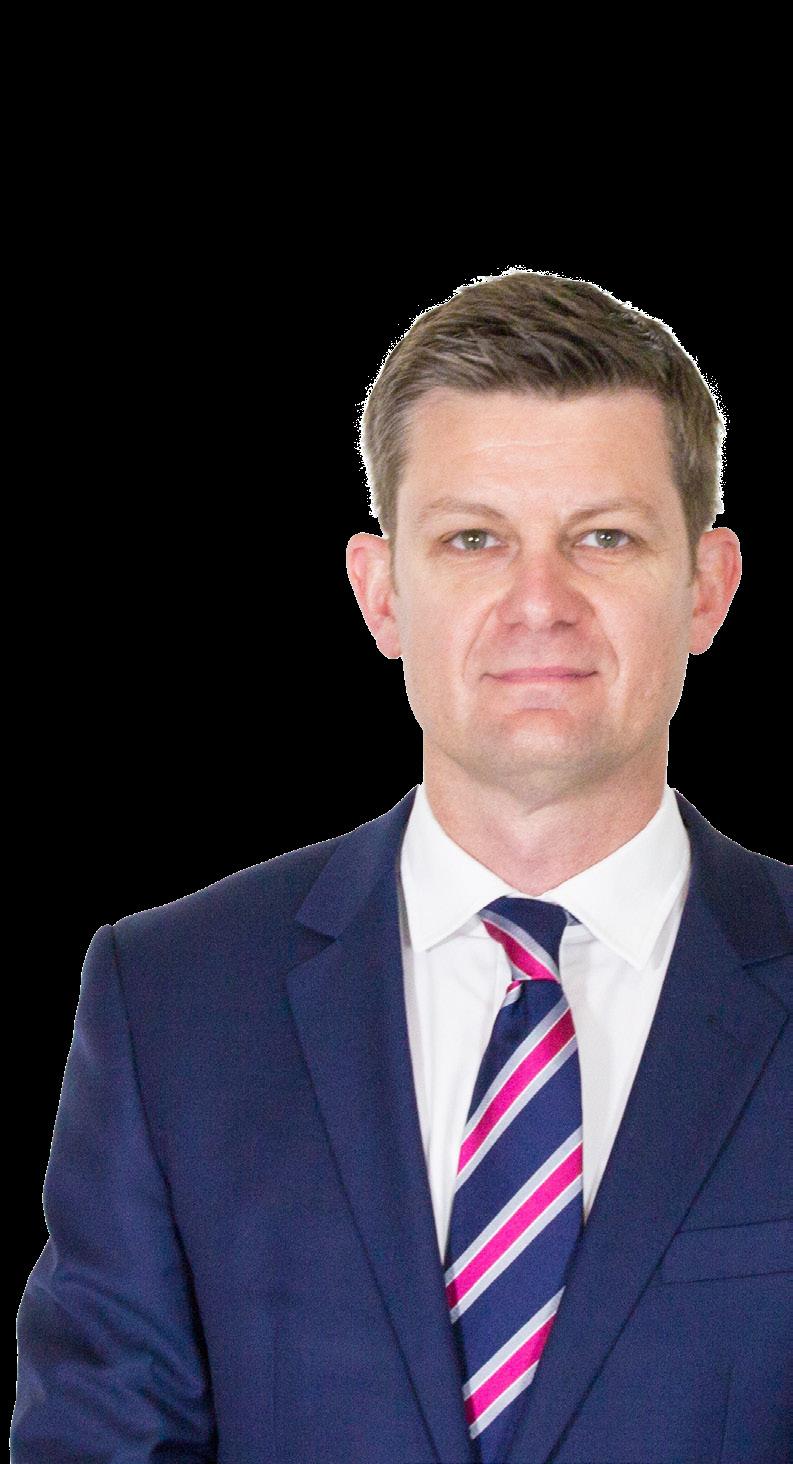
Robeson Reeves Brant Dunshea
Daniel Eskola
Simon Hammon
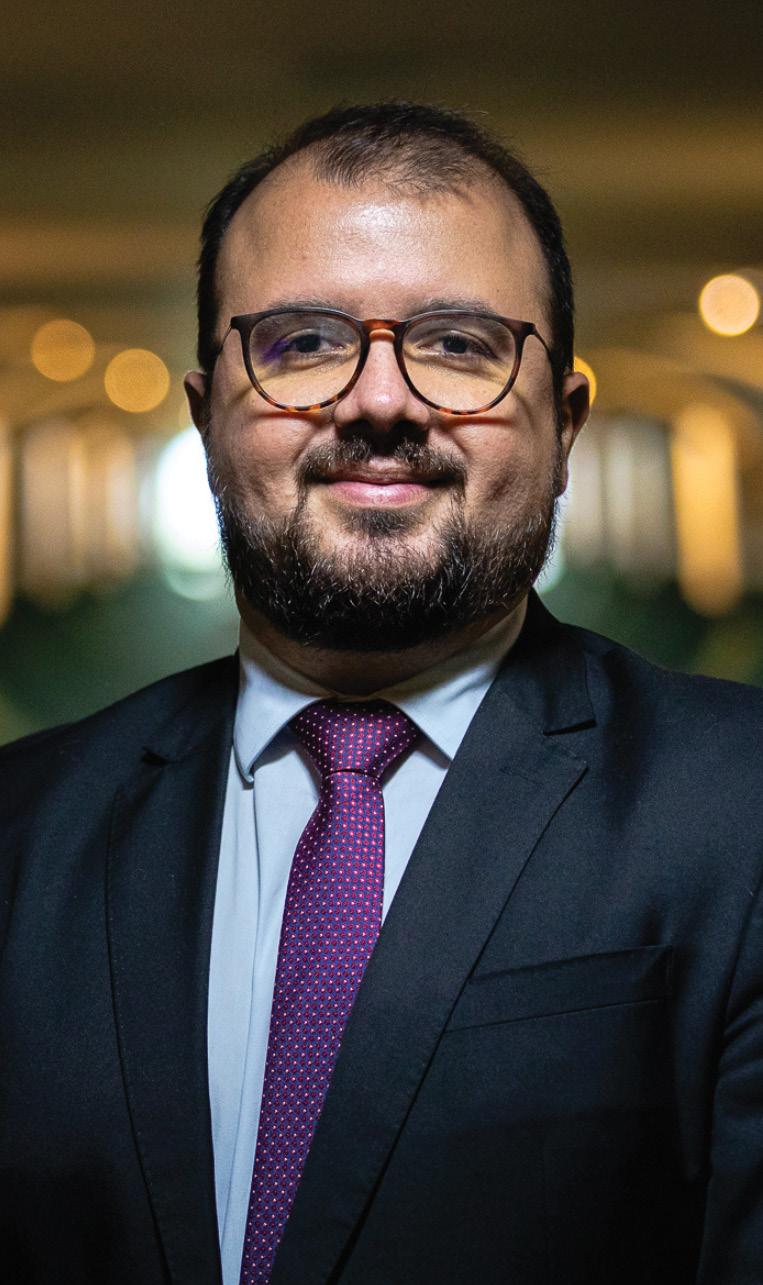
Vik Shrestha
Vice President of Online Gaming MGM Resorts International
Vik has become one of the most influential voices driving MGM Resorts International’s digital transformation. As Vice President of Online Gaming, he led the creation and launch of MGM Live, a landmark live-dealer studio on the Las Vegas Strip developed in partnership with Playtech and Fremantle. Its debut game, Family Feud Live, now streams directly from MGM Grand to regulated markets worldwide, surpassing $150 million in monthly handle and setting a new standard for how land-based operators can extend their brands globally.
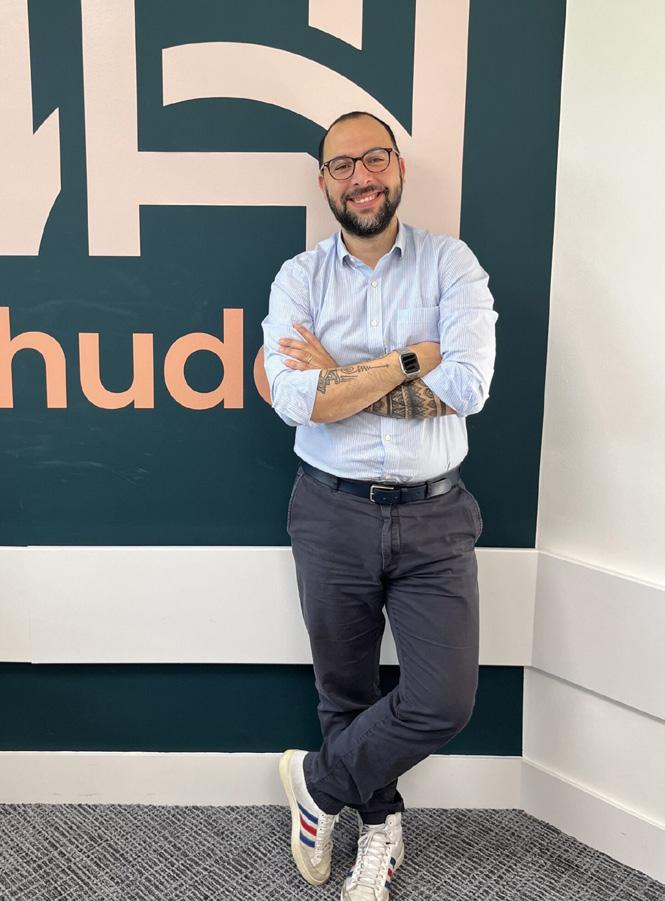
Francesco Borgosano
Co-founder & Chief Executive Officer Huddle Regis
Dudena
Regis Dudena
Secretary of Prizes and Betting
Brazil Ministry of Finance
Regis has been the key figure in the launch of Brazil’s regulated gambling market and the numerous adjustments to the regulations throughout 2025. With a solid background as a lawyer specialising in Public and Regulatory Law and experience in both the private and public sectors, he has achieved what seemed impossible: ensuring that the regulation of gambling in Latin America’s largest gaming market took hold. He has faced many obstacles in the form of the evangelical bench of Brazil’s parliament, but the regulated market is holding on.
Regis previously held impor tant legal advisory positions within Brazilian politics and learned how to navigate the system, which has given him the experience and tenacity that he needs to lead the Sec retariat of Betting within the Ministry of Finance.
His job is not expected to get any easier this year but if anyone can nature the nascent Brazilian market, it is Regis.
Before joining MGM, he held senior leadership roles at IGT, William Hill, and Sega Sammy, where he helped expand global operations and strengthen partnerships across regulated markets. Vik embodies the next generation of gaming leadership—creative, strategic, and commercially grounded. His work continues to redefine how the industry connects entertainment, technology, and

Vik Shrestha
Francesco Borgosano

Tarek Mansour & Luana Lopes Lara
Co-Founders
Kalshi
The Gaming Intelligence Hot 50 exists to recognise people who have had a significant impact on the industry and there is no denying that Luana and Tarek have done just that. No company has disrupted the sports betting industry in the way that Kalshi has in such a short space of time.
With legal battles playing out across the United States, it remains to be seen how Kalshi’s sports event contracts fit into the betting ecosystem, but their impact will continue to shape the industry for years to come. Many have already followed Kalshi’s lead, including dominant sportsbook operators like FanDuel and DraftKings. Even President Trump has got in on the action and you get the feeling that

Jason McCulloch Vice President of iGaming Galaxy Gaming
Jason is a seasoned gaming professional whose expertise in data-driven strategy has helped propel Galaxy Gaming Digital to new heights. Since joining the company in 2021, he has been instrumental in leveraging advanced analytics to optimise game performance,
this just the beginning of the story. Luana and Tarek founded Kalshi in 2018 and secured CFTC approval for their business in 2020. Their vision was to simplify financial trading by enabling people to directly trade on the probability of future events, instead of indirectly through derivative instruments. Then they realised that this could be applied to almost any future event. Five years after gaining CFTC approval, Kalshi is valued at over $11 billion, making its co-founders both billionaires. They may not have meant to enter the sports betting industry but that unanticipated move has made ‘prediction markets’ a household term.
Betting is as old as human history and Tarek and Luana just turned the industry on its head.
drive profitability, and deliver outstanding player experiences.
Under Jason’s leadership, Galaxy Gaming Digital’s portfolio of hit titles has attracted the attention of over 3,000 online casino sites and is enjoyed by 750,000 monthly players, generating significant returns for operators worldwide. This has not gone unnoticed by Evolution, which is expected to complete its acquisition of Galaxy Gaming in early 2026.
Jason’s ability to merge data science with gaming expertise makes him a force in shaping the future of online gaming and a deserved Hot 50 honouree.
Hector Fernandez Chief Executive Officer IGT
When Apollo Global Management acquired International Game Technology’s gaming and interactive business and combined it with Everi to create the new IGT, they tapped Hector to serve as its chief executive.
Having previously served as CFO of Aristocrat Americas and CEO of Aristocrat Gaming, Hector brings a wealth of technology, financial and gaming industry experience to the new gaming powerhouse.
He assumed leadership of IGT in December 2025 and is tasked with integrating the two businesses and positioning IGT as a premier, diversified supplier in the gaming and fintech industries, managing a global workforce of more than 7,000 employees.
Hector’s strong financial acumen, strategic thinking and history of success make him the ideal candidate to take on this monumental task. He is also a valuable asset beyond the world of gaming and was recently elected to serve on the national board of directors of the Alzheimer’s Association.
Jason McCulloch
Hector Fernandez
Tarek Mansour & Luana Lopes Lara


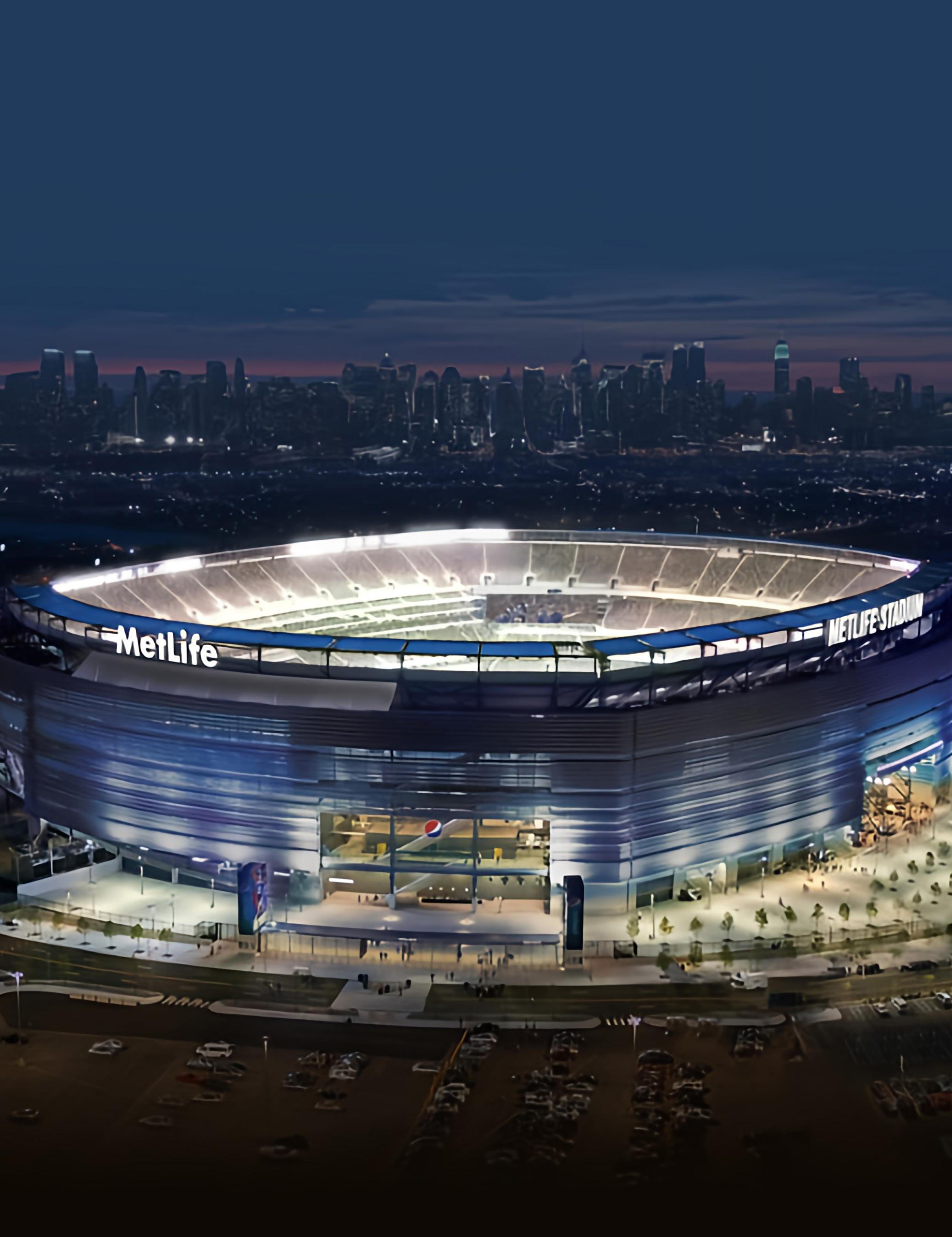


THE GREATEST SHOW ON EARTH

THE WORLD CUP is a cultural phenomenon. It draws viewers from across the globe, many of whom are not traditional football fans or regular bettors. It taps into national pride like no other sporting event and with this year’s expanded format of 48 teams instead of 32, the 2026 World Cup is expected to be the most viewed tournament ever, and the biggest ever for sportsbooks.
The World Cup always drives a spike in sportsbook activity and the last tournament in Qatar in 2022 attracted an audience of over five billion people across all platforms.
With this year’s tournament featuring matches played across the United States, Canada and Mexico, it gives operators the opportunity to tap into the growing interest in ‘soccer’ in the US and Canada, and to
expand their reach in South America due to viewer-friendly match times.
On the following pages we hear from some of the industry’s leading operators and suppliers about the importance of the tournament from a customer acquisition and engagement perspective and learn what the sportsbooks have planned for what is expected to be their biggest betting event.
WHAT THE SPORTSBOOK SUPPLIERS SAY
Sportradar
“You can’t underestimate the importance of the FIFA World Cup to the betting industry,” says Darren Small, senior vice president of Managed Trading Services (MTS) at Sportradar. “The global popularity of football means that it’s one of the few sports events that drives a tangible increase in betting activity.”
From Sportradar’s perspective, the FIFA World Cup is the most valuable football content that the company offers to its network of 800 sportsbook operator clients.
“We see the revenue generating potential that this summer’s expanded tournament offers to clients which is why we’re putting up full coverage for each of the competition’s 104 matches. This includes up to 190 pre-match betting markets and up to 200 in-play betting markets,” Small explains.
“Every four years we see how the World Cup brings fans from the same country together to support their national team and this tends to lead to an increase in patriotic betting amongst recreational bettors.
“What we typically see with recreational bettors is a preference for action-based bets involving favourites and high scoring events. Given the competition is now made up of 48 teams with some nations making their debut, there could be matches in which customers really chase goals to be scored.”
During the 2022 World Cup, Sportradar saw bettors often back multiples on the three matches played each day rather than larger accumulators over the entire Group Phase, with the company processing more than 75 million multi bets on behalf of its clients via MTS.
“The momentum behind multi bets and bet builders bets is likely to continue into this year’s World Cup,” adds Small. “In anticipation of this we’ve enhanced our Bet Builder offering, extending coverage to more than 120 pre-match markets and more than 80 live markets, while there are dynamic new UX features including AI personalised pre-built bets and multi-match combos.”
Small notes that technology has evolved significantly since the last World Cup, with greater use of artificial intelligence within the betting industry.
“Ahead of the Qatar competition we introduced Alpha Odds, our AI-driven odds personalisation technology which delivers bespoke pricing


for betting operators and recalculates financial exposure in real time. At the time of launch Alpha Odds was available for operators to use in soccer on pre-match markets only. Since then, we’ve developed the product significantly, extending the AI capabilities to live betting markets as well.
“We anticipate a greater number of Alpha Odds integrations ahead of the World Cup as operators seek to maximise profits and efficiently manage risk on a tournament where more than $150 billion is expected to be wagered by bettors worldwide,” he says. “What this means for operators, for example, is that if one team is heavily favoured to win a match, Alpha Odds helps clients manage risk in real-time and continue to accept bets as goals are tallied and the scoreline grows.
“Additionally, while a conventional odds service leaves operators vulnerable to a matchday of customer friendly results, such as all the favourites winning by two or more goals, Alpha Odds’ predictive capa-
bilities enable instant adjustments, safeguarding sportsbooks against significant losses, as a match unfolds.”
Sportradar also has other innovations lined up for this year’s tournament which will help operators tap into the growing fandom around individual players.
“We’re expecting high level of interest in live player markets for the World Cup, particularly when player markets, or player props as they’re known in North America, drive such high levels of engagement in the United States.
“We fully understand that our clients want to meet this increased consumer demand, so we’ve developed a comprehensive range of players markets to help operators engage more deeply. Live player markets available at the World Cup will include player assist, player to score outside the box and player to be carded.”
“We’re expecting high level of interest in live player markets for the World Cup, particularly when player markets, or player props as they’re known in North America, drive such high levels of engagement in the United States”
Darren Small, Sportradar
The last World Cup was a record breaker for Sportradar, setting a single-day turnover record of approximately €150 million for clients of MTS, as well as record single day profit of over €25m as both Quarter Final matches went to a penalty shootout - a huge result for MTS and the industry.
“Given the sheer number of matches being played during the 2026 expanded format, I would fully anticipate those records to be broken,” Small concludes. “The most popular bet type in 2022 was 1X2 followed by Totals. However, we expect to see a significant increase in Custombet/BetBuilder activity in the upcoming FIFA World Cup.”
France beat Portugal on penalties at Euro 2024 before losing to Spain in the semi-finals
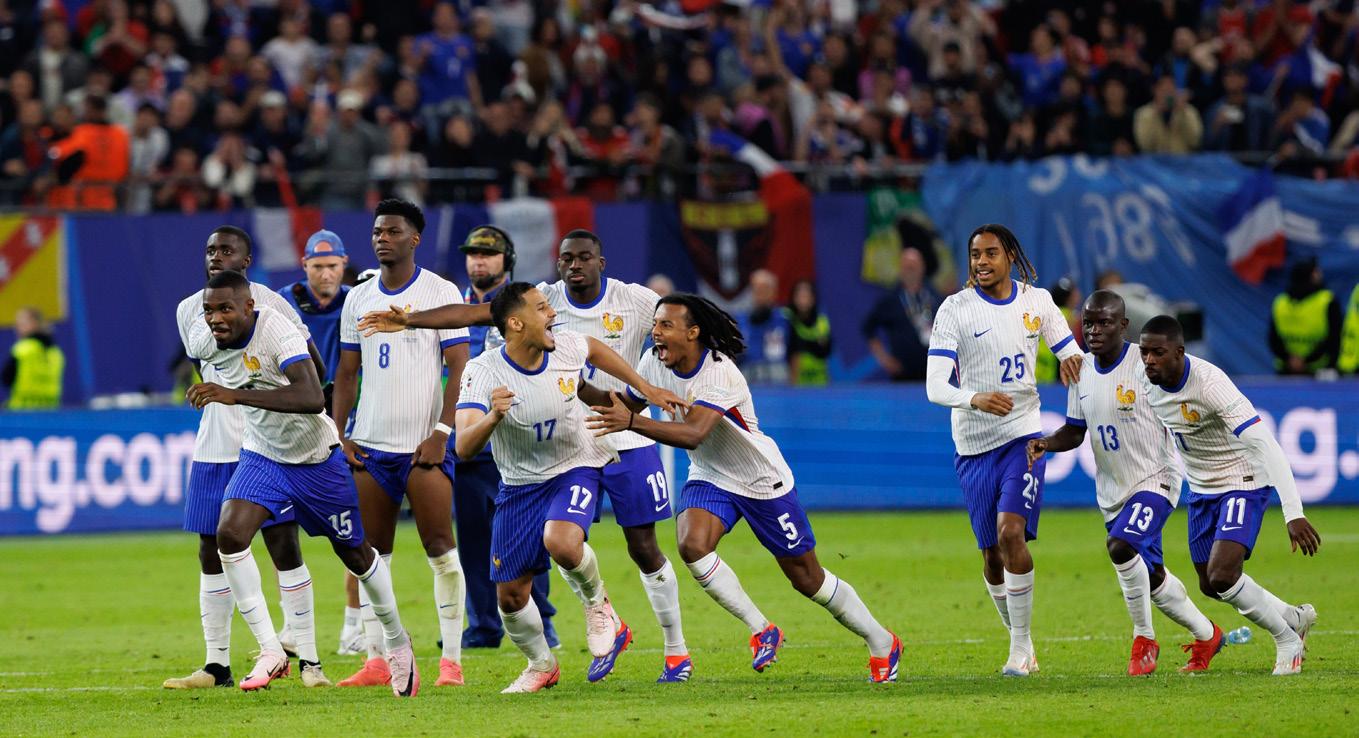
Kambi
The core ambition driving Kambi’s approach to the 2026 World Cup remains the same as it would for any major sporting event says Danny Skelton, Kambi’s head of soccer.
“Our mission is to provide our more than 50 partners with the depth of offering, quality of product and strength of risk management which empowers them to grow faster than the market. We’ve consistently demonstrated reliability and performance during the biggest sporting moments, and that trust is critical for operators and players alike.
“The 2026 World Cup affords a rare opportunity for sportsbooks in a tournament which will draw billions of viewers and global fan engagement. Being hosted in part in the US and Canada, where football is not the dominant sport (unlike in fellow host Mexico), operators have real potential to drive engagement in a sport which is growing but has far from peaked,” he explains. “With 104 matches featuring 48 nations it will be one of the biggest ever drivers of global betting activity, and for operators with the depth and quality of sports betting products to rise to the occasion it promises unprecedented potential for building cus-
tomer acquisition, brand loyalty and long-term share of wallet.
“With a major international tournament in any sport there are always intricacies in betting behaviour which must be taken into account. Global events such as the World Cup are capable of capturing the imaginations of fans all over the world, offering sportsbooks robust customer acquisition opportunities.

“Given it is such a large tournament with teams of varying strengths, it will be vital for sportsbooks to have a deep range of stats bets and player props. These are becoming as popular as the traditional 1x2 market in some cases. To offer an example, during Euro 2024 player props accounted for 35% of Bet Builder turnover on the Kambi network, a trend we anticipate will accelerate during the World Cup.”
Skelton emphasises the importance of a top-quality penalty shoot-out product for major tournaments like the World Cup, especially with such a large field which has been expanded to 48 teams and will feature 32 teams in the knockout rounds.

“Given it is such a large tournament with teams of varying strengths, it will be vital for sportsbooks to have a deep range of stats bets and player props”
Danny Skelton, Kambi
“In the Euro 2024 match between Portugal and France, for example, Kambi’s penalty product drove 17% of total bets, despite the shoot-out accounting for 8% of total match time,” he says. “Enabling bettors to bet not only on whether a penalty will be scored, but also the manner in which it might be missed – be that saved, hitting the woodwork or missing the frame of the goal entirely – Kambi’s penalty offering is proven to drive extensive spikes in betting activity.”
“From a commercial perspective, the expansion in Kambi’s product portfolio, growing beyond our full Turnkey Sportsbook to encom-
pass a range of standalone solutions, means we have a product suite which can adapt to any operator’s strategic requirements. Taking our Odds Feed+ product as an example, any operator aiming to enhance their soccer offering ahead of the World Cup can access Kambi’s entire library of actively traded odds through a single API integration.”
“In any technology-driven sector to stand still is to be left behind, and at Kambi we are always looking to build on our product capabilities from a position of strength,” Skelton adds. “Key players such as Harry Kane, Lamine Yamal and Kylian Mbappé will be the focus of plenty of discussion, and we will be expand-
Spain’s Lamine Yamal will be contesting his first World Cup at the age of 18


popularity and ability to keep bettors engaged was on display during the 2022 World Cup. This has only intensified in the years which have followed. During the 2022 tournament a quarter of all pre-match coupons contained a bet builder, while bettors who placed a combination bet were 23% more likely to be retained throughout the tournament.
“When comparing the 2024 UEFA European Championship and Copa América with previous incarnations the growth is even more evident. A total of 8% and 10% of bets on the Euros and Copa América in 2021 were bet builders, outstripped by figures of 18% and 24% respectively on the 2024 tournaments.
Skelton concludes: “Offering extensive market coverage, cash-out across both prematch and in-play, as well as the opportunity for partners to create bespoke ‘specials’ without the need for direct input from Kambi, our Bet Builder will provide operators with the deep combinability they need to meet customer demands throughout the 2026 World Cup.”

ing our offering with a wide variety of player matchups – for example, giving customers the opportunity to bet on whether Kane or Yamal will score more goals in a match between England and Spain.
“Markets such as ‘goalkeeper saves’, ‘player shots’ and ‘player assists’ have proven extremely popular in pre-match and will be further expanded across our live product. We are also going to be enhancing our award-winning Bet Builder product with even greater live functionality, enabling in-play bets on markets including corners, cards and ‘player shots on target’.
“The rise and rise of the bet builder is well documented and the pronounced growth in
Altenar
Thanos Ntakis, cross functional manager at Altenar, also expects this year’s tournament to drive an increase in Bet Builder activity.
“The World Cup is by far one of the most impactful events for our sportsbook business. Even compared to major domestic leagues or continental tournaments, the World Cup generates a substantial spike in volume, engagement, and new user activity,” says Ntakis. “It effectively compresses a huge number of high-profile matches into a short window, which drives both casual and seasoned bettors onto the platform.
“Fan engagement becomes much more universal during the World Cup. Even people
First
Sportsbook supplier First is banking on personalized experiences, VIP development, and localised content aligned with national team performance to boost activity during the World Cup.
“Our strategy reflects a more advanced approach to player insight and segmentation,” says chief technology officer Ivan Ivanov. “The focus is not only on maximising engagement during the tournament, but also on efficiently retaining newly acquired players and elevating regular ones into higher-value segments. The World Cup represents a critical growth catalyst, and our planning is fully aligned with that objective.
“We are expanding our offering of micro-markets, enhancing accumulator functionality, and introducing achievement-style missions linked to team and player milestones. We are also improving social and real-time engagement features to make the live experience more dynamic. All of these
“The World Cup represents a critical growth catalyst, and our planning is fully aligned with that objective”
Ivan Ivanov, First
initiatives aim to better match the pace and intensity of the tournament, where every moment can influence the outcome.
“Without any doubt, this is the biggest tournament which generates the most interest, turnover, attention, and the one with the highest VIP participation rate,” he adds. “The World Cup delivers a very distinct engagement profile. National team loyalty, knockout pressure and global visibility drive significantly higher emotional involvement from fans. This translates into elevated in-play activity, broader participation across all segments, and a noticeable shift toward fastersettling markets such as next goal, cards or corners. The short tournament window also concentrates volume, resulting in increased turnover and accelerated betting cycles on every match day.”
ICE SPECIAL 2026 WORLD CUP


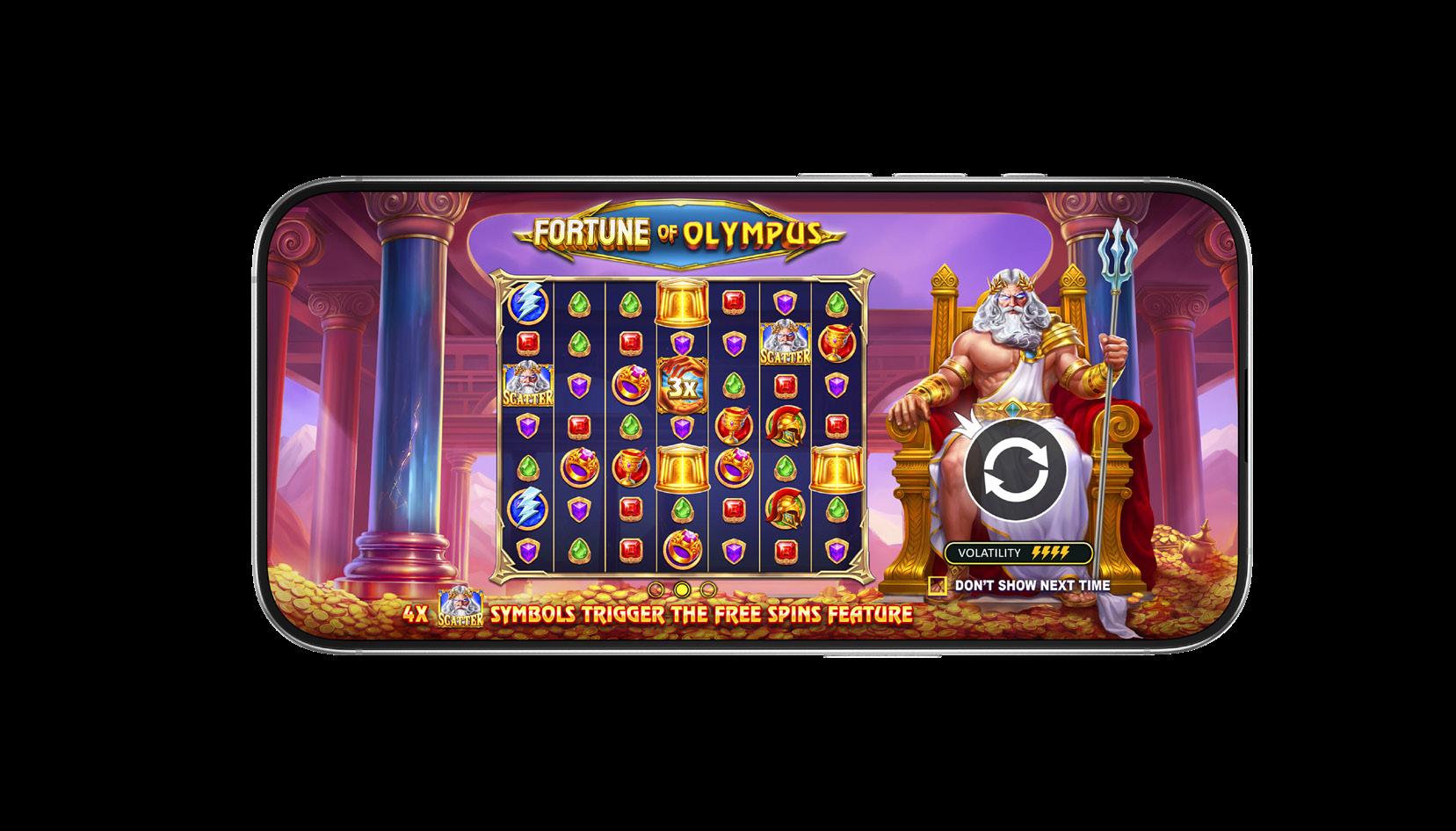

who don’t normally follow football join in, which leads to higher pre-match traffic, much higher in-play betting, and a surge in novelty and player special markets.”
“At the 2022 World Cup, in-play betting experienced a surge in popularity and player markets grew significantly, especially goalscorers, but also side markets such as total shots and shots on target,” he adds. “Late goals heavily influenced bet volumes and there were regular spikes in the last 10-15 minutes of matches, while some unusual results prompted increased inplay action.
“For example, Saudi Arabia going 2-1 up against Argentina prompted a lot of betting, with many bettors convinced that Lionel Messi and his team-mates would fight back against such an unfancied team. The tournament also highlighted how many punters like to support their home country regardless of the opposition.”
For the 2026 World Cup, Altenar’s focus is on providing a more data-driven and user-centric offering based on personalised content and recommendations tied to user behaviour. This will be backed up by more robust in-play availability, especially for fast markets, better risk segmentation due to improved analytics and trading tools, and tighter cross-team coordination to handle spikes in volume and operator requests.
“World Cup matchdays generate traffic peaks that we only see every four years,” says Ntakis. “Essentially, we’re preparing for scalability and user experience rather than just volume.”
“For this year’s tournament we are focusing on features that boost engagement, such as expanded Bet Builder options, more player-based markets, improved fast markets and optimised mobile UX, since World Cup traffic is heavily mobile-driven. We will also be providing our clients with a wide variety of promo tools such as Boosted Odds, Enhanced Odds, 0% Margin, Bet Cards and Swipe Betting, all of which are designed to increase depth, flexibility and speed, which are all crucial for a tournament of this size.”
Ntakis also sees a niche for prediction markets and expects them to drive greater interest in betting while helping operators to understand sentiment and probability perception.
“Prediction markets add an interesting dynamic, especially as they appeal to more dataliterate users,” he explains. “While they’re not replacing traditional betting, they do increase user engagement pre-tournament and during the later stages. There is no limit to what they can offer. These markets give the freedom to punters to bet on anything that can happen during the tournament and the freedom to traders and odds compilers to push their imagination to the limits.”
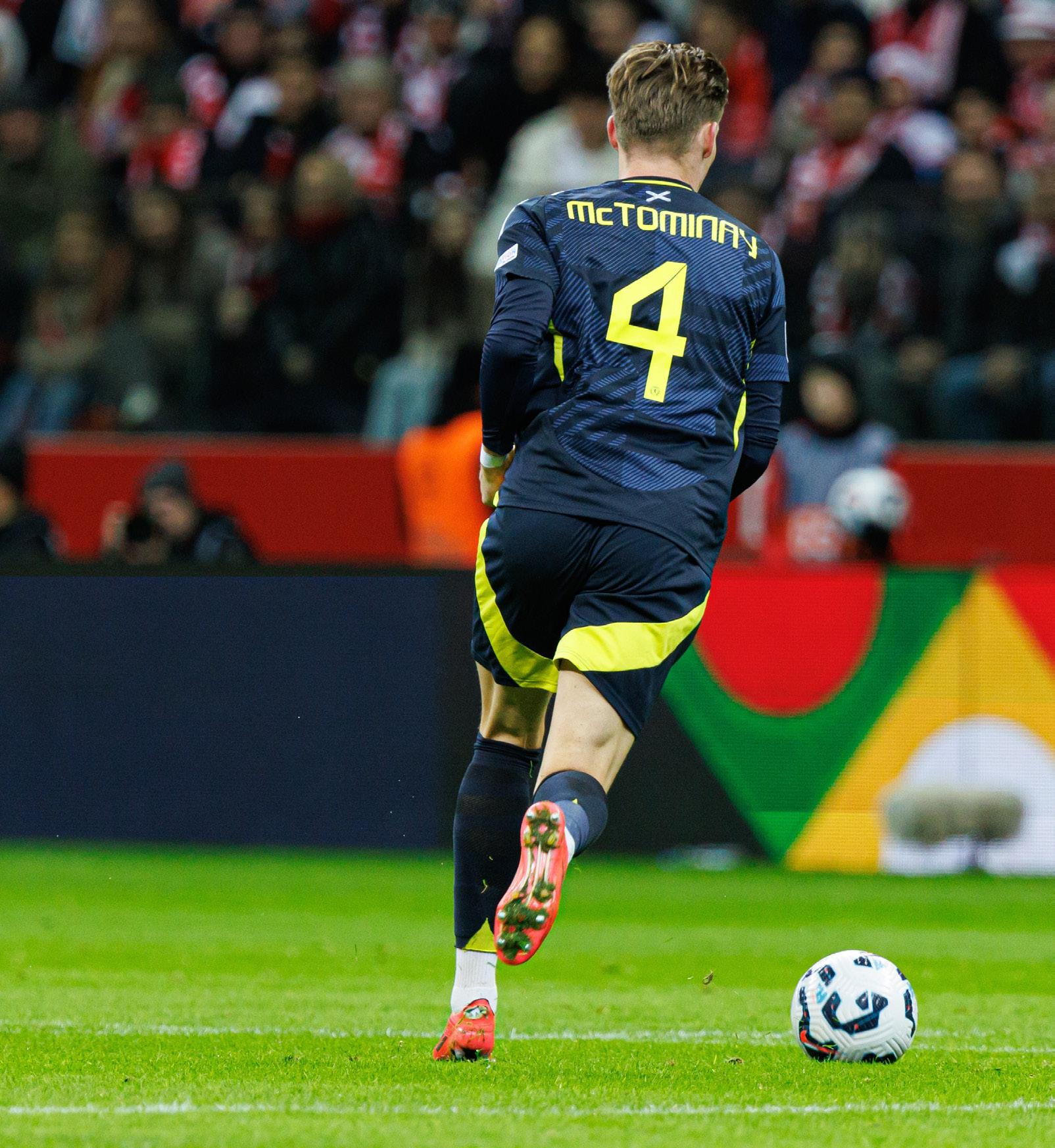
McTominay’s
Genius Sports
James McKiernan, commercial director at Genius Sports, says: “The World Cup is always a huge event for us and our customers. From operators in South Africa where the national team is back on the world stage for the first-time in 16 years to multi-territory giants like Flutter, Entain and bet365, this summer’s tournament guarantees to be a major revenue and customer acquisition driver.
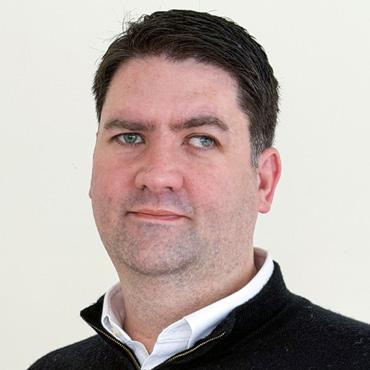
“The expanded 48-team format, with 40 extra games, is set to make it the biggest tournament yet. And for Genius, it’s about delivering the highest-quality inplay products all tournament-long. This means increasing live turnover and engagement for our customers, enabled by maximum market uptime, fast data and odds updates in the big moments like after every goal, and in-play bet builder to truly maximise the opportunity.
“With specialist iGaming advertising solutions like programmatic media buying, we also enable operators to maximise new sign-ups before a ball is kicked.”
McKiernan believes that bettor engagement with the World Cup differs from domestic
“What’s most interesting? I’d say the power of betbuilder. In the same way recreational bettors place Saturday accumulator bets, the World Cup brings this engagement to every single game. This is due to staggered kick-off times and widespread TV coverage.
It’s why our betbuilder product, MultiBet, is such a proven, highmargin product. Fans can build their
“With specialist iGaming advertising solutions like programmatic media buying, we also enable operators to maximise new sign-ups before a ball is kicked”
James McKiernan, Genius Sports football leagues because of its player-driven storylines. “That’s what drives turnover at major international tournaments. Fans want to bet on the real-time narrative. Every game matters, every game is on TV, and this shapes the in-play interaction,” he says.
Scotland will be making their first appearance at the World Cup since 1998
pre-match or in-play betbuilders, with endless combinations, for example when Scotland take on Brazil in the group stage: McTominay to score next, Scotland to win, over 3.5 goals, under 8.5 corners.”
“Priorities across our global customer base are always evolving, with new opportunities constantly emerging, and we’re continuously investing to deliver solutions that keep pace,” he adds. “I’ve mentioned betbuilder, and the role of player markets within this. With the majority of the 2026 World Cup being played on U.S. soil, and in the summer, rather than the November–December window we saw in 2022, I’m expecting U.S. sportsbooks to see a huge surge in betting turnover.
“We’re also working with operators in the newly regulated Brazilian betting market. This is the first World Cup since the country regulated online sports betting, and Brazil’s love for football needs no introduction. We expect huge home nation support, with Brazilian fans holding high-hopes for their national team. Again, products like betbuilder and highly-effective marketing tactics are going to be key.
“Across the board, from in-play to Genius Trading Services, our focus remains consistent: deliver best-in-class sportsbook products and experiences.”
Genius Sports has invested heavily over the past few years in automated in-play modelling technology and expects to reap the rewards at this summer’s World Cup.
“Our in-play football model runs millions of simulations every match, delivering predictive pricing for all possible outcomes - before they even occur. It means our traders can rapidly update odds at key moments, including after a goal and VAR checks, meaning a better in-play experience and more profits for our customers,” says McKiernan.
“This also applies to betbuilder. At the same time, our pricing automation software, Edge, brings customers’ unique liabilities into pricing by making incremental adjustments based on the weight of the bets. We’re expecting these solutions to deliver a real difference for operators during a vital World Cup tournament.”
“Anyone who worked in the betting industry four years ago, remembers the 2022 World Cup Final,” he adds. “Six goals, extra time, penalties, 11 corners, eight yellow cards, a Mbappé hat-trick, Messi scoring twice, the game had absolutely everything. And naturally, that led to some pretty sizeable betbuilder payouts.
“Matches like that drive betting on the big teams and players, and every fan has an opinion. So I’m anticipating even more betbuilder activity this time around, especially in-play, where fans love reacting to the game as it unfolds.”
OpenBet
OpenBet has been powering some of the world’s largest operators through every major tournament for nearly 30 years and sees the FIFA World Cup as the single biggest global driver of sportsbook engagement.
“What makes the 2026 World Cup unique is the intensity of demand. Unlike domestic leagues that spread engagement across hundreds of fixtures, the World Cup condenses global attention into a handful of daily matches,” says OpenBet’s chief business development officer, Jason Ayton.
“This creates enormous pressure on operators to deliver flawless uptime and differentiated experiences precisely when demand peaks, forcing every part of the stack - trading, risk, content delivery, payments - to work seamlessly. For operators, it’s a once-every-four-years inflection point where product strategy becomes highly visible and commercial outcomes are magnified. We’ve already begun preparation: conducting simulations, stress scenarios, and capacity modelling to validate scale ahead of record traffic.”
and player props.
OpenBet processed more than 200 million bets on the 2022 tournament and BetBuilder volumes exceeded five times what was measured during Euro 2020, with over 50% of stakes from US bettors. This demonstrates how US audiences accustomed to same-game parlays increasingly engage with this format in ‘soccer’.
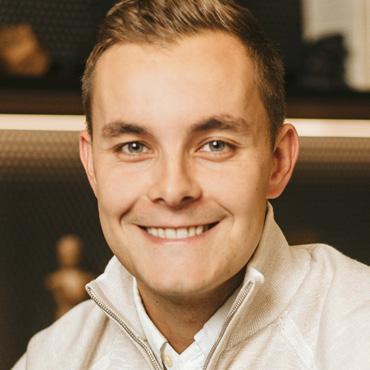
Ayton notes that the tournament draws a broader, narrative-driven recreational audience that engages more with player-centric and story-driven markets: shots, fouls, goals, cards,
LSports
As a core data and trading partner for leading sportsbooks worldwide, the World Cup is always a pinnacle moment for LSports.
“No competition concentrates global excitement quite like the World Cup. Engagement, turnover, and in-play activity spike to extraordinary levels, but they’re compressed into a small number of high-impact matches,” says LSports chief executive Dotan Lazar. “This environment exposes operational weak points for some providers, but it’s exactly where advanced technology, low-latency delivery, and proven scalability shine.
“LSports has transformed significantly since the last tournament. Today we’re more focused than ever on data quality, stability, and market depth. We now deliver highly precise InPlay pricing updates, full settlement coverage across all markets, and a growing portfolio of unique and differentiated bet types. Our strategy is built
“US fixtures alone saw over 12 million bets representing $100 million in stakes,” says Ayton. “We expect this trajectory to accelerate with World Cup 2026 hosting across the US, Canada, and Mexico.
“During major events, BetBuilder turnover can rise from around 5% of stakes to more than 20%, reflecting increased demand for granular, personalised markets,” he explains. “Our trading team notes a clear shift away from accumulator-driven behaviour toward focused single-match engagement with sharp spikes in Player Prop activity.”
“Since the last World Cup our strategy has evolved into a modular, mobile-first ecosystem that surfaces the most relevant bet at the precise moment a bettor is ready to act. A major advancement is Trending BetBuilder, developed in partnership with Checkd Dev, which automatically highlights contextual bets based on live momentum, player form, and narrative trends using ICE SPECIAL 2026 WORLD CUP
around empowering operators to offer faster, deeper, and more engaging experiences than ever before,” Lazar adds.
“This World Cup marks the first time operators can take full advantage of several next-generation LSports products built to elevate both performance and engagement. DEFEND and BOOST work together to strengthen both risk control and trading performance. DEFEND delivers real-time risk management by detecting suspicious patterns, while BOOST empowers traders with instant benchmarking and pricing optimisation, revealing market gaps and opportunities in real time to stay ahead of competitors.
“Beyond trading and risk, we’re also enhancing the fan experience around the World Cup through ENGAGE, our next-gen AI sports betting chat. This will include features like Hyper Livescore, which turns live matches into a real-time narrative, and Tips Feed, a data-driven recommendations stream.”
Opta data and in-play models.
“This means that an operator with a Belgian audience can foreground a De Bruyne + Trossard shots-on-target combination, while an Austrian sportsbook promotes a match result bundled with a Sabitzer fouls market.
“Alongside this, we have expanded in-play depth and prioritised player markets, supported by enhanced feeds from providers including Lacerta,” Ayton adds. “Another key development is our Protect suite, featuring OpenBet Locator and Neccton responsible gaming technology. With millions of fans arriving in North America during the tournament, operators need protection from risks presented by increased player volumes, and they also need to protect a rapidly evolving player-base. Our recent integration with Fanatics Sportsbook across 23 US markets validates this offering’s quality.”
Alongside the opportunities the tournament presents for sportsbooks in North and South America, there are also challenges for European sportsbooks, where matches will often be late in the evening or early morning for European audiences.
Ayton says the commercial challenge for European operators will be maintaining engagement during long windows between matches.
Ayton adds: “The reverse is arguably true in Australia, where the World Cup schedule aligns well with local viewing habits. Many fixtures fall into Australian daytime and early evening windows, allowing operators to capitalise on peak engagement while running AFL and NRL markets in parallel. This creates sustained, high-quality betting demand across both international football and core domestic codes, without forcing operators to compromise coverage or operational focus.”
Playtech
“The FIFA World Cup is the most impactful event for our sports betting business,” says Pedro Extremera, Playtech’s regional director for Iberia & Latin America. “It attracts not only regular bettors but also casual fans who rarely engage outside such tournaments. For us, it represents a peak period for acquisition and engagement.
“The World Cup is a cultural phenomenon, not just a sporting event. Therefore, its impact from a fan participation perspective is difficult to overstate. If we use the 2022 World Cup as an example, active player
eliminated. When analysing the most effective strategies for operators to deploy during an event the size of the World Cup, our data shows that 95% of turnover concentrated on early payout markets. Such markets not only boast higher margins than traditional full-time result markets, but also retain existing customers, attract new ones and improve long-term profitability.”
“The competition acts as a gateway for new customers who are drawn by the excitement and global visibility of the tournament,” Extremera adds. “Our data shows acquisition rates during the World Cup can be 2–3 times higher than during regular league seasons. Sporting events of this magnitude also present us with an opportunity to convert more casual fans into long-term bettors via tailored retention strategies.
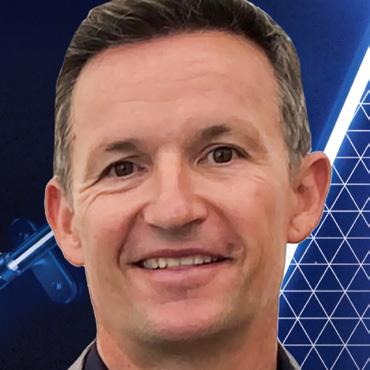
“Our strategy for this World Cup builds on previous tournaments but reflects how the market and player expectations have evolved. We’ve placed a strong focus on personalisation, using advanced data and AI to deliver experiences that feel relevant and timely for every customer. At the same time, we’ve strengthened cross-channel engagement to create a seamless journey across apps, social platforms, and web, ensuring fans can interact in real time wherever
Trossard’s Belgium will play all three of their group matches on the West Coast
“There are several product enhancements we are preparing to roll out ahead of the World Cup that we anticipate will resonate strongly with players in multiple international markets,” he adds. “One of Playtech’s standout World Cup features comes in the form of ‘Super Sub’ – where wagers dependent on the performance of individual players remain in-play even after substitutions.
“Users can expect to benefit from another new feature in ‘Optimised Settlement’, which allows operators to pay out on certain wagers that don’t depend on final outcome, before the full-time whistle has been blown. Alongside strengthening our already extensive player market proposition list, Playtech also plans to improve its bet builder offering with Bet Builder +, ensuring users have the ability to combine events across multiple fixtures into the same bet builder.”
“The competition acts as a gateway for new customers who are drawn by the excitement and global visibility of the tournament”
WHAT THE SPORTSBOOK OPERATORS SAY
WITH THIS YEAR’S expanded World Cup format of 48 teams instead of 32, there will be 104 matches instead of 64, making the tournament even more significant than usual for sports betting operators.
And with the extended tournament taking place in U.S. and LATAM customer-friendly time zones, the FIFA World Cup 2026 is expected to result in this being the highest handle football competition the industry has ever seen.
Opportunities in the Americas
Kevin Hennessy, vice president of communications at Fanatics Betting & Gaming, expects the World Cup to be a huge event for Fanatics Sportsbook. As one of the newest sportsbooks in the United States, this will be Fanatics’ first Men’s World Cup.
“The interest in the Women’s World Cup was great for us and the fact that the games will be televised when US households can watch with their friends and family will only make it more appealing to the general public,” says Hennessy.
“I think the time of the games will have a real positive impact for our betting business. You will have more fans watching and Fanatics customers will have more time to place their wagers. Having the ability to really watch the games and even see some matches in person is great for customers. While football fans are used to waking up early to watch the Premier League and other European leagues, Fanatics Sportsbook customers will definitely benefit from having the games televised at times when everyone can watch.”
Tom Pullin, senior trader at BetMGM, is similarly enthused.
“We are anticipating the 2026 World Cup to be our biggest soccer tournament ever. With multiple rounds and popular teams and players, the World Cup is very much like the NCAA tournament,” he explains. “Favourable times for all matches will drive increased action, while having multiple host nations could lead to more attention on those games, especially if we get a matchup between the host countries.
“Favourites and overs are popular with many bettors,” says Pullin. “Popular teams receive the most action, and we expect the USA team to receive lopsided betting driven by patriotism.”
“It’s going to be an action-packed six weeks, with only five rest days, so there will be plenty of soccer on offer for viewers,” adds Mark Bickerdike, head of soccer at Caesars Sportsbook. “Additionally, Caesars customers will have more markets, products and offers available to them than ever before.
“I think the US men’s national team has reason to be optimistic about a good run in this tournament. They have performed well in their most recent friendlies under Mauricio Pochettino, with the 5-1 victory over Marcelo Bielsa’s Uruguay being particularly impressive. In addition, they have reached the Round of 16 in three of the last four World Cups. They are the team we have seen the most wagers on in the Tournament Winner market, and have already seen a flurry of bets on them to top Group D.”
Expectations are also high among Latin American sportsbooks, particularly in newly regulated and football-mad Brazil.
Alvaro Garcia, chief marketing officer of Flutter Brazil, notes that Brazil experiences football in a very unique way. “While domestic events sustain day-to-day volume, the World Cup offers a unique opportunity to deepen the emotional connection with the public and lead the main conversations in the market,” says Garcia. “This cycle marks the beginning of a more ambitious phase for our Betnacional brand, in which we seek not only to operate in the sector, but to occupy a real space within Brazilian sports culture.
“Brazilians have a relationship of great intensity and passion with football. In domestic leagues, this connection is marked by natural rivalries between fan bases and is very closely tied to the hardcore supporter. In the World Cup, however, this scenario changes completely - the country unites around a single cause, the Brazilian National Team. This significantly amplifies engagement, including among people who do not follow football on a daily basis but begin to live the World Cup atmosphere. This behaviour is also reflected in betting, with practices deeply rooted in our culture, such as pools among friends and family.
“While domestic events sustain day-to-day volume, the World Cup offers a unique opportunity to deepen the emotional connection with the public and lead the main conversations in the market”
Alvaro Garcia, Flutter
Brazil
“For the 2026 edition, we anticipate more sophisticated in-play betting due to the maturing betting behaviour of customers and the introduction of new betting features.
“We take advantage of these moments of high attention to amplify our message with the support of ambassadors such as Vini Jr. and Galvão Bueno, reaching a broader audience. It is the ideal scenario to show that we are a serious company, with cutting-edge technology and a focus on user experience, consciously converting new players. At the same time, we reinforce trust and service quality for those who are already part of our platforms,” he adds. “In the 2018 and 2022 World Cups, the Brazilian market was not yet regulated. Today, we operate in a fully regulated environment, which gives us security and legitimacy to invest with even greater confidence in high-impact media and brand building.”
Andrea Rossi, Betsson’s commercial director for LatAm, believes the World Cup is the single most important event for brand visibility, cross-funnel player acquisition and future growth in the region.
“Compared to domestic leagues, we see a higher volume of new, recreational customers who prefer traditional wagers, resulting in a lower average turnover per user but a significant increase in active players, driving some truly record-breaking moments,” says Rossi.
“World Cups are the ultimate catalyst for growth. In 2022, we saw a 98% surge in new customers in LATAM. We expect 2026 to be even bigger, as favourable time zones and more matches will maximise customer volume and engagement across all Latin America,”
Rossi adds. “From a product perspective, features such as an enhanced BetBuilder, flexible Cash Out options, and Early Payouts—along with new engagement tools we are developing for the tournament—will deliver maximum excite ment and lots of fun to our customers.”
Potential challenges in Europe
The World Cup will also be a boon for Euro pean operators, although they will have to contend with the less friendly time zones of matches playing out across the US, Mexico and Canada.
The silver-lining will be that many matches will be aired during the late-night window in which European operators are allowed to advertise on TV.
“The late-night matches are actually good for us from an advertising perspective,” says David Plumi, chief marketing officer of Spanish gaming operator Luckia. “It’s true that the 3 a.m. match is a bit late, but I
think in Spain there’s more of a football culture than a mattress culture when it comes to the World Cup. We also have both online and retail operations in Mexico, and this will be a very important hub for on-site content for us.”
And despite the challenge of time zones and the potential impact on in-play betting in certain markets, the World Cup remains an unrivalled opportunity to reach new customer and engage existing ones.
“The World Cup is among one of the most powerful player-acquisition moments in iGaming,” says Simon Westbury, strategic advisor at 1xBet. “That level of global attention isn’t matched by any domestic league.
“In 2022, FIFA reported a global reach of around five billion people across all platforms, with the final alone drawing roughly 1.5 billion viewers. By contrast, the Premier League’s 2023/24 season delivered a cumulative live global TV audience of just over 1.6 billion across an entire year,” he explains. “From my experience on both the platform and operator side, the World Cup does two things exceptionally well: it

Left to right: 1xBet’s Simon Westbury, Flutter Brazil’s Alvaro Garcia, and Betsson’s Andrea Rossi
SPECIAL 2026 WORLD CUP
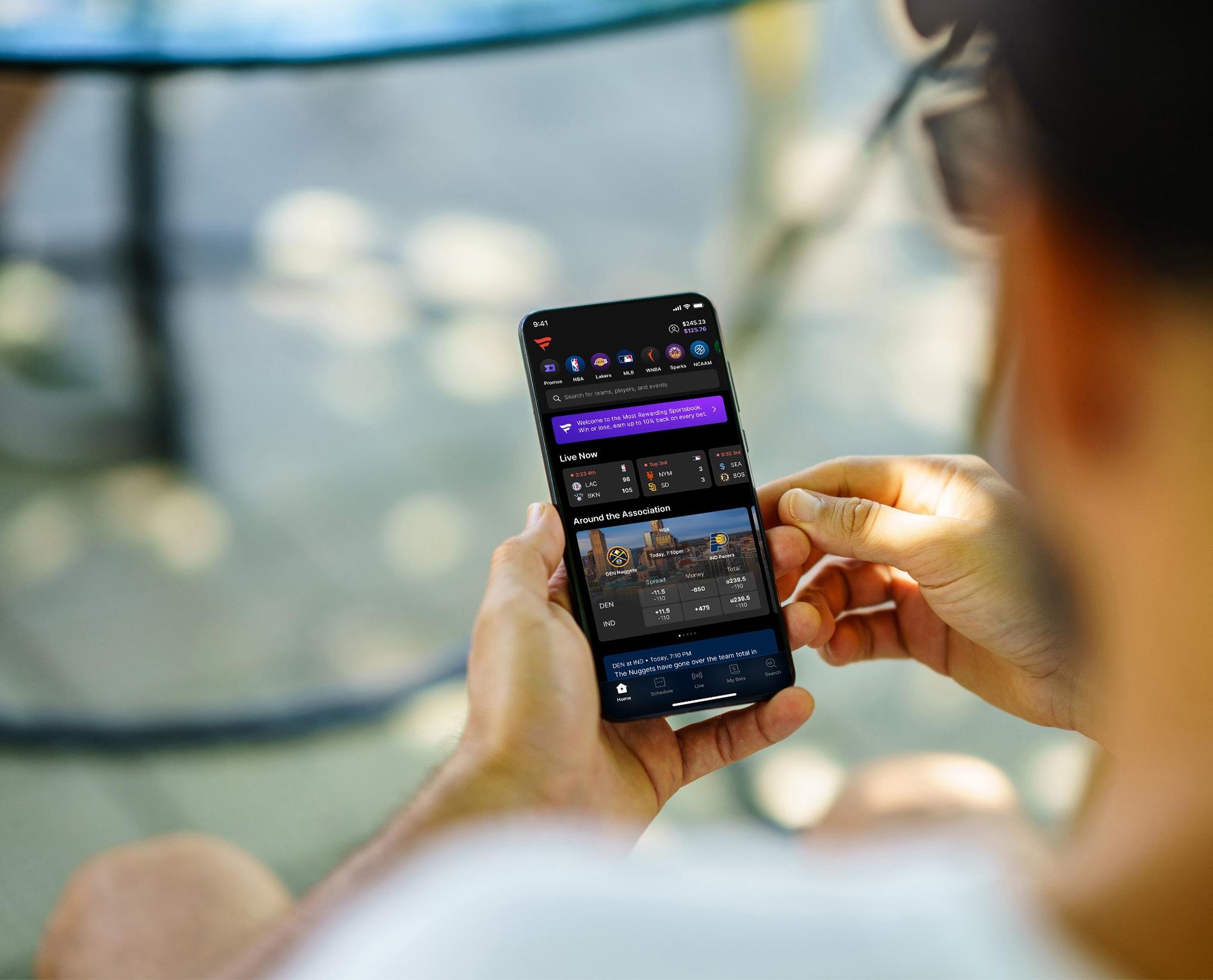

adds. “We see World Cup activity heavily biased towards national teams: patriotic staking, emotional multiples, and spikes around “must-win” games. The new 48-team, 104-match format in 2026 simply creates more of those moments across more countries and time zones. The flip side is that if a big nation exits early, interest in that team drops sharply because there’s no second act.
“Some fan bases will disengage quickly if their national team exits early, so the strategy for 1xBet as a global operator is built on something simple but essential: fan engagement and data. Social communities have grown, real-time conversations have grown, and the expectation for personalised, relevant experiences has grown with them. AI now allows us to analyse fan sentiment, betting patterns and social spikes faster than any previous tournament. That means we can test, learn and adapt in real time and always
within responsible-gaming guardrails.”
“Time zones are always a talking point, but from my perspective they’re a planning challenge, not a barrier,” Westbury continues. “The last World Cup engaged around 5 billion people globally, and with that level of interest, even “late” games for Europe still attract meaningful global liquidity – if you’re set up correctly.
“For the late World Cup kick-offs, the focus is on smart preparation rather than blunt pro-
“I don’t see late kick-offs as a threat to in-play turnover. I see them as a test of how well your trading, product and compliance teams can operate on a truly global clock”
Simon Westbury, 1xBet
motions: understanding historic engagement patterns, tailoring markets and interfaces to mobile-first, second-screen use, and aligning risk and responsible-gaming tools to the reality that some customers will be betting at midnight or later,” he concludes. “I don’t see late kick-offs as a threat to in-play turnover. I see them as a test of how well your trading, product and compliance teams can operate on a truly global clock.”
The recurring theme that we hear from operators and suppliers is one of customisation. Customising the broader offering to tap into national sentiment while also customising to individual player behaviour and preferences.
As Plumi of Luckia notes, “the biggest difference between this World Cup and the last is the advancement of technology, which allows us to do things better. Better segmenting our promotions, getting to know our users better, and thus being able to offer them exactly what they’re looking for.” n
Brazil searches for a gaming model as market realities bite

Brazil is positioned to become the world’s fifth-largest gambling market, but are fiscal reforms weakening the regulated environment?
WHAT INITIALLY PROMISED to be an open playing field for online gaming has evolved into a significantly stricter marketplace following the first year of regulation. While Brazil remains a massive opportunity, it is now characterised by unique complexities, tighter restrictions, and looming tax hikes. A year into regulation, the Latin American giant is still struggling to perfect its gaming model.
Estimates from Regulus Partners, cited by BBC Brasil, forecast that online betting companies will generate US$4.14bn (approximately R$22bn) in revenue in Brazil in 2025, positioning the country as the world’s fifth-largest gambling market.
The projections, based on financial reports from listed companies and sector trading data, place the United States in first place with estimated net revenue (post-tax) of US$17.31bn, followed by the United Kingdom (US$9.9bn), Italy (US$4.62bn), and Russia (US$4.52bn).
These figures align with statistics from Brazil’s Secretariat of Prizes and Betting (SPA), which recently released data showing that the 82 companies currently authorised to operate in
the country generated revenue of R$17.4bn in the first half of 2025.
This marks the first time Brazil has appeared in Regulus Partners’ top market rankings, as a regulatory framework for betting and gaming did not exist prior to 2024. Although precise data from previous years is unavailable, Paul Leyland, a specialist in economic and financial modelling for the gambling sector at the consultancy, highlights the dynamic growth of the Brazilian market over the last decade, which was estimated at just US$300m in 2014.
Fiscal performance and demographics
Between January and October 2025, the Brazilian federal government collected R$7.9bn (€1.28bn) in revenue from fixed-odds betting platforms and online gaming. This represents a staggering growth of 16,000 per cent compared to the mere R$49m (€7.92m) collected in 2024.
Regarding the player profile, the 31–40 age group accounts for the highest volume of bettors at 27.8 per cent. The 18–25 demographic repre-

sents 22.4 per cent; those aged 25–30 account for 22.2 per cent; and the 41–50 group makes up 16.9 per cent. Players aged 51–60 account for 7.8 per cent, while those aged 61–70 represent just 2.1 per cent.
Tax and regulatory headwinds
Despite the growth, market stakeholders are increasingly concerned by fiscal and regulatory developments. On the tax front, the Senate has forwarded a proposal to Congress to raise the tax rate on Gross Gaming Revenue (GGR) to 18 per cent by 2028.
The tiered structure proposes increasing the rate from 12 per cent to 15 per cent in 2027 before reaching the final threshold a year later. This decision replaces a previous proposal that sought to set the rate at 24 per cent—an idea that resurfaced after the government failed to secure support for a broader hike during a congressional vote in October.
Following its rejection, the fiscal package was reformulated and merged with new levies on fintech services. Economic projections linked to these reforms indicate the federal
government aims to raise approximately R$5bn annually from 2026. President Lula da Silva and Finance Minister Fernando Haddad view these reforms as vital for funding the country’s social programmes.
If fiscal reforms have defined Brazil’s first year, regulatory changes have been equally impactful. Operators have been forced to adapt to new restrictions on bonuses, incentives, and marketing practices, particularly regarding vulnerable populations such as those enrolled in the Bolsa Família benefits programme. Influencer pages have been removed, and thousands of illegal gambling websites have been blocked.
The municipal conflict
Furthermore, the conflict regarding jurisdiction between nationally authorised gambling and municipal lotteries has intensified. A decision by the Supreme Federal Court (STF) ordering the suspension of lottery and betting services authorised by municipal laws could decisively alter—or at least complicate—market configuration.
The STF ruled that a “diffuse and fragmented” regulatory landscape, such as that offered by municipal lottery authorisations, weakens federal oversight and hampers the standardisation of parameters, advertising rules, and consumer protection mechanisms. The ruling establishes a daily fine of R$500,000 for municipalities and companies that continue to provide the service, and R$50,000 for mayors and executives of accredited companies maintaining operations.
The National Association of Municipal and State Lotteries of Brazil (Analome) has already appealed the suspension to the Supreme Court, arguing that it contradicts the Court’s own jurisprudence.
Outlook for 2026
The power struggle over regulation between municipalities and the federal government looks set to continue into 2026. However, other regulatory gaps remain a priority. These include the creation of a federal self-exclusion register and a specific bill to regulate online gambling advertising. In parallel, legislators
“The power struggle over regulation between municipalities and the federal government looks set to continue into 2026”
will reopen the debate on PL 2.234/2022, the historic “casino bill” seeking to establish a national framework for land-based gaming.
Addressing the market’s complexities, Finance Minister Fernando Haddad stated during the signing of an agreement to prevent compulsive gambling that although betting was legalised in 2018, little was done to regulate the activity during the administration of former President Jair Bolsonaro.
“It was necessary to define taxation, advertising and marketing rules, responsible gaming parameters, and the role of each ministry in combating abusive practices, money laundering, and supporting those requiring public health attention. None of this was done between 2019 and 2022,” Haddad said.
According to industry experts such as senior executive Ramiro Atucha of Atucha Advisory, “some European operators thought that entering certain Latin American markets might imply doing what was not permitted in Europe, and it has been revealed that this is not going to be the case.”
Concerns
Undoubtedly, regulatory restrictions, responsible gaming measures, and fiscal pressure are increasing. However, operators fear these constraints may push too many players towards the black market, putting their businesses at risk. The Brazilian Institute of Responsible Gaming (IBJR), an online gambling industry association, argues that increasing the tax burden on legal platforms does not strengthen the regulated sector but rather fuels the illegal market.
Citing a study by LCA Financial Consulting, the IBJR indicates that between 41 per cent and 51 per cent of bets in Brazil are still placed on illegal platforms, generating approximately R$40bn (€6.47bn) annually and resulting in an estimated revenue loss of R$10.8bn (€1.75bn). The study suggests that for every 5 percentage points of market formalisation, the country could collect an additional R$1bn (€161.7m).
Consequently, Brazilian operators are calling for a crackdown on illegal platforms without weakening the regulated environment, arguing that the current trajectory “only favours those operating outside the law and hinders the fight against criminal networks exploiting the lack of control.” The IBJR emphasises that the most effective way to increase revenue and protect the Brazilian consumer is to “strengthen the formal market, guaranteeing legal security, compliance with rules, and a competitive and sustainable environment.” n
Changing the game
Why the 2026 World Cup Could Reshape Football (Soccer) Betting by Pini Yakuel, CEO of Optimove
THE 2026 FIFA World Cup will be different from every tournament that preceded it.
With an expanded 48-team field, a longer match schedule, and games hosted largely across the Americas, the 2026 tournament introduces structural conditions that have never existed at this scale. These changes do more than increase viewership and betting volume. They have the potential to reshape how, when, and where football betting engages players around the world.
For sportsbook operators, this matters because the World Cup is already one of the most powerful acquisition moments in global betting. The question heading into 2026 is not whether the tournament will drive engagement. It will. The question is whether this uniquely structured World Cup can translate that engagement into durable, long-term bettor value, especially in markets where football betting has historically been more episodic than habitual.
The insights in this article are based on Optimove’s analysis of aggregated betting behavior across millions of bettors globally, spanning Europe, Latin America, and the United States, before, during, and after the 2022 World Cup, alongside more recent football betting trends observed through 2025.
Acquisition Is Universal. Retention Is Not.
Across every region, the World Cup consistently delivers a surge in new bettors, higher betting volumes, and increased engagement. Where markets diverge is what happens once the tournament ends.
In Europe, football betting is deeply ingrained. The World Cup reinforces existing habits rather than creating new ones. New bettors acquired during the tournament are more likely to remain active because football already
occupies a central role in the betting calendar. Retention remains relatively stable before, during, and after the event.
Latin America follows a similar, though more volatile, pattern. Football’s cultural importance drives strong acquisition and engagement during the World Cup, and while post-tournament retention softens, a meaningful portion of new bettors remain active across domestic leagues and international competitions.

The United States has historically been the outlier. During the 2022 World Cup, U.S. sportsbooks saw soccer betting participation more than double, with total bets increasing sharply. Yet engagement declined quickly once the tournament concluded, as bettors reverted to domestic sports cycles led by the NFL, college sports, and the NBA.


and daily routines.
This divergence highlights a critical reality: global tournaments amplify existing market structures. They do not automatically create new betting habits.
Why 2026 Changes the Equation
The 2026 World Cup introduces a set of conditions that materially alter this dynamic, particularly in the United States.
First, the expansion to 48 teams increases the number of matches and extends the duration of sustained engagement. This creates more betting moments, more market variety, and more opportunities to move bettors beyond single-match wagering.
Second, hosting matches across the Americas, with a significant portion in the U.S., removes one of the biggest historical barriers to American engagement: time zones. Matches will align naturally with U.S. viewing habits
Third, the tournament runs through the summer, a period that has traditionally represented a gap in the U.S. sports betting calendar. Recent data already shows evidence of structural growth in U.S. football betting during spring and summer months, driven by MLS and international competitions. In 2025, football betting volumes during global off-season periods approached, and in some cases exceeded, levels seen during the 2022 World Cup.
Taken together, these factors suggest that the 2026 World Cup could function not just as a spike, but as a bridge, connecting event-driven engagement to more sustained football betting behavior in the U.S.
This outcome is not guaranteed. But the structural conditions supporting it are stronger than at any point in the past.
Volume Versus Value: The Operator Trade-Off
One consistent pattern across regions is the trade-off between acquisition volume and shortterm player value.
World Cups bring in large numbers of new bettors, many of whom begin with smaller, more cautious deposits. Average deposit size

typically declines during the tournament as the player base expands. This effect is most pronounced in Latin America, moderate in Europe, and temporary in the United States, where deposit averages rebound quickly once domestic sports resume.
This dynamic is not inherently negative. The long-term value of World Cup cohorts depends less on initial deposit size and more on how effectively operators migrate new bettors into sustained engagement once the event concludes.
Operators that optimize solely for peak handle risk acquiring large volumes of short-lived players. Those that plan explicitly for post-tournament migration consistently capture more value from the same acquisition surge.
Reactivation and Retention: What the Data Shows
Reactivation patterns further reinforce these regional differences.
In Europe, reactivation remains relatively stable, suggesting a habit-driven market. In Latin America, reactivation rises modestly during the tournament, reflecting responsiveness to major football moments without sharp volatility.
In the United States, reactivation spikes
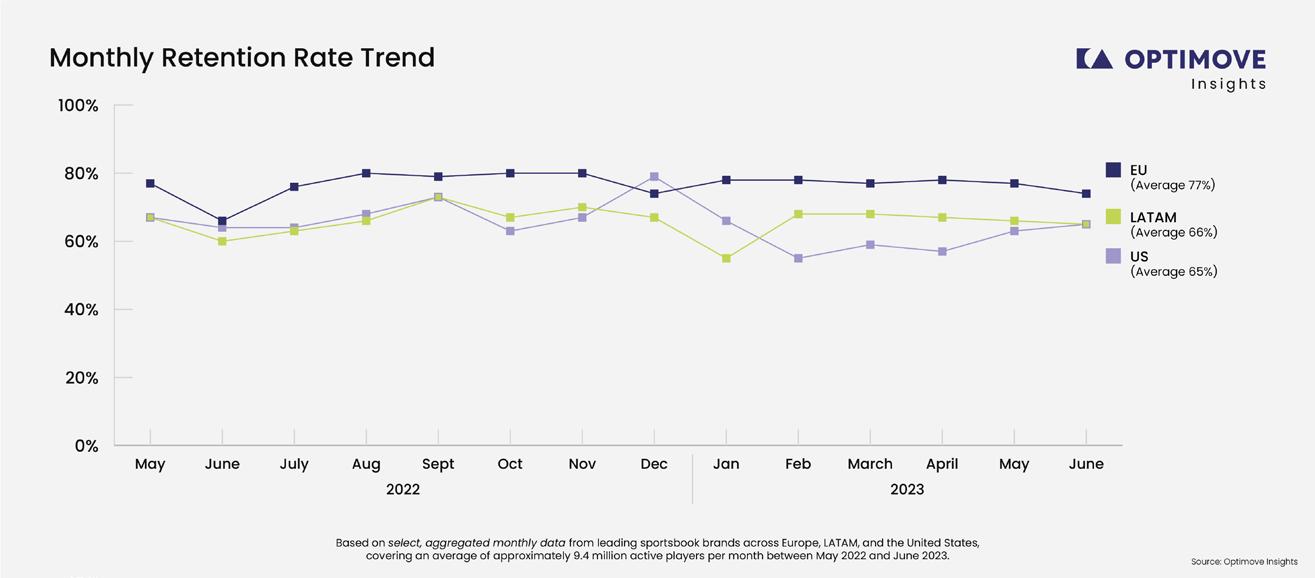
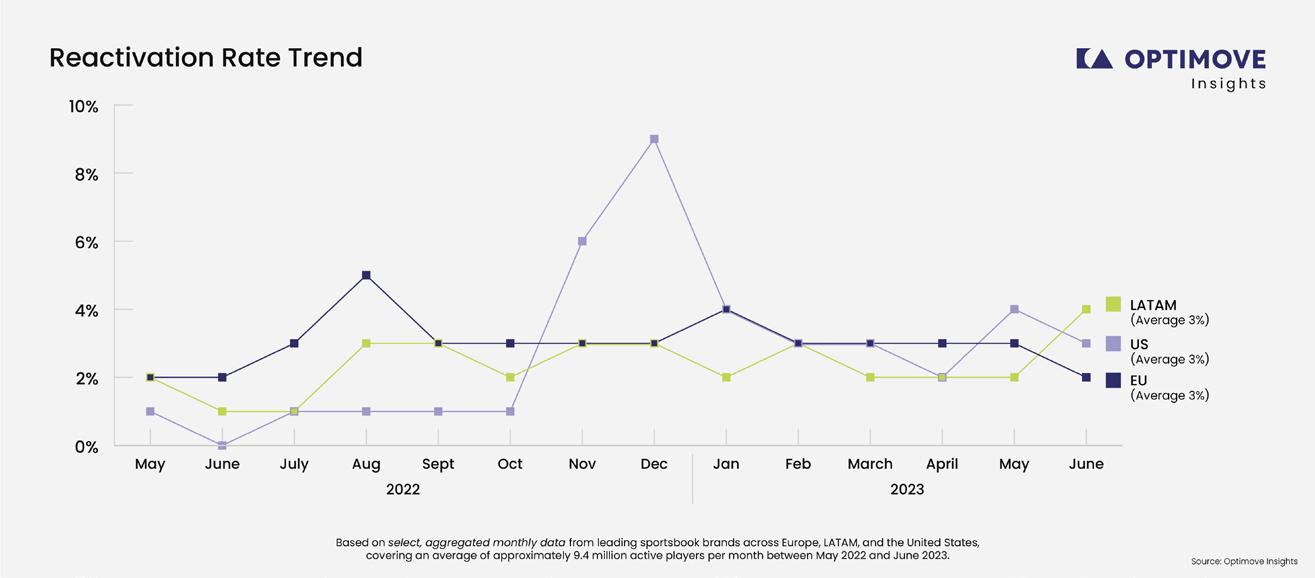
sharply during the World Cup and drops just as quickly afterward. The event successfully pulls inactive bettors back into sportsbooks, but without structural follow-through, that engagement dissipates.
Retention data tells the same story. Europe maintains high and consistent retention. Latin America sees more post-event drop-off but retains a meaningful share of engagement. The U.S. exhibits a clear spike-and-decline pattern, driven by short-term excitement rather than habit.
Preparing for 2026: Strategic Implications for Sportsbooks
As the industry approaches 2026, sportsbook operators should consider three strategic imperatives.
First, treat the World Cup as an acquisition accelerator, not a retention solution. Success should be measured by post-event engagement and lifetime value, not peak tournament volume.
Second, plan regionally, not globally. Market maturity, cultural affinity, and local sports calendars shape outcomes. A single global strategy will not produce consistent results.
Third, use the expanded 2026 format to build habits, not just excitement. The longer schedule and summer timing create space to introduce
bettors to recurring football moments that persist beyond the tournament.
In the United States, this means deliberately connecting World Cup engagement to MLS, European leagues, and international competitions that continue throughout the year. In mature markets, it means deeper personalization and value optimization rather than broadbased promotions.
An Inflection Point for the Industry
The 2026 World Cup will be the largest and most geographically accessible tournament the industry has ever seen. It will generate unprecedented acquisition and engagement.
What remains uncertain is how much of that engagement becomes durable.
For operators to optimize long-term player value, they must rethink their World Cup strategy for a tournament that could serve as an inflection point, one capable of engaging the entire world in football betting, including the traditionally reluctant United States. ■
Note on terminology: For clarity and consistency, this article uses the term “football” throughout to refer to the sport also known as “soccer.” Both terms describe the same game. The use of “football” reflects terminology commonly used in certain regions and does not indicate any difference in the sport being analyzed.
Hacksaw soars to the top
Hacksaw and Genius Sports led the way with the biggest revenue growth in the third quarter of 2025, but recent M&A mega deals look set to shake up the GIQ30 chart
THIS SPECIAL ICE edition of the GIQ30 ranks the biggest publicly-listed companies in the betting, gaming and lottery sectors by revenue growth in the third quarter of 2025.
Hacksaw topped our GIQ30 chart after surpassing €50 million in quarterly revenue for the first time in Q3 2025, capping a momentous year for the Swedish slot provider following a successful IPO on Nasdaq Stockholm in June, which valued the business at SEK22 billion.
Hacksaw’s revenue increased by 39 per cent to €52.0 million in Q3, and edged out Genius Sports’ 38 per cent revenue rise, which was driven by continued growth in the online sports betting and sports advertising sectors.
FDJ United rounded off the top three as revenue increased by 29 per cent to €864 million, primarily due to its acquisition of Kindred Group, which completed in October 2024. On a like-forlike basis, FDJ’s revenue actually declined by 3 per cent in the third quarter of 2025.
Despite exiting the US betting and gaming market, Super Group’s strength in Europe and the Africa and Middle East regions helped third quarter revenue increase 26 per cent, while Las Vegas Sands revenue from Macau and Singapore grew to $3.33 billion, and Rush Street Interactive’s remarkable growth run showed no signs of abating as Q3 revenue rose 20 per cent to $277.9 million.
In overall revenue terms, MGM Resorts International was the biggest company in this edition of the GIQ30 chart with quarterly revenue of $4.25 billion, ahead of Flutter Entertainment’s $3.79 billion - although less than half of MGM’s’ total was from non-gaming operations. Las Vegas Sands’ $3.33 billion quarterly total included gaming revenue of $2.51 billion.
There are several transformational deals that could challenge the GIQ30’s status quo in 2026, including Intralot’s recent € 2.7 billion acquisition of Bally’s International Interactive business, and proposed blockbuster deals for OPAP/ Allwyn and Banijay/Tipico. And who knows what the future holds for evoke after the 888 and William Hill owner initiated a strategic review in December to explore options for maximising shareholder value.

GIQ30
“This growth, all of which is organic, is a result of delivering on our growth strategy of developing and launching new games on our strong platform and expanding with both new and existing customers” Christoffer Källberg, Hacksaw CEO
fan experiences at scale,” said co-founder and CEO Mark Locke. “We’re extending our leadership in online sports betting and sports advertising through richer content, rapid product adoption, and strong commercial momentum, driving continued growth and long-term value for our partners.”
Stockholm-listed Hacksaw came out on top in its debut appearance in the GIQ30 chart following a successful IPO in June. Revenue surpassed €50 million for the first time in the third quarter of 2025, rising by 39 per cent to €52.0 million, with the supplier signing an impressive 48 new deals in the quarter, include Flutter’s Betnacional and Canada’s OLG.
“This growth, all of which is organic, is a result of delivering on our growth strategy of developing and launching new games on our strong platform and expanding with both new and existing customers,” said CEO Christoffer Källberg. “The signing of deals with both new and existing customers underscores both our team’s strength as well as the significant market opportunity ahead of us. Our current market share remains relatively small in a large and growing market, which provides substantial room for continued expansion.”
New York-listed Genius Sports enjoyed another strong quarter of growth as Q3 revenue rose 38 per cent to $166.3 million, driven by a 28 per cent increase in revenue from its core Betting Technology, Content & Services segment to $110.0 million. Increased programmatic advertising services helped Media Technology, Content & Services revenue rise 89 per cent to $41.8 million, while revenue from Sports Technology & Services increased by 16 per cent to $14.5 million, buoyed by an increase in sales of products built on GeniusIQ technology.
“Our growth this quarter reflects our unique ability to combine sports data with audience intelligence to deliver personalized
Paris-listed FDJ United reported a 29 per cent increase in revenue to €864 million for the third quarter, including results from Kindred Group. The company’s core French Lottery and Retail Sports Betting segment saw revenue climb 2 per cent to €595 million, with lottery revenue up 2.5 per cent at €508 million and revenue from point-of-sale sports betting remaining stable at €87 million. Revenue from the Online Betting & Gaming segment soared 704 per cent to €209 million following Kindred’s acquisition in October 2024, while International Lottery contributed revenue of €44 million and Payment & Services a further €16 million. On a restated basis, which assumes Kindred was acquired in January 2024, FDJ’s like-forlike revenue fell by 3 per cent, including a 16 per cent decline from Online Betting & Gaming.
“The change in FDJ United’s revenue at the end of September reflects the prolonged decrease in our online betting and gaming business in certain markets and the impact of higher taxation on gaming, particularly in France since 1 July,” said chairwoman and CEO Stéphane Pallez.
LAS VEGAS SANDS
New York-listed Super Group reported a 26 per cent increase in third quarter revenue to $556.9 million, with revenue from the Africa and Middle East growing 37 per cent to $226 million, while North America revenue was up 12 per cent at $181 million. Revenue from Betway increased by 30 per cent to $341 million, as online casino revenue grew 33 per cent to $243 million and sports betting revenue increased 23 per cent to $91 million. Spin revenue was 20 per cent higher at $216 million, all derived from online casino.
“We are incredibly pleased with our Q3 performance, which highlights the continued strength of our global platform and consistent execution across our core markets,” said CEO Neal Menashe. “Despite customer-friendly outcomes in September, we delivered record-level customer engagement, strong revenue growth, and margin expansion. Hitting six million monthly active customers was another significant milestone, a reflection of our product innovation and local execution.”
New York-listed Las Vegas Sands posted a 24 per cent increase in revenue to $3.33 billion for the third quarter of 2025, benefiting from a 56 per cent increase in revenue from Marina Bay Sands in Singapore to $1.44 billion. Revenue from the company’s Macao operations rose 8 per cent to $1.91 billion, although The Londoner Macao was the only casino resort to record year-on-year growth. Across all operations, Casino revenue was 29 per cent higher at $2.51 billion.
“We remain enthusiastic about our growth opportunities in both Macao and Singapore as we realize the benefits of our recently completed capital investment programs,” said chairman and CEO Robert Goldstein. “In Macao, our decades-long commitment to making investments that enhance the business and leisure tourism appeal of Macao and support its development as a world center of business and leisure tourism positions us well for future growth. In Singapore, Marina Bay Sands once again delivered outstanding financial and operating performance.”
New York-listed Rush Street Interactive grew revenue by 20 per cent to $277.9 million in the third quarter, buoyed by accelerated growth across key markets, particularly in online casino. Monthly active users (MAU) in the US and Canada were up 34 per cent at 225,000, including growth of 46 per cent in online casino markets, while MAUs in Latin America were 30 per cent higher at 415,000. Average revenue per MAU in the US and Canada was $365 in Q3, compared to just $27 in Latin America.
“What makes these results particularly compelling is the continued acceleration of growth in North American online casino markets,” said CEO Richard Schwartz. “Delivering exceptional 46 per cent year-over-year MAU growth, our United States and Canada online casino markets recorded the second highest quarterly growth rate since early 2021, achieved off a much larger player base. We also had a record quarter as it relates to first-time depositors, beating our prior record by more than 10 per cent while reducing marketing spend compared to the same period last year.”
FLUTTER ENTERTAINMENT ($M)
New York-listed Flutter Entertainment saw third quarter revenue increase by 17 per cent to $3.79 billion, as revenue from the US grew 9 per cent to $1.37 billion and International revenue rose 21 per cent to $2.43 billion. The Q3 total comprised sportsbook revenue of $1.77 billion (+3 per cent) and iGaming revenue of $1.9
“What makes these results particularly compelling is the continued acceleration of growth in North American online casino markets” Rush
Street Interactive CEO Richard Schwartz
billion (+35 per cent), alongside other revenue of $130 million (+2 per cent). Average monthly players (AMPs) rose 9 per cent to 14.13 million, including an 8 per cent increase in the US to 3.48 million and a 10 per cent rise in International AMPs to 10.66 million.
“Flutter delivered a solid third quarter, with continued momentum in both our US and International businesses,” said CEO Peter Jackson. “We are the clear number one operator in the US, and we will continue to build on that position to drive future profitability. Our strategic investments, including the launch of FanDuel Predicts and recent International acquisitions, position us exceptionally well to capture new opportunities and deliver sustainable, profitable growth.”
“Our strategic investments, including the launch of FanDuel Predicts and recent International acquisitions, position us exceptionally well to capture new opportunities and deliver sustainable, profitable growth” Flutter Entertainment CEO Peter Jackson
more than doubled to a new quarterly high of $16.2 million.
“Our ongoing strategic operating priorities, focused on driving a high conversion of revenue to cash flow, resulted in strong third quarter results as we generated $33.4 million in cash flow from operations during the period,” said CEO In Keuk Kim. “Growth in our social casino games reflects initial contributions from the WHOW Games transaction, which increased our European revenue.”
GOLDEN MATRIX GROUP ($M)
New York-listed DoubleDown Interactive reported a 15.5 per cent increase in revenue to $95.8 million for the third quarter, including record results from its SuprNation iGaming business. Revenue from social casino grew 6 per cent to $79.6 million, including a partial quarter of results from newly acquired WHOW Games, while SuprNation revenue
New York-listed Golden Matrix Group benefited from growth in online casino and raffle operations to grow revenue by 15 per cent to $47.3 million in the third quarter. Meridianbet was the largest business seg ment in the with revenue of

New York-listed Inspired Entertainment saw third quarter revenue rise by 12 per cent to $86.2 million, benefiting from a 48 per cent increase in revenue from its Interactive division to a record $15.1 million. Gaming revenue grew 20 per cent to $27.1 million and Leisure revenue climbed 4 per cent to $34.7 million, while Virtual Sports was the only segment to post a year-on-year decline as Q3 revenue fell by 17 per cent to $9.3 million.
“Inspired delivered a strong quarter driven by strategic execution, digital expansion, and product innovation,” said president and CEO Brooks Pierce. “Our sustained momentum in Interactive continues to build, delivering another record quarter. We’ve built a powerful distribution network and brand franchises that players love, and now we’re scaling that success.”
$32.5 million (+26 per cent), comprising online casino revenue of $14.6 million (+30 per cent) and sports betting revenue of $13.3 million (+25 per cent). Revenue from tournament platform RKings rose 14 per cent to $7.4 million, while the B2B iGaming platform business GMAG reported stable revenue of $3.5 million.
“This quarter highlights how the strength of our portfolio and disciplined execution continue to translate into profitable growth,” said CEO Brian Goodman, who left the company in December. “We’re seeing steady momentum across key markets – particularly in Latin America – supported by product innovation, operational efficiency, and strong engagement across both B2B and B2C segments.”
New York-listed Sportradar Group posted a 14 per cent increase in third quarter 292.1 million, with nearly a quarter of the total derived from the US. Revenue from the Betting Technology & Solutions segment rose 11 per cent to 232.8 million, while revenue from the Sports Content, Technology & Services segment grew 31 per cent to €59.2 million.
“The results reflect our sustained operating performance and the durability of our growth strategy,” said CEO Carsten Koerl. “Our continued momentum is driven by our premium content and product portfolio, and leading technology and AI, which is enabling us to consistently drive above market growth and deliver increasing value for our clients and partners. We are very pleased to augment that growth with the completion of the acquisition of IMG Arena, further bolstering our competitive position, including our unmatched rights offering, industry leading product suite and the depth and breadth of our global relationships.”
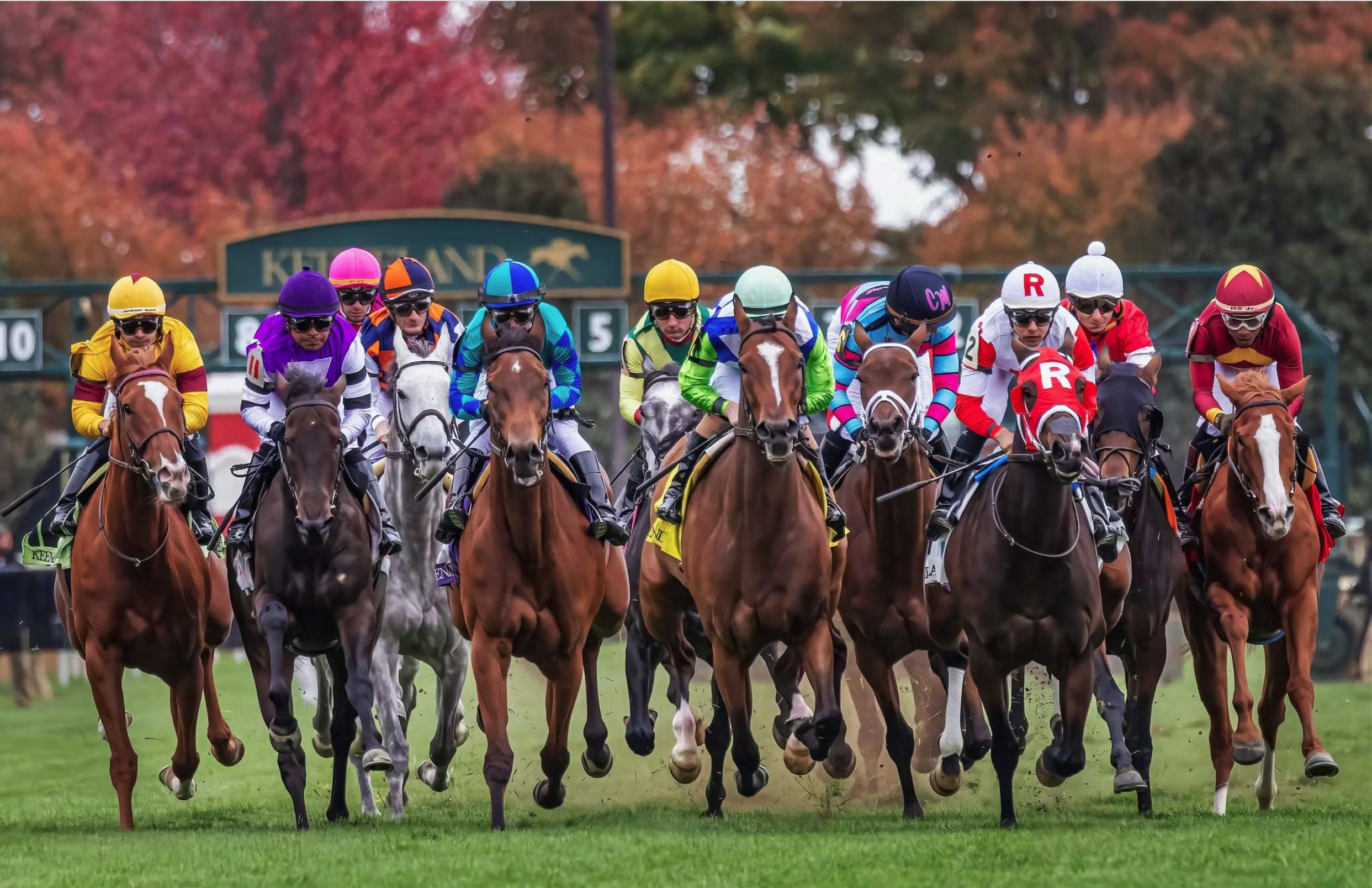
DOWNS INC
New York-listed Churchill Downs Incorporated reported a 9 per cent increase in revenue to a record $683.0 million in Q3 2025, its twelfth consecutive quarter of year-on-year growth. Growth was driven by a 21 per cent rise in Live and Historical Racing revenue to $300.0 million and a 6 per cent improvement in revenue from Wagering Services and Solutions to $118.0 million, including growth from its TwinSpires horse racing business. Gaming was the only segment to record a year-onyear decline as Q3 revenue fell by 2 per cent to $265.5 million.
London-listed Rank Group posted a 9 per cent rise in revenue to £210.2 million for the third quarter (its fiscal first quarter), with growth across all of business segments. This was led by a 13 per cent increase in Digital revenue to £61.6 million, as growth in the UK offset a decline in Spain. Grosvenor venues saw revenue climb 8 per cent to £102.7 million, while revenue from Mecca venues and the Spanish Enracha business both rose 5 per cent to £35.5 million and £10.4 million respectively.
“We have started the year strongly and
are confident of delivering group like-for-like operating profit in line with expectations, notwithstanding the significant cost increases we have incurred in employer national insurance contributions, the national living wage and the new statutory levy,” said CEO John O’Reilly.
ACCEL ENTERTAINMENT
New York-listed Accel Entertainment recorded a 9 per cent increase in Q3 revenue to $329.7 million, including its first full quarter of results from Fairmount Park. Illinois and Montana represented the bulk of the total as revenue
rose 7 per cent and 2 per cent respectively to $239.0 million and $40.5 million, offsetting a 7 per cent drop in revenue from Nevada to $26.2 million. Revenue from the smaller markets of Louisiana, Nebraska and Georgia contributed an additional $23.1 million during the quarter.
“These results reflect our consistent execution and expansion across our markets and once again demonstrate the strength and resilience of our distributed gaming model and return-focused approach to growth,” said CEO Andy Rubenstein. “Across our developing markets – Nebraska, Georgia, and Nevada – we’re building scale and continue our profitability growth in these markets, while our newer markets, including Louisiana and Fairmount Park Casino & Racing in Illinois, continue to ramp and contribute to consolidated growth.”
RESORTS
by impressive EBITDA growth in Macau, and continued outperformance in Las Vegas,” said CEO Craig Billing. “We also made significant progress on the completion of Wynn Al Marjan Island, where we are now pouring concrete for the remaining few floors of the 70-story tower.”
goal. In this context, we are working toward a strong finish to the year and are looking forward to operating in 2026 under the new brand of Allwyn, which will mark a new era of growth opportunities, innovation, and bestin-class gaming entertainment experiences for our customers.”
BRIGHTSTAR LOTTERY ($M)
New York-listed Wynn Resorts recorded solid growth during the third quarter as revenue increased by 8 per cent to $1.83 billion. Revenue from Wynn Palace in Macau rose 22 per cent to $635.5 million, and Wynn Macau revenue increased by 4 per cent to $365.5 million. Revenue from Las Vegas Operations were 2 per cent higher at $621.0 million, offsetting a 1 per cent fall in revenue from Encore Boston Harbor in Massachusetts to $211.8 million.
“Our third quarter results were marked
Athens-listed OPAP will become one of the biggest companies on the GIQ30 chart next year when it completes its proposed €16 billion business combination with Allwyn. For Q3 2025, OPAP’s revenue grew 7 per cent to €602.9 million, with Lottery revenue up 10 per cent at €219.6 million, offsetting lower Betting revenue of €180.11 million. Video Lottery Terminals (VLT) revenue rose 6 per cent to €88.45 million (+6 per cent), while revenue from Instant and Passives increased 11 per cent to €24.9 million and Online Casino climbed 14 per cent to €89.8 million.
“Building on the first half’s strong performance, OPAP delivered a robust set of Q3 results, outperforming last year’s strong respective quarter,” said CEO Jan Karas. “Overall, profitability has risen in tandem with healthy margins and a solid cash position. These positive trends reinforce our confidence in achieving our outlook for FY2025, as well as our broader strategic and business
New York-listed Brightstar Lottery reported a 7 per cent increase in third quarter revenue to $629 million in its first full quarter since the sale of its IGT Gaming business. Service revenue rose 7 per cent to $604 million as instant ticket and draw wager-based revenue grew by the same percentage to $512 million, while product sales increased by 24 per cent to $25 million. The US and Canada accounted for nearly half of the quarterly total as revenue grew 7 per cent to $304 million.
“We achieved many milestones in Q3: closing the IGT Gaming sale for $4 billion in cash, executing our shareholder return plans, and completing the refocusing of the company as a lottery pure play,” said CEO Vince Sadusky. “The better-than-expected Q3 revenue and profit results reflect a significant acceleration of same-store sales across all geographies.”
“Building on the first half’s strong performance, OPAP delivered a robust set of Q3 results, outperforming last year’s strong respective quarter”
OPAP CEO Jan Karas
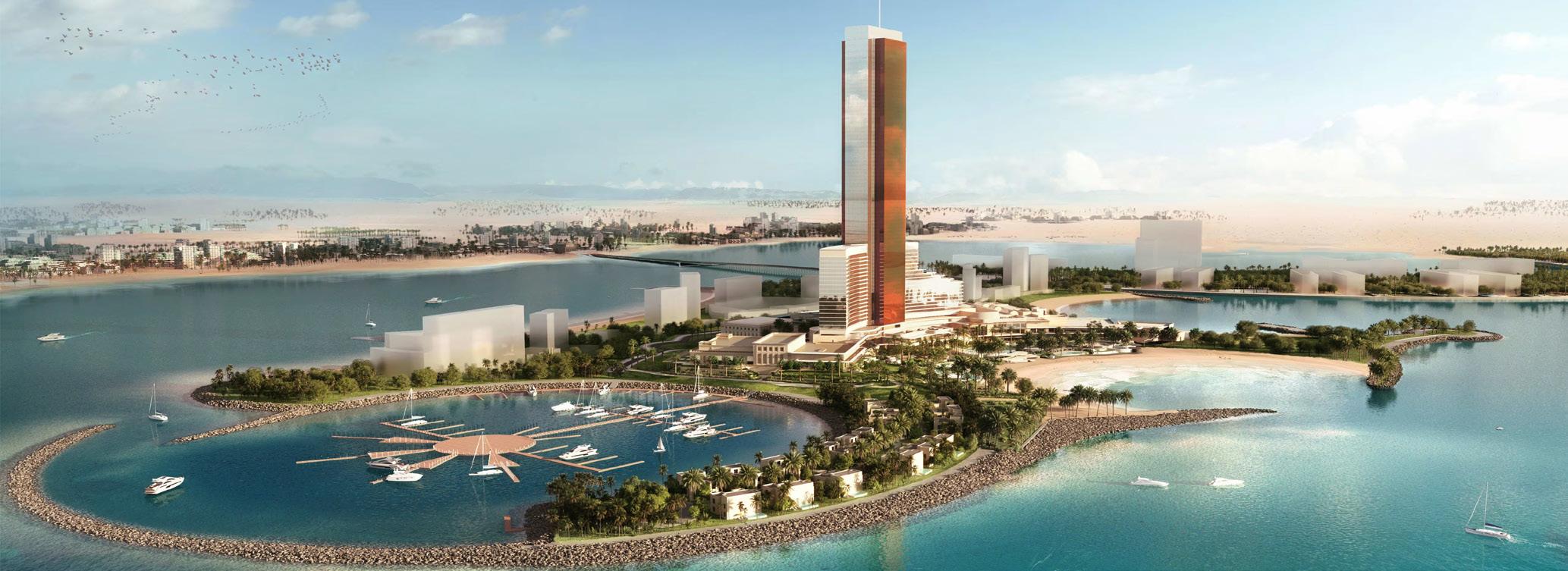
Stockholm-listed Betsson saw third quarter revenue grow by 6 per cent to €295.8 million, buoyed by record online casino results, which rose by the same percentage to € 223.0 million. Sportsbook revenue was up 4 per cent at €71.2 million, boosted by a higher sportsbook margin of 8.8 per cent (Q3 2024: 7.4 per cent), while revenue from other products, including poker and bingo, declined by 25 per cent to €1.5 million.
“With the customer in focus, Betsson continues to drive the digitalization of the gaming market globally,” said CEO Pontus Lindwall. “We have a proven, successful product portfolio consisting of both casino and sports betting, as well as a well-diversified mix of revenues from different geographical regions, which lowers the risks of periodically weaker developments in individual products or markets.”

BALLY’S CORP ($M)
London-listed Entain disclosed a 6 per cent increase in revenue for the third quarter of 2025, including strong results from BetMGM. The operator posted solid growth in the UK & Ireland as revenue increased 8 per cent, while Central and Eastern Europe climbed 12 per cent, and International revenue remained at the same level as last year. Excluding results from its US joint venture, Q3 revenue was up 4 per cent year-on-year, benefiting from a 5 per cent increase in online revenue and a 3 per cent uplift in retail revenue.
“Entain’s transformation continues at pace, with our strategic execution and expanding bandwidth delivering growth across our portfolio,” said CEO Stella David. “Whilst we still have more to do, our Q3 performance is further evidence of the quality of our diverse business and its underlying momentum.”
Madrid-listed Cirsa is another new entrant to the GIQ30 after its IPO on the Spanish Stock Exchanges (Madrid, Barcelona, Bilbao, and Valencia), with its growing online operations now representing nearly a third of the company’s revenue. In the third quarter, revenue was up 5 per cent at €560.21 million, with revenue from Casinos increasing by 4 per cent to €53.9 million, while the Spain Slots and Italy Slots segments saw revenue climb 6 per cent and 13 per cent respectively to €101.4 million and €96.0 million. Revenue from online gaming and betting grew 8 per cent to €120.8 millions, buoyed by Sportium’s growth in Spain, Peru, Italy and Portugal.
New York-listed Bally’s delivered another solid performance in the third quarter as revenue increased by 5 per cent to $663.7 million. There was growth across all business segments except for International Interactive, where the divestiture of its Asian online business led to a 7 per cent year-on-year fall to $215.09 million. North American interactive revenue grew 13 per cent to $49.9 million, while revenue from the Casino & Resorts segment rose 12 per cent to $396.1 million. Intralot completed the acquisition of Bally’s International Interactive business for €2.7 billion in October, with Bally’s becoming the majority shareholder of Intralot with a 58 per cent ownership interest.
“Our solid third quarter results and recent
“Entain’s transformation continues at pace, with our strategic execution and expanding bandwidth delivering growth across our portfolio”
Entain
CEO Stella David
strategic initiatives highlight further marked progress across multiple fronts on our transformation to the new Bally’s 2.0,” said CEO Robeson Reeves.
EVOKE
evoke grew revenue by 4.5 per cent to £435 million in the third quarter, with the international online segment delivering the strongest growth as revenue climbed by 8 per cent to £150.4 million. Retail revenue increased by 6 per cent to £121.7 million, comprised of betting revenue of £67.1 million (+6 per cent) and gaming revenue of £54.6 million (+6 per cent). The UK and Ireland online segment delivered the lowest revenue growth of 0.5 per cent to £163.3 million in Q3, with all of the growth coming from sports betting.
“During Q3 we continued to execute against our strategy which is transforming our long-term competitive capabilities and building a more efficient and profitable business,” said CEO Per Widerström. “With Retail continuing the improving trend from Q2, all three divisions were in growth during the quarter. Whilst our refined approach
PENN ENTERTAINMENT
to UK Online marketing to drive improved profitability slightly held back our top-line performance, we are pleased to have recorded our fifth consecutive quarter of profitable growth.”
BOYD GAMING ($M)
New York-listed Penn Entertainment benefited from growth across all business segments to post a 5 increase in revenue to $1.72 billion for the third quarter. The Interactive segment posted the strongest revenue growth of 22 per cent to $297.7 million, with this figure including a tax gross up of $139.5 million. Across all segments, gaming revenue rose 3 per cent to $1.33 billion, alongside food, beverage, hotel, and other revenue of $392.1 million (+12 per cent).
“Demand was generally stable in our core business across gaming and nongaming amenities during the quarter, particularly at our properties not impacted by new supply or increased competitor promotional activity,” said president and CEO Jay Snowden. “Our third-quarter performance was driven by strong results at our properties in our West segment, as well as in Ohio, St. Louis, and Illinois.”
New York-listed Boyd Gaming saw Q3 revenue increase by 4.5 per cent to just over $1.0 billion, driven by record results from the Midwest & South segment, which offset marginal declines in the Las Vegas Locals and Downtown Las Vegas segments. The company also benefited from a 17 per cent increase in Online revenue to $165.6 million, reflecting growth from online casino and the impact of the sale of its 5 per cent equity interest in FanDuel for $1.76 billion.
“These results were driven by year-overyear growth in play from our core customers, improving trends in play from our retail customers, our efficient operations, and our ongoing capital investment program,” said president and CEO Keith Smith. “As a result, we saw healthy growth in gaming revenues across all three property operating segments during the quarter.”

DRAFTKINGS ($M)
New York-listed DraftKings grew revenue by 4 per cent to $1.14 billion in the third quarter, despite a 9 per cent decline from its core sportsbook offering to $596.1 million. iGaming revenue increased by 25 per cent to $451.3 million, while other revenue was up by the same percentage at $96.6 million. Monthly unique payers (MUPs) rose 2 per cent to 3.6 million, and average revenue per MUP was up 3 per cent at $106.
“This is the most bullish I have ever felt about our future,” said CEO and co-founder Jason Robins. “Underlying growth in the business is accelerating and we are excited to launch DraftKings Predictions in the coming months, which we view as a significant incremental opportunity.”
NORTHSTAR GAMING
Toronto-listed NorthStar Gaming recorded a 4 per cent increase in third quarter revenue to CA$6.9 million, but warned that it may have insufficient funds to finance its operations and meet its minimum liquidity requirements.
“Management has developed a cash flow forecast for the period to December 31, 2026 which indicates that the company can continue to meet its obligations as they come due,” said CEO Michael Moskowitz, who was dismissed by the company in December. “However, there is a risk that the company may breach certain debt-related covenants, and management has initiated discussions with the lender regarding these matters.”
lion and a 16 per cent increase in iGaming revenue to a record $86 million, which offset a 4 per drop in revenue from SciPlay to $197 million. Excluding the contribution from Grover Gaming, Q3 revenue would have been 2 per cent lower year-on-year.
“Our R&D engine continues to deliver worldclass content, reflected in another strong quarter for Gaming operations and record iGaming performance,” said CEO Matt Wilson.
BRAGG GAMING (€M)
Toronto and New York-listed Bragg Gaming posted a 2 per cent increase in revenue to €26.8 million for the third quarter, benefiting from strong growth in the US (+86 per cent) and Brazil (+80 per cent). Excluding the Netherlands, where tempo-
rary regulatory impacts continue to normalize, Bragg’s Q3 revenue would have increased by 20 per cent across the rest of its markets.
“Bragg delivered another solid quarterly performance, anchored by increased revenue, improved operational efficiency, and higher adjusted EBITDA, all reflecting the strength and resilience of our diversified business model,” said CEO Matevž Mazij. “The company is successfully navigating evolving international regulatory and taxation developments with a view to pursuing markets and jurisdictions that offer opportunities to higher margin business.”
“Our R&D engine continues to deliver worldclass content, reflected in another strong quarter for Gaming operations and record iGaming performance” Light & Wonder CEO Matt Wilson
New York-listed MGM Resorts grew third quarter revenue by 2 per cent to $4.25 billion, despite a decline in its core Las Vegas market. Revenue from Las Vegas Strip Resorts decreased by 7 per cent to $1.98 billion, partially offset by a marginal increase in revenue from Regional Operations to $956.9 million. MGM China rose 17 per cent to $1.09 billion, and MGM Digital revenue increased by 23 per cent to $174.0 million, consisting of LeoVegas and other consolidated subsidiaries that offer iGaming, but not the BetMGM joint venture. Across all segments, casino revenue increased by 8 per cent to $2.29 billion in Q3.
“MGM Resorts delivered another quarter of consolidated net revenue growth as we benefit from our operational scale and diversity, highlighted by record third quarter results from MGM China,” said CEO and president Bill Hornbuckle.
GOING DOWN IN Q3 2025
Codere Online and Caesars Entertainment narrowly missed out on a place in the GIQ30 chart as both companies saw third quarter revenue decline by a marginal 0.2 per cent. Codere Online’s revenue fell to €51.7 million, as growth in Mexico and Spain was offset by a decline in other markets such as Colombia, Panama and Argentina. Caesars’ Q3 revenue declined to $2.87 billion, as growth at Caesars Digital and Regional operations offset a decline in Las Vegas.
Third quarter revenue from Century Casinos fell by 1 per cent to $153.7 million following declines at its Nevada and Poland operations, while
Banijay Group’s revenue declined by 2 per cent to €1.01 billion, despite an 0.8 per cent increase in online sports betting and gaming revenue to €345.3 million. The Betclic owner will likely be back in the GIQ30 next year after agreeing a transformative deal to acquire Germany’s Tipico.
fluctuations, without which revenue would have increased by 4 per cent year-on-year, and Golden Entertainment’s revenue was 4 per cent lower due to a decline in its nongaming operations.
Intralot is beginning a new era after completing the €2.7 billion acquisition of Bally’s International Interactive business but saw Q3 revenue fall by 12 per cent to €74.5 million, while Kambi’s revenue fell by 13 per cent to €37.4 million the sportsbook supplier’s third consecutive quarter of year-on-year decline.

Toronto-listed Pollard Banknote posted a 2 per cent increase in revenue to a new quarterly record CA$156.3 million in the third quarter, benefiting from higher charitable gaming volumes mostly as a result of the acquisitions of Venne and Pacific. Including its share of the NeoPollard Interactive joint venture with Aristocrat Interactive, combined revenue in the quarter was up 4 per cent to $187.3 million.
“The third quarter of 2025 reflected the positive results of our ongoing investments and strategic plans, generating strong financial outcomes and a number of key milestone business accomplishments,” said coCEO John Pollard. “We are thrilled with these accomplishments and the opportunities they provide our organization starting immediately and for the coming years.” n


SBC EVENTS 2026
LISBON
29 September-1 October 2026
Feira Internacional de Lisboa, Lisbon
RIO MALTA TORONTO FLORIDA
9-11 June 2026
Broward County Convention Center, Fort Lauderdale
3-5 March 2026
Riocentro, Rio de Janeiro
28-30 April 2026
InterContinental Malta
19-21 May 2026
Metro Toronto Convention Centre
More Than Aggregation:
St8’s Complete Solutions for Operators
St8 Business Development
Manager David Fall discusses how the company builds long-term partnerships and delivers products and services that go far beyond simple content aggregation
Tell us more about St8 and the vision behind your aggregation solutions. St8 was created to address a clear gap in the aggregation space: too much complexity and slow execution. While many aggregation services exist, they often require lengthy integrations and fragmented solutions. We took a different approach by being simple, fast, and reliable. Our single-API solution enables operators and providers to go live quickly, dramatically reducing time to market while ensuring stable, high-performance delivery.
Our vision is to simplify operations across the entire ecosystem by providing practical, scalable solutions for both operators and providers. We go beyond traditional content aggregation by offering a 360-degree service layer, including bonusing capabilities, realtime reporting and dashboards, promotions software for managing multiple campaigns, a thumbnails API, and a unified customer area. By bringing all of this into one streamlined platform, we remove operational friction, improve efficiency, and allow our partners to focus on growth rather than complexity.
One of the core pillars we stand by at St8 is simplicity. We simplify operations by centralising all content and processes in a single platform. David Fall
How does St8 enable operators to go live quickly while maintaining flexibility and control over their content strategy?
At St8, we design our products and services with operators in mind. Our single API, free of technical debt, allows fast integration and enables operators to respond quickly to player demand. Operators gain access to over 200 top-tier providers across multiple verticals, delivering high-quality content rapidly. Built on robust technical foundations, we ensure smooth launches and long-term scalability without compromising performance.
In line with our vision, flexibility and ease of use sit at the core of our platform. Operators can quickly enable providers with minimal effort, while all operational processes, including reporting, invoicing, bonusing, promotions, and thumbnails, are managed within one centralised client area. By simplifying day-to-day operations, we help operators stay in control, optimise performance, and focus on growth.
Regulatory coverage is critical for expansion. How does St8 help operators enter and operate in regulated markets with confidence?
Going back to our 360-degree approach, St8 goes beyond just robust technology. We ensure that our solutions are fully aligned with regulatory requirements, integrating compliance seamlessly into everything we do. This allows our partner operators to enter and operate in regulated markets with confidence, without having to manage technical or regulatory complexity themselves.
Our platform supports flexible and scalable operations across multiple jurisdictions and is licensed by key regulators, including the UKGC, MGA, AGCO in Ontario, and ONJN in Romania, with additional licences in the pipeline. Our solutions are also fully adapted to other highly sought-after regulated markets such as Denmark, Germany, the Netherlands, and Portugal. For instance, tools like our Checksum API provide operators with a reliable way to verify game data and maintain secure operations at scale, ensuring a transparent, audit-ready reporting trail. Together with a flexible operating model and robust technical infrastructure, this enables us and our partners to rapidly adapt to new jurisdictional requirements and confidently enter and operate in new markets.
Managing multiple suppliers can create significant operational complexity. How does St8 remove that burden for operators on a dayto-day basis?
One of the core pillars we stand by at St8 is simplicity. We simplify operations by centralising all content and processes in a single platform. Through our single API, operators gain access to over 200 top-tier providers across multiple verticals, enabling content quickly without the need for multiple integrations.
I might repeat myself, but translated for operators, this means that all daily tasks are managed from a single source. Enabling content, creating and managing bonuses across different providers and verticals, opting in for promotions, and other day-to-day opera-
tions are all handled within a single, unified back office. Reporting, invoicing, and even thumbnail management are fully integrated. This centralised approach minimises manual work by eliminating the need to access and manage multiple systems. Ultimately, it allows operators to focus on strategy and growth rather than the complexities of managing multiple suppliers.
How does St8 help operators translate aggregated content into higher engagement, stronger retention, and improved overall performance?
Engagement, retention, and overall performance are not driven by a single factor, but by several elements working together cohesively.
First, stable technology is critical. A solid technical infrastructure with no disruptions or downtime ensures consistent, smooth performance and forms the foundation for a reliable player experience.
Second, content variety and quality. Operators gain access to hundreds of top-tier providers through a single platform, giving players a rich and varied selection of high-quality games. This keeps experiences fresh, encourages exploration, and increases repeat visits.
Third, personalisation at scale. By centralising data across all aggregated content, operators can understand player behavior across multiple providers, enabling smarter recommendations, more relevant promotions, and curated lobbies tailored to each player.
Finally, promotions, bonuses, and rewards play a crucial role. Through our Bonus API, instant bonusing across multiple providers, whether free spins, cash bonuses, or feature triggers, runs automatically and in real time. Our Promotions Tool provides a comprehensive view of all provider campaigns and promotions, allowing operators to easily opt in, with all activity automatically reflected in invoices and eliminating manual work. With full transparency, tracking, and reporting down to the game level, plus automatic calculations that remove the need for spreadsheets or reconciliations, operators can deliver a seamless, rewarding experience that drives retention and performance.
Why should operators view St8 as a long-term strategic partner rather than simply an aggregation solution?

As mentioned, our vision goes far beyond basic content aggregation. Our services are what truly set us apart. We focus on building strong, long-term relationships and actively supporting our partners’ growth with solutions that are simple, reliable and built to last. We don’t just streamline day-to-day operations or enable scaling across multiple verticals and markets; we work closely with our partners, listen to their needs, and adapt as their businesses evolve.
A key example of this is our support services. We provide 24/7 instant access to our team when it matters most; no emails, no lengthy escalation processes, and no delays. Combined with our flexible operating model, regulatory readiness, and 360-degree operational tools, we act as a true extension of our partners’ teams, helping them move faster, resolve issues immediately, and grow with confidence over time.
FIVE BIG LOTTERY STORIES THAT CAUGHT GIQ’S EYE
Brightstar and Scientific Games win São Paulo lottery concession
THE BRAZILIAN STATE of São Paulo is preparing to launch a new state lottery after awarding a long-term contract to SP Loterias SPE, a joint venture between Brightstar Lottery and Scientific Games. The JV will hold the exclusive license to operate draw-based, instant and eInstant games through retail and digital channels, as well as passive lottery games.
“Brightstar is very pleased to expand our operations in Brazil and partner with Scientific Games through SPL to introduce new, exciting lottery options for Sao Paulo’s 44 million residents,” said Marco Tasso, Brightstar chief operating officer for Italy and International lottery operations. “Leveraging our 40-plus years’ experience operating some of the world’s largest lotteries, this agreement enables Brightstar to deliver our best-in-class technology and engaging games to players throughout the country, while creating new, convenient opportunities through the ability to deploy our comprehensive iLottery system and offer eInstant games.”
Michael Conforti, president of International for Scientific Games, added: “The SPL joint venture with Brightstar is the result of months of collaboration to ensure this new state lottery in Brazil met the needs of all stakeholders. We are honored to have the opportunity to bring our trusted, secure systems technology and highperformance lottery games to São Paulo with the goal of helping fund healthcare in the state.”
OPAP secures Greek lottery concession
OPAP HAS BEEN named as the preferred bidder for the next 12-year lottery concession in Greece, having held the rights as the country’s exclusive lottery operator since 2014. OPAP, which is in process of combining its business with Allwyn International, will pay an initial one-off fee of €80 million to the Greek state, alongside 30 per cent of gross gaming revenue annually, subject to a minimum revenue share

The UAE Lottery upgrades Lucky Day Draw
The UAE Lottery marked its first anniversary with an upgrade to its flagship Lucky Day Draw, which is now taking place weekly. Previously taking place bi-monthly, the new weekly format launched at the end of November, giving players more opportunities to participate and win. The change comes just a month after the lottery paid out its first grand prize winner of AED 100 million (approx. €23.4 million). “As we celebrate a successful first year of operations, our mission remains the same: to bring joy and life-changing opportunities to players across the UAE,” said Scott Burton, commercial gaming director at The UAE Lottery. “This change comes as a result of listening to our players and a careful review of their interest levels. So, when they asked for more opportunities to play, we made it happen. With weekly draws now in place, every Saturday will be someone’s Lucky Day, and that’s what makes this milestone so special.”
payment of €20 million per year.
“We are pleased with the successful outcome of the tender,” said OPAP chief executive Jan Karas. “This development allows us to continue to provide, for the next 12 years, games that have been particularly loved by the Greek public, through our broad network. At the same time, this gives us the push to focus even more on the games’ evolution and revamp, always based on customers’ needs and expectations, as well as by utilising innovative approaches in our propositions. We are moving dynamically into a new era for lotteries.”
Scientific Games to develop Fast & Furious-themed games…
SCIENTIFIC GAMES HAS agreed an exclusive licensing deal to develop new retail and digital lottery games based on the popular Fast & Furious film franchise. For the first time, lottery players in the United States and Canada will be able to experience the thrill of Fast & Furious through a full suite of lottery products, including instant scratch, pull tab, draw, Fast Play, Keno, eInstant and secondchance games.
“Like one of the most iconic lines from the films says, ‘winning is winning,’ we’re thrilled to collaborate with Universal Products & Experiences to deliver games that bring the excitement, intensity and heart of the Fast & Furious franchise to lottery players,” said Tina Hoover, vice president of licensing for Scientific Games.
… while Brightstar brings Rubik’s Cube to lotteries
BRIGHTSTAR HAS PARTNERED with Spin Master Toys UK to develop and distribute Rubik’s Cube-themed games for online and retail play, including instant games and draw games.
“The Rubik’s Cube is one of the most iconic symbols of pop culture and Brightstar is thrilled to extend its timeless legacy into compelling, next-generation experiences for lottery players to enjoy,” said Matthew Whalen, senior vice president of global instant ticket services at Brightstar. “We look forward to producing exciting omnichannel games featuring Rubik’s Cube, which will include innovations such as our revolutionary Infinity Instants technology, creating an infinite number of possibilities to customize each ticket.”