
The quintessential shotgun is a 28-gauge over/ under with 30inch barrels. Prove the author wrong, if you can.
›
BY TERRY WIELAND
People have searched for the ultimate shotgun ever since flintlock rifles and smoothbores went their separate ways. That dates from the era of the Manton brothers—200 years and counting.
Many candidates have been put forward, championed by gunmakers, writers, and hotshot wingshooters. These have included everything from ultra-light 12-gauges, to three-inch 20s, with a few diehards touting the 16, and one or two even suggesting the obscure 14-gauge. This last was none other than Boss & Co. in London, which thought it would be more graceful than the bulkier 12 in its exquisite over/under.
Everyone has his own ideas, and the search can have unintended consequences. One correspondent, years ago, was shopping for a custom side-byside in Spain and, since it would be his
If you seek perfection, you want a 28-gauge on a 28-gauge frame.
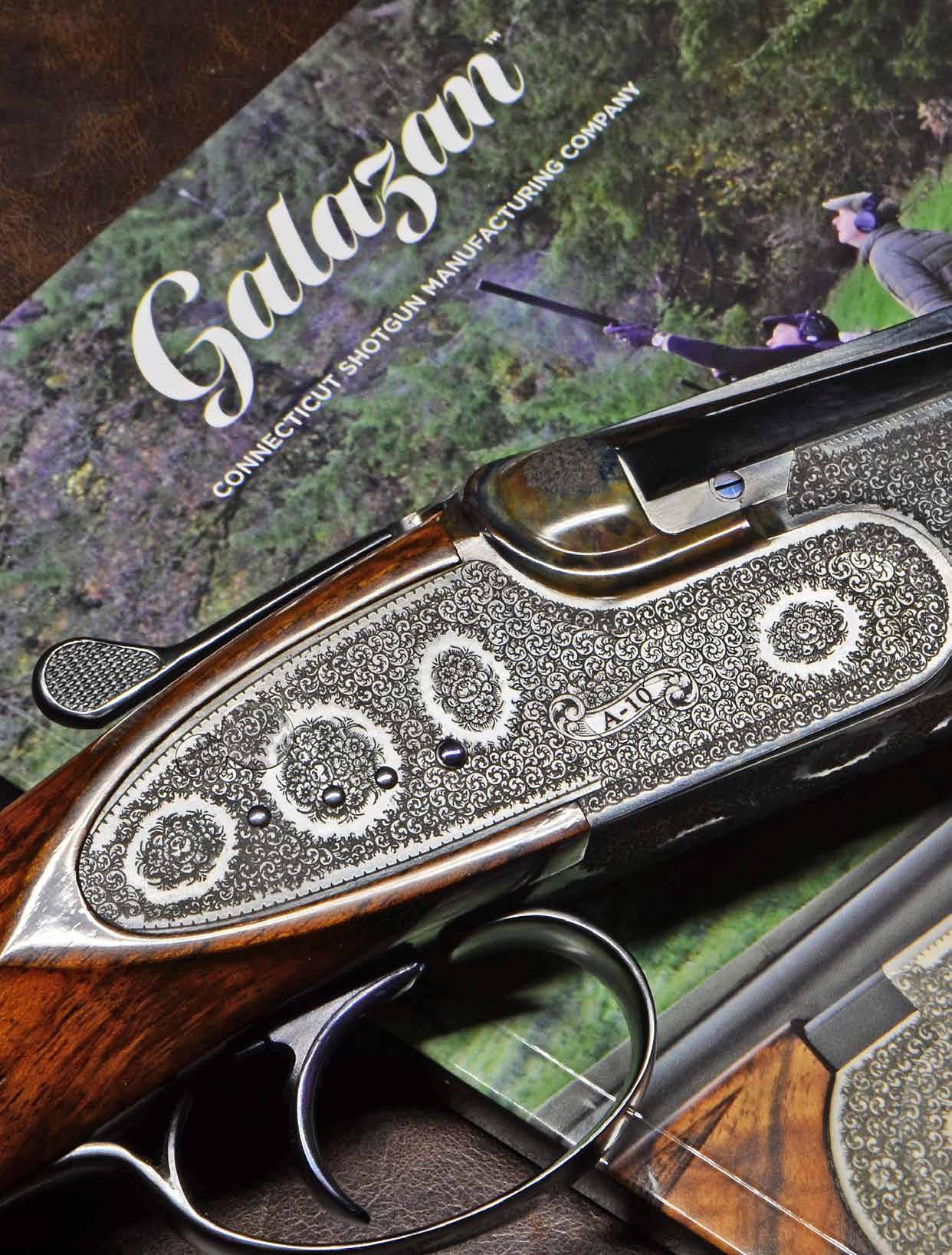
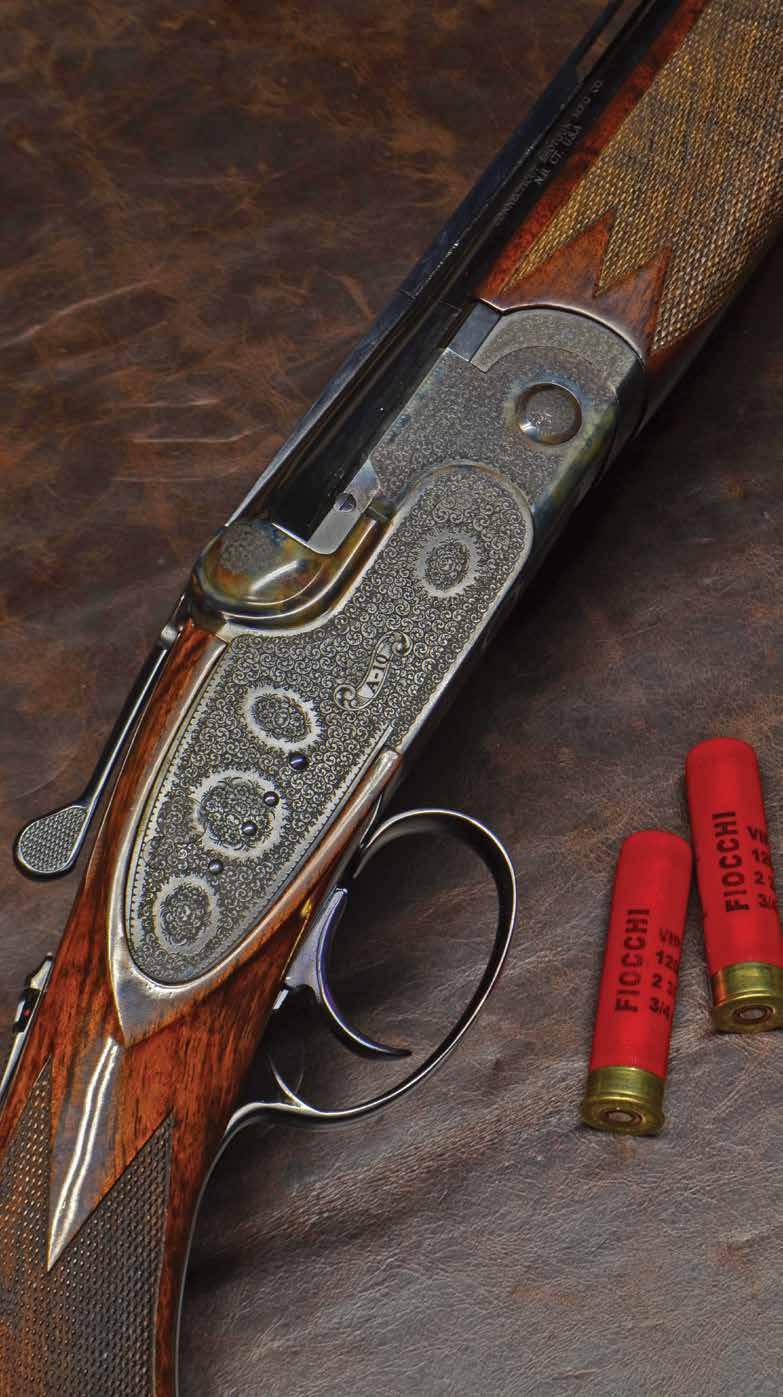
Galazan’s sidelock over/under, the A-10 American, employs slightly smaller frames.
“only custom gun,” he insisted, wanted one that could do everything. This, of course, was a forlorn hope, but he ignored me. His solution was a 12 with 26-inch barrels and 3-inch chambers. Since that required a heavier frame and barrels to pass proof, he ended up with an ill-balanced beast that did nothing very well except kick him into next week.
The problem is, there are at least a dozen important aspects to consider, and another dozen lesser ones. The usual approach of gunmaking companies, aided and abetted by shotshell makers, is to come up with heavier loads—more shot at higher velocities, made possible by lengthening the 12, 20, and .410 (in the past) and most recently, the 28. The 12 was even lengthened to 3½ inches, creating a piece of ordnance worthy of the Marines.
Only the .410 really benefited from this, if going from abysmal to not-quiteso-abysmal can be called progress. Three-inch 20s are, in the words of Michael McIntosh, “the worst abortion ever foisted on the shooting public.”
Three-inch 12s have earned their place, mainly with steel or other non-toxic waterfowl loads, but the 3-inch 28 was a bad idea when it was first tried a century ago and is no better in its more recent incarnation—a century of progress in hulls, wads, and powders notwithstanding.
All right, you ask: What is the ultimate shotgun?
In my not-so-humble opinion, as one who has been pondering the question for more than 60 years, and having tried almost all of the above and even espoused a couple in print, the ultimate shotgun is a 28-gauge over/under with 30-inch barrels, shooting the superb 2¾-inch shells, with ¾-ounce loads. This is the combination that won so many hearts over the years, including (but not limited to) Michael McIntosh, Bob Brister, Gene Hill, Nick Sisley, Charley Waterman, and—last, and certainly least, in that exalted company— your humble correspondent.
In the following pages, you will find me quoting these experts, especially
McIntosh, who knew more about shotguns than just about anyone, and wrote about them better than everyone, before or since.
First, a little background.
For most of my adult life I’ve been a devotee of the 12-gauge, especially lighter guns with light loads that pattern beautifully and are comfortable to carry and shoot. Without question, a 12 with 2¾-inch chambers of proper weight and balance is the most versatile gun we have.
Thirty years ago, a mishap while hunting elk in Idaho left me with a damaged right shoulder, aggravated by taking up boxing late in life, followed by an operation to repair two rotator cuff tears, a detached labrum, and a bone spur, leaving me, in my eighth decade, with an arthritic shoulder that is getting worse and will never get better. Even my beloved 12-gauge side-by-sides were starting to hurt.
A lighter, softer-kicking gun was in order. Settling on the 28 was partly aesthetics and partly ballistics, along with a generous dollop of posthumous advice from Michael McIntosh.
Leave us begin with weight, because most other considerations spring from that.
According to W.W. Greener’s “rule of 96,” a gun should weigh at least 96 times its shot charge to make the pounding tolerable for both gun and shooter. A 28 shooting ¾ ounce of shot, then, can safely (for the gun, at least) weigh as little as 4 1/2 pounds. Just because it can, does not mean it should, but this gives more latitude than any other gauge in letting ideal weight determine the gun’s configuration.
To me, the ideal is 6 to 6½ pounds. That gives enough heft to ensure a smooth swing and dampen recoil, while still being light enough to carry in one hand while parting alder branches with
the other. In effect, you have a 2-pound window within which to work.
(Obviously, some specialty guns, such as those for box pigeon and trap, need to be heavier. We are talking here about field guns.)
With that in mind, we come to barrel length. Tony Galazan, owner of Connecticut Shotgun Manufacturing (CSMC), knows more about building shotguns than anyone else in this country, and is, himself, an excellent shot. He can look at it from both sides. I asked him what he thought to be the ideal barrel length for a 28. His answer? “Thirty inches, although you can go to 32.”
Immediately, some will leap to their feet objecting that 28s have always been light, and they’ve always had shorter barrels, since that’s a formula followed by most gunmakers for a century. The corollary is that short barrels should have open chokes. Taken together, those ideas add up to some very poor guns—
the majority, in fact, of the 28s produced during that time. Charley Waterman, another 28-gauge lover, called them “toy guns you can lose in the folds of your shooting vest.”
Among the ideas set in stone, for buyers and makers, is that the 28 is an ideal starting gun for a youngster or woman, hence the gun needs to be light and handy. This is true enough, as far as it goes. The 28 is ideal for both those purposes (more so than either the execrable .410 or the more peppery 20) but that does not mean it has to be a wispy wand that handles like a swizzle stick.
In my experience, women dislike recoil more than they yearn for light weight, and they’re often stronger than you give them credit for. As for youngsters, if the kid can’t handle 6 pounds and a bit, maybe you should wait a year or two before starting him (or her) with a shotgun.
The primary concern is hitting something and if the shooter misses constantly, he (or she) becomes frustrated and loses interest. Throw in a pounding from recoil to go with all those misses and you’ve probably lost her (or him) for life.
Let me draw on two personal experiences. In 1985, I bought a Browning BS/S 20-gauge with 3-inch chambers and 26-inch barrels. It weighed an ungodly 7½ pounds. Two years later, I
bought my first custom gun, an Armas Garbi Model 100, also in 20, also with 26-inch barrels, but weighing around 6 pounds. The Browning was blocky and leaden, with its beavertail forend and pistol grip, but the Garbi (straight grip, splinter forend) went too far the other way. It carried like a dream, pursuing ruffed grouse in thick brush, but if I ever hit anything meaningful with it, the memory is lost to history.
By now, you may have concluded I’m an unreconstructed side-by-side guy, so why am I promoting a 28-gauge over/ under as the ultimate?
Michael McIntosh and I, long ago, discussed aesthetics in shotguns and reached similar conclusions. We loved side-by-sides, but also liked fine over/ unders. Much depends on the gauge. A 12-gauge is only really graceful in a SxS; O/U 12s look heavy regardless, and 16s almost as much.
In a 20 I can go either way, depending on the gun. I have a 20-gauge O/U Revelation from Connecticut Shotgun that is truly lovely, both to look at and handle.
And the 28? By the time you get down to that size, the barrels resemble pipestems. By placing them one atop the other, you give them some heft and a forend you can grip. The buttstock doesn’t get smaller with the gauge, so what counts is how the barrels comple-
ment it. A 28-gauge Garbi 103 I once owned had a semi-beavertail forend to help flesh out the barrels, and that worked well.
On that same theme, in the unlikely event I ever ordered a .410, it would be an over/under with 32-inch barrels. Since it’s never likely to happen, I can fantasize.
The third essential component in a shotgun is the frame, and frame size plays a major role not only in how the gun looks but in overall weight and balance.
In London’s heyday, 1880 to 1914, there were discrete frames for each gauge, and the same is true now in the Spanish custom trade. In the U.S., with its emphasis on mass production and cost reduction, this approach largely disappeared after 1945 when gunmakers resumed civilian production. They found they could get by with two frame sizes—12s and 16s on the larger, 20s and below on the smaller.
There is nothing really wrong with a 28 built on a 20-gauge frame, since the difference in size is not great, but if you are seeking perfection, you want a 28 on a 28. Galazan’s two sidelock over/ unders, the A-10 American and the still more expensive A. Galazan, employ slightly smaller frames, while the least
expensive Revelation boxlock, introduced in 28-gauge in 2024, is built on the 20. Considering that the Revelation starts at $3,000, the A-10 American at $23,000, and the A. Galazan at about $60,000, it’s easy to see how economics plays a role.
It should be noted, too, that a deeper frame demands a bulkier forend, and over/under forends are already, generally speaking, heftier than necessary.
According to McIntosh, the original Parker used seven or eight different frame sizes, depending how you count them, although the 28 and .410 frames were merely the 20 with more steel removed from the lug slot in the action
bar. This gave those guns a deep profile. Because the frame was wider, the barrels at the breech end were also wider (in the case of the .410, much wider) than required for strength. Combined with the short barrels customarily fitted to such guns, weight distribution and balance were out of whack.
When the Parker Reproduction appeared in the mid-1980s, it was first a 20, and later a combo with 20- and 28-gauge barrels—neither set being very long. It certainly duplicated the original Parker, but also duplicated its faults. This does not stop 28-gauge Parkers from commanding big money, but given their shortcomings I don’t regret not
being able to afford one.
But back to frames and frame sizes.
It’s possible to build larger guns on smaller frames, depending what you want to accomplish. In my decade-long attempt to duplicate the feel and balance of a 1910 Boss side-by-side, I prevailed upon various Basque gunmakers to try different approaches. One was an Arrieta 12 built on a 16-gauge frame, and trim and lovely it was, but with 28-inch barrels (a lost-in-translation error) it was not quite there. Two years later, Grulla Armas built a 12 on a 20-gauge frame, using special steel (F1275) for its 29-inch barrels. This allowed them to be struck with thinner walls and still meet
proof requirements. Since a small frame is not as wide at the fences, the breech end of the barrels is narrower, the walls are thinner, and the whole thing is lighter overall.
There are options at virtually every level, if you can persuade a gunmaker to try it.
Before leaving the subject of frames, a couple of points: First, sizes vary from gunmaker to gunmaker, even for the same gauge. Some are smaller than others, some larger. A 28 on a 20-gauge frame is not necessarily a bad thing if the 20 was slim and trim to begin with. Even a 12-gauge frame can be acceptable, if it is unusually compact. Blaser’s F3 12-gauge frame is only 2.40 inches deep, while CSMC’s Revelation 20 is 2.31, and the A-10 28 2.17. Hang a set of 28-gauge barrels on the F3 and you have a gun, frame-wise, comparable to most 20s.
Frame size is important, but you cannot judge the qualities of a 28 on that alone. One manufacturer’s 28 on a 20 may actually be smaller than another’s 28 on a 28. Each must be judged on its merits.
We now have all the elements to build a 28-gauge to your dimensions, at the weight you want, and the balance that will afford you a smooth swing. Closely related to frame size is stock configuration. Most over/unders today have pistol grips and deep forends— some far too much so, built for games like sporting clays where shooters want
a death-grip on their stock. This places the barrels far above the leading hand, which is a detriment to quick, instinctive, reactive shooting.
Regardless of stock type, the hands need to be aligned, which is why sideby-sides work so well with a straight grip and splinter forend. On a diminutive over/under, such as we are discussing, a gradual pistol grip, such as a Prince of Wales, works very well and balances the necessarily deeper forend. To an extent, frame size dictates forend depth, since the forend iron has to fit the frame, and the wood has to fit the iron. Everything is interrelated.
A gun should have most of its weight between the hands. For a long time, there was a belief that balancing on the hinge pin was ideal, but that’s questionable. Still, the balance point should be close, or maybe a little forward of the pin, giving you a gun with enough weight out front to ensure a smooth swing.
The way to truly gauge balance is to hold the gun in your hands and see how dynamic it feels. If a gun is well balanced, it will feel lighter than it is; if poorly balanced, it will feel heavier.
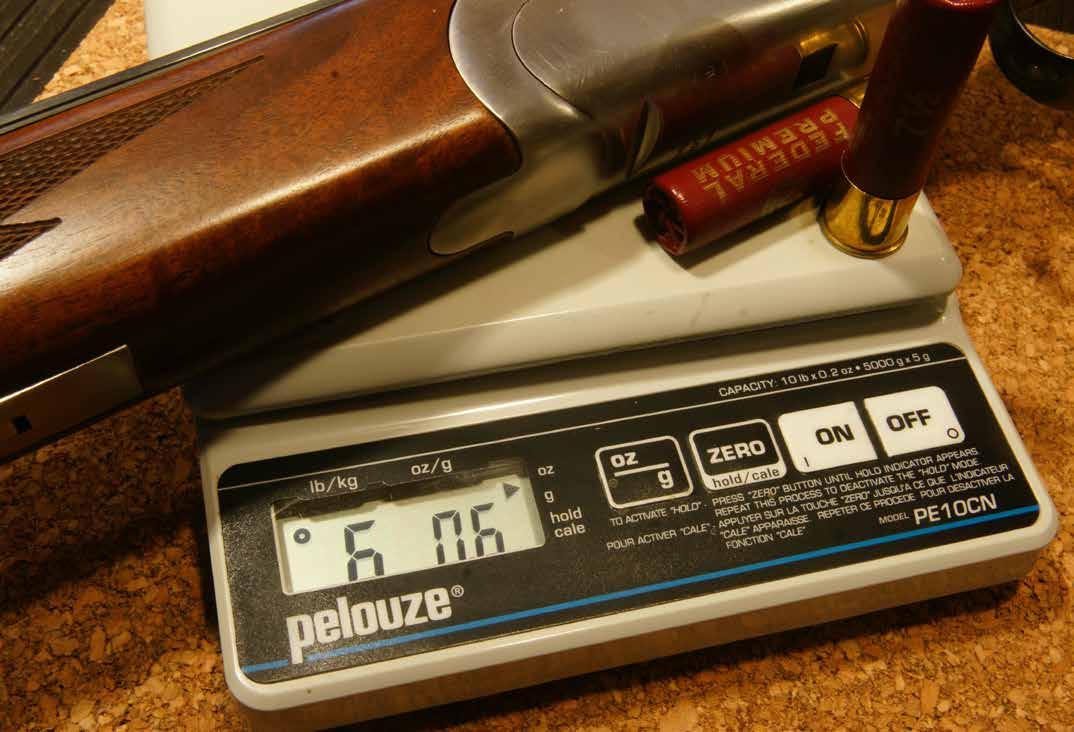
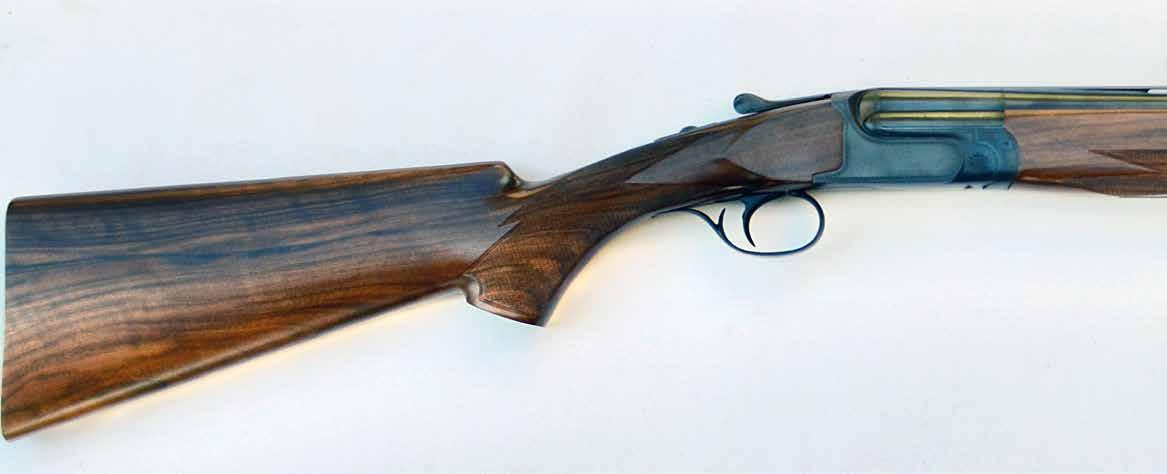
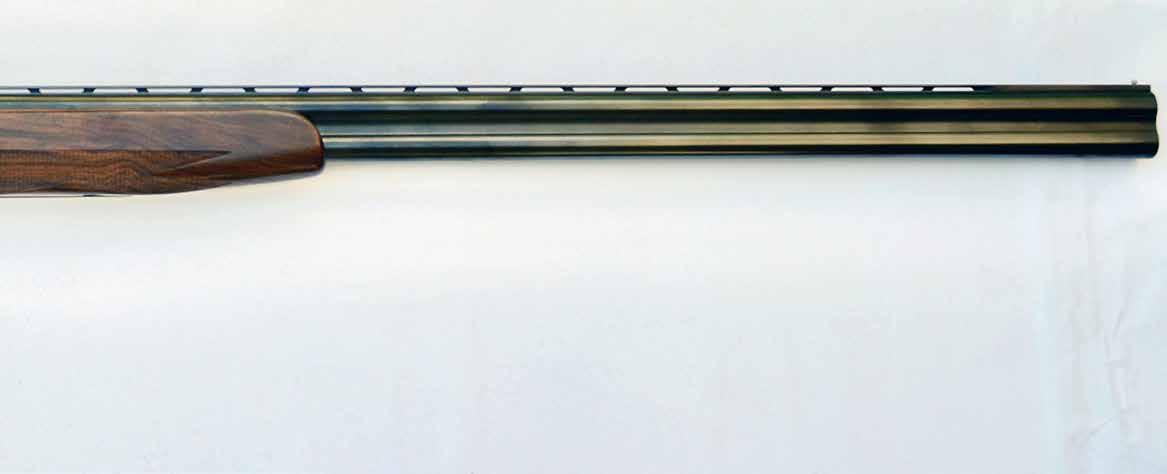
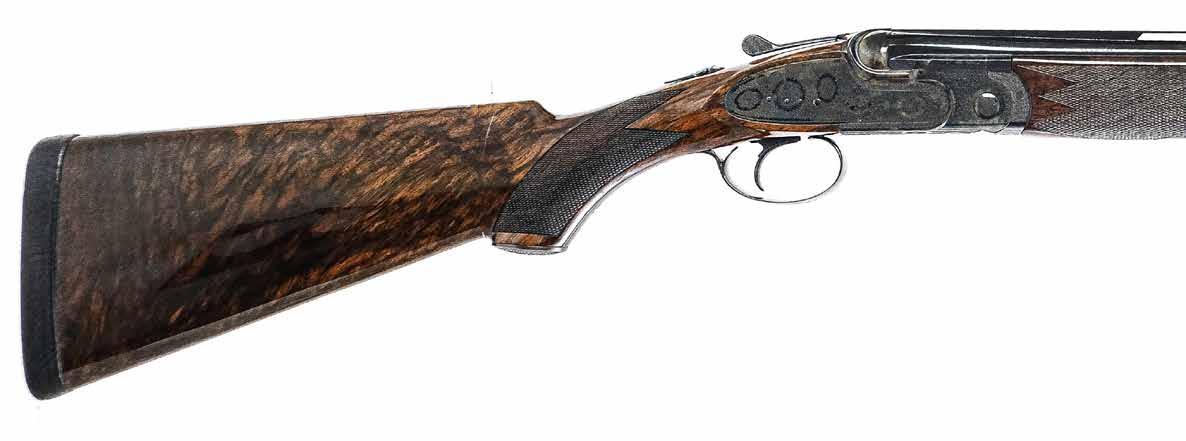
Accompanying this article are photos of my A-10 American. As an experiment, I handed it to several people and asked them to guess the weight. One said six pounds, another a little less, and a third said “five and half?” Its actual weight is 6 lbs., 5 oz., the same as my custom Grulla Armas Windsor Woodcock, and my beloved E.M. Reilly boxlock from the 1890s, both 12-gauges, the former with 29-inch barrels, the latter with 30s.
I repeated the exercise with a cheap
single-barrel 12-gauge. It weighed exactly 6 pounds and had a 3-inch chamber (ouch!), but estimates ranged from 6.5 pounds and up.
This is how balance is measured for real, and hinge pins be damned.
My problem with my long-ago Garbi 20, and an AYA 28-gauge boxlock I had for a while, was that the guns were too light, the barrels too short, and my swing was nonexistent unless I consciously pushed the barrels. That’s a sure-fire formula for stopping your swing, which always results in a miss.
A shotgun that fits you, with the right weight and balance, will do a lot of the work, especially when you’re tired, off balance, or tangled in thorns.
***
As a gauge, the 28 emerged in England in the late 1800s, based more or less on the venerable military bore diameter of .577. This was the caliber of the 1853 Enfield and the Snider-Enfield that followed, and it was only natural to adapt it for a small-gauge shotgun.
Michael McIntosh wrote that Parker made the first American 28 in 1905, leading to the erroneous belief that it had invented it. It did not become an instant hit, neither there nor here.
There were, however, glimmerings. W.W. Greener built a 28-gauge pigeon gun for a youngster who then proceeded to grass 36 out of 50 “best Blue Rocks” in the intensely competitive world of London box-pigeon shooting, and did so at 27 yards rise.
Author G.T. Teasdale-Buckell, writing of James Woodward & Sons, one of London’s premier gunmakers, told how they built a 28-gauge for a client’s son, the client tried it out, and liked it so much he ordered one for himself. This was in the 1890s. After that, they built
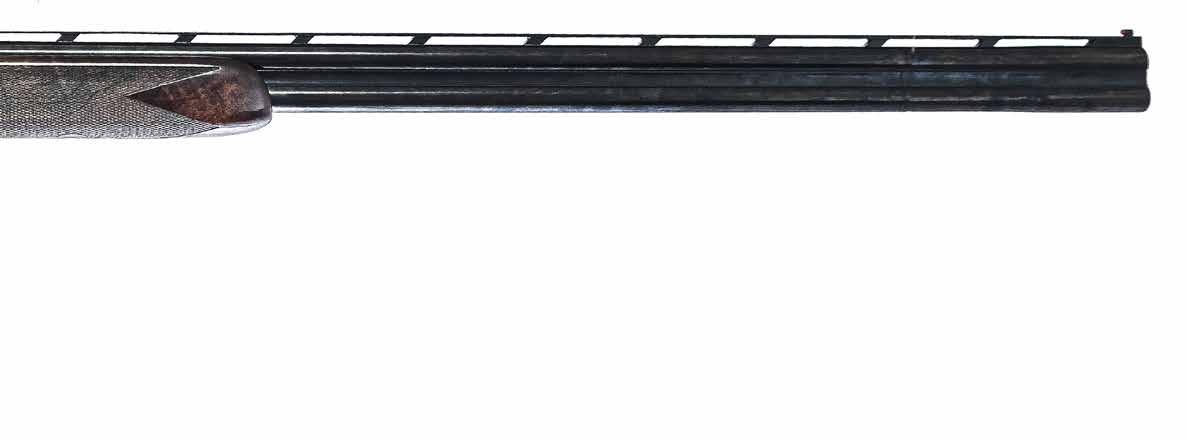
A 28-gauge A-10 American from Connecticut Shotgun Manufacturing Company. Built on a true 28-gauge frame, with 30inch barrels, it weighs 6 lbs., 5 oz. Its Prince of Wales grip aligns the hands nicely.
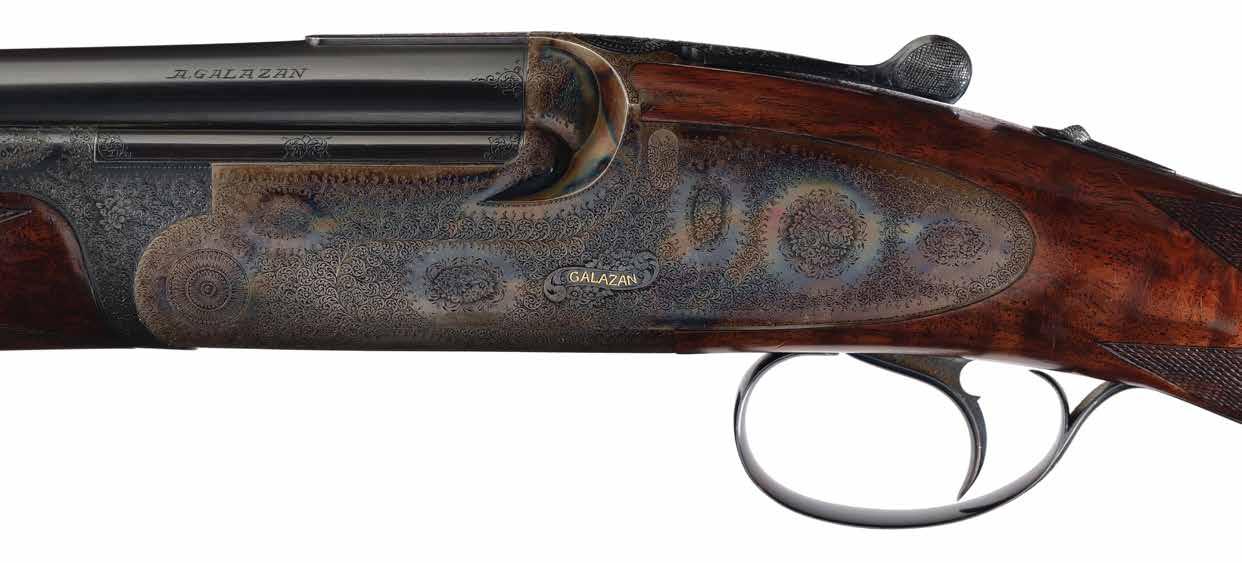

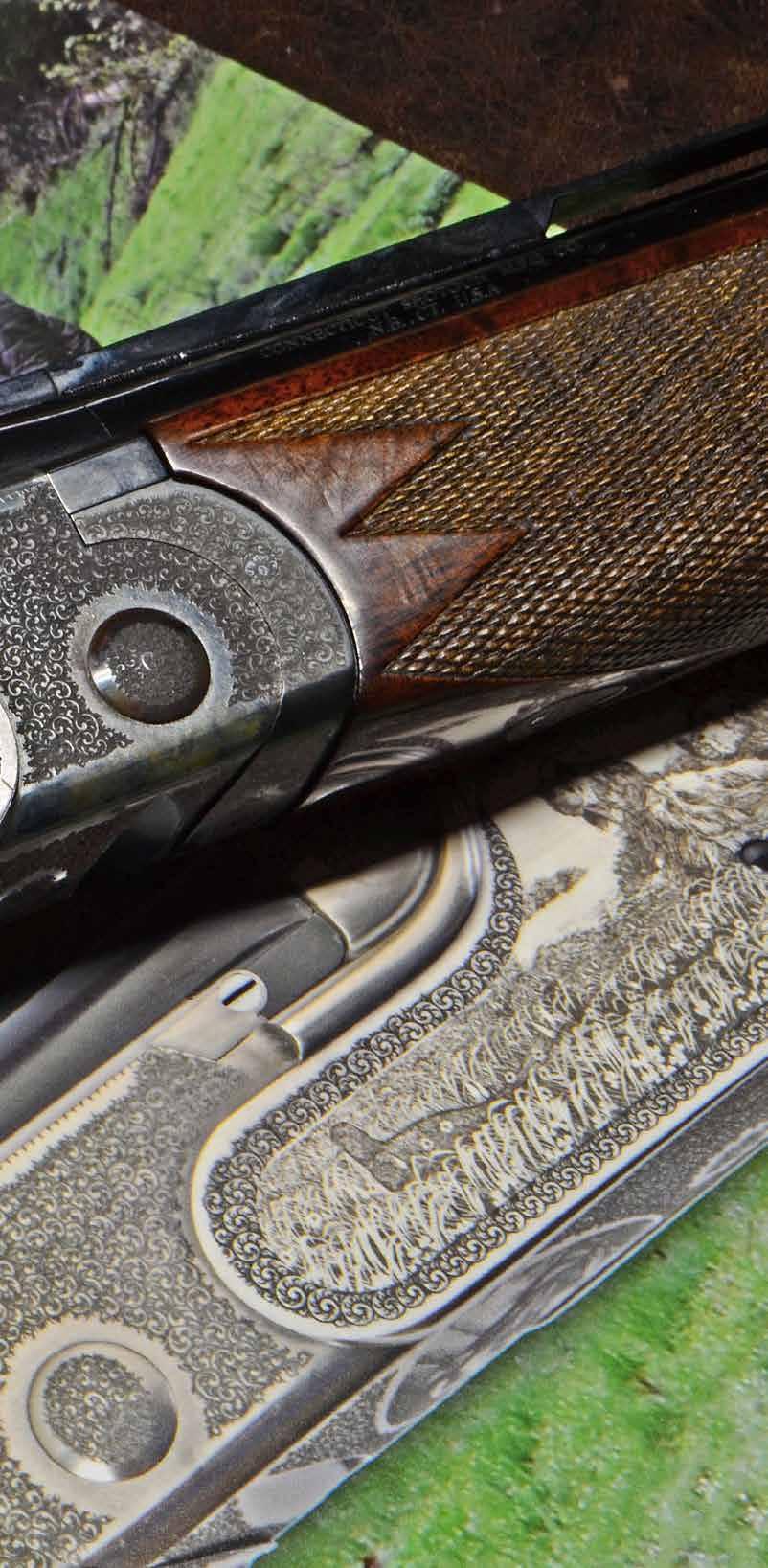
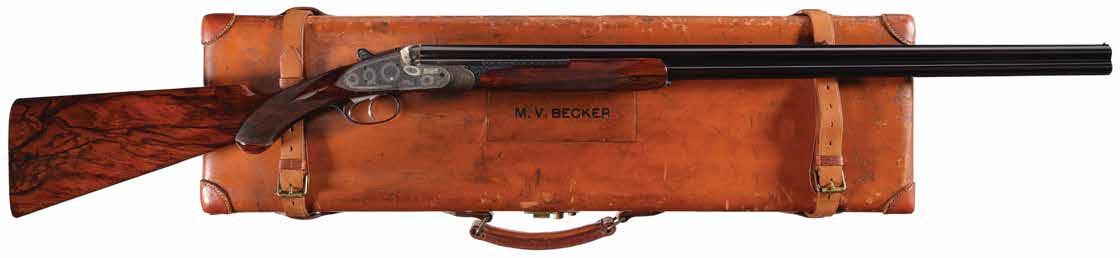
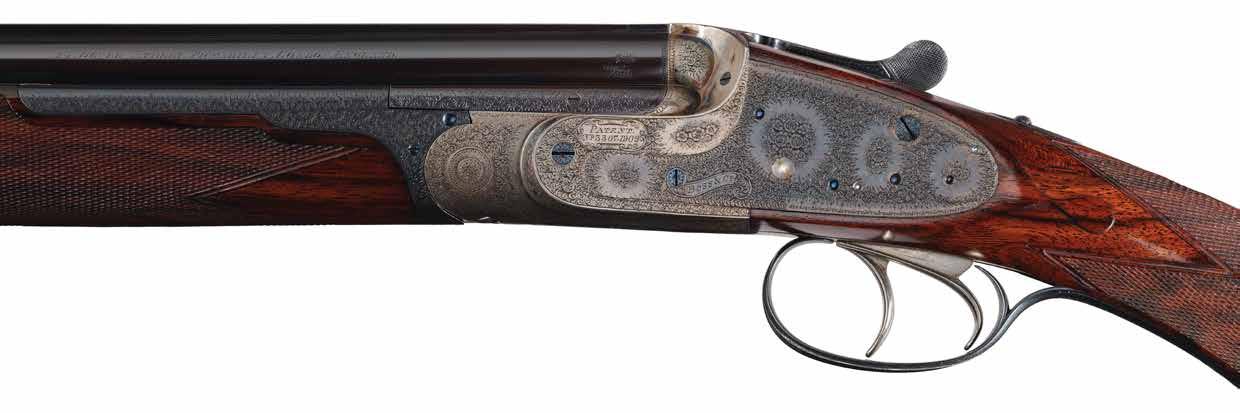
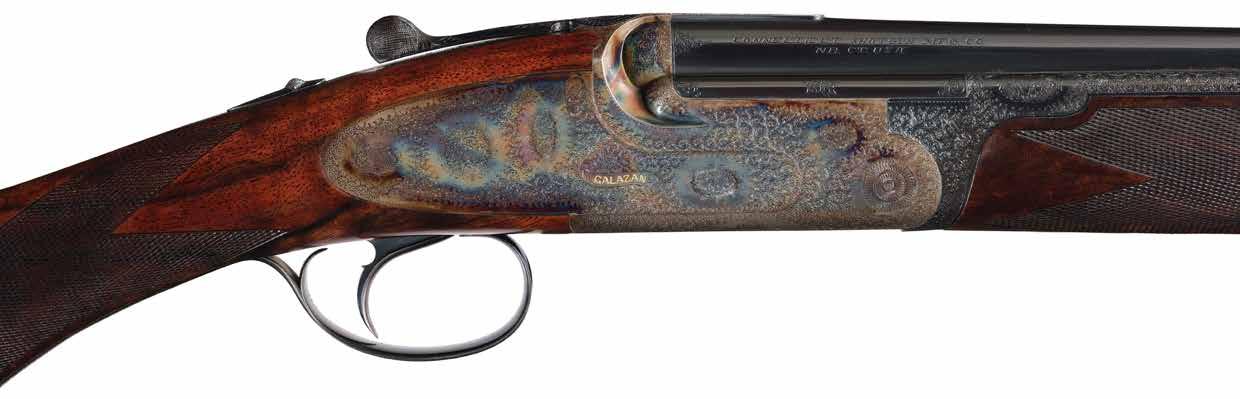
The “A. Galazan,” the gun Michael McIntosh called “unquestionably the finest gun ever made in America” and “the equal of anything made anywhere in the world,” echoes the legendary Boss in configuration and even engraving pattern. It sold at Rock Island in 2024, bringing $26,438—a tremendous bargain for someone. Photos: Rock Island Auction Company
28s to have in stock, but anyone looking for one found them “all sold out.”
That the 28-gauge survived and, eventually, prospered was due more to Skeet shooting than any inherent virtue. When Skeet was developed, William Harnden Foster and his friends decided that, since it was intended to simulate upland bird shooting, it should be shot using upland gauges. The four they chose were the 12, 20, 28, and .410. That the 16 was excluded contributed more than anything to its decline. We win some and we lose some; in this case, we won the 28.
Anyway, the 28 survived and, by the 1950s, with Skeet enjoying an all-time high, it was gaining adherents. Well, sort of.
At first, Skeet shooters had a gun in each gauge; later, the concept of one gun with interchangeable barrels took over, pioneered by Krieghoff in the 1960s, and followed still later by barrel inserts.
In Skeet as in trap, the accumulated effects of felt recoil are a serious consideration; Michael McIntosh, at one time a serious Skeet shooter, reported that some competitors at the higher levels were shooting 20s in the 12-gauge events because, not only was the recoil
less, at Skeet distances, they broke clays just as well. (The longest shot in Skeet is 21-25 yards.) Others had a similar experience with the 28 vis à vis the 20, and were shooting 28s in larger-bore events.
This is not to say a 28 can do everything a 20 can, nor that a 20 can match a 12, but in both cases, if handled correctly they can come very close, and what you lose in pure ballistic performance you can make up in reduced weight and recoil.
Over the years, the writers mentioned above have referred to the performance of the 28 being out of all proportion to its size.
Gene Hill, long-time columnist for Field & Stream: “I’ve long felt the 28 was one of those strange creatures, like the incredible .375 H&H Magnum rifle, that performs a great deal better in the field than can be proved on paper.”
Bob Brister, shooting editor of Field & Stream, and international trap, Skeet, and live-pigeon champion: “The 28 gauge simply kills better than it is supposed to.”
Michael McIntosh: “If you want to see a bird die like it’s been struck by lightning, center it with a 28-bore at any distance out to 35 yards or a bit beyond.”
Charley Waterman: “An exceptionally well balanced cartridge.”
Which brings us to the 28-gauge shotshell itself. The load to which everyone was referring is the standard ¾-ounce at 1,200 feet per second (fps), give or take. Nothing heavier, nothing lighter, nothing much faster or slower.
In shotshell lore, this is known as a “square” load, although it is slightly taller than it is wide. This results in patterns in the ideal shape of a beachball rather than a comet with a long tail (shot string). There are fewer pellets, but they all reach the target at more or less the same time.
Gene Hill compared the 28 to the 375 H&H but I prefer to think of it as the shotshell equivalent of the 250-3000, with the 12-gauge standing in for the 30-‘06. Its performance is out of all proportion to its size.
Looked at differently, imagine you’re shooting a 12 with 1¼ ounces of shot; of that, with a 60-percent or Improved Modified pattern, three-fifths lands inside the proverbial 30-inch circle at 40 yards—or ¾ ounces of shot. The 28-gauge is delivering the killing blow of a 12, without all the out-lying or strungout pellets.
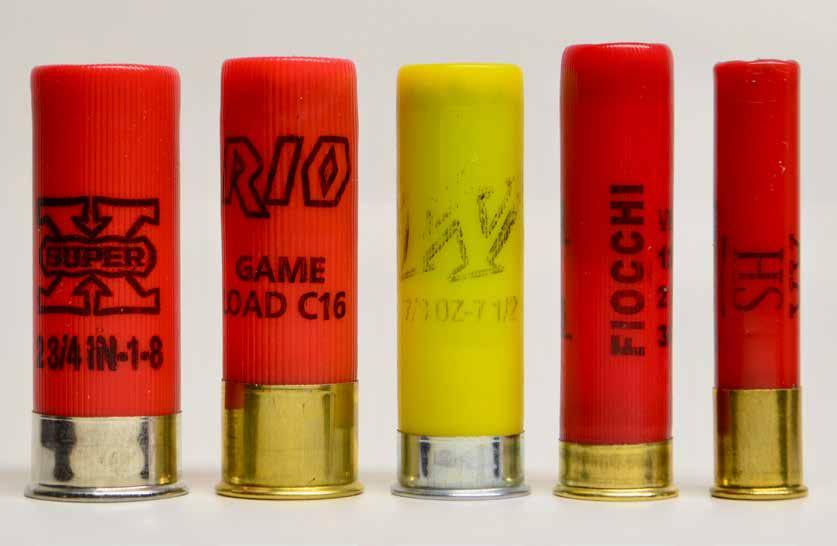
Of course, it’s possible to assemble equally well-balanced loads in a 12- or 20-gauge. In a 20, it would be ⅞ ounce, and in a 12, one ounce. To do that, however, you then need to assemble a gun with the necessary weight and balance to take advantage of it. Taking everything together, nothing matches the 28. There is a caveat to this, and that is the degree of choke.
Many devotees insist the 28 is more sporting than a 12, and maybe it is, but only if you compensate for the lighter load, fewer pellets, and more gaps in between by using a tighter choke—
Modified instead of Improved Cylinder, for example. Otherwise, the reduced pattern density merely increases the chances of wounding and cripples, and there’s nothing sporting about that. Naturally, this means you need to be a better shot, but with all the shooting you’ll do with your treasured new 28-gauge, that should happen on its own. At least, that’s what I’m counting on.
and a lesser name or two.
The prospect cast me back to the 1991 Safari Club convention in Reno. One morning I was wandering the aisles when Michael McIntosh hurried over. “Been looking for you,” he said.
The Rock Island Premier Auction in Texas, in August 2024, boasted an array of 28-gauge over/unders you are unlikely to see again, in one place at one time, in a venue where you could pick them up, handle them, and, yes, lust after them. First and foremost, there was a Boss & Co. over/under—the one to watch—plus an A. Galazan, three Perazzis, a Beretta,
We elbowed our way to a gun dealer’s booth and Michael pulled down an over/ under—a James Woodward 28-gauge, as gorgeous and glorious as that label portends. It was somber and elegant— darkly figured wood, subdued case colors on the scroll-engraved frame— and as understated as anyone could ask. I had never before held such a thing in my hands. Nor had I seen such an asking price: $75,000. And this, remember, was 1991.
That memory remains fresh and, while such impressions magnify with age, I was eager to see how Rock Island’s Boss and Galazan, especially, would stack up.
The other 28s on offer, particularly the
Perazzis, were configured as competition guns, with steeply curved pistol grips and hefty forends. The barrels were suitably long, but had nothing like the feel of the Boss. It had 28-inch barrels with a spare set, built much later, of 24-inchers. Some former owner obviously had money to spend. It was undoubtedly exquisite, but even wearing its longer barrels, at 4 lbs., 15 oz., it felt too feathery.
The A. Galazan, however, was everything I expected. In the early 1990s, as Tony Galazan was really hitting his stride in gunmaking, McIntosh wrote that the “A. Galazan” over/under was “unquestionably the finest gun ever made in America” and “the equal of anything made anywhere in the world.” It’s a sidelock with a rounded action and Boss-style forend iron. These are tricky and expensive, but do wonders to break up the solid profile of an over-under. You find them on only the best guns.
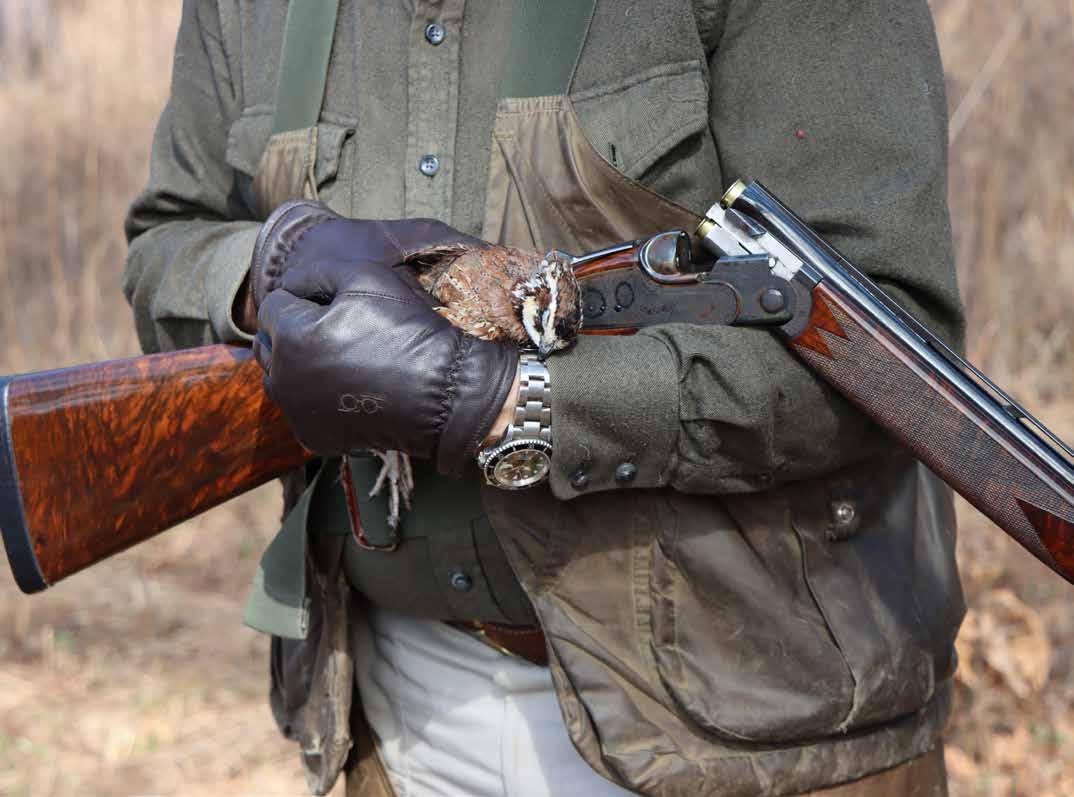
The Galazan had 29-inch barrels, weighed 6 lbs., 1 oz., and handled like a dream. For a while, I hovered nearby and watched others pick up the gun, studying their reactions. All were pretty much like my own: Sheer astonishment.
The A. Galazan has a starting price, new, around $60,000. This one was estimated to bring $27,500 to $42,000, and in the end realized $26,438—for someone, the buy of a lifetime. For the record, the Boss, estimated at $65,000 to $110,000, realized $164,500.
The market for 28-gauge guns is much larger today than it has ever been and, fortunately, the range of available guns, in both quality and price, is also the largest. While many still adhere to the “light weight, short barrels” formula, the advent of choke tubes has at least allayed the problem of getting chokes too open in a barrel too short; as well, while there are not many 28s with factory 30-inch barrels floating around, most at least
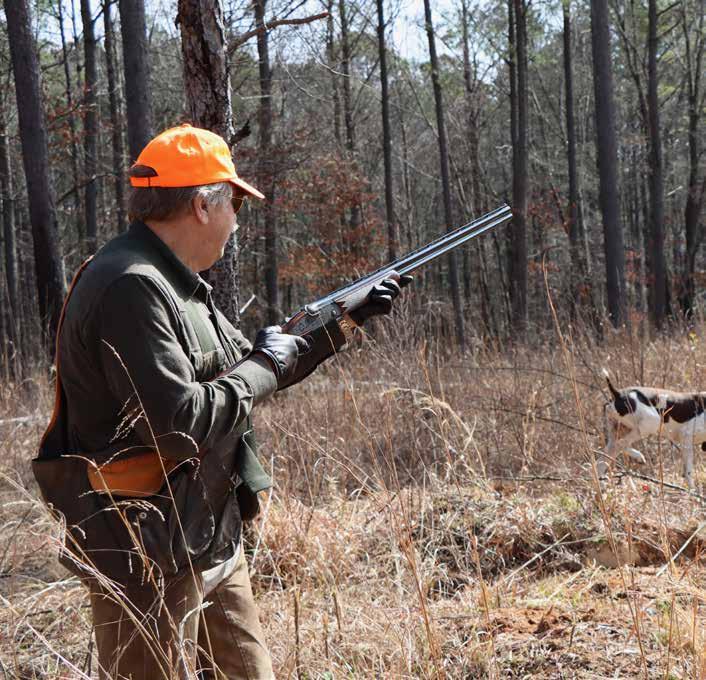
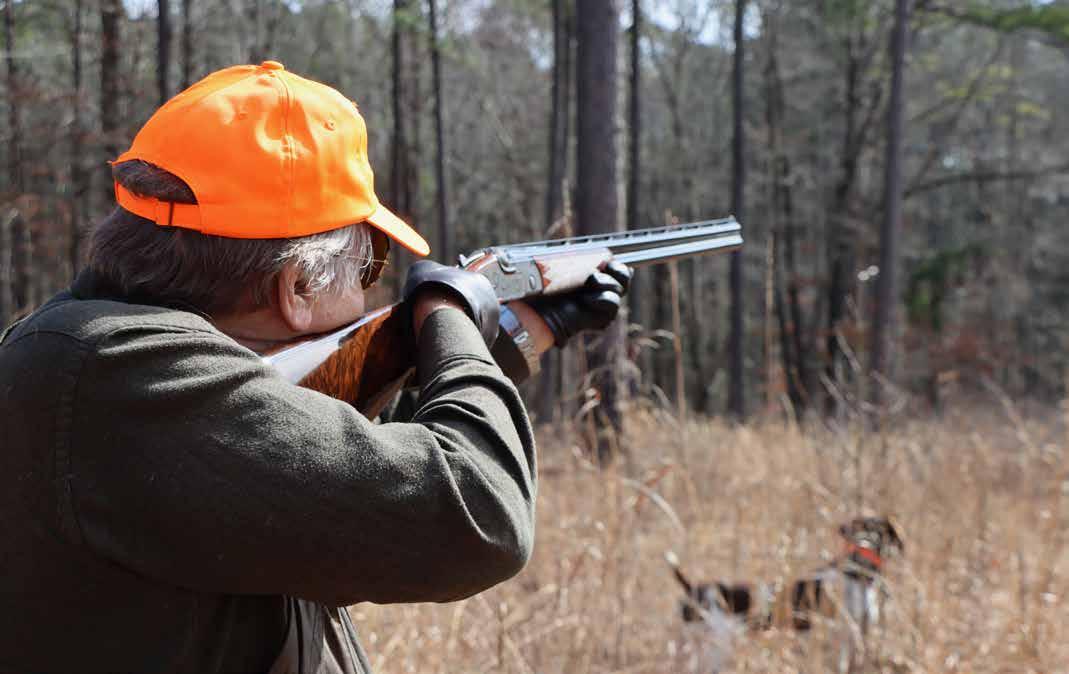
offer 28 inches. Provided that the weight and balance are good, one can live with the deprivation.
Just for fun, I pulled the 1985 Gun Digest off the shelf and started counting. In 10 pages of over/unders, only five companies listed a 28-gauge. One was an el cheapo folding (!) model from Italy at $240, another was a LebeauCourally copy of the Boss from Belgium at $27,500—huge money 40 years ago. The others were Browning, Winchester, and IGA (Brazil). Ten years later, Ruger introduced its 28-gauge Red Label and changed the game, temporarily at least. It was discontinued around 2015.
Fast forward 40 years and the 2025 Gun Digest has seven pages of over/unders (albeit with more guns per page), with two dozen available in 28, not counting different models of the same gun. Some are expensive, some not so much, but the variety is definitely there.
To mention two in particular, Caesar Guerini offers a boxlock with the option of 30- or 32-inch barrels. It’s built on its
20-gauge frame, but that’s not bad since its frames are generally slim and trim. Chapuis offers a gun built on a 28-gauge frame, but offers only 28inch barrels. Having shot one, it’s a shortcoming I could live with. Both the Chapuis and the Guerini start around $6,000.
Right now, though, if I was shopping for my ideal 28-gauge and money was a serious issue (when is it not?) I would be looking at Tony Galazan’s recently introduced CSMC Revelation with its straight grip, slim forend, beautifully rounded frame and 30-inch barrels. At about $3,000, it’s probably the best buy to be had in an over/under, and certainly in a 28-gauge.
If you are feeling wealthier, Connecticut Shotgun’s sidelock A-10 American is a tour de force in American gunmaking. Nothing written here should be taken to mean a 28-gauge over/under is a shotgun that will do everything, from dancing woodcock to incoming geese. Frankly, no such gun exists and the ne-
cessity for heavy loads with non-toxics adds another factor to the equation. We are talking about the gun you automatically pick up unless there’s a pressing requirement to take something else. It’s the gun you carry when you’ve no particular game in mind, just wandering the fields in hope that something edible happens by. More and more, the majority of our shotgunning is under controlled conditions—quail, pheasants and chukars at shooting lodges, and so on, or a variety of clays games. As for uncontrolled ones, such as woodcock, ruffed grouse, and doves? ‘Nigh perfect.
Three-quarters of an ounce of No. 8s, in a compact and deadly pattern, will do nicely for the vast bulk of such shooting. You won’t hit them all, every time, but throw a pair of tighter choke tubes in a pair of 30-inch barrels, diameter .550 inches, and trust me: When you hit them they’ll die cleanly, when you miss they’ll fly on unscathed, and that’s about as good as it gets.
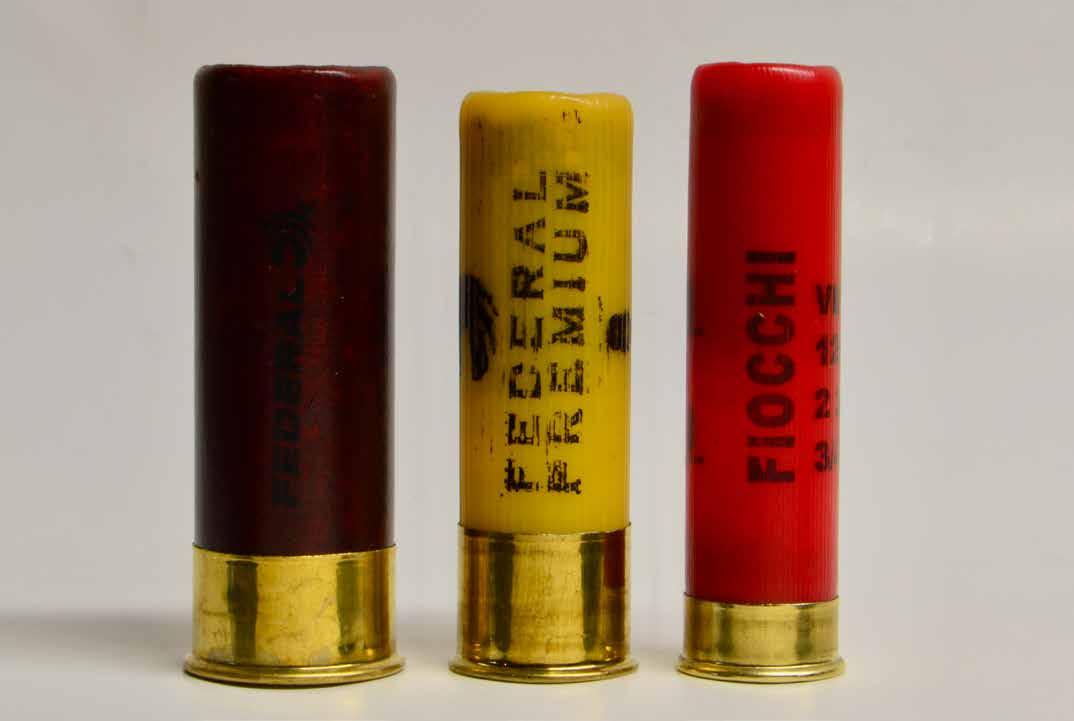
The 12, 20, and 28-gauge, all standard