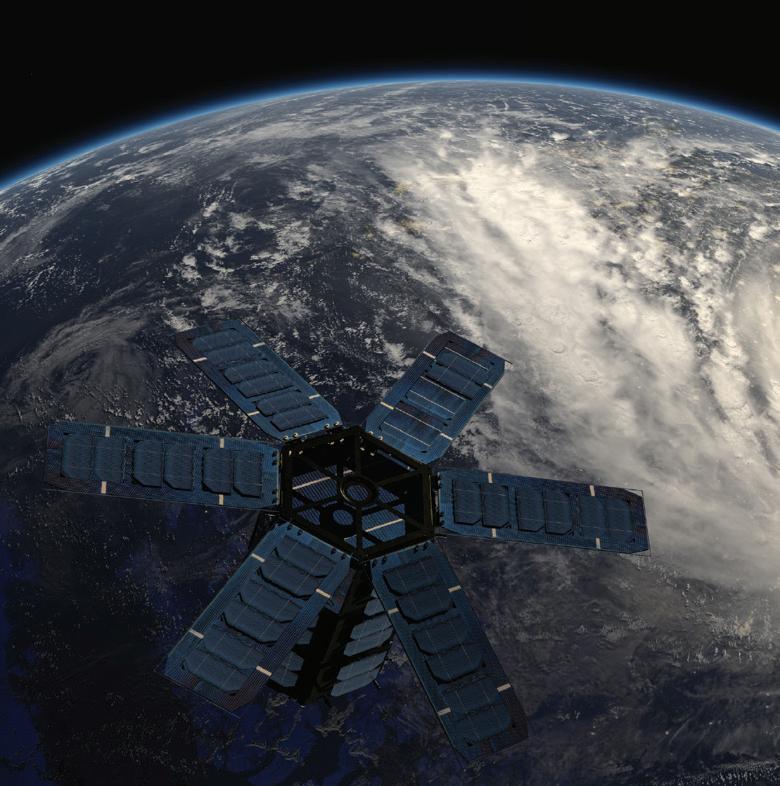
Hevolution, a global non-profit, launched to provide early-stage investments that extend healthy years of life for everyone.
August 2022
Hevolution’s $8.5M grant kick-started the New Investigator Awards to support early-career researchers with the American Federation for Aging Research (AFAR).
May 2023
Hevolution’s $115M grant for the Geroscience Research Opportunities Program funded international pre-clinical projects in aging biology.
November 2023
Inaugural Global Healthspan Summit (GHS), united 2500 global leaders in Riyadh, unveiling ~$100M in grants/ partnerships to propel the aging biology field.
December 2023
Hevolution makes first impact investmentAeovian to advance selective MTORC1 inhibitors to address age-related diseases.
There’s a wide gap between healthspan and lifespan.
Hevolution Foundation was founded to fill it.
April
2024
June 2024
Hevolution makes two additional impact investments: Rubedo (to target pathologic senescent cells); and Tune (to support creating epi-editing drugs that target complex chronic diseases).
Hevolution reached a milestone of $400M+ in funding, grants, and investments, supporting research institutions to advance breakthroughs in aging science.
July
2024
Hevolution makes fourth impact investment: Vandria SA (developing novel therapeutics that target mitophagy).
February
2025
Hevolution hosts 2nd GHS in Riyadh, world’s largest, convening nearly 3,500 global leaders from over 74 countries.
SOUTH AFRICA
The Johannesburg Summit 2025
Published by GT Media Group Ltd.
Produced and distributed by The Global Governance Project, a joint initiative between GT Media Group Ltd, a publishing company based in London, UK, and the G20 Research Group based at the University of Toronto. www.g20.utoronto.ca
The Global Governance Project provides a vital function for private and public sector organisations in support of their governance responsibilities. To carry out executive duties effectively, we must have access to unbiased, objective and independent opinion, based on actual policy set at and influenced by the G20 summits and their leadership.
CEO & Publisher: Khaled Algaay
Co-Editor: John Kirton
Co-Editor: Madeline Koch
Guest Editor: Elizabeth Sidiropoulos
Managing Editor: Jacqueline McGhie
Contact:
GT Media Group Ltd
White Collar Factory, 1 Old Street Yard, London EC1Y 8AF
the views or opinions of the G20 Research Group, University of Toronto or GT Media Group Ltd and must neither be regarded as constituting advice on any matter whatsoever, nor be interpreted as such. The reproduction of advertisements in this publication does not in any way imply endorsement by the G20 Research Group or GT Media Group Ltd of products or services referred to therein.
LEADERS' VIEWS WELCOME
Championing Africa’s voice in global governance
Cyril Matamela Ramaphosa, President, South Africa
Australia’s vision for shared security and sustainable prosperity
Anthony Albanese, Prime Minister, Australia
Rebuilding trust and reforming global governance for a changing world
Giorgia Meloni, Prime Minister, Italy
Germany calls for a stronger, united Europe
Friedrich Merz, Chancellor, Germany
Brazil leads global call for climate action
Luiz Inácio Lula da Silva, BrazilPresident,
Building a fairer, stronger Britain
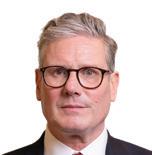
Sir Keir Starmer, Prime Minister, United Kingdom
France calls for renewed global cooperation
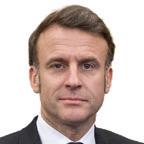
Emmanuel Macron, President, France
Leveraging energy strength, democratic values and strategic alliances, Canada is thriving
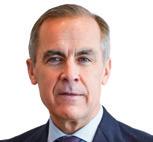
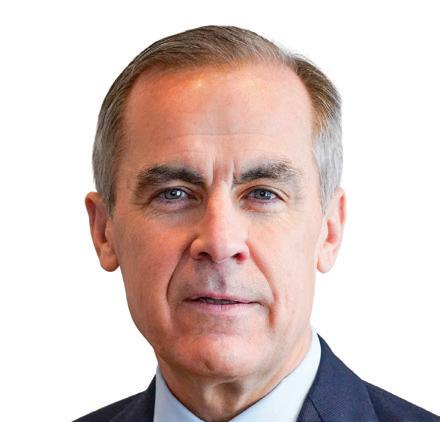
Mark Carney, Prime Minister, Canada
The merits of multipolarity in a changing world
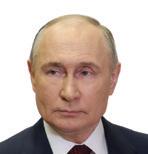
Vladimir Putin, President, Russia
Delivering shared prosperity and justice
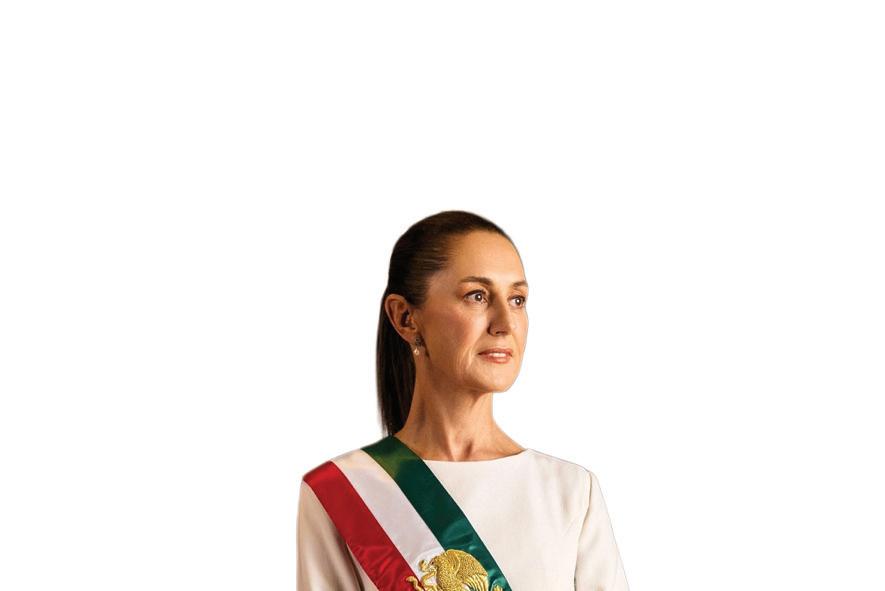
Claudia Sheinbaum, President, Mexico
Defending Europe’s freedom and future
Ursula von der Leyen, President, European Commission
Welcoming America’s ‘golden age’
Donald President,Trump,United States
Saudi Arabia leads global water cooperation
Crown Prince Mohammed bin Salman bin Abdulaziz Al Saud, Saudi Arabia
Building strength, resilience and global leadership
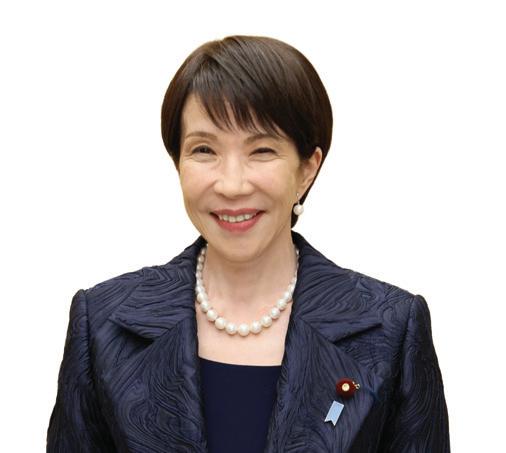
Takaichi Sanae, Prime Minister, Japan
Europe’s choice: Multilateralism over chaos
António Costa, President, European Council
India’s call for inclusive progress
Narendra Modi, Prime Minister, India
Indonesia’s call for hope
Prabowo Subianto, President, Indonesia
Pooling the strength of the Shanghai Cooperation Organization to improve global governance Xi
Choosing reform over decline
Javier Milei, President, Argentina
Building Africa’s future through unity
João Lourenço, President, Angola, and Chairperson, African Union
Building a fairer, inclusive world
Recep Tayyip Erdoğan, President, Türkiye
Advancing democracy and responsible innovation
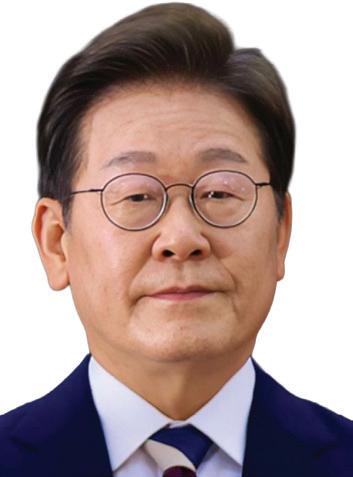
Lee Jae Myung , President, Korea
The G20 Johannesburg Summit: Preserving multilateral cooperation in a fragmented world
Pedro Sánchez, President, Spain
Egypt: Investing in peace and shared prosperity
Abdel Fattah El-Sisi, President, Egypt
The ocean can help us solve global challenges
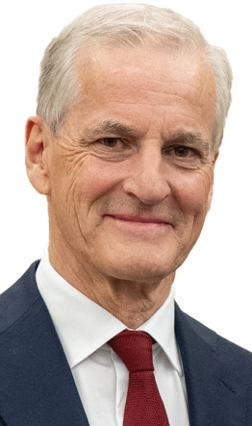
Jonas Gahr Støre, Prime Minister, Norway
Ireland and the G20
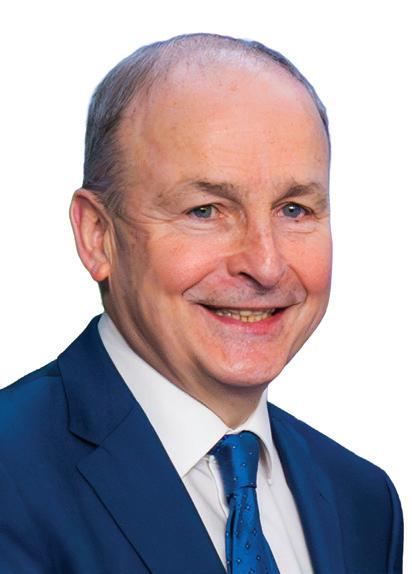
Micheál Martin, Taoiseach, Ireland
Algeria’s call for equity and reform in global governance
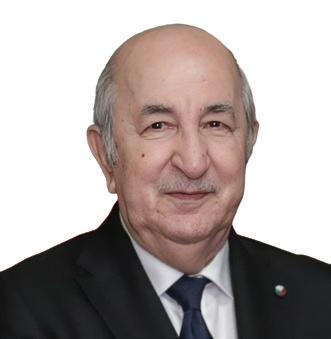
Abdelmadjid Tebboune, President, Algeria
The United Arab Emirates in the G20: Collective action for a sustainable future
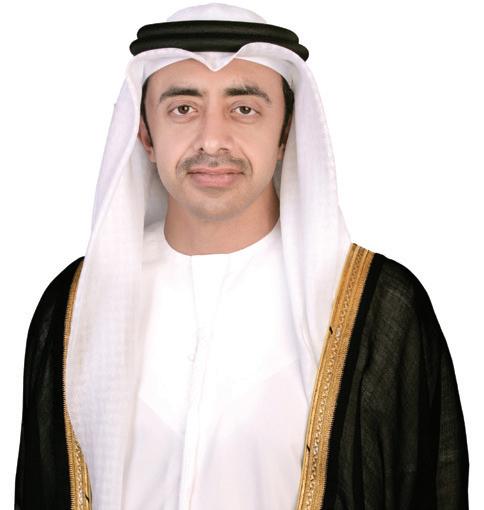
His Highness Sheikh Abdullah bin Zayed Al Nahyan, Deputy Prime Minister and Minister of Foreign A airs, United Arab Emirates
//SHERPA'S VIEWS
From crisis to continuity:
The G20 is building a resilient and sustainable global economy
Cynthia Termorshuizen, Canada’s Deputy Minister for the G7 and personal representative of the Prime Minister for the G7 and G20
//MACROECONOMIC POLICY
G20 performance on macroeconomic policy
Angela Minyi Hou, senior researcher, G20 Research Group
Tackling uncertainty to revive growth
Mathias Cormann, OECD secretary general
//FINANCIAL STABILITY
Strengthening global financial resilience: The FSB and G20’s shared mission
Andrew Bailey, chair, Financial Stability Board
Financial risks and geopolitical uncertainty
Chiara Oldani, lecturer, monetary economics, Università degli Studi della Tuscia
//TRADE AND INVESTMENT G20 performance on trade
Joanna Davies, senior researcher, G20 Research Group
Facilitating secure and efficient global trade requires the steady hand of customs
Ian Saunders, secretary general, World Customs Organization
African trade policies in Mr Trump’s world
//DEVELOPMENT AND DEBT RELIEF
G20 performance on development
Sonja Dobson, research associate, G20 Research Group
From South Africa to the United States: How two G20s can address the issues of debt and fiscal stress constraining global growth
Vera Songwe, chair, Liquidity and Sustainability Facility
//DIGITALISATION AND ARTIFICIAL INTELLIGENCE
G20 performance on digitalisation
Maria Zelenova, senior researcher, G20 Research Group
Building an AI economy that works for all Doreen Bogdan-Martin, ITU secretary general
Towards a Johannesburg declaration on AI governance
Chris Alden, professor of international relations, LSE, and Kenddrick Chan, LSE IDEAS
Ensuring the Global South has a meaningful place in the AI race
George Takach, author, Cold War 2.0
//LABOUR AND EMPLOYMENT
Prospects for the G20’s Johannesburg Summit
John Kirton, director, G20 Research Group
Africa’s voice at the G20: Will Johannesburg deliver?
Elizabeth Sidiropoulos, chief executive, and Krissmonne Olwagen, G20 research fellow, South African Institute of International A airs
Peter Draper, executive director, Institute for International Trade in the School of Economics and Public Policy, University of Adelaide, and Andreas Freytag, professor of economics, Friedrich Schiller University Jena
G20 performance on labour and employment
Eisha Khan, senior researcher, G20 Research Group
Investing in inclusion: Building decent work and social protection for all
Gilbert Houngbo, director-general, International Labour Organization
//GENDER EQUALITY
G20 performance on gender equality
Julia Kulik, director, strategic initiatives and public engagement, G20 Research Group//TOURISM, TRAVEL
//TOURISM, TRAVEL AND CULTURE
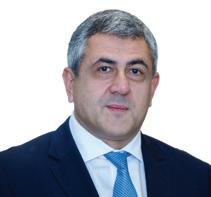
Solidarity, equality, sustainability: Reimagining tourism for a resilient global future
Zurab Pololikashvili, secretary general, UN Tourism
//ADVOCACY
Africa united WTM Africa’s role in regional integration through tourism
2 SUSTAINABILITY
//CLIMATE CHANGE
G20 performance on climate change
Brittaney Warren, senior summit accountability researcher, G20 Research Group
//ADVOCACY
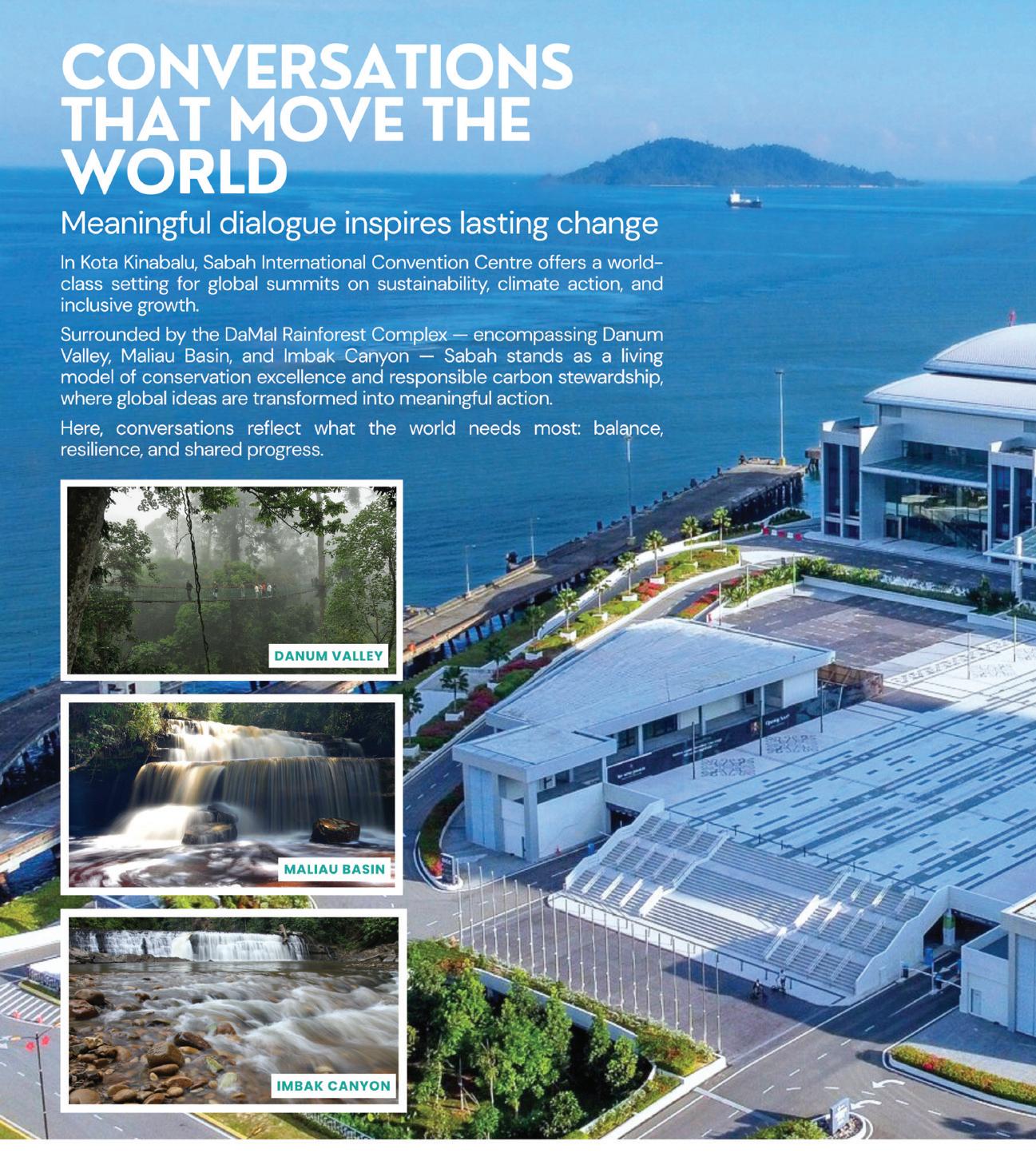
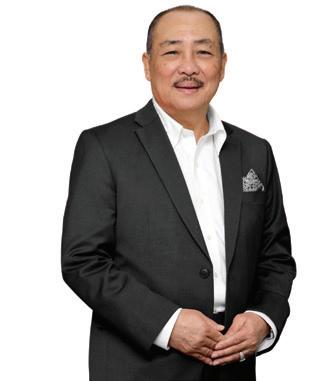
Sabah’s living blueprint for a sustainable planet
Datuk Seri Panglima Haji Hajiji Haji Noor, Chief Minister of Sabah, Malaysia
From observation to adaptation: Empowering countries to act
Celeste Saulo, secretary general, World Meteorological Organization
Rethinking adaptation funding for a fairer, smarter future
Gautam Jain, senior research scholar, Columbia University’s Center on Global Energy Policy, and Je rey
Schlegelmilch, director, National Center for Disaster Preparedness, Columbia Climate School
//ENVIRONMENT
G20 performance on environment
Siobhan Mehrotra, senior researcher, G20 Research Group
//ADVOCACY
Precision for progress: Building a sustainable future through innovation
Sébastien Dui, founder and CEO, SureFlow
The G20 Johannesburg Summit is an opportunity to act for people and planet
Astrid Schomaker, executive secretary, Convention on Biological Diversity
//ENERGY G20 performance on energy
Ella Kokotsis, director of accountability, G20 Research Group
//INTERVIEW Powering an equitable energy future
Interview with Francesco La Camera, director-general, IRENA
//CRITICAL MINERALS Towards an international materials agency: Filling the global governance gap on critical minerals
Patrick Schröder, senior research fellow, Chatham House
//INTERVIEW Ensuring a just transition for critical minerals
Interview with Nozipho J. Mxakato-Diseko, former co-chair, Panel on Critical Energy Transition Minerals
A critical minerals framework for a fair and just transition
Kathryn Sturman, Sustainable Minerals Institute, e University of Queensland
//DISASTER RESILIENCE AND RESPONSE
//INTERVIEW Investing in prevention to secure the future
Interview with Kamal Kishore, special representative of the United Nations Secretary General for Disaster Risk Reduction
Africa must champion climate resilience and adaptation
Jean Chrysostome
Ngabitsinze, director-general, African Risk Capacity Group
An early warning for the G20: Turning data into decisive action on disaster resilience
Jessica Rapson, research associate, G20 Research Group
//HEALTH G20 performance on health
Natasha Pirzada, senior researcher, G20 Research Group
//ADVOCACY
Health as an economic priority – building on the momentum of the G20 South Africa presidency
David Reddy, directorgeneral, International Federation of Pharmaceutical Manufacturers and Associations (IFPMA), Bada Pharasi, former CEO, Innovative Pharmaceutical Association South Africa (IPASA)
//ADVOCACY
Building new bridges to overcome contradictions in global health
Axel Radlach Pries, President, World Health Summit
//ADVOCACY Challenges for global health at the Johannesburg Summit – facing the paradigmatic shift
Ilona Kickbusch, founding director, Global Health Centre, Graduate Institute of International and Development Studies
//ADVOCACY
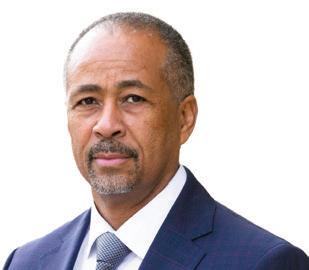
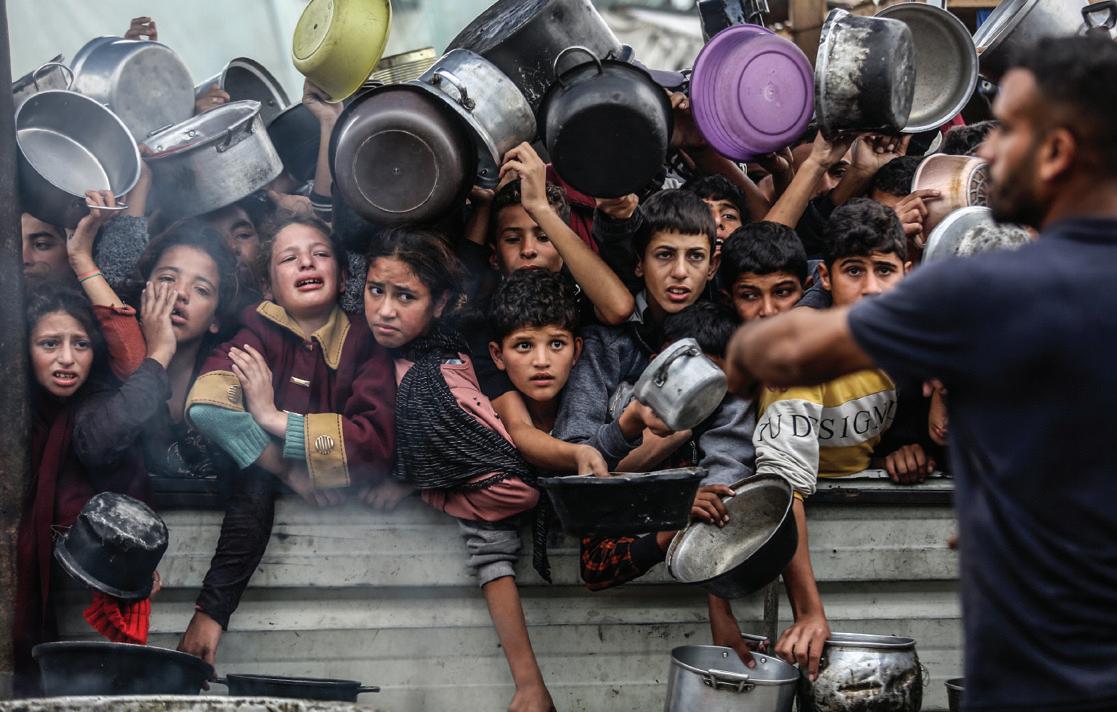
Ending neglected tropical diseases for stronger communities, health systems and economies
Solomon Zewdu, CEO, e END Fund
//FOOD SECURITY
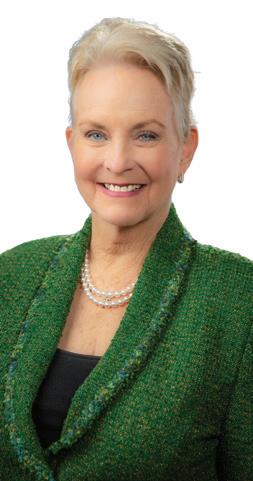
A world on the brink of hunger: Why G20 action cannot wait
Cindy McCain, executive director, World Food Programme
Fixing the food system for global nutrition security
Anna Taylor, executive director, e Food Foundation
//INFRASTRUCTURE G20 performance on infrastructure
Julia Tops, senior researcher, G20 Research Group
Innovative instruments for infrastructure progress: Mobilising the private sector
Jane Jamieson, program manager, Public-Private Infrastructure Advisory Facility and Quality Infrastructure Investment Partnership, World Bank Group
//HOUSING G20 performance on housing
Kathryn Kotris, researcher, G20 Research Group
Breaking the cycle of poverty and inequality through housing
Anacláudia Rossbach, United Nations undersecretary-general and executive director, UN-Habitat
Fortifying the fight against illicit finance
Elisa de Anda Madrazo, president, Financial Action Task Force
Strengthening multilateral law and enforcement to confront global threats
Valdecy Urquiza, secretary general, Interpol
Bridging the illicit finance gap in the Global South
Denisse Rudich, director, G20 and G7 Research Groups (London) and CEO of Rudich Advisory
Fighting financial crime is a growth strategy
Ixart Miquel-Flores, European Central Bank and the Frankfurt School of Finance and Management
G20 performance on international financial institutional reform
Maria Fernanda Erthal, researcher, G20 Research Group
South Africa’s G20 presidency: Performance and prospects for the Johannesburg Summit
Mahek Kaur and Irene Wu, co-chairs of summit studies, G20 Research Group
South Africa’s partial G20 success in 2025
Daniel Bradlow, professor and senior research fellow, Centre for Advancement of Scholarship, University of Pretoria
Back to the future for America’s G20 in 2026
Mark Sobel, US chair, OMFIF
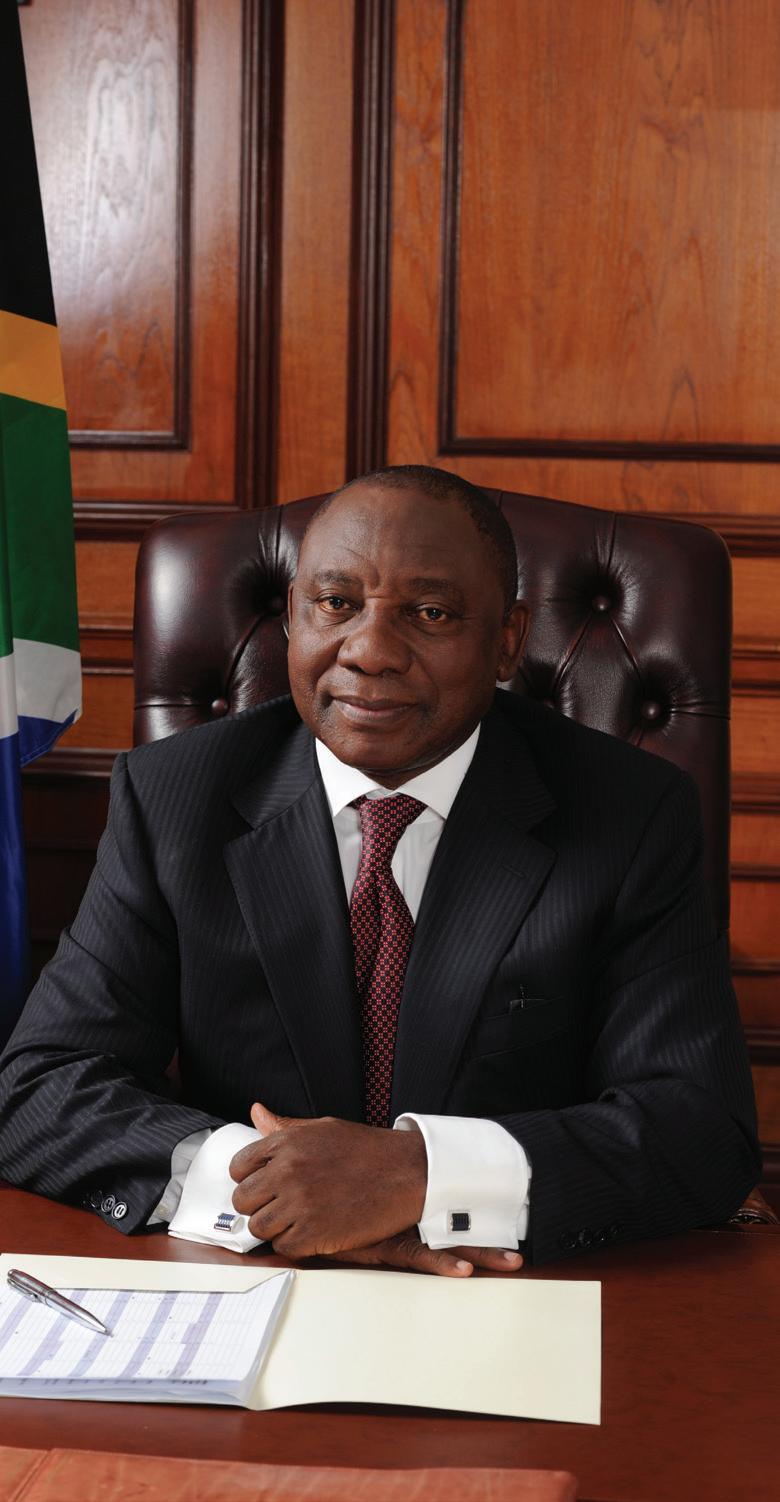
Championing Africa’s voice in global governance
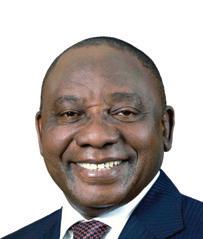
Cyril Matamela Ramaphosa, President, South Africa
South Africa's G20 presidency is a defining moment not just for the country, but for the African continent. As G20 president, South Africa is uniquely positioned to champion the priorities of emerging economies and to drive the African development agenda within the G20 framework.
The G20 is an important vehicle to amplify the voices of emerging economies and champion a global agenda rooted in sustainable development and inclusive progress. South Africa aims to foster collaborative solutions that reflect the shared aspirations of developing economy countries, while reshaping the global discourse around equity, resilience and sustainability.
When South Africa assumed the G20 presidency in December 2024, it responded to the precarious global climate with the theme 'Solidarity, Equality and Sustainability'.
The G20 is the premier forum of economic cooperation, concerned with the stewardship of the global economy, especially during crises such as the 2008 global economic crisis and the Covid-19 pandemic. The G20 is not an alternative to the United Nations but an informal grouping complementing the work of the UN. This has enabled the G20 to be agile during times of crisis and a catalyst for change in the global governance system.
At the core of our presidency is how the G20 should collectively respond to create an environment of inclusive
economic growth, reduced inequality and sustainable development, especially in the Global South and the African continent. South Africa has built on the developmental agenda advanced by the presidencies of Indonesia, India and Brazil.
The strategic priorities of South Africa’s G20 presidency include:
l Strengthening disaster resilience and response: Calling for global cooperation–including financial institutions and the private sector–to scale up post-disaster reconstruction.
l Ensuring debt sustainability for developing economies: Advancing solutions for high deficits and liquidity challenges, extending debt relief and addressing the cost of capital.
l Mobilising finance for a just energy transition: Seeking increased climate finance flows to developing economies, strengthening multilateral development banks and leveraging private capital for initiatives like the Just Energy Transition Partnership.
l Leveraging critical minerals for inclusive growth: Promoting value addition near extraction sites and developing low-carbon manufacturing chains. South Africa aims to champion the use of critical minerals as engines for growth and development in Africa.
“At the core of our presidency is how the G20 should collectively respond to create an environment of inclusive economic growth, reduced inequality and sustainable development, especially in the Global South and the African continent”
We have also established three task forces focusing on inclusive economic growth, industrialisation, employment and reduced inequality; food security; and artificial intelligence, data governance and innovation for sustainable development.
We are working with the African Union, now a member of the G20, to amplify Africa’s voice in global economic governance, ensuring that the development priorities of the African continent and the Global South are firmly on the G20 agenda.
To translate policy frameworks into impact, South Africa’s presidency is championing an elevated and broadened Compact with Africa initiative, driven by the AU’s Agenda 2063.
Following Brazil’s example, South Africa will host a G20 Social Summit, expanding outreach beyond the established G20 engagement groups to civil society organisations, think tanks and academia from across the world.
The challenges confronting the world can only be resolved through cooperation, collaboration and partnership. South Africa has sought to play a bridge-building role during its presidency, addressing geopolitical tensions in an effort to reach consensus on the G20’s priorities and deliverables.
We believe we can deliver a transformative G20 presidency and leave a permanent legacy for the African continent, the Global South and the global community of nations.
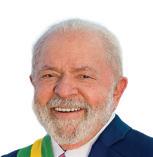
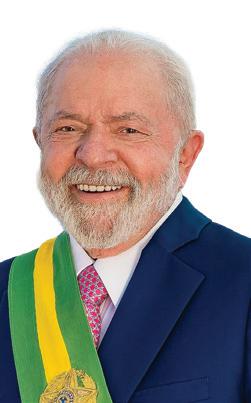
Brazil leads global call for climate action
The concrete fact is that at every COP [Conference of the Parties] we attend, many decisions are made, but they are not implemented. Few countries work hard to comply with the decisions…
Therefore, we must have clarity on how we will conduct ourselves at this COP [in November at Belém]. This COP is set to take place in the Amazon because many people give opinions about the Amazon, but few truly know it. And we want people to get to know the Amazon, to understand that 50 million people live across these eight countries. We want people to learn the lesson that beneath every tree canopy, there is an Indigenous person, an extractor, a rubber tapper, an angler, a small-scale rural worker. And these people must survive.
And those who believe in the importance of keeping the forest standing must help provide the resources so that we can preserve it… Brazil has already submitted its NDCs [Nationally Determined Contributions]. And we have done so with the expectation that all countries will arrive presenting their own NDCs…
working to expand funding beyond the 300 billion dollars negotiated at the COP in Baku.
In Belém, we will launch the Forever Tropical Forests Fund, an innovative mechanism that will provide compensation to countries that keep their forests standing…
It will be time for world leaders to show whether they are truly committed to the future of the planet…
We need a new global governance. If the United Nations is the space we created to address the most important issues facing humanity, it is there that climate change must be addressed.
If each country does its part, we will manage to get there…
We have been working on interesting proposals. We are proposing a fund to keep the forests standing, and I want to see which countries are willing to contribute so that we can maintain them…
The most promising path is that of diversifying our energy sources… Decarbonization is not a choice; it is increasingly becoming a necessity.
The Brazilian Presidency [of COP] has launched four dialogue circles.
The Circle of Presidents from previous COPs is committed to ensuring that the new Nationally Determined Contributions meet the goals of the Paris Agreement.
The Circle of Finance Ministers is
We will work to establish a Climate Council capable of mobilizing countries to fulfill their commitments…
The question is whether these people are willing, at least, to help finance this. So that they can show whether they truly want to ensure that the climate does not allow warming beyond one and a half degrees.
Statement to civil society, Amazon Cooperation Treaty Organization Summit, 22 August 2025
We cannot speak of sustainable development without including the ocean. Without protecting it, we cannot effectively combat climate change.
The survival of three billion people depends directly on marine resources.
The ocean is the planet’s main climate regulator, thanks to the entire chain of life it sustains…
Preventing the oceans from becoming a stage for geopolitical disputes is an urgent task in our quest for peace.
Canals, gulfs, and straits must bring us together – not drive us apart.
Curbing a predatory race for seabed minerals requires strong support for the International Seabed Authority…
Brazil is committed to ratifying the High Seas Treaty later this year to ensure the
transparent and shared governance of biodiversity beyond national jurisdictions…
We take pride in being an oceanic nation.
Brazil’s maritime territory covers 5.7 million square kilometers – an area comparable in size to the Amazon.
That is why we call it the Blue Amazon.
The analogy between the forest and the sea goes beyond the natural wealth they both harbor, or the cultural heritage of the peoples who depend on and care for these biomes.
Both Amazons are suffering the impacts of climate change.
Tropical forests are being pushed toward their tipping point.
The ocean is running a fever.
In just one year, the average sea temperature rose by nearly as much as it had over the previous four decades combined.
Science has proven that the cause of this illness is global warming and the continued use of fossil fuels.
Over the past ten years, the world has produced more plastic than in the entire previous century.
Plastic waste accounts for 80% of all marine pollution.
Saving this biome requires renewed dedication to the implementation of SDG [Sustainable Development Goal] 14 and the Paris Agreement.
Brazil will highlight ocean conservation and sustainable use at COP30, as we did in our Nationally Determined Contribution…
In addition to ending deforestation by 2030, we will expand our protected marine areas from 26% to 30%, meeting the target of the Global Biodiversity Framework.
We will also implement programs dedicated to mangroves and coral reefs, and we are formulating a national strategy to combat plastic pollution in the ocean…
We are promoting sustainable fishing and combating illegal activities that threaten this vital sector for the food security of our population…
Together with the United Nations, Brazil will launch a “Global Ethical Balance” to mobilize thinkers, artists, intellectuals and religious leaders, youth, women, Indigenous peoples, traditional communities, and people of African descent in the lead-up to COP30.
We need to build a great wave to shape a fairer and more sustainable future. Speech at the UN Ocean Conference, Nice, France, 9 June 2025
Photo: by Palácio do Planalto from Brasilia, BrasilFoto Oficial do Presidente da República, Luiz Inácio Lula da Silva
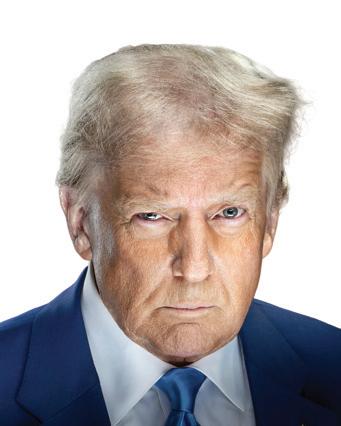
Welcoming America’s ‘golden age’
America is blessed with the strongest economy, the strongest borders, the strongest military, the strongest friendships and the strongest spirit of any nation on the face of the Earth. This is indeed the golden age of America…
We’ve implemented the largest tax cuts in American history and the largest regulation cuts in American history, making this once and again, the best country on Earth to do business… If you come illegally into the United States, you’re going to jail, or you’re going back to where you came from, or perhaps even further than that…
At the NATO [North Atlantic Treaty Organization] summit in June, virtually all NATO members formally committed to increased defence spending, at my request, from 2% to 5% of GDP [gross domestic product], making our alliance far stronger and more powerful than it was ever before. In May, I travelled to the Middle East to visit my friends and rebuild our partnerships in the Gulf, and those valued relationships with Saudi Arabia, Qatar and the UAE and other countries are now, I believe, closer than ever before. My administration has negotiated one historic trade deal after another, including with the United Kingdom, the European Union, Japan, South Korea, Vietnam, Indonesia, the Philippines, Malaysia and many, many others.
Likewise, in a period of just seven months. I have ended seven unendable wars…
Our priority, starting with the nation of Iran, my position is very simple. The world’s number one sponsor of terror can never be allowed to possess the most dangerous weapon … With Iran’s nuclear enrichment capacity demolished, I immediately brokered an end to the 12-Day War, as it’s called, between Israel and Iran…
I’ve also been working relentlessly to stop the killing in Ukraine … Everyone thought Russia would win this war in three days, but it didn’t work out that way. It was supposed to be just a quick
little skirmish. It’s not making Russia look good…
The only question now is how many more lives will be needlessly lost on both sides. China and India are the primary funders of the ongoing war by continuing to purchase Russian oil. But, inexcusably, even NATO countries have not cut off much Russian energy…
In the event that Russia is not ready to make a deal to end the war, then the United States is fully prepared to impose a very strong round of powerful tariffs, which would stop the bloodshed, I believe, very quickly. But for those tariffs to be effective, European nations, … would have to join us in adopting the exact same measures…
The best example is the number one political issue of our time, the crisis of uncontrolled migration … Your countries are being ruined. The United Nations is funding an assault on Western countries and their borders … In the United States, we reject the idea that mass numbers of people from foreign lands can be permitted to travel halfway around the world, trample our borders, violate our sovereignty, cause unmitigated crime and deplete our social safety net. We have reasserted that America belongs to the American people, and I encourage all countries to take their own stand in defence of their citizens as well…
Energy is another area where the United States is now thriving like never before. We’re getting rid of the falsely named renewables, by the way – they’re a joke, they don’t work, they’re too expensive, they’re not strong enough to fire up the plants that you need to make your country great … And most of them are built in China…
[We] have very clean air … But the problem is that other countries, like China, which has air that’s a little bit rough, … [is that] no matter what you’re doing down here, the air up here tends to get very dirty, because it comes in from other countries where their air isn’t so clean – and the environmentalists refuse to acknowledge that same thing
with garbage in Asia. They dump much of their garbage right into the ocean, and over about a one-week or two-week journey, it flows right past Los Angeles … The primary effect of these brutal green energy policies has not been to help the environment, but to redistribute manufacturing and industrial activity from developed countries that follow the insane rules that are put down to polluting countries that break the rules and are making a fortune.
But we stand ready to provide any country with abundant, affordable energy supplies if you need them, when most of you do. We’re proudly exporting energy all over the world. We’re now the largest exporter in the United States. We want trade and robust commerce with all nations, everybody. We want to help nations. We’re going to help nations, but it must also be fair and reciprocal.
The challenge with trade is much the same with climate. The countries that followed the rules, all their factories have been plundered … That is why the United States is now applying tariffs to other countries. And much as these tariffs were for many years, applied to us, uncontrollably...we have used tariffs as a defence mechanism under the Trump administration, including my first term, where hundreds of billions of dollars in tariffs were taken in. And by the way, we had the lowest inflation, and now we have very low inflation. The only thing different is that we have hundreds of billions of dollars flowing into our country, but this is how we will ensure that the system works for everyone and is sustainable into the future.
Transcript of address to the United Nations General Assembly, 23 September 2025
DONALD TRUMP, PRESIDENT, UNITED STATES
Photo: Daniel Torok
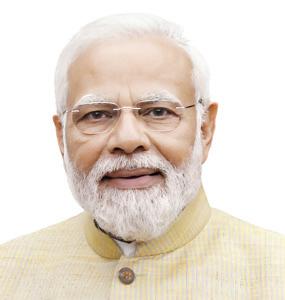
India’s call for inclusive progress
The Global South has often faced double standards. Whether it’s about development, distribution of resources, or security related matters, the interests of the Global South have not been given due importance. The Global South often received nothing more than token gestures on topics like climate finance, sustainable development, and technology access…
Two-thirds of humanity still lack proper representation in global institutions built in the 20th century. Many countries that play a key role in today’s global economy are yet to be given a seat at the decision-making table. This is not just about representation, it’s also about credibility and effectiveness. Without the Global South, these institutions are like a mobile phone with a SIM card but no network. They’re unable to function properly or meet the challenges of the 21st century. Whether it’s ongoing conflicts across the world, the pandemic, economic crises, or emerging challenges in cyber or space, these institutions have failed to offer solutions…
Today the world needs a new multipolar and inclusive world order. This will have to start with comprehensive reforms in global institutions. These reforms should not be merely symbolic, but their real impact should also be visible. There must be changes in governance structures, voting rights, and leadership positions. The challenges faced by countries in the Global South must be given priority in policymaking…
The expansion of [the] BRICS and the inclusion of new partners reflect its ability to evolve with the times. Now, we must demonstrate the same determination to reform institutions like the UN Security Council, the WTO [World Trade Organization], and Multilateral Development Banks… Statement during the BRICS summit session on Reform of Global Governance, 6 July 2025
Ensuring energy security for future generations is one of our biggest challenges. We consider it not only a priority but also as a responsibility towards our citizens. Moving forward on
the basic principles of availability, accessibility, affordability and acceptability, India has chosen the path of inclusive development.
Today, almost all homes in India have an electricity connection. India has one of the lowest per unit electricity costs. Despite being the world’s fastest growing major economy, India has completed its Paris Commitments ahead of time. We are also moving rapidly towards the goal of Net Zero by 2070. Currently, renewable energy accounts for about 50% of our total installed capacity.
We are moving steadfast towards the target of 500 GW of renewable energy by 2030. We are focusing on Green Hydrogen, Nuclear Energy, Ethanol Blending for clean energy. We are inspiring all the countries of the world to move towards a green and sustainable future.
Towards this, we have introduced global initiatives like the International Solar Alliance, Coalition for Disaster Resilient Infrastructure, Mission LiFE, Global Biofuels Alliance, One Sun One World One Grid…
Unfortunately, the countries of the Global South are having to bear the maximum impact of uncertainty and conflicts. No matter where the tension is in the world, these countries are the first to be affected by food, fuel, fertiliser and financial crises…
Undoubtedly, AI [artificial intelligence] is emerging as a powerful tool to enhance efficiency and foster innovation across all sectors. However, AI itself is a highly energy-intensive technology. The growing energy consumption driven by AI data centers, and the increasing energy demands of today’s technology-driven societies can only be sustainably addressed through renewable energy sources…
In India, all our efforts have been based on a human-centric approach. We believe that the true value of any technology lies in its ability to benefit the very last person. No one in the Global South should be left behind. For example, if we develop
an AI powered weather prediction app, its real success shall be when it benefits a farmer or a fisherman living in a small village in my country…
At the international level as well, we must adopt a human-centric approach. Everyone recognises the potential and usefulness of AI. However, the real challenge is not the power and capability of AI itself, but ensuring that AI tools enhance human dignity and empowerment…
Rich data is the foundation for inclusive, capable, and responsible AI. India’s diversity, reflected in its vibrant lifestyle, multitude of languages, and vast geography, makes it one of the most valuable and powerful sources of rich data. AI models developed and tested against the benchmark of India’s diversity will therefore hold immense relevance and utility for the entire world.
In India, we have stressed building a robust data empowerment and protection architecture. Alongside this, India possesses a vast talent pool that can significantly contribute to global efforts in the field of AI, through its scale, skill, diversity, and commitment to democratic values…
First, we must work towards governance at an international level that addresses concerns related to AI while also promoting innovation. Only then can we transform AI into a force for global good. Second, in the age of AI, close cooperation in the areas of critical minerals and technology is extremely important.
We must focus on securing and strengthening the resilience of their supply chains. We must also ensure that no country uses them solely for its own interests or as a weapon. Thirdly, deep fakes are a major cause for concern, as they can create widespread disorder in society. Therefore, AI generated content must be clearly water-marked or accompanied by a clear disclosure… With this spirit, I extend a cordial invitation to all of you for the AI Impact Summit to be held in India next year. Address during the G7 Outreach Session on Energy Security at the G7 Kananaskis Summit, 17 June 2025
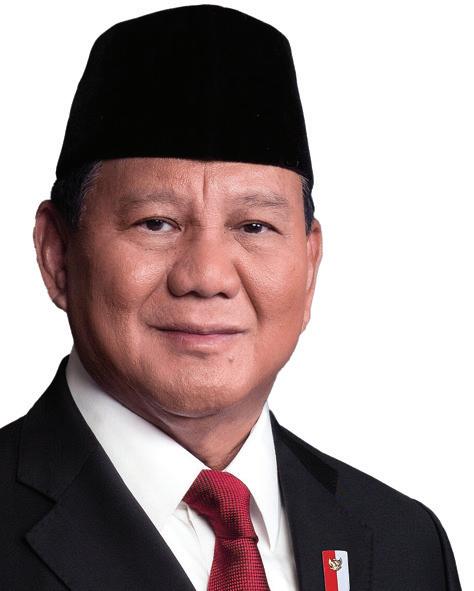
PRABOWO SUBIANTO, PRESIDENT, INDONESIA
Indonesia’s call for hope
Th e world’s population is growing. Our planet is under strain. Food, energy, and water insecurity haunt many nations.
We choose to answer these challenges directly at home and to help abroad whenever we can.
This year, we recorded the highest rice production and grain reserves in our history. We are now self- sufficient in rice and we have exported rice to other nations in need, including providing rice to Palestine.
We are building resilient food supply chains, strengthening farmer productivity, and investing in climate - smart agriculture to ensure food security for our children and our neighbours.
As the world’s largest island state, we are already experiencing the direct consequences of climate change, particularly the threat of rising sea levels. This reality compels us to act with urgency, and with determination.
Therefore we choose to confront climate change – not by slogans, but by measurable and immediate steps. We are committed to meeting our 2015 Paris Agreement obligations.
We aim to achieve net zero by 2060 and we are confident we can achieve net zero much earlier.
We aim to reforest more than 12 million hectares of degraded land, to reduce forest degradation, and to empower local communities with resilience and quality green jobs for the future.
Indonesia is shifting decisively from fossil fuel based development towards renewable based development. From next year, most of our additional power generation capacity will come from renewables.
Our goal is clear: To lift all of our citizens out of poverty and make Indonesia a hub for solutions to food, energy, and water security…
Today, still, a catastrophic situation in Gaza is unfolding before us. The innocent are crying for help. At this very moment,
millions of children are facing danger, trauma, and irreparable damage to their bodies.
Will we teach them that differences must end in violence and war? Can we remain silent as this humanitarian disaster in Gaza continues?
Violence cannot be used to answer any political conflict because violence can only beget more violence.
This community of nations must take a decisive stance to stop this catastrophe, or the world will enter a very dangerous situation of unending wars and escalating violence…
Let us use science to uplift, not use science to destroy. Let rising nations lift others as they rise.
I am convinced that the leaders of the great world civilisations: Civilisations of the West, civilisations of the East, of American civilisation, of European civilisation, of Indian civilisation, of Persian civilisation, of Chinese civilisation, of Islamic civilisation, will rise to their role demanded by history.
We are all hopeful that the leaders of the world will show great statesmanship, great wisdom, restraint, and humility in their leadership of the world…
To close, I would like to reiterate again Indonesia's complete support for the Two State Solution. Both Palestine and Israel must be free and independent, safe and secure from threats and terrorism.
I repeat, the only solution is two nations, two descendants of Abraham living in reconciliation, peace and harmony. Arabs, Jews, Muslims and Christians living together.
Indonesia is committed to being part of making this vision a reality.
Let us work towards this noble goal.
Let us continue humanity’s journey of hope – a journey started by our forefathers. A journey we must complete.
Address to the United Nations General Assembly, 23 September 2025
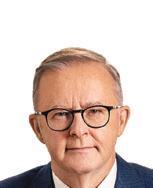
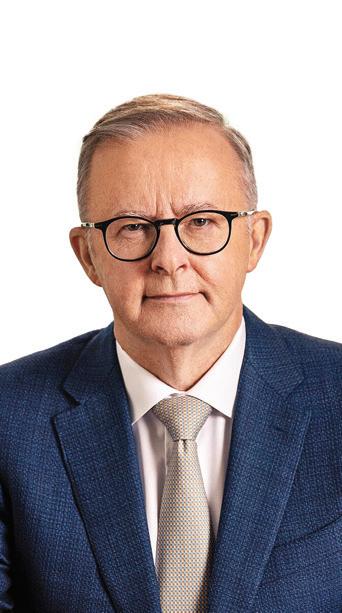
Australia’s vision for shared security and sustainable prosperity
We all have a role to play in making sure that the system which has enabled the rise of new powers, safeguards the rights and aspirations of every nation big and small.
For Australia, this means investing in our capabilities and investing in our relationships.
Investing in development, in defence and in diplomacy.
To strengthen the security of our region, to support the sovereignty of our neighbours and to contribute to the cause of peace beyond the Indo-Pacific.
We promote unity in the Pacific Islands Forum.
We are deepening our engagement with ASEAN [Association of Southeast Asian Nations], and elevating our partnerships with Indonesia, India, the Republic of Korea and Japan.
And we are breaking new ground with old friends: in the United Kingdom, the European Union and our principal ally, the United States…
Part of our job is demonstrating to the people we serve that what happens in the world, matters to them.
That when we co-operate to enhance security, contribute to alleviating poverty or commit to protecting the environment, when we support the agency of forums such as the G20, or APEC or invest in diplomatic partnerships like The Quad, none of this means setting our national interests or our people’s values aside, it means working to fulfil them.
The United Nations is much more than an arena for the great powers to veto each other’s ambitions.
This is a platform for middle powers and small nations to voice – and achieve – our aspirations.
That is why Australia is seeking a place on the UN Security Council in 2029-30.
And it is why we are bidding to co-host the 31st Conference of the Parties, with our Pacific family, nations for whom climate change is more than
an environmental challenge, it is an existential threat…
As an economy engaged in the fastest growing region of the world in human history, Australia champions the benefits of free and fair trade.
And we work to strengthen it.
By advocating for working people to share in the prosperity trade creates: through better wages, safer workplaces and the elimination of exploitation and modern slavery.
And by supporting the security of communications and maritime travel that makes trade possible, through the United Nations Convention on the Law of the Sea, including in our region and the South China Sea.
And as a proud member of the Pacific Family, as a continent home to some of the greatest natural treasures on the planet, and as a nation blessed with the traditional resources, critical minerals, skills and sunlight and space to power the global shift to net zero.
Australia is acting to meet the environmental challenge of climate change while working to seize and share the economic opportunities of renewable energy.
We will meet our 2030 target of 43 per cent emissions reduction on 2005 levels.
And last week on 18 September we set our target for 2035: cutting emissions by 62 to 70 per cent.
We are honouring our commitment to the Paris Agreement and its goal of keeping global temperatures below dangerous levels.
Our target is ambitious – importantly it is achievable.
And more than anything else, Australia’s embrace of clean renewable energy will get us there.
Clean energy can carry the world beyond the false choice between economic growth and environmental responsibility.
Because clean energy enables the rapidly growing economies of the Indo-Pacific to industrialise and
decarbonise at the same time.
And to continue lifting their people’s living standards while lowering their nation’s emissions…
As the home of the world’s oldest continuous culture, we honour the knowledge and resilience of Indigenous people everywhere.
And as a country strengthened and enriched by the hard work and aspiration of people drawn from every faith and tradition on earth, we stand against discrimination and prejudice, everywhere.
As a people who believe that kindness is an act of courage, we want to see aid workers delivering food, water and medicine to conflict zones, protected.
This week, Australia and our partners launched the Declaration for the Protection of Humanitarian Personnel.
I thank the more than 100 nations that have already endorsed the declaration.
And as a nation that knows security depends on sovereignty, Australia stands with the courageous people of Ukraine in their struggle against Russia’s illegal and immoral invasion.
We share the resolve of every member of the ‘Coalition of the Willing’ to secure peace on Ukraine’s terms.
Address to the United Nations General Assembly, 24 September 2025
Photo: by the Australian Government
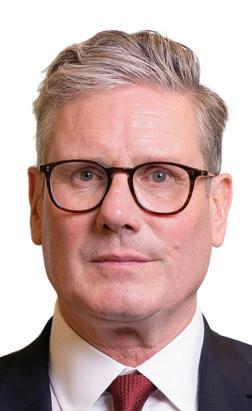
Building a fairer, stronger Britain
The path of renewal…
It’s long…
It’s difficult…
It requires decisions that are not cost-free or easy…
Yet at the end of this hard road…
There will be a new country…
A fairer country…
A land of dignity and respect…
Everyone seen…
Everyone valued…
Wealth creation in every single community…
Working people in control of their public services…
The mindless bureaucracy…
That chokes enterprise…
Removed – so we can build and keep building…
Clean British energy –powering our homes…
Technology –harnessed to drive us forward…
We do need to put our security first…
We do need to unlock the potential of every community…
We do need a more a muscular state…
But from the grassroots….
I do think, in the long-run…
Fixing our public finances…
Investing in new infrastructure…
Helping our public services off their knees…
That will be better for growth.
But equally important, because of your contribution…
We’ve taken a huge step on the path of renewal…
A firmer foundation to take our country forward.
More security, more respect, more opportunity…
A Britain built for all…
Changing the way we create wealth…
Reforming public services…
Giving people more control over our future.
Take our investment in defence…
Undeniably good for growth…
Freed – from the red tape that stops us building…
Growing our economy from the grassroots…
Renewing every town and city on these islands.
It comes back to growth – so much of it comes back to economic growth.
In fact – I’ll say it now, so there is no doubt.
The defining mission of this government…
Is to grow the economy…
Improve living standards…
And change the way we create wealth…
An economy that grows, not just from the top…
Vital for national security – and the whole of the continent…
Impossible – without really tough decisions on aid…
Now we should always say plainly – and with pride…
That asylum for people…
Genuinely fleeing persecution…
Is the mark of a decent, compassionate country. But … secure borders are also vital for a decent, compassionate country.
Controlling who comes here is an essential task of government. And there’s nothing compassionate or progressive in a vile trade…
That loads people into overcrowded boats…
Puts them in grave danger in the Channel…
And ultimately exploits human desperation and hope.
So mark my words we will stop this… We will smash the gangs…
We will crack down on illegal working… We will remove people with no right to be here…
And we will secure Britain’s borders. And in a world as volatile as ours… It demands firm and fair decisions to control our debt.
Because a Labour Party that cannot control spending…
Is a Labour Party that cannot govern in
our times.
Not with the ageing society.
Not with climate change.
And not with the global cost of borrowing as it is now.
That’s why the fiscal rules are non-negotiable…
Artificial intelligence is transforming healthcare…
And with an older society…
More people who have long-term conditions…
We need to put patients in control of their health…
Shift care slightly closer to their lives…
Put technology in their hands, at their service.
And that’s what we’re doing right across our NHS [National Health Service]…
Care – no longer tied to doctors in your local area.
Which means – you can see someone more quickly, at a time that suits you.
But also – the system can deliver more, much more…
Up to 8.5 million extra appointments.
Imagine what that could do to waiting times?
…Imagine no more…
Because today I can announce…
A completely digital NHS trust…
A new chapter in the story of our NHS…
Harnessing the future…
Patients in control…
Waiting times – cut…
For every single person in this country…
That’s national renewal…
That’s a Britain built for all….
There are so many opportunities to make a difference.
The energy of the future – we’re backing it…
Those three trade deals we struck…
With India…
With the US…
With our fellow Europeans…
A signal to the world…
That Britain is back…
That stability has returned…
Our support – iron clad and never wavering…
For the brave people of Ukraine…
The yellow and blue flag…
Flying on churches and village halls…
The length and breadth of this country…
There are limits to what the state can do on its own.
In the end, we really are all in it together. Address to the Labour Party Conference, 30 September 2025
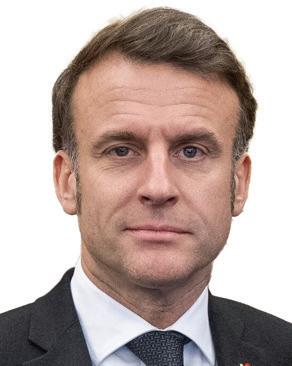
France calls for renewed global cooperation
Major transformation is ... underway for us all across the globe. Climate change is not under control; biodiversity is collapsing; efforts that the majority of us are ready to make are coming up against the obstacles of the cynicism of a few that can make a difference but refuse to do just that. And we see technologies picking up pace. They pave the way to horizons of opportunity but they also pave the way for dangerous forces, dangerous because they are not regulated. Global trade is weathering tariff wars, and that’s another form of imbalance, globally speaking. Alarm bells are ringing out loud, but that doesn’t extinguish hope…
productive capacities that China has been able to develop in recent years... [are] conducted hand in hand with harmonious development and respect for the environment? How can we correct US trade imbalances? How can we do that through corrective measures, not through tariffs that [pull] the rug out from under international trade? ... Europe ... needs to respond to collective needs for collective investment and we need to shoulder that responsibility.
that to also help countries to finance education, health care, [to stabilise] food security and help them to address challenges of biodiversity and the climate.
Let us come off the horns of a dilemma. We don’t need to choose between growth, climate change and biodiversity – we can do everything if we mobilise private and public financing within a framework that brings together... West, East, North and South. … We need to mobilise more private financing to accompany transitions in middle-income countries, developing countries and the poorest nations. We must develop guarantee mechanisms [so] that losses will be covered, and we need to mobilise more private financing to help those countries and help them to grow. That is vital.
Ukraine is staying the course, and peace is possible in the Great Lakes regions. We’ve also adopted treaties [and] ambitious agreements that some people thought were impossible: a treaty on pandemics, a treaty to protect the high seas, another to finance development. The world’s complexities are not a reason to throw in the towel on our principles and our ambitions… Let us stare straight into the face of global imbalances, all economies affected, all economies (and I’m speaking as one of the richest among them), but also middle-income countries, developing countries and, of course, the poorest nations among us. All of us, if we can’t have organised international debate on major global imbalances, if our response is a fragmented one and we don’t work together, we exacerbate these problems.
Today our challenge is to look at how we can help China to develop the internal demand that it really needs. How can we ensure that the
These challenges mean that we need to cooperate. There needs to be cooperation between major economies, but we can’t pit the G7 against the BRICS, and that’s the very rationale behind the French G7 [presidency] of 2026. Of course, we’ll work with the [current] Canadian presidency of the G7 and the coming [US] presidency of the G20. We need to return to that spirit of cooperation that is vital because that is what will allow us to have a common agenda to finance our global challenges.
Let’s take a look at things today. Everywhere we are reducing and eroding our common ambitions to finance major global challenges. Collective financing for health care is plummeting, as is financing for food security, as is financing for education. These challenges [were], however, our challenges even more than they were before the … Covid-19 pandemic, and so it is absolutely pivotal that together we prove ourselves able to develop concrete solutions and find new financing to address our challenges … Together we need to work together better to address global economic imbalances. We must develop an agenda of growth everywhere, but we must do
Whatever the ill winds that blow, [we will] continue to mobilise to stop biodiversity loss and help the climate. … Together we were able to notch up victories recently – the Nice Treaty that entered into force. Through collective rallying we finally have a regulation framework for our oceans. That was something we’d been waiting for, for decades. The same collective mobilisation is what we must see on plastic. We need to develop an international treaty that aims to put an end to plastic pollution. The same mobilisation is what we need to have to mobilise biodiversity credits and give more consistency to our carbon credits … France and Europe will be at that meeting and we will be in step with the 2030 goals. We will mobilise all financing necessary to usher in this transition, whether that be public or private financing.
We have no right to turn away, stray from the course and the goals we set ourselves. We have no right to simply crumble and become isolated … Education, health care, agriculture, food security, biodiversity, climate – the fight ultimately against all inequalities that destabilise our global order requires the same spirit of cooperation, the same spirit that I talked about, the spirit that we showed in the face of war and destabilisation.
Address to the United Nations General Assembly, 23 September 2025. Transcription of the simultaneous translation provided by the United Nations.
Saudi Arabia leads global water cooperation
We wish for the utmost success of the One Water Summit, which reflects our unwavering determination to collaboratively address the environmental challenges posed by water scarcity and drought…
This summit coincides with the Kingdom’s hosting of the 16th Conference of the Parties of the United Nations Convention to Combat Desertification … aimed at reducing land degradation and drought, as the lands are a significant source of fresh water.
The world today faces increasing challenges in the water sector, among which growing drought... threatens the availability of usable water, exacerbates desertification, and poses risks to human life and society. This situation calls for collective efforts to devise plans that ensure the sustainability of water resources.
In light of this, the Kingdom took the initiative to include water issues in the G20 work plan for the first time during its presidency in 2020. Additionally, it committed over $6 billion to support more than 200 development projects in the water sector across over 60 developing countries worldwide.
Looking ahead, the Kingdom is preparing to host the 11th World Water Forum in 2027 in partnership with the World Water Council.
The Kingdom has also announced the establishment of a global water organization based in Riyadh, which aims to unify and enhance the efforts of nations and organizations in addressing water challenges comprehensively. This organization will focus on tackling water-related issues worldwide by harmonizing international efforts, fostering comprehensive solutions, and promoting the exchange of expertise and innovative technologies in this sector.
In conclusion, the Kingdom calls upon member states of the United Nations, international organizations, and the private sector to join this organization. We hope that the international community's collective efforts in addressing water challenges will help us achieve our aspirations in this vital field.
O pening address to the One Water Summit, 3 December 2024
Pooling the strength of the Shanghai Cooperation Organization to improve global governance
This year marks the 80th anniversary of the victory of the World Anti-Fascist War and the founding of the United Nations. It is a milestone prompting us to remember the past and create a better future together. Eighty years ago, the international community learned profound lessons from the scourge of two world wars and founded the United Nations, thus writing a new page in global governance. Eighty years later, while the historical trends of peace, development, cooperation and mutual benefit remain unchanged, the Cold War mentality, hegemonism and protectionism continue to haunt the world. New threats and challenges have been only increasing. The world has found itself in a new period of turbulence and transformation. Global governance has come to a new crossroads
History tells us that at difficult times, we must uphold our original commitment to peaceful coexistence, strengthen our confidence in win-win cooperation, advance in line with the trend of history, and thrive in keeping pace with the times.
To this end, I wish to propose the Global Governance Initiative (GGI). I look forward to working with all countries for a more just and equitable global governance system and advancing toward a community with a shared future for humanity.
First, we should adhere to sovereign equality. We should maintain that all countries, regardless of size, strength and wealth, are equal participants, decision-makers and beneficiaries in global governance. We should promote greater democracy in international relations and increase the representation and voice of developing countries.
Second, we should abide by the international rule of law. The purposes and principles of the UN Charter and other universally recognised basic norms of international relations must be observed
comprehensively, fully and in their entirety. International law and rules should be applied equally and uniformly. There should be no double standards, and the house rules of a few countries must not be imposed upon others.
Third, we should practice multilateralism. We should uphold the vision of global governance featuring extensive consultation and joint contribution for shared benefit, strengthen solidarity and coordination, and oppose unilateralism. We should firmly safeguard the status and authority of the UN, and ensure its irreplaceable, key role in global governance.
Fourth, we should advocate the people-centred approach. We should reform and improve the global governance system to ensure that the people of every nation are the actors in and beneficiaries of global governance, so as to better tackle the common challenges for mankind, better narrow the North-South gap, and better safeguard the common interests of all countries.
Fifth, we should focus on taking real actions. We should adopt a systematic and holistic approach, coordinate global actions, fully mobilise various resources, and strive for more visible outcomes. We should enhance practical cooperation to prevent the governance system from lagging behind or being fragmented…
In response to the once-in-a-century transformations unfolding faster across the world, the SCO [Shanghai Cooperation Organization] should step up to play a leading role and set an example in carrying out the GGI.
We should contribute to safeguarding world peace and stability … We should continue to uphold the principles of non-alliance, non-confrontation and not targeting any third party…
We should step up to take the responsibility for open cooperation across the globe. SCO member states have rich energy resources, big markets and strong internal driving forces, and we are contributing a rising share to world economic growth. We should continue to dismantle walls, not erect them; we should seek integration, not decoupling. We
should advance high-quality Belt and Road cooperation, and push for a universally beneficial and inclusive economic globalisation.
China will readily share the opportunities of its vast market, and continue to implement the action plan for high-quality development of economic and trade cooperation within the SCO family. China will establish three major platforms for China-SCO cooperation in energy, green industry, and the digital economy, and will set up three major cooperation centres for scientific and technological innovation, higher education, and vocational and technical education. We will work with fellow SCO countries to increase the installed capacity of photovoltaic and wind power each by 10 million kilowatts in the next five years. We are ready to build with all sides the artificial intelligence application cooperation centre, and share the dividends of progress in AI…
We should set an example in championing the common values of humanity. Among SCO member states, cultural exchanges are packed with highlights, people-to-people interactions are frequent and robust, and different civilisations radiate their unique splendour. We should continue to promote exchanges and mutual learning among civilisations, and write brilliant chapters of peace, amity and harmony among countries different in history, culture, social system and development stage…
We should act to defend international fairness and justice. In compliance with the principles of justice and fairness, SCO member states have engaged constructively in international and regional affairs, and upheld the common interests of the Global South. We should continue to unequivocally oppose hegemonism and power politics, practice true multilateralism, and stand as a pillar in promoting a multipolar world and greater democracy in international relations.
China supports the SCO in expanding cooperation with other multilateral institutions, such as the UN, ASEAN [Association of Southeast Asian Nations], the Eurasian Economic Union, and the Conference on Interaction and Confidence Building Measures in Asia, to jointly uphold the international economic and trade order and improve global and regional governance.
Address to the Shanghai Cooperation Organization Plus meeting, 1 September 2025
Building a fairer, inclusive world
As a net security provider country, we continue to contribute to the operations and missions of the United Nations, NATO [North Atlantic Treaty Organization], OSCE [Organization for Security and Co-operation in Europe] and the European Union. We will host the 2026 NATO Summit in Ankara. We continue to strengthen our relations with the United States, our NATO ally, in many areas, including particularly trade, investments, energy, and the defence industry…
“We contribute to the development of global trade”
Increasing protectionist tendencies in international trade and disruptions in supply chains are leading to fundamental changes in the global economy. We support reforming the rules-based international trade system, including the World Trade Organization, to successfully address current challenges. I believe access to affordable, secure, and sustainable energy is indispensable for achieving the development goals of developing countries in particular. We are resolutely implementing the strategically important ...Trans-Caspian East-West-Middle Corridor project which stretches from China to Europe. We contribute to the development of global trade with our modern transportation infrastructure and the Baku–Tbilisi–Kars Railway. With the goal of building a future that respects nature, we are resolutely heading towards our 2053 Net Zero Emissions target. We are also pleased to see that the Zero Waste Initiative, under the auspices of Mrs. Emine Erdoğan, has become a wave of awareness that grows year after year across the world, reaching more people and hearts. In this process, it is no longer optional for developed
countries to fulfil their responsibilities; it has become an obligation.
“Humanity is also witnessing an extraordinary leap in the field of Artificial Intelligence”
As one of the world’s largest contributors to development assistance, we are working towards achieving the United Nations Sustainable Development Goals. To achieve the 2030 Goals and enable hundreds of millions of people around the world to live in dignity, we advocate for the global financing architecture to be aligned with the principle of “leaving no one behind” … While we are dealing with geopolitical challenges, humanity is also witnessing an extraordinary leap in the field of Artificial Intelligence. And no society should be deprived of the transformative power and benefits offered by these technologies that will
change the face of our world. Artificial intelligence technologies should be used for the benefit of humanity, not as a new tool for domination. The United Nations Technology Bank for Least Developed Countries, hosted by Türkiye, plays a pivotal role in bridging the digital and technological gap. I believe that the Convention on the Rights of the Child in the Digital World, which we have prepared and opened for signature, will raise global awareness. We expect your strong support for our efforts. On the other hand, in today’s world where racism, xenophobia, and particularly Islamophobia have reached alarming levels, confronting these movements that endanger the culture of coexistence has become an imperative for humanity…
“It is our collective responsibility to take decisive steps that will restore the United Nations to the spirit of its founding”
The United Nations, founded to ensure that humanity never again suffers the calamity of war, is rooted in values that have the power to shed light upon the dark times we are witnessing today. We fully support the UN80 Initiative, launched by Secretary-General [António] Guterres, to make our Organization more effective and efficient. I sincerely hope that this initiative will succeed as a process that further reinforces all the efforts of the United Nations. I wish to express that we are ready to give robust support to this process, inspired by our vision of making Istanbul a centre for the United Nations. I sincerely believe that it is our collective responsibility, on the United Nations’ 80th anniversary, to take decisive steps that will restore the United Nations to the spirit of its founding. We will continue to assert that “THE WORLD IS BIGGER THAN FIVE” until a system is established where “right makes might, instead of might makes right”. Our duty is not to abandon the system; it is to repair it and make it operational again. A fairer world is undoubtedly possible. Türkiye will patiently continue its struggle “to build a fairer world”.
Address to the United Nations General Assembly, 23 September 2025
Rebuilding trust and reforming global governance for a changing world
We are living through a fast-moving and complex period in time that is rich in opportunities but also, perhaps above all, fraught with dangers. We are suspended between war and peace.
According to the Global Peace Index 2024, 56 armed conflicts are currently taking place around the world – the highest number since the Second World War…
The scenario we are facing is what Pope Francis described with remarkable effectiveness as a “third world war” fought “in pieces”.
Among the main ongoing conflicts, there is of course the Russian Federation’s large-scale war of aggression against Ukraine.
Three and a half years ago, on 24 February 2022, Moscow decided to attack Kyiv. I do not think there was enough reflection on the consequences of that choice and on a point which I consider fundamental: the Russian Federation, a permanent member of the Security Council, deliberately trampled on Article 2 of the UN Charter by violating the integrity and political independence of another sovereign State, intending to annex its territory. Still today, it is not showing any willingness to seriously accept any invitation to sit down for peace talks…
It is no coincidence that Hamas took advantage of the weakening of this architecture to launch its attack against Israel on 7 October 2023. The ferocity and brutality of that attack – the hunting down of defenceless civilians –drove Israel to what was, in principle, a legitimate reaction, because every State and every people has the right to defend itself.
However, a reaction to an aggression must always respect the principle of proportionality. This is true for individuals
and is all the more true for States. Israel has crossed that line, with a large-scale war that is involving the Palestinian civilian population beyond measure. And it is by crossing that line that the Jewish state has ended up violating humanitarian norms, causing a slaughter of civilians.
A choice that Italy has repeatedly described as unacceptable, and one that will lead us to vote in favour of some of the sanctions against Israel proposed by the European Commission…
In order to be effective, it is not just institutions we need to reform, for we are facing a change of era, and this demands a profound revision of all the tools we have to govern relations between nations and defend the rights of individuals, including International Conventions.
I am referring, for example, to the conventions governing migration and asylum. These rules were established at a time when mass irregular migration did not exist and nor did human traffickers. These conventions are no longer current in this context and, when they are interpreted in an ideological and unidirectional way by politicised judges, they end up trampling on the law, rather than upholding it…
The international community must come together in fighting the phenomenon of human trafficking. As is the case for other international institutions such as the European Union, the United Nations cannot look the other way or end up protecting criminals in the name of supposed civil rights…
A new model for cooperation between nations is also needed, but building it requires humility, awareness and trust in the partner you have in front of you.
Italy is trying to do its part in this regard too, above all with its Mattei Plan
for Africa. Over the last three years, we have launched our cooperation plan with Africa and extended its reach to include 14 nations.
We have built collaborations with the United Nations, the European Union and its Global Gateway, the G7, the African Union and the African Development Bank, international financial institutions and many bilateral partners, including the United Arab Emirates, whom I would like to thank.
This complementarity gave us the honour of co-organising the third United Nations Food Systems Summit together with Ethiopia in July this year, as well as the responsibility of playing an active part in the major ‘Lobito Corridor’ infrastructure project between Angola and Zambia and the possibility to build public-private partnerships that attract investments and ensure concrete results.
This is what is happening in Algeria, where we will recover over 36,000 hectares of desert to be used for agriculture, generating benefits for more than 600,000 people. This is what is happening with the opening of the AI Hub for Sustainable Development, which will involve hundreds of African start-ups in the development of artificial intelligence. This is also what is happening with the extension to eastern Africa of the Blue Raman cable to connect India to European economies via the Middle East and the Mediterranean…
This path, however, has no choice but to address an issue that can be put off no longer: the debt of African nations.
Over the next ten years, Italy plans to convert the entire amount of debt for the economically least developed nations, based on World Bank criteria, and to reduce that of medium- and low-income nations by 50%. Over these ten years, the complete operation will enable us to convert over EUR 235 million of debt into development projects to be rolled out locally.
Address to the United Nations General Assembly, 24 September 2025
Photo: Governo Italiano
MARK CARNEY, PRIME MINISTER, CANADA
Leveraging energy strength, democratic values and strategic alliances, Canada is thriving
How can a middle power, like Canada, … deal with the situation where the rules-based order is eroding, great-power rivalry is intensifying and authoritarian models are hardening? … We prospered under the old system. And … we were able to pursue a values-based foreign policy, based on, or anchored on a rules-based multilateral trading system, an open global financial system.
We had collective security anchored in NATO [North Atlantic Treaty Organization] … We had enviable geography. It gave us privileged access to the world’s largest and most dynamic economy, and it distanced us from the major state and non-state threats. We also subscribed to an expectation that … non-market authoritarian countries would converge over time through engagement to free markets, open societies and even democratic values. And this meant … that our engagement with those countries could be justified by the expectation of progress. In fact, the very engagement helped with that progress, and [the] alignment of values was merely delayed, not compromised.
So a few things have changed. Certainly, that convergence of values has proved elusive. The economic strategy of the United States has clearly changed, from the support for the multilateral system to a more transactional and managed bilateral trade and investment approach. Global power is moving … from American hegemony to great power rivalry. And technological change is shrinking that geographic advantage that we had and expanding the fields of conflict from the virtual to the extraterrestrial. All of this is reducing … the effectiveness of our multilateral institutions from the WTO [World Trade Organization] to the UN on which middle powers like Canada have greatly relied…
We think we can thrive … in … the system that’s evolving, for three reasons. The first is we have what the world wants … We are an energy
superpower. That is going to become increasingly evident. Eighty-five percent of our energy is clean. We’re one of the world’s largest LNG [liquefied natural gas] exporters, one of the largest reserves of oil and gas. We measure additions to our grid in 10 gigawatt chunks … We are [in the] top five in ten of the world’s most important critical minerals. Forty percent of the world’s listed mining companies are in Canada … We are a leading developer of AI [artificial intelligence], and our research universities are some of the biggest producers in volume of AI, computing and quantum talent in the world … We have capital. Our pension funds are some of if not the most sophisticated infrastructure investors in the world … And we have a government that still has fiscal capacity to act decisively at a moment when governments need to act decisively. Now, the second reason … is we have values to which much of the world … still aspires. We’re a pluralistic society that works. Our cities are amongst the most diverse in the world. [Our] public square is loud, diverse and free. By the nature of our federation, we have to practise collaboration and partnership. And it’s a country that is still committed to sustainability.
[The] third reason … we can thrive in
this time is we recognise what’s going on. This is not a transition; this is a rupture. This is a sharp change in a short period of time driven by a variety of factors. We have a determination to rise up and meet this … Our response to this is to build strength at home, to build resilience by diversifying abroad and pursue a variable geography to defend our values and pursue our interests.
… We’ve cut taxes on incomes and capital gains. We have removed all federal barriers to interprovincial trade. We have passed landmark legislation to fast-track literally hundreds of billions of dollars of projects in energy, in AI, in critical minerals, in new trade corridors. We are doubling our defence spending by 2030. Our core capabilities with respect to defence, AI, quantum, cyber, critical minerals provide unique opportunities for dual-use and economic benefit, and we intend to fully exploit those.
We are diversifying our trading relationships and our security partnerships. We signed the most comprehensive agreement with the European Union from a non–European Union member, the Economic and Security Partnership with the EU … We are on track to be a full member of SAFE, the European defence arrangement, which allows us to diversify and accelerate our defence procurement … we agreed a comprehensive approach within the context of USMCA [US-Mexico-Canada Agreement], … with Mexico to deepen our bilateral trading relationships. And we are pursuing more aggressive strategies throughout Asia…
[In] the coalition of the willing for Ukraine, we are the largest contributor on a per-capita basis to Ukraine … When you think about our Arctic sovereignty, we are cooperating very closely with the Nordic-Baltic Eight for physical protection up there, economic development, and also defending NATO’s western flank. We are active with likeminded parties in efforts to promote a two-state solution and Middle East peace…
[We], out of the G7, are forming a buyers’ club for critical minerals so that the world can diversify away from Chinese dominance from them. So it’s not just the supply, but it’s having that secure access … so these can be developed.
Transcription of Russell C. Le ngwell Lecture, Council for Foreign Relations, 22 September 2025
CLAUDIA SHEINBAUM
Delivering shared prosperity and justice
As the first female president to be reporting to the nation, I maintain … that I did not arrive alone, I arrived with all Mexican women.
This has generated in girls, young women and adult women an extraordinary strength that moves consciences, opens paths and breaks barriers that for centuries seemed impossible to overcome.
We have all arrived.
Moreover, this is not the victory of a single person, but the result of a collective will that for decades resisted, fought and dreamed of a country with justice. We come from a deeply humanist, democratic and popular movement, which placed the people at the centre of political action and honesty as the guiding principle of life and public service.
Today I come to report, not with empty words, but with results that are reflected in the daily lives of millions of Mexican women and men…
From 2018 to 2024, the population living in poverty went from representing 41.9% of the population to 29.5%, the lowest level in at least 40 years.
Inequality also decreased significantly. The Gini coefficient, the way to measure inequality, went from 0.426 to 0.391, placing Mexico as the second country with the lowest inequality in the Americas, after Canada…
Fortunately, we are consolidating a new economic model that ensures macroeconomic stability while promoting Shared Prosperity with fair wages and Welfare Programmes, strengthening education, health and access to housing, promoting regional development through national and foreign public and private investment, all while governing with honesty and Republican Austerity…
[In the past 12 months], the entire world has faced complex situations in response to the new tariff reality established by the United States government. Within this framework, we have managed to build a relationship of mutual respect.
Mexico is the country with the lowest average tariff percentage in the world, and we continue working with the various state secretariats of our neighbouring
country. We are convinced that, within the framework of the Trade Agreement, we can achieve even better conditions…
We have made it clear that the foundation of this understanding is shared responsibility, mutual trust, respect for sovereignty and territorial integrity, and cooperation without subordination.
Since February, we have established Comprehensive Care Centres for our migrant brothers who are unjustly deported from the United States. We provide them with the Paisano [Compatriot] Card, registration with the IMSS [Mexican social security system], access to housing, employment, transportation to their places of origin, as well as hot meals and temporary shelter. Through this programme, which we call ‘Mexico Embraces You’, we have assisted more than 86,000 compatriots…
We will continue working so that our migrant brothers and sisters always feel protected and supported by their government. They know that we consider them to be heroes and heroines of Mexico.
We are also strengthening bilateral
Mexico is respected throughout the world. It is known that our people are noble, generous and brave, and that we are experiencing a stellar moment in our history.
Even amid difficult circumstances, our economy shows strength:
An estimated annual growth of 1.2%, compared to the catastrophic expectations previously announced by international financial organisations that said the gross domestic product would fall this year.
Foreign direct investment is at a record high in the first half of the year with more than $36 billion.
The number of visitors to Mexico grew by 13.8% compared to the same period of the previous year.
Our currency remains below 19 pesos per US dollar.
Unemployment stands at 2.7%, one of the lowest levels in the world.
And the annual inflation in July was 3.5%, the lowest since January 2021…
We increased the minimum wage in 2025 by 12%, which represents a historic real-term increase of 135% since 2018. The increase in the minimum wage has been an act of justice against the absurd belief that raising it would cause inflation, which in reality justifies the concentration of wealth...
This year, we also launched three new Welfare Programmes:
Women’s Welfare Pension. 1,002,058 women aged 63 and 64 are already receiving the pension, and by the end of the year, 2 million more will receive it...
All older adults and people with disabilities receive medical care from ‘Health House by House’, provided by
We set out to build 1.7 million decent homes for well-being in this six-year term, with very accessible loans for the population whose income is less than or equal to two minimum wages…
As the first woman president, our goal is to promote equality and the fair recognition and development of the women of Mexico. To achieve this, we created the Ministry of Women, which is already distributing 25 million Rights Booklets to ensure that everyone knows that women have the right to live free from violence and to access education, health care, property rights and housing. And we can be whatever we want to be. State of the Union Address, 1 September 2025.
Photo: social media of Claudia Sheinbaum
TAKAICHI SANAE, PRIME MINISTER, JAPAN
Building strength, resilience and global leadership
Today [21 October] , I was designated as the nation’s Prime Minister, and a new Cabinet has been inaugurated. Bolstered by a strong and unwavering belief in the latent power and vitality of Japan and the Japanese people, I will dedicate myself completely to discharging my duty of forging a path for Japan’s future.
I will work resolutely for the sake of our nation and the Japanese people, filled with the determination to press ahead tenaciously under any circumstances. I will strive to build a strong economy, turning people’s unease and apprehension over their current lives and the future into hope, and I will deal with the challenges facing the international community as I embark on restoring Japanese diplomacy that flourishes on the world’s center stage. I ask the Japanese people for their understanding and cooperation as I take these responsibilities upon myself.
Statement, 21 October 2025
BASIC POLICY STATEMENT OF THE CABINET
The Takaichi Cabinet, grounded in the determination to press ahead tenaciously under any circumstances, will fully mobilize its resources to advance the following policies for the sake of the nation and the Japanese people... The Cabinet will strive to build a strong economy...
1. Realizing a strong economy We will set
into motion a growth strategy that restores strength to the Japanese economy and also situates Japan on a trajectory towards that end, taking as our core focus strategic investments that enhance resilience against potential crises, which the Government will implement pre-emptively to address various risks and social issues, working hand in hand with the private sector.
Keeping a watchful eye on the sustainability of public finances at all times, and embracing an approach of “responsible and proactive public finances,” through the strategic employment of fiscal policies, we will ensure that people feel secure and at ease in their daily lives and livelihoods as we also work to raise incomes, transform people’s mindsets regarding consumption, and boost tax revenues.
In line with this, the Cabinet will work to tackle rising prices, strengthen economic security, firmly establish food security as well as security in energy and resources, enhance national resilience, fortify cyber security, build health and medical care security, and foster an environment that fully utilizes
2. Supporting the growth of areas outside major urban centers while safeguarding people’s daily lives
We will work to form regional industrial clusters, promote the digital transformation of areas outside our major urban centers, build up local industries, and maintain local public transportation, with the aim of safeguarding regional areas’
livelihoods and security.
We will enhance policy coordinating functions on foreign nationals in Japan and promote relevant and broad-ranging measures. We will undertake initiatives to tackle organized crime and related efforts in order to maintain and improve public law and order.
Should a large-scale natural disaster, terrorism incident, infectious disease, or other national crisis occur, this Cabinet, placing the highest priority on protecting people’s lives and assets, will make every effort to ensure the Government responds as a united body demonstrating agility and flexibility.
We will make our utmost efforts towards reconstruction from the Great East Japan Earthquake, the Noto Peninsula Earthquake, and other large-scale disasters.
3. Building up Japan’s diplomatic capacity and defense capabilities In order to defend Japan’s national interests, the Cabinet will restore Japanese diplomacy that flourishes on the world’s center stage. We will work to consolidate and leverage in all respects Japan’s comprehensive strength as a nation, including its diplomatic capacity, defense capabilities, economic standing, technological expertise, and information competence, in order to advance Japan’s peace and security, prosperity, and coexistence and mutual prosperity with the rest of the international community.
We will broaden our multilateral coordination in diplomatic, defense, economic, and other realms with like-minded countries and countries in the Global South, consistent with the vision of a Free and Open Indo-Pacific, taking the Japan-U.S. Alliance as the cornerstone. The Cabinet will work to reinforce Japan’s intelligence functions and also make every effort to realize the swift repatriation of all victims of abduction by North Korea.
We will undertake the fundamental reinforcement of the nation’s defense capabilities in accordance with Japan’s sovereign discretion.
Prime Minister’s Office of Japan, 21 October 2025.
JAVIER MILEI, PRESIDENT, ARGENTINA
Choosing reform over decline
Fiscal expansion, monetary expansion and the expansion of state power [are] suffocating individuals. That’s all part of a pattern that we are seeing across all countries, particularly those who claim to make up the free world. The problem is not only one of economic policies; we also see it when there are violations of equality before the law or when we indiscriminately open the doors to immigration for political reasons.
On the contrary, what we don’t see there is immigration; we see invasion. International cooperation bodies have this one among its number. Such international organisations are not alien to this problem. As the years have passed this organisation has acquired responsibilities that run counter to its founding spirit. It has created layer upon layer of organisations, agencies and programmes until it achieved this hypertrophy of administrations that are barely effective when it comes to resolving the problems for which they were created. Responsibilities that the UN has taken on have swelled and swelled. In step with that, the contributions of major states have swelled. In turn, the palpable results this organisation has achieved have greatly reduced. They can’t offer the world what they could. There is this cocktail of incentives, and in addition you have … international organisations that now see a situation whereby no one is really held accountable for their failures to resolve problems.
This contradiction between lofty goals and scant results has created
the erosion of prestige for this house. Without going further, the poor results from the 2030 Agenda bear witness to what I have outlined above. What continues to be seen in practice is a cycle whereby we recycle structures. There is more and more being spent and more and more targets being set. For this reason, Argentina decided to step aside from this process because we saw in the 2030 Agenda the improper expenditure of scant resources for purposes that we don’t share in order to distract attention from the real global difficulties. The world is on course for stagnation and that’s why we stood apart…
For the last year and a half we have taken on the herculean task of administering and managing extreme scarcity. And for the first time in decades we are doing what we have to do for a better future. The only way to usher in that future is to do exactly the opposite of what we previously did. What we are doing stands in opposition to the rest of politics. That politics asked us to do what everyone was doing for years and is what has pulled us into decline. They’re asking us to jeopardise our future to meet present demands. They want us to apply the same remedy that we did a thousand times and this is exactly what brought us here. I’d like to say clearly that Argentina has a government that decided to undertake the right path, even though it is the thorniest one, because prosperity and progress for our peoples cannot be delayed one day longer.
However, we are not the only ones
that are taking difficult decisions at this juncture, as history demands that we do. President [Donald] Trump of the United States also understands that the time has come to reverse a dynamic that is leading the United States towards a disaster. We know that a disaster in the United States is a global disaster. His unflinching and successful policy in terms of halting illegal immigration makes that conviction more than clear. He knows he must do what is necessary even though many may not like it, before it is too late. In other countries, for example, it is already too late to take the decisions he has…
What Donald Trump is also doing is restructuring the terms of international trade in an unprecedented fashion. That is a titanic task which gets to the very core of the global economic system because that system has been gnawing away at the industrial heart of his country, and the country now has an unparalleled debt crisis. Furthermore, he has undertaken a cleaning up of the institutional capture of the American state because it has been infiltrated by left-wing factions that were seeking to undermine any reform programme that was necessary.
Both I and Donald Trump know what we are doing in the face of these challenges. All of these challenges have a common denominator that all countries, including supernational organisations, must address. They must find a way of creating dividends for the future and not succumb to the temptation of dealing with the present. This is something that major nations, Western nations, have been aware of and putting into practice for decades. We need to get back to that. We need to go back to our roots.
Address to the United Nations General Assembly, 24 September 2025. Transcription of the simultaneous translation provided by the United Nations.
LEE JAE MYUNG , PRESIDENT, KOREA
Advancing democracy and responsible innovation
The Republic of Korea, which has grown thanks to the support and assistance of the UN, will not hesitate to take on the role of a leading nation, generously sharing its experience and history of restoring democracy.
Despite ceaseless efforts from all corners of the world, the international community’s determination and aspiration to maintain international peace and security 80 years ago still remains an unfinished task for everyone.
280 million people are still in a state of extreme hunger. Armed conflicts around the world, including in Ukraine and the Middle East, as well as the climate crisis, which has already become a real problem, threaten the survival of humanity.
The answer lies in the wisdom of the pioneers who founded the United Nations, as well as the path that the people of the Republic of Korea demonstrated. There is only one way: “more democracy”…
I look forward to the “UN80 Initiative,” presented by the Secretary-General, taking root as a vision that achieves the UN’s evolution and advancement in line with the demands of our time.
I also hope the UN Security Council can increase the number of seats of non-permanent members, reflecting changes in the international environment, and enhance its effectiveness and representation…
The Republic of Korea, having restored democracy, dreams of a better future. The Republic of Korea will fulfill its responsibility as a responsible global power that steadfastly upholds the values of freedom, human rights, inclusiveness and solidarity championed by the United Nations…
Threats to peace are not only physical elements. In an era where artificial intelligence (AI) technology is critical to security capabilities and cyberattacks threaten national security, we must confront not only “visible enemies,” but also “invisible enemies.”
If we passively let ourselves be
dragged along by the changes of the AI era, we will meet a dystopia of deepening polarization and inequality, unable to shake off the dark shadows of human rights abuses caused by the misuse of technology.
However, if we proactively respond to these changes, we can use the high productivity as a driving force to build a foundation for innovation and prosperity, and create a useful base for strengthening direct democracy. I hope the Open Debate that I will preside over as UN Security Council President tomorrow will significantly contribute to the international community’s efforts to promote the responsible use of AI. Furthermore, we intend to share our vision for the future of AI through the “APEC AI Initiative” at the APEC [Asia-Pacific Economic Cooperation] Economic Leaders’ Meeting, which will be held in Gyeongju, Korea, next month. We will strive to ensure that the vision of “AI for all,” where advances in cutting-edge technology contribute to the universal values of humanity, becomes the “new normal” for the international community.
AI-driven technological innovations
will be an important new tool for solving global challenges like the climate crisis.
Over the past 80 years, the United Nations has paved the way for sustainable development and spearheaded efforts to address the climate crisis threatening the survival of humanity. Nations around the world must respond to these efforts.
The Republic of Korea is pursuing a “great energy transition,” leveraging science and technology and digital innovation to increase energy efficiency and expand the share of renewable energy.
We will submit a responsible nationally determined contribution within this year, joining the united will of the international community.
At the “4th UN Ocean Conference” that will be co-hosted by the Republic of Korea and Chile in 2028, we will also work to build substantive solidarity for the sustainable development of oceans…
Since the United Nations established the Sustainable Development Goals (SDGs) 10 years ago, the international community has made much progress in eradicating poverty and reducing inequality.
However, the demand for development financing is continuously increasing, and the most vulnerable are still suffering.
Let us squarely face this grave reality and create new momentum for change. We must move toward structurally reforming global development governance while enhancing the quality of financial resources.
I trust that we will pull together in order to bring about more cases like the Republic of Korea, growing and developing from an aid recipient country to an aid donor country. …
Gathering the energy of solidarity, coexistence and consideration, the Republic of Korea, having ushered in a new democratic republic, is ready to move toward a sustainable future and a new page in human history.
Address to the United Nations General Assembly, 23 September 2025.
Germany calls for a stronger, united Europe
Our country is facing important decisions this autumn…
[Freedom is being threatened] by military force, by hybrid threats, by attacks on our democratic order…
[Social cohesion in Germany is being] openly called into question by political forces at home and abroad…
We want to remain exactly what we are … [With regard to the social system] we have to change structures. We need to reorganise things to ensure they continue to fulfil their purpose in the future … This so-called autumn of reforms has long since begun…
[It is important to] strengthen our defence capabilities … [The newly established National Security Council in the Federal Chancellery will] start its work soon.
We can have greater trust in our country. [The announced migration turnaround] has been successfully initiated …
We have to invest.
Speech during the general debate in the Bundestag, 17 September 2025
Europe must utilise its opportunities with greater unity and determination … Being a force for peace is and remains the basic idea of the European Union.
We will not be frightened. We will not allow our free society to be unsettled by hybrid attacks.
[The financial protection of Ukraine by utilising frozen Russian government bonds is also to be pursued further] … We don’t want to do this to prolong the war. We want to do this in order to end this war as quickly as possible…
We want to be able to defend ourselves so that we don’t have to defend ourselves…
[The necessary strength of the European Union is based to a large extent on its competitiveness and that impetus is needed here. There is] no knowledge problem, [but rather] an implementation problem. Europe will only become more productive if it changes fundamentally.
[Europe needs] an end to regulatory frenzy, faster procedures, more open markets, more innovation and more competition.
[Open technology, innovation and competitiveness are] an organic part of our economic and environmental policy.
The exchange of goods and services has once again become an instrument of power in the world, to the detriment of those involved … [Europe must use its potential] more decisively and with greater unity…
The Federal Government is working for this strong Europe day after day.
Policy statement ahead of the European Council, 16 October 2025 FRIEDRICH MERZ, CHANCELLOR, GERMANY
VLADIMIR PUTIN, PRESIDENT, RUSSIA
The merits of multipolarity in a changing world
We have noted repeatedly that we are living in an era when everything is changing, and very rapidly at that; I would even say radically…
First, today’s world offers a much more open – indeed, one might say creative –space for foreign policy…
Second, multipolarity space is highly dynamic … One must be ready to react immediately, in real time, as they say.
Third, and of particular importance, is the fact that this new space is more democratic. It opens opportunities and pathways for a wide range of political and economic players. Perhaps never before have so many countries had the ability or ambition to influence the most significant regional and global processes.
Next, the cultural, historical, and civilisational specificities of different countries now play a greater role than ever before. It is necessary to seek points of contact and convergence of interests…
In this regard, the fifth point: any decisions are possible only on the basis of agreements that satisfy all interested parties or the overwhelming majority… International relations are undergoing a radical transformation. Paradoxically, multipolarity has become a direct consequence of attempts to establish and preserve global hegemony, a response by the international system and history itself to the obsessive desire to arrange everyone into a single hierarchy, with Western countries at the top. The failure of such an endeavour was only a matter of time…
A clear rejection of the excessive ambitions of the political elite of the leading Western European nations has emerged and is mounting among the societies in those countries. The barometer of public opinion indicates this across the board. The establishment does not want to cede power, dares to directly deceive its own citizens, escalates the situation internationally, resorts to
all sorts of tricks inside their countries –increasingly on the fringes of the law or even beyond it…
Meanwhile, the will of the people, the will of the citizens in those countries is clear and simple – let the countries’ leaders deal with the citizens’ problems, take care of their safety and quality of life, and do not chase chimeras. The United States, where people’s demands have led to a sufficiently radical change in the political vector, is a case in point. And we can say that examples are known to be contagious for other countries.
The subordination of the majority to the minority inherent in international relations during the period of Western domination, is giving way to a multilateral and more cooperative approach. It is based on agreements of the leading players and consideration of everyone’s interests. This certainly does not guarantee harmony and [an] absolute absence of conflicts. The countries’ interests never fully overlap, and the entire history of international relations is, obviously, a struggle to attain them.
Nevertheless, the fundamentally new global atmosphere in which the tone is increasingly being set by the countries of the Global Majority holds out a promise that all actors will somehow have to take into account each other’s interests when looking for solutions to regional and global issues. After all, no one can achieve their goals all by themselves, in isolation from others. Despite escalating conflicts, the crisis of the previous model
of globalisation and the fragmentation of the global economy, the world remains integral, interconnected, and interdependent.
We know this from our own experience. You know how much efforts our opponents have taken in recent years in order to, let’s put it blatantly, push Russia out of the global system and drive us into political, cultural, informational isolation and economic autarky. By the number and scope of punitive measures imposed on us, which they ashamedly call “sanctions,” Russia has become the absolute record-holder in world history: 30,000, or perhaps even more restrictions of every kind imaginable.
So what? Did they achieve their goal? … These efforts have completely failed. Russia has demonstrated to the world the highest degree of resilience, the ability to withstand the most powerful external pressure that could have broken not just one country but an entire coalition of states. And in this regard, we feel a legitimate pride. Pride for Russia, for our citizens, and for our Armed Forces…
It turns out that the very global system they wanted to expel us from simply refuses to let Russia go. Because it needs Russia as an essential part of the global balance: not only because of our territory, our population, our defence, technological and industrial potential, or our mineral wealth…
The global balance cannot be built without Russia…
It is precisely in this spirit – the spirit of 21st century diplomacy – that new institutions are developing. These include the expanding BRICS community, organisations of major regions such as the Shanghai Cooperation Organisation, Eurasian organisations, and more compact yet no less important regional associations…
All these new structures are different, but they are united by one crucial quality: they do not operate on the principle of hierarchy or subordination to a single dominant power. They are not against anyone; they are for themselves. Let me reiterate: the modern world needs agreements, not the imposition of anyone’s will. Hegemony – of any kind –simply cannot and will not cope with the scale of the challenges.
Address at the Valdai International Discussion Club meeting, 2 October 2025
URSULA VON DER LEYEN, PRESIDENT, EUROPEAN COMMISSION
Defending Europe’s freedom and future
Europe is in a fight. A fight for a continent that is whole and at peace. For a free and independent Europe. A fight for our values and our democracies. A fight for our liberty and our ability to determine our destiny for ourselves. Make no mistake – this is a fight for our future…
Freedom and independence are what the people of Ukraine are fighting for today…
This war needs to end with a just and lasting peace for Ukraine. Because Ukraine’s freedom is Europe’s freedom…
We need more pressure on Russia to come to the negotiating table. We need more sanctions. We are now working on the 19th package in coordination with partners. We are particularly looking at phasing out Russian fossil fuels faster, the shadow fleet and third countries. And at the same time we need more support for Ukraine…
This is why we need to work urgently on a new solution to finance Ukraine’s war effort on the basis of the immobilised Russian assets. With the cash balances associated with these Russian assets, we can provide Ukraine with a Reparations Loan. The assets themselves will not be touched. And the risk will have to be carried collectively. Ukraine will only pay back the loan once Russia pays for the reparations. The money will help Ukraine already today… Already today, low-carbon sources account for over 70% of our electricity. We are global leaders in clean tech patents – better than the US, and racing with China. We are catching up with US venture capital for clean tech – and way ahead of China. We are firmly on track to achieve our 2030 target to cut emissions by at least 55%. This is the power of the European Green Deal. And we must stay the course on our climate and environmental goals. This is why the European Commission proposed the 2040 targets – ten years after the Paris Agreement…
When energy costs rise, it is not just numbers on a bill. It is every single part of people’s lives that
is affected. So at the height of the energy crisis in the last years, Europe acted. And thanks to that common effort, we quickly managed to stabilise prices and secure supply. We are now on the path to energy independence. But energy bills are still a real source of anxiety for millions of Europeans. And costs are still structurally high for industry. We know what drove prices up: dependency on Russian fossil fuels. So it is time to get rid of dirty Russian fossil fuels. And we know, what brings prices down: clean homegrown energy. We need to generate more homegrown renewables – with nuclear as a baseload…
When we talk about competitiveness and independence we must talk about our relations with the United States … Our trading relationship with the US is our most important. We export over EUR 500 billion worth of goods to the US every year. Millions of jobs depend on it. As President of the Commission, I will never gamble with people’s jobs or livelihoods. This is why we did a deal to keep market access for our industries. And we ensured that Europe got the best possible deal out there…
one point: Whether on environmental or digital regulation, we set our own standards. We set our own regulations. Europe will always decide for itself… I do not believe in tariffs. Tariffs are taxes. But the deal provides crucial stability in our relations with the US at a time of grave global insecurity. Think of the repercussions of a full-fledged trade war with the US. Picture the chaos. And then put that image next to the one from China just last week [2 September]. China flanked by the Leaders of Russia and North Korea. [Russian president Vladimir] Putin gloating about how Russia-China relations are at an unprecedented high … And it creates two imperatives for Europe’s independence push and its place in the world.
The first is that we need to double down on diversification and partnerships. 80% of our trade is with countries other than the US … At a time when the global trading system is crumbling, we are securing the global rules through bilateral agreements. Like with Mexico or Mercosur. Or finalising negotiations on a historic deal with India by the end of this year.
We will also build a coalition of like-minded countries to reform the global trading system – like the CPTPP [Comprehensive and Progressive Agreement for Trans-Pacific Partnership]. Because trade allows us to strengthen our supply chains. Open up markets. Reduce dependencies. Ultimately, this is about enhancing our economic security…
This summer, we all saw the pictures of Europe’s forests and villages on fire. More than a million hectares were burned. An area around a third of the size of Belgium. The scale of the damage is enormous. And we know it is not a one off. Climate change is making each summer hotter, harsher, and more dangerous. This is why we have to radically step up our efforts into climate resilience and adaptation, and nature-based solutions. But we must also give ourselves the tools to respond … This is why we will propose to create a new European firefighting hub based in Cyprus, which could also support our regional neighbours.
2025 State of the Union Address, 9 September 2025
Photo: European People's Party
Europe’s choice: Multilateralism over chaos
The world faces a crucial choice. Do we want a rules-based international order, that upholds multilateralism and the United Nations Charter? Or a chaotic world based on unilateralism, violence, and disruption?
The European Union knows where it stands. We are a project of peace, of reconciliation, of social justice. We are – and will remain – a steadfast defender of multilateralism, of the rules-based international order, and of the United Nations Charter. The alternative to the international rules-based international order is a chaotic and violent world. As seen in Sudan, an underreported and devastating conflict with destruction of huge proportions. As seen in Gaza. As seen in Ukraine…
The European Union is determined to build a world based on the fundamental values that we share with the United Nations: peace, human rights and sustainable development. Human rights are the foundation for global peace and stability. Social protection, decent work, gender equality and the fight against poverty are not optional. They are the guarantees of human dignity. Of social stability. Of lasting peace among nations. The European Union defends freedom, democracy and human rights. Values that today are being threatened by disinformation and the misuse of digital technologies.
We need global standards, transparency, and mechanisms for accountability that are as dynamic as the technologies we are dealing with. In order to ensure that digital technologies empower citizens – not autocrats, or new tech oligarchs. The European Union stands for a human-centred approach to artificial intelligence. We are at the forefront of the first comprehensive regulatory framework for responsible artificial intelligence. And we call for an equivalent level of ambition at the international level. By drawing on our fundamental values: dignity, democracy, and the rule of law.
Climate change is a scientifically proven reality
that affects our present and will affect our future. The destruction and deaths caused by fires, floods and hurricanes are not inventions. They are very much a reality. Furthermore, investing in decarbonisation is key to each country’s energy sovereignty, to innovation, and to the competitiveness of our economies. The European Union is therefore fully committed to the Paris Agreement, with its commitments to reduce emissions by 55% by 2030 and to achieve climate neutrality by 2050…
Sustainable development also means building alliances, not dependencies. We are at the forefront in the fight against climate change. Through the Global Gateway programme, the European Union is mobilising €300 billion by 2027 in sustainability and connectivity investments throughout the world. This will make a decisive contribution to achieving the Sustainable Development Goals. Furthermore, the European Union, together with its member states, provides 42% of global development aid. We are the leading donors to the World Health Organization, UNICEF, and the UN Development Programme. We
are taking the lead in global solidarity, and will continue to do so, even in these times when the UN system is facing major financial constraints. Finally, we need to make progress on reforming the international financial architecture for debt management. We must ensure that it is fairer, more inclusive, and geared towards tackling today’s challenges. It must also help us to close the gap in development financing along the path set by the ‘Seville Commitment’.
The European Union is a global partner … That is why we are building stronger trade and industrial partnerships across the globe. We are advancing deals with Mercosur, Mexico, India, Indonesia, the Philippines, and Thailand. Not just to boost trade, but to increase global predictability and resilience. A trade and investment agenda based on fairness, sustainability, digital innovation, labour rights, and climate alignment. Because trade deals – not tariffs – deliver real benefits for all countries, companies, and citizens.
In a multipolar and fragmented world, we are building a powerful global network of partnerships. With Africa, Latin America and the Caribbean, the United States and Canada, the Arab world, Asia, and the Pacific, as well as with our European neighbours. In today’s multipolar world, there is no Global South or Global North. Both are plural.
The European Union will continue to work with all partners in a spirit of global solidarity and meaningful partnership. Because multipolarity needs an effective multilateralist system. A rules-based international order under the United Nations Charter. This commitment stems from our own history. Europe rebuilt itself from the ashes of World War Two through peace, through reconciliation, and through integration. We know these principles work – because they worked for us.
Address to the United Nations General Assembly, 25 September 2025
LOURENÇO, PRESIDENT, ANGOLA, AND CHAIRPERSON, AFRICAN UNION
Building Africa’s future through unity
Infrastructure is one of the essential pillars of the African Union’s Agenda 2063, which obliges us to mobilise as many financial resources as possible in order to achieve the goals we have set ourselves in this area and in the areas of technological innovation, food security and energy transition. The African Union Commission, in coordination with the Regional Economic Communities and Regional Mechanisms, should work on organising a major continental conference on infrastructure in Africa this year, where we should try to convey to our main cooperation partners at the bilateral and multilateral level the importance and advantages of investing in financing and investing in continental interconnection infrastructures, as a way of participating directly in the whole process of growth and development in Africa, one of the different ways of doing justice to Africans and people of African descent, and one of the many other means of reparations.
I consider it a priority that we seriously invest in building and improving our roads and motorways, modernising our railways, ports and airports, as well as creating electricity transmission and distribution lines so that we can take energy from areas where there is a surplus to those that lack this fundamental commodity.
Let’s work together to build a new International Financial Architecture, so that our continent is no longer seen as a secondary, marginal player, but as an active and decisive part of the global economy…
Another important challenge facing the African continent has to do with issues relating to terrorism and violent extremism, unconstitutional changes of democratically elected governments and the conflicts that still prevail on our continent.
In the various forums, conferences and summits that are being held on the continent on these issues, there is a common concern about the desire to work in a coordinated way to put an end to conflicts once and for all and to devote our energies, attention and resources to development issues…
In terms of peace and security in Africa, it is my conviction that we must act to find African solutions to African problems and silence the guns
so that this issue does not continue to dominate our agendas and our debate almost forever…
In this regard, I think it would be useful to hold a large conference right here on our continent, in whichever country is willing to host the initiative, dedicated solely to analysing conflicts in Africa, the main focus of which should be on the issue of peace as an obligatory and undeniable good for all the peoples of our continent.
The promoters in Africa of tensions and conflicts on our continent must be discouraged, held accountable and penalised with heavy sanctions from the organisation that will have serious consequences for them.
This issue should be considered more thoroughly by this Commission, so that the Peace and Security Council can play a fundamental role in the action it should take to prevent and resolve the conflicts that prevail on the African continent.
What is at stake is the need to create a solid Peace and Security Architecture in Africa, which is one of our continent’s greatest concerns today.
We should be ashamed of the fact that institutions outside Africa, such as the European Union or the United Nations Security Council, are sometimes more rigorous, demanding and forceful in their positions than we are in dealing with the conflicts taking place on our own continent…
Assemblies of Heads of State and Government are generally excessively long and therefore not as productive as might be expected. In view of this, it is important to reflect as soon as possible on the solutions to be identified, so that our working sessions become more objective and productive.
The Heads of State and Government should only be asked to analyse and decide on fundamental issues, above all those of politics, peace, defence and security, diplomacy and economic and social development.
I therefore believe it is fundamental to think about a more agile, less bureaucratic operating model that is more likely to lead us to good resolutions and conclusions, with an agenda that can be dealt with in a reasonable timeframe.
Speech on the occasion of the Handover Ceremony, 13 March 2025
PEDRO SÁNCHEZ, PRESIDENT, SPAIN
The G20 Johannesburg Summit: Preserving multilateral cooperation in a fragmented world
As we gather for the G20 summit in Johannesburg, we do so under the shadow of a paradox. On the one hand, international cooperation has never been so indispensable. On the other, it has rarely seemed so fragile.
The spiral of impunity that began with Russia’s illegal war of aggression against Ukraine in 2022 – in blatant violation of international law and the United Nations Charter – only accelerated with Israel’s disproportionate response to the 7 October 2023 terrorist attacks by Hamas and the dramatic situation in Palestine. In the meantime, other wars continue to rage, inequality continues to widen, trade tensions have dramatically increased and climate change accelerates at a pace that outstrips our capacity to respond.
While Spain applauds and supports all efforts aimed at reaching a just and sustainable peace, such as the US-sponsored Gaza peace plan, current dynamics risk undermining the credibility of the multilateral system as a whole. The temptation for countries to retreat into themselves is strong. Yet the truth is that no country – large or small, developed or developing – can meet these challenges alone.
This is precisely why the G20 matters. It is not perfect, but it remains the one forum where the world’s leading economies can sit at the same table. In moments of tension, that basic fact – that dialogue remains possible – is not to be underestimated.
Earlier this year, together with presidents Lula da Silva and Cyril Ramaphosa, I wrote that the only way forward is to unite our forces to overcome global challenges. The argument was simple: no wall can keep out a warming climate, no border can shield a country from financial
contagion, and no country can thrive in a world where inequality fuels instability.
That conviction animated Spain’s hosting of the 4th International Conference on Financing for Development in Seville, where governments adopted the Compromiso de Sevilla and we launched a Platform for Action with over a hundred concrete initiatives for tangible, real-world impact. Johannesburg should build on that momentum.
KEEPING THE LONG VIEW IN SIGHT
Amid today’s crises, we must not lose sight of humanity’s major long-term challenges. First and foremost is climate change, which already wreaks havoc through floods, droughts, wildfires and heatwaves. It is the most unequal of crises, as its worst impacts fall on the poorest, who have contributed the least to the problem. The G20 has a duty to lead. The historic commitment made at the 28th UN Climate Conference to transition away from fossil fuels must not be watered down. It may take time to accelerate ambition, but losing ground would be indefensible.
A second long-term challenge is inequality. Within countries, it corrodes social cohesion; between countries, it creates resentment and instability. Financing for development, debt relief and fairer tax systems are not abstract debates. They are about whether children can access education, whether communities can thrive.
We made substantial progress on tax matters in previous G20 summits. Allowing that to unravel would be more than a missed opportunity – it would be a step backwards, opening the door to a race to the bottom that only benefits tax havens while depriving our citizens of resources for schools, hospitals and the green transition. This is
why I also support President Ramaphosa’s initiative to establish a committee of independent experts to deliver a report on global inequality.
A CALL FOR REALISM AND SOLIDARITY
To make progress, we need both ambition and realism. Developed countries should put themselves in the shoes of developing ones, recognising the fiscal and climate pressures they face. At the same time, emerging economies should understand the domestic political constraints of richer countries. Multilateralism is built not on wishful thinking but on the patient search for common ground.
Spain, as the G20’s only permanently invited country, will continue to champion initiatives that make cooperation tangible: reforming and reinforcing the multilateral system with the UN at its core, advancing international debt and tax reform, and mobilising resources for sustainable development. We will work with all willing partners to ensure that Seville’s momentum translates into Johannesburg’s decisions.
THE STAKES IN JOHANNESBURG
The G20 is often described as the premier forum for international economic cooperation. In truth, it is more than that. It is the arena where the world tests whether cooperation is still possible in an age of fragmentation.
Yet we must be clear-eyed about the environment in which we gather. Taking bold steps forward might prove difficult. But in such moments, preserving what has been achieved is itself a form of progress. In other words: not going backwards can be as important as moving ahead.
The stakes in Johannesburg are clear. If we fail to preserve multilateral cooperation now, the price will be paid tomorrow – in a hotter, unlivable planet, a more unequal global economy and a more unstable international order. If we succeed, we will not only defend the principle of collective action; we will also give ourselves the chance to renew it, to adapt it and to make it work for a new era.
This is the challenge before us. It is daunting, but the alternative –resignation, division and backsliding –is far worse. At times like these, holding the line is already an act of leadership, and the first step towards regaining the initiative.
Egypt: Investing in peace and shared prosperity
Decades of economic and social progress followed the peace settlements that emerged in the aftermath of the Second World War. The achievements made during those decades continue to shape the world today. Safeguarding these hard-won gains is a shared responsibility that rests upon all members of the international community. Peace remains, unequivocally, the indispensable pillar for achieving prosperity and stability for all. Investing in peace requires consistency in upholding the principles of international law as well as a firm rejection of double standards. The Israeli war against the Palestinian people in Gaza, which has resulted in an unprecedented humanitarian catastrophe, stands as a tragic testament to the erosion of justice, accountability, and lack of respect for international laws and norms. Depriving the Palestinian people of their fundamental right to self -determination and their most basic rights can never lead to a just or sustainable resolution of the conflict. A viable path towards peace and stability in the Middle East must rest on a balance that guarantees the Palestinian people’s right to exist in an independent state, while also addressing Israel’s security concerns. Collective efforts must, therefore, focus on ending the Israeli occupation and realising an independent State of Palestine on the 1967 lines, with East Jerusalem as its capital.
and lasting peace in the region.
A permanent ceasefire in Gaza and the restoration of the legitimate Palestinian Authority’s governance in the strip, preventing the annexation of the West Bank and the displacement of the Palestinian people from their territory in Gaza and the West Bank, would pave the way for implementing the Arab-Islamic plan for the reconstruction and early rehabilitation of Gaza. This plan presents a clear political vision to revive the two-state solution and to ensure security and protection for both Palestinians and Israelis.
As a pioneer of peace in the region, Egypt remains unwavering in its commitment to promote peace, security and stability, not only in Gaza, but also across neighbouring conflict zones, such as Libya and Sudan. The dividends of sustainable development depend primarily on stability and security, but equally on fairness, equality and inclusion.
Today’s global challenges – ranging from climate change and food insecurity to water scarcity, soaring debt levels and widening inequalities – demand urgent and coordinated multilateral action, in order to enhance the current international architecture, guided by the principles of solidarity, cooperation and shared responsibility. Revitalising multilateralism is no longer a policy option; it is an essential prerequisite for effective global governance.
renewed investments in peace and shared prosperity. Yet the widening development finance gap, coupled with declining official development assistance, rising public debt and limited access to concessional finance, underscore the urgent need to reform the global financial architecture.
Such reform must ensure that the business models and financing capacities of international financial institutions and development banks are equitable, responsive and fit for purpose, to deal with the needs and priorities of developing countries. It should enhance the voice and representation of developing countries in global economic governance, decision-making and norm setting. It should also include an improved international debt mechanism to support debt sustainability, as well as establishing innovative financing mechanisms, such as debt swaps.
I call upon the G20 leaders to seize the opportunity provided by the Johannesburg Summit to take concrete steps towards reforming the global financial architecture and to launch a comprehensive mechanism capable of addressing the escalating debt crisis facing both low- and middle-income countries.
Convening a G20 summit on African soil, for the first time, is timely and helps shed light on the continent’s vast potential and pressing priorities. In partnership with the South African Presidency, Egypt was proud to host a G20 meeting dedicated to food security – a central issue to human dignity and sustainable development. At Johannesburg, Egypt seeks to place peace and development at the forefront of discussions.
US president Donald Trump’s plan represents an important stepping stone towards achieving a sustainable
Just as the Bretton Woods institutions played a central role in rebuilding post-war Europe, they and other multilateral development banks, are now called upon to make
We count on the G20, as a credible international forum, to advance practical solutions to the world’s intertwined crises and to deliver tangible outcomes that promote peace, development and shared prosperity for all.
is article was written on 8 October 2025.
ABDEL FATTAH EL- SISI, PRESIDENT, EGYPT
JONAS GAHR STØRE, PRIME MINISTER, NORWAY
The ocean can help us solve global challenges
The ocean is our common good. Most people in Norway live by the sea – and use it for work, for food or for leisure. We know that our ocean’s resources must be transferred – well maintained – to the next generation.
Fish stocks know no borders; neither does pollution. So, in addition to climate and global he alth, the ocean is the most obvious example of a global public good that can only be sustainably managed through multilateral cooperation.
The ocean economy is a powerful driver of global growth. It creates jobs and renewable energy, and ensures food security for millions worldwide. The ocean economy is actually expanding faster than the global economy. Since 1995, the added value from ocean economic activities doubled already this year – a milestone originally predicted no earlier than 2030.
Yet the ocean is under more threat than ever, from overfishing, marine pollution, ocean warming, acidification and other challenges. On top of that, we know that climate change remains the biggest threat to ocean economic activities and continued growth.
productivity and diversity. Overall, this represents an integrated, science-based approach to ocean management.
To achieve the equivalent at the global level – which I believe is possible – we need to take ocean matters into multilateral processes. We need to use various channels and arenas, including the G20, to mobilise political support, will and action.
Through my leadership of the International Ocean Panel, together with the president of Palau, a ‘coalition of the willing’ has taken the lead. We have developed a plan for how to achieve sustainable ocean management and build sustainable ocean economies globally.
This year’s successful UN Ocean conference in Nice, France, had as its overall theme ‘Accelerating action and mobilizing all actors to conserve and sustainably use the ocean’. Now, sustainable ocean management is clearly anchored in the United Nations. This is important for the whole sustainable development agenda, but also for global security.
implementation of the conclusions from the Nice conference, including quick ratification by G20 members of the Agreement on Marine Biological Diversity of Areas Beyond National Jurisdiction. We should continue to work together for an ambitious global agreement against plastic pollution. Plastic pollution is increasing, and the ongoing negotiation process must result in an effective treaty.
In line with the recommendations of the Ocean Panel, Norway is also contributing to programmes assisting developing countries to improve their ocean management. We support research programs, better fisheries management, marine litter reduction and use of the International Maritime Organization to reduce emissions from shipping. These are examples of what countries can do to make ocean management more sustainable.
Norway, with the world’s second longest coastline and a deep maritime and marine heritage, is intimately connected to the ocean. Since 2002, we have regularly developed ‘Integrated Ocean Management Plans for the Norwegian Sea Areas’. They provide a framework for creating value through the sustainable use of marine resources and ecosystem services. At the same time, these plans aim at preserving the ecosystems’ structure, functioning,
The G20 discusses key global challenges including climate, food security, energy transition and energy security. Now, my message is this: The ocean provides solutions to these challenges as well as great opportunities. Two examples: Aquatic food represents the largest potential for more food production, and offshore wind is critical for energy security. Despite this, ocean issues have not figured prominently on the G20 agenda. Norway, as a G20 guest country, made efforts to change that during Brazil’s presidency and we have continued to do so this year.
The G20 should promote
Now that the G20 is entering a new phase, and we discuss its role and focus moving forward, I hope to see ocean issues moving higher up its agenda. Through sustainable ocean economy and sustainable ocean management, the ocean can be our ally in meeting some of the largest global challenges, such as food security, more renewable energy, emission reductions and climate adaptation. Without a healthy ocean, we will not be able to reach the Sustainable Development Goals in 2030.
I was very pleased that G20 leaders agreed to our emphasis on the importance of oceans in Rio de Janeiro last year, and I hope to see more of the same message in the declaration this year. With the UN ocean conference in Nice, we have a solid basis for action. Now it is up to all ocean nations to follow through. G20 members can play a key role in promoting implementation. I look forward to continuing to work closely with the G20 on these urgent ocean issues in the years to come.
MICHEÁL MARTIN, TAOISEACH, IRELAND
It has been an honour for Ireland to have been invited this year by South Africa to participate in the G20 as a guest country. South Africa’s G20 presidency is especially significant as the first ever hosted on the African continent.
We are grateful for this opportunity to contribute to discussions on significant global challenges under the priorities of the South African presidency of ‘Solidarity, Equality, Sustainability’, priorities that we strongly support and share. As a small country with a strong global outlook, working in a constructive manner with international partners is at the heart of our foreign policy.
We have sought to bring our commitment to positive and constructive engagement to our work in the G20, bringing our voice and values to this important forum.
We have been active across all of the G20 working groups and taskforces, prioritising areas that resonate with our own experiences, such as global food security, combatting poverty and hunger, gender equality, harnessing innovation for inclusive growth and an open and fair-trading system, all underpinned by our support for inclusive decision-making.
We have sought to bring the perspective of a smaller and highly networked economy to the table in discussions, including on global financial architecture and sustainable
Ireland and the G20
We strongly believe in free and open trade, which has underpinned our economic development and success. As Ireland’s experience of economic transformation shows, open trade brings economic opportunities, creates well-paid jobs and fosters innovation. It builds economic resilience within a strong rules-based international trading system.
The Johannesburg Summit in 2025 comes at a time when the multilateral system is under strain, when many of the values that have underpinned international cooperation in recent decades are being questioned and eroded. At this crossroads, the world can continue to pursue a more just, secure and sustainable shared future, or we can fall back into an order in which fragmentation, confrontation and discord prevail, and the big dominate the small. Ireland will always choose the former, not just out of self-interest, but because it is the only route to win-win outcomes. Life is not a zero-sum game. We can all develop and thrive together. Cooperation and coordination can create virtuous cycles which bring benefit to all. Sustainable development can bring economic growth. New technology, if harnessed to good purpose, has the potential to transform our world enormously for the better.
Yes, the geopolitical backdrop is more challenging than it has been for some time. Yet the G20 remains an indispensable table around which the most significant economic global actors sit, where differences can be aired and common solutions found. Despite divisions, what has struck us is just how much common ground there is. Navigating our way forward, we need to keep that reality at the front of our thinking. We also need to keep true to the important global anchors we have created to keep the world safe – international law, the United Nations Charter, effective multilateral institutions and the means to ensure accountability.
The South African presidency has put forward priorities that promote inclusive sustainable growth. As we approach the summit, all G20 members and guests should focus on what we can practically and tangibly achieve together to bring benefit to all the world’s people.
Ireland especially supports South Africa’s aim to revitalise the drive towards achievement of the UN Sustainable Development Goals, our best roadmap for transforming our world for the better.
After 20 years, it is timely that the Presidency is also overseeing a review of the G20’s work and working methods. It is a valuable opportunity to further strengthen its efficiency, effectiveness and capacity to take decisions. Ireland recognises the important work of the Organisation for Economic Co-operation and Development and other knowledge partners, in this respect.
I hope the review will capture the value brought to the G20’s work by the programme of activity and outputs across its engagement groups. The G20 is an important site of democratic global engagement, and the dialogue with civil society, non-government institutions and with the relevant G20 business, parliamentary and judicial groups is a valuable input and offers important perspectives.
Extending a welcome to guest countries is a further way to advance inclusivity. We have sought to make our contribution as a guest meaningful and constructive and would welcome the opportunity to build on this under future presidencies. The solutions to the shared challenges we face lie in the spirit of global cooperation and Ireland is ready to contribute its voice and experience to this important forum.
Ireland sincerely thanks South Africa for enabling us to make our contribution this year. It has been a privilege.
We wish South Africa every success in the finalisation of its work as G20 presidency and we look forward to the leadership the United States will offer when it takes over the task.
Ireland stands ready to continue and build upon our G20 engagement and participation.
ABDELMADJID TEBBOUNE, PRESIDENT, ALGERIA
Algeria’s call for equity and reform in global governance
Against a global backdrop marked by increasingly complex economic, social and environmental challenges, Algeria’s active participation as a guest during South Africa’s G20 presidency is particularly important for both our country and the countries of the African continent.
This invitation from South Africa is a testament to the historical ties of friendship and cooperation between Algeria and its fellow African country, as well as the commitments of these countries at the multilateral level. The G20, a forum for the world’s most powerful economies, represents a strategic space for defending African interests. Algeria, as a guest country, intends to contribute to this.
It is in this spirit that Algeria strongly supports South Africa’s priorities as president of the G20. This presidency comes at a time marked by a weakening of multilateralism, non-compliance with and even flagrant violations of international and humanitarian law, and recourse to the rule of might over right in relations between states, which runs counter to the spirit of cooperation within the G20 involving developing countries. In addition, we are all witnessing alarming developments in security and the environment that are causing instability and threatening the very foundations of the entire international system.
Furthermore, various United Nations reports consistently highlight the alarming reality that progress towards achieving the Sustainable Development Goals has been modest, and climate action targets are becoming increasingly out of reach. Funding gaps for the SDGs and climate change mitigation amount to billions of dollars and continue to grow.
This presents an opportunity for the G20 to play a leading role in restoring international law and revitalising multilateralism.
Algeria, in line with its mandate within the G20, will continue to advocate for coordinated, comprehensive and inclusive solutions that meet the challenges faced by developing countries.
In our view, managing debt remains a key focus of discussion within this group. With many countries facing unsustainable debt, we must find innovative and supportive financing mechanisms.
To this end, Algeria is advocating in international forums for debt relief for African countries, which is one of the central topics on the G20’s agenda of ministerial meetings and the summit in 2025, and for developed countries to honour their commitment to devote 0.7% of their gross national product to development assistance.
In addition, our country actively supports the idea of a just energy transition, a core priority for the G20. The aim is to enable developing countries, particularly in Africa, to access renewable energy and secure financial and technical support to accelerate their energy transition, without compromising the achievement of the SDGs in these countries.
As part of discussions on global economic governance, Algeria is committed to reforming international financial institutions that no longer reflect the economic realities of today’s world. Despite its growing demographic and economic weight, our continent remains marginalised in these institutions and deserves to be given its rightful place.
It is therefore essential to reform these institutions to ensure better representation and more inclusive decision-making. This would include a review of the decision-making
mechanisms within the International Monetary Fund, the World Bank and other international financial institutions. The need for a more equitable and transparent approach is all the more urgent at a time when developing countries are facing economic crises exacerbated, in particular, by the effects of climate change.
Furthermore, the African Union’s accession to the G20 represents a significant step forward on the global economic stage. Our country views this membership as an opportunity to advocate for Africa’s interests in international forums. It will undoubtedly enhance the influence of African countries over global decisions, particularly in areas such as development financing, market access and technology transfer.
Our country will advocate for the establishment of a win-win partnership between the G20 and Africa, particularly within the framework of the African Continental Free Trade Area, given its importance in integrating African economies and promoting inclusive and sustainable growth on the continent. It should be recalled that our country has actively participated in the various G20 meetings, was one of the first to cancel the debt of several African countries, and has been involved in implementing major infrastructure projects on the African continent, such as the Trans-Saharan Highway, the Trans-Saharan gas pipeline, and the Trans-Sahara Optical Fibre Backbone Project, as well as the ongoing Tindouf–Zouérat road project.
Regarding its economy, Algeria has implemented several reforms to improve budget management and enhance transparency. The government has introduced mechanisms to diversify sources of revenue and reduce dependence on oil and gas. In terms of the energy transition, Algeria has also launched a green energy initiative by implementing an ambitious programme to develop renewable energy sources and enhance energy efficiency.
All these actions have helped Algeria make considerable progress, positioning it among the countries on track to achieve the SDGs by the agreed-upon deadline and placing it among the top African countries in terms of the Human Development Index. Translated from French.
HIS HIGHNESS SHEIKH ABDULLAH BIN ZAYED AL NAHYAN, DEPUTY PRIME MINISTER AND MINISTER OF FOREIGN AFFAIRS, UNITED ARAB EMIRATES
The United Arab Emirates in the G20: Collective action for a sustainable future
As global cooperation faces unprecedented pressures, the G20 plays a vital role in safeguarding globalisation from fragmentation and ensuring that international engagement delivers shared prosperity. Embracing the theme of the South African presidency – ‘Solidarity, Equality, Sustainability’ – the United Arab Emirates has embedded these values at the core of its development vision. Over the past five decades, the UAE has transformed from an oil-based economy into one of the world’s most dynamic hubs for logistics, trade, finance and renewable energy. This diversification has strengthened stability while encouraging inclusive growth. Today, non-oil sectors account for 75.5% of the UAE’s gross domestic product, and non-oil foreign trade has surpassed $809.61 billion – a testament to the country’s dedication to fostering a more equitable and resilient growth model.
This progress has positioned the UAE to take a proactive role in advancing global climate and development goals. We have furthered the G20’s sustainable finance agenda under the South African presidency by sharing practical insights on addressing insurance protection gaps and strengthening data frameworks –vital tools to unlock capital for long-term growth.
As the host of the 2023 UN Climate Conference, the UAE collaborated with international partners to accelerate the global energy transition while promoting pragmatic pathways that ensure energy security. Building on this legacy, the country continues to invest significantly in affordable and reliable energy, alongside advanced technologies. Given that the G20 comprises the world’s largest economies, it holds a particular responsibility to scale low-carbon energy solutions, facilitate equitable transitions and support vulnerable populations. Recognising that energy security is integral to the broader environmental agenda, the UAE reaffirmed its role as a global convener of innovative climate solutions and cross-border environmental engagement by hosting
the International Union for Conservation of Nature’s World Conservation Congress 2025, aiming to strengthen collective action for biodiversity conservation.
For countries like the UAE, water security is a national priority. Through the Mohamed bin Zayed Water Initiative, the UAE is pioneering solutions to reduce the cost of water technologies. By lowering desalination costs and improving long-term access, this initiative exemplifies the country’s commitment to sustainability and equitable resource distribution. Building on this momentum, the UAE is looking forward to co-hosting the UN Water Conference in 2026, to advance global solidarity on this critical issue.
Food security remains an equally urgent challenge. The UAE supports the G20 Global Alliance Against Hunger and Poverty launched in Brazil in 2024, through which members pledged to strengthen agricultural systems and tackle malnutrition. This priority is embodied in the UAE’s National Food Security Strategy 2051, which aims to position the country among the top countries on the Global Food Security Index by ensuring resilient supply chains and expanding sustainable food systems.
By linking innovation with solidarity, the G20 can safeguard fundamental human needs for future generations. This year, the UAE also shared its national experience with digital platforms and multi-sector restoration programmes to inform G20 technical papers on land productivity and drought resilience.
The UAE has declared 2025 as the Year of Community, underscoring the importance of solidarity. Guided by values of generosity, optimism and openness, this initiative seeks to inspire stronger social cohesion and shared responsibility. It reflects a deep understanding that societal cohesion is foundational to global cooperation and that national solidarity strengthens international partnerships.
Within the G20 framework, the UAE believes that challenges such as advancing sustainable energy, ensuring water security and strengthening global food systems cannot be addressed by any country acting in isolation; rather, they require collective will and effective partnerships. The UAE remains committed to contributing proactively to shaping a prosperous future through the G20.
The UAE commends South Africa for its historic presidency – the first ever G20 hosted on the African continent. We also extend our appreciation to Brazil as a member of the troika for its 2024 presidency and to the United States as the incoming president.
The UAE is honoured to participate in the G20 process for the fourth consecutive year. The G20 remains one of the most influential international platforms for addressing urgent global challenges. Rooted in dialogue and collective action, the G20’s operational framework closely aligns with the UAE’s own principles in international relations.
Together, with shared vision and determination, the G20 can demonstrate that global challenges demand global solutions, and deliver tangible benefits for people worldwide.
CYNTHIA TERMORSHUIZEN, CANADA’S DEPUTY MINISTER FOR THE G7 AND PERSONAL REPRESENTATIVE OF THE PRIME MINISTER FOR THE G7 AND G20
From crisis to continuity: The G20 is building a resilient and sustainable global economy
The G20 was born out of crisis – first as a meeting of finance ministers and central bank governors in the wake of the Asian financial crisis in 1999 and later elevated to a leaders’ forum during the global financial crisis of 2008. Canada was a founding member and early champion of the G20, recognising the grouping’s important potential for global crisis response.
Today, the stakes are once again high. Geopolitical tensions are escalating. The rising number of conflicts, economic fragmentation, and shifts in the global trading landscape threaten growth and stability. Climate change is accelerating. And new technologies such as artificial intelligence are reshaping our societies faster than our institutions are adapting.
The G20’s proven track record and continued capacity to respond to global challenges remain at the core of its raison d’être. Canada has long been a constructive voice at the G20 with a strong commitment to strengthening multilateral cooperation and the institutions that underpin our shared prosperity and global peace and stability. This year, Canada and South Africa have a unique opportunity to advance common priorities through our respective G7 and G20 presidencies. Canada has worked closely with South Africa throughout the year.
Prime Minister Mark Carney welcomed President Cyril Ramaphosa to the G7 summit in Kananaskis where, along with other leaders, they discussed ways to collaborate on energy security in a changing world, with a focus on advancing technology and innovation, diversifying and strengthening critical mineral supply chains, building infrastructure, and mobilising investment.
At the Johannesburg Summit,
Canada stands ready to work with our G20 partners to support South Africa’s G20 presidency priorities and to promote inclusive economic growth, energy security and development by focusing on:
• building high-standard, transparent and sustainable supply chains for critical minerals – resources essential to clean energy, digital infrastructure and economic resilience;
• leveraging the power of artificial intelligence for sustainable development and ensuring that AI adoption narrows digital divides for the benefit of all;
• supporting disaster risk reduction and efforts to prevent, fight and recover from wildfires;
• shaping the new international financial architecture and deploying financing solutions at scale to maximise the impact of development dollars through private capital mobilisation and unlocking capital flows; and
• advancing gender equality as a key contributor to inclusive and sustainable economic growth.
Our collective prosperity depends on our joint ability to manage conflicts and foster peace in Ukraine, the Middle East, Africa and around the world. Canada continues to work closely with our allies and partners to ensure Ukraine has the assistance it needs to defend its sovereignty, protect its people, and fight against Russia’s illegal and unjustifiable war. Canada’s recognition of the State of Palestine seeks to revive momentum for a comprehensive peace settlement. Canada will continue to work with partners to uphold international law, protect territorial integrity and defend the right to self-determination.
The Johannesburg Summit will mark the G20’s 20th summit. As we look back, it is clear that the G20 is most effective when it is focused and action oriented. As we look ahead, the G20 must remain an agile crisis-response mechanism convening leaders of major economies to act collectively and decisively when it matters most.
In a globalised world defined by uncertainty due to geopolitical tensions, climate change, emerging technologies and a shifting trading landscape, multilateral cooperation is not a luxury – it is a necessity. Not only despite – but because of – current challenges, Canada will continue to work constructively with our partners in the G20 to take collective action for the benefit of Canada and the world.
Prospects for the G20’s Johannesburg Summit
The Johannesburg Summit marks a milestone moment for Africa and the G20, highlighting the continent’s growing global role and setting the stage for a new era of solidarity, equality and sustainability
The G20’s 20th regular summit in Johannesburg, South Africa –the continent’s biggest economy and democracy – on 22–23 November 2025, is highly signi cant. It is the rst time an African country has held the G20 presidency, doing so just after the African Union became a full member of the group. Its summit will highlight Africa’s growing global economic and political importance, with some of the world’s fastest-growing economies, and a young, rapidly expanding population embracing technology and innovation. It will also emphasise that Africa su$ers from climate change, widespread poverty and high debt, requiring African voices to
John Kirton, director, G20 Research Group
be better heard on the key issues of sustainable growth, the digital economy and green industrialisation. It takes place during the 80th anniversary of the United Nations, at the start of the last ve years to reach the struggling Sustainable Development Goals by 2030. As the 20th summit since the start in November 2008, Johannesburg marks the 20th anniversary of G20 summitry, where leaders will receive their G20@20 report that assesses their achievements and working methods and charts the G20’s
future for the next 20 years.
South Africa continues the trend of democratic, emerging powers hosting the G20, as it succeeds Indonesia in 2022, India in 2023 and Brazil in 2024. It is the sixth G20 summit hosted by a member of the BRICS. It precedes the G20 presidency of the United States in 2026, which will launch the second cycle of G20 summitry. It takes place alongside the 30th Conference of the Parties to the United Nations Framework Convention on Climate Change in Belém, Brazil, to control the existential threat of climate change.
e Johannesburg Summit confronts many interconnected global challenges: wars and con icts, climate change, pandemics, poverty, rising debt levels in poor countries, terrorism, inequality, unemployment – especially among youth – gender, migration, arti cial intelligence, growing geopolitical tensions, unilateralism, nationalism, protectionism and isolationism.
Under President Cyril Ramaphosa, G20 leaders will seek to lead global governance under the summit’s key themes of ‘Solidarity, Equality, Sustainability’. Its four speci c priorities are strengthening disaster resilience and response, ensuring debt sustainability for low-income countries, mobilising nance for a just energy transition, and harnessing critical minerals for inclusive growth and
sustainable development.
To build a broad foundation for leaders to produce these and other priorities, South Africa mounted 24 ministerial meetings, often alongside working groups on the same subjects. ey covered 18 di erent ministerial portfolios, led by nance and central bank governors and foreign a airs.
However, US foreign and nance ministers boycotted the opening meetings. On 5 September, President Donald Trump said he would not attend the Johannesburg Summit – the rst US president to skip the summit. He could be joined by Russia’s Vladimir Putin and China’s Xi Jinping, who have missed summits before. And Trump and other leaders in the Global North are already reducing their nancial support for some of South Africa’s key priorities, and the wide gulf with Russia and China remains, joined by serious divisions among G7 members themselves.
Still, the Johannesburg Summit is on track to produce a solid, worker-like performance, and could do more to confront new shared shocks that could arise.
On the economy and nance, it is due to receive the report of the G20 Extraordinary Committee of Independent Experts on Global Wealth Inequality, and endorse the Financial Stability Board’s Implementation Monitoring Review and
its G20 Cross-Border Payments Roadmap, recommendations on leveraging non-bank nancial institutions and new work on NBFI data challenges.
On development and employment, it will likely endorse the Seville Commitment’s detailed blueprint to close the sustainable development nancing gap and reshape the global nancial system and its call to expand social protection coverage by at least 2% each year, made in July at the International Financing for Development Conference. It will also likely endorse the report of the African Panel of Experts to address impediments to growth and development in Africa, including the cost of capital and reform of international nancial institutions, and the Nelson Mandela Bay Target to reduce the share of youth not in employment, education or training by a further 5% by 2030.
On digital technologies, it is due to advance the G20’s AI for Africa Initiative to accelerate implementation of the AU’s Continental AI Strategy and endorse the work of the G20 Digital Economy Working Group, the AI Task Force, and the International Telecommunication Union’s AI Skills Coalition and AI Standards Exchange.
On energy and the environment, it will likely launch the G20 Critical Minerals Framework on responsible business conduct, contract negotiations
// JOHN KIRTON
John Kirton is the director of the G20 Research Group, the G7 Research Group and the BRICS Research Group and co-director of the Global Health Diplomacy Program, under the umbrella of the Global Governance Program at the University of Toronto, where he is a professor emeritus of political science. He is author of G20 Governance for a Globalized World , co author of Reconfiguring the Global Governance of Climate Change , and co-editor of G7 Canada: The 2025 Kananaskis Summit as well as a global health series, including the recent Health: A Political Choice – The Future of Health in a Fractured World @jjkirton www.g20.utoronto.ca
and illicit trade, and endorse the Fund for Responding to Loss and Damage, the AU Climate Change and Resilient Development Strategy and Action Plan, the work of the African Risk Capacity Group and the results of the UN Ocean Conference in Nice and the work of the International Ocean Panel.
In addition, leaders will receive the G20@20 Report, which re$ects on the G20’s achievements and working methods and recommends how to ensure that the G20 remains a key global forum for international economic cooperation for its second 20-summit cycle.
It should thus provide a rm foundation on which G20 leaders can build when Donald Trump hosts the next G20 summit in Miami in December 2026.
Africa’s voice at the G20: Will Johannesburg deliver?
As the first African-hosted G20 summit, Johannesburg offers a pivotal platform to amplify African priorities on debt, climate and inclusive growth, strengthening Africa’s role in shaping the future of global cooperation
Elizabeth
Sidiropoulos, chief executive, and Krissmonne Olwagen, G20 research fellow, South African Institute of International Affairs
South Africa’s G20 presidency comes at an increasingly di cult moment for international cooperation and consensus building. Although it marks a signi cant milestone in advancing African voices within global policy processes, these same processes have come under tremendous pressure.
Nevertheless, this G20 has provided a unique opportunity for South Africa and Africa to articulate and advance African priorities on the global stage. As the fourth consecutive developing country presidency of the G20, South Africa has also sought to consolidate the broader Global South development agenda, which was the focus of the preceding presidencies.
South Africa identi ed four priorities for its presidency, which resonate with the challenges facing African states. e rst is the issue of debt sustainability, especially for low-income countries. In 2023, 54 developing countries, of which nearly half were in Africa, spent at least 10% of government funds on debt interest payments. Today, 3.3 billion people live in countries that spend more on debt payments than on health or education. e G20 Common Framework for Debt Treatments, adopted in 2020 to help countries
in debt distress, has fallen short of the mark. Only four countries – all in Africa – have applied to it, but the process has been slow. Creditors are the Paris Club and also private creditors and emerging economies such as China, which adds further complexity. In May 2025, the African Union Declaration on Debt highlighted that a more comprehensive approach to sovereign debt restructuring was necessary in the long term.
However, a major overhaul of the Common Framework will not be the outcome this year. Rather there will be an incremental e ort to improve the existing framework.
Related to Africa’s debt sustainability is the high cost of capital. South Africa has raised the tenor of the debate on this issue, through its initial proposal to establish a cost of capital commission, which became part of the African Expert Panel chaired by South Africa’s former nance minister Trevor Manuel.
Second, climate and energy transitions are another key focus, with South Africa amplifying calls for a just energy transition and related nancing through country platforms. South Africa has sought to emphasise that the quality of climate nance is as important as the quantity. Yet this priority has been especially challenging. Both ministerial meetings on the energy transitions and on environment and climate sustainability ended with only chair’s summaries, as ministers were unable to reach consensus.
Conversely, South Africa’s third priority on disaster resilience and response and scaling up post-disaster reconstruction has met with some success, insofar as there was a ministerial declaration. is emphasised the need to mobilise resources from a variety of nancing sources as well as nancing that enabled ex ante disaster risk reduction.
South Africa’s fourth priority is harnessing critical minerals for inclusive growth and sustainable development. is is being tackled through the Task Force on Inclusive Economic Growth, Industrialisation, Employment and Reduced Inequality, one of three task forces established by the presidency. Africa is blessed with many critical minerals that are essential for green industrialisation and the energy transition. However, the growing geopolitical contestation over critical minerals could see external actors repeat the
cycle of exploitation and resource extraction in Africa.
Putting this issue on the G20 agenda re$ects Africa’s concern and intention to amplify the continent’s e orts at a coordinated strategy to ensure value addition and industrialisation through these minerals. is is crucial to the African agenda, as is support for the African Continental Free Trade Area, which includes creating regional value chains to shift from raw resource extraction to valueadded production. e presidency aims to adopt a voluntary G20 Critical Minerals Framework.
e presidency’s two other task forces focus on food security, also a major concern of African countries, and on arti cial intelligence, data governance and innovation. e presidency has championed digital inclusion, fostering international partnerships to bridge the digital divide through investment in infrastructure, data governance and skills development.
ese e orts were highlighted at the AI for Africa Conference.
e priorities that South Africa put on the G20 table this year are both bold and embedded in real African challenges. Neither debt and the cost of capital nor climate nance and critical minerals are easy topics to tackle at the global level in an increasingly fraught geopolitical context. Many foundational norms and international agreements of the last three decades are being tested and questioned. Solidarity with the more vulnerable and international cooperation to advance public goods would ordinarily have received global support, even if the implementation of the ensuing commitments was lukewarm.
e Johannesburg Summit will probably produce a declaration, but the presidency’s ambition, re$ected in its agenda, is unlikely to be realised in practice. e challenge of realising an ambitious agenda is not new to the G20. Summit declarations brim with commitments. But consensus will be even more di%cult this year, with some members disputing climate change or the validity of the Sustainable Development Goals. However, the presidency and the summit will raise the awareness and global discourse on matters that are crucial to Africa’s development, helping to shape the narrative and laying the foundation for future presidencies, and other global policy processes, to take issues forward.
// ELIZABETH SIDIROPOULOS
Elizabeth Sidiropoulos has been chief executive of the South African Institute of International Affairs since 2005. She is co-convenor, together with the Institute for Development and Sustainability, of the Think 20 Africa Standing Group, established in 2017 during the German presidency of the G20. She has served as co-chair of various taskforces in the T20 engagement group and in 2024 was coordinator of the General Secretariat of the T20 Brazil International Advisory Council. She has served on the United Nations UnderSecretary-General’s High-Level Advisory Board on Economic and Social Affairs since 2020.
@siderop
// KRISSMONNE OLWAGEN
Krissmonne Olwagen is a G20 research fellow in the Climate and Natural Resources Programme at the South African Institute of International Affairs. She has undergraduate and honours degrees in politics and international relations from the University of Johannesburg and is a master’s candidate in international relations at the University of Witwatersrand.
saiia.org.za
G20 performance on macroeconomic policy
Restoring focus on global economic stability, fiscal policy and inclusive growth is essential to strengthen the G20’s relevance in an increasingly volatile world
Angela Minyi Hou, senior researcher, G20 Research Group
Since the G20 summit’s start, discussions of global economic stability and macroeconomic policy coordination have anchored its agenda. However, over the past decade, this focus has gradually diminished. Despite above-average compliance with commitments on macroeconomic policy, the G20’s deliberations and decision-making on the issue have consistently declined, re ecting missed opportunities for the G20 to take a much-needed and timely role in global economic governance.
DELIBERATION
Since 2008, G20 leaders have dedicated 75,125 words to macroeconomic policy, although in recent years the number has plummeted to unprecedented lows. e 2008 Washington Summit dedicated 18% of its declaration to macroeconomics, a gure that grew until the historic peak of 54% at the 2014 Brisbane Summit. at was followed by a steep drop: 42% at Antalya in 2015, 29% at Hangzhou in 2016 and 23% at Hamburg in 2017. Between 2020 to 2024, this proportion slid from 34% at Riyadh in 2020, 20% at Rome in 2021, 13% at Bali in 2022, and 2% at both New Delhi in 2023 and Rio de Janeiro in 2024. us, the 2025 Johannesburg Summit takes place after two G20 summits that only produced about 160 words on macroeconomic policy, mainly on sustainable and inclusive growth, the green transition and circularity, reform of global governance institutions and the international economic situation.
DECISIONS
e total of 530 commitments on macroeconomic policy made since 2008 account for 14% of all 3,656 commitments on
all subjects, placing the issue rst in the G20’s declarations. However, decision-making on this subject has steadily declined in recent years. From 2008 with 6% until 2012 with an unprecedented 39%, apart from a small dip in 2010, the number of macroeconomic commitments grew consistently. e number of decisions on macroeconomics has decreased since then. After a brief surge in 2018 to 16%, all summits since 2019 have made macroeconomic commitments in single-digit percentages, re ecting the G20’s gradual yet substantial shift to other subjects.
DELIVERY
Of the 39 macroeconomic commitments assessed for members’ compliance by the G20 Research Group, the G20 averaged 81%, substantially above the G20’s overall 71% average. No clear chronological trend appears; compliance gures have been steadily robust in G20 history, with more than half of summits scoring between 80% and 90% compliance on macroeconomic commitments. e highest compliance, of 95%, came with commitments made at the 2020 Riyadh Summit. is was followed by the 2019 Osaka Summit with 89% compliance, the inaugural 2008 Washington Summit with 88% and the 2010 Toronto Summit with 87%. A notable dip occurred in 2016 with 69% and 2017 with 65%. At those two summits, the number of macroeconomic conclusions and commitments made by G20 leaders also declined, together with the deteriorating compliance.
By May 2025, compliance with the one assessed priority commitment on macroeconomic policy, on scal policy, made at the 2024 Rio Summit, averaged 79% compliance.
e most compliant member on macroeconomic policy is Canada at 96%, followed closely by the European Union at 93% and Germany at 91%.
Closely behind are Australia, China, the United Kingdom, Korea, India and Russia, respectively scoring 89%, 87%, 86%, 85%, 84% and 83%. ey are followed by Mexico’s 81%, Japan’s 79% and Indonesia’s 77%. Argentina, France and the United
“As G20 host South Africa can restore the importance of macroeconomic issues on the G20 agenda, reinvigorating one of the G20’s raisons d’être since its inception”
States all had 75%, followed by Brazil at 74%, then Saudi Arabia and Italy both at 72%. Türkiye had 70%. South Africa ranked last, but still in the positive range, at 64%.
CAUSES
e priority placement of macroeconomic policy in the declaration’s chapeau helps ensure high-level policy visibility. Commitments with high-binding language and time-bound remit mandates also produce higher compliance.
CONCLUSION
To improve the G20’s macroeconomic performance, as G20 host South Africa can restore the importance of macroeconomic issues on the G20 agenda, reinvigorating one of
the G20’s raisons d’être since its inception and responding to the volatile international economic context. Indeed, South Africa has established the Task Force on Inclusive Economic Growth, Industrialisation, Employment and Reduced Inequality to align “macroeconomic, sectoral, labour-market, social protection and environmental policies behind the shared objectives of creating decent work and reducing inequalities” and to discuss green industrial policies. However, it remains to be seen whether this macroeconomic focus will be upheld in ministerial and leaders-level outcomes. In today’s complex and challenging global economic context, falling short of prioritising macroeconomic issues would be a missed opportunity for the G20 in 2025.
ANGELA MINYI HOU
Angela Minyi Hou is a senior researcher with the G20 and G7 Research Groups, and former cochair of the BRICS Research Group. She holds a master’s degree in international affairs at the Graduate Institute of International and Development Studies in Geneva, with specialisations in trade and environment. The views in this publication are her own.
@g20rg www.g20.utoronto.ca
//
Tackling uncertainty to revive growth
The OECD is supporting South Africa’s 2025 presidency with evidence-based solutions to boost productivity, empower people and strengthen supply chains for sustainable, inclusive growth
Mathias Cormann, OECD secretary general
The global outlook has become more challenging. Persistent policy uncertainty, increased trade barriers, and weak consumer, business and investor con dence are weighing on investment and growth prospects. Trade costs and trading barriers have risen. Any setback from the projected growth or disin ation path could trigger market corrections, prolong restrictive monetary policy and further undermine global growth. By facilitating purposeful multilateral dialogue and cooperation, the G20 can help address these shared challenges. is includes e$orts to make international trading arrangements fairer and work better, while safeguarding the bene ts of open markets and rules-based trade. Under South Africa’s 2025 G20 presidency, the G20 is focusing on three key actions to lay the foundations for stronger and more sustainable global growth, which the Organisation for Economic Co-operation and Development is supporting with our unique evidence base and policy best practices.
First, reviving productivity. e OECD has documented the productivity slowdown in recent decades. But, according to OECD estimates, arti cial intelligence could lift productivity by up to 1.3 percentage points in countries with high AI exposure. Increasing investment in infrastructure and digital skills is essential to facilitate AI adoption. Towards this goal, the G20’s AI for Africa Initiative is seeking to accelerate the implementation of the African Union’s Continental AI Strategy and harness AI for the continent’s development. e OECD is supporting this e$ort through the OECD.AI Policy Observatory – a global repository of policies, data and analysis for trustworthy AI –along with
60%
growth in developing countries’ financing gaps between 2015 and 2022
insights from the OECD–African Union AI Dialogues and the joint OECD–African Union African Virtual Investment Platform.
Second, unlocking the full labour market potential of people across G20 members. Large pools of talent, particularly among youth and women, remain underutilised, even as economies face mounting skills shortages and the pressures of ageing populations e OECD is supporting the next generation of G20 commitments, including the Nelson Mandela Bay Target to reduce the share of youth not in employment, education or training by 5% by 2030 and the Brisbane–e ekwini Goal to narrow gender gaps in labour force participation by 25% by 2030, relative to 2012 levels. ese targets are designed to catalyse national action. e OECD will work with the International Labour Organization to help G20 members monitor their progress.
ird, building secure and resilient supply chains. Rising import concentration increases the risk of disruption. But OECD analysis shows that focusing on re-localising production domestically can be costly and fail to deliver the desired stability of supply. Resilience requires tapping into new sources of supply, supporting well-functioning global trade and enhancing supply chain exibility. is is particularly evident in critical minerals, which are central to both the digital and green transitions. As demand for these resources grows, long-term resilience will require not only securing supply but also upholding strong standards on human rights, governance and
// MATHIAS CORMANN
environmental protection. Supply chains built on these principles are less vulnerable and more resilient over the long term. To facilitate this and ensure that critical mineral resources are a driver of shared prosperity, the OECD is supporting the planned G20 Critical Minerals Framework with tools, analysis and guidance on responsible business conduct, contract negotiation and illicit trade.
Beyond these priorities, South Africa’s 2025 G20 presidency has put the needs and priorities of African countries at the centre of its agenda, highlighting the need to unlock more nancing for development. Financing gaps in developing countries grew by 60% between 2015 and 2022, but falling o$cial development assistance levels risk deepening the shortfall. Working with the G20, the OECD is helping scale sustainable infrastructure investment in emerging markets through blended nance, helping overcome in ated risk perceptions that are hampering investment. We are also working to strengthen domestic resource mobilisation through capacity building and technical support. For instance, through 155 programmes, the OECD/UNDP Tax Inspectors Without Borders Programme has helped 70 jurisdictions raise an additional $2.4 billion in tax revenue and $6.39 billion in tax assessments over the past decade. is work complements other e%orts to strengthen international tax cooperation, including the OECD/G20 Inclusive Framework’s work on Base Erosion and Pro t Shifting and the Two-Pillar Solution, and the Global Forum on Tax Transparency’s e%orts to strengthen tax transparency and exchange of information.
G20 members are currently re ecting on achievements and working methods and will make recommendations to ensure the G20 remains a key global forum for international economic cooperation. e OECD is proud to support this G20 member-led process, building on our longstanding engagement since the 2009 G20 summit in Pittsburgh. As we look to the future, the OECD will remain a trusted partner to the G20, as it responds to the rapidly evolving global policy environment and economy.
With growth slowing and families struggling to make ends meet, it is an appalling injustice when money ends up in the hands of criminals – money that could be spent on much-needed global growth and development”
Mathias Cormann was appointed secretary general of the Organisation for Economic Co-operation and Development in 2021. Previously, he served as Australia’s finance minister, government leader in the Australian Senate and federal senator representing the State of Western Australia. He also worked as chief of staff and senior adviser to various state and federal ministers in Australia and for the premier of Western Australia. Born in Belgium, he graduated in law at the Flemish Catholic University of Louvain (Leuven), following studies at the University of Namur and the University of East Anglia.
@MathiasCormann @oecd oecd.org
Strengthening global financial resilience: The FSB and G20’s shared mission
Advancing global cooperation to build a financial system capable of withstanding shocks and enabling sustainable growth is essential to shaping frameworks that underpin global stability and shared prosperity
Andrew Bailey, chair, Financial Stability Board
T// ANDREW BAILEY
Andrew Bailey assumed the role of chair of the Financial Stability Board on 1 July 2025. He has been the governor of the Bank of England since 2020. He previously served as chief executive officer of the United Kingdom’s Financial Conduct Authority, and was a member of the Prudential Regulation Committee, the Financial Policy Committee and the Board of the Financial Conduct Authority.
With growth slowing and families struggling to make ends meet, it is an appalling injustice when money ends up in the hands of criminals – money that could be spent on much-needed global growth and development”
@ FinStbBoard fsb.org
he Financial Stability Board was established during the global nancial crisis with a clear purpose: to ensure global cooperation on nancial regulation and to improve the resilience of the global nancial system. Over the years, the FSB’s reforms have proven their worth, helping to contain the fallout from stresses such as the Covid-19 pandemic, Russia’s illegal invasion of Ukraine and the banking turmoil of 2023. ese events have underscored a fundamental truth: nancial stability is not just a safeguard against crises but a foundation for sustainable growth.
Today, the need for global cooperation is as critical as it was 15 years ago. is principle has guided the FSB’s e orts in support of South Africa’s G20 presidency theme of ‘Solidarity, Equality, Sustainability’. Our priorities – enhancing resilience, addressing vulnerabilities and fostering innovation – are closely aligned with the G20’s vision of a fairer and more sustainable global economy.
ENHANCING RESILIENCE IN A CHANGING WORLD
e global nancial system has evolved signi cantly since the FSB’s inception. Non-bank nancial intermediation now accounts for nearly half of all nancial assets globally. Although this sector brings diversi cation and innovation, it also entails risks. Recent market disruptions have highlighted vulnerabilities in leveraged activities and data gaps within the non-bank sector. To address these challenges, the FSB has delivered a report on NBFI leverage, o ering policy recommendations on the former to mitigate risks and improve transparency, and is also commencing work to address NBFI data challenges. ese e orts are critical to ensuring
the stability of markets that are central to the global nancial system, such as sovereign bond markets, where leveraged investors are increasingly active. By addressing vulnerabilities in the non-bank sector, we strengthen the resilience of the nancial system and create a stable foundation for growth.
ADDRESSING VULNERABILITIES
As the nancial system evolves, so too must our tools for monitoring and responding to risks. Surveillance is at the heart of the FSB’s mission, enabling us to identify vulnerabilities and respond with targeted, evidence-based action. Whether it is the rise of private nance, the impact of geopolitical tensions, the impact of climate-related weather events, or the increasing role of stablecoins for payment and settlement purposes, our ability to detect and address emerging threats is critical.
To this end, the FSB is committed to enhancing its surveillance capabilities. Robust tools and data are essential for understanding vulnerabilities across the nancial system and ensuring that potential problems are addressed before they materialise. is proactive approach is vital in preventing crises, safeguarding stability and supporting the G20’s focus on sustainable growth.
FOSTERING INNOVATION
E$cient, a ordable and secure cross-border payment systems are essential for reducing nancial exclusion, lowering remittance costs and fostering economic growth. South Africa has identi ed this as a key focus for its presidency, and the FSB’s G20 Cross-Border Payments Roadmap is central to this e ort. e rationale for this work has become increasingly evident. Frictions in international payments not only hinder economic
activity but also risk fragmenting the global nancial system.
Cross-border payments are just one example of how the FSB is working to ensure that global supervisory and regulatory approaches provide a solid foundation for harnessing the bene ts of digital innovation while managing risks. Other examples include our Format for Incident Reporting Exchange (FIRE) to address cyber risks and reduce fragmentation in incident reporting, and peer review to support the consistent adoption of our global regulatory framework for crypto-asset activities.
A SHARED VISION FOR RESILIENCE AND GROWTH
e G20’s theme of ‘Solidarity, Equality, Sustainability’ re%ects a recognition that global challenges require collective solutions. In an interconnected world, global cooperation is not optional –it is essential. e broad range of the FSB’s work that spans cross-border payments, the non-bank sector and more novel areas such as stablecoins and arti cial intelligence supports this vision by strengthening the nancial system to create the conditions for inclusive and sustainable growth. A key part of this e ort is ensuring the e ective implementation of globally agreed standards. e FSB’s Implementation Monitoring Review, commissioned by the South African G20 presidency, will help identify improvements to strengthen implementation monitoring and enhance reporting to the G20, reinforcing our collective commitment to nancial stability.
e FSB is committed to supporting the G20’s broad goals by working to build a nancial system where stability is safeguarded, providing a foundation for an equitable and sustainable future.
Financial risks and geopolitical uncertainty
As economic uncertainty, geopolitical tensions and technological change test the world’s financial systems, strengthening international cooperation has never been more necessary
Chiara Oldani, lecturer, monetary economics, Università degli Studi della Tuscia
Global financial markets in 2025 exhibit high volatility and rising uncertainty due to risks coming from geopolitical instability and trade uncertainty (see figure 1). Geopolitical instability has affected risk premiums and asset prices at the global level, due to the deep interconnections in the financial system. After a few decades of deepening and widening international agreements on finance, trade and economics, 2025 has witnessed the destruction of them. History repeats, and we are reminded of what happened back in the fifth century when the Roman Empire collapsed. Ancient Romans were
traders and businessmen and cynically exploited their colonies to accumulate wealth and knowledge, leaving them free to prosper and pay taxes to Rome. An empire needs a political class able to perpetuate and stabilise its power, not to disseminate destruction. Historians agree that the Roman political class failed to accomplish these goals. After the collapse of the Roman Empire, geopolitical instability increased, local governments limited the freedom of people and implemented economic policies that reduced global trade, also with price restrictions. The Middle Ages followed the collapse of the Roman era and are often depicted as dark, poor and dull.
MOUNTING RISKS THREATEN GLOBAL MARKET STABILITY
The introduction of unilateral trade restrictions in 2025 has rapidly destroyed the global trading system. Multilateralism has been replaced by bilateralism, with some countries leveraging their economic power to take advantage of their superior size. The adjustment to the trade restrictions among countries is uncoordinated and thus unable to guarantee a fair game with small losses.
Public debt and deficits compared to gross domestic product have not diminished in G20 members. They vary from 234% in Japan to 24% in Türkiye. Sovereign risk has risen due to higher premiums, and cuts to public spending are not popular – which further increases financial risks and volatility
Source: Federal Reserve Bank of St Louis. https://fred.stlouisfed.org/series/VIXCLS#
(see figure 2). While public actors are fuelling instability and uncertainty, private actors bear the costs of global economic instability (for example, due to supply chain disruptions). Private credit has grown along with public debts, especially in emerging economies, leading to a higher level of risk accumulation that can affect growth in the coming years.
High volatility and uncertainty in traditional financial markets disincentivise access for risk-averse investors, while risk lovers can accumulate higher risks and yields. In some markets there are signs of pricing inefficiencies due to the exploitation of privileged information and regulatory arbitrage.
Cyber finance and decentralised financial markets represent a small share of global markets and lack control and supervision. But they are probably the market segments with higher (and undisclosed) returns.
Most G20 members have adopted a preventive and constructive approach to digital markets, but data standardisation has not been implemented, and market manipulation and insider trading are not infrequent.
Unfortunately, the solution to the global economic issues still seems far off, given the lack of the political will to address them. G20 leaders at their
“G20 leaders at their Johannesburg Summit should act to reduce the geopolitical instability and trade uncertainty by strengthening mutual relationships”
Johannesburg Summit should act to reduce the geopolitical instability and trade uncertainty by strengthening mutual relationships, not only those at the bilateral level. These tasks are difficult to manage, but a few countries (such as Canada, Mexico and China) are paving the way towards a different global economic order.
@ChiaraOldani
// CHIARA OLDANI
Chiara Oldani is a professor of monetary economics at the University of Viterbo ‘La Tuscia’ and the director of the Rome office of the G20 and G7 Research Groups. Her research focuses on financial innovation and stability.
FIGURE 2: DAILY CHICAGO BOARD OPTIONS EXCHANGE VOLATILITY INDEX
G20 performance on trade
As tariff volatility, geopolitical fragmentation and uneven compliance weaken global confidence, South Africa’s presidency aims to restore trust through inclusive growth, investment facilitation and renewed multilateral dialogue
Joanna Davies, senior researcher, G20 Research Group
// JOANNA DAVIES
The 2025 Johannesburg Summit will focus on economic and nancial cooperation, technology and innovation and global debt reform. e World Economic Forum’s 2025 Global Risks Report describes short-term expectations as “unsettled”, with armed con ict, misinformation ampli ed by generative arti cial intelligence and societal polarisation dominating. Rising economic nationalism has clouded the global outlook, notably as a result of tari $ instability. Trade policy is now the leading source of uncertainty for economists, cited by 97% of chief economists surveyed in May.
DELIBERATIONS
Since 2008, the G20 has dedicated a total of 18,333 words to trade, for an average of 8% per summit, in its public declarations.
In the early years, peaks came at Washington in 2008 with 12%, London in 2009 with 16% and Pittsburgh in 2009 with 10%, then dropping to single digits until Brisbane in 2014 with 12%. After
Joanna Davies is a senior researcher with the G20 and G7 Research Groups. She holds an MA in bioethics from New York University’s School of Global Public Health, where she focused on neuroethics and political economy. She is currently studying law in London to deepen her expertise in compliance, contracting and governance, with applications to international policy and sustainability.
@g20rg www.g20.utoronto.ca
a dip to 6% at Antalya in 2015, another peak came at Hangzhou in 2016 with 13%. A second sustained dip to single digits followed, until Rome in 2021 with 12%. e Bali Summit in 2022 brought another decline to 9%, and New Delhi in 2013 another to 5%. e Rio de Janeiro Summit in 2024 gave 10% to trade.
DECISIONS
Since 2008, the G20 has made 213 trade commitments, averaging 5% per summit across all subjects. is places trade fourth among all subjects, after macroeconomic policy, development and nancial regulation.
At Washington in 2008, leaders made ve trade commitments (for 5% of the total there) – making it one of the summits with the lowest number of trade commitments – before jumping to 14 commitments (11%) at London in 2009. Two other peaks came at Seoul in 2010 with 17 (11%) and at Cannes in 2011 with 15 (5%).
e next peak came at Antalya in 2015 with 14 (9%), with a continued rise to 24 (11%) at Hangzhou in 2016 and 29 (5%) at Hamburg in 2017. is plunged to ve (3%) at Buenos Aires in 2018, and remained at an average of seven per summit (4%) until dipping to an all-time low at Rio in 2024 with just one trade commitment (0.6%).
DELIVERY
With the 30 assessed priority trade commitments made between 2008 and
G20 PERFORMANCE ON TRADE 2008–2024
“Rising economic nationalism has clouded the global outlook, notably as a result of tariff instability”
2023 averaged 67%, lower than the 71% average overall compliance, as assessed by the G20 Research Group. e highest compliance came at the start, with 90% for the Washington Summit in 2008. ere followed a general decline in trade compliance until it bottomed out at 37% from St Petersburg in 2013. From 2015 to 2019, compliance peaked again, with 80% from Antalya in 2015, rising to 87% from Osaka in 2019. In 2020 it dropped to 67% and further to 56% in 2021. No commitments were assessed from the 2023 or 2024 summits. However, data for this period from the Organisation for Economic
Co-operation and Development shows that trade-restrictive measures, catalysed by large external debts, in ation, and the wars in Ukraine and Middle East have signi cantly a $ected the global economy.
CAUSES
Higher compliance came on commitments that referenced speci c international laws, such as the Agreement on Trade-Related Aspects of Intellectual Property or the World Trade Organization, trade openness, market access including for agriculture, and established G20 and global trade and investment principles.
CONCLUSION
In preparation for Johannesburg, the G20’s Trade Working Group said the South African presidency would focus on inclusive growth, which includes industrial policy interventions to support their own industries in becoming competitive. is could include the African Continental Free Trade Area or the facilitation of foreign
direct investment to unify fragmented African markets and integrate Africa with global markets.
Such e$orts require a responsive trade agenda, so the challenges of the global commons can be addressed, alongside the asymmetry of power between the energy supply side and the energy buy side, and in emerging technologies. Green industrialisation and investment frameworks remain important drivers of international trade.
Several factors would support achieving these goals: 1) WTO reform of the international investment agreement regime; 2) the termination of existing bilateral investment treaties; and 3) ongoing multilateral discussions on reforming investor-state dispute settlement mechanisms.
G20 leaders at Johannesburg should thus build on the technical work of their Trade Working Group to advance these priorities, and add speci city and references to core trade law and organisations in their trade commitments.
Facilitating secure and efficient global trade requires the steady hand of customs
In an era of digital supply chains and complex cross-border flows, customs stands at the front line of global trade.
Harnessing data, technology and international cooperation can make trade more sustainable and secure
Ian Saunders, secretary general, World Customs Organization
Serving data-driven customs for a connected world is not only the title of the World Customs Organization’s Strategic Plan for 2025–2028, but also a re ection of the signi cant evolution of the role of customs in global trade. When our 186 members of the global customs community approved this plan, it signalled both their shared priorities and an ambition for the WCO to sharpen its focus through prioritising and empowering customs to drive prosperity, security and sustainability.
Digital supply chains, real-time data exchanges and many operational imperatives have challenged customs to innovate and adapt how trade is managed at our borders. e strategic plan’s focus on technology, e-commerce and green customs re ects today’s realities, as the ever-evolving global trading system has transformed not only what crosses our borders, but also how, when and why we act at those borders.
e WCO is set to deliver on these focus areas following recent modernisation of its internal structure to align resources to e$ciently execute its strategic plan and address the issues of importance to its members. However, that transformation
// IAN SAUNDERS
With growth slowing and families struggling to make ends meet, it is an appalling injustice when money ends up in the hands of criminals – money that could be spent on much-needed global growth and development”
Ian Saunders took office as secretary general of the World Customs Organization in January 2024. He previously worked as deputy assistant secretary for the Western Hemisphere at the US Department of Commerce and spent most of his career with US Customs and Border Protection, where he held several senior positions including assistant commissioner for international affairs, deputy assistant commissioner for international affairs and acting deputy executive assistant commissioner for operations support, as well as director of international policy and programmes and director of international training and assistance.
@WCO_OMD wcoomd.org
also demands that the global community resets the collective ambition and recognition of customs.
SAFE FRAMEWORK 2025
e WCO SAFE Framework of Standards to Secure and Facilitate Global Trade protects supply chains from disruption by strengthening the relationships between customs, businesses and partner government agencies. It expressly recommends deploying technology to support inspection and cargo integrity, and has guided e orts to balance the imperatives of supply chain security and facilitation of legitimate trade in response to evolving conditions. As the 20th anniversary of the SAFE Framework approached, the WCO updated it to address sustainability and enable more private sector engagement while continuing to articulate standards to which all customs administrations should aspire.
rough its commitment to the SAFE Framework, the WCO led a critical set of considerations that support customs’ ability to administer cross-border trade in a time of increasing complexity and rising demands for e ciency, while ensuring safety and the appropriate collection of revenues. e cooperative approaches at the core of the SAFE Framework have been constant, but their scope and application have evolved, mobilising a wider range of partners, attention and resources to help manage international trade at borders e ectively.
RESPONDING TO SOCIETY –TECHNOLOGY AND INNOVATION
e WCO brings customs administrations together to develop innovative solutions to global issues. With the rapid advance of technologies, growth in digital trade requires ongoing assessment and development of tools and standards to facilitate
the timely movement of goods. Digital solutions are a necessity, rather than an option, for ensuring that customs is not a barrier to the e cient and e ective delivery of goods worldwide.
Customs administrations are vital in enabling digital trade by embracing innovation and cutting-edge technology. As cross-border e-commerce continues to grow, e cient and secure customs processes are essential. e WCO’s focus on innovation and developing the framework to support e-commerce, as well as the examination of digital tools such as data analytics, blockchain and automated risk management systems, positions customs to improve transparency, reduce delays and lower trade costs. Realising the potential, however, often entails investments to make available the tools on which e ective digitalisation depends, a fact that warrants discussion in circles beyond customs.
Supported in this way, digital trade not only boosts economic growth and competitiveness; it also strengthens trust among businesses, consumers and governments in the global trading system.
ese are conditions worth creating and maintaining, so we can address today’s trade challenges as well as those we can expect in coming years.
THE WCO AND THE G20
e WCO stands ready to partner with the G20 to advance the goals of sustainability, security and solidarity in international
trade. As G20 leaders gather in Johannesburg, the WCO urges them to consider how to support the mission of customs to protect society, enhance trade and ensure fair collection of revenue, and to re$ect on how to do this both through local action and through international support via the WCO. To remain agile and responsive to emerging trends and public expectations, customs needs the right tools: sound and proven practices, the most supportive technology and information, and the broadest network of positively motivated partners. is is not beyond reach, but at a time of accelerating change, increasing demand and high expectations, action to mobilise and empower customs is more urgent than ever. Governments’ attention to and investment in their customs administrations are critical ingredients. Customs’ commitment to implementing best practices and using proven tools identi%ed by the WCO is equally fundamental. Stakeholders’ cooperation and sense of shared responsibility are indispensable, as the challenges of eciency and security are greater than any one actor can address alone.
Safe and secure global trade is built on resilient supply chains. It is also built on e ective and agile customs. My hope is that the G20 can drive the development of greater capacity and resilience in customs, in partnership with the WCO, to support the better lives and livelihoods so many seek through trade.
“Customs administrations are vital in enabling digital trade by embracing innovation and cutting-edge technology”
African trade policies in Mr Trump’s world
As US trade policy takes a sharp protectionist turn, Africa faces new challenges and opportunities, potentially accelerating intra-African integration and deeper partnerships with other global powers
G20 leaders and their G7 antecedents have long concurred that Africa, as the continent with the highest concentration of least developed countries, needs concerted development assistance. On the trade front this has extended to generous preferential market access arrangements such as the US African Growth and Opportunities Act.
However, by the end of September 2025 American preferential tari treatment for African countries ended. Moreover, under US president Donald Trump, the US is charging ‘reciprocal’ tari s on African countries. Some of the poorest countries face the highest tari s set by the US administration.
Peter Draper, executive director, Institute for International Trade in the School of Economics and Public Policy, University of Adelaide, and Andreas Freytag, professor of economics, Friedrich Schiller University Jena
Although this reversal is serious, the African Continental Free Trade Area can help African countries to deepen and broaden their trade among themselves. In addition, partners from outside Africa such as the European Union, all subject to US tari s, could see opportunities for
strengthening trade and investment relations with Africa.
What are the likely impacts of the new direction of US trade policy on Africa economies? What is the AfCFTA’s progress and what key tasks remain? How can G20 leaders best help?
IMPLICATIONS OF MR TRUMP’S RECIPROCAL TARIFFS
Starting on 2 April this year, the US administration charged so-called reciprocal tari s on African countries, culminating in a spike of 47% for Madagascar. Currently 18 African countries face 15% tari s; 32 countries face 10%; Algeria, Libya and South Africa are charged 30% respectively; and Tunisia faces 25%. Many commodities, for example petroleum, critical minerals, metals, certain chemicals and energy products, have been exempted, which shows that the US still behaves like most industrialised countries – tari escalation is meant to protect domestic added value.
is is likely to be ampli ed by the negative long-term implications of the erosion of trade policy norms and the multilateral trading system.
e short-term implications for African businesses exporting value-added goods are serious. Given AGOA’s limited success with creating industrial capacity in Africa this is ironic. Countries that created a manufacturing sector dedicated to exporting to the US, such as South Africa’s wine and car industry and Lesotho’s jeans factories, will su er reduced exports and job losses. e answer for African governments is obvious: diversify. One avenue already pursued by South Africa is to align closer to the BRICS+ community, notwithstanding di $culties with accessing some of those markets. Other countries will follow. Another option is to move closer to the European Union, but that requires the EU to be willing to seize this chance. e natural option is to engage in more intense intraAfrican trade.
THE AFCFTA’S PROGRESS
e foundation of the AfCFTA led to the largest free trade area in the world, comprising 54 states. e start
six years ago was promising, but limited progress has since been made. One reason is that the negotiations about rules of origin are complicated, against the background of eight regional economic communities. Considering these di $culties, eight countries started the Guided Trade Initiative in 2022. More than 30 countries are interested in joining.
Intra-African trade consists mainly of manufacturing, whereas most African exports to the rest of the world are commodities. Given the end of both AGOA and USAID support for Africa, the AfCFTA can provide a key to deepen intra-African relations and boost industrialisation. African governments should use this wake-up call from Washington to x the AfCFTA and get it working.
CAN G20 LEADERS HELP?
South Africa has the 2025 G20 presidency, hosting the Johannesburg Summit in November. e US, which will send Vice-President JD Vance to participate at the Johannesburg Summit, has already stated its intention not to convene G20 trade ministers when it takes the chair from South Africa for the 2026 presidency. erefore, South Africa should use the Johannesburg Summit to discuss multilateral trade issues without the presence of President Trump, while encouraging other African countries to step up.
G20 members, especially the EU as the most attractive large market, should seize the opportunity to engage in serious trade talks with Africa with a view to deepening existing market access schemes.
From an African perspective, the new US tari s are a serious threat, particularly in the short to medium term through lost export market access and potentially slower US growth, combined with longer-term negative systemic impacts.
However, changing US trade policy may o er chances. African governments and businesses can shift to other markets, on the continent, and elsewhere such as China, BRICS+, the EU and other G20 members.
It now depends on African countries as well as on G20 members to make the best of the new geo-economic environment.
// PETER DRAPER
Peter is a professor and the executive director of the Institute for International Trade in the School of Economics and Public Policy at the University of Adelaide. He also directs the Jean Monnet Centre on Trade and Environment. He is a board member of the Australian Services Roundtable, a director of the board of trustees of the International Chamber of Commerce’s Research Foundation, a non-resident senior fellow of the Brussels-based European Centre for International Political Economy, and an associated researcher at the German Institute of Development and Sustainability.
// ANDREAS FREYTAG
Andreas Freytag is a professor of economics at the Friedrich Schiller University Jena, honorary professor at the University of Stellenbosch and visiting professor at the Institute of International Trade at the University of Adelaide. He is also director of Tutwa Europe. He is also founding member of the G20 Trade and Investment Research Network. In 2023, Freytag was a DAAD Fellow at the American German Institute at Johns Hopkins University in Washington DC. He has a weekly column on wiwo-online, a German magazine.
G20 performance on development
As the G20’s first African host, South Africa is steering the forum towards a renewed focus on sustainable and inclusive development
Sonja
Dobson,
research associate, G20 Research Group
As the nal G20 member to host a summit in the rst 20-summit cycle, South Africa seeks to amplify the Global South’s voice and refocus G20 priorities towards sustainable development and African development even more.
With ve years left until the 2030 deadline to meet the Sustainable Development Goals, South Africa has built its presidency on the theme of ‘Solidarity, Equality, Sustainability’. Sustainable development will be re ected in the declaration issued at the Johannesburg Summit. Incorporating the spirit of Ubuntu – ‘humanity to others’ – South Africa is championing synergetic commitments to support global development. e depth and clarity of its presidency in articulating its stance on development suggest a strong likelihood of compliance with the many development commitments the summit will make.
DELIBERATION
From 2008 to 2024, the G20 devoted an average of 21% of its declarations to development at each summit. e 2008 summit gave 18%, 2009 London gave 28% and 2009 Pittsburgh gave 25%. e 2010 summits in Toronto and Seoul gave 35% and 58% respectively.
Cannes in 2011 produced 18%, which rose to 32% at Los Cabos in 2012 and 27% at St Petersburg in 2013. At Brisbane in 2014, development fell to 22%, then to 16% at Antalya
in 2015. It jumped to 25% in 2016 at Hangzhou but plummeted to 17% for three years. It rose to 33% at 2020 Riyadh, 26% at Rome 2021 and leapt to 48% at 2022 Bali. e 2023 New Delhi Summit gave 52% to development and the 2024 Rio de Janeiro Summit set an all-time peak of 60%.
DECISIONS
e 3,656 commitments made by G20 leaders since 2008 include 415 (11%) on development, ranking second below macroeconomic policy and above nancial regulation. ey started with four (4%) commitments in 2008, increased to 15 (12%) at London in 2009, and dropped to nine (7%) at Pittsburgh in 2009 and eight (13%) at Toronto in 2010. e 2010 Seoul Summit rose to 22 (14%), followed by 17 (6%) in 2011, 10 (6%) in 2012 and 43 (15%) in 2013. In 2014, they made 18 (8%), then 33 (21%) in 2015 and 18 (8%) in 2016. In 2017 at Hamburg they produced an all-time high of 71 (13%), followed by an all-time low of four (3%) in 2018. is rose to 24 (17%) in 2019, fell to seven (7%) in 2020, and rose to 18 (8%) in 2021 and 23 (10%) in 2022. e 2023 summit made 47 (19%) of its 242 commitments on development and the 2024 summit made 25 (14%) of its 174 commitments on development.
DELIVERY
Members’ compliance with the 56 development commitments assessed by the G20 Research Group averaged 68%, below the G20’s overall average of 71%.
Development compliance started strong with 90% for 2008, plummeted to 58% for London and 63% for Pittsburgh in 2009, then rose to 68% for Toronto and 65% for Seoul in 2010, and 67% for 2011. It jumped to 89% for 2012, plunged to an all-time low of 52% for 2013, rose to 64% each for 2014 and 2015, soared to 93% for Hangzhou in 2016, and declined to 79% for Hamburg in 2017 and 73% for Buenos Aires in 2018. Osaka’s 2019 summit rose to 90%. e 2020 Riyadh Summit had 83% compliance. e all-time high came for the 2021 Rome Summit with 95%. Compliance with the 2022 Bali commitments plummeted to 50%. e 2023 New Delhi Summit rose again to 79%. By May 2025 compliance with two development commitments assessed from the 2024 Rio de Janeiro Summit averaged 57%.
Development compliance overall was led by the United Kingdom and Germany at 86%, and the European Union at 84%. e current G20 governing troika is lower: 2024 host Brazil at 65%, 2025 host South Africa at 56% and 2026 host the United States above average at 77%.
“South Africa underscores its commitment to sustainable development and advances a paradigm shift towards implementing practical solutions”
CAUSES
Higher compliance with these development commitments coincides with fewer development commitments made at a summit. e nine
summits with the highest compliance (85% average) made 9% of the total development commitments. In contrast, the nine summits with the lowest compliance (61%) contributed 12% of the total commitments. us, the Johannesburg Summit should make fewer commitments on development. To help secure higher compliance with development commitments, G20 leaders should focus on the SDGs as those commitments averaged 82% compliance versus 66% for those that did not.
However, development commitments that referenced Africa averaged only 49% compliance, compared to 69% for those that did not. At Johannesburg –the rst summit hosted by an African country – the declaration will likely refer often to Africa.
CONCLUSION
In July 2025, G20 development ministers rea rmed their collective commitment to the 2030 Agenda on Sustainable Development and agreed to intensify e$orts to achieve the SDGs, given that
18% are on track and 17% are making moderate progress. Although South Africa has historically recorded lower levels of compliance with development commitments, its G20 presidency o$ers the opportunity to shape the agenda and action. Commitments are thus likely to be more closely aligned with its national priorities, as South Africa underscores its commitment to sustainable development and advances a paradigm shift towards implementing practical solutions. Prospects are thus good for South Africa and its G20 colleagues to achieve higher compliance with their Johannesburg commitments.
// SONJA DOBSON
Sonja Dobson holds a PhD in peace and conflict studies at the National Centre for Peace and Conflict Studies at the University of Otago. She holds a master’s degree in conflict studies and human rights from Utrecht University and a bachelor of arts and science in African studies and political science from the University of Toronto. Sonja has worked with the G20, G7 and BRICS Research Groups since 2015, and served as co-chair of summit studies for the G20 Research Group in 2022.
From South Africa to the United States: How two G20s can address the issues of debt and fiscal stress constraining global growth
The G20 must build consensus to restore fiscal balance, unlock investment and reignite sustainable global growth to help low- and middle-income countries escape debt trap cycles
Vera Songwe, chair, Liquidity and Sustainability Facility
Despite a generation of relief initiatives, persistent debt distress in low- and middle-income countries must be a cause for concern for all. Either the world now has a stubborn illness or the cure has not worked eciently. ere is a third possibility: the care givers themselves are down with the u. South Africa’s G20 presidency has provided a platform to discuss this issue, with South Africa providing a bridge between the developing countries and the G7 and G20. In all these settings, at least a third of the countries su$er from some form of %scal stress. Can South Africa’s G20 %nd consensus on a way forward?
e scale of the debt crisis problem is staggering: developing countries paid a record $1.4 trillion to service their foreign debt in 2023, with interest payments surging to $406 billion – a 20-year high nearly a third more than the previous year. e Jubilee Report, the
United Nations Secretary General’s report for the International Conference on Financing for Development in Seville and the Healthy Debt for a Healthy Planet report all o$er suggestions for tackling the debt crisis sustainably. e biggest impediment is the pace of implementation and the compounding challenges facing countries. Slow implementation of the G20 Common Framework for Debt Treatments has discouraged many countries from restructuring their debt. Without %scal space for long-term productive investments, they are stuck in a lowgrowth, high-debt equilibrium state. Collectively these reports call for:
• Mainstreaming nature and climate into macroeconomic and %scal analysis;
• Reducing debt pressures to enable nature- and climate-related investment;
• Scaling proven approaches to tackle debt, nature and climate together, through expanding the use of contingency clauses in debt contracts and standardising and scaling up ‘debt for nature’ and ‘debt for climate’ swaps;
• Unlocking private capital via new mechanisms and instruments with guarantees from multilateral development banks and other development nance institutions;
• Equipping countries to manage debt and investment more sustainably through a ‘one-stop shop’ on sustainable debt advice and capacity building.
BRIDGING THE FISCAL DIVIDE
ese measures appear straightforward. Yet the current international context and the scal position of the advanced economies make implementation thorny.
First, advanced economies do not agree on the need for additional spending on resilience, notwithstanding the dramatic and increasing climate events. Recent earthquakes in the Philippines followed by historic oods is only one example; another is scorching hot summers in Italy reshaping the nature of its summer economy. Excluding the costs of building resilience or rebuilding economies is like a household preparing a budget but omitting half the electricity cost because daylight lasts for 12 hours through the year.
Second, with high and rising debt burdens in G7 countries, coupled with high debt service costs, interest payments alone are now 4% of gross domestic product and exceed aid budgets. In 2025, Japan’s annual interest payments will exceed $400 billion – over ten times its whole aid budget. China, which provided investment ows into developing countries in the 2000s, now faces contracting growth, due to structural issues within its own economy exacerbated by tari$ wars with the US.
ird, the current geopolitical competition is increasing capital costs and undermining long-term global growth. e almost $2 trillion in subsidies provided by the US, the United Arab Emirates and China to accelerate competition in arti cial intelligence is diverting capital from developing countries to developed economies. Some LMICs bene t, but the sub-optimal allocation of resources gen-
// VERA SONGWE
erally hurts developing and low-income countries.
Weak macroeconomic and structural fundamentals in developed countries put pressure on interest rates, creating a triple prejudice for emerging market economies, especially LMICs. Investors can make attractive returns in advanced economies without exposure to emerging market risk; G7 countries have no scal space to transfer resources; and rising capital costs imply a correspondingly higher cost for emerging markets, many of which contracted the loans when capital cost signi cantly less.
AN OPPORTUNITY TO RESET GLOBAL FINANCE
To address the debt burden of emerging market economies, therefore, the G20 must address issues of global imbalances. e push to implement sound macroeconomic policies, including restoring scal discipline in the US, reviving domestic consumption in China and accelerating innovation in Europe, will reignite global growth, reduce debts and de cits, and ultimately bring down the cost of capital –especially for developing countries. Developing countries need to improve their domestic resource mobilisation, create the conditions to attract private capital and advocate for the successful issuance of new special drawing rights at the International Monetary Fund to complement reform actions of the developing countries.
With global collective e$ort, the refrain of LMICs in debt distress may begin to abate. South Africa’s G20 has e$ectively highlighted the issues of emerging economies and low-income countries. As the G20 presidency moves to the US in 2026, the issues of the developed economies will hopefully receive more attention, and together a solution to relaunch global growth can be found. e solutions exist. What the world needs is the will.
With growth slowing and families struggling to make ends meet, it is an appalling injustice when money ends up in the hands of criminals – money that could be spent on much-needed global growth and development”
Vera Songwe is chair and founder of the Liquidity and Sustainability Facility and a senior non-resident fellow at the Brookings Institution with Global Economy and Development and the Africa Growth Initiative. She co-chairs the Independent High Level Expert Panel on Climate Finance, launched by the 27th and 28th Conferences of the Parties to the United Nations Framework Convention on Climate Change. She co-authored the Finance for Climate Action report and the report on Raising Ambition and Accelerating Delivery of Climate Finance. She co-chaired the Task Force on a Global Mobilization against Climate Change for Brazil’s 2024 G20 presidency.
lsfacility.org
G20 performance on digitalisation
Digitalisation and AI take centre stage in the G20 agenda. By focusing on innovation, data governance and narrowing the digital divide, leaders can work to ensure AI serves people, prosperity and the planet
The G20 has long been an important forum for addressing issues pertaining to digitalisation and arti cial intelligence. South Africa’s G20 presidency has identi ed AI, data governance and innovation for sustainable development as one of the top high-level deliverables of the 2025 Johannesburg Summit, indicating that digitalisation will receive heightened attention by leaders. Given the accelerated development and uptake of digital technologies and AI, the G20 is uniquely well positioned to o er the leaders a forum to share knowledge and work in consensus to narrow the digital divide and ensure that AI is used for good, boosts sustainable economic growth and reduces inequalities.
DELIBERATIONS
Since their rst summit in 2008 until the 2024 Rio de Janeiro Summit, the leaders produced 20,062 words on digitalisation, averaging 7% per summit. Between 2008 and 2015, they dedicated an average of 2% to digitalisation per summit. Attention to the topic rose sharply at Hangzhou in 2016, with the leaders dedicating 19%, and with AI appearing on the agenda for the rst time. Between 2016 and 2022, the leaders averaged 16% on the digital economy, with the highest proportion during this period at Hamburg in 2017 with 14%. Since 2022 attention has remained relatively steady: 2023 New Delhi had 17% and 2024 Rio had 13%.
DECISIONS
e G20 leaders have produced a total of 150 collective, future-oriented and politically binding commitments on digitalisation, averaging eight (4%) per summit. eir rst two commitments came in 2015 at Antalya, for 2% of all subjects. e following year, at the 2016 Hangzhou Summit, the leaders made 48 (23%) on digitalisation, which was the largest portion to date. ereafter, the number of commitments decreased 26 (9%) at 2017 in Hamburg, 11 (4%) at Buenos Aires in 2018 and 3 (3%) at Riyadh in 2020. e 2021 Rome Summit rebounded to 26 (12%), followed by another dip between 9 and 11 commitments (around 5%) at each of the summits between 2022 and 2024.
DELIVERY
e G20 Research Group has assessed 18 digitalisation commitments for compliance. ey average 74% compliance, slightly higher than the 71% compliance across all subjects. e highest compliance scores were awarded to commitments made at the 2023 New Delhi Summit with 98%, the 2017 Hamburg Summit with 95% and the 2020 Riyadh Summit with 90%. Lows came at the 2015 Antalya Summit with 55% and the 2016 Hangzhou Summit with 58%. By May 2025, compliance with the commitment assessed from the 2025 Rio Summit was 55%.
Maria Zelenova, senior researcher, G20 Research Group
G20 PERFORMNCE ON DIGITALISATION
CAUSES
Among the commitments on digitalisation that have been assessed for compliance, a pattern can be observed. Commitments on AI tend to achieve higher compliance, with two AI commitments from 2023 scoring 90% and 100% respectively. Similarly, commitments related to the economy also tend to perform better, with commitments relating to the core economic subjects of tax, trade and nancial literacy, as well as those on fostering innovation, achieving higher compliance. By contrast, commitments pertaining to the digital divide or tourism have lower compliance. is suggests that members are more likely to comply with commitments tied to the G20’s core economic principles.
To increase compliance with their digitalisation commitments, at Johannesburg the leaders should consider focusing on making strong links between digitalisation and core economic subjects. ey can also consider increasing the number of commitments on arti cial intelligence, making AI stand out as a core priority for the leaders in achieving the broader G20 goals of gender equality, clean energy and climate action.
CONCLUSION
To increase compliance with their digitalisation commitments, G20 leaders should produce fewer words and commitments on digitalisation in their declarations, but focus those commitments on AI and link them to economic principles and goals, such as employment. As the uptake of new digital technologies and AI accelerates around the globe, it poses important challenges related to the economy, provision of digital skills, the future of work, and the impact on the environment and climate change. e Johannesburg Summit o ers the leaders an opportunity to share knowledge and challenges, work towards reducing the digital divide, and ensure alignment on the rules and regulations governing AI. At Johannesburg, G20 leaders should embed principles related to reducing inequalities and creating a sustainable economic future in their conclusions and commitments on digitalisation. e summit’s core theme of solidarity, equality and sustainability bodes well for success on digitalisation and AI.
researcher with the G20 and G7 Research Groups. Based in London, she holds a BA in political science and history from the University of Toronto and an MA in international security from Sciences Po Paris. @g20rg
// MARIA ZELENOVA
Maria Zelenova is a senior
Building an AI economy that works for all
Artificial intelligence is transforming economies, yet its benefits remain unevenly distributed. To ensure AI serves all of humanity, global cooperation on inclusion, capacity building and technical standards must underpin its governance
Doreen Bogdan-Martin, ITU secretary general
Arti cial intelligence is reshaping economies at remarkable speed, with some estimates placing the value of the current global AI market at $750 billion, exceeding the gross domestic product of most countries.
While this is an impressive gure, history shows that market share does not always lead to shared bene ts.
And without thoughtful guidance and dialogue, the promise of AI risks bypassing many around the world who would otherwise benet most.
at is why AI governance, built on collaboration, shared principles and responsible stewardship, was a central theme of the International Telecommunication Union’s 2025 AI for Good Global Summit, which brought together 169 countries and over 10,000 participants.
Despite di erent national and regional approaches, we heard clear opportunities to steer AI development in a positive direction by focusing on three key priorities: inclusion, capacity building and technical standards.
1. Inclusion must be at the heart of AI governance e orts.
All countries and communities must have a voice – and the means – to participate in shaping our shared digital future. at begins with universal connectivity – and yet 2.6 billion people remain o$ine.
Across the African continent, where the G20 summit and presidency are being hosted for the rst time, just 38% of the population has internet access, and mobile broadband can cost up to 14 times more than in Europe.
Infrastructure access also remains limited, with just 32 countries hosting AI-ready data centres, while more than 150 – mainly in the Global South – have none.
AI can only expand economic opportunities for all if every country has a seat at the governance table – not just those with the most computing power or resources.
$750bn value of current global AI market
38% of the African continent’s population has internet access
2. Infrastructure must be matched with capacity to use AI e ectively. is is especially true in the public sector, where decisions can shape services for millions. For AI to truly deliver for everyone, people from all socio-economic backgrounds must be able to participate in the full AI and data value chain.
Because countries vary widely in readiness, education and skills programmes are essential to support better jobs and enable communities to shape AI to local needs.
3. Technical standards are key to transforming governance commitments into operational safeguards. Standards help address risks such as environmental impact, bias and disinformation, while also creating economies of scale and levelling the playing eld, so that companies of all sizes can share in a burgeoning AI economy.
Standards can help make AI systems interoperable, adapt them to local contexts and embed sustainability across the AI value chain – from sourcing raw materials cleanly to running data centres on green energy.
WHAT ITU IS DOING
As the United Nations agency for digital technologies, ITU works across all three areas to ensure digital technologies – including AI –reach and uplift every community.
As a proud knowledge partner of the G20 Digital Economy Working Group and contributor to the AI Task Force, ITU advocates for the fair, inclusive and sustainable development of arti cial intelligence, including through our AI Governance Dialogue: a neutral, global platform where all countries –regardless of GDP or geography – can discuss policy approaches on an equal footing.
rough our AI Skills Coalition of over 40 partners, ITU also o ers training opportunities to expand global talent pipelines, especially in emerging economies.
And as a standards development organisation, ITU collaborates with ISO and other partners, including the private sector, to build the technical foundations for sustainable AI. e recently launched AI Standards Exchange compiles 700 standards and publications into a single database designed to help companies, policymakers and regulators ensure that AI is trustworthy, interoperable and resilient.
WHAT G20 MEMBERS CAN DO
Representing two-thirds of the world’s people and 85% of global GDP, G20 members have the capacity – and responsibility – to lead.
As leaders meet in Johannesburg, they can:
• Close the digital divide and prevent an AI divide by investing in a ordable, meaningful connectivity.
• Participate in inclusive global AI governance dialogues.
• Invest in capacity building and AI skills development initiatives.
• Contribute expertise to international AI standards processes.
• Use milestones such as the upcoming 20-year review of the World Summit on the Information Society to renew global commitments to inclusive digital transformation.
Sustainable economic growth in the AI era depends on technologies serving everyone, not just the best resourced.
Inclusion, capacity and standards are three foundational building blocks that can bring us closer to that vision.
Our digital future is ultimately shared – and only by working together can we ensure AI delivers for all of humanity.
With growth slowing and families struggling to make ends meet, it is an appalling injustice when money ends up in the hands of criminals – money that could be spent on much-needed global growth and development”
// DOREEN BOGDAN-MARTIN
Doreen Bogdan-Martin took office as secretary general of the International Telecommunication Union in January 2023. She was director of ITU’s Telecommunication Development Bureau from 2018 to 2022, and previously served as executive director of the ITU-UNESCO Broadband Commission for Sustainable Development for more than a decade. She also led ITU’s Strategic Planning and Membership Department and the ITU Telecommunication Development Bureau’s Regulatory and Market Environment Division and Regulatory Reform Unit. Before joining ITU in 1994, she worked in the National Telecommunication and Information Administration of the US Department of Commerce.
@ITUSecGen www.itu.int
Towards a Johannesburg declaration on AI governance
As artificial intelligence advances at unprecedented speed, governance remains fragmented between competing blocs. The G20 Johannesburg Summit is a critical moment to build a cohesive global framework
Chris
Alden, professor of international relations, LSE, and Kenddrick Chan, LSE IDEAS
The development of arti cial intelligence is outpacing global governance e orts. e G20 Johannesburg Summit o ers an opportunity to bridge competing visions of AI governance and demonstrate that multilateral e orts can keep pace with the rate of technological change.
Such e orts to date generally fall into two categories: rst, broad-based initiatives at the United Nations aimed at building consensus among its many members and, second, narrower, issue- or context-speci c processes at platforms such as those with the G7. E orts in the rst category, such as the UN General Assembly’s decision in August 2025 to establish the Independent International Scienti c Panel on AI and the Global Dialogue on AI Governance, re$ect the characteristics of ‘universal governance’. ey are designed to be inclusive and consensus oriented, with the panel providing independent scienti c advice and the dialogue creating a forum for broad multilateral engagement. ese initiatives go a step beyond purely declaratory statements, but risk being slow to respond to global developments if not adequately resourced, given that AI development is well beyond its infancy.
E orts in the second category, such as the code of conduct that emerged from the 2023 G7 Hiroshima Process, o er more concrete pathways for advancing key aspects of AI governance. ey nevertheless face familiar criticisms of ‘club governance’ including insu%cient inclusivity, the risk of bloc formation and the potential to prompt the creation of parallel organisations. Although not
framed explicitly in these terms, China’s recent proposal for a new global AI cooperation organisation focusing on the Global South’s interests can be interpreted as a counterpart to the G7.
MANAGING THE RISKS, ADVANCING GLOBAL AI GOVERNANCE
However, such initiatives do not discount the progress made in multilateral e orts at global AI governance. Indeed, multilateral progress in a highly technical and multifaceted domain such as AI governance deserves due recognition. Yet, given the current trajectory, two signicant risks confront the international community. e rst is the ‘fragmentation risk’, where duelling global AI governance regimes – one centred on the G7 and the other on Chinese-led e orts – could divide global standard setting and disrupt AI value chains. e second is the ‘hollowness risk’, whereby newly created mechanisms such as the Scienti c Panel and Global Dialogue risk remain under-resourced and fail to generate the changes needed for global AI governance. Additionally, as private sector acctors remain the primary developers and deployers of AI and their practices often set de facto standards, the risks of both fragmentation and hollowness will be ampli ed should they not be meaningfully engaged.
is is where the G20 can play an indispensable role. It includes the advanced economies of the G7, the BRICS economies and other in$uential middle powers, thereby making it more globally representative. As the only platform where competing blocs convene at the same table, the G20 has the potential to serve as a genuine space for convergence – provided its leaders can muster the political will to prevent the emergence of splintered
Two Risks for Global AI Governance:
Fragmentation risk: Competing G7 - and China-led regimes could split standards and disrupt AI value chains.
Hollowness risk: New mechanisms the UN Scientific Panel and Global Dialogue may stay under-resourced and fail to drive change.
global AI governance regimes. e G20 also possesses a distinct advantage in terms of practical leverage as G20 members are both AI developers and large markets. Furthermore, by incorporating private sector perspectives, the G20 can also ensure its commitments are reinforced by the actors shaping AI’s growth trajectory. If the G20 coordinates e ectively on global AI governance, it would not only prevent fragmentation but also provide a foundation for broader multilateral alignment, including within the UN system.
A UNIFIED FRAMEWORK FOR INCLUSIVE AND ACCOUNTABLE AI
Although challenging, the agendasetting power of the G20 should not be underestimated. It has proven itself capable of shaping ambitious global agendas, such as advancing nancial regulation after the 2008 global nancial crisis or reinforcing momentum for the 2015 Paris Agreement on climate change. In addition, the G20 does not operate in isolation. A range of technical bodies, such as the International Telecommunication Union and ISO, can help translate high-level declarations into the capacity-building initiatives needed for e ective global AI governance.
G20 leaders must therefore work towards a Johannesburg declaration on AI governance by committing to concrete next steps. Such a declaration should not be merely aspirational. It must outline clear priorities for global AI governance such as safety, transparency and accountability. It should also recognise the need to support capacity building in developing contexts and align global AI governance aspirations with the private sector’s objectives. In parallel, leaders should mandate the development of detailed action plans to operationalise the objectives articulated in the UNGA resolution, including how G20 members will engage with and support the Scienti c Panel and Global Dialogue. A forward-looking declaration issued at the 2025 Johannesburg Summit will demonstrate how the G20 can deliver on practical convergence and meaningful progress when it comes to global AI governance.
// CHRIS ALDEN
Chris Alden is a professor of international relations at the London School of Economics and Political Science and the director of LSE IDEAS. He was a co-chair of the G20’s Task Force on Reformed Multilateralism for India’s G20 2023 presidency.
@lseideas www.lse.ac.uk/IDEAS
// KENDDRICK CHAN
Kenddrick Chan is head of the Technology and International Affairs project at LSE IDEAS, the foreign policy think tank of the London School of Economics. He is also a doctoral candidate at the University of Oxford and was a 2022–2023 Fellow at the Portulans Institute.
@kenddrick
Ensuring the Global South has a meaningful place in the AI race
Arti cial intelligence is critically important to the countries of the Global South. If deployed well, suitably customised for local circumstances, and overseen by experts in and of the Global South, AI has the potential to help all countries make massive strides in education, health care, agriculture and economic development, to name a few compelling applications for AI.
As the Global South risks being sidelined in an AI contest dominated by the US and China, G20 members must champion inclusive AI development by empowering local talent, fostering regional innovation and ensuring that technological progress reflects the needs of all
At the same time, the profound rivalry between the United States and China threatens to leave smaller, non-aligned countries on the sidelines of AI di usion, let alone in mastering advanced large language models that are playing central roles in civil society and national security. e G20 has an important role in bringing the bene ts of AI to a wide range of countries, and South Africa, as
George Takach, author, Cold War 2.0
this year’s president of the G20, is sensibly focusing on AI development for the Global South.
e current bifurcated geopolitical landscape for AI development, adoption and governance is evidenced by both the United States and China releasing important global AI strategy documents in July 2025. America’s AI Action Plan makes it clear that Washington wants to wage and win the war for global AI dom-
inance. is document includes a section on countering Chinese in uence in the AI space.
For its part, China’s Global AI Governance Action Plan appears to be a more collaborative document. But in the real world, Beijing’s contest with Washington over the spoils of AI is clear for all to see. Beijing has ordered China’s bestknown AI success story, DeepSeek, to use Chinese-made Huawei Ascend semi-conductor chips for its next-generation development e orts. Beijing su ered a massive embarrassment when Deep Seek, having concluded that the Huawei chips were not up to the task, reverted to Nvidia technology made in the United States and Taiwan. In e ect, the current Cold War 2.0 competitive global environment between the US and China and their respective ‘teams’ is constraining the Global South from developing its own skills and capacities in AI.
EMPOWERING THE GLOBAL SOUTH THROUGH INCLUSIVE AI ECOSYSTEMS
Still, South Africa, holding the 2025 G20 presidency, has promoted several useful actions to develop critical AI capacity in Africa and other Global South communities. e key exercise right now is AI di usion, where AI applications are customised and deployed for daily use in education, health care and agriculture and in various industries in local economies. To this end, South Africa has emphasised programmes on the African continent that are establishing AI institutes and AI-related scholarships, and expanding digital literacy programmes, all of which re ect the values and concerns of African countries and their citizens.
Going forward, US and Chinese companies, such as OpenAI and Huawei, will be very active in the Global South peddling their AI and related digital infrastructure products and services.
One strategy for countries in the Global South is to weigh the long-term costs of these o erings against what might be a better $t – namely AI models from other countries that impose fewer constraints on the user, thereby allowing greater customisation of AI solutions to re ect local Global South conditions and aspirations.
BRIDGING THE DIGITAL DIVIDE
Until recently it was hoped that the United Nations might be able to support the development of an independent hyperscale data centre that would make AI available to Global South countries on a preferential basis. e UN’s current $nancial and organisational challenges make such an o ering unrealistic at this time. Other, more piecemeal solutions need to be pressed into operation in the Global South, and quickly.
In this regard, it is worth highlighting that AI model companies such as France’s Mistral and Canada’s Cohere o er various options customised for the Global South that can bring practical, tangible bene$ts, without many of the strings attached to products and services from companies operating out of the US or China. Similarly, Global South countries should consider the expertise o ered by Taiwan, especially through its Global Alliance for Taiwan Technology Diplomacy, which helps develop and then sustain AI projects in the Global South through training AI talent and exporting (and modifying for local application) AI best practices to universities and institutes in the Global South.
e G20 should continue to serve as a valuable forum where a more fair, less politically fraught approach to AI development and di usion will allow countries from the Global South to $nd their own pace and focus in the world’s AI race. is goal is critically important to help ensure that the world’s current digital divide does not become an AI chasm.
// GEORGE TAKACH
George Takach is a former tech lawyer who is now a senior fellow at the Bill Graham Centre for Contemporary International History at the University of Toronto. His latest book, Cold War 2.0: Artificial Intelligence in the New Battle Between China, Russia and America, was published in English in 2024 and in Chinese in 2025. His forthcoming book, Inspired by Taiwan, will be available in November 2025.
With growth slowing and families struggling to make ends meet, it is an appalling injustice when money ends up in the hands of criminals – money that could be spent on much-needed global growth and development”
G20 performance on labour and employment
Prioritising equity, skills development and decent work will be critical to achieving inclusive, sustainable growth and ensuring that no worker is left behind
Eisha Khan, senior researcher, G20 Research Group
G20 leaders at their Johannesburg Summit must enhance labour commitments by prioritising clear, measurable targets and addressing urgent social challenges to ensure higher compliance and promote inclusive, sustainable employment for all.
Guided by the South African presidency’s theme of ‘Solidarity, Equality, Sustainability’, the G20 should advance coordinated labour actions rooted in clear targets, structured planning and shared accountability. To build sustainable and inclusive economies, leaders must promote equality of opportunity and outcomes, strengthen international cooperation, and ensure no one is left behind in economic and social development.
DELIBERATION
From 2008 to 2024, the G20 gave an average of 14% of its declarations to employment at each summit. The 2008 Washington Summit dedicated 3% to labour and employment. In 2009, this rose to 8% in London and 12% in Pittsburgh. It then dropped, but at the 2012 Los Cabos Summit rose to 19% and stayed high at 17% in St Petersburg in 2013.
Peaks followed, at Brisbane in 2014 with 31%, at Antalya in 2015 with 21% and at Hangzhou in 2016 with 20%. It dropped to 15% at Hamburg in 2017, and continued to fall to 9% at Buenos Aires in 2018, reaching a low of 7% at the 2019 Osaka Summit. The 2020 Riyadh Summit saw a rise to 20%, but this declined to 8% at the 2021 Rome Summit, 9% at the 2022 Bali Summit and 8% at the 2023 New Delhi Summit. The 2024 Rio de Janeiro Summit had 7%.
DECISIONS
total commitments made on labour and employment by G20 leaders since 2009
In total, G20 leaders have made 189 commitments on labour and employment, which ranks sixth among all subjects. They made the first such commitments at London in 2009 with four (for 3% of that summit’s total), decreasing to three (2%) at Pittsburgh in 2009 and none at Toronto in 2010. The 2010 Seoul Summit made three (2%), followed by eight (3%) in 2011, 18 (10%) in 2012 and 30 (11%) in 2013. Brisbane in 2014 made 16 (9%). Then came
10 (6%) in 2015 and nine (4%) in 2016. Hamburg in 2017 had an all-time high of 25 (5%), followed by 16 (12%) in 2018. e number fell to nine (6%) in 2019, to six (6%) in 2020, and to ve (2%) in 2021. It then rose to 17 (8%) in 2022. e 2023 New Delhi Summit made 10 (4%). e 2024 Rio Summit made four (2%).
DELIVERY
e G20 Research Group has measured G20 members’ compliance with 30 labour commitments, which averaged 76% – above the G20’s overall average of 71%.
Compliance started at its lowest with 47% for London in 2009. It then rose to 78% for Seoul in 2010, dropping slightly to 74% for 2011. Compliance peaked at 100% for 2012. It declined but stayed high at 88% for 2013 and 82% for 2014. It dropped to 67% for 2015, and dropped further to 51% for 2016. For 2017 and 2018, compliance was higher at 68% and 77%, respectively. It soared to 95% for 2019 and stayed high for 2020 with 83%. Another low came for 2021 with 48%. However, compliance rose again for 2022 to 80% followed by 95% for 2023. No labour commitments made at the 2024 Rio Summit have been assessed.
CAUSES
Summits that produce more detailed and structured labour commitments, particularly commitments that reference speci c policy tools such as national employment plans or ministerial
“To build sustainable and inclusive economies, leaders must promote equality of opportunity and outcomes, strengthen international cooperation, and ensure no one is left behind in economic and social development”
agreements, have higher compliance. Among 15 assessed summits, the eight highest compliers (above 76%) often included follow-up mechanisms and coordination with labour ministers. For instance, the 2012 Los Cabos Summit, with 100% compliance, endorsed labour ministerial recommendations and targeted labour market measures.
Summits that build on existing labour goals also correlate with stronger compliance. e 2023 New Delhi Summit, with 95% compliance, focused on education and skills training for vulnerable groups, continuing earlier inclusive policies. is suggests that policy continuity and rea rmation of prior structured commitments can contribute to improved implementation.
In contrast, summits featuring broad, aspirational language without structured planning averaged just 56% compliance. is suggests that commitments lacking measurable targets, timelines or links to institutional processes are less likely to be implemented e ectively.
CONCLUSION
To improve performance, G20 leaders at the Johannesburg Summit should make more specific labour commitments, including references to the International Labour Organization, as references to a core related international organisation have resulted in better compliance in other issue areas. Anchoring employment policy in solidarity, equality and sustainability requires clear, actionable commitments with sustained follow through to ensure lasting impact.
// EISHA KHAN
Eisha Khan was co-chair of the executive of summit studies for the G20 Research Group for India’s 2023 G20 presidency. She is a master’s candidate at Columbia University, pursuing a master’s degree in international affairs. She began working with the Global Governance Program’s research groups in 2019 as a compliance analyst, lead analyst and compliance director with the G20 and G7 Research Groups. Her research interests include sustainable development and climate policy analysis.
@g20rg www.g20.utoronto.ca
Investing in inclusion: Building decent work and social protection for all
South Africa’s G20 presidency has placed solidarity, equality and sustainability at the heart of its agenda. Reducing youth exclusion and expanding social protection are two key pathways to achieving fairer, more resilient societies
Gilbert Houngbo, director-general, International Labour Organization
South Africa has centred its 2025 G20 presidency on ‘Solidarity, Equality, Sustainability’. Two of the many meaningful social justice contributions that the leaders are poised to o er are reducing the share of youth aged 15 to 29 who are not in education, employment or training (often referred to as NEET), and investing in robust social protection systems.
First, the G20’s commitment to guiding young people into decent work has been reinforced. Between 2014 and 2024, NEET rates declined from 20% to 17.6%. is progress is signi cant. But in several G20 countries, NEET rates remain well above the median. Moreover, in all but three countries, young women are more likely to be NEET than young men, with an average gap of 8.6 percentage points. Also, far more young NEETs are inactive (outside the labour force, 12.3% in 2024) than unemployed (actively seeking employment, 5.3% in 2024). Reducing NEET rates in all G20 countries entails reaching those who face the deepest
exclusions, including the millions of young women disadvantaged by social norms and inequitably distributed care responsibilities.
BUILDING A FOUNDATION FOR RESILIENT SOCIETIES
e G20 labour and employment ministers in July recognised the signi cance of the NEET challenge. eir declaration built on the foundation of the 2015 G20 Antalya Summit goals to reduce NEET rates by 15% by 2025 by adopting the Nelson Mandela Bay Youth Target to reduce 2024 NEET rates by a further 5% by 2030. e declaration emphasises the need to support disadvantaged youth, including young women and youth with disabilities.
Recent assessments show the power of increasing the operationalisation of national youth employment strategies, con rming that 53% of G20 policies on education and skills development in uence NEET outcomes. e supply- and demand-side policies targeting youth employment should be strengthened, through economic policies that boost job creation, scale up active labour market measures, implement longerterm activation programmes and strengthen labour market institutions to improve job quality.
Second, extending social protection constitutes an essential investment in today’s youth and tomorrow’s societies. e returns are both social and economic. e social returns apply across life cycle risks, including illness or work-related injury. As people live, work, grow and age, social protection helps unemployed workers reskill and nd new jobs and older persons to retire in dignity. Maternity, parental, child and family bene ts assist workers with family responsibilities to reconcile employment and care responsibilities.
3.8 billion
people in 2023, predominantly in the Global South, lacked any form of social protection
Together they build human capabilities and promote health and well-being.
Economic returns include enabling enterprises, especially micro, small and medium-sized enterprises, to navigate business cycles and structural transformations. For example, during the pandemic, wage subsidies, emergency sick leave bene ts and unemployment bene ts enabled many businesses to retain workers, preventing mass layo$s. Social protection systems are proven economic and social stabilisers for counter-cyclical macroeconomic e$ects.
SOCIAL PROTECTION IS KEY
ere is persistent, substantial and asymmetrical underinvestment in social protection. Currently, high-income countries allocate 16.2% of gross domestic product to social protection, excluding health care, and low- and middle-income countries invest only 4.2%. In 2023, 47.6% of the global population – 3.8 billion people, predominantly in the Global South – lacked any form of social protection. Over 50% of the world’s population lacked essential health services coverage and 2 billion people su$ered nancial hardship–sometimes catastrophic–to access health care. Given the adverse impacts on human health that include heat stress and vector- and water-borne diseases, universal access without nancial hardship has become critical.
According to 2024 International Labour Organization calculations, an additional average investment of 3.3%
// GILBERT HOUNGBO
of GDP in low- and middle-income countries is required to ensure a social protection oor. To take a regional example, 17.6% of the GDP is required in the African continent. It is urgent to create scal space for social investments. e ILO welcomes the G20 Development Working Group’s call to action ‘to join a transformative agenda to respect, protect, and promote the commitment to universal social protection’, and endorsement of the Fourth Financing for Development Conference’s Compromiso de Sevilla, which calls for countries to extend social protection coverage by at least two percentage points per year. e target is not aspirational: ILO data show that between 2015 and 2023, 42 countries representing 50% of the global population met that target. To achieve the goal, we must recognise that domestic resource mobilisation is not an exclusively national matter. e G20 DWG calls for an ‘enhancement of global cooperation on social protection nancing and technical engagements’. rough joint programmes and partnerships that foster social protection and guide youth into decent work – from the United Nations Global Accelerator on Jobs and Social Protection for Just Transitions to the Global Initiative on Decent Jobs for Youth and the Global Alliance Against Hunger and Poverty –the ILO stands ready to accompany G20 members to cultivate social justice in the urgent, pragmatic and purposeful manner necessary to earn trust and sow peace.
With growth slowing and families struggling to make ends meet, it is an appalling injustice when money ends up in the hands of criminals – money that could be spent on much-needed global growth and development”
Gilbert Houngbo became director general of the International Labour Organization in 2022. He was president of the International Fund for Agricultural Development from 2017 to 2022. He previously served as deputy director-general of the ILO where he led field operations in more than 100 countries. From 2008 to 2012, he was prime minister of the Republic of Togo. He has also held numerous leadership positions at the United Nations Development Programme.
@GHoungbo ilo.org
G20 performance on gender equality
At the 2025 Johannesburg Summit, leaders have an opportunity to turn rhetoric into measurable action by closing labour gaps, embedding accountability, and advancing women’s participation across economies and emerging sectors
Julia
Kulik,
director,
strategic initiatives and public engagement, G20 Research Group
As South Africa prepares to host the G20’s 2025 Johannesburg Summit, gender equality emerges as a key priority within the broader agenda of ‘Solidarity, Equality, Sustainability’, with commitments aimed at narrowing labour market gaps and enhancing women’s participation in economic and social life.
DELIBERATIONS
G20 leaders rst addressed gender equality at the London Summit in 2009, with 3% of their total declaration. After the Seoul Summit in 2010, with 1%, their attention generally grew, although unevenly, in both size and scope. It fell to a low at Cannes in 2011 of 0.4% and Los Cabos in 2012 to 2%. It rose at St Petersburg in 2013 to 4% but declined at Brisbane in 2014 to 3%, followed by a marked rise to 14% at Antalya in 2015 and 8% at Hangzhou in 2016, and returned back to 14% at Hamburg in 2017. In Buenos Aires in 2018, it dropped to 8% but rebounded at Osaka in 2019 to 23% – the highest share at any summit. It fell again in Riyadh in 2021 to 12%, edged up in Rome in 2022 to 16%, and declined
// JULIA KULIK
Julia Kulik, MPP, is director of strategic initiatives and public engagement for the G20 and G7 Research Groups, the BRICS Research Group and the Global Health Diplomacy Program, all based at the University of Toronto. She has written on G20, G7 and BRICS performance, particularly on the issues of gender equality and regional security. She leads the groups’ work on gender, women’s health, higher education and summit performance.
With growth slowing and families struggling to make ends meet, it is an appalling injustice when money ends up in the hands of criminals – money that could be spent on much-needed global growth and development”
@juliafkulik www.g20.utoronto.ca
at Bali in 2023 to 8%. It held steady in New Delhi in 2024 at 9% and rose moderately again at Rio de Janeiro in 2024 to 13%.
DECISIONS
From 2008 to 2024, the G20 made 121 core commitments and 51 related commitments on gender equality, for a total of 172. e rst came in London in 2009, accounting for 1% of the total commitments. e next two (2%) appeared at Los Cabos in 2012, followed by four more (2%) at Brisbane in 2014. Antalya in 2015 contributed no core commitments but produced four (2%) related ones. Hangzhou in 2016 had no core gender commitments but eight (4%) genderrelated commitments. e 2017 Hamburg Summit had a record 30 core gender equality commitments and 14 related ones (8%). Buenos Aires in 2018 recorded only seven core commitments (7%). At Osaka in 2019, this increased to 12, with an additional four related ones (11%). Riyadh in 2020 had eight core and one related commitment (8%). Rome in 2021 saw a moderate rise to 17 core and four related commitments (9%). Bali in 2022 included 11 core and six related commitments (8%). New Delhi in 2023 produced 22 core and two related commitments (5%), while Rio in 2024 had eight core and four related commitments (7%).
DELIVERY
G20 Research Group assessments found that G20 members averaged 62% compliance with the 30 assessed gender commitments, notably lower than the overall 71% overall average. Compliance on gender was highest for the 2020 commitments at 89% and the 2022 commitments at 80%. e lowest levels were observed for the 2013 commitments at 33% and the 2009 London commitments
at 48%. By May 2025, compliance with the one commitment assessed from the 2024 Rio Summit was 57%. By member, the highest compliance was achieved by Canada (88%), the European Union (87%) and the United Kingdom (79%). Mexico and Russia with 41% and Indonesia with 43% had the lowest scores.
CAUSES
Several potential causes of compliance stand out. Higher G20 compliance of about 15% came from summits where a higher percentage of the declaration and its commitments were dedicated to gender and gender-related issues.
Core gender equality commitments averaged 65%, higher than the gender -related ones at 57%. e gender commitments with the highest compliance focused on improving women’s economic empowerment and ensuring the Covid-19 pandemic did not widen existing gender gaps. Commitments with the lowest compliance focused on women and girls’ education in science, technology, engineering and mathematics; unpaid care
work; and ending gender-based violence. Commitments with politically binding language and thus a high degree of obligation averaged 66%, while those with a lower degree averaged only 51%.
Several catalysts embedded in the commitment texts, which guide implementation, had minimal impact on compliance. Compliance was similar between the nine assessed commitments that included at least one catalyst, averaging 62%, and the 21 commitments without any, averaging 61%. Commitments that achieved higher compliance referenced an institutional body and incorporated self-monitoring mechanisms for implementation.
CONCLUSION
At the Johannesburg Summit, G20 leaders should build on past progress by reinforcing core gender commitments, using clear and binding language, embedding institutional oversight and self-monitoring, and broadening attention to emerging areas where gender equality intersects, such as the digital economy and climate action.
Solidarity, equality, sustainability: Reimagining tourism for a resilient global future
Tourism drives growth, connection and opportunity, but in a world facing climate disruption, inequality and economic uncertainty, it must evolve to become a catalyst for resilience, inclusion and sustainability
Zurab Pololikashvili, secretary general, UN Tourism
The theme of South Africa’s G20 presidency – ‘Solidarity, Equality, Sustainability’ – is a call for collective action in a world where interconnected crises demand uni ed responses. Tourism stands as a powerful force for economic growth, cultural exchange and sustainable development. at is especially true in the G20 economies, responsible for 70% of all global tourist arrivals. Yet, as the world grapples with climate change, inequality, technological disruption and geopolitical instability, tourism must evolve to meet these challenges. e G20 tourism ministers’ discussions, held in September in the heart of Africa, o ered a pivotal moment to reimagine tourism as a driver of resilience, equity and sustainability.
THE RESILIENCE IMPERATIVE
e Covid-19 pandemic exposed tourism’s vulnerability. International tourist arrivals plummeted, and recovery has been uneven. By 2024, global arrivals reached 1.5 billion, matching 2019 levels, and tourism exports hit a record $2 trillion, surpassing pre-pandemic values despite in$ation. Yet these numbers mask persistent challenges.
// ZURAB POLOLIKASHVILI
Zurab Pololikashvili has been secretary general of UN Tourism since 2018. He was previously Georgia’s ambassador to Spain, Andorra, Algeria and Morocco and its permanent representative to UN Tourism (then known as the United Nations World Tourism Organization) up to 2017. He has also served as Georgia’s minister of economic development and deputy foreign minister, among other posts, and has a background in the private sector in the financial and business sectors.
With growth slowing and families struggling to make ends meet, it is an appalling injustice when money ends up in the hands of criminals – money that could be spent on much-needed global growth and development”
@pololikashvili www.untourism.int
Climate change impacts, biodiversity loss, geopolitical tensions and economic disparities challenge the sector’s development and sustainability. Moreover, increasingly the sector needs to step up e orts and policies to manage its growth and impacts on people and planet. South Africa’s G20 presidency rightly frames these overlapping crises as a summons to leaders to embed resilience into tourism policy.
Resilience is not an abstract goal but a practical necessity. Among G20 economies, resilience is central to their strategies. is means stress-testing tourism against shocks – pandemics, climate events or geopolitical crises –and building rapid-response systems. Coordinated crisis plans, clear traveller communication, and safety nets for micro, small, and medium enterprises – which make up 80% of tourism businesses – are critical. ese familyand community-owned enterprises are the sector’s backbone but also its most vulnerable. Strengthening their capacity through targeted nancing, training and digital tools is essential to weathering future disruptions.
DIGITAL TRANSFORMATION: THE KEY TO INCLUSIVE GROWTH
Digital transformation is reshaping tourism at an unprecedented pace. For MSMEs, particularly those led by and employing women, youth or people in vulnerable situations, the digital economy o ers opportunities but also risks exclusion. e G20 Tourism Ministers Declaration encourages including arti cial intelligence innovation into national tourism strategies and establishing nancial incentives for MSME digital transformation, expanding digital access and smart infrastructure while promoting ethical and responsible AI adoption.
Equity is a cornerstone of this action. Reducing regional digital divides and supporting groups in vulnerable situations ensures that digital transformation does not widen inequalities. By fostering an inclusive digital ecosystem, G20 members can empower MSMEs to thrive in a tech-driven world while maintaining ethical standards.
FINANCING FOR DEVELOPMENT AND INVESTMENT
Despite its recognition as a major driver of economic growth and development, and ability to ght inequalities among people, within and between countries, tourism remains largely overlooked as a tool for development. Total disbursements reported by o$cial donors as allocated for tourism remain below 0.25% of total o$cial development assistance.
As such, we welcome the focus on nancing for development and investment for tourism and strengthening links with the G20 nance track and other working groups, such as development and trade and investment.
On investment, G20 economies are a powerful example of the transformative role of tourism. Between 2019 and 2024, they accounted for almost 80% of global foreign direct investment in green eld tourism projects. is represents more than 1,800 projects, over $98 billion in capital and nearly 243,500 new jobs. ese numbers demonstrate the scale of tourism as an engine of development, as well as the responsibility that comes with such leadership.
e G20’s mission is clear: to make tourism investment not only abundant, but also inclusive, resilient and sustainable. It means empowering MSMEs by improving access to nance and reducing credit gaps, supporting women and youth, and nancing climate-resilient infrastructure while guaranteeing that
the social and environmental bene ts of tourism are shared across communities.
AFRICA’S MOMENT
South Africa’s G20 presidency, coupled with the African Union’s inclusion in the G20, places Africa at the forefront of global development. With 19% of the world’s population and the youngest demographic – 70% of sub-Saharan Africa is under 30 – Africa is a hub of potential. Its linguistic and cultural diversity, alongside 43% of the world’s Ramsar-protected wetlands, make it a unique destination. Yet Africa accounts for only 5% of global tourism, a gure that must double by 2030.
e G20 can drive this change by enhancing air connectivity, visa facilitation and skills development. UN Tourism’s Africa Investment Report and Investment Guidelines for South Africa highlight the continent’s value proposition, from cultural heritage to sustainable tourism opportunities. Public-private partnerships and foreign direct investment will be key to unlocking this potential, ensuring Africa’s tourism sector drives inclusive growth.
A UNIFIED VISION THAT PUTS PEOPLE AT THE CENTRE
e G20’s in%uence extends beyond its borders, shaping global policy. e spirit of Ubuntu – South Africa’s philosophy of interconnectedness – reminds us that no one thrives in isolation.
As the G20 leaders gather, the path forward is clear: translate lessons into action and policies into transformation. Tourism can help translate priorities such as inclusion, digital equity, resilience, sustainable practices and nancing for development into practice. e G20’s leadership is not just an opportunity – it is a responsibility to shape a future that uplifts communities, protects the planet and unites the world.
All eyes may be on the G20 summit in South Africa this year, but while leaders debate policy at the highest level, Africa’s tourism sector is already putting economic integration into action on the ground.
Each year in Cape Town, World Travel Market Africa quietly orchestrates what many policymakers only aspire to achieve: 96 countries represented, 700 exhibitors, and 30,000 visitors collaborating across borders to forge new economic pathways. Tourism here is about reimagining Africa’s future through real-world partnerships and billion-dollar deals.
“While South Africa’s G20 presidency focuses on solidarity, equality, and sustainability, WTM Africa delivers these principles through concrete outcomes: over 15,000 prescheduled meetings generating considerable travel deals that directly advance the economic integration goals at the heart of the G20 agenda,” says Olivia Gradidge, Marketing Manager at WTM Africa and ILTM Africa.
Here are just some of the ways WTM Africa is making regional integration real with tangible impact.
BREAKING DOWN BORDERS THROUGH COLAB 1
As the leading B2B exhibition for Africa’s leisure travel and industry, WTM Africa demonstrates exactly how cross-border collaboration can fuel shared prosperity.
Shining the spotlight on diverse destinations across Africa, from the Okavango Delta to the Serengeti, the event helps to facilitate partnerships among tourism boards and travel operators to create multi-country travel itineraries that appeal to both regional and international tourists.
One success story ‘Africa Wonders’, is a groundbreaking initiative between Cape Town Tourism and Victoria Falls Tourism. Their marketing campaign – with the tagline ‘Wonder 2 Wonder. One journey. Two wonders. One heart’ – used targeted digital ads to boost bookings and flights to both destinations.
The collaboration extends to investment through the Africa Tourism Investment Conference (ATIC), where project owners connect directly with investors ready to fund cross-border tourism infrastructure. “What sets ATIC apart is its laser focus on actionable opportunities,” says Megan de Jager, Portfolio Director of Travel, Tourism and RX Africa Marketing. “We’re not just talking about potential; the goal is to facilitate real connections between project owners and investors who can turn these opportunities into reality.”
The partnership shows that collaboration and innovation can overcome limited resources, harnessing the combined power of attractions to compete more effectively in the global market. The insights shared at WTM Africa signal that the future of African tourism lies in unity and a willingness to disrupt traditional approaches.
THE MESSAGE IS CLEAR
Africa’s tourism industry isn’t waiting for policy to catch up. It’s already connecting markets, sharing innovation and creating opportunities that cross borders, and generations. For global policymakers watching from the summit halls in South Africa this year, there’s plenty to learn from the energy and action coming out of Cape Town.
GROOMING THE NEXT GENERATION OF LEADERS
WTM Africa is actively addressing the leadership pipeline through initiatives that give emerging professionals real decision-making power, not just advisory roles. At WTM Africa 2025’s “Young Blood Wanted: African Tourism’s Leadership Crisis” panel, voices like Luckson Zambuko from the African Youth in Tourism and Hospitality Association made it clear that tokenism isn’t enough.
GROOMING THE NEXT GENERATION OF LEADERS ...
“We don’t just want seats at tables – we want ownership opportunities,” said Zambuko. The session, moderated by SAACI CEO Glenton de Kock, highlighted how traditional barriers are blocking the very generational renewal the industry needs for sustainable growth. “The industry is aging, but no clear succession plan exists,” noted Zambuko. “We have ideas, but access is lacking because there are no policies enabling young people to truly step up.”
TECHNOLOGY
AS A SILENT ACCELERATOR
3
From AI to cybersecurity, the transformative role of technology was a major talking point at WTM Africa 2025, showcasing innovative solutions that aim to enhance traveller experiences and streamline operational efficiencies.
WTM Africa also facilitates discussions around improving transportation networks and easing border controls, key factors in regional integration. These conversations could lead to agreements that enhance air connectivity through open skies agreements or regional airline partnerships.
The growth potential is vast, with an emphasis on greenfield investments, community-based tourism models and regional frameworks like the African Continental Free Trade Area.
4
SUSTAINABILITY BY DESIGN
WTM Africa is an avid supporter of eco-tourism and responsible travel practices that benefit local communities and ecosystems. Its flagship Responsible Tourism Awards recognises organisations and individuals leading the way in sustainable tourism.
In 2025, Zambia’s Green Safaris won Gold in the Climate Change category for its electric vehicle ‘Silent Safaris’, %80 solar-powered lodges and elimination of single-use plastics. Through their foundation, they also distribute fuel-efficient stoves that reduce household emissions by an estimated 2.28 tons of carbon annually.
CONCLUSION
As the G20 sets its sights on regional integration and sustainable growth, WTM Africa demonstrates what these ambitions look like in practice. On the ground, partnerships are being forged, new routes are opening up, and young leaders are stepping forward.
HOST CITY PART OF BUILT BY
G20 performance on climate change
To meet the 2030 goals, leaders at the Johannesburg Summit must raise ambition, embed accountability and redirect trillions in fossil fuel subsidies toward real climate action that supports people and planet
Brittaney Warren, senior summit accountability researcher, G20 Research Group
Sustainability is at the heart of South Africa’s 2025 G20 presidency. South Africa has stated that the next ve years of G20 governance are critical for achieving the Sustainable Development Goals by their 2030 deadline. e 2025 progress report shows only 35% of the SDG targets are on track to be met by 2030. SDG 13, Climate Action, showed a “global failure to meet climate goals” in 2024, with emissions reduction goals still weak, trillions of dollars still subsidising fossil fuels instead of climate nancing, and consequently heat and disasters increasing. e G20 has paid more attention to climate change over the decade, but its performance remains uninspiring. For progress to be made, it will have to come from the bottom up.
DELIBERATIONS
Since 2008, G20 summits have given an average of 9% of their declarations to climate change.
eir rst 11 summits, from 2008 to 2016, gave less than 5% at all but one summit, for an overall average of 3% per summit.
e next four summits, from 2017 to 2020, were almost consistently above 10%, for an overall average of 9% per summit: the 2017 Hamburg Summit gave 10%, 2018 Buenos Aires gave 5%, 2019 Osaka gave 10% and 2020 Riyadh gave 12%.
e next four summits, between 2021 and 2024, jumped to an overall average of 26%: the 2021 Rome Summit gave an unprecedented 31%, 2022 Bali gave 22%, 2023 New Delhi gave 27% and 2024 Rio de Janeiro gave 23%. e G20 has sustained attention to climate change while facing other demanding crises, namely pandemics, war, declining democracy and economic volatility.
DECISIONS
Since 2008, the G20 has made 180 commitments
on climate change, averaging 5% of the total per summit. From 2008 to 2016, the G20 averaged 3% of its commitments on climate change per summit. From 2017 to 2020 it averaged 5%, and from 2021 to 2024 it averaged 10%. e highest portion on climate change was 16% at the 2024 Rio Summit – double the previous two summits (2022 and 2023 with 8% each) and nearly double the two highest performing summits (2019 and 2021 with 9% each).
DELIVERY
G20 members’ compliance with the 53 climate commitments assessed by the G20 Research Group since the rst in 2009 averaged 73%, just above the all-subject average of 71%.
Between 2008 to 2016, compliance averaged 70%. Between 2017 and 2020 it averaged 73%, and between 2021 and 2023 it averaged 86%. By May 2025, compliance with the two commitments assessed from the 2024 Rio Summit was 73%.
CAUSES
ere is a paradox between these rising deliberations, decisions and delivery on the one hand and their impact on the other: how can G20 climate action be advancing while progress towards SDG 13 is making such little progress, if not backsliding? What does this say about the quality of the G20’s climate commitments if high compliance with them is, in e ect, ine ectual?
ese are questions to be empirically explored, but, regardless, strengthening the ambition of G20 commitments will at least send a stronger signal to the global community about where the policy winds are blowing.
ere is a correlation between embedded ministerial support and compliance. From 2009 to 2018, when no environment and climate ministerial meeting was held, compliance with the leaders’
“The next five years of G20 governance are critical for achieving the Sustainable Development Goals by their 2030 deadline”
commitments averaged 70%. From 2019 to 2023, when there was a ministerial meeting, compliance averaged 82%. e environment and climate ministers can work to mobilise their bosses to raise the ambition of the commitments they already comply well with.
e G20 demonstrates strong verbal support for UN Climate as the core climate governance body, averaging 84% compliance with commitments that reference the United Nations Framework Convention on Climate Change. However, these commitments are often very general with loose parameters for achieving compliance. e G20 should continue to strongly support the UNFCCC while taking advantage of the G20 forum to smooth relations among G20 members that represent competing negotiating blocs under the UNFCCC umbrella.
e G20 can also strengthen its commitments by including short-term deadlines, which already have higher compliance: commitments with a six-month or shorter timetable averaged 85% compliance, while the one with a one-year timetable had 50% and the one with a multi-year timetable had 43%.
e G20 can link climate action with the other SDGs, in keeping with the focus of the Johannesburg Summit. is would advance co-bene ts, such as intersections between climate change and gender, health and poverty reduction. Moreover, G20 climate commitments that also broadly reference sustainability averaged 73% compared to 68% for those that did not. However, the G20 should ensure speci city to increase impact: it should name the speci c SDG it seeks to link with SDG 13.
No progress is possible without climate nancing. e nancial powerhouses of the G20, which mobilised trillions of dollars for the 2009 global nancial crisis and helped coordinate action on vaccines within months for the Covid-19 pandemic, can have the biggest impact. Yet climate nance is its weakest area, averaging only 64% compliance. To reach the SDGs by 2030, including SDG 13, the G20 must get serious about transferring the trillions it gives to fossil fuel companies to lifting up the people running the small enterprises, subnational governments and civil society on the front lines of the climate emergency who can get the job done with the right backing and support.
// BRITTANEY WARREN
Brittaney Warren, MES, is a senior summit accountability researcher and volunteer manager for the G20 and G7 Research Groups based at the University of Toronto. She has published on compliance outcomes of G7 and G20 commitments, and on the G20’s governance of climate change and health. She is co-author of Reconfiguring the Global Governance of Climate Change (with John Kirton and Ella Kokotsis). She is pursuing a master’s degree in counselling psychotherapy, expanding her interdisciplinary focus to include mental health and well-being.
@brittaneywarren www.g20.utoronto.ca
Sabah’s living blueprint for a sustainable planet
Yayasan Sabah Group’s visionary role in conservation and climate leadership
As the world grapples with the realities of climate change, Sabah, located on the northern tip of Borneo, has emerged as a global example of climate resilience. Its vast rainforests absorb carbon, nurture biodiversity, and sustain communities. At the heart of these conservation e orts is the Yayasan Sabah Group, whose decades-long commitment to environmental stewardship continues to receive international recognition.
For over half a century, Yayasan Sabah has demonstrated that economic growth and environmental protection can coexist. rough an integrated approach combining forest protection, restoration, research, and sustainable resource management, Sabah has become a model for tropical sustainability.
Datuk Seri Panglima Haji
Hajiji Haji Noor, Chief Minister of Sabah, Malaysia
GUARDIANS OF THE TROPICAL RAINFOREST
One of Yayasan Sabah’s most celebrated achievements is the Danum Valley Conservation Area (DVCA), a pristine rainforest spanning 298,942 hectares, including 43,800 hectares of untouched primary forest. Recognised as a Class I Protection Forest Reserve and Cultural Heritage Site, Danum Valley is one of the world’s most important research centres for tropical ecosystems.
Since the establishment of the Danum Valley Field Centre in 1986, the area has hosted more than 600
scientists and produced over 400 peer-reviewed publications. Long-term ecological research and climate monitoring take place in collaboration with international institutions such as the Royal Society’s Southeast Asia Rainforest Research Partnership (SEARRP), Kyoto University, and Shell. e Borneo Rainforest Lodge also o ers eco-tourism opportunities that support local livelihoods and conservation education.
RESTORING WHAT WAS LOST
Yayasan Sabah pioneered large-scale forest restoration through the Innoprise–FACE Rainforest Rehabilitation Project (INFAPRO), launched in 1992 to restore 25,000 hectares of degraded land in the Ulu Segama Forest Reserve. Using enrichment planting with native
Danum Valley
Photo by Hanz Hazebroek
trees, INFAPRO has restored more than 11,800 hectares and issued over 1.1 million Veri ed Carbon Standard (VCS) credits—one of the earliest carbon forestry projects in the tropics. In 2012, the restored area was gazetted as a Class I Protected Forest Reserve, forming a continuous green corridor with Danum Valley and providing a safe haven for endangered species such as orangutans, pygmy elephants, and sun bears.
SCIENCE IN ACTION: MALAYSIA’S FIRST GLOBAL ATMOSPHERE WATCH STATION
Located within INFAPRO, Malaysia’s rst Global Atmosphere Watch (GAW) Station monitors greenhouse gases and climate variables. A collaboration between Yayasan Sabah and METMalaysia, the 100-metre tower feeds vital data into the World Meteorological Organization’s global network. is facility complements more than four decades of research from the Danum Valley Field Centre, positioning Sabah as a vital contributor to international climate science.
INNOVATION IN FOREST MANAGEMENT
In the 1990s, Yayasan Sabah introduced Reduced-Impact Logging (RIL) practices to minimise damage from timber harvesting in working forests. is advanced management technique reduced incidental forest damage by almost 50% compared to conventional logging. Another major initiative, the INIKEA Forest Rehabilitation Project, was launched in 1998 with Swedish partners to restore 14,000 hectares of degraded land in Kalabakan. e project blended scienti c forestry with community employment, reinforcing
“We are committed to sustainable development that protects our natural heritage while ensuring meaningful benefits for the people”
// DATUK SERI PANGLIMA HAJI HAJIJI HAJI NOOR
Datuk Seri Panglima Haji Hajiji Haji Noor is the Chief Minister of Sabah, a Malaysian state on the island of Borneo that is emerging as a strategic hub for regional economic cooperation and sustainable development. Appointed in 2020, he led the implementation of the five-year Sabah Maju Jaya (SMJ) – ‘Sabah Prosper’ Development Plan from 2021. The Plan served as the overarching framework for various sectoral development blueprints resting on three foundational pillars –first, Agriculture, Industry, and Tourism, second, Investing in the People and third, Enchancing Connectivity with a Green Approach. With more than three decades in public service, Hajiji has held key ministerial positions in Finance and Local Government and Housing. He also serves as Chairman of the Sabah Economic Advisory Council, working with policymakers and industry leaders to expand Sabah’s role in global value chains in sectors such as downstream oil and gas, forestry innovation, agribusiness and tourism. Under his leadership, Sabah is strengthening economic partnerships through the Brunei Darussalam–Indonesia–Malaysia–Philippines East ASEAN Growth Area (BIMP–EAGA) while enhancing trade and investment engagement with partners across Asia, the Middle East and Europe. The state is globally recognised for its biodiversity conservation and nature-based economy, with over four million hectares of forest reserves and world-renowned conservation areas including Danum Valley, Maliau Basin and Imbak Canyon. Hajiji advocates inclusive economic progress that benefits local communities, particularly in rural Sabah. His administration is advancing strategic initiatives that position Sabah as a rising hub for responsible investment, business events tourism and climate-focused global dialogue, while reinforcing Malaysia’s broader commitment to sustainability and international cooperation
Yayasan Sabah’s commitment to both conservation and social responsibility.
FROM CONSERVATION TO OPPORTUNITY
ese conservation successes form the foundation of Sabah’s nature-based economy. e DaMaI Rainforest Complex—which includes Danum Valley, Maliau Basin, and Imbak Canyon—is being developed as a hub for eco-tourism, research, education, and carbon partnerships. INFAPRO and INIKEA attract corporate climate investments and volunteer tourism, while Danum Valley continues to draw scientists and conservationists from around the world.
“We view these landscapes as natural capital—assets that can generate longterm economic and social value,” says Dato’ Sri Haji Gulamhaidar @ Yusof bin Khan Bahadar, Director of Yayasan Sabah.
A MODEL FOR THE WORLD
Sabah’s conservation strategy—protecting pristine forests, restoring degraded lands, and managing forests sustainably—aligns with the United Nations Sustainable Development Goals and the Paris Agreement. It provides a global model for rainforest nations seeking practical climate solutions.
From the ancient forests of Danum Valley to the regenerated landscapes of INFAPRO, Sabah is a living laboratory of hope. With science, collaboration, and leadership, nature can heal, communities can prosper, and the planet can thrive.
Learn more: www.ysnet.org.my | www.searrp.org
From observation to adaptation: Empowering countries to act
As the planet warms at record speed, decisive leadership and investment in science-based adaptation are urgently needed.
Robust national meteorological and hydrological services are the foundation of early warnings, resilient economies and climate-smart decision-making
Celeste Saulo, secretary general, World Meteorological Organization
Climate change strikes at the heart of our economies and our societies. One thing is clear. e cost of action may seem high but the cost of inaction will be much higher. We have the knowledge and the necessary weather and climate intelligence to change direction, but what is currently lacking is the decisive leadership.
e past 10 years have been the warmest on record. Ocean heat and acidi cation, sea level rise, glacier retreat and sea ice loss continue unchecked – driven by record greenhouse gas concentrations. Weather, climate- and water-related extremes caused thousands of deaths and hundreds of billions of dollars in economic losses. Developing countries are hit disproportionately hard.
At this critical juncture, leadership means acting decisively on two fronts simultaneously, guided by science. First, we need to do more to reduce greenhouse gas emissions and accelerate the transition to renewable energy. Our planetary health depends on this, and it makes economic sense.
Second, we must scale up climate adaptation to build resilience to more
frequent extreme events.
I call on leaders to walk the talk – starting with increased investments in national meteorological and hydrological services to strengthen observational networks, forecasts and early warnings to protect communities and livelihoods. We have the tools and the knowledge to deliver climate-smart solutions – for more resilient urban infrastructure, drought-resistant crops, more e ective
energy and water management and robust health systems. Such climate nancing is an e ective and e$cient investment in our future.
FORECASTING A SAFER FUTURE
e World Meteorological Organization marks its 75th anniversary this year, under the slogan 'Science for Action'. For the past 75 years we have pioneered the free exchange of billions of observations – from ground
stations, ships and ocean buoys, aircraft and satellites – to provide the reliable forecasts that society so depends on. No one country can do this alone and global collaboration – fostered by WMO – is key.
But there are big gaps in the basic global observing system. We are working to increase capacity and close those gaps. Any lack of observations and forecasts in least developed countries and small island developing states a ects the quality of forecasts in other parts of the world.
WMO is driving progress in adaptation and resilience. e Early Warnings for All initiative seeks to ensure that everyone is protected by life-saving alerts by 2027. Key nancing and capacity-support mechanisms for delivering on this ambitious initiative include the Systematic Observations Financing Facility and the Climate Risk and Early Warning Systems.
At the bedrock of this action are the national meteorological and hydrological services of WMO’s 193 members, which deliver daily forecasts, seasonal outlooks and tailored climate information to support agriculture and food security, disaster risk reduction, water and energy management, and health.
WMO’s role is to equip these services with standards, open data access and capacity development so that they can meet rising expectations from governments, sectors and citizens. National meteorological and hydrological services must be empowered to provide the data, information and analysis for evidence-based climate action.
// CELESTE SAULO
Celeste Saulo took office as secretary general of the World Meteorological Organization in January 2024. She previously served as director of Argentina’s National Meteorological Service since 2014 and was the first vice-president of the WMO. She has been a member of the WMO World Weather Research Programme Scientific Steering Committee since 2011 and has served on various WMO panels related to her field of knowledge. She is a professor in atmospheric sciences at the University of Buenos Aires and research scientist at Argentina’s National Council for Scientific and Technical Research.
@wmo wmo.int
SCALING INNOVATION TO CLOSE THE GLOBAL EARLY WARNING GAP
WMO’s annual State of the Climate reports provide authoritative updates that inform international negotiations and public awareness. Many countries now integrate climate services into their nationally determined contributions, national adaptation plans and disaster risk management frameworks.
National meteorological and hydrological services, supported through WMO coordination, are delivering more accurate forecasts and warnings than ever before – and arti cial intelligence o ers developing countries with limited computing capacity the chance to leapfrog to more sophisticated forecasting capabilities.
Yet challenges remain. One-third of the world’s population still lacks access to adequate early warnings, concentrated in the least developed and most vulnerable regions. Observation gaps –particularly in Africa and small island states – threaten the accuracy of global climate monitoring.
Financing for both infrastructure and capacity for service delivery remains insu$cient, especially to sustain operations in the long term.
To fully realise their potential, national meteorological and hydrological services must be empowered with stronger institutional mandates, adequate funding and leadership strategies that reposition them as central actors in national climate policy planning and nance mobilisation.
A CRITICAL MOMENT FOR CLIMATE RESILIENCE
G20 leaders gathering in Johannesburg have both the responsibility and the opportunity to set the tone for global climate leadership. is requires committing to deeper mitigation and also ensuring that developing countries are able to access and leverage climate nance e ectively.
One of the most e ective steps they can take is to strengthen national meteorological and hydrological services, by endorsing their central role in providing the scienti c information and support that underpin transformative, well- nanced climate action.
Above all, the G20 must demonstrate that cooperation, capacity building and solidarity are the hallmarks of leadership.
Rethinking adaptation funding for a fairer, smarter future
When a country or community lacks su cient, predictable, timely and accessible funding to minimise the physical impacts of climate change, it can become trapped in a vicious cycle. Without resilient infrastructure, countries face greater economic losses following a climate disaster. Ending up with a weaker scal position in the aftermath means that the ability to spend on strengthening resilience would worsen, creating a downward spiral for the country’s people and economy.
To avoid such an outcome, sustained international support is needed for emerging and developing countries to access nancing to build resilience. Targeting that support requires new analytical approaches to guide those investments where they are truly needed most.
LIMITED FUNDING
FROM
GOVERNMENTS AND PRIVATE SOURCES
International public ows to emerging economies for nancing adaptation are lagging signi cantly, amounting to only $28 billion in 2022. $e rst global stocktake in 2023 warned
As climate risks intensify, the gap between adaptation needs and available finance continues to widen. To break the cycle, funding must be directed according to real exposure to climate hazards and each country’s capacity to access capital
Gautam Jain, senior research scholar, Columbia University’s Center on Global Energy Policy, and Jeffrey Schlegelmilch, director, National Center for Disaster Preparedness, Columbia Climate School
about the widening adaptation nancing gap, which the United Nations Environment Programme estimates to be up to $359 billion per year. With Earth set to exhaust its carbon budget to limit temperature rise to 1.5°C in the next few years, the need to ramp up investments in climate adaptation will only rise. More companies are realising the threat to supply chains and physical assets from climate hazards, but private sector–led funding remains limited due to inadequate immediate nancial returns. $e lack of revenue streams from resilience-strengthening projects makes nancing a challenge, even though these investments are good for economies. $e World Economic Forum estimates that investing 1% of gross domestic product in climate adaptation measures can help avoid economic losses of up to 4% of GDP in the same timeframe.
$e primary dependence on public sources exposes other problems. For developing countries, the desire to strain their already weak scal position by spending now to avoid future losses is generally not politically palatable.
Grants and concessional loans from multilateral development banks,
“The lack of revenue streams from resiliencestrengthening projects makes financing a challenge, even though these investments are good for economies”
development nance institutions, philanthropic organisations and other donors are thus necessary to help close the adaptation investment gap.
THE NEED TO TARGET FINANCING BETTER
Historically, aid was disbursed by focusing primarily on a country’s income level or GDP per capita is approach has helped reduce poverty worldwide, but does not work well when addressing the climate crisis. Many middle- or high-income emerging and developing economies, especially small island developing states, may be one climate disaster away from getting downgraded to a low income. is is because they may be highly indebted or have limited access to nancial markets.
e approach of international nancial institutions has been changing in recent years as the climate crisis has become apparent. To help donors allocate funding to countries, many approaches have been proposed that rank countries based on climate vulnerability and the capacity to cope with climate shocks. Others have looked to include poverty indicators that re ect
the ability to pay. But these may not accurately re ect a country’s ability to access capital to mitigate disaster and strengthen resilience.
A NEW APPROACH
We propose a new approach, embodied in the Climate Finance Vulnerability Index, created as a composite of the climate risk each country faces and its ability to access funding. Moreover, the approaches to computing climate and nancial vulnerabilities are also unique.
In assessing a country’s susceptibility to climate hazards, it is important to consider the risk not just retrospectively but also prospectively – that is, incorporating the future risk of loss from disasters. Similarly, to assess a country’s ability to access nancing, the focus should be on the sustainability of its debt, nancial integration with the rest of the world and the level of sophistication of its capital markets. Of course, central to all this are indicators relating to governance and the capacity to manage complex nancial and disaster risk reduction portfolios.
In having a more robust understanding of risk across multiple dimensions – as this index does –better programmes and interventions can be designed to meet climate adaptation needs.
Donors interested in funding climate adaptation and resilience want their contribution to have the maximum impact possible. By adding a separate dimension on a country’s ease of access to nance, the index can help donors pick between two countries facing similar climate disaster risks: based on where the funds can go further, they can pick the one in more dire need.
Many countries that need adaptation funding the most are not the ones receiving it, as underscored by the Brookings Institution. A more holistic approach to understanding climate adaptation nancing risk can support closing this gap by highlighting the compounding e$ects of high climate risk and low access to capital to inform adaptation and nancing strategies of countries so that aid, grants and concessional loans can be prioritised within existing and future resources to help prevent the worst impacts of climate change.
// GAUTAM JAIN
Gautam Jain is a senior research scholar at the Center on Global Energy Policy and an adjunct professor at the School of International and Public Affairs at Columbia University. His research focuses on the role of financial markets and instruments – including thematic bonds, blended finance structures, and carbon markets – in the energy transition. He has an extensive background in the financial industry, where he covered emerging markets as a portfolio manager and strategist.
@gjain_nyc
// JEFFREY SCHLEGELMILCH
Jeffrey Schlegelmilch is an associate professor for professional practice in climate and the director of the National Center for Disaster Preparedness at the Columbia Climate School, as well as its director of executive education and non-degree programmes. His areas of expertise include public health preparedness, community resilience, and the integration of private and public sector capabilities. He is the author of Rethinking Readiness: A Brief Guide to Twenty-First-Century Megadisasters and co-author of Catastrophic Incentives: Why Our Approaches to Disasters Keep Falling Short
@jeffschlegel
clifvi.org
G20 performance on environment
With sustained attention, stronger commitments and rising compliance, the challenge is to turn political intent on environment into measurable progress for real-world impact
Siobhan Mehrotra, senior researcher, G20 Research Group
South Africa’s 2025 G20 presidency, with its themes of ‘Solidarity, Equality, Sustainability’, places the environment at the centre of the forum’s governance. With the African Union now a permanent member, the G20’s expanded constituency and scale strengthen the mandate to convert political intent into measurable outcomes.
e Environment and Climate Sustainability Working Group, chaired by South Africa’s environment minister Dion George, has convened throughout the year to align the deliverables of the sherpa and nance tracks. e stakes are high: global environmental pressures persist even as the G20’s attention, decisions and delivery have risen.
e question for 2025 is whether this presidency can turn established momentum into speci c, near-term actions that produce visible gains.
DELIBERATIONS
Leaders have moved the environment from the margins to a stable place in terms of the number of words they devote to the issue in their declarations. Period averages step up from 4% in 2008–2016 to 14% in 2017–2020 and 15% in 2021–2024. Early attention was limited and uneven, with no more than 4% between 2008 and 2015 before an in ection in 2016 to 15%. e higher baseline then held, despite a few dips: 10% in 2017, 2% in 2018, 21% in 2019, 21% in 2020, 19% in 2021, 8% in 2022, 12% in 2023 and 21% in 2024. is record con rms durable agenda space entering 2025.
DECISIONS
e environment’s share of leaders’ commitments has likewise risen from negligible to durable levels. Period averages increase from 1% (2008–2016) to 6% (2017–2020) and 10% (2021–2024), including 10% at Rio de Janeiro in 2024. e early phase contained sparse agreements (generally less than 1%). A structural shift arrived in 2017 to 11%; although it fell in 2018 to 0%, output resumed in 2019 with 5% and 2020 with 6%, and then stabilised near one-tenth of all commitments in 2021 (9%), 2022 (11%), 2023 (8%) and 2024 (10%). is regularity provides predictable entry points for implementation planning and peer review.
DELIVERY
Delivery on those commitments has strengthened sharply, according to the G20 Research Group’s assessments of G20 members’ compliance. Period averages rise from 49% (2008–2016) to 62% (2017–2020) and 84% (2021–2024), above the 71% all-subject average in the latest period. By May 2025, compliance with the one assessed commitment made at Rio in 2024 had 81%, consistent with the post-2020 step-change. Summit snapshots follow the
G20 PERFORMANCE ON ENVIRONMENT
same trajectory: 52% for Osaka 2019, 73% for Riyadh 2020, 88% for Rome 2021 and 82% for Bali 2022.
By country, the United Kingdom and Australia lead with 91%, followed by the European Union, Canada and Germany at 87%. A broad middle spans 51% to 79%, with Brazil and Türkiye sitting near 47% and Indonesia near 39%. e pattern shows higher period averages, strong recent summits and a persistent top cohort, and supports expectations of solid delivery in 2025 if new commitments remain speci c and time bound.
CAUSES
A gap remains, however, between rising inputs and real-world outcomes. Since 2021, attention has averaged 15%, decisions have held near 10% and delivery has averaged 84% (with 81% for 2024), yet broad or procedural pledges can register as compliant without producing clear e ects. Two corrections are supported by the record. First, G20 leaders should keep ministerial follow-through central to execution: when environment ministers began meeting in 2019, average compliance rose from 53% (Osaka 2019) to 73% (Riyadh 2020) and 88% (Rome 2021), and remained high at 82% (Bali 2022); South
Africa’s 2025 calendar, with three working group meetings and an October ministerial meeting, can sustain that discipline by returning to implementation issues at set intervals and resolving obstacles during the year.
Second, G20 leaders can use peer experience to narrow the wide performance gap: top performers such as the United Kingdom and Australia average about 91% compliance, while Indonesia averages 38% and the overall mean sits near 59%; practical exchanges in which consistently high performers (including the EU, Canada and Germany) share working approaches with mid-table and low-performing members o er a straightforward way to lift delivery without changing the current decision share.
CONCLUSION
South Africa inherits stable attention (15%), a reliable decision share (10%) and high delivery (84% up to 2023). By applying ministerial follow-through and facilitating peer learning across the performance spread, its G20 presidency can increase the likelihood that regular commitments translate into visible environmental gains in 2025.
Siobhan Mehrotra, MSc, is a senior researcher with the G20 and G7 Research Group. She has served as editor and compliance analyst, and was a member of the field team at the 2024 G20 summit in Rio de Janeiro. She holds a master of science in sustainability management from the University of Toronto and a bachelor of arts in environment and development from McGill University. She currently works as a junior analyst at the Treasury Board of Canada Secretariat, pursuing a career in public service.
@g20rg www.g20.utoronto.ca
// SIOBHAN MEHROTRA
Precision for progress: Building a sustainable future through innovation
From fluid control to AI and IoT, a new generation of resilient infrastructure and smart energy systems is helping redefine how we build resilience and sustainability
Sébastien Dui, founder and CEO, SureFlow
As the G20 convenes in South Africa, the spotlight will fall on three interlinked priorities: the energy transition, sustainability, and long-term resilience. At the heart of these pivotal issues lies the future of critical infrastructure and water resource management, as climate pressures intensify, populations grow, and cities expand. e global response to these pressures requires building robust systems capable of enduring shocks while safeguarding resources for generations to come.
Delivering the resilience we need demands more than maintenance. It calls for leveraging innovation, technical expertise, and cross-sector collaboration to build infrastructure that is not only $t for purpose today, but adaptable to the challenges of tomorrow.
Drawing on deep industry expertise to respond to these challenges, SureFlow is advancing the role of precision engineering, innovation in %ow monitoring, and sector-wide collaboration to safeguard
industrial performance, strengthen energy transition technologies, and enhance operational e ciency across complex systems and geographies.
AI integration is becoming critically important; by embedding AI and machine learning into every layer of systems, raw data becomes predictive intelligence. e result is smarter, leaner operations, as households reduce waste, industries improve e ciency, and entire communities are able to better align with sustainability goals.
At the community level, there is an opportunity to empower households in managing and optimising energy consumption. SureFlow devices provide real-time monitoring and collect and analyse consumption data, o ering households signi $cant insights into their usage patterns. is allows endusers to make informed decisions that
support a sustainable lifestyle, helping to optimise usage, and contribute to broader environmental goals.
BETTER DECISIONS WITH ACTIONABLE INSIGHTS
At the national level, precision data on water and energy use is not just a technical necessity, but the foundation of modern sustainability governance. Globally, frameworks such as the EU’s Smart Cities initiative demonstrate how data-driven governance can transform urban life. Yet the real challenge lies in scaling these solutions quickly and cost-e ectively.
is is where retro t approaches, upgrading existing infrastructure with IoT monitoring and AI optimisation, are proving to be the fastest path to adoption, as algorithms highlight ine$ciencies, forecast demand, and even prevent failures before they happen. is not only reduces costs but also cuts emissions and conserves precious national resources. SureFlow’s modular systems are also designed for seamless integration, enhancing legacy infrastructure without the need for full replacement.
As energy transition technologies expand, from renewables to hydrogen and carbon capture, reliable energy and %uid management becomes even more critical to performance. Whether ensuring grid stability in an era of electric vehicles or safeguarding water systems against scarcity, precision technologies enable decision-makers to act with condence. By making data not only visible but actionable, policymakers and businesses are better able to meet ambitious targets, from SDG commitments to netzero pledges.
COLLABORATING FOR GLOBAL IMPACT
As regulation, technology and sustainability goals reshape global markets, collaboration across sectors is no longer optional. Believing in the critical importance of working e ectively with all stakeholders, SureFlow collaborates with utilities, governments, integrators and research institutions to ensure solutions are grounded in both technical rigour and real-world practicality.
Our Research and Development Centre in Dubai serves as the beating heart of this e ort, as engineers, data scientists and designers operate under
“No single organisation can deliver the resilience the world now requires. By aligning expertise with collective ambition, SureFlow demonstrates the kind of public-private cooperation so urgently needed”
// SÉBASTIEN DUI
Sébastien Dui is a Belgian inventor and entrepreneur with more than two decades of experience in High Performance Computing (HPC), data processing and wireless communications. Over the past few years he has focused on AI-driven monitoring, IoT development and sustainable resource management. He is the founder and CEO of SureFlow Ltd, where he leads the creation of intelligent solutions for real-time leak detection, consumption reduction and resource optimisation across utilities and mobility infrastructure.
His expertise spans hardware design to electronics manufacturing, where he has developed sensor and IoT technologies adopted by major companies, including the widely implemented MobiTime system in the construction sector.
Recognised for his innovations, he has received the Trends Starter Award (2014) and the Qatar Big 5 Innovation Trail (2015), and holds patents in vehicle-toenvironment communication and advanced traceability systems. Guided by the principle that technology must anticipate problems rather than simply react to them, he is committed to advancing sustainability and smarter industries through AI and IoT.
@sureflow_ai company/sureflow/ sureflow.com
a vertically integrated model that takes ideas from concept to prototype while maintaining complete quality control in house. is rapid cycle R&D accelerates innovation and ensures solutions remain agile in a fast-moving market.
e operating model also ensures partnerships extend across borders. For instance, by supporting early EV adoption and playing a role in strengthening grid stability, which is an essential step as nations scale up electric mobility and transport electri cation. In emerging economies, these types of technologies help communities leapfrog to more e$cient, sustainable systems, aligning with global ambitions while addressing local needs.
is collaborative approach re%ects a broader truth: no single organisation can deliver the resilience the world now requires. By aligning expertise with collective ambition, SureFlow demonstrates the kind of public-private cooperation so urgently needed. We recognise the
challenges, but our focus is rmly on solutions. Our mission goes beyond technology—it is about delivering tools that help governments and businesses realise long-term resilience in a rapidly changing world.
At the G20 in South Africa, as nations chart pathways for resilient infrastructure and sustainable growth, the message is clear: innovation must translate into action. SureFlow’s contribution lies in bridging that gap—from a ordable, precision monitoring to transformative change. By embedding AI and IoT into the very fabric of energy and water management, our focus is on empowering individuals, industries and governments to strengthen the resilience needed to build the sustainable systems the future demands.
The G20 Johannesburg Summit is
an opportunity
to
act
for people and planet
South Africa’s presidency offers a unique moment to align economic growth with nature protection, turning recognition of biodiversity’s value into concrete action
Astrid Schomaker, executive secretary, Convention on Biological Diversity
“We are in this together. The world needs the leadership of the G20 to rise to the challenge, to step up and scale up for people and the planet”
South Africa, a mega biodiverse country and biodiversity leader, can use the culmination of its G20 presidency to catalyse transformative change that decouples socio-economic progress from biodiversity loss and, more broadly, the systematic destruction of nature. Africa as a whole can bene t from elevating biodiversity to a top area for action by the world’s largest economies. e rewards would be immense – for the continent and the world.
e G20 has long recognised the importance of biodiversity for global prosperity. at strong and consistent recognition must now translate into leading the accelerated implementation of the Kunming-Montreal Global Biodiversity Framework – the world’s blueprint to halt and reverse biodiversity loss.
In December 2022, the parties to the Convention on Biological Diversity committed to urgent and transformative action, powered by a whole-ofgovernment and whole-of-society approach, to implement the 23 global targets of the KMGBF by 2030. us far, collective progress does not seem to match the ambition the world has invested in the Global Biodiversity Framework. To date, more than 130 parties have submitted national targets re ecting the KMGBF. Although the alignment of national biodiversity strategies and action plans is underway in many countries, nationally set targets often do not yet re ect the ambition that success requires.
A CRITICAL JUNCTURE
In a year from now, the 17th Conference of the Parties to the CBD in Yerevan, Armenia, will be a moment of truth. Parties will undertake the rst global review of progress in the implementation of the KMGBF. e G20 can transmit the required sense of urgency. at would be in tune with the theme and priorities of South Africa’s presidency. e triad of ‘Solidarity, Equality, Sustainability’ that South Africa has adopted as the theme of its G20 presidency aligns perfectly with the essence of the KMGBF. Yes, we are in this together. e world needs the leadership of the G20 to rise to the challenge, to step up and scale up for people and the planet. e targets of the KMGBF o$er a copious menu of policy areas where the G20 can throw its weight behind action to safeguard the foundation of all life on Earth.
From tackling the illicit trafficking in wild fauna and flora to addressing illegal mining and waste-related crime, or bolstering conservation and restoration, G20-led action can change the game. Accelerated implementation of the KMGBF will yield benefits across the board, including under the priorities that South Africa has set out for its G20 presidency that will now shape its legacy.
THE NATURAL CHOICE
It is well established that healthy ecosystems constitute a bulwark against disasters. Mobilising nance for a just
// ASTRID SCHOMAKER
energy transition – another priority for South Africa – is an area where the G20 can translate the climate-biodiversity nexus into synergistic policies. e energy transition must not come at the expense of nature or of Indigenous peoples and local communities – the custodians of biodiversity. More broadly, climate change and biodiversity loss must be understood, and tackled, in tandem. e Johannesburg Summit, taking place on the heels of the United Nations Climate Change Conference in Belém, Brazil, can breathe new momentum into the race to mobilise at least $200 billion per year for biodiversity action in line with the KMGBF’s Target 19.
We at the secretariat of the CBD also expect the G20 to lead by example: the world can no longer a$ord to see public and private investment bankroll the destruction of nature. Target 18 of the KMGBF is about redirecting, repurposing, reforming or eliminating incentives that harm biodiversity in just and equitable ways, reducing those incentives by at least $500 billion per year.
Leadership and synergistic action in the implementation of the KMGBF, the Paris Agreement and the Land Degradation Neutrality targets will take the world closer to ‘living in harmony with nature’ – the inspiring vision that unites the 196 parties to the CBD. It is crunch time for people and the planet. The opportunity to act is dwindling and the world needs the G20 to rise to the challenge.
With growth slowing and families struggling to make ends meet, it is an appalling injustice when money ends up in the hands of criminals – money that could be spent on much-needed global growth and development”
Astrid Schomaker was appointed executive secretary of the Convention on Biological Diversity in 2024. Previously, she was the director for green diplomacy and multilateralism with the European Commission in Brussels, where she promoted a global transition to resource-efficient, low emission, nature-positive circular economies. She also focused on increasing the European Union’s effectiveness in addressing international environmental challenges, strengthening multilateralism and international environmental governance, and working towards the full implementation of multilateral environment agreements, among other priorities.
@unbiodiversity www.cbd.int
G20 performance on energy
Ella Kokotsis, director of accountability, G20 Research Group
Building on Brazil’s clean energy momentum at the 2024 G20 Rio de Janeiro summit, South Africa’s G20 presidency confronts a di $erent challenge –balancing the urgent need for decarbonisation with the realities of grid instability and energy poverty. Rolling blackouts (known as load shedding), volatile fuel prices and climate-driven grid disruptions throughout Africa are regular reminders of the precariousness of global energy systems and security. South Africa has thus positioned energy security as a key pillar of its 2025 G20 presidency by focusing on the ‘energy trilemma’ – security, a $ordability and sustainability – through a comprehensive and inclusive energy framework.
DELIBERATIONS
Since the G20’s rst summit in 2008, references to energy issues have been consistently included in the leaders’ declarations. e 2009 Pittsburgh Summit had the peak focus with 14% of its declaration on the topic. is was closely followed by the 2020 Riyadh and 2022 Bali summits, each allocating 11%, and Hamburg in 2017 and Rome in 2021 with 9% each. Seoul 2010, Cannes 2011 and St Petersburg 2013 each devoted 7% to energy. Washington 2008 and Toronto 2010 had the least emphasis at just 1%. e 2023 New Delhi and 2024 Rio summits dedicated 9% and 6%, respectively. Notably, standalone energy documents were produced at the 2014 Brisbane and 2017 Hamburg summits.
Energy remains one of the G20’s most politically sensitive and economically vital issues. As South Africa takes the helm, its presidency seeks to reconcile the global drive for decarbonisation with the realities of energy access, affordability and security
DECISIONS
Since 2009, the G20 has produced 200 energy commitments, placing energy fth among all subjects. e 2009 Pittsburgh Summit made 16 energy commitments (13%), followed by a sharp decline to one at Toronto 2010 (2%). is rebounded to 14 at Seoul in 2010 (9%) and 18 (5%) at Cannes in 2011. From there, commitments uctuated, with notable highs of 19 (8%) at St Petersburg in 2013 and a peak at Hamburg at 42 (8%). It dropped signi cantly at Osaka in 2019 to two commitments (1%). Energy commitments have been steady and moderate recently, with 4 (4%) at Riyadh in 2020, 8 (4%) at Rome in 2021, 11 (5%) at Bali in 2022, 13 (5%) at New Delhi in 2023 and 7 (4%) at Rio in 2024.
DELIVERY
e G20 Research Group has assessed 27 energy commitments for members’ compliance. It found average compliance of 70%, close to the G20’s overall 71% average. Energy commitments typically outperform those on climate change, development, gender and trade, but underperform those on macroeconomic policy, health, nancial regulation, and food and agriculture.
Compliance has uctuated, with peaks for Cannes 2011 at 90%, Buenos Aires 2018 at 89%; Seoul 2010, Los Cabos 2012 and Bali 2022, each close to 80%; and St Petersburg at 78%. e lowest compliance came for Antalya 2015 at 33% and Rome 2021 at 30%, followed by Hangzhou 2016 at 49%. Moderate scores were noted for Brisbane 2014 at 61% and Riyadh 2020 at 70%. By May 2025, compliance with the energy commitments made at the 2024 Rio Summit averaged 88%.
Energy compliance is led by France, Korea and the United Kingdom, each at 82%, followed by the United States at 78%, Germany at 76%, and Brazil and China, each at 74%.
CAUSES
ree causes of G20 compliance with energy commitments stand out. First, there is a clear connection between the number of energy commitments at a summit and overall compliance with the priority ones. e seven summits with the highest compliance averaged 81% and together produced 97 commitments. Conversely, the seven summits with the lowest compliance averaged only 54% and issued 52 commitments in total. A notable exception is the 2017 Hamburg Summit, with 54% compliance and 42 commitments.
Second, the strength of the language used in G20 energy commitments signi cantly in uences compliance. Commitments with rm, politically binding language such as ‘we will take steps to create’ or ‘we commit to’ average 81% compliance. Commitments with passive language such as ‘we welcome the work of’ average 62%.
ird, a similar pattern emerges when comparing compliance to the total words on energy in summit declarations. e seven summits with the highest compliance produced 6,631 such words and averaged 81% compliance, and
the seven lowest complying summits produced 3,928 words and averaged 54%. Again, Hamburg 2017 is an exception with 3,290 words and 54% compliance. us, the G20 should increase the number of clearly de ned and actionable commitments, develop comprehensive outcome documents with clear expectations and timelines, and frame commitments with rm, politically binding language that signals political will and accountability.
CONCLUSION
Johannesburg’s success will hinge on South Africa’s ability to leverage its G20 presidency to place access and equity at the centre of its energy agenda. Yet external pressures will test the G20’s ability to do so, given Middle East instability, volatile gas markets, shipping disruptions, tight supply chains and mounting debt distress in emerging economies. e ultimate test will be whether G20 leaders can unite on a credible framework that balances energy security with climate goals and unlocks the capital needed to drive transition nancing in fossil fuel–reliant economies.
// ELLA KOKOTSIS
Ella Kokotsis, PhD, is the director of accountability for the G20 and G7 Research Groups. She has attended most summits since 1994, has directed the research and publication of numerous analytical documents, and has spoken extensively at summit-related conferences worldwide. She is the co-author (with John Kirton) of The Global Governance of Climate Change and Reconfiguring the Global Governance of Climate Change (with John Kirton and Brittaney Warren), and co-editor of Financing a Just Transition
@g20rg www.g20.utoronto.ca
Powering an equitable energy future
To ensure developing countries share equally in the clean energy transition, the G20 must lead urgent action on grid expansion, financing and skills to turn the renewables revolution into a truly global effort
Why is it so urgent to reinforce the renewables revolution now?
e gap between where we are now and where we should be is closing. In 2024, we added record levels of renewables for the third consecutive year. Our preliminary data for 2025 are very promising: we could break records yet again and add around 700 gigawatts of renewable capacity this year. Although the progress we are making is not enough, with G20 countries needing to more than double installed renewables by 2030, the gap is narrowing. And that’s exactly why we must accelerate, because the e ort is now more achievable than ever.
How is IRENA working to increase the pace of progress to close that gap?
IRENA used to be mainly a think tank. Our reports in uenced policy, but we also wanted our knowledge to drive deployment and investment on the ground. So we created the Energy Transition Accelerator Financing Platform, which now brings together 14 partners from the Asian Infrastructure Investment Bank to the World Bank.
We also focused our analytical work at the regional level to re ect local characteristics and build stronger investment frameworks. Our regional outlooks provide domestic support, helping countries align national energy planning with regional priorities. is approach promotes the development of projects that are supported by countries through their own energy plans. We also assess the bankability of these projects and connect them with potential investors through our investment forums. e last forum in Nairobi was highly successful, and the next will take place in Sierra Leone at the end of October.
Interview with Francesco La Camera, director-general, IRENA
What progress have you recently made?
IRENA has become the agency responsible for tracking and monitoring the global commitment to triple installed renewable energy capacity by 2030. This places us in the role of a custodian agency, responsible for assessing global progress and recommending the priorities needed to stay on course. It represents a major recognition of IRENA’s leadership and expertise. This year’s progress report was presented in October to the delegations at the preparatory meetings of the UN Climate Conference in Brazil.
The new report clearly confirms that global investments in renewable power hit a record high of $624 billion in 2024, a notable 7% increase from 2023. Yet, despite this encouraging progress, the pace and scale of investment remain insufficient. To meet global climate and energy targets, annual investments in renewables will need to more than double between 2025 and 2030.
What major tasks remain?
IRENA has long pointed to the infrastructure gaps as a key barrier to progress on renewable energy deployment. We need to rewrite how international cooperation works and link the idea of development with the idea of building the infrastructure needed for energy systems to run on renewables.
Investments in grids are not expanding fast enough. This will be critical to support a growing share of renewables, together with more energy storage solutions to provide grid stability. But there are other barriers to overcome, such as the legal environment. The demand is also not enough, so we need policies that ensure markets are ready to work with more renewables. And the workforce must be empowered: the challenge of re-skilling workers so they can move from one sector to another will define the next decade.
How can the G20 leaders at their Johannesburg Summit best help?
South Africa has identified the right topics for its G20 presidency: energy security, especially energy access for Africa, and infrastructure. All are urgently vital for a more inclusive energy transition that is yet to unfold.
“We need to rewrite how international cooperation works and link the idea of development with the idea of building the infrastructure needed for energy systems to run on renewables”
// FRANCESCO LA CAMERA
Francesco La Camera assumed the role of director general of IRENA in 2019. He formerly served as director general of sustainable development in Italy’s Ministry of Environment, Land and Sea. As the national coordinator for the circular economy, he led the Italian delegation at several Conferences of the Parties to the United Nations Framework Convention on Climate Change. He served as co-chair of the Africa Centre for Climate and Sustainable Development and co-chaired the Financial Platform for Climate and Sustainable Development.
@flacamera irena.org
Although renewables continue to break global records, our data show that Asia, Europe and North America accounted for 85.4% of the installed renewable capacity while Africa holds just 1.6% of the global total, despite the continent’s vast renewable energy potential.
By working together to address the systemic barriers that hinder progress, especially in developing countries, we can close regional divides and make the tripling objective a truly shared global success story. At the next IRENA Assembly, we aim to reaffirm that renewables can serve the human cause and form the foundation of an energy system that is inclusive and equitable across the globe.
Towards an international materials agency: Filling the global governance gap on critical minerals
As the race for critical minerals intensifies amid fragmented national policies and growing geopolitical rivalries, an international materials agency could ensure transparency, equity and resilience
Amid intensifying geopolitical tensions and the accelerating climate crisis, critical minerals have emerged as strategic national assets and potential ashpoints of con ict between major economies. Critical minerals are also at the centre of Africa’s industrialisation and development. South Africa’s G20 presidency has thus set harnessing critical minerals for inclusive growth and sustainable development as a key priority. Questions arise about increased investment in exploration, increased bene ciation at source and the integration of artisanal mining into mainstream economies. ere are synergies with the G7 Critical Minerals Action Plan, adopted at the Kananaskis Summit in June 2025, and also endorsed by Australia, India and Korea.
WHY THE WORLD NEEDS AN INTERNATIONAL MATERIALS AGENCY Internationally, critical mineral value
Patrick Schröder, senior research fellow, Chatham House
chains are governed by a fragmented patchwork of national policies, bilateral deals and corporate interests. To address this gap, the G20 is developing a critical minerals framework that sets out a collective vision to strengthen international cooperation on critical minerals governance.
A new international materials agency, as part of the evolving governance structures and frameworks for critical minerals, could help navigate tensions and provide a coordinated, inclusive approach to managing global mineral supply chains. Much like the International Energy Agency was created in response to the 1970s oil shocks, an international materials agency would o er a platform for cooperation between governments and industry, data transparency, and equitable access in today’s mineral-constrained world. It could also operationalise the G20 Critical Minerals Framework through partnerships, investment support and technical cooperation, in four ways.
First, an international materials agency could serve as a global data hub. As proposed by the United Nations Environment Programme’s International Resource Panel, as a global data hub an international materials agency would compile authoritative and open-access information on material ows, reserves, production, processing capacities, prices, environmental impacts and circularity rates. One major challenge in governing critical minerals is that much of the data is proprietary and controlled by private industry actors. Increasingly, this information is also treated as a matter of national security, which limits transparency and international cooperation just as global coordination becomes more urgent. e international materials agency’s global data hub would reduce market uncertainty, improve transparency and support evidence-based policymaking. is would be particularly bene$cial for developing countries that currently lack access and capacity for robust data analysis.
Second, the international materials agency could facilitate policy coordination and standard setting on sustainable extraction, circular economy integration in mineral value chains, bene$t-sharing mechanisms and just transition principles. Instead of duplicating existing initiatives, it would complement and connect them,
// PATRICK SCHRÖDER
Patrick Schröder is a senior research fellow at Chatham House. He is an international sustainability expert specialising in climate change, resource governance, the circular economy and the Sustainable Development Goals. He works at the intersection of science, policy and media to advance evidence-based policies, communicate complex sustainability issues and promote equitable governance solutions at the multilateral level. He currently serves as coordinating lead author for the IPCC Assessment Report 7 (WG III – Mitigation) and for the UN Global Environment Outlook 7.
@patricks_CH
promoting coherence across the mineral governance landscape.
ird, the agency could o er technical assistance and capacity building to help resource-rich countries strengthen regulatory oversight, negotiate fair contracts and attract investments in local value addition. It could also play a diplomatic role in dispute resolution, helping prevent resource-driven con ict by mediating between governments, corporations and a ected communities. Finally, during times of global supply disruption or geopolitical tensions, an international materials agency could provide emergency coordination mechanisms to avoid panic-driven responses such as stockpiling or export stops and ensure continuity of supply for essential technologies.
THE G20’S ROLE IN BRINGING THE INTERNATIONAL MATERIALS AGENCY TO LIFE
Establishing such an agency requires political momentum. e Johannesburg
Summit presents a historic opportunity to catalyse that momentum. e G20 has already produced great success in governing the global $nancial system and economic development; it can replicate these successes for critical minerals.
G20 leaders at Johannesburg could take three key steps:
1. Endorse the concept of an international materials agency in a joint political declaration, mandating technical feasibility studies and consultations under the G20’s sherpa, ministerial and working group processes.
2. Champion pilot initiatives, such as regional data observatories, emergency coordination protocols for supply chain disruptions or capacity-building platforms, that could be scaled through the international materials agency over time.
3. Mobilise early funding and institutional partnerships, tapping into resources from energy and mining ministries, development banks or philanthropic foundations to support the agency’s start-up phase.
e international materials agency is not intended to be a fully edged UN body. e current situation requires that it could follow the model of the IEA, launched as an initiative of the Organisation for Economic Co-operation and Development and expanded over time. What matters is creating a coalition of proactive states that are ready to coordinate and begin shaping the contours of global mineral governance, with an eye towards transparency, equity and resilience.
In 2026, under its G20 presidency, the United States – with its focus on energy security – could launch a dedicated G20 workstream on global minerals governance, initiate expert dialogues and ministerial meetings, and support the development of a roadmap for the establishment of the international materials agency. is would both reinforce US domestic e orts to secure resilient, transparent and sustainably secure supply chains, and demonstrate renewed US leadership on this key issue.
Ensuring a just transition for critical minerals
As demand for critical minerals accelerates, the global economy faces a defining test of equity and cooperation. Shared principles must place human rights, transparency and fairness at the heart of mineral value chains
Interview with Nozipho J.
Mxakato-Diseko,
former co-chair, Panel on Critical Energy Transition Minerals
Why are critical energy transition minerals important in fostering a just energy transition?
Critical minerals are at the core of our lives today, including adjusting or responding to climate change. You and I are talking over Zoom. We saw during Covid-19 how education and health care relied on online engagement. So much today relies on arti cial intelligence, which is a very large consumer of critical minerals. So the topic for the G20 acquires broad, urgent dimensions in addressing climate change and achieving a just transition.
Indeed it’s at the core of geopolitical contestations, which we tried to address in the report of the Panel on Critical Energy Transition Minerals. Either countries work together and swim together, or they sink together. Unhealthy competition may constrain the global economy, and will a ect global peace and stability. ere are two facets to climate change. One is the need to mitigate carbon emissions, nding energy sources that do not signi cantly contribute to emissions. e other is in relation to developing countries, which produce most of the critical minerals. at provides them the opportunity for revenue to fast track their development. But previous mining booms have left developing countries’ economies hollowed out and distorted. Critical minerals must not repeat that cycle of impoverishment. So how can they bene t in ways that do not worsen the problem of climate change?
It’s a complex problem in relation to a just transition. When I was ambassador at large on climate change working on the Paris Agreement, building on the earlier negotiations at Durban, labour unions were worried that actions would a ect the rights to have a decent job, to organise and to a living wage. We put their language as is into the preamble of the Paris Agreement. I’m very sensitive to the needs of the workers, especially with many being dislocated by technologies driven by critical minerals.
What were the panel’s main recommendations?
We proposed seven principles that are voluntary but in fact are anchored in existing legally binding instruments that all the member states have signed on to. We framed them as guardrails. e rst is that respect for all human rights must be
at the core of all the critical mineral value chains, especially the integration of civil and political rights with socio-economic and cultural rights. is includes social protection for women and the 40-hour work week.
Second is the need to safeguard the integrity of the planet and its environment and biodiversity. e third is that justice and equity must underpin critical mineral value chains. e fourth is the right to development, which must be fostered through bene t sharing, value addition and economic diversication. Fifth is the need for investment, nance and trade to be responsible. Sixth is transparency, accountability and anticorruption, because some developing countries have mortgaged their futures in contracts that cede bene ts in perpetuity without conditions because they needed money for development. Seventh is the importance of multilateral and international cooperation: if countries collaborate, there might be a better way to anchor the global economy so global peace is secured.
How well have the principles been accepted and implemented?
Everyone’s talking about creating their own guardrails, drawing on the panel’s work. e International Labour Organization is taking these principles into account in assessing member states. e Human Rights Council is developing an approach inspired by our work. But implementation will rely on governments, intergovernmental processes and multilateral institutions – and especially civil society.
e bigger issue is geopolitical contestations. Big powers are assuming there are ways to bypass the principles. Surely in this day and age you cannot appropriate or seize territory. Yet we’ve seen attempts to do this.
We are seeing more attempts to reach agreement among small groups of countries or between regions, however. e principles can be used to assess those agreements. To catalyse the implementation of these principles, we proposed a global traceability framework. at’s pertinent in areas of con ict such as the Democratic Republic of Congo, where the situation is horri c for children and women. e principles point to collaboration and cooperation, rather than a winner-takes-all situation.
How can the G20 leaders best help get the principles implemented and improved?
South Africa is building on India’s work on critical minerals to have a programmatic framework. at is the value of multilateral discussions or intergovernmental processes. Timeframes may not always allow for su$cient discussions to produce highlevel ambitious outcomes. South Africa’s proposal draws on the guiding principles for many developing countries, which often don’t even know the full extent of what they have. It would serve the global economy to understand what are the sum total of reserves and where they are available so we can make sure that the value chains enable everybody to share them equitably and justly.
It is my hope that the G20 leaders will come out with an understanding of how fundamentally the global economy has changed, because of technological advances that have created unease – and at the centre of those advances are critical minerals. Care needs to be exercised in advance, rather than leaping from crisis to crisis. G20 leaders must fully grasp the extent to which these minerals are so important. is places the responsibility on them. But it’s a process. ey will not be able to do it in one shot. ey need to continue the conversation.
// NOZIPHO J. MXAKATO-DISEKO
Nozipho J. Mxakato-Diseko co-chaired the High-Level Panel on Critical Energy Transition Minerals established by United Nations secretary general António Guterres in 2024. A former G20 sherpa for South Africa, she chaired the Independent Advisory Panel on the Review of the G20@20. She served as South Africa’s permanent representative to the UN and other international organisations in Geneva and Vienna. As ambassador at large for climate change, she negotiated the Paris Agreement. She also served as ambassador at large for peace and security, human rights and development, and was sherpa for the 2030 Agenda for Sustainable Development.
A critical minerals framework for a fair and just transition
Critical minerals are essential for the global energy transition, but the race to secure them risks deepening inequality and environmental harm. A G20 Critical Minerals Framework could redefine global standards, prioritising people and planet
Kathryn Sturman, Sustainable Minerals Institute, The University of Queensland
Critical minerals are high on the agenda of South Africa’s G20 presidency. A draft Critical Minerals Framework sets a plan for investing in exploration; bene ciation at source, that is, improving the raw materials for smelting; and responsible mining and mineral sourcing. By endorsing the Framework at November’s Johannesburg Summit, G20 members could diversify supply chains and secure minerals needed for the energy transition. is could help to level the global playing eld for resource-rich countries of the Global South and for mining-led economies such as Australia and Canada. Renewable energy and electric vehicle battery technologies need critical and strategic minerals to meet the greenhouse gas emissions targets set out in the Paris Agreement. e energy transition demands signi cant investment – by some estimates $44 trillion by 2030 ese investments are needed in new technologies, projects, people and infrastructure. In addition, major investments will also be needed in mining, re ning and smelting key commodities – to the tune of an additional $300–400 billion per year over the next ve years.
A UNIQUE OPPORTUNITY TO RESHAPE CRITICAL MINERALS GOVERNANCE e G20 brings together the world’s major buyers and producers of critical minerals. China, the United States and the European Union are driving geo political competition for critical minerals. Japan, Korea and India also source critical minerals for their industries through bilateral trade agreements. Con ict can disrupt supply chains for minerals concentrated in only a few countries, such as the Democratic
$44tn
Estimated investment needed by 2030 for the energy transition
// KATHRYN STURMAN
Kathryn Sturman is a professor and principal research fellow at the Sustainable Minerals Institute at the University of Queensland. She is an applied policy researcher interested in resource governance and the social impacts of mining. Her research focuses on social and governance risks of mining critical minerals for the energy transition.
Republic of Congo, Ukraine and Russia.
Mineral-rich countries struggle to drive their own development interests when up against great power rivalries to access their critical minerals. In the current global context, the G20 must reassert the importance of free trade, transparency and fairness in all sectors, including for minerals security. Despite US president Donald Trump’s absence at Johannesburg, the broad and diverse group of leaders meeting there have many opportunities for critical minerals partnership.
e G20 provides a forum for greater multilateral cooperation between the big industrial ‘buyers’ and smaller mining economies that produce lithium, copper, nickel, graphite, rare earths, and other critical and strategic minerals. Many are G20 countries of the Global South, such as Argentina, Brazil, Indonesia and South Africa, and many are resourcerich but poor African countries. Saudi Arabia aims to develop critical minerals to wean its economy o oil dependence. ese countries want to build their own mineral processing capacity for value addition and minerals bene ciation. e strategy of resource nationalism is intended to serve the global climate agenda as well as country-level Sustainable Development Goals.
PUTTING PEOPLE AND PLANET FIRST
Besides global and national strategies, there are local concerns for human rights and environmental protection in the race for critical minerals. ere is a risk that accelerated mineral exploration and permitting will encroach on land, biodiversity and livelihoods of vulnerable communities, especially First Nations and land-connected peoples. Public nance, such as signi cant subsidies and grants for critical minerals projects around the world, increases
governance risks associated with the extractive industries. Corruption and bribery can occur at di erent stages of the natural resource governance decision chain, especially at the approvals stage of exploration and mine licensing. In a T20 policy brief to the G20 Brazil last year, the Sustainable Minerals Institute, the South African Institute of International A airs, Nia Tero and the African Minerals Development Centre proposed charting a people-centred minerals strategy to safeguard indigenous and land-connected communities in the global energy transition.
To secure critical minerals supply chains and unite global support for a just energy transition, G20 leaders should:
1. Endorse the draft Critical Minerals Governance Framework proposed by South Africa’s Department of Minerals and Petroleum Resources;
2. Promote social and environmental safeguards to protect human rights and nature in and around mining and minerals processing, in particular, the rights of Indigenous and landconnected peoples and their natural resources;
3. Strengthen the governance of mining and mineral processing grants, subsidies and investments to prevent corruption and the erosion of economic benefits of critical minerals development; and
4. Pledge financial support for the creation of the Global Mining Legacy Fund to remediate abandoned mines and improve mine closure environmental and social practices, as proposed by the United Nations Secretary General’s Panel on Critical Energy Transition Minerals.
“In the current global context, the G20 must reassert the importance of free trade, transparency and fairness in all sectors, including for minerals security”
Investing in prevention to secure the future
Disasters cause more than $300 billion in direct losses every year but prevention pays far greater dividends.
Resilient infrastructure, early warning systems and local action can transform vulnerability into opportunity
How much damage is caused by disasters globally?
In recent years, the annual direct economic impact was around $310 billion. Add the indirect losses and disrupted ecosystem services, and it is several times higher. After an earthquake, for example, there’s the cost of rebuilding a bridge plus productivity losses while people’s access to markets is diminished. Over the long term, the assessed risk of direct and indirect losses exceeds $2 trillion.
e good news is that decade-ondecade mortality from disasters such as cyclones, hurricanes and typhoons has gone down by almost 50%. Nonetheless, just in the rst decade of this century, more than 100,000 people died in single events: the 2004 Indian Ocean tsunami, the 2005 earthquake in Kashmir, Cyclone Nargis in 2008 and the 2010 earthquake in Port-au-Prince. More people died from earthquakes in 2022, 2023 and 2024 than from other hazards. e risk of deaths from such low-frequency, high-impact events is extremely high. We cannot be complacent.
Moreover, we’re likely undercounting indirect deaths. For instance, it’s dicult to attribute every death to extreme heat; records might say someone died of cardiac arrest but that underlying condition could have been triggered by the heat.
Why is strengthening disaster resilience and response key to fostering economic development?
First, it is more cost e$ective to invest in reducing risk than in responding after the fact. e bene t of a dollar invested can be as much as $14. Given there is less money for humanitarian response now, if you don’t spend now on prevention, you’re in an unsustainable downward spiral. Your humanitarian needs will increase without money available to meet those needs, so there is a clear economic logic.
Second, to reduce poverty and improve conditions for human %ourishing across the world, we have to build infrastructure and create livelihood opportunities, in a manner that continues to serve us for a long time. Whether it’s roads, bridges, airports, railroads or renewable energy infrastructure, it needs to build resilience. is is a huge
Interview with Kamal Kishore, special representative of the United Nations Secretary General for Disaster Risk Reduction
opportunity because half of the infrastructure that emerging economies will have by 2050 has not yet been built. And in advanced economies infrastructure needs to be renovated or rebuilt. We all need to get it right.
ird, we need to take a systemic view. Climate change is altering hazard patterns and our global economic system is entirely interdependent. e resilience of your business depends on the weakest port through which your goods move. What happens somewhere else is, sooner or later, going to be at your doorstep.
However, our capabilities for assessing and monitoring the performance of our systems are enormous, compared to just 10 years ago.
How are you working to improve things?
One priority of the G20 Working Group on Disaster Risk Reduction, since it was established during India’s 2023 presidency, is making a strong case for accelerated nancing of disaster risk reduction. It’s about having the right kind of money at the right place to do the right things. It’s also about having national, subnational and local systems for using that money e ectively for tangible reductions in losses.
Second, we need to understand where risk is at the national, subnational and local levels. We help with measuring and quantifying risk, and making sure that information and analytics are usable for making investment decisions.
ird, we focus on locally led adaptation and disaster risk reduction. In the last 15 years many countries have new legislation and institutions for disaster risk reduction: over 130 countries now have a national strategy. But things are not percolating down to the local level. So we work with governments in creating legal or nancial conditions so more resources, authority and capacity are available subnationally.
Fourth, we have to do a much better job of recovering and rebuilding – in the physical sense and also social and economic systems, so livelihoods need to be more diversi ed, resilient and equitable.
e UN secretary general’s initiative on early warning for all has a very ambitious target to achieve 100% coverage for principal hazards. We are making
swift progress. In July, after the earthquake in eastern Russia, the system informed communities as far away as North America about the resulting tsunami. at is a global good created out of multilateral action on early warning.
Extreme heat is also a major issue, for human health and for economic systems. It has implications for water resources and energy systems. We cannot air condition our way out of this problem: it requires economies to be more responsive to extreme heat conditions.
How much progress do you see having been made so far?
We’ll have momentum if we can agree on high-level principles for nancing disaster risk reduction and a collaborative narrative that starts at the national level rather than global contestations about who pays for disaster resilience. Similarly we need to plan reconstruction and recovery programmes in advance rather than guring out institutional and nancial arrangements after an event.
On early warning systems, we can learn from the 50 countries with cell broadcast technology, so that disseminating warnings becomes e$cient across the world. A lot can happen here in the G20.
In some countries, responsibility for disaster preparedness lies with the environment ministry, or infrastructure development, or the leader’s o$ce. at diversity is a strength: it brings many dif-
ferent perspectives to the table and the issue does not become siloed. Disaster risk reduction is everyone’s business. e G20’s power here is that it works on multiple issues. e nance track has a working group on sustainable nance and one on infrastructure. e sherpa track has working groups on tourism, the future of work, environment sustainability and so on, so there can be discussions across working groups.
// KAMAL KISHORE
Kamal Kishore is the special representative of the United Nations Secretary General for Disaster Risk Reduction, and head of the United Nations Office for Disaster Risk Reduction. Prior to joining UNDRR, he was head of India’s Department of the National Disaster Management Authority, where he led the G20 Working Group on Disaster Risk Reduction and helped develop the Coalition for Disaster Resilient Infrastructure. He previously spent 13 years with the United Nations Development Programme after serving at the Asian Disaster Preparedness Centre and the Action Research Unit for Development in New Delhi.
@UNDRR undrr.org
Africa must champion climate resilience and adaptation
Facing escalating losses from droughts, floods and other extreme events, Africa can safeguard its future by leading on climate adaptation and forging new partnerships for a sustainable, more climate-secure future
Jean Chrysostome Ngabitsinze, director-general, African Risk Capacity Group
As Africa pursues sustainable development, mounting global crises – including climate change, protracted con icts and global economic instability – overshadow progress and erode development strides made. e convergence of these shocks threatens to destabilise the continent’s growth trajectory. Still, the region must stand rm and build momentum in responding to one of the greatest threats of our time: climate change.
Like many developing countries in the Global South, Africa is disproportionately a$ected by the climate crisis, despite contributing less than 4% to global warming. According to the African Development Bank, Africa is home to nine of the ten most climate-vulnerable countries globally, thereby increasing its vulnerability.
e continent faces accelerated warming. Intensifying droughts, oods, cyclones, rising sea levels and other climate-induced disasters have become a source of unprecedented destruction, trapping communities in cycles of devastation. Not surprisingly,
// JEAN CHRYSOSTOME NGABITSINZE
With growth slowing and families struggling to make ends meet, it is an appalling injustice when money ends up in the hands of criminals – money that could be spent on much-needed global growth and development”
Jean Chrysostome Ngabitsinze is the United Nations assistant secretary general and the directorgeneral of the African Risk Capacity Group. Previously, he held several senior positions within the government of Rwanda, where he served as minister of trade and industry in 2022–2024 and minister of state of agriculture and animal resources in 2020–2022. As a member of parliament, he contributed to legislative reforms and policy oversight. A trained economist, he has held teaching and research positions in higher education institutions in Rwanda.
@ARCapacity arc.int
the staggering economic toll of these disasters far exceeds what most economies can sustain.
e cyclical nature of these disasters leaves African countries with insu cient time to recover and rebuild before another disaster strikes, a ecting lives and livelihoods, and threatening long-term resilience. But Africa must $ght back.
BUILDING AFRICA’S RESILIENCE THROUGH INNOVATION AND PARTNERSHIP
Over the years, concerted e orts have advanced the vision of a resilient Africa. With the support of the global community, the continent’s capacity for response and preparedness has steadily grown; however, until everyone is protected, more must be done to bridge the existing gaps.
Agenda 2063, the continent’s strategic blueprint for economic, social and environmental transformation, envisions a dynamic, globally in%uential Africa. It is driven by the African Union, the highest authority on the continent, which has ensured a commitment by all member states. Among other things, Agenda 2063 prioritises climate action through Goals 7, 13, and 15, all of which are closely aligned with the Sustainable Development Goals.
Yet despite this, Africa’s climate e orts face a notable challenge: the accelerating scale of climate threats outpaces the continent’s capacity to implement solutions. Amid competing priorities, the challenge of limited resources hinders progress on planned, urgent initiatives.
Overcoming these challenges demands innovation, investment and international collaboration to match the gravity of the crisis. Africa must champion climate action and $nd opportunities to rise above the challenge. e continent is determined
to strengthen its partnerships with global partners and collaboratively $nd viable practical solutions, starting with transforming the global climate $nancial architecture to make it available, accessible and equitable.
FROM GLOBAL FINANCE TO LOCAL ACTION: COOPERATION FOR A CLIMATE- RESILIENT AFRICA
e critical role of global cooperation in strengthening the climate resilience of developing countries cannot be overstated. Africa welcomed the establishment of the Fund for Responding to Loss and Damage, an instrument of the United Nations Framework Convention on Climate Change with a mandate to assist vulnerable developing countries in managing climate impacts. e continent looks forward to forging a strategic partnership with the fund and other existing funds, with the expectation of seeing an overall improvement in access to vital $nancing mechanisms to combat the escalating crisis.
Global institutions, such as the G20, play a critical role and have a responsibility to steer the trajectory of climate action with urgency and ambition. With strong political will and bold leadership, supported by noteworthy investments, these bodies can empower developing countries and help them thrive, even in the face of the climate crisis.
Locally, as a developing continent actively investing in its growth, Africa must also use this phase to transform its economies. It is uniquely positioned to develop green economies and transform critical sectors such as energy and agriculture. Concurrently, it must invest in life-saving early warning systems and strengthen grassroots resilience by combining modern strategies with
indigenous knowledge.
As the authority, the AU is leading in Africa’s climate response journey. At the policy level, policy changes and guiding frameworks, such as the AU Climate Change and Resilient Development Strategy and Action Plan, have been mainstreamed to harmonise action, with milestones set for member states to encourage country momentum. It is also engaging and collaborating with international partners for their support.
e AU has also established instruments to support its work. Among these, it established the African Risk Capacity, its specialised agency, with a mandate to help African countries plan, prepare and respond to weather-induced threats and disease outbreaks. Its founding, back in 2012, acknowledges the urgency of building resilience as a critical part of development.
ARC now boasts 39 of the 55 African countries as members and is a leader in disaster risk management and $nancing. Its work with African countries has strengthened the capacities of governments and led to the provision of rapid $nancing when extreme weather events have occurred in participating member states, complementing in-country social protection programmes. To date, ARC has paid out over $200 million in sovereign insurance claims.
At the Johannesburg Summit, G20 leaders have a unique opportunity to support Africa’s $ght against natural disasters by scaling up early warning systems, creating debt-forresilience swaps and funding rapid disaster response. By empowering regional institutions and investing in nature-based solutions, the G20 can help African countries save lives, protect livelihoods and build long-term resilience against climate-driven shocks.
An early warning for the G20: Turning data into decisive action on disaster resilience
South Africa’s G20 presidency has placed disaster risk reduction at the forefront, urging the world’s largest economies to move beyond declarations and deliver measurable progress
The world is facing an unprecedented surge in climate-induced disasters, and the numbers tell a sobering story. Between 2015 and 2023, more than 124 million people were affected by disasters annually across the globe. Even more alarming, the rate of disaster-affected populations has jumped dramatically – from 1,158 per 100,000 people during 2005–2014 to 2,028 during 2014–2023, representing a staggering 75% increase, according to the United Nations Office for Disaster Risk Reduction. This escalating crisis affects G20 members significantly, including South Africa, where communities face an increasingly diverse array of climate-related disasters. Droughts, floods, heatwaves, smog, landslides and wildfires have intensified with climate change, wreaking havoc on communities, devastating agricultural systems and straining vital water resources. The impacts ripple through economies and societies, affecting millions of lives and livelihoods.
Recognising this urgent challenge, South Africa has made disaster risk reduction a priority of its G20 presidency and established a dedicated Disaster Risk Reduction Working Group. This marks a significant shift in focus, as infrastructure resilience
// JESSICA RAPSON
Jessica Rapson is a research associate with the G20 and G7 Research Groups and a machine learning engineer with a multidisciplinary background in both statistical science and public policy. Her work focuses on applications of AI/ ML in optimising decision-making processes for organisations that serve the public. She has a master’s degree in statistical science from the University of Oxford and is a graduate of the University of Toronto’s Munk School of Global Affairs and Public Policy.
@g20rg www.g20.utoronto.ca
Jessica Rapson, research associate, G20 Research Group
has historically received limited attention in G20 discussions (see figure 1). This initiative represents an acknowledgement that addressing disaster risk requires coordinated international action at the highest levels of government.
FROM PLEDGES TO PREPAREDNESS
The First G20 Disaster Risk Reduction Working Group Meeting achieved consensus on six critical priorities: addressing inequality and reducing vulnerabilities, achieving global coverage of early warning systems, building disaster resilient infrastructure, securing adequate financing for disaster risk reduction, strengthening disaster recovery and reconstruction efforts, and implementing ecosystems-based approaches alongside nature-based solutions. These priorities reflect a comprehensive understanding that disaster risk reduction demands multifaceted strategies addressing both immediate needs and long-term resilience.
The G20’s commitment to disaster risk reduction builds on previous declarations, which have been limited in scope. At Buenos Aires in 2018, members recognised the importance of comprehensive adaptation strategies, including investment in infrastructure resilient to extreme weather events and disasters, with particular support pledged for vulnerable developing countries and small island states
FIGURE 1: WHAT DOES THE G20 AGREE ON?
such as those in the Caribbean. More recently, at Rio de Janeiro in 2024, the G20 committed to accelerating international disaster risk reduction cooperation in alignment with the Sendai Framework for Disaster Risk Reduction.
The Sendai Framework, adopted by the United Nations in 2015, provides the blueprint for this work. This 15-year global agreement guides countries in reducing disaster risks and losses through the four key priorities of understanding disaster risk through better data, knowledge and awareness; strengthening disaster risk governance with clearer policies, laws and institutions; investing in disaster risk reduction by funding safer infrastructure and systems; and enhancing disaster preparedness while ensuring ‘build back better’ approaches to recovery, rehabilitation and reconstruction.
FROM
COMMITMENT AND CAPABILITY
Despite these commitments and frameworks, significant gaps remain in implementation. According to the UNDRR’s Sendai Monitor, many G20 countries with high exposure to
natural disasters lack adequate early warning systems – one of the most fundamental tools for protecting people. South Africa’s situation illustrates this troubling reality: despite over 4 million residents being affected by natural disasters in recent years, the country has the worst multi-hazard warning score in the G20, at just 0.13 out of a possible score of 1 (see table 1).
The global picture for early warning systems remains equally concerning. The World Meteorological Organization reports that only 70% of the world’s population has access to these critical systems. The coverage gap widens dramatically in less developed countries, where populations face some of the highest disaster risks but have the least protection. Even in North America – one of the most technologically advanced regions – only about 83% of those who experienced a disaster in the past five years received at least one warning.
“To meet disaster risk reduction goals effectively, G20 members must move beyond declarations to concrete action”
To meet disaster risk reduction goals effectively, G20 members must move beyond declarations to concrete action. Evidence-based strategies for increasing compliance should be implemented, including having G20 infrastructure ministers meet regularly. This would elevate infrastructure resilience to the same priority level as finance and other ministerial tracks, ensuring sustained attention and resources.
Finance is another critical need. G20 members should declare specific funding pledges dedicated
Commitments made by the G20, by topic (2008 – 2024)
TABLE 1: G20 COUNTRIES’ EXPOSURE TO NATURAL DISASTERS
G20 MEMBER TOTAL NUMBER OF DEATHS AND MISSING PERSONS ATTRIBUTED TO DISASTERS (RECENT YEARS)
NUMBER OF AFFECTED PEOPLE ATTRIBUTED TO DISASTER (RECENT YEARS) CUMULATIVE ECONOMIC LOSS ATTRIBUTED TO NATURAL DISASTERS ($USD)
OF CRITICAL INFRASTRUCTURE DAMAGED OR DESTROYED BY NATURAL DISASTERS
RECIEPTS IN SUPPORT OF DRR WORK (USD)
Note: Reported years between 2005 and 2024. Source: Sendai Framework for Disaster Risk Reduction. sendaimonitor.undrr.org/analytics/.
to developing and expanding multi-hazard early warning systems across all members. Crucially, these systems must be based on public data and made freely available to all people, ensuring that lower-income members and their citizens benefit equally from these life-saving technologies. As climate change continues to
intensify the frequency and severity of disasters, the G20’s focus on disaster risk reduction could not be timelier. The dramatic increase in affected populations over the past decade demonstrates that current approaches are insufficient. South Africa’s leadership in creating the DRR Working Group and securing
consensus on key priorities provides a foundation, but transforming commitments into reality will require sustained political will, substantial finance and genuine cooperation across national boundaries. The lives of millions depend on whether the world’s largest economies can move from recognition to results.
Transforming Health. Empowering Lives.
Sanofi’s Global Health Unit is driving a bold vision: to reimagine healthcare for the world’s most underserved communities. Working in over 40 countries with the highest unmet medical needs, we’re delivering essential medicines at accessible prices, supporting health system strengthening, and empowering local changemakers. But we’re not just improving access - together with public and private partners we are helping to transform lives and build a healthier future for all.
The 2025 G20 Johannesburg Summit is a critical opportunity for collective leadership to address global health challenges. South Africa – the rst African country to hold the G20 presidency – has placed health at the heart of the G20 and global agenda. Framed by the overarching theme of ‘Solidarity, Equality, Sustainability’, the G20 Health Working Group has convened four times this year to shape the G20’s health priorities. ese technical discussions should translate into robust commitments in the Johannesburg Summit declaration, with possible linkages to G20-wide priorities in nance, digital transformation and sustainable development.
DELIBERATIONS
From 2008 to 2024, health took an average of 9% of the words in the G20 declarations per summit. Between 2008 and 2019, health averaged just 4% per summit. e 2020–2024 period saw a dramatic rise to average 21%.
is surge, starting with the 2020 Riyadh Summit at 68%, coincided with the Covid-19 pandemic and a broader
G20 performance on health
Health has become a defining test of global governance. As South Africa leads the G20, it is placing equity, resilience and cross-sector cooperation at the centre of the health agenda
Natasha Pirzada, senior researcher, G20 Research Group
global emphasis on health security and resilience. is expansion shows that recent summits have responded to the heightened urgency and complexity of global challenges in the pandemic and post-pandemic eras.
DECISIONS
G20 leaders have made a total of 177 commitments on health, placing it 13th among all subjects. Although they began discussing health as early as 2008, they only started making formal health commitments at their Brisbane Summit in 2014, where they produced 33 such commitments, accounting for 16% of the total.
Starting just before Covid-19 and then as it spread, the 2019 Osaka and 2020 Riyadh summits each generated 14 commitments (for 10% and 13%, respectively). is rose to 35 (16%) at Rome in 2021, 17 (8%) at Bali in 2022 and 25 (10%) at New Delhi in 2023. Rio de Janeiro in 2024 produced 11 health commitments, for 6%.
DELIVERY
As members’ compliance with the
summit commitments is a crucial measure of the G20’s credibility, the G20 Research Group has assessed 31 priority health commitments, nding an average compliance of 70%, close to the overall average of 71%.
Compliance after the Ebola shock in 2014 was low: the Brisbane Summit had 72% health compliance. is dropped to 65% for 2015 Antalya, and further to 30% for 2016 Hangzhou. Compliance rose to 66% for the 2017 Hamburg Summit, followed closely by 2018 Buenos Aires for 64%, and back to 66% for 2019 Osaka. During the pandemic and after, compliance rose to 70% for 2020 Riyadh, 69% for 2021 Rome, 76% for 2022 Bali and 78% for 2023 New Delhi. By May 2025, compliance with the one priority health commitment assessed from the 2024 Rio Summit was 83%.
CAUSES
Shock-activated vulnerability clearly causes compliance, as commitments made during and since the Covid-19 pandemic have had higher compliance. ese summits made more focused commitments on health, and
“If the G20 succeeds in adopting clear, measurable and actionable commitments – and backs them with coordinated follow-up – the Johannesburg Summit could set a new benchmark for health governance in the years ahead”
summits with fewer commitments and broad language tended to have lower compliance. From 2014 to 2019, between 8% and 14% of the declarations’ words were on health, with compliance averaging 69% for those summits. From 2020 to 2023, there were more targeted health commitments, rather than general ones, and compliance was higher. Another cause of compliance is linkages to other sectors. Compliance improved when health was linked with other policy domains, such as sustainable development, which includes climate and gender. e high compliance with the health-related commitments for the 2021 Rome Summit (76%), 2022 Bali Summit (78%) and 2023 New Delhi Summit (83%) followed those commitments’ explicit interrelationship with the One Health Approach, health technologies, the Sustainable Development Goals, and the economies of low- and middle-income countries.
CONCLUSION
e 2025 G20 presidency has incorporated these lessons. South Africa’s Health Working Group meetings have strategically connected health to
economic recovery, gender equity, digital innovation and labour force development. Side events co-hosted with the Joint Finance-Health Task Force have further reinforced an integrated policy response.
South Africa’s presidency o ers a model of how to anchor global health commitments in equity, systems thinking and cross-sectoral cooperation. If the G20 succeeds in adopting clear, measurable and actionable commitments – and backs them with coordinated follow-up – the Johannesburg Summit could set a new benchmark for health governance in the years ahead.
e Johannesburg Summit thus marks a pivotal moment to solidify the G20’s role as a global health governor. It should underscore South Africa’s longstanding policy orientation towards universal health care and equity – re ected domestically in its National Health Insurance roll-out and internationally in its multilateral leadership during and after the Covid-19 pandemic. With just $ve years left to achieve the SDGs, this year’s G20 will need to shift further from discussion to action. e world is watching.
Natasha Pirzada is a senior researcher with the G7 and G20 Research Groups and a senior immigration officer with Immigration, Refugees and Citizenship Canada. Her research focuses on G20 and G7 cooperation on migration and public health policy in the post–Covid19 era. She holds a bachelor’s degree in government from Georgetown University and a master’s in environmental studies from the University of Waterloo.
@g20rg www.g20.utoronto.ca
// NATASHA PIRZADA
Health as an economic priority –building on the momentum of the G20 South Africa presidency
By looking at health as a foundation, rather than a sectoral issue, future G20 presidencies can send a clear signal that investments in disease prevention, health innovation, and universal health coverage (UHC) play a key role in strengthening economies and reducing inequalities
South Africa leads the G20 this year at a moment of profound global shifts. In an era of competing priorities and geopolitical tensions, the fact that the South African presidency has placed health and nancing as one of its central tracks deserves recognition. It re%ects the understanding that health is not just a cost, but a strategic economic investment that drives growth and resilience.
Building on this momentum throughout the next G20 Presidencies has the potential to embed health as a foundational pillar of the global economic agenda. By looking at health as a foundation, rather than a sectoral issue, future G20 presidencies can send a clear signal that investments in disease prevention, health innovation, and universal health coverage (UHC) play a key role in strengthening economies and reducing inequalities.
David Reddy, director general, International Federation of Pharmaceutical Manufacturers and Associations (IFPMA), Bada Pharasi, former CEO, Innovative Pharmaceutical Association South Africa (IPASA)
PREVENTION AS THE FIRST LINE OF GROWTH, WITH IMMUNISATION AS A MULTIPLIER
At the core of the South African G20 health agenda is UHC, with a focus on primary health care. is approach is inclusive and cost-e$ective in improving health while preparing for future emergencies. e World Health Organization (WHO) estimates that 4.5 billion people worldwide were not fully covered by essential health services in 2021.
According to WHO modelling, scaling up primary health care interventions in low- and middle-income countries could save some 60 million lives and add almost
four years of life expectancy on average by 2030. ese are the kinds of gains that the G20 can help unlock, by elevating health at a higher level.
One critical pillar of this is embedding immunisation throughout the life-course. Robust national immunisation programmes, reaching people of all ages and across the life-course, are key as they help reduce the burden of preventable diseases, protecting people and societies. A 2024 analysis by the O ce of Health Economics showed that adult immunisation programmes in 10 countries yielded returns of up to 19 times their initial investment when broader social and economic bene ts
// DAVID REDDY
“At the core of the South African G20 health agenda is UHC, with a focus on primary health care. This approach is inclusive and cost-effective in improving health while preparing for future emergencies”
were considered. Similarly, WHO estimates that every $1 spent on immunisation generates $26 in economic returns. is kind of multiplier e ect is di cult to overlook.
e South African presidency has also rightly emphasised the need to tackle non-communicable diseases (NCDs). ese account for 74% of global deaths and are among the most pressing health and economic challenges of our time. In low- and middle-income countries, nearly half of NCD deaths occur before the age of 70, cutting lives short and undermining productivity.
ing to UNESCO, Africa accounts for 16% of the world’s population but only 1.3% of its researchers, highlighting the need to further invest in scienti$c capacity and African talent. Encouragingly, initiatives such as the S20 and Y20 under the South African Presidency have sought to engage scientists and youth in shaping innovative solutions.
Dr. David Reddy is the Director General of the International Federation of Pharmaceutical Manufacturers and Associations (IFPMA), a role he assumed in April 2024. He brings over 30 years of global health and biopharmaceutical leadership experience, including 13 years as Chief Executive of the Medicines for Malaria Venture (MMV), where he helped build the world’s largest portfolio of malaria medicines, saving more than 15 million lives.
// BADA PHARASI
Bada Pharasi is an independent pharmaceutical systems strengthening consultant based in Johannesburg, South Africa, , with over 30 years of experience in pharmacy and health systems. His expertise spans medicinal policy development, pharmaceutical supply chain management, medicines legislation, and public and global health. Throughout his career, Bada Pharasi has held significant positions, including serving as the CEO of IPASA from 2020 - 2025.
e most e ective way forward is prevention—reducing risk factors, strengthening early detection, and ensuring timely access to care. Building on momentum created by the recent Political Declaration on NCDs, there’s a chance for G20 members to align global commitments with national action. e Political Declaration can play an important role in rallying collective, global e orts to ensure there is the right political commitment and investment to tackle the growing global burden of NCDs which impacts individuals, health systems, economies, but also economies and societies at large.
Evidence underscores the need to act. Research we conducted shows that, by investing an additional 1% of GDP in public healthcare spending, where at least 40% of this is aimed at preventing and treating NCDs, close to $ve million lives could be saved each year in low- and middle-income countries.
UNLOCKING THE BENEFITS OF HEALTH INNOVATION
Health advances do not happen without scienti$c progress and innovation. Achieving meaningful progress on UHC, strengthening the health workforce, and preparing to respond to health emergencies all require sustained commitment to R&D.
Africa’s story re%ects both challenges and opportunities. Two decades ago, African Union member states committed to spending 1% of GDP on R&D–yet no country has reached that target. Accord-
At the same time, Africa is showing inspiring leadership. South Africa is setting an example through centres of research excellence such as the H3D Centre for Drug Discovery, and through advanced surveillance laboratories that help detect infectious diseases. It was, after all, South African scientists who $rst identi$ed the Omicron variant.
is ingenuity needs to be supported by the right policies. Strong intellectual property (IP) frameworks provide the stability needed to incentivise long-term, highrisk R&D. Intellectual property is really the foundation that sustains this cycle of innovation. IP is also a great catalyst for partnerships, and not just for the innovative pharmaceutical industry that we represent. Small biotechnology $rms rely on IP to attract investment and establish voluntary partnerships. It also facilitates cross-border cooperation, bringing together academia, start-ups, and industry to accelerate progress.
HEALTH AS GROWTH: A CALL TO THE G20 e return on health investment is undeniable. But to sustain this virtuous cycle, leaders must prioritise targeted investments in health.
e G20 faces a choice: to treat health as a cost to be contained, or as the most powerful investment in growth, equity, and security.
Building new bridges to overcome contradictions in global health
Global health stands at a crossroads of cooperation and retreat. The task ahead requires concerted efforts to build fair, transparent partnerships that transform contradictions into common ground
Axel Radlach Pries, President, World Health Summit
From co ee breaks to side events and sessions, the conversations at this year’s World Health Summit (WHS) re ected the turbulence and profound transformations shattering o$cial development aid and reshaping international and national activities to improve health globally. Long-held beliefs and approaches are changing rapidly, and it is becoming increasingly clear that the most vulnerable communities and regions of the world will bear the heaviest and immediate burden. It is also clear that this development poses risks to all countries worldwide and
requires a fundamentally new way to interact, cooperate and address health challenges.
Yet at the very moment when cooperation and greater commitments to health are required due to climate change and other global threats, more and more states are retreating from those responsibilities. is situation is a great challenge to high-level international gatherings such as COP30 and the G20 summit, which should serve as critical spaces for collective action for humanity’s most urgent challenges.
In the current global environment,
policymakers must address the fact that common principles that once underpinned major global health advances are increasingly being challenged.
• International cooperation as a strategy has become less popular, often regarded as a threat to national sovereignty.
• International solidarity is increasingly perceived to drain public funds and to compete with national development and interests.
• Protecting the climate and investing in health on a global scale are portrayed as threatening or even hindering national prosperity and economic development.
ese are false contradictions. ey stem from a narrow analysis of an increasingly complex situation – omitting the fact that our habitat, the planet
and the biosphere, but also our economies and societies are highly connected. False contradictions are used and promoted by critical actors in the political and industrial domains to protect and develop their business models. Nationalistic movements promise their people a bigger share of the ‘cake’ by neglecting the need to cooperate in a meaningful way at the global level. Ironically, in doing so, they cause the entire ‘cake’ to shrink and in the long run their people and the global community will lose in absolute terms.
Let’s compare the situation for health with international ight control: No country leaves the International Civil Aviation Organization (ICAO) as its bene ts are well recognized. All states found e ective solutions to align international aspects of air travel with their national authorities and sovereignty. $ey all acknowledge the necessity for the safety of their own citizens and prosperity. $ is applies in a similar way to health issues and climate change. As we all know well enough – they are international in nature, to the same degree as air travel.
Prosperity and multilateralism are not mutually exclusive; in fact, they reinforce each other. If we want international cooperation to be successful – and that means securing a healthy life for current and future generations – we need to clearly refute these false contradictions and show that transparent and fair international cooperation is in the best interest of all countries and their populations.
“This year’s G20 summit still offers an opening: an opportunity to build new bridges to overcome contradictions and find new consensus”
We cannot waste time and e ort on international gatherings such as G20 if they are only used to reiterate and corroborate the opposing viewpoints at both sides of the river. What is missing are bridges – compromises or even the infamous ‘deals’. $ is is not only about emphasizing the interconnectedness of our world, which should naturally call for stronger multilateral action. It is also about recognizing that these seemingly overwhelming challenges, such as climate change, present signi cant opportunities if we move together. Take pandemic preparedness, for example: a pandemic only ends when it ends everywhere. Addressing it collectively bene ts us all. In funding and implementing scienti c knowledge and resilient health systems, we protect lives and spark innovation that creates new technologies, industries, and jobs. To overcome false contradictions people must be involved and informed from the beginning, to see for themselves that national prosperity depends on international cooperation, international solidarity can ultimately strengthen national interests, and climate protection as well as health
// AXEL RADLACH PRIES
Axel Radlach Pries became president of the World Health Summit in 2021. He was the dean of Charité from 2015 to 2022, having been head of the Charité Institute for Physiology from 2001. He has chaired the Council for Basic Cardiovascular Science and the Congress Programme Committee basic section in the European Society of Cardiology, was president of the Biomedical Alliance in Europe and CEO of the Berlin Institute of Health. He has received the Malpighi Award, the Poiseuille Gold Medal and the Silver Medal of the European Society of Cardiology.
investments are key drivers of longterm prosperity.
$e question remains: What can the G20 achieve and where are its limitations? $e G20 summit, in contrast to other international fora, does not o er participation mechanisms, a standing secretariat or a rules-based system. What matters is not only who sits at the table, but also who has never been invited to participate. $e G20 will always remain an exclusive format. Democratic participation needs to take place through other channels.
Yet even within these boundaries, this year’s G20 summit still o ers an opening: an opportunity to build new bridges to overcome contradictions and nd new consensus to push global health e orts forward. We need to consider the foundations the G20 can lay, and how we carry this forward into sustainable, long-term international cooperation.
Importantly, this work does not end with the G20 summit. For global health, the upcoming WHS Regional Meeting 2026 in Kenya under the theme 'Reimagining Africa’s Health Systems: Innovation, Integration, and Interdependence', o ers an important opportunity to put these ideas into action. $e Nairobi meeting also stands as a reminder that global health transformation must emerge from inclusive dialogue and genuine partnership with those on the frontlines of change.
gratefully acknowledged.
The support by Marinus Fislage and Marie Wolf in preparing the article is
Challenges for global health at the Johannesburg Summit – facing the paradigmatic shift
As geopolitical rivalries reshape global cooperation, health governance faces unprecedented strain. The challenge is restoring trust, equity and coordination in an increasingly divided world
Ilona Kickbusch, founding director, Global Health Centre, Graduate Institute of International and Development Studies
Over the last two and a half decades the G20 has contributed to a system of mediated stability in international relations and the recent presidencies have given a strong voice to the agendas of the Global South countries. Now we see an emerging shift to a system of open rivalry and increased fragmentation that could well be reinforced through the US G20 presidency in 2026. Can the G20 withstand such a push from soft to hard power, which indicates the end of the global interdependence agenda, the rules-based order and development cooperation. John Mearsheimer terms this approach to international relations ‘o ensive realism’. It brings signi cant challenges for global health as it reshapes a global health development agenda based on equity and cooperation to one based on sovereignty and competitiveness. e hollowing out of international organisations and the United Nations currently under way makes it ever more di$cult to achieve a broad consensus on matters of global concern such as climate or health. e Sustainable Development Goals,
international development commitments and concern for the global commons are increasingly replaced by industrial policy, techno-nationalism and hard power deterrence. In such a context, the logic of global governance must be revisited. e G20 has a great responsibility to address the most pertinent issues in the relations between states on matters of global health and beyond: the lack of commitment to a rules-based system and the erosion of trust.
FRAGMENTING HEALTH GOVERNANCE IN A FRACTURED GLOBAL ORDER
e fractured multipolar system increases the number of exible coalitions –minilateral, issue-based or regional. is reinforces the complexity and lack of transparency in the already opaque global health system. For example, as the World Health Organization is being weakened politically and nancially – reinforced by the declared exit of the United States – other forums take on the health debate such as the G20 health track, BRICS health ministers, ASEAN+3 Health Cooperation, European Union Global Health Strategy and the Africa Centres for Disease Control and Prevention’s networks.
Multistakeholder initiatives apply network diplomacy to issue agendas such as the Lusaka Agenda on the Future of Global Health Initiatives. ese exible coalitions and initiatives can put health on the political agenda, unlock new nancial ows (such as the Pandemic Fund) and drive innovation – but they also risk fragmenting standards, increasing competition and opening the door to forum shopping rather than facing tough negotiations in the governing bodies of the WHO that include all countries.
Most importantly, by setting parallel health agendas, the many stakeholders have weakened rather than strengthened the WHO, whose constitution states it was set up “to act as the directing and coordinating authority on international health work”. Global health agendas are now divided between commitments to equity versus innovation and increasing concerns about sovereignty versus approaches to address the global commons. e ongoing negations on the Pathogens Access and Bene t Sharing annex to the Pandemic Agreement adopted in May 2025 at the World Health Assembly exemplify this.
Health information integrity is the new battleground between transparency and control. Control over health information – such as genomic databases, surveillance data and digital public goods – is now
“The question now is whether the G20 musters the energy and support for a move to rebuild epistemic trust in a fractured world – not as a parallel health agenda and system but as a group of strong WHO member states”
an issue of geopolitical advantage when it should be one of global governance. Health data, arti cial intelligence and algorithmic models have become national security assets – and also a source of economic bene t and pro ts, as we see in the increasingly close links between tech industries and government strategies, especially in the US and China.
REBUILDING TRUST IN A NEW ERA
As member states of the WHO turn to other venues to suit their needs, it becomes di$cult for the WHO to address the new geo-economic tools that drive a parallel global health agenda in non-health venues: supply chains, critical minerals, sanctions, security and data. Divergent values over privacy, surveillance, human rights, and competing digital and AI architectures are additionally fragmenting consensus. e PABS negotiations illustrate how important it is to equip health diplomats with the required techno-literacy to understand health data, AI and biotech implications. What is urgently needed is a system of trust, interoperability and ethical use in a multipolar digital health world.
O%ensive realism maintains that because in the international system no one can be trusted, seeking maximum power aggressively is rational; health is thus used as a strategic instrument. e G20 and G7 health tracks in contrast have recognised that interdependence makes cooperation rational. e question now is whether the G20 musters the energy and support for a move to rebuild epistemic trust in a fractured world – not as a parallel health agenda and system but as a group of strong WHO member states committed to a WHO that can ful l its role to act as the directing and coordinating authority on international health work under rapidly changing circumstances. e last G20 in the sequence of Global South presidencies must create the baseline to build a global health system that is committed to equity and grounded in science, whose evidence is legitimate and whose ethics guide technology.
// ILONA KICKBUSCH
llona Kickbusch is the founding director of the Global Health Centre at the Graduate Institute of International and Development Studies in Geneva. She is a member of the Global Preparedness Monitoring Board and the WHO Council on the Economics of Health for All. She is co-chair of the World Health Summit Council. She previously had a distinguished career with the World Health Organization and Yale University, and has published widely on global health governance and global health diplomacy. She directs the Digital Transformations for Health Lab. She and John Kirton are co-editors of, most recently, Health: A Political Choice – The Future of Health in a Fractured World
@IlonaKickbusch ilonakickbusch.com
Ending Neglected Tropical Diseases for stronger communities, health systems and economies
Neglected Tropical Diseases trap over a billion people in cycles of poverty. Integrating care, financing and leadership across sectors is essential to restore dignity and end needless suffering
As we pursue a more sustainable and equitable future, we confront a silent crisis: Neglected Tropical Diseases (NTDs). ese 21 preventable diseases – including infectious ones like dengue, lymphatic &lariasis, and leprosy – continue to a'ict over one billion people, predominantly in the world’s poorest and most marginalised communities.
NTDs are de&ned not only by their biology, but by neglect itself. at neglect has allowed them to persist where health systems are weakest, and inequality runs deepest. ese diseases can lead to lifelong disabilities, dis&gurement, and stigma, reducing school attendance and workforce participation, and limiting economic growth.
If we are to build strong, secure, inclusive societies in the decade ahead, governments and partners must act decisively. We must integrate NTDs into primary health services, turn global promises into local progress, and – crucially – make the &ght to end NTDs everyone’s business, mainstreamed across sectors and borders.
Historic progress shows us what’s possible: 58 countries1 have eliminated at least one NTD, and in 2023 over 860 million people received life-changing treatment.2 Yet today, our hard-won momentum is faltering. Global funding cuts and increasing priorities from traditional donors have left elimination e orts further under-resourced.
e shocks of COVID-19 exposed the link between public health and economic stability. Today, more than 70% of World Health Organization (WHO) country o ces report service disruptions comparable to those experienced during the pandemic.3 Nearly 50 major treatment campaigns in 2025 have been delayed, putting 143 million people at renewed risk. Climate change, con%ict, and internal displacement are making the &ght against NTDs harder and contributing to these diseases spreading to new areas. And yet, eliminating NTDs remains one of the smartest, most cost-e ective, high-impact investments we can make in human health and development. NTDs cost an estimated $33 billion annually in lost
productivity and out-of-pocket expenses.4 Every $1 invested can yield up to $25 in economic returns – through improved workforce participation, women’s health, and stronger health systems. is is not just a health issue. It is a human capital, economic, and global development imperative. To foster a more equitable future, we must target our e orts toward current systems, leaders and tools that will shape the future of NTD elimination.
ACTION 1 – INTEGRATE NTD CARE INTO HEALTH SYSTEMS
Ending NTDs starts at the community and the primary health level. Integrating services into national systems ensures consistency in government budget allocation and greater e ciency, strengthens workforce capacity, surveillance, and outbreak response while expanding health access for vulnerable populations.
$ In Nigeria: Integrating NTD services into primary health care systems has increased access for rural populations, while building a stronger workforce through the training of over 80,000
Solomon Zewdu, CEO, The END Fund
AN INFLECTION POINT FOR NTD ELIMINATION
health workers. In addition, the END Fund has worked with the Ministry of Health to successfully mobilise resources for NTDs from the private sector, totalling over $700,000 in direct, aligned and in-kind funding for the inclusion of NTD services in primary health care.
■ In Kenya: Our Deworming Innovation Fund, supported by domestic resources, has led to a signi cant increase in nancing for NTD control and elimination, from $8,035.00 in 2021/2022 to $161,240.00 in 2024/2025.
When countries invest in integrated NTD care, they are investing in resilient systems that detect threats early, protect families’ incomes, and keep economies moving.
ACTION 2 – TURN GLOBAL COMMITMENTS INTO NATIONAL RESULTS
Global frameworks like the Kigali Declaration on NTDs provide targets, but measurable national implementation is what delivers results. Community-led delivery models have demonstrated that elimination is achievable when local systems are empowered.
■ Togo became the rst country to eliminate four NTDs (Guinea worm, lymphatic lariasis, sleeping sickness, and trachoma) through community-driven delivery and strong political will.
■ Nigeria’s ve-year NTD Master Plan prioritises domestic nancing and coordination across states, reducing reliance on donors.
■ In Niger, eliminating river blindness reclaimed tens of thousands of hectares of farmland, directly boosting agricultural productivity and aligning health gains with national economic and food security priorities. ese examples provide critical blueprints. Scaling for impact requires the global health community to support countries in scaling what works, aligning funding and technical expertise with national development and economic priorities.
ACTION 3 – MAKE NTD GOALS EVERYONE’S BUSINESS
NTDs are not just a health issue. ey are a cross-cutting development challenge, and solving them requires full-spectrum leadership.
From nance ministries to education, from climate resilience and water to infrastructure, NTDs must remain central to development strategies. Access to clean water and sanitation reduces transmission of diseases like schistosomiasis and trachoma. School-based programmes teach prevention. Ministries of nance play a critical role in sustaining gains through smart budgeting and cross-sectoral investment.
e G20 can lead by embedding NTDs in the wider global agenda through One Health, climate resilience, and pandemic preparedness frameworks. Furthermore, multilateral institutions must protect NTD funding amid competing crises and support the WHO in delivering integrated country-level assistance.
At the same time, private sector partners must be part of the solution. From pharmaceutical innovation to new diagnostics and delivery models, companies can accelerate progress, bring new technologies to market, and unlock e$ciencies that public systems alone cannot achieve.
At the END Fund, our unique funding model and systems approach focuses on convening these cross-sector investors and leaders from around the world, and bringing them together with in-country leaders around high-impact opportunities to scale innovative, community-based solutions for NTD treatment and elimination closing the global inequity gap.
When we treat NTDs as a shared responsibility, rather than a niche concern, we unlock the true potential of this work: to strengthen economies, prevent the exacerbation of con%ict-driven instability, and improve global cooperation.
THE DECADE TO END NEGLECT
NTDs are among the most solvable global health challenges. We have decades of experience, local leadership, and proven tools. What we need now is sustained action. By integrating NTD care into health systems,
1“Fiji becomes the 26th country to eliminate trachoma as a public health problem.” World Health Organization: WHO, Who. int, 2025, https://www.who.int/news/item/20-10-2025-fji-becomes-the-26th-country-to-eliminate-trachoma-as-a-publichealth-problem 2“Brief Summary of All NTDs for the World NTD Day 2025.” World Health Organization: WHO, Who.int, 2025, www.who.int/campaigns/world-ntd-day/2025/brief-outline. 3World. “Neglected Tropical Diseases Further Neglected due to ODA Cuts.” Who.int, World Health Organization: WHO, 4 June 2025, www.who.int/news/item/04-06-2025-neglected-tropicaldiseases-further-neglected-due-to-oda-cuts. 4Fitzpatrick, Christopher, et al. “An Investment Case for Ending Neglected Tropical Diseases.” Disease Control Priorities, Third Edition (Volume 6): Major Infectious Diseases, 6 Nov. 2017, pp. 411–431, https://doi.org/10.1596/978-1-4648-0524-0_ch17.
// DR. SOLOMON ZEWDU
Dr. Solomon Zewdu is Chief Executive Officer of the END Fund, and was previously Senior Executive Resident for Strategy, Planning and Programming at the Mastercard Foundation. He served as deputy director in the Africa office of the Bill and Melinda Gates foundation and has been working in global health in Africa for the past 18 years, leading teams that shape integrated, resilient and impactful health development, nutrition programs, disease eradication, and human capital programmes across the continent. Throughout his career he has worked with both the public and private sector, overseeing multi-million dollar programmes spanning the full spectrum of human development and poverty alleviation, including the seeding of the Africa CDC and the new MADIBA vaccine manufacturing institute in Dakar. He has served as the Presidential Airlift Group (PAG) physician and completed a successful military career as a decorated Lieutenant Colonel veteran of the US Airforce.
translating global commitments into real national outcomes, and embedding NTD goals across sectors, we can end the cycle of neglect and unlock a healthier future for all. As leaders gather in global forums, from the UNGA to the G20, the END Fund invites a collective recognition of this moment for what it is: a pivotal opportunity to invest in one of the greatest public health victories of our time. Let’s end NTDs and build a world where no one is left behind.
A world on the brink of hunger: Why G20 action cannot wait
As global hunger is accelerating faster than aid can keep pace, funding cuts are crippling lifelines and forcing impossible choices on the front lines. The G20 must act now to stop a humanitarian catastrophe
295m
people are facing hunger crisis
13.7m
people projected to slide into emergency hunger
executive director, World Food Programme
The leaders of the G20 members will meet in Johannesburg under the banner of ‘Solidarity, Equality, Sustainability’ – the motto unfurled by South Africa to re ect its priorities when it assumed the G20 presidency for 2025. It is vital for all those whose lives are blighted by hunger that global leaders live up to its promise.
Today, food insecurity is spreading faster than our ability to respond, fuelled by escalating con icts, more frequent natural disasters and widespread economic upheaval.
According to the latest Global Report on Food Crises, 295 million people are facing crisis or worse levels of hunger –they have no idea when, or if, they will eat again.
Even more shocking is that, for the rst time, famine has been con rmed in two di erent parts of the world at the same time – in Gaza and Sudan. $is has never happened before in the history of the Integrated Food Security Phase Classi cation, or IPC, monitoring system.
Cindy McCain,
CUTTING VITAL LIFELINES
Our collective failure to hold back the rising tide of global hunger must end. Yet just when millions are in dire need of life-saving humanitarian assistance, a severe funding crunch is putting unprecedented pressure on the global system that exists to provide it.
At my organisation, the World Food Programme, our projected budget for 2025 is down by more than 30% of last year’s $9.77 billion total. But we have identified food assistance needs of more than $15 billion this year. The funding crunch that WFP is experiencing means many will not receive the help they urgently need –a pattern being repeated throughout the United Nations system and the wider humanitarian sector.
The decision by many donor countries to reduce overseas aid spending and redirect budgets to domestic priorities is having profound consequences for the neediest.
Reduced aid is reshaping humanitarian operations, worsening food insecurity and affecting lower-income countries dependent on aid.
Funding cuts have forced WFP and partners to retreat from front-line areas, shutter field offices serving vulnerable communities and reduce rations, leaving millions without assistance and weakening systems of preparedness and resilience that provide cushions against future shocks. These painful decisions are having real-world impacts.
In Afghanistan, one of the world’s poorest countries, the proportion of people in need who were reached with assistance fell to just 4% in mid-2025.
In Uganda, over one million refugees are no longer receiving critical assistance in 2025, while those still receiving support have seen rations slashed to as little as 20% of standard nutritional requirements.
In Haiti, for the first time since 2016, no dedicated contingency stocks of food and other essential humanitarian supplies have been put in place during the peak of this year’s hurricane season.
Meanwhile, WFP’s internal analysis has found that the cuts to rations and distribution lists that funding
“Funding
cuts
have
forced
WFP
and partners to retreat from front-line areas, shutter field offices serving vulnerable communities and reduce rations, leaving millions without assistance and weakening systems of preparedness and resilience”
pressures are forcing us to implement will drive millions deeper into hunger.
Our projections show that up to 13.7 million people could slide from IPC Phase 3, acute hunger, into Phase 4, emergency hunger. At this stage, families face large gaps in their food consumption and must resort to extreme coping strategies, such as selling their remaining possessions, to stave off starvation.
IMPOSSIBLE CHOICES IN A SYSTEM UNDER STRAIN
WFP’s frontline teams are routinely having to weigh trade-offs between reaching fewer people with more urgent needs or stretching assistance more thinly among people with low levels of food insecurity. In other places, they are having to choose between equally vulnerable communities to determine which ones they are going to assist.
Impossible decisions such as these are fraying the bonds of trust between humanitarian agencies and the communities they support, as more and more families are having vital lifelines cut.
The damage does not stop here. The devastating harm inflicted by cuts to food assistance not only threatens lives, but also risks undermining stability, fuelling displacement, and stoking wider social and economic upheaval.
We know that swift and effective food assistance programmes are a vital bulwark against chaos in countries already struggling to cope, so prioritising these lifelines is a sound investment as well as a symbol of solidarity.
The G20 Johannesburg Summit is an important opportunity to commit the resources that are urgently needed to halt the rising tide of global hunger. The world’s richest countries must not let it go to waste.
// CINDY MCCAIN
Cindy Hensley McCain became the World Food Programme’s executive director in 2023. A distinguished humanitarian, business leader and diplomat, she brings a wealth of expertise to the role. Prior to joining WFP, she served as United States ambassador to the United Nations agencies in Rome, and is the former chair of the board of trustees of Arizona State University’s McCain Institute for International Leadership. She has also served on the board of directors of Project C.U.R.E, CARE, Operation Smile and the Halo Trust, and was chair of her family’s business, Hensley Beverage Company.
@wfpchief
wfp.org
Fixing the food system for global nutrition security
As the world faces famine, inequity and poor nutrition, to achieve true food security, global leaders must rewire the system, shifting from yield and efficiency to nourishment, resilience and public health
Anna Taylor, executive director, The Food Foundation
Since World War Two, the global food system has been optimised to prevent shortages – a goal it has overwhelmingly achieved. Today’s famines are rarely the result of crop failures or inadequate food production; instead, they stem primarily from political instability and con ict. However, this relentless drive for e ciency and higher yields has created new challenges. e world now heavily depends on a limited selection of crops, cultivated ever more industrially through sustained research, development and subsidies.
This narrow focus has made the food system one of the leading sources of greenhouse gas emissions – especially from fossil fuel–based inputs and livestock, which contributes methane and requires vast areas for grazing and feed. At the same time, diet-related risk factors such as low consumption of fruit and vegetables or high consumption of sugar, driven by the globalised food supply, have become dominant contributors to non-communicable diseases such as cardiovascular disease and type 2 diabetes, which now top the charts in the global burden of disease.
THE VITAL IMPORTANCE OF NUTRITION SECURITY
Our global food system is now characterised by a few major global food companies generating vast pro$ts and becoming increasingly $nancialised, shifting from a focus on producing food that nourishes us to maximising short-term stock prices and dividends, extracting value from the food system rather than investing in improving its outcomes.
This means the global policy discourse should be as much about nutrition security as it is about food security. Access to affordable nutritious food has become a major problem in all countries of the world, including high-income countries, as food environments are increasingly flooded with cheap, health-harming ultra-processed food. This is creating a catastrophic burden of diet-related ill health that health systems cannot deal with. Moreover, this burden is now becoming a significant drag on major economies, as people drop out of work due to sickness.
Reshaping the food system so that it supports greater consumption of
“Our global food system is now characterised by a few major global food companies generating vast profits and becoming increasingly financialised, shifting from a focus on producing food that nourishes us to maximising short-term stock prices”
nutritious, plant-rich foods to support public health and economic prosperity is a major challenge for policymakers. Food price inflation and food price volatility resulting from climate shocks add to the urgency, as when prices go up, the nutritional quality of diets often goes down. Research published in July 2025 shows 16 food inflation events recorded in the last three years were linked to “heat, drought and heavy precipitation conditions that were so extreme as to completely exceed all historical precedent prior to 2020”. Food price volatility alone should be a reason to reduce the impact of the food system on climate change, build a more resilient system and mitigate its health effects for the poorest people.
BUILDING RESILIENCE THROUGH MEANINGFUL CHANGE
This requires deliberate action from policymakers to reset the rules of the food industry so as to incentivise business models where value is not derived through cheap ingredients and excessive processing, but through quality ingredients, produced to high
environmental standards whose value is preserved through the supply chain. Public procurement for food served in schools, hospitals, military bases and prisons can play a significant role in market shaping, creating positive ripple effects across the commercial system. Fiscal measures can also play a vital role – using farming subsidies to incentivise the production of nutritious foods and taxes to disincentivise the manufacturing of foods with excessive amounts of sugar, salt and fat. However, pursuing this agenda alone is challenging for governments, as many of these companies operate across the globe, wielding significant power and political influence; it requires collective action and priority.
As the G20 charts a course towards global food security, leaders must recognise that true security is measured not only by the system’s resilience to shocks, but also by the health it delivers to people. A food system that can withstand disruption but fails to nourish populations is a hollow victory. Food security without public health is no security at all.
// ANNA TAYLOR
Anna Taylor is executive director at The Food Foundation. Previously she was a civil servant at the United Kingdom’s Department for International Development leading its nutrition work and was awarded an OBE for services to tackle undernutrition globally. She served as chief independent adviser to Henry Dimbleby for the UK’s National Food Strategy. She started her career as a nutritionist working for Save the Children.
@Food_Foundation foodfoundation.org.uk
G20 performance on infrastructure
Closing Africa’s infrastructure gaps will be critical to unlocking investment, accelerating the energy transition and connecting young, growing populations to opportunity
Julia Tops, senior researcher, G20 Research Group
Although South Africa has not outlined infrastructure as a priority for its 2025 G20 presidency, it is vital to the theme of ‘Solidarity, Equality, Sustainability’. Infrastructure is integral to resilient, inclusive growth. It is included in many agenda priorities, including an equitable energy transition, climate-resilient development, digital public infrastructure, sustainable industrialisation, and inclusive growth through trade, manufacturing and logistics. As the rst African country to host the G20 since the summit’s start in 2008, it seeks to make strides towards closing infrastructure gaps in order to unlock economic potential, attract investment through innovative nancing models, enable scalable access to public and private services, and ensure that young and expanding populations are connected to opportunities.
DELIBERATIONS
Infrastructure is a consistent topic at G20 summits, featuring in every declaration since Washington in 2008, which dedicated 1% of its declaration to it. Between 2009 and 2013, infrastructure took 6% of the declarations, until 2014 when it peaked at 25%. en the portion of words on infrastructure decreased to between 4% and 8% but on average remained higher than before 2014. Recently, infrastructure made up 5% of the 2023 New Delhi declaration and increased to 7% at the Rio de Janeiro Summit in 2024.
DECISIONS
Since 2008 G20 leaders have made 56 collective, politically binding, future-oriented commitments on infrastructure, placing it 19th among
all the subjects they have made commitments on.
ey made their rst infrastructure commitment at Brisbane in 2014 – the 28 infrastructure commitments made there accounted for 14% of the summit’s total. At Hangzhou in 2016, 4% of commitments were on infrastructure. e portion declined to 1% at the 2017 Hamburg Summit. At both 2018 Buenos Aires and 2019 Osaka, infrastructure took less than 1%, but from 2020 Riyadh until 2022 Bali it rose to 3%. No explicit infrastructure commitments were made at New Delhi in 2023 or Rio in 2024.
DELIVERY
e G20 Research Group has assessed G20 members’ compliance with nine priority infrastructure commitments of the total 56. It found that compliance averaged 70%, close to the G20’s overall 71% average.
e rst commitment analysed was made in 2014 at Brisbane, where the Global Infrastructure Initiative was launched. is commitment focused on developing strategies to mobilise long-term nancing for infrastructure, and secured 98% compliance. In 2016, the two assessed commitments were on investing in the quality and quantity of infrastructure and endorsing the Global Infrastructure Connectivity Alliance. Compliance averaged 48%. Compliance with the 2018 commitment to attract private sector investment to bridge the infrastructure nancing gap was 83%, and the 2019 commitment to endorse the G20 Principles for Quality Infrastructure Investment increased to 93%. e three commitments analysed from 2020, endorsed the G20 Riyadh InfraTech Agenda, maximised infrastructure quality and advanced G20 Principles for Quality Infrastructure Investment, and averaged 58%. A 2021 commitment to develop the collaboration between public and private investors to mobilise private capital averaged 88%. No infrastructure commitments have been assessed for compliance since.
CAUSES
G20 leaders should place greater emphasis on impactful private sector integration in their commitments. Commitments referencing private sector involvement averaged 85% compliance, compared to 68% for those that did not. Second, stronger leader-level attention to infrastructure is linked to higher
performance. e four highest-complying summits averaged 83% with 3,896 words and 33 commitments on infrastructure. In contrast, the three lowest-performing summits averaged 63%, with just 1,801 words and 12 commitments. e standout was Brisbane 2014, with 98% compliance. It produced a dedicated document – the G20 Note on the Global Infrastructure Initiative and Hub – and established the Global Infrastructure Hub. Finally, the G20 should hold regular infrastructure ministerial meetings to complement the existing working group. Given the inherent cross-cutting nature of infrastructure, an agenda-speci c forum can set clear priorities, including investment, nancing, climate resilience and more. Evidence from other G20 policy areas indicates that dedicated ministerial meetings are correlated with higher compliance with the leaders’ commitments.
CONCLUSION
At the 2025 Johannesburg Summit, G20 leaders should make infrastructure a central pillar of their agenda by promoting sustainable, climate-resilient and inclusive systems that support the
just energy transition. is requires prioritising low-carbon materials, designing adaptable projects that can withstand climate risks and addressing infrastructure gaps that limit Africa’s ability to leverage its critical mineral reserves for green energy. To mobilise capital, the G20 should encourage blended nance models that mitigate investor risk, while aligning foreign investment with both African priorities and the global sustainability agenda. Finally, by fostering cross-border trade, reducing barriers to nance and ensuring underserved communities gain access to physical and digital infrastructure, the G20 and its South African presidency can show that cooperation drives equitable growth and strengthens global stability.
// JULIA TOPS
Julia Tops is a senior researcher with the G20 and G7 Research Groups. She served as a lead analyst and compliance director of the G20 Research Group as well as co-chair of summit studies for the G7 Research Group. She holds a master’s of science in development studies from the London School of Economics and Political Science. Her research interest focuses on development, specifically that of infrastructure and infrastructure financing.
@g20rg
G20 PERFORMANCE ON INFRASTRUCTURE 2008–2024
Innovative instruments for infrastructure progress: Mobilising the private sector
Through the G20’s new project preparation framework, innovative financing tools can unlock private capital and boost resilience, helping translate policy ambition into bankable infrastructure worldwide
Throughout my many years of experience working on infrastructure transactions, I have seen firsthand the urgent need to bring together actors from across the private and public sectors to develop and deliver high-quality, resilient and bankable infrastructure projects.
One fundamental fact has never changed: there remains a massive infrastructure financing deficit, which manifests itself most acutely in emerging markets and developing economies. By 2040, we estimate global infrastructure investment needs to reach $18.5 trillion, with emerging market and developing economies accounting for 70% of that shortfall.
and preparation. This framework is intended to support government stakeholders, development partners, private sector actors and other organisations in developing and investing in infrastructure projects, especially where they are most needed.
The framework rightly acknowledges that although mobilising private capital is increasingly essential to meet growing infrastructure finance demand, it does not happen overnight or in a vacuum. Rather, the private sector only invests in and partners with public actors on projects that meet two critical criteria.
Jane Jamieson, program manager, Public-Private Infrastructure Advisory Facility and Quality Infrastructure Investment Partnership, World Bank Group
Luckily, the multilateral system’s collective capacity (both financial and technical) to fill this gap using innovative approaches to project finance has not changed.
G20 FRAMEWORK ON PROJECT PREPARATION
It has been an honour to work this year with South Africa’s G20 Infrastructure Working Group to develop a voluntary, non-binding framework for effective infrastructure project planning
First, projects must be undertaken in a conducive regulatory and enabling environment. Second, they must be structured with rock-solid technical and legal foundations, particularly in the early stages. Quality and transparency in procurement can drive competition, raise value for money and improve the quality of infrastructure investment.
The role of data underpins the framework, helping address information asymmetry and driving infrastructure as an asset class to unlock institutional investment, improve project pipelines
“PPIAF has helped catalyse $29 billion in investment across more than 225 distinct projects in 130 countries, and helped train more than 26,000 officials”
and strengthen bankability.
If we wish our private sector counterparts to join us in building the bankable, sustainable infrastructure needed to fuel job creation and jumpstart global growth, we must also be willing to work collaboratively with governments to deliver these two prerequisite conditions.
FLEXIBLE MECHANISMS FOR PROGRESS
This new framework will indeed help guide the formation of more effective and efficient public-private partnerships for resilient, reliable infrastructure. However, it simply recommends a path forward.
We at the World Bank share the condence of our G20 partners in our broad knowledge of complex infrastructure transactions, but we know these approaches are not one-size- ts-all.
Instead, they must be adapted to national and regional regulatory frameworks, legal requirements, and fiscal realities – and to deliver results they require a diverse array of actors to bring them to life, tailored capacity building and support.
The Public-Private Infrastructure
Advisory Facility helps governments strengthen policies, regulations and institutions to catalyse sustainable and inclusive private participation in infrastructure. Founded 25 years ago, it is the only global facility fully dedicated to the ‘critical upstream’ – strengthening the policy, regulatory and institutional underpinnings of private sector investment in infrastructure in emerging market and developing economies as well as enabling finance for sub-national entities.
Working across the World Bank system and with technical and financial support from numerous governments, PPIAF has helped catalyse $29 billion in investment across more than 225 distinct projects in 130 countries, and helped train more than 26,000 officials in those countries on best practices in project management.
With a more recent – but nonetheless excellent – track record of mobilising private capital for inclusive, resilient infrastructure, the Global Infrastructure Facility takes a slightly different perspective.
The GIF – a G20 initiative with a different governance architecture from the World Bank – provides a global platform that boosts private capital mobilisation and grows the bankable pipeline of sustainable, high-quality infrastructure investment projects.
Since 2014, with the support of government donors, it has built a firstclass open access architecture that counts 11 multilateral development banks as technical partners and has brought 26 projects to financial close, mobilising an estimated $8.4 billion in private capital.
STRONGER PPPS AND THE PATH FORWARD
The strong performance of these instruments helps to prove – and the G20 has similarly acknowledged – two fundamental guiding principles that must inform all efforts to build better infrastructure pipelines in emerging market and developing economies.
First, a coalition-based approach is the only way ahead for navigating increasingly uncertain geopolitical and economic environments.
And second, while financing is crucial, so too is the capacity building support our platform provides. Countries that implement significant
// JANE JAMIESON
Jane Jamieson is the program manager for the World Bank Group’s Public-Private Infrastructure Advisory Facility and the Quality Infrastructure Investment Partnership. She joined the World Bank Group in 2010 in the International Finance Corporation’s PPP Advisory Services. Previously, she worked at the United Kingdom Department for International Development, where she led the department’s policy and programmes to support private sector participation in infrastructure and served as infrastructure adviser to a range of country programmes in Central Asia, China and Guyana.
www.ppiaf.org and www.worldbank.org/en/programs/ quality-infrastructure-investment-partnership
reforms to their PPP frameworks have received, on average, an additional $488 million in annual investments in infrastructure over the last three decades.
Ultimately, this is precisely what we at the World Bank are trying to deliver: networked platforms that crowd in private capital and deliver the expertise to inform its effective management, all in pursuit of more robust project pipelines in emerging market and developing economies and globally. Let us now redouble efforts to build the resilient infrastructure that moves, powers and connects our world.
G20 performance on housing
As billions remain inadequately housed, South Africa’s G20 presidency offers a chance to align housing policy with global goals on development, climate and social equity
Kathryn Kotris, researcher, G20 Research Group
The G20 leaders’ inaugural meeting in November 2008 was held in Washington in urgent response to the global nancial crisis created by unfettered mortgage lending and shadow banking that had begun in the United States. eir commitments to strengthen the global nancial regulatory regime as a preventive measure have largely been successful and have come at the expense of the growing plight of inadequate a ordable housing worldwide. United Nations statistics reveal that approximately 2.8 billion people are not properly housed and over 318 million people are homeless, with disproportionately high numbers in Africa and Asia. Housing intersects with many G20 initiatives and several aspects of the Sustainable Development Goals. e enormous adverse socio-economic impacts from inadequate housing undermines the overall progress of G20 initiatives.
e themes of South Africa’s G20 presidency are ‘Solidarity, Equality, Sustainability’ – all of which can be advanced through large-scale housing initiatives interwoven with G20 commitments on development, health, climate, energy and the economy to improve outcomes substantially for the global economy, society and national security.
DELIBERATIONS
Since 2008, G20 leaders have devoted 2,929 words in their declarations to housing, slightly more than 1% of the total and averaging 154 per summit. ose references, while not directly related to housing construction, includ nancial incentives to increase a ordability to poor households by reducing energy costs, increasing employment, improving nancial services and enacting tax reform. e rst mention was at the 2009 Pittsburgh Summit, in only 3% of that declaration. Between the 2010 Seoul and the 2018 Buenos Aires summits, no more than 3% at each summit referred to housing, with none at all for the following summits except for 2% at Rome in 2021.
DECISIONS
G20 leaders have made only six commitments on housing, beginning with their focus on nancial regulation reform and improved oversight while stabilising the e ects of the housing collapse. e rst three commitments were on macroeconomic policy and nancial regulation at Cannes in 2011 and Los Cabos in 2012. Housing reappeared at Hamburg in 2017 and again at Buenos Aires in 2018 with one commitment on development and one on labour and employment during those crisis-free years. At the 2021 Rome Summit, one commitment speci cally addressed household a ordability due to energy shocks and economic perils resulting from the Covid-19 shutdown.
DELIVERY
e G20 Research Group has not assessed any housing commitments for compliance by G20 members. However, 31 commitments have been assessed on ve subjects relevant to housing. Together, these housing-relevant commitments averaged 78% compliance, higher than the G20’s overall 71% average. On macroeconomic policy, ve housing-relevant commitments made between the 2010 Seoul and 2022 Bali summits covered structural reforms, infrastructure, long-term nancing, investment, credit access and central bank price stability. ey averaged 90% compliance, and include the drop in 2022 to 78%.
On nancial regulation, eight housing-relevant commitments made between the 2008 Washington and 2012 Los Cabos summits were on macro-prudential risks and over-the-counter derivative markets. ey averaged 73% compliance.
On development, 10 housing-relevant commitments made between the 2009 London and 2017 Hamburg summits – on infrastructure, access to nance for the
poor and nancial inclusion – averaged 75% compliance.
On labour and employment, two housing-relevant commitments made at the 2009 London and 2010 Seoul summits referred to family-friendly markets and targeted bene t schemes, and averaged 59% compliance.
On energy, six housing-relevant commitments were made at the 2022 Bali and 2023 New Delhi summits. ey included the transition towards a more sustainable energy future, investment and a ordability, and averaged 84% compliance.
RECOMMENDATIONS
ese limited and indirect compliance assessments suggest no clear causes for G20 performance. Nonetheless, some suggestions for the Johannesburg Summit arise. e G20 Skukuza Development Ministerial Declaration in July 2025 called for action on universal social protection systems to include combatting illicit nancial $ows, which includes money laundering through real estate that creates in$ated and thereby una ordable housing prices. At that meeting, South African president Cyril Ramaphosa stated that “South Africa’s G20 Presidency is about
shifting the centre of gravity in global conversations and placing people and planet at the heart of development.”
With the strengthened global nancial architecture relevant to mortgage nancing, the G20 has an opportunity to expand lending for urbanisation programmes that include infrastructure and implement new green building technologies via modular homes, prefabrication and multi-unit dwellings and also increase employment, diminish greenhouse gas emissions in buildings while improving energy e%ciencies –all of which correlate directly to better health outcomes and economic growth while intersecting with numerous other G20 priorities. Convening G20 housing ministers for annual meetings would serve to share best practices and the integration of other commitments to scale up progress, including on the SDGs, while addressing the migration and refugee crises. As the G20 comprises 85% of the global economy, with the majority of housing de ciencies in Africa and Asia, South Africa’s G20 presidency can provide the ideal leadership to move forward on these complementary initiatives.
// KATHRYN KOTRIS
Kathryn Kotris has been a researcher with the G20 and G7 Research Groups since 2006, and has been a member of field teams at most G7 and G20 summits since then. She is on the board of the Pearson Centre for Progressive Policy. A senior broker with 40 years’ experience in mortgage banking, she was vice-president of compliance for Mortgage Architects from 2006 to 2018. @g20rg
www.g20.utoronto.ca
Breaking the cycle of poverty and inequality through housing
As the G20 meets in Johannesburg, placing housing at the centre of global development could unlock progress across poverty reduction, climate adaptation and inclusive growth
Anacláudia Rossbach, United Nations under-secretarygeneral and executive director, UN-Habitat
As leaders gather for the G20 Johannesburg Summit, one issue deserves urgent attention: the global housing crisis. Housing might not be debated with the same urgency as energy or nance, nor does it achieve the spotlight of climate or trade negotiations. However, it is the hidden foundation on which progress on all of these depends.
Today, nearly three billion people live in inadequate housing. More than 1.1 billion people reside in informal settlements and slums, and more than 300 million people experience homelessness globally. is is a crisis not of bricks and mortar but of dignity, safety, health and opportunity. Without a decent home, children struggle to study, families cannot access clean water and energy, people are excluded from opportunities, and communities remain exposed to climate shocks and health hazards. Inadequate housing often fuels poverty and inequality. Climate change and con icts are worsening the global housing crisis. In 2024 alone, the United Nations High
// ANACLÁUDIA ROSSBACH
Anacláudia Rossbach is a United Nations under-secretary-general and the executive director of UN-Habitat. An economist with over 20 years of experience in housing, informal settlements and urban policies, she was the director for Latin America and the Caribbean at the Lincoln Institute of Land Policy and served as regional manager for the Cities Alliance. She also oversaw the development and implementation of Brazilian housing and slum-upgrading policies at the World Bank.
With growth slowing and families struggling to make ends meet, it is an appalling injustice when money ends up in the hands of criminals – money that could be spent on much-needed global growth and development”
@AnacludiaRossb1 @UNHABITAT unhabitat.org
Commission for Refugees reported 123 million people were forcibly displaced. In Africa, the number of internally displaced people has tripled in the past 15 years to 35 million, with 60% seeking refuge in already overstretched urban areas.
e good news is that solutions exist – and are already transforming lives.
UN-Habitat’s work across regions shows that when housing, land and basic services are prioritised, poverty and inequality are reduced in tangible ways.
BUILDING A BETTER FUTURE
In Mozambique’s Cabo Delgado province, communities have endured the twin shocks of con ict and climate disasters. ousands of families were displaced, many of them women-led households.
UN-Habitat supported the construction of safe homes and trained people in resilient building techniques, equipping women with construction skills. Housing thus became a stepping stone to income generation. Families gained security, income and hope.
e city of Belo Horizonte in Brazil faced the challenge of balancing low-income housing needs with environmental protection. With UN-Habitat’s support, the city developed a Sustainable Urbanization Plan that unlocked more than $40 million in federal funding. Nearly 5,000 vulnerable families gained access to decent housing and local ecosystems were safeguarded. is was made possible by Brazil’s large-scale programmes for informal settlement transformation, the Growth Acceleration Programme and its a ordable housing initiative, Minha Casa, Minha Vida (My House, My Life). Housing became a driver of both social equity and climate resilience.
South Africa itself o ers powerful lessons. Since the end of apartheid, the country has delivered more than four million subsidised houses and housing
opportunities, constituting one of the largest state-led housing programmes. Beyond providing shelter, these investments have stimulated construction industries, generated jobs and contributed to economic growth. Housing policy has been a tool to address historical injustices and the legacy of inequitable ownership and settlement patterns – with e orts to expand access to housing and land for previously marginalised groups, tackle spatial segregation, and advance land reform and redistribution.
HOUSING AS THE DRIVER OF EQUITY AND RESILIENCE
All these cases deliver one message –housing is a catalyst. Adequate housing reduces poverty, narrows inequality, and builds resilience to con ict and climate shocks. But to scale up these solutions, political will and investment are essential, and three priorities stand out.
First, housing policy must go beyond building homes or counting units. Adequate housing systems need to integrate infrastructure, mobility and livelihoods. Transforming informal settlements and slums with tenure security and basic services creates conditions for long-term investment and stability. Ignoring them only perpetuates exclusion. Holistic, future-oriented planning is essential. It must look beyond market $xes and housing supply to prioritise equity and accessibility for vulnerable groups de$ned by income, location or housing status. Anticipating urban growth means promoting compact, mixed-use neighbourhoods that connect people to jobs, services and social life, and avoiding unplanned sprawl that isolates communities and drives up costs. Crucially, it also requires supporting incremental self-help housing, which remains the most common way low-income households improve their
living conditions over time.
Second, investment in and support for social, cooperative and community-led housing must grow. ese models have proven e ective in reaching low-income households but remain under$nanced and scarcely accommodated in administrative and policy frameworks. Governments and international $nancial institutions should expand policy support and create enabling environments for them to thrive. ird, multilevel governance is key, as cities are critical for everything we need to achieve. By 2050, 70% of the population will live in cities. Cities produce 70% of emissions and consume most energy. Cities manage housing, land, water, sanitation and mobility. ey are also translating global frameworks – the New Urban Agenda and the Sustainable Development Goals – into action. Yet, cities and local government lack resources and authority. Empowering them means tackling challenges where they arise – close to communities – while enabling systemic change, improving public services, driving local economic development and accelerating climate action in partnership with all relevant actors.
Johannesburg is the right place to elevate these messages. As the G20 presidency highlights ‘Solidarity, Equality, Sustainability’, housing must be recognised as a front-line priority. e G20 can amplify these calls by aligning global $nancing and policy support with local realities.
Housing is not a privilege. It is the foundation of a digni$ed life. It is the place from which people access health, education, jobs and safety. It is the cornerstone of more peaceful, inclusive, resilient societies.
If we are serious about breaking the cycle of poverty and inequality, there is no better place to start than with a safe, decent and a ordable home for all.
Fortifying the fight against illicit finance
With trillions flowing through the illicit economy, financial crime is a pervasive threat to global stability. International cooperation, technological innovation and inclusion can ensure that financial systems serve people, not criminals
Elisa de Anda Madrazo, president, Financial Action Task Force
The global illicit economy, worth trillions of dollars, is neither a distant nor remote problem. It fuels violence, drug addiction and corruption. It distorts markets and impedes sustainable development by robbing governments of the resources needed for vital services such as health, education and infrastructure.
Addressing these issues requires buy-in on a global scale. is is where the Financial Action Task Force comes in. Together with our Global Network –composed of more than 200 jurisdictions and nine FATF-Style Regional Bodies –we close loopholes, broaden access to the nancial system and ensure that crime does not pay.
e FATF is ahead of the curve. Although technological shifts present new challenges for the private and public sectors alike, they also mark new opportunities in the ght against nancial crime – from advancing nancial inclusion to enhancing
cross-border cooperation and building more secure systems throughout the world.
In line with the G20 initiative to make cross-border payments faster, cheaper, more transparent and more inclusive, the FATF recently strengthened international requirements on the transparency of cross-border payments, to make these safer and more secure. With cross-border volumes expected to exceed $250 trillion by 2027, greater clarity on who is sending and receiving funds from abroad is critical to preventing fraud and abuse.
HARNESSING TECHNOLOGY, REINFORCING GLOBAL DEFENCES
e FATF encourages new technological developments to help countries and the private sector keep pace in preventing and tackling crime, tracking illegal transactions, sharing intelligence and information, and reconciling data privacy. is includes working with
the private sector to scan the horizon to proactively mitigate emerging fraud trends, while supporting the development of cost-e cient tools. We are also supporting all countries, in particular those with materially important virtual assets sectors, in implementing adequate monitoring frameworks.
e FATF’s approach is grounded in addressing risks to be e ective. We work with the private sector and industry
to ensure counter-illicit $ nance requirements are clear, e cient and reasonable. is includes addressing under-implementation but also over-compliance. We recently released guidance to improve e ciency for industry while advancing $ nancial inclusion. For the 1.4 billion people who remain unbanked today, gaining access to safe and trustworthy systems is the $ rst step towards broader opportunity. is reduces the size of the unregulated ecosystem, making it harder for criminals and terrorist to hide. By encouraging simpli $ed measures in low-risk situations, the changes will empower more members of unserved and underserved groups to access and use the regulated $ nancial system with fewer unnecessary barriers.
COLLECTIVE ACTION TO BUILD RESILIENCE
As the world’s illicit $ nance watchdog, we have raised the alarm about recent terrorist $ nancing risks as well as complex proliferation $ nancing and sanctions evasions schemes. We have
“Although technological shifts present new challenges for the private and public sectors alike, they also mark new opportunities in the fight against financial crime”
provided elements for law enforcement agencies to strengthen their toolkit.
Combatting illicit $ nance is a global challenge, and it requires a global solution. rough our peer evaluation process, we ensure e ective implementation of all of these defences. e goal is to help jurisdictions in identifying their strengths and weaknesses and to support them in e ectively implementing proportionate and risk-based measures and developing adequate tools to combat illicit $ nance. We are only as strong as our weakest link, which is why we have launched a project to assist low-capacity countries in addressing the challenges they face in implementing anti-money laundering and combatting terrorism $ nancing standards.
e world is changing rapidly. As criminals and terrorists sprint to exploit emerging vulnerabilities in the global $ nancial system, only through collective action can we outpace criminal networks and safeguard global prosperity.
// ELISA DE ANDA MADRAZO
With growth slowing and families struggling to make ends meet, it is an appalling injustice when money ends up in the hands of criminals – money that could be spent on much-needed global growth and development”
Elisa de Anda Madrazo began her two-year term as president of the Financial Action Task Force in July 2024. She was previously vice-president for three years and was also co-chair of the Global Network and Coordination Group. She currently serves as director general in Mexico’s Ministry of Finance and Public Credit. She also served in the ministry’s Financial Intelligence Unit, including as head attaché to the Mexican embassy in Washington DC.
@FATFNews www.fatf-gafi.org
Strengthening multilateral law enforcement to confront global threats
As advanced technologies reshape the global trade landscape, data integrity, systems interoperability and responsible innovation can help ensure customs retains its role as a key steward of international trade
Valdecy Urquiza, secretary general, Interpol
The world is facing multiple acute global challenges a ecting peace and security – including widening geopolitical rifts and the erosion of trust, armed con icts, the climate emergency and lingering economic uncertainties. e challenge for law enforcement is signi $cant, not only for continued cooperation and information sharing, but also in the face of criminal networks continuously adapting to bene$t from insecurity, while exploiting vulnerable people, communities and resources.
e global law enforcement community is at the forefront of this reality, as transnational organised crime groups exploit the gaps in multilateral cooperation. ese groups are diversifying their activities across a
“The global law enforcement community holds a collective responsibility to bridge gaps in multilateral cooperation in order to safeguard communities from the devastating impacts of transregional crimes”
broad spectrum of criminal domains, and expanding their geographical footprint by deploying sophisticated business models traditionally used by multinational companies.
In the face of this unprecedented threat, the global law enforcement community holds a collective responsibility to bridge gaps in multilateral cooperation in order to safeguard communities from the devastating impacts of transregional crimes. E ective responses to shared global challenges can only be achieved through multilateral cooperation.
BRIDGING THE GAPS IN GLOBAL SECURITY COOPERATION
Interpol is more determined than ever to support the e orts of national law enforcement authorities in our 196 member countries to face this challenge. Created over a century ago as a neutral broker in law enforcement across geopolitical divides, Interpol has continued to evolve as a beacon of multilateral cooperation, while providing a secure and neutral platform, to keep law enforcement channels open regardless of shifting geopolitical dynamics. As a result, the international community has long recognised the role of Interpol as a key actor in global security and as a trusted partner in multilateral strategic forums, such as the G20.
For years, Interpol has engaged with the G20’s working groups. We do so by supporting the implementation of adopted policies on issues of high relevance such as ghting nancial crime and corruption and preserving cultural heritage, in alignment with Interpol’s mission and operational capabilities.
Under the 2025 South African presidency, Interpol has continued to carry the voice of the global law enforcement community by advising on the state of the threats witnessed on the ground, as well as by proposing concrete and operational solutions to ensure e ective response strategies. rough secure communication channels, centralised databases, and operational and investigative assistance, Interpol is uniquely positioned to ensure countries are better informed, equipped and empowered to detect and disrupt transnational organised crime groups
that pose the highest threat to global security. A specialised version of these capabilities is applied to e ectively tackle di erent forms of organised crime.
A POWERFUL TOOL IN THE FIGHT AGAINST CORRUPTION
One major area where Interpol is supporting this year’s G20 is combatting corruption. We share the G20’s prioritisation of increasing asset recovery e$ciency by raising awareness of the need for stronger cross-border cooperation and regular use of available tools to recover criminal proceeds, such as the Interpol Silver Notice, currently in its pilot phase. Because depriving criminals of their illegal proceeds is a globally recognised best practice in combatting transnational organised crime, Interpol launched the Silver Notice in January 2025 to improve asset recovery rates. e Silver Notice provides countries with a powerful tool to e ectively identify and trace illicit assets that enable criminal networks to operate and expand. It facilitates cross-border intelligence exchange and can lay the groundwork for subsequent requests for asset seizure or con scation under national legal frameworks.
Another key G20 priority for 2025 is addressing crimes against cultural heritage. e costs of criminal activities such as the illicit tra $cking of cultural heritage extend far beyond monetary losses, as they erode human security and societies’ full potential to prosper and %ourish. Interpol has thus showcased its %agship capabilities that can be leveraged to e ectively ght such crimes. e Interpol Stolen Works of Art Database, complemented by the publicly accessible mobile application ID-Art, is the only international level database containing certi ed police information regarding stolen and missing objects of art.
With the political support of the G20 South African presidency and partners, Interpol and its cutting-edge capabilities will help translate multilateral cooperation into concrete actions through improved information sharing and cross-border operational coordination to more e ectively tackle organised crime, and ensure a safer world.
// VALDECY URQUIZA
Valdecy Urquiza was appointed secretary general of Interpol in November 2024. Previously he was director of international cooperation for the Brazilian Federal Police. Prior to this, he was responsible for its International Legal Cooperation Division, International Relations Division and Directorate of Information Technology. He served as vice-president for the Americas on Interpol’s Executive Committee from 2021 to 2024, including chairing its Operational and Institutional Sub-Committee. From 2018 to 2021, he was the assistant director for vulnerable communities at Interpol, overseeing crimes against children, human trafficking and migrant smuggling.
@INTERPOL_SG www.interpol.int
Bridging the illicit finance gap in the Global South
Illicit finance drains billions from the Global South each year, undermining stability, growth and human security. The G20 Johannesburg Summit must close the enforcement and technology gaps that allow criminals to thrive
Denisse Rudich, director, G20 and G7 Research Groups (London) and CEO of Rudich Advisory
The G20’s Johannesburg Summit can help bridge the illicit nance gap between the Global South and the Global North to build sustainable resilience. Geopolitical instability, resource-strapped authorities and inconsistent enforcement in many Global South countries create a rich playground for criminals to exploit cash-driven societies and the acceleration of digital nance. With weak anti-money laundering frameworks or limited implementation, most countries on the grey list maintained by the Financial Action Task Force – which sets the global standards for anti-money laundering and counter terrorist nancing – are in the Global South. e e ects of pro t-generating crimes and corruption are devastating, impeding social progress, fomenting poverty, and driving human harm and atrocities.
Although Global South countries are often source and transit countries for money laundering, forms and costs of crime and corruption vary. Africa leaks $587 billion of capital each year, with a signi cant portion linked to money laundering and tax evasion. Common crimes include corruption (including government-issued memecoins and crypto-assets), timber and critical minerals smuggling, wildlife tra cking, human tra cking, modern slavery and fraud. Precious stones and metals –like cash, di cult to trace – are used as alternative currencies to nance drug and arm tra cking and fund terrorist groups. Technology-enabled crimes and fraud are increasing, with arti cial intelligence lowering the costs of attacks and widening the net of victims in emerging markets through attacks that are increasingly personalised and culturally sensitive.
In Latin America, $400 billion is laundered annually through corruption, human and drug tra cking, and tax evasion – funding political violence, organised crime groups and the production of synthetic drugs, including methamphetamine, fentanyl and other highly addictive opioids. In East and Central Asia and the Middle East, cyberscams are rising, as is trade-based money laundering driven by high tari s and commodity shortages, the misuse of decentralised nance, and tra cking in arms, counterfeit goods and pharmaceuticals.
TACKLING THE CHALLENGE
Governments in the Global South have been working to enhance their laws and regulations and devoting resources to manage the risks they face. Of note are decisions to establish bene cial ownership registries and extend anti-money laundering and counter terrorist nancing measures to virtual asset service providers, real estate agents, precious metals and stones dealers, lawyers, accountants, company formation agents, and nominee shareholders and directors.
Countries in the Global South have also supported global asset tracing and recovery e orts through increased law enforcement collaboration, resulting in billion-dollar asset seizures. Interpol’s Operation Serengeti 2.0 led to the arrest of over 1,000 criminals and dismantled over 11,000 malicious infrastructures (including crypto mining centres and hijacked power stations), which had a ected over
// DENISSE RUDICH
Denisse Rudich is director of the London office of the G20 and G7 Research Groups. She is founder and CEO of Rudich Advisory and also Derumari, and an associate fellow at RUSI. A global champion of financial crime prevention initiatives working at the intersection of policy, technology, sanctions and anti-money laundering, counter terrorist financing and counter proliferation financing, she has over 20 years’ experience advising international organisations, regulators and other firms.
88,000 victims worldwide. It also led to the recovery of $97.4 million across 18 African countries.
To address the knowledge gap in low-capacity countries, the FATF works with partners to mobilise resources, strengthen policy e ectiveness and share knowledge. $e FATF has revised its risk-based guidance to address de-risking linked to high compliance costs and promote nancial inclusion. $e AML market is projected to exceed $75 billion by 2030, with rms in Global North countries such as the United Kingdom spending £21,400 per hour to ght nancial crime. Likewise, although some major donor countries have reduced funding, others have increased support for capacity building in Global South countries to enhance measures against money laundering, corruption, and terrorist and proliferation nancing. $e African Development Bank and the Southern Africa Anti-Money Laundering Group recently signed a $5.2 million agreement to fund a three-year project to support risk assessments, develop strategies and strengthen institutional capacity in order to address structural fragility and build long-term resilience.
BUILDING MOMENTUM
$is support is essential to helping countries make progress in tackling crime and corruption. G20 leaders can bolster it at the Johannesburg Summit in the following ways:
• Break down barriers to AML/ CFT e ectiveness by encouraging countries to address technology infrastructure and data governance gaps;
• Commit funding to ensure that su cient resourcing and capacity building are available to develop and implement e ective AML/CFT measures;
• Call for countries to have independent law enforcement agencies, increase cross-border collaboration and lower barriers to timely mutual legal assistance;
• Encourage spontaneous cross-border intelligence and information sharing between Global North and Global South countries, among public-private partnerships and among private-to-private rms to tackle fraud and illicit nancial %ows;
• Endorse the FATF standards on payment transparency, which also call for using new technologies to protect against fraud;
• Provide an enabling environment to support the creation of low-cost or open-source AML/CFT technology that is accessible, culturally sensitive and a ordable in Global South countries;
• Promote policy harmonisation and the adoption of data protection principles under the G20 Roadmap for Enhancing Cross-Border Payments;
• Explore the expansion of existing commodity and asset traceability initiatives along the supply chain, leveraging emerging technologies (such as blockchain); and
• Commit to applying arm’s-length principles and ethical walls to manage perceived con%icts between business interests and the public life of public o cials.
Fighting financial crime is a growth strategy
The evidence shows that tackling financial crime is not merely a regulatory duty but an economic growth strategy, one that unlocks credit, drives productivity and strengthens resilience across emerging and advanced economies alike
Ixart Miquel-Flores, European Central Bank and the Frankfurt School of Finance and Management
As G20 leaders gather in Johannesburg under the banner of resilience and inclusion, the ght against nancial crime should be seen not as a cost but as a growth strategy. New evidence challenges the outdated notion that enforcement is a burden, showing instead that clean markets are the bedrock of resilient and inclusive economies. For the G20, embracing this paradigm is essential to its mission of fostering sustainable growth.
THE EVIDENCE: A
BLUEPRINT FOR RENEWAL
A compelling blueprint for pro-growth enforcement comes from Italy’s battle with organised crime. Research shows the strong economic renewal that follows e ective anti-crime actions. When police operations dismantled hundreds of Ma a-controlled rms, bank lending to legitimate local businesses increased by 2.1%, unlocking an estimated €3.6 billion in new capital. $is credit %owed to honest small and medium-sized enterprises and boosted local productivity. Local banks, with close ties to their communities, adapted more smoothly than foreign institutions, highlighting the stabilising role of embedded nance. $e lesson is clear: anti-crime policy is pro-growth policy. $e G20 is uniquely positioned to translate such national successes into a global blueprint.
A GLOBAL CHALLENGE FOR INCLUSIVE GROWTH
$e Italian case carries lessons for the world. Organised crime is a global parasite. It drains trillions from economies. From cartels in Latin America to corruption and crime networks in Africa and Asia, the pattern is the same: criminal dominance misallocates capital, distorts competition and sti%es growth. Yet today’s anti-money laundering regime is often costly and ine ective. Banks spend billions on compliance with limited results.
Worse, blunt rules can trigger de-risking: entire regions, remittance channels or groups of customers are cut o to avoid regulatory penalties. Such actions harm the very SMEs and households most in need of nance, particularly in sub-Saharan Africa where remittances are a lifeline.
$is con rms a main tenet of economic development: that institutional integrity is a direct input for investment and nancial stability, a principle long emphasised by
institutions such as the International Monetary Fund and World Bank.
THE TRILEMMA: BALANCING EFFECTIVENESS, LIBERTY AND INCLUSION
$e challenge for the G20 is navigating a complex policy trilemma. $e goal of e ective anti- nancial crime enforcement and the objectives of protecting civil liberties and promoting nancial inclusion are often in con%ict. Aggressive AML regulations, while aiming to stop illicit %ows, can inadvertently restrict legitimate access to nance. Such de-risking has signi cant impacts, particularly in the Global South, where nancial institutions, fearing penalties, withdraw from entire sectors or regions. A focus on civil liberties is also essential. As nancial transactions become more digital, the push for greater transparency can infringe on privacy and increase surveillance risks.
$e G20 must balance these competing priorities and ensure that enforcement is not only e ective but also proportionate. $is approach strengthens, rather than weakens, the nancial ties that support inclusive growth. $e Italian case demonstrates that success lies in leveraging local, or ‘soft’ information, to make nuanced lending decisions. $is is a strategy that mitigates the information asymmetry that often leads to de-risking.
AN ACTION AGENDA FOR THE G20
South Africa’s G20 presidency provides a unique platform to champion a smarter approach. Building on the work of the Financial Action Task Force, the Organisation for Economic Co-operation and Development, and the European Union’s new AML Authority, G20 leaders should commit to an agenda founded on ve pillars:
1. Recognise nancial crime as a nancial stability issue. Treat organised crime not only as a law
// IXART MIQUEL-FLORES
enforcement concern but also as a structural risk to growth, competition and credit allocation.
2. Strengthen coordination across institutions. Improve collaboration among AML authorities, prudential supervisors and local law enforcement, ensuring that intelligence %ows seamlessly across borders and sectors.
3. Invest in data infrastructure. Develop and link credit registries, open company registers and interoperable bene cial ownership databases to provide early-warning indicators of systemic risk.
4. Leverage technology for e ciency. Move beyond costly, box-ticking compliance by using arti cial intelligence and secure data-sharing protocols to target risks more precisely and reduce unnecessary burdens on rms.
5. Safeguard inclusion and recovery. Support local banks in stabilising credit after enforcement and incentivise post-crime recovery through credit guarantees, green lending and the protection of remittance corridors critical for emerging economies.
A CALL TO ACTION
By declaring that the integrity of the global nancial system is a rst-order economic imperative, we can foster an environment where capital %ows transparently, enterprises compete fairly and inclusive growth %ourishes. Italy’s experience shows what is possible: dismantling criminal rms restores justice and also unlocks billions in new investment and boosts productivity. $e Johannesburg Summit is an opportunity to scale this lesson globally, to prove that clean markets are not a cost but an investment in stronger, fairer growth.
Ixart Miquel-Flores is an economist at the European Central Bank and a PhD candidate in finance at the Frankfurt School of Finance and Management. He has been a visiting doctoral student at the University of Virginia Darden School of Business and the University of Chicago Booth School of Business. His current focus is on strengthening banks’ digital resilience through cyber risk oversight, stress testing and third-party technology provider supervision. This article reflects his views and not necessarily those of the European Central Bank or the Eurosystem.
ixartmiquel.com
G20 performance on international financial institutional reform
With global economic power shifting toward emerging markets, South Africa’s G20 presidency aims to revive momentum for fairer representation, stronger governance, and a greater voice for developing economies within international financial institutions
Reforming international nancial institutions stands at the core of the G20’s governance agenda. Emerging and developing economies have long argued that the structures of the International Monetary Fund and World Bank no longer re ect today’s economic realities, with voting power and nancing still heavily concentrated in the relatively declining advanced economies. e latest reviews show limited progress on these institutions’ quota realignment and capital mobilisation, leaving the system misaligned with the rise of multipolarity. Moreover, BRICS members have led calls for IFI reform. As host of the 2025 G20 summit, South Africa aims to continue building momentum on this issue.
DELIBERATIONS
From their rst summit in 2008 until 2024, G20 leaders issued 35 documents that contained 38,127 words on IFI reform, averaging 18% per summit, although no document was dedicated solely to the issue. Hamburg in 2017 with 5,280 words had the most words, taking 15% of that summit’s total. e lowest levels were at Antalya in 2015 with 3% and Covid-preoccupied Rome in 2021 with 5%.
Maria Fernanda Erthal, researcher, G20 Research Group
Examples of highs and lows in between include the 2009 summits at London with 46% and Pittsburgh with 41%, Toronto in 2010 with 38% on the higher end; lows included Hangzhou in 2016 with 8% and 2018 in Buenos Aires with 15%. Osaka in 2019 had 13%, Riyadh in 2020 had 11%, New Delhi in 2023 had 17%, and Rio de Janeiro in 2024 had 12%.
DECISIONS
From 2008 to 2024, G20 leaders made 176 commitments on IFI reform, averaging 5% of those on all subjects. In the early years, they made more commitments on the issue: 14 (15%) at Washington in 2008, and 29 (22%) at London in 2009. ere was a steady drop at subsequent summits, with 11 (9%) at Pittsburgh in 2009 and four (7%) at Toronto in 2010. By the 2013 St Petersburg Summit, the number of commitments fell to ve (2%), and stabilised at below 2% per summit from 2020 to 2023. At the 2024 Rio de Janeiro Summit it plunged to just one (0.6%).
DELIVERY
e G20’s compliance with the 10 assessed commitments on IFI reform made between 2008 and 2023 averaged 71%, the same as for all subjects, as assessed by the G20 Research Group. Compliance varied widely, from a low of 53% for 2009 Pittsburgh to a high of 95% for 2010 Toronto and 93% each for 2015 Antalya and 2022 Bali. Within this variation, compliance has generally risen. From 2009 to 2013 it averaged 66%, and from 2014 to 2023 it averaged 81%. By May 2025, compliance with the commitment assessed from the 2024 Rio Summit averaged 50%.
CAUSES
Shock-activated vulnerability plays a role in these compliance patterns. e 2008–2012 global nancial crises spurred more IFI reform commitments, and the absence of nancial crises afterward caused a sharp decline. Additionally, emphasis on IFI reform often shifts with the host
“G20 summits consistently stress adjusting quotas and voting power to reflect global economic changes and enhancing the voice of emerging economies”
country’s priorities, with summits led by BRICS members including it as a main theme of their presidency, as seen this year with South Africa; this could result in improved compliance. e G20 can do other things to encourage an upward trend.
e evidence shows that the speci city of the commitments – including deadlines – matters. Commitments that include a deadline averaged compliance of 79%, compared to 65% for those without.
Also, making fewer commitments on IFI reform correlates with higher compliance. Only two commitments assessed from the 2022 Bali Summit, representing 1% of that summit’s total, achieved 93% compliance, compared with 11 at Pittsburgh in 2009 (9%) that averaged 53%. More research is needed;
however, this initially suggests that the G20 can make fewer highly speci c commitments on IFI reform to achieve high compliance with them.
CONCLUSION
G20 summits consistently stress adjusting quotas and voting power to re ect global economic changes and enhancing the voice of emerging economies. is continuity shows that, although progress is slow, IFI reform remains a persistent priority, reinforced by coordinated pressure from groups such as the BRICS. Understanding these dynamics is key to interpreting shifts in global economic power, the role of emerging economies in governance, and how G20 decisions in uence development, nancial stability and equity worldwide.
// MARIA FERNANDA ERTHAL
Maria Fernanda Erthal is a student at IBMEC University in Rio de Janeiro, where she is pursuing a degree in international relations. She joined the G20 Research Group in 2024 as a compliance analyst, contributing to research on reform of the International Monetary Fund. She has a strong interest in the reform of international financial institutions and the role of emerging economies in global governance.
g20rg www.g20.utoronto.ca
South Africa’s G20 presidency: Performance and prospects for the Johannesburg Summit
Uneven compliance, widening global divides and lagging implementation on key commitments mean that Johannesburg offers a critical test of whether the G20 can move from pledges to performance
Mahek Kaur and Irene Wu, co-chairs of summit studies, G20 Research Group
The G20’s compliance with its 2024 Rio de Janeiro Summit commitments o ers a strong foundation to assess the prospects for its performance in 2025 and its overall e orts to address domestic and international issues around the world. Since 2008, G20 members have averaged 71% compliance with their leaders’ priority commitments, as assessed by the G20 Research Group. Compliance with commitments made at the 2023 New Delhi Summit was among the strongest, with near-perfect scores on several commitments, whereas compliance with Rio’s commitments has been more modest.
At the Rio Summit, leaders agreed to 174 commitments that prioritised climate change, institutional reform, health systems and inclusive socio-economic development. In line with these objectives, the G20 Research Group selected 13 priority commitments to monitor for compliance: four on climate, environment and energy; two on development; and seven spanning health systems, governance reform, scal policy, regional security, fertiliser shortages, women’s labour market participation and digital platform transparency.
By May 2025, G20 members’ compliance with those 13 Rio commitments was only 64%, ranging from 88% on energy to 36% on food and agriculture. is performance re$ects the wider global context, shaped by shifting governance, rising con$ict and slower economic growth. Nonetheless, many G20 members did well, with the European Union leading at 92%, closely followed by Japan and the United Kingdom. Argentina, Russia and the United States, however, had compliance below 40%, with the lowest to date for the US at 31%. South Africa, which holds the current G20 presidency, had 62%. ese scores indicate that the initial implementation of these commitments was underway, but with much room for improvement as members prepare for the Johannesburg Summit in November.
PERFORMANCE AND FUTURE PROSPECTS
Compliance is expected to increase moderately by the Johannesburg Summit, although major breakthroughs for low-scoring members and challenging commitments remain unlikely.
Some commitments have clear pathways to implementation. Additional progress is expected on the commitment on energy transition supply chains, by May
“Diverging priorities, rising isolationism and eroding trust in multilateralism have impeded progress, leaving institutions underfunded and reforms stalled”
already the highest with 88% compliance. It is followed by the commitment on inclusive and equitable health systems at 83%. e 81% compliance with the commitments on disaster risk reduction and biodiversity will likely improve too, especially as the bio diversity commitment is supported by strong implementation of the Kunming Montreal Global Biodiversity Framework. e commitment on scal policy, with 79%, has also shown steady progress, re ecting a balance between scal responsibility and sustainable long-term growth.
Medium prospects are likely for the commitment on digital platform transparency, with 55% interim compliance. It needs stronger stakeholder engagement and enforcement mechanisms to improve. With an interim score of 63%, the commitment on nancial support for low- and middle-income countries would also bene t from bolstered World Bank capacity through increased funding and expanded partnerships with other international development institutions. e commitment on reducing greenhouse gases will likely maintain its average compliance of 64%, hindered by a lack of substantial action to address noncarbon related emissions.
Areas needing improvement include commitments with major gaps in implementation. e commitment on integration of the African Union, with 50% interim compliance, represents an important opportunity to demonstrate support for the trade and economic integration under the African Union’s Agenda 2063. Also holding at 50% compliance, the commitment on reforming global governance institutions is shaped by a gap between the leaders’ pledge to a “reinvigorated multilateral system” and the realities of declining trust in multilateralism. Diverging priorities, rising isolationism and eroding trust in mul-
tilateralism have impeded progress, leaving institutions underfunded and reforms stalled. Similarly, the commitment on humanitarian e$orts in Gaza and Lebanon faces obstacles, with the second lowest interim compliance score of 48%. G20 members have pledged to advance civilian protection and humanitarian aid, but progress has been hindered by a lack of concrete action and challenges in passing binding United Nations Security Council resolutions. e commitment on gender equality and labour markets, at 57%, requires measurable and speci c actions to deliver on the G20 Roadmap Towards and Beyond the Brisbane Goal. Finally, the weakest performance is evident in the commitment on fertiliser shortages, with only 36%. Limited engagement in local fertiliser production, trade expansion, fertiliser e%ciency and the adoption of biofertilisers has limited progress.
LOOKING AHEAD
At the Johannesburg Summit, the G20 must move from rea%rming commitments towards concrete implementation. Since its inception, the G20 has provided a platform for cooperation between developed and emerging economies, adapting to crises while sustaining global stability and growth. South Africa’s presidency has emphasised practical solutions and reducing inequalities across the macro economic, development, environment and health sectors, aligning with the Sustainable Development Goals. To remain credible, the G20 must show that it can not only pledge solidarity, equality and sustainability, but can also deliver real outcomes. e true test at Johannesburg is whether members can close the gap between consensus building and implementation, while restoring con dence in the G20 as a forum for driving meaningful progress.
// IRENE WU
Irene Wu is co-chair of the executive of summit studies for the G20 Research Group for South Africa’s 2025 G20 presidency. She is in her fourth year of undergraduate studies at the University of Toronto, pursuing a specialist in peace, conflict and justice studies. She has worked with the G20 and G7 Research Groups since 2023 as a compliance analyst, lead analyst and compliance director. She was a member of the field team at the 2024 G20 Rio de Janeiro Summit. Her research focuses on institutional reform, transitional justice and public policy to strengthen resilience in fragile and post-conflict societies, with an emphasis on health equity, biosecurity and humanitarian ethics.
// MAHEK KAUR
Mahek Kaur is co-chair of the executive of summit studies for the G20 Research Group for South Africa’s 2025 G20 presidency. A graduate of the University of Toronto, they are pursuing their JD at the University of Ottawa’s Common Law Program. They have worked with the G20 and G7 Research Groups since 2022 as a compliance analyst, lead analyst and compliance director. They served as an editor for the G7 Research Group’s 2024 Apulia Summit compliance studies and G20 Research Group’s 2023 New Delhi Summit compliance studies. Their research interests include domestic and international health policy, global environmental governance, and food and agriculture.
@g20rg www.g20.utoronto.ca
South Africa’s partial G20 success in 2025
South Africa’s G20 presidency has highlighted the continent’s financial challenges amid an urgent need for debt reform and access to sustainable development finance
Daniel Bradlow, professor and senior research fellow, Centre for Advancement of Scholarship, University of Pretoria
South Africa’s G20 presidency has o ered the country an opportunity to demonstrate leadership on the African continent by highlighting and addressing Africa’s nancial concerns. Its e orts have been partially successful.
South Africa has indeed raised global awareness about the challenges that African countries face in accessing a ordable and stable ows of development nance. $e causes of this complex problem are not well understood and, because they implicate many vested interests, are controversial. South Africa, informally supported by e orts from the Business 20 and the $ink 20, has focused the G20’s attention on the need to better understand and address them so that Africa can more e ectively meet its climate and sustainable development objectives.
Contributing factors include such issues as the methodologies and operating practices of the credit rating agencies, nancial regulatory and legal issues relating to the treatment of risk and the duciary responsibilities of the creditors, the debt sustainability analyses used by the International Monetary Fund and World Bank, and the relative lack of transparency in Africa’s debt transactions. Africa is also adversely a ected by the current governance arrangement and operating policies and practices of the international nancial institutions.
FACING THE DEBT CHALLENGE
e treatment of African sovereign debtors in distress or default is another aspect of this challenge that is in urgent need of reform. Four African countries – Chad, Ethiopia, Ghana and Zambia – have received debt restructuring treatment under the G20’s Common Framework. eir experiences, while di erent, have demonstrated that there are substantial problems with the framework. e fact that it deals with di erent creditor groups sequentially complicates inter-creditor relations to the detriment of the debtor. In addition, the process is handicapped by the lack of universal agreement on the de nition of comparability of treatment for creditors and on how the IMF should deal with environmental and social issues in its debt sustainability analysis. e result is that the process is unduly slow, unpredictable and characterised by a structural bias in favour of creditors. Despite widespread recognition that the Common Framework needs reforming, there is no consensus on how to actually reform it. e Global Sovereign Debt Roundtable, co-chaired by the IMF, the World Bank and the current G20 chair (in this case South Africa), has not been used e ectively for this purpose. is is unfortunate because the roundtable is the only place where all stakeholders in the debt restructuring process can meet
“Despite widespread recognition that the Common Framework needs reforming, there is no consensus on how to actually reform it”
informally and, under the Chatham House rule, talk freely about how to improve the process.
REFORMING THE IMF FOR A CHANGING ERA
Another issue of interest to Africa but on which there has been no G20 action is reform of the IMF. e IMF is e ectively, but controversially, the lender of last resort to Africa. Unlike the multilateral development banks, its governance arrangements and operational policies and practices have not received signicant G20 attention in many years. is is unfortunate because the IMF’s institutional arrangements and practices need updating to make it t for purpose in the current era.
South Africa has succeeded in raising the pro le of these issues, but its G20 presidency is likely to end without agreement on how to address them.
It is possible that South Africa may still be able to promote an e ective G20 response to them. It has taken action ‘in the shadow’ of the G20 to promote more attention to these issues. South African president Cyril Ramaphosa has appointed an African Expert Panel, chaired by former nance minister Trevor Manuel, to advise him on these issues. e panel is expected to submit a report to the president in advance of the G20 summit. ere are several things the panel could do to help keep attention on these issues. For example, it could recommend that President Ramaphosa appoint a technical committee to study the barriers and challenges that Africa faces in accessing stable and a ordable $ows of development nance and to report back in 2026 on its ndings with recommendations for corrective action. It could also make proposals regarding an IMF reform process. is report could then be used to advocate for such changes with G20 members and in other international forums such as the African Union, the G7, the United Nations, the G24 and the World Bank–IMF Development Committee.
//
DANIEL BRADLOW
Daniel Bradlow is a professor and senior research fellow at the Centre for Advancement of Scholarship at the University of Pretoria. He is also a senior G20 adviser at the South African Institute of International Affairs, senior non-resident fellow at the Global Development Policy Center of Boston University and professor emeritus at the American University Washington College of Law. His recent publications include The Law of International Financial Institutions and ‘A New Conceptual Framework for African Sovereign Debt: Finding an Optimal Outcome that Addresses 5 Challenges’ in the Journal of African Economics Supplement
@dannybradlow
Back to the future for America’s G20 in 2026
South Africa’s presidency continues G20’s lost mojo, but a narrow path may exist for the US 2026 presidency to reverse the tide
Mark Sobel, US chair, OMFIF
Dealt a tough hand and managing a group that has lost its way, South Africa has admirably run its G20 presidency in 2025.
Since G20 leaders came together amid the 2008 global nancial crisis, it has been downhill. e group has been riven – Russia’s invasion of Ukraine starting in 2014, European introversion in the Eurozone crisis, China’s shift to greater authoritarianism, poor BRICS performance, tensions between the United States and China, and US president Donald Trump’s multilateralist aversion. If the global nancial crisis conjured up Samuel Johnson’s famous quip – ‘when a man knows he is to be hanged in a fortnight, it concentrates his mind wonderfully’ –the world afterward did not face similar catastrophe, except brie y during the pandemic.
e G20 became increasingly bureaucratic and unwieldy. More topics were piled onto agendas. New working groups sprouted. is year’s sherpa track has 15 working groups; the nance track has seven technical groups and three task forces. ere are countless ministerial meetings – even for space economy ministers. Prior summit chairs delivered little.
at was South Africa’s inheritance. e authorities have worked diligently to create a successful summit at Johannesburg on 22–23 November. But the theme of ‘Solidarity, Equality, Sustainability’ was hardly going to excite. South Africa has been unfairly and shamefully maligned by the Trump administration.
With the US assuming the G20 presidency in 2026, one might legitimately ask whether the G20 has any future at all. But perhaps there is a silver lining. e G20 realistically cannot function well if the world’s largest economy is a bystander. President Trump appears interested in showcasing the United States in 2026, its 250th anniversary, and at his Miami resort. A Trump G20 presidency will have to apply elbow grease, tone down its rhetoric and take others’ views into account. It is not in China’s interest to turn its back on a US chair.
A focused and small 2026 G20 agenda, aligned with US interests, is there for the taking.
STREAMLINING AND PLAYING TO STRENGTHS
e US rightly wants to claw back the sprawling G20 agenda and get back to basics. Fewer people are needed at the
“A Trump G20 presidency will have to apply elbow grease, tone down its rhetoric and take others’
views into
account”
table rather than the now 21 members (with the African Union) plus eight guest leaders, not to mention so many heads of international organisations. Work should be concentrated more heavily in the sherpa and nance tracks, as when G20 summits began. e G20 should dispense with a vast number of ministerial meetings, working groups and task forces. Leaders would still meet once a year, nance ministers could gather on the margins of the semi-annual meetings of the International Monetary Fund and World Bank. e sherpa track could combine work on trade, development and energy and dispense with the rest, while the nance track could merge the framework and international nancial architecture working groups and let the Financial Stability Board lead on nancial sector issues.
Global imbalances were at the heart of
// MARK SOBEL
the G20 leaders’ origin in 2008, including the refrain against trade protectionist measures. ey were emphasised anew in US treasury secretary Scott Bessent’s speech on international nancial institutions in April 2025. e US sees such imbalances as focusing on China’s distorted growth model, surpluses and overcapacity. at is legitimate. But the US is in denial about its scal recklessness. Others will not avert their eyes. Global imbalances remain a helpful way to frame global economic and trade discussions.
Many emerging and developing countries face unsustainable debt. Apart from poor country performance, that is often associated with excessive and opaque lending from the o$cial and private sectors. A US presidency could lead in promoting greater debt transparency and retooling IMF/World Bank debt sustainability frameworks to help low-income countries dig their way out of unsustainable debt and debt service burdens.
Mark Sobel is US chair at the Official Monetary and Financial Institutions Forum. He represented the United States on the International Monetary Fund executive board between 2015 and 2018, and was deputy assistant secretary for international monetary and financial policy at the US Treasury between 2000 and 2015. He helped lead Treasury preparations for meetings of G7 and G20 finance ministers and central bank governors, formulated US positions at the IMF, and coordinated Treasury and regulatory agencies’ work in the Financial Stability Board. He played a key role in US foreign exchange policy including coordinating the Treasury’s semiannual foreign exchange report on China and other countries.
@sobel_mark omfif.org
When it comes to innovation, including nancial innovation, the US has a strong interest in reducing red tape and boosting potential growth. e rest of the G20 is keen on strengthening productivity and tackling structural reforms. Given increased global attention to cryptocurrencies, stablecoins and central bank digital currencies, nancial innovation could complement a US-led G20 innovation agenda.
And on energy security and climate, energy access is key to the G20’s future economic security. e Trump administration is interested in an all-of-the-above energy approach, including renewables and nuclear energy. Other G20 members are strongly focused on climate and sustainable nance.
At a time of centrifugal global geopolitics, G20 members still face common economic challenges. ey have a collective interest in keeping an e$cient streamlined machinery in place, especially for readiness when the next crisis hits. Against all odds, if Trump takes the US presidency seriously, the G20 could restore some of its mojo. Is the Trump administration willing to seize the opportunity?
TO FIND OUT MORE ABOUT OUR WORK TO FIND OUT MORE ABOUT OUR WORK
CHILDREN IN CRISIS
“We had no choice but to leave our home. The journey was long and diffcult. We walked through the wilderness, seeing terrifying things along the way.”
- Amal*, an 8-year-old from Syria
Today’s children are growing up in the midst of confict, poverty, and climate disasters. Their futures and rights are under threat. Now is the time for global leaders to act. Together, we can invest in a brighter future for every child.
*Name is changed to protect the child’s identity. | Photo credit: Delil Souleiman / Save the Children
Eni 2024
A Just Transition
Every day, we are committed to a just energy transition that preserves the environment and promotes access to resources in an efficient and socially equitable way, generating shared value
Discover more in our voluntary sustainability report