EDITED BY STEPHEN HENNESSEY
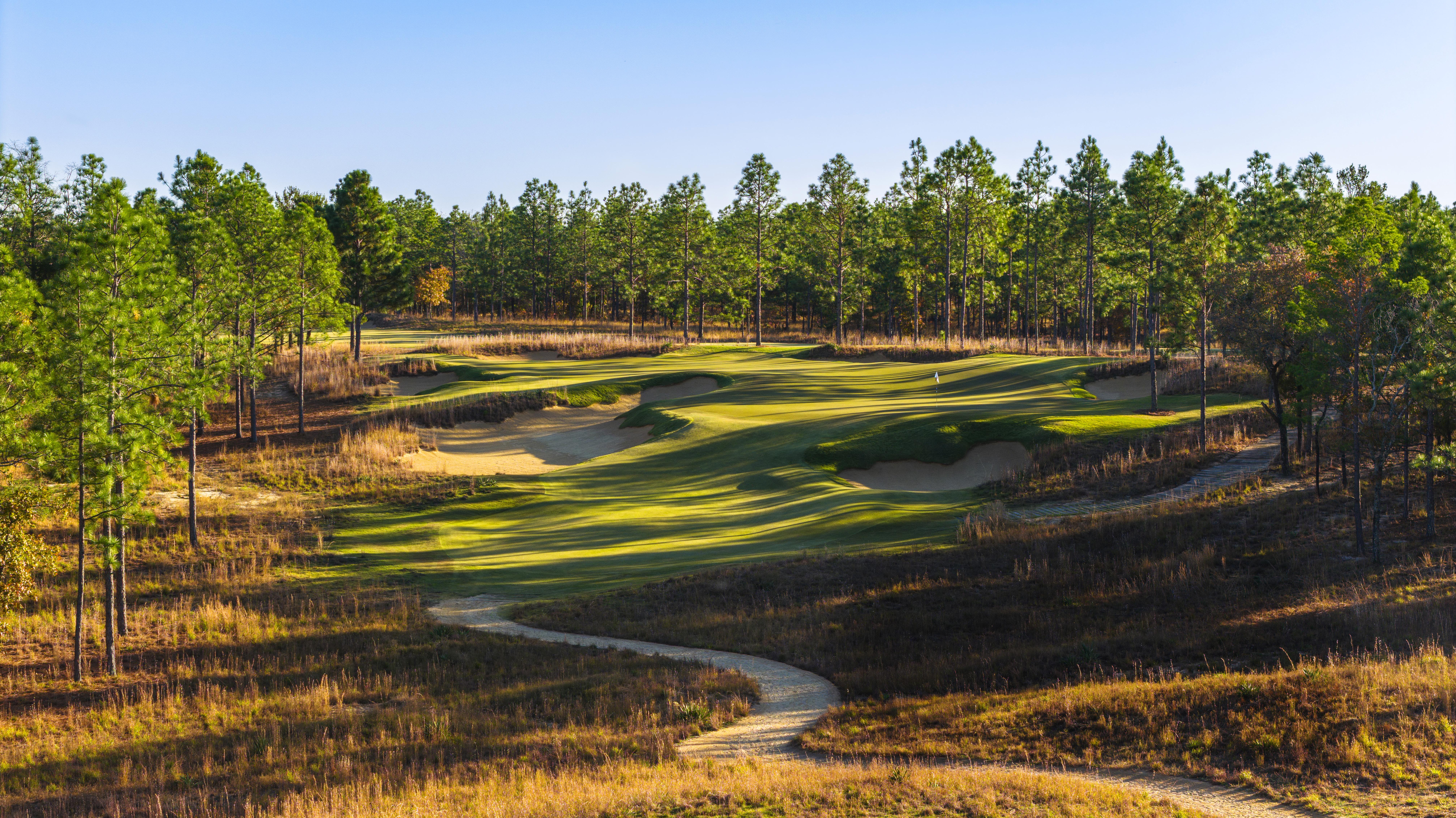
PINE MAJESTY Fall Line’s East Course meanders through forests of scrub pines.

EDITED BY STEPHEN HENNESSEY
PINE MAJESTY Fall Line’s East Course meanders through forests of scrub pines.
All-world sites and creativity push the boom in course design to even greater heights
BY DEREK DUNCAN
HA LFWAY THROUGH
a decade of post-Covid golf prosperity, the verdict is in:
Golf design in the U.S. is strong and getting even stronger. Judging by the courses that opened this year, developers and architects continue to seek out pieces of land with strong aura, knowing that the innate character of the site is more important than convenience of location. Salvag-
ing also remains a viable path as underperforming and defunct properties are being repurposed with fresh designs set atop the old bones. There’s also an uptick in residential developments, a segment of the industry that all but died in 2008. More investment is being made in affordable and municipal public golf, and on the other end of the spectrum, elite, historic private clubs keep spending tens of millions of dollars to upgrade
their turf, infrastructure and architecture, often as part of a return to some originalist version of their courses.
To conduct our annual awards for Best New Private and Public, Best Renovation and Best Transformation, Golf Digest’s course-ranking panelists visited 47 candidates across the U.S. As good as this year was, the state of golf for 2026 is shaping up to be even busier.
Awarded to the best newly developed courses or rebranded new designs using parts of existing courses.
WINNER
and valleys before the routing ducks back into the pines.
and valleys be fore the routing ducks back into the pines.
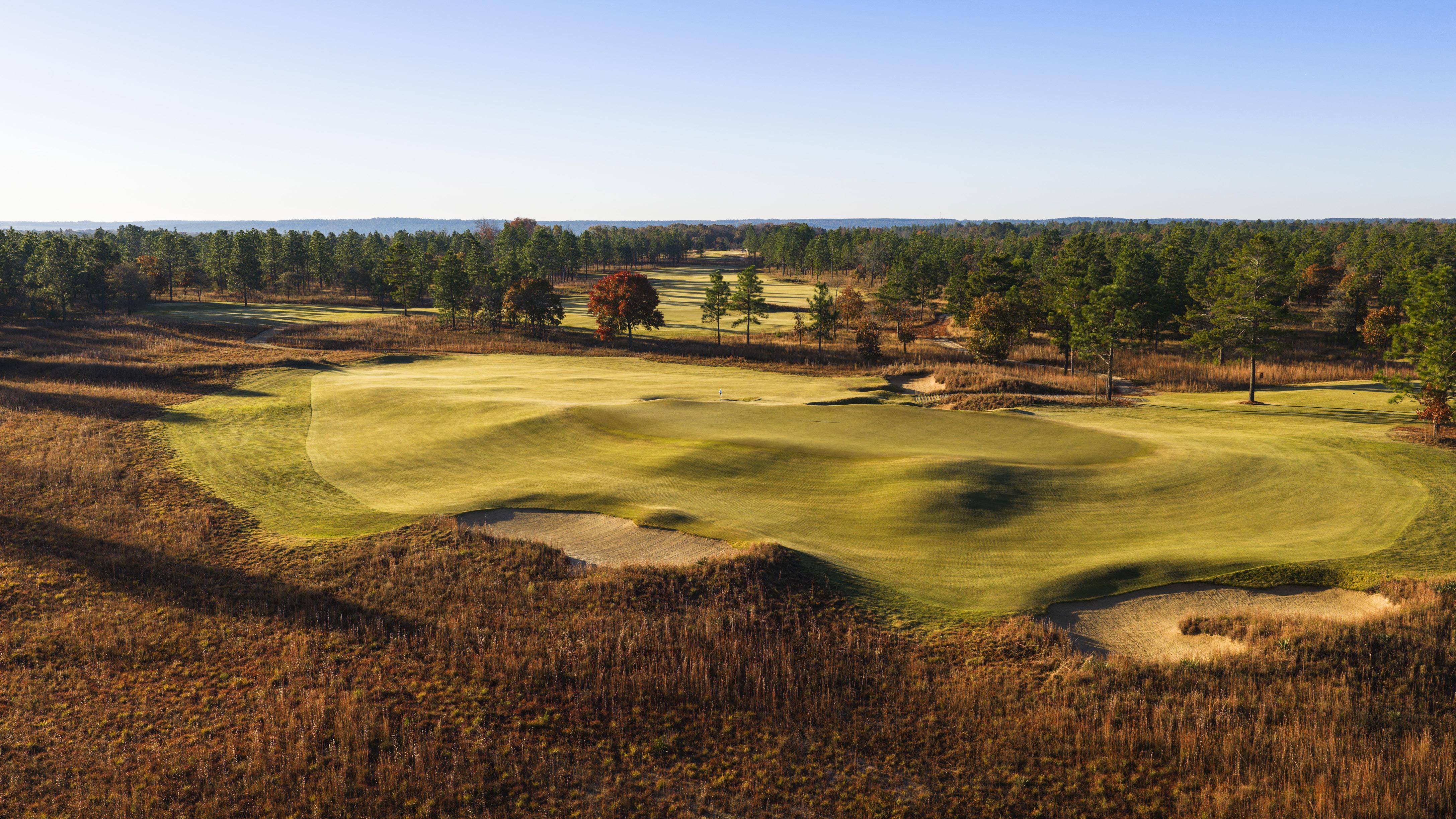
An imaginative short game is needed to play off the tight surrounds at The Fall Line.
Awarded to the best newly developed courses or rebranded new designs using parts of existing courses.
Geoff Ogilvy, Mike Cocking & Ashley Mead (OCM)
Mauk, Ga.
Geoff Ogilvy, Mike Cocking & Ashley Mead (OCM) Mauk, Ga.
6,610 yards/par 70
6,610 yards/par 70
The Fall Line is the geological term for the transition zone in Georgia between Columbus and Augusta that separates the hard clay soils of the upper Piedmont and the lower southern elevations that millions of years ago were ocean. It is one of the country’s most significant sandbelts and has only recently been discovered for golf, highlighted by The Fall Line, a 36-hole private destination with an international membership of just 100.
The Fall Line is the geological term for the transition zone in Georgia between Columbus and Augusta that separates the hard clay soils of the upper Piedmont and the lower southern elevations that millions of years ago were ocean. It is one of the country’s most significant sandbelts and has only recently been discovered for golf, highlighted by The Fall Line, a 36-hole private destination with an international membership of just 100.
The founders, a group of Los Angelesbased friends and business partners, initially approached Gil Hanse to design the course, though he declined due to its proximity to his Ohoopee Match Club that opened in 2019, 140 miles to the east. But the nature of the unique soils prompted Hanse to recommend the Australian firm of OCM, who have experience working in Melbourne’s sandbelt and had begun pursuing projects in the U.S.
Many of the holes seem to inhale and exhale, playing expansive and then tight. Muscular bunkers with high, native-grass faces step abruptly into the fairways as if setting hard picks. Par 4s at seven, nine and 18 feign width but taper near the green, making players fit drives into shrinking sectors. Greens like the third and 11th, both par 5s, are surrounded by nothing but tight turf, nearly an acre of short-grass playground that encourages aggressive approach shots and imaginative chips. Thirteen greens are open at the front, accessible to running shots that carom off the tight, dry Zeon zoysia approaches and hole locations, especially on the diverse set of par 3s, can be tucked against spines, furrows and knobs.
holes seem to in hale and exhale, playing expansive and then tight. Mus cular bunkers with high, native-grass faces step abruptly into the fairways as if setting hard picks. Par 4s at seven, nine and 18 feign width but taper near the green, making players fit drives into shrinking sectors. Greens like the third and 11th, both par 5s, are surrounded by nothing but tight turf, nearly an acre of short-grass playground that encour ages aggressive approach shots and imaginative chips. Thirteen greens are open at the front, accessible to running shots that carom off the tight, dry Zeon zoysia approaches and hole locations, especially on the diverse set of par 3s, can be tucked against spines, furrows and knobs.
Aside from the spin through the meadow, each hole plays in isolation and no par repeats itself until 12 and 13, back-to-back par 4s that are nevertheless quite different, one very short and the other very long. There’s nothing inherently special about alternating par every hole, but combined with this setting and this architecture it creates an immersive cadence, the sense that each new tee embarks on a strange voyage into the unknown.
The founders, a group of Los Angelesbased friends and business partners, initially approached Gil Hanse to design the course, though he declined due to its proximity to his Ohoopee Match Club that opened in 2019, 140 miles to the east. But the nature of the unique soils prompted Hanse to recommend the Australian firm of OCM, who have experience working in Melbourne’s sandbelt and had begun pursuing projects in the U.S.
The vast, 5,000-acre Fall Line property provided near limitless opportunities for OCM, inspiring the concept of two complementary courses, one designed with British heathland accents and one with Melbourne sandbelt influences. Opened first, the heathlandinspired East Course ventures through sparse forests of scrub pine with broad, inviting fairways that cascade across long inclines of land. A detour from holes 11 through 15 into a highland meadow provides outward views of the surrounding central Georgia ridges
The vast, 5,000-acre Fall Line property provided near limitless opportunities for OCM, inspiring the concept of two complementary courses, one designed with British heathland accents and one with Melbourne sandbelt influences. Opened first, the heathlandinspired East Course ventures through sparse forests of scrub pine with broad, inviting fairways that cascade across long inclines of land. A detour from holes 11 through 15 into a highland meadow provides outward views of the surrounding central Georgia ridges
the meadow, each hole plays in isolation and no par repeats it self until 12 and 13, back-to-back par 4s that are nevertheless quite differ ent, one very short and the other very long. There’s nothing inherently spe cial about alternating par every hole, but combined with this setting and this architecture it creates an immersive cadence, the sense that each new tee embarks on a strange voyage into the unknown.
The East was the only of the two Fall Line courses nominated for Best New this year as the West continues to grow in. We look forward to seeing how it fares in 2026. OCM won Best Transformation last year for its remodel of Medinah No. 3, and The Fall Line is the firm’s first win for a new course. As Cocking says, “It’s nice we can finally show some people what we’ve been up to the last four years.”
Fall Line courses nominated for Best New this year as the West continues to grow in. We look forward to seeing how it fares in 2026. OCM won Best Transformation last year for its remodel of Medinah No. 3, and The Fall Line is the firm’s first win for a new course. As Cocking says, “It’s nice we can finally show some people what we’ve been up to the last four years.”
Mike Koprowski & Kyle Franz Rembert, S.C.
Mike Koprowski & Kyle Franz
Rembert, S.C.
7,501 yards/par 70
7,501 yards/par 70
Broomsedge is the baby of Koprowski, a 41-year-old first-time club developer who has moonlighted the previous several years as a shaper with co-designer Franz. Living in Pinehurst, Koprowski saw central South Carolina as a potential soft spot in the expanding market of southeastern boutique private clubs and founded Broomsedge after locating this sand-based site 45 minutes east of Columbia. The land, divided into two distinct sections, is animated, cut by hollows and gullies. The designers filled the footprint with an impressive playbook of diverse and rustic holes of considerable breadth and movement, Koprowski’s
Broomsedge is the baby of Koprowski, a 41-year-old first-time club developer who has moonlighted the previous sev eral years as a shaper with co-designer Franz. Living in Pinehurst, Koprowski saw central South Carolina as a poten tial soft spot in the expanding market of southeastern boutique private clubs and founded Broomsedge after locating this sand-based site 45 minutes east of Columbia. The land, divided into two distinct sections, is animated, cut by hol lows and gullies. The designers filled the footprint with an impressive playbook of diverse and rustic holes of considerable breadth and movement, Koprowski’s
more reserved touch balancing Franz’s penchant for boldness. The results are harmonic, with instant standouts that include the split-level par-4 second modeled after Eastward Ho!’s sixth (where Franz was doing renovation work at the time) and the uphill, drivable par-4 15th with O.B. tight along the right.
more reserved touch balancing Franz’s penchant for boldness. The results are harmonic, with instant standouts that include the split-level par-4 second modeled after Eastward Ho!’s sixth (where Franz was doing renovation work at the time) and the uphill, drivable par-4 15th with O.B. tight along the right.
Doug Wright & Hal Sutton Columbus, Texas
Doug Wright & Hal Sutton
Columbus, Texas
7,241 yards, par 72
7,241 yards, par 72
Darmor is an intriguing mashup of things that might not seem to go well together but do, including a rough-andtumble chunk of south-central Texas outlands, a design based on the template holes of Seth Raynor and a former PGA Tour player-designer as one of the architects.
Darmor is an intriguing mashup of things that might not seem to go well together but do, including a rough-andtumble chunk of south-central Texas outlands, a design based on the template holes of Seth Raynor and a former PGA Tour player-designer as one of the architects.
But Darmor gets it right with plenty of width and some inventive takes on non-Raynor holes like Royal Dornoch’s “Foxy” par 4 and the par-3 “Dell” hole at Lahinch, with the wind and firm soils that make it play differently each day. Located west of Houston, Darmor Club is on the opposite side of Highway 71
from last year’s Best New Private Course winner, The Covey at Big Easy Ranch. Quite the 1-2 punch.
from last year’s Best New Private Course winner, The Covey at Big Easy Ranch. Quite the 1-2 punch.
HONORABLE MENTION
Loraloma Club, Spicewood, Texas, Architect: David McLay Kidd
But Darmor gets it right with plenty of width and some inventive takes on non-Raynor holes like Royal Dornoch’s “Foxy” par 4 and the par-3 “Dell” hole at Lahinch, with the wind and firm soils that make it play differently each day. Located west of Houston, Darmor Club is on the opposite side of Highway 71
Loraloma Club, Spicewood, Texas, Architect: David McLay Kidd
Mapleton Golf Club, Sioux Falls, S.D., Scott Hoffman
Mapleton Golf Club, Sioux Falls, S.D., Scott Hoffman
Richland at Reynolds Lake Oconee, Greensboro, Ga., Tom Fazio
Richland at Reynolds Lake Oconee, Greensboro, Ga., Tom Fazio
Soleta G.C. , Myakka City, Fla., Nick Price
Soleta G.C. , Myakka City, Fla., Nick Price
Windsong Farm (North) G.C. , Maple Plain, Minn., John Fought
Windsong Farm (North) G.C. , Maple Plain, Minn., John Fought
Awarded to the best newly developed public courses or rebranded new designs using parts of existing courses.
WINNER
places like Tetherow and St. Andrews’ Castle Course. With its broad fairways, half-par holes and feeding contours, the Sands was swashbuckling fun tailored to the joys of resort golfers rather than the vanities of elite players, and each course Kidd has built since possesses elements of this formula.
Awarded to the best newly developed public courses or rebranded new designs using parts of existing courses.
WINNER
David McLay Kidd Brewster, Wash.
6,921 yards, par 71
David McLay Kidd Brewster, Wash. 6,921 yards, par 71
The first course at Gamble Sands opened in 2014 and marked David Kidd’s return to “happy” architecture after a detour into the dark corners of extreme design at
The first course at Gamble Sands opened in 2014 and marked David Kidd’s return to “happy” architecture after a detour into the dark corners of extreme design at
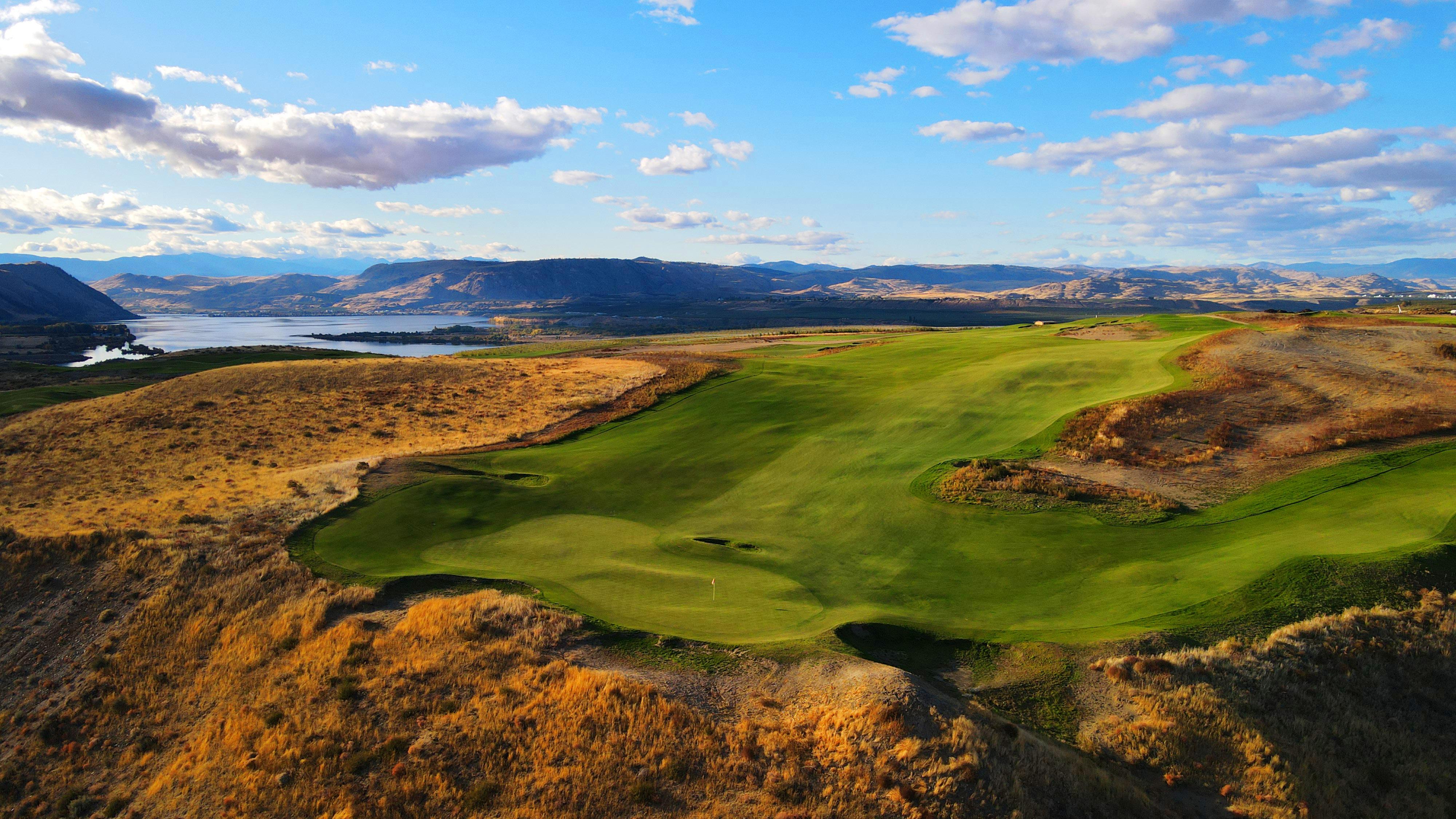
For Scarecrow, Gamble Sands’ second course, the question was how to incorporate the trademarks of the first—width, versatility, the ground game, wall-towall fescue turf—without replicating it. Both courses showcase panoramas of central Washington’s wide Columbia River valley, but whereas Sands plays primarily at the same grade across a broad benchland, the new course climbs and plunges, with holes like three, six, 10 and 14 climbing up and downhill as much as 70 feet. The heart of the routing, three through 14, plays across parts of what were formerly 100-acre
places like Tetherow and St. Andrews’ Castle Course. With its broad fairways, half-par holes and feeding contours, the Sands was swashbuckling fun tailored to the joys of resort golfers rather than the vanities of elite players, and each course Kidd has built since possesses elements of this formula.
For Scarecrow, Gamble Sands’ second course, the question was how to incorporate the trademarks of the first—width, versatility, the ground game, wall-towall fescue turf—without replicating it. Both courses showcase panoramas of central Washington’s wide Columbia River valley, but whereas Sands plays primarily at the same grade across a broad benchland, the new course climbs and plunges, with holes like three, six, 10 and 14 climbing up and downhill as much as 70 feet. The heart of the routing, three through 14, plays across parts of what were formerly 100-acre
David McLay Kidd’s second course at Gamble Sands features as much as 70 feet of elevation change.
David McLay Kidd’s second course at Gamble Sands features as much as 70 feet of elevation change.
agricultural patches covered by circular water pivots where the natural nuance and interest had been scraped away by dozers. Kidd and his shapers imagined the site as it might have been and gouged ravines and arroyos, making low spots lower and the highs higher.
agricultural patches covered by circular water pivots where the natural nuance and interest had been scraped away by dozers. Kidd and his shapers imagined the site as it might have been and gouged ravines and arroyos, making low spots lower and the highs higher.
A hallmark of the Sands design is long, diagonal tee shots over valleys and open washes of sand. Kidd and his lead associate Nick Schaan decided not to do that at Scarecrow, so the bunkers are smaller and more gnarly. The greens are also smaller but have much more internal movement than the Sands course, where even shots that miss the greens often result in recoveries with minimal break. “That’s not
A hallmark of the Sands design is long, diagonal tee shots over valleys and open washes of sand. Kidd and his lead associate Nick Schaan decided not to do that at Scarecrow, so the bunkers are smaller and more gnarly. The greens are also smaller but have much more internal movement than the Sands course, where even shots that miss the greens often result in recoveries with minimal break. “That’s not
the case at Scarecrow,” Kidd says. “You can land the ball on the green, catch a slope and it will bounce into a hollow.
You’ll have a lie you can putt from, but it’s going to have to go up a slope, onto the putting surface and then deal with a contour. The recoveries are a little more complex.”
the case at Scarecrow,” Kidd says. “You can land the ball on the green, catch a slope and it will bounce into a hollow. You’ll have a lie you can putt from, but it’s going to have to go up a slope, onto the putting surface and then deal with a contour. The recoveries are a little more complex.”
Scarecrow gives Gamble Sands a robust counterpoint to its original course. Most golfers can swing aggressively and stoke their egos at Sands, then see if they can hold it together on a sibling that demands more from their game.
“We expected players to say Scarecrow is a little tougher, and that’s generally been the reaction so far,” Kidd says.
“We were willing to push the design to the point that it might offend you, and there are holes that people might walk off with doubles or triples and say,
‘That wasn’t fair!’ ” He’s perfectly OK with that—golf isn’t meant to be fair. It
is meant to be fun, and early signs indicate Gamble Sands has just doubled it.
Kidd won his first Best New Course award for the original Bandon Dunes course in 1999. He also won Best Transformation in 2022 for Entrada at Snow Canyon in Utah and earned a runner-up in the 2018 Best New Public contest for Mammoth Dunes at Sand Valley.
Scarecrow gives Gamble Sands a robust counterpoint to its original course. Most golfers can swing aggressively and stoke their egos at Sands, then see if they can hold it together on a sibling that demands more from their game. “We expected players to say Scarecrow is a little tougher, and that’s generally been the reaction so far,” Kidd says. “We were willing to push the design to the point that it might offend you, and there are holes that people might walk off with doubles or triples and say, ‘That wasn’t fair!’ ” He’s perfectly OK with that—golf isn’t meant to be fair. It
unmatched for an inland course. Five holes flow along the cliff edge with the rest routed through the open interior providing views that stretch 10 to 20 miles into the distance. Friendly for resort golfers, the wide fairways tumble toward ample greens that alternate between gentle, almost flat surfaces like the first and 12th and more accentuated surfaces that demand short-game acumen. The par 5s are the strength of the design, but the best single hole might be the par4 ninth playing into an elevated skyline green set against the vast horizon.
unmatched for an inland course. Five holes flow along the cliff edge with the rest routed through the open interior providing views that stretch 10 to 20 miles into the distance. Friendly for resort golfers, the wide fairways tumble toward ample greens that alternate between gentle, almost flat surfaces like the first and 12th and more accentuated surfaces that demand short-game acumen. The par 5s are the strength of the design, but the best single hole might be the par4 ninth playing into an elevated skyline green set against the vast horizon.
Kyle Franz, Ran Morrissett, Mike Nuzzo & Rod Whitman Brooksville, Fla.
Kyle Franz, Ran Morrissett, Mike Nuzzo & Rod Whitman Brooksville, Fla.
7,610 yards, par 72
7,610 yards, par 72
is meant to be fun, and early signs indicate Gamble Sands has just doubled it. Kidd won his first Best New Course award for the original Bandon Dunes course in 1999. He also won Best Transformation in 2022 for Entrada at Snow Canyon in Utah and earned a runner-up in the 2018 Best New Public contest for Mammoth Dunes at Sand Valley.
Bill Bergin & Rees Jones
Rising Fawn, Ga.
The second course to open at the old World Woods property an hour north of Tampa is a sublime counterpoint to Cabot’s more volatile first course, Karoo, the ego to that design’s id. All the golf at Cabot Citrus Farms is big and expressionistic, but The Roost also possesses an elegant coherence, partly derived from its tranquil setting amid moss-draped oaks, a terrific achievement given that four designers had input. Whitman, architect of Cabot Links in Nova Scotia, shaped the greens, and his artistic sweeps and dips and fades at holes like the par-5 third and par-4 15th carry the day, pushing right against the edge of extremity without stepping over.
The second course to open at the old World Woods property an hour north of Tampa is a sublime counterpoint to Cabot’s more volatile first course, Karoo, the ego to that design’s id. All the golf at Cabot Citrus Farms is big and expressionistic, but The Roost also possesses an elegant coherence, partly derived from its tranquil setting amid moss-draped oaks, a terrific achievement given that four designers had input. Whitman, architect of Cabot Links in Nova Scotia, shaped the greens, and his artistic sweeps and dips and fades at holes like the par-5 third and par-4 15th carry the day, pushing right against the edge of extremity without stepping over.
Aileron G.C., Lake Suzy, Fla., Kipp Schulties
Bill Bergin & Rees Jones Rising Fawn, Ga.
6,892 yards, par 72
6,892 yards, par 72
The Keep’s scenic vantage point, peering over a flank of Lookout Mountain in northwest Georgia from over 300 feet above the valley below, is almost
Aileron G.C., Lake Suzy, Fla., Kipp Schulties
Bella Ridge G.C., Johnstown, Colo., Art Schaupeter
Bella Ridge G.C., Johnstown, Colo., Art Schaupeter
Corica Park G. Cse. (North), Alameda, Calif., Robert Trent Jones II
Corica Park G. Cse. (North), Alameda, Calif., Robert Trent Jones II
Old Fort G.C., Murfreesboro, Tenn., Nathan Crace
The Keep’s scenic vantage point, peering over a flank of Lookout Mountain in northwest Georgia from over 300 feet above the valley below, is almost
Old Fort G.C., Murfreesboro, Tenn., Nathan Crace
The Third at Watersound (Fla.) Club, Mark & Davis Love III
The Third at Watersound (Fla.) Club, Mark & Davis Love III
Awarded to courses that undergo a major remodel beyond mere renovations that can include new holes, a new routing and a new architectural identity. If you blinked, you wouldn’t recognize it.
Awarded to courses that undergo a major remodel beyond mere renovations that can include new holes, a new routing and a new architectural identity. If you blinked, you wouldn’t recognize it.
Tom Doak
Tom Doak
Williamsburg, Mich.
Williamsburg, Mich.
6,960 yards, par 71
6,960 yards, par 71
High Pointe qualifies as golf’s feel-good story of the year. This was the first course Tom Doak built beginning in 1987 as a 26-year-old getting his big break. Located outside of Traverse City, Mich., it was and remains the only course at which he personally shaped all 18 greens. In 2008, the dailyfee course closed and a large section of the property, primarily the first nine holes, was sold to become a hops farm with the remaining parts left to nature.
Though sitting fallow and inert, there was enough remaining of High Pointe’s ghostly form to continually tantalize Doak, who lives in Traverse City. Then, several years ago, Florida-based businessman and entrepreneur Rod Trump became interested in reviving the design after hearing Doak on a podcast express his desire to someday bring it back. The hop-farm land was not available, but Trump secured what remained of the course along with 160 acres to the east of the old routing and asked Doak to round out an updated version of High Pointe. He resurrected six holes and parts of another, but the other 11 holes are completely new, with nine of them routed within the eastern bloc that Trump acquired.
High Pointe qualifies as golf’s feel-good story of the year. This was the first course Tom Doak built beginning in 1987 as a 26-year-old getting his big break. Located outside of Traverse City, Mich., it was and remains the only course at which he personally shaped all 18 greens. In 2008, the dailyfee course closed and a large section of the property, primarily the first nine holes, was sold to become a hops farm with the remaining parts left to nature. Though sitting fallow and inert, there was enough remaining of High Pointe’s ghostly form to continually tantalize Doak, who lives in Traverse City. Then, several years ago, Florida-based businessman and entrepreneur Rod Trump became interested in reviving the design after hearing Doak on a podcast express his desire to someday bring it back. The hop-farm land was not available, but Trump secured what remained of the course along with 160 acres to the east of the old routing and asked Doak to round out an updated version of High Pointe. He resurrected six holes and parts of another, but the other 11 holes are completely new, with nine of them routed within the eastern bloc that Trump acquired.
High Pointe was always a tale of two courses, with the one rugged, tree-lined nine playing off the other more open and delicately shaped. That split character remains. The saved holes retain a fearless vigor that’s to be expected from the debut performance of a young and confident architect. They’ve been refined,
High Pointe was always a tale of two courses, with the one rugged, tree-lined nine playing off the other more open and delicately shaped. That split character remains. The saved holes retain a fearless vigor that’s to be expected from the debut performance of a young and confident architect. They’ve been refined,
but the topography and green shaping remain ambitious. These contrast with the additions that are more measured and mature, moving across subtler rumbles of meadowland. The greens are tempered, by the wisdom of the designer perhaps, or the preferences of the owner and modern green speeds, with more edge-to-edge slope than internal billowing. Driving the ball into position is the chief challenge—there’s room to miss but narrower lines must be tip-toed to be in position to attack greens. New holes like the par-5 fourth with a hogsback fairway and green anchored against a side slope of land behind a nest of bunkers, and the infuriating uphill par-4 seventh with a reachable yet inaccessible plateau green stand apart, as do wrinkles like alternate par 3s at the third, one long, one short, leading to different sets of tees for the fourth. High Pointe, when it opened,
but the topography and green shaping remain ambitious. These contrast with the additions that are more measured and mature, moving across subtler rumbles of meadowland. The greens are tempered, by the wisdom of the designer perhaps, or the preferences of the owner and modern green speeds, with more edge-to-edge slope than internal billowing. Driving the ball into position is the chief challenge—there’s room to miss but narrower lines must be tip-toed to be in position to attack greens. New holes like the par-5 fourth with a hogsback fairway and green anchored against a side slope of land behind a nest of bunkers, and the infuriating uphill par-4 seventh with a reachable yet inaccessible plateau green stand apart, as do wrinkles like alternate par 3s at the third, one long, one short, leading to different sets of tees for the fourth. High Pointe, when it opened,
was a portrait by an artist as a young man. It’s still that, but the course is also now a portrait of an evolution.
Doak won Best New Public Course the previous two years for The Lido at Sand Valley and Pinehurst No. 10 and has previously won new course awards for Pacific Dunes, Sebonack (with Jack Nicklaus) and The Loop at Forest Dunes. This is his first Best Transformation award.
was a portrait by an artist as a young man. It’s still that, but the course is also now portrait of an evolution.
Doak won Best New Public Course the previous two years for The Lido at Sand Val ley and Pinehurst No. 10 and has previously won new course awards for Pacific Dunes, Sebonack (with Jack Nicklaus) and The Loop at Forest Dunes. This is his first Best Transformation award.
Bill Coore & Ben Crenshaw Bolton, Mass.
Bill Coore & Ben Crenshaw Bolton, Mass. 7,082 yards, par 71
7,082 yards, par 71
Since opening in the late 1950s, The Pines was known more for being the country’s
Since opening in the late 1950s, The Pines was known more for being the country’s
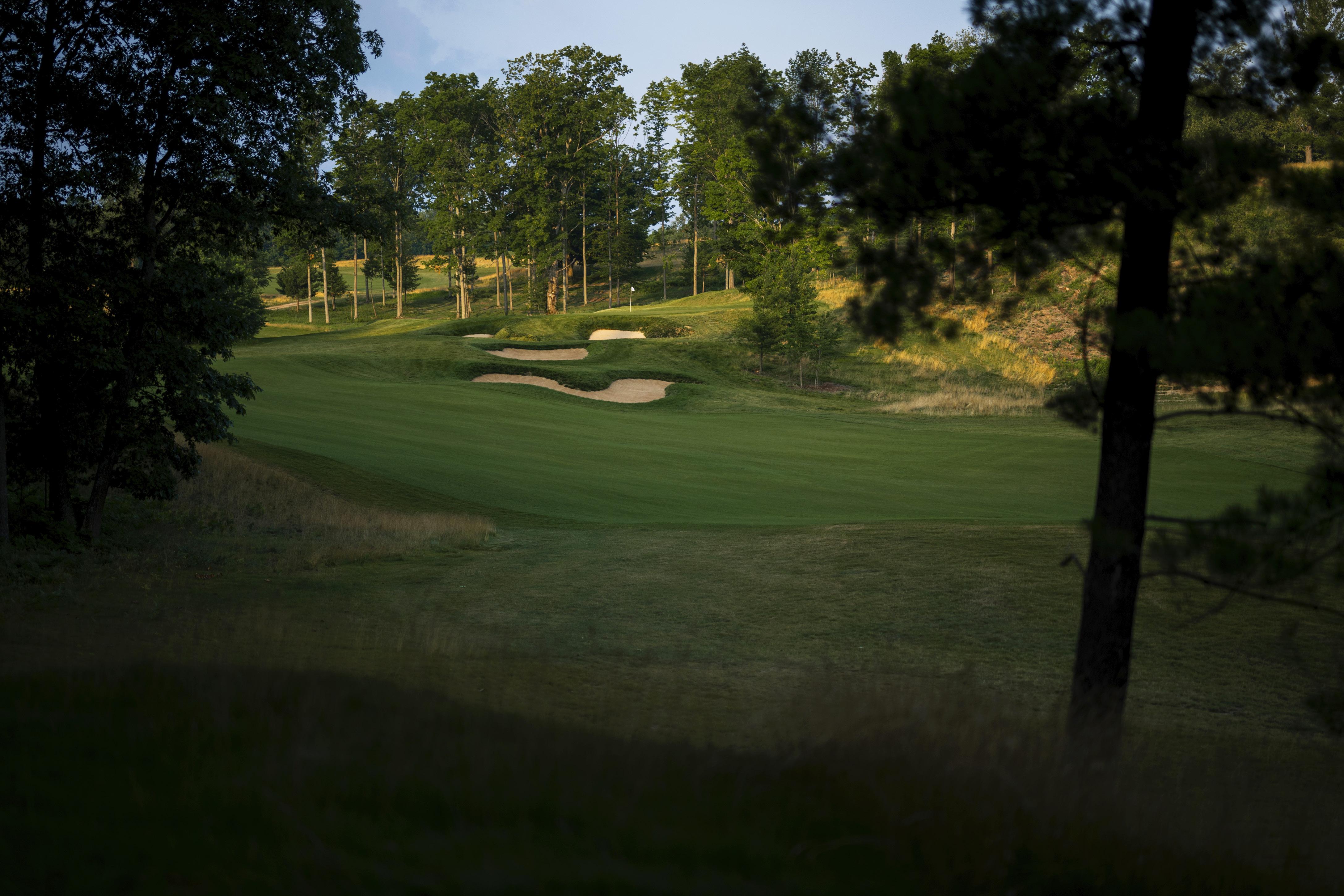
Tom Doak returned to his first-ever design with a chance to revitalize it.
the par-4 fifth, case in point, cuts across the corridors of four former holes. The design is reassuringly Coore/Crenshaw with lovely old-world bunker shapes that match the deep-woods New England environment. Many of the green contours, on the other hand, rival in boldness anything the designers have previously done.
longest golf course at over 8,000 yards than for architectural excellence. After Bill Coore and Ben Crenshaw remodeled the property, those dynamics flipped. “We’re probably the only people who would try to make a golf course 1,000 yards shorter than it used to be,” Coore says. The Pines is entirely reimagined and follows almost none of the pathways of the old course— the par-4 fifth, case in point, cuts across the corridors of four former holes. The design is reassuringly Coore/Crenshaw with lovely old-world bunker shapes that match the deep-woods New England environment. Many of the green contours, on the other hand, rival in boldness anything the designers have previously done.
Andrew Green
Westlake, Texas
7,390 yards, par 71
Vaquero is an upscale, Discovery Land Co. development north of Fort Worth that opened in 2001. Andrew Green remodeled the Tom Fazio design in 2023, retouching every element by converting long sandy buffers into native areas, greatly reducing the overall acreage of sand, reversing the direction of two holes, and removing the par-3 17th and replacing it with a new short 16th. The standout piece is the revamped short par-4 13th full of centerline bunkers, creating a myriad of driving options.
converting long sandy buffers into native areas, greatly reducing the overall acreage of sand, reversing the direction of two holes, and removing the par-3 17th and replacing it with a new short 16th. The standout piece is the revamped short par-4 13th full of centerline bunkers, creating a myriad of driving options.
HONORABLE MENTION
Buffalo Dunes G. Cse., Garden City, Kan., Todd Clark & Zach Varty
Karsten Creek G.C., Stillwater, Okla., Andrew Green
The Killearn Club (Camellia), Tallahassee, Fla., Chris Wilcznyski Lakeside C.C., Houston, Jay Blasi
The Pearl at Kalauao, Aiea, Hawaii, David Dale & Kevin Ramsey
Poppy Ridge G. Cse., Livermore, Calif., Jay Blasi
Sharon Heights G. & C.C., Menlo Park, Calif., Todd Eckenrode
Sharon Heights G. & C.C., Menlo Park, Calif., Todd Eckenrode Urbana (Ill.) C.C., Drew Rogers
Urbana (Ill.) C.C., Drew Rogers
Vineyards C.C. (North), Naples, Fla., Kipp Schulties
Vineyards C.C. (North), Naples, Fla., Kipp Schulties
Waynesville (N.C.) Inn & G.C.,
Waynesville (N.C.) Inn & G.C., Bobby Weed
Bobby Weed
Waldorf Astoria G.C., Orlando, Rees Jones
Waldorf Astoria G.C., Orlando, Rees Jones
Awarded to courses that achieve the most significant improvement through the renovation of the architectural features and infrastructure, including work based on historical precedent.
overall story of the course.”
overall story of the course.”
Awarded to courses that achieve the most significant improvement through the renovation of the architectural features and infrastructure, including work based on historical precedent.
The $18-million renovation involved the expansion of the green surfaces to create dynamic hole locations and the recreation of Alison’s bunkers along with widened playing corridors and selective tree removal. A new par 3, the 15th, was also created as an homage to the no-longer-in-existence par-3 10th that was sacrificed in the 1990s to make room for tennis facilities.
The $18-million renovation involved the expansion of the green surfaces to create dynamic hole locations and the recreation of Alison’s bunkers along with widened playing corridors and selective tree removal. A new par 3, the 15th, was also created as an homage to the no-longer-in-existence par-3 10th that was sacrificed in the 1990s to make room for tennis facilities.
Andrew Green Chevy Chase, Md.
Andrew Green Chevy Chase, Md. 7,205 yards, par 71
7,205 yards, par 71
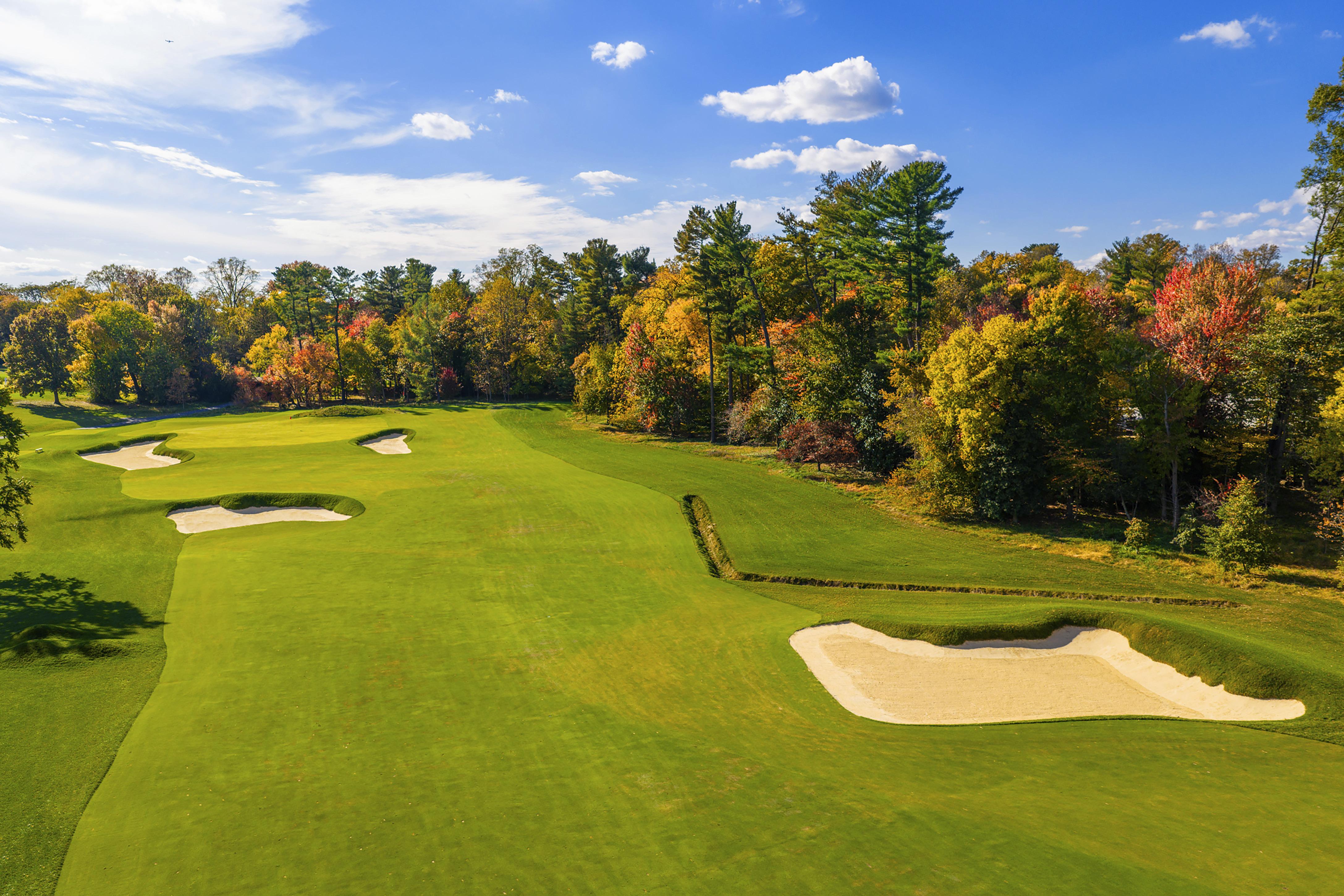
The mission of Andrew Green’s work at Chevy Chase Club north of Washington, D.C. was to return the course design to its historical roots. The question was, which ones?
The mission of Andrew Green’s work at Chevy Chase Club north of Washington, D.C. was to return the course design to its historical roots. The question was, which ones?
The original nine holes laid out by Willie Davis in 1896 were expanded to 18 two years later, most likely by club professional Willie Tucker. Donald Ross, quite early in his career, remodeled those holes in 1910. This course existed until 1921 when British architect C.H. Alison, longtime partner of Harry Colt, redesigned the course once again, with the construction overseen by another esteemed architect, William Flynn, and his partner, Howard Toomey. Robert Trent Jones made alterations in 1947, and Arthur Hills executed another full renovation in 1997. So to what iteration should the course be taken back?
The original nine holes laid out by Willie Davis in 1896 were expanded to 18 two years later, most likely by club professional Willie Tucker. Donald Ross, quite early in his career, remodeled those holes in 1910. This course existed until 1921 when British architect C.H. Alison, longtime partner of Harry Colt, redesigned the course once again, with the construction overseen by another esteemed architect, William Flynn, and his partner, Howard Toomey. Robert Trent Jones made alterations in 1947, and Arthur Hills executed another full renovation in 1997. So to what iteration should the course be taken back?
Ultimately Green and the club focused on the Alison presentation of Chevy Chase using early 1930s aerial photography as the touchstone for reconstruction. But the team was also intrigued by elements from other eras, including linear mounding and raised grassy berms from the turn of the century identifiable from other photographs.
For Green, who has forged a reputation for rehabilitating Donald Ross’ architecture at places such as Inverness, Oak Hill (East), Scioto and Interlachen, studying Colt and Alison was new. He says that where Ross was often mathematical in his placement of bunkers, forcing players to mentally work through their strategies, Alison was more intuitive and organic at Chevy Chase, fitting large and small bunkers into the land to fill the natural spaces. The vivid, Alison-modeled shaping of the greens and grass-faced bunkers that flank them brings material clarity and contrast to a Chevy Chase design that had come to feel sterile and standardized.
For Green, who has forged a reputation for rehabilitating Donald Ross’ architecture at places such as Inverness, Oak Hill (East), Scioto and Interlachen, studying Colt and Alison was new. He says that where Ross was often mathematical in his placement of bunkers, forcing players to mentally work through their strategies, Alison was more intuitive and organic at Chevy Chase, fitting large and small bunkers into the land to fill the natural spaces. The vivid, Alison-modeled shaping of the greens and grass-faced bunkers that flank them brings material clarity and contrast to a Chevy Chase design that had come to feel sterile and standardized.
“I’m a believer that so much of the best golf in the greater Mid-Atlantic region was pushed over by the bulldozer between World War II and today,” Green says. “Anything with historic significance in that part of the world is gone. So at Chevy Chase we tried to play off the different lineages we found to recreate a level of uniqueness that would make it different than any other club in the region.” Mission accomplished.
Ultimately Green and the club focused on the Alison presentation of Chevy Chase using early 1930s aerial photography as the touchstone for reconstruction. But the team was also intrigued by elements from other eras, including linear mounding and raised grassy berms from the turn of the century identifiable from other photographs.
“The aerial guided us toward recreating Alison’s really unique greens and bunker shapes and positions, and we adjusted those for changes in modern distances,” Green says. “Then we found those old Victorian, ‘hunt-club’ era pieces that we added to help tell the
“I’m a believer that so much of the best golf in the greater Mid-Atlantic region was pushed over by the bulldozer between World War II and today,” Green says. “Anything with historic significance in that part of the world is gone. So at Chevy Chase we tried to play off the different lineages we found to recreate a level of uniqueness that would make it different than any other club in the region.” Mission accomplished.
This gives Green back-to-back Best Renovation wins, following Interlachen last year. He also won Best Transformation for Congressional Country Club (Blue) in 2021.
This gives Green back-to-back Best Renovation wins, following Interlachen last year. He also won Best Transformation for Congressional Country Club (Blue) in 2021.
“The aerial guided us toward recreating Alison’s really unique greens and bunker shapes and positions, and we adjusted those for changes in modern distances,” Green says. “Then we found those old Victorian, ‘hunt-club’ era pieces that we added to help tell the
Gil Hanse & Jim Wagner
Gil Hanse & Jim Wagner Springfield, N.J. 7,000 yards/par 72
Springfield, N.J.
7,000 yards/par 72
When Hanse and Wagner renovated Baltusrol’s Lower Course in 2021, the
When Hanse and Wagner renovated Baltusrol’s Lower Course in 2021, the
task was to strengthen the faded profile of A.W. Tillinghast while reenforcing the course’s challenge for major tournaments including the 2029 PGA Championship. The job at the club’s Upper course, reopened in summer 2025, was simpler: Bring back the Tillinghast. This included significant tree removal, major green expansions (including the addition of a lost alternate green at the par-4 14th), bunker restoration/relocation and new sub-surface air systems. Both the Upper and Lower are known for strong opening and finishing sequences, but the Upper’s beautifully revived middle holes, moving across more interesting terrain, now make the case for the courses being on equal architectural footing, if not in championship mettle.
task was to strengthen the faded profile of A.W. Tillinghast while reenforcing the course’s challenge for major tournaments including the 2029 PGA Championship. The job at the club’s Upper course, reopened in summer 2025, was simpler: Bring back the Tillinghast. This included significant tree removal, major green expansions (including the addition of a lost alternate green at the par-4 14th), bunker restoration/relocation and new sub-surface air systems. Both the Upper and Lower are known for strong opening and finishing sequences, but the Upper’s beautifully revived middle holes, moving across more interesting terrain, now make the case for the courses being on equal architectural footing, if not in championship mettle.
Kyle Franz Chatham, Mass.
Kyle Franz Chatham, Mass. 6,711 yards, par 72
6,711 yards, par 72
Located on the shore of Cape Cod’s Pleasant Bay, Eastward Ho! is a thrill ride over some of golf’s most adventurous waterfront terrain. A renovation by Keith Foster 20 years ago helped reveal the glory of the 1922 Herbert Fowler design, and Kyle Franz’s work in 2024 has taken it to the next level. More water views were opened, and putting surfaces have been expanded by more than 28,000 square feet, including a recaptured Fowler-era front section of
most sensational Biarritz greens.
Located on the shore of Cape Cod’s Pleasant Bay, Eastward Ho! is a thrill ride over some of golf’s most adventurous waterfront terrain. A renovation by Keith Foster 20 years ago helped reveal the glory of the 1922 Herbert Fowler design, and Kyle Franz’s work in 2024 has taken it to the next level. More water views were opened, and putting surfaces have been expanded by more than 28,000 square feet, including a recaptured Fowler-era front section of
Victorian-era themes at Chevy Chase.
ERA EVOLUTION
Andrew Green combined Golden Age and Victorian-era themes at Chevy Chase.
New fairway expansions allow drives to explore the unpredictability of the colossally rolling contour, and Franz’s refreshed bunker work and native sandy areas add coastal texture while hiding previously unsightly cart paths.
the par-3 fourth, turning it into one of the country’s most sensational Biarritz greens. New fairway expansions allow drives to explore the unpredictability of the colossally rolling contour, and Franz’s refreshed bunker work and native sandy areas add coastal texture while hiding previously unsightly cart paths.
Addison Reserve C.C., Delray Beach, Fla., Rees Jones & Steve Weisser
Callawassie Island (S.C.), in house
Colonial C.C., Fort Worth, Gil Hanse & Jim Wagner
Dunedin (Fla.) G.C., Kris Spence
Dunedin (Fla.) G.C., Kris Spence Evanston G.C., Skokie, Ill., Tyler Rae
Evanston G.C., Skokie, Ill., Tyler Rae
The Gasparilla Inn & C., Boca Grande, Fla., Tripp Davis
The Gasparilla Inn & C., Boca Grande, Fla., Tripp Davis
Lakewood C.C., Westlake, Ohio, Keith Foster
Lakewood C.C., Westlake, Ohio, Keith Foster
Minneapolis G.C., Jeff Mingay
Minneapolis G.C., Jeff Mingay
Pasatiempo G.C., Santa Cruz, Calif., Jim Urbina
Pasatiempo G.C., Santa Cruz, Calif., Jim Urbina
PGA West (Stadium), La Quinta, Calif., Tim Liddy
PGA West (Stadium), La Quinta, Calif., Tim Liddy
Philadelphia C.C. (Spring Mill), Jim Nagle
Philadelphia C.C. (Spring Mill), Jim Nagle
Addison Reserve C.C., Delray Beach, Fla., Rees Jones & Steve Weisser
Black Diamond Ranch (Ranch) , Lecanto, Fla., Tripp Davis
Black Diamond Ranch (Ranch) , Lecanto, Fla., Tripp Davis
Quarry Oaks G.C., Ashland, Neb., John LaFoy
Quarry Oaks G.C., Ashland, Neb., John LaFoy
Wedgewood G. & C.C., Powell, Ohio, Bruce Charlton
Wedgewood G. & C.C., Powell, Ohio, Bruce Charlton