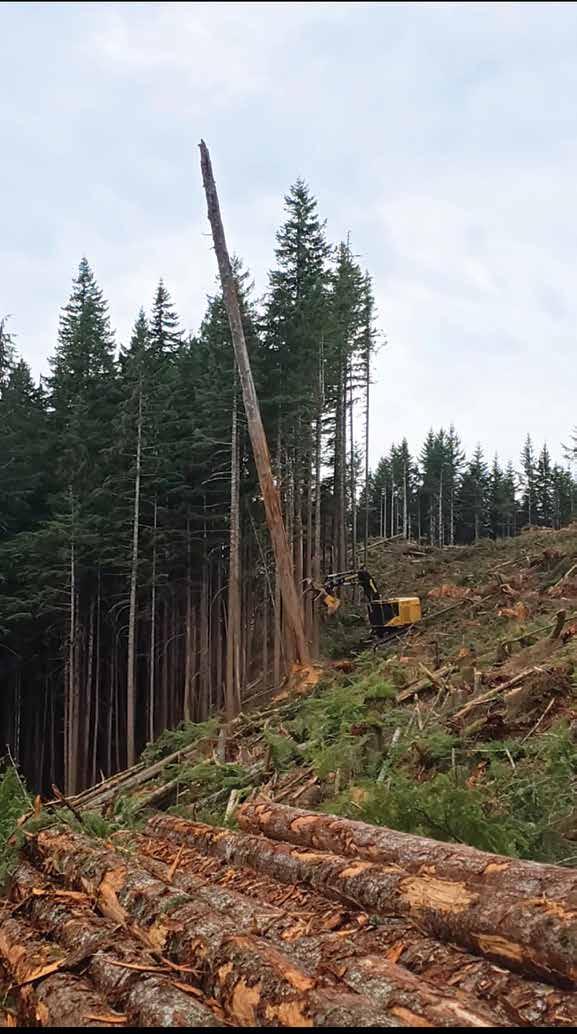
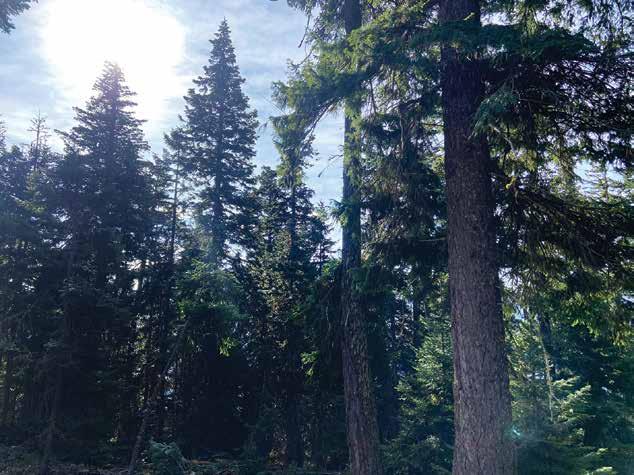
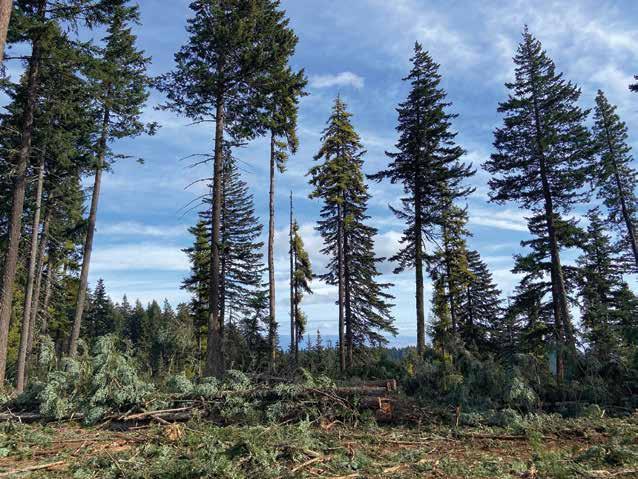
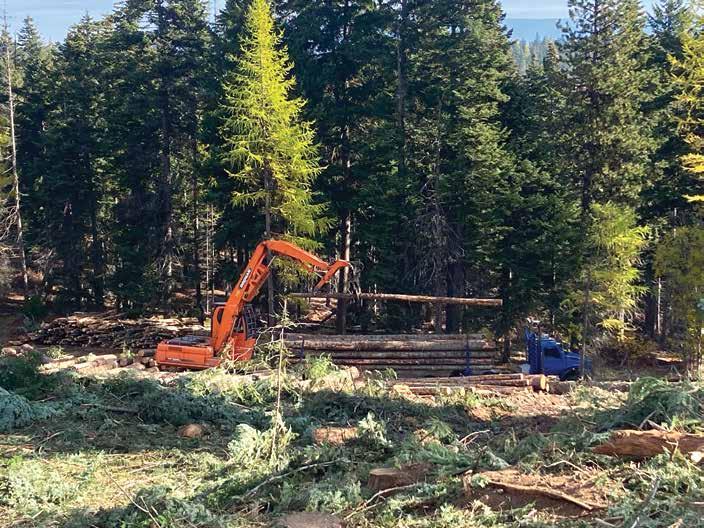
The plan by Washington Public Lands Commissioner Dave Upthegrove to preserve 77,000 acres of old forests on state lands is drawing criticism from both environmentalists and the timber industry.
State Department of Natural Resources maps purporting to show the 77,000 acres to be conserved are, according to some environmental groups, full of errors and leave out many of the most valuable legacy forests.
“There are serious concerns about how these maps were developed, what criteria were used to identify areas for protection and whether they are the same areas Upthegrove promised to protect when he ran for election,” says Stephen Kropp, founder of the Tacoma-based Legacy Forest Defense Coalition.
DNR communications director Michael Kelly said the department has “identified 77,000 of the best acres for ecological health, habitat connectivity and diversity of stand types across the landscape to conserve.”
Timber industry organizations have criticized the premise of Upthegrove’s August order. “Removing these acres from sustainable harvest will mean less revenue for schools, fire districts, hospitals and libraries that depend on trust land funds, and fewer family-wage jobs in Washington’s forest sector,” said American Forest Resource Council president Travis Joseph.
Oregon Forest Industry Sets Safety Conference
Improving worker safety and health in Oregon’s pulp, paper, and forest products industries will take center stage at the 33rd annual Western Pulp, Paper & Forest Products Safety & Health Conference, scheduled for Dec. 2–5 at the Holiday Inn Portland–Columbia Riverfront.
The four-day event, presented by the Oregon Occupational Safety and Health Division (Oregon OSHA) and other partners, will bring together safety professionals, industry experts, and workers to explore new and emerging issues, share best practices, and refresh safety and health knowledge.
Topics will include chemical safety, electrical safety, safety leadership, air monitoring, and control of hazardous energy. Broader sessions—such as workplace wellness, safety committee development, heatillness prevention, root-cause analysis, and driver safety—will also apply to a wide range of workplaces.
The conference’s keynote address on Dec. 3 will feature Matt Pomerinke, safety specialist at Smurfit WestRock in Longview,
Washington. Pomerinke will discuss how workplace accidents and injuries extend beyond the immediate moment, affecting families, friends, and co-workers.
Plan to Kill Owls in NW Clears a Major Hurdle
A controversial plan to kill one owl species to save another cleared a major hurdle. The full Senate struck down a GOP effort to prevent the cull of up to 450,000 barred owls in the Pacific Northwest over three decades, ending a saga that created strange political bedfellows.
It’s a major win for environmentalists and federal wildlife officials who want to protect northern spotted owls that have been crowded out by their larger, more aggressive cousins.
They had recently got an unlikely ally in loggers who said that scuttling the U.S. Fish and Wildlife Service plan could hinder timber sales.
It was a blow to an equally unusual alliance that includes right-wing politicians and animal rights advocates who argued the cull is too expensive and inhumane. The Trump administration leaned on Republican lawmakers to get out of the way, scrambling partisan lines.
One-Sixth of Washington State Forests Are Dead or Else Dying
Of Washington’s 22 million forested acres, the Department of Natural Resources manages about 3 million acres of state land. Of those, 545,000 acres are now dead or dying — the equivalent of more than 500,000 football fields.
“It’s really important that we get in and we address this,” said DNR Commissioner Dave Upthegrove, pointing to climate change as one of the root causes.
Washington’s severe drought has weakened trees across the state. Then came powerful storms — including last November’s bomb cyclone and February’s windstorm — that battered already-stressed trees to their breaking point.
The storms created invisible wounds that became gateways for insects and disease. Experts suspect these powerful weather events also triggered “windthrow events,” where insects either burrow into tree bark for shelter or get swept away by winds and are displaced to new trees miles away.
As droughts intensify and insects thrive in warming forests, trees are dying of thirst while being eaten alive. It’s a double
(continued on page 6)
Editor: Tim Cox, tim@forestnet.com
Contributing Editors: Sara Rosa, Andrea Watts
Send both OLD and NEW Circulation information to: TimberWest Magazine Attn: Subscriptions P.O. Box 9058, Fargo, ND 58106 subscribetw@forestnet.com
CEO: Anthony Robinson – arobinson@forestnet.com Phone: (778) 991-3500
PUBLISHER’S EDITORIAL STATEMENT: TimberWest reports on the logging and lumber segment of the forest industry in the Western United States with emphasis on the states of AK, WA, OR, ID, MT and CA, providing current information on timber harvesting techniques, sawmill operations, news, legislation, events, people and products pertinent to this market.
TIMBERWEST (USPS #024858) is published bi-monthly (Jan/Feb, Mar/Apr, May/Jun, Jul/Aug, Sept/Oct, Nov/Dec) by TimberWest Publications, LLC, 1934 E Rose Creek Pkwy S, Fargo, ND 58104. Periodicals postage paid at Fargo, ND and at additional mailing offices. Copyright 2025. All rights reserved. Subscription rates to qualified subscribers are Free and all non-qualified subscriptions in U.S. are $22 per year payable in advance. Canada $35 (U.S.). Other $60 (U.S.). Single copies paid in advance $4. Company affiliation, title, date and signature must appear on subscription forms. Publisher reserves the right to refuse non-industry subscriptions and advertising. All other advertising is accepted at the discretion of the publisher. Publisher does not assume any responsibility for the contents of any advertisement and all representations or warranties made in such advertising are those of the advertiser and not of the publisher. Back issues, if available, $4 each. Directory and Calendar issue $10 each.
Advertising created by TimberWest Publications, LLC is the sole property of TimberWest Publications, LLC and may not be copied or reproduced without the express written permission of the publisher.
Canadian Publication Mail Product Sales Agreement #40740074. Return Undeliverable Canadian Addresses to P.O. Box 86670 Stn. Main, North Vancouver, BC V7L 4L2
assault turning once-green mountainsides into graveyards of standing dead timber— impacting both eastern and western Washington.
Mercer Mass Timber Finishes Arkansas Project
Mercer Mass Timber (MMT), a. leading manufacturer of sustainable timber building materials and a subsidiary of Mercer International Inc., announced completion of its role in the completion of the Anthony Timberlands Center for Design & Materials Innovation at the University of Arkansas. It is a first-of-its-kind academic hub dedicated to timber design, research, and fabrication using mass timber and other materials for design, research, and fabrication.
The 45,000-square-foot, four-story facility showcases how locally sourced, sustainably certified timber can transform both the built environment and the educational landscape.
The project used Southern Yellow Pine cross-laminated timber manufactured at Mercer’s plant in Conway, Arkansas. The company also has plants in Washington and British Columbia.
“This project stands as a showcase of forward-thinking architecture — and a powerful case for what’s possible when material and intent are in sync,” said Nick Milestone, Chief Operating Officer for Mercer Mass Timber.
The Anthony Timberlands Center marks Mercer Mass Timber’s first chain-ofcustody-certified project, with 30 percent of timber SFI-certified under CoC protocols and the remainder sustainably sourced.
‘Heat Dome’ Scorched Oregon, Washington Forests in 2021
A satellite imagery analysis shows that the 2021 “heat dome” scorched almost 5 percent of the forested area in western Oregon and western Washington, turning foliage in canopies from a healthy green to red or orange, sometimes within a matter of hours. Damage to foliage leads to a range of problems for trees, including reduced photosynthesis and increased vulnerability to pests and disease, scientists at Oregon State University say.
The study by researchers at OSU and the U.S. Forest Service identified 293,546 hectares of damaged forest, a total area of more than 1,000 square miles that’s nearly the
size of Rhode Island. They took a deep dive into the affected areas to learn the factors that made some stands more vulnerable than others to the extreme heat event experienced by the Pacific Northwest in June 2021.
Over three days, the heat dome brought temperatures as high as 116 degrees Fahrenheit in Portland, 117 in Salem and 121 in Lytton, British Columbia – the highest temperature ever recorded in Canada. The coastal town of Quillayute, Washington, checked in at 110 – 45 degrees above its average high temperature for the day.
The forest analysis showed that sun exposure, microclimate and aspect – the direction a slope faces – were factors that made some areas more sensitive to the heat dome. Other factors were tree species, stand age, the timing and pattern of budburst –when dormant buds open and begin to grow – and the presence of foliar pathogens such as the fungus that causes Swiss needle cast in Douglas-fir trees.
Wildfire Smoke Now a Large Source of Harmful Air Pollution
Wildfire smoke is now one of the largest and fastest growing sources of harmful air pollution in the U.S. Emissions from severe wildfires rival many industrial and transportation sources regulated under the Clean Air Act.
Unmanaged federal forests are fueling increasingly destructive fires whose smoke is erasing decades of progress in protecting air quality and public health.
Wildfire smoke is now the leading source of fine particle pollution (PM2.5) in the Western United States. It can account for 50 to 75 percent of annual PM2.5 emissions in many states, surpassing transportation and industry during severe fire years.
California’s 2020 wildfires released more than 110 million metric tons of carbon dioxide, more than the state’s entire power sector, erasing years of pollution-reduction progress while emitting massive amounts of soot, carbon monoxide, and toxic gases.
Wildfire smoke contains the same harmful pollutants regulated under the Clean Air Act.
More than 10,000 premature deaths occur each year nationwide from wildfirerelated fine-particle exposure.
Wildfires More Frequent In West and More Severe
Wildfires are growing more frequent and severe across the Western U.S., and California’s Sierra Nevada is ground zero. Decades of fire suppression have left these
Meet Our Digital Marketing ‘Guru’
TimberWest magazine is celebrating 50 years serving the forestry industry in 2025.
Anthony Robinson acquired TimberWest Publications in 2019; at the time he was associate publisher of Logging & Sawmilling Journal and had a leadership role in both magazines. He holds the title of CEO, and his wife, Hannah, serves as Associate Publisher.
In a series of articles this year, we are introducing members of the dedicated team behind the magazine.
Kaitlin Parker has worked with TimberWest since 2019. She is the digital marketing ‘guru,’ specializing in website development, social media, and email marketing, and she has more than 10 years of experience in marketing for the forestry industry.
“I love being able to mix creativity with strategy, finding new ways to connect with
forests overstocked and vulnerable to catastrophic fires, drought and pest outbreaks.
Beyond destroying homes and infrastructure, high-severity wildfires release massive amounts of carbon, degrade water quality, erode soils, reduce timber supply and fill the air with hazardous smoke that threatens public health.
A team of researchers from UC Merced and collaborating institutions has published a study showing that fuels treatment, such as mechanical thinning and prescribed burning, can dramatically reduce wildfire risks and produce measurable economic benefits across four major ecosystem services: carbon storage, timber provisioning, erosion regulation and air-quality protection. The paper was published in Science of the Total Environment, an international multidisciplinary science journal.
California has recognized the urgent need for massive expansion of fuels treatment and has incorporated these goals into statewide forest resilience plans. Progress has been slowed by the lack of a credible, comprehensive analysis of their full economic value, which has made it difficult to build the momentum and financing needed to accelerate and scale up treatments.
“Wildfires in the Sierra Nevada don’t just burn trees; they erode soils, release carbon and threaten community health,” said Han Guo, a UC Merced postdoctoral scholar and
people, tell a story, and bring a brand to life,” she said.
Parker grew up near Vancouver, British Columbia, and studied marketing at the British Columbia Institute of Technology.
Parker lives on acreage in New Brunswick with her husband and 1-½-year-old son. She enjoys spending time with her family, cooking, and staying active. “And any activity that gets me outdoors.”
the study’s lead author. “Our analysis shows that treating forests reduces these risks and delivers tangible economic benefits to society.”
Forest Service Reducing Fuel Treatments, Say Firefighters
Grassroots Wildland Firefighters, an advocacy organization made up of current and former federal firefighters, recently published a new analysis showing that the U.S. Forest Service has massively reduced hazardous fuel treatments
The analysis found hazardous fuel reduction work across National Forest lands was down 38 percent in 2025 compared with the same period over the previous four years, according to the analysis. Fuel reductions between June and August were barely half of what it was compared to previous summers.
Mitigation work was the furthest behind schedule in Idaho and Montana, where fewer than 30 percent of average treated acres have been managed in 2025. Oregon, Washington, California, and Nevada all fall under 40 percent while Arizona and New Mexico barely surpass half of the amount of land mitigated in recent years.
The organization blamed the personnel and budget cuts to the Forest Service under the Trump administration. Around 6,000 Department of Agriculture employees were
terminated on Feb. 13 before a federal court ordered the department to rehire all of them a month later. Grassroots previously told Wildfire Today that around 75 percent of the temporarily terminated employees had secondary wildland fire duties.
Grassroots said recent assurances that the Forest Service is fully staffed are contradicted by the reality.
“Funding cuts have already led to a steep drop-off in forest mitigation projects across the West,” said Bobbie Scopa, a retired firefighter with 45 years of experience and Executive Secretary of the Grassroots Wildland Firefighters. “This is basic work that must be done, year after year. Without the prescribed burns, fuel break and fireline construction, and brush clearing that the firefighters rely on, wildfires will be harder to contain, and our firefighters and communities will be at greater risk.”
Newsome Orders Ramp-Up To Reduce Wildfire Risk
California Gov. Gavin Newsom’s executive order for departments in the state government to ramp up efforts to reduce wildfire risk come on the heels of the federal government’s reduction of the U.S. Forest Service, which has its own firefighting agency.
(continued on page 8)
Kaitlin Parker
(continued from page 7)
Among other requirements, Newsom’s executive order mandates that collaborative efforts be made to update prescribed fire permitting, address air quality concerns caused by wildfire smoke and allow agencies to carry out prescribed fire projects.
“We’ve made tangible progress, but much more is needed,” said Newsom. “I’m tasking state agencies to pull all the levers and gear up for using ‘good fire’ this year to help protect communities and restore healthy landscapes.”
The push to expand wildfire fighting efforts is the latest in Newsom’s plans to make California more wildfire-resistant The California Department of Forestry and Fire Protection awarded $72 million in May to support land management projects that aimed to restore forest health and enhance long-term carbon storage.
Nearly Half of Washington Wildfires Were in West
Wildfires are becoming an “all-ofWashington problem,” not just an eastern Washington one, the head of the state
Department of Natural Resources said.
Commissioner of Public Lands Dave Upthegrove said at the agency’s annual end-of-wildfire season news conference that about 40 percent of the fires this season were in the western part of the state.
He called the Bear Gulch Fire the “largest fire in Western Washington that we’ve seen in a generation.” “The impacts of these fires, the impacts of smoke on population centers and their contributions to asthma and public health concerns, are something that people throughout Washington need to care about,” Upthegrove said.
He described the fire season as typical Some 1,851 fires started in the state, burning 251,840 acres this year.
Washington state Forester George Geissler noted a common refrain: “Thank goodness for rain.”
Timber Companies Oppose Stream Buffer Proposal
Washington timber companies are fighting a proposal that would prohibit logging in some places within 75 feet of streams without fish in western Washington.
The current standard is commonly 50
feet, and in fewer places. If loggers are pushed back, farmers could be next, said Jason Spadaro, executive director of the Washington Forest Protection Association.
And if loggers and farmers lose land, rural counties, rural schools, rural fire districts and rural residents will take a hit, too, he said. “We’re at a crossroads in the state,” Spadaro said. “We have to band together.” Spadaro, 58, directs a trade association whose members own 4 million acres of forestland in Washington.
The Forest Practices Board, an appointed body, was scheduled to vote in mid-November on whether to widen riparian buffers. The state Department of Ecology argues the current buffers are too narrow and short to shade non-fishing bearing streams.
Timberland owners — big and small — mounted a campaign to stop the rule. They dispute Ecology’s conclusion that the current buffers don’t fulfill the Clean Water Act.
Timberland owners also make an economic argument. The wider and longer buffers would take 200,000 acres out of production in western Washington. That would lock up enough timber to build 15,000 houses a year, according to the forest protection association.
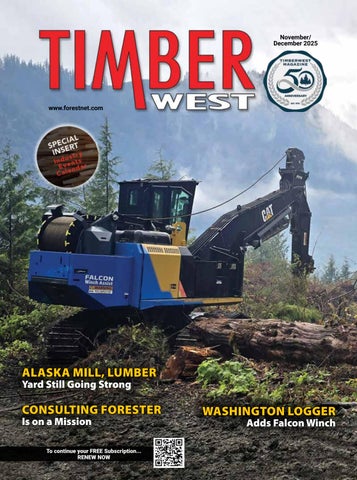
Washington Logger Has Adapted
By Tim Cox, Editor
FORKS, Washington – Chad
Dahlgren and his family have adapted over the years to the changing times, changing business climate. Now his company, Dahlgren Logging, is adapting to working on Washington’s rugged terrain
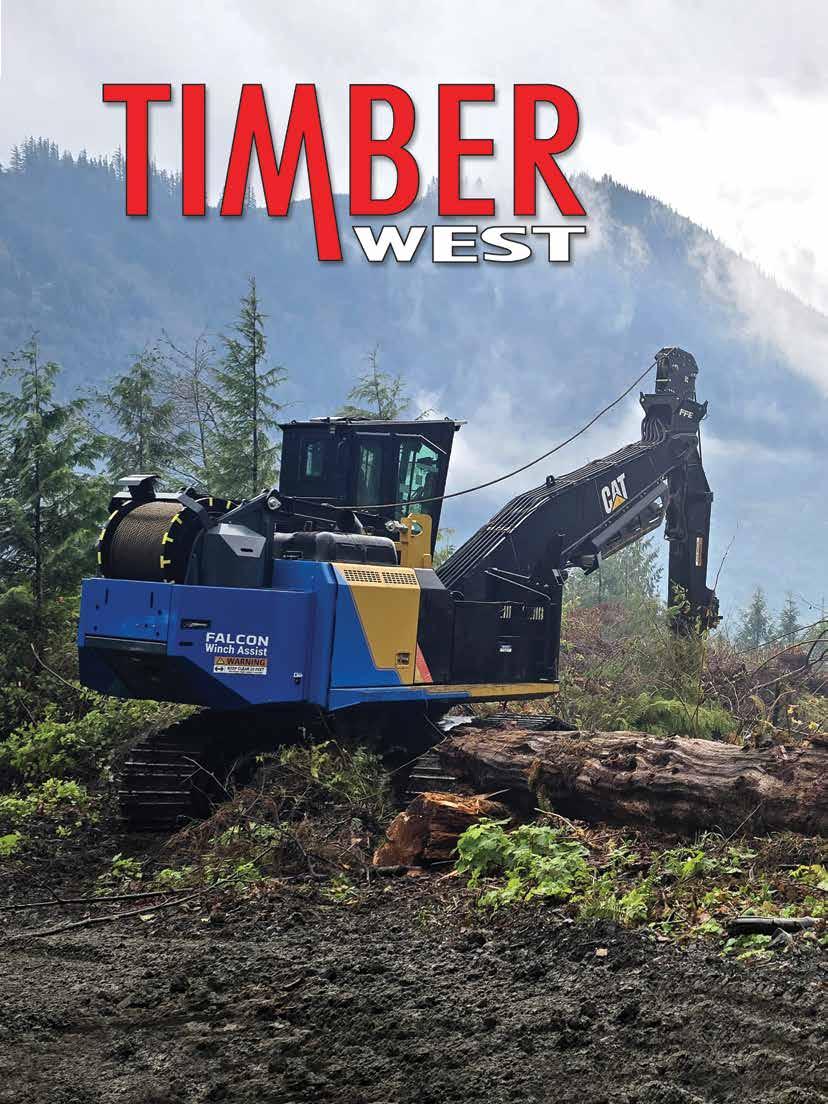
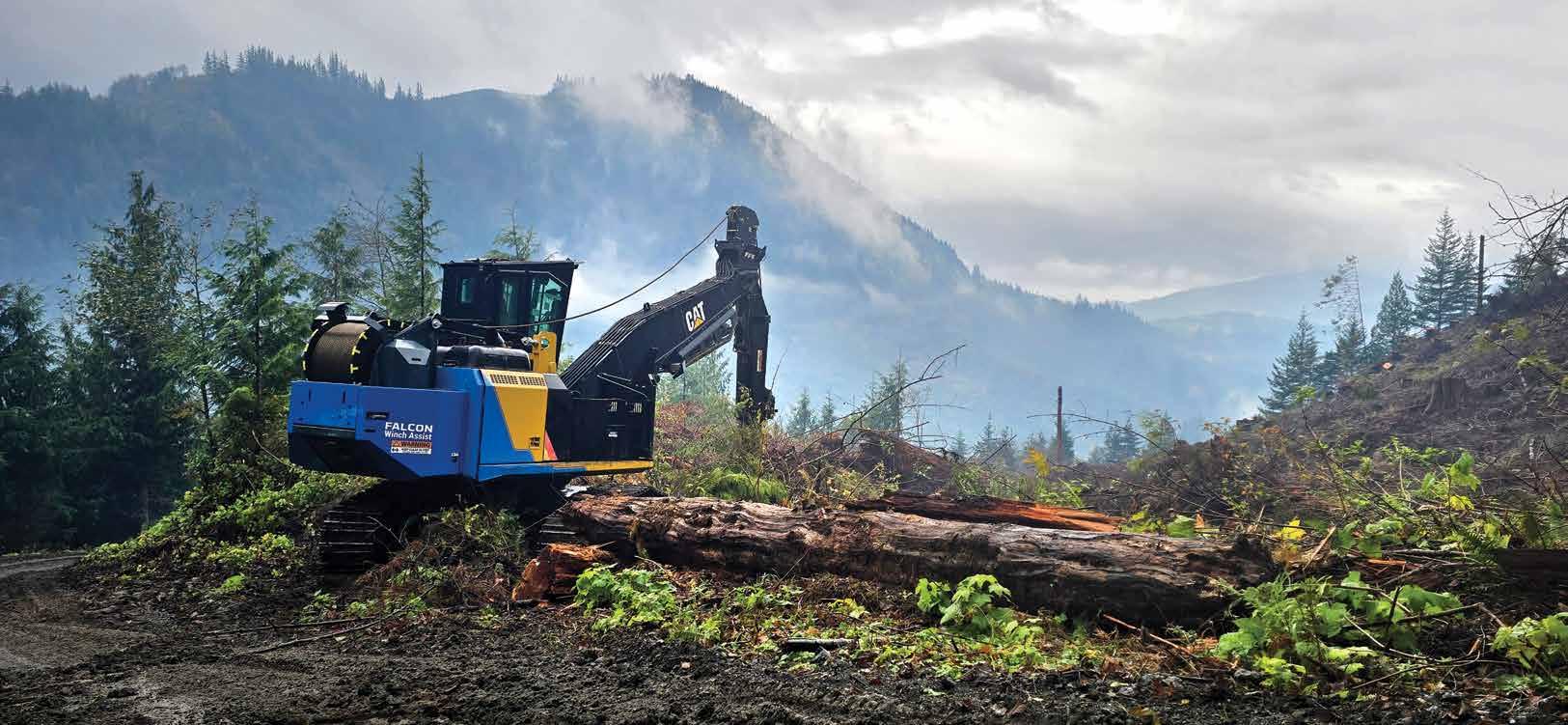
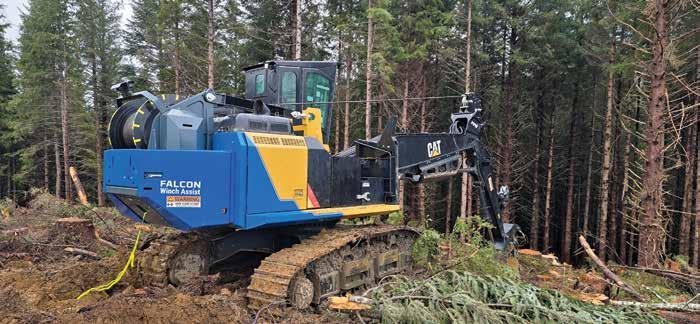
The company put the Falcon winch assist into service earlier this year, and Dahlgren already is making plans to add a second one.
Dahlgren Logging is based in Forks, located in the northwest section of the Olympic Peninsula, only about 10 miles from the coast. “A lot of steep ground,” in
the region, noted Dahlgren, 51.
The company, a member of the Washington Contract Loggers Association, was started by Dahlgren’s paternal grandfather, Joel, in 1966. The business began to grow when Dahlgren’s father, Pete, and Pete’s brother, John, joined after graduating from high school in the early 1970s.
By the mid-1980s Dahlgren Logging had over 80 employees and operated six or seven cable logging crews and a few shovel logging crews. Timber was becoming available in steeper country, said Dahlgren. “It was an opportunity to build a company, and that’s what they did.”
Following the collapse of the industry after the listing of the spotted owl as a threatened species in 1990 and the resulting logging restrictions on federal lands, the company eventually rebuilt back up to four cable logging crews.
Today Dahlgren Logging employs about 40 people. It runs two or three tower yarding
(continued on page 12)
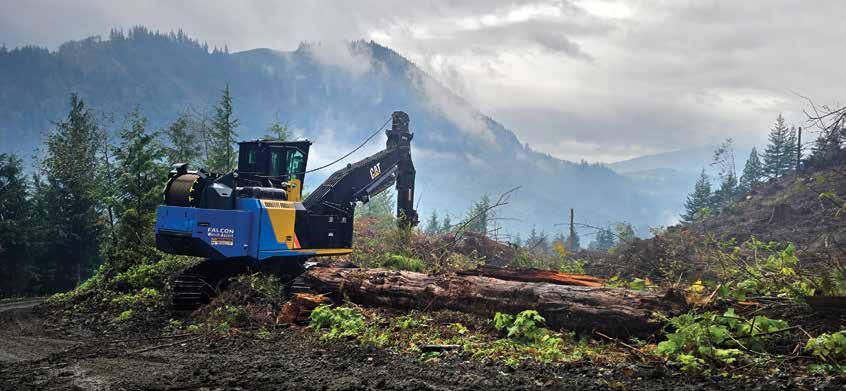
Dahlgren Logging put Falcon winch assist into service this year and plans to add a second one; it is mounted on a Cat 548 forest machine.
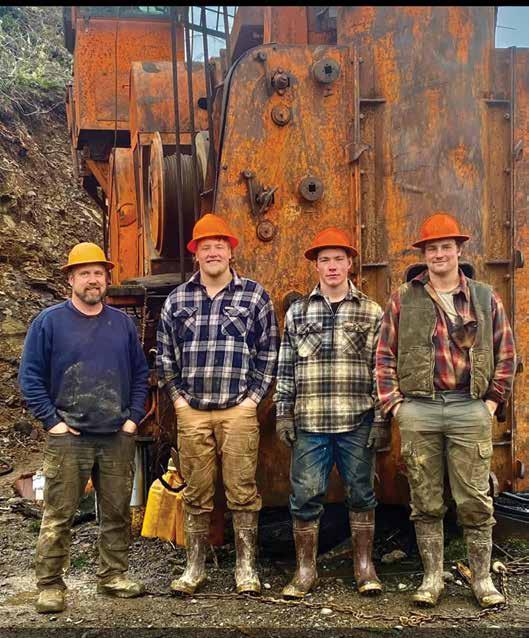
From left, Chad Dahlgren and his sons: Luke (currently working in Alaska), Nate (now in the Air Force), and Jack, who helps Chad run Dahlgren Logging.
ContractorProfile
(continued from page 11)
crews and two shovel logging sides. The company is down to two shovel crews and two yarder crews because of market conditions and the difficulty of finding labor, said Dahlgren.
Dahlgren contracts to harvest timber for industrial forestry companies, such as Sierra Pacific Industries, Campbell Global, Alta Forest Products, Ecotrust Forest Management, and Bloedel Timberlands. The
company mainly supplies mills for Sierra Pacific, Interfor, and Alta Forest Products at Port Angeles and Aberdeen.
Dahlgren Logging mainly works on state timber sales or private land, timber ranging from 40-80 years old. Most of the tracts are Douglas fir, Western hemlock, spruce, and some cedar and alder.
The Dahlgrens have favored Madill equipment over the years.The company has six yarders: five towers – two Madills and three Bergers – and a T-Mar Industries
swing yarder. The yarding crews Boman Industries carriages as well as a Falcon grapple carriage and two Summit Attachments grapple carriages. For processing the company is equipped with seven Madill 3800 swing machines, each paired with a Waratah head. Loading is done with six Madill 3800 loaders. The company also has two Cat 548 forest machines, a Cat 568 forest machine and a Tigercat 870 loader.
“We have gone from having the biggest yarder ever built for logging old growth to now running one Berger M2 tower yarder with a couple of Madill 172 towers or swing yarders,” said Dahlgren. “We still use the Bergers for the bigger, long yarding units and still hang out 5,000 feet or better.”
Dahlgren generally relies on other contractors for felling. One contractor with a Tigercat LX877 feller buncher typically is used where a shovel logging crew can work, and the buncher and other machines can be tethered as needed. On steeper terrain where cable logging crews work, another contractor fells timber by hand.
The most recent investments in machinery are the Falcon winch assist system, which was mounted on the Cat 548 forest machine, and a Tigercat LS857 shovel logger. Dahlgren added the equipment “to have a fully mechanized yarder side to boost production on a smaller tree farm.”
The Falcon winch assist can be mounted on all major brands of base machines. The base machine must weigh at least 30 tons and have a minimum hydraulic oil flow of 105 gallons/minute. The Falcon winch assist uses 1-⅛-inch cable. The maximum operating angle is 45 degrees or 100 percent from the top to the bottom of the slope.
The Falcon system has minimal impact on the original specifications and performance of the base excavator, so it can be used as an all-purpose machine for other tasks. It comes with the option of a quick hitch so it can also operate as a loader, conventional excavator, or as a loader or shovelling machine.
The Falcon winch assist is engineered to be uncomplicated, simple to operate, and easy to maintain. The operator of the tethered machine has only one cable to manage when maneuvering down the slope. The design features less mechanical and electrical complexity – and therefore less opportunity for faults and breakdowns. The winch unit is enclosed by rear guarding for protection with easy access points for maintenance.
The Falcon winch assist has numerous safety features to eliminate operator risk. For example, an overspeed alarm triggers a rope management system that automatically tensions the cable to reduce the speed of the tethered machine – and notifies the operator to slow down. Another alarm alerts the
Tethered Tigercat feller buncher works on steep ground.
operator if the winch-assist machine experiences any movement. There are additional safety features.
The Falcon system was put into service in the spring. “We really like it. It’s working good.” In fact, Dahlgren bought another used Cat 548 forestry machine and plans to add a second Falcon winch assist.
The Cat forestry machine is a multi-purpose machine that can be configured as a loader or for other logging tasks, such as processing. “We kind of decided we wanted the winch assist on a loader for more versatility,” said Dahlgren. “We can use the grapple to clean up, and it’s a little easier to get around than an excavator.”
videos. He was attracted to Falcon in part because they “seem to have a pretty good reputation.” He purchased the Falcon system from Modern Machinery, dealing with Russ Smith; Dahlgren was acquainted with Smith and had done business with him for years. “Dan Butler and Hayden Thorn from DC
LOGGER'S TIP
felling and shovel logging with a single machine. The Tigercat LS857 features a sloped tail for enhanced leveling capability; the unique tail increases leveling capability to 26 degrees forward while providing clearance for the tracks and winch-assist chains.
“We have to figure out the way to get the next generation of loggers. We’re behind compared to other industries. We have to find the means to recruit the next generation of employees and compete on the job market. I think it has to be higher wages and benefits.”
Chad Dahlgren
“The Falcon winch assist and the Tigercat have been working great for cutting steep ground and feeding wood to the lines,” said Dahlgren. The winch assist has been used alternately to tether a feller buncher or the Tigercat, which shovels logs into position to be yarded.
Dahlgren considered other suppliers of winch systems and looked at a few of their
Equipment (manufacturers of Falcon) were great to work with getting it set up.”
Dahlgren referred to the Tigercat LS857 as a “tilter loader.” Equipped with Tigercat’s patented super-duty leveling undercarriage, the machine bridges the gap between conventional ground-based logging and yarding operations, according to Tigercat. It can be equipped with a variety of grapple styles or the Tigercat 5195 directional felling saw for
When he talked with TimberWest, the five crews were working on four jobs – one large job of 150 acres had a yarder crew and a shovel crew. Normally each crew works on a separate job. “It depends on the size of the job and the timing,” said Dahlgren. The Falcon winch assist was being used to tether another contractor’s feller buncher to harvest trees on a tower yarding job – an 80-year-old stand on steep private land. Slash normally is piled on a job and burned in the fall.
Dahlgren Logging has six log trucks and also relies on Worley Trucking for hauling wood. Average haul distance ranges from about 75-200 miles.
Fuel prices seem to be “constantly going up,” noted Dahlgren. Highway diesel fuel was at $5.29 when he spoke with TimberWest, and off-road diesel was above $4.
(continued on page 14)
(continued from page 13)
The company has been on quotas lately because of market conditions. “They’re having trouble getting rid of their lumber,” observed Dahlgren. In order to adapt, his employees are working 8-hour days instead of 9 or 10.
“We’re kind of the last ones out here with a big tower,” said Dahlgren, who enjoys hunting and fishing in his free time. “We’re a generational company.”
He is the third generation. All three of his sons have worked in the business. Oldest son, Jack, is his “right hand.” Dahlgren and Jack oversee the cable logging operations, lay out jobs for cutting, and decide on road changes. Dahlgren also looks at timber sales and prepares bids. Another son, Luke, was scheduled to return to the company in the near future.
Dahlgren’s father, Pete, 73, is semiretired. However, most days he still comes to the company’s shop. He also helps by picking up or delivering parts, driving pilot cars, and other tasks. And he weighs in on strategic decisions – like the investment in the Falcon winch assist. “His guidance and involvement are invaluable to the business,” said Dahlgren
Dahlgren has other family in the business, too. His mother, Cheri, used to run the office; she is semi-retired and continues to fill in. She plays a vital role in the company’s decision making and office management. His wife, Shannon, and aunt, Jo Marie Miller, run the office now; his brother-inlaw, Pat Graham, works in the company, and his father’s cousin, Dave Larsen, runs the saw shop.
Falcon winch assist has minimal impact on the original specifications and performance of the base excavator, so it can be used as an all-purpose machine for other tasks.
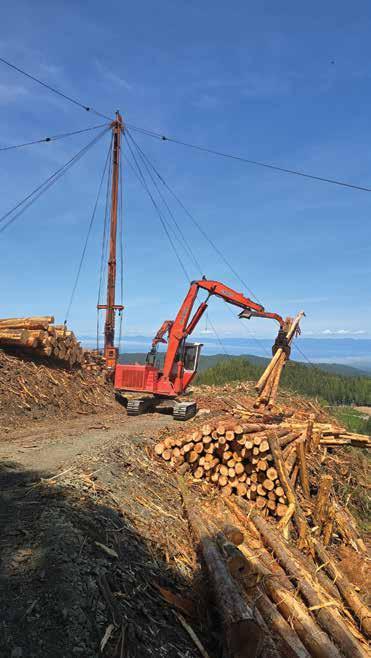
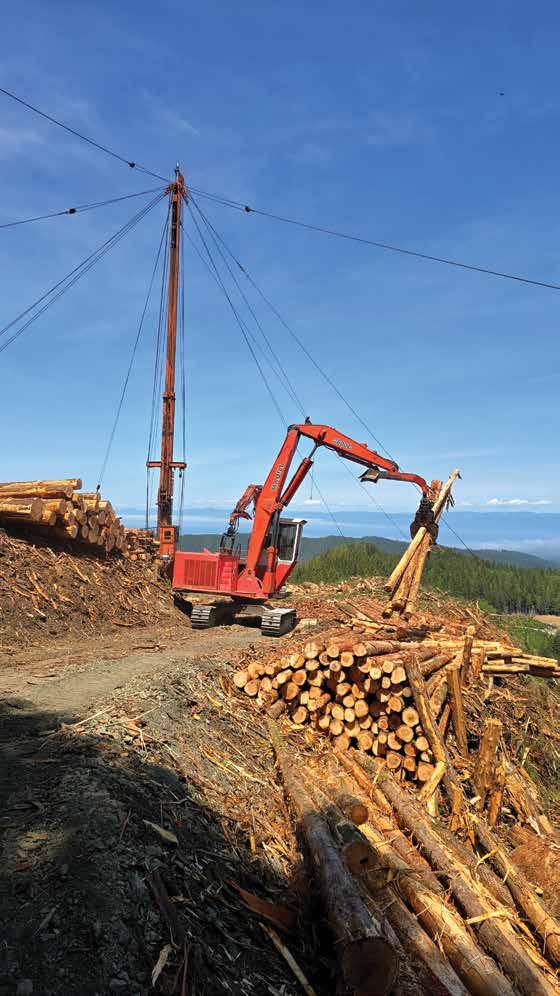
Madill loader working at a landing.
Market Watch
LUMBER PRICING, MARKET TRENDS
Lumber prices were at a 13-month low, around $500-$513 per thousand board feet, in mid-November due to soft demand and large inventories. The market is experiencing price moderation compared to volatility of previous years. Recent declines are attributed to a slowdown in new home starts and builder buying as well as the stockpiling of lumber by sawmills and distributors. Lower mortgage rates potentially could stimulate demand in the future.
Lumber prices are expected to increase sharply as early as the second quarter of 2026 due to continued U.S. trade restrictions and tariff policies, based on analysis by Russ Taylor, president of Russ Taylor Global. He predicted the current system of countervailing and anti-dumping duties imposed by the U.S. will restrict Canadian exports, reducing available lumber supply in the U.S. market. The effect will be to raise domestic lumber prices for American consumers, home builders, and contractors.
Weyerhaeuser sold 28,000 acres of timberlands in coastal Oregon to Campbell Global in October for $190 million. This is the latest of several transactions between the two companies.
Chinook Forest Partners, a forestland investment manager located in Southwest Oregon, announced a definitive agreement to acquire South Coast Lumber Co. and affiliates (“South Coast”), on behalf of longterm investors.
This acquisition encompasses 104,000 acres of premium coastal forest with modern manufacturing facilities. Chinook
will manage these assets as a fully integrated platform within its portfolio of high-quality natural capital investments.
Rising wildfire risk in the Pacific Northwest combined with notoriously volatile timber pricing may lower forestland values by as much as 50 percent and persuade plantation owners to harvest trees much earlier than planned, a new analysis of Douglas-fir forests shows.
Under the worst-case scenarios, modeling by researchers at Oregon State University suggests harvesting trees at 24 years would make the most economic sense. Absent wildfire risk, the optimal age would be 65 years. Generally, private landowners harvest between those two ages, but it’s not a surprise for the optimal rotation age to go down in these scenarios, the scientists say.
“Basically, under high wildfire risk that rises with stand age, every year you wait to harvest you’re rolling the dice,” said Mindy Crandall, an associate professor in the OSU College of Forestry.
NEW PROJECTS
The Wallowa Whitman National Forest in Oregon has prepared a public decision memo for the West Wall Defensible Fuels Profile Zone project near the city of Halfway. The memo authorizes the creation of 2,890 acres of fuel breaks in the Whitman Ranger District of the forest. The fuel breaks would be created using a combination of commercial harvest, noncommercial thinning, and pile burning.
Non-profit The Climate Trust announced $3.8 million in awards to support reforestation and wildfire recovery efforts
in Oregon and Montana. Awards are being allocated from The Climate Trust’s (TCT) Enabling Reforestation and Afforestation Success (ERAS) program, which seeks to support critical but underfunded forest restoration activities and demonstrate scalable models of public and private carbon market partnerships to fund reforestation.
The projects funded through ERAS are intended to improve reforestation outcomes by directly enabling reforestation activities or by reducing wildfire risk to newly planted stands. These activities are typically underfunded by public and private capital but can bring substantial benefits to local ecosystems and surrounding communities.
The U.S. Forest Service announced it is investing more than $23 million to help 35 grant recipients remove and transport an estimated 1.1 million tons of low-value trees and woody debris from national forests to processing facilities.
The grants, delivered through the agency’s Hazardous Fuels Transportation Assistance Program, will fund 65 projects across the lower 48 states.
To learn more about the program and see the list of grant recipients, visit at www. fs.usda.gov.
Restoring Arizona’s wildfire-threatened forests depends on building a second biomass-burning power plant, a coalition of public officials and timber industry executives said.
The state’s only biomass-burning plant is operating at capacity, which means many forest thinning and restoration projects will stall without a second plant to process low-value wood slash and biomass, speakers said at the meeting of the Natural Resources
Working Group. “It’s a biomass apocalypse,” said Brad Worsley, head of Novo BioPower, the state’s only biomass-burning power plant.
If Northwest Advanced Bio-Fuels has its way, the Port of Longview in Washington may soon have a $2.4 billion sustainable aviation fuel plant. But the megaproject to turn timber waste into jet fuel has faced a slew of challenges on its way to landing at the giant riverfront Barlow Point site, a deal that’s still not inked after nearly four years. The people behind Northwest Advanced Bio-Fuels say the project is mere weeks away from finding the financing needed to lock in a site and build the plant.
FOREST POLICY, TIMBER HARVESTING CONDITIONS
The U.S. Forest Service is going back to the drawing board with an update to the Northwest Forest Plan, a set of policies that broadly dictates where logging can occur on 25 million acres of forests in Oregon, Washington and northwest California.
The agency published its proposed changes in a draft environmental impact statement in November 2024 and received over 3,400 public comments. Now the Forest Service under the Trump administration wants to issue a new draft. Timber industry groups largely welcome restarting this Biden-era initiative. They’ve been calling on President Donald Trump for a complete overhaul of the Northwest Forest Plan.
EQUIPMENT, MACHINERY SALES
Caterpillar reported sales and revenues for the third quarter increased 10 percent to $17.6 billion. The increase was primarily due to higher sales volume, mainly driven by higher sales of equipment to end users
South Dakota-based TranSource Truck & Equipment is expanding into Montana, Wyoming and western Nebraska as the exclusive Volvo Construction Equipment dealer
In an asset purchase effective in November, Tri-State Truck & Equipment transferred leases and inventory at five dealership locations in Montana and Wyoming that cover most of those states plus the western panhandle of Nebraska to TranSource. The deal also includes Tri-State’s Mack Trucks and Volvo Trucks dealerships.
TranSource has been in business for over 60 years. This acquisition brings the company to 10 total locations. In its new Montana and Wyoming territories, TranSource will offer articulated haul trucks, excavators, wheel loaders, rigid haulers, compact equipment, compactors and a variety of services.
ECONOMY, SUPPLY CHAIN
The Manufacturing PMI® declined further below 50 percent in October, signaling continued manufacturing weakness
The Federal Reserve cut interest rates 0.25 points in October amid labor market strain and sticky inflation. The decision reflects the Fed’s cautious stance in a period of data deprivation.
U.S. rail carload and intermodal volume combined fell 1.7 percent in October from October 2024. Intermodal alone was down
3.0 percent. Total carloads were nearly constant compared to 2024.
In light of several high-profile crashes involving unqualified drivers, the American Trucking Associations urged congressional leaders to enhance training, testing, and licensing standards for CDL-holders
In addition to calling on Congress to close dangerous loopholes, ATA raised concerns about cabotage – the illegal practice of foreign carriers conducting domestic freight movements – which poses an ongoing threat to the viability of U.S. carriers.
PIERCE
Alaska Sawmill, Lumber Yard Going Strong
60 Years Later
Northland Wood Products Operates Largest Mill in the Interior
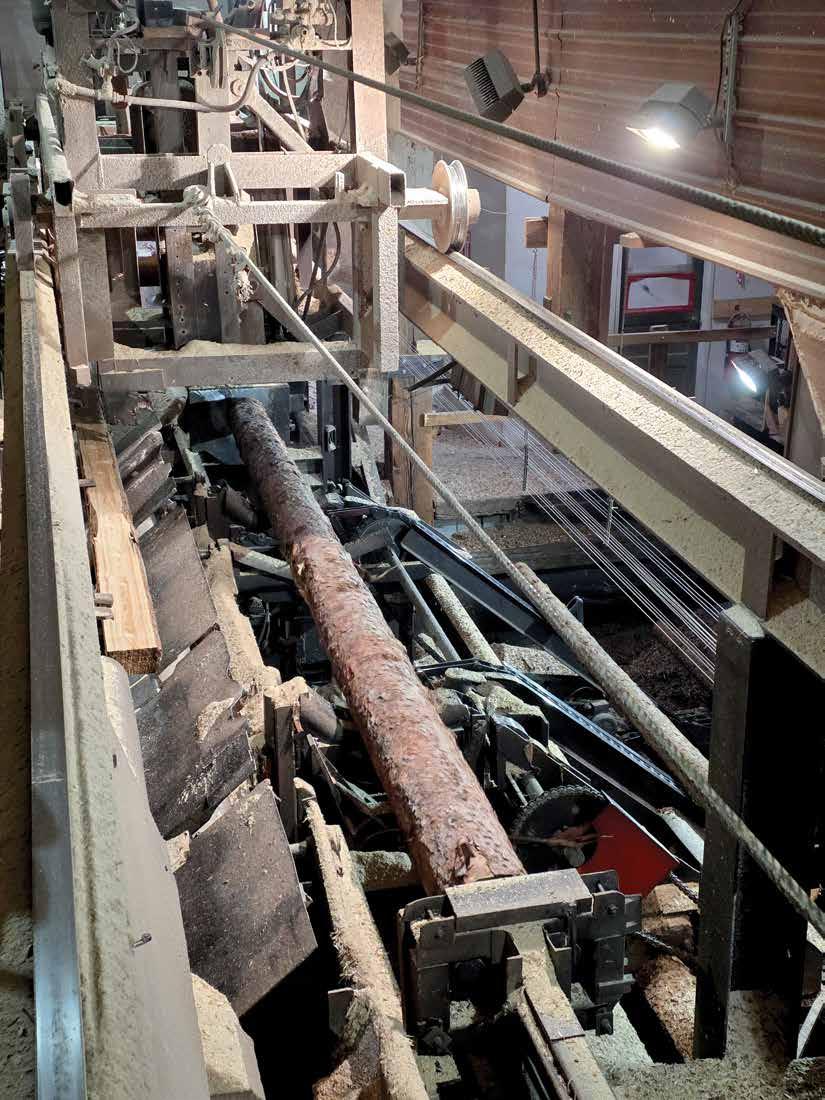
Log is positioned for opening face in Northland Wood Products sawmill.
By Andrea Watts
FAIRBANKS, Alaska –
Operating a sawmill and building materials business has its challenges. Try doing it in Fairbanks in central Alaska.
Ask Jason Knoles, owner of Northland Wood Products. As one of the few independent lumber yards, it’s a tough business to be in. Running a lumber yard in Alaska is quite different from operating one in the lower 48, he noted.
“You definitely have concerns with inventory, long lead times, availability, and a limited season,” explained Knoles, 55. “You’re trying to move a lot of inventory in a short period of time. Where turns are really important down in the lower 48, they’re not as much of a consideration up here. It’s more important to have the inventory and be less
concerned about how many turns on the inventory, especially when there could be so many issues along that supply chain.”
Northland Wood Products operates the largest producing sawmill in mainland Alaska. The mill is located on a 70-acre site where the company also operates a retail lumber yard. The business has five buildings for the sawmill, planer, secondary manufacturing, an office, and a shop. Northland Wood Products also operates a retail location in Anchorage, more than 350 miles south, which it added in 2004.
Northland Wood Products manufactures about 2.7 million board feet a year of white spruce lumber products, but that “could be ramped up to 3 million if there is demand,” said Knoles.
Its niche is grade surfaced lumber, although it also sells rough lumber for use in
cabins. The company cuts lumber and timbers – from 1x4 to 12x12 – used in the local construction market. It also cuts industrial material for use in oil drilling and mining operations, such as drill pads or equipment mats, and timbers for log homes. And it manufactures pallets.
Twin brothers Larry and Jerry Flodin founded the business with a portable sawmill in 1965. They had grown up in a family sawmill business in Montana. A fire forced them to move to a new location and rebuild. Larry, a mechanical engineer, designed and built the mill’s machine centers. Larry is now in his late 80s and has been retired; Jerry passed away several years ago.
Northland Wood Products is vertically
(continue on page 20)
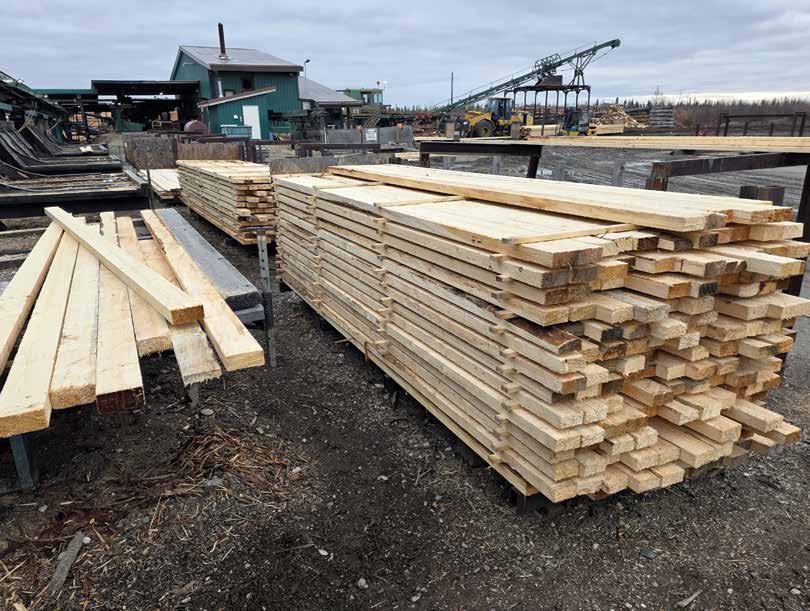
A stack of freshly cut Alaska white spruce. The company air-dries lumber in the summer, then surfaces it on four sides with a Newman Machine
planer.
(continued from page 19)
integrated, which appealed to Knoles when he applied to join the company in 1995; he previously worked in a lumber yard in Medford, Oregon. He began buying into the business in 2000 as part of a ‘golden handcuffs’ agreement.
“Being able to source our own logs and manufacture our own lumber and timbers and retail those to the public just spoke of a lot of opportunity,” Knoles explained. “If you’re a lumber yard down in the lower 48, you’re really limited on your cost and your sell price. You know what a contractor is
going to pay, and there are 10 other lumber yards doing the exact same thing, which doesn’t leave a lot of options... When you’re vertically integrated, it opens up a lot more opportunity.”
Early on, his focus was on “low hanging fruit,” finding new efficiencies, reducing costs, and developing new market opportunities. As ownership transferred, he implemented new revenue streams to aid in the transition, such as secondary manufacturing.
Knoles generally buys two or three timber sales a year from the state Department of Forestry and contracts with Logging & Milling, located in Delta Junction, to harvest
the timber. Logging usually is done during the winter because roads are frozen, and summer means more fires. Loggers generally try to get out of the woods before April.
The sawmill’s major machine centers consist of a log processor or yard saw for bucking logs to length, headrig with Jacobson Feedworks controls, edger-sorter, trimmer, and green chain. Because the mill does not have a debarker, they use a 40-inch circular head saw for primary breakdown; it is mounted on an overhead carriage system.
The mill uses logs in a range of diameters and from 33-41 feet long. To determine how to mill a log, a combination of computer
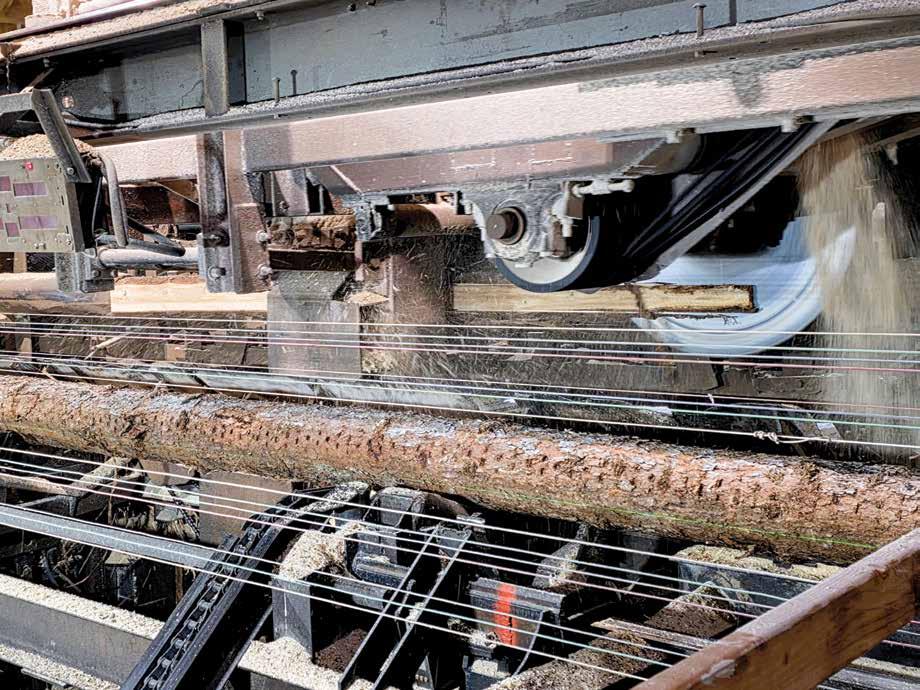
A system of string lines, at fixed intervals and grouped by color, helps the sawyer position the log and program it for the cant and boards; the head saw and edger move on an overhead carriage system.
software and a decidedly low-tech but efficient approach is used. A series of colored strings spaced apart in 2-inch increments helps the sawyer determine log diameter and where to position the log for the saw and drop-down edger. The strings also help with programming in the boards and cants.
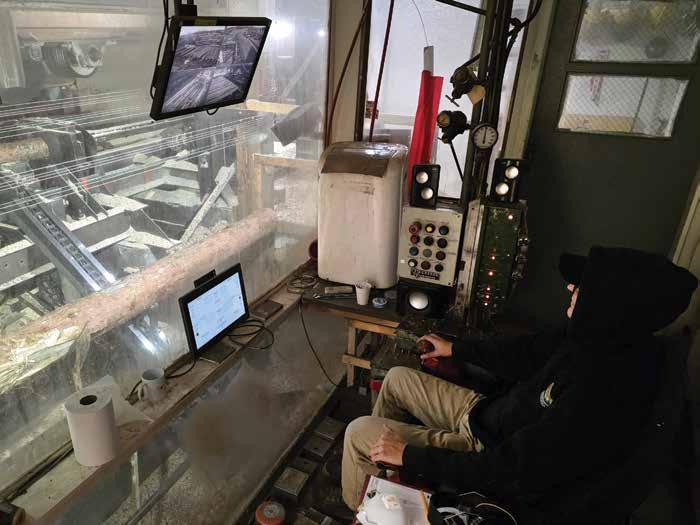
“There’s definitely a human decisionmaking process when they’re breaking down that log,” acknowledged Knoles.
“This system was pre-laser, and I haven’t
seen the need to buy $3,000 lasers to do the same thing,” he added.
The loader puts the log into the dogs, which are attached to a moveable holder controlled by the sawyer. After the saw cuts the opening face and removes any boards, the turners come in and end-clamp the log; the dogs open, the log turns 180 degrees, the dogs close, the turners move out, and the saw cuts the second face. The head rig goes through the same process again twice,
turning the log 90 degrees each time.
All boards and edgings go out to the trim station and then the green chain. The cants and timbers drop onto a roll case and go to the timber bin. Lumber products are stacked by hand with stickers between the layers and put on the yard to air-dry.
The building is heated, so the mill can
(continue on page 22)
Ethan Hinz at the sawyer controls. Northland Wood Products manufactures about 2.7 million board feet a year of white spruce lumber products.
(continued from page 21)
operate in winter. However, the company does not have a dry kiln. The lumber, stored outdoors, will not begin to air dry until temperatures warm in the spring. It takes about three months for the lumber to airdry to 16-19 percent moisture content, the level at which the company does surfacing. A Newman Machine planer surfaces the lumber on four sides; the planer is used from June to October.
“We need to make sure that we produce enough lumber in the sawmill to allow sufficient time to dry, so that way we can plane it during those summer months,” explained Knoles. “Generally, we carry a heavier inventory because of the limited times in which we can operate the planer.”
They surface everything from 1x4 to 2x8.
The lumber is graded by Western Wood Products out of Portland, which is a “a good program,” said Knoles. Finished lumber is bundled and packaged by hand.
Northland Forest Products employs an average of 35 people. Six to 10 work in the sawmill and planer operations, and the remainder work in secondary manufacturing or in the lumber yard, helping with customer service, assembling orders, and making deliveries. Two employees staff the retail location in Anchorage. Christian Schmidt is the manager of the sawmill and also fills in as sawyer.
“Some employees have been with the company for decades,” said Knoles. “The longest employee has worked here for 47 years.”
The company’s main customers are building contractors and do-it-yourself
homeowners. Best-selling products are lumber, plywood, pressure treated material, and timbers. Knoles embraced differentiating Northland Wood Products from big box home improvement stores by offering products they don’t carry and doing custom work. “It has been important for our businesses to be different than other companies,” he said, adding, “We’ll do custom orders, or we’ll do orders with a much quicker lead time.”
In the future Knoles wants to “build and develop a base of young managers to help innovate and drive the company forward.”
Larry Flodin still comes by to visit occasionally. “Every time he comes out, he comments that he’s happy to see that the sawmill is still running,” said Knoles. “To see the [sawmill] continue going really is satisfying to him.”
Stephen Maroney jacks a board over to the trim station; slabs and edging continue on the chain until they feed onto a chipper belt.
Consulting Forester Is on a Mission
Eastside Forestry Serves Landowners in East-Central Washington
By Tim Cox, Editor
CLE ELUM, Washington –
Patrick Broderick is on a mission to help owners of forestland improve the health of their forests and protect them from wildfire.
Broderick, 27, is a consulting forester doing business as Eastside Forestry. He works from an office in his home in Cle Elum in east-central Washington, a little over 80 miles southeast of Seattle. He mainly serves landowners in Kittitas, Chelan, and Yakima counties.
Most of his work falls into two categories: timber sales and developing forest management plans. For a timber sale, he prepares the contract and gets bids for the sale or recommends a particular logging company. The logger contracts directly with the landowner. When he oversees a sale, Broderick does everything from filing permits to cruising the timber, marking the timber to be harvested and the boundaries, and overseeing the harvest to ensure the logger complies with the contract.
Broderick mainly writes forest management plans for private landowners and does a couple timber sales per year. He was recently hired by Rainier Veneer to oversee a 700-acre timber sale they purchased from the U.S. Forest Service on the OkanoganWenatchee National Forest.
“I specialize in small sales,” said Broderick, “sales that loggers wouldn’t normally do.” He did one timber sale earlier this year that was only 20 acres. “That took 150 hours. It’s a lot of time for these small landowners.”
Broderick works with about four logging contractors, choosing or recommending the
company that is a good fit for a particular job: Dutchman Logging, Carey Creek Logging, Hanson Logging, and Cody Pratt Enterprises. They range from small businesses to relatively large contractors that can produce 10-15 loads of wood per day. He has vetted all of them – checked them out with people they’ve previously done work for, mills, landowners, other contractors.
Broderick did not take a direct career path into forestry and consulting. He grew up in upstate New York, helping to manage over 300 acres of private forestland. When he was in college, he was unsure of his career goal but was not planning to go into forestry.
“Or I would have gotten a forestry degree.” Nevertheless, his education “absolutely” has helped him in his career path. His degree in conservation biology and ecology “kind of broadened my perspective and added strength.” Most of what he learned about forestry Broderick learned “on the job from mentors.”
As a student at Montana State University, Broderick spent summers working for the U.S. Forest Service as a forester and botanist throughout the East Cascades of Oregon and Northern California. For example, he
worked on a team of several other foresters overseeing the planting of over 300,000 trees in areas decimated by wildfire. He graduated with a Bachelor of Science degree.
After graduating he went to work for the Washington Department of Natural Resources as lead forester for the 51,000-acre Teanaway Community Forest, permanently moving to Cle Elum with his wife, Sophie. As the Teanaway forester, he oversaw the completion of over 500 acres of young stand thinning and created multiple strategic fuel breaks off main roads. During his time at the
Patrick Broderick
DNR, he also worked throughout Kittitas and Yakima counties on timber sales prioritizing forest health.
Broderick has worked closely with professionals from a range of backgrounds, from habitat biologists and botanists, to fire bosses managing 30-person crews, to archaeologists and geographic information system specialists, to district and unit foresters.
For the Rainier Veneer timber sale, he is mainly administering the contract, which is a lengthy document, to ensure compliance by the logging company. The Forest Service
does not pre-mark the timber, so that was on Broderick to do. He visits the logging job weekly to make sure they are processing the trees to the right diameter, using slash to make mats for the skid trails, avoiding sensitive areas with rare plants, and so on.
The job is being performed by a crew of 2-4 men that produces about eight loads per day. About 25 percent of the area is flat with the remainder rolling hills with slopes ranging mainly from 10-35 percent. The forest contains Douglas fir, western hemlock, western larch, ponderosa pine, grand or white fir,
Link-Belt 290 machine with Waratah 622 head processing, part of a crew for Hanson Logging at work on a timber sale. The contract is being overseen by Patrick Broderick, a consulting forester who does business as Eastside Forestry.
lodgepole pine, western red cedar, and white pine. The dominant species are Douglas fir and white fir. All of the timber is saw timber.
Broderick, who started his consulting business at the end of 2023, does about 10 forest management plans per year. “They’re usually for long-term forest management. They get a pretty significant tax deduction if they have a plan,” he noted. “It can save thousands of dollars.” Washington allows
(continued on page 26)
(continued from page 25)
almost a 100 percent tax deduction of real estate taxes for forest land if the owner has a forest management plan.
Broderick did a forest management plan this year for a nonprofit land trust that owns 70 acres, updating a plan they had made 15 years ago after he cruised the site. “They probably will log it next year,” said Broderick, to thin.
The original plan did not recommend logging nor include thinning. However, the organization’s new leadership now “understands the need for thinning,” said Broderick. He made a “clear, concise, scientific argument” for thinning and also provided peerreviewed research related to thinning.
“It needs thinning because it’s extremely overstocked,” said Broderick. “There’s a lot of competition mortality, a lot of dead wood on the ground. There are very few dominant trees. The stand is dying in front of their eyes.”
The nonprofit wants to manage the forest to benefit wildlife. Accordingly, Broderick recommended a mosaic thin or ICOIndividual Clumps and Openings. “It’ll introduce more spatial complexity. We’re trying to encourage uneven age management.”
The nonprofit leadership was pleased, he said. “They gave me a five star review and have recommended me all across the county.”
For developing a forest management plan, Broderick charges a lump sum fee based on the number of acres and the terrain. His fee for a timber sale, depending on the job, either is a lump sum that can be remitted in several payments, an hourly rate, or a percentage of the revenue from the delivered wood products.
Broderick gets word-of-mouth referrals from loggers, and loggers have sent him some work. He also gets referred by clients. He is on lists of recommended foresters kept by conservation districts and a county tax program.
Broderick will give a free in-person initial consultation for a landowner. “I’ll show up, walk the property, and tell them what I can do for them.”
Most of his clients have been within a 90-minute drive. He prefers not to drive more than five hours for a round trip although he’s gone further.
Wood markets have slumped lately, reflecting a national trend, observed Broderick. Demand for wood is “okay.” However, for small diameter logs, “if it’s not Doug fir, it’s tough to sell or make money from it.”
Broderick is a member of the Association of Consulting Foresters and is active in the
(continued on page
Top photo, unmanaged forest is overstocked, unhealthy; bottom photo, after thinning prescribed by Eastside Forestry.
THE END SOLUTION TO ELIMINATING WOOD WASTE
Cleaner Air. Safer Land. Better Outcomes.
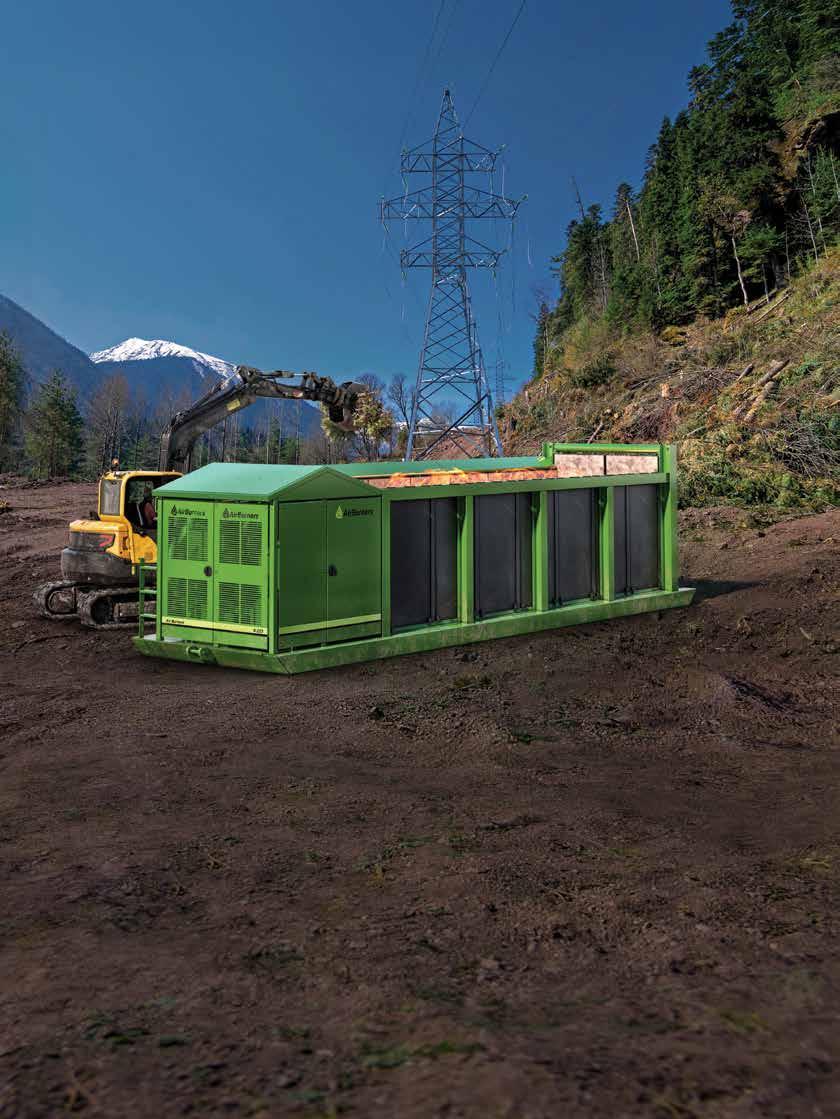
Open burns create heavy smoke, harmful emissions, and elevate wildfire risk. Air Burners® systems safely dispose of vegetative waste with little to no smoke using an advanced air curtain that destroys up to 98% of particulate matter—no grinding, hauling, or chipping necessary. Process waste up to 40x faster than open burns while producing biochar and nutrient-rich carbon ash that revitalizes soil.
Contact us for a quote
Washington Farm Forestry Association.
“I work hard to completely understand the client’s objectives and expectations,” said Broderick. “I am client-focused. I get the landowner excited about the work we’re doing: enhancing forest health, benefiting wildlife, and reducing wildfire risk, and how beneficial logging is to accomplish these goals.”
His forest management philosophy can be summed up: leave the land in better condition. He works with clients to identify their goals and objectives, then he is in a
position to offer advice, prepare a plan, and propose treatments to implement the landowner’s goals.
“All recommendations are made with forest and ecosystem health in mind. I can accomplish your goals and work towards a healthier forest, one that will be more resilient to drought, wildfire, disease, and insects.”
Thinning is only recommended if there is an ecological need. “I recommend thinning for regeneration and healing to put the ecosystem on a much better path long-term.” This type of thinning – of non-merchantable, pre-commercial trees – typically qualifies for cost share funding to reduce costs.
In his spare time Broderick enjoys back country skiing, backpacking and camping with his wife.
He also is writing a book about the Revolutionary War, estimating he is about 20 percent done. Broderick said he is a “huge Revolutionary War buff” and has read “several dozen” books on the subject. Part of his interest was spawned by the fact that his hometown, Saratoga, New York, was the scene of a pivotal point in the war. It was there that the French decided to back the colonies and to join the war.
(For more information about Eastside Forestry, visit www.eastsideforestry.com.)
Doosan (now DEVELON) 225 loader filling a truck with white fir logs that Rainier Veneer will process into peelers.
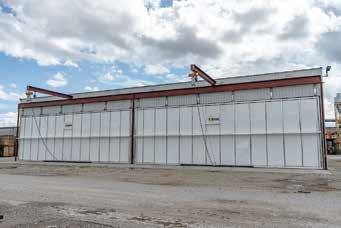
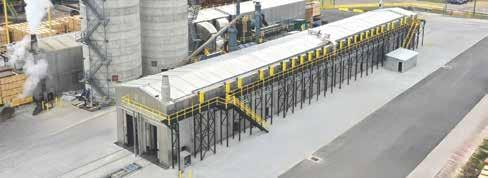
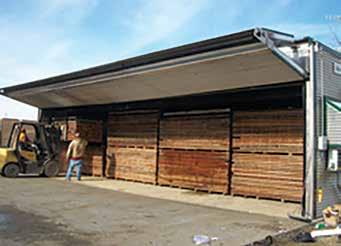
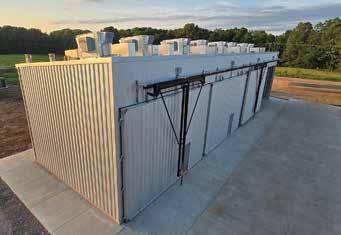
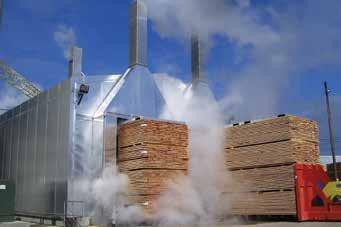
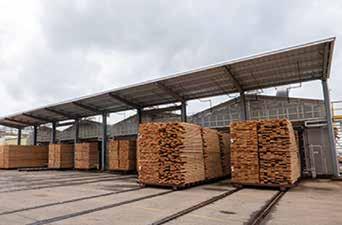
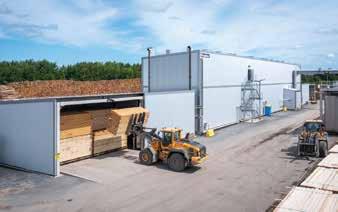
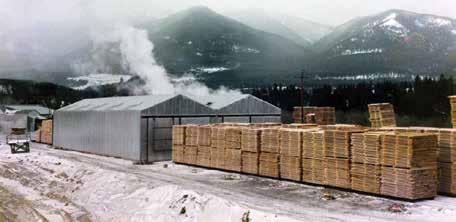
Dry Kilns
TimberWest solicited information from suppliers of dry kilns for the following Tech Review. For companies that did not respond, we captured information available on their website. The suppliers are listed in alphabetic order.
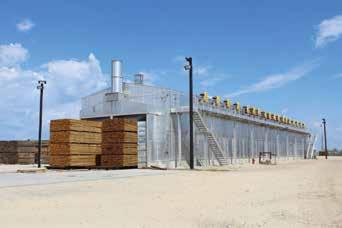
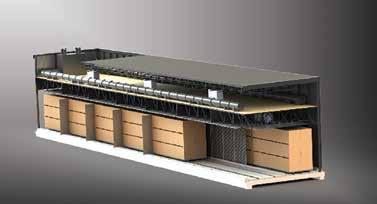
American Wood Dryers, based in Oregon, offers a full range of lumber kiln solutions, including continuous kilns, package kilns, and track kilns. The company also supplies pre-dryers, fan sheds, and cooling sheds. It also offers kiln control systems, a patented heat exchanger with reversible flow fans, an air-atomized water mist system, and heat energy systems for direct-fired kilns. American Wood Dryers also offers complete kiln refurbishing and retrofits. The Single Pass™ is a patented type of continuous dry kiln; all the wood enters at one end and is discharged at the opposite end. Single Pass™ has several advantages: improved flow with dedicated green and dry ends like batch kiln operations, reduced costs for energy and material handling labor and equipment, and improved grade recovery. www. drykilns.com
BolDesign
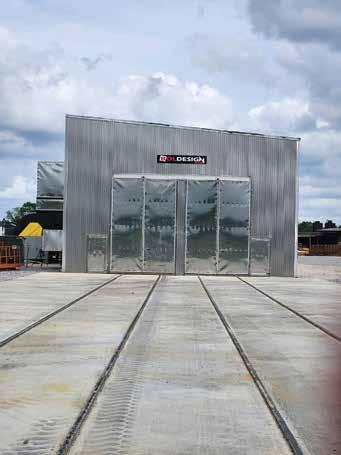
North Carolina-based BolDesign has been a leading provider of high-tech processing equipment in the wood industry for more than 30 years. It is a family-owned and operated business. Its mission is to help businesses large and small to streamline their operations, cut overhead costs, and increase profits. The company supplies kilns for
design compliments BolDesign Wet-Air Venting™ technology: maximum air flow only vents at its wettest point and doesn’t waste energy. www.boldesigninc.com
Brunner-Hildebrand
Brunner-Hildebrand, with offices in Tennessee, has been serving the lumber industry for more than 70 years. In addition to conventional dry kilns, Brunner-Hildebrand has developed unique products, such as the world’s largest vacuum dryer, HIGHVAC, and the Alexander continuous dry kiln. The company also has introduced Hildebrand Weight Precision Technology – the easiest, most accurate way of measuring lumber moisture content. Brunner-
continuous dry kilns, and vacuum kilns. It also offers steamers. The company also offers kiln control systems. The Hildebrand Weight Precision Technology (HWPT) is capable of weighing entire lumber stacks in wireless mode. It provides more accurate results and is easily integrated into the daily work routine. For Track and continuous kilns, it is also available installed in kiln carts. www.bhl-drykilns.com
ity poles. BolDesign’s X Power kiln technology includes features like externally located fan motors for increased longevity and ease of maintenance, bi-directional fans located across from each other for the most even air flow across the entire pack of wood. The X-Power
iDRY
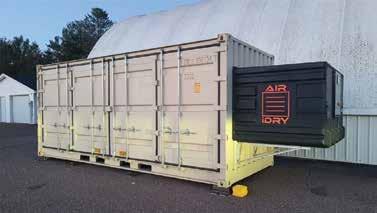
The iDRY AIR is a high-performance, plug-and-play wooddrying kiln designed for sawmills, custom woodshops, and firewood producers that want to increase profits and take control of the drying
process. Built with industrial grade components and a Smart Control system, it delivers consistent, high-quality results while using a fraction of the energy of traditional kilns. The iDRY AIR installs easily, operates on single-phase power, and can be monitored remotely, making it ideal for small and mid-size operations seeking reliable, automated drying with minimal supervision. iDRY AIR has faster turnaround, higher yields, and greater value from every board or cord — helping businesses stay competitive and capture more revenue from their own lumber. www.idrywood.com
KDS Windsor
KDS Windsor, with facilities in North Carolina and Mississippi, has been in business since 1992. It specializes in the design, manufacture and installation of batch and continuous lumber drying kilns, wood waste heat plants, and material handling systems. Offering
standard, turn-key delivered kiln has a capacity of 14,000 board feet of 4/4 lumber; it is popular for higher temperatures and faster drying of softwoods. Kiln-direct It also offers kilns for drying firewood and heat-treat pallets. www.kiln-direct.com
Nova Dry Kiln
Nova Dry Kiln is a world wide producer of high quality lumber dry kilns. They are designed to produce a brighter kiln dried product that will have customers returning for more. Nova Dry Kiln systems
equipment for both hardwood and softwood markets. The KDS Windsor advanced DrySpec® family of electrical controls and DryTrack® in-kiln moisture measurement system provide precise, automatic, and trouble-free drying systems. The company offers a variety of kilns for every need, including continuous dry kilns, batch kilns, and hardwood kilns. KDS Windsor Performance Series kilns feature industry-leading durability. The stainless steel floating tray design provides a tight interior seal while allowing the outside to breathe and self-drain; this is the most durable kiln skin option on the market. www.kdskilns.com
Kiln-direct
Kiln-direct, located in North Carolina, offers state-of-the-art wood drying technology, strong customer support, and excellent value to customers world-wide. The company manufactures numerous kiln models with multiple heat and airflow variations. It has kilns operating in North and South Americas, Europe, Africa and Asia. The company’s expertise with regards to kiln software allows operators to run, maintain and adjust kiln operations, making units easy to deal with. Kiln-direct offers the Wooddryer Kiln Control System management software. The company supplies kilns with capacity ranging from 9,000-40,000 board feet. The widest version of the
have the lowest operating cost using hot water and calibrated pow ered exhaust. Other characteristics include high thermal efficiency, long life expectancy, and simplicity to operate. www.novadrykiln.com
Nyle Dry Kilns
Nyle Dry Kilns advances the lumber industry with its new rooftop Heat Recovery Vent (HRV) option, which addresses rising
(continue on page 32)
TechReview
(continued from page 31)
energy costs and sustainability goals. Lumber drying traditionally wastes significant energy by venting hot, moist air. Nyle’s HRV option solves this by capturing and recirculating waste heat back into the kiln. This dynamic heat recovery dramatically reduces fuel consumption, with savings potentially reaching 30 percent, while stabilizing crucial drying conditions. The rooftop unit, along with an existing stand-alone model, ensures versatility for nearly any facility. The systems can be retrofitted onto existing kilns from any manufacturer, avoiding costly full replacements. This accessibility provides rapid return on investment, often under two years. Nyle HRVs are a strategic asset that enhances profitability and supports a sustainable future by cutting fuel use and emissions. www.nyledrykilns.com
SII Dry Kilns
SII Dry Kilns has served the lumber industry for more than 50 years and has over 2,000 kilns operating around the globe. The company, based in North Carolina, is known for its superior reputation in the lumber drying and sterilizing industries. It offers innovative design and manufacture of kilns for drying hardwoods and softwoods as well as pallet heat-treating systems and firewood kilns.
For softwood lumber producers, the company offers batch track kilns and dual-path continuous kilns. A dual-path continuous dry kiln can increase production 150-200 percent compared to a traditional batch kiln while at the same time reducing energy consumption by 20-25 percent per board foot. The company also offers pre-dryers, fan sheds, components and equipment, and kiln control systems. www. siidrykilns.com
USNR
UniFlow kiln conversions increase drying efficiency and simplify maintenance. UniFlow kilns are an industry success proven on SYP, Douglas fir, and memlock. It is cost-effective to convert batch kilns and even counterflow kilns to the UniFlow design, providing more efficient operation and energy conservation in the drying process. A recent project converted four common-wall kilns at Rosboro
Lumber in Springfield, Oregon, to UniFlow – increasing production by 35 percent while dramatically reducing boiler consumption. Another project converted a continuous kiln to UniFlow with equally powerful results. USNR has improved the original UniFlow design, increasing efficiency and simplifying maintenance. Adjustments have increased the service life of motors, increased air flow to the
blowers, and reduced the number of different parts required to operate. Contact a USNR sales representative to learn about UniFlow kiln upgrades. www.usnr.com
Valutec
Valutec is a world leader in continuous kilns and has delivered more than 1,500 of them to sawmills around the world. The company
has combined Nordic expertise in lumber drying with insights into challenges facing customers for almost 100 years. Valutec is the only company offering TC kilns, which come with distinguishing features such as low energy consumption, high flexibility, and superior
(continue on page 34)
TechReview
(continued from page 33)
capacity. It gives the operator the possibility to create the ultimate drying process with freedom to mix dimensions, minimal moisture content variation, and reduced risk of checking. Annual capacity can reach 150 MMBF with target moisture contents down to around 12-18 percent with a standard deviation of 1 percent. www.valutec. se/en
Wellons
For more than 50 years, Wellons has provided steam generating plants and lumber dry kilns to the forest products industry and currently has more than 1,300 steam-heated lumber dry kilns
rates are achieved with multiple electronic sensors that send data to the computer for automatic evaluation and reaction. The technology has demonstrated improvements in moisture content uniformity, resulting in better grade recovery, faster schedules, reduced energy consumption, and increased drying efficiency. www.wellons.com
Wood-Mizer
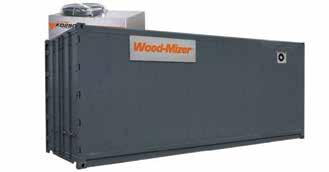
Wood-Mizer, headquartered in Indiana, manufactures portable sawmills and woodworking equipment for hobbyists and industrial mills. Wood-Mizer offers several small dehumidification systems – without chambers – for drying wood as well as a system that is offered with an insulated shipping container for a kiln. The PRO container kiln package combines its high-quality drying system with a 20 foot insulated shipping container and everything needed to make a top-quality drying kiln. This container package includes the KD250PRO dehumidification kiln unit, pro controls, circulat-
in operation, producing high quality lumber. The company, located in Washington, offers track-loading kilns, high temperature kilns, continuous dry kilns, and package kilns. Wellons has developed the most significant advance in lumber drying of the last 50 years – Computerized Multizone Control. The Wellons multizoned computer controlled kiln uses the temperature-drop-across-the-load (tdal) principle to monitor and control drying. Optimum drying
ing fans, and powered vent kits. It accommodates a wide range of load sizes, making it suitable for various drying needs, from small batches to larger quantities. Capacity is 1,500-2,000 board feet for softwood or fast-drying hardwood or 2,300 board feet for slow-drying hardwood. www.woodmizer.com
Associated Oregon Loggers Plan Annual Convention
Associated Oregon Loggers will hold its 56th annual convention Jan. 23-24. The theme will be ‘Safe Work, Strong Business.’
The convention will be held at the Valley River Inn in Eugene, Oregon. Discounted pricing is available for reservations made by Dec. 19.
In addition to various organization business meetings, the convention will feature workshops or presentations on business succession planning, forest industry issues and outlook, creating safety messaging and effective media, and innovation and technology research.
The keynote speaker for the convention will be Johnny Quinn, who lost millions of dollars in NFL contracts and blew out his knee but went on to become an Olympian for the U.S.
For more information, visit the organization’s website at www.oregonloggers.org.
Associated California Loggers Annual Meeting Marks Change
Associated California Loggers will hold its annual meeting Jan. 14-16. For the first time in over 20 years, the meeting will be held from Wednesday through a Friday, ending right before the weekend.
The annual meeting will be held at the Peppermill Casino Resort and Spa in Reno, Nevada.
The meeting will kick off Wednesday evening with a reception. Thursday will feature the membership meeting and board reports, the keynote speaker luncheon, ProLogger classes, a reception and banquet, and a live and silent auction. Friday will conclude with additional ProLogger classes and a luncheon and speaker.
For more information, visit the association’s website at www.californialoggers.com.
Washington Logging Safety Conference Set Jan. 24
Topics will include logger training, synthetic rope in logging, timber cutting safety, air medical transport, and driving safety.
The $75 registration fee includes a buffet breakfast.
Participants earn 4 c/e for the Master Logger Program if they are certified. Attendance also fulfills the Logger Safety Initiative annual formal training requirement.
For more information or to register, call the association office at (800) 422-0074 or email tami@loggers.com.
Idaho Loggers Launch Revamped Website
Associated Logging Contractors, the trade organization of Idaho loggers, recently launched a new, updated website.
It highlights the organization’s initiative to recruit, educate, and retain workers for the state’s forest products industry.
The website has other information and features for members and associate members, including guidelines, accredited contractors, and training events for the Pro-Logger program, a directory of staff and the board of directors, and more.
The conference was hosted by the Louisiana Loggers Association, the Louisiana Logging Council, and the Southern Loggers Cooperative.
This year’s event included a tour of the Roy O. Martin oriented strand board mill.
The council also raised $61,905 for LogA-Load for Kids at an auction; the proceeds will be distributed to five Children’s Miracle Network hospitals in Louisiana.
Women in Wood Mark 10-year Anniversary
Women in Wood – a network of women from Canada and around the world who work in, with and for the woods – celebrated its 10th anniversary in Toronto, Ontario, in mid-October. Over 100 women attended the event.
The event was highlighted by a panel featuring Women in Wood co-founders Jess Kaknevicius, CEO of Forests Canada, and Lacey Rose, Registered Professional Forester with County of Renfrew, along with Vanessa Nhan, Lead Forest Analyst at Silvacom, and Eleanor Reed, Forests Canada Field Advisor. The panel was moderated by Astrid Nielsen, owner of Dendron Forestry Services.
The website is at www.idahologgers.com.
Dave Cupp Begins Leading American Loggers Council
The American Loggers Council held its annual conference in Lafayette, Louisiana, in mid-September.
The Washington Contract Loggers Association will hold the Washington Logging Safety Conference Jan. 24. The event will be held at the Great Wolf Lodge in Grand Mount, Washington.
The organization thanked outgoing president Mike Albrecht for his two years of leadership and welcomed Dave Cupp as the new president. Cupp is the manager of Louisiana-based Walsh Timber Co.
“It was an amazing opportunity to be joined by women I admire and respect and for all of us to reflect on ten years of growth and impact in the Women in Wood community,” Kaknevicius says. “Being able to celebrate this milestone and connect with the next generation was uplifting and created a sense of hope”.
Women in Wood also celebrated receiving the Forest Products Association of Canada’s 2025 Partnership Award. The award recognized Women in Wood for demonstrating exceptional collaboration and leadership in supporting Canada’s forest sector and the people and communities it serves.
USNR Acquires Norwood, Maker of Portable Sawmills
USNR, a global leader in wood processing technologies, has acquired Norwood Industries, a leading supplier of portable band sawmills.
Norwood will operate as an independent sister company alongside USNR, Burton Mill Solutions, and Mid-South Engineering from its home base just north of Toronto, Ontario.
Norwood portable sawmills, introduced in 1993, have earned a reputation for innovation and rugged reliability; more than 35,000 have been sold in over 100 countries. They are backed by more than 85 patents.
Norwood’s highly configurable product line includes portable band sawmills, chainsaw mills, forestry tools, and accessories. It offers entry-level models to high-capacity hydraulic sawmills, all designed to be modular and upgradable to meet evolving customer needs.
“This acquisition launches us into a segment of the wood products industry that we have not previously touched,” observed Dale Brown, CEO of Wood Technologies International, USNR’s parent company. It will extend its reach to a new, growing customer base.
“The addition of Norwood aligns with our strategy to diversify and grow our capabilities across the wood processing value chain,” said Brown.
Canadian Firm Acquires Salem Equipment in Oregon
Brunette Machinery Co. announced the asset purchase of Oregon-based Salem Equipment. Salem Equipment will operate under the new name Brunette SalemUSA Inc.
The acquisition strengthens Brunette’s North American growth strategy and
reinforces its commitment to delivering expert solutions to customers; it gives Salem Equipment deep support to continue its seven-decade tradition of innovation and quality in wood-processing machinery.
“This acquisition is a milestone in our continued growth and strengthens our position as a global leader in wood-processing solutions,” said Kirk Forbes, president, and CEO of Brunette Machinery.
Brunette Machinery, based in Surrey, British Columbia, has specialized in wood processing and material handling systems for more than 80 years. It is well known for its expertise in debarkers, hogs, and chippers.
Founded in 1946, Salem Equipment has been a leader in providing complete sawmill systems and individual machine centers along with complete services in design, manufacturing, and technical support.
Komatsu West Expands into Northern California
Komatsu announced the expansion of its Komatsu West company-owned dealer organization into Northern California.
Komatsu West will now serve as the dealer for that territory and has launched new operations in Fresno and Sacramento, taking over the former Gee Heavy Machinery locations.
Both sites are now fully operational and staffed with experienced Komatsu professionals, including many of the same technicians who have long served local customers.
With this expansion, Komatsu West will offer complete sales, rental, parts and service capabilities. Customers in Northern California will also find an expanded selection of pre-owned equipment, with more than 350 pieces now available for purchase
Air Burners Acquired
Courizon Partners announced its acquisition of Air Burners in late November. Air Burners is a leader in air curtain burner systems used for environmentally responsible, on-site disposal of wood and vegetative waste.
Courizon named Darin Clause CEO of Air Burners. Brian O’Connor, founder and long-time CEO of Air Burners, will transition into the role of chief technology officer.
through these locations.
“Our focus is on supporting customers and helping them keep their operations running smoothly,” said Todd Gaspers, vice president of operations for Komatsu West. “By expanding our operations into Northern California, we’re making sure customers have the local expertise, inventory and service they depend on.”
Montana Company Receives Annual Governor’s Award
Montana Gov. Greg Gianforte presented his annual Forest Products Award to the F.H. Stoltze Land & Lumber Company team in recognition of their commitment to active forest management and the production of Montana wood products.
“For over a century, Stoltze Lumber has exhibited a strong commitment to actively managing our forests, creating good paying jobs, and supporting the surrounding community,” said Gianforte. “I am proud to recognize the company and its team members for their dedication to sustainable forestry and a strong perseverance to succeed in the timber industry.”
For over 100 years, Stoltze Lumber has operated in the Flathead Valley. It currently employs over 125 people.
The company was recognized with the Governor’s Forest Products Award for its century-long commitment to sustainable forestry, community outreach, and innovation in renewable energy.
Stoltze Lumber practices active forest management, including sustainable harvest practices, stewardship of 40,000 acres of timberland, and operation of a biomass co-generation facility that powers up to 3,000 homes.
by Courizon Partners
Clause has extensive leadership experience across manufacturing and industrial distribution, most recently serving as president of Cadrex Manufacturing Solutions. He previously held senior roles at Airtech Advanced Materials Group, Diploma plc, and AFGlobal Corporation.
“Air Burners is uniquely positioned to solve an urgent and growing need as operators seek cleaner, safer, and more costeffective ways to process wood and vegetative waste,” said Evan LePatner, founder and managing partner of Courizon. “Brian has built an extraordinary company over these past 27 years, and we are excited to partner with him and Darin to strengthen and dramatically scale the business.”
“I chose to partner with Courizon given their proven experience investing in and scaling industrial businesses,” said O’Connor. “Our team is excited to work with them and
their outstanding industry executives to take Air Burners to new heights.”
Courizon Partners makes private equity investments in North American middlemarket industrial and consumer businesses facing defining moments of transition. Courizon partners with management teams to execute game-changing strategic, operational, and commercial initiatives that build strong organizations for the long term.
Air Burners’ product suite is widely used across land clearing, forestry management, wildfire mitigation, agriculture, and municipal waste applications across the U.S. and more than 30 international markets.
NEW PRODUCTS
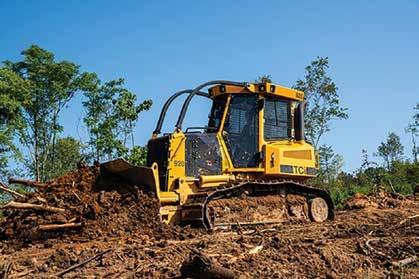
Tigercat 920 Dozer Excels In Demanding Applications
The Tigercat 920 dozer excels in demanding applications like stump removal and road building for logging operations, according to Tigercat. The dozer also is smooth and responsive for final grading on construction sites.
The Tigercat 920 dozer features durable construction and excellent build quality. It features heavy-duty, impact-resistant belly pans
and 20 feet long. It is powered by a Vanguard 40 hp engine and features 80 gallons of hydraulic oil capacity, hydraulic wedge adjustment and three-strand live deck hydraulic lift.
For more information, visit www.eastonmadewoodsplitters.com.
Tigercat Upgrades 850 Processor
It is powered by a Tigercat Tier 4f 135 hp engine and pushed above its size class. A hydrostatic closed loop track drive system provides powerful tractive effort. Heavy-duty oscillating track frames are designed for strength and long-term reliability.
A heavy-duty, six-way blade is powered by a large hydraulic pump for quick blade movements. Robust blade cylinders and large pivot ball provide added strength and durability.
The sloped hood gives the operator clear sight lines and excellent forward visibility, and the rear-mounted exhaust is strategically placed so as not to obstruct his view.
The dozer is available with an optional ripper attachment and recover winch.
For more information, visit www.tigercat.com
Eastonmade Introduces Evo Firewood Processor
Eastonmade has introduced the Evo firewood processors. It features unmatched build quality, incredible performance, and an affordable price, the company said.
At 7,000 lbs, the Evo is the heaviest machine in its class. That means more steel, more durability.
The 20-ton splitter cycles in under 3 seconds; the 30-ton splitter cycles in under 5 seconds (gas) or 2 seconds (diesel)
An auto-adjust chainsaw eliminates the need for manual pressure or flow adjustments — just smooth, efficient cuts every time.
Tigercat has made upgrades to the 850 processor. The 850B processor has been enhanced for improved roadside processing performance.
The Tigercat 850 is a purpose-built alternative to excavator conversions. The new 850B retains all of the advantages over converted excavators used in roadside processing applications — easier service access, a more comfortable cab with better visibility, and superior cooling capacity.
Tigercat has made upgrades to enhance performance and fuel efficiency differential further. Initial field testing confirms the 14 percent increase in power to 251 hp results in improved machine performance and response — quicker, smoother boom cycles, improved feed acceleration and braking, and more powerful swing. In addition, hydraulic system refinements target boom efficiency, reducing fuel consumption.
For more information, visit www.tigercat.com.
Cat Launches 325 Excavator In Enhanced Configuration
The Cat 325 excavator delivers powerful performance and features easy-to-use standard technology like Cat Grade with 2D,
The Eastonmade Evo can process logs up to 22 inches in diameter
Grade Assist, Lift Assist and Payload to help boost productivity. Operators can work accurately, efficiently and quickly.
A long heavy-duty undercarriage with oversized 8-inch track
STAND OUT IN 2026
TimberWest Magazine — January/February 2026
The Official Oregon Logging Conference SHOW GUIDE
Contact TimberWest to learn more about our NEW 2026 MULTIMEDIA PACKAGES
Extend your reach beyond print with Forestnet Media’s expanded offerings:
• Podcast Sponsorships –Branded exposure in the Forestnet Media Podcast, featuring key voices from the forest sector.
• Video Content Packages –Exclusive packages available for custom storytelling, product features, and event coverage.
• Social Media Campaigns –Management and promotion across Forestnet Media’s 30,000+ social followers.
www.forestnet.com
Make sure industry professionals know that you’ll be at the Oregon Logging Conference. Help them find your exact location amongst 300+ exhibitors and stand out.
Advertise
in the 2026 Official Show
Guide
Packed with essential show information, including:
• Detailed indoor/outdoor site maps cross-referenced to the exhibitor listing
• Daily conference agenda
• Seminar schedules and more
Delivered to TimberWest’s 10,500 readers in early February, well in advance of the show.
Not only will every logger, log hauler, and mill manager in the Northwest receive a copy, but we’ll also print extra copies for every attendee registration packages and show entrance areas.
IMPORTANT Advertising Deadline: January 13, 2026
ADVERTISING INQUIRIES:
Anthony Robinson: Owner / Publisher, Forestnet Media Tel: (778) 991-3500 • arobinson@forestnet.com
pitch delivers outstanding stability and durability in harsh, uneven ground conditions, including site preparation, land clearing and forestry. Equipping the 325 with the optional blade simplifies backfilling and helps keep the machine leveled when working on slopes.
The Cat 325 excavator features a 16,540 pound counterweight. The new configuration enhances balance and control even when equipped with attachments like a blade, Variable Angle Boom (VAB), heavy-duty stick, bucket thumbs, or quick coupler. It can be fitted with either Reach or VAB fronts, with or without a blade, and comes with a thumb-ready stick and quick coupler circuit preinstalled from the factory, reducing the need for aftermarket modifications. Stability equivalent to the 325 with an 8.3-tonne (18,300-lb) counterweight and standard undercarriage, its larger final drives increase drawbar pull to better climb grades, and higher swing torque maintains swing uphill capabilities.
The new Cat 325 configuration was designed to support heavier work tool combinations while delivering enhanced stability. The extended undercarriage and dedicated counterweight contribute to a solid, balanced platform, while increased drawbar pull and swing torque help improve performance on challenging terrain and slopes.
Brass Knuckle®’s SmartCut™ line of gloves offers three ANSI A2 cut-resistant glove solutions designed to perform in specific applications and conditions. They’re constructed with a cut-resistant shell (base fabric), a protective coating, and a textured finish for better grip.
SmartCut Touchscreen Gloves (BKCRT201) are perfect for all aspects of hands-on work, including using screens. It starts with a hardworking triple threat glove—dexterity, grip, medium cut protection—then adds a solution for a fourth threat: falling out of compliance when workers must remove gloves to engage with job-related touchscreens. Special fingertip dip allows for the use of touchscreen devices while providing all the safety and durability needed on the job.
The SmartCut BKCR3520 is made of a high-performance polyethylene (HPPE) shell with a foam nitrile coating for applications requiring a higher level of tactile sensitivity. The glove’s extreme flexibility is derived from its thinner, 15-gauge composite shell. A reinforced thumb crotch adds strength and protection between the thumb and forefinger, an area that is susceptible to wear and tear.
Other gloves in the product line are the SmartCut BKCR2403 and SmartCut BKCR303.
Brass Knuckle’s SmartCut™ glove line helps protect workers’ hands against cuts and injuries while also providing the most comfortable fit and best grip to help ensure compliance.
For more information, visit www.brassknuckleprotection.com.
IPA® Expands BrushAll® Line with Four New Adapters
Innovative Products of America® (IPA®) has expanded its BrushAll® line with four new heavy-duty adapters (#8160, #8161, #8162, #8163), designed to provide reliable performance and versatility across a wide range of tools and abrasive attachments.
Built for professional-grade durability, the BrushAll® adapters are engineered to handle the wear and tear common in grinding, cutting, and polishing applications.
The precision-machined steel construction ensures a secure fit and long service life, allowing users to easily switch between drills, die grinders, impact drivers, and angle grinders without sacrificing performance or safety.
“These adapters allow technicians to use their favorite abrasive tools across multiple power platforms,” said Ian Vinci, President of IPA®. “They deliver the same reliability as the rest of the BrushAll® line and pair well with our diamond grinding wheels for fast, consistent results.”
For more information, visit www.ipatools.com/brushall.
Opticom Tech Releases CC02 Industrial Camera
Opticom Tech, a leader in industrial video monitoring solutions, has introduced its updated CC02 industrial camera with an even more rugged anodized coating, builtin vibration mount and lens options — and it’s now made in the U.S.
“We’ve been designing, prototyping and testing this CC02 camera with our U.S. manufacturing partner for over 18 months,” said Heidi Schmidt, global sales manager for Opticom Tech. “We were able to retain, and even enhance, the quality and durability that the CC02 is known for while adding features, bringing manufacturing to North America, and maintaining a similar price point.”
Prototypes of the camera were tested in the harshest environments, including sawmills, where cameras need to be able to withstand vibration, heat, dust, debris and even direct hits by boards and logs. The new anodized coating provides increased resistance to corrosion and wear, ensuring long-lasting performance in extreme conditions.
A built-in vibration mount now comes standard, instead of as an extra accessory, which simplifies installation, improves image stability in high-vibration settings, and increases product lifespan. All lens options are still available to fit specific monitoring applications, keeping the CC02 as versatile as ever.
“This is the same CC02 camera our customers know and love—just made in the U.S. and tougher than ever,” said Schmidt.
For more information, visit www.opticomtech.com.
CALENDAR
January 8
Council on Forest EngineeringWestern Meeting, Lebanon, OR 503-226-4562
www.westernforestry.org
January 14-16
Associated California Loggers Annual Meeting, Reno NV 916-441-7940 www.californialoggers.com
January 14-16
Truck Loggers Association Annual Convention, Vancouver, BC 604-684-4291, www.tla.ca
January 19-21
Association of Equipment Distributors (AED), Summit, Dallas, TX 630-574-0650 www.aednet.org
January 23-24
Associated Oregon Loggers Annual Meeting, Eugene, OR 503-364-1330 www.oregonloggers.org
January 24-26
Western Pallet Association Annual Meeting, Rancho Mirage, CA 360-335-0208 www.westernpallet.org
Foresters Forum Annual Meetings, Coeur d’Alene, ID 208-883-4488 foresters-forum.com
February 5-7
Sierra-Cascade Logging Conference, Anderson, CA 530-222-1290 www.sierracascadeexpo.com
February 11-12
Bio360 Europe and the Biotransition, Nantes, France www.bio360expo.com
February 19-21
Oregon Logging Conference, Eugene, OR 541-686-9191 www.oregonloggingconference.com
February 23-24
Women in Forest Management Conference, Vancouver, WA 503-226-4562 www.westernforestry.org
February 24-26
Forest Resource Association
Fly-In and Fall Meeting, Wash. DC 202-296-3937 www.forestresources.org
March 3- 4
Calif. Forestry Assoc. - Forest Strategies and Innovations, Sacramento, CA 916-444-6592 www.calforests.org
Our Forests Act
By Sarah Rosa
In an overwhelming bipartisan vote, the Senate Committee on Agriculture, Nutrition and Forestry advanced a bill to address the growing threat of wildfires.
There is now broad consensus that the poor health of our forests is threatening communities, public health and emissions goals.
But, as the bipartisan, bicameral Fix Our Forests Act proves, we don’t simply have to accept this as our new normal.
Recent fire seasons have been devastating — burning millions of acres, destroying thousands of homes, and putting lives at risk. The growing wildfire challenge is also threatening climate goals as forest fires increasingly become a source of emissions.
In 2020, for example, one wildfire season in California produced twice the emissions that the state had reduced between 2003 and 2019 combined, effectively wiping out 16 years of progress. Similarly, Canada’s 2023 wildfires released more carbon in just a few months than Russia or Japan emits from all fossil fuel use in an entire year.
While climate change plays a role in wildfires increasing in size, severity and frequency, the main driver is decades of poor forest management, which has left forests dense, overgrown and unhealthy. Under these conditions, our forests become tinderboxes, ready to ignite at any moment. Restoring them to a healthy state is crucial for protecting both our communities and our environment.
Unfortunately, many critical projects needed to restore our forests get stalled in lengthy review processes and legal challenges, unable to break ground before the next catastrophic wildfire hits.
For example, it’s not uncommon for the U.S. Forest Service to propose a project and start the National Environmental Policy Act process, only for an uncontrolled wildfire to burn the area before the environmental review is complete. It’s not surprising considering the fact that it takes an average of nearly five years to simply start a prescribed fire project, and forest management projects face more litigation under the act than any other project type.
Still, not all news is bad — in at least one case, we may have learned a valuable lesson. Through the Water Infrastructure Improvements for the Nation Act, enacted in 2016, Congress established a categorical exclusion for forest thinning projects of up to 10,000 acres within the Lake Tahoe Basin. This policy allowed the Forest Service to implement critical forest treatments quickly. When the Caldor Fire ignited in 2021 and ultimately burned over 220,000 acres, these treatments played a crucial role in protecting South Lake Tahoe, bringing the fire to the ground and enabling fire officials to bring it under control.
Now, through the Fix Our Forests Act, Congress is looking to extend this model to the nation’s highest-risk forests, expanding the size of forest health projects eligible for a categorical exclusion from 3,000 acres up
to 10,000 acres. The proposal draws on successes such as the Lake Tahoe Basin. Even former Forest Service Chief Randy Moore has expressed support for efforts to expedite critical forest management projects.
On top of streamlining the review process for forest management projects in highrisk areas, the bill establishes a Fireshed Center to improve coordination across federal, state, tribal and local partners. It also supports community wildfire initiatives, including home hardening and local resilience planning, while investing in reseeding and reforestation capabilities to restore healthy forests post-wildfire.
In January, after the Los Angeles wildfires became the most costly in history, the House passed the Fix Our Forests Act with significant bipartisan support. Now, as the year comes to a close, the Senate has the chance to advance this bill and deliver real solutions for communities across the country.
Wildfires have long been a part of life in the U.S., especially in the West, but we don’t have to simply accept the growing threat they pose. Congress should pass the Fix Our Forests Act before the end of the year to give communities and agencies the tools they need to address this challenge. We cannot wait for another disaster to spur us to act.
(Sarah Rosa is the policy director at the American Conservation Coalition Action. She is a native Californian who grew up in the Silicon Valley and now resides in Sacramento.)
High stacking capability
Long-reaching boom
Fast, precise handling through 360° lift radius
Engineered to pull 176,370 lb trailer loads through the challenging terrain of unpaved wood yards
Visit us online at sennebogen-na.com/forestry for more about the 830 M-T and our complete line of purpose-built forestry material handlers.