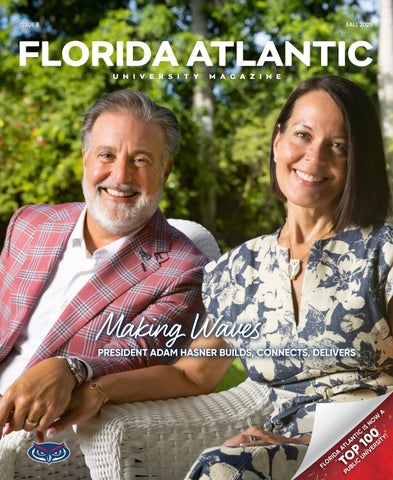
Making Waves
PRESIDENT ADAM HASNER BUILDS, CONNECTS, DELIVERS












Through decades of public service, I have learned that the most meaningful achievements come from a commitment to something greater than ourselves. At Florida Atlantic, I see that commitment every day. What makes a university truly great is the dedication of its people to aim higher and advance further — and that is the spirit that defines our community. In this issue, I am pleased to share some of these stories with you.

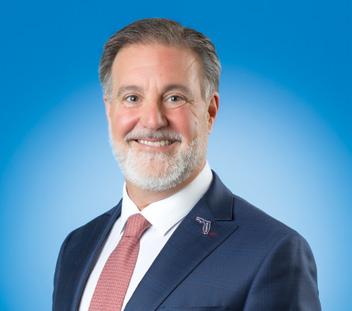
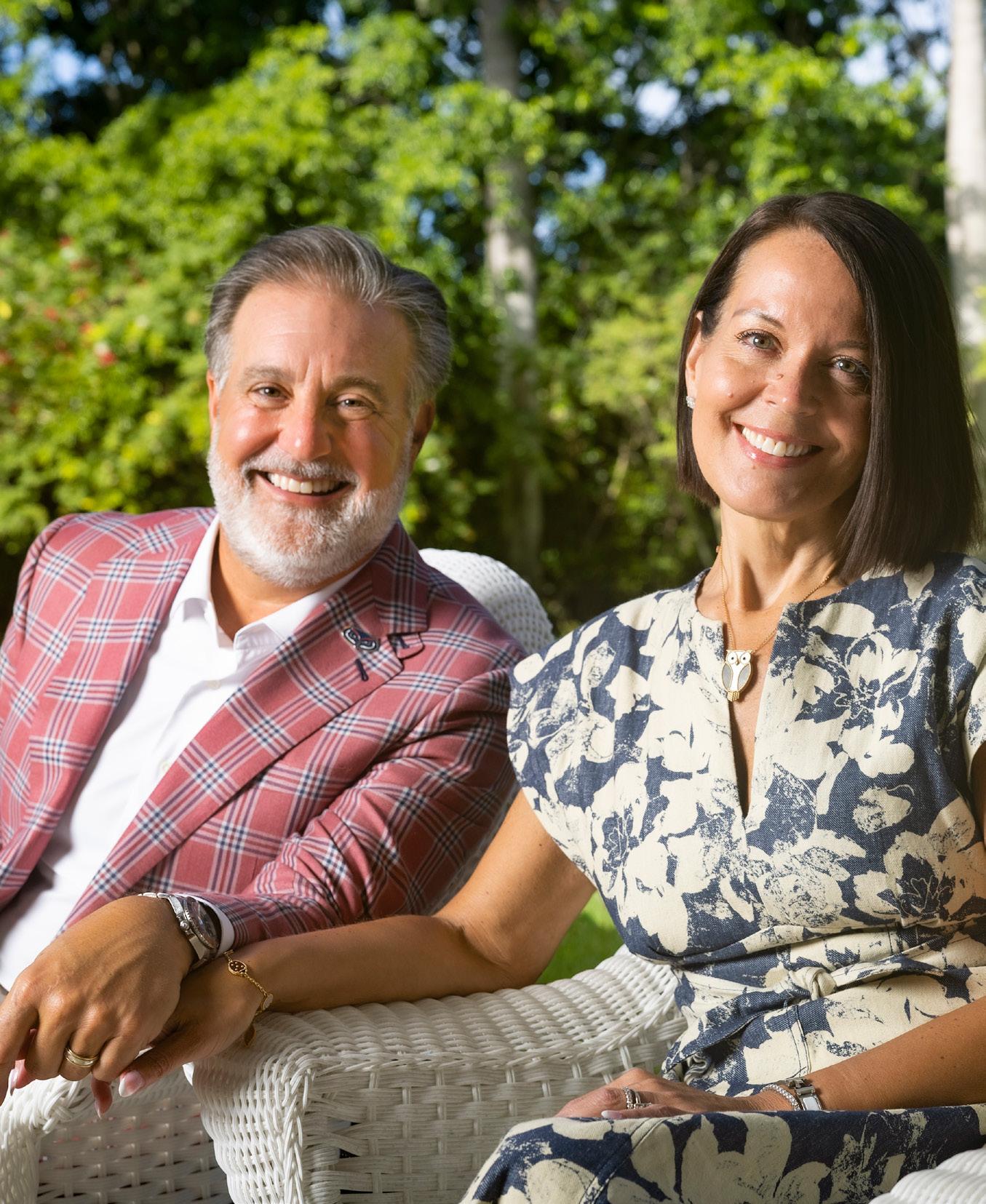
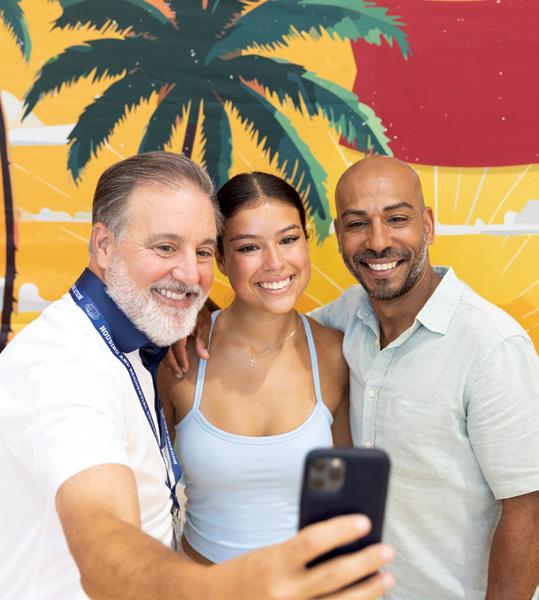
My wife, Jillian, and I are honored to be featured in the cover story, which reflects on our first months at Florida Atlantic and the remarkable people we have met along the way. We are grateful for the opportunity to share our experiences and vision for the future, and we look forward to reaching new heights with our university and community in the years ahead.
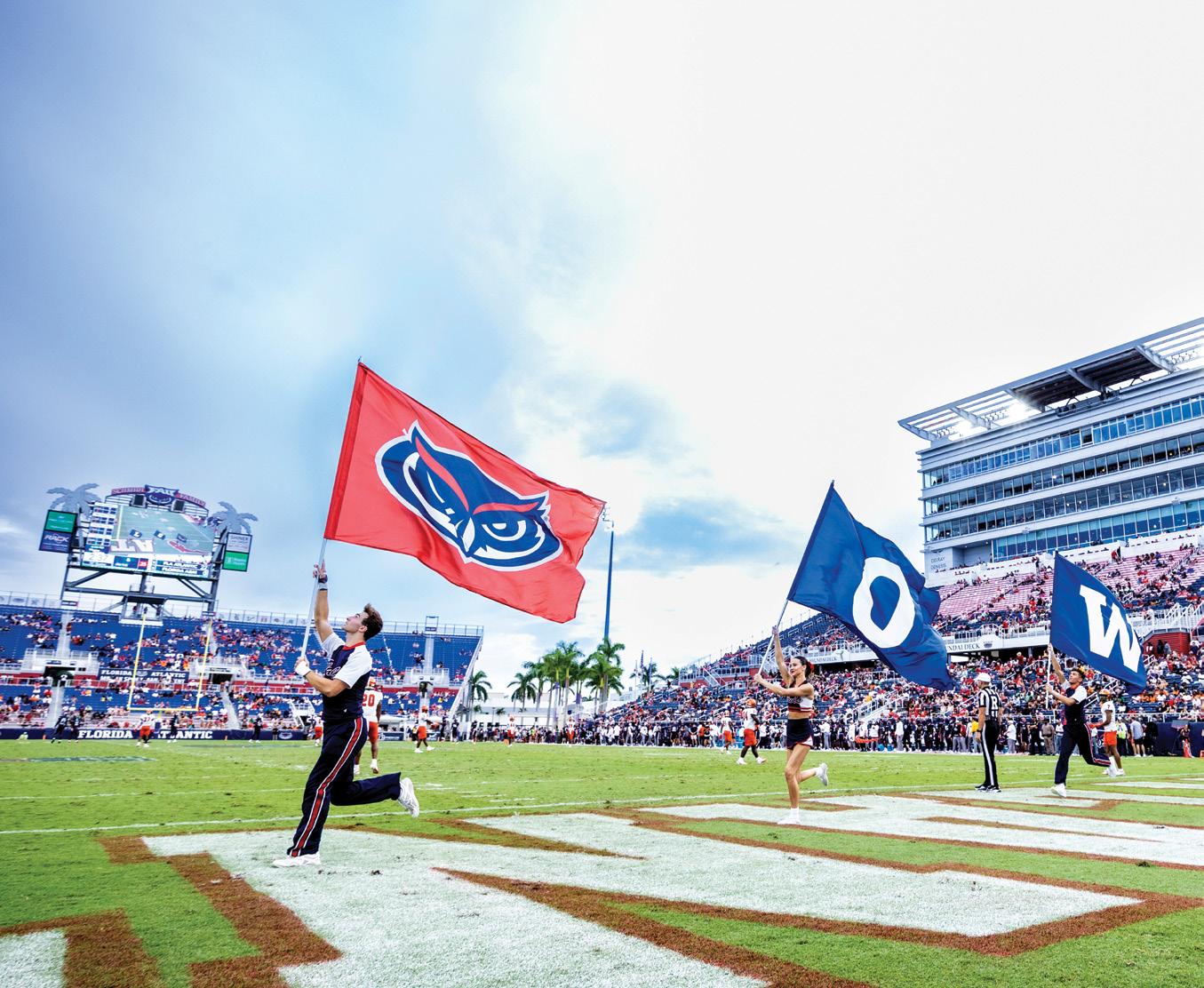
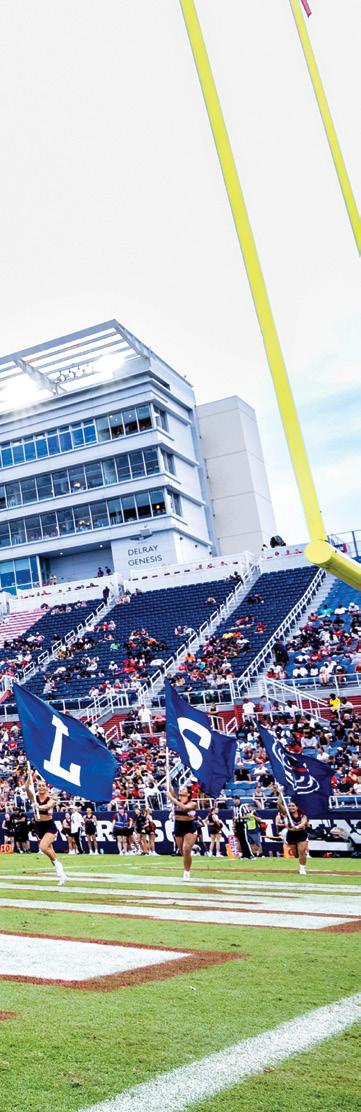
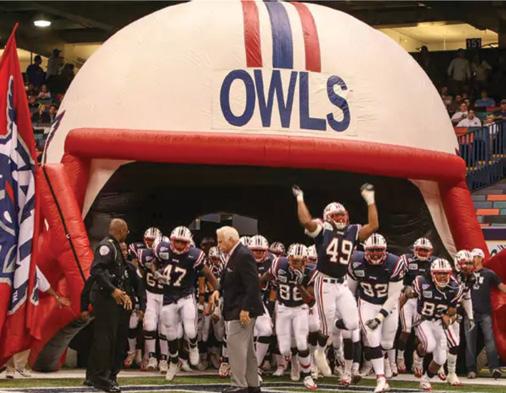
This issue also gives a special look at the 25th anniversary of one of our most cherished traditions, Florida Atlantic football, and the people who shaped the program. It is a legacy of pride, grit and perseverance, from its founding by legendary Coach Howard Schnellenberger to the coaches, players and fans who are “Winning in Paradise” today. We are proud to have Hagerty Family Head Football Coach Zach Kittley carry the torch forward with the same determined spirit and bold ambition of past generations of Owls, to drive us toward an even brighter future.
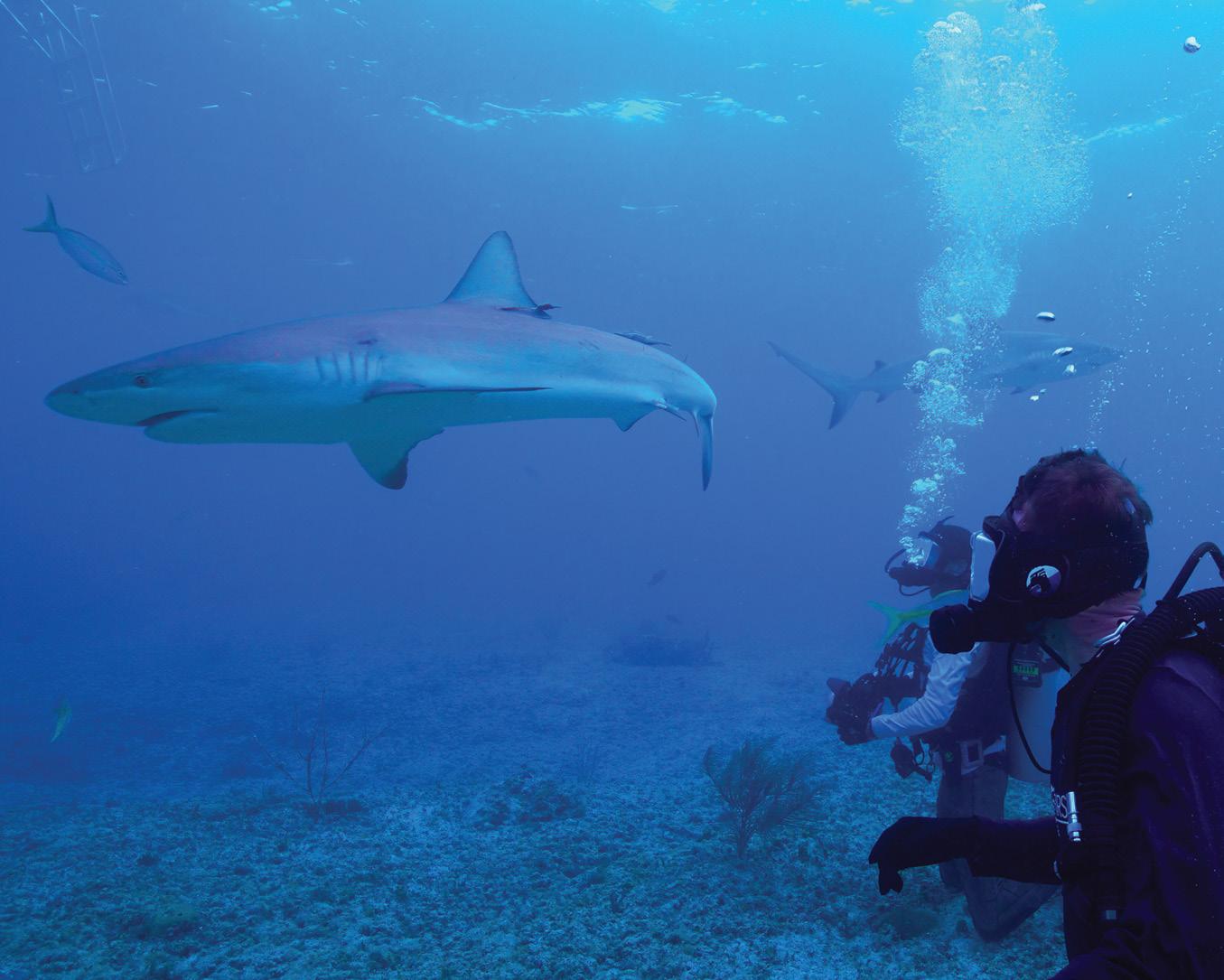
Florida Atlantic’s footprint — which spans 110 miles from Fort Lauderdale to Fort Pierce — has several advantages, and our proximity to the Atlantic Ocean is one that defines us. Still, our researchers are pushing the bounds of discovery far beyond local waters to study apex predators. This issue features an article about several of our researchers who are advancing our understanding of sharks and contributing to conservation efforts and other fields, such as biomedical engineering. While their expertise has been featured everywhere from National Geographic’s SharkFest to the Netflix series “All the Sharks,” the marine environments and innovative culture that power their work are unique to Florida Atlantic.
Beyond these features, the magazine is filled with highlights of inspiration and impact that tell the Florida Atlantic story. Additional spotlights include a recap of our softball and women’s tennis teams’ outstanding seasons, as well as a look back at each university president. I hope you enjoy reading about these milestones and accomplishments, and that you will continue to follow along as we write our next chapter.
Go Owls!
Adam Hasner President
FLORIDA ATLANTIC MAGAZINE 2025 CONTENTS
Writers and Editors
Polly Burks, Amy Butler, Jonathan Caudle, Cammi Clark, Alyse Cooke, Wells Dusenbury, Angie Francalancia, Jonathan Fraysure, Gisele Galoustian, Kristine Gobbo, Zachary Greathouse, Amy Haycock, Katrina McCormack, Lisa Metcalf, Benjamin Paul, Matt Sax
Note: Denise Gravatt was inadvertently omitted as a writer in the spring 2025 issue.
Design and Graphics
Senior Managing Editor
Amy Haycock, Assistant Vice President, Presidential Communications
Managing Editor
Cammi Clark, Ph.D., Senior Director, Research Communications
Copy Editor
Lisa Metcalf, Senior Media Relations Director for University News
Paige Arriola, Craig Korn
Photographers/Images
American Vocal Arts LLC, Keira Arimenta, Paige Arriola, Tracey Benson, Alex Brandon, Katarzyna Bytnar, Jason Dixson, Alex Dolce, Downtown Photo, Frank Gibson, Netflix, Inc., Mauricio Paiz, Bill Powell, JC Ridley, Jeffrey Tholl, Shane Gross, Dawn Yap iStock.com: bestofgreenscreen, Nadezhda Kurbatova, KrulUA, Line Art, Luisrftc, MadVector, Michael Lutz, PeterSnow, PlanctonVideo, PorqueNoStudios, RockingStock, S and V Design, saenal78, Sylverarts, tiler84 Getty Images: koto_feja
UNIVERSITY NEWS AROUND CAMPUS

BUILDING LONGER TABLES
Chef José Andrés’ Fund Supports Queen Conch Lab
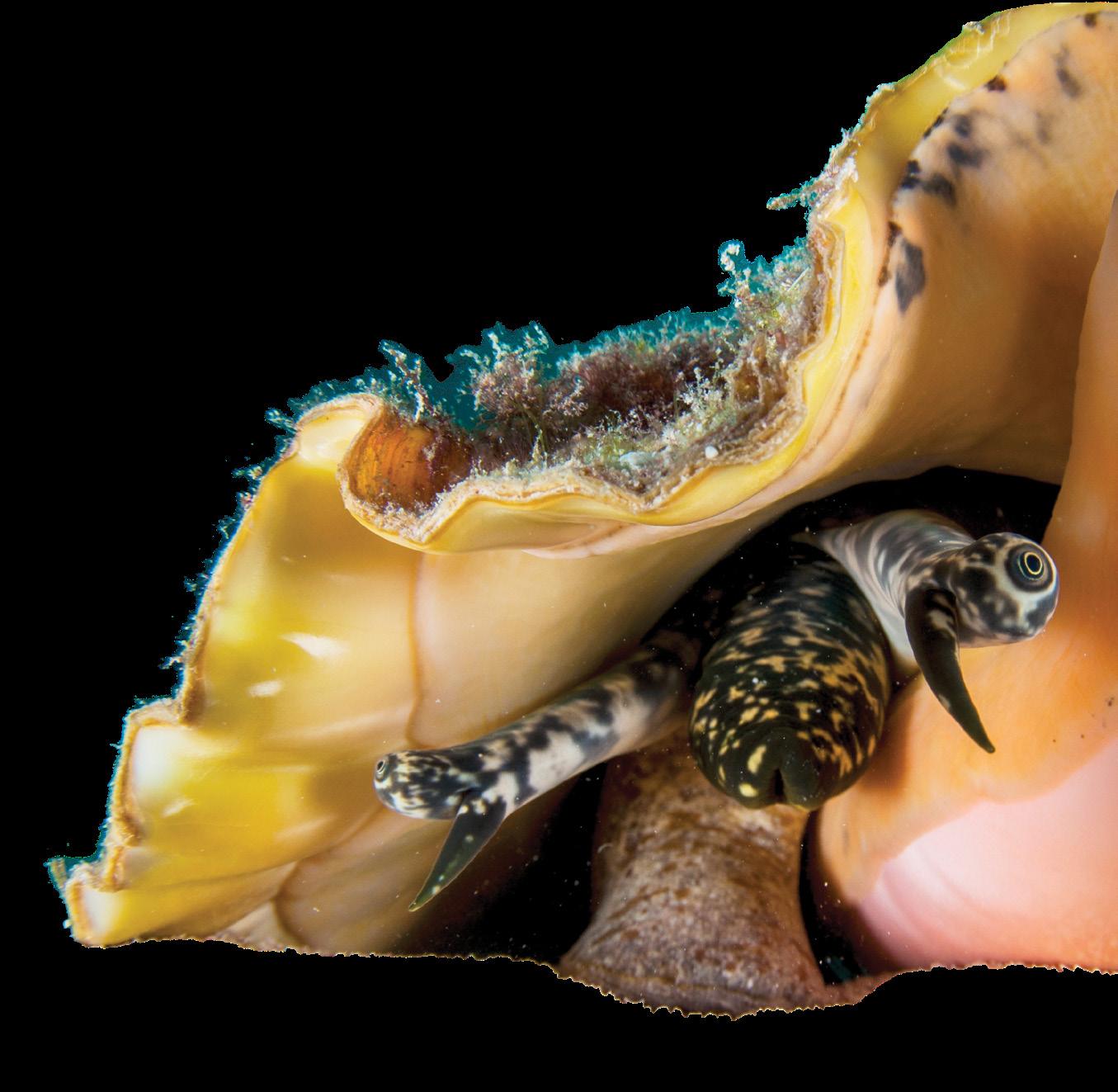
Florida Atlantic University’s Harbor Branch Oceanographic Institute was awarded a grant by Chef José Andrés through the Longer Tables Fund to develop a community-based aquaculture facility for conservation and restoration of the queen conch on the island of Eleuthera in the Bahamas.
“I believe food has the incredible power to nourish communities, sustain livelihoods and create a healthier planet,” Andrés said. “That’s why I am so excited for how this new partnership will restore healthy conch populations and improve sustainable fishing methods. The Queen Conch Lab is showing us what it looks like when science, community and food come together to build a better future – this is what it means to build longer tables.”
Harbor Branch’s Queen Conch Lab (QCL) is working to establish a communitybased queen conch farm in every Caribbean country. Native to Florida and the Caribbean, the queen conch is an important grazer that keeps seagrass beds healthy. It is also deeply rooted in the culinary and economic culture of these communities as one of the most significant fisheries in the region.
Overfishing and habitat degradation have led to a significant decline in queen conch populations, and the conch is now listed as “threatened” under the Endangered Species Act. Predictions indicate that commercial fishing for queen conch in the Bahamas may become unsustainable within 10 to 15 years.
The QCL will establish and operate a Queen Conch Mobile Lab at The Island School’s Cape Eleuthera Institute, a world-renowned science and experiential learning campus which connects primary research to education and outreach, with the goal of growing up to 2,000 queen conch juveniles per year for conservation and restoration. The program will offer training and education to staff and students attending the school, while also offering outreach activities to the residents on Eleuthera, providing training in workforce skills and education on sustainable fishing practices.
“We are thrilled to partner with José Andrés, the Longer Tables Fund, The Island School, and the community of Eleuthera to help grow and restore the queen conch, which is significant to the local ecosystem and a vital resource and cultural touchstone for the island,” said Megan Davis, Ph.D., director of the QCL, and a research professor at FAU Harbor Branch.
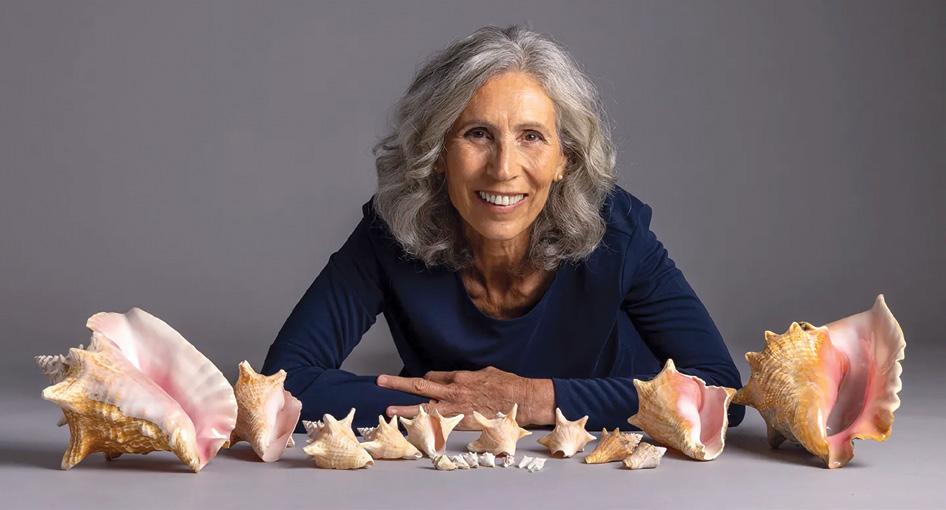
Megan Davis., Ph.D.
EXPANDING HOSPICE AND PALLIATIVE CARE NURSING
$1.8M Gift Honors Former College of Nursing Board Member
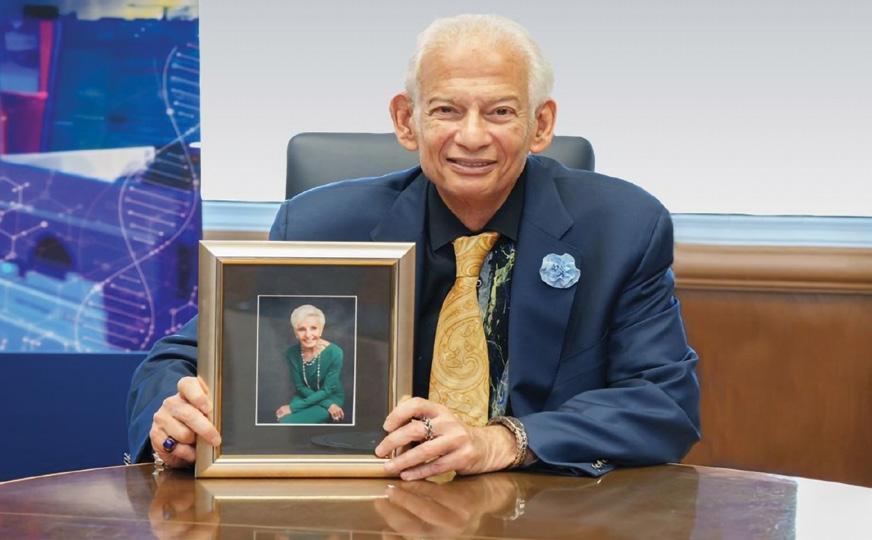
Florida Atlantic University’s Christine E. Lynn College of Nursing will be the first in the region to offer a program focused on hospice and palliative care, thanks to a $1.8 million gift from Mark Swillinger in memory of his wife, Marilyn. The gift established the Mark Bruce and Marilyn Lee Swillinger Endowed Professor, which provides support for a faculty member who will introduce students to this important specialty early in their academic careers.
Marilyn Swillinger, who passed away in 2023 after a long battle with cancer, was especially passionate about supporting health care and the arts. She was a longtime member of the College of Nursing’s advisory board and supported other colleges and departments at Florida Atlantic.
“This is my opportunity to memorialize Marilyn and give back to the community,” Mark Swillinger said. “I can’t say enough about the treatment that hospice gave to Marilyn and me. It’s important not only to the people in need but also for everyone within our community.”
The Mark Bruce and Marilyn Lee Swillinger Endowed Professor will direct the integration of hospice and palliative care nursing into the undergraduate curriculum and prepare students to meet the growing need for nurses in this specialty. The gift also names the dean’s conference room for Marilyn Swillinger, and the collaborative classroom for Mark and Marilyn together.
“Our region faces critical shortages in nursing and health care, and this generous gift will have a lasting impact on the university and the communities we serve,” said FAU President Adam Hasner. “Through their involvement and support over the years, Mark and Marilyn truly embraced Florida Atlantic as their hometown university. We are grateful that Mark chose to establish this meaningful legacy in memory of Marilyn in our College of Nursing.”
The need for hospice and palliative care is especially acute in Florida, as more than 21% of residents are age 65 or older, according to the U.S. Census Bureau. This number is expected to grow to 27% by 2030.
FLORIDA ATLANTIC UNIVERSITY






Please join us for the President’s Annual Gala celebrating 65 years of student success since our founding in 1961.
Celebrate Science
with FLORIDA ATLANTIC RESEARCH
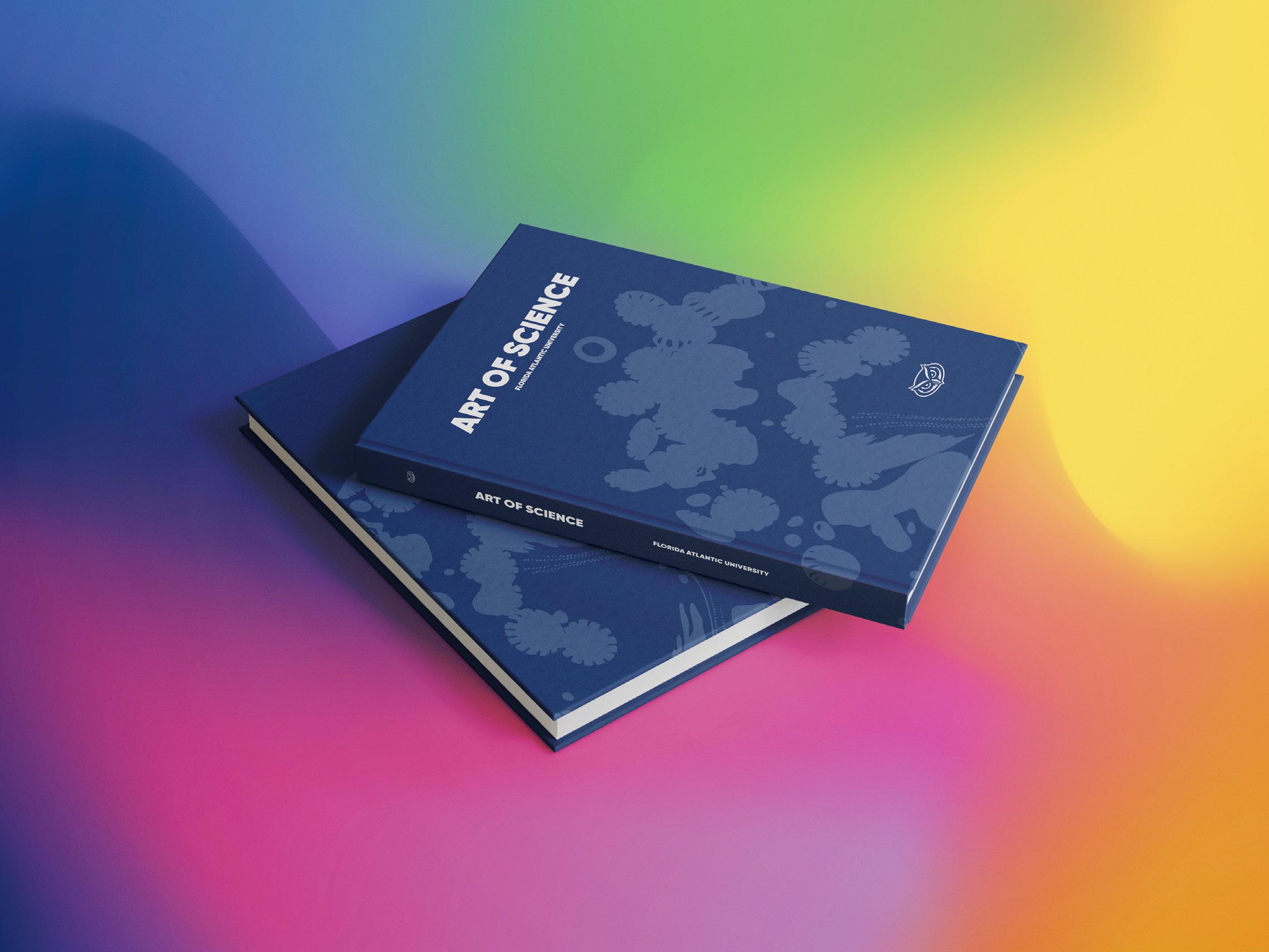
One R1 commemorative book
114 visionary artists
A special R1 commemorative edition where science inspires art and every image tells a story. Get your one-of-a-kind A rt of S cience co ee table book today.
200 stunning photographs
Countless research stories from across Florida Atlantic
Available now on Amazon https://a.co/d/ 13FTbeK

AI, AMBITION AND ADVOCACY
One Student’s Bold Path in STEM
BY GISELE GALOUSTIAN
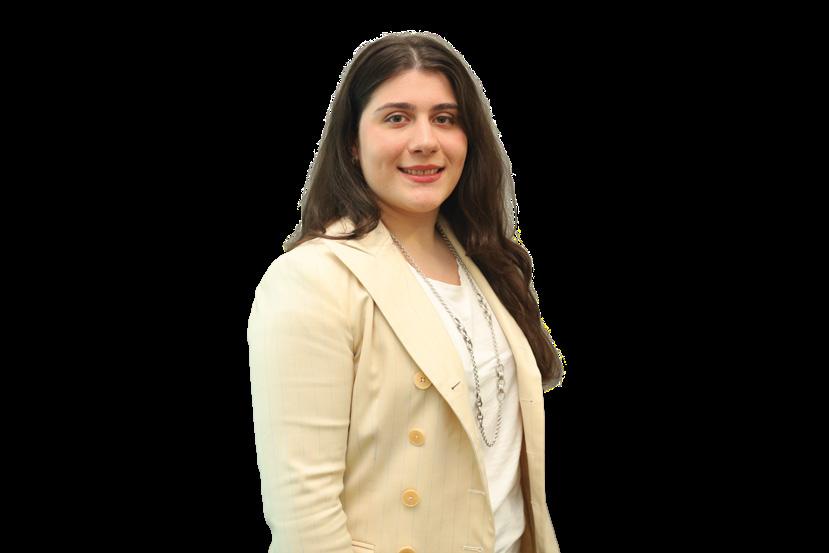
Paulina DeVito has already earned two bachelor’s degrees, a master’s and a spot in one of the country’s most prestigious research fellowships. But at 22 years old, her journey isn’t just about academic milestones — it’s about a clear vision: using artificial intelligence to make education more accessible and empowering.
DeVito, a doctoral student at Florida Atlantic’s College of Engineering and Computer Science, was awarded the National Science Foundation Graduate Research Fellowship, a highly competitive honor that recognizes top graduate students in STEM. The fellowship includes three years of financial support, including a $37,000 annual stipend and funding for tuition.
“I am both honored and humbled to receive this fellowship,” DeVito said. “This award is a validation of the vision I’ve carried since I first stepped onto FAU’s campus when I was 16. It not only affirms my commitment to advancing artificial intelligence and natural language processing research but also my deep passion for education in STEM. Impactful research is not limited by age or background, and young women, especially in tech, have a powerful voice in shaping the future.”
A graduate of A.D. Henderson University School and FAU High School, DeVito fast-tracked her academic career through Florida Atlantic’s dual enrollment program. By age 20, she had earned degrees in both computer science and computer engineering — graduating with the highest GPA in her class. She completed her master’s in computer science with a minor in AI in just one year, finishing with a perfect 4.0.
Her doctoral research focuses on how public discourse — particularly on social media — reflects evolving attitudes toward generative AI in education. By combining natural language processing with large language models, DeVito studies platforms like Reddit and other social spaces to better understand how students and educators interact with AI.
“Paulina is one of the most driven and forwardthinking researchers I’ve had the pleasure
of working with,” said Hari Kalva, Ph.D., professor and chair of the Department of Electrical Engineering and Computer Science in the College of Engineering and Computer Science. “Her work touches on an area of critical national importance: how to use AI to improve learning outcomes and enhance educational environments for a wider spectrum of students.”
As part of her NSF fellowship, DeVito will expand her research to analyze social media posts by and for young women in STEM, including content under hashtags like #WomenInSTEM. Her goal is to extract themes and engagement patterns that can inform AI-driven educational tools tailored to support various groups.
“My long-term goal is to become a professor and lead a research lab focused on advancing AI and natural language processing in education,” DeVito said. “I believe generative AI has the potential to enhance how we teach and learn, and I hope to contribute to its responsible development and meaningful application in education.”
Her early research contributions include an NSF-funded study with Kalva and Hanqi Zhuang, Ph.D., associate dean and professor in the Department of Electrical Engineering and Computer Science, analyzing nearly 15,000 Reddit posts about generative AI in education. The study uncovered widespread student concerns over inaccurate AI-based plagiarism detection and the emotional impact of false accusations — insights that have been shared at academic conferences and policy discussions.
“Paulina’s natural talent for research became apparent early on during our NSF-funded study,” Zhuang said. “Her ability to navigate complex data and draw meaningful insights stood out, and I’m excited to see her pursue a Ph.D. in the critical and rapidly evolving field of AI in education.”
With her rare combination of intellect, drive and empathy, DeVito is redefining what it means to lead in STEM — and reminding the world that the future of innovation is not only smart, but inclusive.
Paulina DeVito

BATTLE FOR AIRWAVES
How FAU is Rewriting the Rules of Military Communication
In modern warfare, it’s not just tanks, planes and missiles that decide who wins — it’s the invisible waves in the air.
The electromagnetic spectrum, used for everything from battlefield communications and radar to GPS and satellite navigation, is becoming one of the most contested spaces in national defense.

Backed by a $2.1 million grant from the United States Department of Defense Air Force Research Laboratory, Florida Atlantic’s College of Engineering and Computer Science recently launched a new Center of Excellence for Research and Education in Programmable Wireless Networks. The initiative, led by Dimitris Pados, Ph.D., Schmidt Eminent Scholar Professor of Engineering and Computer Science, and George Sklivanitis, Ph.D., Charles E. Schmidt Research Associate Professor, will focus on cutting-edge wireless technologies that are agile, secure and adaptable — key attributes for surviving and thriving in today’s high-tech battlespaces.
“In the future, the military will operate in environments where the electromagnetic spectrum is fiercely contested. Communication systems will be jammed and interfered with, making reliable communication and data sharing increasingly difficult. To overcome these challenges, we need innovative solutions

to minimize interference and maximize utilization of these critical frequencies,” Pados said. “This issue goes beyond just connecting radios — it also affects vital systems like radar, GPS and navigation tools that rely on the spectrum.”
The U.S. military currently relies on legacy systems that are often rigid and difficult to adapt. These hard-wired communication systems lack the flexibility required for fast-changing missions — a major liability in complex operations. Florida Atlantic’s new center aims to change that by developing intelligent, reconfigurable systems that can adjust on the fly.
“We need to move from rigid, siloed models to programmable and adaptive systems capable of learning, self-optimizing and collaborating in real time,” Pados said. “By investing in advanced research and cutting-edge technologies, the U.S. military can maintain its strategic edge in the competitive race for electromagnetic spectrum dominance, ensuring a decisive advantage in future operational environments.”
A $2.1M U.S. Air Force grant powers a new Florida Atlantic Center of Excellence to lead the charge in securing the electromagnetic spectrum — the invisible frontline of modern warfare.
Florida Atlantic’s program is built on three foundational pillars:
• The first focuses on the development of intelligent algorithms that can autonomously manage and secure wireless spectrum use, even under hostile conditions.
• The second targets the creation of powerful, programmable hardware — like software-defined radios and flexible networks — that can withstand and adapt to evolving threats across air, land, sea and space.
• The third pillar is focused on building a pipeline of talent and training students from high school through doctoral programs to become the next generation of defense tech innovators.
Florida Atlantic is leading the effort in collaboration with the University at Buffalo, The State University of New York.
“Our FAU Center of Excellence will be at the forefront of developing a new generation of engineers and computer scientists who will be equipped to tackle the growing challenges in electromagnetic spectrum operations,” said Stella Batalama, Ph.D., dean of the College of Engineering and Computer Science. “As adversaries around the world become more sophisticated in their ability to disrupt communications, it’s imperative for the United States to stay ahead of the curve.”
January– May 2026
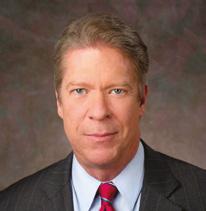
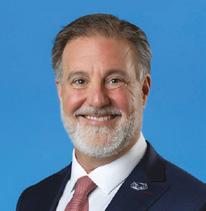
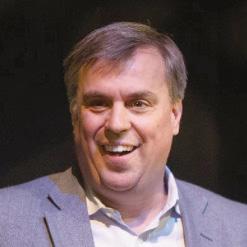
Join Florida Atlantic President Adam Hasner for These Fireside Chats Acclaimed Journalist Major Garrett, Tuesday, Februar y 10
Politico’s Jonathan Mar tin, Tuesday, March 17
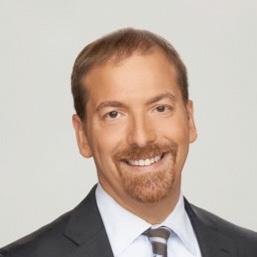
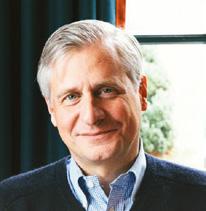
Don’t Miss Our Special Speaker Events
Chuck Todd, Wednesday, Januar y 28
Jon Meacham, Wednesday, March 4
Major Garrett
Chuck Todd
President Adam Hasner
Jon Meacham
Jonathan Martin
PATRIOTISM ON DISPLAY
Letters Serve as Personal Archives of Leaders of Our Country
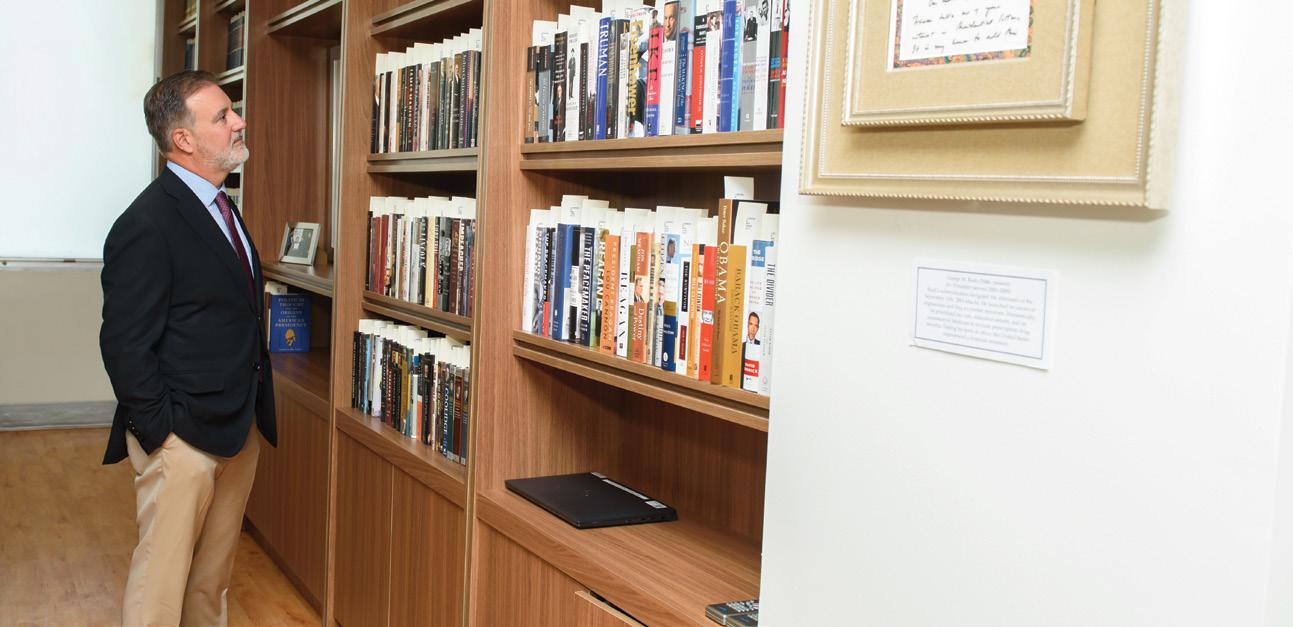
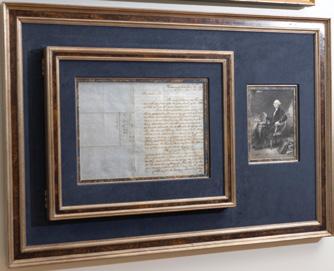
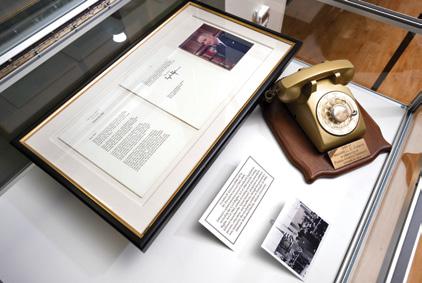
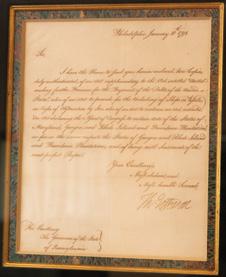
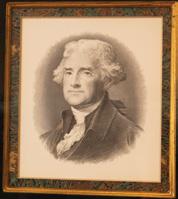
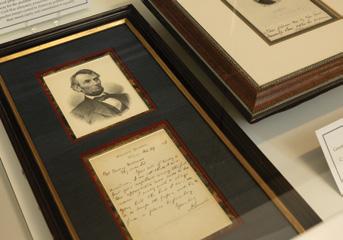
The Alan B. and Charna Larkin American Presidential Study at Florida Atlantic brings to life the words of each one of the country’s 45 presidents.
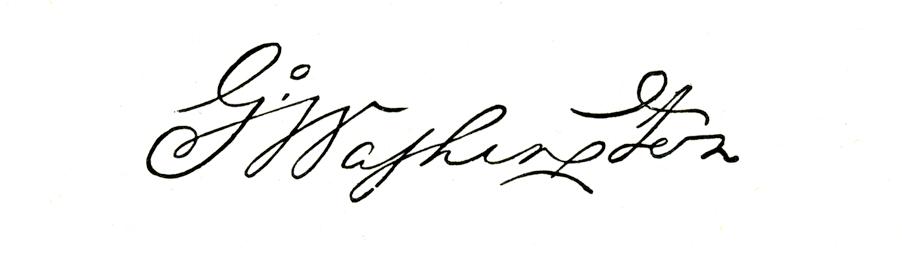
The 1,500-square-foot-space, on the third floor of the S.E. Wimberly Library on the Boca Raton campus, displays personally signed letters from every U.S. president dating back to George Washington. The collection – along with funding to design, develop and maintain the space – was donated by benefactor Charna Larkin to the university’s Department of History within the Dorothy F. Schmidt College of Arts and Letters. The new space also will serve as a historical archive of the Alan B. and Charna Larkin Symposium on the American Presidency, which Larkin and her family established in 2003 in memory of her husband, Alan.
“Alan loved history and he had compiled an amazing collection of signed presidential letters,” Larkin said. “He would love to
have known that all these letters were on display at Florida Atlantic as a way to encourage students to learn more about the presidency.”
The study is open to the public during designated hours and serves as a site for classes and public lectures. A digital component is also in the works to provide links to all presidential libraries and homesteads as a platform for student research.
“The Larkin American Presidential Study is a dynamic environment for educational classes and engagement activities,” said Linda Golian-Liu, Ed.D., dean of the libraries. “Thanks to the generous support of the Larkin family, this space invites visitors to engage directly with the words, decisions and legacies of U.S. presidents.”
The Larkin Symposium on the American Presidency has attracted thousands of

attendees to campus since 2007 to hear prominent speakers such as former U.S. President George W. Bush, Laura and Barbara Bush, Madeleine Albright, David McCullough, Joe Scarborough and others. The symposium also has supported research that has resulted in several books about the American presidency, which are currently on display at the Wimberly Library.
“We are so thankful to Charna Larkin and her family,” said Michael Horswell, Ph.D., dean of the Dorothy F. Schmidt College of Arts and Letters. “Her dedication to fostering intellectual growth and nurturing of our faculty and staff initiatives across the university has resulted in impactful outcomes for hundreds of staff, faculty and students, as well as thousands of community patrons.”
For more information, visit library.fau.edu/special-collections/larkin.
President Adam Hasner
COASTAL
DESIGN TO ADDRESS RISING SEA LEVELS
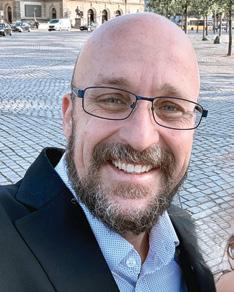
Jeffrey E. Huber, FAIA, ASLA, NCARB, LEED AP, WEDG; Professor, FAU School of Architecture; Partner, Brooks + Scarpa; Tau Sigma Delta Gold Metal Recipient (2024)
Jeffrey Huber is leading the way in developing systematic and sustainable strategies to tackle urban conditions which are prone to flooding
Learn more at fau.edu/artsandletters/architecture .
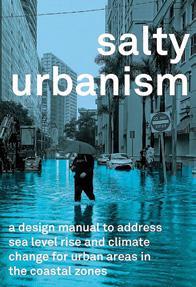
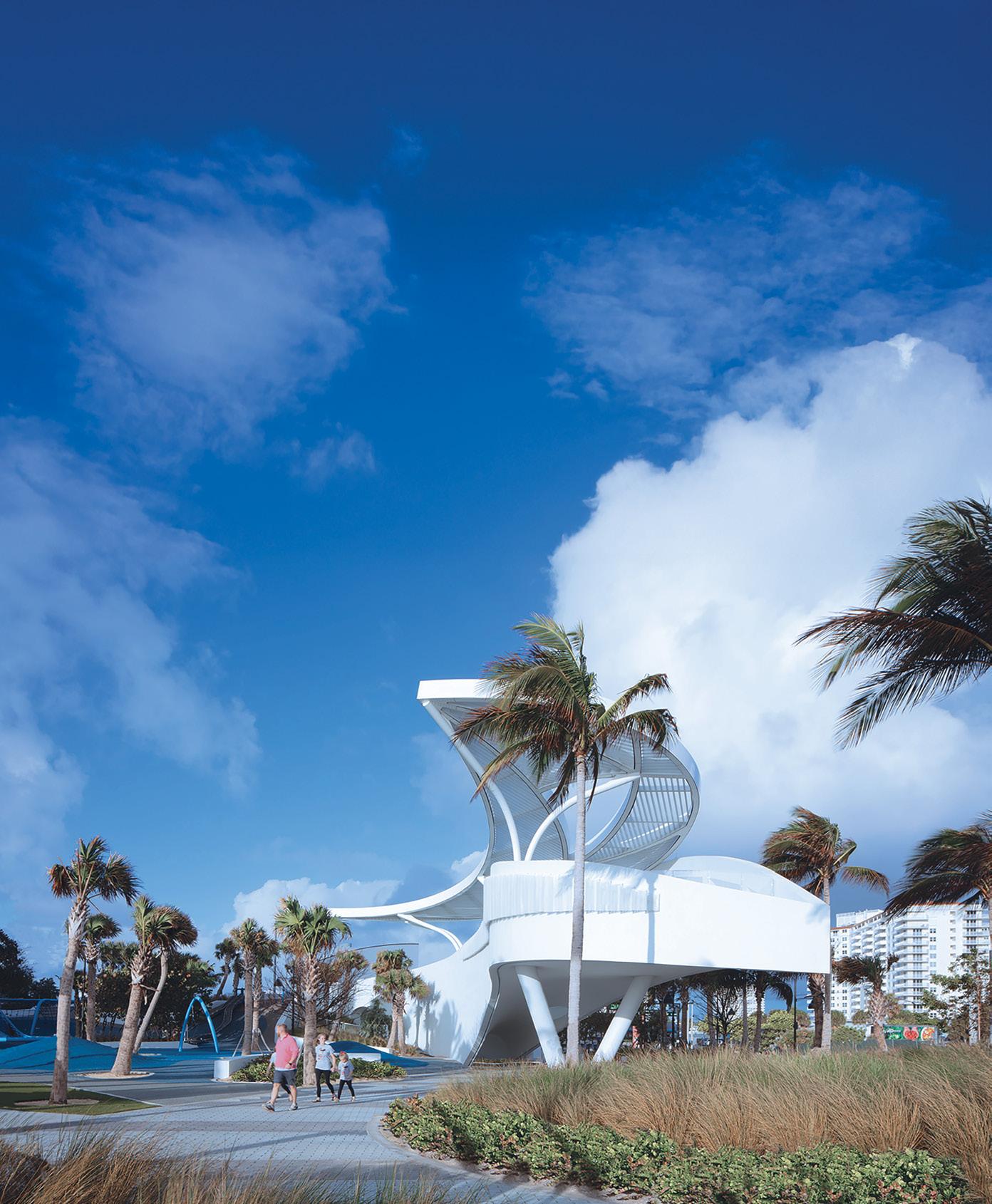
Image Below: DC Alexander Park in Fort Lauderdale was designed to provide infrastructure that adapts to coastal flooding and heat, and encourage habitat restoration. The project builds on Huber’s research recently published in his book, “Salty Urbanism,” to address sea level rise, saltwater intrusion, habitat loss and rising temperatures.
TREES THAT REMEMBER
Ancient Bald Cypress Reveal Climate’s Lasting Impact
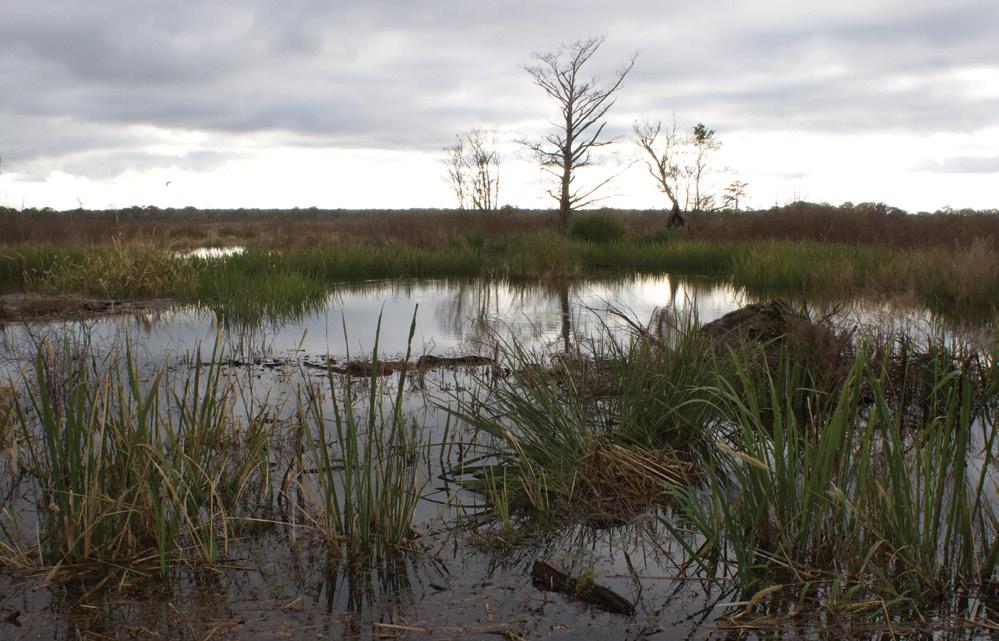
In the muddy lowlands of Georgia’s coastal swamps, the remains of ancient bald cypress trees hold vital clues to centuries of past climate shifts etched into their rings.
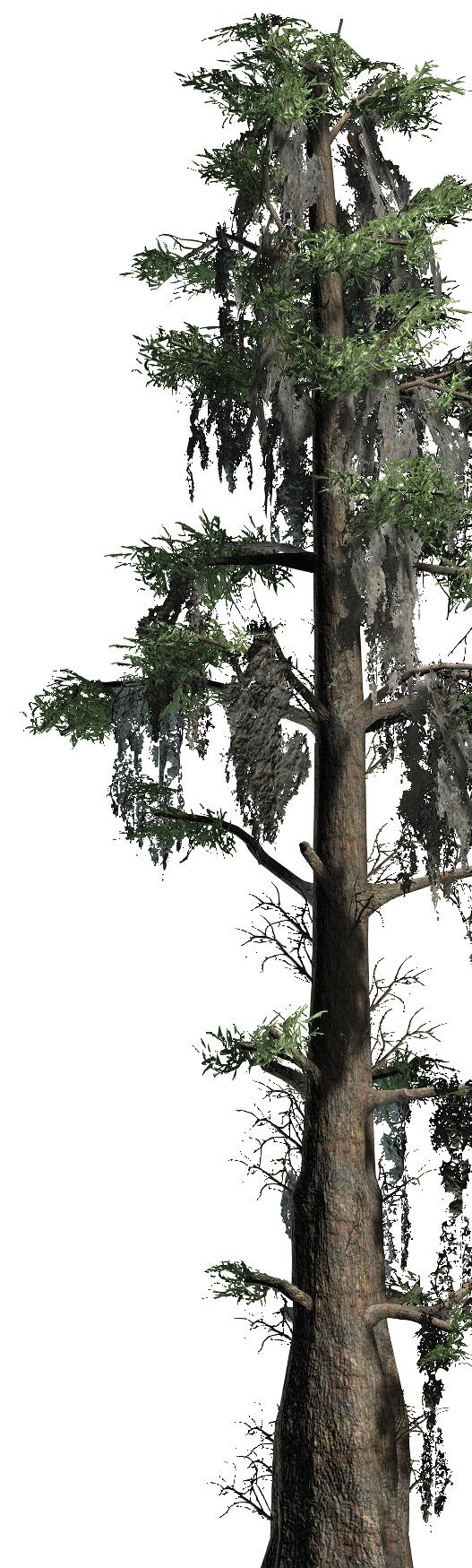
A study led by Florida Atlantic University reveals how the lives — and deaths — of these trees chronicle sweeping environmental changes dating back more than 2,500 years. The findings offer a stark reminder of how climate shifts, even from centuries ago, can leave long-lasting marks on the natural world.
“These ancient giants not only inspire awe but also serve as natural archives, helping scientists understand how trees have weathered past climate events — and how they might fare in the face of modern climate change,” said Katharine G. Napora, Ph.D., senior author of the study and assistant professor in the Department of Anthropology in the Dorothy F. Schmidt College of Arts and Letters.
Working alongside researchers from Lynn University, the University of Georgia, and the Georgia Museum of Natural History, Napora and her team analyzed 95 preserved bald cypress trees unearthed from the Altamaha River area. Using radiocarbon dating and tree-ring analysis, they reconstructed nearly three millennia of growth patterns.
Before the year 500 A.D., these trees routinely lived for nearly 500 years. But then, something changed. Around the time of a global climate downturn known as the Vandal Minimum — linked to volcanic eruptions and possibly even a comet impact — the trees’ lifespans began to shrink. Post-500 A.D., the average bald cypress lived just 186 years, growing more quickly but dying sooner.
“This shift wasn’t a brief disruption. Even centuries later, the trees never regained their former longevity. In fact, their lifespans continued to decline over time,” Napora said.
Research uncovers how centuries-old bald cypress trees from a Georgia swamp hold clues to climate upheaval, resilience — and a future in flux.
“The last of the long-lived trees found in the deposit died during another major climatic event, the Little Ice Age. Our findings underscore how long-lasting the localized effects of major climate shifts can be, especially for coastal forests that are already vulnerable to wind damage, saltwater intrusion and rising seas.”
The study found no evidence of fire, logging or other human activity causing the decline — just nature, changing course. Drier conditions may have triggered insect outbreaks. More unstable flooding and rising salinity likely made the swampy environment even harder to survive. And yet, hope endures. Today, bald cypress trees more than 1,000 years old still stand in isolated groves. Their resilience offers lessons for the present.
“The rings of the bald cypress are like nature’s journal entries, written year by year and season by season, showing how even slow changes can shape the course of life,” Napora said. “In their quiet persistence, these trees offer both a warning and a lesson: that the world is more interconnected than we often realize, and that the story of the Earth isn’t only told through written history — it’s etched into wood, embedded in landscapes and carried forward by living organisms.”
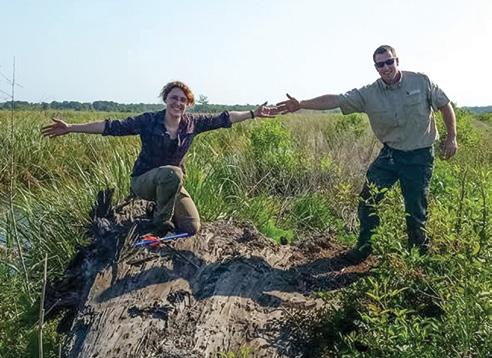
Study authors Katharine Napora, Ph.D., and Craig Jacobs stand on the base of an ancient cypress tree hauled up from the Altamaha Wildlife Management Area on the Georgia coast.
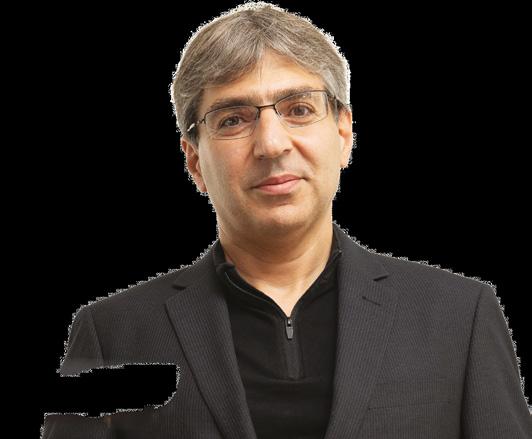
DR. HARI KALVA NAMED TO THE FLORIDA INVENTORS HALL OF FAME
The College of Engineering and Computer Science at Florida Atlantic University proudly celebrates Dr Hari Kalva’s induction into the prestigious Florida Inventors Hall of Fame Dr Kalva, professor and chair of the Department of Electrical Engineering and Computer Science, joins the 2025 inductees in this distinguished honor, which recognizes Florida’s most innovative minds and their lasting contributions to society. His induction honors decades of transformative contributions to video technology, advancing innovations that have become essential to communication in the health care, transportation and defense industries.
From revolutionizing video streaming to enhancing how video content is delivered worldwide, Dr Kalva’s innovations have reshaped how we live, work, and connect With 73 U.S. patents, his breakthroughs in video compression and transmission have helped power today’s most widely used platforms, including Netflix and YouTube, improving both speed and quality of delivery.
As director of FAU’s Multimedia Lab, Dr. Kalva leads cutting-edge research while mentoring the next generation of engineers and innovators His work at the intersection of multimedia systems, digital media and artificial intelligence positions the College of Engineering and Computer Science as a hub for impactful, real-world technological advancement.
A Fellow of the National Academy of Inventors, Dr Kalva is not only a trailblazing researcher but also an entrepreneur, mentor and educator dedicated to turning bold ideas into practical solutions. His induction into the Hall of Fame reflects the College of Engineering and Computer Science’s mission to lead through innovation, empower future leaders and create technologies that make a global impact

INNOVATING THE FUTURE OF BRAIN RESEARCH AND TECHNOLOGY
At the College of Engineering and Computer S cience, the Bio-Inspired S ciences and Technologies (BIST) Lab is redefining how we understand and interact with the human brain Led by Dr. Ramin Pashaie, professor and I-SENSE Fellow within the Depar tment of Biomedical Engineering and the Depar tment of Electrical Engineering and Computer S cience, the lab unites engineering, neuroscience and cutting-edge optics to pioneer solutions for brain health and restoration
From brain–machine interfaces that restore movement and vision to AI-powered retinal imaging for the early detection of Alzheimer ’s disease, the BIST Lab transforms bold engineering concepts into life-changing technologies for patients.
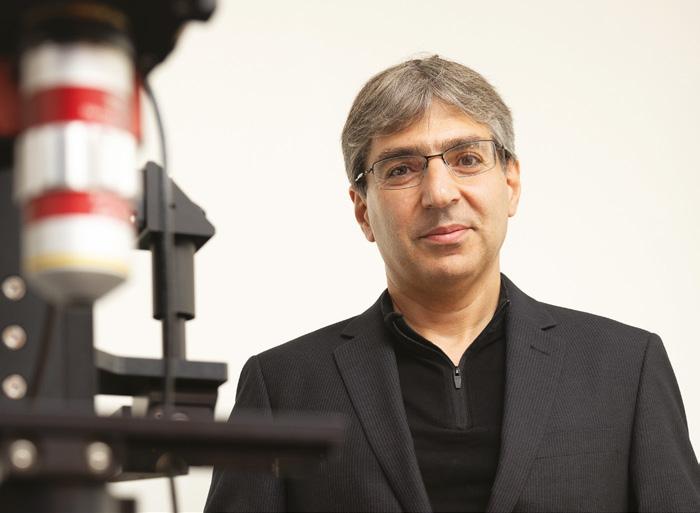
By training the next generation of engineers in emerging fields like neuro-engineering and translating groundbreaking discoveries into life-changing technologies, the BIST Lab is shaping the future of brain research and redefining what’s possible in research, medicine and society.
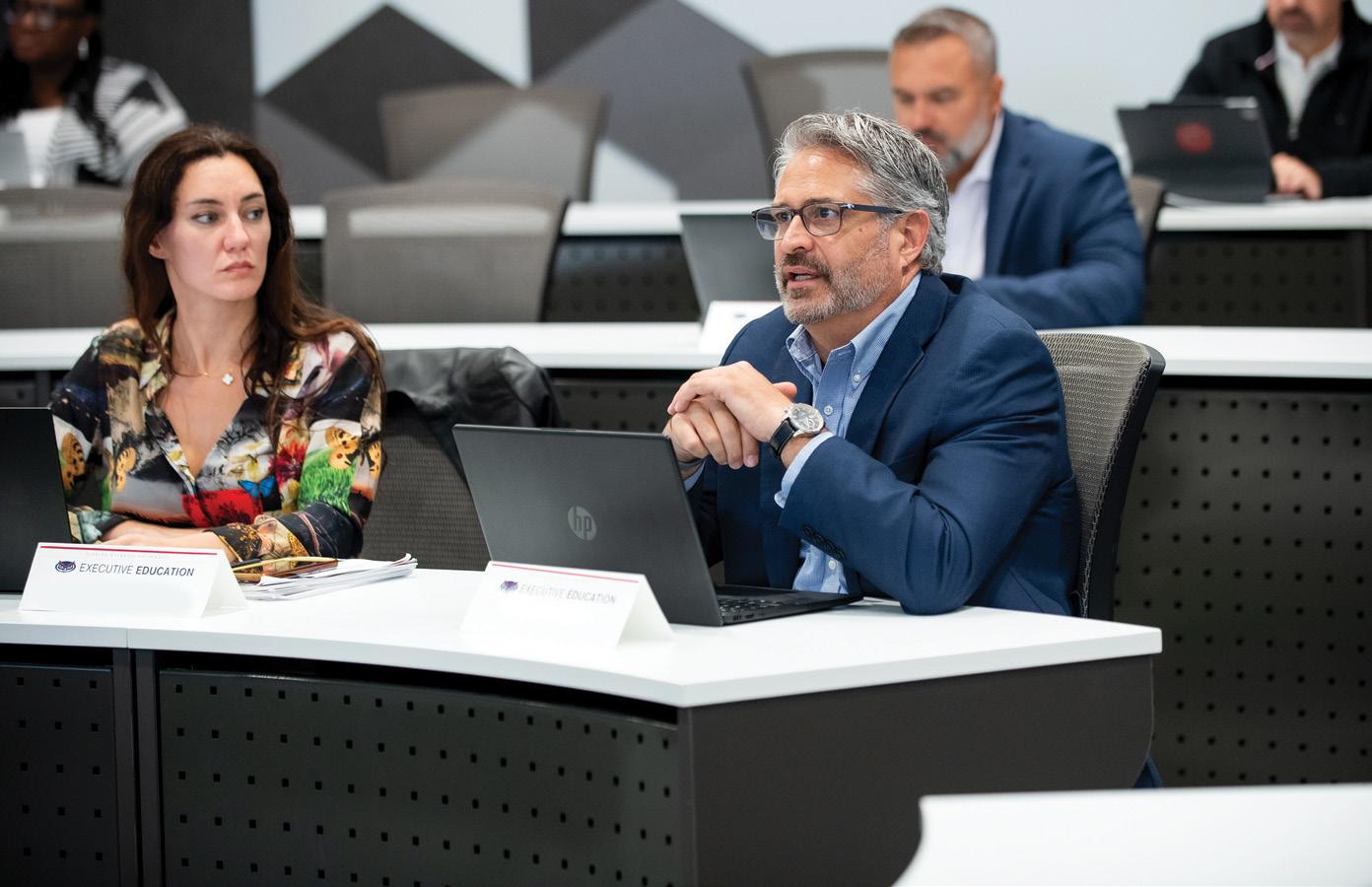
Florida Atlantic University’s Executive Education programs are ranked No. 1 in Florida and No. 4 in the U.S. by the Financial Times 2025 Executive Education Rankings. Our open-enrollment business programs equip leaders with practical skills, global perspectives, and career-advancing credentials to thrive in today’s competitive marketplace.


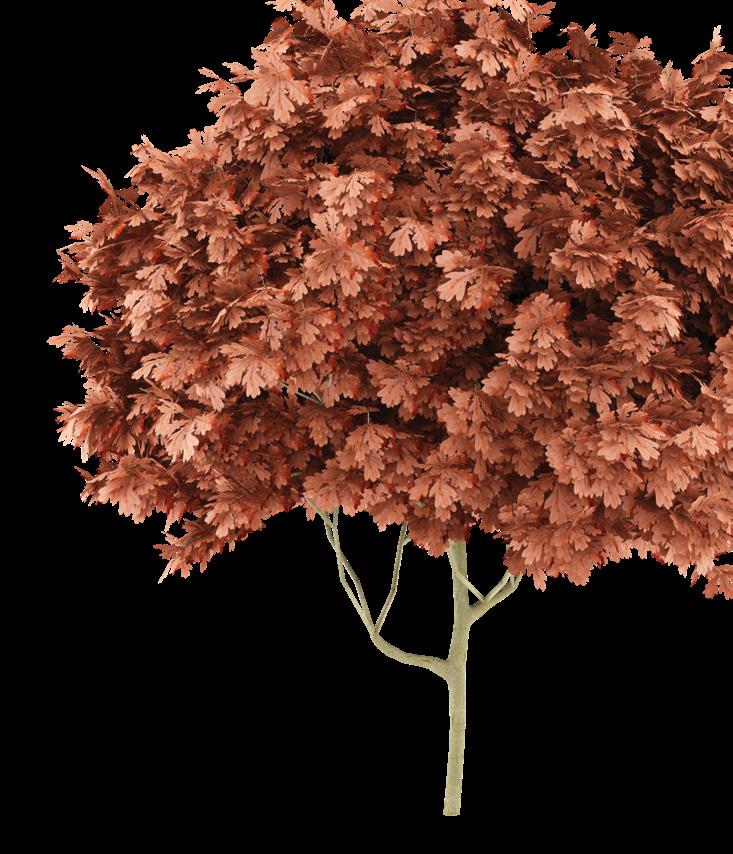
Using a low-cost mineral treatment, researchers created tougher, greener wood that could one day replace steel and concrete in construction.
STRONGER BY NATURE
Engineers Reinforce Wood with Eco-friendly Nano-iron
Wood is one of the world’s most abundant and renewable resources, with more than 181 billion tons produced annually. But could it also be the material of the future?
Researchers from Florida Atlantic University and collaborators said they believe the answer is yes — especially when wood is combined with a little high-tech chemistry.
A study, published in ACS Applied Materials and Interfaces, reveals how a simple, cost-effective treatment using a naturally occurring mineral can strengthen the microscopic structure of wood without adding much weight or environmental burden. The research could lead to a new generation of bio-based materials strong enough to replace steel and concrete in everything from skyscrapers to furniture.
The team focused on red oak, a common North American hardwood from the ringporous wood family — trees like oak, maple and cherry, known for their large, ring-shaped vessels that transport water. The researchers infused the wood with ferrihydrite, an iron oxide mineral created by mixing ferric nitrate with potassium hydroxide — a safe, simple chemical reaction.
“Wood, like many natural materials, has a complex structure with different layers and features at varying scales. To truly understand how wood bears loads and eventually fails, it’s essential to examine it across these different levels,” said Vivian Merk, Ph.D., senior author and assistant

professor in Florida Atlantic’s departments of ocean and mechanical engineering, biomedical engineering, and chemistry and biochemistry. “To test our hypothesis — that adding tiny mineral crystals to the cell walls would strengthen them — we employed several types of mechanical testing at both the nanoscale and the macroscopic scale.”
To analyze the effects, the team used atomic force microscopy and a technique called AM-FM, which combines two frequencies to create both topographical images and measurements of elasticity and stickiness. This allowed them to see how the nano-iron crystals reinforced the individual cell walls.
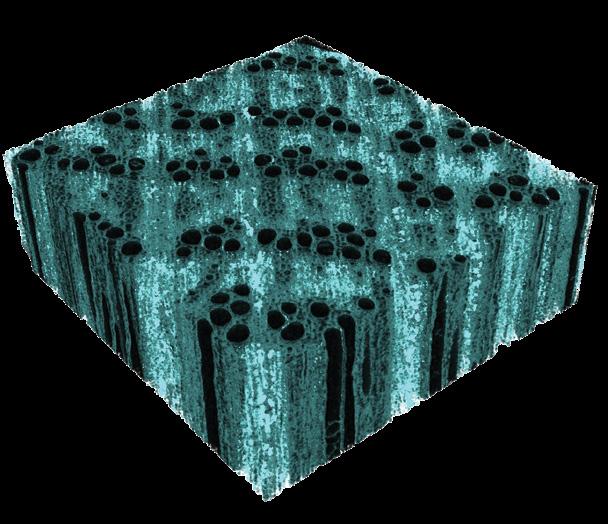
They also conducted nanoindentation tests inside a scanning electron microscope, pressing microscopic probes into the wood to measure its stiffness, and followed up with traditional bending tests on both treated and untreated samples.
The results? The nano-iron significantly boosted the stiffness of the wood’s cell walls. And while the overall behavior of the treated wood — how it bends and breaks — stayed relatively consistent, the internal structure became much tougher. The researchers noted that while some bonding
slightly, the gains in microscopic strength could lead to major performance improvements when fine-tuned for future applications.
“By looking at wood at different levels — from the microscopic structures inside the cell walls all the way up to the full piece of wood — we were able to learn more about how to chemically improve natural materials for realworld use,” Merk said.
With sustainability driving the search for greener building materials, this study brings us a step closer to building stronger — and smarter — with wood.
AROUND CAMPUS
‘SHELF’LESSLY
DEVOTED
How the Dean of Libraries Found Purpose in Boundless Curiosity and Joy of Helping Others
BY LISA METCALF
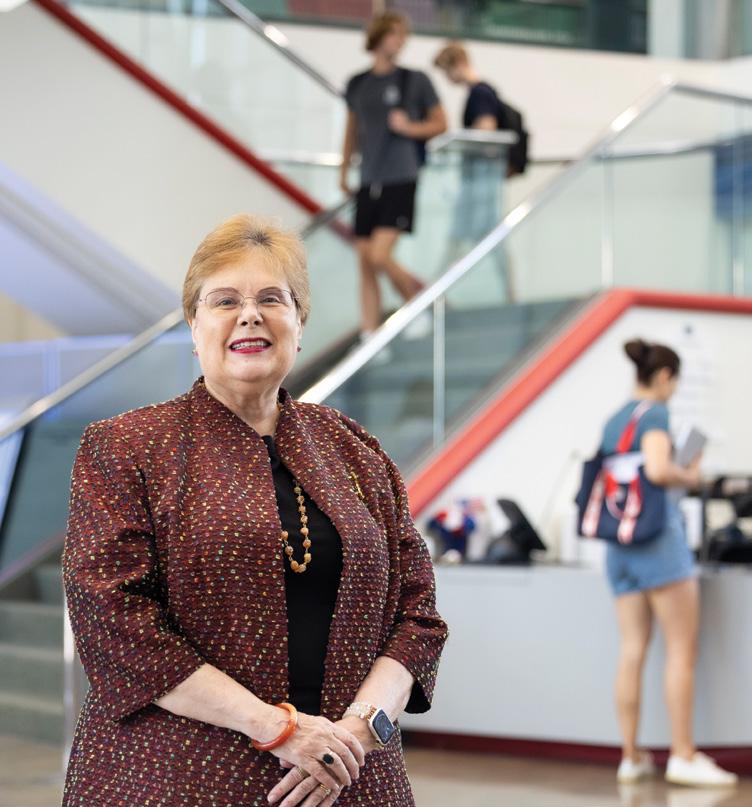
As a child, Linda Marie Golian-Lui, Ed.D., did not know what she wanted to be when she grew up.
But thanks to a doting uncle with a connection to Golden Books, volunteer work in elementary school, and strong mentors throughout her college career, the path became increasingly clear as she got older. That path led her to Florida Atlantic, where she has served as its dean of university libraries since 2022.
Golian-Lui directs all functions and services of the university libraries — a responsibility she carries out with pride. Not only because she oversees a system serving more than 32,000 students across six campuses and several collections of nearly 4 million items, but also because she’s a two-time alumna of the university.
“I was a library faculty member and graduate student at FAU from 1990 to 1997. I obtained my education specialist degree in 1995 in adult and community education and my Ed.D. in 1998 in higher education administration,” she said. “I am a firstgeneration student and was very lost during my academic journey, especially when I was moving through my graduate programs. FAU provided me with help and guidance to navigate a path I could not comprehend, so that I was not only managing things well, but I excelled.”
Today, Golian-Lui boasts more than 33 years of experience in academic libraries and an extensive publication record in library administration, management and higher education. Prior to coming to Florida Atlantic, she was the dean of libraries at the
University of Hawaii at Hilo for 10 years, as well as the associate dean of libraries at Kennesaw State University. She also previously worked as a student at the FAU Libraries, first as a serials librarian, then as serials department head and a librarian professor, and held other positions within the academic libraries at Florida Gulf Coast University.
Golian-Lui recently sat down with Florida Atlantic magazine to discuss her role at the university — and what fuels her lifelong passion for service.
What inspired you to become a librarian/dean?
I had an uncle who worked for Golden Books as a child. He was especially close to my mother, and the families visited at least once a month. My uncle would always shower the children with books when he saw us. As my love for reading developed, he gave me more books over the years and would even spend time talking to me about
books. In elementary school, I was allowed to be a library aide one day a week for my service work, and the library bug started to bite. I also did volunteer work in the school library as part of my service work obligations for various honor societies/ clubs in junior high school and high school.
When I started college, I was a Pell Grant student and worked evenings and weekends at the University of Miami’s Otto G. Richter Library. I had never been in a library so large. I excelled as a student worker, and when my financial aid ran out, I was offered a full-time library job as a staff member so that I could continue to go to school part-time for free. When I finished my B.A. degree at the University of Miami, Florida State started a Miamibased master’s program in library science. Even though I was one semester from my B.A., letters of reference about my B.A. studies and letters of reference from my library supervisors convinced FSU to accept me as a provisional student.
I eventually graduated as the top student in my cohort group.
When I obtained my master’s in library science at FSU, I stayed at the University of Miami but took a librarian job at the law school. I initially thought my life career was to either be a journalist or a lawyer. My first year of undergraduate studies convinced me I did not want to be a journalist. My first six months working as a law librarian convinced me I did not want to work in the field of law. However, from my experience at UM, I knew that I loved academic libraries and wanted to work at a university library, preferably at an R1 institution.
I took a job at FAU in January 1990 because my UM career mentor suggested I consider a career in academic library administration. To accomplish this, I was advised to complete a doctoral degree. UM did not provide financial assistance for employees’ postgraduate studies at the doctoral level, while the State University System of Florida did. In 1990, I came to FAU as a library faculty member at the Wimberly Library inside technical services as head of the serials unit and became a student in the College of Education in its higher education leadership program.
What did you enjoy most as a student at Florida Atlantic?
I loved learning about various learning theories, such as andragogy (the art and science of teaching adults), appreciative leadership, and leading with kindness. These lessons changed my life and made me a better leader. I also stumbled into learning about the differences between learning styles and thinking styles, which became the focus of my dissertation. I became fascinated by thinking styles and became an expert in the field using the InQ instrument. I also learned what effective academic librarianship is — it’s a combination of librarianship theory, human resource management, and running a big multimillion-dollar business. I also loved my education cohort students. We formed a wonderful team, and I am still friends with many of them today.
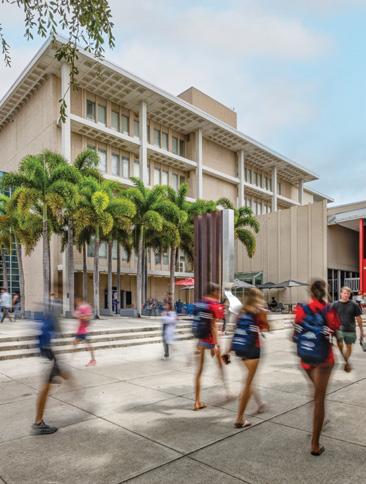
How is Wimberly Library unique compared to libraries at other universities?
Florida Atlantic is unique because of the people, the special collections, and the leadership style. The library faculty and staff have great passion and dedication, especially for undergraduate students. They genuinely care about the students and want to do everything they can to help students succeed. We foster programs like textbook affordability, laptop loaning and other programs to assist all students. We tell everyone “Welcome to Your Library” and design events that encourage everyone from first-generation FAU students to members of the Osher Lifelong Learning Institute to come and utilize it. Our outstanding special collections, such as the Alan B. and Charna Larkin American Presidential Study, Jaffe Center for Book Arts and the Weiner Spirit of America Collection, help us connect with our local Boca Raton community. Our unique partnership with FAU High School is also well known.
What is your favorite part of your job?
Engaging with students and the local Boca Raton community. I love hosting events in any of the FAU University Libraries that students and/or the local community can attend. Research proves that students who engage with their university library get
better grades, have better retention rates, progress through their academic programs faster, have better graduation statistics, and even have higher chances for betterpaying post-school jobs. Library anxiety is real, but when the students come for a fun event, such as Donuts with the Dean, I love interacting with them and asking them, “What do you need?”
What is your most proud accomplishment thus far as dean?
When FAU announced it was now an R1 institution, I knew that the libraries played a significant role in that journey. When FAU had a successful Southern Association of Colleges and Schools Commission on Schools review, once again, I knew that the libraries played a significant role. In May, the Florida Library Association awarded me a Lifetime Achievement Award for my service to the library profession. My very first library award came from the Florida Library Association in 1987, and receiving this award from FLA was especially meaningful to me. Since 2022, I have been asked to give a presentation to the firstgeneration students during their campus orientation. It is a highlight of my year to meet with other first-generation students to tell them my story, welcome them to FAU, and praise them for their tenacity and grit that will take them far in life.
Tell us something about yourself that might surprise people.
Upon graduation from the University of Miami, I considered taking a commission as an officer in the U.S. Air Force since I participated in their USAF ROTC program. Another thing about me is that I like thrill rides. I love roller coasters and ziplines. I have also gone hang-gliding off a cliff, hang-gliding behind a boat, and have jumped out of a helicopter and a plane. I met my husband when we were in high school and we fell madly in love. We have been together for more than 47 years and have an incredible 25-year-old daughter who is in a pharmacy doctoral program. We also have a crazy, spoiled shih tzu dog, Oreo, and like to raise ornate goldfish.
FLORIDA ATLANTIC IN THE NEWS
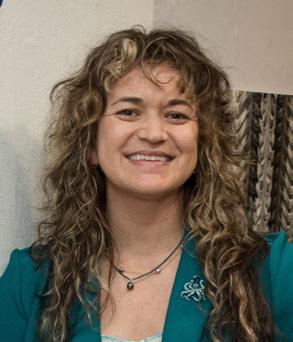
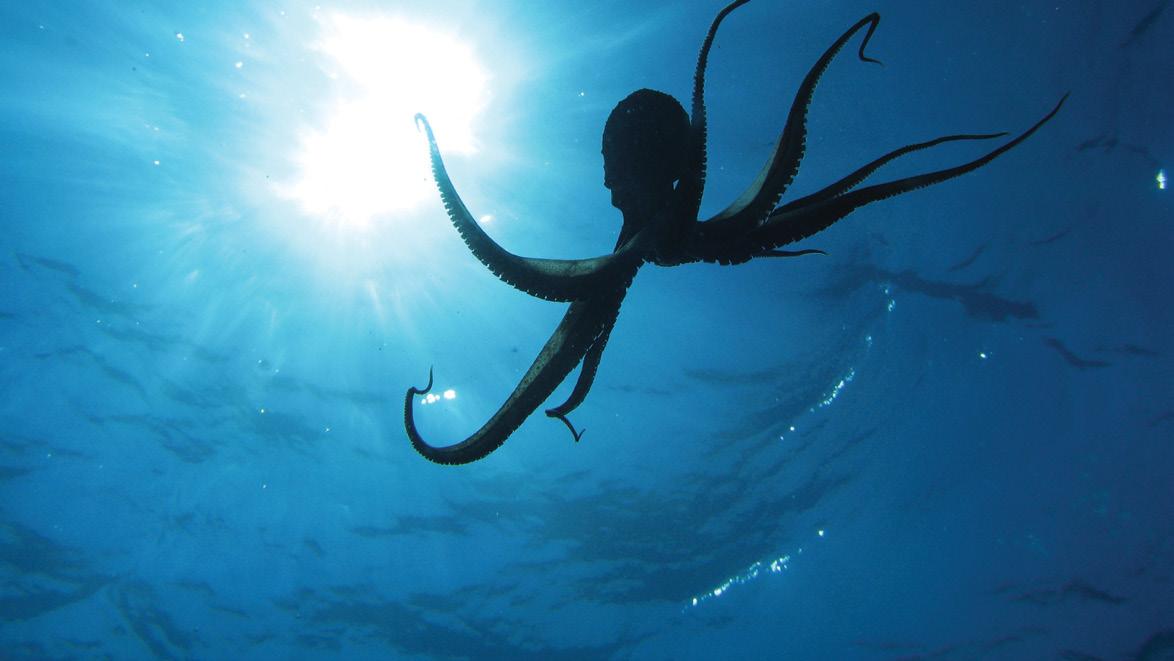
Time is very precious, and they have to be efficient. That’s why they’re the ultimate multitasker. When they are out and are possibly in danger of a predator, they’re also looking for food. And as soon as they find food, they’re going to go back to their den.”
Chelsea Bennice, Ph.D., marine biologist and postdoctoral fellow in the Charles E. Schmidt College of Science, to The New York Times, on her research into how wild octopuses use their arms in natural habitats. It is the first study to relate arm movements to whole animal behaviors in complex, real-world settings.
As our research clearly shows, cyberbullying in any form — whether it’s exclusion from a group chat or direct threats — can lead to significant trauma in youth. We were surprised to find that no single type of cyberbullying caused more harm than others; all carried a similar risk of traumatic outcomes. This means we can’t afford to dismiss or trivialize certain behaviors as ‘less serious’ — being left out or targeted by rumors can be just as detrimental as more overt attacks.”
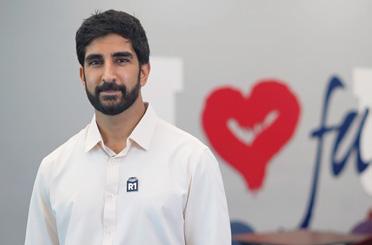
Sameer Hinduja, Ph.D., professor in the School of Criminology and Criminal Justice in the College of Social Work and Criminal Justice, co-director of the Cyberbullying Research Center, and a faculty associate at the Berkman Klein Center at Harvard University, to The Washington Post on his research that shows cyberbullying can cause PTSD symptoms in children.
When temperatures are high, water … evaporates faster and waters — particularly in shallow coastal areas like Florida Bay and Biscayne Bay — can get too salty. Saltwater holds less oxygen than fresh water. Sea life in affected areas can suffocate as they fight for oxygen, which explains why seagrass die-offs and fish kills often go hand-in-hand. As things are dying they start consuming more oxygen. It’s a cascading impact. It can be a problem especially in shallow and sheltered areas like Florida Bay where there isn’t a lot of tidal action and water sits for long periods of time.”
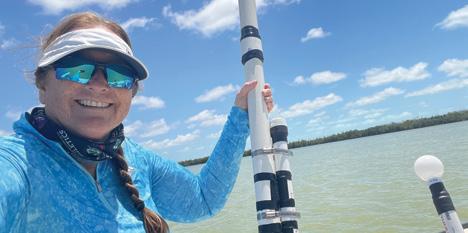
Marguerite Koch, Ph.D., professor of biological sciences in the Charles E. Schmidt College of Science, to the Miami Herald on seagrass die-offs in South Florida waters.
Our review takes a deep dive into the changing story of sargassum – how it’s growing, what’s fueling that growth, and why we’re seeing such a dramatic increase in biomass across the North Atlantic. The expansion of sargassum isn’t just an ecological curiosity – it has real impacts on coastal communities. The massive blooms can clog beaches, affect fisheries and tourism, and pose health risks. Understanding why sargassum is growing so much is crucial for managing these impacts."
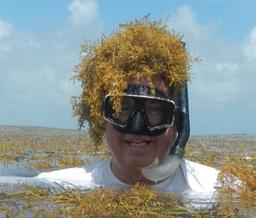
Brian Lapointe, Ph.D., research professor at Harbor Branch Oceanographic Institute, to Popular Science on his landmark review tracing four decades of changes in pelagic sargassum – free-floating brown seaweed that plays a vital role in the Atlantic Ocean ecosystem.
The data indicate that over half of people who were put on a statin remain on the initial dose they’re given, so even though the intent may be to titrate it up, it’s not done in the majority of instances. So, you get on a low dose of statin and you stay on it. Everything points to getting on the highest dose of evidence-based statin. The goal of LDL in the highrisk secondary patients is less than 50 [milligrams per deciliter], and we have a lot to do to achieve that goal because there are lots of forces in society, especially in American society, that are making that more difficult."
Charles H. Hennekens, M.D., the First Sir Richard Doll Professor of Medicine and Preventive Medicine, and senior academic advisor in the Charles Schmidt College of Medicine, to the United Press International on how too many patients at high risk of heart attacks and stroke are being “underdosed” with beneficial statin drugs.
These are conditions we know how to manage better in nursing homes, using existing guidelines, care paths and preventive strategies. With the right tools and staffing, many of these hospital transfers could be avoided, reducing both resident suffering and unnecessary healthcare costs."
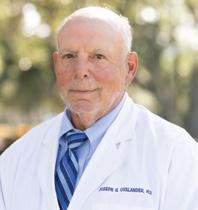
Joseph G. Ouslander, M.D., professor of geriatric medicine in the Charles E. Schmidt College of Medicine, to Newsmax on his study showing that most hospital visits for nursing home residents who are severely impaired or terminally ill are avoidable.
Our findings show that you don’t need lengthy gym sessions to get stronger or build muscle. There’s a tipping point where the benefit of doing more becomes very questionable — and in some cases, it may even work against you when considering fatigue, time and so on. This challenges the common assumption that more volume always equals more gains.”
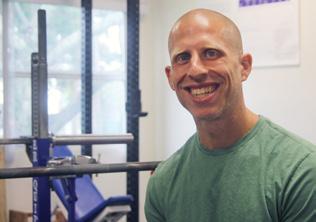
Michael Zourdos, Ph.D., chair and professor in the Department of Exercise Science and Health Promotion in the Charles E. Schmidt College of Science, to U.S. News & World Report on why building strength may take less exercise than you think.
While talking to your baby like an ‘intelligent, patient conversational partner’ can be helpful, there are several reasons not to overlook child-directed speech. Babies are more interested in baby talk than the ‘monotone’ way adults speak. Plus, shorter sentences can help them ‘crack the code’ of language. It is helpful to engage children in conversation rather than a monologue because research shows that the best way to learn language is to practice it. Don’t stress it. Just talk to your child.”
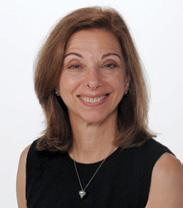

Erika Hoff, Ph.D., professor of psychology and director of the Language Development Lab in the Charles E. Schmidt College of Science, to NBC TODAY on the best way to talk to a baby.
AROUND CAMPUS
FLORIDA ATLANTIC IN THE NEWS
There is a good deal of cross-county travel among the South Florida counties. Although there is no official ‘recession’ reported, anecdotal evidence suggests consumers are still cash ‘light’ and travel-desire ‘heavy.’”
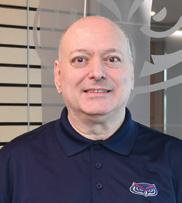
Peter Ricci, Ed.D., clinical professor and director of the Department of Marketing and Hospitality Management in the College of Business, to the Sun Sentinel on why “staycations” may have held more appeal for price-conscious consumers as airlines jockeyed for summer vacationers.
Brain atrophy does occur, and it’s obvious. Talk to any professor in the humanities or social sciences and they will tell you that students who just throw in a prompt and hand in their paper are not learning.”
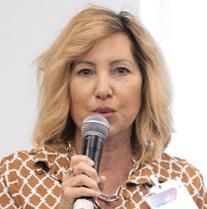
Susan Schneider, Ph.D., the William F. Dietrich Distinguished Professor of Philosophy in the Dorothy F. Schmidt College of Arts and Letters, to the New York Post on how heavy use of artificial intelligence is degrading students’ thinking skills.
When somebody is as publicly visible as he is and admits to having a substance use problem, and actually engages in treatment to address it, it allows us to recognize that we are all just humans.”
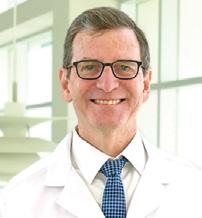
Lewis Nelson, M.D., dean and chief of health affairs in the Charles E. Schmidt College of Medicine, to Good Morning America about actor Brad Pitt’s candid discussion of his sobriety journey and involvement in Alcoholics Anonymous.
Ultra-processed foods contain substances and chemicals that are not naturally found in foods. As a result, they can do several things to the body, including altering the gut microbiome and triggering the release of inflammatory mediators, which can further break down our natural immune responses and promote further inflammation.”
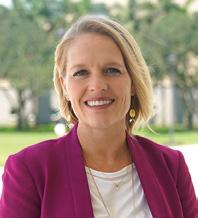
Allison H. Ferris, M.D., professor and chair of the Department of Medicine in the Charles E. Schmidt College of Medicine, to Women’s Health about her study that links ultra-processed foods with higher levels of inflammation in the body.
This study explores something many of us in music have long suspected — some people are just wired to connect with music on a deeper level.”
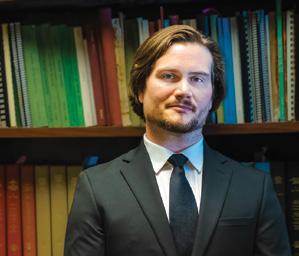
Mitchell Hutchings, Ph.D., associate professor of voice in the Dorothy F. Schmidt College of Arts and Letters, to Live Science in an article about how genes affect different aspects of music enjoyment.
The longer a hatchling stays on the beach, the more at-risk it becomes. When sargassum piles are higher … we can expect more failed attempts [to reach the water], particularly when hatchlings have to cross multiple bands of seaweed just to reach the ocean. As these seaweed accumulations grow taller and more widespread, they risk blocking hatchlings entirely, draining their limited energy or leaving them stranded. Beyond impeding movement, sargassum may also reduce nesting space and alter incubation conditions."
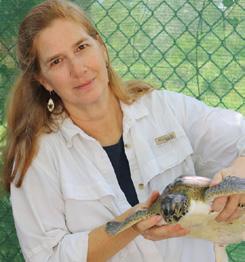
Sarah Milton, Ph.D., professor and chair of the Department of Biological Sciences in the Charles E. Schmidt College of Science, to Smithsonian Magazine on her study that reveals how seaweed piles are slowing down sea turtle hatchlings as they make the dangerous trek to the ocean.
From Classroom to Bedside
HOW YOU CAN SUPPORT TOMORROW'S PHYSICIANS
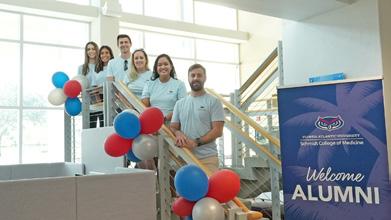
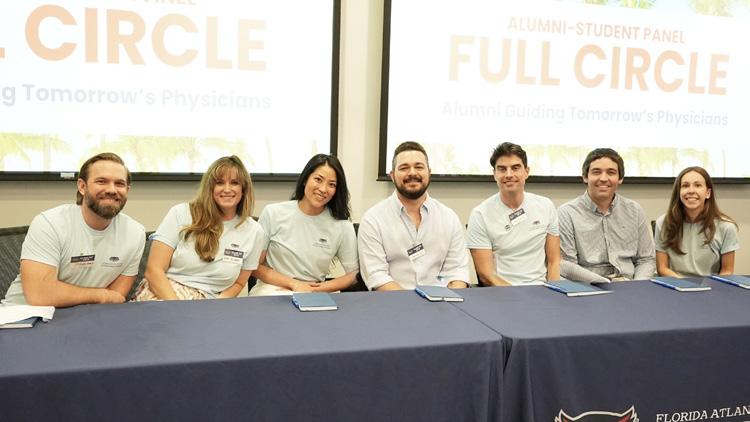
A decade ago, they walked across the graduation stage as the college's first class. Today, they're experienced physicians returning to share their knowledge and create lasting connections with the next generation.
A HISTORIC HOMECOMING
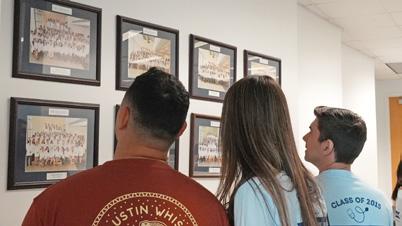
In May 2025, the Schmidt College of Medicine made history, welcoming back its inaugural Class of 2015 for the college's first-ever Alumni Reunion Weekend. Seven physicians, now practicing across various medical specialties, returned not as visitors, but as engaged alumni with a mission to give back.
THE POWER OF PERSONAL CONNECTION
"At Schmidt College, I wasn't just a student ID number," reflects Katie Patel, MD, Class of 2015, recipient of Florida Atlantic's 2025 Distinguished Alumni Award. "Faculty knew my name, my goals, my struggles. That personal connection taught me how to truly see my patients—and now inspires how I give back to future physicians."
This philosophy of personal investment drives everything we do. Our alumni consistently express this same eagerness
to give back, and we are creating meaningful pathways to connect their expertise with current students who need their guidance.
"Engaging with students and residents keeps me sharp and connected to the art of medicine. Sharing the ‘why’ behind clinical decisions is both rewarding and continually refines my practice.” Adam Schertz, MD, Class of 2015.
MAKING A DIFFERENCE IN FLORIDA
Our graduates are making a direct impact on Florida's healthcare landscape: 36% of our graduates remain in Florida, choosing to serve their home state's healthcare needs, 25% enter primary care specialties, directly addressing Florida's critical physician shortage.
WHERE YOUR IMPACT MULTIPLIES
Every engaged alum creates a ripple effect. Every scholarship opens doors. Every research grant advances medical breakthroughs. When you support Schmidt College of Medicine, you are not just helping one student, you are strengthening the entire healthcare ecosystem.
READY TO COMPLETE THE CIRCLE? Get Involved wtih MedOwls
From mentoring students to leading initiatives - find your perfect way to give back. Join our new "Get Involved" campaign. fau.edu/medicine/getinvolved
A UNIVERSITY ON THE RISE
Florida Atlantic Receives Record Applications, Recognition for Research and Student Success
Florida Atlantic University received more than 57,000 first-year applications for fall 2025. More than 10,000 over last fall, this marks a new record for the university as the incoming student profile also continues to rise. The admitted high school GPA for this group is a 4.0 average and the average ACT score is 25, compared to 3.94 and 24 last year, respectively.
This comes on the heels of Florida Atlantic joining just 21 esteemed institutions nationwide to achieve both R1 top-tier research status and receive the Carnegie “Opportunity College and University” (OCU) designation.
“We are thrilled that Florida Atlantic has become the first-choice university for so many students,” said FAU President Adam Hasner. “Our university is on the rise, and we are becoming an incredibly attractive option for top students across Florida and the nation.”
Achieving R1 status for “Very High Research Spending and Doctorate Production” is a prestigious goal for most higher education institutions and brings many benefits to the universities that achieve it.
“R1 empowers Florida Atlantic to address pressing societal issues head-on, contributing to advances in health, technology and policy,” said Gregg Fields, Ph.D., vice president for research at Florida Atlantic. “This distinction highlights Florida Atlantic’s commitment to excellence in research and education, creating a magnet to
Not only are we anchoring our region as a top-tier research university ... but we are also providing life-changing opportunities by graduating more students than ever.”
- Russell Ivy, Ph.D.

draw in world-class faculty, top-tier students, new funding sources and global collaboration.”
While R1 has been a significant research classification for more than five decades, the OCU recognition was just established this year. The designation is part of the Student Access and Earnings Classification in the new 2025 Carnegie Classifications. It measures whether institutions are enrolling and creating opportunities for students in communities the institutions serve and whether students earn competitive wages after they graduate.
Florida Atlantic received two top measures: one for access, based on the percentage of students who receive Pell grants and the percentage of undergraduate students who are from underrepresented backgrounds; and one based on undergraduate students’ post-attendance earnings eight years after entering the institution.
“Florida Atlantic continues to deliver outcomes that matter,” said Russell Ivy, Ph.D., interim provost and vice president for academic affairs. “Not only are we anchoring our region as a top-tier research university with nationally renowned scholars on our faculty, but we are also providing life-changing opportunities by graduating more students than ever who are highly prepared for the workforce and making earnings that reflect the strength of their education and the value of their FAU degree.”
Florida Atlantic students finishing their degrees are also making history, as more than 3,700 students graduated in spring 2025, another record for the school. The university increased the number of spring ceremonies from six to seven to accommodate this milestone. To date, more than 216,000 alumni have graduated from Florida Atlantic since the university opened its doors in 1964.
Locally Rooted Nationally Honored Globally Driven
Allan Barsky, Ph.D., professor in the Phyllis and Harvey Sandler School of Social Work, College of Social Work and Criminal Justice, received the 2025 Significant Lifetime Achievement in Social Work Education Award from the Council on Social Work Education (CSWE).
Among CSWE’s highest honors, this award recognizes educators whose careers have demonstrated extraordinary leadership in education, scholarship and service.
Barsky’s work has significantly advanced and promoted social work education locally, nationally and globally — impacting generations of students and practitioners.
His recognition reflects Florida Atlantic’s continued commitment to excellence, innovation and preparing tomorrow’s changemakers through transformative programs in the College of Social Work and Criminal Justice.
SERVING THE NATION AND SECURING ITS FUTURE
Engineering Student Receives
Prestigious DOD Scholarship
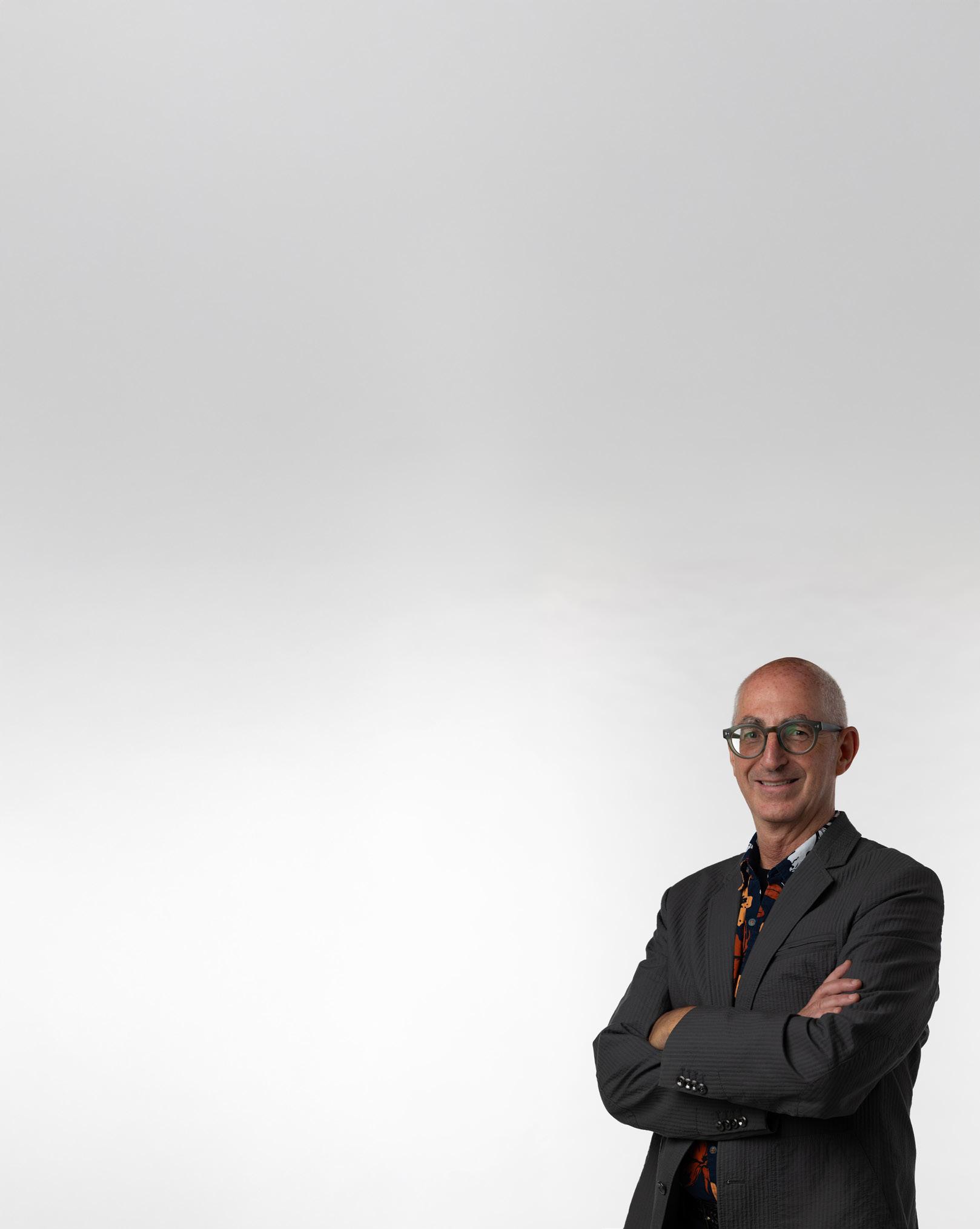
After more than a decade of distinguished service in the United States Army and the Department of Veterans Affairs, Dan Zimmerman, a doctoral student in computer science in the College of Engineering and Computer Science, is continuing his mission to serve the nation — this time through research and technological innovation.
Zimmerman was awarded the prestigious Department of Defense (DoD) Science, Mathematics and Research for Transformation (SMART) Scholarship, which awards students full tuition for up to five years, mentorship, summer internships, a stipend and guaranteed post-graduate employment with the DoD. In addition to fully funding his doctoral research, this will provide Zimmerman with guaranteed postgraduation employment at the Naval Surface Warfare Center in Panama City.
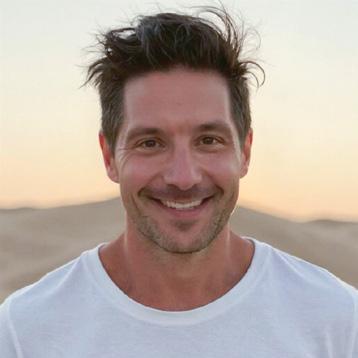
“I’m truly honored to be selected for the Department of Defense SMART Scholarship,” Zimmerman said. “This opportunity not only validates my commitment to advancing trusted AI and autonomous systems but also gives me a clear path to apply my work in service of the nation.”
Zimmerman’s doctoral research focuses on trusted artificial intelligence, autonomous systems and sustainable energy solutions — fields critical to maintaining the nation’s technological and defense superiority. He is a longtime mentee of George Sklivanitis, Ph.D., associate director of Florida Atlantic’s Center for Connected Autonomy and Artificial Intelligence and the Charles E. Schmidt Research Associate Professor
Having collaborated with Dan across numerous projects over the years, this recognition is both well-earned and well-timed.”
— George Sklivantis, Ph.D.
in the Department of Electrical Engineering and Computer Science. Most recently, Zimmerman competed in an international competition under the supervision of Sklivanitis, focused on testing AI computer vision techniques to identify underwater species across multiple taxonomic levels.
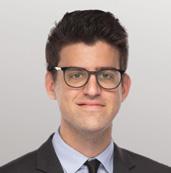
“Having collaborated with Dan across numerous projects over the years, this recognition is both well-earned and well-timed,” Sklivanitis said. “Dan brings a rare combination of technical expertise, mission-driven focus, and a deep sense of purpose to everything he does. I’m proud to have played a role in his journey and am excited to see the meaningful contributions he will make to the Department of Defense and to national innovation.”
A lifelong advocate for ocean preservation, Zimmerman dedicates his spare time to volunteering for the Wahoo Bay Educational Marine Park. He guides student teams as they tackle environmental and data analysis issues in Wahoo Bay’s “Living Lab,” developing their engineering capabilities and encouraging their dedication to preserving our oceans.
Dan Zimmerman

RANKINGS AND RECOGNITIONS
FLORIDA ATLANTIC IS A TOP 100 PUBLIC UNIVERSITY
Named ‘One of the Greatest Success Stories in American Higher Education’
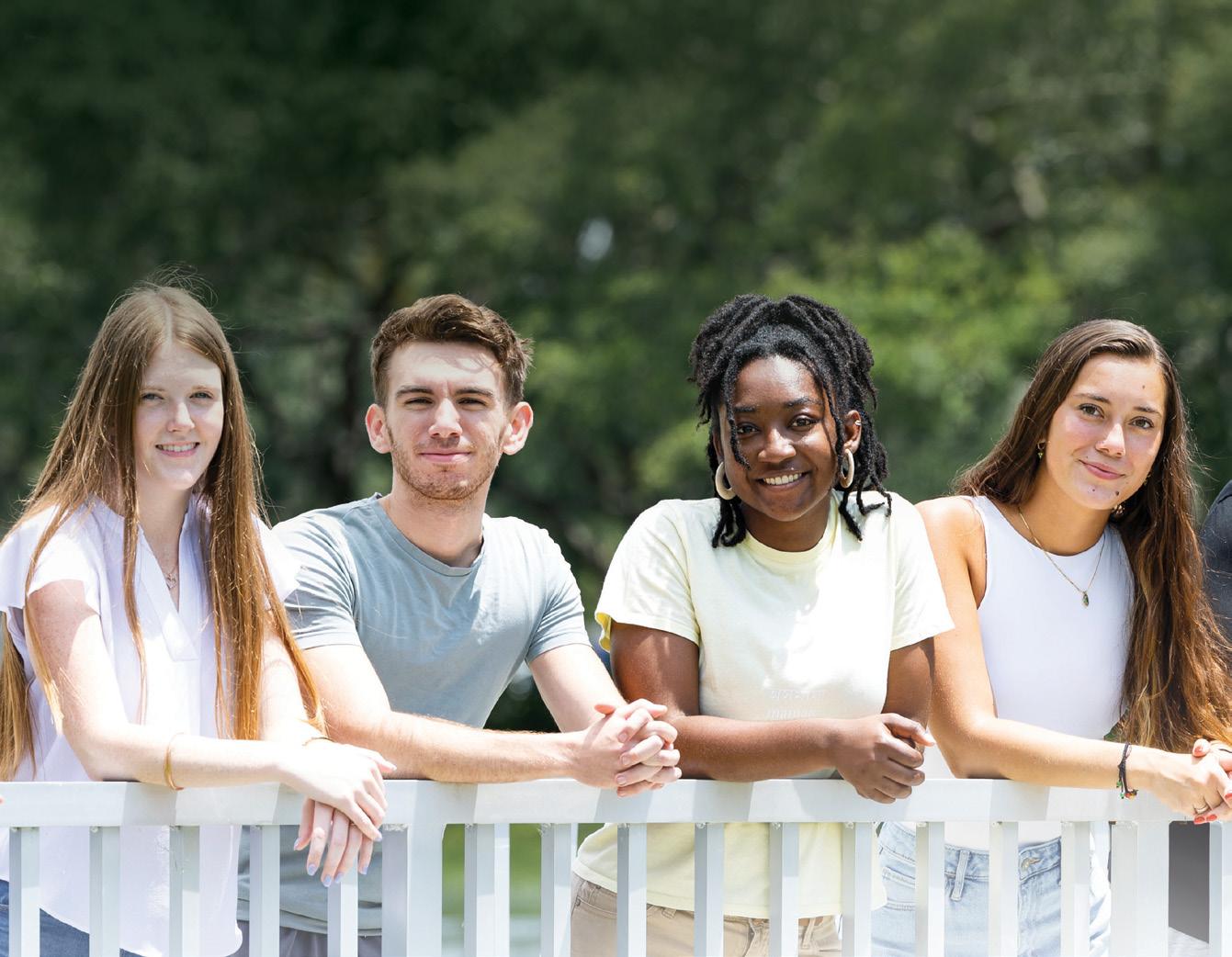
Florida Atlantic University is now ranked among the nation’s Top 100 Public Schools in U.S. News & World Report’s 2026 Best Colleges rankings. Florida Atlantic also ranked No. 184 among “Top National Schools,” an improvement of 97 spots since 2020.
In recognition of its commitment to ensure that all students succeed, Florida Atlantic is ranked No. 30 in the nation for Social Mobility by U.S. News & World Report, which measures how well schools graduate low-income and firstgeneration students.
“Florida Atlantic has had a longstanding goal of becoming a Top 100 Public University, and thanks to the hard work and dedication of our faculty, staff, students, alumni and community, we have achieved this goal together,” said FAU President Adam Hasner. “Our rise in the U.S. News rankings speaks to our culture of excellence, innovation and opportunity that is delivering
strong outcomes that make a difference for our students, our state and the future of higher education.”
In other rankings, Florida Atlantic moved up to No. 39 among more than 1,400 public and private national universities for “Best Colleges for Your Tuition (and Tax) Dollars” in Washington Monthly’s annual College Guide. Additionally, Florida Atlantic was recognized as one of 25 “Best-in-Class Colleges” and ranked No. 5 for “Best Bang for the Buck” in the Southeast.
“FAU places higher than elite private schools elsewhere in the South like Rice, Vanderbilt and Emory. That’s because the Monthly rewards colleges for enrolling students from modest backgrounds, keeping costs low, and producing strong outcomes,” according to Washington Monthly. “FAU does all three, making it one of the greatest success stories in American higher education.”

AI ON THE MOVE
How Your Eyes Could Help Diagnose Dizziness from Home
Imagine diagnosing a balance disorder using nothing more than your smartphone. That’s the future being shaped by Florida Atlantic University researchers who developed a deep learning tool capable of detecting nystagmus – a condition marked by involuntary eye movements often linked to neurological or vestibular disorders.
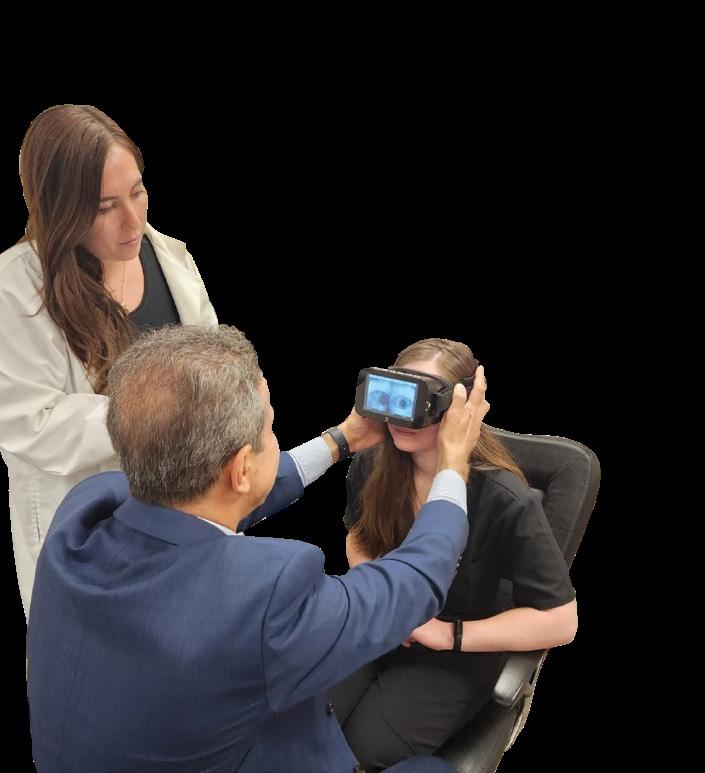
Traditionally, detecting nystagmus requires expensive and bulky equipment like videonystagmography, which can cost nearly $100,000 and demand in-clinic visits. FAU’s new AI-based system offers a portable, affordable and remote alternative. Patients simply record a video of their eyes on a smartphone, upload it to a secure cloud platform, and receive expert analysis – all from home.
“Our AI model offers a promising tool that can partially supplement – or, in some cases, replace – conventional diagnostic methods, especially in telehealth environments where access to specialized care is limited,” said Ali Danesh, Ph.D., principal investigator, professor in the College of Education and professor of biomedical science in the Charles E. Schmidt College of Medicine. “By integrating deep learning, cloud computing and telemedicine, we’re making diagnosis more flexible, affordable and accessible – particularly for lowincome rural and remote communities.”
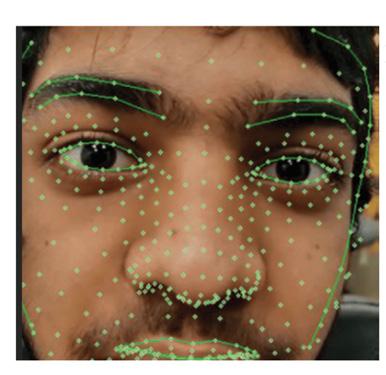
The team’s pilot study involved 20 participants and showed that their system’s diagnostic accuracy closely mirrors that of standard clinical devices. The secret lies in a smart algorithm trained on more than 15,000 video frames and designed to track 468 facial landmarks in real time.
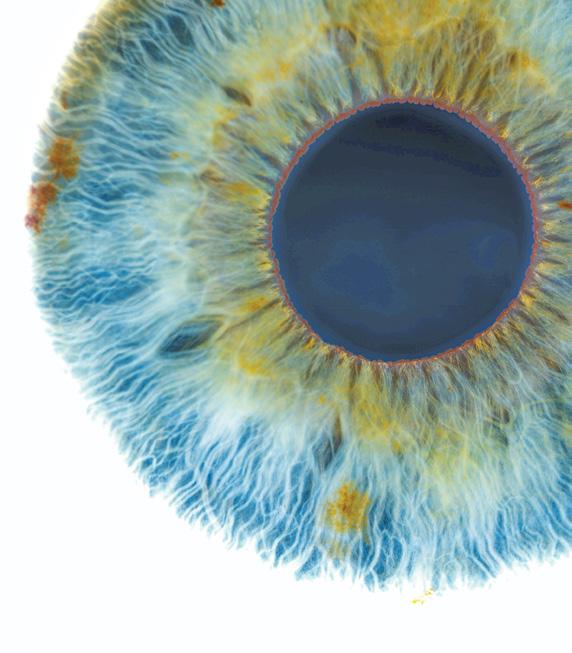
It calculates slow-phase velocity – a key sign of nystagmus – and produces clean, readable graphs for clinicians to interpret via telehealth.
The technology goes beyond just diagnosis. By integrating with electronic health records, it enables physicians to develop personalized treatment plans, monitor progress over time, and minimize unnecessary in-person visits. Built-in filtering even eliminates errors caused by blinking or facial movement, making the readings more reliable.
“While still in its early stages, our technology holds the potential to transform care for patients with vestibular and neurological disorders,” said Harshal Sanghvi, Ph.D., the study’s first author and postdoctoral fellow in the Charles E. Schmidt College of Medicine and College of Business. “With its ability to provide non-invasive, real-time analysis, our platform could be deployed widely – in clinics, emergency rooms, audiology centers and even at home.”
The interdisciplinary initiative includes several academic and clinical research collaborators. The team also is testing a wearable headset version of the system to capture live data in real-world conditions.
“As telemedicine becomes an increasingly integral part of health care delivery, AI-powered diagnostic tools like this one are poised to improve early detection, streamline specialist referrals, and reduce the burden on health care providers,” Danesh said. “Ultimately, this innovation promises better outcomes for patients – regardless of where they live.”
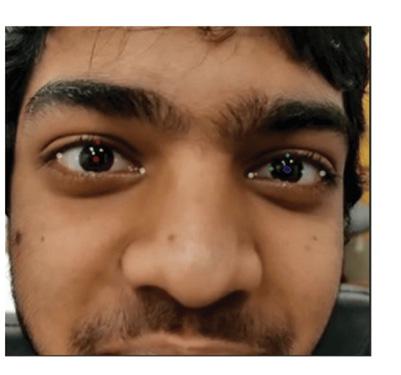
Researchers developed a smart, accessible eye-tracking tool that uses AI to detect balance disorders – no clinic visit required.
Ali Danesh, Ph.D.
BACK-TO-BACK-TO-BACK-TO-BACK
Fourth Consecutive Year for Florida Atlantic Students Recognized as Goldwater Scholars
Florida Atlantic students Aiden Geleta and Vincent Stafford received the 2025 Barry Goldwater Scholarship, the most prestigious national research fellowship for undergraduate students. Only 441 college students from across the country received the award this year. This is the fourth consecutive year that Florida Atlantic students have been named Goldwater Scholars, for a total of nine since 2022.
“We congratulate Aiden and Vincent on this award and for their scholarly contributions to science and society,” said Donna Chamely-Wiik, Ph.D., associate dean for undergraduate research and prestigious fellowships, and associate scientist in the Department of Chemistry and Biochemistry in the Charles E. Schmidt College of Science. “This achievement underscores the profound impact of investing in undergraduate research, which not only fosters a rigorous academic environment, but also cultivates the next generation of innovators and change makers.”
Aiden Geleta
Geleta is a senior studying behavioral neuroscience in the Harriet L. Wilkes Honors College. Her current research –under research mentor Erik Duboué, Ph.D., associate professor – examines the effects of early life stress on neuroanatomical development using the zebrafish model. She also is studying the role of the extracellular matrix in plasticity, specifically looking at the hippocampus of mice, in the lab of Simon Pieraut, Ph.D., assistant professor, Charles E. Schmidt College of Science.
Geleta’s post-undergraduate goal is to pursue a doctoral degree in neuroscience, working to uncover the biological basis for psychiatric and neurodevelopmental disorders.
She also has a passion for community engagement, as her work at the FAU StilesNicholson Brain Institute’s Mobile Minds program shows how bringing science to the community can impact students. Geleta said she plans to continue her community engagement research in the future and become a professor who mentors and teaches future generations.
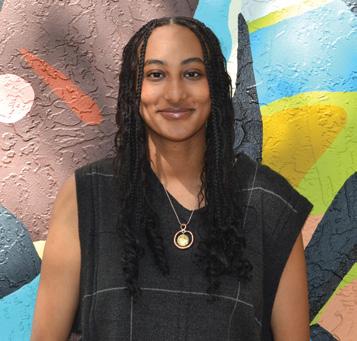
“It is a great privilege to be selected as a Goldwater Scholar this year alongside such accomplished students,” she said. “This recognition inspires me to continue growing as a neuroscience researcher, and I am excited to continue learning, growing and contributing as a researcher.”
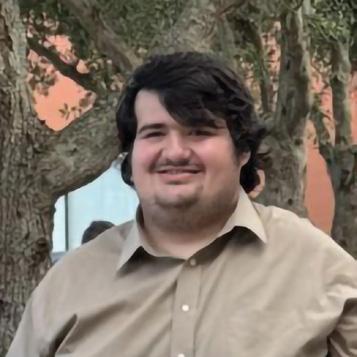
Vincent Stafford
Stafford is a senior studying interdisciplinary mathematical sciences with an emphasis on computational math in the Wilkes Honors College. Within his current research, his goal is to understand algorithmic processes using mathematical techniques, from neural networks to data structures. He recently published a paper with the aerospace engineering department of Embry-Riddle Aeronautical University, and his research mentor is Terje Hill, Ph.D., professor. After graduating, Stafford plans to pursue a doctoral degree in computational mathematics or optimization.
“With this fellowship, I have significantly more funding for academics, assisting me in
continuing my research projects at FAU,” he said. “Since this is the leading undergraduate research scholarship, it also serves as a significant boost in my applications for graduate school.”
Geleta and Stafford applied for the Goldwater Scholarship with assistance from Florida Atlantic’s Office of Undergraduate Research and Inquiry and Prestigious Fellowships. Previous Florida Atlantic honorees include:
• 2024: Natasha Mayorga, Cristian Pena and Dana Smith
• 2023: David Baldwin and Michael Green
• 2022: Kate Maier and Samantha Zaninelli
“The multi-year selection of FAU students is a testament to the value of prioritizing undergraduate research and supporting faculty mentors who empower our students to excel, compete at national levels, and contribute meaningfully to their fields, further enhancing FAU’s reputation and appeal as an R1 institution,” Chamely-Wiik said.
Aiden Geleta
Vincent Stafford
AROUND CAMPUS
NEW ERA OF IMPACT
Charting a Course for Florida Atlantic’s Environmental School
BY ZACHARY GREATHOUSE
The crystal-clear waters off South Florida are a window to vibrant underwater life, attracting visitors from around the world — yet a fragile frontier quickly comes into focus.
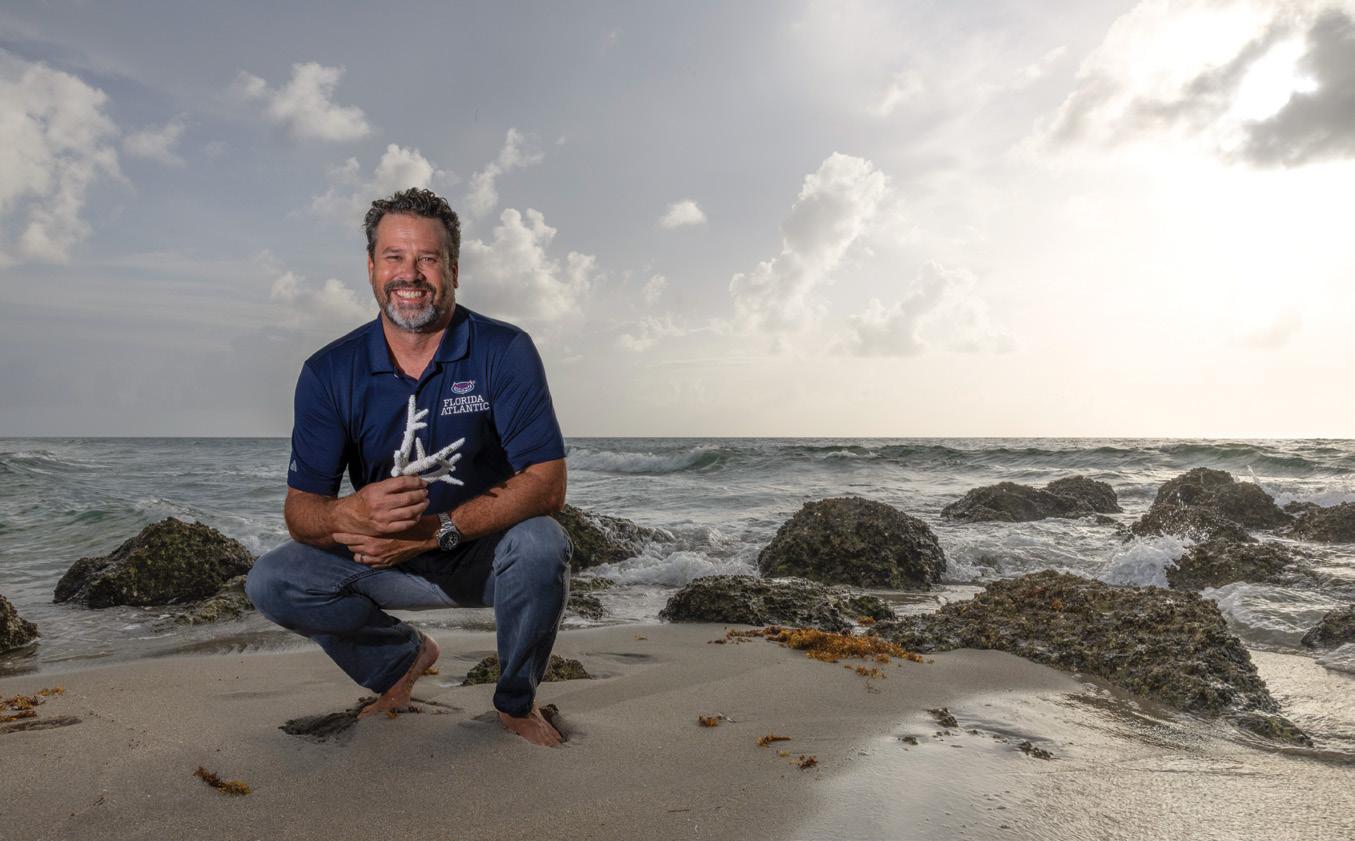
It’s here in Florida Atlantic University’s backyard, where the wild lands and waters meet sprawling metropolitan landscapes, creating distinct environmental pressures that present a different kind of attraction for Stephen Vollmer, Ph.D., a distinguished evolutionary and ecological genomicist.
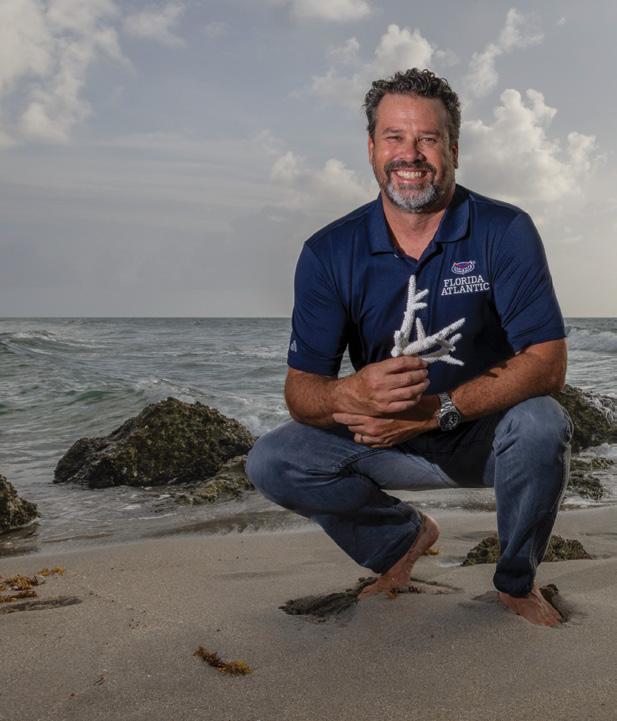
Vollmer recently joined Florida Atlantic as the director for the School of Environmental, Coastal, and Ocean Sustainability (ECOS). He has dedicated his career to researching the threats to tropical coral reefs, often viewed as a global barometer for understanding the far-reaching effects of widespread environmental shifts.
“My top priority is to grow FAU’s School of Environmental, Coastal, and Ocean Sustainability into a national leader in the environmental sciences by championing innovative research and educational programs across the university that focus on South Florida’s unique ecosystems, environmental challenges and growing ocean economy,” Vollmer said.
The school, a partnership between the Charles E. Schmidt College of Science and Harbor Branch Oceanographic Institute, is Florida Atlantic’s comprehensive hub for environmental academic programs, research and outreach.
Vollmer arrived with ambitious plans to confront the escalating environmental issues faced both locally and around the world. His vision includes leveraging the robust resources of ECOS and rigorously preparing the next generation of scientists.
To realize these goals, Vollmer, who also will serve as a professor of biological sciences in the Schmidt College of Science, plans to deepen connections across ECOS’s affiliate faculty members, researchers, postdoctoral fellows and graduate students, leveraging the combined interdisciplinary expertise across Florida Atlantic.
“I aim to develop new initiatives that draw broadly from the ECOS community and amplify the impact of ECOS’s centers across South Florida,” Vollmer said.
administers two master’s programs, one in environmental science and the other in marine science and oceanography.
“I am excited to work with the directors of our academic programs to strengthen our master’s degree tracks, and our many connected programs, as well as ensure our students are exceptionally well-prepared to enter the workforce,” Vollmer said.
Recent gifts have allowed ECOS to expand its offerings, providing scholarships, enhanced student support, funding for research, stronger connections with external partners with paid internships, and various other forms of assistance.
“This support from donors and external partners is especially critical to ensure students get exposed to what it is to be a ‘scientist’ and launch their scientific careers,” he said. “Hands-on exposure not only builds invaluable practical skills but also ignites passion and builds the professional networks essential to pursue enduring careers.”
A strong emphasis on the next generation of scientists and leaders is also high on Vollmer’s list of actions for the school, which
This robust preparation of future leaders is precisely what makes Florida Atlantic
At FAU, I can do coral field work in the morning and be back at the lab doing cutting-edge microbiology and genomics in the afternoon.”
- Stephen Vollmer, Ph.D.
students highly sought after in the professional world — and it is a reputation Vollmer is keen to amplify.
“I want our FAU students to be known as the best-trained environmental scientists on the market, and one of the best ways to establish our reputation is through strong partner organizations who praise our students,” Vollmer said. “For our researchers, I see these public-private partnerships as catalysts for commercializing scientific discoveries and driving innovation.”
Vollmer’s training and coral studies began at Harvard, where he performed his doctoral research. He was most recently a longstanding faculty member at Northeastern University in Boston, where he built rapidly expanding academic programs and recruited significant philanthropic gifts as the associate director of the Marine Science Center for Northeastern’s College of Science.
One of the reasons Vollmer made the move to Florida Atlantic is the proximity to his research and South Florida’s unique collection of interconnected marine, freshwater and terrestrial ecosystems, all converging into major metropolitan zones — a prime location that acts as a living laboratory for students and faculty.
“At FAU, I can do coral field work in the morning and be back at the lab doing cutting-edge microbiology and genomics in the afternoon,” he said. “I have seen a sharp decline in our tropical coral reefs, principally due to coral disease outbreaks and thermal bleaching. This inspired me to seek practical solutions to the environmental challenges facing us today.”
Confronting South Florida’s immense environmental stressors requires a multidisciplinary approach, and Vollmer intends to position Florida Atlantic at the forefront of these efforts.
“To protect the unique natural resources of South Florida while sustaining our vibrant communities and economy, we need to work across our traditional academic silos,” Vollmer said. “FAU and ECOS are poised to become the leaders tackling complex environmental issues and providing society with sustainable environmental solutions.”
D.C. INTERNSHIPS
Florida Atlantic Receives $1M to Send Students to Capitol Hill
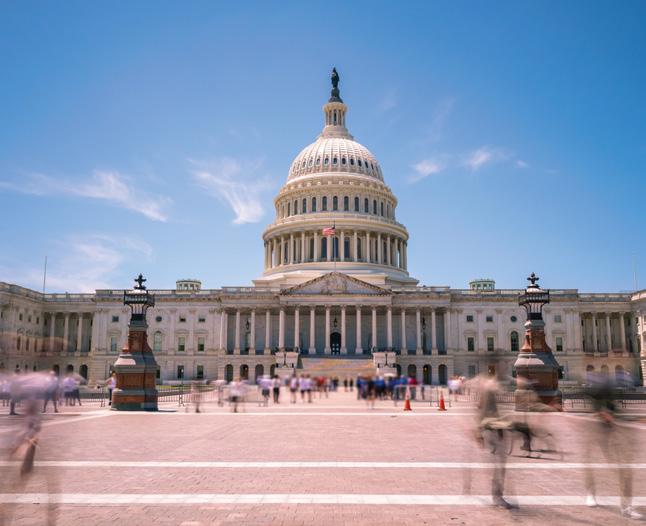
Florida Atlantic University will send students to Washington, D.C., for semester-long internships this academic year, thanks to a $1 million gift from an anonymous donor.
These immersive experiences have the potential to lead students toward lifelong public service careers and opportunities.
Internship opportunities at the U.S. Congress, the State Department, other government offices, as well as public organizations, are the first of several programs envisioned under the President’s Fund, which was established with this donation.
“This gift unlocks incredible opportunities for our students interested in a future in public policy and diplomacy, and I am extremely thankful to the donors,” said FAU President Adam Hasner. “As a former Capitol Hill undergrad intern myself, I know the power of this program to provide our students with a chance to help study real-world policy decisions, changing the trajectory of their lives while contributing positively to our world.”
Jeffrey Morton, Ph.D., a professor of political science who has previously worked with the donors to create the Morton Research Forum and a study abroad program at Florida Atlantic, proposed the internship program and serves as an advisor in its development.
“It is opportunities such as this that continue to elevate the university’s standing and enhance the education of our students,” Morton said.
Future initiatives envisioned under the President’s Fund include a studentexchange program through the Florida-Israel Institute and a distinguished speaker series with top-level policymakers for presentations on Florida Atlantic’s campuses.

AROUND CAMPUS
AMAZING ACCOLADES AND AWARDS AWARDS ROUNDUP
Florida Atlantic’s faculty, staff and students go above and beyond in the workplace, community and around the world to make a difference. Their work does not go unnoticed. Here’s a look at some of the prestigious accolades and awards earned across Florida Atlantic’s campuses.
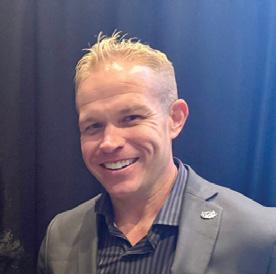
KEVIN COX, PH.D., director of the Adams Center for Entrepreneurship, received the 2025 Entrepreneurship Practice Award from the Academy of Management for his efforts in fostering entrepreneurs in the South Florida region through the Entrepreneur Boot Camp. The award recognizes exceptional contributions to the practice of entrepreneurship either by scholarship publications, the development of an education program, or the development of entrepreneurship in the community.
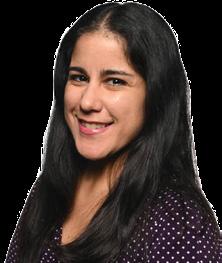
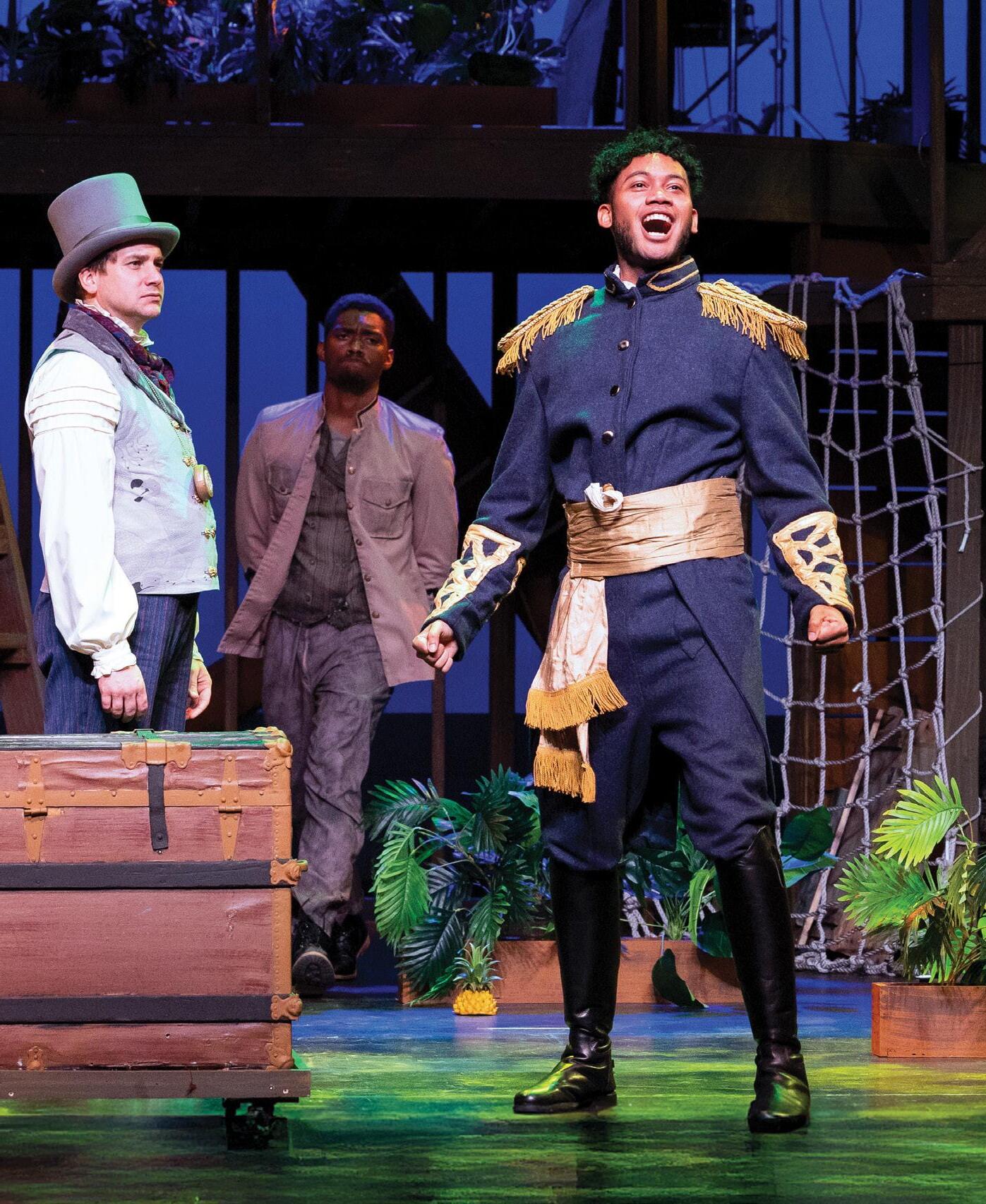
GRETCHEN SUAREZ-PEÑA, M.F.A., Department of Theatre and Dance, won the Staged Reading Winner award at the Tampa Bay Theatre Festival for Epiphany. This is her third time winning this award.
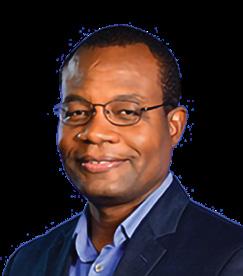
ROSEMOND DESIR, PH.D., associate professor in the School of Accounting in the College of Business, received a prestigious British Academy Visiting Fellowship to support his project “R&D Expenditures, Disclosures and Reporting Practices across the U.S. and U.K.” This fellowship enables him to advance his research on cross-national financial reporting and collaborate with scholars at the University of Bristol.
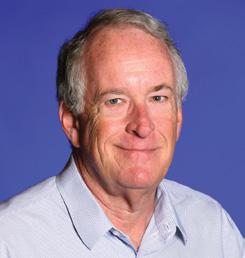
ROLAND KIDWELL, PH.D.,
Desantis Distinguished Professor of Management/Entrepreneurship in the College of Business, received the prestigious James J. Chrisman Contribution to Theory Award at the Theories of Family Enterprise Conference in Florence, Italy. His award-winning paper is titled, “Toward a Theory of Dyadic Trust in Family Firms: How Kinship Complicates the Trajectory of Mutual Trust.”
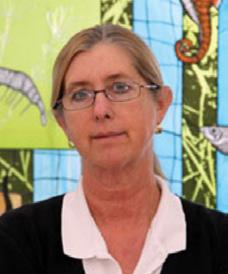
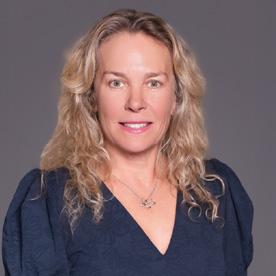
CHERYL A. KRAUSE-PARELLO, PH.D., associate vice president for research, received a Fulbright United States Scholar Program award from the U.S. Department of State and the Fulbright Foreign Scholarship Board for the Germany International Education Administrators Program. Krause-Parello will conduct her studies in Germany where she will explore their research and educational systems with a focus on how universities are funded and how they support research.
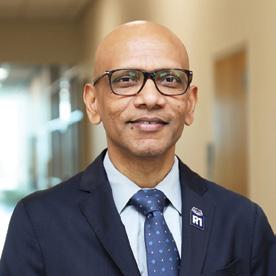
HARI KALVA, PH.D., professor and chair of the Department of Electrical Engineering and Computer Science in the College of Engineering and Computer Science, was inducted into the Florida Inventors Hall of Fame. Kalva’s pioneering technologies power streaming platforms like Netflix, YouTube and Blu-ray. With 143 patents, he is a global leader in video compression and digital media innovation.
AMY E. WRIGHT, PH.D., research professor at Harbor Branch Oceanographic Institute, received the prestigious Norman R. Farnsworth ASP Research Achievement Award, the highest accolade presented by the American Society of Pharmacognosy. The award recognizes Wright’s sustained and exceptional contributions to the discovery and development of biologically active marine natural products with significant pharmaceutical potential.

AWARDS ROUNDUP
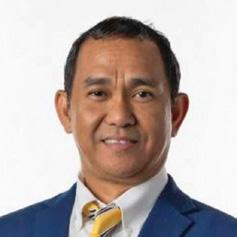
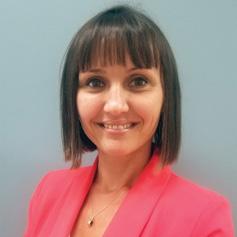
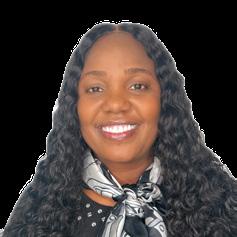
ARMIEL SURIAGA, PH.D., top, assistant professor in the Christine E. Lynn College of Nursing, received the Boykin and Schoenhofer Nursing as Caring Award at the International Association for Human Caring Annual Conference. Additionally, graduate student JUDYTA KOCIOLEK, center, received the Parker, Barry, & King Community Caring Award; and graduate student NICOLE CARTY-MULLINGS, bottom, received the Jean Watson Student Award.
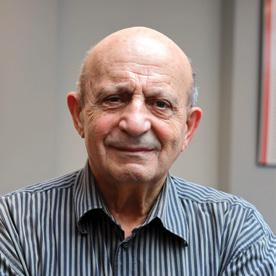
ISAAC ELISHAKOFF, PH.D., Distinguished Research Professor in the Department of Ocean and Mechanical Engineering in the College of Engineering and Computer Science, received the 2025 Masanobu Shinozuka Medal from the American Society of Civil Engineers’ Engineering Mechanics Institute. The medal is given for outstanding contributions to the field of stochastic mechanics, reliability and risk, and simulation. Elishakoff was recognized for “seminal contributions to random vibrations, reliability and nonlinear buckling simulation of shells.”
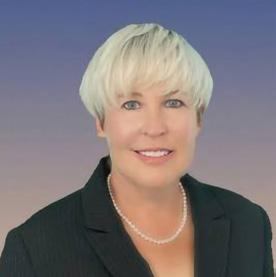
KIM DUNN, PH.D., associate professor in the School of Accounting in the College of Business and former faculty senate president, has been elected chair of the Advisory Council of Faculty Senates for the Florida State University System’s Board of Governors.
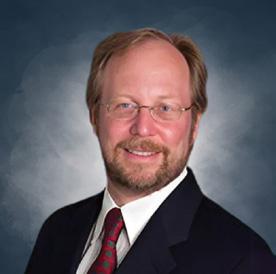
BILL BOSSHARDT, PH.D., professor of economics in the College of Business, received the Bonnie T. Meszaros Curriculum Leadership Award. This prestigious honor, awarded by the National Association of Economic Educators, recognizes outstanding leadership and innovation in economic education.
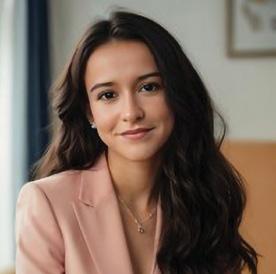
ALEJANDRA CORONELZEGARRA, a doctoral student studying chemistry and biochemistry in the Charles E. Schmidt College of Science, won the 2025 Microscopy and Microanalysis Student Award from the Microscopy Society of America for her work on stony coral tissue loss disease.
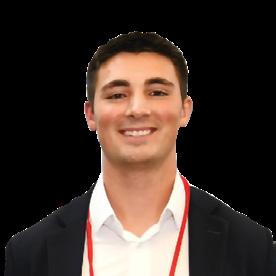
DANIEL GUIDO, an undergraduate student in the College of Engineering and Computer Science, won first place for his invention FireCodesAI, an artificial intelligence system on fire codes, at the Roundtable of Entrepreneurship Educators of Florida’s 2025 Governor’s Cup Entrepreneurship Competition, Florida’s premier collegiate pitch competition.
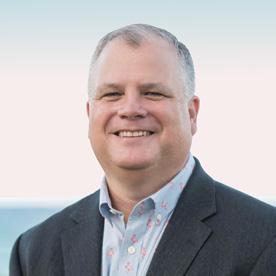
EVAN BENNETT, PH.D., professor in the Dorothy F. Schmidt College of Arts and Letters, received the Stetson Kennedy Award from the Florida Historical Society and the silver medal in the Florida nonfiction category from the Florida Book Awards for his book “Tampa Bay: The Story of an Estuary and Its People.”
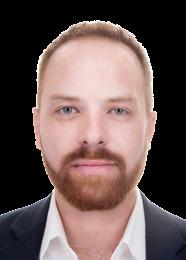
KEVIN WILT, D.M.A., associate professor and chair of the Department of Music, recently won the Silver Medal from The Global Music Awards (GMA) for his chamber music album “Tavern Music” that was released earlier this year. Wilt won in the composer and album categories. GMA is a top-tier international music competition that honors talented musicians around the world.

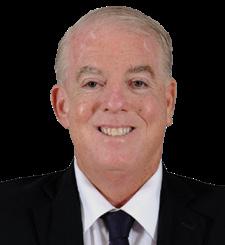
JOHN MCCORMACK, head baseball coach, will be inducted into the American Baseball Coaches Association Hall of Fame in January 2026. McCormack completed his 17th year as the Owls’ head coach in 2025. Under his leadership, Florida Atlantic baseball has qualified for NCAA Regionals six times, captured four regular season conference championships, and one conference tournament championship.
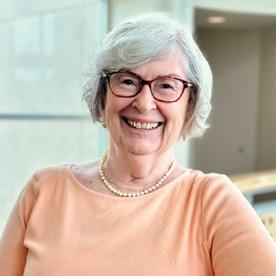
RUTH TAPPEN, ED.D., professor and Christine E. Lynn Eminent Scholar in the College of Nursing, received the 2025 Doris Schwartz Gerontological Nursing Research Award from the Gerontological Society of America. The award is presented by the Nursing Care of Older Adults Interest Group and is given to a member of the society in recognition of their outstanding and sustained contribution to geriatric nursing research.
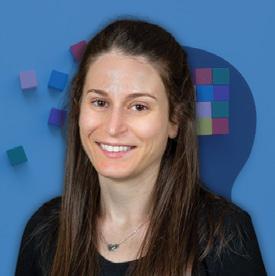
ARIELLA VANHARA, doctoral student in the Phyllis and Harvey Sandler School for Social Work, was named Educator of the Year by the Florida Chapter of the National Association of Social Workers.
LIFETIME ACHIEVEMENT
Russell Ivy Receives International Leadership Award
Russell Ivy, Ph.D., Florida Atlantic University’s interim provost and vice president for academic affairs, received the 2025 Michael P. Malone International Leadership Award from the Association of Public and Land-grant Universities. This national honor recognizes the lifetime achievement and outstanding contributions made by a faculty member at an APLU-member university toward furthering international programs on campus, nationally or internationally.
“It is an honor to be recognized by the APLU for something that is a great passion of mine,” Ivy said. “I value the international connections I made as a student, and I am happy to have had the opportunity to be part of bringing that experience to the FAU community.”
Ivy also currently oversees the Center for Global Engagement, which he was instrumental in establishing nearly a decade ago. This centralized hub has brought together international student services, study abroad, intensive English programs and employment-based immigration services, supporting the “Global Perspectives and Participation” platform of the university’s 2015-25 strategic plan. Ivy’s dedication, mentorship and strategic vision has further strengthened Florida Atlantic’s global footprint.
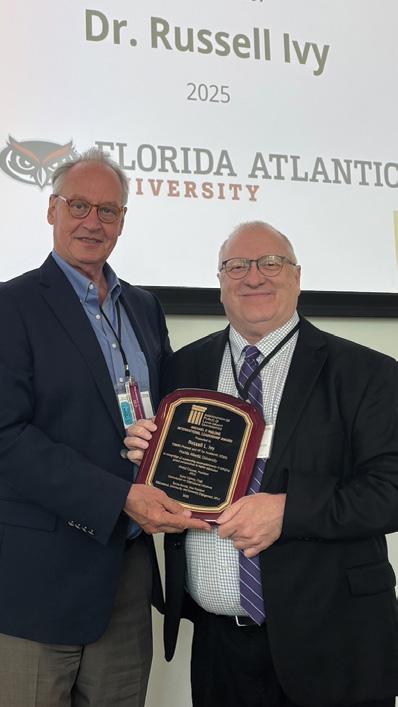
“Success is a standard outcome for international students at Florida Atlantic, and it is propelled by the strategies and support systems that Dr. Ivy initiated,” said FAU President Adam Hasner. “We are incredibly proud of all that he has done to further international education and global engagement at Florida Atlantic, which have benefitted both our university and local community.”
The Center for Global Engagement provides programs to help international students at Florida Atlantic achieve their academic and career goals. International students contribute to the university’s vibrant community, giving all students exposure to a wide variety of perspectives, ideas and traditions.
“Congratulations to Russell Ivy on winning the 2025 Michael P. Malone International Leadership Award,” said Mark Becker, president of APLU. “As a champion of international engagement for more than 30 years, his work to advance global impact and international collaboration has enhanced FAU’s education, research and community engagement mission and helped bolster critical international engagement in the higher education sector.”
Taylor Eighmy, Ph.D., president of the University of Texas at San Antonio and chair of APLU’s Commission on International Initiatives, left, presented the Michael P. Malone International Leadership Award to Russell Ivy, Ph.D., Florida Atlantic’s interim provost, right.
EXTRAORDINARYM t
Florida Atlantic's John D. MacArthur Campus in Jupiter is a vibrant hub for research and training where scientists are shaping a new future, defining the world for generations to come.
Researchers are turning today's science into tomorrow's solutions - and you can be a part of that excitement.
Give today to f a u f. f a u .e du ⁄ f unds ⁄ jupiter - campus

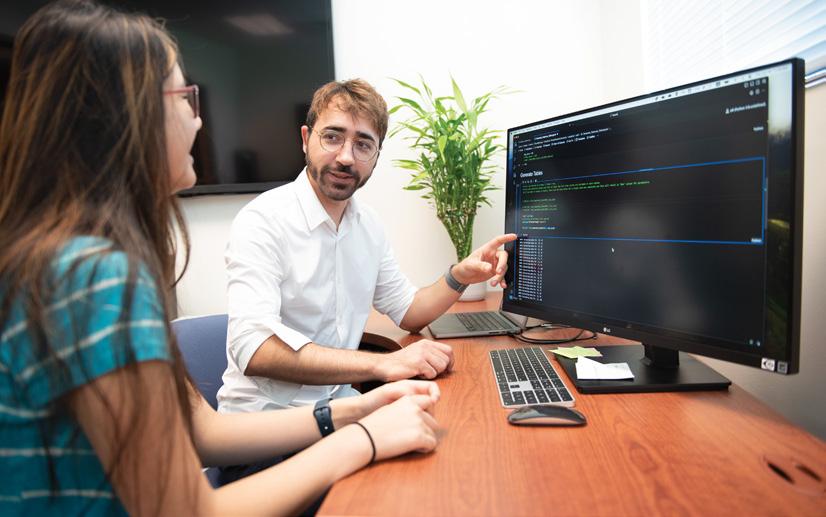




AT JOHN D. MACARTHUR CAMPUS
COMPUTATIONAL NEUROSCIENCE
RODRIGO PENA, PH.D.
Dr. Pena uses advanced computer modeling to accelerate neuroscience discoveries, shortening the path from lab research to life-changing medical applications.
MARINE MICROBIOLOGY
TRACY MINCER, PH.D.
Dr. Mincer's groundbreaking work in microplastics reveals the hidden threats these pollutants pose to marine ecosystems and human health - guiding policymakers and inspiring global action.
NEUROSCIENCE & ADDICTION
LUCIA CARVELLI, PH.D.
By uncovering the molecular pathways of addiction, Dr. Carvelli’s research is paving the way for more e ective treatments and prevention strategies that address this urgent public health crisis.
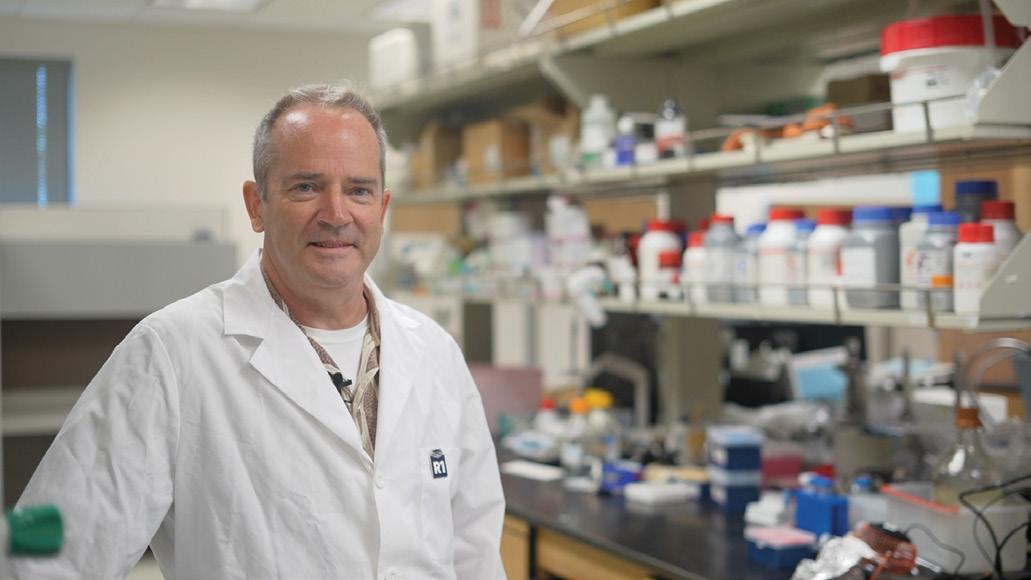
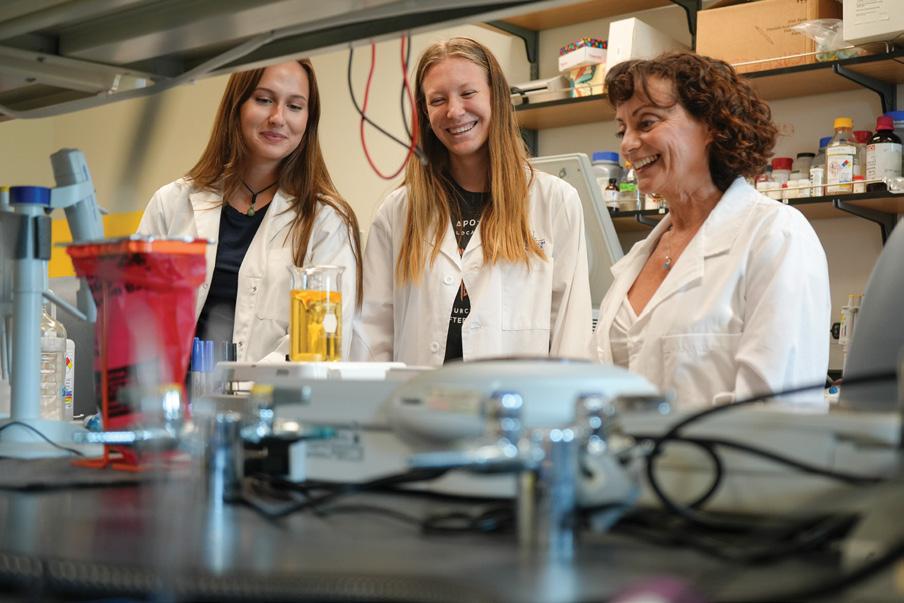
MAKING Waves Waves
President Adam Hasner Builds, Connects, Delivers
BY ALYSE COOKE

The tide is rising at Florida Atlantic, and Adam Hasner is at the helm with bold ideas and a vision for national prestige that stems from a local current.
Since stepping into the role of president on March 10, Hasner quickly began engaging the community and accelerating the momentum of a rapidly rising university. In his first 100 days, he covered a lot of ground — including more than 110 miles of South Florida’s coastline to connect with all six Florida Atlantic campuses from Fort Pierce to Fort Lauderdale. Hasner also established a strong presence in Tallahassee, elevating the university’s visibility and advancing strategic funding priorities.
His focus on local, regional and statewide impact is central to his approach: building dynamic partnerships, driving innovation and ensuring Florida Atlantic continues its ascent as a leader in shaping the future.
Hometown Leadership
Hasner’s roots in the region run as deep as his commitment to serving it. He was raised in Palm Beach County and is a longtime resident of Boca Raton. During his years in public service, Hasner served as a member of the Florida House of Representatives from 2002 to 2010, including two terms as house majority leader.
Among his legislative achievements, Hasner built a solid record of driving economic growth and workforce development through STEM education initiatives. This included helping to establish Florida’s life sciences industry alongside then-Gov. Jeb Bush. Making national strides for higher education, he authored the nation’s strongest antihazing legislation and earned the “Hero Award” from the Hazing Prevention Network.
Even while shaping policy with statewide and national impact, Hasner made it a priority to deliver for his hometown university. He led a multi-year effort to secure funding and approval to establish the Charles E. Schmidt College of Medicine, which welcomed its inaugural class in 2011. He also played a vital role in securing $43 million for the Engineering East building on the Boca Raton campus, which was the first state-funded higher education facility to attain LEED Platinum certification. Additionally, he advocated for the university’s ocean energy initiative, sponsoring key legislation that laid the foundation for creating the state’s Office of the Ocean Economy at Florida Atlantic.
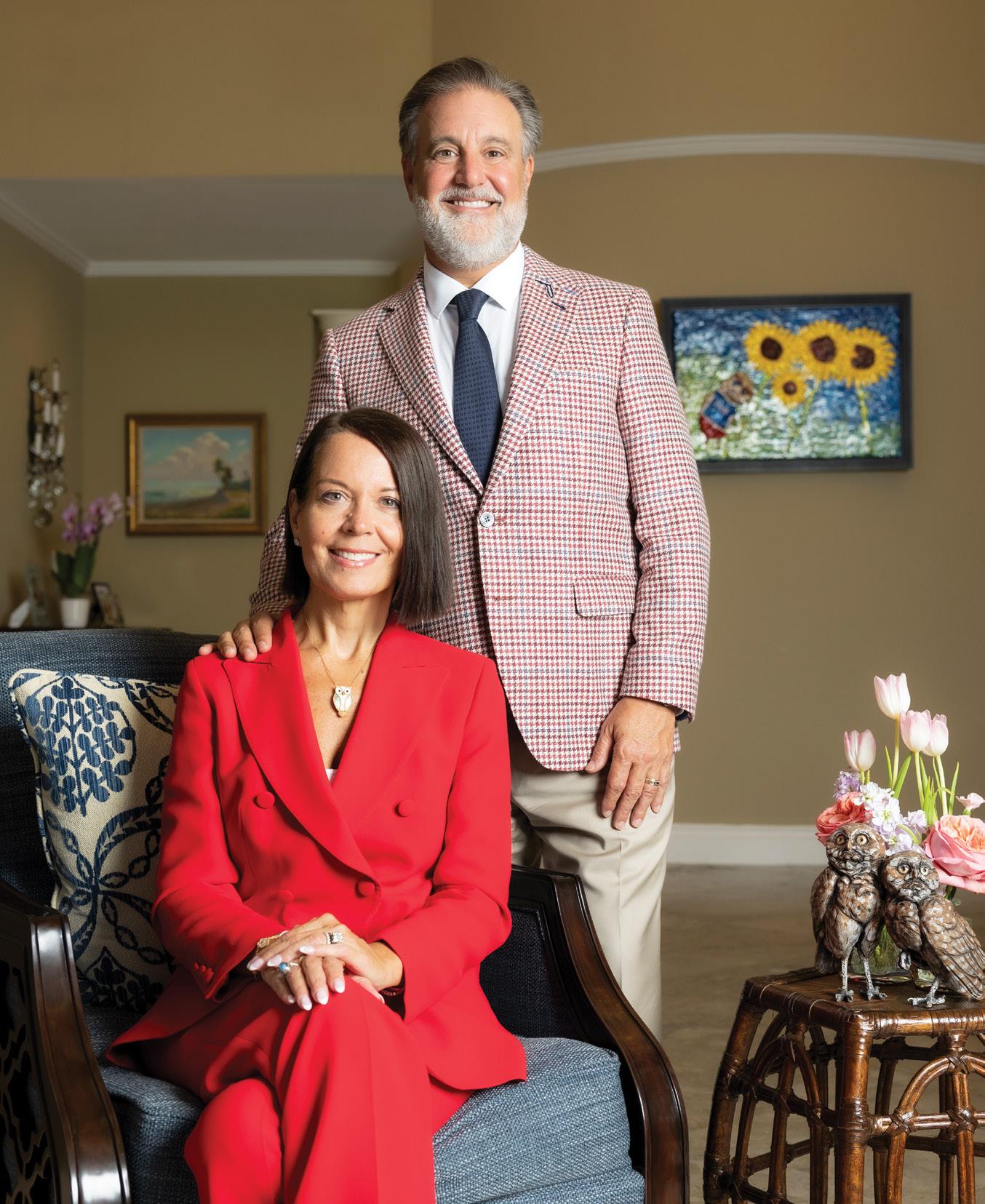
First Lady Jillian Hasner and President Adam Hasner at home in the Eleanor R. Baldwin House on the Boca Raton campus.
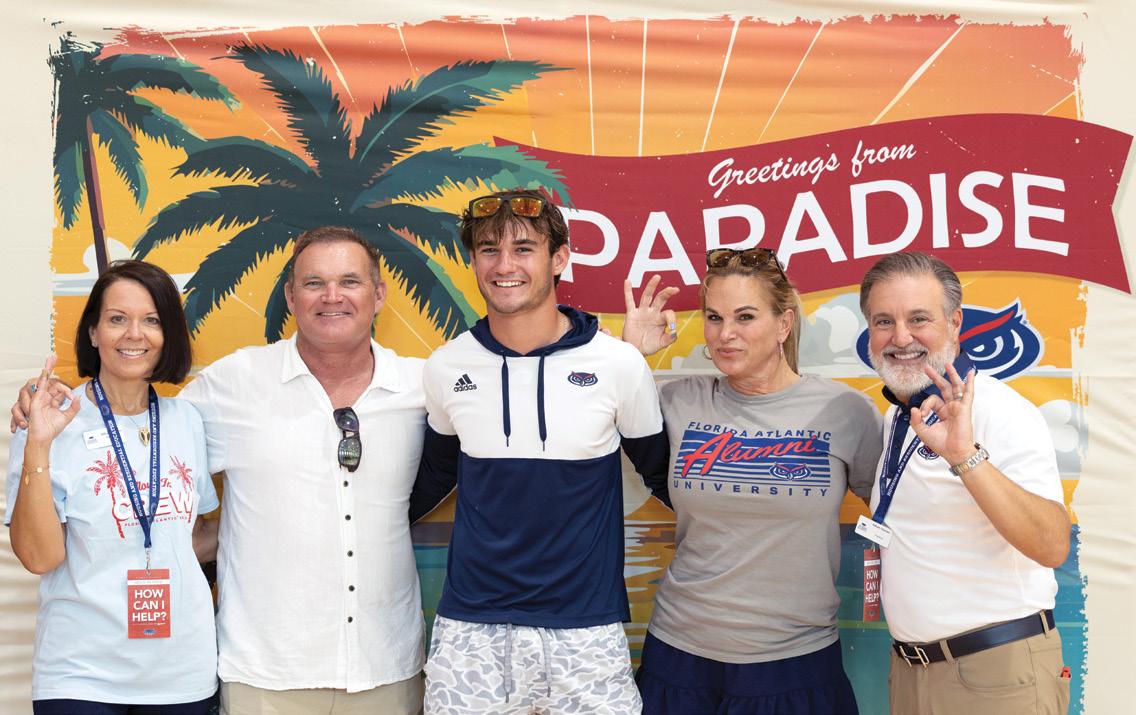
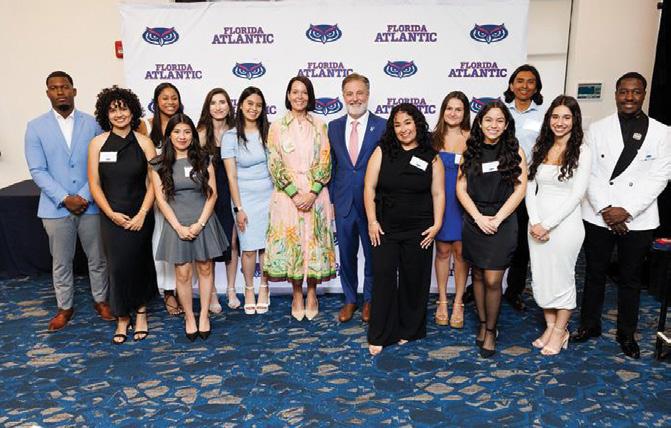
While Hasner’s dedicated involvement earned him the Florida Atlantic President’s Talon Award in 2007 and the nickname “Mr. FAU,” it was his belief in the power of opportunity at Florida Atlantic that ultimately inspired him to become president.
“Florida Atlantic was founded on the principles of opportunity and innovation, and it has been changing lives since it opened its doors 60 years ago,” Hasner said. “Its mission — to serve this region and shape what comes next — motivates me to lead, and I am proud to connect our founding to the future as the university’s eighth president.”
Hasner’s unwavering support for Florida Atlantic has spanned decades, and his unanimous appointment marked a full-circle moment for him, as well as a university community eager to accelerate its momentum under his bold leadership.
The Pace of Progress
Hasner’s first months as president were defined by action, connection and a clear sense of purpose. Whether meeting with students and faculty members, attending ceremonies and athletic events, or representing the university in Tallahassee, his leadership style is hands-on, high-energy and highly visible. It’s also strategic. As president, he focuses on what he calls the “three hats” of his role: chief fundraiser, top lobbyist and ultimate brand ambassador for Florida Atlantic.
First Lady Jillian Hasner, far left, welcomed new Owls and their families to campus on Move-In Day with FAU President Adam Hasner, far right.
First Lady Jillian Hasner and FAU President Adam Hasner, center, with the spring 2025 graduates of the Kelly/Strul Emerging Scholars Program.
“It has been inspiring to see President Hasner engage so deeply with our community since he joined Florida Atlantic,” said Piero Bussani, chair of the FAU Board of Trustees. “His energy, commitment and passion for elevating both the university and our region through meaningful connections is already helping to build a brighter future for our students and our state. On a personal level, I truly enjoy working with him every day.”
By hitting the ground running, Hasner delivered early results. Within two months, he secured a $1 million gift to fund semesterlong internships in Washington, D.C., for students interested in public policy and diplomacy. The gift also established a President’s Fund to create additional initiatives related to public service.
“It is opportunities such as this that continue to elevate the university’s standing and enhance the education of our students,” said Jeffrey Morton, Ph.D., Pierrepont Comfort Chair in Political Science and director of the Leon Charney Diplomacy Program.
Under Hasner’s leadership, Florida Atlantic also built on its major milestone of becoming a Carnegie R1 top-tier research university by being recognized as an “Opportunity University” in the new Student Access and Earnings Classification by the Carnegie Foundation and the American Council on Education. As one of only 21 universities nationwide to be recognized with both elite designations, Hasner’s emphasis on raising the bar for excellence and expanding opportunities is reflected in this rare distinction.
(continued on page 48)
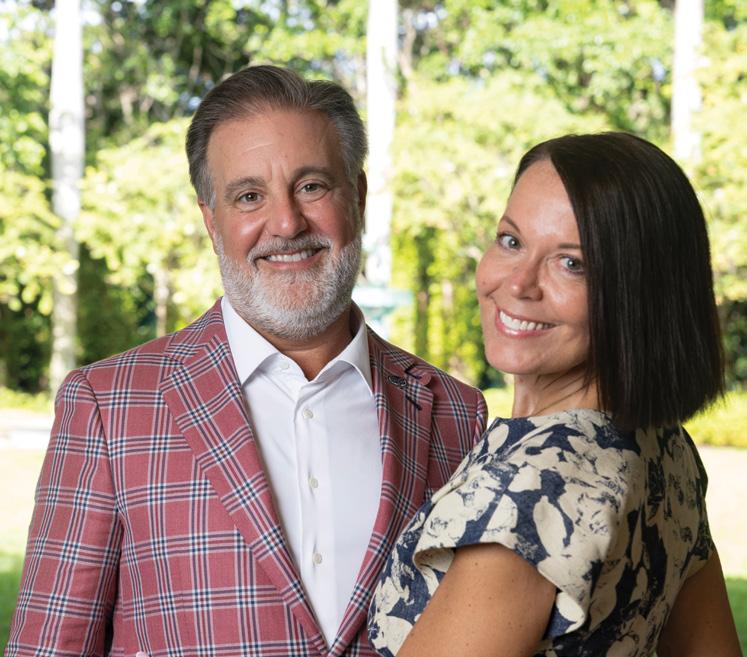
from Paradise
“When you have a university president who speaks the language of economic development, business leaders take notice.
President Hasner is creating partnerships that not only connect our students to the workforce needs of the state but also help shape the future of those industries.”
- Daniel Gropper, Ph.D., dean of Florida Atlantic’s College of Business
“Florida Atlantic has always been a university with great potential, and President Hasner is the right leader at the right time to take this university to new heights. He is building the connections and momentum that will elevate the university for years to come.”
- Dan Mica ’66, Florida Atlantic’s first student body president and former U.S. congressman
“President Hasner’s dedication to the student body is clear in every encounter, event and initiative that he supports. His genuine interest in our experiences, goals and dreams is energizing, and he uplifts our campus as a champion of this community. His leadership invigorates me and many of the other student and administrative leaders at our esteemed university, where he makes it a priority to be visible and understanding of everyone to advance the interests of our institution.”
- Darsham Gonzalez, Florida Atlantic Student Government president
Perspectives
from Paradise
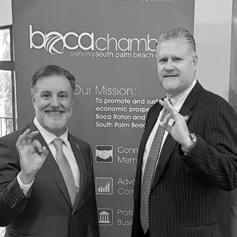
“Florida Atlantic is a key player in the economic growth of our region. President Hasner understands the university’s role in driving that progress, and he brings an energy and vision that aligns with the needs of our business community.”
- Troy McLellan, president and CEO of the Boca Raton Chamber of Commerce
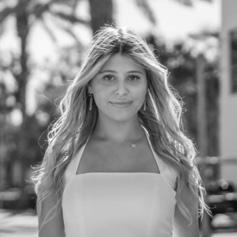
“President Hasner’s leadership has already made a meaningful impact on Jewish life at FAU. From celebrating Passover with students to openly standing against antisemitism, he makes it clear that we matter and that our safety and inclusion are important to him. The FAU Jewish community feels seen, supported and optimistic about the future of our university under his leadership.”
- Ellie Raab, president of Florida Atlantic’s Students Supporting Israel organization
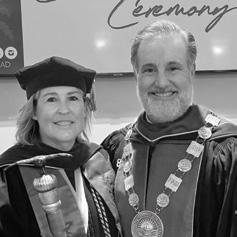
“Strong universities are built on a foundation of collaboration between faculty and administration. Since the start of his tenure, President Hasner has shown a commitment to engaging faculty in meaningful ways. That ongoing partnership will be vital as we move into the university’s next chapter.”
- Kim Dunn, Ph.D., associate professor in Florida Atlantic’s College of Business and chair of the Advisory Council of Faculty Senates for the Florida State University System’s Board of Governors
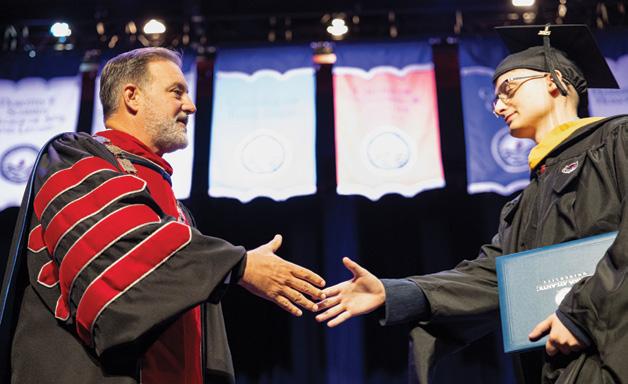
“Achieving R1 status was just the beginning, and now it is about maximizing that potential,” said Gregg Fields, Ph.D., vice president for research. “President Hasner is leveraging Florida Atlantic’s regional strengths and positioning the university to lead in areas of strategic impact.”
The excitement at Florida Atlantic — and for Florida Atlantic — has grown significantly since Hasner took office. More than 57,000 freshman applications were received for the fall semester, setting a new record that speaks to the university’s rising reputation. As Florida Atlantic becomes more selective than ever, Hasner’s first incoming class is the most academically competitive in university history.
Future-proof Path to Prominence
Like Florida Atlantic itself, the Hasner presidency is driven by innovation and opportunity. Focusing on lasting, sustainable progress, Hasner’s vision builds on the strengths that have positioned Florida Atlantic among the nation’s top public research universities. His deep understanding of the region and the state is propelling the university even further, leveraging its geographic location in strategic ways to reach new levels of academic excellence, research innovation and institutional prestige.
Florida Atlantic’s burgeoning life sciences enterprise, cutting-edge medical research and groundbreaking ocean-related initiatives are only the beginning. Hasner views these strengths as launchpads for statewide, national and global impact. By positioning the university and its students at the forefront of emerging industries and creating strong talent pipelines, he is ensuring immediate returns for student success and economic development while charting a course that will define the future.
“A strong partnership between the city and university benefits everyone,” said Boca Raton Mayor Scott Singer. “President Hasner’s collaborative approach is helping deepen the connection between Florida Atlantic and Boca Raton, bringing new opportunities for growth and innovation.”
That same forward-thinking approach extends to athletics, where Hasner sees the Owls’ rise in collegiate sports as an opportunity to continue elevating Florida Atlantic’s reputation
(continued

Florida Atlantic of The First Lady
Asfirst lady of Florida Atlantic, Jillian Hasner brings a track record of leadership, advocacy and public service that deeply align with the university’s mission to expand opportunity and transform lives.
For 10 years, Hasner served as president and chief executive officer of Take Stock in Children, a nonprofit organization dedicated to breaking the cycle of poverty for Florida’s youth. It provides a path to degree attainment or career certification through mentorship, scholarship, college readiness and postsecondary support services, and other critical resources. It serves more than 15,000 students from middle school through college every year. Under Hasner’s leadership, Take Stock in Children expanded its reach, improved student success rates and strengthened its mentorship program to transform more lives than ever before.
Through a broad network of public and private partners, Take Stock in Children found a natural connection with Florida Atlantic’s Kelly/Strul Emerging Scholars Program, which provides academically talented, first-generation, low-income
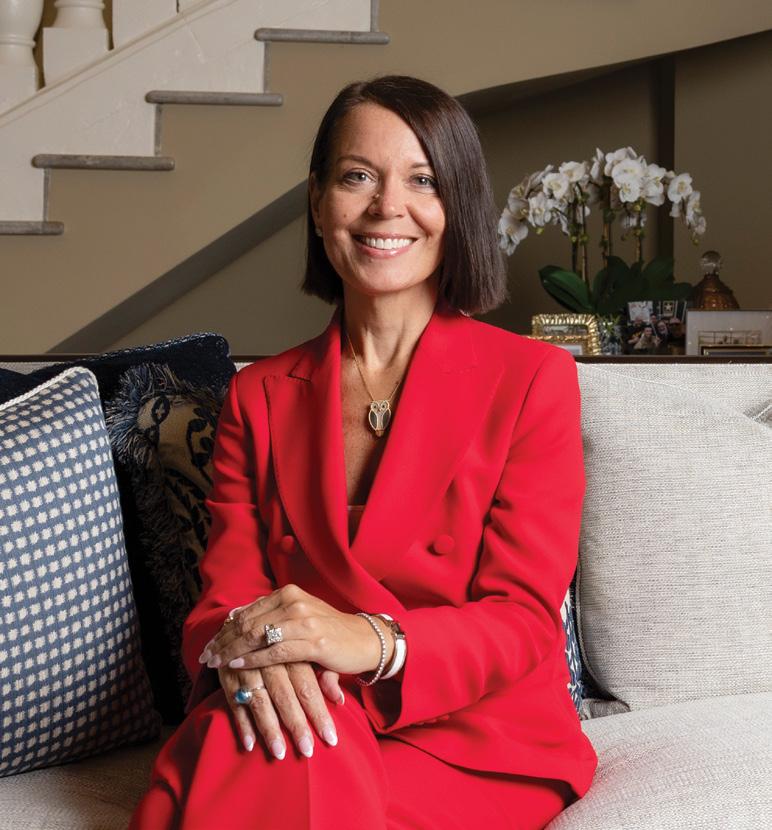
students the opportunity to graduate debtfree in four years or less. In the spring, five of the 12 Kelly/Strul graduates were Take Stock participants — a milestone Hasner joined in celebrating during a special event held in their honor. She and President Adam Hasner also hosted an event for the 170 students who are participating in the Take Stock in College program.
Beyond her professional accomplishments, Hasner has a long history of community service. She has volunteered with Guardian Ad Litem, Boca Raton Regional Hospital and the Epilepsy Foundation of Florida, where she served on the board of directors. She also served on Florida’s Federal Judicial Nominating Commission for the Southern District.
Now as Florida Atlantic’s first lady, Hasner is channeling her dedication to service and student success into the university community. One of her first initiatives, alongside President Hasner, was re-opening the doors to the Eleanor R. Baldwin House, the president’s on-campus residence, for events. Like her husband, her engagement
at Florida Atlantic was immediate, and she quickly began hosting events such as appreciation breakfasts, graduation celebrations and recognition dinners. And, with her commitment to service ever-present, she partnered with a local organization to donate excess meals from these catered events to those in need.
Moving forward, Hasner plans to continue using the Baldwin House to foster meaningful connections among members of the university and the broader community. She envisions it as more than a residence — it also will be a dynamic gathering place where students, faculty, alumni and local leaders can celebrate, exchange ideas, forge partnerships and collaborate on opportunities that benefit the region. For Hasner, this work is part of advancing Florida Atlantic’s mission, not just as first lady, but as a driving force in the university’s growth and success.
“Florida Atlantic has always held a special place in our lives, and being part of its future is a privilege,” Hasner said. “I’m excited to help open doors for our community and play a role in supporting the university’s continued rise.”
Perspectives
“President Hasner’s immediate connection with our military-connected students has been truly extraordinary. To know that our university leadership is so engaged and committed to those who have served our nation, and with those who will serve, is both energizing and exciting. His advocacy for us, and his presence with us, instills a much deeper sense of belonging and confidence throughout our entire military-connected student community.”
- Jason Nadolinski, director of Military and Veteran Student Success at Florida Atlantic
“Congratulations to FAU for making the right choice, at the right time, in the right person: Adam Hasner. I’ve known Adam since I first arrived in Florida to lead People’s Trust Insurance more than a decade ago. Since then, he has been a guiding force for our company, a trusted colleague to me personally, and now, a powerful asset to FAU. Adam is a true team leader, and in today’s often contentious academic climate, there is no better unifying captain than Adam.”
- George W. Schaeffer, philanthropist and president and CEO of People’s Trust Insurance
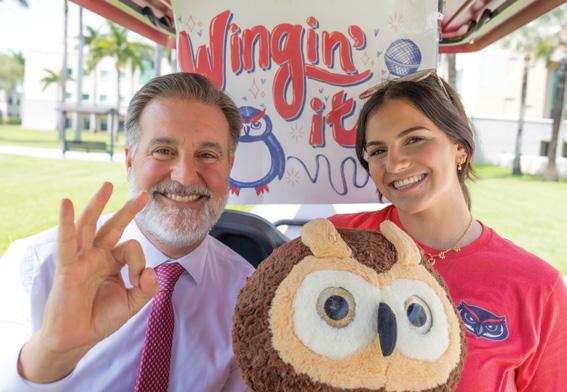
while strengthening community pride. From basketball and football to softball and beach volleyball, Hasner is opening the front door of the university to invite new talent and energy on and off the field.
“Even before he joined the university, President Hasner was a strong supporter of FAU Athletics,” said Brian White, vice president and director of athletics. “He understands how our success on the field enhances the university’s reputation and builds pride across the entire community — and we look forward to many more wins under his leadership.”
But for Hasner, the ultimate goal is bigger than any game or program. It is about building a competitive university that leads the way in innovation, fuels economic growth and advances social mobility. He envisions Florida Atlantic as a national model for the future of higher education: a top-choice public research university that sets the pace, stays true to its mission and redefines what is possible for students and communities alike.
“Achievement and accountability will shape the next chapter of Florida Atlantic, but innovation and opportunity will drive us forward,” said Hasner. “This is the kind of university the future demands — and we are just getting started.”

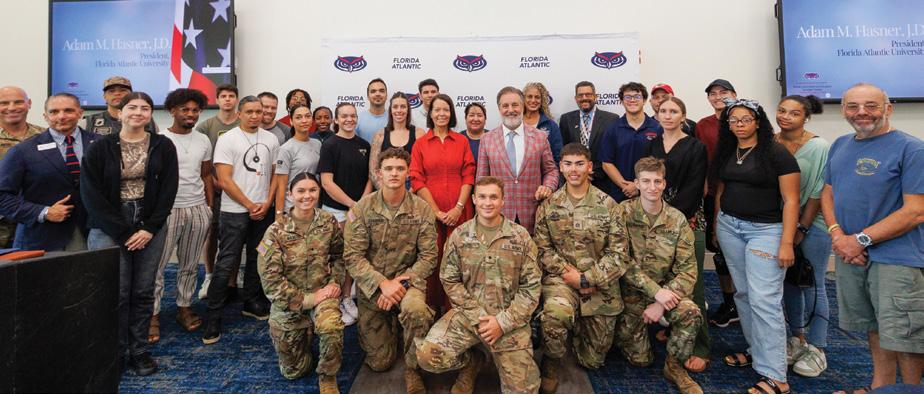
FAU President Adam Hasner, left, filmed an episode of “Wingin’ It,” an on-campus golf cart talk show for social media, with intern Paige Noble.
FAU President Adam Hasner and First Lady Jillian Hasner, center, welcomed military-connected students back for the fall semester at an event hosted by the Military and Veteran Student Success team.
Insights AT THE Institute
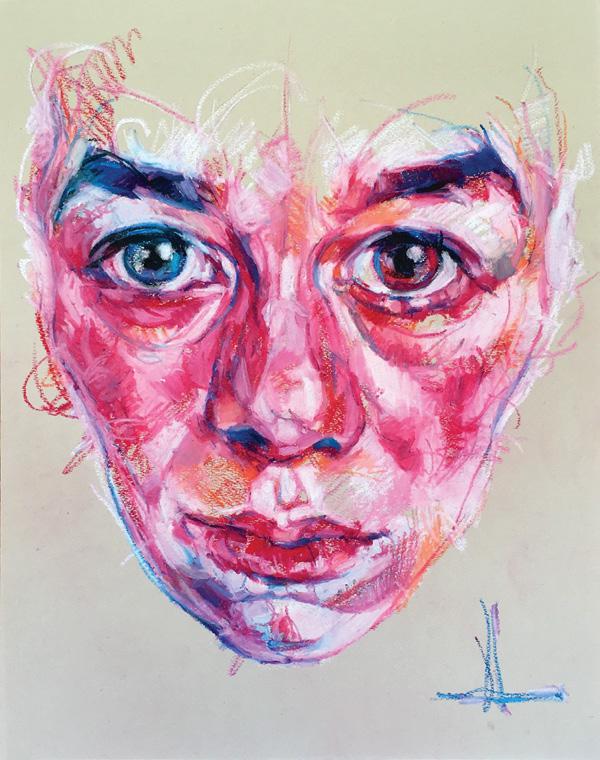
Returns to Florida Atlantic in February 2026



*Images from the Insights VI collection, exhibited at the Stiles-Nicholson Brain Institute in March 2024.
An art exhibition of creativity and the bipolar brain, presented by The Ryan Licht Sang Bipolar Foundation and the Stiles-Nicholson Brain Institute.
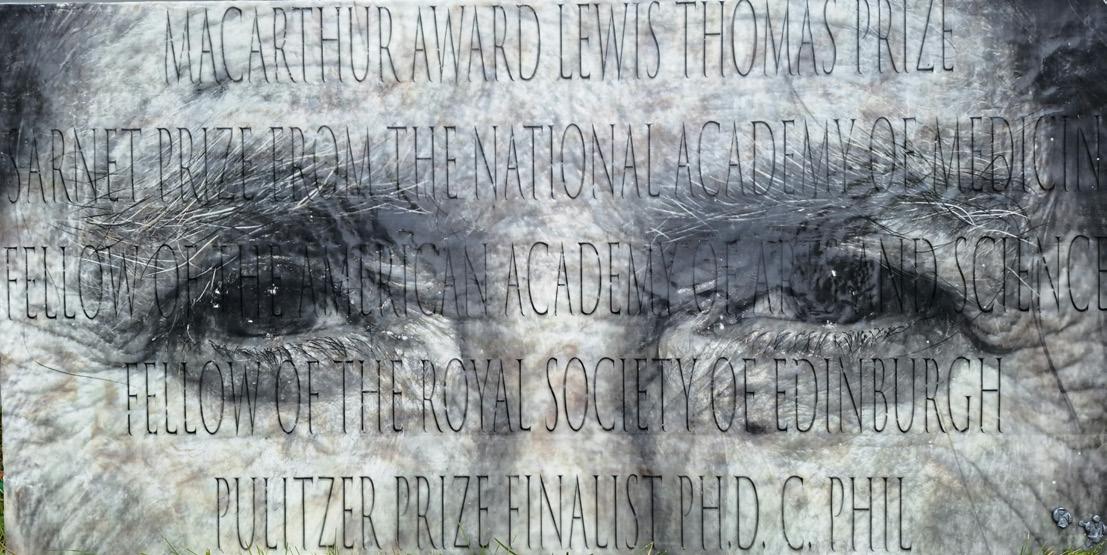
Insights VIII: 2026 Brainy Days Program
Ritter Art Gallery 777 Glades Road, Boca Raton, FL 33431
Feb. 19, 2026 – March 15, 2026 fau.edu ⁄ brain ⁄ insights-at-the-institute


Kelly Matthews
Susan Martin
Victoria Loeb
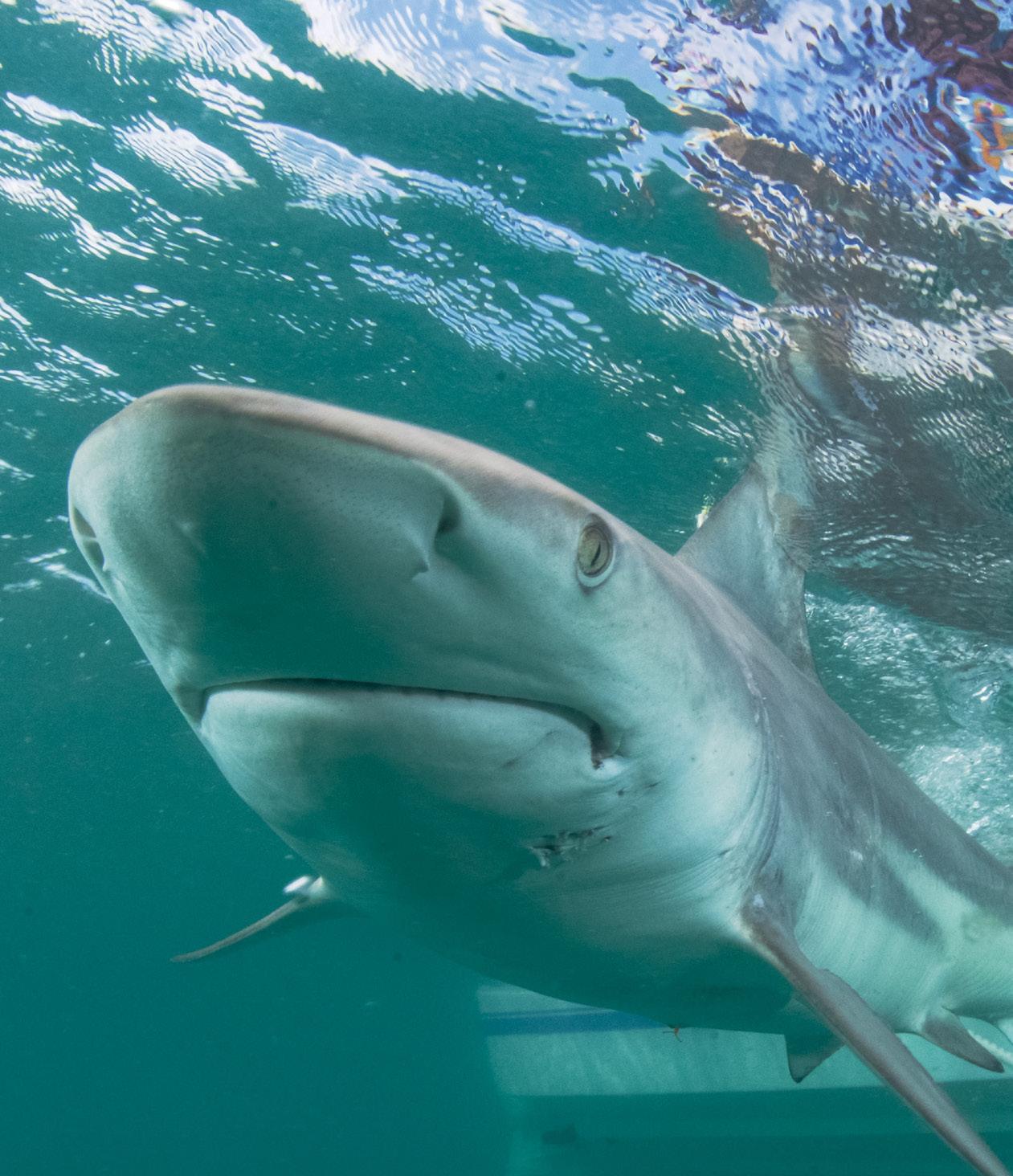
once
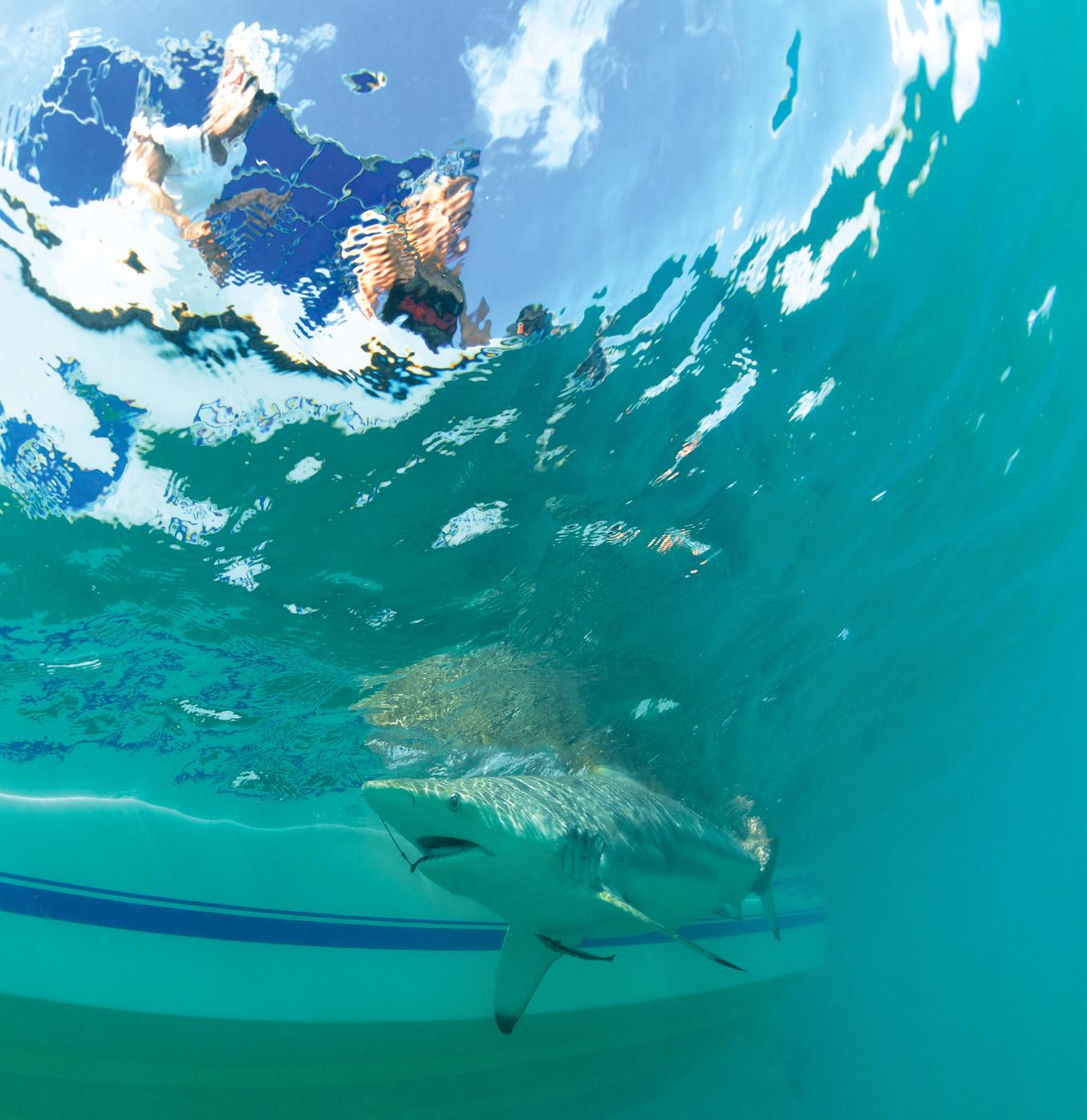
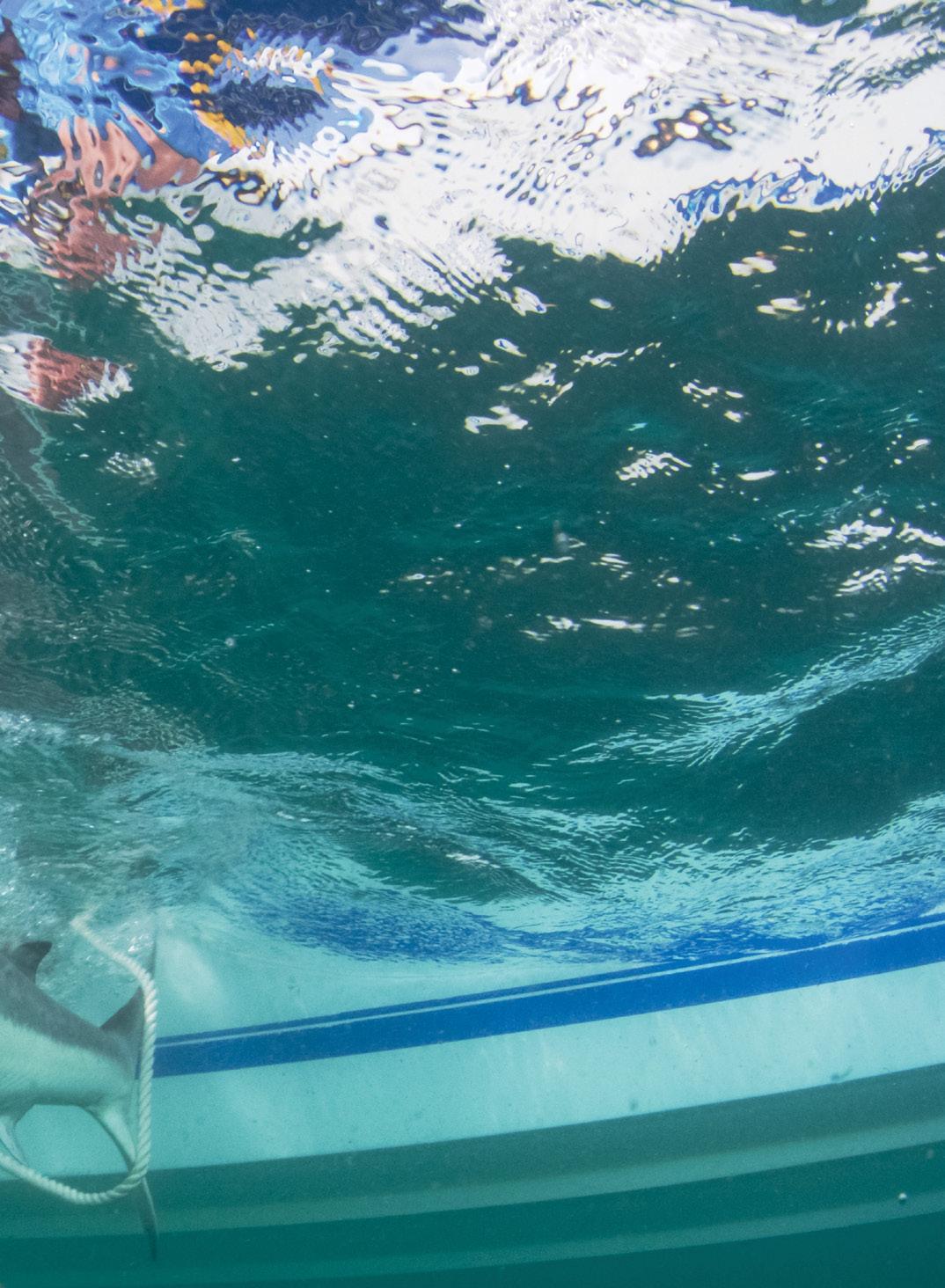
bitten
Forever Smitten
Florida Atlantic Researchers Advance Shark Discoveries
BY GISELE GALOUSTIAN
In the crystal-clear waters off South Florida and the mysterious depths of the open ocean, scientists at Florida Atlantic University are taking a bite out of groundbreaking discoveries with one of nature’s most fascinating creatures: the shark.
These researchers are unraveling the secrets of these apex predators — from their migration patterns and deep-sea behavior to their surprising engineering brilliance. Armed with cutting-edge tools like aerial drones, shark-mounted sensors, genetic analysis and powerful synchrotron X-ray nanotomography, their expertise and relentless curiosity are reshaping how we understand, protect and coexist with these critically important animals.
The Shark Whisperer
One Researcher’s Crusade to Protect Apex Predators
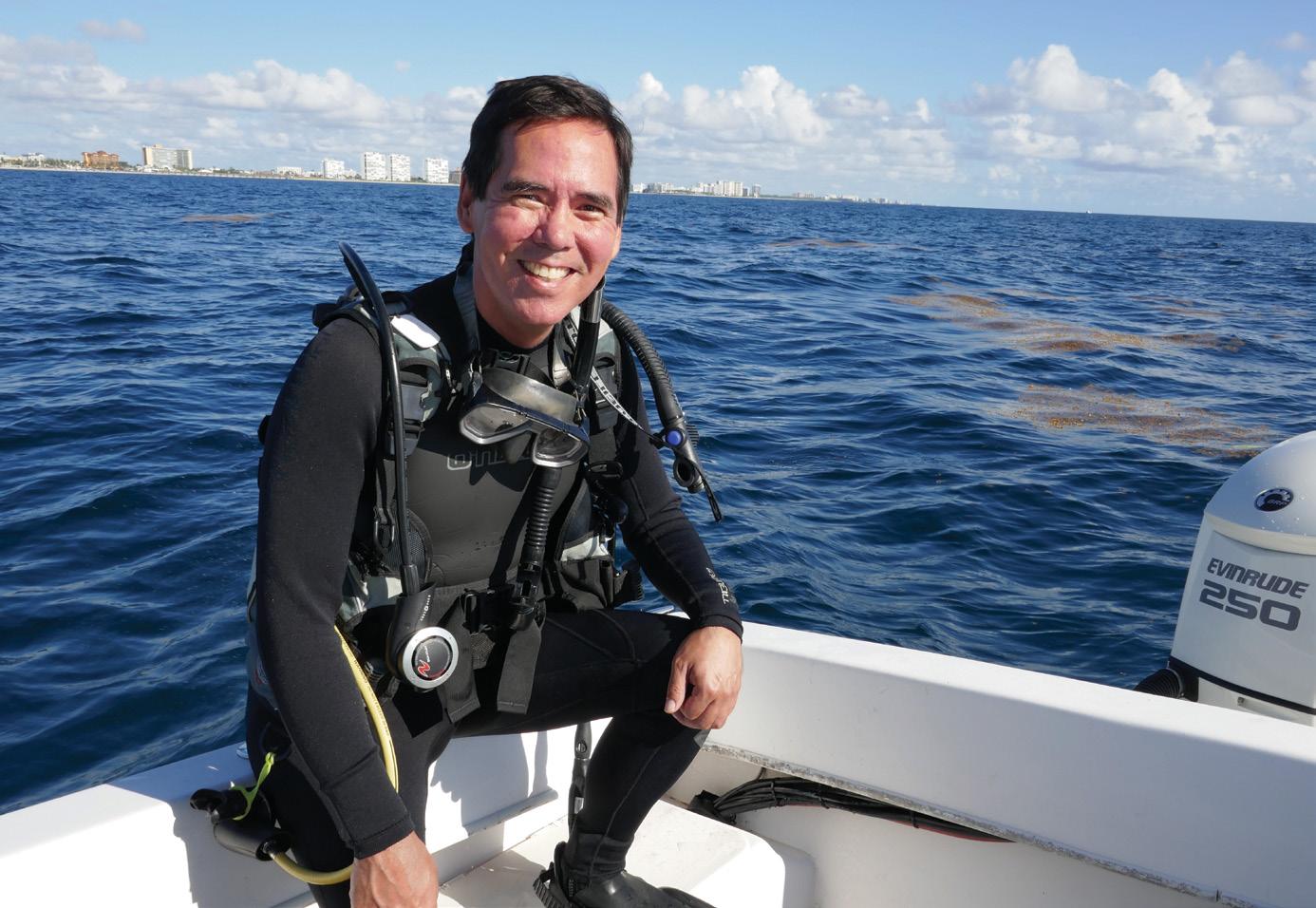
In a quiet, landlocked town of just 4,000 residents in Ontario, Canada, Stephen Kajiura, Ph.D., didn’t have the ocean outside his window when he was a child — but he had it in his imagination. Long before he ever set foot in the ocean, he was already mentally diving into the depths, obsessed with marine life — and sharks in particular.
He spent hours at the local library poring over every book on marine life that he could find, mesmerized by the “alien” world that existed far beyond his snowy hometown. Sunday afternoons were reserved for Jacques Cousteau documentaries, which deepened his captivation with the ocean.
That childhood curiosity became a lifelong pursuit. Today, Kajiura is not only one of the world’s foremost shark experts but also the director of the Florida Atlantic’s Elasmobranch Research Laboratory. The lab focuses on how sensory systems, behavior and body structure are connected, using behavioral tests, fieldwork and anatomy comparisons to explore how these traits evolve in sharks and rays.
“I remember being fascinated by the ‘shovelhead’ shark, which I later learned was a bonnethead shark — the smallest member of the hammerhead family,” said Kajiura, who is also a professor of
biological sciences in the Charles E. Schmidt College of Science. “Even as a kid, I was drawn to their uniqueness — the odd shape of their heads. I just couldn’t believe such a strange shark existed.”
Kajiura’s research also includes studying local shark and ray populations using aerial surveys, telemetry, drones and underwater video. His decades of work have left a lasting impact on marine biology — and reached audiences around the world.
From Quarry Dives to Coral Reefs
Kajiura’s academic journey began at the University of Guelph in Ontario, where he earned a degree in marine biology — a somewhat unconventional choice for someone who had yet to see the ocean.
“My parents were supportive of my decision to study marine biology but understandably skeptical,” Kajiura said. “They asked, ‘What kind of job can you get with that degree?’ But I knew it was what I wanted to do. I didn’t have a plan B.”
After earning his bachelor’s degree in marine biology, he took a detour through the Florida Keys, working at a wholesale tropical fish supplier while gaining hands-on experience in animal husbandry. He also enjoyed scuba diving in warm, tropical waters;
‘‘There are only about 500 known species of sharks worldwide, so discovering a new one is very exciting.”
- Stephen Kajiura, Ph.D.
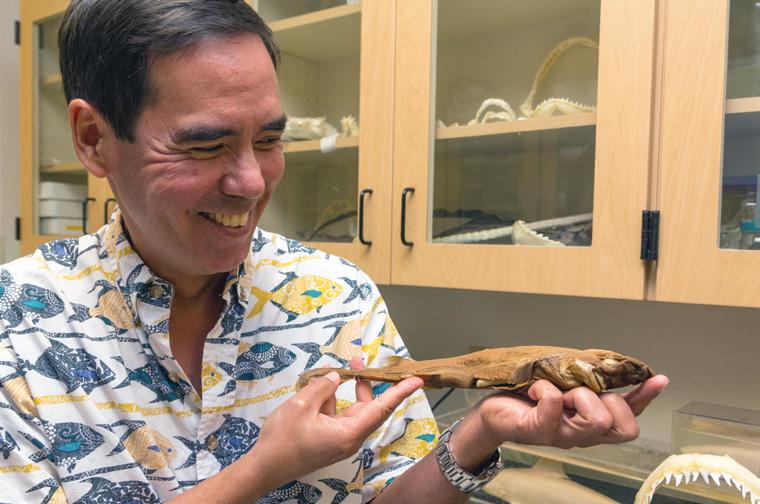
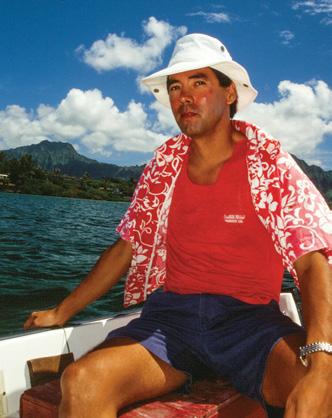
a far cry from his first dive certification training in an icy, abandoned quarry back in Ontario.
“I suddenly found myself diving in an underwater tropical paradise every weekend,” he said. “It was a completely different world from where I first learned to dive — where it was rare to even see a fish in the cold, murky water. Diving on the coral reefs and seeing living examples of the different marine species that I had learned about really cemented the theoretical knowledge I had gained as an undergraduate.”
Kajiura went on to earn his master’s degree from Florida Institute of Technology and fulfilled a lifelong dream by completing his doctorate at the University of Hawaii, where he focused his research on hammerhead sharks. He then conducted his postdoctoral research at the University of California – Irvine before coming to Florida Atlantic.
“Living and studying in Hawaii was an unforgettable experience,” Kajiura said. “I made it a point to take one day off each week to hike, dive and simply enjoy life. It’s a practice I still recommend to my students today: maintaining balance is essential.”
Unexpected Discovery in the Deep
It was during those graduate years that Kajiura began work on a project that would take nearly two decades to fully come to light: the unexpected discovery of a new species of deep-sea lanternshark, now officially named Etmopterus lailae
“There are only about 500 known species of sharks worldwide, so discovering a new one is very exciting,” Kajiura said. “What made it even more exciting was that we didn’t initially realize we had found something new. It was only when we submitted our manuscript to a journal that a reviewer pointed out that some of the anatomical differences we noted warranted a closer look at some of the specimens.”
Discovered 1,000 feet below the surface off the Northwestern Hawaiian Islands, Etmopterus lailae is a miniature marvel. This bioluminescent shark glows in the dark and is barely a foot long when fully grown. Its glowing belly and tail provide a pattern specific to that species, which may allow it to find mates in the perpetual darkness of the deep sea.
“What really sets this species apart is its unusual head shape and large, bulging snout,” Kajiura said. “In an environment with almost no light, that big sniffer helps them locate prey in a cold, dark, featureless expanse.”
Kajiura was part of a team that discovered a new species of lanternshark, officially named Etmopterus lailae.
Additional distinctions include unique glowing markings on the flanks and belly, a naked patch of skin under its snout with no scales, a different number of vertebrae, and fewer teeth than its closest relatives.
“There were enough anatomical differences that it justified classification as a new species,” Kajiura said. “Finding these specimens in the deep sea is like finding a needle in a haystack in the middle of the ocean.”
Tracking the Blacktips
Since joining the Florida Atlantic faculty in 2004, Kajiura has focused much of his research on the blacktip shark — a species that, unlike the elusive lanternshark, travels in massive, visible groups along Florida’s east coast each winter.
Blacktip sharks are sleek, fast predators known for their iconic, black-tipped fins and lightning-fast bursts of speed. Growing up to 6 feet long, they patrol warm, shallow coastal waters in oceans around the world — true masters of the coastal hunt.
“Blacktip sharks are like snowbirds,” Kajiura said. “When water temperatures drop below 71 degrees up north, they head south to places like Palm Beach County. And when things start to warm up in the spring, they go back.”
For nearly 15 years, Kajiura has been tracking this migration using cutting-edge technology. His tools include everything from fixedwing aircraft and aerial drones to GPS trackers and GoPro camera tags. The aerial approach is especially valuable in South Florida, where clear water makes shark spotting relatively easy from the air.
“We fly at about 500 feet above the water, going roughly 90 miles per hour, and we can cover a 650-foot-wide strip along the shoreline,” Kajiura said. “We record high-resolution video and bring it back to the lab, where my team manually counts each shark — often just black dots on a screen. One of my graduate students has counted more than 100,000 sharks. That’s dedication!”
But the work isn’t just about counting fins. It’s about understanding how climate change could alter migration patterns — and what that means for marine ecosystems.
“These sharks play a crucial role in maintaining ocean health,” Kajiura said. “They act like custodians, weeding out sick or weak fish and keeping reef populations in balance. If rising temperatures cause them to skip South Florida altogether, the ecological consequences could be severe.”
Shark Meets Shark
One of Kajiura’s most thrilling and unexpected discoveries came earlier this year, when a nurse shark equipped with a camera tag recorded a surprise guest: a great white shark, estimated to be at least 10 feet long, in South Florida waters.
“We’ve tagged dozens of sharks over the years with these camera tags, which collect both video and 3D acceleration data, which is similar to the step-counting feature on your smartphone,” Kajiura said. “But this time, we got something truly remarkable.”
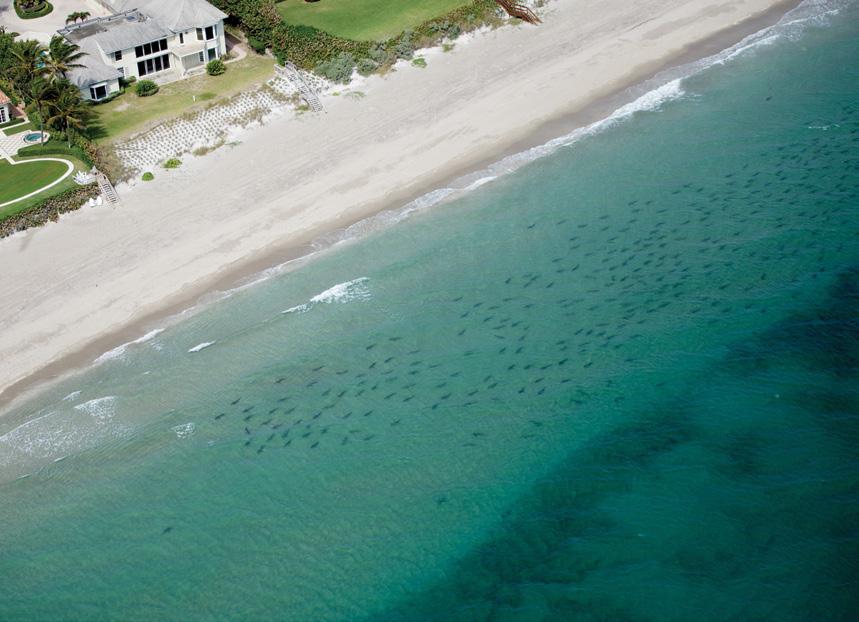
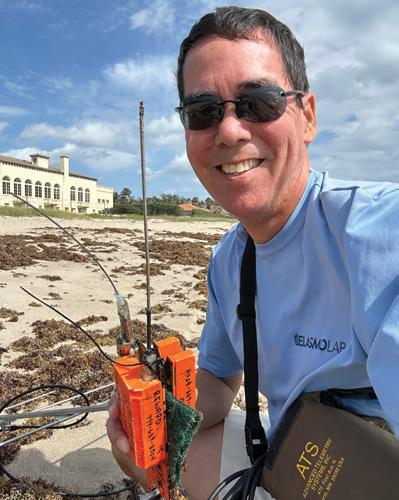
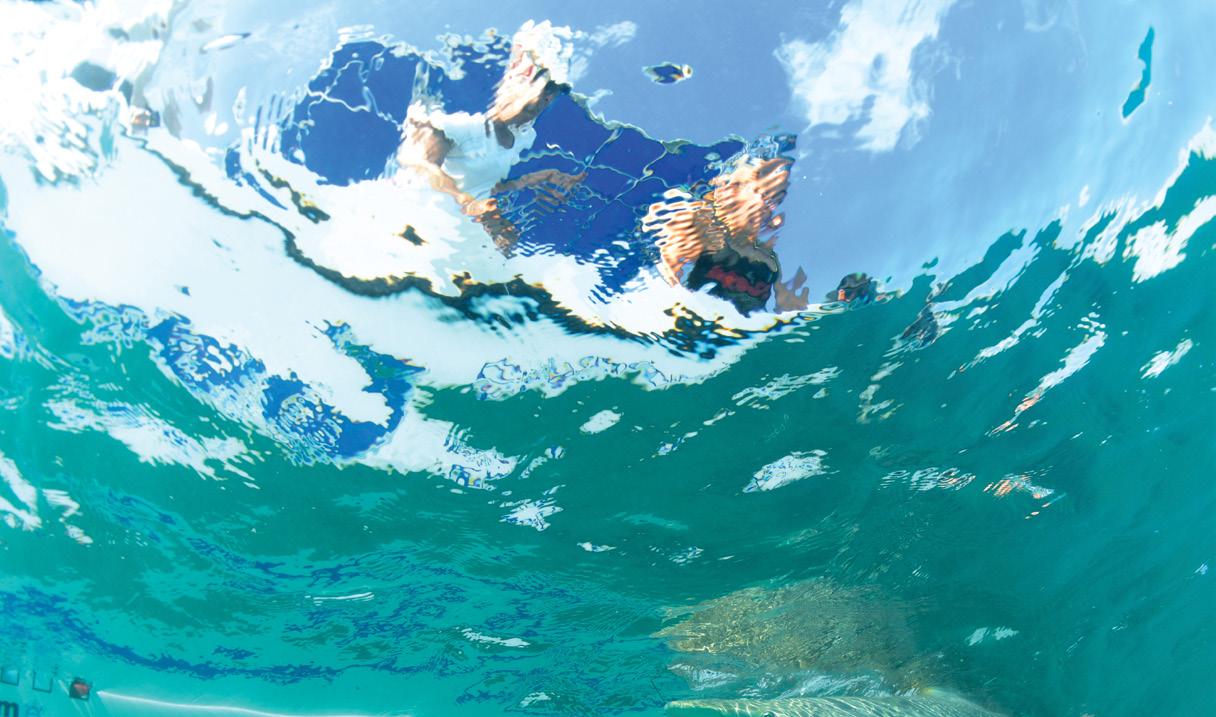
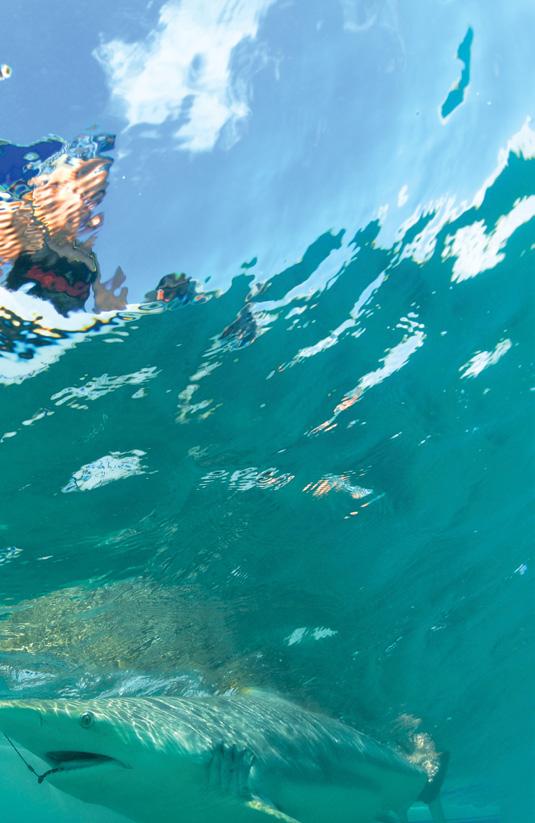
An aerial view of the blacktip shark migration along Florida’s east coast.
Kajiura with the tag that caught a great white shark photobomb.
The nurse shark had been swimming near the Donny Boy Slipe Reef, an artificial reef made of 830 tons of limestone boulders off Boynton Beach. The footage it captured showed a four-minute interaction with a great white shark — an exceedingly rare sight in South Florida.
“It was a classic photobomb,” Kajiura said. “While divers have occasionally reported seeing great whites in the area, this gave us a rare ‘shark’s-eye view’ of that encounter. It was like nothing we’ve captured before.”
As exciting as the footage was, retrieving the tag itself proved to be almost as lucky as the footage it captured. When the device failed to send its expected location ping, the team feared it was lost forever.
Then, four days later, an unanticipated ping came through, revealing the tag’s location. It had washed ashore at the Gulfstream Golf Club in Delray Beach. Kajiura found the tag package amidst seaweed on the beach and just inches away from the fresh tracks of a large beach tractor.
“We rushed there and found the tag in a pile of seaweed,” Kajiura said. “We were incredibly lucky that it didn’t get run over and crushed.”
Among the research team was Genevieve Sylvester, a master’s student in the FAU Elasmo Lab.
“What we captured on that footage was a completely unexpected surprise,” Sylvester said. “We were all huddled around my computer, reviewing the footage. When we saw the great white shark appear — more than once — we couldn’t believe it. To witness it from the shark’s point of view made it even more surreal. It was a truly an unforgettable moment for our entire team.”
Kajiura has received long-term support for his research from the Colgan Foundation, a not-for-profit corporation founded by Sean P. Colgan to benefit athletic, scientific, environmental and education communities.
Lights, Camera, SharkFest
Kajiura’s work isn’t confined to labs and field surveys — it’s also captured the attention of millions of viewers around the world. He has appeared in dozens of television documentaries about sharks, starting with his time as a graduate student in Hawaii. He has been interviewed for outlets from around the world, including Canada, the United Kingdom, Japan and New Zealand. Kajiura returned to National Geographic’s SharkFest this year as a featured expert in “Florida’s Bite Capital,” an episode in the Investigation Shark Attack series.
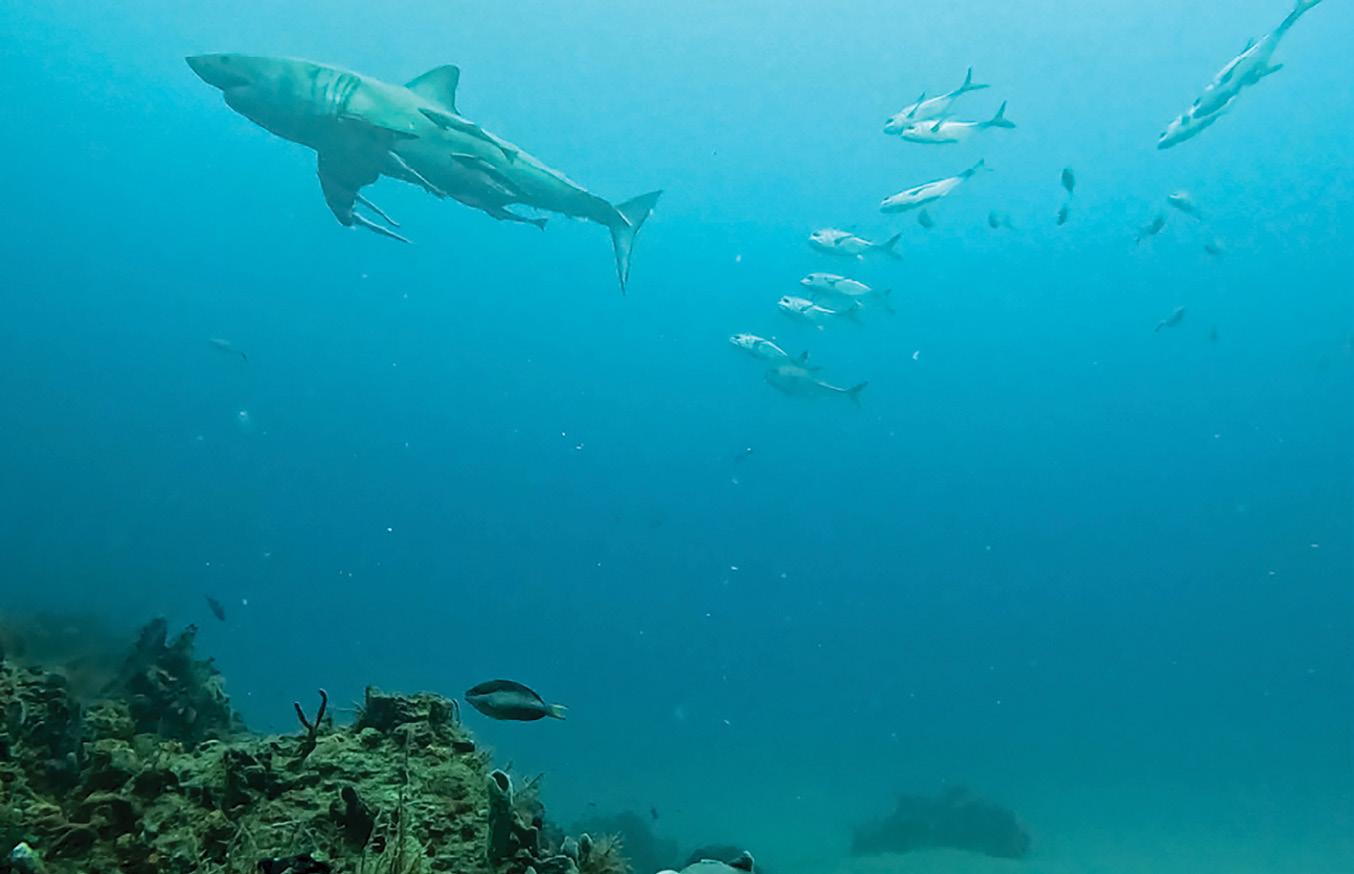
‘‘ It was a classic photobomb. While divers have occasionally reported seeing great whites in the area, this gave us a rare ‘shark’s-eye view’ of that encounter.“
- Stephen Kajiura, Ph.D.
The episode explored New Smyrna Beach — dubbed the shark bite capital of the world — and dove into why shark-human encounters happen there more than anywhere else.
“We’re not here to scare people,” Kajiura said. “We’re here to understand shark behavior and use that knowledge to reduce risk. Science can offer real solutions.”
His approach blends forensic analysis with high-tech fieldwork, providing a rare science-first lens on these complex interactions. With underwater sensors, drones and expert panels, the show investigated every angle — literally and figuratively.
“The more the public understands about sharks, the less they fear them irrationally,” Kajiura said. “Sharks have long been misunderstood and unfairly portrayed as mindless killers, but learning about their behavior, ecology and vital role in marine ecosystems helps change that perception. When people see sharks as important contributors rather than threats, it builds support for protecting them. That kind of awareness is crucial for effective conservation efforts.”
Passing the Torch
Kajiura’s passion for the ocean is already inspiring the next generation at home. His 11-year-old son, Brian, recently earned his scuba certification and often joins the family on dives, exploring the underwater world firsthand.
Atlantic’s Charles E. Schmidt College of Science and a seasoned marine biologist also specializing in shark research. Together, they’ve built a household firmly anchored in science — and saltwater — where curiosity about the natural world is a shared legacy and a constant source of inspiration.
The Road Ahead
As climate change accelerates and ocean ecosystems face unprecedented challenges, Kajiura’s work has never been more critical. His team is gearing up to expand shark-tagging programs, enhance aerial surveys, and delve deeper into how these apex predators respond to shifting environmental pressures like warming waters, habitat loss and pollution.
“These animals are sentinels,” Kajiura said. “They sense changes in the ocean long before we do. By listening to their signals, we can gain invaluable insights — not just about sharks, but about the health of the entire planet.”
“He’s really into chemistry right now,” Kajiura said. “But growing up surrounded by sharks and the ocean, who knows where his interests might lead. Whatever path he chooses, we’ll support him 100%.”
The family’s commitment to marine science runs deep. Kajiura’s wife, Marianne Porter, Ph.D., is an associate professor in Florida
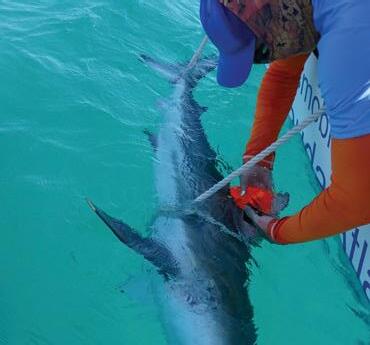
From snowy Canadian quarries to tropical reefs, and from discovering glowing deep-sea species to capturing great white photobombs, Kajiura’s journey is one of relentless curiosity and innovative science.
“Dr. Kajiura’s work is a powerful reminder that sharks are more than just intriguing animals — they’re essential to the health and balance of our oceans,” said Valery Forbes, Ph.D., dean of the Charles E. Schmidt College of Science. “Beyond his scientific contributions, he’s had a profound impact on FAU students — igniting their curiosity, guiding their research and inspiring the next generation of marine scientists. Through both innovation and mentorship, he’s helping to shape a more sustainable future for our oceans and those who will protect them for generations to come.”
THE TECH BEHIND THE TEETH
Here’s a look at what Stephen Kajiura, Ph.D.’s team uses to study sharks:
• FIXED-WING AIRCRAFT: Flies at 90 miles per hour, 500 feet above the water, covering 650 feet of shoreline to track blacktip migration.
• DRONES AND GOPROS: Provide aerial and underwater perspectives, including rare footage like the 2025 great white shark photobomb.
• CAMERA TAGS: Lightweight, shark-mounted cameras that record 3D acceleration and real-time video from a shark’s-eye view.
• TEMPERATURE SENSORS AND GPS TRACKING: Help correlate shark movement with environmental changes, especially ocean warming.
Hooked and Snatched How Citizen Science is Reeling in Shark Depredation
Imagine finally landing the fish of the day — only to have it ripped off your line at the last second by a lurking shark. All that’s left is a tattered leader, a severed head, or sometimes, nothing at all. For thousands of Florida anglers, this frustrating scenario has become increasingly common. It’s called shark depredation, and it’s turning a relaxing day of fishing into a battle of wits with some of the ocean’s most cunning predators.
Shark depredation — when a shark steals a hooked fish before it can be reeled in — is more than just a nuisance. It’s a growing challenge that affects fish populations, disrupts recreational experiences, and raises questions about how humans and predators share marine resources. In Florida, where saltwater fishing is both an economic driver and a cultural pastime, the issue is especially pressing.
But thanks to researchers from Florida Atlantic’s Harbor Branch Oceanographic Institute, the scope — and possible solutions — to this underwater tug-of-war are becoming more understood.
The study, led by Matt Ajemian, Ph.D., associate research professor and director of the Fisheries Ecology and Conservation Lab at FAU Harbor Branch, tapped into an underutilized yet powerful resource: the anglers themselves. Through a combination of social media outreach, online surveys, charter boat collaborations and genetic analysis, the team turned citizen science into a key tool for tracking and understanding shark depredation.
“Our research provides crucial insights into the growing challenge of shark depredation, helping to build a comprehensive understanding of this human-wildlife conflict and how different fishery sectors are being affected by it,” Ajemian said.
One of the most innovative aspects of the study involved using Facebook. Researchers monitored posts from the group Sportsmen Fighting for Marine Balance, where more than 6,500 members shared depredation experiences. These real-time reports provided valuable insight into where, when and how depredation is happening. Meanwhile, quarterly surveys sent to thousands of Florida saltwater license holders helped build a broader picture of trends across the state.
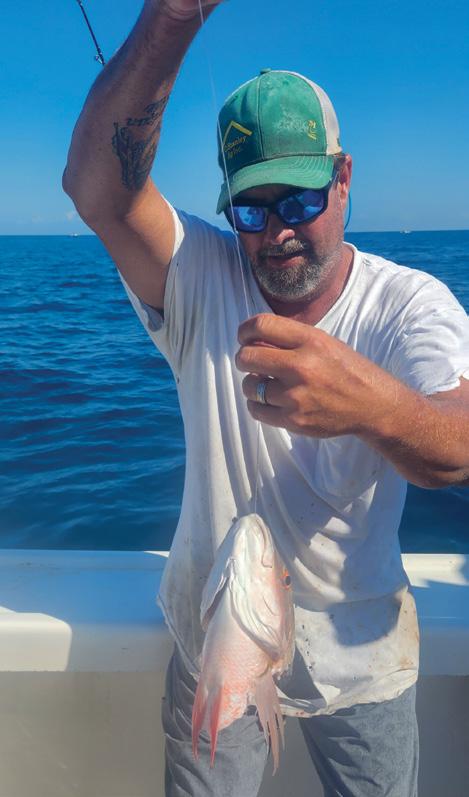
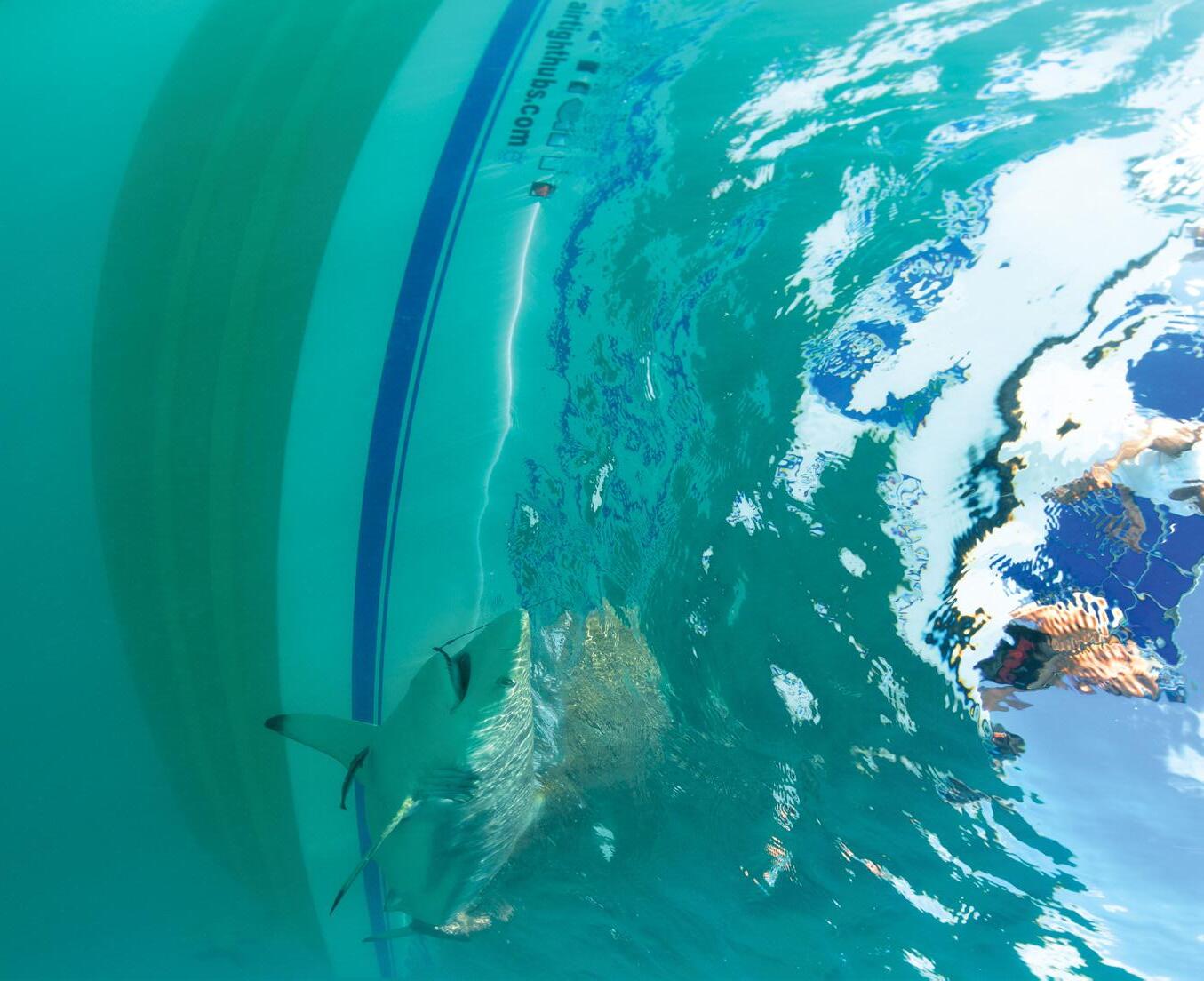
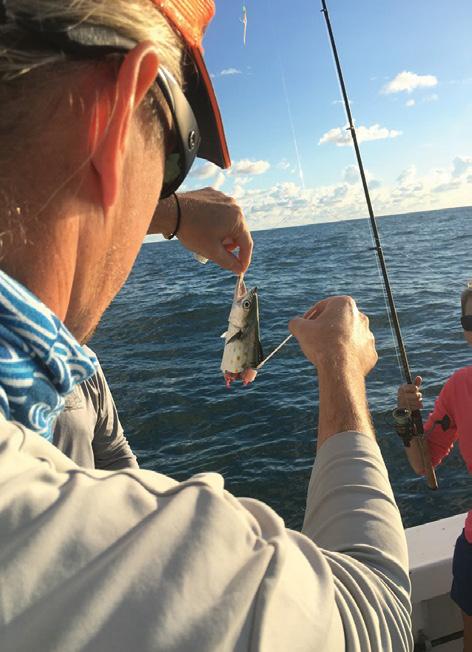
But understanding which sharks are responsible is no easy task. Most depredation happens out of sight, deep below the surface. That’s where the science got even more creative. Working with local fishing charters, researchers collected DNA samples not just from bite-marked carcasses, but even from the frayed ends of fishing lines — the first time such a technique has been used. Nearly half the line swabs successfully identified shark DNA, a breakthrough in species identification where visual confirmation is nearly impossible.
The results? Bull sharks and sandbar sharks were the most frequently identified culprits,
while popular game fish like mutton snapper, red snapper and greater amberjack were among the most common victims. Interestingly, while depredation occurred more often in spring and in hotspots like the Florida Keys and Southeast Florida, the actual rate of catch lost to sharks didn’t vary as much — suggesting local factors like depth, habitat and fishing technique may play an even bigger role.
Shark depredation is on the rise in highshark-density regions around the globe — from Florida to Australia.
“Our findings could help fishery managers in developing informed, science-based strategies to address shark depredation while balancing conservation and recreational fishing interests,” Ajemian said.
For now, Florida anglers may still lose the occasional fish to a shark’s sneaky ambush. But thanks to this groundbreaking work, the gap between frustration and understanding is narrowing — and the tug-of-war between angler and apex predator is finally getting the scientific attention it deserves.
A fisherman with a depredated mutton snapper.
A researcher swabbing a Spanish mackerel.
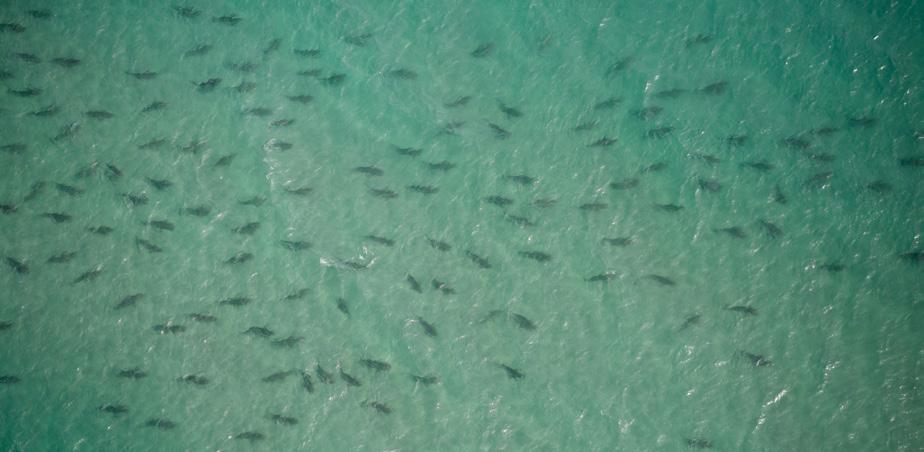
Sharkitecture Unlocking the Hidden Engineering Inside a Shark’s Spine
Sharks have been perfecting their design for more than 450 million years. Unlike most vertebrates, they don’t have skeletons made of bone. Instead, they rely on cartilage — mineralized, flexible and strong. And now, with the help of cuttingedge imaging and nanoscale analysis, researchers are discovering that these ancient predators have more than just brute strength working in their favor. They have architecture — or more precisely, “sharkitecture.”
Florida Atlantic researchers peered inside the spine of the sleek blacktip shark and uncovered a microscopic structural design optimized for strength, flexibility and endurance. Using powerful synchrotron X-ray nanotomography and in-situ mechanical testing, the team revealed a stunning nanoscale blueprint that helps explain how sharks withstand the intense, repetitive stress of constant swimming.
Blacktip sharks are fast, agile hunters found in warm coastal waters around the world. Known for their bursts of speed — reaching up to 20 miles per hour — and their acrobatic movements, these sharks are constantly in motion. To maintain such power and grace, their skeletons must be both durable and flexible.
What researchers found inside their mineralized cartilage is remarkable. Two distinct regions within the vertebrae — the corpus calcareum and the intermediale — are made of the same materials (collagen and bioapatite, a mineral also found in human bones) but differ significantly in structure. In both areas, mineralized plates form porous frameworks reinforced by thick struts, designed to handle force from
multiple directions. This makes the skeleton incredibly resilient, even under the strain of constant motion.
Even more striking: at the nanoscale, the team discovered that collagen fibers are tightly aligned with needle-like bioapatite crystals. This complex layered arrangement allows the cartilage to be tough without becoming brittle, a balance that’s crucial for an animal in nonstop motion.
“Nature builds remarkably strong materials by combining minerals with biological polymers, such as collagen — a process known as biomineralization. This strategy allows creatures like shrimp, crustaceans and even humans to develop tough, resilient skeletons,” said Vivian Merk, Ph.D., assistant professor in the Department of Chemistry and Biochemistry in the Charles E. Schmidt College of Science, as well as in the Department of Ocean and Mechanical Engineering and the Department of Biomedical Engineering in the College of Engineering and Computer Science.
“Sharks are a striking example. Their mineral-reinforced spines work like springs, flexing and storing energy as they swim. By learning how they build such tough yet adaptable skeletons, we hope to inspire the design of next-generation materials.”
That spring-like quality is key. Sharks don’t just power through the water — they store and release energy efficiently with each tailbeat. To better understand this, researchers subjected microscopic samples of shark vertebrae to mechanical stress. What they saw was incredible: after a single cycle of pressure, the material deformed by less than a micrometer. Only after a second round of loading did fractures appear, and
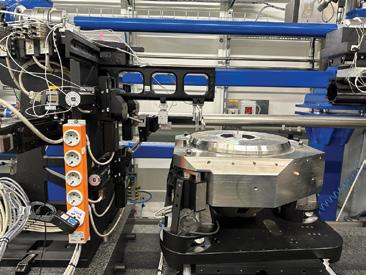
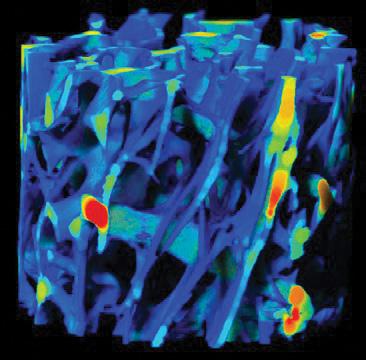
even then, they were confined to a single mineralized layer, showing the structure’s built-in resistance to catastrophic failure.
“After hundreds of millions of years of evolution, we can now finally see how shark cartilage works at the nanoscale — and learn from them,” said Marianne Porter, Ph.D., associate professor of biological sciences in the Schmidt College of Science. “We’re discovering how tiny mineral structures and collagen fibers come together to create a material that’s both strong and flexible, perfectly adapted for a shark’s powerful swimming. These insights could help us design better materials by following nature’s blueprint.”
That’s the real promise of this research: using what sharks have evolved over eons to improve human technology today. The unique, fiber-reinforced architecture found in shark cartilage could inspire stronger, more flexible materials for medical implants, athletic gear, and protective equipment, offering strength without sacrificing adaptability.
In other words, sharkitecture isn’t just about understanding sharks — it’s about borrowing from their evolutionary success to build smarter, better designs for the future.
An X-ray nanotomography reconstruction of the intermediale cartilage of a blacktip shark.
The synchrotron X-ray nanotomography machine.
Big ‘Fin’ish Alumnus Wins Netflix Series ‘All the Sharks’
BY AMY BUTLER
Alumnus Chris Malinowski, Ph.D., affiliate scientist at Florida Atlantic University’s Charles E. Schmidt College of Science, recently snagged first place in the Netflix series, “All the Sharks.”
Part of the Shark Docs duo, Malinowski and his partner, Brendan Talwar, Ph.D., beat three other teams during an intense, globetrotting race to identify and photograph some of the planet’s most misunderstood predators. The rarer the sharks the teams discovered, the more points they earned — and Malinowski and Talwar ultimately took home the $50,000 grand prize.
“Winning the series in the Galápagos — surrounded by some of the world’s most incredible shark and ray populations — was absolutely mind-blowing,” said Malinowski, who earned a master’s in biology from Florida Atlantic in 2011. “After pushing ourselves through eight weeks of nonstop travel across five continents and diving in the most jaw-dropping locations on Earth, that final victory felt like the ultimate reward for all the blood, sweat and salt water.”
To continue to push the boundaries of marine science and develop real solutions for ocean conservation challenges, Malinowski and Talwar donated the prize money to various marine conservation organizations — including half of the money to the Ocean First Institute, where Malinowski serves as director of research and conservation. The institute focuses on cutting-edge marine research, especially related to sharks and other megafauna, while inspiring and educating a new wave of ocean champions.
(continued on page 62)
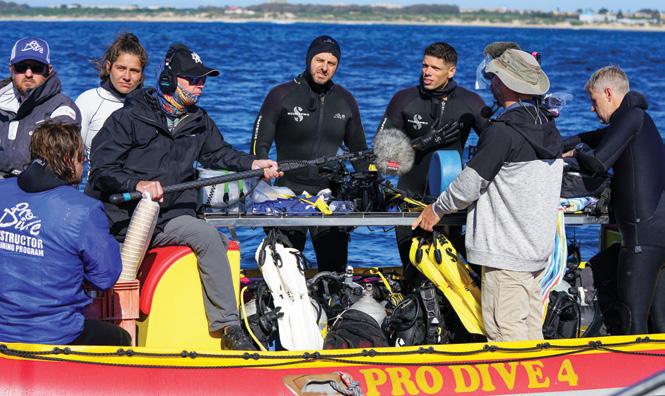
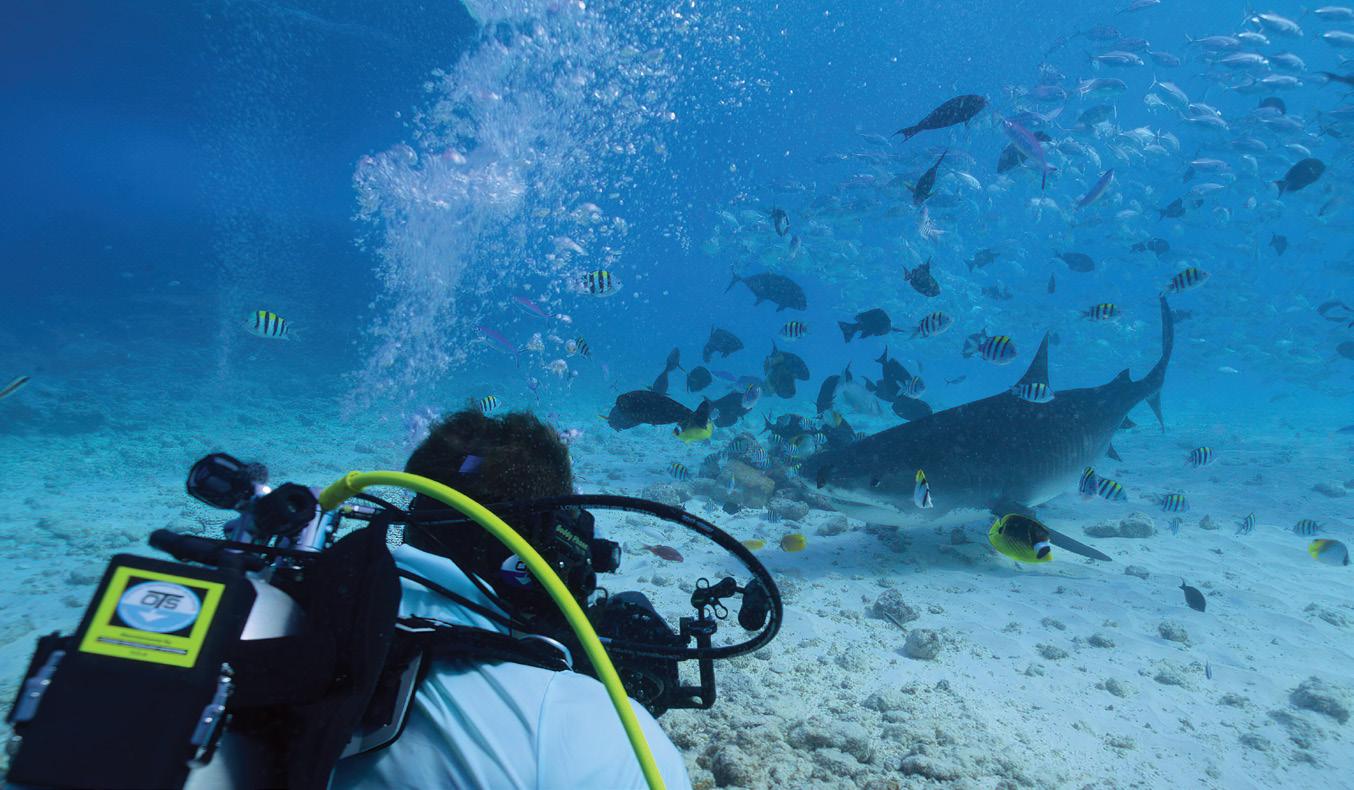
Chris Malinowski, Ph.D., right, with his competition partner
Brendan Talwar, Ph.D.
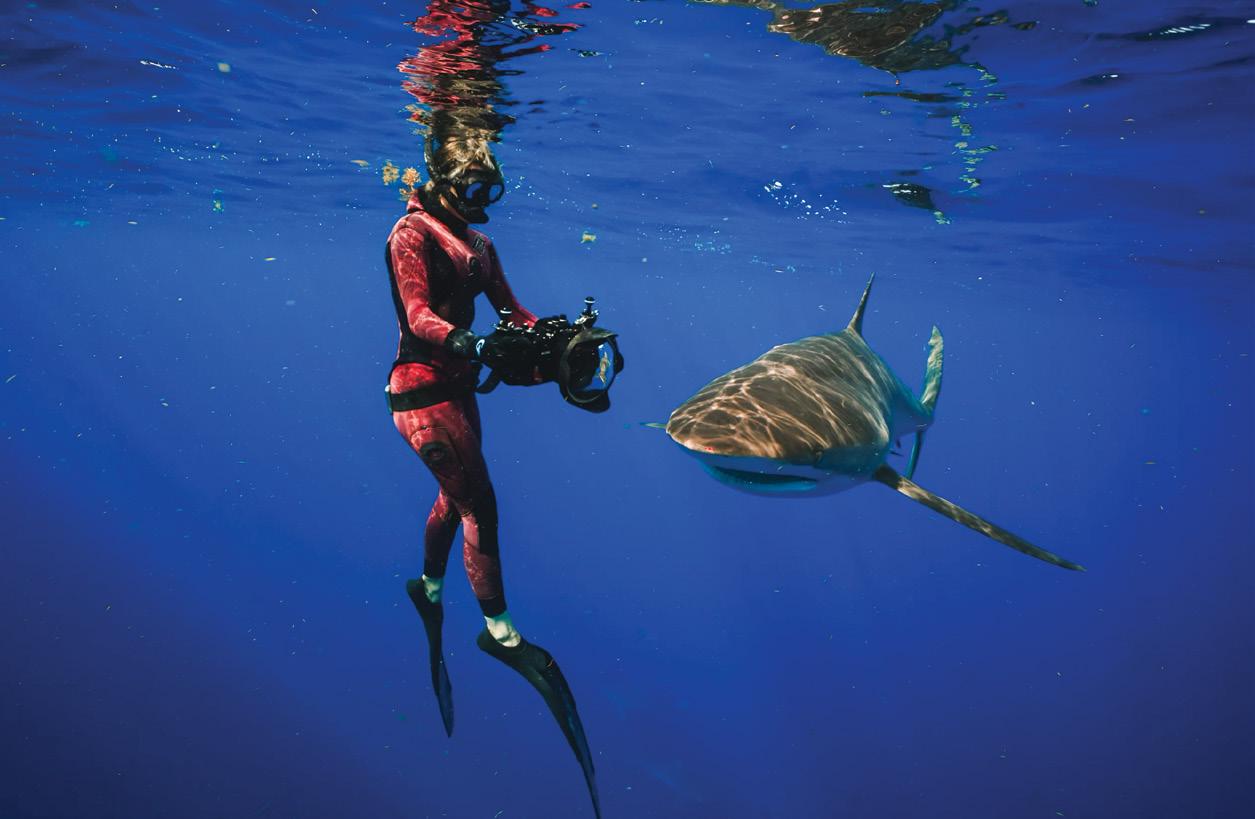
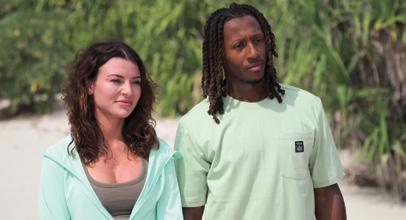
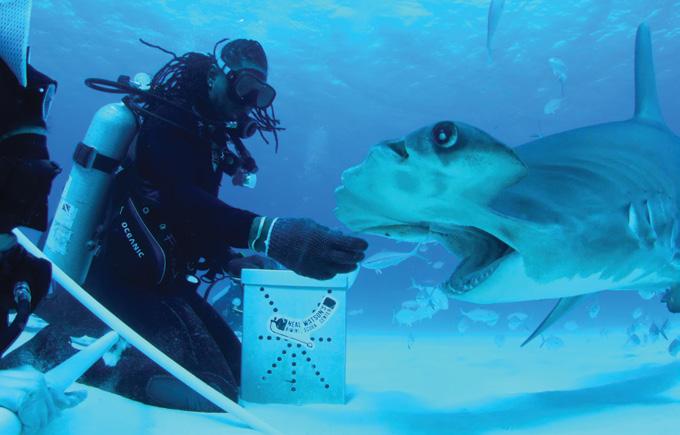
“Experiencing that rapid-fire tour of the world’s most incredible marine ecosystems was like living every marine biologist’s dream all at once,” Malinowski said. “Seeing that incredible diversity and abundance of life just reinforced how desperately we need to fight for better conservation measures to protect these hotspots and to improve other regions.”
Malinowski credits his marine science-focused career to his time at Florida Atlantic.
“My master’s at FAU in the Schmidt College of Science was where I truly learned to think like a scientist — formalizing research questions, designing robust studies and discovering my passion for marine research.”
Malinowski was not the only Owl swimming in sharkinfested waters during the filming. Rosie Moore, who earned a bachelor’s in general studies in 2018 and a master’s in geosciences in 2021, was one of the competitors during the high-octane competition. For the last three years, Moore has hosted shows on Discovery Channel’s Shark Week, however, her main role is with The International SeaKeepers Society, where she manages the citizen science program and promotes ocean science through conservation, education and work with the media.
To watch the Florida Atlantic alumni compete nose-tonose, check out the “All the Sharks” series now streaming on Netflix.
Alumna Rosie Moore
Leading the Fight to Save Florida’s
Sea
Turtles
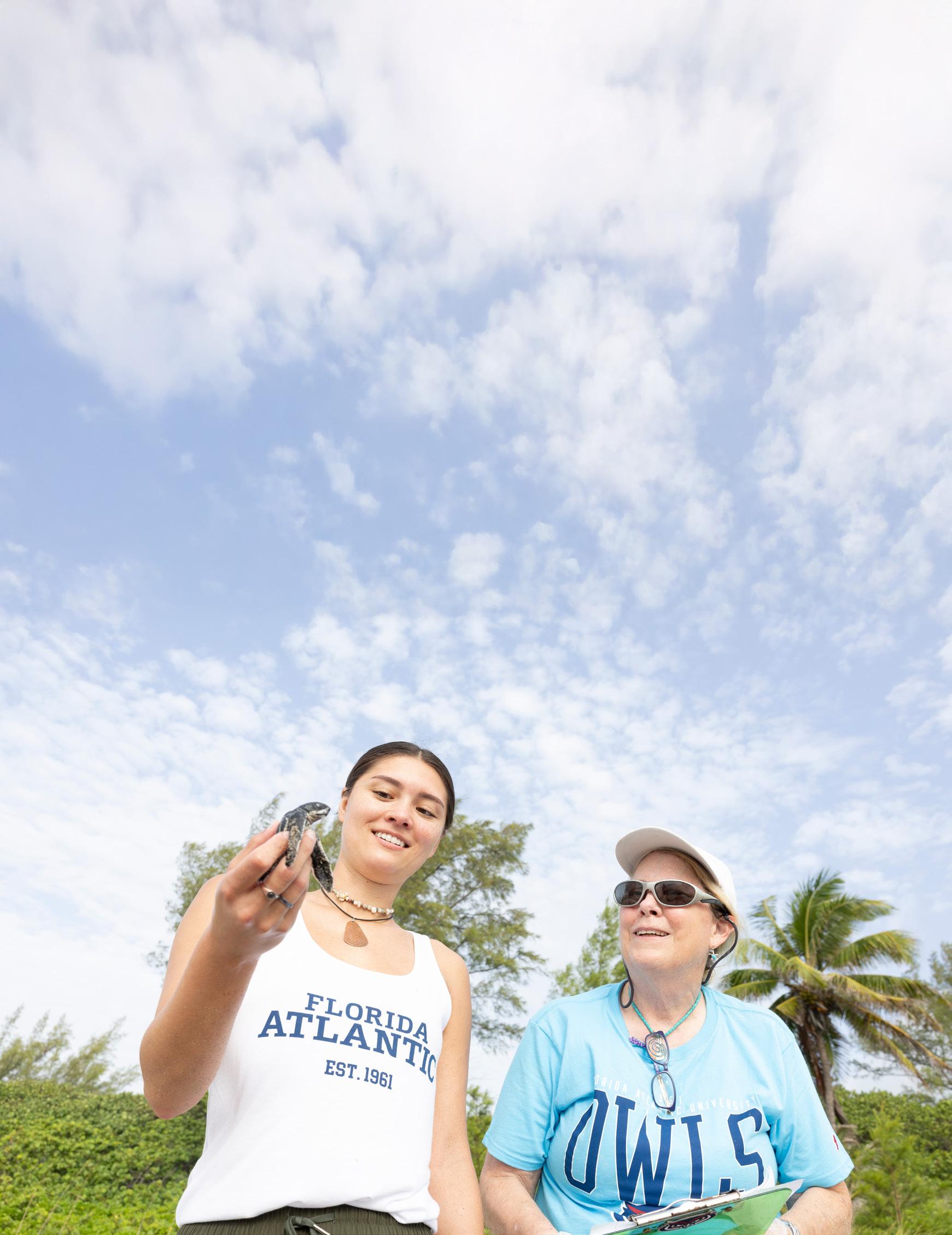
At Florida Atlantic University, the School of Environmental, Coastal and Ocean Sustainability (ECOS) is dedicated to addressing the most pressing challenges facing the planet. This mission is exemplified by its trailblazing scientists who are working to ensure the survival of Florida's sea turtles. As global temperatures rise, these "sentinels of the sea" face an uphill battle. ECOS faculty members are on the front lines, studying how a changing climate impacts everything from hatchling sex ratios and physical performance to overall health and disease.
This groundbreaking research spans decades and provides critical data to inform conservation strategies. By channeling their work through impactful teaching and community outreach, ECOS researchers are inspiring the next generation of scientists and helping to ensure that Florida’s sea turtles, along with the ecosystems they inhabit, are protected for years to come.
Prote c ting the Gem of the Tre asure Coast

At Florida Atlantic University’s Harbor Branch
Oceanographic Institute , researchers are leading e orts to preserve and restore the Indian River Lagoon (IRL). The IRL ecosystem is one of the most biologically diverse estuaries in North America. Comprising 156 miles of coastline and impacting six counties , 45 cities and at least 1.6 million residents , the IRL has an estimated $8 billion economic value to the State of Florida.
With a legacy of more than 50 years of groundbreaking research, education and community partnerships, and a prime location directly on the lagoon, Harbor Branch is uniquely positioned to lead e orts to ensure that the IRL remains a treasure for generations to come.
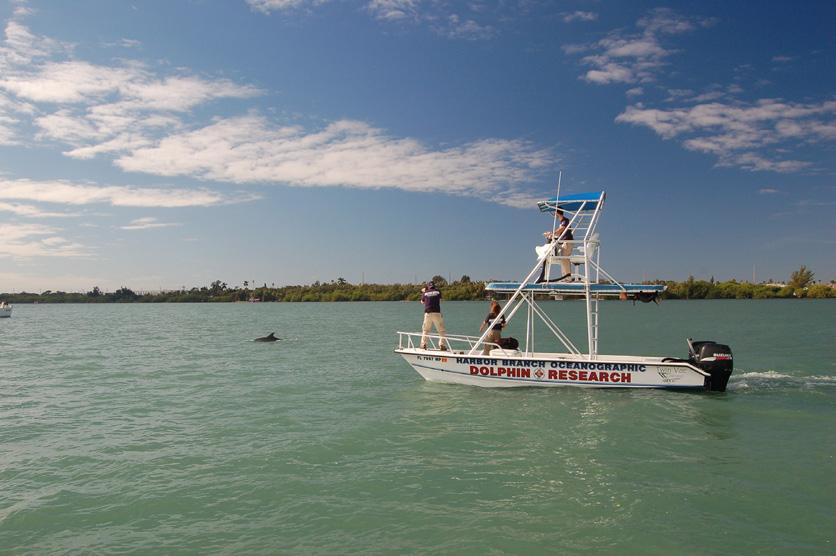
Ecosystem Monitoring and Restoration
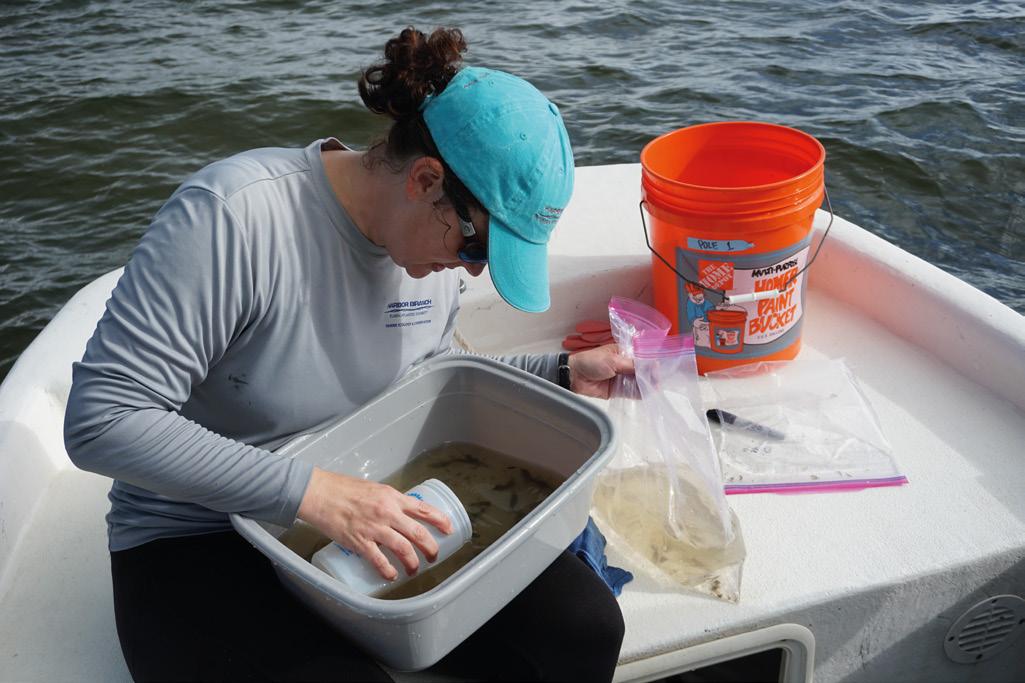
Nutrient Pollution, Toxins and Harmful Algal Blooms
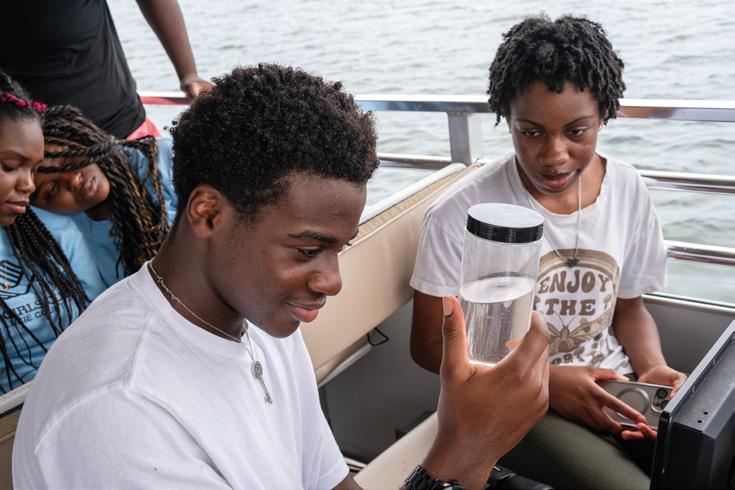
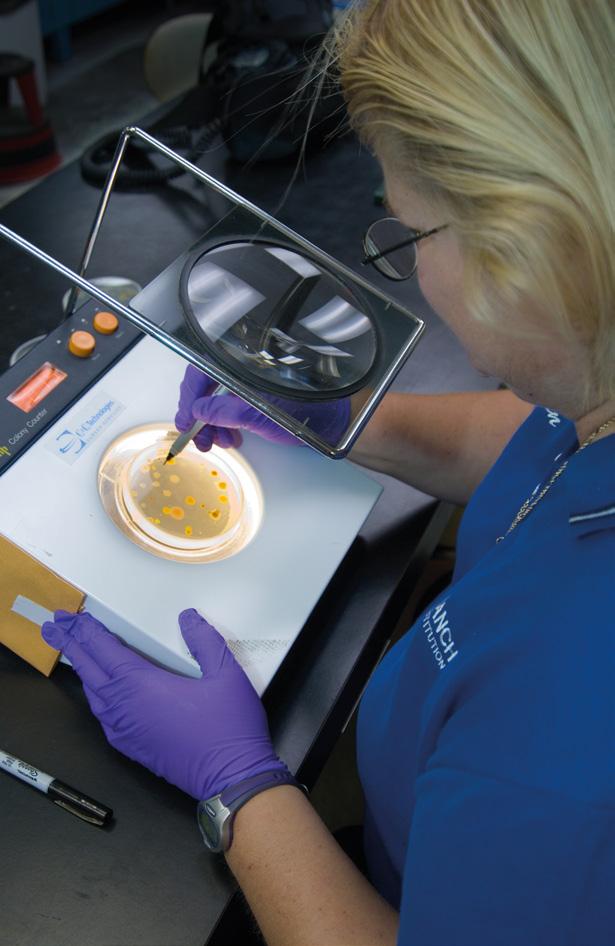
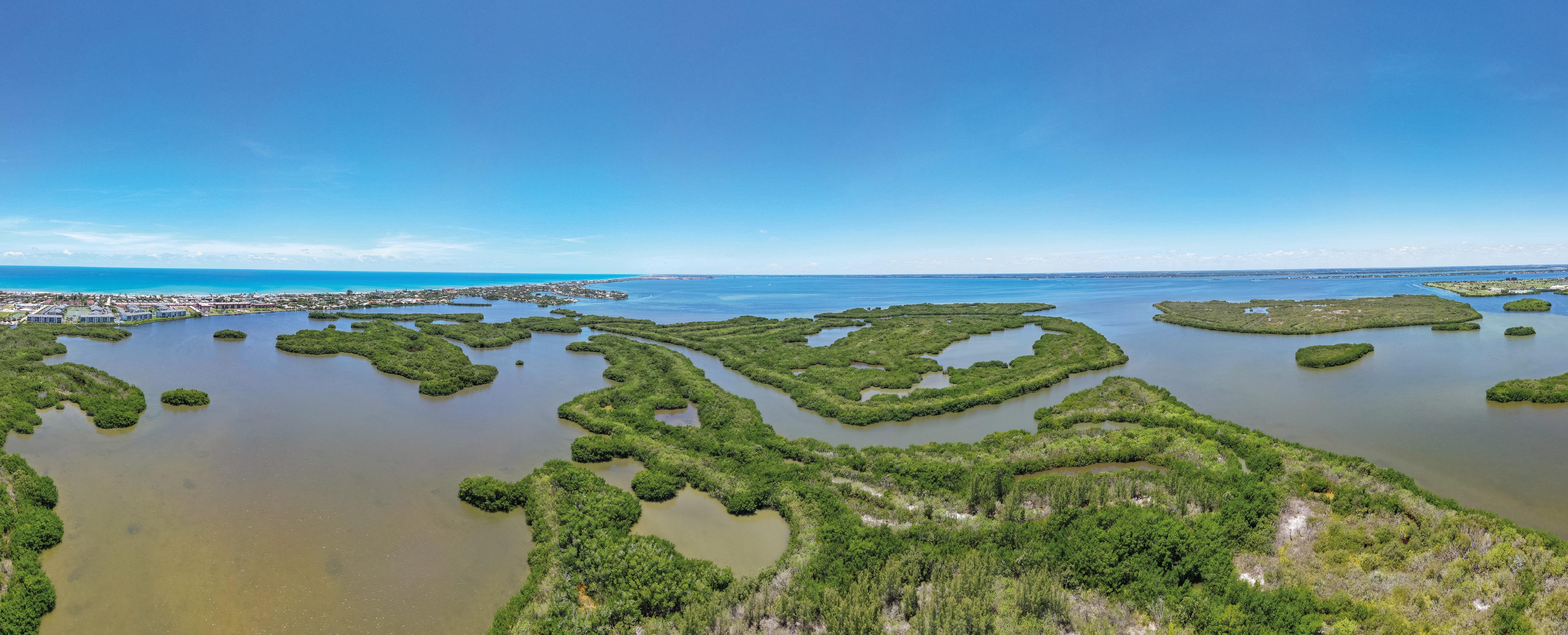




Winning in Paradise
Celebrating 25 Years of FAU Football’s Unstoppable Rise
BY BENJAMIN PAUL
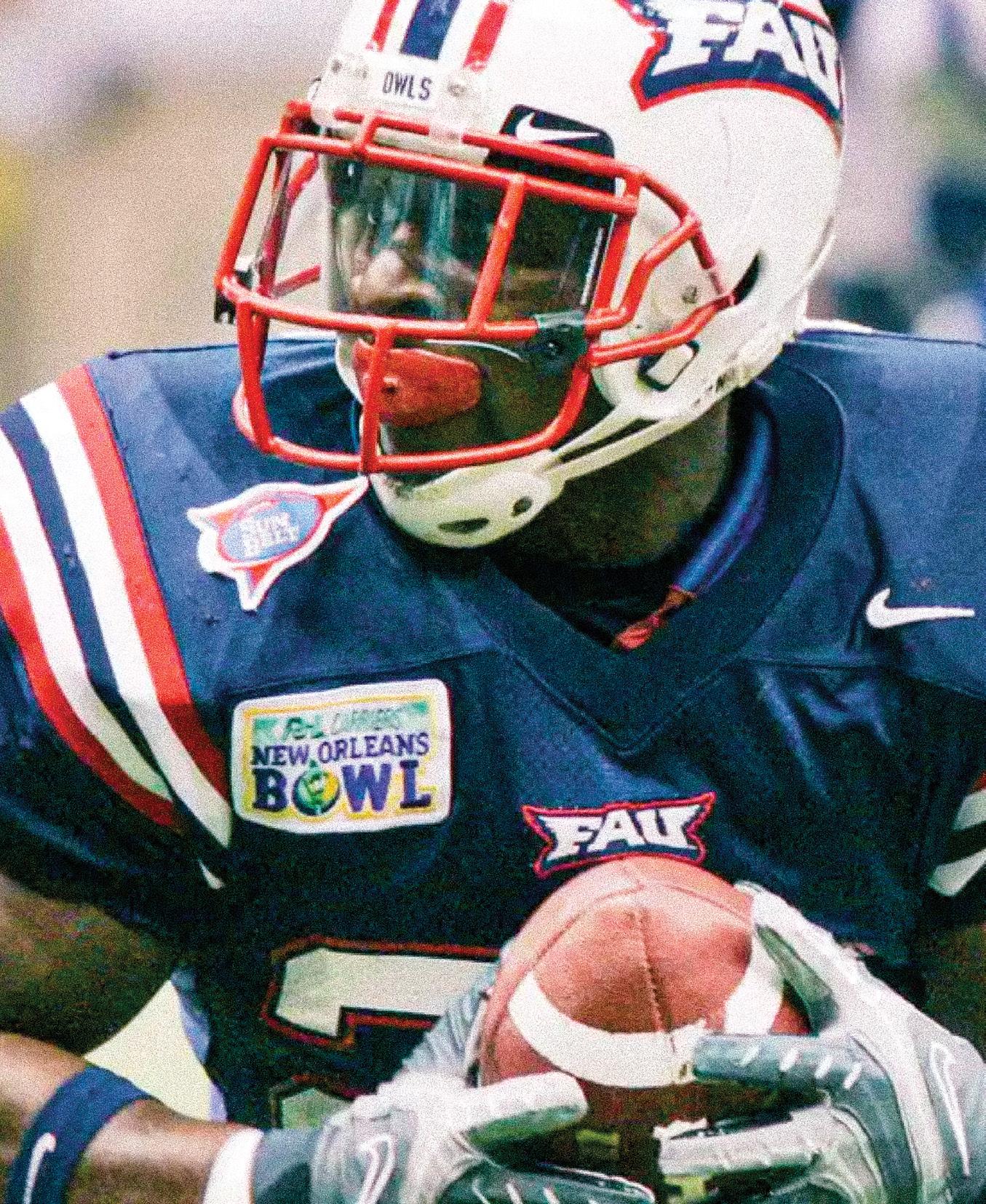

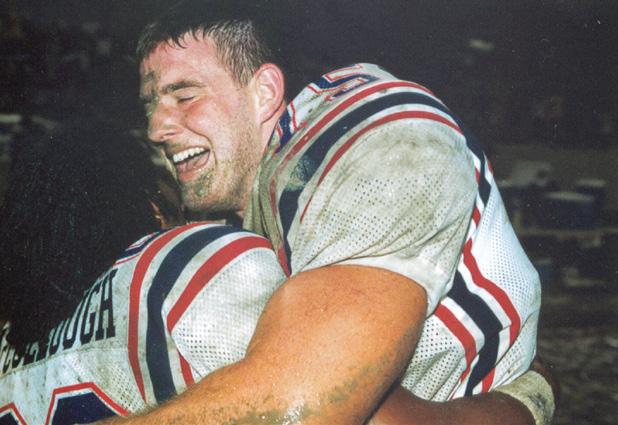
Howard Schnellenberger once said, “We are on a collision course with destiny. The only variable is time.”
For the past 25 years, Florida Atlantic has been fulfilling that destiny with football in paradise. As the 20th youngest Division I FBS program in the nation, the Owls have won three conference championships, held a 4-1 record in postseason bowl games, and produced high-level NFL talent.
There is no FAU football without Schnellenberger. With his career seemingly winding down in the late 1990s, he had already built a highly decorated football resume. Schnellenberger was part of four national championships — three as an offensive coordinator for the University of Alabama under Bear Bryant in the 1960s and then as head coach of the University of Miami in 1983. He also had success in the National Football League, where he was the offensive coordinator for the Super Bowl-winning Miami Dolphins in 1972. It remains the only undefeated championship team in NFL history.
Following a 10-season stint as head coach of Louisville (1985-94) and one year leading Oklahoma (1995), Schnellenberger was out of the game until 1998 when he was named director of

football operations for Florida Atlantic, a program that had only been a dream at that point for the university and the South Florida community.
Before the Owls even stepped onto the field, he spent three years roaming the university, Boca Raton and its surrounding cities, delivering stump speeches to drum up interest and excitement.
Dr. Richard Staller is the team dentist and one of the program’s biggest supporters over its 25-season history. He reflected on his first time hearing from Schnellenberger, who was a guest speaker at a Boca Raton Roundtable meeting, where Staller was the president.
“That day he said he was bringing Division I football to Boca Raton. Also, we would have an on-campus stadium and eventually we would compete for a national title. Time was the only variable,” Staller recalled. “I said, ‘why not?’ and my life changed forever.”
As Division I-AA members, the Owls first took the field for the 2001 season, playing their home games at Pro Player Stadium, where the Miami Dolphins also played. After a respectable 4-6 record in their opening campaign, FAU football began to make noise in 2003 and 2004 with a
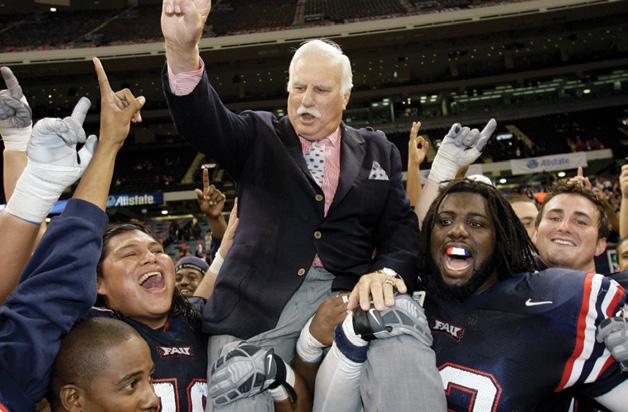
Ed Matthews celebrating after the program’s first win in 2001.
Howard Schnellenberger being carried off the New Orleans Bowl field by Jared Smith and Jervonte Jackson.

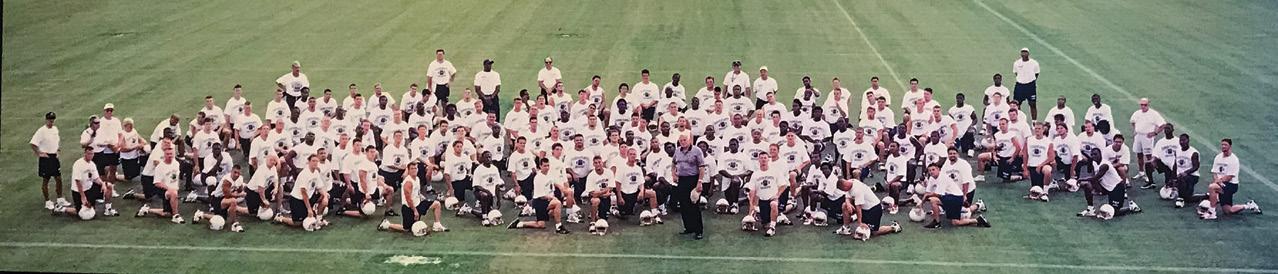
combined 20-6 record. The No. 13 ranked Owls qualified for the NCAA Division I-AA Football Championship playoffs in 2003 after going 11-3. They defeated Bethune Cookman and Northern Arizona before falling to No. 6 Colgate in the semifinals.
The early teams made an impact on the university that is still felt to this day. Ryan Moran, a former player and now associate director of alumni and community engagement at the university, made sure to honor those early teams, hosting them recently during a visit to Florida Atlantic’s on-campus Flagler Credit Union Stadium.
“It was something none of them even could have imagined when they played here but they still ended up committing to FAU and believing in Coach Schnellenberger’s dream. I got chills,” Moran said.
In 2005, Florida Atlantic made its move to Division I. Now playing at the highest level of collegiate football, success came in 2007 — the team’s third season as an FBS program and the first eligible for postseason action. Star linebacker Cergile Sincere saw something special entering his senior season.
“We were a tough group of men that were groomed by the great men that paved the way before us,” Sincere said. “We all shared the same goal: be champions. We did that with a simple motto: ‘work hard, play hard, win easy.’”
Champions they were. With an 8-5 record, the Owls achieved their first conference title as a member of the Sun Belt and qualified for a bowl game. A 44-27 victory over Memphis in the New Orleans Bowl made Florida Atlantic the youngest program to win a bowl game — and gave the team its first taste of national recognition.
What I remember the most is the bond that I had with the team and the coaches. I’m lucky to have been a part of FAU and proud to call those guys my brothers.”
- Kris Bartels
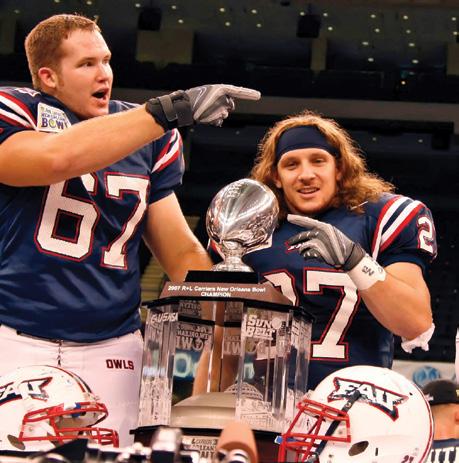
Charlie Partridge with Howard Schnellenberger the day Partridge was hired in 2014.
Zach Wichner, left, and Kris Bartels with the New Orleans Bowl Trophy.
The team’s first full practice in 2000.

The unforgettable season was defined by a special bond, one that was instilled by starting safety Kris Bartels.
“The players took control of the team. Our entire goal that season was to win the conference and we weren’t going to let another teammate deter that goal. It was a brotherhood. We were more worried about letting down the guy next to us than our position coaches,” Bartels said. “What I remember the most is the bond that I had with the team and the coaches. I’m lucky to have been a part of FAU and proud to call those guys my brothers.”
A successful follow-up campaign in 2008 saw the Owls once again earn a postseason trip, this time to the Motor City Bowl where they defeated Central Michigan by a score of 24-21, keeping Schnellenberger’s bowl record at a perfect 6-0.
At the age of 77, Schnellenberger announced that the 2011 season would be the final of his 52-year coaching career. That same year,
the on-campus football stadium opened after eight seasons of playing at Lockhart Stadium in Fort Lauderdale. But the legacy of its founder continues to live on with the field named in his honor and a statue of his likeness that symbolizes the monumental impact he had on the university.
Navigating the following few seasons without their general, as well as a move to Conference USA, wins did not come easy. However, a foundation of some of the best collections of talent that the program had ever seen was built. Charlie Partridge was hired as head coach in 2014, and along with him came players such as Azeez Al-Shaair, Devin Singletary and Harrison Bryant, who were able to have successful careers at the next level. It was also under the defensive line guru Partridge where Trey Hendrickson developed into an eventual NFL All-Pro, a league sack champion, and one of the top defensive players in the sport.
“He really helped me sharpen my skills at defensive end,” Hendrickson said of Partridge. “He was somebody I could lean on not only as a football player but as a person.”
Partridge’s three-year tenure paved the way for a splash that threw Florida Atlantic into the national spotlight in a way not previously seen. Enter Lane Kiffin in 2017, the offensive coordinator for national champion Alabama and one of the most prolific names in college football.
In three years, Kiffin delivered two C-USA championships, two 11-win seasons, and two Boca Raton Bowl victories in blowout fashion.
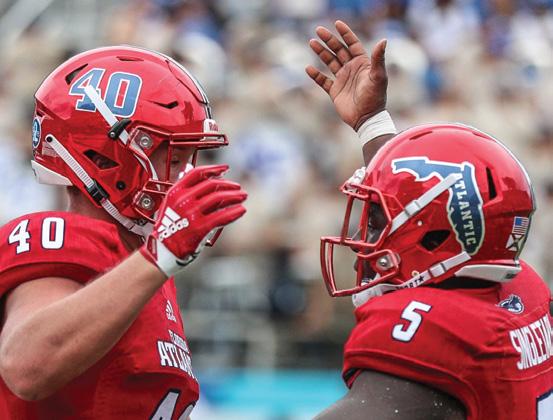
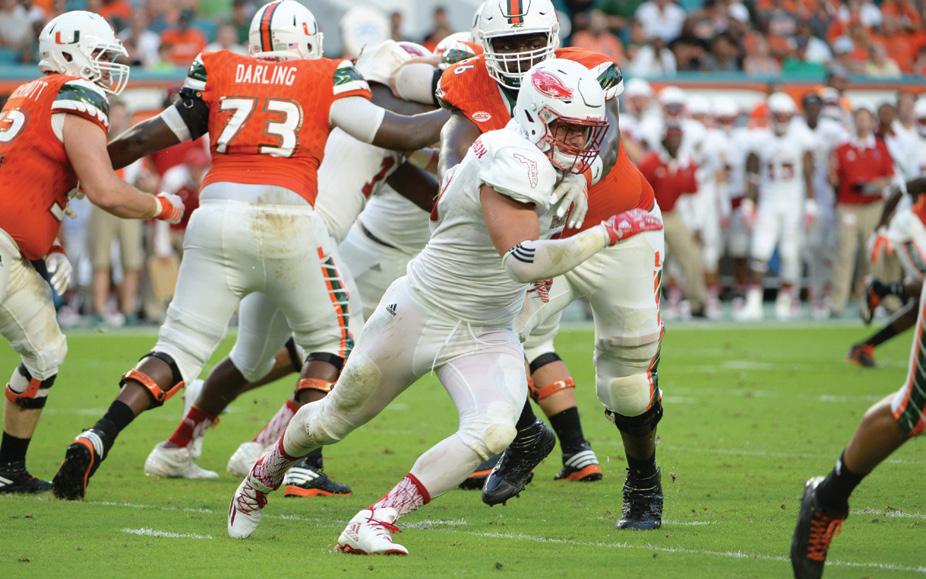
Stadium groundbreaking, from left: Former Board of Trustees Chair Nancy Blosser, Former President Frank Brogan, Former President Mary Jane Saunders, inaugural Head Coach Howard Schnellenberger, and Craig Angelos, former athletics director.
All-Americans and future NFL players Harrison Bryant and Devin “Motor” Singletary.

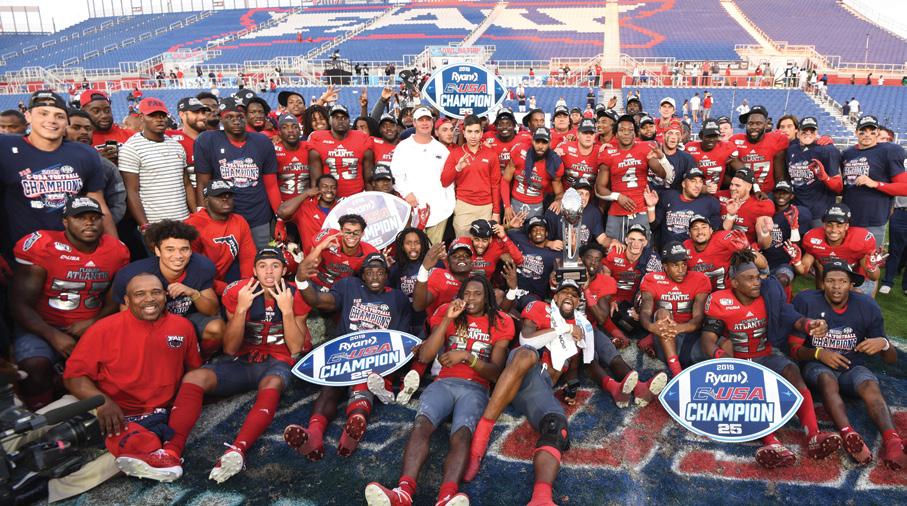
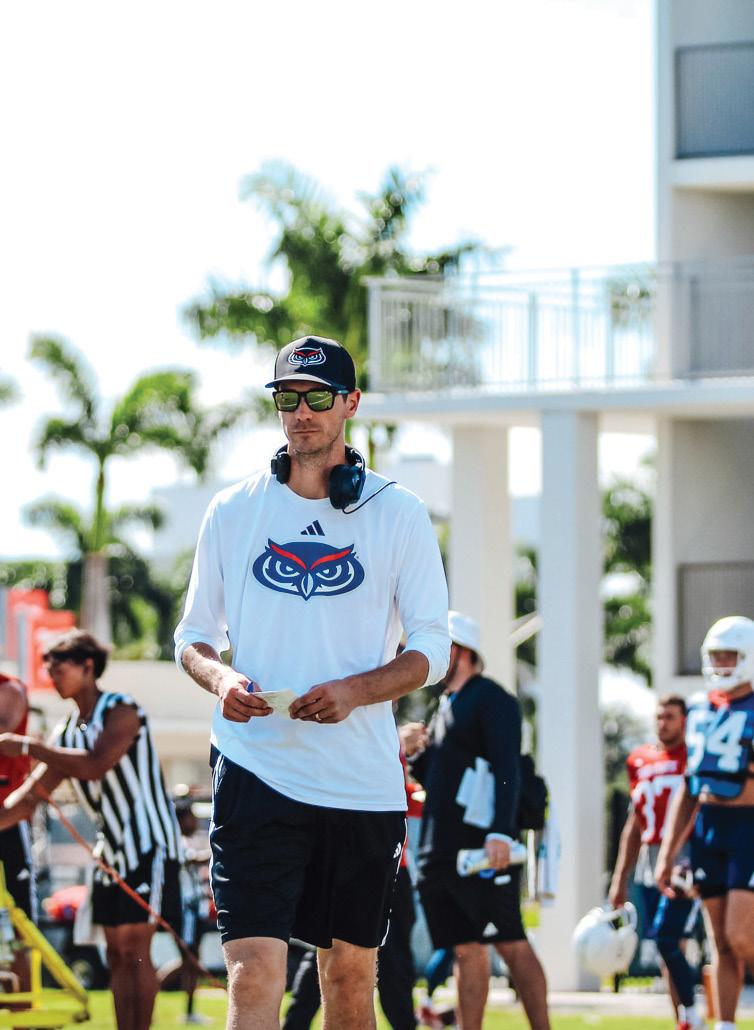
With national attention on the program in year one of the Kiffin era, the Owls rattled off 10 straight wins after a 1-3 start, culminating in a 50-3 triumphant win over Akron at the Boca Raton Bowl in then FAU Stadium.
“Lane Kiffin was a national figure that ESPN could not wait to get on TV and he took FAU football along for the ride,” Staller said. “We were a rock show at home and on the road with the fans and media.”
The success continued in 2019, during which a 49-6 takedown of UAB gave the Owls their second conference championship in three seasons. The team remained home for another Boca Raton Bowl and another triumphant victory, this time winning 52-28 over SMU.
While Kiffin departed for the SEC following the 2019 season, the winning expectations for the program remained under Brian White, vice president and director of athletics, who drilled “Winning In Paradise” into the minds of Boca residents.
The commitment to building a winning program was eventually rewarded with another step up in conferences: this time to the American in 2023.
Prior to the start of the 25th season, Florida Atlantic named Zach Kittley the new Hagerty Family Head Football Coach. He is the seventh head coach in program history and the youngest head coach in DI football at 34 years old. Kittley plans to honor the program’s history by celebrating everyone who contributed to its early success.
“I’m a big believer in being extremely thankful and grateful for the people that came before you, that helped set the standard of what the football program is supposed to be like,” Kittley said. “I just want to honor everybody from the past: coaching staff, players, everybody that had their fingerprints on the program, and just be a competitive football team that plays the right way with a brand of football that they’re proud to watch.”
With Kittley and White overseeing the program, Florida Atlantic football’s impact on both the university and Boca Raton will continue to be recognized.
“The creation of our football program 25 years ago had a profound and lasting impact on Florida Atlantic and the Boca Raton community,” White said. “Where we are today as an athletic department and as an institution has been influenced significantly by the program Howard Schnellenberger founded. From the building of Flagler Credit Union Stadium, to multiple conference championships and bowl wins, to attracting the Boca Bowl to Boca Raton, this program is symbolic of FAU’s advancement on the national stage. We are proud to carry on Coach Schnellenberger’s legacy as your ‘Hometown Team.’”
Hagerty Family Head Football Coach Zach Kittley
Team celebration following the 2019 C-USA Championship.

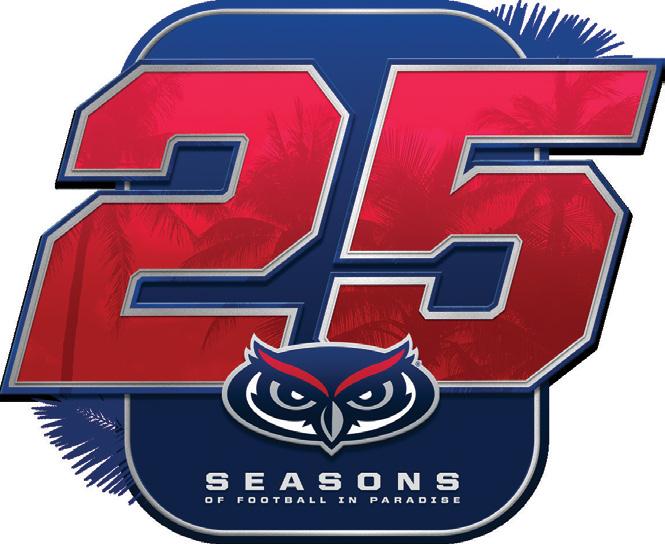
WIN COLUMN
FLORIDA ATLANTIC ATHLETICS
‘Dare to Race’
Fueled by New Talent, Softball Team Snags Second Straight AAC Championship
BY BENJAMIN PAUL
The Florida Atlantic University softball team made history in 2024 as the university’s first to win a championship in the American Athletic Conference, after clinching the regular season title and later qualifying for the NCAA Regionals.
Heading into the 2024-25 season, Head Coach Jordan Clark decided that the Owls were going to do it again — and then some.
Clark welcomed 12 new players and reshaped the coaching staff with three additions, all while playing a daunting schedule that had the team take on six power conference opponents in the first two weeks of the season.
The challenge of going from a team of hunters to the ones being hunted was not lost on Clark entering her third season at the helm of the program. Knowing that the other nine teams in the conference would circle the series against Florida Atlantic on their calendars, she needed the team to keep pushing ahead, never slow down, nor let anyone pass them in their quest for another title.
Understanding the importance of a theme and motto to help achieve goals, Clark told the team that in 2025, they would “dare to race.”
“‘Dare to race’ was about pushing our girls to play fast, take aggressive turns, and be the first across the finish line,” Clark said.
This theme was aided by actual team trips to the Daytona and Homestead-Miami Speedways, a locker room decked out in checkered flags, and film sessions that were expanded to include viewings of documentary series about champion NASCAR and Formula 1 drivers.
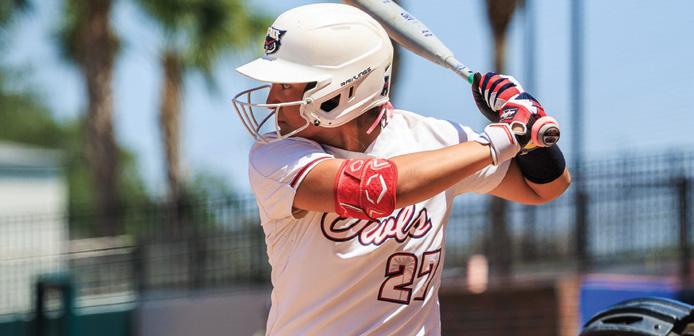
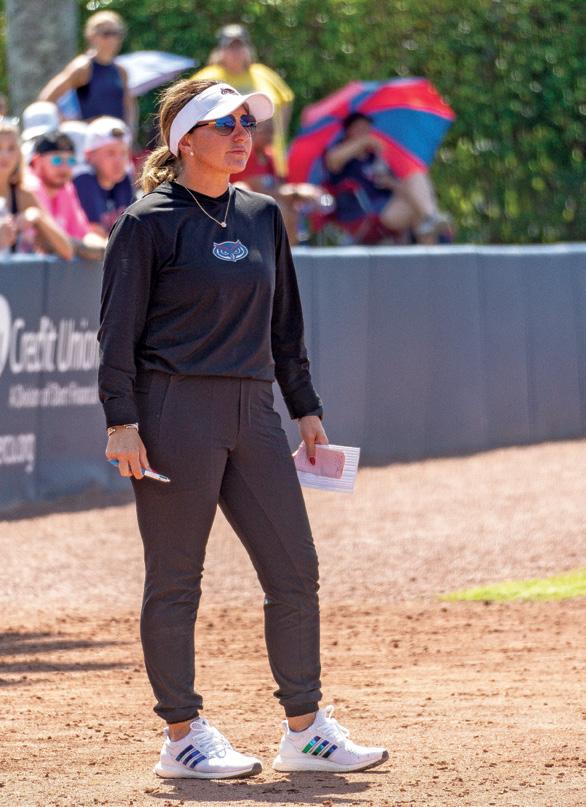
‘Dare to race’ was about pushing our girls to play fast, take aggressive turns, and be the first across the finish line.”
– Jordan Clark
Bella Foran
“It’s important to learn about topics outside of our sport and how we can use that information to make us stronger, tougher and more adaptable within softball,” Clark said.
The Owls’ three-month race began Feb. 6 with a dramatic 5-4 comeback victory over Ole Miss in extra innings, taking down a Rebels team that eventually played in the 2025 College World Series. Later that night, the Owls took care of business against Big 12 team Kansas. Less than 24 hours later, nationally ranked Clemson was defeated by Florida Atlantic by a score of 6-2.
“Coming out the first weekend and going undefeated against teams like Ole Miss, Kansas, Clemson, I knew we had something special this season,” Clark said.
Throughout the season, Florida Atlantic not only passed teams expected to be in its way, but also its own standard set in the previous year. The Owls won 45 games, four more than in 2024, and found themselves ranked in the top 25 nationally in batting average (.333),
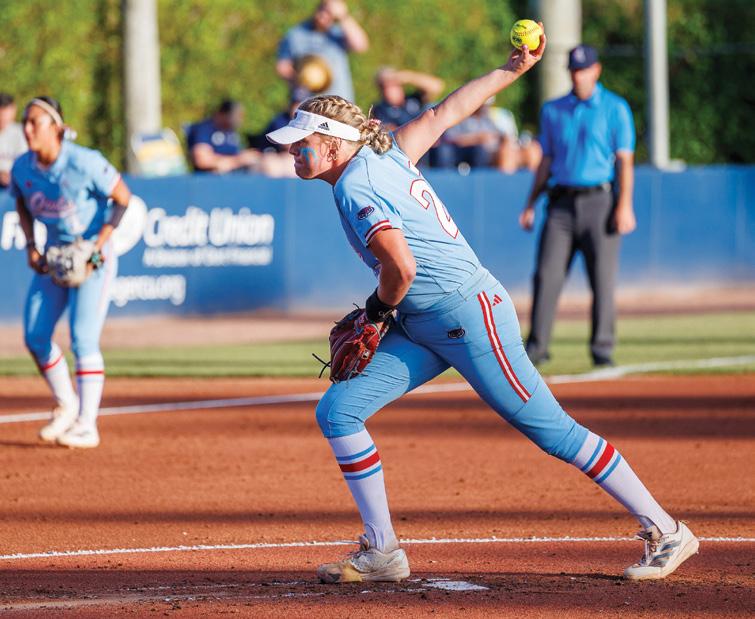
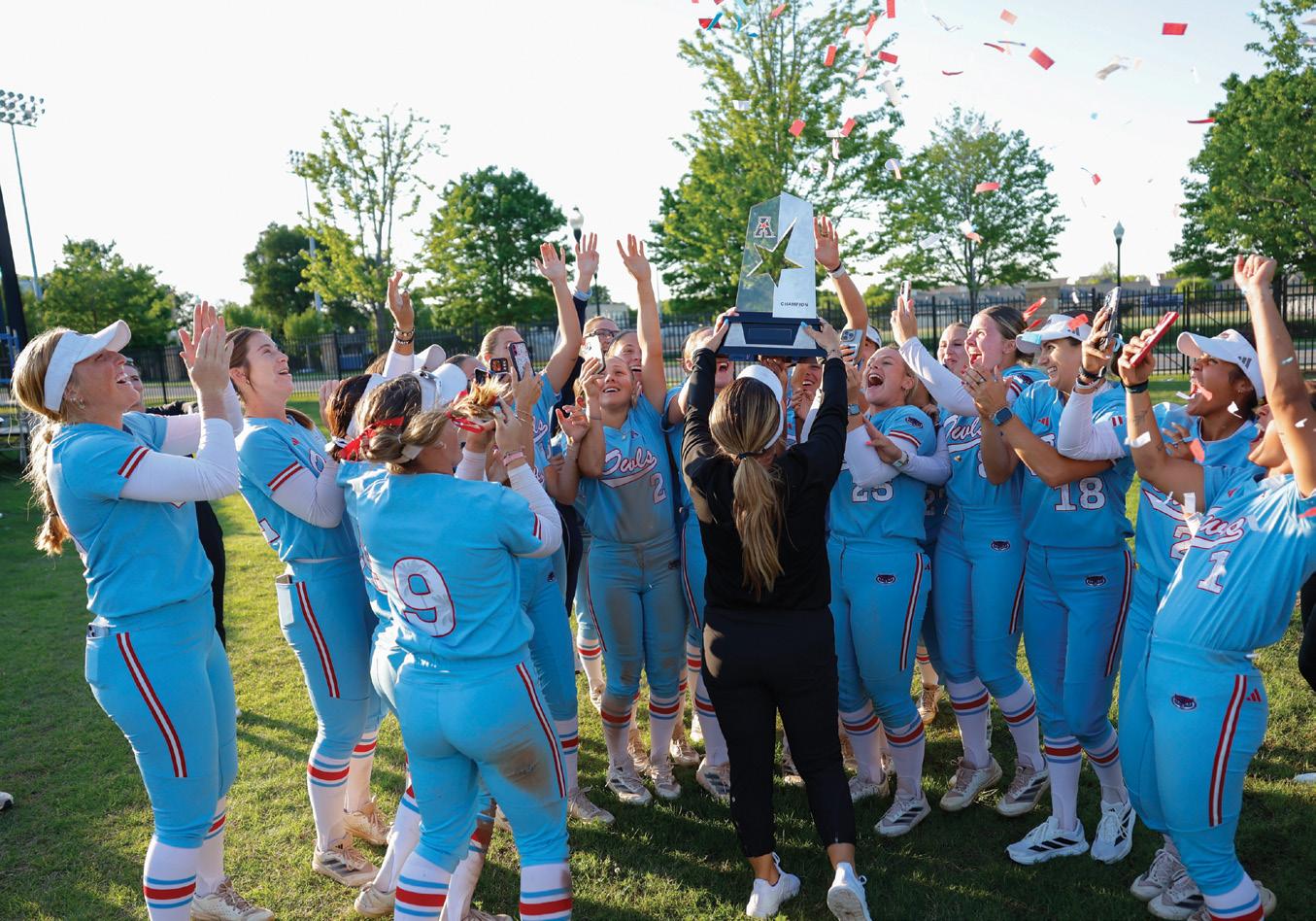
Autumn Courtney
doubles (93), hits (508), and earned run average (2.70), while also staying mistake free with the second highest fielding percentage in Division I (.983).
The challenge from their coach to keep pushing ahead at maximum speed and remain in front resonated with many of the team’s returners. Junior third baseman Jesiana Mora made major strides in both phases of the game, launching a careerhigh eight home runs to lead the Owls and earn AAC Defensive Player of the Year. Senior pitcher Ainsley Lambert embraced the role of pushing her teammates through the last lap, leading the NCAA in saves with 11.
Plenty of impact from the improved Owls came from their newcomers as well. The stellar freshman duo of Destiny Johns and Bella Foran inserted themselves into the batting lineup from game one and never relinquished their spot. Both earned a place on the conference’s all-freshman team with Foran later recognized by D1Softball as a Second Team Freshman All-American.
The ultimate engine that kept the team running came from the transfer portal in junior pitcher Autumn Courtney. After tossing 448 strikeouts in just two seasons at Queens, she decided to take a step up in her collegiate journey.
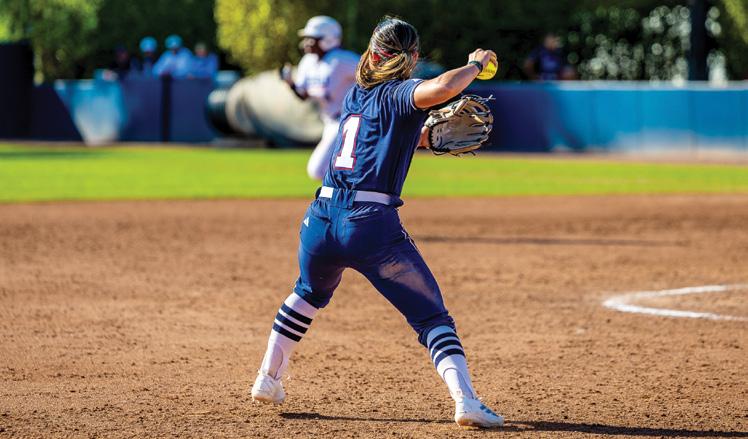
“She is a competitor that hates to lose. She had a ton of success at her previous school and it’s hard to teach people how to compete,” Clark said. “You either have it, or you don’t, and she made it clear what her goals were and how she planned to help us make history.”
The success carried over. Courtney finished the season earning more than half of the Owls’ wins (24), while finishing 30th nationally in strikeouts (172) and 32nd in ERA (2.03). She was voted unanimously as the AAC Pitcher of the Year and was later named an NFCA AllAmerican — the fifth in program history.
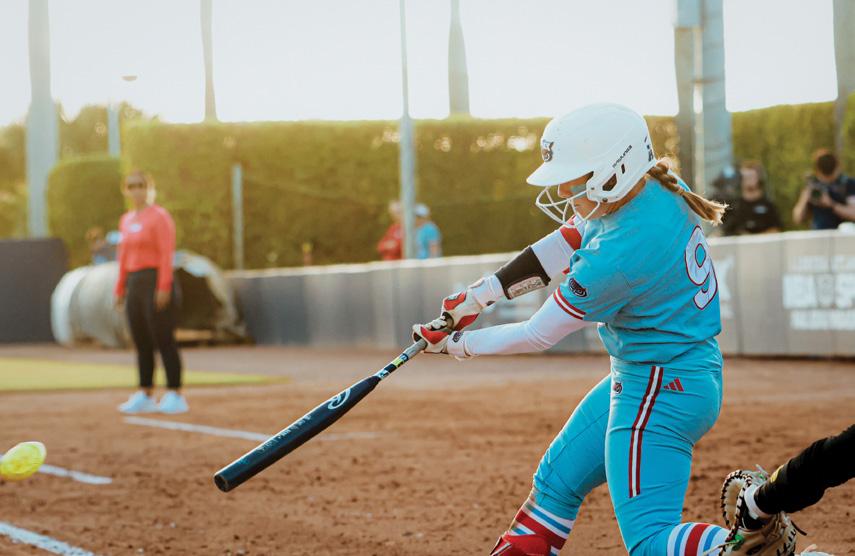
In its second year in AAC play, Florida Atlantic led the race wire-to-wire, winning eight out of nine series with seven run-rule victories and a 10-game win streak to close the regular season. On May 3, a 13-2 win over Tulsa in game one of a doubleheader clinched back-toback regular season titles for the Owls. The second outing of the day made more history with the third perfect game in program history and first in more than 20 years, tossed by junior pitcher Jaden Martinez.
The next lap was the postseason, a sticking point for the Owls in the previous year. After falling in the AAC Tournament semifinals, Florida Atlantic earned its second consecutive at-large bid in the NCAA Regionals. As the No. 2 seed in the Gainesville Regional, the Owls had one more gear switch in them. Like the opening game of the season, Florida Atlantic completed a comeback that culminated in a walk-off home run in the eighth inning to defeat Georgia Tech by a score of 5-4. It was the first NCAA Tournament victory by the Owls since 2016. Their race for the ages came to an end the following day after coming up short against No. 1-seed Florida and Mercer.
The 2025 season will be remembered as a race to the finish line for a second straight championship, with the Owls as expert builders and “drivers” of the car that got them there.
Jesiana Mora
Kylie Hammonds

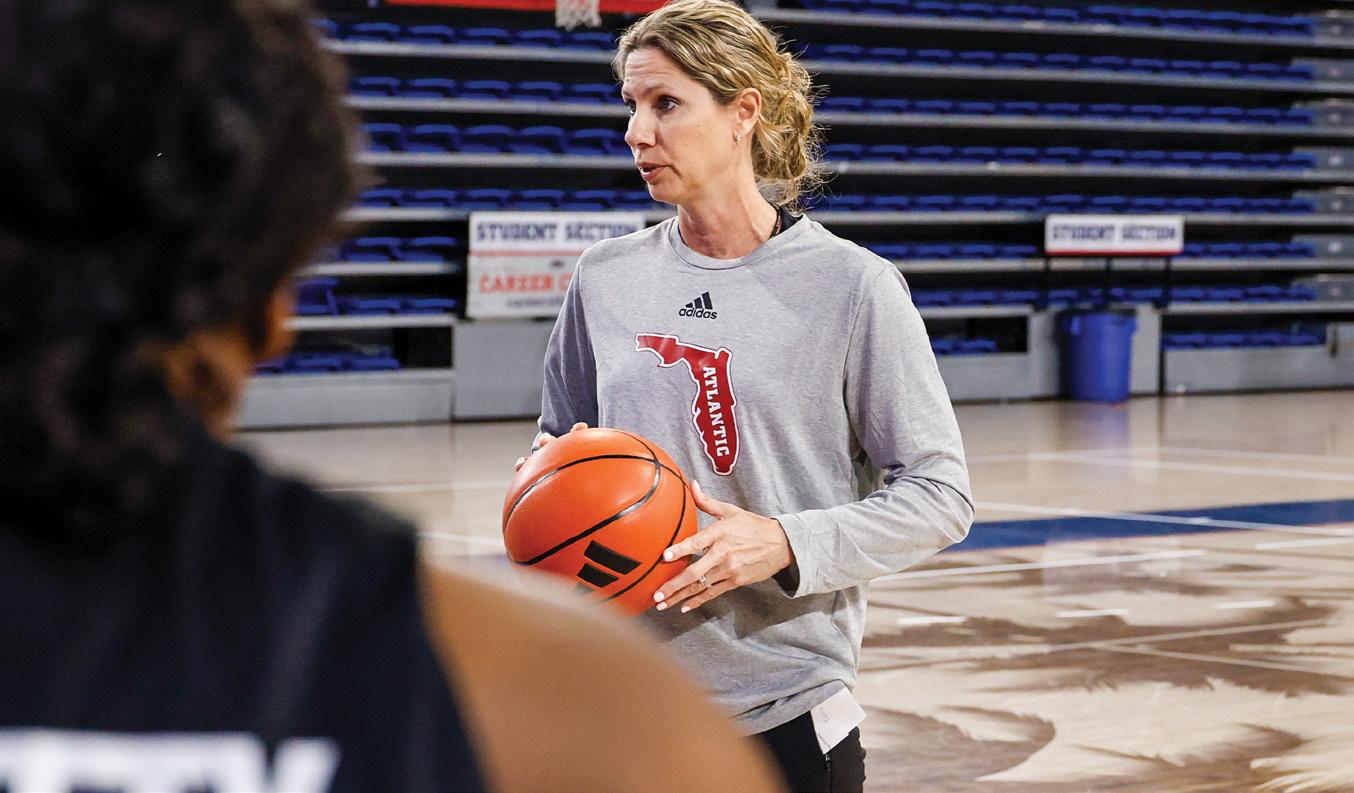
The Freeland Era
Bringing a Winning Pedigree to Boca Raton
BY JONATHAN CAUDLE
LeAnn Freeland, a respected leader with a proven track record of building championship-caliber programs, brings a winning mindset to Florida Atlantic women’s basketball as the seventh head coach in program history.
Freeland arrived in Boca Raton following a phenomenal career at Nova Southeastern, where she spent 13 of her 17 years as a head coach. Her wealth of experience is highlighted by a 363-159 career record and 11 NCAA Tournament appearances.
Entering her first season as the Owls’ leader for 2025-26, Freeland said a winning culture is rooted in hard work and grit.
“Our program is all about having a gritty team culture,” Freeland said. “We want our players to be ready to grow, be inspired to work extremely hard, be tenacious in the face of adversity, and be willing to face challenges together with a positive attitude through it all.”
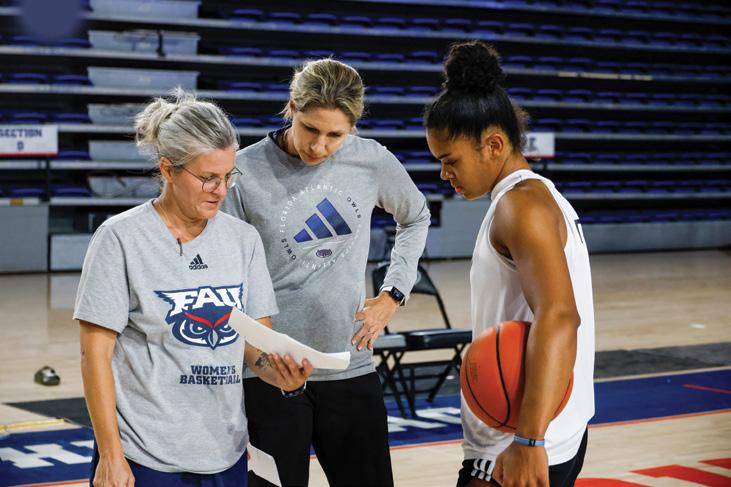
We want our players to be ready to grow, be inspired to work extremely hard, be tenacious in the face of adversity, and be willing to face challenges together.”
– LeAnn Freeland
From left, Associate Head Coach Brooklyn Kohlheim, Head Coach LeAnn Freeland and player Haley Walker review a practice plan.
Freeland’s journey with college athletics began as a student-athlete at Southern Indiana, playing for Chancellor Dugan, a familiar name in Boca Raton. Dugan was Florida Atlantic’s head women’s basketball coach from 1999 to 2012.
As a Screaming Eagle, Freeland was a highly decorated player, earning College Sports Magazine Division II National Player of the Year in 1995. She remains Southern Indiana’s all-time leading scorer, netting 2,269 points over her four-year career, while also holding the program record for career field goal percentage (61.2 percent) and career blocks (192), and ranking second all-time in rebounding (961). Her prolific scoring skills were highlighted with a 50-point scoring effort in a 1995 game, which remains the program’s single-game standard.
“Coach Dugan was a great motivator and a very direct coach,” Freeland said. “I responded very well to her coaching style because we shared the same vision to make USI into a championship program. She was never satisfied and neither was I, so we worked well together.”
Following graduation, Freeland began her coaching career, rejoining the Screaming
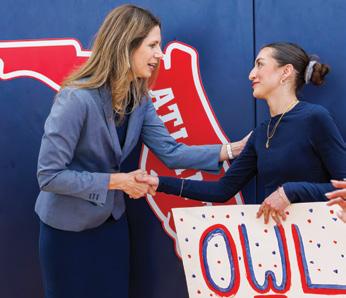
Eagles as an assistant in 1999, following an opening after Dugan became the head coach at Florida Atlantic. Freeland served as an assistant coach at Southern Indiana through 2003, before arriving in the Sunshine State as an assistant coach at Florida Gulf Coast University.
After four seasons with the Eagles, Freeland began her head coaching career in her home state of Indiana at the University of Indianapolis. She coached the Greyhounds for four seasons, amassing an 89-35 record and earning three NCAA Tournament appearances.
In 2011, Freeland returned to Florida, becoming the head coach at Nova Southeastern. She had a historic 13-year
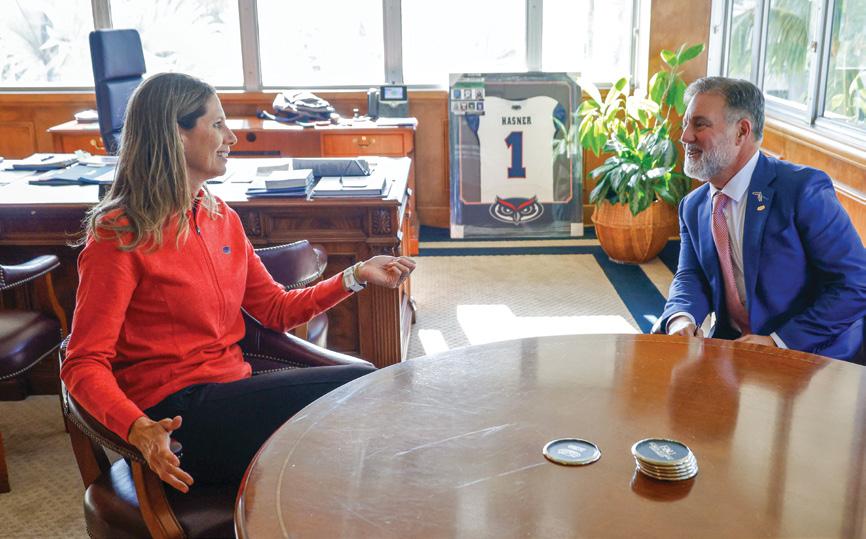
tenure with the Sharks, accumulating a 274-124 record, in addition to earning eight NCAA Tournament appearances with one Final Four and three Elite Eight berths, as well as winning six Sunshine State Conference championships, four regular season titles and two tournament titles.
The Sharks earned numerous accolades under Freeland’s leadership, including SSC Players of the Year in 2015 and 2016; Defensive Player of the Year in 2013, 2015 and 2016; Freshman of the Year in 2012, 2017 and 2024; and 42 All-SSC honors. Additionally, the Sharks had eight AllAmerica selections, including first-team honorees in 2013 and 2015.
It was no joke that on April 1, Freeland’s career came full circle as she was named Florida Atlantic’s head coach, taking over the program that was once led by her former head coach and mentor.
“The only coach to take FAU to the NCAA tournament during the DI era was Chance Dugan, so that inspires me to find a way to make it happen again as soon as possible,” Freeland said. “We have a lot of work to do, but our staff and players are determined to flip this program into a winner.”
Freeland immediately hit the ground running, recruiting and building a talented and skilled roster for her inaugural season.
“Our recruiting focus is simple. We recruit highly skilled players who are great teammates and strong academically,” she said. “We also look for players who have a growth mindset and a relentless will to win.”
As the Owls set their sights on their third season in the American Athletic Conference and their first under Freeland, they will look to make some waves.
“Our No. 1 focus this year will be to grow and evolve as a program,” Freeland said. “We have a lot of opportunities to improve our overall standing in the American Conference and plan to make statistical improvements quickly this season.”
Head Coach LeAnn Freeland shakes hands with a fan during an introductory meet and greet.
Head Coach LeAnn Freeland with FAU President Adam Hasner.
United and Unstoppable
Women’s Tennis Records Historic Season
BY KATRINA MCCORMACK
There was something different about the 2024-25 Florida Atlantic women’s tennis season. It wasn’t the individual play — although there was that, too. It wasn’t unmatched dominance, or a rotation of players used for the best matchups. That “something” was all eight players, players who unconditionally believed and fought for each other.
“This group of girls possessed something truly special,” said Ricardo Gonzalez, director of tennis for Florida Atlantic. “A strong bond among teammates makes it significantly easier to play and compete for one another. This team was driven and eager to support each other in every match. Achieving an undefeated season is no small feat, yet our players never wavered. Their calm demeanor, unity and tenacity were their greatest strengths. When they stepped onto the court, it was all about business.”
The fall season saw Victoria Gomez O’Hayon return in peak physical shape and with a level of play that would propel the redshirt junior to the top court. Gomez O’Hayon advanced to the finals of the Fall Southeast Region Championship and represented the Owls at the first American Athletic Conference Individual Championship — a precursor to the newly added NCAA fall championship — as the tournament’s top seed.
As the calendar turned from 2024 to 2025 so did the play format, moving from a tournament style to the collegiate dualmatch, head-to-head format competition with six singles and three doubles teams. Unfortunately for the Owls, two of the eight players were sidelined with season-ending knee injuries leaving six to manage the season. Undeterred, the Owls began the schedule at the FIU Invitational, a perennial hidden-dual tournament used to prepare the
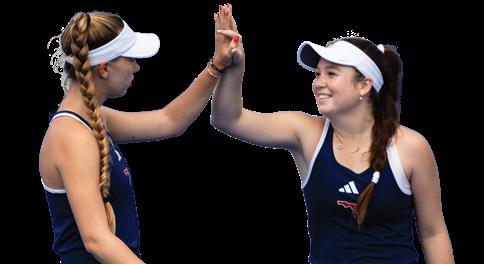
team for the spring season. Weather quickly became a factor in the three-day event, eliminating matches and the opportunity for the season opening tune-up.
The team opened the 2025 season by playing host to nationally ranked Miami, a team that the Owls had never defeated in 24 attempts, including five at home. After three hours of work, senior Lexi Silna, who clinched court five 6-1, 7-6(7-5), gave the Owls a 4-1 victory over the Hurricanes. It was the first step toward a 15-0 regular season, and the national spotlight as the only team in the nation to complete the 2025 dual season with an unblemished record.
In total, the Owls shut out seven teams, including four in-state foes, one of which was also one of three AAC shutouts. The Owls’ perfect regular season included wins over six Intercollegiate Tennis Association (ITA) nationally ranked teams, as well as a midseason, nearly four-hour 4-2 victory over No. 21 UCF. The match, played in
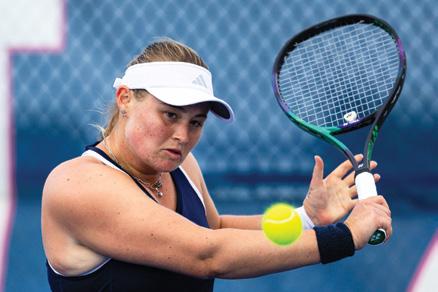
Orlando, was clinched by senior MillieMae Matthews, who walked away with the 7-6(7-5), 7-6(7-4) court six victory. Florida Atlantic’s win over the Knights was the first since 2005, a year that would become important by season’s end.
The Owls recorded five wins over a span of 10 days in the month of March facing the likes of Boston University, Charlotte, USF, East Tennessee and Delaware. April began with the Owls holding an 11-0 season
Lexi Silna and Panna Bartha
Lara Smejkal
starting winning streak, a feat they had accomplished one year prior. But they would need to get by perennial AAC powerhouse Memphis to keep the streak alive.
Memphis was dispatched as were fellow AAC members Tulane and Tulsa before setting the stage for the final home match for seniors Silna and Matthews, versus none other than South Florida rival FIU. Florida Atlantic captured the match in honor of its two, four-year seniors, with Silna once again clinching the win.
The Owls then headed to the AAC Team Championship as the No. 1 seed and the bearer of a first-round bye. A 4-0 win over UTSA sent Florida Atlantic into the AAC semifinals with a 16-0 record and confidence for a match versus Tulsa. The Owls were down early and nearly mounted the comefrom-behind-win but ultimately were dealt their first loss of 2025.
Holding a 16-1 record and a top 30 national ranking, Florida Atlantic was extended a bid to the NCAA Tournament for the first time since 2005. The Owls traveled to Durham, North Carolina and the campus of Duke University where they first faced former fellow conference member Old Dominion, a team Florida Atlantic had never beaten. Victories on doubles courts two and three gave Florida Atlantic the match’s first point but more importantly it displayed their power over an ODU team that had a singles player ranked No. 22 as well as a ranked doubles pair. That power would be on display for the 4-1 finish — the program’s first NCAA Tournament win in Division I history. The Owls advanced to the second round to face host No. 8 Duke, which was represented by a ranked player on nearly every court.
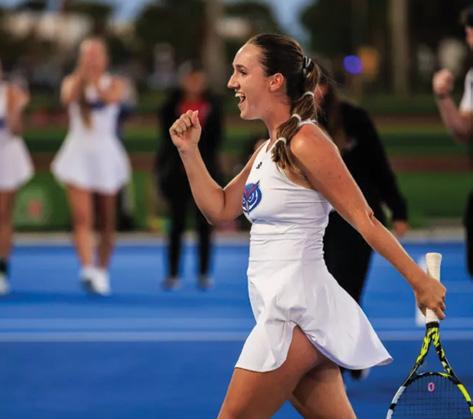
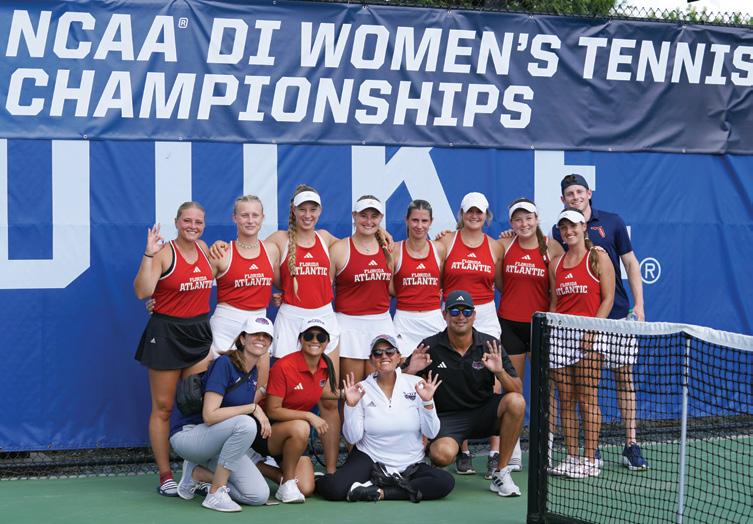
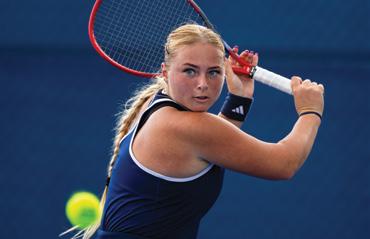
Each doubles court battled with no clear advantage to be had. Sophomore transfer Malwina Rowinska and freshman Lara Smejkal evened the best of three doubles play at one match all with a 6-3 court one victory. Court two became the focus with Duke ultimately securing the point as well as singles courts three, five and six for the match.
The Owls’ season ended with a record of 172, two wins shy of a program-record 19 wins set in 2002-03; a program long 16-match winning streak; and ranked No. 27, the program’s highest since moving to Division I in the early 1990s. Individually, Gomez O’Hayon, Panna Bartha and Silna were named to the All-AAC team. For the first time in program history, every singles court was held by a player who tallied doubledigit wins. Rowinska led the way with a 16-4 record and a 15-1 record in dual-match play. Silna ended her final dual-match season with a 12-2 mark, while fellow senior Matthews concluded her fourth year as an Owl with a 10-3 mark.
set the tone for the Owls all season. Once again, Rowinska led Florida Atlantic with a 20-7 doubles record while she and Smejkal worked together for a 15-3 dual match season and ended the year ranked No. 55 as a pair. They are the first Florida Atlantic doubles duo to hold a national ranking at the NCAA Division I level and the first duo to hold a national ranking since 1991-92. Bartha, the 2023-24 AAC Freshman of the Year, ended her sophomore year on a winning note while building a 13-5 record. In doubles play, the sophomore was 15-4 overall and 12-4 in dual competition.
The accomplishments do not end on the court. Each of the team’s eight members were recognized as 3.0+ GPA honorees. The team’s 3.625 GPA was strong enough to merit ITA Scholar Team honors while each of the starting six were named as ITA Scholar Athletes.
“Competing in the NCAA Tournament is a tremendous honor and a primary goal for our team each year. The competition to secure a spot is always fierce, and this season, we truly earned our place,” Gonzalez said. “Our players were not only eager to succeed but also displayed remarkable consistency throughout. With strengths in both singles and doubles, we had a well-rounded team. The unwavering trust among our girls enabled them to play fearless tennis all season long.”
Doubles
Malwina Rowinska
Victoria Gomez O’Hayon
FOREVER OWLS ALUMNI NEWS
AND NOTES
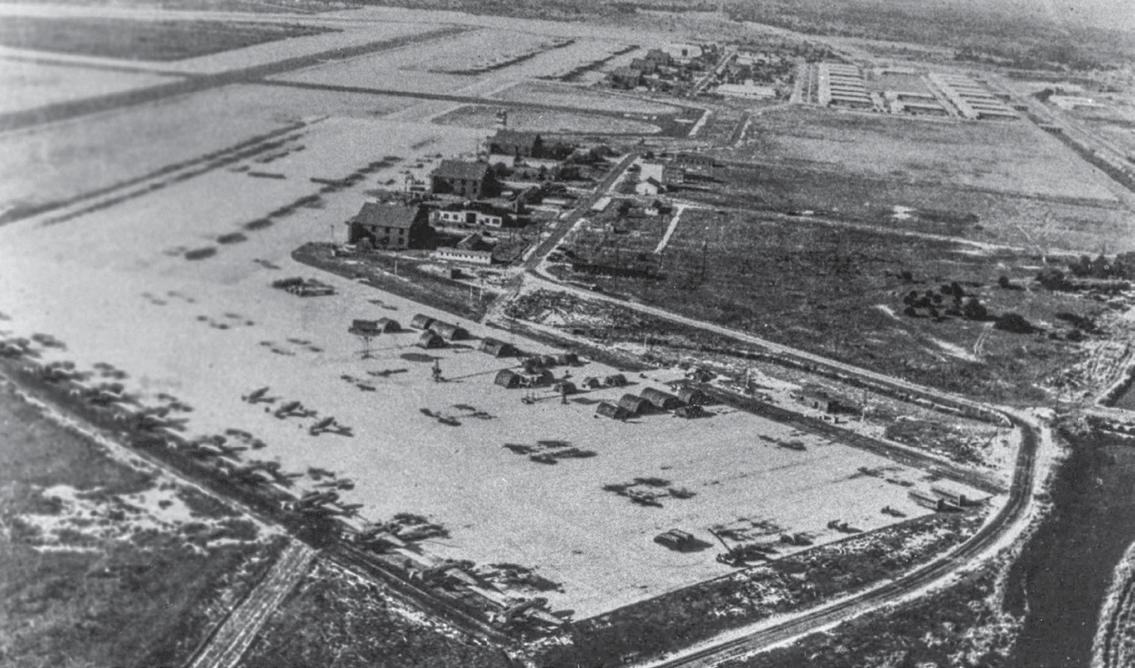
Celebrating Boca Raton’s History
Before it housed a nationally recognized research institution, the Boca Raton campus of Florida Atlantic University was a bustling military hub — and several Florida Atlantic alumni can trace their family’s history back to the Army Airfield that played a monumental role in the Allied Forces’ victory in World War II.
The city of Boca Raton, which celebrated its 100th birthday this year, was slow to develop during its first decade. Its airport took shape just north of Glades Road in 1936, but it remained a quiet beach town until Dec. 7, 1941, when Japan attacked Pearl Harbor, thrusting the United States into World War II.
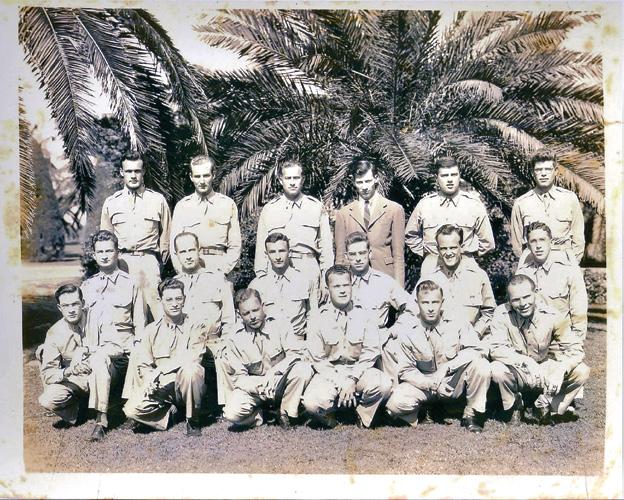
The WWII Airfield That Became a University BY WELLS DUSENBURY
Aerial of Army Air Field
Capt. Charles F. Hill (top left) with his platoon.
As war efforts ramped up across the country, the United States had an urgent need to train its pilots and airmen on a new top-secret radar technology. Boca Raton was ultimately selected as the site of a new training base due in part to being “relatively high and dry, yet close to the ocean and shipping lanes with a good climate for flying,” according to the Boca Raton Historical Society. However, Boca Raton was far from a haven, as German submarines lurked dangerously close to the coastline.
The United States acted quickly. Col. Arnold MacSpadden, an engineer in the U.S. Army, was tasked with spearheading construction of the base in 1942. The pivotal new radar training installation — which spanned more than 5,800 acres; consisted of four, 5,000-foot runways and 800 buildings; and cost $12 million in labor and materials — was completed in four months.
“The construction of the entire post was required to be done under camouflaged conditions,” MacSpadden said during a speech in 1966. “This meant that any trees or scrub existing remained unless it was positively in the way of a building or other structure. It seems odd now to imagine this post to be in any danger of attack — but it was. During the period of construction, the entire east coast of Florida was lined with sunken ships, mostly tankers sunk by German submarines.”
The base served as a nexus point during World War II, with thousands of airmen learning radar technology before heading into conflict. According to the Boca Raton Historical Society, among the officers and enlisted men who passed through the base were future astronaut Gus Grissom, members of the Tuskegee Airmen, and the crew of the Enola Gay, the B-29 Superfortress that dropped an atomic bomb on Hiroshima, Japan, helping to end World War II.
One of the officers stationed at the Boca Raton Army Air Field was Capt. Charles
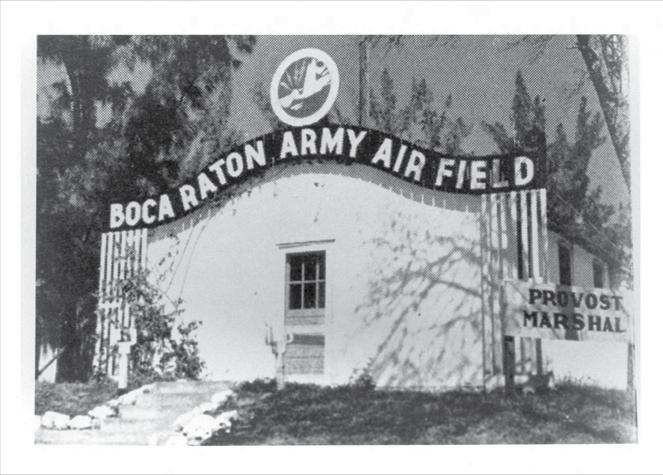
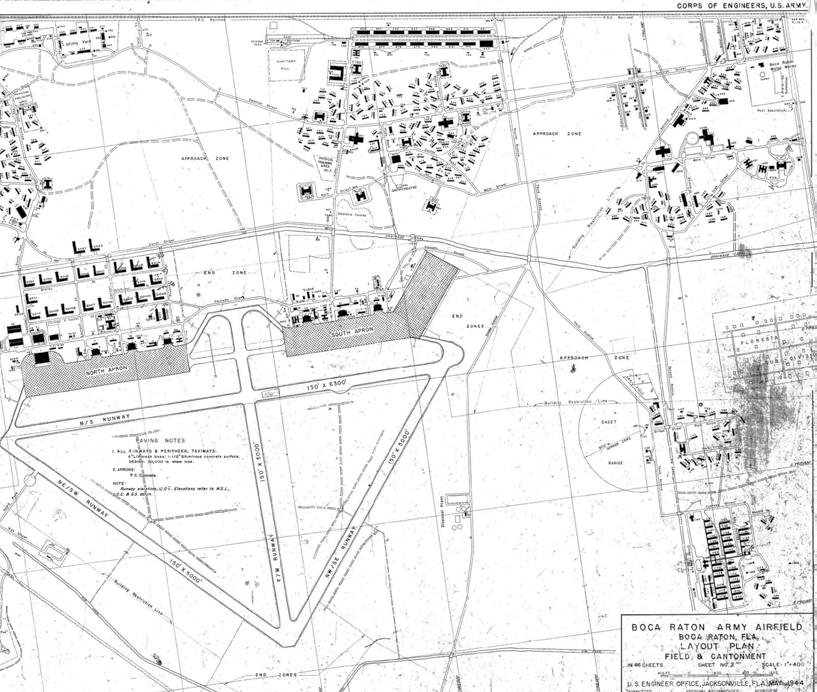
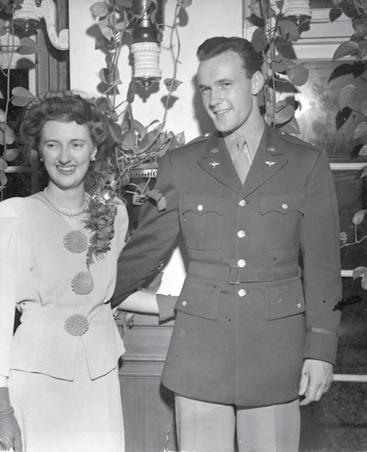
Hill. Hill earned a degree in chemistry from Columbia University before the draft and then was transferred to Boca Raton. He served as an instructor at the base, teaching airmen about the radar technology. During that time, he and his wife were married at the nearby Boca Raton Club, and they had three children, all who were born on the base.
This base would later become Florida Atlantic University.
Hill’s daughter, Susan Skemp, would go on to become a graduate of Florida Atlantic in 1981, studying mechanical engineering and taking classes in the same
building where her father’s office was located during the war.
“It was remarkable,” Skemp said. “It felt like a personal connection to the old days by having classes there. It was a connection with history.”
Skemp’s education at Florida Atlantic led her to a successful career that includes serving as an engineer at Pratt Whitney, as well as the executive director of the Southeast National Marine Renewable Energy Center at Florida Atlantic.
After the war ended on Sept. 2, 1945, the Boca Raton Army Air Field remained
Belle and Charles Hill on their wedding day at the Boca Raton Club.
Sue Skemp
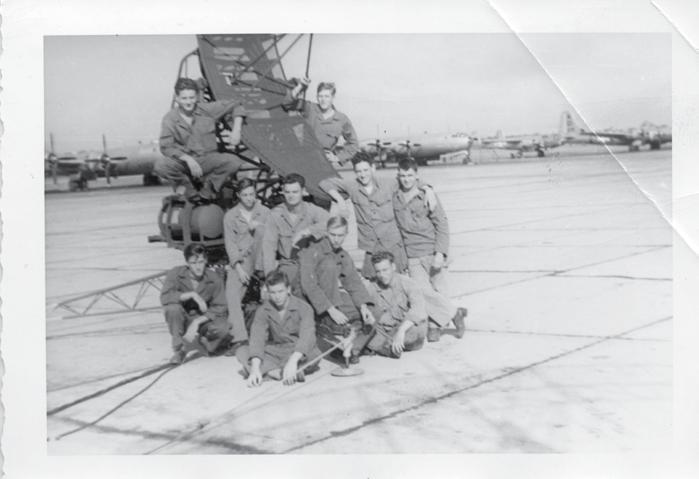
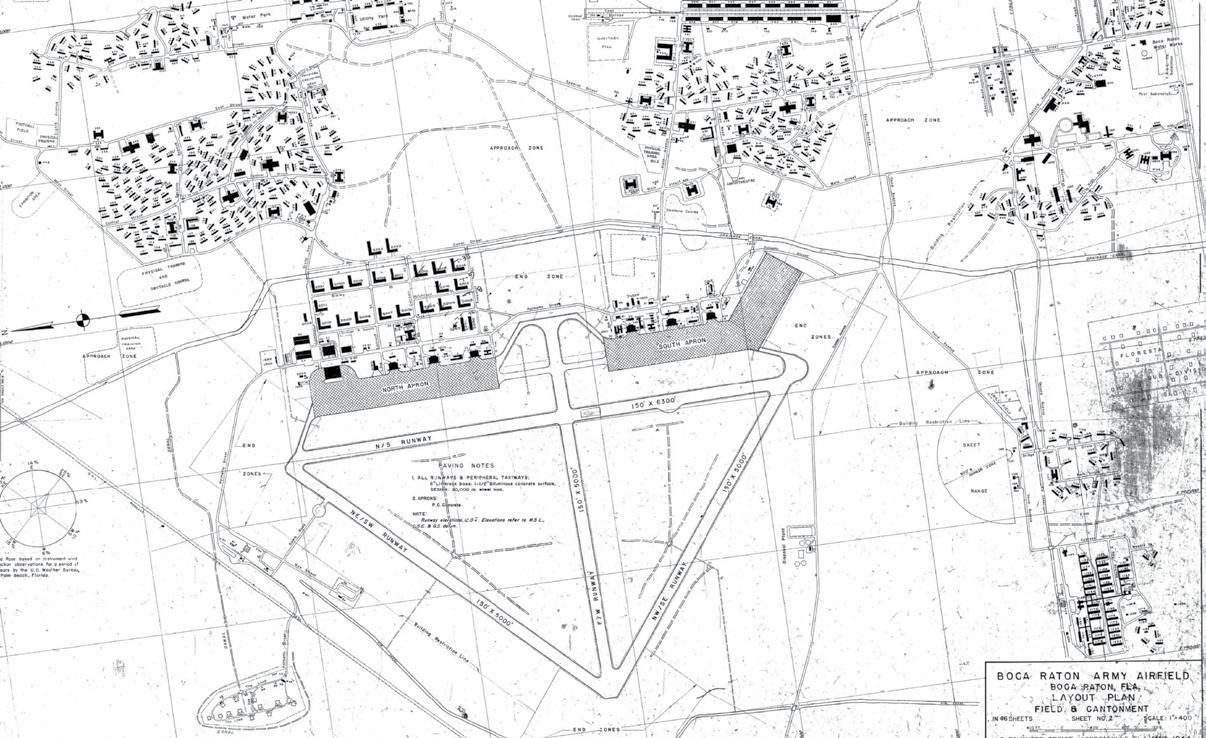
open as thousands of service members continued to learn radar technology. One of the enlistees was Technical Sgt. 2nd.g. Milo E. Flothe, whose grandson, James, and his wife, Nicole, also later graduated from Florida Atlantic.
Flothe began radar training at the air base in October 1946 and spent seven years in the military. Soon after receiving his honorable discharge in 1953, he accepted a job at General Electric, utilizing the skills he learned from the base. Among his achievements, Flothe helped install a radar system in Alaska during the Cold War, which was designed to detect Russian military aircraft as part of the White Alice Communications System — a U.S. Air Force telecommunication network with more than 70 stations — according to his son, Glenn.
When Flothe’s grandson, James, graduated from Florida Atlantic in 1996, he was unable to attend due to illness, but he made sure he was there in spirit. Flothe gave his Army Air Force uniform shoulder patch to James
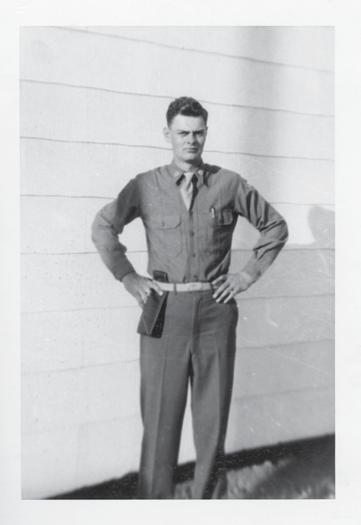
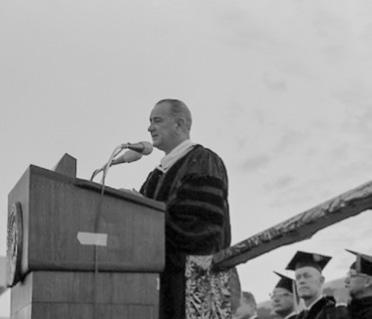
to carry with him as he crossed the stage, connecting the two generations over their shared time on the same piece of land.
The tradition continued with Flothe’s great-grandson, Nathan, who is currently a second-year student at Florida Atlantic’s Charles E. Schmidt College of Medicine. He carried the same patch when he crossed the stage at his White Coat Ceremony in 2024.
The Boca Raton Army Air Field closed in September 1947 after a pair of hurricanes caused catastrophic damage to the base, and the training operations were relocated to Keesler Air Force Base in Biloxi, Mississippi. Between 50,000 and 100,000 men and women were stationed at the Boca Raton Army Air Field from 1942 to 1947, according to the Boca Raton Historical Society.
The Boca Raton airfield then served as a smaller auxiliary Air Force base until 1959. In 1960, the State Cabinet, sitting as the Board of Education, gave approval to use the site for Florida’s newest public university. The Florida Legislature passed the enabling legislation on July 15, 1961.
Florida Atlantic’s doors were opened by former U.S. President Lyndon B. Johnson in October 1964. Since then, it has continued to build upon its historical foundation and helped to transform Boca Raton into the city it is today.
From left: James, Nathan and Nicole Flothe.
On Oct.25, 1964, U.S. President Lyndon Baines Johnson dedicated Florida Atlantic University.
Milo Flothe, second row, third from left.
Milo Flothe, Army Air Corp, Boca Raton 1946-1947.
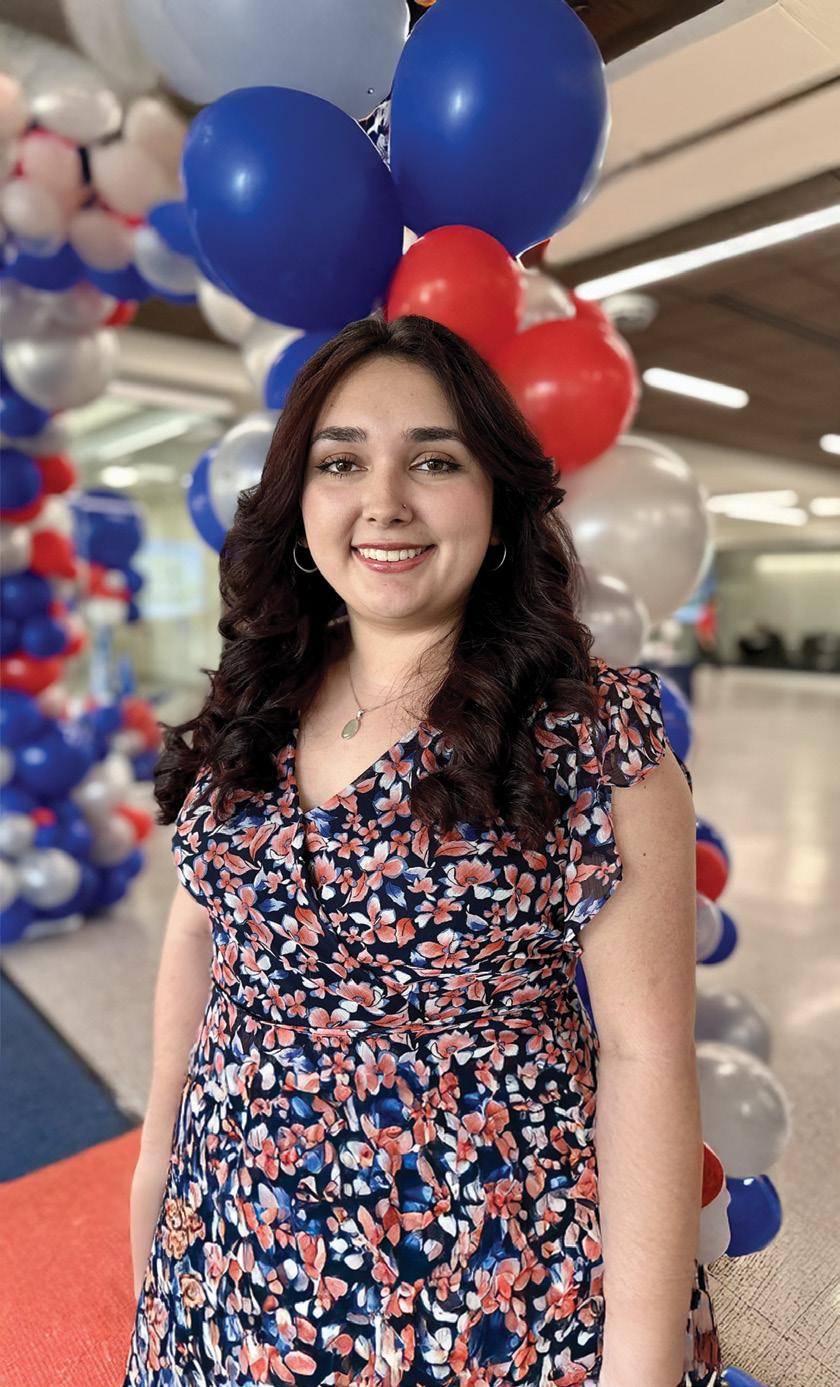
Meet Freshman Direct Admit Student Nurse
Samantha, a first-generation student, aspires to be a catalyst for positive change in the nursing field. She is grateful for the support of scholarships to further her education.
“These
financial burden.”
Samantha Leiva Cordova
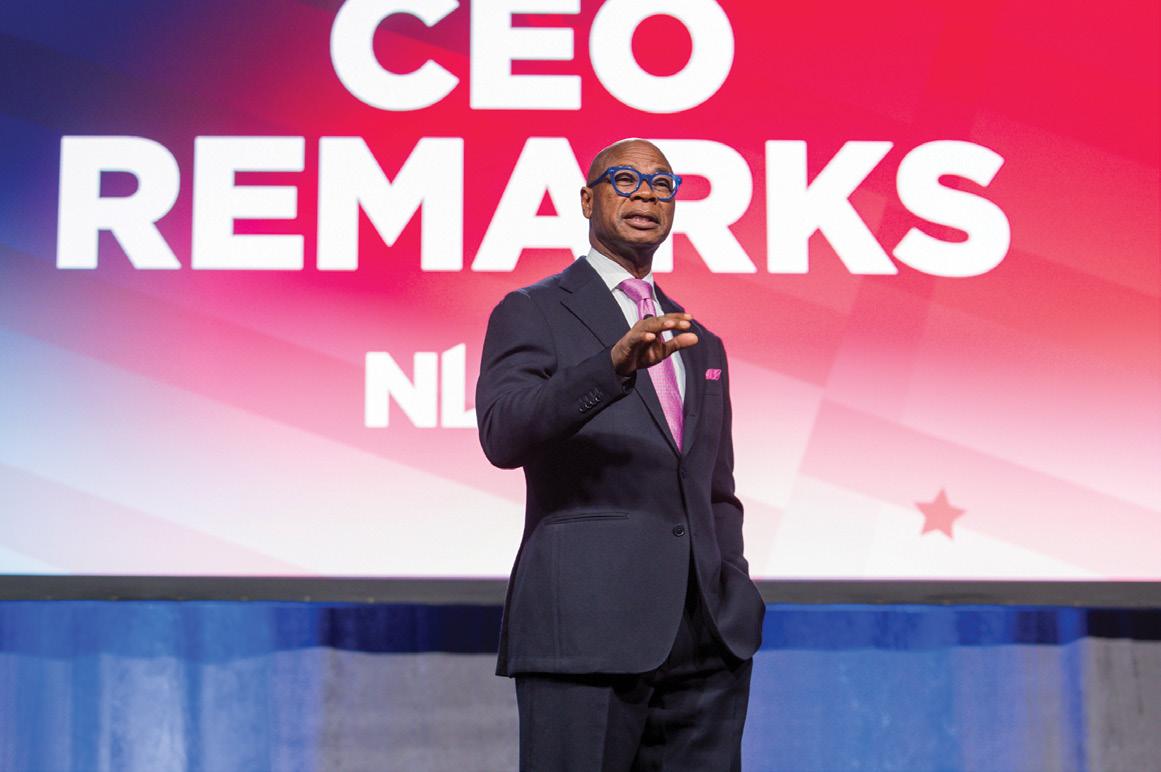
Small-town Roots to National Impact
Alumnus Reflects on the Pivotal Role Florida Atlantic Played in His Journey
BY WELLS DUSENBURY
From his election as mayor straight out of college to becoming CEO and executive director of the National League of Cities (NLC), Clarence Anthony ’81, ’82 has had an immensely successful political career. And Florida Atlantic helped lay the groundwork for his remarkable ascent.
Anthony grew up less than 70 miles from Florida Atlantic in South Bay, a small city with fewer than 5,000 people on the western edge of Palm Beach County south of Lake Okeechobee. Anthony’s family could not afford to send him out of the
area for college, which led to his journey at then-Palm Beach Community College before transferring to Florida Atlantic. This proved to be a natural fit.
“It was a great place for me to be able to work and to be able to continue to grow and get the excellent education that would allow me to move forward in my life,” Anthony said.
Florida Atlantic was also a proving ground for leadership skills that would underpin his life’s work. Anthony served as president of the student senate and president of the Black
Student Union. He also was a member of the Phi Theta Kappa Honor Society.
After graduating from Florida Atlantic with bachelor’s and master’s degrees in public administration, Anthony returned home to South Bay at the age of 23 with a bold goal in mind: become the city’s mayor. While he was propelled by a youthful exuberance, he felt Florida Atlantic had laid a firm foundation to set him up for immediate success.
“I wanted to make the lives of people in South Bay better,” Anthony said.
“I think that FAU gave me the opportunity to develop my leadership skills, apply those skills on campus, and gave me a lot of confidence at 23 years old. I had the audacity to run for public office at that time, and I won.”
Anthony took office in 1984 and had a lengthy and productive tenure as mayor, serving for 24 years. He said his proudest accomplishment as leader of South Bay was helping to spearhead the construction of a city library, a nod to his belief in the power of education.
For decades, South Bay had only a mobile library that would pass through occasionally for a few hours at a time. Anthony knew from firsthand experience that students had limited access.
“I was a ferocious reader, but I recognized that education was going to be my way out of a community that had per capita income of about $13,000 at that time a per family — a community that was built on the backs of people who worked in the celery fields and the cane fields, the bean fields,” Anthony said. “When I came back, [getting a library] was my No. 1 priority.”
After five years of advocacy, Anthony was successful in securing state and local funds for a library. The Clarence E. Anthony Branch Library, named in his honor, has served the community for more than 25 years.
During that time, he also served as president of the Florida League of Cities. Then in 1999, he was elected as the NLC’s president. The organization is more than 100 years old and is comprised of cities, towns and villages focused on improving the quality of life for their current and future residents. In 2013, Anthony became its CEO and executive director, a position he still holds.
Under his leadership, the NLC delivered billions of dollars in direct, flexible federal relief through the CARES Act and the American Rescue Plan Act to help local governments respond, recover and rebuild from the COVID-19 pandemic. The NLC also ushered passage of the
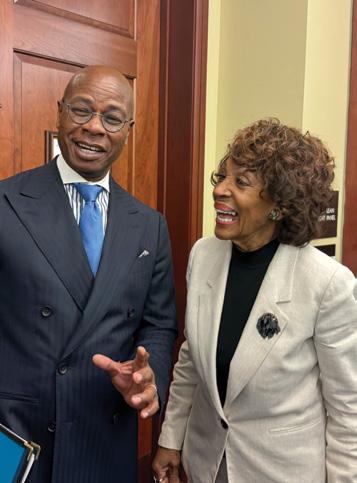
This job makes me feel like I’m doing something to make our communities better.”
– Clarence Anthony ’81, ’82
Infrastructure Investment and Jobs Act, delivering transformative investments in transportation, broadband and water to communities across the country.
“This job makes me feel like I’m doing something to make our communities better,” Anthony said.
This past spring provided a bit of a homecoming for Anthony, who was asked by Florida Atlantic President Adam Hasner to speak during two of the university’s commencement ceremonies. The opportunity gave Anthony time to reflect on his journey and Florida Atlantic’s role in it, he said.
“It made me recognize the value of education, and, more importantly, the value of FAU in my life,” Anthony said. “We could all grow up in Palm Beach County, or in Broward or Dade or Indian River County, St. Lucie, and think, ‘We have to go someplace else to get an education.’ But we have the most magnificent, amazing university right in our backyard. It made me recognize how proud I was to be an Owl.
“I will never forget that honor, and it will be one of those important moments in my life that I’ll always reflect on.”
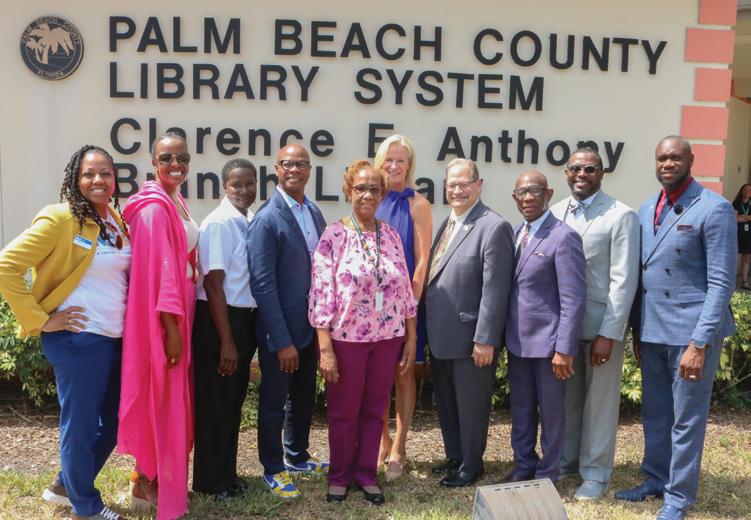
Clarence Anthony and Rep. Maxine Waters


JACKSONVILLE
TALLAHASSEE
CLASS NOTES
1960s
Charles Ghigna, bachelor’s in English ’67, master’s in education ’70, authored the children’s book, “Sweet Dreams: Moon Poems for Bedtime,” which received the 2025 International Book Award in the children’s novelty and gift book category. He has written more than 100 books.
2000s
Nancy Botero, master’s in communication ’01, retired after a 34-year career dedicated to public higher education, community building and student success. Most recently, she was chief of staff at Broward College and previously served as vice president of advancement and executive director of the Broward College Foundation. Botero began her career in 1991 as Florida Atlantic’s first community relations officer for Broward County. She plans to remain active in the community as a consultant, mentor and volunteer.
Michelle Gonzalez, bachelor’s in fine arts ’00, was elected president of the Nonprofit Chamber of Palm Beach County. She has been the CEO of Healthy Mothers, Healthy Babies Coalition of Palm Beach County since 2016. Additionally, she is a member of Executive Women of the Palm Beaches, United Way of Palm Beach County’s Hunger Relief Committee and previously served on its Women’s Leadership Council.
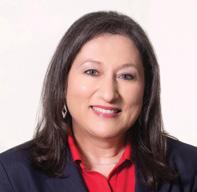
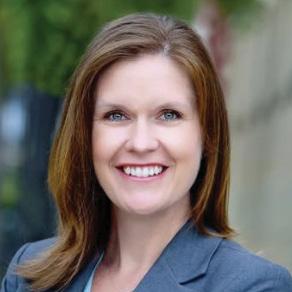
2010s
Fabiola Brumley, MBA ’11, was elected to the board of directors of the Raymond F. Kravis Center for the Performing Arts. She has been with Bank of America for 41 years and has served as its president for Palm Beach County since 2007. She also serves on the board of the Florida Bankers Association and on the executive committees of the Business Development Board of Palm Beach County and the Economic Council of Palm Beach County.
2020s
Mariana Vallejo Velez, bachelor’s in political science ’23, and Spencer Diana, bachelor’s in business ’22, recently became engaged. The proposal took place at Morikami Museum and Japanese Gardens in Delray Beach. Velez is a human resources coordinator at Polyglass USA, Inc. and Diana is a store supervisor at TD Bank.
Alijah Martin, bachelor’s in public management ’24, was selected by the Toronto Raptors in the second round of the NBA Draft. Martin was a member of the 2023 men’s basketball team that advanced to the Final Four of the NCAA Tournament. He is the first men’s basketball player to be drafted.
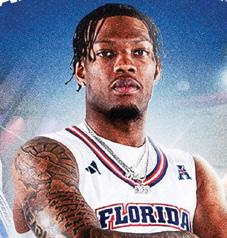
Johnell Davis, bachelor’s in business ’24, signed with the Orlando Magic for the NBA Summer League. Davis was a member of the 2023 men’s basketball team that advanced to the Final Four of the NCAA Tournament.
Vladislav Goldin, bachelor’s in sociology ’24, signed a two-way NBA contract with the Miami Heat. Goldin was a member of the 2023 men’s basketball team that advanced to the Final Four of the NCAA Tournament.
Did you get married, have a baby, start a new job, receive an award, or experience some other big life moment or personal victory recently?
Did you get married, have a baby, start a new job, receive an award, or experience some other big life moment or personal victory recently? Send your news, including full name, graduation year, college or major, and high-resolution photos (at least 300 dpi) to FloridaAtlanticMag@fau.edu.
Send your news, including full name, graduation year, college or major, and high-resolution photo (at least 300 dpi) to FloridaAtlanticMag@fau.edu.
TIME MACHINE A LOOK BACK
CONNECTING OUR FOUNDING TO OUR FUTURE
Florida Atlantic has been led by inspiring and innovative presidents whose impact on the university remains evident from each of their tenures. Here’s a look at the leaders of Florida Atlantic and some highlights from their presidencies.
1961
FLORIDA LEGISLATURE APPROVES THE CREATION OF THE STATE’S FIFTH PUBLIC UNIVERSITY IN BOCA RATON
HELEN POPOVICH, PH.D. 1983-1989
• The first woman to head a public university in Florida history
• Freshman and sophomore classes were added to the student body
• Reubin O’D. Askew University Tower in downtown Fort Lauderdale opened
Student body = 11,743
Alumni = 41,152
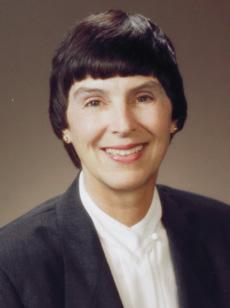
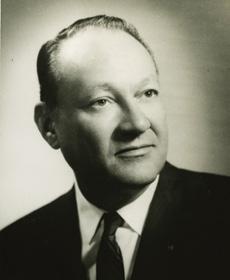
KENNETH R. WILLIAMS, PH.D. 1962-1973
• The humanities building, University Theater, six residence halls and administration building, which today is named for Williams, opened
Student body = 5,632
Alumni = 13,509
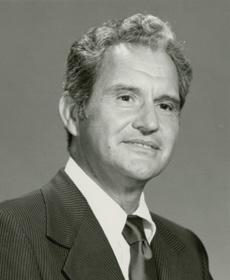
GLENWOOD L. CREECH, PH.D. 1973-1983
• Worked to have landscaping donated to the Boca Raton campus
• The University Center and auditorium, the engineering building, and the 70,000-squarefoot gymnasium opened
Student body = 9,388
Alumni = 30,243
FRANK T. BROGAN ’81 2003-2009
• Harbor Branch Oceanographic Institution in Fort Pierce became a unit of the university
• FAU High School; the Eleanor R. Baldwin House; Christine E. Lynn College of Nursing; Marleen and Harold Forkas Alumni Center; Indian River Towers, Heritage Park Towers and Glades Park Towers residence halls; several pavilions in the College of Business; the Paul C. Wimbish Wing of the S.E. Wimberly Library; and the Davie Student Union opened
• The Owls became the youngest football team in NCAA history to win a bowl game, with a New Orleans Bowl victory in 2007; followed by a Motor City Bowl win in 2008
• Florida Atlantic hosted the U.S. Presidential Republican Debates on Jan. 24, 2008
Student body = 28,000
Alumni = 116,000
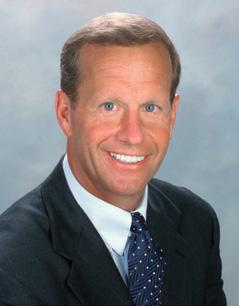
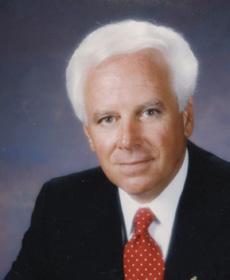
ANTHONY J. CATANESE, PH.D. 1990-2002
• The Research Park at Florida Atlantic; campuses in Davie, Dania Beach and Jupiter; and the Harriet L. Wilkes Honors College opened
• The Owls began competing in Division I of the NCAA and the football team made its debut
Student body = 23,836 Alumni = 78,396
MARY JANE SAUNDERS, PH.D. 2010-2013
• The Charles E. Schmidt College of Medicine welcomed its first class of future physicians
• FAU Stadium and Innovation Village Apartments; as well as the Engineering East building, the Culture and Society building, Davie West and Research Lab II at Harbor Branch opened
• U.S. President Barack Obama visited the Boca Raton campus on April 10, 2012, to deliver a major economic address from FAU Arena
Student body = 30,000
Alumni = 127,000
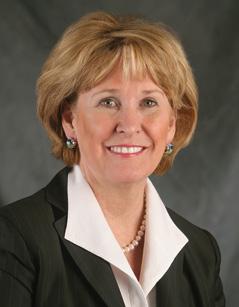
JOHN KELLY, PH.D. 2014-2022
• Signed agreement with Scripps Florida and the Max Planck Florida Institute for Neuroscience to establish a one-of-akind education program
• FAU football won both the Conference USA championship and the Boca Raton Bowl in 2017 and 2019
• The university received $20 million from Kurt and Marilyn Wallach to establish the Kurt and Marilyn Wallach Institute for Holocaust and Jewish Studies
• The Schmidt Family Complex for Academic and Athletic Excellence opened, thanks to a $16 million gift from the Schmidt Family Foundation
Student body = 30,000
Alumni = 190,000
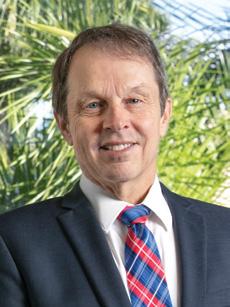
ADAM M. HASNER , J.D. 2025-P resent
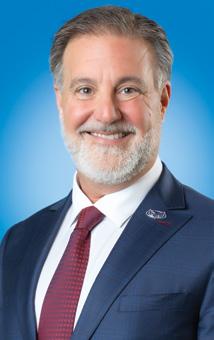
• U.S. News & World Report named Florida Atlantic a Top 100 Public University
• Washington Monthly recognized Florida Atlantic as a Top 25 Best-in-Class College, calling the university “one of the greatest success stories in American Higher Education.”
• Florida Atlantic was recognized as an “Opportunity University” in Carnegie’s Student Access and Earnings Classification — becoming one of only 21 institutions in the nation to receive both R1 and Opportunity University designations
• Three athletic teams qualified for the NCAA Tournament in their respective sports: beach volleyball, softball and women’s tennis — which was the only undefeated team in the nation during the regular season
• Florida Atlantic welcomed its most academically competitive freshman class in university history, selected from a record 57,000 applications
Student body = 31,000
Alumni = 216,000
2010 2013 2014 2022 2023 2025
• Graduate College opened
• Florida Atlantic hosted His Holiness the 14th Dalai Lama of Tibet during his first visit to Palm Beach County on Feb. 24, 2010
JOHN F. PRITCHETT, PH.D. I nterim 2009-2010
• The Life Science Initiative was launched on the Jupiter campus to advance collaborations with international research giants Max Planck and Scripps
• Florida Atlantic Athletics joined Conference USA
DENNIS J. CRUDELE
Interim 2013-2014
• The Florida Atlantic Stiles-Nicholson Brain Institute opened on the John D. MacArthur Campus in Jupiter
• The 2022-23 men’s basketball team won the Conference USA title and received a bid to the NCAA Tournament, where they made it all the way to the Final Four. The 2023-24 team returned to the NCAA Tournament
• The 2024 softball team earned the university’s first American Athletic Conference title
• Florida Atlantic was designated an R1: Very High Research Spending and Doctorate Production University in the Carnegie Classification of Institutions of Higher Education. Less than 5% of the nearly 4,000 universities in the U.S. have achieved this highly coveted status
Student body = 31,000
Alumni = 211,000
STACY A. VOLNICK, PH.D. Interim 2023-2025
Florida Atlantic University
777 Glades Road, AD-10, Suite 101 Boca Raton, FL 33431
FLORIDA ATLANTIC UNIVERSITY
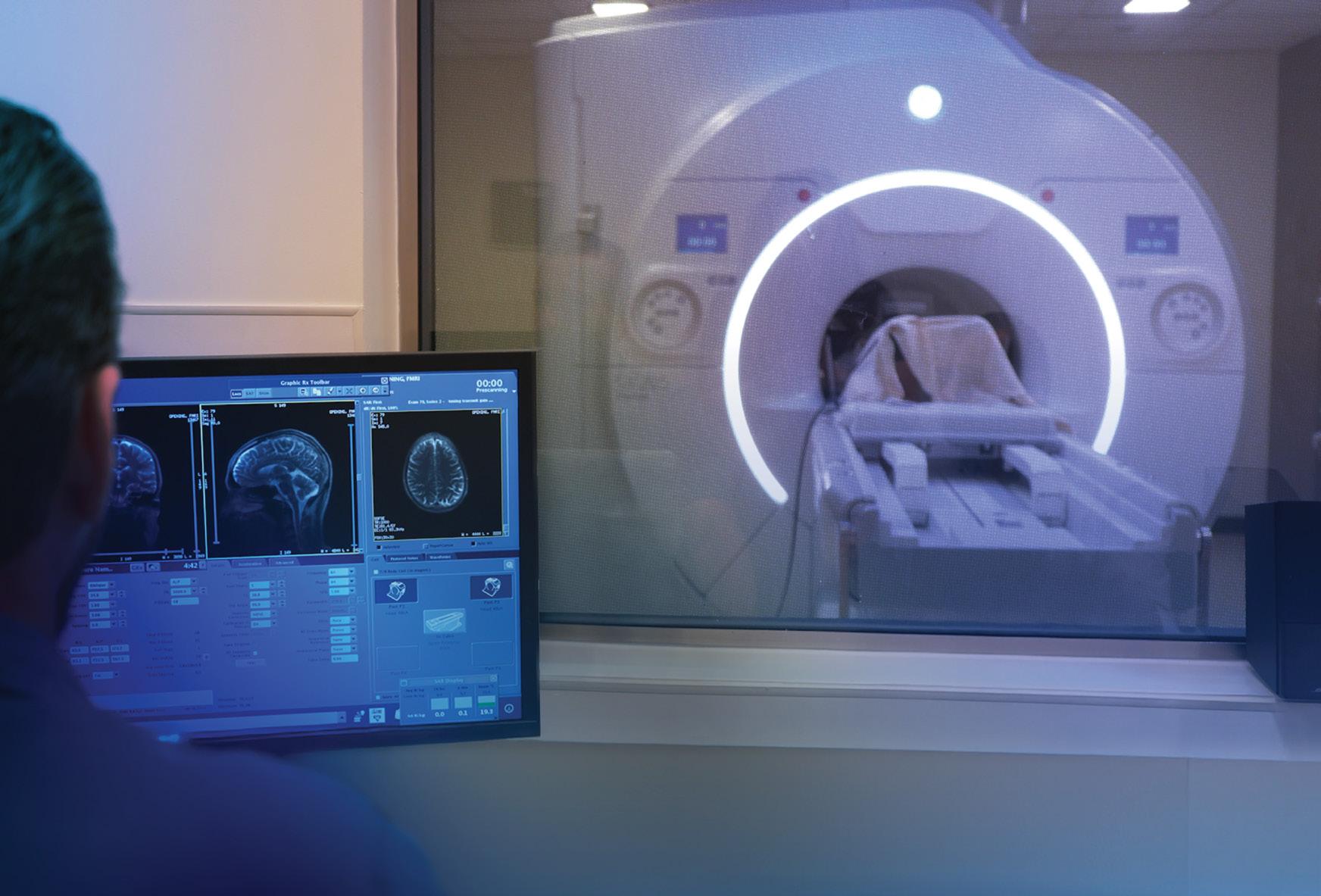

W ld First
‘Bench–to-Bedside’ MRI, Ultrasound Platform

Florida Atlantic University has expanded its NeuroInnovate Center , becoming the first institution global l y to integrate advanced MRI and focused ultrasound technologies into a single, unified platform for both preclinical and clinical research.
This breakthrough will support Florida Atlantic researchers in accelerating the development of non-invasive treatments for neurological disorders such as Alzheimer’s, Parkinson’s and more .