STREETZine
Offering financial opportunity to homeless and economically disadvantaged individuals.
STREETZine is a program of The Stewpot and a member of International Network of Street Papers

Mental Health and Housing
By Wendy Rojo
I woke up today with a sense of urgency and eeriness. I started to brush my teeth and I noticed my hand was shaking. I knew something was wrong, but I was unsure what it was. Later in the day, I found my mind wandering and I found it hard to focus on tasks at work. I realized that my mind was overwhelmed. The entire day my mind felt heavy and my body anxious. I, like many around the world, have dealt with anxiety or other mental illnesses. The National Institute of Mental Health found that in the U.S., in 2021, an estimated 57.8 million adults dealt with a mental illness.
Mental illnesses affect everyone. However, there are certain risk factors that can make a person more susceptible to dealing with a mental illness. Mayo Clinic lists a few risk factors: history of mental health, stressful life situation, traumatic experiences, and few healthy relationships. The lack of housing or the risk of losing your housing can be one of those traumatic experiences. The lack of basic necessities or the lack of access to basic necessities can create a loop that is difficult to escape.
The National Institute of Mental Health found that in the U.S., in 2021, an estimated 57.8 million adults dealt with a mental illness.
Hence, mental health and homelessness correlate; however, having a mental illness does not directly cause a person to become homeless. As Hope Stedman, clinical manager at Metrocare states, homelessness is directly related to the lack of affordable housing. Luckily, some organizations are attempting to help on all fronts.
Metrocare, is the largest provider of mental health services in Dallas County. The provider partners with various organizations to provide services ranging from counseling to permanent supportive housing services.
We know that having a mental illness does not directly correlate to becoming homeless, but those who are homeless face unique challenges that those who are housed do not face. For example, worrying about where you are going to sleep can add a significant amount of stress that can increase the anxiety a person experiences.
We know that having a mental illness does not directly correlate to becoming homeless, but those who are homeless face unique challenges that those who are housed do not face.
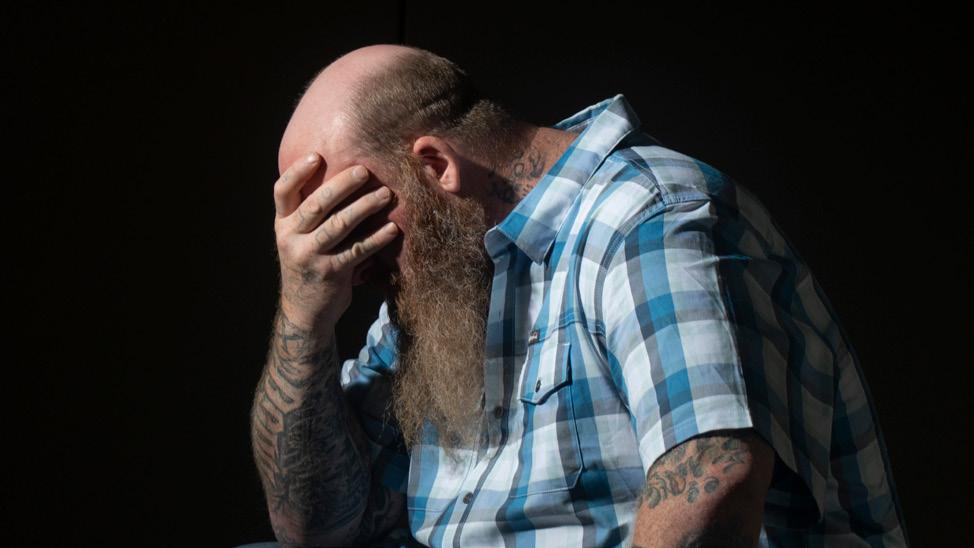
This is not to say that those who are housed do not face stressors, but there are unique experiences that those who are homeless face. Unique experiences that can at times create more worriedness, anxiety, and stress. Luckily, organizations are seeing the need to address not only the issue of affordable housing but the effects that come with being homeless.
The presence of online organizations that solely focused on mental health has in-
creased is the last couple of years. For example, there are various hotlines and texting services that are available to those who need immediate help. There are also websites and that offer affordable therapy. These websites gained traction during COVID when many of us felt the most alone, anxious, or scared.
However, for many people phone calls are still the most convenient form to receive immediate help. The National Suicide Prevention Lifeline launched a new phone number, 988, that people can call to not only get immediate help but also get information about various resources. This is just one example of the many resources available if anyone is dealing with a mental health concern.
MAY EDITION 2023
Suggested donation to a vendor with a badge: $1.00 or more - La donación sugerida a un vendedor con insignia: $1.00 or more
Wendy Rojo is managing editor of STREETZine.
Photo illustration from The Stewpot Photography Workshop.
STREETZine
STREETZine is a program of The Stewpot.
Pastor’s Letter: Jesus at Home with Doubt
By Reverend Meagan Poole Findeiss
Editor’s Note: This essay is excerpted from a sermon that Rev. Findeiss delivered at the First Presbyterian Church of Dallas on April 11, 2023.
The STREETZine is a monthly newspaper published by The Stewpot, a ministry of the First Presbyterian Church of Dallas. The Stewpot provides services and resources for people experiencing homelessness or who are at risk of being homeless. The organization also offers opportunities for a new life.
As part of this ministry, the STREETZine seeks to raise awareness about the issues surrounding homelessness and poverty. The monthly publication also offers financial opportunity for Stewpot clients who sell the paper to Dallas residents. Vendors are able to move towards economic self-sufficiency by using the money they receive from selling copies to purchase bus passes, food, and necessary living expenses. Clients also receive stipends for contributing articles to STREETZine.
The content in STREETZine does not necessarily reflect the views or endorsement of its publisher, editors, contributors, sponsors or advertisers. To learn more about this publication, contact Betty Heckman, Director of Enrichment, 1835 Young Street, Dallas, Texas 75201 or BettyH@thestewpot. org. To read more about STREETZine, a member of the International Network of Street Papers, go to www. thestewpot.org/streetzine.
STREETZine is published by The Stewpot of First Presbyterian Church.

Managing Editor: Wendy Rojo
Editorial Advisory Board:

The Rev. Amos Disasa
Brenda Snitzer
Suzanne Erickson
Russell Coleman
Poppy Sundeen
Sarah Disasa
William McKenzie
Betty Heckman
Photo Editor: Jesse Hornbuckle
Easter has come and now we find ourselves in this space in the church calendar called Eastertide. This brief six-week window is where we celebrate and focus on the resurrection, and the way in which Jesus defeated death before his ascension into heaven.
One feeling that this period produces is doubt. Doubt in this intricate story about a being defeating death. Doubt that this story is real, and not just a tall tale that we attempt to believe in the depths of our soul.
Many find themselves in this place of uncertainty, of questioning, of discomfort.
What does the future hold? Is my job secure? Do I have enough money to pay the bills, to have that procedure, to make it through my final days? How long will I have my health? How long will my loved ones be around? What is the best option for my child? Will justice and peace ever be attained?
What does doubt look like for you?
Doubt is an emotion when you are trying to figure out the uncertainty of what you believe. Using the word “doubt,” though, can often have a stigma attached to it. It can feel like a roadblock, or a dead end.
Changing how we see doubt
What if we change the way we approach doubt? What if we make it more openended and thought provoking by casting aside the negative weight doubt carries, and focusing on doubt as “questioning”?
What if we change the way we approach doubt? What if we make it more openended and thought provoking by casting aside the negative weight doubt carries, and focusing on doubt as “questioning”?
We do not want to eradicate doubt. We want to learn to hold it in such a way that it can be generative. The author of Luke
highlights the disciples’ doubt because doubt has the potential to expand our faith.
The upper room was full of a myriad of emotions: doubt, fear, shock, as well as grief. The disciples’ attention was consumed by mind and body. The disciples gathered in this space, hunkered down and scared that the officials would recognize that they were colleagues of Jesus. How the disciples chose to approach doubt determined whether or not it would be fruitful. You see, doubt can grow to an unhealthy level. It can drown you in confusion. The questions can pile up so that you cannot make sense of what is true and just and right.
This negative spiraling stifles the growth of your faith. In fact, it can make you question your faith altogether. Some even lose their faith.
That said, doubt can also be a beautiful, expansive, illuminating thing. The Barna Group asked a group of individuals the question: “When you experienced doubt, where did you go to find help and answers?” The majority of respondents answered by saying they had a community of support.
Exploring our doubts as a community
We need a community of individuals to help hold us as we search for meaning. Faith does not provide easy answers to life’s hard questions. We must equip ourselves to approach doubt in such a way that it expands our faith rather than diminishes it.
There are so many questions, and there is so much doubt. But just like Jesus met the disciples in their doubt, we at First Presbyterian Dallas intentionally decide to wrestle with the questions we all have, this intersection of real life and faith which is also the birthplace of doubt.
There are so many faith questions around topics of poverty, racism, politics, hope, being a welcoming and affirming congregation, and eco-justice. Engaging in life-giving and invaluable conversations about how to live out our faith in practical and meaningful ways helps ease the discomfort. You realize you are part of a
Continued on page 5
2 STREETZine MAY EDITION 2023
Executive Director’s Report
By Brenda Snitzer
I have been in the social service field for over 30 years, working primarily in nonprofits. But early in my career I worked at the Dallas County Adult Probation Department and then for a private psychiatric hospital. During all these experiences, I have found two big challenges in serving those who are in need of psychological services or counseling. The first is to admit they need services. The second is to gain access to services if they are willing to seek them.
Access often is limited because providers do not accept insurance or individuals do not have insurance. Also, finding services for those that have no funds can be difficult.
Mental illness is a serious problem for some, but not all, of the clients we serve
at The Stewpot. Those who do suffer from a mental illness and are willing to be treated can seek treatment at Metrocare or North Texas Behavioral Health. We have partnerships with both organizations and are blessed to have Metrocare in our building. We also have counseling services through Parkland Health and Hospital System and The Stewpot provides one contract counselor in our building.
As with the population in general, those who can have their condition treated with medication and stay on their prescriptions can improve their situation. The biggest challenge is when individuals resist medication or treatment. That’s when situations can spiral downward.
The Stewpot’s Rapid Rehousing initiative is aimed at assisting clients, including those who suffer from depression, anxiety, and other mental health challenges, find housing. The initiative is part of North Texas’ Housing First focus, which seeks to first secure housing for people in need
of a home. Housing First operates from the belief that it is harder to address mental health issues, a lack of employment, or other problems that impact daily living while someone is unhoused.
Our Rapid Rehousing mission is to find housing for people who lack a place of their own, including those with mental health issues, and then address any other challenges. Once housed or in the process of being housed, Rapid Rehousing clients receive wrap-around casework. Caseworkers provide mental health resources and other services to keep clients housed and moving forward to selfsustained living.
This housing part is critical. Hope Stedman of Metrocare is right when she says elsewhere in this edition that the lack of affordable housing is the primary reason for homelessness, not mental health challenges.
Brenda Snitzer is executive director of The Stewpot.
Ten Things to Know about Mental Health and People Experiencing Homelessness
As the points below indicate, the relationship between homelessness and mental illness is a complicated one, requiring attention on several fronts.
*”For someone with a mental health condition, the basic necessity of a stable home can be hard to come by. The lack of safe and affordable housing is one of the most powerful barriers to recovery. When this basic need isn’t met, people cycle in and out of homelessness, jails, shelters and hospitals. Having a safe, appropriate place to live can provide stability to allow you to achieve your goals.”
Source: National Alliance on Mental Illness
*”Many people with a serious mental illness live on Supplemental Security Income (SSI), which averages just 18% of the median income and can make finding an affordable home near impossible.”
Source: National Alliance on Mental Illness
*”Most researchers agree that the connection between homelessness and mental illness is a complicated, two-way relationship.”
Source: Brain and Behavior Research Foundation
*”An individual’s mental illness may lead to cognitive and behavioral problems that make it difficult to earn a stable income or to carry out daily activities in ways that encourage stable housing. Several studies have shown, however, that individuals with mental illnesses often find themselves homeless primarily as the result of poverty and a lack of low-income housing.”
Source: Brain and Behavior Research Foundation
*”The combination of mental illness and homelessness also can lead to other factors such as increased levels of alcohol and drug abuse and violent victimization that reinforce the connection between health and homelessness.”
Source: Brain and Behavior Research Foundation
*”In general, homelessness among people with mental illness can lead to more encounters with police and the courts. For instance, rates of contact with the criminal justice system and victimization among homeless adults with severe symptoms such as psychosis, are higher than among housed adults with severe mental illness.”
Source: Brain and Behavior Research Foundation
*”An estimated 20 to 25 percent of the U.S. homeless population suffers from severe mental illness, compared to 6 percent of the general public.”
Source: Psychology Today
*Organizations serving the homeless in North Texas increasingly provide mental health care services in addition to traditional aid like food and warming centers.
Source: KERA News
*”People experiencing homelessness present unique treatment challenges, as both treatment and housing needs must be concurrently addressed for treatment to be most effective.”
Source: Substance Abuse and Mental Health Services Administration
*The lack of health insurance for people with chronic medical conditions and/or untreated serious mental illness can place them at risk of being precariously housed.
Source: National Alliance to End Homelessness
MAY EDITION 2023 STREETZine 3
A Lack of Housing Drives Homelessness, Not Mental Health Conditions
STREETZine spoke with Hope Stedman, clinical manager at Metrocare, and Joel Triska, director of public affairs at Metrocare, about the relationship between homelessness and mental health care. Their organization provides housing and mental health services for clients across Dallas. The work includes operating outreach teams and clinics around the city, including one at The Stewpot. The interview below has been edited for length and clarity.
How would you describe the relationship between mental illness and homelessness?
Stedman: Homelessness is a stressor and traumatic to most people. Any time you add stress to someone with a predisposed mental health condition or a capacity for one, you generally exacerbate that condition.
To what extent does experiencing homelessness lead to or exacerbate depression and other mental health challenges? Conversely, to what extent is mental illness the driving force that leads to homelessness?
Stedman: Not having a place to stay can be very traumatic, especially if it is your first-time experiencing homelessness. It is overwhelming to go to a shelter if you are not familiar with the resources or have to find the resources. Likewise, it can be overwhelming to sleep in a room with people you don’t know or sleep outside, especially if you are a female or a younger or older person. You are more vulnerable.
All those things create stress, along with the general depression that comes with losing your things, not getting to choose what you eat, and not having your private bed or bath.
Do you see equal amounts of people for whom becoming homeless has triggered a mental health condition, or is it
that the mental health condition led to homelessness?
Stedman: I don’t think their mental health conditions led to homelessness. Many people with mental health conditions are successful and not homeless. Homelessness is primarily a lack of affordable housing.
COVID has shown us that anyone can become homeless. Housing costs have risen. And, if you have a disability and are living on Social Security income, most rents are double what you get a month.
Finding appropriate housing is challenging. Navigating resources is challenging. Finding a boarding home or assisted living and not knowing how to go about getting those is challenging.
Triska: Metrocare does have a permanent supportive housing initiative that we link closely with Housing Forward, which leads the conversation of ending homelessness and keeps a waiting list for people seeking housing in Dallas County.
To your question, it isn’t that mental health conditions aren’t a factor. They are. However, all the research across the country shows they are not the unique factor for people experiencing homelessness.
[It] isn’t that mental health conditions aren’t a factor. They are. However, all the research across the country shows they are not the unique factor for people experiencing homelessness.
-Joel Triska
Many people may have untreated mental health challenges or a substance use disorder. But they may also have a safety net, a family support system or generational wealth or all kinds of things that keep them from becoming homeless. People without those resources, including housing that caters to their needs, find themselves homeless.
This is like musical chairs. Everything is fine when there are enough chairs to go around. But when there are not enough chairs, the people with the least amount of resources end up being alone or homeless.
What types of mental health services does Metrocare provide?
Stedman: We have a street outreach team that primarily tries to engage unsheltered people with mental health issues. The team links them to mainstream services and serves essentially as their caseworkers.
In addition to our eight outpatient clinics, we have several clinics with our partnering agencies to serve those who are homeless. We have a clinic three days a week at The Stewpot, with a provider, caseworker, and medical assistant on staff. People can get their mental health services there as well as any medications.
We have a street outreach team that primarily tries to engage unsheltered people with mental health issues. The team links them to mainstream services and serves essentially as their caseworkers.
- Hope Stedman
We take the same clinic to other shelters, so people don’t have to come to us. We go to them. Getting across town to a mental health clinic may not be the top priority for some who are worried about finding a place to sleep. That’s why we strive to come to them.
What treatments and strategies work best in addressing the mental health needs of people experiencing homelessness?
Stedman: Intensive outreach and building a rapport with people are very important. Those who have become homeless sometimes have been let down by the system and by people who promised something but didn’t deliver on their promise.
It is really important to not promise something you can’t deliver. You need to deliver what you promise to deliver, even if it is as simple as getting someone a bus pass when you have promised them one if they come see you.
Our street outreach workers will always ask when they enter an encampment and then they always ask whether they can come see you again.
Listening is also important. I have three incredible providers and some clients don’t want to leave them because the
4 STREETZine MAY EDITION 2023
Continued on page 6
Continued from page 2
greater community wrestling with doubt together. When we dive into particular topics, scripture, life, the mystery of faith presents itself in real and palpable ways.
As humans we have the choice of what to believe and what not to believe. Questions have a way of compounding, and that is where and how our faith grows. Doubt is not a bad thing; it does not have to diminish faith. Doubt can expand faith. Questions can lead to discovery.
As Jesus entered into that tense upper room, he saw and experienced the raw emotions of his friends and gently told them, “Peace be with you… Why are you frightened, why do you have doubts in your hearts? Look at my hands and my feet; see that it is I myself. Touch me and see; for a ghost does not have flesh and bones as I have.”
This act of Jesus helped the disciples to move from a place of fear to a place of joy. In that joy they still disbelieved, they still wondered. But it was in the reframing of their doubt, doubt as questioning, that they then began to open up.

This subtle change allowed them to be truly present, and hear what Jesus had to say. The disciples’ doubt did not hinder their faith. No, it allowed their faith to take shape.
Faith in God is a journey
The opening and understanding of their minds and hearts produced a shift in their beings that helped them to walk away from a downward spiraling of doubt that led to fear, and grief. Instead, their doubt began to pave the way forward, a way that led to the beginning of the early Christian church.
As reformed Christians we believe in the Latin phrase fides quarens intelectum, faith seeking understanding. Faith in God is a journey. It is a constant set of revolving and rearticulated questions.
As a community of faith, we grow stronger together when we are able to learn from the doubts and the questions we have.
As a community of faith, we grow stronger together when we are able to learn from the doubts and questions we have.
Our faith is similar, questions about our faith only make it stronger because our faith prompts inquiry, it searches for deeper understanding, it dares to raise questions.
Friends, the church is a safe place to share your doubts. I hope that First Presbyterian Church Dallas feels like a community where you can trust others to hold the questions you lay down. Know that you are not alone in your pursuit for meaning and answers, expect to come face to face with the mystery of faith in your pursuit.
As Jesus met the disciples in their doubt, Jesus meets us in ours as well. He offers us his hands and his feet to see, and he provides a caring and understanding community to walk with us along the way.
Friends may your doubt expand your faith, and may you come face to face with the beautiful, mysterious Christ this day.
Reverend Meagan Poole Findeiss is associate pastor for care and belonging at the First Presbyterian Church of Dallas.
MAY EDITION 2023 STREETZine 5
Photo illustration from The Stewpot Photography Workshop.
Family Love in the Wild Kingdom
By Vicki Gies

I’ve observed animals all my life. I’ve also observed animal families. Some animal families will allow humans to coexist with them. It took about two months of living in the woods before they started to trust me.
One family in particular started coming around soon after I moved into the woods: the Raccoon Family. I named all the animals that I got to meet, and I started with the father and mother raccoons, Rocky and Rachel. I named their “kids,” or properly called “kits,” Ricky and Rhonda.
When the kits came around for a visit, I usually gave them a little snack. Sometimes they would take the treats right out of my hand. Of course, mama would always be watching. One night, one of the adult raccoons came into my tent and spent the night. I left the tent door open that night so that he or she could leave during the night and not feel trapped.
Another family that I met was the Mallard Family. The males had bright green heads and brown and white bodies. Mama Mallard was named Daisy, and she had dull, brown feathers. Although mallards can have a large number of offspring at one time, the family I got to know only had about seven or eight babies. I simply named them Darling Ducklings.
Sometimes I walked around the nearby lake to enjoy the sights and see what animals I could find. One time I walked out on a pier and heard splashing behind me toward the bank. When I turned around, I saw a mama duck chasing a snake away from the bank where her ducklings were all huddled together. It took about three attempts before the snake finally gave up and left the ducklings alone.
And then there were those green parrots. They are actually called Monk Parakeets. They are fascinating to watch and are definitely master builders. They have the most unique houses for their families. One house can have anywhere from eight to 10 compartments of families. The Monk Parakeets enter their homes from the bottom of the house. The mother and father Monk Parakeets I named Paula and Pauly. I never saw their babies up close
because their home was so high off the ground.
I certainly cannot neglect to mention the fierce family of wild hogs! There were three of them, and I definitely did not get close to them. Thankfully, they did not see me!
Finally, I observed the Goose Family. Father Gander was George; Mother Goose was Georgia. The male goose had the tedious task of sitting, squatting, or guarding the nest, while the female went to get food for the family. Humans cannot get close to the nest, especially if the nest has eggs or goslings. I remember George becoming quite angry on one occasion. Geese are known to attack people with their very sharp tooth-like cartilage if they feel threatened.
Observing all of these families has been a wonderful source of up-close entertainment and learning for me. Two things that I learned is that all the mothers took special care of their “children,” and family always comes first.
This story is dedicated to all the wonderful families in the Wild Kingdom.
Continued from page 4
provider has become engaged with them. The providers listen and explain a diagnosis, which a client may not have gotten before.
We appreciate being at The Stewpot because it is open to the public. It can be hard building a connection because you are vulnerable opening up to someone. Being able to stay with the treatment team is important.
Triska: There are many conversations around homelessness that get attached to stories about mental health and substance abuse disorders. The naked eye often can see them in play. But what is not being factored in is that people in these situations are not having unique experiences. Depression, anxiety, and substance abuse disorders are found in people with homes, too.
What is unique is the other factors that lead to their homelessness. We want to make sure that we are not stigmatizing mental health and substance use disorders. But these don’t lead to homelessness. So many factors lead to homelessness, and mental health is part of this human life. We like to say that mental health is physical health.
6 STREETZine MAY EDITION 2023
Vicki
Gies is a STREETZine vendor and frequent contributor.
Artwork by Stewpot artist Stephen McGee.
Writers’ Workshop Essays
Editor’s Note: Each Friday morning at 10 a.m., The Stewpot hosts a Writers’ Workshop. During the sessions, participants address selected topics through prose or poetry. In this edition of STREETZine, we feature the essays of writers about mental health.
Moving Beyond the Stigma
By Mike McCall
The National Institute of Mental Health reports that one-fifth of Americans over the age of 18 suffer from at least one mental illness. With numbers this high, it is likely that you or someone you know experiences these difficulties.
I am not ashamed to say that I fall into this category and have battled with it for over 20 years. Mental health issues make life hard to get through at times. But many of them can be managed with proper treatment and routine.
A major difficulty many people experience is getting access to services they need. While I was homeless, making appointments and routinely taking medications proved more than difficult. Fighting every day to satisfy your basic needs takes precedent over going to see counselors and taking meds. I believe this is one of the main reasons the homeless population struggles so hard when it comes to mental health.
Another issue I experienced was the stigma mental illness still brings. One thing I have learned and accepted is that I’m not broken. I just need to do things differently to experience a fulfilling life. That said, I do still feel that the majority of people lack the knowledge to properly interact with people who struggle with mental health.
Progress and treatments are getting better each year, so there is hope for all of us. I know I have finally found my path and pray that others can too. My advice is to keep trying until you find out what works. It may take some time but it’s worth the journey to feel at peace with yourself and your surroundings.
Mike McCall is a writer in The Stewpot’s Writers’ Workshop.
Fragility
By David Yisrael

Woe is me! Woe is me!
To be cursed with such fragility.
The princess and the pea
Ain’t got nothing on me.
For everywhere I look And everywhere I stare
There’s something offensive there. “Right?” “Wrong?”
Why you use words so strong?
Can’t we all just get along?
Let every man do what he sees fit.
Anything else, let’s do away with it. Unless, of course, what you’re planning to do affects me.
Then, in that case, you’ll have to deal with my accursed fragility.
David Yisrael is a writer in The Stewpot’s Writers’ Workshop.
MAY EDITION 2023 STREETZine 7
Illustration by David Yisrael.
Overcoming Isolation and Hardship
By Darin Thomas
Before entering my treatment program at Gateway in Lancaster, Texas in 2021, I had been on drugs and lonely. No one wanted to be around me because I was using drugs.
I didn’t know which way I was headed. I was on the streets of Dallas and without my family. During that time, my use of drugs heightened. I started using more as a way to deal with the loneliness. The situation became a vicious spiral. The more lonely I was, the more I turned to drugs. The more drugs I used, the more people didn’t want to be around me.
Before I started living on the streets, I had been staying with people, including with family. I felt uncomfortable, knowing they really didn’t want me there. They knew I was on drugs. But I was trying to kick them. I just wasn’t trying hard enough.
It was like the world was coming to an end. I felt like I was going to die living on the streets. Eventually, I got incarcerated, spent time in city jail, and ended up at Gateway. My life started turning around there.
I am up in age and felt like I didn’t have anything to show for it. Now, I do. With God’s grace, I have been able to overcome difficult situations. God has blessed me with a job, my own place, and my freedom.
Being off drugs and not being homeless feels really good.
This all began when I was diagnosed at age nine as schizoaffective depressive type. That is when I witnessed my father murder my mother. After that, physicians diagnosed me.
This type includes depressive episodes, which I started experiencing when I was nine-years old. Schizoaffective disorder is a mental health condition with symptoms of schizophrenia and a mood disorder. People with this condition also may experience mania and psychosis.
Treatment includes therapy and medication. I have done both. I feel better when I take my medication. It helps me level out and keeps me in a good mood. It keeps me calm and focused. When I don’t take my medication, I feel lonely and depressed.
Darin Thomas is a writer in The Stewpot’s Writers’ Workshop.
Understanding One’s Problems is Key
By Larry Jackson
Mental health is an issue in today’s life cycle. I have seen or witnessed the effect of mental health conditions in many different people. I have good mental health — only my opinion can be used in this case.
Mental health is a mind disorder that can be managed. I have seen or witnessed in others both good and bad conditions. It’s my opinion that mental health is an ongoing balancing act. One day a person could be all so well. Then another day, confusion is at its highest. How does a person explain the change? Sooner or later a loaded wagon will break down.
The problem of poor mental health can be treated with the right plan. Managing mental health has many different methods to answer a condition. These conditions are under ongoing study today. The answers differ from person to person.
A healthy mental condition has a life-changing effect with the right treatment.
In life’s path, there will be many highs and lows along the way. Wellbeing is not given to all. Understanding one’s problems is key.
Yes, a person can live a good life even with mental health issues.
Larry Jackson is a STREETZine vendor and a writer in The Stewpot’s Writers’ Workshop.
8 STREETZine MAY EDITION 2023
Comforted by God’s Love
By James Varas
I walked into the dining room at The Bridge and I heard the music playing. Heaven’s angels had filled the room and the Heavenly Father was smiling as His children were filled with Jesus Christ, filled with love as the music was playing.
The Holy Spirit filled the room with God’s grace. What a wonderful memory with my brothers and sisters at the Bridge one Sunday morning.
People need love. I have seen so many injured souls and, bottom line, they need love. Everyone deserves to be loved, even the unlovable.
Sometimes we need to reach further and find why some people are in so much pain. We need to love. Love will lift someone. Love will sooth the heart when it is troubled.
Jesus Christ is the love of my life. There is no greater love except for our Heavenly Father’s love. Jesus is amazing love beyond words. A thousand tongues could not describe the love of Jesus.
Jesus Christ cured my mind. I prayed and prayed that my mind would be renewed. Jesus Christ always hears my prayers and answers.
Keep knocking and the door will be opened. Keep praying and your prayers will be answered.
God bless you in Jesus Mighty Name.
James Varas is a writer in The Stewpot’s Writers’ Workshop.
Funny Thing
By Charles Duff
Life is like “The Tonight Show.”
Here’s Charles Or maybe Moby Dick.
“There she blow.”
Often faced with question: Which way do I go?
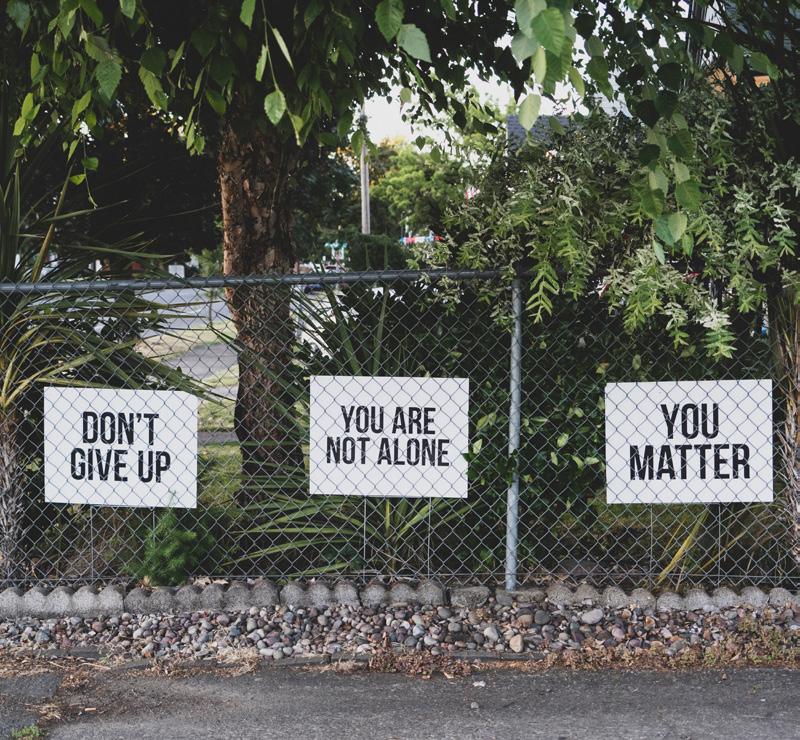
Funny thing is, I actually believe I already know.
Charles Duff is a writer in The Stewpot’s Writers’ Workshop.
MAY EDITION 2023 STREETZine 9
Photo courtesy of Dan Meyers through Unsplash.
Being Aware of Mental Illness
By Jason Turner
Mental health is real. I have multiple diagnoses and it is a tough business. For a while we have struggled in our belief that others may have mental health issues. You can have common sense, be smart, and appear collected while struggling with your mental state.
To me, behavior does not exactly tell if mental health is rampant. Also, many with mental health conditions self-medicate. It is important that we never deny another’s claims.
The more we believe and understand, the more we can accept and cooperate with the needs of patients who suffer from psychological damage. One of the challenges I face is my appearance and speech can be perceived incorrectly.
I’ve been told I was faking it, that I was too smart, and that I have too much common sense to have a disorder such as bipolar, depression, schizophrenia, and attention-deficit/hyperactivity disorder (ADHD). Truthfully, my life is clouded by lost opportunity, empty threats, auditory hallucinations, and immature arguments during extreme emotions.
I can see mental illness in others, but I struggle for people to recognize it in me. Awareness is the only suggestion I have for those situations. Awareness opens doors for handicaps and leads to better realization among opposites.
10 STREETZine MAY EDITION 2023
Jason Turner is a writer in The Stewpot’s Writers’ Workshop.
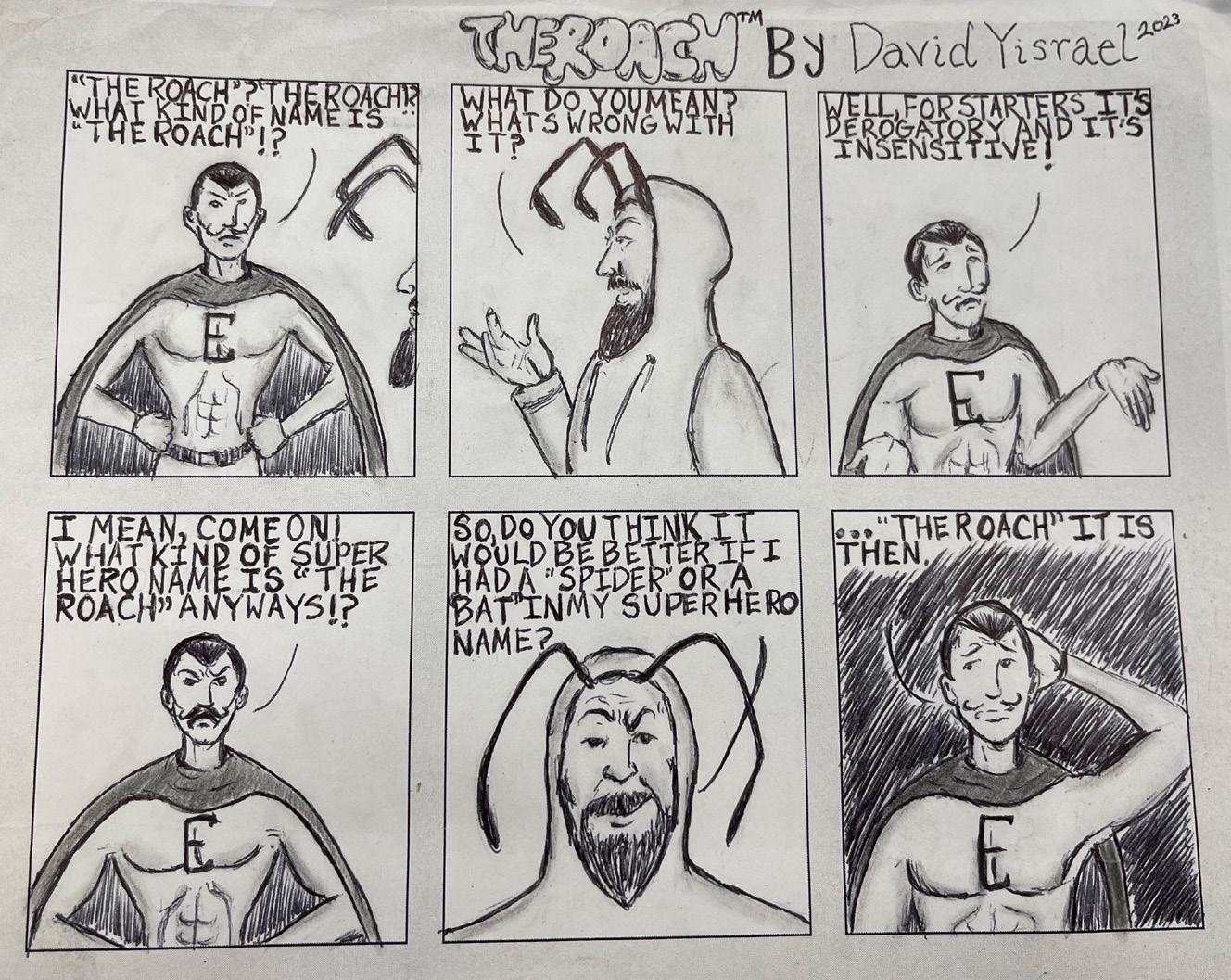
Illustrations by David Yisrael.
Photography
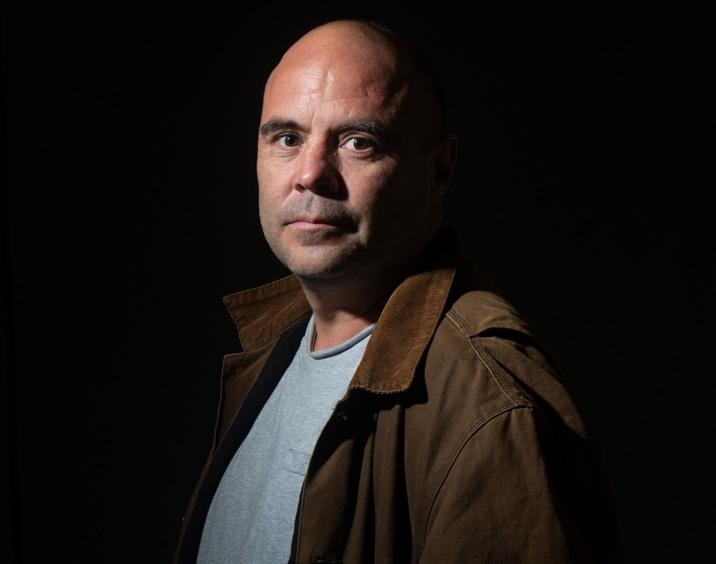
These photo illustrations were created by participants in The Stewpot Photography Workshop to express the topic of this month’s STREETZine: mental health

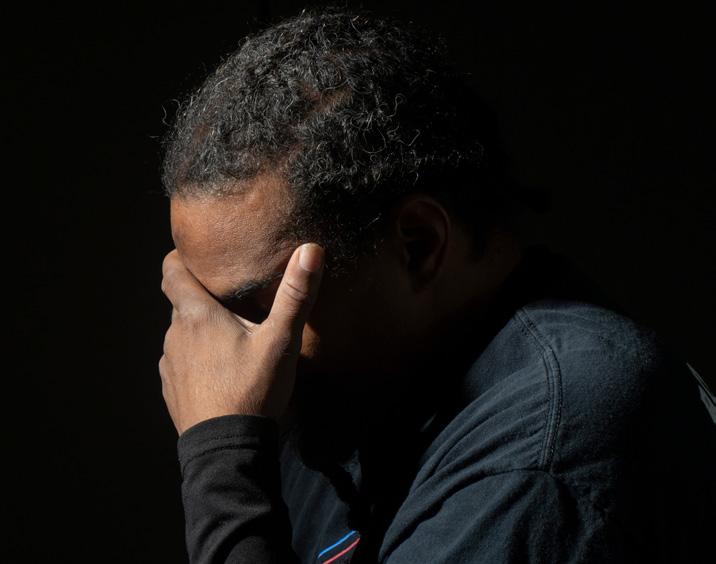

MAY EDITION 2023 STREETZine 11
Street Newspapers - A Voice for the Homeless & Impoverished
What is STREETZine
?
STREETZine is a nonprofit newspaper published by The Stewpot of First Presbyterian Church for the benefit of people living in poverty. It includes news, particularly about issues important to those experiencing homelessness. STREETZine creates direct economic opportunity. Vendors receive papers to be distributed for a one-dollar or more donation.
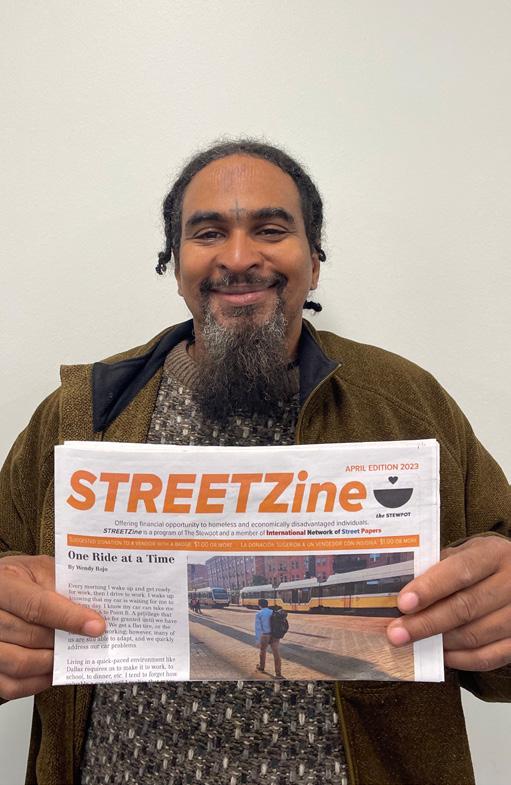
Distributing STREETZine is protected by the First Amendment. STREETZine vendors are self employed and set their own hours. They are required to wear a vendor badge at all times when distributing the paper. In order to distribute STREETZine, vendors agree to comply with Dallas City Ordinances.
If at any time you feel a vendor is in violation of any Dallas City Ordinance please contact us immediately with the vendor name or number at streetzine@thestewpot.org


CHAPTER 31, SECTION 31-35 of the Dallas City Code PANHANDLING OFFENSES
Solicitation by coercion; solicitation near designated locations and facilities; solicitation anywhere in the city after sunset and before sunrise any day of the week. Exception can be made on private property with advance written permission of the owner, manager, or other person in control of the property.
A person commits an offense if he conducts a solicitation to any person placing or preparing to place money in a parking meter.
The ordinance specifically applies to solicitations at anytime within 25 feet of:
Automatic teller machines; Exterior public pay phones; Public transportation stops; Self service car washes; Self service gas pumps; An entrance or exit of a bank, credit union or similar financial institution; Outdoor dining areas of fixed food establishments.
Any other ideas? Take our survey: https://bit.ly/2WbMRsg Advertise in STREETZine Support STREETZine and its vendors with your business or personal advertisements and announcements. Email: streetzine@thestewpot.org
VENDOR # Want to be a vendor? Come visit us at The Stewpot! 1835 Young Street, Dallas, TX 75201 Mondays at 1 PM or Friday mornings, or call 214-746-2785 Want to help? Buy a paper from a vendor! Buying a paper is the best way to support STREETZine and our vendors. Make a donation! thestewpot.org/streetzine Write for us! Contact us at streetzine@thestewpot.org MAY EDITION 2023 STREETZine 12
