Clear Thinking: End-of-Life Choices



Table of Contents The Importance of Thinking about End-of-Life ..........................................................................2 Choices You Get to Make ................................................................................................................ 3 The Role of a Chaplain 4 The Role of Hospice .........................................................................................................................6 The Role of an Attorney ................................................................................................................... 7 Planned Giving ...................................................................................................................................9 Burial, Cremation, and Other Options 10 Appendices When a Loved One Dies ................................................................................................................ 12 Compassion and Choices Values Worksheet .......................................................................... 13 Estate Planning Checklist 14-15 FPC Dallas Memorial Service Planning Sheet .................................................................... 16-17 Basic Memorial Service Order of Worship ................................................................................ 18 Memorial Service Music Selection Process .............................................................................. 19 Application to Purchase a Right of Inurnment in the FPC Dallas Columbarium 22-23
“ God opens up continuously. God beckons in front of us. God points us towards the horizon, the ‘out in front of us’ nature of the Christian pilgrimage toward hope and promise.” Jurgen Moltmann
The Importance of Thinking about End-of-Life
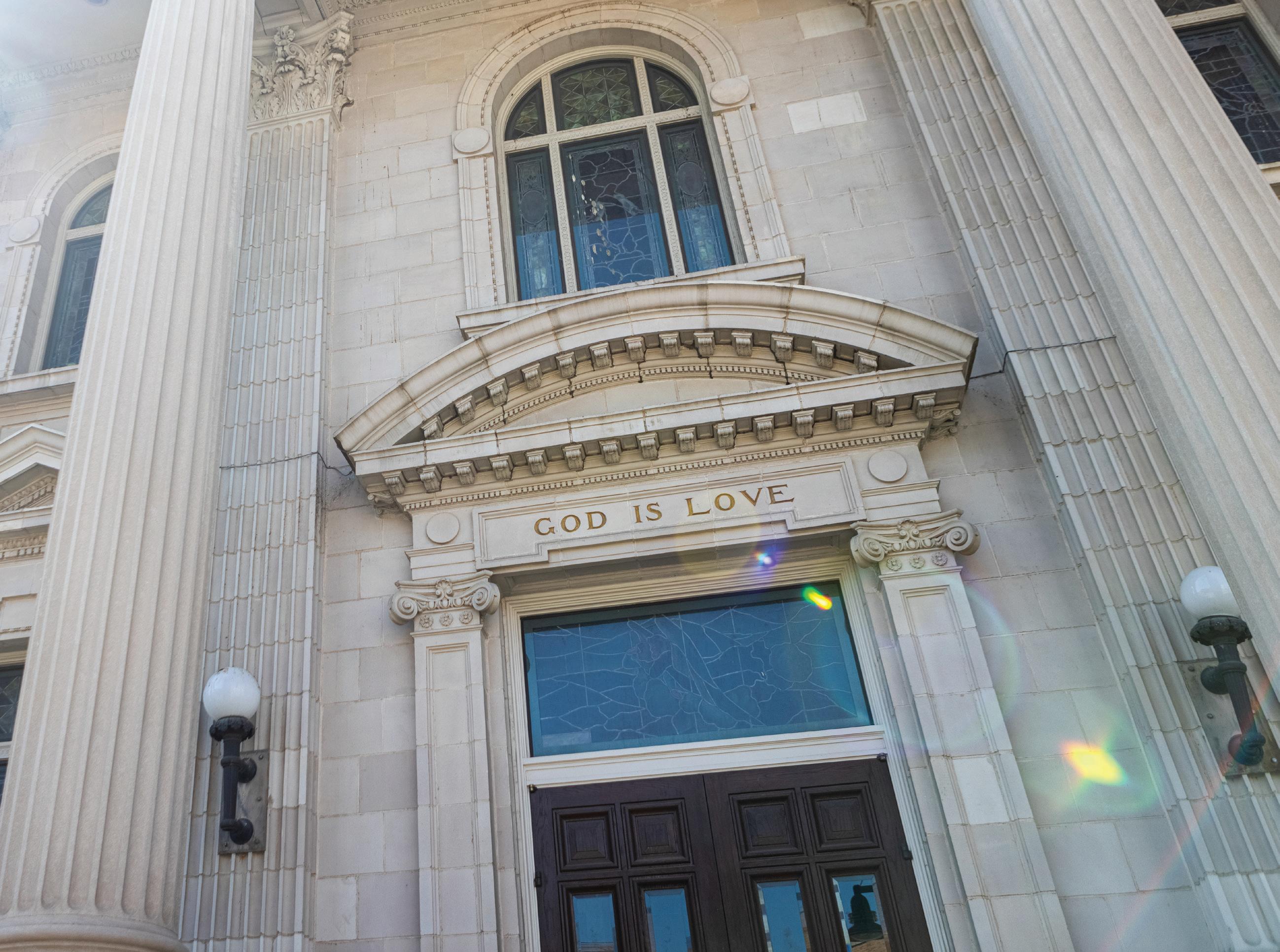
When we are baptized, we state our mortality and the ushering into the fold of God. When a cross of ashes is marked on our foreheads at the beginning of Lent, we come face to face with our mortality. When we remember the saints, we recognize the mortality of loved ones who are no longer with us. Our experiences with death are more frequent than we care to realize.
When the time comes for our death, or the death of a loved one, there will always be an element of surprise. We are relational creatures, and the finality of death is counter to the nature of our beings. Death will always be difficult.
Planning for the end of your life can be a precious gift to yourself and others. This booklet serves as a resource to help in coping, processing, and grieving by giving us the time to do so. When we are near the end of our life, or our loved one is near the end of their life, having thought through these details in advance allows us to spend time in meaning making rather than having to arduously fill out documents. Just as we make preparations for the birth of a child, let us prepare in similar ways for death.
Know that the pastors of First Presbyterian Church of Dallas hope to surround you and your family in times of joy and times of sorrow. We offer home and hospital visitation, prayer, personal and family pastoral counseling, referral to services such as hospice, and other resources. Please be in touch by inviting us as you wish into moments of laughter and tears, victories and losses. You can be in touch via email as well as through our on-call phone number: 214-748-8051. Learn more at fpcdallas.org.
Choices You Get to Make
Death finds us all eventually. We can’t prevent that. But we can direct how we’d like our final days to unfold. Advanced care planning is about making thoughtful choices now, putting them into a written advance directive, and discussing those choices with others. Planning helps ensure that we get the care we want and avoid what we don’t want, even if we’re unable to speak for ourselves. Through nonprofit organizations like Compassion and Choices, you have access to a plethora of resources. Compassion and Choices works to educate, empower, and advocate for endof-life options and autonomy for everyone, defending end-of-life options and access. Go to compassionandchoices.org to learn more.
2 3
You can specify what you want or don’t want — right up to the end!
The Role of a Chaplain
As persons called by God to serve in a particular ministry, chaplains are professionally trained and certified to minister to the spiritual and emotional needs of patients and their families during difficult times. Old Testament theologian Walter Brueggemann has written that it is the “deep discontinuities in our lives where most of us live, on which we use most of our energies and about which we are regularly occupied.” 1 In preparing for one’s own death or the death of a loved one, experiences of such “deep discontinuity” will arise.
Ways chaplains may be present:

Spiritual Guide
Human beings are meaning-making people. Chaplains accompany individuals as they seek to make meaning out of what is happening with and to them. For some, this may include a life review as they wonder if they lived fully. Others may speak of regrets or unfinished business, while others may seek reconciliation with family and friends, share long-held secrets or confess a lifelong closely-held burden.
Presence and Listening
As people prepare for their own death, they may struggle with the givens of existence and suffering. Chaplains seek to be present with and for individuals during these times, reminding them they are not alone, and that God sees them and hears their cries. There are times when people need to speak of their desires and goals for their living and dying: to be treated with dignity and respect; to be pain free; to live to participate in a particular life event; or to rehearse saying their good-byes to those they love. Sometimes a patient’s wishes are difficult for their loved ones to hear, and a chaplain can help to serve as a bridge builder.
Rituals
Rituals create spaces for celebration and remembering. They create ways of marking time and transitions. They honor what has been and connect to present and anticipated emotional currents. Rituals help facilitate a shift from Chronos time (linear) to Kairos time (eternal). Prayer, Communion, Blessings, Memorial Services, Weddings, Naming and Adoption Ceremonies are among rituals that chaplains create to offer support to patients and families. Before or at the time of death, rituals may include opportunities to gather
around the bedside for prayer, storytelling, or times of silence. They may include scripture readings or favorite music, including hymns. Whatever the ritual, it is important that it respond to the individual and communal needs, and facilitate meaning-making and connection to one another and to the holy.
Resources
There are many resources available to those who are preparing for and thinking about how they wish to steward their death. From organ donation to cremation, agencies and funeral homes, chaplains can help support individuals seeking to make faithful and thoughtful choices.
5
4 Walter Brueggemann, “Praying the Psalms.”
The Role of Hospice
Hospice is not a place, it is a philosophy of care for dying patients and their families.
Hospice care focuses on:
• Controlling distressing physical symptoms;
• Maximizing quality of life;
• Supporting the patient and family members psychologically and spiritually; and
• Extending bereavement care to family members and friends.
Hospice philosophy recognizes that no single medical professional/discipline can meet all the needs of dying patients and families.
In the United States, hospice care is mostly a specialized form of home care, but services can be provided in other settings. The Medicare Hospice Benefit (MHB) was developed to provide support to allow a family to care for their dying relative at home.
Eligibility:
• Physician-certified prognosis of less than 6 months assuming “the terminal illness runs its usual course;”
• Treatment goals are palliative rather than curative; and
• Physician is willing to be the physician of record.
The Hospice Care Team is*:
• Hospice physician, medical director
• Skilled nurse
• Social worker
• Chaplain
• Volunteer program coordinator
• Bereavement program coordinator
*This team is responsible for determining hospice eligibility and the Plan of Care together with the patient’s primary physician.
The Role of an Attorney
The first step is to review your estate planning documents to determine if changes or additions should be made. A valid Texas will and essential related documents should be prepared by an attorney and executed under the attorney’s supervision to make certain they conform with Texas law and can withstand any possible challenges. If you have an existing will executed in a state other than Texas, it should be rewritten to conform to Texas law.

In selecting an attorney, ask for referrals from your accountant, banker, insurance agent or friends. You can also contact the Attorney Referral Service of the Dallas Bar Association at 214-220-7400 for names of attorneys. In interviewing prospective attorneys, explain your personal and financial situation, and ask questions about their experience and fees.
The cost for preparation and execution of the estate will depend on which documents are needed, the complexity of your personal and financial affairs, and what your attorney considers a reasonable charge for their services. You should not hesitate to discuss the matter of fees with your attorney in advance. Keep in mind that the more homework you do, the less time your attorney will have to spend extracting information and decisions necessary to prepare documents.
7
6
Here is a list of essential documents (not including an individual’s will and/or trust)*:
• Statutory Durable General Power of Attorney
Designate who you want to handle your financial affairs in the event you are disabled and cannot do this yourself. Must be executed by an attorney.
• Medical Power of Attorney Health Care
Designate who you want to make decisions regarding medical treatments should you be unable to make such decisions on your own.
• Directive to Physicians (often referred to as a living will or Advance Directive)
Communicate your wishes about medical treatment for some time in the future when you are unable to make your wishes known because of illness or injury.
• HIPPA Authorization
Authorize medical providers to disclose important information about your health to designated family members or friends without fear of liability.
• Guardian of the Person
Designate one person (plus an alternate) to take responsibility for your physical well-being in the event of serious physical or mental disability. You may also designate the same or another person to serve as guardian of your estate.
• Out-of-Hospital Do Not Resuscitate
Execute this document if you decide you do not want paramedics or others to attempt resuscitation outside of the hospital setting if your heart or breathing stops. This is not the same as a DNR executed in the hospital.
An ADVANCE DIRECTIVE clarifies your end-of-life preferences if you become unable to make or communicate medical treatment decisions yourself. Typically, the advance directives above include a living will (“what I want”) and a medical durable power of attorney (“who will speak for me”).
You can locate your state’s forms in two places on compassionandchoices.org. Scroll down to the state-by-state callout menu at CompassionAndChoices.org/advancedirective or visit CompassionAndChoices.org/Texas and click on the advance directive box.
*Keep these important documents in a safe place where others know their location, and/ or give copies of these documents to those who will be helping in handling your estate.
Planned Giving
If you have financial resources in excess of your own needs, you may want to make provisions for family members, friends, or charitable organizations in your estate planning.
There are several different ways you can do this, and it is advisable to consult with your legal and tax advisors when determining the best vehicle(s) for your gifts.
If you would like to include a gift to one or more charitable organizations, you can do so by naming them in a will, trust, or as a designated beneficiary of a qualified retirement plan, IRA, life insurance policy, charitable trust, or other assets.

The simplest way to include a gift to a charitable organization close to your heart is through a bequest. There are a number of different kinds of bequests, including a general bequest (a stated amount is left without conditions attached), a designated bequest (a stated amount is left for a specific or designated project or program), and a residuary bequest (whereby the remainder of one’s estate is left to the charity after all other bequests are fulfilled). Other options include, but are not limited to, charitable gift annuities, charitable lead trusts, and charitable remainder trusts.
When drafting language to benefit an organization, it is advisable to ensure you have the legal name of the beneficiary, the mailing address to which distributions should be sent, and the tax identification number of the organization.
Should you wish to include FPC Dallas, its ministries, or the FPC Dallas Foundation in your estate planning, you may reach out to the Senior Director of Development and Communications at 214-748-8051 or plannedgiving@fpcdallas.org. They would be honored to visit with you and answer any questions you might have. You may also find useful information, including how to name FPC Dallas-affiliated entities in your estate planning documents, at fpcdallas.org/planned-giving.
9 8
Burial, Cremation, and Other Options
You get to choose what happens to your physical body after death. The options are numerous, and this list is not exhaustive.
DFW National Cemetery – Burial in a national cemetery is open to all members of the armed forces who have met a minimum active-duty service requirement and were discharged under conditions other than dishonorable.
A veteran’s spouse, widow or widower, minor dependent children, and, under certain conditions, unmarried adult children with disabilities may also be eligible for burial. Eligible spouses and children may be buried even if they predecease the veteran.
Members of the reserve components of the armed forces who die while on active duty or who die while on training duty, or were eligible for retired pay, may also be eligible for burial.
For more information contact 214-467-3374.
Lots for Less – www.lot-for-less.com
To find a burial plot at a reasonable price, or to see one you own.
Neptune Society – Pre-paid cremation services: 972-893-3776
UT Southwestern Willed Body Program – Body donation to science for medical research is a way to leave an everlasting legacy. www.utsouthwestern.edu/research/programs/willed-body/assets/bequest-form.pdf
Inurnments
First Presbyterian Church Columbarium (See Appendices)
Serenity Hill at Mo Ranch – A Presbyterian Conference Center located in Hunt, Texas: www. moranch.org
Columbarium – The columbarium is designed in the shape of a cross, and niches are placed in the cross. The cross has niches measuring 8×8″, or 12×12″ each. Each niche will accommodate one or two urns. The face of the niche will be engraved with the name, birthdate, and date of death of your loved one(s).
In-Ground – Many places for those preferring in-ground interment of the urns. Each site is marked by a stone engraved with the name and dates of birth and death. Certain areas consisting of multiple in-ground interment sites may be reserved for use as a family interment site, where family members may be interred in the future.
Scattering Ashes and Memorial Plaques – Ashes may be scattered at Mo-Ranch. Those choosing to scatter ashes will be provided an engraved brass memorial plaque that contains the name and dates of birth and death of the deceased.

People can also elect to honor the memory of persons who are buried elsewhere by providing a memorial plaque. (Special places on the walls of the pavilion or adjacent thereto are set aside for the permanent display of these special memorials.)
For more information about Serenity Hill at Mo Ranch, call 800-460-4401.

11 10
This is an image of the columbarium from FPC Dallas' Chapel Garden
Appendices
Whena Loved One Dies
At home:
Dial 911 to contact the authorities first; the appropriate agency will come to your home and guide you through the next steps. After the authorities have given clearance to do so, call your selected funeral home/cremation services. Call a pastor of First Presbyterian Church of Dallas at 214-748-8051.
Please note, if your loved one is under hospice care at home, you can call the hospice agency directly instead of dialing 911. The hospice nurse will come to the home instead of the authorities, and they will handle everything from that point forward, including contacting us once they have the proper clearance to do so.
At the hospital, nursing home, or other inpatient facility:
You must put on record with the facility that you give permission for your selected funeral home/cremation services to bring your loved one into their care. Unless a hospice agency is involved, it will (likely) be your responsibility to call and report your loved one’s passing, so that they can come out to the facility as quickly as possible.
Your selected funeral home/cremation services should:
• Prepare the death certificate and send it to the doctor to obtain the doctor’s signature and cause of death, and notify social security on your family’s behalf.
• Once the death certificate is signed, a funeral director will file the death certificate and the authorization to cremate (this will have been signed either with a notary when pre-arrangements were purchased, or signed with the next-of-kin after the death has occurred) with the local coroner’s office, who will then issue a permit for the cremation.
• The death certificates are then filed with the State Office of Vital Records so that certified copies can be ordered for the family.
• If cremation takes place, the cremated remains will be released back into the family’s care, scattered at sea, shipped anywhere in the continental U.S.A. at the family’s request, or interred in a cemetery.
Appendices Values Worksheet
WHAT ARE YOUR VALUES AND WISHES IN THE FOLLOWING AREAS:
1. What will be important to you when you are dying (e.g. physical comfort, no pain, family members present, etc.)?
2. How do you feel about the use of the life-sustaining measures in the following situations?
• Terminal illness
• Permanent coma
• Irreversible chronic illness
• Dementia
3. Do you have strong feelings about particular medical procedures?
• Mechanical breathing (respirator)
• Cardiopulmonary resuscitation (CPR)
• Artificial nutrition and hydration
• Hospital intensive care
• Pain-relief medication
• Antibiotics
• Chemo- or radiation therapy
• Surgery
4. What limitations to your physical or mental health would affect the healthcare decisions you would make?
5. Would you want to be placed in a nursing home or care facility if your condition warranted?
6. Would you prefer hospice care, with the goal of keeping you comfortable in your home during the final period of your life, as an alternative to hospitalization?
7. In general, do you wish to participate or share in making decisions about your healthcare and treatment?
8. Would you always want to know the truth about your condition, treatment options and the chance of success of treatments?
12 13
Appendices
Estate Planning Checklist
Important Identification Numbers
Social Security number and tax identification number (if you own a business)
Driver’s license number
Birth certificate/adoption papers
Passport number
Personal Documents/Contact (and where they are located)
Name and contact for Power of Attorney and person who serves as your executor
Will, Power of Attorney/Healthcare Power of Attorney - provide signed originals to the people you have named
Marriage license and certificate
Divorce/separation papers
Tax records for current and past year
Copy of gift tax returns filed over the last three years
Appraisals for valuables such as jewelry, coins, paintings, and musical instruments
Diplomas
Real estate deeds
All doctors and contact information
Dentist and contact information
Lawyer contact information
Church contact information
Funeral home contact information
Business Paperwork
Insurance papers of all kinds: property, healthcare, disability, life, vehicle, etc.
Outstanding loans or loans payable to you AND outstanding charitable pledges
List of monthly obligations and method of payment
Credit cards
Investment records
Inventory of personal property and locations
Make, model, and VIN number of each vehicle
Family and Friends
Names and addresses of all family members
Names and addresses of close friends to be contacted for medical emergency or, time of death
Employment
Names and addresses of your employer/supervisors
Safe Deposit Box
Include a statement of what is stored in the safe deposit box
Give physical address of the bank
Provide a number and location of the key
Note: In some states, access to safe deposit boxes is restricted after your death except by an attorney of record. Confirm with the bank that the box would not be temporarily sealed by the back or tax authorities following your death. If access is restricted, keep the original documents in a fireproof safe at home. Consider having your executor(s) designated as a signer on your safe deposit box. Your executor(s) should have a key and know the location of the box. Check with the bank and your attorney.
14 15
Appendices
FPC Dallas Service of Witness to the Resurrection
Planning Template
A pastor would be honored to assist you in completing this information. It is recommended to keep a copy of your plans in a safe place and/or give to relative or close friend. A copy will be filed with the church office.
Full name of deceased:
Person responsible for planning the service:
Birthdate and location:
Death date and location:
If applicable, name of spouse:
Name of child/children:
Name of grandchild/children:
Please circle: Burial Cremation Donated to science
Funeral/Cremation services:
Location of service:
If at FPC Dallas, Sudie George Chapel (125 person capacity) or Sanctuary (550 person capacity)
Graveside or columbarium/inurnment service:
FPC Dallas minister preference:
Scriptures (5 maximum):
Hymns (3 maximum):
Prelude/Voluntary requests: ______________________________________________
Singer/Instrumentalist:
Family members/other(s) to speak:
Memorial contributions:
Will the obituary be included in the bulletin: Yes No
Flower preference:
Reception: (cookies and punch) (catered small hors d’oeuvres) (catered sit-down meal)
AV needs/desires? (slide show?)
If in sanctuary, live streamed? (live stream fee $150.00)
FPC Dallas provides: Bulletin, flowers, and reception (cookies and juice)
Additional Fees for live streaming, finger food or sit-down meal reception, instrumentalist and/or soloist ($150-250)
Honorariums are at the discretion of the family:
Pastor: No fee (suggested range is $150-300); Organist/pianist: no fee (suggested range is $150-250)

16 17
Appendices
Basic Memorial Service Order of Worship
Voluntary (Procession)
Welcome
Call to Worship/Sentences of Scripture
Opening Prayer
Hymn *optional*
Confession and Promise of Grace *optional*

Scripture(s)
Homily
Words of Remembrance (Eulogy) *optional*
Musical Meditation *optional*
Affirmation of Faith *optional*
Psalm 23 Apostle’s Creed
Nicene Creed Other
Prayer of Thanksgiving and The Lord’s Prayer
Hymn *optional*
Commendation/Prayer
Blessing
Closing Voluntary (Recession)
Appendices
FPC Dallas Memorial Service
Music Selection Process
Revised 2021
Organist/Pianist: We will provide an organist or pianist who will play music during the service, including congregational hymns (2–3), prelude and postlude music, and special music (if requested). Our staff organist will play the service unless unavailable during the proposed memorial service date/time. If unavailable, the music department will secure an alternative organist or pianist.
Congregational Hymn Suggestions*: The hymns below are hymns/tunes that tend to cross denominational and even churched/non-churched boundaries. More folks in the congregation tend to participate in these particular hymns when they are sung in services, versus unfamiliar or lesser-known hymns. Most of these hymns also have texts that reflect the theological themes of a memorial service. If you or your family members do not have particular hymns in mind, please use this list as a suggestion.
Abide With Me 836
All Creatures of Our God and King vv.1–4, 15

Amazing Grace, How Sweet the Sound 649
Be Still, My Soul 819
Be Thou My Vision 450
Come, Thou Fount of Every Blessing 475
For All the Saints 326
Great Is Thy Faithfulness 39
Holy, Holy, Holy! Lord, God Almighty! 1
How Great Thou Art 625
It Is Well with My Soul 840
Morning Has Broken 664
Shall We Gather at the River 375
The King of Love My Shepherd Is 802
*Hymn numbers are from the Glory to God Hymnal
18 19
Prelude and Postlude Music: Any of the hymn tunes listed above may be played as prelude and postlude music. Families may select hymn tunes from the list above or recommend other familiar hymn tunes as prelude or postlude music. We may also play music from our typical Sunday morning prelude and postlude repertoire, or other well-known preludes and postludes, if requested.
Special Music: Special/meditative/instrumental music (non-congregational) within the service may be played at the request of the family.

Staff Singers/Soloists: Vocalists to lead congregational music or special music are available at the request of the family, contingent upon availability. One or two cantors in both the chapel or sanctuary are typically able to carry congregational music. Four singers would be needed for SATB singing and would be available on a case-by-case basis.
Chancel Choir (Volunteers): Volunteers from the chancel choir may lead congregational hymns and special music in memorial services, upon request of the family and in consultation with the pastor presiding over the service and the Director of Music. This is determined on a case-by-case basis.
Family/Friend Musicians: Friends and family members who are musicians are welcome to participate in their loved one’s memorial service. If these musicians will need piano or organ accompaniment, we ask that the musician be connected with the music staff via email as early as possible to schedule a time for rehearsal and provide copies of their music (see below for repertoire selection timeline).
Recorded Music: Recorded music may be played at memorial services on a case-by-case basis, in consultation with the pastor leading the service and the Director of Music.
Timeline: Memorial service dates/times must be communicated with the Director of Music and Organist as soon as it has been determined by the pastor and family of the deceased. All music selections/requests must be submitted to the Director of Music and the Organist and Associate Director of Music via email no later than one week prior to the memorial service. Services with an unusually large amount of music will need more advance notice, if possible. Adhering to this timeline will ensure that the music team has adequate time to prepare and rehearse for the service, to determine the feasibility of the requested selections, and to schedule any additional musicians. The music staff retains the right to determine whether or not is possible to prepare a suggested piece of music or instrumentation in time for a memorial service. The music team will confirm the suggestions via email and will submit the appropriate titles/text to the communications team for the bulletin.
20 21
Appendices Application to Purchase a Right of Inurnment
The Billie and Gillis Thomas Columbarium
Full name of applicant
Street address
City, State, Zip
First Middle Last
Telephone ( )________________ Cell ( )
E-Mail
Please provide the following information for the person whose cremains are to be placed in niche.
Full name
Date of birth
Relationship to applicant
Niche number requested
ELIGIBILITY
Current FPC Dallas member
Former FPC Dallas member (date range)
Relative of FPC Dallas member
FPC staff (Years employed) _____ (Relationship)
1. ____ Full payment in amount of $__________ submitted with application
2. ____ The applicant agrees to abide by the Rules, Policies, and Regulations governing operation of the Thomas Columbarium as now existing or which may exist in the future. Applicant acknowledges receipt of a copy of the existing Rules, Policies, and Regulations.
First Presbyterian Church of Dallas shall be liable ONLY for acts of gross negligence or intentional wrongdoings by it or by any person whose acts, omissions, duties, negligence, or liabilities may be attributed or imputed to First Presbyterian Church of Dallas (“Church Agents”). To the fullest extent permitted by law, applicant hereby releases First Presbyterian Church of Dallas and its Pastors, Elders, Officers, Employees, Representatives, Agents and Members from any and all liability of any type whatsoever, regardless of the theory on which liability is premised (including but not limited to contract, tort, strict liability, breach of express or implied warranty, breach of implied covenant, and the sole or concurrent negligence of First Presbyterian Church of Dallas or of Church Agents), relating to or arising from the Thomas Columbarium, including liability that arises as a result of acts or omissions that involve the negligence of First Presbyterian Church of Dallas or of Church Agents.
The liability to applicant relating to or arising from the Thomas Columbarium shall be exclusively in money damages in an amount not to exceed the fees paid by the applicant for a Right of Inurnment.
Applicant’s Signature
Date
DO NOT WRITE BELOW THIS LINE
Application received by
Date ______________________ Time
(Church Staff) Application approved by Associate Pastor
Niche Number
22 23




Values Worksheet refers specifically to Pages 17, 18 and 19 of the "My End of Life Decisions: An Advanced Planning Guide and Toolkit" (April 2022). fpcdallas.org Created by First Presbyterian Church of Dallas. Date of release: April 2023.
“ For everything there is a season, and a time for every matter under heaven: a time to be born and a time to die.” Ecclesiastes 3:1-2
