MCCALL LENTEN DEVOTIONAL INTRODUCTION | Kasey Jones WHAT IS LENT?
DUST THAT MOVES | Ossie X. McKinney
FLAMES OF FREEDOM | Sean Roberds
CONFRONTED AND LED TOWARD NEW CREATION | Paul Baxley
JUSTICE IN ACTION: GAMALIEL FOUNDATION TAKE ACTION RESOURCES
SUNDAY REFLECTION: REV. DR. EMMANUEL MCCALL
THE COST OF DOING JUSTICE | Alisha Seruyange
EVEN THOUGH . . . | Rev. Danielle L. Bridgeforth
ALLYSHIP: QUEEN ESTHER’S “GAMBIT” | Vincent Lui
THE ALGORITHM OF DELIVERANCE | Kim R. Wright
FRIDAY ALLY SPOTLIGHT: YURI KOCHIYAMA
JUSTICE IN ACTION: FAITH IN ACTION TAKE ACTION RESOURCES
SUNDAY REFLECTION: ELIZABETH ECKFORD
MOSES AND PHARAOH | Faith Bynoe
JUSTICE WORK AND COURAGE | Faith Bynoe
ALLY POWER | Isaac Mwase
WHEN THE VISION NEEDS A VOICE | Derrick Weston
FRIDAY ALLY SPOTLIGHT: MYLES HORTON
JUSTICE IN ACTION: TOGETHER FOR HOPE TAKE ACTION RESOURCES
SUNDAY REFLECTION: DR. VALDA MONTGOMERY CALLED BEYOND COMFORT | Lorna Fowler
MAY THE SCALES FALL OFF OUR WHITE EYES | Zach Mason
WALKING INTO THE HOUSE OF JUSTICE | Amaris Ross-Hillard
THE COURAGE TO OPEN EYES | Mariah Humphries
FRIDAY ALLY SPOTLIGHT: VIRGINIA DURR
JUSTICE IN ACTION: EQUAL JUSTICE INITIATIVE (EJI) TAKE ACTION RESOURCES
32 | March 15
33 | March 16
34 | March 17
35 | March 18
36 | March 19
37 | March 20
38 | March 21
39 | March 21
40 | March 22
41 | March 23
42 | March 24
43 | March 25
44 | March 26
45 | March 27
46 | March 28
47 | March 28
48 | March 29
49 | March 30
50 | March 31
51 | April 1
52 | April 2
53 | April 3
54 | April 4
55 | April 4
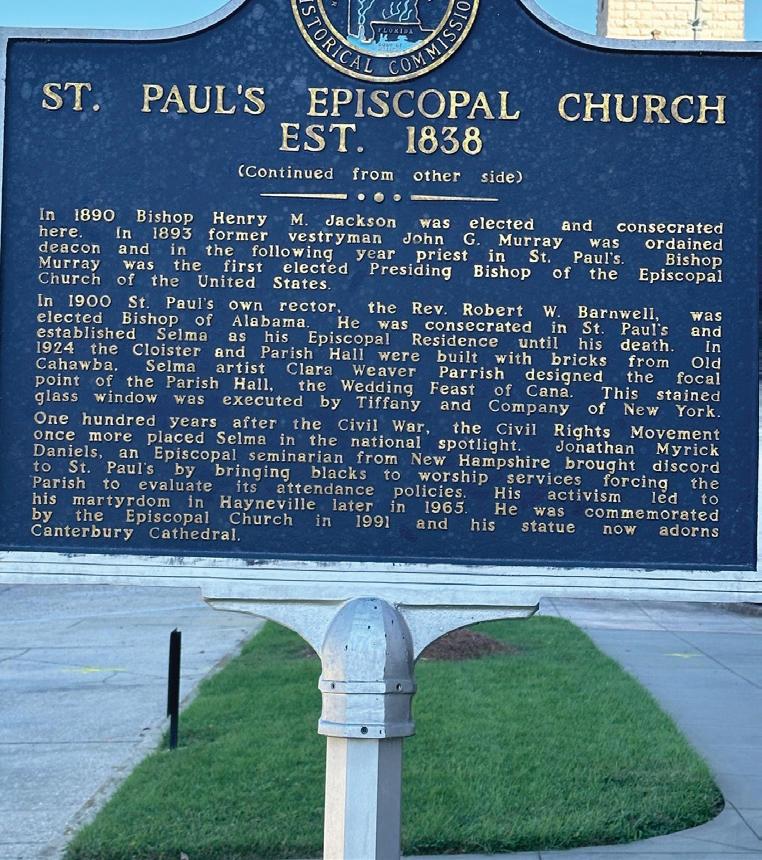
SUNDAY REFLECTION: JONATHAN DANIELS
PERSISTENCE WHEN YOU DON’T KNOW THE OUTCOME | Teresa Granger
RESILIENCE AS PART OF JUSTICE | Gloria D. Shellman
PRAYER AS ALLYSHIP | Kevin Pranoto
CRIES FROM THE SILENCED, RESURRECTION AT THE CENTER | Dimaris Abreu
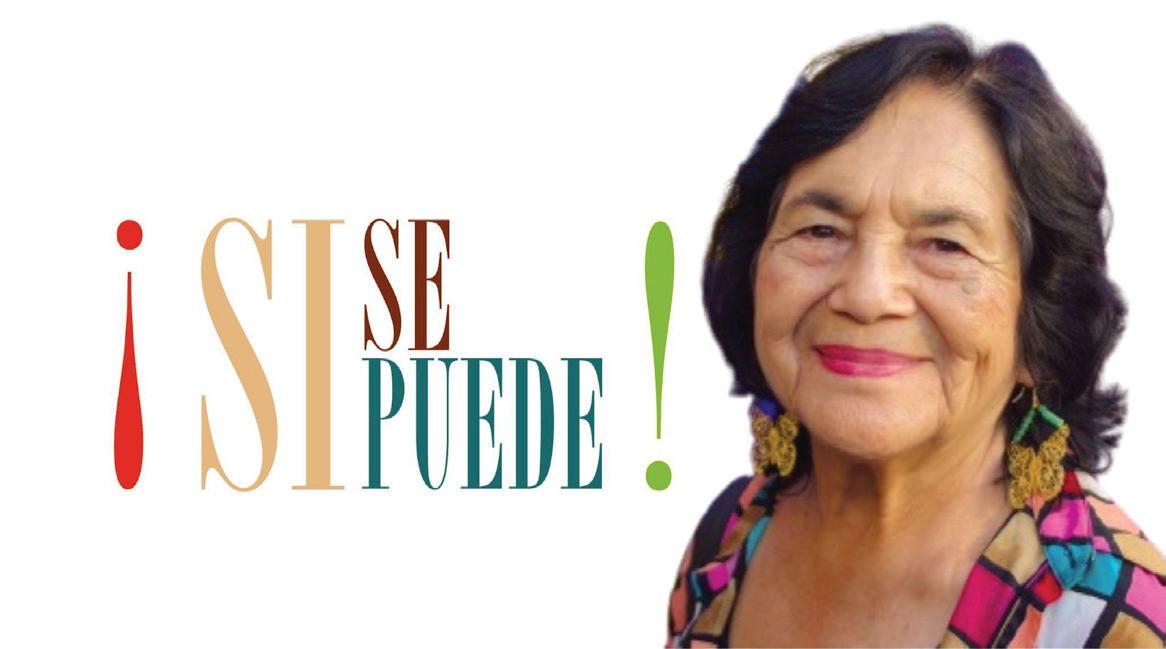
FRIDAY ALLY SPOTLIGHT: DOLORES HUERTA
JUSTICE IN ACTION: KIDS IN NEED OF DEFENSE
TAKE ACTION RESOURCES
SUNDAY REFLECTION: DOLORES HUERTA
IN CHRIST’S NEW JUSTICE SYSTEM, WE ARE CALLED TO SEE EACH OTHER AS FAMILY José Luis Marantes
THE GOSPEL OF LIBERATION | Byron Griffith
THE SURPRISING WORK OF JUSTICE | Jonathan Eng
RECONCILIATION STANDS ON THE COURAGE TO FORGIVE | Brianna Rice
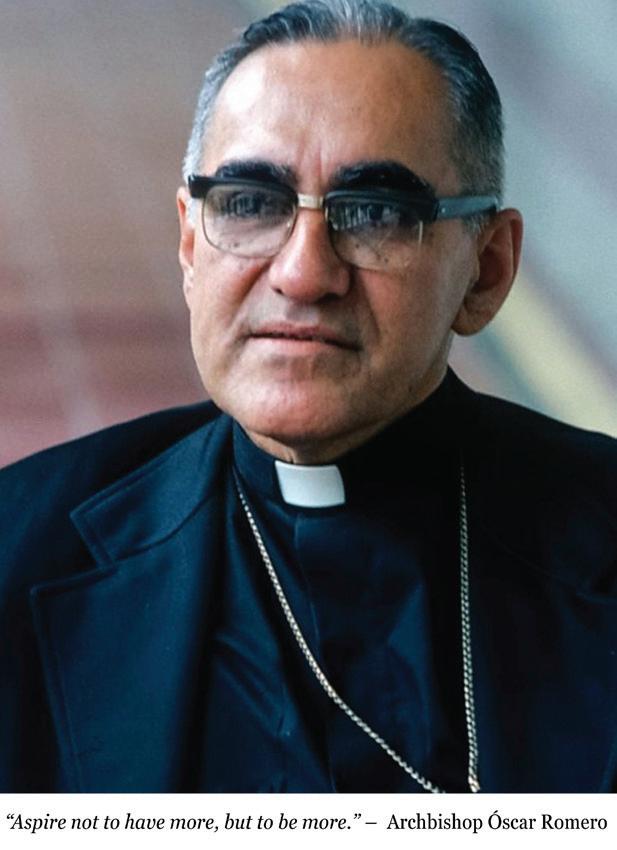
FRIDAY ALLY SPOTLIGHT: ARCHBISHOP ÓSCAR ROMERO
JUSTICE IN ACTION: MISSION TALK
TAKE ACTION RESOURCES
SUNDAY REFLECTION: ÓSCAR ROMERO
RECOGNIZING THE TIME | Nora O. Lozano
SERVING EVERYONE AT THE TABLE | Joy Yee
ALLYSHIP IN THE WAY OF JESUS | Lily Wood
TRUE COURAGE TURNS THE TABLES | Elket Rodríguez
FRIDAY ALLY SPOTLIGHT: MARTIN LUTHER KING, JR.
JUSTICE IN ACTION: THE POOR PEOPLE’S CAMPAIGN TAKE ACTION RESOURCES
Contributors
Devotional Committee: Kasey Jones, Lynn Brinkley, Sharon Felton, Rubén Ortiz, Ossie X. McKinney, Antonio Vargas and Charles Collins
Production Team: Aaron Weaver, Amy Cook, Lauren Lamb, Jeff Langford, Xiomara Reboyras
Introduction
The Cooperative Baptist Fellowship family and friends have prepared the 2026 Emmanuel McCall Lenten Devotional series you are preparing to read. It is a project of love designed to be read during the season of Lent, which begins February 18, 2026.
Welcome to the 2026 Emmanuel McCall Racial Justice Lenten Devotional: God in This Justice Work.
This year’s devotional invites us to see, tell, and live the truth of God’s redemptive work in a world still marked by injustice. Rooted in Micah 6:8, we are called “to do justice, love kindness, and walk humbly with God.” Through Scripture, story, and prayer, we are reminded that justice is not an optional act of faith; it is a holy response to God’s love.
Each week, we journey through biblical stories that reveal God’s heart for justice and through the lives of modern-day witnesses who embodied that call in their time. From Esther’s courage to Yuri Kochiyama’s solidarity, these reflections remind us that the work of justice is ancient, sacred, and communal.
This devotional includes:
• Daily reflections (Monday–Thursday) with Scripture and prayer
• Friday “Ally Spotlights” highlighting individuals who stood in courageous solidarity
• Saturday “Justice in Action” features organizations engaged in transformative ministry
• Sunday “Voices from the Journey” offering contemporary reflections of hope and faith
As you move through this Lenten season, may these pages remind you that God’s Spirit is still at work, restoring, reconciling and making all things new. May we have the courage to join in that holy work, trusting that God is, and has always been, in this justice work.
Acknowledgments:
With gratitude to all contributors whose voices and creativity bring this devotional to life. Special thanks to Ossie McKinney, Sharon Felton, Lynn Brinkley, Sean Roberds, and Charles Collins for their leadership and dedication.
Kasey Jones CBF Coordinator for Outreach & Growth
SCAN THE QR CODE to listen to the Lenten 2026 playlist.
What Is Lent?
Lent is the period of 40 days, beginning Ash Wednesday and ending the Saturday before Easter. Sundays are not counted because Sunday always celebrates Jesus’ victory over sin and death.
It is a season of preparation for the celebration of Easter. The word “Lent” comes from the Anglo-Saxon lencten, which means “spring,” the time of the lengthening of days. The 40 days of Lent are a time for a probing consideration of our human condition, including sin and its deadly consequences for both individuals and society. It is also a time for an equally intense consideration of the new possibilities Jesus Christ offers us and their implications for practical living.
The process is intended to engage individuals at varying stages of commitment. Historically, Lent developed as a time of final preparation for baptism among converts. For those already baptized and actively participating in the life of the church, Lent serves as an opportunity for reassessment and renewal. This period helps guard against the diminishing of a vibrant faith, whether through a return to old patterns or the stagnation caused by routine and unimaginative practices.
Finally, for those who have departed from the faith, or “backslidden,” the 40 days can be a time for restitution and restoration.
Sources: Floyd, Pat. The Special Days and Seasons of the Christian Year: How They Came About and How They Are Observed by Christians Today.
Stookey, Laurence H. Calendar: Christ’s Time for the Church.
“Then Esther spoke to Hathach and gave him a message for Mordecai, saying, ‘Go, gather all the Jews to be found in Susa, and hold a fast on my behalf … After that I will go to the king, though it is against the law; and if I perish, I perish.’” – Esther 4:13–16, NRSV
Dust That Moves
On Ash Wednesday, we hear the ancient words: “Remember that you are dust, and to dust you shall return.” It is a humbling truth. We are fragile. Finite. Made of the earth and destined to return to it. But there is another truth just as holy: dust can move.
Esther was dust. A young woman swept up in an empire that had no room for her voice, no regard for her people. When her cousin Mordecai sent word that the lives of the Jews were at stake, Esther did not rush into heroism. She paused. She fasted. She trembled. She resisted, at first, the terrifying call to confront power.
She knew what it meant to move before a king who could kill with a glance. She knew what it meant to speak when silence was safer. But Esther chose to move anyway.
Ash Wednesday does not call us to strength. It calls us to honest courage—the kind that knows its limits, feels its fear, and still shows up. Racial justice work requires that same courage. It asks us to speak hard truths, to risk reputation or comfort, to break generational silences, to confront systemic sin. It’s easier to stay still. It’s easier to say, “That’s not my fight,” or “Someone else will speak.” But God is always calling someone—maybe you—to move.
On this day of ashes, we remember: We are dust. But in God’s hands, dust has agency.
Dust can fast.
Dust can speak.
Dust can rise.
Prayer:
God who shaped us from the dust, Today we remember our mortality—but also your mercy. You moved through Esther’s trembling voice. You stirred your people to rise and speak across generations. Move through us.
When the work of justice feels too heavy, When our voices shake, Remind us that we are dust— but dust that moves with you. Amen.
Ossie X. McKinney Director of Research and Administration for Outreach and Growth, CBF Decatur,
GA
“But Moses said to the Lord, ‘O my Lord, I have never been eloquent, neither in the past nor even now that you have spoken to your servant; but I am slow of speech and slow of tongue.’ Then the Lord said to him, ‘Who
gives speech to mortals? … Now go, and I will be with your mouth and teach you what you are to speak.’”
–Exodus 4:10–12, NRSV
Flames of Freedom
I can understand why Moses wondered with his flock beyond the wilderness. It put as much distance between him and Egypt as possible. The wilderness was empty and lonely, but it was safe! Safe from Pharaoh, safe from the suffering of his people and safe from the Nile and its Alligators. Distance creates safety and allows for excuses.
Moses felt safe until he saw the flames of freedom burning on the bush. From the fire God comes calling. Go back Moses and speak to Pharaoh. Tell him to let my people go. The fire and flames of God’s calling creates its own heat, yet it does not consume.
Moses responded with a litany of excuses. Five times we read the word “BUT” as Moses tries to create a safe distance from the fire that’s calling. But who am I that I should go? But who shall I say sent me? But what if they don’t believe me? But I am not a great speaker! But send someone else! Moses was full of doubts, fears and insecurities. Yet, God responds with the assurance that God will speak through him and will never leave him alone in this quest for justice.
The work of Racial Justice today is as enormous as freeing the Israelites from Egypt. It feels just as dangerous too! It is normal to have doubts and fear in this work, and everyone feels insecure with the enormous task before us. But instead of escaping to the safety of our excuses let us walk with boldness knowing that it is God who is calling us out of the fire and flames and God will not leave us to walk alone.
When we speak up for Racial Justice, we are sure to feel a bit of heat but the flames of freedom and the fire that calls us will not allow us to be consumed.
Prayer: Merciful God, we hear you calling us to justice, but we are afraid. We see the burring bush yet feel inadequate and unsure. So set our hearts on fire! Fill us with flames of freedom and send us back with confidence that you are aways with us. Amen.
Sean Roberds Executive Coordinator,
Mid-Atlantic CBF Herndon, VA
“But the Lord said to him, ‘Go, for he is an instrument whom I have chosen to bring my name before Gentiles and kings and before the people of Israel.’”
– Acts 9:15,
NRSV
Confronted and Led toward New Creation
The Apostle Paul was a compelling preacher, a natural entrepreneur who though not a theologian by profession, used entrepreneurial methods to carry out his missionary work of starting congregations and mentoring church leaders. He was a visionary who imagined that the Christian community would be daringly and equitably inclusive of people who spoke many languages, came from different religious backgrounds, and had very different racial and ethnic identities. He was bold enough to stand up to political authorities and theological adversaries.
But none of that was true or evident when the Risen Jesus first overtook Paul on the Damascus Road. In that confrontation, Paul (then known as Saul) was overwhelmed, blinded and weakened. That moment was much more a divine confrontation than it was a disclosure of Call. Before Acts 9 is over, we know that Paul will be an “instrument to bring Christ’s name before Gentiles, kings and the people of Israel.” But we only know that because Jesus told Ananias, not because Saul heard anything. All Saul knows in those initial moments is that he must get to Damascus and then he’ll be told what to do next.
The beginning of Saul’s journey with Christ is not confidence and assurance. It is confrontation and vulnerability. Jesus confronts Saul with his history of persecution and that history must be dealt with honestly. Saul is blinded and weakened, and he cannot get anywhere on his own, but instead must humbly receive the guidance of others.
The first steps in any of our journeys toward participating in Christ’s vision of just and beautiful Christian community never promised certainty. For those of us who are white and have a history of benefitting from supremacy and privilege, there is first a dizzying confrontation with things to which we have far too long been blind. Then there is a need to follow the leadership of others as we take our steps toward the new world God is making. Christ will send others to take us by hand, to show us what we’ve not known before, and give us opportunities to grow. Then, by God’s grace, we find ways to be agents through whom God’s new creation comes to life.
Reflection: Who are the people Christ has sent to lead you toward his vision of a just and beautiful Christian community?
Prayer: Lord, open our eyes this Lent to the ways you are calling us to join you in making a world where there are no longer strangers and sojourners, where there is no longer domination and fear based on difference, but instead where all of us flourish together in your peace and justice.
Paul Baxley Executive Coordinator, Cooperative Baptist Fellowship Decatur, GA
On Saturdays, we turn outward. Each week, you’ll meet an organization challenging injustice, lifting communities and reminding us that God’s work of liberation continues. Use this space to pray for them, learn from them and discern your next faithful step.
– Gamaliel Foundation –
This week we walked with Esther, Moses and Paul, each of whom felt inadequate yet answered God’s call. Their stories remind us that justice is born when ordinary people take faithful risks.
The Gamaliel Foundation equips local leaders to do just that, training communities to confront “Pharaoh-like” systems of housing injustice, voter suppression, environmental racism and economic inequality. They remind us that justice is not accidental but the fruit of sustained, organized, faithful work.
Justice in Action Reflection
Learn more at: https://gamaliel.org/our-work
Journaling &
Take a moment to consider:
– What faithful risk might God be nudging you to take, even if it feels small or you feel unprepared?
– How can you join with others so your action is sustained and not just a passing intention?
– Write a prayer asking God to show you one step toward justice this week.
SCAN THE QR CODE to listen to the Lenten 2026 playlist.
Take Action Resources
Books, Articles & Podcasts
Books on Race and Reconciliation
African Americans and Religious Freedom: New Perspectives for Congregations and Communities (PDF)
Resources
Conversation Starter Concepts
“How Can We Solve the Black Maternal Health Crisis?” (John Hopkins)
Podcasts on Race and Reconciliation (PDF)
Visual Resources on Race (PDF)
More Links
Dr. Emmanuel McCall Racial Justice and Leadership Initiative
CBF Latino Network: Familia
Immigrant and Refugee Advocacy – Cooperative Baptist Fellowship
Racial Justice Pilgrimages
Application for McCall Racial Justice Pilgrimage Seed Grant
Get Involved
Vote Riders
Center for Common Ground
Sojourners
BJC Center for Faith and Justice and Reconciliation
Fellowship Southwest
Together for Hope
Racial Equity Institute
Equal Justice Initiative
SUNDAY
Reflection
Voices from the Journey
Each Sunday, we pause to listen to voices who have lived this work of justice. These include people interviewed for the Dr. Emmanuel McCall Racial Justice and Leadership Initiative, along with allies highlighted in this devotional. Their words invite us to reflect, pray, and act with courage in our own time.
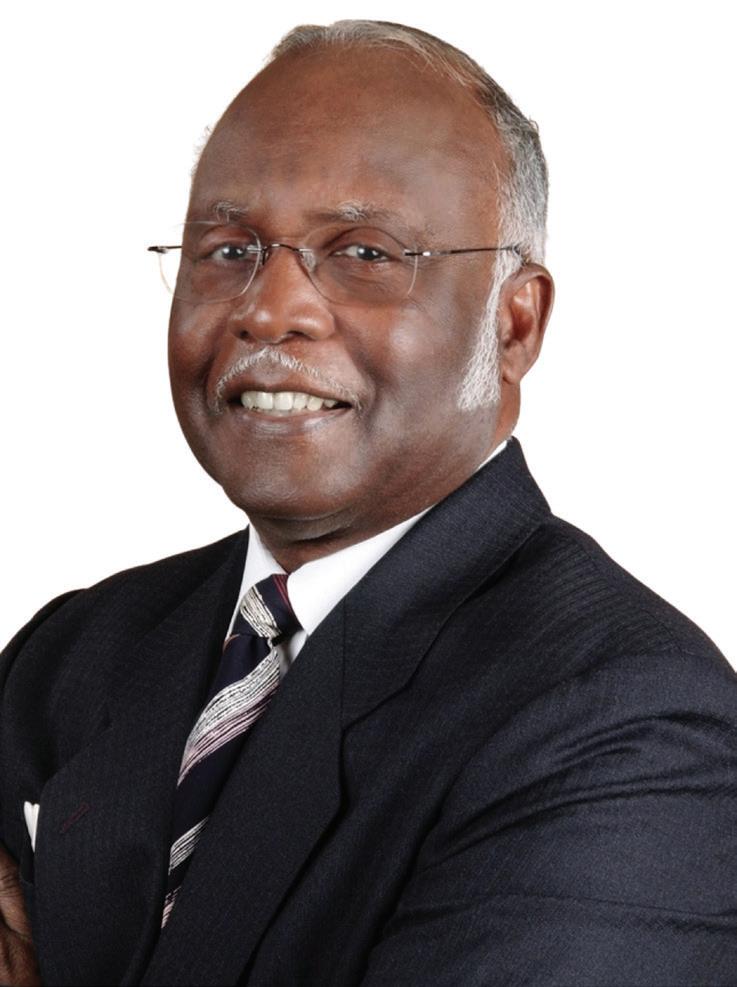
– Rev. Dr. Emmanuel McCall (1936–present) –
Rev. Dr. Emmanuel McCall is a pioneering leader whose ministry embodied the call to racial reconciliation. Reflecting on his childhood in a small steel town, surrounded by European immigrants divided by culture and prejudice, he recalled how his Black family unexpectedly became a bridge of unity.
“In that little steel town, we were surrounded by Germans, Italians, Yugoslavs, and all kinds of European immigrants who hated each other. But somehow, our Black family became a uniting force among them. Looking back, I believe the Lord was preparing me even then for the work of reconciliation.” – Rev. Dr. Emmanuel McCall
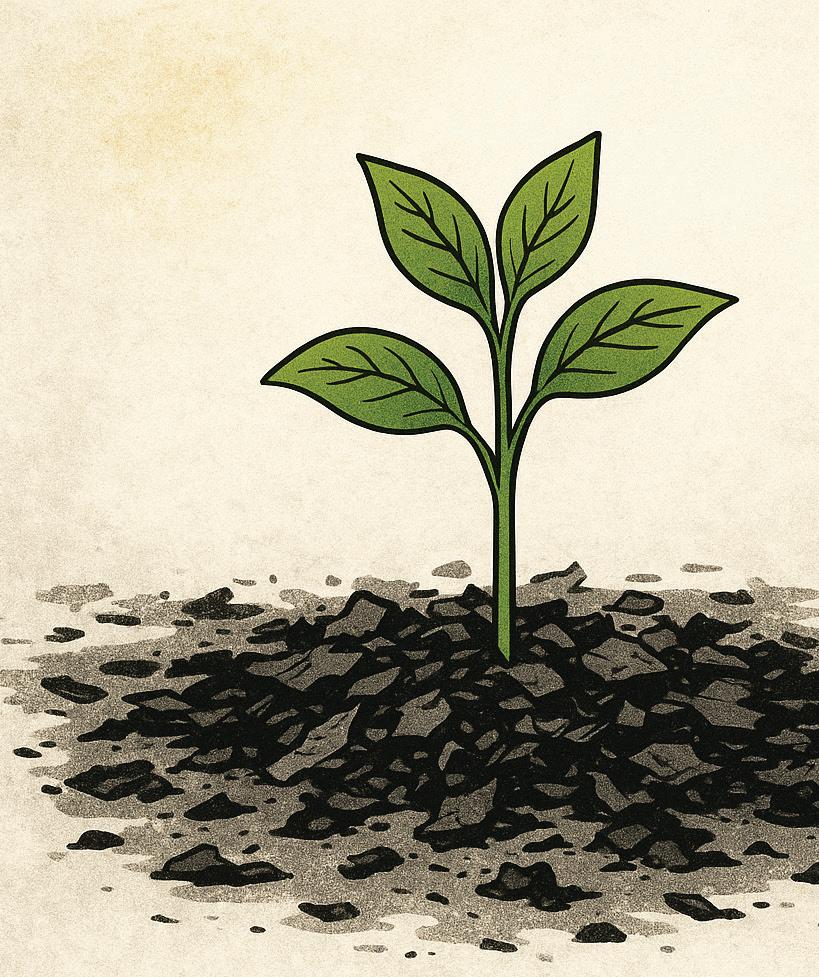
His words remind us that God often plants seeds of justice in our lives long before we recognize them.
As you reflect on Dr. McCall’s testimony, consider how God may already be shaping your story to prepare you for justice and reconciliation work.
Journaling Prompts
Take a moment to consider:
– When was the first time you became aware of race? How did that moment shape the way you see the world?
– Where has God been preparing you for justice or reconciliation work without you even realizing it?
“For if you keep silent at this time, relief and deliverance will rise for the Jews from another place, but you and your father’s house will perish. And who knows whether you have not come to the kingdom for such a time as this?”
– Esther 4:13-14, ESV
“Then I will go to the king, though it is
against the law,
and
if I perish, I perish.”
– Esther 4:16b, ESV
The Cost of Doing Justice
There is no shortage of Esther moments waiting for us in today’s world. It is almost stifling how powerful systems crush the most vulnerable among us. It is everywhere. In each news cycle we see another attack, another hostile takeover, another act of oppression, another group brushed aside while immeasurable harm is unleashed. Injustice reigns. It is not just happening across the world, either. It is happening across the street, in our neighborhoods and tucked into the very fibers of this complex world in which we all live. Meanwhile, we attempt to balance the complexities of our daily lives by wading through the distractions of busy-ness and holding at bay the numbness of overwhelm that almost lulls us to sleep.
But in the smallest moments when things are still and clear, Mordecai’s challenge to Esther is a challenge to us. All of us who have given our lives to the ways of Jesus must wrestle with the questions that Esther faced. There is no palace strong enough and no position high enough to shield us from answering the challenge. It comes for all of us. Who will we be in the face of injustice? What will we do as the people of God when lives are threatened and the powerful seek to destroy?
Esther did not act immediately. She must have considered all the possibilities. She certainly knew the rules. How could she risk her own safety to bend the king toward a rescue plan for the Jews? Could she do something less terrifying? Something easier, maybe? Could there be a way for this to not cost anything?
Mordecai warns Esther, like he warns us today, that no matter the choice, there will be a cost. If you keep silent, it will cost you. If you speak up, it will cost you. There are no sure-fire guarantees it will all work out smoothly. Action against injustice is clunky, unpredictable work. It is also the work to which Christians are called. As we follow the ways of God and offer in exchange our privileges and comforts, we discover transformation, faith and a chance to touch the hope of God’s promises.
Reflection: So, who will you be in the face of injustice? In what ways are you lulled to sleep? What privilege or comfort are you clinging to? Are you willing to sacrifice them for the sake of God’s justice?
Alisha Seruyange Alabama CBF Associate Coordinator and CBF Young Baptist Event Specialist Birmingham,
AL
“Go, gather together all the Jews who are in Susa, and fast for me. Do not eat or drink for three days, night or day. I and my attendants will fast as you do. When this is done, I will go to the king, even though it is against the law. And if I perish, I perish.”
– Esther 4:16, NIV
Even though…
The fight for justice and equality can feel never-ending. Despite progress, racism and injustice still plague our society. If we are not careful, the weight of it all can lead us to believe that the possibility of change is hopeless. We can even be tempted to stop trying. This is where we find Esther in our text.
Upon learning of the plan to destroy her people, Esther initially wants to remain silent. What could she possibly do? She feels outmatched and outdone (Esther 4:10). We have all been there. The constant stream of tragedy can leave even the strongest among us feeling defeated. But like Esther, we are called to resilience—a resilience rooted in faith.
Esther’s story teaches us the power of an even though mindset. She did not wait until her circumstances changed; she acted based on conviction, not comfort. Her decision to risk everything became the catalyst for her people’s salvation.
Our convictions must outweigh our fears. As Frederick Douglass said, “Power concedes nothing without a demand.” Real change requires action. Esther knew the law forbade her from approaching the king uninvited, yet she moved forward—guided not by fear, but by Holy Spirit.
May we, too, have the faith to stand up for what is right—even though the outcome is uncertain—knowing that when we stand for justice, we never stand alone.
Prayer: God, who is Emmanuel, thank You for empowering us to overcome evil. Help us trust You more as we do acts of justice each day.
Rev. Danielle L. Bridgeforth
Senior
Pastor, The Church at Clarendon Arlington, VA
“For
if you keep silence at such a time as this, relief and deliverance will rise for the Jews from another quarter, but you and your father’s family will perish. Who knows? Perhaps you have come to royal dignity for just such a time as this.” – Esther 4:14, NRSV
Allyship: Queen Esther’s “Gambit”
During the 2025 General Assembly, CBF sponsored a group trip to the renowned St. Louis Chess Club to facilitate reflection on church strategy. While there, we discussed a familiar chess move called, “The Queen’s Gambit.” It is an opening move for white that temporarily sacrifices a pawn to gain a better grip on the center leading to a rich strategic game with many possible defensive responses from Black. The conversation caused us to consider whether this was a true gambit. This is debatable because white’s primary goal is to regain the offered pawn rather than permanently sacrificing it. The ultimate goal remains the same—“positional weakness of the opponent.” That is where we find Esther in the text. In a place where her positioning seems to be weak. But was this the case?
In Queen Esther’s context, she offers herself as a kind of “pseudo-gambit” after her adoptive father, Mordecai, urges her to leverage her royal privilege in an act of allyship. The Jews had been placed at risk of genocide, due to an unjust executive order that Haman, chief official and Mordecai’s enemy, obtained from King Ahasuerus. But, as any good chess player knows, Esther had another move. She was faced with a defining moment to take a risk and speak up; and she did.
With God, doing justice work is never the true gambit. It is not a risk we take in vain. “For if you keep silent at such a time as this,” you risk missing out on God’s will to ultimately accomplish justice.
Questions/Reflection: What aspects of our privilege might be used as a gambit to serve a God of justice and show the love of God to the oppressed, the widow, the fatherless, the immigrant? How might we call others to allyship, like Mordecai?
Prayer: Heavenly Father, help us take up our cross and follow Your Son, who— although equal with You—emptied himself because of Your love for us.
Vincent Lui Coordinating Council Member, Mid-Atlantic Cooperative Baptist Fellowship Baltimore, MD
“Esther did not reveal her people or kindred, for Mordecai had charged her not to tell. Now Esther had not revealed her kindred or her people, as Mordecai had charged her, for Esther obeyed Mordecai just as when she was brought up by him.”
– Esther 2:10, 20, NRSVue
“For if you remain silent at this time, relief and deliverance for the Jews will arise from another place, but you and your father’s family will perish. And who knows but that you have come to your royal position for such a time as this?”
– Esther 4:14, NIV
The Algorithm of Deliverance
Maya Angelou is accredited with the adage, “You can’t know where you’re going if you don’t know where you’ve been.” This truth echoed in my heart when I contemplated the reasons Esther did not reveal her ethnicity and kindred, especially since she was related to Mordecai who was favored by the king. Esther and her people were facing death! Her fatherly cousin sent her a message that her kindred and her people were to be massacred because of who they were. But the canonical narrative says that Esther did not reveal her people or kindred even after the diadem was placed on her head. Did the king not know who he was so in love with?
I offer this thought during this Lenten season—Esther walked in silent assurance that the opportune time had not yet presented itself, her cultural identity and the God of Jewish people exiled in the provinces. Had she told who she before the anticipation of the forming weaponry of genocide, how would the king have responded? Had she revealed that she came from Jewish descent, how would the kingdom dynamics have been influenced?
God had and still has a step-by-step plan to bring about our deliverance. The algorithm for deliverance for Esther can be captured but not limited to:
1. Knowing who she was
2. Being confident in knowing who she was and where she was —past and future
3. Being who she was appointed to be, Queen Esther of Persia
Contemplation: Lord, I am who I am because You are Creator. Help me to live confidently in understanding who I am, and who my “people” are. Thank you for my being.
Kim R. Wright M.Div., M.Ed.
FRIDAY
Ally Spotlight
“Who knows? Perhaps you have come to royal dignity for just such a time as this.”
– Esther 4:14, NRSVue
– Yuri Kochiyama (1921–2014) –
Yuri Kochiyama’s courage was forged through suffering. As a young woman, she and her family were forced from their home and imprisoned in a Japanese American internment camp during World War II. That experience taught her what it meant to be targeted as “other.”
Rather than turn inward, Yuri devoted her life to solidarity. In Harlem, her small apartment became a gathering place for organizers and young people searching for justice. She worked for reparations for Japanese Americans, fought for Puerto Rican independence and stood with Black freedom struggles.
Her bond with Malcolm X was especially profound. She admired his vision of human rights and stood with him in his final years. When he was assassinated in 1965, Yuri was in the Audubon Ballroom. In the chaos, she rushed forward, briefly kneeling beside him, a moment that etched the cost of justice into her heart forever.
Like Esther, Yuri reminds us that courage is not abstract. It is opening our homes, linking our struggles and standing present in the hardest moments.
Reflection Question
Take a moment to consider:
– Which part of J.U.S.T.I.C.E. is God inviting you to live out with courage right now?
– How are you led to join the struggle, use your voice, stand with the marginalized, tell the truth, invest in relationships, choose courage or embody love in action?
Prayer: God of every nation and people, we thank You for the witness of Yuri Kochiyama, who turned her own suffering into compassion and her home into a refuge for many. Give us courage like hers, to link our lives with the oppressed, to risk comfort for the sake of justice and to be present where love is costly. May we, like Esther and Yuri, answer Your call with courage, “If I perish, I perish,” Amen.
On Saturdays, we turn our thoughts outward. Each week, you will meet an organization challenging injustice, lifting communities and reminding us that God’s work of liberation continues. Use this space to pray for them, learn from them and discern your next faithful step.
– Faith in Action –
This week, we journeyed with Esther, an exile who rose to a place of influence and used it to protect her people. Her resilience, allyship and courage remind us that justice often begins when someone chooses to stand in the gap for others.
Faith in Action carries that same spirit today. This national network equips ordinary people to do extraordinary work, organizing to confront housing injustice, reform criminal injustice, defend immigrant rights and more. They remind us that justice is not simply an idea, but a practice rooted in faith and lived out in community.
Justice in Action Reflection
Learn more at: https://faithinaction.org/our-work .
Justice begins in the ashes and rises when people stand together. Where might God be calling you to stand?
Journaling &
Take a moment to consider:
– Where do you see people in your community standing “in the gap” like Esther?
– What risks or sacrifices might justice require of you?
– How can your faith fuel courage when you feel powerless or alone?
– What resources or allies could you join so your voice is part of something larger?
– Write a short prayer asking God to show you how to turn your concern for justice into faithful action this week.
SCAN THE QR CODE to listen to the Lenten 2026 playlist.
Take Action Resources
Books, Articles & Podcasts
Books on Race and Reconciliation
African Americans and Religious Freedom: New Perspectives for Congregations and Communities (PDF)
Resources
Conversation Starter Concepts
“How Can We Solve the Black Maternal Health Crisis?” (John Hopkins)
Podcasts on Race and Reconciliation (PDF)
Visual Resources on Race (PDF)
More Links
Dr. Emmanuel McCall Racial Justice and Leadership Initiative
CBF Latino Network: Familia
Immigrant and Refugee Advocacy – Cooperative Baptist Fellowship
Racial Justice Pilgrimages
Application for McCall Racial Justice Pilgrimage Seed Grant
Get Involved
Vote Riders
Center for Common Ground
Sojourners
BJC Center for Faith and Justice and Reconciliation
Fellowship Southwest
Together for Hope
Racial Equity Institute
Equal Justice Initiative
SUNDAY Reflections
Voices from the Journey
Each Sunday, we pause to listen to the voices, those who have lived this work of justice. These include people interviewed for the Dr. Emmanuel McCall Racial Justice and Leadership Initiative, along with allies highlighted in this devotional. Their words invite us to reflect, pray and act with courage in our own time.
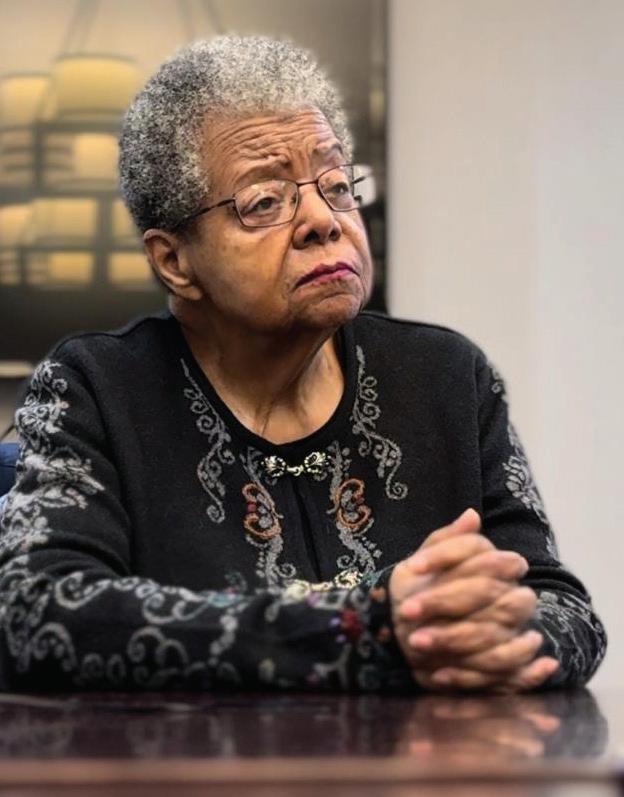
– Elizabeth Eckford (1941–present) –
Elizabeth Eckford was just 15 years old when she walked alone toward Central High School in Little Rock, Arkansas, on September 4, 1957. One of the Little Rock Nine, she endured mobs of hatred, soldiers who blocked her way and classmates who tried to break her spirit. For decades, she carried her story in silence.
“I insist that we can never have true racial reconciliation if we do not honestly acknowledge how painful our shared past has been.” – Elizabeth Eckford Elizabeth’s words remind us that reconciliation cannot come through denial or revision. Truth-telling, no matter how painful, is the soil where healing and justice take root.
As you reflect on her testimony, consider how acknowledging the wounds of the past—both personal and communal—might open space for God’s reconciling work today.
Journaling Prompts
Take a moment to consider:
– What painful truths in your family, church or community need to be named before healing can begin?
– How might honesty about the past deepen your commitment to justice and reconciliation in the present?
“But Moses said to God, ‘Who am I that I should go to Pharaoh and bring the Israelites out of Egypt?’ And God said, ‘I will be with you.’”
– Exodus 3:11–12a, NRSV
“The LORD hardened Pharaoh’s heart, and he would not listen to them, just as the LORD had said to Moses.”
– Exodus 9:12, NRSV
Moses and Pharaoh
In this section of Exodus, God recruits Moses, seeing beyond his age, position or lived experience. Moses, in his human fallibility, is intimidated by God’s challenge. Yet Moses is audacious enough to articulate his self-perceived shortcomings to God, asking for help.
Pharaoh, in contrast to Moses, lacks the courage to move beyond his own human fallibilities. Infatuated with his biases and carnal desires, he continues to take advantage of and exploit other humans.
This is the difference between Moses and Pharaoh: both are human, both have some relationship with God and both are fearful. But where one’s heart is hardened and does not courageously take a transformative step, the other sees beyond his human frailties and courageously moves to do the work that allows everyone to be free.
This text challenged me, not because I don’t courageously step into the work of justice, but because I wrestle with what it means to work in this current climate where people are so fearful they will not soften their hearts. In turn, I find myself hardening my heart. This made me wonder how much of Pharaoh lies in every one of us.
Questions:
1. If there is a Pharaoh within each of us, how courageous must we be to move through our fear and soften our hearts?
2. What are our stumbling blocks to trusting God and walking in the knowledge and faith that God will provide?
3. What do we need to complete the work God has asked us to contribute to building the Beloved Community?
Prayer:
God of Moses and God of justice, When fear hardens our hearts, soften us with Your Spirit. When doubt whispers “Who am I?” remind us, “I will be with you.” Give us courage to face the Pharaoh within and strength to step toward freedom for all.
May our words, our actions, and our faith build Your Beloved Community. In Jesus’ name, Amen.
Faith Bynoe Executive
Coordinator, Baptist Fellowship of the Northeast
“Have
I not commanded you? Be strong and courageous. Do not be frightened, and do not be dismayed, for the LORD your God is with you wherever you go.”
– Joshua 1:9, ESV
Justice Work and Courage
Justice work is hard; it’s scary and intimidating. It asks us to take risks, to move beyond what we know—or what we think we know—and to stretch beyond our lived experience. It challenges us to be expansive, loving, and inclusive of others’ lived experiences. It asks us to be honest about the Pharaoh who lives within us—how many times we have hardened our hearts, and how often we resist the courageous inner transformation required to practice empathy, compassion, and solidarity with others.
Courage is essential for justice work—even when we feel unprepared or lack confidence in our skills—because justice often places us in tension with potential loss. Embracing justice ensures universal freedom, which necessitates a shift in perspective. This leads to a transformative, albeit unsettling, change in our lives and relationship with power and privilege.
The Exodus story reminds us that justice always prevails, even in the darkest moments. Hardened hearts are transformed and courage is rewarded. When we welcome others and expand the beloved community, our victory is assured. We see this throughout the annals of history and every sacred text. We may not experience the full realization of freedom, but our contributions and small successes are visible daily. This is a testament to our ongoing resilience and God’s unwavering support to restart and continue the fight, confirming that justice is always in motion.
Lectio Divina: Letter from a Birmingham Jail — Dr. Martin Luther King Jr. “…But again I am thankful to God that some noble souls from the ranks of organized religion have broken loose from the paralyzing chains of conformity and joined us as active partners in the struggle for freedom If the inexpressible cruelties of slavery could not stop us, the opposition we now face will surely fail. We will win our freedom because the sacred heritage of our nation and the eternal will of God are embodied in our echoing demands.”
1. Lectio (Reading): Read the passage slowly and deliberately. Listen for a word or phrase that catches your attention or seems to “jump out” at you.
2. Meditatio (Meditation): Focus on the word or phrase that resonated with you. Repeat it in your mind or out loud. Ponder its meaning and how it might challenge or inspire you, reflecting on what God might be communicating.
3. Oratio (Prayer): Allow your meditation to lead you to a conversation with God. Speak to God from your heart about what you are feeling or thinking in response to the Scripture.
4. Contemplatio (Contemplation): Rest in God’s presence. Quiet your mind and heart.
Faith Bynoe Executive Coordinator, Baptist Fellowship of the Northeast
“Then the Lord said to Moses, ‘Pay close attention to this. I will make you seem like God to Pharaoh, and your brother, Aaron, will be your prophet. Tell Aaron everything I command you, and Aaron must command Pharaoh to let the people of Israel leave his country.’”
— Exodus 7:1-2, NLT
Ally Power
In justice work numbers matter. Not by way of addition. There seems to be a justice algebra that kicks in. One advocate for justice is good. Add another and it’s even better. When the numbers add up, what a group of five individuals, five churches, five organizations, five countries, working in concert has a multiplied effect.
When God calls Moses to be involved in freeing God’s people from bondage in Egypt, Moses has Aaron as an ally. Moses had his inadequacies, just as we have ours. What Moses lacked in his self-assessed lack of eloquence, Aaron supplied. What they both lacked, God supplied. What is it you lack? Who can augment what you lack? As an individual? As a church?
Consider this example—UBC, Baltimore has recently enjoyed some success in reversing the legacy of redlining in our historic city by nurturing allies as part of Baltimoreans United in Leadership Development (BUILD). With BUILD we have been there every step of the way as the city, state and the private sector made a commitment to appropriate $1.5 billion dollars over 15 years to address the problem of vacant houses and lots that plague the city. With BUILD we have also come alongside returning citizens from incarceration to advocate for fair housing, the elimination of parole fees and other impediments to their flourishing. With BUILD we keep on increasing our power to effect positive change in the city of Baltimore.
Who needs you to come alongside them as they seek justice? How can you multiply your impact as you engage in advocacy where you live, in your state, at the national level and globally? What specific steps do you need to take to align your advocacy efforts with others of like mind?
Prayer: Lord, help us as we seek to be salt and light in our world by nurturing effective allyships. Amen.
Isaac Mwase
Associate Pastor of Global Missions, Local Missions, and Pastoral Care
University Baptist Church Baltimore, MD
“The Lord said to Aaron, ‘Go into the wilderness to meet Moses.’ So he went, and he met him at the mountain of God and kissed him. Moses told Aaron all the words of the Lord with which he had sent him and all the signs with which he had charged him. Then Moses and Aaron went and assembled all the elders of the Israelites. Aaron spoke all the words that the Lord had spoken to Moses and performed the signs in the sight of the people. The people believed, and when they heard that the Lord had given heed to the Israelites and that he had seen their misery, they bowed down and worshiped.”
– Exodus 4:27-31, NRSVue
When the Vision Needs a Voice
When I began doing my work on food justice issues, I faced a lot of blank stares. More than once I heard, “I don’t think I get this ‘food and faith’ thing that you’re trying to do.” Back then, my response was to withdraw, afraid that maybe I had misunderstood what God wanted me to do. It took being in a room of like-minded people and a leader saying, “this movement of ours needs more exposure,” before I began to find the courage to share the vision that God was growing inside of me.
Moses fought his call from God every step of the way. He argued that he was unworthy and that Pharaoh would not believe him. His final argument, the one that finally got on God’s last nerve, was that he was ineloquent. When I imagine this scene, I picture God speaking through gritted teeth, “What about your brother Aaron?”
It is here in speaking to Aaron, not Pharaoh, that I think Moses has one of his more courageous moments. In this space, Moses has the vulnerability to share the unbelievable exchange he’s had with God through a burning bush. He then displays even more vulnerability when he essentially says to his brother, “I can’t do this alone. I need you!”
Over the years, I have watched so many talented, passionate, spiritfilled people burnout in their pursuit of a more just world. For many, that burnout comes because they have tried to go it alone. They feel unable to communicate the vision that God has given them and so they go solo. Our culture celebrates individuality, but lasting change comes from movements. Movements come from leaders courageous enough to share the vision that is burning within them.
Prayer: Loving God, give us the strength to share the vision of a more just world that You have put within us, knowing that You will put the right people in our paths to help us carry the load. Amen.
Derrick Weston Director of Theological Education and Formation Creation Justice Ministries Baltimore, MD
FRIDAY Ally Spotlight
“Then the Lord said, ‘I have observed the misery of my people… I have heard their cry… Indeed, I know their sufferings, and I have come down to deliver them.’”
– Exodus 3:7, NRSVue
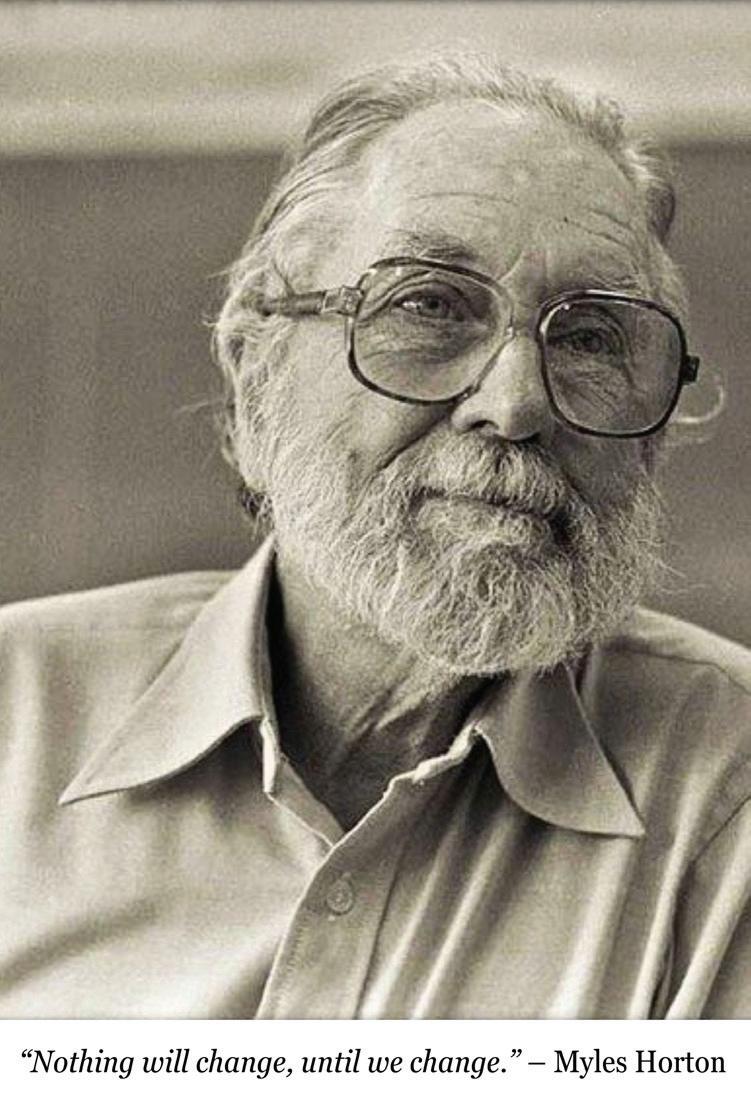
– Myles Horton (1905–1990) –
God sent Moses to confront Pharaoh, not as a lone hero but as a leader who would help the people see themselves as free. Liberation required courage, community and vision.
Myles Horton, founder of the Highlander Folk School in Tennessee, carried a similar vision. He believed ordinary people already carried the wisdom needed for justice. Highlander became a daring place in the segregated South where Black and white workers, students and activists gathered as equals to learn from each other. Poor farmers, laborers, women and civil rights leaders alike came to sharpen their voices for freedom.
In the summer of 1955, Rosa Parks attended a Highlander workshop. There, she was strengthened by community, encouraged to resist and prepared for the Montgomery Bus Boycott later that year. Septima Clark, John Lewis, Martin Luther King Jr. and countless unnamed grassroots leaders also found in Highlander the training and courage to press on.
Because it crossed the boundaries of race and class, Highlander was harassed, raided, even shut down. Yet Horton’s vision endured, because it was never about one man’s voice but about raising up a people. Like Moses, Horton reminds us that God’s liberating work is always collective: a people walking out of Egypt together.
Reflection
Question
Take a moment to consider:
– Where might God be inviting you to create space across boundaries of race, class, gender or experience, so that people can discover their collective power for justice?
Prayer: Liberating God, thank You for the witness of Myles Horton, who dared to believe that everyday people carry the seeds of justice and freedom. Give us his courage to trust in community, his vision to see possibility where others see limits and his perseverance to confront the Pharaohs of our time. Make us builders of beloved community, walking together toward the freedom You promise. Amen.
Justice in Action
On Saturdays, we turn our thoughts outward. Each week, you will meet an organization challenging injustice, lifting communities and reminding us that God’s work of liberation continues. Use this space to pray for them, learn from them and discern your next faithful step.
– Together for Hope –
This week we walked with Moses, who dared to confront Pharaoh with God’s demand: “Let my people go.” His courage reminds us that liberation requires more than words—it requires collective action that refuses to leave anyone behind.
Together for Hope carries that spirit today. Formed to strengthen racial justice and reconciliation work in congregations, they equip churches to move beyond good intentions into bold steps of solidarity. Through training, storytelling and community partnerships, they help faith communities name systemic racism, confront it honestly and join hands to dismantle it.
Learn more at: https://tfhope.org.
Reflection
Take a moment to consider:
– When you hear the cry, “Let my people go,” what “people” come to your heart first? Who might God be calling you to see and include?
– Who in your life is already working for fairness and justice? How might you join or support their efforts instead of trying to do it alone?
– Write a prayer asking God to guide you toward one concrete step you can take this month to strengthen justice where you are.
SCAN THE QR CODE to listen to the Lenten 2026 playlist.
Take Action Resources
Books, Articles & Podcasts
Books on Race and Reconciliation
African Americans and Religious Freedom: New Perspectives for Congregations and Communities (PDF)
Resources
Conversation Starter Concepts
“How Can We Solve the Black Maternal Health Crisis?” (John Hopkins)
Podcasts on Race and Reconciliation (PDF)
Visual Resources on Race (PDF)
More Links
Dr. Emmanuel McCall Racial Justice and Leadership Initiative
CBF Latino Network: Familia
Immigrant and Refugee Advocacy – Cooperative Baptist Fellowship
Racial Justice Pilgrimages
Application for McCall Racial Justice Pilgrimage Seed Grant
Get Involved
Vote Riders
Center for Common Ground
Sojourners
BJC Center for Faith and Justice and Reconciliation
Fellowship Southwest
Together for Hope
Racial Equity Institute
Equal Justice Initiative
SUNDAY Reflections
Voices from the Journey
Each Sunday, we pause to listen to voices who have lived this work of justice. These include people interviewed for the Dr. Emmanuel McCall Racial Justice and Leadership Initiative, along with allies highlighted in this devotional. Their words invite us to reflect, pray and act with courage in our own time.
– Dr. Valda Montgomery –
Valda Montgomery grew up in Montgomery, Alabama, in a home that became a hub for the Civil Rights Movement. Her father, Dr. Richard Harris, opened their doors to Dr. King, Rosa Parks, the Freedom Riders and countless others who strategized there for freedom. As a young girl, she witnessed bombings, sniper fire and the brutal cost of justice work.
Looking back, she offers this challenge: “When I think about it, I don’t want your tears, I want you to do something.” – Valda Montgomery
Her words remind us that remembering history is not enough. Mourning the pain of injustice is not enough. True solidarity demands action—showing up, speaking out and committing ourselves to justice that transforms lives and systems.
Journaling Prompts
Take a moment to consider:
– When you hear stories of injustice, is your first response sadness, guilt or action? Why?
– What is one tangible step you can take this week to turn awareness into faithful action?
– How can I join others so that my action is part of a larger movement toward justice?
“Then Ananias went to the house and entered it.
Placing his hands on Saul, he said, ‘Brother Saul, the Lord—Jesus, who appeared to you on the road as you were coming here—has sent me so that you may see again and be filled with the Holy Spirit.’ Immediately, something like scales fell from Saul’s eyes, and he could see again. He got up and was baptized.” – Acts 9:17-18, NIV
Called Beyond Comfort
Ananias was petrified. Saul was known for persecuting followers of Christ, yet God was asking Ananias not only to go to him, but to heal him and to call him “brother.”
Saul was blind both physically and spiritually. God had spoken to him, but he was unable to see his purpose. Sometimes, like Saul, we are blind to God’s calling, unable to see the purpose God has for our lives until our eyes are opened and our hearts are transformed. Sometimes, like Ananias, God calls us to go into uncomfortable spaces by asking us to go to those that we fear or don’t understand.
I have been on both sides of this story. I once hesitated to fight against injustice because I did not feel that I was equipped. I was fearful that I could not make a difference. But when I stepped into some uncomfortable spaces, I realized that advocacy has the power to remove the scales from people’s eyes, and how truth and compassion can lead to transformation.
Ananias and Saul were fearful and doubted God’s calling, yet they were both used by God to proclaim God’s name. Justice work does not lead us around discomfort but instead, it leads us straight through it. God does not always promise us safety, but God does promise us purpose. When we are truly called beyond comfort, we allow space for God’s light to break through us, in us, and even through those we least expect.
Let us allow God to lead us into the spaces that God is calling us to go. Give us the courage to speak up for others, even when our voices tremble. And let the scales fall from our eyes and from the eyes of those around us, so that we may be transformed by God’s love.
Litany:
Open our hearts to see Your truth.
Lord, let the scales fall from our eyes.
Help us to see Your presence in all people. Lord, let the scales fall from our eyes. Remove the blindness of fear and judgment. Lord, let the scales fall from our eyes. Transform us through your abounding grace. Lord, let the scales fall from our eyes. Give us the courage and power to answer Your call to justice. Lord, let the scales fall from our eyes. Amen.
Lorna Fowler College Student, Ardmore Baptist Church Winston-Salem, NC
“Meanwhile, Saul was still breathing out murderous threats against the Lord’s disciples. He went to the high priest … and after taking some food, he regained his strength.” – Acts 9:1-19, NIV
May the Scales Fall off Our White Eyes
In his article “Can White People Be Saved?” Willie James Jennings writes, “...Christians installed the conceptual building we live into this day. That is, the vision of a world that revolves around a centered white self, a body that projects meaning onto the world…through reductive forms of naming, designating, classifying, analyzing, and summarizing the nature of being…”
If this statement is true, one can practically hear the earth and its Creator attempting to stop people consumed by whiteness in their tracks. “Why are you persecuting me?” the Creator asks of us. Paul’s Damascus Road moment reminds me of my own moment of awakening. The scales fell off my white eyes in the summer of 2016. Like Paul, I and so many others who have bravely gone before me have been navigating a wholesale political, social, emotional and spiritual transformation ever since.
As Jennings points out, recognizing and combatting whiteness takes more than self-awareness. It takes more than recognizing privilege, skin tone and the way we take up space. Resilience is mandatory, as it is in all justice work. Deconstructing and unlearning a white-centered self certainly is.
It takes resilience to understand that whiteness transcends race. It takes resilience to understand that you will lose friends and alienate the comfortable. It takes resilience to understand that if I needed scales to fall off my eyes to recognize my social position and its negative effects, I would also need to undergo a similar process with my theological position. All these things are extensive, exhausting and wonderful. The authenticity found on the other side of a prayer from Ananias is unmatched. Just remember to take breaks to eat and regain your strength like Paul.
Prayer: God, please renew our strength as we seek a social, political, and theological transformation that breaks free from whiteness and aligns with you. Amen.
Zach Mason
Pastor for Youth & Young Adults, First Baptist Church of Decatur Decatur, GA
Recent research shows that about 70 percent of U.S. multiracial congregations are led by white pastors, while pastors of color lead only a small fraction. Even in churches with diverse pews, leadership often remains tied to historic patterns of power. Paul’s story reminds us that true transformation requires not just new sight, but new structures where leadership is shared and voices long silenced are lifted.
Source: Race and leadership suitability in multiracial churches (2018–2019 National Congregations Study), ScienceDirect, 2025. Read here
“So Ananias went and entered the house. He laid his hands on Saul and said, ‘Brother Saul, the Lord Jesus, who appeared to you on your way here, has sent me so that you may regain your sight and be filled with the Holy Spirit.’ And immediately something like scales fell from his eyes, and his sight was restored. Then he got up and was baptized, and after taking some food, he regained his strength.”
– Acts 9:17–19, NRSV
Walking into the House of Justice
Ananias is a revolutionary. He demonstrates more than obeying a vision as he was walks into the house of justice. Inside was Saul, the very man who had brought terror to disciples like him. Yet Ananias entered anyway, opened his heart, and laid his hands with grace. He spoke kinship over an enemy: “Brother Saul.” That is uncommon, but it is reconciliation at work.
The sequence of the scene is instructive: Saul regains sight, but he does not rise alone. Baptism follows because a disciple was willing to pour the water. Strength is restored because someone placed food on the table. Even for one destined to become an apostle, restoration required the courage of a companion to impart grace. This is what it means to walk into the house of justice: choosing presence where fear once lived.
Lately, I have been reflecting on how imparting grace is not simply a spiritual idea or the exclusive “laying on of hands,” but a daily practice. It looks like opening our hearts to conversations that might be uncomfortable, choosing reconciliation when mistrust has lingered, and remembering that God calls us to this work—not because it is safe, but because it is faithful. To live this way is to keep walking into the house of justice, one act of grace at a time.
As you continue your journey this Lenten season, remember that justice is never advanced by distance. Commit to walking into the house of justice; challenge yourself to risk proximity, extend belonging, and embody grace often, even before proof of change appears. Ordinary allyship is stepping forward, trusting God’s voice, and letting grace fall where scales once clung.
Prayer: God of grace and justice, give us courage to walk into the houses we would rather avoid. Teach us to impart grace in conversation, reconciliation and presence. Call us into risky spaces where Your Spirit restores sight and strength. Make us faithful allies in Your redeeming work. Amen.
Amaris Ross-Hillard
Executive Pastor, Friendship Christian Church, Gastonia, NC
CBF PAK Steering Committee Gastonia, NC
“He said, ‘Who are you, Master?’ ‘I am Jesus, the One you’re hunting down. I want you to get up and enter the city. In the city you’ll be told what to do next.’”
– Acts 9:5–5, MSG
The Courage to Open Eyes
In Acts 9, we encounter two different people, both navigating a call to step out of their comfort zone in order to pursue justice. Saul is persecuting and killing Christians and seeking legal authority to justify his actions. Then he meets Jesus through a divine vision, on his way toward Damascus. In verses 5-6, Saul asks Jesus, “Who are you, Master?” Jesus replies, “I am Jesus, the One you’re hunting down.”
When we commit or justify persecution and violence against our neighbors, we are persecuting and committing violence against those created in the likeness of God, Imago Dei For Saul to be transformed, he had to face the truth that his violence against Christians was against the Lord. Being willing to change, not only a mindset but actions, takes courage.
Acts 9 also introduces us to the disciple, Ananias of Damascus. In a vision, Ananias is visited in a dream and immediately protests the call to visit Saul while he is in Damascus. Being asked to visit a man known for violence is a tough call to agree to but Ananias trusts in the power of God’s transformational work and agrees. He acts with incredible courage as he intentionally approaches a man who hates him.
Saul’s conversion and Ananias’ obedience are examples that justice often begins with courage and love for both God and our neighbor. Dr. Jemar Tisby, historian and author, has said, “Love is the fiery heart beating at the center of the urgent call for justice in our world. Love is the energizing force of justice. You cannot pursue justice without love.”
Both Saul and Ananias reacted out of faith, and their faith led them to act out of courageous love.
Perhaps you grew up thinking of justice as a form of punishment, but it is also about restoration. In a time of division in our churches and society, we want justice without feeling discomfort. Yet, like Saul and Ananias, we are invited to a space of courage as we are called to pursue healing and love for one another.
Today’s Church is at a critical intersection. Maybe you are like Saul and you need to surrender your own preference and control. Perhaps you resemble Ananias and you are called to enter spaces where the concern is about the battles you will face. Both situations are a risk and both are necessary to pursue justice with courage.
Each of us has a role in seeking justice that honors both truth and transformation. Sometimes we are Saul, needing to be called out, humbled and changed. Other times we are Ananias, being called in to be part of healing. In either case, courage is required; not the absence of fear, but the strength to act despite it.
Prayer or Reflective Question: God, we come to You today and we are grateful You are a God who speaks to Your Creation and provides hope for humanity. A God who comes to us in time of lament and happiness, struggle and victory. You are the God who redeems and builds from the ground up and provides clarity in a time of uncertainty. And Lord, we are in uncertain times.
Creator, Restorer, Mystery, give us the courage to change when we are wrong and the boldness to act when justice calls. Soften our hearts when we are hardened toward our neighbor. May we embody the transformational power of Your justice. In Your holy name, Amen.
Mariah Humphries Executive Director, The Center for Formation, Justice and Peace Franklin, TN
FRIDAY
Ally Spotlight
“Brother Saul, the Lord Jesus … has sent me so that you may regain your sight and be filled with the Holy Spirit.”
– Acts 9:17, NRSVue
– Virginia Durr (1903–1999) –
Virginia Foster Durr (1903–1999) was raised in the heart of the segregated South, a “Southern belle” who once accepted racial hierarchy as simply the way of the world. But like Paul on the Damascus Road, her eyes were opened, and she underwent a transformation that reoriented her life.
Her turning point came as she studied the injustices around her and saw the toll segregation took not only on Black neighbors but also on the soul of her community. With courage, she renounced the values she was raised to protect and chose instead to stand with the oppressed. She and her husband Clifford became outspoken critics of Jim Crow and advocates for racial justice.
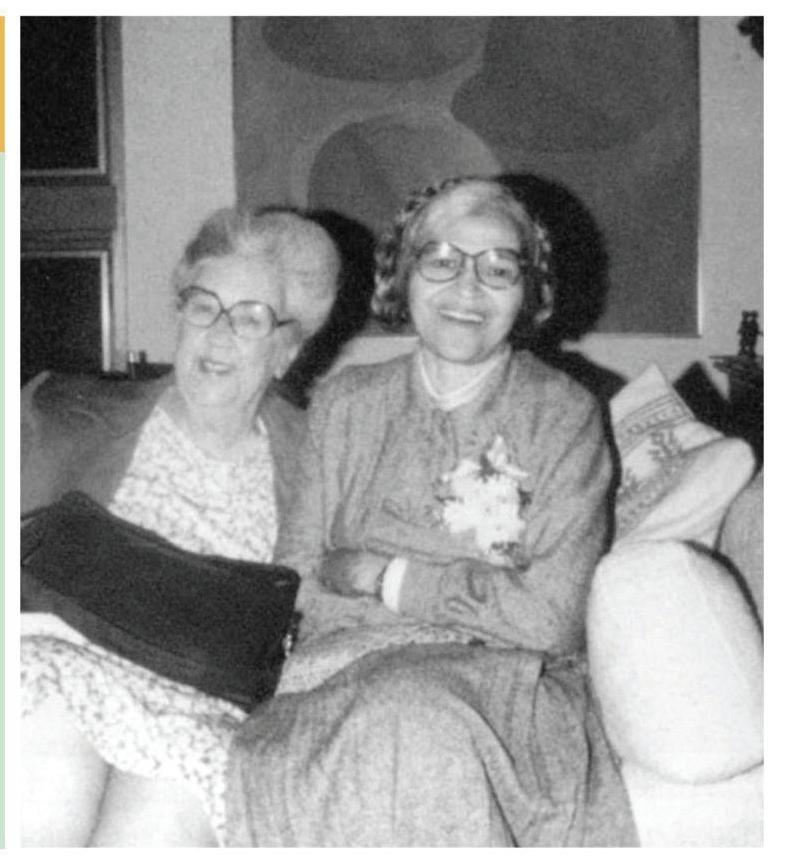
Virginia’s friendship with Rosa Parks was especially significant. She encouraged and supported Parks in her historic act of defiance on the Montgomery bus. In doing so, Virginia broke ranks with her social class and dared to live into a new vision of community, one where justice outweighed comfort and truth outshone tradition.
Like Paul, Virginia’s transformation reminds us that no one is beyond the reach of God’s liberating grace. Her life testifies that even those raised within unjust systems can change, repent and stand as allies in God’s work of justice.
Reflection Question
Take a moment to consider:
– Where have I been blind to the suffering of others, and what might it look like for God to open my eyes in this season?
Prayer: God who opens blind eyes, thank You for Virginia Durr, who laid down her privilege to pick up the cause of justice. Remove the scales from our eyes so that we, too, may see clearly where You are calling us to stand. Give us the courage to leave behind comfort and walk into solidarity with the oppressed. Amen.
Justice in Action
On Saturdays, we turn outward. Each week, you’ll meet an organization challenging injustice, lifting communities and reminding us that God’s work of liberation continues. Use this space to pray for them, learn from them and discern your next faithful step.
– Equal Justice Initiative (EJI) –
This week, we reflected on Paul’s conversion and Ananias’s risky obedience. Both remind us that transformation begins with new sight. Paul’s eyes were opened to the harm he had done, while Ananias saw past his fear to embrace Paul as a brother. Their stories remind us that God’s justice requires both truth-telling and courageous welcome.
The Equal Justice Initiative (EJI), founded by Bryan Stevenson in Montgomery, Alabama, carries that spirit today. Through legal advocacy, they stand with those most oppressed by mass incarceration and racial injustice. Through public history projects like the Legacy Museum and the National Memorial for Peace and Justice, they confront America with painful truths long ignored, including the scales of slavery, lynching and systemic racism that still blind our nation.
EJI’s work reminds us that seeing clearly is not enough. We must also act. Just as Ananias prayed and laid hands on Paul so he could begin a new life, EJI walks alongside those seeking freedom, dignity and restoration. They help us imagine a community where justice is not delayed and no one is forgotten.
Learn more at: https://eji.org/anti-poverty
Take a moment to consider:
– Where do I need God to open my eyes to truths I have avoided?
– What fears hold me back from standing with people our society discards?
– How does facing painful history prepare me to act for justice today?
– Write a prayer asking God to help you see others as God sees them, and to act with courage that bridges divides.
SCAN THE QR CODE to listen to the Lenten 2026 playlist.
Take Action Resources
Books, Articles & Podcasts
Books on Race and Reconciliation
African Americans and Religious Freedom: New Perspectives for Congregations and Communities (PDF)
Resources
Conversation Starter Concepts
“How Can We Solve the Black Maternal Health Crisis?” (John Hopkins)
Podcasts on Race and Reconciliation (PDF)
Visual Resources on Race (PDF)
More Links
Dr. Emmanuel McCall Racial Justice and Leadership Initiative
CBF Latino Network: Familia
Immigrant and Refugee Advocacy – Cooperative Baptist Fellowship
Racial Justice Pilgrimages
Application for McCall Racial Justice Pilgrimage Seed Grant
Get Involved
Vote Riders
Center for Common Ground
Sojourners
BJC Center for Faith and Justice and Reconciliation
Fellowship Southwest
Together for Hope
Racial Equity Institute
Equal Justice Initiative
SUNDAY Reflections
Voices from the Journey
Each Sunday, we pause to listen to voices who have lived this work of justice. Today we hear from Rev. Henry Hudson, a retired priest at St. Paul’s Episcopal Church in Selma where Jonathan Daniels once worshiped. Hudson reflects on Daniels’ witness and the power of a church hymn to open hearts.
– Jonathan Daniels –
Journaling Prompts
Jonathan Daniels, a seminarian from New Hampshire, answered Dr. King’s call to come to Selma after Bloody Sunday. He came not to lead from the front, but to serve quietly—giving rides, carrying supplies and supporting others. When he came to worship at St. Paul’s with Ruby Sales and friends, they were turned away at the door. Jonathan knelt on the church steps and prayed. The next week, he returned. That Sunday, the congregation sang: “O Jesus, thou art knocking outside the well-barred door … O Jesus, thou art weeping outside, who will let him in?” Rev. Hudson recalled: “Sometimes we don’t even know what we are singing. But God uses even our hymns to break open our hearts.” By the following day, the vestry declared: “St. Paul’s is open for all of us.”
Daniels’ courage reminds us that welcoming Christ means welcoming every child of God. To bar the doors against our neighbors is to bar them against Jesus himself.
Take a moment to consider:
– Recall a moment when you or your community closed a door—literally or figuratively. Who was on the other side, seeking welcome?
– Imagine Christ standing there with them, knocking. What prayer rises in you as you picture opening the door?
“He said, ‘Who are you, Master?’ ‘I am Jesus, the One you’re hunting down. I want you to get up and enter the city. In the city you’ll be told what to do next.’”
– Acts 9:5–6, MSG
Persistence when You Don’t Know the Outcome
I am a retired music educator, having taught preschool and elementary music education in North Carolina, South Carolina, Kentucky and Georgia. My career has allowed me to teach in both public and private school settings. During my time as an educator, I taught students from various socio-economic backgrounds. Some were from families that lived in impoverished communities, while others came from affluent upbringings. Most recently, as I reflected on the state of education in our country, I have been troubled about the lack of concern and care displayed by our governmental leaders for people who come from poverty and diverse backgrounds.
What issues in our society concern you enough to petition on behalf of someone else? Are there any issues that have caused you to persistently ask for help? Can you relate to the story of the widow, consistently pleading time and time again, until you are able to make a change? Have you ever called your congressmen or representatives to share your feelings and opinions regarding upcoming legislation?
Most recently, as DOGE and Congress were making decisions to cut education programs and to defund the Department of Education, I decided it was time to act. I called my representatives and senators daily regarding the upcoming vote to voice my concerns regarding the impact these cuts would make in real classroom situations, especially for impoverished students. I felt like they needed to hear the voice of an educator who could truly speak to the impacts these cuts would have on students from many different races, cultures and backgrounds. So daily I called the congressmen and senators who represented my state and other surrounding states. I left specific messages when a representative could not be reached. When a person answered with whom I could speak, I shared specific situations regarding cuts to the SNAP benefits for families and schools.
In the Luke passage, the widow was persistent in her daily pursuit of justice. God’s heart for justice calls us to be persistent in our daily lives on behalf of others.
Reflection Questions:
Who are the people who need me to advocate for them?
What are the opportunities in my daily life where I can seek justice for others?
What might be barriers that would surface and hinder my actions?
Prayer: God give me the strength of the widow to be open, willing and persistent in the face of injustice and resistance. Amen.
Note: Phone number to call congressional leaders in Washington is (202) 224-3121.
Teresa Granger Music Educator
Athens, GA
“Jesus told them a story showing that it was necessary for them to pray consistently and never quit.”
– Luke 18:1, MSG
Resilience as Part of Justice
As a social worker, I see many families who are negatively affected by changes within the community, including financial strain, housing instability, no access to health care, underfunded schools and mental health crises. Systems that are meant to support families are increasingly out of reach causing many to feel unheard, unprotected and unworthy. Leadership prioritizes power over people, dismantling civil rights protections, educational rights, due process, fair representation and access to healthcare. This leaves communities vulnerable, voiceless, disconnected and defenseless.
It is easy to give up when things seem impossible. But the first verse of this text tells us that we should “pray consistently and never quit” (The Message). Jesus tells this parable to show how the woman kept showing up and refused to stop fighting for what she knew was right. Resilience is faith that persists in the midst of frustrations. Like this woman, we should persist in demanding change and standing for injustice. Our labor is never in vain, and our persistence will have an impact.
This justice fight is a long road. It gets exhausting, overwhelming and discouraging. It requires us to keep believing, keep showing up and keep pushing toward what is right, trusting that God will move when the time is right.
Prayer: God of justice, give us a faith that refuses to give up. When progress is slow and the journey is long, give us resilience that pushes us to keep going. Strengthen us when we get weary and bless us to stand firm in righteousness. May we pray continuously and never lose hope in Your will and Your way. In Jesus’ name, Amen.
Gloria D. Shellman Diversion Case Manager
Community Resource and Branding
Specialist
Faith Formula Human Services Dallas, TX
“Then Jesus told his disciples a parable to show them that they should always pray and not give up. He said: ‘In a certain town there was a judge who neither feared God nor cared what people thought. And there was a widow in that town who kept coming to him with the plea, “Grant me justice against my adversary… I tell you, he will see that they get justice, and quickly. However, when the Son of Man comes, will he find faith on the earth?”’”
– Luke 18:1–8, NIV
Prayer as Allyship
The Parable of the Persistent Widow in Luke 18:1–8 may seem to only be a story about an annoying, never-tiring woman on the surface, but the author of Luke writes that this parable was shared for the purpose of prayer and, more specifically, our need to pray.
This parable seems to highlight that people have always had challenges in prayer. The nature of the struggle may have evolved, but the core difficulties like distractions, doubt and spiritual decay are timeless. Just as people were reminded to pray during biblical times, we are still reminded to pray.
But what is prayer? In the Episcopal catechism, prayer is defined as “responding to God, by thought and by deeds, with or without words.” If I read this parable through the lens of this definition of prayer, it seems like prayer is the consistent act of coming back to God because God is the source of justice.
What’s interesting to me in the Parable of the Persistent Widow is that the story does not insinuate that justice comes through human persistence. Rather, justice is granted through prayer and not giving up on God. I believe it is also important to note that the parable immediately following this warns against people who trust in themselves. It is as if Jesus knew that as advocates of justice, we would struggle with the temptation to be self-righteous.
When we think of allyship, we often think about supporting marginalized communities, advocating for policy change, speaking up when we see someone wronged among other things. But what if allyship also demands prayer? Just as Jesus always turned towards the Father for the sake of the world, maybe we are also called to set our hearts on God for the sake of those hurting around us. In our pursuit of justice for our neighbor, is Jesus once again calling us back to this parable to remind us of our “need to pray and not to lose heart?”
Kevin Pranoto
Associate Pastor
of Social Work Second Baptist Church Downtown Little Rock, AR
“Yet because this widow keeps bothering me, I will see that she gets justice…”
– Luke 18:5, NIV
Cries from the Silenced, Resurrection at the Center
In Luke 18, Jesus tells the story of a persistent widow seeking justice from an unjust judge—someone who neither feared God nor cared for the vulnerable. Yet even he relents because she refuses to be silent.
Jesus shares this parable not to compare God to the judge, but to contrast them. If an unjust, unfeeling man can respond, how much more will our just and compassionate God hear the cries of the hurting?
Jesus calls her a widow, not just a woman, but highlights her grief and loss. She represents more than personal persistence; she symbolizes the silenced, the grieving, the brokenhearted. And the judge? He reflects the systems that expect suffering people to sit down and stay quiet.
But her pain becomes power. Her refusal to give up becomes a sacred protest. She demands justice—not only for herself, but for all who live at the margins.
Today, her voice echoes in mothers of Gaza, struggling to feed their children amid war and in families separated by immigration policies that dehumanize and divide. Their cries are not noise—they are divine resistance. The heartbeat of God’s justice is stirring through them.
Jesus ends the parable with a challenge: “When the Son of Man comes, will He find faith on the earth?” Will you be among the faithful? Or will you be counted among the unjust?
Resilient faith is grief transformed into courage. It is faith that persists until resurrection breaks through injustice.
Prayer: God of mercy and grace, awaken us to respond to the cries of Your people. Grant us courage to persist like the widow and act for justice, even in pain and discouragement. Strengthen us with Your spirit as we seek Your resurrection power at the heart of justice. Prepare us for Your coming. Amen.
Dimaris Abreu Board of Ministries – Youth and Young Adults, Church of The
City New London, CT
FRIDAY
Ally Spotlight
“Then Jesus told them a parable about their need to pray always and not to lose heart.”
– Luke 18:1, NRSVue
– Dolores Huerta (b. 1930) –
Dolores Huerta has spent her life knocking on the doors of power, refusing to be silenced until justice is done. A Latina labor leader, she co-founded the United Farm Workers (UFW) with César Chávez, where she organized national boycotts, negotiated labor contracts and coined the famous phrase “¡Sí, se puede!” which means Yes, we can!
Like the Persistent Widow, Huerta knew that persistence could change even the hardest hearts. She faced not only corporate resistance but also sexism within the movement itself. Yet her advocacy stretched far beyond the fields. She worked for immigrant rights, women’s rights and the dignity of other marginalized communities, later founding the Dolores Huerta Foundation to continue building power through community organizing and civic engagement. Her life reminds us that prayer is not passive, and justice is not quick. God calls us to keep pressing, keep asking and keep showing up, not because change comes easily, but because the God of justice is faithful.
Reflection Question
Take a moment to consider:
– Where in my life is God calling me to persist, to “pray always and not lose heart,” for the sake of justice?
Prayer: God who hears the cries of the persistent, thank You for Dolores Huerta’s witness of courage and resilience. Give us strength to keep showing up, even when justice feels delayed. Teach us to lift our voices without fear and to believe that your Spirit is at work, even in the waiting. Amen.
Justice in Action
On Saturdays, we turn our thoughts outward. Each week, you will meet an organization challenging injustice, lifting communities and reminding us that God’s work of liberation continues. Use this space to pray for them, learn from them and discern your next faithful step.
– Kids in Need of Defense (KIND) –
This week, we journeyed with the Persistent Widow who would not lose heart, and with allies like Dolores Huerta who spent her life demanding dignity for farmworkers and marginalized communities. Their stories remind us that justice requires persistence and presence, even when the cost is high.
KIND carries that same persistence today. Founded to protect the rights of unaccompanied immigrant and refugee children, KIND provides legal representation, advocacy and safe pathways for the most vulnerable. Like the widow before the judge, KIND refuses to give up until children are seen, protected and given the chance to thrive.
Learn more at: https://supportkind.org/get-involved/make-your-voice-heard. Justice is alive when communities refuse to let the most vulnerable be forgotten. Where might God be calling you to persist?
Reflection
Journaling &
Take a moment to consider:
– Where do you see children and families in your community who need persistent advocates?
– How does the story of the Persistent Widow shape your understanding of justice?
– What keeps you from losing heart when the struggle is long?
– With whom in your life or church could you partner with to persist in prayer and action?
– Write a short prayer asking God to empower you to be persistent and to give you courage to advocate for the vulnerable.
SCAN THE QR CODE to listen to the Lenten 2026 playlist.
Take Action Resources
Books, Articles & Podcasts
Books on Race and Reconciliation
African Americans and Religious Freedom: New Perspectives for Congregations and Communities (PDF)
Resources
Conversation Starter Concepts
“How Can We Solve the Black Maternal Health Crisis?” (John Hopkins)
Podcasts on Race and Reconciliation (PDF)
Visual Resources on Race (PDF)
More Links
Dr. Emmanuel McCall Racial Justice and Leadership Initiative
CBF Latino Network: Familia
Immigrant and Refugee Advocacy – Cooperative Baptist Fellowship
Racial Justice Pilgrimages
Application for McCall Racial Justice Pilgrimage Seed Grant
Get Involved
Vote Riders
Center for Common Ground
Sojourners
BJC Center for Faith and Justice and Reconciliation
Fellowship Southwest
Together for Hope
Racial Equity Institute
Equal Justice Initiative
SUNDAY Reflections
Voices from the Journey
Each Sunday, we pause to listen to voices who have lived this work of justice. Today, we hear from Dolores Huerta, a labor leader and civil rights activist who co-founded the United Farm Workers alongside César Chávez.
Journaling Prompts
– Dolores Huerta –
Huerta reminds us: “Every moment is an organizing opportunity, every person a potential activist, every minute a chance to change the world.”
Her words call us to see the sacred in the ordinary. The sacred can be found in daily conversations, the small acts of courage and the choices we make in our homes, churches and communities. Justice is not reserved for mountaintop moments; it is woven into each moment of our lives.
Take a moment to consider:
– Reflect on a recent ordinary moment, be it a conversation, a prayer or a small act of kindness.
– How did that moment reveal God’s presence or a call to justice?
– What did it teach you about paying attention?
– What small steps can you take to stay awake to such moments in the future?
“That I appeal to you for my son Onesimus, who became my son while I was in chains … no longer as a slave, but better than a slave, as a dear brother. He is very dear to me but even dearer to you, both as a fellow man and as a brother in the Lord.”
– Philemon 1:10, 16, NIV
In Christ’s New Justice System, We Are Called to See Each Other As Family
Christ’s justice calls us to see all God’s children as our most beloved siblings, deserving of grace, love and mercy despite their past wrongs. As Paul writes to Philemon about Onesimus, we are called to see others “no longer as a slave, but more than a slave—a beloved brother” (Philemon 1:16). This is likely one the hardest standards to uphold as Christians in this modern society.
God’s mission through us is to set the captives free, calling us to no longer enslave ourselves with the yoke of judging our neighbors, but to be both emancipated and emancipators of all who are estranged by the broken systems that further dehumanize our brethren. We are the beneficiaries of the Good News, reconciled in Christ Jesus, knowing that all our spiritual and moral debts have been paid and erased by the Cross. Alleluia! This now frees us to bring forth the same spirit of forgiveness and grace we received and share it in our homes, cities and countries.
God is calling us to a new kind of justice—one that does not dehumanize for someone’s wrong, but rather a justice where God restores relationships and promotes righteousness in our lives. This redemptive justice liberates us to express love, mercy and grace to all, regardless of their status in this or any country. We are to love our neighbor, welcome the stranger and care for the marginalized with a spirit of joy.
Responsive Reading:
Leader: In Christ, we are no longer strangers.
People: Lord, teach us to see one another as beloved family and to live into the justice of Your kingdom with mercy, forgiveness and love. Lectio guide (Philemon 1:10–16): Read slowly; notice a word/phrase; pray it back to God; ask, “What step toward reconciliation am I called to take today?”
José Luis Marantes
Community Organizer, Cofounder
of UWD Orlando, FL
“I am appealing to you for my child, Onesimus, whose father I have become during my imprisonment. Formerly he was useless to you, but now he is indeed useful to you and to me. I am sending him, that is, my own heart, back to you. So, if you consider me your partner, welcome him as you would welcome me.”
– Philemon 1:10, 12 & 17, NRSV
The Gospel of Liberation
In the book of Philemon, the Apostle Paul asks Philemon to accept his escaped slave, Onesimus, back as a brother rather than as a slave. Almost all biblical exegesis of Philemon focuses on Paul and Philemon as the central characters, but what about Onesimus? Is he just a slave to be talked about and argued over? Obusitswe Kingsley Tiroyabone instead considers Onesimus’ agency as follows:
He knew that his master had been converted into the Christian faith, as the entire household was now taking part in worship at the house. He knew that the leader of the evangelistic movement was Paul and that he was in Rome… Onesimus knew that the new faith proposed new things that had been unheard of in their time. He wanted to be manumitted and, upon staying with Paul, he proved himself a good worker with the intention that Paul would recommend him for manumission.1
Tiroyabone emphasizes that Onesimus believed the Gospel could set him free from slavery, and so he left Philemon and went to Paul looking for it. We can see in Onesimus a parallel to American enslaved people who risked their lives to escape from the South to freedom in the North. They also believed that the Gospel promised liberation and not slavery, and that liberation was meant for this life and not just the one to come, so they lived into that promise. 2
Prayer: Lord of all, thank you for all those who enact the gospel of liberation in the here and now, teaching us by their bold witness of your desire for all your children to be free. Teach us to read the Scriptures with new eyes, so we can follow you into freedom and work for justice for those around us.
Byron Griffith Deacon
and member of the Justice Committee at Broadway Baptist Church Fort Worth, TX
1 Obusitswe Kingsley Tiroyabone. “Reading Philemon with Onesimus in the Postcolony: Exploring a Postcolonial Runaway Slave Hypothesis” Acta Theologica 24 (2016): 225–36.
2 I am indebted to Dr. Esau McCauley for opening my eyes to this reading of scripture in his book, “Reading While Black: African American Biblical Interpretation as an Exercise in Hope,” 2020, InterVarsity Press.
“I
am sending him—who is my very heart—back to you … He is very dear to me but even dearer to you, both as a fellow man and as a brother in the Lord.”
– Philemon 1:12 & 16b, NIV
The Surprising Work of Justice
When the Spirit of God opens our eyes, it does not take long to recognize the injustice in our world. Yet often, if we have not been directly oppressed, we begin from a place of blindness. We remain unaware because injustice hides within cultural norms—until a new perspective breaks through. To begin to see differently, the work of justice requires prophetic conviction, holy imagination and courageous action.
The Apostle Paul models these three elements when he writes to Philemon, a friend and participant in the social structures of slavery. Paul prophetically challenges the norm of slavery. Yet there is no condemning voice. Instead, he appeals to Philemon’s friendship and faith, inviting a new imagination for flourishing. He calls Philemon toward a different way of interacting with Onesimus, the slave turned Christ-follower. In more ways than one, it is a courageous announcement that opens new possibilities to Philemon. Paul stood with Onesimus and dared to ask the intrusive question, “What if …?”
While our world majors in condemnation and vilification, Paul teaches us a better way. Without betraying our sensibilities toward justice, we can ground ourselves in shared humanity—remembering we too were once blind. This moves us toward a new and winsome posture where we can use our influence to uplift the cause of justice. What if we could discover a way to champion justice while also experiencing the possibility of new sight, for ourselves and others? The surprise of justice might be rediscovering our collective humanity.
Prayer: Spirit of God,
Keep me close and tethered to my humble beginnings. Fill me with prophetic conviction to work toward justice and flourishing. Grant me holy imagination to pursue the renewal of all things. And empower me to take courageous action for the sake of the least of these. Amen.
Question/Reflection: How might God’s Spirit be forming you in the areas of prophetic conviction, holy imagination and courageous action? As you consider God’s movements in your life, take a step toward living God’s movements in your life, take a step towards living.
Jonathan Eng
Pastor at Union Church Pflugerville,
TX
“Formerly, he was useless to you, but now he has become useful both to you and me ... no longer as a slave, but better than a slave, as a dear brother. He is very dear to me but even dearer to you, both as a fellow man and as a brother in the Lord.”
– Philemon 1:11, 16, NIV
Reconciliation Stands on the Courage to Forgive
Writing this from Japan, I can’t help but reflect on its history with the United States. The attack on Pearl Harbor, followed by the devastating bombings of Hiroshima and Nagasaki, marked a dark chapter between the two nations. Yet, over time, both countries found a way to come together to acknowledge faults on both sides and to grieve the innocent lives lost. That kind of reconciliation is not a one-time act, but an ongoing process that requires continuous forgiveness and a mutual desire for peace in the world they share.
It takes great courage to reconcile with someone. Specifically, it takes the courage to forgive and the courage to see someone in a new light. In his letter, Paul reminds Philemon that Onesimus—once seen as useless, has now become essential to both Paul and Philemon. Once a runaway slave, Onesimus is now a beloved brother and a co-laborer in Christ. Paul petitions Philemon to forgive, to receive Onesimus not as a slave, but as an equal.
Reconciliation isn’t one-sided. Onesimus, too, had reason to run. Returning would have required courage—courage to face the past, and to risk being seen only by who he was rather than who he had become.
In the same way that Jesus reconciled with Peter and we are reconciled to God through Christ’s courageous love, we are also called to practice reconciliation. A world without reconciliation is a world divided—and divided, we can accomplish nothing. Forgiveness takes courage—courage to acknowledge the past while choosing to walk forward into a better future.
Prayer: God, help us forgive those who have caused us pain. Teach us to live out Your word by seeking reconciliation with one another, even before we bring our requests to You. As we walk through this day, give us the strength to take courage-filled, intentional steps, so that the wounds of our past do not block the blessings You have prepared for our future.
Brianna Rice Master of Divinity Student
Mercer University’s McAfee School of Theology Atlanta, GA
FRIDAY Ally Spotlight
“… no longer as a slave, but better than a slave, as a dear brother. He is very dear to me but even dearer to you, both as a fellow man and as a brother in the Lord.”
– Philemon 1:16, NIV
– Archbishop Óscar Romero (1917–1980) –
Paul’s appeal to Philemon is radical. He insists that Onesimus is no longer property but kin, no longer a slave but a beloved brother in Christ. In that small letter, the gospel reorders power, dignity and relationship, calling the church to live as a new family where the old categories of status and ownership have no place.
Archbishop Óscar Romero of El Salvador came to embody this radical reordering. Early in his ministry, Romero was cautious and avoided controversy. But as he witnessed the violence and poverty crushing his people, his eyes were opened. When his friend, Father Rutilio Grande, was murdered for standing with the poor, Romero could no longer remain silent. Like Paul writing to Philemon, he began to proclaim that the marginalized were not burdens or outsiders but the very body of Christ, deserving of dignity and love.
Romero preached a gospel that dismantled the world’s divisions. From the pulpit, broadcast across the nation, he declared that the church must be the voice of the voiceless and the defender of the powerless. He called soldiers to lay down their weapons and urged the wealthy to see the poor not as servants but as siblings. For this vision, he was assassinated at the altar while celebrating Mass in 1980.
Romero’s witness reminds us that reconciliation in Christ is not sentimental. It is costly, requiring us to lay down privilege, confront injustice, and embrace one another as kin. His life is a testimony that the gospel’s power is proven not in words alone but in communities transformed by love and courage.
Reflection Question
Take a moment to consider:
– Where might God be calling you to see others not through the lens of status or power, but as brothers and sisters in Christ?
Prayer: God of reconciliation, we thank You for the life of Óscar Romero, who opened his eyes to see the poor as beloved family in Christ. Give us courage to proclaim and practice a gospel that breaks down walls of division. When fear or hostility rises against us, steady us with the conviction that Your love remakes the world into one family. Amen.
Justice in Action
On Saturdays, we turn our thoughts outward. Each week, you will meet an organization challenging injustice, lifting communities, and reminding us that God’s work of liberation continues. Use this space to pray for them, learn from them and discern your next faithful step.
– Mission Talk –
This week, we reflected on Paul’s appeal to Philemon, “Receive him no longer as a slave, but more than a slave, as a beloved brother.” The gospel calls us to reimagine our relationships, to move beyond ownership, privilege or status into true kinship in Christ. We also remembered allies like Clarence Jordan and Óscar Romero, who lived out this radical vision of community.
Mission Talk carries that same spirit today. Through sacred pilgrimages, they guide congregations into the painful truths of America’s racial history—the scars of slavery, lynching and segregation that still shape our lives. These journeys are not about tourism but about transformation. By standing on the ground where injustice once ruled, and by listening to the voices long ignored, pilgrims are invited to see with new eyes and return home, ready to repair.
Mission Talk reminds us that reconciliation requires honesty, humility and courage. Like Paul urging Philemon, they help Christians recognize that the gospel’s power is proven when communities learn to live as family, where no one is reduced to status or forgotten in silence.
Learn more at: www.missiontalk.us.
Reflection
Take a moment to consider:
– Where do I need God to open my eyes to truths I have avoided in my community or history?
– How might pilgrimage, listening or sacred memory be part of reconciliation?
– Write a prayer asking God to help you move beyond words into practices that repair and restore relationships.
SCAN THE QR CODE to listen to the Lenten 2026 playlist.
Take Action Resources
Books, Articles & Podcasts
Books on Race and Reconciliation
African Americans and Religious Freedom: New Perspectives for Congregations and Communities (PDF)
Resources
Conversation Starter Concepts
“How Can We Solve the Black Maternal Health Crisis?” (John Hopkins)
Podcasts on Race and Reconciliation (PDF)
Visual Resources on Race (PDF)
More Links
Dr. Emmanuel McCall Racial Justice and Leadership Initiative
CBF Latino Network: Familia
Immigrant and Refugee Advocacy – Cooperative Baptist Fellowship
Racial Justice Pilgrimages
Application for McCall Racial Justice Pilgrimage Seed Grant
Get Involved
Vote Riders
Center for Common Ground
Sojourners
BJC Center for Faith and Justice and Reconciliation
Fellowship Southwest
Together for Hope
Racial Equity Institute
Equal Justice Initiative
SUNDAY Reflections
Voices from the Journey
Each Sunday, we pause to listen to voices who have lived this work of justice. Today we hear from Archbishop Óscar Romero of El Salvador, a pastor whose love for his people grew into a bold witness of faith.
– Óscar Romero –
Archbishop Óscar Romero once said: “We cannot do everything, and there is a sense of liberation in realizing that. This enables us to do something, and to do it very well. It may be incomplete, but it is a beginning, a step along the way.”
Romero’s words remind us that God does not ask us to fix the whole world. We are called to take the next faithful step—to love well in the place we stand. Even small acts of compassion and justice matter, because together they weave the larger story of God’s healing.
Journaling
Prompts
Take a moment to consider:
– Where do I feel overwhelmed by all that needs to be done?
– What is one small act of love or justice that is mine to do this week?
– Write a short prayer beginning with the words: “God, I place my unfinished steps in Your hands …”
“As he came near and saw the city, he wept over it, saying, ‘If you, even you, had only recognized on this day the things that make for peace! But now they are hidden from your eyes … and they will not leave within you one stone upon another, because you did not recognize the time of your visitation from God.’” – Luke 19:28–48, NRSV
Recognizing the Time
These 20 verses are full of contrast: the excitement of the people as Jesus entered in Jerusalem, Jesus’ anguish and compassion over the people, and Jesus’ enemies trying to find a way to kill Jesus and His message.
As we read the story, where do I/we find ourselves? Are we like the ones in the triumphal entry, worshipping Jesus, but without recognizing His true message? Are we like Jesus’ enemies who were trying to disappear His message? Of course, we probably we do not do this overtly, but we need to honestly ask ourselves, “Are my actions and words promoting Jesus’ message? Are we like Jesus’ willing to suffer and die to bring true peace, God’s peace, to human beings?”
In this passage, Jesus weeps over Jerusalem and its people because they could not recognize the time of God’s visitation, neither what could bring them true peace. If Jesus were among us today, would He be weeping because we, like the people of Jerusalem, are unable to recognize the sign of the time? Would Jesus weep over our lack of action to promote His message?
The story in the Bible happened centuries ago, and it cannot be changed. However, we are in the process of writing our story. Let’s ask God to open our eyes so that we may recognize the sign of the time and how God is visiting us today. Furthermore, let’s ask God for open eyes and clear ways to join God and Jesus in their goal to bring true peace to the world—a peace that is full of love, justice and compassion.
Is this hard? Is this risky? Of course it is. However, we are not left alone with this Godly task. We have access to the Holy Spirit’s presence, help and empowerment to be Jesus’ true witnesses and full collaborators in God’s work on this earth.
Prayer: Dear God, help us to recognize the sign of the time and our true role in the story. Are we, covertly, being an obstacle to Your plans? Or are we open and willing to be empowered by the Holy Spirit to be Your true followers and promote Your peace that is full of love, justice and compassion? Please help us to be Your true followers and live according to Jesus’ example.
Nora O. Lozano Executive Director, Christian Latina Leadership Institute
San Antonio, TX
“But I am among you as one who serves.”
– Luke 22:19–27, NIV
Serving Everyone at the Table
Betrayal, pride, naivete, well-meant determination, opinions, competition and hunger-both physical and spiritual were present that night. Everyone wanted their place at the table. Correction: Everyone seemed to want the best place at the table. Which one of us is the least? Which one of us is the greatest? Who gets to be served? And who gets to be the servant?
But Jesus isn’t interested in determining who gets what. Instead, everyone gets an opportunity to embrace what he has to offer—read, wine, presence, communion, and honest words, along with some water for your dusty feet and a towel to dry them.
Jesus, the one who should have been served that night, told his disciples, “But I am among you as one who serves. And that night, he served all of us. Everyone wants their place at the table. Correction: Everyone seems to want the best place at the table these days. Everyone seems to want to be served. What do people who betray, or are prideful or naïve, or who are filled with well-meant determination, or who are fixed in their opinions, or entrenched in competition, or just plain physically or spiritually hungry need from us?
Jesus’ kind of service.
Prayer: Loving God, give us hearts to see people who suffer from injustice, and people who perpetrate injustice as those whom we are invited to serve as You did. Grant us wisdom and courage for the living of these days. Amen.
Joy Yee Senior Pastor, 19th Ave. Baptist Church San Fransico, CA
“But I am among you as one who serves.”
– Luke 22:27, NIV
Allyship in the Way of Jesus
At the Last Supper, Jesus gave his disciples more than a meal—he gave them a way of life to embody. Yet immediately afterward, they fell into a dispute about which of them was the greatest. Jesus cut through their posturing with a simple truth: “I am among you as one who serves.”
For those of us seeking to be allies in the struggle for racial justice, Jesus’s words are a needed corrective. White Christians in particular face the temptation to center our own feelings—our guilt, our outrage, even our desire to be recognized as “good allies.” We often want applause or at least for someone to notice. But allyship is not about us. Jesus shows us another way: to resist grasping for positions of prominence, to use our influence to amplify the voices of the marginalized and to serve humbly and faithfully.
During the Montgomery bus boycott, many white allies did just that. Their names are rarely remembered, but their behind-the-scenes service driving carpools, cooking meals and offering support helped sustain this pivotal protest. They didn’t seek credit. They chose service. And in their service, they reflected the very character and example of Christ.
As those who gather at the table Jesus set, we are also called to follow his pattern in our allyship. His followers should be known as those who serve, just as their teacher served.
Prayer: Jesus, you came among us as one who serves. Free us from the need to be noticed. Teach us to listen well, serve humbly, and walk faithfully alongside our neighbors in the work of justice. Amen.
Lily Wood Pastor and Justice Advocate, Pelham Road Baptist Church Greenville, SC
“For who is greater, the one who is at the table or the one who serves? Is it not the one at the table? But I am among you as one who serves.”
– Luke 22:27, NRSV
True Courage Turns the Tables
Jesus consistently and relentlessly recalibrated our understanding of the world. He turned the cross—a tool of state violence—into a sign of divine love and victory. He saw in the dirty water used for washing feet a powerful symbol of leadership. He reframed the tomb into a doorway to resurrection.
Jesus also challenged our distorted definitions, stripped of truth and justice and restored their original intent. He redeemed concepts and notions for hearts in need of a Savior. He didn’t merely redefine. Being the truth, he defined rightly, because we’re the ones who’ve gotten it wrong.
The disciples also got it wrong. They were caught debating about status— about who is the greatest. Ali? Messi? Jordan? Da Vinci? Einstein? We still play that game. But Jesus interrupts our obsession with prestige to reveal a different kind of power: the humility to serve.
We’ve built entire systems on the myth that greatness means being served. But Jesus flips the table.
In God’s kingdom, the one who serves is not beneath, they are the foundation. The teacher in an underfunded school, shaping futures with dignity. The migrant cleaning hotel rooms. The farmworker picking produce under the sun. The community elder holding the block together. The barber counseling without a title. They are not beneath, but foundational. They are sacred vessels of divine courage.
Jesus is not posturing when he says, “I am among you as one who serves.” He is modeling a courageous act of justice, of solidarity, of love. True power, he shows us, is not domination, but laying down your life in service. It takes courage to choose that.
And you, too, can turn rejection into welcome, servanthood into resistance and put the margins into the center.
Reflective Question: Where is God challenging you to serve with courage, especially in spaces where power has been distorted?
Prayer: Christ who serves, give us the courage to follow You into humble spaces, to see Your justice in the ones who serve unnoticed and to redefine greatness not by who exerts power, but by who dares to love. Servant, creator and foundation of all justice and source of all life, remind us that we cannot stand without Your grace, nor breathe without Your mercy. You, the author and perfecter of our faith, teach us to live with the same courage You showed as you served: loving, lifting and laying down Your life for others. Amen.
Elket Rodríguez Global Migration Advocate CBF Decatur, GA
FRIDAY
Ally Spotlight
“Then he said to them all, ‘If any want to become my followers, let them deny themselves and take up their cross daily and follow me. For those who want to save their life will lose it, and those who lose their life for my sake will save it.’”
– Luke 9:23–24, NRSV
– Martin Luther King, Jr. –
Holy Week is the story of a Savior who entered Jerusalem in peace, wept over its injustice, prayed in anguish and walked with unflinching courage toward the cross. In Jesus, we see love poured out even unto death.
The Rev. Dr. Martin Luther King Jr. walked this same costly road. Though celebrated for his dream, his final years show him as a prophet who knew that confronting the powers of racism, poverty and war would cost him everything. He marched into hostile cities, stood in pulpits under threat and called America to repent of its original sins. Like Jesus, he longed for a new Jerusalem where peace and justice would embrace.
On April 3, 1968, the night before he was assassinated, King preached his “I’ve Been to the Mountaintop” sermon. He spoke with the clarity of one who had glimpsed resurrection hope but knew the cross lay ahead. “I may not get there with you,” he said, “but we, as a people, will get to the promised land.”
King’s life and death remind us that discipleship is not safe. It is a narrow road, paved with resilience, risky allyship and sacrificial love. Holy Week ends with a cross, but it does not end in despair. In Christ, and in the witness of those who have followed him to the end, we glimpse a kingdom where justice rolls down like waters and death is not the last word.
Reflection Question
Take a moment to consider:
– As you sit with Dr. King’s life in the shadow of Holy Week, what is one place in your own life where God is inviting you to move from safety toward love?
Prayer: Crucified Christ, You walked the road of suffering love and laid down Your life for the world. We remember Martin Luther King Jr., who carried Your cross into the streets of America and who poured out his life so that others might taste freedom. Shake us from silence. Break open our fear of sacrifice. Give us courage to march when the road is dangerous, to speak when the cost is high, and to trust that beyond every cross, Your resurrection is waiting. Amen.
Justice in Action
On Saturdays, we turn outward. Each week, you’ll meet an organization challenging injustice, lifting communities, and reminding us that God’s work of liberation continues. Use this space to pray for them, learn from them, and discern your next faithful step.
– The Poor People’s Campaign –
Holy Week reminds us that Jesus drew near to the poor, overturned unjust tables and stood with the outcast until he was nailed to a cross. His resurrection promises that the suffering of the poor will not have the final word.
The Poor People’s Campaign carries that same conviction today. Revived in 2018 under the leadership of Rev. Dr. William Barber II and Rev. Dr. Liz Theoharis, this movement continues King’s unfinished work. They unite people across race, region and religion to confront systemic racism, poverty, ecological devastation and militarism. Like Jesus and like King, they insist that the measure of a society is how it treats “the least of these.”
Their rallies, moral marches and policy campaigns are modern-day processions into Jerusalem, calling a nation to see the crucifixions happening all around us: families without housing, workers denied dignity, communities poisoned by neglect. Yet their work also testifies to resurrection hope, that a better America is possible when we live as if God’s justice is real.
Learn more at: www.poorpeoplescampaign.org/learn.
Prayer: God of the crucified and risen Christ, we give thanks for all who dare to declare that Your gospel is good news for the poor. As we leave this Lenten journey, strengthen us to challenge every system that crucifies, to walk in solidarity with the oppressed and to rise each day as witnesses of resurrection hope. Send us forth from the cross to the empty tomb, from lament to courage, from waiting to bold action, trusting that Your love will have the last word. Amen.
Take a moment to consider:
– Where do you see people in your community crucified by poverty, racism or neglect?
– How can you join with others to carry the cross of justice rather than avoid it?
– What does resurrection hope look like in public policy, not just in personal life?
– Write a prayer asking God to help you walk from Good Friday lament into Easter courage.
SCAN THE QR CODE to listen to the Lenten 2026 playlist.
Take Action Resources
Books, Articles & Podcasts
Books on Race and Reconciliation
African Americans and Religious Freedom: New Perspectives for Congregations and Communities (PDF)
Resources
Conversation Starter Concepts
“How Can We Solve the Black Maternal Health Crisis?” (John Hopkins)
Podcasts on Race and Reconciliation (PDF)
Visual Resources on Race (PDF)
More Links
Dr. Emmanuel McCall Racial Justice and Leadership Initiative
CBF Latino Network: Familia
Immigrant and Refugee Advocacy – Cooperative Baptist Fellowship
Racial Justice Pilgrimages
Application for McCall Racial Justice Pilgrimage Seed Grant
Get Involved
Vote Riders
Center for Common Ground
Sojourners
BJC Center for Faith and Justice and Reconciliation