THE
Taps Broadcom to Build Its
AI Processor in
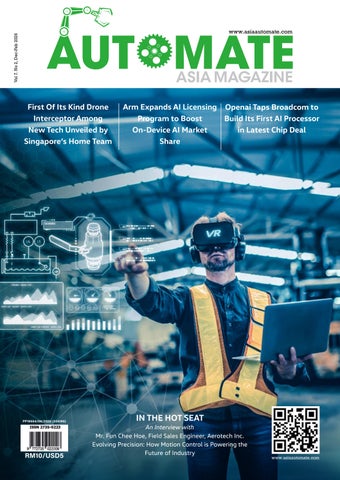
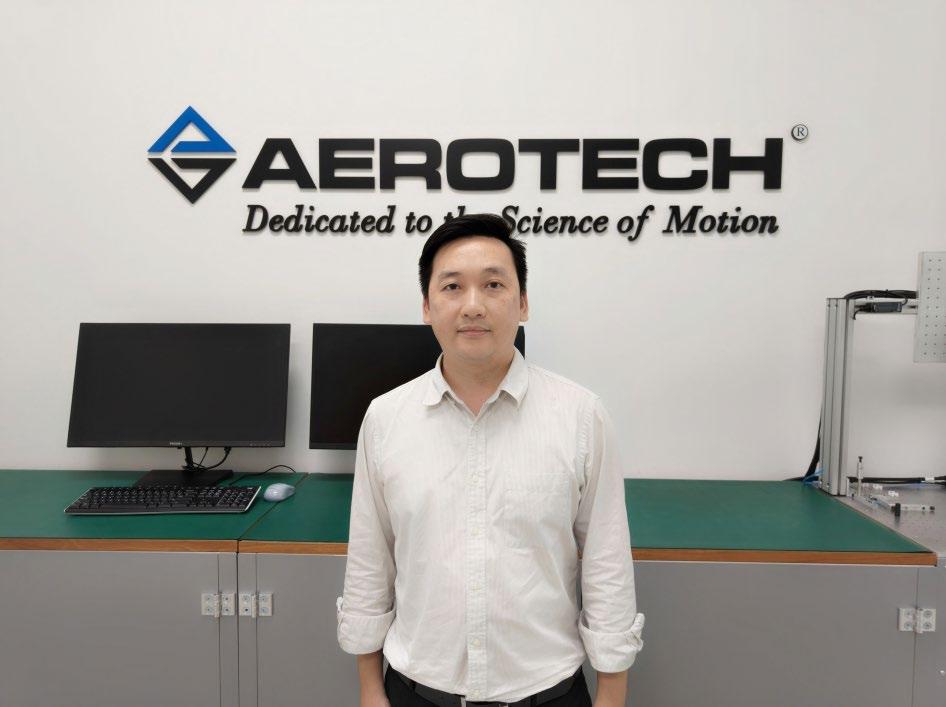
Chip Deal An Interview with Mr. Fun Chee Hoe, Field Sales Engineer, Aerotech Inc. Evolving Precision: How Motion Control is Powering the Future of Industry


THE
Taps Broadcom to Build Its
AI Processor in
Chip Deal An Interview with Mr. Fun Chee Hoe, Field Sales Engineer, Aerotech Inc. Evolving Precision: How Motion Control is Powering the Future of Industry
As we approach 2026, Malaysia’s industrial transformation is entering a new and exciting phase. Beyond the traditional factory floor, the rapid acceleration of data centre development, projected to drive a RM126 billion construction super-cycle, signals how automation, infrastructure, energy systems and digital innovation are becoming more interconnected. With AI, cloud computing and industrial digitalisation shaping future demand, data centres are no longer just part of the tech sector. They are becoming a critical pillar supporting Industry 4.0 in Malaysia.
For automation players, this signals an expanded horizon. Data centres require precision engineering, modular systems, energy monitoring, climate control automation, robotics for installation and maintenance, digital twins and real-time analytics, all areas where industrial automation has deep expertise. This shift shows that the same technologies powering smart factories are now being deployed in smart energy, smart infrastructure and high-performance digital environments, creating new opportunities beyond manufacturing alone.
This evolution reflects a broader transformation. Automation, once seen mainly as a productivity tool for production lines, is now becoming central to Malaysia’s digital-industrial future. Whether in factories, engineering facilities or digital infrastructure, the real value lies in system integration, intelligent connectivity and skilled people. The opportunity ahead is not just about technology adoption, but about building adaptable, resilient and futureready industries.
As we move forward, our role as a community is to stay informed, innovative and collaborative. The journey ahead is about shaping a smarter, stronger industrial ecosystem together, bridging automation, engineering and digital infrastructure. Thank you for your continued support, insights and engagement with Automate Asia Magazine. Together, we will keep advancing the future of automation in Malaysia and beyond.

FBI Publications (M) Sdn Bhd (1168942-P)
Unit 9-3, Jalan PJU 5/6, Dataran Sunway, Kota Damansara, 47810 Petaling Jaya, Selangor. Tel: (+603) 6151 9178
PUBLICATIONS MANAGER
Vanny Lim vanny@asiafbi.com
PUBLICATIONS EXECUTIVE
Jocelyn Ong jocelyn@asiafbi.com
MARKETING COMMUNICATIONS
Nur Izyan binti Dzulkifli izyandzul@asiafbi.com
CREATIVE DESIGNER
Muhammad Fadzil design@asiafbi.com
PRINTED BY
MMS PRINT SHOP (M) SDN. BHD. (1246387-v)
NO 43G, Jalan PBS 14/2, Taman Perindustrian Bukit Serdang, 43300 Seri Kembangan, Selangor.
• Igus Malaysia Sdn Bhd
• Aerotech Inc.
DISCLAIMER
Despite the constant care and attention that we devote to the structure of this magazine and the information it contains, Automate Asia Magazine cannot guarantee the completeness, accuracy of the data and content of the magazine, nor that it is up to date at all times. Automate Asia Magazine therefore accepts no liability for any direct or indirect damage of any kind whatsoever that arises from, or is in any way related to, the use of the magazine of its accessibility or lack thereof.
The assertionand opinions expressed in articles and announcements on this magazine reflect the views of the author(s) and do not (necessarily) reflect the views of the publisher. Automate Asia Magazine can in no way whatsoever be held responsible for the content of such views nor can it be held liable for any direct or indirect damage that may aris from such views
Automate Asia Magazine cannot guarantee that the information in this magazine is suitable for the purpose for which you consult it. All information, products and services are offered in the condition in which they actually are and without any (implicit)guarantee or warranty in respect of their reliability, suitability for a particular purpose or otherwise.
Automate Asia Magazine neither guarantees nor supports any product of service mentioned in this magazine, or does it warrant any assertions made by the manufactures of such products. In light of this , readers of this magazine are always recommended to obtain independent information and/or to perform independent research before using the information acquired via this magazine.
The information in this magazine is regularly supplemented and/or modified. Automate Asia Magazine reserves the right to make any changes with immediate effect and without providing any notice therefore
ENDORSED BY

10
08. Manufacturing And Business Activities Rev Up Production as Vietnam Posts Its Fastest Growth Since 2022
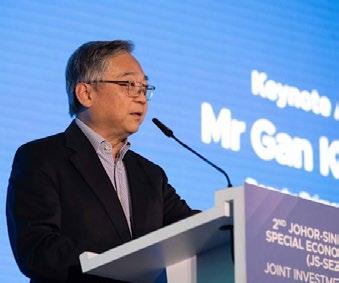
10. Singapore Firms Commit S$5.5 billion Of Investments to SEZ In Johor; Malaysia Unveils New Steps to Woo Investors
14. South Korea to Triple AI Spending, Boost Defence Budget
16. Malaysia And Netherlands Sign Deal to Boost Semiconductor Industry Ties
18. UK Wants More Cooperation with Singapore in Tech, Defence and Energy: British Minister for Indo-Pacific
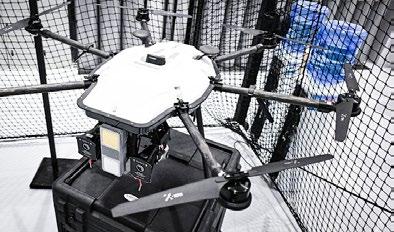
20. First Of Its Kind Drone Interceptor Among New Tech Unveiled by Singapore’s Home Team
20

24. Intel Outlines Details of First PC Chip Made on Its New Manufacturing Tech
26. Training For Smart Manufacturing
28. Hospital Performs 10,000th Robotic Surgery
30. Malaysian Student Wins Big At 2025 International Programmable Robotics Competition in Korea
32. Arm Expands AI Licensing Program to Boost On-Device AI Market Share
34. Samsung Electronics in Talks with Nvidia to Supply Next-Generation HBM4 Chips
36. Openai Taps Broadcom to Build Its First AI Processor in Latest Chip Deal
38. Foxconn To Invest Up To $1.37 Billion In AI Compute Cluster, Supercomputing Centre
35. U Mobile Partners Sacofa to Deliver 5G Connectivity in Sarawak
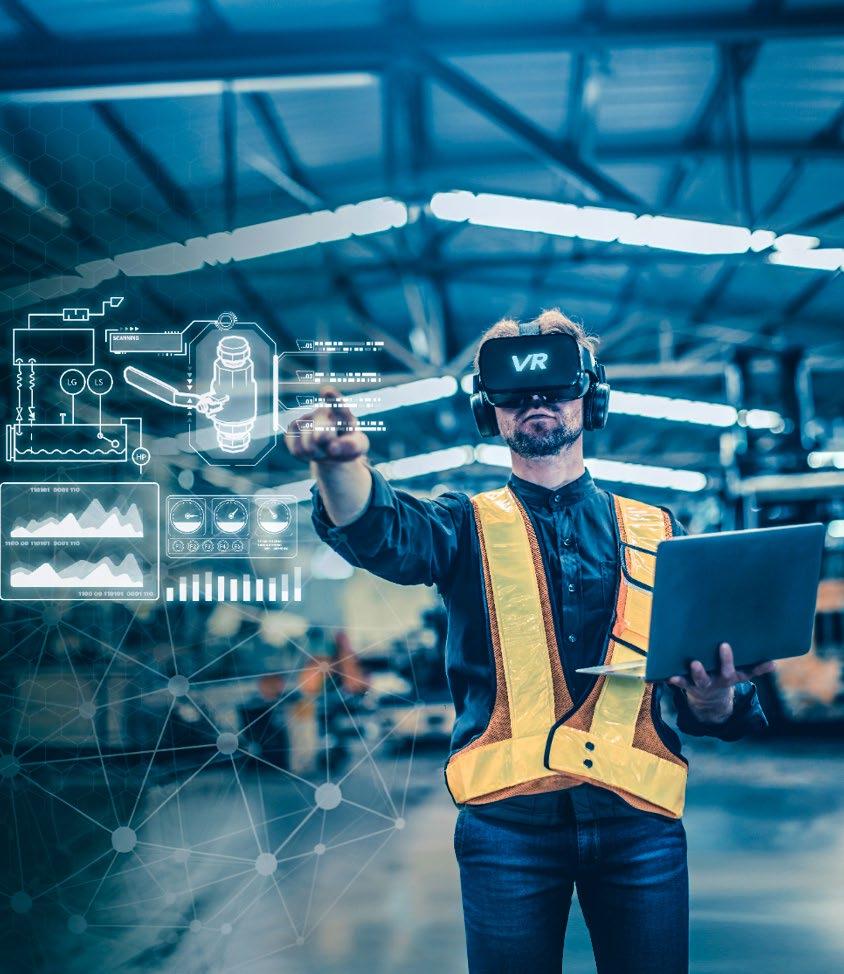
40. ‘Smarter, Faster and Safer.’ Why Many Workplaces Are Embracing Virtual Reality
42. Malaysia: Shah Alam Launches AI-Powered Smart City Command Centre
44. Siemens Receives Frost & Sullivan’s 2025 Southeast Asian Data Center Infrastructure Solutions Company of The Year Recognition for Excellence in Technological Innovation and Advanced Automation
48 RebelMove Pro: A Modular Robot Platform for Logistics, Assembly, and Handling
50. Interview with Mr. Fun Chee Hoe, Field Sales Engineer, Aerotech Inc. Evolving Precision: How Motion Control is Powering the Future of Industry
54. AI is no longer a side project: Technology leaders at ADIPEC call for bold, coordinated investment to accelerate energy progress
Vietnam’s economic growth accelerated at the fastest pace in three years in the third quarter, with manufacturing and business activity cushioning the economy against higher tariffs that took effect early August.
Gross domestic product rose 8.23% in the July-September period from a year earlier, according to data from the National Statistics Office in Hanoi on Monday. That’s faster than the 7.15% median estimate of analysts surveyed
by Bloomberg. Second-quarter growth was revised up to 8.19% from an earlier estimate of 7.96%.
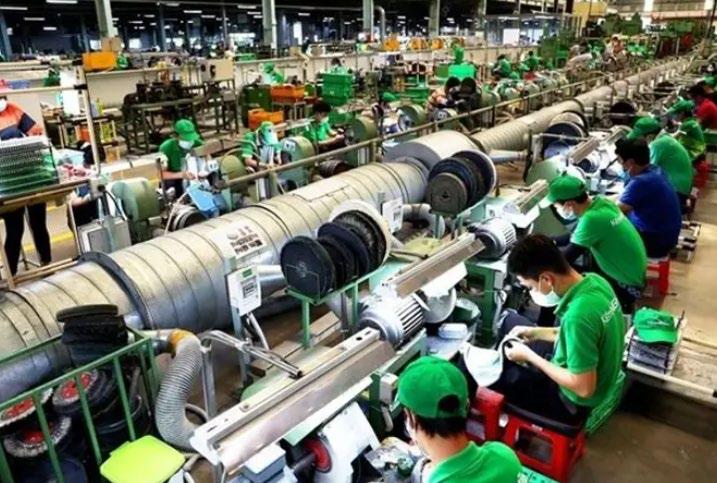
Industrial output remained the key driver of the country’s expansion, with manufacturing rising 9.92% in the first nine months of 2025 from a year earlier, according to the statistics office.
The manufacturing sector continued to grow as companies rushed production ahead of the US tariffs deadline, Nguyen

Thi Huong, head of the National Statistics Office, said during a briefing. But the government’s target of 8.3%-8.5% growth this year will be “extremely challenging” in the current global climate, Huong said.
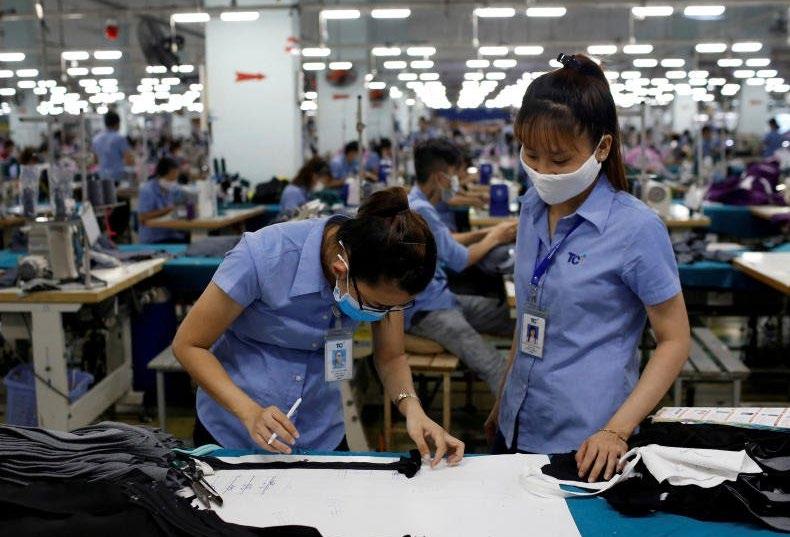
Vietnam remains a major global supplier even as the 20% US tariff takes hold. Apple CEO Tim Cook in May said Vietnam will produce “almost all” of its iPads, MacBooks, watches and AirPods for the American market. Samsung Electronics Co. has a major manufacturing base in the
country, where it produces smartphones and other electronics.
Despite the imposition of the levy, Vietnam’s shipments to the US continued to power ahead in September, rising 38.5% from a year earlier to $13.7 billion, according to Vietnam customs data. Imports from China, its largest trading partner, rose 33.9% in September from a year earlier to $16.5 billion.
“The growth rate this quarter is quite positive and reflecting Vietnam’s stronger-than-expected export resilience, with industrial output also exceeding forecasts,” according to Pham Vu Thang Long, chief economist at Ho Chi Minh City Securities. “But we still need to keep a close watch on construction and services, where growth has slowed compared with the second quarter.”
The benchmark VN Index rose as much as 2.6% Monday morning after the GDP news, the most since August 26.
Ahead of the data, the Asian Development Bank revised its forecast for Vietnam’s growth to 6.7% from 6.6% for 2025, a pace that will make it among Asia’s fastest growing economies. The ADB said that while the impact of tariffs will likely slow growth in the second half of this year, the domestic economy should remain resilient, with plenty of fiscal space for stimulus if needed.
The government’s efforts to soften the blow of US tariffs include financial incentives for sectors from electronics to textiles - and particularly small businesses - to increase localization of supply chains, according to a September decree. It will provide as much as 70% funding for

quality and production improvements, and up to 50% of outlays for research, consulting, new machinery, training and other services.
The central bank on Friday reiterated it will continue to try and spur both lending and growth, supporting key sectors while avoiding credit risks and containing inflation. Bank loans as of Sept. 29 were 13.37% higher than at the end of 2024. The regulator said it expects credit growth quickening 19%-20% by the end of the year.
“With inflation staying below 3.5%, the central bank can continue its loose monetary policy to spur growth through year-end,” Ho Chi Minh City Securities’ Long said.
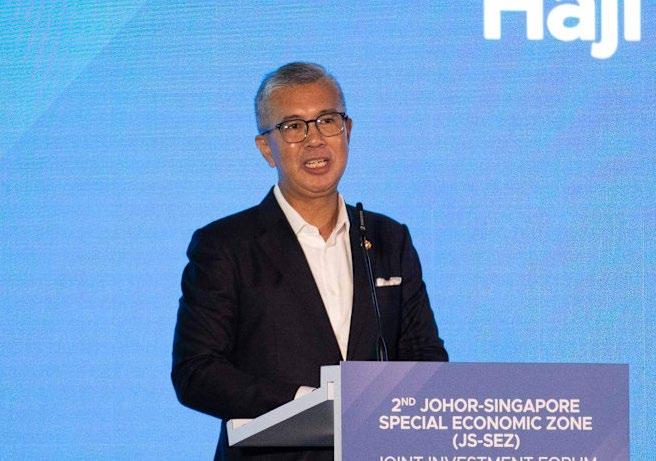
Malaysia Investment, Trade and Industry Minister Tengku Zafrul Abdul Aziz announces fast-track licences for manufacturing projects and a bigger kitty for government co-investment that can be tapped by Malaysian SMEs.
New measures are being rolled out in the Johor-Singapore Special Economic Zone (JS-SEZ) to bolster investor momentum, even as companies based in Singapore have committed over S$5.5 billion (US$4.23 billion) in investments into the project since last January.
These were revealed by Malaysia and Singapore at the 2nd Johor-Singapore SEZ Joint Investment Forum held on Tuesday (Oct 14) in Singapore.
Malaysia’s Investment, Trade and Industry Minister Tengku Zafrul Abdul Aziz said it will fast-track licences for manufacturing projects within the SEZ’s identified economic sectors, which are manufacturing, logistics, food security, tourism, energy, digital economy, green economy, financial services, business services, education and health.
Approval of manufacturing licences for non-sensitive industries will be granted within seven working days, with a required “no objection letter” from the Johor state government also to be issued in seven working days, he told 900 business leaders, investors, policymakers, and academia from both countries at the forum.
Budget 2026 Allocations
As for financing, an additional RM200 million (US$47.3 million) has been allocated under the Strategic CoInvestment Fund, where the government co-invests alongside private investors.
The extra funding, which is part of Malaysia’s Budget 2026 unveiled on 10th Oct 205, can be tapped by Malaysian small and medium enterprises (SMEs) in the JS-SEZ.
The funding enables co-investments in high-impact projects by Malaysian SMEs in the zone, particularly those that contribute to strengthening the cross-
border industrial ecosystem between Johor and Singapore, Mr Zafrul said.
He added that the co-investment fund also aims to enable these SMEs to scale up and go global, especially in areas such as capacity expansion, tech adoption and sustainability.
“This financing effort will complement the policy and infrastructure incentives being introduced under the JohorSingapore SEZ, ensuring a more holistic enabling framework,” he said.
Under Malaysia’s New Industrial Master Plan (NIMP) 2020, the co-investment fund will become a “key financing
instrument” for industrial growth in the zone, Mr Zafrul said.
Malaysia’s Budget 2026 has also allocated RM650 million through the Skills Development Fund Corporation to support talent development for sectors targeted under the NIMP 2020, he said.
It is expected to benefit roughly 25,000 trainees in sectors such as artificial intelligence (AI), electric vehicles and semiconductors, which support the JSSEZ’s ambitions, he said.
The initiatives add to existing schemes.
Johor introduced an attractive tax incentive package and set up the Invest Malaysia Facilitation Centre in Johor in February this year to support investors through a streamlined, one-stop platform. This reduces bureaucracy by not having to engage with multiple agencies across different locations.
Since April, eligible foreign investors –new, existing and potential – have been able to get a multiple entry visa valid for up to 12 months, under the Investor Pass initiative led by the Malaysia Investment Development Authority.
The authority can “proactively offer the Investor Pass directly to multinational companies and prospective investors in high-value sectors”, added Mr Zafrul.
This, he said, reflects Malaysia’s commitment to “reducing friction for high-impact investors”, including those in the JS-SEZ.
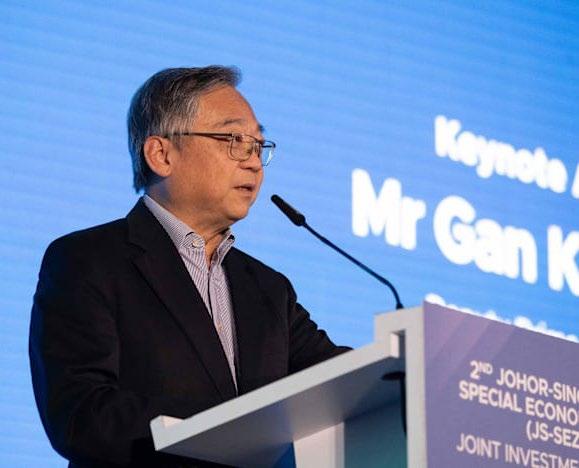
In his speech, Singapore’s Deputy Prime Minister Gan Kim Yong said that since the
JS-SEZ memorandum of understanding signing in January 2024, Singapore-based companies have committed more than S$5.5 billion in investments into Johor.
“We look forward to more investments in the months ahead,” he added.
Mr Gan, who is also the trade and industry minister, said the three key priorities to realise the economic zone’s “full potential” are to anchor flagship projects, make it easier to do business and ensure inclusive growth for SMEs.
“At a time when global trade is slowing and protectionist pressures are rising, the Johor-Singapore SEZ stands as a strong illustration of what countries can achieve when they choose cooperation over contestation, and partnership over protectionism,” he said.
Mr Gan said the project has made “good headway”.
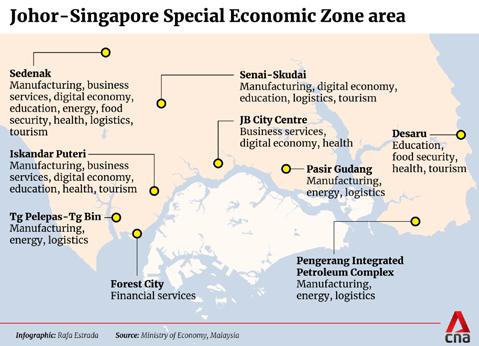
Spanning 3,571 sq km in southern Johor, the zone will consist of nine “flagship areas” catering to the economic sectors identified.

Both countries must also continue to make the economic zone more “businessfriendly” and “future-ready”, Mr Gan said.
This includes streamlining regulatory processes, improving the ease of crossborder flow of goods and professionals, and strengthening skills and talent development to raise the quality of human capital in the zone.
Singapore has established a Joint JohorSingapore SEZ Project Office, which comprises its Ministry of Trade and Industry, the Economic Development Board and Enterprise Singapore, to work
directly with Malaysian counterparts to smoothen regulatory processes and help companies establish themselves on both sides, said Mr Gan.
He cited several firms that have benefitted from the partnership, including global logistics firm Kuehne+Nagel (KN).
The firm has developed an integrated transport and logistics network across Singapore and Johor.

In Singapore, it operates from six sites, including a 48,000 sqm logistics hub at Pioneer Crescent.
A total of 75,000 sqm of fulfilment centre space is supported by 500 employees. The facilities serve high-value industries such as pharmaceuticals and semiconductors.
In Johor, KN operates from the Port of Tanjung Pelepas and a central office, offering nearly 50,000 sqm of fulfilment capacity. Its facilities are supported by 85 employees.
“Johor offers cost-effective fulfilment capacity and space advantages, complemented by our facility at the Port of Tanjung Pelepas,” the company’s managing director Peer Rasmussen told CNA.
“With seamless road freight connectivity, businesses can tap Malaysia’s costefficiency alongside Singapore’s global connectivity through PSA and Changi Airport, benefiting from the combined strengths of both markets as part of a broader regional strategy.”
Such a dual-location model gives customers flexibility – time-critical cargo can move through Singapore while costsensitive or scalable activities are managed in Johor.
Describing KN’s experience operating within the JS-SEZ as “encouraging”, Mr Rasmussen said there is still room for progress, such as the wider adoption of digital customs processes and paperless trade.
“This would not only accelerate clearance times but also contribute to more sustainable cross-border operations,” he said.
South Korea will triple spending on artificial intelligence and make its biggest defence budget increase in six years, President Lee Jae Myung said on Tuesday (Nov 4) in his annual parliamentary budget speech.
Lee said 10.1 trillion won (US$7 billion) would go towards “a major transformation aimed at propelling South Korea into the ranks of the world’s top three AI powers” alongside the United States and China.
“We will significantly expand investment to usher in the ‘AI era’,” he said, noting the amount was more than three times the current year’s AI-related budget.
The proposal was made in a speech outlining his government’s spending plans for 2026.
Overall, the budget plan totals 728 trillion won, an 8.1 per cent increase from this year.
Lee now needs parliament to pass the budget proposal, which is likely given his party’s majority.
On the defence budget, the president said his government wants to see an 8.2 per cent increase from this year to 66.3 trillion won.
If passed, it will mark the highest defence spending increase since 2019.
“We will overhaul conventional weapons systems into state-of-the-art systems suited for the AI era and swiftly transform our military into an elite, smart force,” Lee said.
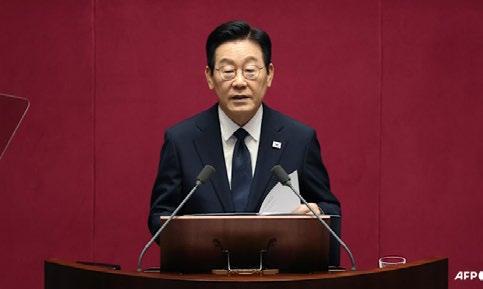
Of next year’s AI budget, 2.6 trillion won “will be invested in introducing AI across industry, daily life and the public sector, while 7.5 trillion won will go towards talent development and infrastructure building”, Lee said.
South Korea is home to two of the world’s leading memory chip makers, Samsung Electronics and SK hynix.
The two tech giants manufacture chips essential for AI products and the powerhungry data centres that the fast-evolving industry relies on.
Jensen Huang, the CEO of US chip titan Nvidia, announced last week plans to supply 260,000 of the firm’s most advanced chips to South Korea, with recipients including Samsung, SK Group and Hyundai Motor Group.
On Lee’s drive to make South Korea one of the world’s top three AI powers, Huang
described the goal as “ambitious” after the supply announcement on Friday.
But, he said, “there’s no reason why Korea cannot achieve it - you have the technology, you have the software expertise and you also have a natural ability to build manufacturing plants”.
The US, a key military ally, stations about 28,500 troops in South Korea to help it fend off military threats from the North.
Since taking office in June, Lee has vowed to “respect” North Korea’s political system and pursue dialogue without preconditions, in a sharp break with the policies of his hawkish predecessor.
Lee noted on Tuesday that South Korea already spends “1.4 times North Korea’s annual GDP” on defence alone and is “ranked fifth in global military strength”.
Seoul and Pyongyang technically remain at war as the 1950-53 Korean War ended in an armistice, not a peace treaty.
Source:
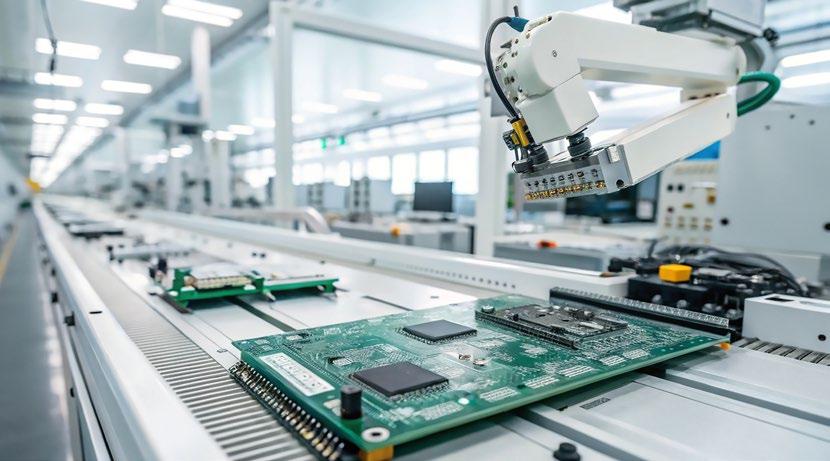
Malaysia and the Netherlands have signed a cooperation agreement to strengthen ties in the semiconductor industry, aiming to reinforce Malaysia’s role as a global chip hub and the Netherlands’ position in advanced manufacturing and innovation.
The Memorandum of Cooperation (MoC) was signed in The Hague by Investment, Trade and Industry Minister Tengku Datuk Seri Zafrul Aziz and Dutch Economic Affairs Minister Vincent Karremans.
This agreement builds on an initiative first proposed by both countries’ prime ministers during the Dutch leader’s visit to Kuala Lumpur in 2023.
The agreement will establish an annual Malaysia–Netherlands Semiconductor Dialogue to review joint projects, share market and policy updates, and coordinate
efforts in skills training, research and technology exchange.
“This partnership reflects our shared commitment to strengthening Malaysia’s assembly, testing and packaging capabilities, while also moving up the value chain by leveraging the Netherlands’ expertise in high-end chip manufacturing.
By combining our unique strengths, we are confident this collaboration will enhance global supply chain security and create new opportunities for innovation and growth in the global semiconductor industry.
Through the structured dialogue and joint initiatives, we aspire to build a resilient, future-proof semiconductor ecosystem that benefits both our nations and the global economy,” said Tengku Zafrul at the signing.
The cooperation comes as governments worldwide seek to diversify supply chains and remain competitive amid rapid technological change.
It also aligns with Malaysia’s National Semiconductor Strategy, which targets RM500bil in investments, the creation of homegrown companies, and the training of 60,000 engineers by 2030.
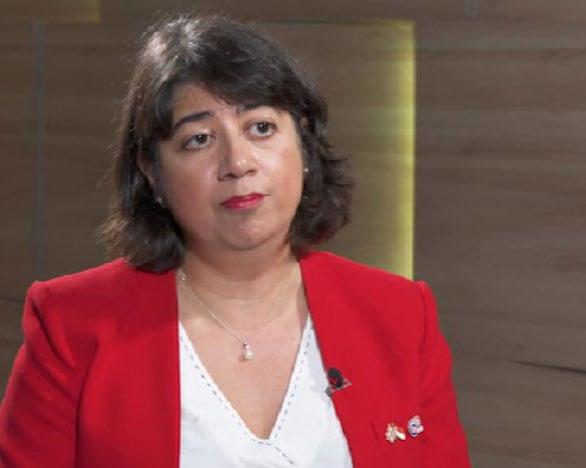
Parliamentary Under-Secretary of State for Indo-Pacific Seema Malhotra spoke about six decades of diplomatic ties with Singapore and security in the IndoPacific in an interview with CNA’s Sherlyn Seah.
The United Kingdom is looking to deepen cooperation with Singapore in areas including technology, defence and clean energy, as both nations mark 60 years of diplomatic relations.
Britain’s Parliamentary Under-Secretary of State for Indo-Pacific Seema Malhotra said the longstanding partnership is evolving to meet emerging priorities –from digital governance and artificial intelligence to climate change and regional security.
Her trip is part of her first official tour of Southeast Asia, amid the UK government’s renewed push to strengthen its strategic and economic footprint in the Indo-Pacific.
Expanding Economic Partnership
Singapore and the UK have seen growing collaboration across investment and trade, underpinned by the 2022 UK-Singapore Digital Economy Agreement.
The landmark pact establishes shared rules on cornerstones of the digital economy such as cybersecurity and data protection, and has paved the way for partnerships in green finance and digital innovation.
“That has been a really important collaboration creating those opportunities, jobs and improving experience and application of technology in different ways,” she said.
The UK’s defence ties with Singapore are also deep-rooted through the Five Power Defence Arrangements (FPDA).
The pact, one of Southeast Asia’s oldest security frameworks, unites Britain, Singapore, Malaysia, Australia and New Zealand.
Ms Malhotra said the agreement and its continued relevance reflects a foundation of trust and cooperation built over decades.

“It strikes at the heart of the sense of the strength of our relationship and the trust,” she added. “It is a recognition that we must work together on security, on which there may be new challenges of the future.”
Additionally, bilateral trade has climbed to about S$40 billion (US$31 billion), accounting for around 40 per cent of the UK’s total trade with Southeast Asia.
New and ongoing collaborations are expected to drive job creation and technological development in both countries, said Ms Malhotra.
She highlighted one key example – a partnership between British company Aurrigo and Changi Airport Group.
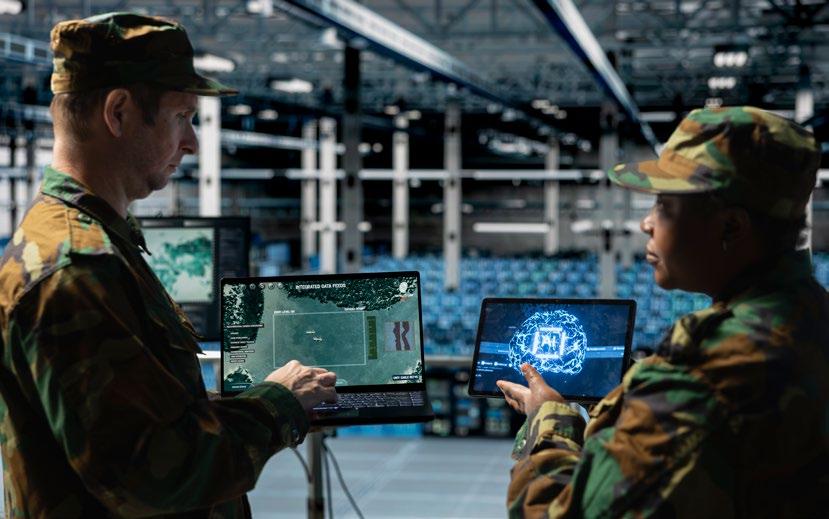
The two are testing driverless baggage vehicles for the upcoming Terminal 5, showcasing the intersection of UK robotics expertise and Singapore’s Smart Nation ambitions to build one of the world’s most advanced aviation hubs.
Ms Malhotra noted that the UK’s partnership with the Association of Southeast Asian Nations (ASEAN) continues to evolve.
Prior to Singapore, she attended the UK-ASEAN AI Innovation Summit in Kuala Lumpur. The summit was aimed at deepening cooperation on AI governance and practical applications between Britain and the bloc.
“It’s (about) recognising the opportunities and impacts of AI (such as) how we deal with security, or innovations that will support public services, or make medical diagnostics and other applications,” she said.

“But we can’t make these areas of progress on our own. AI and the governance of AI have to go across our countries and regions.”
She added the UK’s approach to the Indo-Pacific is fostered on trust and shared prosperity.
“We continue to see defence and security being part of our international
collaboration defence and prevention of warfare through new technologies the training of our personnel as a collaborative exercise,” she said.
“Our security (and) prosperity in Europe are very interconnected with the security and prosperity in the Indo-Pacific.”
Over 20 new innovations were on show by the Home Team Science and Technology Agency’s (HTX) at its new purpose-built developmental testing and evaluation facility for public safety.
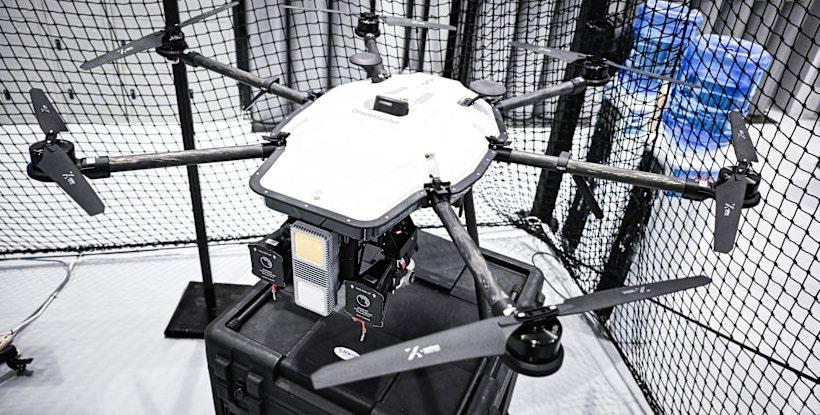
Home Team agencies may soon have in their arsenal a high-speed drone that can intercept rogue drones, pursuing and capturing them with a net.
The drone interceptor, created by the Robotics, Automation and Unmanned Systems Centre of Expertise (RAUS CoE), is the first of its kind in the world to operate without the global positioning system (GPS).
Current counter-drone systems work by blocking a drone’s radio frequency communication links and GPS signals.
“However, jammed drones may still hover in place or crash unpredictably, posing risks if they are carrying dangerous payloads,” the Home Team Science and Technology Agency (HTX) said.
“This challenge is even greater in dense urban environments like Singapore, where traditional counter-drone techniques become harder to execute safely in crowded places, between tall buildings that might result in serious consequences should the drone crash.”
The new device was among over 20 innovations on show at HTX’s annual TechXplore, which showcases some of its most cutting-edge technologies.
This year’s edition was held in Garage@ HTX in Jurong, Singapore’s first purposebuilt developmental testing and evaluation facility for public safety.
The facility, launched by Minister for Law and Second Minister for Home Affairs Edwin Tong on Monday (Oct 13), lets HTX test and evaluate the safety and functionality of assets like drones, vehicles and communications systems, before deploying them.
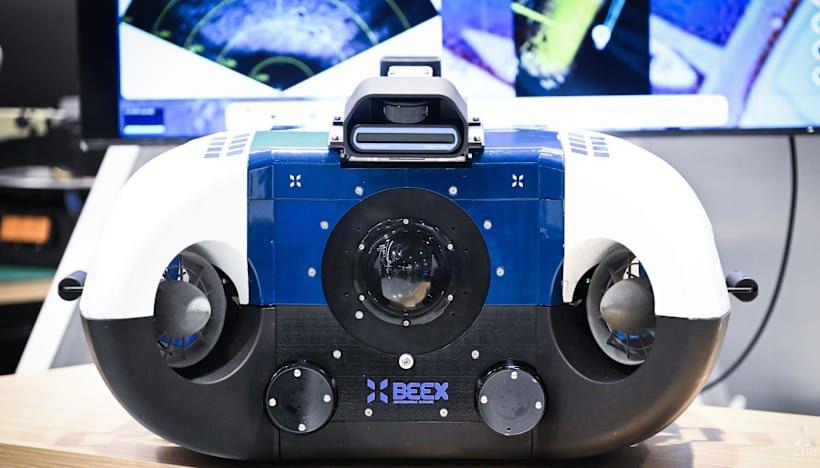
The autonomous underwater search operations with AI-Enabled ROV, which can autonomously detect potential underwater targets, moves in to perform a high-resolution scan to verify the detected object before relaying its position so that divers can be directed precisely to the spot for recovery.
Also unveiled on Monday was a remotely operated underwater search robot guided by artificial intelligence (AI).
Such remotely operated options that are currently commercially available require operators to manually scrutinise sonar and camera feeds in real time to spot underwater targets.
“This process is demanding and prone to human error,” said HTX.
Home Team divers often operate in challenging and dangerous underwater environments, with poor visibility and potential exposure to hazardous conditions.
The new device detects potential underwater targets, moves in to perform a high-resolution scan to verify them, before relaying their position so that divers can be directed precisely to the spot.
It leverages AI to make underwater searches smarter, safer and autonomous, reducing the need for divers to enter the water.
Another project will automate the transport of food and goods within Singapore’s prison compounds, making it more efficient and augmenting existing manpower.
The Autonomous Remote Movers (ARM) project is set to be trialled at Cluster A within Changi Prison Complex in September next year.
Developed by the Vehicle and Weapon Systems Centre of Expertise and RAUS CoE, the project integrates a system of autonomous vehicles and mobile robots.
A truck will be equipped with self-driving capabilities to transport food trolleys on the road, while a rear compartment will be designed for the mobile robots to collect and deliver them within buildings.
Home Team officers will also be able to remotely carry out tasks in dangerous environments, with a haptic-enabled mobile manipulator developed in-house by RAUS CoE.
An integrated robotic hand mounted on a robotic dog, lets officers remotely handle objects in a precise manner.
A virtual reality controller tracks officers’ individual finger movements, with the robotic hand directly reflecting their actions and providing them direct control.
It can be used for various tasks, such as collecting liquid samples in pipettes to atmospheric monitoring with gas detection equipment.
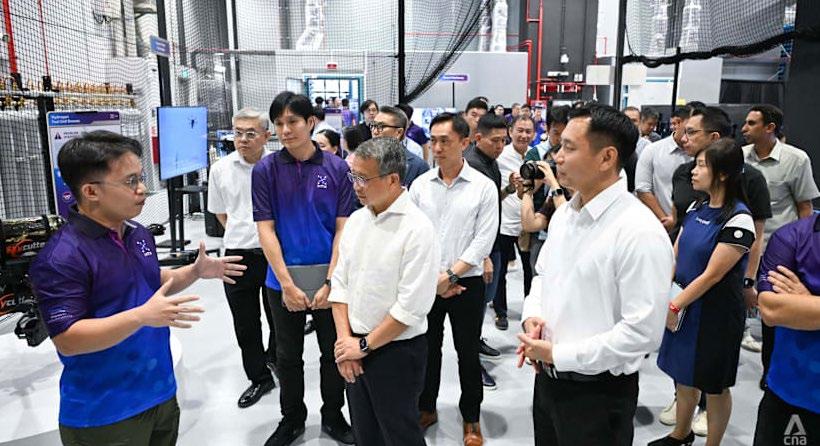
Minister for Law and Second Minister for Home Affairs Edwin Tong and Minister of State for Home Affairs and for Social and Family Development Goh Pei Ming being shown around the venue at the launch of Garage@HTX held in conjunction with TechXplore, HTX’s science and technology exhibition, on Oct 13, 2025. (Photo: CNA/Syamil Sapari)
The new Garage@HTX plays an important role in ensuring that “Singaporeans get to enjoy the best in terms of security options that can be deployed in Singapore”, said Mr Tong.
“We’ve got to ensure that we are broad in the spectrum of options that we have. We can’t always tell where the threats will come from, but for us, the ethos at Home Team is to always be prepared to be thinking ahead and to be looking ahead, and to always be prepared to trial new equipment to deal with newer and high technology-dependent threats as well,” he said.
In the facility is a cavernous chamber that allows for electromagnetic interference (EMI) testing.
Home Team vehicles, like ambulances, contain hardware that emits EMI signatures and may interfere with sensitive electronics, such as life-saving equipment.
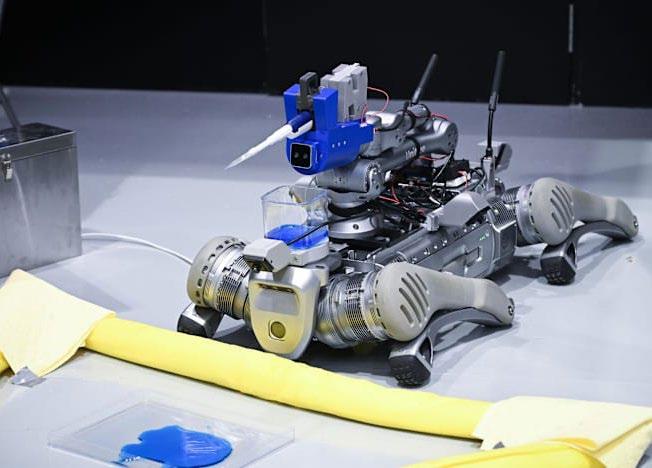
A haptic-enabled mobile manipulator, that offers versatile operational capabilities. Through tele-presence, it enables remote task execution, keeping the officer safely away from dangerous environments. (Photo: CNA/Syamil Sapari)
The purpose-built chamber is large enough to accommodate large Home Team vehicles like the Singapore Civil Defence Force’s Electric Pump Ladder.
Another space, called the Arena, lets engineers safely test and evaluate unmanned aerial systems and robotic systems, such as humanoids.
Surrounded by nets, such an environment is important as drones may veer off intended flight paths and collide with other objects during testing.
The Arena is also equipped with features that provide near-real-world conditions, such as wind simulation.

An Intel logo and a computer motherboard appear in this illustration taken August 25, 2025. REUTERS/Dado Ruvic/Illustration
Intel on Thursday unveiled key details of its upcoming Panther Lake laptop processor, the first chip built on its next-generation 18A production process, aiming to convince investors its costly turnaround plan can restore its manufacturing edge.
The rollout of Panther Lake, aimed at high-end, artificial intelligence-enabled laptops, is a major test of Intel’s ability to scale its 18A manufacturing technology and reclaim PC market share lost to rival AMD.
Intel said graphics and central processors integrated in Panther Lake deliver 50 per cent faster performance than its previous generation of chips, Lunar Lake, which was largely made by rival Taiwan Semiconductor Manufacturing Co.
The 18A process includes a new transistor design and a method of delivering energy to the chip more efficiently.
The Panther Lake uses a ‘system-onchip’ design that usually integrates various components such as a graphic processor and a central processing unit on to a single circuit.
The processor will begin ramping up production this year, with the first unit slated to ship before 2025 end. It will be broadly available from January 2026.
Reuters had on Tuesday reported details about the chip’s specifications and availability.
“Panther Lake is extremely important to Intel on many different levels,” said Bob O’Donnell, chief analyst at Technalysis Research.
It could serve as a “confirmation of the company’s continued advancements in semiconductor manufacturing and
show the kind of chips that their fabs can produce”, he said.
New CEO Lip-Bu Tan has in the recent months sharply scaled back the massive manufacturing expansion pushed by his predecessor Pat Gelsinger. In July, Intel warned it would halt the development of its future 14A process unless it gets a customer.
After U.S. President Donald Trump called for Tan’s resignation in August, Intel drew new investments from SoftBank Group and Nvidia. Following Tan’s meeting with Trump and White House officials, the administration converted a planned CHIPS Act grant into a 9.9 per cent equity stake in the company.
The new technologies “are catalysts for innovation across our business as we build a new Intel”, Tan said on Thursday.
The company’s chip manufacturing facility in Arizona, known as Fab 52, is now fully operational and set to reach high-volume production using 18A later this year.
Intel’s new server processor Clearwater Forest, which will be launched in the first half of 2026, is also being made at Fab 52.
While Intel has yet to gain traction in the AI graphics processor market dominated by Nvidia, it expects Clearwater Forest will help it grab a share in AI data centers thanks to its power efficiency.
Source:

ACENTRE of excellence for digital transformation will be established to develop local expertise in smart manufacturing, digital simulation and artificial intelligence (AI)-driven design.
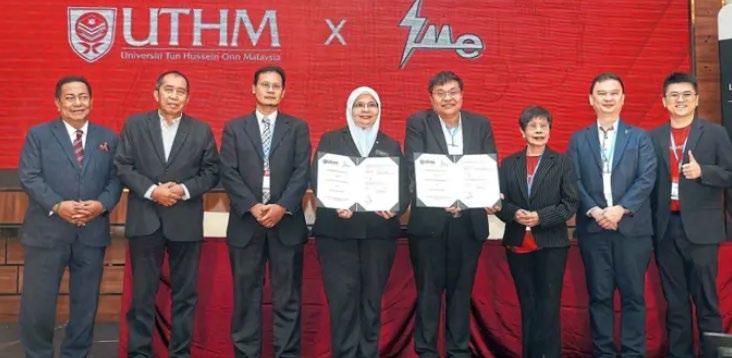
This follows the signing of a memorandum of understanding (MOU) between Universiti Tun Hussein Onn Malaysia (UTHM) and IME Group of Companies.
IME executive vice-president Teoh Jia Yuan said the proposed centre would bridge the gap between university learning and industrial practice.
“The collaboration is about bridging academia and industry.
“Together we are creating a centre of excellence that empowers students to get hands-on experience with technology used in the real world.”
The centre, based at UTHM in Johor, will focus on advanced engineering and Industry 4.0 by training students and researchers in virtual twin technology, AI-driven simulation and smart factory systems.
“It will also promote digital construction through the use of Building Information Modelling (BIM) under the national Construction 4.0 agenda led by CIDB (Construction Industry Development Board) and supported by the Public Works Department.”
Teoh was speaking at the signing ceremony during IME Solidworks Innovation Day in Shah Alam, Selangor, in conjunction with IME’s 45th anniversary.
It saw participation from academics, industry practitioners and representatives from Malaysia’s engineering and manufacturing sectors.
On smart manufacturing, Teoh said a live lab for robotics, automation and connected manufacturing at the centre would support research and training.
“It will help Malaysia move from being a technology adopter to an innovator.
“There are industry needs in advanced simulations, but Malaysia doesn’t yet have enough local talent in this area.
“We want to bridge that gap through the universities,” he added.
The centre will be implemented in phases, beginning with software adoption and student certification.
Later stages would include joint research and development with industry partners, while Teoh said details on modules, scope and funding would be finalised in upcoming workshops between IME and UTHM.
UTHM deputy vice-chancellor (research and innovation) Prof Dr Rabiah Ahmad said the collaboration supported the Higher Education Ministry’s call for closer ties between academia and the private sector.
“Industry-university collaboration is a must for Malaysia if we want to develop
future industry talents for IR4.0, IR5.0 and the Internet of Everything,” she said.
She added that although the centre may be hosted by the Faculty of Mechanical and Manufacturing Engineering, it would also draw talent from disciplines such as electrical engineering, engineering technology and business.
Solidworks is a globally used computeraided design (CAD) and engineering platform developed by Dassault Systemes that allows engineers, designers and manufacturers to create 3D models, run simulations and manage the entire designto-production process.
Dassault Systemes director of channel sales (Asia Pacific South) William Lee said, “Our collaboration with IME and universities aligns with Malaysia’s objectives to build talent through TVET.
“Through certification, students enter the workforce with a skill set instead of starting from zero.”
The new centre of excellence also complements IME’s ongoing education partnerships under Solidworks SkillForce Programme that offered access to professional software licences, certification and internships for undergraduates.
Teoh said the partnerships were aimed at producing graduates who met industry expectations from day one.
Founded in 1980 as a machine-repair company, IME has grown into a national provider of design and manufacturing solutions.
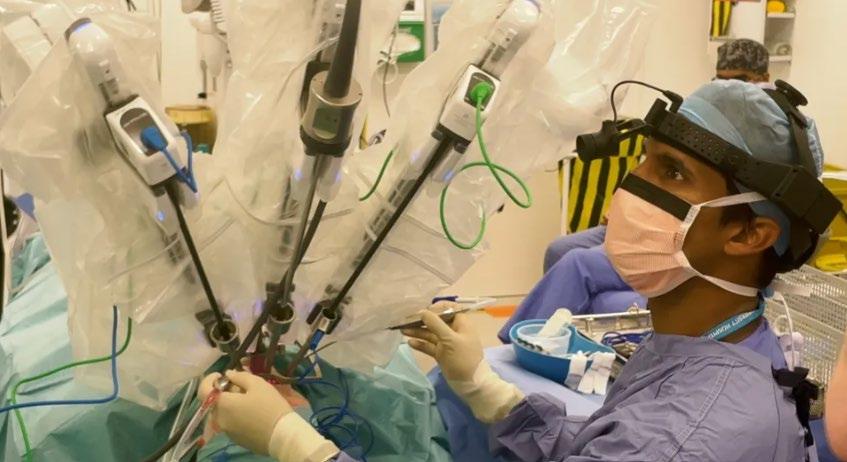
A hospital in Surrey has performed its 10,000th robotic-assisted surgical procedure.
Royal Surrey NHS Foundation Trust first introduced the technology in 2009 with the installation of a da Vinci surgical system.
It now operates four surgical robots across a range of specialities, including urology, gynaecology, colorectal, hepatobiliary, oesophagogastric and ear, nose and throat (ENT) surgery.
The 10,000th patient was Alistair Hutchinson, 49, who underwent robotic surgery for throat cancer. He said: “It truly changed everything. I was able to receive the treatment I needed to remove the cancer – without facing the harsh side effects I had feared.”
The Royal Surrey is the country’s fourth largest cancer centre, treating more than 8,000 patients each year across the South East of England.
It delivers 4,000 chemotherapy treatments, almost 3,500 sessions of radiotherapy, and over 2,000 cancer surgeries annually.
The Trust performed just three robotic surgeries in the first year but said the programme has grown into one of the busiest and most advanced in the country.
In 2024, more than 1,500 patients benefitted from robotic surgery, with the Trust saying it performed more prostate surgeries than any other single-site hospital in the UK.

Consultant Ear Nose and Throat surgeon
David Walker said: “For many years we’ve been ahead of the curve in terms of driving better technologies for patients and we know that this creates better outcomes.”
The robot does not replace surgeons but enhances their ability to carry out complex operations via very tiny incisions, with greater accuracy and precision.
The surgeon operates the robot from a control console, performing the procedure using a minimally invasive approach, also known as keyhole surgery.
Patients benefit from faster recovery, shorter hospital stays, better outcomes and less complications while it also helps the hospital improve efficiency and save bed days.

Mr Hutchinson said: “Because the throat is such a sensitive area, I was deeply concerned about the potential long-term side effects.
“My children are only seven and five, and I was worried about how the treatment might affect not just me, but them too. Then I found out robotic surgery was an option.”
Tim Pencavel, consultant surgeon and joint chief of service for surgery at the Royal Surrey Hospital said the majority of robotic surgeries are for cancer patients.
“Our catchment area for cancer effectively is the western side of the Kent, Surrey and Sussex region.
“Because of that volume of patients, it goes back to needing to help people more efficiently so that we can get more of those people through our doors.”
The NHS believes millions of patients will benefit from cutting-edge robotic surgery over the next decade as part of its plans to cut waiting times.
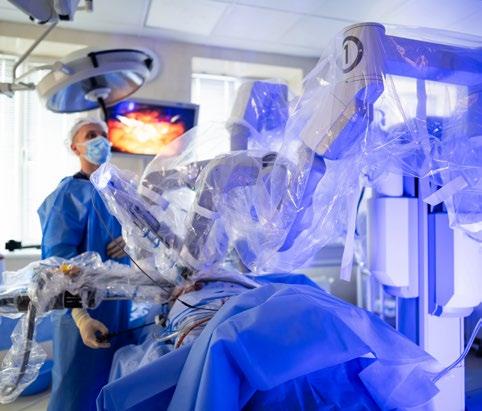
It said half a million operations will be supported by the approach every year by 2035, up from 70,000 in 2023/24, according to NHS projections.
Nine in 10 of all keyhole surgeries, such as the removal of certain organs affected by cancer, will be delivered with robot

assistance within the next 10 years, up from 1 in 5 today with robotic surgery being the default for many operations.
The NHS also expects to see increasing numbers of emergency operations using the technology.
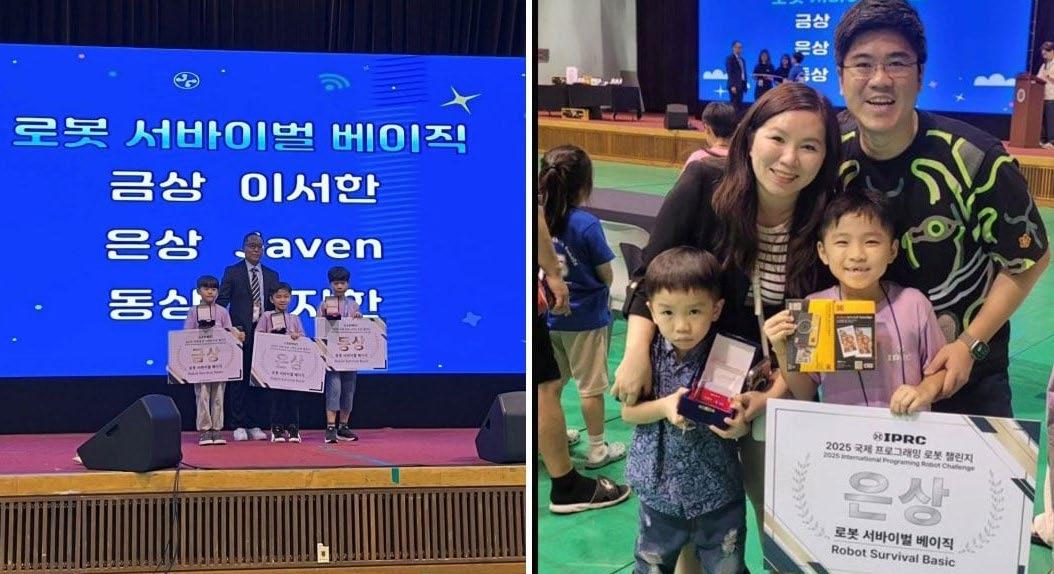
Javen Cheok, an eight-year-old student from Sri Kuala Lumpur International School, won the RunnerUp award in the ‘Robot Survival Basic Category’ at the International Programmable Robotics Competition (IPRC) 2025, held in Seoul, South Korea early this month.
P3 Platform Sdn Bhd (P3 Platform), in a statement recently, said Cheok was the only winner from the international partner schools, with all other winners hailing from South Korea.
“His success highlights both his remarkable talent and Malaysia’s growing strength in robotics and coding education,” the statement read.
The IPRC is a prestigious event that encourages students worldwide to develop not only technical expertise but also creativity, teamwork, and global collaboration.
The event was organised by Roborobo Co. Ltd. (Roborobo), a dominant force in the Korean educational robotics market, leveraging a curriculum developed by Seoul National University, which is aimed to cultivate students’ logical thinking, creativity, and problem-solving skills through its innovative products.
The competition brought together students from various countries, challenging them in different categories of robotics programming, design, and
survival challenges, with Malaysia represented by eleven students who showcased their skills on an international stage.
Roborobo head of global business Brian Yoon, in the same statement, said Cheok’s creativity, perseverance and problemsolving skills were an inspiration to other young learners in Malaysia.
At the same time, P3 Platform chief executive officer Estee Mah said the award showed that with the right opportunities, even very young children could excel globally in technology and innovation.


Arm Holdings said on Monday it is expanding its Flexible Access licensing program to cover its Armv9 edge AI platform, aiming to attract startups and device makers developing ondevice AI by lowering entry barriers and accelerating design cycles.
The Flexible Access program allows companies to use its chip design tools and training for little or no cost, enabling them to build and test new chip concepts.
Companies including hardware firms Raspberry Pi, Hailo and SiMa.ai have participated in the program, Arm said.
Opening up the licensing program strengthens Arm’s ties with AI startups and ondevice AI providers that might otherwise be priced out by costly licenses, positioning Arm to embed its technology across emerging AI devices.
Arm is expanding to fortify its position in the burgeoning edge AI market, where it faces growing competition from rivals such as Nvidia, Intel, as well as newer players.
Companies from self-driving vehicle makers to retail inventory software developers are adopting edge AI, which runs artificialintelligence models on devices such as smartphones and laptops to process data on the spot rather than sending it to the cloud.
Arm said more than 300 companies have joined the program, with 400 chip designs completed and ready for manufacturing. Earlier this month, Qualcomm shifted its flagship chips to Arm’s v9 architecture, sources exclusively told Reuters.
Arm’s shares rose 4 per cent to $172.23 after the news. Up to last close, the stock had gained 34.2 per cent this year.


FILE PHOTO: A Samsung Electronics logo and a computer motherboard appear in this illustration taken August 25, 2025. REUTERS/Dado Ruvic/Illustration/File Photo
Samsung Electronics said on Friday it is in “close discussion” to supply its next-generation high-bandwidth memory (HBM) chips, or HBM4, to Nvidia, as the South Korean chipmaker scrambles to catch up with rivals in the AI chip race.
Samsung, which plans to market the new chip next year, did not specify when it aims to ship the latest version of its HBM chip, a key building block of artificial intelligence chipsets.
Local rival SK Hynix, Nvidia’s top HBM chip supplier, on Wednesday said it aims to start shipping its latest HBM4 chips in the fourth quarter and expand sales next year.
Nvidia, in a statement announcing cooperation with Samsung, said it is in “key supply collaboration for HBM3E and HBM4”, without elaborating.
In a separate deal, Samsung said it will purchase 50,000 high-end Nvidia chips to build an AI-enhanced semiconductor

factory aimed at improving chip manufacturing speed and yields.
Samsung’s share price rose as much as 4.32 per cent after the announcements.
Chairman Jay Y. Lee and Nvidia CEO Jensen Huang met over fried chicken and beer on Thursday during Huang’s visit to Korea to attend the Asia-Pacific Economic Cooperation CEO Summit.
Lee said Nvidia is a key customer and strategic partner and highlighted more than two decades of collaboration.
Jeff Kim, head of research at KB Securities, said HBM4 likely needs further testing but Samsung widely is seen to be in a favourable position given its production capacity.
“If Samsung supplies HBM4 chips to Nvidia, it could secure a significant market share that it was unable to achieve with previous HBM series products,” Kim said.
Samsung has been slower to capitalise on the AI-driven memory chip boom, leading to weaker earnings performance and a reshuffle of its chip division last year. Its earnings recovered in the latest quarter driven by conventional memory chip demand.
This week it said it sells its currentgeneration HBM3E chips to “all related customers”, indicating it has joined rivals in supplying the latest 12-layer HBM3E chips to Nvidia.
The launch of HBM4 chips will be a major test of Samsung’s ability to regain its edge in the market, analysts said.
HBM - a type of dynamic randomaccess memory (DRAM) standard first produced in 2013 - involves stacking chips vertically to save space and reduce power consumption, helping to process the large volume of data generated by complex AI applications.
Investors are watching for whether Samsung’s HBM4 can cut SK Hynix’s lead in advanced memory chips. The chipmaker, which also is also a leading smartphone maker, said in July it had provided HBM4 samples to customers, with plans to begin supply next year.
Samsung’s share price has risen nearly 60 per cent since July as investors expect the chipmaker to benefit from the current uptrend in memory prices and advance in the AI race.

OpenAI has partnered with Broadcom to produce its first inhouse artificial intelligence processors, the latest chip tie-up for the ChatGPT maker as it races to secure the computing power needed to meet surging demand for its services.
Shares of Broadcom rose more than 10 per cent.
The companies said on Monday that OpenAI would design the chips, which Broadcom will develop and deploy starting in the second half of 2026. They will roll out 10 gigawatts worth of custom chips, whose power consumption is roughly equivalent to the needs of more than 8 million U.S. households or five times the electricity produced by the Hoover Dam.
Most analysts do not expect the deal, the latest effort by a tech company to develop custom AI chips, to challenge Nvidia’s grip on the AI accelerator market, given the significant challenge of designing, scaling and manufacturing in-house chips from the ground up.
The OpenAI-Broadcom deal is the latest in a string of massive chip investments that have highlighted the technology industry’s surging appetite for computing power as it races to build the most sophisticated AI systems.
OpenAI last week unveiled a 6-gigawatt AI chip supply deal with AMD that includes an option to buy a stake in the chipmaker, days after disclosing that Nvidia plans to invest up to $100 billion
in the startup and provide it with datacenter systems with at least 10 gigawatts of capacity.
“Partnering with Broadcom is a critical step in building the infrastructure needed to unlock AI’s potential,” OpenAI CEO Sam Altman said in a statement.
Financial details of the agreement were not disclosed and it was not immediately clear how OpenAI would fund the deal.
A one-gigawatt data center can cost between $50 billion and $60 billion, Nvidia CEO Jensen Huang said in August, adding that Nvidia products, powering the data center, can represent more than half of those costs.


The 2026 timeline set out by OpenAI for the build-out is aggressive, but the startup is also best positioned to raise the funds required for the project, given the heights of investor confidence, said Gadjo Sevilla, an analyst at eMarketer.
“Financing such a large chip deal will likely require a combination of funding rounds, pre-orders, strategic investments, and support from Microsoft, as well as leveraging future revenue streams and potential credit facilities.”
The tie-up with Broadcom, first reported by Reuters last year, places OpenAI among cloud-computing giants such as Alphabet-owned Google and Amazon.
com that are developing custom chips to meet surging AI demand and reduce dependence on costly, supply-constrained Nvidia processors.
However, similar efforts by Microsoft and Meta have failed to match the performance of Nvidia chips, according to media reports.
Still, the rise in demand for custom chips has turned Broadcom into one of the biggest winners of the generative AI boom, with its stock price rising nearly six-fold since the end of 2022.
Broadcom unveiled a $10 billion custom AI chip order in September from an unnamed new customer, which some analysts speculated was OpenAI. However,
a company executive on Monday alluded that OpenAI was not that unnamed client.
Broadcom and OpenAI said on Monday that the deployment of the new custom chips would be completed by the end of 2029, building on their existing codevelopment and supply agreements.
The new systems will be scaled entirely using Broadcom’s Ethernet and other networking gear, challenging Nvidia’s InfiniBand networking solution.

Taiwan’s Foxconn said its board of directors has approved an investment plan to procure equipment for a AI compute cluster and a supercomputing centre, that will allow it to spend up to NT$42 billion ($1.37 billion).
The investment will be made from December 2025 to December 2026 using its own funds, the company said in a filing published late on Monday.
Foxconn said the purpose of the plan is to “expand the cloud compute service platform and accelerate the development of the Group’s three smart platforms.” It did not elaborate or say where the investment would be made.
A person familiar with the matter said the investment will be made in Taiwan. Foxconn did not immediately respond to a request for comment.
The world’s largest contract electronics maker, also known as Hon Hai Precision Industry Co Ltd, has been stepping up its investments in artificial intelligence and cloud infrastructure as it seeks new growth drivers beyond smartphones and traditional electronics manufacturing.
In May, the company announced it would build an artificial intelligence centre with Nvidia in Taiwan targeted to have 100 megawatts of power.
In August, the company said it plans to manufacture data centre equipment with Japan’s SoftBank at the Taiwanese firm’s former electric vehicle factory in Ohio, part of the Stargate project to advance U.S. artificial intelligence infrastructure.

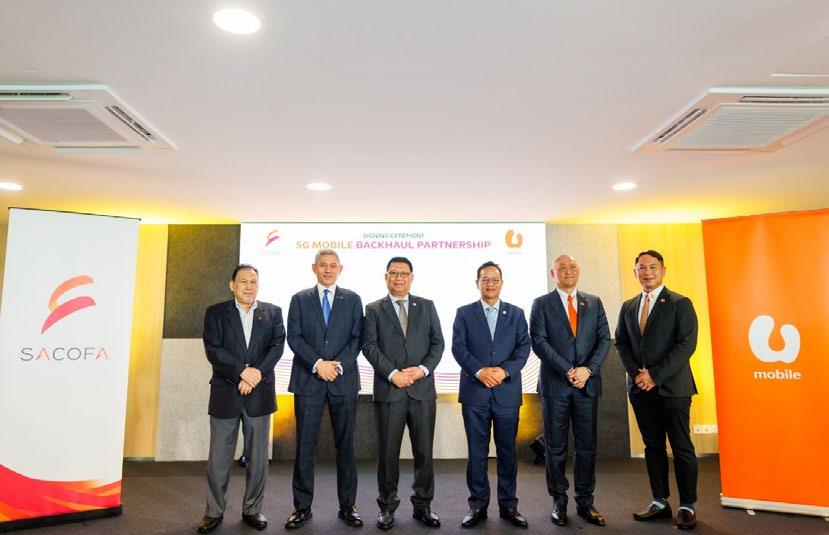
U Mobile has appointed Sacofa Sdn Bhd, the leading telecommunications infrastructure provider in Sarawak, as its fibre backhaul partner in rolling out its next generation 5G network.
Under the partnership, Sacofa will provide fibre leased line access to U Mobile’s 5G Radio Access Network (RAN) sites, enabling high-capacity backhaul connectivity to regional Points of Interconnect (POIs).
According to U Mobile, this infrastructure is crucial to delivering reliable, low-latency 5G services to both consumers and enterprises across Sarawak.
“This partnership is a key enabler in our drive to deliver our ULTRA5G experience, empowering consumers and enterprises in the state to harness cuttingedge technologies and thrive in the digital economy.
“By leveraging Sacofa’s extensive fibre infrastructure, we will work together to ensure that Sarawak becomes one of the earliest states to complete 5G deployment,” said U Mobile CEO Wong Heang Tuck in a statement.
He added that the collaboration also supports the Sarawak Digital Economy Blueprint 2030, which envisions a dynamic, inclusive, and innovationdriven digital ecosystem for the state.
Sacofa managing director Datuk Sri Sulaiman Abdul Rahman Abdul Taib said: “Through the investment in 5G infrastructure and collaboration with U Mobile, Sacofa aims to deliver faster and more reliable connections to local businesses and communities.”
Picture this: you work in a warehouse and need to bring a part to the other side of the building. The floor of the warehouse is marked with pedestrian pathways for safety, but you see a shortcut and decide to take it – without looking both ways.
Suddenly, the perspective flips and through a headset you see the image of your virtual avatar struck by a passing forklift. Thankfully, nobody is actually hurt. This was all a virtual reality simulation for workplace pedestrian safety training.
“Having that immediate visual representation of what negative can happen if you don’t follow these rules …

is definitely making an impact when it comes to people reducing injuries on the job,” said Annie Eaton, CEO of Futurus, the VR production company that made this simulation.
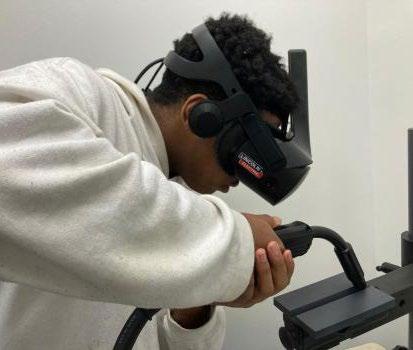
Workplaces across many industries are using virtual reality in a variety of ways to improve training, enhance safety and reduce costs.
“Immersive tech is helping companies work smarter, faster and safer,” said Adam Kornuth, Atlanta chapter president and global generative artificial intelligence cochair for the Virtual Reality Augmented Reality Association.
Researchers at the University of Georgia created VR Co-Lab to train recycling employees to work with robots to disassemble electronics without damaging materials or getting injured.
“Humans can’t get hurt in a virtual environment,” said Beiwen Li, study author and associate professor in UGA’s College of Engineering.
While working with robots can ease complex tasks, training employees to become comfortable with the machines can be time consuming and difficult, according to Li.
VR Co-Lab tracks how long the task takes and how many mistakes are made, providing feedback to help workers adjust to the movements of the robot arm.
“The VR environment is providing a more immersive experience,” Li said. “It is typically much better than just having the workers just read the manuals.”
Li knows there is vast potential for VRbased training, something companies like Futurus are already embracing.
Futurus is an Atlanta-based VR production company that specializes in creating simulated training content for experiences that are costly, unsafe or hard to teach without hands-on experience.
According to Eaton, common benefits include increased retention of the material, increased efficiency and decreased training time.
Futurus has worked with multiple companies, including designing 3D models for Children’s Healthcare of Atlanta’s latest hospital campus, simulating deicing training for Delta Air Lines employees to allow year-round practice and creating a multiplayer classroom for employees of candy maker Mars Wrigley to become familiar with machinery.

Georgia-Pacific also uses VR designed by Futurus to train employees on safety protocols, such as what to do near forklifts in a warehouse.
“Within that space, the experience is designed to provide the employee with a sense of unease when necessary,” a news release from Georgia-Pacific said. “It allows the person to experience a ‘bad day’ in a safe environment and develop muscle memory on important safety steps they might otherwise have to read about or wait to do once they’re on the job.”

Other common benefits of VR include decreased costs and better, data-informed decision making, Kornuth said.
“There is so much opportunity for all kinds of training to happen in virtual environments,” said Maribeth Gandy Coleman, research director of the Georgia Institute of Technology’s Institute for People and Technology.
Georgia Tech, which recently joined the ranks of the virtual reality association’s 60,000 members across 50 chapters, has a long history of VR research.
Manufacturers were among the first to embrace this technology and are still among the most frequent users, according to Coleman.
Eaton said sectors with clear and high returns on investment, such as manufacturing, seem to be leading the charge.
“There’s just a lot of opportunity, whether it is machine operator training, maintenance and troubleshooting training or just general safety,” Eaton said.
Both Eaton and Coleman emphasised that good VR design is more than just looks.
Talking to subject matter experts to ensure everything is accurate to real-life functionality is paramount, especially for training to be effective.
“You don’t just build a cool-looking virtual environment,” Coleman said. “What does the person need to learn, what are the key skills? Just floating around a virtual environment, you’re not going to learn anything.”
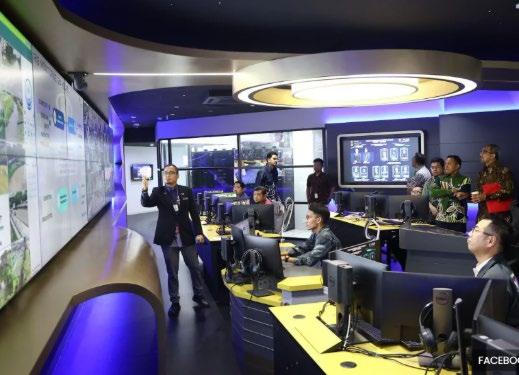
The Shah Alam City Council (MBSA) has launched the Shah Alam Integrated Smart Monitoring System Command Centre, known as Iris. This innovation represents a key step in the city’s digital transformation, combining solar-powered surveillance and artificial intelligence (AI) technologies to strengthen safety management, improve efficiency and support sustainability.
Iris integrates advanced closed-circuit television (CCTV) systems powered by solar energy, allowing continuous monitoring even in areas without access to electricity. By reducing dependency on traditional energy sources, the system contributes to lower carbon emissions while supporting MBSA’s broader commitment to a green and low-carbon city. The initiative reflects an effort to
balance technological progress with environmental responsibility.
The solar-based infrastructure enhances the city’s surveillance network by ensuring uninterrupted operation across a wider geographical area. This capability is particularly valuable in high-risk or remote locations, where conventional energy supply may be inconsistent.
The renewable power system not only cuts operational costs but also provides long-term sustainability benefits by reducing the city’s energy consumption.
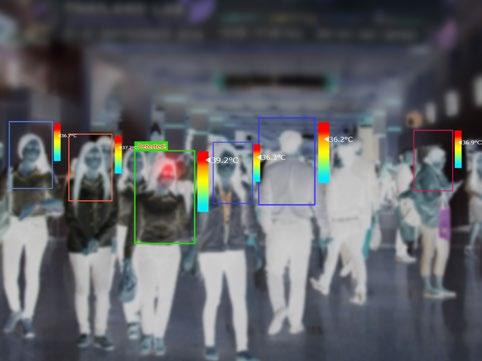
Developed over four years, Iris incorporates AI-driven functions that automate and optimise monitoring processes. The technology supports advanced image recognition and real-

time analytics to detect unusual activities, monitor traffic flow and coordinate incident response. This intelligent automation reduces reliance on manual supervision and enables faster, more accurate decision-making in city operations.
Beyond security, the integration of AI in Iris extends to disaster management and environmental monitoring. The system can track water levels in floodprone zones and generate early alerts when risks are detected. These warnings are transmitted to residents and response teams, improving the speed and precision of emergency actions. The automated process strengthens community resilience and enhances preparedness for natural disasters.

Through its centralised command structure, Iris provides MBSA with a unified platform for data collection, analysis, and management. This allows multiple systems, covering safety, traffic and environment, to operate cohesively. The integration reduces response time to incidents and supports data-driven governance by providing continuous situational awareness across the city.
Operational efficiency is another major outcome of the system’s deployment. The automation of surveillance and reporting processes reduces manpower requirements, enabling city officers to focus on more strategic tasks. Centralised digital monitoring also minimises physical inspections and allows for faster complaint handling, resulting in improved service delivery to the public.
MBSA plans to extend Iris coverage across its entire administrative region by next year. The expansion aims to achieve full utilisation of renewable energy in city surveillance while scaling up AI-based functions for enhanced public safety, traffic regulation and infrastructure monitoring. These initiatives form part of the council’s wider Smart City Shah
Alam programme, which promotes the integration of digital technologies to improve governance, sustainability and quality of life.
The system’s success highlights the value of combining renewable energy with intelligent automation to meet modern urban challenges. By leveraging AI and solar energy, Shah Alam is establishing a framework for efficient, environmentally conscious city management. The innovation demonstrates how municipal

authorities can deploy emerging technologies to deliver practical, scalable solutions that support both security and sustainability goals.
Iris has received recognition at the state level for its contribution to innovation in public service. It was named the overall winner in the Social Innovation and Best Innovation Project categories at the 2025 Selangor Public Service Innovation Persada (MPIPANS) ceremony. The achievement underscores the city council’s role in advancing digital transformation and sustainability initiatives through technology.
Through Iris, Shah Alam sets an example of how AI-powered systems and renewable energy can be integrated into city operations to enhance safety, efficiency, and environmental stewardship. The system embodies the next stage of smart urban governance, one that prioritises sustainable energy, data-driven decisions and proactive public safety management.

Frost & Sullivan has named Siemens the 2025 Southeast Asian Company of the Year in the data center infrastructure solutions industry for its outstanding achievements in technological innovation, operational excellence, and customer impact. This recognition highlights Siemens’s leadership in delivering advanced automation and digitalization solutions that enhance performance, reliability, and sustainability for data center operators across the region.
Frost & Sullivan evaluates companies through a rigorous benchmarking process across two core dimensions: strategy effectiveness and strategy execution. Siemens excelled in both, demonstrating its ability to align strategic initiatives with market demand while executing them efficiently and consistently across diverse Southeast Asian markets. “Frost & Sullivan recognizes Siemens for aligning sustainability commitments with continuous innovation, providing solutions that support data centers throughout their entire lifecycle. This focus builds customer trust and strengthens the company’s position as a reliable partner in an increasingly competitive market,” said Ravi Krishnaswamy, Associate Partner, Regional Leader at Frost & Sullivan.
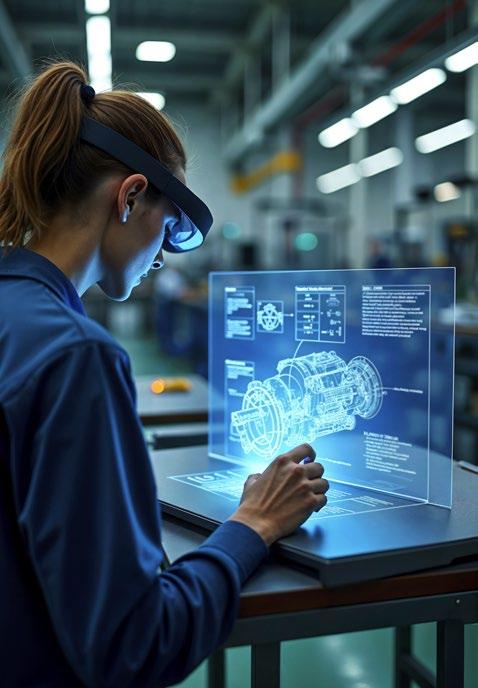

Guided by a long-term growth strategy centered on technological breakthroughs and advanced automation solutions, Siemens continues to demonstrate agility and foresight in addressing the evolving needs of Southeast Asia’s fast-growing data center industry.
Innovation remains central to Siemens’ approach. Its latest innovations include:
• Siemens EcoTech label: The sustainability product label provides customers with the necessary transparency on the certified products’ performance across environmentally relevant criteria. This capability enables informed decision making while supporting sustainability goals.

• blue GIS (SF6-Free): The product facilitates the global market’s ongoing SF6 phase-out by replacing the high global warming potential gas with ‘Clean Air’ and incorporates circularity to minimize environmental impact while offering high reliability and operational safety.
• Heat reuse solutions: Automated to capture and repurpose excess heat, these systems reduce data centers’ energy consumption and enhance sustainability.
• Desigo CC: The open, flexible, and scalable building management system for high performing buildings allows for increased comfort, security, operational efficiency, and energy efficacy.
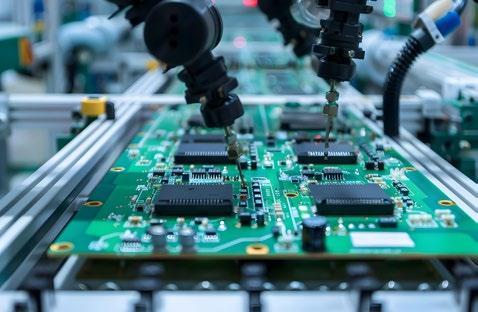
• Building X: The cloud-based digital building platform offers various services and ready-to-use, AI-based applications, such as Energy Manager, Sustainability Manager, and Lifecycle Twin. Its implementation enhances energy efficiency and provides full transparency while generating higher net operating income.
“We are honored and proud to receive this award. This esteemed recognition is a powerful affirmation of Siemens’ unwavering dedication to pioneering technological innovation and delivering integrated, future-ready infrastructure that creates highly efficient, resilient, and sustainable data centers,” commented Dr Thai-Lai Pham, President and CEO of Siemens ASEAN.
Siemens has operated in Southeast Asia for more than a century, maintaining a strong presence across Indonesia, Malaysia, the Philippines, Singapore, Thailand, and Vietnam. Its localized strategy combines regional expertise with global centers of competence to ensure that each solution is adapted to local market conditions while upholding international standards. This model allows Siemens to manage complex projects consistently and deliver measurable results across diverse customer segments.

The company’s value engineering services strengthen its customer partnerships. Dedicated centers work directly with clients to evaluate the total cost of ownership before purchase decisions, helping operators understand capital and operational impacts. Siemens also allows customer site visits to its factories to review product configurations and witness its quality standards firsthand— reinforcing transparency, reliability, and trust.
Frost & Sullivan commends Siemens for its ability to combine localized production, digital innovation, and global expertise to deliver cost efficiency, risk reduction, and customer confidence. Its structured execution, sustainability-focused product portfolio, and long-standing regional presence demonstrate the ability to deliver infrastructure solutions that meet Southeast Asia’s most pressing data center needs.
Each year, Frost & Sullivan presents the Company of the Year Recognition to an organization that demonstrates excellence in growth strategy and implementation, resulting in measurable improvements in market share, customer satisfaction, and competitive positioning. The recognition honors forward-thinking companies that redefine their industries through innovation and strategic execution.
Frost & Sullivan Best Practices Recognition
Frost & Sullivan’s Best Practices Recognitions honor companies across regional and global markets that exhibit exceptional achievement and consistent excellence in areas such as leadership, technological innovation, customer experience, and strategic product development. Each recognition is the result of a rigorous analytical process in which Frost & Sullivan industry experts
benchmark performance through comprehensive interviews, deep-dive analysis, and extensive secondary research. The goal is to identify true bestin-class organizations that are driving transformative growth and setting new industry standards.
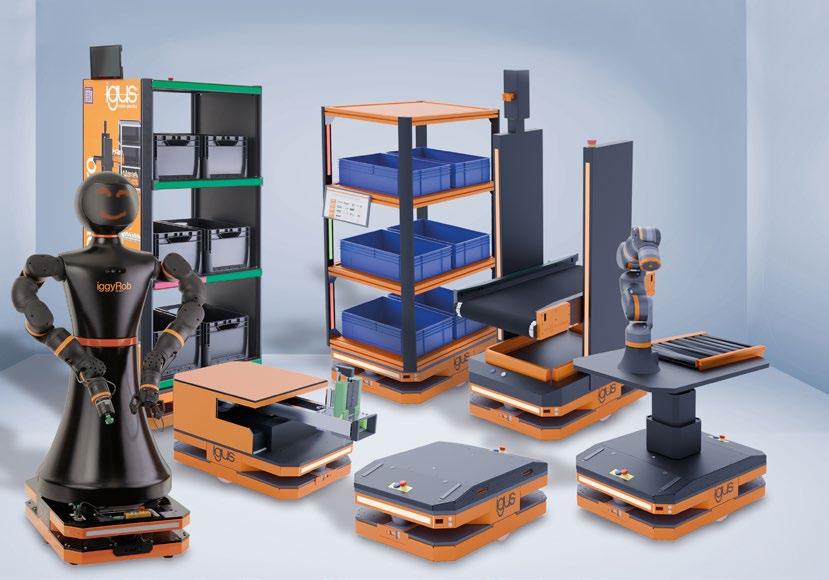
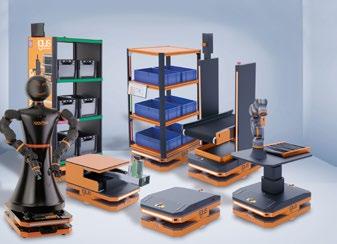
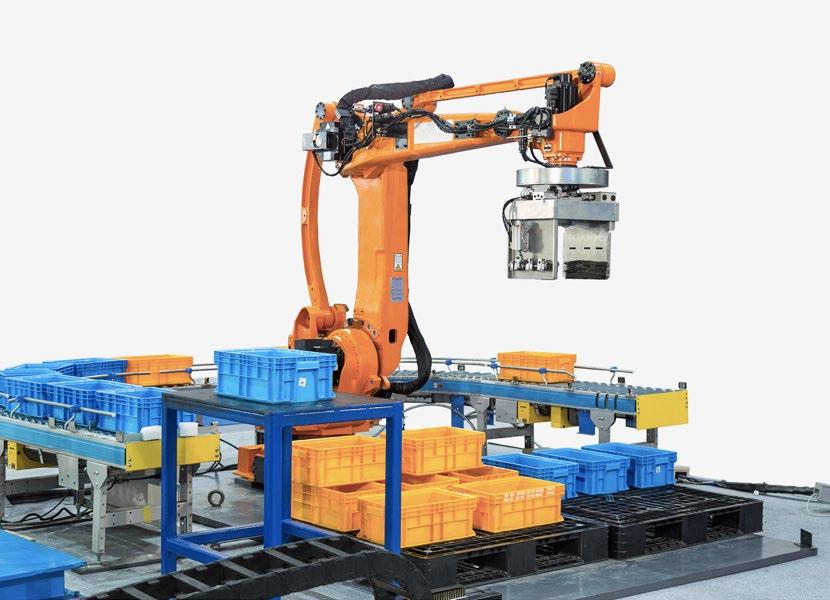
The ReBeLMove Pro serves as a platform for various superstructures, from order-picking systems to intelligent shelving systems to collaborative robots with conveyor belts.
igus introduces an autonomous mobile robot that promises simple configuration, flexible superstructures, and easy commissioning—at a price point that challenges the market.
Modern production faces relentless pressure to reduce costs and boost efficiency. Enter ReBeLMove Pro, the latest innovation from igus—a modular autonomous mobile robot (AMR) designed to simplify automation for logistics, assembly, and material handling. Built on a modular principle,
the ReBeLMove Pro can be tailored for diverse applications, from small load carrier transport to fully integrated robotic solutions.
What sets it apart? Ease of integration. Companies can deploy the ReBeLMove Pro without prior automation experience, making it an attractive option for businesses hesitant to embrace robotics due to complexity or cost. Starting at $75,620, the ReBeLMove Pro is approximately 25% more affordable than most competitor models, without compromising on performance.
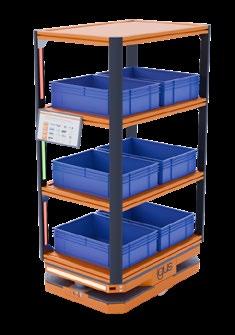
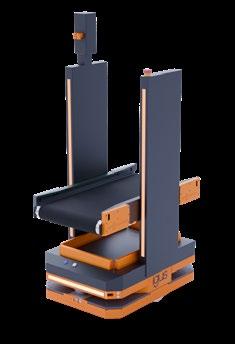
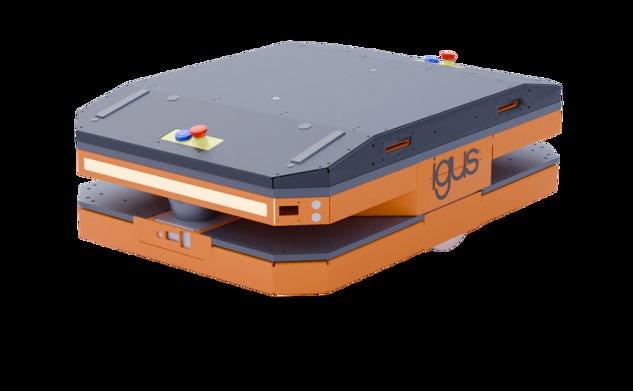
The ReBeLMove Pro features a sleek, rectangular design with four electricdriven wheels, finished in igus® signature black and orange. Despite its compact dimensions—795mm long, 560mm wide, 195mm high—it packs impressive capabilities:
• Payload capacity: Up to 250kg
• Towing capacity: Up to 900kg
• Speed: Up to 2m/s
• Battery life: A full 8-hour shift on one charge
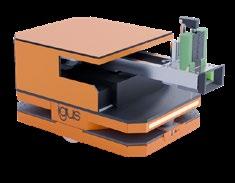
Its versatility shines through modular attachments: height-adjustable conveyor belts, articulated arm cobots for assembly, trailers for material transport, or shelves with light signals for efficient order picking. The ReBeLMove Pro even handles outdoor environments, expanding its utility beyond factory floors.
igus itself uses the ReBeLMove Pro internally to shuttle products from injection-moulding machines to assembly stations—tasks that are repetitive and hard to staff. In one case , igus implemented a fully automated container transport system in just two months, from concept to deployment.
Beyond affordability, the ReBeLMove Pro minimizes hidden costs. Traditional automation often incurs high expenses for system integrators and software licenses, discouraging adoption. igus addresses this pain point by ensuring plug-and-play commissioning:
• Mapping: During a simple round trip, the robot creates a 3D digital map of up to 200m² in under three minutes using LIDAR, 3D sensors, and RealSense cameras.
• Navigation: Autonomous movement without floor tracks or complex guidelines.
• Programming: Intuitive software enables task setup in 15 minutes, no coding required.
• Integration: Open interfaces (IoT, VDA 5050, REST, SAP, ERP) and compatibility with fleet management systems like Fleetexecuter, Kinexon, and Naise.
The result? An average ROI of just 12 months. At $75,620, the ReBeLMove Pro undercuts standard market solutions— while delivering full functionality.
As industries race toward smart manufacturing, solutions like ReBeLMove Pro bridge the gap between ambition and practicality. By combining modularity, affordability, and simplicity, igus empowers businesses to automate routine tasks without the usual hurdles of cost and complexity.
For companies seeking to future-proof operations, the ReBeLMove Pro isn’t just a robot—it’s a strategic investment in efficiency and flexibility.
Interested in learning more? Visit https:// www.igus.sg/product/22698?C=SG&L=e n&artNr=REBEL-MOVE-PRO-0000-01

1. Precision motion technology has come a long way. In your view, how has the definition of “precision” evolved over the last decade—and what does it mean today?
If we look back about a decade ago, precision was often defined at the micron level — achieving micro-level accuracy was considered advanced. But today,
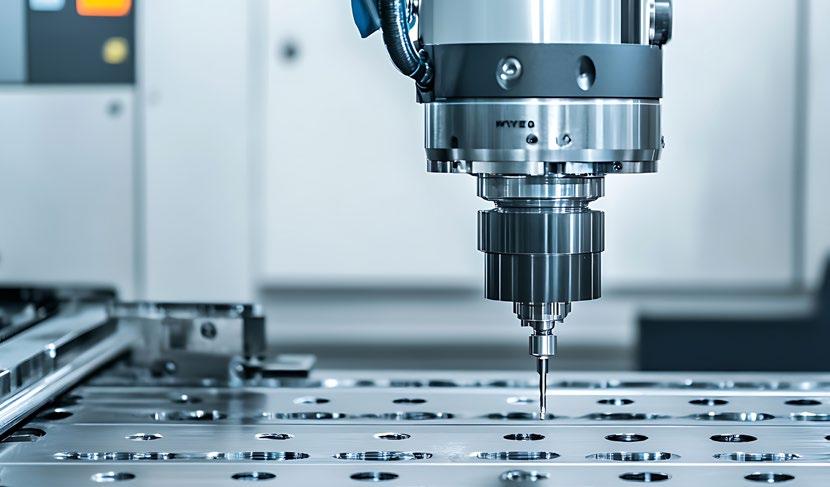
that benchmark has shifted dramatically. We’re now talking about nanometrelevel control, which has become the new standard in high-performance motion systems. It’s also no longer just about accuracy alone. Maintaining precision at speed and under dynamic load conditions is equally important — meaning that even when everything is in motion, stability and consistency must be maintained.
At Aerotech, our approach goes beyond improving positioning accuracy. We focus on enabling process-level precision — ensuring that every motion contributes directly to higher yield and better performance for our customers. That’s ultimately what today’s definition of precision is all about: not just meeting expectations, but exceeding them through smarter, more integrated motion control.

2. Which industries are currently pushing the boundaries of precision motion, and how is Aerotech helping them meet those demands?
I would say almost every industry is driving us to new levels of precision —


from semiconductors and medical devices to even our colleagues in research and advanced manufacturing. Each sector has its own unique requirements and challenges. At Aerotech, we focus on delivering application-specific motion solutions that address those exact needs. Whether it’s for flexible electronics, precision assembly, or complex inspection systems, our technologies are designed to give customers the accuracy, flexibility, and throughput they need to stay ahead in their markets.
3. Aerotech’s Automation1 platform has been described as a gamechanger. What sets it apart, and how has it improved integration and performance for your customers?
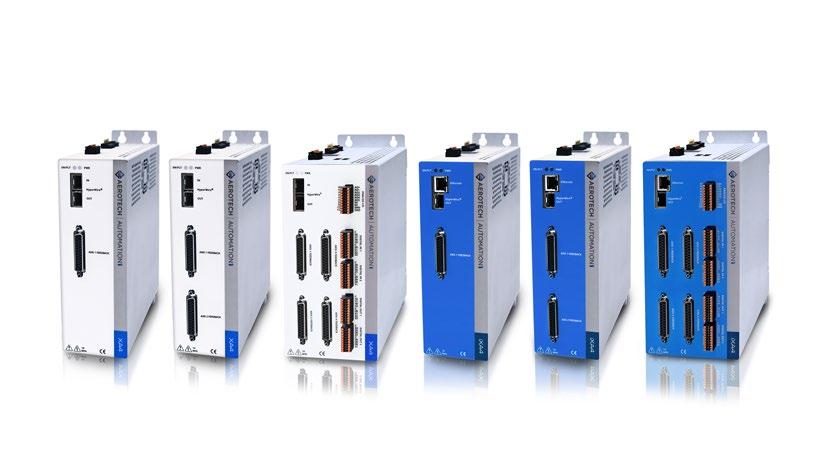
It’s not just the Automation1 software itself — it’s the fact that it’s a unified hardware and software platform. This integration makes system setup much simpler and significantly reduces the time it takes for customers to get their systems up and running. With Automation1, everything works seamlessly together. Our controller manages multiple stages simultaneously, eliminating the
complexity that often comes with stitching together components from different vendors. In short, it provides a complete, coordinated motion control ecosystem that enhances performance, reliability, and ease of use for our customers.
4. High speed and high precision don’t always go hand in hand. How does Aerotech strike a balance between the two in fast-paced production environments?
The key lies in truly understanding our customers’ requirements at a very detailed level. Every application has its own priorities — some demand extreme speed, while others require unwavering stability. By analysing these needs closely, we can fine-tune our systems to deliver the optimal balance between speed and precision. Our control architecture allows us to identify where acceleration can be pushed and where motion stability must take priority, minimising any potential loss in performance. In short, we don’t just choose between speed or precision — we engineer our solutions so customers can achieve both, seamlessly.
5. With Southeast Asia becoming a major manufacturing hub—and in light of rising US tariffs—how is Aerotech supporting companies in the region to stay competitive globally?
It’s true that the global manufacturing landscape is changing rapidly, and no one can fully predict what advantages or challenges the future may bring. However, what we can do — and what Aerotech is focused on — is helping our customers build resilience and agility into their operations. By offering highperformance motion control systems that enhance productivity, precision, and consistency, we enable manufacturers in Southeast Asia to compete on a global scale, regardless of market fluctuations. Our local engineering and support teams also work closely with customers to ensure their production lines remain efficient,
adaptable, and ready to respond to new trade dynamics or industry shifts.
6. Looking ahead, what’s the next big thing in precision motion? What opportunities—or challenges— should manufacturers be preparing for?
One of the biggest shifts we’re seeing is in advanced packaging and photonics, where precision motion requirements are becoming increasingly complex. These industries demand not only ultra-high accuracy but also real-time optimisation and adaptive control to maintain performance across varying conditions. We’re also seeing a growing need for intelligent motion control — systems that can automatically tune themselves to optimise objectives such as speed, accuracy, and stability. Precision today isn’t limited to mechanical control anymore; it

now includes timing synchronisation, environmental stability, and coordination across multiple systems. For manufacturers, this means preparing for a future where success depends on integrating smarter, data-driven motion solutions that can evolve alongside their production challenges. I’d like to share an example from one of our major OEM customers. They’ve successfully combined high-precision alignment with industrial-scale throughput, thanks to our modular, multi–degree-of-freedom platforms and out-of-the-box alignment tools. These solutions enable customers to achieve production targets with minimal development effort, shortening their time to market while maintaining exceptional precision and performance. It’s a great demonstration of how Aerotech’s technologies can seamlessly bridge the gap between research-level precision and full-scale manufacturing efficiency.

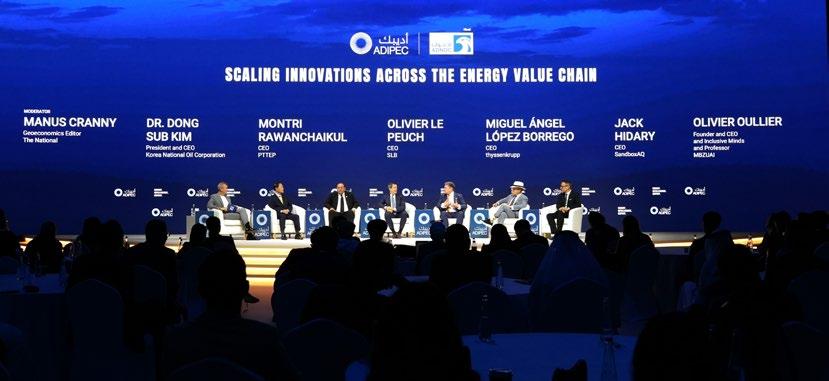
• Day two’s theme ‘The Technology Leap: Redefining Energy Leadership’ underscored how strategic AI adoption and digital innovation are reshaping energy leadership, with industry voices calling for coordinated investment to unlock transformation at speed and scale
• Experts debated AI’s role in boosting efficiency, enhancing resilience and unlocking investment while addressing the balance between AI’s potential and its impact on energy demand
• Key speakers included Jack Hidary CEO, SandboxAQ; Dr. Guy Diedrich, Chief Innovation Officer, Cisco; Olivier Oullier, Founder and CEO of Inclusive Minds; and Dean Watson, CEO, Enersol
• ADIPEC 2025 and its expanded AI Zone showcase approximately 10,000 individual products and technology solutions that are advancing intelligent, resilient and sustainable energy systems
Artificial intelligence (AI) and digitalisation took centre stage on day 2 of ADIPEC 2025, where global energy, technology and finance leaders discussed the need for smarter investment to scale technologies and drive inclusive global progress.
Government and industry leaders at ADIPEC 2025 rallied around AI’s transformative power to strengthen energy resilience and accelerate decarbonisation, recognising that energy and AI are not just shaping the future, but actively accelerating it.
As ADIPEC’s second day unfolded under the theme of ‘The Technology Leap: Redefining Energy Leadership’, its expanded AI Zone and new Digitalisation & AI Strategic Conference programme were of particular importance, bringing together innovators and industry leaders to discuss and showcase technologies that enhance efficiency, advance sustainability, and drive system-wide transformation.
Strategic dialogue highlights growing impact of AI and further benefit potential
Conference discussions spotlighted the urgent need for coordinated action across sectors. Speakers emphasised the importance of leadership and inclusive strategies to navigate the energy transition. The dialogue centred on aligning innovation with investment, forging resilient partnerships, and designing systems that can scale globally while adapting to shifting demand and market forces.
The deep impact of AI on all aspects of the energy and industry, which was explored throughout ADIPEC, was well encapsulated by Dean Watson, CEO of Enersol, in the session ‘Energy leaders in the age of AI’.
He said: “AI is not a side project. It’s going to be part of your core operating model. And I think, ultimately, it’s probably the
biggest change management initiative that we have faced in our industry. And I think it needs real deliberate planning and focus from the top down.”
Speaking in the session titled ‘Delivering more profit and a better world: AI is catalysing an energy revolution’, Jack Hidary CEO, SandboxAQ, discussed how AI and data centres has been impacting the energy sector.
He said: “The AI revolution in data centres has awakened the energy industry to this phenomenon – people are open to new ideas. Just here at ADIPEC this year, I’ve had a very different set of conversations than I had just last year. In just one year, we’ve seen many of the largest hydrocarbon companies come to us asking, ‘How do we embrace AI for the physical world?’”
Discussing the benefits that AI offers the energy sector, Olivier Oullier, Founder and CEO of Inclusive Minds, said: “We can improve safety, we can improve productivity, while preserving physical and mental health. It’s never been the case. We can tailor the work experience to not only who people are, but who and how they feel. Responsible AI is using the most advanced and rigorous science to turn it into tech that has positive impact.
ADIPEC’s new Digitalisation & AI programme – part of the Strategic Conference – explores scalable solutions and demonstrates how applied intelligence is reshaping the global energy system. In the session titled ‘The talent transformation behind Energy 5.0’, experts discussed how the convergence of the fifth industrial revolution with the energy sector is impacting talent development, recruitment, and retention.
Speaking in the session, Dr. Guy Diedrich, Chief Innovation Officer, Cisco, detailed how AI and digital technologies
would be disrupting the job market, saying: “Right now, 92 million jobs over the next three years are going to be displaced because of technology. But at the same time, 170 million new jobs are going to be created, and they’re going to require new skills. It’s up to us to retrain those 92 million and train the other 80 million net new job seekers for the nextgeneration jobs.”
Immersive AI Zone showcases smart technologies powering the future of energy
In collaboration with ADNOC, the AI Zone returned to ADIPEC for its second year, featuring a larger presence and a more dynamic experience. It offered an immersive environment focused on “AI for Energy” and “Energy for AI,” linking tech innovators with energy producers, investors, and enablers driving global digital transformation.
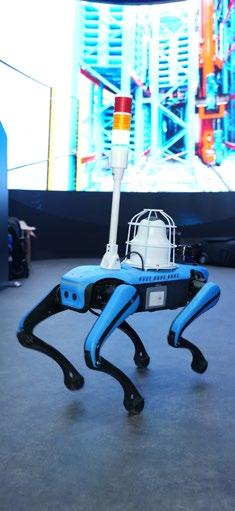
Visitors explored interactive areas like The Intelligence Grid, Talent Hub, Values Room, and Data Visualisation, engaging with live simulations, visual data, and discussions on AI’s impact on systems, skills, and sustainability.
Among the cutting-edge smart technologies on display at the AI Zone included:
• The Mohammed bin Zayed University of Artificial Intelligence’s robot dog called Laika, which demonstrates AI-powered mobility and reasoning, able to respond to voice commands, navigate, and describe its observations.
• G42 Project Stargate, the UAE’s hyperscale AI computing initiative designed to support largescale model training, accelerate artificial intelligence research, and drive innovation across energy, sustainability, and national digital transformation
• Accenture’s ‘Refinery of the Future’, simulating data flows and complex operations.
Other innovations, like oilfield monitoring drones and AI-powered platforms were showcased by companies including AREONEX, GeoCruiser, CleanConnect.AI and Senergetics, enabling the Zone to raise vital questions about powering AI infrastructure sustainably and deploying it ethically and securely.
ADIPEC 2025 continues through 6 November, with upcoming sessions addressing hydrogen, LNG, digitalisation, and the future of energy systems. Across four days, the conference is turning dialogue into delivery, catalysing partnerships and showcasing solutions that drive inclusive, sustainable progress at speed and scale.
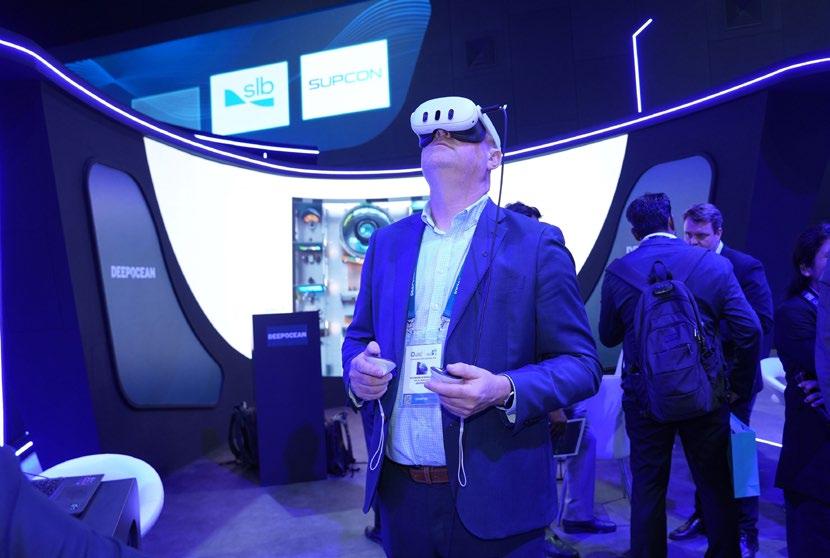
Held under the patronage of H.H. Sheikh Mohamed Bin Zayed Al Nahyan, President of the UAE, and hosted by ADNOC, ADIPEC 2025 takes place in Abu Dhabi from 3-6 November 2025.
As the world enters a defining decade, energy is setting the pace of progress. The rapid rise of artificial intelligence, the emergence of new economic powerhouses and a growing population are redrawing the global opportunity map. At the same time, heightened geopolitical complexity and supply uncertainty demand both competitiveness and responsibility.
Under the theme ‘Energy. Intelligence. Impact.’, ADIPEC 2025 serves as a global platform designed to address the world’s need for more energy, building resilience in today’s systems and scaling intelligent solutions to enable global progress.
The ADIPEC Conferences feature over 380 sessions across two flagship agendas – the Strategic Conference and the Technical Conference – and explore how strategic intelligence, innovation and advanced technologies can strengthen energy systems against emerging risks, ensure long-term security and support the pragmatic evolution of tomorrow’s energy infrastructure.
ADIPEC 2025 expects over 205,000 attendees, offering unparalleled opportunities for collaboration, innovation and progress.
For more information, visit www.adipec.com
For media inquiries, please contact: media@adipec.com
To register as media, visit https://www.adipec.com/press-media/ media-registration/
ADNOC is a leading diversified energy and petrochemicals group wholly owned by the Emirate of Abu Dhabi. ADNOC’s objective is to maximise the value of the Emirate’s vast hydrocarbon reserves through responsible and sustainable exploration and production to support the United Arab Emirates’ economic growth and diversification. To find out more, visit: www.adnoc.ae
For media inquiries, please contact: media@adnoc.ae
Artisan3D Sdn. Bhd.
Asia Photonic 2026
Automate Asia Magazine
Electronic Manufacturing Expo (EMAX) 2026 and Penang
Manufacturing Expo (PMAX) 2026
EMAX Philippines 2025
EMAX Thailand 2026
Isodynamique Systems Sdn. Bhd.
iTTG Consultancy Sdn. Bhd.
Johor Industrial Fair (JIF) 2026
OTRS ASIA Pte. Ltd.
PMAX Philippines 2025
Schaeffler Malaysia Sdn. Bhd.
Sime Darby Property
SMC Automation (Malaysia) Sdn. Bhd.
Tera VA
VG Instruments (SEA) Sdn. Bhd.
MALAYSIA | FBI Publications (M) Sdn Bhd
Unit 9-3, Jalan PJU 5/6, Dataran Sunway, Kota Damansara, 47810
Petaling Jaya, Selangor.
Tel: (+603) 6151 9178
Whatsapp: (+60) 12 433 4851
E-mail: my@asiafbi.com
SINGAPORE | Fireworks Trade Media Pte Ltd (HQ)
1 Scotts Road, #24-10, Shaw Centre Singapore 228208
Sales Hotline: (+65) 6631 8369
Email: sales@asiafbi.com
INDONESIA | PT Fireworks Indonesia
Jl. Suryopranoto No. 11F Kel. Petojo Selatan, Kec. Gambir Jakarta Pusat 10160
Tel: (+62-21) 5088 2917
Email: indo@asiafbi.com
www.artisan3d.xyz/ www.asiaphotonicsexpo.com www.asiaautomate.com www.emaxasia.com www.penang-expo.com www.emax-ph.com www.emax-thai.com www.leica-microsystems.com www.ittg-erp.com www.johorexpo.com www.otrs.com www.pmax-ph.com www.medias.schaeffler.my/en/lubricate www.simedarbyproperty.com www.smcautomation.com.my www.tera.solar www.vginstruments.com.my
THAILAND | FBI Publications (Thailand)
Promphan 2 office & Residence, 8th Floor (Office Zone, Room 807) 1 Soi Lat Phrao 3, Lat Phrao Road, Jompol, Chatuchak, Bangkok 10900
Tel: (+66) 2513 1418
Fax: (+66) 2513 1419
E-mail: thai@asiafbi.com
PHILIPPINES | Fireworks Trade Exhibitions and Conferences Philippines, Inc
U1207 12/F The Trade & Financial Tower, 32nd St. Cor. 7th Ave. Bonifacio Global City, Taguig City
Tel: (+632) 8790 0168
Sales Hotline: (+63) 639171780902
Email: info@fireworksphils.com