Support for Molesworth trust scheme

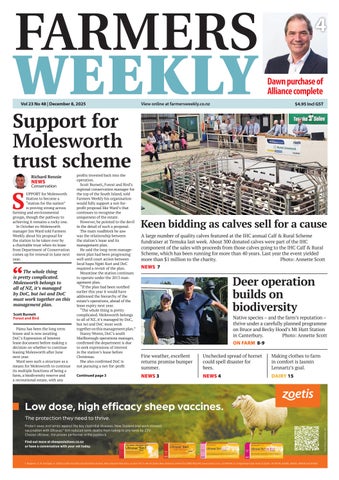
Richard Rennie NEWS Conservation
UPPORT
for Molesworth
SStation to become a “station for the nation” is proving strong across farming and environmental groups, though the pathway to achieving it remains a rocky one.
In October ex-Molesworth manager Jim Ward told Farmers Weekly about his proposal for the station to be taken over by a charitable trust when its lease from Department of Conservation comes up for renewal in June next year.
The whole thing is pretty complicated. Molesworth belongs to all of NZ, it’s managed by DoC, but iwi and DoC must work together on this management plan.
Pāmu has been the long term lessee and is now awaiting DoC’s Expression of Interest lease document before making a decision on whether to continue leasing Molesworth after June next year.
Ward sees such a structure as a means for Molesworth to continue its multiple functions of being a farm, a biodiversity reserve and a recreational estate, with any
profits invested back into the operation.
Scott Burnett, Forest and Bird’s regional conservation manager for the top of the South Island, told Farmers Weekly his organisation would fully support a not-forprofit proposal like Ward’s that continues to recognise the uniqueness of the estate.
However, he pointed to the devil in the detail of such a proposal.
The main roadblock he saw was the relationship between the station’s lease and its management plan.
He said the long-term management plan had been progressing well until court action between local hapu Ngāti Kuri and DoC required a revisit of the plan.
Meantime the station continues to operate under the 2013 management plan.
“If the plan had been notified earlier this year it would have addressed the hierarchy of the estate’s operations, ahead of the lease expiry next year.
“The whole thing is pretty complicated. Molesworth belongs to all of NZ, it’s managed by DoC, but iwi and DoC must work together on this management plan.”
Stacey Wrenn, DoC’s south Marlborough operations manager, confirmed the department is due to seek expressions of interest in the station’s lease before Christmas.
She also confirmed DoC is not pursuing a not-for-profit
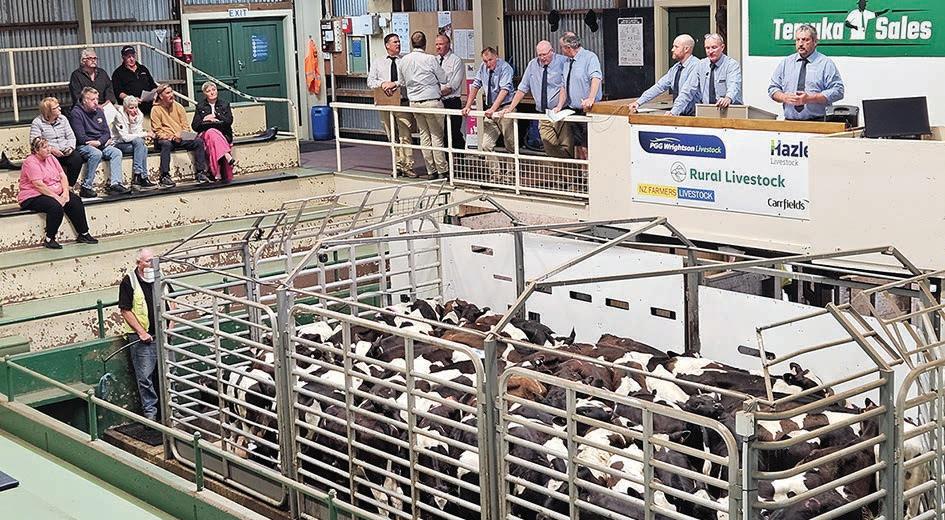
Keen bidding as calves sell for a cause
A large number of quality calves featured at the IHC annual Calf & Rural Scheme fundraiser at Temuka last week. About 300 donated calves were part of the IHC component of the sales with proceeds from those calves going to the IHC Calf & Rural Scheme, which has been running for more than 40 years. Last year the event yielded more than $1 million to the charity.
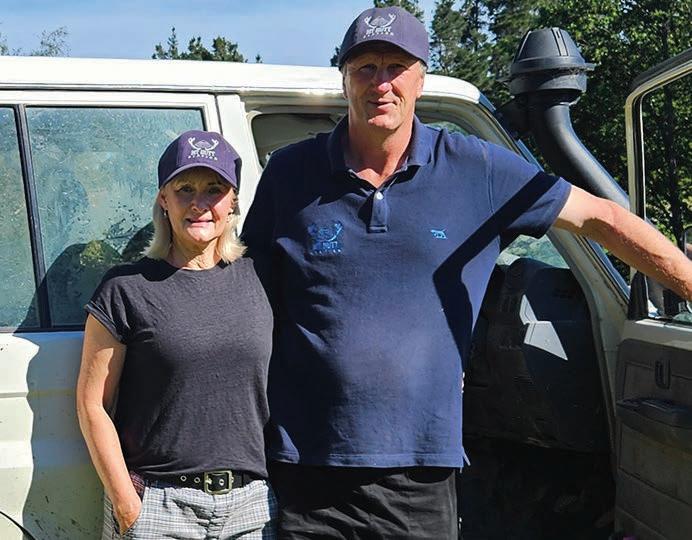
Deer operation builds on biodiversity
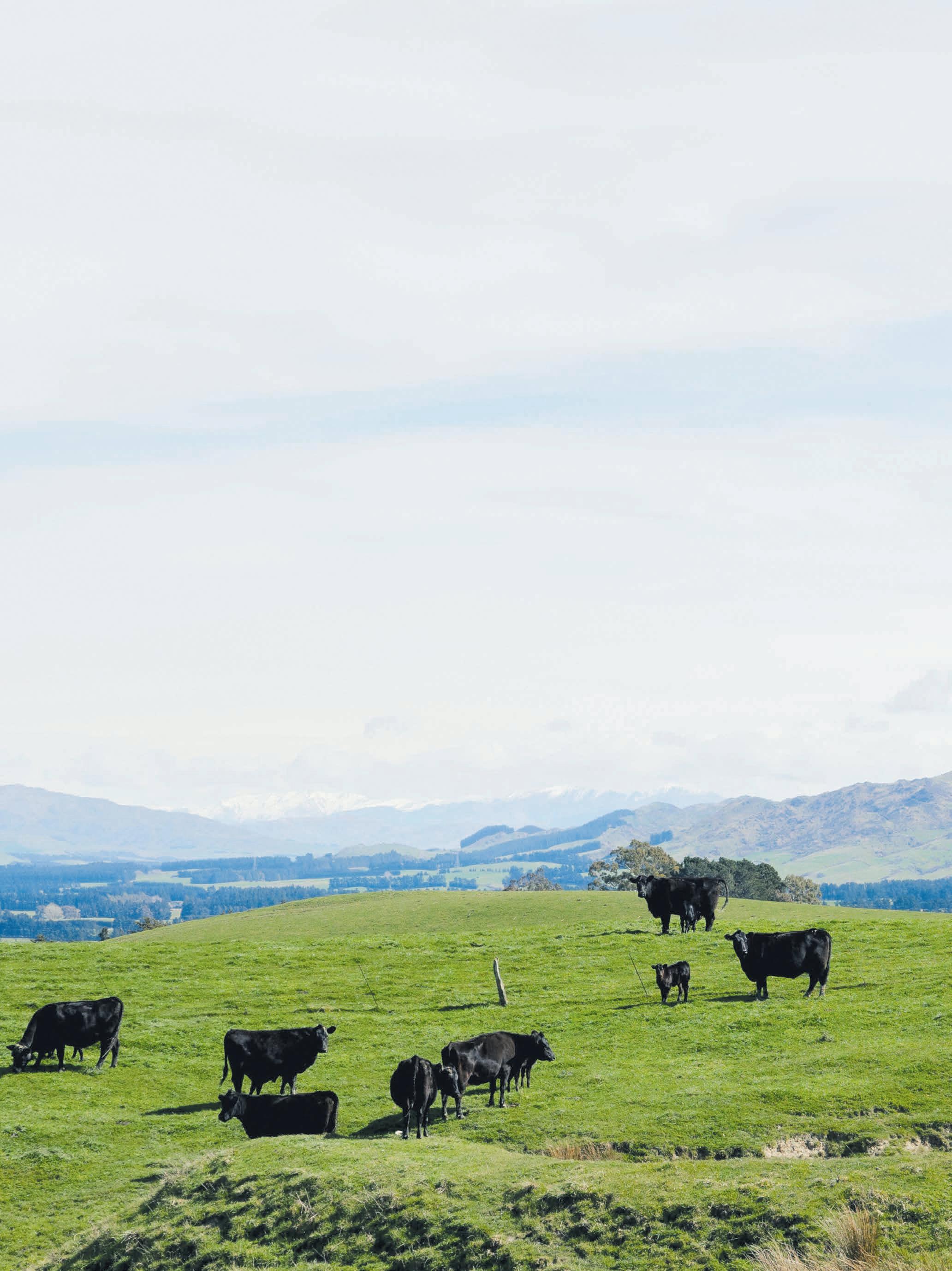
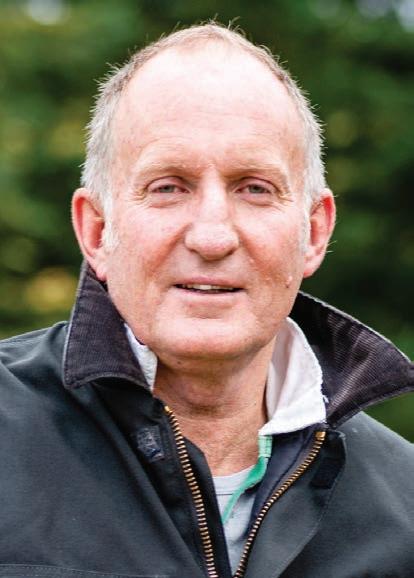
Native species – and the farm’s reputation –thrive under a carefully planned programme on Bruce and Becky Hood’s Mt Hutt Station in Canterbury. Photo: Annette Scott





Photo: Annette Scott
Scott Burnett Forest and Bird
Get in touch
EDITORIAL
Bryan Gibson | 06 323 1519
Managing Editor bryan.gibson@agrihq.co.nz
Craig Page | 03 470 2469 Deputy Editor craig.page@agrihq.co.nz
Claire Robertson
Sub-Editor claire.robertson@agrihq.co.nz
Neal Wallace | 03 474 9240 Journalist neal.wallace@agrihq.co.nz
Gerald Piddock | 027 486 8346 Journalist gerald.piddock@agrihq.co.nz
Annette Scott | 021 908 400 Journalist annette.scott@agrihq.co.nz
Hugh Stringleman | 027 474 4003 Journalist hugh.stringleman@agrihq.co.nz
Richard Rennie | 027 475 4256 Journalist richard.rennie@agrihq.co.nz
Nigel Stirling | 021 136 5570 Journalist nigel.g.stirling@gmail.com
Isabella Beale | 027 299 0596 Multimedia Journalist isabella.beale@agrihq.co.nz
PRODUCTION
Lana Kieselbach | 027 739 4295 production@agrihq.co.nz
ADVERTISING MATERIAL
Supply to: adcopy@agrihq.co.nz
SUBSCRIPTIONS & DELIVERY 0800 85 25 80 subs@agrihq.co.nz
PRINTER
Printed by NZME
Delivered by Reach Media Ltd
Advertise
SALES CONTACTS
Andy Whitson | 027 626 2269
Sales & Marketing Manager andy.whitson@agrihq.co.nz
Janine Aish | 027 300 5990
Auckland/Northland Partnership Manager janine.aish@agrihq.co.nz
Jody Anderson | 027 474 6094
Waikato/Bay of Plenty Partnership Manager jody.anderson@agrihq.co.nz
Palak Arora | 027 474 6095
Lower North Island Partnership Manager palak.arora@agrihq.co.nz
Andy Whitson | 027 626 2269 South Island Partnership Manager andy.whitson@agrihq.co.nz
Julie Hill | 027 705 7181
Marketplace Partnership Manager classifieds@agrihq.co.nz
Andrea Mansfield | 027 602 4925 National Livestock Manager livestock@agrihq.co.nz
Real Estate | 0800 85 25 80 realestate@agrihq.co.nz
Word Only Advertising | 0800 85 25 80 Marketplace wordads@agrihq.co.nz
PUBLISHERS
Dean and Cushla Williamson Phone: 027 323 9407 dean.williamson@agrihq.co.nz cushla.williamson@agrihq.co.nz
Farmers Weekly is Published by AgriHQ PO Box 529, Feilding 4740, New Zealand Phone: 0800 85 25 80 Website: www.farmersweekly.co.nz
ISSN 2463-6002 (Print) ISSN 2463-6010 (Online)
News in brief Fire threat
Parts of the country already exceed fire danger levels for this time of the year, prompting a warning from Fire and Emergency NZ.
Southern Hawke’s Bay, coastal Wairarapa, parts of north Canterbury, coastal south Canterbury and north Otago’s Waitaki Valley are all dry with slightly above average fire risk, said FENZ.
M bovis eradication
The finish line is in sight for a worldfirst eradication of the cattle disease Mycoplasma bovis in New Zealand. With no new infections in two years, the Ministry for Primary Industries, OSPRI and the country’s dairy and beef sectors say NZ could eradicate M bovis by June 2028.
“Spring bulk tank milk testing across the country has found no sign of M bovis. That’s a big win,” MPI director-general Ray Smith said.
Dividend lifted
Scales Corporation has lifted its interim dividend payable to shareholders by 70% compared with the previous financial year. In a pre-balance update before December 31, Scales reiterated its market guidance of an underlying net profit after tax attributable to shareholders in the range of $54 million to $59m.
The interim dividend is 12.5c a share, 50% imputed, to be paid on January 23. Last year the final dividend was 7.75c.
Conner recognised
A scientist who made global breakthroughs in using genetic technologies for crop plants has been awarded one of New Zealand’s top science honours. Bioeconomy Science Institute emeritus scientist Dr Tony Conner won the New Zealand Association of Scientists Marsden Medal.
In a 40-year career, Conner was at the forefront of plant genetics, driving innovation to support the agricultural sector.
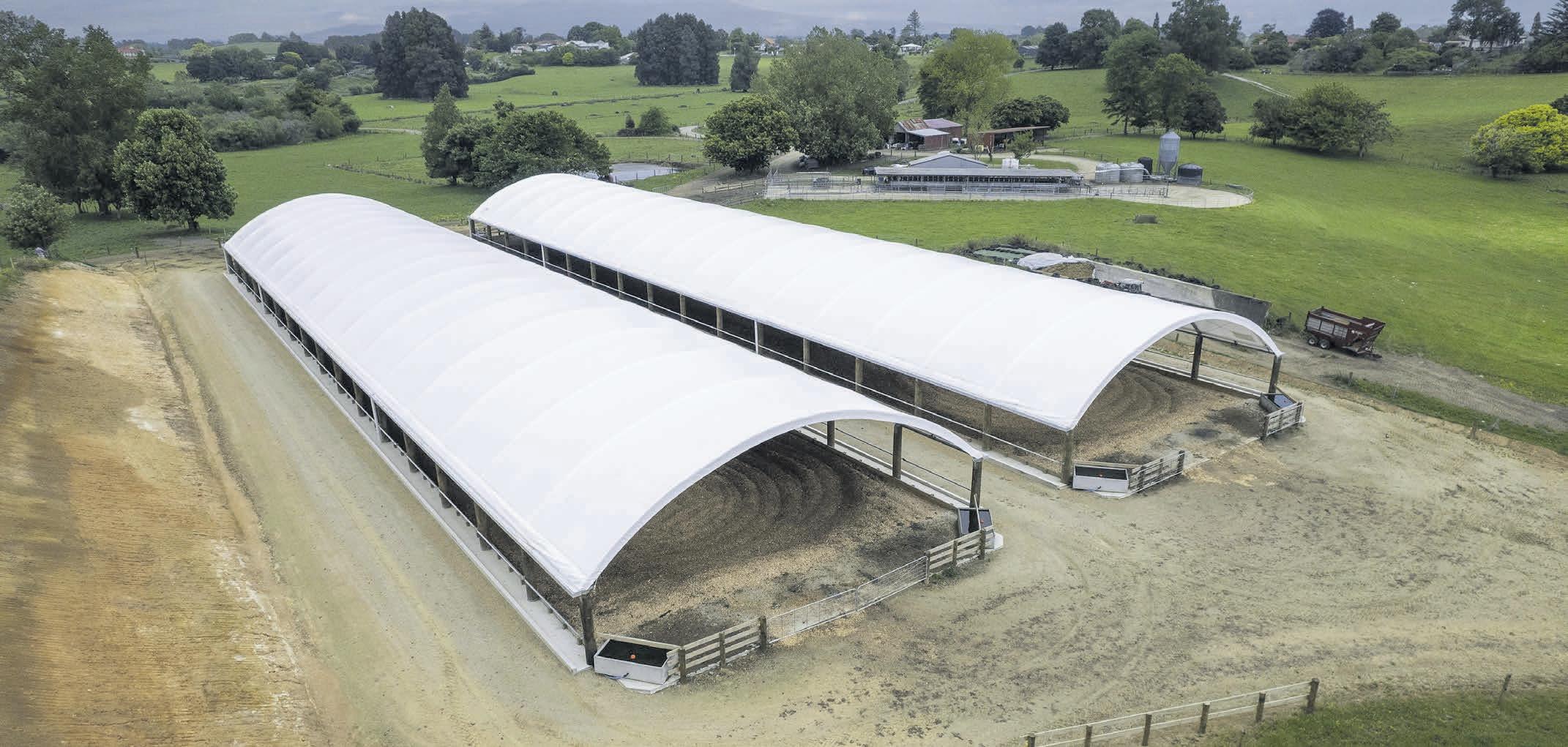
WARM IN WINTER COOL IN SUMMER




Year set to close on a high for Kiwi farmers

Gerald Piddock NEWS Trends
THE continuing run of high dairy and red meat prices means New Zealand farmers are well placed to manage issues inside the farm gate as they close out 2025.
In Waikato, Federated Farmers dairy chair Matthew Zonderop said farmers have had a dream run heading into summer.
Feed inventories are above average and pastures are still growing well thanks to periodic rainfall.
“And the payout: yes, it’s dropped, but the forecast is still strong and we can’t complain too much.”
While it has been an outstanding growing year for pastures and silage making, the one area of concern is insect crop damage caused by cut worm.
“They have done some real damage on some farms and they have had to re-plant chicory and some have had to re-do maize.”
Further south, in Hawke’s Bay, farmers are managing dry weather that has been compounded by low ground water and dams across the region that never filled up over winter.
Continued from page 1
proposal, instead putting efforts into a competitive lease allocation process.
“We did some scoping work around the idea earlier in the year, looking at whether a board or trust could be set up to assume day-today management of the farming operations.
“This found further work would be needed to understand whether it could be financially sustainable and clarify how asset ownership and administrative responsibilities would work.”
A Pāmu spokesperson said the SOE remains fully committed to its
The most recent rainfall provided some relief but this was short lived thanks to the subsequent fine weather, Federated Farmers provincial president Jim Galloway said.
Farmers are being proactive and have de-stocked early in preparation in case the dry weather continues.
“A lot of people have done a lot of things already, which has been great to see. They have been prepared,” he said.
The high prices for lamb and beef have also helped as farmers were able to get good money for stock they were selling earlier than normal because of the conditions.
This, along with other parts of the country having good covers, has seen a lot of stock move out of the region, he said.
In Canterbury, Federated Farmers arable chair David Birkett said it has been a slower start to the season due to it being colder, but crops came through the winter pretty well and are in reasonable shape.
However, the market is still down, matching low global grain prices, and there are big wheat harvests forecast from countries such as Australia and Argentina.
The contracts being offered to
stewardship of the 180,000 hectare estate, farming it until such time as the issues are sorted.
Federated Farmers high country co-chair Matt Simpson said Ward’s proposal has been welcomed by the high country community as a viable option to having DoC managing the estate.
“We are increasingly seeing evidence DoC is not capable of managing the estate it has, and we cannot see the point in continuing to support a government agency that is clearly underfunded for the task.”
He said a not-for-profit board that has the commercial operation firmly in focus will prioritise the
farmers are at similar levels to last year and increasing on-farm costs have put further pressure on farmers’ margins. Prices for homegrown feed grain are also at import parity, he said.
In Southland, Federated Farmers vice-president Kass Rauber said things are improving after the wind storm in late October caused widespread damage across the region. Most of the roads have been cleared of trees. Fences are being mended and power has been restored.
“There’s a lot being done but there’s still a long way to go to get everything cleaned up.
“On my farm there were 48 trees down. Of those 48, we have cleaned up eight of those trees.”
Cleanup aside, growing conditions are excellent heading into summer and pasture covers are high and that, combined with the excellent product returns, has helped farmer morale bounce back from the storm damage, he said.
Looking ahead, Weatherwatch’s Philip Duncan said the two main weather drivers for summer will be coming from the equator and Antarctica.
With a La Niña now confirmed as being in place, this encourages
weed and pest control that also benefits the ecologically important parts of the estate.
“We do have some concerns, however, that maybe Molesworth will be opened up for year-round access, and that brings problems and risks with it.”
At present Molesworth’s public access along its 65km station road runs from October 1 to Easter.
“It needs to be inclusive, but not to the detriment of the station’s operations.”
He believed iwi-DoC issues could be resolved, and the broad church of a not-for-profit trust would ensure all Kiwis could continue to access the property.

more low pressure, cyclones and thunderstorms in the tropics and high pressure east of New Zealand, bringing higher chances of easterlies, eastern cloud, humidity and a higher chance of sub-tropical or tropical rainmakers.
To the south, over the Southern Ocean, there have been stormier than usual patterns in recent months, driving in windy westerlies over our spring and
Gary Taylor, chair of the Environmental Defence Society, also welcomed the proposal.
“Molesworth is an important part of our country and our history.
heavy western rain.
“New Zealand is smack bang between this going into December – meaning southerners have a higher chance of westerly driven weather and northerners the chance of more easterlies.
“This should mean most places are warmer than average –although the Southern Ocean may still fire up the odd burst of cold air for the South Island.”
We would be very supportive of any effort that preserves this and takes it out of the sights of a voracious government department.”
This week’s
Should Molesworth Station become a “station for the nation” and be taken over by a charitable trust?




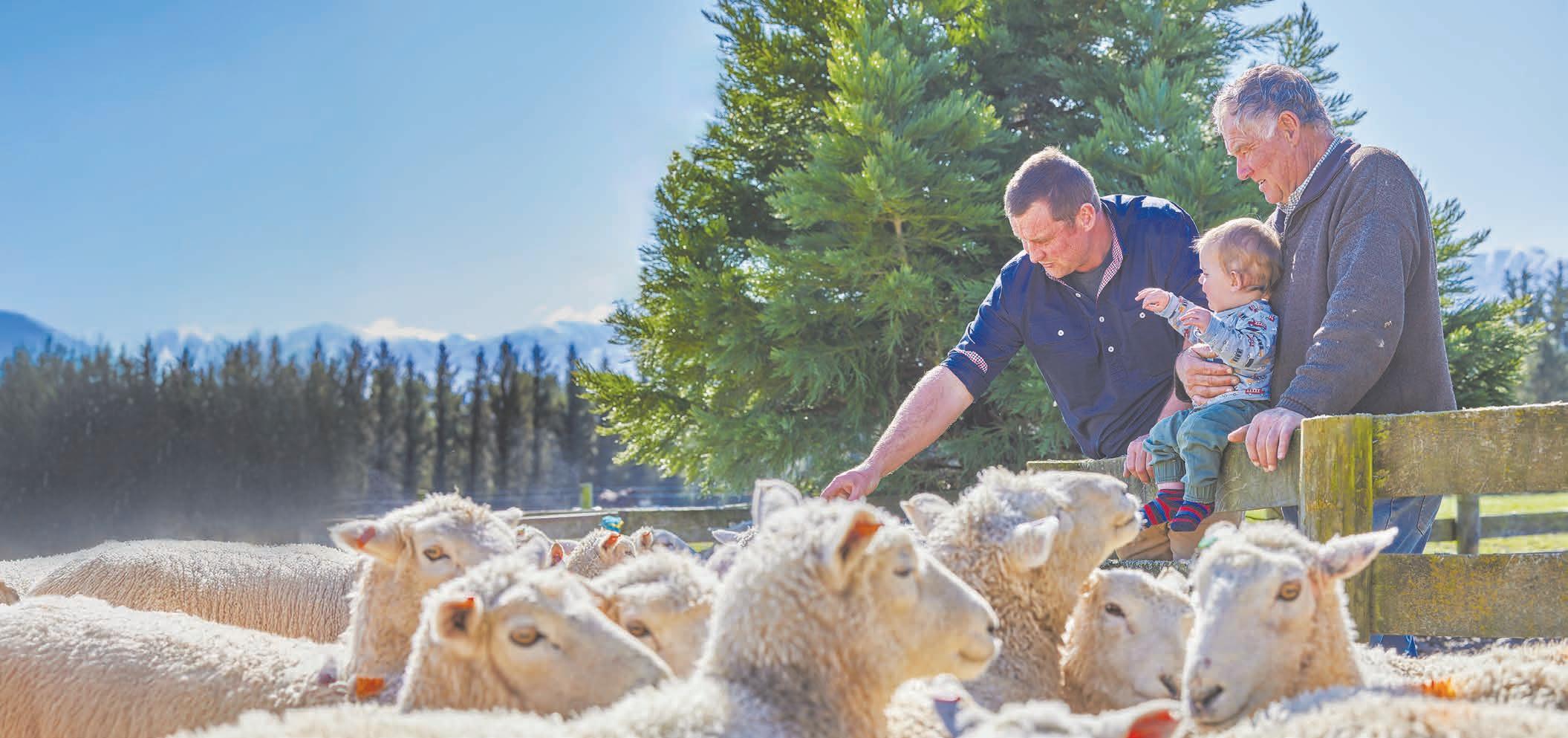
DREAM RUN: Federated Farmers dairy chair Matthew Zonderop said farmers have had a dream run heading into summer.
Narrow window to act against hornet
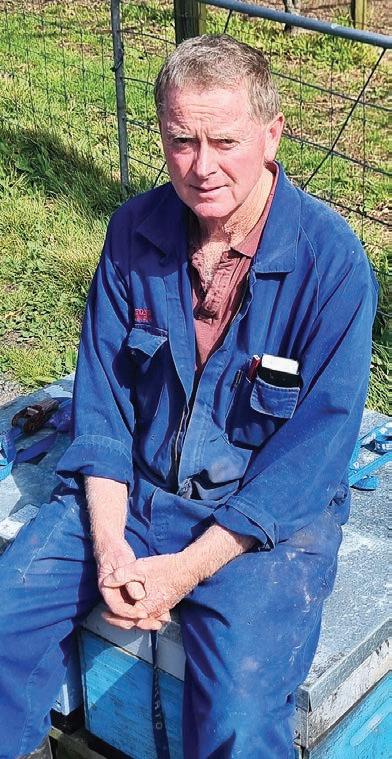
and monitor for yellow-legged hornets by building easy-to-make homemade traps.

IF WE don’t get a handle on yellow-legged hornets this summer it could spell disaster for honey bees and pollination services.
Te Puke beekeeper and kiwifruit
orchardist Richard Klaus told Farmers Weekly the Ministry for Primary Industries does not have the capacity to manage monitoring for the hornets all by itself, and beekeepers and farmers should lend a hand by monitoring on farms and in apiary sites.
In October the MPI found a nest in Auckland.
To date 29 confirmed queen hornets have been found, with the MPI setting about 600 traps across a 5km radius from the initial detection site.
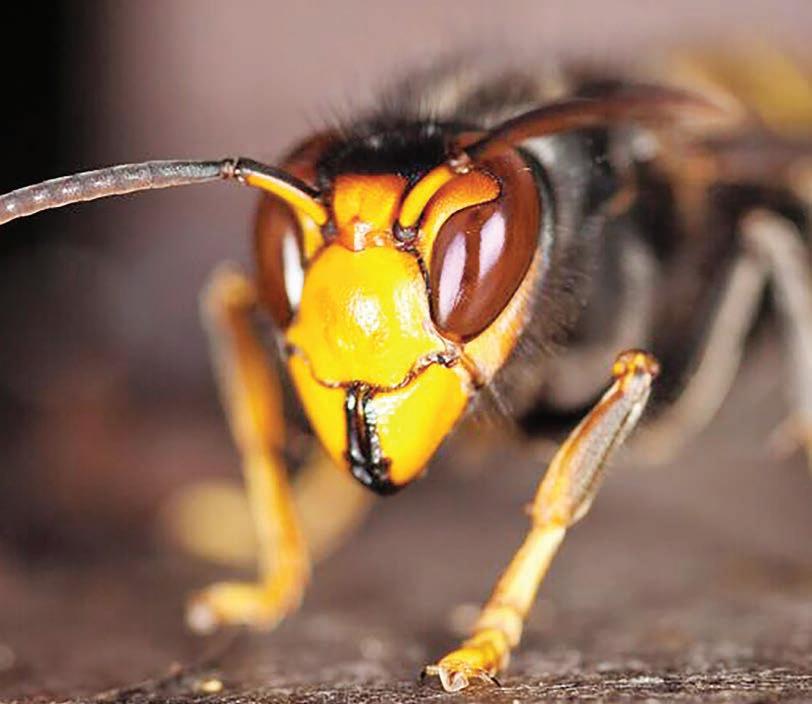
The hornet feeds on bees, wasps and flies.
Klaus said in late summer or early autumn hornet queens will start laying virgin queens.
A strong nest can lay up to 300 queens, he said.
“Their dispersal into the environment is my concern,” he said.
Evidence from France, where beekeepers struggle to protect hives from the hornet, shows that under normal flight a hornet can disperse up to 28km, with a wind aided hornet able to travel100km.
As a result, trapping should be done in a wider area than only Auckland, he said.
Klaus urged beekeepers and farmers nationwide to build homemade traps, with instructions for an easy-to-make homemade trap available from the MPI website.
“We need to trap anywhere where bees have gone to orchards for pollination.”
Human-aided spreading of hornets is possible, with hornets hiding under the steel sides of beehive roofs, or under shipping containers.
Klaus said, for example, a shipping container that’s been at the Chelsea Sugar Factory can easily be shipped to Wellington or Dunedin, or a beehive can be sent outside its home region for
Ken’s made the cut since the
’60s
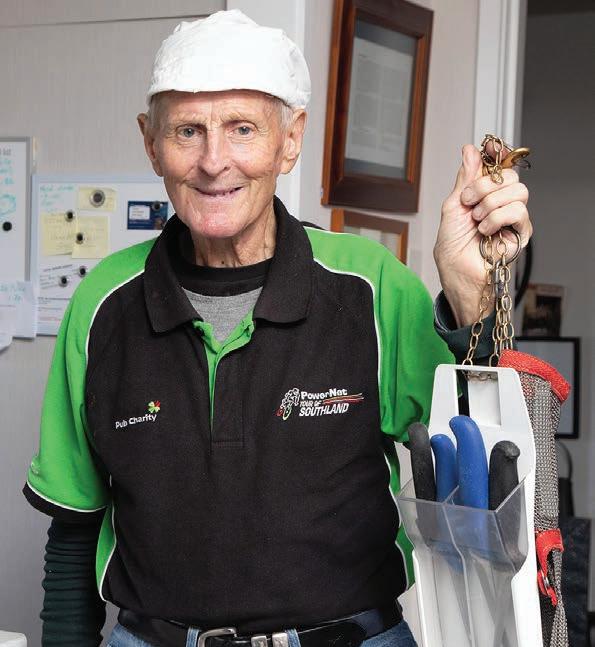
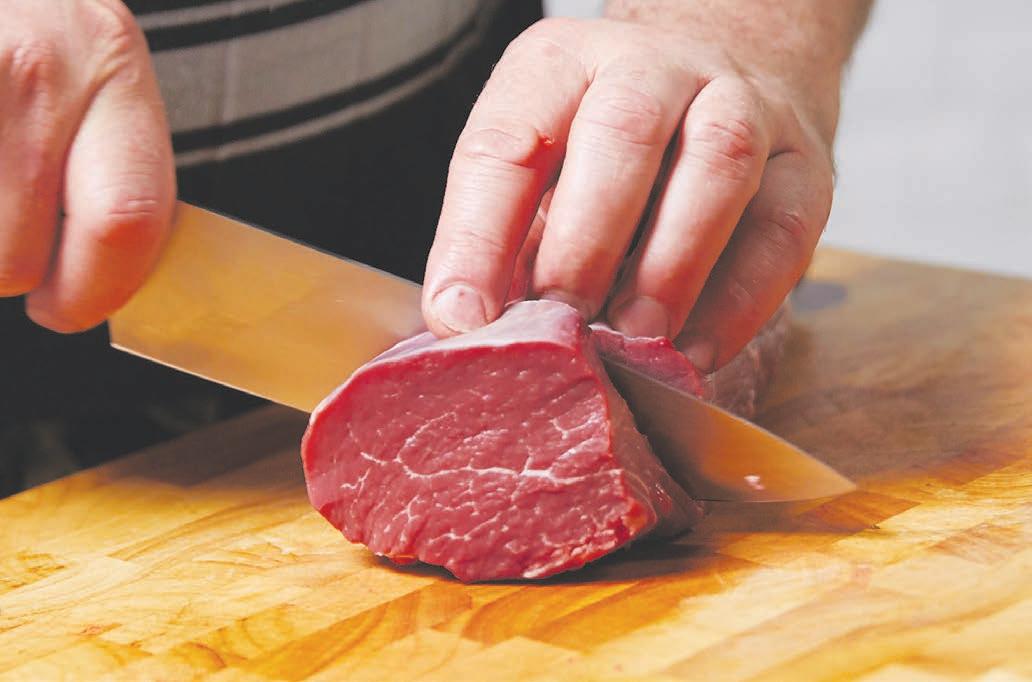
A SHARP knife is 99.9% of what makes a boner successful, says 80-year-old Southlander Ken McLeod who retired recently after 64 years in the meat industry –having started in 1962 at the age of 16.
McLeod told Farmers Weekly his grandfather had a trucking company, and his father had plans for him to enter trucking, but after years as a youngster opening farm gates when they were carting stock, and doing other trucking duties, he said it wasn’t the job for him.
A neighbour got him a job as a wool puller at the nowclosed Makarewa Meatworks in Southland.
The great wages that boners were getting made McLeod want to change tack, and every day he’d tell the boning manager that he was ready to join them.
Eventually his enthusiasm landed him a job as a boner, he said.
Back then beef carcases were boned out on a table, real heavy work, with the job getting easier once carcases were hung from a chain. Then a boner could use the weight of the meat, aided by a sharp knife, to get the job done fast.
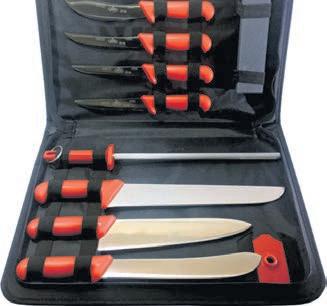
The German-made Dick knives are McLeod’s go-to boning knife, he said.
To keep them razor sharp he bought a fine stone, sharpening them at home.
He said boners made such good money when he started that he felt like he’d “robbed a bank” when he got his pay cheques.
Early computer systems could not handle high payouts, and cheques had to be split in two to be paid, a memory that makes him chuckle.
In the late 1980s McLeod shifted to Blue Sky Meats. He not only worked as a boner, but was president of the Meat Workers Union for 28 years.
The relationship between worker and management was different then, with union members often downing tools, sometimes for the right reasons, but other times for the wrong reasons, he said.
But he said nowadays both sides understand that when it goes well with the company it also goes well with the worker.
pollination services in kiwifruit or avocado orchards.
The kiwifruit industry uses up to 170,000 hives for pollination, some coming from as far south as north Canterbury, he said.
Even if no hornets are found, the MPI will then still have useful data about the locations where hornets aren’t present.
Klaus said managing the fight against the hornet through the National American Foulbrood Pest Management Plan is the best way to gather results and communicate it to the MPI, because the agency has every registered beekeeper and apiary site in a database.
In September Klaus, who has been part of a Zespri-sponsored
road show to re-connect beekeepers with orchardists, said in 30 years of keeping he has never seen hives in as poor a state of health as this year, putting the kiwifruit industry’s ability to pollinate vines in jeopardy.
Because bees who sense a hornet is present will not leave their hive, pollination hours are reduced, making the hornet a concern for pollination services, he said.
A single hornet will eat up to 50 bees a day. Hornets eat mainly field bees that gather food for nurse and house bees.
“If you’re taking the food gatherers away, we’re going to start seeing colony collapse.”
Dawn purchase of Alliance stake complete
CUTTING EDGE: Eighty-year-old Southlander Ken McLeod has retired as a boner. He began in the meat industry in 1962 at the age of 16.
“Just come to work and do your job,” is his advice to anyone wanting to start out.
He said even today a boner can get good wages, and earn enough to buy a house. He paid off his own house at age 40.
A lot has changed in his time. When he started there was no protective clothing and if your hand slipped you’d have to get stitched up.
Now you have excellent protective clothing, he said, and physiotherapists at work who are passionate about helping you tackle any niggles and getting you back to work.
Retirement does not mean McLeod will sit still; he is already hard at work in his garden, is keen to shoot a tahr and catch a canal trout, and his boat is ready to go as soon as the weather plays along.

Neal Wallace NEWS Production
IRISH meat company Dawn Meats owns 65% of the Alliance Group after completion of the transaction.
Alliance Group shareholders retain a 35% stake, having agreed in October to sell the balance to Dawn Meats for $270 million.
Alliance chief executive Willie Wiese said that completion of the transaction allows management to move from planning to implementation.
Wiese said Dawn Meats brings scale, global reach and expertise that will give the new entity a competitive advantage.
Of the $270m, $188m will be used to reduce debt and $20m will be invested in capital expenditure.
A further $40m, depending on livestock targets being achieved, will be distributed to farmershareholders, up to $20m this year and $20m in 2026-27.
This financial year 45% will be paid as a dividend and 55% as a supply-based rebate.
In the 2026-27 year 75% will be paid as a rebate and 25% will be retained as earnings.
A further $26m will be distributed as a special dividend from the joint venture to the new Alliance Investment Cooperative after a stronger than forecast year-end result by Alliance.
In the year to September 30, Alliance recorded a net profit before tax of $24.6m on revenue of $2.1 billion, compared to a net loss before tax of $120.8m on revenue of $1.8bn the previous year.
The New Alliance Investment Co-operative will manage Alliance’s stake in the new entity.
Dawn Meats chief executive Niall Browne said the company will work with Alliance to identify capital expenditure upgrades, technology and new sustainable business practices. Membership of the two new boards has been confirmed.
The directors of the Alliance Group board are current Dawn Meats chair Thomas Moran who will be an independent chair, Niall Browne, Sean Breen, Mark Wynne, and Jared Collie.
The directors of the New Alliance Investment Cooperative are Mark Wynne, Jared Collie, Matt Iremonger and Ross Bowmar.
Gerhard Uys NEWS Pests
HUNGRY: A yellow-legged hornet can eat up to 50 bees a day, decimating hives.
Gerhard Uys PEOPLE Production
TRAP: Te Puke beekeeper and kiwifruit orchardist Richard Klaus says farmers, beekeepers and port authorities across the country should help the MPI
Palmy premiere for doco on beloved satirist

Bryan Gibson PEOPLE Community
PALMERSTON NORTH will host the New Zealand premiere of a documentary on the life of one of New Zealand’s most loved comedians, John Clarke.
The creator of the iconic Fred Dagg character moved to Australia in the late 1970s, but his daughter Lorin, who wrote and directed the film, said he had a great love for his home town of Palmerston North.
“He unironically loved Palmerston North,” she told the Farmers Weekly Podcast.
“He went to the College Street Normal School. He adored Palmy because it was flat and you could ride your bike around it.”
He was a “townie”, but Clarke had many relatives who farmed, and he worked in a shearing gang as a teenager, an experience that Lorin said helped form the Fred Dagg persona.
“He said when you’re doing work like that it’s like it’s just such a hard slog. And you have to be where you are. It’s up to you and the people sitting next to you to use language interestingly and to amuse each other. And that, to him, that was what Fred Dagg was all about.”
Lorin said it was her father’s affection for the character that made it resonate with people, allowing them to laugh at themselves.
The film features unseen footage of Clarke from New Zealand and Australia, as well as audio interviews Lorin conducted with him over the years.
After his death, the family also found a folder on his computer addressed to Lorin and her sister, which held a 60-70 page document he had written about his life and work.
Lorin is making the trip to Palmy on Tuesday for the NZ premiere, and expects there will be plenty of gumboots on show.
“Wild horses could not hold me back from the Palmy launch. I’m beyond delighted. It’s fun to sit and watch something that I think people have watched alone in their lounge rooms with their mum and dad or whatever, and then all of a sudden there are lots of you, and you’re sitting there in the cinema. And I mean, Fred Dagg could fall backwards over a fence like nobody’s business.”
The documentary, Not only Fred Dagg, but also John Clarke, opens in cinemas across New Zealand on Boxing Day.

PRODUCT OF PALMY:
Lorin Clarke says her father’s Fred Dagg character was a product of his Palmerston North childhood and experiences shearing as a teenager.
Matthews quits RWNZ post in surprise move

Neal Wallace NEWS Leadership
RURAL Women New Zealand national president Sandra Matthews has unexpectedly resigned from the role.
Matthews, a Tairāwhiti sheep and beef farmer, had been a board member since 2021 and president since November 2024.
In a letter to members announcing the resignation, chief executive Sandra Kirby said it was effective from December 6 and the board has appointed Nicole Oliver as interim chair.
She paid tribute to Matthews.
“We extend our sincere thanks to her for her leadership, dedication, and the contribution she has made to Rural Women New Zealand,” she said.
“We wish her all the very best as she moves into her next chapter.”
In a statement, Matthews thanked those she has met and those who have supported her
during her time on the board.
“Thank you to the previous board members and stakeholders who I have had the pleasure of working with to further the mission of what RWNZ was established to do, support rural wāhine and their communities.”
Kirby said the board has met to ensure appropriate governance arrangements are in place, and interim measures have been established to maintain stability and continuity.
Planning is underway for a new presidential election, with timing and the process detailed in the constitution.
She said the national office continues to operate as normal with all planned events, activities, and services to continue.
Along with husband Ian, Matthews runs Te Kopae Station, a 536 hectare sheep and beef farm at Rere, near Gisborne.
She has a financial and coaching background and alongside farming runs an agribusiness consultancy.
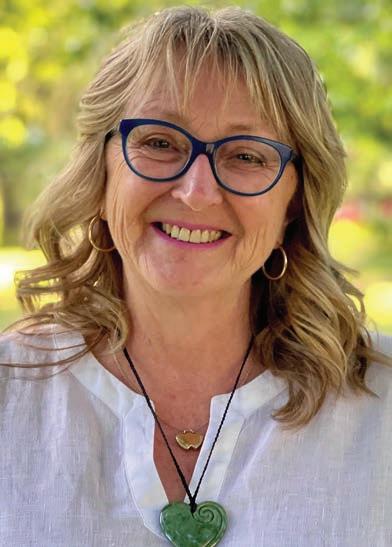
board member since 2021 and president since November 2024.
Matthews is also chair of the Rural Communities Trust and a past chair of the Beef + Lamb NZ Eastern North Island Farmer Council and of the Tairāwhiti Rural Advisory Group, a trustee for Endometriosis New Zealand and co-founder of Farming Women Tairāwhiti Inc.
Fonterra hangs up healthy Q1 profit

Hugh Stringleman NEWS Fonterra
FONTERRA has reported net profit after tax of $278 million, up $15m, in the first quarter of the 2026 financial year, leading to a renewed forecast of annual earnings between 45c and 65c a share.
Total group profit in Q1 was equivalent to 17c a share.
When excluding the costs associated with the divestment of the consumer division, Fonterra’s normalised earnings a share are
18c, up slightly on last year. Fonterra chief executive Miles Hurrell said the financial year is off to a solid start and good progress is being made on implementing the company’s strategy.
“We are firmly focused on delivering the commitments we’ve made, not least our target to lift earnings back to FY25 levels by FY28, offsetting the impact of the divestment of Mainland Group.
“To support this goal, we are progressing with plans to invest up to $1 billion over the next three to four years in projects to generate further value and drive operational efficiencies.”
Lactalis has received approval from the Overseas Investment Office for the purchase of Mainland Group. Other regulatory approvals are still pending.






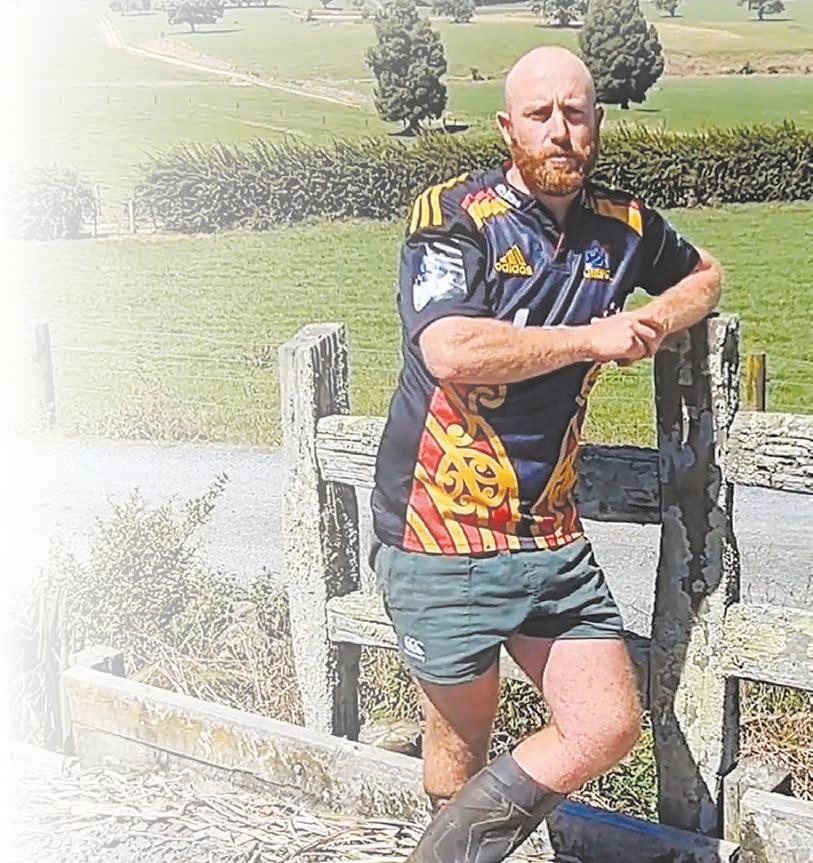
SERVICE: Sandra Matthews, a Tairāwhiti sheep and beef farmer, had been a
Commercial Property 101: What every farmer should know
For many New Zealand farmers, the rhythm of income is dictated by the land – weather, commodity prices, and global demand all play their part. This means, as the agricultural sector continues to face future volatility, more farmers are looking beyond the paddock for ways to stabilise and diversify their financial returns. One avenue that’s gaining traction as interest rates fall is commercial property investment. But what does it really involve, and how can farmers make sense of the jargon and risks to make informed decisions?
Why Commercial Property?
Unlike farming, where income is tied to production cycles and market swings, commercial property investments, such as MyFarm’s current Duncannon Horticulture offer, provide the potential for steady, lease-based income. The right investment can provide not only reliable cash flow but also long-term capital appreciation. For farmers, this means a chance to balance the unpredictability of agricultural returns with a more predictable income stream, one that’s underpinned by contracts and market dynamics quite different from those of rural land.
Understanding the Basics Commercial property refers to real estate used for business purposes: warehouses, offices, industrial units, and specialised facilities like packhouses or coolstores. The sector has its own language, and understanding key terms is essential:
• Yield (Cap Rate): This is the annual rental return as a percentage of the property’s value. A lower yield signals lower risk and higher prices; a higher yield suggests greater risk or weaker property attributes.
• Net Operating Income (NOI): Rent minus property expenses. Many leases are “net”, meaning tenants cover most outgoings.
• Lease Term: The length of time a tenant is contracted to rent the property. Longer leases can mean more stable income over the long-term.
• Rent Review & CPI Adjustment: Mechanisms to adjust rent over time, often linked to inflation or fixed increases.
• Loan-to-Value Ratio (LVR): The proportion of the property’s value funded by debt. Lower is considered safer but returns may be affected during times of low interest rates.
• Weighted Average Lease Term (WALT): Average lease duration across all tenants, indicating income security.
• Triple Net Lease: A lease type where the tenant is responsible for most property-related liabilities, making it favourable for landlords.
• Carry: The difference between yield and interest rate costs. Positive carry means interest rates are lower than the rental return, boosting investor cash returns.
• Cap Rate Compression: When market cap rates fall, property prices rise, assuming income remains stable.
What Drives Value?
The value of a commercial property is fundamentally linked to the income it produces. The basic formula is:
Value = Net Operating Income divided by Cap Rate
For example, a building with $1 million of NOI and a cap rate of 6.7% is worth $14.93 million. But what influences these numbers?
• Rental Income & Growth
Potential: Higher rents and the potential for increases (via CPI or fixed reviews) drive value.
• Location: Properties in highdemand areas—near ports, cities, or growth regions— command higher rents and lower vacancy.
• Property Quality & Type: Modern, well-maintained, and purpose-built facilities attract better tenants and rents. Specialised assets can be lucrative if demand is strong but may face longer vacancies if the tenant leaves.
• Tenant & Lease Strength: Long leases to financially strong (“blue chip”) tenants are highly valued. Triple net leases are especially attractive.
• Vacancy Risk: Fully leased properties are more valuable. High market vacancy rates or short lease terms increase risk and lower value.
• Market Yield (Cap Rate) & Interest Rates: Cap rates reflect investor expectations. When interest rates rise, cap rates tend to rise (values fall); when rates fall, cap rates compress (values rise).
• Growth Prospects: Properties with under-market rents or strong sectoral growth prospects may be valued more highly.
• Alternate Investments: If other investments (e.g., term deposits, farm expansions) offer higher returns, property yields must rise to remain competitive.
Timing Matters
Commercial property, like farming, is cyclical. Interest rates play a significant role. When rates decrease, borrowing becomes cheaper, boosting purchasing power and making property investments more appealing. Cap rates often shrink and property values rise. Conversely, when rates rise, borrowing is more expensive, demand drops, cap rates expand, and property values decline.
For example, in 2021, with the Official Cash Rate (OCR) at 0.25%, prime industrial yields were 4–5%. By 2023, with the OCR at 5.5%, yields rose to 6–7%, and values fell 10–20% in some segments. As rates ease in 2025, cap rates are expected to decline again, which may boost values. However, there can often be a lag between interest rates shifting and cap rates moving to reflect the new environment.
Strategies for Farmers
• Buy in High-Rate Environments: Yields are higher, prices are lower. If you can hold through the cycle, you may benefit from capital gains as rates fall.
• Sell or Refinance in Low-Rate Environments: Values peak, and refinancing can lock in low interest costs.
• Keep an eye on strategic opportunities: As an example, MyFarm’s Duncannon Horticulture LP, which is open for investment now, has secured a property acquisition at a 7.75% cap rate. This cap rate in the current lower interest environment is advantageous for investors, and comes from a combination of good purchasing, the benefit of good timing as cap rates still lag behind interest rates and the property being a specialised rural commercial asset.
“Commercial
property investment offers a stable, lease-based income stream and the potential for capital growth, making it an excellent complement to farming.”
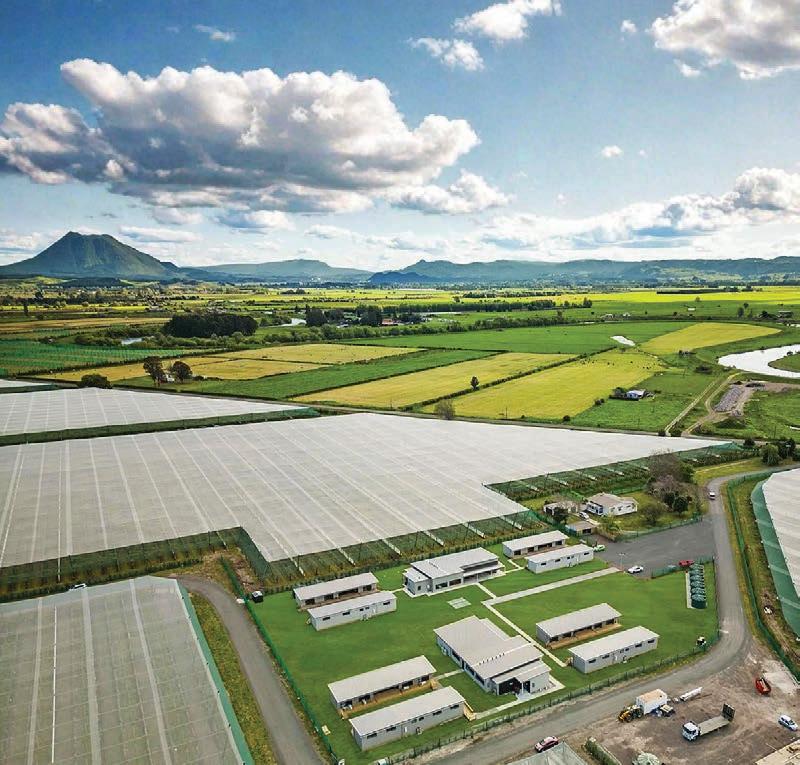
MyFarm’s Duncannon Horticulture Limited Partnership. Now open for investment, forecasting monthly cash returns of 7.5% p.a
Practical Considerations
Farmers considering commercial property should weigh several factors:
• Income: Assess the rent, lease terms, and tenant reliability.
• Costs: Understand who pays outgoings and budget for future capital expenditure.
• Value & Yield: Compare the yield to market benchmarks and alternative investments.
• Growth & Upside: Consider rental growth built into the lease, location trends, lease longevity, and possible development potential.
• Risk & Vacancy: Evaluate tenant risk and your ability to handle vacancies or rising rates.
Investment Routes
• Direct Ownership: Buy a property individually or with family.
• Syndicates/Funds: Pool capital with others for larger assets (e.g. MyFarm syndicates).
• Sale and Leaseback: Sell the business property you own and lease it back, freeing up capital.
Leverage Your Sector Knowledge
Farmers often have unique insights into rural commercial property –packhouses, coolstores, and other assets that city investors may overlook.
These assets can offer higher yields
and reliable tenants tied to the strength of the primary sector.
In summary, commercial property investment offers the potential for a stable, lease-based income stream and for capital growth, making it an excellent complement to farming. Success requires understanding the fundamentals – yields, leases, tenants, and timing – and applying the same diligence as you would to any major farm investment. Listen to experts, do thorough due diligence, and think long-term.
With patience and care, commercial property can provide financial resilience and a valuable legacy for farming families.
Interested in finding out more?
MyFarm offers a range of off-farm investment opportunities for wholesale investors, including our current offer: a lease-based rural commercial property investment, forecast to pay monthly distributions of 7.5% p.a. To find out more, visit myfarm.co.nz
Disclaimer:
The information contained in this article is for general information purposes only. Any reliance you place on such information is strictly at your own risk. It is not intended to constitute legal or financial advice and does not take your individual circumstances and financial situation into account. We encourage you to seek assistance from a trusted financial adviser, legal or other professional advice.
Keen bidding on calves for a cause

Annette Scott NEWS Community
NUMBERS and quality were features of the calves sold in the IHC annual Calf & Rural Scheme fundraiser at Temuka.
With larger numbers of calves coming forward this season the Temuka selling centre has in one week, across two sales, transacted more than 4000 calves.
PGG Wrightson Canterbury dairy livestock manager Barry Fox said plenty of calves have been reared this year.
Reflecting on weaner calf sales to date, Fox said buyers are well motivated, and demand is
high with bull calves in greatest demand.
“Although some calves are slower coming up to weight this season, and some have sold privately rather than through the sale, pricing is at or above expectations.”
The dairy and the beef cross bulls particularly received steady online support from North Island farmers participating in the sale via bidr, with about one-third of the calves sold going north.
Well-weighted calves were especially popular, fetching well above contract pricing, selling predominantly in the South Island to Canterbury farmers.
Around 300 donated calves from the region featured in the IHC
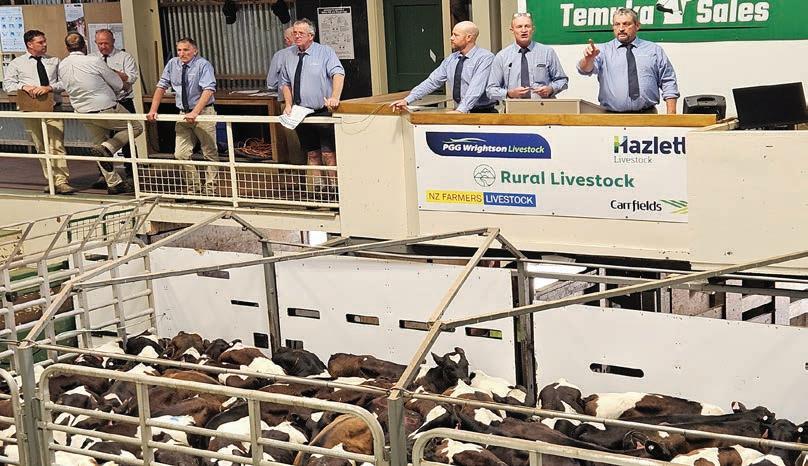
component of the Temuka sales with proceeds from those calves going to the IHC Calf & Rural Scheme.
Proudly supported by PGW and running for more than 40 years, the fundraising scheme is one of New Zealand’s longest running and most successful charitable programmes.
Last year it yielded more than $1 million to the charity.
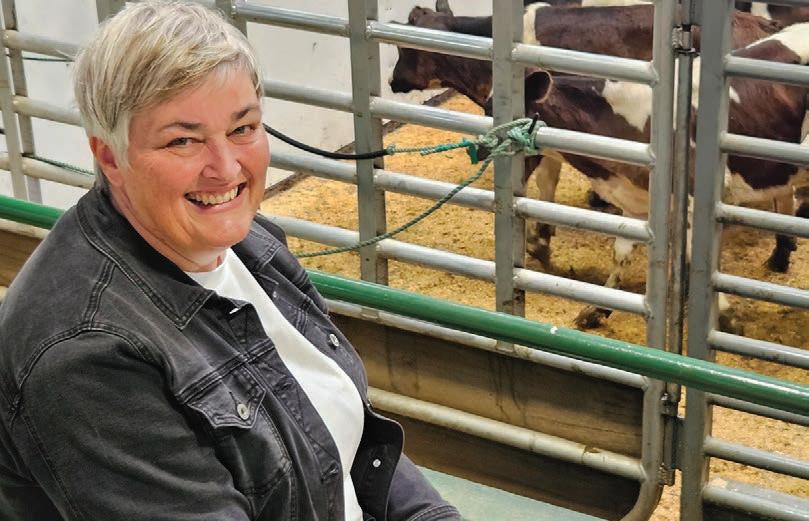
South Canterbury IDEA (part of IHC) services manager Kirsten Lindblom attended the sale with several staff members and people supported by the IHC services.
“We are so incredibly grateful for the generosity of generations of farmers. This scheme has grown from the simple idea to grow a calf to the much wider rural scheme that it is now.
“To the local transport companies who donate their services and to PGG Wrightson who have been right behind it since the beginning, you all mean some much for the support you give,” Lindblom said.
Friesian bull calves sold on behalf of IHC ranged from $560 to $820, in weight being from 101kg to 163kg.
“There were some impressive weights recorded for Friesian bull calves and they got rewarded,” Fox said.
On average calves were15-20kg heavier than last year and calves
that weighed 140kg-165kg fetched $810 to $865 with second cut 120kg-140kg making $645-$760 and lighter 100kg-120kg selling from $500-$650.
“Considering the sporadic weather getting dry around the east coast, to achieve these prices has left everyone pretty happy.”
Calf sale prices are falling into line with the buoyant beef prices as the latest Rabobank’s Global Beef Quarterly reports NZ farmgate prices setting records across all cohorts of cattle.
“Prices are $2.00/kg higher than a year ago, up 29%-40% year on year and as much as 50% above the five-year average,” RaboResearch
senior animal proteins analyst Jen Corkran said.
She said that “the expected 5% fall in NZ beef production volumes this year somewhat limited the ability of beef producers to fully capitalise on higher export prices”.
“However, about 160,000 additional bobby calves are being reared in 2025, signalling optimism for future beef supply and a shift in market dynamic for 2026 and 2027 as these calves enter the beef supply pipeline.”
Meanwhile stronger United States demand and higher import prices have driven export values to the second-highest level on record, just over $3.8 billion.
Shedding sheep among the top-priced rams
TOP of the ram sale prices so far this summer has been Kaahu Genetics, Whakamaru, which sold a Kaahu White MeatX ram for $18,000 to an online buyer, Kanuka Hill.
The ram was Kaahu 511/24 and was Replacement Lot 8.
Vendors Murray and Wayne Sargent sold 95 out of 102 offered and the average price was $2620.
Kaahu Whites are shedding sheep based on Australian Whites and Wiltshires.
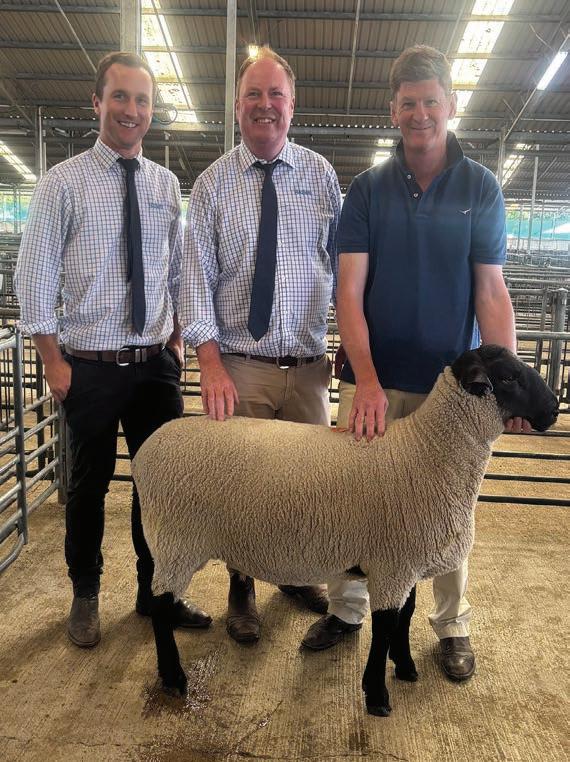
Top of the Canterbury A&P Association elite ram and ewe fair was a Taronga Suffolk ram for $16,800, to the Carr family of the Omagh stud, Mayfield.
The vendor was Symon Howard, Taronga stud, Lawrence, and that was the highest priced ram he has sold.
Also at the Canterbury fair Robin and Pip Wilson, of Wilfield Corriedales in Canterbury, sold ram 1211/24 for $6500 to Closeburn Station.
Arvidson Wiltshires, Taupō, sold a ram for $15,200 to Malcolm and Bridget Sutherland in Taranaki and also made a sale at $10,200 to Marcus Hildreth, Hildreth Farms.
Vendor David Arvidson said 42 sold out of 51 offered, and the average price was $3385.
At the same venue Stoneybrook Wiltshires sold eight of 12 rams and averaged $1775 with a top price of $4200.
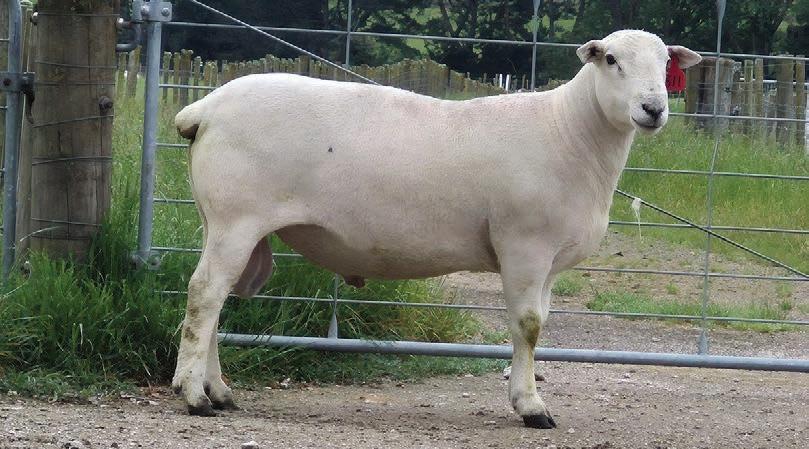
Beltex NZ at Rangiatea, Mt Somers offered 103 and sold 89, top price $6200 twice, Lot 7 and Lot 10. The purchasers were Te Parae Station and Glenrobin Stud.
Vendor Blair Gallagher said the average price for rams sold was $1738.
Tokorangi esheep at Whanganui had a top price of $10,000 and one at $6800. Buyer of the toppriced ram, 50% Exlana and 50% Wiltshire, was Kim Young and son.
Vendor Kate Kellick sold 41 of 47 rams offered and had the excellent average of $3017 in only the second on-farm auction for the breeder.
Waihau Terminal Sires, Hastings, had full clearances of 43 Suftex rams averaging $2072 and 12 half Beltex rams averaging $1208.
Vendor Ben Dawson said the overall average for 76 rams sold was $1625. The top price was
$3700 twice and the buyers of the highest priced rams were Alan and Kerri Blake of Triple Farms in Taumarunui and Mark Anderson in Taihape.
Rolling Rock Poll Dorsets at Te Akau had full clearance of 46, averaging $1665 with a top of $7000 paid by Te Ranui, while another transfer went to Moutere Downs at $3600. The 18 Meaty Maker rams sold for $1800 average and the 16 Suftex averaged $1375.
Omagh Suffolks at Mayfield had a top price of $4000 and sold 41 out of 43.
Waimai Romney stud, Te Akau, sold 140 out of 147 and averaged $2950 with a top of $6200.
Clifton Downs Southdown rams in Waimate averaged $2068 with a top of $7800 paid by LJ Crispin and two further transfers to Manahuna for $6000 and Jacksfield for $5000.
GENEROSITY: Kirsten Lindblom says IHC is ‘incredibly grateful for the generosity of generations of farmers’ with the scheme raising $1 million last year.
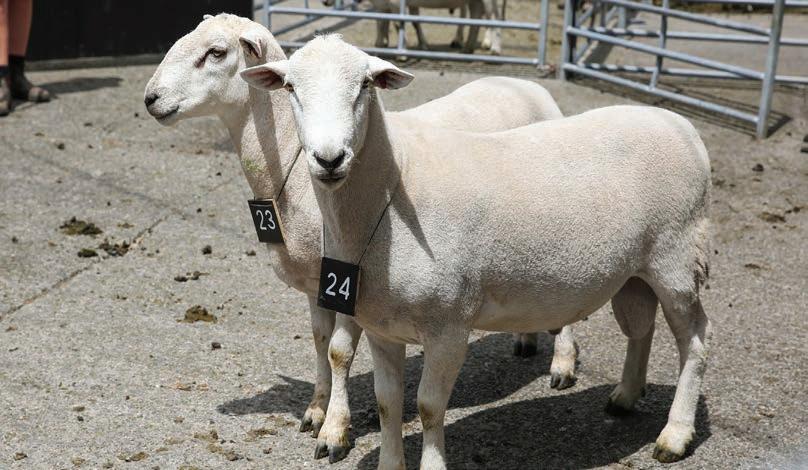
DEMAND: Buyers were motivated, creating strong demand at the Temuka calf sale that doubled as the annual IHC fundraiser. Photos: Annette Scott
Hugh Stringleman MARKETS Livestock
BEST EVER: Hazlett agents Madison Taylor, left, and Callum Dunnett with Taronga Suffolk ram breeder Symon Howard, who got the top price at the Canterbury elite fair.
Photo supplied.
DOUBLED: This Tokorangi esheep ram made $10,000 this year for vendor Kate Kellick, more than twice the top price last year. Photo Andrea Mansfield.
SUMMIT: This Kaahu White MeatX ram made $18,000 for Murray and Wayne Sargent, at Whakamaru, near Taupō. Photo Kaahu Facebook.
Famed deer operation builds on biodiversity
Native species – and the farm’s reputation – thrive under a carefully planned programme on Canterbury’s Mt Hutt Station.
MT HUTT Station has a long history of producing highquality venison, in a large-scale deer farming operation predominantly breeding and finishing high-performing Red Deer in a natural environment.
The second-generation family running the station, Bruce and Becky Hood, supported by Bruce’s parents Keith and Dennise Hood, strive to farm sustainably to provide consistent profits with environmental soundness.
Their diverse farming business –with strategic land use and strong governance and a commitment to biodiversity and long-term planning – sets them apart as leaders in sustainable farming.
“We endeavour to farm alongside thriving native biodiversity by safeguarding the biodiversity values that are currently present and working to further enhance them for future generations,” the Hoods say.
This has seen Bruce and Becky embark on a $1 million biodiversity management project
under a Farming with Native Biodiversity pilot project.
This aligns with Mt Hutt Station’s New Zealand Farm Assurance Programme Plus (NZFAP+ Plus) status as a venison supplier with Silver Fern Farms.
A tiered programme made up of silver and gold requirements, the journey to accreditation identifies key resources on farm, putting fundamental steps in place towards developing and implementing an Environmental Plan.
“We had the option to go for either and we thought, go for gold,” Bruce said.
That decision meant implementing the plan, and ongoing monitoring of more aspirational targets to meet customer demands in the future.
Biodiversity is the main driver for the project and to do it right several experts have been engaged across various areas.
While the plants have been supplied, the riparian planting of a host of waterways, ongoing monitoring, fencing, spraying and maintenance are managed on farm.
The budget of $1m has been calculated to cover the five to six
years the whole-farm biodiversity project will take to complete.
“That’s deer fencing at $32 a metre, thousands of native plants at an average $4 each. We are limited to what survives here so it’s important to get it right and have a good planter who knows what they are doing, so we have engaged local business Rural Natives to take charge of that.”
A variety of native plant species have been expertly advised. Fencing, waterways realignment and other aspects, including weed control, are managed in-house and the ongoing monitoring is a combined effort of all involved.
The goal is to fence and riparianplant all identified waterways to exclude the deer and improve the health and biodiversity values of the streams, improving water quality overall.
Mt Hutt Station is home to indigenous fauna, including freshwater species such as bullies, longfin and shortfin eels and galaxiid fish. These and frogs, lizards, native birds and the Nationally Endangered-listed kārearea also benefit from the carefully planned biodiversity programme encompassing the farm.
We pride ourselves in how we farm, how we look after our animals and how we produce our product.
Bruce Hood Mt Hutt Station
“Understanding what species are on the property and how their presence is changing as a result of management actions will influence future decisions on how to manage these species to further increase biodiversity.”
This is complemented by 530ha freehold, all of which ranges from rolling hills and flats to the steep back blocks of scree slopes and gullies.
Rainfall and weather conditions vary quite dramatically from one end of the property to the other, with parts of the farm prone to flooding from the hills above, and a couple of decent snowfalls a year.
The property runs between 18,000 and 20,000 stock units with the deer renowned for their highquality venison.
Traditionally a beef, sheep and wool producer, today it is a leading force in the NZ deer industry.
STANDARDS: Monitoring changes in biodiversity on farm is important as local and international customers are increasingly looking to source products from farms that operate to environmentally high standards.
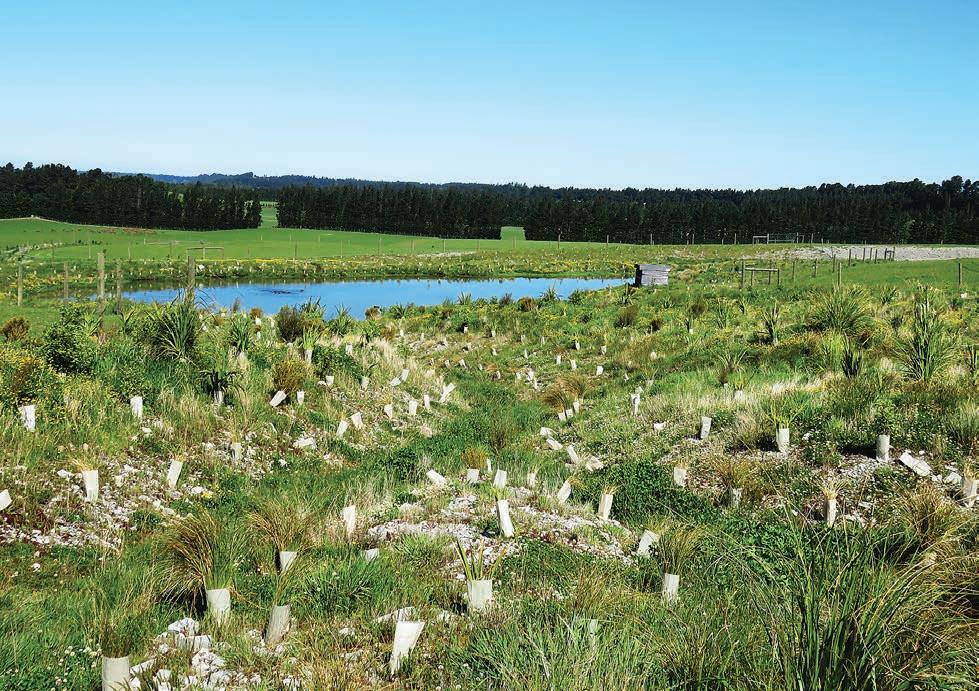
Monitoring changes in biodiversity on farm is important as local and international customers are increasingly looking to source products from farms that operate to environmentally high standards, and as new regulations come into effect.
“Mt Hutt Station will remain a family-run operation and we endeavour to farm alongside thriving native biodiversity by safeguarding biodiversity values that are currently present and working to further enhance them for future generations.”
Predominately a deer breeding and finishing operation, the station comprises 2330 hectares of pastoral lease land, 1163ha effective, managed under the Crown Pastoral Land Act (CPLA).
Deer were introduced to the farm in the late 1970s when brothers Doug and Keith Hood purchased the property.
“Dad [Keith] was looking for something different; there was an abundance of feral deer, so he purchased a helicopter and started jumping out of it to chase deer.”
That was the beginning of a deer farming operation that has seen the Hood brothers recognised among the pioneers of the NZ deer industry.
The feral deer were known as the Rakaia Red, originally introduced to the Rakaia River flats from Stoke Park, England.
The original Mt Hutt Station Rakaia Red herd has evolved through the introduction of superior European, Swedish,
Annette Scott ON FARM Deer
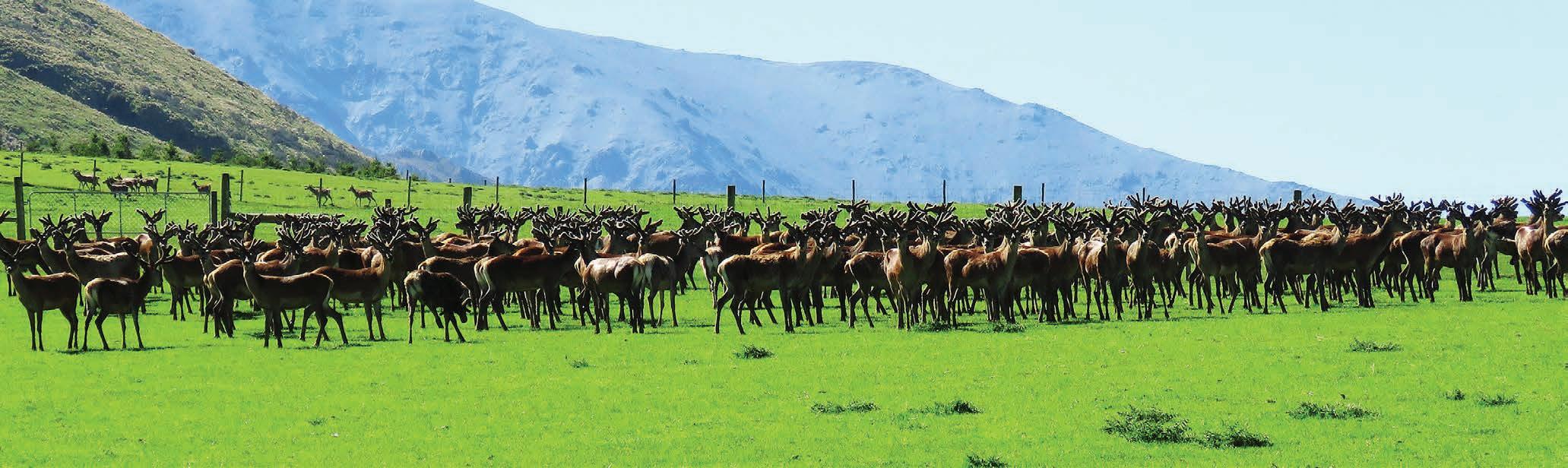
RELAXED: Young stags enjoy the run of the natural environment of Mt Hutt Station.
Hungarian, German, and other English genetics.
With clear sustainability and animal welfare goals, the Hoods are committed to mitigating the
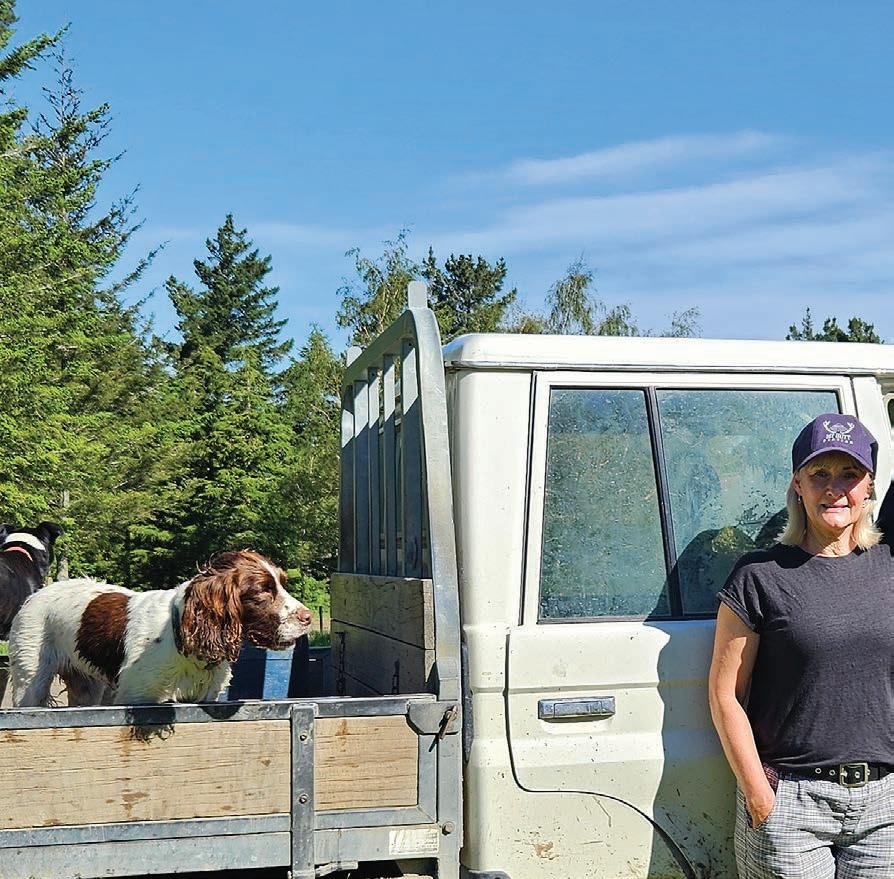
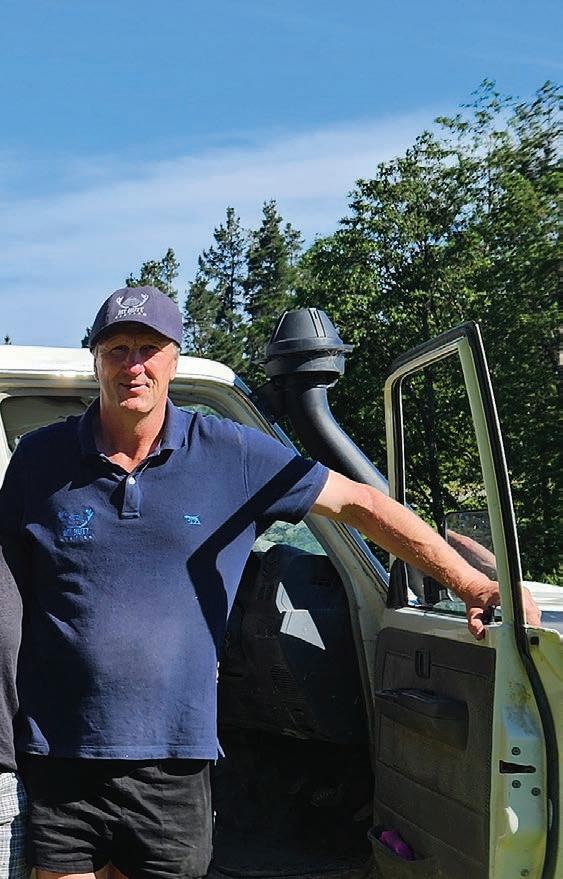
PROJECT: Becky and Bruce Hood, with Molly the spaniel. The Hoods have embarked on a $1 million Farming with Native Biodiversity pilot project.
Photos: Annette Scott
like-minded partner in producing and marketing product of the highest standard.
“We pride ourselves in how we farm, how we look after our animals and how we produce our product, so having a company like SFF on board with us ensures we are working together to achieve premium quality.”
Mt Hutt Station is currently velveting 2000 stags and running 3000 breeding hinds plus 2600 young stock, with 200 breeding cows and a calf-rearing operation complementing the overall livestock business from which all the deer and cattle are supplied to SFF.
“SFF is proactive, it has become a forward-thinking company and very good for the [deer] industry with great connection to its farmers and communication about markets and opportunities that will benefit us.
environmental impacts associated with farming deer. While partnering with SFF and Synlait in their biodiversity project they have also developed a relationship as a
“If there are any problems they are right there, doing all they can to look after us as farmer suppliers and our agent Ross (Rusty) Andrews is just the best, he’s always there to lend a hand.
“Also, the SFF Hokitika plant stepped up, recognising an industry problem when we really
needed it and doubled their capacity for killing older stags.
“The partnership involvement, with a company like this – in all respects of what we are doing, how we are doing it, and what we want to achieve at the end of the day –is invaluable.”
The biodiversity programme and environmental measures put in place are a huge undertaking on the station with a lot going into making it not just commercially viable, but a well-planned and implemented, sustainable operation that is taking team work to achieve.
“We have been taught by some of the best people in the industry and learnt by some of the best experiences possible.
“We are hugely grateful for the opportunity we have been given from my parents and lucky they are still here hands-on; we work together every day.
“If it wasn’t for their hard work we wouldn’t be here today,” Bruce and Becky said.
Growing up with deer, Bruce established his own passion for deer from a very young age with the Mt Hutt Station legacy running deep through his veins.
“I’ve always loved deer; I’m
here to be a deer farmer forever.
“There’s always something to learn, deer will always throw up something new; there are no socalled experts in this industry.”
The next generation is already cementing its interest in the family’s deer-farming operation with Harry, 24, working on the station between contracting jobs. He has valuable input with the cultivating and silage.
Olly, 23, a heli-pilot, is clocking up his flying hours when not in the deer shed or on a tractor.
Maggie, 20, is studying criminal justice at Canterbury University and is home every holiday and a good hand in the deer shed, and the youngest of the four Hood children, Lucie,18, is taking up agribusiness-related study at Lincoln University next year. She also helps in the deer shed with velveting and enjoys entertaining Grandad with her singing.
Meantime Neil “Charlie” Charlesworth, the resident fencer and general fix-it man, and Jimmy Field, with his passion for tractors, are fulltime staff working with Bruce, Becky, Keith and Dennise.
• This article was made possible by Silver Fern Farms.


ideas that grow is a Rural Leaders Podcast in association with


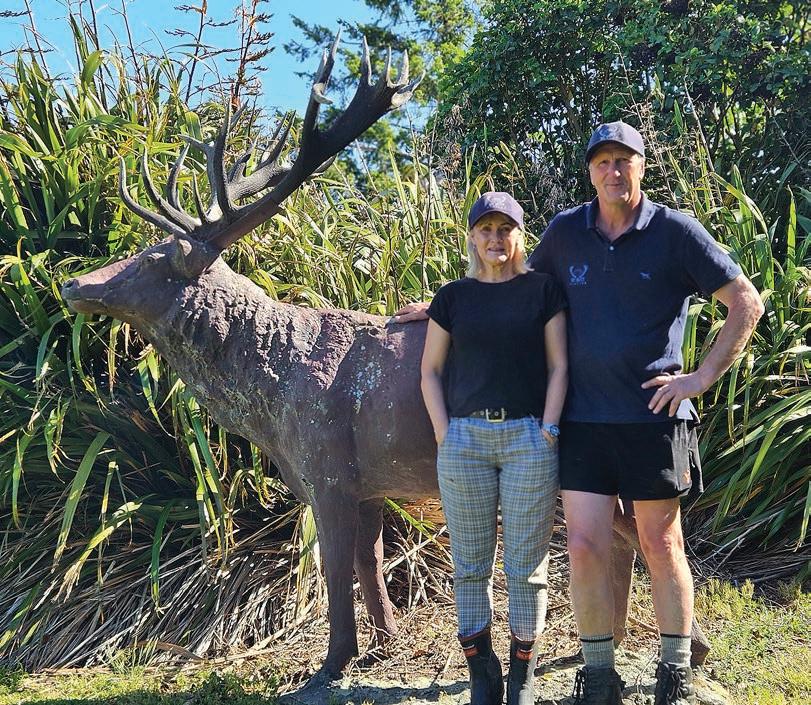
BEGINNING: Becky and Bruce Hood with a statue of Kapos, the Hungarian Red that turbo-charged the Mt Hutt Station herd.
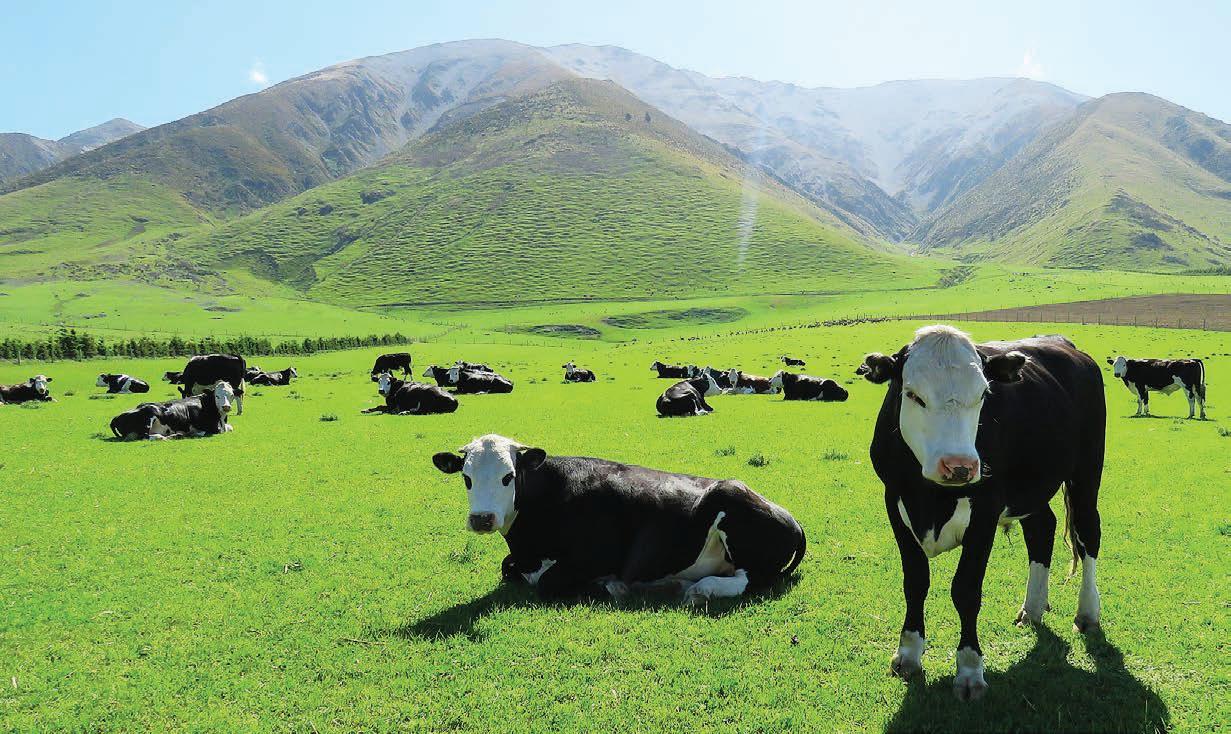
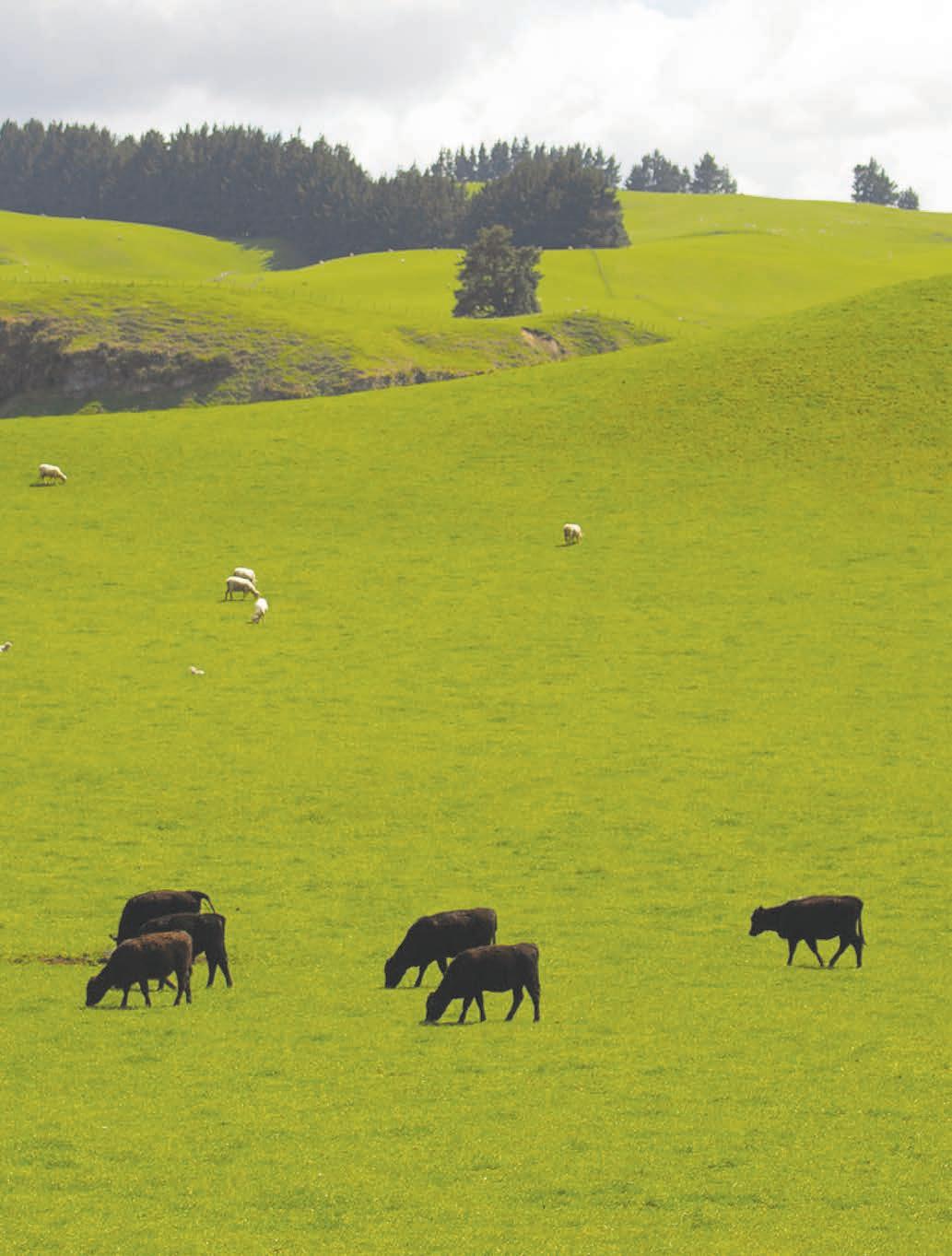
CHILLING: Cattle relax beneath the hills on Mt Hutt Station.
Morrison’s accident a learning moment
Gerald Piddock NEWS Safety
ORMER Beef + Lamb New Zealand
Fchair Andrew Morrison has learnt a painful lesson on the dangers of rushing on-farm jobs after an ATV accident left him with a broken leg.
Morrison was rounding up sheep for shearing on his Southland farm in November with a trailer hooked up on the back and loaded with dogs.
He braked coming down a hill. It had recently rained, and the tyres slipped on the
hard, slippery surface, veering sideways into a strainer post and breaking his leg.
Looking back, Morrison said, he should have recognised how slippery it was.
“Being an experienced farmer, I should have thought of that, but I didn’t.”
His leg is now encased in a non-weightbearing plaster cast for the next six weeks as it heals.
“It was such a benign accident on a pretty benign day with a bit of rain, and I hadn’t thought about the ground conditions.”
On this occasion, they were hard and slippery. Those ground conditions along
with the speed he was travelling caused the ATV to slip, he said.
A lifelong farmer, Morrison has both quad bikes and side-by-side vehicles on his farm –all well serviced, maintained and equipped with roll cages.
“I’m of that age group where accidents start to happen because we think we know what we’re doing. I’m 60 and my lesson is just slow down and think about it.”
As well as impacting him, it also impacts the wider farm business, he said.
“When you have six weeks of non-weightbearing plaster, you’re actually pretty useless and think about all of the other people in your business that have to cover for you and what jobs might compromise your business because you won’t get them done on time.”

Safer Farms chair Lindy Nelson said taking a moment to stop and think before heading off to a job can make all the difference as the industry moves into the traditional peak period for injuries and fatalities.
“The moments we take now to plan, to share and to check in, are what help ensure we all get through the summer safely.”
ACC data show the average time away from work following a serious vehiclerelated farm injury is 82 days, time that places pressure on families, finances and the wider farm operation, Nelson said.
Butter plummets as GDT prices slide again
Hugh Stringleman MARKETS Dairy
THE decline in Global Dairy Trade prices has extended to four months or eight fortnightly auctions and shows no signs of being arrested.
In the first December auction the overall GDT price index dropped 4.3% and prices for butter fell an eye-watering 12.4% and anhydrous milk fat was down 9.8%.
In the six months since the end of May butter prices have fallen 35%, after reaching a record level close to US$8000/ tonne.
The butter price index is now near $5000.
The December 2 auction saw whole milk powder prices down 2.4% to $3364 and skim milk powder down 1.6% to $2500.
NZX dairy analyst Rosalind Crickett said that milk supplies are quickly increasing around the big seven producing countries and regions, including New Zealand at an 2.8% increase season-to-date.
The United States is up 3.7%, Europe at 4.3% growth and Argentina up 9.6%.
After months of decline, Chinese milk collections also rebounded, by 4.2% in September.
“All in all, this is expected to keep downward pressure on milk powder prices globally, until a supply correction occurs,” Crickett said.
New Zealand dairy companies have trimmed 50c from their farmgate milk price forecasts, now down to $9.50/kg milksolids, but they will have taken advantage of the low NZD recently by hedging the prices in export sales for the remainder of this season and into next season.


SLIPPERY SLOPE: Andrew Morrison is recovering after breaking his leg in a quad bike accident on his Southland farm.


From the Editor
A brutal war – but has it been won?
Neal Wallace Senior reporter
NEWS that we have had two years without a new case of Mycoplasma bovis was a milestone announcement, but one couched in tentative optimism.
In short, it is too early to pop the Champagne corks and celebrate eradication of the cattle disease.
On the current trajectory, that could happen by June 2028 and, if achieved, it would be a world first.
The Ministry for Primary Industries (MPI) and OSPRI last week announced that for the second successive year, bulk tank milk testing from across the country has found no sign of M bovis.
New Zealand’s first incidence of M bovis was on a south Canterbury farm in July 2017.
The most recent notified case of
LAST WEEK’S POLL RESULT
transmission in cattle was on September 7 2023.
Eradication would certainly be worth celebrating but we should also never forget the cost to those families and individuals who had their lives and careers shattered by a no-holds-barred eradication response by officials.
Nothing can replace what they have lost but the very least we can do is learn and be better prepared for the next unwanted incursion.
The May 2018 decision to try to eradicate M bovis kick-started a 10-year collaborative programme between the government, DairyNZ and Beef + Lamb New Zealand that has cost $870 million.
Allowing the disease to become endemic would have cost $1.3 billion in lost production in the first 10 years alone, officials advised at the time.
In the subsequent five years, 280 farms were depopulated, 3000 subjected to movement control, 184,000 cattle were slaughtered and $256m paid in compensation.
The human cost has been even greater.
A 2021 University of Otago study found the response was poorly managed, and inflicted significant and lasting trauma on farmers whose farms were incubated and whose stock was culled.
Farming families felt isolated, bewildered and powerless, while vets and others with relevant expertise say they were
More than 65% of those who took the poll believe rural New Zealand will be better off without regional councils.
One voter thought regional councils had slowed progress in a range of areas. “They are out of touch with business needs and have wasted so much money creating plans and plan changes that haven’t resulted in outcomes, nor been implemented properly.”
Another said councils previously did the work of regional councils. “They have become over-the-top, inflated bureaucracies adding an unnecessary rates burden on people. They are making things more difficult for farmers in some parts of the country. Good riddance to them I say.”
Of the 34.5% who voted no, one said the changes were simply “swapping democracy for bureaucracy”.
Another believed regional councils were needed to specifically handle river protection and environment quality.
“Did having all of Auckland under a unitary authority help the people during Cyclone Gabrielle and the Auckland storms just before that cyclone? I think Auckland citizens have not been well served by council on matters of safety in weather events and protection from rivers and streams in weather events.”
undervalued and their contribution to the management of the outbreak disregarded.
Lessons will hopefully have been learned.
Another key finding was the casual attitude of some farmers to recording stock movements through NAIT and some shortcomings with the NAIT system, which unnecessarily complicated and prolonged the response.
While victory is tantalisingly in sight, the message is that we cannot afford to lower our guard and become complacent.
That means complying with NAIT requirements to record stock movement.
The MPI is certainly ramming home that message with two convictions last month of non-complying farmers, the courts issuing two fines of $10,000 and a third for $35,000.
There have been regular reminders that, despite our being an island nation, keeping unwanted pests and diseases out of New Zealand is a constant battle.
A year ago the H7N6 strain of bird flu was detected on a commercial egg farm in Otago and in October the yellow-legged hornet was found in Auckland with potential to decimate bee colonies.
As M bovis has shown, the impact of such incursions is significant both financially and emotionally.
We all owe it to those farmers on the frontline of the M bovis outbreak to do our bit to keep out unwanted organisms – and also to ensure any response runs as smoothly as possible.
Last week’s question: Will rural New Zealand be better off without regional councils?
Letters of the week
Confusing advice on drenching
Gordon Levet Wellsford
[AS A Romney Stud breeder from 19512020] I feel compelled to respond to Dr Andrew Greer’s comments on drenching when he was addressing the NZ Institute of Agriculture and Horticultural Forum. Farmers do not love drenching and are not stupid. Farmers act on the advice of vets who base their advice given by scientists. But this advice has been very mixed and confusing.
For example, in Wormwise presentations farmers have been advised to drench lambs every month to ensure works lambs would be off the farm before summer droughts. On the other hand, the refugia concept has been promoted, where only the worst conditioned lambs would be drenched. Another scientist advocated drenching all lambs to kill worms before they started shedding eggs to ensure less eggs on pasture, while ignoring the fact that adult sheep also shed eggs.
Dr Greer mentioned the resilient concept where lambs continue to grow with high worm levels. He failed to mention that resilience does not work where haemonchus – the barbers pole worm – is the dominant species because high levels of this worm will kill lambs within days.
He also failed to mention the genetic solution, which I believe is the ultimate solution to drench resistance and worm challenges. The genetic solution is breeding for a stronger and more aggressive immune system which can control worms as early as late February.
The added advantage is that a stronger immune system reduces the impact of other diseases like pink eye, grass staggers, foot diseases and pneumonia. However, many vets and some scientists have a negative view of breeding sheep for the worm-resistant trait as a result of flawed or questionable scientific research.
your letter to

This week’s poll question (see page 1):
Should Molesworth Station become a “station for the nation” and be taken over by a charitable trust?
The missing link in the emissions debate
Eating the elephant
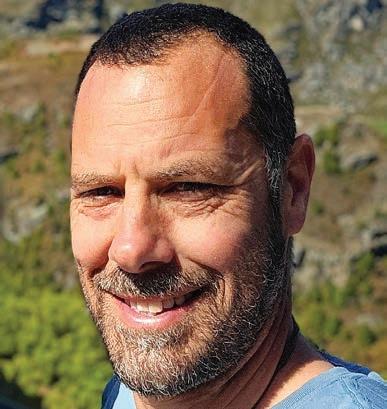
Daniel Carson Carson (Ngāi Tahu) is the founder of Alps2Ocean Foods. His youngbeef nutrition work (Mīti) has been recognised for its potential to reduce emissions and improve farmer returns through smarter use of non-replacement calves.
I’VE been thinking a lot about the walls we’ve built in our food conversations. Everything now seems to fall into camps: plant or animal, nutrition or emissions, saviour or villain. It makes for lively comments online, but it doesn’t help anyone trying to grow real food on real land.
If you work across farming systems, processing, science and export markets, you learn quickly that the world doesn’t actually fit neatly into those categories.
A farmer asked me recently why the debate feels so stuck. My answer was simple: we’re trying
to solve a system-level problem with tribal thinking. Food has never been “one side or the other”. It’s the outcome of land, stock, weather, people, management and thousands of decisions you make over a year – not a label on a packet.
That point became even clearer through the Nutritional Life Cycle Assessment (NLCA) research we’ve been doing with the Bioeconomy Science Institute. NLCA jointly measures two aspects of a food – its environmental impact and nutrition. It’s a useful measure to identify which foods best strike the right balance between planetary and human health. Overseas researchers have compared nutrient value and carbon footprint before. But they mostly use high-input, industrial animal systems and broad global averages. No surprise then that plant-based foods usually look better on paper.
So we asked a different question: what happens if you plug a New Zealand low-input system into that same equation? And not just for some “average human”, but for the actual nutritional needs of different ages and stages – like kids, young adults, women and older people.
We tested our Mīti young-beef blend on the NLCA measure. It’s nothing fancy, just young beef raised in a low-input system, blended with honey. It became the first animal-based, added-value food we’re aware of to match, or surpass, plant proteins like soy in several demographic groups. It even surpassed the long-standing
top NLCA score for nutrient-percarbon food – whole eggs.
I mention this not to talk up a product, but to point out something far bigger: the system creates the result. When you’re farming in New Zealand – fastfinishing dairy-beef, regenerative rotations, mixed horticulturepastoral systems, hill country turning sunshine into protein –you’re already producing nutrientdense food with far less carbon than the global stereotype. The science is just finally catching up.
Now here’s where the opportunity gets real. If our systems can genuinely produce more nutrition from less carbon, farmers deserve to be paid for that performance. Not just for kilograms of carcase weight, but for the nutritional value produced relative to the footprint it took to grow it. Profit matters, and NLCA gives us a fair way to show where it should flow.
But new measurements alone aren’t enough. We’ll have to redesign food business models around metrics like NCLA to see real returns.
Let’s use Mīti as an example again. Young beef doesn’t just perform well nutritionally, it creates value where historically there was little. If bobby calves are ever going to move beyond being a problem managed downstream, they must become a profitable input upstream.
Unified metrics like NCLA give us the first path to that. When performance is measured in nutrient return per unit of carbon,
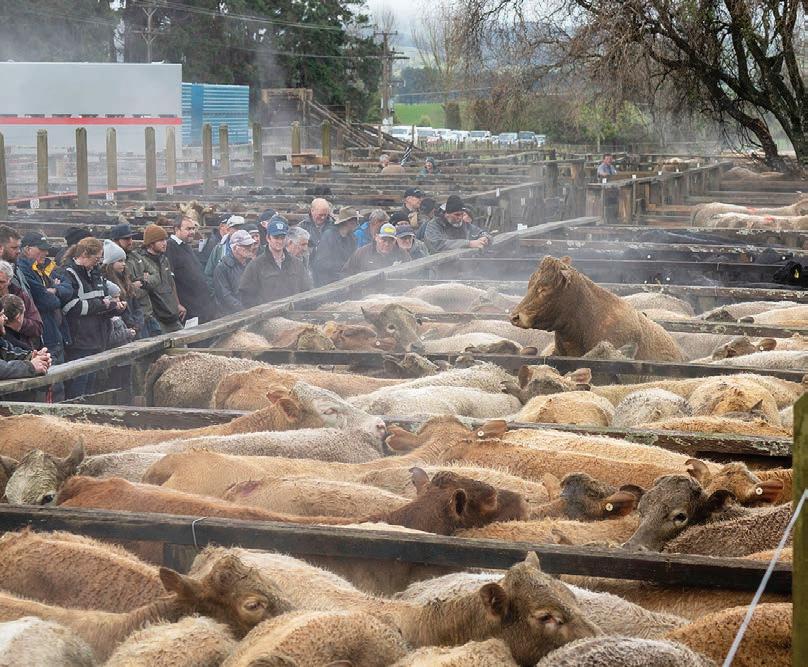
BALANCE: Most farmers aren’t asking for special treatment, says Daniel Carson. They’re asking for new business models that fairly reward them for growing food that gets the planet and people balance right.
low-input young beef becomes a strong business model. Young beef doesn’t only deliver more nutrition for less carbon; it solves the nonreplacement calf challenge in a way that fits how farmers actually farm.
The challenging part is fitting the new model in and around the old one – in this case the outdated infrastructure built for big carcases and boxed cuts rather than ingredients and nutrition.
But with most of our processing now offshore-owned, perhaps that disruption is overdue.
This is where New Zealand can lead. Not by supplying ingredients, but by building brands that keep
value here. NZ has the traceability, data integrity and science to lead the next generation of food measurement systems. We should be shaping them – and licensing them – instead of waiting to have them handed to us.
Most farmers aren’t asking for special treatment. They’re asking for honesty and new business models that fairly reward them for growing food that gets the planet and people balance right.
That begins with recognising that nutrient density is not the side-note in our emissions debate, it may be the missing metric that finally unifies it.
We’ve got your back now and in the future
In my view
OVER the past few years
New Zealand dairy has enjoyed a strong run the likes of which many of us have never seen. Consecutive seasons of strong or record milk prices, interest rates coming down, and even a momentary easing of the hectic pace of regulatory changes, have all combined to create a tailwind for our industry.
It feels like we’re getting the basics right, and are due some long-awaited stability.
That’s not to trivialise the shocks, such as the extreme weather many farmers have endured over the same period. Last month in Southland I saw firsthand the damage and stress that caused.
We also keep an eye on that milk price and input costs.
But for the most part, it’s been a great time to be a dairy farmer and, together, we deserve the success that’s coming our way.
If I can make one point today, it’s
that this is a shared success. It’s something New Zealand dairy does well – can I even suggest that we do it the best in the world.
What happens on your farm is because of you. It’s your hard work, care and plans that move your farm business forward. But there’s a lot of what you do that keeps getting better because for generations we’ve been part of each other’s success. We’ve shared knowledge. We’ve shared the cost and on-farm solutions from future-focused research. And we’ve had a clear, united dairy voice that has meant a move towards more practical policy and the government currently supporting the primary sector. This is made possible in part because for the past century, farmers have collectively invested in their industry’s future, including for the past couple of decades via the DairyNZ levy.
DairyNZ’s vision is to ensure the levy is the best investment of every New Zealand dairy farmer. We seek to deliver that via our strategy, which is focused on doing three things really well: helping farmers drive productivity, strengthening farm systems, and competing on sustainability.
To measure how well we are delivering on that vision, the DairyNZ board recently
commissioned independent economic analysts, Nimmo Bell, to measure DairyNZ’s return on investment from the milksolids levy since 2020.
The key finding of the report is that from the $341 million of levy revenue received in that period, DairyNZ generated an estimated $2.98 billion of value – equating to 26c kgMS/year – more than seven times return on investment. This includes both productivity gains (45%) and costs avoided (55%).
One example of our strategy delivering for farmers is our current focus on on-farm productivity through improved forage gains and more resilient pastures.
Home-grown feed is important. Productive pastures keep the cost of production low and are central to our low-emissions milk production. Research has shown us pasture isn’t lasting as long –and so we’re re-grassing more and that’s an issue for New Zealand because our competitive edge is our pasture-based systems.
To help combat this, DairyNZ is leading a joint programme, Resilient Pastures, with the Ministry for Primary Industries through the Primary Sector Growth Fund and with other sector partners, including Beef + Lamb NZ.
We are working with farmers to find solutions to help solve the problems we are facing in Northland and the top of the North Island, and the lessons will provide solutions across the whole country as they’re needed.
The Nimmo Bell report also identified a number of areas for improvement, including increasing our focus on helping farmers adopt the solutions of our research programmes. Extension is key, and is a core element of what we do.
At the International Dairy Federation Conference in Chile I presented on dairy’s economic contribution to rural communities and the economy.
But at the foundational level, it is the support of every dairy farmer contributing towards their industry-good body that provides for the continuity of DairyNZ work on your behalf.
This means we can keep delivering a positive future for the New Zealand dairy industry, a future in which our highly productive herds stand out for exceptional genetics, herd health and wellbeing. So much so, that New Zealand leads the world in responsible dairy production.

Tracy Brown Brown is chair of DairyNZ.
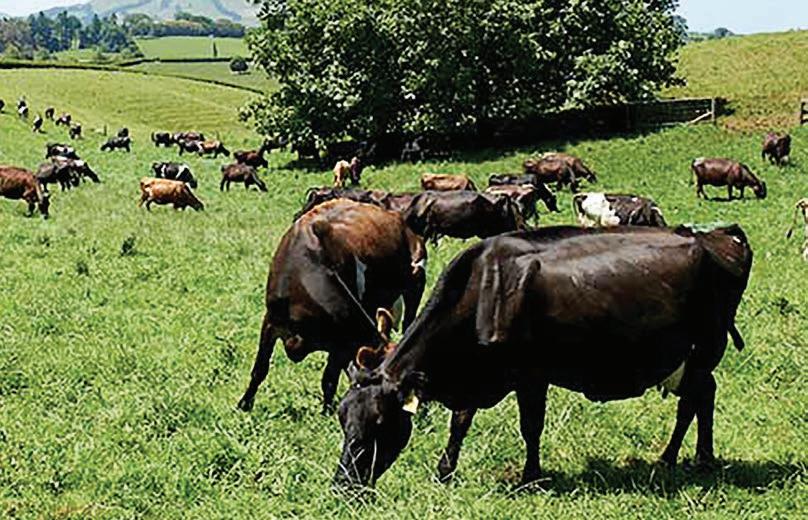
GRASSROOTS: DairyNZ is leading a joint programme, Resilient Pastures, to address the fact that pasture, so key to New Zealand dairy’s system, isn’t lasting as long and dairy farmers are having to re-grass more.
Sale Talk, and so much more.
Everyone has their favourite part of Farmers Weekly. For some it’s Sale Talk, others the Livestock and Markets section, for many it’s the website, updated daily, and for most it’s timely news and opinion.
Your support helped us add three new salaries this year, so we can continue to deliver and do more.
When you make your voluntary subscription, you’re playing an important part in keeping the good information coming. What you’re supporting:
• Farmers Weekly delivered to 74,000 rural mailboxes every week.
• Weekly interviews with the newsmakers on the Farmers Weekly Podcast
• Independent and timely sector news and analysis every day on the website, farmersweekly.co.nz
• Your voice noticed by decision-makers in the Farmers Weekly Poll - make it a weekly habit!
Start your voluntary subscription now. $120/year is all we ask, and we’ll keep our promise: More of the same.
Joining details below, or call me directly at any time.
Dean Williamson – CEO and Publisher dean.williamson@agrihq.co.nz 027 323 9407
BECOME A VOLUNTARY SUBSCRIBER
Start your voluntary annual subscription today. $120 for 12 months. This is a voluntary subscription for you, a rural letterbox-holder already receiving Farmers Weekly every week, free, and for those who read us online.
Choose from the following three options:
Scan the QR code or go to www.farmersweekly.co.nz/donate
Email your name, postal address and phone number to: voluntarysub@farmersweekly.co.nz and we’ll send you an invoice


Call us on 0800 85 25 80
Note: A GST receipt will be provided for all voluntary subscriptions.

Farming in greater comfort is the goal

Samantha Tennent PEOPLE Business
IT WAS supposed to be a four-month backpacking trip when Jasmin Lennartz first came to New Zealand, but she got a taste for farm work and found an opportunity to stay a little longer.
That little longer has turned into a decade so far. Lennartz is now contract milking in Culverdon and said she’s living a dream that had
seemed unimaginable back home in Germany.
“I was a city girl, growing up near Cologne. I knew I always wanted to work with animals, but being from the city over there, it was more of a dream than a potential reality,” Lennartz said.
“I guess I was manifesting it, though, and one thing led to another, and now I am living my dream. It’s pretty awesome.”
She started rearing calves on a dairy farm, and when one of the existing team members resigned,
she was given the opportunity to become a farm assistant.
“I went home for a little holiday to tell my parents, then came back for another 12 months, but I loved it so much over here I knew I had to stay.”
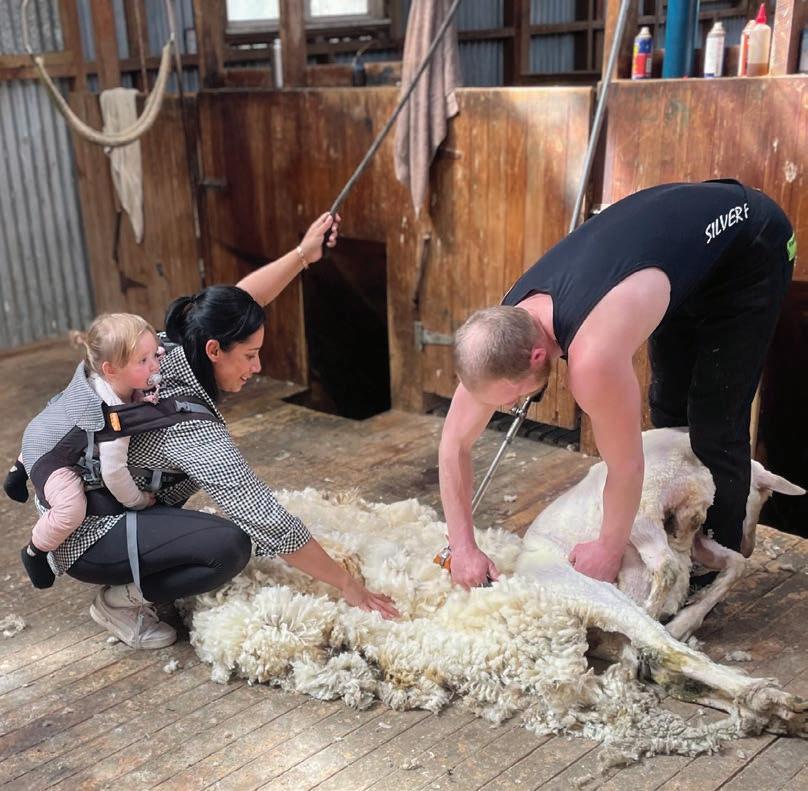
After dairying, she got into rouseying in the shearing shed, which is how she started her business, the Lousy Rousey.
“I couldn’t find the right clothing for the jobs I was doing,” Lennartz said.
“Working in woolsheds is a very uncomfortable job. It’s hard work, you sweat a lot and bend over a million times a day. I couldn’t find any tights that wouldn’t constantly slip down. I was sick of it!
“And I couldn’t find any tops that wouldn’t let the wool go through, so I was always itchy and uncomfortable.”
She didn’t know where to start, but she ordered some samples from some overseas suppliers and got some help from a friend. She changed a few things, and the brand was born.
Lennartz has ambitions to turn what started as a little side hustle idea into a movement.
“It started as a simple idea – to make activewear and farm clothing that truly works for women – and has grown into something so much bigger.
“Now, it’s about representing the farming community I’m proud to be part of, and building gear that works as hard as the people wearing it.”
She participated in an Activator
course offered by Rural Women New Zealand, which provided her with valuable ideas and direction.
And she’s enjoying connecting with other small businesses around Culverdon, especially other mums in business.
“It’s great building the connections, it’s hard to work outside of farming, especially juggling child care etcetera. So plenty of mums turn to having their own business because it works with farming and family life.”
She aims to build her business so she can remain at home, helping on the farm and being a mum.
The business’s best seller is the tights, and she’s slowly bringing in other pieces to suit the farming lifestyle. Her focus is on quality.
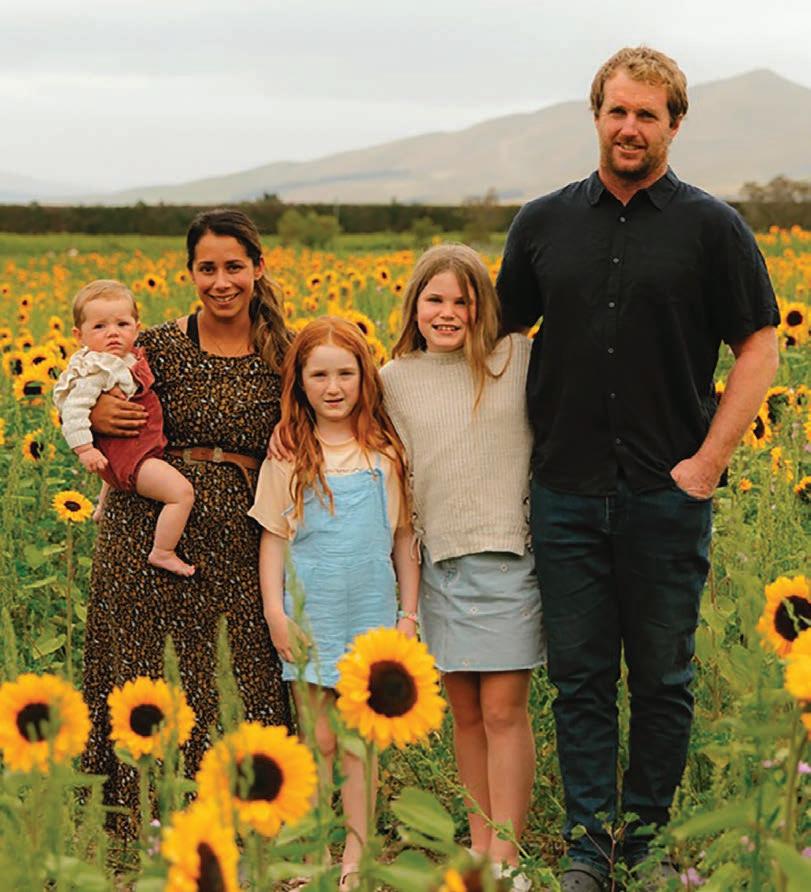
Lennartz and her partner Richard Earl contract milk on Earl’s family farm at Rotheram. They’re milking 450 mostly Friesian cows and raising their daughter, Ellie, who is also loving farm life. Earl also has two older daughters, Zoey and Rosie, who love coming to stay on the farm too.
Before she met Earl, Lennartz was rouseying in summer and winter and working for the local vets in between. She was also working as an artificial insemination assist in spring, which she still does now.
She’s glad she came to NZ 10 years ago and looks forward to growing her business to help more farming women be comfortable in their everyday lives.

THE PACKAGE: Jasmin Lennartz launched The Lousy Rousey to create farmwear that truly works for women – durable, comfortable, and made for life on the farm.
JUGGLING: Jasmin Lennartz and Richard Earl juggle contract milking, farm life and family life with their daughter Ellie and Richard’s older daughters, Rosie and Zoey, enjoying time on the farm.
Taranaki pilot farm reduces emissions
Staff reporter TECHNOLOGY
Emissions
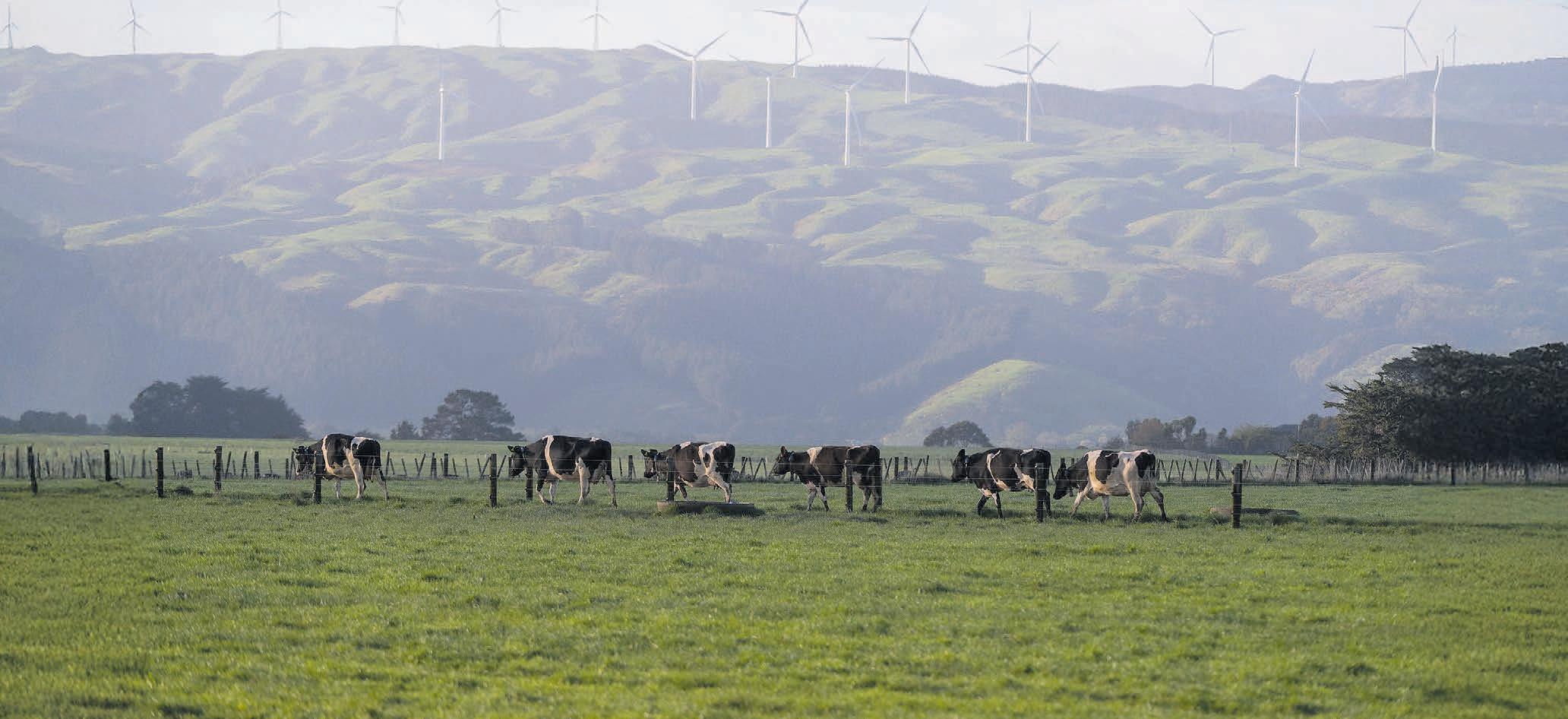
THE latest data from Fonterra and Nestlé’s net zero pilot dairy farm in Taranaki has shown a 4.5% cut in emissions intensity in the 2024-2025 season compared to the previous season.
The reduction is from a move to twice-a-day milking and a reduction in imported feeds with their high emissions. This new milking schedule resulted in a 9.5% increase in milk production per hectare, contributing to a 4% rise in absolute emissions from the previous season.
Since its first season in 20212022, the farm has reduced its emissions intensity by 9.5% and absolute emissions by 23.5%.
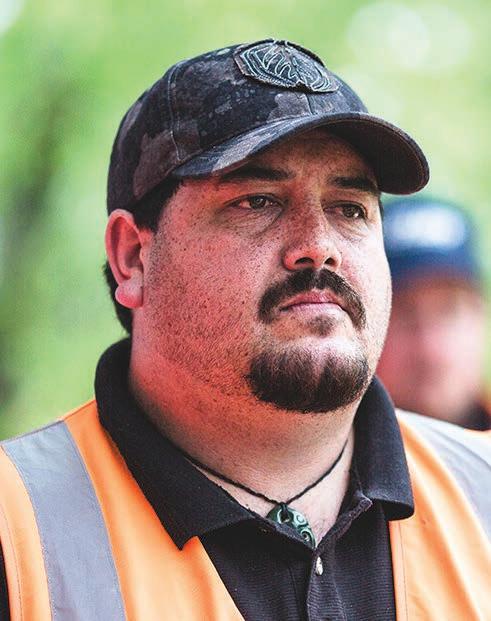
PROACTIVE: Pāmu’s Moutoa farm business manager Joel Peterson says organic farmers are proactive farmers and that led to reducing losses in productivity and financial performance, while looking after the environment.
The farm produced 210,000kg MS for the season at 393kg MS per cow. This is up from the 365kgMS per cow the farm has averaged over the past couple of seasons.
The farm is one of a number of projects within Fonterra’s strategic partnership with Nestlé, which includes new customer incentives on offer this season –designed to help farmers reduce emissions intensity.
The 250ha farm is run in partnership with Dairy Trust Taranaki and is trialling different tools and approaches to reduce emissions to net zero over 10 years while remaining profitable.
Fonterra director of sustainability Charlotte Rutherford said lowering emissions is important but so is keeping an eye on the bottom line.
“We’re trying to understand what’s practical or scalable for
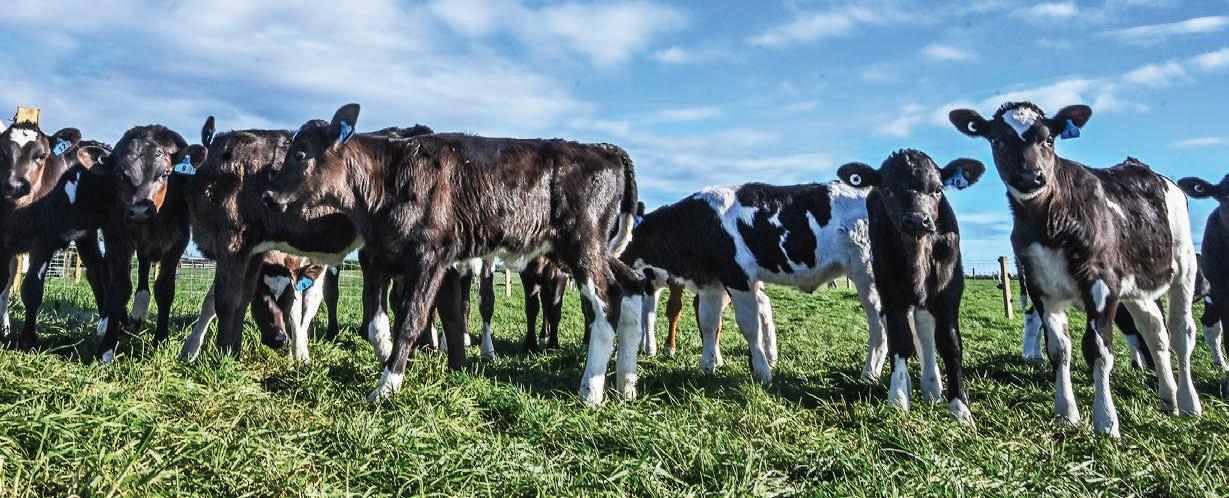
farmers to adopt, which means striking a balance between emissions reductions and profitability.
“We expect results will fluctuate as we work towards the net zero ambition and learn what does and doesn’t work. These insights will help farmers decide which emission reduction solutions are most appropriate for their own farms and in turn help make progress towards the co-op’s targets.”
The farm used 111kg of fertiliser per hectare in the 2024-2025 season, down from 166kg/ha in the 2021-2022 baseline season.
The farm used 0.3 tonnes of dry matter (TDM) per cow, down from 0.6 TDM used in the baseline season, but up slightly on the previous two seasons of 0.2 TDM.
The farm recorded 12.3 TDM/ha of homegrown feed was eaten in the 2024-2025 season.
This season, the farm will scale up its use of EcoPond, following a successful trial that reduced effluent methane by around 97% in the farm’s test unit. Full pond dosing has begun and is expected to reduce the farm’s emissions footprint by up to 5%.
The co-op will also be working with DairyNZ’s DairyBase to
determine the profitability of the farm across the first three seasons and will be sharing insights with farmers at the end of this season.
It is also piloting EcoPond’s new mobile dosing truck with around 200 farmers in Waikato and Southland and will begin a biochar trial to look at its impact on increasing soil carbon and carbon sequestration.
The farm is also trialling how different calf-feeding systems affect growth, labour and longterm performance to help improve emissions per kilogram of milk solids.
Pāmu adds dairy farms to organic portfolio
THREE more Pāmu farms have achieved full organic certification and strengthening its role as the leading supplier of organic milk in New Zealand.
The latest conversions at its Moutoa Dairy Complex in Manawatū brings the State-Owned Enterprise’s total organic portfolio to 11 organic farms and two runoffs.
Pāmu CEO Mark Leslie said by operating at scale, Pāmu is providing the critical volume and stability that allows New Zealand’s organic industry to grow and thrive.
“Converting dairy to organic is a rigorous process that takes three years to roll out fully, and this
recent achievement reflects the passion and skill of our teams.”
Pāmu’s organic dairy farms include four at Wairākei Pastoral Estate near Taupō, and seven at Moutoa near Foxton. These total 6430 dairy cows on 4190 hectares. The two runoffs have been combined and a third is now in the process of conversion.
Since 2016, Pāmu has invested in organics which enables Pāmu to capture premium returns in the market while maintaining operational performance and efficiency.
“Organic production is a strategic lever for Pāmu. By supplying organic milk, we not only meet growing consumer
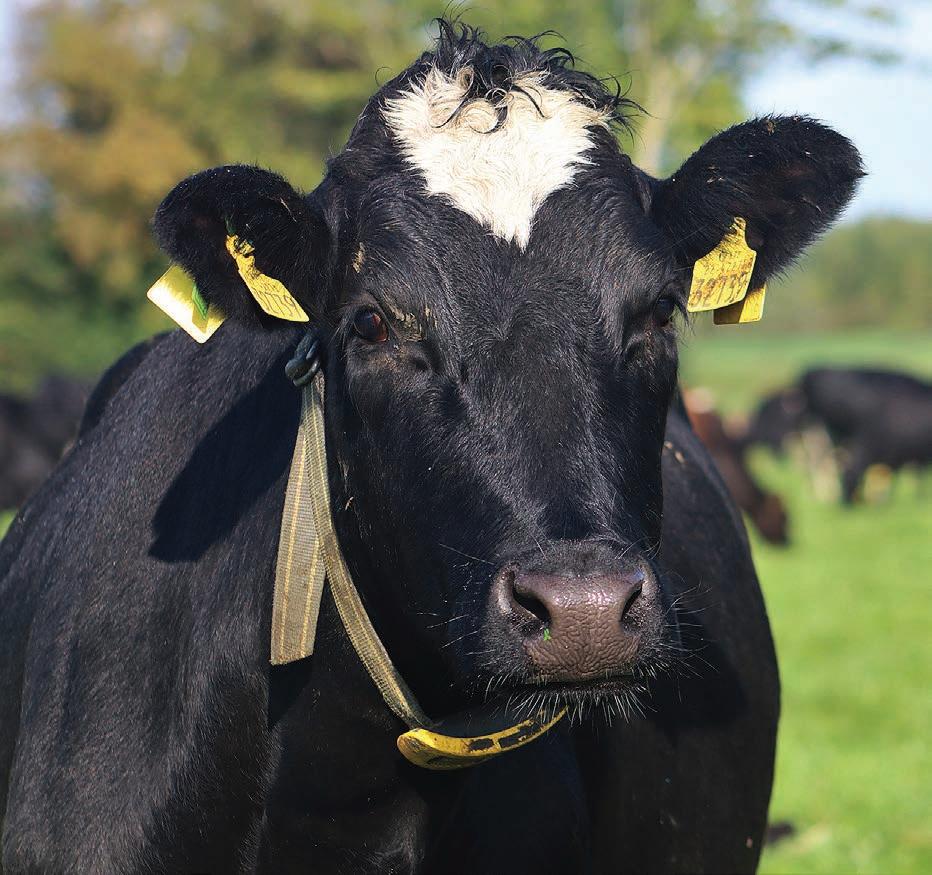
demand but also secure higher premiums that strengthen profitability and long-term resilience,” Leslie said.
Certified organic products access premium markets and command higher milk prices, supporting sustainable profitability, he said.
“Organic farming also supports kaitiakitanga, guardianship and intergenerational stewardship, while providing jobs and supporting rural communities.”
Pāmu’s Moutoa farm business manager Joel Peterson said good data is critical for organic farming.
“Organic systems limit external feed and fertiliser inputs, so we rely on diverse grass species and



regular soil testing to maintain productivity. Cropping and pasture renewal help sustain output, and we use tools like feed wedges, sward sticks, and plate meters to track and optimise pasture performance.”
Animal health focuses on prevention, natural approved remedies, and strict protocols. Any animal treated with nonorganic drugs is removed from the organic system.
“An organic farmer is a proactive farmer. Being proactive reduce losses in productivity and financial performance, while looking after our environment and leaving our land enhanced for the next generation.”
CALVES: The net zero pilot dairy farm in Taranaki farm is also trialling how different calf-feeding systems affect growth, labour and long-term performance to help improve emissions per kilogram of milk solids.
What’s next for Fonterra shares?
Hugh Stringleman MARKETS Fonterra
ONTERRA Shareholders
FFund units will likely return to an investment yield around 8% after the company has paid the capital return from the sale of Mainland Group, Forsyth Barr senior analyst Matt Montgomerie forecasts.
He expects that the supply share and unit prices will fall by $2 after the capital return and that dividends in the near term will be 45-50c annually.
The Fonterra supply shares (FCG) will trade at a restricted market discount, because shares can no longer be exchanged into fund units (FSF).
FCG shares can only be owned by present and past Fonterra suppliers.
That excludes potential price setting investors like institutions.
“Farmers have competing demands for limited capital so therefore shares may require a greater return for them to be attractive as investments,” he said.
OUTCOME: Forsyth Barr senior analyst Matt Montgomerie believes Fonterra has exited its Mainland Group very well and the $4.2 billion purchase by Lactalis is a great outcome for Fonterra farmers.
In recent times FCG shares have been trading at 20-25% discount to FSF units.
Montgomerie pointed out that 170 million shares are held by ceased farmers, about 11% of the total issued capital.
There is now a 10-year ceased farmer sell-down period and the “dry” share proportion has grown while there has been the prospect
of sizeable capital returns.
As the FCG annual turnover is only 30 million shares, if all ceased farmer-shareholders wanted to trade it would take close to six years to satisfy them.
“Shareholders need liquidity and the lack of liquidity in Fonterra is not an issue for the individual but may be in aggregate,” he said.
“If sizeable numbers of ceased
farmers wanted to sell down after the Mainland capital return it might weigh on the market for shares.”
Fonterra has had a couple of very good years but in a 10-year view, it has lagged other companies, like Skellerup, Fisher & Paykel, Infratil, Apple and Amazon, in returns.
Montgomerie pointed out that volatility in the prices of dairy commodities, as reflected in the GDT index movements over the past 17 years, has been greater than volatility in share markets generally.
He believes Fonterra has exited its Mainland Group very well and the $4.2 billion purchase by Lactalis is a great outcome for Fonterra farmers.
Mainland’s performance in Australia over the past 20 years was not good and the consumer division earnings have been well below those of the ingredients and food service divisions.
Australia has 60% of Mainland’s employed capital and neither the company nor media have expanded on the lack of performance in sufficient detail, he said.
Each site in Australia processes about one-fifth of the milk that flows through a big NZ plant, underscoring the difficulties in making a decent return on capital across the Tasman.
Montgomerie said for Lactalis to earn the same return on capital as Fonterra does in its ingredients and food service businesses, it would need to roughly triple the Mainland Group earnings.
Froneri, the buyer of Tip Top from Fonterra for $380m in 2019, has nearly achieved that three-times increase in earnings and Lactalis will apply a similar approach.
“It will make gross margin improvements and opex reductions rather than material revenue gains, at least initially.
“Froneri has unlocked the value of Tip Top and I expect Lactalis will do the same with Mainland and its brands.”
The webinar called Fonterra and the Future is available for viewing on forsythbarr.co.nz/home/ federated-farmers.
Forsyth Barr is a partner of Federated Farmers.
Top farmer training course moves into dairy
support young people entering the dairy industry.
FONTERRA and Growing Future Farmers have partnered up to develop a two-year programme designed to support young people entering the dairy industry. The programme follows a farmerled vocational training model and will begin with a pilot in Waikato and Bay of Plenty in early 2026.
Students will gain practical on-farm experience provided by Fonterra farmer trainers, and achieve an NZQA qualification.
“We’re excited to partner with Growing Future Farmers to introduce a new generation to the diverse opportunities that exist within the co-op and dairy industry.”
The mentorship provided by Fonterra farmers will be hugely valuable in helping students.
The programme is designed to evolve over time to ensure it continues to set up students, the co-op and the industry for longterm success.
“The mentorship provided by Fonterra farmers will be hugely valuable in helping students build confidence, skills and a strong support network. This wraparound support for young people entering the industry is central to creating a strong and sustainable cooperative for future generations.”
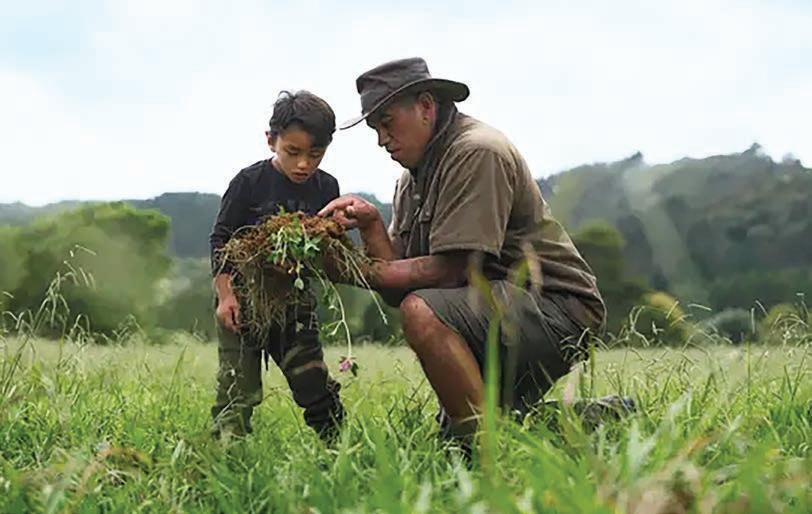
Fonterra group director of farm source Anne Douglas said it is building on a sector-wide effort to
Anne Douglas Fonterra
The pilot programme will reflect what has been learned through Growing Future Farmer’s existing programme aimed at getting young people into the sheep and beef sector. Staff
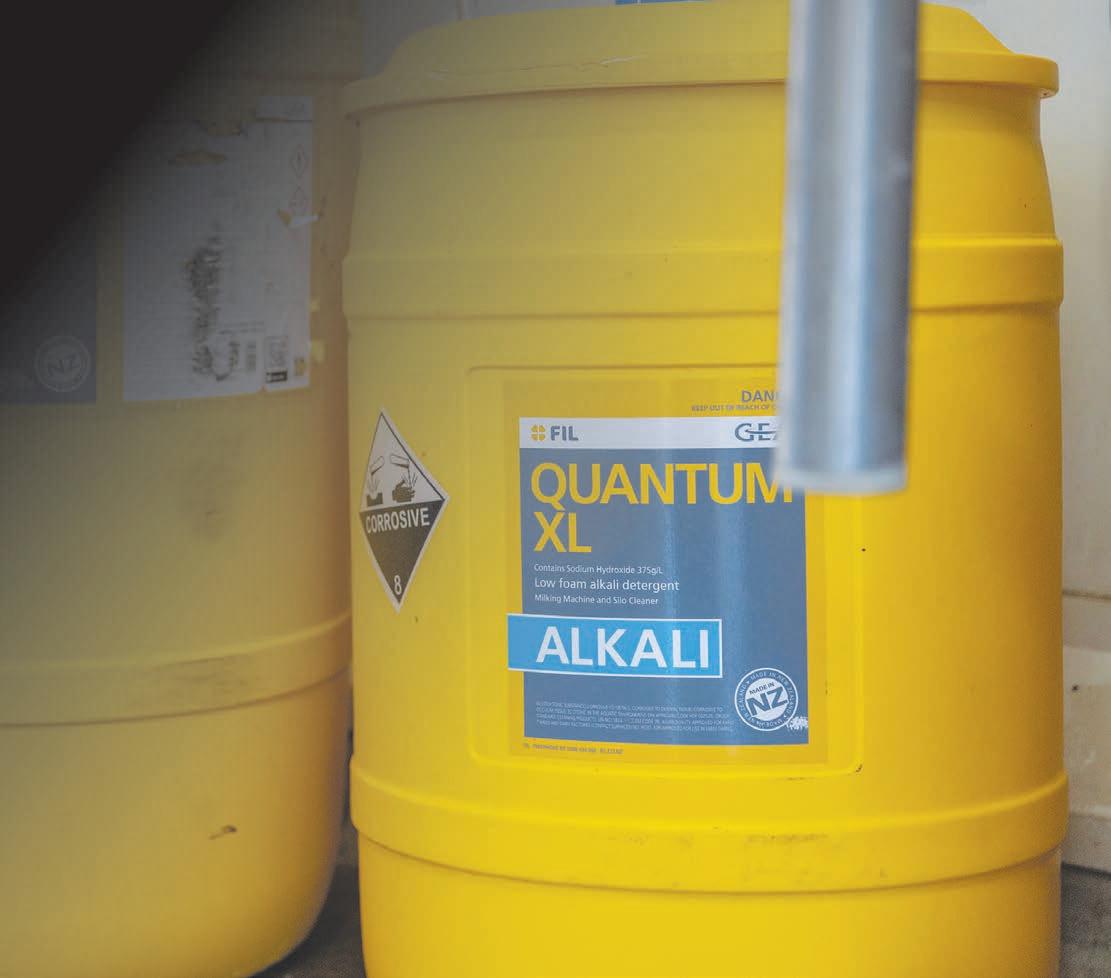




GROWTH: Fonterra and Growing Future Farmers’ new two-year vocational training programme will be piloted in Waikato and Bay of Plenty in the New Year.





Puzzle of black and white cows solved
ASTUDY involving Massey University scientists has unlocked the genetic variant that gives Holstein-Friesian cows their distinctive black and white hide.
Using genomic techniques, the team analysed the coat patterns of thousands of cows and identified two DNA variants controlling two different genes – KIT and MITF –that explain much of the variation in this cattle breed’s colour.
Professor Matt Littlejohn said the genes are well known for controlling pigmentation in humans, mice, dogs, horses, birds and other species.
The KIT gene variant found in Holsteins is unusual because it does not sit within the gene itself. Instead, it regulates the gene from a different position on the chromosome.
“Think of it like a light switch turning on a light in another room,” Littlejohn said.
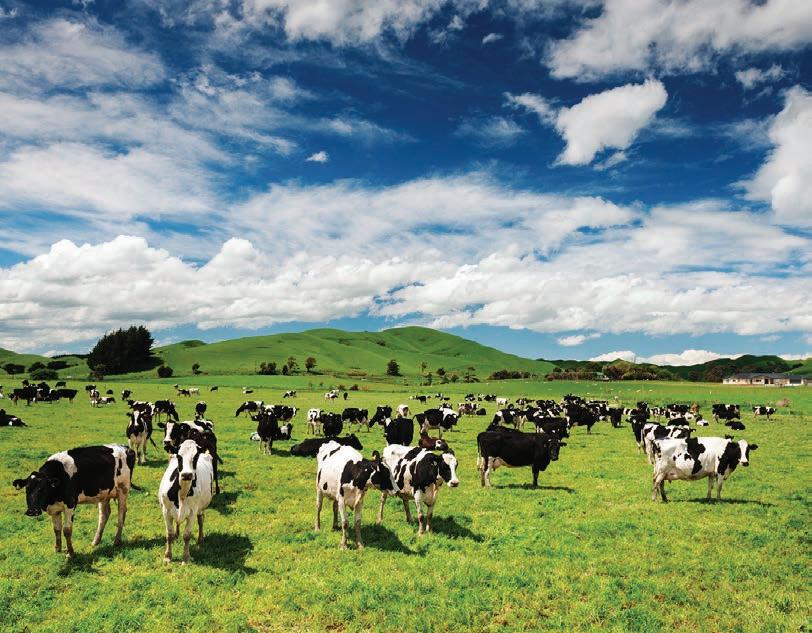
since this marks the calf as a Hereford cross.
“When ‘splotchy’ faced calves are born as a result of the MITF variant, these calves are harder to recognise as beef crosses and are often less valuable.
“Genetic testing could help produce calves with more predictable coat patterns in the future,” he said.
Coat patterns are some of the oldest traits selected by humans, likely since the dawn of domestication, showing how farmers have long shaped cattle populations.
For other breeds, the DNA variants behind unique patterns, such as the white face of Herefords or the belts of Galloways, are already known.
that improve cattle comfort and performance.
“This research not only solves the mystery about how the Holstein gets its spots but also shows how genes can interact to create unique and unexpected patterns.
This research not only solves the mystery about how the Holstein gets its spots but also shows how genes can interact to create unique and unexpected patterns.
The MITF variant is also unusual for its ability to create unique coat patterns when different breeds are crossbred.
While these patterns are interesting to look at, they are not simply aesthetic.
“This variant can create black speckles in dairy crosses, ‘black socks’ in Belgian Blue cattle, or reversal of the white face expected from a Hereford cross.”
“Many dairy farmers cross Holsteins with Herefords to produce calves that will perform well in beef systems.
“The white face is important,
Other practical applications of the research include possible animal welfare benefits. Skin pigmentation affects heat absorption and UV protection.
Black coats absorb more heat but also provide better UV protection. Knowing how genes control pigmentation could help farmers select coat patterns
Funders hungry for methane-cutting feed
nutrition. Up to 12% of what farmers feed their animals is literally disappearing into the air.
AUSTRALIAN ag tech company
Number 8 Bio is eyeing the New Zealand and European markets after securing $11 million in funding to accelerate the commercialisation of its methanereducing livestock feed product, BetterFeed.
The Series A funding raise, led by Icehouse Ventures, will fund regulatory approvals for expansion into those two markets.
Number 8 Bio’s co-founder and CEO, Dr Tom Williams, said BetterFeed is about making farms more economically efficient.
“Every burp represents lost
“That’s inefficiency, and inefficiency is exactly where innovation should start.
“Enteric methane is one of agriculture’s most stubborn challenges, short-lived in the atmosphere but more than 28 times more potent than carbon dioxide.”
BetterFeed uses a proprietary organic small molecule that can be manufactured in Australia, using green chemistry to achieve greater cost-effectiveness and scalability in commercial agriculture.
Independent trials have demonstrated up to 90% methane
reduction and improved rumen fermentation.
Main Sequence Ventures, which led Number 8 Bio’s seed round, followed on the Series A with new participation from ONE Innovators, a Japanese venture capital firm specialising in carbon neutrality.
The funding will also support commercial readiness for the BetterFeed range, which includes a feed additive and a slow-release capsule designed to last up to six months, unlocking adoption across the grazing systems where the vast majority of livestock spend their lives.
This raise will fund large-scale animal trials, regulatory approvals for expansion into New Zealand
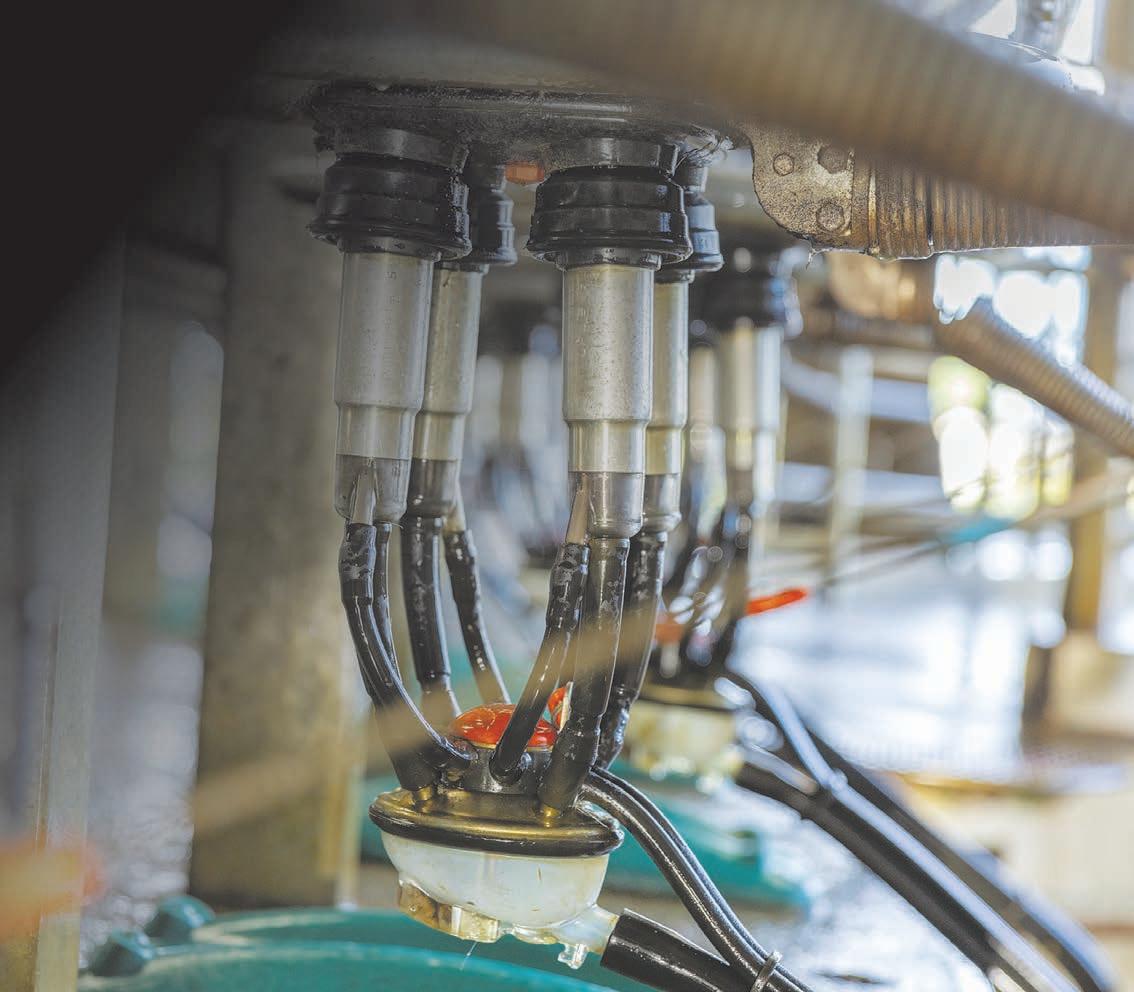
and Europe, and the rollout of a carbon-insetting programme enabling farmers and supply chains to claim verified emissions reductions.
Patents are now being finalised, and large-scale commercial trials are planned ahead of Australian market entry in 2026.
Williams said the funding demonstrates a strong global intent to back practical, proven climate solutions.
“This raise shows serious international belief in what’s being built here in Australia.
“Capital is moving toward innovations that deliver measurable impact and commercial return, and that’s exactly where BetterFeed sits.”
“It’s a great example of how modern genomics can uncover the hidden mechanisms behind traits we often take for granted. Early animal breeders likely selected spotted animals hundreds, if not thousands, of years ago, and we now know the molecular basis of these unique patterns,” Littlejohn said.
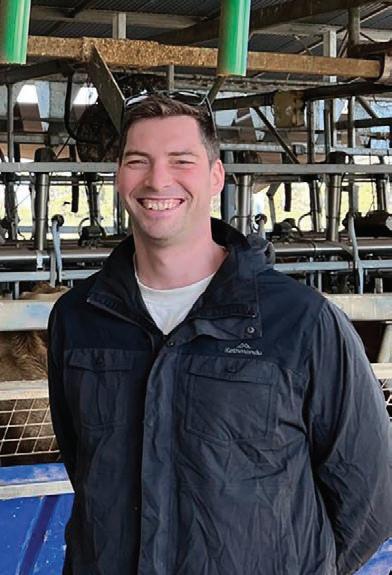





COOL PAIR OF GENES: The study identified that two genes are responsible for much of the variation in this cattle breed’s colour.
Prof Matt Littlejohn Massey University Staff
HURDLES: Number 8 Bio’s cofounder and CEO Dr Tom Williams says the funding will help with the regulatory approvals for getting BetterFeed into New Zealand.



together: Bet ter farming, how our events bring science to life

Par tner ships and collaboration are at the hear t of how we work at Dair yNZ , because progress happens faster when farmer s, scientists, and industr y par tner s come together.
That ’ s why events are such an impor tant par t of what we do They ’ re where our research meets real farm experience, and ideas turn into prac tical ac tions that benefit farmer s right across the countr y
O ver the past year, we ’ ve put an even stronger focus on connec ting science with farmer s through future -focused events developed with our scientists and exper ts Many of these have been held in par tner ship with other organisations to avoid duplication and make the most of shared knowledge Last season, we delivered 132 events nationwide, and the refreshed format has been a real success, with average event at tendance up 78%
At the same time, we heard clearly from some farmer s that they value smaller, farmer-led discussion groups and missed having them in some communities These groups are now back , as we appreciate that they ’ re where grassroots conver sations happen, and ideas turn into ac tion They sit alongside our core events, giving farmer s more options to connec t in ways that work best for them
Progressing Dair y Events
An example of these are our Progressing D air y Events - regional, on-farm events designed so we can all get a lit tle bet ter ever y season Held on local host-farms, they bring together farmer s, D air yNZ exper ts, and par tner organisations to share what ’ s working, and why, while being grounded in real farm examples
Each series focuses on a national topic , while each event tailor s insights to local conditions and challenges,
recognising that no t wo regions are the same So far, the Progressing D air y Event series have explored ways to improve farm efficienc y and profitabilit y in collaboration with Fonterra, and how to maximise homegrown feedwith events on technology and water qualit y coming up soon
We run t wo main event formats: larger on-farm gatherings where farmer s, scientists, and D air yNZ exper ts come together, and smaller “satellite” sessions for farmer s in more isolated areas Regardless of size, ever y event combines science, prac tical tool s, and lived experience in a way that ’ s easy to take back to your own farm
What can you expect if you attend?
These events are shaped by the challenges and oppor tunities in your region, with host farmer s and D air yNZ exper ts sharing what ’ s worked, what hasn’t, and lessons learned along the way You’ll come away with prac tical ideas to test on your
own farm system, plus time to ask questions, swap ideas, and connec t with other s
Progressing D air y Events are built around a simple goal: helping farmer s stay ahead of challenges, adapt to change, and keep improving season af ter season We bring our science direc tly to you, which is focused on driving produc tivit y, strengthening farm systems, and competing on sustainabilit y
Whether it ’ s through shared knowledge and experiences, prac tical tool s, or the latest science, these events are about bet ter farming, together Because when we back each othe r with proven advice and real-world know-how, we all get a lit tle bet ter ever y season
Keep an eye out for events coming up in your region at dair ynz co nz/events
Progressing Dair y Events are about taking the next step for your farm system
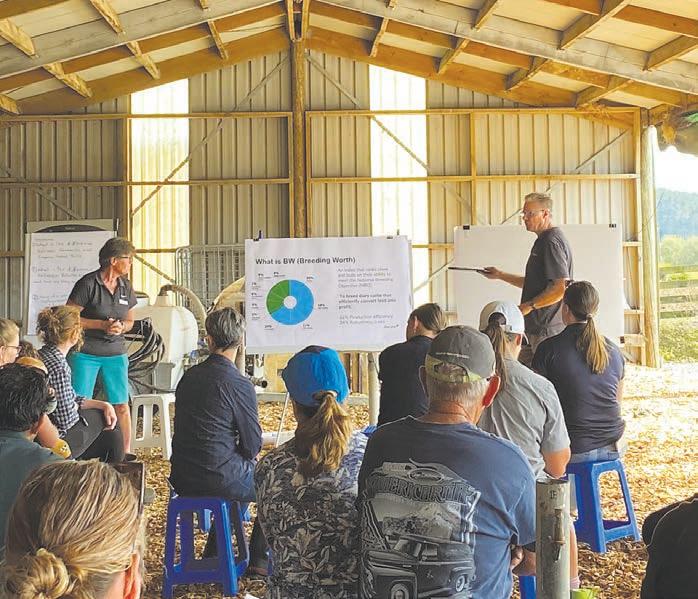
B e t t e r E v e r y S e a s o n
Real progress shared by real farmers and Dair yNZ experts – practical ideas you can put to work now, with an eye on where the future’s heading
Find your local event –dairynz.co.nz/events
How facial eczema can impact cow fertility
Sector perspective
FACIAL eczema is first and foremost a liver disease. Cows pick up the toxic sporidesmin from spores of the Pseudopithomyces toxicarius fungus growing on dead litter at the base of summer pastures. The toxin then damages the liver and bile ducts. Many cows never show obvious skin signs, yet still experience liver damage that can affect production and health for months. DairyNZ estimates
that for every cow with clinical (symptomatic) FE, there can be around ten more with subclinical (asymptomatic) damage.
The link between facial eczema and fertility
We liken the liver to the cow’s engine. It turns feed into energy, clears toxins, stores and regulates the release of trace elements, and releases and helps regulate hormones that control metabolic function, hence it is key to both estrous and conception. When FE toxins damage the liver, that work slows down. Cows might look fine, but energy and hormones are off, and they cope less well with stress. You see cows cycling later, more late calvers, and higher empty rates.
How FE hits autumn and spring mating
High spore counts in February and March can see the liver still repairing tissue in April and May. At the same time, they’re being asked to produce milk, build condition, and maintain a pregnancy. Pathology testing of cows across 105 North Island dairy farms in 2013 indicated liver damage as high as 24.1%. These liver-damaged cows will be under significant strain heading into
mating, with less energy “buffer” to put towards reproduction. In herds with autumn calving or split calving, late-summer FE can also roll through cows that will be mated again in spring. Cows that were hit by FE late in one season may calve, then come into spring mating with a liver that never quite got back to full capacity. They are more likely to struggle with energy balance, cycle later after calving, and be less forgiving of any extra stress.
On farm, whether you mate in autumn, spring, or both, the FE flow-on effect can look like a calving spread that drifts, with cows cycling later despite good body condition and cows that do cycle but take several rounds to get in-calf. Because the gap between the FE season and mating can be months, it is easy to miss the link back to what happened in late summer.
Prevention beats recovery every time
A badly damaged liver never fully bounces back. Stopping FE before it hits is your best fertility tool. Treat FE as a whole-herd issue: If you see clinical signs of eczema, assume up to 10 times more cows have hidden liver damage.
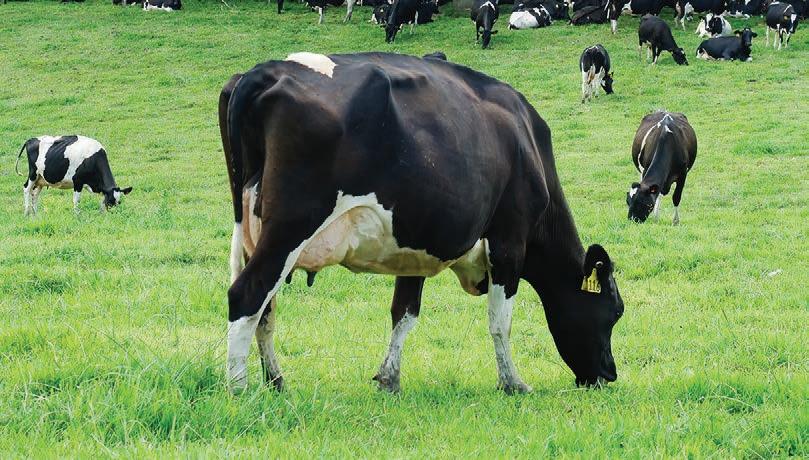
LINK: Because the gap between facial eczema season and mating can be months, it’s easy to miss the link.
Use real spore counts: On-farm spore counting in summer tells you when risk is real on your place. Start zinc early: Set trigger levels with your vet so cows are covered before spores climb. Check your plan: Blood tests and solid summer feeding and minerals show whether your FE programme is actually working.
Questions to ask before next season
Before you lock in next season’s mating targets, ask the following questions: Did we have conditions for FE last summer, even if we didn’t see many signs?
Were this year’s scanning results or calving spread worse than expected?
Do our cows have the liver “headroom” they need for the coming season?
Do we have a clear plan for monitoring spores, protecting cows in time, and checking whether our FE programme really works?
FE can quietly shape next year’s in-calf rates and milk income. Treating it as a liver and fertility issue, not only a skin issue, puts you in a stronger position when the scanner arrives and when next season’s calves hit the ground.
Milk production up 1.7% for October
Staff reporter NEWS Dairy
FAVOURABLE weather conditions in the South Island helped push New Zealand milk production up 1.7% for October.
Production was also up by the same percentage for the 12 months to October, according to Fonterra’s November Global Dairy Update.
Milk collections for the month were 209.5 million kg MS, 2.2%
above October last season.
The increase was mainly due to favourable weather conditions in the South Island, and last year’s flooding events, which impacted collections in October last year.
The higher collections were partially offset by lower collections in the North Island. Season-todate collections are 525.9 million kg MS, a 2.7% lift above last season.
Less favourable weather conditions across the North Island including below average sunlight
hours and higher temperatures across all regions except central North Island and Taranaki saw milk collections for the month fall by 0.3% with 118.7 million kg MS picked up.
Season-to-date collections are 330.8 million kg MS, 2.0% above last season.
South Island milk collections for the month were 90.8 million kg MS, 5.6% higher than October last season.
The increase was mainly due to flooding events impacting
lower South Island collections last year.
Soil moisture was well above average for most of the South Island, supporting pasture growth, with drier soil conditions in eastern parts of Marlborough and Canterbury. Sunlight levels were above average for the eastern regions, while temperatures were varied across the South Island.
Season-to-date collections are 195.0 million kg MS, 3.8% above last season.

LIFT: Milk production lifted 1.7% both for October and the 12 months to October, Fonterra’s November Global Dairy Update says.
Chris Balemi Balemi is founder and managing director of Agvance Nutrition
Global milk growth weighs on prices

NEW Zealand’s dairy sector spent much of November facing the same pressure that has dominated sentiment in the United States and Europe for the past few months – strong growth in global milk supply and demand patterns that are firm, but not strong enough to absorb the additional volumes coming onto the market. While trade has certainly continued, the balance has shifted noticeably from the supportive conditions seen earlier in the season. This has been reflected clearly in Global Dairy Trade (GDT) results, where pricing has softened throughout the month.
New Zealand’s October milk production figures underline the strength of supply. Milksolids collections rose 2.8% year on year (YoY) to 268,743,000 kgMS – the strongest October since 2018 on a milksolids basis and the thirdlargest month for milk collections in New Zealand’s history.
On a tonnage basis, national production reached 3,130,000 tonnes, up 1.7% YoY. Season-todate performance also remains firm, with collections up 3.4% on a milksolids basis and 2.3% on tonnage.
On a rolling 12-month basis, New Zealand milksolids production reached a new record of 1.961 million kgMS, up 2.5% on the previous 12-month period and exceeding the earlier record set in July 2021 by 0.6%. Increased feed inputs continue to sit behind this growth. Palm kernel extract (PKE) imports were up 7.3% YoY in September and up 31.9% for the year-to-date (YTD), reflecting the stronger supplementation strategy observed on farm.
The global picture mirrors this dynamic, with most key exporting regions reporting YoY growth. October milk production in the US rose 3.7%, while Argentina recorded a notable 9.4% increase and Uruguay 2.6%. The European Union’s latest data showed a 4.3% lift in September milk production. Even China – which had previously reported declines – posted a 4.2% YoY rise for September. The only major exporter reporting a fall was
Australia, with October production down -2.4% year on year.
This collective increase in global milk supply flowed directly into the pricing environment. All GDT Events and Pulse auctions during November recorded declines.
Event 391 delivered a -2.4% fall in the GDT price index. Event 392 marked the fifth consecutive decline on the platform, falling -3.0% overall. The drop was led by a sharp -7.6% fall in the butter index, followed by anhydrous milkfat (AMF) down -5.0%, mozzarella down -2.8% and cheddar down -2.7%.
New Zealand’s October trade statistics reflected the softer conditions in parts of the commodity mix. Total dairy export volumes fell -1.2% YoY to 311,885 tonnes. However, export value increased 8.6% YoY. For the YTD, export volumes remained up 2.7%, with value lifting 17.1%.
Breaking this down further, WMP exports declined -4% year-on-year in October and SMP shipments fell -11%. AMF exports rose 1%, butter exports increased 7% and cheese 6%.
Globally, demand trends varied by market. China’s total dairy imports increased 1.0% YoY in October, with WMP imports up 4% and cheese up a substantial 31%.
US dairy export volumes increased 2.4% YTD in August and are up 2.3% YTD.
Australia’s total dairy exports fell -1.1% in September and are
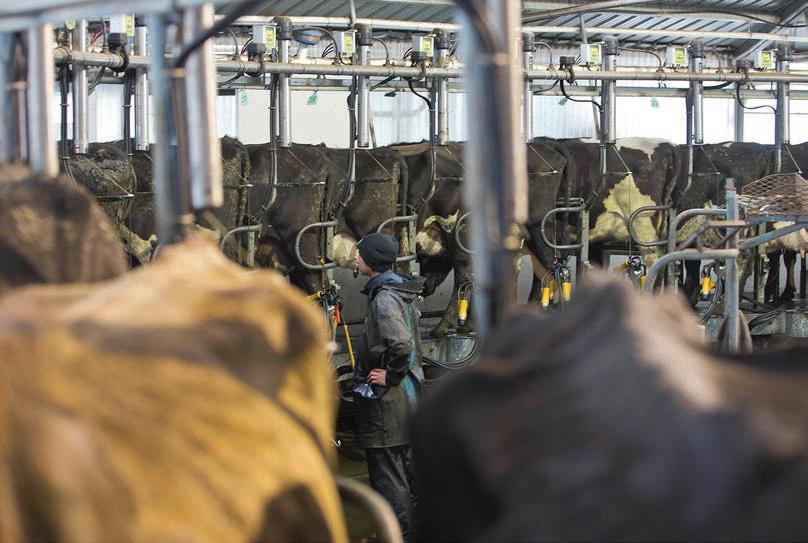
FLOWS: As the calendar year draws to a close, production is still flowing strongly, and the approach of the festive and holiday period traditionally slows purchasing momentum. These dynamics suggest that current pricing patterns are likely to persist into the early part of 2026.
down -5.6% YTD. EU-27 exports rose 1.1% YTD in September but are down -3.7% across the YTD. Argentina’s dairy exports increased 19.2% in October and are up 8.0% YTD.
Despite demand remaining solid in many regions, it has not kept pace with global supply growth.
Several key buyers across Asia and the Middle East have continued purchasing on an as-needed basis rather than building the larger stock positions typical of previous years. This has contributed to sustained downward pressure on prices.
While this environment supports more competitive product costs for importers and consumers, it
reduces earnings for farmers and manufacturers.
As the calendar year draws to a close, production is still flowing strongly, and the approach of the festive and holiday period traditionally slows purchasing momentum. These dynamics suggest that current pricing patterns are likely to persist into the early part of 2026. Once the new year begins, and production and demand patterns become clearer after the holiday period, the industry should have a better read on how the 2025–26 season may shape up – and what this ultimately means for farmgate returns and processor performance.
Southland winter grazing practices on the improve
ENVIRONMENT Southland
says the 2025 winter grazing season has led to encouraging improvements within the region’s dairy sector, with engagement with farmers seemingly paying off
for the environment.
Of the 77 incidents logged this season, fewer than a third were related to dairy platforms, with the remainder coming from other farming systems. Environment Southland compliance manager
Donna Ferguson said this is an indication that ongoing efforts within the dairy industry to

improve winter grazing practices are paying off.
“It’s clear that the sector is responding well to the expectations around winter grazing,” she said.
“We’re seeing better practices and greater awareness, which is a credit to the industry’s proactive approach.”
Following on from winter grazing investigations, there were 33 enforcement outcomes where non-compliance was found. These consisted of one formal warning, with the rest being letters of advice.
Ten of the winter grazing incidents reported remain under investigation, she said.
Southland dairy farmer Nigel
Johnston told Farmers Weekly that, over the past 10 years, Environment Southland and farmers have engaged a lot, and “ideas from both parties have improved results”.
Back fences, portable troughs, and fencing off swales and buffer zones from water ways have been part of the solution, he said.
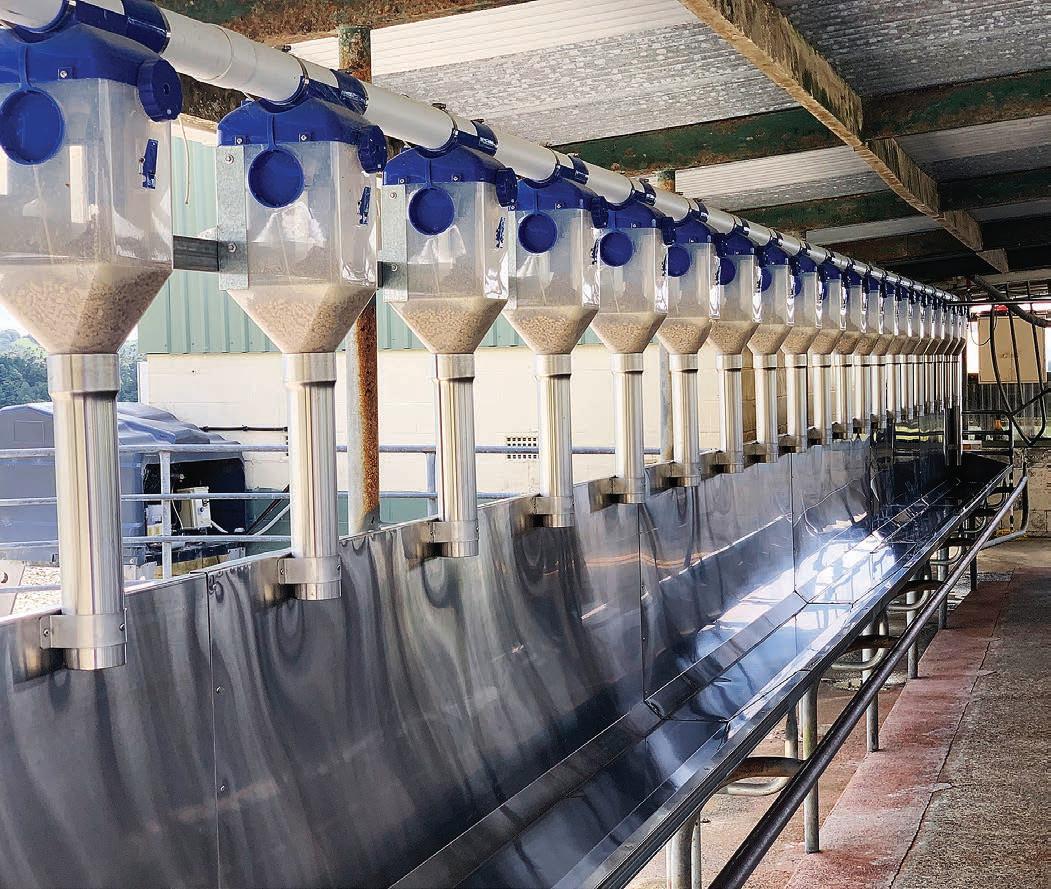
Cristina Alvarado
Alvarado is NZX head of Dairy Insights
Gerhard Uys NEWS Dairy
FEDERATED FARMERS
Unitary council model future-fit, with less upheaval
Separating rural and provincial governance from urban councils is the simplest and most effective way to streamline local government, Federated Farmers says.
“Top marks to the Government for kicking off an overdue conversation about cutting back costs, duplication and decision-making roadblocks that plague our current 78 councils,” Sandra Faulkner, Feds local government spokesperson, says.
With a proposal to abolish regional councils, the Government wants less bureaucracy and strengthened accountability.
“So does Federated Farmers,” Faulkner says, “but we have a different model that achieves those aims without the need to totally rewrite local government legislation.
“Spurred by rising rates, and a diminishing say by rural communities in council matters, Federated Farmers has given these issues a great deal of thought over the last two decades.
“Our model would see a decrease in the total number of local authorities from 78 to fewer than half that.”
New Zealand already has six unitary authorities - councils that perform the functions of both
district/city and regional councils - in Auckland, Gisborne, Marlborough, Nelson, Tasman and the Chatham Islands.
“They achieve the single layer of local government Ministers Bishop and Watts are striving for.
“But it doesn’t work optimally when city areas and rural hinterlands with a cluster of smaller towns are jammed in together under one council,” Faulkner says.
“Cities can end up dominating unitary councils, and the ambitions of people in provincial towns and rural areas are sidelined.”
Feds is suggesting a unitary structure that separates provincial and rural governance (regional government) from urban governance (municipal councils).
Each council would take on current regional council responsibilities, and current regional councils would no longer exist as separate entities.
Some areas have grasped the practicality and advantages of this set-up, and are already well down the track to taking it up.
In Southland, there’s a proposal in front of the Local Government Commission for an urban focused authority (Invercargill) and one district-focused authority,
incorporating Gore and Southland District Councils.
Environment Southland would no longer exist, meaning four current councils become two.
“Calls for Wairarapa’s three councils to amalgamate, and take up the responsibilities of Greater Wellington Regional Council in their own area, are growing louder,” Faulkner says.
“This dovetails with their move to jointly set up their own three waters entity with Tararua under Local Water Done Well - another aspect that works well with the future model of local government Feds wants to see.
“Combined district councils are better placed financially and staffresource wise to keep delivering stormwater, drinking water and wastewater treatment services in-house.”
In Canterbury, eight councils could become three: a Christchurch City based municipal council and North and South regional councils, each taking on the functions currently done by Environment Canterbury.
Federated Farmers agrees with the Government that decisions on future council structures should be driven locally, by elected representatives.
“But we see problems with

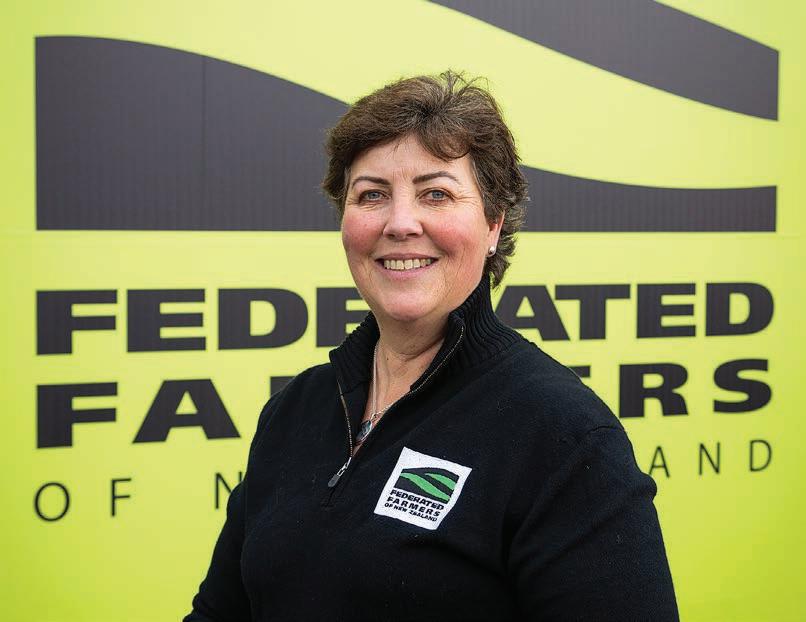
a unitary council system separating city and provincial/rural governance is the optimum path to a streamlined and more efficient local government sector.
completely removing current regional councillors and leaving it up to Combined Territories Boards (CTBs) of mayors to decide the future shape of councils.
“That’s a lot of regional councillor experience walking out the door on the eve of the Government introducing its overhauled resource management legislation - crucial to livelihoods and the environment.
“If voting on CTBs is based on size of population represented by each mayor, it also risks rural concerns being sidelined,” Faulkner says.
Federated Farmers says there’s a lack of detail in the Government discussion papers about future delivery of functions currently done by regional councils.
“The likes of flooding, drainage scheme and emergency management are lifeline tasks.
“We can’t just throw loose ideas
at the wall on future delivery in the hope something sticks.”
Some existing regional council boundaries are too big to be governed by just one unitary council, Faulkner says.
“We think there’s also room for catchment boards and community boards to take up specialised roles and preserve local input.”
Faulkner says the model Feds favours would be a smoother transition to the streamlined and efficient sector the Governmentand New Zealanders - are looking for.
“Again, congratulations to the Government for sparking these overdue conversations.
“Federated Farmers and rural communities are champing at the bit to be involved in landing a structure that preserves strong local democracy and accountability, is future-fit and less costly.”





SLIMMED DOWN: Sandra Faulkner says
Sharefarmers hungry for knowledge
Sharemilkers, contract milkers and farm owners around the country have been getting some well-timed advice as they negotiate agreements for the coming dairy season.
More than 300 people have attended a series of free workshops held nationwide, aimed at helping farmers build stronger, more successful partnerships.
Waikato Federated Farmers sharefarmer chair Dani Hovmand helped run the Morrinsville session and says the turnout showed how valuable the workshops are.
“At our Morrinsville one, we had about 50 people. There were probably more contract milkers –or managers looking to step into contract milking – although we had farm owners there too,” she says.
“It was really great to see people of all ages making the effort to come along and understand what contract milking or sharemilking could mean for them.
“A lot of people arrived with questions, which was awesome.”
Hovmand says the farm owners who attended were mainly looking to bring on a contract milker, or already had one and wanted to better understand the next steps.
There was definitely an appetite in the room to get clarity on what contract milking and sharemilking really involves.
Danielle Hovmand Waikato Federated Farmers sharefarmer chair
“There was definitely an appetite in the room to get clarity on what contract milking and sharemilking really involves,” she says.
“It’s important that sharemilkers and contract milkers get the right information, because if they’re not making money, the system can’t keep flowing.
“These workshops are about
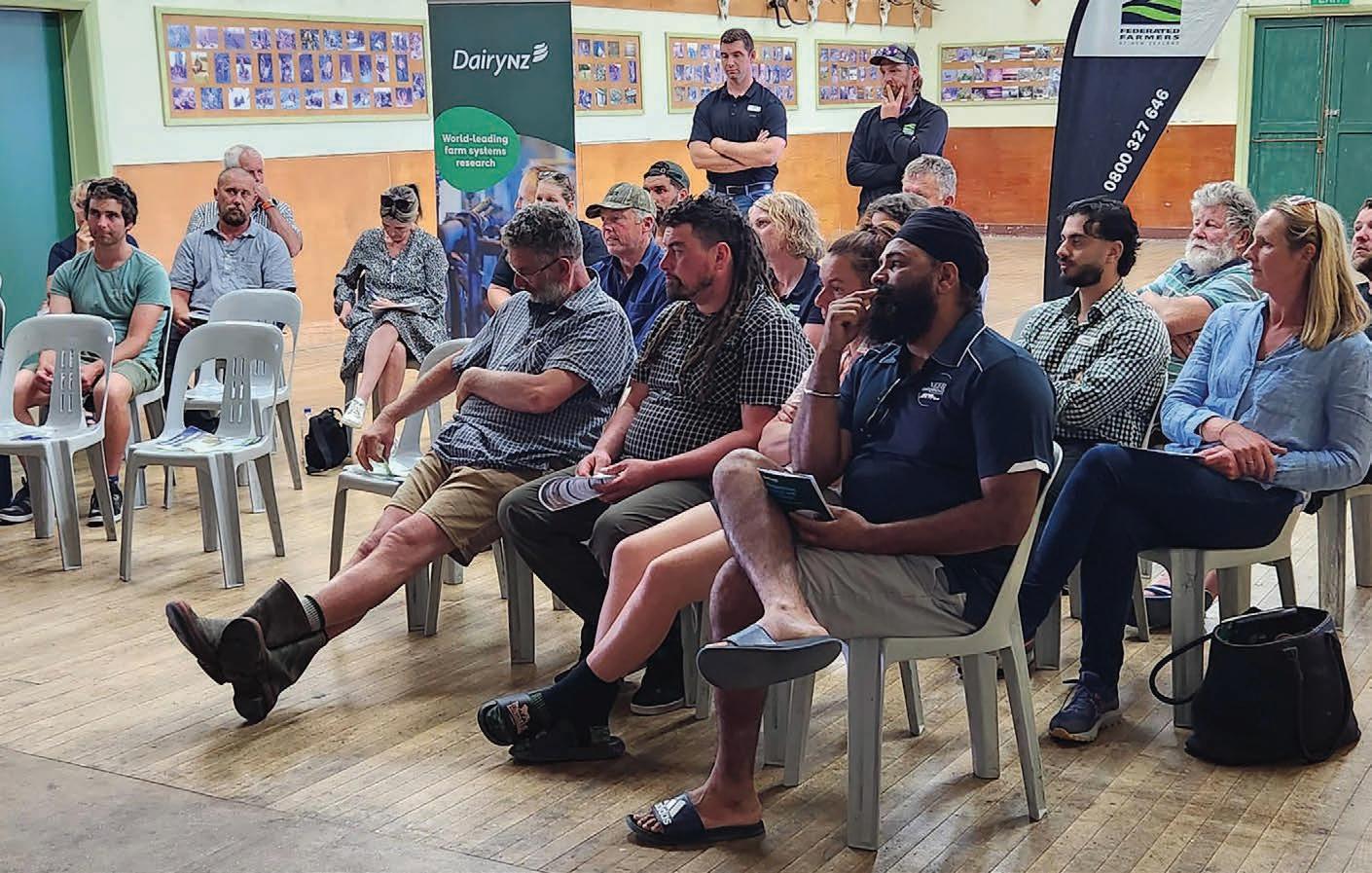
helping people know what to expect before stepping into a sharefarming role.”
The workshops, which wrapped up on December 5, were a joint initiative from Federated Farmers, DairyNZ and FMG.
They featured financial planning advice and contract-milking calculators from DairyNZ, along with a session from Federated Farmers covering key questions to ask and what to expect from a farm owner.
FMG also spoke about insurance, helping attendees understand risks and the protection available.
“I spoke more from the contract milkers’ point of view and shared my experience, while Brian Steele, our Waikato Feds sharefarm owner chair, gave the farm owners’ perspective on contracts, communication and responsibilities on farm,” Hovmand says.
“Overall, it went really well. Everyone left with more knowledge than when they walked in.
“We ran workshops last year too, and I’d love to see us run these annually, tweaking them if needed but keeping the core focus on finances.”
Te Pahu dairy farmer Angus Smith, who has a 50/50 sharemilker on his 500-cow farm, attended the Te Awamutu workshop to sharpen his understanding of what makes a successful sharemilking relationship.
“I’m 80 now, and we’ve lived in four different areas and have seen different setups regarding contract and sharemilking arrangements.
“Even though we’ve been doing it a long time, there are always new things to learn. I was especially keen to find ways of communicating more clearly.
“We’ve got a great farm advisor, but you still have to learn how to handle discussions, negotiate and explain things properly.”
Smith says one message in particular stood out.
“The chap talked about
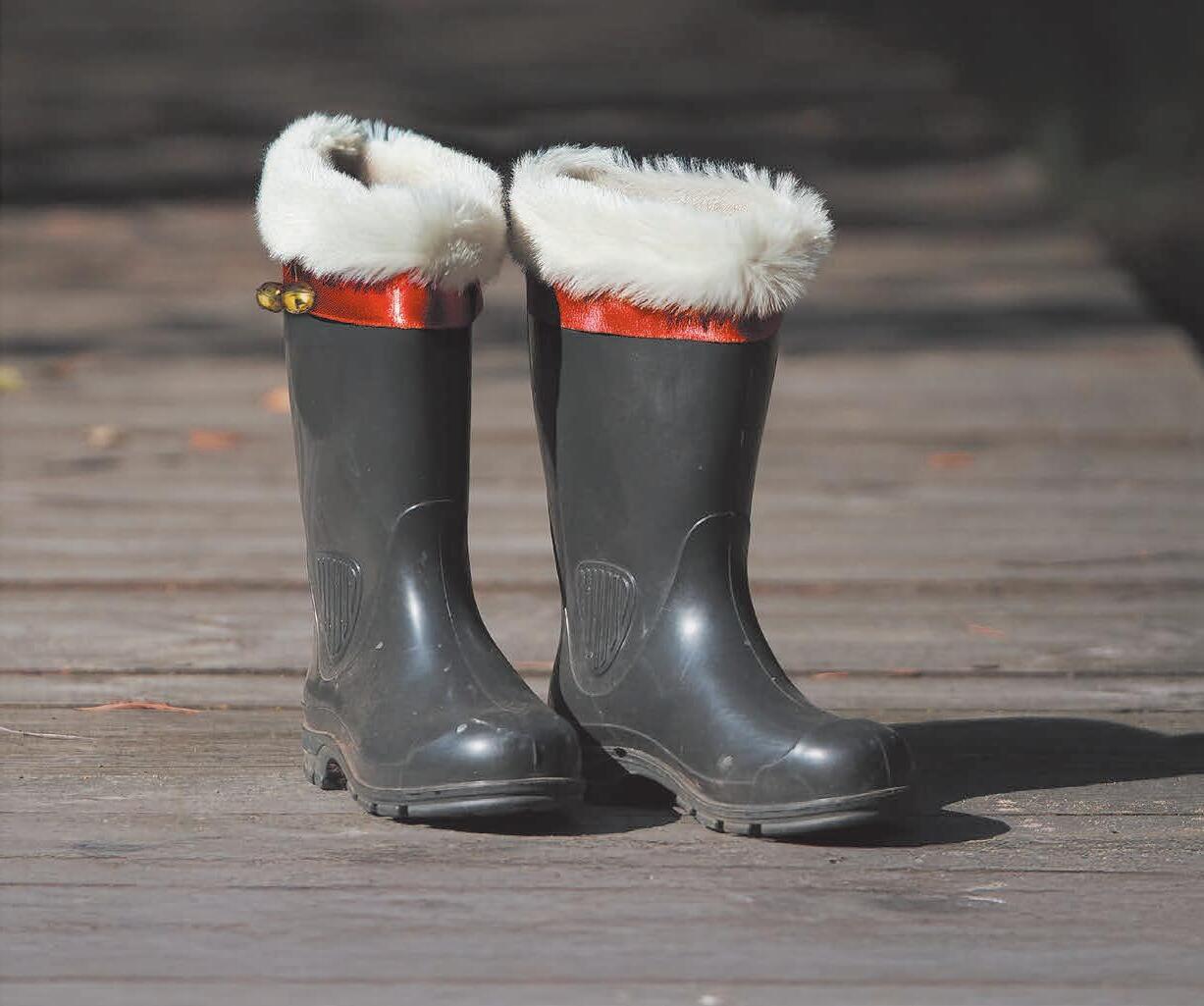
communicating well, finding compromise, and doing more than the bare minimum,” he says.
“If issues come up, the idea is to sort them early and positively, rather than going straight to the legal route.
“It’s about creating good outcomes right through – for both the farm owner and the sharemilker.”
He says workshops like these help ensure knowledge and opportunities keep flowing to the next generation.
“It’s not easy to buy a farm from scratch, and anything that helps younger farmers move forward is a good thing.
“There was a young couple there who’d grabbed some opportune breaks – exactly the kind of people we need coming through to keep the system moving.”
The workshops, called ‘Farming partnerships that work’, were held in 18 locations from Waikato to Southland. They focused on contracts, budgeting, due diligence,
SHARPENING UP: Farmers getting contract-ready at the Carterton workshop, one of 18 held around the country.
and understanding the key clauses that underpin a good sharemilking agreement.
Hovmand says the timing was deliberate, with many farmers currently negotiating roles and reviewing options for next season.
“Running them now means people can gather information before committing to contracts, rather than learning the hard way later.”
She says people often focus too much on what they might earn, without taking the time to understand what the role actually involves day to day.
“Successful partnerships rely on both sides being clear about their responsibilities, the risks they’re taking on, and what they expect from each other,” Hovmand says.
“These workshops were about giving people the knowledge to make good decisions and build arrangements that are fair, realistic and sustainable for everyone involved.”
Farmers frustrated by costly iwi consultation
Agrowing trend of farmers being asked to get iwi sign-off for resource consents needs to be nipped in the bud, Federated Farmers says.
“We’re hearing from more and more farmers who are confused and frustrated when their council tells them to approach an iwi or hapū for consent approval,” Feds resource management spokesperson Mark Hooper says.
“We’re talking about consents for everyday farming activities like stock water takes or farm effluent management.
“It’s not uncommon for farmers to be asked to get the views of multiple Māori groups and to pay for a cultural impact assessment.”
Hooper says everyone in New Zealand is entitled to a say on water quality and other resource management issues – tangata whenua, Forest & Bird, Business NZ and anyone else.
“But that consultation should be done when the council is setting environmental limits in their district and regional plans,” Hooper says.
“Once those regional limits have been set, and an activity falls within those, there should be no need
INDIVIDUAL:
Mark Hooper says Whanganui, where the river has legislated status as a person through Te Awa Tupua (Whanganui River Claims Settlement Act 2017), has its own idiosyncrasies and complications.
to consult on individual everyday farming consents.”
Federated Farmers has been helping a number of Whanganui members after Horizons Regional Council told them to consult iwi over their consent applications.
Farmers spoken to for this story did not want to be named due to concerns about being labelled racist or having their applications delayed.
One farming couple told us they sought consent to hire a helicopter contractor to spray scrub and return it to productive pasture.
Their sheep and beef farm is one with several QEII covenants, and the couple say they went beyond usual requirements, proposing a 50-metre
We seem to be drifting into what is effectively a co-governance scenario where decision-making is being defaulted from elected representatives to unelected third parties.
Mark Hooper
Federated Farmers RMA reform spokesperson
setback from water rather than the usual 10 metres.
They also set up no-spray zones around creeks and native regeneration areas.
“Like our parents often say, ‘there’s no gain for us if the environment is harmed – that’s our livelihood’.”
Horizons referred their application to representatives of an iwi group.
The iwi’s response, among other comments the farming couple considered irrelevant, was they should leave the scrub alone and switch their operation to bees.
The couple say they felt insulted by strangers telling them how to run their property, and were alarmed that their personal information had been shared without permission.
After months of back-and-forth emails, the couple learned their application had been sent to the wrong iwi group.
They approached their local pā directly, explaining the proposal and its safeguards, and secured the iwi’s blessing.
“They were so helpful, and a bit surprised we needed to ask them.
“It frustrated us that getting signoff could hinge on geographical location.
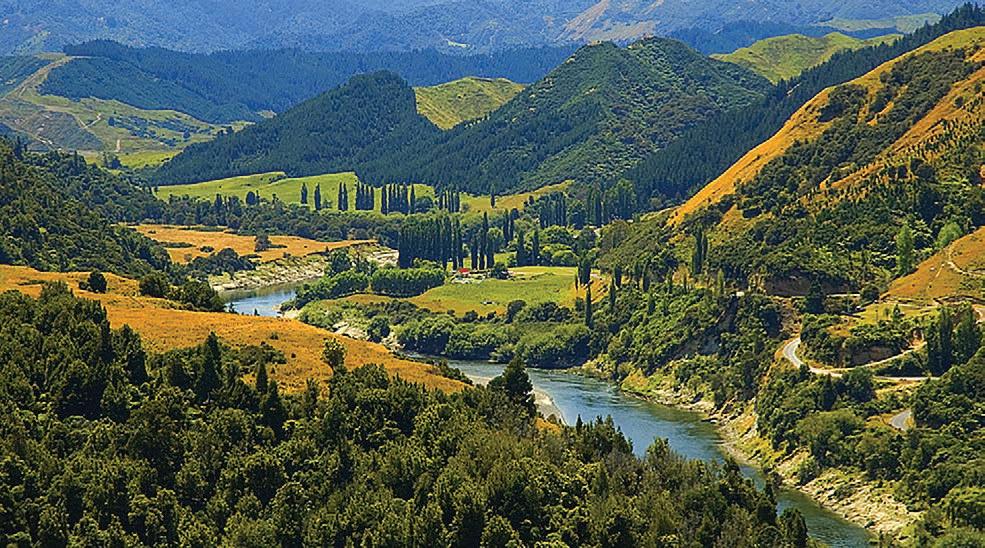

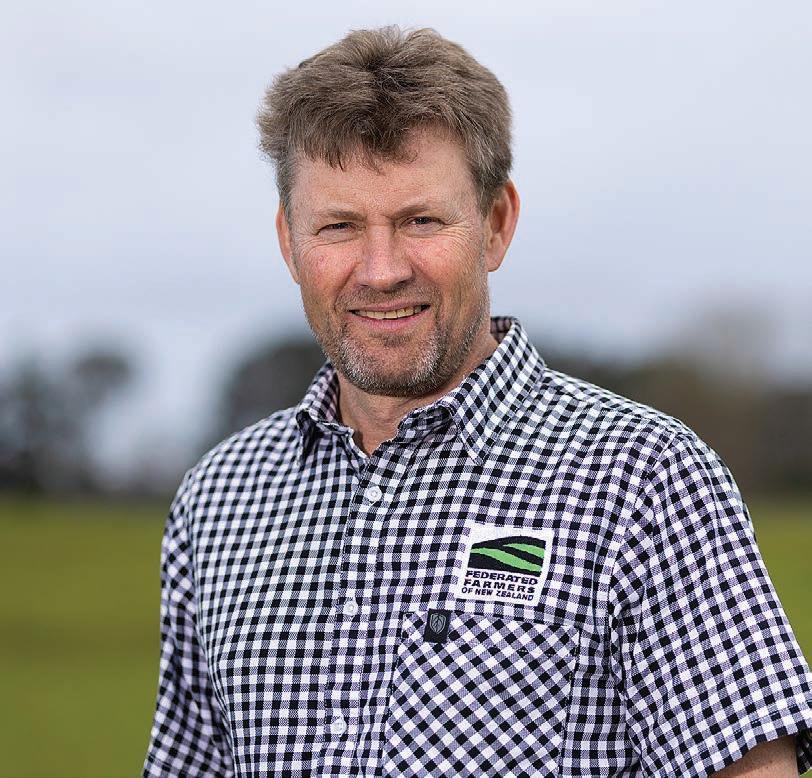
“If the consent had stayed with the iwi representatives it was first referred to, we were up against a completely different attitude – and we’d have to pay a lot of money to them too, almost as much as the consent itself.”
Another landowner seeking re-consent for a bore was advised to engage with eight hapū, but struggled to get responses.
One December 2024 email states, “We are the right people to contact but it is the last week of the year and this is not a priority at the moment.”
When the hapū emailed again in February 2025, they say the water take “seems excessively high” and “approval is required from us as to the compliance of the take with respect of Tupua te Kawa.
“If I could understand more of the context and answer to the questions above that will help me understand whether the consent (as applied for) can be reconciled with the kawa or not.”
Hooper says the emails paint a concerning picture.
“We seem to be drifting into what is effectively a co-governance scenario where decision-making is
being defaulted to third parties.
“This practice lacks accountability and transparency – key elements of good governance.
“It’s striking hapū groups aren’t focused on areas of historical cultural importance but instead are making comments on what they think is the best land use or appropriate water takes.”
Hooper says Whanganui, where the river has legal personhood, has unique factors, but councils elsewhere also leave it to farmers to work out which iwi or hapū should be consulted.
“The costs of getting a cultural impact assessment – as with all the other assessments and detailed reports farmers are being forced into getting done – can be exorbitant.
“It’s over-complicated, consent backlogs build up, and the whole process has become a gravy train for consultants and outside parties.”
The Government says its new resource management legislation will emphasise private property rights and remove unnecessary red tape.
“That’s exactly what New Zealand needs and deserves,” Hooper says.
NOT OUR JOB: Councils shouldn’t be leaving it to farmers to chase up permission from iwi groups for resource consents for everyday farming activities, Mark Hooper says.
Farmers fight back after council cold-shoulder
Stripping farmers of their voice at the council table highlights why rural communities are quickly losing faith in regional councils, says Taranaki Federated Farmers president Leedom Gibbs.
Taranaki Regional Council recently removed Federated Farmers from its Operations and Regulatory Committee, which oversees resource consents and compliance monitoring.
Gibbs describes the move as “extremely disappointing” and says local farmers won’t be taking it laying down.
“Having a farmer’s perspective at the Operations and Regulatory Committee table is so important in terms of practicality and on-theground knowledge.
“This is the part of council that examines compliance issues – and rightly or wrongly farmers are often the ones on the receiving end of that stuff.
“For years, we provided a realworld perspective when big
decisions were being made about farming, but over recent years this has been eroded and here’s another slip.”
Gibbs has written to the council chair expressing deep concern and frustration over the decision.
We’ve just seen the Government float a proposal to completely abolish regional councils, and decisions like this make it really easy to see why.
Leedom Gibbs Taranaki Federated Farmers president
“Unfortunately, the chair’s response suggests he’s determined to stick to this course.
“Rest assured, we won’t be backing down without a fight,” Gibbs says.
She says poor decisions like this are a big part of the reason rural
communities, and now seemingly politicians, have lost confidence in regional councils nationwide.
“We’ve just seen the Government float a proposal to completely abolish regional councils, and decisions like this make it really easy to see why.
“Taranaki Regional Council says they’re all about ‘working with people’ and historically they do have a strong track record of that – but farmers are losing faith.”
Federated Farmers’ Taranaki leadership team will attend a council meeting on Tuesday, 16 December, where councillors are expected to reconsider the composition of the committee.
“We’re going to be sending a clear message that Taranaki farmers want to work with the regional council, but we can’t unless it’s a two-way street,” Gibbs says.
“Council needs to accept they’ve got this one wrong, restore the farming voice to the committee table, and put things right with their rural ratepayers.”
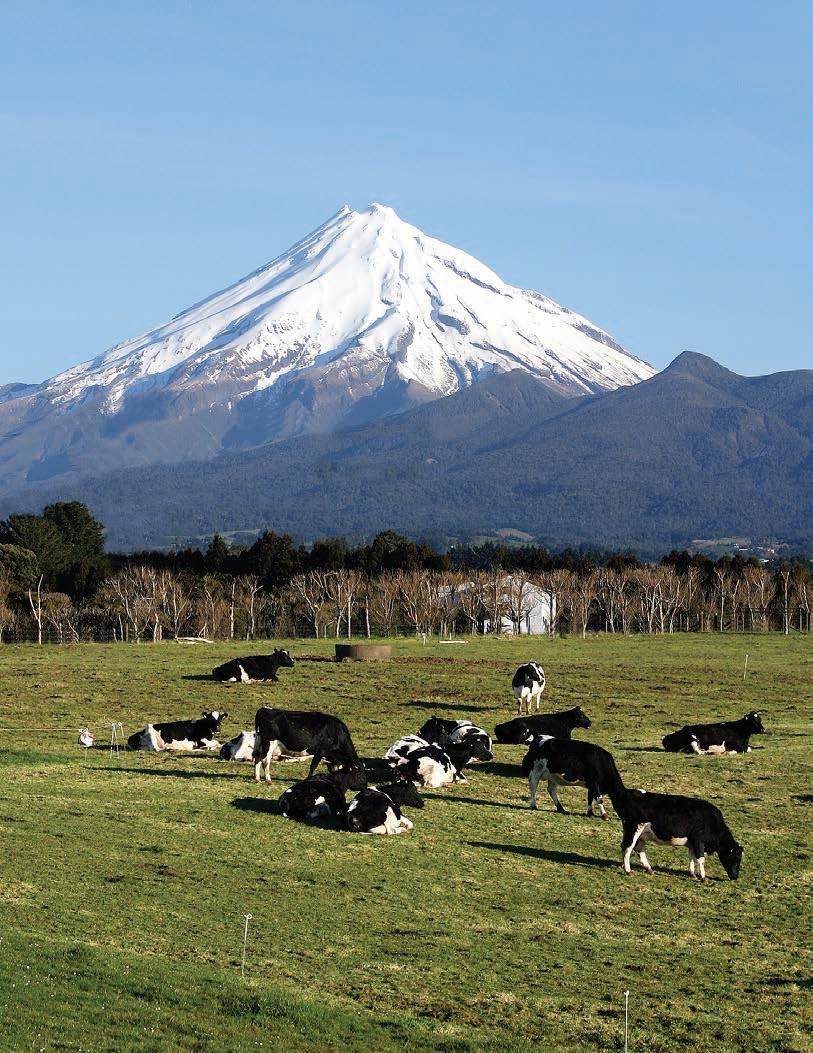
Feds backs sights being set on feral cats
Federated Farmers is welcoming the Government’s decision to add feral cats to the Predator Free 2050 target
DEVASTATING:
Feral cats not only hammer native species, but they spread the parasite that causes toxoplasmosis, which can cause abortions and other problems in livestock. Photo: Supplied/DOC
species list – a long-awaited step to protect native wildlife and curb a disease costing farmers millions.
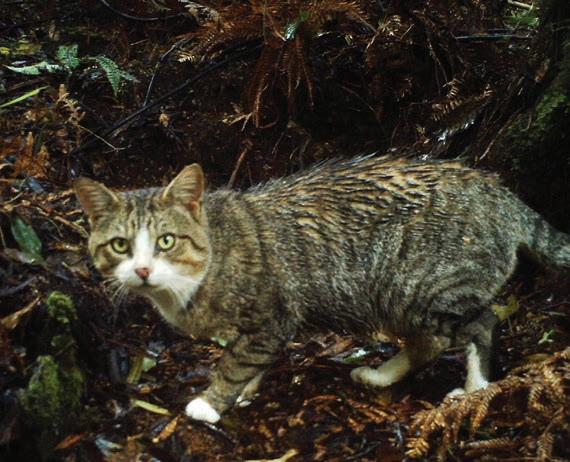
Conservation Minister Tama Potaka confirmed the change in November, saying feral cats put huge pressure on native birds, bats and lizards, and spread toxoplasmosis, a parasite that causes major losses in sheep flocks.
Federated Farmers pest management spokesperson Richard Dawkins says the announcement shows Wellington is listening to rural communities.
“Our members have been telling us for years that feral cats are out of control.
“They hammer native species, and they spread toxoplasmosis, which can cause abortions and serious animal health problems in sheep.
“This is a really important step toward coordinated, nationwide action.”
Federated Farmers’ most recent pest survey found 37% of farmers are actively managing feral cats on their farms.
Many reported constant reinvasion caused by irresponsible owners dumping unwanted cats and kittens in the countryside, or by the feeding of feral cat colonies on town fringes.
“That steady repopulation makes the job almost impossible for farmers to tackle alone,” Dawkins says.
“The Predator Free 2050 change will help fund more projects targeting feral cats and increase
research into humane tools and technology.
“Hopefully we’ll start to see a real dent being made in the feral cat population.”
The move follows more than 3400 submissions on the Predator Free Strategy, with over 90% backing improved feral cat management. Dawkins stresses the Predator Free targeting applies only to feral cats.
“Kiwis are proud pet owners. Domestic cats aren’t the target here, although responsible ownership, desexing and microchipping are important.
“But it’s the feral population that’s causing real harm, and this is a smart, science-based step forward.”

PUSHBACK: Taranaki farmers aren’t backing down after the regional council moved to strip their voice from a key decision-making committee.
Franz Josef 598 Waiho Flat Road
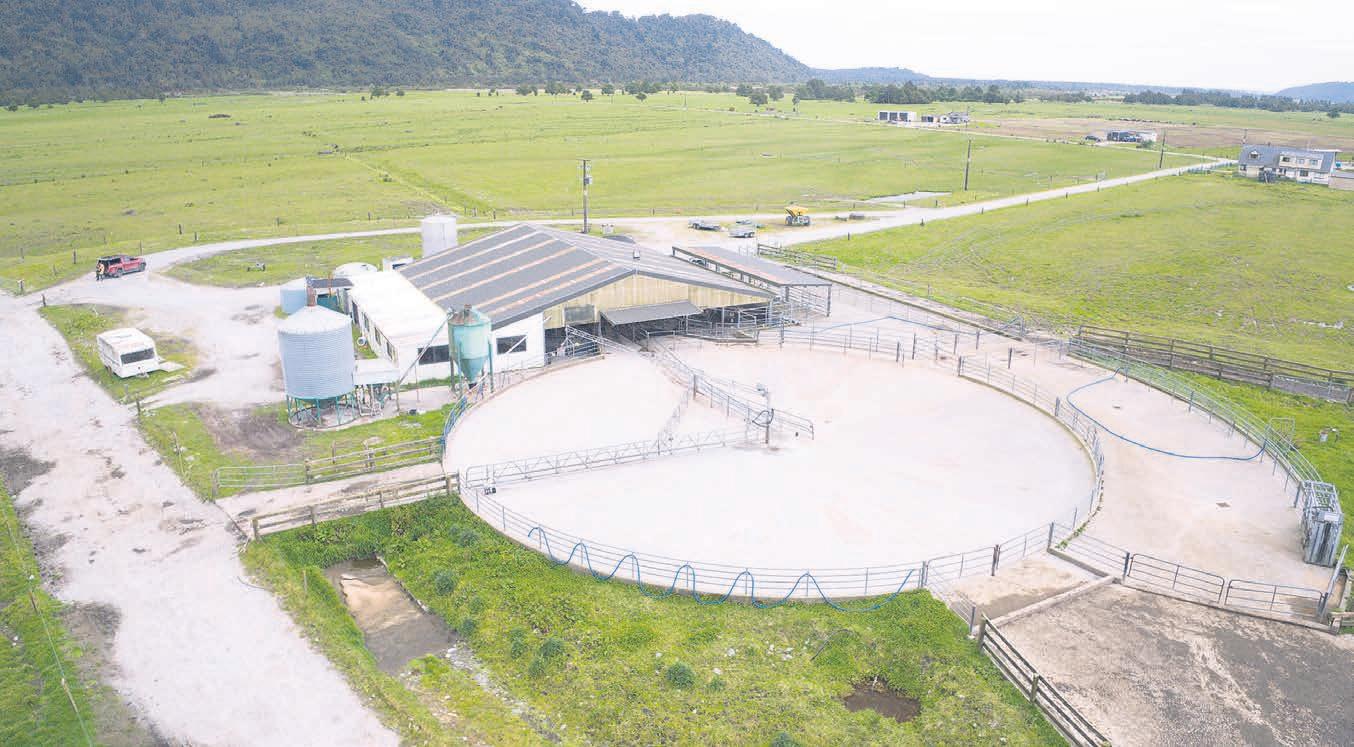
Large scale South Westland dairy farm
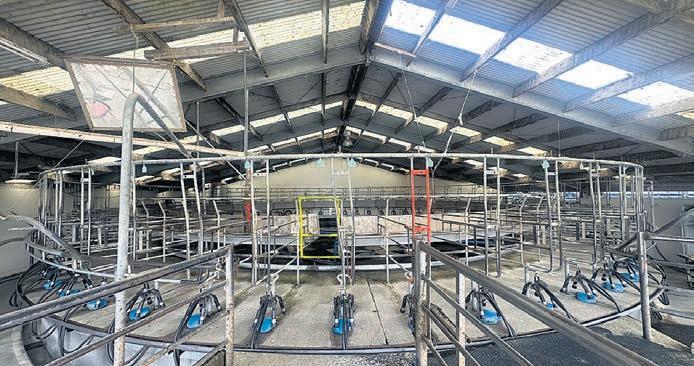

A significant opportunity to secure a large freehold property of 759 ha (approx. 580 ha effective) located on the Waiho Flats south of Franz Josef township in South Westland This well-established dairy unit currently milks 800 cows on a semi self contained basis, delivering a four-year average of 268,598 kgMS, with historical production peaking at 391,000 kgMS - highlighting genuine upside for the next owner. The farm features an excellent mix of silt and alluvial free draining soils, is well subdivided and has an extensive network of all-weather lanes Infrastructure includes a 60-bail rotary dairy shed (built 2003) with a 600 cow circular yard, in-shed meal feeding and DeLaval plant, multiple hay and implement sheds, and cattle yards. Accommodation is well catered for with a four-bedroom home, two-bedroom Portacom, and a two-storey dwelling split into two self-contained homes A significant West Coast dairy asset offering scale and opportunity, ready for its next chapter. 4 13 5 4

Tender closes 12.00pm, Mon 2nd Feb, 2026 (unless sold prior), at Property Brokers Hokitika office, 97 Revell Street, Hokitika 7810 View By appointment Web pb.co.nz/HKR203446


Gareth Cox M 021 250 9714 E gareth@pb.co.nz
Anna Hart M 027 294 9678 E anna.hart@pb.co.nz
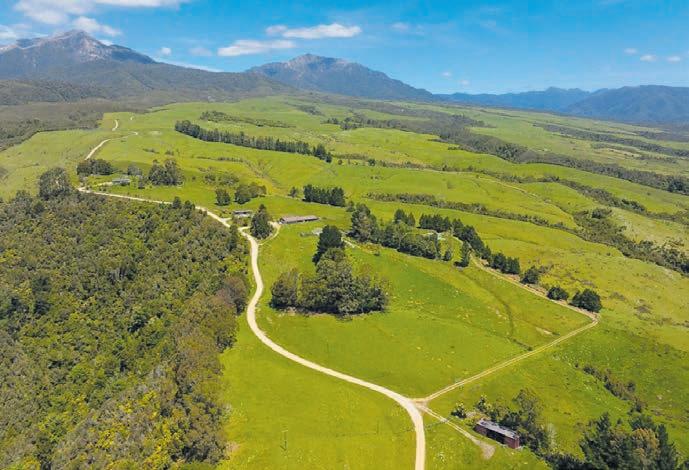


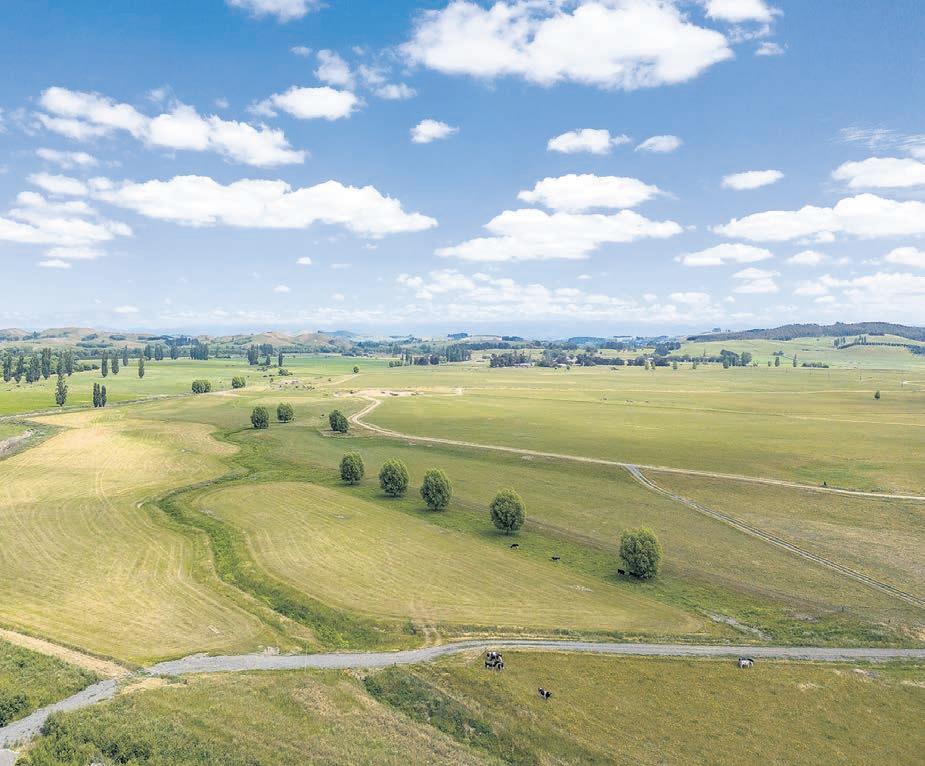
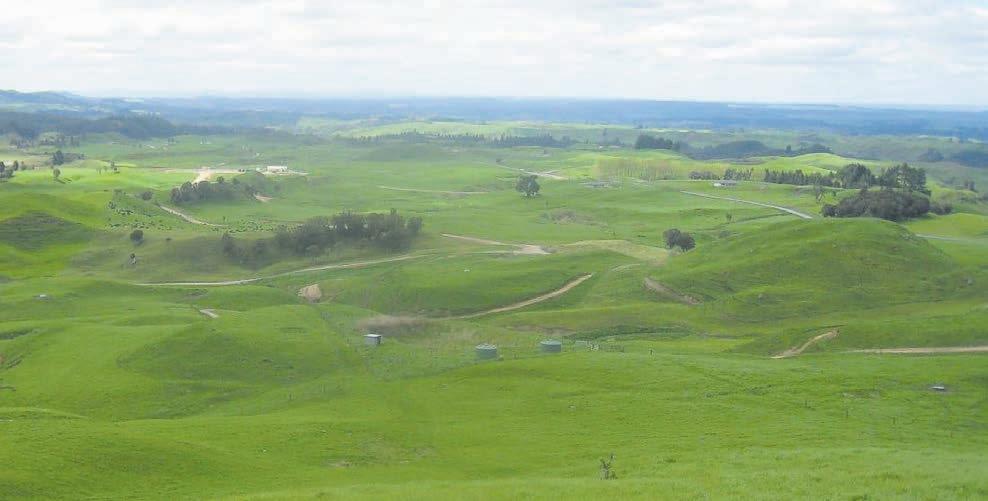
Enquiries

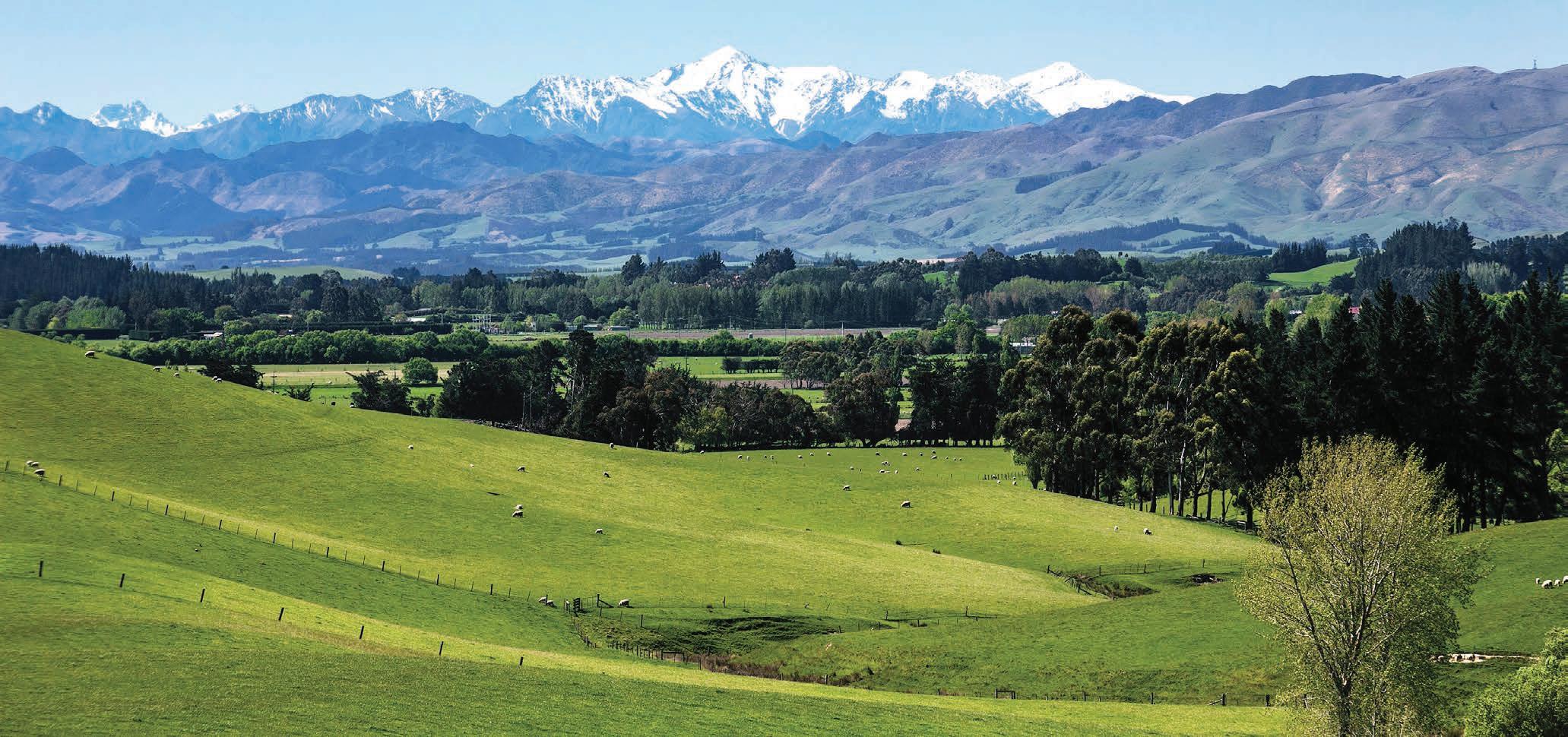


Tapae and Ranginui Roads, 15km West of Mangakino

Serving Bay of Plenty, Waikato, Central Plateau, Hawke’s Bay, Taranaki & Lower North Island
Free Introductory On-Farm Consultation Call Dean Edwards: 027 332 2996 www.deanedwardsfarmconsultant.co.nz dean.edwardsfc@gmail.com


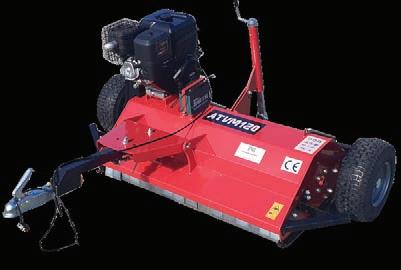


Phone Strawbridge 021 557 119 Waikato.








SHROPSHIRE RAMS available now. Easy lambing, early finishing. Visit www.nzsheep.co.nz/ shropshire to find your local breeder.
WILTSHIRES-ARVIDSON.


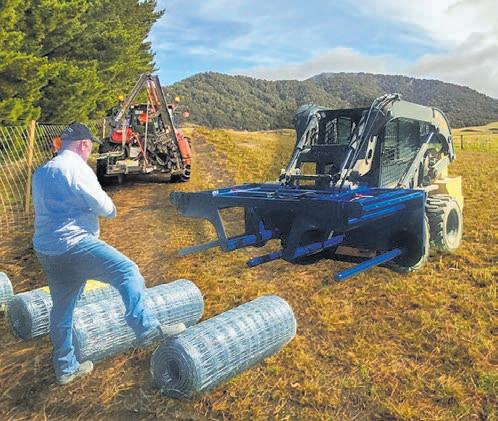




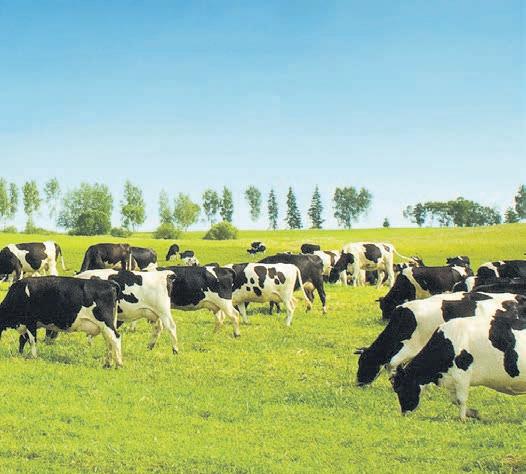










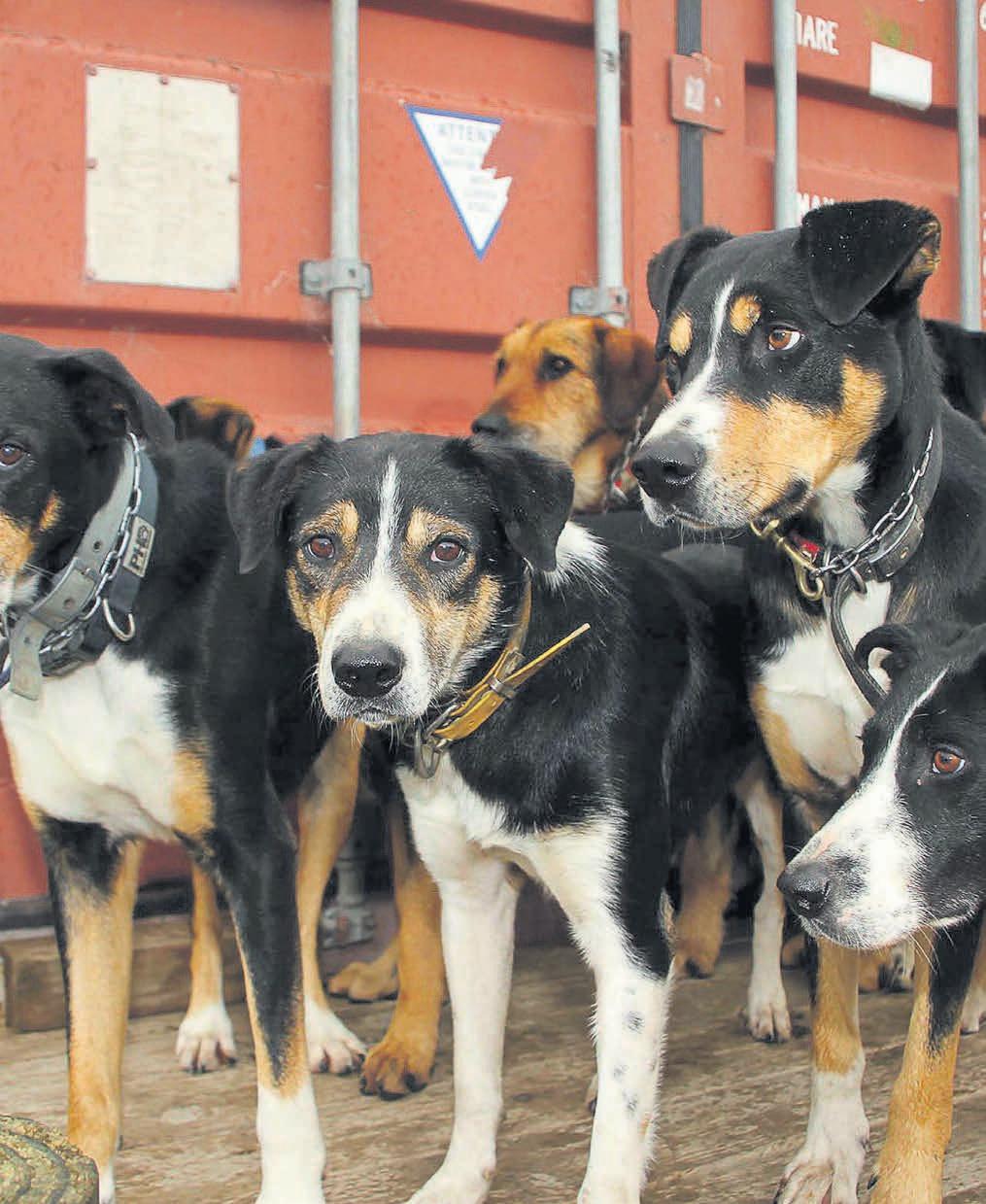


Easycare Genetics NZ

Renowned for their resilience and adaptability, Easycare sheep are a stabilised shedding breed established in the UK 20+ years ago.
2th rams derived from embryos imported to NZ in 2024 from top UK Easycare studs are available this season.
These are structurally sound early shedding sheep.
Siblings (ewe hoggets) have lambed at 135% and their lambs are shedding at 10 weeks of age. These are ideal rams to put across Wiltshires or to commence shedding from an existing woolly flock.
For further information phone 027 229 7267 or email: easycaregeneticsnz@gmail.com
MANAWAHE WILTSHIRES
RAMS –PURE
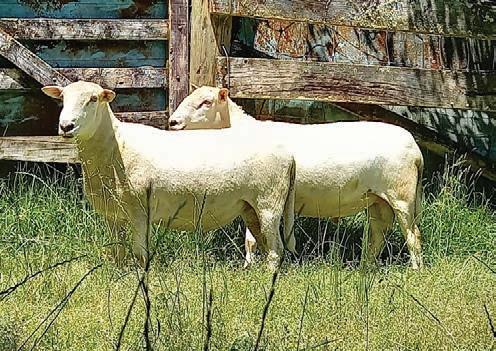
18 years farming and breeding Wiltshires 2-Tooth Rams available
Sound, solid boys ready for the job ahead
Top stock, full shedding, a great investment
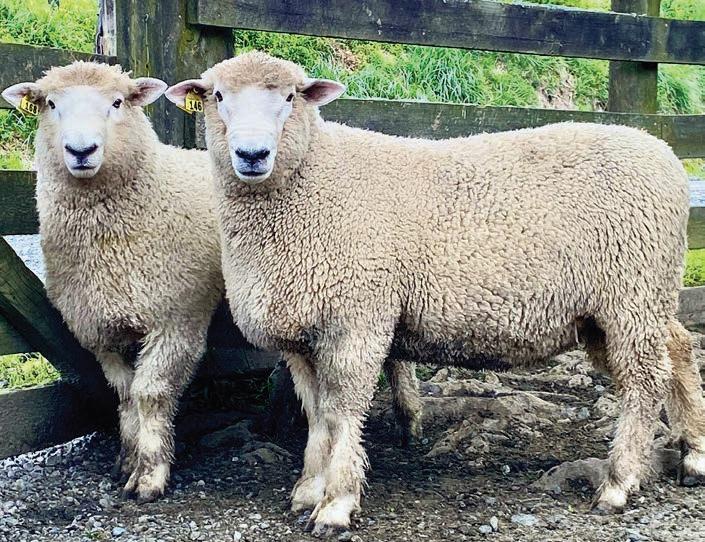
RIDGETOP ROMNEYS
Breeding Romney rams since 1951
✔ Ramguard FE testing at .4
✔ SIL recorded
✔ Strong productivity and structure
✔ Sold by Private Treaty and available now

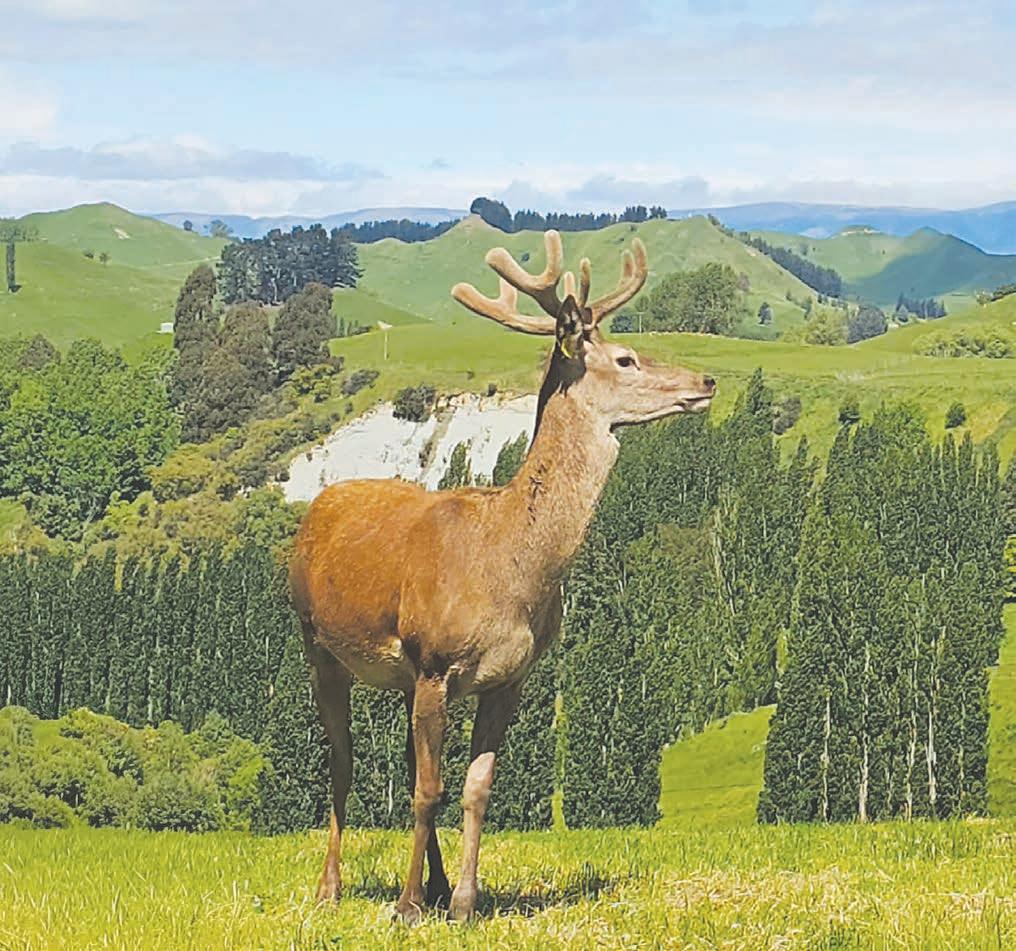

issue for 2025 December 15 First issue for 2026 January 12






Contact your partnership manager for deadlines
Office close dates December 16 to January 4

Arapawa Wiltshire Stud
Bred Tough on Hard Country. Proven over Generations. Bred over decades and tested on the steep and rugged hills of Arapaoa Island in the Marlborough Sounds. Our Wiltshire’s are hardy, reliable and proven performers in every condition.
• Long Standing Breeding History – decades of recorded Wiltshire Bloodlines, selected for consistency and quality.
• Raised on Hard Country – these are the Wiltshires that strive where others struggle.

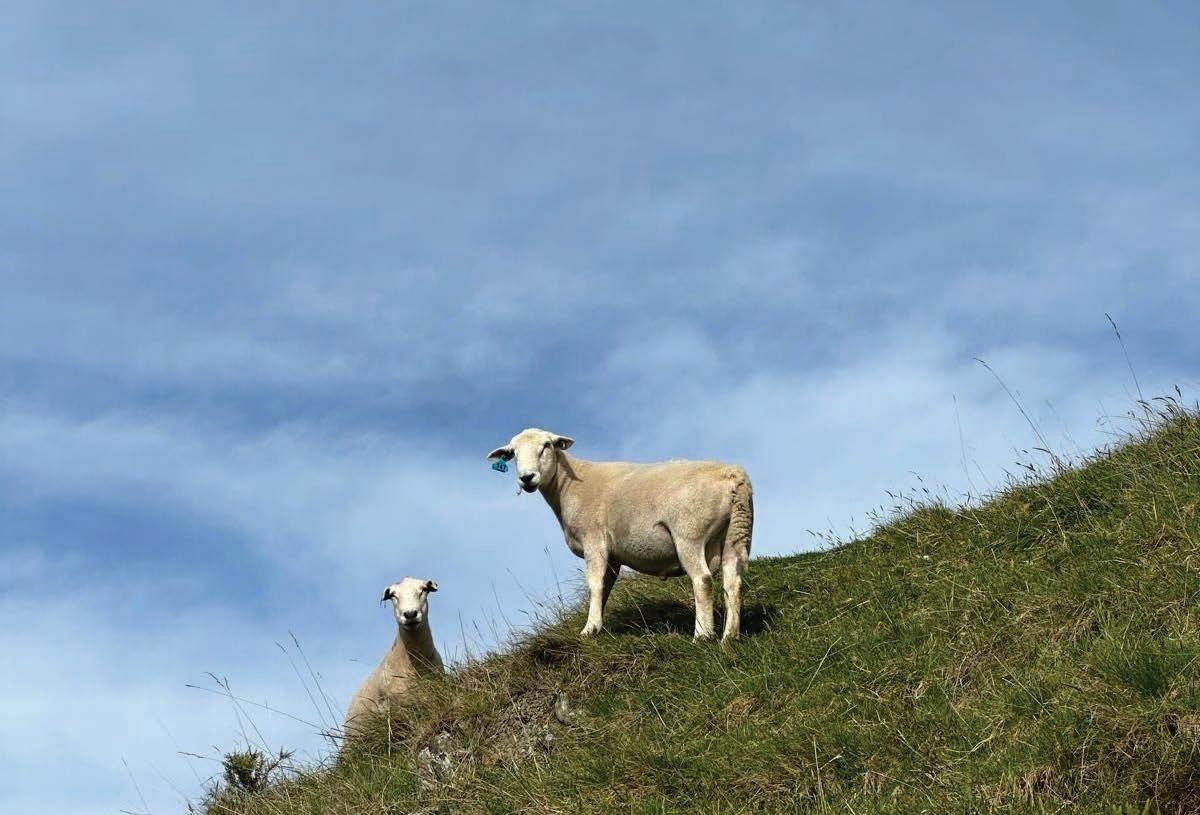






•
•
•





STONEYLEA RAM SALE
FRIDAY 12TH DECEMBER
A/c Adams Partnership, Christchurch Sale at Canterbury Park Saleyards Viewing from 11am, Sale 1pm
>90 Suffolk Rams
Further enquiries:
Callum Dunnett (Hazlett) 027 462 0126
Simon Eddington (PGGW) 027 590 8612


WATERTON

will be livestreamed via Facebook:





ON-FARM SALE
Tuesday 16th December 2025 at 2pm 134 Lagoon Hill Road, RD 2, Martinborough


COMPRISING APPROX.
Romney & Romney Coop Lambs: 3000x Shorn Romney & Romney/Coop Crpt Lambs 800x Shorn Romney & Romney/Coop Ewe Lambs
Ewes: 500x Shorn Works Ewes
Cattle: 30x M/A Angus Cows with Angus Calves at foot
Rebates will be available by prior arrangement to purchasing agents.
CONTACT: Carl Peterson 027 242 0268 Carey Ashwell 021 433 274
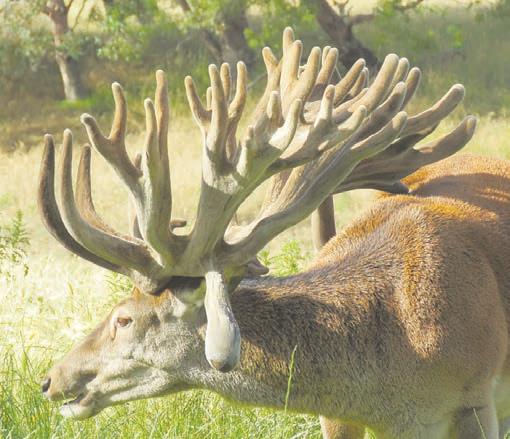

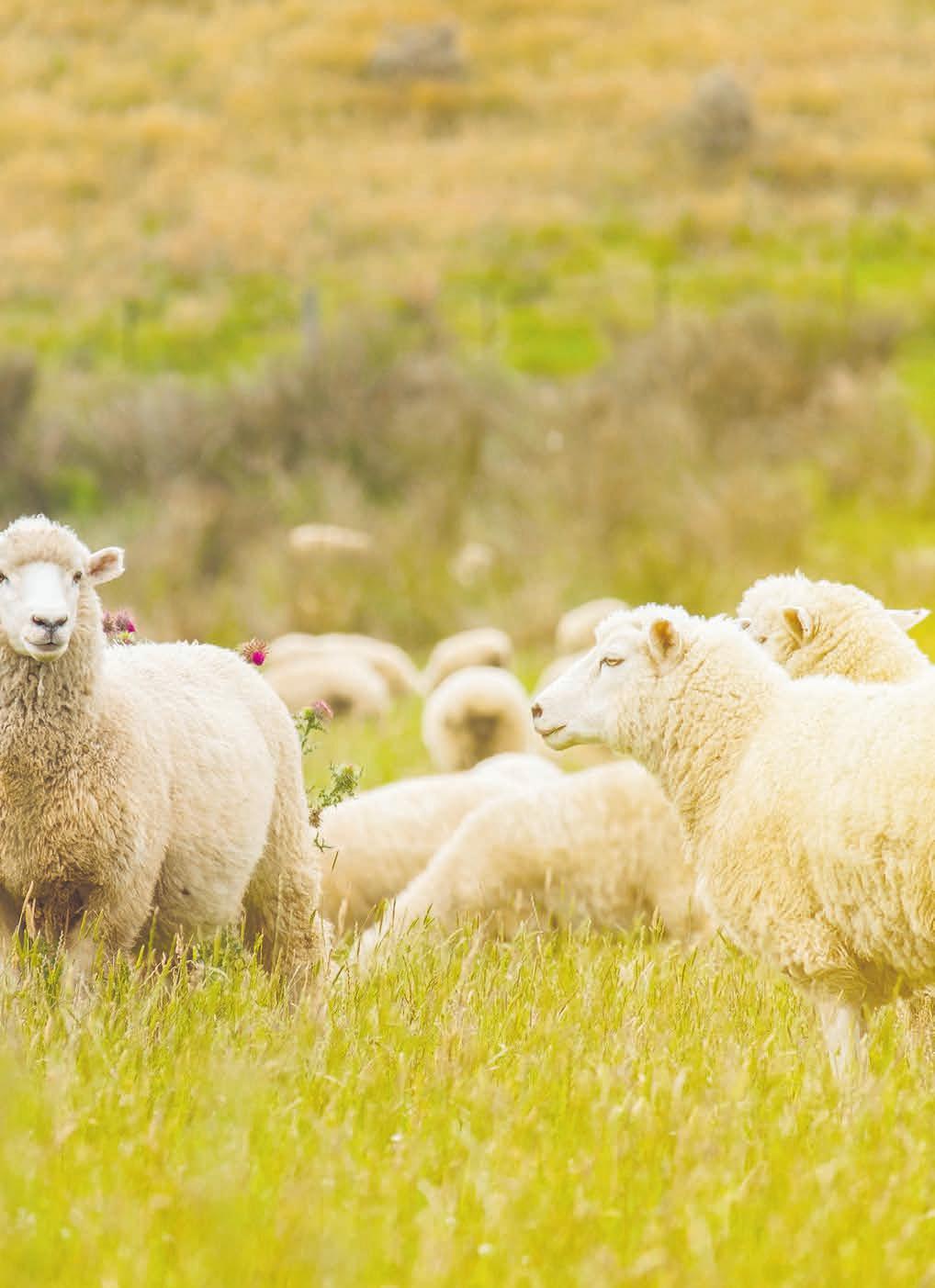
DATE: THURSDAY 11 DECEMBER 2025 TH TIME: 2PM
ADDRESS: 202 BLUFF ROAD, KIMBOLTON
Proudly sponsored by
’Tis the season to be jolly
Fa-la-la-la-lamb farmgate returns continue to break records and lift spirits.

Mel Croad MARKETS Livestock
AS CHRISTMAS draws near, farmers are continuing to breathe a sigh of relief at firm farmgate returns. Even if prices ease slightly over the next 10 days, lamb will still finish the year at the highest farmgate level ever recorded.
Two key drivers are underpinning these strong December returns: a tight flow of stock into processing plants and robust export demand.
The AgriHQ lamb indicator for the month to date sits at $10.95/ kg across both islands. For an 18kgCW lamb, that equates to $197 per head – $51-$53 more than December 2024 and $57-$63 above the five-year average for this time of year.
This lift has made a noticeable difference to on-farm morale as the busy season ramps up. Farmgate prices were expected to ease as lamb supply to processors increased from mid-November.
However, this anticipated flow was disrupted by a buoyant store market despite dry conditions in key areas, particularly in the North Island.
This store market absorbed large volumes of lambs exiting early finishing country as pasture tightened. Store values above $5/kg in the early weeks were too good for many to pass up, prompting faster offloading than
last year, shifting lambs to regions flush with feed.
A strong November store market seldom influences December slaughter rates but has the potential to spike kill patterns through late summer. Instead, December throughput reflects the usual seasonal drafting cycle for main mobs. Even when farmgate prices were rising at this time last year, weekly kill rates still climbed by 100,000-150,000 head from late November through to the Christmas shutdown.
Despite the impending rush at processing plants, even if meat companies make some pricing downside stick, it’s hard to see lamb prices below $10.50/kg by Christmas.
Export demand remains a major factor to consider into the new year. Demand from key markets has been exceptional, with average export values holding at record levels for the past five months.
Over the same period, however, New Zealand shipped its smallest lamb volume in eight years. As supply now seasonally increases, prices will inevitably ease from their highs to keep product moving. Some markets are already entering this phase, but so far, any downside has been minimal. Markets are not yet awash with lamb. Australian slaughter rates are lower than the levels seen in recent years, and New Zealand’s seasonal kill has been slow to start.
Weather will also shape stock flows in January. If regions that

Even if meat companies make some pricing downside stick, it’s hard to see lamb prices below $10.50/kg by Christmas.
purchased early store lambs maintain good feed conditions, forced offloading into processors will be limited. Summer crops that have survived pests and dry spells will also come online, reducing pressure on processing capacity in the new year.
The national lamb kill ramps up from mid-February to peak around


late-March, but in the past two years this jump has been larger than normal. This reflected a combination of seasonal drafting patterns of later lambing regions, but also a larger proportion of farmers offloading finished lambs purchased earlier in the season to clear the decks ahead of potential winter trading opportunities. Interestingly, this spike didn’t undermine farmgate prices.
AgriHQ data shows that in four out of the past five years, farmgate lamb prices have reached their summer low point by late January/ early February. Previously, prices tended to bottom out around March.
While some price softening
into the new year is inevitable, past trends suggest it will likely be short-lived unless export conditions deteriorate sharply. AgriHQ is forecasting prices to average near $10/kg by the end of the first quarter of 2026.
For those with the ability to purchase store lambs, this means that prices through the opening months will reflect the softer tone of farmgate prices compared to current levels. Typically, 32kg male lambs trade at an average 44% of the AgriHQ indicator through January in the North Island, suggesting a range from $4.45-$4.65/kg. In the South Island, it’s more like 47% leading to a range of $4.80-$4.90/kg.






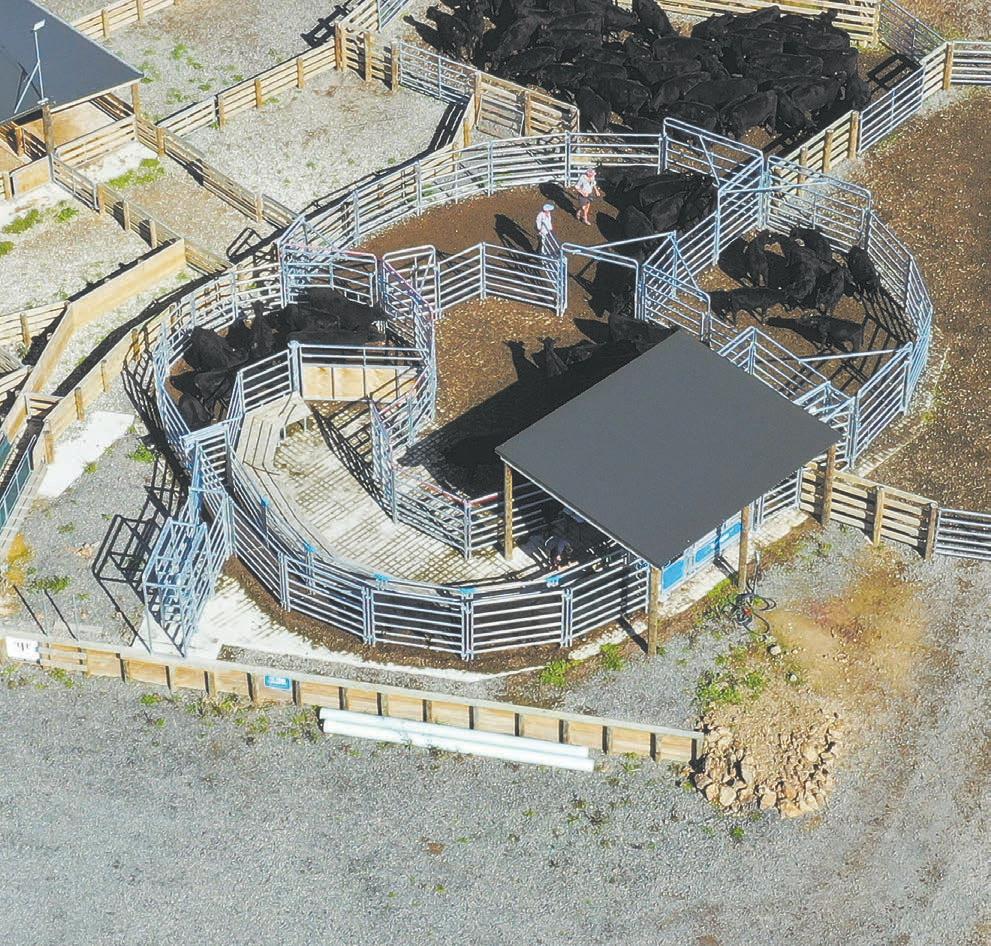
OUTWARD BOUND: Export demand remains a major factor to consider into the new year, says Mel Croad.
Cattle Sheep Deer

Weekly saleyard results
saleyard
2-year
Feilding | November 28 | 1545 cattle,
2-year
heifers, 330kg 4.79
Store whiteface cryptorchid lambs, all 90-170.50
Store terminal-cross mixed-sex lambs, most 96-200
Feilding | December 1 | 80 cattle, 2815 sheep
Boner Friesian cows, 590kg
Prime ewes, all
Prime mixed-sex lambs, most
Rongotea | December 2 | 109 cattle, 55 sheep
Boner crossbred cows, 505kg
Coalgate | November 27 | 437 cattle, 4696 sheep
Yearling traditional steers, 300kg
Yearling traditional heifers, 290kg
Prime traditional steers, 590kg
Prime dairy-beef steers, 550kg
Prime traditional heifers, 480kg
Prime dairy-beef heifers, 530kg
Store ram lambs, all
Store mixed-sex lambs, most
Store Corriedale wether hoggets, all

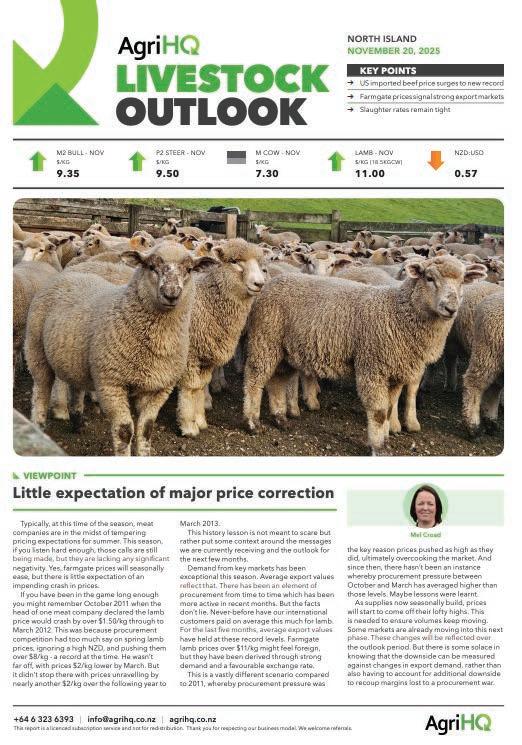
Variety adds spice to life and weather

LA NIÑA is officially here and we may notice it more as we go into the middle of the month, but those in the North Island in particular will have noticed higher temperatures, more humidity, easterlies at times, and – perhaps most obviously – the downpours we’ve been getting in recent weeks.
The southern end of the country won’t be so affected by it, but may well still get subtropical northerlies at times, boosting West Coast rain and lifting temperatures in Southland, Otago and Canterbury at times – but as I’ve been saying lately, the Southern Ocean is stormy so southerners may still notice the old cold snap.
Variety is the key word here, and, as I like to say in December/ summer, “variety is a farmer’s friend”, because it means you get a mixture of what most of you need on the farm – sunshine, cloud and enough rain.
But if you’re camping, then
variety is against you – bringing windy, wet bursts when most of us want sun and dry!
Over the coming weeks New Zealand has high pressure zones moving through and the wind directions are honestly all over the place.
Surges of windy westerlies, brief southerlies, some northerlies –but likely an uptick in easterlies and nor’easters as we go into the middle of the month.
Low-pressure zones are now forming more frequently in the tropics and with sea surface temperatures above normal (marine heatwave criteria) in the upper North Island and over the ocean up to the tropics, it increases the chances of these lows becoming stormier.
At the time of writing this column the long-range maps for Friday December 12 show what looks like a severe tropical cyclone way up near Vanuatu (definitely not locked in yet, but has been popping up in modelling for a few days now) and the leftovers of this may bring in more humidity and cloud for northern NZ, while big high-pressure zones east of the country fuel that east to
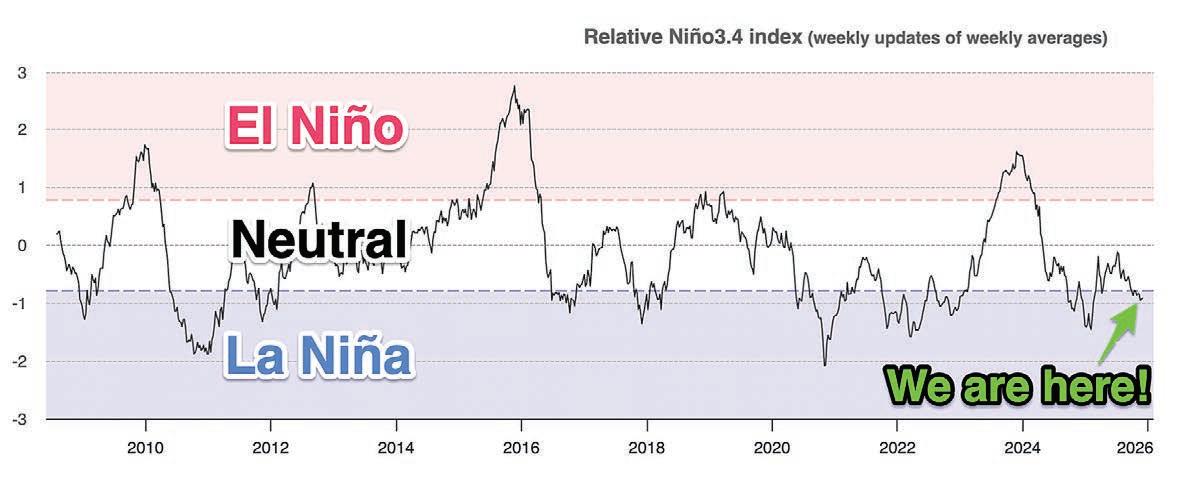
Over the coming weeks
New Zealand has high pressure zones moving through and the wind directions are honestly all over the place.
northeast airflow over the nation. Remember, most tropical cyclones don’t hit NZ as storms; many of them fall apart into messy
lows, or simply miss us to the east.
Rainfall may not be as great in the next week or so, though, with high pressure crossing New Zealand and bringing some longer stretches without rain.
Again, maybe a good mix of variety considering more regions are wetter than usual rather than drier than usual over the North Island, and much of the West Coast too. This drier phase may be
helpful to balance things as we approach Christmas.
There is some chance the week before Christmas has low pressure in the NZ area – but I think this month will continue to see a mix of low and high pressure around NZ, so once again it’s almost like a spring weather pattern but with summer temperatures.
As for La Niña, global modelling suggests it may be all over by early 2026 – looking quite short lived.


Philip Duncan NEWS Weather
WEAK: La Niña over the years shows how weak this one is at the moment compared to previous events.
Image: BoM