020 7930 3557 ext. 221 or option 8 financialcontroller@thefarmersclub.com
General Office
020 7930 3751 generaloffice@thefarmersclub.com
Instagram: @the_farmers_club
Facebook: The Farmers Club Page X/Twitter: @TheFarmersCub
The Farmers Club Journal
Designed, produced and published by Fenelon Publishing Limited on behalf of The Farmers Club
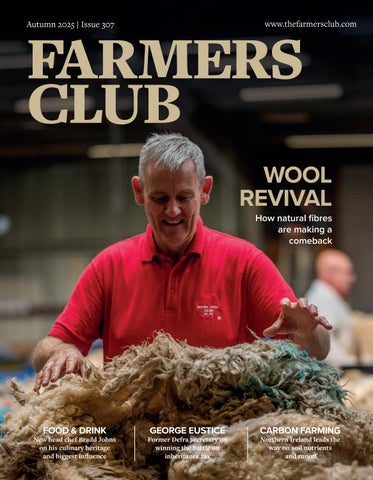
Cover photo by Phil Wilkinson / Alamy
Disclaimer: Articles published in The Farmers Club Journal do not necessarily reflect the views of The Farmers Club. No responsibility for the quality of goods or services advertised in the Journal can be accepted by the publisher. Advertisements
A busy and enjoyable time with members
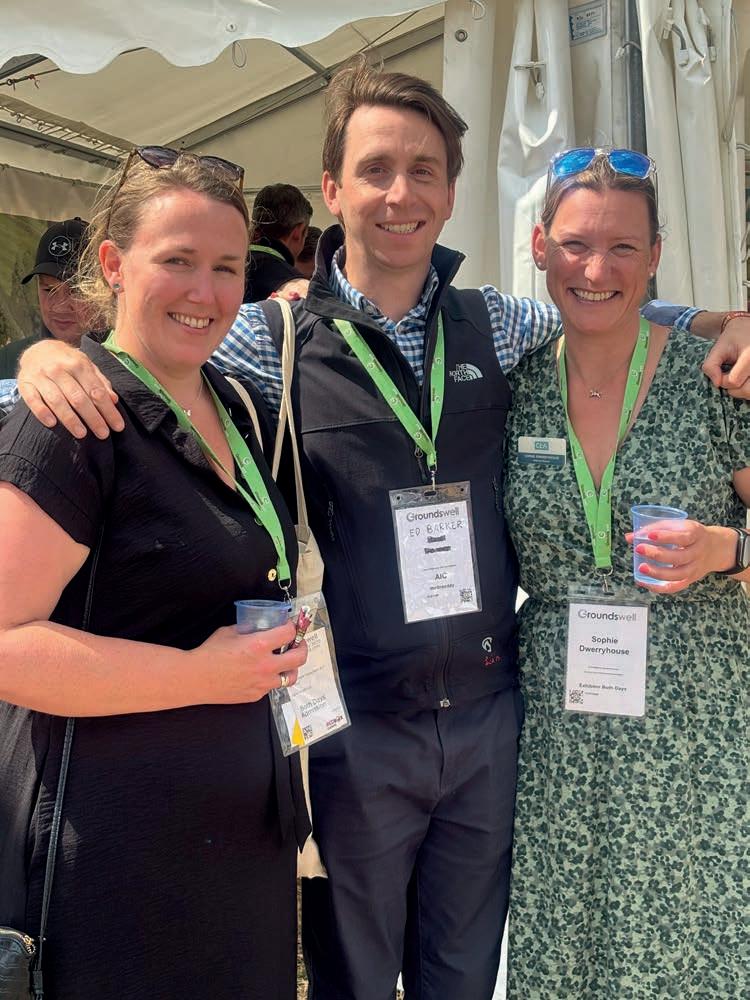
Ihope harvest has gone well for you and yields were better than expected in what continues to be an exceptionally challenging year. For me, it is an absolute delight to represent the Club and to meet members – including at this summer’s Cereals event.
Including Cereals, we have attended eight agricultural shows this season. A special thank you to Club Vice Chairman Chris Riddle for attending the Suffolk show, as I was elsewhere.
To see the public enjoying the best of British agriculture is a joy. I have stood and watched livestock being judged – so many animals, all looking at their finest.
Crowd puller
At the Royal Welsh, I climbed the hill to watch the sheep dog trials. What skill from both the handler and the dog. The Grand Ring attractions pulled in the crowds What a great day out for families to learn about our wonderful industry.
Our show dinners and receptions have seen some excellent speakers. They have kept us entertained with their stories while covering serious issues too – which have been extremely relevant and important. As I write, I still have the Westmorland Show, with guest speaker Robbie Tuer; and the National Fruit Show to look forward to.
Club members
It is always a privilege to represent the Club – and to meet Club members and potential new members, throughout the UK. For those who rarely visit the Club, I have been able to tell them all that The Farmers Club has to offer. And, yes, some have since signed up for some of our events.
Our farm visits have been popular and well-attended without exception. We are fortunate our hosts give us such privileged access and are so open and generous with their time when answering questions.
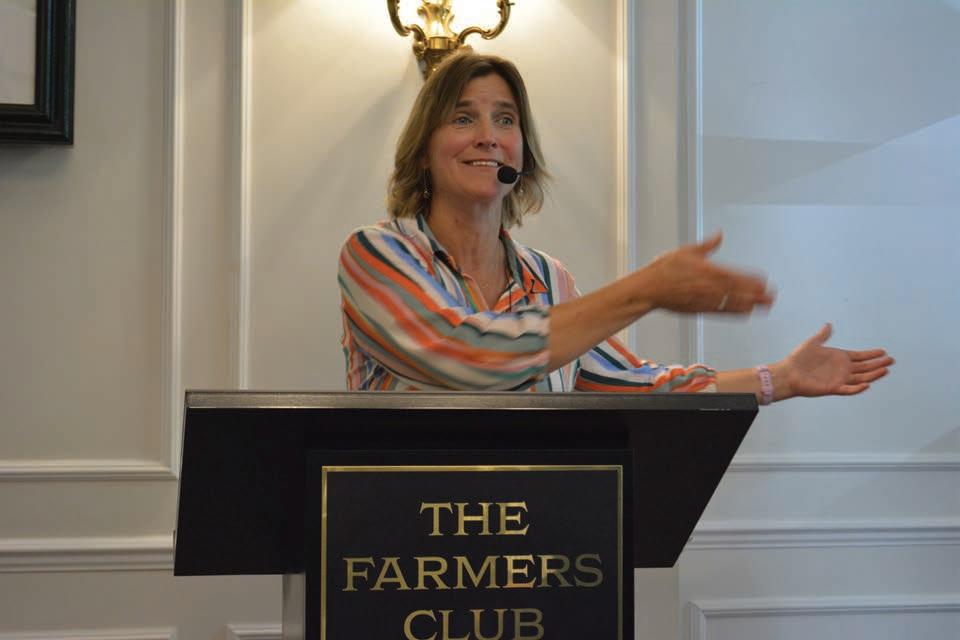
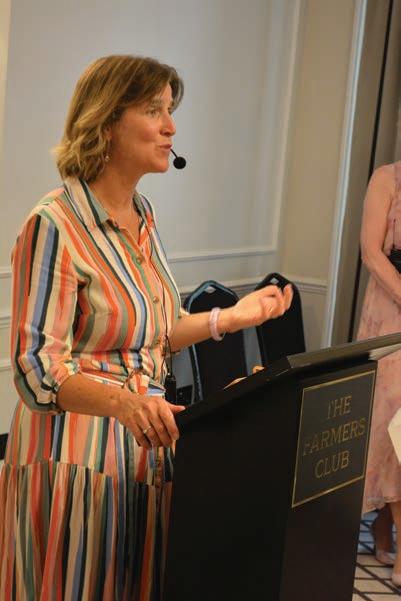
The farms we have visited are among the best in the country – and wonderful to behold. There are more to come this autumn and I hope you can attend. It has become quite the joke that I travel with my own lectern and speaker system.
We have had a full calendar of events run from the Club – including the final day of rowing at Henley Royal Regatta.
Henley is always memorable and the day ended with The Farmers Club taking to the dance floor and having fun.
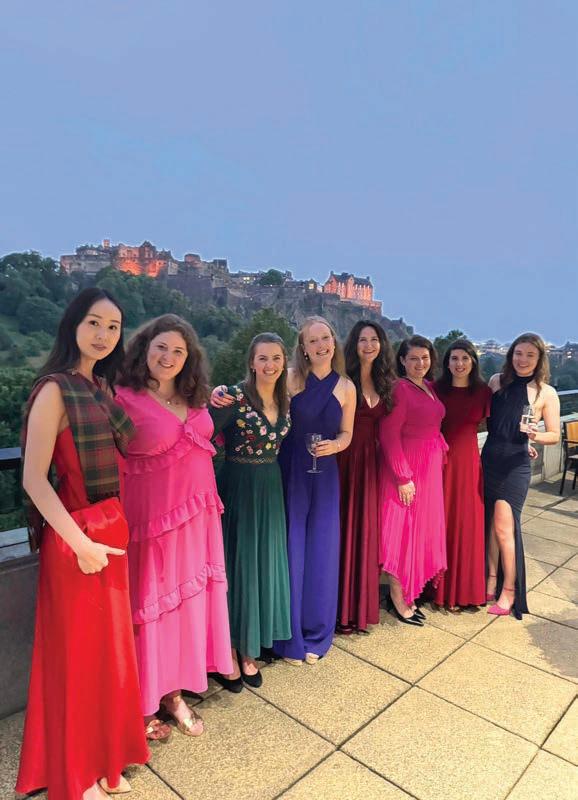
The spectacular Edinburgh Tattoo in August was similarly amazing. We were in the legendary fortress of Edinburgh Castle, which was very atmospheric.
Global performers
After dining in the Jacobite dining room, with the most spectacular views, we were able to watch the pre-show preparations and speak to some of the performers.
And then to the main event – a vibrant array of performers including regimental bands, dancers and entertainers from around the globe (see page 9)
You will all have noticed how busy the Club’s events team is with all the various activities. Our events are always a great draw to members – especially those out of town which are farming related.
“We have had some excellent speakers.”
At the Club, we have had our Honours lunch, kindly hosted by Trustee John Lee. Our guest speaker was General Sir Adrian Bradshaw, Governor of Royal Hospital Chelsea.
This is a special lunch for those among our members who have been honoured in recognition of the positive impact they have made to society and their significant service to the country. My sincere and heartfelt congratulations to you all.
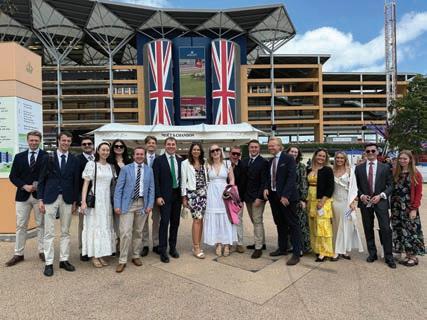
Then we had our Pre-Ascot Dinner. Guest speakers were Guy
Henderson, former chief executive of Ascot Racecourse (2015–2022); and Sky Sports Racing presenter Vanessa Ryle, who each gave us their special tips for the coming raceweek.
Autumn sees The Farmers Club Charitable Trust General Meeting and AGM, chaired by Nick Green. We are quite rightly very proud of our FCCT. It enables us to support a great many young people in a variety of ways on their journey of learning about food and farming.
Significant support
Each year, through our significant support, the FCCT gives more than 50 people the opportunity to further their knowledge within the industry. This benefits not only them but also their own businesses and careers and of course others too.
Learning has a ripple effect as knowledge is passed on and out. These great people are the future of agriculture –and they are our tomorrow.
For longer standing members, we have our Honorary lunch for those with the Farmers Club for 50 years or more.
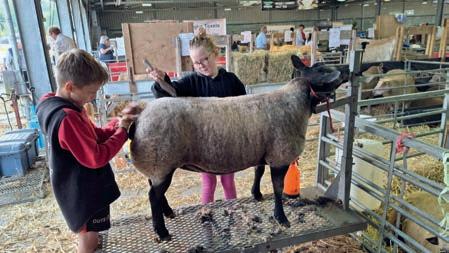
Left: Eager farming youngsters prepare for the ring at the Royal Welsh Show
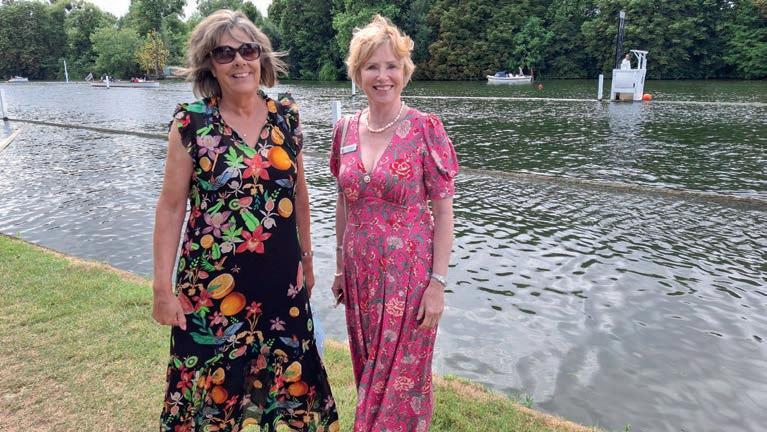
Below: Karen Mercer and her sister Janette Moore at Henley Royal Regatta
I joined the Club in 1994 so 31 years a member. I will be very lucky to attend as an honorary member – I have 19 years to go. God willing, I will do my best to be there.
I hope this gives you all a flavour of what is happening at your Club. As ever, I would like to thank the team here at 3 Whitehall Court for looking after us all so well. Without you, the Club simply would
The coming months bring plenty more for you all to attend and enjoy. We have a range of activities suitable foreveryone.
For further details, please do see our eight-page Town & Country section, which
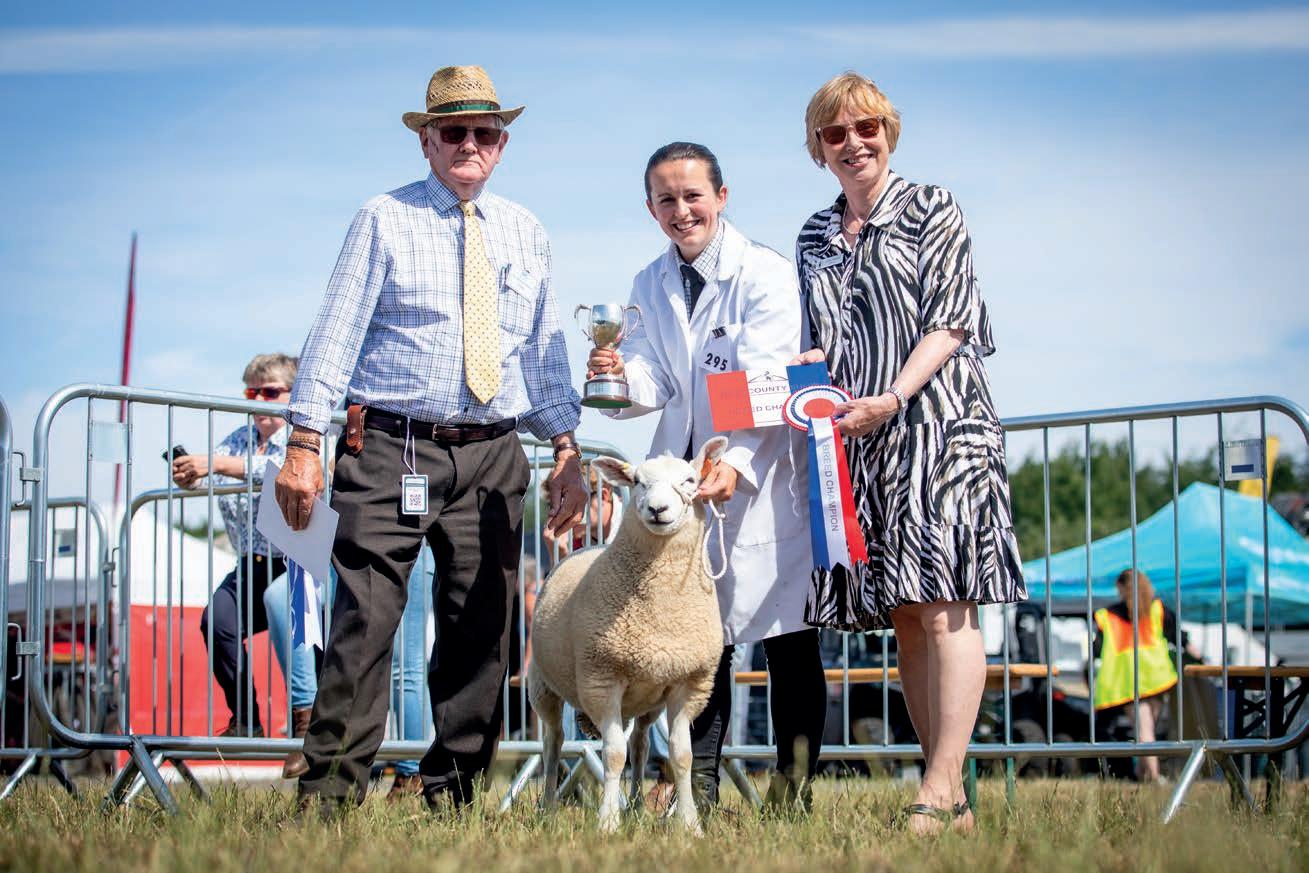
Above: Karen Mercer presents the Lleyn breed champion prize at the 2025 Kent County Show
Autumn’s mellow fruitfulness beckons
A busy social diary means there’s always something of interest happening at your Club, writes Didi Wheeler
Iwrite these notes as the evenings start to draw in. The past few months seem to have passed in a flash and this year’s early cereal harvest has reinforced the feeling that autumn is well and truly on its way.
Early summer was busy, hot and vibrant, whether on the Terrace at the Club sipping a cold drink, standing in a field of spring barley or watching the judging during our outreach activities at some of the best agricultural shows in the country.
Packed schedule
It has been fantastic to accompany Club Chairman Karen Mercer on our summer schedule of visits and farm tours. Together, we have met hundreds of Club members – and raised awareness of the Club with prospective members too.
It has been a joy to spend time with members, including at the sporting festivals of Royal Ascot, Henley Royal Regatta, Wimbledon and Test cricket at Lords and the Oval. We have also welcomed overseas members to the Club as they make their annual summer return to London – a tranquil retreat for many amid the hustle and bustle of the big city.
August is always a quieter month and this has enabled the Club to undertake some essential refurbishments. We have replaced the kitchen floor –no easy undertaking as you might imagine.
This has restricted our ability to provide a hot food service but our chefs have taken the opportunity to showcase the best of Britain’s seasonal fare in the form of eye-watering salads and sandwiches to much acclaim from members and guests.
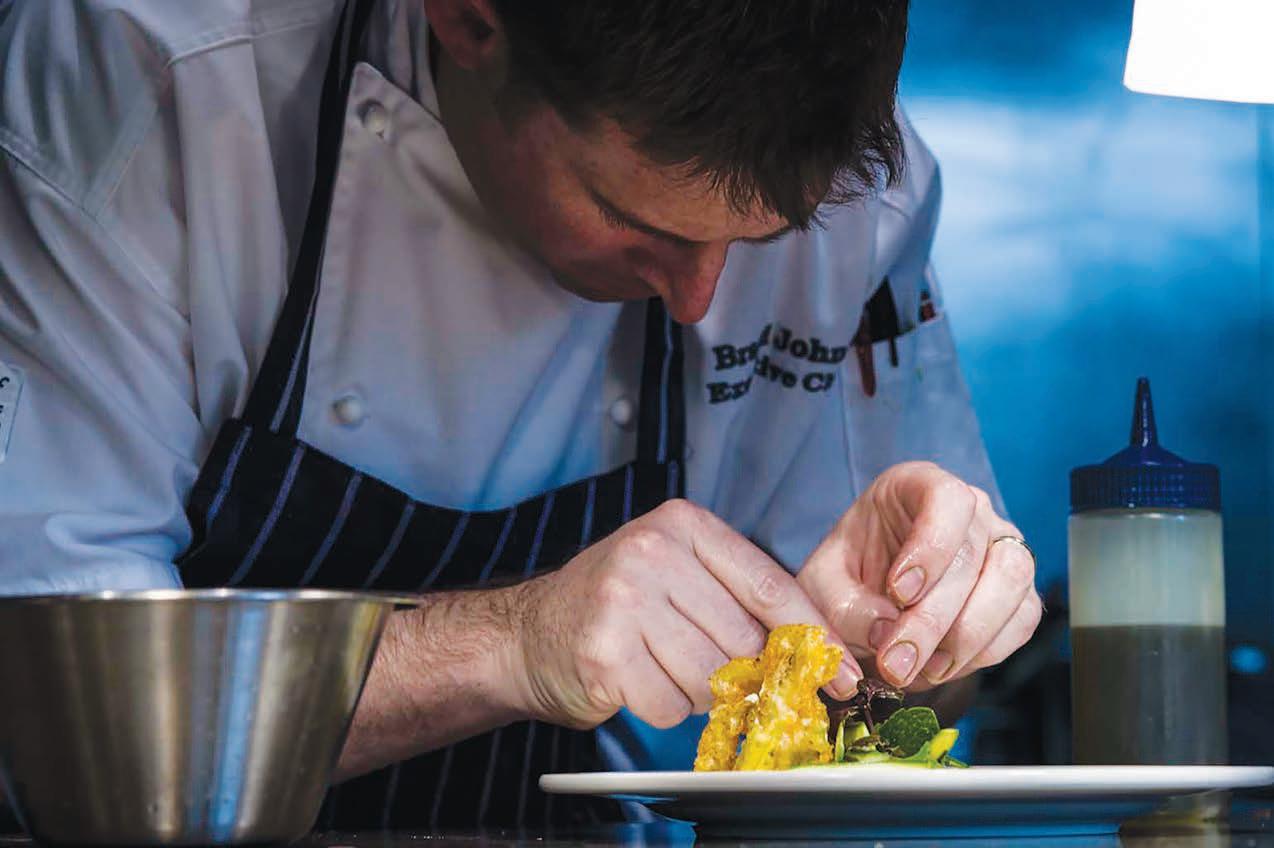
A quieter period also provides time and space for upskilling and some well-deserved holiday for the Club team. Now the kitchen floor is replaced, it is full steam ahead with our new Summer into Autumn Menu. It is something being closely monitored by our new Head Chef, Bradd Johns (see page 31).
Membership
Our membership today stands at 5100. The ebb and flow of modern life means attracting new members is an ongoing exercise, but I am pleased to say we are steadily increasing in number.
That said, we are keen to strengthen our standing and relationship with the farming sector. Indeed, it was noticeable when visiting agricultural shows this summer that many people have little or no understanding of the Club, its great history and the significant benefits that membership offers.
Last year’s launch of our corporate membership package is now starting to bear fruit (see page 46) but there is still more to be done to ensure the Club is seen as the home of UK agriculture in London, just as it is the ‘home from home’ for members.
If you think you can help raise the profile of the Club across the sector – including the opportunities for new members, please do contact me.
Farmers Club Journal
Thank you too for your continuing support and acknowledgement of our recently relaunched and refreshed Farmers Club Journal. This is the third issue in the new format, which has been very well received. Co-editor and member Johann Tasker
Summer outings included a visit to the Household Division Musical Spectacular
We are steadily increasing in number.” “
continues to lead the charge with John Henning, Chair of the Club’s Communications Committee, and myself adding value where we can.
We are always on the lookout for interesting ideas for articles – especially those on topical agricultural issues and those which feature members. Please do keep your input coming – it really is invaluable and very much appreciated.
Club AGM
This year we had a well-attended Club Annual General Meeting. Thank you to all those members who attended and then stayed to hear guest speaker Anna Taylor OBE talk about the UK government’s development of its new food strategy for England (see pages 9-10).
The AGM saw the election of Christopher Riddle as next year’s Farmers Club Chairman. A proud Cornishman, Chris was secretary of the Royal Cornwall Agricultural Society for 35 years. A trustee and former chairman of the Royal Smithfield Club, Chris is honorary secretary of the Royal Agricultural Society of the Commonwealth and a previous chairman of RABI, where he remains a trustee.
Sarah Cowlrick was elected to be next year’s Vice Chairman. Sarah is chief executive of the Association of Independent Crop Consultants (AICC), a BASIS trustee and a founder member of Farm Data Principles. She received the 2023 British Crop Protection Council award for outstanding services to the UK crop production industry.
I am delighted to say John Hardman has agreed to remain the Club’s Honorary Treasurer for 2026.
Your Club Calendar
It will come as no surprise that our programme of fun and interesting Club activities and events continues to be popular with members and guests.
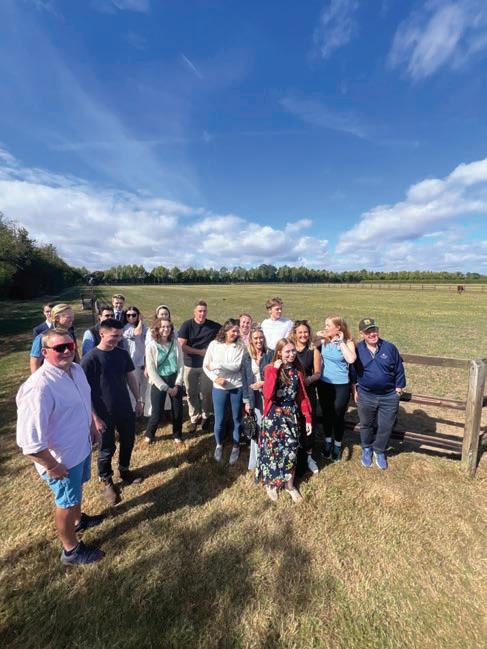
This summer saw James Peck host a visit of over 90 members to PX Farms, one of the UK’s most forward-thinking arable farming operations.
During a fantastic visit, James explained how steering a path through family succession had enabled him to build a diversified 5000-ha arable business across Cambridgeshire, Bedfordshire, Hertfordshire and Lincolnshire.
Passion
While the heart of PX Farms remains in combinable crops or food production, the business also includes haulage and almost 100,000 tonnes of crop storage and processing. On our inspiring visit to Scotland Farm in Cambridgeshire, we heard of his passion and
excitement as James told the story of the farm – and his vision for profitable and sustainable agriculture.
This was all the more impressive as James hosted us on the eve of his inaugural farm open day which drew thousands of visitors from across the agricultural sector. Next year, The Farmers Club will be there again in full support.
Show time
The following day, more than 150 people gathered at the Royal Norfolk Show for our afternoon reception, held jointly with the Royal Agricultural Society of England, the Worshipful Company of Farmers and CARAS.
Our guest speaker was Harry Barnett, the Holkham Estate director of a specialist potato growing business producing retail, seed and processing crops for UK and export markets.
A Nuffield scholar, Harry regaled us with the great, the good and the downright ugly side of potato production across the globe.
Remarkable insight
Our Kent County Show reception was enjoyed by some 50 members and guests. Our guest speaker was Club member Marion Regan, the fifth-generation owner of Kentbased Hugh Lowe Farms.
Marion brought us down to earth with a remarkable insight to the challenges involved in fruit farming. We were spellbound. I would love to hear Marion continue the conversation with a member audience at the Club one evening or in Kent at her family farm.
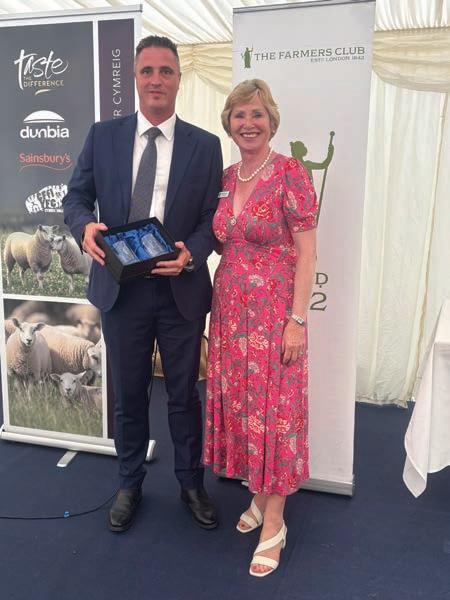
Our guest speaker at the Royal Welsh Show was NFU Cymru director John Mercer (pictured left with Club Chairman Karen , who provided a remarkably astute and intelligent summary
“
Every year it seems to just get better and better.”
of the agricultural landscape that really hit home with the audience. Our joint reception with the Royal Agricultural Society of the Commonwealth, attracted 50 Club members and guests.
Meanwhile, our presence at the Great Yorkshire Show was enhanced by a joint reception with Strutt and Parker. It was a fantastic evening and a perfect way to end the first day at what is always a remarkable Show. My thanks to Club member David Slack and all his team at Strutts.
Land and water
This year, Karen Mercer led members to the Henley Royal Regatta for the sixth and final day of racing.
Henley has been a firm favourite on the English social scene since it was established in 1839. It has been known as the Royal Regatta since 1851, when Prince Albert became the first Royal Patron.
Each event at the regatta takes the form of a head-to-head knockout between two teams. This year attracted a total 768 entries from 19 nations, with 4,367 athletes competing.
Grand Championship Cup for men’s Eights – won this year by Rowing Australia who beat Hollandia Roeiclub by a single length.
Club members gathered from 10.30am and enjoyed a full day of superb hospitality, in a lovely marquee, on the banks of the Thames. As well as watching the racing, we had the treat of a river cruise. A good time was had by all – including dancing into the afternoon and early evening.
Closer to home, we ventured across the road to the Horse Guards Parade in St James’s Park, where members enjoyed this year’s Household Division Musical Spectacular. There is little to say about this delightful event but for: ‘Britain at its Best’.
Only relatively recently, members have returned from an evening at the Royal Edinburgh Military Tattoo and dinner in the castle. Edinburgh is a fantastic city and I’m sure this event will be a regular outing in our Club calendar (see page 9, opposite)
Looking ahead
We have plenty more events coming up this autumn and beyond. I have highlighted a selection below but you can see a full programme in the Town & Country section of this Journal (see pages 34-41)
Our Chairman’s Farm Visits continue apace.
Following our recent visit to Ali Capper at Stock’s Farm on the Herefordshire and Worcestershire border, we travel to Glamis Castle and Strathmore Estate on Wednesday, 17 September. We will then spend a day at Harper Adams University’s Future Farm in Shropshire (Friday, 3 October).
Our Club Harvest Service takes place here in London on Wednesday, 15 October, at our local parish church of St Martin in the Fields, Westminster (see pages 28-30).
Our final Monday Evening Lecture of 2025 is on 3 November. Guest speaker is Peter Craven, head of agriculture at Natural England, who will talk on the subject of farming families and succession.
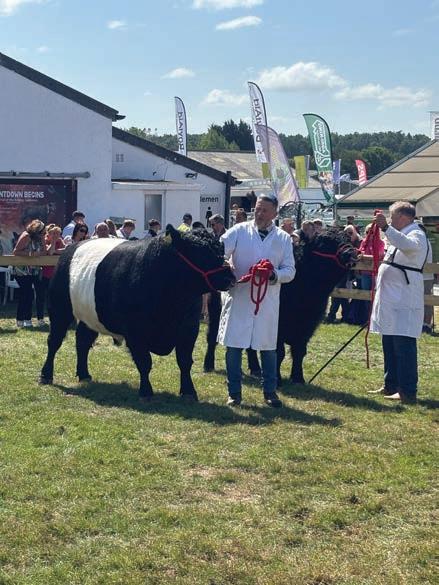
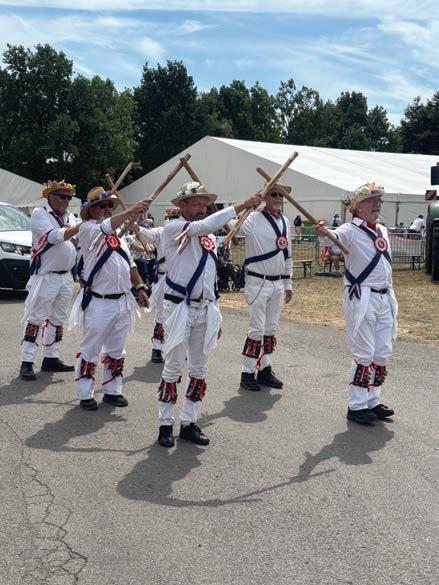
Belted Galloways at the Great Yorkshire Show (left) and Morris dancers at the Kent County Show
Massed bands on parade
continued from p7
Edinburgh Tattoo celebrates 75th anniversary
Members celebrate the ‘heroes who made us’
How special to be at Edinburgh Castle for the 75th anniversary of the Tattoo, which takes place during August. We were certainly blessed with lovely weather – the skies were blue and the sun shone.
Anniversaries are a time to reflect as well as look forward –and the Tattoo certainly has a rich history as well as a bright future.
Held just five years after the end of the Second World War, the first show in 1950 was called “Something About A Soldier”. Fittingly, the 2025 theme was “The Heroes Who Made Us”.
The years in between have seen some stunning, standout and memorable performances.
The first women’s group performed in 1953 – which is also the first time that Highland dancing was performed. In 1962, it was dancing of a different kind when the final night saw the whole audience take to their feet for Chubby Checker’s smash hit “Let’s Twist Again”.
Tattoo tartan
In 1983, the Tattoo launched its first official tartan. It depicted the three colours of the three military forces, red, blue and green. A new version of the tartan was launched for the final performance of the 20th century.
The 1994 Tattoo marked the 200th anniversary of the Gordon Highlanders. It also celebrated 500 years since the first distilling of whisky, with a comic sketch, featuring two illicit bootleggers ‘Brewitt and Leggitt’.
In 2003, the Tattoo marked the 400th Anniversary of the Union of the Crowns of Scotland and England. Her Royal Highness the Princess Royal has served as the Tattoo’s patron since 2006.
We were honoured to be among the 220,000 people who witnessed the 75th anniversary performance of the Tattoo on the esplanade of Edinburgh Castle.
Honouring the heroes who have shaped its remarkable legacy, the Tattoo blended military precision, culture heritage and global artistic brilliance with over 900 performers
It was an absolutely superb display of sight and sound and held us all spellbound. At the end of the evening, all fell silent, and a lone piper played high in the castle ramparts – a much-loved element of military and Scottish tradition. It was an emotional moment
As always when the Club organises a special visit, members were in for a real treat. Walking towards the castle, all 60 of us knew we were about to experience an unforgettable evening.
Tattoo tartan
We dined royally in the Jacobite Room, with a harp paying in the background. The haggis was then addressed – with bagpipes too.
We were then given a special behind-the-scenes glimpse of the pre-show preparations – and the opportunity to chat with some of those taking part in the show before we took our seats for what was a truly unique cultural experience.
Thank you all for company and a special thank you to Craig GodfreySwanney and Zsofia Sarosi for their brilliant organisation – and for ensuring a spectacular evening. We all enjoyed it immensely.
Pipes and tartan take centre state at the Tattoo
How to fix the ‘Junk Food Cycle’
A better food system is vital for people, our environment – and farmers, says Anna Taylor
The UK’s food system is caught in a dangerous cycle – with cheap, energy-dense, ultraprocessed food given priority over fresh, nutritious produce.
That was the message from Food Foundation executive director Anna Taylor OBE, who was guest speaker at the Club’s AGM on 15 July.
It’s a system that fails farmers and consumers, especially those on lower incomes, said Anna. But there is a growing consensus, backed by evidence and political will, that this “junk food cycle” can be broken.
Speaking on the day that the government launched the next
will take to reset the system. “We’ve got a food system which in many ways isn’t working for producers, and it’s not working for large numbers of consumers either,” she told Club members.
Cheap calories
A staggering 14% of UK households recently reported going without food for 24 hours or more, skipping meals or eating too little due to lack of money. Anna highlighted the knock-on effect: children being fed low-nutrition, high-calorie foods that fill them up cheaply but fuel long-term health problems.
The data speaks volumes. Tooth decay is a leading cause of hospital admissions among children. Obesity levels are rising fastest among the poorest households. Even type 2 diabetes – once labelled “late-
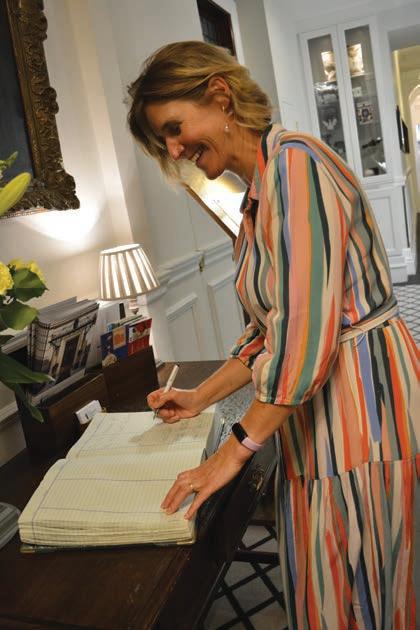
Anna Taylor signs The Farmers Club visitors’ book
justice issues, said Anna. Part of the problem is that unhealthy food is more affordable, more available, and more aggressively marketed than healthy options. “Unhealthy calories are half the price of healthy ones. If your money is tight, that’s the way you’re forced to go.”
Junk food
The “junk food cycle,” as described by Henry Dimbleby in his National Food Strategy, literally feeds on itself, suggested Anna. Selling ultra-processed food is the quickest path to profit, she said, before putting it more bluntly: “They sell more, we eat more – it becomes a self-reinforcing loop.”
About Anna Taylor
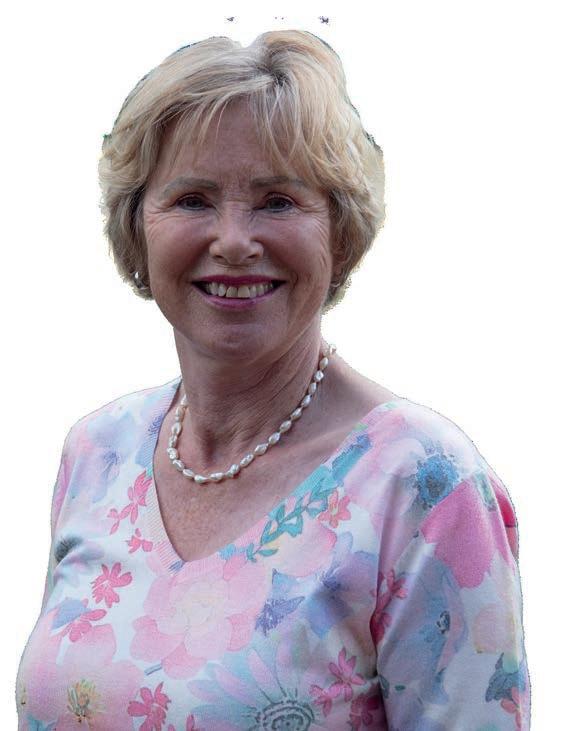
Nutritionist Anna Taylor is executive director of the Food Foundation, established to explore ways the UK food system can deliver the best outcomes for people, producers and the planet.
After graduating with a masters degree in human nutrition from the London School of Hygiene, Anna worked for the Department of Health and a number of international organisations – including Save the Children and UNICEF.
She led a policy team at the Department for International Development, where she supported the delivery of the UK’s global commitments to tackle poor diets.
Anna was awarded an OBE in 2014 and served as chief independent adviser to Henry Dimbleby, who developed the national food strategy published in 2021.
The government’s food strategy for England aims to turn off that loop and replace it with a new one: the “good food cycle”. That means realigning incentives, regulations, and public procurement to support healthier, more sustainable diets.
The Food Foundation outlines four key actions for this to happen:
1. A Long-Term Vision
Primary legislation will be needed to address public health, climate and supply chain resilience. “We can’t switch on the good food cycle in two years. This is a process that requires long-term commitment.”
Such a law would target measurable outcomes – reducing food insecurity to below 5% of households – and lock in ambition across successive governments.
2. Shift Commercial Incentives
At the heart of the problem lies the profit motive. Junk food is cheap to produce and lucrative to sell. Anna praised the government’s soft drinks levy, which reduced sugar levels in beverages without harming sales. She urged ministers to consider similar fiscal measures targeting other unhealthy foods.
Anna Taylor delivered a compelling argument
The system is failing farmers and consumers.” “
A promising development is the NHS requirement for big food firms to report the healthiness of their sales. “Transparency will drive change. If companies have to compare themselves to their competitors, it will hardwire healthy choices into commercial decisions.”
3. Boost Fruit and Vegetable Production and Consumption
Less than 10% of children and 4% of adults get enough dietary fibre because they eat few wholegrains, pulses, fruits and vegetables.
The Food Foundation sees huge potential for coordinated public policy to address this, including aligning farming support schemes like the Sustainable Farming Incentive with nutrition goals, setting minimum vegetable portions in schools, and investing in trials to link healthy eating to healthcare.
An innovative trial by the Alexandra Rose Charity in Tower Hamlets offers vouchers for fruit and veg to people with early-stage type 2 diabetes.
“It’s reduced hospital admissions by 15%. We spend a lot of money treating illness, but we could invest earlier to prevent it,” said Anna.
to refocus the food system around place. Farmers can struggle to reach markets dominated by mass procurement and big retailers. Public institutions – such as schools, hospitals and local authorities –should use their buying power to support regional supply chains.
“There’s a real opportunity here to think about the combined powers of local authorities and national incentives to create economic space for new connections to emerge between producers and communities.”
Road ahead
Transforming the food system won’t be easy, said Anna. It will require cooperation between government, businesses, farmers and citizens. But the rewards – better health, reduced pressure on the NHS, and a lower environmental footprint – are worth the effort.
As Anna concluded: “We’re looking at the problem from the perspective of diet, but it’s disconnected from what farmers are producing. There’s a great big industry in the middle.
“Where’s the common ground between a better farming future and citizens accessing really good food at an affordable price? That’s the conversation we need to have.”
Wool revival
A long-awaited resurgence gains traction – but price pressures persist,
reports Johann Tasker
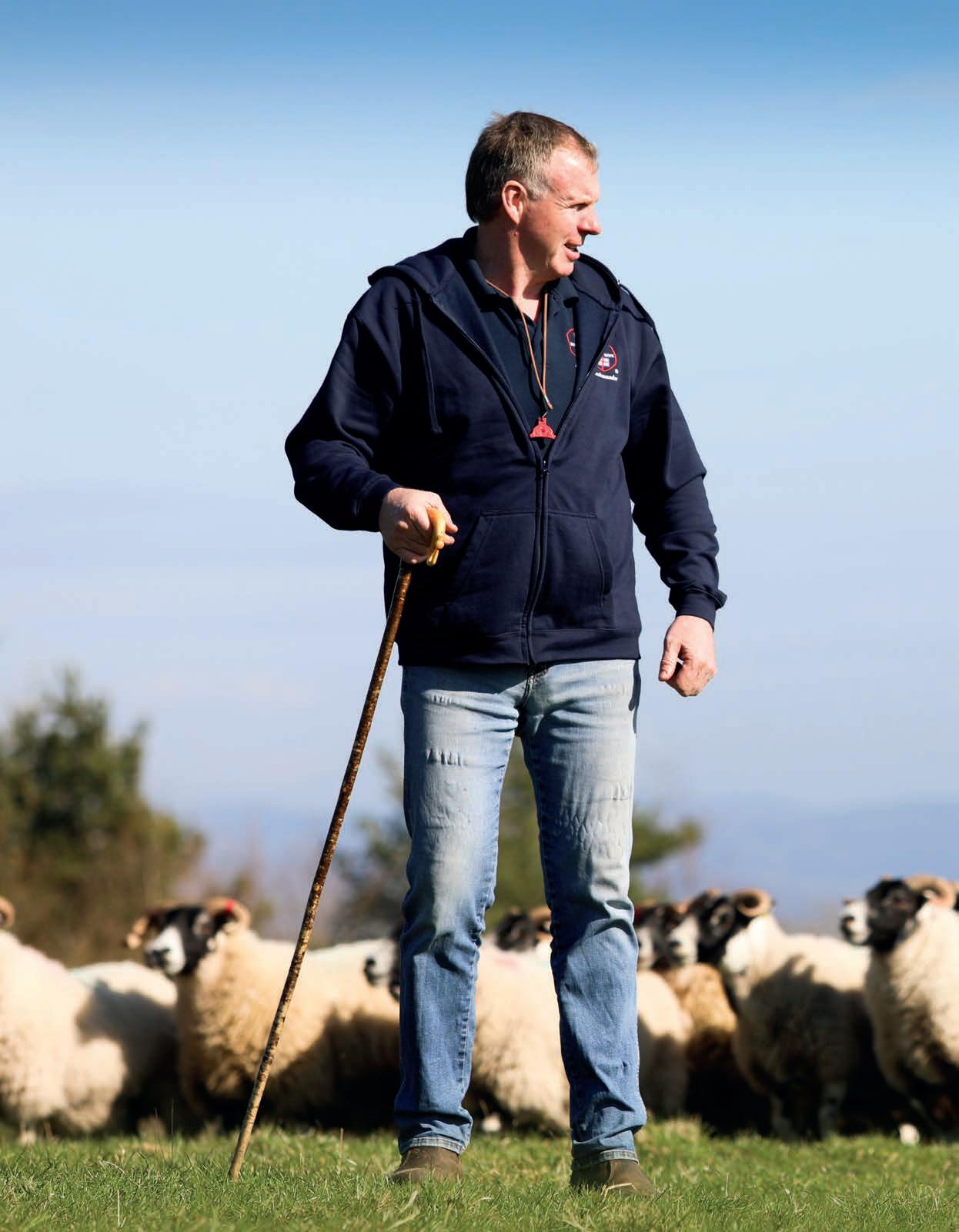
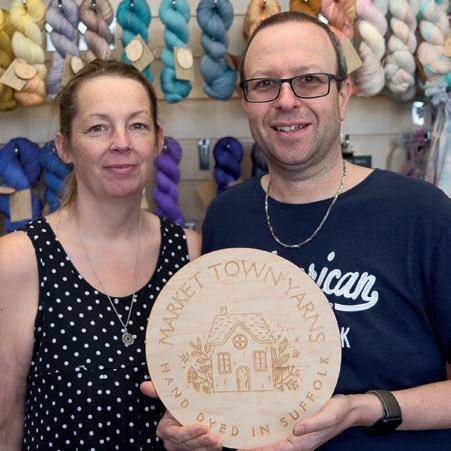
When Teresa and Gavin Alexander were looking for their next business venture, opening their own wool shop was a natural choice – in more ways than one.
The couple already had their own online store, supplying high-quality hand-dyed British yarn to knitters around the world. But they also wanted to give local customers the chance to feel the texture when making a purchase.
“You can’t feel yarn through a screen,” says Teresa. “People want to squish it, touch it and match the colours.”
To make sure their customers can do just that, Teresa and and Gavin opened their first bricks and mortar shop – Yarn Worx – in the Suffolk wool town of Hadleigh four years ago. They haven’t looked back since and business is growing.
It’s not surprising. Yarn’s natural qualities and rising consumer awareness around sustainability are helping reposition wool as a valuable material. After years in the doldrums, wool is showing signs of a gradual recovery.
Cautious optimism
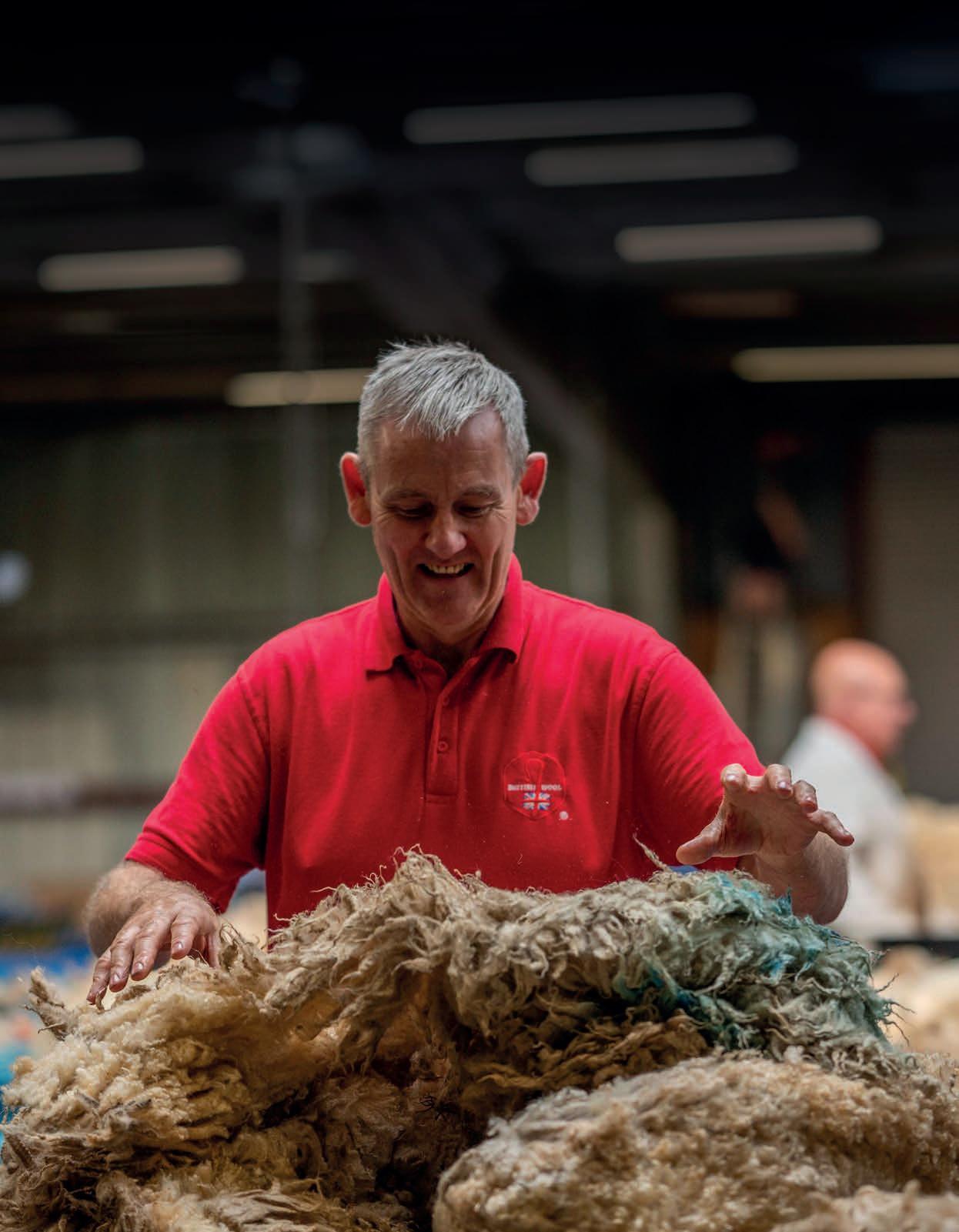
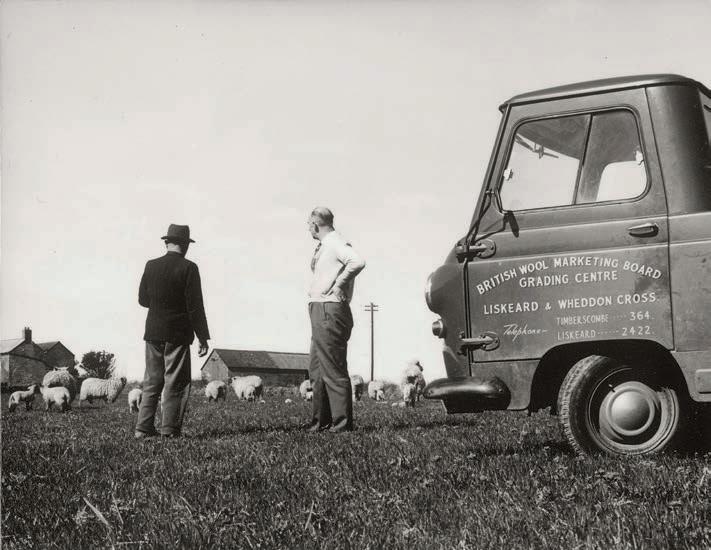
British Wool, the farmer-owned organisation which collects, grades and markets wool on behalf of UK sheep producers, handles about 75% of all UK wool marketed annually.
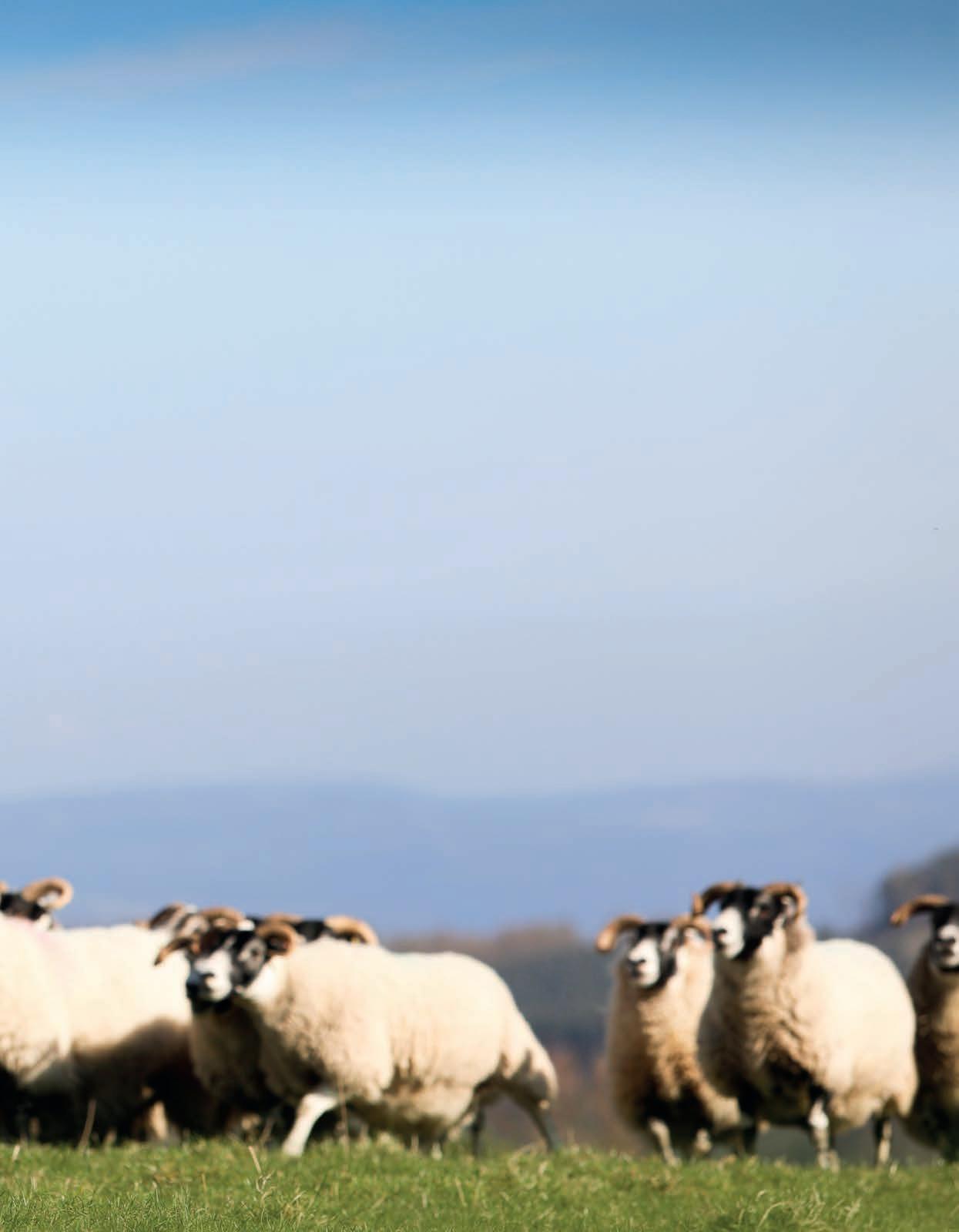
Prices have firmed and interest from consumers and manufacturers is growing, says British Wool marketing director Graham Clark. Yes, sheep
Campaign for Wool and Wool Month
Wool Month returns this October with a renewed focus on British-grown fibre, local manufacturing, and sustainable living.
The annual campaign – supported by British Wool and the Campaign for Wool – brings together farmers, designers, retailers and consumers to celebrate the versatility and value of wool.
This year’s programme includes hands-on events, product showcases and collaborations across fashion, interiors and crafting. A major highlight is the return of Shaun the Sheep as a family-friendly ambassador for wool in carpets and handknitting.
With growing consumer interest in traceable, natural materials, Wool Month 2025 aims to raise awareness of wool’s environmental credentials and support UK producers – an opportunity to connect the public with the people and stories behind British wool.
Retailers, independent yarn shops and online platforms are scheduled to take part, with promotional activity spanning social media, press campaigns, and in-store displays nationwide.
numbers are under pressure amid global trade tensions, but there’s an air of cautious optimism too.
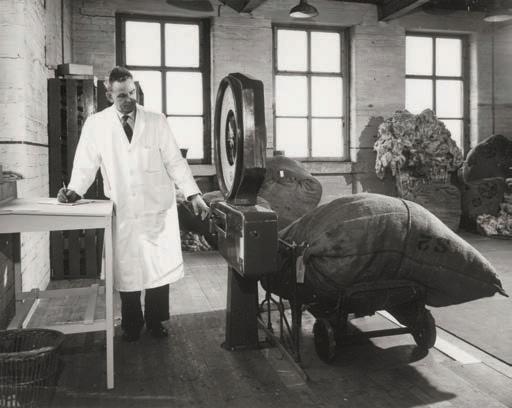
This year marks 75 years since British Wool was set up to support UK farmers. Originally located in London, today it’s based in Bradford – the heart of the UK textile trade. Sheep farmers can rightly be
demanding when it comes to getting a better price for wool – but there have been notable successes.
“Without British Wool, the vast majority of the UK clip wouldn’t reach market,” says Graham. That’s a situation already visible across much of mainland Europe, where no equivalent body exists to represent farmers’ interests.
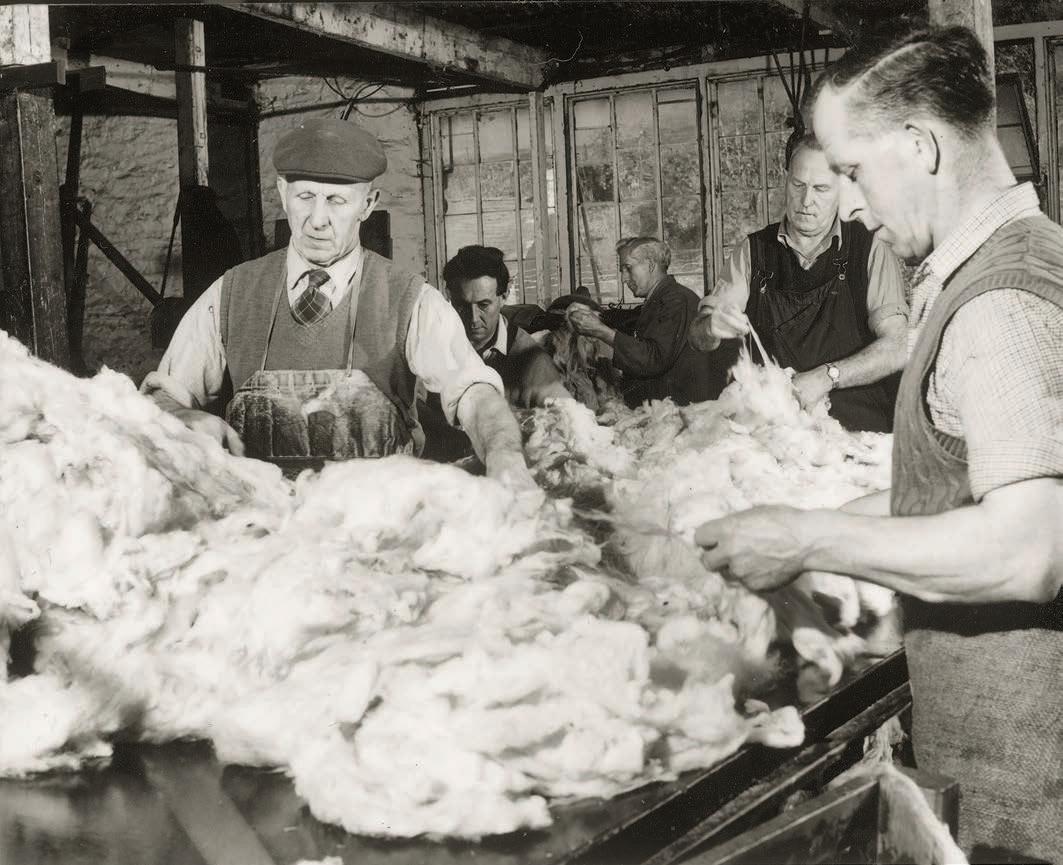
British Wool operates as an open co-operative, accepting wool from UK farms of any size and any region. All wool is hand-graded by trained professionals who must complete a rigorous threeyear training programme.
Traceability
With 120 grades across six main types, wool is sorted by style and characteristics — including length, crimp, handle and lustre. This grading process is where the organisation says it adds the most value.
“The more wool we handle, the more each farmer benefits,” explains Graham. “Higher volumes reduce our cost per kilo to grade, which allows us to return greater value to our members.”
For manufacturers and brands seeking provenance, British Wool offers a traceable wool programme. Last season, over 800,000kg of wool attracted a traceability premium – paid in addition to the auction price – and purchased by around 25 different brands.
Consumers favour wool’s natural qualities
These premiums are increasingly attractive to brands marketing to environmentally conscious consumers. Traceable wool offers a verified supply chain story – from farm to finished product – a guarantee of quality.
Annual growth
Chris Tattersall is managing director of Woolroom, a company which uses fully traceable British wool to make mattresses. He says he is seeing over 20% annual growth as demand rises for wool-based bedding in the UK, US, and Canada.
Customers are drawn to wool’s natural fibres, which “breathe, are biodegradable and longer lasting,” says Chris.
The company’s new UK-made Artisan Mattress range uses no synthetics and is designed for neartotal recyclability at end of life, he adds.
The post-Covid years have been key in altering perceptions of wool. Global supply chain disruptions prompted many UK-based brands to look closer to home. “They suddenly realised they had this amazing natural fibre on their doorstep.
British Wool views itself not only as a supplier of wool but also as a partner to these businesses –helping 170 licensee brand partners integrate more British wool into their ranges and improve their sales performance.
Reaching consumers
Alongside its business-to-business activity, British Wool continues to expand its consumer outreach. “Our job is to tell consumers how amazing British wool is – and where they can find products that use it,” says Graham.
There are signs this strategy is working –although the economics remain challenging. Despite >>
British wool is celebrating its 75th anniversary this year
Teresa and Gavin Alexander of Yarn Worx sell yarn made from British wool
“
Prices are improvingour task now is to grow demand.”
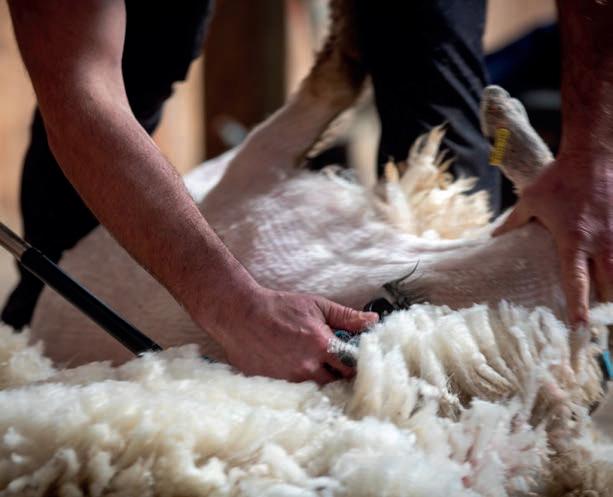
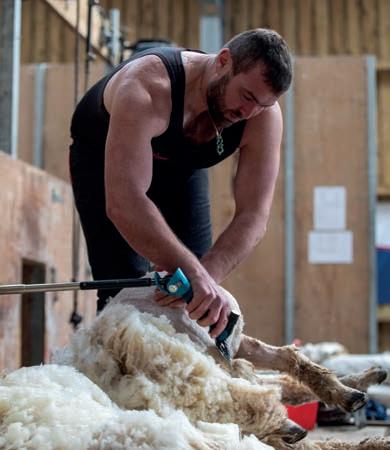
progress, wool remains a by-product for many sheep farmers. Shearing costs typically run to £1.60 per fleece, meaning many remain cautious.
Graham remains clear-eyed about the work ahead. Efforts are now concentrated on encouraging licensee partners to expand their use of British wool, and on continuing to educate consumers on the environmental benefits of natural fibres.
The goal is to reverse this trend by building demand and returning more value to producers.
“We’re not pretending wool will make farmers rich. But we are seeing improvement, and we’re working to build on that momentum.”
Younger generation
The long-term decline in prices has been shaped by decades of competition from synthetic fibres and
changing consumer habits, says Graham. “In recent years, clothing has become almost disposable.”
“Prices are not yet where they need to be, and we are the first to admit that. But things have been improving. Our task now is to grow demand, build stronger partnerships, and deliver more value for farmers by finding new customers.”
Back at Yarn Worx in Suffolk, Teresa and Gavin say that is happening already. Younger generations – especially Gen Z – are more aware of the environmental impact of fast fashion, and just as keen on knitting as older folk, says Gavin.
“People often think knitting is for the older generation. But we’ve got a 24-year-old in the shop right now, and she’s incredibly talented. Doctors, barristers – men and women – people from all walks enjoy knitting these days.”
Annual sheep drive across
London Bridge
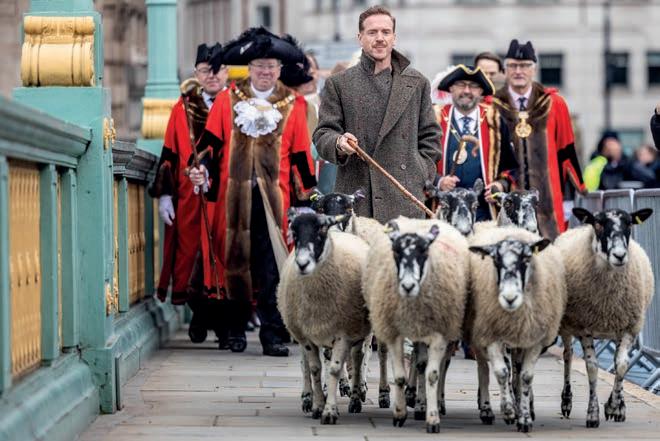
The annual London Sheep Drive returns on Sunday 28 September 2025, bringing tradition, pageantry and wool industry pride to the heart of the capital.
Organised by the Worshipful Company of Woolmen, the event sees Freemen of the City of London exercise their historic right to drive sheep across London Bridge – joined by supporters, school groups and
special guest Adam Henson.
Now a major fundraising and awareness event, the sheep drive celebrates British wool, sustainable farming and urban connections to the countryside. Alongside the symbolic crossing, visitors can expect artisan stalls and familyfriendly activities.
The event raises funds for industry charities and showcases the continuing relevance of wool in modern life. It’s a uniquely British mix of heritage and purpose. Places to walk the sheep are limited and sell out quickly once released in early summer.
Photo credit: @thismedialarke
Soil under scrutiny
Northern Ireland tracks soil carbon and runoff to shape a greener farm policy >>
waterways are from agriculture, including fertilisers and manures. The UK average is just 25%.
Farmers joining the SNHS initative to have their soils assessed receive nutrient information for each field, maps of hotspot areas for nutrient runoff
areas for mitigation in the agricultural landscape to help farmers take action in the right places.”
Findings are already contributing to the scheme’s main goal of reducing nutrient losses to water. They are also improving farm resilience by helping to optimise nutrient applications, said Dr Cassidy.
The project is pinpointing areas where low nutrient applications mean crops are failing to reach their yield potential. It is also highlighting areas where excessive applications are wasting farmer’s money and raising pollution risks.
Areas at high risk of nutrient and sediment loss are identified by remote sensing – with aircraftmounted LiDAR technology which uses the light from a laser to collect measurements.
Highly detailed 3D terrain maps created from the LiDAR scans can then be used by farmers to implement measures which help to control the flow of water and retain nutrients in the field.
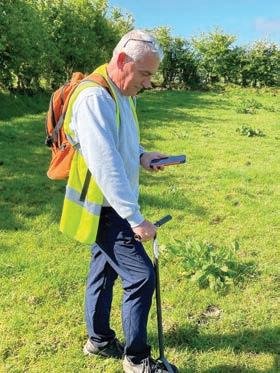
Experts from Northern Ireland’s College of Agriculture, Food and Rural Enterprise (CAFRE) are helping farmers interpret soil analysis results and understand their carbon levels.
Like many farmers, Alistair Craig already knew which parts of the farm were prone to run-off. But he says the SNHS has delivered added benefits.
Nutrient losses to surface water and fertiliser applications are in the spotlight
“We have a much better insight into the soil status when it comes to making decisions on whether to apply lime or where we need to target nutrient applications,” says Alistair (see case study, right)
Early findings
Nine out of 10 farms in Northern Ireland have been assessed so far by the Soil Nutrient Health Scheme –encompassing some 400,000 fields.
Early results from these fields have identified soils acidity and surplus phosphorus are potential problems. There are also significant variations according to farm type and location.
“Once fields have been sampled, farmers can expect to receive their soil sample analysis results and recommendations within four to six weeks,” says AFBI senior scientist Alex Higgins.
Dairy farms generally have fewer issues with nutrient or liming deficiencies than other livestock sectors. Dairy units also tend to have less acidic soil, reflecting a stronger emphasis on liming and grass management.
But dairy levels of phosphorus, potassium, magnesium, sulphur and calcium all sit above average – reflecting the higher level of nutrient inputs in what is a more intensively managed sector.
Regional potassium levels are notably lower in the west of the country. This is most likely due to leaching on farms where rainfall levels are almost twice as high as the east.
Benefits
Participating farmers receive detailed information on soil organic matter, acidity status and nutrient levels for each of their fields.
This detailed soil report also provides farmers with nutrient and lime recommendations based on individual farm results, explains Dr Higgins.
These recommendations are designed to match the needs of arable crops and managed grassland across all soil types – helping to improve nutrient health, farm profitability and water quality.
Praising the scheme, Northern Ireland farm minister Andrew Muir says helping farmers match slurry, fertiliser and lime applications to crop needs more accurately makes good business sense. “This will help to increase efficiency while also reducing the farm’s environmental footprint.”
There are other considerations too. From January 2026, taking part in the scheme and completing the training will be requirement for farmers who want to benefit from Northern Ireland’s new Farm Sustainability Payment.
This will reward farmers who adopt sustainable land management practices that protect the environment and support food production.
Case study
Alistair Craig and his father Robert run Carse Hall Farm, a 260ha dairy and arable unit near Limavady in north-west Northern Ireland.
Arable crops are grown on about 100ha of the farm. They include wheat, barley, oilseed rape, maize, oats, beans and lucerne. Buckwheat is grown as a companion crop.
The remaining 140ha of pasture and silage fields support 285 pedigree Holstein milkers and followers. Six cuts of silage are taken each year – requiring careful nutrient management to achieve optimum growth.
The soil maps are already helping to deliver this, says Alistair. “With the online runoff maps I can show a contractor exactly where the runoff risks are highest and explain how to adjust any of our fieldwork operations.”
Comparing the latest SNHS results with previous soil test data confirms that phosphorous and potassium levels are declining from earlier highs as the farm has adopted regenerative practices.
“We’ve used buckwheat as a companion crop to wheat and rape to take up soil phosphorous from the ground. The buckwheat scavenges soil-bound phosphorus and solubilises the nutrient, storing it in its tissue.
Buckwheat is killed off by the first frost. As the plants decay, they release soluble phosphorous which can be more readily taken up by the associated wheat or rape crops.
The soil sampling has shown phosphorous levels are dropping from high indexes of fours and fives, three years ago to indexes of three. This has markedly reduced water pollution risks.
Time to ‘change the wiring’
George Eustice lifts the lid on inheritance tax, missed reforms – and how to truly influence farm policy
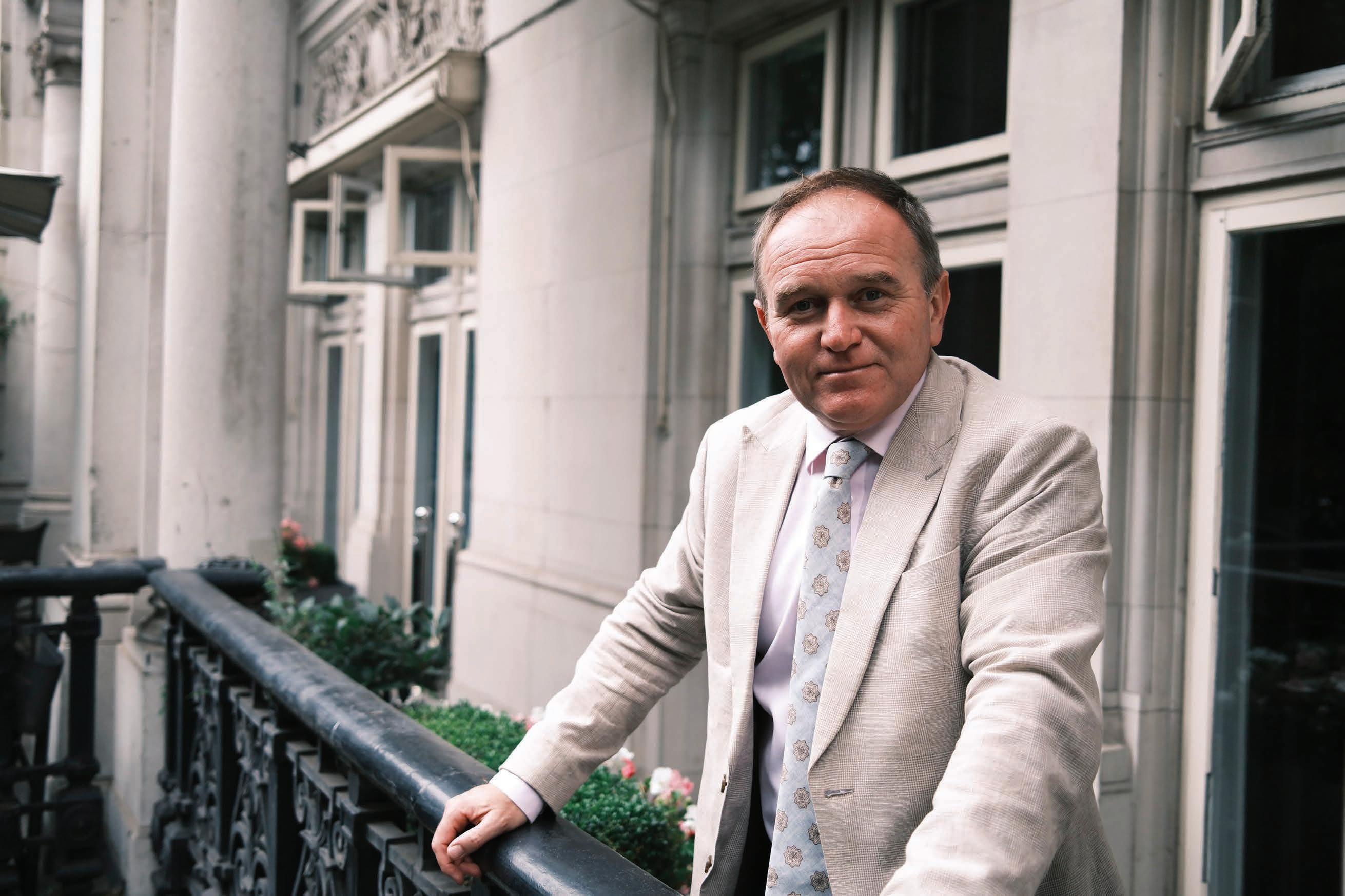
Achange of approach is needed to stop inheritance tax from becoming a permanent and deeply damaging reality for family farms across the country, says former Defra Secretary George Eustice.
Mr Eustice, who served in government for nearly a decade, says the Treasury had wanted to impose inheritance tax on farmers long before last autumn’s Budget announcement.
Treasury officials had been “relentlessly pushing” for an end to agricultural property relief, he says, waiting for a politically weak moment to get the policy through since at least 2014.
Matter of time
“It was only a matter of time before they got lucky,” says Mr Eustice in an exclusive interview with The Farmers Club Journal. “And now they have.”
Almost a year has passed since Chancellor Rachel Reeves unveiled her plan to levy a 20% inheritance tax on farm assets worth more than £1m. Despite widespread lobbying and ongoing protests from farmers, she has shown no sign of a U-turn.
Asked whether he believes a policy reversal is likely before the decision comes into effect from April 2026, Mr Eustice is sceptical.
But he still believes there is merit in continuing the campaign. “The decision point was probably a week after the Budget. If the government was going to retreat, that’s when it would have happened.”
Protests, he argues, are limited in effectiveness. While they raise the profile of an issue, ministers are rarely swayed by people taking to the streets.
Surprisingly resilient
“Government is surprisingly resilient once it’s made a decision. It comes down to conversations between the Prime Minister, the Chancellor of the Exchequer and the Defra Secretary. Once ministers decide to dig in, they usually do.”
Going forward, Mr Eustice believes farmers should engage in a new kind of dialogue with government. Rather than defining themselves by what they are against, farm leaders should think harder about what they’re for, he adds.
In short, that means farmers need to “change the wiring” inside government, says Mr Eustice – a challenging task perhaps best achieved by playing a longer, more strategic game.
Some of the most vulnerable farmers – many of whom are in their 70s or 80s – are effectively trapped by the inheritance tax decision, he agrees.
“
If you want to change the policy, you need to change the dynamics in government.”
They are simultaneously unable to pass on land to the next generation and unable to afford life insurance to cover the tax liability. A well-designed taper or delayed implementation could have softened that impact, says Mr Eustice. “It would have taken the sting out of the policy.”
Acknowledging that the NFU faces a dilemma in the way it approaches the issue, Mr Eustice says the union’s continued focus on inheritance tax reflects pressure from members who would be seriously affected by it – particularly those older farmers facing uncertainty about succession.
But he says the same continued focus on inheritance tax also risks the union being perceived as a single-issue organisation – potentially weakening its broader influence on government policy.
“I think the NFU are very conscious of this,” he says. “Having defined themselves by this issue, they are right to keep going. But they probably also need to broaden the discussion and re-engage with the wider policy agenda.”
Born into a farming family, Mr Eustice was MP for Cambourne and Redruth from 2010-2024. He served as a Defra farm minister from 2013-2022, including more than two years as Defra secretary until he was dismissed by Liz Truss when she became Prime Minister after Boris Johnson.
Reflecting on nearly a decade at the heart of farm policymaking, Mr Eustice regards the Agriculture Act and Environmental Land Management schemes (ELMs) as his biggest achievements. They were, he says, the foundation of a new approach: replacing income support for landowners with payments for farmers who delivered environmental improvements alongside sustainable food production.
“We had a once-in-a-generation chance to get rid of subsidies for land ownership. We created a policy that rewards farmers for doing the right things for the environment – with a profit margin.”
Easy target
The shift, says Mr Eustice, was essential – not only to improve sustainability, but to ensure political defensibility in the face of Treasury officials who all too often see farming as an easy target.
“If we hadn’t made that transition, a new government could have simply pulled the budget altogether. But by putting in place a deliverable, target-led policy, we made it much harder for the Treasury to cut the funding.”
He credits his long tenure with giving him the time and authority to push through complex reforms. “Most ministers are only in post for 18 months – not long enough to achieve anything, ” he argues.
“I knew every senior official in Defra. That institutional memory was crucial.”
But Mr Eustice admits there he left significant unfinished business. Chief among his regrets is the failure to reform the habitat regulations inherited from the EU, which he says are “shambolic” and harmful to planning, land use, and conservation.
“I wanted to consolidate those with the Wildlife and Countryside Act to create a coherent body of nature protection. We had a bill planned for the third or fourth session of Parliament. But after I left, Rishi Sunak abandoned all serious EU reform.”
He also planned to restructure arms-length agencies by merging Natural England with the Environment Agency’s environmental functions, while creating a single agricultural regulator based around the Rural Payments Agency.
Run out of road
“That would have made delivery more coherent and accountable. But it was dropped, along with plans to reform pesticide rules and create a fit-for-purpose system for biostimulants and bio-pesticides.”
These decisions, he says, reflect a government that had run out of road. “Rishi Sunak didn’t really want to do very much as Prime Minister. He had two years, but no real ambition.”
Despite his Conservative credentials, Mr Eustice offers a nuanced assessment of the current Labour government. He praises Defra minister Daniel Zeichner for his grasp of detail. “He understands agriculture,” he says. “That matters.”
Labour Defra Secretary Steve Reed also receives qualified approval. He “could be a good Secretary of State” thanks to his connections with No.10.
“That’s what you need: someone who can go over the Treasury’s head when needed.”
Yet Mr Eustice is clear-eyed about the limits of their influence, particularly in the face of a determined Treasury. “If they were candid, they’d admit they’ve been let down by the Treasury. It’s the Treasury that caused the real havoc—and then ran and hid, leaving Defra to face the fallout.”
He concludes with a familiar warning: the Treasury is the real opponent, not Defra. “If you want to change government policy, change the dynamics inside government. That means influencing No.10.”
George Eustice continues to divide his time between
Cornwall and London
“You want a Defra Secretary who can go over the Treasury’s head.”
My ‘home from home’ in London
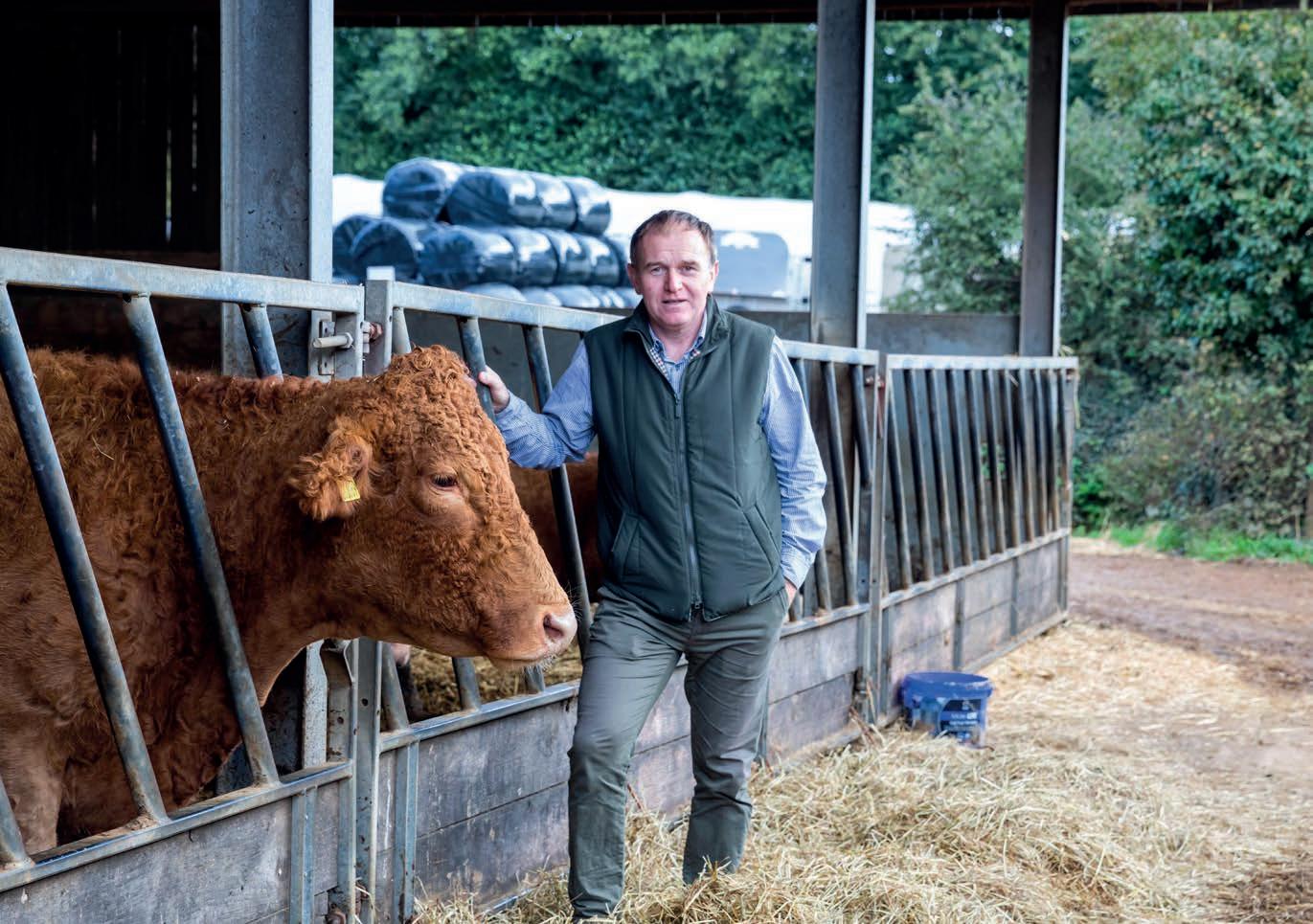
"I joined the Farmers Club after leaving parliament,” says former Defra Secretary George Eustice.
“I still spend a lot of time in London and much of my work now is with farming-related companies – so a strong connection with agriculture is important.
Ideal base
“The Club is an ideal base. I can meet people here for a coffee or for a drink out on the Terrace in the evening and there’s a quiet room downstairs where you take a phone call – or do some work.
“Some London clubs are like Arabian markets with people crammed in with their laptops and it’s all a bit much. But the Farmers Club isn’t like that – and I like it for that reason. It’s more discreet.
“It’s not overly pompous and it has nice standards – yet it doesn’t take itself too seriously in the way some other clubs can.
“It’s also close to Parliament and I often bump into friends here – sometimes farmers from Cornwall or people I knew while I was at Defra. So for all those reasons, for me it works.”
Easier to turn farm buildings into homes
Changes to planning rules are an opportunity for landowners, writes
Nigel Salmon
Farmers and landowners will now find it easier to convert agricultural buildings into homes without full planning permission.
More farm buildings are set to be turned into dwellings following regulatory changes to Class Q permitted development rights.
Buildings do not now need to be in agricultural use to qualify – they simply need to have been part of an agricultural unit since July 2023. The new rules also allow possible extensions to buildings.
What is Class Q?
Class Q of the General Permitted Development Order (GPDO) allows for the conversion of agricultural buildings into homes. It offers a simplified and expedient alternative to the traditional routes of gaining permission via the planning system. Class Q is a particularly valuable mechanism across rural England, where redundant barns and farm structures present prime opportunities for profitable development.
What has changed?
The new regulatory changes to Class Q that came into effect on 21 May 2025 create important opportunities for landowners.
Set against this, the maximum size of any dwelling has been reduced to 150m² – in other words, a limit of 100m² per dwelling for ten dwellings.
Also introduced is a new relief for buildings in existence on or before 24 July 2023. These buildings can now be extended by up to 4m on an existing hard surface to the rear of the building.
Concessions
This will present opportunities for the conversion of smaller buildings. It will also permit up to 200 mm protuberances to a building to allow, for example, for bat boxes or rooflights.
Another new concession is that more rural buildings not in use for agricultural purposes can now take advantage of Class Q opportunities.
Class Q does not operate in Wales, National Landscapes, National Parks or Conservation Areas, nor does it apply to heritage protected buildings or to buildings without an existing ‘suitable’ access.
Eligibility
Class Q approval can be a very “
To benefit from immediate Class Q concessions, the building in question must have formed part of an established agricultural unit since 24 July 2023. Previously, the date was March 2013.
The main change is that the previous limit of five dwellings has now been increased to ten, with the
If a building existed before 24 July 2023 and at that time was part of an Established Agricultural Unit (EAU), it will be eligible for Class Q. If the building was part of an EAU after this date, ten years must pass to benefit from Class Q.
If a building has continued to be an EAU but has been used for non-agricultural purposes – such as storage, stabling or for a non-farming business – the building can now benefit from Class Q.
Opportunities
Normally, new-build residential development is very difficult to achieve in the countryside and limited to specific restrictive exemptions under national and local planning policy.
But Class Q approval can be a useful tool for landowners. In 2017, the Court of Appeal ruled that if a building or buildings have already been granted prior approval under Class Q, this would then amount to a fallback position.
When a fallback position exists following the granting of Class Q approval, it presents an opportunity for high quality, new-build development, offering betterment to the environment and a higher site value to the landowner.
If you are considering development opportunities for farm buildings anywhere in England, taking early professional advice can make all the difference.
Nigel Salmon is a Farmers Club member. For details, visit www.salmonplanning.co.uk or call 01749 671500.
New ideas take root on campus
Harper Adams University farm isn’t just producing food –it’s training the next generation of farmers too
Farming is seldom straightforward. But complexity is part of the job description at Harper Adams University in Shropshire.
The university’s 500ha Future Farm on the outskirts of Newport isn’t only a working business – it’s also a core part of Harper’s mission to educate students, support research and test sustainable approaches to agriculture.
Farm director Richard Hooper leads this delicate balancing act. “We’re a mixed farm,” he says. “But it’s complicated. We’ve got to stay commercially relevant, while also supporting teaching and research. Each can pull in different directions.”
The result is a uniquely structured operation, where livestock, crops and research trials run side by side, often in deliberate tension – as Farmers Club members will be able to see during an exclusive farm visit on Friday, 3 October (see page 27).
Dairy and livestock
The farm’s largest enterprise is a dairy unit milking around 400 Holstein cows three times daily. Milk is sold to Müller and supplied to Morrisons.
With yields averaging over 12,000 litres per cow annually, the dairy is a high-performing unit by commercial standards. But good management is also central if Harper Adams is to achieve its sustainability goals. In 2020, the university committed to reaching net zero by 2030.
“For a livestock-heavy farm, that’s a big ask,” says Mr Hooper. “But we thought it was the right thing to do. Even if we don’t hit the target exactly, it pushes us in the right direction.”
After setting what remains an ambitious goal, the farm reduced emissions by 12% between 2022 and 2023 – and by a further 7-8% the following year. Changes in diet and breeding played a part, says Mr Hooper. These included switching to clover-based leys – which enabled the farm to reduce its fertiliser usage – and testing crossbred cows with better feed conversion efficiency.
A similar approach is taken by the pig unit, which houses 230 indoor sows. It is used to explore alternative diets that reduce protein and remove imported soya without compromising growth.
With a high output of 38 pigs per sow annually, the unit allows researchers and students to assess real-world trade-offs in performance and environmental impact.
The sheep enterprise includes around 600 Lleyn ewes, which lamb in February to match the academic calendar. The flock supports both teaching and a genetics research project called Breed for CH4nge, which aims to identify sheep with naturally lower methane emissions.
Better decisions
“We use respiration chambers to monitor emissions,” says Mr Hooper. “It helps us select animals that grow efficiently and produce less greenhouse gas. We can use that information to inform breeding decisions.”
Beef cattle from the dairy herd are also finished on site. Around a quarter are kept as replacements; the rest, mainly British Blue or Angus crosses, are finished either indoors or on rotational grazing systems. Comparing the two systems allows analysis of growth rates, emissions and cost per kilo of beef.
“We’ve found that indoor finishing is very efficient from a carbon perspective,” says Mr Hooper. “But we’re trying to see if a grass-based system can get close – because that’s useful information for other producers.”
With a large livestock population, nutrient management is a key focus. All manures and slurries are reused on the farm. Harper Adams is
participating in a research project that separates slurry into nitrate- and phosphate-rich fractions. This allows more targeted application and helps avoid phosphorus build-up in soils.
“We’re trying to get more value from our own nutrients,” says Mr Hooper. Last year, the farm used just 30-40kg of synthetic nitrogen per hectare – less than half the national average.
Arable enterprises
The cropping strategy is geared almost entirely towards supporting the livestock units. Wheat, barley, maize, grass and lucerne are grown on-site for feed. Oilseed rape is the only major arable crop sold off the farm, and it’s grown mainly for teaching purposes. A neighbouring farmer rents land to grow potatoes, which are also used for practical training.
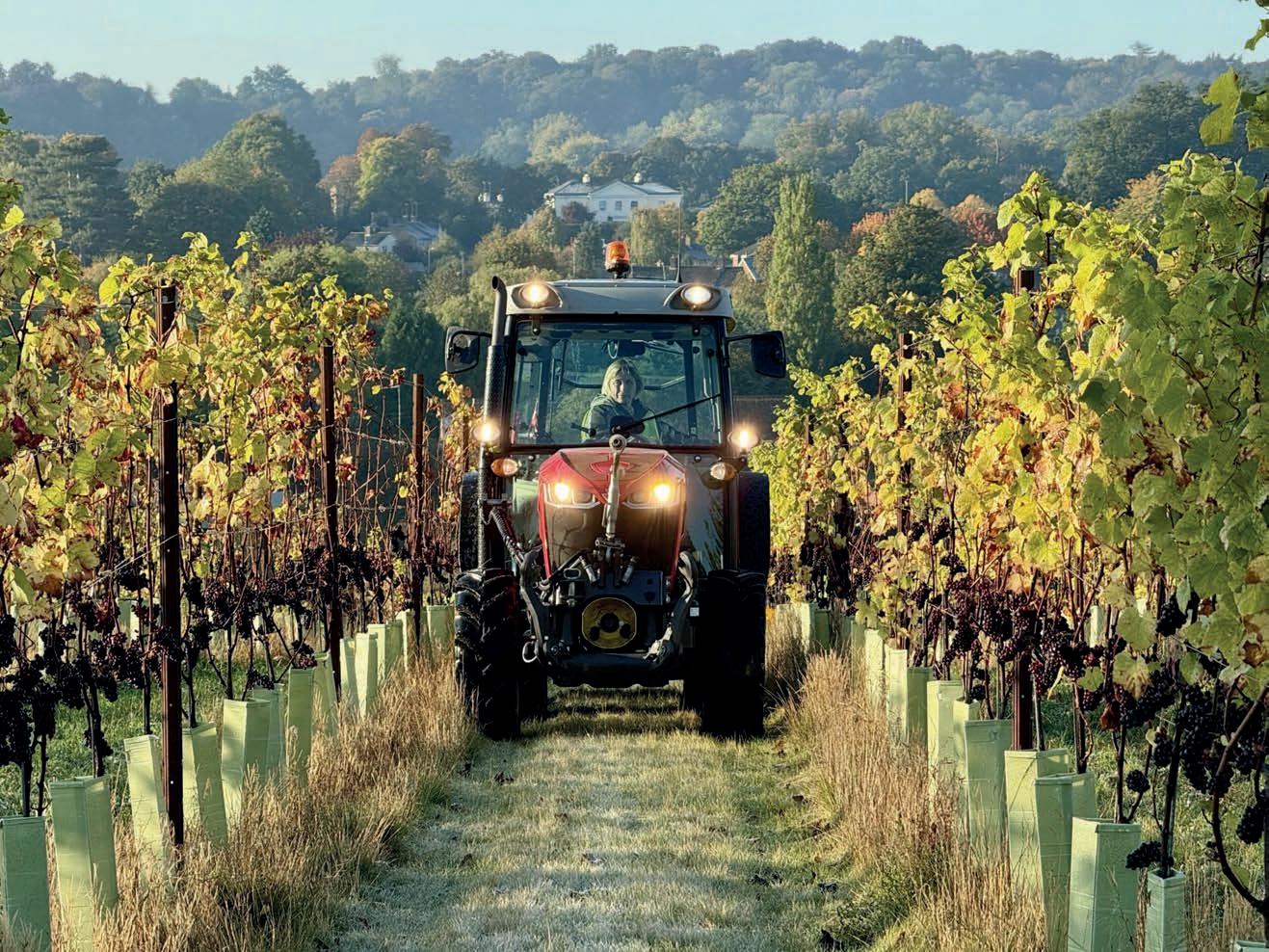
One recent addition is a 1ha vineyard, planted with nine grape varieties. “We’re assessing which varieties suit our climate,” says Mr Hooper.
“
We’re getting more value from nutrients.”
“The wine will be made by a local vineyard, but we’ll use the project to support teaching in viticulture and beverage production.”
The team is also trialling rewetting of peatland areas, looking at how paludiculture or wetland farming could offer new cropping options and reduce emissions. “It’s early work, but we want to understand what might be viable.”
Education and research
As part of Harper Adams University, the farm is a key teaching facility. That means running additional livestock numbers and adjusting production schedules to fit term times.
For example, lambing begins earlier than is typical to ensure students are on campus. The veterinary school, which celebrated its first graduating
class this year, relies on the livestock enterprises for handling practice and assessments.
“You need a large enough group of animals that you’re not repeating procedures on the same ones too often,” Mr Hooper explains. “For invasive techniques like rectal exams, that matters.”
Teaching and research often require protocols that differ from commercial practice, he adds. “We sometimes manage things in a way we wouldn’t choose commercially. But it’s part of our role.”
The farm hosts numerous research projects –including long-term trials comparing regenerative and conventional farming methods in the same field. The university was also one of the first in the UK to explore the possibilities promised by autonomous machinery, through its Hands-Free Hectare and Hands-Free Farm projects.”
Proof of concept
“We were early-stage on that work,” Mr Hooper says. “Much of it was proof of concept, and the technology’s moved on. But it helped show people what was possible.”
Postgraduate research, particularly PhD work, adds further demand. “They’re valuable projects, but they don’t come with full funding and they still require staff time and support.”
These extra requirements mean staffing is higher than on a typical commercial farm. Some workers
“
It helped to show what was possible.”
focus on operations, while others might focus on teaching or assisting research. “It’s more complex, but that’s the nature of the place.”
Despite being a university facility, the farm operates within financial constraints. Every new development must make a business case.
“There’s no blank cheque,” Mr Hooper says. “If we want to upgrade buildings or add new units, we have to show that it stacks up economically and delivers something meaningful for the university.”
The Future Farm is exploring ways to engage more with the wider public. It already supplies food to the university’s own kitchens, but Mr Hooper sees scope to expand into direct sales.
“We’re considering something like a farm shop or visitor site linked to food and drink,” he says. “It could help with outreach and make more people aware of what we do here.”
Other development plans include improving calf housing, expanding poultry teaching capacity, and enhancing on-farm processing.
“Our aim is to become more efficient and more sustainable – economically, environmentally and socially,” Mr Hooper concludes.
To secure your place on the Chairman’s Farm Visit to Harper Adams University on Friday, 3 October, please call 020 7930 3751 ext 6 or scan the QR code.
Farmed livestock are also used for education and training
From field...
From ancient Lammas loaves to modern food banks, harvest festivals still bring communities together
Church goers attending harvest festivals this autumn will be partaking in an ageold custom just as relevant today as it was centuries ago.
Like many of our traditions, the modern harvest festival has its roots in the Victorian era. But its origins stretch back much further. In fact, communities around the world have for millennia marked the end of harvest with a special celebration.
While those celebrations have shifted over time, the theme of showing gratitude for the land’s yield predates Christianity. Archaeological records suggest ancient Britons celebrated key points in the farming calendar with feasts and rituals.
First bread
The offering of the first fruits to God is described in the Old Testament. Lammas – or ‘Loaf Mass’ –marked the first bread from the new wheat crop. Celebrated on 1 August, it symbolised the first fruits of the season returned in thanks.
In early medieval England, the Lammas loaf would be blessed in churches, then sometimes used in folk customs such as placing pieces in the corners of barns to protect the grain.
“It’s about recognising where food comes,” says Reverend John Allan, who will be leading this year’s Farmers Club harvest service, which takes place on 15 October in London (see page 30).
“Ultimately, from a faith perspective, food is a gift – it is not something which is guaranteed or something that can be taken for granted.”
Local Communities
Despite its ancient roots, the modern harvest festival – with its church displays of produce, hymns, and food donations – is relatively recent, popularised in 1843 by the Reverend Robert Hawker.
A clergyman in the Cornish parish of Morwenstow, Rev Hawker invited parishioners to give thanks for the harvest. He is widely credited with initiating the custom of bringing fruits and vegetables into church for decoration and charity
The practice soon spread. By 1900, harvest festivals were an established part of the Anglican calendar, celebrated between late September and early October near the Harvest Moon – the full moon closest to the autumn equinox.
While religious observance was central, harvest festivals also became deeply embedded in community life. School children would prepare songs and poems. Produce displays often adorned churches, village halls, or schools.
Such festivals were not just about thanksgiving but also redistribution – ensuring some of the harvest bounty reached those in need. This ethos remains. Today, many UK churches continue to donate harvest offerings to food banks and community kitchens.
Awareness
Harvest festivals – in schools and churches – also serve to raise awareness of the effort that goes into food production, says Rev Allan. Many children today don’t realise how their food is produced – or indeed who produces it.
“It’s important that children have an opportunity to ask questions – and to hear about things they might not hear about at home. Many families don’t have shared mealtimes any more – food often comes from a packet you pop in a microwave.
“In a broader sense, it’s about recognising the need to look after the environment. Learning about food is even more important when you think about the challenges of climate change and the impact it is having on food production globally.” >>
Across the countryside, harvest customs are being reinvented to reflect the modern world. Cutting the final sheaf of corn was once an important moment. In some regions, this sheaf — known as the Harvest Queen, Corn Dolly, or Kern Baby — was plaited into ornate shapes and kept until the next planting season as a symbol of continuity and fertility.
Today, many farms celebrate as the combine havester finishes its last run in the last field. Harvest suppers remain popular – sometimes with a nod to age-old customs. One well-known example is the recently reinvigorated Crying the Neck tradition in Devon and Cornwall, where a ceremonial sheaf is raised and workers chant in celebration.
“Even in our modern world, the seasons still matter.”
Music has long been integral to these celebrations. The hymn Come, Ye Thankful People, Come, written by Canterbury Cathedral dean Henry Alford in 1844, remains one of the most popular harvest songs:
“All is safely gathered in, ’Ere the winter storms begin.”
Other hymns – such as We Plough the Fields and Scatter, originally a German song translated into English in the 19th century – have also become staples of harvest celebrations.
Harvest festivals gained additional significance during and after the Second World War. With food rationing and Dig for Victory campaigns in full swing, the importance and value of domestic food production was deeply felt.
That recognition is equally important today, suggests Rev Allan. While fewer people work directly in agriculture, the debate about food security and self sufficiency means food-related celebrations are as relevant now as they have always been.
Churches still hold harvest services, and many schools take part in harvest assemblies. At the same time, secular harvest events are gaining popularity, including apple days, community suppers, and urban garden celebrations.
Yet while the harvest festival may seem quaint to some, others say it speaks deeply to the human condition – our dependence on the earth, the seasons and each other for the food we all enjoy.
Little wonder then that harvest festivals are increasingly linked to local food movements and environmental awareness. Whether celebrated in a country church, a school hall, or a community garden, they offer a moment of reflection – a reminder that even in a modern, globalised food system, seasons still matter.
A reminder too, that gratitude for food remains one of the universal instincts we all share.
Join us for our annual harvest service
Farmers Club members and guests are warmly invited to join us for one of our most cherished traditions – our annual Harvest Festival Service in London.
To be held at St Martin-in-the-Fields Church, Trafalgar Square, the sermon will be given by the Reverend John Allan at 5pm on Wednesday, 15 October. It will be followed by a harvest supper back at the Club.
Designed by James Gibbs and completed in 1726, St Martin’s has become one of the most significant ecclesiastical buildings in the English-speaking world – with outstanding acoustics and stunning architecture.
Following the service, members and guests are warmly invited back to the Club for a celebratory three-course plated dinner. This traditional harvest menu will feature the finest of British seasonal produce.
Cost: £85 per person. To reserve your place, please call the Club on 020 7930 3751 ext 6.
A new culinary chapter
Head chef Bradd Johns brings his global experience and farm-fresh pride to The Farmers Club
Let me begin by saying how proud and excited I am to be your new head chef. The Farmers Club has a great history and reputation for delicious food using the best produce this country has to offer – literally bringing ‘farm to fork’.
I was born in Australia and fortunate to grow up in a gourmet food shop. My parents were great cooks with access to fabulous ingredients from around the world and I developed my taste for good food
In Melbourne, I joined British chef Paul Wilson for the opening of the Park Hyatt. Paul sourced the best produce for his innovative modern European and southeast Asian cuisine. His colours and flavours are among my strongest influences.
Styles and skills
After four years, I came to the UK to spend time with Anthony Demetre at the Putney Bridge, London’s first purposebuilt Michelin starred restaurant. Anthony taught me about elegance, bringing a more restrained style to my plates.
My first head chef role followed – at the Charlotte Street Hotel, which is part of the Firmdale Group. Here, I brought together all the different styles and skills I had acquired to develop and share my own definitive approach to food.
Charlotte Street was my first real opportunity to be judged on my own merits. It was incredible to instil pride and fun in the amazing kitchen brigade that I was fortunate to be part of – some of whom have become incredibly successful.
After Covid, I was appointed head chef at the elegant Mayfair Townhouse hotel, which oozed style and charm.
I was proud to develop a new team –again bringing some of my personality to the food and beverage operation.
Appreciation
This led to consulting for Iconic Hotels group. I mentored the head chef at 11 Cadogan Gardens and developed the food concept for the refurbished and prestigious Chelsea Townhouse, both in London.
More recently, I was opening head chef for Jason Atherton’s restaurant Sael. We created a seasonal menu – changing dishes frequently as we sourced and showcased the best produce. It was a steep learning curve and a fantastic experience.
I hope this gives you a snapshot of my culinary journey. It’s a journey that has led me to The Farmers Club, where I will be adding my experience and insight to the great kitchen brigade we have here.
My priority is to gain a deeper understanding of Paul Hogben’s offering with our talented group of chefs – and to fully appreciate what Club members really enjoy. Only then will we start writing the next page in The Farmers Club story.
It’s all about evolution, not revolution. I look forward to meeting you in the Club.
Preservation orders
As summer slips into autumn, fruits and preserves are the order of the day, writes Gerald Mirey
We’re lucky in the UK to enjoy a rich agricultural heritage, with each season bringing its own bounty. Local produce harvested at its peak offers unmatched flavour, freshness and nutrition far beyond its imported counterparts.
Here at The Farmers Club, we take great pride in our commitment to seasonal ingredients and local produce. Our values not only shape who we are, they also elevate every dish we serve in our Restaurant.
This season we turn our focus to the county of Kent, celebrating the fruits and cobnuts of Roughway Farm, Tonbridge. Carefully preserved as pickles, jams and chutneys – or infused with alcohol or syrup
– we can enjoy them beyond their natural lifespan.
But preserves are not only a way to appreciate these gifts of nature, they’re also a way to tell stories. They add depth, balance and contrast to the food we eat. They also bring tradition and innovation to the same table.
On our new Summer into Autumn menu, you’ll find preserves lovingly woven with intention into each course, elevating British ingredients and techniques – and connecting you to the land with every bite.
What’s on the menu?
Bacon-Wrapped Chicken & Pork Terrine, Kent Cherry Chutney, Whisky & Pistachio. A classic terrine, layered with savoury depth and buttery pistachios. The cherry chutney, made from preserved Kentish cherries, adds a sweet-sharp lift and regional flair.
Rosary Goat Cheese Soufflé, Pear & Cobnut Salad, Cream Sauce. Warm and airy soufflé meets crisp pear and Kentish cobnuts in a seasonal nut with subtle crunch. The cheese, handmade in Salisbury since 1988, offers a fresh, mousse-like texture.
Roast Lamb Rump, Pressed Potato
& Fennel, Broccoli, Mint & Redcurrant Sauce. A vibrant main course dish where redcurrant jelly, preserved from summer, balances the richness of lamb and signals the turn of the season.
Earl Grey Smoked Duck Breast, Melting Potato, Pak Choi, Soused Apricot, Red Wine Jus. Soused apricots bring brightness and acidity, contrasting beautifully with the smoky duck and rich jus.
Spiced Opal Plum Bakewell Tart, Almond Ice Cream. Plums preserved through baking and spicing, paired with almond ice cream – a nod to autumn’s almond harvest and a nostalgic, comforting finale.
Why It matters
Each preserved fruit or nut isn’t just an ingredient, it’s a memory, a moment of harvest and a celebration of craftwork. Preserves allow us to honour the land, reduce food waste and build menus with meaning and continuity.
Cooking in rhythm with nature is one of the most impactful choices a chef can make. We invite you to join us and experience how a simple preserve can transform a dish – and bring you closer to Britain’s culinary landscape.
English vineyard sparkles with fine distinction
Award-winning wines from Gloucestershire are now available from our cellar, writes Didi Wheeler
There is always cause for a quiet celebration, and few things mark the moment better than a glass of English sparkling wine. Our range continues to grow, and this month we are pleased to introduce wines from Woodchester Valley Vineyard in Gloucestershire.
Set among the chalky slopes near Stroud, Woodchester Valley is a 58-acre, family-run estate founded by Fiona Shiner. Vines were first planted here in 2007, yet in little more than a decade the estate has won national and international recognition.
A turning point came in 2022, when Woodchester Valley’s Sauvignon Blanc secured a Master Medal at the Global Sauvignon Blanc Masters Awards. The entire release sold out within hours.
Limestone terroir
The vineyard benefits from the area’s limestone soils, a terroir with winemaking roots stretching back to the Domesday Book. As a single-estate producer, Woodchester Valley works exclusively with its own fruit, allowing complete control from vineyard to bottle.
What began with an experimental acre of Pinot Noir, Bacchus and Seyval Blanc has grown steadily. Early harvests were vinified
at the Three Choirs Vineyard and supplied to William’s Food Hall –a delicatessen and fish restaurant.
Following a major investment in its own purpose-built winery – and the expertise of winemaker Jeremy Mount, today, the estate produces its own range of both still and sparkling wines. Climate change has played its part in the vineyard’s success. Warmer summers and longer ripening seasons now allow varieties such as Sauvignon Blanc and Pinot Précoce to thrive in the English climate.
Rooted in tradition
Where once achieving 11% alcohol proved difficult, the Pinot Précoce now reaches 13%. Yet the estate remains rooted in cool-climate winemaking, with traditionalmethod sparkling wines continuing to define its range.
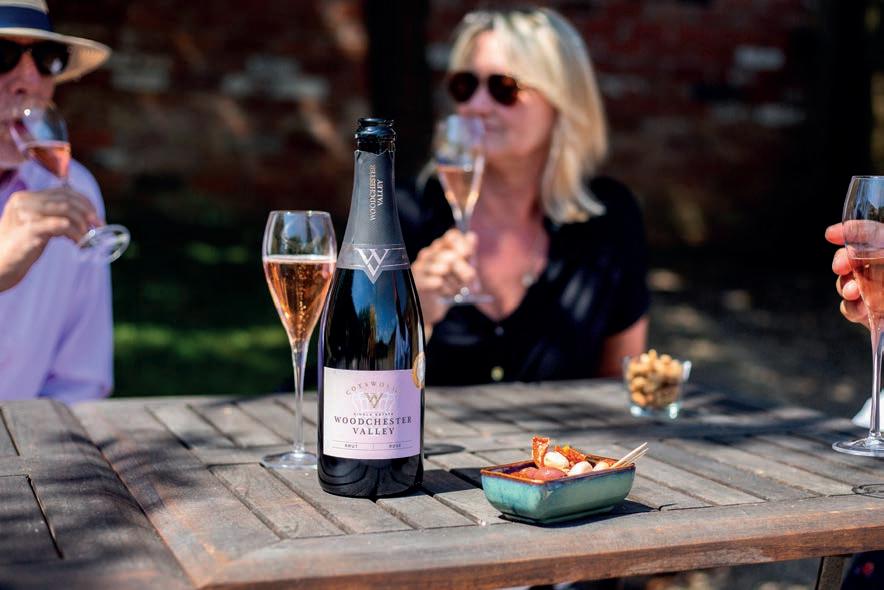
Among these, the Woodchester Valley Rosé Brut stands out. Pale salmon in
“Woodchester Valley works exclusively with its own fruit.”
colour, it offers a fine, persistent mousse and aromas of red berries. A gold medal winner at the 2024 Wine GB Awards, it is refreshing as an aperitif and pairs effortlessly with seafood or Mediterranean plates.
Complementing the Rosé Brut is the Reserve Cuvée, an elegant blend of 66% Chardonnay, 25% Pinot Noir and 9% Pinot Meunier. Aged for at least 30 months on lees, it shows depth, intensity, and refined balance.
Both wines are now available for Farmers Club members to enjoy.
The story of Woodchester Valley demonstrates how far English wine has come — from sheep pasture to awardwinning vineyard in less than twenty years. We invite you to discover these wines for yourself.
TOWN & COUNTRY
The Farmers Club organises a wide range of events, including farm walks and study tours, cultural and social visits, receptions at farm shows and special events at the Club itself >>
Cirque Du Soleil see pxx
TOWN
Our calendar of activities for Autumn and Winter has something for everyone. For full details about any event – and to book your place – please call 020 7930 3751 ext 6 or scan the QR code.
SEPTEMBER
CHAIRMAN’S LEGAL DAY
MONDAY 15 SEPTEMBER
Fully booked – please join waitlist
Following the overwhelming interest and positive feedback from our first Legal Day, we are delighted to be running this unique event once again.
Join Chairman Karen Mercer for another fascinating and insightful exploration of London’s legal heritage, with exclusive behind-the-scenes access to some of the City’s most iconic judicial institutions.
This special day offers the rare chance to meet key legal figures, learn more about the workings of the judicial system – and enjoy guided tours of the Royal Courts of Justice, Temple Church and the Old Bailey. Cost: £95pp
DOWNTON ABBEY EXHIBITION
MONDAY 15 SEPTEMBER
A special private visit to Bonhams, New Bond Street, to see a landmark farewell exhibition of Downton Abbey costumes, props and set pieces, ahead of their auction later in September.
The collection brings together items from the acclaimed TV series and films, offering a rare opportunity to see the costumes and objects that defined the Crawley family and their household
Following the exhibition, members and guests will return to the Club for a Ploughman’s buffet lunch.
Event ticket: £45pp
GLAMIS CASTLE & STRATHMORE ESTATE TOUR FARM VISIT
WEDNESDAY 17 SEPTEMBER
Fully booked – please join waitlist
A private farm visit to Lord Strathmore’s Glamis Castle & Strathmore Estate in Angus, east-central Scotland.
The day will begin with a presentation from the Estate Manager, followed by a visit to the farm via tractor trailers. At midday, we’ll break for a soup and sandwich lunch before touring Glamis Castle itself.
Glamis Castle was the childhood home of HM Queen Elizabeth The Queen Mother. Her daughter, HRH Princess Margaret, was born here and often visited with her sister, HRH Princess Elizabeth (later Queen Elizabeth II).
Today, Glamis Castle is owned by Simon Patrick Bowes-Lyon, the 19th Earl of Strath-more and Kinghorne. The castle has remained in the Lyon (later Bowes-Lyon) family since 1372. The tour will be finished by 4pm.
Members are kindly asked to make their own way to the estate. Accommodation must be arranged independently.
Estimated cost: £70pp (subject to change).
GEORGE STUBBS – THE ENGLISH LEONARDO
MONDAY 22 SEPTEMBER
Private lecture by art historian Christopher Garibaldi, former director of the National Horseracing Museum, about self-trained 18th century English artist George Stubbs, best known for his paintings of horses.
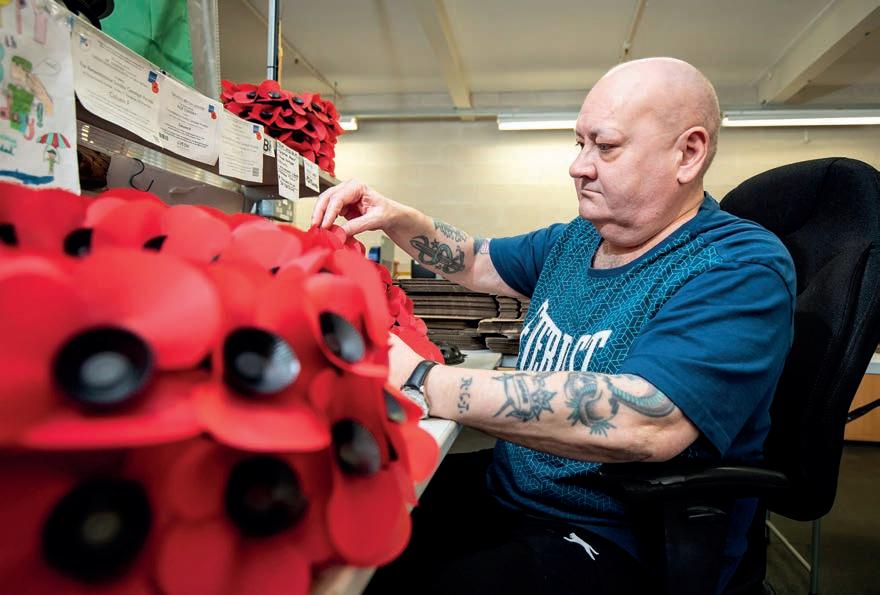
The Poppy Factory: Special Remembrance Day Discovery Visit
RICHMOND-UPON-THAMES
TUESDAY 11 NOVEMBER
Fully booked – please join waitlist
A special Remembrance Day visit offering a chance to learn about the factory’s history and its role in making remembrance products. You’ll witness the process of creating poppies and wreaths, including the traditional methods still used today. The factory employs veterans with mental and physical health conditions, offering them a supportive work environment.
This event promises to be an enriching and insightful journey into the world of Stubbs, whose remarkable talent captured the beauty and grace of equestrian subjects, with his masterpiece Whistlejacket, housed in the National Gallery, just down the road from the Club, being one of the world’s most celebrated equine portraits.
The lecture will delve deep into Stubbs’ unique ability to portray horses with unparalleled realism, as well as his broader contributions to the world of art.
Christopher Garibaldi will explore not only the equestrian paintings that made Stubbs famous but also the lesser-known aspects of his work, which cover a diverse range of themes from anatomy to natural history. This is a rare chance to gain a deeper understanding of Stubbs’ genius and artistic legacy.
Cost: £85pp
MACMILLAN CHARITY COFFEE MORNING
FRIDAY 26 SEPTEMBER
Our annual coffee morning fundraiser for Macmillan. Join us at the Club for
Lokkelebery Vineyard: Exclusive Wine Safari & Tour
WELWYN, HERTFORDSHIRE
SATURDAY 27 SEPTEMBER
In 2021, the Buisman family at Lockley Farm embarked on a journey to discover the possibilities of growing grapes.
As a traditional arable cereals farm, this would be a departure from the norm. However, increasingly extreme weather, optimal topography and a new generation to take on the project, lent itself to the challenge of establishing a vineyard.
Planted in 2022, Lokkelebery Vineyard grows Pinot Noir, Chardonnay, Pinot Meunier and Pinot Noir Précoce – as well as wheat for biscuits, barley for beer and oats for cereals.
The first bottles of wine are expected from 2025 – with sparkling from 2028.
At one of the closest rural vineyards to London, Hannah Buisman is on a mission to produce a premium still rosé and classic English sparkling wine in the traditional champagne style. Club members can see for themselves on what promises to be a fascinating visit.
coffee and treats – and to raise money to support people living with cancer.
U35s JILL WILLOWS TRAINING DAY
FRIDAY 26 SEPTEMBER
Our second Jill Willows Training Day looks at practical ways of adding value to your farm business – thanks to our special expert speakers.
They include Hayley Parker, of marketing agency Flame Marketing; James Whilding, of Acorus rural property services; Alastair Morbey, of Ben’s Yard, at Stuntney Estate; and Ben Loughrey, of the Farm Retail Association.
U35s AUTUMN DINNER
FRIDAY 26 SEPTEMBER
For a full list of U35s events, see the U35s diary on page 44.
LOKKELEBERY VINEYARD: EXCLUSIVE WINE
SAFARI & TOUR
WELWYN, HERTFORDSHIRE
SATURDAY 27 SEPTEMBER
See panel above
OCTOBER
ENGLISH NATIONAL OPERA UNWRAPPED –ALBERT HERRING LONDON COLISEUM
THURSDAY 2 OCTOBER
Benjamin Britten’s comic opera, Albert Herring is being staged as part of ENO’s “Opera Unwrapped” series.
Albert Herring is a humorous satire about a young, shy greengrocer’s boy who is unexpectedly crowned May King. The opera explores themes of societal expectations, self-discovery, and the constraints of small-town life. The cast includes tenor Caspar Singh as Albert Herring, Leah-Marian Jones as his overbearing mother, and Emma Bell as Lady Billows,.
Directed by Antony McDonald, this new production is the first time ENO has staged the opera. The performance features a cast of 13 instruments and will be sung in English with projected subtitles.
Cost: £85pp
TOWN & COUNTRY
CHAIRMAN’S FARM WALK
HARPER ADAMS UNIVERSITY, NEWPORT, SHROPSHIRE
FRIDAY 3 OCTOBER
See special feature, pages 25-27.
THE FARMERS CLUB BOOK CLUB PLOUGHING THE WORLD
THURSDAY 10 OCTOBER
The Farmers Club Book Club is turning the page to an extraordinary story of innovation, adventure, and resilience.
Written by Keith Hollender, Ploughing the World: Birth, Boom and Life in Massey Ferguson is a fascinating book which traces the dramatic rise and global reach of one of farming’s most iconic names.
Drawing on Keith’s own time with the company, the book reveals the human side of business – with sales teams navigating revolutions, wars and remote frontiers, while forging unexpected encounters with figures from Osama bin Laden to Princess Anne.
HARVEST FESTIVAL SERVICE & HARVEST SUPPER
ST MARTIN-IN-THE- FIELDS
WEDNESDAY 15 OCTOBER
Join us for one of our most cherished traditions – our annual Harvest Festival followed by a superb and intimate Harvest Supper at the Club.
The service will take place at 5pm at St Martin-in-the-Fields, led this year by Rev John Allan. A wonderful venue, the church has outstanding acoustics and stunning architecture.
After the service, members and guests are warmly welcomed back to the Club for a celebratory three-course dinner. A traditional harvest menu will feature the finest of British seasonal produce.
Cost: £85pp
SCOPE HOUSE VISIT
TELFORD,
SHROPSHIRE
FRIDAY 17 OCTOBER
A special visit for dairy and beef farmers to Scope – the home of Holstein UK, the Cattle Information Service and the National Bovine Data Centre.
This exclusive, behind-the-scenes tour will include a three-hour presentation that will benefit your herd and help your understanding of the wider dairy and beef sectors across the UK.
Holstein UK is Europe’s largest independent breed society. The services it offers to the dairy industry aim to improve the genetics and profitability of
Our Chairman’s Christmas Black Tie Dinner with carol singers
THURSDAY 11 DECEMBER
Celebrate the season with fellow members at this elegant back-tie evening event featuring seasonal dishes, fine wine, and the joyful sound of Christmas carols.
Whether catching up with old friends or making new connections, our Chairman’s Christmas Dinner is the perfect way to embrace the spirit of the season in fine company at the Club with old friends and new.
Begin the evening with a drinks reception, accompanied by the delightful sounds of live carolers, followed by a traditional threecourse Christmas dinner featuring all your seasonal favourites.
Cost: £90pp
the Holstein and British Friesian breeds. We will also visit the Cattle Information Service, which provides milk recording and bovine health testing services.
The National Bovine Data Centre provides herdbook registration, classification and genomic testing for pedigree dairy and beef breed societies.
Cost: £30pp
THE FARMERS CLUB BOOK CLUB BOOK CLUB - APPLIED EQUINE PSYCHOLOGY
THURSDAY 23 OCTOBER
Traditionally equine behaviour guidance has come from an understanding of the outward behaviour of the horse and modifying that behaviour. But this book – about the art and science of helping horses – goes much deeper.
Applied Equine Psychology draws parallels from human psychology and what is going on in the horse’s brain leading to that behaviour – so horse and owner can work together to resolve any issues in a more horsecentric way.
WINE TASTING WITH WARWICK SMITH
FRIDAY 24 OCTOBER
An exclusive evening of wine, food and conversation at the Club with Warwick Smith, founder of London’s groundbreaking Renegade Urban Winery. Guests will enjoy a guided tasting of at least four distinctive Renegade wines, carefully paired with a chef’s selection of artisan cheeses, crackers, and nibbles Warwick and his team source hand-harvested grapes directly from growers across the UK and Europe. This helps build long-term, collaborative relationships, working closely with farmers to champion unusual varieties, experiment with fermentation styles, and showcase the true potential of their fruit.
Methods include early picking for freshness, dual yeast fermentations, unique barrel types, and even additions like hops for aromatics.
Cost: £45pp
NOVEMBER
MONDAY EVENING LECTURE: PETER CRAVEN
MONDAY 3 NOVEMBER
Nuffield scholar, fourth generation farmer and head of agriculture at Natural England Peter Craven will talk about farming families and succession.
PALACE OF WESTMINSTER AND COUTTS BANK
MONDAY 10 NOVEMBER
Fully booked – please join waitlist Experience a day like no other – a rare opportunity to engage with the intersecting worlds of politics, agriculture,
and finance through exclusive access, high-level conversation, and prestigious settings at two venues.
This carefully curated event, arranged by Chairman Karen Mercer, includes privileged entry to two of the UK’s most esteemed institutions: the Palace of Westminster and Coutts Bank.
The day begins with a guided tour of the House of Commons and House of Lords, personally organised by Robbie Moore MP — an exceptional chance to explore the heart of British democracy with a sitting Member of Parliament.
After the tour, guests will be joined by Baroness Minette Batters for a joint address and Q&A session, offering invaluable insights from two influential voices in politics and agriculture before lunch at the Club.
Founded in 1692 and not open to the public, Coutts’ archivists will guide guests through a captivating tour of the bank’s historic legacy from its iconic offices at 440 Strand. Hosted by Coutts commercial director Philippa Bagshaw, this very special visit will conclude with a relaxed drinks and canapé reception in their elegant private rooms.
With exclusive and inspiring speakers, and meaningful networking throughout, this promises to be a day of insight, influence and lasting impact.
Glyndebourne Christmas Concert with pre-concert dining
SATURDAY 13 DECEMBER
Celebrate the festive season with a magical evening at Glyndebourne.
This much-loved Christmas Concert offers entertainment for the whole family – from cherished carols and orchestral showpieces to operatic highlights performed by the Glyndebourne Chorus and the Glyndebourne Sinfonia.
The evening promises a heartwarming and uplifting experience
THE POPPY FACTORY: SPECIAL REMEMBRANCE DAY DISCOVERY VISIT
RICHMOND-UPON-THAMES
TUESDAY 11 NOVEMBER
See panel, page 36
PRIVATE TOUR OF THE COLLEGE OF ARMS
TUESDAY 18 NOVEMBER
Fully booked – please join waitlist Founded in 1484, the College of Arms creates and maintains official registers of coats of arms and pedigrees. This includes the granting
for all ages. Pre-concert dining will be available at Middle & Over Dining, with a two-course dinner served from 5pm. Seating is in the blue stalls. There will be no transport provided from the Club for this event. But we are happy to assist with parking arrangements and can organise transfers from Lewes train station, which is just over an hour from London Victoria.
Cost: £125pp
of new coats of arms, the registration of family trees, genealogical and heraldic research.
This visit will include the three principal rooms of the college: the Earl Marshal’s Court, the Waiting Room and the Record Room. It will be accompanied by a talk about the history of the college, the functions of heraldry and the college heralds.
College heralds are members of the Royal Household. The tour will conclude with an opportunity to see some of the college’s superb archive of heraldic and genealogical manuscripts.
New Year’s Eve Black Tie Gala Dinner
WEDNESDAY 31 DECEMBER
See in the New Year from our terrace opposite the London Eye, the focal point for London’s world-famous firework display.
This year’s celebration promises to be our most spectacular yet, culminating in a truly unforgettable moment: champagne on the terrace as you watch the London Eye fireworks light up the city skyline at midnight.
Members and their guests are invited to arrive in the early afternoon and enjoy a light lunch buffet served in the lounge – a relaxed and welcoming start to the day, allowing time to settle in before the evening festivities.
The evening will begin with a champagne reception followed by a five-course dinner featuring a seasonal menu. A roaming live band will perform elegant background music and classic tunes to elevate the celebratory atmosphere.
Gentlemen are requested to wear
a dinner jacket with bow tie. Ladies are invited to wear full-length gowns or formal evening wear. Due to high demand, attendance will be determined by a ballot which closes on Friday, 26 September.
Members (and their guests) who attended the New Year’s Eve event in 2023 or 2024 are not eligible to apply this year. Applications: One application per member is permitted. Multiple or duplicate entries will be disqualified.
Members may apply for themselves and up to three guests (maximum four people per application). If applying alongside other members, please note that group acceptance is not guaranteed.
Please register your interest via the Club website at www.thefarmersclub. com. This is the only way to register for this event. If you need help logging in, please let us know.
Cost: £365pp (excluding accommodation)
ENGLISH NATIONAL OPERA UNWRAPPED – HMS PINAFORE
WEDNESDAY 19 NOVEMBER
First performed in 2021, HMS Pinafore includes some of the most popular operatic music in the world, enjoyed both on stage and screen.
With its fast pace, topical humour and quintessential Britishness, Gilbert and Sullivan’s first international success returns in Cal McCrystal’s hit production complete with a revolving stage and a generous helping of gags.
The ENO panel will discuss bringing this hilarious revival of the nautical love triangle back to the Coliseum and take questions from our guests. If quick-fire humour floats your boat, we think you’ll love HMS Pinafore.
Cost: £85pp.
COLLEGE OF ARMS –PRIVATE TOUR
THURSDAY 20 NOVEMBER
Fully booked – please join waitlist
See 18 November
DECEMBER
FESTIVE PORT PAIRING DINNER
THURSDAY 4 DECEMBER
Warm up your winter with an indulgent evening dedicated to one of the world’s most iconic fortified wines. This expertly guided masterclass will take you on a tasting journey through the rich history, diverse styles, and distinctive flavours of port.
Long associated with festive cheer, port is the perfect companion to Christmas –rich, warming, and wonderfully traditional. Each port will be thoughtfully paired with a bespoke menu designed to complement and enhance the tasting experience.
This promises to be an enjoyable and enlightening evening – whether you’re a seasoned enthusiast or simply curious –a true celebration of craftsmanship and seasonal indulgence.
CHRISTMAS FAMILY DAY
SATURDAY 6 DECEMBER
A highlight of the Club’s festive calendar and a much-loved tradition for our youngest Members and their families.
Step into a world of seasonal magic as we transform the Club into a warm and welcoming Christmas wonderland. Children will delight in a personal visit from Father Christmas himself – with a special gift for every child – and enjoy lively entertainment from our mischievous cheeky elf, who brings laughter, games, and surprises throughout the afternoon.
A CLASSIC FM CHRISTMAS WITH
ZEB SOANES
ST MARTIN-IN-THE- FIELDS
TUESDAY 9 DECEMBER
Join Zeb Soanes, St Martin’s Voices and St Martin’s Chamber Ensemble for this special lunchtime concert, in the beautiful surroundings of St Martin-in-the-Fields.
Carols for all to sing include In the bleak midwinter, Hark! The Herald Angels Sing and Joy to the World, alongside seasonal works for choir and strings by Lucy Walker, Ola Gjeilo and Elaine Hagenberg.
Please note this concert is being recorded for broadcast on Classic FM.
CHAIRMAN’S BLACK TIE CHRISTMAS DINNER
THURSDAY 11 DECEMBER
See panel, page 38
Cirque Du Soleil – OVO
ROYAL ALBERT HALL
FRIDAY 30 JANUARY
Join us for an exhilarating evening at the Royal Albert Hall with OVO, Cirque du Soleil’s kaleidoscopic journey into the vibrant world of an insect colony.
Meaning “egg” in Portuguese, OVO is a celebration of biodiversity, transformation, and community, brought to life through breath-taking acrobatics inspired by creatures both real and imagined.
Crickets leap, butterflies soar, ants juggle and spiders defy gravity in this world-class spectacle. At the heart of
FARMERS CLUB GOLF SOCIETY INAUGURAL ANNUAL DINNER
FRIDAY 12 DECEMBER
Join us for our inaugural Golf Society Dinner, kindly hosted by the society’s captain David Rose.
Our night of fun, frivolity and golfing banter will begin with a drinks reception followed by a lovingly-prepared threecourse festive meal at the Club.
Members are encouraged to bring along guests and enjoy the convivial company of fellow golfers.
We encourage you to extend the evening by booking a room for the Saturday night and enjoying London’s Christmas lights and spirit.
Cost: £65pp
the story, a quirky fly falls head over wings for a spirited ladybug, as a mysterious egg sparks curiosity and wonder throughout the colony.
With its joyful energy, Brazilianinspired live music, and stunning visual effects, OVO is a sensory feast that captures the magic of the natural world—and reminds us that even the smallest creatures can leave a mighty impression.
Our evening itinerary includes a two-course pre-theatre dinner with wine at the Club and return coach transfers.
College farms are vital when delivering an agricultural education for the next generation, suggests a study funded by the Farmers Club Charitable Trust.
John Fegan explored vocational agricultural education across six European countries after receiving £5,000 from the FCCT’s Agricultural Educator’s Award – visiting France, Denmark, England, Ireland, Spain and Sweden.
The study included a comparison of apprenticeship and vocational training methods to provide farms with a skilled workforce. The aim was to enhance delivery models at Northern Ireland’s College of Agriculture, Food and Rural Enterprise (CAFRE).
Teaching facilities
Mr Fegan, who is a CAFRE lecturer in work-based agriculture and apprenticeships, visited eight agricultural colleges. The study provided a valuable insight into different teaching facilities, farm operations and educator perspectives, he says.
“Work-based education has traditionally focused on those entering the agricultural industry as school leavers. But there is also a need to continue training the
Conclusions from the study included the key findings that practical experience is essential. Seven out of eight colleges visited in six countries operated a working farm – reinforcing the value of hands-on learning in education.
Partnership
The best courses were those designed in partnership with
Practical skills enhance learning
industry. This ensured courses were relevance – including pig husbandry (Denmark), farm vet technician training (England) and dairy farm management (Ireland and France).
Attracting new entrants remains a challenge. Across all countries, most learners came from agricultural backgrounds. The sector struggles to attract students from non-farming families, largely due to perceptions of low pay and poor conditions.
The study also highlighted the growing need for a techliterate workforce. Advances in AI, data analytics, GPS and farm management software demand that teaching staff are equipped to deliver training in emerging technologies.
Flexibility
Mr Fegan found that vocational education must not only target school leavers but also support the existing workforce. Replicating the findings in Northern Ireland may be complex, but CAFRE’s dual focus on agriculture and food is an opportunity to develop courses that help farmers add value and diversify their businesses, says Mr Fegan.
John Fegan’s report –and other FCCT-funded studies – can be found by scanning the QR code
Trust supports Agricultural Universities Summer School
The Farmers Club Charitable Trust was pleased to support the Agricultural Universities Council UK Summer School – a week-long programme to engage and inspire the next generation of professionals in the agri-food and horticulture sectors.
A group of 26 top students from 19 universities, studying a wide range of subjects from STEM to liberal arts, spent five packed days visiting innovative farmers, businesses, and researchers
across the country.
The students learned about the challenges facing agriculture and the cutting-edge innovations being developed to tackle them, from robotic weeders to Rothamsted Research’s soil archive.
FCCT ambassador and secretary Lisa Turner attended the summer school’s concluding event. It brought together all 26 participants for a collaborative presentation session looking at the role
of science in improving food security.
Groups of three and four students delivered short presentations examining the theme in the context of nature and climate crises. Participants were selected from a competitive pool of 59 applicants.
Attendees came from a diverse range of academic and professional backgrounds – highlighting the meaningful opportunities for individuals from all backgrounds within the agri-food and horticulture sectors.
Good attendance at Club matches
Golf courses have largely been in good condition despite lack of rain, writes Martin Shaw
Our season continued with our match versus the West Riding NFU on 12 June at Otley Golf Club, West Yorkshire. We enjoyed the challenging course in warm summer weather. The match was halved 3-3.
After Otley, it was on to Blackwell Golf Club in Worcestershire for the Club Championships in early July. It was by far the best attendance since before Covid with some 54 members and guests finding the course in good condition.
Jeremy Ireland again won the members competition with 34 points, two points ahead of Andrew Riddington, Andrew Hay and Tim Martin.
Jane Ireland won the ladies’ trophy, Martin Taylor the John Roberts cup for men over 70 and Nicholas Etheridge the guest prize with 40 Stableford points.
New members
It was pleasing to see so many members old and new, guests and ladies supporting the society and enjoying the generous
hospitality and challenge of Blackwell – a club renowned for its welcoming environment.
By the time you read this, our next events will have taken place – including the John Alliston Tankard Meet at Stratford upon Avon Golf Club. This is the annual match between The Farmers Club and the Worshipful Company of Farmers.
Good friend
John Alliston was a good friend to so many people in farming and at the Club – as well as being hugely influential in the world of agriculture. A full report will appear in the winter issue of the Journal.
We are very much looking forward to our Autumn Tour to south-west England (9-11 September). It will see us playing Tevose and St Enodoc golf clubs. Again, a report will appear in the next Journal.
The Bath Club Cup is a foursomes competition between London Clubs at Woking Golf Club on Tuesday, 7 October. Our team of four usually consists of Mr
Captain, the winner of The Farmers Club Championship and guests.
Fingers crossed we have good weather for our two-day meeting at Alwoodley and Seaton Carew (30-31 October). The overnight stay will be in Northallerton, including our friends from the Borders.
Finally, do remember our end-of-season social evening and dinner, which takes place at the Club on Friday, 12 December. It promises to be a great night with members and their partners enjoying some preChristmas time in London.
Captain David Rose joins me in thanking everyone who has supported the society so far this season. We look forward to welcoming more new members as the year progresses and draws to a close.
Any members with ideas for other fixtures, courses to play and other suggestions should please get in touch. Likewise, if you are a new member wishing to play and receive golfrelated updates, do contact Martin Shaw at martin.edwardswale@gmail.com.
UNDER 35s
U35s Diary Dates
Several of our U35s events have sold out this year – so make sure you don’t miss out on what’s still to come. Spaces are limited – do book now to secure your place and enjoy the brilliant line-up below. If you can’t book, please register your interest.
September
Friday 26th Jill Willows Training Day at The Farmers Club
Friday 26th Autumn Dinner
Saturday 27th Tour of Lokkelebery Vineyard, the Hertfordshire vineyard established by farmers and growing Pinot Noir, Chardonnay, Pinot Meunier and Pinot Noir Précose grapes. Book Now.
October
Friday 10th Harvest Supper, inter-club event
Saturday 18th – Sunday 19th Farm walk and more weekend in the Cotswolds
November
Saturday 15th Cheltenham Races, Countryside Day
Sunday 16th Simulated Clay Shoot
Friday 21st New Members Dinner
Friday 28th Festive Dinner. The last dinner of the year – one not to be missed!
Saturday 29th U35s AGM
Saturday 29th Committee Social (committee members only)
January 2026
Saturday 17th – Saturday 24th Ski Trip 2026
A safe, fun and unforgettable week on the slopes. Parents: if you’d like a peaceful week without your après-skiing offspring clattering home at 2am, do sign them up. And for the U35s: if you’re keen to escape your parents (or out-ski/outaprès your siblings), this is the trip to join. For more details and to secure your place, contact Ben Barton on 07792 812378.
Chairman’s jottings
BBen Barton U35s Chair
y the time you read this, we’ll be staring the final months of 2025 squarely in the face. I’ll not moan about the weather –it’s been bone dry with record-breaking crop yields very much in the wrong direction.
June was a whirlwind for the U35s. We kicked off with a black-tie dinner here at the Club, complete with sunshine on the Terrace, cocktails, mocktails and a brilliant talk from Laurie Ibbotson of Dovecote Park. A fun evening with yet again a cracking turnout.
The following weekend, we gathered at The Cabbage Patch before marching to Twickenham for the Premiership Final between Bath and Leicester Tigers. For some, U35s, it was their first-ever rugby game – what a baptism.
Serious ‘shoe-boating’
As a Gloucester fan, it pains me to say that Bath deserved the 23-21 win. Post-match celebrations included live music, dancing on shoulders and some serious ‘shoe-boating’ – a special mention to Hannah, who showed the men how it’s done.
We then headed into town for a taste of the nightlife. Members split the weekend between sightseeing and the Royal Highland Show. I’d marked this down as a highlight of my year as Chairman – and it didn’t disappoint.
July saw 30 members and guests tour Dovecote Park for a live-to-dead day. It was a fascinating behind-the-scenes look, with generous hospitality from Paul and the team –thank you again. Opening the trip to the wider Club was a great way for the U35s to meet longer-standing members over a proper chat.
Dance floor
On 25 July, 30 Farmers Club members headed to The Caledonian Club for a return visit, following their visit to us last year. Carpets were rolled back and we enjoyed a ceilidh on the largest sprung dance floor in London. A big thank you to The Caledonian – we look forward to continuing our collaboration.
In August, 18 of us visited Aston Mullins Stud for a talk by owner Simon Hope, followed by a look at some stunning mares and foals. We then suited up for a day at Ascot. This was the best U35s events I’ve attended. A huge thanks to Simon and his family for making it possible. It was gas as Dáire the Irishman would say.
Looking ahead, I’m finalising the last of
A special visit to a beautiful city
U35s Ascot and farm tour
Amost memorable and successful day at the Ascot races was enjoyed by the U35s on 9 August, writes Joe McConville
The day began at Aston Mullins Stud Farm, where Gini Hope and her family extended a warm welcome. We enjoyed breakfast before embarking on a private tour of the stud, led by Simon Hope.
Simon’s depth of knowledge, coupled with a genuine passion for the horses, ensured an engaging and insightful start to the day.
Racing spirit
From there, our party travelled by coach to Ascot. With excellent views of the course, the group entered the spirit of the races, placing their wagers and enjoying the thrill of the competition.
While some left with winnings and others less fortunate, the prevailing sentiment was one of shared enjoyment, set against the unique atmosphere of Ascot, accompanied by a drink or two.
The conclusion of the racing marked the beginning of the next stage of the festivities: the Ascot after-party. Members embraced the celebratory mood, with music and dancing late into the evening.
Once we had reassembled, and found the coach, we returned to Aston Mullins for further refreshments and conversation.
The day was a resounding success and will be remembered with great fondness by all who attended. It was made possible entirely through the generosity and hospitality of the Hope family, to whom we extend sincere thanks.
We enjoyed a brilliant weekend in Edinburgh, with The New Club hosting a memorable dinner that quickly became the highlight of our trip. Scotland’s capital city put on a great show for us – with sightseeing, good food and lively company making it a visit to remember.
We spent the afternoon exploring soaking up the atmosphere of the historic streets and walking up to the Edinburgh Castle before dinner. By the time we arrived back at The New Club, everyone was in high spirits and ready for the evening ahead.
Sweeping views
Drinks on the terrace overlooking the city skyline were the perfect way to kick things off, with the castle lit up in the background as we gathered together. The dining room setting, with its sweeping views across the city, made the occasion extra special.
Dinner itself was a sumptious treat. The meal began with bowls of hearty Cullen skink soup, a Scottish classic, followed by main courses that kept the conversation flowing late into the evening.
After our meal, games and laughter carried things along, while a few drams of whisky rounded off the night in true Scottish style. The chance to spend time with New Club members added another layer to the evening, with friendships made across the tables.
SERVING THE FARMING INDUSTRY FOR OVER 180 YEARS
Corporate membership – ready to bloom
As you may be aware, the Club launched a new corporate membership category last year for businesses across the agriculture, food and drink sectors.
Corporate membership provides senior leaders within agricultural businesses and organisations with all the fabulous benefits the Club has to offer.
I’m pleased to report that these corporate memberships are now up and running – and proving to be a valuable and popular addition to the Club. As alluded to by the Chief Executive (see page 6), the Club is keen to strengthen its links with agricultural business, and we are working hard to do so.
Our members have an extensive network and we seek your support in spreading awareness of The
Farmers Club – agriculture’s “home from home” in the heart of London – and the benefits Club membership has to offer.
With that in mind, if you can connect me with a business or individual who might like to know more, I’ll be happy to send them further information. Alternatively, you’re very welcome to pass on my details.
Membership numbers continue to progress well, boosted recently by our attendance at agricultural shows this summer. We now have 5,098 members as of 1 August –with the promise of many more to come.
We worked closely with the Country Land and Business Association at the Groundswell festival (pictured below); and Strutt & Parker at the Great Yorkshire
Show. Thank you to Sophie Dwerryhouse and David Slack for their support in these initiatives.
With your support, I am confident we will continue to steadily grow the membership and strengthen our ties with agriculture’s businesses and institutions.
Jez Scholfield, head of membership
T: 0207 925 7094
E: hdm&c@thefarmersclub.com
Deaths
It is with regret that we announce the death of the following members:
Mr Robert Bourns Gloucestershire
Mr Thomas Downes Shropshire
Mr Robert Ensor Gloucestershire
Mr Aled Griffiths Shropshire
Mr Anthony Hardwick Kent
Mr Timothy Newman Wiltshire
Mr David Richardson Norfolk
Mr David Thompson Warwickshire
Mr Ken Young Cheshire
New Members
The following Members were elected: UK
Mr JP Alexander Norfolk
Mr D Allen Hampshire
Mr DJ Amesz Kent
Mr AD Barr Kent
Mr GW Barton Nottinghamshire
Mr J Bay-Smidt London
Mr ES Blundy Lincolnshire
Gen Sir A Bradshaw Herefordshire
Mr KR Buckle Cumberland
Mr ACG Cassie Midlothian
Mr TC Chua London
Mr K Cienkus London
Mr WS Clark East Lothian
Mrs LJ Day Kent
Mr MC Donnor Hertfordshire
Miss JA Dook Yorkshire
Mr HC Dunn Leicestershire
Mrs E Finn London
Mr B Gaffney London
Mr JR Halstead Suffolk
Miss LY Ham Essex
Mr O Harrison Lancashire
Mrs KPJ Hawke Devon
Mr BL James
Miss GE Jarman
Mr S Johnson
Mr KL Jones
Miss AH Joyner
Mr AD Keenan
Dr AIB Kliemann
Miss G Lavers
U35s
Miss HM Carr London
Miss CEL Day Kent
Miss CLA Day Kent
Mr M Foley-Williamson Warwickshire
Miss EA Goodson London
Mr TN Haynes Oxfordshire
Mr EH Holt Yorkshire
Dr W James Cornwall
Mr WJL Kitson Wiltshire
Miss L Manhire Yorkshire
Miss SL Renner Northumberland
Miss RUS Sanders Buckinghamshire
Mr J Simister Derbyshire
Mr CR Sparrow Shropshire
Mr CJ Stothard Northumberland
Mr TA Webster Lanarkshire
Ms MC Webster Lincolnshire
Mr C Whiteley London
Scan the QR code to renew your membership by direct debit.
Meet your Farmers Club team
Please welcome our new team members – and celebrate our Kusum Saha.
beverage assistant, has enjoyed getting to know our Members as they visit the Restaurant. Eager to build her career within hospitality, she is a passionate traveller.
After joining the Club as room attendant, Mary Nsiah Oduro has settled in quickly and is looking forward to developing her career with us. In her spare time, she tells me she is a voracious reader.
Joining our reception team in July, Tuesday Kay Dolan was initially bemused to find there is a Farmers Club in London. She is keen to learn about our history, loves music, culture and festivals.
Team member of the quarter
The Club rewards exceptional performance in many ways. Our Team Member of the Quarter award is a small token of the Club’s appreciation for excellent work.
Team members may excel in areas such as exceptional customer service, displaying excellent teamwork or individual work skills, going above and beyond their roles and displaying exceptional performance.
Our Team Member of the Quarter (April to June) is receptionist Anna (Ioulianna) Nastou. Anna has shown exceptional adaptability during a challenging period on Reception, seamlessly adjusting to changing circumstances.
Excellent at problem solving, Anna ensures every Member feels welcome the moment they step into the Club. She approaches her role with calmness, kindness and professionalism. Anna’s performance and care for our Club members during the last three months has simply been outstanding.
Highly commended runners up for the award are food and beverage assistant April Joy Buntiat; and room attendant Virginie Williams.
Leavers
Jelle van Esseveld, Vanessa Nicholas, Khaled Kouider-Ali, Khia France, Jack Yon, Jackson Neumann and Max Tebble have left the Club for pastures new. We wish them all the best for the future. We also wish Paul Hogben all the best for his retirement.
Loulianna Nastou with Club Secretary Didi Wheeler (above); Naima Jahan Rifa (top left); Mary Nsiah Oduro (middle left) and Tuesday Kay Dolan (bottom left).
CLUB INFORMATION
CLUB DRESS CODE
(Members are always responsible for their guests)
Normal Club Dress
3 Whitehall Court, London SW1A 2EL
T: +44 (0)20 7930 3557
CLUB DAILY TIMINGS
CLUB MEMBERSHIP
E: generaloffice@thefarmersclub.com W: www.thefarmersclub.com WiFi Password: MtVH92eE LIFE MEMBERSHIP (£)
After 10am on Monday to Thursday, Gentlemen are to wear a formal jacket and appropriate trousers or suit and tie in all public areas of the Club. Ladies are to comply with the spirit of the code. In exceptionally warm weather, the chief executive and secretary, will allow gentlemen to remove their jackets in the Club.
Smart Casual Dress
Smart casual dress is permitted every morning, Monday to Thursday inclusive until 10am and all day on Friday, Saturday and Sunday. Smart casual dress applies throughout August. Smart Casual Dress allows members to wear long or short-sleeved full buttonfronted shirts or smart polo shirts, smart denim jeans and ‘fashion’ pumps. Smart trainers are acceptable, however, not encouraged.
Unacceptable Clothes
This includes torn, frayed, faded or bleached clothing of any type, sportswear, shorts, T-shirts, leggings and jogging suits in any material, bare midriffs or excessively revealing clothing, and plastic flip flops.
Meetings & Functions
Those members and guests attending a meeting or function that has been booked with the Club Management in any of the function rooms are requested to wear a shirt with collar and a jacket (or equivalent for ladies), a tie is preferred but optional. If members and guests utilise the bar facilities, dining room, lounge or Shaw Room they are expected to adhere to the Normal Dress code (above).
BEDROOM INFORMATION
Bedroom rates for 2025. Please see the website for rates. Members can book on-line at: www.thefarmersclub.com/accommodation
ENTRANCE FEES (£)
All categories 900 except the following: Under 35 250
Under 30 (26-29) 150
Under 30 (18-25) 100 Group 375 + VAT
Reservations
Bedrooms may be booked up to a year in advance. For those who register via the website, you can book on-line. Specific room numbers can be requested however we are unable to guarantee these requests. There are no emergency bedrooms.
Arrival & Departure Times
Check in is 1400hrs and departure time is 1100hrs. At weekends please check in between 1400hrs & 1530hrs before reception closes at 1600hrs.
Cancellations
Members over 65 and with 20 years’ membership are entitled to a reduction to their subscription. Log into the Members Area to renew your membership details and to pay online. For membership applications, please contact Jez Scholfield at hdm&c@thefarmersclub.com
Confirmation of cancellations must be made in writing. Please note that the full room rate will be charged in the event of a cancellation being made less than 48 hours prior to arrival unless the room is re-let.
GENERAL INFORMATION
Luggage Room
This is a short-term storage facility only. In the event that luggage has been left for a period of over 3 months and we are unable to identify the owner, it will be disposed of.
Smoking & Vaping
Smoking and vaping is not allowed within the Club, but is allowed on the terrace.
Function Rooms & Events
If you are looking to book a business meeting or social event here at the Club, please contact our conference and banqueting sales manager on 020 7925 7100 or functions@thefarmersclub.com, who will be delighted to assist.
OFFICE HOLDERS
The Shaw Room (Library): The Shaw Room can be used for informal meetings of up to three people, however the door must be kept open for other members to use the room. Electronic devices may be used but must be set to silent. No calls can be received or made in this area. Calls can be made on the nearby terrace.
Business Suite: The suite is for individual private working. Meetings are prohibited. Electronic devices can be used; however, other members must be respected. Printers are available on a reasonable use basis.
Electronic Devices
No electronic devices are to be used in the hallways, bar, lounge or restaurant – unless for the purpose of quiet reading. No calls must be received nor made in these areas. Calls may be taken on the terrace.
RECIPROCAL CLUBS
The Club has reciprocal arrangements with the following clubs. Members wishing to use the facilities of the named clubs must obtain an introductory card from the General Office (generaloffice@thefarmersclub. com) prior to their visit.
UK: City Livery Club, London (No beds); Bury St Edmunds & Farmers Club (No beds); Northern Counties Club; The New Club, Edinburgh; The Royal Scots Club, Edinburgh. Ireland: The Royal Dublin Society, Dublin (No beds); Stephen’s Green Club, Dublin. Africa: The Muthaiga Club, Kenya (temporary membership payable); The Rand Club, Johannesburgh. Australia: The Queensland Club, Brisbane; The Australian Club, Melbourne; The Geelong Club, Victoria.
New Zealand: The Canterbury Club, Christchurch; The Christchurch Club, Christchurch.
HONORARY VICE PRESIDENTS
Barclay Forrest OBE
Sir Mark Hudson KCVO
Paul Heygate OBE
THE COMMITTEE OF MANAGEMENT OF THE CLUB 2025
VICE PRESIDENTS
Nicki Quayle
Julian Sayers MBE DL
PRESIDENT AND CHAIRMAN
Karen Mercer
TRUSTEES
Tim Bennett (Chairman)
John Lee OBE DL
Jimmy McLean
Keith Redpath
VICE-CHAIRMAN
Christopher Riddle
HONORARY TREASURER
John Hardman
IMMEDIATE PAST CHAIRMAN
Richard Maunder
CHIEF EXECUTIVE & CLUB SECRETARY
Didi Wheeler
CLUB CHAPLAIN
The Reverend Dr Sam Wells
COMMITTEE
Elected 2022 to serve from 2023 to 2025 inclusive: Sue Bullock (re-elected), Sarah Cowlrick (re-elected), Sophie Dwerryhouse, Nick Green (co-opted), Lindsay Hargreaves, John Wilson
Elected 2023 to serve from 2024 to 2026 inclusive: John Henning OBE, Peter Jackson, Anthony Snell (re-elected), Bill Young
Elected 2024 to serve from 2025 to 2027 inclusive: Edward Barker, Stephen Butler (re-elected), Belinda Gladwin, Tory Manuel, Tric Parrott
Co-opted: Nick Green (chairman, FCCT), Ben Barton (chairman Under 35s), Harriet Sylvester (vice chair Under 35s), Ed Whattoff (Under 35s)
THE FARMERS CLUB CHARITABLE TRUST TRUSTEES
Nick Green (chairman), Theresa Howe, Des Lambert OBE, Dr Jenna Ross OBE, James Squier, Christine Tacon CBE, Meryl Ward MBE, The Chairman and Vice-Chairman of The Club (ex officio). Patron Mrs Stella Muddiman
a paper explaining to Club members how sugar beet growers and Britain’s fledgling sugar industry were dependent on each other.
Early challenges had included few farmers willing to grow beet and the high cost of building factories to turn the crop into sugar. Mr Wood hoped the Farmers Club meeting would help fuel expansion and confidence among growers and investors.
Everyone, he believed, would benefit. After all farmers wouldn’t grow beet without knowing there were factories to process it. And there was no point building factories unless farmers signed up to grow the crop.
Government support
The solution was the British Sugar (Subsidy) Act 1925, which was to provide a government subsidy for sugar and molasses manufactured in Great Britain from sugar beet grown within the country.
This 10-year subsidy would support the nascent sugar beet industry by underwriting the enormous capital expenditure required for building factories. In return, manufacturers would pay a minimum price for the sugar beet purchased from farmers.
1925: Club’s sugar beet success story
The Farmers Club has long been at the forefront of farming innovation – and 1925 was no exception, when Club members played a little known but pivotal role in the development of Britain’s sugar beet industry.
Bringing forward-thinking farmers and innovators together to exchange ideas has always been a prime ethos for the Club – just as it was when members gathered at 4pm on Monday, 2 March 1925, for a talk on sugar beet by Mr Alfred Wood.
Sugar beet was already known to those present – in fact the United Kingdom Beetroot Sugar Association had been established in 1832. But efforts to establish the crop as a profitable enterprise in the UK had proved stubbornly difficult.
Sugar imports
As a result, almost all UK sugar was imported. But that was set to change following the foundation of the British Sugar Beet Society in 1915 – set up to encourage domestic production amid concerns about a sugar shortage during World War I.
Mr Wood was the sugar beet society’s secretary. On that Monday afternoon, it was his job to deliver
Everyone, he believed, would benefit.” “
Mr Wood’s enthusiasm for sugar beet was unrivalled. He championed its cultivation, and informed policy – so much so that junior agriculture minister Lord Bledisloe described him in parliament as “most persistent and indefatigable”.
This long-standing dedication to the crop won the day. Not only was Mr Wood instrumental in popularising UK beet sugar cultivation, he also helped modernise sugar production, supporting research into yields and processing techniques.
Home grown
By 1930, there were 17 factories in England and one in Scotland – all of them supported under the provisions of the British Sugar (Subsidy) Act 1925. And by 1935, homegrown sugar represented 27.6% of British consumption.
One year later, the factories were amalgamated to form one organisation – the British Sugar Corporation – to manage the entire domestic crop. Mr Wood became its first secretary. He was knighted a year later.
The British Sugar Corporation later became British Sugar, which today is a subsidiary of Associated British Foods, working with UK farmers to process all domestically grown sugar beet into sugar, bioethanol, and animal feed.
Today, British Sugar processes some 7.7m tonnes of UK beet annually, producing about 1.1m tonnes of sugar. This year, two of its factories – Bury St Edmunds and Wissington – marked their centenary, both having first opened in 1925.