



Join Mr Toad, Ratty, Mole and Badger for an unforgettable family day out! Step into the world of The Wind in the Willows with a brand-new garden trail and hands-on activities, brought to life by EH Shepard’s enchanting original illustrations. The adventure begins this February – and the trail continues all year! Book online and save


Editor Linda Stone editor@familiesmanchester.co.uk 0208 241 0423
Sales Natasha Gudgeon natasha.gudgeon@familiespublishing.co.uk 07767 893807
Printed by Buxton Press
Next issue: March/April
Book by: 3 February
Families magazine is available through nurseries, schools, libraries and other places parents visit throughout Manchester and Cheshire. If you would like FREE copies for your organisation, please get in touch.
This product is made of material from wellmanaged, FSC®-certified forests and other controlled sources.
Wishing all our readers good health and happiness in 2026! Many of our features in this issue relate in some way to the theme of health and happiness too. Our New Year, New You feature offers suggestions for New Year’s resolutions that will improve your life AND that you can actually stick to; in our Health feature, you’ll discover tips for lightening your own mental load this year, as well as how to help a very young but anxious child. Meanwhile, in Education, you can find out the role that school’s play in supporting a child with mental health challenges
And, of course, there’s fun to be had and to look forward to! Despite it being winter, there is still plenty to enjoy locally with your family – take a look at our What’s On guide. Looking ahead, we have compiled our recommendations for family-friendly festivals to go to this summer so why not give one a go?
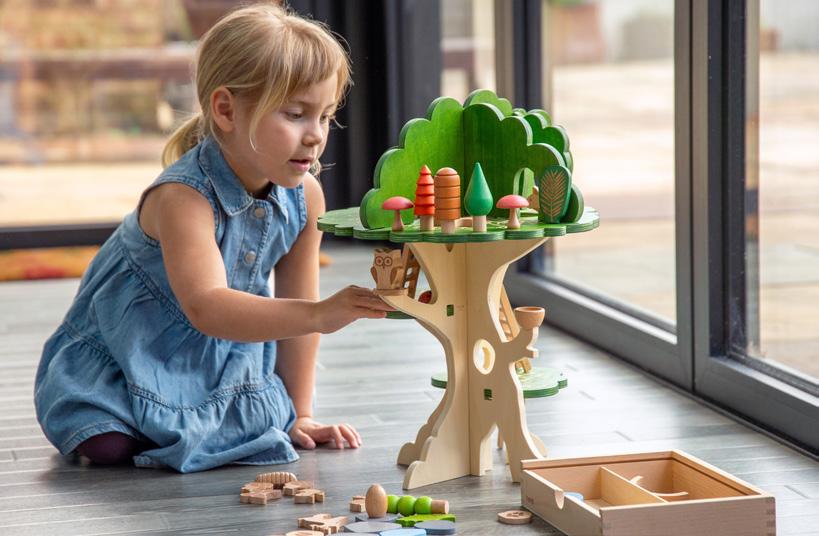
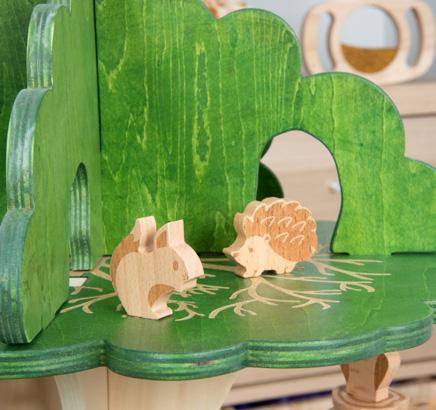
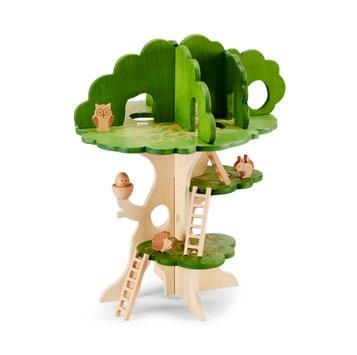
Finally, in this issue, we have three Tickit Woodland Trail Treehouses to give away, worth £39.99 each. Apply inside and also ensure you receive a digital version of every issue of our magazine and more giveaways and useful information in our newsletter.
Linda Stone, Editor
September/October
Families Manchester is a franchise of Families Print Ltd of 75 Lisbon Avenue, Twickenham, TW2 5HL. Families is a registered trademark of Families Print Ltd. All franchised magazines in the group are independently owned and operated under licence. The contents of Families Manchester are fully protected by copyright and none of the editorial or photographic matter may be reproduced in any form without prior consent of Families Manchester. Every care is taken in the preparation of this magazine but the franchise owner and Families Print Ltd cannot be held responsible for the claims of advertisers, nor for the accuracy of the contents, or any consequence thereof.
























By Gavin McCormack
In my twenty-five years as a school teacher, I’ve had hundreds of conversations with parents about what would be best for their children. What all those conversations had in common was that no matter what was happening at home, in the classroom or with the children’s learning, what parents wanted most from education was for their children to be happy. And why not? Nothing is more precious than seeing a child truly happy and content in being who they are.
Yet many of us still enrol our children in schools that boast about achieving the highest grades, having the biggest swimming pools or ranking highest on national league tables, without considering what these schools do to make our children feel content, purposeful and passionate.
The reality of being number one
In 2022, the OECD’s PISA rankings named Singapore as the number one school system in the world regarding academic attainment. The country has a regular spot in the top five, alongside Taiwan, Macau and Japan.
But does that mean those children are getting the best start in life? Paradoxically, the OECD also releases The World Happiness Report, which ranks the world’s happiest countries. If academic rankings were linked to happiness levels, surely we’d see the same countries in the top positions on both reports? But that’s not the case.
Iceland, Sweden, Denmark and Finland all top the happiness rankings. How can that be?
There is a clear mismatch between our children’s academic grades and their levels of happiness. Although Singapore’s education system is renowned for its academic rigour and high standards, I’ve heard numerous firsthand accounts that this desire to be the best comes at a cost.
Several studies speak to this same cost - alarmingly high levels of anxiety among Singaporean students, primarily attributed to academic pressure - including the 2017 OECD study that found eighty six percent of Singaporean students were worried about getting poor grades - even when well-prepared, compared to the OECD’s global average of sixty six percent (which is still very high).

Help your child celebrate a love of reading on World Book Day, Thursday 5 March.
Spark your child’s imagination and encourage them to read for pleasure and join in nationwide activities designed to make books exciting. Schools will distribute special £1 book tokens that children can swap for exclusive new titles or put towards any book in participating shops.
Many schools also will invite students to dress up as favourite characters and host reading-related events.

The study revealed that the pressure stems from various sources, including parental expectations, societal emphasis on academic achievement and the competitive nature of the education system itself, which is not unique to Singapore. A fear of failure and internalising expectations doesn’t sound like a healthy childhood to me.
The consequences of chronic stress can be severe, affecting students’ mental and emotional wellbeing, sleep patterns and quality of life. The focus on academic achievement can also lead to losing interest in learning, where the joy of discovery is replaced by the anxiety of performance.
Simply put, if we put too much emphasis on our children getting the top grades, competing against each other and avoiding failure at all costs, they will inevitably become more anxious.
Interestingly, Iceland, Sweden, Denmark and Finland - the top four countries on the 2022 OECD’s happiness ranking all have one thing in common: their citizens have immense personal freedom, choice and high trust levels within their communities - qualities that all work together to prevent the development of anxiety and depression.
If we really want to put children’s happiness first, then we should choose schools that trust them to make their own decisions, learn from their mistakes, have agency over their learning and engage with the real world.
This article is an abridged extract from the book Raising Resilient Children by Gavin McCormack, published by Simon & Schuster, available in all good bookshops now.
Sign up to our newsletter
www.familiesmag.co.uk/go Scan to sign up


Before you enrol your child in any school, you have to decide what ‘best’ means to you.
Is the ‘best’ school dictated by the grades, points, scores, facilities and reputation? Or is a successful school journey not about ‘what’ your child becomes but ‘who’?
In my view, it’s the latter. For me, education is about allowing a child to find their passion and attend a school that embraces the same values and visions for the future that their family holds dear.
By Zuzu Jordan
Building a strong partnership between home and school is one of the most effective ways to support your child’s education. Clear, open communication helps parents stay informed, teachers feel supported and children thrive. Nowadays, with many ways to connect with your child’s school, choosing the right method often depends on the purpose of the conversation.
Face-to-face meetings
Scheduled parent–teacher meetings are designed to talk about academic strengths, areas for improvement and social development. If an issue arises in between, many schools welcome parents booking a short appointment. These face-toface conversations build trust and understanding.
Phone calls
Sometimes a quick phone call is the most efficient way to share information or ask a specific question. Whether it’s to clarify a homework task, discuss an upcoming trip or raise a concern, speaking directly allows for an immediate response. Schools often have designated times when staff are available to return calls.
Emails and online platforms
Digital communication is now a key part of school life. Emails







When issues require more detail

For more serious matters that require ongoing discussion, it’s wise to create a clear paper trail. Written communication, whether by email or letter, provides a record of what has been agreed and can help avoid misunderstandings. This approach is particularly useful if you need to revisit a matter at a later date.
Informal conversations
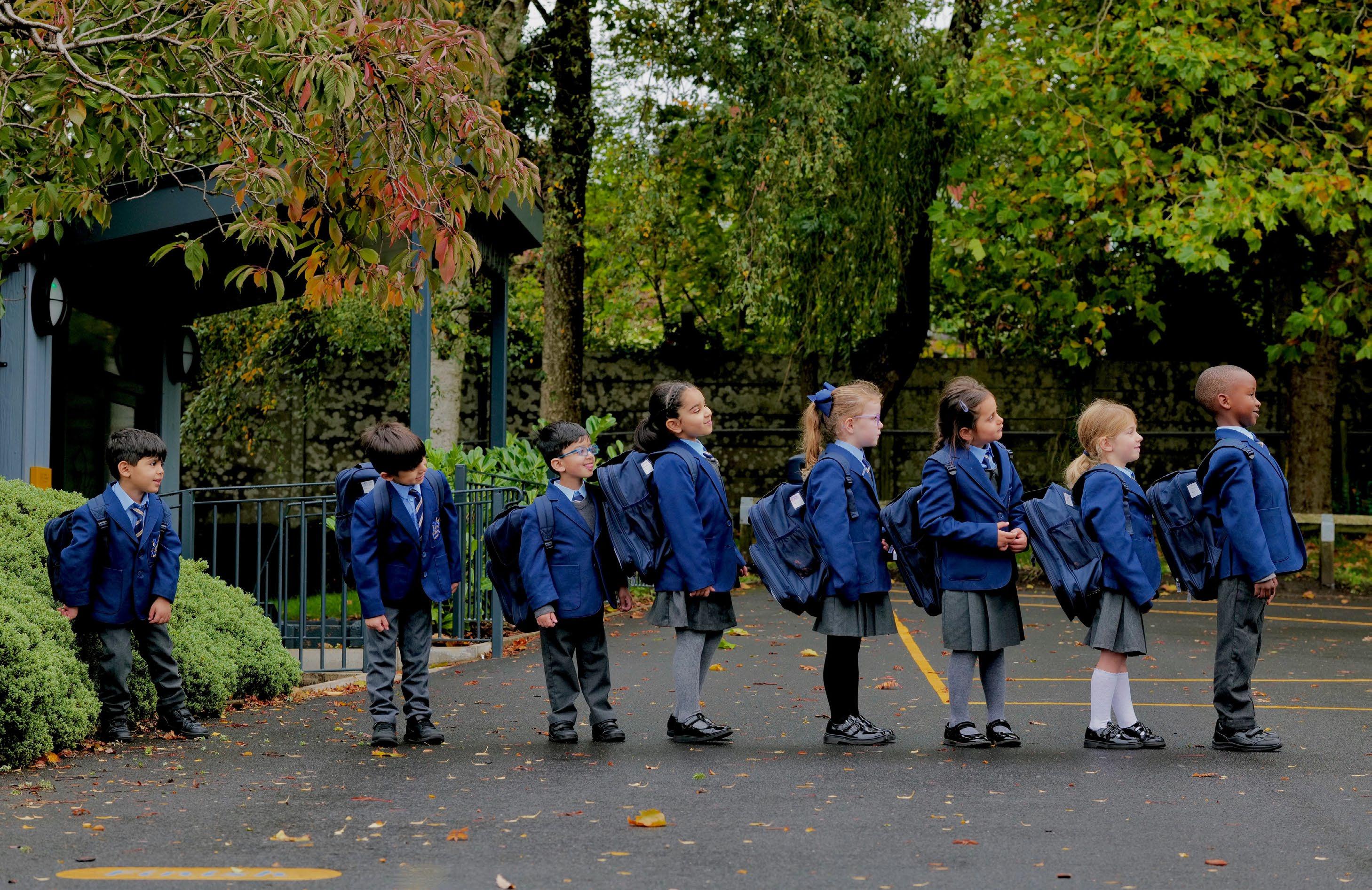
Quick chats at the classroom door or at school events can also be helpful, though it’s best to keep these brief. Teachers often have limited time at the start and end of the day, so use these moments for short updates rather than detailed discussions.
Working together
Whichever method you use, the key is to keep communication respectful and constructive. Remember that teachers and staff are working in partnership with you to support your child. Choosing the most appropriate way to communicate helps strengthen the home-school connection and shows your child that their learning truly matters.


By Gail Hugman
We all went through exams to get where we are today and know that the experience can be challenging. With exam results affecting school and university choices, it is worth helping our children prepare so they get the best results.
Many parents choose to tutor their children, which can be useful if they are lacking in content or need extra practice but what else can you do to help?
Preparing yourself is as important as preparing your child!
Whether it is 7+, 11+, 13+, SATs or CATs, download an example of the exam papers from either the government website for SATs or the schools you are applying to. In this way, you and your child will know what to expect.
Your child may need to be reminded that what they’re being taught in school in English, maths and reasoning especially, is going to help them when they sit the exams, so they need to listen carefully and concentrate in lessons.
Many children also need to be told that if they don’t understand the lesson, they need to ask their teacher for help. Check your child feels confident to do that. Many don’t because they are worried about ‘what other children will say,’ so remind them that you’re there to help and can ask on their behalf.
Exams are always timed but it’s difficult for a child to know how much they can do in a certain length of time! To help them judge this more accurately, you can help them prepare by timing homework activities.

Firstly, check with your child’s teacher how long they are meant to spend on a piece of homework and give them that amount of time. If the work is not finished in that time, reflect on it with your child and ask them what they think they can do to speed up next time.
The most important thing that every parent can actually do to help their child, is to actively listen to them read at least three times each week, all the way up to 13+.
Many children become ‘free readers’ between the ages of 6 and 7 years. They are thought to be ‘good readers’ because they decode and say all the words correctly. But comprehension requires a set of skills that develop after a child has learned to decode.
Gail Hugman is the founder of Lessons Alive (www.lessonsalive.com), an organisation which helps children flourish. She’s also the author of several books, including the just-released Little Hum, a heartwarming children’s story about finding yourself, available from The Endless Bookcase at www.theendlessbookcase.com/books/little-hum

Use a two-minute timer, a picture that has lots of identical things to colour like the one above and a range of sharp colouring pencils.
Tell your child: ‘We’re going to watch as the timer runs for two minutes. When it’s finished, I’m going to ask you how many of these bugs you think you could colour in that time, with each section a different colour. There must be no white bits. Watch the timer while you think.’
When time is up, ask how many they think they can colour. Then, you are both going to find out. Set the timer again and watch them colour. If they colour less than anticipated, ask what slowed them down. If they don’t know, make a suggestion from your observations. Was it distractions? Choosing colours? Organisation?
Ask them if they think there is anything they can do to speed up. Try again. Often, children won’t count how many pencils they need to do the job at the start and some of the time is lost choosing.
A child is a good reader when they read fluently with expression (they respond to punctuation appropriately to do this), they know the main point of the text, they can infer (read between the lines), they can identify similes and metaphors and they can summarise.
Written comprehension requires them to read a passage in a given time (5-10 minutes), work out how the writer makes it scary/funny/sad (analyse), say what a character’s behaviour means (interpret), recognise what season it is from the description given (infer) and make a sensible suggestion for what happens next (predict).
Your dyslexic child may be allocated extra time for exams but may need help to know what to do with it. Check how much time they have been allowed with the SEND teacher and ask what help they are being given to prepare.
When listening to them read, it helps if you ask: ‘Which words make it scary/sad/funny?’ ‘Why did that boy run away?’ ‘How do you know…?’ ‘What will happen next?’
By Erin Miller
Children’s mental health needs have increased sharply in recent years. According to NHS data, around one in five children ages 8 to 16 now has a probable mental health disorder, up from one in nine in 2017. Symptoms include anxiety, low mood and eating difficulties. While schools are often the first to notice when something is wrong, many have limited resources to meet emotional needs. So, what are your child’s school’s obligations in relation to mental health?
Understanding what falls under the umbrella of mental health can be confusing. Mental health refers to a person’s emotional, psychological and social wellbeing - how they think, feel and cope with life. Not every instance of behavioural change is a diagnosable mental health condition: temporary stress and friendship issues are normal ups and downs of growing up. Ideally, schools and parents should work together to identify patterns of behaviour, rather than one-off instances.
While schools have a duty of care to safeguard pupils and promote wellbeing, this does not extend to diagnosing or treating mental health conditions or offering clinical-style interventions. Their legal duties focus on noticing, recording and referring concerns to GPs, Child and Adolescent Mental Health Services (CAMHS) or educational psychologists.
Under the Equality Act 2010, schools must make reasonable adjustments if a mental health difficulty amounts to a disability and under safeguarding laws, they must act if a child’s safety is at risk. Where needs are long term and significantly affect education, these can be recognised through an Education, Health and Care Plan (EHCP), which sets out the support the school and local authority must provide. To receive an EHCP,

it must be shown that the child’s needs have a clear impact on learning and require additional support beyond what the school can usually offer.
What schools are NOT legally obligated to do
State-maintained schools are not legally required to provide clinical treatment, counselling or employ mental health professionals. They are also not obliged to have a separate mental health policy and they are not responsible for managing or funding long-term clinical care or replacing NHS services. Schools don’t have to tailor the entire curriculum for mental health reasons unless a child’s needs amount to a disability or are formally set out in an EHCP. Finally, schools are not required to automatically authorise absences due to anxiety, low mood or other emotional distress without supporting medical evidence.
Erin Miller is a teacher with a keen interest in how research can be used in the classroom to improve learning.

Open Day 7 February 2026
Chetham’s School of Music, in the heart of Manchester, is the largest specialist music school in the UK.
Here you will find exceptional musical talent, high academic standards and superb teaching and performances spaces.
At our free open day, you’ll experience rehearsals with current students, meet our staff and ask them all your questions, and immerse yourself in the vibrant, creative atmosphere that makes Chetham’s so special.
We can’t wait to meet you. Book your free place today: chethams.com
By Matt Newnham
When children first step into school, they bring with them an unstoppable stream of curiosity. Why is the sky blue? How do birds fly? What happens if I mix these paints? For parents and teachers, it can feel relentless. Yet within those questions lies something essential. The years between ages 5 and 9 are when children form the attitudes that shape how they see the world, how they see themselves as learners and how they will approach science and maths for the rest of their lives.
Why does this matter so much? Because science and maths are not simply school subjects. They are life skills. Science teaches us to question, to seek evidence and to change our minds when evidence changes. Maths teaches us to see patterns, to plan and to reason logically.
UNESCO1 and the OECD2 have long argued that building scientific literacy early is essential for the future. The children of today will face challenges we can only guess at: climate change, new technologies and social change. A generation confident in science and maths will be better equipped to meet those challenges. It is about creating citizens who can think critically, solve problems and adapt. The habits of mind built between ages 5 and 9 will carry into adulthood.
The window of curiosity
The psychologist Jean Piaget³ described children ages 5 to 9 as moving from imaginative thinking into logical thinking. At age 5, children may still believe the moon is following them home. By age 9, they begin to understand orbits, shadows and gravity. This shift is not just about facts. It is about the development of a way of thinking, a move from magic to mechanism, while still holding onto imagination.
Children between ages 5 and 9 are at their most curious and least self-conscious. They ask questions without worrying about being wrong. They explore without fear of failure. This is why researchers at King’s College London4 and the Institute of Education point out that attitudes to science and maths often solidify before age 10. By the end of primary school, many children have already decided whether they are ‘good at’ or ‘bad at’ these subjects.
This decision is rarely based on ability. It is based on confidence and on how those around them respond to their questions.

The Booker Prize Foundation has unveiled the Children’s Booker Prize, a major new award celebrating contemporary fiction for ages 8 to 12. The first winner will be announced in February 2027.
The award attracts a £50,000 prize, equal to the adult Booker Prize and aims to inspire a new generation of readers. A shortlist of eight books will be announced in November, with at least thirty thousand copies of shortlisted and winning titles gifted to children across the UK and Ireland.

Imagine a child who builds a tower of blocks. It falls. They try again. It falls again. They laugh, rebuild and eventually succeed. They have just practised the essence of scientific thinking: test, fail, try again, succeed. If an adult scolds or rushes them, they learn frustration. If an adult celebrates their persistence, they learn resilience.
The National Science Teaching Association (NSTA)5 has shown through multiple studies that early exposure to positive experiences in science and maths builds lasting confidence. The opposite is also true. A child who hears parents say: ‘I was never good at maths,’ or ‘Science is too hard,’ absorbs that belief. By age 7, those beliefs can become fixed. Yet science is creative and maths rewards persistence. Anyone can enjoy these subjects if given space to play, explore and make mistakes.
Confidence is not about getting the right answer every time. It is about believing that problems can be solved, that experiments are worth trying and that effort is valuable. Between ages 5 and 9, mistakes should be celebrated. A wrong answer is not a failure. It is a step towards understanding. When children see adults laugh at a failed experiment or cheer at a messy attempt, they learn that learning is about the journey, not just the result.
What can parents do?
The most powerful thing parents can do is show interest. A child who sees their parent curious and open to learning learns that curiosity is valuable.
Explore questions together. Instead of rushing to answer, ask: ‘What do you think?’
Use daily life. Cooking, shopping, gardening and travelling all contain maths and science.
Read stories with STEM themes. Adventure tales can deliver scientific concepts in fun ways.
Model positive talk. Replace ‘I can’t do maths’ with ‘Let’s work it out together.’
In the golden window when children decide whether they are explorers or avoiders, adults hold the power to guide them towards curiosity, confidence and joy.
Matt Newnham is an author and writer with decades of business experience. Inspired by his career in IT, he created Space Ranger Fred to make learning fun and accessible for children. For more information, visit www.spacerangerfred. com
[1] https://www.unesco.org/en/articles/how-science-can-help-createsustainable-world
[2] https://www.oecd.org/en/publications/pisa-2015-results-volumei_9789264266490-en.html
[3] https://www.bxscience.edu/ourpages/auto/2014/11/16/50007779/ Piaget%20When%20Thinking%20Begins10272012_0000.pdf
[4] https://kclpure.kcl.ac.uk/ws/portalfiles/portal/64130800/10_Facts_ and_Fictions.pdf
[5] https://ed.sc.gov/instruction/early-learning-and-literacy/earlylearning/nsta-position-statement-early-childhood-science-education

By Andrew Campbell
As children grow, learning how to play a variety of ball games is a great way of keeping fit, improving relationships and having fun.
The remarkable thing about playing a ball game - from football and rugby to cricket, netball and rounders - is that your child can run for miles without even noticing, because their mind is focused on the action and not on the physical exertion.
Confidence
If your child is shy, signing up for football, rugby or tennis classes can help bring them out of their shell and help them make new friends.
Social skills
Playing ball sports can help your child to recognise the importance of working as a team and understand what it means to be competitive. And how to lose gracefully without throwing a temper tantrum or dissolving into floods of tears!
Co-ordination and timing
Whether it’s throwing, catching, dribbling, or kicking, your child will develop important hand-eye coordination and timing skills which can help in other areas of their life. Eye-tracking skills are vital to reading, hand-eye co-ordination is required for handwriting and timing is involved even when crossing the road.
Force
Knowing how much strength is needed to throw or kick is not easy as you may have observed if your child has picked up a ball and tried to throw it at something recently. Ball sports teach children how to apply the right amount of force at the right time. This helps them understand what levels of force are appropriate which can be essential in avoiding accidents.
Every child is different

Kidszone’s February half term holiday care for ages 3-11 brings a ‘Fun Frenzy Week.’ Including loads of crazy fun activities to get everyone moving, laughing and creating.
Expect ‘fast art’ stations, balloon mayhem, water relays, backwards day challenge and a fun frenzy finale (aka super party) to end the week. Plus, lots of games, toys, books, role play area and sports equipment to play with all day. Ofsted registered and based at St Pauls CE Primary School, M20.
Dates 14-19 February, 9am-5.30pm
Costs £32.50 full day, £18 half day
Full details visit www.kidszoneonline.co.uk
To feature your club, class or workshop in our next issue, call Natasha on 07767 893807 for more information.

Don’t worry if your child isn’t a natural ball sports player. Coaches are trained to help children take small steps to learn the basic skills required in most ball games and to improve their confidence.








Kidszone holiday care for 3-11 yrs offers: Fun, creative and challenging play Themed weeks with day trips, workshops, baking, sports and arts activities
£32.50 per day 9am-5.30pm– Half days available South Manchester location – Ofsted registered & inspected
By Dr Sasha Hall
As a psychologist and a parent of two young children, I have seen both professionally and personally how easily the invisible mental load builds up. This load is the ongoing, often unseen mental effort required to keep family life functioning. It includes not only the physical tasks of daily life but also the constant background thinking that ensures these tasks happen at the right time and in the right way. It is the invisible spreadsheet running quietly in the mind, updated in real time as family needs change.
For many parents (generally mothers), this mental load can feel like carrying an endless list of responsibilities in their minds. It might include planning meals, remembering school events, booking appointments, checking that uniforms are ready and ensuring everyone has what they need for the day ahead. Alongside this are seasonal or longer-term considerations such as holidays, birthdays or preparing for school transitions. Even positive events, such as planning a family outing or helping with a costume for school, can add to the mental noise. These are all small, individual thoughts that combine into a continuous mental hum.
In homes shared with partners or older children, there can also be what psychologists call cognitive unloading, where others rely on one person to hold or manage the shared mental information. Questions such as: ‘Where are my keys?’ or ‘What are we having for dinner?’ might seem trivial, but they represent moments where someone else is temporarily renting space in a parent’s mind.
Over time, these repeated small intrusions can add to feelings of exhaustion and reduce the sense of mental clarity that is essential for wellbeing. When this happens frequently, the parent may begin to feel as though they are the project manager of the household, responsible for doing, remembering, prompting and anticipating.
Research shows that cognitive rest is just as important as physical rest. Rest is not merely the absence of doing; it is the presence of mental recovery. When we rest effectively, the brain has the opportunity to consolidate memories, regulate emotions and restore executive functioning. These are the higher-order
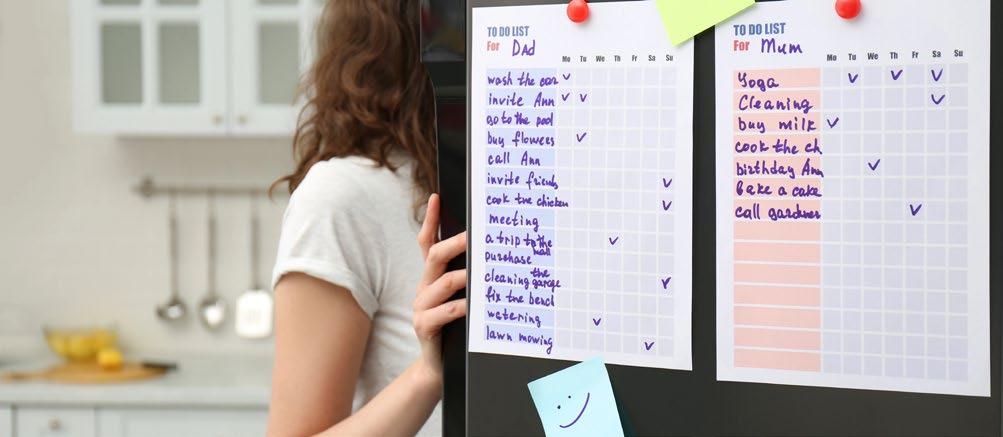
Much of the mental load remains unseen because it is carried silently. Psychological research shows that when cognitive effort is invisible, others are less likely to appreciate its weight.
Externalising these thoughts can help make them visible. This might involve sharing responsibilities through open discussion, writing down tasks that occupy mental space or gently drawing attention to how much co-ordination is involved in daily life. When the invisible becomes visible, families can develop a greater appreciation of one another’s mental and emotional contributions.

skills that allow us to plan, problem-solve and make decisions. Just as muscles need recovery after exertion, our brains also need space to decompress and reorganise.
Without sufficient rest, the brain’s capacity for emotional regulation and attention control diminishes. This can lead to increased irritability, forgetfulness and a sense of being mentally overloaded. For parents, especially mothers carrying multiple invisible demands, this may mean feeling less patient with children or partners and finding it harder to remain present in moments that should bring connection and enjoyment.
The psychology of rest reminds us that rest is not indulgence but maintenance. It allows us to sustain the very skills that underpin both parenting and professional life. Creating even small opportunities for rest throughout the day can help regulate the nervous system and restore emotional balance. This might include brief moments of quiet reflection, mindful breathing or simply allowing the mind to wander without purpose.
When rest is prioritised, parents often describe feeling more grounded, more able to engage meaningfully with their children and more confident in managing the continuous mental load. In essence, rest is not about doing less but about replenishing the mental space that allows us to think, care and respond effectively.
Recognising and sharing the invisible work that goes on in our minds is the first step toward valuing rest as a psychological necessity rather than a luxury.
Dr Sasha Hall is an HCPC-registered Senior Educational and Child Psychologist and founder of Hall & Co Educational Psychology Services (www.hallandcoeps.co.uk).

Mental rest does not always require sleep or silence. Research into attention restoration suggests that simply engaging in gentle, absorbing activities such as walking outdoors, listening to music or spending time in nature allows the brain to recover from focused thought. During rest, neural pathways related to creativity and problem-solving become more active. This helps restore a sense of clarity and perspective, enabling a parent to return to their daily roles with improved focus, emotional balance and a stronger sense of self.
By Stephanie Bradley
In recent years, a quiet but powerful shift has been affecting our youngest learners. Children as young as ages 3 or 4 are increasingly showing signs of anxiety, low confidence and emotional dysregulation. These are not isolated cases and the trend is growing.
Children today are facing challenges that often seem unimaginable for their age; the emotional demands on this group of learners are mounting. The impact may be subtle at first - withdrawn behaviour, tearfulness, tummy aches, avoidance - but if left unchecked, these early warning signals can develop into entrenched emotional difficulties.
Recognising the signs of anxiety in the early years
Anxiety in young children rarely announces itself clearly. It’s disguised by behaviours that might include acting up, sudden clinginess, speech regression, avoidance of group activities or difficulty settling into new situations.
These are not ‘difficult behaviours;’ they are signals of emotional struggle in children who don’t have the vocabulary to talk about or even understand their feelings. That’s where early identification and emotional teaching become crucial.
Why early intervention matters
Research in child psychology and neuroscience tells us that early childhood is a critical period for emotional development. It is during these early years that children begin to form ideas about self-worth, belonging, empathy and how the world feels to them.

In my experience, one of the most effective strategies for emotional support has been interactive storytelling and structured discussions. This involves choosing stories that don’t just entertain but invite children to reflect, question and personally relate.
Stories offer a safe space to explore emotions. Through characters, children can externalise their own fears and joys. We must create space for open-ended questions such as: ‘How do you think they felt?’ ‘What would you do?’ and ‘Why do you think she was sad?’
As a teaching assistant in both mainstream and SEN environments, I’ve seen children who had previously struggled to talk about their feelings, begin to open up when using stories designed with intentional prompts. This creates space for meaningful conversations that spark critical thinking and discussion.
Fostering emotional literacy, kindness and critical reflection are not extras; they must be taught from the early years onwards and are as crucial as phonics and numeracy. The use of language, stories and discussion has a vital role to play in the development of these skills.

Early intervention isn’t just beneficial, it’s foundational. Emotional literacy should be treated with the same importance as learning to read or count. Waiting longer to address these challenges means working against years of deeply ingrained patterns.
Social Emotional Learning (SEL) has become a cornerstone of early years education for good reason. SEL promotes the development of emotional intelligence, empathy, self-awareness and the ability to self-regulate. When SEL is embedded early in the education experience and children are guided to discuss their emotions, they are more engaged, more confident and more capable of navigating daily challenges.
Stephanie Bradley is an HLTA Teaching Assistant working in SEN and mainstream primary education. She has recently published a social story designed to support children’s emotional development. Have You Helped Someone Sparkle Today? is an interactive picture book for children ages 3 to 7.
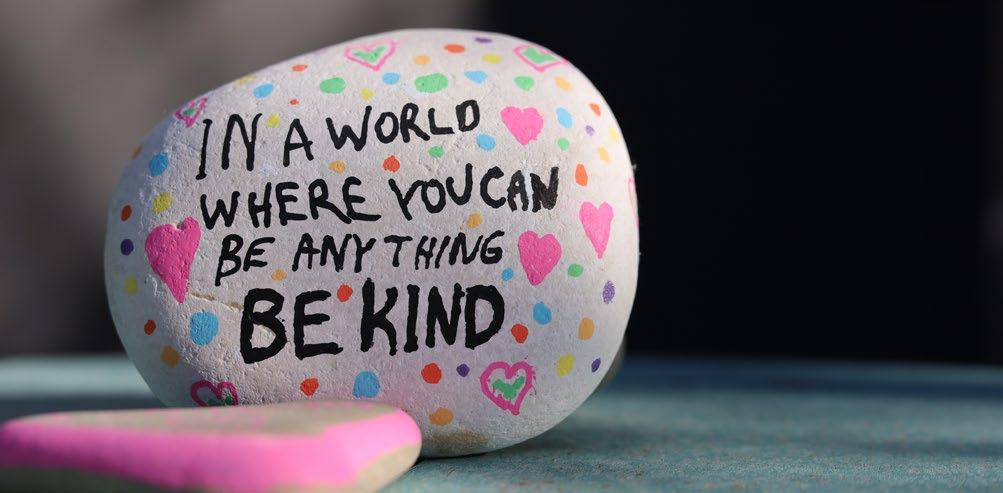
One of the simplest yet most profound ways to promote mental and emotional wellbeing in young children is to foster kindness - daily, visible, consistent acts of it.
This isn’t about the grand gestures but the small ones: helping a friend tidy up, offering comfort to someone who is sad, saying ‘thank you’ or ‘well done.’
I’ve found that when kindness becomes a classroom norm, anxiety diminishes. Children begin to look out for each other. They feel safer, more valued, more included. And from that place of emotional safety, they are more willing to take learning risks, to participate, to grow.
Kindness, empathy and connection are not soft skills. They are essential life tools.
My experience already confirms that early emotional education changes lives. I’ve seen children who once cried every morning grow into confident classroom leaders. I’ve seen anxious children begin to open up when given safe ways to express themselves. And I’ve seen children with additional needs blossom when their feelings are acknowledged and respected.
By Anna Houston
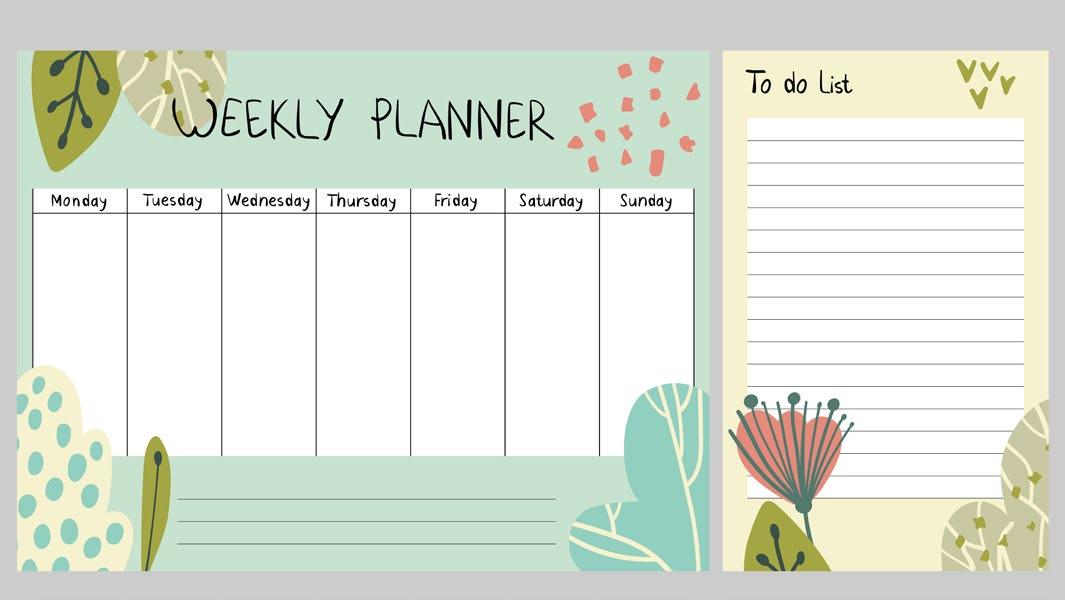
A little planning goes a long way. Set aside time each Sunday to reset so you feel calmer and more in control of the week ahead. Check the calendar, lay out uniforms and make a short to-do list. Pair it with a cup of tea, a podcast or a face mask, so it feels like self-care. Look at the bigger picture. Break your year into quarters and plan around family milestones. Avoid starting big projects in the busiest periods. Mapping goals to life’s rhythm makes them more achievable.

Healthy habits can make life more fun. Meet a friend for a walk and takeaway coffee instead of sitting in a café or catch up at the playground and do a few squats while pushing the children on the swing. Pair up with a friend to start a mini ‘cook-along club’ where you try a new healthy recipe each week or introduce a ‘vegetable of the week’ challenge. Pick a fruit or vegetable you don’t usually buy and find ways to add it to meals - it keeps healthy eating creative and fresh.

Greener living, simplified
Going green can feel overwhelming, so make one easy sustainable swap each quarter. If you commit to changing just four things throughout the year, by the end of it your life will have improved in four tangible ways. Last year we got a built-in water filter, swapped to an eco-friendly detergent, replaced plastic bottles with stainless steel ones and started growing herbs. They’re small changes but they’ve made our home feel more aligned with the way we want to live.
Anna Houston is a freelance writer specialising in parenting and women’s lifestyle

movelittle and often
Regular exercise is a way to care for your body and lift your mood. Think ‘little and often’ rather than ‘all or nothing.’ Walk the school run, take the stairs or park somewhere that adds a fifteen minute walk to your destination. Consider a fold-away treadmill or exercise bike that you can use while replying to emails or watching a film. Twenty minutes of steady movement is far more realistic than a rigid gym routine - and it still counts.

Healthy living starts in your head, not your kitchen. Much of how we eat, move and care for ourselves depends on how we speak to ourselves. If your inner dialogue is self-critical, it’s time to change the script. Instead of focusing on what you shouldn’t eat, think about what will make you feel energised. Swap ‘I’ve ruined it’ for ‘I enjoyed that; now I’ll make my next choice a nourishing one.’ When you stop labelling food as ‘good’ or ‘bad’, you stop labelling yourself that way too and you build a healthier, more forgiving relationship with eating.

Life is busy and real conversation can easily go by the wayside. Eat together at least three evenings a week - no phones or screensand ask everyone to share the best and worst part of their day. It keeps family life connected. Although big days out are wonderful, small, consistent moments through the week are just as powerful. This includes time with your partner. My spouse and I hug for twenty seconds every morning. It’s simple but effective and helps us reset and start the day as a team. Plan with purpose
January is full of big promises to ourselves - eat better, move more, stress less. But real growth comes from small, intentional steps that last. These ideas will help you build a calmer, healthier, more balanced life beyond the New Year.
Many of us reach for multivitamins without much thought but focusing on specific nutrients can make a difference - magnesium is worth attention. Supporting muscle recovery, hormone balance and deeper sleep, it can also help ease anxiety and improve focus. Low magnesium can show up in countless ways and many people are slightly deficient without realising. Restoring your levels can help you feel more balanced and energised. Everyone’s needs differ, so speak to a health professional if you’re unsure about changes.
school holiday savings pot

Put a little money aside each month for school holidays so you can enjoy them with less financial stress. Many banking apps let you set up savings pots to stay organised. I have a ‘fun fund’ for my kids that covers days out, café trips and rainy-day activities. I also keep a small ‘pocket money’ pot for myself - guilt-free spending on things I truly want but would usually push to the bottom of the list. It’s a simple form of self-care that reminds me to look after myself too.

Set aside at least an hour each week for something that’s purely for you - a dance class, a puzzle, a walk with a podcast or a hobby you loved years ago. Treat fun as essential, not an afterthought; it recharges your patience and motivation for everything else.

Little routines make home life feel easier. Have a two-minute tidy-up to a song with the kids before bed or wear comfy ‘house shoes’ to signal it’s time to get things done. The aim isn’t a spotless house - it’s a calmer one. Each month, clear one area - a drawer, your handbag, the car boot or your finances. Sort your purse, redeem old vouchers, cancel unused subscriptions. Decluttering little by little helps you feel lighter and more in control.

Keep a notebook by your bed and write down three things you’re grateful for each night or morning. When life feels hard, it helps you notice the positives that might otherwise go unseen and shifts your focus from what’s missing to what’s working. Sometimes I just write three short sentences but it always makes me feel thankful for the life I have with my children and partner. It can also create moments of clarity about your goals, helping you see what’s genuinely important.

Create a short bedtime routine just for you. We put so much effort into helping our children wind down - bath, pyjamas, story, lights out - yet rarely give ourselves the same care. Turn off screens thirty minutes before bed, wash your face, light a candle and wind down with a book, journal or quiet meditation. These small signals tell your body it’s time to rest, creating better sleep, a calmer mind and a gentler end to each day.
All listings are correct at the time of publication. Please check with the venue before you visit in case anything has changed.
Adventures in Wonderland at Z Arts, Hulme
An enchanting play experience which invites children and families to explore Wonderland, using imagination to create their own fantastical adventure.
www.z-arts.org
Daily from 11 Feb
Design Detective at Little Moreton Hall, Congleton
Learn more about how conservators look after historical paintings and designs in the hall and use the FREE spotter guide to help you take a closer look.
www.bit.ly/LittleMoretonHall
Daily from 13 Feb
Horrible Science: Cosmic Chaos at Science & Industry Museum, Manchester Blast off into the solar system and embark on a cosmic adventure guided by familiar characters from the brand-new Horrible Science TV series. www.scienceandindustrymuseum. org.uk
Every Mon during term time
Small Sounds at Chester Cathedral
Weekly drop-in music sessions at 2pm for children aged 0 to 5 and their grown ups. www.chestercathedral.com
Every Wed
Family Yoga at Z-Arts, Hulme
Come along and get creative with your little ones in these FREE sessions, ages 3+. www.z-arts.org
Baby Social at Manchester Art Gallery
A group for new parents and carers to connect in the exciting sensory setting of the new Things of the Least exhibition. www.manchesterartgallery.org
Every Fri
Little Lions Go Wild at Lion Salt Works, Northwich Nature-inspired sessions for preschoolers mix craft, imaginative play, fun stories and song. Suitable for ages 2-4. www.westcheshiremuseums.co.uk
Toddler Make and Believe at Z-Arts, Hulme Session for arts and crafts, stories and songs in a fun and relaxed environment. www.z-arts.org
Lego Club at Z-Arts, Hulme Play and build whatever you want with a huge collection of Lego®. www.z-arts.org
Every Sat
Kid’s Club at Chester Picturehouse
New and classic children’s cinema film screenings, every Saturday morning. www.picturehouses.com
Family Hangout at Theatre Porto, Ellesmere Port Hangout in the café with games,
crafts and storytelling, 10am-12noon. www.theatreporto.org
Family Saturdays at Octagon Theatre, Bolton
FREE family storytelling sessions, sharing stories in creative ways to spark imaginations. www.octagonbolton.co.uk
Every Sat & Sun
Crafty Weekends at Storyhouse, Chester
FREE drop-in crafty activities for children of all ages every Saturday and Sunday from 12pm-4pm. www.storyhouse.com
Every Sat & Sun during term time Mini Movers at Science and Industry Museum, Manchester Makaton-friendly adventures will have you whirring like a cog, drop-in, ages 5 and under. www.scienceandindustrymuseum. org.uk
Every Sat & Sun during term time, daily during school holidays
Power Up at the Science & Industry Museum, Manchester
Play the very best video games from the past five decades and try out over 150 consoles in the ultimate hands-on gaming experience. www.scienceandindustrymuseum. org.uk

Sat 31 Jan
Dino Draw-athon at Museum of Manchester
How many dinosaurs can you draw? You’ll be given all the inspiration and materials you need to find out. www.museum.manchester.ac.uk
Sat 31 Jan & Sat 7 Mar
Astro Night Kids at Jodrell Bank, Lower Withington
Enjoy constellation crafting, hot dogs and hot chocolate and a chance to get hands-on with a telescope guided by an expert team. www.jodrellbank.net
Sat-Sun 31 Jan-1 Feb & Sat-Sun 28 Feb-1 Mar
Hyrdrogen Cars Weekend Workshops at Catalyst Science Discovery Centre, Widnes Work in teams to construct a mini hydrogen powered car and produce hydrogen by electrolysis of water. www.catalyst.org.uk
JANUARY FEBRUARY
Every Sat & Sun from 10 Jan-8 Feb
Super Cool Science Show at Catalyst Science Discovery Centre, Widnes
Interactive family science show where you can learn more about temperature and the coldest place in the universe. www.catalyst.org.uk
Sat 10 Jan-Sun 1 Mar
Weekend Workshops at Catalyst Science Discovery Centre and Museum, Widnes
Take part in two hands-on workshops; ‘DNA’ where you can learn to be a geneticist and ‘Hydrogen Cars’ to construct a mine hydrogen powered car. www.catalyst.org.uk
Sat 17 Jan
Baby Rock Sampler at Band on the Wall
High-quality, family-friendly gigs for parents and carers. www.bandonthewall.org
Sat 24 Jan
Battle of Nantwich
An exciting historical day in Nantwich with music, historical plays, pike and musket displays, horse parade and the all-important Battle on Mill Island at 2pm. www.battleofnantwich.org
Sat-Sun 24-25 Jan
Open House Weekend at East Lancashire Railway
A fantastic line-up of activities, exclusive experiences, and something for enthusiasts of all ages, this event promises a memorable journey through railway history for all the family. www.eastlancsrailway.org.uk
Fri 6 Feb
Art Baby at The Whitworth, Manchester
FREE sensory play sessions for nonwalking babies and their grown-ups. www.whitworth.manchester.ac.uk
Sat 7 Feb
A Tribute to K-Pop Demon Hunters at Cockfields Farm
A night of high energy K-pop sets and dances with the famous trio, carousel rides, cuddle corner with animals, glitter faces and more. www.cockfields.co.uk
Feel Good Kids Art Club at The Whitworth, Manchester
Explore calming mindfulness techniques, all while connecting with nature and creating meaningful artworks, ages 7-12, FREE. www.whitworth.manchester.ac.uk
Sun 8 Feb
RNCM Day of Percussion at Royal Northern College of Music, Manchester
A relaxed, family-friendly morning to explore all things percussion, ideal for ages 5-11. www.rncm.ac.uk
Fri 13 Feb
PLAY Day at The Whitworth, Manchester
Open-ended play sessions for underfives and their families, 10.30am2.30pm, drop-in, FREE. www.whitworth.manchester.ac.uk
Sat 14 Feb-Sun 22 Feb
A Taste of Home at the IWM North Learn about the stories behind war and conflict with FREE activities, drop-in, ages 5-12. www.iwm.org.uk
Sat 14 Feb-Sun 22 Feb
February Half Term at Catalyst Science Discovery Centre, Widnes Destination Space Shows, Geology Rocks workshops and Sensational Senses interactive science shows are running daily. www.catalyst.org.uk
Sat 14 Feb-Sun 22 Feb
The Wind In The Willows: A Garden Adventure at RHS Bridgewater
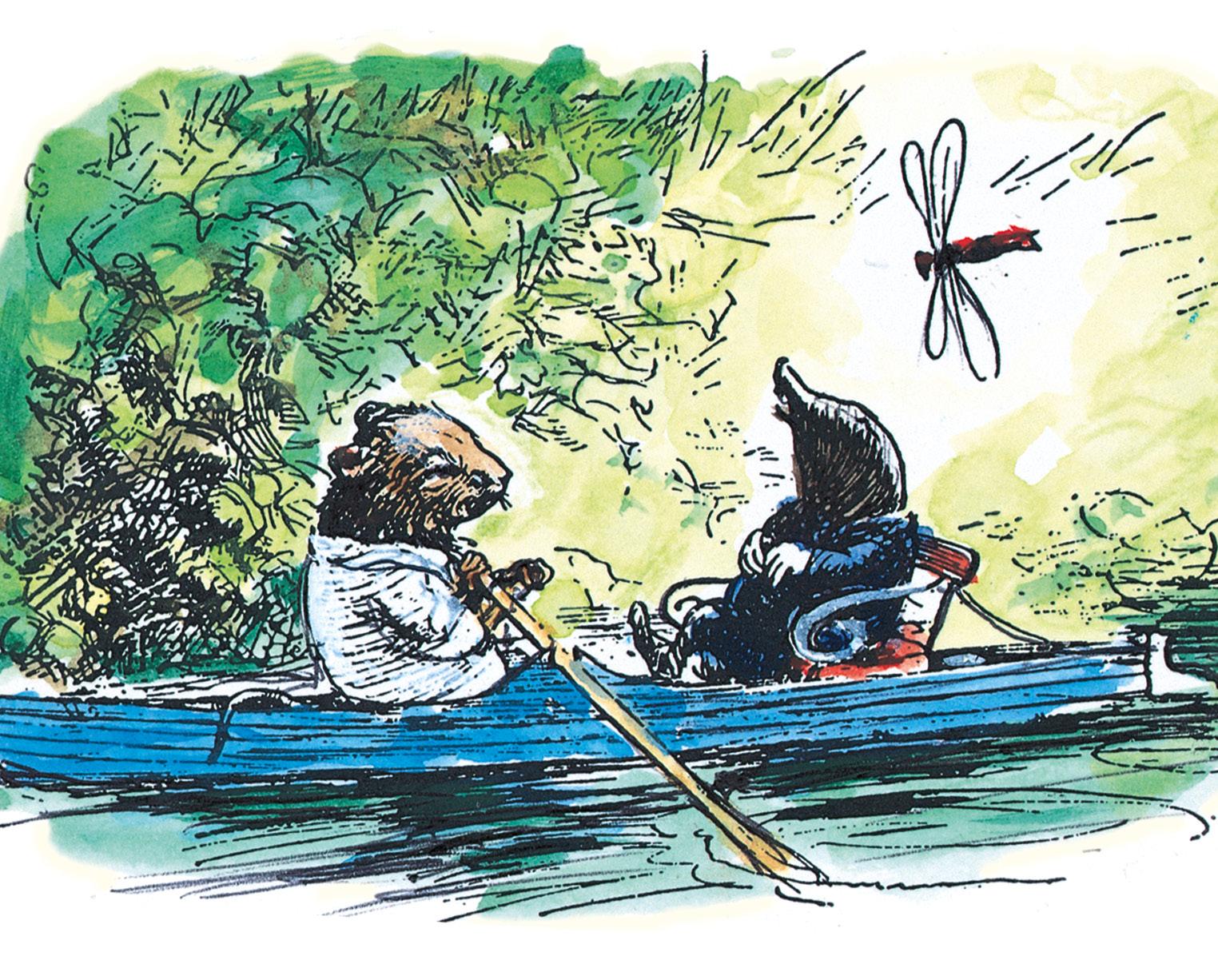
Join Mr Toad, Ratty, Mole and Badger for an unforgettable family day out! Step into the world of The Wind in the Willows with a brand-new garden trail and hands-on activities, brought to life by EH Shepard’s enchanting original illustrations. The adventure begins this February - and the trail continues all year!
www.rhs.org.uk/gardens/ articles/wind-in-the-willowsgarden-adventure
Tue 17 Feb-Fri 20 Feb
Dino Den at Museum of Manchester FREE activities to help you get closer to the Cretaceous, including junk model dinosaur-making and opportunities to get up close to fossils and casts.
www.museum.manchester.ac.uk
Wed-Thu 18-19 Feb
Under the Sea Activities at The Whitworth, Manchester Come together to create under-thesea collages, enjoy lively drumming and storytelling sessions, and dress up to celebrate ocean life and island culture.
www.whitworth.manchester.ac.uk
Wed 18 Feb-Sat 21 Feb
The Super Duper Family Festival in Manchester Manchester’s public spaces, squares and venues will be transformed into exciting Play Zones, with games, dancing, activities, crafts, performances and more to enjoy. www.superduperfamilyfestival.com
Fri 20 Feb
The Dino Adventure at East Lancashire Railway Ride from Bury to Rawtenstall and back with professional dinosaur handlers, themed activities and plenty of photo opportunities.
www.eastlancsrailway.org.uk
Sat 21 Feb
Outdoor Art Club at The Whitworth, Manchester Creative activities designed to encourage children to play FREEly whilst exploring nature outdoors. FREE, drop-in.
www.whitworth.manchester.ac.uk
Sun 22 Feb
Quiet Morning at The Whitworth, Manchester FREE multi-sensory play sessions especially designed for children with additional needs and their families who may prefer a quieter, calmer environment. www.whitworth.manchester.ac.uk
Sat-Sun 21-22 Feb
Small Engines Gala at East Lancashire Railway
Your chance to ride up and down the East Lancs Railway, hauled by our fleet of our smaller heritage steam and diesel engines. www.eastlancsrailway.org.uk
Sun 28 Feb
Lunar New Year Celebration at Manchester Museum
Start the celebrations for the Year of the Horse during an evening of colour and joy, with performances, arts and crafts and more. www.museum.manchester.ac.uk
Sat-Sun 28 Feb-1 Mar
Sensational Senses Show at Catalyst Science Discovery Centre, Widnes
Interactive family science showhave fun with optical illusions, experiments with sounds and more. www.catalyst.org.uk
BRIDGEWATER HALL, MANCHESTER www.bridgewater-hall.co.uk
Swan Lake 6 Jan
The greatest romantic ballet of all time is brought to life by Tchaikovsky’s haunting and unforgettable score.
Nutcracker 7 Jan
This most famous of fantasy ballets for all the family begins as night falls on Christmas Eve.
THE BRINDLEY THEATRE, RUNCORN www.quaytickets.com/thebrindley
The Dinosaur that Pooped 14 Feb
The whole family will have a poopy good time enjoying a brand-new story for the stage.
BUXTON OPERA HOUSE www.buxtonoperahouse.org.uk
Three Little Pigs The Musical 11 Jan
A fresh take on the classic story that’ll have you squealing with glee and howling with laughter.
Chinese New Year Extravaganza 19 Feb
An unforgettable show filled with vibrant colours, awe-inspiring performances and endless fun.
Pop Princesses 19 Feb
A magical show where beautiful princesses become pop stars.
ELLESMERE PORT CIVIC HALL www.brioentertainment.org/ venues/ellesmere-port-civic-hall
Beauty & The Beast Pantomime 17-18 Jan
Get ready for a magical adventure filled with laughter, music and plenty of pantomime fun.
FORUM THEATRE, ROMILEY www.theforumtheatre.co.uk
K-Pop Krazy 24 & 31 Jan
Get ready to dance, sing and shine as K-Pop Krazy! explodes onto the stage with the ultimate live tribute to the world’s biggest sensations.
HARLEQUIN THEATRE, NORTHWICH www.harlequinplayers.com
Peter Pan 23-25 Jan
Join the award-winning Youth Theatre as they fly you to Neverland with their spectacular production.
HEYWOOD CIVIC CENTRE www.heywoodcivic.co.uk
Meet the Hatter 20-21 Feb
Integrating dance, storytelling, original music, digital projection, lighting and animation, this epic production features a new retelling of the iconic Hatter character.
HOME MANCHESTER www.homemcr.org
The Lightning Thief - The Percy Jackson Musical 11-21 Feb
It’s the perfect adventure for gods and mortals of all ages with a gripping story that shows that normal really is a myth.
KNUTSFORD LITTLE THEATRE www.knutsfordlittletheatre.com
Rapunzel 15-17 & 22-24 Jan
With an enchanted forest, a talking rabbit and a load of super-strength hairspray, the only guarantee is a hair-raising adventure.
THE LOWRY, SALFORD www.thelowry.com
Red The Panto 23-25 Jan
Will The Big Bad Wolf’s hunger get the better of him? Can SuperPig save the day? Ages 4+.
Groove onto the Moon 1 Feb
In this fun sci-fi adventure, children aged 3 to 7 and their adventurous grown-ups will be transported into space.
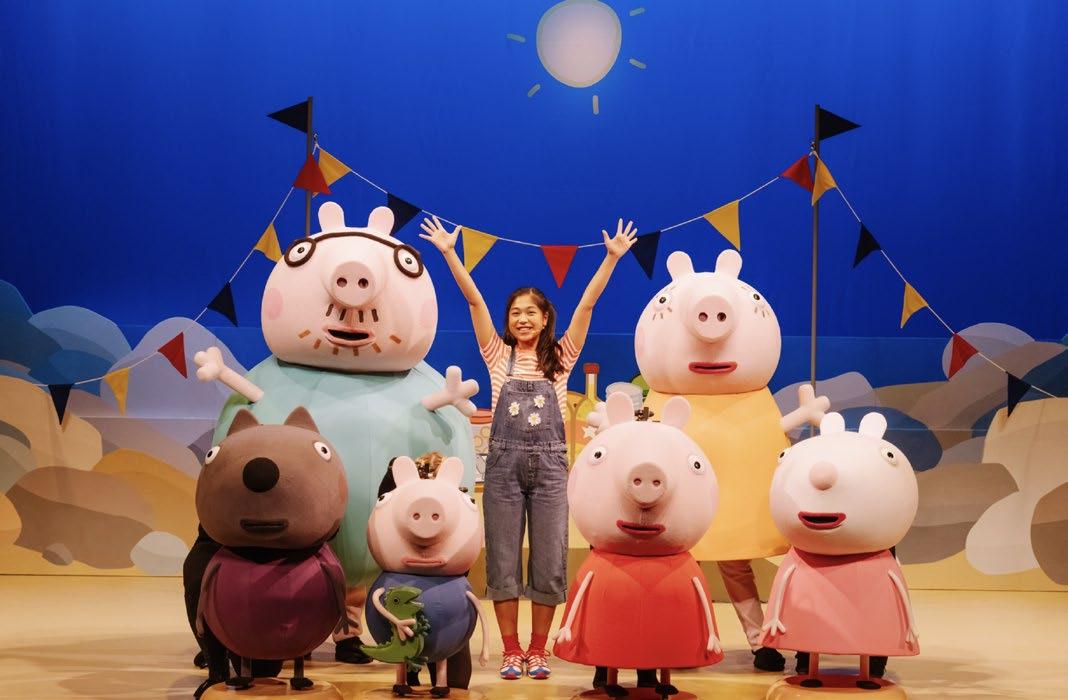
Peppa Pig’s Big Family Show 6-8 Feb
Packed full of music, adventure and surprises for little ones and is the
perfect introduction to theatre.
Pinocchio 17-22 Feb
Expect the classic elements of the story combined with hilarity, skilled puppetry, original music, fantastic staging, outstanding performers and extraordinary physical tricks.
Chevalier Hobbyhorse Circus 18-19 Feb
Kalle Lehto’s ringmaster performs acrobatics, juggling and balancing with an amazing cast of hobby horses.
LYCEUM THEATRE, CREWE www.trafalgartickets.com
Justin Live 31 Jan
See CBeebies’ megastar Justin Fletcher live on stage, in an allsinging, all-dancing extravaganza.
Dino Tales 15 Feb
An unforgettable family adventure starring Europe’s largest walking dinosaurs to ever roam the stage.
MADS THEATRE, MACCLESFIELD www.madstheatre.org
Jack & The Beanstalk 7-10 Jan Prestbury Youth Pantomime’s annual panto.
Aladdin 19-24 Jan
Macclesfield Majestic Theatre Group’s annual pantomime.
MANCHESTER OPERA HOUSE www.atgtickets.com
The Nutcracker 2 Feb
The festive charms of The Nutcracker will captivate audiences of all ages.
Swan Lake 3 Feb
The thrilling sight of a company of swans dancing in perfect harmony is one of the true delights of classical ballet.
Horrible Histories - The Concert 6-8 Feb
Your favourite songs and actors from the BAFTA Award-winning CBBC TV series will be appearing live (and dead!) on stage.
THE MET, BURY www.themet.org.uk
The Ultimate Bubble Show 31 Jan
A fast-paced show full of high energy and surprises as Ray uses various gases to create incredible bubble sculptures, effects and magical displays.
The Tale of Nobody Nose 18-19 Feb Imaginative, wordless storytelling, skilful puppetry and classic clowning combine for all ages.
MIDDLETON ARENA www.yourtrustrochdale.co.uk
Circus Spectacular 15 Feb
Featuring international circus acts, amazing magic and lots of laughs, for all ages.
NORTHWICH MEMORIAL COURT www.brioentertainment.org
Circus Spectacular 12 Feb
Featuring international circus acts, amazing magic and lots of laughs, for all ages.
The Wizard of Oz 18-22 Feb
A faithful adaptation of the MGM classic film, join Dorothy, Toto and their friends as they journey from Kansas to the Land of Oz.
PALACE THEATRE, MANCHESTER www.atgtickets.co.uk
Barnum 10-14 Feb
An extraordinary ensemble cast of
over 20 actor-musicians playing 150 instruments, acrobats and amazing circus acts.
PARR HALL, WARRINGTON www.parhall.culturewarrington.org
Beauty & The Beast 3-11 Jan
A spellbinding adventure for all the family, which reminds us that true beauty comes from within.
Sooty 15 Feb
A spectacular new show to delight the whole family.
QUEEN’S PARK HIGH SCHOOL, CHESTER www.qphs.co.uk/news
Oliver 11-13 Feb
Incredible musical is brought to life with an outstanding cast, crew and band.
STOCKPORT PLAZA www.stockportplaza.co.uk
Tales from Acorn Wood 7-8 Feb
Packed full of toe-tapping songs, puppetry, and all the friends from Acorn Wood, all ages.
Pop Princesses World Tour 16 Feb
A magical show where beautiful princesses become pop stars.
Chinese New Year Extravaganza 18 Feb
An unforgettable show filled with vibrant colours, awe-inspiring performances, and endless fun.
Dinosaur Adventure Live 21 Feb
An interactive stage show immerses audiences of all ages in a thrillingly realistic dinosaur world.
STOLLER HALL, MANCHESTER www.stoller.com
Stoller Story Sounds 17 Jan
Musical journeys will transport you to a beautiful world of new and exciting sights and sounds, ages 3-5.
STORYHOUSE, CHESTER www.storyhouse.com
The Very Hungry Caterpillar 21-22 Feb
A vibrant celebration of Eric Carle’s adored classics and the perfect way to introduce children to live theatre.
THEATRE PORTO, ELLESMERE PORT www.theatreporto.org
Mika and The Polar Bear 20-22 Feb Featuring original music, digital animation and enchanting puppetry, ages 4-11.
WATERSIDE, SALE www.watersidesarts.org
The Enormous Turnip 20-22 Feb
Help save the day as The Enormous Turnip is pulled out of the ground before it takes over the planet, ages 3+.
Z ARTS, HULME www.z-arts.org
The Wizard and the Mechanic 31 Jan
An exciting show for families and brave young explorers, ages 5-10.
Meet the Hatter 14-15 Feb
Integrating dance, storytelling, original music, digital projection, lighting and animation, this epic production features a new retelling of the iconic character, ages 5+.
The Gruffalo’s Child 27 Feb-1 Mar
An enchanting adaptation of the much-loved picture book by Julia Donaldson and Axel Scheffler, ages 3+.
Compiled by Andrew Campbell
There’s endless fun for families to have at family-friendly festivals across the UK in 2026. Our selection of festivals below all offer a fusion of music, arts, entertainment and outdoor adventures.

Y Not Festival 30 July-2 August Pikehall, Derbyshire
Y Not Festival is a lively music festival which offers a familyfriendly experience with plenty of activities for children. Alongside its diverse music lineup, Y Not features a dedicated Kids’ Area with arts and crafts, workshops, games and circus skills. There are also funfair rides, storytelling and interactive performances to keep younger festival-goers entertained. Families can also benefit from a dedicated camping area for a quieter night’s rest. www.ynotfestival.com

DevaFest 6-9 August
Cholmondeley Castle, Cheshire DevaFest goes all out for families, especially kids, offering unlimited free fairground rides, circus skills workshops, magic shows, puppet theatre, dedicated kids’ entertainment zones, interactive storytelling sessions, arts and crafts, face painting and themed parades. Additional highlights include family discos, character meet-and-greets and treasure hunts. With extensive outdoor play areas and a focus on safety, DevaFest provides a structured, engaging programme to keep children entertained. www.devafest.co.uk
Shindig Festival 21-24 May Charlton Park, Wiltshire
Shindig Festival is a familyfriendly event that blends music, dance and creative arts with a strong community vibe. The large kids’ area is packed with free activities from 9am to 5pm daily, including arts and crafts, circus skills, workshops, games and interactive performances. There are also family-friendly shows, plenty of space for children to play and explore and a packed programme of entertainment for all ages. www.shindigfestival.co.uk


The Green Man Festival 20-23 August
Bannau Brycheiniog National Park, Wales
This independent music, science and arts festival nestled in the Brecon Beacons boasts plenty of large and small music venues, plus comedy, film, literature, art, science and playful mischief across dedicated zones. The festival’s Little Folk area offers hands-on workshops, nature activities, science experiments, arts and crafts and interactive performances. There are family-friendly theatre shows, storytelling sessions and dedicated play spaces designed for various age groups. www.greenman.net

The Long Road Festival 27-30 August Stanford Hall, Leicestershire
A family-friendly celebration of country, Americana and roots music, fusing good time country music, U.S. inspired street food and great entertainment. Kids are entertained in a dedicated area with American camp style games, kids’ tractor racing, crafting and evenings spent around open campfires listening to country music under the stars. www.thelongroad.com
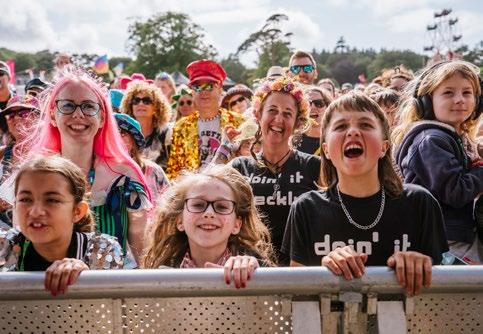
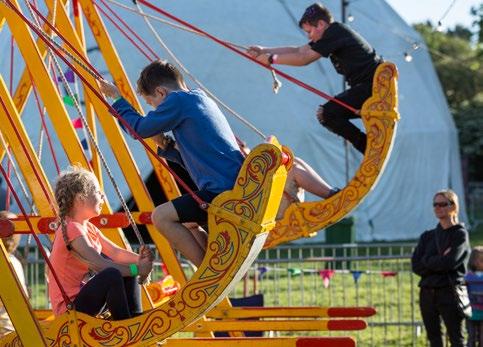
The BritFest 2-5 July Ashley Hall, Altrincham, Cheshire
Designed with families in mind, activities include arts and crafts, face painting, an outdoor minicinema and classic funfair rides. There’s also plenty of live music and entertainment suitable for all ages, plus options for camping or glamping for a full weekend adventure. www.thebritfest.co.uk

The Great Estate Festival 29-31 May Scorrier Estate, Redruth, Cornwall
Known for its eclectic mix of music, art, theatre and adventure. Families will find a wealth of activities for children, including circus workshops, storytelling, arts and crafts, vintage fairground rides and interactive performances. The festival’s beautiful grounds host woodland trails, secret gardens and quirky entertainment, providing plenty of space for kids to explore and play. It’s a vibrant, welcoming festival perfect for all ages. www.greatestatefestival.co.uk

Camper Calling 28-30 August Ragley Hall, Alcester, Warwickshire
Camper Calling is a true family festival for children of all ages. Kids can dive into creative workshops, music sessions and hands-on arts and crafts. There’s a dedicated Kids Stage, circus skills, woodland walks and adventures. The festival’s safe, friendly atmosphere means families can relax and enjoy live music while little ones explore, learn and play. Adults can enjoy an eclectic music lineup with acoustic sets and emerging talents. www.campercalling.com