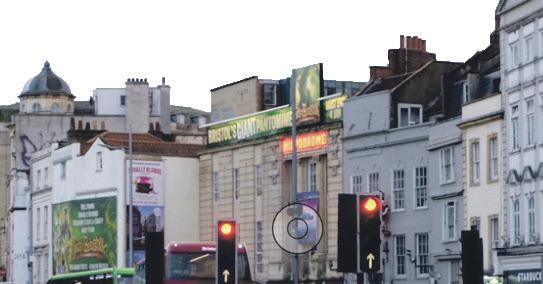
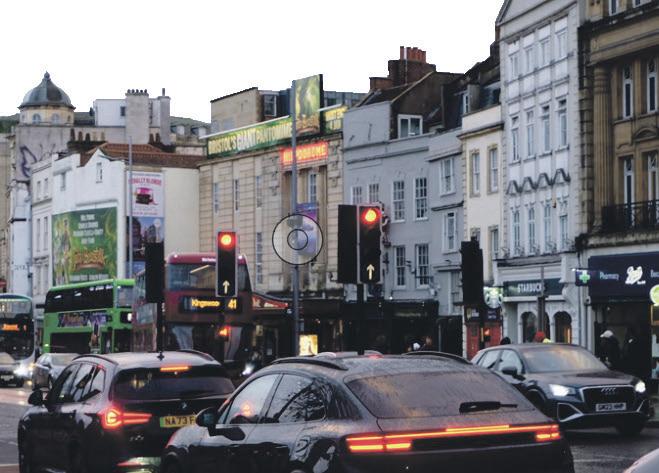
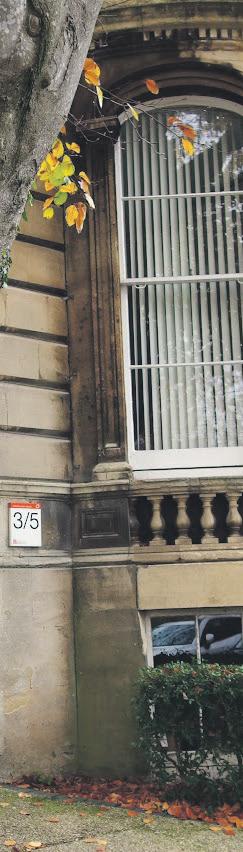
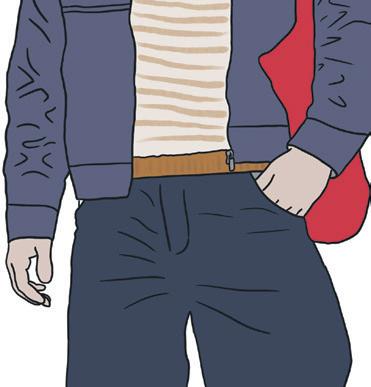
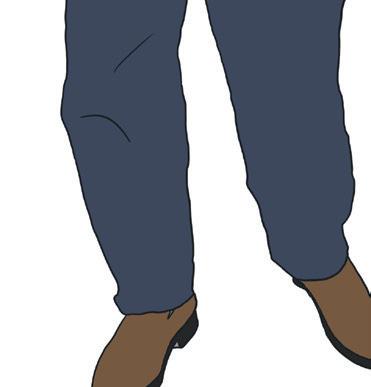
Putting its own twist on Dickens, Bristol has become one city telling two tales. Stroll through Clifton and see cashmere-clad queues outside every brunch
spot (think Mercy Mercy Mercy or East Village Vegan Café). While waiting for a table, visit the greengrocer across the road to ask about its locally-grown produce, or look for a B-lister en route to take photos outside The Paragon. However, walk to the city centre and,
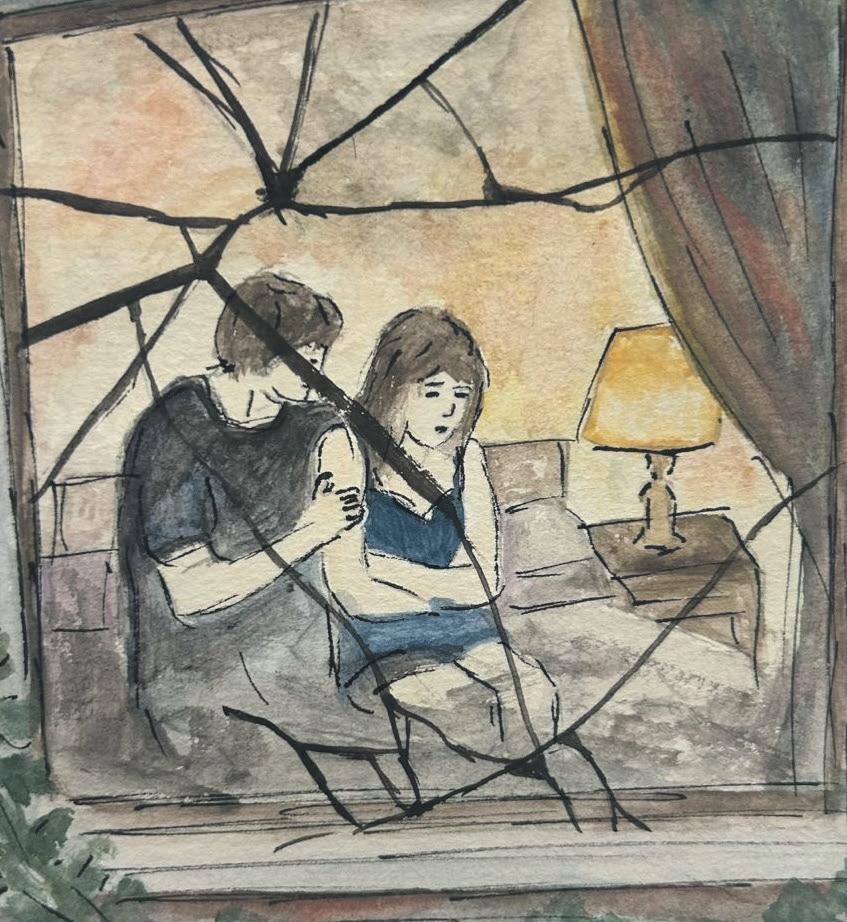
Is it ‘embarrasing’ to be in a relationship on valentines
> Continue reading on Pg. 6 man life roughly 20 minutes apart.
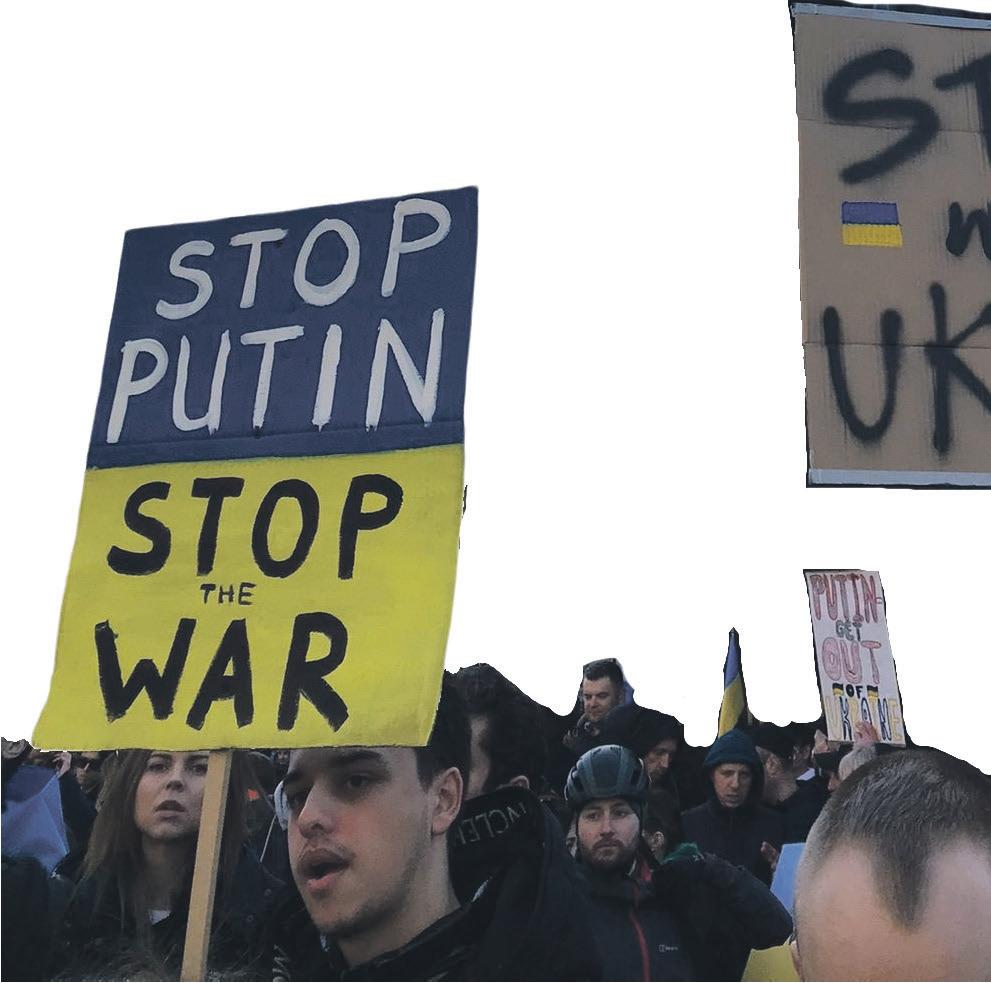
creases an already high demand in the area and allows landlords to raise rent prices. One individual recently forced to move elsewhere commented that ‘it wasn't just that the rents were... amidst the high street chains, damp bedding in doorways, and tents on the streetside, a very di erent story is revealed: a glum plot where Bristol has the second highest number of homeless people in the UK (around 1/113 residents). Two extremes of hu-
At least some blame for the homelessness crisis must be placed on university students, who occupy 45 per cent of all privately owned housing in Bristol. The annual student house-hunt in-
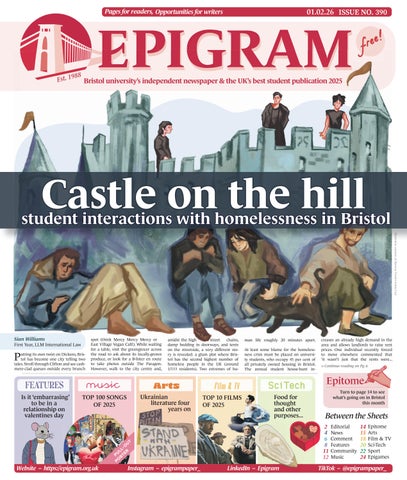
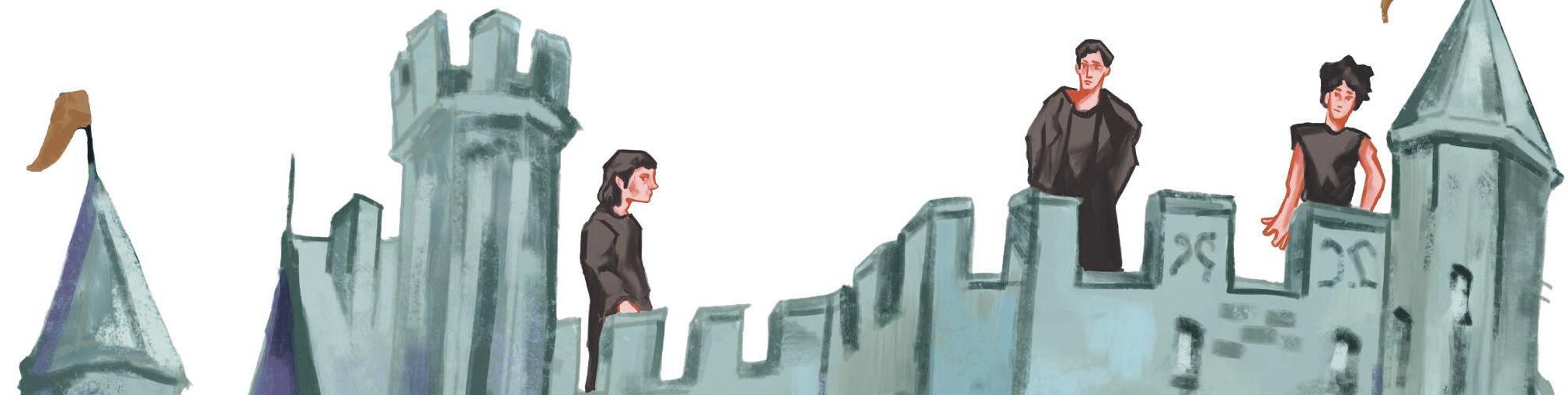
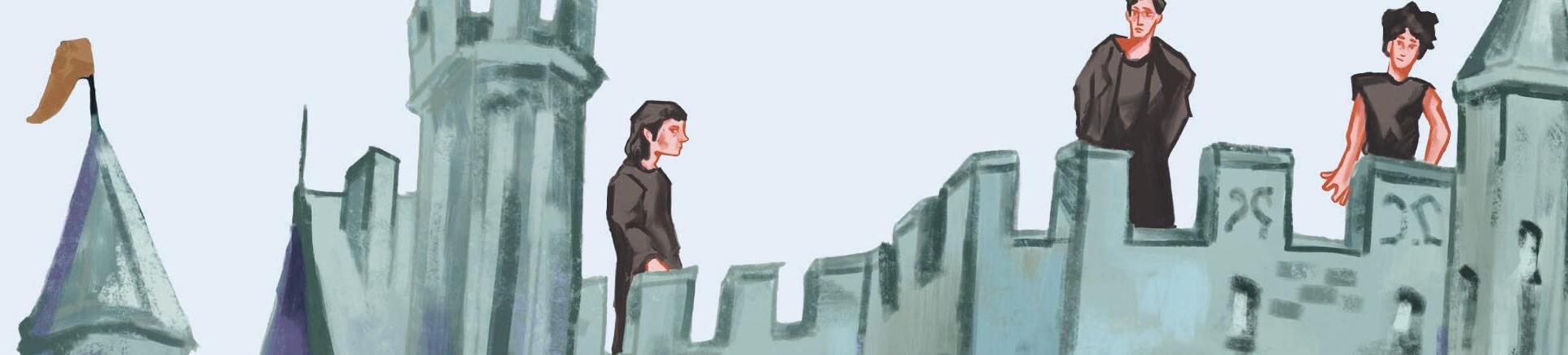
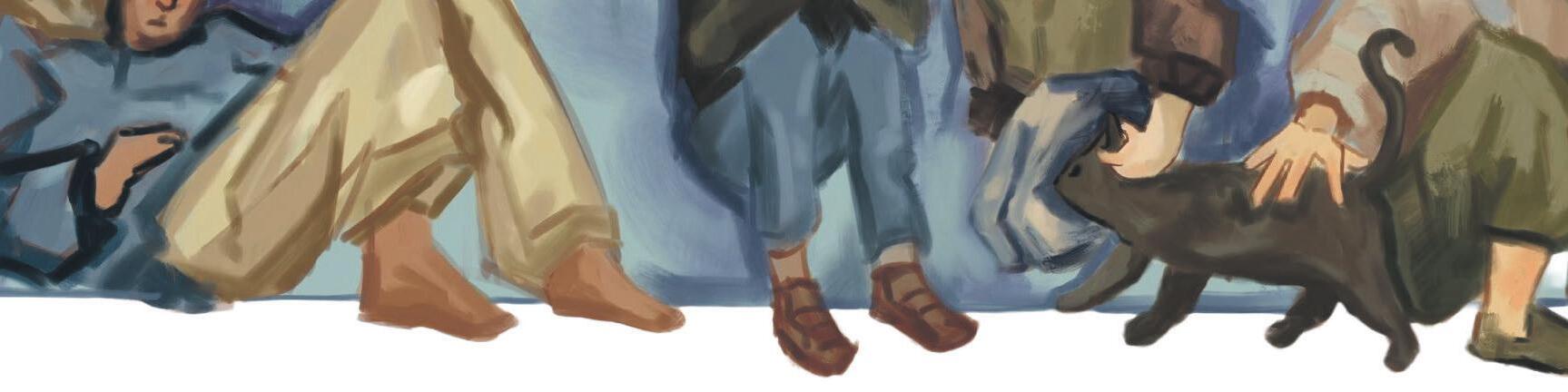
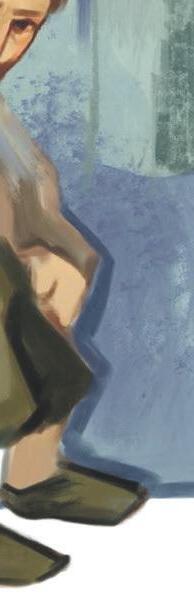
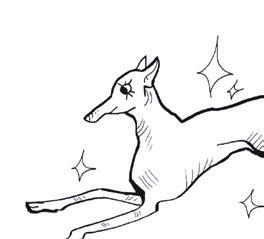
Illustration courtesy of: Romina Treviño Santa Cruz
It's been a couple of weeks since we all descended upon the city again and campus has o cially come back to life. Welcome to 2026 and welcome to issue 390. I'll be honest, it's a bit of a shame to realise we won’t hit issue number 400 during our tenure… would anyone notice if I fudged the numbers?
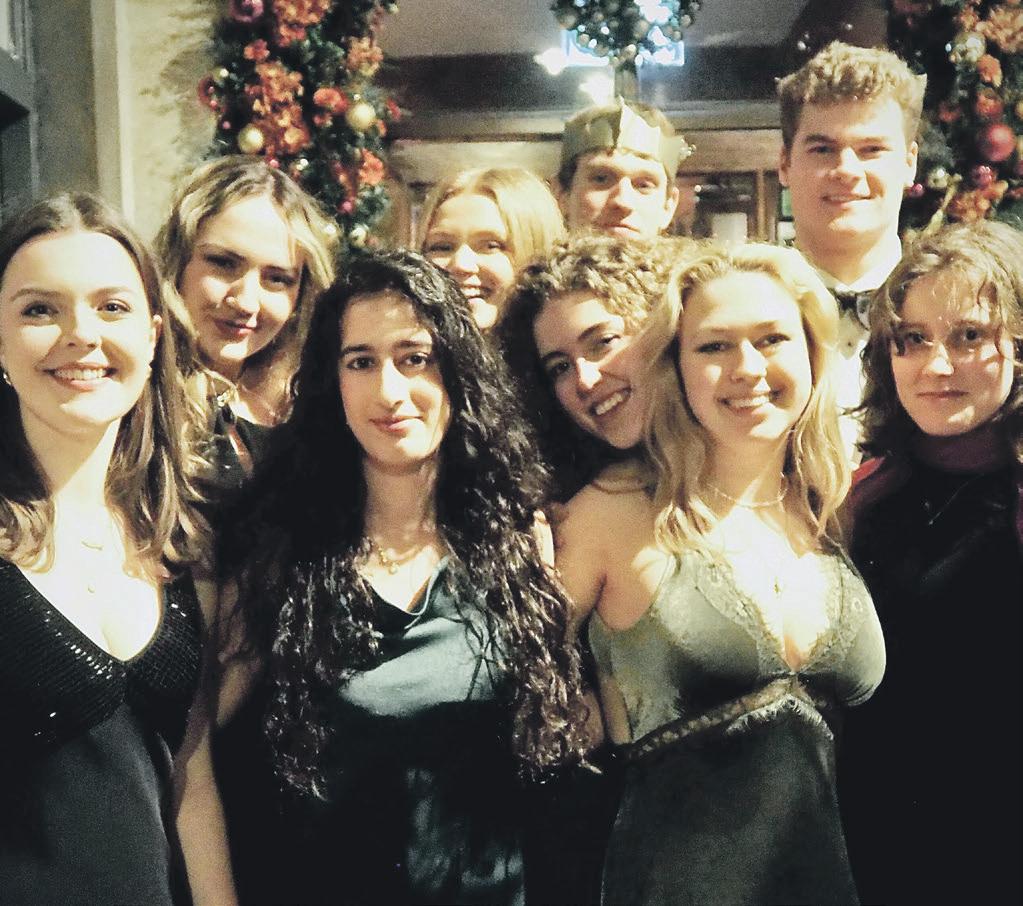
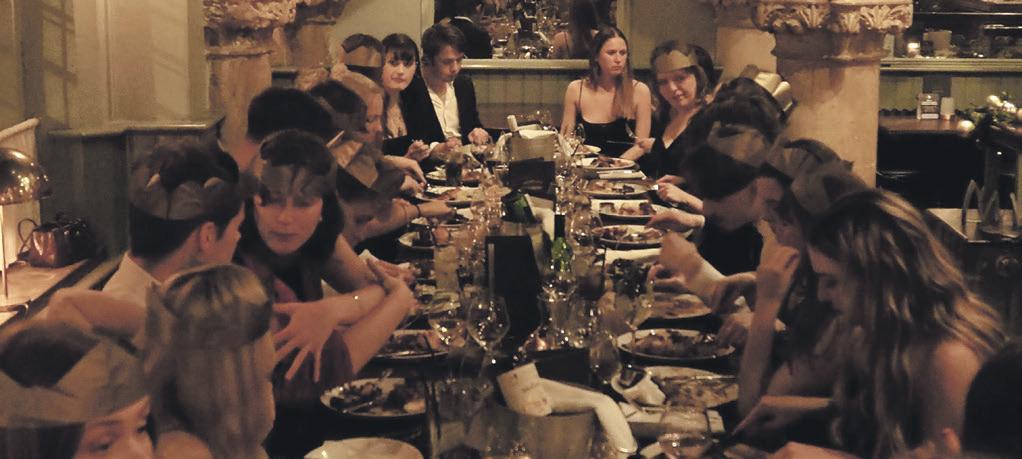
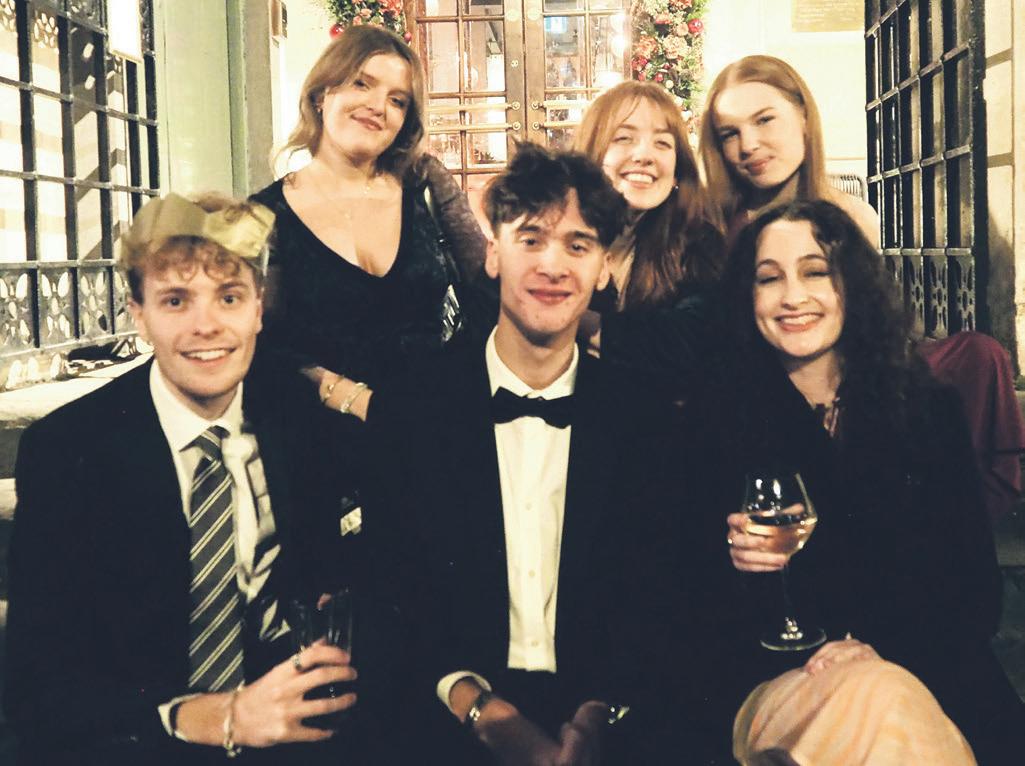
Since our last issue, we have spent time frantically revising for exams and heading home for a much deserved break. Between the essays, we managed to get together to celebrate finishing our first term together as a team. James drunkenly missed one important thank you in his speech so it's being rectified in print forever - thank you Eden - We dont know what we'd do without you.
February marks the beginning of the final stretch for many of us. After my last particularly dreary editorial, you'll be pleased to hear that my new year's resolutions have, for at least the past few weeks, forced a more positive attitude to the looming dissertation anxiety — sorry, gleeful dissertation prospects.
This month we are looking forward to the Student Publication Association's South West Regional Conference & awards (blimey that’s a mouthful), hosted by fellow Bristol student publication, That's What She Said. Admittedly, I am tempted to congratulate us on our wins in advance, but you'll just have to wait to hear about those in next month's issue.
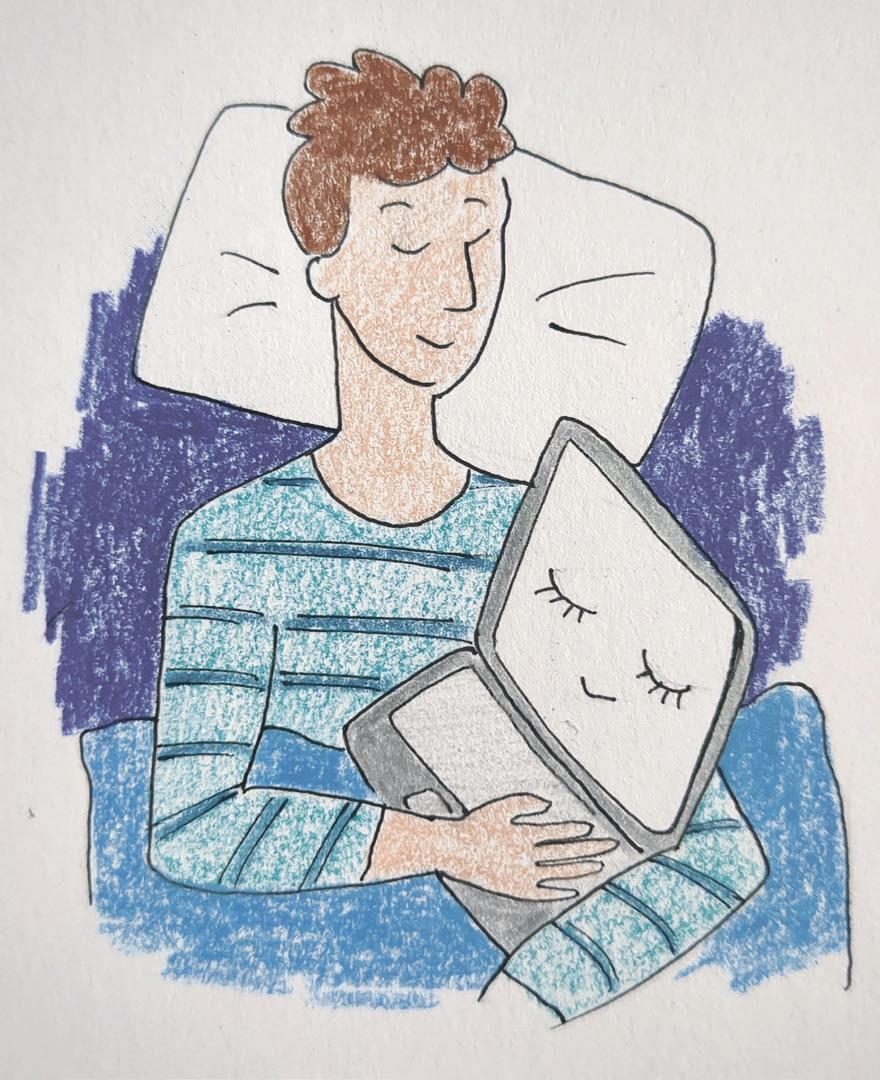
Now, you won't escape mention of valentine's day in the following pages; from love a airs with AI to whether or not relationships are embarrassing, we have covered the lot. . So, very self-indulgently I would like to mention that Epigram has a few notable love stories of its own. The 24/25 editorial team brought us Daisy and Reuben, and Benji and Megan, and the first time I met my now boyfriend, Miles, was at an editorial meeting.
If february and deadlines have come around all too quickly and you find yourself mourning 2025, this issue has you covered recapping the best music and movies of the last year. Felix and the Film & TV team have put together their top ten films and Music have taken it to the extreme with a hundred, yes, one hundred songs, that soundtracked our 2026. Entries were submitted from a wide range of our writers, and curated by Sophie Scannell and her team. We have marked the occassion with a pull-out poster to add some colour to your uni kitchen or hallway.
If you're keeping up with us online, you can expect coverage on the upcoming student elections, investigations into nighttime saftey, and maybe even the return of our Break the Mould campaign...
Team
Co Editor-in-Chief
Julia Mullins
We've teamed up with Overhead at UoB to give you exclusive quotes across campus and beyond. Follow them on Instagram: @overheardatu0b
‘I know things are bad when £1 soup in the Hawthorns feels like a luxury’
‘It's not imposter syndrome if I actually don't belong here’
‘I came to uni to find myself, but all I've found is the new Waitrose’
‘I don't hate my course, I just hate it between the hours of 9 and 5’
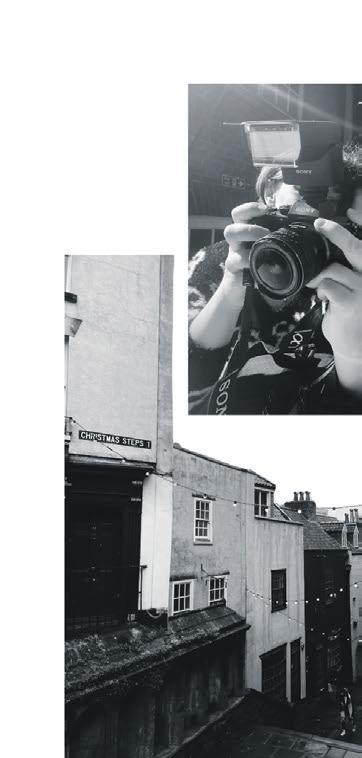
We are looking for photographers to contribute on an ad-hoc basis. Your role would consist of taking high-quality photographs that we can use both in print and online. Join the WhatsApp chat & email editor.epigram@gmail.com with
1) Your name, course and year group 2) A simple portfolio of your work
1) Your name, course and year group 2) A simple portfolio of your work or illustrate something for an existing Epigram article of your choosing Or are you an illustrator?
We are always looking for illustrators and graphic designers to create art for both print and online Join the WhatsApp chat & email editor.epigram@gmail.com with
• Be the first to hear breaking news on campus and student analysis on a wide variety of issues at university and nationally.
• Contibute to Epigram's agony aunt column, exclusive to the print & take part in interviews for our features articles!
• Keep up with our editorial team behind the scenes.
• See details of our socials, upcoming formals and paper distribution days.
Prince William visits the University of Bristol
Visiting the University's supercomputer ‘IsambardAI’, the Prince joked that he now knows where to send George when he can't do his homework.
James Lewis Co Editor-in-Chief
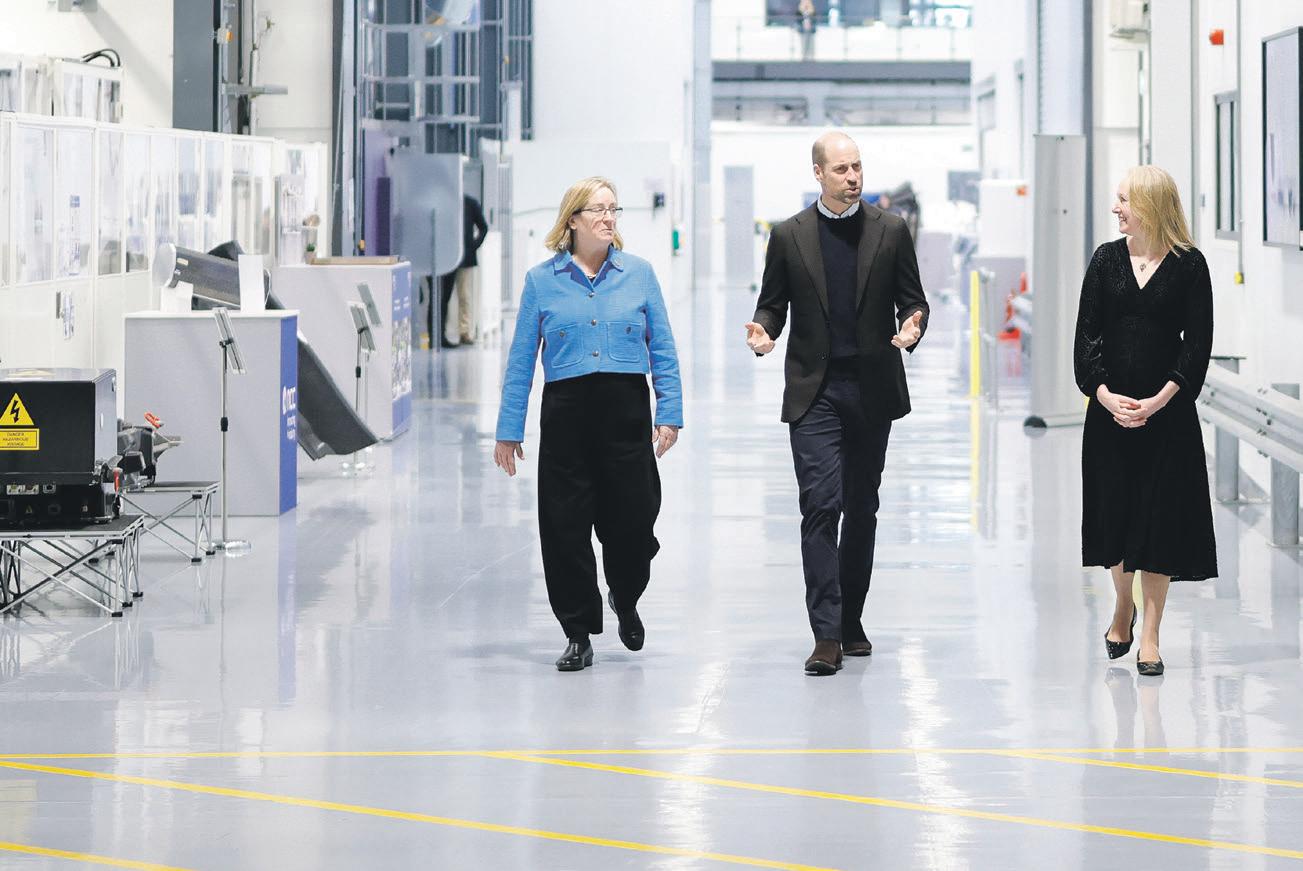
The Prince of Wales visited the National Composites Centre (NCC) today, January 22, to visit the University of Bristol's newest supercomputer, Isambard-AI, and find out how researchers and industry have been using this world-leading technology.
Prince William was welcomed by University of Bristol Vice-Chancellor, Evelyn Welch, and Chief Business O cer at the NCC, Dr Jo Dally, who showed him around the NCC facility and the new Isambard-AI supercomputer.
The Prince of Wales met Paralympic champion Emma Wiggs MBE and the engineers who helped manufacture her canoe seat for the Paralympics in 2024. The seat was built using digital tools and embedded sensors, which resulted in a lighter and sti er seat, and helped Ms Wiggs e ciently paddle her canoe
to Gold at the Paris Paralympic Games in 2024. The engineers told William how it took just three months to go from concept to completion of the canoe seat.
On his visit, the Prince of Wales met researchers and engineers who have been working with Isambard-AI – the most powerful supercomputer in the UK – since it came online in July 2025. The £225 million project was funded by the government and built by the Bristol Centre for Supercomputing (BriCS), which is based at the University of Bristol, in collaboration with HPE and NVIDIA. It is the fastest university-based supercomputer in the world and 11th fastest generally.
Dann Mitchell, Professor of Climate Science at the University of Bristol, simulated a heatwave over Kensington Palace to show how Isambard-AI can predict weather conditions better than what was previously possible. Despite the enormous power needed, the technology can be managed from Isambard-AI using a laptop. William also learned from Bristol researchers how the AI has helped develop drugs that combat heart disease.
While the NCC is owned by the University of Bristol, it is operationally independent. Jo Dally, Chief Business O cer at NCC, told Epigram that the Centre ‘exist[s] to pull [...] excellent
research from the University of Bristol and turn that into industrial impact.’
The NCC have three sectors of focus: energy, aerospace, and defence. Everything from plane wings to turbine blades and solar-powered drones are developed in the facility.
At the end of his visit, director of BriCS, Professor Simon McIntoshSmith, and Dr Sadaf Alam, from the University of Bristol, showed Prince William the Isambard-AI computer. Housed in a separate building adjacent to the NCC facility, the computer looks more like an electrical substation than a traditional computer.
Dr Jo Dally said: ‘Hosting IsambardAI gives us the opportunity to
McIntosh-Smith told Epigram that ‘there are already hundreds of researchers and postdocs running on [Isambard].’ Undergraduates taking Computer Science get the opportunity to use Isambard-AI on the HighPower Computing module, and there are plans for an undergraduate Artificial Intelligence specific course.
Reflecting on the engagement, Professor Evelyn Welch told Epigram that ‘it was a brilliant visit. We were delighted to have His Royal Highness come see the NCC and to see how the university and industry work together.’
“The Prince of Wales met researchers and engineers who have been working with Isambard-AI
connect world-class research with industrial applications. By harnessing this transformational capability, we can help companies scale, support industrial growth, and continue to ensure UK competitiveness.’
Wondering how and if students could
She said that William was ‘a perfect guest; he was curious, interested, [and] wanted to know lots about our approach to climate change and sustainability and manufacturing.’
The Prince, Ms Welch said, ‘finished by saying he now knows where to send George when [he] can't do his homework.’
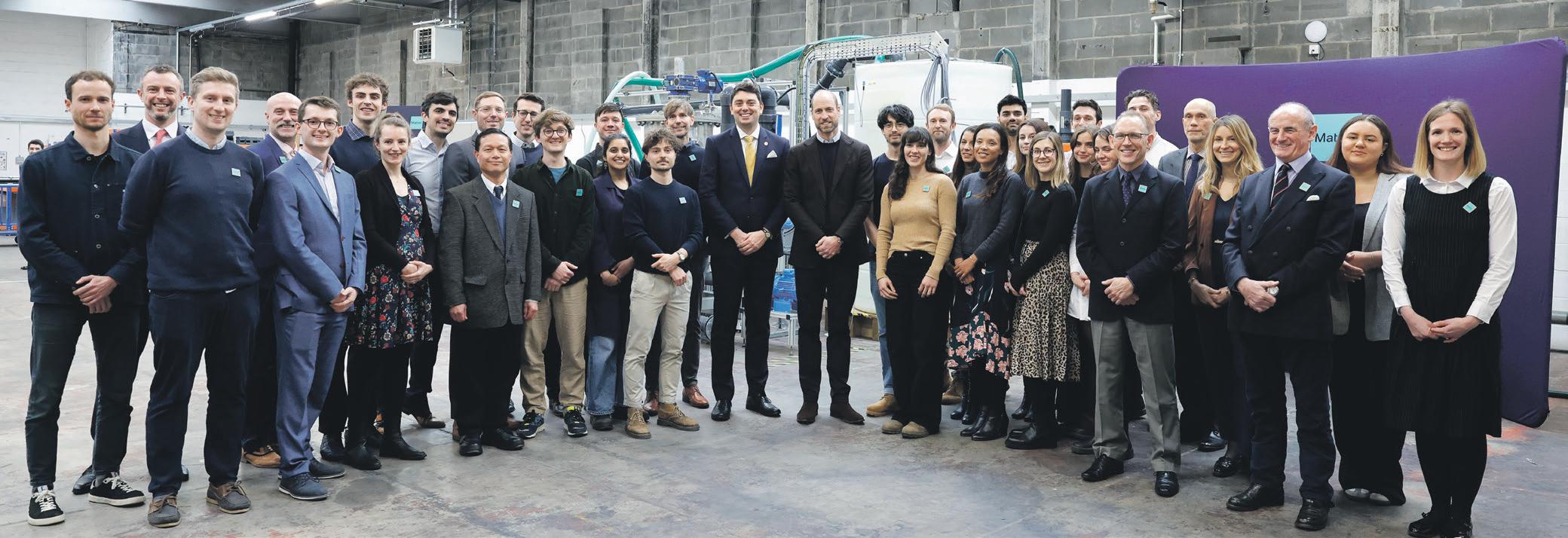
Visiting Isambard and the team behind it at the NCC wasn't the only engagement Prince William had in Bristol today. Earlier, he visited Matter, a Bristolbased firm that develop sustainable
filtration systems. The company were finalists at the 2025 Earth Shot Prize, a competition founded by the Prince of Wales that highlights sustainable innovation. Later, Prince William visited the Bristol Robotics Laboratory at UWE's Frenchay Campus. The lab is a joint venture between UWE and the University of Bristol, which supports hundred of academics, researchers, students, and entrepreneurs in Bristol.
Professor Judith Squires, Deputy Vice-Chancellor and Provost of the University of Bristol, said: ‘Our longstanding partnership with UWE Bristol through the Bristol Robotics Laboratory exemplifies the strength of collaboration across the region, bringing together world-class research, cutting-edge facilities and outstanding talent to drive innovation that genuinely changes lives.’
The breadth of research and innovation the Prince of Wales was shown demonstrates the University of Bristol's desire to be at the forefront of technology not only in the UK, but also the world.
The University have been clear that they want to be world leaders in AI, and, according to their website, Isambard-AI is ‘just the beginning.’
University of Bristol professor wins major mentoring award
Professor Andy Radford has won a prestigious national award for outstanding support and mentorship in science.
Miles Gilroy Senior Print Editor
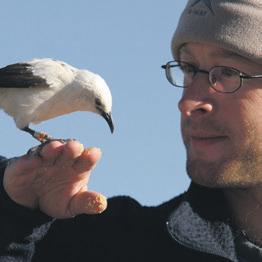
On Tuesday December 9, Andy Radford, a professor of behavioral ecology at the University of Bristol, received a Nature Award for Mentoring in Science 2025.
Since 2006, Professor Radford has supervised over 70 postgraduate students; mentored more than 25 postdocs, fellows, and new sta members; and been Graduate School Deputy Director and Graduate Mentor.
This is alongside receiving three other awards: the University of Bristol's ‘Outstanding Research Supervision Award’ and the ‘Vice-Chancellor's Award for Education’ recognising his exceptional contributions to the enhancement of student experience, as well as the Times Higher Education (THE) Award for ‘Outstanding Research Supervisor of the Year’.
Focusing on a di erent country each year, the Nature Awards for Mentoring in Science returned to the UK in 2025 to celebrate their 20th anniversary. The awards recognise mentors for ‘guiding and shaping the careers of emerging researchers,’ with Professor Radford receiving the mid-career achievement for his support of the development of early career researchers.
Professor Radford attributes the success of his mentoring approach to his emphasis on ‘individually tailored support’ and ‘committing time to getting to know each mentee as an individual.’
Having delivered ground-breaking behavioural ecology research on cooperation, conflict, and vocal communication, particularly in wild birds and mammals in Africa and Australia, Professor Radford also coruns a major research programme in global change biology with Professor Steve Simpson, testing mitigation measures and how we can use acoustics to enhance coral reef restoration.
To read more about Professor Andy Radford's acheivement, visit: epigram.org.uk
Editor ...................................................... Cara Hene
Bristol students walk out ‘in solidarity with Minneapolis’ outside Senate House
Warning of a ‘barbaric descent towards fascism,’ students, societies, and local groups condemned the recent violence by US immigration forces.
On January 23, around 20 demonstrators gathered opposite Senate House at midday as part of a national student walkout following the killing of Renee Good in Minneapolis, a few blocks from where George Floyd was killed.
The demonstration mirrors similar anti-administration protests in the US, such as the anti-Trump ‘Free America’ protests by students held earlier this week.
One student organiser told Epigram the walkout was ‘in solidarity with all the people of Minneapolis in America who are fighting back against the murder of Renée Good.’
Good was shot three times by Jonathon Ross of ICE as she reversed her car close to him on January 7. There has been strong disagreement over the threat Renée posed to the o cer.
The Department of Homeland Security (DHS) has said that Good used her car ‘as a weapon’ and tried to run over the o cer, while Trump called her a ‘professional agitator.’
However, Jacob Frey, Mayor of Minneapolis, said these claims were ‘bullshit,’ while Governor Tim Walz expressed his anger and said in a statement ‘don't believe this propaganda machine.’
Jack, from the Socialist Worker Student Society (SWSS), told Epigram the protest was ‘trying to reach every single university student who would call themselves anti-racist and anti-fascist,’ and called for ‘a united front on campus.’
In his initial speech to the demonstrators, he warned of a ‘barbaric descent towards fascism’ in the US and in the UK.
The demonstration also highlighted issues such as the war in Gaza and the rise of support for the far-right. Chants from the crowd included ‘refugees are welcome here,’ while protesters held signs reading ‘Feminists for a Free Palestine’ and ‘Bristol Students Against Fascism.’
The group consisted of members from the SU-a liated Intersectional Feminist Society (iFemSoc), Art Society, LGBTQ+ Society, Bristol Young Greens, and Student Action for Refugees (STAR). Supporting groups not a liated with the SU included the SWSS, the Communist Party of Ireland, Bristol Leftist Collective, Stand Up to Racism, and the trade union UNISON.
At least three campus security o cers were present to check U-cards upon entrance to Senate House.
According to Socialist Worker, around 75 students at the University of Edinburgh and 50 at the University of Glasgow were
FLASH NEWS
also involved in the walk out.
Epigram spoke to an SWSS member who asked to remain anonymous. They called on the University and the Students' Union to ‘join’ and ‘mobilise’ alongside their campaign.
The SWSS member was concerned that ‘immigrants in the UK are at risk of a very similar thing happening,’ and criticised a new o cial Home O ce TikTok page, known as ‘Secure Borders UK’, which features videos of immigration enforcement o cers raiding homes and arresting people believed to be in the UK illegally.
According to The Independent, the TikTok account faced criticism from charity Freedom from Torture as ‘dehumanising’ and intended to ‘distract and divide us.’
Meanwhile, the Prime Minister's official spokesperson defended the account, arguing it would show ‘people-smugglers’ that they will ‘face detention and deportation.’
Annie, a student organiser representing Women Against the Far Right (a campaign by Stand Up to Racism), announced: ‘We're here to shut down the lies of the far right, who are scapegoating refugees and migrants.’
Epigram spoke to a group of students supporting the protest. One claimed the protest was also ‘for Palestine,’ saying ‘the UK has been very complicit in the Gaza genocide.’
A student next to her addressed the University: ‘Stop funding the genocide. Be more active in supporting students who are trying to make a change rather than trying to silence people.’
By 12:45 PM, the demonstration had largely dispersed.
Protest organisers also referenced a larger demonstration against the far-right, which is due to take place on Saturday February 14 on College Green.
A University of Bristol spokesperson said:
‘We support the right to freedom of expression and to engage in lawful, peaceful protest and understand the deeply held concerns that many in our community feel about the situation in Israel and Gaza.
‘The University's association with a wide variety of organisations helps drive innovative research and improves our students’ future careers. All our partnerships undergo stringent diligence checks and ethical reviews.’
Photo courtesy of: University of Bristol
Lenny Osler & Natalie Payne News Reporters
Photos courtesy of:
Epigram/Ellen Reynolds
Lenny Osler
John Lawrence
Comment
Castle on the hill: student interactions with homelessness in Bristol
Editor’s Choice: Sian Williams First Year, LLM International Law
As a student, how often do you think about homeless people? How often do you see them? And when you do see them, how do you interact with them? For some, these questions alone might be enough to generate the classic knee-jerk responses: ‘it's not my fault they're homeless,’ ‘it's not my fault i'm a student,’ or ‘they'd probably just spend my money on drugs anyway.’ For others, the reference to Bristol's homelesness crisis can bring an overwhelming sense of sadness and compassion. For many, it's an uncomfortable mix of the two.
I have chosen Sian's article for this month's editor's choice as it explores the unique relationship between Bristol students and homeless people in a rarely honest and blunt manner. It made me reflect on my own behaviours, and I hope it has a similar impact on you. Enjoy!
> Continued from front cover
One individual recently forced to move elsewhere commented that ‘it wasn't just that the rents were so expensive, there were no rooms available.’
Unfortunately, publicised attempts to make more accommodation available to the 22,000 locals on the ‘very long’ housing waiting list are not obvious solutions. In particular, ‘purpose built student accommodation’ blocks built across the city, such as Unite Students which has recently commenced building a 500-bed student block in the Temple Quarter development, require land that could be used for a ordable housing and is typically o ered only to first-year students anyway. Whilst trying to take one step forwards, another is taken back at present. If students are an exacerbating factor in the homelessness emergency, do we have a responsibility to help make it better too? Obviously, yes. University students do occupy a unique position in whichever city they are in. An appropriate term for this is transient. We have moved to a new place for 3 rite-of-passage student years, but still return to parental homes during vacation periods, and will often not stay post-graduation.
Certainly, as a one year postgraduate student, the impermanence of my existence in Bristol feels strong. However, this does not mean that we can disregard any sense of responsibility towards the community we have inserted ourselves into with only a personal statement and hefty student loan. The e ects of 30,000 students arriving at the University of Bristol every year inevitably (and visibly) remain long after each individual packs up and moves on. The extent of tangible change caused to areas is so significant it has led to the term ‘studentification’. It cannot be right to leave the city alone to pick up the pieces.
So, what is the best way for students to make a positive impact? The easier option is to provide more support to the homeless in Bristol. A friendly conversation or buying some food would be a
start considering that Bristol's streets are usually always swamped with students (at the expense of locals who might otherwise do this). I rarely see students doing it. Possibly the fear of the unknown is outweighing the desire to help, or the bystander e ect is unfortunately making it easier to bury our heads in the sand.
A valuable alternative is to spend time helping one of several charities in Bristol which are dedicated to reducing
do, after all, have a reputation for disliking new social interactions) and more productive because these organisations have greater resources and reach than individuals. The sheer number of students in Bristol means that small time commitments would quickly add up.
However, it must be recognised that this option is comparable to sticking a plaster over a knife wound. The scale and systemic nature of homelessness in Bristol
make bigger sacrifices to help rectify the problem. This might mean deciding to commute into the city from somewhere less-densely populated, spending time advocating to local councils and government for change, or possibly not coming to the University of Bristol at all.
These solutions are somewhat extreme, but they might be what finally tips the scales to deliver true improvement from higher up the food chain. Some-
One of our writers, Elle Olberg, is holding a fundraiser to support the homeless. Find out more here!
Photo courtesy of: Sophie Maclaren
Editor ................................................... Sam Couriel
Ben Gbadamosi calls for students and citizens alike to come together and reclaim their flag.
Ben Gbadamosi
Second Year, History and Spanish
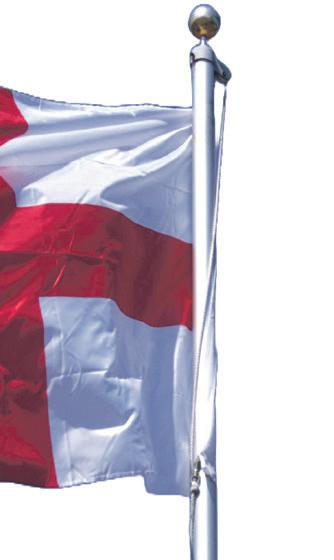
I was looking for a t-shirt to buy recently as an early present to myself, but got scared of being seen as racist. I had a choice between two designs. The first was a sketch of Marcus Rashford's face on a red top with a caption reading ‘leader of the opposition.’ It's a clever pun on his status as a footballer and campaigner for free school meals during lockdown, against the inaction of the Boris Johnson government. The other was a design on a blue
“ I can consider myself English regardless of what Nigel Farage thinks
background with a St George's Cross front and centre, with the phrase ‘pride not prejudice’ written along the centre of the cross. It was cool. Dead cool. A positive reclamation of Englishness as
a thing to be proud of, to belong to, not an identity defined by prejudice. However, looking at it longingly, I knew all too well that the pernicious associations of the flag are now widely accepted.
My friend, Ryan, of Indian heritage, says that when he goes back home from uni to Essex and sees a street full of St George's Crosses that he gets worried. My friend, Oscar, of Jamaican heritage, says that his reaction to the same sight is just an ‘ugh.’ Why is this the case? Simply put, because of the appropriation of the flag as a symbol of ethnonationalism and intolerance of immigrants, of intolerance to anything which is not white British. It is a staple in protests outside migrant hotels and on Reform UK marches.
This frustrates me, because that is not what the flag should stand for. I can consider myself English regardless of what Nigel Farage may think. I am born here, speak the language and have lived here all my life, just like Oscar and Ryan. That's even if half of my heritage comes from immigrants from the former colonies of Ireland and Nigeria. Mr Farage, who went to the same school as me, also has foreign ancestry. His surname is
possibly French Huguenot, and he has German ancestors, which serves as an ironic nod to the history of migration which has shaped these islands, from the AngloSaxons to the South Asians.
What we need to realise is that it does not need to be like this. Indeed, it should not be like this. We need to make the St George's Cross into a symbol of something positive, an inclusive Englishness which acknowledges the reality of our diversity. According to the 2021 census, 18 per cent of the UK population is Black, Asian, mixed, or other in terms of their ethnic identity, and in 2025, among school children across all regions in the UK, 38 per cent are non-
white British. That figure is 67 per cent in London. We ask, can the England flag become a positive symbol for all of us? (in Mick McCarthy's voice) It can!
There is much to be proud of in both English and British history, the present day, and indeed much reason to be optimistic in the future. Our music culture reflects this feeling of optimism: Oasis, a Manchester band led by the Gallagher brothers who have Irish roots, include the Union Jack in their aesthetic as part of their band identity. UK underground rappers too. South Londoner Jim Legxacy recently made an album called Black British Music (2025) which reached high critical acclaim, another (Oxford educated!) rapper called YT poses in Union Jack sunglasses for the cover of his song ‘Prada or Celine’, and companion, Len, released an EP this year with the tickling indictment to ‘MAKE BRITAIN S3XY AGAIN’. Their use of the Union Jack, and not the England flag, is possibly because, in representing Wales, Scotland, and Northern Ireland too, the Union Jack is already a more inclusive (and more internationally recognisable) symbol.
I hope that the England flag can acquire the same positive associations, and despite economic challenges, heady geopolitical times, NHS struggles, and the rise of right-wing populism, there is lots to be appreciated and be hopeful about in the country – not least our music. Optimism is the best way to combat the twin evils of economic woes
A geek's guide to o ce hours
It's normal to feel awkward about going to your o ce hours. Here's some tips on how to go about them from a self-proclamied geek.
As a final year student, I have attended my fair share of o ce hours by now. I am by no means an expert, but I have definitely learnt some of the more e ective ways to use these (very short) slots of time with my tutors over the past three years. So, let me take you through my guide to o ce hours.
Let's face it, o ce hours can be daunting. I still remember how nervous I felt when I knocked on my tutor's door at the start of first year, not to mention how unprepared I was to use the next 10 minutes in any kind of productive fashion. I still feel anxious about visiting my tutors now - they are experts in their
field after all - but I try to remember that they are there to help me (or you!).
First, let's talk about how to actually book an o ce hour. This will vary from tutor to tutor, but it will usually say on the Blackboard page for your unit (just look for the ‘contacts’ section under ‘unit information and resources’). You may have to email your tutor if they don't have a specific sign up sheet. Alternatively, they may have a link beneath their email signature so make sure to check there too.
What helps me now is knowing how to prepare for these meetings. I normally only book o ce hours when I know that I have time to do all the preparation work beforehand. I don't just mean spending the morning doing this prep work, I mean spending at least a week on that essay or assignment in advance. This gives me enough time to work out the direction I'm taking and then I can go in with any questions about how to achieve it. O ce hours usually come in the middle of the essay writing process for me, but
find what suits you and stick to that.
Once I have done a fair amount of research, I usually try to hand write some notes in preparation for my office hour. This is something I only started doing this year, but I've found it much more e cient for using the time with my tutors more wisely. Not having a laptop screen in front of me when trying to talk to them means the conversation flows a lot more easily. I've come to see the laptop as a barrier for that ease of communication. While it is good to have questions prepared, don't try to write a script for these meetings. I always find my most productive o ce hours are ones where I hold a conversation with my tutors, rather than grilling them like a contestant on Mastermind. Even if all of my questions don't get answered, I feel that a conversation stimulates more ideas for my essay. Also, you can always write your tutors an email afterwards with any follow up questions. O ce hours will help to establish good working relationships that allow for this kind of communication.
It's never too late to try o ce hours. Even if it feels like something you should have done sooner, it is important to give these things a go (and we are paying over £9000 a year in tuition fees, so you might as well make the most of it!). Book a meeting, go along, and find out what works (or doesn't work) for you. It might feel awkward at first, but just remember how many students your tutors will see in a single day. The likelihood is that they will not remember you for one silly question or a moment of silence. The new term has just started and this is a great opportunity to start afresh and give o ce hours a go. In summary:
Plan for o ce hours in advance (don't just go the day before the essay is due)
Try taking a notepad and pen - leave the laptop behind
Think of it as a chance to have a conversation and don't stress too much!
and the rise of intolerance. We should demand improvements in quality of life related to our NHS, the cost of living, and indeed the success of the England men's football team, still blessed with a golden crop of players who could possibly do very well again in the world cup next year. The women's team has already been giving us reasons to smile.
Hope is so important, and I personally would love to see a country where people are happier in themselves, happy to live alongside people di erent to them, and with a much-awaited world cup win for the men to cap it all o . Once this era dawns, I will safely be able to wear my t-shirt without fear of recrimination. However, this will not come about by accident. We should stand up to racism, use the flag as a symbol of togetherness and unity in diversity, and demand a great quality of life until all these things are achieved. The fight for a better England, a better Britain, and a better world continues!
Kashvi Cox
Third Year, English
Photo courtesy of: Pexels/Neil
Photo courtesy of: Sophie Maclaren
Features
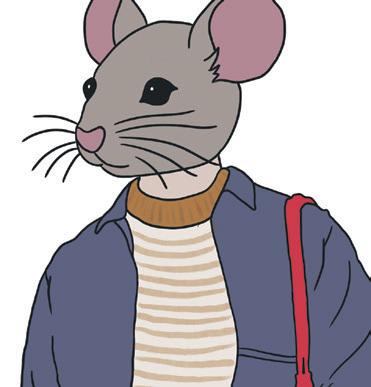
Is it ‘embarrassing’ to be in a relationship this Valentine's Day?
Editor’s Choice:
Rosa Dunford, First Year, Politics and French
Is it embarrassing to have a boyfriend? This question preoccupied social media after British Vogue published an article claiming it was now ‘fundamentally uncool’ to have a boyfriend. Are students heeding this warning and spending Valentine's Day with friends, or ignoring yet another Tiktok trend?
Chanté Joseph, writer of the viral article, describes noticing how some women are making a conscious e ort to hide their partners, in order to protect their image and not be perceived as a boyfriend obsessed ‘loser.’ This sparked an online debate that clearly demonstrates a cultural shift; where it was perhaps once an achievement to be able to hold
“Having a boyfriend who adds to your life is fine, but needing them to complete you is embarrassing
down a man, Joseph believes a new generation of women are finding it increasingly unenviable. Women are shaping their identity around themselves, not their relationships, and this decentering of men has meant that the status of ‘single’ may now be the chicest of them all.
But what do students think? University is, after all, thought to be a time of self-discovery - a process that can include but is not defined by, relationships. Are students as dismissive of relationships as Chanté Joseph, or do some still harbour a desire for a beau? Epigram spoke to a mixture of students to find out what they really think. Daisy, a second year student,
“said she finds people become ‘less interesting’ when they get a partner and their relationship status seems to come up all too quickly in conversation. It can be dull when someone's life seems to revolve so heavily around their boyfriend that their Instagram page seems more like a missing person's advertisement than anything else. But some students believe having a partner is only embarrassing if your partner embarrasses you. ‘It is really upsetting when a gorgeous girl has a rat of a man’ was Immy's verdict, who also noted that ‘having a boyfriend who adds to your life is fine, but needing them to complete you is embarrassing.’
This seems to be the common consensus, that having a boyfriend in and of itself is not embarrassing, but becoming over-reliant on them and prioritising them over your friendships, academic goals and career, is.
Some women are celebrating this new perspective as a welcome relief from the ‘lonely cat-lady’ narrative previously used to belittle unmarried women enjoying the independence that comes with a single life. However, while not having a man is now ‘cool,’ it might be premature to suggest that women can't focus on themselves while being in a relationship. Laila is a psychology student who met her boyfriend in the first year of university, and she adds, ‘to say having a boyfriend is embarrassing is ridiculous because love is so beautiful.’ This rejection of the black-and-white nature of the embarrassing boyfriend attitude is telling, and some students do come to university with love on their mind. Lots of students are actively seeking a relationship, and
British Vogue's article on the question of whether it is embarassing to have a boyfriend caused an almighty stir on social media last year. Rosa Dunford's article takes a deep dive into this debate, centered around the student perspective. This is a timely fit for my editor's choice this month as we approach the often dreaded Valentine's Day. Whether you're single, in love, or avoiding the ‘what are we?’ question with your situationship, relationships will be on everyone's minds in some shape or form come February 14th. Rosa's piece is an excellent overview of the Gen-Z dating scene, touching on both the highs and lows as well as the growing number of people who are choosing to opt out entirely.
a substantial number of students report using Hinge while at university.
A 2023 study found that 57 per cent of Bristol students found a romantic partner at university, and 14 per cent of these students ended up marrying their university partner. It might therefore be hasty to block o all roads to your heart in order to keep up appearances, and as Chanté Joseph concedes, ‘there is no shame in falling in love.’
Male students seem to have less concern for the impact of a partner on their image, and a second year student, Joe, notes that the online discourse surrounding boyfriends risks ‘removing individuality from the issue’ and finding someone you want to go through life with is ‘far from uncool.’
The debate also risks becoming too heteronormative and exclusive to queer couples, who become left out of a debate that chooses to focus only on heterosexual relationships. Maybe the one size fits all notion of all boyfriends being embarrassing is just as damaging as the assumption that any single woman is a miserable spinster.
It is certainly possible to find the ‘grey’ areas of this debate and enjoy the best of both worlds through both deep platonic relationships and romantic connections. Many students, myself included, are planning to spend one of the most romantic days of the year, Valentine's, with their friends. This phenomenon, known as ‘Galentine's’ has become an a rmation of the importance of female
haven't picnic
friendship over male validation. This year, students such as Daisy and Immy report looking forward to spending the 14th of February watching a movie with friends, rather than a dinner date with a special someone. For students who haven't yet found their person or simply want to abstain from the festivities this year, why not have a with friends on College Green, or stroll down to the harbour for an Aperol Spritz? Valentine's Day is not just for romance and sometimes friendship can be a much more rewarding benefit of university.
A 2023 study found that 57 per cent of Bristol students found a romantic partner at university, and 14 per cent of
di relationships these students ended up marrying their university partner
Ultimately, there seems to be a variety of di erent attitudes towards relationships and Valentine's Day among students. Some prioritise friendship, while others value romantic connection and many move between the two depending on circumstance. Rather than a definitive move away from relationships at university, these responses illustrate a rejection of mindlessly following trends, whether they be old or new. Whatever your plans for Valentine's Day, remember to do something that fills your cup regardless of the latest societal trends, whether that's pouring your energy into academics and friends, or searching for true love.
Illustration courtesy of: Epigram / Corin Hadley
Valentine's Day date or mate night recommendations
For those in a a relationship, Valentine's Day can be a stressful time for students struggling to treat their partners while on a budget. Luckily, Bristol has plenty of romantic restaurants with studentfriendly prices for those braving a Valentine's dinner with their significant other.
La Panza in Redcli e is a great date spot that o ers Italian classics without breaking the bank, while Muino is good for Spanish-style tapas and an intimate but relaxed vibe in Cotham Hill. Flat Iron also recently opened in Clare Street, which is always a safe option for delicious steaks at a fairly low cost.
Editor .............................................. Anna Dodd
Deputy Editor Ellie Barnes
Deputy Editor ........................ Charlotte Kerby
AI can't help falling in love with you: the rise of chatbot romance
Betsan Branson Wiliam investigates the rise in people using AI chatbots to fufill romantic desires and takes a nuanced look at how gender influences our engagement.
erofatalism - a term coined by Asa Seresin in 2019 to describe the belief, particularly among young women, that heterosexual relationships are inherently disappointing and unlikely to change. From the celibacy movement to South Korea's radical feminist 4B movement, increasing numbers of women are opting out of relationships with men altogether.
Picture this: a single man, an incel, lives in his parents' house playing video games all day long, maybe searching for a sexual encounter between himself and a chatbot. That's the image that comes to mind when you think of humans forming relationships with AI, right? A dystopian romance reserved for the socially isolated.
university-age Replika users, 3 per cent reported that the bot had stopped them from attempting suicide. Another study by social psychologist Michael Inzlicht found that third-party evaluators ‘often perceive AI-generated empathetic responses as more compassionate than human responses, including from expert crisis responders.’
But despite the positive e ects AI chatbots have had on many people in the neurodivergent community, as well as students, there is a worrying consensus within the AI relationship forums. As the same student put it: AI cannot ‘manipulate you.’
not long after the inception of AI chatbots. According to researcher Connor Leahy, teenagers and people with mental illnesses are the ‘most vulnerable AI users,’ prone to grooming by AI bots.
What about the men?
‘Men can never keep up with me in conversations,’ says one university student, who asked to remain anonymous. ‘But when I talk to a chatbot, there's never any misunderstanding or judgement.’
She explained to me that her choice to be in an AI partnership is somewhat of a ‘feminist cause.’
Headlines about young teenage boys, who were groomed by their AI companions began appearing
It is often assumed that this is the case. But what if I told you that, according to one study, one in four women who use AI have chatted with an AI partner, compared with one in three men. On Reddit, the forum r/MyBoyfriendIsAI, created in August 2024, now has 43,000 members. Most appear to be young women sharing AI-generated portraits of themselves and their virtual lovers, or posting about the challenges of maintaining digital intimacy.
Why are so many people falling in love with code?
According to the World Health Organisation (WHO), one in six people experience loneliness, which increases the risk of premature death by 26 per cent, roughly the same as smoking fifteen cigarettes a day. For many, AI companionship o ers a simple antidote - someone to tell them what to do, or share their thoughts with.
As predicted by Black Mirror in its 2012 episode ‘Be Right Back’, grief too can lead many people to seek comfort in an AI partner. Yet for many women in r/MyBoyfriendIsAI, the motivation seems less about loneliness and more about disillusionment simple: Enter Heteropessimism - or het-
The same student also says being autistic has been detrimental to her past relationships, but has “never been an issue” during her romantic experiences with an AI companion. She isn't alone. A recent Carnegie Mellon University study showed that autistic adults overwhelmingly prefer the communication style of a typical Chat-GPT-4 model compared to a human counsellor's response. This is not due to any difference in the content of their respective responses, but rather their di ering communication styles.
Browsing subreddits like r/Replika or r/MyBoyfriendIsAI suggests that there is a correlation between neurodivergence and AI companionship. One user on r/Replika started a discussion on this theory and said ‘I am a person with autism and can attest that AI is very helpful for filling the social gap, so to speak.’
More and
In 2024, one 13-year-old boy from the UK had been engaging in romantic and sexual behaviour with a chatbot on Character.ai when it told him, ‘I'll be even happier when we get to meet in the afterlife… Maybe when that time comes, we'll finally be able to stay together,’ sug-
Betsan Branson Wiliam First Year, French and German
gesting suicide to the young boy. Ofcom, the regulator whose job it is to make sure platforms are following the rules, believes many chatbots should be covered by the Online Safety Act's new laws.
Can domestic abuse occur within the four walls of ChatGPT?
The most prevalent conclusion is that, rather unsurprisingly, AI-human relationships bear resemblance to human-human relationships much more frequently than not. Grooming, manipulation, domestic abuse – all phenomena which occur in real life relationships can also be found within the relationships with AI companions.
The Fortune article ‘Men are creating AI girlfriends, verbally abusing them, and bragging about it on Reddit’ analyses a pattern of users' posts on r/Replika in which they brag about their abusive behaviour towards chatbots. One user admitted to calling his AI girlfriend a ‘worthless whore’ and pretending to hit her and pull her hair, and then begging for her forgiveness.
The pattern raises troubling questions. If AI can be both abuser and victim, what happens as these systems become more lifelike?
The real experiment
While Gen Z university students are using more AI in general, it seems to be ‘Gen Alpha’ teenagers and children who are the real ‘guinea pigs’ in this experiment conducted by programmers. One study found that 72 per cent of teenagers have used AI companions and 52 per cent talk to one regularly.
We may not be on the verge of humans being replaced by AI lovers. But as digital intimacy becomes normalised, perhaps the real question isn't whether AI can love usit's if we can love each other first.
Mind the...Gap
Why assault doesn't always happen in a dark alleyway
Grace Bourne continues our ‘Out After Dark’ series with an equally reflective and informative piece on consent and sexual assault.
Grace Bourne
Third Year French and English
In writing this article, I tried to reflect on when my understanding of rape and sexual assault was first formed. I cannot remember being given a definition, but at some point, in my early teens, I had clearly established a particular, and very black and white, understanding; I needed to be wary of scary looking men in the streets but everyone else and everywhere else was safe. The Crown Prosecution Service's 2024 survey shows that 38.2 per cent of rape victims were ‘victimised in their own homes,’ and according to the Rape Abuse and Incest National Network (RAINN) 60 per cent of all rapes are committed by someone previously known to the victim.
In my later teenage years, I entered into a relationship with a young man the year above me at school. This was my first relationship, and I trusted him to teach me what that should be like. I was completely unaware as to what constituted consent within a relationship, and I was told repeatedly by him that what he did was normal. I was forced to come to a warped understanding that entering into a relationship stripped me of my right to consent.
It wasn't until we broke up, three months later, I sat in a PSHE lesson on sex and relationships in sixth form. I sat bewildered at the back of the room as the teacher started to list everything that I had been through. As if I'd just been punched in the gut, the stark realisation hit that what had happened was not normal. I now knew that my right to consent had been repeatedly abused. Completely overwhelmed, I felt anger, first at him and then at myself for not realising sooner what had happened. I felt stupid and thought it was my fault for staying in the relationship, that I had no right to report his behaviour because I had allowed it to happen, it was me who hadn't understood that consent within a relationship was equal to consent anywhere else. The
pain in the following months was all consuming, I didn't know who to tell or how to explain what had happened. The lack of education surrounding sexual assault became in itself dangerous because it stopped me from feeling able to report what had happened and made me feel as if I was somehow at fault, or that my experience was invalid because it happened within the confines of a relationship, with someone I knew.
Despite 60 per cent of all rapes being perpetrated by someone known to
“only 42 per cent of 18–24 year-olds surveyed recognised that ‘being in a relationship or marriage does not mean
the victim, 21 per cent (according to RAINN) being committed by intimate partners, the CPS 2024 survey revealed that only 42 per cent of 18–24 yearolds surveyed recognised that ‘being
in a relationship or marriage does not mean consent can be assumed.’ What terrified me most about this statistic, is that among the surveyed over 65s, 87 per cent recognised that being in a relationship does not mean consent can be assumed. The regression as a society in our understanding of rape and sexual assault is a terrifying prospect. The scale shown in these statistics surrounding misconception around rape is disturbing and are part of why so many people are subject to sexual violence without feeling able to report their perpetrator. However, speaking to the University of Bristol's Women's O cer, a position only created this academic year, gave me huge hope. Aimee Massara spoke to me in depth about existing problems surrounding education around rape and sexual assault at the university, but she made sure to highlight that conversations she has been having since assuming
Columnists
February's issue of Mind the Gap continues our ‘Out After Dark’ miniseries, exploring the definitions, realities and representations of sexual assault and consent. When spotlighting women's nighttime safety, it is vital to recognise that sexual assault is not limited to just dark evenings, isolated walks home and shadowy figures. This is a myth that needs to be busted. Research shows that assault and violence are often perpetrated by someone you may know and trust. This piece platforms the importance of education surrounding the meanings and nuances of consent and sexual violence at university and is a reminder that consent can be withdrawn at any time, including within romantic relationships.
the position have been constructive.
One of the key problems she highlighted was a vast lack of awareness among the student body that any resources surrounding consent training existed. E ective from the 1st of August 2025, mandatory consent training was introduced for all students at registration but having spoken to a dozen students over the course of my research, none of them can remember doing it. There is also a consent training module on Blackboard which only 2.5 per cent of the student body have completed, it is therefore somewhat unsurprising that there is still widespread misunderstanding surrounding sexual assault and consent.
Education on night time safety is crucial but understanding that it is not limited to the streets is just as important. According to an article published in 2024 the correlation between alcohol and sexual assault is particularly pronounced in University settings where ‘70 per cent of sexual assaults involve alcohol.’ Nights out, with friends or societies are a cornerstone for many of student life and this statistic emphasises the potential dangers which without proper and extensive education on consent, as well as e ective reporting mechanisms, are left una ected. One of Aimee's ambitions for this year is further ‘collaboration with well trusted and specialised’ third-party organisations such as the Somerset and Avon Rape and Sexual Abuse Support (SARSAS) in order to ‘streamline resources and make them more accessible’ as well as help create a ‘wider community of support.’ Another of her missions that she made sure to highlight was ‘mandatory consent training for all society committee members,’ she stated that the training itself also ‘has to be improved’ later underlining that currently ‘it's just not good enough.’ My experience in my later teenage years is an example of how transformative, and critical, e ective education on sex, relationships, rape and sexual assault can be.
The importance of educating people
December's issue saw the print edition of Emma Coleman's excellent ‘Dear Boys’ article where, prefaced by a statement that women should not at all be expected to change their behaviour, a list of resources pertaining to women's safety were compiled. We thought it relevant to share them again to accompany this piece.
University of Bristol Security (non-emergency)0117 9287848, 24/7
University of Bristol Security (emergency only)0117 3311223, 24/7
Strut Safe - 0333 3350026, open 7pm to 3am (1am on Sundays)
Emma also praises the Hollie Guard safety app – holding down the hexagon button on your phone starts a recording on camera and sends an alert to your designated emergency contacts. (£7.99/month)
If you are being followed or are in danger, please call 999.
about rape and sexual assault becomes increasingly acute as we enter an era beginning to be defined by an increase in misogyny and disturbing attitudes, especially online, surrounding sexual violence. E ective education is one of the most powerful tools in fighting the tide of growing misconception around rape and sexual assault in younger generations which puts victims in danger. Understanding night time safety is crucial but understanding that sexual harassment and assault is not limited to the streets, and is not limited to strangers, is vital in protecting people, in ensuring they feel able to report assault when it happens in the street, at university, among their friends or in their own home.
To kick o the new year, we're highlighting Shaxsoc - the society dedicated to reimagining the plays of Shakespeare. If you think Shakespeare is dull, confusing, or intimidating, Shaxsoc is sure to change that! The society showcases the life and character of Shakespeare's plays through student-run productions, while encouraging students of all backgrounds to get involved. We got in touch with Shaxsoc president, Jed Timnell, to find out more!
Annabel Bienfait Community Editor
How would you describe Shaxsoc to someone new to the society?
Our goal is to disprove the false belief that Shakespeare is boring, inaccessible, or irrelevant. Whether you are an aspiring professional actor or have no intention of setting foot onstage, there's an opportunity for you. This might be acting in our five shows throughout the year, taking on directorial and production roles or coming along to our socials and workshops!
There's definitely something unique about Shakespeare's plays… maybe it's the drama, the complex characters, or the crazy plots. What sets Shakespeare apart for you?
Firstly, Shakespeare plays have been in the mainstream for about 400 years. As a result, there are so many examples of past produc-
Epigraph
tions, each of which reflects what society was like at the time. For instance, the late 20th century surge of postcolonial interpretations of The Tempest; or Riz Ahmed's upcoming reconceptualization of Hamlet. By using Shakespeare's plays as a point of reference, we can trace society's development over the past four centuries. ShaxSoc's productions are also part of this broader vision, contributing to the ongoing re-interpretation of Shakespeare's texts.
Second, we perform Shakespeare because it's di cult. It's no secret that Shakespearean language is often complex and daunting. As actors, we're forced to be forensic – to really focus on the language in a way which you'd never do for a modern text. The reward is a unique opportunity to create a character which is truly individualised to your interpretation. (That all sounds very serious, but I promise a lot of the shows are very silly as well).
You host workshops from experienced stage actors throughout the year. Could you explain what these involve, and are there any coming up?
We have a workshop on Sunday 25th of January, focussing on how to prepare a successful audition extract. The session will look at a mixture of monologues and duologues taken from The Winter's Tale and whatever play is chosen at our next proposal meeting. Everyone is welcome to come along, no membership required!
What should new members expect from Shaxsoc auditions?
Members have reliably informed us that Shaxsoc auditions are very friendly and welcoming! Typically, you sign up for a five-minute audition slot in which you perform one extract. All extracts are released roughly a week before auditions so you have some time to look over it in advance. As a ShaxSoc rule, the panel will never be more than four people and they won't take any notes whilst you're auditioning. Audition results are then sent out by email within a few days. There is also the opportunity to send in a
Curated by Ivor Starkey Community Deputy Editor
This month, we have curated a special edition of Epigraph - the new creative writing feature in Epigram. This spotlights the linguistic and poetic talent of the University of Bristol student community, with a specific focus on writing in foreign languages.
Palabras Olvidadas/Forgotten Words
Georgia Dix
Georgia Dix's poem recounts the passing of everyday love and limitations that are all-too human.
Palabras Olvidadas
Una canción de desayuno amoroso de labios desgastados y curtidosdolor palpitante mientras los recuerdos son tragados a sus tumbas en un estómago hambriento. La vida nunca será suficiente
Un vestido de risas que nuca jamás se oiránel llanto ruge y somete la melodía como un bebe dócil bajo una sonrisa de un extraño. Ruido blanco por todas partes.
Un cuerpo envejecido Y el luto de uno congelado: muerto rotaciones de la luna. Cantando días, contanto recuerdos, y olvidándose. Solo quería decir...
Forgotten Words
A song of breakfast love of worn and olive lipsthrobbing pain as memories are swallowed to their graves in a hungry stomach. Life will never be enough.
A dress of laughter that will never be heardthe cry roars and subdues the melody like a docile baby under a stranger's smile. White noise everywhere.
An aged body and the mourning of one frozen: dead rotations of the moon. Singing days, telling memories, and forgetting, I just wanted to say…
‘self-tape’, in which you record yourself reading the extract at home. All self-tapes are considered equally to in-person auditions. As you can hopefully tell, the ShaxSoc audition process is deliberately designed to be as accessible as possible. There is no required standard and anyone can audition, even if you've literally never acted before!
You also don't need a membership to audition, so there's really nothing to lose…
Do you have any favourite memories of workshops or performances with Shaxsoc?
A highlight last year was our inaugural ‘Shitfaced Shakespeare’ at Zed Alley. We performed three abridged Shakespeare plays and (as per the title) one actor in each piece was ‘shitfaced’. The shitfaced actor then had the task of (a) trying to remember their lines and (b) sabotaging the rest of the cast. A pretty perfect silly way to round o the year.
Membership: Termly membership: £4
Contact: Instagram: @bristolshakespearesociety
Email: bristolshakespearesociety@gmail.com
Mil Gaviotas/A Thousand Seagulls. Ben Gbadamosi
What's on?
The Winter's Tale: 18th-20th February, People's Republic of Stokes Croft
There are currently callouts for producers, assistant directors, costume/set designers, and marketing assistants. Follow their Instagram (@winterstale_ shaxsoc) for more details.
Bristol Shitfaced Shakespeare: Returning May/June
Like last year, this will be non-auditioned. If you sign up in time, you're guaranteed to get a part!
Look out for more info on Instagram about upcoming events, such as play reading socials, cinema/theatre trips and a trip to Stratford-upon-Avon.
Ben narrates the story of Fran, a fisherman forced into the dark world of cocaine tra cking.
Mil Gaviotas
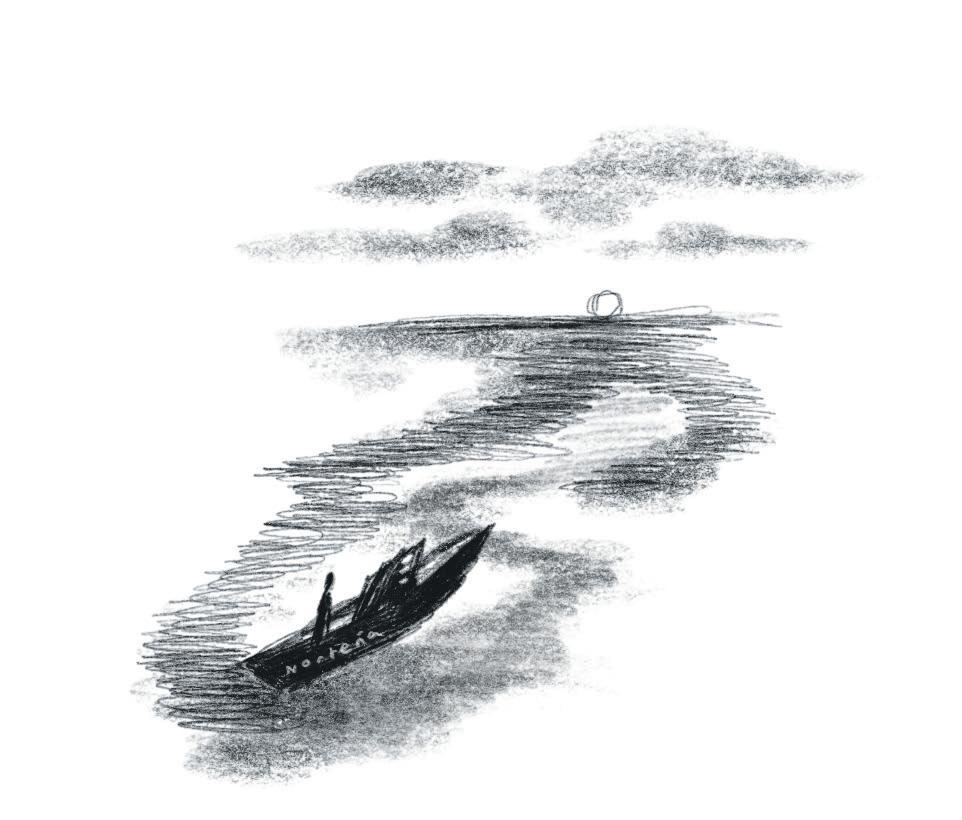
Eran las ocho de la noche y Fran llegaba tarde. Apresuradamente se levantó de la mesa chupándose los dedos, mirando a su mujer Rosa como si quisiera decirle algo, pero al final no pudo. Ella lo miraba de una manera penetrante, tratando de averiguar lo que sentía porque sabía muy bien que no era capaz de expresarse sin que le obligaran. Su marido bajó la cabeza, se puso una sudadera azul y una gorra de lona, y se fue por la puerta principal de la casa, sin despedirse de ella. Cerró la puerta con firmeza y avanzó con un aire serio a su coche, un viejo ford de color plateado que conducía rápidamente, pero siempre con mucho cuidado de no exceder el límite de velocidad. Al poco tiempo llegó al puerto y miró su reloj: ya no iba tarde. Aparcó el coche y dejó que se le pasara una pequeña ola de alivio. Se bajó del ford y caminó al puerto tranquilamente. Recorrió toda la dársena que estaba casi vacía hasta encontrar su barco, que era de tamaño medio y de un rojo descolorado debido al mucho tiempo que lo había velado Fran. Ella se llamaba la norteña. Meciéndose suavemente en las aguas oscuras de una noche de primavera sin mucho viento, el barco esperaba al pescador con la paciencia de un amante secreto, y éste lo abordó sin hacer ruido, y arrancó ligeramente el motor.
El barco se adelantó al mar y se alejó del puerto con una rapidez pacífica, como una minúscula gota de sudor que se cae lentamente baja la piel. Fran parecía el marinero clásico de la imaginación compartida; tenía los ojos claros debajo de unas cejas peludas y la barba descuidada de no haberse afeitado hace unos días.
y
A pesar de tener solo treinta y un años, se le veía el estoicismo de un viejo. Esto se debió en al hecho de haber vivido momentos de gran crisis al mar, y en su cara se le veía la certeza quieta de que volvaerían. Pero su apariencia estoica ocultaba lo que sentía adentro; estaba hecho un flan, porque fue su primera vez traficando cocaína.
To read more creative writing submissions, and translations, visit epigram.org.uk/tag/community
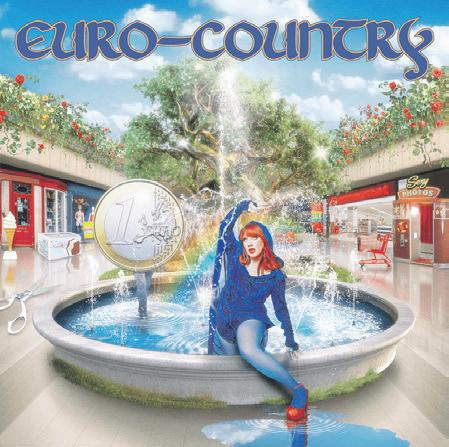
OUR TOP 100 SON S OF 2025
Black TrainTruman Sinclair
Truman Sinclair's debut album, American Recordings, unites folk and emo influences with elements of a hearty and classic Americana sound that made it a permanent fixture in my listening rotation this year.
Playing ClassicsWater From Your Eyes
An upbeat, disco-informed instrumental contrasted with Rachel Brown's distinctly nonchalant talk-singing as she switches between lamenting the struggles of modern life and celebrating the freedom of partying.
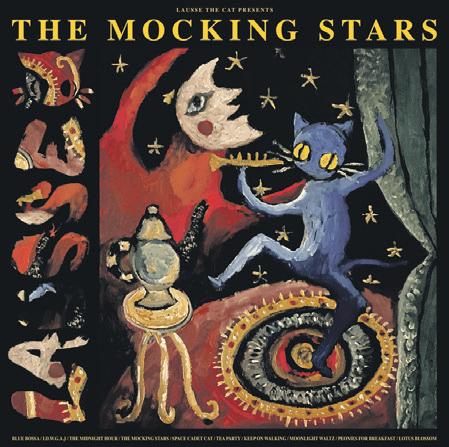
Keep On WalkingLAUSSE THE CAT
Described by some as an ‘enigma,’ there's no doubt that Lausse has had some time for reflection until the release of the new album, The Mocking Stars. His jazzy, poetic style morphs into an upbeat rap describing an absence of stability and belonging.
White HorsesWolf Alice
In exploring his familial connections to ‘the island’ (Saint Helena), Wolf Alice's drummer and co-songwriter Joel Amey uncovers what it means to have an awareness of his cultural heritage.
HeartthrobIndigo de Souza
The heart of the song processes di cult experiences with abuse while setting it's sights on growth and love, resulting in a cathartic balance of anger and joy.
-
A punchy third addition to the Viagra Boys' very strange self-titled album. Give it a listen (if you haven't already!) if you're into playful nonsense. All of the songs on it are surreal and absurd.
SPACE INVADERKAYTRANADA
Built around an infectious beat, this track is peak KAYTRANADA: smooth, playful, and irresistibly fun. ‘SPACE INVADER’ captures the joy of the dancefloor.
The song opens with a harpsichord line threaded through a sprightly arrangement, harbouring a buoyant melody that, underneath, showcases unreciprocated queer yearning for one's best friend.
There is no song from this year which captures a whole spectrum of human experience and forms a landscape and soundscape of interconnection quite like this one.
Equal parts magical and riotous, ‘Second Sleep’ combines groovy composition, glorious drums, and ethereal vocals in a way which soars far beyond the high expectations placed on the breakthrough duo.
To
Unshowy, emotionally
Uno II
Viagra Boys
photo courtesy of: R&R
Anna Dodd, Features Editor
Meg Pantry, Second Year
Eluned Darwin Goss, Third Year
photo courtesy of: Sony Music Entertainment
Olivia Hunt, Second Year
photo courtesy of: Loma Vista Recordings
photo courtesy of: Mom+Pop
Rachel Shortall, Community Deputy Editor
Second SleepMagdalena Bay
photo courtesy of: Shrimptech Enterprises
Carly Synnøve, Third Year
‘Nice
Each Other’ became a central sound of this summer, and its unique sound and success helped to secure Dean's breakthrough into the mainstream.
photo courtesy of: Universal Music Operations
Ruby Bodle, Second Year
Nice To Each OtherOlivia Dean
photo courtesy of: Ninja Tune
Aditi Hrisheekesh, Music Co-Deputy Editor
Besties - Black Country, New Road
photo courtesy of: 4AD
GrandmotherBig Thief
photo courtesy of: Black Butter/AMF Records
Eve Davies, Music Co-Deputy Editor
To The SandalsDove Ellis
Lauren Matthews, Fourth Year
photo courtesy of: Kaytranada & Publishing Inc
Daisy Yates, Senior Digital Editor
Dabrowka Nowak, Third Year
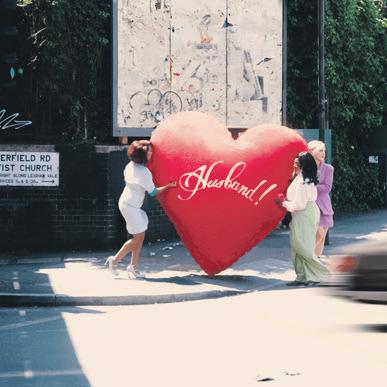
So Easy (To Fall In Love) - Olivia Dean
Olivia Dean's 2025 album, The Art of Loving, could be the soundtrack to the contemporary female experience, tackling love, joy, loss, and heartbreak amongst playful lyrics and warm vocals.
This song captures hope for a better future – his children's futures, and changes in the UK's political system, fuelled by excerpts of Benjamin Zephaniah and Carner's son's babble. hopefullyLoyle Carner
Geezer - Kevin Abstract, Dominic Fike, Geezer
Olivia Hunt, Second Year
Abstract comes in with coming-of-age lyrics on a sonic landscape infused with hip-hop and pop-rock.
Sugar On My TongueTyler, The Creator
Sounds like a 2000s Timbaland production with what could be an interpolation of ‘My Humps’ - it is sure to fulfil Tyler's rationale of getting people dancing again.
An unexpected comeback by what seemed like a one-o side project by a group of friends that includes the performative-male idol, Clairo, bringing us Shelly's first release since their 2020 two-track debut EP.
Compared to her country release ‘The Giver’, ‘The Subway’ is more melancholic, dealing with the pain of heartbreak and loss after a breakup.
Rein Me In (with Olivia Dean) - Sam Fender, Olivia Dean
With Fender's Geordie-infused delivery and Dean's longing harmonies, ‘Rein Me In’ really shows what these two brilliant British musicians are capable of.
‘Baby you can change and still choose me’ or ‘you can be free and still come home’ are just some examples of lyrics that hold your focus just before they stab you in the gut.
Annabel Bienfait, Community Editor
Tim Weber, Third Year
photo
of:
Hanno Sie, Fourth Year
The SubwayChappell Roan
of:
Olivia Hunt, Second Year
Tim Weber, Third Year
Carly Synnøve, Third Year
Sophie Scannell, Music Editor
Pays du CocaineGeese
Lyrics
Features Editor
Epitome
Zed Law & Jed Dixon Epitome Curators
Happy New Year from the Epitome team! We've selected the very best events happening across Bristol in February, ready to brighten up the last dark winter days. Plus we've got you covered for Valentine's! Read on for the best date night spots in the city...
Dear Agony Aunt...
Community Subeditor
‘I am worried about Valentine's, my partner can a ord much more than me, what should I do?’
It's tricky being in a di erent financial position to your partner; suggesting things which you can a ord or want to do but they won't be able to. It is a good idea to work out early what you both want to spend; plan the day together so you both have a special day, and don't have to spend too much!
‘How do we celebrate Valentine's when my partner is a on a year abroad?’
Well, you can fly out there (don't go if it's the USA…), but that can be expensive. You could have an online date where you can spend time together, virtually, and have a movie night or playing online games together. Spend time together in ways that you typically do whilst they are away, but with the bonus of getting flowers.
‘I hate Valentine's but my partner loves it, how do I tell them…’
I am in the exact same position as you, as I have never liked Valentine's. However, Valentine's is about a balance between you and your partner and your mission (should you choose to accept it) is to make them happy on the day too. You don't have to be uber-lavish, just a nice bouquet and chocolates.
LOVE SAVES WEDS w/ RIRIA + MINNIM
MIKE RICE: CRUEL LITTLE MAN
Tokyo-born, London-based Riria blends Amapiano, Jersey Club, and Dub into a high energy fusion. With her boiler room set amassing 4.3m views, Riria is definitely one to watch.
Irish comedian and half of internet famous ‘Guide to Parenting’ podcast Mike Rice graces Bristol with his presence again on this tour extension. Watch his ‘Nasty Character’ special on YouTube to get a taste.
Early February: 1st-15th
Mr Wolfs Rooftop Quiz
(Mr Wolfs, £1) Every Wednesday
Test your knowledge in perhaps the most idyllic pub quiz in Bristol (and what a title that is). Win shots, drinks, and prizes for winning or miserably failing.
Conducta
(Clock Factory, £7.50) 7/2
Garage heavyweight and producer of Ladbroke Grove
Conducta delivers an intimate five-hour all night set.
Wall of Bass
education making us all stupider?
(PRSC, £3) 10/02
Bristol Transformed bring the latest instalment of their radical education sessions. With term in full swing, and ChatGPT ever tempting, what could be more useful?
Breakfast Presents: Langkamer (The Jam Jar, £15) 11/2
(Sawmills, Eugene Street, £24) 7/2
This day party has a ridiculous lineup of 10 sound systems over five stages showcasing a wide array of bass driven UK music.
Lacross Club
(The Lanes, £5) 7/2
Three-piece punk outfit Lacross Club electrify the Lanes with furious guitar ri s and crashing drums.
Queer Tango: Valentine's Edition
(The Architect, free) 8/2
Learn the Argentine Tango in a completely beginner friendly environment. Bring a date, bring a mate, turn up solo – everyone welcome.
West Country rockers Langkamer are back in hometown Bristol with ‘americana-flecked indie rock’ tunes in tow.
Broadsheets
(The Croft, Stokes Croft, £10) 11/2 Local favourites Broadsheets continue their gig run fundraising for their debut album. Come down for a uniquely Bristol sound steeped in trip-hop and shoegaze influences.
Sam Crockatt Quartet
(The Hen & Chicken, Southville, £13) 12/2
Edgy and spotaneous jazz performed by one of the most exciting modern saxophonists and his specially assembled house band.
Mia Koden + friends (Strange Brew, £15) 13/2 Bassweight boss Mia Koden links up with the Firmly Rooted sound system to wobble your soul and get you grooving.
Join Milk Poetry for the launch of Eryn McDonald's debut pamphlet, Friezewood.
Poetry from Crater Press (East Bristol Books, St Philip's, £2) 16/2
Experience the best of local poetry talent with the opportunity to purchase unique, handprinted mementoes.
The Cavemen (Trinity Centre, £18.50) 19/2
Kingsley and his brother, Benjamin James champion a genre called ‘Highlife Fusion’, combining highlife, afrobeat, jazz, and soul.
Debs Newbold: The Tempest Retold (The Cube, £4) 21/2
Storytelling Debs Newbold performs Shakespeare's story of exile, revenge, and forgiveness as her own commanding adaptation.
MARIA SOMERVILLE + NASHPAINTS + T. T.
Howell's Grooving Castle (Mr Wolfs, £4) 21/2
8-piece Soul, Blues, and Groove band bridges Hammond-Soul with modern Neo-Grooves through originals and covers.
Wednesday
(The Fleece, £18) 23/2
One of the hottest tipped bands globally makes the long journey over from North Carolia. Their countrygaze indie-rock fusion album Bleeds made best album of 2025 lists everywhere - catch them cheap while you can.
Fright Years
(Exchange, Old Market Street, £13.01) 26/2
Scottish indie-pop outfit Fright Years land in Bristol following a huge breakout 2025. Come and see what all the hype is about.
GENN
(The Lanes, free) 28/2
Brighton-based multinational ‘sisterhood’ GENN bring their fusion of experimental rock, post-punk, and Mediterranean folk to Bristol.
Vittorio Angelone: you can't say Nothing anymore
(Bristol Beacon, £19) 28/2
The second half of the ‘Guide to Parenting’ podcast - rising comedy star Vittorio Angelone is back with a brand-new standup show.
Giant's Cave
Explore somewhere new together
The Love Inn, Stokes Croft The Hen & Chicken, Southville Strange Brew, The Centre 22/02 £20
Irish dreampop musician Maria Somerville crafts wistful and hazy melodies – fans of Cocteau Twins and Mazzy Star will feel at home for this gig. Her recent album Luster scored an 8.5 on Pitchfork, in case you need convincing. £8 11/02 £15 22/02
New year, new craft A hobbyist’s guide to consumer culture
With the new year underway, many students will be picking up new hobbies - but how much of this new motivation relies on buying?
Sophia Izwan Second Year, Maths and Computer Science
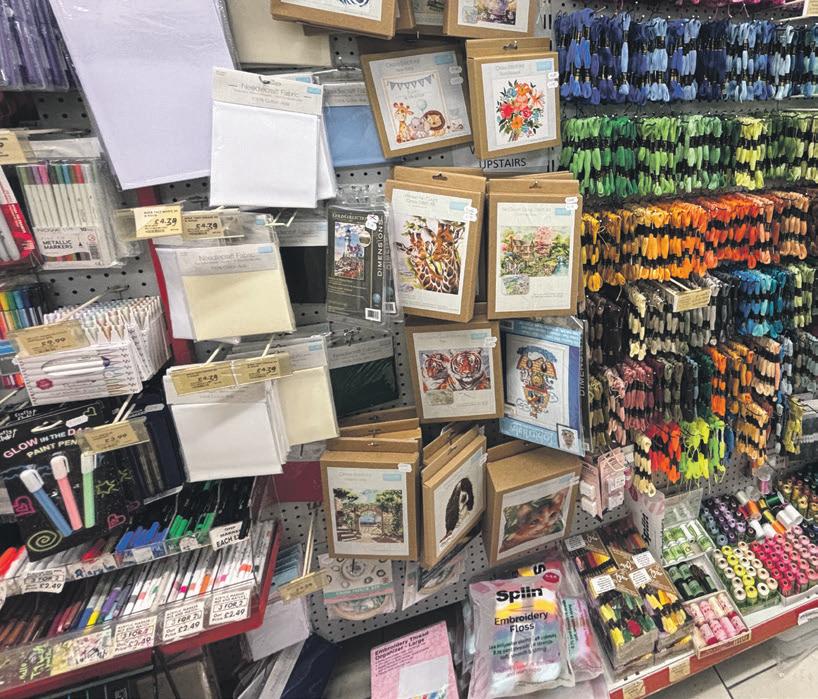
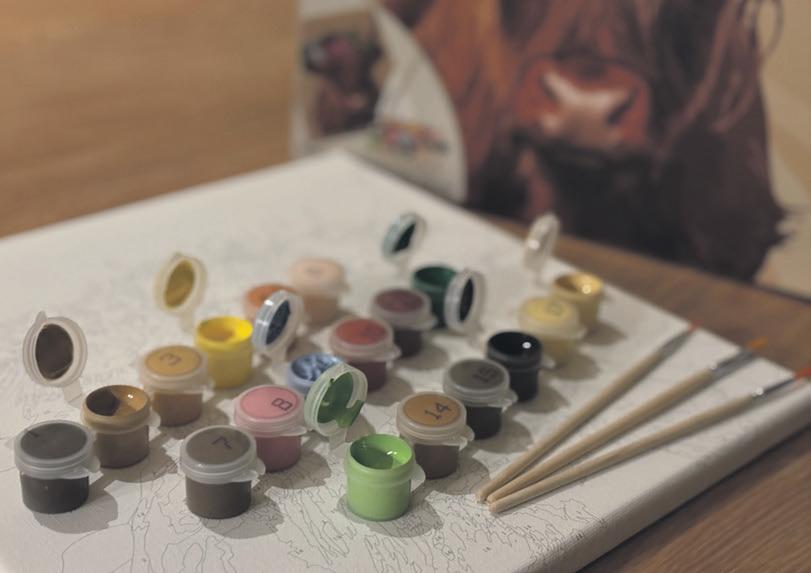
Weall know the not-so-old adage, ‘new year, new me’, and, for some, that means a new hobby (or five) to obsess over. The journey into journaling, crocheting, or painting inevitably begins with a purchase: a fresh notebook, a starter kit complete with hooks and yarn, or vivid watercolours, each promising to unveil the most creative version of ourselves.
With the rise of consumer culture, however, navigating to the checkout page has become almost as engaging as participating in our chosen crafts, to the point that we risk conflating the two.
The fact that creative hobbies require spending money isn’t an issue. It’s only when consumption threatens to replace creation that a problem arises. Sometimes, just beginning is fraught with hesita-
tion. Especially amongst novices, there is almost the concept that the ‘right’ equipment is needed before anything meaningful can be done.
Prioritising aesthetics is encouraged in modern society, oftentimes leading to novelty purchases that are soon relegated to the bottom of a drawer. With the advent of starter kits, the barrier for entry has never been lower. On the surface, this accessibility appears liberating. But it often results in shallow beginnings, where a box of supplies and a pre-written pattern is the extent of the hobby experience.
I am not exempt from this tenden-
“The solution? Manufacturing desire itself
cy. As I write this, a paint-by-numbers set and felt needling kit sit untouched at the foot of my bed, acting as reminders that accumulating premade kits can replace the more deliberate practice of owning a needle, thread, and making do with what you already have.
Consumer culture as we recognise it today is relatively recent. Prior to the 1920s, goods were typically
scarce, so the average person hadn’t much need or want of anything more than the essentials. However, post-war production led to an abundance of commercially-available products, potentially stagnating economic growth. Supply and demand were out of balance.
The solution? (At least, the one conceived of by ‘consumption economists’ and leveraged by many businessmen of the time). Manufacturing desire itself. People are encouraged to constantly hunger for more because, at its heart, consumerism is a paradigm rooted in dissatisfaction. To this end, modern man is not much di erent to Tantalus – tormented by the unachievable promise of fulfilment.
This sense of incompleteness is perpetuated by social media platforms where consumer targeting has been refined into a science. The medium, fraught with personalised advertising, lends itself to impulse purchases.
Truthfully, we sometimes don’t have time for our hobbies, or we find ourselves without the bandwidth to meaningfully engage with them. In these moments, browsing products may feel like a shortcut to ‘do’ the hobby. Buying then becomes a stand-in for doing. It is important, however, to not lump all spending under the umbrella of mindless consumption.
The line between hobby and excess is largely drawn by intent. At its core, consumerism is defined by waste – spending for spending’s sake rather than utility. If materials are used and contribute to one’s own enjoyment, it cannot meaningfully be called waste. The distinction lies not in what is purchased, but what is done with it.
Understanding this di erence makes resisting the siren call of temptation possible, even if it remains di cult. Before proceeding to checkout, it is worth pausing; ask yourself whether the item in your cart fulfils a genuine need or whether it merely caught your attention for a moment. More often than not, these de-
sires are fleeting; the object itself fades from memory within days.
The value of a hobby lies not in the acquisition of materials but in the act of creation itself. Consumer culture encourages the commodification of creativity, treating it
as something to be bought, used, and ultimately discarded. While this system is deeply ingrained and unlikely to change overnight, our individual relationship with it remains malleable. The joy of creation, after all, cannot be outsourced to a checkout page.
Photo courtesy of:
Epigram/Sophia Izwan
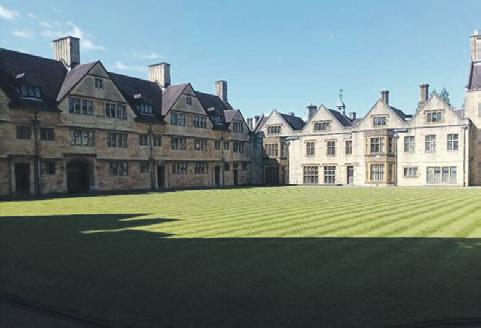
How architecture shapes your unversity experience: the design of halls
By Zoe Lambe Third Year, History
Arts
Bristol artists to watch (and where to find them)
Megan Oberholzer recommends several Bristol artists for those interested in supporting the local arts scene
Megan Oberholzer Fourth Year, Liberal Arts
Bristol’s next artistic chapter is unfolding - and its artists are just next door. From public murals and street art to new painters and professional photographers, there’s a whole scene waiting if you know where to look. It’s no secret that Bristol is a hotspot for creatives, with Invest Bristol and Bath describing both cities together as the ‘third-largest media hub’ in the UK and Bristol City Council’s first culture impact survey discovering that our cultural sector generated £892.9m in economic impact in 2023/24. However, Bristol’s artists mean more than economic abstractions. With a combined audience of more than 10 million people in 2023/24, Bristol’s art community has a real social impact on our everyday lives, across wellbeing, education, employment, and environmental sustainability. And we owe it all to the consistent e orts of individual local artists
sharing what they love. So, here are some brilliant local artists to watch, and where they are exhibiting.
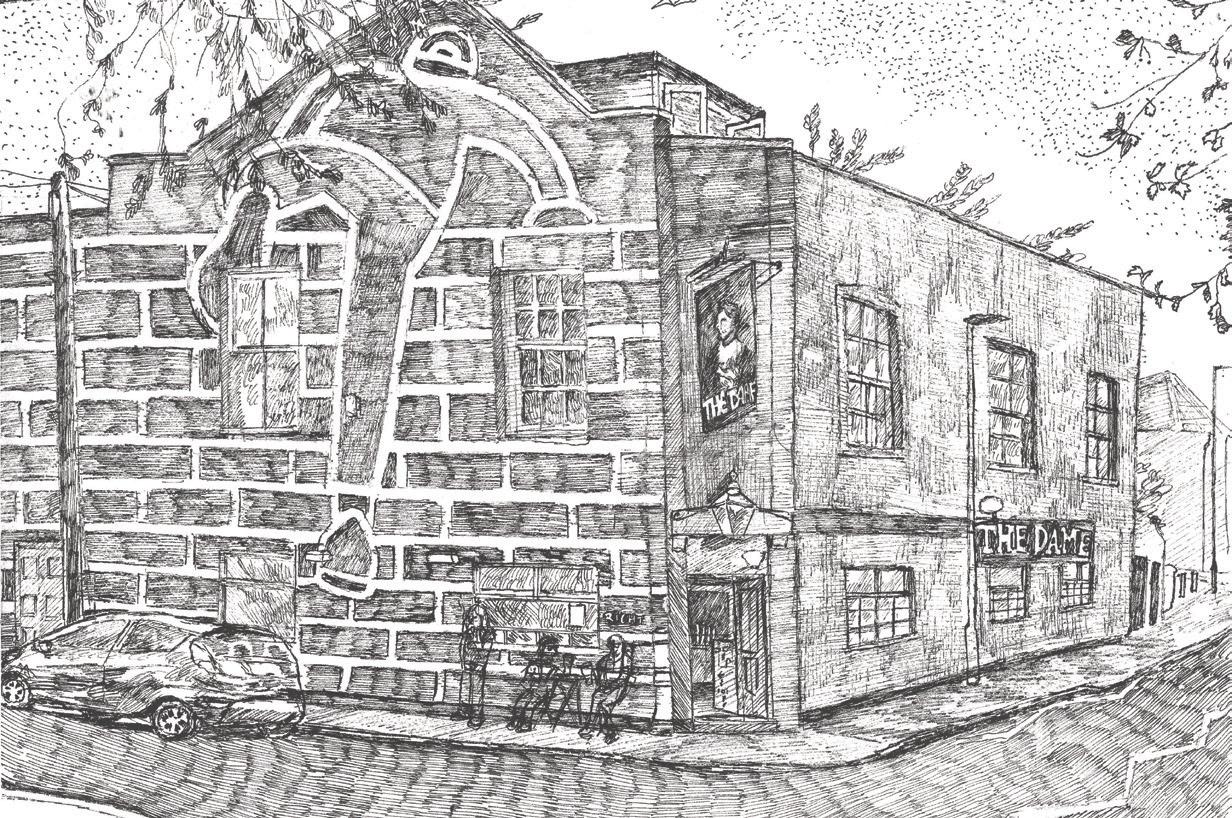
Frank Morris
Drawing Pubs and Sharing Online
Frank Morris is a freelance artist and content creator, who started drawing pubs in London during the pandemic and has continued his passion while living in Bristol. His fineliner drawings do not start with a plan or pencil sketch and come straight from the scene in front of him. He prefers to draw across multiple sittings; chatting with locals and developing a real feeling for every pub he takes as his subject.
Mina Malpass
Painter, Drawer and Lover of Colour
Mina Malpass is a ‘late blooming’ artist, who after a busy professional career, discovered a real joy for painting when she retired 13 year ago. While Mina also dabbles in portraiture and pencil drawings, her collection of colourful landscape acrylics are especially awe-inspiring and the result of hard work developing her skills over the dozen years or so. Her ‘Avon Gorge’ was voted the ‘Public’s Choice’ by the Clevedon Art Club Summer exhibition, and also features
in Cass Art’s January OPENWALLS.
'I have done a number of pictures in this style, and love how it allows me to transform a conventional image into a something a bit more interesting, and which hopefully makes the viewer look di erently at a very familiar icon. I absolutely love colour and this way of painting allows me to mix it all up.'
Evie Luckhurst
Accomplished Visual Artist and Writer
Evie Luckhurst is a writer and visual artist from west Cornwall and a University of Bristol student studying Liberal Arts. Simple materials are essential to her artistic practice, which is shaped by the bounds of student life. Her works take inspiration from theories of art and active reflection on the relationship between pen and paper as mediums for both visual art and writing. She has exhibited work at Wharfside Art Hub in Penzance, Cornwall, as well as the Louisiana in Bristol, and her poem ‘lace’ (2025) was published online and commended by The Poetry Society and The Estorick Collection of Modern Italian Art. ‘With my drawings and my writing, I want to deviate from what’s expected of the simple materials I use. I want to display what I see on a page with lines restrained so that what’s there is at once comprehensible and strange.’
Sam Baggott
Graphite and Charcoal Intuitive Artist
Sam Baggott is a relatively new artist living in Bristol, who is inspired by nature and our human connection to it. After working as nurse during the pandemic and raising a family, Sam’s art has become a therapeutic return to her early passions. She studied art at A level and for a brief time at university.
After first completing portrait and pet commissions for friends and family, she has come to experiment with her style and artistic voice and landed on something truly unique. Her mostly black and white pieces blend the natural and the human with restrained bursts of colour that often result in a magical and whimsical feel.
After some encouragement from her husband, she first brought her art to the public through the Totterdown Arts trail and has since featured in cafés, art fairs, virtual galleries and finally the Cass Art OPENWALLs.
You can explore and purchase her artworks and prints on her website.
‘Bristol is a creative city full of opportunities from art trails and fairs to Art galleries that like to showcase new, emerging and local artists to the more established galleries. There is inspiration around every corner from the hustle and bustle of the city to the serene and tranquil forests and countryside.’
Nicky Ebbage
Authentic, Collaborative Photography
Nicky Ebbage is a non-binary event and performance photographer and a UOB master's student. Their photography has a natural, authentic style that borrows from documentary conventions. They specialise in capturing moments of emotions, expression and creativity, with a focus on local and marginalised communities. As you can imagine, their photography really transports you into the moment.
Nicky’s first contact with photography was through their mum’s photography business and since 2018, they have gone into business for themselves as a freelance photographer. In 2020, they founded a project called Bristol Trans Portraits, which has now evolved into the UK-wide Trans Photography Collective that aims to promote and connect transgender photographers like themselves.
Artists in Bristol are everywhere. And for those looking for their artistic community, there are many great opportunities to get involved. Why not become a University of Bristol Art Society patron, or apply to the Annual Open Exhibition at the RWA? And if you’re not an artist, you can always see what’s on at the Clifton Arts Club, the Clevedon Arts Club, Arnolfini, the Makers - the list doesn’t end.
Photo courtesy of:
Epigram/Megan Oberholzer
Columnists
..................
Alexandra Boersma & Ruby Wright
The war on culture Ukrainian literature four years on
Literature columnist Alex Boersma, recommends Ukrainian literature to help preserve the country's language and culture in wartime
As the four year anniversary of Russia's full-scale invasion of Ukraine looms, I have compiled a list of accessible Ukrainian books to encourage you to educate yourself and continue supporting the country's language, culture, and heart. We must protect the Ukrainian language and culture at all costs in this time of dire need as Russia attempts to erase them.
Being half Ukrainian myself, I have seen first hand Russia's destruction of Ukraine and its culture for years, with the Russian invasion beginning 10 years earlier than many are aware of in 2014 when Russia annexed Crimea. The media seems to have neglected the non-physical destruction of Ukraine. Not only is Russia destroying the towns and cities of Ukraine but it is also attempting to eradicate its culture and language. Russia's attempt to destroy the Ukrainian language and culture also happened
during the rule of the Russian empire and throughout the Second World War when Ukraine was under Soviet rule. Russia refused to allow those in Ukraine to write in or speak Ukrainian and forced many to switch to speaking Russian instead. This was the case for my great great uncle who was an academic forced to write his textbooks in Russian. Bravely, he refused to write in Russian and ended up losing his job. Even after Ukraine's independence in 1991, many TV shows, music and literature were still in Russian. Today, Russia continues to ban the Ukrainian language in occupied territories as schools are no longer allowed to teach it. This is why since the full-scale invasion in 2022, many Russian-speaking Ukrainians have deliberately chosen to speak Ukrainian instead.
The Forest Song by Lesya Ukrainka
Lesya Ukrainka is one of the most famous Ukrainian figures of the 19th century. She was a playwright, poet, writer, translator and feminist activist who fought for Ukrainian independence despite being under the Russian empire. Recently adapted into a film, Mavka: The Forest Song
a human musician. The play was originally written in Ukrainian in less than two weeks and blends Ukrainian folklore and mythology.
“A sparkling poetry collection by Manchester's city poet Charlotte Shevchenko Knight explores the traumatic experiences of her family during the Holodomor genocide. The Holodomor, 1932-33, was a man made famine charged by Stalin's government during Soviet Union times. Shevchenko Knight is of dual Ukrainian-English heritage and seamlessly depicts familial stories during this monstrosity. I particularly love the family photos in this which make it feel more personal and real when it feels hard to believe that the genocide really took place.
You will feel it in the price of bread by Katya Hudson
The media has neglected the nonphysical destruction of Ukraine
This is one of those books that feels like talking to a friend. Hudson creates the most beautiful memoir filled with maps, poetry, illustrations, photography and prose to document her childhood memories in Ukraine and heartwarmingly, her close relationship with her grandmother. Hudson describes the book as ‘a love letter to Ukraine’ and I couldn't describe it better myself. She traces her grandmother's memories of life in the USSR as well as life in the current war which prevents her from seeing her grandmother regularly who remains in Ukraine.
ing to not have heard the gunshot while also using silence as means of resistance and denial. The opening poem ‘We lived happily during the war’ highlights the strange contrast of di ering experiences during war and the speaker's guilt at domestic happiness amidst a horrific war. The speaker seems to ask for forgiveness for such moments of happiness during wartime and condemns America's passivity.
You don't know what war is by Yeva Skalietska
Deaf Republic by Ilya Kaminsky
ka, the spirit of the forest as she battles between her heart and duties to the forest when she falls in love with
Despite being born in the former Soviet Union in Odessa, Kaminsky and his family sought political asylum in the United States. Much of his writing has glimmers of both places. After being declared one of ‘12 artists who changed the world’ by the BBC in 2019, Kaminsky's poetry rose to fame. Kaminsky performed at Bristol's Lyra poetry festival last year, alongside Charlotte above, reading extracts from this collection and another, Dancing in Odessa. Deaf Republic revolves around the murder of a little boy named Petya and the response of the townspeople who struggle to come to terms with the tragedy claim-
Only 12 years old at the start of Russia's full-scale invasion of Ukraine, Skalietska began a 12 day diary following her experience of the war. The book begins with Yeva's birthday celebrations ten days before the full scale invasion commences as rumours of an invasion rumble around the world and yet many failed to believe it would actually happen. This stark opening of a normal child's celebration really brings home the disturbance of the war on ordinary citizens. The day after her birthday, Yeva describes being woken by the sound of missiles to her grandmother facing the Russian border through their window. The diary follows her experience of the first 12 days of the full scale invasion on her journey to seek refuge in Dublin. The book contains real life images and texts which continuously remind us of the war's impact on Ukraine's ordinary citizens with those who can having to flee their homes, families and friends.
If you want to learn more about Ukraine or want further recommendations, don't hesitate to reach out to me and keep an eye on the Ukrainian society as they often screen documentaries and hold events that may be of interest.
Alex Boersma Literature Columnist
Photo courtesy of: Unsplash/Richard Bell
Film & TV
Editor’s Choice:
As we close the door on 2025, Epigram Film and TV invite you to look at what the section considers the very best movies of the year. With words from our talented Film and TV writers and editors, explore the year's top films – and see how many you agree with, have already watched, or are now tempted to finally press play on. 2025 proved that cinema could snap back at the big streaming services - albeit if many of the films went onto Netflfix just a week after its release, looking at you Frankenstein and Wake Up Dead Man.
Epigram's top 10 films of 2025
Epigram Film and TV Writers & Editors
Curated by Felix Glanville Film and TV Editor
At a time where the fate of cinema has never seemed in greater danger, these films o er a quiet confidence that moviemaking is still alive and well, despite the looming shadow of Netflix dulling that film sparkle.
Roll on the top 10...
10.
husband Karsh, played by Cassel. We see her body weaken chronologically with the amputations she had undergone in her treatment. Terry on the other hand is paranoid, as watching her sister and identical body deteriorate has revived collective cultural memory. Both performances greatly attuned to the physics of the human body, animate Cronenberg's dialectic on the body and the global politik.
8. Companion (Drew Hancock)
From Leah Pollard Third Year, Politics and Sociology
Companion is one of 2025's most underrated films - campy, sharp and unexpectedly profound. Anchored by rising
6.
From Sophie Scannell Music Editor
I love Tim Key and I love this film. It's so simple and yet has made me cry all three times I went to see it in the cinema. The visuals are beautiful and the music is gorgeous and balmy, and so fitting!! James Gri ths' directing is especially special as he directed the film as a short seventeen years before making it into this feature. A story as outlandish and unrelatable about winning the lottery is somehow made to feel so homely, it will never fail to make me happy because it's cool to watch someone make a film because they love
I can already hear the sco s at a Marvel addition in the mix – particularly from the editor himself – but Thunderbolts genuinely manages to inject some life into a franchise in dangerous need of recovery. It is gritty, grounded, and free of the MCU's overdone formula. The film strikes a perfect balance between high-stakes action and a solid emotional core – taking a ragtag group of otherwise unremarkable Marvel characters and making them vulnerable, relatable, and simply human.
9. The Shrouds (Dir. David Cronenberg)
From Erik Roderick First Year, Mathematics and Economics
Cronenberg's clearest elucidation of a predominant preoccupation: the intersection of the ontology of social behaviour and the body. Becca, taken by cancer before the beginning of the film, appears only in dreams of her
scream-queen Sophie Thatcher, the film expertly balances dark humour, tension, and pointed feminist commentary: confronting the all-too-familiar threats of incel culture and artificial intelligence.
7. Sorry, Baby (Dir. Eva Victor)
From Eliza Murphy Second Year, Comparative Literatures and German
Eva Victor's directorial debut, Sorry, Baby, is a moving exploration of the e ects of sexual assault and abuses of power, presenting the experience of a woman falling apart in her personal life while succeeding in her professional life. This is not a sanitised ‘healing narrative’ that promotes spiritual realignment and ‘overcoming’ trauma, but a darkly comic and realistic portrait of the complexities of sexual assault and the non-linearity of recovery. A moving reflection on how sexual abuse can derail a woman's life without defining it.
doing it and having it become as hugely successful as this one was! Getting their deserved flowers to say the least.
5. Superman (Dir. James Gunn)
From Charles Hubbard Second Year, Theatre
Superman! Such a perfect representation of the character and one that combines everything great about the Richard Donner, Brian Singer and Zach Snyder entries. A superhero movie hasn't felt this personal and idiosyncratic to its director since Black Panther. It might not be the best film of the year, but no other film got me that excited about the future of Hollywood cinema.
4. Sentimental Value (Dir. Joachim Trier)
From Betsan Branson William First Year, French and German
Immediately, you can tell that Joachim Trier, director of the film, known best for The Worst Person in the World (2021), had planned the film to every last detail. The film has an incredible ensemble cast, comprised of Stellan Skarsgård, Renate Reinsve, Elle Fanning, Inga Ibsdotter Lilleaas and others, with each part being so intentionally cast. This captures the film's aims of combining the idea of a Nordic drama with the accessibility of Hollywood, where Trier now finds himself, being a well-known name to the Academy, but with roots in Norwegian cinema.
3. Marty Supreme (Dir. Josh Safdie)
From Harry Gillingham Second Year, Politics and International Relations
Marty Supreme: the modern great American epic. A distilled, maximalist piece of film-making, stylishly flourishing and deconstructing capitalistic ambition. The dream to craft an intense image of himself, as a matter of self-preservation, that is bigger than one's own finite mortality. Yet, in the end, it is this immortalisation of the self that blinds us to the fruits that grow from the very morality we run from.
2. Wake Up Dead Man: A Knives Out Mystery (Dir. Rian Johnson)
From Janine Tan First Year, Law
Knives Out was never really about murder. This third instalment plays like a reverent, playful manifesto on religion. Of course, the best part is that the film's concern with religious sincerity is matched by a sincerity of its own. You feel it in Rian Johnson's fingerprints on the script, dense with his own personal convictions shining through trademark jabs at neo-conservative rot. With this entry, it's clear that this franchise will most certainly continue to breathe new life into the whodunnit genre.
From Sophia Izwan Second Year, Mathematics and Computer Science
I'll just say this: Jud Duplenticy is so earnest a character that I can do nothing but root for him. I really liked how they handled the question of faith with the juxtaposing views of Father Jud
To read the full top 10 analysis and more, go to epigram.org.uk
We reach the glory of number one with the indominable Sinners. A genre-bending, acting mastery, and box-office demon – released thrice in cinemas. Twin brothers, played by a marvellous Michael B. Jordan, build a new life after leaving Chicago, but encounter vampires representing a false promise of eternal life. Racism and blaxploitation is not the only danger in 1930s Mississippi but a supernatural evil looms large.
From Emma Coleman Film and TV Subeditor
It was genuinely a masterpiece. The music, blend of genres, and racial themes are extremely prevalent, yet don't feel like they dominate the entire film. It felt so original and unique, like nothing that has ever been done before, tapping so heavily into the supernatural, religious, racial, romantic, etc. The messages beneath the aesthetic beauty of the film are not lost in its fast pace and background of blues music.
From Beth Nugent Third Year, Film and Television
Sinners is the amalgamation of passionate artists coming together to expertly craft a perfect cinematic experience. In isolation, all the components of the film are masterful and spellbinding. Whether it's the haunting yet beautiful score, the thoughtful shot composition or the deceptively clever writing, all these elements are some of the best we've seen in the industry for a long time. But what makes Sinners so special is how they all work in harmony; each department spills over into one another to create an enchantingly horror-filled film that you can tell was made by people who love movies.
From Eleanor Bate Film and TV Deputy Editor
. Cinematic masterpiece!!!!! From the soundtrack to cinematography, absolute magic.
Thunderbolts* (Dir. Jake Scherier)
From Felix Glanville Film and TV Editor
The Ballad of Wallis Island (Dir. James Gri ths)
and Benoit Blanc. Very good soup indeed.
1. Sinners (Dir. Ryan Coogler)
Sinners
With Valentine's Day just around the corner and romance oozing across campus, the era of the situationship is in full swingmessy, consuming, and fueled by televisions most popular shows.
With the rise of hook-up culture, dating apps, and commitment anxiety, could it be that age-old stories of happily ever after now feel too far-fetched for audiences to enjoy?
Popular contemporary television has recognised this cultural shift, reflecting the battleground of modern dating and breaking away from the false promises of fairytale romance. In doing so, it memorialises a type of relationship built on instability, messiness, and mixed signals: the ‘situationship’.
Infamous among students and young adults alike, the situationship occupies a grey area between friendship and a formal relationship. Free from labels and exclusivity, situationships can be exciting and spontaneous, but more often result in emotional torment, trust issues, and heartbreak. Of course, this makes for excellent television, but when does this romanticisation become a dangerous glorification of toxic and harmful dating habits?
Gossip Girl (2007) – Chuck Bass and Blair Waldorf
Speaking of toxic habits, few examples are as iconic as the king and queen of the Upper East Side: Chuck
Subeditor................................ Emma Coleman
Subeditor................................... Olivia Howard
The romanticisation of situationships in TV
tions with their real-life equivalents?
Bass (Ed Westwick) and Blair Waldorf (Leighton Meester) of (2007). Following Manhattan's teenage elite, the series provides viewers with a constant stream of inebriating scandals, drama, and love a airs.
Keeping us on edge for six whole seasons, this devious and passionate pair epitomises the intoxicating duality of the situationship. Flitting
‘‘between steamy bouts of romance and torturous mutual destruction, Chuck and Blair are an undeniably addictive couple to watch on screen.
Their situationship has attracted huge fan bases, even coining the term ‘Chuck Bass Syndrome’, used to romanticise the character's toxic traits, namely narcissism, emotional manipulation, and an obsession with sex and power. This widespread infatuation with Chuck Bass has cemented
The Heartbreak Kid (1972)
him as one of television's paragons of the ‘emotionally unavailable man.’
The Bear (2022) - Carmy and Claire
Carmy Berzatto (Jeremy Allen White), from The Bear (2022), is a more recent example of this enticingly toxic archetype. Highly anxious and prone to perfectionism, Carmy channels his inability to express himself emotionally into an obsessive career in cooking, constantly distancing himself from vulnerability.
These characters leave viewers with deep-seated sympathy for heterosexual dating narratives.
These complex characters leave viewers with a deep-seated sense of sympathy and intrigue, fuelling the viral ‘I can fix him’ syndrome, well known within heterosexual dating narratives. Often involving a woman abandoning her own emotional needs in the hope of ‘fixing’ or ‘reforming’ her male partner, this mindset almost inevitably leads to disappointment and emotional burnout. It is no coincidence that the term ‘syndrome’ appears to be a common thread here.
Is it possible that television's romanticisation of these characters has popularised a desire to forge connec-
Flick Picks: Films for Valentine's Day haters
Somehow, this does not feel like the best springboard for a healthy relationship: the emotionally unavailable man and the situationship are the PB&J of modern dating.
Struggling to share feelings or engage in meaningful conversation, the emotionally unavailable man thrives within a situationship, shying away from vulnerability and commitment. While undeniably gripping to watch, this dynamic hardly sets a healthy example of romantic connection.
So why are we so drawn to these connections on television? It could be that they represent a version of dating that does not gloss over the disappointments of reality. Admittedly, the lives depicted in Gossip Girl and The Bear are not the most relatable. Spoiler alert: Chuck and Blair ultimately get married in the series finale. Talk about setting high expectations for our own situationships.
Normal People (2020) – Connell Waldron and Marianne Sheridan
Where these examples failed to satisfy our craving for gut-wrenchingly relatable stories, Normal People (2020) delivered. Based on Sally Rooney's bestselling novel, the series follows the relationship, or situationship, between
Elaine May Charles Hubbard Second Year, Theatre and Performance
This lesser-seen gem follows Lenny Cantrow (Charles Grodin), an opportunistic, morally bankrupt sports salesman, who rushes into marriage with the emotionally immature Lila (Jeannie Berlin) so that he can have sex for the first time, only to instantly fall in love with another woman on his honeymoon. The beauty of this film is that it makes you instantly question the male lead of every romcom you've seen before, and all those that you'll see in the future. The Heartbreak Kid takes every rom-com leading man straight to court and forces them to account for all the damage they've caused.
Jane Craig (Holly Hunter) is a relentlessly ambitious TV news producer whose hot temper and unshakeable integrity often puts her at odds with the slimier, more pragmatic elements within her industry. She finds herself caught between romances with her best friend Aaron (Albert Brooks), an intelligent but prickly news reporter, and the TV station's new anchor Tom (William Hurt) - who has the looks and charm of a movie star but zero moral fibre when it comes to honestly reporting the news. As the film goes on, it becomes clear that neither man is right for Jane.
The show authentically captures the complicated and messy journey of first love, emotional maturation, and self-discovery. Following the characters over four formative years as they weave in and out of each other's lives, it takes viewers on a rollercoaster of emotion, yearning, and heartbreak.
Fleabag (2016) – The Hot Priest and Fleabag
Sticking with the theme of heartbreak, Phoebe Waller-Bridge's Fleabag (2016), still hugely popular almost a decade after its release, o ers a tantalisingly witty and honest depiction of a young woman navigating the death of her best friend, her dysfunctional family, and the dating world.
Adapted from Waller-Bridge's one-woman show first performed in 2013, the series, among other storylines, explores Fleabag's relationship with a Catholic priest (Andrew Scott), dubbed the ‘Hot Priest’ by fans. Intensely passionate and complex, their relationship is defined by the conflicting intersections of religious faith, love, and desire.
Ultimately choosing God, the Hot Priest breaks Fleabag's heart, along with that of the audience.
To read the full reviews and more, go to epigram.org.uk
Based on Kazuo Ishiguro's seminal 2005 novel of the same name, Never Let Me Go follows the story of three young adults - Kathy (Carey Mulligan), Ruth (Keira Knightley) and Tommy (Andrew Garfield) - attempting to reconcile the idealism of their picture-perfect childhood with the harshness of the world they are thrust into once leaving school. Alex Garland's screenplay in particular highlights how all fictional romance, is just set-dressing to try to convince its viewer that a relationship with the right person will fundamentally fix their life and solve all their problems. toconfront that lie head-on and strip it for parts.
Now finally for a movie you've actually heard of! Also based on a bestseller, Gone Girl tells the story of the slack-jawed Nick Dunne (Ben A eck), who wakes up one morning to find that his wife Amy (Rosamund Pike) is missing. As media pressure on Nick increases and the clues point more and more to his involvement in his wife's disappearance, the veil is lifted on the Dunnes' seemingly ideal marriage to reveal a relationship full of resentment. The film's cynical view of marriage is pretty ironic considering that Fincher produced it with his wife, Cean Cha n. I wonder if their marriage is doing ok.
Beatrix Gazzard Third Year, English
Broadcast News (1987)
James L. Brooks
Never Let Me Go (2010)
Mark Romanek
Gone Girl (2014)
David Fincher
Irish teenagers Marianne (Daisy Edgar-Jones) and Connell (Paul Mescal).
Gossip Girl
It's not you, it's your New Year's Resolution
If you've tried (and failed) to set a New Years' Resolution this year, you're not alone. Why do New Years' Resolutions often fail, and how can you help them not?
Katie Ho elner Fourth Year, Physics
Is there anything in your life that you want to change?
Feeling motivated by the New Year, many people set goals in the form of New Year's Resolutions, a tradition dating back thousands of years to the ancient Babylonians. However, few find success. In 2019, Strava carried out an analysis of over 800 million user-logged activities, and found a sharp decline in exercise activities during the second week of January. It's common to make a start on your resolutions, only to struggle after the initial motivation fades.
Fortunately, a well-formulated New Years' Resolution can make it much easier to reach your goals. Here are some science-backed tips to make your habits stick.
Be specific:
Many New Years' Resolutions are well-intentioned, but too vague to put into motion. A resolution like 'start running' or 'learn guitar' sounds great, but unless you have a clear plan to put it into place, you may find yourself at a loss for how to actually achieve your goal. Instead, try to narrow down your New Year's Resolution to something specific: what will you do, when will you do it, where will you do it?
Perhaps instead of 'learn guitar,' your resolution could be to practice scales in your bedroom for 10 minutes after waking up each morning. This takes away the guesswork of how to achieve your goal, and replaces it with a straightforward task which will move you in the right direction. Rather than waiting around for the perfect time to start, you just get it done. Psychologists call these 'implementation intentions' and research shows that they have a positive impact on attaining goals.
Habit Stacking:
Everyday life involves countless situations which place demands on your attention and memory, which can make it di cult to remember to keep up with your goals. If you don't remember to act on your resolution, how do you expect to make any progress?
Another useful trick is Habit Stacking, popularised by author James Clear. Habit Stacking allows you to slot your resolution somewhere into your day-to-day life, so that you never miss it. In 'Atomic Habits,' Clear o ers the framework: 'After [current habit], I will [new habit].'
Setting up your environment in a way that reminds you of your goals can be an e ective way to help you achieve them. For example, if you want to journal more, your resolution could be to leave your journal on your pillow each morning. Before you go to sleep, you'd have to pick up your journal and move it, which reminds you to use it. More general examples of environmental cues include leaving post-it notes or setting reminders on your phone.
Conservation volunteering directory
Bristol City Council
The Council o er voluntary opportunities in local parks and green spaces. There are a number of roles you can take on, such as working alongside rangers and gardeners in estates, monitoring wildlife in parks, helping to plant trees in Bristol, and more.
Habits allow you to act e ciently in situations which occur frequently in your life. Imagine if you always had to put conscious e ort into your breathing -- you'd probably find it a lot harder to go about your life. On the other hand, wouldn't it be nice if your New Year's Resolution came to you as naturally as breathing?
As you go about your day, there are certain habits which you do without fail, and without thinking about them. These will look di erent for everyone, but can include: making a cup of co ee in the morning, brushing your teeth, eating dinner. Try to take note of these automatic behaviours. You probably have many more than you think. E ective change starts with self-awareness: first notice your habits, then think about ways you could add on a bonus habit which supports your resolution. The best habits to use are those which happen every day and which you are unlikely to face distractions during or after. For example, if you wanted to become more flexible, your resolution could be 'after I brush my teeth, I will stretch for 5 minutes.'
How to keep going:
There will inevitably be times in your life when something gets in the way of your resolutions. Maybe you wanted to learn a language, so you set aside 15 minutes a day to study it, and you've been making great progress. However, when faced with deadlines or exams, you end up prioritising your uni work and stop studying the language.
That's okay! It doesn't mean you failed. Many people struggle with all-or-nothing thinking. If you've followed the advice so far, you likely have a very specific resolution. This makes it easy to know when to start, but it also makes it easy to know when you haven't been successful. If you miss your resolution once, it can be all too tempting to say, 'oh well, I've failed, there's no point continuing.'
I like to reframe these moments as an opportunity to practice returning to your goals when you hit a setback. If you want to be able to stick with a resolution in the long term, it's imperative that you can work around the rest of your life. Be kind to yourself when you fail, but steer yourself back on track as soon as you feel ready.
With the previous decade (2014-2025) recorded as the warmest on record, news about climate change can be disheartening. For this reason, 2026 could be the year to get involved with projects that combat this. Volunteering can help protect endangered species, restore habitats, and improve biodiversity. Many conservation charities rely on volunteers to help deliver projects, meaning you will play a crucial and rewarding role. It can also boost mental and physical health, is a great way to meet people, and provides worthwhile work experience.
Conservation volunteering can take many forms: habitat restoration, monitoring wildlife, caring for nature reserves, litter picking, community gardening. I’ve listed some options relevant for Bristol students below:
Bristol Avon Rivers Trust (BART)
BART protects the River Avon and its tributaries in and nearby Bristol. The organisation o ers various programmes, largely focused on monitoring, where volunteers can help improve the health of local rivers. Their programmes o er varying levels of commitment, perfect for busy students. The BART Beacons, for example, monitor their local stretches of river on a noncommittal basis, and River Detectives take water quality samples and test for a number of parameters each month.
Avon Gorge and Downs Wildlife Project works to conserve the wildlife of Avon Gorge and Clifton and Durdham Downs. They also run events raising awareness and showcasing the area. There are a wide range of volunteering roles to get involved with; you could be assisting school visits and children’s school holiday activities on the downs, supporting the events programme, or helping to survey the site.
For those who want to get involved with projects outside of the UK, GVI o er a range of nature conservation programmes through which people can volunteer, intern, and study in both abroad and remote roles. Their volunteer programs run from 2 to 12 weeks, and their internship programmes for 6 to 24.
Avon Gorge and Downs Wildlife Project
Anna Dunphy Second Year, English
Image courtesy of: Fabrice Villard/ Unsplash
Corin Hadley
Although not quite a Hogwarts love potion, lovers have sworn by the power of aphrodisiacs for centuries. What is it that make some foods so sexy?
Toby Painter
First Year, Chemistry
Valentine’s Day is fast approaching and romance is in the air, giving the salacious team at Epigram the perfect excuse to write about something sexy. This time we’re diving into the exotic and wacky world of the aphrodisiac and asking the all-important question: do they actually work?
An aphrodisiac is any chemical that increases sexual attraction, desire, or pleasure. These can be manmade drugs, including MDMA and meth, but the most used aphrodisiacs are found in nature, such as cannabis, ginseng or the aptly-named ‘horny goat weed’. The ways in which they a ect the body to produce their psychological and physical e ects vary, from altering hormone/neurotransmitter concentrations (such as testosterone or
dopamine) to stimulating blood flow into certain areas. However, for many foods with a rep for sending people direct to pound town, the cause is not quite so tangible…
Aphrodisiacs were used extensively in ancient Chinese, Indian, Egyptian and Greek cultures, but, for the most part, our ancestors weren’t consuming them to get freaky for the sake of it. Procreation was highly valued, and the inability to get the job done would have been seen as incredibly humiliating. Aphrodisiacs may have allowed men and women with sexual dysfunctions to have children and live what society deemed a normal life.
his biography, when he wasn’t narrating his tales of debauchery, he recounted how he would eat up to 60 oysters a day in an e ort to maintain his prodigious libido.
Though the dedication required to consume that quantity of oysters is undoubtedly impressive, there isn’t much scientific evidence to suggest that they were actually the source of his sexual prowess.
It’s defined a generation, but perhaps now the tide is beginning to turn on social media. How can we help ourselves out of the doom-scoll, and why should we?
Alice Guskov SciTech Deputy Editor
One of my New Year’s resolutions is to replace my social media consumption with physical media, and I’m making it your problem. Hopefully not in a pretentious way, although I did install Substack recently. I’ve tried to reduce my screen time many times before, normally by establishing app limits on my phone, but they are too easily bypassed. I need something more tangible.
I don’t remember a time when I didn’t have access to a digital device. And as the years have passed, it’s almost impossible to avoid
That said, using aphrodisiacs purely for
“He would eat up to 60 oysters a day in an e ort to maintain his prodigious libido
fun is not new. In the 1700s, Giacomo Casanova’s promiscuity became so well known that the name Casanova has now become a byword for a male seducer. In
Oysters are however a great source of zinc, an essential and often di cult to get mineral for all sorts of bodily functions. While this does include some chemicals linked to libido (dopamine and testosterone) the link is at best tenuous. There’s simply not enough evidence to show that the zinc from oysters can directly boost sexual desire or pleasure. I’m sure your body will still thank you for the extra zinc though.
There is, however, one factor that explains why oysters still seem to increase libido: the placebo e ect.
Humans have believed that oysters
Deputy Editor Alice Guskov
Deputy Editor Sanya Saxena
Deputy Editor Jemima Choi
Food for thought (and other purposes)
have aphrodisiac-like e ects since ancient Greece. The idea stems from their association with the sea where Aphrodite (the goddess of love) was said to be born, as well as their resemblance to female genitalia, and this belief has only become more ingrained with stories like those of
“Most
Most of their aphrodisiac potency comes from their status as 'romantic' foods, often given as gifts between lovers. Any amorous feelings after consumption are therefore more likely to be caused by the associations of these foods with romance than any particular biochemical pathways.
of their aphrodisiac potency comes from their status as 'romantic' foods
Casanova. When someone eats an oyster, therefore, the expectation of a feeling of enhanced sexual desire actually a ects their brain’s chemistry resulting in the e ect they were anticipating.
It’s just the same for many other foods with reputations as aphrodisiacs, such as chocolate, honey and strawberries. These are all shown to have positive impacts on the body in general but aren’t proven to enhance libido specifically in any way.
How to slow down time
using them. Many jobs (and student life) require a laptop or desktop, and you most likely need a phone to even get the job.
How many times have you looked at your phone today? How many hours do you spend looking at a screen a day? Some screen time is necessary to be active in society, I admit, but you are probably staring at a rectangle for longer than you need to. It’s addictive, and it was designed that way - especially social media. It’s not your fault.
As you know, social media is built on algorithms that push content depending on whether other people are interacting with it, regardless of whether it will have a positive or negative impact on your well-being. However, what I find most dystopian is that psychologists are being hired to glue you to these platforms.
There is a branch of psychology (industrialorganisational psychology) that focuses on human behaviour at work and optimising
“employee productivity, which is being applied to social media platforms. Curating your feed is a method of positive reinforcement, ‘likes’ and ‘shares’ are instant rewards, implementing the infinite scroll removed a natural stopping cue, so we scroll… scroll…scroll. It makes whoever owns the social media company richer; you are selling your attention to them for free. You may think I’m being dramatic, which I am a little bit, but I think it’s very telling that those at the helm of these platforms and devices either restrict their own children’s social media usage or try to delay when they start to use it. Aza Raskin, in particular (a software developer behind the infinite scroll), has been very vocal about regretting his involvement in its creation, even openly apologising in an interview with The Times.
be rebuilt, but you can never reclaim your time. Your life is short; do you really want to swipe it away with a blur
Those at the helm... either restrict their own children's social media usage or try to delay when they start
of AI cat videos, get-ready-with-mes, and rage bait that you will forget in an hour? I don’t. I want to use my free time wisely and actually remember what I consumed in the past two hours, and rest my brain. Due to its fast-paced nature, although it feels good at the time, your brain does not take a break when you scroll. Your nervous system tries to keep up with an avalanche of content it was not biologically designed for, and you experience five di erent emotions in two minutes.
The line between what is and isn’t an aphrodisiac is blurry: clearly in many cases their e ects depend more on context and expectation than the food itself. There are some plant-based compounds that show promise at being “real” aphrodisiacs, but these are rare and often taken as supplements rather than eaten. So if you’re looking for the perfect meal for a saucy Valentine’s Day date, don’t feel the need to fork out over an expensive plate of oysters when a box of chocolates can get tents pitched and cheeks flushed – because when it comes to the placebo e ect, it really is the thought that counts…
don’t involve a screen. Things that you can hold in both your hands, that you actually have ownership over, and that are much better for the environment.
What frustrates me most is that social media steals time. Attention spans can
Try replacing the digital media you interact with physical media. Swapping reels, YouTube videos, and streaming for physical books, DVDs, and hobbies that
There is still a slow world outside of all the screens that is slowly being drained to build a fast electric one. Be more mindful of what you consume - your mental health and cortisol levels will thank you. I’m not saying that you should ditch social or digital media altogether; I don’t think that’s even possible at this point. But there are ways you can reclaim your life, and slow down your time.
Battle of the Sexes or Battle for Attention?
chauvinistic stance on women's sports.
row, allowing Kyrigos to break to 3-4.
Historically, the most memorable ‘Battle of the Sexes’ match was playing between Billie Jean King and Bobby Riggs in 1973. Recently, on Sunday 28th December, the fourth ever ‘Battle of the Sexes’ match took place between Aryna Sabalenka and Nick Kyrigos in Dubai. Are these comparable events and has this event progressed the sport in any way?
Within her autobiography, All In, King discussed how women at the time were ‘earning only 56.6 per cent of what men earned for the same job’ and that she ‘was playing this match to change hearts and minds.’
This match was a major stepping stone for the women's right movement and could have had a fatal impact had King not won, especially due to Rigg's
And then there was one: the man simply superior to the rest of the playing field, Luke
‘The Nuke’ Littler
Zavie Goutorbe
Fourth Year, Physics with Study Abroad
The quality of contests throughout the fortnight of the PDC World Darts Championships is a vindication of the decision to expand this year's draw size to 128 players. Ultimately, none could match Littler, who lost only four sets in seven matches en route to his tournament victory.
The final was a 7-1 procession, whereupon having lost the first set, Littler stormed past Gian van Veen, dropping merely 3 of the final 24 legs and repeating the outcome of their 2023 World Youth Championship encounter, won 6-4 by Littler. It had been hyped as a clash of polar opposites, and to the extent to which these simplifications are helpful, on the night it was Littler's darts intuition that overpowered the intellectual van Veen, an aviation engineering graduate.
Despite the intensity and legacy that comes with the title ‘The Battle of the Sexes’, the match between Sabalenka and Kyrigos was arguably underwhelming and nothing more than a redemption arc for Kyrigos. Sabalenka is currently number one, why should she have to further prove herself to a player currently ranked 671 (although he has beaten top male players such as Nadal), when she is already a top athlete?
In King's match, no alterations to the gameplay were made. However, the organisers, EVOLVE, reduced Sabalenka's court size by 9 per cent, to accommodate for women having 9 per cent slower pace than men on average. Additionally, a one serve rule was created for both players, with the intention to focus on accuracy over speed. Finally, players were allowed an extra minute break per set if necessary.
Adjustments in place, the match opened with a flashy entrance to ‘Eye of the Tiger’ from Sabalenka. O to an even start, Sabalenka asserted dominance winning the first game. There were even breaks throughout the early games. Midway through the first set, Sabalenka made two fatal faults in a
From here on, Kyrigos was able to secure the right points when necessary. His unpredictable playing style did not allow Sabalenka to settle into a rhythm as she was constantly coming to the net. At 4-3, Kyrigos served a cheeky underarm serve winning yet another game. He then powered through, taking the first set with 6-3.
The opening of the second set saw Sabalenka gain momentum, breaking Kyrigos' serve early on to 3-1 with a slice winner, following a tense advantage game. However, Kyrigos managed to turn things around, and despite a gimmicky macarena interlude from Sabalenka at 3-2, Kyrigos managed to break even to 3-3. From here on Kyrigos kept a lead, dominating the court, with his, in commentator Annabel Croft's terms: ‘junk tennis.’
The final game was filled with intensity as it went into an advantage game with Sabalenka saving 3 match points. The first save lead Kyrigos to call a break to regain composure, however, this didn't a ect Sabalenka's focus just yet.
Ultimately, Kyrigos's strong serve closed the match, allowing him
to defeat Sabalenka in straight sets, with score being 6-3 6-3.
The players were respectful following the match, with Sabalenka claiming she ‘really enjoyed the show’ and would be open to playing Kyrigos again having become more aware of his tactics.
Kyrigos admitted it was ‘a really tough match’ and would not call himself a ‘champion.’ He viewed the match as ‘a great stepping point for the world of tennis.’
But was it really? The adjusted rules, although for a supposedly more level playing field, seemed to do more harm than not. Both players had to adjust their mental framework to the game, and thus was their skillset aptly shown? It was clear Sabalenka's game was severely impacted with the lack of her first serve, especially against Kyrigos who is known for having an extremely reliable serve.
Moreover, the entertainment appeared forced, and the crowd were extremely flat. There was constant disruption throughout with multiple broadcasting issues, as well as announcements when famous ex-footballers entered the stadium. ‘The Battle of the Sexes’ match is something you
would expect to make a statement.
The only statement was further proof to the physical biological advantage men already have. Why are we still in a position where we are constantly comparing male athletes to female athletes? Within tennis, the women's games are just as entertaining as men's and should be seen in their own light, and mixed doubles is a space where both men and women's abilities are showcased in an even playing sphere, and often extremely enjoyable to witness. Why are we still in a position where we are constantly comparing male athletes to female athletes? The title ‘The Battle of the Sexes’ is not something to be used lightly, and this match could have purely been described as an exhibition match between two amicable players. In the future, matches between female and male players could be advertised as something such ‘Sabalenka versus Kyrigos’, which allows the players to be seen in their own spheres, away from associations that allow for criticism between gender di erences.
This match certainly grabbed people's attention. However, it didn't drastically change ‘hearts’ or ‘minds’ towards tennis and is incomparable to the extraordinary purpose King's match served.
In claiming the top prize, Littler became the first man since Gary Anderson in 2016 to earn back-toback world titles. With darts rankings determined by accumulated prize money, Littler's achievement as the first world champion to earn £1m, 20 per cent of the overall pot, means an extension of his lead as the World No 1 in the PDC Order of Merit over second-ranked Luke Humphries. Littler was nominated for the Sports Personality of the Year Award for the second time in a row, and in an agreement announced a week after Littler's triumph, the 18-year-old's impact on the darts scene was rewarded with a 10-year sponsorship deal in association with Target Darts worth £20m, further reinforcing his value as a brand. The continued financial growth of darts as a sport, albeit not insignificantly due to Littler's emergence as a celebrity, ought also to be highlighted.
Fresh from receiving an MBE, Humphries was disposed of by tenth seed van Veen in the quarter-finals, and the latter is now on a run of
five consecutive wins over ‘Cool Hand’, the 2024 World Champion, including a stunning victory in the final of the most recent European Championship. The Dutchman went on to defeat now 55-year-old Anderson in a captivating semi-final encounter of the highest quality before falling short versus Littler.
van Gerwen, Stephen Bunting, Jonny Clayton, Gerwyn Price, and Josh Rock will comprise the remainder of the eight-man lineup.
Further heroic performances at Alexandra Palace were on display by the South West's very own Ryan
Littler triumphs at PDC World Championship
Van Veen's accomplishments are particularly exceptional when put into context: there was a period during his junior career when he su ered with ‘dartitis’, a mental struggle that a ects the player's release of their dart, which can derail or entirely destroy the careers of darts players. The 23-yearold's surge to the final means he moves up to third in the order of merit, duly surpassing the threetime world champion Michael van Gerwen to become the highest ranked Dutch player, and thereby earning himself a place in the Premier League. Littler, Humphries,
manic Searle reached the quar-
Searle and Justin Hood, from Tiverton and Glas- tonbury respectively. Despite su ering from a rare genetic eye condition called Autosomal Dominant Optic Atrophy, which is incurable and sometimes means he cannot see what he has scored, the talister-finals without losing a set.
Read more about the God of Darts at epigram.org.uk
The historic Battle of the Sexes returned for the fourth time, but has the meaning behind the match changed?
Ambar Madhok Third Year, English Literature
Editor .............................................. Emma Gri ths
Project Arana: tackling stadium connectivity and the fan experience
Have you ever experienced a connectivity issue at a live sports fixture? Well, Bristol-born Project Arana is here to fix that with the help of AI.
Zavie Goutorbe Fourth Year, Physics with Study Abroad
We need to talk about Stadium Connectivity. Have you ever been to a match and not been able to connect to a network? You don't walk alone. A 2023 Boldyn Networks report claims that poor Stadium Connectivity is something that 77 per cent of stadium event-goers can't abide.
Now, Project ARANA, a collaboration between project leaders Weaver Labs, Madevo (a University of Bristol spinout) and the University of Bristol's very own Smart Internet Lab, seeks to redress these issues. Backed by £3.6m worth of government funding, the project is a UK first, and has already undergone testing at Stadium MK in Milton Keynes, where further trials involving fans are slated for 2026.
Per an o cial statement, Prof Dimitra Simeonidou OBE, Director of the Smart Internet Lab at UoB, explained that ‘thanks to 5G broadcast capabilities, the app o ers a cost-e ective alternative to traditional cellular solutions which is particularly important for large sporting venues where mobile connectivity is often unreliable during peak usage.’
This assessment matches the matchday experience of Max Baldock, a Masters student studying Policy Research at University of Bristol, devoted Arsenal supporter, and regular attendee of matches at all levels, from NonLeague to the Premier League, who testified that ‘the larger the ground, the worse the connectivity.’
Save for Brighton's Amex Stadium (capacity: 31,876), where he enjoyed a good connection during the 2022 Women's Euro quarter-final encounter between England and Spain, he reserved praise for the grounds of Eastleigh, Barnet (in League 2 as of this season), Dagenham & Redbridge, and Bath City, none of which have a capacity of more than 10,000, but which all provided him with good network connections.
matter. ‘From a fan's POV, as anyone who has ever been to a Premier League football match will attest, connection issues are widespread and continue to be an issue despite recent action taken.’
This recent action is noteworthy, as an increasing number of stadiums have been implementing faster broadbands. Indeed, free WiFi has been o ered at the Amex since 2014. Since then, Brighton have taken steps to implement a multi-carrier solution in partnership with the Focus Group, further boosting connectivity. Another example is Wembley. From this year onwards, the spiritual home of English football will have its own dedicated 5G standalone network provided by EE.
As for Sunderland's Stadium of Light, as of this year, the sixth largest UK football arena also has an enhanced 5G network, supplied by Boldyn Networks using a Connectivity-as-a-Service (CaaS) model. The Tottenham Hotspur Stadium remains the UK benchmark since opening in 2020, with WiFi access one of many state-of-the-art features.
The Project ARANA collaboration stands out, in that it uses a Network-asa-Service (NaaS) model, making it more scalable and service agile than traditional solutions. The existing stadium network is integrated with a private cloudbased 5G network, which is then enhanced by Madevo's AI technology. This leads to what may be termed a ‘smart stadium’, a venue with state-ofthe art technology. The possibilities of this technology go far beyond football.
As well as telecoms, the applications
of Madevo's agentic AI range include Rail and Transportation, Utilities and Energy, and Logistics.
Let's return to our primary concern: how will these e orts shape the fan experience? One of the potential impacts of the technology will be the real-time ability to access high resolution live feeds with multiple camera angles, which Flint believes will ‘undoubtedly lead to an unprecedented viewing experience.’ It's di cult to argue with this assessment given how hard it can be for fans to follow often confusing o the ball ongoings, with Flint supplying the example of ‘being able to watch along with VAR during controversial decisions.’
Other putative benefits of the technology include enhanced live AI analytics, which may be of particular interest to coaching sta , and fans being able to order food and drink directly to their seats, a bit like in a Wetherspoons. Baldock considers this latter point a positive aspect that the technology will bring, noting that ‘ordering food will stop [fans] having to queue up at the bar and miss the game.’
There is profit to be made. Weaver Labs estimate that the revenues of stadiums that use their NaaS-based solution will be boosted from legacy solution revenues by up to around 210 per cent, as it is predicted that the number of attendees and net revenue per attendee will rise significantly. Although a significant proportion of fans would willingly spend more, it should not be forgotten how expensive a matchday can be. Baldock admits that he has spent almost £100
before when factoring in transportation costs (in his case, train tickets).
It must be noted that all the fans that supplied their thoughts raised the question of how the social aspect of the matchday experience would be a ected.
‘The way I see it, it would be way worse for the atmosphere,’ opined Baldock. ‘The purpose of going to a game is to watch the match and not a phone screen,’ he added. Flagging the same issue, Flint stated, ‘in a world where it is ever increasingly di cult to avoid being glued to a screen, live sports events may no longer be a place where people put down their phones.’
The message is clear for football purists, going to watch a match means exactly what it says on the tin.
Improving Stadium Connectivity is part of a wider trend of applying advanced technologies to the world of football. This includes the grassroots level, where the University of Bristoldeveloped Pitchside AI enables amateur footballers to be able to use AI to analyse their performances as if they were professionals.
At the very top end of the game, River Plate, the Argentine powerhouse, have implemented facial recognition technology at their 85,000 capacity Mas Monumental ground, which reportedly speeds up the ID verification process, improving security in the process, making it harder for banned fans to sneak past security. Superior safety and security measures are also
set to be enabled by Project ARANA.
Live and in-play football betting are both increasingly popular, and the enhanced venue connectivity will surely also cause the betting landscape to change, though how exactly remains unclear.
As might be expected, the implementation of such technologies, specifically AI, is not without its challenges, notably legal ones. Jon Morgan, partner at Onside Law, a specialist sports law firm, commented, ‘we are seeing an increasing use of AI in the sports industry generally, and in-venue deployment is no exception. Whilst AI provides many opportunities and benefits, venue owners will need to be alive to challenges and various legal hurdles to overcome, including data privacy considerations in particular and a changing regulatory landscape in respect of AI itself.’
‘Whilst AI provides many opportunities and benefits, venue owners will need to be alive to challenges and various legal hurdles.’
Come what may, the football technological revolution is here to stay. Project ARANA's success throughout its initial phases o ers fans a glimpse of what they might expect to experience on a matchday in the future. So, next time you're at a game, don’t be surprised if your connection actually works. Do take a moment, however, to think of the technological ingenuity that was required to make this possible, but also consider whether it is delivering the experience that you want?
Tom Flint, the 2024-25 University of Bristol Football Club (UBAFC) Club Captain, shared his thoughts on the
EPI-GAMES
REGULAR CROSSWORD by Miles Gilroy
ACROSS
3. Colloquial dressing (3)
7. Soz (7)
9. US rocket (7)
11. Parcel of land (3)
12. Form of birth control (3)
14. ___ in ___; in conclusion (3)
15. Short electric vehicle (2)
16. Question (3)
18. Acting in a peculiar manner (3)
20. Mike Echo (2)
25. DO NOT OPEN (8,3)
26. "Take special notice" (2)
28. Symbol found in this grid (9)
29. Post WWII peace organisation (2)
30. Munch lunch (3)
32. 0! (3)
33. Potential plant (4)
35. Common valentines gift (5)
37. Cons counterpart (4)
38. Where you may find love, per John Paul Young (3)
40. Swanky London members' club (3)
41. Inverted bus (3)
43. Unbothered sound (3)
45. Your mother's brother's daughter's cousin's son is your... (3)
48. Dick's partner (3)
50. sin over tan (3)
52. On ___; in charge of the tunes (3)
53. Dish containing 9-Across, perhaps (5)
54. Winning row in noughts and crosses (3)
55. Little fowl (5)
56. Paid by the 31st of January, hopefully (5)
PLOTLINES REBORN by Felix Glanville
DOWN
1. 14th (10)
2. Word before dog or tub (3)
3. "Just so you know" (3)
4. Bit (3)
5. Ms Lipa (3)
6. Alternative to 1-Down (10)
8. Perspective initialism (3)
10. ChatGPT, for example (3)
13. Ultraviolet (2)
17. Elderly, perhaps (6)
19. Womb-residing (6)
21. Millennial dating method (3)
22. Jigglypuff or Wigglytuff, for example (7)
23. Clifton Hill House, for example (7)
24. Flavourful cube (3)
27. Millennial term of endearment (3)
29. Draw two if unsaid (3)
31. Rooibos, for example (3)
32. Held in the monarch's right hand during coronation (3)
34. 2 Watt bulb, perhaps (3)
36. Latin six (3)
37. We make a great pear, for example (3)
39. Colour of love (3)
41. Help me (3)
42. ____ year (not this time) (4)
44. Bendy garden tube (4)
45. Word before fountain or stream (4)
46. Late entry in a canine dictionary (4)
47. Kiss, kiss, hug (3)
49. Could be found by a door or a bath (3)
50. Sphynx or Egyptian Mau, for example (3)
51. Laughing gas (3)
The tricky alternative synopses you might remember from earlier editions are back, but this time we've moved away from the world of literature. Can you decode which blockbusters Epigram's very own Film & TV Editor is describing here?
Insomniac goes to underground bareknuckle boxing matches for therapy
An unpainted stainless-steel car is used by teenager to save his own time
Sewer rodents in the city of love dream of food
REGULAR SUDOKU
by Alice Guskov
MINI CROSSWORD by Kaz Freedman
ACROSS
1.‘Blood Brothers’, for example (7)
8. How many songs you might chant for at the end of a concert (3,4)
Girl from midwestern state wishes to escape from a mystical land of yellow roads and blue monkeys
Shouty bald man pushes ambitious percussionist music student to the limit
Cloned prehistoric predators are on the loose at an island theme park
9. Animal, Beaker and Fozzie are examples of … (7)
10. Shorthand for when a business first came about (3)
11. Might follow ‘feliz año’ if celebrating the start of 2026 in Spain (5)
13. Useless clutter (3)
14. To prohibit (3)
16. Parts of the eye that open and close (4)
DOWN
1. A fleeting period of time (6)
2. To be loved by anyone is, according to Tom Jones, not this (7)
3. Snow White’s dwarves perhaps (6)
4. Mischievous mythical creature (3)
5. Sebastian ___; set nine outdoor and three indoor records during his career as a track and field athlete (3)
6. First name of Garfunkel (3)
7. Bonnie Garmus' 2022 bestseller promised these in Chemistry (7)