Program Report
Hunger Crisis – Horn of Africa
Final Report
5/10/22 – 5/10/23
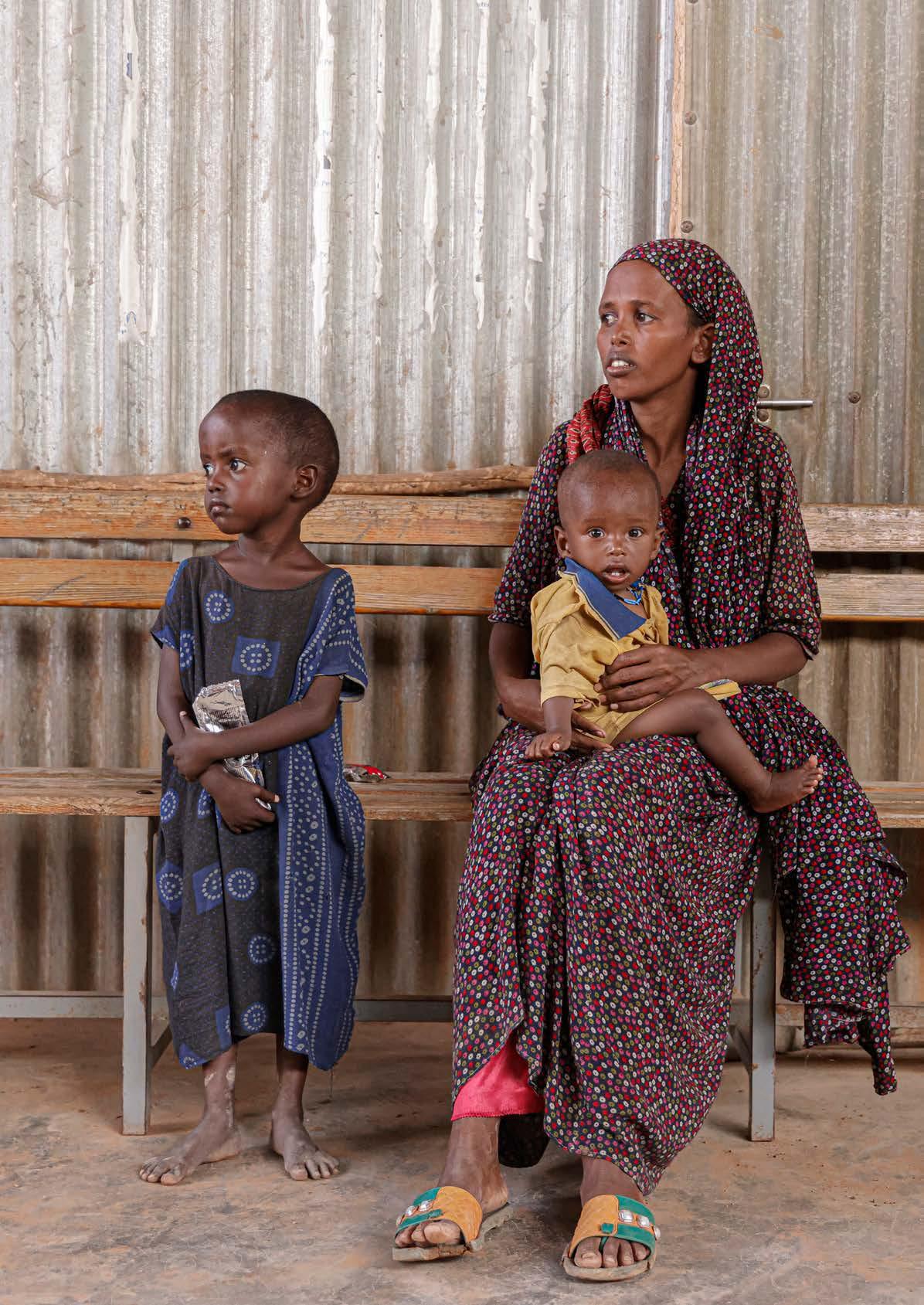


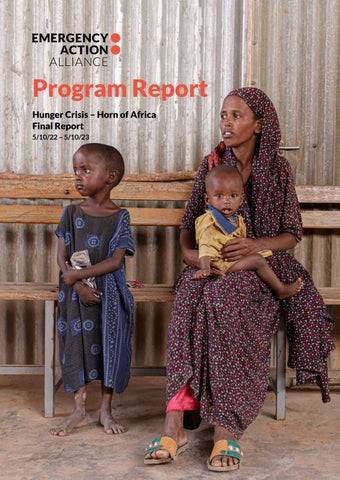
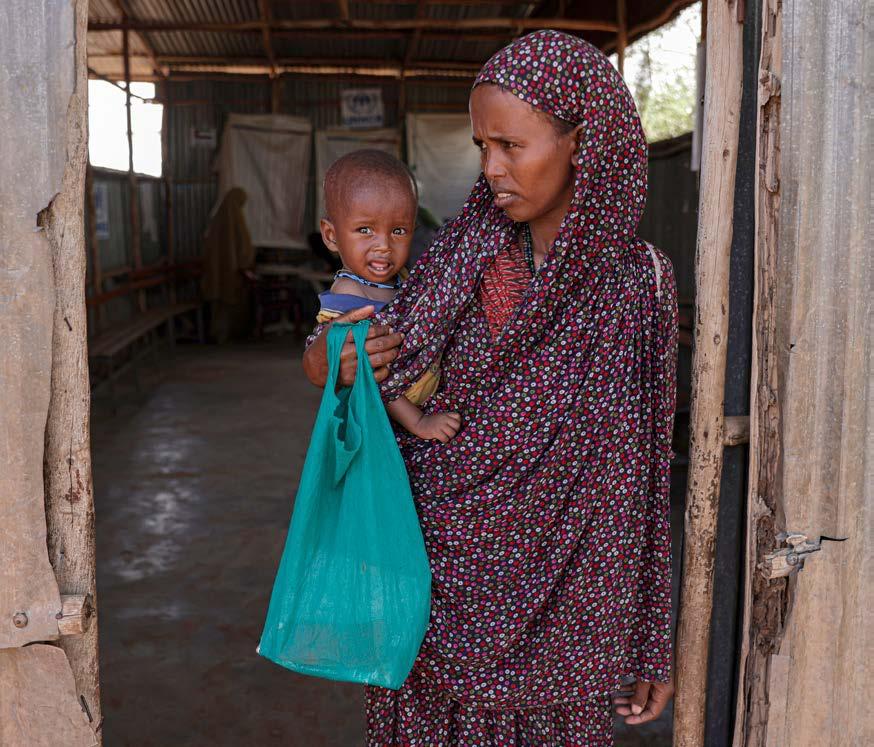
Cover image: Samira Abdi waits to receive treatment for her malnourished children at a nutrition centre in Melkadida refugee camp. Image ©UNHCR/Tiksa Negeri
Hunger Crisis – Horn of Africa
Final Report
5/10/22 – 5/10/23
The hunger crisis in the Horn of Africa is a hidden catastrophe. While the world’s attention is focused on other global crises and conflicts, more than 61 million people across the region do not have enough to eat or drink*. The statistics are devastating - one person dies from hunger every 48 seconds in drought-ravaged Ethiopia, Kenya and Somalia.** More than 11.5 million children under the age of five are suffering from acute malnutrition.*
The situation is exacerbated by multiple outbreaks of diseases including cholera, measles, meningitis and malaria. Ongoing conflicts in the region have continued to affect service delivery at health facilities and in communities with increased risks for women and children. More broadly, COVID and the war in Ukraine have impacted the supply of lifesaving food and medical aid.
Sadly the situation is likely to continue to worsen with the El Niño weather system predicted to push the region into its 6th failed rainy season, further harming human health and negatively impacting the food security situation in the region.
In September 2022 Emergency Action Alliance (EAA) launched the Hunger Crisis Appeal for the Horn of Africa. All fifteen of EAA’s members were responding to the emergency through their partners on the ground across the region. They decided to stand together to launch a centralised appeal for the emergency both to raise awareness of the emergency and to raise much needed funds.
On the 23rd of September the Australian Government announced a contribution of $5 million to the Appeal. An additional $88,000 was raised by the Australian public with the support of our media partners ABC and SBS. This report provides an update on the work of our members responding to this crisis, and shows how the funds raised by this appeal are saving lives today.
* World Health Organisation SITUATION REPORT: 01 July - 31 August 2023 Greater Horn of Africa Food Insecurity and Health Grade 3 Emergency. Click here to read full report.
** Dangerous Delay 2 – the Cost of Inaction, Study by Oxfam and Save the Children 18th May 2022. Click here to read study.
Summary (continued)
EAA members applied to receive funds from EAA’s Hunger Crisis Appeal by submitting a Statement of Capacity outlining their response to the emergency. These statements were peer-reviewed by a panel of humanitarian field experts, each of whom were staff of EAA members.
To avoid conflict of interest, a peer review panel member did not participate in the review of that member’s own organisation’s Statement of Capacity.
The conclusions of the peer review panel were presented to the EAA Board, which then approved the responding members to be a recipient of a distribution from the EAA appeal funds.
The funds were distributed to members using a pre-agreed allocation formula that is based on each member’s historical expenditure in humanitarian emergencies. This historical expenditure is taken as an indication of each member’s capacity to respond.
The information in this chart has been consolidated from the final reports of responding EAA members, all of whom have now concluded their activities using the EAA Appeal funds.
Expenditure by activity type
Before distributing allocations to members, EAA retained 2% of the EAA Appeal funds to cover its costs of running the appeal and administering and reporting on the use of the funds.
Several of our members report on specific activities and projects that focus on women and children. This is because food insecurity disproportionately increases women’s and girls’ vulnerability to hunger and malnutrition, and puts them at greater risk of sexual violence and other protection risks.
The relationship between gender inequality and food insecurity is complex. For example gender inequality plays a role in food production and consumption, the mechanisms for coping with food insecurity, and the impacts of hunger on the protection and wellbeing of those affected.
As reported in Plan International’s “Beyond Hunger” report, “When food is scarce, girls and women may eat last, eat least and eat the least nutritious foods, and their nutritional needs may take a back seat to those of boys and men.”
Women and girls often spend more time collecting food, water and firewood, which puts them at risk of sexual violence. Food distributions can also increase protection risks, particularly for unaccompanied and separated children, girls and women.
This underscores the importance of our members’ work in ensuring the specific needs of women and children are met.
The family of baby Ali fled from their homeland to Mogadishu due to the drought. The family took refuge in a camp. To support her family, especially after becoming pregnant again, Ali’s mother Aisha started washing clothes for wealthier families, walking several kilometres daily in nearby villages.
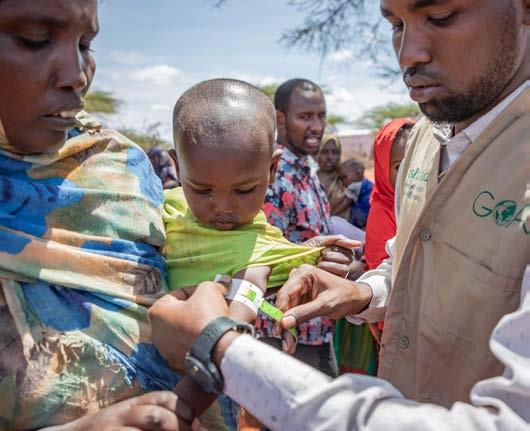
Despite facing hardships, she gave birth to baby Ali and managed to breastfeed him for eight months while juggling work to sustain the family. In January 2023, baby Ali fell severely ill, suffering from malnutrition with a MUAC measurement of 10.5CM. The father sought treatment at a Health Centre supported by Save the Children, where Ali was admitted to the therapeutic feeding program.
Through Save the Children›s intervention, Ali showed significant improvement after three months of treatment. His MUAC increased to 12.1CM, his weight improved, and his overall health visibly enhanced. The Outpatient Therapeutic Feeding Program, providing medications and Ready-to-Use Therapeutic Food (RUTF), played a crucial role in his recovery.
Upon completion of the program, Ali was discharged with a MUAC measurement of 12.1CM, then transitioned to the supplementary feeding program, where, after two months, he fully recovered with a MUAC measurement of 13.4CM. Save the Children’s continuous support and intervention facilitated Ali’s recovery and ensured a healthier future.
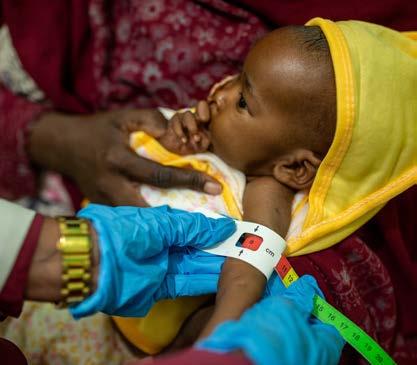
In Aisha’s words, “As a mother, my heart ached for baby Ali’s situation. Save the Children’s swift and free assistance overwhelmed me with hope. The facility and organisation’s support transformed Ali’s life, and I am immensely grateful.”
Aisha dreams of returning to her village, rebuilding their life, and ensuring her children have access to education, healthcare, and livelihood opportunities. She hopes for their safety, well-being, and a stable environment free from conflict.
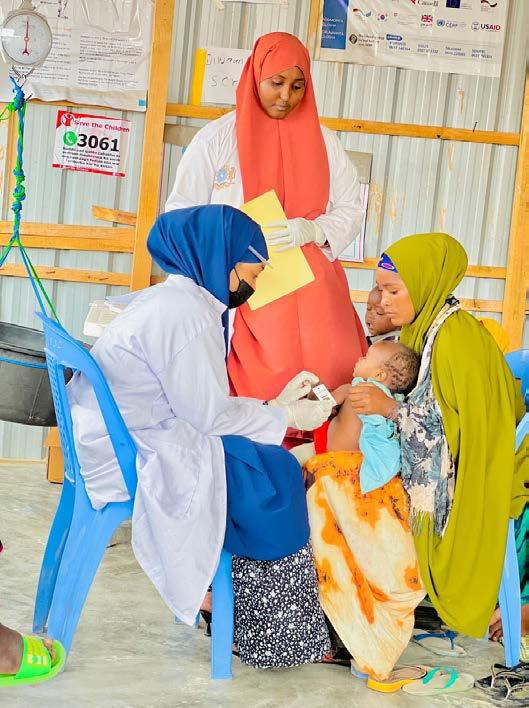
Six consecutive failed rainy seasons have created a devastating drought that is affecting millions of people in the Horn of Africa. With water sources drying up, crops and livestock dying, and livelihoods destroyed, many communities can no longer support themselves.
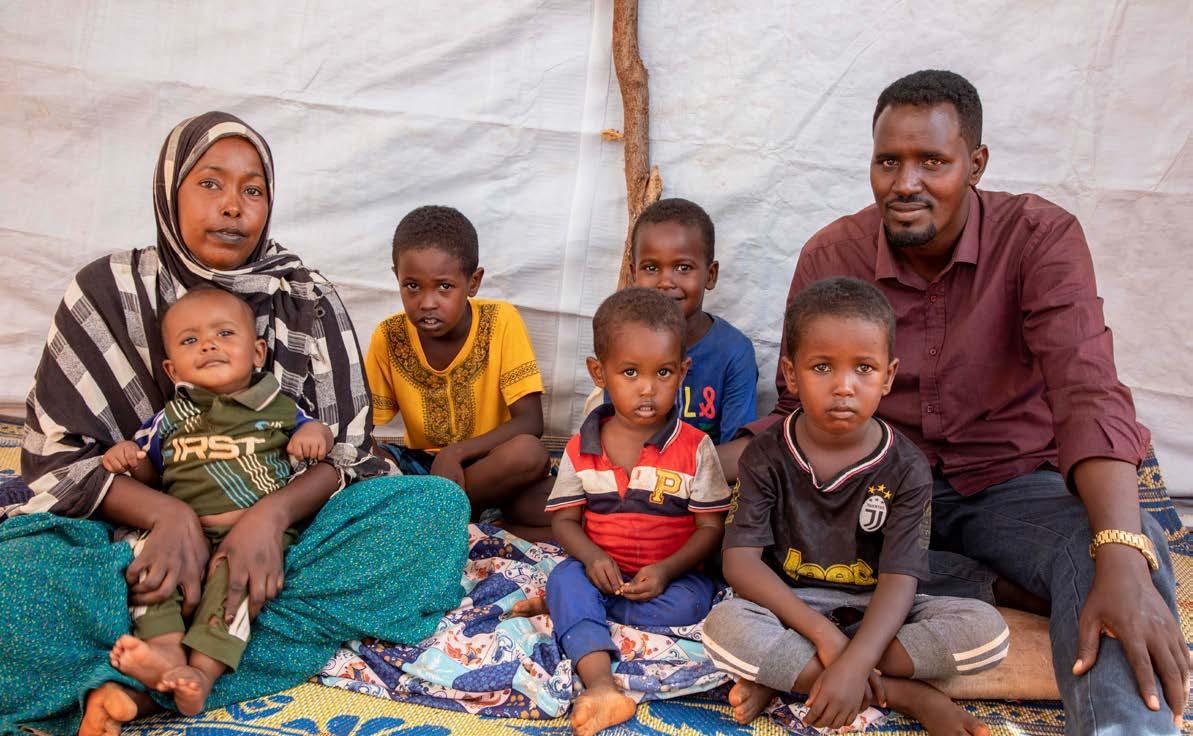
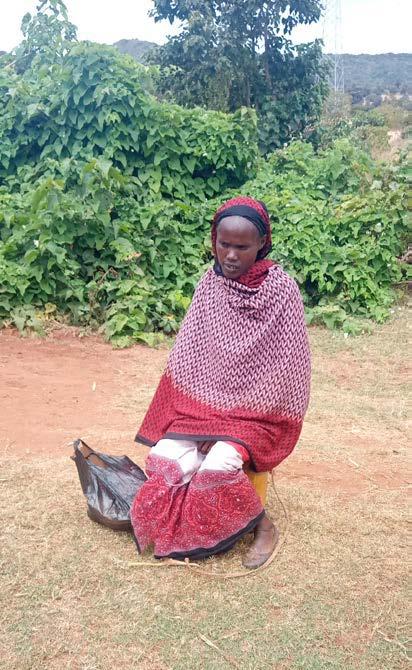
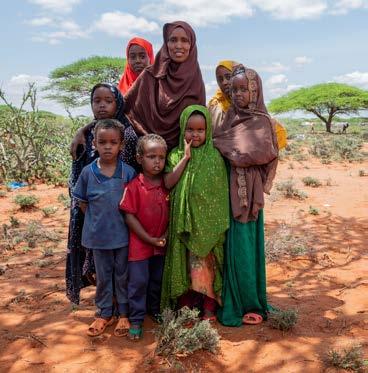
The situation is so desperate that rations have been cut at Melkadida refugee camp in Ethiopia, where Samira lives with her five children.
“All I think about is how I’m going to feed them,” she said. “Last night, they did not eat. This morning, I gave them some porridge. I have nothing more to give them.”
All five of Samira’s children were diagnosed with malnutrition and treated, but only three have recovered.
Adane Tefera, an Associate Nutrition Officer for UNHCR, is witnessing the impact of this dire food crisis on vulnerable families such as Samira’s.
“The cost of food has increased by 67 per cent, according to our last assessment. Even the most basic food item, milk, has more than doubled in price,” he said.
“As most refugees can no longer afford to buy food from the markets, they are finding it very difficult to get enough to eat, which puts them at risk of malnutrition and other serious diseases.”
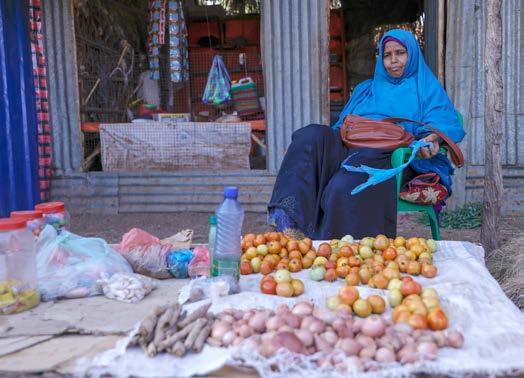
Dahira, a Somali refugee and mother, runs a small vegetable shop in Melkadida’s main market. But business has been tough lately, as people can no longer afford to buy her tomatoes.
“Recently, I bought half a sack of tomatoes on credit from my neighbour so that I can sell them and my children can have something to eat,” she said.
“But I have only been able to sell tomatoes worth 30 Ethiopian Birr ($0.60), not enough even to buy a packet of maize flour.”
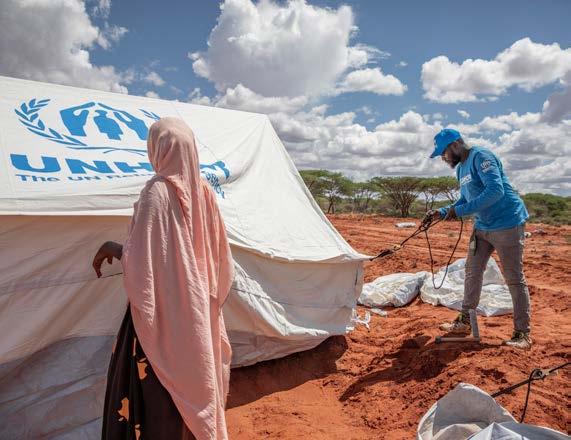
UNHCR is providing safe shelter for people who have fled their drought-stricken homes. We are also working with partners to distribute cash assistance and life-saving supplies such as clean water and sanitation items.
Salo is 25 with 5 family members. She was selected as a participant in the cash assistance program, in Obda Kebele. She was asked to provide her short testimony and she said “Previously I produced enough food from my farm. I also had a good number of livestock.”
Due to the strong and prolonged drought, I lost my cattle and the crop I planted which obliged me to look for external support. In such condition, the Ethiopian Kale Heywet Church supported me with ETB 20,000.00 (twenty thousand birr) in five rounds*.
With support I bought food items, one heifer, teff seeds and also rented a tractor in which I ploughed my small plot of land. This support saved my life and my family members. After long dry years, God gave us rain again, I sowed my farm and thanks to God I harvested 6 bags of teff (1.5 quintals). Currently I am feeding my family with this grain. The heifer /calf/ is small and growing. I hope she will multiply for me in the future.
The support is very good and on time, but the problem is very big and still we need some support to be self-sufficient because we lost all our assets and it takes at least two and more years to revive our economy and support ourselves if the rain regularly comes on time. It is still unpredictable because since May, we haven’t been able to get the rain and all the vegetation are drying out.
The geographical areas covered by EAA responding members include: • Somalia • Kenya • Ethiopia • South Sudan

Anglican Overseas Aid, Plan
Central African Republic
Rwanda Burundi
Democratic Republic of the Congo Tanzania

Action Aid, ADRA, Australia for UNHCR, Baptist World Aid, CBM, ChildFund

Act for Peace, ALWS, Australia for UNHCR, Tearfund

Australia for UNHCR, ALWS, CARE, Caritas Australia, Save the Children, Oxfam, Plan
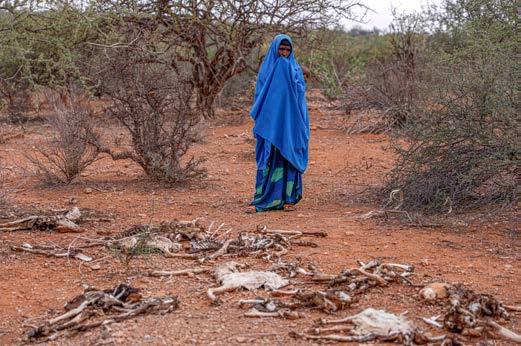
Countries in the Greater Horn of Africa continue to experience extreme weather including drought, flooding and high temperatures. The dry hot weather is expected to worsen with the onset of El Niño.
The combination of climate events, displacement of large populations, economic challenges and escalating conflict are driving food insecurity to catastrophic levels. The total food insecure population in need of assistance is now over 61,000,000 people.
The region is seeing an increase in outbreaks of multiple diseases including cholera, measles, meningitis and malaria, while ongoing conflicts are affecting the delivery of health services. Millions of people have been displaced by the conflict in Ethiopia and Sudan. This is exposing vulnerable populations such as women and children to extreme risks.
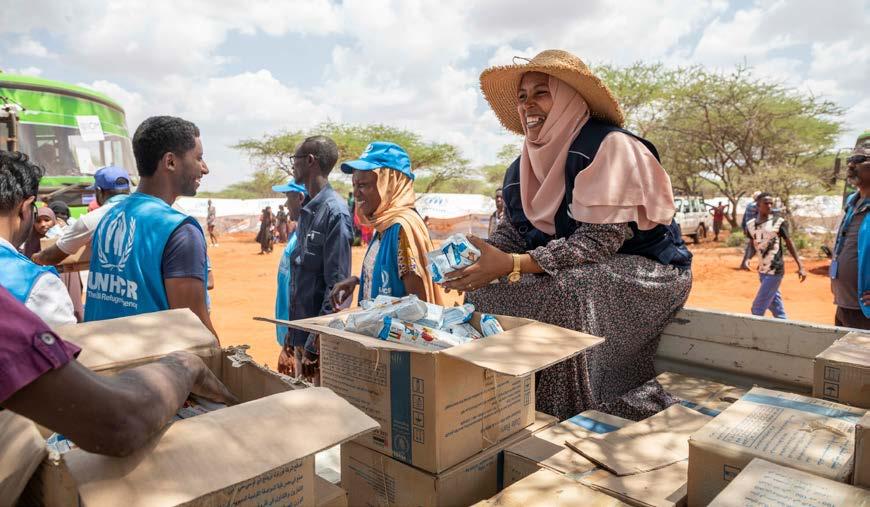
UNHCR, Government and WFP staff distribute high energy biscuits to newly arrived refugees being relocated to Mirqaan Settlement. Image: UNHCR
61 million
Acutely food insecure people (IPC 3+)
11.5 million
Children suffering acute malnutrition (OCHA, IPC, UNICEF 2023)
14.9 million
People displaced due to conflict, drought and flooding
Source: World Health Organisation SITUATION REPORT: 01 July - 31 August 2023 Greater Horn of Africa Food Insecurity and Health Grade 3 Emergency:
The Buulo-Biyooley IDP camp is located in Baidoa district, Bay region, Somalia. It is home to over 1,080 internally displaced people (IDPs), many of whom are women and children.
A 55 year-old woman named Faayow Salat was displaced from her home in Buulo-Gumaar by drought. She lost all her livestock animals during the drought. She has a disability that makes it difficult for her to walk. She arrived at the Buulo-Biyooley IDP camp with her 12 children to seek humanitarian assistance.
Faayow had no way to get water for herself or her children. She would often send her two oldest daughters to fetch water. They would have to wait in long lines at the water point, which is 4km away from the IDP camp, and they would sometimes faint from the heat. She was also worried about the safety of her girls, as they would have to wait over an hour in the queue and they would sometimes come back home with no water at all.
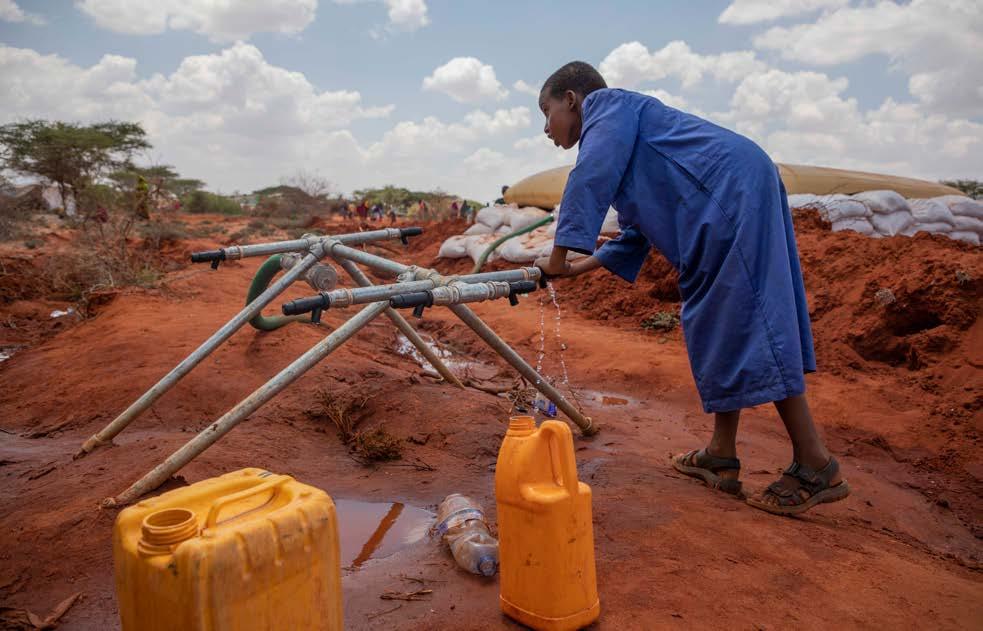
Faayow was one of the beneficiaries of the EAA Hunger Crisis Response Project and benefited from the emergency water trucking (EWT) intervention that targeted newly displaced households in 12 IDP camps in Baidoa town. With CARE and local partner WASDA’s support, Faayow was able to receive 90 litres per day for her family without struggling or risking her daughters’ safety, and this could easily be transported the short distance to their home using jerry cans.
Faayow said:
“I came from Bulo-Gumaar in Qansaxdhere district which is 90km away from Baidoa. We lost our cattle and goats in the drought and since the season was poor, we couldn’t harvest enough to sustain us. I decided to move with my children here to seek some humanitarian assistance. I am disabled and can’t move alone. I use this wheelchair (she points).”
“I am grateful to WASDA/CARE and the donors for the great support bestowed upon me and I wish another opportunity will come by since the need for water will remain paramount as the drought continues to strike the region, for my neighbours and my benefit, Thank you all”
All members conducted their own measurement and evaluation activities during and at the conclusion of the response utilising EAA funds. Members had agreements with their downstream partners that included regular reports and meetings to discuss the progress of activities against the activity plans, and to discuss changes in approach based on changing contexts and needs.
Measurement and evaluation activities included post distribution monitoring that included feedback from participants and beneficiaries.
Realtime evaluation activities enabled members and their partners to adjust their responses based on the feedback received. This ensured that the humanitarian efforts met the needs of beneficiaries.
Some major reports have been compiled and examples of publicly available reports are listed below including links to access those reports. These are just a few examples of the reports available, and more reports are available on request.
Caritas Australia
Using funds from the EAA appeal, Caritas’ partner Trócaire ran a two-day refresher training course for CNWs in 3 districts, where 10 CNWs were trained in each district. A summary of the training course and outcomes is here: Community Nutrition Worker Training Course
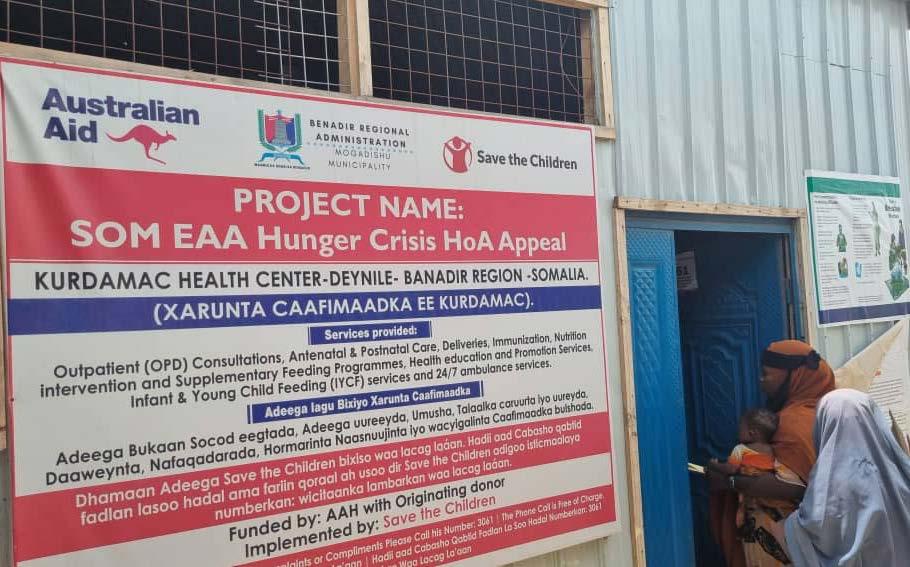
Save the Children provided preventative health and nutrition services through the Kurdamac facility in Somalia, using EAA funds. A survey was conducted of the beneficiaries of the health services provided and the survey results are here: EAA Hunger Crisis –Client Satisfaction Survey Report
Following are two examples of program validation and evidence of the work of UNHCR to which the EAA grant contributed
• Somalia Participatory Assessment – National Report – April 2022
• Ethiopia - Integrated Gender-based violence accountability to Affected People (AAP) Assessment Report, September 2022
ChildFund Australia
Program validation and evidence is available here. Rapid Baseline Report
Examples of direct quotes from members on how the EAA funds were useful in the overall humanitarian response of members:
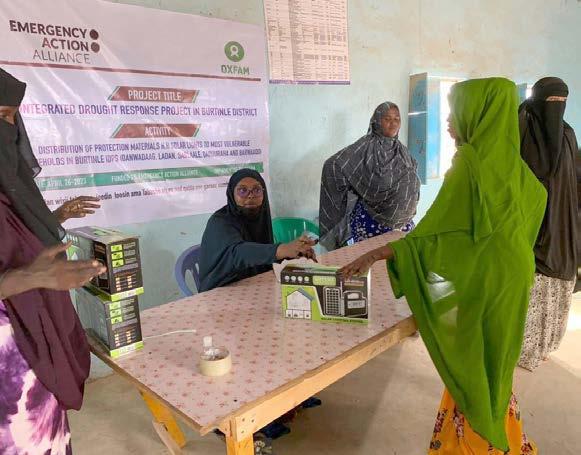
CBM Australia: The EAA funds enabled cash transfers to 1,518 households, training and capacity building to local OPDs to enable participation and advocacy for inclusive humanitarian responses now and in the future. The funds also enabled medical outreach and disability assessments providing assistive devices and meeting aspects of the preconditions for inclusion.
CARE Australia: The EAA funds were used to provide lifesaving support services to internally displaced people in Baidoa, Somalia. 42.6% of the funds supported MPCA, 7.1% of the funds supported WaSH activities, and 13.8% of the funds supported health and nutrition activities. Additionally 36.5% of the funds were used to provide operational and staffing support, to facilitate the delivery of the response.
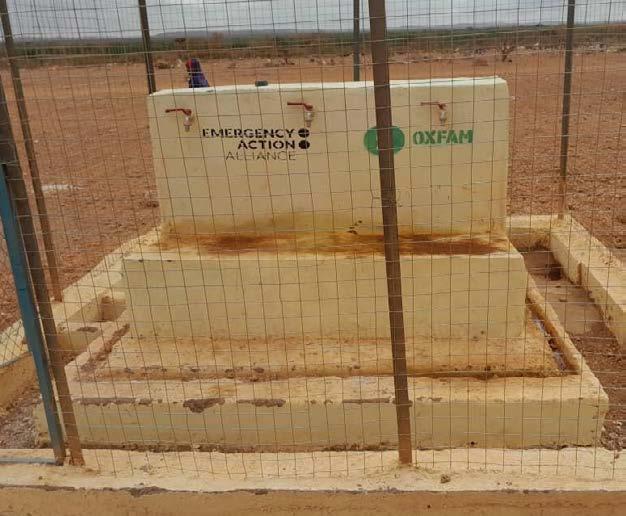
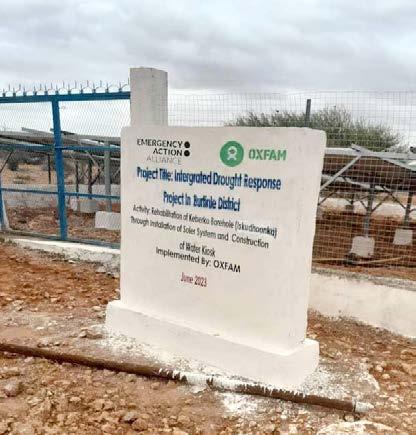
OXFAM Australia: EAA funds helped the Oxfam Puntland program to reach more people including IDPs and poor host communities and address their most basic needs. This contributed to the regional crises response helping Oxfam to continue with its humanitarian response strategy by reaching more people in Somalia and reducing the effects of the drought in Somalia.
Caritas Australia: The EAA funds were expended in the purchase of nutrition supplies (plumpy Nut – RUTF and Plump sup – RUSF), acquiring of non-medical supplies, facilitation of supply chain and logistics, training of CNWs, and sensitization of the community on IYCF. This helped improve the nutrition status of malnourished children in the targeted communities.
Baptist World Aid Australia: The response funds helped provide food items to 1200 households, which included staple foods such as Maize, Rice, Beans and Porridge flour and cooking oil for the most vulnerable members. The response also supported stakeholder’s coordination during planning and distribution exercises. This contributed to communities having access to food and water within their households.
Save the Children Australia: The EAA project supported and implemented integrated lifesaving health and nutrition service deliveries at the Kurdamac health facility in Daynile district. The project played a vital role in scaling up the targeted supplementary feeding program, addressing a significant gap in the Daynile IDP settlements. The program empowered IDP communities to access essential health services.
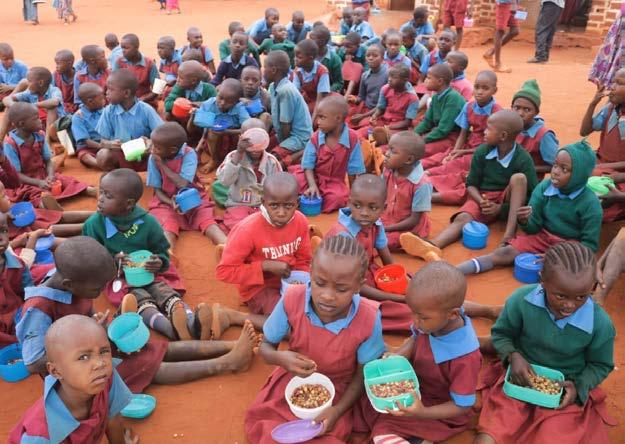
ActionAid Australia: EAA funds were expended in Tangulbei, Baringo County to improve the quality of life and restore dignity to communities affected by drought. Promotion of quality of learning was enhanced through provision of meals and dignity kits to schools. Cash transfers enabled households to purchase basic needs including medication, school related items and seeds. Access to water points was improved.
Tearfund Australia: EAA funds enabled the initial three rounds of cash distribution. If the EAA funds had not been available the funding wouldn’t have been used and neither would the additional funds provided by Tearfund Netherlands through a separate grant. EAA funds both enabled the response and were then leveraged for additional benefits to increase the scale of the response.
Kenya. Makueni School Feeding Program. Image: ADRA
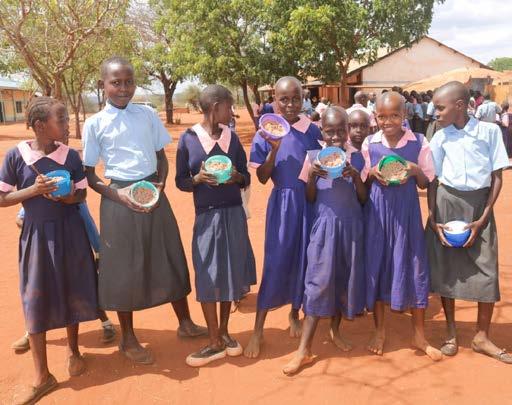
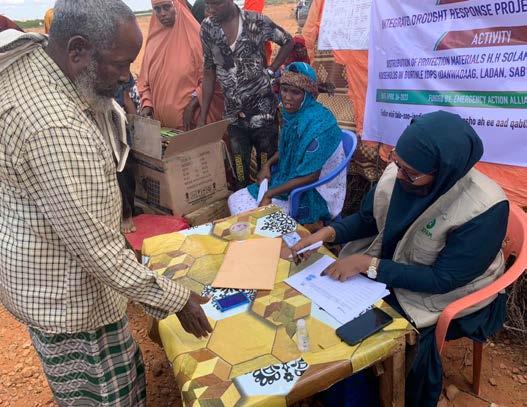
Australia for UNHCR: The financial support provided by the EAA has enabled UNHCR to significantly ramp up its humanitarian response to the drought and provide urgent humanitarian assistance which helped save lives. UNHCR teams together with partners have worked extensively to reprioritise emergency relief, to ensure that people facing the most urgent and life-threatening needs were reached first.
Australian Lutheran World Service: Somalia. The EAA financing supplemented other education and food security projects, particularly food distribution and teacher emergency incentives. The food rations were crucial for vulnerable parents and children. This support ensured a lifeline into the rains and into the next season of food availability. It sustained lives in the face of adverse food insecurity.
ChildFund Australia: Through a comprehensive set of immediate response activities, ChildFund has been able to meet basic needs, improve the availability of and access to potable water and, in some cases, decrease the prevalence of water born disease.
Plan International Australia: This grant enabled Plan International Somalia to scale up its emergency response and presence in south central Somalia. The grant helped Plan Somalia secure additional funding for emergency response programs in Baidoa up to a value of $2 million. This includes funds for a new Education in Emergency project in Baidoa.
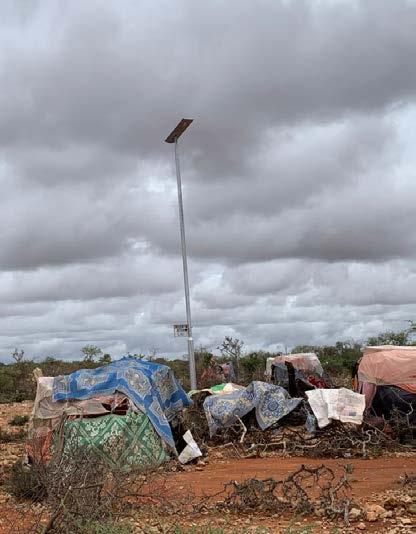
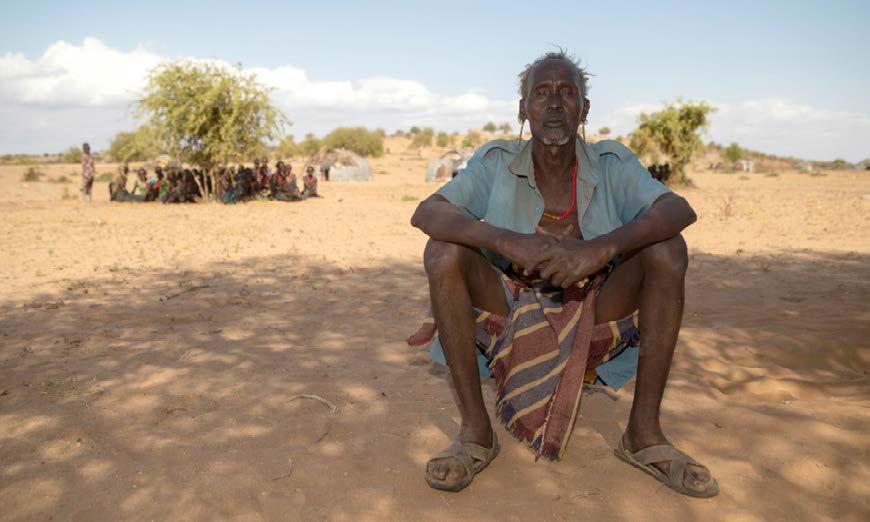
Bute is a village elder living in southern Ethiopia with his wife, Burre.
Before the current drought, Bute and Burre had 2,000 livestock in two stables, including donkeys, goats and cows. The grass was green and there were plenty of pasture for their livestock. They used to harvest sorghum and maize, with enough water from the nearby river to irrigate their crops.
“We used to have lots of milk and meat to eat, and now we have almost nothing. We feel very sad and frustrated. The life we used to live and enjoy is completely gone,” Bute said.
During the last three years, rainfall in this area of southern Ethiopia has been erratic, with long
periods without any rain. This meant that farmers and pastoralists are unable to grow any crops or feed their livestock.
Bute and Burre’s seven adult children have left in search of food and it has been more than a year since they last saw them.
With your support, Caritas Australia is working with Caritas Ethiopia to provide urgent food and emergency water to drought-affected communities.
“We pray and hope for rain. We appeal for people to give us food because here there is continuous drought, we can’t farm, there is no rain. We have no other chance except for this help.”
Organisation
ACFIDAustralian Council for International Development
CCCMCamp co-ordination and Camp Management
CHSCore Humanitarian Standard
CNVsCommunity Nutrition Volunteers
CNWsCommunity Nutrition Workers
CRICore Relief Items
CVA Cash Voucher Assistance
DAC Development Assistance Committee
DFAT Department of Foreign Affairs and Trade
DRRDisaster Risk Reduction
EAAEmergency Action Alliance
ECDEarly Childhood Development
FFA Food For Assets
FHHFemale Headed Households
FNSFood and Nutrition Security
GBVGender Based Violence
GDT Global Distribution Tool (for cash distribution)
HH, HHs Household
IDPInternally Displaced Persons (displaced within their own country)
IMAMIntegrated Management of Acute Malnutrition
IYCFInfant and Young Child Feeding
MAMModerate Acute Malnutrition
MHHMale Headed Households
MPCAMulti Purpose Cash Assistance
MUAC Mid Upper Arm Circumference (measurement of malnutrition)
NFINon Food Itemsº
ODA Official Development Assistance
OPDsOrganisations of people with Disabilities
PLW Pregnant and Lactating Women
PSEAPrevention of Sexual Exploitation and Abuse
PSNProductive Safety Nets
RUSFReady to Use Supplementary Food
RUTFReady to Use Therapeutic Food
SAMSevere Acute Malnutrition
SCScreening Centre
WASH Water, Sanitation and Hygiene
Emergency Action Alliance (EAA) brings together the expertise and impact of 15 leading Australian aid organisations, enabling a swift and targeted response when major emergencies take place overseas.
EAA’s 15 member charities are: ActionAid Australia, Act for Peace, ADRA, Anglican Overseas Aid, Australia for UNHCR, Australian Lutheran World Service, Baptist World Aid Australia, CARE Australia, Caritas Australia, CBM Australia, ChildFund Australia, Oxfam Australia, Plan International Australia, Save the Children Australia and Tearfund Australia.
EAA can rapidly launch a coordinated, targeted fundraising appeal under the Emergency Action Alliance banner in order to streamline efforts and help more people in their moment of need. This makes it easy for Australians to know how to help. The money raised will be used quickly and efficiently to help those affected through the EAA’s network of member organisations.
Emergency Action Alliance has a unique process for allocating funds to the charities best able to deliver aid in that particular emergency, allowing them to rapidly scale up operations on the ground and help more people. EAA’s members fund the organisation’s running costs, and in turn, only EAA members responding to the emergency will receive funds to carry out their vital work.
Not only is this an extremely efficient and effective way to raise and distribute funds in international emergencies, it also makes it easier for donors to know how to help. Instead of feeling confused about which charity to donate to, Australian donors wanting to help can have a single, trustworthy way to make an impact.
Emergency Action Alliance and its members would like to express our sincere gratitude to the Australian Government for supporting the EAA Hunger Crisis Appeal.
Email: info@emergencyaction.org.au
Visit our website: emergencyaction.org.au
Contact us via mail: Emergency Action Alliance
Donor Services
Level 8, 162 Goulburn St
Surry Hills NSW 2010