The Cafe: My Experience
1
Eliza Kaye

Architecture
SP-24 Pratt Arch 581A
Professor Adam Elstein
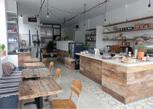
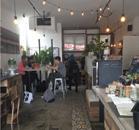
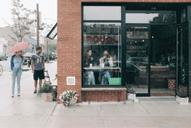
In the realm of forensic architecture, where spaces serve as silent witnesses to the interactions and events that unfold within them, the analysis of a cafe space becomes a rich tapestry of sensory exploration and spatial investigation. In this project, I analyze Stonefruit Cafe, a space that I have spent countless hours working within. Here, I delve into the intricate nuances of a cafe environment, employing a multidisciplinary approach to uncover the hidden narratives and layers of meaning embedded within its walls. From the reverberations of sound to the social dynamics at play, each facet of the space offers valuable clues that inform our understanding of its function, usage, and significance. Through a combination of visual mapping, photographic documentation, and sensory exploration, we aim to unravel the complexities of the cafe space and shed light on its role within the urban landscape. By immersing ourselves in the sensorial richness of the environment, we endeavor to reveal the stories it holds and the truths it conceals, ultimately illuminating the interconnections between architecture, society, and human experience.
Photo Map
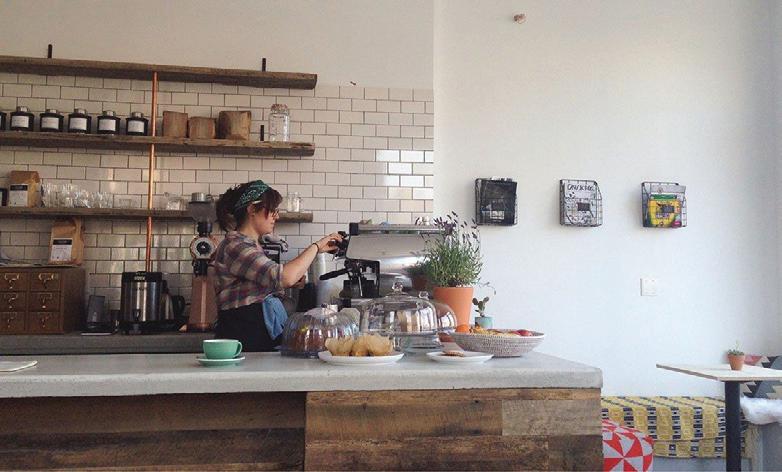
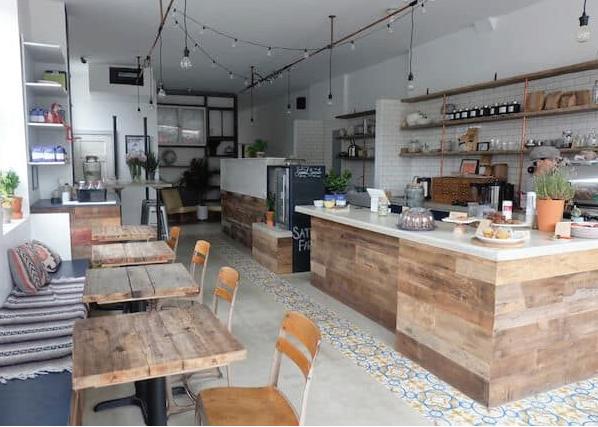

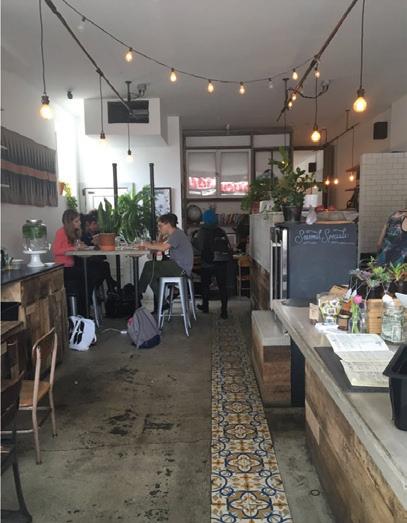

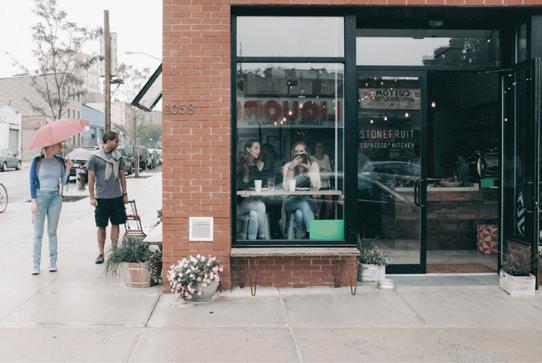
Photography serves as the first step in the investigation, allowing us to capture and document the visual essence of the space. It aims to encapsulate the unique character and atmosphere of the environment, highlighting architectural features, spatial configurations, and sensory elements that shape the overall experience. By employing techniques such as framing, perspective, and lighting, we can draw attention to specific aspects of the space and evoke a sense of presence for our audience. Moreover, photography enables us to freeze moments in time, preserving fleeting interactions, gestures, and expressions that offer valuable insights into the dynamics of human behavior within the space. As we compile our photographic documentation, we recognize its power not only as a record of the present but also as a window into the past and a catalyst for critical reflection on the spatial dimensions of social interaction and cultural identity.
The following exploration highlights my personal footpath within the cafe.
Beginning by entering from the front door to ordering at the counter, and heading back out for days when I am merely picking up a coffee, and entering, ordering, and finding my seat on days where I plan to set up shop and work.
For those long hours I added a secondary route which includes the bathroom, and going back to the counter for a snack and refill. Through watching others enter the space, many people tracked very similar routes to myself. The space has a fairly dictated path throughout, with little room for meandering around.
By mapping the footpath, we gained a deeper appreciation for the spatial organization and efficiency of the cafe layout, as well as the subtle cues that guide and shape our interactions within the environment. This micro-scale analysis offers valuable perspectives on user experience and navigation, shedding light on the nuanced interactions between architecture, movement, and human behavior within the cafe setting.
Man: “We're going to the museum at noon tomorrow right?”
Woman: “Yeah, Chris and Emily are meeting us there.”
Man: “Do you want me to get tickets for it?”
Woman: “Yeah please, the link is in the groupchat.”
Customer: “I'll have a large cappuccino, please.”
Barista: “Sure thing. Anything else?”
Customer: “Yeah could I also get a croissant please.”
Barista: “Yup, got it”
Woman: “Is your latte good?”
Man: “Yeah”
Woman: “Can I try it ..... oh yum. A bit too hot still.”
Barista: “Hi how are you? What can I get you started with?” Customer: “I’m just going to do a small iced coffee and two of the cookies.”
Barista: “You want the coffee black?”
Customer: “Yeah thanks.”
Person on Phone: “No, I told you, I can't make it tonight. I have that meeting at 6. .. I can’t reschedule but I can see you tomorrow.”
For the auditory component of the analysis, I opted to diagram the audio experience within the cafe space. Utilizing a combination of plan view mapping and linear representation, I sought to visually depict the spatial distribution and temporal dynamics of sound. Employing different colors to denote various sources of sound, including background music, conversations, and ambient noise, our plan view diagram provided a comprehensive overview of the acoustic landscape within the cafe. Additionally, juxtaposing this plan with a linear representation allowed us to illustrate how sounds contrasted with each other over time. For instance, while background music remained constant, the opening and closing of doors created intermittent spikes in noise levels. Furthermore, we conducted a short audio experiment, focusing on individual conversations within the environment. By isolating and analyzing each conversation separately, we gained insights into the content, tone, and spatial context of interpersonal communication within the cafe, enriching our understanding of the social dynamics and acoustic environment of the space. Among various reasons for collecting this evidence, I chose to focus on audio as the various sounds within a cafe space have always been of interest to me. During the COVID-19 lockdown I would often play coffee shop sounds on youtube to emulate being within the space where I knew I was most productive. The combination of somewhat constant sounds blend together to create a beautifully soothing atmosphere that allows people to become one with the space itself, letting them comfortably stay for hours at a time.



door opening and closing background
clinking of cups and utelsils, espresso machine brewing
In essence, our exploration of the cafe space exemplifies the intricate interplay between architecture, sensory perception, and human interaction. Through a blend of visual, spatial, and auditory analyses, we’ve unraveled the nuanced fabric of this environment, revealing its capacity to evoke emotions, facilitate social dynamics, and shape our lived experiences. From the physical layout to the ambient soundscape, each element contributes to the creation of a distinct atmosphere that influences our behavior and perception. As we conclude our investigation, we’re reminded of the richness and complexity inherent in everyday spaces, urging us to continue probing beneath the surface to uncover the hidden stories and meanings that lie within. By embracing the principles of forensic architecture, we not only deepen our understanding of the built environment but also affirm its profound impact on our lives and communities.