Lisa Trevisanello, DVM, CVA Via F. Busonera, 162 35031 Abano Terme (PD)
Italy
Kosei Yamagiwa, DVM, CVA
TCVM Clinic 91 Asahi-cho, Mistuishi-cho, Hokkaido-prefecture Japan 059-3107
Huisheng Xie, DVM, PhD
Chi Institute 9700 Hwy 318 West Reddick, Florida 23686
Preface
The Western world seems enamored with alternative medicine. Many people have become jaded with conventional Western medicine as they jump from doctor to doctor in hopes of a cure that never materializes. Alternative medicine seems to offer them just that—an alternative to the failures of Western medicine.
Many seekers hope to rediscover a more “natural” and effective way of healing. This has fueled interest in herbal medicine, chiropractics, acupuncture, healing touch, and a number of other therapies. Various dramatic testimonials of success with a number of illnesses increased many people’s enthusiasm and belief in these methods. Even the Western medical community, while at first skeptical of these methods, has come gradually to accept the validity of some therapies with support from strong clinical and research evidence. Acupuncture, in particular, has been well researched and has documented numerous beneficial physiological changes.
Western medicine, however, sensibly points out that alternative therapies are not miracle cure-alls any more than are its own fantastic, technologically enhanced conventional methods. Nor is alternative medicine synonymous with “safe.” Both conventional Western medicine and alternative medicines have their strengths and weaknesses. Ideally, they can be used together in complementary or integrative medicine so that the strengths of one compensate for the weakness of the other. This requires an intimate understanding of each system so that it can be properly applied. This text focuses on acupuncture, which is one part of traditional Chinese medicine, to help practitioners gain knowledge and skills for effective treatment.
Traditional Chinese veterinary medicine (TCVM) has been used to treat animals in China for thousands of years. This system began in prehistoric times as the ancient people attempted, through trial and error, to understand domestic animal disease. Through the present day, each generation has added to the knowledge and discoveries of their ancestors. Incorporating new information over time, TCVM continues to change and grow, and it remains as fresh, adaptable, and effective as ever. New practitioners breathe fresh life into this old medical art with cultural adaptations, technological
advances, and scientific research findings. For example, ancient Chinese techniques are often combined with modern medical practice through the use of sterile, single-use filiform acupuncture needles, hypodermic needles with syringes, electrical current, or laser light to stimulate acupoints.
The practice of TCVM in the Western world differs from its Chinese origins in several major ways. These modifications are not inherently good or bad but are merely part of the system’s continued development. First, most of the acupoints and meridian lines used by Western veterinarians are transposed from humans. Only a few of the ancient acupuncture texts have survived. Most books containing descriptions and charts of the classical meridian lines were lost long ago; however, some containing individual acupoint locations have remained and are still used today. As a result, current TCVM practitioners have discussed the actual locations of the meridian lines and points in species whose anatomy significantly differs from humans. Where do the meridians run if the animal has fewer digits or more ribs than a human? Also, what is the comparative energetic significance of certain points in biped humans versus quadruped domestic species with all four limbs touching the ground?
Second, veterinary acupuncture in China was primarily used for agriculturally important species such as cattle, pigs, and horses. These valuable creatures benefited from the focused medical attention of the TCVM practitioners. In modern Western society, however, dogs, cats, and birds are cherished companions, so there has recently been great incentive to better understand acupuncture in these species. Some Western veterinary acupuncturists even tend to these species exclusively.
Third, many ancient TCVM techniques were modified to fit Western sensibilities. For example, modern Western perceptions and medical practices typically encourage sterility and single-use, disposable equipment. Thus, acupuncturists currently use very thin, solid, sterile needles as opposed to the traditional tools, which were reusable, large, nonsterile needles of various shapes and sizes. Western practitioners also often combine TCVM with a variety of other medical techniques such as chiropractics, Western herbal medicine, and homeopathy.
Traditional Chinese veterinary medicine may initially be quite foreign to Western-trained minds. To some, the principles of TCVM and Western veterinary medicine (WVM) may seem separated by a great abyss. Although bridging that gulf is an individual mental process, the readers of this text, through their interest and willingness to accept new ideas, have already made the first steps toward understanding. These two medical systems are not mutually exclusive. Each has aspects that place it on opposite ends of the spectrum, but there is a large area of overlap between them. While the common ground provides some familiarity for those new to TCVM concepts, the intricacy of the medical system is difficult to accurately simplify and categorize for teaching purposes. Inevitably, much of the complexity of TCVM is learned through experience, but this text provides a framework to build upon.
Learning TCVM requires a shift in perspective. In general, conventional Western medicine believes in control, and traditional Chinese medicine believes in balance; WVM is more mechanistic and TCVM is more energetic. Western medical practitioners analyze a disease process to discover its specific, fundamental, physical cause, whether this is an infectious agent, an enzymatic defect, or a toxic insult. By fully understanding the functions of the physical body all the way down to a cellular or molecular level, one can target the abnormality and better control the disease process.
On the other hand, TCVM practitioners recognize disease as an imbalance in the body. They understand that the body is an integrated, energetic structure, and that disturbance of energy flow creates disease in the whole organism. When a disease pattern is identified, one can restore balance and health by helping the body regulate itself. Both systems rely on medical history and physical examination to make a diagnosis or identify a pattern. Western medicine adds in diagnostic tests such as bloodwork or radiographs. The diagnostic tests of TCVM include palpation of the pulse and the shu points. In both cases, an experienced clinician interprets the findings and chooses an appropriate therapeutic regimen. A Western veterinarian may recommend surgery or reach for antibiotics, steroids, or other pharmaceuticals. A TCVM practitioner may recommend herbs, acupuncture, or special management practices as therapy.
Generally, the goals of TCVM and WVM are the same: both hope to promote health and to prevent disease. They are merely two different ways of viewing the world, each with strengths and weaknesses. Western medicine deals well with acute diseases and has advanced surgical techniques. TCVM can be beneficial for chronic diseases, especially those that Western medicine can only control but not cure. Due to the more individual nature of TCVM, Western medicine can better handle herd health problems. Although Western veterinarians promote disease prevention through yearly physical exams and vaccines, TCVM is very beneficial for identification of potential problems and preventing disease through dietary modification or preventive therapies. In addition, when veterinarians practice traditional Chinese medical techniques such as Tai Qi Quan or Qi Gong, they are able to remain
centered and to better assist their patients. The therapeutics of TCVM can avoid some of the deleterious side effects of the Western drugs, but the Western drugs act much more quickly.
Through integration of the two systems, one may take advantage of the strengths of each while minimizing the weaknesses. Practitioners who are able to bridge the mental gap between Eastern and Western medicine may find that this combination brings better results than either one alone.
THIS TEXT
This text is a collaborative effort that further develops the work begun in the text Traditional Chinese Veterinary Medicine by Huisheng Xie in 1994. This volume focuses on the basic principles, techniques, and clinical application of veterinary acupuncture.
Although veterinary practitioners in China have used traditional Chinese medicine for thousands of years, therapies such as acupuncture and herbal medicine have only recently come into use in the Western world. The majority of the literature about these traditional techniques is written in Chinese and is inaccessible to most Westerners. Because of the paucity of texts in the English language regarding these techniques, we hope this text will fill in some gaps in the current knowledge. This text is written primarily for use by veterinarians who practice traditional Chinese veterinary medicine (TCVM). We hope that it will be a relevant, functional resource for veterinarians and students who wish to apply these techniques. Veterinarians are strongly advised to seek a comprehensive TCVM training and certification program before using acupuncture or herbal medicine. Several nationally and internationally recognized programs are available in the United States. Of these organizations, the authors of this text are primarily affiliated with the Chi Institute. This institution instructs veterinarians in a variety of the certified TCVM training programs including equine, small, or mixed animal acupuncture. More information about the certified TCVM programs available at the Chi Institute may be found at www.tcvm.com.
TCVM, like other medical systems, is an ever-changing field and is based largely on clinical observations rather than controlled studies. Medical practitioners should be aware of the standard safety precautions and make appropriate changes in therapies as new research becomes available and as clinical experience grows. Thus, the information within this book should not be construed as specific instructions for individual patients, and readers should use professional judgment in deciding when and if the acupuncture procedures described should be applied.
ACKNOWLEDGMENTS
We sincerely appreciate the efforts of all who have helped to make this book possible. Let us begin by recognizing our chapter contributors including Drs. Cheryl Chrisman, Bruce Ferguson, and Roger Clemmons. They have done an excellent job on their subjects. We also thank Drs. Bruce Ferguson,
Cheryl Chrisman, Robert Spiegel, Carolina Ortiz-Umpierre, Inbar Israeli, and Tiffany Rimar for proofreading all of the chapters. Thank you to Drs. Kosei Yamagiwa, Minsu Kim, and Lisa Trevisanello for schematic drawings and Mark Hoffenberg for his wonderful photography. Drs. Himani Das, Carlos Zamora, Kosei Yamagiwa, Flavio Avila, and Michael E. Mount have reviewed the equine acupoint locations to ensure accuracy. We also acknowledge the equine model, Rahnok, a kind Grey Egyptian bred Arab mare, and canine models, alovely “lab dog” Roxie and Debmar’s Social Butterfly “Wings.” We greatly appreciate the patience of Blackwell Publishing as we have slowly brought this text together. Finally, our special thanks go to Zhen Zhao who has illustrated the entire book.
NOTICE
This book is written for use by veterinarians who practice traditional Chinese veterinary medicine (TCVM). It is a guide to the general principles behind this medical system, and it is not intended to be a substitute for sound medical education. Veterinarians are strongly advised to seek a comprehensive TCVM training program before using acupuncture or herbal medicine. There are several certification programs in the United States that are available to veterinarians. Nonveterinarians are cautioned against practicing medicine on animals, unless permitted by law. Untrained or inadequately
trained individuals are unable to accurately assess a patient’s health status and make appropriate recommendations.
Traditional Chinese veterinary medicine, like other medical systems, is an ever-changing field. In addition, much of the information in this book is based on clinical observations, as opposed to controlled studies. The publisher, editor, and authors make no warrant as to results of acupuncture or other treatments described in this book. Medical practitioners should be aware of the standard safety precautions and make appropriate changes in therapies as new research becomes available and as clinical experience grows. Any person administering medical therapy is responsible for using his or her professional skill and experience to determine the best treatment for the patient and to assure that the benefits of this treatment justify the associated risk. Thus, the information within this book should not be construed as specific instructions for individual patients, and readers should use clinical judgment in deciding when and if the acupuncture procedures described should be applied. The authors cannot be responsible for misuse or misapplication of the material in this work.
While every effort has been made to ensure the accuracy of information contained herein, the publisher, editor, and authors are not legally responsible for errors or omissions. Readers are advised to check the product information currently provided by the manufacturer of each drug or formula to be administered to be certain that changes have not been made in the recommended dose or in the contraindications for administration.
XIE’S VETERINARY ACUPUNCTURE
1
Introduction to Meridians
Huisheng Xie and Vanessa Preast
Upon arriving at an unfamiliar location, visitors orient themselves by obtaining a map of the city. Equipped with a clear illustration of the region’s roads, they easily recognize their current position and understand what routes will take them to the places they wish to visit.
Similarly, when starting to learn acupuncture, one must first know the Jing-Luo because it provides a map of the body and thus helps the novice to understand how to reach the goal. Like the highways and streets of a city, the Jing-Luo functions in a body by connecting one location to another. This system is so important that Ling-Shu (Spiritual Axis), a classical ancient text (published more than 2,200 years ago), states, “it determines life and death, treats all the diseases, and regulates both the Deficiency and Excess Patterns” and recommends that one “has to gain a thorough understanding of it” (chapter 10).
1-1.THE JING-LUO SYSTEM
There are two major components in the Jing-Luo system: Jing-Mai and Luo-Mai. Jing can be translated as meridian, channel, or major trunk. Mai means vessels. Luo is a collateral or branch. Thus, Jing-Mai translates as major trunk vessel, and it is also known as the channel Luo-Mai refers to the collateral or branch vessels. These channels are the body’s equivalent of telephone lines, airways, rivers, highways, and city roads, which provide a means of communication and transport. The Jing-Mai is like a main telephone line, a major highway, an international airport, or a large river. The LuoMai is like a telephone extension, a small street, a minor connection airline, or a small river.
Jing-Mai consists of 12 regular channels, 8 extraordinary channels, and 12 regular channels’associates, including 12 divergent meridians, 12 muscle regions, and 12 cutaneous regions. Luo-Mai consists of 15 collaterals, small branches (SunLuo), and superficial branches (Fu-Luo) (fig. 1.1).
The Jing-Luo system is the pathway through which Qi and blood circulate. It regulates the physiological activities of the Zang-Fu organs. It extends over the exterior of the body, but it pertains to the Zang-Fu organs located on the
interior. It connects and correlates all the tissues and organs, forming a network that links the tissues and organs into an organic whole. Chapter 33 of Ling-Shu (Spiritual Axis) states that “twelve regular Channels are connected with the ZangFu organs internally and with the joints, limbs, and body surfaces externally.”
A.Discovery of the Jing-Luo System
The term Jing-Luo was first documented in the book Huangdi-nei-jing (Yellow Emperor’s Classic of Internal Medicine). Ancient Chinese medical practitioners discovered and gradually established the Jing-Luo system during their extensive clinical experiences. Two popular theories describe the discovery of this system: from a point to a line and from a line to a point.
FROMA POINTTOA LINE
In the beginning, ancient people may have observed that accidentally puncturing their body surfaces with a sharp object (such as a stone or twig) could relieve discomfort and pain. Later, they intentionally began to use the sharp objects to puncture the body at specific loci in order to treat illness and discomfort. These trials successfully relieved pain and encouraged the people to make special tools for this purpose.
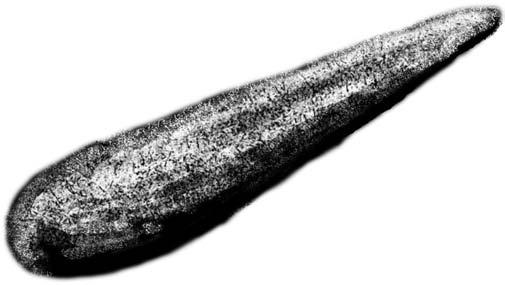
The bian-shi was one such tool made during the Neolithic period (about 8,000 years ago). It was a quadrilateral, pyramidal stone about 4.5 cm in length with one end tapered to a very sharp point. The middle part was flat so that it could be held between two fingers (fig. 1.2). Archaeologists concluded that the bian-shi functioned in excising boils and stimulating certain points on the body. Thus, the bian-shi may have been a first-generation acupuncture needle, and the body loci at which it was used were acupuncture points (acupoints). As awareness increased and more people used the bian-shi, they discovered additional acupoints.
Further developments in tools occurred over time as technology advanced. A sharp bone needle (approximately 8,000 years ago) and then a metal needle (Shang Dynasty, 1600 to 1100 B C.) were invented. These finer needles could be inserted to a deeper level into an acupoint. This increased the
probability of achieving better clinical results and opened possibilities of treating additional diseases with acupuncture. Improvement of the tools led to discovery of more and more acupoints.
The ancient practitioners reviewed their clinical results and linked the acupoints with similar functions to form a meridian (Jing-Luo) line. Thus, in this theory, the development from point to meridian is similar to how ancient towns were established first and then roadways were built to link the cities.
FROMA LINETOA POINT
The needling sensation, or de-Qi, was well documented by ancient practitioners. After a needle is inserted at a certain point in the body, the patient will first feel soreness, numbness, heaviness, and distension around the point. The sensation then travels up or down along a special line in the body called the acupuncture sensational line. These sensational lines are the meridian pathways or channels. Much historic evidence indicates that the meridian lines were discovered before all of the individual acupoints. After identifying the path of a meridian, the ancient practitioners found the acupoints one by one.
In 1973, many ancient medical books were unearthed from the No. 3 Han Tomb at Mawandui, Chang-sha, Hunan Province, China. These included two silk scrolls containing the books Zu-bi-shi-yi-mai-jiu-jing (Foot-Hand Eleven Meridians and Moxibustion) and Yin-yang-shi-yi-mai-jiujing (Yin-yang Eleven Meridians and Moxibustion). As these were written earlier than the third century B C., both books are older than Huang-di-nei-jing, which had been previously thought to be the earliest known explanation of the theory of Jing-Luo. Although these two books did not document the names of acupoints, they described the pathways of 11 channels (not including Pericardium) on the body surface.
Additional evidence that supports the line-to-point theory is that only 295 acupoints were recorded in Huang-di-nei-jing
1.1. Parts of the Jing-Luo system.
1.2. A bian-shi stone needle.
but 654 points were documented in Zhen-jiu-jia-yi-jing (Systematic Classic of Acupuncture and Moxibustion) written by Dr. Huang Fu Mi in A.D.282, which was about 500 years later than Huang-di-nei-jing.
B.The 12 Regular Channels
NOMENCLATUREOFTHE 12 REGULAR CHANNELS
There are 12 Zang-Fu organs; 6 are Zang (Yin) organs and 6 are Fu (Yang) organs. Each organ has a channel of its own. The nomenclature of the 12 regular channels is based on three factors:
1.location on either a thoracic or pelvic limb
2.association with either one of the three Yin (Tai-yin, Shao-yin, Jue-yin) or the three Yang (Yang-ming, Taiyang, Shao-yang)
3.relationship with a Zang-Fu organ
Each thoracic and pelvic limb is supplied by three Yin Channels and three Yang Channels. Because the 12 regular channels are bilaterally symmetrical, there are 24 channels in the body (table 1.1).
The channels that relate to Yin organs are Yin Channels, and the channels that relate to Yang organs are Yang Channels. The Yin and Yang Channels are each divided into three types. Yin consists of Tai-yin, Shao-yin, and Jue-yin. Yang consists of Yang-ming, Tai-yang, and Shao-yang. The energy levels dissipate with the flow from one Yin or Yang level to the next level. Yang-ming (brightest Yang) and Tai-yin (greatest Yin) are each in the highest, strongest level. Tai-yang (greatest Yang) and Shao-yin (smallest Yin) are in the next
Table 1.1. The 12 Regular Channels
Channel location Zang-Fu organAbbreviation
Tai-yin of the thoracic limbLung LU
Tai-yin of the pelvic limbSpleen SP
Shao-yin of the thoracic limbHeart HT
Shao-yin of the pelvic limbKidney KID
Jue-yin of the thoracic limbPericardium PC
Jue-yin of the pelvic limbLiver LIV
Yang-ming of the thoracic limb Large intestine LI
Yang-ming of the pelvic limbStomach ST
Tai-yang of the thoracic limbSmall intestine SI
Tai-yang of the pelvic limbUrinary bladderUB/BL
Shao-yang of the thoracic limb Sanjiao SJ/TH/TB/TW*
level, which is not as strong as the first. Shao-yang (smallest Yang) and Jue-yin (diminishing Yin) are part of the third level, which is the weakest of the three (table 1.2).
THE GENERAL PATHWAYSOFTHE 12 REGULAR CHANNELS
The Zang organs belong to Yin, and the Fu organs belong to Yang. The medial aspect of the limb is Yin, while the lateral aspect is Yang. Thus, the six channels for the Zang organs are Yin Channels, which are distributed on the medial aspect of the limbs. Likewise, the six channels for the Fu organs are Yang Channels, which are distributed on the lateral aspect of the limbs. The Yin Channels, which belong to the Zang organs, are also able to communicate with the Fu organs. Similarly, the Yang Channels, which belong to the Fu organs, are able to communicate with the Zang organs. In this way, an exterior-interior, or a husband-wife, relationship exists between the Yin and Yang Channels and their Zang-Fu organs.
The three Yin Channels of the thoracic limb start from the chest, circulate along the medial aspect of the thoracic limb, and terminate at the end of the front feet (see table 1.3). The three Yang Channels of the thoracic limb start from the end of front feet and circulate along the lateral aspect of the thoracic limb to end at the head. The three Yang Channels of the pelvic limb start at the head, circulate along the back and the lateral aspect of the pelvic limb, and terminate at the end of the hind feet. The three Yin Channels of pelvic limb start from the end of the hind feet, circulate along the medial aspect of the pelvic limb, and travel along the abdomen to end at the chest.
All three Yang Channels of the thoracic limb end on the head, and all three Yang Channels of the pelvic limb begin there. Thus, the head is known as the “gathering house of all the Yang.” In a similar fashion, all three Yin Channels of the thoracic limb start from the chest and all three Yin Channels of the pelvic limb end there. Thus, the chest is called the “gathering house of all the Yin.”
On the thoracic limb, three Yin Channels run along the medial side and three Yang Channels run along the lateral side. The Lung Channel of Tai-yin supplies the cranial and medial border of the limb. The middle of the medial forelimb is home to the Pericardium Channel of Jue-yin. The Heart Channel of Shao-yin resides along the caudomedial border of the limb. On the lateral forelimb, the Large Intestine Channel of Yang-ming supplies the cranial edge. The Triple Heater (Sanjiao) Channel of Shao-yang runs along the middle of the lateral side. The Small Intestine Channel of Tai-yang lies along the caudolateral part of the limb.
3 Thoracic TH PC Thoracic Pelvic Shao-yang GB LIV Jue-yin Pelvic
Table 1.3. General Pathways of the 12 Regular Channels on the Body
Channel Origin Pathway Terminus
Three Yin Channels of the thoracic limbChest Medial aspect of the thoracic limb End of front feet
Three Yang Channels of the thoracic limbEnd of front feetLateral aspect of the thoracic limb Head
Three Yin Channels of the pelvic limbEnd of hind feetMedial aspect of the pelvic limb and the ventral abdomenChest
Three Yang Channels of the pelvic limbHead Lateral aspect of the pelvic limb and the back End of hind feet
On the pelvic limb, three Yin Channels run along the medial side and three Yang Channels travel along the lateral side. The Stomach Channel of Yang-ming supplies the cranial border of the lateral aspect of the pelvic limb. The Gallbladder Channel of Shao-yang resides in the center of the lateral hind leg. The caudolateral part of the hind limb is home to the Bladder Channel of Tai-yang. Moving to the medial side of the leg, one finds the Spleen Channel of Tai-yin along the cranial border of the pelvic limb. The Liver Channel resides along the middle of the medial side. The Kidney Channel of Shao-yin is located along the caudolateral part of the pelvic limb (table 1.4)
The 12 regular channels join with one another in a fixed order (figs. 1.3 and 1.4 and table 1.5). Along this course there is an endless, cyclical flow of Qi and blood within the channels. The flow always passes from one channel to the next in a specific order throughout the day; however, the Qi dominates within certain meridians at designated times. This is the traditional Chinese veterinary medicine (TCVM) circadian rhythm, which provides the body with its own internal clock. Disorders of this rhythm can be used to assist with pattern identification and TCVM diagnosis.
The cycle begins at 3:00 A M.with the Lung Channel at the chest. The energy dominates in each meridian for two hours before passing on to the next channel. Thus, the flow passes to the Large Intestine Channel at 5:00 A.M.and remains there until 7:00 A.M.. Next, the Qi moves to the Stomach Channel from 7:00 to 9:00 A.M.The Spleen Channel follows from 9:00 A M.to 11:00 A M.In such a manner, the Qi moves from thoracic Yin to thoracic Yang to pelvic Yang to pelvic
Table 1.4. The General Pathways of the Twelve Regular Channels on the Limbs
Location on limb CranialMiddleCaudal
Medial aspect of the thoracic limbLUPCHT
Lateral aspect of the thoracic limbLITHSI
Lateral aspect of the pelvic limbSTGBBL
Medial aspect of the pelvic limbSPLIVKID
Yin. It makes a complete circuit around the body while passing from wife to husband and husband to wife. Once back at the chest, it is the Heart Channel’s turn from 11:00 A M.to 1:00 P M.The husband of the heart, the Small Intestine Channel, then carries the energy from 1:00 P.M.to 3:00 P.M.On the head, the Qi passes to the Yang Channel of the same energy level, the Urinary Bladder Channel. From 3:00 P.M.to 5:00 P.M., the bladder holds the Qi flow until it passes through kidney, the wife of the bladder, from 5:00 P M.to 7:00 P M.Now back at the chest, the Qi flows down the Pericardium Channel of the thoracic limbs from 7:00 P M.to 9:00 P M.Her husband, the Triple Heater Channel, next carries the Qi from 9:00 P.M. to 11:00 P.M.At the head, the Gallbladder Channel takes the flow to the hind limb from 11:00 P M.to 1:00 A M.From 1:00 A M.to 3:00 A M., the Liver Channel brings the flow back to the chest for the cycle to begin again with the Lung Channel at 3:00 A M
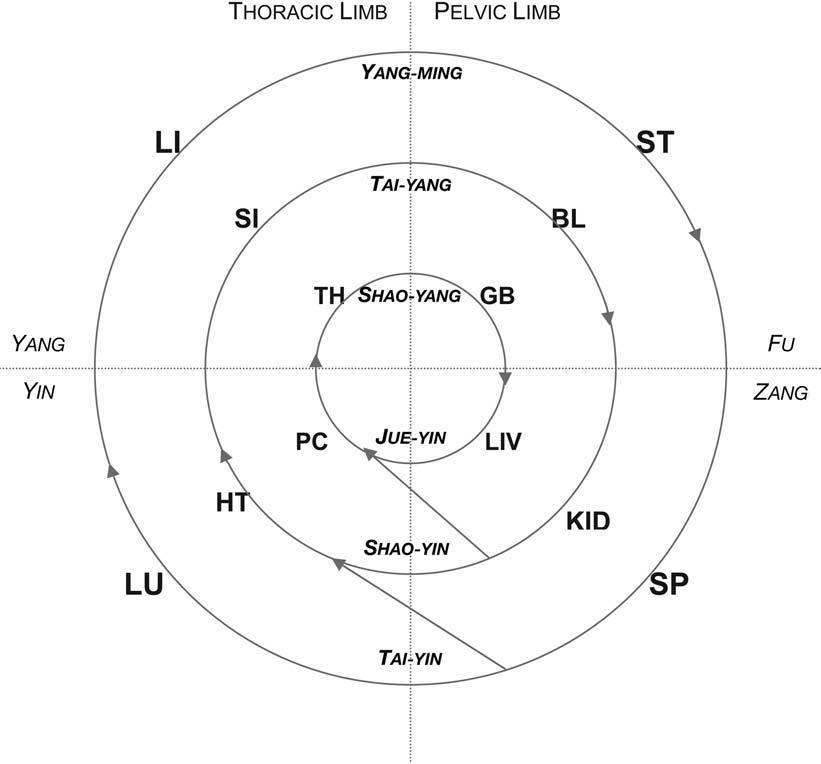
Figure 1.4 is a concise illustration of the relationships between Yin-Yang, Zang-Fu, thoracic-pelvic, the levels, and the individual organs. Each concentric circle represents one level with the outermost demonstrating the first level. After traveling around the circle in a counterclockwise direction, it flows into the next level. Along the way, it passes through each quadrant with its own associated organ. When reaching the end of the center circle, it skips back to the first level where it starts again.
The meridians exist internally and externally as they connect all parts of the body together. The images in chapters 3 through 6 will trace these pathways on the horse and dog. The meridians, especially including the internal branches, are well described in humans. Omissions in the animal meridian descriptions may be extrapolated from the human model. However, differences in anatomy may require some modifications of the pathway in various species.
C.The 8 Extraordinary Channels (Qi-Jing-Ba-Mai)
The translation of qi-jing-ba-mai is as follows: Qi means special or extraordinary; jing means meridian, mai means
Table 1.5. Circadian Flow of the Twelve Regular Channels
Circadian Cycle of Qi
Shao-yin Yang-ming 1:00 am 3:00 am 5:00 am 7:00 am 9:00 am 11:00 am 11:00 pm 9:00 pm 7:00 pm 5:00 pm 1:00 pm 3:00 pm
LiverLung
GallBladder Large Intestine
Jue-yin
Triple Heater
Tai-yin
Shao-yang Yang-ming
Shao-yang
Jue-yin
Pericardium
Shao-yin
Tai-yang Tai-yang
Spleen Stomach Heart Bladder Kidney Small intestine
Tai-yin
1.3. TCVM circadian clock of the 12 regular channels. (From H. Xie & V. Preast, Traditional Chinese Veterinary Medicine, Vol. 1, Fundamental Principles, Jing Tang, Beijing, 2002.)
channels, ba is the number eight. Thus the phrase qi-jing-bamai refers to the 8 extraordinary channels (8-EC). These eight channels are named du, ren, chong, dai, Yang-qiao, Yin-qiao, Yang-wei, and Yin-wei (table 1.6).
The extraordinary channels have several differences from the 12 regular channels. First, these channels do not pertain to either Zang or Fu organs. Second, they are not exteriorly or interiorly related to each other as are the regular channels. Third, most of these channels do not have their own acupoints. Du (governing vessel) and ren (conception vessel) do have their own acupoints, but the rest share their points with a few of the regular meridians.
As assistants to the regular channels, the extraordinary channels acquire similar functions to those of nearby regular channels. This occurs because the extraordinary channels coordinate and balance the Qi and blood within the regular channels they link. These extraordinary channels form a conduit that connects, coordinates, and facilitates communication among the 12 regular meridians. In addition, the extraordinary channels control, store, and regulate the Qi and blood of the 12 regular meridians (tables 1.6 and 1.7).
D.The 14 Regular Channels
The 12 regular channels together with the Governing Vessel (GV) Channel and the Conception Vessel (CV) Channel constitute the 14 channels. The 12 regular channels are distributed symmetrically on the left and right sides of the body. The CV and GV Channels, however, are unpaired. The CV Channel runs along the ventral midline, and the GV Channel courses along the dorsal midline.
Within the 12 regular channels, Qi and blood circulate along each meridian in a specific order over the course of a 24-hour period. There is also cyclical Qi flow within the 14 regular channels, which takes the GV and CV Channels into account. The Lung Channel, which is the beginning of the 12-channel cycle, sends a branch to the CV Channel. Thus, the Qi flows from the Lung Channel to the CV Channel, and then it runs cranially along the CV Channel. At the mouth, the Qi flows into the GV Channel and runs caudally along the back. Upon reaching the perineum, the Qi enters the CV Channel again and flows back to the Lung Channel. Thus, the cyclical flow of Qi and blood in the 14 Channels includes the circulation through the GV and CV Channels along with the flow within the 12-channel cycle.
1.4. Summary of the levels and organ associations. (H. Xie & V. Preast, Traditional Chinese Veterinary Medicine, Vol. 1, Fundamental Principles, Jing Tang, Beijing, 2002.)
During Qi-Gong meditation, one places the tip of the tongue against the palate behind the upper incisors. This connects the GV and CV Channels. The Qi flow between these two channels becomes the focus of meditation. It is possible to imagine this pathway as a shortcut that allows the Qi to circle the body while bypassing the 12 regular channels. Unlike the 12 regular channels, the flow between GV and CV
Table 1.6. Distribution of the 8 Extraordinary Channels
Channel name
Location
does not dominate at a certain time of day. Rather, the Qi constantly cycles between the two channels throughout the day.
The Qi is always flowing through the 14 regular channels. Within the 12 regular channels, it has a predictable direction of flow from one channel to the next. However, even when one channel dominates during its 2-hour period, the Qi
Meridian connections
Du Governing Vessel (GV)Dorsal midline CV, ST
Ren Conception Vessel (CV)Ventral midline GV, ST
Chong Penetrating Parallel to kidney meridianKID
Dai Girdle Encircling lumbar region GB
Yang-qiao Yang motility
Yin-qiao Yin motility
Yang-wei Yang linking
Lateral hind limb extremitiesSI, BL, LI, ST, GB Shoulder and head
Medial hind limb extremitiesKID, SI Eye
Lateral stifle, GV, SI, BL, TH, GB, ST Shoulder
Yin-wei Yin linking Medial hind limb CV, GB, SP, LIV Neck
Table 1.7.
Functions and Indications of the Eight Extraordinary Channels
Channel name Function
Du Ren Chong Dai Yang-qiao, Yin-qiao Yang-wei Yin-wei
Connects with the spinal cord, brain and all the Yang channels
Reigns over all of the Yang channels
Controls Yang Qi of the entire body
Connects with all the Yin Channels
Reigns over all of the Yin Channels
Nourishes the uterus
The sea of 12 meridians
The sea of blood
Serves as a reservoir of Qi and blood for the 12 regular meridians
Restrains the other channels
Protects the lumbar regions
Regulates the movement of all limbs
Controls movement of eyelids
Connects with all the Yang meridians
Dominates the exterior of the body
Connects with all the Yin meridians
continues to flow along the remaining meridians as well. The Qi flow of the 12 channels is like cargo boats on a river with multiple ports along its length. As a boat travels down the river, it may spend a short while in each of the ports in sequence. When numerous boats come to a specific port at a specific time, that port is very important during that time. Although this location may be a center of commerce for the moment, it does not prevent other ships from continuing along the river.
On the other hand, the flow within the GV and CV Channels is like a freeway encircling a city. The Qi flows smoothly around in a large loop around the body. The traffic may travel in either direction (i.e., from GV to CV or CV to GV) at all times of the day and night.
E.The 15 Collaterals
Collaterals are relatively smaller meridians that divide from the 14 regular channels. Except for the spleen, which also has a major collateral, each of the 14 regular channels is associated
Table 1.8. The Indications of the 15 Collaterals
Collateral Luo-connecting pointIndications
LU LU-7
LI LI-6
ST ST-40
SP SP-4
HT HT-5
SI SI-7
BL BL-58
KID KID-4
PC PC-6
TH TH-5
GB GB-37
LIV LIV-5
CV CV-15
GV GV-1
Major collateral SP-21
Indications
Spinal cord and disc problems, heat pattern, mental disorders, Yang deficiency, high fever
Weakness of back or hind limbs, Yang deficiency, poor performance
Ataxia or imbalanced movement
Wobbler’s, EPM, insomnia, eye problems
Exterior pattern, cold, influenza, Bi syndrome, back pain (IVDD)
Depression, chest pain, failure of Yin organ function, renal failure, heart failure, liver failure
with one collateral branch. The 15 collaterals connect the externally and internally related meridians and promote the free flow of Qi and blood (table 1.8).
The collaterals that branch off from the 12 regular channels arise at the Luo-connecting points and then run to their associated channels, which have exterior-interior, or husband-wife, relationships. For example, the Lung (LU) Collateral starts from LU-7 and runs to the Large Intestine (LI) Channel. The Small Intestine (SI) Collateral originates from SI-7 and runs to the Heart (HT) Channel. The Stomach (ST) Collateral arises from ST-40 and runs to connect with Spleen (SP) Channel. The SP Collateral starts from SP-4 and runs to join ST Channel.
Three collaterals extend to a body region. The GV Collateral originates at GV-1, runs upward along the spine, and spreads across the head. The CV Collateral starts from CV-15 and spreads over the abdomen. The major collateral of the spleen starts at SP-21 and spreads through the chest and hypochondriac region, thus wrapping the whole body.
Hot palms, frequent yawning, urinary incontinence or urgency
Dental problems, deafness, cycling disorders
Sudden loss of voice, mania, muscle atrophy
Cholera, colic, bloat
Chest pain
Bone loss, front limb weakness, mass on the skin
Nasal congestion, back pain, headache, nose bleeding
Chest pain, urinary and fecal incontinence, chronic back pain
Chest pain, anxiety, restlessness
Muscle spasms of front limb, weakness of front limb
Coldness of rear feet, Wei syndrome, eye problems
Testicular swelling, hernia, pubic itching
Pruritus or abdominal pain
Ataxia, spine stiffness
Whole-body soreness, whole-body muscle atrophy or weakness, of SP blood stagnation
F.The 12 Divergent Meridians (Shi-Er-Jing-Bie)
The 12 divergent meridians branch out from the elbow or stifle areas of the 12 regular channels. They enter the thorax and abdomen to connect the internal organs and merge with their externally and internally related channels to spread through the neck and head. Six such pairs of external-internal mergers occur.
1.The BL and KID Divergent Meridians arise, respectively, from the BL and KID Channels at the popliteal fossa. These enter the lower abdomen to connect with the bladder and kidney. They emerge at the neck and merge with the BL Channel.
2.The GB and LIV Divergent Meridians branch from the GB and LIV Channels in the thigh. They run up to the pubic region, connect with the liver and gallbladder, disperse across the face, and connect with the eyes. In the end, they merge with the GB Channel.
3.The ST and SP Divergent Meridians divide off the ST and SP Channels on the thigh. They enter the abdomen to connect the stomach and spleen, run upward beside the nose, and finally merge with the ST Channel.
4.The SI and HT Divergent Meridians arise from the SI and HT Channels in the axillary fossa. From here they connect with the heart and small intestine, run upward to emerge at the inner canthus, and eventually merge with the SI Channel.
5.The TH and PC Divergent Meridians branch from the TH and PC Channels in the front limb from where they enter the chest, connect with the TH, emerge behind the ear, and converge with the TH Channel.
6.The LI and LU Divergent Meridians arise from the LI and LU Channels, connect with the lung and large intestine, run upward to emerge at ST-12, and converge with LI.
Unlike the 15 collaterals, which are distributed in the body surface, the 12 divergent meridians run deeper in the body. They connect the internally-externally related channels and strengthen their relation with internal Zang-Fu organs. The 12 divergent meridians connect the 6 Yin channels with the head and neck. Therefore, one may select points along these Yin channels to treat problems in the head and neck. For example, LU-9 and LU-7 can be used for headache. KID-3 and KID-6 can be used for toothache and throat problems.
G.The 12 Muscle Regions (Shi-Er-Jing-Jin)
The 12 muscle regions are the peripheral connection areas of the 12 regular channels. They unite all the bones and joints and thereby maintain normal motion of the whole body by ensuring the normal range of contraction and extension of all the muscles and joints.
These extend through the body surface and muscles, and they meet in joints and the skeleton. The muscle regions all begin on the extremities of limbs and ascend to the head or
trunk, but do not reach the internal organs. Their paths are as follows:
•The 3 pelvic Yang muscle regions originate from the hind feet, run upward through the trunk and connect with the face.
•The 3 pelvic Yin muscle regions originate from the rear feet and run upward to connect with the genital regions.
•The 3 thoracic Yang muscle regions originate from the front feet and run laterally upward to connect to the head.
•The 3 Yin muscle regions originate from the front feet and run upward to connect the chest.
Disorders of the 12 muscle regions would include muscular spasms, Bi syndrome, bowed tendons, contracted tendons and muscles, stiffness, and muscle atrophy. Chapter 13 of Spiritual Axis states, “Where there is pain, there is an acupoint.” Therefore, the major treatment principle for problems of the 12 muscle regions is to focus on local points and A-shi points.
H.The 12 Cutaneous Regions
The 12 cutaneous regions are the superficial layers of the 12 regular channels, and the area of each depends on the domain of its regular channel. These are the sites where Qi and blood are transferred between the 12 regular channels and collaterals. The 12 cutaneous regions can protect the body surface and prevent the invasion of pathogens.
1-2.ROOT,BASIS,MANIFESTATION,AND BRANCH OF MERIDIANS
The manifestation (biao), basis (ben), root (gen), and branch (jie) of the 12 regular channels are first documented in Spiritual Axis. They emphasize the status of Qi-blood circulation in different areas of the body. According to this theory, the root and basis are located in the limbs, and the manifestation and branch of the meridians lie in the head and trunk (tables 1.9 and 1.10).
A.The Basis (Ben) and Manifestation (Biao)
The basis is like the root system of a tree and refers to the lower portions of the limbs. The manifestation is like the tips of a tree and refers to the upper portions of the body including the head, thorax, and back. The ben and biao points are listed in table 1.9.
B.The Root (Gen) and Branch (Jie)
The root and branch refers to the origination and distribution of Qi and blood in the 12 regular channels. The root (gen) is the Jing-well point, where Qi-blood of each channel originates in the four limbs. The branch (jie) refers to places located in the head, chest, and abdomen where Qi-blood of each channel gathers and is distributed (see table 1.10).
Table 1.9. Basis (ben) and Manifestation (biao) of the 12 Regular Channels
12 regular channels Basis (ben) pointManifestation (biao) point
Three Yang channels in BL BL-59 BL-1 the pelvic limbs
GB GB-44 GB-2
ST ST-45
ST-9
Three Yin channels in KIDKID-7, KID-8 BL-23, CV-23 the pelvic limbs LIV LIV-4 BL-18
SP SP-6 BL-20, CV-23
Three Yang channels in SI SI-6 BL-2 the thoracic limbsTH TH-3 TH-23
LI LI-11 LI-20
Three Yin channels in LU LU-9 LU-1 the thoracic limbsHT HT-7 BL-15
PC PC-6 PC-1
Table 1.10. The Root and Branch of the Six Channels on the Rear Limb
ChannelsRoot (Gen) point Branch (Jie)
BL BL-67 EyesHead
ST ST-45 EarsHead
GB GB-44 Inner earsHead
KID KID-1 CV-23Head
SP SP-1 StomachAbdomen
LIV LIV-1 CV-17Chest
1-3. QI STREETS AND FOUR SEAS OF THE MERIDIANS
A.The Qi Streets (Qi-Jie)
Qi streets are the common pathways where the meridian Qi gathers and circulates. According to Spiritual Axis, there are four locations of Qi streets: (1) in the thorax, (2) in the abdomen, (3) in the head, and (4) in the limb. Qi in the head stops at the brain. Qi in the thorax stops in the chest and back-shu points. Qi in the abdomen stops in the back-shu points and the chong-mai around the umbilicus. Qi in the lower limb stops around BL-57. The Qi streets closely connect the meridians from top to bottom and anterior to posterior.
B.Four Seas (Si-Hai)
Four seas are the sites where the essential substances of the body gather and converge. These include the seas of marrow, blood, Qi, and food:
•Sea of marrow: Located in the head, this is the house and origin of shen (mind) and rules the whole body’s activities.
•Sea of blood: Located in the Chong mai (Penetrating Channel), which originates from the uterus or prostate. The Chong mai is also the root of the 12 regular channels and is considered to be the sea of the 12 regular channels.
•Sea of Qi: Located in the chest where the Zong Qi is produced and gathered, it nourishes the heart and blood vessels and governs the respiratory functions.
•Sea of food: Located in the stomach and spleen where Ying-qi and Wei-qi are generated, it is the origin of Qi and blood for the whole body.
1-4.FUNCTIONS OF THE JING-LUO
The Jing-Luo system is closely connected with all the tissues and organs of the body. It plays an important role in animal physiology, in pathology, and in treatment with acupuncture or herbal medicine.
A.Physiological Aspects
There are three physiological aspects.
1. Transporting Qi and blood and nourishing the body. All the body’s tissues require nourishment by Qi and blood in order to maintain their normal physiological activities. The meridians are passages that transport the Qi and blood. Therefore, failure of the meridians to transport Qi and blood prevents Qi and blood from reaching the Zang-Fu organs and results in organ malfunction.
2. Coordinating Zang-Fu organs and connecting the whole body. The meridians connect with all the tissues and organs of the body. The connection through the meridians keeps the interior and exterior, the front and hind, and the left and right parts of the body in close association. This communication allows the Zang-Fu organs to coordinate their activities and to maintain equilibrium between the organ systems.
3. Preventing invasion of the body surface and resisting pathogens. The meridians, with the help of the defensive Qi, shield the body surface and resist the attack of pathogens (Xie qi). The meridian system has many small branches that distribute Qi and blood to strengthen the muscles, tendons, and skin. This fortifies the body’s natural barriers to infection or pathogen invasion. In addition, the defensive Qi flows outside of the meridian pathways to make sure this remains an impermeable defense.
B.Pathological Aspects
The meridians also play a role in disease conditions. They may transmit pathogenic factors or may reflect the disease states of internal systems.
1. Transmitting the pathogenic factors. If pathogenic factors invade the body, the meridian system initially participates in combatting these pathogens on the surface before they reach deeper tissues. However, when the zheng Qi is weak and Yin and Yang become unbalanced, the pathogenic factors overcome the resistance of the meridians. The pathogens may then use the meridian pathways to migrate into the interior from the exterior. For instance, an unresolved exterior wind-cold pattern will allow the pathogenic wind-cold to follow the Lung Channel to the lung, resulting in cough and asthma.
2. Reflecting symptoms of diseases. In pathological conditions, the meridian system may reflect signs of internal problems onto the surface of the body. Because there are small branches of the meridians that connect the ZangFu organs with their external organs or body areas, disease in the Zang-Fu organs will result in changes of these external organs. A clinician may then examine these external structures for evidence of internal disease. For instance, extreme heat or fire of the heart may lead to ulceration on the tongue because the meridians connect the heart with the tongue. Similarly, extreme heat of the liver may cause congestion and swelling of the eyes. Deficient kidney Yang may result in lumbar weakness.
C.Therapeutic Aspects
Two main therapeutic aspects include:
1. Transmitting the effect of herbal medications.Chinese herbs may have specific actions on certain Zang-Fu organs
or channels. This quality is known as the channel tropism of the drugs. For example, coptis root (Huang lian) functions to eliminate heart fire, and scutellaria root (Huang qin) can eliminate lung fire.
2. Transmitting the acupuncture stimulation. The meridian system is important in the treatment of diseases. This system transmits the signal from acupoint stimulation by acupuncture or moxibustion. The stimulus from an acupoint travels along the meridian to the relevant Zang-Fu organs along that meridian. As a consequence, the Zang-Fu organs regain their balance, and the normal flow of Qi and blood is restored. When treating a stomach heat pattern, hemoacupuncture at the point Yu-tang sends the stimulation along the Stomach Channel to the stomach. The point Dai-mai may be stimulated for treatment of diarrhea because this point is located on the Spleen Channel.
The de-Qi (arrival of Qi ) response is a phenomenon in acupuncture that is the feeling or effect experienced as a result of the meridian’s transmission of the acupuncture stimulation. The de-Qi response manifests in different ways for each individual. It may feel like heaviness, tingling, soreness, or pressure. A human patient can tell the acupuncturist when he or she feels the sensation. In veterinary acupuncture, observation of muscle twitching, flinching, or attempts to bite may indicate de-Qi with stimulation of the needles.
The therapeutic results are closely related to de-Qi response. Without a de-Qi response, there will be less benefit from the acupuncture treatment. Inducing the de-Qi response regulates the Qi flow, which is vital to effective acupuncture treatments. No acupuncture treatment can be successful without this ability of the meridians to transmit the acupuncture stimuli.
2
Introduction to Acupuncture Points
Huisheng Xie and Vanessa Preast
Acupuncture points (acupoints) are specific spots on the body surface where a practitioner applies stimulation for the diagnosis and treatment of disease. Acupuncture points are called shu-xue in Chinese pinyin. Shu means transporting, distributing, or communicating; xue refers to a hole, outlet, or depression. Therefore, acupoints are the special loci where Qi of the Jing-Luo and Zang-Fu gathers on the body surface. These loci respond to disease and are places where acupuncture techniques or moxibustion may be used to treat illness. Acupoints are typically located in or near muscles, blood vessels, lymph vessels, or nerves. Each acupoint has a unique location and physiological effect. The diligent pursuit of clinical data has established and continually enriched our understanding of these points. As time passes, we have accumulated a rich body of knowledge that further enhances our diagnostic and treatment capabilities.
This book bases its collection of acupoints both from the traditional veterinary acupuncture literature (classical acupoints) and as transpositional points from the human model (transpositional points). The traditional literature provides an abundant source of acupoint information primarily for the horse and ox. Many acupoints used in other domestic species have originated as transpositional points from humans, horses, and oxen.
2-1.NOMENCLATURE OF ACUPOINTS
The original Chinese names of acupoints have anatomic, physiologic, therapeutic, or symbolic meanings. Thus, these names contain the explanation of a given point’s purpose. This is quite advantageous for those who read Chinese, but is unfortunately less useful for Westerners who do not understand the language. For this reason, there are several different naming systems currently in use.
A.Traditional Nomenclature System
ANATOMIC
Some points are named based upon where they are located on the body. For example, Wei-jian is located on the tip of tail. Wei means tail; jian means tip.
ZANG-FU
Other points are named according to their association with the Zang-Fu organs. For example, Wei-shu is the stomach association point, which is located in the iliocostal muscle groove, caudal to the last rib, and 3 cun lateral to the dorsal midline in horses. Wei means stomach, and shu indicates that it is a back-shu association point.
THERAPEUTIC
The purpose or effect of the point is the name of some points. For example, Duan-xue means “stopping hemorrhage.” This point, which is located on the dorsal midline between T18 and L1 in horses, is commonly used for treatment of hemorrhage.
SYMBOLIC
Some points have more imaginative descriptive names that sometimes suggest, less directly, the point’s location or function. For example, Long-hui is “Dragon Meeting” and is located in the midline between the eyebrows. Similarly, the point Liu-feng (Six Seam) is located between the toes.
B.Western Nomenclature System
MERIDIAN NUMBERING SYSTEM
Each point receives a unique combination of letters and numbers to form its name. The alphabetic prefix is the abbreviation of the meridian on which the point lies. The numeric suffix represents the sequential position of that point on the meridian (table 2.1). For instance, there are 45 points on the Stomach Meridian (abbreviated as ST). Thus, the first point on this meridian is named ST-1, the 36th point is ST-36, and the 45th point is ST-45.
This is an effective system in human acupuncture because it classifies most of the points on the 14 meridians with definite descriptions of their distribution. When applied to veterinary acupuncture, however, it can become problematic and confusing for several reasons: anatomical differences, locations of veterinary acupoints, and differences among species. Anatomic Differences Between Humans and Animals. Although there is an amazing number of similarities in physical
Table 2.1. Abbreviations and Number of Points for the 14 Regular Meridians
structure when comparing the anatomy of various species, there are some significant differences that affect the ability to transpose acupuncture points from one species to the next.
In human acupuncture, many important acupoints lie between the carpus or tarsus and the digits. However, few species of domestic animals have five complete digits. Thus, accurately locating acupoints in the region of the distal extremities obviously becomes difficult or impossible when strictly following the meridian numbering system.
For example, let us consider the association point of the stomach (BL-21). In humans, this point is between the longissimus dorsi and iliocostalis muscles at the last (12th) thoracic vertebra. Where is this located in the horse, which has 18 thoracic vertebrae? In this case, should we locate the point at the 12th thoracic vertebra, the 18th thoracic vertebra, or somewhere in between? We tend to position it at the thoracolumbar junction (T18-L1) in the horse and caudal to the 13th thoracic vertebra in dogs.
Consider also instances when veterinary acupuncture makes use of points on the tail, an anatomic feature that humans obviously lack. For example, Wei-jian, an important point in animals, lies at the tip of the tail. Acupuncture at this site can treat cold, anhidrosis, and sunstroke, but this point cannot be found in the human.
Uncertainty of the Animal Meridians. Although animal meridians were mentioned in several ancient texts, they have never been identified with certainty. Recent studies suggest that the paths of meridians in animals are similar to those in humans, but further investigation is necessary to verify this. Points with Identical Names But Different Locations Between Species. In some cases, acupoints may have a similar pinyin name in humans and animals, but there are discrepancies in the anatomic locations of these points. For example, the acupoint Qu-chi in humans is found at the elbow area (LI-11), but Qu-chi is also the name of a classical point located on the craniomedial aspect of the tarsus in the horse. Also, Bai-hui can refer both to a point that is located on the dorsal midline of the head between the ears as well as to a point in the lumbosacral space.
The meridian numbering system, therefore, is not ideal for nomenclature of the animal acupuncture points. Yet, regardless
of its shortcomings, this system remains quite popular outside of China because it is simple to understand and is deeply rooted in the traditional meridian theories.
CHINESE PINYIN NAMING SYSTEM
Pinyin is the standardized Latin spelling of Mandarin Chinese in which the traditional Chinese names of acupoints are spelled out in the Latin alphabet. For example, the point ST-36 is named Hou-san-li and LI-10 is Qian-san-li.
SERIATE NAMING SYSTEMWITH CHINESE PINYIN
The nomenclature of acupoints is based on both a set of serial numbers and the Chinese pinyin name. This book adopts this naming system for the classical acupoints in horses and dogs.
OTHER HISTORICAL SYSTEMS
Although other nomenclature systems have been used for animal acupuncture outside of China, these are generally only of historical or academic significance. Most are not in use and may only be found in the literature.
Phonetic Naming Systems. There are romanized Chinese, Japanese, and Korean naming systems that convert the sounds of the spoken language into the Roman-based equivalent. This transliteration results in naming the point Qiansan-li as Chiensanli or Gongzi as Kungtxu. In the end, this added little to understanding and standardization of acupuncture points and taxed an already overburdened nomenclature system for animal acupoints.
Region Naming Systems. This system divided the body into four regions: (1) the head and neck (HN), (2) the trunk (TK), (3) the forelimb (FL), and (4) the hind limb (HL). Every acupuncture point within each region is numbered. For instance, FL-7, known also as Qiang-feng by the Chinese pinyin system, would be the seventh point within the forelimb region. Similarly, HN-1 (Da-feng-men) is the first point within the head and neck.
2-2.CLASSIFICATION OF ACUPOINTS
Acupoints may be classified based on the acupuncture techniques, meridians, size, and actions.
TECHNIQUE
There are generally two kinds of acupuncture points that would require different kinds of stimulation techniques. Conventional Acupoints. The majority of acupoints belongs to this category. These points are used for dry needling, aquapuncture, electroacupuncture, and moxibustion. For example, ST-36 can be used for the treatment of general weakness with dry needling, aquapuncture, or moxibustion. Hemoacupoints. These points are on superficial blood vessels and are stimulated by using the hemoacupuncture technique. This is beneficial for acute excess heat pattern and Qiblood stagnation pattern, but the hemoacupuncture technique is contraindicated for Qi and blood deficiency patterns. For instance, hemoacupuncture at Yai-yang, which is located on the transverse vein 1.5 cun lateral to the lateral canthus, is commonly used for fever and anhidrosis.
MERIDIANS
Acupoints may also be classified by their association with certain meridians.
Regular Points. Regular points are located on the 14 regular channels (LU, LI, ST, SP, HT, SI, BL, KID, PC, TH, GB, LIV, CV, and GV) and are typically identified by the alphanumeric numbering system (e.g., LU-11, SI-9, and GV-14). In total, there are 361 known acupoints on these channels.
Extra Points. These acupoints are located outside of the 14 regular channels. There are 44 extra points: 12 points in the head and neck region, 11 in the trunk, and 21 in the four limbs. They may be known only by their pinyin names. For example, Tai-yang and Wei-jian are two such points that may also be stimulated by the hemoacupuncture technique.
A-shi Points. These are spots that are not necessarily always located in a specific location. Rather, A-shi refers to the tender points. In some cases, these may be knots in muscles that are painful and may be needled to relieve the tension.
SIZEAND AREA
Acupoints come in a variety of sizes and shapes, which are also likely to be proportional to the size of the patient. Knowing the size and shape of the points can be beneficial to maximizing the effect of needling those points. Some of the large, wide points will be difficult to miss, but other points are much smaller and have a narrow margin for error.
Square Points. Acupoints located in a big hole or depression fit in this category. For example, SI-9 is a large depression in the junction between the deltoid and triceps brachii muscles. Similarly, Bai-hui is a large depression on the dorsal midline in the lumbosacral space.
Linear Points. Acupoints are considered to be linear when they extend for a certain distance along the pathway of the channel. One such point is ST-36.
Fine Points. These points are very small. One such point is BL-1.
ACTIONS
Acupuncture points may be characterized by their effect. Some have general effects, specific actions, or both. Some of the points with special actions are further divided into additional categories based upon the nature of these effects. These actions are described further in the next section.
2-3.THERAPEUTIC EFFECTS OF ACUPOINTS
A.General Therapeutic Effects
In general, acupuncture generates one or more of three kinds of therapeutic effects: local, remote, and special.
LOCAL THERAPEUTIC EFFECTS
One may use an acupoint for treatment of local problems. In other words, one chooses points largely based on their proximity to the troublesome area. The following are some examples:
• Points around eyes including BL-1, ST-1, GB-1, and BL-2 may benefit the patient suffering from conjunctivitis or other ophthalmic conditions.
• Points around the throat such as CV-23 and ST-9 may treat laryngeal hemiplegia.
• Points around the shoulder including TH-14, LI-15, LI-14, and SI-9 can be used for shoulder lameness.
• Points around the hoof such as PC-9, Qian-ti-men, TH-1, and LU-11 are often used for laminitis in the front limb.
REMOTE THERAPEUTIC EFFECTS
Distant points may also provide therapeutic effects. In these cases, one chooses an acupoint that lies upon a channel passing through the problematic organ or location. This allows a practitioner to make use of more points, especially when using local points that may be inaccessible or otherwise unavailable. It also allows one to treat internal organs through surface stimulation. Consider the following examples:
•LI-4 can be used locally for carpal pain, but since the Large Intestine Channel runs through the face and jaws, it also is beneficial for facial and dental conditions.
•The Stomach Channel runs through the abdomen. Thus, ST-36 treats local lower limb problems, but also it benefits gastrointestinal conditions.
SPECIAL THERAPEUTIC EFFECTS
Thousands of years of clinical practice along with modern research have demonstrated that certain acupoints possess special therapeutic effects. A practitioner may choose these points specifically for certain disease conditions.
•GV-14 can have an antipyretic effect. As such, it is very effective for high fever, especially fever of unknown origin.
•BL-67 is beneficial for abnormal position of a fetus.
•PC-6 assists with nausea and vomiting.
•HT-7 calms down the mind (shen) and benefits anxiety.
•A combination of ST-36, LI-4, and GV-14 is for immunodeficiency.
Some of these acupoints can even induce a dual regulation effect. For instance, GV-1 can be used for both diarrhea and constipation. The point BL-21 increases hypofunctional gastrointestinal motility, but it also decreases hyperactive motility. PC-6 is good for tachycardia, but also can treat bradycardia.
B.Special Acupoints
In addition to the above three general therapeutic effects, some acupoints have special functions and clinical applications. Special acupoints include five Shu-transporting points, Yuan-source points, back-Shu association points, front-Mu alarm points, Luo-connecting points, Xi-cleft points, lower He-sea points, eight influential points, eight confluent points, and crossing points.
FIVE SHU-TRANSPORTING POINTS
Five Shu-transportation points are special points of the 12 regular channels. These points are located distally between
the digits and the elbow or knee for the front and hind limbs, respectively. Moving from the digits to the elbow or knee, each channel has a Jing-well, Ying-spring, Shu-stream, Jingriver, and He-sea point.
The first chapter of Spiritual Axis states, “The Qi-blood of the Twelve Regular Meridians flows all over the body. The flow of Qi-blood running in Twelve Regular Channels from the extremities to the elbow or knee is flourishing gradually.”
The flow of Qi-blood gains strength as it moves proximally along the limb. This process is like the flow of water in which the water first bubbles in a well and then gushes into a spring. The water from the spring flows into a small stream, which collects greater amounts of water and widens into a river. Eventually these rivers merge with the sea, where the water runs deeply and powerfully.
The five Shu-transporting points are listed in tables 2.2 and 2.3. One may use these points by approaching them from the perspective of the five levels or from five elements theory. Five Levels of Five Shu-Transporting Points. Each of the five Shu-transporting points has a different level. The Jingwell, as the first level, is followed by Ying-spring, Shustream, Jing-river, and He-sea as the second, third, fourth, and fifth levels, respectively. The indication of each point varies with its level (table 2.4). Lan Jing (Classic on Medical Problems), another classical text, states that “Jing points are indicated in the fullness of the chest; Ying points in the febrile diseases; Shu points in the heavy sensation of the body and painful joints; Jing points in cough and asthma due to pathogenic cold and heat; and He points in diarrhea due to perversive flow of Qi.”
Jing-Well Point. The Qi at a Jing-well point starts to bubble as water originates from a well. All the Jing-well
Table 2.2. Five Shu-transporting Points Wushuxue of the Yin Meridians
points are located on the distal digit except for KID-1. The JingQi (Qi-blood) in each meridian originates here.
The YinJing-well points related to the Zang organs (LIV, HT, PC, SP, LU, and KID) are beneficial for mental illness. This is because these Jing-well points belong to the element wood. Wood (liver) Qi easily stagnates and transforms into fire, and this fire/heat disturbs the shen. Thus, Jing-well points such as PC-9, HT-9, and LU-11 can be used for mental disorders and fullness of the chest.
The Yang Jing-well points of the Fu organs (GB, SI, TH, ST, LI, and BL) belong to the element metal. Metal can control wood. Thus, the Yang Jing-well points, such as LI-1 and ST-45, can soothe liver Qi and can be used for liver Qi stagnation.
Ying-Spring Point. The Ying-spring point is the second most distal point of each channel, and its Qi is like gushing water. Ying-spring points control heat and can thus be used for heat patterns. For lung heat (fever, sore throat, cough), LU-10 (Ying-spring of lung meridian) can be used. For stomach heat or LI heat (fever, diarrhea), LI-2 (Ying-spring) and ST-44 (Ying-spring point) are used.
Shu-Stream Point. The Shu-stream point is the third most distal point of each channel, and the Qi at this level flourishes. These points are located around the carpus or hock. Shu-stream points dominate pain.
The Yin Shu-stream points of the Zang organs (LIV, HT, PC, SP, LU, and KID) belong to the element earth (spleen). For this reason, Yin Shu-stream points are beneficial for swelling and heaviness since the spleen transforms dampwater and controls the four limbs and muscles. For example, LIV-3 is commonly used for general pain due to Qi-blood stagnation.
The Yang Shu-stream points are found on meridians of Fu organs (GB, SI, TH, ST, LI, and BL). These belong to wood (liver) and can be used for pain due to Qi-blood or liver Qi stagnation.
Jing-River Point. The Jing-river point is the fourth level, and its Qi pours abundantly. Jing-river points are beneficial for cough and asthma. The Yin Jing-river points (LIV, HT, PC, SP, LU, and KID) belong to metal (lung), and thus points such as LU-8 may be used for cough or asthma due to lung deficiency. On the other hand, the Yang Jing-river points (GB, SI, TH, ST, LI, and BL) belong to fire. Because fire melts metal, points such as LI-5 may be used for cough or asthma due to lung fire/heat.
Table 2.3. Five Shu-transporting Points Wushuxue of the Yang Meridians
He-Sea Point. The He-sea points are located around the elbow or the knee. The Qi of these points runs deeply with its full power. He-sea point dominates the pervasive flow of Qi and treats collapse of Qi. The Yin He-sea points (LIV, HT, PC, SP, LU, and KID), which belong to water (kidney), are used for impotence due to kidney Yang deficiency or dry cough due to kidney Yin deficiency. The YangHe-sea points (GB, SI, TH, ST, LI, and BL), which belong to earth (SP/ST), are used for diarrhea due to spleen Qi deficiency or vomiting due to pervasive flow of stomach Qi
Five Elements of Five Shu-Transporting Points. Based on five-element theory, each channel has mother and son points