Acknowledgments
Some fifteen years ago I started thinking about ignorance, and I have returned to this mesmerizing topic time and again ever since. I could not have written this book without profiting from the trenchancy and penetration of many illuminating conversations, instructions, and criticisms. My debts are numerous. My earliest thought exchanges on ignorance were with René van Woudenberg, who has been pivotal in my coming to see how important a philosophical analysis of ignorance is. I thank him for wise advice and valuable comments. Let me also single out for special thanks my co-authors in earlier work on ignorance: Pierre Le Morvan, Duncan Pritchard, and Thirza Lagewaard. For further encouraging conversations or feedback, I would like to thank Valentin Arts, Lieke Asma, Dorit Bar-On, Victor van Bijlert, Wout Bisschop, Anthony Booth, Ingmar Brinck, David Campbell, Lieven Decock, Roland den Boef, Daniel DeNicola, Jeroen de Ridder, Hans de Waal, Catarina Dutilh-Novaes, Nadja El Kassar, Li Fengfeng, Sandy Goldberg, Dirk-Martin Grube, John Hyman, Ian Kidd, Nora Kindermann, Naomi Kloosterboer, Klaas Kraay, Juergen Landes, George Masterton, Anne Meylan, Clyde Missier, Roderick Nieuwenhuis, Nikolaj Nottelmann, Jordan Ochs, Erik Olsson, Stefan Paas, Herman Philipse, Carlo Proietti, Chris Ranalli, Scott Robins, Emanuel Rutten, Daan Savert, Ulla Schmid, Jeroen Smid, Leon ten Broeke, Luis Valdés-Villanueva, Gijsbert van den Brink, Hans Van Eyghen, Wim van Vlastuin, Theo van Willigenburg, Albert Visser, Jan Willem Wieland, Åsa Wikforss, Sam Wilkinson, José Zalabardo, and Michael J. Zimmerman. Their ideas have resulted in the rewriting of many confused and unclear passages.
In 2016 and 2017, I edited two volumes on ignorance, and all the contributions have stimulated my thinking on the topic. I am eager to express my thanks to my co-editor, Martijn Blaauw, and to the other authors of these volumes, in addition to some of the people already mentioned: Larry Alexander, Marcia Baron, Michael Blome-Tillmann, Berit Brogaard, Jessica Brown, Don Fallis, Miranda Fricker, Alexander A. Guerrero, Sven Ove Hansson, Elinor Mason, Justin McBrayer, José Medina, Seumas Miller, Erik J. Olsson, Martin Peterson, Carolina Sartorio, and Holly M. Smith.
I owe a big debt of gratitude to the members of the research group Theoretical Philosophy in the Philosophy Department of the Faculty of Humanities and the research group in the Beliefs and Practices Department of the Faculty of Religion and Theology at the Vrije Universiteit Amsterdam for helpful comments on earlier versions of various chapters. Thanks to three anonymous referees for Oxford University Press; their profound comments have provoked a much better book than the one they read. For much excellent feedback, I must thank the referees for journals and books to which material was submitted on which parts of this monograph are based. For diligent and meticulous assistance in preparing the manuscript and for helpful philosophical suggestions, I would like to thank Mathanja Berger. I am grateful to Peter Ohlin, Nirenjena Joseph, and their colleagues at Oxford University Press; they have been invariably helpful and supportive in getting this book published.
I have benefited immensely from the questions and comments of audiences at various conferences where I presented ideas that made their way into this book: the Value of Knowledge Conference at the Vrije Universiteit Amsterdam in August 2007; the Epistemic Agency Conference at the University of Geneva in April 2008; the Second Workshop in Analytic Philosophy at the Vrije Universiteit Amsterdam in May 2008; the 85th Joint Session of the Aristotelian Society and the Mind Association at the University of Sussex in July 2011; the Epistemology Meeting: Doxastic Attitudes at Ghent University in January 2012;
the Episteme Conference: Epistemological Problems of Privacy and Secrecy at Delft University of Technology in June 2012; a soiree on ignorance at Felix & Sofie in Amsterdam in June 2016; a lecture at the University of Lund in May 2017; the Self-Knowledge and Transparency Conference at the University of Oviedo in June 2017; the conference Good Judgment, Critical Thinking, and Epistemic Virtues in Academic Education at the Vrije Universiteit Amsterdam in April 2019; the Responsibility, Knowledge, and Belief Workshop at University College London in December 2019; and the Lorentz Workshop Enacting Chance: Ignorance, Insight, and Intuition at Leiden University in August 2021.
Finally, to my wife, Marjolijn, go the profoundest thanks of all for her sustaining love and support. She has borne with my obsessive interest in ignorance with patience and good humor.
Some chapters or parts of them are based on earlier, published work of mine. I wish to thank each of the journals and presses for allowing me to borrow from this material. These include the Social Epistemology Review and Reply Collective for two sections of chapter 2, Cambridge University Press and Philosophia for parts of chapter 3 that were published as a co-authored chapter in The Epistemic Dimensions of Ignorance and three journal articles, Oxford University Press for reusing in chapter 5 some material from a co-authored contribution to the Oxford Handbook of Social Epistemology and for using in chapter 12 certain ideas that I first leveled in the Oxford Handbook of Assertion, Synthese for reusing material from an earlier co-authored piece for chapter 9, the Philosophical Quarterly for elaborating on earlier material about ignorance as an excuse in chapter 10, and Logos and Episteme for using parts of an earlier article on tracing culpable ignorance in chapter 11.
This book was made possible through the support of a grant from the Templeton World Charity Foundation. The opinions expressed in this monograph are those of the author and do not necessarily reflect the views of the Templeton World Charity Foundation.
Work on this book was also made possible by the project Extreme Beliefs: The Epistemology and Ethics of Fundamentalism, which has received funding from the European Research Council under the European Union’s Horizon 2020 program for research and innovation (grant agreement no. 851613) and from the Vrije Universiteit Amsterdam.
1 Introduction
We Need to Know More about Ignorance
Introduction
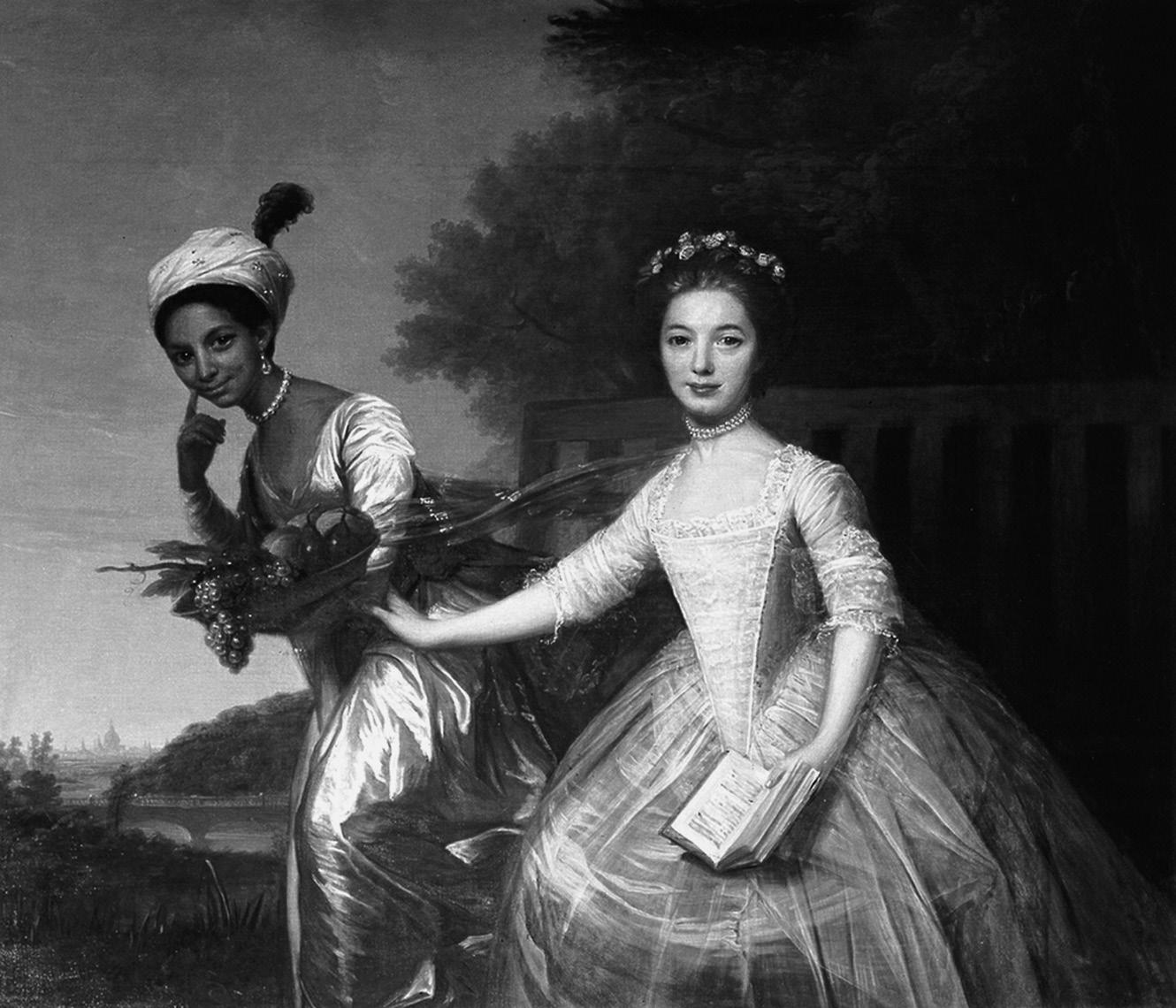
Figure 1.1 shows a painting by eighteenth-century British artist David Martin that can be viewed by the public at Scone Palace in Perth (Scotland). In the course of time, I have come to admire it, not just for its intricate beauty but also for what it tells us about ourselves. For almost two centuries, the painting’s title was The Lady Elizabeth Finch Hatton. It was assumed that the black figure was “just a slave.”
It was only in 2018 that the British television program Fake or Fortune discovered and revealed the true story behind the painting. The black woman, Dido Elizabeth Belle, was born in 1761 from a white father, Sir John Lindsay, and a black African enslaved woman. When Sir Lindsay returned to the United Kingdom from the West Indies, he took Dido Belle along, who befriended her cousin Lady Elizabeth Murray. Dido Belle stayed with Lindsay’s uncle Lord Mansfield, who treated her as an equal. For instance, she assisted in the house’s administration and was properly paid for that. That was, of course, completely unique at the time. In 1799, the family decided to have a painting made of both Elizabeth and Dido in which they are portrayed as equals, almost as sisters. Upon the discovery of the story behind the painting, its title was rightly changed into Portrait of Dido Elizabeth Belle Lindsay (1761–1804) and her cousin Lady Elizabeth Murray (1760–1825), c. 1778. So-called white ignorance, which had been brought about in the course of time by biases about
Ignorance. Rik Peels, Oxford University Press. © Oxford University Press 2023.
DOI: 10.1093/oso/9780197654514.003.0001
Figure 1.1 The painting Portrait of Dido Elizabeth Belle Lindsay (1761–1804) and her cousin Lady Elizabeth Murray (1760–1825), c. 1778, by David Martin. Image reproduced from Wikipedia: https:// en.wikipedia.org/wiki/Dido_Elizabeth_Belle#/media/File:Dido_Eliz abeth_Belle.jpg.
blacks as slaves, by forgetting, and by not sharing their stories, had now been replaced with historically accurate knowledge. More than that, the painting now does justice to the person and life of Dido Belle. The painting, then, has a lot to do with ignorance, but not in the way one might initially think.
This is just a single example of ignorance; we will see numerous others in this book, such as ordinary ignorance of mundane facts, ignorance that is intentionally brought about in others to mislead them, and ignorance that one cannot express. Yet even this single case raises a host of questions about ignorance. We were ignorant
of the fact that Dido Belle was Elizabeth’s equal, but were we also ignorant of certain norms or values here, as the case clearly involves white ignorance? In what sense were we ignorant as a group and whom does the group comprise? Is such group ignorance different from the ignorance of individuals? Were we only ignorant of facts and truths or also ignorant of Dido Belle herself? Were we all ignorant in the same way, or does ignorance come in degrees and varieties that differ from person to person? Was anybody to blame for our ignorance in this case, were none of us, or were we perhaps all? How should we construe ignorance in this example—was it just the lack of knowledge, or was it something more than that? This list of questions could easily be extended.
This book provides an in-depth exploration of ignorance in its many dimensions. It might come as a surprise to some that a philosophical book is entirely devoted to the study of ignorance. After all, philosophy means something like “love of wisdom” or “love of knowledge.” I fully agree that philosophers should seek knowledge and understanding. Yet, the focus on these epistemically valuable states could easily lead to the neglect of ignorance, which is, in a sense, their opposite. When I say this, obviously I do not mean that philosophers should aim at ignorance. What I mean is that they should aim at knowledge and understanding about ignorance. As we shall see, philosophy has often fallen short in this regard. This study is an attempt to make good on this and to show what can be gained from that.
The introductory chapter is structured as follows. First, I briefly sketch the history of the study of ignorance. We will see that there is a lack of serious study of ignorance: apart from the apophatic tradition in the ancient world and the Middle Ages and the more recent fields of agnotology, philosophy of race, and feminist philosophy, ignorance itself has received little philosophical attention. I then lay out how the field that one would expect to have studied ignorance in detail—namely, epistemology—has failed to do so. I also explore why this could be the case. After that, I explain what is new
about this book and how this fills the important gap in the study of ignorance: it develops and applies an epistemology of ignorance. Finally, I give a brief overview of the chapters ahead.
A Brief History of the Philosophical Study of Ignorance
Remarkably, the history of philosophy does not display a careful study of ignorance. Of course, philosophy’s history is vast, and numerous authors have touched on ignorance in one way or another. Yet an extensive treatment of ignorance is rare. In this section, I present several examples that I have selected which illustrate this claim.
Socrates famously argued that we need to become aware of the pervasiveness of ignorance in our lives. Socrates is presented as himself claiming ignorance about a wide variety of issues, especially of physical matters, in various dialogues, such as the Apology 19c5–8, 21b2–5, d2–6, the Phaedo 96aff., and the Republic book 5. However, Socrates also claims to be ignorant about such things as knowledge (in the Theaetetus) and ethical matters. The latter is not to say that Socrates claims to be ignorant of any ethical matter. He is rather certain of various ethical truths, such as the alleged truth that it is worse to commit a wrong than to suffer a wrong. He just claims ignorance of what he considers to be important ethical matters (Euthydemus 293b8), issues such as what courage is (in the Laches), what temperance is (in the Charmides), what piety is (in the Euthyphro), and what virtue in general is (in the Meno). This raises challenging questions about the exact relation between what Socrates claims to know and what he claims to be ignorant of (thus Bett 2011). Important for the issue under consideration, though, is that Plato’s dialogues show that in ancient philosophy, ignorance was already on the philosophical horizon. Yet, what Socrates did not do was study ignorance itself, nor did his pupil Plato do that,
even though he did carefully analyze knowledge, its relation to true belief, and various other epistemic phenomena.
If we turn momentarily to the Indian philosophical tradition, we notice that the notion of ignorance also plays a crucial role in Hinduism and Buddhism. Here, philosophy and religion cannot be distinguished that easily from one another. The focus is on ignorance as a metaphysical misunderstanding rather than as ordinary factive ignorance that can easily be removed by accurate perception.
In Hinduism, avidyā (ignorance or, as some translate it, unwisdom) is the opposite of vidyā (knowledge, understanding, perception). The word occurs in the Upanishads, for example, in the Muṇḍaka Upaniṣad 1.2.8–9. Avidyā is a common property among the ancient Indian schools, like karma and rebirth. Ignorance can take the form of a denial or misconception of Ātman (soul or self). Avidyā is not merely lack of knowledge, but fundamental and recalcitrant ignorance about the phenomenal world: it is to think that the mundane reality we perceive is the only and ultimate one. This constitutes a failure to perceive that the spiritual reality of ĀtmanBrahman is the ultimate reality beyond our perceivable and temporal world. The concept of ignorance is particularly prominent in Advaita Vedanta, an important school of Hindu philosophy. The ignorance of not seeing the ultimate oneness behind our pluriform reality, the ignorance of making distinctions where there is only oneness, can be overcome in multiple stages, such as śravaṇa (listening to sages), manana (reflection on teachings), and svādhyāya (study of holy texts).1
In Buddhism as well, avidyā is not the mere absence of knowledge or a lack of information, but a positive misconception, or illusion, or misguided view of reality. There is ignorance about fundamental features of reality, like the Three Marks of Existence (tilakkhaṇa): impermanence (aniccā), non-self (anattā), and
1 For more on this, see Wayman (1957).
unsatisfactoriness or suffering (dukkha).2 Such ignorance includes ignorance about “self,” because according to Buddhism, there is only non-self (this is crucially different from Hinduism, then). There is further ignorance, though, such as ignorance of the Four Noble Truths (cattāri ariyasaccāni). Ignorance of these kinds of things sustains the “cravings,” attachments, and false beliefs that sustain dukkha and should, therefore, be overcome. One can do so by cultivating knowledge, virtue, and wisdom. These come about by way of scriptural study, meditative training (jhāna), and other forms of spiritual training, ideally within the structures and disciplines of the monastic community (see Harvey 2013, 62–71).
Moreover, the Buddha advises people to avoid certain kinds of questions. These are thought not to be worthwhile because they are not conducive to enlightenment.3 They are called open or unanswered questions and concern issues related to cosmology, personal identity, and life after death. Note that these questions are not necessarily unanswerable. It is just that the wise person—someone who realizes which sorts of knowledge and understanding matter and which do not—will consider them as “undetermined” (avyakata) and will put them aside (thapita) or reject them (patikkhitta). The Buddha maintained a “Noble Silence” (ariya tuṇhībhāva) about these questions. In other words, the Buddha urges us to pursue strategic ignorance in these cases (we return to the notion of strategic ignorance in chapter 7).4
Hence, ignorance is a central concept in Hindu and Buddhist philosophies. The focus, however, is on what kinds of things one can but should not be ignorant of. The study of avidyā is embedded in a wider soteriological conception of human life: we are trapped in saṃsāra, the perpetual cycle of rebirth, and in karma (action) and dukkha (suffering). We should aim to achieve “release” by
2 A classic statement for the latter is the Dharmapada 277–279.
3 See Digha Nikaya 9 and, for a list of such questions, Majjhima Nikaya 633.
4 For more on the epistemological doctrine that we should avoid certain kinds of questions, see Hick (1995, 105–118).
overcoming our attachments, cravings, and false beliefs that sustain this condition of entrapment. Indian philosophical accounts of ignorance, then, do not explore exactly what ignorance is, what varieties there are, or how it relates to other mental states.5
Let us return to the Western tradition. In the centuries following the Socratics, ignorance came to play a crucial role in the so-called apophatic tradition in philosophy and theology. Here, the idea is that one cannot properly say of God or the divine or the supernatural what it is, but that we can properly say what it is not. We are, then, inevitably ignorant of the divine. This tradition goes back to Plato (e.g., in his Parmenides), resonated in the works of Neoplatonists like Proclus, Plotinus, and Damascius, flourished in the Middle Ages (especially in the writings of Maimonides, Eckhart, and Nicholas of Cusa), and has left important traces in the works of such twentieth-century philosophers and theologians as Ludwig Wittgenstein, Simone Weil, and Franz Rosenzweig. Of course, it has also influenced various religious traditions, for example, Kabbalistic Judaism and Mahayana Buddhism.6 Works in the apophatic tradition frequently appeal to the notion of ignorance, such as Nicholas of Cusa’s famous De docta ignorantia (Of Learned Ignorance), written in 1440. Yet, the apophatic tradition did not study ignorance itself. It did not explore what it is to be ignorant, in what varieties it comes, and so on. Rather, it studied what we are ignorant of and what we need not be ignorant of, as well as what we can properly say and what we cannot properly say about the divine.
In the Middle Ages, some philosophers and theologians paid attention to ignorance even apart from issues related to negative theology. Aquinas is one of them in exploring the relation between ignorance on the one hand and evil and sin on the other.
5 For helpful suggestions on ignorance in Hinduism and Buddhism, I thank Victor van Bijlert, Ian Kidd, and Clyde Missier.
6 For an overview, see Franke (2015).
In De malo he defines ignorance as “the opposite of knowledge.” He also distinguishes between nescience, which is simply the absence of knowledge, and ignorance, which is at least sometimes not merely the absence but the privation of knowledge. Ignorance, however, need not be sinful: it is sinful only in those cases in which one should have known. Thus, everyone should know the truth of the Ten Commandments, and bishops should know certain things that pertain to their office. Closely related to this is the fact that ignorance can be both voluntary and nonvoluntary.7 These remarks are representative of how the Scholastics are interested in ignorance: the focus is on a theological issue, such as how ignorance relates to sin. The nature and varieties of ignorance themselves are not explored in any detail.
Nineteenth-century Scottish philosopher James Ferrier has also discussed ignorance. The second part of his Institutes of Metaphysic is devoted to agnotology, the theory of ignorance (see Ferrier [1854] 2001). He presents ignorance as a privation, not merely as the absence of something, but as the actual lack of knowledge. Ignorance, then, is a shortcoming. Moreover, it is always, in principle, something that can be overcome by some intellect. If something cannot possibly be known, one is not ignorant of it. Ferrier also argues that the noumenal world—the world as it is in itself—cannot be known, not the subject in itself nor the object in itself. Because they cannot possibly be known, one cannot be ignorant of these things.8 Ferrier suggests that ignorance should be distinguished from nescience: we do not know the opposites of necessary truths (because they are necessarily false), but we are not ignorant of them either. Ferrier’s theory of ignorance gained attention and received criticism already in his own time (e.g., Cairns 1856, 24).
7 See Aquinas, De malo, q. 3: “On the causes of sin,” art. 6: “Whether ignorance can be the cause of sin?,” art. 7: “Whether ignorance is a sin?,” and art. 8: “Whether ignorance excuses sin or diminishes it?” (Aquinas [1270] 2001).
8 For a helpful overview of Ferrier’s theory of ignorance, see Keefe (2007).
In the final decades of the twentieth century, three fields of philosophical research emerged that would pay attention to ignorance itself, specifically to certain features of ignorance (and not merely the thing that one is supposed to be ignorant of): these fields are agnotology, feminist philosophy, and the philosophy of race. They study contingent but important features, such as the extent to which ignorance is intentionally brought about or maintained, how ignorance on a group level can be strengthened by biases, how ignorance serves certain moral and political purposes, and how ignorance can come with meta-ignorance.9
The field of agnotology studies culturally induced ignorance or doubt, especially the ignorance that is created or maintained by the publication of misleading or inaccurate scientific data. Well-known examples are the influence of the tobacco industry and climate skepticism (see Oreskes and Conway 2010; Proctor and Schiebinger 2008a). Nowadays, agnotology continues to flourish and makes up much of, for instance, the recent Routledge International Handbook of Ignorance Studies (see Gross and McGoey 2015).
Feminist philosophy has also brought the importance of ignorance to our attention. As Marilyn Frye and others have shown by a wide variety of case studies, ignorance about women and about issues related to women is frequently intentionally created or maintained, such as ignorance about natural abortifacients, ignorance about the clitoris, and ignorance about female orgasms (see Frye 1983; Tuana 2004).
As to the philosophy of race, it is widely acknowledged nowadays that certain groups in society, especially racial minorities, suffer not merely from certain acts of oppression but also from what Miranda Fricker (2007) has called testimonial injustice and
9 In the same time period, we also find volumes beyond philosophy that seem to be about ignorance, such as the (1978) book Encyclopaedia of Ignorance, edited by Ronald Duncan and Miranda Weston-Smith. Closer scrutiny reveals, though, that such volumes are usually about the things we know and the things we do not know rather than about ignorance itself.
hermeneutical injustice. Testimonial injustice takes place when a speaker receives an unfair deficit of credibility from a hearer because of a prejudice on the hearer’s part. Hermeneutical injustice occurs when some substantial domain of a person’s social experience is obscured from collective understanding due to continuous and wide-ranging hermeneutical marginalization. Hermeneutical marginalization takes place when one participates unequally in various practices through which social meanings are generated.10 When it comes to racial minorities, hermeneutical injustice occurs when, for instance, social structures represent minorities wrongly, which also leads to unjust interpretations by these minorities of their own experiences. For instance, African American minorities suffer from interpretative frameworks that do not do justice to who they are and what they experience. More recently, Fricker (2016) and Medina (2016) have explored these concepts in more detail in relation to the notion of group ignorance, white ignorance in particular. We should note, then, that ever since these fields saw the light of day, they have zoomed in on various contingent features of ignorance that take center stage in certain societal phenomena. Agnotology has focused on ignorance that is intentionally brought about or maintained by others for financial or ideological reasons. The philosophy of race and feminist philosophy have studied how certain kinds of ignorance work on a group level, how they are fueled by biases, how they relate to various epistemic injustices, and how they can be overcome. Ignorance itself, however, has not received that much attention in these debates. Compare it to this: one can study scientific knowledge without analyzing knowledge itself, and one can explore New Atheist belief without saying much about belief itself. It is time to turn to ignorance itself.
10 This is almost identical to Fricker’s own definitions; see Fricker (2007, 6, 154).
The Neglect of Ignorance in Epistemology
One would expect the notion of ignorance, which is after all a core phenomenon in our cognitive lives, to have been rigorously analyzed, especially by epistemologists. Surprisingly, this is not the case. Epistemology has traditionally focused on knowledge and what is necessary for knowledge, such as belief and epistemic justification. The term ignorance was used in debates on radical skepticism, but normally only to indicate its epistemically devastating consequences: we would be ignorant of pretty much anything regarding the external world.11
Fortunately, epistemology’s scope has substantially broadened over the last three decades or so. It now provides substantial scrutiny of such things as the epistemic virtues and vices, various social epistemic phenomena (e.g., testimony, disagreement, biases, and group attitudes), and propositional attitudes like hope and faith. Yet, ignorance remains remarkably understudied by epistemologists. Why has ignorance been neglected for so long?12 At least three potential reasons come to mind.
First, some epistemologists have suggested that epistemology simply is the study of knowledge (e.g., Steup 2005). If that is correct, then it is simply not within the purview of epistemology to canvass ignorance. But as the many examples given above of issues that have broadened epistemology show, few epistemologists nowadays embrace such a narrow conception of epistemology.
Second, ignorance has often been considered to be something privative, not something that has an important nature of its own. The idea was that ignorance is the lack of knowledge, so if we understand what knowledge is, we thereby understand what ignorance is. This is remarkable. On the one hand, it is not at all clear
11 For example, the title of Unger (1975): Ignorance: A Case for Scepticism
12 Cynthia Townley has also pointed out that there is in philosophy an “excessive love of knowledge” and, with others, calls it “epistemophilia,” a love that has come at the cost of neglecting ignorance (Townley 2011, xii).
that ignorance is indeed simply the lack or absence of knowledge. In fact, in chapter 3 I will give several reasons to think that this is not the case. That ignorance cannot be understood purely privatively has also already been suggested by scholars in agnotology in recent decades. On the other hand, even if ignorance is purely privative, how would it follow that it does not deserve study of its own? Ever since Augustine, a number of theologians and philosophers have argued that evil is nothing over and above the absence of good (privatio boni). Yet, this has not prevented them from carefully and fruitfully elaborating on the nature and varieties of evil in relation to human free will and God’s providence and omnibenevolence.
Third, ignorance was for a long time widely considered to be something negative, something to be avoided. As various philosophers and scientists have pointed out over the last two or three decades, though, this is only true for some cases. Ignorance often comes with something epistemically suboptimal: a failure to know. It can be morally bad as well, for example, when one is ignorant of the things that matter most to one’s children or spouse. And it can be bad in further ways, such as in cases of anosognosia, a pathological condition in which a person is unaware of an obvious personal disability, debilitation, or injury. In many other cases, though, ignorance is benign and sometimes even desirable. Here are some examples. Some people prefer to be ignorant about the genetic diseases they have or might have. Archeologists may intentionally keep people ignorant about an excavation site’s exact location for fear of looting. Dutch biologists, for fear of mass tourism, keep the public ignorant about where the pictures of the wolves that recently entered the country have been taken. We might want some scientific and military information to be classified so that most people remain ignorant about it.13 We can have randomized controlled trials and the ensuing robustness of results only if we deliberately
13 According to Galison (2008, 39), five to ten times the size of accessible information may be classified.
bring about or maintain ignorance. We may desire to be ignorant of certain cases of extreme evil and suffering that take place in the world—and perhaps rightly so. We might try to become or remain ignorant about specific faulty character traits of our partners or try to forget certain things they did or said. We may choose to keep young children ignorant about certain sexual issues, at least up to a certain age. The idea then that ignorance only has negative value is clearly untenable.
In all fairness, there have been a couple of exceptions over the last ten years or so to the neglect of ignorance. A handful of philosophers have started to ask and answer various specifically epistemological questions about ignorance. Nadja El Kassar (2018, 2019) has explored whether the conceptions of ignorance in agnotology and the philosophy of race show that the conception of ignorance as lack of knowledge is incomplete. Pierre Le Morvan (2011b) has argued that ignorance is lack of knowledge rather than lack of true belief. Nikolaj Nottelmann (2015, 2016) has defended the view that there is not only propositional ignorance but also objectual and practical ignorance. Duncan Pritchard (2021) has argued that ignorance is the lack of true belief or the lack of knowledge that issues from the violation of a duty to inquire. René van Woudenberg (2009) has explored which varieties of ignorance there are. There are even three monographs devoted to ignorance. In Ignorance: On the Wider Implications of Deficient Knowledge, Nicholas Rescher (2009) explores whether there can be ignorance that is inevitable. In A Defense of Ignorance, Cynthia Townley (2011) argues convincingly that ignorance can play various positive roles. Among other things, she argues that epistemic interdependence entails certain kinds of ignorance and that various epistemic virtues, such as intellectual humility and trust, also come with ignorance. And Daniel DeNicola, in his (2017) book Understanding Ignorance: The Surprising Impact of What We Don’t Know, explores a wide variety of issues pertaining to ignorance, such as the ethics of ignorance and willful ignorance.