Toward a Counternarrative Theology of Race and Whiteness: Studies in Philosophy of Race, Science Fiction Cinema, and Superhero Stories Christopher M. Baker
Race, Education, and Reintegrating Formerly Incarcerated Citizens: Counterstories and Counterspaces (Critical Perspectives on Race, Crime, and Justice) (Ebook PDF)
Linda Martín Alcof, Hunter College and the Graduate Center CUNY
Chike Jefers, Dalhousie University
Socially Undocumented: Identity and Immigration Justice
Amy Reed-Sandoval
Reconsidering Reparations
Olúfẹmi O. Táíwò
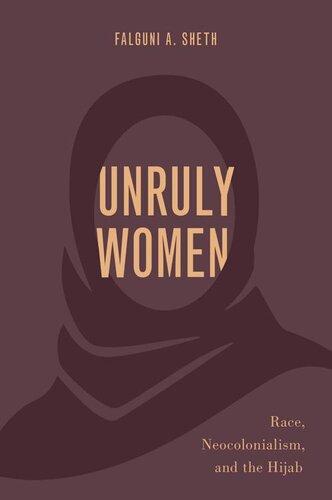
Unruly Women: Race, Neocolonialism, and the Hijab
Falguni A. Sheth
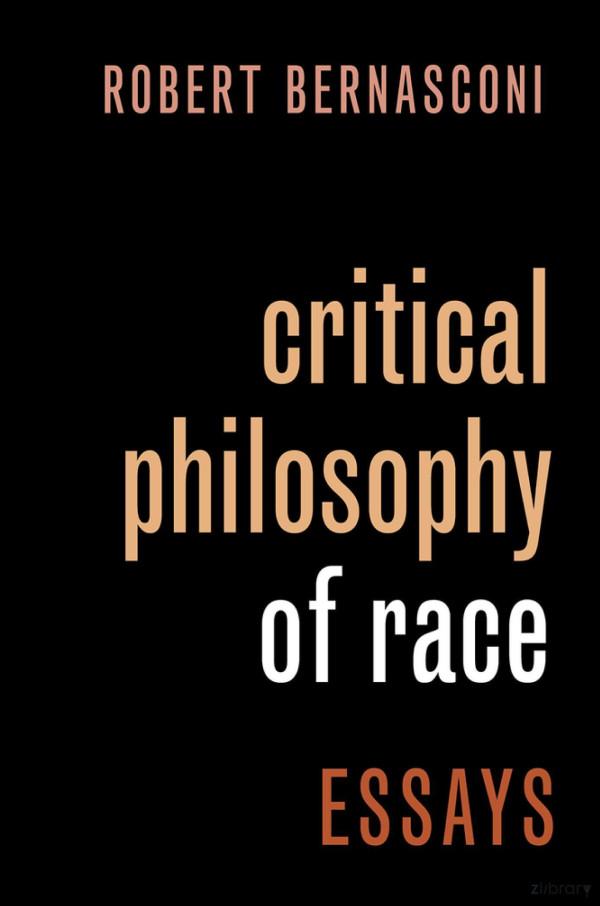
Critical Philosophy of Race: Essays
Robert Bernasconi
Critical Philosophy of Race
Essays
ROBERT BERNASCONI
Oxford University Press is a department of the University of Oxford. It furthers the University’s objective of excellence in research, scholarship, and education by publishing worldwide. Oxford is a registered trade mark of Oxford University Press in the UK and certain other countries.
Published in the United States of America by Oxford University Press 198 Madison Avenue, New York, NY 10016, United States of America.
All rights reserved. No part of this publication may be reproduced, stored in a retrieval system, or transmitted, in any form or by any means, without the prior permission in writing of Oxford University Press, or as expressly permitted by law, by license, or under terms agreed with the appropriate reproduction rights organization. Inquiries concerning reproduction outside the scope of the above should be sent to the Rights Department, Oxford University Press, at the address above.
You must not circulate this work in any other form and you must impose this same condition on any acquirer.
Library of Congress Cataloging-in-Publication Data
Names: Bernasconi, Robert, author.
Title: Critical philosophy of race: essays / Robert Bernasconi.
Description: New York, NY: Oxford University Press, [2023] | Series: Philosophy of race | Includes bibliographical references and index.
Identifers: LCCN 2022029994 (print) | LCCN 2022029995 (ebook) | ISBN 9780197587973 (paperback) | ISBN 9780197587966 (hardback) | ISBN 9780197587997 (epub) | ISBN 9780197588000
LC record available at https://lccn.loc.gov/2022029994
LC ebook record available at https://lccn.loc.gov/2022029995
DOI: 10.1093/oso/9780197587966.001.0001
1 3 5 7 9 8 6 4 2
Paperback printed by Marquis, Canada Hardback printed by Bridgeport National Bindery, Inc., United States of America
To the Muses
Foreword by Linda Martín Alcof
1. Critical Philosophy of Race
2. R acialization and the Construction of Religions
3. The Philosophy of Race in the Nineteenth Century
4. R acial Science in the Nineteenth Century
5. The Policing of Race Mixing: The Place of Biopower within the History of Racisms
6. Crossed Lines in the Racialization Process: Race as a Border Concept
B LACK PHILOSOPHERS SPEAK OUT
7. Ottobah Cugoano’s Place in the History of Political Philosophy: Slavery and the Philosophical Canon
8. A Haitian in Paris: Anténor Firmin as a Philosopher against Racism
9. “Our Duty to Conserve”: W. E. B. Du Bois’s Philosophy of History in Context
10. Frantz Fanon and Psychopathology: The Progressive Infrastructure of Black Skin, White Masks 176
11. Frantz Fanon’s Engagement with Phenomenology: Unlocking the Temporal Architecture of Black Skin, White Masks 186
IV. THE CONSTRUCTION OF THE CONCEPT OF RACISM
12. Nature, Culture, and Race 205
13. A Most Dangerous Error: The Boasian Myth of a Knock-Down Argument against Racism 220
14. Making Nietzsche’s Thought Groan: The History of Racisms and Foucault’s Genealogy of Nietzschean Genealogy in “Society Must Be Defended” 235
15. Existentialism against Colonialism: Sartre, Fanon, and the Place of Lived Experience 251
Foreword
Robert Bernasconi is internationally recognized as one of the founders of the new feld of study called the critical philosophy of race. Yet the papers he has written in this area over the last several decades are scattered far and wide in journals and books across the (primarily) English-speaking world. For some years now, many have been pressing him to collect his papers on the topic of race in book form; fnally, this wish comes to fruition with this volume and its companion, second volume.
Tese collections will provide a comprehensive and systematic overview of Bernasconi’s scholarship on race, enhancing our general understanding of the origin of the concept in modern European philosophy and the new sciences. Tis collection will also contribute to our understanding of the ongoing ways in which European ideas about race were contested by Africana philosophers from the beginning. Reading European thinkers alongside Africana thinkers helps to open up the question of how to defne racism, and how the twentieth-century formulations of racism emerged historically. Together, these papers reveal the contributions that a specifcally continental philosophical approach can make to our eforts to understand the infuence of racist ideas on the development of the modern West.
Te subfeld that Bernasconi has helped to inaugurate, which is now called the critical philosophy of race (CPR), follows in the wake of critical race theory in taking a critical approach to the concept of race, that is, to its validity as a means of characterizing human diference. CPR urges us to denaturalize the concept of race and instead take a historicist approach. As a concept, “race” has meant diferent things at diferent times and has no single “correct” meaning but multiple iterations operating to produce varied efects in the context of specifc social structures but always within the overarching development of European and U.S. empire building. In sum, the project of CPR is not one of establishing the fnal truth about race so much as to see how varied ideas about race emerged and multiplied and how these ideas played a role in retaining the power of racism in modern, liberal, ostensibly democratic societies.
Bernasconi’s contributions are distinguished by their attentiveness to interpretive methodologies that can show why, and how, the major writings of modern European philosophy need to be read in the fullness of their historical and intellectual context as transnational colonial empires emerged and systems of race-based slavery became institutionalized. Te aim of this critical approach to the tradition of modern philosophy is not to establish that it has no positive content that remains useful and relevant, or that we can now simply forego its study. Rather, the point is to argue that the judgment of modern philosophy’s contributions cannot be made in a substantive and persuasive way until we interpret these texts without ignoring those claims, passages, and theoretical arguments that helped to justify the formation of racist nation-states. Tis interpretive work will then be able to help in assessing the seeds of racism, as well as its contributing elements.
Te essays collected in this volume open up the question of how to defne racism well beyond the sphere of individual intention or afect, to which it is still too ofen consigned. To be sure, the lived experience of racialization in individual lives has also been fruitfully described and debated, as Bernasconi details here. And yet the focus on lived experience by thinkers such as Franz Fanon is embedded within a phenomenological tradition that seeks a social, non-naturalist approach to the ways in which we inhabit our bodies and our communities and navigate our relations with others diferently. If we center human experience, we can actually discern the way it is socially constituted.
Tus, Bernasconi’s own approach makes use of the rich resources in the broad continental European philosophical tradition to dissect the problem of race, as will be outlined herein. Adding to these resources are the writings by a number of colonized subjects who began to engage in varied ways with the ideas of racial empire but whose work has been until recently neglected in canonical histories of philosophy. Tese were contemporaneous writings, and by placing them in conversation with the conventional canon, Bernasconi defly challenges the idea that the modern European theorists were simply men of their time, and thus that their racism should be excused on these grounds. Or perhaps we should afrm, he suggests, that they were men of their time, and then insist that we read their work in the full context of their historical period in which competing ideas about racial groups were being elaborated and circulated.
Racism became an interlocking system of ideas in early European modernity, and only later became hardened into ideology and grounded in biological claims, Bernasconi argues. In his work on the English philosopher John
Locke, he shows that we can trace a form of proto-racism against slaves that was manifest prior to fully formed concepts of race. Te scientifc formulation of shared inherent physiological features that were causally determinant over a variety of behavioral and intellectual capacities emerged antecedently to explain and organize racist dispositions and judgments already in place. Hence, Bernasconi dates the emergence of biological concepts of race diferently than others: not as the necessary genesis of racism, but as its ofshoot. Te important implication here is that at least some analytic approaches to the history of race and racism are guilty of a kind of idealism, in the sense of making concepts primary, such as the concept of biological race. Te history of racism can be tracked beyond the emergence of biological ideas about racial diferences between human beings.
In the remainder of this Foreword, I want to briefy describe fve important interventions that Bernasconi’s work has made in the developing scholarship on race in philosophy as well as the broader feld of social theory in general.
First, Bernasconi’s historical scholarship and original interpretations have helped to show that the ideas and arguments of major fgures as well as emerging disciplines such as religion and anthropology must be interpreted with race as an important theme. He has contributed his own archival research to trace the contemporaneous discussions that can establish diferent and more complete analyses of key texts, by showing their interlocutors, critics, and other relevant writings not usually discussed in philosophy (some that, indeed, have been all but unknown to philosophers until recently, such as the work of Anténor Firmin, and the interesting history of the classic phenomenologists’ discussions about race, including Husserl, Schutz, Stein, and Sartre). Bernasconi has more than a dozen papers on Kant and Hegel, each ofering new historical information and analysis; these will be collected in Volume Two. Tus, for the frst time, in one location, readers will be able to view the comprehensive considerations Bernasconi brings out in regard to the interpretation of Kant’s ideas about cosmopolitanism and Hegel’s conception of freedom. Tis work of historical scholarship showcases his approach to philosophical historiography in general, which leads to the next point.
Te second intervention Bernasconi has developed is to show that the eclipse of race in the modern canon is the result of methodological choices. While the egregious and undeniable racism, and sexism, of many central fgures in the European canon is no longer disputable or so easily dismissable as “obviously” irrelevant to their central claims, new methodological strategies
have emerged that reduce the signifcance of the racism in the existing canon, and thus the necessity for seriously engaging with it. Bernasconi argues that present-day defenders make use of three primary strategies: compartmentalization, decontextualization, and creative reconstructionism. Together these operate to defect historical contextualization, as if unnecessary, and to mitigate the importance of reinterpreting the major texts.
Compartmentalization allows interpreters to set aside the evidence of racist ideas and commitments in a philosophers’ writings, separating certain passages as having no bearing on what are taken to be the essential features of the theory. Decontextualization allows the process of interpreting texts to proceed without any understanding of the contemporaneous intellectual environment, and especially the alternatives and contestations that were at the time being discussed and debated, thus allowing readers to believe that the views expressed by canonical philosophers were more widely accepted than in fact may have been the case. Te third strategy is perhaps the strongest and most innovative. Creative reconstructionists argue that the value of a fgure’s ideas and theories are most fairly judged by determining what can be most constructively (and creatively) fashioned out of their writings, or sections of their writings. Tis method allows interpreters to leave behind any limitations in the textual arguments themselves, or contravening evidence of the author’s actual views, in order to imagine an anti-racist vision based on a racist philosopher’s ideas.
Bernasconi argues that these three strategies hobble our capacity to analyze this period of writings not only historically but also, and more importantly, philosophically. Compartmentalization is a bad practice to inculcate in our students, since it teaches them that we can take any text and discern the full complexity of its meaning by only attending to the pretty parts. Te method of decontextualization cannot but fail to explain the development of intellectual ideas, which are always to some extent social and communal, developed in relationship with existing and competing ideas as well as with practices, institutions, and communities structured in part by their immersion within overall economic and cultural systems. And creative reconstruction licenses apologetics, in which we might continue to hail slave owners as the founders of democratic theory. A complex, nonreductive, and nuanced account of the contributions of a given text or philosopher requires that we contextualize their writings and strive to understand the whole, afer which we can assess what may continue to be useful and true. Together these three methods adversely afect interpretive
practices and political understanding as well as an appreciation of the historical developments of ideas. Tus, they have not served the profession, trained students well, or helped broader audiences grasp the truly complicated legacy of modern ethics and political philosophy and how precisely these require improvement.
Te third intervention Bernasconi’s work ofers to the critical philosophy of race is to stress that there are multiple and varied and sometimes contradictory problematizations of race and racism rather than a singular coherent problematic, or one that can be organized via a singular topic of concern, such as the validity of the biological concept of race or the debate over the criteria for determining if an individual is racist. Te controversies over the defning criterion of an individual’s racism—cognition or afect, for example—so rife in analytic philosophy’s work on race are interestingly absent in continental philosophy’s discussions, where there is more of a focus on structures and systemic conditions, both material and discursive. Tus here we have not simply a diference in problems philosophers choose to work on but the efect of diferent framing assumptions on how problems are formulated.
Bernasconi argues that the focus on the emerging biological concept of race, and whether a biological defnition can be updated and refashioned in light of new work in population genetics, assumes the possibility of distinguishing nature from culture. In other words, most of the current debates on the scientifc validity of race assumes that we can lif the idea of race out of its social and historical context in order to assess its validity as a natural kind, that we can separate the “nature” of race from its constitution within social and cultural systems. Tus, the question of whether or not there is a “referent” for the concept of race in the natural world, or one that can be suitably fashioned with however many qualifcations, needs critical investigation itself.
Formulating the question of race as a traditional metaphysical question allows theorists to sidestep questions of power in the formation of language and ideas. What is the larger project of inquiry within which a concept of race would be inserted if it was found to be scientifcally kosher, so to speak? What institutional practices might be unleashed by validating a scientifc understanding of racial categories? If there is a central problematic in regard to race, that should obviously be the problematic of racism, but separating the scientifc or metaphysical approach to the concept of race from the question of its ethical and political efects assumes we can debate race without
concern for the way in which racism may be afecting standards of adequacy and approaches to interpretation as well as infuencing the formation of empirical data.
Separating out the question of a scientifc approach to race also assumes certain framing assumptions about the way that language and concept formation work that Bernasconi, as a phenomenologist, does not share. As he explains in this volume, Alfred Schutz argued that racism operates in the domain of social experience, feeling, and perception, producing predictable and quantifable fndings, such as fear, for example, but not ones that should be taken as natural occurrences or universal human tendencies. In Chapter 1, Bernasconi explains Schutz’s phenomenological approach in this way:
. . . what one sees is not a body with certain characteristics on the basis of which one subsequently infers that a person has such-and-such characteristics. What one sees is a style in the form of a Gestalt.
In contrast, the presumed separability of nature from culture has generated questions about the “natural” human response to visible diferences, providing more of an alibi than a useful explanation for racism.
Te fourth signifcant intervention follows from this critique of naturalistic tendencies in the philosophy of race. In the chapters that follow, Bernasconi provides a powerful synopsis of what the phenomenological method has to ofer in the way of explaining how racialization operates. If the third intervention is to displace the way in which certain singular problematics in the philosophy of race have been centered and represented as the most basic, a phenomenological approach urges a localized and contextualized understanding of the concepts and problematics of race, racism, and racialization. Centralizing the focus on lived experience requires attention to specifc locations and time periods, and this counsels a decentralized set of philosophical problematics.
Rather than pursuing natural conditions imagined as existing prior to cultural meaning systems, the idea is to seek to understand experience in its full complexity, involving somatic, afective, hermeneutic, and perceptual dimensions in conversation within specifc cultural locations. He explains and critically assesses the contributions made toward this by various fgures, such as Edmund Hussel, Edith Stein, Alfred Schutz, Jean-Paul Sartre, Simone de Beauvoir, and Frantz Fanon, as well as more contemporary philosophers, noting their diferences and disagreements. His analysis ofers especially
signifcant interpretations and assessments of Sartre and the evolution of his thinking about racial identities in relation to his concepts of the situation and the practico-inert. He also assesses Sartre’s engagement with Fanon, as well as their diferences, in regard to the general characterization of racial identity, oppression, objectifcation, and vulnerability. Tus, while advocating broadly for the strength of the ability of the phenomenological tradition to help us understand race, Bernasconi also traces its evolution, limitations, and internal variation.
Finally, Bernasconi makes a ffh intervention in helping to bring to the fore the writings of Africana philosophers in the broad diaspora. Here we have included a paper on the political philosophy of Ottobah Cugoano in which Bernasconi ofers an interpretation of the specifc way in which Cugoano took up the critique of slavery, and how his arguments remain relevant today in debates over evolutionary social change, the responsibility of bystanders, and the practice of an insurrectionary ethics. Readers will also fnd in this volume his interpretive analysis of the work on Anténor Firmin, W. E. B. Du Bois, and two chapters on Fanon, demonstrating their original arguments on such topics as the meaning of citizenship and mixed-race identities and also retrieving the intellectual context of their arguments to provide new interpretations. As Bernasconi helps to show, the canon of modern political philosophy needs, at the very least, an expansion.
Together these fve interventions spell change for the way in which modern European philosophy should be interpreted, judged, and taught in the future. But the overall contributions that Bernasconi’s scholarship provides go well beyond the reassessment of the history of philosophy to help us understand the nature of racism itself, and to avoid certain popular and easy solutions sometimes put forward, such as the simple extension of liberal ideas to all, or the idea that pointing out the inadequacy of biological essentialism will change the way we interact with, judge, and understand one another.
When I was a young student at Florida State University in the 1970s, sitting in philosophy classes, political philosophers did not explore the problem of racism, even in courses on Marxism. Metaphysics courses stayed on the topic of parts and wholes and personal identity, without raising questions about social kinds. Epistemology courses were obsessed with the sort of false beliefs caused by painted wooden signs made to fool passersby into thinking they were seeing barns. Even my phenomenology courses at the time ignored the contributions of Fanon or the lived experience of racialized and gendered
social identities. Tis was the era of Black Power, yet there was no mention of Black, or Brown, power mentioned in my philosophy classrooms.1
Today, few departments can get away with such an efective erasure of one of the main forms of injustice in our time. We should not overplay how much progress we have achieved, but the work of the critical philosophy of race has opened up for debate the frameworks by which we approach the history of philosophy, philosophical historiography, social ontology, epistemic norms of justifcation, even the aesthetic dimensions of racism. Te work of Robert Bernasconi has played a pivotal role in this transformation. Dogged in his attention to scholarly detail and archival sources, he has spent decades speaking on Locke and Kant and Hegel’s racism, on Fanon and Sartre’s contributions and debates, bringing tattered frst editions to history of philosophy panels at the American Philosophical Association meetings to demonstrate the authors’ real views written in their own handwriting in the margins. Tis tall, rather awkward Englishman has enlightened so many audiences around the world with his historical erudition that this area of study can no longer remain marginal. Here, fnally, we have his own contributions more easily available for all.
Linda Martín Alcof
1. Te one exception was all the courses I took with Donald Hodges, where political philosophy engaged with anti-colonial and anti-imperial movements around the world. Hodges made philosophy relevant to the most vital questions of social movements and social change.
Acknowledgments
Tis book was put together during the COVID-19 pandemic. Tis context gave me ample opportunity to think about the many people who have helped me along the way. I have run through their names many times in my head. But I have fnally decided not to make a public record of them all lest it looks as if the book begins with a Litany of the Saints, although I like the analogy.
Speaking in general terms, my deepest debts are, as always, to my friends. Friendship implies trust, and it is only under conditions of trust that one can risk thinking freely with other people, share half-baked ideas, be corrected without becoming defensive, change one’s mind, learn, and grow. I have been privileged to enjoy the friendship of many people who are not academically inclined and who think I am somewhat eccentric because I never go anywhere without a book or a pile or papers, even when out late at night listening to live music. Teir willingness to put all suspicion to one side and talk openly and honestly with me about their lives, their experiences, and their aspirations has been a gif all the more welcome because I believe that they had no idea how much it meant to me.
I also have deep debts to my teachers, to my students, to my colleagues both in Memphis and at Penn State, and to many fellow critical philosophers of race. Most of these essays began as conference presentations: in my view my best thinking happens when I am writing with a specifc audience in mind. And usually at the last minute, in the plane, in bed the night before, or even in a car on the way to the venue. I thank those who had sufcient faith in me to issue those invitations to come and speak. Without those invitations, these essays would not exist.
However, some people who helped me turn these published essays into book chapters must be named. First, I thank Linda Alcof. Others have tried to persuade me to collect some of my essays on racism into a book, but they were not as relentless as Linda. Without her, there would have been no book. I thank her, and also Jenny Bryant, for being my audience for the Introduction and for showing me how to improve it. I also thank LaVerne Maginnis, who prepared the manuscript for publication and who is responsible for the index. Tere would, I suppose, still have been a book without her,
but it would have appeared at least two or three years late in a process that would have taken many more years than that of my life. She also deserves everyone’s thanks for spotting a number of errors that she found in the manuscript and that I had missed. Finally, I thank Christina Chew, my partner of many years. As I said at the beginning, the book was put together while the COVID-19 pandemic was raging around us and we were both staying home in Memphis, still my happy place even when I cannot go outside. Christina has always supported my dedication to a life dominated by teaching and reading, but during these months she had more occasion than ever to complain about me spending all day and most of the evening in my library. But she did not complain at all, and she still accepts me as I am and does so, as always, very graciously.
Tis book is dedicated to my muses. I still aspire one day to write something worthy of them.
Note on Sources
I am grateful to the publishers listed below for giving me permission to reprint the following essays. Astute readers will notice a few minor corrections, stylistic or otherwise, but I have for the most part resisted the temptation to rewrite them.
2. “Racialization and the Construction of Religions.” In A Cultural History of Race in the Reformation and Enlightenment, Bloomsbury, ed. Nicholas Hudson, 2021. Reprinted with the permission of Bloomsbury Academic, an imprint of Bloomsbury Publishing Plc.
4. “Racial Science.” In A Companion to the History of American Science, ed. Georgina M. Montgomery and Mark A. Largent, 502–11. Oxford: Wiley Blackwell, 2016. With the permission of Wiley.
5. “ Te Policing of Race Mixing: Te Place of Biopower within the History of Racisms.” Bioethical Inquiry 7 (2010): 205–16. Republished with the permission of Springer Nature.
6. “Crossed Lines in the Racialization Process: Race as a Border Concept.” Research in Phenomenology 42, no. 2 (2012): 206–28. With the permission of Brill Publishers.
8. “A Haitian in Paris: Anténor Firmin as a Philosopher against Racism.” Patterns of Prejudice 42, nos. 4/5 (2008): 365–83. Reprinted by permission of the publisher (Taylor & Francis Ltd., http://www.tandfonl ine.com).
11. “Frantz Fanon’s Engagement with Phenomenology: Unlocking the Temporal Architecture of Black Skin, White Masks.” Research in Phenomenology 50, no. 3 (2020): 386–406. With the permission of Brill Publishers.
14. “Making Nietzsche’s Tought Groan: Te History of Racisms and Foucault’s Genealogy of Nietzschean Genealogy in ‘Society Must Be Defended.’” Research in Phenomenology 47, no. 2 (2017): 153–74. With the permission of Brill Publishers.
15. “Existentialism against Colonialism: Sartre, Fanon, and the Place of Lived Experience.” In Sartre and the International Impact of Existentialism, ed. Alfred Betschart and Juliane Werner, 327–42. Palgrave Macmillan, 2020. With the permission of Springer Nature.
Introduction
Te critical philosophy of race puts philosophy to work in the fght against racism. One challenge that it faces is that racism is not and never has been static. Troughout modern history it has frequently changed its form and the language in which it is expressed. Tis is especially true today when racism is ofen at pains to stay hidden. Tere is still no shortage of unapologetic racists, but most people who are called out for their racism are quick to reject the accusation, even in instances when the denial is implausible. Tis raises a number of philosophical issues. For example, who gets to decide if an utterance or an action is racist, and to what extent is any such decision conditional on knowledge of the person’s intentions? Te courts face related questions when deciding if some act should be considered a hate crime. Tese issues are much discussed in the literature, but there are a whole range of philosophical problems that have proved more recalcitrant. It is now widely recognized outside philosophy that racism is not confned to the beliefs, feelings, or actions of individuals. Terms like “institutional racism,” “structural racism,” and “systemic racism” are frequently heard. One might have anticipated that these concepts would have provoked an intense philosophical debate. In fact, philosophers have so far done relatively little to clarify them. In the course of this Introduction, as a prelude to describing the individual chapters, I will provide a brief and tentative sketch of how institutional, structural, and systemic racism can usefully be distinguished from each other and from individual racism. Tese are not discrete forms of racism; they are intertwined. But they serve as diferent frames through which to view racism, and each of them is best addressed at a diferent level, using the approach best suited to it. Investigating structural racism using a philosophical method that was developed to investigate individuals is liable to fall short because in the process society is reduced to an aggregate of individuals and disappears as such. Once the debate about the diferent levels of racism begins in earnest in philosophy, it will quickly become a debate among rival methodologies. Tere is a great deal at stake in which methodology one adopts.
Te task of making the operation of systemic racism in particular both visible and intelligible to skeptics is no easy matter. Te idea of systemic racism is not only philosophically challenging but also politically challenging. It runs counter to both the dominant ways of thinking about society, especially in the United States, and the deeply embedded vested interests committed to keeping systemic racism concealed. What is at stake in the diference between those who confne racism to individual racists and those who take a broader view can be illustrated by examining the current debate about the long history of police violence directed against Blacks. Tat people of color in the United States are treated with a level of violence and disrespect that is markedly diferent from the way White people are treated is, because of the availability of extensive video evidence, now incontestable. But there are still many White people who are reluctant to view this evidence as anything more than an indication that “rogue cops” are more prevalent than had previously been recognized. For them, honest police ofcers can still be relied upon to root out the “rotten apples” who abuse the privileges and trust that most White people habitually accord the police. But if one listens to the testimony of people of color, especially those living in poverty under conditions of de facto segregation, they will tell you that they are seen by the police as threatening targets to law and order even when they are not under suspicion of having committed any specifc ofence.
Over and beyond the prejudices of individual police ofcers, we are now at a point when any encounter between a police ofcer and a person of color is overdetermined from the start. Both parties start from a position of fear, and this quickly leads to a heightened level of aggressivity. It seems that the police in the United States are not trained in techniques that would de-escalate the now inherent tension in such situations, at least not to the level that one sees in many other countries. Tis lack of training contributes to the culture of policing. Tere are other factors, too: some police forces lack diversity; some police ofcers are not as familiar with the neighborhoods as they would be if they were from there or if they lived there; there is the code of silence; and there is pressure on Black ofcers to behave in the way that the White ofcers alongside them behave in certain situations. Tese factors and others like them generate what we might call institutional racism in policing. But there are also structural factors that arise from the constraints placed on the budgets of individual police forces and the efectiveness of the external controls to which they are subject that derive in part from external expectations of how a specifc neighborhood should be policed, expectations that
may well difer depending on the race, class position, and gender of those involved. Tese elements are better classifed as structural racism. Tey parallel the structural racism that is clearly visible in the distribution of educational resources across the United States whereby many cities have much less to spend per child than neighboring counties with a more afuent tax base and newer buildings. Te correlations between structural racism in policing and education can be extended to other areas, too, such as health outcomes. Tese correlations call for a more synoptic view. To see the way they are connected, ofen because of a long history that goes back at least to legalized segregation but ofen much longer, one would need a diferent kind of inquiry altogether. Te label “systemic racism” seems an appropriate name to describe what this synoptic view aims at. One ofen sees the term “systemic racism” used in the face of overwhelming statistical evidence of unequal outcomes for the different races. Numerical analyses can provide strong prima facie evidence of systemic racism, but they do not in and of themselves ofer a diagnosis. Tey bring visibility and attention, but they do not render intelligible the various forces operative across the diferent spheres that produce these efects. I propose reserving the term “systemic racism” for those cases when what is being investigated is not an aggregate of separate events, but rather the forces that connect these events and lead to them being endlessly repeated, albeit sometimes in diferent ways and under diferent circumstances.
Te statistical evidence is crucial because without it these outcomes of systemic racism can become so normalized as to be almost invisible everyday occurrences: they are hidden in plain sight. However, they become visible in moments when the veneer of stability is broken. Tese moments of breakdown occur when, for example, the response of the police is so incommensurate with the situation that they were facing, or when a jury returns a verdict that is so contrary to the evidence which was presented to them that they still possess a shock value in a society which has become almost immune to shock. Tese kinds of cases can be investigated on an individual, an institutional, and a structural level. But they can also be investigated on a systemic level in which case one is looking for what produces them and what guides the response, or lack of response, to them. To fail to engage these events at the systemic level as refections of the society at large is a form of complicity. Tis is especially true in the case of policing insofar as the police act in the name of all the members of society, but wherever public services are not equitably distributed, leading to communities of color sufering disproportionately from poor health, reduced life expectancy, and cross-generational poverty, there is
not only evidence of structural racism but questions to be asked about systemic racism, questions that the society at large should be raising on its own account.
Reliance on statistics contributes to the tendency to see society as an aggregate of abstract individuals, but that is not inevitable. Te development in the nineteenth century of the notion of society as an organism, in part a consequence of the Polizeiwissenschaf (study of public policy) of the eighteenth century, also relied heavily on statistics. However, within both frameworks the concrete individual, the individual as a relational agent who can be understood only in terms of their context, is eclipsed in favor of abstraction. Te price paid by such accounts can be measured by the diference that is felt when an individual human face is put on a problem. Concrete individuals must be integrated into the account of systemic racism, not least because without them there is always the threat that people will think the very scale of the problem relieves them from responsibility, the obligation to respond to sufering whether one caused it or not. It can legitimately be argued that terms like “systemic racism” are so broad that what is being opposed readily collapses into a vague and unproductive indeterminacy. Counterposing such an account with individual testimonies is something of an antidote to this. Tey are especially valuable if they go beyond descriptions of individual encounters with racists to give a record of what it is like to live in a society in which one is consistently devalued.
If systemic racism is to mean more than the widespread prevalence of acts with outcomes where one race or another sufers disproportionately, then as a frst step one has to look beyond the study of the present to recognize the genesis of the societal structures operating in any given society. Te forces at work, both material and ideological, are most visible in the transformations that take place. Critical philosophy of race remains a blunt instrument unless it is fully informed by the study of history. Te essays included in this volume were in large part selected out of a desire to illustrate and advocate for what might be called a historical turn in critical philosophy of race. Tis is not to say that historical study has been absent from critical philosophy of race hitherto. Tere have indeed been some fne examples of its use, some of which are referenced in the chapters that follow. But all too ofen historical references in mainstream critical philosophy of race rely on received narratives in spite of the fact that one major part of the struggle against racism is to interrogate those narratives by examining the historical record afresh.1 Interrogating these narratives and the interests they serve, even when at frst sight they
appear benign and progressive, is a task not only for the historian but also for the philosopher as genealogist. Tis means that the critical philosopher of race must embrace a vast array of approaches and draw on multiple sources. Studying the history of ideas and concepts is certainly indispensable, but it is only one of the areas to be investigated. Critical race theory, critical philosophy of race’s older cousin, has shown that laws and court cases are a valuable resource for identifying a society’s priorities and the categories that they intend to deploy in the service of those priorities. But critical philosophy of race attempts to take a broader view and ultimately a global one. Given that the claim behind the idea of systemic racism is that almost no part of society is untouched by racism and that it is rooted in the material conditions and institutions of the world order, the net must be cast wide.
Tat, too, would be only a beginning. Any attempt to separate structural racism as such from the other forms of structural oppression, such as those based on gender, class, sexual orientation, and religion, that are deployed within any given material system is artifcial and distortive. A study that isolated racism from other forms of oppression would ultimately fail to be systemic in the operative sense. What is today called intersectionality gestures in that direction. Race is simply one lens, albeit a historically powerful one, through which to approach systems and structures. No one should need persuading that racism functions very diferently for diferent members of a society depending on their gender, class, sexual orientation, religion, and so on. If one tries to sort the data at one time in terms of one social category and at another time in terms of a diferent such category, on each occasion one is sacrifcing the concrete to the abstract until such time as they are brought together in an account of the operation of the system on concrete individuals as members of multiple groupings. Individuals do not disappear from an account of systemic racism. Indeed, it is only by understanding individuals in terms of the social forces that determine their lives and their struggles and the obstacles they face that the philosopher can hope to make visible and intelligible what for those individuals is simply their concrete experience. Te critical philosopher of race is thus faced with the challenge of trying to gain an ever more synoptic view, while at the same time not losing sight of concrete lived experience.
Addressing this methodological challenge is especially urgent when the alliances that might establish forms of solidarity among the oppressed are disrupted by a too heavy reliance on abstract categories. It is a familiar enough philosophical problem: how do we put together what analysis has
unavoidably taken apart through a process of abstraction? But here it has a strong political edge. Tis can be illustrated by focusing on chattel slavery. We rightly see it as a racialized system, with various structural dimensions— economic, legal, social, and so on—but even in the middle of the nineteenth century, when race functioned not just as a lens through which the slaves were seen and discounted, but as the core of what was understood to give legitimacy to slavery, the slaveholders were at pains to divide the slaves from each other in an efort to frustrate any attempt they might make to unify by identifying with one another. Te slaves were divided not only by age, religion, sex, and language but also by how long they had been in servitude and by whether they worked in the feld or in the house. Ten as now, analytic categories were deployed as a weapon in an efort to conceal from the oppressed their shared interest in addressing the operation of the system.
Countless historians of the United States have shown how the new institutions, laws, penal orders, ways of organizing the labor force, and, of course, racist theories that marked the fnal third of the nineteenth century were in large measure eforts to keep intact as much as possible of what had seemingly just been dissolved with the emancipation of the slaves. As ofen happens, these eforts to keep everything the same only succeeded in bringing about conditions very diferent from what they intended. So, for example, in an efort to restore the supply of cheap labor that had been lost with the abolition of slavery, some emancipated Blacks were re-enslaved through the convict-lease system. But this slavery by another name led to the invention of new “crimes” to satisfy the demand of labor and set the United States on the path that led to the development of the so-called prison-industrial complex in a country with a vastly higher incarceration rate than any other. But it was not only alleged “crimes” that were being policed; with segregation every aspect of social relations came under scrutiny. Investigating these continuities and discontinuities is crucial to rendering intelligible the world we now inhabit and addressing its injustices. All of this is obvious to the many descendants of slaves who understand very well that their existence is still structured by the legacy of slavery. Nor does one need in fact to be descended from slaves to be viewed through a lens that is distorted by the conditions that slavery produced and the ideas that were introduced to justify slavery. And yet all too ofen when philosophers approach racism they take cases in isolation and abstract racism from the history that produces and sustains it. Tis tendency is visible in the debates about whether racism was fundamentally a belief or an emotion to the neglect of institutional, structural,
and systemic racism. I have on occasion also adopted the proposal of those historians who suggest that one should speak of racism in the plural: one should speak not of racism, but of racisms. Tis seems right, but the study of how the diferent racisms relate to one another, how new forms arise and from where, how at one time and in one place one form is more prominent than at others, and how these diferent racisms refect diferent concepts of race is still in its infancy.
Te various chapters of this book address that task in various ways. Tey show, for example, how under certain material conditions the racist theories built around the nineteenth-century idea of the historical destiny of the White race shifed in favor of theories whose central idea was biological determinism. Tey also document how race mixing, which was promoted by some biologists in the early nineteenth century, came to be seen as a danger to the health of society. It is tempting to believe that the dominant class of the dominant race in any given society will simply draw on the racist ideas that best serve its interests at any given time. Under slavery, slave owners could rape their slaves and at the same time believe they were increasing the value of their “stock.” Afer 1865 maintaining the alleged purity of the White race was seen as fundamental to maintaining what was already being called White supremacy.2 But whereas in some contexts it may not have mattered which racial theory was in the ascendancy at any given time (as the explorer Georg Forster made clear when in 1786 he asked Kant if the thought that Blacks are our brothers has ever anywhere, even once, caused the raised whip of the slave driver to be lowered),3 it was not always a matter of indiference, as demonstrated by the example of how those of mixed race were viewed. If critical philosophy of race is to engage in the task of rendering intelligible the material conditions that perpetuate systemic racism, then the complex ways in which ideas and material conditions shape each other must be explored.
Researching the diferent racisms, while a far from pleasant occupation, is indispensable to countering them. In the chapters that follow readers will fnd examples of anti-racism fghting yesterday’s racism and strawman racism. If anti-racism is to become equal to the mobility and inventiveness that one fnds in racism, then it needs to be more agile, more creative, and equipped with a richer and historically informed understanding of how racism operates. One way in which anti-racism has recently become more agile has been demonstrated in discussions of White privilege. It has been successful in persuading those White people willing to listen that being identifed as White has served them in everyday interactions in ways that
they may not have recognized at the time. But there is a form of privilege that should be central to the discussion and has another dimension to it. It concerns how self-identifying as White serves as a source of meaning, in much the same way that self-identifying as American or English or French can serve as a source of meaning because of the narrative with which the identity is associated. Indeed, given the way that historically national identities, especially in Europe, were considered racial identities, the two cannot easily be separated. But one must understand that if one embraces a racial or national narrative with pride, one is also implicated in a history that one might wish to disown if one examined it honestly. One cannot have it both ways. Just as a person might rejoice in the values and accomplishments that are associated with a given identity, so they must take responsibility for the crimes that were performed by those with whom they share that identity, especially when those crimes were committed under the name of that identity. Responsibility here does not mean accountability. In neither case did one bring these things about oneself, but just as we are all responsible for human sufering in the sense that one is called to respond to it, additional obligations to rectify harms done in the past accompany ownership of an identity. An early version of this argument can be found in Ottobah Cugoano’s 1787 work Toughts and Sentiments on the Evil and Wicked Trafc of the Slavery and Commerce of the Human Species, which is discussed in Chapter 7. But the argument is refned if we recognize the work done by one’s chosen identities in giving one’s life meaning. Tis belongs to what the phenomenologist calls lived experience. Te lived experience of the White and the meaning Whites attach to being White is still underscrutinized by philosophers in comparison with the attention they give to the lived experience of the Black. And yet it is central to what is at stake in the current culture war that is being fought over what, how, and ultimately whose history is taught in schools and universities.
Every critical philosopher of race is faced in their work with the task of selecting the methods that best serve them in their investigations of the various forms of racism. Te narrow approaches to racism that one ofen fnds in the philosophical literature seem unequal to the challenge. Tis is perhaps not surprising. For example, the dominant forms of moral philosophy tend to operate with isolated examples, and this approach has ofen carried over into the discussion of racism. Tere are contexts in which the skill set cultivated by analytic philosophers is at a premium. For example, in formulating laws it is ofen necessary to supply tightly drawn defnitions that can be applied
with clarity. But where the lived experience of being racialized is at issue, where conceptualizing systemic racism in nonreductive terms is considered urgent, and where the anti-racist recognizes racism as a moving target, then phenomenology, dialectics, and genealogy are respectively best equipped to handle what is at stake. Critical philosophy of race is at a crossroads. It is not enough to say that if one is an analytic philosopher, then one will address it in one way, but if one is a continental philosopher, one will approach it in another way, as if the decision were neutral. Te approach one adopts must be determined not by one’s training but by the subject matter to be addressed.
It is now time to say in more detail how the various chapters of this book are supposed to contribute to critical philosophy of race as I have been presenting it here. Although I received my initial philosophical training in England beginning in 1969 at a time and place when analytic philosophy was perhaps even more dominant than it is today, I had the good fortune to be at the University of Sussex, where my enthusiasm for continental philosophy was tolerated and, most importantly, at times even encouraged. My approach to critical philosophy of race with its emphasis on lived experience, on material systems, and on history, refects this philosophical formation, and these factors are presented as a small part of the case that continental philosophy is well suited to the task of exposing various forms of racism that have developed over time and contribute to systemic racism.
Tat is why I selected as the frst chapter in the book the essay “Critical Philosophy of Race.” It was originally written as a survey article for a handbook on phenomenology. It makes no pretense to cover the whole feld of critical philosophy of race. For that, one would be better advised to look elsewhere, for example, to Charles Mills’s rich essay under the same title.4 But I have chosen to include my essay on this topic here because it introduces the three thinkers whose work has been most important for my own understanding of how continental philosophy can contribute to the critical philosophy of race: Jean-Paul Sartre, especially the later Sartre, Frantz Fanon, and Michel Foucault. I remain convinced that they still have a great deal to ofer, notwithstanding their clear limitations. But the continental philosopher must also take responsibility for the striking faults found in other representatives of the phenomenological tradition referenced in that essay, most notably Martin Heidegger, Oskar Becker, and Ludwig Ferdinand Clauss. One major task of the critical philosophy of race is to examine the racism within philosophy and the way the racism of historical philosophers can be perpetuated by insufcient attention to their defciencies.