The Nature of Endangerment in India: Tigers, 'Tribes', Extermination & Conservation, 1818-2020 Ezra Rashkow
Visit to download the full and correct content document: https://ebookmass.com/product/the-nature-of-endangerment-in-india-tigers-tribes-ext ermination-conservation-1818-2020-ezra-rashkow/
More products digital (pdf, epub, mobi) instant download maybe you interests ...
Nature - 2020 01 23 Springer Macmillan
https://ebookmass.com/product/nature-2020-01-23-springermacmillan/
Shooting a Tiger: Big-Game Hunting and Conservation in Colonial India 1st Edition Vijaya Ramadas Mandala
https://ebookmass.com/product/shooting-a-tiger-big-game-huntingand-conservation-in-colonial-india-1st-edition-vijaya-ramadasmandala/
The Zimbabwe Council of Churches and Development in Zimbabwe 1st ed. Edition Ezra Chitando
https://ebookmass.com/product/the-zimbabwe-council-of-churchesand-development-in-zimbabwe-1st-ed-edition-ezra-chitando/
1 st International Congress and Exhibition on Sustainability in Music, Art, Textile and Fashion (ICESMATF 2023) January, 26-27 Madrid, Spain Exhibition Book 1st Edition Tatiana Lissa
https://ebookmass.com/product/1-st-international-congress-andexhibition-on-sustainability-in-music-art-textile-and-fashionicesmatf-2023-january-26-27-madrid-spain-exhibition-book-1st-
Land Acquisition and Compensation in India: Mysteries of Valuation 1st ed. 2020 Edition Sattwick Dey Biswas
https://ebookmass.com/product/land-acquisition-and-compensationin-india-mysteries-of-valuation-1st-ed-2020-edition-sattwick-deybiswas/
Water Conservation in the Era of Global Climate Change Binota Thokchom
https://ebookmass.com/product/water-conservation-in-the-era-ofglobal-climate-change-binota-thokchom/
Chihera in Zimbabwe: A Radical African Feminist Principle Ezra Chitando
https://ebookmass.com/product/chihera-in-zimbabwe-a-radicalafrican-feminist-principle-ezra-chitando/
Punished: Brides of the Kindred book 27 1st Edition Evangeline Anderson
https://ebookmass.com/product/punished-brides-of-the-kindredbook-27-1st-edition-evangeline-anderson/
The New Cambridge History of India, Volume 1, Part 1: The Portuguese in India M. N. Pearson
https://ebookmass.com/product/the-new-cambridge-history-of-indiavolume-1-part-1-the-portuguese-in-india-m-n-pearson/
The Orient was almost a European invention, and had been since antiquity a place of romance, exotic beings, haunting memories and landscapes, remarkable experiences. Now it was disappearing; in a sense it had happened, its time was over.
E. Said, Orientalism, 1
The future can only be anticipated in the form of an absolute danger. It is that which breaks absolutely with constituted normality and can only be proclaimed, presented, as a sort of monstrosity.
J. Derrida, On Grammatology, 5
Illustrations
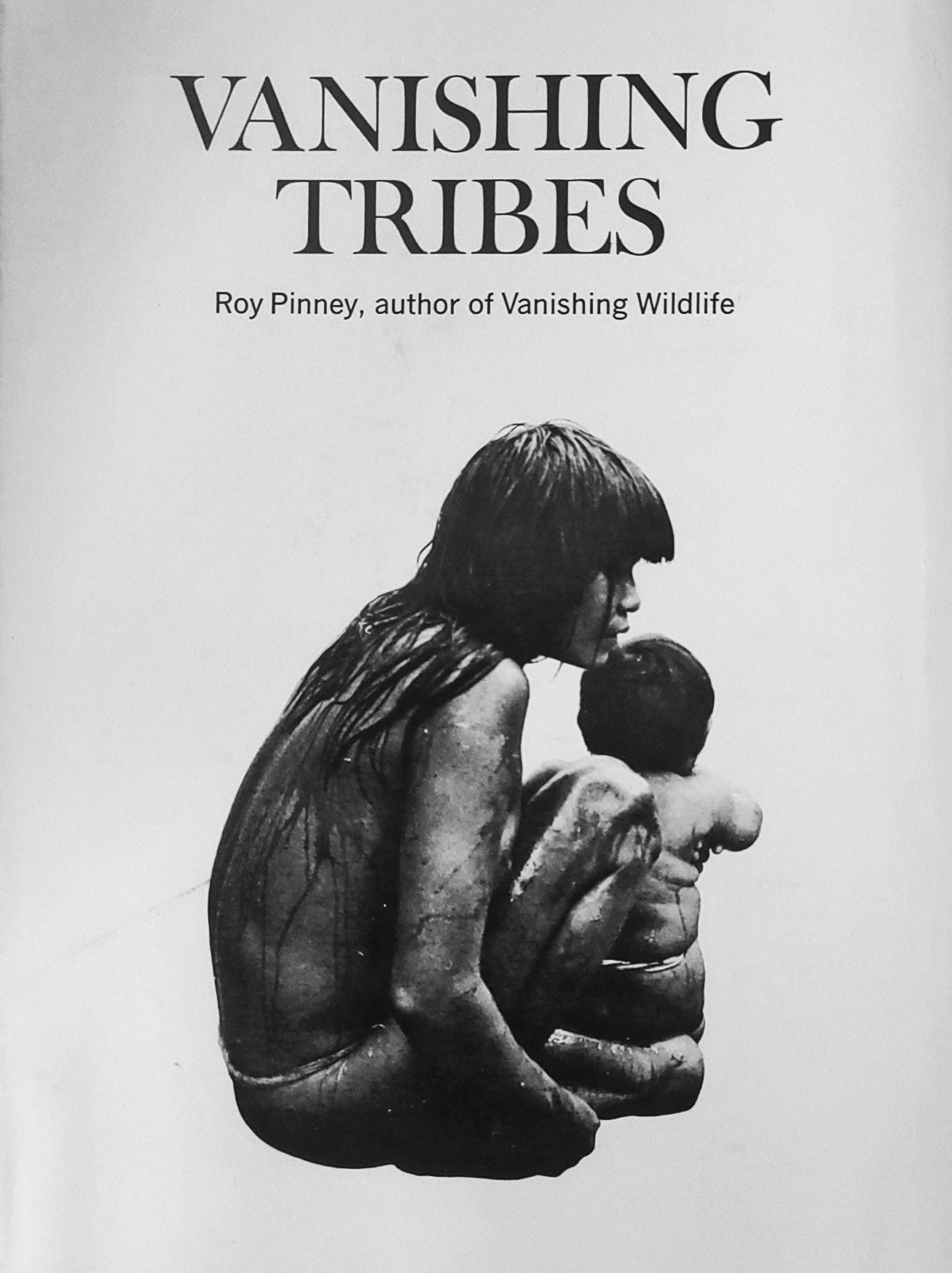
I.1. Vanishing Tribes by the author of Vanishing Wildlife. Roy Pinney, Vanishing Tribes (London: Arthur Baker, 1968). Fair use. 12
1.1. Edward S. Curtis, ‘The Vanishing Race—Navaho’ (c. 1904), Photogravure. Public Domain. Repository: Library of Congress Rare Book & Special Collections Division Washington, D.C. LCCN Permalink: https://lccn.loc. gov/2004672872
1.2. Jimmy Nelson, Before They Pass Away (Kempen, Germany: TeNeues, 2013). Fair use.
1.3. ‘No Place for “Wild” People: Save the Nature People’ & ‘No Place for Wild Animals’. Peter Baumann and Helmut Uhlig, Rettet die Naturvölker: Kein Platz für ‘wilde’ Menschen (Berlin: Safari-Verlag, 1980). Movie Poster for Bernhard Grzimek and Michael Grzimek, dir. Kein Platz für wilde Tiere (West Germany: Okapia, 1956). Photo by author. Fair use.
27
28
43
1.4. Advertisement for Formosan Aboriginal Cultural Village Amusement Park. Fair use. Source: http://www.s-bus.com/tour-17-1.htm 54
2.1. John Edward Saché & Murray, ‘Jubbulpore, Madan Mahal from the North’. Public domain. Albumen Print, Photographer’s ref. 371, 1869, 228 × 279 mm. ACP: 96.20.0553. Courtesy of the Alkazi Collection of Photography.
74
2.2. ‘Tigers, “Tribes” and Forests’. Map by Sharon Lindenfeld illustrating the approximate distribution and location of forests, tiger reserves, and Bhil and Gond communities in India, as well as the two main field sites covered in this book: the Sardar Sarovar Dam and Kanha National Park. 83
3.1. John Tenniel, ‘The British Lion’s Vengeance on the Bengal Tiger’ (watercolor and gouache on paper, 1870). Public domain. Repository: Library of Congress Prints & Photographs Division Washington, D.C. http://hdl.loc.gov/loc.pnp/ppmsca.19308
151
3.2. Typical Odds. Public domain. Source: Bernard C. Ellison, H R H the Prince of Wales’s Sport in India (London: William Heinemann, 1925), 29. 126
3.3. ‘The Game Laws—or the Sacrifice of the Peasant to the Hare’, Punch 7 (1844): 197. Public domain.
5.1. The Narmada Bachao Andolan Logo. Narmada Bachao, Manav Bachao Translation: ‘Save the Narmada, Save the Humans’. Fair use.
135
211
5.2. ‘Damned! Doomed! Drowned!’ Photo owned by International Rivers, ‘Narmada River Dams Protest: Arundhati Roy, Medha Patkar protest against dams on India’s Narmada River’. Creative Commons Licence CC BY-NC-SA 2.0. https://www.flickr.com/photos/ internationalrivers/3439550054/in/album-72157630547218220/
5.3. Medha Patkar, Domkhedi Satyagraha, Maharashtra, 21 Sep 1999. Photo owned by International Rivers. Creative Commons Licence CC BY-NC-SA 2.0. https://www.flickr.com/photos/internationalrivers/7646765266/in/ album-72157630547218220/
5.4. ‘Parley with the Bheels in the Beechwara Pass’. Robert Brown, The Peoples of the World: Being A Popular Description of the Characteristics, Condition, and Customs of the Human Family, vol. 4 (London: Cassell, 1892), frontispiece.
5.5. Interior of a home in a resettlement colony in Nandurbar District, Maharashtra, during a wedding. Photo by author.
5.6. In the searing heat, the jeep engine needed to be cooled down several times along the way. Photo by author.
5.7. A home above the Narmada submergence zone, and an NBA Jivanshala. Photo by author.
6.1. Endangered: ‘The Baiga’. Fair use. Conservation Threatens India’s Baiga Tribe. Fusion Media Company. Screenshot from: https://youtu.be/ NQbcW1B4cis
6.2. Mowgli’s been kicked out. His jungle is now a tiger reserve. Fair use. Survival International. Source: https://www.survivalinternational.org/ articles/india-evictions-jungle-book
6.3. Palace of the Gond Kings of Garha Mandla at Ramnagar. Public domain. Source: Russell, R.V. and Hira Lal, The Tribes and Castes of the Central Provinces of India (London: Macmillan, 1916), 47.
6.4. A home resettled outside of Kanha National Park. Photo by author.
6.5. Save the Real Avatar Tribe. Fair use. Survival International. Source: https://www.survivalinternational.org/news/9478
6.6. Leadership of the Birsa Munda Brigade, Adivasi Mulniwasi Adhikar Parishad (Indigenous Rights Council), Self-Respect Movement, Gond Mahasabha (Gond Assembly), and the Adivasi Bachao Andolan (Save the Adivasis Movement), and others, march into the tent. Photo by author.
6.7. Birsa Munda Jayanti celebration and rally. Photo by author.
6.8. A Baiga farmer displaying traditional bewar millets. Photo by author.
215
219
225
251
255
257
263
267
271
295
297
300
301
305
6.9. Baiga Dussehra: Gathering around the fire after midnight. Photo by author. 307
3.1. Number of ‘Dangerous Wild Beasts’ Killed Annually, 1875–1927
3.2. Amount Paid Annually for the Extermination of ‘Wild Beasts’
Preface—Beyond ‘Tigers versus Tribals’
It could result in what is being called ‘the biggest mass eviction in the name of conservation, ever’.1 In February 2019, India’s Supreme Court ordered the removal of millions of people from the nation’s forests, such as national parks, tiger reserves, and other wildlife conservation areas— anyone who already had their land claims rejected at the state level would now be dispossessed. The Supreme Court subsequently stayed its decision, but not before it sent shockwaves through indigenous rights networks around the world. If the order stands, the Government of India now has the potential to evict anywhere from two to nine million people from forest lands in the name of tigers, wildlife, and environmental conservation, according to various estimates.2
Meanwhile, around the same time as India’s Supreme Court decision, a major international campaign seeking to protect 30% of the earth’s land and water by 2030 was quickly coalescing. Bringing together powerful players at the United Nations, over fifty national governments, environmentalist groups such as the World Wildlife Fund, organizations like National Geographic Society, and backed by the billionaire Hansjörg Wyss’ Campaign for Nature, this cause has gained widespread popular support on the global stage. As in the Indian case, the aim is to save the planet’s biodiversity—especially its wildlife—from extinction. But one fear is that this might happen at the expense of impoverished rural communities—especially indigenous peoples. Thus, a recent open
1 Amrit Dhillon, ‘Millions of Forest-Dwelling Indigenous People in India to be Evicted’, Guardian, 22 Feb 2019. https://www.theguardian.com/world/2019/feb/22/ millions-of-forest-dwelling-indigenous-people-in-india-to-be-evicted
2 Office of the High Commissioner for Human Rights (OHCHR), ‘India Must Prevent the Eviction of Millions of Forest Dwellers, Say UN Experts’, 4 Jul 2019. https://www.ohchr.org/EN/ NewsEvents/Pages/DisplayNews.aspx?NewsID=24786. While the OHCHR, India Spend, and the Nature Conservancy Foundation state that up to 9 million face eviction, various other predictions ranging from 2 to 8 million evictees have also been put forward. Reuters, the Telegraph, and Survival International claim 8 million; the International Work Group for Indigenous Affairs says 7.5 million; the Guardian says 5–7 million. Quint, the Economic Times, Times of India, and Down to Earth all report that 2 million forest dwellers face eviction.
letter signed by many scholars and activists renowned for their work with communities living in and around protected areas has raised the alarm. Scholars like Arun Agrawal, Dan Brockington, Peter Brosius, Michael Dove, Asmita Kabra, Ashish Kothari, Tania Li, Paige West, and many more, are concerned that this 30x30 approach, as it’s been called, ‘continues the marginalisation of rural people who will be most affected by its measures. . . ignores decades of research and experience on the social impacts of conservation. . . [and] fails to appreciate the political contexts in which protected area conservation are embedded’.3 ‘Tribal rights’ groups like Survival International have gone so far as to call the 30x30 campaign ‘the big green lie’, again warning that ‘it would constitute “the biggest land grab in history.” Three hundred million people stand to lose their land and livelihood, many of them tribal and indigenous peoples’.4
In both of these sensational news items, what is feared endangered is not just tigers and other wildlife, and not just forests, but also forestdwelling human communities living in proximity with that wildlife— peoples usually called tribal or indigenous, or Adivasi in the Indian context. Both stories also offer dire, catastrophic, predictions of things that have not yet (and inshallah may never) come to pass.
In this book, I want to show how this heightened rhetoric of tribal endangerment has long historical antecedents. The book demonstrates that socalled tribes have been projected as endangered with extinction, and have been subjected to a wide variety of conservation efforts, significantly longer than tigers and other ‘wildlife’ species have been. Today, some people feel that the only way to save India’s forests and wildlife is to save tribal ways of life. Others really don’t care about tigers and only want to protect people, or vice versa. All in all, no matter which side you are on, the discourses of saving tribes, saving forests, and saving wildlife, remain irrevocably entangled.
The view that sees both biological and cultural diversity as under threat has in recent years been called the biocultural perspective, and advocates of biocultural diversity conservation argue that it is imperative that forests, wildlife, and indigenous ways of life all be preserved together. The topic of this book—the history of these interlinking discourses of biological and
3 Arun Agrawal, et al., ‘An Open Letter to the Lead Authors of “Protecting 30% of the Planet for Nature: Costs, Benefits and Implications” ’. https://openlettertowaldronetal.wordpress.com/
4 ‘Survival International Launches Campaign to Stop “30x30”—“The Biggest Land Grab in History” ’, 22 Apr 2021. https://www.survivalinternational.org/news/12570
cultural diversity endangerment and extinction in India—speaks to this foremost debate over conservation around the world today: the debate over the fate of the many millions of people living in and around national parks and other protected areas. In its most popular, but least accurate form, in India, it is known as the ‘tigers vs. tribals’ debate (the term ‘tribals’ is unfortunately often used as a noun in the Indian context).
In India’s public sphere, this debate is currently centred around the Scheduled Tribes and Other Forest Dwellers (Recognition of Forest Rights) Act, also known as the Forest Rights Act or FRA. It was this act that the Indian Supreme Court’s 2019 eviction order was based on. To briefly explain the history of the act: in India, in 2003, ‘a new wildlife management paradigm’ was launched under the auspices of Project Tiger.5 Rather than excluding local peoples from protected areas, as in dominant models of ‘fortress conservation’,6 proponents of this populist conservation regime argue that the best way to save India’s wildlife is to incentivize and involve local forest communities.7 In this spirit, a new bill was brought before the Indian Parliament, the Lok Sabha. The bill, which became law in 2006 under a Congress government, promised forest dwellers, among other things, the right to remain in any forest, including wildlife sanctuaries, if they could show they had historically occupied that land. Immediately, the Forest Rights Act was met with vociferous objections from traditional conservationists. Even within the Tiger Taskforce, which had produced the 2003 plan, there was no unanimity. Valmik Thapar, one of India’s most vocal wildlife conservationists, in a strongly worded note of dissent, worried:
The premise that there are vast areas of India where tigers and people must be forced to co-exist through some innovative scheme of increased
5 Sunita Narain et al., The Report of the Tiger Task Force: Joining the Dots (Delhi: Union Ministry of Environment and Forests, 2005), 3. http://projecttiger.nic.in/TTF2005/pdf/full_ report.pdf
6 The term fortress conservation dates back to at least the early 1990s, despite often being credited to Dan Brockington, Fortress Conservation: The Preservation of the Mkomazi Game Reserve, Tanzania (Bloomington: Indiana University Press, 2002). As Brockington has communicated to me, the term was in wide use in conservationist circles at the time he published his book.
7 Often called community-based conservation or Joint Forest Management (JFM), there is a huge literature on this. For a good annotated bibliography on the subject through 1999 see: ‘Community Conservation in South Asia’. http://www.umich.edu/~infosrn/CICB/ CICB_SA1.doc
use of underutilized forest resources by involving local people does not make any sense to tiger conservation especially when the human and cattle populations are constantly rising. The fact is each tiger must eat 50 cow-sized animals a year to survive, and if you put it amidst cows and people, the conflict will be eternal and perennial. . . The premise of continued co-existence over vast landscapes where tigers thrive ecologically, as well [as] people thrive economically, is an impractical dream, with which I totally disagree.8
In this view, so-called tribals truly are pitted ‘versus’ tigers.
The tigerwallahs, or tiger lovers, claim that millions of people are encroaching on parks and other protected areas in a massive land grab, and must be evicted. Conservationists like Thapar insist that ‘tigers have to be saved in undisturbed, inviolate landscapes. . . You can either create landscapes that are undisturbed, or you don’t save tigers. . . tigers and human beings—forest dwellers or tribal peoples—cannot coexist’.9 Thapar also calls the FRA a ‘Forest Destruction Act’. One group of such tigerwallahs, which ‘believes in the ideology of strictly protected wildlife reserves’, is literally called Wildlife First.10 In February 2019, Wildlife First and other petitioners succeeded in convincing the Supreme Court to order the eviction of millions of families from forests based on the logic that most claims made under the FRA were ‘ineligible and bogus’.11 Legislation that was intended to protect the rights of India’s Adivasis and other forest dwellers was now being used to evict them.
On the other side are many forest rights advocates—activists, academics, administrators, and others standing up for indigenous or tribal peoples, as well as some Adivasis themselves. Groups like Survival International claim that Adivasis ‘have always lived harmoniously with the tigers’, ‘rely on these ecosystems to survive’, and that removing
8 Narain et al., Joining the Dots, 175.
9 Valmik Thapar quoted in Ramachandra Guha, ‘Ecology for the People’, Telegraph of Calcutta, 14 Nov 2005. http://www.indiatogether.org/2005/nov/rgh-ecology.htm
10 Wildlife First, ‘About Us’. http://www.wildlifefirst.info/about.html
11 Shekar Dattatri, ‘How a Social Justice Tool Became a Means to Grab Land in India’s Forests’, Hindustan Times, 2 Jul 2019. https://www.hindustantimes.com/analysis/ how- a- social- justice- tool- became- a- means- to- grab- land- in- india- s- forests/ storyTPm9hWnFzRJavD1bKN2grM.html
indigenous peoples from forests will destroy their forest-based cultures.12 They believe that removing the forest dwellers from the forests will result in ‘an unprecedented disaster’. These social activists are calling this judgement ‘a death sentence for millions of tribal people in India’.13
Significantly, the 2006 Forest Rights Act was written by tribal advocates with the premise of addressing the ‘historical injustice to the forest dwelling Scheduled Tribes and other traditional forest dwellers who are integral to the very survival and sustainability of the forest ecosystem’. The act asserts that the ‘Scheduled Tribes’ have traditional forest rights, defined as including ‘responsibilities and authority for sustainable use, conservation of biodiversity and maintenance of ecological balance. . . thereby strengthening the conservation regime of the forests while ensuring livelihood and food security’. It also contains blanket statements such as, ‘conservation is embedded in the ethos of tribal life’.14
Despite being somewhat sceptical of some of these overarching claims about tribal harmony with nature used to frame the Forest Rights Act, as well as some of the alarmist rhetoric used to defend the act, along with most forest rights advocates, I am certainly disturbed by the prospect of arbitrarily evicting millions of people from forests in the name of fortress conservation. And I am especially troubled by the 2019 eviction orders because I know from experience over the last sixteen or more years of working with Adivasi communities in western and central India, that the implementation of the FRA has been fraught at best. The FRA has been totally resisted by the conservation establishment all along. Not only have the vast majority of land claims under the FRA been rejected more or less offhand, many villagers I spoke with had never even heard of the FRA (or van adhikar adhiniyam) let alone been educated about their rights under it.
However, I also know that a certain amount of gaming the system happens. I have personally seen people hiking down to forest villages from the nearest town, pretending to live in a park when the forest officers come
12 Jonathan Mazower, ‘Modi’s Escalating War Against India’s Forests and Tribal People’, CounterPunch, 31 May 2019. https://www.counterpunch.org/2019/05/31/ modis-escalating-war-against-indias-forests-and-tribal-people/
13 Survival International, ‘ “Disaster” as Indian Supreme Court Orders Eviction of “8 million” Tribespeople’, 21 Feb 2019. https://www.survivalinternational.org/news/12083
14 Government of India, The Scheduled Tribes and Other Traditional Forest Dwellers (Recognition of Forest Rights) Act of 2006, 1, 8.
around, in order to get a resettlement package. I have also personally met people who first accepted land for resettlement, then passed these lands to their relatives to farm while continuing to live in the hills themselves. And regardless of what some activists claim, not everyone who lives in an isolated village in a forest wants to stay there, which is probably a good thing, at least for the environment, since forest areas are small and population densities are high. I’ve personally met many people, especially young people, who want to get out of the hills, to live near a town, to have access to electricity, indoor plumbing, schools, hospitals, roads, motorcycles, shops, etc. They say they are sick of living without these basic amenities. Yet years later, when I interviewed a few of these people again in their resettlement colonies, they were deeply unhappy about their new situations and the deals they got, and some even wanted to go back to their old homes in the forest. They told me stories of people buying alcohol and motorcycles and unhappy endings. Still, so many others have adjusted well to life in the plains and see their resettlement as a victory. This situation is far more complicated than the way it is typically depicted to the general public, whether in urban India or abroad. When I first started interviewing people living in and around national parks and dams in central India in 2005, asking primarily Bhil and Gond Adivasi villagers their feelings about conservation and development-induced displacement, I am willing to admit now that I was in for a bit of a shock back then. Years of exposure to activist accounts of ‘tribal’ people and their environmental struggles, going back to at least since I was a teenager, had prepared me only to believe that these poor, benighted, communities would be willing to do anything and everything in their power to remain in their beloved hills and forests and maintain their timeless connection with the natural world. I had been led to believe that Adivasis living in national parks and other forest areas universally wanted to continue their lives in these natural areas, and would unequivocally resist the encroachments of wildlife conservationists, the state, and industry to remove them from their forest homes. In part, this book was born as a response to my own youthful naiveté. Before ever setting foot in central India, I came to the field with the belief that Adivasis, like tribal cultures around the world, were endangered and in need of protection. It has taken me years of engagement with Adivasi communities, oral history fieldwork, archival research, and collaboration with scholars and scholarship as well as activists and administrators, to develop the more nuanced positions I now present here.
Many of the arguments in the popular sphere are so polemical, and the level of rhetoric so exaggerated, because the goal is less to educate the public, and more to spur support for particular perspectives, organizations, and agendas. The headline ‘tigers vs. tribals’, so prevalent in the Indian news media following the passage of the Forest Rights Act, is just one example of the kind of galvanizing rhetoric that thrives in public discourse. While eye-catching, it does grave injustice to the questions of how to best conserve Indian wildlife and how to ensure the basic human rights of peoples living in forest areas. Such phrasing presumes that it is the socalled tribals who are against, and are the main problem facing, tigers and other wildlife. Yet framing this conservation issue in terms of tigers vs. tribes also serves to grip the English-language reading public’s imagination. It generates a debate in which they are encouraged to intervene. The public must either protect endangered species or endangered tribes, or increasingly in recent years, both tigers and tribes. Both require the activism of the global middle classes in order to be saved.
Thankfully, in contrast to this type of media and activist hype, the work of many scholars on the subject of tigers, communities, and conservation has been significantly more nuanced—studying the complexities of specific situations, introducing important first-hand research and fieldwork into the discussion, and providing historical background that can be used to inform public opinion and policy.15 Weighing in on either side of this debate is not like making some abstract argument in analytical philosophy. These are not William James’ theoretical ‘Tigers in India’, which distant foreigners do not experience in reality but know ‘representatively or symbolically’.16 A misguided conservation policy could alternatively mean the extinction of the tiger and many other species, and/ or the deprivation of fundamental human rights for millions of people. This may be the kind of situation long known in policy circles as a ‘wicked
15 This scholarship is discussed throughout this book, and it would be impossible for me to name every researcher here. A few of the many scholars doing important work on these subjects, but not cited or acknowledged elsewhere in these pages, include: Bahar Dutt, K.U. and K.K. Karanth, Vasant Saberwal, Ghazala Shahabuddin, etc.
16 James writes: ‘Altho such things as the white paper before our eyes can be known intuitively, most of the things we know, the tigers now in India, for example, or the scholastic system of philosophy, are known only representatively or symbolically. Suppose, to fix our ideas, that we take first a case of conceptual knowledge; and let it be our knowledge of the tigers in India, as we sit here. Exactly what do we MEAN by saying that we here know the tigers?’ William James, The Meaning of Truth, a Sequel To ‘Pragmatism’ (New York: Longmans, 1909), chapter 2, ‘The Tigers in India’.
problem’—one where there is no clear solution that makes everybody happy and where everyone can be a winner.17
My work presented in this book is meant to stand in concert with existing scholarship but also hopes to contribute a new perspective. It has been suggested that conservationists rarely have a good sense of history. ‘Often they have little understanding of the ways in which problems have come about, or how their predecessors understood similar problems and tried to tackle them’.18 And so, there is a strong case to be made that environmental history has an important role to play in informing debate on social and environmental policy.19 Thus, rather than presenting yet another elegy to endangered species and disappearing ‘tribal’ ways of life,20 or an uncomplicated call for biocultural diversity conservation that overlooks the major hurdles facing this approach, this book offers reflections on the long history of discourses that have linked these two forms of endangerment—one biological, the other cultural. Exposing this history will hopefully provide useful information and critical perspectives for activists, administrators, journalists, students, general readers, and fellow scholars alike, not to mention Adivasi themselves. This stands to benefit both Adivasis communities and the environment by helping to move beyond the old fortress conservation versus coexistence debate.
Ezra Rashkow 31 May 2021 Abu Dhabi
17 For the article that coined the concept of a ‘wicked problem’, see Horst Rittel and Melvin Webber, ‘Dilemmas in a General Theory of Planning’, Policy Sciences 4 (1973): 155–169.
18 William Adams, Against Extinction: The Story of Conservation (London: Earthscan, 2004), xii.
19 Stephen R. Dovers, ‘On the Contribution of Environmental History to Current Debate and Policy’, Environment and History 6 (2000): 131–150.
20 Plenty of such funeral dirges exist, along with reflections on such loss. See for instance (in no particular order): Deborah Bird Rose, Wild Dog Dreaming: Love and Extinction (Charlottesville: University of Virginia Press, 2011); Jules Pretty, The Edge of Extinction: Travels with Enduring People in Vanishing Lands (Ithaca, NY: Cornell University Press, 2014); Gerardo Ceballos, Anne H. Ehrlich, and Paul R. Ehrlich, The Annihilation of Nature: Human Extinction of Birds and Mammals (Baltimore: John Hopkins University Press, 2015); Terry Glavin, The Sixth Extinction: Journeys Among the Lost and Left Behind (New York: Macmillan, 2007); David Farrier, Anthropocene Poetics: Deep Time, Sacrifice Zones, and Extinction (Minneapolis: University of Minnesota Press, 2019); Ursula K. Heise, Imagining Extinction: The Cultural Meanings of Endangered Species (Chicago: University of Chicago Press, 2016); Elizabeth Kolbert, The Sixth Extinction: An Unnatural History (New York: Henry Holt, 2014); Lawrence Buell, Writing for an Endangered World (Cambridge: Harvard University Press, 2009).
The Nature of Endangerment
We characterize this complex as an endangerment sensibility
Fernando Vidal and Nélia Dias, ‘The Endangerment Sensibility’1
[N]o one who wholeheartedly shares in a given sensibility can analyze it; he can only, whatever his intention, exhibit it. To name a sensibility, to draw its contours and to recount its history, requires deep sympathy modified by revulsion
Susan Sontag, ‘Notes on “Camp” ’2
Fear of endangerment can be a powerful motivator. As many a successful politician knows, one of the more effective ways to mobilize the masses to action is to tell them that something they hold dear is under threat and therefore needs protecting. The endangered object can be anything from a way of life to life on earth itself. Everything from ‘our attention spans’ to ‘redheads’ to ‘India’s Hindu majority’ has been called endangered by someone at some point in recent years.3 Grammatically speaking, as an
1 Fernando Vidal and Nélia Dias, ‘The Endangerment Sensibility’, in Endangerment, Biodiversity and Culture, eds Fernando Vidal and Nélia Dias (New York: Routledge, 2016), 62. In October 2011, I proposed a nascent version of the critique outlined in this book at the Max Planck Institute for the History of Science in Berlin’s ‘Endangerment and its Consequences Conference’. Given that much of the work on the concept of endangerment to date had stemmed from Germany, including an earlier volume by Graham Huggan and Stephan Klasen, eds, Perspectives on Endangerment (Hildesheim: Georg Olms Verlag, 2005), and most recently Lidia Guzy and James Kapaló, eds, Marginalised and Endangered Worldviews: Comparative Studies on Contemporary Eurasia, India and South America (Münster: LIT Verlag, 2017), at that conference I proposed calling this phenomenon ‘the endangerment weltanschauung’ or worldview.
2 Susan Sontag, ‘Notes on “Camp” ’, in Against Interpretation and Other Essays (New York: Farrar, Straus & Giroux 1966), 276.
3 Ruth Walker, ‘Is the Paragraph an Endangered Species?’ Christian Science Monitor, 11 Jun 2015. https://www.csmonitor.com/The-Culture/Verbal-Energy/2015/0611/Is-the-paragr
The Nature of Endangerment in India. Ezra Rashkow, Oxford University Press. © Ezra Rashkow 2022. DOI: 10.1093/oso/9780192868527.003.0001
adjective or past participle, the word ‘endangered’ can be applied to literally almost anything. And yet all it takes to bring about action is the belief that the object at hand is threatened—because endangerment discourse is often based on the perception of endangerment, rather than some quantifiable measurement of the degree of threat. And even such quantification is susceptible to error, manipulation, interpretation. This inability to pin down what exactly is threatened, how much it is endangered, or whether it is even truly threatened at all, is often precisely what makes this generalizable anxiety of endangerment such an effective mobilizing tool, and also such a fascinating object of study.
endangered, adj.
Etymology: < ENDANGER v. + -ED suffix
a. That is or has been exposed to danger. . . .
b. spec. (of an animal or plant) in danger of extinction; esp. in endangered species (also transf. and fig.).
1964 Congress. Rec. 8 July 16099/1 A partial list of extinct and endangered species of the United States and Puerto Rico is attached.4
The Oxford English Dictionary reports (above) that the term ‘endangered’, meaning ‘in danger of extinction’, (a) refers specifically to animals or plants and (b) first appeared in print in 1964. Both points are in error. Originally, the term ‘endangered’ as in ‘in danger of extinction’ never referred to animals or plants.5 Instead, it typically referred to humans, and aph-an-endangered-species; Tom Phillips, ‘No, Redheads Are Not in Danger of Going Extinct’, BuzzFeed, 9 Jul 2014. https://www.buzzfeed.com/tomphillips/gingergeddon-is-cancelled. D. Anand, Hindu Nationalism in India and the Politics of Fear (New York: Palgrave, 2011); Francois Gautier, ‘The Hindu Future of the World’, Times of India Blog, 27 Jan 2017. https://timesofindia. indiatimes.com/blogs/francois-gautiers-blog-for-toi/the-hindu-future-of-the-world; Madhav Godbole, ‘Is India a Secular Nation?’ Economic & Political Weekly 51, no. 15 (9 Apr 2016); M.R., ‘The Erosion of Secular India’, The Economist, 4 Feb 2020. https://www.economist.com/theeconomist-explains/2020/02/04/the-erosion-of-secular-india
4 ‘en’dangered, adj.’, OED Online (Oxford: Oxford University Press, 2017). http://www.oed. com/view/Entry/61876?redirectedFrom=endangered
5 Probably the earliest usage of the terms ‘endangered plants’ and ‘endangered animals’ with the specific meaning of ‘threatened with extinction’ dates back to 1871. Henry Walker, Saturday Afternoon Rambles Round London: Rural and Geological (London: Hodder And Stoughton, 1871), 111 writes: ‘Here, in Kew Gardens, are instances in which the extirpation of the weaker individuals and tribes of plants is prevented by attentions which is as necessary to preserve the endangered plants as are iron bars for endangered animals’. Note the description of plant and animal species as ‘tribes’.
today it refers to objects besides plants and animals at least as often as it refers to them. The usage of ‘endangered’ as the term-of-art to mean ‘threatened with extinction’ also certainly appeared in print well before 1964. Even with specific reference to the extinction of plants and animals, numerous uses appear several decades before the US Endangered Species Act. For instance, by 1939 an article entitled ‘Fauna of the Empire’ in the British daily The Times discussed ‘endangered species’.6 Surveying articles from the mid-twentieth century, one finds titles ranging from ‘Endangered Elms’ (1933) as Dutch elm disease ravaged the American elm tree population, to ‘Existence of Jews held Endangered’ (1945) in the wake of World War II.7 Quite quickly, the phrase ‘endangered species’ was also being twisted in wordplay, as in this title—Endangered Species: Our Children.8 In contrast to meaning ‘threatened with extinction’, using the term endangered to mean ‘in danger’ goes back far further in general usage, with Milton, for example, in 1645 CE, writing of ‘the endangerment of our souls’.9
While the Oxford English Dictionary etymology conforms to the commonly held assumption that the concept of endangerment meaning ‘in danger of extinction’ derives from a particular moment in the history of environmental sciences (i.e. within conservationist circles of the 1960s), this book shows that fears and threats of extinction were first historically associated with groups now referred to as indigenous peoples well before they were ever applied to non-human species.10 In fact, long before there
6 The article reads: ‘Among the numerous societies which are interested in the study and preservation of wild life the Society for the Preservation of the Fauna of the Empire takes a high place. Its declared object is to ensure that no more species of wild creatures shall be exterminated within the British Empire, and its members are confident that all the now endangered species can be preserved without any impediment to the economic development and civilization of British territories’—‘Fauna of the Empire’, The Times, 28 Dec 1939, 7. As early as 1909, one article in The Times reported ‘that the very existence of species was endangered’—‘Dr. A.R. Wallace On Darwinism’, The Times, 23 Jan 1909, 9. See also: the 1959 foreword to Lee Merriam Talbot, A Look at Threatened Species: A Report on Some Animals of the Middle East and Southern Asia which are Threatened with Extermination (London: Fauna Preservation Society, 1960), which used the term ‘endangered species’.
7 ‘Endangered Elms’, New York Times, 9 Sep 1933; ‘Existence of Jews held Endangered’, New York Times, 24 Dec 1945.
8 Gospel Tract Society, Endangered Species: Our Children (Independence, MO: Gospel Tract Society, nd [1970?]). Thanks to Esther Park, Archives & Special Collections Assistant at the Fuller Theological Seminary Library, for helping me locate this peculiar item.
9 Milton cited in ‘en’dangered, adj.’, OED Online (Oxford University Press, 2017). http://www. oed.com/view/Entry/61876?redirectedFrom=endangered
10 A few early English language examples might be useful here to support the point that people and what they valued were literally being called ‘endangered’ with extinction long before plants or animals ever were: ‘Miraculous appearances and operations of providence, for the deliverance
was even scientific awareness that other animal species could become extinct, there was a common belief that cultures coming into contact with Europeans in the age of empire were vanishing. Although there was some limited cognizance of environmental degradation among early modern scientists before the nineteenth century, human endangerment attracted far wider attention than the problem of extinction of plants and animals even in the age of Darwin. As a modern environmental consciousness emerged in the late nineteenth and early twentieth century, the two forms of endangerment and extinction discourse intersected in remarkable ways.
The Sixth Extinction?
Today, there is widespread acknowledgement—and attendant horror— that we are living in the sixth period of mass extinction in the history of the earth. Whereas most previous periods of mass extinction were attributable to natural disasters such as volcanoes or meteors, this Sixth Extinction wave is unique in that we humans are causing it, i.e. it is anthropogenic.11 Extinction may be a naturally occurring phenomenon that is part of the evolutionary struggle, but human impact is now causing extinctions at an alarming, perhaps even catastrophic, rate. Some, therefore, say that it is less an extinction event and more an ‘extermination event’.12 One commonly cited figure is E.O. Wilson’s: since the midtwentieth century, more than 27,000 species have been going extinct each of God’s oppreffed, endangered people, may not now be expected; yet God has very strange and unthought of ways’, in Samuel Dunbar, The Presence of God with His People (Boston: S. Kneeland, 1760); ‘The conftitution is in danger, religion is in danger, the very exiftence of the nation itfelf is endangered; all perfonal and party confiderations ought to vanifh’, in The Parliamentary Register: Or, History of the Proceedings and Debates of the House of Commons, vol. 37 (London: J. Debrett, 1794), 137; ‘That barbarous people, who felt that their very existence as a separate tribe was endangered, becoming desperate, vanquished their enemies in two great battles’, in David Brewster, Edinburgh Encyclopaedia (London: John Murray, 1830), 728; ‘Morning and night some warning voice will be raised to us—some other enslaved or endangered population will cry out’, in The Portfolio: A Collection of State Papers (London: F. Shoberl, 1836), 202; ‘. . to labor for securing justice to suffering or endangered tribes’, in ‘The Indian Association’, The Indian’s Friend 16, no. 2 (Oct 1903), 2; ‘It Is the Function of Art to Meet Impending Disaster to Insure the Survival of the Endangered Race’, in Percy Leo Crosby, Patriotism: A Dialogue (New York: Percy Crosby, 1932), 15.
11 Richard Leakey and Roger Levin, The Sixth Extinction (New York: Double Day, 1995).
12 Justin McBrien, ‘This Is Not the Sixth Extinction. It’s the First Extermination Event’, Truthout, 14 Sep 2019. https://truthout.org/articles/this-is-not-the-sixth-extinction-its-thefirst-extermination-event/
year. Some estimate that the current number of extinctions may be as high as 50,000 or even 100,000 species per year.13 Counting only birds and mammals, for which the data are reasonably reliable, on average, one species or subspecies became extinct every four years in the period 1600–1900, and one each year thereafter.14
There are several key problems with the rhetoric of extinction just outlined, however. Firstly, though numerous authors have now latched onto the designation of ‘the Sixth Extinction’, in fact the number of extinctions in the earth’s history could be significantly higher (or lower) depending on how you count them.15 For example, if one considers Anthropocene extinctions starting in the modern era to be a separate extinction wave from the late Pleistocene megafauna extinctions occurring some 11,000 years before the present, then this would be ‘the Seventh Extinction’, not the sixth.16 Additionally, many scientists have argued that Pleistocene extinctions were also human-induced, some going as far as alleging that hunter-gatherers led a blitzkrieg of extinction against ancient megafauna.17 If some version of this position were correct, that it was our early ancestors who caused the extinctions of sabre-tooth tigers
13 Edward O. Wilson, The Diversity of Life (Cambridge, MA: Belknap Press, 1992), 280; Paul G. Irwin, Losing Paradise: The Growing Threat to Our Animals, Our Environment, and Ourselves (Square One Publishers, 1999), 104–105; Walter V. Reid and Kenton R. Miller, Keeping Options Alive: The Scientific Basis for the Conservation of Biodiversity (Washington: World Resources Institute, 1989).
14 William Adams, Against Extinction (London: Earthscan, 2004), 26–27.
15 There really is no scientific consensus on how many mass extinctions there have been, or even on what constitutes a mass extinction. Pincelli Hull, ‘Life in the Aftermath of Mass Extinctions’, Current Biology 25, no. 19 (2015): R943, discusses several different ways of counting mass extinctions: ‘One recent authoritative estimate placed the total number of mass extinction events in the last half billion years at 18, with earlier estimates ranging from nearly thirty to more than sixty events’, and also argues for the downgrading of the Late Devonian extinction, writing: it ‘is probably not a mass extinction at all, but rather a mass depletion of biodiversity driven by low speciation rates’. Other studies have advocated for adding various mass extinction events to the list of the superlative extinctions. See, e.g. Michael R. Rampino and Shu-Zhong Shen, ‘The EndGuadalupian (259.8 Ma) Biodiversity Crisis: The Sixth Major Mass Extinction?’ Historical Biology 33, no. 5 (2021): 716–722; and Eric Hand, ‘Sixth Extinction, Rivaling That of the Dinosaurs, Should Join the Big Five, Scientists Say’, Science Magazine, 16 Apr 2015 http://www.sciencemag. org/news/2015/04/sixth-extinction-rivaling-dinosaurs-should-join-big-five-scientists-say
16 Similar critiques have been levelled at another term intended to grab headlines and the public imagination—the Anthropocene. Donna Haraway, ‘Anthropocene, Capitalocene, Plantationocene, Chthulucene: Making Kin’, Environmental Humanities 6, no. 1 (2015): 159–165; Donna Haraway, Noboru Ishikawa, Scott F. Gilbert, Kenneth Olwig, Anna L. Tsing, and Nils Bubandt, ‘Anthropologists Are Talking–About the Anthropocene’, Ethnos 81, no. 3 (2016): 535–564.
17 P.S. Martin, ‘Catastrophic Extinctions and Late Pleistocene Blitzkrieg: Two Radiocarbon Tests’, in Extinctions, ed. M.H. Nitecki (Chicago: University of Chicago Press, 1984), 153–189.
and the like, then the current one is not the first anthropogenic extinction episode in world history, and the rhetoric of ‘the Sixth Extinction’ loses some of its dramatic punch, if not significance. As Ursula K. Heise puts it: ‘Many of the numerous books about the presumed sixth mass extinction are textbook examples of the rhetoric of decline’.18
Furthermore, though precise extinction rates are notoriously difficult to ascertain, E.O. Wilson’s self-described ‘conservative estimate’ that 27,000 species every year are facing extinction has captured the public imagination and is commonly cited by environmentalists and the popular press as a scientific certainty.19 The problem here is that this extinction estimate is just one among many, one ‘based on the rate of tropical deforestation’. Such extinction estimates also rely on estimates of the total number of species as-yet described by science, numbering ‘anywhere between 1 and 100 million species’, and so ‘choosing a higher number gives a higher number of total extinctions and thus a higher rate’, raising questions about hyperbole. Thus, Ladel and Jepson point out that such ‘shockingly high numbers . . . were guaranteed to attract the attention of the world’s polities and strongly supported the narrative of environmental crisis’, and they argue that ‘there is nothing fundamentally wrong with such extrapolations, but without an appreciation of the underlying assumptions, such crude statements may give a false impression of certainty to non-scientists’.20 Such alarming statistics, so often shared without an understanding of the wider scientific literature or the methods by which they were generated, are effectively reduced to rhetoric.
This gap between science, the media, and popular understanding is a well-established problem.21 The point here is not to undermine claims to the gravity of the current environmental crisis that we face as a planet, but
18 See Ursula K. Heise, ‘Lost Dogs, Last Birds, and Listed Species: Cultures of Extinction’, Configurations 18, no. 1–2 (2010): 60. Ironically, Heise’s own article begins exactly by opening with a dramatic exhortation that we are now living through ‘the Sixth Extinction’, and she does not herself question the underlying validity of this rhetorical construct. Further, though Heise’s article is called ‘cultures of extinction’ and points to a wider ‘rhetoric of decline’ around the Sixth Extinction concept, her article does not discuss the link between rhetorics of cultural and biological endangerment and extinction.
19 Edward Wilson, The Diversity of Life (Cambridge: Belknap Press, 1992), 280.
20 Richard J. Ladle and Paul Jepson, ‘Origins, Uses, and Transformation of Extinction Rhetoric’, Environment and Society: Advances in Research 1 (2010): 102–103.
21 Hans Peter Peters, ‘Gap between Science and Media Revisited: Scientists as Public Communicators’, Proceedings of the National Academy of Science USA 110, Suppl. 3 (2013): 14102–14109.
rather to demonstrate how this sense of gravity is rhetorically produced, and to argue that, quite often, simplistic headline-grabbing sound bites simply fail to do justice to complex underlying realities. After all, people have been predicting the end of the world at least since the beginning of recorded history, and so in order to be taken seriously, scholarship must do more than just generate apocalyptic rhetoric.
Biocultural Diversity Endangerment
There is little doubt that the general scientific consensus that we are now living through one of the greatest extinction events in the history of the earth is correct,22 but a key question now being asked by a multitude of voices around the world is: in this sixth (or seventh? or eighteenth?23) extinction, are more than just species being lost? By the late 1980s, several widely reputed studies had established that links exist between biological, linguistic, and cultural diversity.24 And since the start of the twenty-first century, there has been growing concern that links also exist between biological, linguistic, and cultural endangerment and extinction.25 Comparisons between threats to cultural and biological diversity
22 One doubter is Doug Erwin, a Smithsonian paleontologist who entirely denies claims that we are living through a mass extinction event. He puts it this way: ‘People who claim we’re in the sixth mass extinction don’t understand enough about mass extinctions to understand the logical flaw in their argument . . To a certain extent they’re claiming it as a way of frightening people into action, when in fact, if it’s actually true we’re in a sixth mass extinction, then there’s no point in conservation biology’, because at that point it would be too late to save anything. Peter Brannen, ‘Earth Is Not in the Midst of a Sixth Mass Extinction’, Atlantic, 13 Jun 2017. https:// www.theatlantic.com/science/archive/2017/06/the-ends-of-the-world/529545/
23 Richard K. Bambach, ‘Phanerozoic Biodiversity Mass Extinctions’, Annual Review of Earth and Planetary Sciences 34 (2006): 127, states that ‘18 intervals during the Phanerozoic have peaks of both magnitude and rate of extinction that . . . all fit Sepkoski’s definition of mass extinction’.
24 Madhav Gadgil, ‘Diversity: Cultural and Biological’, Trends in Evolution and Ecology 2, no. 12 (1987): 369–373; R.F. Dasmann, ‘The Importance of Cultural and Biological Diversity’, in Biodiversity: Culture, Conservation, and Ecodevelopment, eds M.L. Oldfield and J.B. Alcorn (Boulder: Westview, 1991), 7–15; B.Q. Nietschmann, ‘The Interdependence of Biological and Cultural Diversity’, Center for World Indigenous Studies Occasional Paper 21 (1992), 1–8; P. Mühlhäusler, ‘The Interdependence of Linguistic and Biological Diversity’, in The Politics of Multiculturalism in the Asia/ Pacific, ed. D. Myers (Darwin: Northern Territory University Press, 1995), 154–161; D. Harmon and L. Maffi, ‘Are Linguistic and Biological Diversity Linked?’ Conservation Biology in Practice 3, no. 1 (2002): 26–27; J.L. Moore et al. ‘The Distribution of Cultural and Biological Diversity in Africa’, Proceedings of the Royal Society of London 269 (2002): 1645–1653. Luisa Maffi, ‘Linguistic, Cultural, and Biological Diversity’, Annual Review of Anthropology 34 (2005): 599–617.
25 K. Anim Suckling, ‘A House on Fire: Linking the Biological and Linguistic Diversity Crises’, Animal Law Review 6 (2000): 93–202; M. Lizarralde, ‘Biodiversity and Loss of Indigenous
have long been commonplace, and some anthropologists such as Wade Davis have argued that the worldwide threat to cultural diversity is even greater than that to biological diversity:
And just as the biosphere has been severely eroded, so too has the ethnosphere—and, if anything, at a far greater rate. No biologists, for example, would dare suggest that 50 percent of all species or more have been or are on the brink of extinction because it simply is not true, and yet that—the most apocalyptic scenario in the realm of biological diversity—scarcely approaches what we know to be the most optimistic scenario in the realm of cultural diversity.26
In confronting this existential crisis, Davis draws on Margaret Mead who once put it: we need ‘to reassess our conceptions of progress, [and] see the world as a fragile, endangered whole’.27 One article propelling this mode of thinking to the forefront of popular scientific consciousness was William Sutherland’s 2003 piece in the journal Nature showing a correlation between endangered languages and endangered species, finding that languages are disappearing in the same regions that species are, but at faster rates.28 Fear of co-endangered biological and cultural diversity has been called ‘biocultural diversity endangerment’. And these concerns have given rise to policy plans to conserve biological and cultural diversity together—in biocultural diversity conservation.29
It is certainly understandable why many would want to point out that some of the same forces threatening endangered species are also
Languages and Knowledge in South America’, in On Biocultural Diversity: Linking Language, Knowledge, and the Environment, ed. Luisa Maffi (Washington, DC: Smithsonian Institution Press, 2001); Rosemarie Ostler, ‘Disappearing Languages’, Futurist 33, no. 7 (1999): 16–22; Jared Diamond, Collapse: How Societies Choose to Fail or Succeed (New York: Viking, 2005).
26 Wade Davis, ‘Dreams from Endangered Cultures’, TED Talks, 2003.https://www.ted.com/ talks/wade_davis_on_endangered_cultures/
27 Margaret Mead and Ken Heyman, World Enough: Rethinking the Future (Boston: Little Brown, 1975); quoted in Nancy Lutkehaus, Margaret Mead: The Making of an American Icon (Princeton: Princeton University Press, 2008), 220.
28 William J. Sutherland, ‘Parallel Extinction Risk and Global Distribution of Languages and Species’, Nature 423 (15 May 2003): 276–279.
29 G. Oviedo, L. Maffi, and P.B. Larsen, Indigenous and Traditional Peoples of the World and Ecoregion Conservation: An Integrated Approach to Conserving the World’s Biological and Cultural Diversity (Gland, Switzerland: WWF International, 2000); Luisa Maffi, Biocultural Diversity Conservation (London: Earthscan, 2012).
threatening marginalized cultures and that the two problems sometimes intersect. It is hard to fault advocates of biocultural diversity for believing in the importance of diversity, or for believing that many kinds of diversity are today in peril. Indeed, there is a reason that biocultural diversity conservation has become enshrined in international law and is a major source of activist attention under the patronage of numerous governmental and non-government groups. This book is emphatically not intended to deny these claims. Rather, it is an exercise in pointing out several key problems with the way biocultural diversity has been conceived and rhetorically framed since the colonial era and with the ways indigenous peoples are still talked about to this day.
Tracing the complex history of entangled biological and cultural diversity endangerment discourses, with specific reference to indigenous peoples and the environment, clear connections between contemporary agendas and long-repudiated colonial positions emerge, particularly in the burgeoning field of biocultural diversity conservation. Contemporary biocultural diversity discourse, both in its scholarly and activist forms, rests on two key ideas: namely that biological and cultural diversity have become similarly endangered, and that they ought to be conserved together. But from such calls to conserve coendangered species and societies, numerous problems arise. Firstly, it may be argued that biological metaphors that equate human populations to endangered and extinct wildlife populations should not be applied to marginalized peoples who have historically suffered the brunt of racist and dehumanizing animal analogies. Secondly, discourses and policies of cultural conservation have often taken paternalistic and even culturally imperialistic turns, with international organizations frequently approaching indigenous communities as in need of top-down preservation or conservation. Thirdly, when a marginalized community struggling for rights and recognition is told by outsiders that it simply does not exist, or that it will inevitably cease to exist, perhaps nothing else could be as offensive, or as disenfranchising.
One major problem with contemporary biocultural diversity conservation, which this book addresses in detail, is the disconcerting lack of awareness of the long and problematic history of human endangerment, extinction, and vanishment discourses. Luisa Maffi, one of the
main voices in the field, states that ‘The idea of an “inextricable link” between biological and cultural diversity was perhaps first expressed in those terms in the 1988 Declaration of Belem of the International Society for Ethnobiology’.30 In contrast, this book contends that though the term ‘biocultural diversity’ may be of recent origin, awareness of these inextricable linkages is by no means new. And it offers an intellectual history of ideas linking together biological and cultural diversity endangerment. There has been precious little reflection on the fraught historical pedigree of ideas linking biological and cultural diversity. Many assume that because a term is a neologism, the underlying concept is new too.
The portmanteau phrase ‘biocultural diversity’ is the culmination of a variety of terms that have developed over decades. As Timothy J. Farnham noted in 2007, ‘Biological diversity is considered one of today’s most urgent environmental concerns, yet the term was first coined only twenty-five years ago’.31 By 1986, the term ‘biodiversity’ had been used by E.O. Wilson in a report for a forum of the National Research Council to the US government.32 Then in 1989, ‘biocultural diversity’ made its debut.33 But it was not until 2001 that the term appears to have gained widespread recognition with the publication of the book On Biocultural Diversity, edited by Luisa Maffi.34
One reason why I pause to chronicle the emergence of this neologism is that though talk of biocultural diversity endangerment may appear to be of recent origin, awareness of these intricate linkages is far older. Even as far back as the Hebrew Bible or Tanakh, c.250 BCE, there are expressions of this correlation: ‘For that which befalleth the sons of men befalleth beasts; even one thing befalleth them: as the one dieth, so dieth the other; yea, they have all one breath; so that a man hath no preeminence above a
30 Luisa Maffi, ‘Biocultural Diversity and Sustainability’, in The SAGE Handbook of Environment and Society, eds Jules Pretty et al. (Los Angeles: SAGE, 2008), 268.
31 Timothy J. Farnham, Saving Nature’s Legacy: Origins of the Idea of Biological Diversity (New Haven: Yale University Press, 2007), from the jacket.
32 Edward O. Wilson, ed., Biodiversity (Washington: National Academy Press, 1988). It is not clear whether Wilson himself coined ‘biodiversity’. Some attribute the term to W.G. Rosen in 1985.
33 Adela Baer, ‘Maintaining Biocultural Diversity’, Conservation Biology 3, no. 1 (March 1989): 97–98.
34 Luisa Maffi, ed., On Biocultural Diversity: Linking Language, Knowledge, and the Environment (Washington: Smithsonian Institution Press, 2001).
beast: for all is vanity. All go unto one place; all are of the dust, and all turn to dust again’.35
Endangered Species & Societies?
Today it is at least as popular as it was at the height of the colonial era to declare that indigenous peoples, their cultures, religions, languages, etc., are endangered or are even becoming extinct. Endangerment and extinction, along with the related concepts of survival and conservation, are cornerstones of activist discourse in the campaigns for the rights of indigenous peoples. According to David Maybury-Lewis, founder of Cultural Survival, globally, roughly 80% of all indigenous people (30–50 million) perished since the time of first contact with Europeans. And according to UK-based Survival International, 90% of ‘Amerindian Tribes’ have become extinct since Columbus, with the extinction of approximately one tribe per year occurring over the course of the twentieth century.36
So, let me be clear: there is certainly no denying the historical reality of indigenous genocide, a position that has convincingly been compared to holocaust denial.37 Still, my intention as an academic taking a critical approach to problematic discourses is to first prefer complex narratives to simple ones. It is to point out that endangerment is a complicated problem that needs more sophisticated attention than the usual oversized coffee table book or activist brochure gloss, and also to point out that there are numerous problems with the way endangerment and extinction discourse has been mobilized with regards to biocultural diversity.
35 Kohelet/Ecclesiastes KJV, 3:19–20.
36 David Maybury-Lewis, ‘Genocide of Indigenous Peoples’, in Hinton, Alexander Laban, ed. Annihilating Difference: The Anthropology of Genocide (Berkeley: University of California Press, 2002), 43; Survival International, ‘Progress Can Kill: How Imposed Development Destroys the Health of Tribal Peoples’ (Survival International, 2007). http://assets.survivalinternational.org/ static/lib/downloads/source/progresscankill/full_report.pdf
37 Ward Churchill, for instance, warns against the ‘exclusivist position’ that maintains ‘that there has been one, and only one, “true” genocide in all of human history’. Ward Churchill, ‘An American Holocaust? The Structure of Denial’, Socialism and Democracy 17, no. 1 (2003): 28. Yet it is also worth noting the irony that some of the most strident voices condemning indigenous genocide, such as Churchill and Andrea Smith, have themselves been accused of being non-natives who are ‘playing Indian’. See Sarah Viren, ‘The Native Scholar Who Wasn’t’, New York Times, 25 May 2021. https://www.nytimes.com/2021/05/25/magazine/cherokeenative-american-andrea-smith.html
One thing that spurred this critique was the overwhelming abundance of popular texts that repeatedly compare endangered species to endangered societies. While some authors naively or carelessly invoke the analogy of vanishing species, many others have done so intentionally, and shall we say, undiplomatically (see Figure I.1).
In her article, ‘A Question of Semantics? On Not Calling People “Endangered” ’, Pumla Gqola argues, ‘It makes little sense to embrace the scientific language of biodiversity in relation to people. This is all the more dangerous when concepts like endangerment are applied’. Gqola rightly points out ‘endangerment’ is a loaded word. In our day and age, the immediate association is with endangered species, and so applying
Figure I.1. Vanishing Tribes by the author of Vanishing Wildlife. Fair use. Roy Pinney, Vanishing Tribes (London: Arthur Baker, 1968).
the concept to ‘the same people who historically have had to bear the heavy yoke of racial classification, species classification and their ensuing violence’ is clearly problematic.38 These are all important considerations. Yet what Gqola fails to address is the fact that many indigenous populations had regularly been labelled as endangered for hundreds of years. In her article, Gqola does not trace the genealogy of the concept of endangerment. If she had done so, she would have had to contend with the fact that widespread concern for vanishing human societies occurred long before any equivalent environmentalist engagement to protect endangered species, and that in fact the environmental discourse of endangered species and wildlife conservation emerged from the language of this earlier concern.39
Similarly, in an article titled ‘Extinction, Diversity, and Endangerment’, David Sepkoski argues: ‘Both the endangerment sensibility and the broader discourse of diversity share a fairly recent historical emergence that can be located, quite precisely, in the late 1970s to mid-1980s. . . . But why did these discourses appear at this precise historical moment?’40 Yet, frankly, the weltanschauung that views everything as endangered is by no means as new as this. Sepkoski’s error is that when looking for the origins of what he calls the ‘new catastrophism’ and ‘science of diversity’ of the ‘later 20th century’, he focuses on nineteenth or early twentieth century writings about non-human species, framing this history in terms of the rise of evolutionary biology. Had he delved further into the history of fears of human—especially tribal—endangerment and extinction, he would have found that alarm bells began to ring far earlier. Sepkoski, like Gqola, overlooks the gamut of historical voices, dating back many hundreds of years, which called for conservation or preservation of endangered tribal societies. Along with many other thinkers, both Sepkoski
38 Pumla Dineo Gqola, ‘A Question of Semantics? On Not Calling People “Endangered” ’, in Perspectives on Endangerment, eds Graham Huggan and Stephan Klasen (Hildesheim: Georg Olms Verlag, 2005), 51, 53.
39 In another article in the same volume, Markus Schleiter does attempt to trace the history of endangerment discourse in the case of the Birhor community of Jharkhand. However, the article fails to go back far enough, suggesting the concern for endangerment started only in 1925. Markus Schleiter, ‘Enduring Endangerments: Constructing the Birhor “Tribe”, Development Officers and Anthropologists from Early Twentieth-Century Colonial India to the Present’, in Perspectives on Endangerment, 79.
40 David Sepkoski, ‘Extinction, Diversity, and Endangerment’, in Endangerment, Biodiversity and Culture, eds Fernando Vidal and Nélia Dias (New York: Routledge, 2016), 62.
and Gqola mistakenly trace the contemporary ‘endangerment sensibility’ to a late-twentieth-century environmental consciousness centred around the emergence of the concept of ‘endangered species’, thus failing to backdate this weltanschauung.
But before we further explore the many centuries-long history of human endangerment and extinction discourses with specific reference to indigenous communities in the next chapter, I would like to take this opportunity to explain the overall outline of the book.
Outline of the Book
This book is written as a series of explorations, each framed around the concept or nature of endangerment and its historical parameters. I begin at the global level, and then turn increasingly towards the local, with the hills and forests of western and central India eventually becoming my main area of focus. As a historian of South Asia, who has been living and working in rural parts of Rajasthan, Madhya Pradesh, and Maharashtra over the course of the last decade and a half, it is remarkable to me how an essentially Euro-American intellectual history of ideas about tribal or indigenous peoples in global perspective has completely dominated the popular understanding of India’s Adivasi (‘tribal’) communities since at least the 1980s. And so, in order to provincialize Europe, and in order to understand the significant differences between indigenous communities in other contexts around the world and communities such as the Bhils and Gonds with whom I work, it is important to begin with a discussion of global proportions in order to contrast it with the nature of endangerment in India.
Following this brief introduction, Chapter 1, ‘Human Endangerment Discourse: A Global Genealogy’, presents a broad, global, overview of the emergence of the concepts of endangerment and extinction with reference to indigenous peoples and the environment. It argues that scientific awareness that non-human species could become extinct came well after widespread focus on the problem of ‘tribal’ extinction. Since the very outset of the colonial encounter in the 1500s, Europeans had not only been causing but also documenting and sometimes bemoaning and fighting against the extinction of communities today referred
to as indigenous. No equivalent awareness of the fate of non-human species existed for centuries. By the early nineteenth century, the phenomenon of species extinction was still disputed, and it was only by the mid-nineteenth century that the concept of extinction, long understood as impacting human ‘races’ and ‘tribes’, also came to be applied to what we now call wildlife. This newfound equivalency only further cemented and amplified the long-time practice of dehumanizing comparisons between so-called wild tribes and wild animals, now giving them a pseudoscientific basis. Studying the history of this racist, imperialist analogy reveals that postcolonial era conservation efforts have roots in—and are often guilty of repeating—the colonial past. Tracing the interwoven tropes of human and wildlife endangerment from their colonial manifestations through to their postcolonial reverberations, this chapter highlights how contemporary biocultural diversity conservation discourse is often quite indistinguishable from earlier forms of human endangerment and extinction discourse.
Chapter 2, ‘Endangered Species & Societies in India’, begins to document how the Indian situation departs from, and complicates, the global narrative of interlinking biological and cultural endangerment. It addresses the problems of interwoven discourses of indigenous and environmental endangerment by focusing on two major Adivasi populations in India, the Bhils and the Gonds. It explicitly challenges the common perception of these people as forest communities who are disappearing along with their forests, as hunting societies that are becoming extinct along with hunted species, or as wild tribes that are disappearing along with the wilderness. It is often said that traditional ecological lifestyles and livelihoods are becoming endangered or even extinct, and the comparison is frequently made with disappearing wildlife. Yet the parallel between endangered wildlife and human ways of life is as problematic as it is explanative. Both the Bhils and Gonds, with their massive combined populations totalling some 30 million, are not so much ‘tribes’ as large-scale umbrella identities, each with a wide variety of cultural ecologies and livelihood strategies. To generalize that they were all historically forest-dwelling communities that lost their forests would simply be inaccurate. Despite the complicated nature of Adivasi identity, global indigenous stereotypes of ‘the ecological Indian’ and ‘the vanishing Indian’ are still often mapped onto the Adivasi situation. Why it is assumed that
the end of forest dwelling must also mean the end of Adivasi culture is the central consideration here.
Chapter 3, ‘From Hunting to Conservation of India’s “Wild Life” ’, brings the main argument of this book around full circle—showing that concern for endangered tribes and even ‘tribal wildness’ came long before any attempt to protect endangered species of western and central India. Carnivore conservation, in particular, came much later than the idea of tribal protection or preservation. When tribal protectionism was at a peak in the 1930s–1940s, the first official efforts at carnivore conservation were just beginning around the world. Tracing the society-wide paradigm shift from the colonial obsession with sports hunting and vermin eradication through to the zeal for wildlife conservation that dominates public discourse today, we can see that until the very end of the colonial era in India, tigers and other carnivores were rarely seen as endangered. Instead, they were seen as endangering the lives of others. Yet biocultural perspectives arguably existed already at this time. In many sources from colonial India, the language used to describe tigers and tribes overlapped and blurred. Tigers were not only referred to as a species but also as the tiger ‘tribe’ or ‘race’. Human tribes were referred to as ‘species of man’, or sometimes directly, as ‘savage beasts’. Whereas ‘wild tribes’ were often described as being ‘hunted’ out of their forest strongholds, there was a ‘war’ on ‘dangerous wild beasts’. Both tigers and tribes were sometimes described as ‘vermin’ to be ‘exterminated’. Both were eventually defended against such campaigns of eradication.
In Chapter 4, on ‘The Tribal Problem’, I examine how in mid-twentieth century India, politicians, administrators, anthropologists, activists, and others spent tremendous time and energy in discussing the question of the very ‘existence’ or ‘survival’ of the ‘tribes’. Solutions to this so-called problem usually came down to three competing ideological approaches to these communities: isolation, assimilation, and integration. Whereas isolationists were accused of being ‘no-changers’ who wanted to preserve the aboriginals in a museum or a zoo as specimens, the assimilationists were lambasted as attempting to eradicate tribal culture and religion, and as seeing the tribes merely as ‘backward Hindus’ who ought to be incorporated into ‘the mainstream’. Integrationists emerged in the 1950s as the consensus camp. While claiming they would protect tribal culture, integrationists were often more concerned with economic development, as
they sought to politically integrate the tribes into the nation in the name of national unity. Although the contours of the mid-twentieth tribal problem debate are widely known amongst those interested in historical anthropology in India, this chapter provides new insight by contextualizing this debate within the wider intellectual history of tribal endangerment and conservation.
The title of Chapter 5, ‘Narmada Bachao, Manav Bachao’, is taken from one of the main slogans of the Save the Narmada movement, and literally means ‘Save the Narmada, Save the Humans’. Drawing on my oral history fieldwork conducted while living in a punarvasan or resettlement colony with Bhils displaced by the Sardar Sarovar Dam on the Narmada River, as well as fieldwork conducted in displaced villages in the hills directly above the reservoir created by the dam, I ask whether people who lived through one of the most famous environmental battles in modern Indian history, and who suffered the loss of their ancestral homes in the river valley, see themselves as ‘endangered’. While Narmada Bachao Andolan activists often argue that Adivasi culture itself is being drowned out along with Adivasi lands and villages, displaced villagers themselves have much more complex assessments. Many of the people living in the punarvasan where I resided had fought long and hard for adequate resettlement packages and consider that they were victorious in their struggle.
Looking back at the history of the Bhils, this chapter then reflects on how the same general paradigm which sees the Bhils as threatened with extermination has been applied to these communities at least since the outset of the colonial encounter in the early nineteenth century. In the first half of the nineteenth century, the colonial state claimed it had saved the Bhils from extinction at the hands of the Marathas, who had treated them as vermin to be eradicated. Then, in the second half of the nineteenth century, when the British began to realize that the Bhils were now subdued, colonial administrators focused on paternalistic preservation efforts. What’s fascinating in the case of the Bhils is how quickly they were transformed in the colonial imagination from a predatory and dangerous wild presence in the hills into a childlike and beleaguered minority, endangered and in need of protection, all in the course of about fifty years between the 1830s and 1880s.
Chapter 6, ‘A National Park for the Baigas & Gonds?’ draws on my fieldwork experiences in and around Kanha National Park in Madhya
Pradesh. Whereas most histories of national parks and indigenous peoples have largely focused on the dispossession of resident populations in the making of uninhabited wilderness areas, this chapter studies the similarly problematic history of the idea of preserving human communities today referred to as indigenous in parks. The chapter presents a case study of comparisons between human and wildlife endangerment in central India by focusing specifically on the history of Gond and Baiga Adivasis and their relationship to Kanha National Park. In 1939, anthropologist Verrier Elwin proposed a plan to establish ‘a sort of National Park, in which not only the Baiga, but the thousands of simple Gond in their neighbourhood might take refuge’. This park was to be established in a ‘ “wild and largely inaccessible” part of the country’, exactly where Kanha National Park now stands. Today, still, many activists claim that what is ‘endangered’ in Kanha is ‘not just tigers’, but also ‘indigenous communities’. In the very first-ever call for a national park, as well as in frequent proposals for national parks throughout the nineteenth, twentieth, and now the twenty-first century, protected areas have been envisioned as places of conservation, study, and display not only of endangered species but also of human groups perceived to be endangered. Again, the problem is not only that Adivasi groups have long been perceived as in danger of becoming extinct, and therefore paternalistically projected as in need of protection. It is also that these peoples, who have long suffered dehumanizing animal analogies, are envisioned as endangered like wildlife, and in need of protection in parks.