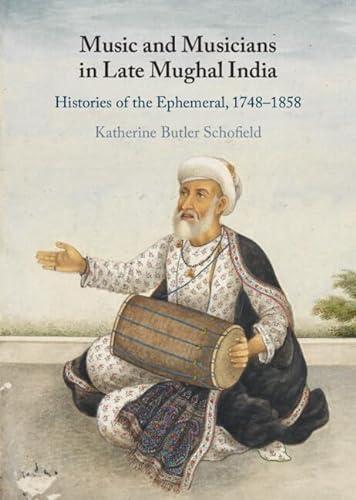
Music and Musicians in
Late Mughal India: Histories of the Ephemeral, 1748–1858 1st Edition Schofield Visit to download the full and correct content document: https://ebookmass.com/product/music-and-musicians-in-late-mughal-india-histories-of -the-ephemeral-1748-1858-1st-edition-schofield/
More products digital (pdf, epub, mobi) instant download maybe you interests ...
Climate of Conquest: War, Environment, and Empire in Mughal North India Pratyay Nath
https://ebookmass.com/product/climate-of-conquest-warenvironment-and-empire-in-mughal-north-india-pratyay-nath/
The Vocation of Sara Coleridge: Authorship and Religion 1st Edition Robin Schofield
https://ebookmass.com/product/the-vocation-of-sara-coleridgeauthorship-and-religion-1st-edition-robin-schofield/
Law and Muslim Political Thought in Late Colonial North India Adeel Hussain
https://ebookmass.com/product/law-and-muslim-political-thoughtin-late-colonial-north-india-adeel-hussain/
Where Sight Meets Sound: The Poetics of Late-Medieval Music Writing Emily Zazulia
https://ebookmass.com/product/where-sight-meets-sound-thepoetics-of-late-medieval-music-writing-emily-zazulia/
Getting Signed: Record Contracts, Musicians, and Power in Society 1st ed. Edition David Arditi
https://ebookmass.com/product/getting-signed-record-contractsmusicians-and-power-in-society-1st-ed-edition-david-arditi/
Duty to Self Assistant Professor Of Philosophy Paul Schofield
https://ebookmass.com/product/duty-to-self-assistant-professorof-philosophy-paul-schofield/
Sociology of Exorcism in Late Modernity 1st Edition Giuseppe Giordan
https://ebookmass.com/product/sociology-of-exorcism-in-latemodernity-1st-edition-giuseppe-giordan/
The Empire of Disgust: Prejudice, Discrimination, and Policy in India and the US 1st Edition Zoya Hasan
https://ebookmass.com/product/the-empire-of-disgust-prejudicediscrimination-and-policy-in-india-and-the-us-1st-edition-zoyahasan/
Economy-Wide Assessment of Regional Policies in India: Applications of E3-India Model 1st Edition Kakali Mukhopadhyay (Editor)
https://ebookmass.com/product/economy-wide-assessment-ofregional-policies-in-india-applications-of-e3-india-model-1stedition-kakali-mukhopadhyay-editor/
MusicandMusiciansinLateMughalIndia Basedonavast,virtuallyunstudiedarchiveofIndianwritings alongsidevisualsources,thisbookpresentsthe firsthistoryofmusic andmusiciansinlateMughalIndiac.1748–1858,andtakesthelivesof ninemusiciansasentrypointsintosixprominenttypesofwritingon musicinPersian,Brajbhasha,UrduandEnglish,movingfromDelhi toLucknow,Hyderabad,JaipurandamongtheBritish.Itshowshow akeyMughalcultural fieldrespondedtothepolitical,economicand socialupheavalofthetransitiontoBritishrule,whileaddressing acentralphilosophicalquestion:canweeverrecapturetheephemeral experienceofmusiconcetheperformanceisover?Theserich,diverse sourcesshinenewlightonthewiderhistoricalprocessesofthispivotal transitionalperiod,andprovideanewhistoryofmusic,musiciansand theiraudiencesduringthepreciseperiodinwhichNorthIndian classicalmusiccoalescedinitsmodernform.
katherinebutlerschofield isFellowoftheRoyalAsiatic Society,andrecipientofaEuropeanResearchCouncilGrantand aBritishAcademyMid-CareerFellowship.Sheisco-editorof Tellings andTexts:Music,LiteratureandPerformanceinNorthIndia (2015) and MonsoonFeelings:AHistoryofEmotionsintheRain (2018).
MusicandMusiciansinLateMughal India HistoriesoftheEphemeral,1748–1858
katherinebutlerschofield
King’sCollegeLondon
ShaftesburyRoad,CambridgeCB28EA,UnitedKingdom
OneLibertyPlaza,20thFloor,NewYork,NY10006,USA
477WilliamstownRoad,PortMelbourne,VIC3207,Australia
314–321,3rdFloor,Plot3,SplendorForum,JasolaDistrictCentre, NewDelhi – 110025,India
103PenangRoad,#05–06/07,VisioncrestCommercial,Singapore238467
CambridgeUniversityPressispartofCambridgeUniversityPress&Assessment, adepartmentoftheUniversityofCambridge.
WesharetheUniversity’smissiontocontributetosocietythroughthepursuitof education,learningandresearchatthehighestinternationallevelsofexcellence.
www.cambridge.org
Informationonthistitle:www.cambridge.org/9781316517857
DOI:10.1017/9781009047685
©KatherineSchofield2024
Thispublicationisincopyright.Subjecttostatutoryexceptionandtotheprovisions ofrelevantcollectivelicensingagreements,noreproductionofanypartmaytake placewithoutthewrittenpermissionofCambridgeUniversityPress&Assessment. Firstpublished2024
AcataloguerecordforthispublicationisavailablefromtheBritishLibrary.
LibraryofCongressCataloging-in-PublicationData
Names:Schofield,KatherineButler,author.
Title:MusicandmusiciansinlateMughalIndia:historiesoftheephemeral,1748-1858/ KatherineButlerSchofield.
Description:[1.]|NewYork:CambridgeUniversityPress,2023.|Includesbibliographical referencesandindex.
Identifiers:LCCN2023018212|ISBN9781316517857(hardback)|ISBN9781009048521 (paperback)|ISBN9781009047685(ebook)
Subjects:LCSH:Hindustanimusic – India – 18thcentury – Historyandcriticism.| Hindustanimusic – India – 19thcentury – Historyandcriticism.|Hinustanimusic – Iranian influences.|Musicians – India.|Hindustanimusic – Socialaspects – India – History – 18th century.|Hindustanimusic – Socialaspects – India – History – 19thcentury.|Mogul Empire – Courtandcourtiers – History – 18thcentury.|MogulEmpire – Courtand courtiers – History – 19thcentury.|EastIndiaCompany – History – 18thcentury.|East IndiaCompany – History – 19thcentury.
Classification:LCCML338.4.S362023|DDC780.954–dc23/eng/20230510 LCrecordavailableathttps://lccn.loc.gov/2023018212 ISBN978-1-316-51785-7Hardback
CambridgeUniversityPress&Assessmenthasnoresponsibilityforthepersistence oraccuracyofURLsforexternalorthird-partyinternetwebsitesreferredtointhis publicationanddoesnotguaranteethatanycontentonsuchwebsitesis,orwill remain,accurateorappropriate.
InmemoryofBruceWannellandAllisonBusch.
ToMirwaissSidiqi,WaheedullahSaghar,MohsenSaifi, FerishtaFarrukhi,NajebaArian,HomiraSabawoonand allmyotherAfghansistersandbrothersinmusic:mayyou findyourwayhome.
Contents ListofFigures [page viii]
ListofTables [xi]
ListofBoxes [xii]
ListofExamples [xiii]
Acknowledgements [xiv]
NotesontheText [xviii]
RulingDynasties [xxii]
GenealogiesofPrincipalMusiciansandMusicTreatises [xxv]
1ChasingEurydice:WritingonMusicintheLateMughalWorld[1]
2TheMughalOrpheus:RememberingKhushhalKhan GunasamudrainEighteenth-CenturyDelhi[20]
3TheRivals:AnjhaBaras,AdarangandtheScatteringof Shahjahanabad[49]
4TheCourtesanandtheMemsahib:KhanumJanandSophia PlowdenattheCourtofLucknow[79]
5EclipsedbytheMoon:MahlaqaBaiandKhushhalKhanAnupin NizamiHyderabad[117]
6FaithfultotheSalt:MayaleeDancingGirlversustheEastIndia CompanyinRajasthan[147]
7KeeperoftheFlame:MiyanHimmatKhanandtheLastofthe MughalEmperors[180]
8OrphansoftheUprising:LateMughalEchoesand1857[219]
Glossary [248]
Bibliography [257]
Tazkira:ListofNames [285]
Index [296]
Figures Frontcover: PortraitofaDelhi qawwāl.IllustrationforJamesSkinner’ s Tashrīhal-Aqwām.Hansi,1825.Add.27,255,f.457v. ©TheBritishLibrary Board.
1.1Paintingofthe pietradura inlayofOrpheusintheHallofPublic Audience,Shahjahanabad.1845.292D-1871. ©Victoria&Albert Museum,London. [page 18]
2.1KhushhalKhanGunasamudraperformingatDaraShukoh’swedding (detail).c.1700.RCIN1005068,f.26v. RoyalCollectionTrust ©HerMajestyQueenElizabethII2015. [33]
2.2RaginiTodi.c.1755.CatherineandRalphBenkaimCollection, 2013.340. TheClevelandMuseumofArt. PublicDomain.[34]
2.3Theconnectionsbetweencelestialbodies,musicalnotes,elementsand effects.[43]
2.4 Dhrupad inRaginiTodi.18C.1939.552,verso. YaleUniversityArt Gallery.PublicDomain.[47]
3.1Anup’smusicalgenealogyasafantasy majlis.Anup, RāgDarshan.1800, illustratedbyHajiMirGhulamHasan1804.LawrenceJSchoenberg Collection,LJS63,f.3v. UniversityofPennsylvaniaSpecial CollectionsLibrary. CC–BY.[52]
4.1ProbablySirDavidOchterlony,watchinga nāch.c.1820.Add.Or.2. ©TheBritishLibraryBoard. [80]
4.2MrsSophiaElizabethPlowden.JohnRussell,1797. ©TheBirla Museum,Pilani. [90]
4.3AandB.Persian rubācī, ‘Sāqī-ā!Fasl-ibahārast!’ Plowden, Album, f.8and Tunebook,f.14v.1787–8.MS380. ©FitzwilliamMuseum, UniversityofCambridge.[93]
4.4CourtesanperformingforColonelAntoinePolierinLucknow. 1786–88.2005.83.BequestBalthasarReinhart. MuseumRietberg, Zürich©RainerWulfsberger. [101]
4.5AandB.Urdu khayāl, ‘Sunremacshūqā be-wafā!’ Plowden, Album,f.21 and Tunebook,f.39v.MS380. ©FitzwilliamMuseum,Universityof Cambridge.[109]
4.6 ‘Tāzabatāzanobano’.Plowden, Album,f.1.MS380. ©Fitzwilliam Museum,UniversityofCambridge.[111]
4.7AandB.Persian ghazal, ‘Surwiruwān-ikīstī’ byKhaqani(1122–90). Plowden, Album,f.11and Tunebook,f.19v.MS380. ©Fitzwilliam Museum,UniversityofCambridge.[115]
5.1MahlaqaBaiChandasingingforRajaRaoRanbha,byHajiMirGhulam Hasan.KhushhalKhanAnup, RāgDarshan.LJS63,f.2v. Universityof PennsylvaniaSpecialCollectionsLibrary. CC–BY.[119]
5.2 Horī, khayāl and tappa compositionsinRaginiKhamaj.KhushhalKhan Anup, Rāg-Rāginī RozoShab.1833–6.UrduMus2,f.123v–4r. ©SalarJungMuseumLibrary,Hyderabad.[122]
5.3RaginiKhambhavati,KhushhalKhanAnup, RāgDarshan. LJS63,f.9v. UniversityofPennsylvaniaSpecialCollections Library. CC–BY.[125]
5.4RaginiKhambhavati.c.1675.2000.321.GiftofDorisWiener,inhonour ofStephenKossak,2000. MetropolitanMuseumofArt.Public Domain.[128]
5.5RaginiKhambhavati.KhushhalKhanAnup, RāgDarshan.Late18C. ©PhotocourtesyofSotheby’s,2019. [129]
5.6Detail,RajaRaohunting,byHajiMirGhulamHasan.KhushhalKhan Anup, RāgDarshan.LJS63,f.18r. UniversityofPennsylvaniaSpecial CollectionsLibrary. CC–BY.[139]
5.7ChandBibiofAhmadnagarhunting.c.1700.1999.403.LouisE.and TheresaS.SeeleyPurchaseFundforIslamicArt,1999. Metropolitan MuseumofArt.PublicDomain.[140]
6.1MeasuringsaltpilesatSambharLake,JaipurState,1870s.Photo355/ 1(59). TheBritishLibrary.PublicDomain.[148]
6.2MapofSambharLake.[156]
6.3 Bhagtan performingtheroleofKrishnainRaslila,attr.Sahib Ram,c.1800. ©ThePrivateCollectionoftheRoyalFamily ofJaipur.[164]
6.4PensionspaidfromSambharTreasuryonaccountofJaipurState, 1Januaryto30June1839,Section2. TheBritishLibrary.Public Domain.[168]
6.5Asteamboatrideonalake.Mid19C. ©Christie’sImagesLimited, 2022. [176]
7.1PortraitofMiyanHimmatKhan,fromJamesSkinner, Tashrīhal-Aqwām.1825.Add.27,255,f.134v. ©TheBritishLibraryBoard. [181]
7.2 ‘ANautchatColonelSkinner’sGiventoMeByHimself1838’.Add.Or. 2598. ©TheBritishLibraryBoard. [189]
7.3Illustrationofthe bāzīgār (conjuror)forSkinner’ s Tashrīhal-Aqwām Add.27,255,f.120v(detail). TheBritishLibrary. PublicDomain.[190]
7.4 QawwālsattheshrineofHazratNizam-ud-dinChishti,afterMazhar cAliKhan.1836.IM.41–1923. ©Victoria&AlbertMuseum, London. [192]
7.5AandB.KhwajaMoin-ud-dinChishtiandagatheringofmysticsand musicians;anddetail.c.1650–55.IS.94–1965. ©Victoria&Albert Museum,London. [193]
7.6PerformingcommunitiesintheGentilAlbum.1774.IS.25:26–1980. ©Victoria&AlbertMuseum,London. [198]
7.7NorthIndian kanchanīs.Tanjore,c.1828.Add.Or.62. ©TheBritish LibraryBoard. [200]
7.8TheMughal tawā’if Malageer,byLalljiorHulasLal.1815. ©Collection ofPrinceandPrincessSadruddinAgaKhan.[202]
7.9ShahamatJangandIkram-ud-daulagivinganeveningofmusical entertainment(detail).1748–50. ©NationalMuseumsofScotland. AcceptedinlieuofinheritancetaxbyHMGovernmentandallocated totheNationalMuseumsofScotland. [203]
8.1TheNawabofAwadh,Wajid cAliShah,accompanyingcourtesan SarafrazMahalonthe tabla.Wajid cAliShah, cIshqnāma.1849–50. RCIN1005035,f.242r. RoyalCollectionTrust©HerMajestyQueen ElizabethII2015. [222]
3.1Comparisonofmusical tazkirasandgenealogiesthatuseRasikh’ s Risāla.[page 60]
4.1CorrelationofPlowden’stextswiththeirtunes.[86]
7.1TheHanuman mat vs.GhulamRaza’ s rāga-rāginī system.[210]
7.2The tāla systemsofRasBarasKhan,HakimHasanMaududiChishti andGhulamRaza,cf.Ranj/Himmat.[212]
2.1ThecanonicalMughalPersiantreatisesonHindustani music.[page 39]
3.1Listofkeywritingsc.1740–1850thatincludemusicians’ tazkirasand/or genealogies.[59]
7.1Theten ‘vedicandshastric’ textscitedinSkinner’sentriesonperformers foundinTod’smanuscriptcollectionintheRoyalAsiaticSociety.[204]
Examples 4.1 ‘I.TheGhut’ (gat)fromWilliamHamiltonBird, OrientalMiscellany (Calcutta,1789),p.1.PublicDomain.[page 82]
4.2BandCmelodiesof ‘Sāqī-ā!’ compared.Plowden, Tunebook, f.13v,f.20v.MS380. ©FitzwilliamMuseum,Universityof Cambridge.[95]
4.3Notationofmediumspeed jaldtītāla.1788.Or.MS585,f.64v. EdinburghUniversityLibrary.[106]
4.4Persianghazal ‘Tāzabatāzanobano’ byHafiz.BirdNo.IVwiththe firstPersianlineunderlaid[112]
4.5Persian ghazal, ‘Tāzabatāzanobano’ byHafiz.SophiaPlowden, Tunebook,f.11rwiththe firstlineunderlaid.Lucknow,1787–8.MS380. © FitzwilliamMuseum,UniversityofCambridge [113]
4.6 ‘Tāzabatāzanobano’ setinRagBhairavitoacycleof sevenbeats.[114]
7.1GhulamRaza’snotationofthe sthyā’ī tān ofRaginiBhairavi.[208]
7.2 Dhīmā titālakalāwantī,the first tāla intheeleven tāla systemofthe Aslal-Usūl.[215]
Acknowledgements Twenty-fiveyearssinceIstartedamaster’sdegreeatSOAS,Universityof Londonthatwouldleadtoalife-longloveaffairwithHindustanimusicand Mughalhistory,Ihave finally finishedmy firstsingle-authoredbook.Were Itothankeveryonewhohasmadeanimpactonmyjourneythispastquarter ofacentury,Iwouldhavetowriteasecondone,andwouldundoubtedlystill forgettomentionsomeone’sname!Withthatinmind,Ihavedecidedto nameintheseacknowledgementsonlythoseindividualsandinstitutions thathavemadeadirectcontributiontothewritingofthisbook.Butknow this:ifyou findthatyournameisnothere,andyouhaveatanypoint interactedwithmeaboutmyworkorsupportedmewithacuppaorachat –Ididnoticeandappreciateit;youdidmakeanimpact;andIthankyoufor yourimmeasurableinsightsandactsofkindnessovertheyears.
Theresearchandwritingofthisbookweregenerouslyfundedbya fiveyearStartingGrantfromtheEuropeanResearchCouncil(no.263643 MUSTECIO,PI:KatherineButlerSchofield);aone-yearBritishAcademy Mid-CareerFellowshipinconjunctionwiththeBritishLibrary(no. MD160059);andapublicationsubventionfromKing’sCollegeLondon. Iwasfortunatetowritemuchofthe firstdraftattheCentreforSouthAsian StudiesattheUniversityofCambridge,andthe finaldraftwaspulledinto shapethankstoavisitingprofessorshipattheDepartmentofSouthAsia Studies,UniversityofPennsylvania;Iamhugelygratefultoeveryonein bothplaces.Thefollowingkindlyinvitedmetosharemyresearchwith audiences:DrAshokdaRanadeMemorialLecture,Mumbai;Australian HistoricalAssociation;ReinhardStrohm’sBalzanProgrammein Musicology;ChhatrapatiShivajiMaharajVastuSanghralaya,Mumbai; ÉHÉSSParis;JaipurLiteratureFestival;LahoreLiteraryFestival;Max PlanckInstitutefortheHistoryoftheEmotions,Berlin;ProfSAHAbidi MemorialLecture,Delhi;SerbianAcademyofSciencesandArts,Belgrade; UniversityofCambridge;UCBerkeley;UCDavis;UCLA;andUniversity ofOxford.Thankyou.
Thefollowinggenerouslyprovidedaccesstotheircollections,andIhope thatthisbookwillgivesomethingbacktothem:AndhraPradesh GovernmentOrientalManuscriptsLibrary,Hyderabad;AndhraPradesh
StateArchives,Hyderabad;AsiaticSocietyofBengal,Kolkata;Ashmolean Museum,Oxford;BibliothèqueNationaledeFrance,Paris;BirlaMuseum, Pilani;BodleianLibrary,Oxford;BritishLibrary,London;Cambridge UniversityLibrary;Christie’s;CollectionofPrinceandPrincess SadruddinAgaKhan;EdinburghUniversityLibrary;Fitzwilliam Museum,Cambridge;GovernmentOrientalManuscriptsLibrary, UniversityofMadras;JohnRylandsLibrary,Manchester;KhudaBakhsh OrientalPublicLibrary,Patna;MaharajaSawaiManSinghIIMuseum, Jaipur;MuseefürIslamischeKunstundAsiatischeKunst,Berlin;National ArchivesofIndia;NationalMuseumsofScotland;RietbergMuseum, Zürich;NorfolkRecordsOffice;RoyalAsiaticSociety,London;Royal Collection,Windsor;RoyalGreenJackets(Rifles)Museum,Winchester; SalarJungMuseumLibrary,Hyderabad;Sotheby’s;Universityof PennsylvaniaRareBookandManuscriptLibrary;UKNationalArchives; Victoria&AlbertMuseum;YaleUniversityArtGallery;RoyalFamilyof Jaipur,GeoffreyPlowden,KathyandMalcolmFraser,NicolasSursockand UstadIrfanMuhammadKhan-sahib.
Thanksforscholarlyassistanceandfriendshiparedueinalphabeticalorder toDaudAli,JonBarlow,NickBarnard,PriyankaBasu,AmyBlierCarruthers,OliviaBloechl,RobinBunce,EstherCavett,TSRanaChhina, AdilRanaChhina,NicholasCook,AmlanDasGupta,JohnDeathridge,Katie DeLaMatter,ChrisDuckett,ArthurDudney,MunisFaruqui,Darren Fergusson,RoyFischel,AndyFry,ElizabethGow,BendorGrosvenor, VivekGupta,EmilyHannam,MatthewHead,TomHodgson,LiamRees Hofmann,RanjitHoskoté,DanishHusain,TomHyde,ICFAMily,David RMIrving,RadhaKapuria,MaxKatz,PashaMKhan,RazakKhan,Ustad WajahatKhan-sahib,ShailajaKhanna,ManaKia,TanujaKothiyal,Daniel Leech-Wilkinson,SaifMahmood,YusufMahmoud,NicolasMagriel,Peter Marshall,MAtharMasood,NickMcBurney,PhalguniMitra,Mohsen Mohammedi,AnnaMorcom,DanielNeuman,LaudanNooshin,Jenny Norton-Wright,RosalindO’Hanlon,RogerParker,HeidiPauwels,Norbert Peabody,CayennaPonchione-Bailey,RegulaQureshi,YaelRice,MaliniRoy, VikramRooprai,ZahraSabri,RanaSafvi,KevinSchwartz,SunilSharma, YuthikaSharma,ChanderShekhar,AyeshaSheth,GianniSievers,Nur Sobers-Khan,GabrielSolis,MartinStokes,MirwaissSidiqi,SueStronge, LakshmiSubramanian,JimSykes,NathanTabor,GilesTilletson,Mrinalini Venkateswaran,GuyWalters,FriederikeWeiss,RichardWolf,PeteYelding, ZehraZaidi,myamazingPhDstudentsandallmybeloved#Twitterstorians. ThankyouparticularlytoChrisBrookeforlendingmehisnearby flatwhen Ineededaquietspacetoworkin.
Ihavetravelledonthisjourneyforthepastdecadewiththemost wonderfulcompanionsontheAwadhCaseStudyofmyERCproject:to JimKippen,AllynMiner,MegWalkerandRichardDavidWilliams,Iowe youadebtofintellectualenrichmentIcanneverrepay.Thankyou,too,to myparacolonialpartners-in-crime,JuliaBylandespeciallyDavidLunn, whohasnotonlybeenmymainandwisestsoundingboardforaslongas Icanrememberbutwhoalsodidtheindexandmapforthisbook.Itwas myenormousprivilegetoworkwithharpsichordistJaneChapmanand podcastproducerChrisElcombeinbringingsomeofthisresearchtolife throughsound.Manythanks,too,toUrsulaSims-Williamsforhershared enthusiasmoverthedecadesfortheextraordinarySouthAsianmusical materialsintheBritishLibrary.Iamindebtedforhelpwithtranslationsat variousstagestoParmisMozafariandthelateBruceWannellespecially, butalsoKashshafGhani,RichardDavidWilliams,DavidLunnandZahra Sabri.
Overtheyearsofthisbook’sgestation,Ihavebeennourishedbythedeep friendship,kindmentorship,brilliantconversationsandgentlecritiqueof MollyAitken,MichaelBywater,WilliamDalrymple,EmmaDillon, FrancescaOrsini,MargritPernau,DaveshSoneji,MegWalkerandthe late,much-missedAllisonBuschandBruceWannell.Thankyou,too,toall thosewhoreadthedraft,especiallymytwoanonymousreviewers,William Dalrymple,AneeshPradhan,mymotherRuthButlerandmyhusband Paul.I finallywishtopaytributetotheacademicforebearsuponwhose shouldersIstand:NajmaPerveenAhmad,ShahabSarmadee,Madhu Trivedi,Françoise ‘Nalini’ DelvoyeandespeciallyRichardWiddess,who manyyearsagonowwasmyPhDsupervisor.Thereisone finalperson Iwouldliketothankinthisvein:myauntElizabethWiedemann,local historianoftheInverelldistrictinNewSouthWalesandauthorof Worldof ItsOwn:Inverell’sEarlyYears,1827–1920 and HoldingItsOwn:The InverellDistrictSince1919. FromthetimeIwasatinychild,itwasher inspiringexamplethattaughtmethat ‘historian’ wassomethingyoucould be – andthatsmallstoriesofordinarystrivingmattertothebiggerpicture. Thisbookwaswrittenandcompletedpainfullyslowlyduringtheyears oftheCovid-19pandemic,anddelayedfurtherduetomyinvolvementin theinternationalefforttohelpAfghanistan’smusiciansgetthemselvesto safetyafterthefallofKabultoTalibaninAugust2021;neverhasthe ‘scattering’ ofShahjahanabad260yearsagofeltsoclose.Iamforever gratefultohavefoundsuchapatientandgenerouseditorinKateBrett andherteamatCambridgeUniversityPress(especiallyAbiSears)tosteer thisverystatelyshiptoshore.Buttheirpatienceisnothingincomparison
Acknowledgements
tothatofmysonAlex,whowassevenwhenthisbook’sjourneybeganand isnowateenager.Everysooftenheasksmepolitely, ‘Howisyourbook going?’ FinallyIcantellhim, ‘Itis finished! tamāmshod!’ ThebestideasinherewereinspiredbyconversationswithPaul Schofield,abroadintellectualandculturalenthusiastbeyondcompare. Thisbookisforhim,myowndear rasika.
NotesontheText OnTransliteration ThisbookisbasedlargelyonsourcesinthePersianlanguagethatcontain agreatdealofIndicvocabulary,andmoreselectivelyfromtextsinearly formsofUrdu(rekhta)andHindi(Brajbhās ˙ ā)writteninthe nastcalīq script.Iuseasimplifiedsystemoftransliterationwhichonlymarkslong vowels(āīū);retroflexconsonants(d dhn r s t th)andnasalisation(n ˙ )in wordsofIndicorigin; cain (superscript c)and hamza (’);anddistinguishes kh ﮫﮐ fromkh ﺥ andgh ﮫﮔ fromgh ﻍ.Theglossaryandtitlesofuntranslated sourcesinthebibliographyincludefulldiacriticalmarkingsfollowing FSteingass’ ComprehensivePersian–EnglishDictionary andJohnTPlatts’ DictionaryofUrdū,ClassicalHindī andEnglish. 1 Inaccordancewith SteingassIuse -i forthe izafat construction(e.g. majlis-isamāc),and alintitlesofworks(e.g. Usūlal-Naghmāt).
Spellings(exceptforpropernouns)areperSteingassandPlatts,deferring toSteingassforwordsofPersianandArabicorigins(e.g.z,notdh,for ﺫ).The keyexceptionistheimportantterm mehfil (not mahfil)asitisusedtodayfor privatemusicalassemblies.Titlesofpublishedworksinthebibliographyare spelledinaccordancewiththeirpublishers’ preferencesforromanisation.
Inatextthiscomplex,therewillinevitablybemistakesandinconsistencies;whenyou findone,feelfreetoshout ‘bingo’!
OnDatesandCalendars Ihavetranslateddatesfromtheal-Hijrilunarcalendar(AH)into Christian/CommonEra(CE)datesthroughout,usingtheusefultoolavailableat www.muslimphilosophy.com/ip/hijri.htm.TheAHlunaryearand CEsolaryearareofdifferentlengths,sothereisnosystematicdate correspondencebetweenthem.WherethesourcegivestheAHmonth
1 FSteingass, AComprehensivePersian–EnglishDictionary (London:RoutledgeandKeganPaul, 1963[orig.1892]);JohnTPlatts, DictionaryofUrdū,ClassicalHindī andEnglish (NewDelhi: MunshiramManoharlal,1997[orig.1884]).
(andsometimesday)alongwiththeyear,IgivetheexactCEyear(e.g. 1800);wherejusttheAHyearisprovided,Igiveaforward-slashedyear range(e.g.1862/3).Ifonlytheregnalyearisgiven,thisispresentedas adashedyearrange(e.g.1752–3).
TheVikramSamvat(VS)solaryearoftheHinducalendaristhesame lengthasCE,althoughthemonthsarelunar.Ithasgenerallynotbeen necessarytocalculatetheVS–CEconversion,asforthechapteron RajasthanIammainlyusingBritishdocuments.Butfortherecord,the Vikramritualyear(samvat)inuseinJaipurandJodhpurbeganon1 Chaitra(March),therevenueyearbeganon2Bhadrapada(August)2 and theyearconversionisgenerallycalculatedbytaking fifty-sevenyearsfrom theVSyeartoarriveattheCEyear.
OnProperNouns FornamesofplacesIhavegenerallyusedtheAnglicisednamesprevalent duringtheperiodcoveredinthisbook(e.g.Calcutta,Tanjoreratherthan Kolkata,Thanjavur).Withfestivals,Ihavechosentousecommonspellings withoutdiacriticalmarkings;forexample,DiwaliratherthanDīwālī,Eid not cĪd.
Manyofthepeopleinthisbookhavelongnames,pseudonymsand/or multipletitles,someofthemeasilyconfused(therearetwoKhushhal KhansandtwoGhulamRazas,forinstance).Iusethelongformof individuals’ namesinthe firstinstance,withoutanydiacriticalmarkings, spelledtoreflecttheirusualpronunciationinIndianlanguagestoday(e.g. Moin-ud-dinratherthanMucīnal-Dīn).Thereafter,Ihaveusedavarietyof strategies:
• Wherethepersonwasapoet,authorormusician,Irefertothemwhen possibleusingtheir takhallus or nomdeplume/stagename;so cInayat KhanRasikhandNicmatKhanSadarangbecomeRasikhandSadarang. Thereareafewexceptions,suchaswhereindividualsareonlyever referredtobyonename(e.g.Tansen).ToavoidconfusionIreferto KhushhalKhanGunasamudraof Chapter2 asKhushhal,ashisfather wasalsoGunasamudra,andKhushhalKhanAnupof Chapter5 asAnup.
2 MonikaHorstmann, InFavourofGovinddevjī:HistoricalDocumentsRelatingtoaDeityof VrindabanandEasternRajasthan (NewDelhi:IndiraGandhiNationalCentrefortheArtsand Manohar,1999),pp.69–70.
• WhereIuseanindividual’snameratherthantheir takhallus,Iusethe shortestformthatmakesmeaningfulsenseandwon’teasilybeconfused withanotherindividual,forexampleHimmatforMiyanHimmatKhan, Raushan-ud-daula(notRaushan)forRaushan-ud-daulaZafarKhan BahadurRustamJang.ToavoidconfusionwiththeMughalEmperor AhmadShah(r.1748–54),IrefertotheAfghanwarlordAhmadShah AbdaliDurraniasAbdali.Icallthe sitār playerGhulamRazaofthe 1840s–50sbyhistitle,Razi-ud-daula,todistinguishhimfromthe importanttreatisewriterofthe1790sGhulamRaza qawwāl.
• Emperors,queens,royalprincesandindependentrulersarereferredto usingtheircommonrulingtitles:soMuhammadShah;LalKanvar; MuhammadAczamShah;(Nawab)Asaf-ud-daula;(Maharaja)Ram Singh;andsoon.Shah cAlaminthisbookalwaysreferstoShah cAlam II(r.1759–1806).
• IusethehonorifictitlesHazrat,Khwaja,Shaikh,Hakim,Miyanandso onwheretheyarepresentintheoriginaltexts.
©DavidLunn
NotesontheText OnTransliteration ThisbookisbasedlargelyonsourcesinthePersianlanguagethatcontain agreatdealofIndicvocabulary,andmoreselectivelyfromtextsinearly formsofUrdu(rekhta)andHindi(Brajbhās ˙ ā)writteninthe nastcalīq script.Iuseasimplifiedsystemoftransliterationwhichonlymarkslong vowels(āīū);retroflexconsonants(d dhn r s t th)andnasalisation(n ˙ )in wordsofIndicorigin; cain (superscript c)and hamza (’);anddistinguishes kh ﮫﮐ fromkh ﺥ andgh ﮫﮔ fromgh ﻍ.Theglossaryandtitlesofuntranslated sourcesinthebibliographyincludefulldiacriticalmarkingsfollowing FSteingass’ ComprehensivePersian–EnglishDictionary andJohnTPlatts’ DictionaryofUrdū,ClassicalHindī andEnglish. 1 Inaccordancewith SteingassIuse -i forthe izafat construction(e.g. majlis-isamāc),and alintitlesofworks(e.g. Usūlal-Naghmāt).
Spellings(exceptforpropernouns)areperSteingassandPlatts,deferring toSteingassforwordsofPersianandArabicorigins(e.g.z,notdh,for ﺫ).The keyexceptionistheimportantterm mehfil (not mahfil)asitisusedtodayfor privatemusicalassemblies.Titlesofpublishedworksinthebibliographyare spelledinaccordancewiththeirpublishers’ preferencesforromanisation.
Inatextthiscomplex,therewillinevitablybemistakesandinconsistencies;whenyou findone,feelfreetoshout ‘bingo’!
OnDatesandCalendars Ihavetranslateddatesfromtheal-Hijrilunarcalendar(AH)into Christian/CommonEra(CE)datesthroughout,usingtheusefultoolavailableat www.muslimphilosophy.com/ip/hijri.htm.TheAHlunaryearand CEsolaryearareofdifferentlengths,sothereisnosystematicdate correspondencebetweenthem.WherethesourcegivestheAHmonth
1 FSteingass, AComprehensivePersian–EnglishDictionary (London:RoutledgeandKeganPaul, 1963[orig.1892]);JohnTPlatts, DictionaryofUrdū,ClassicalHindī andEnglish (NewDelhi: MunshiramManoharlal,1997[orig.1884]).
(andsometimesday)alongwiththeyear,IgivetheexactCEyear(e.g. 1800);wherejusttheAHyearisprovided,Igiveaforward-slashedyear range(e.g.1862/3).Ifonlytheregnalyearisgiven,thisispresentedas adashedyearrange(e.g.1752–3).
TheVikramSamvat(VS)solaryearoftheHinducalendaristhesame lengthasCE,althoughthemonthsarelunar.Ithasgenerallynotbeen necessarytocalculatetheVS–CEconversion,asforthechapteron RajasthanIammainlyusingBritishdocuments.Butfortherecord,the Vikramritualyear(samvat)inuseinJaipurandJodhpurbeganon1 Chaitra(March),therevenueyearbeganon2Bhadrapada(August)2 and theyearconversionisgenerallycalculatedbytaking fifty-sevenyearsfrom theVSyeartoarriveattheCEyear.
OnProperNouns FornamesofplacesIhavegenerallyusedtheAnglicisednamesprevalent duringtheperiodcoveredinthisbook(e.g.Calcutta,Tanjoreratherthan Kolkata,Thanjavur).Withfestivals,Ihavechosentousecommonspellings withoutdiacriticalmarkings;forexample,DiwaliratherthanDīwālī,Eid not cĪd.
Manyofthepeopleinthisbookhavelongnames,pseudonymsand/or multipletitles,someofthemeasilyconfused(therearetwoKhushhal KhansandtwoGhulamRazas,forinstance).Iusethelongformof individuals’ namesinthe firstinstance,withoutanydiacriticalmarkings, spelledtoreflecttheirusualpronunciationinIndianlanguagestoday(e.g. Moin-ud-dinratherthanMucīnal-Dīn).Thereafter,Ihaveusedavarietyof strategies:
• Wherethepersonwasapoet,authorormusician,Irefertothemwhen possibleusingtheir takhallus or nomdeplume/stagename;so cInayat KhanRasikhandNicmatKhanSadarangbecomeRasikhandSadarang. Thereareafewexceptions,suchaswhereindividualsareonlyever referredtobyonename(e.g.Tansen).ToavoidconfusionIreferto KhushhalKhanGunasamudraof Chapter2 asKhushhal,ashisfather wasalsoGunasamudra,andKhushhalKhanAnupof Chapter5 asAnup.
2 MonikaHorstmann, InFavourofGovinddevjī:HistoricalDocumentsRelatingtoaDeityof VrindabanandEasternRajasthan (NewDelhi:IndiraGandhiNationalCentrefortheArtsand Manohar,1999),pp.69–70.
• WhereIuseanindividual’snameratherthantheir takhallus,Iusethe shortestformthatmakesmeaningfulsenseandwon’teasilybeconfused withanotherindividual,forexampleHimmatforMiyanHimmatKhan, Raushan-ud-daula(notRaushan)forRaushan-ud-daulaZafarKhan BahadurRustamJang.ToavoidconfusionwiththeMughalEmperor AhmadShah(r.1748–54),IrefertotheAfghanwarlordAhmadShah AbdaliDurraniasAbdali.Icallthe sitār playerGhulamRazaofthe 1840s–50sbyhistitle,Razi-ud-daula,todistinguishhimfromthe importanttreatisewriterofthe1790sGhulamRaza qawwāl.
• Emperors,queens,royalprincesandindependentrulersarereferredto usingtheircommonrulingtitles:soMuhammadShah;LalKanvar; MuhammadAczamShah;(Nawab)Asaf-ud-daula;(Maharaja)Ram Singh;andsoon.Shah cAlaminthisbookalwaysreferstoShah cAlam II(r.1759–1806).
• IusethehonorifictitlesHazrat,Khwaja,Shaikh,Hakim,Miyanandso onwheretheyarepresentintheoriginaltexts.
©DavidLunn
xxii
RulingDynasties* *Onlyindividualswithatenureofayearorlongerarelisted
TheMughalDynasty(Agra/Delhi)
Babur(1526–30)
Humayun(1530–40,1555–6)
Akbar(1556–1605)
Jahangir(1605–27)
ShahJahan(1628–58)
Aurangzeb cAlamgirI(1658–1707)
Shah cAlamIBahadurShah(1707–12)
JahandarShah(1712)
Farrukhsiyar(1713–19)
MuhammadShah(1719–48)
AhmadShah(1748–54)
cAlamgirII(1754–9)
Shah cAlamII(1759–1806)
AkbarShahII(1806–37)
BahadurShahIIZafar(1837–58)
TheNawabsofAwadh(Lucknow) Burhanul-Mulk(1722–39)
SafdarJang(1739–54)
Shujac-ud-daula(1754–75)
Asaf-ud-daula(1775–97)
Sacadat cAliKhan(1798–1814)
Ghazi-ud-dinHaider(1814–27)
Nasir-ud-dinHaider(1827–37)
Muhammad cAliShah(1837–42)
Amjad cAliShah(1842–7)
Wajid cAliShah(1847–56)
TheAsafJahiNizamsofHyderabad
Nizam-ul-mulk(1720–48)
NasirJang(1748–52)
SalabatJang(1752–62)
Nizam cAliKhan(1762–1803)
SikandarJah(1803–29)
Farkhanda cAliKhan(1829–57)
TheMaharajasofJaipur(Amber)
JaiSinghII(1699–1743)
IshwariSingh(1743–50)
MadhoSinghI(1750–68)
PrithviSinghII(1768–78)
PratapSingh(1778–1803)
JagatSinghII(1803–18)
JaiSinghIII(1819–35)
RamSinghII(1835–80)
EastIndiaCompanyGovernors-General(Calcutta)/Residents ofDelhi
WarrenHastings(1773–85)
JohnMacpherson(1785–6)
CharlesCornwallis(1786–93)
JohnShore(1793–8)
RichardWellesley(1798–1805)DavidOchterlony(1803–06)
GeorgeBarlow(1805–07)ArchibaldSeton(1806–11)
LordMinto(1807–13)
FrancisRawdon-Hastings(1813–23)CharlesTheophilusMetcalfe (1811–18)
DavidOchterlony(1818–20)
AlexanderRoss(1820–3)
LordAmhurst(1823–8)WilliamFraser(1823)
CharlesElliott(1823–5)
CharlesTheophilusMetcalfe (1825–7)
EdwardColebrooke(1827–8) RulingDynasties
WilliamBentinck(1828–35)WilliamFraser(1828–9)
FrancisJamesHawkins(1829–30)
WBMartin(1830–2)
WilliamFraser(1832–5)
CharlesMetcalfe(1835–6)ThomasTheophilusMetcalfe (1835–53)
LordAuckland(1836–42)
LordEllenborough(1842–4)
HenryHardinge(1844–8)
LordDalhousie(1848–56)SimonFraser(1853–7)
ViscountCanning(1856–62)
GenealogiesofPrincipalMusiciansandMusicTreatises Tansen (d.1589)
Bilas Khan
Tan Tarang Khan
daughter m. La‘l Khan ‘Gunasamudra’ (d. 1654)
brothers
‘Zamir’
Khushhal Khan Bisram (d. 1671)
Anand Baras Khan
Ras Baras Khan
Mansur KhanMahmud Khan
Taj Khan
Muzaffar Khan
Daulat Khan
Chief Delhi qawwa¯l lineage
Chief kala¯want lineages to the Mughal Emperors*
*NB: not all kala ¯ want s or lineages mentioned in this book are represented here
Kunhi Khan
Ni‘mat Khan ‘Sadarang’ (d.1746/7)
Nirmol Khan Bhupat Khan
Bada Baras Khan Anjha Baras Khan m. daughter
Abu Baras Khan
Surat Sen Bhupat Karim Sen
Muhammad Panah
daughter m. Firoz Khan ‘Adarang’
Fazil Khan Zia-ud-din
Pyar Sen*
*possibly Pyar Khan
brother of Jivan Shah
Ghulam Raza
La‘l Khan ‘Parab Lal’
Himmat Khan Karim Khan
Chajju Khan Jivan Khan
Khushhal Khan ‘Anup’ Nur Khan ‘Nur Rang’
Mahlaqa BaiGhazi Khan
Basit Khan Jaffar Khan Pyar Khan
Muhammad ‘Ali Ni‘matullah Khan
Karamatullah Khan Kaukab Khan
daughter
Mardan ‘Ali Khan Sadiq ‘Ali Khan Rag Ras Khan
Mir Nasir Ahmad
Taj Khan qawwa - (fl. 1700s–40s)
Jan Muhammad ‘Jani’
Bade Muhammad Khan Jivan Khan Ghulam Rasul
Ghulam Nabi ‘Shori’Shakkar KhanMakhan Khan
Ahmad Khan Nathan Pir Bakhsh
Qadir Bakhsh
Gwalior ghara¯na
Nathu Khan Haddu Khan Hassu Khan
Father–son lineage
Discipular lineage
Biological lineage unclear
Author of musical writings
Chief imperial musicians Musician–Author