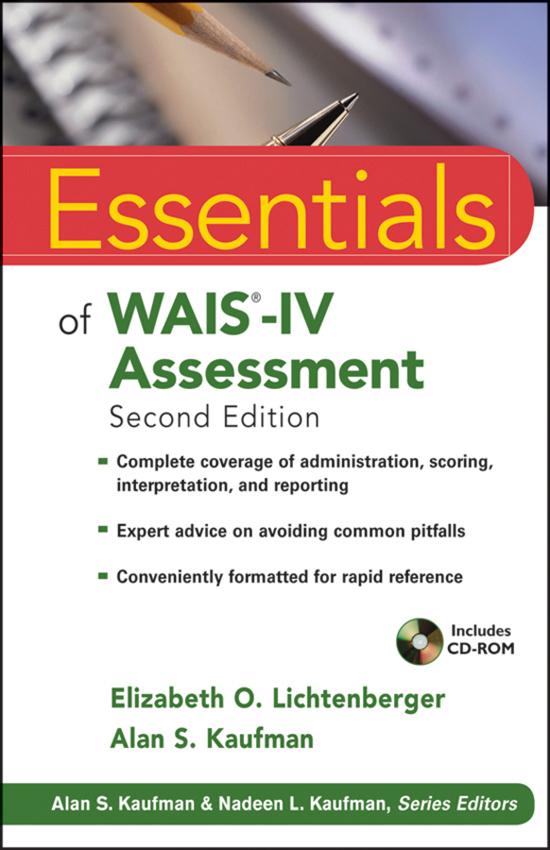
of WAIS-IV Assessment (Essentials of Psychological Assessment Book 96) 2nd Edition –Ebook PDF Version
Visit to download the full and correct content document: https://ebookmass.com/product/essentials-of-wais-iv-assessment-essentials-of-psych ological-assessment-book-96-2nd-edition-ebook-pdf-version/
More products digital (pdf, epub, mobi) instant download maybe you interests ...
Essentials of WJ IV Tests of Achievement (Essentials of Psychological Assessment) 1st Edition – Ebook PDF Version
https://ebookmass.com/product/essentials-of-wj-iv-tests-ofachievement-essentials-of-psychological-assessment-1st-editionebook-pdf-version/
Assessment in Counseling: A Guide to the Use of Psychological Assessment Procedures
https://ebookmass.com/product/assessment-in-counseling-a-guideto-the-use-of-psychological-assessment-procedures/
The Essentials of Teaching Physical Education: Curriculum, Instruction, and Assessment- 1st Edition -2016, Ebook PDF Version
https://ebookmass.com/product/the-essentials-of-teachingphysical-education-curriculum-instruction-and-assessment-1stedition-2016-ebook-pdf-version/
The Essentials of Teaching Health Education: Curriculum, Instruction, and Assessment- 1st Edition -2016, Ebook PDF Version
https://ebookmass.com/product/the-essentials-of-teaching-healtheducation-curriculum-instruction-and-assessment-1stedition-2016-ebook-pdf-version/
Psychological Assessment and Testing: A Clinician's Guide 2nd Edition John M. Spores
https://ebookmass.com/product/psychological-assessment-andtesting-a-clinicians-guide-2nd-edition-john-m-spores/
Assessment is Essential 1st Edition – Ebook PDF Version
https://ebookmass.com/product/assessment-is-essential-1stedition-ebook-pdf-version/
Clinical Assessment Workbook: Balancing Strengths and Differential Diagnosis 2nd Edition – Ebook PDF Version
https://ebookmass.com/product/clinical-assessment-workbookbalancing-strengths-and-differential-diagnosis-2nd-edition-ebookpdf-version/
Family Assessment Handbook: An Introductory Practice Guide to Family Assessment 4th Edition – Ebook PDF Version
https://ebookmass.com/product/family-assessment-handbook-anintroductory-practice-guide-to-family-assessment-4th-editionebook-pdf-version/
Essentials of Dyslexia Assessment and Intervention 1st Edition
https://ebookmass.com/product/essentials-of-dyslexia-assessmentand-intervention-1st-edition/
Coverimage: # GregKuchik/GettyImages
Coverdesign:JohnWiley&Sons,Inc.
Thisbookisprintedonacid-freepaper. 1
Copyright # 2013byJohnWiley&Sons,Inc.Allrightsreserved.
PublishedbyJohnWiley&Sons,Inc.,Hoboken,NewJersey.
PublishedsimultaneouslyinCanada.
Nopartofthispublicationmaybereproduced,storedinaretrievalsystem,ortransmittedinanyformor byanymeans,electronic,mechanical,photocopying,recording,scanning,orotherwise,exceptaspermitted underSection107or108ofthe1976UnitedStatesCopyrightAct,withouteitherthepriorwritten permissionofthePublisher,orauthorizationthroughpaymentoftheappropriateper-copyfeetothe CopyrightClearanceCenter,Inc.,222RosewoodDrive,Danvers,MA01923,(978)750-8400,fax(978) 646-8600, or on the web at www.copyright.com Requests to the Publisher for per mission should be addressedtothePermissionsDepartment,JohnWiley&Sons,Inc.,111RiverStreet,Hoboken,NJ07030, (201)748-6011,fax(201)748-6008.
LimitofLiability/DisclaimerofWarranty: Whilethepublisherandauthorhaveusedtheirbestefforts inpreparingthisbook,theymakenorepresentationsorwarrantieswithrespecttotheaccuracyor completenessofthecontentsofthisbookandspecificallydisclaimanyimpliedwarrantiesof merchantabilityorfitnessforaparticularpurpose.Nowarrantymaybecreatedorextendedbysales representativesorwrittensalesmaterials.Theadviceandstrategiescontainedhereinmaynotbesuitable foryoursituation.Youshouldconsultwithaprofessionalwhereappropriate.Neitherthepublishernor authorshallbeliableforanylossofprofitoranyothercommercialdamages,includingbutnotlimitedto special,incidental,consequential,orotherdamages.
Thispublicationisdesignedtoprovideaccurateandauthoritativeinformationinregardtothesubject mattercovered.Itissoldwiththeunderstandingthatthepublisherisnotengagedinrenderingprofessional services.Iflegal,accounting,medical,psychologicaloranyotherexpertassistanceisrequired,theservices ofacompetentprofessionalpersonshouldbesought.
Designationsusedbycompaniestodistinguishtheirproductsareoftenclaimedastrademarks.Inall instanceswhereJohnWiley&Sons,Inc.isawareofaclaim,theproductnamesappearininitialcapitalorall capitalletters.Readers,however,shouldcontacttheappropriatecompaniesformorecomplete informationregardingtrademarksandregistration.
ForgeneralinformationonourotherproductsandservicespleasecontactourCustomerCareDepartment withintheUnitedStatesat(800)762-2974,outsidetheUnitedStatesat(317)572-3993orfax(317)572-4002. Wileypublishesinavarietyofprintandelectronicformatsandbyprint-on-demand.Somematerial includedwithstandardprintversionsofthisbookmaynotbeincludedine-booksorinprint-on-demand. IfthisbookreferstomediasuchasaCDorDVDthatisnotincludedintheversionyoupurchased,you may download this material at http://booksupport.wiley.com. For more infor mation about Wiley products, visit www.wiley.com.
LibraryofCongressCataloging-in-PublicationData: Lichtenberger,ElizabethO.
EssentialsofWAIS-IVassessment/ElizabethO.LichtenbergerandAlanS.Kaufman.—2nded. p.cm.—(Essentialsofpsychologicalassessmentseries) Includesindex.
ISBN978-1-118-27188-9(paper/cd-rom)
ISBN978-1-118-43385-0(ebk.)
ISBN978-1-118-42118-5(ebk.)
ISBN978-1-118-41962-5(ebk.)
WechslerAdultIntelligenceScale,ThirdEdition(WAIS-III).Copyright # 1997NCSPearson,Inc. Reproducedwithpermission.Allrightsreserved.
WechslerAdultIntelligenceScale,FourthEdition(WAIS-IV).Copyright # 2008NCSPearson,Inc. Reproducedwithpermission.Allrightsreserved.
‘‘WechslerAdultIntelligenceScale’’and‘‘WAIS’’aretrademarks,intheUSand/orothercountries,of PearsonEducation,Inc.oritsaffiliates(s).
1.WechslerAdultIntelligenceScale.2.Intelligencetests.I.Kaufman,AlanS.,1944-II.Title. BF432.5.W4L532013 153.90 3—dc23
2012022695
PrintedintheUnitedStatesofAmerica 10987654321
ForNadeen,whoknewmeasaboy,andhasbeenmylovefor50years. LaBoheme, ActIV
MIMI: Sonoandati?Fingevodidormire perchevollicontesolarestare. Hotantecosechetivogliodire, ounasola, magrandecomeilmare, comeilmareprofondaedinfinita. Seiilmioamoretuttalamiavita.
RODOLFO: OmiabellaMimi!
MIMI: Sonbellaancora?
RODOLFO: Bellacomeun’aurora.
Havetheyleftus?Iwaspretendingto sleep tobealonewithyou. Somanythingstotellyou, butreallyjustone, thatisashugeastheocean, andasdeepandinfinite. Youaremyloveandmywholelife.
MybeautifulMimi!
AmIstillbeautiful? Beautifulasthedawninspringtime.
ForHannah
Thirteenyearsago,youwerejustacoupleofweeksawayfrombeingbornwhenIdeliveredthe manuscriptforthefirsteditionofthisbooktothepublisher. Intheyearssincethen,youhavegrownintosuchalovelyyoungladywhomIamsoproudof. Eachdayyoumakemesmile,youmakemelaugh,andyouinspiremetobethebestIcanbe. Thankyoufortheloveandjoyyouhavebroughtmeeverydayofyour13years. Iloveyou.
Mom
SERIESPREFACE Inthe EssentialsofPsychologicalAssessment series,wehaveattemptedtoprovide thereaderwithbooksthatwilldeliverkeypracticalinformationinthemost efficientandaccessiblestyle.Theseriesfeaturesinstrumentsinavarietyof domains,suchascognition,personality,education,andneuropsychology.Forthe experiencedclinician,booksintheseriesofferaconciseyetthoroughwayto masterutilizationofthecontinuouslyevolvingsupplyofnewandrevised instruments,aswellasaconvenientmethodforkeepinguptodateonthe tried-and-truemeasures.Thenovicewillfindhereaprioritizedassemblyofall theinformationandtechniquesthatmustbeatone’sfingertipstobeginthe complicatedprocessofindividualpsychologicaldiagnosis.
Whereverfeasible,visualshortcutstohighlightkeypointsareutilizedalongsidesystematic,step-by-stepguidelines.Chaptersarefocusedandsuccinct. Topicsaretargetedforaneasyunderstandingoftheessentialsofadministration, scoring,interpretation,andclinicalapplication.Theoryandresearcharecontinuallywovenintothefabricofeachbook,butalwaystoenhanceclinicalinference, nevertosidetrackoroverwhelm.Wehavelongbeenadvocatesof‘‘intelligent’’ testing—thenotionthataprofileoftestscoresismeaninglessunlessitisbrought tolifebytheclinicalobservationsandastutedetectiveworkofknowledgeable examiners.Testprofilesmustbeusedtomakeadifferenceinthechild’soradult’s life,orwhybothertotest?Wewantthisseriestohelpourreadersbecomethe bestintelligenttesterstheycanbe.
Inthesecondeditionof EssentialsofWAIS-IVAssessment,theauthorspresenta state-of-the-arttreatmentoftheWAIS-IV,anexceptionalinstrumentthatreflects athorough,theory-based,intelligentrevisionofitspredecessor,theWAIS-III. Thisbookincludescontentandapproachesfromthetwopreviousbooksthat LichtenbergerandKaufmanpublishedontheWAIS-III—EssentialsofWAIS-III Assessment and AssessingAdolescentandAdultIntelligence (3rded.)—whileoffering
dynamicnewinterpretivesystemsandresearchthataretheory-based,clinically rich,andinnovative.Thesecondedition,inparticular,takestheinterpretive systemtoanewlevelbyprovidingin-depthCattell-Horn-Carroll(CHC)profiles forages70to90;previously,theCHCmodelwasprimarilytargetedforages16to 69.Furthermore,thesecondeditionincorporatesthearrayofWAIS-IVresearch investigationsandtestreviewsthathaveappearedinthefouryearssincethefirst editionwaspublished.Twoinvitedchaptersthatappearedinthefirstedition (GeorgeMcCloskey’sneuropsychologicalprocessingapproachtoWAIS-IV interpretationandRonDumontandJohnWillis’sperspectiveonprosand consoftheWAIS-IV)havebeenthoroughlyrevised,andanewchapterhasbeen addedontheinnovativedigitalversionoftheWAIS-IV(Q-interactiveTM )that permitscomputerizedadministrationofthetest. EssentialsofWAIS-IVAssessment, 2ndEdition alsopresentsthelatestresearchthatexamineschangesacrossthelife spanonthefourWAIS-IVIndexes—boththelongitudinalresearchresults detailedinthefirsteditionofthebookandthenewcross-sectionaldatafromtwo recentWAIS-IVstudies.Thissecondedition,fullyequippedwithathoroughly revisedCD-ROMtoautomateLichtenbergerandKaufman’scomprehensive interpretivemethodandtopresentavarietyofadditionaltablesandinterpretive aids,offersclinicianswhoroutinelyassessadolescentsandadultsofallagesa cutting-edgeresourcethatwillpromoteintelligenttestingintoday’srapidly changingsociety.
AlanS.Kaufman,PhD,andNadeenL.Kaufman,EdD,SeriesEditors ChildStudyCenter,YaleUniversitySchoolofMedicine
Wepublishedthefirsteditionof EssentialsofWAIS-IVAssessment in 2009,ontheheelsoftheWAIS-IV’savailabilityin2008.Inan excellentreviewofthefirsteditionofourbook,Krach(2010)noted thatwedidnotincluderesearchfindingsfromtheliterature,butreliedon studiesintheWAIS-IVmanualbecausesuchindependentresearchfindings hadnotyetappeared.Krach(2010)defendedourdecisiontopublishthebook insuchatimelyfashion,stating:‘‘Itispreferabletohavethe[Essentials book] availableassoonaspossiblefollowingthetest’spublicationratherthanwaitthe yearsitmighttakefornew,independentresearchtobeavailable’’(p.278).But sheadded:‘‘Perhapsasecondeditionofthebookwillbepublishedthat incorporatesnewresearchfindingsonthepsychometricqualityandclinical utilityoftheWAIS-IV,oncesuchresearchfindingsbecomeavailable.’’
Andthatispreciselywhatwehavedonebydevelopingthesecondeditionof EssentialsofWAIS-IVAssessment.Awealthofnewresearchhasbecomeavailable inthefewyearssincethepublicationofthefirstedition,andwehavefully incorporatedthatresearchintothesecondedition.Thisnewbodyofresearch allowedustoexpandthecoverageoftimelytopics,suchasgenderandethnic differencesandtheroleoftheFlynneffectincapitalpunishmentcourtcases,and toenhanceourinterpretivesystemforelderlyindividuals.Previously,weoffered asolidinterpretivesystemwithastrongCattell-Horn-Carroll(CHC)theoretical foundationforages16to69,butwehadalessrobustmethodofprofile interpretationforages70to90.Thathasallchangedthankstoaninnovative factor-analyticinvestigationoftheWAIS-IV(Niileksela,Reynolds,&Kaufman, 2012)thatprovidesafive-factorCHC-basedsolutionnotonlyforages16to69 butforages70to90aswell.Wehaveoverhauledoursystemofprofile interpretationtobeequallypowerfulacrossthe entire WAIS-IVagerangeand toemphasizethatboththetraditionalfour-factorandCHC-derivedfive-factor
solutionsareentirely compatible anddonotreflectalternativeviewsofthe interpretiveuniverse.
Inaddition,theprosandconschapterinthefirsteditionwaswrittenbyRon DumontandJohnWillisbeforeanypublishedreviewswereavailableonthetest, andtheWAIS-IVprocessinterpretationchapterwaswrittenbyGeorgeMcCloskeypriortorecentdevelopmentsinclinicalneuropsychology.DumontandWillis madenotablechangesintheirchaptertoreflectthethoughtfulcontentofseveral comprehensivetestreviewsthatappearedinrespectedpublications,suchasthose ofBuros,andtoincorporatetheirongoingclinicalexperienceswiththeWAIS-IV duringthepastfewyears.McCloskeyupdatedhischapter,withnewcoauthors EmilyHartzandKatherineScipioni,toincorporatethedynamicprogressthat continuestoaccumulateinthegrowingfieldofneuropsychologicalprocessing assessmentandintervention.Andwehaveaddedabrand-newguest-written chapterbyTommieCayton,DustinWahlstrom,andMarkDaniel,thatunveils thelatestWAIS-IVcutting-edgeinnovation:thedigitalversionoftheWAIS-IV (Q-interactiveTM)thatallowsclinicianstoadministertheWAIS-IVviaiPad. Themostinfluentialsourcesofnewinformation,data,research,andresearch summariesthataffectedourdevelopmentofthesecondeditionof Essentialsof WAIS-IVAssessment arethefollowing:
WAIS-IVClinicalUseandInterpretation,a2010editedbookbyWeiss, Saklofske,Coalson,andRaifordthatincludedmanyinnovativeWAIS-IV researchstudiesongender,ethnicity,socioeconomicstatus,aging,andthe Flynneffect,andthatalsoincludedadministrationandscoringnuggetsby thepsychologistswhodevelopedtheWAIS-IVforthetestpublisher.
EssentialsofWMS-IVAssessment (Drozdick,Holdnack,&Hilsabeck,2011) andaspecialsectionof Assessment onadvancingWAIS-IVandWMS-IV clinicalinterpretation(Frazier,2011)—bothofwhichofferedfresh insightsintotheintegrationoftheWAIS-IVandtheWechslerMemory Scale—FourthEdition(WMS-IV).Thesetestswerestandardizedtogetherand,historically,arelinkedconceptuallyandclinically;bothwere developedbyWechslerandareroutinelyadministeredintandemin neuropsychologicalevaluationsofadults,especiallytheelderly.Dataon integratingfunctionalassessmentwithWAIS-IVinevaluatingspecial populationswasinformativeforgroupssuchasadultswithpossible dementia(Drozdick&Cullum,2011).
AnarrayofcarefullycraftedarticlesonthefactorstructureoftheWAISIVthatgreatlyenhancedthepsychometric,theoretical,practical,and clinicalunderstandingofbothfour-factorandfive-factorsolutions
(Benson,Hulac,&Kranzler,2010;Canivez&Watkins,2010b;Niileksela etal.,2012;Ward,Bergman,&Hebert,2012).
Aspecialissueofthe JournalofPsychoeducationalAssessment devotedtothe Flynneffect(Kaufman&Weiss,2010b).Sincethefirsteditionwentto press,theFlynneffecthasgainednationalprominenceincapital punishmentcasesaroundtheUnitedStates.Itholdsthekeytowhethera personwhocommittedacapitaloffensewillliveordie.Ourcoverageof thiskeysocietaltopicinthesecondeditionisbasedmainlyonthediverse articlesbyexpertsonthisspecialissue.
Authoritative,objective,well-thought-outreviewsoftheWAIS-IV (Canivez,2010;Climie&Rostad,2011;Hartman,2009;Schraw,2010).
Recentstate-of-the-arteditedbooksonintelligence(Sternberg& Kaufman,2011)andintellectualassessment(Flanagan&Harrison,2012) thatintegrateandinterpretthelatestresearchandthinkingaboutkey topicscoveredinthesecondeditionof EssentialsofWAIS-IVAssessment, suchasgenderdifferences,CHCtheory,agingandintelligence,cognitive interventionswithelderlyindividuals,historicalfoundations,ethnicity, cross-batteryassessment,informationprocessingapproachestotest interpretation,andconfirmatoryfactoranalysis.
Ourbiggestdisappointmentincombingthroughthepastfouryearsof researchontheWAIS-IVandadultintelligenceingeneralwasthelackof availablestudieswithbrand-newclinicalsamplestestedontheWAIS-IV. Althoughsomestudiesreportedinthespecialsectionof Assessment devoted totheWAIS-IVandWMS-IVandintheWeissetal.(2010)editedbookinvolved clinicalsamples,thepatientsincludedinthesesamplesoverlappedsubstantially withpatientsinthesamplesreportedintheWAIS-IVmanual.Nonetheless,these newanalysesontheoldsamplesofferedsomefreshinsightsintotheclinical samplesthatweincorporatedintoChapter8.
DespitethislimitationintheclinicalresearchconductedontheWAIS-IV,the newsecondeditionisathoroughlyrevisedandupdatedtextthatincorporatesthe latest,mostcompellingresearchandprovidesclinicianswithabrand-new interpretivesystemandCD-ROM.Italsoincludesatimelyinvitedchapter onthedigitalWAIS-IV(Q-interactiveTM)thatwaswrittenforthisbookbefore thepublicationoftheQ-interactiveTM platform.
ElizabethO.Lichtenbergerand AlanS.Kaufman
June2012
Wegratefullyacknowledgetheauthorsofthreeexceptionalinvited chaptersthatappearinthesecondeditionof EssentialsofWAIS-IV Assessment:GeorgeMcCloskey,EmilyHartz,andKatherine Scipioni,whocontributedChapter6onaneuropsychologicalprocessing approachtointerpretingtheWAIS-IV;RonDumontandJohnWillis,who contributedChapter9ontheprosandconsoftheWAIS-IV;andTommie Cayton,DustinWahlstrom,andMarkDaniel,whocontributedChapter11on thebrand-newQ-interactiveTM,acomputerizedapproachtoWAIS-IVadministration.(Chapters6and9arethoughtfulrevisionsofchaptersthatappearedin thefirstedition;Chapter11isnewtothesecondedition.)Wearealsoextremely gratefultoMattReynoldsandChrisNiilekselaforconductingstate-of-the-art confirmatoryfactoranalysisoftheWAIS-IVtopermitinterpretationofafivefactorCHCmodelforelderlyindividualsages70to90;toLarryWeissfor readingearlydraftsofChapters1and5andmakingimportantcontributionsto thesechapters;toDianeCoalsonandSusieRaifordforprovidinguswithan arrayofthelatestarticlesandreviewsontheWAIS-IV;toJackNaglieriandJ.J. Zhuforconductinganalysesthatwereneededtoaccommodatemodifications toournewinterpretivesystem;andtoWiley’sPeggyAlexander,Marquita Flemming,andSherryWassermanforprovidingthekindofamazingsupport andtechnicalcompetencethatonecanonlydreamoffromabookpublisher.
Inaddition,wewouldliketoacknowledgethosepeoplewhowereinstrumentalinthedevelopmentofthefirsteditionofthisbook:GeorgeMcCloskey, forhischapterontheneuropsychologicalinterpretationoftheWAIS-IV;Ron DumontandJohnWillisforcarefullyevaluatingtheWAIS-IVintheirchapter onstrengthsandweaknesses;ClarkClipsonandShelleyLurieforproviding outstandingcasereports(retainedinthesecondedition);DarielleGreenberg, JamesC.Kaufman,andDavidLoomisfortheirresearchassistance;TimKeith
andJackNaglieriforprovidingimportantdataanalyses;numerousprofessionalsatPearsonfortheirassistanceandinsights(LarryWeiss,DianeCoalson, J.J.Zhu,SusieRaiford,JimHoldnack,PaulWilliams,andTommieCayton); thosewhodedicatedtheirtimeandclinicalexpertisetoenhancetheutilityof theautomated WAIS-IVDataManagementandInterpretiveAssistant (WAIS-IV DMIA)(RonDumont,John Willis, HowellGotlieb,RichardSchere,and StevenMigalski);andWiley’sIsabelPratt,whowasvitaltothesuccessof the Essentials series.
One INTRODUCTIONANDOVERVIEW INTRODUCTION Thefieldofassessment,particularlyintellectualassessment,hasgrowntremendouslyoverthepastcoupleofdecades.Newtestsofcognitiveabilitiesarebeing developed,andoldertestsofintelligencearebeingrevisedtomeettheneedsof theprofessionalsutilizingthem.Thereareseveralgoodsourcesforreviewing majormeasuresofcognitiveability(e.g.,Flanagan&Harrison,2012;Naglieri& Goldstein,2009;Sattler,2008);however,thenewandrevisedmeasuresmultiply rapidly,anditisoftendifficulttokeeptrackofnewinstruments,letaloneknow howtoadminister,score,andinterpretthem.Oneofthegoalsofthisbookisto provideaneasyreferencesourceforthosewhowishtolearnessentialsofthe WechslerAdultIntelligenceScale—FourthEdition (WAIS-IV)inadirect,no-nonsense, systematicmanner.
EssentialsofWAIS-IVAssessment wasdevelopedwithaneasy-to-readformatin mind.Thetopicscoveredinthebookemphasizeadministration,scoring, interpretation,andapplicationoftheWAIS-IV.Eachchapterincludesseveral ‘‘RapidReference,’’‘‘Caution,’’and‘‘Don’tForget’’boxesthathighlightimportantpointsforeasyreference.Attheendofeachchapter,questionsareprovided tohelpyousolidifywhatyouhaveread.Theinformationprovidedinthisbook willhelpyoutounderstand,indepth,thelatestofthemeasuresintheWechsler familyandwillhelpyoubecomeacompetentWAIS-IVexaminerandclinician.
HISTORYANDDEVELOPMENT ThefirstassessmentinstrumentdevelopedbyDavidWechslercameonthescene in1939.However,thehistoryofintelligencetestingbeganseveraldecadesbefore that,inthelate19thcentury,andislargelyanaccountofthemeasurementof
theintelligenceofchildrenorretardedadults.SirFrancisGalton(1869,1883) studiedadultsandwasinterestedingiftednesswhenhedevelopedwhatisoften consideredthefirstcomprehensiveindividualtestofintelligence,composedof sensorimotortasks(Kaufman,2000b).ButdespiteGalton’sroleasthefatherof thetestingmovement(Shouksmith,1970),hedidnotsucceedinconstructinga trueintelligencetest.Hismeasuresofsimplereactiontime,strengthofsqueeze, orkeennessofsightprovedtoassesssensoryandmotorabilities,skillsthatrelate poorlytomentalabilityandthatarefarremovedfromthetypeoftasksthat constitutecontemporaryintelligencetests.
BINET-SIMONSCALES AlfredBinetandhiscolleagues(Binet&Henri,1895;Binet&Simon,1905, 1908)developedthetasksthatsurvivetothepresentdayinmosttestsofintelligenceforchildrenandadults.Binet(1890a,1890b)mainlystudiedchildren; beginningwithsystematicdevelopmentalobservationsofhistwoyoung daughters,MadeleineandAlice,heconcludedthatsimpletaskssuchasthose usedbyGaltondidnotdiscriminatebetweenchildrenandadults.In1904,the ministerofpublicinstructioninParisappointedBinettoacommitteetofinda waytodistinguishnormalfromretardedchildren.Fifteenyearsofqualitative andquantitativeinvestigationofindividualdifferencesinchildren—alongwith considerabletheorizingaboutmentalorganizationandthedevelopmentofa specificsetofcomplex,high-levelteststoinvestigatethesedifferences— precededthe‘‘sudden’’emergenceofthelandmark1905Binet-Simonintelligencescale(Murphy,1968).
The1908scalewasthefirsttoincludeagelevels,spanningtherangefrom3to 13.ThisimportantmodificationstemmedfromBinetandSimon’sunexpected discoverythattheir1905scalewasusefulformuchmorethanclassifyingachild atoneofthethreelevelsofretardation:moron,imbecile,idiot(Matarazzo, 1972).Assessmentofolderadolescentsandadults,however,wasnotbuiltinto theBinet-Simonsystemuntilthe1911revision.Thatscalewasextendedtoage 15andincludedfiveungradedadulttests(Kite,1916).Thisextensionwasnot conductedwiththerigorthatcharacterizedtheconstructionoftestsfor children,andtheprimaryapplicationsofthescalewereforusewithschoolagechildren(Binet,1911).
Measuringtheintelligenceofadults,exceptthoseknowntobementally retarded,wasalmostanafterthought.ButBinetrecognizedtheincreasedapplicabilityoftheBinet-Simontestsforvariouschildassessmentpurposesjustbefore hisuntimelydeathin1911,whenhe‘‘begantoforeseenumeroususesforhis
methodinchilddevelopment,ineducation,inmedicine,andinlongitudinal studiespredictingdifferentoccupationalhistoriesforchildrenofdifferent intellectualpotential’’(Matarazzo,1972,p.42).
TERMAN’SSTANFORD-BINET LewisTermanwasoneofseveralpeopleintheUnitedStateswhotranslatedand adaptedtheBinet-SimonscaleforuseintheUnitedStates,publishinga ‘‘tentative’’revision(Terman&Childs,1912)fouryearsbeforereleasinghis painstakinglydevelopedandcarefullystandardizedStanfordRevisionand ExtensionoftheBinet-SimonIntelligenceScale(Terman,1916).Thislandmark test,soonknownsimplyastheStanford-Binet,squashedcompetingtests developedearlierbyGoddard,Kuhlmann,Wallin,andYerkes.Terman’ssuccess wasundoubtedlydueinparttoheedingtheadviceofpractitionerswhose demand‘‘formoreandmoreaccuratediagnoses...raisedthewholequestionof theaccurateplacingoftestsinthescaleandtheaccurateevaluationofthe responsesmadebythechild’’(Pintner&Paterson,1925,p.11).
Terman(1916)sawintelligencetestsasusefulprimarilyforthedetectionof mentaldeficiencyorsuperiorityinchildrenandfortheidentificationof ‘‘feeblemindedness’’inadults.Hecitednumerousstudiesofdelinquentadolescentsandadultcriminals,allofwhichpointedtothehighpercentageofmentally deficientjuveniledelinquents,prisoners,orprostitutes,andconcludedthat‘‘there isnoinvestigatorwhodeniesthefearfulroleplayedbymentaldeficiencyinthe productionofvice,crime,anddelinquency’’(p.9).Termanalsosawthepotential forusingintelligencetestswithadultsfordetermining‘‘vocationalfitness,’’but, again,heemphasizedemploying‘‘apsychologist ...toweedoutthe unfit’’orto ‘‘determinetheminimum‘intelligencequotient’necessaryforsuccessineach leadingoccupation’’(p.17).
Perhapsbecauseofthisemphasisontheassessmentofchildrenorconcern withthelowerendoftheintelligencedistribution,Terman(1916)didnotuse arigorousmethodologyforconstructinghisadult-leveltasks.Testsbelowthe 14-yearlevelwereadministeredtoafairlyrepresentativesampleofabout1,000 childrenandearlyadolescents.Toextendthescaleabovethatlevel,datawere obtainedfrom30businessmen,50highschoolstudents,150adolescentdelinquents,and150migratingunemployedmen.Basedonafrequencydistribution ofthementalagesofamere62adults(the30businessmenand32ofthehigh schoolstudentsaboveage16),TermanpartitionedthegraphintotheMental Age(MA)categories:13to15(inferioradults),15to17(averageadults),and above17(superioradults).
WORLDWARITESTS ThefieldofadultassessmentgrewrapidlywiththeonsetofWorldWarI,particularly afterU.S.entryintothewarin1917(Anastasi&Urbina,1997;Vane&Motta,1984). Psychologistssawwithincreasingclaritytheapplicationsofintelligencetestsfor selectingofficersandplacingenlistedmenindifferenttypesofservice,apartfrom theirgeneration-olduseforidentifyingthementallyunfit.Undertheleadershipof RobertYerkesandtheAmericanPsychologicalAssociation,themostinnovative psychologistsofthedayhelpedtranslateBinet’stestsintoagroupformat.Arthur Otis,Terman’sstudent,wasinstrumentalinleadingthecreativeteamthatdeveloped theArmyAlpha,essentiallyagroup-administeredStanford-Binet,andtheArmy Beta,anovelgrouptestcomposedofnonverbaltasks.
Yerkes(1917)opposedBinet’sage-scaleapproachandfavoredapoint-scale methodology,onethatadvocatesselectionoftestsofspecified,important functionsratherthanasetoftasksthatfluctuatesgreatlywithageleveland developmentalstage.TheArmygrouptestsreflectablendofYerkes’spoint-scale approachandBinet’snotionsofthekindofskillsthatshouldbemeasuredwhen assessingmentalability.TheArmyAlphaincludedtheBinet-liketestsof DirectionsorCommands,PracticalJudgment,ArithmeticalProblems,Synonym-Antonym,DissarrangedSentences,Analogies,andInformation.Eventhe ArmyBetahadsubtestsresemblingStanford-Binettasks:Maze,CubeAnalysis, PictorialCompletion,andGeometricalConstruction.TheBetaalsoincluded novelmeasures,suchasDigitSymbol,NumberChecking,andX-OSeries (Yoakum&Yerkes,1920).Neverbeforeorsincehavetestsbeennormedand validatedonsamplessolarge;1,726,966menweretested(Vane&Motta,1984).
Anotherintelligencescalewasdevelopedduringthewar,onethatbecamean alternativeforthosewhocouldnotbetestedvalidlybyeithertheAlphaorBeta.This wastheArmyPerformanceScaleExamination,composedoftasksthatwould becomethetoolsofthetradeforclinicalpsychologists,schoolpsychologists,and neuropsychologistsintothe21stcentury:PictureCompletion,PictureArrangement, DigitSymbol,andManikinandFeatureProfile(ObjectAssembly).ExceptforBlock Design(developedbyKohsin1923),ArmyPerformanceScaleExaminationwas addedtotheArmybattery‘‘toproveconclusivelythatamanwasweakmindedand notmerelyindifferentormalingering’’(Yoakum&Yerkes,1920,p.10).
WECHSLER’SCREATIVITY Inthemid-1930s,DavidWechslerbecameaprominentplayerinthefieldof assessmentbyblendinghisstrongclinicalskillsandstatisticaltraining(hestudied
underCharlesSpearmanandKarlPearsoninEngland)withhisextensive experienceintesting,gainedasaWorldWarIexaminer.Heassembledatest batterythatcomprisedsubtestsdevelopedprimarilybyBinetandWorldWarI psychologists.HisVerbalScalewasessentiallyaYerkespoint-scaleadaptationof Stanford-Binettasks;hisPerformanceScale,likeothersimilarnonverbalbatteries ofthe1920sand1930s(Cornell&Coxe,1934;Pintner&Paterson,1925),wasa nearreplicaofthetasksanditemsmakinguptheindividuallyadministeredArmy PerformanceScaleExamination.
Inessence,Wechslertookadvantageoftasksdevelopedbyothersfor nonclinicalpurposestodevelopaclinicaltestbattery.Hepairedverbaltests thatwerefine-tunedtodiscriminateamongchildrenofdifferentageswith nonverbalteststhatwerecreatedforadultmaleswhohadflunkedboththeAlpha andBetaexams—nonverbalteststhatwereintendedtodistinguishbetweenthe unmotivatedandthehopelesslydeficient.LikeTerman,Wechslerhadthesame accesstotheavailabletestsasdidotherpsychologists;likeTermanandBinet beforehim,Wechslersucceededbecausehewasavisionary,amanableto anticipatetheneedsofpractitionersinthefield.
Whileothershopedintelligencetestswouldbepsychometrictoolsusedto subdivideretardedindividualsintowhatevernumberofcategorieswascurrently invogue,Wechslersawthetestsasdynamicclinicalinstruments.Whileothers lookedconcretelyatintelligencetestsaspredictorsofschoolsuccessorguidesto occupationalchoice,Wechslerlookedabstractlyatthetestsasamirrortothe hiddenpersonality.WiththeGreatWarover,manypsychologistsreturnedtoa focusonIQtestingasameansofchildhoodassessment;Wechsler(1939), however,developedthefirstformoftheWechsler-BellevueIntelligenceScale exclusivelyforadolescentsandadults.
Mostpsychologistssawlittleneedfornonverbaltestswhenassessing English-speakingindividualsotherthanilliterates.Howcoulditbeworth2 or3minutestoadministerasinglepuzzleorblock-designitemwhen10or15 verbalitemscouldbegiveninthesametime?Sometestdevelopers(e.g.,Cornell &Coxe,1934)feltthatPerformancescalesmightbeusefulfornormal,Englishspeakingpeopletoprovide‘‘morevarieds ituationsthanareprovidedbyverbal tests’’(p.9)andto‘‘testthehypothesi sthatthereisagroupfactorunderlying generalconcreteability,whichisofimportanceintheconceptofgeneral intelligence’’(p.10).
Wechslerwaslessinclinedtowaitagenerationfordatatoaccumulate.He followedhisclinicalinstinctsandnotonlyadvocatedfortheadministrationofa standardbatteryofnonverbalteststoeveryonebutalsoplacedthePerformance ScaleonanequalfootingwiththemorerespectedVerbalScale.Bothscales
wouldconstituteacompleteWechsler-Bellevuebattery,andeachwouldcontributeequallytotheoverallintelligencescore.
WechsleralsohadthecouragetochallengetheStanford-Binetmonopoly,a boldnessnotunlikeBinet’swhentheFrenchscientistcreatedhisownforum (thejournal L’Anne´ePsychologique)tochallengethepreferredbutsimplistic Galtonsensorimotorapproachtointelligence(Kaufman,2000b).Wechsler metthesametypeofresistanceasBinet,whohadhadtowaituntilthe FrenchMinistryofPublicInstruction‘‘published’’hisBinet-SimonScale. WhenWechsler’sinitialeffortstofindapublisherforhistwo-prongedintelligencetestfailed,hehadnocabinetministertoturnto,sohetookmatters intohisownhands.Withasmallteamofcolleagues,hestandardizedFormIof theWechsler-Bellevuebyhimself.Realizingthatstratificationonsocioeconomicbackgroundwasmorecrucialthanobtainingregionalrepresentation, hemanagedtosecureawell-stratifiedsamplefromBrooklyn,NewYork (Kaufman,2009).
ThePsychologicalCorporationagreedtopublishWechsler’sbatteryonceit hadbeenstandardized,andtherestishistory.Althoughanalternativeformof theWechsler-BellevueIntelligenceScale(Wechsler,1946)wasnomore successfulthanTermanandMerrill’s(1937)ill-fatedFormM,asubsequent downwardextensionofFormIIoftheWechsler-Bellevue(tocovertheage range5to15insteadof10to59)producedthewildlysuccessfulWechsler IntelligenceScaleforChildren(WISC;Wechsler,1949).AlthoughtheWechslerscalesdidnotinitiallysurpasstheStanford-Binetinpopularity,instead servinganapprenticeshiptothemasterinthe1940sand1950s,theWISCand thesubsequentrevisionoftheWechsler-Bellevue,FormI(WAIS;Wechsler, 1955),triumphedinthe1960s.AccordingtoKaufman:‘‘Withtheincreasing stressonthepsychoeducationalassessmentoflearningdisabilitiesinthe 1960s,andonneuropsychologicalevaluationinthe1970s,theVerbal-Performance(V-P)IQdiscrepanciesandsubtestprofilesyieldedbyWechsler’s scaleswerewaitingandreadytoovertaketheone-scoreBinet’’(Kaufman, 1983,p.107).
Ironyrunsthroughoutthehistoryoftesting.Galtondevelopedstatisticsto studyrelationshipsbetweenvariables—statisticsthatprovedtobeforerunners ofthecoefficientofcorrelation,laterp erfectedbyhisfriendPearson(DuBois, 1970).TheultimatedownfallofGalton’ssystemoftestingcanbetraced directlytocoefficientsofcorrelation,whichweretoolowinsomecrucial(but, ironically,poorlydesigned)studiesoftherelationshipsamongintellectual variables(Sharp,1898–99;Wissler,1901).Similarly,Termansucceededwiththe Stanford-BinetwhiletheGoddard-Binet(Goddard,1911),theHerring-Binet
(Herring,1922),andotherBinet-SimonadaptationsfailedbecauseTermanwas sensitivetopractitioners’needs.Hepat ientlywithheldafinalversionofhis Stanfordrevisionuntilhewascertainthateachtaskwasplacedappropriatelyat anagelevelconsistentwiththetypicalfunctioningofrepresentativesamplesof U.S.children.
TermancontinuedhiscarefultestdevelopmentandstandardizationtechniqueswiththefirstrevisedversionoftheStanford-Binet(Terman&Merrill, 1937),butfouryearsafterhisdeathin1956,hislegacywasdevaluedwhenthe nextrevisionoftheStanford-BinetmergedFormsLandM withoutastandardization ofthenewlyformedbattery(Terman&Merrill,1960).Thefollowingversion sawarestandardizationoftheinstrumentbutwithoutarevisionoftheplacement oftasksateachagelevel(Terman&Merrill,1973).UnfortunatelyfortheBinet, theabilitiesofchildrenandadolescentshadchangedfairlydramaticallyinthe courseofageneration,sothe5-yearleveloftasks(forexample)wasnowpassed bytheaverage4-year-old.
Terman’smethodshadbeenignoredbyhissuccessors.Theironicoutcome wasthatWechsler’sapproachtoassessmenttriumphed,atleastinpartbecause theeditionsoftheStanford-Binetinthe1960sand1970swerebesetbythe sametypeofflawsasthoseofTerman’scompetitorsinthe1910s.Thefourth editionoftheStanford-Binet(Thorndike,Hagen,&Sattler,1986)attemptedto correcttheseproblemsandevenadoptedWechsler’smultisubtest,multiscale format;thefifthedition(Roid,2003)istheory-basedandofexceptional psychometricquality.However,theseimprovementsintheBinetweretoo littleandtoolatetoreclaimthethroneithadsharedfordecadeswith Wechsler’sscales.
WAIS-IVANDITSPREDECESSORS ThefirstintheWechslerseriesoftestswastheWechsler-BellevueIntelligence Scale(Wechsler,1939),sonamedbecauseWechslerwasthechiefpsychologist atBellevueHospitalinNewYorkCity(apositionheheldfrom1932to1967). Thatfirsttest,followedin1946byFormIIoftheWechsler-Bellevue,hadasa keyinnovationtheuseofdeviationIQs(standardscores),whichwere psychometricallysuperiortothementalagedividedbychronologicalage (MA/CA)formulathatTermanhadusedtocomputeIQ.TheDon’tForget boxthatfollowsshowsthehistoryofWechsler’sscales.TheWAIS-IVisthe great-great-grandchildoftheoriginal1939Wechsler-BellevueFormI;itisalso acousinoftheWISC-IV,whichtracesitslineagetoFormIIoftheWechslerBellevue.
DON'TFORGET HistoryofWechslerIntelligenceScales WechslerBellevue I 1939
Ages 7 to 69Ages 16 to 64Ages 16 to 74Ages 16 to 89Ages 16 to 90
Wechsler-Bellevue II 1946 Ages 10 to 79
1949 Ages 5 to 15
1974 Ages 6 to 16
1991 Ages 6 to 16
2003 Ages 6 to 16
6.5
AsprodigiousasWechsler’scontributionwastotheassessmentofchildren andadolescents,hisimpactonadultassessmentmighthavebeenprofound.As (Kaufman,2010a)stated:
ForthefirstStanford-Binet,Terman’s(1916)adultsamplewassmall, haphazard,andunrepresentative....TheAverageAdultlevelwasderived fromthementalagesfor62adults....Justasincredibly,Termanand Merrill(1937)testednooneaboveage18yearsforthestandardization sampleofFormsLandMoftheStanford-Binet....Forthe revised Stanford-Binet,‘‘Amentalageoffifteenyearsrepresentsthenormforall subjectswhoaresixteenyearsofageorolder.’’(p.30)
DrWechslerwasnotdeterredbythedifficultiesinidentifyingrepresentativesamplesofadultswhenhedevelopedtheWechsler-Bellevueinthe 1930sforages7to70years....Forallpracticalpurposes, DrWechsler developedthefirstrealtestofintelligenceforadultsin1939,eventhoughtheBinet hadbeenusedtoassessthementalabilityoftheadultpopulationfora generation.(pp.xiv–xv)
ThedevelopmentofWechsler’stestswasoriginallybasedonpracticaland clinicalperspectivesratherthanontheoryperse.(Theoriginofeachofthe WAIS-IVsubtestsisshowninRapidReference1.1.)Wechsler’sviewofIQ testswasthattheywereawaytopeerintoanindividual’spersonality.Years afterthedevelopmentoftheoriginalWechslerscales,extensivetheoretical speculationshavebeenmadeaboutthenatureandmeaningofthesetestsand theirscores,andthenewestWAIS-IVsubtestsweredevelopedwithspecific
RapidReference1.1 OriginofWAIS-IVSubtests
VerbalComprehension Subtest
SourceofSubtest
SimilaritiesStanford-Binet
VocabularyStanford-Binet InformationArmyAlpha
ComprehensionStanford-Binet/ArmyAlpha WorkingMemorySubtest
DigitSpanStanford-Binet
ArithmeticStanford-Binet/ArmyAlpha Letter-NumberSequencingGold,Carpenter,Randolph,Goldberg, &Weinberger(1997)
PerceptualReasoningSubtest
BlockDesignKohs(1923)
MatrixReasoningRaven’sProgressiveMatrices(1938)
VisualPuzzlesPaperFormBoardtaskstracebackto thelate1920s(Roszkowski,2001)
FigureWeightsNoveltaskdevelopedbyPaulE. Williams,PsyD(2005;pers.comm.)
PictureCompletionArmyBeta/ArmyPerformanceScale Examination
ProcessingSpeedSubtest
SymbolSearchShiffrin&Schneider(1977)and S.Sternberg(1966)
CodingArmyBeta/ArmyPerformanceScale Examination
CancellationDilleretal.(1974);Moran&Mefford (1959);Talland&Schwab(1964)
theoryinmind.However,theoriginalWechslertasksweredevelopedwithout regardtotheory.Nonetheless,hisinfluencecontinuestoreverberate.Hewas oneofthefoundersofthefieldofclinicalpsychology(Wasserman,2012);‘‘his testsandclinicalapproachhavechangedthelivesofaninfinitenumberof children,adolescents,andadultsreferredforevaluationfornearlyacentury’’ (Kaufman,inpress).AsMatarazzo(198 1)aptlystated,‘‘Probablytheworkof nootherpsychologists,includingFreudorPavlov,hasso directly impingedupon thelivesofsomanypeople’’(p.1542).
WECHSLER-BELLEVUESUBTESTSTHATSURVIVEONTHEWAIS-IV WechslerselectedtasksfortheWechsler-Bellevuefromamongthenumerous testsavailableinthe1930s,manyofwhichweredevelopedtomeetthe assessmentneedsofWorldWarI.AlthoughWechslerchosenottodevelop newsubtestsforhisintelligencebattery,hisselectionprocessincorporateda blendofclinical,practical,andempiricalfactors.Hisrationaleforeachofthenine well-knownoriginalWechsler-Bellevuesubteststhatsurvivetothepresentdayon theWAIS-IVisdiscussedinthesectionsthatfollow.1 (Note:TheWAIS-III containedthreenewsubteststhatwerenotpartoftheearlierWechslerbatteries: Letter-NumberSequencing,SymbolSearch,andMatrixReasoning.TheWAISIVcontainsthreeadditionalnewsubtests:VisualPuzzles,FigureWeights,and Cancellation.SubteststhatwerenotapartoftheoriginalWechslerbatteriesare discussedinseparatesectionsofthischapterandinlaterchapters.)
Similarities(VerbalComprehensionIndex) Wechsler(1958)notedthatbeforetheWechsler-Bellevue(W-B),‘‘similarities questionshavebeenusedverysparinglyintheconstructionofprevious scales...[despitebeing]oneofthemostreliablemeasuresofintellectual ability’’(p.72).Wechslerfeltthatthisomissionwasprobablyduetothebelief thatlanguageandvocabularywerenecessarilytoocrucialindetermining successfulperformance.However,
whileacertaindegreeofverbalcomprehensionisnecessaryforeven minimalperformance,sheerwordknowledgeneedonlybeaminorfactor. Moreimportantistheindividual’sabilitytoperceivethecommonelements ofthetermsheorsheisaskedtocompareand,athigherlevels,hisorher abilitytobringthemunderasingleconcept.(Wechsler,1958,p.73)
AglanceatthemostdifficultitemsontheW-BI,WAIS,WAIS-R,and WAIS-IIISimilaritiessubtests(fly-tree,praise-punishment)makesitevidentthat Wechslerwassuccessfulinhisgoalofincreasing‘‘thedifficultyoftestitems withoutresortingtoesotericorunfamiliarwords’’(p.73).
Wechsler(1958)sawseveralmeritsintheSimilaritiessubtest:Itiseasyto administer,hasaninterestappealforadults,hasahigh g loading,shedslighton thelogicalnatureoftheperson’sthinkingprocesses,andprovidesother qualitativeinformationaswell.Regardingthelatterpoint,hestressedthe
1.Wechsler’s(1958)originalquoteshavebeenmodifiedtoavoidsexistlanguagebutare otherwiseverbatim.
obviousdifferencebothastomaturityandastolevelofthinkingbetween theindividualwhosaysthatabananaandanorangearealikebecause theybothhaveaskin,andtheindividualwhosaysthattheyareboth fruit....Butitisremarkablehowlargeapercentageofadultsneverget beyondthesuperficialtypeofresponse.(Wechsler,1958,p.73)
Consequently,Wechslerconsideredhis0–1–2scoringsystemtobean importantinnovationtoallowsimplediscriminationbetweenhigh-leveland low-levelresponsestothesameitem.Healsofoundhismultipointsystemhelpful inprovidinginsightintotheevennessofaperson’sintellectualdevelopment. Whereassomeindividualsearnalmostall1s,othersearnamixtureof0,1,and2 scores.‘‘Theformerarelikelytobespeakindividualsofconsistentability,butofa typefromwhichnohighgradeofintellectualworkmaybeexpected;thelatter, whileerratic,havemanymorepossibilities’’(p.74).
Vocabulary(VerbalComprehensionIndex) Contrarytolayopinion,thesizeofaperson’svocabularyisnotonlyanindex ofschooling,butalsoanexcellentmeasureofgeneralintelligence.Itsexcellenceasatestofintelligencemaystemfromthefactthatthenumberofwordsa personknowsisatonceameasureoflearningability,fundofverbalinformationandofthegeneralrangeoftheperson’sideas.(Wechsler,1958,p.84)
TheVocabularysubtestformedanessentialcomponentofBinet’sscalesandthe WAIS,but,surprisingly,thistask,whichhasbecomeprototypicalofWechsler’s definitionofverbalintelligence,wasnotaregularW-BIsubtest.Indeferencetothe objectionthattheword knowledge ‘‘isnecessarilyinfluencedby...educationaland culturalopportunities’’(p.84),WechslerincludedVocabularyonlyasanalternative testduringtheearlystagesofW-BIstandardization.Consequently,theW-BIwasat firsta10-subtestbattery,andVocabularywasexcludedfromanalysesofW-BI standardizationdata,suchasfactoranalysesandcorrelationsbetweensubtestscore andtotalscore.BasedonWechsler’s(1944)reconsiderationofthevalueof Vocabularyandconcomitanturgingofexaminerstoadministeritroutinely, VocabularysoonbecamearegularW-BIcomponent.WhentheW-BIIwas developed,33ofthe42W-BIwordswereincludedinthatbattery’sVocabulary subtest.SincemanyW-BIwordswerethereforeincludedintheWISCwhenthe W-BIIwasrevisedandrestandardizedtobecometheWechslerchildren’sscalein 1949,Wechsler(1955)decidedtoincludeanall-newVocabularysubtestwhenthe W-BIwasconvertedtotheWAIS.
ThislackofoverlapbetweentheW-BIVocabularysubtestandthetaskofthe samenameontheWAIS,WAIS-R,WAIS-III,andWAIS-IVisofsomeconcern
regardingthecontinuityofmeasurementfromtheW-BItoitssuccessors.
Wechsler(1958)noted:
TheWAISlistcontainsalargerpercentageofactionwords(verbs).The onlythingthatcanbesaidsofaraboutthisdifferenceisthatwhile responsesgiventoverbsareeasiertoscore,thoseelicitedbysubstantives arefrequentlymoresignificantdiagnostically.(pp.84–85)
Thisdifferenceindiagnosticsignificanceispotentiallyimportantbecause WechslerfoundVocabularysovaluable,inpartbecauseofitsqualitativeaspects: ‘‘Thetypeofwordonwhichasubjectpassesorfailsisalwaysofsomesignificance’’ (p.85),yieldinginformationaboutreasoningability,degreeofabstraction,cultural milieu,educationalbackground,coherenceofthoughtprocesses,andthelike.
Nonetheless,Wechslerwascarefultoensurethatthevariousqualitative aspectsofVocabularyperformancehadaminimalimpactonquantitativescore:
Whatcountsisthenumberofwordsthatapersonknows.Anyrecognized meaningisacceptable,andthereisnopenaltyforineleganceoflanguage. Solongasthesubjectsshowthattheyknowwhatawordmeans,theyare creditedwithapassingscore.(1958,p.85)
Information(VerbalComprehensionIndex) Wechsler(1958)includedasubtestdesignedtotapaperson’srangeofgeneral information,despite‘‘theobviousobjectionthattheamountofknowledgewhich apersonpossessesdependsinnosmalldegreeuponhisorhereducationand culturalopportunities’’(p.65).Wechslerhadnotedthesurprisingfindingthatthe fact-orientedinformationtestintheArmyAlphagroupexaminationhadamong thehighestcorrelationswithvariousestimatesofintelligence:
Itcorrelated...muchbetterwiththetotalscorethandidtheArithmetical Reasoning,thetestofDisarrangedSentences,andeventheAnalogiesTest, allofwhichhadgenerallybeenconsideredmuchbettertestsofintelligence....The factis,allobjectionsconsidered,therangeofaperson’s knowledgeisgenerallyaverygoodindicationofhisorherintellectual capacity.(1958,p.65)
WechslerwasalsostruckbyavarietyofpsychometricpropertiesoftheArmy AlphaInformationTestcomparedtoothertasks(excellentdistributioncurve, smallpercentageofzeroscores,lackofpile-upofmaximumscores),andthelong historyofsimilarfactualinformationtestsbeing‘‘thestockintradeofmental examinations,and...widelyusedbypsychiatristsinestimatingtheintellectual levelofpatients’’(p.65).
Alwaystheastuteclinician,Wechsler(1958)wasawarethatthechoiceofitems determinedthevalueoftheInformationsubtestasaneffectivemeasureof intelligence.Itemsmustnotbechosenwhimsicallyorarbitrarilybutmustbe developedwithseveralimportantprinciplesinmind,themostessentialbeing that,generally,‘‘theitemsshouldcallforthesortofknowledgethataverage individualswithaverageopportunitymaybeabletoacquireforthemselves’’ (p.65).Wechslerusuallytriedtoavoidspecializedandacademicknowledge, historicaldates,andnamesoffamousindividuals,‘‘buttherearemanyexceptions totherule,andinthelongruneachitemmustbetriedoutseparately’’(p.66). Thus,hepreferredanitemsuchas‘‘WhatistheheightoftheaverageAmerican woman?’’tooneslike‘‘Whatisiambictetrameter?’’or‘‘InwhatyearwasGeorge Washingtonborn?’’butoccasionallyitemsofthelattertypeappearedinhis Informationsubtest.Wechslerwasespeciallyimpressedwiththeexceptional psychometricpropertiesoftheArmyAlphaInformationTest‘‘inviewofthefact thattheindividualitemson[it]leftmuchtobedesired’’(p.65).
AlthoughWechsler(1958)agreedwiththecriticismthatfactualinformation testsdependedheavilyoneducationalandculturalopportunities,hefeltthatthe problem‘‘neednotnecessarilybeafatalorevenaseriousone’’(p.65).Similarly, herecognizedthatcertainitemswouldvaryindifficultyindifferentlocalesor whenadministeredtopeopleofdifferentnationalities:‘‘Thus,‘Whatisthecapital ofItaly?’ispassedalmostuniversallybypersonsofItalianoriginirrespectiveof theirintellectualability’’(p.66).Yethewasextremelyfondofinformation, consideringit‘‘oneofthemostsatisfactoryinthebattery’’(p.67).
Comprehension(VerbalComprehensionIndex) MeasuresofgeneralcomprehensionwereplentifulintestsusedbeforetheW-BI, appearingintheoriginalBinetscaleanditsrevisionsandinsuchgroup examinationsastheArmyAlphaandtheNationalIntelligenceTest.However, thetestinmultiple-choiceformat,thoughstillvaluable,doesnotapproachthe contributionofthetaskwhenindividualshavetocomposetheirownresponses:
[O]neofthemostgratifyingthingsaboutthegeneralcomprehensiontest, whengivenorally,istherichclinicaldatawhichitfurnishesaboutthe subject.Itisfrequentlyofvalueindiagnosingpsychopathicpersonalities, sometimessuggeststhepresenceofschizophrenictrends(asrevealedby perverseandbizarreresponses)andalmostalwaystellsussomethingabout thesubject’ssocialandculturalbackground.(Wechsler,1958,p.67)
InselectingquestionsfortheW-BIComprehensionsubtest,Wechsler (1958)borrowedsomematerialfromtheArmyAlphaandtheArmyMemoirs
(Yoakum&Yerkes,1920)andincludedafewquestionsthatwerealsoontheold Stanford-Binet,‘‘probablybecausetheywereborrowedfromthesamesource’’ (p.68).Hewasnotbotheredbyoverlapbecauseofwhatheperceivedtobea verysmallpracticeeffectforComprehension:‘‘Itiscurioushowfrequently subjectspersistintheiroriginalresponses,evenafterotherrepliesaresuggested tothem’’(p.68).
TheWAISComprehensionsubtestwasmodifiedfromitspredecessorby addingtwoveryeasyitemstopreventapile-upofzeroscoresandbyaddingthree proverbitems‘‘becauseoftheirreportedeffectivenessinelicitingparalogicaland concretisticthinking’’(Wechsler,1958,p.68).Wechslerfoundthattheproverbs didnotcontributetothesubtestexactlywhathehadhoped;theywereusefulfor mentallydisturbedindividuals,
but‘‘poor’’answerswerealsocommoninnormalsubjects...[and] evensuperiorsubjectsfoundtheproverbsdifficult.Apossiblereasonfor thisisthatproverbsgenerallyexpre ssideassoconciselythatanyattempt toexplainthemfurtherismorelikelytosubtractthanaddtotheirclarity. (p.68)
Despitetheshortcomingsofproverbsitems,particularlythefactthatthey seemtomeasureskillsthatdifferfromprototypicalgeneralcomprehensionitems (Kaufman,1985),Wechsler(1981)retainedthethreeproverbsitemsinthe WAIS-RComprehensionsubtest.Becausethesethreeitemsarerelativelydifficult (theyareamongthelastfiveinthesequence),theyareinstrumentalin distinguishingamongthemostsuperioradultsregardingtheabilitiesmeasured byWAIS-RComprehension.Onlytwooftheproverbitemswereretainedonthe WAIS-III,buttheWAIS-IVincludesfoursuchitems.
AccordingtoWechsler(1958),Comprehensionwastermedatestofcommon senseontheArmyAlpha,andsuccessfulperformance seeminglydependsonthepossessionofacertainamountofpractical informationandageneralabilitytoevaluatepastexperience.Thequestionsincludedareofasortthataverageadultsmayhavehadoccasionto answerforthemselvesatsometime,orhearddiscussedinoneformor another.Theyareforthemostpartstereotypeswithabroadcommon base.(pp.68–69)
Wechslerwasalsocarefultoincludenoquestionswithunusualwords‘‘sothat individualsofevenlimitededucationgenerallyhavelittledifficultyinunderstandingtheircontent’’(p.69).Comprehensionscoresare,however,dependent ontheabilitytoexpressone’sthoughtsverbally.
DigitSpan(WorkingMemoryIndex)
MemorySpanforDigits(renamedDigitSpan)combinesinasinglesubtesttwo skillsthatsubsequentresearchhasshowntobedistinctinmanyways(Costa, 1975;Jensen&Figueroa,1975):repetitionofdigitsinthesameorderastheyare spokenbytheexaminerandrepetitionofdigitsinthereverseorder.Wechsler (1958)combinedthesetwotasksforpragmaticreasons,butnottheoreticalones: Eachtaskalonehadtoolimitedarangeofpossiblerawscores,andtreatingeach setofitemsasaseparatesubtestwouldhavegivenshort-termmemorytoomuch weightindeterminingaperson’sIQ—1/6insteadof1/11.
WechslerwasespeciallyconcernedaboutoverweighingmemorybecauseDigit Spanprovedtobearelativelyweakmeasureofgeneralintelligence(g ).Hegave seriousconsiderationtodroppingthetaskaltogetherbutdecidedtoretainitfor tworeasons:
1.DigitSpanisparticularlyusefulatthelowerrangesofintelligence;adults whocannotrecallfivedigitsforwardandthreebackwardarementally retardedoremotionallydisturbed‘‘in9casesoutof10’’(Wechsler,1958, p.71),exceptincasesofneurologicalimpairment.
2.PoorperformanceonDigitSpanisofunusualdiagnosticsignificance, accordingtoWechsler,particularlyforsuspectedbraindysfunctionor concernaboutmentaldeteriorationacrossthelifespan.
DigitSpanalsohasseveralotheradvantagesthatmayaccountforWechsler’s (1958)assertionthat‘‘perhapsnotesthasbeensowidelyusedinscalesof intelligenceasthatofMemorySpanforDigits’’(p.70):Itissimpletoadminister andscore,itmeasuresaratherspecificability,anditisclinicallyvaluablebecause ofitsunusualsusceptibilitytoanxiety,inattention,distractibility,andlackof concentration.Wechslernotedthatrepetitionofdigitsbackwardisespecially impairedinindividualswhohavedifficultysustainingconcentratedeffortduring problemsolving.Thetesthasbeenpopularly‘‘usedforalongtimebypsychiatristsasatestofretentivenessandbypsychologistsinallsortsofpsychological studies’’(p.70);becauseWechslerretainedDigitSpanasaregularlyadministered subtestontheWAIS-RbuttreateditassupplementaryontheWISC-R,itis evidentthathesawitsmeasurementasamorevitalaspectofadultassessment thanofchildassessment.
TheWAIS-IVprovidedanimportantinnovationbyaddingathirdsectionto thesubtest—DigitSpanSequencing.Forthatsection,examineesneedtorecall thenumbersinascendingorder,which(likeDigitsBackward)providesan excellentmeasureofworkingmemory.‘‘Thischangeincreasestheroleofmental manipulationandresultsingreaterdemandsonworkingmemory,relativeto