Review Shaving-Related Infection Control and Safety Precautions | 352
Procedures 13-1 to 13-6 | 353
14
MEN’S HAIRCUTTING AND STYLING | 382
Introduction | 384
Why Study Men’s Haircutting and Styling? | 384
Understand the Importance of the Client Consultation | 385
Know Basic Principles of Haircutting and Styling | 387
Describe Haircutting Techniques | 402
Recognize Basic Haircut Styles | 411
Explain Haircut Finish Work | 415
Identify Styling Techniques | 417
Discuss Safety Precautions for Haircutting and Styling | 421
Procedures 14-1 to 14-16 | 421
15 MEN’S HAIR REPLACEMENT | 492
Introduction | 494
Why Study Men’s Hair Replacement? | 495
Mastering the Art of Consultation | 495
Selling Hair Replacement Systems | 495
Understand Alternative Hair Replacement Methods | 497
Learn about Hair Replacement Systems | 499
Obtaining Hair Replacement Systems | 501
Cleaning and Styling Hair Replacement Systems | 505
Procedures 15-1 to 15-9 | 509
4 PART
ADVANCED BARBERING SERVICES | 526
16 WOMEN’S
HAIRCUTTING AND STYLING | 528
Introduction | 530
Why Study Women’s Haircutting and Styling? | 530
Discuss Men’s versus Women’s Haircutting | 531
Define Four Basic Women’s Haircuts | 532
Discuss Curly Hair Textures | 536
Explore Various Cutting Techniques | 537
Discuss Hairstyling | 539
Procedures 16-1 to 16-8 | 544
17 CHEMICAL TEXTURE SERVICES | 576
Introduction | 578
Why Study Chemical Texture Services? | 578
Learn about Chemical Texture Services | 578
Discuss Client Consultation and Analysis | 579
Understand the Chemistry of Chemical Texture Services | 585
Know about Permanent Waves | 588
Know about Chemical Hair Relaxers | 605
Know about Chemical Curl Reformations | 609
Understand Texturizers and Chemical Blowouts | 610
Procedures 17-1 to 17-7 | 612
18 HAIRCOLORING AND LIGHTENING
| 640
Introduction | 642
Why Study Haircoloring and Lightening? | 642
Identify the Characteristics and Structure of Hair | 642
Understand Color Theory | 644
Identify Haircoloring Products | 649
Understand Hair Lighteners | 656
Understand Procedure and Application Terms | 661
Understand Product Selection and Application | 667
Discuss Haircoloring and Lightening Safety
Precautions | 676
Procedures 18-1 to 18-8 | 678
19
5 PART
BUSINESS SKILLS | 704
PREPARING
FOR LICENSURE AND EMPLOYMENT | 706
Introduction | 708
Why Study Preparing for Licensure and Employment? | 708
Prepare for Licensure | 709
Prepare for Employment | 714
Arrange for a Job Interview | 724
20 WORKING BEHIND THE CHAIR
| 732
Introduction | 734
Why Study Working behind the Chair? | 734
Describe the Expectations of Moving from School to Work | 734
Understanding the Real World | 735
Manage Your Money | 742
Discover the Selling You | 746
Keep Current Clients and Expand Your Client Base | 750 On Your Way | 752
21 THE BUSINESS OF BARBERING | 754
Introduction | 756
Why Study The Business of Barbering? | 756
Review Types of Business Options | 756
Understand Booth Rental | 767
Understand the Elements of a Successful Barbershop | 768
Know How to Build Your Business | 775
APPENDIX NAIL CARE | 780
Introduction | 782
Why Study Nails Care? | 782
Describe the Nail Unit | 782
Recognize Nail Disorders and Diseases | 784
Learn about Manicuring | 786
Procedures A1 to A4 | 792
GLOSSARY / INDEX | 808
ROCEDURES AT A GLANCE P
4-1 Cleaning and Disinfecting: Nonelectrical Tools and Implements | 86
4-2 Cleaning and Disinfecting: Clippers and Outliners | 89
4-3 Proper Hand Washing | 93
4-4 Handling an Exposure Incident | 95
5-1 Honing the Razor | 133
5-2 Stropping the Razor | 135
5-3 Towel Wrapping | 136
5-4 Manipulating Thermal Irons | 138
11-1 Draping for Wet and Chemical Services | 286
11-2 Draping for Haircutting Services | 288
11-3 Shampoo and Shampoo Massage Manipulations | 290
11-4 Shampoo Variations | 293
11-5 Scalp Steam | 294
11-6 Scalp Massage Treatment | 295
11-7 Scalp Treatment Variations | 297
12-1 Facial Massage Manipulations | 326
12-2 Using the Brush Machine | 329
12-3 Using a Facial Steamer | 330
12-4 Basic Facial Procedure | 331
13-1 Handling a Straight Razor | 353
13-2 Razor Position and Strokes Practice | 355
13-3 The Professional Shave | 358
13-4 The Neck Shave | 372
13-5 Mustache Trim | 374
13-6 Beard Designs | 375
14-1 Fingers-and-Shear Cutting Techniques | 422
14-2 Arching Techniques | 424
14-3 Outline Shave | 428
14-4 Precision Cut | 431
14-5 Basic Taper Cut | 439
14-6 Razor Cut | 444
14-7 Flat Top and Crew Cut | 449
14-8 Temple Fade | 455
14-9 Pompadour Fade | 459
14-10 Fade with Star Design | 465
14-11 Shadow Fade Cut | 469
14-12 The Head Shave | 473
14-13 BlowDrying Techniques | 477
14-14 Cornrow Braiding | 479
14-15 Starting Locks with Nubian Coils | 483
14-16 Cultivating and Grooming Locks | 486
15-1 Making a Template | 509
15-2 Making a Plaster Mold Form | 511
15-3 Full Head Bonding | 514
15-4 Applying and Removing Hair Replacement Systems | 517
15-5 Customizing a Stock (Pre-Custom) Hair Replacement System | 519
15-6 Cleaning Human Hair Replacement Systems | 521
15-7 Cleaning Wigs | 523
15-8 Coloring Hair Replacement Systems | 524
15-9 Permanent Waving Hair Replacement Systems | 524
16-1 Blunt Cut | 544
16-2 Graduated Cut | 548
16-3 Uniform-Layered Cut | 554
16-4 Long-Layered Cut | 559
16-5 Hair Wrapping | 565
16-6 Blowdrying Blunt or Long-Layered, Straight to Wavy Hair into a Straight Style | 568
16-7 Hair Pressing | 571
16-8 Flat Iron Pressing | 573
17-1 Preliminary Test Curl for a Permanent Wave | 612
17-2 Chemical (Permanent) Wave and Processing Using a Basic Permanent Wrap | 614
17-3 Applying Thio Relaxer to Virgin Hair | 619
17-4 Thio Relaxer Retouch | 623
17-5 Applying Hydroxide Relaxer to Virgin Hair | 626
17-6 Hydroxide Relaxer Retouch | 629
17-7 Curl Reforming (Soft-Curl Perm) | 632
18-1 Patch Test | 678
18-2 Strand Test | 680
18-3 Temporary Color Rinse | 682
18-4 Demipermanent Color Application | 684
18-5 Single-Process Permanent Color Applications: Virgin and Retouch | 686
18-6 Double-Process Haircoloring | 689
18-7 Special Effects | 694
18-8 Coloring Mustaches and Beards | 699
A-1 Pre-service Procedure | 792
A-2 Post-service Procedure | 798
A-3 Hand Massage | 800
A-4 Men’s Manicure | 803
PREFACE
Milady Standard Barbering
Congratulations! You have chosen a career filled with unlimited potential, one that can propel you in many directions as you become a confident and successful professional. As a barber, you will play an important role in your client’s lives and in your community. You will be relied on to provide professional services and expertise that enable your clients to look and feel their absolute best.
Milady Standard Barbering, 6th Edition, has been created using student and industry feedback to provide you with the information you need to pass your state licensure exam. This edition includes the classic techniques paired with the most contemporary looks to ensure your success in school and beyond to employment. This text not only teaches you the technical skills needed for success but also provides comprehensive education on the soft skills you need to cultivate to become a successful professional.
This edition has brought together some of the best and brightest minds in the barbering industry to provide you with the very best in education. We here at Milady wish you an enjoyable and successful journey as you embark on this chapter of your life.
The Industry Standard
Since 1927, Milady has been committed to quality education for beauty professionals. Over the years, tens of millions of licensed professionals have begun their careers studying from Milady’s industry-leading textbooks.
We at Milady are dedicated to providing the most comprehensive learning solutions in the widest variety of formats to serve you, today’s student. The newest edition of Milady Standard Barbering is available to in multiple formats including the traditional print version, an eBook version, and Mindtap, which provides an interactive learning experience complete with activities, learning tools, and brand new video content.
Milady would like to thank the educators and professionals who participated in surveys and reviews to best determine the changes that needed to be made for this edition. We would also like to thank our students, past and present, for being vocal about your needs and giving Milady the opportunity to provide you with the very best in barbering education.
Thank you for trusting Milady to provide you with the valuable information you need to build the foundation of your career. Our content, combined with your passion, creativity, and devotion to your craft and your customers will set you on the path to a lifetime of success. Congratulations for taking the first step toward your future as a Barber!
Sandra Bruce Executive Director, Milady
New to This Edition
Design
For this edition, the Milady Team worked to dramatically modernize and transform the look and feel of Milady Standard Barbering from the cover to the interior design. Using feedback from students, we created a new sleek and clean design. By using fewer background colors, we have provided more white space for you to take your own notes on the pages themselves!
Photography and Art
Milady conducted a photoshoot and worked with a wide network of barbers and models to capture over 400 new, four-color photographs that appear throughout the book. All of the new procedure photographs were taken using models, not mannequins.
Learning Objectives
At the beginning of each chapter is a list of learning objectives that tell you what important information you will be expected to know after studying the chapter. Throughout the chapter, learning objectives also originate below the main topic, where the objectives will be met in subsequent paragraphs. This is done for ease of reference and to reinforce the main competencies that are critical to learn in each chapter to prepare for licensure. This duplication is an indication to the reader that the objective can be accurately measured by reading, understanding, and practicing to achieve all of the outcomes for the lesson.
AND STYLING
Combination of Key Terms and Glossary List
A complete list of key terms now appears as part of the glossary located at the end of each chapter. In addition to the key terms, you will find the page number references for where the key terms are defined and discussed in the chapter material. The combined key term and chapter glossary is a way to learn important terms that are used in the barbering industry and in preparation for licensure. This list is a one-stop resource to create flashcards or study for quizzes on a particular chapter.
All key terms are re-included in the Glossary, as well as in the Index at the end of the text.
New Organization of Chapters
In this edition of Milady Standard Barbering, Milady wanted to hear what you had to say. Using feedback from students, instructors, and professionals around the country, we made drastic changes to the order of the chapters and the content within them. We worked to provide you, the students, with the most relevant content in a digestible format to make your path to licensure a bit more enjoyable.
In Part 1: Orientation to Barbering, The history of Barbering now appears first as the foundation of your education, because you must know where you came from to really grasp where you are going. The other change we made was creating the Chapter 2, Life Skills, from the previously names Study Skills chapter. While this chapter includes the important information on studying you will need for your education, it also includes the skills you will need to be successful in your life and career.
Orientation to Barbering consists of three chapters that cover the field of barbering and the personal skills you will need to become successful. Chapter 1, The History of Barbering, outlines the enthralling history of the barbering profession and the opportunities of its future. In Chapter 2, Life Skills, the ability to set goals and maintain a healthy attitude is highlighted, along with the psychology of success. Chapter 3, Professional Image, stresses the importance of inward beauty and health, as well as the importance of maintaining an outward appearance that remains true to you and your environment as a professional.
In Part 2: In the General Sciences we combined two chapters, Microbiology and Infection Control and Safe Work Practices, from previous editions into one comprehensive Chapter 4, Infection Control: Principles and Practices. This combined chapter includes the most valuable in infection control to keep yourself and your clients safe. While the order of the chapters in the rest of Part 2 remains the same, the content in each chapter was revised to be relevant to today’s student.
General Sciences includes vital information you need to know to keep yourself and your clients safe and healthy. Chapter 4, Infection Control: Principles and Practices, offers the most current infection control practices and information on preventing the spread of viruses and bacteria, such as hepatitis, HIV, and MRSA. Chapter 5, Implements, Tools, and Equipment, covers the basics for every tool you will need during your barbering career. The other chapters in this section: Chapter 6, General Anatomy and Physiology; Chapter 7, Basics of Chemistry; Chapter 8, Basics of Electricity; Chapter 9, The Skin—Structure, Disorders, and Diseases; and Chapter 10, Properties and Disorders of the Hair and Scalp—provide essential information that will affect how you interact with your clients and how you use service products and tools.
In Part 3: The Practice of Barbering, we made significant changes to the art and procedures. Each procedure in the Men’s Haircutting chapter was reviewed and revised with both in-person and digital reviewers to ensure the steps are clear and accurate. A photo shoot was held to capture new photos for the chapters and many of the procedures in this section.
The order of the chapters in Part 3 may have remained the same, but each chapter was examined closely and revised to have the relevant content for today’s student. The chapters in this section—Chapter 11,Treatment of the Hair and Scalp; Chapter 12, Men’s Facial Massage and Treatments; Chapter 13, Shaving and Facial-Hair Design; Chapter 14, Men’s Haircutting and Styling; and Chapter 15, Men’s Hair Replacement—cover the technical skills needed to treat the basic needs of your clients.
In Part 4: Advanced Barbering Services, Milady listened to the reviewers and decided to make a significant change. The Nails and Manicuring chapter was removed from this section and placed in the Appendix of this edition. Since many states do not require Nails and Manicuring for their State Board Examinations, the content is now still accessible for the states that need it, but does not interrupt the flow of the book for states that do not require the subject.
The content that has remained in this section—Chapter 16, Women’s Haircutting and Styling; Chapter 17, Chemical Texture Services; and Chapter 18, Haircoloring and Lightening—provides you with theory and practical step-by-step procedures you will need to master to perform these advanced services for your clients.
In Part 5: Business Skills, we updated the business content to reflect the current and projected markets and environment of the Barbering Industry. The updated content in Chapter 19, Preparing for Licensure and Employment; Chapter 20, Working behind the Chair; and Chapter 21, The Business of Barbering is the gateway to your future. From preparing you for licensure to working behind the chair and running your own shop, this section is designed to help you successfully launch into a vibrant career.
FOCUS ON
Being GoodTeammate
While each individual may be concerned with getting ahead and being successful, a good teammate knows that no one can be successful alone. You will be truly successful if you entire shop is successful!
DID YOU KNOW?
Histology, also known as microscopic anatomy, is the study of tiny structures found in living tissues.
ACTIVITY
Research the Web for local and state procedures for licensing electrical, light, and laser therapy devised.
HERE’S A TIP
Barbering professionals are not allowed to treat or recommend treatments for infections, diseases, or abnormal conditions. Clients with such problems should be referred to their physicians.
CAUTION
Read labels carefully! Manufacturers take great care to develop safe and highly effective products. However, when used improperly, many otherwise safe products can be dangerous. If you do not follow proper guidelines and instructions, any professional product can be dangerous. As with all products, disinfectants must be used exactly as the label instructs.
Additional Features of This Edition
FOCUS ON
Throughout the text, short paragraphs in the outer column draw attention to various skills and concepts that will help you reach your goal. The Focus On pieces target sharpening technical and personal skills, ticket upgrading, client consultation, and building your client base. These topics are key to your success as a student and as a professional.
DID YOU KNOW?
This feature provides interesting information that will enhance your understanding of the material in the text and call attention to a special point.
ACTIVITY
The Activity boxes describe hands-on classroom exercises that will help you understand the concepts explained in the text.
HERE’S A TIP
These helpful tips draw attention to situations that might arise and provide quick ways of doing things. Look for these tips throughout the text.
Some information is so critical for your safety and the safety of your clients that is deserves special attention. Be sure to direct your attention to the information in the Caution boxes.
Always be certain that you are in compliance with your state’s regulations for licensing and use of electric current devices.
WEB RESOURCES
For more information on electricity and energy, visit the U.S. Energy Information Administration’s website at loc.gov and enter the search words electricity or energy.
This feature alerts you to check the laws in your region for procedures and practices that are regulated differently from state to state. It is important, while you are studying, to contact state boards and provincial regulatory agencies to learn what is allowed and not allowed. Your instructor will provide you with contact information.
The Web Resources provide you with Web addresses where you can find more information on a topic and references to additional site for more information.
Why Study This?
Milady knows, understands, and appreciates how excited you are to jump right into the newest and most excited haircutting, shaving, and haircoloring chapters. We also recognize that you can sometimes feel restless spending time learning the basics of barbering, such as history, the sciences, and business. To help you understand why you need to learn each chapter’s material, and to help you see the role it will play in your future barbering career, we have added a Why Study section to the beginning of each chapter. This section tells you why the material is important and how you will use it in your professional career.
Procedures
At the beginning of each procedure you will be provided with a list of all needed implements and materials, as well as any preparation that must be completed before starting the procedure. At the introduction of many procedures we have added images showing the final, styled result of the cut you are about to perform.
In previous editions, the procedures interrupted the flow of the chapter material, making it necessary for you to flip through many pages in order to continue your studying. To avoid this interruption, in this edition we have placed all procedures in a special Procedure section at the end of each chapter.
For those students who wish to review a procedure at the time it is mentioned, Milady has added Procedure icons with page numbers to direct you to the proper procedure. Many procedures have undergone significant changes and updates for this edition, specifically in Chapters 4, 5, 11, 12, 13, 14, 16, 17, and 18.
Review Questions
Each chapter ends with questions designed to test your understanding of the chapter’s information. Your instructor may ask you to write the answer to these questions as an assignment or to answer them during class time. If you have trouble answering a chapter review question, go back to the chapter to review the material and then try again! The answers to these review questions are located in your Instructor’s Course Management Guide.
Meet the Team
Main Author
Maura Scali-Sheahan
MAURA SCALISHEAHAN, ED.D. Master Barber, Author, Educator, and Consultant
In addition to earning a master barber license in the 1970s, Maura has a doctorate in education and a master’s degree in workforce education training and development. She has served the barbering profession in a variety of capacities, from instructor and program director to state board member and author. In 2008, she was inducted into the NABBA Barbering Hall of Fame for her many years of service to the Barber profession.
Maura is also an adjunct instructor for Southern Illinois University’s Workforce Education and Development program. In this capacity, she provides instruction in courses that range from occupational analysis and curriculum development to instructional methods and materials.
Dr. Scali-Sheahan is dedicated to promoting the longevity of the barbering profession through enhanced barbering education. To this end, she provides professional development and enrichment venues for barbering programs, instructors, and students to help prepare the next generation of educators and barbers for the profession.
Contributing Authors
Amy Burness
Chapter 15 Men’s Hair Replacement
As a second-generation hair stylist and educator, Amy has been building and expanding her knowledge in the hair care industry for over 25 years. Early in her
career, Amy learned the art of hair replacement, helping men and women restore their confidence. As an educator for one of the world’s most recognized fine and thinning hair care company, she is exceptionally passionate about training stylists about fine and thinning hair, the art of styling, and the integrity of exceptional service. She is honored to have had this opportunity to share her passion and knowledge of the second fastest growing market in our industry.
Linnea Lindquist
Chapter 16 Women’s
Haircutting and Styling
Chapter 17 Chemical
Texture Services
Chapter 18
Haircoloring and Lightening
Linnea Lindquist has been in the cosmetology industry for over 30 years. After receiving her bachelor’s degree in education and history from Augustana College (IL), she decided to follow her passion and enrolled in cosmetology school. She was eventually able to combine her educational knowledge with her cosmetology skills and become a cosmetology instructor. She has taught at both private and public educational institutions including Horst Institute (now Aveda Institute), Cosmetology Training Center (MN), and Minneapolis Community & Technical College. Throughout her career, Linnea has written multiple cosmetology curricula, for both hour- and credit-based programs, and has developed and managed extensive cosmetology, barber, and esthetician testing programs. In her work as an instructional designer, she has developed training materials for classroom facilitation, self-guided study, and online training. Training materials she has developed include facilitator guides, participant guides, visual presentations, reference materials, classroom activities, and evaluations. Linnea is the author of a variety of cosmetology-related educational books, including Milady’s Preparing for the State Exam, Milady’s Standard Theory Workbook, and Milady’s Nail Technology Workbook. She received her master’s degree from the University of Minnesota in vocational education with a focus on instructional design and testing and measurement.
Chapter 14 Men’s Haircutting and Styling (Procedures 14-9: Pompadour Fade, 1410: Fade Haircut with Star Design)
Celebrity barber
Dennis “Denny Moe” Mitchell is owner of Denny Moe’s Superstar Barbershop in Harlem. He began his career at the age of 15 and he is now a master barber with over 35 years of experience and a client roster including the likes of entertainers such as Eddie Murphy, P. Diddy, Jason Williams, Jerry Stackhouse, and many more. While being proud of these accomplishments, Denny Moe considers all of his clients to be superstars and ensures that each person receives a high-caliber haircut with every visit to his barbershop. Whether it is his legendary sculpted afro or a classic fade, his clients receive nothing but the best.
Since opening its doors in 2006, Denny Moe’s Superstar Barbershop has consistently given back by hosting a number of events that aim to uplift and empower the community. Through initiatives including an annual Back to School Drive, Christmas Toy Drive, and College Scholarship Drive, Denny Moe strives to create a positive impact in his community. His largest effort Cutting for a Cure, a health fair that provides free medical screenings, live entertainment, and more has received national recognition and further proves that his barbershop not only makes dollars but also makes a difference. Among his leadership roles, Denny Moe is also a member of the community advisory board for an NIH-funded study to improve organ donor registration among black men with the NYU School of Medicine.
University of Kansas, where she studied nursing and microbiology. She worked in various nursing positions including obstetrical nursing and infection control in the Kansas City area prior to beginning work in the cosmetology industry. Her main focus in the industry has been on health and safety in the professional beauty environment and general education about the sciences involved. She has written many articles for publications such as the Modern Salon and the NAILS Magazine and has spoken to audiences large and small on infection control in the work environment, minimum health and safety standards, and safety-based licensure. She is very involved with the industry at all levels, from students to legislators, in making sure that professional beauty industry services are performed safely.
Leslie currently serves on the NACAS National Career Programs Standardization Committee, the Professional Beauty Coalition for Legislative Education & Reform, and the NIC Education Committee. She also spends a large portion of her time working with individual states and revising rules and/or legislation surrounding infection control in the professional beauty industry. She recently wrote and launched a free Web-based infection control certification and has already certified over 9,000 professionals and students. Her certification is being widely used in the schools.
Acknowledgments
Milady recognizes, with gratitude and respect, the many professionals who have offered their time to contribute to this edition of Milady Standard Barbering . We wish to extend an enormous thank you to the following people who have played an invaluable role in the creation of this edition.
• Milady would like to send a huge thank you to our on-camera professionals who performed the procedures for our photoshoot.
• Fern Andong
Leslie Roste
Chapter 4 Infection Control: Principles and Practices
Chapter 6 General Anatomy and Physiology
Chapter 9 The Skin— Structure, Disorders, and Diseases
Chapter 10 Properties and Disorders of the Hair and Scalp
Leslie Roste, RN, BSN, graduated from the
• Lilly Benitez
• John Gould
• Courtney Harris
• Dekar Lawson
• Daiwan Perry
• Jes Sutton
• Christie Valentie
• Thank you, to the amazing duo Joseph and Yuki Paradiso for their creativity, vision, and dedication in bringing this product and its photos to life.
• Amy Elizabeth, makeup artist, for your incredible work at the shoot. Not only was the makeup amazing, but you
saved the day more than once with your beauty first aid kit! You were always willing to jump on set and go the extra mile to ensure everything was clean, crisp, and smooth for the shoot.
• Harry Garrott, Product Assistant, for working to revise and align the content for this edition. Your dedication and wiliness to jump onto any task for this project has truly made a huge difference in the finished product.
• Michelle Whitehead, Product Assistant, for your work at the photoshoot and beyond. Your creativity and artistic eye resulted in stunning and unique backgrounds for our finished looks and amazing art from your art research. Thank you, for offering to help with every aspect of this project from the planning phone calls, to the post-shoot work. In addition, your attention to detail while assisting with the development of this edition.
• Alyssa Hardy, Social Media Manager and Fashion Stylist at the shoot, for your hours of work gathering outfits for our models. You went above and beyond to ensure that the finished looks were modern and on trend, while remaining sleek and classic.
• Jessica Mahoney, Senior Content Developer, for lending your knowledge, experience, and time to this edition.
Subject Matter Expert Reviewers of Milady Standard Barbering, 6e
Jes Sutton, Barber, Cosmetologist at Barbetorium, Rochester, NY.
Thomas S. Torres, Barber and Educator, Continental School of Beauty, Rochester, NY.
Reviewers of Milady Standard Barbering, 6e
Sam Barcelona, Executive Director of the Arizona State Board of Barbers, Past President of NABBA, Member of the Board of Directors: Barbers International, Captain of PBA, Phoenix, AZ.
Laureen Gillis, RLCI, RLC, Consultant Trainer, Grand Rapids, MI.
Thamer Hite, Owner, Operator of The Barber School, Midvale, UT.
Lynell Hite, Owner, Operator of The Barber School, Midvale, UT.
Larry Little, President, Owner of AR College of Barbering and Hair Design, Inc., Little Rock, AR.
Walter J Lupu, School Director, Barber Instructor at Barber Styling College of Lansing, Lansing, MI.
Johnnie T. Major, Director of Hair Services, SC Department of Mental Health Master Barber/Barber Instructor, B.S. Business Administration University, SC.
Sophia Markus, Instructor at the Avalon School of Cosmetology, Worthington, MN.
Jeffery L. Olson, Barber Instructor at Bates Technical College, Tacoma, WA.
Renee Patton, Barbershop Owner/Instructor, The Barber Shop of Boiling Springs, 1st Vice President of National Association for Barber Boards of America (NABBA), Vice Chair, South Carolina Board of Barber Examiners, Innman, SC.
Ernestine Pledger-Peete, Master Instructor of Barbering & Cosmetology, Tennessee College of Applied Technology at Memphis, Memphis, TN.
Lloyd Dale Sheffield, Barber/Stylist at Alberti’s, Parrish, FL.
Donna Simmons, Master Educator, Tulsa Tech, Clinsville, OK.
Jon C. Stone, Barber Member, Minnesota Board of Barber Examiners, Detroit Lakes, MN.
Theodore W. Taylor, Barber Instructor, Flint Institute of Barbering Inc., Flint, MI.
Milady’s Infection Control Advisory Panel Reviewers
Barbara Accello, RN, Innovations in Health Care, Denton, TX.
Mike Kennamer, Director of Workforce Development at Northeast Alabama Community College, Rainsville, AL and President/CEO Kennamer Media Group, Inc., Henagar, AL.
Leslie Roste, RN, National Director of Education and Market Development, King Research/Barbicide, WI.
Dr. Robert Spaulding, Podiatrist DPM, Medinail Learning Center, Signal Mountain, TN.
PART
ORIENTATION TO BARBERING
1
2 LIFE SKILLS THE HISTORY OF BARBERING
3 PROFESSIONAL IMAGE
THE HISTORY OF BARBERING 1
CHAPTER OUTLINE
INTRODUCTION
WHY STUDY THE HISTORY OF BARBERING?
UNDERSTAND THE HISTORY OF BARBERING
TRACE THE RISE OF THE BARBER-SURGEONS
UNDERSTAND MODERN BARBERING ORGANIZATIONS AND STATE BOARDS
CONSIDER THE STATE OF BARBERING TODAY
LEARNING OBJECTIVES
After completing this chapter, you will be able to:
LO 1
Discuss the evolution of barbering and the origin of the word barber
LO 2
Describe the practices of the barber-surgeons and the meaning behind the barber pole.
LO 3
Identify the organizations responsible for advancing the barbering profession and explain the function of state barber boards.
LO 4
Recognize the resurgence of barbering in the twentyfirst century and the wealth of opportunities available to the new barber.
Introduction
Barbering is one of the oldest professions in the world. Whether from a sense of aesthetics or because of religious conviction, virtually all early cultures practiced some form of beautification and adornment, given the archaeological evidence found in painted pottery, early sculptures, and burial mounds. As civilization advanced, so did the barbering profession, developing from its beginnings as cultural and tribal necessity to the art form it is today.
why study THE HISTORY OF BARBERING?
Barbers shouldstudyandhave thorough understanding the historybarberingbecause:
Barbering is one of the oldest documented professions. Understanding its evolution can provide you with an appreciation of the prominent role it achieved in different cultures throughout the ages.
Knowing the history of your profession can help you predict and understand upcoming trends.
Having a clear picture of how modern barbering organizations and regulations developed gives you a better idea of where you fit into the profession at large and what is expected of you as a barber.
Understand the History of Barbering
After reading this section, you will be able to:
LO 1 Discuss the evolution of barbering and the origin of the word barber.
Barbering has a rich history, stretching back millennia. Although technological developments—metal shears, clippers, electricity—have certainly advanced the barber’s profession, its standing within human civilization has been more significantly influenced through the ages by changing traditions, cultural trends, and shifting political influences.
ANCIENT CULTURES
Archaeological studies from around the world have shown that haircutting and hairstyling were practiced as early as the glacial age. The simple implements used then were shaped from sharpened flints, oyster shells, or bone. Animal sinew or strips of hide were used as adornment or to tie the hair back, and braiding techniques were employed in many cultures.
Many primitive cultures maintained a connection between the body, mind, and spirit. This conviction translated into superstitions and beliefs that merged spirituality, religious rituals, and medical practices together in an integrated relationship. For example, some tribes believed that both good and bad spirits entered the individual through the hairs on the head and that the only way to exorcise bad spirits was to cut the hair. In another similar religious ceremony, long hair was worn loose to allow the evil spirits to exit the individual. Then, after ritual dancing, the barber cut the hair, combed it back tightly against the scalp, and tied it off to keep the good spirits in and the evil spirits out. Belief systems elevated tribal barbers to positions of importance, such as medicine men, shamans, or priests.
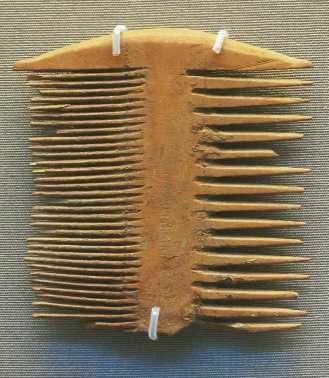
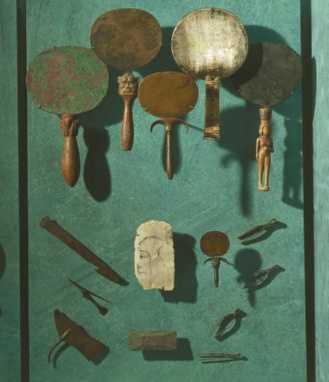
The Egyptians are credited with being the first people to cultivate beauty in an extravagant fashion. Excavations from tombs have revealed such relics as combs, brushes, mirrors, cosmetics, scissors, and razors made of tempered copper and bronze (Figure 1-1 ). Coloring agents made from berries, bark, minerals, and other natural materials were used on the hair, skin, and nails. Eye paint was the most popular of all cosmetics, with the use of henna as a coloring agent first recorded in 1500 BC.
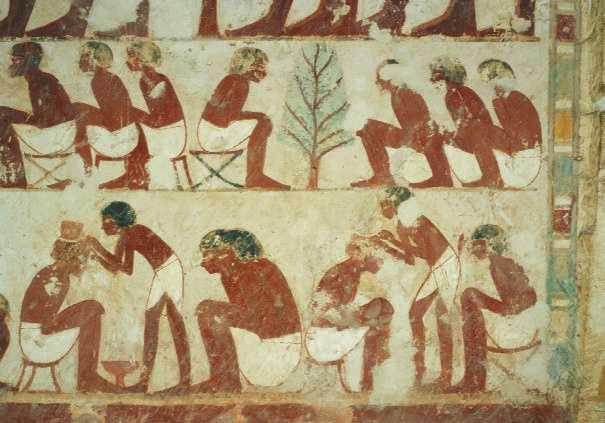
The use of barbers by Egyptian noblemen and priests 6,000 years ago is substantiated by Egypt’s written records, art, and sculpture (Figure 1-2 ). High-ranking men and women of Egypt had their heads shaved for comfort when wearing wigs and for the prevention of parasitic infestations. Every third day, barbers would shave the priests’ entire bodies to ensure their purity before entering the temple. The work of the barber Meryma’at (mare-a-mott) was apparently held in particularly high esteem, as his image was sculpted for posterity.
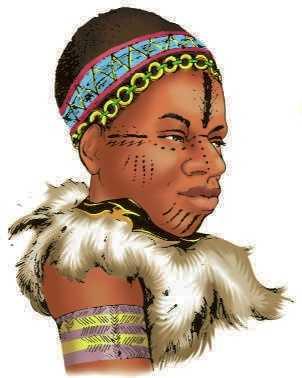
In some African cultures, hair was groomed with intricately carved combs and decorated with beads, clay, and colored bands (Figure 1-3 ). The Masai warriors, for example, wove their front hair into three sections of tiny braids and the rest of the hair into a queue down the back. Braiding was used extensively, with intricate patterns frequently denoting status within the tribe.
figure 1-2
Egyptian engravings depicting soldiers having their hair cut.
figure 1-1
Ancient Egyptian comb, of the type found in tomb excavations.
figure 1-3
Africans decorated their hair with beads, clays, colored bands, or braiding, often in intricate patterns.
figure 1-4
The Golden Age of Greece saw the rise of barbering as an art, along with the well-trimmed, curled, and scented beard.
figure 1-5
Roman Emperor Hadrian grew a beard to hide facial scarring, inadvertently bringing the beard back into fashion.
Several Biblical passages give insight into the state of the barber in the Middle East. According to Leviticus, Moses commanded those who had recovered from leprosy to shave all their body hair as part of a ritual cleansing. Ezekiel refers to another ancient shaving custom when he says, “Take thou a barber’s razor and cause it to pass upon thy head and upon thy beard.” Based on these and other Biblical references, it has been accepted that barbering was available to the general population of the Middle East during the lifetime of Moses (circa 1392 to circa 1272 BC).
Although Greek barbers from Sicily introduced shears to Rome sometime between 800 and 700 BC, barbers were virtually unknown in Rome until 296 BC.
It was in Greece during its golden age (500 to 300 BC) that barbering became a highly developed art. Well-trimmed beards were status symbols— Greek men had their beards trimmed, curled, and scented on a regular basis (Figure 1-4 ). Barbershops became the gathering places for exchanging sporting, social, and political news, while barbers themselves rose in prominence to become leading citizens within the social structure.
The status of the beard in Greece drastically changed in the third century BC, when Alexander the Great’s Macedonian troops lost several battles to the Persians as a result of the warriors’ beards. The Persians would grab the Macedonian warriors by their beards and drag them to the ground, where they were either speared or beheaded. Alexander issued a decree that all soldiers be clean shaven. Eventually, the general populace adopted the trend, and barbers were kept busy performing shaves and haircuts.
Ticinius Mena (ti-cin-i-us me-nah) of Sicily has been credited with having brought shaving and barbering services to Rome in 296 BC. The men of Rome soon enjoyed tonsorial services such as shaves, haircutting and dressing, massage, and manicuring on a daily basis, with a good portion of their day spent with the barber. While the average citizen patronized the barbers’ places of business, rich noblemen engaged private tonsors to take care of their hairdressing and shaving needs. The Romans expanded the concept of these personal services to include communal bathing and what became known as the Roman baths.
Clean-shaven faces were the trend until Hadrian came into power in 117 AD. Emperor Hadrian became a trendsetter when he grew his beard to hide scars on his chin (Figure 1-5 ), resulting in the populace following his lead, and the beard was again in fashion. In fact, the word barber is derived from the Latin word barba , meaning “beard.” Another word derived from Latin, tonsorial (TON-SORE-ee-ahl) (derived from tondere, meaning “to shear”), means the cutting, clipping, or trimming of hair with shears or a razor. It is often used in conjunction with barbering—barbers are sometimes referred to as tonsorial artists.
CUSTOMS AND TRADITIONS
The beliefs, rituals, and superstitions of early civilizations varied from one ethnic group to another, depending on the region and social interactions with other groups. There was a general belief among many groups that hair
clippings could bewitch an individual. Hence, the privilege of haircutting was reserved for the priest, medicine man, or spiritual leader of the tribe. According to the Greek philosopher and mathematician Pythagoras, the hair was the source of the brain’s inspiration, and cutting it decreased an individual’s intellectual capacity. The Irish peasantry believed that if hair cuttings were burned or buried with the dead, no evil spirits would haunt the individual. Among some Native American tribes, it was believed that the hair and the body were so linked that anyone possessing a lock of hair of another might work his will on that individual.
In almost every early culture, hairstyles indicated social status. In ancient Greece, boys would cut their hair upon reaching adolescence, while their Hindu counterparts would shave their heads. Following the invasion of China by the Manchu, Chinese men adopted the queue as a mark of dignity and manhood. Noblemen of ancient Gaul indicated their rank by wearing their hair long, until Caesar, upon conquering Gaul, made them cut it, as a sign of submission. At various times in Roman history, slaves would be allowed or disallowed to wear beards, depending on the dictates of the ruler.
Coloring agents were often used to add further dimension. The ancient Britons, extremely proud of their long hair, brightened blond hair with washes composed of tallow, lime, and the extracts of certain vegetables. Darker hair was treated with dyes extracted and processed from plants, trees, and various soils. The Danes, Angles, and Normans dressed their hair for beautification, adornment, and ornamentation before battles with the Britons. In ancient Rome, the color of a woman’s hair indicated her class or rank. Noblewomen tinted their hair red, those of the middle class colored their hair blond, and poor women were compelled to dye their hair black. Much later, during the reign of Queen Elizabeth in England, it would become fashionable for men to dye the beard and cut it into a variety of shapes.
In later centuries, religion, occupation, and politics also influenced the length and style of hair as well as the wearing (or not) of beards. Clergymen of the Middle Ages were distinguished by the tonsure (TON-shur), a shaved patch on the crown of the head. During the seventh century, Celtic and Roman church leaders disagreed on the exact shape the tonsure should take. The circular tonsure, called the tonsure of St. Peter, left only a slight fringe of hair around the head and was preferred in Germany, Italy, and Spain (Figure 1-6 ). The Picts and Scots preferred a semicircular design, known as the tonsure of St. John. After much argument, the pope eventually decreed that priests were to shave their beards and mustaches and adopt the tonsure of St. Peter.
Although the edicts of the church maintained some influence over priests and the general populace for several centuries, beards and longer hairstyles had returned by the eleventh century. Priests curled or braided their hair and beards until Pope Gregory issued another papal decree requiring shaved faces and short hair. It was not until 1972 that the Roman Catholic Church finally abolished the practice of tonsure.
Most rulers and monarchs became trendsetters by virtue of their position and power in society. Personal whim, taste, and even physical
figure 1-6
The circular tonsure (tonsure of St. Peter) left only a slight fringe of hair around the head of the clergymen who wore it.
figure 1-7
Selection of ancient Egyptian barbering tools, including mirrors, razors, and tweezers.
figure 1-8
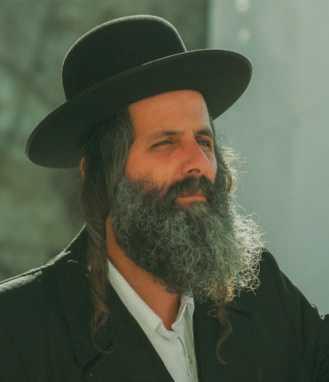
The beard is a sign of religious devotion for Orthodox Jews.
DID YOU KNOW?
During Medieval times, tradesmen learned their craft through apprenticeships. Guilds, similar to associations, were formed by tradesmen to control the practice and training of their professions. Trade guilds eventually led to the development of schools and universities.
limitations could become the basis for changes in hairstyles and fashion. For example, in the sixteenth century, when Francis I of France accidentally burned his hair with a torch, his loyal subjects had their hair, beards, and mustaches cut short. During the reign of Louis XIV in the seventeenth century, noblemen wore wigs because the king, who was balding, did so. During the nineteenth century in France, men and women showed appreciation for antiquity by wearing variations of the “Caesar cut,” the style of the early Roman emperors.
THE BEARD AND SHAVING
With the razor being such a defining tool for barbering, the history of shaving, as well as caring for the beard in general, deserves a second look. Since the practice of shaving predates the written word, it is difficult to determine just when this form of hair removal began.
Excavations of early stone razors or scrapers from the Upper Paleolithic period (40,000 to 10,000 BC) indicate that early man may have used these tools for hair removal as well as for the skinning of animals. By the time of the Neolithic period (8000 to 5000 BC), early man had created settlements and begun to farm and raise animals. Artwork of this period shows examples of clean-shaven men, but it is unknown how the hair was removed. In Egypt, however, pyramids from around 7000 BC have yielded flint-bladed razors that are known to have been used by the ruling classes to shave their heads as well as their faces, and by 4000 BC, a form of tweezers was also used (see Figure 1-7 ).
It stands to reason that the nomadic nature of many early groups helped spread the practice of shaving throughout the rest of the world. Mesopotamians of 3000 BC were shaving with obsidian blades, and by 2800 BC, the Sumerians were also clean shaven. Likewise, Greek men of 1000 BC are seen in works of art visiting their local barber for shaving services.
In early times, most groups considered the beard to be a sign of wisdom, strength, or manhood. In some cultures, the beard was a sacred symbol. For example, in Rome, a young man’s first shave, on his 22nd birthday, constituted a rite of passage from boyhood to manhood and was celebrated with great festivity. To this day, among Orthodox Jews, the beard is a sign of religious devotion, and to cut off one’s beard is contrary to Mosaic law (Figure 1-8 ).
Beards have been removed throughout the centuries at the command of rulers and priests. Alexander the Great, as mentioned earlier, ordered his soldiers to shave so their beards could not be seized in battle. The Archbishop of Rouen in France prohibited the wearing of a beard in 1096, spurring the formation of the first-known barber guild in France. Peter the Great encouraged shaving by imposing a tax on beards. During the spread of Christianity, long hair came to be considered sinful and the clergy were directed to shave their beards. Although the shaving of the beard was still forbidden among Orthodox Jews, the use of scissors to trim or shape excess growth was permitted. Muslims took great care in trimming their facial hair after prayer and the removed hair was preserved so that it could be buried with its owner.
Trace the Rise of the Barber-Surgeons
After reading this section, you will be able to:
LO 2 Describe the practices of the barber-surgeons and the meaning behind the barber pole.
By the Middle Ages, barbers not only provided tonsorial services but also entered the world of medicine, where they figured prominently in the development of surgery as a recognized branch of medical practice. This progress was the result of the barbers’ interaction with the religious clerics of the day. As the most learned and educated people of the Middle Ages, monks and priests had become the physicians of the period. One of the most common treatments for curing a variety of illnesses was the practice of bloodletting, and barbers often assisted the clergy in this practice. But in 1163 at the Council of Tours, Pope Alexander III forbade the clergy to act as physicians and surgeons or to draw blood because to do so was contrary to Christian doctrine. Barbers stepped in and took over the duties previously performed by the clergy. They continued the practices of bloodletting, minor surgery, herbal remedies, and tooth pulling. For centuries, dentistry was performed only by barbers, and for more than a thousand years, they were known as barber-surgeons (BAR-bur SIR-genz)
The barber-surgeons formed their first organization in France in 1096 AD, and by the 1100s had created a guild of surgeons that specialized in the study of medicine. By the middle of the thirteenth century, these barber companies had also founded the School of St. Cosmos and St. Domain in Paris to instruct barbers in the practice of surgery.
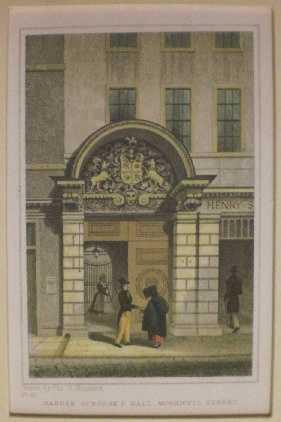
The Worshipful Company of Barbers guild was formed in London, England, in 1308 with the objective of regulating and overseeing the profession. The Barbers’ Company was ruled by a master and consisted of two classes of barbers: those who practiced barbering and those who specialized in surgery. By 1368, the surgeons formed their own guild with oversight by the Barbers’ Guild, which lasted until 1462 (Figure 1-9 ).
Although competition and antagonism likely existed between the two organizations, a parliamentary act united the two groups in 1450 while it officially separated the practices of each profession. Barbers were limited to bloodletting, cauterization, tooth pulling, and tonsorial services, while surgeons were forbidden to act as barbers. The merged guilds became the Company of Barber-Surgeons (Figure 1-10 ).
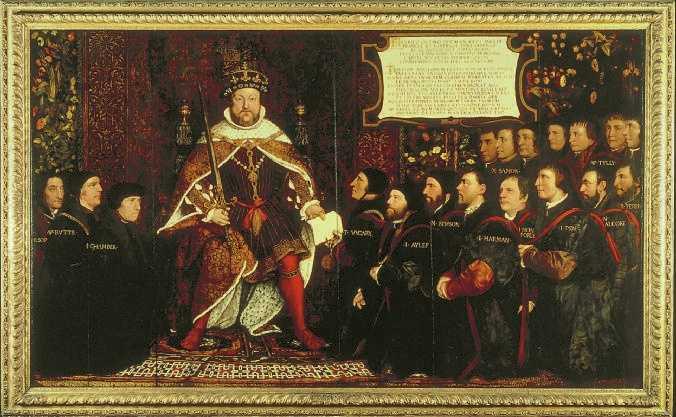
In 1540, Henry VIII recombined the barbers and surgeons of London through an Act of Parliament by granting a charter to the Company of Barber-Surgeons. The company commissioned Hans Holbein the Younger, a noted artist of the time, to commemorate the event (Figure 1-11 ).
With the advancement of medicine, the practice of bloodletting became all but obsolete. Although the barber-surgeons’ medical practice dwindled in importance, they were still relied upon for dispensing medicinal herbs and pulling teeth. Finally, in 1745, a law was passed in
Nineteenth-century engraving depicting the first Barber-Surgeon’s Hall in London, built in the 1440s.
figure 1-9
The Worshipful Company of Barbers’ coat of arms.
figure 1-10
DID YOU KNOW?
Barber-Wigmakers
Wig design and maintenance has often been handled by barbers over the centuries, and greatly grew in demand in Europe beginning with the end of the seventeenth century. During the 1700s and 1800s, wigs became so elaborate and fashionable that a separate corporation of barber-wigmakers was founded in France. Not until 1779 was a similar corporation formed in Prussia, though this was disbanded in 1809, when new unions were started. French barberwigmakers suffered at the turn of the century as well, primarily due to the decline in the wig’s popularity after the French Revolution (1789 to 1799).
England to separate the barbers from the surgeons and the alliance was completely dissolved.
Barber-surgeons had also flourished in France and Germany. Following the formation of the first French barber guild in 1096, barber-surgeons under the rule of the king’s barber formed another guild in 1371, which lasted until about the time of the French Revolution (1789). Ambroise Paré (1510 to 1590) was a particularly noteworthy French barber-surgeon, who went on to become the greatest surgeon of the Renaissance period and the father of modern surgery.
Finally, many Europeans had become so dependent upon the services of the barber-surgeons that Dutch and Swedish settlers brought barbersurgeons with them to America to look after the well-being of the colonists.
THE BARBER POLE
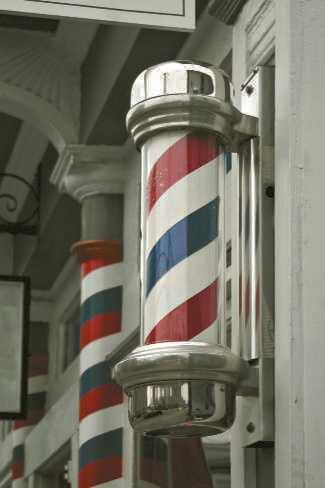
The symbol of the barber pole evolved from the technical procedures of bloodletting performed by the barber-surgeons. The pole is thought to symbolize the staff that the patient would hold tightly in order for the veins in the arm to stand out during bloodletting. The bottom end-cap of modern barber poles represents the basin that was used as a vessel to catch the blood during bloodletting. The white stripes on the pole stand for the bandages that were used to stop the bleeding and were hung on the staff to dry. The stained bandages would then twist around the pole in the breeze, forming a red-and-white pattern (Figure 1-12 ).
One interpretation of the colors of the barber pole is that red represented the blood, blue the veins, and white the bandages. Later, when the Company of Barber-Surgeons was formed in England, barbers were required to use blue-and-white poles and surgeons red-and-white poles.
figure 1-11
Henry VIII issuing a charter to the Company of Barber-Surgeons, painted by Hans Holbein.
With permission of The Worshipful Company of Barbers, London, UK.
figure 1-12
figure 1-13
A modern barber pole, the foremost symbol of professional
It is also thought that the red, white, and blue poles displayed in the United States originated in deference to the nation’s flag. Modern barbers have retained the barber pole as the foremost symbol of the business and profession of barbering. In fact, display of a barber pole at an establishment that is not a licensed barbershop employing licensed barbers is prohibited in some states (Figure 1-13 ).
Understand Modern Barbering Organizations and State Boards
After reading this section, you will be able to:
LO 3
Identify the organizations responsible for advancing the barbering profession and explain the function of state barber boards.
By the end of the nineteenth century, the profession of barbering had completely separated from religion and medicine, emerging as an independent profession. During the late 1800s, the profession’s structure changed and it began to take new directions. The formation of employer organizations known as master barber groups and employee organizations known as Journeymen barber groups (JUHR-knee-men BAR-ber GROOPS) was the first step toward upgrading and regulating the profession. During this era, the emergence and growth of these organizations helped establish precedents and standards that are part of today’s barbering profession.
The iconic colors of the barber pole have been drawn from the days of bloodletting.
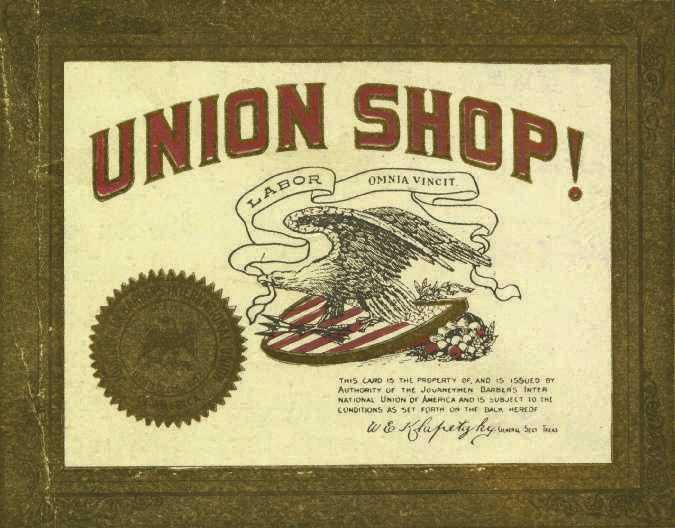
A noteworthy example is the Barbers’ Protective Association, organized in 1886. In 1887, it became the Journeymen Barbers’ International Union of America at its first convention in Buffalo, New York, affiliated with the American Federation of Labor. By 1963, the name had changed again to the Journeymen Barbers, Hairdressers, Cosmetologists, and Proprietors’ International Union of America (Figure 1-14 ).
Passed in 1897, the first barber-licensing law set standards for sanitation, minimum education, and licensing requirements for barbers and barbershops in the state of Minnesota. The setting of standards was important because at the time it was common for towels, shaving brushes, and other barbering tools to be used on more than one customer without being disinfected in between. These practices provided ample oppor tunity for bacteria, parasites like headlice, and infections like ringworm and herpes to be spread from one person to another, casting a bad light on barbers and barbershops in general. Similar laws that included hand washing, powdered (rather than stick) astringents, regular floor sweeping, and the disinfection of tools were soon passed in other states in response to the need to protect the public from infectious conditions.
Awareness of the importance of cleaning practices in preventing disease became so widespread that the terminal methods system was enacted in 1916 in New York City. At that time, it was common to see barbershops, beauty shops, and other small business enterprises at the main railway terminals in larger cities. The terminal methods system outlined strict disinfection and cleaning practices, such as boiling tools in view of customers and using airtight storage for disinfected implements. The system soon spread to other shops throughout New York, providing customers with superior, sanitary service.
Label of the Journeymen Barbers International Union of America.
The Associated Master Barbers of America was established in Chicago, Illinois, in 1924, eventually expanding to include beauty salon owners and managers and changing its name to the Associated Master Barbers andBeauticians America (AMBBA) in 1941. By 1925, its members had established the National Educational Council with the goal of standardizing and upgrading barber training. The council successfully set down the requirements of barber schools and barber instructor training, established a curriculum, and promulgated the passage of state licensing laws.
Working in cooperation with the AMBBA, the National Association of Barber Schools, formed in 1927, developed a program that standardized the operation of the barber schools themselves. In 1929 in St. Paul, Minnesota, the National Association of State Board of Barber Examiners was created to solidify the qualifications required for barber examination applicants and the methods of evaluation to be used. Finally, by 1929, the AMBBA adopted a barber code of ethics to promote professional responsibility in the trade and later published its own barbering textbook.
Since 1929, all states have passed laws regulating the practice of barbering and hairstyling. The state boards are primarily concerned with the protection of the health, safety, and welfare of the public. They do this through the maintenance of high educational standards to assure competent and skilled service, the licensing of individuals and shops, and the enforcement of infection control laws. Many of today’s state barber boards meet up to twice a year as members of the National Association of Barber Boards of America (NABBA) . The NABBA established the month of September as National Barber Month to recognize the contributions of barbers to society. According to the NABBA’s website, the organization’s mission statement and objectives are as follows:
• The National Association of Barber Boards of America represents over 300,000 barbers and is the icon of the independent business person;
• The tonsorial arts have been a tradition in the United States of America since its inception;
• The time-honored tradition of the neighbor barbershop continues to grow and prosper.
Additionally, the organization proclaims the following objectives:
• To promote the exchange of information between state barber boards and state agencies examining, licensing, and regulating the barber industry.
• To develop standards and procedures for examining barbers.
• To develop standards for licensing and policing the barber industry.
• To develop curriculum for educating barbers.
• To promote continuous education in the barber industry.
• To develop and promote procedures for insuring that the consumer is informed and protected.