
Visit to download the full and correct content document: https://ebookmass.com/product/an-effective-strategy-for-safe-design-in-engineering-a nd-construction-david-england/
More products digital (pdf, epub, mobi) instant download maybe you interests ...
Engineering Drawing and Design, 6th edition David A. Madsen
https://ebookmass.com/product/engineering-drawing-and-design-6thedition-david-a-madsen/
Contracting for Design and Construction Services in the Public Sector John O. Adler
https://ebookmass.com/product/contracting-for-design-andconstruction-services-in-the-public-sector-john-o-adler/
Theatrical Design and Production: An Introduction to Scene Construction, – Ebook PDF Version
https://ebookmass.com/product/theatrical-design-and-productionan-introduction-to-scene-construction-ebook-pdf-version/

Religion and the Rise of Sport in England David Hugh Mcleod
https://ebookmass.com/product/religion-and-the-rise-of-sport-inengland-david-hugh-mcleod/
Handbook for Building Construction: Administration, Materials, Design, and Safety Clifford J Schexnayder
https://ebookmass.com/product/handbook-for-building-constructionadministration-materials-design-and-safety-clifford-jschexnayder/

Experiencing God in Late Medieval and Early Modern England David J. Davis
https://ebookmass.com/product/experiencing-god-in-late-medievaland-early-modern-england-david-j-davis/

Experiencing God in Late Medieval and Early Modern England David J. Davis
https://ebookmass.com/product/experiencing-god-in-late-medievaland-early-modern-england-david-j-davis-2/
Handbook for Building Construction: Administration, Materials, Design, and Safety 1st Edition Schexnayder
https://ebookmass.com/product/handbook-for-building-constructionadministration-materials-design-and-safety-1st-editionschexnayder/

Charles I and the People of England David Cressy
https://ebookmass.com/product/charles-i-and-the-people-ofengland-david-cressy/
An Effective Strategy for Safe Design in Engineering and Construction
An Effective Strategy for Safe Design in Engineering and Construction
David England & Dr Andy Painting
This edition first published 2022 © 2022 John Wiley & Sons Ltd.
All rights reserved. No part of this publication may be reproduced, stored in a retrieval system, or transmitted, in any form or by any means, electronic, mechanical, photocopying, recording or otherwise, except as permitted by law. Advice on how to obtain permission to reuse material from this title is available at http://www.wiley.com/go permissions.
The rights of the David England & Dr Andy Painting to be identified as the author of this work has been asserted in accordance with law.
Registered Offices
John Wiley & Sons, Inc., 111 River Street, Hoboken, NJ 07030, USA
John Wiley & Sons Ltd, The Atrium, Southern Gate, Chichester, West Sussex, PO19 8SQ, UK
Editorial Office
9600 Garsington Road, Oxford, OX4 2DQ, UK
For details of our global editorial offices, customer services, and more information about Wiley products visit us at www.wiley.com.
Wiley also publishes its books in a variety of electronic formats and by print-on-demand. Some content that appears in standard print versions of this book may not be available in other formats.
Limit of Liability/Disclaimer of Warranty
In view of ongoing research, equipment modifications, changes in governmental regulations, and the constant flow of information relating to the use of experimental reagents, equipment, and devices, the reader is urged to review and evaluate the information provided in the package insert or instructions for each chemical, piece of equipment, reagent, or device for, among other things, any changes in the instructions or indication of usage and for added warnings and precautions. While the publisher and author have used their best efforts in preparing this work, they make no representations or warranties with respect to the accuracy or completeness of the contents of this work and specifically disclaim all warranties, including without limitation any implied warranties of merchantability or fitness fora particular purpose. No warranty may be created or extended by sales representatives, written sales materials or promotional statements for this work. The fact that an organization, website, or product is referred to in this work as a citation and/or potential source of further information does not mean that the publisher and author endorse the information or services the organization, website, or product may provide or recommendations it may make. This work is sold with the understanding that the publisher is not engaged in rendering professional services. The advice and strategies contained herein may not be suitable for your situation. You should consult with a specialist where appropriate. Further, readers should be aware that websites listed in this work may have changed or disappeared between when this work was written and when it is read. Neither the publisher nor author shall be liable for any loss of profit or any other commercial damages, including but not limited to special, incidental, consequential, or other damages.
Library of Congress Cataloging-in-Publication data
Names: England, David (author), Painting, Andy (author).
Title: An effective strategy for safe design in engineering and construction / David England and Andy Painting.
Description: First edition. | Hoboken, NJ : John Wiley & Sons, 2022. | Includes bibliographical references and index.
Identifiers: LCCN 2021041749 (print) | LCCN 2021041750 (ebook) | ISBN 9781119832034 (hardback) | ISBN 9781119832041 (pdf) | ISBN 9781119832058 (epub) | ISBN 9781119832065 (ebook)
Subjects: LCSH: Industrial safety. | Buildings--Safety measures. | Engineering design.
Classification: LCC T55 .E445 2022 (print) | LCC T55 (ebook) | DDC 658.3/82--dc23
LC record available at https://lccn.loc.gov/2021041749
LC ebook record available at https://lccn.loc.gov/2021041750
Original cover photography and design: © David England and Dr Andy Painting
Set in 9.5/12.5 STIXTwoText by Integra Software Services Pvt. Ltd, Pondicherry, India 10 9 8 7 6 5 4 3 2 1
Contents
Figures ix
Tables xi
Foreword xiii
Introduction 1
Aims of the Book 1
Who the Book is For 2
How the Book is Structured 2
Promoting Safe Design 4
Example Case Studies 5
Nuclear Power Plant 6
Office Block 6
Warship 6
Home Printer 6
Motor Car 6
The Context of Design 7
Design and the Product Life Cycle 7
Influences on Design 9
Preventing Error 13
Safety as a Design Component 13
Introduction—Summary 15
Glossary of Terms 16
1 Elements of the Design Process 19
Initiating Need 19
Business Case 20
Requirements Capture 20
The Design Process 21
Design Feasibility 21
Design Specification 23
Full or Technical Design 23
Production Phase 24
2
3
Validating the Design 24
Lessons Learned 26
The Design Process—Summary 27
The Regulatory Environment 29
The Importance of Regulation in Design 29
Health and Safety at Work etc. Act 1974 31
Environmental Protection Act 1990 34
Construction (Design and Management) Regulations 2015 (CDM) 34
Provision and Use of Work Equipment Regulations 1998 40
CE Marking 41
Building Information Modelling 43
Standards 44
The “Four Cs” 46
How Construction Regulations Align with the Design Process 48
Benefits of Implementing CDM 48
Pre-construction Including Design 52
Construction Phase 53
Handover and Use 55
The Regulatory Environment—Summary 55
Design Process Considerations 57
Management Structure and Delegations 57
Client Relationship 58
Documentation and Management Systems 63
Communication and Dissemination 64
Project Management Methodologies 66
RIBA Plan of Work 67
PRINCE2 68
Environmental Impact and the Circular Economy 69
The Circular Economy 72
Environmental Impact—A Footnote 74
Further Considerations 75
Provision of Materials and Manufacturing Techniques 75
Ergonomics and the Work Environment 76
Space 77
Air Quality 77
Light—Quality, Quantity, Colour Temperature 78 Green Spaces 78
Anthropometry 79
Spatial Design 79
Operating and Maintenance Procedures in Service 79
Training Provision 81
Obsolescence 82
Influences Surrounding the Product Life Cycle 84
Managing/Maintaining the Design Objective 86
Design Management—Summary 88
4 The Management of Risk 89
The Importance of Managing Risk 89
Risk Management Process 90
The Risk Register 92
Influences on Risk Management 93
Risk Appetite 95
External Influencing Factors 97
Control Measures 103
Risk Identification Tools 104
Failure Modes Effects (and Criticality) Analysis 105
Fault Tree Analysis 105
Event Tree Analysis 106
Probabilistic Risk Assessment 107
Bow Tie Method 107
General Principles of Prevention and the Hierarchy of Control 108
CDM Deliverables in Support of Risk Management 114
Pre-construction Information 115
Construction Phase Plan 116
Health and Safety File 117
Competently Dealing with Risk 118
Risk Management Summary 120
5 Effective Design Strategy 123
The Importance of an Effective Design Strategy 123
Initiating Need 125
Business Case 128
“Make/Buy” and “Do Nothing” Approaches 129
Key Stakeholder Engagement 130
Responsibilities 131
Design Risk Management 131
Requirements Capture 135
Initiating the Design Process 137
Management Structure and Delegations 139
Documentation and Management Systems 140
Pre-construction Information 141
Design Feasibility 144
Environmental and External Influences 146
Design A 148
Design B 148
Design C 149
Design D 149
General Principles of Prevention 150
Design Review—Feasibility 153
Additional Stakeholder Engagement 156
Supplier Engagement 157
User Requirements 158
Design Specification 160
Regulatory Environment 160
Operating and Maintaining 161
Design Review—Specification 163
Full/Technical Design 166
Design Review—Full 166
Construction Phase Plan 167
Production 170
Production Risk Management 171
Design Review—Validation 171
Acceptance/Handover 172
Health and Safety File 173
In Service 176
Risk Management in Service 177
Training Provision 178
Operation and Maintenance 180
Repurposing 181
Disposal 182
Disposal Risk Assessment 183
Bibliography 185
Index 187
Figures
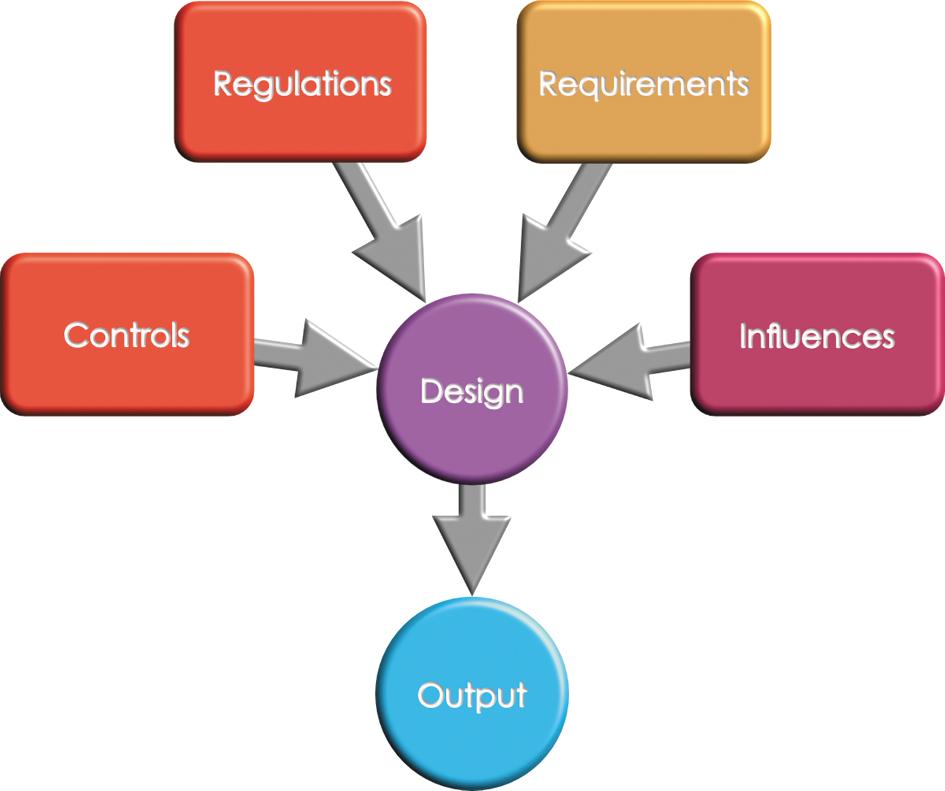
I.1 Design Inputs 4
I.2 Time, Cost, and Quality Balance 5
I.3 Product Life Cycle and the Design Process 8
I.4 Product and Design Symbiosis 9
I.5 External Influences 10
1.1 The Design Process 22
2.1 Influences on Design and Vice Versa 30
2.2 Fatal Injury Rate 1981 to 2018–2019 (HSE, 2019) 35
2.3 Costs Due to Error in Construction (GIRI) 36
2.4 Plan-Do-Check-Act Cycle 46
2.5 CDM Alignment with Other Regs 50
2.6 CDM Risk Capture and Management 51
3.1 Design Process (Top), CDM 2015 (Middle), and RIBA Plan of Work 2020 (Bottom) 67
3.2 Design Process (Top), CDM 2015 (Upper Middle), RIBA (Lower Middle), PRINCE2 (Bottom) 68
3.3 Environmental Inputs and Outputs 71
3.4 Circular Economy 73
3.5 Influences 75
3.6 External Influences 85
3.7 Managing the Design Objectives 87
4.1 General Risk Management Process 91
4.2 Influences on Risk Management 95
4.3 Risk Strategies 96
4.4 External Influences on Design 97
4.5 Threats and Opportunities 98
4.6 Example Influencing Factors 100
4.7 James Reason’s Swiss Cheese Model 104
4.8 Fault Tree Analysis Diagram 106
4.9 Event Tree Analysis Diagram 107
4.10 Bow Tie Diagram 107
4.11 Bow Tie With FTA and ETA 108
4.12 General Principles of Prevention 109
4.13 Control Measure 111
4.15
5.1 The Design Process 124
5.2 Management of Risk 132
5.3 Design Scenarios and Risks 148
Tables
I.1 Home Printer Influences 10
I.2 Nuclear Power Station Influences 11
I.3 Office Block Influences 11
I.4 Warship Influences 12
I.5 Car Influences 12
I.6 Application of Safety Across Various Factors 14
2.1 HASAWA Section 6 (1) 32
2.2 HASAWA Section 6 (2) 33
2.3 HASAWA Section 6 (3) 34
2.4 HASAWA Section 6 (6) 34
2.5 CDM Definition of “Construction Work” 36
2.6 CDM Definition of a “Structure” 37
2.7 CDM2015 Schedule 3 Work Involving Particular Risks 37
2.8 General Principles of Prevention in Regulations 39
2.9 PUWER 1998 Applicability of Regulations 40
2.10 Items for Inclusion in the Technical File 42
2.11 List of European Union Directives Subject to CE Marking 42
2.12 CDM as a Template for the Design Process 48
2.13 Alignment of the Four Cs 53
2.14 Compliance—the Four Cs 54
2.15 Compliance—the Four Cs 55
3.1 Influences on the Project 60
3.2 RIBA Plan of Work 2020 Stages 67
3.3 Environmental Life Cycle Phases 70
3.4 Operation and Maintenance; Case Studies 80
4.1 Risk Management Objectives 91
4.2 Principles of Prevention—Possible Applications 113
5.1 Ambitions and Drivers 125
5.2 Threats and Opportunities 128
5.3 SoR Depth of Information 136
5.4 Design Process Reliance 138
5.5 PCI Considerations 142
5.6 GPoP Applications 150
5.7 GPoP Control Measures 151
5.8 Additional Stakeholder Insights 159
5.9 Operator and Maintainer Influences 162
5.10 CPP Considerations 168
5.11 Possible Emerging Risk During Production 170
5.12 CDM 2015 Appendix 4 174
5.13 Examples of Possible Emerging Risks 177
5.14 Training Considerations 179
Foreword
As a Chartered Surveyor and Fellow of the Chartered Institute of Building, with some fifty years of wide international construction industry experience, I have seen all too often the importance of “getting it right” during the design stage of any project. Ensuring that a project is delivered safely takes planning and cooperation and extends beyond just ensuring the safety of the workers at the construction stage. We saw the value of safety—and safe delivery—at the London 2012 Olympic Park, as well as my own experiences in delivering such notable designs as the concrete ski hill in Finland for the Winter Olympics; the triple water towers in Kuwait City; 55 Lombard Street and Thames House. In 2018 I was appointed to the executive board of the Institute of Construction Management (ICM) and in 2019 I started to construct a digital gateway for CDM professionals to access the exciting and vitally important new world of building information modelling (BIM).
Despite explicit construction regulations having been with us since 1994, we are still witness to waste and error and, of course, appalling tragedy. This book uniquely provides sound, in-depth but straightforward advice at what can only be regarded as one of the most critical stages in the recent timeline of the industry—marking a paradigm shift into new ways of working, thinking, and procuring construction in a fast-evolving, digitally connected world. The message for the reader of this book is just how vitally important it is to effectively manage the improvement of our built environment. The shared expertise contained in this book is so phenomenally timely.
The authors are perfectly positioned to lead in the writing of this book at this critical time in the industry—driving safety, quality, and eliminating error to create important safe projects. This book is important to all those who are interested in construction, engineering, and the built environment, and perfectly demonstrates the duty of care we owe to those who will build, operate, maintain, and perhaps live or work in the things we create.
Since 1994, a prime focus for the industry has been creating a culture of integration, of better safety and workplace health. In those early days I was one of the very first tranche of fewer than two hundred construction professionals to envisage where the future of the safety culture needed to be positioned within the sector. Unfortunately, my early clear vision soon became disillusioned and so, for the last twenty-seven years, I have led teams championing change to construction design and management culture, proudly being recognized in 2008 by the Health and Safety Executive with one of only
three awards in the UK as “Health & Safety Champion of The Year.” This commitment to safety is something I continue today as head of the ICM Competence Working Group, something that is supported by the ideals and approach contained in the wealth of content in this book. The pragmatic sequencing of safety described in this book I believe profoundly helps to solve how to view the whole landscape and detail of any project, whilst at the same time ensuring the effective management of risk.
I am personally proud and delighted to introduce the unique content in this rather special reference book—enjoy the good read; then read again and reflect.
David F Jones
Introduction
Aims of the Book
Design is the cornerstone of creating and producing any structure, product, or item either for bespoke use or mass reproduction. Anything that is created, constructed, or manufactured relies on design whether for aesthetic, functional, or critical purposes. Of paramount importance is the designer’s understanding of the intended use and the application of the product and their subsequent ability to translate this into a finished design. Some examples of products that require specialist design knowledge are:
● Architecture—such as habitable or commercial property or structures.
● Electronics—such as printed circuit boards or electrically controlled devices.
● Marine—such as ships, oil rigs, jetties, and quays.
● Mechanical—such as mechanized plant, engines, and wearable or implantable medical devices.
● Chemical—such as nuclear, biological, and explosible materials, or structures that contain them.
● Emergent technologies—where designers may be dealing with novel production techniques or exotic materials.
Of equal importance to the designer is an understanding of the operating environment in which the product is to be used and how this environment is controlled by such considerations as regulations, standards, or social norms. These considerations may have a direct influence (such as the regulations surrounding health and safety) or indirect influence (such as ethical or moral concerns) on the design process.
Additionally, the actual individuals who will use the product should be considered, as well as any others who may come into contact with it. What is important in any design process is that the criteria of the design requirement are developed within this sphere of considerations and that the product is capable of being subsequently produced accurately to that requirement. This is known as the input-process-output cycle.
This book aims to explain this cycle in detail in order to provide the reader with a broader understanding of the responsibilities of the designer not only to their profession and industry but also of the wider implications of their output by explaining the many considerations that any design should take into account. These considerations are
not always apparent and it is the product of not only successful designs, but also successful design management, that ensures that they are appropriately considered in the design process.
Equally, we aim to demonstrate the important connection between good design and safe design and how this can be achieved as well as show how the various design professions, with their own standards and practices, are often a reflection of each other, and how design can be improved through the application and management of effective safety.
There are many associations, organizations, and standards, active in a wide range of design disciplines, that aim to improve the design process for either the designer or the client. This book intends to demonstrate that the essential tools for improving safety in design for both designer and client are already well established and readily available but, possibly, not well understood. By utilizing these tools any design project can be improved in terms of safety, quality, cost benefit, and project outcome.
Who the Book is For
This book is intended for use by all stakeholders who are involved in the design process, either directly or indirectly, as well as students of any discipline where design is a component part of their syllabus. It is also intended for those who have a responsibility for specifying during the design process and, of course, for those who have an interest in understanding more about the process and the best practice that can be achieved in this demanding and rewarding profession. This book is therefore aimed at:
● designers;
● clients;
● design managers and supervisors;
● those with oversight for design—such as project managers, surveyors, and insurers;
● principal designers (duty holders under the Construction (Design and Management) Regulations 2015);
● specifiers—such as Building Control representatives;
● procurers—such as marketing, sales, or financial departments;
● manufacturers, constructors, and developers;
● students of engineering, architecture, software development, and so forth;
● suppliers.
How the Book is Structured
Different disciplines—or professions—where design is practised tend to generate their own language for the inputs, processes, and outputs that they perform and it is not the intention of this book to attempt to harmonize these differences. Instead, a glossary is provided in this chapter in order that the reader can disseminate the information contained herein and translate it, as required, into the language or phraseology with which they are familiar in their own profession.
Each of the first five chapters deals with a separate component or consideration of the design process. The last chapter prescribes an effective strategy for managing the logical sequence, from the initiating need prior to design commencing, through to the proposed or anticipated disposal of the product. Whilst it is clear that not all design disciplines require all elements of this book’s design management process, it is the hope that the reader should become familiar with the generality of its intention. The chapters in the book are concerned with:
● the design process—the life cycle of the design process, its influences, and the expectations we have of it;
● regulations—how they affect design and how they can be used for effective process control;
● design management—the tools and techniques used to manage the design process;
● risk—identifying, managing, and controlling all aspects of risk in design;
● design strategy—applying the techniques of safe and successful design.
The final chapter on effective design strategy uses, as a guiding framework, the Construction (Design and Management) Regulations 2015. This is the third incarnation of the United Kingdom’s statute interpretation of the European Union temporary and mobile construction site directive 92/57/EEC. The reason for this may not seem immediately obvious to the reader, but we shall demonstrate how the extensive reach of this legislation over the variety of disciplines and objectives to which they apply, combined with the spirit of the regulations with respect to good design management, make them an excellent benchmark.
Although these regulations deal predominately with what may be considered to be the “traditional” construction industry (that is to say, buildings and structures), the spirit of the legislation is to improve the safe function of design in any given project. Regulation is just one of several influences on design and, therefore, to utilize that regulation to the benefit of the design process—rather than consider it burdensome to it— can only provide positive results: by improving management of the design process; ensuring legal compliance; and providing a considered, proper, and safe design output (see Figure I.1).
Construction regulations as a separate piece of legislation were originally introduced in 1994 in response to the high level of injuries and fatalities in the industry historically and they remain one of the many pieces of legislation concerned with workplace health and safety. The third version of the regulations in 2015 encompassed a number of changes which we believe are of fundamental importance not only to the functional requirements of health and safety, but also to the wider moral and financial implications of good design. Moreover, the commercial release of designed products into the UK marketplace is governed by various safety regulations and it is an ambition of this book to encourage the reader to plan their particular project with this knowledge in mind.
Whilst not every design process will require every element described in this book, the reader is encouraged to identify which elements are salient to their particular project or discipline. The establishment of a well-defined and structured environment in which to conduct any design project is a feature of regulations, standards, and practices, which
we shall examine in more detail throughout this book. The advantages of creating such an environment, whatever the size or complexity of the project, include:
● better translation of the client’s originating requirements for the finished product;
● clear parameters within which the designer can operate;
● control over scope creep or design variance, whether or not intentionally;
● the capture and control of risks which promotes—
❍ the reduction of errors;
❍ the control of costs.
Promoting Safe Design
The central tenet for this book is to reinforce the concept of safety as a critical part of the design process. Not just from the perspective of preventing harm to people, but also in ensuring the safety of the project: that is, preventing errors and miscommunication that can cause delays, increase costs, and reduce the quality of the finished product.
There are many factors which can influence any design and these will be explored in detail throughout the book. These factors can have greatly varying effects on a particular design of course, depending on what it is for, how and where it is intended to be used, and how it is to be produced and, if necessary, distributed. There are, though, three factors that affect the scope of all design projects and which are key not only to the designer’s appreciation of the fundamentals of the design requirements, but are also an imperative part of the client’s decision-making process.
Time, cost, and quality—often thought of as a triangle—affect the scope of any project through being inextricably linked: affecting one will always have an effect on either of the other two or, will affect, either positively or negatively, the quality of the output (see

Figure I.2). In this sense, they can be thought of as a see-saw, where the effect of increasing or decreasing any one element can be imagined. What can also be imagined is the necessary response in order to return to equilibrium. Demanding a better-quality product will either affect the cost of it or the time it takes to produce, for example. Demanding a less expensive product may make it quicker to produce but will invariably reduce the quality. Understanding their interrelation and, most importantly, understanding how the client views this interrelation with regard to their requirements, will help to ensure that the design remains as relevant to the client’s needs as possible.
The concept of a safe, effective design strategy overall can help to promote the following factors:
● The reduction of harm occurring to users or operators of the product.
● Ease of maintenance methodologies through the thoughtful provision and layout of systems and access points.
● The reduction of losses occurring during the product’s life cycle.
● The prevention of errors in the design, which necessitate redesigns and reworking.
● The inclusion of external factors in the product’s requirements resulting in a more mature design output.
● The inclusion of expectations from the product’s use, and environment of use, which will provide a better experience for the end user.
● A design solution that “learns” from previous examples and builds upon them to advance technologies, techniques, materials, and experiences.
● Better experiences for future users from having a well-considered and well-documented disposal process.
Example Case Studies
Throughout the book, we shall be using five hypothetical case studies in order to highlight the differences between the various concepts and processes discussed. These five have been chosen to demonstrate that, whilst there may be disparity between perhaps the levels or intensities required of each process in comparison, they are all intrinsically linked by the core process of design management. Often this is for different reasons and equally for differing outcomes. The impression that should be gained, however, is that proper design management—and the need to work towards the safest possible outcome—is relevant to all projects.
A precis of each study is given below in order to provide background to the reason for choosing them.
Nuclear Power Plant
A nuclear power plant is arguably the zenith of critical design input in terms of operation, maintenance, and disposal. Despite worldwide public concerns, they continue to contribute a large part of non-fossil-fuelled electricity generation in several countries. Everything to do with this type of infrastructure is on a huge scale: preliminary works, design, construction, maintenance, and, of course, disposal, which—in terms of the waste they create—can be counted in thousands of years.
Office Block
Worldwide, the office block has long been a rather dowdy and functionary building. In the late 20th century, however, novel architectural solutions were being developed as a result of new materials being available and the desire of clients to incorporate other spaces into the design; such as accommodation, retail, and leisure. In the aftermath of the global pandemic of 2020, the value of offices as a workspace began to be questioned and once again architects are developing novel ways of enhancing and repurposing these buildings.
Warship
Naval fleets were once populated with many types of specialized vessels: frigates, destroyers, battleships, support ships, and so forth. In recent years the tendency has been towards fewer, large command vessels combined with smaller, lighter vessels which can fulfil a multirole function. Although the operators of warships are highly trained, they often have to work under extreme conditions. Reliability is an absolute requirement. And, as has long been the case, warships often get sold on to other navies after their initial period in service, so the ability to remove sensitive equipment and materials is important.
Home Printer
Printers for domestic use are generally designed on a strict cost/quality basis and with an eye to having relatively short-lived periods in service due to the market forces and upgrades to consumables. Internally they are often composed of proprietary components but externally they must fit the client’s aesthetics and brand image. Made in large numbers, design errors can cause large-scale, even potentially worldwide, recall issues.
Motor Car
Ostensibly, the car has changed very little from that developed by Karl Benz in 1885, which was, in turn, a progression of self-powered vehicles that had been developed for over a hundred years before it. Critically built to a price point, the design must take account of aesthetics, aerodynamics, brand image, safety, security, a raft of legislation in each national marketplace, as well as the knowledge that the vehicle will be operated by persons of widely varying levels of skill. Composed of many third-party components,
the failure of any of which can cause long-term reputational damage to the client’s brand, vehicles can have several operators during their life and their final disposal has become a serious concern environmentally.
The Context of Design
Design and the Product Life Cycle
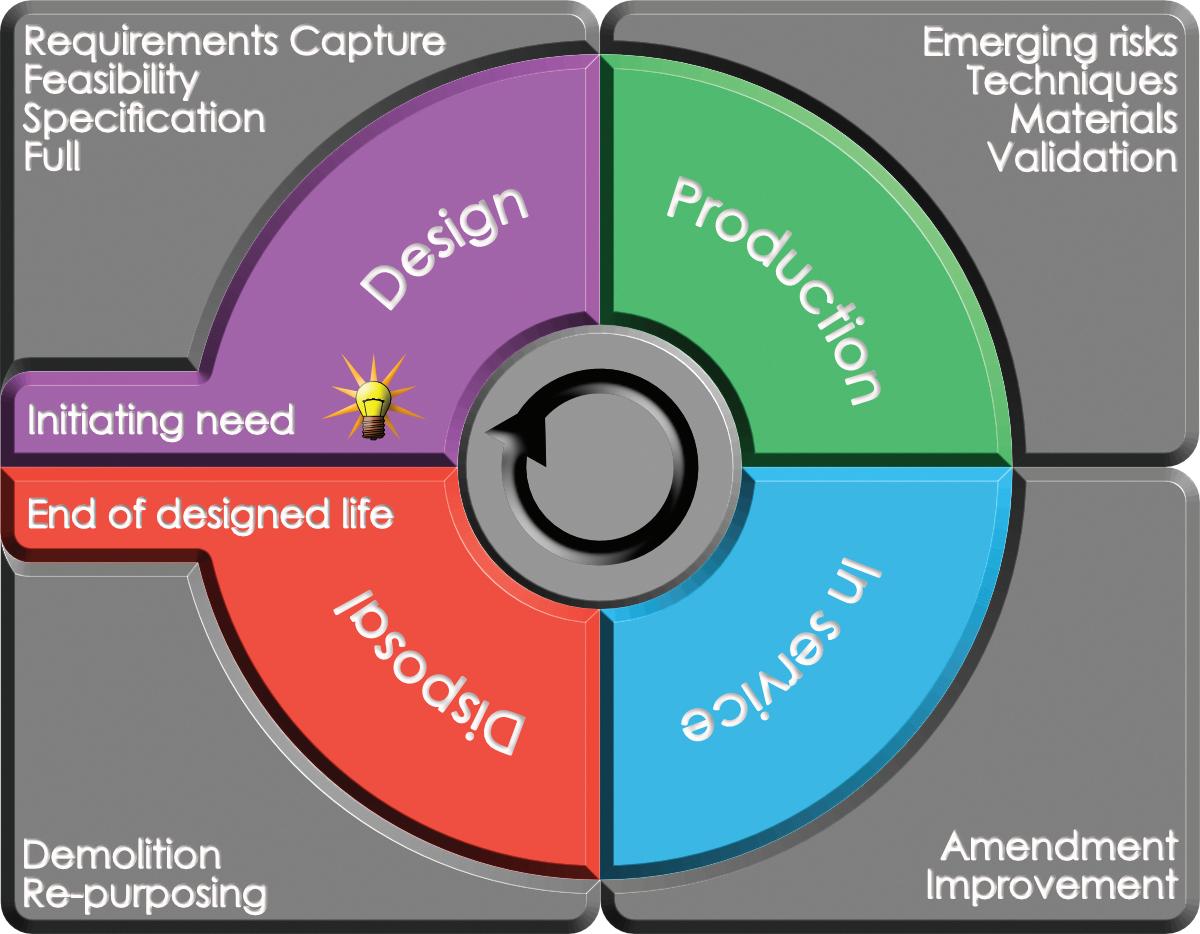
To understand the design process, we should consider the connection between design and the life cycle of the product which is being designed. The main stages of this life cycle are:
● design;
● production (including manufacture or construction—see Glossary);
● in service (including maintenance and repair);
● disposal (including demolition, repurposing, or recycling).
At each stage of the cycle, a design process may interact with it in a number of ways (see Figure I.3). At the beginning, there will be an initiating need for the product, whether this is a warship, a housing estate, or a software application. The need for the product originates from an entity which may be an organization, an individual, or even another project, which we call the client. At this early stage, the design process is concerned with identifying the intention of the design and might (and indeed, should) include radical and unorthodox solutions. The feasibility of producing the various conceptual solutions will be tested, a specification for the product decided upon and, ultimately, a final design will be delivered from which the product may be produced.
During the next stage, the design process may be involved in solving emergent issues and risks that may be encountered during the production process; or it may be necessary to incorporate advances in production techniques or materials. Pre-production prototypes may be required to test certain production techniques or material combinations and the design may be necessarily shaped further by these outcomes. Sometimes very large or complex products can take so long to reach the final commissioning/validation stage that they can be affected by such advances, or even by economic, political, or social events, or upheaval.
When the product reaches the “in-service” stage, there may be such issues as fettling or snagging that require possibly minor design changes. Or, there may be a requirement for substantial changes over time, if the original intent for which the product was designed changes. All the while, the amended design must interact fully with the existing one in order not to compromise the safe use of the product. It is also possible that for mass-produced products, mid-life amendments are possible due to feedback on the product’s use, or perhaps due to changes in external factors such as regulations or societal demands.
Other questions that we must ask during the design process, connected with the product in general, are:
● Is the product feasible?
● Is the product required?
● Can the product be technically produced and in the required quantity?
● Is there a marketplace for the product?
● Are there acceptable limitations of use for the product?
● Is there the capability and capacity to produce the product?
These are fundamental questions that can be regarded as risks associated with the design of the product. Risk is a complex area of analysis that may not be readily understood nor even identified within the design process and we shall cover this subject in more detail later on. For now, it is merely enough to say that an appropriate understanding of risk at the earliest stages of the design of a product is important in providing a safe design solution, in terms of production, use, and disposal.
Upon reaching the end of its designed life, the product will then undergo disposal. This may mean destroying or demolishing it (such as in an office block); repurposing it (such as with a warship); or recycling it (such as with a motor car). Or it may even have been designed to be sustainably managed in a “circular” manner, so that the product’s end of life forms very much part of its origination—also known as the circular economy. In any of these events, the design process may need to provide solutions for such things as temporary works or methods of removing contaminants. Additionally,
The Context of Design 9
in the case of repurposing or recycling, there may be a need to redesign the product for its new role, hence the circular style of the diagram (see Figure I.3). In any case, it is entirely possible that the original design process at the start of the product’s life cycle should have incorporated the intended disposal method within its considerations.
Influences on Design
The design, then, affects a product’s use, maintenance, repair, and so forth, but also the use of a product can affect design, either of the product or subsequent versions of the product that follow. The single simplest mechanical device—the wheel—is an example of this. The advantages of using rollers to move loads led to the development of the axle-mounted wheel, which, in turn, saw them being used in a wide variety of applications where they were often redesigned in order to be more efficient. By adapting a wheel by adding a series of pins perpendicular to the rim allowed the user to turn another adjacent wheel synchronously. This, in turn, led to the design of the cogwheel, which is to be seen in practically every mechanized device on earth.
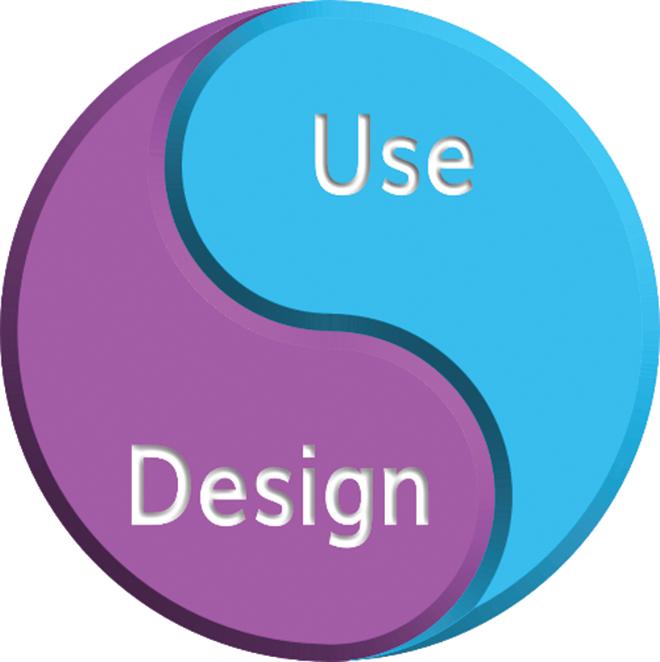
This symbiosis between design and use means that we cannot isolate one from the other (see Figure I.4). A designer cannot design a product without understanding to what purpose it will be put and, similarly, a user or operator cannot use or operate a product without knowing its design limitations. And as safety is the overriding moral and ethical requirement for the design and use of any product, we cannot perform either function—designing or operating—without recourse to the legal, technical, and moral requirements for safety within the parameters of the product that we are designing.
I.5 External Influences.
Use, however, is but one part of a product’s life cycle; and safety is but one concern for which the designer must find solutions. We can see there are various external influences and demands, including those of design itself, placed on any product for which a solution must be formed (see Figure I.5).
Not all products will of course be influenced similarly by all of these factors but they will all, to some extent, impose considerations or limitations on any design solution. They will also affect the design throughout the life cycle of the product in varying ways too. To what extent will depend very much on the client’s originating need, their intention for the product, its operational environment, and the regulatory environment in which it operates.
Let us consider these influences on the product life cycle through these four stages using our five illustrative case studies to which we shall refer to throughout the book (see Table I.1 to Table I.5 inclusively).
Table I.1 Home Printer Influences.
Home Printer
Design This is a generic product, widely available and relatively straightforward in purpose. It is unlikely to yield many conceptual variations. Many of the printer’s components are proprietary. Design will probably be more about corporate aesthetics than radical changes to the layout or function.
Production Proprietary components are unlikely to require further design changes. Novel processes (such as 3D printing) may require design engagement.
In service Use of the product may be counted in years. Original design errors may cause the recall of many thousands of units globally. Updates to operating software can lead to malfunctions or obsolescence.
Disposal Likely to be considered household waste. The use of as much recycled and recyclable material as possible will help to mitigate the waste impact.
Table I.2 Nuclear Power Station Influences.
Nuclear power station
Design Despite nuclear power having been available since the 1950s, the design of reactors remains quite fluid due to safety issues and public concern.
The design of the plant will involve ground studies, environmental issues, reviews of nearby watercourses, seismic studies, wind analysis, and many other surveys prior to even beginning the process of designing a complex structure.
Production Due to the complexity and length of time to produce the plant, many design issues may arise. There may also be advances in materials and techniques that may need to be incorporated after the final design is established.
In service
Use of the product may be in decades. Original design errors may lead to expensive redesign of complex systems or structures or to inestimable harm and loss.
Disposal Waste will require specialist handling for many thousands of years. Disposal of the plant itself may take decades depending on the separation of hazardous materials with their surroundings.
Table I.3 Office Block Influences.
Office block
Design
Production
In service
Disposal
The need to house a quantity of people in one place to perform administrative work has been around for many years. Recently this has been in combination with living, retail, and relaxation space to increase market value.
Changes in life/work balances, and the issues of welfare and viral transmission have created opportunities for re-thinking the office workspace and such issues as access, egress, and air circulation.
Although greatly composed of “standard” construction techniques, the ability to increase or decrease the dimensions of the workspace calls for novel building techniques and materials.
Flexibility is becoming a key element of building use as landlords and owners engage with the risks of future usage of their buildings.
Buildings with the greatest flexibility in design will be the easiest to transfer ownership of. The use of pre- and post-stressed elements can pose a specific hazard during demolition. Environmental disposal concerns can influence many material choices their the design.
Table I.4 Warship Influences.
Warship
Design Modern nations are moving away from large fleets of single purpose ships to more multirole vessels that can fulfil peacetime as well as combat roles.
Modern weaponry may be more compact than previous types but often requires large amounts of energy to power it. Stealth technologies can have an effect on space and provision for innocuous items like anchors and portals.
Production Sometimes built in multiple locations simultaneously, modern warships may also use advanced materials alongside regular ones.
In service Designed to operate for several decades in potentially harsh conditions, warships should be capable of being maintained and repaired whilst under way (i.e., whilst at sea). Multirole vessels must be capable of transitioning from one role to another easily and readily.
Disposal Warships often transfer ownership at the end of their first life cycle. The removal of weapons systems and hazardous or secret materials or items is vital prior to transfer or scrapping.
Table I.5 Car Influences.
Car
Design Under the body, the modern motor car is little changed from its invention in the late 19th century. Power plants and drivetrains are the most likely sources of conceptual progress, with motor sports providing incremental innovations in materials and techniques.
Heavily influenced by regulations and crash standards, the exterior of cars is also dominated by aerodynamics. Internally, design is influenced by anthropometry and conventions to reduce operator errors.
Production From vehicles being completely hand-built originally, modern cars are now often laser welded or chemically bonded by robots. The use of any fuel source requires careful location and protection.
In service Cars may pass through several owners in their lifetime with varying levels of operator skill and possibly little maintenance. Failures of any kind may affect the brand image overall.
Disposal Environmental concerns now dominate issues such as material reuse. The reuse of old parts may assist older cars to remain on the road but play no part in the brand’s image
Preventing Error
The importance of proper design management cannot be underestimated in ensuring the quality of the final output. The design stage is where all considerations for the output must be made in order to prevent errors later on. These errors can be manifested, for example, as: failures to deliver the output on time or in the format originally required; increases in cost; a product which requires essential modification after delivery or where it is unsafe to use in its final state. Where a designed product requires interaction or operation by persons after its delivery, it is vital that this operability also forms part of the considerations of the designer. This is a philosophy which we call “safe to operate and operated safely.” This means that a product has been specifically designed with the safety of the operator or user in mind and, similarly, that it is used safely for the purpose it was designed for. It is about embedding safety into the very core of all products from the very start.
Safety as a Design Component
Safety is a concept with which we are all familiar. To design a product that is not “safe” is unethical from a professional point of view and immoral from a societal point of view. But safety in this regard is not the only context in which we can put the word “safe.” We have already briefly touched on some of the factors that can influence a product, its use, and its design. If we take the word safe to mean “without harm or loss” then we may apply it to a number of these factors (see Table I.6).
The invention and introduction of the power loom in England in the late 1700s, and the various improvements made in the early 1800s, saw a meteoric rise in the use of machinery in the textile industry. This of course led to the migration of large swathes of the population from the countryside to the cities and subsequently paved the way for dramatic socio-economic change in Britain throughout the period. The early looms were manually controlled by the weaver who required training and experience in order to operate them properly. The later Lancashire Loom, from around 1840, was semi-automatic and therefore could be operated as part of a number of similar machines by only one person. This person required a smaller skill set than a fullytrained weaver as the machine was conducting many of the complex routines autonomously.
Whilst many of these machines may not have been designed with explicit safety features, it could be said that they were not dangerous to operate per se, given sufficient training. What was dangerous—and the cause of many horrific accidents—was their maintenance. This was often carried out by young children who were able to fit nimbly under the frames of the machines to collect the cotton dust and fluff, which could clog
Table
I.6
Application of Safety Across Various Factors.
Operation Application of safety
Exceptions (faults, failures, and breakdowns)
The provision of complete and accurate information regarding the product is supplied to the end user, allowing them to identify exceptional occurrences and respond appropriately, thereby minimizing production losses.
Maintenance Repairs and maintenance—both scheduled and exceptional—can be conducted without causing injury or ill-health to the maintainer.
Financial The design accurately reflects the client’s requirements thereby preventing increased costs due to redesign or rework.
Project management The design project is delivered on time and within budget due to accurate communication and cooperation between all project stakeholders, thereby preventing financial loss.
Amendments In-service design changes are performed accurately with full consideration of the existing product’s capabilities and limitations thereby preventing unnecessary production losses.
Disposal
Residual risks inherent in the product are accurately recorded for the end user allowing end-of-life disposal of the product without harm to the persons disposing of it.
the machine, or cause the risk of fire—and all whilst the machines were running. In addition to the risk of being maimed or killed, there were ill-health effects such as breathing in dust and hearing disorders from working alongside noisy machinery. We can see from this example that even if a design may be considered safe in use (for a given value of safe!), other external influences such as maintenance or repair may lead to harm or loss. The likelihood and the severity of these losses occurring is the risk; but risk—or risky—is not the opposite of safe.
We examine risk and its management in a later chapter; for now, we shall merely look at how to reflect risk in the examples (see Table I.6). For the risk of some harm or loss occurring in one of the situations given, there must be some exclusion or omission to have occurred. For example, under “operation” we have concluded that the “use of the product does not cause injury or affect the health of the user in the normal parameters of operation.” For harm or loss to occur, therefore, we must have excluded or omitted some part of the design process that ensures the safe operation of the product. Or, alternatively, the use of the product falls outside of the normal parameters of operation; that is, someone uses it in a way, or in a place, for which it was not intended. In either case, the likelihood of this happening, and the severity of the outcome should it do so, are entirely dependent on the product, its use, its environment, and the persons operating it.
All of these factors should be known—or at least considered—by the designer. And whilst the designer may have absolute control over their ability to prevent errors
15 and omissions in their design detail, they may have little or no control at all over how the product is used, maintained, or disposed of. The essence of safe design is, therefore, to manage the risk of these uncertainties to reduce, to the lowest possible or acceptable level, the possibility of harm or loss occurring throughout the product’s life. This is done through the introduction of various control measures which will have an order of precedence—or hierarchy—that determines how effective they are.
Introduction—Summary
The process of design is dependent on a large number of factors, over and above the actual requirement of the client—or driving force—behind the need for the design in the first place. And whilst it may be readily admitted that not all designers will be faced with all of the aspects of design that we discuss in this book, it should be incumbent on all designers to be cognizant of all the potential criteria that affect their profession. Recognizing the wider implication, limitations, and impacts of one’s profession is an effective way to further one’s own competence and the design profession as a whole.
We have discussed the critical importance of safety in the design process, and this will be discussed in more detail throughout the book. Safety, as we shall demonstrate, reflects far more than preventing harm to persons. Safety, and its antonyms threat and danger, can be applied to any number of matters—financial, reputational, environmental, societal—throughout the life of the designed product and we shall examine the tools that are available to the designer to enable them to assess, control, and mitigate these.
We have also discussed the core constraints of time, cost, and quality that apply to every design project, and we have looked at how these interact with one another like a balance or see-saw. These three constraints must always be considered in connection with safety—if cost is reduced, for example, will safety be affected? Moreover, we must also understand the end result of the design process—the product itself. Where is it to be used, and by whom? Will it need to be maintained and if so, by whom and how? What is the marketplace for the product and what restrictions or regulations might apply? Has a previous similar product had issues or are there advances in materials or techniques that we can deploy—or at least advise the client of—that will improve the product’s performance, longevity, safety, or reputation?
And finally, we must be aware of the designer’s critical role in the development and production of everything that we use in our world today. Whatever it is that we design, our input is crucial and it is our responsibility to ensure that we have produced the safest possible solution within the remit of the design specification.
Glossary of Terms
Client The originator of a requirement for a product and the ultimate authority of its specification. A client may be an individual, a corporate body, or a requirement from another design process created from some arising need.
Construction The act of building or making a thing. Whilst usually associated with the traditional view of house building and so forth, this term is used in this book to refer to any product that has to be physically manufactured. See production.
Core constraints The de facto considerations in all projects of time, cost, and quality; the manipulation of any one of which will always affect the other two, either positively or negatively. (Decreasing the amount of time available for the project, for example, will either increase the cost or decrease the quality of the product.)
Cost-benefit analysis The systematic process of assessing the cost of developing a particular design or product against the perceived benefits that it would bring about.
Design The intentional creation of a product to a given specification to fulfil a specific purpose.
Design freeze The point in the design process where the full technical design is established and the design is prepared for the production stage. Changes to the design beyond this point, unless in response to a design risk, should be considered to be outside of the designer’s scope and contract.
Design intent The overarching reason for a design. An aircraft that can land on water, or accounts software that covers all financial aspects of a closed organization are examples of design intent
Design life cycle The period during which any product is subject to the design process. This ends when the product is accepted into service. Further isolated design life cycles may occur throughout the product’s life: motor cars, for example, are subject to continual improvement throughout their production and use.
Design management The structured and competent control of the design stage, which ensures the systematic analysis of each phase, provides clearly documented evidence, and allows full and free cooperation and communication between all relevant stakeholders.
Design risk assessment An assessment of the risks associated with the production, operation, maintenance, and disposal of the product. Used to demonstrate the mitigation or control measures that have been implemented in the design process in consideration of these risks.
Error The act of omission in human behaviour. Forgetting to add up a column of numbers, making a mistake in converting units of measure, or pressing the wrong button on a machine due to work pressure are all examples of errors.
Full design intent The agreed detailed design that results in a design freeze. The final design from which production can take place.
Hazard Something with the potential to cause harm or loss. Examples are: electricity, machinery, transport, chemicals, pathogens, investment, information.
Practicable That which can be put into practice. Note that this is as opposed to “practical,” which implies something is reasonable or serviceable.