Another random document with no related content on Scribd:
The Project Gutenberg eBook of The desert
This ebook is for the use of anyone anywhere in the United States and most other parts of the world at no cost and with almost no restrictions whatsoever. You may copy it, give it away or re-use it under the terms of the Project Gutenberg License included with this ebook or online at www.gutenberg.org. If you are not located in the United States, you will have to check the laws of the country where you are located before using this eBook.
Title: The desert
Further studies in natural appearances
Author: John C. Van Dyke
Release date: June 5, 2024 [eBook #73778]
Language: English
Original publication: New York: Charles Scribner's Sons, 1901
Credits: Joeri de Ruiter and the Online Distributed Proofreading Team at https://www.pgdp.net *** START OF THE PROJECT GUTENBERG EBOOK THE DESERT ***
THE DESERT
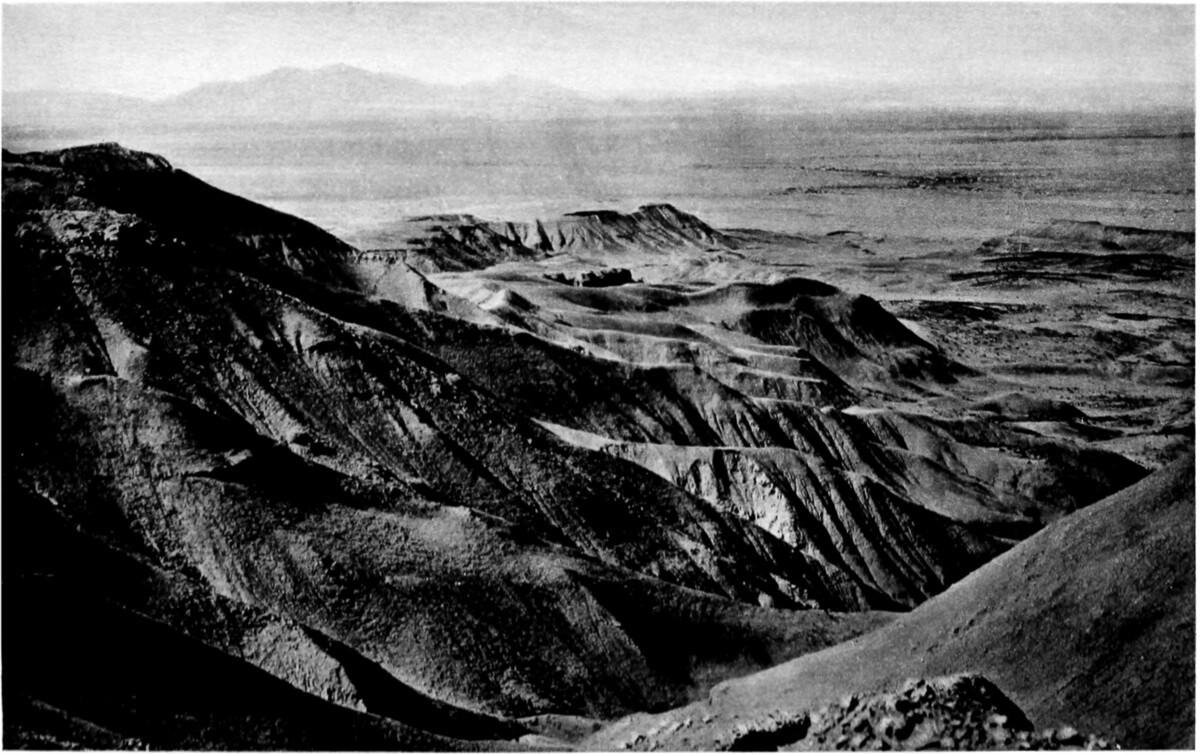
Silence and Desolation.
THE DESERT
FURTHERSTUDIESINNATURAL APPEARANCES
BY
JOHN C. VAN DYKE
AUTHOR OF “NATURE FOR ITS OWN SAKE,” “ART FOR ART’S SAKE,” ETC., ETC.
NEW YORK
CHARLES SCRIBNER’S SONS
1901
COPYRIGHT, 1901, BY CHARLES SCRIBNER’S SONS
Published September, 1901.
TROW DIRECTORY
PRINTING AND BOOKBINDING COMPANY
NEW YORK
PREFACE-DEDICATION
To
A. M. C.
After the making of Eden came a serpent, and after the gorgeous furnishing of the world, a human being. Why the existence of the destroyers? What monstrous folly, think you, ever led Nature to create her one great enemy—man! Before his coming security may have been; but how soon she learned the meaning of fear when this new Œdipus of her brood was brought forth! And how instinctively she taught the fear of him to the rest of her children! To-day, after centuries of association, every bird and beast and creeping thing— the wolf in the forest, the antelope on the plain, the wild fowl in the sedge—fly from his approach. They know his civilization means their destruction. Even the grizzly, secure in the chaparral of his mountain home, flinches as he crosses the white man’s trail. The boot mark in the dust smells of blood and iron. The great annihilator has come and fear travels with him.
“Familiar facts,” you will say. Yes; and not unfamiliar the knowledge that with the coming of civilization the grasses and the wild flowers perish, the forest falls and its place is taken by brambles, the mountains are blasted in the search for minerals, the plains are broken by the plow and the soil is gradually washed into the rivers. Last of all, when the forests have gone the rains cease falling, the streams dry up, the ground parches and yields no life, and the artificial desert—the desert made by the tramp of human feet—begins to show itself. Yes; everyone must have cast a backward glance and seen Nature’s beauties beaten to ashes under the successive marches of civilization. The older portions of the earth show their desolation plainly enough, and the ascending
smoke and dust of the ruin have even tainted the air and dimmed the sunlight.
Indeed, I am not speaking figuratively or extravagantly. We have often heard of “Sunny Italy” or the “clear light” of Egypt, but believe me there is no sunlight there compared with that which falls upon the upper peaks of the Sierra Madre or the uninhabitable wastes of the Colorado Desert. Pure sunlight requires for its existence pure air, and the Old World has little of it left. When you are in Rome again and stand upon that hill where all good romanticists go at sunset, look out and notice how dense is the atmosphere between you and St. Peter’s dome. That same thick air is all over Europe, all around the Mediterranean, even over in Mesopotamia and by the banks of the Ganges. It has been breathed and burned and battle-smoked for ten thousand years. Ride up and over the high table-lands of Montana—one can still ride there for days without seeing a trace of humanity—and how clear and scentless, how absolutely intangible that sky-blown sun-shot atmosphere! You breathe it without feeling it, you see through it a hundred miles and the picture is not blurred by it.
It is just so with Nature’s color. True enough, there is much rich color at Venice, at Cairo, at Constantinople. Its beauty need not be denied; and yet it is an artificial, a chemical color, caused by the disintegration of matter—the decay of stone, wood, and iron torn from the neighboring mountains. It is Nature after a poor fashion— Nature subordinated to the will of man. Once more ride over the enchanted mesas of Arizona at sunrise or at sunset, with the ragged mountains of Mexico to the south of you and the broken spurs of the great sierra round about you; and all the glory of the old shall be as nothing to the gold and purple and burning crimson of this new world.
You will not be surprised then if, in speaking of desert, mesa and mountain I once more take you far beyond the wire fence of civilization to those places (unhappily few now) where the trail is unbroken and the mountain peak unblazed. I was never over-fond of park and garden nature-study. If we would know the great truths we must seek them at the source. The sandy wastes, the arid lands, the
porphyry mountain peaks may be thought profitless places for pilgrimages; but how often have you and I, and that one we both loved so much, found beauty in neglected marshes, in wintry forests, and in barren hill-sides! The love of Nature is after all an acquired taste. One begins by admiring the Hudson-River landscape and ends by loving the desolation of Sahara. Just why or how the change would be difficult to explain. You cannot always dissect a taste or a passion. Nor can you pin Nature to a board and chart her beauties with square and compasses. One can give his impression and but little more. Perhaps I can tell you something of what I have seen in these two years of wandering; but I shall never be able to tell you the grandeur of these mountains, nor the glory of color that wraps the burning sands at their feet. We shoot arrows at the sun in vain; yet still we shoot.
And so it is that my book is only an excuse for talking about the beautiful things in this desert world that stretches down the Pacific Coast, and across Arizona and Sonora. The desert has gone abegging for a word of praise these many years. It never had a sacred poet; it has in me only a lover. But I trust that you, and the nature-loving public you represent, will accept this record of the Colorado and the Mojave as at least truthful. Given the facts perhaps the poet with his fancies will come hereafter.
JOHN C. VAN DYKE.
LA NORIA VERDE FEBRUARY, 1901.
CONTENTS
CHAPTER I. TheApproach.—Desert mountain ranges—Early morning approach—Air illusions—Sand forms—The winds—Sun-shafts— Sunlight—Desert life—Antelope—The Lost Mountains—The ascent— Deer trails—Footprints—The stone path—Defensive walls—The summit The fortified camp—Nature’s reclamations—The mountain dwellers—Invading hosts—Water and food supplies—The aborigines —Historic periods—The open desert—Perception of beauty—Sense of beauty—Mountain “view” of the desert—Desert colors—The land of fire—Drouth and heat—Sand and gypsum—Sand-whirls—Desert storms—Drift of sands—Winter cold in the basin—Snow on desert— Sea and sand—Grim desolation—Love for the desert The descent The Padres in the desert The light of the cross—Aboriginal faith
CHAPTER II. The Make of the Desert.—The sea of sand—Mountain ranges on desert—Plains, valleys, and mesas—Effect of drouth—The rains—Harshness of desert A gaunt land—Conditions of life— Incessant strife—Elemental warfare—Desert vegetation—Protruding edges—Shifting sands—Desert winds—Radiation of heat—Prevailing winds—Wear of the winds—Erosion of mountains—Rock-cutting— Fantastic forms—Wash-outs—Sand-lines in caves—Cloud-bursts— Canyon waters—Desert floods—Power of water—Water-pockets—No surface-streams—Oases in the waste—Catch-basins—Old sea-beds— Volcanic action—Lava-flows—Geological ages—Kinds of rock Glaciers—Land slips—Movement of stones—The talus—Stages of the talus—Desert floors—Sandstone blocks—Salt-beds—Sand-beds— Mountain vegetation—Withered grasses—Barren rock—Mountain colors—Saw-toothed ridges—Seen from the peaks—The Sun-fire kingdom
CHAPTER III. The Bottom of the Bowl.—Early geological days—The former Gulf—Sea-beaches on desert—Harbors and reefs—Indian remains—The Cocopas—The Colorado River—The delta dam—The inland lake—The first fall—Springs and wells in the sea-bed—The New River—New beaches—The second fall—The third beach—The failing water—Evaporation—Bottom of the Bowl—Drying out of the sea-bed—Advance of the desert—Below sea-level—Desolation of the basin—Beauty of the sand-dunes—Cactus and salt-bush—Desert animals—Birds—Lizards and snakes—Mirage—The water illusion— Decorative landscapes—Sensuous qualities in Nature—Changing the desert Irrigation in the basin—Changing the climate—Dry air Value of the air supply—Value of the desert—Destruction of natural beauty —Effects of mining, lumbering, agriculture—Ploughing the prairies —“Practical men”—Fighting wind, sand, and heat—Nature eternal— Return of desolation
CHAPTER IV. TheSilentRiver.—Rise of the Colorado—In the canyon —On the desert—The lower river—Sluggish movement—Stillness of the river The river’s name—Its red color—Compared with the Nile— The blood hue—River changes—Red sands and silt—River-banks —“Bottom” lands—Green bordering bands—Bushes and flowers— Soundless water—Wild fowl—Herons and bitterns—Snipe—Sadness of bird-life—The forsaken shores—Solitude—Beauty of the river Its majesty—The delta—Disintegration—The river in flood—The “bore”— Meeting of river and sea—The blue tomb—Shores of Gulf
CHAPTER V. Light,Air , andColor.—Popular ideas—Sunlight on desert —Glare and heat—Pure sunlight Atmospheric envelope—Vapor particles in air—Clear air—Dust particles—Hazes—Seeing the desert air—Sea-breezes on desert—Colored air—Different hues—Producing color—Refracted rays—Cold colors, how produced—Warm colors— Sky colors—Color produced by dust—Effect of heat—Effect of winds —Sand-storms—Reflections upon sky—Blue, yellow, and pink hazes
The dust-veil—Summer coloring—Local hues—Greens of desert plants—Color of the sands—Sands in mirage—Color of mountain walls—Weather staining—Influence of the air—Peak of Baboquivari—
Buttes and spires—Sun-shafts through canyons—Complementary hues in shadow—Colored shadows—Blue shadows upon salt-beds— How light makes color—Desert sunsets
CHAPTER VI. Desert Sky and Clouds.—Commonplace things of Nature—The blue sky—Changes in the blue—Dawns on the desert— Blue as a color—Sky from mountain heights—Blackness of space— Bright sky-colors—Horizon skies—Spectrum colors—Bands of yellow
The orange sky—Desert-clouds—Rainfall—Effect of the nimbus— Cumuli—Heap-clouds at sunset—Strati—Cirri—Ice-clouds—Fireclouds—The celestial tapestry—The desert moon—Rings and rainbows—Moonlight Stars—The midnight sky Alone in the desert —The mysteries—Space and immensity—The silences—The cry of the human
CHAPTER VII. Illusions.—Reality and appearance—Preconceived impressions—Deception by sunlight—Distorted forms and colors— Changed appearance of mountains—Changes in line and light—False perspective—Abnormal foreshortening—Contradictions and denials— Deceptive distances—Dangers of the desert Immensity of valleyplains—Shadow illusions—Color-patches on mountains—Illusions of lava-beds—Appearance of cloud-shadows—Mirage—Need of explanation—Refraction of light-rays—Dense air-strata—Illustration of camera-lens—Bent light-rays—Ships at sea and upside down— Wherein the illusion—“Looming” of vessels, cities, and islands— Reversed image of mountains—Horses and cattle in mirage—Illusion of rising buttes—Other causes of mirage—Water-mirage—The lake appearance—How produced—Objects in water—Confused mirage— The swimming wolf—Colors and shadows in mirage—Trembling air— Beauty of mirage
CHAPTER VIII. CactusandGrease Wood. Views of Nature—Growth and decay—Nature’s plan—The law of change—Nature foiling her own plans—Attack and drouth—Preservation of species—Means of preservation—Maintaining the statusquo The plant-struggle for life —Fighting heat and drouth—Prevention of evaporation—Absence of
CHAPTER IX. Desert Animals.—Meeting desert requirements— Peculiar desert character—Desert Indians—Life without water Endurance of the jack-rabbit Prairie dogs and water Water famine —Coyotes and wild-cats living without water—Lean, gaunt life— Fierceness of animals—Attack and escape—The wild-cat—Spring of the cat—Mountain lion—His habits—The gray wolf—Home of the wolf The coyote—His cleverness—His subsistence—His background— The fox—The prey—Devices for escape—Senses of the rabbit—Speed of the jack-rabbit—His endurance—The “cotton-tail”—Squirrels and gophers—Desert antelope—His eyes, nose, and ears—His swiftness —The mule-deer—Deer in flight—White-tailed deer—The reptiles— Defence of poison—The fang and sting—The rattlesnake and his poison—Spiders and tarantulas—Centipedes and scorpions—Lizards and swifts—The hydrophobia skunk The cutthroat band—The eternal struggle—Brute courage and character—Beauty in character —Graceful forms of animals—Colors of lizards—Mystery of motion
128 150 large leaves—Exhaust of moisture—Gums and varnishes of bushes— The ocatilla—Tap roots—Underground structure—Feeding the top growth—Storage reservoirs below ground—Reservoirs above ground Thickened barks—Gathering moisture—Attacks upon desert plants —Browsing animals—Weapons of defence—The spine and thorn— The crucifixion thorn—The sting of flowers—Fierceness of the plant— Odors and juices—Saps astringent and cathartic—Expenditure of energy The desert covering—Use of desert plants—Their beauty Beauty in character—Forms of the yucca and maguey—The lluvia d’oro—Grotesque forms—Abnormal colors—Blossoms and flowers— Many varieties—Wild flowers—Salt-bush—The grasses and lichens— The continuous struggle
CHAPTER X. WingedLife.—First day’s walk Tracks in the sand —Scarcity of birds—Dangers of bird-life—No cover for protection— Food problem—Heat and drouth again—A bird’s temperature— Innocent-looking birds—The road-runner Wrens and fly-catchers— Development of special characteristics—Birds of the air The vulture —His hunting and sailing—The southern buzzard—The crow—The
CHAPTER XI. MesasandFoot-Hills.—Flat steps of the desert— Across Southern Arizona—Rising from the desert The great mesas —“Grease wood plains”—Upland vegetation—Grass plains—Spring and summer on the plains—Home of the antelope—Beds of soda and gypsum—Riding into the unexpected—The Grand Canyon country—Hills covered with juniper The Painted Desert—Riding on the mesas—The reversion to savagery—The thin air again—The light and its deceptions—Distorted proportions—Changed colors—The little hills—Painting the desert Worn-down mountains—Mountain wash—Flattening down the plain—Mountain making—The foot-hills— Forms of the foot-hills—Mountain plants—Bare mountains—The southern exposures—Gray lichens—Still in the desert—Arida Zona— Cloud-bursts in the mesas—Wash of rains—Gorge cutting—In the canyons—Walls of rock—Color in canyon shadows—Blue sky—Desert landscape—Knowledge of Nature—Nature-lovers—Human limitations
174 194 great condor—Eagles and hawks—Bats and owls—The burrowing owl —Ground-birds—The road-runner’s swiftness—The vicious beak—The desert-quail—Wings of the quail—Travelling for water—Habits of the quail—His strong legs—Bush-birds—Woodpeckers and cactus— Finches and mocking-birds—Humming-birds—Doves and grosbeaks —The lark and flickers—Jays and magpies—Water fowl—Beetles and worms—Fighting destruction by breed—Blue and green beetles— Butterflies—Design and character—Beauty of birds—Beauty also of reptiles—Nature’s work all purposeful—Precious jewel of the toad
CHAPTER XII. Mountain Barriers. The western mountains— Saddles and passes—View from mountain top—Looking toward the peaks—Lost streams—Avalanches and bowlder-beds—Ascent by the arroyo—Growth of the stream—Rising banks—Waterfalls—Gorges— Ascent by the ridges—The chaparral—Home of the grizzly—Ridge trails—Among the live-oaks—Birds and deer—Yawning canyons— Canyon streams—Snow—Water wear—The pines—Barrancas and escarpments—Under the pines—Bushes, ferns, and mosses— Mountain quail—Indigo jays—Warblers—The mountain air The dwarf pines—The summit—The look upward at the sky—The dark-
blue dome—White light—Distant views—The Pacific—Southern California—The garden in the desert—Reclaiming the valleys— Nature’s fight against fertility—The desert from the mountain top— The great extent of desert The fateful wilderness—All shall perish— The death of worlds—The desert the beginning of the end— Development through adversity—Sublimity of the waste—Desolation and silence—Good-night to the desert
THE DESERT
CHAPTER I
THE APPROACH
It is the last considerable group of mountains between the divide and the low basin of the Colorado desert. For days I have been watching them change color at sunset—watching the canyons shift into great slashes of blue and purple shadow, and the ridges flame with edgings of glittering fire. They are lonesome looking mountains lying off there by themselves on the plain, so still, so barren, so blazing hot under the sun. Forsaken of their kind, one might not inappropriately call them the “Lost Mountains”—the surviving remnant no doubt of some noble range that long centuries ago was beaten by wind and rain into desert sand. And yet before one gets to them they may prove quite formidable heights, with precipitous sides and unsurmountable tops. Who knows? Not those with whom I am stopping, for they have not been there. They do not even know the name of them. The Papagoes leave them alone because there is no game in them. Evidently they are considered unimportant hills, nobody’s hills, no man’s range; but nevertheless I am off for them in the morning at daylight.
Desert mountains.
Unknown ranges.
Early morning on the desert.
I ride away through the thin mesquite and the little adobe ranch house is soon lost to view. The morning is still and perfectly clear. The stars have gone out, the moon is looking pale, the deep blue is warming, the sky is lightening with the coming day. How cool and crystalline the air! In a few hours the great plain will be almost like a fiery furnace under the rays of the summer sun, but now it is chilly. And in a few hours there will be rings and bands and scarves of heat set wavering across the waste upon the opalescent wings of the mirage; but now the air is so clear that one can see the breaks in the rocky face of the mountain range,
Air illusions.
though it is fully twenty miles away. It may be further. Who of the desert has not spent his day riding at a mountain and never even reaching its base? This is a land of illusions and thin air. The vision is so cleared at times that the truth itself is deceptive. But I shall ride on for several hours. If, by twelve o’clock, the foot hills are not reached, I shall turn back.
The summer heat has withered everything except the mesquite, the palo verde,[1] the grease wood, and the various cacti. Under foot there is a little dry grass, but more often patches of bare gravel and sand rolled in shallow beds that course toward the large valleys. In the draws and flat places the fine sand lies thicker, is tossed in wave forms by the wind, and banked high against clumps of cholla or prickly pear. In the wash-outs and over the cut banks of the arroyos it is sometimes heaped in mounds and crests like driven snow. It blows here along the boundary line between Arizona and Sonora almost every day; and the tailing of the sands behind the bushes shows that the prevailing winds are from the Gulf region. A cool wind? Yes, but only by comparison with the north wind. When you feel it on your face you may think it the breath of some distant volcano.
Sandforms in the valleys.
Winds ofthe desert.
Sun shafts.
How pale-blue the Lost Mountains look under the growing light. I am watching their edges develop into broken barriers of rock, and even as I watch the tallest tower of all is struck with a bright fawn color. It is the high point to catch the first shaft of the sun. Quickly the light spreads downward until the whole ridge is tinged by it, and the abrupt sides of porphyry begin to glow under it. It is not long before great shafts of light alternating with shadow stretch down the plain ahead of me. The sun is streaming through the tops of the eastern mountains and the sharp pointed pinnacles are cutting shadows in the broad beam of light.
That beam of light! Was there ever anything so beautiful! How it flashes its color through shadow, how it gilds the tops of the mountains and gleams
The beauty of sunlight.
white on the dunes of the desert! In any land what is there more glorious than sunlight! Even here in the desert, where it falls fierce and hot as a rain of meteors, it is the one supreme beauty to which all things pay allegiance. The beast and the bird are not too fond of its heat and as soon as the sun is high in the heavens they seek cover in the canyons; but for all that the chief glory of the desert is its broad blaze of omnipresent light.
Yes, there is animal and bird life here though it is not always apparent unless you look for it. Wrens and linnets are building nests in the cholla, and finches are singing from the top of the sahuaro.[2] There are plenty of reptiles, rabbits and ground squirrels quietly slipping out of your way; and now that the sun is up you can see a long sun-burned slant-of-hair trotting up yonder divide and casting an apprehensive head from side to side as he moves off. It is not often that the old gray wolf shows himself to the traveller. He is usually up in the mountains before sunrise. And seldom now does one see the desert antelope along the mesas, and yet off to the south you can see patches of white that come and go almost like flashing mirrors in the sun. They are stragglers from some band that have drifted up from central Sonora. No; they are not far away. A little mirage is already forming over that portion of the mesa and makes them look more distant than they are in reality. You can be deceived on the desert by the nearness of things quite as often as by their remoteness.
Desert life.
Antelope. The Lost Mountains.
These desert mountains have a fashion of appearing distant until you are almost up to them. Then they seem to give up the game of deception and come out of their hiding-places. It is just so with the mountains toward which I am riding. After several hours they seem to rise up suddenly in front of me and I am at their base. They are not high—perhaps fifteen hundred feet. The side near me is precipitous rock, weather-stained to a reddish-black. A ride around the bases discloses an almost complete perpendicular wall, slanting off half way down the sides
Mountain walls.
into sloping beds of bowlders that have been shaken loose from the upper strata. A huge cleft in the western side—half barranca half canyon—seems to suggest a way to the summit.
The walking up the mountain is not the best in the world. It is over splintered rock, stepping from stone to stone, creeping along the backbone of bowlders, and worrying over rows of granite blocks. Presently the course seems to slip into a diagonal—a winding up and around the mountain—and ahead of me the stones begin to look peculiar, almost familiar. There seems to be a trail over the ledges and through the broken blocks; but what should make a trail up that deserted mountain? Mule-deer travelling toward the summit to lie down in the heat of the day? It is possible. The track of a band of deer soon becomes a beaten path, and animals are just as fond of a good path as humanity. By a strange coincidence at this very moment the sharp-toed print of a deer’s hoof appears in the ground before me. But it looks a little odd. The impression is so clear cut that I stoop to examine it. It is with no little astonishment that I find it sunk in stone instead of earth—petrified in rock and overrun with silica. The bare suggestion gives one pause. How many thousands of years ago was that impression stamped upon the stone? By what strange chance has it survived destruction? And while it remains quite perfect to-day—the vagrant hoof-mark of a desert deer—what has become of the once carefully guarded footprints of the Sargons, the Pharaohs and the Cæsars? With what contempt Nature sometimes plans the survival of the least fit, and breaks the conqueror on his shield!
Further up the mountain the deer-trail theory is abandoned—at least so far as recent times are concerned. The stones are worn too smooth, the larger ones have been pushed aside by something more intelligent than a mule-deer’s hoof; and in one place the trail seems to have been built up on the descending side. There is not the slightest evidence, either by rub upon the rocks, or overturned stones,
The ascent.
Deer trails.
Footprints.
The stonepath.
Following the trail.
Defensive walls.
or scrape in the gravel, that any living thing has passed up this pathway for many years; and yet the trail is a distinct line of lighter colored stone stretching ahead of me. It is a path worn in the rocks, and there is no grass or vine or weed to obliterate it. It leads on and up to the saddle of the mountain. There is a crevasse or chasm breaking through this saddle which might have been bridged at one time with mesquite trunks, but is now to be leaped if one would reach the summit. It is narrow only in one place and this is just where the trail happens to run. Across it, on the upper side, there is a horseshoe shaped enclosure of stone. It is only a few feet in diameter, and the upper layers of stone have fallen; but the little wall still stands as high as one’s waist. Could this have been a sentinel box used to guard the passage of the trail at this place?
Higher and still higher until at last the mountain broadens into a flat top. I am so eager to gain the height and am expecting so much that at first I overlook what is before me. Gradually I make out a long parapet of loose stone on the trail side of the mountain which joins on to steep cliffs on the other sides. A conclusion is instantly jumped at, for the imagination will not make haste slowly under such circumstances. These are the ruins of a once fortified camp.
The summit.
The fortified camp.
I wander about the flat top of the mountain and slowly there grows into recognizable form a great rectangle enclosed by large stones placed about two feet apart. There is no doubt about the square and in one corner of it there seems an elevated mound covered with high-piled stones that would indicate a place for burials. But not a trace of pottery or arrow-heads; and about the stones only faint signs of fire which might have come from volcanic action as readily as from domestic hearths. Upon the side of one of the large rocks are some characters in red ochre; and on the ground near a pot-hole in the rock, something that the imagination might torture into a rude pestle for grinding maize.
The traces of human activity are slight. Nature has been wearing them away and reclaiming her own on the mountain top. Grease wood is growing where
Nature’s
reclamations.
once a floor was beaten hard as iron by human feet; out of the burial mound rises a giant sahuaro whose branching arms give the look of the cross; and beside the sahuaro rests a tall yucca with four feet of clustering bellflowers swinging from its top.
And who were they who built these stone walls, these primitive entrenchments? When and where did they come from and what brought them here? The hands that executed this rough work were certainly untrained. Indians? Very likely. Perhaps some small band that had taken up a natural defence in the mountains because too feeble in numbers to fight in the open. Here from this lookout they could watch the country for a hundred miles around. Here the scouts could see far away the thin string of foemen winding snake-like over the ridges of the desert, could see them grow in size and count their numbers, could look down upon them at the foot of the mountain and yell back defiance to the challenge coming up the steep sides. Brave indeed the invaders that would pluck the eagles from that eerie nest! Climbing a hill against a shower of arrows, spears, and bowlders is to fight at a terrible disadvantage.
Mountain dwellers.
Invading hosts.
Water andfood supplies.
Starve them out? Yes; but the ones at the bottom would starve as quickly as those at the top. Cut off their water supply? Yes; but where did either besieged or besieger get water? If there was ever a spring in the mountain it long ago dried up, for there is no trace of it to-day. Possibly the mountain-dwellers knew of some arroyo where by digging in the sand they could get water. And possibly they carried it in ollas up the stone trail to their mountain home where they stored it in the rocks against the wrath of a siege to come. No doubt they took thought for trouble, and being native to the desert they could stand privation better than their enemies.
How long ago did that aboriginal band come trailing over these trackless deserts to find and make a home in a barren mountain standing in a bed of sand? Who can tell? A geologist might make the
The aborigines.
remains of their fort an illustration of the Stone Age and talk of unknown centuries; an iconoclast might claim that it was merely a Mexican corral built to hide stolen horses; but a plain person of the southwest would say that it was an old Indian camp. The builders of the fortification and the rectangle worked with stone because there was no other material. The man of the Stone Age exists to-day contemporary with civilized man. Possibly he always did. And it may be that some day Science will conclude that historic periods do not invariably happen, that there is not always a sequential evolution, and that the white race does not necessarily require a flat-headed mass of stupidity for an ancestor.
Historicperiods. The open desert. Perception of beauty.
But what brought them to seek a dwelling place in the desert? Were they driven out from the more fertile tracts? Perhaps. Did they find this a country where game was plentiful and the conditions of life comparatively easy? It is possible. Or was it that they loved the open country, the hot sun, the treeless wastes, the great stretches of mesa, plain and valley? Ah; that is more than likely. Mankind has always loved the open plains. He is like an antelope and wishes to see about him in all directions. Perhaps, too, he was born with a predilection for “the view,” but that is no easy matter to prove. It is sometimes assumed that humanity had naturally a sense and a feeling for the beautiful because the primitives decorated pottery and carved warclubs and totem-posts. Again perhaps; but from war-clubs and totem-posts to sunsets and mountain shadows—the love of the beautiful in nature—is a very long hark. The peons and Indians in Sonora cannot see the pinks and purples in the mountain shadows at sunset. They are astonished at your question for they see nothing but mountains. And you may vainly exhaust ingenuity trying to make a Pagago see the silvery sheen of the mesquite when the low sun is streaming across its tops. He sees only mesquite—the same dull mesquite through which he has chased rabbits from infancy. No; it is not likely that the tribe ever chose this abiding place for its scenery. A sensitive feeling for sound, or form, or color, an
Sense of beauty.
impressionable nervous organization, do not belong to the man with the hoe, much less to the man with the bow. It is to be feared that they are indicative of some physical degeneration, some decline in bone and muscle, some abnormal development of the emotional nature. They travel side by side with high civilization and are the premonitory symptoms of racial decay. But are we correct in assuming that because the red man does not see a colored shadow therefore he is blind to every charm and sublimity of nature?
These mountain-dwellers, always looking out from their height, must have seen and remarked the large features of the desert—the great masses of form, the broad blocks of color. They knew the long undulations of the valley-plain were covered with sharp, broken rock, but from this height surely they must have noticed how soft as velvet they looked, how smoothly they rolled from one into another, how perfectly they curved, how symmetrically they waved. And the long lines of the divides, lessening to the west—their ridges of grease wood showing a peculiar green like the crests of sea-waves in storm—did they not see them? Did they not look down on the low neighboring hills and know that they were pink, terra-cotta, orange-colored—all the strange hues that may be compounded of clay and mineral—with here and there a crowning mass of white quartz or a far-extending outcrop of shale stained blue and green with copper? Doubtless, a wealth of color and atmospheric effect was wasted upon the aboriginal retina; but did it not take note of the deep orange sunsets, the golden fringed heaps of cumulus, and the tongues of fire that curled from every little cirrus cloud that lingered in the western sky?
And how often they must have looked out and down to the great basin of the desert where cloud and sky, mountain and mesa, seemed to dissolve into a pink mist! It was not an unknown land to them and yet it had its terrors. Tradition told that the Evil Spirit dwelt there, and it was his hot breath that
Mountain “view.”
The desert colors.
Looking down to the desert.
The landoffire.
came up every morning on the wind, scorching and burning the brown faces of the mountain-dwellers! Fire!—he dwelt in fire. Whence came all the fierce glow of sunset down over that desert if it was not the reflection from his dwelling place? The very mountain peaks flared red at times, and in the old days there were rivers of fire. The petrified waves and eddies of those rivers were still visible in the lava streams. Were there not also great flames beneath the sands that threw up hot water and boiled great volcanoes of mud? And along the base of many a cliff were there not jets of steam and smoke blown out from the heart of the mountains?
It was a land of fire. No food, no grass, no water. There were places in the canyons where occasionally a little stream was found forcing itself up through the rock; but frequently it was salt or, worse yet, poisoned with copper or arsenic. How often the tribe had lost from its numbers—slain by the heat and drought in that waste! More than once the bodies had been found by crossing bands and always the same tale was told. The victims were half buried in sand, not decayed, but withered like the grass on the lomas.
Droughtand heat.
Desert mystery.
Mystery—a mystery as luminous and yet as impenetrable as its own mirage—seemed always hanging over that low-lying waste. It was a vast pit dug under the mountain bases. The mountains themselves were bare crags of fire in the sunlight, and the sands of the pit grew only cactus and grease wood. There were tracts where nothing at all grew miles upon miles of absolute waste with the pony’s feet breaking through an alkaline crust. And again, there were dry lakes covered with silt; and vast beds of sand and gypsum, white as snow and fine as dust. The pony’s feet plunged in and came out leaving no trail. The surface smoothed over as though it were water. Fifty miles away one could see the desert sand-whirls moving slowly over the beds in tall columns two thousand feet high and shining like shafts of marble in the sunlight. How majestically they moved, their feet upon earth, their heads towering into the sky!
Sandand gypsum.
Sand-whirls.
And then the desert winds that raised at times such furious clouds of sand! All the air shone like gold dust and the sun turned red as blood. Ah! what a stifling sulphureous air! Even on the mountain tops that heavy air could be felt, and down in the desert itself the driving particles of sand cut the face and hands like blizzard-snow. The ponies could not be made to face it. They turned their backs to the wind and hung their heads between their fore feet. And how that wind roared and whistled through the thin grease wood! The scrubby growths leaned and bent in the blast, the sand piled high on the trunks; and nothing but the enormous tap-roots kept them from being wrenched from the earth.
Desertstorms. Driftofsand.
And danger always followed the high winds. They blew the sands in clouds that drifted full and destroyed the trails. In a single night they would cover up a water hole, and in a few days fill in an arroyo where water could be got by digging. The sands drove like breakers on a beach, washing and wearing everything up to the bases of the mountains. And the fine sand reached still higher. It whirled up the canyons and across the saddles, it eddied around the enormous taluses, it even flung itself upon the face walls of the mountain and left the smoothing marks of its fingers upon the sharp pinnacles of the peak.
It was in winter when the winds were fiercest. With them at times came a sharp cold, the more biting for the thin dry air of the desert. All the warmth seemed blown out of the basin with a breath, and its place filled by a storm-wind from the north that sent the condor wheeling down the blast and made the coyote shiver on the hill. How was it possible that such a furnace could grow so cold! And once or more each winter, when the sky darkened with clouds, there was a fall of snow that for an hour or so whitened the desert mountains and then passed away. At those times the springs were frozen, the high sierras were snowbound, and down in the desert it seemed as though a great frostsheet had been let down from above. The brown skins for all their
Winter cold.
Snow on desert.
deer-hide clothing were red with cold, and the breath blown from the pony’s nostrils was white as smoke.
A waste of intense heat and cold, of drouth and cloud-bursts, of winds and lightning, of storm and death, what could make any race of hunters or band of red men care for it? What was the attraction, wherein the fascination? How often have we wondered why the sailor loves the sea, why the Bedouin loves the sand! What is there but a strip of sky and another strip of sand or water? But there is a simplicity about large masses— simplicity in breadth, space and distance—that is inviting and ennobling. And there is something very restful about the horizontal line. Things that lie flat are at peace and the mind grows peaceful with them. Furthermore, the waste places of the earth, the barren deserts, the tracts forsaken of men and given over to loneliness, have a peculiar attraction of their own. The weird solitude, the great silence, the grim desolation, are the very things with which every desert wanderer eventually falls in love. You think that very strange perhaps? Well, the beauty of the ugly was sometime a paradox, but to-day people admit its truth; and the grandeur of the desolate is just as paradoxical, yet the desert gives it proof.
Sea andsand.
Grim desolation.
Love for the desert.
But the sun-tanned people who lived on this mountain top never gave thought to masses, or horizontal lines, or paradoxes. They lived here, it may be from necessity at first, and then stayed on because they loved the open wind-blown country, the shining orange-hued sands, the sweeping mesas, the great swing of the horizontal circle, the flat desolation, the unbroken solitude. Nor ever knew why they loved it. They were content and that was enough. What finally became of them? Who knows? One by one they passed away, or perhaps were all slaughtered in a night by the fierce band newly come to numbers called the Apaches. This stone wall stands as their monument, but it tells no date or tale of death. As I descend the trail of stone the fancy keeps harping on the countless times the bare feet must have
The descent.
The Padres.
rubbed those blocks of syenite and porphyry to wear them so smooth. Have there been no others to clamber up these stairs of stone? What of the Padres—were they not here? As I ride off across the plain to the east the thought is of the heroism, the selfabnegation, the undying faith of those followers of Loyola and Xavier who came into this waste so many years ago. How idle seem all the specious tales of Jesuitism and priestcraft. The Padres were men of soul, unshrinking faith, and a perseverance almost unparalleled in the annals of history. The accomplishments of Columbus, of Cortez, of Coronado were great; but what of those who first ventured out upon these sands and erected missions almost in the heart of the desert, who single-handed coped with dangers from man and nature, and who lived and died without the slightest hope of reward here on earth? Has not the sign of the cross cast more men in heroic mould than ever the glitter of the crown or the flash of the sword? And thinking such thoughts I turn to take a final view of the mountain; and there on the fortified top something rears itself against the sky like the crosshilt of a sword. It is the giant sahuaro with its rising arms, and beside it the cream-white bloom of the yucca shining in the sunlight seems like a lamp illuminating it. The good Padres have gone and their mission churches are crumbling back to the earth from which they were made; but the light of the cross still shines along the borders of this desert land. The flame, that through them the Spirit kindled, still burns; and in every Indian village, in every Mexican adobe, you will see on the wall the wooden or grass-woven cross. On the high hills and at the cross-roads it stands, roughly hewn from mesquite and planted in a cone of stones. It is now always weather-stained and sun-cracked, but still the sign before which the peon and the Indian bow the head and whisper words of prayer. The dwellers beside the desert have cherished what the inhabitants of the fertile plains have thrown away. They and their forefathers have never known civilization, and never suffered from the blight of doubt. Of a simple nature, they have lived in a simple way, close to their mother earth,